WO2013150845A1 - 低級炭化水素芳香族化触媒及び低級炭化水素芳香族化触媒の製造方法 - Google Patents
低級炭化水素芳香族化触媒及び低級炭化水素芳香族化触媒の製造方法 Download PDFInfo
- Publication number
- WO2013150845A1 WO2013150845A1 PCT/JP2013/055325 JP2013055325W WO2013150845A1 WO 2013150845 A1 WO2013150845 A1 WO 2013150845A1 JP 2013055325 W JP2013055325 W JP 2013055325W WO 2013150845 A1 WO2013150845 A1 WO 2013150845A1
- Authority
- WO
- WIPO (PCT)
- Prior art keywords
- catalyst
- metallosilicate
- lower hydrocarbon
- reaction
- hydrocarbon aromatization
- Prior art date
- Legal status (The legal status is an assumption and is not a legal conclusion. Google has not performed a legal analysis and makes no representation as to the accuracy of the status listed.)
- Ceased
Links
Images

Classifications
-
- B—PERFORMING OPERATIONS; TRANSPORTING
- B01—PHYSICAL OR CHEMICAL PROCESSES OR APPARATUS IN GENERAL
- B01J—CHEMICAL OR PHYSICAL PROCESSES, e.g. CATALYSIS OR COLLOID CHEMISTRY; THEIR RELEVANT APPARATUS
- B01J29/00—Catalysts comprising molecular sieves
- B01J29/04—Catalysts comprising molecular sieves having base-exchange properties, e.g. crystalline zeolites
- B01J29/06—Crystalline aluminosilicate zeolites; Isomorphous compounds thereof
- B01J29/80—Mixtures of different zeolites
-
- B—PERFORMING OPERATIONS; TRANSPORTING
- B01—PHYSICAL OR CHEMICAL PROCESSES OR APPARATUS IN GENERAL
- B01J—CHEMICAL OR PHYSICAL PROCESSES, e.g. CATALYSIS OR COLLOID CHEMISTRY; THEIR RELEVANT APPARATUS
- B01J29/00—Catalysts comprising molecular sieves
- B01J29/04—Catalysts comprising molecular sieves having base-exchange properties, e.g. crystalline zeolites
- B01J29/06—Crystalline aluminosilicate zeolites; Isomorphous compounds thereof
- B01J29/061—Crystalline aluminosilicate zeolites; Isomorphous compounds thereof containing metallic elements added to the zeolite
-
- B—PERFORMING OPERATIONS; TRANSPORTING
- B01—PHYSICAL OR CHEMICAL PROCESSES OR APPARATUS IN GENERAL
- B01J—CHEMICAL OR PHYSICAL PROCESSES, e.g. CATALYSIS OR COLLOID CHEMISTRY; THEIR RELEVANT APPARATUS
- B01J29/00—Catalysts comprising molecular sieves
- B01J29/04—Catalysts comprising molecular sieves having base-exchange properties, e.g. crystalline zeolites
- B01J29/06—Crystalline aluminosilicate zeolites; Isomorphous compounds thereof
- B01J29/40—Crystalline aluminosilicate zeolites; Isomorphous compounds thereof of the pentasil type, e.g. types ZSM-5, ZSM-8 or ZSM-11, as exemplified by patent documents US3702886, GB1334243 and US3709979, respectively
-
- B—PERFORMING OPERATIONS; TRANSPORTING
- B01—PHYSICAL OR CHEMICAL PROCESSES OR APPARATUS IN GENERAL
- B01J—CHEMICAL OR PHYSICAL PROCESSES, e.g. CATALYSIS OR COLLOID CHEMISTRY; THEIR RELEVANT APPARATUS
- B01J37/00—Processes, in general, for preparing catalysts; Processes, in general, for activation of catalysts
- B01J37/04—Mixing
-
- C—CHEMISTRY; METALLURGY
- C07—ORGANIC CHEMISTRY
- C07C—ACYCLIC OR CARBOCYCLIC COMPOUNDS
- C07C2/00—Preparation of hydrocarbons from hydrocarbons containing a smaller number of carbon atoms
- C07C2/76—Preparation of hydrocarbons from hydrocarbons containing a smaller number of carbon atoms by condensation of hydrocarbons with partial elimination of hydrogen
-
- B—PERFORMING OPERATIONS; TRANSPORTING
- B01—PHYSICAL OR CHEMICAL PROCESSES OR APPARATUS IN GENERAL
- B01J—CHEMICAL OR PHYSICAL PROCESSES, e.g. CATALYSIS OR COLLOID CHEMISTRY; THEIR RELEVANT APPARATUS
- B01J29/00—Catalysts comprising molecular sieves
- B01J29/04—Catalysts comprising molecular sieves having base-exchange properties, e.g. crystalline zeolites
- B01J29/06—Crystalline aluminosilicate zeolites; Isomorphous compounds thereof
- B01J2029/062—Mixtures of different aluminosilicates
-
- B—PERFORMING OPERATIONS; TRANSPORTING
- B01—PHYSICAL OR CHEMICAL PROCESSES OR APPARATUS IN GENERAL
- B01J—CHEMICAL OR PHYSICAL PROCESSES, e.g. CATALYSIS OR COLLOID CHEMISTRY; THEIR RELEVANT APPARATUS
- B01J35/00—Catalysts, in general, characterised by their form or physical properties
- B01J35/40—Catalysts, in general, characterised by their form or physical properties characterised by dimensions, e.g. grain size
-
- B—PERFORMING OPERATIONS; TRANSPORTING
- B01—PHYSICAL OR CHEMICAL PROCESSES OR APPARATUS IN GENERAL
- B01J—CHEMICAL OR PHYSICAL PROCESSES, e.g. CATALYSIS OR COLLOID CHEMISTRY; THEIR RELEVANT APPARATUS
- B01J35/00—Catalysts, in general, characterised by their form or physical properties
- B01J35/40—Catalysts, in general, characterised by their form or physical properties characterised by dimensions, e.g. grain size
- B01J35/45—Nanoparticles
-
- C—CHEMISTRY; METALLURGY
- C07—ORGANIC CHEMISTRY
- C07C—ACYCLIC OR CARBOCYCLIC COMPOUNDS
- C07C2529/00—Catalysts comprising molecular sieves
- C07C2529/04—Catalysts comprising molecular sieves having base-exchange properties, e.g. crystalline zeolites, pillared clays
- C07C2529/06—Crystalline aluminosilicate zeolites; Isomorphous compounds thereof
- C07C2529/40—Crystalline aluminosilicate zeolites; Isomorphous compounds thereof of the pentasil type, e.g. types ZSM-5, ZSM-8 or ZSM-11
- C07C2529/48—Crystalline aluminosilicate zeolites; Isomorphous compounds thereof of the pentasil type, e.g. types ZSM-5, ZSM-8 or ZSM-11 containing arsenic, antimony, bismuth, vanadium, niobium, tantalum, polonium, chromium, molybdenum, tungsten, manganese, technetium or rhenium
-
- Y—GENERAL TAGGING OF NEW TECHNOLOGICAL DEVELOPMENTS; GENERAL TAGGING OF CROSS-SECTIONAL TECHNOLOGIES SPANNING OVER SEVERAL SECTIONS OF THE IPC; TECHNICAL SUBJECTS COVERED BY FORMER USPC CROSS-REFERENCE ART COLLECTIONS [XRACs] AND DIGESTS
- Y02—TECHNOLOGIES OR APPLICATIONS FOR MITIGATION OR ADAPTATION AGAINST CLIMATE CHANGE
- Y02P—CLIMATE CHANGE MITIGATION TECHNOLOGIES IN THE PRODUCTION OR PROCESSING OF GOODS
- Y02P20/00—Technologies relating to chemical industry
- Y02P20/50—Improvements relating to the production of bulk chemicals
- Y02P20/52—Improvements relating to the production of bulk chemicals using catalysts, e.g. selective catalysts
Definitions
- the present invention relates to a catalyst for catalytic reaction of lower hydrocarbons to produce aromatic hydrocarbons and a method for producing the catalyst.
- it relates to the advanced use of methane-based natural gas, biogas, and methane hydrate.
- Natural gas, biogas and methane hydrate are considered to be the most effective energy resources for global warming countermeasures, and there is increasing interest in their utilization technology. Methane resources are drawing attention as next-generation new organic resources and hydrogen resources for fuel cells, taking advantage of their cleanness.
- Non-Patent Document 1 As a method for producing hydrogen and an aromatic hydrocarbon such as benzene and the like from methane, for example, a method of reacting methane in the presence of a catalyst is known as in Non-Patent Document 1. As a catalyst at this time, molybdenum supported on ZSM-5 is considered effective (for example, Patent Document 1).
- reaction gas which is a raw material gas of aromatic hydrocarbons and hydrogen-containing gas or hydrogen gas which is a gas for maintaining catalytic activity or regenerating catalytic activity (regeneration)
- the gas is periodically and alternately switched to cause a catalytic reaction with the catalyst (for example, Patent Document 2).
- the catalytic reaction is sustained while suppressing the deterioration of the catalyst with time by alternately making the reaction gas and the regeneration gas contact reaction with the catalyst.
- Patent Document 3 a technology has been proposed in which high catalyst activity and long-term catalyst stability are compatible by defining the reaction temperature in the catalytic reaction with the catalyst (for example, Patent Document 3).
- silicon oxide (SiO 2 ), aluminum oxide (Al 2 O 3 ) or the like is used as an inorganic binder to maintain the physical durability of the catalyst.
- silicon oxide (SiO 2 ), aluminum oxide (Al 2 O 3 ) or the like is used as an inorganic binder to maintain the physical durability of the catalyst.
- these inorganic binders are allowed to intervene in the catalyst, there is a possibility that factors that lower the function of the catalyst, such as the generation of byproducts unrelated to the catalytic reaction and the generation of coking, may increase.
- Patent Document 4 there has been proposed a technique for press-molding catalyst particles without adding an inorganic binder, and a certain catalytic activity has been obtained (for example, Patent Document 4).
- the catalyst since the catalyst can be easily molded, it has a great effect in shortening the time required for the catalyst activity evaluation which is important in catalyst development.
- the adhesion strength between the metallosilicates is weak, which may make it difficult to form the catalyst.
- a metallosilicate carrying a catalytic metal is excellent in the stability of the crystal structure having the pore structure characteristic of metallosilicate from the viewpoint of the reaction efficiency of the catalyst, and has a large particle size where active sites for reaction are large Metallosilicate is preferred.
- the particle size of the metallosilicate is increased, the moldability is deteriorated, and the molded body may collapse during long-term use, which may make it difficult to perform a stable catalytic reaction.
- the particle size of the metallosilicate is reduced, the formability of the metallosilicate is improved, but the catalytic activity at the initial stage of the reaction is reduced as compared with the metallosilicate having a large particle size.
- the present invention provides a technique that contributes to the improvement of the catalytic activity of a lower hydrocarbon aromatization catalyst that produces an aromatic compound by catalytic reaction of a lower hydrocarbon and to the improvement of the formability of this catalyst.
- the purpose is
- One embodiment of the lower hydrocarbon aromatization catalyst of the present invention for achieving the above object comprises a first metallosilicate carrying a catalytic metal and a second particle diameter smaller than that of the first metallosilicate.
- the present invention is characterized in that a mixture of a catalyst-supporting metallosilicate carrying the catalyst metal supported on the metallosilicate is formed by pressure molding.
- the particle diameter of the second metallosilicate is the first metallosilicate. Or less than one fifth of the particle diameter of
- the particle diameter of the first metallosilicate is 1.0 ⁇ m or more. It is characterized by being 0 ⁇ m or less.
- another embodiment of the lower hydrocarbon aromatization catalyst of the present invention for achieving the above object is characterized in that, in the above-mentioned lower hydrocarbon aromatization catalyst, the particle diameter of the second metallosilicate is 0.1 ⁇ m or more. It is characterized by being 0 ⁇ m or less.
- Another embodiment of the lower hydrocarbon aromatization catalyst of the present invention for achieving the above object is characterized in that, in the above-mentioned lower hydrocarbon aromatization catalyst, the second metallosilicate is 20% based on the mass of the mixture. It is characterized by adding at least 80%.
- one aspect of the process for producing the lower hydrocarbon aromatization catalyst of the present invention which achieves the above object is a process for producing the lower hydrocarbon aromatization catalyst which produces an aromatic compound by catalytic reaction of the lower hydrocarbon.
- another aspect of the process for producing the lower hydrocarbon aromatization catalyst of the present invention which achieves the above object is a process for producing the lower hydrocarbon aromatization catalyst which produces an aromatic compound by catalytic reaction of the lower hydrocarbon.
- the catalyst metal is supported on a first metallosilicate on which the catalyst metal is supported, and the catalyst metal is supported on a second metallosilicate having a particle diameter smaller than that of the first metallosilicate. And mixing the first metallosilicate carrying the catalytic metal and the second metallosilicate, and pressing and molding the obtained mixture.
- the present invention omits a lower hydrocarbon aromatization catalyst (hereinafter referred to as "catalyst") which produces a high purity hydrogen gas and an aromatic hydrocarbon mainly composed of benzene and naphthalenes by catalytic reaction of a lower hydrocarbon. And a method for producing this catalyst.
- a lower hydrocarbon aromatization catalyst hereinafter referred to as "catalyst” which produces a high purity hydrogen gas and an aromatic hydrocarbon mainly composed of benzene and naphthalenes by catalytic reaction of a lower hydrocarbon.
- Examples of the catalyst according to the embodiment of the present invention include a form in which a metallosilicate is loaded with a catalyst metal.
- metallosilicates on which a catalytic metal is supported for example, in the case of aluminosilicate, it is composed of silica and alumina, and porous materials such as molecular sieve 5A, faujasite (NaY and NaX), ZSM-5, MCM-22 .
- it is a porous body mainly composed of phosphoric acid and composed of micropores or channels of 6 to 13 angstroms such as ALPO-5 and VPI-5, and a zeolite carrier mainly composed of silica.
- mesoporous porous supports such as FSM-16 and MCM-41 characterized by cylindrical pores (channels) of mesoporous (10 to 1000 angstrom) containing alumina as a component.
- mesoporous porous supports such as FSM-16 and MCM-41 characterized by cylindrical pores (channels) of mesoporous (10 to 1000 angstrom) containing alumina as a component.
- metallosilicates comprising silica and titania can also be used as catalysts.
- the metallosilicate used in the present invention preferably has a surface area of 200 to 1000 m 2 / g, and the micro and meso pores are preferably in the range of 5 to 100 angstroms.
- the metallosilicate is, for example, an aluminosilicate
- the metallosilicate one of proton exchange type (H type) is usually used.
- part of the protons is an alkali metal such as Na, K or Li, an alkaline earth element such as Mg, Ca or Sr, a transition metal such as Fe, Co, Ni, Zn, Ru, Pd, Pt, Zr or Ti. It may be exchanged with at least one cation selected from the elements.
- the metallosilicate may contain an appropriate amount of Ti, Zr, Hf, Cr, Mo, W, Th, Cu, Ag and the like.
- molybdenum as a catalyst metal
- These catalyst metals may be combined and supported on metallosilicate.
- at least one element selected from an alkaline earth element such as Mg or a transition metal element such as Ni, Zn, Ru, Pd, Pt, Zr, or Ti is co-supported on the metallosilicate to these catalyst metals. It is also good.
- the ratio of the catalyst metal to the mass of the carrier is in the range of 0.001 to 50%, preferably 0.01 to 40%.
- a method of supporting on metallosilicate an aqueous solution of a precursor of catalytic metal or a solution of an organic solvent such as alcohol is supported on metallosilicate support by impregnation support or ion exchange method, and then inert gas or oxygen gas is supported. There is a method of heat treatment under an atmosphere.
- molybdenum which is one of catalytic metals, ammonium paramolybdate, ammonium phosphomolybdate, 12-based molybdic acid, halides such as chlorides and bromides of molybdenum, nitrates And mineral acid salts such as sulfates and phosphates, and carbonates such as carbonates, acetates and oxalates.
- a method of supporting a catalytic metal on metallosilicate will be described by exemplifying a case of using molybdenum as a catalytic metal.
- an aqueous solution of ammonium molybdate is impregnated and supported on a metallosilicate carrier.
- the support is dried under reduced pressure to remove the solvent, and then heat-treated at a temperature of 250 to 800 ° C. (preferably 350 to 600 ° C.) in a nitrogen-containing oxygen stream or a pure oxygen stream.
- the metallosilicate carrying the catalytic metal obtained in this manner is pressurized to be shaped into a pellet or the like.
- the molding pressure is usually 100 to 400 kgf / cm 2 .
- lower hydrocarbon means methane or a saturated or unsaturated hydrocarbon having 2 to 6 carbon atoms.
- saturated or unsaturated hydrocarbons having 2 to 6 carbon atoms include ethane, ethylene, propane, propylene, n-butane, isobutane, n-butene and isobutene.
- Example 1 As a metallosilicate support, two types of metallosilicates having different particle sizes shown in the following (1) and (2) were used to produce a catalyst.
- the particle size of the metallosilicate is expressed by the average particle size. This is because the particle size of the metallosilicate contains a certain degree of error. Generally, the particle size of most metallosilicates is close to the average particle size, so the value of the average particle size can be regarded as the particle size of the metallosilicate.
- 20 particles were randomly extracted under microscopic observation, the unidirectional particle diameter was measured, and the average was taken to calculate the average particle diameter.
- the calculation method of an average particle diameter is not limited to this Example, What is necessary is just to calculate an average particle diameter by a well-known method suitably.
- ZSM5B second metallosilicate
- a mixture supporting molybdenum (hereinafter referred to as a catalyst powder) was pressure-molded to produce the catalyst of Example 1.
- a catalyst powder a mixture supporting molybdenum
- the mixture impregnated with molybdenum was dried and calcined at 550 ° C. for 8 hours to obtain a mixture carrying molybdenum (catalyst powder).
- the amount of molybdenum supported on the catalyst powder was 6% by weight based on the total weight of the catalyst.
- the catalyst powder obtained by the above catalyst metal supporting method was formed into a rod shape ( ⁇ 2.4 mm ⁇ L 5 mm) using a vacuum extruder.
- the extrusion pressure at the time of molding was 100 kgf / cm 2 .
- Example 2 The catalyst of Example 2 was manufactured by the same method as the catalyst of Example 1, except that the mixing ratio of the first metallosilicate and the second metallosilicate was different.
- the second metallosilicate was uniformly mixed with 50 parts by weight of the first metallosilicate to obtain a mixture.
- the obtained mixture was loaded with molybdenum by the same method as in Example 1 for supporting a catalyst metal, and the catalyst powder obtained by loading molybdenum was pressurized by the same pressure molding method as in Example 1. It molded and manufactured the catalyst of Example 2.
- the molybdenum loading of the catalyst of Example 2 was 6% by weight based on the total weight of the catalyst.
- Example 3 The catalyst of Example 3 was manufactured by the same method as the catalyst of Example 1, except that the mixing ratio of the first metallosilicate and the second metallosilicate was different.
- the second metallosilicate was uniformly mixed with 25 parts by weight of the first metallosilicate to obtain a mixture.
- the obtained mixture was loaded with molybdenum by the same method as in Example 1 for supporting a catalyst metal, and the catalyst powder obtained by loading molybdenum was pressurized by the same pressure molding method as in Example 1. It molded and manufactured the catalyst of Example 3.
- the molybdenum loading of the catalyst of Example 3 was 6% by weight based on the total weight of the catalyst.
- Comparative example 1 The catalyst of Comparative Example 1 was produced by the same method as the catalyst of Example 1 using the first metallosilicate. Since the first metallosilicate has a large particle diameter, it was molded at an extrusion pressure of 400 kgf / cm 2 .
- a catalyst powder carrying molybdenum on a first metallosilicate was obtained by the same method as in Example 1 for supporting a catalyst metal, and the obtained catalyst powder was subjected to pressure molding as in Example 1 (extrusion The pressure was press-molded at 400 kgf / cm 2 ) to produce the catalyst of Comparative Example 1.
- the molybdenum loading of the catalyst of Comparative Example 1 was 6% by weight based on the total weight of the catalyst.
- Comparative example 2 The catalyst of the comparative example 2 manufactured the catalyst by the method similar to the catalyst of Example 1 using 2nd metallosilicate.
- a catalyst powder supporting molybdenum on a second metallosilicate is obtained by the same method of supporting a catalyst metal as in Example 1, and the obtained catalyst powder is applied by the same pressure molding method as in Example 1. It pressure-molded and the catalyst of the comparative example 2 was manufactured.
- the molybdenum loading of the catalyst of Comparative Example 2 was 6% by weight based on the total weight of the catalyst.
- Comparative example 3 The catalyst of Comparative Example 3 is one obtained by pressure molding by adding silicon oxide generally used as an inorganic binder to the catalyst of Comparative Example 1.
- a catalyst powder supporting molybdenum on a first metallosilicate is obtained by the same method of supporting a catalyst metal as in Example 1, and silicon oxide is added to the obtained catalyst powder to obtain the same as Example 1.
- the catalyst of Comparative Example 3 was manufactured by pressure molding using a pressure molding method.
- the molybdenum loading of the catalyst of Comparative Example 3 was 6% by weight based on the total weight of the catalyst.
- Comparative example 4 a powder of silicon oxide was pressure molded by the same pressure molding method as in Example 1.
- Catalytic activity evaluation The catalyst of Examples 1 to 3 and the catalysts of Comparative Examples 1 to 4 are packed in a quartz tube 2 (inner diameter 18 mm) of a reaction device 1 shown in FIG. The catalyst activity of 3 was evaluated. The reaction conditions under which the catalyst activity was evaluated are shown below.
- Source gas 90% by volume of methane-10% by volume of argon Reaction temperature: 800 ° C.
- Feed gas feed rate space velocity per gram of catalyst: 10000 ml / g / h
- pretreatment gas 20% methane: 80% hydrogen, heated to 700 ° C., and maintained for 1 hour .
- source gas heated up to predetermined temperature (800 degreeC), and evaluated the catalyst.
- the catalyst activity was evaluated by the benzene concentration in 100 ⁇ l of reaction gas after catalytic reaction with the catalyst.
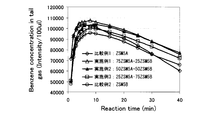
- the catalyst of Example 1 had higher catalytic activity than the catalyst of Comparative Example 1 over the entire reaction time of 40 minutes after the start of the reaction.
- the catalyst of Example 2 has the highest activity among all the catalysts after 30 minutes of reaction time, and has excellent catalyst stability.
- the catalysts of Examples 2 and 3 have lower catalytic activity than the catalyst of Comparative Example 1 at the start of the reaction, they have higher catalytic activity than the catalyst of Comparative Example 1 about 10 minutes after the start of the reaction. I understand that.
- the catalyst of Comparative Example 1 When the catalyst of Comparative Example 1 is compared with the catalyst of Comparative Example 2, the catalyst of Comparative Example 1 shows higher catalytic activity than the catalyst of Comparative Example 2 for 30 minutes from the start of the reaction. In addition, when the reaction time exceeds 30 minutes, the catalyst of Comparative Example 2 has higher catalytic activity than that of Comparative Example 1. That is, it can be seen that the first metallosilicate has high catalytic activity at the initial stage of the reaction and low catalytic activity stability as compared to the second metallosilicate.
- the crystal structure of the metallosilicate crystal is stable, and many acid points serving as a base point of catalytic reaction are also present. Therefore, it is considered that the temporary reaction activity is extremely high.
- the particle size of the metallosilicate is large, it takes time when the product generated by the reaction inside the metallosilicate crystal diffuses out of the crystal, so that the pores possessed by the metallosilicate are clogged, resulting in long-term catalytic reaction. It is believed that stability is gradually lost.
- a catalyst using a metallosilicate with a small particle size as a carrier has a small metallosilicate crystal size, so diffusion of the source gas in the crystal is easy, and the product produced by the catalytic reaction is also rapidly outside the crystal. It is thought to spread to Therefore, a catalyst using a metallosilicate having a small particle size as a carrier is inferior in catalytic activity at the initial stage of the reaction to a catalyst using a metallosilicate having a large particle size as a carrier, but is excellent in long-term stability of the catalyst activity Conceivable.
- an inorganic binder such as silicon oxide
- the addition of the inorganic binder improves the physical stability of the catalyst, The activity of the catalyst is reduced.
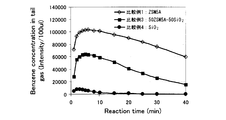
- a catalyst comparative example 3 of the comparative example 3 molded by adding silicon oxide, which is a general inorganic binder, to the catalyst of the comparative example 1 (catalyst of the comparative example 3) has physical stability of the catalyst. Although the property is improved, the catalytic activity is lower than the catalyst of Comparative Example 1.
- the lower hydrocarbon aromatization catalyst of the present invention not only the physical stability of the catalyst obtained by pressure-molding the metallosilicate supporting the catalytic metal is improved, but also the lower carbonization is achieved.
- the catalytic activity in the initial stage of the reaction of the hydrogen aromatization catalyst can be improved, and the catalytic activity stability can be improved.
- a metallosilicate carrying a catalytic metal is pressure-molded to produce a catalyst
- a metallosilicate having a particle diameter smaller than the particle diameter of the metallosilicate is added as a binder.
- the physical stability of the metallosilicate can be improved by pressure molding.
- the catalyst By producing the catalyst in this manner, not only the physical stability of the catalyst is improved, but also a catalyst obtained by pressure molding a metallosilicate having a large particle diameter or a metallosilicate having a small particle diameter alone. It is possible to obtain a catalyst having high catalytic activity and high catalyst stability.
- the characteristics of the large particle size metallosilicate (high catalytic activity at the initial stage of the reaction) and the characteristics of the small particle size metallosilicate (high catalytic activity stability and high formability) act complementarily and synergistically
- a catalyst having higher catalytic activity and stable catalytic activity than a catalyst obtained by pressure molding a metallosilicate having a large particle diameter or a metallosilicate having a small particle diameter alone.
- a binderless, high strength lower hydrocarbon aromatization catalyst having high catalytic reaction activity and high catalytic activity stability and high strength is obtained. be able to.
- the combination of the metallosilicate and the catalyst metal is not limited to the embodiment, and it may be produced by appropriately combining the well-known metallosilicate and the catalyst metal.
- the metallosilicate having a large particle diameter and the metallosilicate having a small particle diameter are described using an example using the same metallosilicate and a catalyst metal, they do not necessarily have to be in the same combination.
- the catalyst metal is supported after mixing the first metallosilicate and the second metallosilicate, but after supporting the catalyst metal on each of the first metallosilicate and the second metallosilicate
- the first metallosilicate carrying the catalytic metal and the second metallosilicate may be mixed, and the resulting mixture may be compacted.
- the combination of the metallosilicate having a large particle size and the metallosilicate having a small particle size is not limited to the embodiment, and a catalyst having a particle size capable of obtaining high catalytic activity at the initial stage of the reaction, and high catalyst stability
- a metallosilicate having a particle diameter capable of obtaining high catalytic activity at the initial stage of the reaction is mixed with a metallosilicate having a particle diameter of 1 ⁇ 5 or less of the particle diameter of the metallosilicate, and then compression molded.
- the same effect as that of the lower hydrocarbon aromatization catalyst of the present invention can be obtained.
- the range of generally available metallosilicate particle sizes is approximately 0.1 ⁇ m to 5.0 ⁇ m.
- metallosilicates with small particle size can be synthesized relatively easily, but when the particle size of metallosilicate becomes smaller (for example, the particle size becomes 0.1 ⁇ m or less), metallosilicate There is a possibility that the crystallinity (the degree of uniformity of the crystal structure) may be lost.
- zeolites represented by ZSM-5 have a long period crystal structure, and therefore, in order to stably maintain a constant crystal structure, a certain particle diameter (crystallite diameter) is required.
- a metallosilicate with a large particle size (particle size of 1.0 ⁇ m to 5.0 ⁇ m, more preferably 4.0 ⁇ m to 5.0 ⁇ m) is highly reactive and has many active points for reaction, so the reaction Initial catalytic activity is high.
- the long-term stability of the reaction is low as compared with metallosilicates having a small particle size, and the catalytic activity gradually decreases with the passage of the catalytic reaction time.
- metallosilicates with large particle sizes for example, metallosilicates with a particle size of 5.0 ⁇ m or more
- have low press-formability and can be formed into pellets even when molded at a pressure of 400 kgf / cm 2 May be difficult.
- metallosilicates having a small particle size are crystalline.
- the catalyst activity at the initial stage of the reaction is low compared to the large particle size metallosilicate, the long-term stability of the catalyst activity is excellent.
- a metallosilicate having a small particle diameter is excellent in moldability and can be easily molded at a pressure of 100 kgf / cm 2 .
- the particle size of the metallosilicate is 1.0 ⁇ m to 5.0 ⁇ m (more preferably, the particle size is 4.0 ⁇ m to 5.0 ⁇ m).
- the particle size of the metallosilicate is 1.0 ⁇ m to 5.0 ⁇ m (more preferably, the particle size is 4.0 ⁇ m to 5.0 ⁇ m).
- the mixing ratio of the metallosilicate having a large particle size and the metallosilicate having a small particle size has higher catalytic activity at the initial stage of the reaction as the ratio of the metallosilicate having a larger particle size is larger, and the metallosilicate having a smaller particle size The higher the ratio, the higher the catalyst activity stability and the higher the physical stability.
- the ratio of the mass of the metallosilicate having a large particle size to the mass of the entire lower hydrocarbon aromatization catalyst is 80 to 20%, more preferably 75 to 25%, more preferably By setting the ratio to 75 to 50%, it is possible to obtain a lower hydrocarbon aromatization catalyst having high catalyst activity, high catalyst activity stability, and high physical stability in the initial stage of the reaction.
Landscapes
- Chemical & Material Sciences (AREA)
- Organic Chemistry (AREA)
- Engineering & Computer Science (AREA)
- Materials Engineering (AREA)
- Chemical Kinetics & Catalysis (AREA)
- Crystallography & Structural Chemistry (AREA)
- Catalysts (AREA)
- Organic Low-Molecular-Weight Compounds And Preparation Thereof (AREA)
- Low-Molecular Organic Synthesis Reactions Using Catalysts (AREA)
Description
本発明は、低級炭化水素を接触反応させて芳香族炭化水素を生成する触媒及びこの触媒の製造方法に関する。特に、メタンを主成分とする天然ガス、バイオガス、メタンハイドレートの高度利用に関するものである。
天然ガス、バイオガス、メタンハイドレートは、地球温暖化対策として最も効果的なエネルギー資源と考えられ、その利用技術に関心が高まっている。メタン資源は、そのクリーン性を活かして、次世代の新しい有機資源、燃料電池用の水素資源として注目されている。
メタンからベンゼンなどの芳香族炭化水素と水素を製造する方法としては、例えば非特許文献1のように、触媒の存在下でメタンを反応させる方法が知られている。この際の触媒としては、ZSM-5に担持されたモリブデンが有効とされている(例えば、特許文献1)。
しかしながら、これらの触媒を使用した場合でも、炭素析出が多いことやメタンの転化率が低いという問題がある。
上記従来技術を改善するために、芳香族炭化水素の原料ガスである低級炭化水素(反応ガス)と、触媒活性の維持若しくは触媒活性の再生のためのガスである水素含有ガスまたは水素ガス(再生ガス)とを周期的にかつ交互に切り替えて、触媒と接触反応させている(例えば、特許文献2)。このように、反応ガスと再生ガスを交互に触媒に接触反応させることにより、触媒の経時劣化を抑えつつ触媒反応を持続させている。
また、触媒との接触反応における反応温度を規定することで、高い触媒活性で、かつ長期間の触媒安定性を両立する技術が提案されている(例えば、特許文献3)。
しかしながら、これら触媒を長期間使用に耐えうるようにするためには、触媒の化学的な活性を長期間にわたって維持することだけでなく、触媒の物理的耐久性を長期間にわたって維持することも重要となる。
一般的には、触媒の物理的耐久性を維持するために、酸化ケイ素(SiO2)や酸化アルミニウム(Al2O3)などを無機結合剤として使用する。しかし、これら無機結合剤を触媒に介在させると、触媒反応に関係ない副生成物が生成したり、コーキングが発生したりするなど、触媒の機能を低下させる要因が増加するおそれがあった。
これに対して、無機結合剤を添加することなく、触媒粒子を加圧成型する技術が提案されており、一定の触媒活性を得ている(例えば、特許文献4)。この方法では、触媒の成型が容易にできるため、触媒開発において重要な触媒活性評価に要する期間の短縮に大きな効果があった。その一方で、触媒に用いるメタロシリケートの粒子径の大きさによっては、メタロシリケート同士の固着強度が弱く、触媒の成型が難しくなるおそれがあった。
触媒金属を担持するメタロシリケートは、触媒の反応効率の観点からは、メタロシリケートの特徴である細孔構造を持つ結晶構造の安定性に優れ、反応に有効な活性点が多くなる粒子径の大きいメタロシリケートが望ましい。しかしながら、メタロシリケートの粒子径を大きくすると、成型性が悪くなり、長期間の使用中に成型体が崩壊し、安定した触媒反応を行うことが困難となるおそれがある。これに対して、メタロシリケートの粒子径を小さくすると、メタロシリケートの成型性が向上するが、粒子径の大きいメタロシリケートと比較して反応初期の触媒活性が低下する。
上記事情に鑑み、本発明は、低級炭化水素を接触反応させて芳香族化合物を生成する低級炭化水素芳香族化触媒の触媒活性の向上とこの触媒の成型性の向上に貢献する技術を提供することを目的とする。
JOURNAL OF CATALYSIS、1997、Volume165、p.150-161
上記目的を達成する本発明の低級炭化水素芳香族化触媒の一態様は、触媒金属が担持された第1のメタロシリケートと、前記第1のメタロシリケートの粒子径より小さい粒子径を有する第2のメタロシリケートに前記触媒金属を担持した触媒担持メタロシリケートの混合物を加圧成型して形成することを特徴としている。
また、上記目的を達成する本発明の低級炭化水素芳香族化触媒の他の態様は、上記低級炭化水素芳香族化触媒において、前記第2のメタロシリケートの粒子径は、前記第1のメタロシリケートの粒子径の5分の1以下であることを特徴としている。
また、上記目的を達成する本発明の低級炭化水素芳香族化触媒の他の態様は、上記低級炭化水素芳香族化触媒において、前記第1のメタロシリケートの粒子径は、1.0μm以上5.0μm以下であることを特徴としている。
また、上記目的を達成する本発明の低級炭化水素芳香族化触媒の他の態様は、上記低級炭化水素芳香族化触媒において、前記第2のメタロシリケートの粒子径は、0.1μm以上1.0μm以下であることを特徴としている。
また、上記目的を達成する本発明の低級炭化水素芳香族化触媒の他の態様は、上記低級炭化水素芳香族化触媒において、前記第2のメタロシリケートを、前記混合物の質量に対して20%以上80%以下添加することを特徴としている。
また、上記目的を達成する本発明の低級炭化水素芳香族化触媒の製造方法の一態様は、低級炭化水素を接触反応させて芳香族化合物を生成する低級炭化水素芳香族化触媒の製造方法であって、触媒金属が担持される第1のメタロシリケートと、当該第1のメタロシリケートの粒子径より小さい粒子径を有する第2のメタロシリケートとを混合し、混合して得られた混合物に、前記触媒金属を担持し、この触媒金属が担持された混合物を加圧成型することを特徴としている。
また、上記目的を達成する本発明の低級炭化水素芳香族化触媒の製造方法の他の態様は、低級炭化水素を接触反応させて芳香族化合物を生成する低級炭化水素芳香族化触媒の製造方法であって、触媒金属が担持される第1のメタロシリケートに、当該触媒金属を担持し、前記第1のメタロシリケートの粒子径より小さい粒子径を有する第2のメタロシリケートに前記触媒金属を担持し、前記触媒金属が担持された第1のメタロシリケートと第2のメタロシリケートとを混合し、混合して得られた混合物を加圧成型することを特徴としている。
本発明は、低級炭化水素を接触反応させてベンゼン及びナフタレン類を主成分とする芳香族炭化水素と高純度の水素ガスを製造する低級炭化水素芳香族化触媒(以下、「触媒」と省略する)及びこの触媒の製造方法に関する発明である。
本発明の実施形態に係る触媒は、例えば、メタロシリケートに触媒金属が担持された形態が挙げられる。
触媒金属が担持されるメタロシリケートとしては、例えばアルミノシリケートの場合、シリカ及びアルミナから成り多孔質体であるモレキュラーシーブ5A、フォジャサイト(NaY及びNaX)、ZSM-5、MCM-22が挙げられる。また、リン酸を主成分とする多孔質体でALPO-5、VPI-5などの6~13オングストロームのミクロ細孔やチャンネルからなることを特徴とするゼオライト担体や、シリカを主成分とし一部アルミナを成分として含むメゾ細孔(10~1000オングストローム)の筒状細孔(チャンネル)で特徴付けられるFSM-16やMCM-41などのメゾ細孔多孔質担体などが例示できる。さらに、前記アルミノシリケートの他に、シリカ及びチタニアからなるメタロシリケートなども触媒として用いることができる。
また、本発明で使用するメタロシリケートは、表面積が200~1000m2/gであり、そのミクロ及びメゾ細孔は5~100オングストロームの範囲内のものが望ましい。また、メタロシリケートが例えばアルミノシリケートである場合、そのシリカとアルミナの含有比(シリカ/アルミナ)が通常入手し得る多孔質体と同様にシリカ/アルミナ=1~8000のものを用いることができるが、本発明の低級炭化水素の芳香族化反応を、実用的な低級炭化水素の転化率及び芳香族炭化水素への選択率で実施するためには、シリカ/アルミナ=10~100の範囲内とすることがより好ましい。
メタロシリケートは、通常プロトン交換型(H型)のものが用いられる。また、プロトンの一部がNa、K、Liなどのアルカリ金属、Mg、Ca、Srなどのアルカリ土類元素、Fe、Co、Ni、Zn、Ru、Pd、Pt、Zr、Tiなどの遷移金属元素から選ばれた少なくとも一種のカチオンで交換されていてもよい。また、メタロシリケートが、Ti、Zr、Hf、Cr、Mo、W、Th、Cu、Agなどを適量含有していてもよい。
そして、触媒金属としてはモリブデンを用いることが好ましいが、レニウム、タングステン、鉄、コバルトを用いても良い。これらの触媒金属を組み合わせてメタロシリケートに担持してもよい。さらに、これらの触媒金属に、Mgなどのアルカリ土類元素またはNi、Zn、Ru、Pd、Pt、Zr、Tiなどの遷移金属元素から選ばれた少なくとも一種の元素をメタロシリケートに共担持してもよい。
触媒金属(を含む前駆体)をメタロシリケートに担持させる場合、担体の質量に対する触媒金属の割合は0.001~50%、好ましくは0.01~40%の範囲で行う。また、メタロシリケートへ担持させる方法としては、触媒金属の前駆体の水溶液、あるいはアルコールなどの有機溶媒の溶液からメタロシリケート担体に含浸担持あるいはイオン交換方法により担持させた後、不活性ガスあるいは酸素ガス雰囲気下で加熱処理する方法がある。例えば、触媒金属の1つであるモリブデンを含む前駆体の例としては、パラモリブデン酸アンモニウム、リンモリブデン酸アンモニウム、12系モリブデン酸の他に、モリブデンの、塩化物、臭化物などのハロゲン化物、硝酸塩、硫酸塩、リン酸塩などの鉱酸塩、炭酸塩、酢酸塩、蓚酸塩などのカルボン酸塩などを挙げることができる。
ここでメタロシリケートに触媒金属を担持する方法を触媒金属としてモリブデンを用いた場合を例示して説明する。まず、メタロシリケート担体にモリブデン酸アンモニウム塩の水溶液を含浸担持させる。次に、その担持体を減圧乾燥して溶媒を除いた後、窒素含有酸素気流中または純酸素気流中にて温度250~800℃(好ましくは350~600℃)で加熱処理する。このようにして得られた触媒金属を担持したメタロシリケートは、加圧してペレットなどの形状に成型される。成型圧力は、通常100~400kgf/cm2である。
なお、本発明において、低級炭化水素とはメタンや炭素数が2~6の飽和または不飽和炭化水素を意味する。これら炭素数が2~6の飽和または不飽和炭化水素の例として、エタン、エチレン、プロパン、プロピレン、n-ブタン、イソブタン、n-ブテン及びイソブテンなどを挙げることができる。
以下、本発明に係る低級炭化水素芳香族化触媒の具体的な実施例を示して、本発明の低級炭化水素芳香族化触媒及び低級炭化水素芳香族化触媒の製造方法についてより詳細に説明する。
(実施例1)
メタロシリケート担体として、次の(1),(2)に示す粒子径の異なる2種類のメタロシリケートを用いて触媒を製造した。(1),(2)では、メタロシリケートの粒子径を平均粒子径で表現している。これは、メタロシリケートの粒子径には、ある程度の誤差が含まれるからである。一般的に、ほとんどのメタロシリケートの粒子径は、平均粒子径に近い値となっているので、平均粒子径の値をメタロシリケートの粒子径とみなすことができる。実施例では、凝集粒子の影響を排除するために、顕微鏡観察下で20個の粒子を無作為抽出して一方向粒子径を計測し、その平均をとって平均粒子径を算出した。なお、平均粒子径の算出方法は、この実施例に限定されるものではなく、適宜周知の方法で平均粒子径を算出すればよい。
(1)H型ZSM-5ゼオライト(平均粒子径=約4μm、SiO2/Al2O3=25~70)(以後、第1のメタロシリケート(ZSM5A)とする)
(2)H型ZSM-5ゼオライト(平均粒子径=約0.8μm、SiO2/Al2O3=25~70)(以後、第2のメタロシリケート(ZSM5B)とする)
まず、第1のメタロシリケート75重量部に対して、第2のメタロシリケート25重量部を均一に混合して混合物を得た。得られた混合物に触媒金属としてモリブデンを担持した。そして、モリブデンを担持した混合物(以下、触媒粉体とする)を加圧成型して実施例1の触媒を製造した。ここで、触媒金属担持方法及び触媒粉体の加圧成型方法について詳細に説明する。
メタロシリケート担体として、次の(1),(2)に示す粒子径の異なる2種類のメタロシリケートを用いて触媒を製造した。(1),(2)では、メタロシリケートの粒子径を平均粒子径で表現している。これは、メタロシリケートの粒子径には、ある程度の誤差が含まれるからである。一般的に、ほとんどのメタロシリケートの粒子径は、平均粒子径に近い値となっているので、平均粒子径の値をメタロシリケートの粒子径とみなすことができる。実施例では、凝集粒子の影響を排除するために、顕微鏡観察下で20個の粒子を無作為抽出して一方向粒子径を計測し、その平均をとって平均粒子径を算出した。なお、平均粒子径の算出方法は、この実施例に限定されるものではなく、適宜周知の方法で平均粒子径を算出すればよい。
(1)H型ZSM-5ゼオライト(平均粒子径=約4μm、SiO2/Al2O3=25~70)(以後、第1のメタロシリケート(ZSM5A)とする)
(2)H型ZSM-5ゼオライト(平均粒子径=約0.8μm、SiO2/Al2O3=25~70)(以後、第2のメタロシリケート(ZSM5B)とする)
まず、第1のメタロシリケート75重量部に対して、第2のメタロシリケート25重量部を均一に混合して混合物を得た。得られた混合物に触媒金属としてモリブデンを担持した。そして、モリブデンを担持した混合物(以下、触媒粉体とする)を加圧成型して実施例1の触媒を製造した。ここで、触媒金属担持方法及び触媒粉体の加圧成型方法について詳細に説明する。
(触媒金属担持方法)
水にモリブデン酸アンモニウム((NH4)6Mo7O24)を、0.05mol/L溶解させた含浸水溶液を調製し、この含浸水溶液に第1のメタロシリケートと第2のメタロシリケートの混合物を加えて攪拌し、第1のメタロシリケート及び第2のメタロシリケートにモリブデンを含浸させた。
水にモリブデン酸アンモニウム((NH4)6Mo7O24)を、0.05mol/L溶解させた含浸水溶液を調製し、この含浸水溶液に第1のメタロシリケートと第2のメタロシリケートの混合物を加えて攪拌し、第1のメタロシリケート及び第2のメタロシリケートにモリブデンを含浸させた。
その後、モリブデンを含浸させた混合物を乾燥し、550℃で8時間焼成して、モリブデンを担持した混合物(触媒粉体)を得た。この触媒粉体に対するモリブデン担持量は、触媒全体に対して6重量%であった。
(加圧成型方法)
上記の触媒金属担持方法で得られた触媒粉体を真空押出成型機を使用して、棒状(φ2.4mm×L5mm)に成型した。この成型時の押出圧力は、100kgf/cm2であった。
上記の触媒金属担持方法で得られた触媒粉体を真空押出成型機を使用して、棒状(φ2.4mm×L5mm)に成型した。この成型時の押出圧力は、100kgf/cm2であった。
(実施例2)
実施例2の触媒は、第1のメタロシリケートと第2のメタロシリケートの混合比が異なること以外は、実施例1の触媒と同様の方法により製造した。
実施例2の触媒は、第1のメタロシリケートと第2のメタロシリケートの混合比が異なること以外は、実施例1の触媒と同様の方法により製造した。
まず、第1のメタロシリケート50重量部に対して第2のメタロシリケート50重量部を均一に混合して混合物を得た。次に、得られた混合物に、実施例1と同様の触媒金属担持方法によりモリブデンを担持し、モリブデンを担持して得られた触媒粉体を実施例1と同様の加圧成型方法で加圧成型し、実施例2の触媒を製造した。実施例2の触媒のモリブデン担持量は、触媒全体に対して6重量%であった。
(実施例3)
実施例3の触媒は、第1のメタロシリケートと第2のメタロシリケートの混合比が異なること以外は、実施例1の触媒と同様の方法により製造した。
実施例3の触媒は、第1のメタロシリケートと第2のメタロシリケートの混合比が異なること以外は、実施例1の触媒と同様の方法により製造した。
まず、第1のメタロシリケート25重量部に対して第2のメタロシリケート75重量部を均一に混合して混合物を得た。次に、得られた混合物に、実施例1と同様の触媒金属担持方法によりモリブデンを担持し、モリブデンを担持して得られた触媒粉体を実施例1と同様の加圧成型方法で加圧成型し、実施例3の触媒を製造した。実施例3の触媒のモリブデン担持量は、触媒全体に対して6重量%であった。
(比較例1)
比較例1の触媒は、第1のメタロシリケートを用いて、実施例1の触媒と同様の方法により触媒を製造した。なお、第1のメタロシリケートは、粒子径が大きいので400kgf/cm2の押出圧力で成型した。
比較例1の触媒は、第1のメタロシリケートを用いて、実施例1の触媒と同様の方法により触媒を製造した。なお、第1のメタロシリケートは、粒子径が大きいので400kgf/cm2の押出圧力で成型した。
まず、実施例1と同様の触媒金属担持方法により、第1のメタロシリケートにモリブデンを担持した触媒粉体を得て、得られた触媒粉体を実施例1と同様の加圧成型方法(押出圧力は、400kgf/cm2)で加圧成型し、比較例1の触媒を製造した。比較例1の触媒のモリブデン担持量は、触媒全体に対して6重量%であった。
(比較例2)
比較例2の触媒は、第2のメタロシリケートを用いて、実施例1の触媒と同様の方法により触媒を製造した。
比較例2の触媒は、第2のメタロシリケートを用いて、実施例1の触媒と同様の方法により触媒を製造した。
まず、実施例1と同様の触媒金属担持方法により、第2のメタロシリケートにモリブデンを担持した触媒粉体を得て、得られた触媒粉体を実施例1と同様の加圧成型方法で加圧成型し、比較例2の触媒を製造した。比較例2の触媒のモリブデン担持量は、触媒全体に対して6重量%であった。
(比較例3)
比較例3の触媒は、比較例1の触媒に一般的に無機結合剤として用いられる酸化ケイ素を添加して、加圧成型したものである。
比較例3の触媒は、比較例1の触媒に一般的に無機結合剤として用いられる酸化ケイ素を添加して、加圧成型したものである。
まず、実施例1と同様の触媒金属担持方法により、第1のメタロシリケートにモリブデンを担持した触媒粉体を得て、得られた触媒粉体に酸化ケイ素を添加して実施例1と同様の加圧成型方法で加圧成型し、比較例3の触媒を製造した。比較例3の触媒のモリブデン担持量は、触媒全体に対して6重量%であった。
(比較例4)
比較例4は、酸化ケイ素の粉体を実施例1と同様の加圧成型方法で加圧成型したものである。
比較例4は、酸化ケイ素の粉体を実施例1と同様の加圧成型方法で加圧成型したものである。
(触媒安定性の評価)
実施例1~3の触媒及び比較例1,2の触媒に圧力をかけて、各触媒の崩壊が始まる圧力を測定した。そして、比較例1の触媒の崩壊が始まる圧力に対する、各触媒(実施例1~3及び比較例2)の崩壊が始まる圧力の大きさを圧縮強度として算出した。圧縮強度の算出結果を表1に示す。
実施例1~3の触媒及び比較例1,2の触媒に圧力をかけて、各触媒の崩壊が始まる圧力を測定した。そして、比較例1の触媒の崩壊が始まる圧力に対する、各触媒(実施例1~3及び比較例2)の崩壊が始まる圧力の大きさを圧縮強度として算出した。圧縮強度の算出結果を表1に示す。

表1に示すように、比較例1の触媒が最も圧縮強度が低く、容易に崩壊することがわかる。そして、触媒全体に対する第2のメタロシリケートの割合が増加するほど、触媒の圧縮強度が高くなり、第2のメタロシリケートのみからなる触媒(比較例2)で最も圧縮強度が高くなり、比較例2の触媒の物理的な安定性が高いことがわかる。
表1に示す結果から、第2のメタロシリケートの添加量を増加させることで、第1のメタロシリケートのみからなる触媒(比較例1)より、触媒の物理的な安定性を向上させることができることが確認された。
(触媒活性評価)
上記実施例1~3の触媒及び比較例1~4の触媒を、図1に示す反応装置1の石英管2(内径18mm)に充填し、充填した触媒3にメタンを接触反応させて各触媒3の触媒活性の評価を行った。触媒活性を評価した反応条件を以下に示す。
上記実施例1~3の触媒及び比較例1~4の触媒を、図1に示す反応装置1の石英管2(内径18mm)に充填し、充填した触媒3にメタンを接触反応させて各触媒3の触媒活性の評価を行った。触媒活性を評価した反応条件を以下に示す。
(反応条件)
原料ガス:メタン90体積%-アルゴン10体積%
反応温度:800℃
原料ガス供給速度(触媒1g当たりの空間速度):10000ml/g/h
原料ガスを各触媒と接触反応させる前に、触媒の前処理を行った。触媒の前処理は、触媒を空気気流下550℃まで昇温し、2時間維持した後、メタン20%:水素80%の前処理ガスに切り替えて、700℃まで昇温し、1時間維持した。その後、原料ガスに切り替えて所定の温度(800℃)まで昇温し触媒の評価を行った。反応後のガス中の成分の分析は、水素、アルゴン、メタンをTCD-GCで分析し、ベンゼン、トルエン、キシレン、ナフタレンなどの芳香族炭化水素をFID-GCで分析した。
原料ガス:メタン90体積%-アルゴン10体積%
反応温度:800℃
原料ガス供給速度(触媒1g当たりの空間速度):10000ml/g/h
原料ガスを各触媒と接触反応させる前に、触媒の前処理を行った。触媒の前処理は、触媒を空気気流下550℃まで昇温し、2時間維持した後、メタン20%:水素80%の前処理ガスに切り替えて、700℃まで昇温し、1時間維持した。その後、原料ガスに切り替えて所定の温度(800℃)まで昇温し触媒の評価を行った。反応後のガス中の成分の分析は、水素、アルゴン、メタンをTCD-GCで分析し、ベンゼン、トルエン、キシレン、ナフタレンなどの芳香族炭化水素をFID-GCで分析した。
触媒活性の評価は、触媒と接触反応させた後の反応ガス100μl中のベンゼン濃度で評価した。
(測定結果)
実施例1~3の触媒及び比較例1,2の触媒を用いて、原料ガス(メタン+アルゴン)を接触反応させたときの、反応ガス中のベンゼン濃度の時間変化を図2に示す。また、比較例1,3,4の触媒を用いて、原料ガスを接触反応させたときの、反応ガス中のベンゼン濃度の時間変化を図3に示す。
実施例1~3の触媒及び比較例1,2の触媒を用いて、原料ガス(メタン+アルゴン)を接触反応させたときの、反応ガス中のベンゼン濃度の時間変化を図2に示す。また、比較例1,3,4の触媒を用いて、原料ガスを接触反応させたときの、反応ガス中のベンゼン濃度の時間変化を図3に示す。
図2から明らかなように、実施例1の触媒は、反応開始から反応後40分のすべての反応時間にわたって、比較例1の触媒より高い触媒活性を有した。また、実施例2の触媒は、反応時間が30分以降では、すべての触媒の中で最も活性が高くなっており、優れた触媒安定性を有することがわかる。なお、実施例2,3の触媒は、反応開始時には、比較例1の触媒より触媒活性が低いものの、反応開始後およそ10分後には、比較例1の触媒よりも高い触媒活性となっていることがわかる。
比較例1の触媒と比較例2の触媒とを比較すると、反応開始から30分間は、比較例1の触媒の方が比較例2の触媒より高い触媒活性を示している。また、反応時間が30分を超えると、比較例2の触媒の方が比較例1より高い触媒活性を有している。つまり、第1のメタロシリケートは、第2のメタロシリケートと比較して、反応初期の触媒活性が高く、触媒活性安定性が低いことがわかる。
つまり、粒子径の大きいメタロシリケートを担体とする触媒は、メタロシリケート結晶の結晶構造が安定で、触媒反応の基点となる酸点も多い。そのため、一時的な反応活性が著しく高くなっているものと考えられる。しかしながら、メタロシリケートの粒子径が大きいと、メタロシリケート結晶内部での反応により生成した生成物が結晶外に拡散するときに時間がかかるため、メタロシリケートが有する細孔が閉塞され、触媒反応の長期安定性が次第に損なわれるものと考えられる。
これに対して、粒子径の小さいメタロシリケートを担体とする触媒は、メタロシリケート結晶サイズが小さいため、結晶中での原料ガスの拡散が容易で、触媒反応によって生成した生成物も結晶外に速やかに拡散すると考えられる。したがって、粒子径の小さいメタロシリケートを担体とする触媒は、粒子径の大きいメタロシリケートを担体とする触媒と比較して、反応初期における触媒活性が劣るものの、触媒活性の長期安定性に優れるものと考えられる。
なお、触媒の物理的安定性を向上させるために、従来技術において、酸化ケイ素などの無機結合剤が用いられているが、無機結合剤を添加すると、触媒の物理的安定性は向上するものの、触媒の活性が低下してしまう。例えば、図3に示すように、比較例1の触媒に一般的な無機結合剤である酸化ケイ素を添加して、加圧成型した触媒(比較例3の触媒)は、触媒の物理的な安定性が向上するものの、触媒活性は、比較例1の触媒より低くなる。これは、酸化ケイ素(比較例4の触媒)が低級炭化水素の芳香族化反応に対する触媒活性を有さないため、酸化ケイ素を添加することで、触媒反応を行う表面積の減少など、比較例1の触媒反応が阻害される要因が増大したことによるものと考えられる。
以上のように、本発明の低級炭化水素芳香族化触媒によれば、触媒金属を担持したメタロシリケートを加圧成型して得られる触媒の物理的な安定性が向上するだけでなく、低級炭化水素芳香族化触媒の反応初期における触媒活性を向上させ、触媒活性安定性を向上させることができる。
つまり、触媒金属を担持したメタロシリケートを加圧成型して触媒を製造する際に、結合剤として、このメタロシリケートの粒子径よりも小さい粒子径のメタロシリケートに触媒金属を担持したものを添加して加圧成型することで、メタロシリケートの物理的な安定性を向上させることができる。
このように触媒を製造することで、単に触媒の物理的な安定性が向上するだけでなく、粒子径の大きいメタロシリケートや粒子径の小さいメタロシリケートを単独で加圧成型して得られる触媒よりも高い触媒活性・高い触媒安定性を有する触媒を得ることができる。つまり、粒子径の大きいメタロシリケートの特性(反応初期における高い触媒活性)と、粒子径の小さいメタロシリケートの特性(高い触媒活性安定性と高い成型性)とが、相補的、相乗的に作用することで、粒子径の大きいメタロシリケートや粒子径の小さいメタロシリケートを単独で加圧成型した触媒よりも高い触媒活性や触媒活性安定性を有する触媒を得ることができる。
また、本発明の低級炭化水素芳香族化触媒の製造方法によれば、バインダレスで、高い触媒反応活性と高い触媒活性安定性を有し、かつ高強度な低級炭化水素芳香族化触媒を得ることができる。
以上、本発明の低級炭化水素芳香族化触媒及び低級炭化水素芳香族化触媒の製造方法の説明において、記載された具体例に対してのみ詳細に説明したが、本発明は、本発明の技術思想の範囲で多彩な変形及び修正が可能であることは、当業者にとって明白なことである。したがって、このような変形及び修正がなされた形態も、本発明の低級炭化水素芳香族化触媒及び低級炭化水素芳香族化触媒の製造方法に属することは当然のことである。
例えば、本発明の低級炭化水素芳香族化触媒において、メタロシリケートと触媒金属の組合せは、実施形態に限定されるものではなく、適宜周知のメタロシリケートと触媒金属とを組み合わせて製造すればよい。また、実施形態の説明では、粒子径の大きいメタロシリケートと粒子径の小さいメタロシリケートは、同じメタロシリケートと触媒金属を用いる例を挙げて説明しているが、必ずしも同じ組合せとする必要はない。
また、実施例では、第1のメタロシリケートと第2のメタロシリケートを混合した後に、触媒金属を担持しているが、第1のメタロシリケートと第2のメタロシリケートそれぞれに触媒金属を担持した後に、触媒金属が担持された第1のメタロシリケートと第2のメタロシリケートを混合し、得られた混合物を加圧成形してもよい。
また、粒子径の大きいメタロシリケートと粒子径の小さいメタロシリケートの組合せは、実施形態に限定されるものではなく、反応初期に高い触媒活性を得ることができる粒子径を有する触媒と、高い触媒安定性を得ることができる粒子径を有する触媒との組合せを適宜選択して用いれば、本発明の低級炭化水素芳香族化触媒と同様の効果を得ることができる。例えば、反応初期に高い触媒活性を得ることができる粒子径を有するメタロシリケートに対して、このメタロシリケートの粒子径の1/5以下の粒子径を有するメタロシリケートを混合して、加圧成型することで、本発明の低級炭化水素芳香族化触媒と同様の効果を得ることができる。
一般的に入手可能なメタロシリケートの粒子径の範囲は、およそ0.1μm~5.0μmである。より粒子径の大きいメタロシリケートを合成するためには、安定した温度条件で長時間反応させなければならない。これに対して、粒子径の小さなメタロシリケートは、比較的容易に合成することができるが、メタロシリケートの粒子径が小さくなる(例えば、粒子径が0.1μm以下となる)と、メタロシリケートの結晶性(結晶構造の均一度)が損なわれるおそれが生じる。特に、ZSM-5に代表されるゼオライトでは、長周期の結晶構造を持つため、安定して一定の結晶構造を維持するためには、ある程度の粒子径(結晶子径)が必要となる。また、既存のメタロシリケートを粉砕して、小さな粒子径を有するメタロシリケートを得ることは可能であるが、この場合も粉砕の過程で結晶構造が崩壊して、得られる触媒の触媒活性が低下するおそれがある。
粒子径の大きなメタロシリケート(粒子径が1.0μm以上5.0μm以下、より好ましくは、4.0μm以上5.0μm以下)は、結晶性が高く反応に有効な活性点が多くなるため、反応初期の触媒活性が高い。しかし、反応の長期安定性が粒子径の小さいメタロシリケートと比較して低く、触媒反応時間の経過にともなって、触媒活性が次第に低下していく。また、粒子径の大きなメタロシリケート(例えば、粒子径が5.0μm以上のメタロシリケート)は、加圧成型性が低く、400kgf/cm2の圧力で成型した場合にも、ペレット状に成型することが困難な場合がある。これに対して、粒子径の小さいメタロシリケート(粒子径が0.1μm以上1.0μm以下のメタロシリケート、より好ましくは、粒子径が0.2μm以上0.8μm以下のメタロシリケート)は、結晶性が低く、反応初期の触媒活性が粒子径の大きなメタロシリケートと比較して低いものの、触媒活性の長期安定性は優れている。そして、粒子径の小さいメタロシリケート(例えば、粒子径が1.0μm以下のメタロシリケート)は、成型性に優れ、100kgf/cm2の圧力で容易に成型することができる。
ゆえに、本発明の低級炭化水素芳香族化触媒において、メタロシリケートの粒子径の大きさを1.0μm以上5.0μm以下(より好ましくは、粒子径が4.0μm以上5.0μm以下)とすることで、反応初期に高い触媒活性を有するメタロシリケート(第1のメタロシリケート)を得ることができる。そして、メタロシリケートの粒子径の大きさを、0.1μm以上1.0μm以下(より好ましくは、粒子径が0.2μm以上0.8μm以下)とすることで、容易に成型可能であり、かつ結晶性(結晶構造の均一度)を維持したメタロシリケート(第2のメタロシリケート)を得ることができる。
また、粒子径の大きいメタロシリケートと、粒子径の小さいメタロシリケートとの混合割合は、粒子径の大きいメタロシリケートの割合が多いほど反応初期において高い触媒活性を有し、粒子径が小さいメタロシリケートの割合が多いほど、高い触媒活性安定性と高い物理的安定性を示す。よって、低級炭化水素芳香族化触媒全体の質量(触媒金属の質量を除く)に対する粒子径の大きいメタロシリケートの質量の割合は、80~20%、より好ましくは、75~25%、より好ましくは、75~50%とすることで、反応初期における高い触媒活性、高い触媒活性安定性及び高い物理的安定性を有する低級炭化水素芳香族化触媒を得ることができる。
1…反応装置
2…石英管
3…触媒(低級炭化水素芳香族化触媒)
4…検出器
2…石英管
3…触媒(低級炭化水素芳香族化触媒)
4…検出器
Claims (7)
- 触媒金属が担持された第1のメタロシリケートと、前記第1のメタロシリケートの粒子径より小さい粒子径を有する第2のメタロシリケートに前記触媒金属を担持した触媒担持メタロシリケートの混合物を加圧成型して形成する
ことを特徴とする低級炭化水素芳香族化触媒。 - 前記第2のメタロシリケートの粒子径は、前記第1のメタロシリケートの粒子径の5分の1以下である
ことを特徴とする請求項1に記載の低級炭化水素芳香族化触媒。 - 前記第1のメタロシリケートの粒子径は、1.0μm以上5.0μm以下である
ことを特徴とする請求項2に記載の低級炭化水素芳香族化触媒。 - 前記第2のメタロシリケートの粒子径は、0.1μm以上1.0μm以下である
ことを特徴とする請求項2または請求項3に記載の低級炭化水素芳香族化触媒。 - 前記第2のメタロシリケートを、前記混合物の質量に対して20%以上80%以下添加する
ことを特徴とする請求項1から請求項4のいずれか1項に記載の低級炭化水素芳香族化触媒。 - 低級炭化水素を接触反応させて芳香族化合物を生成する低級炭化水素芳香族化触媒の製造方法であって、
触媒金属が担持される第1のメタロシリケートと、当該第1のメタロシリケートの粒子径より小さい粒子径を有する第2のメタロシリケートとを混合し、
混合して得られた混合物に、前記触媒金属を担持し、
この触媒金属が担持された混合物を加圧成型する
ことを特徴とする低級炭化水素芳香族化触媒の製造方法。 - 低級炭化水素を接触反応させて芳香族化合物を生成する低級炭化水素芳香族化触媒の製造方法であって、
触媒金属が担持される第1のメタロシリケートに、当該触媒金属を担持し、
前記第1のメタロシリケートの粒子径より小さい粒子径を有する第2のメタロシリケートに前記触媒金属を担持し、
前記触媒金属が担持された第1のメタロシリケートと第2のメタロシリケートとを混合し、
混合して得られた混合物を加圧成型する
ことを特徴とする低級炭化水素芳香族化触媒の製造方法。
Priority Applications (2)
| Application Number | Priority Date | Filing Date | Title |
|---|---|---|---|
| CN201380017875.6A CN104220164A (zh) | 2012-04-03 | 2013-02-28 | 低级烃芳构化催化剂和生产低级烃芳构化催化剂的方法 |
| US14/390,241 US20150065335A1 (en) | 2012-04-03 | 2013-02-28 | Lower-hydrocarbon aromatization catalyst and method for producing lower-hydrocarbon aromatization catalyst |
Applications Claiming Priority (2)
| Application Number | Priority Date | Filing Date | Title |
|---|---|---|---|
| JP2012-084495 | 2012-04-03 | ||
| JP2012084495A JP5949069B2 (ja) | 2012-04-03 | 2012-04-03 | 低級炭化水素芳香族化触媒の製造方法 |
Publications (1)
| Publication Number | Publication Date |
|---|---|
| WO2013150845A1 true WO2013150845A1 (ja) | 2013-10-10 |
Family
ID=49300343
Family Applications (1)
| Application Number | Title | Priority Date | Filing Date |
|---|---|---|---|
| PCT/JP2013/055325 Ceased WO2013150845A1 (ja) | 2012-04-03 | 2013-02-28 | 低級炭化水素芳香族化触媒及び低級炭化水素芳香族化触媒の製造方法 |
Country Status (4)
| Country | Link |
|---|---|
| US (1) | US20150065335A1 (ja) |
| JP (1) | JP5949069B2 (ja) |
| CN (1) | CN104220164A (ja) |
| WO (1) | WO2013150845A1 (ja) |
Families Citing this family (1)
| Publication number | Priority date | Publication date | Assignee | Title |
|---|---|---|---|---|
| CN111420698A (zh) * | 2020-03-30 | 2020-07-17 | 广西华睿能源科技有限公司 | 用于正构烷烃直接芳构化的双金属无酸铝硅酸盐多孔复合材料及其制备方法和应用 |
Citations (9)
| Publication number | Priority date | Publication date | Assignee | Title |
|---|---|---|---|---|
| JPS6174647A (ja) * | 1984-09-19 | 1986-04-16 | Toa Nenryo Kogyo Kk | 炭素数8芳香族炭化水素類の異性化用触媒及び、その製造方法 |
| US5098894A (en) * | 1984-04-09 | 1992-03-24 | Toa Nenryo Kogyo K.K. | Binderless zeolite catalysts, production thereof and catalytic reaction therewith |
| JPH11501286A (ja) * | 1994-11-23 | 1999-02-02 | エクソン・ケミカル・パテンツ・インク | ゼオライト結合ゼオライト触媒を用いる炭化水素転化プロセス |
| JP2000511107A (ja) * | 1996-05-29 | 2000-08-29 | エクソン・ケミカル・パテンツ・インク | 金属含有ゼオライト触媒、その製造、及び炭化水素の転化のための使用 |
| JP2005255682A (ja) * | 2004-03-12 | 2005-09-22 | Chevron Oronite Co Llc | アルキル化芳香族組成物、ゼオライト触媒組成物及びその製造方法 |
| WO2010116603A1 (ja) * | 2009-03-30 | 2010-10-14 | 財団法人石油産業活性化センター | アルキルベンゼン類の製造方法及びそれに用いる触媒 |
| WO2011018966A1 (ja) * | 2009-08-12 | 2011-02-17 | 三井化学株式会社 | 芳香族炭化水素の製造方法および前記製造方法に用いられる遷移金属含有結晶性メタロシリケート触媒 |
| WO2011090121A1 (ja) * | 2010-01-20 | 2011-07-28 | Jx日鉱日石エネルギー株式会社 | 単環芳香族炭化水素製造用触媒および単環芳香族炭化水素の製造方法 |
| JP2013067616A (ja) * | 2011-09-21 | 2013-04-18 | Agency For Science Technology & Research | 触媒の組み合わせによるメタンの芳香族化 |
Family Cites Families (6)
| Publication number | Priority date | Publication date | Assignee | Title |
|---|---|---|---|---|
| US4159282A (en) * | 1978-06-09 | 1979-06-26 | Mobil Oil Corporation | Xylene isomerization |
| JP4197740B2 (ja) * | 1996-05-29 | 2008-12-17 | エクソンモービル・ケミカル・パテンツ・インク | ゼオライト触媒及び炭化水素変換のための使用 |
| JP2001501588A (ja) * | 1996-05-29 | 2001-02-06 | エクソン・ケミカル・パテンツ・インク | 脂肪族化合物から芳香族化合物を製造する方法 |
| EP1206317A1 (en) * | 1999-05-05 | 2002-05-22 | ExxonMobil Chemical Patents Inc. | Zeolite bound catalyst containing at least three different zeolites; use for hydrocarbon conversion |
| JP5564769B2 (ja) * | 2008-08-12 | 2014-08-06 | 株式会社明電舎 | 低級炭化水素芳香族化触媒及び芳香族化合物の製造方法 |
| US8466080B2 (en) * | 2010-09-15 | 2013-06-18 | Uop Llc | Catalysts, processes for preparing the catalysts, and processes for transalkylating aromatic hydrocarbon compounds |
-
2012
- 2012-04-03 JP JP2012084495A patent/JP5949069B2/ja active Active
-
2013
- 2013-02-28 CN CN201380017875.6A patent/CN104220164A/zh active Pending
- 2013-02-28 WO PCT/JP2013/055325 patent/WO2013150845A1/ja not_active Ceased
- 2013-02-28 US US14/390,241 patent/US20150065335A1/en not_active Abandoned
Patent Citations (9)
| Publication number | Priority date | Publication date | Assignee | Title |
|---|---|---|---|---|
| US5098894A (en) * | 1984-04-09 | 1992-03-24 | Toa Nenryo Kogyo K.K. | Binderless zeolite catalysts, production thereof and catalytic reaction therewith |
| JPS6174647A (ja) * | 1984-09-19 | 1986-04-16 | Toa Nenryo Kogyo Kk | 炭素数8芳香族炭化水素類の異性化用触媒及び、その製造方法 |
| JPH11501286A (ja) * | 1994-11-23 | 1999-02-02 | エクソン・ケミカル・パテンツ・インク | ゼオライト結合ゼオライト触媒を用いる炭化水素転化プロセス |
| JP2000511107A (ja) * | 1996-05-29 | 2000-08-29 | エクソン・ケミカル・パテンツ・インク | 金属含有ゼオライト触媒、その製造、及び炭化水素の転化のための使用 |
| JP2005255682A (ja) * | 2004-03-12 | 2005-09-22 | Chevron Oronite Co Llc | アルキル化芳香族組成物、ゼオライト触媒組成物及びその製造方法 |
| WO2010116603A1 (ja) * | 2009-03-30 | 2010-10-14 | 財団法人石油産業活性化センター | アルキルベンゼン類の製造方法及びそれに用いる触媒 |
| WO2011018966A1 (ja) * | 2009-08-12 | 2011-02-17 | 三井化学株式会社 | 芳香族炭化水素の製造方法および前記製造方法に用いられる遷移金属含有結晶性メタロシリケート触媒 |
| WO2011090121A1 (ja) * | 2010-01-20 | 2011-07-28 | Jx日鉱日石エネルギー株式会社 | 単環芳香族炭化水素製造用触媒および単環芳香族炭化水素の製造方法 |
| JP2013067616A (ja) * | 2011-09-21 | 2013-04-18 | Agency For Science Technology & Research | 触媒の組み合わせによるメタンの芳香族化 |
Also Published As
| Publication number | Publication date |
|---|---|
| CN104220164A (zh) | 2014-12-17 |
| JP5949069B2 (ja) | 2016-07-06 |
| US20150065335A1 (en) | 2015-03-05 |
| JP2013212469A (ja) | 2013-10-17 |
Similar Documents
| Publication | Publication Date | Title |
|---|---|---|
| US8742189B2 (en) | Catalyst for the dehydroaromatisation of methane and mixtures containing methane | |
| JP5499669B2 (ja) | 低級炭化水素及び芳香族化合物の製造方法及び製造触媒 | |
| KR101676498B1 (ko) | 귀금속을 함유하지 않는 상응하는 촉매를 재생시키는 것에 의한 메탄 함유 혼합물의 방향족화수소이탈 방법 | |
| JP5481996B2 (ja) | 芳香族炭化水素製造方法 | |
| JP4945242B2 (ja) | 芳香族炭化水素と水素の製造方法 | |
| CN107398294A (zh) | 一种改性无粘结剂zsm-11分子筛催化剂的制备方法和应用 | |
| WO2012002269A1 (ja) | 芳香族炭化水素製造方法 | |
| JP4235731B2 (ja) | 低級炭化水素の脱水素芳香族化反応用触媒成型体の製造方法 | |
| JP2010042344A (ja) | 低級オレフィン製造用触媒、その製造方法及びこれを用いた低級オレフィンの製造方法 | |
| JP5288255B2 (ja) | 低級オレフィン製造用触媒、その製造方法及びこれを用いた低級オレフィンの製造方法 | |
| WO2014182020A1 (ko) | 이산화탄소 개질반응용 모노리스 촉매, 이의 제조방법 및 이를 이용한 합성가스의 제조방법 | |
| JP2010042343A (ja) | 低級オレフィン製造用触媒、その製造方法及びこれを用いた低級オレフィンの製造方法 | |
| WO2013150845A1 (ja) | 低級炭化水素芳香族化触媒及び低級炭化水素芳香族化触媒の製造方法 | |
| JP4677194B2 (ja) | 触媒を用いた低級炭化水素の転化方法 | |
| JP5564769B2 (ja) | 低級炭化水素芳香族化触媒及び芳香族化合物の製造方法 | |
| WO2011118279A1 (ja) | 芳香族化合物製造方法 | |
| JP4790356B2 (ja) | 低級炭化水素改質触媒 | |
| JP5151951B2 (ja) | 低級炭化水素芳香族化触媒及びその触媒の製造方法 | |
| JP2005254121A (ja) | 低級炭化水素直接改質触媒の製造方法 | |
| JP2005254120A (ja) | 低級炭化水素直接改質触媒の製造方法と低級炭化水素直接改質触媒 | |
| JP2015063560A (ja) | 芳香族化合物製造方法 | |
| JP2006263682A (ja) | 低級炭化水素直接改質触媒の製造方法 | |
| JP2006263683A (ja) | 低級炭化水素直接改質触媒の製造方法と低級炭化水素直接改質触媒 |
Legal Events
| Date | Code | Title | Description |
|---|---|---|---|
| 121 | Ep: the epo has been informed by wipo that ep was designated in this application |
Ref document number: 13772091 Country of ref document: EP Kind code of ref document: A1 |
|
| WWE | Wipo information: entry into national phase |
Ref document number: 14390241 Country of ref document: US |
|
| NENP | Non-entry into the national phase |
Ref country code: DE |
|
| 122 | Ep: pct application non-entry in european phase |
Ref document number: 13772091 Country of ref document: EP Kind code of ref document: A1 |