WO2013137490A1 - 植物の形態形成および/または環境ストレス耐性に関与するポリペプチド - Google Patents
植物の形態形成および/または環境ストレス耐性に関与するポリペプチド Download PDFInfo
- Publication number
- WO2013137490A1 WO2013137490A1 PCT/JP2013/058458 JP2013058458W WO2013137490A1 WO 2013137490 A1 WO2013137490 A1 WO 2013137490A1 JP 2013058458 W JP2013058458 W JP 2013058458W WO 2013137490 A1 WO2013137490 A1 WO 2013137490A1
- Authority
- WO
- WIPO (PCT)
- Prior art keywords
- polypeptide
- plant
- activity
- amino acid
- seq
- Prior art date
- Legal status (The legal status is an assumption and is not a legal conclusion. Google has not performed a legal analysis and makes no representation as to the accuracy of the status listed.)
- Ceased
Links
Images









Classifications
-
- C—CHEMISTRY; METALLURGY
- C12—BIOCHEMISTRY; BEER; SPIRITS; WINE; VINEGAR; MICROBIOLOGY; ENZYMOLOGY; MUTATION OR GENETIC ENGINEERING
- C12N—MICROORGANISMS OR ENZYMES; COMPOSITIONS THEREOF; PROPAGATING, PRESERVING, OR MAINTAINING MICROORGANISMS; MUTATION OR GENETIC ENGINEERING; CULTURE MEDIA
- C12N15/00—Mutation or genetic engineering; DNA or RNA concerning genetic engineering, vectors, e.g. plasmids, or their isolation, preparation or purification; Use of hosts therefor
- C12N15/09—Recombinant DNA-technology
- C12N15/63—Introduction of foreign genetic material using vectors; Vectors; Use of hosts therefor; Regulation of expression
- C12N15/79—Vectors or expression systems specially adapted for eukaryotic hosts
- C12N15/82—Vectors or expression systems specially adapted for eukaryotic hosts for plant cells, e.g. plant artificial chromosomes (PACs)
- C12N15/8241—Phenotypically and genetically modified plants via recombinant DNA technology
- C12N15/8261—Phenotypically and genetically modified plants via recombinant DNA technology with agronomic (input) traits, e.g. crop yield
- C12N15/8271—Phenotypically and genetically modified plants via recombinant DNA technology with agronomic (input) traits, e.g. crop yield for stress resistance, e.g. heavy metal resistance
-
- C—CHEMISTRY; METALLURGY
- C07—ORGANIC CHEMISTRY
- C07K—PEPTIDES
- C07K14/00—Peptides having more than 20 amino acids; Gastrins; Somatostatins; Melanotropins; Derivatives thereof
- C07K14/415—Peptides having more than 20 amino acids; Gastrins; Somatostatins; Melanotropins; Derivatives thereof from plants
-
- C—CHEMISTRY; METALLURGY
- C12—BIOCHEMISTRY; BEER; SPIRITS; WINE; VINEGAR; MICROBIOLOGY; ENZYMOLOGY; MUTATION OR GENETIC ENGINEERING
- C12N—MICROORGANISMS OR ENZYMES; COMPOSITIONS THEREOF; PROPAGATING, PRESERVING, OR MAINTAINING MICROORGANISMS; MUTATION OR GENETIC ENGINEERING; CULTURE MEDIA
- C12N15/00—Mutation or genetic engineering; DNA or RNA concerning genetic engineering, vectors, e.g. plasmids, or their isolation, preparation or purification; Use of hosts therefor
- C12N15/09—Recombinant DNA-technology
- C12N15/63—Introduction of foreign genetic material using vectors; Vectors; Use of hosts therefor; Regulation of expression
- C12N15/79—Vectors or expression systems specially adapted for eukaryotic hosts
- C12N15/82—Vectors or expression systems specially adapted for eukaryotic hosts for plant cells, e.g. plant artificial chromosomes (PACs)
- C12N15/8216—Methods for controlling, regulating or enhancing expression of transgenes in plant cells
- C12N15/8218—Antisense, co-suppression, viral induced gene silencing [VIGS], post-transcriptional induced gene silencing [PTGS]
-
- C—CHEMISTRY; METALLURGY
- C12—BIOCHEMISTRY; BEER; SPIRITS; WINE; VINEGAR; MICROBIOLOGY; ENZYMOLOGY; MUTATION OR GENETIC ENGINEERING
- C12N—MICROORGANISMS OR ENZYMES; COMPOSITIONS THEREOF; PROPAGATING, PRESERVING, OR MAINTAINING MICROORGANISMS; MUTATION OR GENETIC ENGINEERING; CULTURE MEDIA
- C12N15/00—Mutation or genetic engineering; DNA or RNA concerning genetic engineering, vectors, e.g. plasmids, or their isolation, preparation or purification; Use of hosts therefor
- C12N15/09—Recombinant DNA-technology
- C12N15/63—Introduction of foreign genetic material using vectors; Vectors; Use of hosts therefor; Regulation of expression
- C12N15/79—Vectors or expression systems specially adapted for eukaryotic hosts
- C12N15/82—Vectors or expression systems specially adapted for eukaryotic hosts for plant cells, e.g. plant artificial chromosomes (PACs)
- C12N15/8241—Phenotypically and genetically modified plants via recombinant DNA technology
- C12N15/8261—Phenotypically and genetically modified plants via recombinant DNA technology with agronomic (input) traits, e.g. crop yield
- C12N15/8271—Phenotypically and genetically modified plants via recombinant DNA technology with agronomic (input) traits, e.g. crop yield for stress resistance, e.g. heavy metal resistance
- C12N15/8273—Phenotypically and genetically modified plants via recombinant DNA technology with agronomic (input) traits, e.g. crop yield for stress resistance, e.g. heavy metal resistance for drought, cold, salt resistance
Definitions
- the present invention relates to a plant having a desired phenotype and / or desired environmental stress tolerance, and a method for imparting a desired phenotype and / or desired environmental stress tolerance to a plant.
- Plant hormones have functions such as promotion and suppression of plant growth and fruit enlargement, and are conventionally widely used for cultivation of agricultural crops.
- low molecular weight peptides encoded by relatively small genes expressed in plants exhibit hormone-like physiological activities and play an important role in plant development and morphogenesis. Yes.
- research on the functions of low molecular weight peptides in plants has not progressed much, and development of useful low molecular weight peptides and the development of new farming methods using them have been desired in this field.
- the present invention provides a plant having a desired phenotype and / or desired environmental stress tolerance, and provides a method for imparting a desired phenotype and / or desired stress tolerance to a plant.
- Objective. As a result of intensive studies to solve the above problems, the present inventors have found 75 polypeptides involved in plant morphology control and plant environmental stress resistance from plants such as Arabidopsis thaliana, and have completed the present invention. It was. That is, the present invention is as follows. [1] A transformed plant comprising introducing a gene encoding a polypeptide having an activity to control the form of a plant or a polypeptide having an activity to enhance environmental stress tolerance of the plant into a host plant and overexpressing the gene.
- polypeptide is one or more polypeptides selected from: (A) a polypeptide comprising any amino acid sequence represented by SEQ ID NOs: 1 to 317; (B) an activity or plant comprising an amino acid sequence having a deletion, substitution, addition or insertion of one or several amino acids in any one of the amino acid sequences represented by SEQ ID NOs: 1 to 317 and controlling the form of the plant Polypeptides having activity to enhance environmental stress tolerance of: (C) including an amino acid sequence having 60% or more identity with any one of the amino acid sequences represented by SEQ ID NOs: 1 to 317, and having an activity of controlling the form of a plant or enhancing an environmental stress tolerance of a plant Polypeptide having: (D) having an activity to control the form of a plant or an activity to enhance the resistance to environmental stress of a plant, obtained by expressing a gene encoding the polypeptide of any one of (a) to (c) in a plant cell Polypeptide.
- polypeptide has one or more polypeptides selected from the following, having an activity of controlling plant morphology: (E) a polypeptide comprising any amino acid sequence represented by SEQ ID NOs: 1 to 69; (F) any one of the amino acid sequences represented by SEQ ID NOs: 1 to 69, comprising an amino acid sequence having a deletion, substitution, addition or insertion of one or several amino acids, and having an activity of controlling the form of the plant Polypeptide: (G) a polypeptide comprising an amino acid sequence having 60% or more identity with any one of the amino acid sequences represented by SEQ ID NOs: 1 to 69 and having an activity of controlling plant morphology: (H) A polypeptide having an activity of controlling the form of a plant, obtained by expressing a gene encoding the polypeptide of any one of (e) to (g) in a plant cell.
- polypeptide has one or more polypeptides selected from the following, which have an activity of enhancing plant environmental stress tolerance: (I) a polypeptide comprising any one of the amino acid sequences represented by SEQ ID NOs: 15, 21, and 70 to 75; (J) an amino acid sequence having one or several amino acid deletions, substitutions, additions or insertions in any one of the amino acid sequences represented by SEQ ID NOs: 15, 21, 70 to 75, and resistance to environmental stress in plants A polypeptide having activity to enhance (K) a polypeptide comprising an amino acid sequence having 60% or more identity with any one of the amino acid sequences represented by SEQ ID NOs: 15, 21, and 70 to 75, and having an activity of enhancing plant environmental stress tolerance: (L) A polypeptide having an activity to enhance environmental stress tolerance of a plant, obtained by expressing a gene encoding the polypeptide of any one of (i) to (k) in a plant cell.
- a transformed plant that overexpresses a polypeptide having an activity to control plant morphology or a polypeptide having an activity to enhance environmental stress tolerance of a plant, wherein the polypeptide is selected from the following:
- the transformed plant which is a plurality of polypeptides: (A) a polypeptide comprising any amino acid sequence represented by SEQ ID NOs: 1 to 317; (B) an activity or plant comprising an amino acid sequence having a deletion, substitution, addition or insertion of one or several amino acids in any one of the amino acid sequences represented by SEQ ID NOs: 1 to 317 and controlling the form of the plant
- C including an amino acid sequence having 60% or more identity with any one of the amino acid sequences represented by SEQ ID NOs: 1 to 317, and having an activity of controlling the form of a plant or enhancing an environmental stress tolerance of a plant
- polypeptide has one or more polypeptides selected from the following, having an activity of controlling plant morphology: (E) a polypeptide comprising any amino acid sequence represented by SEQ ID NOs: 1 to 69; (F) any one of the amino acid sequences represented by SEQ ID NOs: 1 to 69, comprising an amino acid sequence having a deletion, substitution, addition or insertion of one or several amino acids, and having an activity of controlling the form of the plant Polypeptide: (G) a polypeptide comprising an amino acid sequence having 60% or more identity with any one of the amino acid sequences represented by SEQ ID NOs: 1 to 69 and having an activity of controlling plant morphology: (H) A polypeptide having an activity of controlling the form of a plant, obtained by expressing a gene encoding the polypeptide of any one of (e) to (g) in a plant cell.
- polypeptide has an activity to enhance environmental stress tolerance of the plant and is one or more polypeptides selected from the following: (I) a polypeptide comprising any one of the amino acid sequences represented by SEQ ID NOs: 15, 21, and 70 to 75; (J) an amino acid sequence having one or several amino acid deletions, substitutions, additions or insertions in any one of the amino acid sequences represented by SEQ ID NOs: 15, 21, 70 to 75, and resistance to environmental stress in plants
- a polypeptide having activity to enhance K
- a polypeptide comprising an amino acid sequence having 60% or more identity with any one of the amino acid sequences represented by SEQ ID NOs: 15, 21, and 70 to 75, and having an activity of enhancing plant environmental stress tolerance:
- L A polypeptide having an activity to enhance environmental stress tolerance of a plant, obtained by expressing a gene encoding the polypeptide of any one of (i) to (k) in a plant cell.
- Agricultural composition comprising a polypeptide having an activity to control plant morphology or a polypeptide having an activity to enhance environmental stress tolerance of plants, wherein the polypeptide is selected from the following: The above composition which is a polypeptide of: (A) a polypeptide comprising any amino acid sequence represented by SEQ ID NOs: 1 to 317; (B) an activity or plant comprising an amino acid sequence having a deletion, substitution, addition or insertion of one or several amino acids in any one of the amino acid sequences represented by SEQ ID NOs: 1 to 317 and controlling the form of the plant Polypeptides having activity to enhance environmental stress tolerance of: (C) including an amino acid sequence having 60% or more identity with any one of the amino acid sequences represented by SEQ ID NOs: 1 to 317, and having an activity of controlling the form of a plant or enhancing an environmental stress tolerance of a plant Polypeptide having: (D) having an activity to control the form of a plant or an activity to enhance the resistance to environmental stress of a plant, obtained by:
- a method for growing a plant comprising applying to a plant a polypeptide having an activity to control the morphology of the plant or a polypeptide having an activity to enhance stress tolerance of the plant, the polypeptide comprising:
- the above method which is one or more selected polypeptides: (A) a polypeptide comprising any amino acid sequence represented by SEQ ID NOs: 1 to 317; (B) an activity or plant comprising an amino acid sequence having a deletion, substitution, addition or insertion of one or several amino acids in any one of the amino acid sequences represented by SEQ ID NOs: 1 to 317 and controlling the form of the plant
- C including an amino acid sequence having 60% or more identity with any one of the amino acid sequences represented by SEQ ID NOs: 1 to 317, and having an activity of controlling the form of a plant or enhancing an environmental stress tolerance of a plant
- polypeptide has one or more polypeptides selected from the following, having an activity of controlling plant morphology: (E) a polypeptide comprising any amino acid sequence represented by SEQ ID NOs: 1 to 69; (F) any one of the amino acid sequences represented by SEQ ID NOs: 1 to 69, comprising an amino acid sequence having a deletion, substitution, addition or insertion of one or several amino acids, and having an activity of controlling the form of the plant Polypeptide: (G) a polypeptide comprising an amino acid sequence having 60% or more identity with any one of the amino acid sequences represented by SEQ ID NOs: 1 to 69 and having an activity of controlling plant morphology: (H) A polypeptide having an activity of controlling the form of a plant, obtained by expressing a gene encoding the polypeptide of any one of (e) to (g) in a plant cell.
- polypeptide has one or more polypeptides selected from the following, having an activity to enhance stress tolerance of plants: (I) a polypeptide comprising any one of the amino acid sequences represented by SEQ ID NOs: 15, 21, and 70 to 75; (J) an amino acid sequence having one or several amino acid deletions, substitutions, additions or insertions in any one of the amino acid sequences represented by SEQ ID NOs: 15, 21, 70 to 75, and resistance to environmental stress in plants
- a polypeptide having activity to enhance K
- a polypeptide comprising an amino acid sequence having 60% or more identity with any one of the amino acid sequences represented by SEQ ID NOs: 15, 21, and 70 to 75, and having an activity of enhancing plant environmental stress tolerance (L) A polypeptide having an activity to enhance environmental stress tolerance of a plant, obtained by expressing a gene encoding the polypeptide of any one of (i) to (k) in a plant cell.
- a plant having a desired phenotype and desired environmental stress tolerance can be obtained.
- desired phenotype and desired environmental stress tolerance can be provided to a plant.
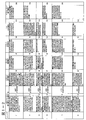
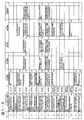
- FIG. 1-1 shows Arabidopsis thaliana, Chinese cabbage (Brassica rapavar.glabra), soybean (Glycine max), tomato (Solanum lycopersicum), rice (Oryza sativa), ma The amino acid sequence of is shown. Groups (1 to 75) indicate that the polypeptides included in each group are in the relationship of homologs having equivalent functions.
- the gene name described in the column of Arabidopsis thaliana indicates a name registered in the database of The Arabidopsis Information Resource (TAIR).
- FIG. 1-2 is a continuation of FIG. 1-1.
- FIG. 1-3 is a continuation of FIG. 1-4 is a continuation of FIG. 1-3.
- FIG. 1-5 is a continuation of FIG. 1-6 is a continuation of FIG.
- FIG. 1-7 is a continuation of FIG.
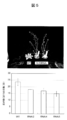
- FIG. 2 is a photograph showing typical phenotypes observed in various overexpressors produced in Example 2.
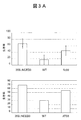
- FIG. 3A shows the survival rate in a drought stress tolerance test of flc39 (SEQ ID NO: 21) overexpressing body and AT33 (SEQ ID NO: 15) overexpressing body.
- 35S :: NCED3 is a genetically modified Arabidopsis thaliana that has drought tolerance that overexpresses the NCED3 gene.
- FIG. 3B shows the survival rate of the AT4 (SEQ ID NO: 70) overexpressor and AT35 (SEQ ID NO: 73) overexpressor in the high-temperature stress tolerance test.
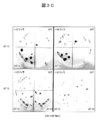
- FIG. 3C shows the survival rate in a salt stress tolerance test of AT13 (SEQ ID NO: 71) overexpressing body and AT19 (SEQ ID NO: 72) overexpressing body.
- FIG. 4 shows the results of GUS staining in leaves and long-horned fruits of various overexpressing bodies.
- FIG. 5 is a photographic diagram showing a typical phenotype observed in a flc39 (SEQ ID NO: 21) expression-inhibiting strain by RNAi, and a table showing the days until flowering of the strain.
- RNAi2, 4 and 5 are all RNAi molecules that target mRNA encoding flc39.
- FIG. 6 shows the results of an Arabidopsis thaliana growth test using a medium supplemented with a liquid medium of AT32 overexpressing body.
- FIG. 7 shows the results of a rice growth test using a medium supplemented with liquid medium components of AT32 overexpressing body.
- the present invention relates to a transformed plant comprising introducing into a host plant and overexpressing a gene encoding a polypeptide having an activity to control the morphology of the plant or a polypeptide having an activity to enhance environmental stress tolerance of the plant.
- the present invention relates to a transformed plant that overexpresses a polypeptide having an activity to control the morphology of the plant or a polypeptide having an activity to enhance the environmental stress tolerance of the plant.
- the polypeptide in the present invention has the activity of controlling the morphology of plants and / or the activity of enhancing the tolerance to environmental stress of plants.
- the polypeptide in the present invention includes any one of the amino acid sequences represented by SEQ ID NOs: 1 to 317, and preferably consists of the amino acid sequence.
- the polypeptide of the present invention has one, several, or one or more amino acid deletions, substitutions, additions or insertions in any one of the amino acid sequences represented by SEQ ID NOs: 1 to 317, and the sequence Similar to any of the polypeptides indicated by Nos. 1 to 317, a polypeptide having an activity of controlling the morphology of the plant and / or an activity of enhancing stress tolerance of the plant is also included.
- polypeptide of the present invention includes any one of the amino acid sequences represented by SEQ ID NOs: 1 to 317 and BLAST (Basic Local Alignment Search at the National Center for Biological Information (National Biological Information Center, Basic Local Alignment Search Tool). )) Etc.
- polypeptides having activity to control plant morphology and / or to enhance plant stress tolerance are also included.
- polypeptides include homologs (orthologs and paralogs) of any of the polypeptides represented by SEQ ID NOs: 1 to 317.
- the polypeptide of the present invention includes an amino acid sequence having the same identity as described above with a sequence of a plurality of consecutive amino acids in any of the amino acid sequences represented by SEQ ID NOs: 1 to 317, and preferably the amino acid sequence And a polypeptide having the activity of controlling the morphology of the plant and / or the activity of enhancing the stress tolerance of the plant, as well as any of the polypeptides represented by SEQ ID NOs: 1 to 317.
- the range of “plurality” for the number of consecutive amino acids is not particularly limited. For example, it is within 100, within 90, within 80, within 70, within 60, within 50, and 40. Within 30 pieces, within 20 pieces, within 10 pieces.
- the polypeptide in the present invention includes a peptide composed of a functional part of the above polypeptide (functional peptide).
- a functional peptide can be obtained, for example, by expressing a gene encoding the above polypeptide in a plant cell.
- functional peptides can be identified by determining the position of cleavage by removal of secretory signals or processing. For example, analysis of secretion signals can be performed using a program provided on the following website (http://www.cbs.dtu.dk/services/SignalP/).
- the polypeptides in the present invention can be classified as shown in FIG.
- polypeptides represented by SEQ ID NOs: 1 to 75 are derived from Arabidopsis thaliana.
- the polypeptides represented by SEQ ID NOs: 76 to 137 are derived from Chinese cabbage (Brassica rapa var. Glabra).
- the polypeptide represented by SEQ ID NOs: 138 to 183 is derived from soybean (Glycine max).
- the polypeptide represented by SEQ ID NOs: 184 to 226 is derived from tomato (Solanum lycopersicum).
- the polypeptide represented by SEQ ID NOs: 227 to 284 is derived from rice (Oryza sativa).
- the polypeptide represented by SEQ ID NOs: 285 to 317 is derived from corn (Zea mays).
- the group (1 to 75) has a homologous relationship in which the polypeptides included in each group have equivalent functions (at least the functions equivalent to the polypeptides derived from Arabidopsis included in each group). Show. That is, the polypeptides of SEQ ID NOs: 1, 76, 138, 184, 227, and 285 included in Group 1 have the above homolog relationship. The polypeptides of SEQ ID NOs: 2, 77, 139, 185, and 228 included in Group 2 have the above homolog relationship. The polypeptides of SEQ ID NOs: 3, 78, 140, 186, 229, and 286 included in Group 3 have the above homolog relationship.
- the polypeptides of SEQ ID NOs: 4, 79, 141, and 230 included in Group 4 are in the homologous relationship.
- the polypeptides of SEQ ID NOs: 6 and 80 included in Group 6 are in the homologous relationship.
- the polypeptides of SEQ ID NOs: 7, 81, 187, and 231 included in Group 7 have the above homolog relationship.
- the polypeptides of SEQ ID NOs: 8, 82, 142, 188, 232, and 287, which are included in Group 8, are in the homologous relationship.
- the polypeptides of SEQ ID NOs: 9 and 143 included in Group 9 are in the homologous relationship.
- the polypeptides of SEQ ID NOs: 10, 83, 144, 189, 233 and 288 included in Group 10 are in the homologous relationship.
- the polypeptides of SEQ ID NOs: 11, 84, 145, 190, 234, and 289 included in Group 11 are in the homologous relationship.
- the polypeptides of SEQ ID NOs: 12, 85, 146, 191, 235, and 290 included in Group 12 have the above homolog relationship.
- the polypeptides of SEQ ID NOs: 13, 86, 147, 192, and 236 included in Group 13 are in the homologous relationship.
- the polypeptides of SEQ ID NOs: 14, 87, 148, 193, 237, and 291 included in Group 14 are in the homologous relationship.
- the polypeptides of SEQ ID NOs: 15, 88, 149, 194, 238 and 292 included in Group 15 are in the homologous relationship.
- the polypeptides of SEQ ID NOs: 16, 89, 150, 195, and 239 included in Group 16 are in the above-mentioned homolog relationship.
- the polypeptides of SEQ ID NOs: 17, 90, 151 and 293 included in Group 17 are in the homologous relationship.
- the polypeptides of SEQ ID NOs: 19, 91, 152, 197, 240, and 294 included in Group 19 are in the homologous relationship.
- the polypeptides of SEQ ID NOs: 20 and 92 included in Group 20 are in the homologous relationship.
- the polypeptides of SEQ ID NOs: 21, 93, 153, 198, 241 and 295 included in Group 21 are in the homologous relationship.
- the polypeptides of SEQ ID NOs: 22, 94, 154, 242, and 296 included in Group 22 have the above homolog relationship.
- the polypeptides of SEQ ID NOs: 24, 95, 155, 199, and 243 included in Group 24 are in the homologous relationship.
- the polypeptides of SEQ ID NOs: 25, 96 and 244 included in Group 25 are in the homologous relationship.
- the polypeptides of SEQ ID NOs: 26, 97, 156, and 245 included in Group 26 are in the homologous relationship.
- the polypeptides of SEQ ID NOs: 27, 98, 157, 200, 246, and 297 included in Group 27 are in the homologous relationship.
- the polypeptides of SEQ ID NOs: 28, 158 and 247 included in Group 28 are in the homologous relationship.
- the polypeptides of SEQ ID NOs: 29, 99, 159, 201, and 298 included in Group 29 are in the homologous relationship.
- the polypeptides of SEQ ID NOs: 30, 100 and 248 included in Group 30 are in the homologous relationship.
- the polypeptides of SEQ ID NOs: 31, 202, 249 and 299 included in group 31 are in the homologous relationship.
- the polypeptides of SEQ ID NOs: 32, 101, 160, 250 and 300 contained in group 32 are in the homologous relationship.
- the polypeptides of SEQ ID NOs: 33, 102, 161, 203, 251 and 301 included in Group 33 are in the homologous relationship.
- the polypeptides of SEQ ID NOs: 34, 103, 162, 204, and 252 included in Group 34 are in the homologous relationship.
- the polypeptides of SEQ ID NOs: 35, 104, 163, 205, 253 and 302 included in group 35 are in the homologous relationship.
- the polypeptides of SEQ ID NOs: 36, 105, and 254 included in Group 36 are in the homologous relationship.
- the polypeptides of SEQ ID NOs: 37, 106, 164, 206, and 255 included in Group 37 are in the homologous relationship.
- the polypeptides of SEQ ID NOs: 38, 107, 207, 256, and 303 included in Group 38 are in the above homologous relationship.
- the polypeptides of SEQ ID NOs: 39, 108, 165, 208 and 257 included in Group 39 are in the homologous relationship.
- the polypeptides of SEQ ID NOs: 40, 109, 166, 209 and 258 included in group 40 are in the homologous relationship.
- the polypeptides of SEQ ID NOs: 41, 110, 259, and 304 included in Group 41 are in the homologous relationship.
- the polypeptides of SEQ ID NOs: 42, 111, 167, 210, and 260 included in group 42 are in the homologous relationship.
- the polypeptides of SEQ ID NOs: 43, 112, 168, 261, and 305 included in Group 43 are in the homologous relationship.
- the polypeptides of SEQ ID NOs: 44, 113, 169, and 262 included in Group 44 are in the homologous relationship.
- the polypeptides of SEQ ID NOs: 45, 114, 211, and 263 included in group 45 are in the homologous relationship.
- the polypeptides of SEQ ID NOs: 46, 115, 212, 264 and 306 included in group 46 are in the homologous relationship.
- the polypeptides of SEQ ID NOs: 47, 116, 170, 213 and 265 included in Group 47 are in the homologous relationship.
- the polypeptides of SEQ ID NOs: 48, 117, 214, and 266 included in Group 48 are in the homologous relationship.
- the polypeptides of SEQ ID NOs: 49, 118 and 267 contained in group 49 are in the homologous relationship.
- the polypeptides of SEQ ID NOs: 50 and 268 included in Group 50 are in the homologous relationship.
- the polypeptides of SEQ ID NOs: 51, 119, 171, 215, 269 and 307 included in Group 51 are in the homologous relationship.
- the polypeptides of SEQ ID NOs: 52, 120, 172, 216, 270, and 308 included in Group 52 have the homologous relationship.
- the polypeptides of SEQ ID NOs: 53, 121, 173, 217, 271 and 309 included in group 53 are in the homologous relationship.
- the polypeptides of SEQ ID NOs: 55, 122, 174, 218 and 272 included in group 55 are in the homologous relationship.
- the polypeptides of SEQ ID NOs: 56 and 123 included in group 56 are in the homologous relationship.
- the polypeptides of SEQ ID NOs: 58, 124 and 273 contained in Group 58 are in the homologous relationship.
- the polypeptides of SEQ ID NOs: 59, 125, 175, 219, 274 and 310 included in group 59 are in the homologous relationship.
- the polypeptides of SEQ ID NOs: 60 and 126 included in Group 60 are in the homologous relationship.
- the polypeptides of SEQ ID NOs: 61 and 127 included in Group 61 are in the homologous relationship.
- the polypeptides of SEQ ID NOs: 62, 128, 176, 220, 275 and 311 included in Group 62 are in the homologous relationship.
- the polypeptides of SEQ ID NOs: 63, 129, 177, 221, 276, and 312 included in Group 63 are in the homologous relationship.
- the polypeptides of SEQ ID NOs: 64, 130 and 277 included in Group 64 are in the homologous relationship.
- the polypeptides of SEQ ID NOs: 66, 178 and 278 included in Group 66 are in the homologous relationship.
- the polypeptides of SEQ ID NOs: 68 and 279 included in group 68 are in the homologous relationship.
- the polypeptides of SEQ ID NOs: 69 and 131 included in group 69 are in the homologous relationship.
- the polypeptides of SEQ ID NOs: 70 and 132 included in group 70 are in the homologous relationship.
- the polypeptides of SEQ ID NOs: 71, 133, 179, 222, 280, and 313 included in Group 71 are in the homologous relationship.
- the polypeptides of SEQ ID NOs: 72, 134, 180, 223, 281 and 314 included in group 72 are in the homologous relationship.
- the polypeptides of SEQ ID NOs: 73, 135, 181, 224, 282, and 315 included in Group 73 are in the homologous relationship.
- the polypeptides of SEQ ID NOs: 74, 136, 182, 225, 283, and 316 included in Group 74 are in the homologous relationship.
- the “plant” includes dicotyledonous plants and monocotyledonous plants, and also includes herbs and trees, Brassicaceae, Eggplant, Gramineae, Legumes, Cucurbitaceae, Convolvulaceae, Lilyaceae, One or more selected from so-called useful plants such as vegetables, fruit trees, horticultural crops belonging to, but not limited to, ceraceae, asteraceae, rose, citrus, myrtaceae, redwood, gentian, radish, etc. Means multiple plants.
- Arabidopsis thaliana, rape (Brassica campestris L.), cabbage (Brassica oleracea L. var. Capitata L.), broccoli (Brassica olerace L.). campestris L. var. amplicicaulis), eggplant (Solanum melongena L.), tobacco (Nicotiana tabacum L.), tomato (Lycopersicon esculentum umsum olsum ums. Petunia hybrida Vilm., Rice (Oryza sativa L.), maize (Zea mays L.), wheat (Triticum aestivum L.), barley (Hordeum vulgare L.).
- Azuki Vigna angularis Wild.
- Cucumber Cucumis sativus L.
- melon Cucumis melata L.
- Ipomoea bata mus L
- leeks Allium fistulosum L.
- nin morifolium lettuce (Lactuca sativa L.)
- rose Rosa pumilla Mill
- citrus Citras unsyuy
- spinach Spinacia oleracia L.
- gentian scabra bung. And the like, but are not limited thereto.
- “activity controlling plant morphology” refers to the size of the plant itself, the size of the plant organ (eg, leaves and rosettes, stems and shoots, roots, flowers, petals, fruits, bulbs and seeds). It means activity that affects the size (enlargement or hatching), shape, color tone (darkening or lightening etc.), number (increase or decrease).
- Polypeptides included in groups 1 to 69 have at least an activity to control plant morphology.
- the groups 3, 4, 5, 6, 7, 8, 9, 11, 12, 14, 17, 18, 19, 21, 23, 27, 29, 30, 31, 32, 34, 37, 39 , 44, 50, 51, 52, 56, 58, 59, 60, 62, 63, 64, 66 have at least an activity to control the size of the plant or its organ. More specifically, it is included in groups 3, 4, 5, 6, 7, 17, 18, 19, 21, 31, 37, 39, 44, 50, 51, 52, 56, 58, 59, 60, 66.
- the polypeptide has the activity of enlarging the plant or its organs.
- a polypeptide comprising or consisting of the amino acid sequence shown in the above has an activity of enlarging a plant or an organ thereof.
- the polypeptides included in groups 8, 9, 11, 12, 14, 23, 27, 29, 30, 32, 34, 62, 63, and 64 have at least an activity of hatching plants or their organs. More specifically, it includes the amino acid sequence represented by any of SEQ ID NOs: 8, 9, 11, 12, 14, 23, 27, 29, 30, 32, 34, 62, 63, 64, or from the amino acid sequence.
- the resulting polypeptide has the activity of hatching plants or their organs.
- transformants expressing any one or more combinations of these polypeptides and plants to which any one or more combinations of these polypeptides are applied are significantly more plants than wild type or untreated plants. Or the size of the organ changes.
- the polypeptides included in groups 2, 20, 36, 47, 54, and 69 have at least an activity of controlling plant flowering. More specifically, the polypeptides included in groups 2, 20, 36, 47, 54, and 69 have at least an activity of suppressing plant flowering. More specifically, a polypeptide comprising or consisting of the amino acid sequence represented by any of SEQ ID NOs: 2, 20, 36, 47, 54, 69 has an activity of suppressing plant flowering.
- transformants expressing any one or more combinations of these polypeptides and plants to which any one or more combinations of these polypeptides are applied are significantly more plants than wild type or untreated plants.
- the flowering time of is late.
- polypeptides included in groups 1, 10, 13, 15, 16, 22, 24, and 28 have at least an activity of controlling the shape of plant leaves and rosettes. More specifically, the polypeptides included in groups 1, 10, 13, 15, 16, 22, 24, and 28 change at least the shape of plant leaves and rosettes (eg, increase or decrease in leaf length or leaf width, surface For example, making the surface uneven or twisting.
- the polypeptide comprising the amino acid sequence represented by any one of SEQ ID NOs: 1, 10, 13, 15, 16, 22, 24, 28, or consisting of the amino acid sequence is in the form of plant leaves or rosettes.
- transformants expressing any one or more combinations of these polypeptides and plants to which any one or more combinations of these polypeptides are applied are significantly more plants than wild type or untreated plants.
- the shape of leaves and rosettes changes.
- polypeptides included in groups 25, 35, 43, 46, 49, 38, and 67 have at least an activity of controlling the color tone of plant leaves and rosettes. More specifically, the polypeptides included in groups 25, 35, 46, and 67 have at least an activity of darkening the color of the leaves and rosettes of plants.
- a polypeptide comprising or consisting of the amino acid sequence represented by any of SEQ ID NOs: 25, 35, 46, and 67 has an activity of darkening the color tone of plant leaves and rosettes.
- the polypeptides included in groups 38, 43, and 49 have at least an activity to lighten the color tone of plant leaves and rosettes.
- a polypeptide comprising or consisting of the amino acid sequence represented by any of SEQ ID NOs: 38, 43 and 49 has an activity to lighten the color tone of plant leaves and rosettes. Therefore, transformants expressing any one or more combinations of these polypeptides and plants to which any one or more combinations of these polypeptides are applied are significantly more plants than wild type or untreated plants. The color of leaves and rosettes changes.
- polypeptides included in groups 41 and 45 have at least an activity of controlling the shape of plant stems. More specifically, the polypeptides included in the groups 41 and 45 have at least an activity of changing the shape of the plant stem (for example, increasing or decreasing the thickness or length, branching, bending, twisting, etc.). More specifically, a polypeptide comprising or consisting of the amino acid sequence represented by any of SEQ ID NOs: 41 and 45 has an activity of changing the shape of a plant stem. Therefore, transformants expressing any one or more combinations of these polypeptides and plants to which any one or more combinations of these polypeptides are applied are significantly more plants than wild type or untreated plants. The shape of the stem changes.
- polypeptides included in group 48 have at least an activity of controlling the flower shape of plants. More specifically, the polypeptides included in group 48 have at least an activity of changing the shape of plant flowers (for example, enlargement, hatching, increase / decrease in petal number, change in color, etc.). More specifically, a polypeptide comprising or consisting of the amino acid sequence represented by SEQ ID NO: 48 has an activity of changing the shape of a plant flower. Therefore, transformants expressing any one or more combinations of these polypeptides and plants to which any one or more combinations of these polypeptides are applied are significantly more plants than wild type or untreated plants. The shape of the flower changes.
- the polypeptide contained in the group 26, 33, 40, 42, 53, 55, 57, 61, 65, 68 has at least an activity for controlling the formation and / or maturation of plant fruits. More specifically, the polypeptides included in the group 65 have at least an activity of changing the shape of the fruit of the plant (for example, surface unevenness, enlargement, hatching, color change, etc.). More specifically, a polypeptide comprising or consisting of the amino acid sequence represented by SEQ ID NO: 65 has an activity of changing the shape of a plant fruit. The polypeptides included in groups 61 and 68 have at least an activity of inhibiting the formation of plant fruits.
- a polypeptide comprising or consisting of the amino acid sequence represented by SEQ ID NOs: 61 and 68 has an activity of inhibiting the formation of plant fruits.
- the polypeptide contained in group 26,33,40,42,53,55,57 has the activity which inhibits the ripening of the fruit of a plant at least.
- a polypeptide comprising or consisting of the amino acid sequence represented by SEQ ID NOs: 26, 33, 40, 42, 53, 55, 57 has an activity of inhibiting the ripening of plant fruits. Therefore, transformants expressing any one or more combinations of these polypeptides and plants to which any one or more combinations of these polypeptides are applied are significantly more plants than wild type or untreated plants.
- the above polypeptide may have another activity in addition to the “activity controlling plant morphology” as defined above.
- the activity of each polypeptide is expressed as a wild type phenotype in a plant body in which the expression level of the polypeptide is increased (for example, an overexpression body described in detail below) or a plant to which the polypeptide is applied. Alternatively, it can be evaluated by comparative analysis with an untreated plant phenotype.
- “environmental stress” means stress that a plant receives from the growth environment / conditions, such as dryness, humidity, high temperature, low temperature, strong light, low light, salt, air pollutants, agricultural chemicals, diseases and the like ( It means stress caused by (but not limited to).
- “activity to enhance environmental stress tolerance of plants” means activity to improve the growth and / or survival rate of plants in the presence of environmental stress.
- Polypeptides included in Groups 15, 21, and 70-75 have at least an activity that enhances environmental stress tolerance of plants.
- the polypeptides included in groups 15 and 21 have at least an activity that enhances drought stress tolerance of plants.
- a polypeptide comprising or consisting of the amino acid sequence represented by any of SEQ ID NOs: 15 and 21 has an activity of enhancing drought stress tolerance of plants.
- “Dry stress” means stress when a state of water depletion is sustained or temporarily loaded.
- transformants expressing any one or more combinations of these polypeptides and plants to which any one or more combinations of these polypeptides are applied are more drought-stressed than wild-type or untreated plants. Undergrowth plant growth and / or survival can be improved.
- the polypeptides included in groups 70, 73, and 74 have at least an activity that enhances high temperature stress tolerance of plants. More specifically, a polypeptide comprising or consisting of the amino acid sequence represented by any of SEQ ID NOs: 70, 73 and 74 has an activity to enhance the high temperature stress tolerance of plants.
- “High temperature stress” means stress when, for example, a condition of 35 ° C. or higher is continuously or temporarily applied for several minutes or longer.
- transformants expressing any one or more combinations of these polypeptides and plants to which any one or more combinations of these polypeptides are applied are more susceptible to high temperature stress than wild type or untreated plants. Undergrowth plant growth and / or survival can be improved.
- the polypeptide contained in group 71,72,75 has the activity which enhances the salt stress tolerance of a plant at least. More specifically, a polypeptide comprising or consisting of the amino acid sequence represented by any of SEQ ID NOs: 71, 72, and 75 has an activity of enhancing plant salt stress tolerance.
- Salt stress means stress when the plant's physiological functions are damaged, such as the water potential of the soil decreases due to salts accumulated in the soil or medium, and the plant cannot absorb water. .
- transformants expressing any one or more combinations of these polypeptides as well as plants to which any one or more combinations of these polypeptides are applied are present in the presence of salt stress compared to wild type or untreated plants. Undergrowth plant growth and / or survival can be improved.
- the above polypeptide may have another activity in addition to the “activity for enhancing environmental stress tolerance of plants” as defined above.
- the activity of each polypeptide is determined in the presence of various stresses in a plant body in which the expression level of the polypeptide is increased (for example, an overexpression body described in detail below) or a plant to which the polypeptide is applied. Can be evaluated by comparative analysis with those of wild-type or untreated plants.
- a plant body in which the expression level of the polypeptide is increased (for example, an overexpression body described in detail below), or a plant to which the polypeptide is applied is wild type or It can be determined that stress tolerance could be imparted to a plant when it grew significantly compared to a plant to which no polypeptide was applied.
- the transformed plant of the present invention can be produced using a known transgenic method (translated by Matsuhashi Michio et al., Molecular Biology of Watson Recombinant DNA, Second Edition, 1994, Maruzen; Experimental protocol for model plants) 3rd revised edition (2005), supervised by Shimamoto, Okada and Tabata, Shujunsha).
- the transformed plant of the present invention can be prepared by linking a gene encoding the above polypeptide under the control of a promoter, incorporating it into a vector, and introducing the vector into an appropriate plant cell.
- the gene encoding the above polypeptide can be searched from public databases (RIKEN Arabidopsis full-length (RAFL) cDNA resources, NCBI Genbank, The Arabidopsis Information Resource (TAIR), etc.) and derived from plants with unknown sequence information
- the gene to be obtained can be obtained by cloning using gene information of a plant having a known sequence.
- a method for obtaining a desired gene by cloning is well known in the field of molecular biology.
- a suitable genomic library can be created by restriction endonuclease digestion and screened using a probe complementary to the desired gene sequence.
- the DNA can be amplified using standard amplification methods such as polymerase chain reaction (PCR) to obtain an amount of gene (DNA) suitable for transformation (gene transfer).
- the vector may be any vector generally known for plant transformation.
- a binary vector or other vectors can be used.
- the binary vector includes two approximately 25 bp border sequences of Agrobacterium T-DNA, right border (RB) and left border (LB), and a gene encoding the polypeptide is inserted between the border sequences. .
- Examples of the binary vector include pBI systems (for example, pBI101, pBI101.2, pBI101.3, pBI121, pBI221 (hereinafter Clontech)), pGA482, pGAH, pBIG, and the like.
- Other vectors include, for example, the intermediate plasmids pLGV23Neo, pNCAT, pMON200, etc., or pH35GS (Kubo et al., 2005, Genes & Dev. 19: 1855-1860) containing the GATEWAY cassette.
- the promoter is not particularly limited as long as it can drive gene expression in plant cells.
- cauliflower mosaic virus 35S promoter CaMV35S
- various actin gene promoters various ubiquitin gene promoters
- promoters of nopaline synthase genes tobacco PR1a gene promoter, napin gene promoter, oleosin gene promoter, and the like
- a selection marker necessary for selecting transformed cells is inserted into the vector.
- selectable markers are drug resistance genes such as kanamycin resistance gene, hygromycin resistance gene, bialaphos resistance gene and the like.
- transformation methods for introducing a vector constructed as described above into a plant include methods using Agrobacterium.
- gene guns, electroporation, viral vectors, florals It can also be introduced by a dip method, a leaf disk method, or the like.
- plant transformation technology and tissue culture technology for example, written by Shujunsha (2001), from Isao Shimamoto, supervised by Kiyotaka Okada, plant cell engineering series 15, experimental protocol of model plants, genetic techniques to genome analysis Has been.
- a method using a binary vector-Agrobacterium system a plant cell, a callus or a plant tissue piece is prepared, Agrobacterium is infected to the plant cell, and a gene encoding the polypeptide is introduced into the plant cell.
- a phenolic compound acetosyringone
- Agrobacterium Agrobacterium tumefaciens strains (C58, LBA4404, EHA101, EHA105, C58C1RifR, GV3101, etc.) can be used.
- an Agrobacterium fungus solution is prepared by culturing in the dark at about 25 ° C. for about 4 days, and plant callus or tissue (eg, leaf pieces, roots, stem pieces, growth points, etc.) is added to the fungus solution. Is immersed for several minutes to remove moisture, and then placed on a solid medium and co-cultured.
- Callus is a plant cell mass and can be induced from a plant tissue piece or a mature seed using a callus induction medium.
- the transformed callus or tissue piece is selected based on a selection marker, and then the callus can be re-differentiated into a young plant body in a regeneration medium.
- callus can be induced from plant pieces and redifferentiated into seedlings, or protoplasts can be prepared from plant pieces and redifferentiated into seedlings through callus culture.
- the seedlings thus obtained are transferred to soil after rooting and regenerated into plants.
- the floral dip method is used, for example, as described by Clow and Bent (Plant J.
- an Agrobacterium solution is about 25% in the dark. Soak the flower buds of the plant host to be transformed, which has been prepared by culturing at 4 ° C. for about 4 days, and grown until the immature flower buds develop in this fungus solution, cover and keep the humidity overnight; Uncover the next day and grow the plant as is to harvest the seed; transformed individuals can be selected by seeding the harvested seed on a solid medium supplemented with an appropriate selectable marker such as antibiotics The next-generation seed of the transgenic plant can be obtained by transferring and growing the individual thus selected in soil. Furthermore, a progeny having a novel trait similar to the transgenic plant can be created by crossing the transgenic plant with the wild type.
- Any plant can be used as a host as long as it is affected by the polypeptide.
- Such plants include, but are not limited to, the plants defined above.
- the transformed plant can express one or more of the above polypeptides, and the phenotype is changed and / or environmental stress tolerance is enhanced depending on the activity of the overexpressed one or more polypeptides. is doing.
- the present invention is mainly described for transformed plants that overexpress a polypeptide, a useful trait can also be obtained by suppressing the expression of the polypeptide. Suppression can be performed according to a conventionally known method such as gene disruption, RNAi, antisense RNA, ribozyme.
- the “transformed plant” includes the whole plant body (eg, seedlings, seedlings), a part of the plant (eg, organ, tissue, etc.), seed, callus, cell, and / or shoot. Including.
- the present invention also relates to an agricultural composition comprising a polypeptide having an activity to control plant morphology or a polypeptide having an activity to enhance environmental stress tolerance of plants.
- the agricultural composition of the present invention contains one or more of the above polypeptides as an active ingredient.
- “agriculture” means cultivation and production of cereals, vegetables, fruit trees, horticultural crops, etc., and the agricultural composition of the present invention can target various useful plants. Useful useful plants include, but are not limited to, the plants defined above.
- the polypeptide can be obtained from the transformed plant that overexpresses the polypeptide. That is, a transformed plant overexpressing the target polypeptide is pulverized by a known method such as ultrasonic treatment, French press, stone mortar, mortar, homogenizer, glass beads, etc. Known methods, such as ammonium sulfate salting out, precipitation separation with organic solvents (ethanol, methanol, acetone, etc.), ion exchange chromatography, isoelectric point chromatography, gel filtration chromatography, hydrophobic chromatography, adsorption Column chromatography, affinity chromatography using substrates or antibodies, chromatography such as reverse phase column chromatography, filtration treatment such as microfiltration, ultrafiltration, reverse osmosis filtration, etc.
- a known method such as ultrasonic treatment, French press, stone mortar, mortar, homogenizer, glass beads, etc.
- Known methods such as ammonium sulfate salting out, precipitation separation with organic solvents (ethanol, methanol
- the polypeptide secreted into the medium can be recovered by culturing a transformed plant that overexpresses the target polypeptide in the medium.
- the medium can be a liquid medium or a solid medium, but is preferably a liquid medium.
- the transformed plant is cultured in a suitable plant culture medium (for example, MS medium), and then the target polypeptide is extracted from the recovered medium. And / or can be purified.
- the culture may be continuous or batch.
- the polypeptide may be obtained by chemical methods (solid phase synthesis method, liquid phase synthesis method, etc.), microbial cells transformed to express the target polypeptide (for example, E.
- the obtained polypeptide may be dissolved or suspended in an appropriate solvent, or dried using a general drying method (for example, natural drying, heat drying, freeze drying, etc.) to obtain a dry powder state. Also good.
- the composition of the present invention can take various forms such as liquids, solids (tablets, powders, granules, etc.), and is preferably a liquid.
- the composition can include one or more other agriculturally acceptable ingredients.
- Such ingredients include water, additional nutrient substances, weak acids, vegetable oils, essential oils, metabolic stimulants, emulsifiers, thickeners, colorants, suspending agents, dispersing agents, carriers, excipients, wetting agents, etc. Although not limited to these. Further, the composition of the present invention may further contain a fertilizer, an insecticide, a fungicide, a nematicide and the like, if necessary. In the agricultural composition of the present invention, the polypeptide can be contained in an amount appropriately selected from the range of 0.01 to 95% by weight, for example.
- the present invention further relates to a method for growing a plant, comprising applying to the plant a polypeptide having an activity to control the morphology of the plant or a polypeptide having an activity to enhance stress tolerance of the plant.
- a method for growing a plant comprising applying to the plant a polypeptide having an activity to control the morphology of the plant or a polypeptide having an activity to enhance stress tolerance of the plant.
- the application method can be appropriately selected depending on the form of the polypeptide or the agricultural composition and the plant, for example, direct high-pressure or low-pressure spraying, injection, or spraying on the plant or soil or culture medium. , Coating, penetration, etc.
- Soil and culture medium can be moisturizers (for example, filter paper, fibers, wood, etc., gels made of polyvinyl alcohol (PVA), cellophane, cellulose acetate, cellulose nitrate, ethyl cellulose, polyester, etc.)
- PVA polyvinyl alcohol
- the polypeptide or the agricultural composition may be retained in the moisturizing agent.
- the application can be performed on various forms such as the whole plant (emergence, seedling, etc.), a part of the plant (eg, organ, tissue, etc.), seed, callus, cell, shoot.
- As the application concentration an amount appropriately selected from the range of 0.001 ppm to 1000 ppm, 0.01 ppm to 100 ppm, or 0.1 ppm to 100 ppm for the above-mentioned polypeptide as the active ingredient can be used. It can adjust suitably, without being limited to.
- the present invention is more specifically described by the following examples. However, the present invention is not limited by this example.
- Candidate genes are identified by Hanada et al, BIOINFORMICS, Vol. 26, no. 3, 2010, page 399-400, 96358 full-length cDNAs derived from Arabidopsis thaliana (RIKEN Arabidopsis full-length (RAFL) cDNA resources (http: //www.brc.rrc. /Lab/epd/catalog/cdnaclone.html) and NCBI Genbank (http://www.ncbi.nlm.nih.gov/genbank/)) identify 7901 short genes encoding 30-100 amino acid residues Then, the expression of these genes in Arabidopsis thaliana was analyzed using a microarray. As a result, the expression of 4664 genes was confirmed, and among these, 891 randomly selected were used for the production of the following overexpression body.
- RAFL Arabidopsis full-length
- Example 1 Gene overexpression and screening by phenotype
- Each of the 891 genes obtained in Example 1 was amplified using the PCR method, ligated under the control of a double 35S promoter, and introduced into the pMDC32 vector.
- a genetically modified binary vector was constructed.
- the vector was introduced into Agrobacterium tumefaciens (GV3101 strain), and the obtained Agrobacterium was infected with Arabidopsis thaliana using the floral dip method. Seedlings transformed on 50% MS medium (containing 20 mg l -1 hygromycin B, 100 mg l -1 cefotaxime) were selected and transplanted to soil. The prominent expression of each seedling was monitored.
- the phenotype of each seedling and the introduced gene are shown in Table 1 below.
- the change of a typical expression form is shown in FIG. As shown in Table 1, each phenotypic change was observed in each overexpressed body of 69 genes.
- Example 2 Screening by Stress Tolerance Test Forty out of 891 gene overexpressors prepared in Example 2 were subjected to the following stress tolerance test. Screening by the stress tolerance test was performed by three stress tolerance tests of dryness, salt, and high temperature. In each test, conditions were set so that the wild type exhibited a survival rate of about 10 to 30%, and the resistance was evaluated from the survival rate by comparing the wild type and the overexpressing body. Specific test methods are shown below.
- -Drought stress tolerance test In the drought tolerance test, plants grown for 10 days after seeding on MS plates were transferred to soil (pots) and grown for 7 days to fix the plants. Water supply was stopped, drying treatment was gradually performed, water supply was started again after 14 days of water supply stop, and the survival rate was observed after growth for 7 days.
- salt tolerance test In the salt tolerance test, plants were grown for 7 days after seeding on MS plates and then transferred to MS plates containing 200 mM NaCl. After 14 days of growth, the survival rate and the effects of salt stress were observed. did. ⁇ High stress temperature tolerance test In the high temperature tolerance test, plants grown for 14 days after sowing on MS plates were transferred to a 42 degree air tank incubator and subjected to high temperature treatment for 3 hours, and then grown at 22 degrees for 7 days. Was observed. In the high-temperature tolerance test, wild type and overexpressing plants were seeded on the same plate and tested. Table 2 below shows the stress tolerance phenotype of each seedling and the introduced gene. Moreover, the relationship between each stress and the mortality of each overexpressing body is shown to FIG. 3A-C. As shown in Table 2, each stress tolerance was observed in each overexpressed body of 8 genes.
- GUS Analysis About 69 genes introduced into seedlings in which phenotypic changes were found in Example 2 and 8 genes introduced into seedlings in which stress tolerance was changed in Example 3 The expression analysis of each gene was performed using the GUS fusion. A genomic fragment containing about 1 Kb upstream of the start codon of each gene and the ORF excluding the stop codon was amplified by PCR. A sequence required for GATEWAY (Invitrogen) cloning is added to the end of the obtained PCR product, cloned into a GATEWAY compatible vector (pDONR207), and the ORF and GUS gene are also fused to the GATEWAY compatible vector (pMDC162). Was inserted as follows.
- the constructed construct was transformed into Arabidopsis thaliana by Agrobacterium method.
- Each organ of the obtained transformant was analyzed by GUS staining.
- a typical result of GUS analysis of each gene is shown in FIG.
- FIG. 4 A typical result of GUS analysis of each gene is shown in FIG. 4, GUS was stained and detected in each organ (for example, leaves, pods, and seedlings) of each transformant, and it was confirmed that these genes were expressed in the plant body.
- RNAi Gene function suppression test by RNAi
- RNAi molecules were prepared based on a conventionally known method. That is, an oligonucleotide was synthesized by linking the sense strand and antisense strand of each gene in the reverse direction via a loop sequence (linker sequence).
- RNAi molecules for each gene were amplified by PCR, and sequences necessary for GATEWAY cloning were added to the ends of the obtained PCR products.
- the PCR product was cloned into a GATEWAY compatible vector (pDONR207). Furthermore, this ORF was inserted into an overexpression vector (pMDC32) corresponding to GATEWAY and transformed in the same manner as in Example 2 to produce a transformed plant that suppresses the target gene with RNAi molecules.
- pMDC32 overexpression vector
- FIG. 5 A typical result of the gene function suppression test by RNAi of each gene is shown in FIG. As shown in FIG. 5, changes in plant growth and flowering time were observed by suppressing the suppression of flc39 gene function.
- the medium was collected, lyophilized, and dissolved in 10 ml of sterilized water.
- MS concentration of this solution is a normal concentration (theoretically, the amount of the secreted peptide is 10 times that before lyophilization).
- 1 mL of this solution was added to filter paper spread on MS agar medium not containing sucrose, and 25 seeds of wild type seeds were sown per petri dish. After allowing to stand at 4 ° C. in the dark, germination was performed under long-day conditions of 22 ° C., and on the second day after germination, the solution was added once again and grown for another 2 weeks to observe the morphology.
- a typical result of the addition test of each gene is shown in FIG. As shown in FIG.
- a plant having a desired phenotype and / or desired stress tolerance can be obtained.
- a desired phenotype and / or desired stress tolerance can be provided to a plant. This makes it possible to produce useful crops efficiently and is expected to contribute in various fields related to the production and use of useful crops. All publications, patents and patent applications cited herein are incorporated herein by reference in their entirety.
Landscapes
- Health & Medical Sciences (AREA)
- Genetics & Genomics (AREA)
- Life Sciences & Earth Sciences (AREA)
- Chemical & Material Sciences (AREA)
- Engineering & Computer Science (AREA)
- Organic Chemistry (AREA)
- Molecular Biology (AREA)
- Wood Science & Technology (AREA)
- Biotechnology (AREA)
- General Engineering & Computer Science (AREA)
- Bioinformatics & Cheminformatics (AREA)
- Biomedical Technology (AREA)
- Zoology (AREA)
- Biochemistry (AREA)
- General Health & Medical Sciences (AREA)
- Biophysics (AREA)
- Microbiology (AREA)
- Physics & Mathematics (AREA)
- Plant Pathology (AREA)
- Cell Biology (AREA)
- Botany (AREA)
- Gastroenterology & Hepatology (AREA)
- Medicinal Chemistry (AREA)
- Proteomics, Peptides & Aminoacids (AREA)
- Virology (AREA)
- Peptides Or Proteins (AREA)
- Breeding Of Plants And Reproduction By Means Of Culturing (AREA)
- Micro-Organisms Or Cultivation Processes Thereof (AREA)
Description
本発明は、所望の表現型および/または所望の環境ストレス耐性を有する植物、ならびに、所望の表現型および/または所望の環境ストレス耐性を植物に付与するための方法に関する。
植物ホルモンは、植物の生長の促進や抑制、果実肥大などの機能を有しており、従来的に、農作物の栽培などに広く利用されている。
近年、植物において発現される、比較的小さな遺伝子によってコードされる低分子ペプチドが、ホルモン様の生理活性を示し、植物の発生や形態形成に重要な役割を果たすことが明らかにされ、注目されている。
しかしながら、植物の低分子ペプチドの機能についての研究はあまり進んでおらず、当該分野においては有用な低分子ペプチドの開発、およびそれを利用した新農法の開発が望まれている。
近年、植物において発現される、比較的小さな遺伝子によってコードされる低分子ペプチドが、ホルモン様の生理活性を示し、植物の発生や形態形成に重要な役割を果たすことが明らかにされ、注目されている。
しかしながら、植物の低分子ペプチドの機能についての研究はあまり進んでおらず、当該分野においては有用な低分子ペプチドの開発、およびそれを利用した新農法の開発が望まれている。
本発明は、所望の表現型および/または所望の環境ストレス耐性を有する植物を提供すること、ならびに、所望の表現型および/または所望のストレス耐性を植物に付与するための方法を提供することを目的とする。
本願発明者らは、上記課題を解決すべく鋭意検討した結果、植物の形態制御および植物の環境ストレス耐性に関与する75種のポリペプチドをシロイヌナズナ等の植物より見出し、本発明を完成させるに至った。
すなわち、本発明は以下のとおりである。
[1] 植物の形態を制御する活性を有するポリペプチドまたは植物の環境ストレス耐性を増強する活性を有するポリペプチドをコードする遺伝子を宿主植物に導入して過剰発現させることを含む、形質転換植物の作出方法であって、該ポリペプチドが以下より選択される一または複数のポリペプチドである、上記方法:
(a)配列番号1~317で表されるいずれかのアミノ酸配列を含むポリペプチド;
(b)配列番号1~317で表されるいずれかのアミノ酸配列において1または数個のアミノ酸の欠失、置換、付加または挿入を有するアミノ酸配列を含み、かつ植物の形態を制御する活性または植物の環境ストレス耐性を増強する活性を有するポリペプチド:
(c)配列番号1~317で表されるいずれかのアミノ酸配列と60%以上の同一性を有するアミノ酸配列を含み、かつ植物の形態を制御する活性または植物の環境ストレス耐性を増強する活性を有するポリペプチド:
(d)(a)~(c)のいずれかのポリペプチドをコードする遺伝子を植物細胞中で発現させて得られる、植物の形態を制御する活性または植物の環境ストレス耐性を増強する活性を有するポリペプチド。
[2] ポリペプチドが、植物の形態を制御する活性を有し、以下より選択される一または複数のポリペプチドである、[1]の方法:
(e)配列番号1~69で表されるいずれかのアミノ酸配列を含むポリペプチド;
(f)配列番号1~69で表されるいずれかのアミノ酸配列において1または数個のアミノ酸の欠失、置換、付加または挿入を有するアミノ酸配列を含み、かつ植物の形態を制御する活性を有するポリペプチド:
(g)配列番号1~69で表されるいずれかのアミノ酸配列と60%以上の同一性を有するアミノ酸配列を含み、かつ植物の形態を制御する活性を有するポリペプチド:
(h)(e)~(g)のいずれかのポリペプチドをコードする遺伝子を植物細胞中で発現させて得られる、植物の形態を制御する活性を有するポリペプチド。
[3] ポリペプチドが、植物の環境ストレス耐性を増強する活性を有し、以下より選択される一または複数のポリペプチドである、[1]の方法:
(i)配列番号15,21,70~75で表されるいずれかのアミノ酸配列を含むポリペプチド;
(j)配列番号15,21,70~75で表されるいずれかのアミノ酸配列において1または数個のアミノ酸の欠失、置換、付加または挿入を有するアミノ酸配列を含み、かつ植物の環境ストレス耐性を増強する活性を有するポリペプチド:
(k)配列番号15,21,70~75で表されるいずれかのアミノ酸配列と60%以上の同一性を有するアミノ酸配列を含み、かつ植物の環境ストレス耐性を増強する活性を有するポリペプチド:
(l)(i)~(k)のいずれかのポリペプチドをコードする遺伝子を植物細胞中で発現させて得られる、植物の環境ストレス耐性を増強する活性を有するポリペプチド。
[4] 植物の形態を制御する活性を有するポリペプチドまたは植物の環境ストレス耐性を増強する活性を有するポリペプチドを過剰発現する形質転換植物であって、該ポリペプチドが以下より選択される一または複数のポリペプチドである、上記形質転換植物:
(a)配列番号1~317で表されるいずれかのアミノ酸配列を含むポリペプチド;
(b)配列番号1~317で表されるいずれかのアミノ酸配列において1または数個のアミノ酸の欠失、置換、付加または挿入を有するアミノ酸配列を含み、かつ植物の形態を制御する活性または植物の環境ストレス耐性を増強する活性を有するポリペプチド:
(c)配列番号1~317で表されるいずれかのアミノ酸配列と60%以上の同一性を有するアミノ酸配列を含み、かつ植物の形態を制御する活性または植物の環境ストレス耐性を増強する活性を有するポリペプチド:
(d)(a)~(c)のいずれかのポリペプチドをコードする遺伝子を植物細胞中で発現させて得られる、植物の形態を制御する活性または植物の環境ストレス耐性を増強する活性を有するポリペプチド。
[5] ポリペプチドが、植物の形態を制御する活性を有し、以下より選択される一または複数のポリペプチドである、[4]の形質転換植物:
(e)配列番号1~69で表されるいずれかのアミノ酸配列を含むポリペプチド;
(f)配列番号1~69で表されるいずれかのアミノ酸配列において1または数個のアミノ酸の欠失、置換、付加または挿入を有するアミノ酸配列を含み、かつ植物の形態を制御する活性を有するポリペプチド:
(g)配列番号1~69で表されるいずれかのアミノ酸配列と60%以上の同一性を有するアミノ酸配列を含み、かつ植物の形態を制御する活性を有するポリペプチド:
(h)(e)~(g)のいずれかのポリペプチドをコードする遺伝子を植物細胞中で発現させて得られる、植物の形態を制御する活性を有するポリペプチド。
[6] ポリペプチドが、植物の環境ストレス耐性を増強する活性を有し、以下より選択される一または複数のポリペプチドである、[4]の形質転換植物:
(i)配列番号15,21,70~75で表されるいずれかのアミノ酸配列を含むポリペプチド;
(j)配列番号15,21,70~75で表されるいずれかのアミノ酸配列において1または数個のアミノ酸の欠失、置換、付加または挿入を有するアミノ酸配列を含み、かつ植物の環境ストレス耐性を増強する活性を有するポリペプチド:
(k)配列番号15,21,70~75で表されるいずれかのアミノ酸配列と60%以上の同一性を有するアミノ酸配列を含み、かつ植物の環境ストレス耐性を増強する活性を有するポリペプチド:
(l)(i)~(k)のいずれかのポリペプチドをコードする遺伝子を植物細胞中で発現させて得られる、植物の環境ストレス耐性を増強する活性を有するポリペプチド。
[7] 植物の形態を制御する活性を有するポリペプチドまたは植物の環境ストレス耐性を増強する活性を有するポリペプチドを含む農業用組成物であって、該ポリペプチドが以下より選択される一または複数のポリペプチドである、上記組成物:
(a)配列番号1~317で表されるいずれかのアミノ酸配列を含むポリペプチド;
(b)配列番号1~317で表されるいずれかのアミノ酸配列において1または数個のアミノ酸の欠失、置換、付加または挿入を有するアミノ酸配列を含み、かつ植物の形態を制御する活性または植物の環境ストレス耐性を増強する活性を有するポリペプチド:
(c)配列番号1~317で表されるいずれかのアミノ酸配列と60%以上の同一性を有するアミノ酸配列を含み、かつ植物の形態を制御する活性または植物の環境ストレス耐性を増強する活性を有するポリペプチド:
(d)(a)~(c)のいずれかのポリペプチドをコードする遺伝子を植物細胞中で発現させて得られる、植物の形態を制御する活性または植物の環境ストレス耐性を増強する活性を有するポリペプチド。
[8] ポリペプチドが、植物の形態を制御する活性を有し、以下より選択される一または複数のポリペプチドである、[7]の組成物:
(e)配列番号1~69で表されるいずれかのアミノ酸配列を含むポリペプチド;
(f)配列番号1~69で表されるいずれかのアミノ酸配列において1または数個のアミノ酸の欠失、置換、付加または挿入を有するアミノ酸配列を含み、かつ植物の形態を制御する活性を有するポリペプチド:
(g)配列番号1~69で表されるいずれかのアミノ酸配列と60%以上の同一性を有するアミノ酸配列を含み、かつ植物の形態を制御する活性を有するポリペプチド:
(h)(e)~(g)のいずれかのポリペプチドをコードする遺伝子を植物細胞中で発現させて得られる、植物の形態を制御する活性を有するポリペプチド。
[9] ポリペプチドが、植物のストレス耐性を増強する活性を有し、以下より選択される一または複数のポリペプチドである、[7]の組成物:
(i)配列番号15,21,70~75で表されるいずれかのアミノ酸配列を含むポリペプチド;
(j)配列番号15,21,70~75で表されるいずれかのアミノ酸配列において1または数個のアミノ酸の欠失、置換、付加または挿入を有するアミノ酸配列を含み、かつ植物の環境ストレス耐性を増強する活性を有するポリペプチド:
(k)配列番号15,21,70~75で表されるいずれかのアミノ酸配列と60%以上の同一性を有するアミノ酸配列を含み、かつ植物の環境ストレス耐性を増強する活性を有するポリペプチド:
(l)(i)~(k)のいずれかのポリペプチドをコードする遺伝子を植物細胞中で発現させて得られる、植物の環境ストレス耐性を増強する活性を有するポリペプチド。
[10] 植物の形態を制御する活性を有するポリペプチドまたは植物のストレス耐性を増強する活性を有するポリペプチドを植物に施用することを含む、植物の育成方法であって、該ポリペプチドが以下より選択される一または複数のポリペプチドである、上記方法:
(a)配列番号1~317で表されるいずれかのアミノ酸配列を含むポリペプチド;
(b)配列番号1~317で表されるいずれかのアミノ酸配列において1または数個のアミノ酸の欠失、置換、付加または挿入を有するアミノ酸配列を含み、かつ植物の形態を制御する活性または植物の環境ストレス耐性を増強する活性を有するポリペプチド:
(c)配列番号1~317で表されるいずれかのアミノ酸配列と60%以上の同一性を有するアミノ酸配列を含み、かつ植物の形態を制御する活性または植物の環境ストレス耐性を増強する活性を有するポリペプチド:
(d)(a)~(c)のいずれかのポリペプチドをコードする遺伝子を植物細胞中で発現させて得られる、植物の形態を制御する活性または植物の環境ストレス耐性を増強する活性を有するポリペプチド。
[11] ポリペプチドが、植物の形態を制御する活性を有し、以下より選択される一または複数のポリペプチドである、[10]の方法:
(e)配列番号1~69で表されるいずれかのアミノ酸配列を含むポリペプチド;
(f)配列番号1~69で表されるいずれかのアミノ酸配列において1または数個のアミノ酸の欠失、置換、付加または挿入を有するアミノ酸配列を含み、かつ植物の形態を制御する活性を有するポリペプチド:
(g)配列番号1~69で表されるいずれかのアミノ酸配列と60%以上の同一性を有するアミノ酸配列を含み、かつ植物の形態を制御する活性を有するポリペプチド:
(h)(e)~(g)のいずれかのポリペプチドをコードする遺伝子を植物細胞中で発現させて得られる、植物の形態を制御する活性を有するポリペプチド。
[12] ポリペプチドが、植物のストレス耐性を増強する活性を有し、以下より選択される一または複数のポリペプチドである、[10]の方法:
(i)配列番号15,21,70~75で表されるいずれかのアミノ酸配列を含むポリペプチド;
(j)配列番号15,21,70~75で表されるいずれかのアミノ酸配列において1または数個のアミノ酸の欠失、置換、付加または挿入を有するアミノ酸配列を含み、かつ植物の環境ストレス耐性を増強する活性を有するポリペプチド:
(k)配列番号15,21,70~75で表されるいずれかのアミノ酸配列と60%以上の同一性を有するアミノ酸配列を含み、かつ植物の環境ストレス耐性を増強する活性を有するポリペプチド:
(l)(i)~(k)のいずれかのポリペプチドをコードする遺伝子を植物細胞中で発現させて得られる、植物の環境ストレス耐性を増強する活性を有するポリペプチド。
本発明によれば、所望の表現型および所望の環境ストレス耐性を有する植物を得ることができる。
また、本発明によれば、所望の表現型および所望の環境ストレス耐性を植物に付与することができる。
本明細書は本願の優先権の基礎である日本国特許出願2012−059415号の明細書および/または図面に記載される内容を包含する。
本願発明者らは、上記課題を解決すべく鋭意検討した結果、植物の形態制御および植物の環境ストレス耐性に関与する75種のポリペプチドをシロイヌナズナ等の植物より見出し、本発明を完成させるに至った。
すなわち、本発明は以下のとおりである。
[1] 植物の形態を制御する活性を有するポリペプチドまたは植物の環境ストレス耐性を増強する活性を有するポリペプチドをコードする遺伝子を宿主植物に導入して過剰発現させることを含む、形質転換植物の作出方法であって、該ポリペプチドが以下より選択される一または複数のポリペプチドである、上記方法:
(a)配列番号1~317で表されるいずれかのアミノ酸配列を含むポリペプチド;
(b)配列番号1~317で表されるいずれかのアミノ酸配列において1または数個のアミノ酸の欠失、置換、付加または挿入を有するアミノ酸配列を含み、かつ植物の形態を制御する活性または植物の環境ストレス耐性を増強する活性を有するポリペプチド:
(c)配列番号1~317で表されるいずれかのアミノ酸配列と60%以上の同一性を有するアミノ酸配列を含み、かつ植物の形態を制御する活性または植物の環境ストレス耐性を増強する活性を有するポリペプチド:
(d)(a)~(c)のいずれかのポリペプチドをコードする遺伝子を植物細胞中で発現させて得られる、植物の形態を制御する活性または植物の環境ストレス耐性を増強する活性を有するポリペプチド。
[2] ポリペプチドが、植物の形態を制御する活性を有し、以下より選択される一または複数のポリペプチドである、[1]の方法:
(e)配列番号1~69で表されるいずれかのアミノ酸配列を含むポリペプチド;
(f)配列番号1~69で表されるいずれかのアミノ酸配列において1または数個のアミノ酸の欠失、置換、付加または挿入を有するアミノ酸配列を含み、かつ植物の形態を制御する活性を有するポリペプチド:
(g)配列番号1~69で表されるいずれかのアミノ酸配列と60%以上の同一性を有するアミノ酸配列を含み、かつ植物の形態を制御する活性を有するポリペプチド:
(h)(e)~(g)のいずれかのポリペプチドをコードする遺伝子を植物細胞中で発現させて得られる、植物の形態を制御する活性を有するポリペプチド。
[3] ポリペプチドが、植物の環境ストレス耐性を増強する活性を有し、以下より選択される一または複数のポリペプチドである、[1]の方法:
(i)配列番号15,21,70~75で表されるいずれかのアミノ酸配列を含むポリペプチド;
(j)配列番号15,21,70~75で表されるいずれかのアミノ酸配列において1または数個のアミノ酸の欠失、置換、付加または挿入を有するアミノ酸配列を含み、かつ植物の環境ストレス耐性を増強する活性を有するポリペプチド:
(k)配列番号15,21,70~75で表されるいずれかのアミノ酸配列と60%以上の同一性を有するアミノ酸配列を含み、かつ植物の環境ストレス耐性を増強する活性を有するポリペプチド:
(l)(i)~(k)のいずれかのポリペプチドをコードする遺伝子を植物細胞中で発現させて得られる、植物の環境ストレス耐性を増強する活性を有するポリペプチド。
[4] 植物の形態を制御する活性を有するポリペプチドまたは植物の環境ストレス耐性を増強する活性を有するポリペプチドを過剰発現する形質転換植物であって、該ポリペプチドが以下より選択される一または複数のポリペプチドである、上記形質転換植物:
(a)配列番号1~317で表されるいずれかのアミノ酸配列を含むポリペプチド;
(b)配列番号1~317で表されるいずれかのアミノ酸配列において1または数個のアミノ酸の欠失、置換、付加または挿入を有するアミノ酸配列を含み、かつ植物の形態を制御する活性または植物の環境ストレス耐性を増強する活性を有するポリペプチド:
(c)配列番号1~317で表されるいずれかのアミノ酸配列と60%以上の同一性を有するアミノ酸配列を含み、かつ植物の形態を制御する活性または植物の環境ストレス耐性を増強する活性を有するポリペプチド:
(d)(a)~(c)のいずれかのポリペプチドをコードする遺伝子を植物細胞中で発現させて得られる、植物の形態を制御する活性または植物の環境ストレス耐性を増強する活性を有するポリペプチド。
[5] ポリペプチドが、植物の形態を制御する活性を有し、以下より選択される一または複数のポリペプチドである、[4]の形質転換植物:
(e)配列番号1~69で表されるいずれかのアミノ酸配列を含むポリペプチド;
(f)配列番号1~69で表されるいずれかのアミノ酸配列において1または数個のアミノ酸の欠失、置換、付加または挿入を有するアミノ酸配列を含み、かつ植物の形態を制御する活性を有するポリペプチド:
(g)配列番号1~69で表されるいずれかのアミノ酸配列と60%以上の同一性を有するアミノ酸配列を含み、かつ植物の形態を制御する活性を有するポリペプチド:
(h)(e)~(g)のいずれかのポリペプチドをコードする遺伝子を植物細胞中で発現させて得られる、植物の形態を制御する活性を有するポリペプチド。
[6] ポリペプチドが、植物の環境ストレス耐性を増強する活性を有し、以下より選択される一または複数のポリペプチドである、[4]の形質転換植物:
(i)配列番号15,21,70~75で表されるいずれかのアミノ酸配列を含むポリペプチド;
(j)配列番号15,21,70~75で表されるいずれかのアミノ酸配列において1または数個のアミノ酸の欠失、置換、付加または挿入を有するアミノ酸配列を含み、かつ植物の環境ストレス耐性を増強する活性を有するポリペプチド:
(k)配列番号15,21,70~75で表されるいずれかのアミノ酸配列と60%以上の同一性を有するアミノ酸配列を含み、かつ植物の環境ストレス耐性を増強する活性を有するポリペプチド:
(l)(i)~(k)のいずれかのポリペプチドをコードする遺伝子を植物細胞中で発現させて得られる、植物の環境ストレス耐性を増強する活性を有するポリペプチド。
[7] 植物の形態を制御する活性を有するポリペプチドまたは植物の環境ストレス耐性を増強する活性を有するポリペプチドを含む農業用組成物であって、該ポリペプチドが以下より選択される一または複数のポリペプチドである、上記組成物:
(a)配列番号1~317で表されるいずれかのアミノ酸配列を含むポリペプチド;
(b)配列番号1~317で表されるいずれかのアミノ酸配列において1または数個のアミノ酸の欠失、置換、付加または挿入を有するアミノ酸配列を含み、かつ植物の形態を制御する活性または植物の環境ストレス耐性を増強する活性を有するポリペプチド:
(c)配列番号1~317で表されるいずれかのアミノ酸配列と60%以上の同一性を有するアミノ酸配列を含み、かつ植物の形態を制御する活性または植物の環境ストレス耐性を増強する活性を有するポリペプチド:
(d)(a)~(c)のいずれかのポリペプチドをコードする遺伝子を植物細胞中で発現させて得られる、植物の形態を制御する活性または植物の環境ストレス耐性を増強する活性を有するポリペプチド。
[8] ポリペプチドが、植物の形態を制御する活性を有し、以下より選択される一または複数のポリペプチドである、[7]の組成物:
(e)配列番号1~69で表されるいずれかのアミノ酸配列を含むポリペプチド;
(f)配列番号1~69で表されるいずれかのアミノ酸配列において1または数個のアミノ酸の欠失、置換、付加または挿入を有するアミノ酸配列を含み、かつ植物の形態を制御する活性を有するポリペプチド:
(g)配列番号1~69で表されるいずれかのアミノ酸配列と60%以上の同一性を有するアミノ酸配列を含み、かつ植物の形態を制御する活性を有するポリペプチド:
(h)(e)~(g)のいずれかのポリペプチドをコードする遺伝子を植物細胞中で発現させて得られる、植物の形態を制御する活性を有するポリペプチド。
[9] ポリペプチドが、植物のストレス耐性を増強する活性を有し、以下より選択される一または複数のポリペプチドである、[7]の組成物:
(i)配列番号15,21,70~75で表されるいずれかのアミノ酸配列を含むポリペプチド;
(j)配列番号15,21,70~75で表されるいずれかのアミノ酸配列において1または数個のアミノ酸の欠失、置換、付加または挿入を有するアミノ酸配列を含み、かつ植物の環境ストレス耐性を増強する活性を有するポリペプチド:
(k)配列番号15,21,70~75で表されるいずれかのアミノ酸配列と60%以上の同一性を有するアミノ酸配列を含み、かつ植物の環境ストレス耐性を増強する活性を有するポリペプチド:
(l)(i)~(k)のいずれかのポリペプチドをコードする遺伝子を植物細胞中で発現させて得られる、植物の環境ストレス耐性を増強する活性を有するポリペプチド。
[10] 植物の形態を制御する活性を有するポリペプチドまたは植物のストレス耐性を増強する活性を有するポリペプチドを植物に施用することを含む、植物の育成方法であって、該ポリペプチドが以下より選択される一または複数のポリペプチドである、上記方法:
(a)配列番号1~317で表されるいずれかのアミノ酸配列を含むポリペプチド;
(b)配列番号1~317で表されるいずれかのアミノ酸配列において1または数個のアミノ酸の欠失、置換、付加または挿入を有するアミノ酸配列を含み、かつ植物の形態を制御する活性または植物の環境ストレス耐性を増強する活性を有するポリペプチド:
(c)配列番号1~317で表されるいずれかのアミノ酸配列と60%以上の同一性を有するアミノ酸配列を含み、かつ植物の形態を制御する活性または植物の環境ストレス耐性を増強する活性を有するポリペプチド:
(d)(a)~(c)のいずれかのポリペプチドをコードする遺伝子を植物細胞中で発現させて得られる、植物の形態を制御する活性または植物の環境ストレス耐性を増強する活性を有するポリペプチド。
[11] ポリペプチドが、植物の形態を制御する活性を有し、以下より選択される一または複数のポリペプチドである、[10]の方法:
(e)配列番号1~69で表されるいずれかのアミノ酸配列を含むポリペプチド;
(f)配列番号1~69で表されるいずれかのアミノ酸配列において1または数個のアミノ酸の欠失、置換、付加または挿入を有するアミノ酸配列を含み、かつ植物の形態を制御する活性を有するポリペプチド:
(g)配列番号1~69で表されるいずれかのアミノ酸配列と60%以上の同一性を有するアミノ酸配列を含み、かつ植物の形態を制御する活性を有するポリペプチド:
(h)(e)~(g)のいずれかのポリペプチドをコードする遺伝子を植物細胞中で発現させて得られる、植物の形態を制御する活性を有するポリペプチド。
[12] ポリペプチドが、植物のストレス耐性を増強する活性を有し、以下より選択される一または複数のポリペプチドである、[10]の方法:
(i)配列番号15,21,70~75で表されるいずれかのアミノ酸配列を含むポリペプチド;
(j)配列番号15,21,70~75で表されるいずれかのアミノ酸配列において1または数個のアミノ酸の欠失、置換、付加または挿入を有するアミノ酸配列を含み、かつ植物の環境ストレス耐性を増強する活性を有するポリペプチド:
(k)配列番号15,21,70~75で表されるいずれかのアミノ酸配列と60%以上の同一性を有するアミノ酸配列を含み、かつ植物の環境ストレス耐性を増強する活性を有するポリペプチド:
(l)(i)~(k)のいずれかのポリペプチドをコードする遺伝子を植物細胞中で発現させて得られる、植物の環境ストレス耐性を増強する活性を有するポリペプチド。
本発明によれば、所望の表現型および所望の環境ストレス耐性を有する植物を得ることができる。
また、本発明によれば、所望の表現型および所望の環境ストレス耐性を植物に付与することができる。
本明細書は本願の優先権の基礎である日本国特許出願2012−059415号の明細書および/または図面に記載される内容を包含する。
図1−1は、シロイヌナズナ(Arabidopsis thaliana)、ハクサイ(Brassica rapavar.glabra)、ダイズ(Glycine max)、トマト(Solanum lycopersicum)、イネ(Oryza sativa)、およびトウモロコシ(Zea mays)に由来する、ポリペプチドのアミノ酸配列を示す。グループ(1~75)は、各グループに含まれるポリペプチドが同等の機能を有するホモログの関係にあることを示す。シロイヌナズナの欄に記載する遺伝子名は、The Arabidopsis Information Resource(TAIR)のデータベースにおいて登録された名称を示す。
図1−2は、図1−1の続きである。
図1−3は、図1−2の続きである。
図1−4は、図1−3の続きである。
図1−5は、図1−4の続きである。
図1−6は、図1−5の続きである。
図1−7は、図1−6の続きである。
図2は、実施例2にて作製された各種過剰発現体において観察された代表的な表現型を示す写真図である。
図3Aは、flc39(配列番号21)過剰発現体およびAT33(配列番号15)過剰発現体の乾燥ストレス耐性試験における生存率を示す。35S::NCED3とは、NCED3遺伝子を過剰発現する乾燥耐性を有する、遺伝子組換えシロイヌナズナである。
図3Bは、AT4(配列番号70)過剰発現体およびAT35(配列番号73)過剰発現体の高温ストレス耐性試験における生存率を示す。
図3Cは、AT13(配列番号71)過剰発現体およびAT19(配列番号72)過剰発現体の塩ストレス耐性試験における生存率を示す。
図4は、各種過剰発現体の葉および長角果におけるGUS染色の結果を示す。
図5は、RNAiによるflc39(配列番号21)発現阻害株において観察された代表的な表現型を示す写真図と、当該株の開花までの日数を示す表図である。RNAi2,4,5はいずれもflc39をコードするmRNAを標的とするRNAi分子である。
図6は、AT32過剰発現体の液体培地を添加した培地を用いたシロイヌナズナの生育試験の結果を示す。
図7は、AT32過剰発現体の液体培地成分を添加した培地を用いたイネの生育試験の結果を示す。
図1−2は、図1−1の続きである。
図1−3は、図1−2の続きである。
図1−4は、図1−3の続きである。
図1−5は、図1−4の続きである。
図1−6は、図1−5の続きである。
図1−7は、図1−6の続きである。
図2は、実施例2にて作製された各種過剰発現体において観察された代表的な表現型を示す写真図である。
図3Aは、flc39(配列番号21)過剰発現体およびAT33(配列番号15)過剰発現体の乾燥ストレス耐性試験における生存率を示す。35S::NCED3とは、NCED3遺伝子を過剰発現する乾燥耐性を有する、遺伝子組換えシロイヌナズナである。
図3Bは、AT4(配列番号70)過剰発現体およびAT35(配列番号73)過剰発現体の高温ストレス耐性試験における生存率を示す。
図3Cは、AT13(配列番号71)過剰発現体およびAT19(配列番号72)過剰発現体の塩ストレス耐性試験における生存率を示す。
図4は、各種過剰発現体の葉および長角果におけるGUS染色の結果を示す。
図5は、RNAiによるflc39(配列番号21)発現阻害株において観察された代表的な表現型を示す写真図と、当該株の開花までの日数を示す表図である。RNAi2,4,5はいずれもflc39をコードするmRNAを標的とするRNAi分子である。
図6は、AT32過剰発現体の液体培地を添加した培地を用いたシロイヌナズナの生育試験の結果を示す。
図7は、AT32過剰発現体の液体培地成分を添加した培地を用いたイネの生育試験の結果を示す。
本発明は、植物の形態を制御する活性を有するポリペプチドまたは植物の環境ストレス耐性を増強する活性を有するポリペプチドをコードする遺伝子を宿主植物に導入して過剰発現させることを含む、形質転換植物の作出方法に関する。
さらに、本発明は、植物の形態を制御する活性を有するポリペプチドまたは植物の環境ストレス耐性を増強する活性を有するポリペプチドを過剰発現する形質転換植物に関する。
本発明におけるポリペプチドは、植物の形態を制御する活性および/または植物の環境ストレス耐性を増強する活性を有する。
本発明におけるポリペプチドは、配列番号1~317で示されるいずれかのアミノ酸配列を含み、好ましくは当該アミノ酸配列からなる。
本発明におけるポリペプチドには、配列番号1~317で示されるいずれかのアミノ酸配列において、1または数個あるいは1または複数個のアミノ酸の欠失、置換、付加または挿入を有し、かつ当該配列番号1~317で示されるいずれかのポリペプチドと同様に、植物の形態を制御する活性および/または植物のストレス耐性を増強する活性を有するポリペプチドも含まれる。ここで「1または複数個」の範囲は特には限定されないが、例えば、25個以内、20個以内、15個以内、10個以内、さらに好ましくは5個以内、特に好ましくは4個以内、あるいは1個または2個である。
また本発明におけるポリペプチドには、配列番号1~317で示されるいずれかのアミノ酸配列とBLAST(Basic Local Alignment Search Tool at the National Center for Biological Information(米国国立生物学情報センターの基本ローカルアラインメント検索ツール))など(例えば、デフォルトすなわち初期設定のパラメータ)を用いて計算したときに、30%以上、35%以上、40%以上、45%以上、50%以上、55%以上、60%以上、65%以上、70%以上、75%以上、80%以上、85%以上、90%以上、95%以上、99%以上、の同一性を有するアミノ酸配列を含み、好ましくは当該アミノ酸列からなり、かつ当該配列番号1~317で示されるいずれかのポリペプチドと同様に、植物の形態を制御する活性および/または植物のストレス耐性を増強する活性を有するポリペプチドも含まれる。このようなポリペプチドには、配列番号1~317で示されるいずれかのポリペプチドのホモログ(オルソログやパラログ)を含む。さらに本発明におけるポリペプチドには、配列番号1~317で示されるいずれかのアミノ酸配列における連続する複数個のアミノ酸の配列と上記のような同一性を有するアミノ酸配列を含み、好ましくは当該アミノ酸列からなり、かつ当該配列番号1~317で示されるいずれかのポリペプチドと同様に、植物の形態を制御する活性および/または植物のストレス耐性を増強する活性を有するポリペプチドも含まれる。ここで連続するアミノ酸の個数についての「複数個」の範囲は特には限定されないが、例えば、100個以内、90個以内、80個以内、70個以内、60個以内、50個以内、40個以内、30個以内、20個以内、10個以内である。
さらに本発明におけるポリペプチドには、上記のポリペプチドの機能性部分からなるペプチド(機能性ペプチド)も含まれる。このような機能性ペプチドは、例えば、上記のポリペプチドをコードする遺伝子を植物細胞中で発現させることによって得ることができる。あるいは、分泌シグナルの除去やプロセシングによる切断の位置を決定することによって機能性ペプチドを特定することもできる。例えば分泌シグナルの解析は以下のウェブサイトで提供されるプログラムを使用して行うことができる(http://www.cbs.dtu.dk/services/SignalP/)。
本発明におけるポリペプチドは、図1に示すとおり分類することができる。
すなわち、配列番号1~75で示されるポリペプチドはシロイヌナズナ(Arabidopsis thaliana)に由来する。配列番号76~137で示されるポリペプチドはハクサイ(Brassica rapa var.glabra)に由来する。配列番号138~183で示されるポリペプチドはダイズ(Glycine max)に由来する。配列番号184~226で示されるポリペプチドはトマト(Solanum lycopersicum)に由来する。配列番号227~284で示されるポリペプチドはイネ(Oryza sativa)に由来する。配列番号285~317で示されるポリペプチドはトウモロコシ(Zea mays)に由来する。
そしてグループ(1~75)は、各グループに含まれるポリペプチドが同等の機能を有する(少なくとも、各グループに含まれるシロイヌナズナに由来するポリペプチドと同等の機能を有する)ホモログの関係にあることを示す。すなわち、グループ1に含まれる配列番号1,76,138,184,227および285のポリペプチドは、上記ホモログの関係にある。グループ2に含まれる配列番号2,77,139,185および228のポリペプチドは、上記ホモログの関係にある。グループ3に含まれる配列番号3,78,140,186,229および286のポリペプチドは、上記ホモログの関係にある。グループ4に含まれる配列番号4,79,141および230のポリペプチドは、上記ホモログの関係にある。グループ6に含まれる配列番号6および80のポリペプチドは、上記ホモログの関係にある。グループ7に含まれる配列番号7,81,187および231のポリペプチドは、上記ホモログの関係にある。グループ8に含まれる配列番号8,82,142,188,232および287のポリペプチドは、上記ホモログの関係にある。グループ9に含まれる配列番号9および143のポリペプチドは、上記ホモログの関係にある。グループ10に含まれる配列番号10,83,144,189,233および288のポリペプチドは、上記ホモログの関係にある。グループ11に含まれる配列番号11,84,145,190,234および289のポリペプチドは、上記ホモログの関係にある。グループ12に含まれる配列番号12,85,146,191,235および290のポリペプチドは、上記ホモログの関係にある。グループ13に含まれる配列番号13,86,147,192および236のポリペプチドは、上記ホモログの関係にある。グループ14に含まれる配列番号14,87,148,193,237および291のポリペプチドは、上記ホモログの関係にある。グループ15に含まれる配列番号15,88,149,194,238および292のポリペプチドは、上記ホモログの関係にある。グループ16に含まれる配列番号16,89,150,195および239のポリペプチドは、上記ホモログの関係にある。グループ17に含まれる配列番号17,90,151および293のポリペプチドは、上記ホモログの関係にある。グループ19に含まれる配列番号19,91,152,197,240および294のポリペプチドは、上記ホモログの関係にある。グループ20に含まれる配列番号20および92のポリペプチドは、上記ホモログの関係にある。グループ21に含まれる配列番号21,93,153,198,241および295のポリペプチドは、上記ホモログの関係にある。グループ22に含まれる配列番号22,94,154,242および296のポリペプチドは、上記ホモログの関係にある。グループ24に含まれる配列番号24,95,155,199および243のポリペプチドは、上記ホモログの関係にある。グループ25に含まれる配列番号25,96および244のポリペプチドは、上記ホモログの関係にある。グループ26に含まれる配列番号26,97,156,および245のポリペプチドは、上記ホモログの関係にある。グループ27に含まれる配列番号27,98,157,200,246および297のポリペプチドは、上記ホモログの関係にある。グループ28に含まれる配列番号28,158および247のポリペプチドは、上記ホモログの関係にある。グループ29に含まれる配列番号29,99,159,201および298のポリペプチドは、上記ホモログの関係にある。グループ30に含まれる配列番号30,100および248のポリペプチドは、上記ホモログの関係にある。グループ31に含まれる配列番号31,202,249および299のポリペプチドは、上記ホモログの関係にある。グループ32に含まれる配列番号32,101,160,250および300のポリペプチドは、上記ホモログの関係にある。グループ33に含まれる配列番号33,102,161,203,251および301のポリペプチドは、上記ホモログの関係にある。グループ34に含まれる配列番号34,103,162,204および252のポリペプチドは、上記ホモログの関係にある。グループ35に含まれる配列番号35,104,163,205,253および302のポリペプチドは、上記ホモログの関係にある。グループ36に含まれる配列番号36,105および254のポリペプチドは、上記ホモログの関係にある。グループ37に含まれる配列番号37,106,164,206および255のポリペプチドは、上記ホモログの関係にある。グループ38に含まれる配列番号38,107,207,256および303のポリペプチドは、上記ホモログの関係にある。グループ39に含まれる配列番号39,108,165,208および257のポリペプチドは、上記ホモログの関係にある。グループ40に含まれる配列番号40,109,166,209および258のポリペプチドは、上記ホモログの関係にある。グループ41に含まれる配列番号41,110,259および304のポリペプチドは、上記ホモログの関係にある。グループ42に含まれる配列番号42,111,167,210および260のポリペプチドは、上記ホモログの関係にある。グループ43に含まれる配列番号43,112,168,261および305のポリペプチドは、上記ホモログの関係にある。グループ44に含まれる配列番号44,113,169および262のポリペプチドは、上記ホモログの関係にある。グループ45に含まれる配列番号45,114,211および263のポリペプチドは、上記ホモログの関係にある。グループ46に含まれる配列番号46,115,212,264および306のポリペプチドは、上記ホモログの関係にある。グループ47に含まれる配列番号47,116,170,213および265のポリペプチドは、上記ホモログの関係にある。グループ48に含まれる配列番号48,117,214および266のポリペプチドは、上記ホモログの関係にある。グループ49に含まれる配列番号49,118および267のポリペプチドは、上記ホモログの関係にある。グループ50に含まれる配列番号50および268のポリペプチドは、上記ホモログの関係にある。グループ51に含まれる配列番号51,119,171,215,269および307のポリペプチドは、上記ホモログの関係にある。グループ52に含まれる配列番号52,120,172,216,270および308のポリペプチドは、上記ホモログの関係にある。グループ53に含まれる配列番号53,121,173,217,271および309のポリペプチドは、上記ホモログの関係にある。グループ55に含まれる配列番号55,122,174,218および272のポリペプチドは、上記ホモログの関係にある。グループ56に含まれる配列番号56および123のポリペプチドは、上記ホモログの関係にある。グループ58に含まれる配列番号58,124および273のポリペプチドは、上記ホモログの関係にある。グループ59に含まれる配列番号59,125,175,219,274および310のポリペプチドは、上記ホモログの関係にある。グループ60に含まれる配列番号60および126のポリペプチドは、上記ホモログの関係にある。グループ61に含まれる配列番号61および127のポリペプチドは、上記ホモログの関係にある。グループ62に含まれる配列番号62,128,176,220,275および311のポリペプチドは、上記ホモログの関係にある。グループ63に含まれる配列番号63,129,177,221,276および312のポリペプチドは、上記ホモログの関係にある。グループ64に含まれる配列番号64,130および277のポリペプチドは、上記ホモログの関係にある。グループ66に含まれる配列番号66,178および278のポリペプチドは、上記ホモログの関係にある。グループ68に含まれる配列番号68および279のポリペプチドは、上記ホモログの関係にある。グループ69に含まれる配列番号69および131のポリペプチドは、上記ホモログの関係にある。グループ70に含まれる配列番号70および132のポリペプチドは、上記ホモログの関係にある。グループ71に含まれる配列番号71,133,179,222,280および313のポリペプチドは、上記ホモログの関係にある。グループ72に含まれる配列番号72,134,180,223,281および314のポリペプチドは、上記ホモログの関係にある。グループ73に含まれる配列番号73,135,181,224,282および315のポリペプチドは、上記ホモログの関係にある。グループ74に含まれる配列番号74,136,182,225,283および316のポリペプチドは、上記ホモログの関係にある。グループ75に含まれる配列番号75,137,183,226,284および317のポリペプチドは、上記ホモログの関係にある。
本発明において「植物」には、双子葉植物および単子葉植物が含まれ、また、草本および樹木が含まれ、アブラナ科、ナス科、イネ科、マメ科、ウリ科、ヒルガオ科、ユリ科、セリ科、キク科、バラ科、ミカン科、フトモモ科、アカザ科、リンドウ科、ナデシコ科など(これらに限定はされない)に属する野菜、果樹、園芸作物などのいわゆる有用植物より選択される一または複数の植物を意味する。より詳細には、例えば、シロイヌナズナ(Arabidopsis thaliana)、アブラナ(Brassica campestris L.)、キャベツ(Brassica oleracea L.var.capitata L.)、ブロッコリー(Brassica oleracea L.var.botrytis L.)、ハクサイ(Brassica campestris L.var.amplexicaulis)、ナス(Solanum melongena L.)、タバコ(Nicotiana tabacum L.)、トマト(Lycopersicon esculentum Mill)、ピーマン(Capsicum annuum L.var.grossum)、ジャガイモ(Solanum tuberosum L.)、ペチュニア(Petunia hybrida Vilm.)、イネ(Oryza sativa L.)、トウモロコシ(Zea mays L.)、コムギ(Triticum aestivum L.)、オオムギ(Hordeum vulgare L.)、ダイズ(Glycine max L.)、アズキ(Vigna angularis Willd.)、キュウリ(Cucumis sativus L.)、メロン(Cucumis melo L.)、サツマイモ(Ipomoea batatas)、ネギ(Allium fistulosum L.)、ニンジン(Daucus carota L.)、キク(Chrysanthemum morifolium)、レタス(Lactuca sativa L.)、バラ(Rose hybrida Hort.)、モモ(Prunus persica)、リンゴ(Malus pumila Mill)、ミカン(Citras unshiu)、ホウレンソウ(Spinacia oleracea L.)、リンドウ(Gentiana scabra Bunge var.buergeri Maxim.)、カーネーション(Dianthus caryophyllus L.)などが挙げられるがこれらに限定はされない。
本発明において「植物の形態を制御する活性」とは、植物自体の大きさ、植物の器官(例えば、葉やロゼット、茎やシュート、根、花、花弁、果実、球根、種子など)の大きさ(巨大化もしくは矮化)、形状、色調(暗色化もしくは淡色化など)、数(増加もしくは減少)に影響を及ぼす活性を意味する。
グループ1~69に含まれるポリペプチドは少なくとも、植物の形態を制御する活性を有する。
詳細には、グループ3,4,5,6,7,8,9,11,12,14,17,18,19,21,23,27,29,30,31,32,34,37,39,44,50,51,52,56,58,59,60,62,63,64,66に含まれるポリペプチドは少なくとも、植物またはその器官のサイズを制御する活性を有する。より詳細には、グループ3,4,5,6,7,17,18,19,21,31,37,39,44,50,51,52,56,58,59,60,66に含まれるポリペプチドは植物またはその器官を巨大化する活性を有する。さらに詳細には、配列番号3,4,5,6,7,17,18,19,21,31,37,39,44,50,51,52,56,58,59,60,66のいずれかで示されるアミノ酸配列を含むか、当該アミノ酸配列からなるポリペプチドは、植物またはその器官を巨大化する活性を有する。また、グループ8,9,11,12,14,23,27,29,30,32,34,62,63,64に含まれるポリペプチドは少なくとも、植物またはその器官を矮化する活性を有する。さらに詳細には、配列番号8,9,11,12,14,23,27,29,30,32,34,62,63,64のいずれかで示されるアミノ酸配列を含むか、当該アミノ酸配列からなるポリペプチドは、植物またはその器官を矮化する活性を有する。したがって、これらポリペプチドのいずれかまたは複数の組合せを発現する形質転換体ならびにこれらポリペプチドのいずれかまたは複数の組合せを施用された植物は、野生型または未処理の植物と比べて、顕著に植物またはその器官のサイズが変化する。
また、グループ2,20,36,47,54,69に含まれるポリペプチドは少なくとも、植物の開花を制御する活性を有する。より詳細には、グループ2,20,36,47,54,69に含まれるポリペプチドは少なくとも、植物の開花を抑制する活性を有する。さらに詳細には、配列番号2,20,36,47,54,69のいずれかで示されるアミノ酸配列を含むか、当該アミノ酸配列からなるポリペプチドは、植物の開花を抑制する活性を有する。したがって、これらポリペプチドのいずれかまたは複数の組合せを発現する形質転換体ならびにこれらポリペプチドのいずれかまたは複数の組合せを施用された植物は、野生型または未処理の植物と比べて、顕著に植物の開花時期が遅くなる。
また、グループ1,10,13,15,16,22,24,28に含まれるポリペプチドは少なくとも、植物の葉やロゼットの形状を制御する活性を有する。より詳細には、グループ1,10,13,15,16,22,24,28に含まれるポリペプチドは少なくとも、植物の葉やロゼットの形状を変化(例えば、葉長や葉幅の増減、表面の凹凸化、捻れを生じるなど)させる活性を有する。さらに詳細には、配列番号1,10,13,15,16,22,24,28のいずれかで示されるアミノ酸配列を含むか、当該アミノ酸配列からなるポリペプチドは、植物の葉やロゼットの形状を変化させる活性を有する。したがって、これらポリペプチドのいずれかまたは複数の組合せを発現する形質転換体ならびにこれらポリペプチドのいずれかまたは複数の組合せを施用された植物は、野生型または未処理の植物と比べて、顕著に植物の葉やロゼットの形状が変化する。
また、グループ25,35,43,46,49,38,67に含まれるポリペプチドは少なくとも、植物の葉やロゼットの色調を制御する活性を有する。より詳細には、グループ25,35,46,67に含まれるポリペプチドは少なくとも、植物の葉やロゼットの色調を暗色化させる活性を有する。さらに詳細には、配列番号25,35,46,67のいずれかで示されるアミノ酸配列を含むか、当該アミノ酸配列からなるポリペプチドは、植物の葉やロゼットの色調を暗色化させる活性を有する。また、グループ38,43,49に含まれるポリペプチドは少なくとも、植物の葉やロゼットの色調を淡色化させる活性を有する。さらに詳細には、配列番号38,43,49のいずれかで示されるアミノ酸配列を含むか、当該アミノ酸配列からなるポリペプチドは、植物の葉やロゼットの色調を淡色化させる活性を有する。したがって、これらポリペプチドのいずれかまたは複数の組合せを発現する形質転換体ならびにこれらポリペプチドのいずれかまたは複数の組合せを施用された植物は、野生型または未処理の植物と比べて、顕著に植物の葉やロゼットの色調が変化する。
また、グループ41,45に含まれるポリペプチドは少なくとも、植物の茎の形状を制御する活性を有する。より詳細には、グループ41,45に含まれるポリペプチドは少なくとも、植物の茎の形状を変化(例えば、太さや長さの増減、分岐、湾曲、捻れを生じるなど)させる活性を有する。さらに詳細には、配列番号41,45のいずれかで示されるアミノ酸配列を含むか、当該アミノ酸配列からなるポリペプチドは、植物の茎の形状を変化させる活性を有する。したがって、これらポリペプチドのいずれかまたは複数の組合せを発現する形質転換体ならびにこれらポリペプチドのいずれかまたは複数の組合せを施用された植物は、野生型または未処理の植物と比べて、顕著に植物の茎の形状が変化する。
また、グループ48に含まれるポリペプチドは少なくとも、植物の花の形状を制御する活性を有する。より詳細には、グループ48に含まれるポリペプチドは少なくとも、植物の花の形状を変化(例えば、巨大化、矮化、花弁数の増減、色調の変化など)させる活性を有する。さらに詳細には、配列番号48で示されるアミノ酸配列を含むか、当該アミノ酸配列からなるポリペプチドは、植物の花の形状を変化させる活性を有する。したがって、これらポリペプチドのいずれかまたは複数の組合せを発現する形質転換体ならびにこれらポリペプチドのいずれかまたは複数の組合せを施用された植物は、野生型または未処理の植物と比べて、顕著に植物の花の形状が変化する。
また、グループ26,33,40,42,53,55,57,61,65,68に含まれるポリペプチドは少なくとも、植物の果実の形成および/または成熟を制御する活性を有する。より詳細には、グループ65に含まれるポリペプチドは少なくとも、植物の果実の形状を変化(例えば、表面の凹凸化、巨大化、矮化、色調の変化など)させる活性を有する。さらに詳細には、配列番号65で示されるアミノ酸配列を含むか、当該アミノ酸配列からなるポリペプチドは、植物の果実の形状を変化させる活性を有する。また、グループ61,68に含まれるポリペプチドは少なくとも、植物の果実の形成を阻害する活性を有する。より詳細には、配列番号61,68で示されるアミノ酸配列を含むか、当該アミノ酸配列からなるポリペプチドは、植物の果実の形成を阻害する活性を有する。また、グループ26,33,40,42,53,55,57に含まれるポリペプチドは少なくとも、植物の果実の成熟を阻害する活性を有する。より詳細には、配列番号26,33,40,42,53,55,57で示されるアミノ酸配列を含むか、当該アミノ酸配列からなるポリペプチドは、植物の果実の成熟を阻害する活性を有する。したがって、これらポリペプチドのいずれかまたは複数の組合せを発現する形質転換体ならびにこれらポリペプチドのいずれかまたは複数の組合せを施用された植物は、野生型または未処理の植物と比べて、顕著に植物の果実の形成および/または成熟が変化する。
上記ポリペプチドは、上にそれぞれ定義する「植物の形態を制御する活性」に加えて、さらに別の活性を有していても良い。
各ポリペプチドの活性は、当該ポリペプチドの発現量が増加された植物体(例えば、下記にて詳述する過剰発現体)や、当該ポリペプチドを施用された植物、における表現型を、野生型または未処理の植物の表現型と比較解析することによって評価することができる。
本発明において「環境ストレス」とは、植物が生育環境・条件から受けるストレスを意味し、例えば、乾燥、多湿、高温、低温、強光、弱光、塩、大気汚染物質、農薬、病害など(これらに限定はされない)により生じるストレスを意味する。
本発明において「植物の環境ストレス耐性を増強する活性」とは、環境ストレスの存在下における植物の生育および/または生存率を向上させる活性を意味する。
グループ15,21,70−75に含まれるポリペプチドは少なくとも、植物の環境ストレス耐性を増強する活性を有する。
詳細には、グループ15,21に含まれるポリペプチドは少なくとも、植物の乾燥ストレス耐性を増強する活性を有する。より詳細には、配列番号15,21のいずれかで示されるアミノ酸配列を含むか、当該アミノ酸配列からなるポリペプチドは、植物の乾燥ストレス耐性を増強する活性を有する。「乾燥ストレス」とは、水が枯渇した状態が持続的または一時的に負荷されたときのストレスを意味する。したがって、これらポリペプチドのいずれかまたは複数の組合せを発現する形質転換体ならびにこれらポリペプチドのいずれかまたは複数の組合せを施用された植物は、野生型または未処理の植物と比べて、乾燥ストレス存在下における植物の生育および/または生存率を向上させることができる。
また、グループ70,73,74に含まれるポリペプチドは少なくとも、植物の高温ストレス耐性を増強する活性を有する。より詳細には、配列番号70,73,74のいずれかで示されるアミノ酸配列を含むか、当該アミノ酸配列からなるポリペプチドは、植物の高温ストレス耐性を増強する活性を有する。「高温ストレス」とは、例えば35℃以上の条件を数分以上、持続的または一時的に負荷されたときのストレスを意味する。したがって、これらポリペプチドのいずれかまたは複数の組合せを発現する形質転換体ならびにこれらポリペプチドのいずれかまたは複数の組合せを施用された植物は、野生型または未処理の植物と比べて、高温ストレス存在下における植物の生育および/または生存率を向上させることができる。
また、グループ71,72,75に含まれるポリペプチドは少なくとも、植物の塩ストレス耐性を増強する活性を有する。より詳細には、配列番号71,72,75のいずれかで示されるアミノ酸配列を含むか、当該アミノ酸配列からなるポリペプチドは、植物の塩ストレス耐性を増強する活性を有する。「塩ストレス」とは、土壌や培地中に蓄積した塩類により土壌などの水分ポテンシャルが低下して、植物が水分を吸収できなくなるなど、植物体の生理機能に損傷を与えるときのストレスを意味する。したがって、これらポリペプチドのいずれかまたは複数の組合せを発現する形質転換体ならびにこれらポリペプチドのいずれかまたは複数の組合せを施用された植物は、野生型または未処理の植物と比べて、塩ストレス存在下における植物の生育および/または生存率を向上させることができる。
上記ポリペプチドは、上にそれぞれ定義する「植物の環境ストレス耐性を増強する活性」に加えて、さらに別の活性を有していても良い。
各ポリペプチドの活性は、当該ポリペプチドの発現量が増加された植物体(例えば、下記にて詳述する過剰発現体)や、当該ポリペプチドを施用された植物、における各種ストレスの存在下での生育や生存率を、野生型または未処理の植物のそれらと比較解析することによって評価することができる。すなわち、各種ストレスの存在下において、当該ポリペプチドの発現量が増加された植物体(例えば、下記にて詳述する過剰発現体)や、当該ポリペプチドを施用された植物が、野生型または当該ポリペプチドを施用されていない植物と比べて、有意に生育した場合には、ストレス耐性を植物に付与できたと判断することができる。
本発明の形質転換植物は、公知のトランスジェニック法を用いて作出することができる(松橋通生ら監訳、ワトソン・組換えDNAの分子生物学第2版1994年、丸善;モデル植物の実験プロトコール改訂3版(2005年)島本・岡田・田畑監修、秀潤社)。すなわち、本発明の形質転換植物は、上記ポリペプチドをコードする遺伝子をプロモーターの制御下に連結して、ベクターに組み込み、当該ベクターを適当な植物細胞に導入することにより作製することができる。上記ポリペプチドをコードする遺伝子は、公開されたデータベース(RIKEN Arabidopsis full−length(RAFL)cDNA resources,NCBI Genbank,The Arabidopsis Information Resource(TAIR)など)より検索可能であり、配列情報未知の植物に由来する遺伝子は、配列が既知の植物の遺伝子情報を利用し、クローニングにより取得することができる。所望の遺伝子をクローニングにより取得する方法は、分子生物学の分野において周知である。例えば、遺伝子配列が既知の場合、制限エンドヌクレアーゼ消化により適したゲノムライブラリを作り、所望の遺伝子配列に相補的なプローブを用いてスクリーニングすることができる。配列が単離されたら、ポリメラーゼ連鎖反応(PCR)のような標準的増幅法を用いてDNAを増幅し、形質転換(遺伝子導入)に適した量の遺伝子(DNA)を得ることができる。ベクターとしては、植物形質転換用として一般的に公知であるベクターであれば良く、例えば、バイナリーベクターまたはその他のベクターを使用できる。バイナリーベクターは、アグロバクテリウムT−DNAのライトボーダー(RB)とレフトボーダー(LB)の2つの約25bpボーダー配列を含み、両ボーダー配列の間に、上記ポリペプチドをコードする遺伝子が挿入される。バイナリーベクターは、例えばpBI系(例えば、pBI101,pBI101.2,pBI101.3,pBI121,pBI221(以上Clontech社))、pGA482、pGAH、pBIGなどである。その他のベクターには、例えば中間系プラスミドpLGV23Neo、pNCAT、pMON200など、またはGATEWAYカセットを含むpH35GS(Kuboら,2005,Genes & Dev.19:1855−1860)などが含まれる。プロモーターとしては、植物細胞内にて遺伝子発現を駆動できる限り、特に限定されず、例えば、カリフラワーモザイクウイルス35Sプロモーター(CaMV35S)、各種アクチン遺伝子プロモーター、各種ユビキチン遺伝子プロモーター、ノパリン合成酵素遺伝子のプロモーター、タバコのPR1a遺伝子プロモーター、ナピン遺伝子プロモーター、オレオシン遺伝子プロモーターなどを利用することができる(特にこれらに限定はされない)。ベクターにはさらに、形質転換細胞を選抜するために必要な選択マーカーが挿入される。選択マーカーの例は、薬剤耐性遺伝子であるカナマイシン耐性遺伝子、ハイグロマイシン耐性遺伝子、ビアラホス耐性遺伝子などである。
上記のようにして構築したベクターを植物に導入する形質転換法としては、アグロバクテリウムを用いた方法を例示することができるが、それ以外にも、遺伝子銃、エレクトロポレーション、ウイルスベクター、フローラルディップ法、リーフディスク法などによっても、導入することができる。植物の形質転換技術や組織培養技術に関しては、例えば島本功、岡田清孝監修、植物細胞工学シリーズ15、モデル植物の実験プロトコール、遺伝学的手法からゲノム解析まで、秀潤社(2001年)に記載されている。
バイナリーベクター−アグロバクテリウム系を利用する方法では、植物細胞、カルスまたは植物組織片を準備し、これにアグロバクテリウムを感染させて、上記ポリペプチドをコードする遺伝子を植物細胞内に導入する。形質転換においては、培地にフェノール化合物(アセトシリンゴン)を添加してもよく、特に単子葉植物においては、該細胞は効率よく形質転換されうる。また、アグロバクテリウムとしては、Agrobacterium tumefaciens菌株(C58,LBA4404,EHA101,EHA105,C58C1RifR,GV3101など)を使用できる。
具体的には、アグロバクテリウムの菌液を暗所、約25℃、約4日間での培養により調製し、この菌液に植物カルスまたは組織(例えば葉片、根、茎片、成長点など)を数分間浸漬し、水分を除いたのち、固体培地に置床して共存培養する。カルスは、植物細胞塊であり、植物組織片または完熟種子などからカルス誘導培地を用いて誘導することができる。形質転換されたカルスまたは組織片を選択マーカーに基づいて選択し、その後、カルスについては、再分化培地にて幼植物体に再分化させることができる。一方、植物片については、植物片からカルスを誘導して幼植物体に再分化させるか、あるいは植物片からプロトプラストを調製し、カルス培養を経て幼植物体に再分化させることができる。このようにして得られた幼植物体を発根後に土壌に移し植物体に再生する。
また、フローラルディップ法を使用する場合には、例えばCloughとBent(Plant J.16,735−743(1998))らによって記載されるように、例えばアグロバクテリウムの菌液を暗所、約25℃、約4日間での培養により調製し、この菌液に未熟な花芽が発達するまで生育させた形質転換対象の植物宿主の花芽を10秒間浸漬し、覆いをして一晩湿度を保つ;翌日覆いを取り、植物をそのまま生育させて種子を収穫する;形質転換された個体は、適切な選択マーカー例えば抗生物質を加えた固体培地上に収穫した種子を播種することで選択することができる;このようにして選択した個体を土壌に移し生育させることにより、トランスジェニック植物の次世代の種子を得ることができる。
さらに、トランスジェニック植物を野生型と交配させることによって、トランスジェニック植物と同様の新規形質をもつ後代を作出することができる。
宿主となる植物としては、上記ポリペプチドの影響を受ける植物であれば、いずれも用いることができる。このような植物としては、上に定義した植物が挙げられるが、これらに限定はされない。
形質転換植物は、上記ポリペプチドの一または複数を発現させることが可能であり、過剰発現される一または複数のポリペプチドの活性に応じて、表現型が変化、および/または環境ストレス耐性が増強している。
本発明を主にポリペプチドを過剰発現する形質転換植物について記載するが、当該ポリペプチドの発現を抑制することによって有用な形質を得ることもできる。抑制は遺伝子破壊、RNAi、アンチセンスRNA、リボザイムなど従来公知の方法に従って行うことができる。
なお、本発明において「形質転換植物」には、形質転換植物の植物体全体(芽生え、苗など)、植物の一部分(例えば器官、組織など)、種子、カルス、細胞、および/またはシュートなどを含む。
本発明はまた、植物の形態を制御する活性を有するポリペプチドまたは植物の環境ストレス耐性を増強する活性を有するポリペプチドを含む農業用組成物に関する。
本発明の農業用組成物は、上記ポリペプチドの一または複数を有効成分として含む。
本発明において「農業」とは、穀類、野菜、果樹、園芸作物などの栽培・製造を意味し、本発明の農業用組成物は、様々な有用植物を対象とし得る。対象となる有用植物としては、上に定義した植物が挙げられるが、これらに限定はされない。
上記ポリペプチドは、当該ポリペプチドを過剰発現する上記形質転換植物より得ることができる。すなわち、目的のポリペプチドを過剰発現する形質転換植物を、超音波処理、フレンチプレス、石臼、乳鉢による粉砕、ホモジナイザーによる破砕、ガラスビーズによる破砕などの公知の方法により粉砕した後、タンパク質抽出に一般的に用いられる公知の方法、例えば、硫安塩析、有機溶媒(エタノール、メタノール、アセトン等)による沈殿分離、イオン交換クロマトグラフィー、等電点クロマトグラフィー、ゲルろ過クロマトグラフィー、疎水性クロマトグラフィー、吸着カラムクロマトグラフィー、基質または抗体などを利用したアフィニティークロマトグラフィー、逆相カラムクロマトグラフィーなどのクロマトグラフィー、精密ろ過、限外ろ過、逆浸透ろ過等の濾過処理など、を1つまたは複数組み合わせて用いて抽出および/または精製することができる。
あるいは、目的のポリペプチドを過剰発現する形質転換植物を培地中にて培養することによって、培地中に分泌されたポリペプチドを回収することができる。培地は、液体培地および固体培地を使用できるが、好ましくは液体培地である。下記実施例に上述するとおり、形質転換植物を適当な植物培養用培地(例えば、MS培地など)中で培養し、続いて、当該培地を回収した後、回収した培地より目的のポリペプチドを抽出および/または精製することができる。培養は連続式であってもバッチ式であってもよい。
あるいは、上記ポリペプチドは、化学的手法(固相合成法や液相合成法など)や、目的のポリペプチドを発現するように形質転換された微生物細胞(例えば、E.coliや酵母など)、昆虫細胞や動物細胞(例えば、SF9、SF21、COS1、COS7、CHOやHEK293など)を使用する遺伝子組換え的手法を用いて製造することもできる。
得られたポリペプチドは適当な溶媒に溶解または懸濁した状態としても良いし、一般的な乾燥法(例えば、自然乾燥、熱乾燥、凍結乾燥等)を用いて乾燥し、乾燥粉末の状態としても良い。
本発明の組成物は、液剤、固形剤(錠剤、粉剤、粒剤など)など様々な形態をとることが可能であり、好ましくは液剤である。
当該組成物には、上記ポリペプチドに加えて、1種またはそれ以上の他の農業上許容される成分を含むことができる。このような成分としては、水、追加の栄養素物質、弱酸、植物油、精油、代謝刺激剤、乳化剤、増粘剤、着色剤、懸濁剤、分散剤、担体、賦形剤、湿潤剤などが挙げられるが、これらに限定はされない。また、本発明の組成物には、必要に応じてさらに、肥料、殺虫剤、殺菌剤、殺線虫剤などを含めることができる。
本発明の農業用組成物中には、上記ポリペプチドを、例えば0.01~95重量%の範囲から適宜選択される量をそれぞれ含めることができる。
本発明はさらに、植物の形態を制御する活性を有するポリペプチドまたは植物のストレス耐性を増強する活性を有するポリペプチドを植物に施用することを含む、植物の育成方法に関する。
上記ポリペプチドの1または複数、あるいは上記農業用組成物を、植物に施用することによって、有効成分であるところの一または複数のポリペプチドの活性に応じて、植物の形態が制御され、および/または環境ストレス耐性を増強もしくは付与することができる。
本発明方法は、様々な有用植物を対象とし、対象となる有用植物としては、上に定義した植物が挙げられるが、これらに限定はされない。
施用方法は、上記ポリペプチドまたは上記農業用組成物の形態や、植物に応じて適宜選択することが可能であり、例えば、植物または土壌や培地に対して直接、高圧または低圧噴霧、注入、散布、塗布、浸透などにより行うことができる。土壌や培地には、保湿剤(例えば、ろ紙、繊維、木材などや、ポリビニルアルコール(PVA)、セロファン、酢酸セルロース、硝酸セルロース、エチルセルロース、ポリエステルなどからなるゲルなど、水分を保持できるものであれば良く、特にこれらに限定されない)を含めることができ、上記ポリペプチドまたは上記農業用組成物を当該保湿剤に保持させても良い。施用は、植物体全体(芽生え、苗など)、植物の一部分(例えば器官、組織など)、種子、カルス、細胞、シュートなど様々な形態のものに対して行うことができる。施用濃度は、有効成分である上記ポリペプチドにして0.001ppm~1000ppm、0.01ppm~100ppm、または0.1ppm~100ppmの範囲より適宜選択される量を用いることができ、この量は当該範囲に限定されることなく、適宜調節することができる。
本発明を以下の実施例によってさらに具体的に説明する。しかし、本発明は、この実施例によって制限されないものとする。
さらに、本発明は、植物の形態を制御する活性を有するポリペプチドまたは植物の環境ストレス耐性を増強する活性を有するポリペプチドを過剰発現する形質転換植物に関する。
本発明におけるポリペプチドは、植物の形態を制御する活性および/または植物の環境ストレス耐性を増強する活性を有する。
本発明におけるポリペプチドは、配列番号1~317で示されるいずれかのアミノ酸配列を含み、好ましくは当該アミノ酸配列からなる。
本発明におけるポリペプチドには、配列番号1~317で示されるいずれかのアミノ酸配列において、1または数個あるいは1または複数個のアミノ酸の欠失、置換、付加または挿入を有し、かつ当該配列番号1~317で示されるいずれかのポリペプチドと同様に、植物の形態を制御する活性および/または植物のストレス耐性を増強する活性を有するポリペプチドも含まれる。ここで「1または複数個」の範囲は特には限定されないが、例えば、25個以内、20個以内、15個以内、10個以内、さらに好ましくは5個以内、特に好ましくは4個以内、あるいは1個または2個である。
また本発明におけるポリペプチドには、配列番号1~317で示されるいずれかのアミノ酸配列とBLAST(Basic Local Alignment Search Tool at the National Center for Biological Information(米国国立生物学情報センターの基本ローカルアラインメント検索ツール))など(例えば、デフォルトすなわち初期設定のパラメータ)を用いて計算したときに、30%以上、35%以上、40%以上、45%以上、50%以上、55%以上、60%以上、65%以上、70%以上、75%以上、80%以上、85%以上、90%以上、95%以上、99%以上、の同一性を有するアミノ酸配列を含み、好ましくは当該アミノ酸列からなり、かつ当該配列番号1~317で示されるいずれかのポリペプチドと同様に、植物の形態を制御する活性および/または植物のストレス耐性を増強する活性を有するポリペプチドも含まれる。このようなポリペプチドには、配列番号1~317で示されるいずれかのポリペプチドのホモログ(オルソログやパラログ)を含む。さらに本発明におけるポリペプチドには、配列番号1~317で示されるいずれかのアミノ酸配列における連続する複数個のアミノ酸の配列と上記のような同一性を有するアミノ酸配列を含み、好ましくは当該アミノ酸列からなり、かつ当該配列番号1~317で示されるいずれかのポリペプチドと同様に、植物の形態を制御する活性および/または植物のストレス耐性を増強する活性を有するポリペプチドも含まれる。ここで連続するアミノ酸の個数についての「複数個」の範囲は特には限定されないが、例えば、100個以内、90個以内、80個以内、70個以内、60個以内、50個以内、40個以内、30個以内、20個以内、10個以内である。
さらに本発明におけるポリペプチドには、上記のポリペプチドの機能性部分からなるペプチド(機能性ペプチド)も含まれる。このような機能性ペプチドは、例えば、上記のポリペプチドをコードする遺伝子を植物細胞中で発現させることによって得ることができる。あるいは、分泌シグナルの除去やプロセシングによる切断の位置を決定することによって機能性ペプチドを特定することもできる。例えば分泌シグナルの解析は以下のウェブサイトで提供されるプログラムを使用して行うことができる(http://www.cbs.dtu.dk/services/SignalP/)。
本発明におけるポリペプチドは、図1に示すとおり分類することができる。
すなわち、配列番号1~75で示されるポリペプチドはシロイヌナズナ(Arabidopsis thaliana)に由来する。配列番号76~137で示されるポリペプチドはハクサイ(Brassica rapa var.glabra)に由来する。配列番号138~183で示されるポリペプチドはダイズ(Glycine max)に由来する。配列番号184~226で示されるポリペプチドはトマト(Solanum lycopersicum)に由来する。配列番号227~284で示されるポリペプチドはイネ(Oryza sativa)に由来する。配列番号285~317で示されるポリペプチドはトウモロコシ(Zea mays)に由来する。
そしてグループ(1~75)は、各グループに含まれるポリペプチドが同等の機能を有する(少なくとも、各グループに含まれるシロイヌナズナに由来するポリペプチドと同等の機能を有する)ホモログの関係にあることを示す。すなわち、グループ1に含まれる配列番号1,76,138,184,227および285のポリペプチドは、上記ホモログの関係にある。グループ2に含まれる配列番号2,77,139,185および228のポリペプチドは、上記ホモログの関係にある。グループ3に含まれる配列番号3,78,140,186,229および286のポリペプチドは、上記ホモログの関係にある。グループ4に含まれる配列番号4,79,141および230のポリペプチドは、上記ホモログの関係にある。グループ6に含まれる配列番号6および80のポリペプチドは、上記ホモログの関係にある。グループ7に含まれる配列番号7,81,187および231のポリペプチドは、上記ホモログの関係にある。グループ8に含まれる配列番号8,82,142,188,232および287のポリペプチドは、上記ホモログの関係にある。グループ9に含まれる配列番号9および143のポリペプチドは、上記ホモログの関係にある。グループ10に含まれる配列番号10,83,144,189,233および288のポリペプチドは、上記ホモログの関係にある。グループ11に含まれる配列番号11,84,145,190,234および289のポリペプチドは、上記ホモログの関係にある。グループ12に含まれる配列番号12,85,146,191,235および290のポリペプチドは、上記ホモログの関係にある。グループ13に含まれる配列番号13,86,147,192および236のポリペプチドは、上記ホモログの関係にある。グループ14に含まれる配列番号14,87,148,193,237および291のポリペプチドは、上記ホモログの関係にある。グループ15に含まれる配列番号15,88,149,194,238および292のポリペプチドは、上記ホモログの関係にある。グループ16に含まれる配列番号16,89,150,195および239のポリペプチドは、上記ホモログの関係にある。グループ17に含まれる配列番号17,90,151および293のポリペプチドは、上記ホモログの関係にある。グループ19に含まれる配列番号19,91,152,197,240および294のポリペプチドは、上記ホモログの関係にある。グループ20に含まれる配列番号20および92のポリペプチドは、上記ホモログの関係にある。グループ21に含まれる配列番号21,93,153,198,241および295のポリペプチドは、上記ホモログの関係にある。グループ22に含まれる配列番号22,94,154,242および296のポリペプチドは、上記ホモログの関係にある。グループ24に含まれる配列番号24,95,155,199および243のポリペプチドは、上記ホモログの関係にある。グループ25に含まれる配列番号25,96および244のポリペプチドは、上記ホモログの関係にある。グループ26に含まれる配列番号26,97,156,および245のポリペプチドは、上記ホモログの関係にある。グループ27に含まれる配列番号27,98,157,200,246および297のポリペプチドは、上記ホモログの関係にある。グループ28に含まれる配列番号28,158および247のポリペプチドは、上記ホモログの関係にある。グループ29に含まれる配列番号29,99,159,201および298のポリペプチドは、上記ホモログの関係にある。グループ30に含まれる配列番号30,100および248のポリペプチドは、上記ホモログの関係にある。グループ31に含まれる配列番号31,202,249および299のポリペプチドは、上記ホモログの関係にある。グループ32に含まれる配列番号32,101,160,250および300のポリペプチドは、上記ホモログの関係にある。グループ33に含まれる配列番号33,102,161,203,251および301のポリペプチドは、上記ホモログの関係にある。グループ34に含まれる配列番号34,103,162,204および252のポリペプチドは、上記ホモログの関係にある。グループ35に含まれる配列番号35,104,163,205,253および302のポリペプチドは、上記ホモログの関係にある。グループ36に含まれる配列番号36,105および254のポリペプチドは、上記ホモログの関係にある。グループ37に含まれる配列番号37,106,164,206および255のポリペプチドは、上記ホモログの関係にある。グループ38に含まれる配列番号38,107,207,256および303のポリペプチドは、上記ホモログの関係にある。グループ39に含まれる配列番号39,108,165,208および257のポリペプチドは、上記ホモログの関係にある。グループ40に含まれる配列番号40,109,166,209および258のポリペプチドは、上記ホモログの関係にある。グループ41に含まれる配列番号41,110,259および304のポリペプチドは、上記ホモログの関係にある。グループ42に含まれる配列番号42,111,167,210および260のポリペプチドは、上記ホモログの関係にある。グループ43に含まれる配列番号43,112,168,261および305のポリペプチドは、上記ホモログの関係にある。グループ44に含まれる配列番号44,113,169および262のポリペプチドは、上記ホモログの関係にある。グループ45に含まれる配列番号45,114,211および263のポリペプチドは、上記ホモログの関係にある。グループ46に含まれる配列番号46,115,212,264および306のポリペプチドは、上記ホモログの関係にある。グループ47に含まれる配列番号47,116,170,213および265のポリペプチドは、上記ホモログの関係にある。グループ48に含まれる配列番号48,117,214および266のポリペプチドは、上記ホモログの関係にある。グループ49に含まれる配列番号49,118および267のポリペプチドは、上記ホモログの関係にある。グループ50に含まれる配列番号50および268のポリペプチドは、上記ホモログの関係にある。グループ51に含まれる配列番号51,119,171,215,269および307のポリペプチドは、上記ホモログの関係にある。グループ52に含まれる配列番号52,120,172,216,270および308のポリペプチドは、上記ホモログの関係にある。グループ53に含まれる配列番号53,121,173,217,271および309のポリペプチドは、上記ホモログの関係にある。グループ55に含まれる配列番号55,122,174,218および272のポリペプチドは、上記ホモログの関係にある。グループ56に含まれる配列番号56および123のポリペプチドは、上記ホモログの関係にある。グループ58に含まれる配列番号58,124および273のポリペプチドは、上記ホモログの関係にある。グループ59に含まれる配列番号59,125,175,219,274および310のポリペプチドは、上記ホモログの関係にある。グループ60に含まれる配列番号60および126のポリペプチドは、上記ホモログの関係にある。グループ61に含まれる配列番号61および127のポリペプチドは、上記ホモログの関係にある。グループ62に含まれる配列番号62,128,176,220,275および311のポリペプチドは、上記ホモログの関係にある。グループ63に含まれる配列番号63,129,177,221,276および312のポリペプチドは、上記ホモログの関係にある。グループ64に含まれる配列番号64,130および277のポリペプチドは、上記ホモログの関係にある。グループ66に含まれる配列番号66,178および278のポリペプチドは、上記ホモログの関係にある。グループ68に含まれる配列番号68および279のポリペプチドは、上記ホモログの関係にある。グループ69に含まれる配列番号69および131のポリペプチドは、上記ホモログの関係にある。グループ70に含まれる配列番号70および132のポリペプチドは、上記ホモログの関係にある。グループ71に含まれる配列番号71,133,179,222,280および313のポリペプチドは、上記ホモログの関係にある。グループ72に含まれる配列番号72,134,180,223,281および314のポリペプチドは、上記ホモログの関係にある。グループ73に含まれる配列番号73,135,181,224,282および315のポリペプチドは、上記ホモログの関係にある。グループ74に含まれる配列番号74,136,182,225,283および316のポリペプチドは、上記ホモログの関係にある。グループ75に含まれる配列番号75,137,183,226,284および317のポリペプチドは、上記ホモログの関係にある。
本発明において「植物」には、双子葉植物および単子葉植物が含まれ、また、草本および樹木が含まれ、アブラナ科、ナス科、イネ科、マメ科、ウリ科、ヒルガオ科、ユリ科、セリ科、キク科、バラ科、ミカン科、フトモモ科、アカザ科、リンドウ科、ナデシコ科など(これらに限定はされない)に属する野菜、果樹、園芸作物などのいわゆる有用植物より選択される一または複数の植物を意味する。より詳細には、例えば、シロイヌナズナ(Arabidopsis thaliana)、アブラナ(Brassica campestris L.)、キャベツ(Brassica oleracea L.var.capitata L.)、ブロッコリー(Brassica oleracea L.var.botrytis L.)、ハクサイ(Brassica campestris L.var.amplexicaulis)、ナス(Solanum melongena L.)、タバコ(Nicotiana tabacum L.)、トマト(Lycopersicon esculentum Mill)、ピーマン(Capsicum annuum L.var.grossum)、ジャガイモ(Solanum tuberosum L.)、ペチュニア(Petunia hybrida Vilm.)、イネ(Oryza sativa L.)、トウモロコシ(Zea mays L.)、コムギ(Triticum aestivum L.)、オオムギ(Hordeum vulgare L.)、ダイズ(Glycine max L.)、アズキ(Vigna angularis Willd.)、キュウリ(Cucumis sativus L.)、メロン(Cucumis melo L.)、サツマイモ(Ipomoea batatas)、ネギ(Allium fistulosum L.)、ニンジン(Daucus carota L.)、キク(Chrysanthemum morifolium)、レタス(Lactuca sativa L.)、バラ(Rose hybrida Hort.)、モモ(Prunus persica)、リンゴ(Malus pumila Mill)、ミカン(Citras unshiu)、ホウレンソウ(Spinacia oleracea L.)、リンドウ(Gentiana scabra Bunge var.buergeri Maxim.)、カーネーション(Dianthus caryophyllus L.)などが挙げられるがこれらに限定はされない。
本発明において「植物の形態を制御する活性」とは、植物自体の大きさ、植物の器官(例えば、葉やロゼット、茎やシュート、根、花、花弁、果実、球根、種子など)の大きさ(巨大化もしくは矮化)、形状、色調(暗色化もしくは淡色化など)、数(増加もしくは減少)に影響を及ぼす活性を意味する。
グループ1~69に含まれるポリペプチドは少なくとも、植物の形態を制御する活性を有する。
詳細には、グループ3,4,5,6,7,8,9,11,12,14,17,18,19,21,23,27,29,30,31,32,34,37,39,44,50,51,52,56,58,59,60,62,63,64,66に含まれるポリペプチドは少なくとも、植物またはその器官のサイズを制御する活性を有する。より詳細には、グループ3,4,5,6,7,17,18,19,21,31,37,39,44,50,51,52,56,58,59,60,66に含まれるポリペプチドは植物またはその器官を巨大化する活性を有する。さらに詳細には、配列番号3,4,5,6,7,17,18,19,21,31,37,39,44,50,51,52,56,58,59,60,66のいずれかで示されるアミノ酸配列を含むか、当該アミノ酸配列からなるポリペプチドは、植物またはその器官を巨大化する活性を有する。また、グループ8,9,11,12,14,23,27,29,30,32,34,62,63,64に含まれるポリペプチドは少なくとも、植物またはその器官を矮化する活性を有する。さらに詳細には、配列番号8,9,11,12,14,23,27,29,30,32,34,62,63,64のいずれかで示されるアミノ酸配列を含むか、当該アミノ酸配列からなるポリペプチドは、植物またはその器官を矮化する活性を有する。したがって、これらポリペプチドのいずれかまたは複数の組合せを発現する形質転換体ならびにこれらポリペプチドのいずれかまたは複数の組合せを施用された植物は、野生型または未処理の植物と比べて、顕著に植物またはその器官のサイズが変化する。
また、グループ2,20,36,47,54,69に含まれるポリペプチドは少なくとも、植物の開花を制御する活性を有する。より詳細には、グループ2,20,36,47,54,69に含まれるポリペプチドは少なくとも、植物の開花を抑制する活性を有する。さらに詳細には、配列番号2,20,36,47,54,69のいずれかで示されるアミノ酸配列を含むか、当該アミノ酸配列からなるポリペプチドは、植物の開花を抑制する活性を有する。したがって、これらポリペプチドのいずれかまたは複数の組合せを発現する形質転換体ならびにこれらポリペプチドのいずれかまたは複数の組合せを施用された植物は、野生型または未処理の植物と比べて、顕著に植物の開花時期が遅くなる。
また、グループ1,10,13,15,16,22,24,28に含まれるポリペプチドは少なくとも、植物の葉やロゼットの形状を制御する活性を有する。より詳細には、グループ1,10,13,15,16,22,24,28に含まれるポリペプチドは少なくとも、植物の葉やロゼットの形状を変化(例えば、葉長や葉幅の増減、表面の凹凸化、捻れを生じるなど)させる活性を有する。さらに詳細には、配列番号1,10,13,15,16,22,24,28のいずれかで示されるアミノ酸配列を含むか、当該アミノ酸配列からなるポリペプチドは、植物の葉やロゼットの形状を変化させる活性を有する。したがって、これらポリペプチドのいずれかまたは複数の組合せを発現する形質転換体ならびにこれらポリペプチドのいずれかまたは複数の組合せを施用された植物は、野生型または未処理の植物と比べて、顕著に植物の葉やロゼットの形状が変化する。
また、グループ25,35,43,46,49,38,67に含まれるポリペプチドは少なくとも、植物の葉やロゼットの色調を制御する活性を有する。より詳細には、グループ25,35,46,67に含まれるポリペプチドは少なくとも、植物の葉やロゼットの色調を暗色化させる活性を有する。さらに詳細には、配列番号25,35,46,67のいずれかで示されるアミノ酸配列を含むか、当該アミノ酸配列からなるポリペプチドは、植物の葉やロゼットの色調を暗色化させる活性を有する。また、グループ38,43,49に含まれるポリペプチドは少なくとも、植物の葉やロゼットの色調を淡色化させる活性を有する。さらに詳細には、配列番号38,43,49のいずれかで示されるアミノ酸配列を含むか、当該アミノ酸配列からなるポリペプチドは、植物の葉やロゼットの色調を淡色化させる活性を有する。したがって、これらポリペプチドのいずれかまたは複数の組合せを発現する形質転換体ならびにこれらポリペプチドのいずれかまたは複数の組合せを施用された植物は、野生型または未処理の植物と比べて、顕著に植物の葉やロゼットの色調が変化する。
また、グループ41,45に含まれるポリペプチドは少なくとも、植物の茎の形状を制御する活性を有する。より詳細には、グループ41,45に含まれるポリペプチドは少なくとも、植物の茎の形状を変化(例えば、太さや長さの増減、分岐、湾曲、捻れを生じるなど)させる活性を有する。さらに詳細には、配列番号41,45のいずれかで示されるアミノ酸配列を含むか、当該アミノ酸配列からなるポリペプチドは、植物の茎の形状を変化させる活性を有する。したがって、これらポリペプチドのいずれかまたは複数の組合せを発現する形質転換体ならびにこれらポリペプチドのいずれかまたは複数の組合せを施用された植物は、野生型または未処理の植物と比べて、顕著に植物の茎の形状が変化する。
また、グループ48に含まれるポリペプチドは少なくとも、植物の花の形状を制御する活性を有する。より詳細には、グループ48に含まれるポリペプチドは少なくとも、植物の花の形状を変化(例えば、巨大化、矮化、花弁数の増減、色調の変化など)させる活性を有する。さらに詳細には、配列番号48で示されるアミノ酸配列を含むか、当該アミノ酸配列からなるポリペプチドは、植物の花の形状を変化させる活性を有する。したがって、これらポリペプチドのいずれかまたは複数の組合せを発現する形質転換体ならびにこれらポリペプチドのいずれかまたは複数の組合せを施用された植物は、野生型または未処理の植物と比べて、顕著に植物の花の形状が変化する。
また、グループ26,33,40,42,53,55,57,61,65,68に含まれるポリペプチドは少なくとも、植物の果実の形成および/または成熟を制御する活性を有する。より詳細には、グループ65に含まれるポリペプチドは少なくとも、植物の果実の形状を変化(例えば、表面の凹凸化、巨大化、矮化、色調の変化など)させる活性を有する。さらに詳細には、配列番号65で示されるアミノ酸配列を含むか、当該アミノ酸配列からなるポリペプチドは、植物の果実の形状を変化させる活性を有する。また、グループ61,68に含まれるポリペプチドは少なくとも、植物の果実の形成を阻害する活性を有する。より詳細には、配列番号61,68で示されるアミノ酸配列を含むか、当該アミノ酸配列からなるポリペプチドは、植物の果実の形成を阻害する活性を有する。また、グループ26,33,40,42,53,55,57に含まれるポリペプチドは少なくとも、植物の果実の成熟を阻害する活性を有する。より詳細には、配列番号26,33,40,42,53,55,57で示されるアミノ酸配列を含むか、当該アミノ酸配列からなるポリペプチドは、植物の果実の成熟を阻害する活性を有する。したがって、これらポリペプチドのいずれかまたは複数の組合せを発現する形質転換体ならびにこれらポリペプチドのいずれかまたは複数の組合せを施用された植物は、野生型または未処理の植物と比べて、顕著に植物の果実の形成および/または成熟が変化する。
上記ポリペプチドは、上にそれぞれ定義する「植物の形態を制御する活性」に加えて、さらに別の活性を有していても良い。
各ポリペプチドの活性は、当該ポリペプチドの発現量が増加された植物体(例えば、下記にて詳述する過剰発現体)や、当該ポリペプチドを施用された植物、における表現型を、野生型または未処理の植物の表現型と比較解析することによって評価することができる。
本発明において「環境ストレス」とは、植物が生育環境・条件から受けるストレスを意味し、例えば、乾燥、多湿、高温、低温、強光、弱光、塩、大気汚染物質、農薬、病害など(これらに限定はされない)により生じるストレスを意味する。
本発明において「植物の環境ストレス耐性を増強する活性」とは、環境ストレスの存在下における植物の生育および/または生存率を向上させる活性を意味する。
グループ15,21,70−75に含まれるポリペプチドは少なくとも、植物の環境ストレス耐性を増強する活性を有する。
詳細には、グループ15,21に含まれるポリペプチドは少なくとも、植物の乾燥ストレス耐性を増強する活性を有する。より詳細には、配列番号15,21のいずれかで示されるアミノ酸配列を含むか、当該アミノ酸配列からなるポリペプチドは、植物の乾燥ストレス耐性を増強する活性を有する。「乾燥ストレス」とは、水が枯渇した状態が持続的または一時的に負荷されたときのストレスを意味する。したがって、これらポリペプチドのいずれかまたは複数の組合せを発現する形質転換体ならびにこれらポリペプチドのいずれかまたは複数の組合せを施用された植物は、野生型または未処理の植物と比べて、乾燥ストレス存在下における植物の生育および/または生存率を向上させることができる。
また、グループ70,73,74に含まれるポリペプチドは少なくとも、植物の高温ストレス耐性を増強する活性を有する。より詳細には、配列番号70,73,74のいずれかで示されるアミノ酸配列を含むか、当該アミノ酸配列からなるポリペプチドは、植物の高温ストレス耐性を増強する活性を有する。「高温ストレス」とは、例えば35℃以上の条件を数分以上、持続的または一時的に負荷されたときのストレスを意味する。したがって、これらポリペプチドのいずれかまたは複数の組合せを発現する形質転換体ならびにこれらポリペプチドのいずれかまたは複数の組合せを施用された植物は、野生型または未処理の植物と比べて、高温ストレス存在下における植物の生育および/または生存率を向上させることができる。
また、グループ71,72,75に含まれるポリペプチドは少なくとも、植物の塩ストレス耐性を増強する活性を有する。より詳細には、配列番号71,72,75のいずれかで示されるアミノ酸配列を含むか、当該アミノ酸配列からなるポリペプチドは、植物の塩ストレス耐性を増強する活性を有する。「塩ストレス」とは、土壌や培地中に蓄積した塩類により土壌などの水分ポテンシャルが低下して、植物が水分を吸収できなくなるなど、植物体の生理機能に損傷を与えるときのストレスを意味する。したがって、これらポリペプチドのいずれかまたは複数の組合せを発現する形質転換体ならびにこれらポリペプチドのいずれかまたは複数の組合せを施用された植物は、野生型または未処理の植物と比べて、塩ストレス存在下における植物の生育および/または生存率を向上させることができる。
上記ポリペプチドは、上にそれぞれ定義する「植物の環境ストレス耐性を増強する活性」に加えて、さらに別の活性を有していても良い。
各ポリペプチドの活性は、当該ポリペプチドの発現量が増加された植物体(例えば、下記にて詳述する過剰発現体)や、当該ポリペプチドを施用された植物、における各種ストレスの存在下での生育や生存率を、野生型または未処理の植物のそれらと比較解析することによって評価することができる。すなわち、各種ストレスの存在下において、当該ポリペプチドの発現量が増加された植物体(例えば、下記にて詳述する過剰発現体)や、当該ポリペプチドを施用された植物が、野生型または当該ポリペプチドを施用されていない植物と比べて、有意に生育した場合には、ストレス耐性を植物に付与できたと判断することができる。
本発明の形質転換植物は、公知のトランスジェニック法を用いて作出することができる(松橋通生ら監訳、ワトソン・組換えDNAの分子生物学第2版1994年、丸善;モデル植物の実験プロトコール改訂3版(2005年)島本・岡田・田畑監修、秀潤社)。すなわち、本発明の形質転換植物は、上記ポリペプチドをコードする遺伝子をプロモーターの制御下に連結して、ベクターに組み込み、当該ベクターを適当な植物細胞に導入することにより作製することができる。上記ポリペプチドをコードする遺伝子は、公開されたデータベース(RIKEN Arabidopsis full−length(RAFL)cDNA resources,NCBI Genbank,The Arabidopsis Information Resource(TAIR)など)より検索可能であり、配列情報未知の植物に由来する遺伝子は、配列が既知の植物の遺伝子情報を利用し、クローニングにより取得することができる。所望の遺伝子をクローニングにより取得する方法は、分子生物学の分野において周知である。例えば、遺伝子配列が既知の場合、制限エンドヌクレアーゼ消化により適したゲノムライブラリを作り、所望の遺伝子配列に相補的なプローブを用いてスクリーニングすることができる。配列が単離されたら、ポリメラーゼ連鎖反応(PCR)のような標準的増幅法を用いてDNAを増幅し、形質転換(遺伝子導入)に適した量の遺伝子(DNA)を得ることができる。ベクターとしては、植物形質転換用として一般的に公知であるベクターであれば良く、例えば、バイナリーベクターまたはその他のベクターを使用できる。バイナリーベクターは、アグロバクテリウムT−DNAのライトボーダー(RB)とレフトボーダー(LB)の2つの約25bpボーダー配列を含み、両ボーダー配列の間に、上記ポリペプチドをコードする遺伝子が挿入される。バイナリーベクターは、例えばpBI系(例えば、pBI101,pBI101.2,pBI101.3,pBI121,pBI221(以上Clontech社))、pGA482、pGAH、pBIGなどである。その他のベクターには、例えば中間系プラスミドpLGV23Neo、pNCAT、pMON200など、またはGATEWAYカセットを含むpH35GS(Kuboら,2005,Genes & Dev.19:1855−1860)などが含まれる。プロモーターとしては、植物細胞内にて遺伝子発現を駆動できる限り、特に限定されず、例えば、カリフラワーモザイクウイルス35Sプロモーター(CaMV35S)、各種アクチン遺伝子プロモーター、各種ユビキチン遺伝子プロモーター、ノパリン合成酵素遺伝子のプロモーター、タバコのPR1a遺伝子プロモーター、ナピン遺伝子プロモーター、オレオシン遺伝子プロモーターなどを利用することができる(特にこれらに限定はされない)。ベクターにはさらに、形質転換細胞を選抜するために必要な選択マーカーが挿入される。選択マーカーの例は、薬剤耐性遺伝子であるカナマイシン耐性遺伝子、ハイグロマイシン耐性遺伝子、ビアラホス耐性遺伝子などである。
上記のようにして構築したベクターを植物に導入する形質転換法としては、アグロバクテリウムを用いた方法を例示することができるが、それ以外にも、遺伝子銃、エレクトロポレーション、ウイルスベクター、フローラルディップ法、リーフディスク法などによっても、導入することができる。植物の形質転換技術や組織培養技術に関しては、例えば島本功、岡田清孝監修、植物細胞工学シリーズ15、モデル植物の実験プロトコール、遺伝学的手法からゲノム解析まで、秀潤社(2001年)に記載されている。
バイナリーベクター−アグロバクテリウム系を利用する方法では、植物細胞、カルスまたは植物組織片を準備し、これにアグロバクテリウムを感染させて、上記ポリペプチドをコードする遺伝子を植物細胞内に導入する。形質転換においては、培地にフェノール化合物(アセトシリンゴン)を添加してもよく、特に単子葉植物においては、該細胞は効率よく形質転換されうる。また、アグロバクテリウムとしては、Agrobacterium tumefaciens菌株(C58,LBA4404,EHA101,EHA105,C58C1RifR,GV3101など)を使用できる。
具体的には、アグロバクテリウムの菌液を暗所、約25℃、約4日間での培養により調製し、この菌液に植物カルスまたは組織(例えば葉片、根、茎片、成長点など)を数分間浸漬し、水分を除いたのち、固体培地に置床して共存培養する。カルスは、植物細胞塊であり、植物組織片または完熟種子などからカルス誘導培地を用いて誘導することができる。形質転換されたカルスまたは組織片を選択マーカーに基づいて選択し、その後、カルスについては、再分化培地にて幼植物体に再分化させることができる。一方、植物片については、植物片からカルスを誘導して幼植物体に再分化させるか、あるいは植物片からプロトプラストを調製し、カルス培養を経て幼植物体に再分化させることができる。このようにして得られた幼植物体を発根後に土壌に移し植物体に再生する。
また、フローラルディップ法を使用する場合には、例えばCloughとBent(Plant J.16,735−743(1998))らによって記載されるように、例えばアグロバクテリウムの菌液を暗所、約25℃、約4日間での培養により調製し、この菌液に未熟な花芽が発達するまで生育させた形質転換対象の植物宿主の花芽を10秒間浸漬し、覆いをして一晩湿度を保つ;翌日覆いを取り、植物をそのまま生育させて種子を収穫する;形質転換された個体は、適切な選択マーカー例えば抗生物質を加えた固体培地上に収穫した種子を播種することで選択することができる;このようにして選択した個体を土壌に移し生育させることにより、トランスジェニック植物の次世代の種子を得ることができる。
さらに、トランスジェニック植物を野生型と交配させることによって、トランスジェニック植物と同様の新規形質をもつ後代を作出することができる。
宿主となる植物としては、上記ポリペプチドの影響を受ける植物であれば、いずれも用いることができる。このような植物としては、上に定義した植物が挙げられるが、これらに限定はされない。
形質転換植物は、上記ポリペプチドの一または複数を発現させることが可能であり、過剰発現される一または複数のポリペプチドの活性に応じて、表現型が変化、および/または環境ストレス耐性が増強している。
本発明を主にポリペプチドを過剰発現する形質転換植物について記載するが、当該ポリペプチドの発現を抑制することによって有用な形質を得ることもできる。抑制は遺伝子破壊、RNAi、アンチセンスRNA、リボザイムなど従来公知の方法に従って行うことができる。
なお、本発明において「形質転換植物」には、形質転換植物の植物体全体(芽生え、苗など)、植物の一部分(例えば器官、組織など)、種子、カルス、細胞、および/またはシュートなどを含む。
本発明はまた、植物の形態を制御する活性を有するポリペプチドまたは植物の環境ストレス耐性を増強する活性を有するポリペプチドを含む農業用組成物に関する。
本発明の農業用組成物は、上記ポリペプチドの一または複数を有効成分として含む。
本発明において「農業」とは、穀類、野菜、果樹、園芸作物などの栽培・製造を意味し、本発明の農業用組成物は、様々な有用植物を対象とし得る。対象となる有用植物としては、上に定義した植物が挙げられるが、これらに限定はされない。
上記ポリペプチドは、当該ポリペプチドを過剰発現する上記形質転換植物より得ることができる。すなわち、目的のポリペプチドを過剰発現する形質転換植物を、超音波処理、フレンチプレス、石臼、乳鉢による粉砕、ホモジナイザーによる破砕、ガラスビーズによる破砕などの公知の方法により粉砕した後、タンパク質抽出に一般的に用いられる公知の方法、例えば、硫安塩析、有機溶媒(エタノール、メタノール、アセトン等)による沈殿分離、イオン交換クロマトグラフィー、等電点クロマトグラフィー、ゲルろ過クロマトグラフィー、疎水性クロマトグラフィー、吸着カラムクロマトグラフィー、基質または抗体などを利用したアフィニティークロマトグラフィー、逆相カラムクロマトグラフィーなどのクロマトグラフィー、精密ろ過、限外ろ過、逆浸透ろ過等の濾過処理など、を1つまたは複数組み合わせて用いて抽出および/または精製することができる。
あるいは、目的のポリペプチドを過剰発現する形質転換植物を培地中にて培養することによって、培地中に分泌されたポリペプチドを回収することができる。培地は、液体培地および固体培地を使用できるが、好ましくは液体培地である。下記実施例に上述するとおり、形質転換植物を適当な植物培養用培地(例えば、MS培地など)中で培養し、続いて、当該培地を回収した後、回収した培地より目的のポリペプチドを抽出および/または精製することができる。培養は連続式であってもバッチ式であってもよい。
あるいは、上記ポリペプチドは、化学的手法(固相合成法や液相合成法など)や、目的のポリペプチドを発現するように形質転換された微生物細胞(例えば、E.coliや酵母など)、昆虫細胞や動物細胞(例えば、SF9、SF21、COS1、COS7、CHOやHEK293など)を使用する遺伝子組換え的手法を用いて製造することもできる。
得られたポリペプチドは適当な溶媒に溶解または懸濁した状態としても良いし、一般的な乾燥法(例えば、自然乾燥、熱乾燥、凍結乾燥等)を用いて乾燥し、乾燥粉末の状態としても良い。
本発明の組成物は、液剤、固形剤(錠剤、粉剤、粒剤など)など様々な形態をとることが可能であり、好ましくは液剤である。
当該組成物には、上記ポリペプチドに加えて、1種またはそれ以上の他の農業上許容される成分を含むことができる。このような成分としては、水、追加の栄養素物質、弱酸、植物油、精油、代謝刺激剤、乳化剤、増粘剤、着色剤、懸濁剤、分散剤、担体、賦形剤、湿潤剤などが挙げられるが、これらに限定はされない。また、本発明の組成物には、必要に応じてさらに、肥料、殺虫剤、殺菌剤、殺線虫剤などを含めることができる。
本発明の農業用組成物中には、上記ポリペプチドを、例えば0.01~95重量%の範囲から適宜選択される量をそれぞれ含めることができる。
本発明はさらに、植物の形態を制御する活性を有するポリペプチドまたは植物のストレス耐性を増強する活性を有するポリペプチドを植物に施用することを含む、植物の育成方法に関する。
上記ポリペプチドの1または複数、あるいは上記農業用組成物を、植物に施用することによって、有効成分であるところの一または複数のポリペプチドの活性に応じて、植物の形態が制御され、および/または環境ストレス耐性を増強もしくは付与することができる。
本発明方法は、様々な有用植物を対象とし、対象となる有用植物としては、上に定義した植物が挙げられるが、これらに限定はされない。
施用方法は、上記ポリペプチドまたは上記農業用組成物の形態や、植物に応じて適宜選択することが可能であり、例えば、植物または土壌や培地に対して直接、高圧または低圧噴霧、注入、散布、塗布、浸透などにより行うことができる。土壌や培地には、保湿剤(例えば、ろ紙、繊維、木材などや、ポリビニルアルコール(PVA)、セロファン、酢酸セルロース、硝酸セルロース、エチルセルロース、ポリエステルなどからなるゲルなど、水分を保持できるものであれば良く、特にこれらに限定されない)を含めることができ、上記ポリペプチドまたは上記農業用組成物を当該保湿剤に保持させても良い。施用は、植物体全体(芽生え、苗など)、植物の一部分(例えば器官、組織など)、種子、カルス、細胞、シュートなど様々な形態のものに対して行うことができる。施用濃度は、有効成分である上記ポリペプチドにして0.001ppm~1000ppm、0.01ppm~100ppm、または0.1ppm~100ppmの範囲より適宜選択される量を用いることができ、この量は当該範囲に限定されることなく、適宜調節することができる。
本発明を以下の実施例によってさらに具体的に説明する。しかし、本発明は、この実施例によって制限されないものとする。
候補遺伝子の同定
候補遺伝子の同定は、Hanada et al,BIOINFORMATICS,Vol.26,no.3,2010,page399−400に記載の方法に従って行い、シロイヌナズナ(Arabidopsis thaliana)に由来する96358個の全長cDNA(RIKEN Arabidopsis full−length(RAFL)cDNA resources(http://www.brc.riken.jp/lab/epd/catalog/cdnaclone.html)およびNCBI Genbank(http://www.ncbi.nlm.nih.gov/genbank/))より30~100アミノ酸残基をコードする7901個の短い遺伝子を同定した後、これら遺伝子のArabidopsis thalianaにおける発現をマイクロアレイを用いて解析した。
その結果、4664個の遺伝子について、発現が確認され、この内無作為に選んだ891個を以下の過剰発現体の作製に用いた。
候補遺伝子の同定は、Hanada et al,BIOINFORMATICS,Vol.26,no.3,2010,page399−400に記載の方法に従って行い、シロイヌナズナ(Arabidopsis thaliana)に由来する96358個の全長cDNA(RIKEN Arabidopsis full−length(RAFL)cDNA resources(http://www.brc.riken.jp/lab/epd/catalog/cdnaclone.html)およびNCBI Genbank(http://www.ncbi.nlm.nih.gov/genbank/))より30~100アミノ酸残基をコードする7901個の短い遺伝子を同定した後、これら遺伝子のArabidopsis thalianaにおける発現をマイクロアレイを用いて解析した。
その結果、4664個の遺伝子について、発現が確認され、この内無作為に選んだ891個を以下の過剰発現体の作製に用いた。
遺伝子過剰発現体の作製および表現形によるスクリーニング
実施例1で得られた891個の遺伝子について、それぞれPCR法を用いて増幅した後、ダブル35Sプロモータの制御下に連結して、pMDC32ベクターに導入して遺伝子組換えバイナリーベクターを構築した。
続いて、当該ベクターをAgrobacterium tumefaciens(GV3101株)に導入した後、得られたAgrobacteriumをシロイヌナズナにフローラルディップ法を用いて感染させた。50%MS培地(20mg l−1ハイグロマイシンB,100mg l−1セフォタキシム含有)上で形質転換された苗木を選抜し、土壌に移植した。そして各苗木の目立った表現形をモニタした。
各苗木の表現形と導入された遺伝子を以下の表1に示す。また、代表的な表現形の変化を図2に示す。

 表1に示すとおり、69個の遺伝子の各過剰発現体において、各表現形変化が観察された。
実施例1で得られた891個の遺伝子について、それぞれPCR法を用いて増幅した後、ダブル35Sプロモータの制御下に連結して、pMDC32ベクターに導入して遺伝子組換えバイナリーベクターを構築した。
続いて、当該ベクターをAgrobacterium tumefaciens(GV3101株)に導入した後、得られたAgrobacteriumをシロイヌナズナにフローラルディップ法を用いて感染させた。50%MS培地(20mg l−1ハイグロマイシンB,100mg l−1セフォタキシム含有)上で形質転換された苗木を選抜し、土壌に移植した。そして各苗木の目立った表現形をモニタした。
各苗木の表現形と導入された遺伝子を以下の表1に示す。また、代表的な表現形の変化を図2に示す。
ストレス耐性試験によるスクリーニング
実施例2で作製した891個の遺伝子過剰発現体のうち40個を、以下のストレス耐性試験に付した。
ストレス耐性試験によるスクリーニングは、乾燥、塩、高温の3つストレス耐性試験により行った。それぞれの試験は、野生型が10~30%程度の生存率を示すような条件を設定し、野生型と過剰発現体を比較することで、その生存率から耐性を評価した。具体的な各試験の方法を以下に示す。
・乾燥ストレス耐性試験
乾燥耐性試験ではMSプレートに播種後10日間生育させた植物を土(ポット)に植替え、7日間生育させ、植物を定着させた。給水を停止し、徐々に乾燥処理を行い、14日間の給水停止後、再び給水を開始し、7日間生育後生存率を観察した。
・塩ストレス耐性試験
塩耐性試験はMSプレートに播種後7日間生育させた植物を200mMのNaCl入りMSプレートに移すことで塩処理を行い、14日間生育後、生存率と塩ストレスの影響を観察した。
・高ストレス温耐性試験
高温耐性試験はMSプレートに播種後14日間生育させた植物を、42度の気槽インキュベーターに移し3時間の高温処理を行い、その後7日間22度で生育し、生存率を観察した。高温耐性試験では、野生型と過剰発現体を同プレートに播種し試験を行った。
各苗木のストレス耐性の表現形と導入された遺伝子を以下の表2に示す。また、各ストレスと各過剰発現体の致死率との関係を図3A−Cに示す。
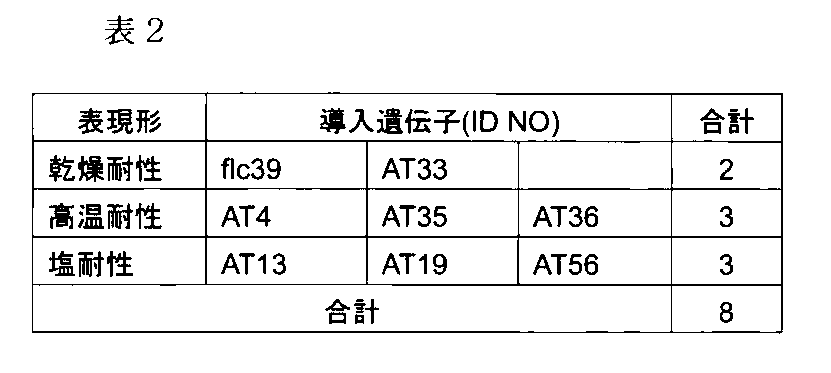
表2に示すとおり、8個の遺伝子の各過剰発現体において、各ストレス耐性が観察された。
実施例2で作製した891個の遺伝子過剰発現体のうち40個を、以下のストレス耐性試験に付した。
ストレス耐性試験によるスクリーニングは、乾燥、塩、高温の3つストレス耐性試験により行った。それぞれの試験は、野生型が10~30%程度の生存率を示すような条件を設定し、野生型と過剰発現体を比較することで、その生存率から耐性を評価した。具体的な各試験の方法を以下に示す。
・乾燥ストレス耐性試験
乾燥耐性試験ではMSプレートに播種後10日間生育させた植物を土(ポット)に植替え、7日間生育させ、植物を定着させた。給水を停止し、徐々に乾燥処理を行い、14日間の給水停止後、再び給水を開始し、7日間生育後生存率を観察した。
・塩ストレス耐性試験
塩耐性試験はMSプレートに播種後7日間生育させた植物を200mMのNaCl入りMSプレートに移すことで塩処理を行い、14日間生育後、生存率と塩ストレスの影響を観察した。
・高ストレス温耐性試験
高温耐性試験はMSプレートに播種後14日間生育させた植物を、42度の気槽インキュベーターに移し3時間の高温処理を行い、その後7日間22度で生育し、生存率を観察した。高温耐性試験では、野生型と過剰発現体を同プレートに播種し試験を行った。
各苗木のストレス耐性の表現形と導入された遺伝子を以下の表2に示す。また、各ストレスと各過剰発現体の致死率との関係を図3A−Cに示す。
GUS解析
実施例2において表現形に変化が見られた苗木に導入された69個の各遺伝子について、および実施例3においてストレス耐性に変化が見られた苗木に導入された8個の各遺伝子について、GUS融合体を用いて各遺伝子の発現解析を行った。
各遺伝子の開始コドン上流約1Kbと終止コドンを除いたORFを含むゲノム断片をPCRにより増幅した。得られたPCR産物の末端に、GATEWAY(invitrogen社)クローニングに必要な配列を付加し、GATEWAY対応のベクター(pDONR207)にクローニングし、同じくGATEWAY対応のベクター(pMDC162)にORFとGUS遺伝子が融合するように挿入した。作成したコンストラクトはアグロバクテリウム法によりシロイヌナズナに形質転換した。得られた形質転換体の各器官を用いてGUS染色法により解析した。
各遺伝子のGUS解析結果について、代表的なものを図4に示す。
図4に示すとおり、各形質転換体の各器官(例えば、葉、鞘、芽生え)においてGUSが染色・検出され、これら遺伝子が植物体において発現していることが確認された。
実施例2において表現形に変化が見られた苗木に導入された69個の各遺伝子について、および実施例3においてストレス耐性に変化が見られた苗木に導入された8個の各遺伝子について、GUS融合体を用いて各遺伝子の発現解析を行った。
各遺伝子の開始コドン上流約1Kbと終止コドンを除いたORFを含むゲノム断片をPCRにより増幅した。得られたPCR産物の末端に、GATEWAY(invitrogen社)クローニングに必要な配列を付加し、GATEWAY対応のベクター(pDONR207)にクローニングし、同じくGATEWAY対応のベクター(pMDC162)にORFとGUS遺伝子が融合するように挿入した。作成したコンストラクトはアグロバクテリウム法によりシロイヌナズナに形質転換した。得られた形質転換体の各器官を用いてGUS染色法により解析した。
各遺伝子のGUS解析結果について、代表的なものを図4に示す。
図4に示すとおり、各形質転換体の各器官(例えば、葉、鞘、芽生え)においてGUSが染色・検出され、これら遺伝子が植物体において発現していることが確認された。
RNAiによる遺伝子機能抑制試験
実施例2において表現形に変化が見られた苗木に導入された69個の各遺伝子について、および実施例3においてストレス耐性に変化が見られた苗木に導入された8個の各遺伝子について、当該遺伝子を標的とするRNAi分子を用いた遺伝子機能抑制試験を行った。
RNAi分子は従来公知の手法に基づいて作製した。すなわち、各遺伝子のセンス鎖およびアンチセンス鎖をループ配列(リンカー配列)を介して逆向き方向に連結してなるオリゴヌクレオチドを合成した。
各遺伝子に対するRNAi分子をそれぞれPCRで増幅し、得られたPCR産物の末端にGATEWAYクローニングに必要な配列を付加した。PCR産物はGATEWAY対応のベクター(pDONR207)にクローニングした。さらにこのORFをGATEWAY対応の過剰発現ベクター(pMDC32)に挿入し、上記実施例2と同様に形質転換を行い、RNAi分子によって標的遺伝子を抑制する形質転換植物を作製した。
各遺伝子のRNAiによる遺伝子機能抑制試験の結果について、代表的なものを図5に示す。図5に示すとおり、flc39の遺伝子機能抑制を抑制することにより、植物体の成長や開花時期に変化が見られた。
実施例2において表現形に変化が見られた苗木に導入された69個の各遺伝子について、および実施例3においてストレス耐性に変化が見られた苗木に導入された8個の各遺伝子について、当該遺伝子を標的とするRNAi分子を用いた遺伝子機能抑制試験を行った。
RNAi分子は従来公知の手法に基づいて作製した。すなわち、各遺伝子のセンス鎖およびアンチセンス鎖をループ配列(リンカー配列)を介して逆向き方向に連結してなるオリゴヌクレオチドを合成した。
各遺伝子に対するRNAi分子をそれぞれPCRで増幅し、得られたPCR産物の末端にGATEWAYクローニングに必要な配列を付加した。PCR産物はGATEWAY対応のベクター(pDONR207)にクローニングした。さらにこのORFをGATEWAY対応の過剰発現ベクター(pMDC32)に挿入し、上記実施例2と同様に形質転換を行い、RNAi分子によって標的遺伝子を抑制する形質転換植物を作製した。
各遺伝子のRNAiによる遺伝子機能抑制試験の結果について、代表的なものを図5に示す。図5に示すとおり、flc39の遺伝子機能抑制を抑制することにより、植物体の成長や開花時期に変化が見られた。
過剰発現体の液体培地を用いた添加試験
実施例2において表現形に変化が見られた69個の過剰発現体および実施例3においてストレス耐性に変化が見られた8個の過剰発現体の各芽生えを、ハイグロマイシンが含まれたMS寒天培地上で2週間生育させた。その後、ハイグロマイシンに耐性となった個体を、各過剰発現体につき約30個、300ml三角フラスコに入った100mlのMS+1%ショ糖液体培地に移し、1週間生育させた。その後、MS+1%ショ糖液体培地を100mlのショ糖を含まない1/10 MS液体培地と交換し、さらに1週間生育させた。
次に培地を回収して、凍結乾燥した後、10mlの滅菌水に溶解した。なお、この溶液のMS濃度は通常の濃度になる(理論上、分泌されたペプチドの量は、凍結乾燥前の10倍になる)。この溶液を、ショ糖を含まないMS寒天培地上に敷いたろ紙に1mL添加し、野生型の種子をシャーレ当たり25粒播種した。暗所、4℃で静置した後、22度長日条件下で発芽させ、発芽後2日目に、もう一度溶液を添加し、さらに2週間生育させ、形態を観察した。
各遺伝子の添加試験の結果について、代表的なものを図6に示す。
図6に示すとおり、AT32過剰発現体の液体培地を用いた添加試験の結果、野生型の芽生えにおいて矮化が見られた。AT32過剰発現体自体も矮化の表現形を示している(表1)ことから、AT32は培地中に機能を保持しながら分泌されていることが示された。
次に、上記と同様にして得られた過剰発現体の液体培地を用いて、イネの種子を同様に処理した。
各遺伝子の添加試験の結果について、代表的なものを図7に示す。
図7に示すとおり、AT32過剰発現体の液体培地を用いた添加試験の結果、イネの芽生えにおいても矮化が見られた。この結果は、シロイヌナズナから得られたペプチドが、イネなど他の植物においても同様に活性し得ることを示す。
実施例2において表現形に変化が見られた69個の過剰発現体および実施例3においてストレス耐性に変化が見られた8個の過剰発現体の各芽生えを、ハイグロマイシンが含まれたMS寒天培地上で2週間生育させた。その後、ハイグロマイシンに耐性となった個体を、各過剰発現体につき約30個、300ml三角フラスコに入った100mlのMS+1%ショ糖液体培地に移し、1週間生育させた。その後、MS+1%ショ糖液体培地を100mlのショ糖を含まない1/10 MS液体培地と交換し、さらに1週間生育させた。
次に培地を回収して、凍結乾燥した後、10mlの滅菌水に溶解した。なお、この溶液のMS濃度は通常の濃度になる(理論上、分泌されたペプチドの量は、凍結乾燥前の10倍になる)。この溶液を、ショ糖を含まないMS寒天培地上に敷いたろ紙に1mL添加し、野生型の種子をシャーレ当たり25粒播種した。暗所、4℃で静置した後、22度長日条件下で発芽させ、発芽後2日目に、もう一度溶液を添加し、さらに2週間生育させ、形態を観察した。
各遺伝子の添加試験の結果について、代表的なものを図6に示す。
図6に示すとおり、AT32過剰発現体の液体培地を用いた添加試験の結果、野生型の芽生えにおいて矮化が見られた。AT32過剰発現体自体も矮化の表現形を示している(表1)ことから、AT32は培地中に機能を保持しながら分泌されていることが示された。
次に、上記と同様にして得られた過剰発現体の液体培地を用いて、イネの種子を同様に処理した。
各遺伝子の添加試験の結果について、代表的なものを図7に示す。
図7に示すとおり、AT32過剰発現体の液体培地を用いた添加試験の結果、イネの芽生えにおいても矮化が見られた。この結果は、シロイヌナズナから得られたペプチドが、イネなど他の植物においても同様に活性し得ることを示す。
本発明によれば、所望の表現型および/または所望のストレス耐性を有する植物を得ることができる。また、本発明によれば、所望の表現型および/または所望のストレス耐性を植物に付与することができる。これによって、有用作物を効率的に生産することが可能であり、有用作物の製造・利用に関わる様々な分野において貢献することが期待される。
本明細書で引用した全ての刊行物、特許および特許出願をそのまま参考として本明細書にとり入れるものとする。
本明細書で引用した全ての刊行物、特許および特許出願をそのまま参考として本明細書にとり入れるものとする。
Claims (12)
- 植物の形態を制御する活性を有するポリペプチドまたは植物の環境ストレス耐性を増強する活性を有するポリペプチドをコードする遺伝子を宿主植物に導入して過剰発現させることを含む、形質転換植物の作出方法であって、該ポリペプチドが以下より選択される一または複数のポリペプチドである、上記方法:
(a)配列番号21,1~20,22~317で表されるいずれかのアミノ酸配列を含むポリペプチド;
(b)配列番号21,1~20,22~317で表されるいずれかのアミノ酸配列において1または数個のアミノ酸の欠失、置換、付加または挿入を有するアミノ酸配列を含み、かつ植物の形態を制御する活性または植物の環境ストレス耐性を増強する活性を有するポリペプチド:
(c)配列番号21,1~20,22~317で表されるいずれかのアミノ酸配列と60%以上の同一性を有するアミノ酸配列を含み、かつ植物の形態を制御する活性または植物の環境ストレス耐性を増強する活性を有するポリペプチド:
(d)(a)~(c)のいずれかのポリペプチドをコードする遺伝子を植物細胞中で発現させて得られる、植物の形態を制御する活性または植物の環境ストレス耐性を増強する活性を有するポリペプチド。 - ポリペプチドが、植物の形態を制御する活性を有し、以下より選択される一または複数のポリペプチドである、請求項1に記載の方法:
(e)配列番号21,1~20,22~69で表されるいずれかのアミノ酸配列を含むポリペプチド;
(f)配列番号21,1~20,22~69で表されるいずれかのアミノ酸配列において1または数個のアミノ酸の欠失、置換、付加または挿入を有するアミノ酸配列を含み、かつ植物の形態を制御する活性を有するポリペプチド:
(g)配列番号21,1~20,22~69で表されるいずれかのアミノ酸配列と60%以上の同一性を有するアミノ酸配列を含み、かつ植物の形態を制御する活性を有するポリペプチド:
(h)(e)~(g)のいずれかのポリペプチドをコードする遺伝子を植物細胞中で発現させて得られる、植物の形態を制御する活性を有するポリペプチド。 - ポリペプチドが、植物の環境ストレス耐性を増強する活性を有し、以下より選択される一または複数のポリペプチドである、請求項1に記載の方法:
(i)配列番号21,15,70~75で表されるいずれかのアミノ酸配列を含むポリペプチド;
(j)配列番号21,15,70~75で表されるいずれかのアミノ酸配列において1または数個のアミノ酸の欠失、置換、付加または挿入を有するアミノ酸配列を含み、かつ植物の環境ストレス耐性を増強する活性を有するポリペプチド:
(k)配列番号21,15,70~75で表されるいずれかのアミノ酸配列と60%以上の同一性を有するアミノ酸配列を含み、かつ植物の環境ストレス耐性を増強する活性を有するポリペプチド:
(l)(i)~(k)のいずれかのポリペプチドをコードする遺伝子を植物細胞中で発現させて得られる、植物の環境ストレス耐性を増強する活性を有するポリペプチド。 - 植物の形態を制御する活性を有するポリペプチドまたは植物の環境ストレス耐性を増強する活性を有するポリペプチドを過剰発現する形質転換植物であって、該ポリペプチドが以下より選択される一または複数のポリペプチドである、上記形質転換植物:
(a)配列番号21,1~20,22~317で表されるいずれかのアミノ酸配列を含むポリペプチド;
(b)配列番号21,1~20,22~317で表されるいずれかのアミノ酸配列において1または数個のアミノ酸の欠失、置換、付加または挿入を有するアミノ酸配列を含み、かつ植物の形態を制御する活性または植物の環境ストレス耐性を増強する活性を有するポリペプチド:
(c)配列番号21,1~20,22~317で表されるいずれかのアミノ酸配列と60%以上の同一性を有するアミノ酸配列を含み、かつ植物の形態を制御する活性または植物の環境ストレス耐性を増強する活性を有するポリペプチド:
(d)(a)~(c)のいずれかのポリペプチドをコードする遺伝子を植物細胞中で発現させて得られる、植物の形態を制御する活性または植物の環境ストレス耐性を増強する活性を有するポリペプチド。 - ポリペプチドが、植物の形態を制御する活性を有し、以下より選択される一または複数のポリペプチドである、請求項4に記載の形質転換植物:
(e)配列番号21,1~20,22~69で表されるいずれかのアミノ酸配列を含むポリペプチド;
(f)配列番号21,1~20,22~69で表されるいずれかのアミノ酸配列において1または数個のアミノ酸の欠失、置換、付加または挿入を有するアミノ酸配列を含み、かつ植物の形態を制御する活性を有するポリペプチド:
(g)配列番号21,1~20,22~69で表されるいずれかのアミノ酸配列と60%以上の同一性を有するアミノ酸配列を含み、かつ植物の形態を制御する活性を有するポリペプチド:
(h)(e)~(g)のいずれかのポリペプチドをコードする遺伝子を植物細胞中で発現させて得られる、植物の形態を制御する活性を有するポリペプチド。 - ポリペプチドが、植物の環境ストレス耐性を増強する活性を有し、以下より選択される一または複数のポリペプチドである、請求項4に記載の形質転換植物:
(i)配列番号21,15,70~75で表されるいずれかのアミノ酸配列を含むポリペプチド;
(j)配列番号21,15,70~75で表されるいずれかのアミノ酸配列において1または数個のアミノ酸の欠失、置換、付加または挿入を有するアミノ酸配列を含み、かつ植物の環境ストレス耐性を増強する活性を有するポリペプチド:
(k)配列番号21,15,70~75で表されるいずれかのアミノ酸配列と60%以上の同一性を有するアミノ酸配列を含み、かつ植物の環境ストレス耐性を増強する活性を有するポリペプチド:
(l)(i)~(k)のいずれかのポリペプチドをコードする遺伝子を植物細胞中で発現させて得られる、植物の環境ストレス耐性を増強する活性を有するポリペプチド。 - 植物の形態を制御する活性を有するポリペプチドまたは植物の環境ストレス耐性を増強する活性を有するポリペプチドを含む農業用組成物であって、該ポリペプチドが以下より選択される一または複数のポリペプチドである、上記組成物:
(a)配列番号21,1~20,22~317で表されるいずれかのアミノ酸配列を含むポリペプチド;
(b)配列番号21,1~20,22~317で表されるいずれかのアミノ酸配列において1または数個のアミノ酸の欠失、置換、付加または挿入を有するアミノ酸配列を含み、かつ植物の形態を制御する活性または植物の環境ストレス耐性を増強する活性を有するポリペプチド:
(c)配列番号21,1~20,22~317で表されるいずれかのアミノ酸配列と60%以上の同一性を有するアミノ酸配列を含み、かつ植物の形態を制御する活性または植物の環境ストレス耐性を増強する活性を有するポリペプチド:
(d)(a)~(c)のいずれかのポリペプチドをコードする遺伝子を植物細胞中で発現させて得られる、植物の形態を制御する活性または植物の環境ストレス耐性を増強する活性を有するポリペプチド。 - ポリペプチドが、植物の形態を制御する活性を有し、以下より選択される一または複数のポリペプチドである、請求項7に記載の組成物:
(e)配列番号21,1~20,22~69で表されるいずれかのアミノ酸配列を含むポリペプチド;
(f)配列番号21,1~20,22~69で表されるいずれかのアミノ酸配列において1または数個のアミノ酸の欠失、置換、付加または挿入を有するアミノ酸配列を含み、かつ植物の形態を制御する活性を有するポリペプチド:
(g)配列番号21,1~20,22~69で表されるいずれかのアミノ酸配列と60%以上の同一性を有するアミノ酸配列を含み、かつ植物の形態を制御する活性を有するポリペプチド:
(h)(e)~(g)のいずれかのポリペプチドをコードする遺伝子を植物細胞中で発現させて得られる、植物の形態を制御する活性を有するポリペプチド。 - ポリペプチドが、植物のストレス耐性を増強する活性を有し、以下より選択される一または複数のポリペプチドである、請求項7に記載の組成物:
(i)配列番号21,15,70~75で表されるいずれかのアミノ酸配列を含むポリペプチド;
(j)配列番号21,15,70~75で表されるいずれかのアミノ酸配列において1または数個のアミノ酸の欠失、置換、付加または挿入を有するアミノ酸配列を含み、かつ植物の環境ストレス耐性を増強する活性を有するポリペプチド:
(k)配列番号21,15,70~75で表されるいずれかのアミノ酸配列と60%以上の同一性を有するアミノ酸配列を含み、かつ植物の環境ストレス耐性を増強する活性を有するポリペプチド:
(l)(i)~(k)のいずれかのポリペプチドをコードする遺伝子を植物細胞中で発現させて得られる、植物の環境ストレス耐性を増強する活性を有するポリペプチド。 - 植物の形態を制御する活性を有するポリペプチドまたは植物のストレス耐性を増強する活性を有するポリペプチドを植物に施用することを含む、植物の育成方法であって、該ポリペプチドが以下より選択される一または複数のポリペプチドである、上記方法:
(a)配列番号21,1~20,22~317で表されるいずれかのアミノ酸配列を含むポリペプチド;
(b)配列番号21,1~20,22~317で表されるいずれかのアミノ酸配列において1または数個のアミノ酸の欠失、置換、付加または挿入を有するアミノ酸配列を含み、かつ植物の形態を制御する活性または植物の環境ストレス耐性を増強する活性を有するポリペプチド:
(c)配列番号21,1~20,22~317で表されるいずれかのアミノ酸配列と60%以上の同一性を有するアミノ酸配列を含み、かつ植物の形態を制御する活性または植物の環境ストレス耐性を増強する活性を有するポリペプチド:
(d)(a)~(c)のいずれかのポリペプチドをコードする遺伝子を植物細胞中で発現させて得られる、植物の形態を制御する活性または植物の環境ストレス耐性を増強する活性を有するポリペプチド。 - ポリペプチドが、植物の形態を制御する活性を有し、以下より選択される一または複数のポリペプチドである、請求項10に記載の方法:
(e)配列番号21,1~20,22~69で表されるいずれかのアミノ酸配列を含むポリペプチド;
(f)配列番号21,1~20,22~69で表されるいずれかのアミノ酸配列において1または数個のアミノ酸の欠失、置換、付加または挿入を有するアミノ酸配列を含み、かつ植物の形態を制御する活性を有するポリペプチド:
(g)配列番号21,1~20,22~69で表されるいずれかのアミノ酸配列と60%以上の同一性を有するアミノ酸配列を含み、かつ植物の形態を制御する活性を有するポリペプチド:
(h)(e)~(g)のいずれかのポリペプチドをコードする遺伝子を植物細胞中で発現させて得られる、植物の形態を制御する活性を有するポリペプチド。 - ポリペプチドが、植物のストレス耐性を増強する活性を有し、以下より選択される一または複数のポリペプチドである、請求項10に記載の方法:
(i)配列番号21,15,70~75で表されるいずれかのアミノ酸配列を含むポリペプチド;
(j)配列番号21,15,70~75で表されるいずれかのアミノ酸配列において1または数個のアミノ酸の欠失、置換、付加または挿入を有するアミノ酸配列を含み、かつ植物の環境ストレス耐性を増強する活性を有するポリペプチド:
(k)配列番号21,15,70~75で表されるいずれかのアミノ酸配列と60%以上の同一性を有するアミノ酸配列を含み、かつ植物の環境ストレス耐性を増強する活性を有するポリペプチド:
(l)(i)~(k)のいずれかのポリペプチドをコードする遺伝子を植物細胞中で発現させて得られる、植物の環境ストレス耐性を増強する活性を有するポリペプチド。
Priority Applications (1)
| Application Number | Priority Date | Filing Date | Title |
|---|---|---|---|
| US14/385,068 US20150033408A1 (en) | 2012-03-15 | 2013-03-15 | Polypeptide involved in morphogenesis and/or environmental stress resistance of plant |
Applications Claiming Priority (2)
| Application Number | Priority Date | Filing Date | Title |
|---|---|---|---|
| JP2012059415 | 2012-03-15 | ||
| JP2012-059415 | 2012-03-15 |
Publications (1)
| Publication Number | Publication Date |
|---|---|
| WO2013137490A1 true WO2013137490A1 (ja) | 2013-09-19 |
Family
ID=49161371
Family Applications (1)
| Application Number | Title | Priority Date | Filing Date |
|---|---|---|---|
| PCT/JP2013/058458 Ceased WO2013137490A1 (ja) | 2012-03-15 | 2013-03-15 | 植物の形態形成および/または環境ストレス耐性に関与するポリペプチド |
Country Status (2)
| Country | Link |
|---|---|
| US (1) | US20150033408A1 (ja) |
| WO (1) | WO2013137490A1 (ja) |
Cited By (1)
| Publication number | Priority date | Publication date | Assignee | Title |
|---|---|---|---|---|
| CN114395570A (zh) * | 2021-12-29 | 2022-04-26 | 西南大学 | 一种利用CsNCED3基因沉默以提高柑橘对溃疡病抗性的方法 |
Citations (5)
| Publication number | Priority date | Publication date | Assignee | Title |
|---|---|---|---|---|
| JP2004536577A (ja) * | 2001-03-19 | 2004-12-09 | カーギル,インコーポレーテッド | ミオイノシトールオキシゲナーゼ |
| JP2007000021A (ja) * | 2005-06-21 | 2007-01-11 | Toyobo Co Ltd | ポリアミン代謝制御による環境ストレス耐性を改良した植物、及びその作出方法 |
| JP2010081839A (ja) * | 2008-09-30 | 2010-04-15 | National Institute Of Agrobiological Sciences | 過剰発現で種子を大きくする遺伝子 |
| WO2011114920A1 (ja) * | 2010-03-16 | 2011-09-22 | 独立行政法人理化学研究所 | 環境ストレス耐性植物及びその作出方法 |
| JP2011239684A (ja) * | 2010-05-14 | 2011-12-01 | National Institute Of Advanced Industrial Science & Technology | 転写因子を利用した植物の物質生産性の改良 |
-
2013
- 2013-03-15 WO PCT/JP2013/058458 patent/WO2013137490A1/ja not_active Ceased
- 2013-03-15 US US14/385,068 patent/US20150033408A1/en not_active Abandoned
Patent Citations (5)
| Publication number | Priority date | Publication date | Assignee | Title |
|---|---|---|---|---|
| JP2004536577A (ja) * | 2001-03-19 | 2004-12-09 | カーギル,インコーポレーテッド | ミオイノシトールオキシゲナーゼ |
| JP2007000021A (ja) * | 2005-06-21 | 2007-01-11 | Toyobo Co Ltd | ポリアミン代謝制御による環境ストレス耐性を改良した植物、及びその作出方法 |
| JP2010081839A (ja) * | 2008-09-30 | 2010-04-15 | National Institute Of Agrobiological Sciences | 過剰発現で種子を大きくする遺伝子 |
| WO2011114920A1 (ja) * | 2010-03-16 | 2011-09-22 | 独立行政法人理化学研究所 | 環境ストレス耐性植物及びその作出方法 |
| JP2011239684A (ja) * | 2010-05-14 | 2011-12-01 | National Institute Of Advanced Industrial Science & Technology | 転写因子を利用した植物の物質生産性の改良 |
Cited By (1)
| Publication number | Priority date | Publication date | Assignee | Title |
|---|---|---|---|---|
| CN114395570A (zh) * | 2021-12-29 | 2022-04-26 | 西南大学 | 一种利用CsNCED3基因沉默以提高柑橘对溃疡病抗性的方法 |
Also Published As
| Publication number | Publication date |
|---|---|
| US20150033408A1 (en) | 2015-01-29 |
Similar Documents
| Publication | Publication Date | Title |
|---|---|---|
| US11746356B2 (en) | Transcriptional regulation for improved plant productivity | |
| CN112322654B (zh) | 玉米转录因子ZmMYB42基因在植物抗旱育种中的应用 | |
| US11299744B2 (en) | Transgenic plants expressing type 2C protein phosphatase abscisic acid (PP2CABA) proteins and uses thereof | |
| KR20120111715A (ko) | 식물체의 한발 스트레스 저항성을 증가시키는 OsbHLH148 유전자 및 이의 용도 | |
| CN110734482A (zh) | 一种岷江百合WRKY转录因子基因LrWRKY4及应用 | |
| CN113666993B (zh) | 紫花苜蓿MsSPL12蛋白及其相关生物材料与它们在提高植物抗逆性中的应用 | |
| KR20110100417A (ko) | 건조 스트레스 내성 및 생장 촉진 관련 유전자 및 형질전환 식물체 | |
| KR102674979B1 (ko) | CaPRR2 유전자 및 이를 이용한 식물체의 건조 또는 염 스트레스 저항성 증진 방법 | |
| US20150128304A1 (en) | Plant Body Showing Improved Resistance Against Environmental Stress and Method for Producing Same | |
| CN107641627B (zh) | 一种调控番茄i型腺毛形成的h基因、h蛋白及其应用 | |
| KR101346586B1 (ko) | 애기장대 유래의 reca1 유전자를 이용한 병원균에 대한 면역능력이 증진된 형질전환 식물체의 제조방법 및 그에 따른 식물체 | |
| US20130019340A1 (en) | Plant resistant to environmental stress and method for producing the same | |
| KR101341932B1 (ko) | 동해 및 가뭄 저항성 고추 전사인자 CaWRKY1 유전자 및 이의 용도 | |
| US10889828B2 (en) | Transgenic plants with enhanced traits | |
| KR101902915B1 (ko) | 수발아 저항성을 증진시키는 벼 유래 OsPHS2 유전자 및 이의 용도 | |
| CN111116721A (zh) | 一种与植物抗逆性相关的转录因子PwNAC30及其编码基因与应用 | |
| KR20140050218A (ko) | 배추 유래의 BrRZFP1 유전자를 이용한 환경 스트레스 내성이 증진된 형질전환 식물체의 제조방법 및 그에 따른 식물체 | |
| US20180215798A1 (en) | Transgenic Plants with Enhanced Traits | |
| US20150033408A1 (en) | Polypeptide involved in morphogenesis and/or environmental stress resistance of plant | |
| KR101028113B1 (ko) | 생장 증진, 내염성 및 노화 조절에 관여하는 고추의 CaHB1 유전자 및 그의 용도 | |
| CN106554399A (zh) | 大豆GmABC蛋白及其编码基因和应用 | |
| CN112391406A (zh) | 促进草莓生长的方法及其所用生物材料 | |
| KR102516731B1 (ko) | 고추 녹광 품종 전사인자 CaHAT1 유전자 및 이를 이용한 식물체의 건조 스트레스 저항성 증진 방법 | |
| KR102516750B1 (ko) | 고추 녹광 품종 전사인자 CaSIMK1 유전자 및 이를 이용한 식물체의 건조 스트레스 저항성 증진 방법 | |
| KR101973551B1 (ko) | 배추 유래 BrRH22 유전자를 이용한 환경 스트레스 내성이 증가된 형질전환 식물체의 제조방법 및 그에 따른 식물체 |
Legal Events
| Date | Code | Title | Description |
|---|---|---|---|
| 121 | Ep: the epo has been informed by wipo that ep was designated in this application |
Ref document number: 13761648 Country of ref document: EP Kind code of ref document: A1 |
|
| WWE | Wipo information: entry into national phase |
Ref document number: 14385068 Country of ref document: US |
|
| NENP | Non-entry into the national phase |
Ref country code: DE |
|
| 122 | Ep: pct application non-entry in european phase |
Ref document number: 13761648 Country of ref document: EP Kind code of ref document: A1 |
|
| NENP | Non-entry into the national phase |
Ref country code: JP |