WO2013100626A1 - 니켈 광석으로부터 페로니켈을 회수하는 방법 - Google Patents
니켈 광석으로부터 페로니켈을 회수하는 방법 Download PDFInfo
- Publication number
- WO2013100626A1 WO2013100626A1 PCT/KR2012/011560 KR2012011560W WO2013100626A1 WO 2013100626 A1 WO2013100626 A1 WO 2013100626A1 KR 2012011560 W KR2012011560 W KR 2012011560W WO 2013100626 A1 WO2013100626 A1 WO 2013100626A1
- Authority
- WO
- WIPO (PCT)
- Prior art keywords
- nickel
- ore
- leaching
- iron
- reduced
- Prior art date
- Legal status (The legal status is an assumption and is not a legal conclusion. Google has not performed a legal analysis and makes no representation as to the accuracy of the status listed.)
- Ceased
Links
Images
Classifications
-
- C—CHEMISTRY; METALLURGY
- C22—METALLURGY; FERROUS OR NON-FERROUS ALLOYS; TREATMENT OF ALLOYS OR NON-FERROUS METALS
- C22B—PRODUCTION AND REFINING OF METALS; PRETREATMENT OF RAW MATERIALS
- C22B23/00—Obtaining nickel or cobalt
- C22B23/04—Obtaining nickel or cobalt by wet processes
- C22B23/0407—Leaching processes
-
- C—CHEMISTRY; METALLURGY
- C22—METALLURGY; FERROUS OR NON-FERROUS ALLOYS; TREATMENT OF ALLOYS OR NON-FERROUS METALS
- C22B—PRODUCTION AND REFINING OF METALS; PRETREATMENT OF RAW MATERIALS
- C22B23/00—Obtaining nickel or cobalt
-
- Y—GENERAL TAGGING OF NEW TECHNOLOGICAL DEVELOPMENTS; GENERAL TAGGING OF CROSS-SECTIONAL TECHNOLOGIES SPANNING OVER SEVERAL SECTIONS OF THE IPC; TECHNICAL SUBJECTS COVERED BY FORMER USPC CROSS-REFERENCE ART COLLECTIONS [XRACs] AND DIGESTS
- Y02—TECHNOLOGIES OR APPLICATIONS FOR MITIGATION OR ADAPTATION AGAINST CLIMATE CHANGE
- Y02P—CLIMATE CHANGE MITIGATION TECHNOLOGIES IN THE PRODUCTION OR PROCESSING OF GOODS
- Y02P10/00—Technologies related to metal processing
- Y02P10/20—Recycling
Definitions
- the present invention relates to a method for recovering nickel from nickel ores, in particular low-grade nickel ores, and more particularly to recovering nickel most efficiently by separating and recovering nickel and iron from raw materials containing nickel and iron, especially nickel ores. Concentrates and recovers ferronickel from these concentrates.
- Ore containing nickel and iron includes ores such as limonite and saprolite, and these ores have passivation properties, so they are resistant to acids and are slow to dissolve in acids. Therefore, as a method for effectively leaching nickel, methods for recovering nickel by dissolving it in an acid in an autoclave under high temperature and high pressure have been proposed, which is called 'HPAL (High Pressure Acid Leaching)'.
- 'HPAL High Pressure Acid Leaching
- the nickel recovery rate does not exceed 85% even after leaching for several months or more.
- the HPAL method enables the leaching of 90% or more of nickel within two hours. It can be called a method.
- Korean Unexamined Patent Publication No. 2007-7020915, Japanese Unexamined Patent Publication No. 2010-031341 and the like can be given.
- HPAL method should be carried out under the high temperature and high pressure of the autoclave, and it is known that it can be mainly used only for the titanium material due to its strong acidity, and thus has the disadvantage of very high equipment cost and high maintenance cost.
- a caustic soda which is an expensive precipitant, or an environmentally hazardous precipitant such as H 2 S must be used for nickel concentration, there is a problem in that a facility cost for treating this is increased.
- the present inventors have proposed a method for recovering nickel by acid leaching after the hydrogen reduction of the nickel-containing raw material in Korea Patent Publication No. 2009-0031321.
- the technique of the patent document is to recover V, Mo from the petrochemical desulfurization waste catalyst and to remove the alkali element in the residue by treating the remaining residue with an acid, drying the residue from which the alkali element is removed 600- in a reducing atmosphere Heat treating at a temperature in the range of 1300 ° C.
- the present invention seeks to provide a method for most efficiently concentrating nickel by recovering nickel and iron from raw materials containing nickel and iron, particularly nickel ore, and recovering ferronickel from these concentrates.
- the present invention is to provide a method for separating and recovering nickel and iron from a raw material containing nickel and iron, the present invention is to reduce the nickel and iron-containing raw material to a reducing gas containing hydrogen to obtain a reducing ore, the reduction A reduction step of slurrying light in an inert atmosphere to produce a slurry of leaching reduced ore; A leaching step of leaching nickel and iron ions from the leaching reducing ore by adding an acid of sulfuric acid or hydrochloric acid to the sli of the leaching ore to obtain a solution containing nickel and iron ions; A leaching residue removal step of removing a leaching residue from the slurry from which the nickel and iron ions are leached to obtain a leaching liquid containing nickel and iron ions; And injecting a slurry of the reduced ore precipitated ore into which the reduced ore is slurried, in which the iron of the precipitated ore is replaced with nickel in a nickel iron ion-containing solution to precipitate
- the reduced ore preferably has a specific surface area of 1-100 m 2 / g.
- the reduction step is preferably carried out at a temperature of 600 to 950 °C.
- the leaching reduced ore is preferably iron reduction rate of 50 to 92%
- the leaching reduced ore is a preliminary reduction step of preliminarily reducing the nickel ore by hydrogen-containing gas at 450-600 °C
- the preliminary reduction ore obtained in the preliminary reduction step may be obtained by the main reduction step to obtain a reduced ore by the main reduction with a hydrogen-containing gas at 600-950 °C.
- the precipitation reduction ore is preferably iron reduction rate of 70 to 96%
- the precipitation reduction ore is a preliminary reduction step of preliminarily reducing nickel ore with hydrogen-containing gas at 500-700 °C; And a main reduction step of reducing the preliminary reduced ore obtained in the preliminary reduction step with a hydrogen-containing gas at 700-1050 ° C. to obtain reduced ore.
- the reducing gas may be used to include a hydrogen of at least two times the number of moles of nickel and iron in the nickel and iron-containing raw material, the reducing gas is a mixed gas of hydrogen, hydrogen and inert gas, COG or LNG Reforming gas may be used.
- ferronickel recovery method 0.5-1.5-fold molar hydrochloric acid or 0.25-0.75-fold molar sulfuric acid is added to the slurry of the leaching ore obtained in the reduction step with respect to the number of (Fe + Ni) moles of the nickel and iron-containing raw materials.
- a solid-liquid separation step of removing the solution containing the iron ions to obtain a concentrated ore with concentrated nickel 0.5-1.5-fold molar hydrochloric acid or 0.25-0.75-fold molar sulfuric acid is added to the slurry of the leaching ore obtained in the reduction step with respect to the number of (Fe + Ni) moles of the nickel and iron-containing raw materials.
- the concentration step is preferably carried out at a slurry temperature of 20-80 ° C of the leaching ore.
- the acid may use 2-4 times the number of moles of hydrochloric acid or 1-2 times the number of sulfuric acids based on the number of moles of (Fe + Ni) contained in the slurry of the leaching ore.
- the leaching step is preferably carried out at a slurry temperature of 20-80 °C of the leaching ore.
- the leaching step can be stopped if the redox potential in the solution is changed from-value to 0 or + value.
- the ferronickel recovery method of the present invention is a pH adjustment step of adjusting the pH of the solution to 2.5 to 6 by adding an alkaline substance to the nickel and iron ion-containing solution after the leaching step; And a colloidal Si ion in the solution by stirring the pH-adjusted nickel and iron ion-containing solution to obtain a Si colloid, and further including a Si colloidal step of adsorbing the Si colloid to a leaching residue.
- the alkaline substance may be Ca (OH) 2 or NaOH.
- the colloidation is preferably performed in the range of 40 ° C to 80 ° C solution temperature containing nickel and iron ions, and the colloidation may be performed by stirring for 15 minutes to 5 hours.
- the nickel and iron-containing raw material is a drying step of drying moisture from nickel and iron-containing ore; Grinding the nickel and iron-containing ore to a particle size of 1 mm or less; And it may be obtained by performing a pretreatment including a firing step of firing at 250-850 °C.
- the precipitated ferronickel may have a nickel content of 4.5 to 33% by weight.
- nickel can be efficiently concentrated and recovered from a raw material such as nickel containing ore, and in particular, it is possible to effectively concentrate and recover Ni on ore having a low nickel quality.
- nickel by removing Si contained in nickel ore from the leaching solution, nickel can be efficiently recovered and concentrated, and in particular, Ni can be most effectively concentrated and recovered from ore having low nickel quality.
- the nickel ore by including a pre-reduction step can reduce the energy consumption in the reduction process of the ore, it is also possible to use a lower hydrogen-containing gas as a reducing gas, Expensive hydrogen consumption can be reduced.
- the recovery of ferronickel is prepared by separately preparing the reduced ore for the leaching ore used for the acid leaching step in the wet smelting process of nickel and the precipitation ore for the precipitation of the nickel for substitution precipitation according to one embodiment of the present invention. Can be improved.
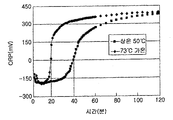
- 1 is a graph showing a change in ORP according to leaching time of nickel reduced ore of the embodiment.
- the present invention relates to a method for recovering nickel concentrate from raw materials containing nickel and iron.
- the nickel concentration is low and the iron concentration is high, and iron is leached relatively when leaching nickel, whereas nickel is leached in small amounts, making it difficult to separate iron and nickel. May be suitably applied.
- the raw material containing nickel and iron to which the present invention can be applied is not particularly limited, and may be applied as long as it contains nickel and iron, preferably nickel ore such as limonite and sapolite And nickel ores such as the above.
- Raw materials containing nickel and iron that can be applied in the present invention are simply referred to as nickel ores.
- Nickel ore varies depending on the type of ore, but usually contains 1-2.5% Ni and 15-55% Fe.
- limonite ore has a low nickel concentration of 1-1.8% and an iron concentration of 30-55. High in% The present invention can be effectively applied even in recovering nickel from such relatively low nickel content of limonite.
- the nickel ore may be subjected to a pretreatment step as necessary in order to effectively reduce the nickel ore in the reduction step described below.
- the pretreatment process includes drying, pulverization, and calcining steps, and the pretreatment step will be described in detail below.
- Nickel ore which is a raw material used for nickel recovery, preferably uses atomized powder to perform an efficient reduction and smooth leaching process. Therefore, nickel ore is preferably crushed in advance and applied to the nickel recovery process.
- nickel ore which is a raw material, generally contains about 30 to 40% of adsorbed water and about 10% of crystallized water.
- the conditions in which the adhered water in the nickel ore can evaporate is not particularly limited, it may be performed by heating to a temperature range of 100 to 200 °C.
- the pulverized ore is not necessarily limited thereto, but pulverization of the particle size to 1 mm or less is preferable for reducing and improving leaching efficiency. Since the smaller the particle size of the pulverized nickel ore can improve the reduction and leaching efficiency, the lower limit of the pulverized particle size is not particularly limited. However, in order to obtain a powder having a particle size smaller than 10 ⁇ m, the grinding process should be performed for a long time or more than a plurality of times. Therefore, grinding to 10 ⁇ m or more is more preferable in terms of securing economic efficiency of the pretreatment process.
- the crystal water contained in the nickel ore is not removed in the drying process.
- the crystallized water is released as the water of crystallization contained in the ore in the reduction process during the reduction reaction of nickel ore, the water is to act as a factor to slow the reduction reaction to reduce the reaction efficiency. Therefore, it is preferable to perform the reduction treatment after removing such crystal water. In order to remove such crystal water, it is preferable to fire nickel ore.
- limonite ore has the property of releasing crystal water at around 250-350 ° C and saffolite ore at around 650-750 ° C. Therefore, the crystalline water contained in the raw material can be removed by calcining the nickel ore powder obtained in the crushing process in the range of 250-850 ° C.
- sapprite ore with high nickel content is mainly used as a raw material for dry smelting, and nickel is applied by applying the present invention to rotary kiln dust generated in the dry smelting process using the saffolite ore. It can be recovered.
- the dust is included in a range suitable for applying the present invention and exposed to high temperature during the dry smelting process, the grinding and calcining process as in nickel ore is not required.
- the particle size is out of the range required by the present invention, for example, because the dust is exposed to air and contains moisture, it may be subjected to a pulverization or firing treatment as necessary.
- the calcined ore calcined to remove the crystal water in the ore has sensible heat according to the calcining temperature at the time of calcining, it is possible to save energy required for heating to the temperature for reduction if it is directly put into the reduction process without cooling. .
- the present invention includes the steps of reducing nickel and iron in the nickel ore pretreated as above.
- This reduction step may be performed using a reducing gas containing hydrogen as the reducing agent.
- nickel may be obtained as a metal only by reducing at a high temperature of 1250 ° C. or higher.
- the reduced powder activity is low and the leaching rate is low. Is abruptly lowered, and in particular, there is a problem that the precipitation efficiency in the precipitation step is abruptly lowered.
- the reduction process can be carried out at a low temperature as compared to the carbon reduction.
- the reducing gas is not particularly limited as long as it contains hydrogen, and hydrogen may be used alone, or inert gas may be used together.
- the inert gas may be included to remove oxygen other than hydrogen present in the reduction furnace during the reduction reaction.
- Such inert gas is not particularly limited as long as it is not reactive, and examples thereof include helium, argon, carbon dioxide, and nitrogen.
- hydrogen-containing reducing gas examples include coke oven gas (COG) containing 50% or more of hydrogen generated in an iron ore smelting process, or gas generated in a methane hydrogen reforming reaction.
- COG coke oven gas
- LNG hydrogen-containing LNG reformed gas containing 65% or more of hydrogen.
- the ratio of nickel and iron differs depending on the raw material used.
- nickel and iron are usually included in a weight ratio of 1:30. That is, the nickel content in limonite ore is about 1-1.5 wt% and the iron content is about 30-45 wt%.
- Hydrogen used as a reducing gas in such a reduction reaction is to reduce the nickel and iron by generating water by reacting with oxygen of nickel and iron present in an oxidized state in the nickel ore material. Therefore, the amount of hydrogen included in the reducing gas may be included in more than the theoretical equivalent ratio, and hydrogen may be added in excess of the theoretical equivalent ratio for efficient reduction reaction. However, such hydrogen is expensive, and the higher the dosage equivalent ratio of hydrogen, the higher the cost of the process, it is not preferable to use too much bar, it is possible to supply hydrogen in an appropriate amount.
- the input amount of hydrogen may be included in a mole number, for example, 1 to 5 times, 2 to 5 times, or 2 to 4 times the theoretical equivalent ratio.
- the reduction may be carried out in a temperature range of 600-950 °C. If the reduction temperature is less than 600 °C does not occur sufficiently to reduce the recovery rate when leaching in the acid solution in the subsequent step, the precipitation yield is also all lowered is not preferred. On the other hand, as the reduction temperature is increased, both the leaching yield and the precipitation yield can be increased. However, when reducing at a temperature of more than 950 °C, there is no problem in reducing the nickel ore, it can not be expected to increase the recovery rate during leaching.
- the reduced ore is used in the step of leaching nickel ions by dissolving with acid, as well as in the step of precipitating and recovering nickel ions in the leachate obtained in the leaching step into nickel metal by substitution with iron.
- the reduced ore obtained by the above can be partially used for precipitation, and can be separated and used for precipitation.
- the reduced ore used in the leaching reaction is called the reduced ore for leaching
- the reduced ore used in the precipitation process is called the reduced ore for precipitation.
- the reduction of the nickel ore may be performed under different conditions depending on the use, and may be divided into preliminary reduction and main reduction steps. After the preliminary reduction step as described above, it is possible to reduce the energy consumption by reducing the nickel ore by the main reduction step.
- a low-cost hydrogen-containing mixed gas may be used for the reducing gas, The cost of reducing gas can be reduced.
- the reduced nickel ore leaches nickel and iron into ions from the reduced nickel ore using an acid such as hydrochloric acid or sulfuric acid, and precipitates it to be recovered as ferronickel metal.
- equation (2) is divided again by the reduction step, it can be expressed as the following equation (3) to (5).
- metal Fe is produced by the reaction formula (5), and hydrogen gas is not generated by the reaction formulas (3) and (4). Therefore, since hydrogen recovery is not possible during the reduction process, it is preferable to perform the preliminary reduction using a low-cost mixed reducing gas containing hydrogen, since the use of expensive hydrogen-containing gas can be reduced.
- a low-cost hydrogen-containing gas for example, COG (Cokes Oven Gas, containing 50% or more of hydrogen) generated in an iron ore smelting process or hydrogen-containing gas (containing 65% or more of hydrogen) generated in a methane hydrogen reforming reaction can be used. Can be.
- Such a preliminary reduction is preferable because it can be carried out at a relatively low temperature compared to the reduction temperature of the main reduction process.
- the preliminary reduction may be performed by introducing a reducing gas into the furnace at 450-600 ° C. in the production of reduced ore for leaching.
- in preparing the reduced ore for precipitation can be carried out by introducing a reducing gas into the furnace in the temperature range of 500 to 700 °C. Thereby, iron can be reduced at a reduction rate of about 30% or more.
- the reducing gas used in the main reduction may be hydrogen, nitrogen gas may be added to the hydrogen reduction gas for the system purge.
- hydrogen is generated during the nickel recovery process, in particular, in the leaching of nickel, which is preferable because hydrogen can be recovered and recycled into the reducing gas.
- the main reduction process may be performed using a high purity hydrogen-containing gas at 600-950 °C.
- the main reduction process is carried out below 600 ° C, it is difficult to obtain iron reduction rate of 50% or more.
- nickel is easier to reduce than iron, and as a result of many reduction experiments on nickel ore, when the reduction rate of iron in nickel ore exceeds 50%, nickel in nickel ore proceeds to be reduced more easily than iron, so it becomes a metal.
- Nickel may be reduced to the metal. Therefore, the nickel metal can be dissolved when the acid leaching process is performed to ensure a good leaching rate of nickel. Therefore, in preparing the leaching ore, it is preferable to perform the main reduction reaction of nickel ore at a temperature of 600 ° C or higher.
- iron reduction rate of about 92% can be obtained.
- the activity of the reduced ore tends to be lowered, and it is difficult to expect a further increase in the nickel leaching rate, which may lead to a decrease in nickel leaching rate. Therefore, it is preferable to obtain the reducing ore for leaching at a reduction temperature of 950 ° C. or lower, and more preferable in terms of energy efficiency.
- the leaching ore it is preferable to carry out at a temperature range of 600 to 950 ° C. such that the iron reduction rate reaches 50-92%.
- nickel in the ore can be dissolved into ions at a recovery rate of 90% or more within 2 hours.
- nickel in the precipitation step, nickel can be recovered by replacing the nickel ions in the leachate and the iron ions in the reduced ore by adding the precipitated ore to the leachate.
- the reduced ore used for the precipitation is advantageous because the iron ions in the leachate may be substituted by the metal nickel ions in the leaching solution. This can be seen from equation (7) described below.
- the recovery rate of nickel metal by substitutional precipitation can be further increased when the iron reduction rate is 70% or more in the temperature of the main reduction reaction.
- the iron reduction rate exceeds 96%, the recovery rate of nickel due to substitution precipitation is insignificant, and the reduction rate is 96% because sintering occurs severely during the heat treatment process for reduction, which may lower the precipitation efficiency of nickel. It is good to be as follows. Therefore, in order to obtain a reduced ore having the iron reduction rate in the above range, it is preferable to perform the main reduction reaction in the pre-reduced nickel light in the temperature range of 700 to 1050 °C.
- the exhaust gas obtained in the reduction step is discharged and separated, and the reduced ore is preferably slurried using water.
- the slurrying is preferably carried out in an anoxic state in which external air inflow is blocked in order to prevent the reduced light from being reoxidized by oxygen.
- the reduced ore obtained by reducing nickel ore has high activity and has a very high iron content. Therefore, when the reduced ore is extracted into the air after reduction, the reduced ore is regenerated, and the oxidation reaction is accelerated due to the heat generated by the oxidation reaction. Risk of fire Therefore, by oxidizing the reduced ore with water, oxidation and ignition of the reduced ore can be prevented.
- Water may be administered so that the slurry concentration is 1-2 times the weight of reduced light. If the water content is too small beyond the above range to administer the water is high slurry concentration may cause problems in transport, if too much water is administered is not preferable because the concentration of the solution is diluted after leaching.
- an acid leaching step of ionizing iron and nickel ions by adding acid to the slurry and dissolving and leaching ferronickel of nickel iron contained in the reduced ore in the slurry may dissolve the reduced ore by adding an acid to the slurried reduced ore and stirring in an oxygen-free reactor.
- the acid leaching step is preferably carried out in an oxygen free state.
- the acid used in the acid leaching step is not particularly limited, and may be hydrochloric acid or sulfuric acid.
- the reaction is carried out as shown in the following formulas (6) and (7) to dissolve the ferronickel in the reduced ore to the ferronickel ion Is leached.
- hydrochloric acid In order to leach such reduced light into an acid, when hydrochloric acid is used as the acid, hydrochloric acid must be added at a molar number not less than twice the number of moles of (Fe + Ni) as shown in the above formula (6). However, when adding hydrochloric acid more than four times the number of moles of (Fe + Ni), no further leaching efficiency improvement is obtained. Therefore, it is preferable to add in the range of two times to four times the number of moles of (Fe + Ni). Do. On the other hand, in the case of using sulfuric acid as the acid, it is preferable to add at least one and two times the number of moles of (Fe + Ni) moles of nickel ore, as can be seen from the above formula (7).
- This leaching reaction is an exothermic reaction and is accompanied by a rise in temperature in the reactor. Therefore, as the leaching reaction can be carried out at room temperature, such a leaching reaction can be obtained at a temperature of 20 °C or more can obtain a good leaching efficiency.
- the leaching reaction may be carried out by heating in an appropriate range, and when carried out by heating can improve the leaching rate, it is possible to shorten the leaching time.
- the temperature at the time of heating can be appropriately set according to the reactor equipment conditions, but is not particularly limited, but if the temperature is more than 80 °C during the leaching reaction may cause a price increase of the equipment for this.
- the Oxygen Reduction Potential shows a-value.
- ORP Oxygen Reduction Potential
- the leachate obtained by the leaching step and the residue of the solid phase can be obtained by separating by filtration, such solid-liquid separation can be used a solid-liquid separator such as a filter press, a decanter.
- the theoretical equivalent ratio of acid required in carrying out the leaching reaction of dissolving nickel and iron in the reduced ore is iron and nickel in the reduced ore when hydrochloric acid is used. 2 moles of moles, and 1 mole if sulfuric acid is used.
- nickel ore having a nickel content of about 1.5% is leached to a relatively high concentration of nickel during the leaching reaction, and nickel is brought to a high concentration by subsequent precipitation reaction. It can be recovered.
- nickel ore produced in Indonesia has a low nickel concentration of 1% nickel.
- Indonesian limonite ore has a relatively high SiO 2 content and an average low nickel and iron content.
- the leaching nickel concentration is also low.
- the principle of the precipitation reaction is caused by a battery reaction due to the natural potential difference between iron and nickel, can be expressed as follows.
- Such a precipitation reaction is a diffusion reaction, when the concentration of nickel ions in the leachate is low, the amount of reduced light for precipitation of nickel ions is also reduced, and thus, the diffusion rate during the precipitation reaction is drastically decreased, resulting in a small nickel concentration. Precipitating nickel from the leach solution becomes very difficult.
- a concentration step of concentrating the nickel by adding less acid than the theoretical equivalence ratio required for leaching nickel and iron in the reducing ore before the leaching reaction as described above is carried out. You need to do it first.
- acid is used as the theoretical equivalent ratio
- both iron and nickel in the reducing ore are leached to lower the nickel concentration in the leachate.However, when an acid smaller than the theoretical equivalent ratio is used, the nickel is almost insoluble, whereas iron only This is optionally dissolved. This is called a concentration reaction for convenience.
- the nickel concentrate obtained by removing the solution containing the iron ions can be obtained, and washed with water to completely remove the iron ions from the nickel concentrate.
- the leaching reaction is performed on the ore having a low nickel content including a large amount of SiO 2 as described above, some of the Si component may also be leached together in the leaching solution so that the concentrations of iron and nickel in the leaching solution may be relatively low.
- the Si ions are coated with the metal iron of the reduced ore for precipitation before the nickel ions, thereby preventing the precipitation of nickel by the substitution of the metal iron and Ni.
- Si ions become a colloidal material having a negative charge, which is a so - called silica gel of (SiO 2 ⁇ nH 2 O)-in an acidic solution, while Fe of reduced light forms Fe (OH) + as the surface is partially hydrated. do.
- the negatively charged silica gel and the positively-charged Fe (OH) + agglomerate strongly with each other, thereby adsorbing Si onto the iron component surface of the reduced ore, thereby preventing the precipitation reaction. Therefore, before performing the precipitation reaction, it is preferable to remove the Si component from the leach solution before removing the residue from the leach solution.
- the property of the negatively charged colloidal material of (SiO 2 ⁇ nH 2 O) ⁇ in acidic solution can be used.
- the residue material which is a compound of (Al, Cr, Fe)
- the residue material which is a compound of (Al, Cr, Fe)
- the Si colloidal material and the residues of (Al, Cr, Fe) formed by the pH adjustment as described above are mutually adsorbed. Therefore, when the solution is filtered to remove the residue, a leaching solution containing nickel ions in which most of Si is removed can be obtained.
- the precipitation reaction is carried out by introducing the precipitation ore as described above into the leaching solution, the metal in the reduction ore for precipitation is removed. Precipitation can be performed smoothly by substitution of iron and nickel in the leaching solution.
- a pH of the leachate containing Si ions obtained by the leaching reaction is added by adding a small amount of ordinary alkaline substances such as iron, manganese, nickel, magnesium, metal hydroxides, slaked lime or caustic soda.
- ordinary alkaline substances such as iron, manganese, nickel, magnesium, metal hydroxides, slaked lime or caustic soda.
- the colloidal reaction of Si may be performed by adjusting the pH of the leaching solution to 40 ° C. or higher after adjusting the pH as described above. Even when the solution temperature is less than 40 °C, the effect of the present invention can be obtained by the colloidation of Si ions and the removal of Si components by adsorption of residues, but the Si by colloidation of Si and adsorption of Si colloids and residues Removal can take a long time.
- the temperature of the solution is not particularly limited as long as it is performed at 40 ° C. or higher, but such a treatment is preferably performed in an anoxic state as in the leaching reaction. Therefore, the temperature range can be appropriately set in consideration of facility conditions, operating costs, and the like, and can be performed at, for example, 80 ° C. or less. More preferably, it can be carried out in the range of 50 to 80 °C, even more preferably 60 to 80 °C.
- the Si colloidal treatment may be performed for 15 minutes to 5 hours to promote adsorption with the residue due to colloidalization of the Si component.
- the adsorption efficiency with the residue due to colloidation of Si may be lowered, thereby lowering the recovery of nickel.
- the adsorption may be induced for more than 5 hours, but the effect of improving the Si removal efficiency by performing additional reaction is not obtained. More preferably, the colloidal treatment is performed for 30 minutes to 4 hours.
- the iron and nickel ions dissolved in the reaction of the formula (6) or (7) is precipitated as a metal. Since the solubility of iron in the leaching solution obtained by the leaching reaction is about 150 g / l, the solubility of nickel in acid leaching is limited to within 5 g / l. Therefore, the nickel concentration in the solution obtained by the leaching reactions of the formulas (2) and (3) is usually between 2-5 g / l. Since nickel concentration is small in this way, substitution precipitation reaction like the said Formula (8) and (9) does not occur normally. That is, by adding a small amount of atomized iron powder to a solution having a low nickel concentration, only a very low precipitation recovery rate of nickel can be obtained. In addition, when the general iron powder is administered in a large amount of 20 times or more of the nickel content, the precipitation recovery rate of nickel may be somewhat improved, but the nickel concentration in the obtained precipitate is not high, so it is not economical.
- Precipitation of the iron and nickel ions may be carried out by introducing a reduced light (precipitation reduced light) according to the reaction of the formula (1). Further, more preferably, the reduced ore separately reduced for use in the precipitation reaction may be added to the leaching solution to perform the precipitation reaction. When the precipitated reducing ore is added to the leaching solution, a precipitation reaction as in Formula (8) or (9) occurs. In this reaction, the dissolved iron and nickel of nickel ions are replaced with iron of the reduced ore for precipitation to precipitate as ferronickel metal. This precipitation reaction is caused by the battery reaction as described above.
- a battery is formed by the natural potential difference between the nickel ions in the leachate and the iron of the reduced ore for precipitation, and the dissolution reaction by oxidation of iron proceeds at the anode site, and the precipitation of nickel ions in the leachate is reduced and precipitated at the cathode site. The reaction proceeds.
- the reduced ore has a very high activity in the specific surface area of the powder in the range of 1 to 100 m 2 / g, which enables efficient precipitation recovery of nickel.
- the nickel component in the reduced ore injected during the precipitation reaction of nickel can be recovered 100%, and the iron component in the reduced ore can effectively precipitate nickel in the leaching solution with high efficiency of 90% or more. Therefore, in performing the precipitation reaction, a high recovery rate of precipitation of nickel can be obtained by injecting the reduced light into the leaching liquid, and the nickel concentration in the precipitate can be increased.
- the amount of precipitated ore used for the reduction of nickel may be controlled according to the amount of reduced ore used for the leaching, and the use rate of the precipitated ore determines the recovery rate of nickel and the nickel concentration of the final product obtained. It is important as a factor.
- the amount of the reduced ore used for precipitation is preferably used in a range of 10 to 40% by weight based on the content of the raw materials used in the entire ferronickel recovery process, that is, the total weight of the reduced ore for leaching and the reduced ore for precipitation.
- the amount of the reduced ore used is less than 10% by weight, the recovery rate of precipitation of nickel in the leachate is lowered.
- the amount of the reduced ore is more than 40% by weight, the nickel concentration in the finally obtained precipitate is reduced. Is rapidly lowered to 4.5% by weight or less, which is not preferable.
- Ferronickel can be precipitated by adding a precipitated ore to the leaching solution obtained by the leaching reaction of Formula (6) or (7) as described above and performing a precipitation reaction as in Formula (8) or (9).
- the precipitate containing ferronickel is separated from the solution obtained by the precipitation reaction to remove the precipitated filtrate containing iron ions, thereby obtaining a nickel concentrate having an increased concentration of nickel.
- raw material when the concentration of nickel reaches 4.5% by weight or more, raw material can be produced in the form of ferronickel. That is, by adding the organic-inorganic binder such as cement, molasses, etc. to the product in which the ferronickel is precipitated and concentrated, and then adding water, the ferronickel raw material for melting stainless steel can be obtained.
- the acid dissolves well in the precipitated filtrate containing the iron ions to be removed, but impurities present in ores such as Mg and Mn that cannot undergo an electrochemical substitution reaction are also removed together with the iron ions.
- impurities present in ores such as Mg and Mn that cannot undergo an electrochemical substitution reaction are also removed together with the iron ions.
- SiO 2 , Al 2 O 3 and Cr 2 O 3 which were not partially removed during the precipitation reaction, are concentrated together with the ferronickel concentrate.
- ferronickel precipitate is mixed with a reducing agent such as carbon or aluminum and melt reduced, the bulked nickel and iron during the process are reduced to a metal, while SiO 2 and Al concentrated with ferronickel are concentrated. 2 O 3 , Cr 2 O 3, etc. may be slag to separate the ferronickel and slag. Thereby, ferronickel can be obtained.
- a reducing agent such as carbon or aluminum and melt reduced
- Limonite ore having the composition as shown in Table 1 was dried in a rotary kiln furnace at 150 ° C. for 1 hour, and then pulverized using a super mill to prepare a powder, and the powder was classified by particle size using the wind speed of the dust collector and averaged. A powder having a particle size of 0.8 mm was obtained.
- the powder obtained was calcined in a calcination furnace maintained at 300 ° C. for 1 hour to remove crystal water from the ore powder.
- the calcined nickel ore was discharged from the calcining furnace and introduced into a rotary kiln reduction furnace blocked with oxygen, and then, at 725 ° C., using four times the number of moles of hydrogen relative to the number of moles of (Ni + Fe) contained in the prepared nickel ore powder. Reduced ore was prepared by reducing the nickel ore.
- Table 1 shows the components of the reduced ore obtained by such reduction.
- the prepared reduced ore was cooled in an anoxic tank filled with nitrogen gas, and then 200 ml of water was added to 200 g of the reduced ore to prepare a slurry.
- Hydrochloric acid at a concentration of 20% was added to the prepared slurry to prepare a 1 l solution, followed by stirring, thereby dissolving the reduced ore and leaching ferronickel ions from the reduced ore.
- the slurry was subjected to the leaching reaction using two kinds of heated to room temperature (25 °C) and 73 °C, respectively.
- ORP was measured to confirm the end point of the reaction while performing the leaching reaction of the reduced ore for each of the slurry, and it was confirmed that the ORP value was changed from-to + and the reaction was stopped. The results of the measured ORP values are shown in FIG. 1.
- the nickel concentration of the leachate obtained by the leaching reaction using the slurry at room temperature was investigated using inductively coupled plasma (ICP) emission spectroscopy.
- ICP inductively coupled plasma
- the nickel concentration in the leachate was 3.95 g / l
- the nickel leachate recovery was calculated by (the nickel weight in the leachate / the nickel weight in the ore), and the leaching recovery rate was 98.7%. From these results, it can be seen that even at room temperature, nickel leaches very effectively within a short time.
- Solid leaching residues were removed by solid-liquid separation from the leaching liquid obtained by the leaching reaction.
- iron powder having an average particle size of 70 ⁇ m and limonite reducing light as described above were slurried to prepare a raw material for precipitation. Thereafter, the raw material for precipitation was added to the obtained leaching solution at the contents and the ratio of the raw material for precipitation as described in Table 2 below to perform the substitution precipitation reaction of ferronickel.
- the reduction ratio for precipitation is calculated as follows from the relationship between the precipitation reduction raw material (precipitation reduced ore) and the leaching reduction raw material (precipitation reduced ore).
- the nickel precipitate recovery rate of the components in the solution using the ICP emission spectroscopy was calculated by the following equation and the results are shown in Table 2.
- Table 2 shows the nickel recovery obtained by the precipitation reaction.
- Solid content containing ferronickel was separated from the precipitation liquid obtained by the precipitation reaction as mentioned above with the solid-liquid separator, the precipitation filtrate containing iron was removed, and the nickel concentrate was obtained.
- ferronickel concentrate carbon and aluminum are mixed in the ferronickel concentrate in an equivalent ratio, and then heated to 1600 ° C. to melt and reduce to obtain agglomerated ferronickel.
- the slag including SiO 2 , Al 2 O 3, and Cr 2 O 3 may be used. Isolate and remove.
- the nickel content contained in the ferronickel thus obtained was measured, and the nickel concentration is shown in Table 2.
- Nickel ore powder pretreated with the same remonite ore as in Example 1 was discharged from the kiln and immediately introduced into a rotary kiln reduction furnace where oxygen was blocked, followed by hydrogen gas three times the number of moles of iron introduced. was injected to perform a preliminary reduction reaction at 550 ° C. for 1 hour.
- the reducing gas includes a COG gas containing 51% by volume of hydrogen as a preliminary reducing gas, an LNG reforming gas containing 65% by volume of hydrogen, and a gas containing 29% by volume and 71% by volume of nitrogen and hydrogen. Each was used.
- the reduction rate of reduced ore was investigated 1 hour after the start of the preliminary reduction. As a result, it was confirmed that the iron reduction rate is 30%, 33% and 35%, respectively.
- the preliminarily reduced reduced ore was continuously injected with 99.99% high purity hydrogen by injecting hydrogen gas twice the number of moles of iron, and the reducing temperature for leaching and the reduced ore for precipitation as shown in Table 3 were changed. Were prepared respectively.
- the prepared reduced ore was cooled in an anoxic tank filled with nitrogen gas, and then 200 g of the reduced ore was mixed with 200 ml of water and slurried.
- a solution of 1 liter was prepared by adding a concentration of 20% to the prepared slurry, followed by stirring at room temperature to perform a leaching reaction. 40 minutes after the start of the leaching reaction, the redox potential was changed from-to +, and the leaching reaction was stopped. Solid content was isolate
- the leaching solution was analyzed by ICP to obtain the leaching recovery rate. The results are shown in Table 3.
- the content unit of each component is weight percent, the balance is oxygen, and contains trace components such as Mn.
- the content unit of each component is weight percent, the balance is oxygen, and contains trace components such as Mn.
- Indonesian limonite ore has a relatively low nickel and iron concentration, while the contents of Mg, Si, Al, etc. are relatively high.
- the solids were filtered out to obtain a leaching solution, and the nickel concentration in the leaching solution was measured.
- the nickel concentration in the leaching solution for the New Caledonia reducing ore was 3.95 g / liter, Nickel concentration was 2.93 g / liter.
- the precipitated light obtained after the precipitation reaction was recovered by solid-liquid separation, and the precipitation recovery rate was measured. As a result, it was found that the precipitation recovery rate for the Indonesia reduced ore with low content of nickel and iron was 80%, which was lower than the precipitation recovery rate when the New Caledonia limonite ore of Inventive Example 1 was used.
- the solution was removed by filtration and separation from the concentrate according to the concentration reaction, and after recovering the solid content, water was added at a weight of 1: 1 based on the weight of the solid content to prepare a slurry.
- Hydrochloric acid was added twice to the number of moles of nickel and iron in the concentrate, and the leaching reaction was performed at room temperature (25 ° C).
- the redox potential in the leaching solution was measured to confirm that the redox potential was changed from-to +, and the leaching reaction was terminated. It took about 40 minutes after the start of the reaction.
- Solids were separated by filtration from the leachate, and 29.4 g of reduced ore from Indonesian limonite ore used for the concentration and leaching was added to the leachate, and the precipitation reaction was performed at 85 ° C. for about 2 hours.
- the nickel concentration in the leaching solution is 3-6 g / liter, and the precipitation recovery rate of 95% or more can be obtained by the final precipitation reaction.
- Table 7 shows the components of the obtained reduced ore.
- the content of each component in Table 7 represents the weight percent, the balance is oxygen and trace amounts of Mn and the like.
- the leaching reaction was carried out in the same manner as in Example 1 with the prepared reduced ore.
- the components in the leaching solution were analyzed using inductively coupled plasma (ICP) emission spectroscopy.
- the nickel concentration was 2.93 g / liter and the Si concentration was 2.5 g / liter. It could be known.
- a small amount of Cr and Al was detected at 0.5 g / liter.
- Ni recovery was determined by (Ni amount of precipitated ore) / (Ni amount in initial ore).
Landscapes
- Engineering & Computer Science (AREA)
- Chemical & Material Sciences (AREA)
- Manufacturing & Machinery (AREA)
- Materials Engineering (AREA)
- Mechanical Engineering (AREA)
- Metallurgy (AREA)
- Organic Chemistry (AREA)
- Manufacture And Refinement Of Metals (AREA)
Description
| 발명예 1 | Ni | Fe | Mg | Si | Al |
| 리모나이트 | 1.4 | 42.3 | 1.1 | 1.1 | 2.5 |
| 환원광 | 2.0 | 60.5 | 1.65 | 1.6 | 3.6 |


| 석출용 원료 | 투입량(g/L) | 석출용원료 비율 | 니켈회수율 | 제품니켈 농도 | |
| 비교예 1 | 일반 철 분말 | 40 | 20% | 25% | 2.3% |
| 비교예 2 | 일반 철 분말 | 60 | 30% | 40% | 2.7% |
| 비교예 3 | 일반 철 분말 | 100 | 50% | 80% | 3.2% |
| 발명예 2 | 리모나이트 환원광 | 10 | 5% | 85% | 33% |
| 발명예 3 | 리모나이트 환원광 | 20 | 10% | 92% | 18% |
| 발명예 4 | 리모나이트 환원광 | 60 | 30% | 99% | 6.7% |
| 발명예 5 | 리모나이트 환원광 | 90 | 40% | 99% | 4.5% |
| 용도 | 환원온도(℃) | 환원율(%) | 니켈 침출 회수율(%) | 니켈 석출 회수율(%) | |
| 비교예 4 | 침출용 | 550 | 35 | 56 | |
| 발명예 6 | 침출용 | 650 | 55 | 90 | |
| 발명예 7 | 침출용 | 750 | 74 | 96 | |
| 발명예 8 | 침출용 | 850 | 88 | 98 | |
| 발명예 9 | 침출용 | 950 | 92 | 96 | |
| 비교예 5 | 석출용 | 650 | 55 | 64 | |
| 발명예 10 | 석출용 | 750 | 74 | 91 | |
| 발명예 11 | 석출용 | 850 | 88 | 94 | |
| 발명예 12 | 석출용 | 950 | 92 | 95 | |
| 발명예 13 | 석출용 | 1050 | 96 | 94 |
| 원료 광석 | Ni | Fe | Mg | Si | Al | |
| 발명예 1 | 뉴칼레도니아 | 1.4 | 42.3 | 1.1 | 1.1 | 2.5 |
| 참고예 1 | 인도네시아 | 1.1 | 34 | 4.1 | 6.1 | 3.5 |
| 환원광석 | Ni | Fe | Mg | Si | Al | |
| 발명예 1 | 뉴칼레도니아 | 2.0 | 60.5 | 1.65 | 1.6 | 3.6 |
| 참고예 1 | 인도네시아 | 1.5 | 48 | 5.7 | 8.5 | 4.9 |
| 염산 몰수/(Fe+Ni) 몰수 | 니켈 회수율(%) | 농축물 Ni 농도(중량%) | |
| 비교예 6 | 0.2 | 99% | 1.6% |
| 발명예 14 | 0.5 | 98% | 2.2% |
| 발명예 15 | 1.0 | 97% | 3.0% |
| 발명예 16 | 1.5 | 80% | 3.6% |
| 비교예 7 | 1.75 | 35% | 1.8% |
| Ni | Fe | Mg | Si | Al | |
| 인도네시아 리모나이트광 | 1.1 | 34 | 1 | 6.1 | 3.5 |
| 환원광 | 1.5 | 48 | 1.3 | 8.5 | 4.9 |
| pH | 온도(℃) | 시효시간(시간) | 침출액의 Ni농도(g/리터) | 침출액의 Si농도(g/리터) | Ni 석출회수율(%) | |
| 비교예 8 | 0.8 | 60 | 0 | 2.93 | 2.5 | 66 |
| 비교예 9 | 1.5 | 60 | 1시간 | 2.92 | 1.0 | 75 |
| 발명예 17 | 2.5 | 60 | 1시간 | 2.91 | 0.05 | 91 |
| 발명예 18 | 4 | 60 | 1시간 | 2.89 | 0.03 | 95 |
| 발명예 19 | 6 | 60 | 1시간 | 2.64 | 0.03 | 85 |
| 발명예 20 | 4 | 60 | 2시간 | 2.91 | 0.02 | 96 |
| 비교예 21 | 4 | 40 | 1시간 | 2.90 | 0.07 | 84 |
| 발명예 22 | 4 | 60 | 15분 | 2.89 | 0.03 | 88 |
| 발명예 23 | 2.5 | 60 | 3시간 | 2.91 | 0.03 | 92 |
| 발명예 24 | 2.5 | 60 | 5시간 | 2.91 | 0.03 | 92 |
Claims (20)
- 니켈 및 철 함유 원료를 수소를 포함하는 환원 가스로 환원하여 환원광을 얻고, 상기 환원광을 불활성 분위기에서 슬러리화하여 침출용 환원광의 슬러리를 제조하는 환원단계;상기 침출용 환원광의 슬리리에 황산 또는 염산의 산을 투입하여 침출용 환원광으로부터 니켈 및 철 이온을 침출하고, 니켈 및 철 이온 함유 용액을 얻는 침출단계;상기 니켈 및 철 이온이 침출된 슬러리로부터 침출 잔사를 제거하여 니켈 및 철 이온을 함유하는 침출액을 얻는 침출 잔사 제거단계;상기 침출액에 상기 환원광이 슬러리화된 석출용 환원광의 슬러리를 투입하여 상기 석출용 환원광의 철이 니켈 철 이온 함유 용액 내의 니켈로 치환되어 페로니켈로 석출되는 석출 단계를 포함하되, 상기 석출용 환원광은 침출용 환원광과 석출용 환원광의 전체 중량에 대하여 10 내지 40중량%인 페로니켈 회수 방법.
- 제 1항에 있어서, 상기 환원광은 비표면적이 1-100㎡/g인 페로니켈 회수 방법.
- 제 1항에 있어서, 상기 환원 단계는 600 내지 950℃의 온도에서 수행하는 페로니켈 회수 방법.
- 제 1항에 있어서, 상기 침출용 환원광은 철 환원율이 50 내지 92%인 페로니켈 회수방법.
- 제 1항에 있어서, 상기 침출용 니켈 환원광은니켈 및 철 함유 원료를 450-600℃에서 수소 함유 가스로 예비 환원하여 예비 환원광을 얻는 예비 환원 단계; 및상기 예비 환원광을 600-950℃에서 수소 함유 가스로 주 환원하여 환원광을 얻는 주 환원 단계에 의해 얻어지는 것인 페로니켈 회수방법.
- 제 1항에 있어서, 상기 석출용 환원광은 철 환원율이 70 내지 96%인 페로니켈 회수방법.
- 제 1항에 있어서, 상기 석출용 니켈 환원광은니켈 및 철 함유 원료를 500-700℃에서 수소 함유 가스로 예비 환원하는 예비 환원 단계; 및상기 예비 환원 단계에서 얻어진 예비 환원광을 700-1050℃에서 수소 함유 가스로 주 환원하여 환원광을 얻는 주 환원 단계에 의해 얻어지는 것인 페로니켈 회수방법.
- 제 1항에 있어서, 상기 환원 가스는 니켈 및 철 함유 원료의 니켈 및 철의 몰수에 대하여 2배 이상 몰수의 수소를 포함하는 것인 페로니켈 회수 방법.
- 제 1항에 있어서, 상기 환원가스는 수소, 수소와 불활성 가스의 혼합가스, COG 또는 LNG 개질 가스인 페로니켈 회수 방법.
- 제 1항에 있어서,상기 환원단계에서 얻어진 상기 침출용 환원광의 슬러리에 상기 니켈 및 철 함유 원료의 (Fe+Ni) 몰수에 대하여 0.5-1.5배 몰수의 염산 또는 0.25 내지 0.75배 몰수의 황산을 투입하여 철을 철 이온으로 침출시키고, 상기 침출용 환원광에 니켈을 농축시키는 농축단계; 및상기 철 이온을 포함하는 용액을 제거하여 니켈이 농축된 농축광을 얻는 고액 분리 단계를 더 포함하는 페로니켈 회수 방법.
- 제 10항에 있어서, 상기 농축단계는 상기 침출용 환원광의 슬러리 온도 20-80℃에서 수행하는 니켈 농축방법.
- 제 1항에 있어서, 상기 산은 상기 침출용 환원광의 슬러리 내에 포함된 (Fe+Ni) 몰수에 대하여 2-4배 몰수의 염산 또는 1-2배 몰수의 황산인 페로니켈 회수 방법.
- 제 1항에 있어서, 상기 침출 단계는 상기 침출용 환원광의 슬러리 온도 20-80℃에서 수행하는 페로니켈 회수 방법.
- 제 1항에 있어서, 상기 침출단계는 용액 내의 산화환원전위가 - 값에서 0 또는 + 값으로 변화되면 중단하는 페로니켈 회수 방법.
- 제 1항에 있어서,상기 침출 단계 후에 상기 니켈 및 철 이온 함유 용액에 알칼리성 물질을 첨가하여 용액의 pH를 2.5 내지 6으로 조절하는 pH 조절단계; 및상기 pH가 조절된 니켈 및 철 이온 함유 용액을 교반하여 용액 내의 Si 이온을 콜로이드화시켜 Si 콜로이드를 얻고, 상기 Si 콜로이드를 침출 잔사에 흡착시키는 Si 콜로이드화 단계를 더 포함하는 페로니켈 회수 방법.
- 제 15항에 있어서, 상기 알칼리성 물질은 Ca(OH)2 또는 NaOH인 페로니켈 회수 방법.
- 제 15항에 있어서, 상기 콜로이드화는 니켈 및 철 이온 함유 용액 온도 40℃ 내지 80℃의 범위에서 수행하는 페로니켈 회수 방법.
- 제 15항에 있어서, 상기 콜로이드화는 15분 내지 5시간 동안 교반함으로써 수행되는 것인 페로니켈 회수 방법.
- 제 1항에 있어서, 상기 니켈 및 철 함유 원료는니켈 및 철 함유 광석으로부터 수분을 건조하는 건조단계;상기 니켈 및 철 함유 광석을 1mm 이하의 입자사이즈로 분쇄하는 분쇄단계; 및250-850℃에서 소성하는 소성단계를 포함하는 전처리를 수행하여 얻어지는 페로니켈 회수 방법.
- 제 19항에 있어서, 상기 석출된 페로니켈은 니켈 함량이 4.5 내지 33중량%인 페로니켈 회수 방법.
Priority Applications (3)
| Application Number | Priority Date | Filing Date | Title |
|---|---|---|---|
| AU2012363552A AU2012363552B2 (en) | 2011-12-28 | 2012-12-27 | Method for recovering ferronickel from nickel ore |
| CN201280065466.9A CN104024445B (zh) | 2011-12-28 | 2012-12-27 | 从镍矿石中回收镍铁合金的方法 |
| PH12014501392A PH12014501392A1 (en) | 2011-12-28 | 2014-06-18 | Method for recovering ferronickel from nickel ore |
Applications Claiming Priority (8)
| Application Number | Priority Date | Filing Date | Title |
|---|---|---|---|
| KR1020110145182A KR101359179B1 (ko) | 2011-12-28 | 2011-12-28 | 저농도 니켈 광석으로부터 니켈을 농축 침출 회수하는 방법 |
| KR10-2011-0145181 | 2011-12-28 | ||
| KR10-2011-0145182 | 2011-12-28 | ||
| KR10-2011-0145184 | 2011-12-28 | ||
| KR1020110145185A KR101281367B1 (ko) | 2011-12-28 | 2011-12-28 | 니켈 함유 원료로부터 Si를 제거하는 방법 |
| KR1020110145181A KR101353721B1 (ko) | 2011-12-28 | 2011-12-28 | 니켈 철 함유 원료로부터 페로니켈을 회수하는 방법 |
| KR10-2011-0145185 | 2011-12-28 | ||
| KR1020110145184A KR101359097B1 (ko) | 2011-12-28 | 2011-12-28 | 니켈 광석으로부터 페로니켈 회수 방법 |
Publications (1)
| Publication Number | Publication Date |
|---|---|
| WO2013100626A1 true WO2013100626A1 (ko) | 2013-07-04 |
Family
ID=48697972
Family Applications (1)
| Application Number | Title | Priority Date | Filing Date |
|---|---|---|---|
| PCT/KR2012/011560 Ceased WO2013100626A1 (ko) | 2011-12-28 | 2012-12-27 | 니켈 광석으로부터 페로니켈을 회수하는 방법 |
Country Status (4)
| Country | Link |
|---|---|
| CN (1) | CN104024445B (ko) |
| AU (1) | AU2012363552B2 (ko) |
| PH (1) | PH12014501392A1 (ko) |
| WO (1) | WO2013100626A1 (ko) |
Families Citing this family (1)
| Publication number | Priority date | Publication date | Assignee | Title |
|---|---|---|---|---|
| CN120028115A (zh) * | 2023-11-21 | 2025-05-23 | 宁德时代新能源科技股份有限公司 | 用于检测电极材料中活泼金属异物含量的方法 |
Citations (6)
| Publication number | Priority date | Publication date | Assignee | Title |
|---|---|---|---|---|
| JPH05125465A (ja) * | 1991-10-17 | 1993-05-21 | Nisshin Steel Co Ltd | フエロニツケルの製造方法 |
| JP2005350766A (ja) * | 2004-05-13 | 2005-12-22 | Sumitomo Metal Mining Co Ltd | ニッケル酸化鉱石の湿式製錬方法 |
| KR20070031935A (ko) * | 2004-05-21 | 2007-03-20 | 더블유엠시 리소시즈 리미티드 | 니켈의 회수공정 |
| KR20070107787A (ko) * | 2005-02-24 | 2007-11-07 | 비에이치피 빌리톤 에스에스엠 테크놀로지 피티와이 엘티디 | 페로니켈 제조 |
| JP2009138260A (ja) * | 2007-11-13 | 2009-06-25 | Sumitomo Metal Mining Co Ltd | サプロライト鉱のニッケル濃縮処理方法 |
| KR100988462B1 (ko) * | 2007-09-21 | 2010-10-20 | 재단법인 포항산업과학연구원 | 석유화학 탈황 촉매 재활용 잔사로부터의 철 니켈 함유 원료 및 코발트 함유 원료의 제조방법 및 철 니켈 함유 원료를 이용한 스텐레스 원료의 제조방법 및 페로니켈의 제조방법 |
Family Cites Families (2)
| Publication number | Priority date | Publication date | Assignee | Title |
|---|---|---|---|---|
| CN100420760C (zh) * | 2004-05-21 | 2008-09-24 | Wmc资源有限公司 | 镍的回收 |
| WO2009152587A1 (en) * | 2008-06-20 | 2009-12-23 | Bhp Billiton Ssm Development Pty Ltd | Process for the recovery of nickel and/or cobalt from a leach solution |
-
2012
- 2012-12-27 CN CN201280065466.9A patent/CN104024445B/zh not_active Expired - Fee Related
- 2012-12-27 AU AU2012363552A patent/AU2012363552B2/en not_active Ceased
- 2012-12-27 WO PCT/KR2012/011560 patent/WO2013100626A1/ko not_active Ceased
-
2014
- 2014-06-18 PH PH12014501392A patent/PH12014501392A1/en unknown
Patent Citations (6)
| Publication number | Priority date | Publication date | Assignee | Title |
|---|---|---|---|---|
| JPH05125465A (ja) * | 1991-10-17 | 1993-05-21 | Nisshin Steel Co Ltd | フエロニツケルの製造方法 |
| JP2005350766A (ja) * | 2004-05-13 | 2005-12-22 | Sumitomo Metal Mining Co Ltd | ニッケル酸化鉱石の湿式製錬方法 |
| KR20070031935A (ko) * | 2004-05-21 | 2007-03-20 | 더블유엠시 리소시즈 리미티드 | 니켈의 회수공정 |
| KR20070107787A (ko) * | 2005-02-24 | 2007-11-07 | 비에이치피 빌리톤 에스에스엠 테크놀로지 피티와이 엘티디 | 페로니켈 제조 |
| KR100988462B1 (ko) * | 2007-09-21 | 2010-10-20 | 재단법인 포항산업과학연구원 | 석유화학 탈황 촉매 재활용 잔사로부터의 철 니켈 함유 원료 및 코발트 함유 원료의 제조방법 및 철 니켈 함유 원료를 이용한 스텐레스 원료의 제조방법 및 페로니켈의 제조방법 |
| JP2009138260A (ja) * | 2007-11-13 | 2009-06-25 | Sumitomo Metal Mining Co Ltd | サプロライト鉱のニッケル濃縮処理方法 |
Also Published As
| Publication number | Publication date |
|---|---|
| AU2012363552B2 (en) | 2015-11-19 |
| PH12014501392B1 (en) | 2014-09-22 |
| AU2012363552A1 (en) | 2014-07-17 |
| CN104024445A (zh) | 2014-09-03 |
| AU2012363552A8 (en) | 2014-07-31 |
| PH12014501392A1 (en) | 2014-09-22 |
| CN104024445B (zh) | 2016-10-26 |
Similar Documents
| Publication | Publication Date | Title |
|---|---|---|
| WO2024076100A1 (ko) | 니켈 함유 물질로부터 수산화니켈 및 황산니켈 회수방법 | |
| WO2018117771A1 (ko) | 니켈, 철 및 코발트 함유 원료로부터 니켈과 코발트를 회수하는 방법 | |
| WO2023282564A1 (ko) | 리튬폐액과 불화물폐액으로부터 고부가가치 자원 회수방법 | |
| WO2012081897A2 (ko) | 니켈 함유 원료로부터 페로니켈을 농축 회수하는 방법, 상기 농축된 페로니켈로부터 니켈을 회수하는 방법 및 상기 방법에서 발생하는 철 함유 용액을 재활용하는 방법 | |
| WO2024112059A1 (ko) | 양극 활물질의 재생 방법 및 이로부터 재생된 양극 활물질 | |
| WO2019022555A1 (ko) | 알칼리 퓨전을 통한 폐탈질촉매로부터 선택적 유가금속 회수방법 | |
| WO2018070726A1 (ko) | 리튬 화합물의 제조 방법 | |
| WO2023182561A1 (ko) | 리튬 이차전지 폐기물로부터 용매추출을 이용한 유가금속의 선택적 회수방법 | |
| WO2023068525A1 (ko) | 양극 활물질의 재생 방법 및 이로부터 재생된 양극 활물질 | |
| WO2024010263A1 (ko) | 재생 양극 활물질, 이의 재생 방법 및 이를 포함하는 이차 전지 | |
| WO2023043071A1 (ko) | 양극 활물질의 재생 방법 및 이로부터 재생된 양극 활물질 | |
| WO2022025600A1 (ko) | 폐전극으로부터 알루미늄을 선택적으로 제거하는 방법 및 이를 이용하여 폐전극으로부터 금속 성분을 회수하는 방법 | |
| WO2024147554A1 (ko) | 저농도 리튬폐액으로부터 고효율 리튬 회수방법과 이를 통해 제조된 탄산리튬 | |
| WO2023038283A1 (ko) | 양극 활물질의 재생 방법 및 이로부터 재생된 양극 활물질 | |
| WO2024106752A1 (ko) | 재생 양극 활물질, 이의 재생 방법 및 이를 포함하는 이차 전지 | |
| WO2024010260A1 (ko) | 재생 양극 활물질, 이의 재사용 방법 및 이를 포함하는 이차 전지 | |
| WO2025075359A1 (ko) | 폐전지로부터 유가금속을 회수하기 위한 시스템 및 방법 | |
| WO2013100626A1 (ko) | 니켈 광석으로부터 페로니켈을 회수하는 방법 | |
| WO2012081896A2 (ko) | 니켈 함유 원료로부터 니켈을 회수하는 방법 | |
| WO2018194397A4 (ko) | 적니를 활용한 일메나이트 제련방법 | |
| WO2024262822A1 (ko) | 고농도 리튬용액 제조 방법 및 이를 이용한 고순도 리튬화합물의 제조방법 | |
| WO2026010311A1 (ko) | 리튬이온전지 양극재로부터 리튬 화합물의 회수방법 | |
| WO2026010394A1 (ko) | 리튬의 회수방법 | |
| WO2025183518A1 (ko) | 양극 활물질 재생 방법 및 이로부터 제조된 재생 양극 활물질 | |
| WO2025089770A1 (ko) | 리튬의 회수방법 |
Legal Events
| Date | Code | Title | Description |
|---|---|---|---|
| 121 | Ep: the epo has been informed by wipo that ep was designated in this application |
Ref document number: 12862378 Country of ref document: EP Kind code of ref document: A1 |
|
| NENP | Non-entry into the national phase |
Ref country code: DE |
|
| ENP | Entry into the national phase |
Ref document number: 2012363552 Country of ref document: AU Date of ref document: 20121227 Kind code of ref document: A |
|
| 122 | Ep: pct application non-entry in european phase |
Ref document number: 12862378 Country of ref document: EP Kind code of ref document: A1 |