WO2013099327A1 - 情報処理装置、情報処理方法、情報処理プログラム、及び情報処理プログラムが記録された記録媒体 - Google Patents
情報処理装置、情報処理方法、情報処理プログラム、及び情報処理プログラムが記録された記録媒体 Download PDFInfo
- Publication number
- WO2013099327A1 WO2013099327A1 PCT/JP2012/067048 JP2012067048W WO2013099327A1 WO 2013099327 A1 WO2013099327 A1 WO 2013099327A1 JP 2012067048 W JP2012067048 W JP 2012067048W WO 2013099327 A1 WO2013099327 A1 WO 2013099327A1
- Authority
- WO
- WIPO (PCT)
- Prior art keywords
- product
- information processing
- elements
- page
- pages
- Prior art date
- Legal status (The legal status is an assumption and is not a legal conclusion. Google has not performed a legal analysis and makes no representation as to the accuracy of the status listed.)
- Ceased
Links
Images

Classifications
-
- G—PHYSICS
- G06—COMPUTING OR CALCULATING; COUNTING
- G06F—ELECTRIC DIGITAL DATA PROCESSING
- G06F16/00—Information retrieval; Database structures therefor; File system structures therefor
- G06F16/90—Details of database functions independent of the retrieved data types
- G06F16/95—Retrieval from the web
- G06F16/958—Organisation or management of web site content, e.g. publishing, maintaining pages or automatic linking
Definitions
- the present invention relates to a technical field such as an information processing apparatus that displays an element constituting a list by dividing it into a plurality of Web pages.
- An object is to provide an information processing method, an information processing program, and a recording medium on which the information processing program is recorded.
- the invention according to claim 1 is an information processing apparatus that displays a plurality of elements constituting a list by dividing them into a plurality of pages, and the display limit of the elements per page
- a determination unit that determines a plurality of element groups by classifying the plurality of elements based on a classification condition that is different from the classification condition according to the number of cases and the classification condition according to the attribute of the element;
- Allocating means for allocating a plurality of element groups determined by a plurality of pages to each of the plurality of pages so that all of the elements included in one element group are displayed on the same page.
- assigning means for assigning to any one of the pages.
- a large number of elements can be divided and displayed on a plurality of pages while maintaining ease of comparison between the elements.
- the allocating unit is configured such that the number of elements displayed on the same page is within a predetermined range based on the display limit number. All the elements included in each of the plurality of element groups are allocated to the same page so as to be accommodated.
- the determination unit includes an element group including the elements less than a first predetermined number from the plurality of determined element groups. Identifying, changing the classification condition such that the elements included in the specified element group are equal to or greater than the first predetermined number, and classifying the plurality of elements based on the changed classification condition It is characterized by determining an element group.
- the determining unit includes an element group including the elements less than a first predetermined number from the plurality of determined element groups.
- a plurality of elements are specified, and the specified element groups are integrated to determine one element group.
- the present invention it is possible to reduce pages with a small number of displayed elements while maintaining ease of comparison between elements, and as a result, it is possible to reduce communication load and system load. Furthermore, the processing time can be shortened.
- the determining unit specifies a plurality of element groups adjacent to each other among the plurality of element groups arranged in a predetermined arrangement order.
- the plurality of specified element groups are integrated.
- the present invention it is possible to reduce pages with a small number of displayed elements while maintaining ease of comparison between elements, and as a result, it is possible to reduce communication load and system load. Furthermore, the processing time can be shortened.
- the determining unit includes an element group including a second predetermined number or more of the elements from the plurality of determined element groups. Based on the new classification condition for the specified element group, the specified element group is included in the specified element group so that the number of elements included in the specified element group is less than the second predetermined number. A plurality of elements are divided to determine a plurality of element groups.
- pages with a large number of displayed elements can be reduced while maintaining ease of comparison between elements.
- the invention according to claim 7 is an information processing method executed by an information processing apparatus that displays a plurality of elements constituting a list divided into a plurality of pages, and the number of display restrictions per page of the elements
- the invention of an information processing program relates to a plurality of elements constituting a list and a plurality of elements.
- a plurality of computers that are divided and displayed on the basis of a classification condition that is different from a classification condition according to the number of display restrictions per page of the element and a classification condition according to the attribute of the element.
- Each element group is made to function as an assigning unit that assigns each element group to any one of a plurality of pages so that all are displayed on the same page.
- a computer that divides a plurality of elements constituting a list into a plurality of pages and displays the classification condition is different from a classification condition according to a display limit number per page of the element.
- determining means for determining a plurality of element groups by dividing the plurality of elements based on a classification condition according to the attribute of the element, and a plurality of element groups determined by the determining means Assigning means for assigning to a page, and assigning means for assigning each element group to any one of a plurality of pages so that all elements included in one element group are displayed on the same page.
- An information processing program that is made to function as a computer is stored so as to be readable by a computer.
- a plurality of element groups are determined based on the classification conditions according to the attributes of the elements constituting the list, and all of the elements included in the determined plurality of element groups are displayed on the same page.
- each element group is assigned to any one of a plurality of pages, so that it is possible to divide and display a large number of elements on a plurality of pages while maintaining ease of comparison between the elements. Can do.
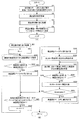
- FIG. (A) is a flowchart which shows an example of the sort process in the system control part 14
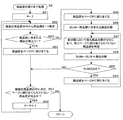
- (B) is a flowchart which shows an example of the "allocation process" which reduces the page with few numbers of goods displayed. It is a figure which shows a mode that the some goods which comprise a goods list are divided into several goods groups, and are allocated to each page by the allocation process shown to FIG.
- FIG. 5 It is a flowchart which shows an example of the "assignment process" which can allocate a some product group to the same page even if it does not mutually adjoin according to the arrangement
- (A) is a flowchart showing an example of “product group determination process” in application example 1
- (B) is a flowchart showing an example of “product group determination process” in application example 2.
- the application example 2 it is a figure which shows an example of the result as which the some goods which comprise a goods list were divided into the some goods group.
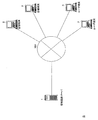
- FIG. 1 is a diagram illustrating an example of a schematic configuration of an information providing system S according to the present embodiment.
- the information providing system S includes an information providing server 1, a plurality of store terminals 2, and a plurality of user terminals 3.
- the information providing server 1, each store terminal 2, and each user terminal 3 can exchange data with each other using, for example, TCP / IP as a communication protocol via the network NW.
- the network NW is constructed by, for example, the Internet, a dedicated communication line (for example, a CATV (Community Antenna Television) line), a mobile communication network (including a base station), a gateway, and the like.
- the information providing server 1 (an example of the information processing apparatus of the present invention) is a server apparatus that executes various processes related to an online shopping mall and an Internet auction where merchandise can be traded.
- a user can purchase a desired product from a desired store by using the online shopping mall.
- the user can sell a product at an auction or bid for a product that is being sold.
- the information providing server 1 transmits and displays a Web page that publishes a product list or the like, for example, on the user terminal 3.
- the information providing server 1 divides a plurality of elements constituting the product list into a plurality of Web pages and causes the user terminal 3 to display them.
- the store terminal 2 is a terminal device used by an employee of a store opening a store in an online shopping mall.
- the store terminal 2 is used, for example, for registering information about products to be sold in an online shopping mall and confirming the order contents of products. Further, the store terminal 2 receives the Web page from the information providing server 1 and displays it by accessing the information providing server 1 based on an operation from an employee or the like.
- Software such as a web browser and an e-mail client is incorporated in the store terminal 2.
- the user terminal 3 is a terminal device of a user who uses an online shopping mall or an auction.
- the user terminal 3 receives the Web page from the information providing server 1 and displays it by accessing the information providing server 1 based on an operation from the user.
- the user terminal 3 incorporates software such as a web browser and an e-mail client.
- a personal computer, a PDA (Personal Digital Assistant), a portable information terminal such as a smartphone, a mobile phone, a portable game machine, or the like is used as the user terminal 3.
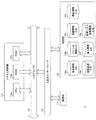
- FIG. 2 is a block diagram illustrating an example of a schematic configuration of the information providing server 1 according to the present embodiment.
- FIG. 3 is a diagram illustrating an example of items recorded in the database.
- the information providing server 1 includes a communication unit 11, a storage unit 12, an input / output interface 13, and a system control unit 14.
- the system control unit 14 and the input / output interface 13 are connected via a system bus 15.
- the information providing server 1 may be composed of a plurality of server devices such as a Web server, an application server, and a database server, and these servers may be connected to each other via a LAN or the like.
- the communication unit 11 is connected to the network NW and controls the communication state with the store terminal 2, the user terminal 3, and the like.
- the storage unit 12 is composed of, for example, a hard disk drive.
- the storage unit 12 stores a structured document file (for example, an HTML (Hyper Text Markup Language) document or an XHTML document) that constitutes a Web page to be displayed on the user terminal 3, and image data.
- a structured document file for example, an HTML (Hyper Text Markup Language) document or an XHTML document
- databases such as a member information DB (database) 12a, a genre information DB 12b, a store information DB 12c, a product information DB 12d, a browsing history DB 12e, a purchase history DB 12f, and a reference list registration history DB 12g are constructed. Note that all or part of these various DBs may be provided in a storage unit of a predetermined server accessible by the information providing server 1.
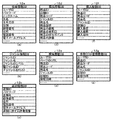
- FIG. 3A is a diagram showing an example of items recorded in the member information DB 12a.
- the member information DB 12a records member information related to the user registered as a member. Specifically, information such as a user ID, password, nickname, name, date of birth, sex, zip code, address, telephone number, and e-mail address is recorded in the member information DB 12a in association with each user.
- the user ID is identification information unique to each user.
- the user ID and password are authentication information used for login processing (user authentication processing).
- FIG. 3B is a diagram showing an example of items recorded in the genre information DB 12b.
- Genre information about the genre (category) of the product is recorded in the genre information DB 12b.
- information such as a genre ID, a genre name, a genre level, a parent genre ID, and a child genre ID list is recorded in the genre information DB 12b in association with each genre.
- the genre information is set by, for example, an administrator of the online shopping mall.
- the genre ID is identification information unique to each genre.
- the genre of the product is hierarchically defined by a tree structure, and each node of the tree structure corresponds to a genre. The depth of the node corresponds to the level (hierarchy) of the genre corresponding to the node.
- the parent genre ID is the genre ID of the parent genre of the genre defined by the genre information.
- the child genre ID list is a list for registering genre IDs of child genres of a genre defined by genre information. The child genre ID list is set when the genre defined by the genre information has a child genre.
- FIG.3 (c) is a figure which shows an example of the item recorded on store information DB12c.
- Store information regarding stores that have opened in the online shopping mall is recorded in the store information DB 12c.
- information such as a store ID, a password, a store name, a postal code, an address, a telephone number, an e-mail address, and a store evaluation is recorded in the store information DB 12c in association with each store.
- the store ID is unique identification information for each store.
- the store ID and password are authentication information used for the login process.
- the evaluation of the store is expressed by, for example, a score of “1-5”, and the higher the score, the higher the evaluation.
- the evaluation of the store is input (input on the Web page) by each user who purchased the product from the store. When a plurality of users evaluate a store, for example, the average of a plurality of evaluations is used.
- FIG. 3D is a diagram showing an example of items recorded in the product information DB 12d.
- the merchandise information DB 12d records merchandise information related to merchandise exhibited in the online shopping mall. Specifically, in the product information DB 12d, the product ID, the store ID of the store that sells the product, the product code, the genre ID of the genre to which the product belongs, the product name, the product description, the price, the release date, the grant points (point grant rate) ) And product evaluation information are recorded in association with each product and each store.
- the product ID is unique identification information for each product, and even if the same product is sold, the product ID is different if the store to be sold is different.
- the product code is a code number for identifying a product.
- the product code for example, there is a JAN (Japanese Article Number Code) code, and the product code is the same as long as it is the same product even if the stores to be sold are different.
- the genre ID of the genre to which the product belongs is, for example, the genre ID of each genre in the highest level 1 to the lowest level 5.
- the point grant rate is a ratio of how many points are granted (given to a user who has purchased a product) with respect to the price of the purchased product. For example, if 1 point is awarded for 1000 yen, the point grant rate is 0.1%. Such a point can be used by a user for settlement (payment) of a product.
- a product with a higher point grant rate is a product that is advantageous for the user.
- the evaluation of the product is expressed by, for example, a score from “1 to 5”, and the higher the score, the higher the evaluation.
- the evaluation of the product is input (input on the Web page) by each user who purchased the product. Moreover, when a some user evaluates goods, it is set as the average of several evaluation, for example.
- FIG. 3E is a diagram illustrating an example of items recorded in the browsing history DB 12e.
- the browsing history DB 12e browsing history of products arranged on a page (web page on which product information is posted) browsed by the user is recorded.
- the browsing history DB 12e sells the user ID of the browsing user, the URL of the viewed page, the product ID of the product placed on the viewed page, the product code, the product name, the genre ID, and the product.
- Information such as the store ID of the store (provided) and the viewing date and time is recorded in association with each user.
- the browsing history is recorded when a web page is displayed on the user terminal 3 by an operation of a logged-in user.
- the browsing history saved by the web browser of the user terminal 3 may be acquired and recorded by the information providing server 1 when the user of the user terminal 3 logs in.
- FIG. 3F is a diagram illustrating an example of items recorded in the purchase history DB 12f.
- a purchase history transaction history
- the user ID of the purchased user the product ID of the purchased product, the product code, the product name, the genre ID, the store ID of the store where the product was sold (the store where the product was purchased)
- Information such as the purchase quantity, purchase price, and purchase date / time (order date / time) is recorded in association with each user.
- the purchase history is recorded when the purchase procedure of the product is confirmed by the user operation on the Web page for performing the purchase procedure of the product.
- FIG. 3G shows an example of items recorded in the reference list registration history DB 12g.
- a registration history of a product for example, a product ID is registered
- a predetermined reference list is recorded in the reference list registration history DB 12g.
- the user ID of the user registered in the reference list the product ID of the product registered in the reference list, the product code, the product name, the genre ID, and the store of the store that sells the product Information such as ID and registration date is recorded in association with each user.
- the predetermined reference list include a favorite list, a bookmark list, a shopping cart list, and a watch list.
- a user can register a favorite product or a product of interest in such a reference list, for example, as a purchase target or a recommendation target for other users.
- the registration history is recorded when a product is registered in a predetermined reference list by an operation of a logged-in user.
- the storage unit 12 stores various programs such as an operating system (OS), a WWW (World Wide Web) server program, a DBMS (Database Wide Management System), an information processing program of the present invention, and various setting data and tables.
- OS operating system
- WWW World Wide Web
- DBMS Database Wide Management System
- the various programs may be acquired from other server devices or the like via the network NW, or may be recorded on a recording medium such as a DVD (Digital Versatile Disc) and read via the drive device. You may do it.
- the input / output interface 13 performs interface processing between the communication unit 11 and the storage unit 12 and the system control unit 14.
- the system control unit 14 includes a CPU 14a, a ROM (Read Only Memory) 14b, a RAM (Random Access Memory) 14c, and the like.
- the system control unit 14 functions as a determination unit and an allocation unit in the present invention by the CPU 14a as a computer reading and executing various programs (that is, the information processing program of the present invention is added to the above-described unit in the CPU 14a). To execute).
- the system control unit 14 uses a classification condition different from the classification condition according to the display limit number per page of the elements constituting the list displayed on the Web page, and the elements constituting the list A plurality of elements are determined by classifying a plurality of elements constituting the list on the basis of a classification condition according to the attribute.
- elements constituting the list products and stores searched based on a search condition input by the user, products included in the browsing history, products included in the purchase history, or products included in the registration history Etc.
- element attributes include product price, product evaluation, product genre, product release date, product grant points, and the like.
- the classification condition according to the price of the product for example, divides a plurality of products for each price range of the products (in other words, separates pages for each price range of the product) ).
- the classification condition corresponding to the product evaluation is, for example, a condition that a plurality of products are classified for each evaluation zone of the product.
- the classification condition according to the product genre is, for example, a condition that a plurality of products are classified for each product genre.
- the element group 1 includes 10 elements
- the element group 2 includes 9 elements.
- the number of elements (number of cases) included in each element group varies, such as elements included, and element group 3 includes 5 elements. Highly specific elements can be included in the same element group.
- the system control unit 14 assigns the determined plurality of element groups to the plurality of pages. At this time, the system control unit 14 assigns each element group to any one of the plurality of pages so that all the elements included in the element group are displayed on the same page. For example, as described above, when three element groups 1 to 3 are determined, element group 1 is assigned to page 1, element group 2 is assigned to page 2, and element group 3 is assigned to page 3. Alternatively, element groups 1 and 2 may be allocated to page 1 and element group 3 may be allocated to page 2. However, a plurality of elements included in a certain element group are not displayed (separated) across a plurality of pages (represented on different pages).
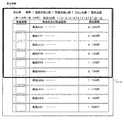
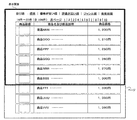
- FIG. 4 is a diagram illustrating an example of a page displayed on the display screen of the user terminal 3 (active window screen of the Web browser).
- the page shown in FIG. 4 is the first page composed of 10 pages.
- a list of products including products (product information) for “10” preset as the display limit number per page is displayed.
- products are displayed in standard (default) settings, for example, in the order of registration or new arrival.
- the display limit number can be arbitrarily set by a user operation.
- the goods which comprise a goods list are the goods searched by the information provision server 1 based on the search conditions input by the user, for example.
- the product constituting the product list may be a product registered in the bookmark list, for example.
- page switching is performed by a user's selection operation of the user terminal 3. For example, when the “next 10 items” (or the part indicating the number of pages) displayed on the page shown in FIG.
- each page is provided with a rearrangement key for sorting (rearranging) the arrangement order of the products included in the product list (product list over all pages).
- a rearrangement key for sorting (rearranging) the arrangement order of the products included in the product list (product list over all pages).
- “order from the lowest price”, “order from the highest evaluation”, “order by genre”, and “order by release date” are provided as the sorting keys.
- rearrangement keys such as “in order of high price”, “in order of low evaluation”, and “in order of high (or low) grant points” may be provided.
- a sorting request for sorting in the sorting order corresponding to the sorting key is sent to the information providing server. 1 is transmitted.
- the sort request includes information indicating a rearrangement key.
- the information provision server 1 will start a sort process, if the sort request from the user terminal 3 is received.
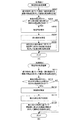
- FIG. 5A is a flowchart illustrating an example of sorting processing in the system control unit 14.
- the system control unit 14 of the information providing server 1 arranges the products constituting the product list in the order in accordance with the sort key indicated by the received sort request (for example, The product IDs of the products are arranged on the RAM 14c in ascending order of price).
- the products composing the product list are, for example, products searched based on a search condition input by the user of the user terminal 3 (user terminal 3 in session continuation) that transmitted the sort request, or It is a product registered in the user's bookmark list.
- information indicating product attributes recorded in the product information DB 12d is referred to.
- the attribute that the user attaches importance to is determined by the system control unit 14 based on the purchase history or registration history of the user, for example. For example, when the ratio of the user purchasing a low-priced product among a plurality of identical products is high, the attribute that the user attaches importance to is determined as “product price”. Further, for example, when the ratio of the user purchasing a highly evaluated product among a plurality of the same products is high, the attribute emphasized by the user is determined as “product evaluation”.
- the rearrangement key can be set as a standard even if the selection key is not selected by the user.
- the system control unit 14 executes a product group determination process (step S2).
- the system control unit 14 uses a classification condition that is different from the classification condition according to the number of display restrictions (for example, “10 cases”) and a classification condition according to the attributes of the products constituting the product list. Based on the above, a plurality of products constituting the product list are classified to determine a plurality of product groups. That is, in this determination process, a plurality of products constituting the product list are not classified based on the classification condition according to the display limit number, but a classification condition according to the attribute of the product constituting the product list. A plurality of products constituting the product list are classified on the basis of.
- serial numbers are assigned to the product groups determined in this manner in the order of arrangement.
- the attribute of the product is determined from the rearrangement key indicated by the sort request. For example, when the sorting key is “in order of price”, “product price” is determined as the product attribute. When the sorting key is “in order of highest evaluation”, “product evaluation” is determined as the product attribute. When the rearrangement key is “genre order”, “product genre” is determined as the product attribute.
- the attribute determined in this way is an attribute of a product constituting the product list displayed on the page shown in FIG.
- the classification condition is configured such that, for example, a plurality of candidates are set in advance for each product attribute, and the classification condition used for processing is selected from the plurality of candidates according to the total number of products included in the product list.
- the attribute of the product may be an attribute emphasized by the user, for example. In this case, since the attribute which the user attaches importance to is determined based on the purchase history or registration history of the user, for example, by the system control unit 14 as described above, the attribute of the product may not be determined from the sorting key. . Moreover, you may comprise so that the attribute of the said goods may be default-set by the system administrator side, for example. In this case, the attribute of the product is determined regardless of the user's intention.
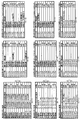
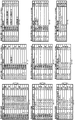
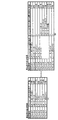
- FIG. 6 (A-1), (B-1), and (C-1) are diagrams illustrating an example of a result of dividing a plurality of products constituting the product list into a plurality of product groups.
- FIG. 6A-1 shows that a plurality of products constituting the product list are classified and a plurality of product groups (price range 1 to price range 12) are determined based on the classification condition according to the price of the product. It is an example.
- the step size of the category is “200 yen” (in other words, the product group changes with every increase of 200 yen).
- FIG. 6B-1 shows a case where a plurality of products constituting the product list are classified and a plurality of product groups (evaluation band 1 to evaluation band 9) are determined based on the classification condition according to the evaluation of the products. It is an example.
- the step size of the section is “0.5”.
- FIG. 6C-1 shows an example in which a plurality of products constituting the product list are classified and a plurality of product groups (genre 1 to genre 7) are determined based on the classification condition according to the product genre. is there.
- the step size of the division is for each branch number (-1, -2, -3 ...) in the genre level 4 (L4).
- a product group name (including a serial number) is assigned to each of the product groups shown in FIGS. 6 (A-1), (B-1), and (C-1). Further, as shown in FIGS. 6A-1, (B-1), and (C-1), the number of products (number of products) included in each product group varies.
- the system control unit 14 executes an assignment process for assigning the plurality of product groups determined in step S2 to a plurality of pages (step S3).
- the system control unit 14 assigns each product group to any one of a plurality of pages so that all the products included in one product group are displayed on the same page.
- the system control unit 14 assigns each product group determined in step S2 in order from page 1 in the order of arrangement (that is, in order of serial number). Information indicating the correspondence between each product group and the assigned page is held by the system control unit 14 while the session continues.
- the system control unit 14 assigns pages 1 to 12 to price ranges 1 to 12 in order.
- the pages assigned to each product group are different from each other.
- the number of products (number of products) displayed in the product list on one page is too small, such as the product group in the price range 11 shown in FIG.
- the frequency of page switching increases. Therefore, it is desirable to reduce pages with a small number of displayed products.
- FIG. 5B is a flowchart illustrating an example of “allocation processing” for reducing pages with a small number of displayed products.
- the system control unit 14 first sets P (variable) indicating a page to “1” (step S31).
- the system control unit 14 initializes (sets to “0”) a SUM (variable) indicating the total number of products.
- the system control unit 14 specifies one product group from among the plurality of product groups determined in step S2 (step S32).
- the merchandise group is specified in the arrangement order (serial number order).
- the system control unit 14 determines whether or not the number of products included in the product group specified in step S32 is equal to or greater than the first reference number N1 (step S33).
- the first reference number N1 is set to the display limit number (for example, 10). If the system control unit 14 determines that the number of products included in the product group identified in step S32 is equal to or greater than the first reference number N1 (step S33: YES), the system control unit 14 proceeds to step S34. . On the other hand, if the system control unit 14 determines that the number of products included in the product group specified in step S32 is not equal to or greater than the first reference number N1 (step S33: NO), the system control unit 14 proceeds to step S35.
- step S34 the system control unit 14 assigns the product group specified in step S32 to the page P, and proceeds to step S42.
- step S35 the system control unit 14 allocates the product group specified in step S32 to the page P.
- step S36 the system control unit 14 sets the number of products included in the product group specified in step S32 in the SUM (step S36).
- step S37 the system control unit 14 specifies the next product group of the product group specified most recently in the arrangement order.
- step S38 determines whether or not the number of products included in the product group specified in step S37 is equal to or greater than the first reference number N1 (step S38). If the system control unit 14 determines that the number of products included in the product group specified in step S37 is equal to or greater than the first reference number N1 (step S38: YES), the system control unit 14 clears the SUM. (Initialization), and the process proceeds to step S42. On the other hand, if the system control unit 14 determines that the number of products included in the product group identified in step S37 is not equal to or greater than the first reference number N1 (step S38: NO), the system control unit 14 proceeds to step S39.
- price range 2 and price range 3 are assigned to the same page.
- the process of steps S33 and S34 may be omitted, and the process may be shifted from step S32 to step S35.
- the price range 6 and the price range 7 are assigned to the same page.
- step S39 the system control unit 14 adds the number of products included in the product group specified in step S37 to the SUM.
- the system control unit 14 determines whether or not the SUM added in step S39 is equal to or less than the second reference number N2 (step S40).
- the second reference number N2 is set to a number (for example, 10 or more) equal to or greater than the first reference number N1. Then, the system control unit 14 determines that the SUM added in step S39 is not less than or equal to the second reference number N2 (for example, if the number of products is added to the SUM in step S39, the second reference number N2 is 20).
- step S40 If it is determined that the number has exceeded (NO in step S40), the SUM is cleared (initialized), and the process proceeds to step S42.
- the system control unit 14 determines that the SUM added in step S39 is equal to or less than the second reference number N2 (step S40: YES), the product group specified in the latest step S37. Is assigned to page P (step S41), and the process returns to step S37.
- step S37 the next product group of the product group specified most recently in the arrangement order is specified, and the number of products included in the specified product group is added to the SUM (step S39).
- the number of products included in each product group specified according to the order is added until the SUM exceeds the second reference number N2.
- all the products included in each of the plurality of product groups can be allocated to the same page so that the number of products displayed on the same page falls within a predetermined range based on the display limit number. It becomes possible.
- step S42 the system control unit 14 determines whether there is a product group that has not yet been assigned to the page among the plurality of product groups determined in step S2. If the system control unit 14 determines that there is a product group that has not yet been assigned to a page (step S42: YES), the system control unit 14 adds “1” to P indicating the page (that is, assignment of the next page). Preparation) (step S43), and the process returns to step S32. When returning to step S32 in this way, one product group that has not yet been assigned to the page is identified from among the plurality of product groups determined in step S2, and the processing after step S33 is performed in the same manner as described above. .
- step S42 determines in step S42 that there is no product group that has not yet been assigned to the page (that is, all product groups have been assigned to the page) (step S42: NO).
- step S42 determines in step S42 that there is no product group that has not yet been assigned to the page (that is, all product groups have been assigned to the page) (step S42: NO)
- step S42: NO the system control unit 14 determines in step S42 that there is no product group that has not yet been assigned to the page (that is, all product groups have been assigned to the page)
- FIG. 5B According to the allocation process shown in FIG. 5B, it is possible to reduce pages with a small number of displayed products, and as a result, it is possible to reduce communication load and system load.
- 6 (A-2), (B-2), and (C-2) show products assigned to each page when the first reference number N1 and the second reference number N2 are “10”, respectively. Show groups. In the example shown in FIG. 6A-2, one product group is assigned to each of page 1 to page 3 and page 5 to page 9, but each of page 4 and page 10 is assigned 2 One product group is assigned. In the example shown in FIGS. 6B-2 and C-2, one product group is assigned to each page. On the other hand, FIGS.
- FIGS. 6A-3, B-3, and C-3 show the case where the first reference number N1 is “10” and the second reference number N2 is “20”.
- the product group allocated to each page is shown.
- the total pages are larger than those in FIGS. 6A-2, B-2, and C-2. It is running low.
- FIG. 5B it is possible to reduce the variation in the number of items (number of items) assigned to each page.
- FIG. 5B a plurality of adjacent product groups are assigned to the same page in accordance with the arrangement order of the plurality of product groups (for example, as shown in FIG. 6A-2), The band 4 and the price band 5 are assigned to the page 4), but a plurality of product groups may be assigned to the same page even if they are not adjacent to each other according to the order of the product groups.
- FIG. 7 is a flowchart illustrating an example of “assignment processing” in which a plurality of product groups can be allocated to the same page without being adjacent to each other according to the order of the product groups.
- FIG. 8 is a diagram showing a state in which a plurality of products constituting the product list are divided into a plurality of product groups and assigned to each page by the assignment process shown in FIG.
- Steps S51 to S56 shown in FIG. 7 are the same as steps S31 to S36 shown in FIG. In addition, you may comprise so that the process of step S53 and S54 may not be provided but it may transfer to step S55 from step S52.
- the system control unit 14 specifies, for example, a product group that has the smallest number of products and is not yet assigned to a page in the above-described arrangement order.
- the product group whose order is earlier or later in the arrangement order may be specified. In the example shown in FIG. 8A-3, the product group whose order is first in the arrangement order is specified.
- a product group with the second smallest number of products may be specified. Moreover, you may exclude the goods group containing the goods more than the 1st reference number N1 from the object specified by step S57.
- the system control unit 14 adds the number of products included in the product group specified in step S57 to the SUM (step S58).
- the system control unit 14 determines whether or not the SUM added in step S58 is equal to or smaller than the second reference number N2 (step S59). If the system control unit 14 determines that the SUM added in step S58 is not less than or equal to the second reference number N2 (step S59: NO), the system control unit 14 clears (initializes) the SUM, Proceed to S61.
- step S59 YES
- step S60 the product group specified in the latest step S57. Is assigned to page P
- step S60 the process returns to step S57.
- steps S61 and S62 shown in FIG. 7 are the same as steps S42 and S43 shown in FIG.
- price bands 4 and 11 that are not adjacent to each other among a plurality of product groups can be assigned to the same page.
- FIGS. 6 A-3) and (B-3) , (C-3
- the variation in the number of products assigned to each page can be further reduced.
- step S4 shown in FIG. 5A the system control unit 14 forms a page (default set page) of product information of products included in the product group assigned to page 1. Embedded (for example, a part of product information (product name, price, etc.) is described in a div tag ( ⁇ div>... ⁇ / Div>)), the page (structured document data constituting the page) ) To the sort request source user terminal 3 to display the page on the Web browser.
- step S4 the system control unit 14 does not transmit all the data of the page, but transmits the product information of the products included in the product group assigned to the page 1 by using, for example, Ajax or the like. You may comprise as follows. In this case, the entire page is refreshed (the product list area is refreshed).
- FIG. 9 is a diagram illustrating an example of a page displayed on the display screen of the user terminal 3 by the process of step S4.
- the page shown in FIG. 9 is the first page among all 10 pages to which the product group is assigned.
- a product list including products (13 items) included in the price range 1 can be displayed.
- the area of the page that is not in the display screen is displayed by the user's scroll operation.
- a page request is transmitted to the information providing server 1.
- the system control unit 14 of the information providing server 1 stores the product information of the product included in the product group assigned to the requested page in the structured document that constitutes the page (the default page). Incorporating and transmitting the page to the user terminal 3 as the sort request source causes the page to be displayed on the Web browser. In this case as well, page switching may be performed without refreshing the entire page by using, for example, Ajax.
- FIG. 10 is a diagram illustrating an example of a page displayed on the display screen of the user terminal 3 when the “next page” is selected and operated by the user on the display screen illustrated in FIG. 9.
- the page shown in FIG. 10 is the second page of all 10 pages to which the product group is assigned.
- a product list including products (9 items) included in the price range 2 can be displayed.
- a plurality of product groups are determined based on the classification conditions according to the attributes of the products constituting the product list, and all the products included in the determined plurality of product groups Since each product group is assigned to any one of a plurality of pages so that can be displayed on the same page, multiple products can be added while maintaining ease of comparison between products. Can be displayed separately on the page. That is, it is possible to prevent products that are highly likely to be compared from being placed on different pages.
- FIG. 11A is a flowchart illustrating an example of “commodity group determination processing” in the first application example.
- the system control unit 14 has a classification condition that is different from the classification condition according to the display limit number (eg, “10”), and a list of products.
- Step S201 Based on the classification conditions according to the attributes of the products constituting the product list, the plurality of products constituting the product list are classified and a plurality of product groups are determined (tentative determination until the processing shown in FIG. (Step S201).
- the process in step S201 is performed in the same manner as the process in step S2 described above.
- the system control unit 14 is less than a first predetermined number (for example, five) among the plurality of product groups determined in step S2 (this determination is not final determination but provisional determination). It is determined whether or not there is a commodity group including the commodity (step S202). Then, when the system control unit 14 determines that there is no product group including a product less than the first predetermined number among the plurality of determined product groups (step S202: NO), FIG.
- step S202 determines that there is a product group including a product less than the first predetermined number in the determined plurality of product groups.
- step S203 the product group Is specified.
- the determination of the specified product group is canceled.
- step S204 and S205 are performed on each product group.
- the system control unit 14 classifies the products included in the product group identified in step S203 (that is, the product group in which the number of products belonging to the first predetermined number is less than the first predetermined number).
- step S204 The condition is changed (step S204). Then, the system control unit 14 classifies a plurality of products and determines a plurality of product groups based on the classification condition changed in step S204 (step S205), and ends the process shown in FIG. Then, the process proceeds to step S3.
- the system control unit 14 changes the classification condition so as to widen the step size of the classification.
- the step size of the classification is increased from, for example, “200 yen” to “400 yen” (in other words, the price range is expanded).
- the step size of the classification is expanded from, for example, “0.5” to “1.0” (in other words, the width of the evaluation band is expanded). Further, in the case of the classification condition according to the genre of the product, the step size of the classification is increased from, for example, the category level 4 to the level 3 on one hierarchy (the branch number ( ⁇ 1, ⁇ 2,. -3 ...) is spread every time)).
- the system control unit 14 divides a plurality of products and determines a plurality of product groups based on the changed classification condition, and then executes the allocation process in step S3. According to such a configuration, it is possible to reduce pages with a small number of displayed products while maintaining ease of comparison between products, and as a result, it is possible to reduce communication load and system load. it can.
- a plurality of product groups may be integrated without changing the classification condition.
- the system control unit 14 has a plurality (for example, 2) of product groups including a product less than the first predetermined number in the plurality (for example, 12) of product groups determined in step S2. These plural product groups are specified.
- the system control unit 14 determines a single product group by integrating the plurality of specified product groups.
- the system control unit 14 specifies a plurality of adjacent product groups among the plurality of product groups arranged in the arrangement order in step S1, and integrates the specified plurality of product groups. In this case, for example, as shown in FIG.
- the system control unit 14 may be configured to integrate the plurality of specified product groups without depending on the arrangement order. In this case, for example, as shown in FIG. 6 (A-1), price range 5 (5 cases) and price range 11 (4 cases) that are not adjacent to each other (that is, other price ranges are sandwiched between them) are integrated. Then, a product group of one price range 5 & 11 (9 cases) is determined. Even in such a configuration, since the products included in the same product group are displayed on the same page, in addition to the above effects, the processing time can be shortened.
- FIG. 11B is a flowchart illustrating an example of the “commodity group determination process” in the application example 2.
- FIG. 12 is a diagram illustrating an example of a result of dividing a plurality of products constituting the product list into a plurality of product groups in the application example 2.
- the system control unit 14 has a classification condition different from the classification condition according to the display limit number (for example, “10”), and a product list.
- Step S211 Based on the classification conditions according to the attributes of the products constituting the product list, the plurality of products constituting the product list are classified to determine a plurality of product groups (until the process shown in FIG. 11B is completed) (Step S211).
- the process of step S211 is performed in the same manner as the process of step S2 described above.
- the system control unit 14 determines whether or not there is a merchandise group including a second predetermined number (for example, 25) or more of merchandise among the plurality of merchandise groups determined in step S211 ( Step S212). When the system control unit 14 determines that there is no product group including the second predetermined number or more of the products in the plurality of determined product groups (step S212: NO), FIG.
- step S212 determines that there is a product group including the second predetermined number of products or more among the plurality of determined product groups.
- step S212 determines that there is a product group including the second predetermined number of products or more among the plurality of determined product groups.
- step S213 the product group Is specified.
- step S213 the determination of the specified product group is canceled.
- steps S214 and S215 below are performed on each product group.
- the system control unit 14 sets a new classification condition for the product group identified in step S213 (that is, a product group in which the number of products belonging to the second predetermined number or more) (step S214). Then, the system control unit 14 determines the specified product group so that the number of products included in the specified product group is less than a second predetermined number based on the new classification condition set in step S214. A plurality of products are determined by classifying a plurality of products included in (Step S215), the process shown in FIG. 11B is terminated, and the process proceeds to Step S3. For example, the system control unit 14 sets a new division condition with a step size narrower (subdivided) than the step size of the division in the first division condition.
- a new classification condition is set in which the step size of the classification is narrowed from “200 yen” to “20 yen” for the above specified price range, for example. Is done.
- a classification condition in which the step size of the classification is narrowed from “0.5” to “0.1” is newly set.
- the step size of the classification is lowered from the level 4 of the category to the level 5 one hierarchy below (for example, the level of the genre) as shown in FIG.
- the system control unit 14 determines a plurality of product groups by classifying a plurality of products included in the specified product group based on the new classification condition, and then executes the allocation process in step S3. To do. According to such a configuration, it is possible to reduce pages with a large number of displayed products while maintaining ease of comparison between products, and further, variation in the number of products displayed on each page. Can also be reduced. Further, in the “product group determination process” of the application example 1, after the system control unit 14 changes the classification condition so as to widen the division step, the product group including the second predetermined number or more of products is included.
- a plurality of products included in the product group are classified based on a new classification condition for the product group so that the number of products included in the product group is less than a second predetermined number.
- the product group may be determined. According to this configuration, the variation in the number of products displayed on each page can be further reduced.
- a plurality of elements constituting the list in the present invention, products searched based on a search condition input by a user, browsing history selected by the user, purchase history, registration history
- the present invention is not limited to these.
- the present invention can be applied to products registered in an arbitrarily generated product list.
- any element that constitutes a list may be used.
- a store that sells products, an accommodation facility, a play facility, a golf course, and various services for example, The present invention can be applied to accommodation plans and travel plans.
- the present invention is applied to a search target searched by a search server that searches information provided on the network NW (in other words, a web page including the information) as a plurality of elements constituting the search result list.
- the attribute of the search target is, for example, a score (score for determining the arrangement order (display order) in the search result list) given to the search target, and based on the classification condition according to the score of the search target
- a plurality of search targets are divided and a plurality of element groups are determined.
Landscapes
- Engineering & Computer Science (AREA)
- Databases & Information Systems (AREA)
- Theoretical Computer Science (AREA)
- Data Mining & Analysis (AREA)
- Physics & Mathematics (AREA)
- General Engineering & Computer Science (AREA)
- General Physics & Mathematics (AREA)
- Information Retrieval, Db Structures And Fs Structures Therefor (AREA)
- User Interface Of Digital Computer (AREA)
Priority Applications (1)
| Application Number | Priority Date | Filing Date | Title |
|---|---|---|---|
| US14/369,473 US10078706B2 (en) | 2011-12-28 | 2012-07-04 | Information processing apparatus, information processing method, information processing program, and recording medium storing thereon information processing program which classifies and displays a plurality of elements constituting a list on a plurality of pages |
Applications Claiming Priority (2)
| Application Number | Priority Date | Filing Date | Title |
|---|---|---|---|
| JP2011-287886 | 2011-12-28 | ||
| JP2011287886A JP5568077B2 (ja) | 2011-12-28 | 2011-12-28 | 情報処理装置、情報処理方法、情報処理プログラム、及び情報処理プログラムが記録された記録媒体 |
Publications (1)
| Publication Number | Publication Date |
|---|---|
| WO2013099327A1 true WO2013099327A1 (ja) | 2013-07-04 |
Family
ID=48696849
Family Applications (1)
| Application Number | Title | Priority Date | Filing Date |
|---|---|---|---|
| PCT/JP2012/067048 Ceased WO2013099327A1 (ja) | 2011-12-28 | 2012-07-04 | 情報処理装置、情報処理方法、情報処理プログラム、及び情報処理プログラムが記録された記録媒体 |
Country Status (3)
| Country | Link |
|---|---|
| US (1) | US10078706B2 (enExample) |
| JP (1) | JP5568077B2 (enExample) |
| WO (1) | WO2013099327A1 (enExample) |
Cited By (1)
| Publication number | Priority date | Publication date | Assignee | Title |
|---|---|---|---|---|
| JP5453577B1 (ja) * | 2013-05-29 | 2014-03-26 | 楽天株式会社 | 情報処理装置、情報処理方法及び情報処理プログラム |
Families Citing this family (10)
| Publication number | Priority date | Publication date | Assignee | Title |
|---|---|---|---|---|
| GB201212878D0 (en) * | 2012-07-20 | 2012-09-05 | Pike Justin | Authentication method and system |
| JP5735146B1 (ja) | 2014-01-31 | 2015-06-17 | グリー株式会社 | 表示データ作成方法、制御プログラム及びコンピュータ |
| JP6345550B2 (ja) * | 2014-09-10 | 2018-06-20 | ヤフー株式会社 | 情報処理装置、情報処理方法、及び情報処理プログラム |
| JP6612799B2 (ja) * | 2017-03-06 | 2019-11-27 | 京セラ株式会社 | 電子機器、制御方法、及び制御プログラム |
| JP7172192B2 (ja) * | 2018-07-02 | 2022-11-16 | 富士フイルムビジネスイノベーション株式会社 | 情報処理装置、情報処理システム、及び情報処理プログラム |
| GB201916441D0 (en) | 2019-11-12 | 2019-12-25 | Mypinpad Ltd | Computer-implemented system and method |
| JP2021152805A (ja) * | 2020-03-24 | 2021-09-30 | 東芝テック株式会社 | 店舗システム、情報処理装置及びその制御プログラム |
| JP7497403B2 (ja) | 2021-10-28 | 2024-06-10 | ラクテン アジア プライベート リミテッド | 電子商取引プラットフォームで商品マッチングを実行するための方法およびシステム |
| US20230214093A1 (en) * | 2022-01-03 | 2023-07-06 | International Business Machines Corporation | Paging content for user interface display |
| JP7629886B2 (ja) * | 2022-03-17 | 2025-02-14 | 富士通フロンテック株式会社 | 出走表表示装置、出走表表示プログラムおよび出走表表示方法 |
Citations (5)
| Publication number | Priority date | Publication date | Assignee | Title |
|---|---|---|---|---|
| JP2002183039A (ja) * | 2000-12-18 | 2002-06-28 | Yamaha Corp | 電子掲示板のページ作成方法およびサーバ装置 |
| JP2004185049A (ja) * | 2002-11-29 | 2004-07-02 | Toppan Printing Co Ltd | 記事閲覧装置及びその方法、並びに記事閲覧プログラム |
| JP2006285704A (ja) * | 2005-04-01 | 2006-10-19 | Mitsubishi Electric Corp | 検索データ表示装置および検索データ表示方法 |
| JP2007034983A (ja) * | 2005-07-29 | 2007-02-08 | Canon Inc | 情報処理装置及びその制御方法及びコンピュータプログラム及びコンピュータ可読記憶媒体、並びに、検索システム |
| JP2008282197A (ja) * | 2007-05-10 | 2008-11-20 | Canon Inc | 情報処理装置、情報処理方法 |
Family Cites Families (16)
| Publication number | Priority date | Publication date | Assignee | Title |
|---|---|---|---|---|
| EP0820027B1 (en) * | 1996-07-18 | 2002-05-29 | Matsushita Electric Industrial Co., Ltd. | Data retrieval support apparatus |
| US8161081B2 (en) * | 2001-03-16 | 2012-04-17 | Michael Philip Kaufman | System and method for generating automatic user interface for arbitrarily complex or large databases |
| JP2004145631A (ja) | 2002-10-24 | 2004-05-20 | Pfu Ltd | 情報検索結果表示装置 |
| US7505172B2 (en) * | 2003-10-31 | 2009-03-17 | Hewlett-Packard Development Company, L.P. | Method and systems for processing print jobs |
| US20060224604A1 (en) * | 2005-04-05 | 2006-10-05 | Landsman Richard A | Content-descriptive user interface correlation for page navigation systems |
| US8204837B2 (en) * | 2006-01-06 | 2012-06-19 | Sony Corporation | Information processing apparatus and method, and program for providing information suitable for a predetermined mood of a user |
| CN101379492B (zh) * | 2006-02-01 | 2010-11-03 | 松下电器产业株式会社 | 信息分类装置、信息检索装置以及信息分类方法 |
| WO2007091259A2 (en) * | 2006-02-08 | 2007-08-16 | Dolphin Software Ltd. | Efficient display systems and methods |
| US7917511B2 (en) * | 2006-03-20 | 2011-03-29 | Cannon Structures, Inc. | Query system using iterative grouping and narrowing of query results |
| US8117204B2 (en) * | 2008-02-04 | 2012-02-14 | Fuji Xerox Co., Ltd. | Video browser for navigating linear video on small display devices using a similarity-based navigation hierarchy of temporally ordered video keyframes with short navigation paths |
| US20090228826A1 (en) * | 2008-03-04 | 2009-09-10 | Microsoft Corporation | Group filtering of items in a view |
| JP2009237702A (ja) * | 2008-03-26 | 2009-10-15 | Fujifilm Corp | アルバム作成方法、プログラムおよび装置 |
| US8645406B2 (en) * | 2008-04-11 | 2014-02-04 | Microsoft Corporation | Exploiting conditions to optimize expensive database queries |
| US8839128B2 (en) * | 2009-11-25 | 2014-09-16 | Cooliris, Inc. | Gallery application for content viewing |
| US9021370B1 (en) * | 2010-03-17 | 2015-04-28 | Amazon Technologies, Inc. | Collaborative chat room media player with recommendations |
| US9032314B2 (en) * | 2010-12-01 | 2015-05-12 | Microsoft Technology Licensing, Llc | Proposing visual display components for processing data |
-
2011
- 2011-12-28 JP JP2011287886A patent/JP5568077B2/ja active Active
-
2012
- 2012-07-04 US US14/369,473 patent/US10078706B2/en active Active
- 2012-07-04 WO PCT/JP2012/067048 patent/WO2013099327A1/ja not_active Ceased
Patent Citations (5)
| Publication number | Priority date | Publication date | Assignee | Title |
|---|---|---|---|---|
| JP2002183039A (ja) * | 2000-12-18 | 2002-06-28 | Yamaha Corp | 電子掲示板のページ作成方法およびサーバ装置 |
| JP2004185049A (ja) * | 2002-11-29 | 2004-07-02 | Toppan Printing Co Ltd | 記事閲覧装置及びその方法、並びに記事閲覧プログラム |
| JP2006285704A (ja) * | 2005-04-01 | 2006-10-19 | Mitsubishi Electric Corp | 検索データ表示装置および検索データ表示方法 |
| JP2007034983A (ja) * | 2005-07-29 | 2007-02-08 | Canon Inc | 情報処理装置及びその制御方法及びコンピュータプログラム及びコンピュータ可読記憶媒体、並びに、検索システム |
| JP2008282197A (ja) * | 2007-05-10 | 2008-11-20 | Canon Inc | 情報処理装置、情報処理方法 |
Cited By (1)
| Publication number | Priority date | Publication date | Assignee | Title |
|---|---|---|---|---|
| JP5453577B1 (ja) * | 2013-05-29 | 2014-03-26 | 楽天株式会社 | 情報処理装置、情報処理方法及び情報処理プログラム |
Also Published As
| Publication number | Publication date |
|---|---|
| JP2013137626A (ja) | 2013-07-11 |
| US20140365867A1 (en) | 2014-12-11 |
| US10078706B2 (en) | 2018-09-18 |
| JP5568077B2 (ja) | 2014-08-06 |
Similar Documents
| Publication | Publication Date | Title |
|---|---|---|
| JP5568077B2 (ja) | 情報処理装置、情報処理方法、情報処理プログラム、及び情報処理プログラムが記録された記録媒体 | |
| US10552892B2 (en) | Method, medium, and system for customizing content based on social network information | |
| US9195753B1 (en) | Displaying interest information | |
| US8086480B2 (en) | Methods and systems for activity-based recommendations | |
| US10007655B2 (en) | Table size dependent transaction target table display | |
| US9626443B2 (en) | Searching and accessing application functionality | |
| JP5571145B2 (ja) | 広告配信装置および広告配信方法 | |
| US20020095441A1 (en) | Adaptive catalog page display | |
| JP5686934B1 (ja) | 情報処理装置、情報処理方法、プログラム、記憶媒体 | |
| JP2016192235A (ja) | ウェブサイト横断情報を表示する方法およびシステム | |
| WO2013179512A1 (ja) | 情報処理装置、情報処理方法、情報処理プログラム及び記録媒体 | |
| WO2014155682A1 (ja) | 情報処理装置、情報処理方法、及び情報処理プログラム | |
| US8095482B2 (en) | System and method to learn and deploy an optimal user experience in an online system | |
| JP2019003610A (ja) | 抽出装置、抽出方法及び抽出プログラム | |
| JP2023141026A (ja) | 投稿管理装置、投稿管理プログラム、および、投稿管理方法 | |
| JP6584584B1 (ja) | 情報処理装置、情報処理方法、および情報処理プログラム | |
| JP2014067314A (ja) | 電子商取引サーバ装置 | |
| JP6311052B1 (ja) | 抽出装置、抽出方法及び抽出プログラム | |
| JP7104255B1 (ja) | 情報処理装置、情報処理方法、および情報処理プログラム | |
| JP7443280B2 (ja) | 提供装置、提供方法及び提供プログラム | |
| KR101417894B1 (ko) | 관심 콘텐츠 제공을 위한 참여 검색 서비스 제공 시스템 및 방법 | |
| JP7659031B1 (ja) | 提示装置、提示方法、および、プログラム | |
| JP7248838B1 (ja) | 提供装置、提供方法および提供プログラム | |
| JP7128769B2 (ja) | 情報提供装置、情報提供方法、およびプログラム | |
| JP6433544B1 (ja) | 情報処理装置、情報処理方法、及び情報処理プログラム |
Legal Events
| Date | Code | Title | Description |
|---|---|---|---|
| 121 | Ep: the epo has been informed by wipo that ep was designated in this application |
Ref document number: 12863852 Country of ref document: EP Kind code of ref document: A1 |
|
| NENP | Non-entry into the national phase |
Ref country code: DE |
|
| WWE | Wipo information: entry into national phase |
Ref document number: 14369473 Country of ref document: US |
|
| 122 | Ep: pct application non-entry in european phase |
Ref document number: 12863852 Country of ref document: EP Kind code of ref document: A1 |