WO2013018174A1 - 作業引継支援装置、作業引継支援方法、および作業引継支援プログラム - Google Patents
作業引継支援装置、作業引継支援方法、および作業引継支援プログラム Download PDFInfo
- Publication number
- WO2013018174A1 WO2013018174A1 PCT/JP2011/067524 JP2011067524W WO2013018174A1 WO 2013018174 A1 WO2013018174 A1 WO 2013018174A1 JP 2011067524 W JP2011067524 W JP 2011067524W WO 2013018174 A1 WO2013018174 A1 WO 2013018174A1
- Authority
- WO
- WIPO (PCT)
- Prior art keywords
- work
- worker
- takeover
- information
- terminal
- Prior art date
- Legal status (The legal status is an assumption and is not a legal conclusion. Google has not performed a legal analysis and makes no representation as to the accuracy of the status listed.)
- Ceased
Links
Images










Classifications
-
- G—PHYSICS
- G06—COMPUTING OR CALCULATING; COUNTING
- G06Q—INFORMATION AND COMMUNICATION TECHNOLOGY [ICT] SPECIALLY ADAPTED FOR ADMINISTRATIVE, COMMERCIAL, FINANCIAL, MANAGERIAL OR SUPERVISORY PURPOSES; SYSTEMS OR METHODS SPECIALLY ADAPTED FOR ADMINISTRATIVE, COMMERCIAL, FINANCIAL, MANAGERIAL OR SUPERVISORY PURPOSES, NOT OTHERWISE PROVIDED FOR
- G06Q10/00—Administration; Management
- G06Q10/06—Resources, workflows, human or project management; Enterprise or organisation planning; Enterprise or organisation modelling
Definitions
- the present invention relates to a work takeover support device, a work takeover support method, and a work takeover support program that support work takeover.
- the present invention provides a work takeover support apparatus and work takeover support capable of taking over work efficiently or fairly according to the respective contexts of a plurality of workers. It is an object to provide a method and a work transfer support program.
- a storage unit configured to update the storage unit by acquiring context information indicating a work status of each worker from each worker's terminal, and a first work to be performed by a target worker in the worker group Is detected, and based on the context information of the target worker in the storage means, it is determined whether or not the target worker is working on the second work. If it is determined, the handover candidate of the first work is identified from the other workers based on the context information of other workers other than the target worker, and the identified handover candidate terminal is designated. , Work to send information about the first work Relay support device, working takeover support method, and working takeover support program is proposed.
- a storage unit that is capable of communicating with each worker's terminal of the worker group and stores context information indicating a work situation for each worker.
- the storage means is updated, the work to be performed by the target worker in the worker group is detected, and the work instruction of the detected work is the target work.
- a work instruction rejection response is acquired from the target worker's terminal, and if the rejection response is acquired, other work is performed based on the context information of other workers other than the target worker.
- a work takeover support apparatus, a work takeover support method, and a work takeover support program are proposed that identify work takeover candidates from among the persons and transmit information related to the work to the specified takeover candidate terminals.
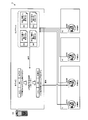
- FIG. 1 is an explanatory diagram showing a specific example of support for handing over work between workers by the work hand-over support apparatus.
- FIG. 2 is an explanatory diagram of an example of the work handover support system S according to the embodiment.
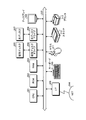
- FIG. 3 is a block diagram illustrating a hardware configuration example of the work transfer support device 100 according to the embodiment.
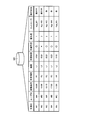
- FIG. 4 is an explanatory diagram showing an example of the contents stored in the work DB 101.
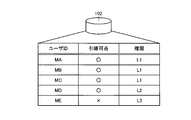
- FIG. 5 is an explanatory diagram showing an example of the contents stored in the worker DB 102.
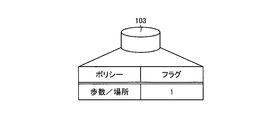
- FIG. 6 is an explanatory diagram showing an example of the contents stored in the policy DB 103.
- FIG. 7 is an explanatory diagram showing an example of the contents stored in the context DB 104.
- FIG. 8 is a block diagram illustrating a functional configuration of the work transfer support device 100.
- FIG. 9 is an explanatory diagram illustrating a specific example of notification of work contents and DB update by the work takeover support apparatus 100.
- FIG. 10 is an explanatory diagram illustrating an example of an application that supports work.
- FIG. 11 is an explanatory diagram illustrating a specific example of determination as to whether or not to perform handover by the work handover support apparatus 100.
- FIG. 12 is an explanatory diagram illustrating a specific example of takeover candidates by the work takeover support apparatus 100.
- FIG. 13 is an explanatory diagram showing a specific example of work takeover by the work takeover support apparatus 100.
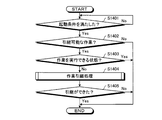
- FIG. 14 is a flowchart showing the processing contents of the work takeover determination processing.
- FIG. 14 is a flowchart showing the processing contents of the work takeover determination processing.
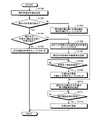
- FIG. 15 is a flowchart showing the processing contents of the work takeover processing.
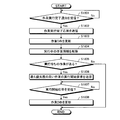
- FIG. 16 is a flowchart showing the processing contents of the work state determination processing.
- FIG. 17 is a flowchart showing the processing contents of the work notification processing.
- FIG. 18 is a flowchart showing the processing contents of the work end processing.
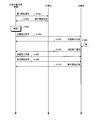
- FIG. 19 is a sequence diagram showing the contents of communication between the work takeover support apparatus 100 and the information processing terminal T when executing work takeover.
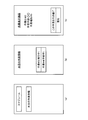
- FIG. 20 is an explanatory diagram illustrating a specific example of determination as to whether or not to perform handover by the worker M.
- FIG. 21 is an explanatory diagram illustrating a specific example of input of work to be taken over from the worker M to the information processing terminal T.
- FIG. 22 is an explanatory diagram illustrating a specific example of a candidate for takeover by the worker M.
- FIG. 23 is an explanatory diagram illustrating a specific example of input of a takeover candidate for taking over the work from the worker M to the information processing terminal T.
- FIG. 24 is an explanatory diagram illustrating a specific example of confirmation of work takeover by the worker M.
- FIG. 25 is an explanatory diagram illustrating a specific example of input of acceptance or refusal from the worker M to the information processing terminal T.
- FIG. 26 is a flowchart (part 1) showing the processing contents of the work takeover determination processing.
- FIG. 27 is a flowchart (part 2) showing the processing contents of the work takeover determination processing.
- FIG. 28 is a flowchart showing the processing contents of the work handover processing.
- FIG. 1 showing the processing contents of the work takeover determination processing.
- FIG. 27 is a flowchart (part 2) showing the processing contents of the work takeover determination processing.
- FIG. 28 is
- FIG. 29 is a flowchart showing the processing contents of the confirmation processing for taking over work by the information processing terminal T.
- FIG. 30 is a sequence diagram (part 1) illustrating the contents of communication between the work transfer support device 100 and the information processing terminal T when executing the transfer of work.
- FIG. 31 is a sequence diagram (part 2) illustrating the contents of communication between the work transfer support device 100 and the information processing terminal T when performing the transfer of work.
- FIG. 1 is an explanatory diagram showing a specific example of support for handing over work between workers by the work hand-over support device.
- the work takeover support system S includes an information processing terminal T (FIG. 1) that the work takeover support device 100 and each of a plurality of workers M (workers MA to MD in FIG. 1) have. Is a system including information processing terminals T1 to T4).
- the work transfer support device 100 is a device that stores the work schedule of each worker M and notifies the information processing terminal T of each worker M of the work. For example, as a work schedule, a start time at which the work is started, a worker M who should perform the work, and an identifier for identifying the work are stored.
- the work transfer support device 100 receives the context of the worker M (for example, the work status of the worker M, the location of the information processing terminal T of the worker M, and the like) from each of the information processing terminals T of the plurality of workers M. It is a device that receives the workload of worker M).
- the work takeover support apparatus 100 sets a takeover candidate to take over the work based on the received context. It is a device to identify.
- the work takeover support device 100 is a device that allows the worker M who is a takeover candidate to take over the work.
- the information processing terminal T includes the context of the worker M (for example, the work status of the worker M having the own information processing terminal T, the location of the own information processing terminal T, and the worker M having the own information processing terminal T).
- the work load is transmitted to the work transfer support device 100.
- the information processing terminal T is a terminal that executes an application that supports the work of the worker M.
- the work transfer support device 100 takes over the work between the workers M.
- the work transfer support device 100 takes over the work between the workers M.
- the work transfer support device 100 detects that the worker MA is in a state where the work W1 cannot be performed. For example, the work transfer support device 100 detects that the worker MA cannot execute the work W1 when the work status of the worker MA is executing a work other than the work W1. Further, for example, when the work transfer support apparatus 100 receives the work W1 execution refusal notification from the information processing terminal T1 as a result of notifying the information processing terminal T1 of the worker MA of the work W1, the worker MA receives the work W1. It may be detected that the state cannot be executed.
- the work takeover support apparatus 100 searches for takeover candidates for the work W1. For example, the work takeover support apparatus 100 searches for a worker M whose work status is “no work” as a takeover candidate based on the received context. Here, the work takeover support apparatus 100 searches for the worker MB and the worker MC as takeover candidates.
- the work takeover support apparatus 100 identifies one of the found takeover candidates as a takeover candidate for taking over the work.
- the work takeover support apparatus 100 stores a new work schedule to be executed by the specified takeover candidate and notifies the takeover candidate of the work.
- the work takeover support apparatus 100 searches for the worker MB and the worker MC as takeover candidates, and specifies the worker MB as a takeover candidate for taking over the work W1 among the found takeover candidates.
- the work transfer support device 100 transmits information specifying the work W1 to the worker MB.
- the work takeover support apparatus 100 may transmit information for identifying the application that supports the work W1, or may transmit the application itself that supports the work W1. .
- the information processing terminal T displays on the screen to start the work W1 based on the information specifying the work W1.
- the information processing terminal T activates an application that supports the work W1 based on information that identifies an application that supports the work W1, and supports the execution of the work W1 by the worker MA.
- the work takeover support apparatus 100 searches for the worker MB and the worker MC as takeover candidates, transmits a list of found takeover candidates to the information processing terminal T1, and takes over the takeover candidates that allow the worker MA to take over the work W1. It may be determined. Then, the work takeover support apparatus 100 may receive a takeover candidate determined by the worker MA from the information processing terminal T1 and specify a takeover candidate to take over the work W1.
- the work transfer support device 100 when there is a support device that supports the work of the worker M at each of the locations R1 to R3, the work transfer support device 100 further receives the context of the worker M from the support device, or receives the progress of the work. May be. Then, the work takeover support apparatus 100 may take over the work with reference to the context and work progress received from the support apparatus.
- the work takeover support apparatus 100 identifies an appropriate takeover candidate according to the contexts of a plurality of workers M. Then, the work takeover support apparatus 100 allows the specified takeover candidate to take over the work. Therefore, the work transfer support device 100 can allow the worker M to transfer work efficiently or fairly according to the context of the worker M.
- FIG. 2 is an explanatory diagram of an example of the work handover support system S according to the embodiment.
- FIG. 2 shows a work takeover support system S including a work takeover support apparatus 100, a plurality of information processing terminals T, a plurality of wireless LANs 210, and a plurality of support apparatuses 220.
- the work takeover support apparatus 100, the plurality of wireless LANs 210, and the plurality of support apparatuses 220 are connected via a network, and the plurality of information processing terminals T are connected to each other via a peripheral wireless LAN 210. It is connected to the.
- Each information processing terminal T is a terminal that has a terminal sensor and transmits a context obtained from the terminal sensor to the work transfer support device 100.
- a terminal sensor the sensor which detects the information which shows the position of a terminal, and the sensor which detects the workload of the worker M who has a terminal are mentioned, for example. Further, for example, the number of steps of the worker M is adopted as the work load.
- the support device 220 is a device that supports the work of the worker M.
- the support device 220 is a device that detects the context of the worker M or the progress of the work and transmits it to the work transfer support device 100.
- a health check device can be employed as the support device 220.
- the work takeover support device 100 is a device that stores a work DB 101, a worker DB 102, a policy DB 103, and a context DB 104.
- the work transfer support device 100 is a device that receives contexts from a plurality of information processing terminals T and updates the work DB 101 or the context DB 104.
- the work takeover support apparatus 100 is an apparatus that identifies work takeover candidates based on the context.
- FIG. 3 is a block diagram illustrating a hardware configuration example of the work transfer support device 100 according to the embodiment.
- a work transfer support device 100 includes a CPU (Central Processing Unit) 301, a ROM (Read-Only Memory) 302, a RAM (Random Access Memory) 303, a magnetic disk drive 304, a magnetic disk 305, An optical disk drive 306, an optical disk 307, a display 308, an I / F (Interface) 309, a keyboard 310, a mouse 311, a scanner 312, and a printer 313 are provided.
- Each component is connected by a bus 320.
- the CPU 301 governs overall control of the work transfer support device 100.
- the ROM 302 stores a program such as a boot program.
- the RAM 303 is used as a work area for the CPU 301.
- the RAM 303 stores a work DB 101, a worker DB 102, a policy DB 103, and a context DB 104.
- the RAM 303 stores an application that supports the work of the worker M.
- the magnetic disk drive 304 controls the reading / writing of the data with respect to the magnetic disk 305 according to control of CPU301.
- the magnetic disk 305 stores data written under the control of the magnetic disk drive 304.
- the optical disk drive 306 controls the reading / writing of the data with respect to the optical disk 307 according to control of CPU301.
- the optical disk 307 stores data written under the control of the optical disk drive 306, and causes the computer to read data stored on the optical disk 307.
- the display 308 displays data such as a document, an image, and function information as well as a cursor, an icon, or a tool box.
- a CRT a CRT
- a TFT liquid crystal display a plasma display, or the like can be adopted.
- I / F An interface (hereinafter abbreviated as “I / F”) 309 is connected to a network 314 such as a LAN (Local Area Network), a WAN (Wide Area Network), or the Internet through a communication line, and the other via the network 314. Connected to other devices.
- the I / F 309 serves as an internal interface with the network 314 and controls data input / output from an external device.
- a modem or a LAN adapter may be employed as the I / F 309.
- the keyboard 310 includes keys for inputting characters, numbers, various instructions, etc., and inputs data. Moreover, a touch panel type input pad or a numeric keypad may be used.
- the mouse 311 performs cursor movement, range selection, window movement, size change, and the like. A trackball or a joystick may be used as long as they have the same function as a pointing device.
- the scanner 312 optically reads an image and takes in the image data into the work transfer support device 100.
- the scanner 312 may have an OCR (Optical Character Reader) function.
- OCR Optical Character Reader
- the printer 313 prints image data and document data.
- a laser printer or an ink jet printer can be employed as the printer 313, for example, a laser printer or an ink jet printer can be employed.
- FIG. 4 is an explanatory diagram showing an example of the contents stored in the work DB 101.
- the work DB 101 associates each of the work ID items with a user ID item, a start condition item, a work place item, an authority item, a required time item, a takeover availability item, It has a priority item, a controller item, and an execution state item. And a record is comprised for every operation
- an identifier for identifying the work is stored.
- the user ID item stores an identifier that identifies the worker M who is scheduled to perform the task specified by the identifier of the task ID item.
- the start condition item stores a work start condition specified by the identifier of the work ID item. For example, the time “16:00” is stored as the start condition for the work specified by the work ID “W1”.
- the work place item stores the work execution place specified by the identifier of the work ID item. For example, the room “R1” is stored as the execution location for the work specified by the work ID “W1”.
- the authority item stores at least what authority the worker M performing the work specified by the identifier of the work ID item must have. For example, it is assumed that the authority from the lower authority “L1” to the upper authority “L3” is set as the authority, and the upper authority also serves as the lower authority. In this case, the work in which “L1” is stored in the authority item can be executed by the worker M having any authority from “L1” to “L3”, while “L3” is stored in the authority item. The work can be executed only by the worker M having the authority of “L3”.
- the required time item stores a standard required time for the work specified by the identifier of the work ID item.
- the success / failure item stores whether or not the work specified by the identifier of the work ID item can be taken over by another worker M different from the worker M specified by the identifier of the user ID item. Has been. For example, “ ⁇ ” indicates that it can be taken over, and “X” indicates that it cannot be taken over.
- the priority item the priority of the work specified by the identifier of the work ID item is stored.
- the controller item stores an identifier that identifies an application used by the worker M when performing the task specified by the identifier of the task ID item.
- the execution state item stores the execution state of the work specified by the identifier of the work ID item. For example, “in execution” indicates that the work is being executed, and “not yet” indicates that the work has not been executed yet.
- FIG. 5 is an explanatory diagram showing an example of the contents stored in the worker DB 102.
- the worker DB 102 has a takeover permission / inhibition item and an authority item in association with each user ID item, and configures a record for each worker M.
- an identifier for identifying the worker M is stored.
- the takeover permission / inhibition item whether or not the worker M specified by the identifier of the user ID item is in a state that can be taken over is stored. For example, “ ⁇ ” indicates that it is in a state that can be taken over, and “X” indicates that it is not in a state that can be taken over. Specifically, for example, “X” is stored when the worker M is on vacation.
- the authority item the authority of the worker M specified by the identifier of the user ID item is stored.
- FIG. 6 is an explanatory diagram showing an example of the contents stored in the policy DB 103.
- the policy DB 103 has a flag item in association with each policy item, and configures a record for each policy.
- the policy item stores contents that serve as an index when determining a takeover candidate. For example, “step count” and “location”, which are indexes for determining a takeover candidate, are stored.
- the flag item stores which of the policy items has priority. For example, “0” indicates that priority is given to the number of steps as an index, and “1” indicates priority is given to the place as an index.
- FIG. 7 is an explanatory diagram showing an example of the contents stored in the context DB 104.
- the context DB 104 has a current position item and a work load item in association with each user ID item, and configures a record for each worker M.
- an identifier for identifying the worker M is stored.
- the current position item the current position of the worker M specified by the identifier of the user ID item is stored.
- the workload item stores the current workload of the worker M specified by the identifier of the user ID item. For example, the number of steps of the worker M is stored as the workload.
- FIG. 8 is a block diagram showing a functional configuration of the work transfer support device 100.
- the work transfer support device 100 includes a storage unit 801, an update unit 802, a detection unit 803, a determination unit 804, a specification unit 805, a transmission unit 806, and an acquisition unit 807.
- the functions (storage unit 801 to acquisition unit 807) serving as the control unit are, for example, a program stored in a storage device such as the ROM 302, RAM 303, magnetic disk 305, and optical disk 307 shown in FIG.
- the function is realized by executing the function or by the I / F 309.
- the storage unit 801 has a function of storing context information indicating a work situation for each worker M. Specifically, for example, the storage unit 801 stores information indicating whether or not each worker M is working as context information. More specifically, for example, the storage unit 801 stores information indicating whether or not work is being performed in the execution state item of the work DB 101.
- the storage unit 801 stores information indicating whether or not each worker M is working and position information as context information. More specifically, for example, the storage unit 801 stores information indicating whether or not work is being performed in the execution state item of the work DB 101, and stores position information in the current position item of the context DB 104.
- the position information can be acquired by receiving, for example, the identifier of the wireless LAN 210 provided in the place where the information processing terminal T is located from the information processing terminal T. Further, the position information may be acquired by receiving GPS (Global Positioning System) coordinates of the information processing terminal T from the information processing terminal T.
- GPS Global Positioning System
- the storage unit 801 stores information indicating whether or not each worker M is working and workload information. More specifically, for example, the storage unit 801 stores information indicating whether or not work is being performed in the execution state item of the work DB 101, and stores work load information in the work load item of the context DB 104. Note that the workload information may adopt the number of steps of the worker M, or the sum of the work times of the finished work.
- the storage unit 801 stores information indicating whether or not each worker M is working, position information, and workload information. More specifically, for example, the storage unit 801 stores information indicating whether or not work is being performed in the execution state item of the work DB 101, stores position information in the current position item of the context DB 104, and Workload information is stored in the workload item.
- the storage unit 801 has a function of storing information related to work waiting for work for each worker M. Specifically, for example, the storage unit 801 stores the start time of work waiting for work for each worker M. More specifically, for example, the storage unit 801 stores the start time of work waiting for work in the activation condition item of the work DB 101.
- the information related to work waiting is an identifier for identifying work waiting for work. Further, the information related to the work waiting may be the number of work waiting for work, or the standard work time required to finish the work waiting for work.
- the storage unit 801 has a function of storing work qualification information for each work and storing work qualification information for each worker M. Specifically, for example, the storage unit 801 stores the minimum authority that the worker M performing the work must have for each work, and the authority that the worker M has for each worker M.
- the storage unit 801 stores the authority corresponding to the work in the authority item of the work DB 101, and stores the authority of the worker M in the authority item of the worker DB 102.
- the work eligibility information may be the skill level of the worker M.
- the storage unit 801 can store information that serves as an index for specifying a work takeover candidate.
- the update unit 802 has a function of updating the storage unit 801 by acquiring context information indicating the work status of each worker M from the terminal of each worker M. Specifically, for example, the update unit 802 updates the storage unit 801 by acquiring information indicating whether or not the worker M is working from the terminal of each worker M. More specifically, for example, the update unit 802 updates the execution state item in the work DB 101 by receiving a work start notification or an end notification from the information processing terminal T of the worker M.
- the update unit 802 updates the storage unit 801 by acquiring information indicating whether work is being performed and current position information from each worker M's terminal. More specifically, for example, the update unit 802 updates the execution state item in the work DB 101 by receiving a work start notification or an end notification from the information processing terminal T of the worker M. Further, the update unit 802 receives the current position information of the information processing terminal T from the information processing terminal T of the worker M, thereby updating the current position item of the context DB 104.
- the update unit 802 updates the storage unit 801 by acquiring information indicating whether work is being performed and workload information from each worker M's terminal. More specifically, for example, the update unit 802 updates the execution state item in the work DB 101 by receiving a work start notification or an end notification from the information processing terminal T of the worker M. In addition, the update unit 802 updates the workload item in the context DB 104 by receiving the workload of the worker M from the information processing terminal T of the worker M.
- the update unit 802 updates the storage unit 801 by acquiring information indicating whether work is being performed from the terminal of each worker M, current position information, and workload information. . More specifically, for example, the update unit 802 updates the execution state item in the work DB 101 by receiving a work start notification or an end notification from the information processing terminal T of the worker M. Further, the update unit 802 receives the current position information of the information processing terminal T from the information processing terminal T of the worker M, thereby updating the current position item of the worker DB 102. In addition, the update unit 802 updates the workload item in the context DB 104 by receiving the workload of the worker M from the information processing terminal T of the worker M.
- the update unit 802 obtains information related to the finished work from each worker M's terminal, thereby updating the information by deleting the information related to the finished work from the storage unit 801. More specifically, for example, the update unit 802 receives a work end notification from the information processing terminal T of the worker M, thereby deleting the corresponding record in the work DB 101. As a result, the update unit 802 can update information that serves as an index for specifying a work takeover candidate.
- the detection unit 803 has a function of detecting a first work to be performed by the target worker M in the worker M group. Specifically, for example, the detection unit 803 detects that the start time of the activation condition item in the work DB 101 has been reached, and detects the work to be performed by the worker M. Accordingly, the detection unit 803 can detect a trigger that notifies the worker M of the work.
- the determination unit 804 determines whether the target worker M is working on the second work based on the context information of the target worker M in the storage unit 801. It has a function.
- the determination result is stored in a storage area such as the RAM 303, the magnetic disk 305, and the optical disk 307.
- the determination unit 804 determines whether or not the target worker M is working on the second work based on information indicating whether or not the target worker M is working. To do. More specifically, for example, if “execution in progress” is stored in the execution status item of the work DB 101 corresponding to the target worker M, the determination unit 804 performs a process other than the work detected by the detection unit 803. It is determined that the target worker M is executing the work.
- the determination unit 804 determines whether or not the target worker M is working on the second work based on the information indicating whether or not the work is being performed and information on the work waiting. Determine whether. More specifically, for example, the determination unit 804 determines that the target worker is in the process of waiting for work even when “not yet” is stored in the execution status item of the work DB 101 corresponding to the target worker M. M determines that other work is about to be performed soon.
- the determination unit 804 further determines whether or not the target worker M is working on the second work based on the start time of the work waiting for the work of another worker M. Judging. More specifically, for example, even when “not yet” is stored in the execution status item of the work DB 101 corresponding to the target worker M, the determination unit 804 starts the work waiting for work if the work is taken over. When trouble occurs, it is determined that the target worker M is performing another work. Accordingly, the determination unit 804 can determine whether or not to take over the work and generate a trigger for taking over the work.
- the specifying unit 805 selects the other worker M based on the context information of another worker M other than the target worker M. It has a function of identifying a takeover candidate for the first work. Specifically, for example, the specifying unit 805 specifies a takeover candidate for the first work from among the other workers M based on information indicating whether or not the other worker M is working. . More specifically, for example, the specifying unit 805 refers to the work DB 101 to search for another worker M who is not working, and specifies a takeover candidate from the searched other workers M.
- the specifying unit 805 may specify one takeover candidate or a plurality of takeover candidates.
- the identification unit 805 may identify a takeover candidate from the other workers M who have approved the takeover as a result of transmitting a confirmation notification of the approval or rejection of the takeover to the other worker M that has been searched.
- the specifying unit 805 determines whether another worker M is based on at least the current position information among the information indicating whether or not the other worker M is working and the current position information.
- the takeover candidate of the first work is specified from the inside. More specifically, for example, the specifying unit 805 searches for another worker M who is not working, and is located near the work place of the work to be handed over. The takeover candidate is identified from the person M.
- the specifying unit 805 determines the other worker M's based on at least the workload information among the information indicating whether or not the other worker M is working and the workload information.
- the takeover candidate of the first work is specified from the inside. More specifically, for example, the specifying unit 805 searches for another worker M who is not working and has a low work load, and takes over from the searched worker M. Identify candidates.
- the specifying unit 805 is based on at least current position information and workload information among information indicating whether or not another worker M is working, current position information, and workload information.
- the takeover candidate for the first work is identified from among the other workers M. More specifically, for example, the specifying unit 805 searches for another worker M who is not working and is located near the work place of the work to be handed over and has a low work load. Then, takeover candidates are identified from the searched workers M.
- the specifying unit 805 further takes over the first work from the other workers M based on the presence / absence of work qualification information of the first work in the other workers M. Identify candidates. More specifically, for example, the specifying unit 805 refers to the work DB 101 and specifies the authority that the worker M who performs the work to take over must have at least. Then, the specifying unit 805 refers to the worker DB 102 and specifies a takeover candidate from among the workers M having the specified authority or higher authority than the specified authority.
- the specifying unit 805 specifies a work takeover candidate from the other workers M based on the context information of the workers M other than the target worker M. It has a function. Specifically, for example, when the specifying unit 805 receives an execution refusal of the work from the information processing terminal T that has transmitted the work execution start request, the specifying unit 805 refers to at least one of the work DB 101 and the context DB 104, Identify takeover candidates.
- the specifying unit 805 performs a work requested to be taken over from another worker M based on the context information of another worker M other than the target worker M. Has a function of specifying a takeover candidate. Specifically, for example, when the identification unit 805 receives a takeover request including information for identifying a work in progress to be taken over from the information processing terminal T, the identification unit 805 refers to at least one of the work DB 101 and the context DB 104. Then, takeover candidates are specified.
- the specifying unit 805 takes over a specific work from among the other workers M based on the context information of the worker M other than the target worker M. Identify candidates. Specifically, for example, when the identification unit 805 receives from the information processing terminal T a takeover request including information for identifying a work awaiting execution to be taken over, refer to at least one of the work DB 101 and the context DB 104. Then, takeover candidates are specified. As a result, the identifying unit 805 can identify the takeover candidate in consideration of the efficiency of taking over the work or the fairness of taking over the work with reference to the context of the worker M.
- the transmission unit 806 has a function of transmitting information related to the first work to a terminal as a takeover candidate specified by the specifying unit 805. Specifically, for example, the transmission unit 806 transmits information specifying work to be taken over to the information processing terminal T of the worker M who is a takeover candidate. Further, the transmission unit 806 may transmit, to the information processing terminal T of the worker M who is a takeover candidate, information specifying work to be taken over and information on the progress of work to be taken over. Accordingly, the transmission unit 806 can cause the worker M to take over the work.
- the acquisition unit 807 has a function of acquiring a work instruction rejection response from the target worker M's terminal as a result of notifying the target worker M's terminal of the work instruction detected by the detection unit 803. Specifically, for example, the acquisition unit 807 receives the work execution refusal from the information processing terminal T that has transmitted the work execution start request.
- the acquisition unit 807 has a function of acquiring, from the terminal of the target worker M, a request for taking over the work that the target worker M is working on. Specifically, for example, the acquisition unit 807 receives from the information processing terminal T a takeover request including information for specifying a work being executed that is a target of takeover.
- the acquisition unit 807 has a function of acquiring, from the target worker M's terminal, a takeover request for a specific task selected from a group of tasks waiting for the target worker M. Specifically, for example, the acquisition unit 807 receives from the information processing terminal T a takeover request including information specifying work to be taken over that is a target of takeover. Thereby, the acquisition unit 807 can acquire a trigger for taking over work.
- Example 1 Next, Example 1 will be described.
- the first embodiment is an embodiment in which the work transfer support device 100 determines whether or not to perform work transfer.
- FIG. 9 is an explanatory diagram showing a specific example of notification of work contents and DB update by the work takeover support apparatus 100.
- workers MA to MD are not working.
- the current time is 16:00.
- the work handover support apparatus 100 refers to the work DB 101 and detects that the work start condition is satisfied. Then, the work takeover support apparatus 100 notifies the information processing terminal T of the worker M of the work that satisfies the start condition if the work takeover is not performed. For example, when the work transfer support apparatus 100 detects that the activation condition for work W1 is 16:00, it notifies the information processing terminal T1 of the worker MA of the work W1.
- the work transfer support device 100 may notify the information processing terminal T together with information for identifying an application that supports the work. Further, the work transfer support device 100 may notify the information processing terminal T of an application that supports the work. For example, the work transfer support apparatus 100 notifies the information processing terminal T1 of the worker MA of information specifying the application App_W1 that supports the work W1 together with the work W1.
- the information processing terminal T displays on the screen to start the work W1 based on the information specifying the work W1. Further, the information processing terminal T activates the application App_W1 that supports the work W1 based on the information that specifies the application App_W1 that supports the work W1, and supports the execution of the work W1 of the worker MA.
- the work takeover support apparatus 100 updates the work DB 101 and the context DB 104 based on the information notified from the information processing terminal T.
- the work transfer support device 100 receives a start notification indicating that the work has been started at the information processing terminal T from the information processing terminal T, and updates the execution state item of the work DB 101.
- the work takeover support apparatus 100 receives an end notification indicating that the work has ended at the information processing terminal T from the information processing terminal T, and updates the execution state item of the work DB 101.
- the work transfer support device 100 receives information indicating the current position of the information processing terminal T from the information processing terminal T, and updates the current position item of the context DB 104. Further, for example, the work transfer support device 100 receives information indicating the workload of the worker M from the information processing terminal T, and updates the workload item in the context DB 104.
- the work transfer support device 100 can notify the information processing terminal T of the work and can support the work of the worker M having the information processing terminal T.
- the work transfer support device 100 can notify the information processing terminal T of an application that supports the work, and can support the work of the worker M having the information processing terminal T. Accordingly, the work transfer support device 100 can grasp the context of the worker M (work execution state, current position of the information processing terminal T, and the workload of the worker M).
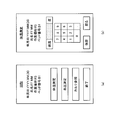
- FIG. 10 is an explanatory diagram showing an example of an application that supports work.
- FIG. 10 shows a screen displayed on the information processing terminal T that is executing an application that supports a round-trip operation in a hospital.
- the information processing terminal T when the information processing terminal T executes the application, the information processing terminal T displays buttons for body temperature measurement and blood pressure measurement to be performed by the worker M in the round-trip work.
- the information processing terminal T switches the screen to (b) of FIG.
- the information processing terminal T displays a button (here, the numeric keypad) for inputting the result of the body temperature measurement.
- a button here, the numeric keypad
- the information processing terminal T stores the input body temperature and assists the worker M in measuring the body temperature. The same applies when the blood pressure measurement button is selected.
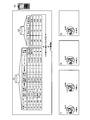
- FIG. 11 is an explanatory diagram showing a specific example of determination as to whether or not to perform takeover by the work takeover support apparatus 100.
- the worker MA and the worker MD are performing the work notified in FIG.
- the worker MB and the worker MC are not working.
- the current time is 16:15.
- the work transfer support device 100 refers to the work DB 101 and detects that the work start condition is satisfied. For example, the work transfer support device 100 detects that the activation condition 16:15 for the work W3 is satisfied.
- the work takeover support apparatus 100 determines whether or not to take over the work from the context of the worker M of the work that satisfies the start condition.
- the work transfer support device 100 refers to the execution state item of the work DB 101 and determines that the transfer of the work W3 is executed if the worker MA is working.
- the work takeover support apparatus 100 refers to the work load item in the context DB 104 and determines that the work W3 is taken over if the work load of the worker MA is equal to or greater than a threshold value.
- the work takeover support apparatus 100 can determine whether or not to take over the work from the context of the worker M.
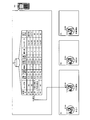
- FIG. 12 is an explanatory diagram showing a specific example of takeover candidates by the work takeover support apparatus 100. As illustrated in FIG. 12, the work takeover support apparatus 100 that has started the work takeover process identifies a takeover candidate.
- the work takeover support apparatus 100 refers to the worker DB 102 and searches for a worker M who can take over and has the authority to take over as a takeover candidate. Furthermore, the work transfer support device 100 refers to the execution state item of the work DB 101 and searches the searched worker M for the worker M who is not executing the work as a takeover candidate.
- the work takeover support apparatus 100 searches for workers MB to MD having “O” stored in the takeover permission / inhibition item and having authority L1 or higher for the work W3 as takeover candidates. Then, the work takeover support apparatus 100 searches for the worker MB and the worker MC whose execution status item of the work DB 101 is “unknown” from the workers MB to MD as takeover candidates.
- the work takeover support apparatus 100 refers to the context DB 104 and identifies a takeover candidate to take over the work from the searched takeover candidates.
- the work takeover support apparatus 100 refers to the work load item in the context DB 104 and identifies the worker MB having a low work load as a takeover candidate to take over the work W3 from the worker MB and the worker MC.
- the work transfer support device 100 refers to the current position item in the context DB 104 and selects the worker MC located near the work place R2 of the work W3 from the worker MB and the worker MC. It is specified as a takeover candidate to take over W3.
- the work transfer support device 100 may transmit a transfer confirmation request to the information processing terminal T of the searched worker M, and may receive the approval or rejection of the transfer input by the worker M from the information processing terminal T. .
- the work takeover support apparatus 100 may transmit a takeover confirmation request to each of the information processing terminals T of the plurality of workers M. Then, the work transfer support device 100 does not specify the worker M who has input the rejection of transfer as a transfer candidate to transfer the work, but works any one of the workers M who input the approval of transfer. It may be specified as a takeover candidate to be taken over.
- the work takeover support apparatus 100 can identify work takeover candidates. Moreover, since the work transfer support device 100 identifies a takeover candidate with reference to a context, it can specify a takeover candidate that can efficiently or fairly take over the work.
- FIG. 13 is an explanatory diagram showing a specific example of work takeover by the work takeover support apparatus 100.
- the work takeover support apparatus 100 takes over the work to the takeover candidate specified in FIG.
- the work takeover support apparatus 100 When the work takeover support apparatus 100 specifies a takeover candidate, it updates the work DB 101. For example, the work transfer support apparatus 100 changes the worker M of the work W3 in the record of the work DB 101 from the worker MA to the worker MB.
- the work takeover support apparatus 100 transmits the work to be taken over to the specified takeover candidate.
- the work transfer support device 100 transmits the work W3 to the information processing terminal T2 of the worker MB. Thereby, the work transfer support device 100 can cause the worker M to transfer the work.
- the work takeover determination process is a process of determining whether or not to take over the work performed by the work takeover support apparatus 100 in (2) of FIG.
- FIG. 14 is a flowchart showing the processing contents of the work takeover determination processing.
- the CPU 301 refers to the work DB 101 and determines whether or not work start conditions are satisfied (step S1401). If the work start condition is not satisfied (step S1401: No), the CPU 301 returns to step S1401 and waits for the work start condition to be satisfied.
- step S1401 Yes
- the CPU 301 refers to the work DB 101 and determines whether the work that satisfies the start condition is a work that can be taken over (step S1402).
- step S1402 when it is not the work which can be taken over (step S1402: No), CPU301 complete
- step S1402 when the work can be taken over (step S1402: Yes), the CPU 301 determines whether or not the worker M who should perform the work that satisfies the activation condition is in a state where the work can be performed (step S1403).
- step S1403 when it is in a state where the work can be executed (step S1403: Yes), the CPU 301 ends the work takeover determination process.
- step S1403 when it is not in a state where the work can be executed (step S1403: No), the CPU 301 executes a work takeover process (step S1404). Then, the CPU 301 determines whether the work has been taken over (step S1405). Here, when the work cannot be taken over (step S1405: No), the CPU 301 ends the work takeover determination process.
- step S1405 Yes
- the CPU 301 ends the work take-over determination process. Thereby, based on the context of the worker M, it can be determined whether or not to take over the work.
- the work handover process is the process of step S1404 in FIG.
- FIG. 15 is a flowchart showing the processing contents of the work takeover processing.
- the CPU 301 refers to the work DB 101 (step S1501), and searches for a takeover candidate in a state where the work can be executed (step S1502).
- the CPU 301 determines whether there is a takeover candidate (step S1503).
- step S1503 when there are takeover candidates (step S1503: Yes), the CPU 301 determines whether or not all takeover candidates have been processed (step S1504). If all the takeover candidates are not processed (step S1504: No), the CPU 301 transmits a takeover confirmation application to the information processing terminal T (step S1505).
- step S1506 determines whether the response from the information processing terminal T was received. If no response has been received (step S1506: NO), the CPU 301 returns to step S1506 and waits for a response.
- step S1506 determines whether or not the response is an acceptance of the takeover (step S1507).
- step S1507 No
- CPU301 returns to step S1504.
- step S1507 if it is an acceptance of the takeover (step S1507: Yes), the CPU 301 updates the work DB 101 (step S1508), determines that the takeover has been completed (step S1509), and ends the work takeover process.
- step S1503 determines that the takeover cannot be performed (step S1510). Then, the CPU 301 ends the work takeover process.
- the work takeover support apparatus 100 can perform takeover of work by specifying a takeover candidate capable of taking over work efficiently or fairly.
- the work state determination process is a process for determining whether or not the worker M performed by the work takeover support apparatus 100 in FIG. 12 (1) and (2) can perform the work. This processing is executed in step S1403 of FIG. 15 or step S1502 of FIG.
- FIG. 16 is a flowchart showing the contents of the work state determination process.
- the CPU 301 determines whether or not the workload of the worker M to be determined is greater than or equal to a predetermined value (step S1601).
- the CPU 301 determines that the worker M is not in a state where the work can be performed (step S1607), and ends the work state determination process. To do.
- step S1601 when the workload of the worker M is smaller than the predetermined value (step S1601: No), the CPU 301 refers to the work DB 101 and determines whether there is a work waiting for execution for the worker M to be determined. (Step S1602). When there is no work waiting for execution (step S1602: No), the CPU 301 determines that the worker M is in a state where the work can be performed (step S1606), and ends the work state determination process.
- step S1602 when there is a work waiting for execution (step S1602: Yes), the CPU 301 determines whether or not the sum of the time required for the work waiting for execution is equal to or greater than a predetermined value (step S1603).
- step S1603 when the sum of the required times is equal to or greater than the predetermined value (step S1603: Yes), the CPU 301 determines that the worker M is not in a state where the work can be performed (step S1607), and ends the work state determination process.
- step S1603 determines whether or not the worker M to be determined is a takeover candidate (step S1604).
- step S1604 determines that the worker M is ready to perform work (step S1606), and ends the work state determination process.
- step S1604 determines whether or not the work to be taken over is completed before the next work of the worker M is started (step S1605).
- step S1605 Yes
- the CPU 301 determines that the worker M is ready to perform the work (step S1606), and ends the work state determination process.
- step S1605 determines that the worker M is not ready to perform the work (step S1607), and ends the work state determination process. Thereby, it can be determined whether or not the worker M is in a state where the work can be performed.
- the work state determination process shown in FIG. 16 can be executed for the worker M who is the work takeover source and the work takeover destination. For example, when the work is taken over from the work takeover source, the work state of each worker M belonging to the worker group is periodically checked, and the work to be performed by the worker M (for example, waiting for execution) This is a case where it is determined whether or not it is necessary to take over (work) to another worker M. In this case, if it is determined in step S1606 that the worker M is ready to perform the task, it is determined that it is not necessary to take over the task to another worker M. If it is determined in step S1607 that the worker M is not in a state where the worker can perform the task, it is determined that the worker M needs to take over the task.
- the case of executing for a worker M (takeover candidate) as a work takeover destination is a case of determining whether or not a specific work can be taken over for the takeover candidate.
- the worker M is determined to be able to take over.
- the worker M is determined not to be able to take over.
- the determination process in step S1604 is performed to distinguish in which case the work state determination process shown in FIG. 16 is performed. Note that processing equivalent to that in FIG. 16 may be defined according to each case and executed individually.
- FIG. 17 is a process of notifying the worker M of the work performed by the work takeover support apparatus 100 in (1) of FIG. In FIG. 14, the process is performed when the work is not taken over.
- FIG. 17 is a flowchart showing the processing contents of the work notification processing.
- the CPU 301 refers to the work DB 101 and identifies an executable work (step S1701).
- the CPU 301 determines whether there is a work being executed (step S1702).
- step S1702 when there is no work being executed (step S1702: No), the CPU 301 selects the work having the highest priority among the work that can be executed, and works other than the selected work. Is attached to the queue (step S1703). Then, the CPU 301 proceeds to step S1710.
- step S1702 determines whether there is a work having a higher priority than the work being executed among the work that can be executed (step S1704). If there is no work having a higher priority than the work being executed (step S1704: NO), the CPU 301 attaches an executable work to the queue (step S1705), and ends the work notification process.
- step S1704 when there is a work having a higher priority than the work being executed (step S1704: Yes), the CPU 301 attaches a work having a priority equal to or lower than the work being executed to the queue (step S1706). Next, the CPU 301 transmits a request to interrupt the work being executed (step S1707).
- the CPU 301 determines whether or not an interruption completion notification has been received (step S1708). If the interruption completion notification has not been received (step S1708: NO), the CPU 301 returns to step S1708 and waits for reception of the interruption completion notification. On the other hand, when the interruption completion notification is received (step S1708: Yes), the CPU 301 updates the work DB 101 and attaches the suspended work to the queue (step S1709).
- the CPU 301 transmits an execution start request for the selected work to be executed (step S1710). Then, the CPU 301 determines whether or not an execution start response has been received (step S1711). If the execution start response has not been received (step S1711: NO), the CPU 301 returns to step S1711 and waits for the execution start response.
- step S1711 YES
- the CPU 301 updates the work DB 101 (step S1712) and ends the work notification process.
- the work transfer support device 100 can notify the information processing terminal T of the work to be executed based on the priority.
- FIG. 17 is a process performed when a notification of completion of the work performed by the work takeover support apparatus 100 is received in (2) of FIG.
- FIG. 18 is a flowchart showing the processing content of the work end processing.
- the CPU 301 determines whether or not a work execution completion notification has been received (step S1801). If the work execution completion notification has not been received (step S1801: NO), the CPU 301 returns to step S1801 and waits for reception of the work execution completion notification.
- step S1801 Yes
- the CPU 301 transmits a work execution completion response (step S1802).
- the CPU 301 updates the work DB 101 (step S1803).
- the CPU 301 deletes the work information being executed (step S1804).
- step S1805 determines whether there is a work waiting for execution. If there is no work waiting for execution (step S1805: NO), the CPU 301 ends the work end process.
- step S1805 when there is a work waiting for execution (step S1805: Yes), the CPU 301 transmits an execution start request for the work with the highest priority (step S1806). Next, the CPU 301 determines whether or not an execution start response has been received (step S1807). If the execution start response is not received (step S1807: NO), the CPU 301 returns to step S1807 and waits for the execution start response.
- step S1807: YES when the execution start response is received (step S1807: YES), the CPU 301 updates the work DB 101 (step S1808) and ends the work end process. Thereby, the work transfer support device 100 can notify the information processing terminal T of the worker M who has finished the work of the next work to be performed.
- FIG. 19 is a sequence diagram showing the contents of communication between the work transfer support device 100 and the information processing terminal T when executing the transfer of work.
- FIG. 19 shows the contents of communication between the work takeover support apparatus 100, the information processing terminal T1 that is the work takeover source, and the information processing terminal T2 that is the takeover destination.
- the work transfer support device 100 detects that the activation condition of the work W1 is satisfied. Then, the work transfer support device 100 transmits a request to start execution of the work W1 to the information processing terminal T1 (step S1901). The information processing terminal T1 that has received the execution start request for the work W1 transmits an execution start response to the work takeover support apparatus 100 (step S1902).
- the work transfer support device 100 detects that the activation condition of the work W3 is satisfied.
- the work takeover support apparatus 100 determines to take over the work W3 (step S1903).
- the work takeover support apparatus 100 transmits a takeover execution request for the work W3 to the information processing terminal T2 (step S1904).
- the information processing terminal T2 that has received the takeover execution request for the work W3 transmits a takeover execution response to the work takeover support apparatus 100 (step S1905).
- the information processing terminal T2 receives an input of acceptance or rejection of transfer from the worker MB (step S1906). Here, it is assumed that the information processing terminal T2 has received an input of acceptance of transfer. Then, the information processing terminal T2 transmits a takeover completion notification including the input acceptance of the takeover to the work takeover support apparatus 100 (step S1907).
- the work transfer support apparatus 100 that has received the transfer completion notification transmits a transfer completion response to the information processing terminal T2 (step S1908). Then, the work transfer support device 100 transmits a request to start execution of the work W3 to the information processing terminal T2 (step S1909).
- the information processing terminal T2 that has received the execution start request transmits an execution start response to the work transfer support device 100 (step S1910). Thereby, the work transfer support device 100 can execute the transfer of work.
- Example 2 Next, Example 2 will be described.
- the work takeover support apparatus 100 determines whether or not to take over the work.
- the worker M determines whether or not to take over the work. This is an example.
- the work transfer support device 100 notifies the information processing terminal T of the work content and updates the DB based on the information received from the information processing terminal T. Has been done.
- FIG. 20 is an explanatory diagram showing a specific example of the determination as to whether or not the handover by the worker M is executed.
- the worker MA and the worker MD are performing the work notified in FIG.
- the worker MB and the worker MC are not working.
- the current time is 16:15.
- the work transfer support device 100 refers to the work DB 101 and detects that the work start condition is satisfied. For example, the work transfer support device 100 detects that the activation condition 16:15 for the work W3 is satisfied.
- the work transfer support device 100 notifies the information processing terminal T of a work that satisfies the activation condition. For example, the work transfer support device 100 transmits the work W3 that satisfies the activation condition at 16:15 to the information processing terminal T1.
- the information processing terminal T that has received the work receives an input of the work to be taken over from the worker M.
- the information processing terminal T1 is input from the worker MA when the handover is executed for the work W1 being executed.
- the information processing terminal T transmits to the work takeover support apparatus 100 a takeover candidate search request including the work to be taken over input from the worker M.
- the information processing terminal T transmits a takeover candidate search request including the work W1 to be taken over to the work takeover support apparatus 100.
- the worker M can determine which work is to be taken over.
- FIG. 21 is an explanatory diagram showing a specific example of input of work to be taken over from the worker M to the information processing terminal T.
- 21A to 21C show screens of the information processing terminal T.
- FIG. 21A to 21C show screens of the information processing terminal T.
- a button of “Today's work information” is displayed on the screen of the information processing terminal T.
- the button of “Today's work information” is selected by the worker M (for example, when touched on the touch panel)
- the display on the screen of the information processing terminal T is switched to FIG. .
- the work received from the work takeover support apparatus 100 and the work status of each work are displayed on the screen of the information processing terminal T as today's work information.
- the worker M selects a work to be taken over.
- the display on the screen of the information processing terminal T is switched to (c) in FIG.
- the information processing terminal T screen displays information on the work to be transferred selected by the worker M, a “take over this work” button, and a “return” button. Button and are displayed.
- the “take over this work” button determines the currently selected work as a work to be taken over, and transmits a takeover candidate search request including information on the decided work to the work takeover support apparatus 100.
- the “return” button is a button for switching the display of the screen of the information processing terminal T to (b) in FIG. 21 for selecting a work to be taken over.
- the information processing terminal T changes the currently selected work to be taken over. Decide on work to become. Then, the information processing terminal T transmits a takeover candidate search request including the determined work information to the work takeover support apparatus 100.
- the determined work information includes an identifier for identifying the work and information on the progress of the work if the work is being executed.
- the worker M can determine the work to be taken over and input it to the information processing terminal T. Then, the information processing terminal T can transmit, to the work takeover support apparatus 100, a takeover candidate search request including the input work information to be taken over.
- FIG. 22 is an explanatory diagram showing a specific example of a candidate for takeover by the worker M.
- the worker MA has suspended the work W1 to be taken over.
- the worker MB and the worker MC are not working.
- the worker MD is performing work W4.
- the work takeover support apparatus 100 when the work takeover support apparatus 100 receives a takeover candidate search request, the work takeover support apparatus 100 refers to the worker DB 102 and takes over the worker M who is in a takeover state and has the authority to take over the work. Search as a candidate. Furthermore, the work transfer support device 100 refers to the execution state item of the work DB 101 and searches the searched worker M for the worker M who is not executing the work as a takeover candidate.
- the work takeover support apparatus 100 searches for workers MB to MD having authority “L” or higher for the work W1 as the takeover candidate, with “O” stored in the takeover availability item. Further, the work handover support apparatus 100 searches for workers MB and MC whose execution status item of the work DB 101 is “unknown” from the workers MB to MD as handover candidates.
- the work handover support apparatus 100 refers to the context DB 104 and sorts the retrieved handover candidates.
- the work transfer support device 100 refers to the work load items in the context DB 104 and sorts the worker MB and the worker MC in ascending order of the work load.
- the work transfer support device 100 refers to the current position item in the context DB 104 and sorts the worker MB and the worker MC in the order from the work location R2 of the work W1.
- it is determined according to the contents of the policy DB 103 of FIG. More specifically, for example, if “0” is set, sorting is performed in ascending order of work load, and if “1” is set, sorting is performed in the order closer to the work place.
- the work takeover support apparatus 100 transmits the sorted takeover candidates to the information processing terminal T.
- the work takeover support apparatus 100 transmits information on the worker MB and the worker MC that are the takeover candidates sorted in ascending order of the work load to the information processing terminal T1.
- the information on the worker MB and the worker MC includes the current position and workload of each worker M.
- the information processing terminal T that has received the takeover candidate receives an input of a takeover candidate for taking over the work from the worker M.
- the information processing terminal T1 receives input from the worker MB as a takeover candidate for taking over the work W1 from the worker MA.
- the information processing terminal T transmits the input takeover candidate to the work takeover support apparatus 100.
- the information processing terminal T ⁇ b> 1 transmits the worker MB that is the input takeover candidate to the work takeover support apparatus 100.
- the worker M can determine a work takeover candidate. Also, the worker M refers to the takeover candidate context received from the work takeover support apparatus 100 and determines the takeover candidate. Therefore, the worker M can determine a takeover candidate that can take over the work efficiently or fairly. .
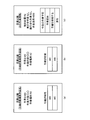
- FIG. 23 is an explanatory diagram illustrating a specific example of input of a takeover candidate for taking over the work from the worker M to the information processing terminal T.
- FIGS. 23A to 23C show screens of the information processing terminal T.
- FIG. 23 is an explanatory diagram illustrating a specific example of input of a takeover candidate for taking over the work from the worker M to the information processing terminal T.
- FIGS. 23A to 23C show screens of the information processing terminal T.
- information on the work to be taken over and takeover candidates sorted in order from the work place may be displayed on the screen of the information processing terminal T.
- the handover candidate is selected by the worker M (for example, when touched on the touch panel)
- the display on the screen of the information processing terminal T is switched to FIG.
- the information processing terminal T screen displays information about the takeover candidate selected by the worker M and a “request to take over” button.
- the “request to take over” button is a button for determining the takeover candidate currently selected as a takeover candidate for taking over the work, and transmitting the decided takeover candidate to the work takeover support apparatus 100.
- the information processing terminal T sets the currently selected takeover candidate to work. It is determined as a takeover candidate to be taken over. Then, the information processing terminal T transmits the determined takeover candidate to the work takeover support apparatus 100.
- the worker M can determine a takeover candidate to take over the work and input it to the information processing terminal T. Then, the information processing terminal T can transmit the input takeover candidate to the work takeover support apparatus 100.
- FIG. 24 is an explanatory diagram showing a specific example of confirmation of work takeover by the worker M.
- the work takeover support apparatus 100 allows the takeover candidate received from the information processing terminal T in FIG. 22 to take over the work.
- the work takeover support apparatus 100 When the work takeover support apparatus 100 receives a takeover candidate from the information processing terminal T and identifies a takeover candidate to take over the work, confirmation of takeover including information on the work to be taken over in the specified takeover candidate Send a request. For example, the work takeover support apparatus 100 transmits a takeover confirmation request including the work W1 to the information processing terminal T2.
- the information processing terminal T2 that has received the request for confirmation of takeover receives an input of acceptance or refusal of takeover from the worker M. Then, the information processing terminal T2 transmits the input acceptance or rejection of the takeover to the work takeover support apparatus 100.
- the information processing terminal T ⁇ b> 2 receives an input of acceptance of transfer and transmits the approval of transfer to the work transfer support device 100.
- the work takeover support apparatus 100 that has received the takeover approval updates the record in the work DB 101.
- the worker M of the work W1 in the record of the work DB 101 is changed from the worker MA to the worker MB.
- the work takeover support apparatus 100 transmits information related to the work to be taken over to the information processing terminal T of the worker M who has accepted the takeover.
- the work transfer support device 100 notifies the information processing terminal T2 of the worker MB of information related to the work W1.
- the information related to the work W1 may include work progress information of the worker MA of the work W1.
- the work takeover support apparatus 100 receives a plurality of takeover candidates from the information processing terminal T, identifies a plurality of takeover candidates to take over the work, and takes over each of the plurality of specified takeover candidates. A takeover confirmation request including the above information may be transmitted. Then, the work takeover support apparatus 100 may transmit information regarding work to be taken over to any one of the information processing terminals T that has accepted the takeover.
- the work takeover support apparatus 100 transmits the takeover result to the information processing terminal T.
- the work transfer support device 100 transmits the result of the transfer accepted by the worker MB to the information processing terminal T1. Thereby, the work transfer support apparatus 100 can cause the worker M to transfer the work.
- FIG. 25 is an explanatory diagram showing a specific example of input of acceptance or refusal of succession from the worker M to the information processing terminal T.
- FIGS. 25A to 25C show screens of the information processing terminal T.
- the screen of the information processing terminal T that has received the takeover confirmation request includes information on the work requested to be taken over, an “accept” button, and a “reject” button. And are displayed.
- the “acknowledge” button is selected by the worker M (for example, when touched on the touch panel)
- the information processing terminal T transmits an acceptance of the takeover to the work takeover support apparatus 100.
- the “reject” button is selected, the information processing terminal T transmits a rejection of the takeover to the work takeover support apparatus 100.
- the screen of the information processing terminal T that has received the result of acceptance of the takeover shows, as the takeover result, information on the work taken over and the fact that the transfer to another worker M has been completed. And are displayed.
- the information processing terminal T that has received the result of the rejection of the take-over displays information on the work that could not be taken over and the takeover to another worker M as the takeover result. “Not able to do” is displayed. Thereby, the worker M can know the takeover result. In addition, when the takeover is rejected, the worker M may request another worker M to take over.
- the work takeover determination process is a process for determining whether or not to take over the work performed by the information processing terminal T in FIGS. 20 and 22.
- FIG. 26 and FIG. 27 are flowcharts showing the processing contents of the work takeover determination processing.
- the information processing terminal T transmits a request for a list of work that can be taken over to the work takeover support apparatus 100 (step S2601).
- the information processing terminal T determines whether or not a work list has been received (step S2602). If the work list has not been received (step S2602: NO), the information processing terminal T returns to step S2602 and waits for reception of the work list.
- step S2602 when the work list is received (step S2602: YES), the information processing terminal T receives an input of work to be taken over from the worker M (step S2603). Next, the information processing terminal T transmits a request for search for a takeover candidate including the input work information to the work takeover support apparatus 100 (step S2604).
- the information processing terminal T determines whether a response has been received (step S2605). If a response has not been received (step S2605: NO), the information processing terminal T returns to step S2605 and waits for a response.
- step S2605 determines whether there is a takeover candidate (step S2606).
- step S2606 No
- the information processing terminal T proceeds to step S2703 in FIG.
- step S2606 determines whether or not the work to be taken over is a work being executed (step S2607). If the work is not being executed (step S2607: NO), the information processing terminal T proceeds to step S2609.
- step S2607 when the work is being executed (step S2607: Yes), the information processing terminal T extracts the work situation (step S2608). Then, the information processing terminal T transmits a request for work takeover processing including a takeover candidate to the work takeover support apparatus 100 (step S2609).
- the information processing terminal T determines whether a response has been received from the work transfer support device 100 (step S2610). If no response has been received (step S2610: NO), the information processing terminal T returns to step S2610 and waits for a response.
- step S2610 determines whether the work has been taken over (step S2611).
- step S2611 determines whether the work has been taken over (step S2611).
- step S2611 determines whether the work has been taken over (step S2611).
- step S2611 NO
- the information processing terminal T returns to step S2606.
- step S2611 YES
- the information processing terminal T proceeds to step S2701 in FIG.
- step S2701 the information processing terminal T ends the work being executed (step S2701).
- step S2702 the information processing terminal T displays on the screen that the work has been taken over (step S2702), and ends the work takeover determination process.
- step S2703 the information processing terminal T displays on the screen that the work has not been taken over (step S2703), and ends the work takeover determination process.
- the information processing terminal T can cause the worker M selected by the worker M to take over the task selected by the worker M.
- the work takeover support process is a process for supporting the takeover of work performed by the work takeover support apparatus 100 in FIGS. 22 and 24.
- FIG. 28 is a flowchart showing the contents of the work handover process.
- the CPU 301 determines whether or not a request for work takeover processing including a takeover candidate has been received from the information processing terminal T serving as a takeover source (step S2801). If a request for work takeover processing has not been received (step S2801: NO), the CPU 301 returns to step S2801 and waits for reception of a request for work takeover processing.
- step S2801 when the request for the work takeover process is received (step S2801: Yes), the CPU 301 transmits a request for confirmation of the work takeover to the takeover candidate included in the request for the work takeover process (step S2802).
- the CPU 301 determines whether or not a completion notification has been received from the information processing terminal T that has transmitted the request for confirmation of work takeover (step S2803). If the completion notification has not been received (step S2803: NO), the CPU 301 returns to step S2803 and waits for reception of the completion notification.
- step S2804 determines whether or not the takeover is approved (step S2804).
- step S2804 No
- the CPU 301 transmits the fact that the takeover was not possible to the information processing terminal T that is the takeover source (step S2808), and ends the work takeover process.
- step S2804 when the takeover is approved (step S2804: Yes), the CPU 301 transmits a request to delete the takeover work to the information processing terminal T that is the takeover source (step S2805). Next, the CPU 301 updates the work DB 101 (step S2806).
- the CPU 301 transmits information that it has been taken over to the information processing terminal T that is the takeover source (step S2807), and ends the work takeover process.
- the work takeover support apparatus 100 can allow the worker M as a takeover candidate to confirm the acceptance or rejection of the work takeover and take over the work.
- the work takeover confirmation process is a process for confirming with the worker whether the work takeover performed by the information processing terminal T in FIG.
- FIG. 29 is a flowchart showing the processing contents of the confirmation processing for taking over work by the information processing terminal T.
- the information processing terminal T determines whether or not a request for confirmation of work takeover has been received (step S2901). If the confirmation request for taking over the work has not been received (step S2901: NO), the information processing terminal T returns to step S2901 and waits for reception of the confirmation request for taking over the work.
- step S2901 YES
- the information processing terminal T activates a confirmation application for taking over the work (step S2902) and displays a confirmation screen for taking over the work (step S2902). S2903).
- the information processing terminal T determines whether or not there is an input of approval or refusal of takeover from the worker M (step S2904). If there is no input (step S2904: NO), the information processing terminal T returns to step S2904 and waits for input.
- step S2904 if there is an input (step S2904: Yes), the information processing terminal T transmits a completion notification to the work takeover support apparatus 100 (step S2905), and ends the work takeover confirmation process. Thereby, the worker M can approve or reject the handover of the work.
- FIG. 30 and FIG. 31 are sequence diagrams showing the contents of communication between the work transfer support device 100 and the information processing terminal T when executing the transfer of work.
- FIG. 30 shows the contents of communication between the work takeover support apparatus 100, the information processing terminal T1 that is the work takeover source, and the information processing terminal T2 that is the takeover destination.
- the work transfer support device 100 detects that the activation condition of the work W1 is satisfied. Then, the work transfer support device 100 transmits a request to start execution of the work W1 to the information processing terminal T1 (step S3001). The information processing terminal T1 that has received the execution start request for the work W1 transmits an execution start response to the work takeover support apparatus 100 (step S3002).
- the work transfer support device 100 detects that the activation condition of the work W3 is satisfied.
- the work takeover support apparatus 100 transmits a work interruption request for the work W1 to the information processing terminal T1 (step S3003).
- the information processing terminal T1 that has received the work interruption request for the work W1 interrupts the work W1 and transmits a work interruption response to the work takeover support apparatus 100 (step S3004).
- the work handover support apparatus 100 that has received the work interruption response transmits a request to start the work W3 to the information processing terminal T1 (step S3005).
- the information processing terminal T1 that has received the execution start request for the work W3 transmits an execution start response to the work takeover support apparatus 100 (step S3006).
- the worker MA has started the execution of the work W3 and has suspended the execution of the work W1.
- the information processing terminal T1 receives from the worker MA an input of a command for handing over the work being executed to another worker M (step S3007). Then, the information processing terminal T1 transmits a work list request to the work takeover support apparatus 100 (step S3008).
- the work handover support apparatus 100 that has received the work list request creates a work list with reference to the work DB 101, and transmits the created work list to the information processing terminal T1 (step S3009).
- the information processing terminal T1 that has received the work list receives an input of the work W3 to be taken over from the worker MA (step S3010). Then, the information processing terminal T1 transmits a takeover candidate search request including the work W3 to be taken over to the work takeover support apparatus 100 (step S3011).
- the work takeover support apparatus 100 that has received the takeover candidate search request transmits a takeover candidate search response to the information processing terminal T1 (step S3012).
- the information processing terminal T1 that has received the takeover candidate search response receives an input of the takeover candidate from the worker MA (step S3013). Then, the information processing terminal T1 transmits a takeover request including the input takeover candidate and information on the progress of the work W3 to be taken over to the work takeover support apparatus 100 (step S3014).
- the work takeover support apparatus 100 that has received the takeover request specifies a takeover candidate included in the takeover request as a takeover candidate for taking over the work, and makes a takeover execution request for the work W3 of the worker MB that becomes the specified takeover candidate.
- the information is transmitted to the information processing terminal T2 (step S3015).
- the information processing terminal T2 that has received the takeover execution request for the work W3 transmits a takeover execution response to the work takeover support apparatus 100 (step S3016).
- the information processing terminal T2 receives an input of acceptance or rejection of the takeover from the worker MB (step S3017).
- the information processing terminal T2 has received an input of acceptance of transfer. Then, control goes to a step S3101 in FIG.
- the information processing terminal T2 transmits a takeover completion notification including the input takeover approval to the work takeover support apparatus 100 (step S3101).
- the work transfer support apparatus 100 that has received the transfer completion notification transmits a transfer completion response to the information processing terminal T2 (step S3102).
- the work takeover support apparatus 100 transmits a takeover response to the information processing terminal T1 (step S3103).
- the work transfer support device 100 transmits a work end request for the work W3 to the information processing terminal T1 (step S3104).
- the information processing terminal T1 that has received the work end request transmits a work end response to the work takeover support apparatus 100 (step S3105).
- the work takeover support apparatus 100 transmits a work resumption request for the work W1 to the information processing terminal T1 (step S3106).
- the information processing terminal T1 that has received the work resumption request transmits a work resumption response to the work takeover support apparatus 100 (step S3107).
- the work transfer support device 100 transmits an execution start request for the work W3 including information on the progress of the work W3 to be transferred to the information processing terminal T2 (step S3108).
- the information processing terminal T2 that has received the execution start request transmits an execution start response to the work transfer support device 100 (step S3109). Thereby, the work transfer support device 100 can execute the transfer of work.
- the work takeover support apparatus 100 efficiently identifies the worker M who becomes a takeover candidate based on the context of the worker M and allows the identified worker M to take over the work efficiently. Or, work can be taken over fairly.
- the work transfer support device 100 specifies a transfer candidate based on the work load of the worker M, thereby allowing the worker M with a low work load to take over the work, and the work load unevenness among the workers M. As a result, the work can be taken over fairly.
- the work transfer support device 100 identifies a transfer candidate based on the current position of the worker M, thereby allowing the worker M in a position close to the work location of the work to be transferred to take over the work. Can take over typical work.
- the work transfer support device 100 identifies a handover candidate based on the information of the work waiting for the work of the worker M, so that even if the work is handed over, the worker who does not interfere with the execution of the work waiting work. M can take over the work and take over the work fairly.
- the work transfer support device 100 determines whether or not to take over the work automatically by determining whether or not to take over the work automatically based on the context of the worker M. This saves you time and effort.
- the work takeover support apparatus 100 confirms whether or not the worker M can take over the work, and then takes over the work. Therefore, the worker M can manage the work schedule by himself and control the work load.
- the work transfer support method described in this embodiment can be realized by executing a program prepared in advance on a computer such as a personal computer or a workstation.
- the work transfer support program is recorded on a computer-readable recording medium such as a hard disk, a flexible disk, a CD-ROM, an MO, or a DVD, and is executed by being read from the recording medium by the computer.
- this work transfer support program may be distributed via a network such as the Internet.
Landscapes
- Engineering & Computer Science (AREA)
- Business, Economics & Management (AREA)
- Human Resources & Organizations (AREA)
- Strategic Management (AREA)
- Economics (AREA)
- Entrepreneurship & Innovation (AREA)
- Educational Administration (AREA)
- Game Theory and Decision Science (AREA)
- Development Economics (AREA)
- Marketing (AREA)
- Operations Research (AREA)
- Quality & Reliability (AREA)
- Tourism & Hospitality (AREA)
- Physics & Mathematics (AREA)
- General Business, Economics & Management (AREA)
- General Physics & Mathematics (AREA)
- Theoretical Computer Science (AREA)
- Management, Administration, Business Operations System, And Electronic Commerce (AREA)
- General Factory Administration (AREA)
Abstract
作業引継支援装置(100)は、複数の作業者(M)のそれぞれが有する情報処理端末(T)と通信でき、各作業者(M)の作業予定および各作業者(M)のコンテキストと、を記憶する。作業引継支援装置(100)は、作業者(M)が作業を実行できない状態であるときに、当該作業者(M)が実行すべき作業の起動条件が満たされた場合には、記憶した各作業者(M)の作業予定および各作業者(M)のコンテキストに基づいて、他の作業者(M)の中から作業の引継に適した引継ぎ候補を特定する。そして、作業引継支援装置(100)は、当該作業者(M)が実行すべき作業を、特定した引継ぎ候補である他の作業者(M)に引き継がせる。作業引継支援装置(100)は、作業の引継の際に、各作業者(M)の作業予定および各作業者(M)のコンテキストを参照することで、効率的に、あるいは、公平に、作業者(M)間で作業を引き継がせることができる。
Description
本発明は、作業の引継を支援する作業引継支援装置、作業引継支援方法、および作業引継支援プログラムに関する。
従来、作業者の作業を支援する技術として、予め登録された作業の発動条件(作業の開始時刻や場所)を満たした場合に、作業者の有する端末に、作業に関するメッセージを送信する技術があった(例えば、下記特許文献1参照)。
しかしながら、上述した従来技術では、作業者間での作業の引継については考慮されていない。そのため、作業者は、自身の判断によって作業の引継を行う。このとき、作業の引継を行う作業者は、他の作業者のコンテキストを把握していないため、効率的に、または公平に、作業の引継を行うことができないといった問題があった。
例えば、既に作業負荷が大きい作業者に、さらに作業が引き継がれる場合があり、特定の作業者の作業負荷が大きくなってしまうといった問題があった。また、作業場所から遠い場所にいる作業者に作業が引き継がれる場合があり、作業の効率が悪くなってしまうといった問題があった。
本発明は、上述した従来技術による問題点を解消するため、複数の作業者のそれぞれのコンテキストに応じて、効率的にまたは公平に、作業を引き継がせることができる作業引継支援装置、作業引継支援方法、および作業引継支援プログラムを提供することを目的とする。
上述した課題を解決し、目的を達成するため、本発明の一側面によれば、作業者群の各作業者の端末と通信可能であって、作業者ごとに作業状況を示すコンテキスト情報を記憶する記憶手段を備え、各作業者の端末から各作業者の作業状況を示すコンテキスト情報を取得することにより、記憶手段を更新し、作業者群の中の対象作業者が行うべき第1の作業を検出し、検出された場合、記憶手段内の対象作業者のコンテキスト情報に基づいて、対象作業者が第2の作業の作業中であるか否かを判断し、第2の作業の作業中であると判断された場合、対象作業者以外の他の作業者のコンテキスト情報に基づいて、他の作業者の中から第1の作業の引継ぎ候補を特定し、特定された引継ぎ候補の端末に、第1の作業に関する情報を送信する作業引継支援装置、作業引継支援方法、および作業引継支援プログラムが提案される。
また、本発明の一側面によれば、作業者群の各作業者の端末と通信可能であって、作業者ごとに作業状況を示すコンテキスト情報を記憶する記憶手段を備え、各作業者の端末から各作業者の作業状況を示すコンテキスト情報を取得することにより、記憶手段を更新し、作業者群の中の対象作業者が行うべき作業を検出し、検出された作業の作業指示を対象作業者の端末に通知した結果、対象作業者の端末から作業指示の拒否応答を取得し、拒否応答が取得された場合、対象作業者以外の他の作業者のコンテキスト情報に基づいて、他の作業者の中から作業の引継ぎ候補を特定し、特定された引継ぎ候補の端末に、作業に関する情報を送信する作業引継支援装置、作業引継支援方法、および作業引継支援プログラムが提案される。
本発明の一側面によれば、複数の作業者のそれぞれのコンテキストに応じて、効率的にまたは公平に、作業を引き継がせることができるという効果を奏する。
以下に添付図面を参照して、この発明にかかる作業引継支援装置、作業引継支援方法、および作業引継支援プログラムの実施の形態を詳細に説明する。
(作業引継支援装置による作業者間の作業の引継の支援の具体例)
まず、図1を用いて、作業引継支援装置による作業者間の作業の引継の支援の具体例について説明する。
まず、図1を用いて、作業引継支援装置による作業者間の作業の引継の支援の具体例について説明する。
図1は、作業引継支援装置による作業者間の作業の引継の支援の具体例を示す説明図である。図1に示すように、作業引継支援システムSは、作業引継支援装置100と、複数の作業者M(図1では、作業者MA~作業者MD)のそれぞれが有する情報処理端末T(図1では、情報処理端末T1~情報処理端末T4)と、を含むシステムである。
ここで、作業引継支援装置100は、各作業者Mの作業予定を記憶し、各作業者Mの情報処理端末Tに作業を通知する装置である。例えば、作業予定として、作業を開始する開始時刻、作業を実行すべき作業者M、および、作業を特定する識別子が記憶されている。また、作業引継支援装置100は、複数の作業者Mのそれぞれの情報処理端末Tから、作業者Mのコンテキスト(例えば、作業者Mの作業状況、作業者Mの情報処理端末Tの場所、および作業者Mの作業負荷)を受信する装置である。
また、作業引継支援装置100は、作業予定に記憶された作業を実行すべき作業者Mが、当該作業を実行できない状態である場合、受信したコンテキストに基づいて、当該作業を引き継がせる引継ぎ候補を特定する装置である。そして、作業引継支援装置100は、引継ぎ候補になった作業者Mに作業を引き継がせる装置である。
ここで、情報処理端末Tは、作業者Mのコンテキスト(例えば、自情報処理端末Tを有する作業者Mの作業状況、自情報処理端末Tの場所、および自情報処理端末Tを有する作業者Mの作業負荷)を作業引継支援装置100に送信する端末である。また、情報処理端末Tは、作業者Mの作業を支援するアプリケーションを実行する端末である。
以下では、作業W1の開始時刻16:10になったときに、作業者MAが作業W1を実行できない状態である場合を例に挙げて、作業引継支援装置100による作業者M間の作業の引継の支援について説明する。
(1)まず、作業引継支援装置100は、作業者MAが作業W1を実行できない状態であることを検出する。例えば、作業引継支援装置100は、作業者MAの作業状況が、作業W1以外の他の作業の実行中である場合に、作業者MAが作業W1を実行できない状態であることを検出する。また、例えば、作業引継支援装置100は、作業者MAの情報処理端末T1に作業W1を通知した結果、情報処理端末T1から作業W1の実行拒否通知を受信した場合に、作業者MAが作業W1を実行できない状態であることを検出してもよい。
(2)次に、作業引継支援装置100は、作業W1の引継ぎ候補を検索する。例えば、作業引継支援装置100は、受信したコンテキストに基づいて、作業状況が作業なしの状態である作業者Mを、引継ぎ候補として検索する。ここでは、作業引継支援装置100は、引継ぎ候補として、作業者MBと作業者MCを検索する。
(3)そして、作業引継支援装置100は、検索した引継ぎ候補のうち、いずれかの引継ぎ候補を、作業を引き継がせる引継ぎ候補に特定する。作業引継支援装置100は、特定した引継ぎ候補が実行するあらたな作業予定を記憶し、引継ぎ候補に作業を通知する。例えば、作業引継支援装置100は、引継ぎ候補として作業者MBおよび作業者MCを検索し、検索した引継ぎ候補のうち、作業者MBを作業W1を引き継がせる引継ぎ候補に特定する。
そして、作業引継支援装置100は、作業者MBに作業W1を特定する情報を送信する。また、作業引継支援装置100は、作業W1を特定する情報と併せて、作業W1を支援するアプリケーションを特定する情報を送信してもよいし、作業W1を支援するアプリケーションそのものを送信してもよい。
情報処理端末Tは、作業W1を特定する情報に基づいて、作業W1を開始するように画面に表示する。また、情報処理端末Tは、作業W1を支援するアプリケーションを特定する情報に基づいて、作業W1を支援するアプリケーションを起動して、作業者MAの作業W1の実行を支援する。
また、作業引継支援装置100は、引継ぎ候補として作業者MBおよび作業者MCを検索し、検索した引継ぎ候補のリストを情報処理端末T1に送信し、作業者MAに作業W1を引き継がせる引継ぎ候補を決定させてもよい。そして、作業引継支援装置100は、情報処理端末T1から、作業者MAによって決定された引継ぎ候補を受信して、作業W1を引き継がせる引継ぎ候補を特定してもよい。
また、各場所R1~R3に作業者Mの作業を支援する支援装置がある場合、作業引継支援装置100は、支援装置からさらに作業者Mのコンテキストを受信し、または、作業の途中経過を受信してもよい。そして、作業引継支援装置100は、支援装置から受信したコンテキストや作業経過を参照して、作業の引継を行うようにしてもよい。
このように、作業引継支援装置100は、複数の作業者Mのコンテキストに応じて、適当な引継ぎ候補を特定する。そして、作業引継支援装置100は、特定した引継ぎ候補に作業を引き継がせる。そのため、作業引継支援装置100は、作業者Mのコンテキストに応じて、効率的に、または、公平に、作業者Mに作業を引き継がせることができる。
(実施の形態にかかる作業引継支援システムSの一例)
次に、図2を用いて、図1に示した実施の形態にかかる作業引継支援システムSの一例について説明する。
次に、図2を用いて、図1に示した実施の形態にかかる作業引継支援システムSの一例について説明する。
図2は、実施の形態にかかる作業引継支援システムSの一例を示す説明図である。図2に、作業引継支援装置100と、複数の情報処理端末Tと、複数の無線LAN210と、複数の支援装置220と、を含む作業引継支援システムSを示す。作業引継支援システムSにおいて、作業引継支援装置100と、複数の無線LAN210と、複数の支援装置220と、はネットワークを介して接続され、複数の情報処理端末Tは周辺の無線LAN210を介してネットワークに接続されている。
それぞれの情報処理端末Tは、端末センサを有し、端末センサから得たコンテキストを作業引継支援装置100に送信する端末である。端末センサとしては、例えば、端末の位置を示す情報を検出するセンサ、端末を有する作業者Mの作業負荷を検出するセンサが挙げられる。また、例えば、作業負荷としては、作業者Mの歩数が採用される。
支援装置220は、作業者Mの作業を支援する装置である。また、支援装置220は、作業者Mのコンテキスト、または作業の途中経過を検出して、作業引継支援装置100に送信する装置である。支援装置220としては、例えば、健康診断用の装置を採用できる。
作業引継支援装置100は、作業DB101と、作業者DB102と、ポリシーDB103と、コンテキストDB104と、を記憶する装置である。そして、作業引継支援装置100は、複数の情報処理端末Tからコンテキストを受信し、作業DB101、またはコンテキストDB104を更新する装置である。そして、作業引継支援装置100は、コンテキストに基づいて、作業の引継ぎ候補を特定する装置である。
(実施の形態にかかる作業引継支援装置100のハードウェア構成例)
次に、図3を用いて、図1および図2に示した実施の形態にかかる作業引継支援装置100のハードウェア構成例について説明する。
次に、図3を用いて、図1および図2に示した実施の形態にかかる作業引継支援装置100のハードウェア構成例について説明する。
図3は、実施の形態にかかる作業引継支援装置100のハードウェア構成例を示すブロック図である。図3において、作業引継支援装置100は、CPU(Central Processing Unit)301と、ROM(Read‐Only Memory)302と、RAM(Random Access Memory)303と、磁気ディスクドライブ304と、磁気ディスク305と、光ディスクドライブ306と、光ディスク307と、ディスプレイ308と、I/F(Interface)309と、キーボード310と、マウス311と、スキャナ312と、プリンタ313と、を備えている。また、各構成部はバス320によってそれぞれ接続されている。
ここで、CPU301は、作業引継支援装置100の全体の制御を司る。ROM302は、ブートプログラムなどのプログラムを記憶している。RAM303は、CPU301のワークエリアとして使用される。また、RAM303は、作業DB101と、作業者DB102と、ポリシーDB103と、コンテキストDB104と、を記憶している。また、RAM303は、作業者Mの作業を支援するアプリケーションを記憶している。
磁気ディスクドライブ304は、CPU301の制御にしたがって磁気ディスク305に対するデータのリード/ライトを制御する。磁気ディスク305は、磁気ディスクドライブ304の制御で書き込まれたデータを記憶する。
光ディスクドライブ306は、CPU301の制御にしたがって光ディスク307に対するデータのリード/ライトを制御する。光ディスク307は、光ディスクドライブ306の制御で書き込まれたデータを記憶したり、光ディスク307に記憶されたデータをコンピュータに読み取らせたりする。
ディスプレイ308は、カーソル、アイコンあるいはツールボックスをはじめ、文書、画像、機能情報などのデータを表示する。このディスプレイ308は、例えば、CRT、TFT液晶ディスプレイ、プラズマディスプレイなどを採用することができる。
インターフェース(以下、「I/F」と略する。)309は、通信回線を通じてLAN(Local Area Network)、WAN(Wide Area Network)、インターネットなどのネットワーク314に接続され、このネットワーク314を介して他の装置に接続される。そして、I/F309は、ネットワーク314と内部のインターフェースを司り、外部装置からのデータの入出力を制御する。I/F309には、例えばモデムやLANアダプタなどを採用することができる。
キーボード310は、文字、数字、各種指示などの入力のためのキーを備え、データの入力を行う。また、タッチパネル式の入力パッドやテンキーなどであってもよい。マウス311は、カーソルの移動や範囲選択、あるいはウィンドウの移動やサイズの変更などを行う。ポインティングデバイスとして同様に機能を備えるものであれば、トラックボールやジョイスティックなどであってもよい。
スキャナ312は、画像を光学的に読み取り、作業引継支援装置100内に画像データを取り込む。なお、スキャナ312は、OCR(Optical Character Reader)機能を持たせてもよい。また、プリンタ313は、画像データや文書データを印刷する。プリンタ313には、例えば、レーザプリンタやインクジェットプリンタを採用することができる。
(作業DB101の記憶内容の一例)
次に、図4を用いて、作業引継支援装置100のRAM303に記憶されている作業DB101の記憶内容の一例について説明する。
次に、図4を用いて、作業引継支援装置100のRAM303に記憶されている作業DB101の記憶内容の一例について説明する。
図4は、作業DB101の記憶内容の一例を示す説明図である。図4に示すように、作業DB101は、作業ID項目のそれぞれに対応付けて、ユーザID項目と、起動条件項目と、作業場所項目と、権限項目と、所要時間項目と、引継可否項目と、優先度項目と、コントローラ項目と、実行状態項目と、を有する。そして、作業ごとにレコードを構成する。
作業ID項目には、作業を特定する識別子が記憶されている。ユーザID項目には、作業ID項目の識別子によって特定される作業を実行する者として予定されている作業者Mを特定する識別子が記憶されている。
起動条件項目には、作業ID項目の識別子によって特定される作業の開始条件が記憶されている。例えば、作業ID「W1」により特定される作業について、開始条件として時刻「16:00」が記憶されている。作業場所項目には、作業ID項目の識別子によって特定される作業の実行場所が記憶されている。例えば、作業ID「W1」により特定される作業について、実行場所として部屋「R1」が記憶されている。
権限項目には、作業ID項目の識別子によって特定される作業を実行する作業者Mが、最低限どの権限を有していなければならないか、が記憶されている。例えば、権限として下位の権限「L1」から上位の権限「L3」までが設定され、上位の権限は下位の権限を兼ねる場合を想定する。この場合、権限項目に「L1」が記憶されている作業は、「L1」~「L3」のどの権限を有する作業者Mでも実行でき、一方で、権限項目に「L3」が記憶されている作業は、「L3」の権限を有する作業者Mのみが実行できる。
所要時間項目には、作業ID項目の識別子によって特定される作業の標準的な所要時間が記憶されている。引継可否項目には、作業ID項目の識別子によって特定される作業が、ユーザID項目の識別子によって特定される作業者Mとは異なる他の作業者Mに、引き継がせることができるか否かが記憶されている。例えば、「○」は引き継がせることができることを示し、「×」は引き継がせることができないことを示す。
優先度項目には、作業ID項目の識別子によって特定される作業の優先度が記憶されている。コントローラ項目には、作業ID項目の識別子によって特定される作業を実行する際に、作業者Mによって使用されるアプリケーションを特定する識別子が記憶されている。実行状態項目には、作業ID項目の識別子によって特定される作業の実行状態が記憶されている。例えば、「実行中」は、作業が実行中であることを示し、「未」は、作業がまだ実行されていないことを示す。
(作業者DB102の記憶内容の一例)
次に、図5を用いて、作業引継支援装置100のRAM303に記憶されている作業者DB102の記憶内容の一例について説明する。
次に、図5を用いて、作業引継支援装置100のRAM303に記憶されている作業者DB102の記憶内容の一例について説明する。
図5は、作業者DB102の記憶内容の一例を示す説明図である。図5に示すように、作業者DB102は、ユーザID項目のそれぞれに対応付けて、引継可否項目と、権限項目と、を有し、作業者Mごとにレコードを構成する。
ユーザID項目には、作業者Mを特定する識別子が記憶されている。引継可否項目には、ユーザID項目の識別子によって特定される作業者Mについて、引継可能な状態であるか否かが記憶されている。例えば、「○」は引継可能な状態であることを示し、「×」は引継可能な状態でないことを示す。具体的には、例えば、作業者Mが休暇中である場合に、「×」が記憶される。権限項目には、ユーザID項目の識別子によって特定される作業者Mが有する権限が記憶されている。
(ポリシーDB103の記憶内容の一例)
次に、図6を用いて、作業引継支援装置100のRAM303に記憶されているポリシーDB103の記憶内容の一例について説明する。
次に、図6を用いて、作業引継支援装置100のRAM303に記憶されているポリシーDB103の記憶内容の一例について説明する。
図6は、ポリシーDB103の記憶内容の一例を示す説明図である。図6に示すように、ポリシーDB103は、ポリシー項目のそれぞれに対応付けて、フラグ項目を有し、ポリシーごとにレコードを構成する。
ポリシー項目には、引継ぎ候補を決定する際の指標になる内容が記憶されている。例えば、引継ぎ候補を決定する際の指標になる「歩数」と「場所」が記憶されている。フラグ項目には、ポリシー項目のどちらを優先するかが記憶されている。例えば、「0」は、歩数を指標として優先することを示し、「1」は、場所を指標として優先することを示す。
(コンテキストDB104の記憶内容の一例)
次に、図7を用いて、作業引継支援装置100のRAM303に記憶されているコンテキストDB104の記憶内容の一例について説明する。
次に、図7を用いて、作業引継支援装置100のRAM303に記憶されているコンテキストDB104の記憶内容の一例について説明する。
図7は、コンテキストDB104の記憶内容の一例を示す説明図である。図7に示すように、コンテキストDB104は、ユーザID項目のそれぞれに対応付けて、現在位置項目と、作業負荷項目と、を有し、作業者Mごとにレコードを構成する。
ユーザID項目には、作業者Mを特定する識別子が記憶されている。現在位置項目には、ユーザID項目の識別子によって特定される作業者Mの現在位置が記憶されている。作業負荷項目には、ユーザID項目の識別子によって特定される作業者Mの現在の作業負荷が記憶されている。例えば、作業負荷として、作業者Mの歩数が記憶されている。
(作業引継支援装置100の機能的構成例)
次に、図8を用いて、作業引継支援装置100の機能的構成例について説明する。
次に、図8を用いて、作業引継支援装置100の機能的構成例について説明する。
図8は、作業引継支援装置100の機能的構成を示すブロック図である。作業引継支援装置100は、記憶部801と、更新部802と、検出部803と、判断部804と、特定部805と、送信部806と、取得部807と、を含む構成である。この制御部となる機能(記憶部801~取得部807)は、具体的には、例えば、図3に示したROM302、RAM303、磁気ディスク305、光ディスク307などの記憶装置に記憶されたプログラムをCPU301に実行させることにより、または、I/F309により、その機能を実現する。
記憶部801は、作業者Mごとに作業状況を示すコンテキスト情報を記憶する機能を有する。具体的には、例えば、記憶部801は、コンテキスト情報として、作業者Mごとに作業中であるか否かを示す情報を記憶する。より具体的には、例えば、記憶部801は、作業DB101の実行状態項目に作業中であるか否かを示す情報を記憶する。
また、具体的には、例えば、記憶部801は、コンテキスト情報として作業者Mごとに作業中であるか否かを示す情報および位置情報を記憶する。より具体的には、例えば、記憶部801は、作業DB101の実行状態項目に作業中であるか否かを示す情報を記憶し、コンテキストDB104の現在位置項目に位置情報を記憶する。なお、位置情報は、例えば、情報処理端末Tから、自情報処理端末Tがいる場所に備えられた無線LAN210の識別子を受信することによって、取得することができる。また、位置情報は、情報処理端末Tから、自情報処理端末TのGPS(Global Positioning System)座標を受信することによって、取得してもよい。
また、具体的には、例えば、記憶部801は、作業者Mごとに作業中であるか否かを示す情報および作業負荷情報を記憶する。より具体的には、例えば、記憶部801は、作業DB101の実行状態項目に作業中であるか否かを示す情報を記憶し、コンテキストDB104の作業負荷項目に作業負荷情報を記憶する。なお、作業負荷情報は、作業者Mの歩数を採用してもよいし、終了した作業の作業時間の和を採用してもよい。
また、具体的には、例えば、記憶部801は、作業者Mごとに作業中であるか否かを示す情報、位置情報および作業負荷情報を記憶する。より具体的には、例えば、記憶部801は、作業DB101の実行状態項目に作業中であるか否かを示す情報を記憶し、コンテキストDB104の現在位置項目に位置情報を記憶し、コンテキストDB104の作業負荷項目に作業負荷情報を記憶する。
また、記憶部801は、作業者Mごとに作業待ちの作業に関する情報を記憶する機能を有する。具体的には、例えば、記憶部801は、作業者Mごとに作業待ちの作業の開始時刻を記憶する。より具体的には、例えば、記憶部801は、作業DB101の起動条件項目に作業待ちの作業の開始時刻を記憶する。なお、作業待ちに関する情報は、作業待ちの作業を識別する識別子である。また、作業待ちに関する情報は、作業待ちの作業の数でもよいし、作業待ちの作業を終了するのにかかる標準作業時間でもよい。
また、記憶部801は、作業ごとに作業適格情報を記憶するとともに、作業者Mごとに作業適格情報を記憶する機能を有する。具体的には、例えば、記憶部801は、作業ごとに、作業を実行する作業者Mが有さなければならない最低限の権限を記憶し、作業者Mごとに、作業者Mの有する権限を記憶する。より具体的には、例えば、記憶部801は、作業DB101の権限項目に作業に対応する権限を記憶し、作業者DB102の権限項目に作業者Mの有する権限を記憶する。なお、作業適格情報は、作業者Mのスキルの高さであってもよい。これにより、記憶部801は、作業の引継ぎ候補を特定する際の指標になる情報を記憶しておくことができる。
更新部802は、各作業者Mの端末から各作業者Mの作業状況を示すコンテキスト情報を取得することにより、記憶部801を更新する機能を有する。具体的には、例えば、更新部802は、各作業者Mの端末から作業中であるか否かを示す情報を取得することにより記憶部801を更新する。より具体的には、例えば、更新部802は、作業者Mの有する情報処理端末Tから作業の開始通知または終了通知を受信することで、作業DB101の実行状態項目を更新する。
また、具体的には、例えば、更新部802は、各作業者Mの端末から作業中であるか否かを示す情報および現在位置情報を取得することにより記憶部801を更新する。より具体的には、例えば、更新部802は、作業者Mの有する情報処理端末Tから作業の開始通知または終了通知を受信することで、作業DB101の実行状態項目を更新する。また、更新部802は、作業者Mの有する情報処理端末Tから情報処理端末Tの現在位置情報を受信することで、コンテキストDB104の現在位置項目を更新する。
また、具体的には、例えば、更新部802は、各作業者Mの端末から作業中であるか否かを示す情報および作業負荷情報を取得することにより記憶部801を更新する。より具体的には、例えば、更新部802は、作業者Mの有する情報処理端末Tから作業の開始通知または終了通知を受信することで、作業DB101の実行状態項目を更新する。また、更新部802は、作業者Mの有する情報処理端末Tから作業者Mの作業負荷を受信することで、コンテキストDB104の作業負荷項目を更新する。
また、具体的には、例えば、更新部802は、各作業者Mの端末から作業中であるか否かを示す情報、現在位置情報および作業負荷情報を取得することにより記憶部801を更新する。より具体的には、例えば、更新部802は、作業者Mの有する情報処理端末Tから作業の開始通知または終了通知を受信することで、作業DB101の実行状態項目を更新する。また、更新部802は、作業者Mの有する情報処理端末Tから情報処理端末Tの現在位置情報を受信することで、作業者DB102の現在位置項目を更新する。また、更新部802は、作業者Mの有する情報処理端末Tから作業者Mの作業負荷を受信することで、コンテキストDB104の作業負荷項目を更新する。
また、具体的には、例えば、更新部802は、各作業者Mの端末から終了した作業に関する情報を取得することにより記憶部801から終了した作業に関する情報を消去することで更新する。より具体的には、例えば、更新部802は、作業者Mの有する情報処理端末Tから作業の終了通知を受信することで、対応する作業DB101のレコードを削除する。これにより、更新部802は、作業の引継ぎ候補を特定する際の指標になる情報を更新しておくことができる。
検出部803は、作業者M群の中の対象作業者Mが行うべき第1の作業を検出する機能を有する。具体的には、例えば、検出部803は、作業DB101の起動条件項目の開始時刻になったことを検出して、作業者Mが行うべき作業を検出する。これにより、検出部803は、作業者Mに作業を通知するトリガを検出することができる。
判断部804は、検出部803によって検出された場合、記憶部801内の対象作業者Mのコンテキスト情報に基づいて、対象作業者Mが第2の作業の作業中であるか否かを判断する機能を有する。なお、判断結果は、RAM303、磁気ディスク305、光ディスク307などの記憶領域に記憶される。
具体的には、例えば、判断部804は、対象作業者Mの作業中であるか否かを示す情報に基づいて、対象作業者Mが第2の作業の作業中であるか否かを判断する。より具体的には、例えば、判断部804は、対象作業者Mに対応する作業DB101の実行状態項目に「実行中」が記憶されている場合、検出部803によって検出された作業以外の他の作業を対象作業者Mが実行中であると判断する。
また、具体的には、例えば、判断部804は、作業中であるか否かを示す情報と作業待ちに関する情報とに基づいて、対象作業者Mが第2の作業の作業中であるか否かを判断する。より具体的には、例えば、判断部804は、対象作業者Mに対応する作業DB101の実行状態項目に「未」が記憶されている場合でも、作業待ちの作業がある場合は、対象作業者Mが、まもなく他の作業を実行中になると判断する。
また、具体的には、例えば、判断部804は、さらに、他の作業者Mの作業待ちの作業の開始時刻に基づいて、対象作業者Mが第2の作業の作業中であるか否かを判断する。より具体的には、例えば、判断部804は、対象作業者Mに対応する作業DB101の実行状態項目に「未」が記憶されている場合でも、作業を引き継がせると作業待ちの作業の開始に支障が起きる場合は、対象作業者Mが他の作業を実行中であると判断する。これにより、判断部804は、作業の引継を行うか否かを判断して、作業の引継を行うトリガを発生させることができる。
特定部805は、判断部804によって第2の作業の作業中であると判断された場合、対象作業者M以外の他の作業者Mのコンテキスト情報に基づいて、他の作業者Mの中から第1の作業の引継ぎ候補を特定する機能を有する。具体的には、例えば、特定部805は、他の作業者Mの作業中であるか否かを示す情報に基づいて、他の作業者Mの中から第1の作業の引継ぎ候補を特定する。より具体的には、例えば、特定部805は、作業DB101を参照して、作業中ではない他の作業者Mを検索し、検索した他の作業者Mの中から、引継ぎ候補を特定する。
特定部805は、引継ぎ候補を1つ特定してもよいし、引継ぎ候補を複数特定してもよい。特定部805は、検索した他の作業者Mに引継の承認または拒否の確認通知を送信した結果として、引継を承認した他の作業者Mの中から、引継ぎ候補を特定してもよい。
また、具体的には、例えば、特定部805は、他の作業者Mの作業中であるか否かを示す情報および現在位置情報のうち少なくとも現在位置情報に基づいて、他の作業者Mの中から第1の作業の引継ぎ候補を特定する。より具体的には、例えば、特定部805は、作業中でない他の作業者Mであって、さらに、引き継がせる作業の作業場所に近い場所にいる他の作業者Mを検索し、検索した作業者Mの中から、引継ぎ候補を特定する。
また、具体的には、例えば、特定部805は、他の作業者Mの作業中であるか否かを示す情報および作業負荷情報のうち少なくとも作業負荷情報に基づいて、他の作業者Mの中から第1の作業の引継ぎ候補を特定する。より具体的には、例えば、特定部805は、作業中でない他の作業者Mであって、さらに、作業負荷の少ない他の作業者Mを検索し、検索した作業者Mの中から、引継ぎ候補を特定する。
また、具体的には、例えば、特定部805は、他の作業者Mの作業中であるか否かを示す情報、現在位置情報および作業負荷情報のうち少なくとも現在位置情報および作業負荷情報に基づいて、他の作業者Mの中から第1の作業の引継ぎ候補を特定する。より具体的には、例えば、特定部805は、作業中でない他の作業者Mであって、さらに、引き継がせる作業の作業場所に近い場所にいて、作業負荷の少ない他の作業者Mを検索し、検索した作業者Mの中から、引継ぎ候補を特定する。
また、具体的には、例えば、特定部805は、さらに、他の作業者Mにおける第1の作業の作業適格情報の有無に基づいて、他の作業者Mの中から第1の作業の引継ぎ候補を特定する。より具体的には、例えば、特定部805は、作業DB101を参照して、引き継がせる作業を実行する作業者Mが最低限有さなければならない権限を特定する。そして、特定部805は、作業者DB102を参照して、特定した権限あるいは特定した権限より上位の権限を有する作業者Mの中から、引継ぎ候補を特定する。
特定部805は、取得部807によって拒否応答が取得された場合、対象作業者M以外の他の作業者Mのコンテキスト情報に基づいて、他の作業者Mの中から作業の引継ぎ候補を特定する機能を有する。具体的には、例えば、特定部805は、作業の実行開始要求を送信した情報処理端末Tから、当該作業の実行拒否を受信した場合、作業DB101またはコンテキストDB104の少なくともいずれかを参照して、引継ぎ候補を特定する。
また、特定部805は、取得部807によって引継ぎ要求が取得された場合、対象作業者M以外の他の作業者Mのコンテキスト情報に基づいて、他の作業者Mの中から引継ぎ要求された作業の引継ぎ候補を特定する機能を有する。具体的には、例えば、特定部805は、情報処理端末Tから引継の対象になる実行中の作業を特定する情報を含む引継ぎ要求を受信した場合、作業DB101またはコンテキストDB104の少なくともいずれかを参照して、引継ぎ候補を特定する。
また、特定部805は、取得部807によって引継ぎ要求が取得された場合、対象作業者M以外の他の作業者Mのコンテキスト情報に基づいて、他の作業者Mの中から特定の作業の引継ぎ候補を特定する。具体的には、例えば、特定部805は、情報処理端末Tから引継の対象になる実行待ちの作業を特定する情報を含む引継ぎ要求を受信した場合、作業DB101またはコンテキストDB104の少なくともいずれかを参照して、引継ぎ候補を特定する。これにより、特定部805は、作業者Mのコンテキストを参照して、作業の引継の効率、または作業の引継の公平性を考慮した引継ぎ候補を特定することができる。
送信部806は、特定部805によって特定された引継ぎ候補の端末に、第1の作業に関する情報を送信する機能を有する。具体的には、例えば、送信部806は、引継ぎ候補の作業者Mの情報処理端末Tに、引き継がせる作業を特定する情報を送信する。また、送信部806は、引継ぎ候補の作業者Mの情報処理端末Tに、引き継がせる作業を特定する情報と、引き継がせる作業の途中経過の情報と、を送信してもよい。これにより、送信部806は、作業者Mに作業を引き継がせることができる。
取得部807は、検出部803によって検出された作業の作業指示を対象作業者Mの端末に通知した結果、対象作業者Mの端末から作業指示の拒否応答を取得する機能を有する。具体的には、例えば、取得部807は、作業の実行開始要求を送信した情報処理端末Tから、当該作業の実行拒否を受信する。
取得部807は、対象作業者Mが作業中の作業の引継ぎ要求を対象作業者Mの端末から取得する機能を有する。具体的には、例えば、取得部807は、情報処理端末Tから引継の対象になる実行中の作業を特定する情報を含む引継ぎ要求を受信する。
取得部807は、対象作業者Mの作業待ちの作業群の中から選ばれた特定の作業の引継ぎ要求を対象作業者Mの端末から取得する機能を有する。具体的には、例えば、取得部807は、情報処理端末Tから引継の対象になる実行待ちの作業を特定する情報を含む引継ぎ要求を受信する。これにより、取得部807は、作業の引継を行うトリガを取得することができる。
(実施例1)
次に、実施例1について説明する。実施例1は、作業の引継を実行するか否かを作業引継支援装置100が判定する実施例である。
次に、実施例1について説明する。実施例1は、作業の引継を実行するか否かを作業引継支援装置100が判定する実施例である。
(実施例1にかかる作業引継支援装置100による作業者M間の作業の引継の支援の具体例)
ここで、図9~図13を用いて、実施例1にかかる作業引継支援装置100による作業者M間の作業の引継の支援の具体例について説明する。
ここで、図9~図13を用いて、実施例1にかかる作業引継支援装置100による作業者M間の作業の引継の支援の具体例について説明する。
(作業引継支援装置100による作業内容の通知およびDBの更新)
まず、図9を用いて、作業引継支援装置100による情報処理端末Tへの作業内容の通知および情報処理端末Tから受信した情報に基づくDBの更新について説明する。
まず、図9を用いて、作業引継支援装置100による情報処理端末Tへの作業内容の通知および情報処理端末Tから受信した情報に基づくDBの更新について説明する。
図9は、作業引継支援装置100による作業内容の通知およびDBの更新の具体例を示す説明図である。図9では、作業者MA~MDは、作業を行っていない。ここで、現在時刻が16:00になったとする。
(1)作業引継支援装置100は、作業DB101を参照して、作業の起動条件を満たしたことを検出する。そして、作業引継支援装置100は、作業の引継を実行しない場合であれば、起動条件を満たした作業を、作業者Mの情報処理端末Tに通知する。例えば、作業引継支援装置100は、作業W1の起動条件16:00になったことを検出すると、作業W1を作業者MAの情報処理端末T1に通知する。
この際、作業引継支援装置100は、作業を支援するアプリケーションを特定する情報を併せて、情報処理端末Tに通知してもよい。また、作業引継支援装置100は、作業を支援するアプリケーションを情報処理端末Tに通知してもよい。例えば、作業引継支援装置100は、作業W1を支援するアプリケーションApp_W1を特定する情報を、作業W1と併せて、作業者MAの情報処理端末T1に通知する。
なお、情報処理端末Tでは、作業W1を特定する情報に基づいて、作業W1を開始するように画面に表示する。また、情報処理端末Tは、作業W1を支援するアプリケーションApp_W1を特定する情報に基づいて、作業W1を支援するアプリケーションApp_W1を起動して、作業者MAの作業W1の実行を支援する。
(2)また、作業引継支援装置100は、情報処理端末Tから通知された情報に基づいて、作業DB101およびコンテキストDB104を更新する。例えば、作業引継支援装置100は、作業が情報処理端末Tで開始されたことを示す開始通知を、情報処理端末Tから受信し、作業DB101の実行状態項目を更新する。また、例えば、作業引継支援装置100は、作業が情報処理端末Tで終了したことを示す終了通知を、情報処理端末Tから受信し、作業DB101の実行状態項目を更新する。
また、例えば、作業引継支援装置100は、情報処理端末Tの現在位置を示す情報を、情報処理端末Tから受信し、コンテキストDB104の現在位置項目を更新する。また、例えば、作業引継支援装置100は、作業者Mの作業負荷を示す情報を、情報処理端末Tから受信し、コンテキストDB104の作業負荷項目を更新する。
このように、作業引継支援装置100は、情報処理端末Tに作業を通知し、情報処理端末Tを有する作業者Mの作業を支援することができる。また、作業引継支援装置100は、情報処理端末Tに、作業を支援するアプリケーションを通知し、情報処理端末Tを有する作業者Mの作業を支援することができる。また、これにより、作業引継支援装置100は、作業者Mのコンテキスト(作業の実行状態、情報処理端末Tの現在位置、および作業者Mの作業負荷)を把握することができる。
(作業を支援するアプリケーションの一例)
次に、図10を用いて、作業を支援するアプリケーションの一例について説明する。
次に、図10を用いて、作業を支援するアプリケーションの一例について説明する。
図10は、作業を支援するアプリケーションの一例を示す説明図である。図10では、病院での回診の作業を支援するアプリケーションを実行している情報処理端末Tに表示される画面を示す。
図10の(a)に示すように、情報処理端末Tは、アプリケーションを実行すると、回診の作業において作業者Mが行うべき体温測定および血圧測定のボタンを画面に表示する。ここで、例えば、体温測定のボタンが選択されると(例えば、タッチパネル上でタッチされると)、情報処理端末Tは、画面を図10の(b)に切り替える。
図10の(b)に示すように、情報処理端末Tは、体温測定の結果入力を行うボタン(ここでは、テンキー)を表示する。そして、例えば、体温が入力されると(例えば、タッチパネル上でタッチされると)、情報処理端末Tは、入力された体温を保存して、作業者Mの体温測定の作業の支援を行う。なお、血圧測定のボタンが選択された場合も同様である。
(作業引継支援装置100による引継を実行するか否かの判定)
次に、図11を用いて、作業引継支援装置100による引継を実行するか否かの判定について説明する。
次に、図11を用いて、作業引継支援装置100による引継を実行するか否かの判定について説明する。
図11は、作業引継支援装置100による引継を実行するか否かの判定の具体例を示す説明図である。図11では、作業者MAおよび作業者MDは、図9で通知された作業を行っている。一方、作業者MBおよび作業者MCは、作業を行っていない。ここで、現在時刻が16:15になったとする。
(1)まず、作業引継支援装置100は、作業DB101を参照して、作業の起動条件を満たしたことを検出する。例えば、作業引継支援装置100は、作業W3の起動条件16:15になったことを検出する。
(2)次に、作業引継支援装置100は、起動条件を満たした作業の作業者Mについてのコンテキストから、作業の引継を実行するか否かの判定を行う。例えば、作業引継支援装置100は、作業DB101の実行状態項目を参照して、作業者MAが作業中であれば、作業W3の引継を実行すると判定する。また、例えば、作業引継支援装置100は、コンテキストDB104の作業負荷項目を参照して、作業者MAの作業負荷が閾値以上であれば、作業W3の引継を実行すると判定する。
(3)そして、作業引継支援装置100は、作業の引継を実行すると判定した場合、作業引継処理を開始する。このように、作業引継支援装置100は、作業者Mのコンテキストから、作業の引継を実行するか否かを判定することができる。
(作業引継支援装置100による引継ぎ候補の特定)
次に、図12を用いて、作業引継支援装置100による引継ぎ候補の特定について説明する。
次に、図12を用いて、作業引継支援装置100による引継ぎ候補の特定について説明する。
図12は、作業引継支援装置100による引継ぎ候補の特定の具体例を示す説明図である。図12に示すように、作業引継処理を開始した作業引継支援装置100は、引継ぎ候補を特定する。
(1)まず、作業引継支援装置100は、作業者DB102を参照して、引継可能な状態であって、引継ぎする作業の権限を有する作業者Mを、引継ぎ候補として検索する。さらに、作業引継支援装置100は、作業DB101の実行状態項目を参照して、検索された作業者Mの中から、作業の実行中ではない作業者Mを、引継ぎ候補として検索する。
例えば、まず、作業引継支援装置100は、引継可否項目に「○」が記憶され、作業W3の権限L1以上の権限を有する作業者MB~MDを、引継ぎ候補として検索する。そして、作業引継支援装置100は、作業者MB~MDの中から、作業DB101の実行状態項目が「未」である作業者MBおよび作業者MCを、引継ぎ候補として検索する。
(2)次に、作業引継支援装置100は、コンテキストDB104を参照して、検索した引継ぎ候補の中から、作業を引き継がせる引継ぎ候補を特定する。例えば、作業引継支援装置100は、コンテキストDB104の作業負荷項目を参照して、作業者MBおよび作業者MCの中から、作業負荷の小さい作業者MBを、作業W3を引き継がせる引継ぎ候補に特定する。また、例えば、作業引継支援装置100は、コンテキストDB104の現在位置項目を参照して、作業者MBおよび作業者MCの中から、作業W3の作業場所R2に近い場所にいる作業者MCを、作業W3を引き継がせる引継ぎ候補に特定する。
また、作業引継支援装置100は、検索した作業者Mの情報処理端末Tに引継の確認要求を送信し、情報処理端末Tから作業者Mの入力した引継の了承または拒否を受信してもよい。この際、作業引継支援装置100は、複数の作業者Mのそれぞれの情報処理端末Tに引継の確認要求を送信してもよい。そして作業引継支援装置100は、引継の拒否を入力した作業者Mは作業を引き継がせる引継ぎ候補に特定せず、引継の了承を入力した作業者Mのうち、いずれかの作業者Mを作業を引き継がせる引継ぎ候補に特定してもよい。
このように、作業引継支援装置100は、作業の引継ぎ候補を特定することができる。また、作業引継支援装置100は、コンテキストを参照して引継ぎ候補を特定するため、効率的に、あるいは公平に、作業を引き継ぐことができる引継ぎ候補を特定できる。
(作業引継支援装置100による作業の引継)
次に、図13を用いて、作業引継支援装置100による作業の引継について説明する。
次に、図13を用いて、作業引継支援装置100による作業の引継について説明する。
図13は、作業引継支援装置100による作業の引継の具体例を示す説明図である。図13では、作業引継支援装置100は、図12で特定された引継ぎ候補に作業を引き継ぐ。
(1)作業引継支援装置100は、引継ぎ候補を特定すると、作業DB101を更新する。例えば、作業引継支援装置100は、作業DB101のレコードの作業W3の作業者Mを作業者MAから作業者MBに変更する。
(2)そして、作業引継支援装置100は、引き継がせる作業を、特定した引継ぎ候補に送信する。例えば、作業引継支援装置100は、作業W3を作業者MBの情報処理端末T2に送信する。これにより、作業引継支援装置100は、作業者Mに作業を引き継がせることができる。
(作業引継判定処理の処理内容)
次に、図14を用いて、作業引継判定処理の処理内容について説明する。作業引継判定処理は、図11の(2)で、作業引継支援装置100により行われた作業の引継をするか否かを判定する処理である。
次に、図14を用いて、作業引継判定処理の処理内容について説明する。作業引継判定処理は、図11の(2)で、作業引継支援装置100により行われた作業の引継をするか否かを判定する処理である。
図14は、作業引継判定処理の処理内容を示すフローチャートである。まず、CPU301は、作業DB101を参照して、作業の起動条件を満たしたか否かを判定する(ステップS1401)。ここで、作業の起動条件を満たしていない場合(ステップS1401:No)、CPU301は、ステップS1401に戻り、作業の起動条件が満たされるのを待つ。
一方、作業の起動条件を満たした場合(ステップS1401:Yes)、CPU301は、作業DB101を参照して、起動条件を満たした作業が引継可能な作業か否かを判定する(ステップS1402)。ここで、引継可能な作業でない場合(ステップS1402:No)、CPU301は、作業引継判定処理を終了する。
一方、引継可能な作業である場合(ステップS1402:Yes)、CPU301は、起動条件を満たした作業を実行すべき作業者Mが、作業を実行できる状態であるか否かを判定する(ステップS1403)。ここで、作業を実行できる状態である場合(ステップS1403:Yes)、CPU301は、作業引継判定処理を終了する。
一方、作業を実行できる状態でない場合(ステップS1403:No)、CPU301は、作業引継処理を実行する(ステップS1404)。そして、CPU301は、作業の引継ができたか否かを判定する(ステップS1405)。ここで、作業の引継ができなかった場合(ステップS1405:No)、CPU301は、作業引継判定処理を終了する。
一方、作業の引継ができた場合(ステップS1405:Yes)、CPU301は、作業引継判定処理を終了する。これにより、作業者Mのコンテキストに基づいて、作業の引継を実行するか否かを判定することができる。
(作業引継処理の処理内容)
次に、図15を用いて、作業引継処理の処理内容について説明する。作業引継処理は、図14のステップS1404の処理である。
次に、図15を用いて、作業引継処理の処理内容について説明する。作業引継処理は、図14のステップS1404の処理である。
図15は、作業引継処理の処理内容を示すフローチャートである。まず、CPU301は、作業DB101を参照し(ステップS1501)、作業を実行できる状態である引継ぎ候補を検索する(ステップS1502)。次に、CPU301は、引継ぎ候補があるか否かを判定する(ステップS1503)。
ここで、引継ぎ候補がある場合(ステップS1503:Yes)、CPU301は、全引継ぎ候補を処理したか否かを判定する(ステップS1504)。ここで、全引継ぎ候補を処理していない場合(ステップS1504:No)、CPU301は、引継確認アプリを情報処理端末Tに送信する(ステップS1505)。
そして、CPU301は、情報処理端末Tからの応答を受信したか否かを判定する(ステップS1506)。ここで、応答を受信していない場合(ステップS1506:No)、CPU301は、ステップS1506に戻り、応答の受信を待つ。
一方、応答を受信した場合(ステップS1506:Yes)、CPU301は、応答が引継の了承であるか否かを判定する(ステップS1507)。ここで、引継の了承でない場合(ステップS1507:No)、CPU301は、ステップS1504に戻る。
一方、引継の了承である場合(ステップS1507:Yes)、CPU301は、作業DB101を更新して(ステップS1508)、引継ができたと判定して(ステップS1509)、作業引継処理を終了する。
また、ステップS1503において引継ぎ候補がない場合(ステップS1503:No)、または、ステップS1504において全引継ぎ候補を処理した場合(ステップS1504:Yes)、CPU301は、引継ができなかったと判定する(ステップS1510)。そして、CPU301は、作業引継処理を終了する。
これにより、作業引継支援装置100は、効率的に、あるいは公平に、作業を引き継ぐことができる引継ぎ候補を特定して、作業の引継を実行できる。
(作業状態判定処理の処理内容)
次に、図16を用いて、作業状態判定処理の処理内容について説明する。作業状態判定処理は、図12の(1)および(2)で、作業引継支援装置100により行われた作業者Mが作業を実行できる状態であるか否かを判定する処理であり、図14のステップS1403、または、図15のステップS1502で実行される処理である。
次に、図16を用いて、作業状態判定処理の処理内容について説明する。作業状態判定処理は、図12の(1)および(2)で、作業引継支援装置100により行われた作業者Mが作業を実行できる状態であるか否かを判定する処理であり、図14のステップS1403、または、図15のステップS1502で実行される処理である。
図16は、作業状態判定処理の処理内容を示すフローチャートである。まず、CPU301は、判定対象の作業者Mの作業負荷が所定値以上であるか否かを判定する(ステップS1601)。ここで、作業者Mの作業負荷が所定値以上である場合(ステップS1601:Yes)、CPU301は、作業者Mが作業を実行できる状態でないと判定し(ステップS1607)、作業状態判定処理を終了する。
一方、作業者Mの作業負荷が所定値より小さい場合(ステップS1601:No)、CPU301は、作業DB101を参照して、判定対象の作業者Mについて実行待ちの作業があるか否かを判定する(ステップS1602)。実行待ちの作業がない場合(ステップS1602:No)、CPU301は、作業者Mが作業を実行できる状態であると判定し(ステップS1606)、作業状態判定処理を終了する。
一方、実行待ちの作業がある場合(ステップS1602:Yes)、CPU301は、実行待ちの作業の所要時間の和が所定値以上か否かを判定する(ステップS1603)。ここで、所要時間の和が所定値以上である場合(ステップS1603:Yes)、CPU301は、作業者Mが作業を実行できる状態でないと判定し(ステップS1607)、作業状態判定処理を終了する。
一方、所要時間の和が所定値より小さい場合(ステップS1603:No)、CPU301は、判定対象の作業者Mが引継ぎ候補であるか否かを判定する(ステップS1604)。ここで、引継ぎ候補でない場合(ステップS1604:No)、CPU301は、作業者Mが作業を実行できる状態であると判定し(ステップS1606)、作業状態判定処理を終了する。
一方、引継ぎ候補である場合(ステップS1604:Yes)、CPU301は、作業者Mの次の作業が開始されるまでに、引継を行う作業が終了するか否かを判定する(ステップS1605)。ここで、引継を行う作業が終了する場合(ステップS1605:Yes)、CPU301は、作業者Mが作業を実行できる状態であると判定し(ステップS1606)、作業状態判定処理を終了する。
一方、引継を行う作業が終了しない場合(ステップS1605:No)、CPU301は、作業者Mが作業を実行できる状態でないと判定し(ステップS1607)、作業状態判定処理を終了する。これにより、作業者Mが作業を実行できる状態であるか否かを判定することができる。
なお、図16に示される作業状態判定処理は、作業の引継元および作業の引継先の作業者Mに対して実行することが可能である。作業の引継元に対して実行する場合とは、例えば作業者群に属している個々の作業者Mの作業状態を周期的に確認し、当該作業者Mが行うべき作業(例えば、実行待ちの作業)を他の作業者Mに引き継ぐ必要があるか否かを判定する場合である。この場合において、当該作業者Mについて、ステップS1606で作業を実行できる状態であると判定されれば、他の作業者Mへの作業の引継ぎは必要ないと判定される。また、当該作業者Mについて、ステップS1607で作業を実行できる状態でないと判定されれば、他の作業者Mへの作業の引継ぎが必要であると判定される。
また、作業の引継先の作業者M(引継ぎ候補)に対して実行する場合とは、当該引継ぎ候補に対してある特定の作業の引継ぎが可能であるか否かを判定する場合である。この場合において、当該作業者Mについて、ステップS1606で作業を実行できる状態であると判定されれば、当該作業者Mは引継ぎが可能であると判定される。一方、当該作業者Mについて、ステップS1607で作業を実行できる状態でないと判定されれば、当該作業者Mは引継ぎが可能でないと判定される。ステップS1604の判定処理は、図16に示される作業状態判定処理が、これらのいずれの場合で行われているのかを区別するために行うものである。なお、図16と同等の処理が、それぞれの場合に応じて定義されて、個別に実行されても良い。
(作業通知処理の処理内容)
次に、図17を用いて、作業通知処理の処理内容について説明する。図17は、図9の(1)で、作業引継支援装置100により行われた作業を作業者Mに通知する処理である。また、図14において、作業の引継を行わなかった場合に、行われる処理である。
次に、図17を用いて、作業通知処理の処理内容について説明する。図17は、図9の(1)で、作業引継支援装置100により行われた作業を作業者Mに通知する処理である。また、図14において、作業の引継を行わなかった場合に、行われる処理である。
図17は、作業通知処理の処理内容を示すフローチャートである。まず、CPU301は、作業DB101を参照して、実行可能な作業を特定する(ステップS1701)。次に、CPU301は、実行中の作業があるか否かを判定する(ステップS1702)。
ここで、実行中の作業がない場合(ステップS1702:No)、CPU301は、実行可能な作業の中で、優先度が最も高い作業を実行する作業として選択し、選択した作業以外の他の作業をキューにアタッチする(ステップS1703)。そして、CPU301は、ステップS1710に移行する。
一方、実行中の作業がある場合(ステップS1702:Yes)、CPU301は、実行可能な作業の中に、実行中の作業より優先度の高い作業があるか否かを判定する(ステップS1704)。ここで、実行中の作業より優先度の高い作業がない場合(ステップS1704:No)、CPU301は、実行可能な作業をキューにアタッチして(ステップS1705)、作業通知処理を終了する。
一方、実行中の作業より優先度の高い作業がある場合(ステップS1704:Yes)、CPU301は、実行中の作業以下の優先度の作業をキューにアタッチする(ステップS1706)。次に、CPU301は、実行中の作業の中断要求を送信する(ステップS1707)。
そして、CPU301は、中断完了通知を受信したか否かを判定する(ステップS1708)。ここで、中断完了通知を受信していない場合(ステップS1708:No)、CPU301は、ステップS1708に戻り、中断完了通知の受信を待つ。一方、中断完了通知を受信した場合(ステップS1708:Yes)、CPU301は、作業DB101を更新し、中断した作業をキューにアタッチする(ステップS1709)。
次に、CPU301は、選択された実行する作業の実行開始要求を送信する(ステップS1710)。そして、CPU301は、実行開始応答を受信したか否かを判定する(ステップS1711)。ここで、実行開始応答を受信していない場合(ステップS1711:No)、CPU301は、ステップS1711に戻り、実行開始応答の受信を待つ。
一方、実行開始応答を受信した場合(ステップS1711:Yes)、CPU301は、作業DB101を更新して(ステップS1712)、作業通知処理を終了する。これにより、作業引継支援装置100は、優先度に基づいて、実行すべき作業を情報処理端末Tに通知することができる。
(作業終了処理の処理内容)
次に、図18を用いて、作業終了処理の処理内容について説明する。図17は、図9の(2)で、作業引継支援装置100により行われた作業の終了通知を受信した場合に行われる処理である。
次に、図18を用いて、作業終了処理の処理内容について説明する。図17は、図9の(2)で、作業引継支援装置100により行われた作業の終了通知を受信した場合に行われる処理である。
図18は、作業終了処理の処理内容を示すフローチャートである。まず、CPU301は、作業実行完了通知を受信したか否かを判定する(ステップS1801)。ここで、作業実行完了通知を受信していない場合(ステップS1801:No)、CPU301は、ステップS1801に戻り、作業実行完了通知の受信を待つ。
一方、作業実行完了通知を受信した場合(ステップS1801:Yes)、CPU301は、作業実行完了応答を送信する(ステップS1802)。次に、CPU301は、作業DB101を更新する(ステップS1803)。そして、CPU301は、実行中の作業情報を削除する(ステップS1804)。
次に、CPU301は、実行待ちの作業があるか否かを判定する(ステップS1805)。ここで、実行待ちの作業がない場合(ステップS1805:No)、CPU301は、作業終了処理を終了する。
一方、実行待ちの作業がある場合(ステップS1805:Yes)、CPU301は、最も優先度の高い作業の実行開始要求を送信する(ステップS1806)。次に、CPU301は、実行開始応答を受信したか否かを判定する(ステップS1807)。ここで、実行開始応答を受信していない場合(ステップS1807:No)、CPU301は、ステップS1807に戻り、実行開始応答の受信を待つ。
一方、実行開始応答を受信した場合(ステップS1807:Yes)、CPU301は、作業DB101を更新して(ステップS1808)、作業終了処理を終了する。これにより、作業引継支援装置100は、作業を終了した作業者Mの情報処理端末Tに、次に実行するべき作業を通知することができる。
(作業の引継を実行する際の作業引継支援装置100と情報処理端末Tとの通信の内容)
次に、図19を用いて、作業の引継を実行する際の作業引継支援装置100と情報処理端末Tとの通信の内容について説明する。
次に、図19を用いて、作業の引継を実行する際の作業引継支援装置100と情報処理端末Tとの通信の内容について説明する。
図19は、作業の引継を実行する際の作業引継支援装置100と情報処理端末Tとの通信の内容を示すシーケンス図である。図19では、作業引継支援装置100と、作業の引継元になる情報処理端末T1と、引継先の情報処理端末T2と、の通信の内容を示す。
まず、16:00において、作業引継支援装置100は、作業W1の起動条件が満たされたことを検出する。そして、作業引継支援装置100は、作業W1の実行開始要求を情報処理端末T1に送信する(ステップS1901)。作業W1の実行開始要求を受信した情報処理端末T1は、実行開始応答を作業引継支援装置100に送信する(ステップS1902)。
次に、16:10になると、作業引継支援装置100は、作業W3の起動条件が満たされたことを検出する。ここで、作業引継支援装置100は、情報処理端末T1の作業者MAが作業中であるため、作業W3の引継を実行すると判定する(ステップS1903)。
そして、作業引継支援装置100は、作業W3の引継実行要求を情報処理端末T2に送信する(ステップS1904)。作業W3の引継実行要求を受信した情報処理端末T2は、引継実行応答を作業引継支援装置100に送信する(ステップS1905)。
次に、情報処理端末T2は、作業者MBからの引継の了承または拒否の入力を受ける(ステップS1906)。ここでは、情報処理端末T2は、引継の了承の入力を受けたとする。そして、情報処理端末T2は、入力された引継の了承を含む引継完了通知を作業引継支援装置100に送信する(ステップS1907)。
引継完了通知を受信した作業引継支援装置100は、情報処理端末T2に引継完了応答を送信する(ステップS1908)。そして、作業引継支援装置100は、作業W3の実行開始要求を情報処理端末T2に送信する(ステップS1909)。
実行開始要求を受信した情報処理端末T2は、実行開始応答を作業引継支援装置100に送信する(ステップS1910)。これにより、作業引継支援装置100は、作業の引継を実行できる。
(実施例2)
次に、実施例2について説明する。実施例1は、作業の引継を実行するか否かを作業引継支援装置100が判定する実施例であるが、実施例2は、作業の引継を実行するか否かを作業者Mが判定する実施例である。
次に、実施例2について説明する。実施例1は、作業の引継を実行するか否かを作業引継支援装置100が判定する実施例であるが、実施例2は、作業の引継を実行するか否かを作業者Mが判定する実施例である。
(実施例2にかかる作業引継支援装置100による作業者M間の作業の引継の支援の具体例)
ここで、図20~図25を用いて、実施例2にかかる作業引継支援装置100による作業者M間の作業の引継の支援の具体例について説明する。
ここで、図20~図25を用いて、実施例2にかかる作業引継支援装置100による作業者M間の作業の引継の支援の具体例について説明する。
(作業引継支援装置100による作業内容の通知およびDBの更新)
実施例2においても、実施例1で図9を用いて説明したように、作業引継支援装置100による情報処理端末Tへの作業内容の通知および情報処理端末Tから受信した情報に基づくDBの更新が行われている。
実施例2においても、実施例1で図9を用いて説明したように、作業引継支援装置100による情報処理端末Tへの作業内容の通知および情報処理端末Tから受信した情報に基づくDBの更新が行われている。
(作業者Mによる引継を実行するか否かの判定)
次に、図20および図21を用いて、作業者Mによる引継を実行するか否かの判定について説明する。
次に、図20および図21を用いて、作業者Mによる引継を実行するか否かの判定について説明する。
図20は、作業者Mによる引継を実行するか否かの判定の具体例を示す説明図である。図20では、作業者MAおよび作業者MDは、図9で通知された作業を行っている。一方、作業者MBおよび作業者MCは、作業を行っていない。ここで、現在時刻が16:15になったとする。
(1)まず、作業引継支援装置100は、作業DB101を参照して、作業の起動条件を満たしたことを検出する。例えば、作業引継支援装置100は、作業W3の起動条件16:15になったことを検出する。
(2)次に、作業引継支援装置100は、起動条件を満たした作業を情報処理端末Tに通知する。例えば、作業引継支援装置100は、16:15になり起動条件を満たした作業W3を、情報処理端末T1に送信する。
(3)一方、作業を受信した情報処理端末Tは、作業者Mから引継の対象になる作業の入力を受ける。例えば、情報処理端末T1は、作業者MAから、実行中の作業W1について引継を実行すると入力される。
(4)そして、情報処理端末Tは、作業者Mから入力された引継の対象になる作業を含む引継ぎ候補の検索要求を、作業引継支援装置100に送信する。例えば、情報処理端末Tは、引継の対象になる作業W1を含む引継ぎ候補の検索要求を、作業引継支援装置100に送信する。このように、作業者Mは、どの作業の引継を実行するか否かを判定することができる。
(情報処理端末Tへの作業者Mからの引継の対象になる作業の入力の具体例)
次に、図21を用いて、情報処理端末Tへの作業者Mからの引継の対象になる作業の入力の具体例について説明する。
次に、図21を用いて、情報処理端末Tへの作業者Mからの引継の対象になる作業の入力の具体例について説明する。
図21は、情報処理端末Tへの作業者Mからの引継の対象になる作業の入力の具体例を示す説明図である。図21の(a)~(c)は、情報処理端末Tの画面を示す。
図21の(a)に示すように、情報処理端末Tの画面には、「本日の作業情報」のボタンが表示されている。ここで、作業者Mによって、「本日の作業情報」のボタンが選択されると(例えば、タッチパネル上でタッチされると)、情報処理端末Tの画面の表示は、図21(b)に切り替わる。
図21の(b)に示すように、情報処理端末Tの画面には、本日の作業情報として、作業引継支援装置100から受信した作業と、それぞれの作業の作業状況と、が表示されている。ここで、作業者Mは、引継の対象になる作業を選択する。作業者Mによって、引継の対象になる作業が選択されると(例えば、タッチパネル上でタッチされると)、情報処理端末Tの画面の表示は、図21の(c)に切り替わる。
図21の(c)に示すように、情報処理端末Tの画面には、作業者Mが選択した引継の対象になる作業の情報と、「この作業を引き継ぐ」のボタンと、「戻る」のボタンと、が表示されている。「この作業を引き継ぐ」のボタンは、現在選択されている作業を、引継の対象になる作業に決定し、決定した作業の情報を含む引継ぎ候補の検索要求を、作業引継支援装置100に送信するボタンである。「戻る」のボタンは、情報処理端末Tの画面の表示を、引継の対象になる作業を選択する図21の(b)に切り替えるボタンである。
ここで、作業者Mによって、「この作業を引き継ぐ」のボタンが選択されると(例えば、タッチパネル上でタッチされると)、情報処理端末Tは、現在選択されている作業を、引継の対象になる作業に決定する。そして、情報処理端末Tは、決定した作業の情報を含む引継ぎ候補の検索要求を、作業引継支援装置100に送信する。例えば、決定した作業の情報には、作業を特定する識別子や、実行中の作業であれば作業の途中経過の情報が含まれる。
これにより、作業者Mは、引継の対象になる作業を決定して、情報処理端末Tに入力することができる。そして、情報処理端末Tは、入力された引継の対象になる作業の情報を含む引継ぎ候補の検索要求を、作業引継支援装置100に送信することができる。
(作業者Mによる引継ぎ候補の特定)
次に、図22を用いて、作業者Mによる引継ぎ候補の特定について説明する。
次に、図22を用いて、作業者Mによる引継ぎ候補の特定について説明する。
図22は、作業者Mによる引継ぎ候補の特定の具体例を示す説明図である。図22では、作業者MAは、引継の対象になる作業W1を中断している。また、作業者MBおよび作業者MCは、作業を行っていない。また、作業者MDは、作業W4を行っている。
(1)まず、作業引継支援装置100は、引継ぎ候補の検索要求を受信すると、作業者DB102を参照して、引継可能な状態であって、引き継ぎする作業の権限を有する作業者Mを、引継ぎ候補として検索する。さらに、作業引継支援装置100は、作業DB101の実行状態項目を参照して、検索された作業者Mの中から、作業の実行中ではない作業者Mを、引継ぎ候補として検索する。
例えば、まず、作業引継支援装置100は、引継可否項目に「○」が記憶され、作業W1の権限L1以上の権限を有する作業者MB~MDを、引継ぎ候補として検索する。さらに、作業引継支援装置100は、作業者MB~MDの中から、作業DB101の実行状態項目が「未」である作業者MBおよび作業者MCを、引継ぎ候補として検索する。
次に、作業引継支援装置100は、コンテキストDB104を参照して、検索した引継ぎ候補をソートする。例えば、作業引継支援装置100は、コンテキストDB104の作業負荷項目を参照して、作業者MBおよび作業者MCを、作業負荷の小さい順にソートする。また、例えば、作業引継支援装置100は、コンテキストDB104の現在位置項目を参照して、作業者MBおよび作業者MCの中から、作業W1の作業場所R2に近い順にソートする。このとき、引継ぎ候補を作業負荷の小さい順、あるいは作業場所に近い順にソートするかは、図6のポリシーDB103の内容にしたがって決定される。具体的には、例えば、「0」が設定されていれば作業負荷の小さい順に、「1」が設定されていれば作業場所に近い順にソートする。
(2)そして、作業引継支援装置100は、ソートした引継ぎ候補を、情報処理端末Tに送信する。例えば、作業引継支援装置100は、作業負荷の小さい順にソートした引継ぎ候補である作業者MBおよび作業者MCの情報を、情報処理端末T1に送信する。例えば、作業者MBおよび作業者MCの情報には、それぞれの作業者Mの現在位置や作業負荷が含まれる。
(3)引継ぎ候補を受信した情報処理端末Tは、作業者Mから作業を引き継がせる引継ぎ候補の入力を受ける。例えば、情報処理端末T1は、作業者MAから作業W1を引き継がせる引継ぎ候補として作業者MBの入力を受ける。
(4)そして、情報処理端末Tは、入力された引継ぎ候補を作業引継支援装置100に送信する。例えば、情報処理端末T1は、入力された引継ぎ候補である作業者MBを作業引継支援装置100に送信する。
このように、作業者Mは、作業の引継ぎ候補を決定することができる。また、作業者Mは、作業引継支援装置100から受信した引継ぎ候補のコンテキストを参照して、引継ぎ候補を決定するため、効率的に、あるいは公平に、作業を引き継ぐことができる引継ぎ候補を決定できる。
(情報処理端末Tへの作業者Mからの作業を引き継がせる引継ぎ候補の入力の具体例)
次に、図23を用いて、情報処理端末Tへの作業者Mからの作業を引き継がせる引継ぎ候補の入力の具体例について説明する。
次に、図23を用いて、情報処理端末Tへの作業者Mからの作業を引き継がせる引継ぎ候補の入力の具体例について説明する。
図23は、情報処理端末Tへの作業者Mからの作業を引き継がせる引継ぎ候補の入力の具体例を示す説明図である。図23の(a)~(c)は、情報処理端末Tの画面を示す。
図23の(a)に示すように、情報処理端末Tの画面には、引継の対象になる作業の情報と、作業負荷の小さい順にソートされた引継ぎ候補と、が表示されている。ここで、作業者Mによって、引継ぎ候補が選択されると(例えば、タッチパネル上でタッチされると)、情報処理端末Tの画面の表示は、図23(c)に切り替わる。
また、図23の(b)に示すように、情報処理端末Tの画面には、引継の対象になる作業の情報と、作業場所に近い順にソートされた引継ぎ候補と、が表示されてもよい。ここで、作業者Mによって、引継ぎ候補が選択されると(例えば、タッチパネル上でタッチされると)、情報処理端末Tの画面の表示は、図23(c)に切り替わる。
図23の(c)に示すように、情報処理端末Tの画面には、作業者Mが選択した引継ぎ候補の情報と、「引継を依頼する」のボタンと、が表示されている。「引継を依頼する」のボタンは、現在選択されている引継ぎ候補を、作業を引き継がせる引継ぎ候補に決定し、決定した引継ぎ候補を、作業引継支援装置100に送信するボタンである。
ここで、作業者Mによって、「引継を依頼する」のボタンが選択されると(例えば、タッチパネル上でタッチされると)、情報処理端末Tは、現在選択されている引継ぎ候補を、作業を引き継がせる引継ぎ候補に決定する。そして、情報処理端末Tは、決定した引継ぎ候補を、作業引継支援装置100に送信する。
これにより、作業者Mは、作業を引き継がせる引継ぎ候補を決定して、情報処理端末Tに入力することができる。そして、情報処理端末Tは、入力された引継ぎ候補を、作業引継支援装置100に送信することができる。
(作業者Mによる作業の引継の確認)
次に、図24を用いて、作業者Mによる作業の引継の確認について説明する。
次に、図24を用いて、作業者Mによる作業の引継の確認について説明する。
図24は、作業者Mによる作業の引継の確認の具体例を示す説明図である。図24では、作業引継支援装置100は、図22で情報処理端末Tから受信した引継ぎ候補に、作業を引き継がせる。
(1)作業引継支援装置100は、情報処理端末Tから引継ぎ候補を受信することで、作業を引き継がせる引継ぎ候補を特定すると、特定された引継ぎ候補に、引き継がせる作業の情報を含む引継の確認要求を送信する。例えば、作業引継支援装置100は、情報処理端末T2に、作業W1を含む引継の確認要求を送信する。
(2)引継の確認要求を受信した情報処理端末T2は、作業者Mから引継の了承または拒否の入力を受ける。そして、情報処理端末T2は、入力された引継の了承または拒否を、作業引継支援装置100に送信する。例えば、情報処理端末T2は、引継の了承の入力を受けて、引継の了承を作業引継支援装置100に送信する。
(3)そして、引継の了承を受信した作業引継支援装置100は、作業DB101のレコードを更新する。例えば、作業DB101のレコードの作業W1の作業者Mを作業者MAから作業者MBに変更する。
(4)そして、作業引継支援装置100は、引き継がせる作業に関する情報を、引継を了承した作業者Mの情報処理端末Tに送信する。例えば、作業引継支援装置100は、作業W1に関する情報を、作業者MBの情報処理端末T2に通知する。作業W1に関する情報には、作業W1の作業者MAの作業経過の情報が含まれていてもよい。
なお、作業引継支援装置100は、情報処理端末Tから複数の引継ぎ候補を受信することで、作業を引き継がせる複数の引継ぎ候補を特定し、特定された複数の引継ぎ候補のそれぞれに、引き継がせる作業の情報を含む引継の確認要求を送信してもよい。そして、作業引継支援装置100は、引継を了承した情報処理端末Tのうち、いずれかの情報処理端末Tに、引き継がせる作業に関する情報を送信してもよい。
また、作業引継支援装置100は、引継結果を情報処理端末Tに送信する。例えば、作業引継支援装置100は、作業者MBにより引継が了承された結果を情報処理端末T1に送信する。これにより、作業引継支援装置100は、作業者Mに、作業を引き継がせることができる。
(情報処理端末Tへの作業者Mからの引継の了承または拒否の具体例)
次に、図25を用いて、情報処理端末Tへの作業者Mからの引継の了承または拒否の入力の具体例について説明する。
次に、図25を用いて、情報処理端末Tへの作業者Mからの引継の了承または拒否の入力の具体例について説明する。
図25は、情報処理端末Tへの作業者Mからの引継の了承または拒否の入力の具体例を示す説明図である。図25の(a)~(c)は、情報処理端末Tの画面を示す。
図25の(a)に示すように、引継の確認要求を受信した情報処理端末Tの画面には、引継を要求されている作業の情報と、「了承」のボタンと、「拒否」のボタンと、が表示されている。ここで、作業者Mによって、「了承」のボタンが選択されると(例えば、タッチパネル上でタッチされると)、情報処理端末Tは、引継の了承を作業引継支援装置100に送信する。また、「拒否」のボタンが選択されると、情報処理端末Tは、引継の拒否を作業引継支援装置100に送信する。これにより、作業者Mは、自身が引継ができない状態である場合、作業の引継を拒否することができる。
図25の(b)に示すように、引継が了承された結果を受信した情報処理端末Tの画面には、引継結果として、引き継ぎした作業の情報と、他の作業者Mへの引継が完了した旨と、が表示されている。
図25の(c)に示すように、引継が拒否された結果を受信した情報処理端末Tの画面には、引継結果として、引き継ぎができなかった作業の情報と、他の作業者Mへの引継ができなかった旨と、が表示されている。これにより、作業者Mは、引継結果を知ることができる。また、作業者Mは、引継が拒否された場合は、さらに他の作業者Mに引継を依頼してもよい。
(作業引継判定処理の処理内容)
次に、図26および図27を用いて、情報処理端末Tによる作業引継判定処理の処理内容について説明する。作業引継判定処理は、図20および図22で、情報処理端末Tにより行われた、作業の引継を行うか否かを判定する処理である。
次に、図26および図27を用いて、情報処理端末Tによる作業引継判定処理の処理内容について説明する。作業引継判定処理は、図20および図22で、情報処理端末Tにより行われた、作業の引継を行うか否かを判定する処理である。
図26および図27は、作業引継判定処理の処理内容を示すフローチャートである。図26において、まず、情報処理端末Tは、作業引継支援装置100に、引継可能な作業の一覧の要求を送信する(ステップS2601)。次に、情報処理端末Tは、作業の一覧を受信したか否かを判定する(ステップS2602)。ここで、作業の一覧を受信していない場合(ステップS2602:No)、情報処理端末Tは、ステップS2602に戻り、作業の一覧の受信を待つ。
一方、作業の一覧を受信した場合(ステップS2602:Yes)、情報処理端末Tは、作業者Mからの引継の対象になる作業の入力を受ける(ステップS2603)。次に、情報処理端末Tは、入力された作業の情報を含む引継ぎ候補の検索の要求を作業引継支援装置100に送信する(ステップS2604)。
そして、情報処理端末Tは、応答を受信したか否かを判定する(ステップS2605)。ここで、応答を受信していない場合(ステップS2605:No)、情報処理端末Tは、ステップS2605に戻り、応答の受信を待つ。
一方、応答を受信した場合(ステップS2605:Yes)、情報処理端末Tは、引継ぎ候補があるか否かを判定する(ステップS2606)。ここで、引継ぎ候補がない場合(ステップS2606:No)、情報処理端末Tは、図27のステップS2703に移行する。
一方、引継ぎ候補がある場合(ステップS2606:Yes)、情報処理端末Tは、引継の対象になる作業が、実行中の作業であるか否かを判定する(ステップS2607)。ここで、実行中の作業でない場合(ステップS2607:No)、情報処理端末Tは、ステップS2609に移行する。
一方、実行中の作業である場合(ステップS2607:Yes)、情報処理端末Tは、作業状況を抽出する(ステップS2608)。そして、情報処理端末Tは、引継ぎ候補を含む作業引継処理の要求を作業引継支援装置100に送信する(ステップS2609)。
そして、情報処理端末Tは、作業引継支援装置100から応答を受信したか否かを判定する(ステップS2610)。ここで、応答を受信していない場合(ステップS2610:No)、情報処理端末Tは、ステップS2610に戻り、応答の受信を待つ。
一方、応答を受信した場合(ステップS2610:Yes)、情報処理端末Tは、作業の引継ができたか否かを判定する(ステップS2611)。ここで、作業の引継ができなかった場合(ステップS2611:No)、情報処理端末Tは、ステップS2606に戻る。
一方、作業の引継ができた場合(ステップS2611:Yes)、情報処理端末Tは、図27のステップS2701に移行する。
図27において、ステップS2701では、情報処理端末Tは、実行中の作業を終了させる(ステップS2701)。次に、情報処理端末Tは、作業の引継ができたことを、画面に表示して(ステップS2702)、作業引継判定処理を終了する。
ステップS2703では、情報処理端末Tは、作業の引継ができなかったことを、画面に表示して(ステップS2703)、作業引継判定処理を終了する。これにより、情報処理端末Tは、作業者Mにより選択された作業を、作業者Mにより選択された他の作業者Mに引き継がせることができる。
(作業引継処理の処理内容)
次に、図28を用いて、作業引継支援装置100による作業引継処理の処理内容について説明する。作業引継支援処理は、図22および図24で、作業引継支援装置100により行われた作業の引継の支援を行う処理である。
次に、図28を用いて、作業引継支援装置100による作業引継処理の処理内容について説明する。作業引継支援処理は、図22および図24で、作業引継支援装置100により行われた作業の引継の支援を行う処理である。
図28は、作業引継処理の処理内容を示すフローチャートである。まず、CPU301は、引継元になる情報処理端末Tから、引継ぎ候補を含む作業引継処理の要求を受信したか否かを判定する(ステップS2801)。ここで、作業引継処理の要求を受信していない場合(ステップS2801:No)、CPU301は、ステップS2801に戻り、作業引継処理の要求の受信を待つ。
一方、作業引継処理の要求を受信した場合(ステップS2801:Yes)、CPU301は、作業引継処理の要求に含まれる引継ぎ候補に、作業引継の確認の要求を送信する(ステップS2802)。
次に、CPU301は、作業引継の確認の要求を送信した情報処理端末Tから、完了通知を受信したか否かを判定する(ステップS2803)。ここで、完了通知を受信していない場合(ステップS2803:No)、CPU301は、ステップS2803に戻り、完了通知の受信を待つ。
一方、完了通知を受信した場合(ステップS2803:Yes)、CPU301は、引継が了承されたか否かを判定する(ステップS2804)。ここで、引継が了承されていない場合(ステップS2804:No)、CPU301は、引継ができなかったことを、引継元の情報処理端末Tに送信し(ステップS2808)、作業引継処理を終了する。
一方、引継が了承された場合(ステップS2804:Yes)、CPU301は、引継元の情報処理端末Tに、引き継ぐ作業を削除する要求を送信する(ステップS2805)。次に、CPU301は、作業DB101を更新する(ステップS2806)。
次に、CPU301は、引継ができたことを、引継元の情報処理端末Tに送信し(ステップS2807)、作業引継処理を終了する。これにより、作業引継支援装置100は、引継ぎ候補の作業者Mに、作業の引継の了承または拒否を確認して、作業を引き継がせることができる。
(作業の引継の確認処理の処理内容)
次に、図29を用いて、情報処理端末Tによる作業の引継の確認処理の処理内容について説明する。作業の引継の確認処理は、図24で、情報処理端末Tにより行われた作業の引継の了承または拒否を作業者に確認する処理である。
次に、図29を用いて、情報処理端末Tによる作業の引継の確認処理の処理内容について説明する。作業の引継の確認処理は、図24で、情報処理端末Tにより行われた作業の引継の了承または拒否を作業者に確認する処理である。
図29は、情報処理端末Tによる作業の引継の確認処理の処理内容を示すフローチャートである。まず、情報処理端末Tは、作業の引継の確認要求を受信したか否かを判定する(ステップS2901)。ここで、作業の引継の確認要求を受信していない場合(ステップS2901:No)、情報処理端末Tは、ステップS2901に戻り、作業の引継の確認要求の受信を待つ。
一方、作業の引継の確認要求を受信した場合(ステップS2901:Yes)、情報処理端末Tは、作業の引継の確認アプリケーションを起動し(ステップS2902)、作業の引継の確認画面を表示する(ステップS2903)。
次に、情報処理端末Tは、作業者Mからの引継の承認または拒否の入力があったか否かを判定する(ステップS2904)。ここで、入力がない場合(ステップS2904:No)、情報処理端末Tは、ステップS2904に戻り、入力を待つ。
一方、入力があった場合(ステップS2904:Yes)、情報処理端末Tは、作業引継支援装置100に完了通知を送信し(ステップS2905)、作業の引継の確認処理を終了する。これにより、作業者Mは、作業の引継を承認または拒否することができる。
(作業の引継を実行する際の作業引継支援装置100と情報処理端末Tとの通信の内容)
次に、図30および図31を用いて、作業の引継を実行する際の作業引継支援装置100と情報処理端末Tとの通信の内容について説明する。
次に、図30および図31を用いて、作業の引継を実行する際の作業引継支援装置100と情報処理端末Tとの通信の内容について説明する。
図30および図31は、作業の引継を実行する際の作業引継支援装置100と情報処理端末Tとの通信の内容を示すシーケンス図である。図30では、作業引継支援装置100と、作業の引継元になる情報処理端末T1と、引継先の情報処理端末T2と、の通信の内容を示す。
まず、16:00において、作業引継支援装置100は、作業W1の起動条件が満たされたことを検出する。そして、作業引継支援装置100は、作業W1の実行開始要求を情報処理端末T1に送信する(ステップS3001)。作業W1の実行開始要求を受信した情報処理端末T1は、実行開始応答を作業引継支援装置100に送信する(ステップS3002)。
次に、16:10になると、作業引継支援装置100は、作業W3の起動条件が満たされたことを検出する。ここで、作業引継支援装置100は、情報処理端末T1の作業者MAが作業W1の作業中であるため、作業W1の作業中断要求を情報処理端末T1に送信する(ステップS3003)。作業W1の作業中断要求を受信した情報処理端末T1は、作業W1を中断し、作業中断応答を作業引継支援装置100に送信する(ステップS3004)。
作業中断応答を受信した作業引継支援装置100は、作業W3の実行開始要求を情報処理端末T1に送信する(ステップS3005)。作業W3の実行開始要求を受信した情報処理端末T1は、実行開始応答を作業引継支援装置100に送信する(ステップS3006)。このとき、作業者MAは、作業W3の実行を開始しており、作業W1の実行を中断している。
ここで、情報処理端末T1は、作業者MAから、実行中の作業を他の作業者Mに引き継がせる命令の入力を受ける(ステップS3007)。そして、情報処理端末T1は、作業一覧の要求を作業引継支援装置100に送信する(ステップS3008)。
作業一覧の要求を受信した作業引継支援装置100は、作業DB101を参照して、作業一覧を作成して、作成した作業一覧を情報処理端末T1に送信する(ステップS3009)。作業一覧を受信した情報処理端末T1は、作業者MAから、引継の対象になる作業W3の入力を受ける(ステップS3010)。そして、情報処理端末T1は、引継の対象になる作業W3を含む引継ぎ候補の検索要求を作業引継支援装置100に送信する(ステップS3011)。
引継ぎ候補の検索要求を受信した作業引継支援装置100は、引継ぎ候補検索応答を情報処理端末T1に送信する(ステップS3012)。引継ぎ候補検索応答を受信した情報処理端末T1は、作業者MAから、引継ぎ候補の入力を受ける(ステップS3013)。そして、情報処理端末T1は、入力された引継ぎ候補と、引継の対象になる作業W3の途中経過の情報と、を含む引継ぎ要求を、作業引継支援装置100に送信する(ステップS3014)。
引継ぎ要求を受信した作業引継支援装置100は、引継ぎ要求に含まれる引継ぎ候補を、作業を引き継がせる引継ぎ候補に特定して、作業W3の引継実行要求を、特定した引継ぎ候補になる作業者MBの情報処理端末T2に送信する(ステップS3015)。作業W3の引継実行要求を受信した情報処理端末T2は、引継実行応答を作業引継支援装置100に送信する(ステップS3016)。
次に、情報処理端末T2は、作業者MBからの引継の了承または拒否の入力を受ける(ステップS3017)。ここでは、情報処理端末T2は、引継の了承の入力を受けたとする。そして、図31のステップS3101に移行する。
図31において、情報処理端末T2は、入力された引継の了承を含む引継完了通知を作業引継支援装置100に送信する(ステップS3101)。引継完了通知を受信した作業引継支援装置100は、情報処理端末T2に引継完了応答を送信する(ステップS3102)。そして、作業引継支援装置100は、情報処理端末T1に引継応答を送信する(ステップS3103)。
次に、作業引継支援装置100は、作業W3の作業終了要求を情報処理端末T1に送信する(ステップS3104)。作業終了要求を受信した情報処理端末T1は、作業終了応答を作業引継支援装置100に送信する(ステップS3105)。そして、作業引継支援装置100は、作業W1の作業再開要求を情報処理端末T1に送信する(ステップS3106)。作業再開要求を受信した情報処理端末T1は、作業再開応答を作業引継支援装置100に送信する(ステップS3107)。
そして、作業引継支援装置100は、引継の対象になる作業W3の途中経過の情報を含む作業W3の実行開始要求を情報処理端末T2に送信する(ステップS3108)。実行開始要求を受信した情報処理端末T2は、実行開始応答を作業引継支援装置100に送信する(ステップS3109)。これにより、作業引継支援装置100は、作業の引継を実行できる。
以上説明したように、作業引継支援装置100は、作業者Mのコンテキストに基づいて引継ぎ候補になる作業者Mを特定して、特定した作業者Mに作業を引き継がせることにより、効率的に、または公平に、作業の引継を行うことができる。
例えば、作業引継支援装置100は、作業者Mの作業負荷に基づいて引継ぎ候補を特定することにより、作業負荷の少ない作業者Mに作業を引き継がせて、作業者M間での作業負荷の偏りが小さくなるようにして、公平な作業の引継を行うことができる。
また、例えば、作業引継支援装置100は、作業者Mの現在位置に基づいて引継ぎ候補を特定することにより、引き継がせる作業の作業場所に近い位置にいる作業者Mに作業を引き継がせて、効率的な作業の引継を行うことができる。
また、作業引継支援装置100は、作業者Mの作業待ちの作業の情報に基づいて引継ぎ候補を特定することにより、作業を引き継がせた場合でも作業待ちの作業の実行に支障が起きない作業者Mに作業を引き継がせて、公平な作業の引継を行うことができる。
また、作業引継支援装置100は、作業者Mのコンテキストに基づいて、自動的に作業の引継を行うか否かを判定して、作業を引き継がせるため、作業者Mの引継の要否を判断する手間を省くことができる。
また、作業引継支援装置100は、作業者Mに引継できる状態か否かを確認してから、作業を引き継がせる。そのため、作業者Mは、作業予定を自身で管理することができ、作業負荷を制御することができる。
なお、本実施の形態で説明した作業引継支援方法は、予め用意されたプログラムをパーソナル・コンピュータやワークステーション等のコンピュータで実行することにより実現することができる。本作業引継支援プログラムは、ハードディスク、フレキシブルディスク、CD-ROM、MO、DVD等のコンピュータで読み取り可能な記録媒体に記録され、コンピュータによって記録媒体から読み出されることによって実行される。また本作業引継支援プログラムは、インターネット等のネットワークを介して配布してもよい。
100 作業引継支援装置
T,T1~T4 情報処理端末
M,MA~MD 作業者
801 記憶部
802 更新部
803 検出部
804 判断部
805 特定部
806 送信部
807 取得部
T,T1~T4 情報処理端末
M,MA~MD 作業者
801 記憶部
802 更新部
803 検出部
804 判断部
805 特定部
806 送信部
807 取得部
Claims (22)
- 作業者群の各作業者の端末と通信可能な作業引継支援装置であって、
作業者ごとに作業状況を示すコンテキスト情報を記憶する記憶手段と、
前記各作業者の端末から前記各作業者の作業状況を示すコンテキスト情報を取得することにより、前記記憶手段を更新する更新手段と、
前記作業者群の中の対象作業者が行うべき第1の作業を検出する検出手段と、
前記検出手段によって検出された場合、前記記憶手段内の前記対象作業者の前記コンテキスト情報に基づいて、前記対象作業者が第2の作業の作業中であるか否かを判断する判断手段と、
前記判断手段によって前記第2の作業の作業中であると判断された場合、前記対象作業者以外の他の作業者の前記コンテキスト情報に基づいて、前記他の作業者の中から前記第1の作業の引継ぎ候補を特定する特定手段と、
前記特定手段によって特定された引継ぎ候補の端末に、前記第1の作業に関する情報を送信する送信手段と、
を備えることを特徴とする作業引継支援装置。 - 前記記憶手段は、前記コンテキスト情報として前記作業者ごとに作業中であるか否かを示す情報を記憶し、
前記更新手段は、前記各作業者の端末から前記作業中であるか否かを示す情報を取得することにより前記記憶手段を更新し、
前記判断手段は、前記対象作業者の前記作業中であるか否かを示す情報に基づいて、前記対象作業者が第2の作業の作業中であるか否かを判断し、
前記特定手段は、前記他の作業者の前記作業中であるか否かを示す情報に基づいて、前記他の作業者の中から前記第1の作業の引継ぎ候補を特定することを特徴とする請求項1に記載の作業引継支援装置。 - 前記記憶手段は、前記コンテキスト情報として前記作業者ごとに作業中であるか否かを示す情報および位置情報を記憶し、
前記更新手段は、前記各作業者の端末から前記作業中であるか否かを示す情報および現在位置情報を取得することにより前記記憶手段を更新し、
前記判断手段は、前記対象作業者の前記作業中であるか否かを示す情報に基づいて、前記対象作業者が第2の作業の作業中であるか否かを判断し、
前記特定手段は、前記他の作業者の前記作業中であるか否かを示す情報および現在位置情報のうち少なくとも現在位置情報に基づいて、前記他の作業者の中から前記第1の作業の引継ぎ候補を特定することを特徴とする請求項1に記載の作業引継支援装置。 - 前記記憶手段は、前記コンテキスト情報として前記作業者ごとに作業中であるか否かを示す情報および作業負荷情報を記憶し、
前記更新手段は、前記各作業者の端末から前記作業中であるか否かを示す情報および作業負荷情報を取得することにより前記記憶手段を更新し、
前記判断手段は、前記対象作業者の前記作業中であるか否かを示す情報に基づいて、前記対象作業者が第2の作業の作業中であるか否かを判断し、
前記特定手段は、前記他の作業者の前記作業中であるか否かを示す情報および作業負荷情報のうち少なくとも作業負荷情報に基づいて、前記他の作業者の中から前記第1の作業の引継ぎ候補を特定することを特徴とする請求項1に記載の作業引継支援装置。 - 前記記憶手段は、前記コンテキスト情報として前記作業者ごとに作業中であるか否かを示す情報、位置情報および作業負荷情報を記憶し、
前記更新手段は、前記各作業者の端末から前記作業中であるか否かを示す情報、現在位置情報および作業負荷情報を取得することにより前記記憶手段を更新し、
前記判断手段は、前記対象作業者の前記作業中であるか否かを示す情報に基づいて、前記対象作業者が第2の作業の作業中であるか否かを判断し、
前記特定手段は、前記他の作業者の前記作業中であるか否かを示す情報、現在位置情報および作業負荷情報のうち少なくとも現在位置情報および作業負荷情報に基づいて、前記他の作業者の中から前記第1の作業の引継ぎ候補を特定することを特徴とする請求項1に記載の作業引継支援装置。 - 前記記憶手段は、前記作業者ごとに作業待ちの作業に関する情報を記憶し、
前記更新手段は、前記各作業者の端末から終了した作業に関する情報を取得することにより前記記憶手段から前記終了した作業に関する情報を消去することで更新し、
前記判断手段は、前記作業中であるか否かを示す情報と前記作業待ちに関する情報とに基づいて、前記対象作業者が第2の作業の作業中であるか否かを判断することを特徴とする請求項1~5のいずれか一つに記載の作業引継支援装置。 - 前記記憶手段は、前記作業者ごとに作業待ちの作業の開始時刻を記憶し、
前記判断手段は、さらに、前記他の作業者の作業待ちの作業の開始時刻に基づいて、前記対象作業者が第2の作業の作業中であるか否かを判断することを特徴とする請求項6に記載の作業引継支援装置。 - 前記記憶手段は、作業ごとに作業適格情報を記憶するとともに、前記作業者ごとに前記作業適格情報を記憶し、
前記特定手段は、さらに、前記他の作業者における前記第1の作業の作業適格情報の有無に基づいて、前記他の作業者の中から前記第1の作業の引継ぎ候補を特定することを特徴とする請求項1~7のいずれか一つに記載の作業引継支援装置。 - 作業者群の各作業者の端末と通信可能な作業引継支援装置であって、
作業者ごとに作業状況を示すコンテキスト情報を記憶する記憶手段と、
前記各作業者の端末から前記各作業者の作業状況を示すコンテキスト情報を取得することにより、前記記憶手段を更新する更新手段と、
前記作業者群の中の対象作業者が行うべき作業を検出する検出手段と、
前記検出手段によって検出された作業の作業指示を前記対象作業者の端末に通知した結果、前記対象作業者の端末から前記作業指示の拒否応答を取得する取得手段と、
前記取得手段によって前記拒否応答が取得された場合、前記対象作業者以外の他の作業者の前記コンテキスト情報に基づいて、前記他の作業者の中から前記作業の引継ぎ候補を特定する特定手段と、
前記特定手段によって特定された引継ぎ候補の端末に、前記作業に関する情報を送信する送信手段と、
を備えることを特徴とする作業引継支援装置。 - 前記取得手段は、前記対象作業者が作業中の作業の引継ぎ要求を前記対象作業者の端末から取得し、
前記特定手段は、前記取得手段によって前記引継ぎ要求が取得された場合、前記対象作業者以外の他の作業者の前記コンテキスト情報に基づいて、前記他の作業者の中から前記引継ぎ要求された作業の引継ぎ候補を特定することを特徴とする請求項9に記載の作業引継支援装置。 - 前記取得手段は、前記対象作業者の作業待ちの作業群の中から選ばれた特定の作業の引継ぎ要求を前記対象作業者の端末から取得し、
前記特定手段は、前記取得手段によって前記引継ぎ要求が取得された場合、前記対象作業者以外の他の作業者の前記コンテキスト情報に基づいて、前記他の作業者の中から前記特定の作業の引継ぎ候補を特定することを特徴とする請求項9に記載の作業引継支援装置。 - 前記記憶手段は、前記コンテキスト情報として前記作業者ごとに作業中であるか否かを示す情報を記憶し、
前記更新手段は、前記各作業者の端末から前記作業中であるか否かを示す情報を取得することにより前記記憶手段を更新し、
前記特定手段は、前記他の作業者の前記作業中であるか否かを示す情報に基づいて、前記他の作業者の中から前記引継ぎ候補を特定することを特徴とする請求項9~11のいずれか一つに記載の作業引継支援装置。 - 前記記憶手段は、前記コンテキスト情報として前記作業者ごとに作業中であるか否かを示す情報および位置情報を記憶し、
前記更新手段は、前記各作業者の端末から前記作業中であるか否かを示す情報および現在位置情報を取得することにより前記記憶手段を更新し、
前記特定手段は、前記他の作業者の前記作業中であるか否かを示す情報および現在位置情報のうち少なくとも現在位置情報に基づいて、前記他の作業者の中から前記引継ぎ候補を特定することを特徴とする請求項9に記載の作業引継支援装置。 - 前記記憶手段は、前記コンテキスト情報として前記作業者ごとに作業中であるか否かを示す情報および作業負荷情報を記憶し、
前記更新手段は、前記各作業者の端末から前記作業中であるか否かを示す情報および作業負荷情報を取得することにより前記記憶手段を更新し、
前記特定手段は、前記他の作業者の前記作業中であるか否かを示す情報および作業負荷情報のうち少なくとも作業負荷情報に基づいて、前記他の作業者の中から前記引継ぎ候補を特定することを特徴とする請求項9に記載の作業引継支援装置。 - 前記記憶手段は、前記コンテキスト情報として前記作業者ごとに作業中であるか否かを示す情報、位置情報および作業負荷情報を記憶し、
前記更新手段は、前記各作業者の端末から前記作業中であるか否かを示す情報、現在位置情報および作業負荷情報を取得することにより前記記憶手段を更新し、
前記特定手段は、前記他の作業者の前記作業中であるか否かを示す情報、現在位置情報および作業負荷情報のうち少なくとも現在位置情報および作業負荷情報に基づいて、前記他の作業者の中から前記引継ぎ候補を特定することを特徴とする請求項9に記載の作業引継支援装置。 - 前記記憶手段は、前記作業者ごとに作業待ちの作業に関する情報を記憶し、
前記更新手段は、前記各作業者の端末から終了した作業に関する情報を取得することにより前記記憶手段から前記終了した作業に関する情報を消去することで更新することを特徴とする請求項9~15のいずれか一つに記載の作業引継支援装置。 - 前記記憶手段は、前記作業者ごとに作業待ちの作業の開始時刻を記憶することを特徴とする請求項16に記載の作業引継支援装置。
- 前記記憶手段は、作業ごとに作業適格情報を記憶するとともに、前記作業者ごとに前記作業適格情報を記憶し、
前記特定手段は、さらに、前記他の作業者における作業適格情報の有無に基づいて、前記他の作業者の中から前記引継ぎ候補を特定することを特徴とする請求項9~17のいずれか一つに記載の作業引継支援装置。 - 作業者ごとに作業状況を示すコンテキスト情報を記憶する記憶手段を備え、作業者群の各作業者の端末と通信可能な作業引継支援装置が、
前記各作業者の端末から前記各作業者の作業状況を示すコンテキスト情報を取得することにより、前記記憶手段を更新し、
前記作業者群の中の対象作業者が行うべき第1の作業を検出し、
検出された場合、前記記憶手段内の前記対象作業者の前記コンテキスト情報に基づいて、前記対象作業者が第2の作業の作業中であるか否かを判断し、
前記第2の作業の作業中であると判断された場合、前記対象作業者以外の他の作業者の前記コンテキスト情報に基づいて、前記他の作業者の中から前記第1の作業の引継ぎ候補を特定し、
特定された引継ぎ候補の端末に、前記第1の作業に関する情報を送信する、
処理を実行することを特徴とする作業引継支援方法。 - 作業者ごとに作業状況を示すコンテキスト情報を記憶する記憶手段を備え、作業者群の各作業者の端末と通信可能な作業引継支援装置が、
前記各作業者の端末から前記各作業者の作業状況を示すコンテキスト情報を取得することにより、前記記憶手段を更新し、
前記作業者群の中の対象作業者が行うべき作業を検出し、
検出された作業の作業指示を前記対象作業者の端末に通知した結果、前記対象作業者の端末から前記作業指示の拒否応答を取得し、
前記拒否応答が取得された場合、前記対象作業者以外の他の作業者の前記コンテキスト情報に基づいて、前記他の作業者の中から前記作業の引継ぎ候補を特定し、
特定された引継ぎ候補の端末に、前記作業に関する情報を送信する、
処理を実行することを特徴とする作業引継支援方法。 - 作業者ごとに作業状況を示すコンテキスト情報を記憶する記憶手段を備え、作業者群の各作業者の端末と通信可能な作業引継支援装置に、
前記各作業者の端末から前記各作業者の作業状況を示すコンテキスト情報を取得することにより、前記記憶手段を更新し、
前記作業者群の中の対象作業者が行うべき第1の作業を検出し、
検出された場合、前記記憶手段内の前記対象作業者の前記コンテキスト情報に基づいて、前記対象作業者が第2の作業の作業中であるか否かを判断し、
前記第2の作業の作業中であると判断された場合、前記対象作業者以外の他の作業者の前記コンテキスト情報に基づいて、前記他の作業者の中から前記第1の作業の引継ぎ候補を特定し、
特定された引継ぎ候補の端末に、前記第1の作業に関する情報を送信する、
処理を実行させることを特徴とする作業引継支援プログラム。 - 作業者ごとに作業状況を示すコンテキスト情報を記憶する記憶手段を備え、作業者群の各作業者の端末と通信可能な作業引継支援装置に、
前記各作業者の端末から前記各作業者の作業状況を示すコンテキスト情報を取得することにより、前記記憶手段を更新し、
前記作業者群の中の対象作業者が行うべき作業を検出し、
検出された作業の作業指示を前記対象作業者の端末に通知した結果、前記対象作業者の端末から前記作業指示の拒否応答を取得し、
前記拒否応答が取得された場合、前記対象作業者以外の他の作業者の前記コンテキスト情報に基づいて、前記他の作業者の中から前記作業の引継ぎ候補を特定し、
特定された引継ぎ候補の端末に、前記作業に関する情報を送信する、
処理を実行させることを特徴とする作業引継支援プログラム。
Priority Applications (1)
| Application Number | Priority Date | Filing Date | Title |
|---|---|---|---|
| PCT/JP2011/067524 WO2013018174A1 (ja) | 2011-07-29 | 2011-07-29 | 作業引継支援装置、作業引継支援方法、および作業引継支援プログラム |
Applications Claiming Priority (1)
| Application Number | Priority Date | Filing Date | Title |
|---|---|---|---|
| PCT/JP2011/067524 WO2013018174A1 (ja) | 2011-07-29 | 2011-07-29 | 作業引継支援装置、作業引継支援方法、および作業引継支援プログラム |
Publications (1)
| Publication Number | Publication Date |
|---|---|
| WO2013018174A1 true WO2013018174A1 (ja) | 2013-02-07 |
Family
ID=47628743
Family Applications (1)
| Application Number | Title | Priority Date | Filing Date |
|---|---|---|---|
| PCT/JP2011/067524 Ceased WO2013018174A1 (ja) | 2011-07-29 | 2011-07-29 | 作業引継支援装置、作業引継支援方法、および作業引継支援プログラム |
Country Status (1)
| Country | Link |
|---|---|
| WO (1) | WO2013018174A1 (ja) |
Cited By (3)
| Publication number | Priority date | Publication date | Assignee | Title |
|---|---|---|---|---|
| EP3657412A1 (en) * | 2018-11-26 | 2020-05-27 | Toshiba Tec Kabushiki Kaisha | System for managing maintenance work |
| JP2023142653A (ja) * | 2022-03-25 | 2023-10-05 | 富士フイルムビジネスイノベーション株式会社 | 情報処理装置及びプログラム |
| EP4439419A1 (en) * | 2023-03-28 | 2024-10-02 | FUJIFILM Business Innovation Corp. | Information processing system, program, and information processing method |
Citations (3)
| Publication number | Priority date | Publication date | Assignee | Title |
|---|---|---|---|---|
| JP2003076823A (ja) * | 2001-09-05 | 2003-03-14 | Toshiba Corp | 滞留防止機能付きワークフローシステム |
| JP2006018529A (ja) * | 2004-06-30 | 2006-01-19 | Canon Software Inc | ワークフローシステムおよびワークフローシステムの制御方法およびプログラムおよび記録媒体 |
| JP2009080667A (ja) * | 2007-09-26 | 2009-04-16 | Oki Electric Ind Co Ltd | スケジュール管理サーバ、スケジュール管理システム及びスケジュール管理方法 |
-
2011
- 2011-07-29 WO PCT/JP2011/067524 patent/WO2013018174A1/ja not_active Ceased
Patent Citations (3)
| Publication number | Priority date | Publication date | Assignee | Title |
|---|---|---|---|---|
| JP2003076823A (ja) * | 2001-09-05 | 2003-03-14 | Toshiba Corp | 滞留防止機能付きワークフローシステム |
| JP2006018529A (ja) * | 2004-06-30 | 2006-01-19 | Canon Software Inc | ワークフローシステムおよびワークフローシステムの制御方法およびプログラムおよび記録媒体 |
| JP2009080667A (ja) * | 2007-09-26 | 2009-04-16 | Oki Electric Ind Co Ltd | スケジュール管理サーバ、スケジュール管理システム及びスケジュール管理方法 |
Cited By (4)
| Publication number | Priority date | Publication date | Assignee | Title |
|---|---|---|---|---|
| EP3657412A1 (en) * | 2018-11-26 | 2020-05-27 | Toshiba Tec Kabushiki Kaisha | System for managing maintenance work |
| JP2023142653A (ja) * | 2022-03-25 | 2023-10-05 | 富士フイルムビジネスイノベーション株式会社 | 情報処理装置及びプログラム |
| JP7819552B2 (ja) | 2022-03-25 | 2026-02-25 | 富士フイルムビジネスイノベーション株式会社 | 情報処理装置及びプログラム |
| EP4439419A1 (en) * | 2023-03-28 | 2024-10-02 | FUJIFILM Business Innovation Corp. | Information processing system, program, and information processing method |
Similar Documents
| Publication | Publication Date | Title |
|---|---|---|
| JP5383254B2 (ja) | 情報処理装置及びその制御方法、並びにプログラム | |
| JP5078423B2 (ja) | ワークフロー管理サーバ及び方法 | |
| US20060047558A1 (en) | Method, system, and computer program product for assigning personnel to project tasks | |
| JP5178293B2 (ja) | ワークフロー実行装置、ワークフロー実行方法、及びコンピュータプログラム | |
| US20090089140A1 (en) | Support management method, support management system and information processing device | |
| KR100584062B1 (ko) | 데이터 처리 장치, 데이터 처리 방법 및 컴퓨터 판독가능 기록매체 | |
| JPH10269121A (ja) | 情報処理装置及びその方法 | |
| CN1155705A (zh) | 转乘信息管理设备与转乘信息管理方法 | |
| EP1835714B1 (en) | Printing via kickstart function | |
| JP6312446B2 (ja) | 画像形成装置及びその制御方法、並びにプログラム | |
| WO2013018174A1 (ja) | 作業引継支援装置、作業引継支援方法、および作業引継支援プログラム | |
| CN101483708B (zh) | 权限信息管理装置、信息处理系统及信息处理方法 | |
| JP2019133667A (ja) | 入出庫予約システム、入出庫予約装置、入出庫予約方法、及びプログラム | |
| JP6164294B2 (ja) | 情報処理装置、通信装置、情報処理方法、および情報処理プログラム | |
| JP2008269256A (ja) | 勤務シフト作成支援装置 | |
| JPWO2013018174A1 (ja) | 作業引継支援装置、および作業引継支援方法 | |
| JP5434183B2 (ja) | 文書送信制御システム、送信制御装置およびプログラム | |
| WO2021005944A1 (ja) | 製造実行システム、製造実行方法、及び製造実行プログラム | |
| JP7106865B2 (ja) | 情報処理システム、情報処理装置及びプログラム | |
| JP5049333B2 (ja) | 認可情報登録装置および認可情報登録プログラム | |
| JP4384131B2 (ja) | 業務手続支援システム、業務手続支援方法、業務手続支援装置、及びプログラム | |
| JP4912850B2 (ja) | プロジェクト管理装置 | |
| JP2014115910A (ja) | 認証システム、認証方法、およびプログラム | |
| US7519692B2 (en) | Information processing system configuration design supporting method and apparatus and implementing program therefor | |
| WO2013073029A1 (ja) | 情報提供装置、方法、およびプログラム |
Legal Events
| Date | Code | Title | Description |
|---|---|---|---|
| 121 | Ep: the epo has been informed by wipo that ep was designated in this application |
Ref document number: 11870446 Country of ref document: EP Kind code of ref document: A1 |
|
| ENP | Entry into the national phase |
Ref document number: 2013526638 Country of ref document: JP Kind code of ref document: A |
|
| NENP | Non-entry into the national phase |
Ref country code: DE |
|
| 122 | Ep: pct application non-entry in european phase |
Ref document number: 11870446 Country of ref document: EP Kind code of ref document: A1 |