WO2012165164A1 - ワインラクトンの製造方法 - Google Patents
ワインラクトンの製造方法 Download PDFInfo
- Publication number
- WO2012165164A1 WO2012165164A1 PCT/JP2012/062669 JP2012062669W WO2012165164A1 WO 2012165164 A1 WO2012165164 A1 WO 2012165164A1 JP 2012062669 W JP2012062669 W JP 2012062669W WO 2012165164 A1 WO2012165164 A1 WO 2012165164A1
- Authority
- WO
- WIPO (PCT)
- Prior art keywords
- group
- carbon atoms
- formula
- atom
- alkyl group
- Prior art date
- Legal status (The legal status is an assumption and is not a legal conclusion. Google has not performed a legal analysis and makes no representation as to the accuracy of the status listed.)
- Ceased
Links
- 0 CC(C(CCC(C)=C1)C1=O)C(O*)=O Chemical compound CC(C(CCC(C)=C1)C1=O)C(O*)=O 0.000 description 4
- NQWBFQXRASPNLB-UHFFFAOYSA-N CC(C(CCC(C)=C1)C1O1)C1=O Chemical compound CC(C(CCC(C)=C1)C1O1)C1=O NQWBFQXRASPNLB-UHFFFAOYSA-N 0.000 description 2
- ZGVVUGKSWIXGIY-UHFFFAOYSA-N CC(C(CCC(C)=C1)C1=O)C(O)=O Chemical compound CC(C(CCC(C)=C1)C1=O)C(O)=O ZGVVUGKSWIXGIY-UHFFFAOYSA-N 0.000 description 1
- NQWBFQXRASPNLB-CIUDSAMLSA-N C[C@@H]([C@H](CCC(C)=C1)[C@H]1O1)C1=O Chemical compound C[C@@H]([C@H](CCC(C)=C1)[C@H]1O1)C1=O NQWBFQXRASPNLB-CIUDSAMLSA-N 0.000 description 1
Classifications
-
- C—CHEMISTRY; METALLURGY
- C07—ORGANIC CHEMISTRY
- C07D—HETEROCYCLIC COMPOUNDS
- C07D307/00—Heterocyclic compounds containing five-membered rings having one oxygen atom as the only ring hetero atom
- C07D307/77—Heterocyclic compounds containing five-membered rings having one oxygen atom as the only ring hetero atom ortho- or peri-condensed with carbocyclic rings or ring systems
- C07D307/78—Benzo [b] furans; Hydrogenated benzo [b] furans
- C07D307/82—Benzo [b] furans; Hydrogenated benzo [b] furans with hetero atoms or with carbon atoms having three bonds to hetero atoms with at the most one bond to halogen, e.g. ester or nitrile radicals, directly attached to carbon atoms of the hetero ring
- C07D307/83—Oxygen atoms
-
- C—CHEMISTRY; METALLURGY
- C07—ORGANIC CHEMISTRY
- C07D—HETEROCYCLIC COMPOUNDS
- C07D307/00—Heterocyclic compounds containing five-membered rings having one oxygen atom as the only ring hetero atom
- C07D307/77—Heterocyclic compounds containing five-membered rings having one oxygen atom as the only ring hetero atom ortho- or peri-condensed with carbocyclic rings or ring systems
Definitions
- the present invention relates to a method for producing wine lactone useful as a fragrance compound, a stereoisomer thereof, or a mixture thereof.
- Non-Patent Document 1 a method for producing all stereoisomers including wine lactone, a method using a 6-membered ring formation reaction by Diels-Alder reaction, and limonene having the same stereochemistry as position 3a of wine lactone are described. Methods have been reported for use as starting materials. However, in the method for producing all stereoisomers, the yield of wine lactone, which is a (3S, 3aS, 7aR) isomer having excellent aroma and fragrance, is about 20%, which is not economical. In the method using the Diels-Alder reaction, the target stereoisomer can be synthesized diastereoselectively.
- Non-Patent Document 2 J. Org. Chem., 46 (1981), 3896-3900 reports a method for obtaining wine lactone from a 2-cyclohexenol derivative by a Claisen rearrangement reaction.
- wine lactone can be synthesized diastereoselectively, but it is very difficult to obtain a starting material, 2-cyclohexenol derivative, and methyl iodide is used during methylation. This is not suitable for use on an industrial scale.
- Patent Document 1 Japanese Patent Application Laid-Open No. 2004-269463
- a carbonyl group is reduced using ⁇ -ketoester as a starting material, optically active oxazaborolidine as an asymmetric ligand, and further hydrolysis and cyclization reactions are carried out.
- a method for synthesizing wine lactone is described.
- this method also has a problem in that harmful reagents such as butyl lithium and methyl iodide are used in the methylation.
- Patent Document 2 Japanese Patent Laid-Open No. 2010-195765
- Japanese Patent Laid-Open No. 2010-195765 describes a method for obtaining wine lactone by simultaneously forming two rings by Diels-Alder reaction. This method is excellent in that wine lactone can be synthesized without using harmful reagents, but the temperature of the cyclization reaction is as high as 200 ° C., which is not an industrially advantageous method.
- wine lactone or its stereoisomers can be produced by a simple method without using harsh or expensive reagents and without requiring severe reaction conditions such as extremely low or high temperatures. It is desirable to provide a method for doing this.
- the present inventors have found that wine lactone or a stereoisomer thereof or a mixture thereof can be produced with a small number of steps without using harmful reagents or expensive reagents. I found it. Further, the present inventors have found that wine lactone and diastereomeric isomers thereof can be produced with high selectivity as necessary, thereby completing the present invention.
- this invention relates to the manufacturing method of the wine lactone shown below or its stereoisomer, or mixtures thereof.
- the ⁇ -methyl- ⁇ -keto acid ester obtained in Step B-2) is hydrolyzed to obtain the formula (4):
- Obtaining ⁇ -methyl- ⁇ -keto acid represented by: C) A method comprising a step of reducing the ⁇ -methyl- ⁇ -keto acid obtained in the step B-3 to obtain a compound represented by the formula (a).
- the step C) includes an asymmetric reduction reaction in the presence of an optically active substance of a ruthenium complex selected from the compounds represented by the formula (6) or (7) and a hydrogen donor [1] ] Or the method according to [2].
- R 31 represents an alkyl group having 1 to 10 carbon atoms; a halogenated alkyl group having 1 to 10 carbon atoms; a 10-camphoryl group; an amino optionally substituted with 1 or 2 alkyl groups having 1 to 10 carbon atoms; A group; or an alkyl group having 1 to 10 carbon atoms, a halogenated alkyl group having 1 to 10 carbon atoms, a halogen atom, a cyano group (—CN), an amino group, an alkylamino group (—NR 20 R 21 ), 5 members Alternatively, a 6-membered cyclic amino group, an acylamino group (—NH—CO—R 20 ), a hydroxyl group, an alkoxy group (—OR 20 ), an acyl group (—CO—R 20 ), a carboxyl group, an alkoxycarbonyl group (—COOR 20 ), a phenoxycarbonyl group, a mer
- a phenyl group which may be substituted with at least one substituent; or a cycloalkyl group having 3 to 8 carbon atoms, or R 32 and R 33 may form a ring together;
- R 11 , R 12 , R 13 , R 14 and R 15 each independently represent a hydrogen atom, an alkyl group having 1 to 10 carbon atoms, or an alkoxy group having 1 to 10 carbon atoms.
- R 16 , R 17 , R 18 and R 19 are each independently a hydrogen atom, a hydroxyl group, an alkyl group having 1 to 10 carbon atoms, or an alkoxy group having 1 to 10 carbon atoms, or R 16 and R 17 and the carbon atom with which they are substituted and / or R 18 and R 19 with the carbon atom with which they are substituted may form a carbonyl group, Z is an oxygen atom or a sulfur atom, n 1 is 1 or 2, and n 2 is an integer of 1 to 3.
- R 31 represents an alkyl group having 1 to 10 carbon atoms; a halogenated alkyl group having 1 to 10 carbon atoms; a 10-camphoryl group; an amino optionally substituted with 1 or 2 alkyl groups having 1 to 10 carbon atoms; A group; or an alkyl group having 1 to 10 carbon atoms, a halogenated alkyl group having 1 to 10 carbon atoms, a halogen atom, a cyano group (—CN), an amino group, an alkylamino group (—NR 20 R 21 ), 5 members Alternatively, a 6-membered cyclic amino group, an acylamino group (—NH—CO—R 20 ), a hydroxyl group, an alkoxy group (—OR 20 ), an acyl group (—CO—R 20 ), a carboxyl group, an alkoxycarbonyl group (—COOR 20 ), a phenoxycarbonyl group, a
- a phenyl group which may be substituted with at least one substituent; or a cycloalkyl group having 3 to 8 carbon atoms, or R 32 and R 33 may form a ring together;
- R 11 , R 12 , R 13 , R 14 and R 15 are each independently a hydrogen atom, an alkyl group having 1 to 10 carbon atoms, or an alkoxy group having 1 to 10 carbon atoms
- Z is an oxygen atom or a sulfur atom
- Q ⁇ is a counter anion
- n 1 is 1 or 2
- n 2
- R 31 represents an alkyl group having 1 to 10 carbon atoms; a halogenated alkyl group having 1 to 10 carbon atoms; a 10-camphoryl group; an amino optionally substituted with 1 or 2 alkyl groups having 1 to 10 carbon atoms; A group; or an alkyl group having 1 to 10 carbon atoms, a halogenated alkyl group having 1 to 10 carbon atoms, a halogen atom, a cyano group (—CN), an amino group, an alkylamino group (—NR 20 R 21 ), 5 members, 6-membered cyclic amino group, acylamino group (—NH—CO—R 20 ), hydroxyl group, alkoxy group (—OR 20 ), acyl group (—CO—R 20 ), carboxyl group, alkoxycarbonyl group (—COOR 20 ) , a phenoxycarbonyl group, a
- a phenyl group which may be substituted with at least one substituent; or a cycloalkyl group having 3 to 8 carbon atoms, or R 32 and R 33 may form a ring together;
- R 11 , R 12 , R 13 , R 14 and R 15 each independently represent a hydrogen atom, an alkyl group having 1 to 10 carbon atoms, or an alkoxy group having 1 to 10 carbon atoms.
- R 16 , R 17 , R 18 , and R 19 are each independently a hydrogen atom, a hydroxyl group, an alkyl group having 1 to 10 carbon atoms, or an alkoxy group having 1 to 10 carbon atoms, or R 16 and R 17 and the carbon atom with which they are substituted and / or R 18 and R 19 with the carbon atom with which they are substituted may form a carbonyl group, Z is an oxygen atom or a sulfur atom, n 1 is 1 or 2, and n 2 is an integer of 1 to 3.
- R 31 represents an alkyl group having 1 to 10 carbon atoms; a halogenated alkyl group having 1 to 10 carbon atoms; a 10-camphoryl group; an amino optionally substituted with 1 or 2 alkyl groups having 1 to 10 carbon atoms; A group; or an alkyl group having 1 to 10 carbon atoms, a halogenated alkyl group having 1 to 10 carbon atoms, a halogen atom, a cyano group (—CN), an amino group, an alkylamino group (—NR 20 R 21 ), 5 members Alternatively, a 6-membered cyclic amino group, an acylamino group (—NH—CO—R 20 ), a hydroxyl group, an alkoxy group (—OR 20 ), an acyl group (—CO—R 20 ), a carboxyl group, an alkoxycarbonyl group (—COOR 20 ), a phenoxycarbonyl group, a
- a phenyl group which may be substituted with at least one substituent; or a cycloalkyl group having 3 to 8 carbon atoms, or R 32 and R 33 may form a ring together;
- R 11 , R 12 , R 13 , R 14 and R 15 are each independently a hydrogen atom, an alkyl group having 1 to 10 carbon atoms, or an alkoxy group having 1 to 10 carbon atoms
- Z is an oxygen atom or a sulfur atom
- Q ⁇ is a counter anion
- n 1 is 1 or 2
- n 2
- a step of obtaining a compound represented by the formula (a) [Wherein P ⁇ P is an optically active diphosphine, V is an anionic group, R a , R b and R c are each independently a hydrogen atom, an optionally substituted C 1 -C 20 alkyl group, an optionally substituted C 2 -C 20 alkenyl group, A C 3 to C 8 cycloalkyl group which may have a substituent, a C 7 to C 20 aralkyl group which may have a substituent, an aryl group which may have a substituent, or a substituent.
- R b and R c an alkylene group or an alkylenedioxy group may be formed by R b and R c , R N1 , R N2 , R N3 and R N4 each independently represent a hydrogen atom, a C 1 to C 20 alkyl group which may have a substituent, or a C 2 to C 20 which may have a substituent.
- step E) The compound obtained in step E) is distilled under basic conditions to obtain the formula: The method according to any one of [9] to [13], further comprising a step of obtaining a diastereomeric isomer mixture composed of a (3S, 3aS, 7aR) isomer and a (3R, 3aR, 7aS) isomer represented by The method described. [15] By further recrystallization, the formula: The method of [14] including the process of obtaining the (3S, 3aS, 7aR) body shown by these. [16] The method according to any one of [1] to [15], wherein all the production steps are performed at 0 ° C. or more and 130 ° C. or less, and a purification step by silica gel column chromatography is not required in all the production steps. The method described.
- wine lactone or a stereoisomer thereof, or a mixture thereof can be easily produced in a small number of steps without using a harmful reagent or an expensive reagent and without requiring extremely low or high temperature reaction conditions.
- wine lactone can be manufactured highly selectively.
- the method of the present invention is suitable for use on an industrial scale.
- the production method of the present invention comprises the formula (a) as wine lactone or a stereoisomer thereof or a mixture thereof:
- R 1 is an alkyl group having 1 to 4 carbon atoms
- R 2 is an alkyl group having 1 to 4 carbon atoms
- X is a chlorine atom or a bromine atom.
- Step B) is a step of obtaining a compound represented by the formula (4) by cyclizing the compound represented by the formula (3).
- step B for example, a method of obtaining a compound represented by the formula (4) by reacting a compound represented by the formula (3) under basic conditions and then hydrolyzing it (step B-1) And a compound represented by formula (3) under basic conditions, decarboxylation in the presence of an inorganic salt (step B-2), and then hydrolyzed to form formula (4). And a method for obtaining the compound shown (step B-3).
- step A is an alkyl group having 1 to 4 carbon atoms
- step B is an alkyl group having 1 to 4 carbon atoms
- X is a chlorine atom or a bromine atom.
- Examples of the 2-haloester represented by the formula (2) include the following compounds.
- alkyl 2-bromopropionate is preferable, and methyl 2-bromopropionate and ethyl 2-bromopropionate are particularly preferable.
- the amount of the 2-haloester represented by the formula (2) is usually 0.5 to 10 molar equivalents, preferably 0.8 to 1.2 molar equivalents relative to the ⁇ -ketoester represented by the formula (1). It is appropriately selected from the range.
- the base used include inorganic bases and organic bases.
- examples of the inorganic base include alkali metal or alkaline earth metal salts such as potassium carbonate, potassium hydroxide, lithium hydroxide, sodium hydrogen carbonate, sodium carbonate, potassium hydrogen carbonate, sodium hydroxide, magnesium carbonate, calcium carbonate; And metal hydrides such as sodium hydride.
- organic base examples include alkali metal alkoxides such as potassium methoxide, sodium methoxide, lithium methoxide, sodium ethoxide, potassium isopropoxide, potassium tert-butoxide, potassium naphthalenide; sodium acetate, potassium acetate, acetic acid Acetates of alkali metals and alkaline earth metals such as magnesium and calcium acetate; triethylamine, diisopropylethylamine, N, N-dimethylaniline, piperidine, pyridine, 4-dimethylaminopyridine, 1,5-diazabicyclo [4.3.0 ] Organic amines such as non-5-ene, 1,8-diazabicyclo [5.4.0] undec-7-ene, tri-n-butylamine and N-methylmorpholine; quaternary ammonium salts and the like. Of these, organic bases are preferred. In particular, sodium methoxide and sodium ethoxide can be preferably used.
- the reaction is preferably performed in the presence of a solvent.
- a solvent examples include aliphatic hydrocarbons such as pentane, hexane, heptane, octane, decane, and cyclohexane; aromatic hydrocarbons such as benzene, toluene, and xylene; dichloromethane, 1,2-dichloroethane, chloroform, Halogenated hydrocarbons such as carbon tetrachloride and o-dichlorobenzene; diethyl ether, diisopropyl ether, tert-butyl methyl ether, dimethoxyethane, ethylene glycol diethyl ether, tetrahydrofuran, 1,4-dioxane, 1,3-dioxolane, etc.
- Ethers such as methanol, ethanol, 2-propanol, n-butanol, 2-ethoxyethanol, benzyl alcohol, etc .; acetone, methyl ethyl ketone, methyl isobutyl ketone, Ketones such as hexanone; esters such as methyl acetate, ethyl acetate, n-butyl acetate and methyl propionate; amides such as formamide, N, N-dimethylformamide and N, N-dimethylacetamide; sulfoxides such as dimethyl sulfoxide Cyano-containing organic compounds such as acetonitrile; N-methylpyrrolidone, water and the like. These solvents may be used alone or in appropriate combination of two or more. Among these, alcohols are particularly preferable.
- the amount of solvent used is usually 0.5 to 100 times volume (ml) [solvent ml / substrate g] (hereinafter referred to as “fold volume”) with respect to the weight (g) of the ⁇ -ketoester represented by the formula (1). Is preferably selected from the range of 1 to 40 times the capacity.
- the reaction temperature for the above reaction is appropriately selected from the range of usually 0 to 100 ° C., preferably 0 to 80 ° C.
- the reaction time is appropriately selected from the range of usually 0.5 to 20 hours, preferably 1 to 10 hours.
- the obtained 2-aceto-3-methyl-succinic acid ester represented by the formula (3) may be used as it is in the next step without post-treatment, and post-treatment as necessary. Purification, isolation, etc. may be used for the next step. Specific methods for the post-treatment include known methods such as solvent extraction, phase transfer, salting out, distillation, crystallization, and recrystallization. However, purification by silica gel column chromatography is not preferable from the viewpoint of economy or work efficiency because a large amount of solvent is required.
- Step A methyl 2-bromopropionate and methyl acetoacetate described in Non-Patent Document 5 (J. Org. Chem. 54, 1876-1883 (1989)) are reacted, Reference can be made to the reaction to obtain methyl 3- (methoxycarbonyl) -2-methyl-4-oxopentanoate.
- Step B-1 2-aceto-3-methyl-succinic acid ester of formula (3) obtained in step A) is reacted with methyl vinyl ketone under basic conditions, and then To formula (4): Is a step of obtaining ⁇ -methyl- ⁇ -keto acid represented by the formula:
- a commercially available product can be used for methyl vinyl ketone.
- a synthetic product can also be used.
- 4-hydroxy-2-butanone which can be easily synthesized by condensation of formalin and acetone, is prepared by dehydration, or 4-amino-2-butanone (Mannich) obtained by reacting acetone, formaldehyde and amine.
- Methyl vinyl ketone can be obtained by preparation by Hoffmann elimination of the base.
- the methyl vinyl ketone obtained by the above-described reaction may be used after purification such as distillation, or the reaction crude product may be used as it is.
- This step is performed under basic conditions.
- the base used include inorganic bases and organic bases.
- the inorganic base and the organic base the same compounds as those exemplified in Step A) can be used, but an inorganic base is preferably used in this step. Of these, potassium hydroxide and sodium hydroxide are preferable.
- the amount of the base used is appropriately within the range of usually 0.0001 to 10 molar equivalents, preferably 0.0005 to 3 molar equivalents, relative to the 2-aceto-3-methyl-succinic acid ester represented by the formula (3). Selected.
- the reaction is preferably performed in the presence of a solvent.
- a solvent include the same solvents as those exemplified in step A).
- a solvent may be used independently and may be used in combination of 2 or more types as appropriate. Of these, alcohols or sulfoxides are preferable.
- the amount of the solvent used is appropriately selected from the range of 0.5 to 100 times, preferably 1 to 40 times the volume of 2-aceto-3-methyl-succinic acid ester represented by the formula (3).
- step B-1 the 2-aceto-3-methyl-succinic acid ester represented by formula (3) is reacted with methyl vinyl ketone, followed by a hydrolysis reaction.
- the hydrolysis reaction is preferably performed by adding an acid or a base.
- Examples of the acid used for the hydrolysis reaction include inorganic acids, organic acids, and Lewis acids.
- Examples of the inorganic acid include hydrochloric acid, hydrobromic acid, sulfuric acid, phosphoric acid, tetrafluoroboric acid, perchloric acid, periodic acid and the like.
- organic acids examples include formic acid, acetic acid, valeric acid, hexanoic acid, citric acid, chloroacetic acid, dichloroacetic acid, trichloroacetic acid, trifluoroacetic acid, benzoic acid, salicylic acid, oxalic acid, succinic acid, malonic acid, phthalic acid, Carboxylic acids such as tartaric acid, malic acid and glycolic acid; and sulfonic acids such as methanesulfonic acid, benzenesulfonic acid, p-toluenesulfonic acid and trifluoromethanesulfonic acid.
- Examples of the base include inorganic bases and organic bases. Specific examples of the inorganic base and the organic base include the same as those exemplified in Step A). Among these, potassium hydroxide and sodium hydroxide are preferable as the inorganic base, and potassium methoxide, sodium methoxide and sodium ethoxide are preferable as the organic base.
- the amount of the solvent used is appropriately selected from the range of 0.5 to 100 times, preferably 1 to 40 times the volume of 2-aceto-3-methyl-succinic acid ester represented by the formula (3).
- the reaction temperature of the hydrolysis reaction is appropriately selected from the range of usually 0 ° C to 100 ° C, preferably 0 ° C to 80 ° C.
- the reaction time is appropriately selected from the range of usually 0.5 to 24 hours, preferably 1 to 20 hours.
- the reduction reaction in this step is not particularly limited, but is performed by reducing the ketone moiety of ⁇ -methyl- ⁇ -keto acid represented by the formula (4) by hydride reduction or the like. Since the reducing reagent approaches from the spatially vacant side of ⁇ -methyl- ⁇ -keto acid represented by formula (4), in this step, the following formula: (3S, 3aS, 7aR), (3R, 3aR, 7aS), (3R, 3aS, 7aR) and (3S, 3aR, 7aS) can be stereoselectively obtained.
- the amount of the hydride reducing reagent used is appropriately selected from the range of 0.01 to 10 molar equivalents, preferably 0.1 to 3 molar equivalents of ⁇ -methyl- ⁇ -keto acid in (4).
- the ketone on the ring of ⁇ -methyl- ⁇ -keto acid can be selectively reduced by performing a reduction reaction in the presence of a reaction aid such as cerium chloride or calcium chloride.
- the reaction temperature for the reduction reaction is appropriately selected from the range of usually 0 to 100 ° C., preferably 0 to 80 ° C.
- the reaction time is appropriately selected from the range of usually 0.5 to 20 hours, preferably 1 to 10 hours.
- a (3S, 3aS, 7aR) wine lactone is highly selected by carrying out an asymmetric hydrogenation reaction in the presence of a transition metal complex and hydrogen gas under basic conditions, if necessary. Can be obtained.
- transition metal complex for example, a transition metal complex described in JP-A-11-189600 can be used.
- Specific examples of the transition metal complex are not particularly limited, but include RuCl 2 [(R) -binap] [(R, R) -dpen], RuCl 2 [(R) -binap] [(R) -Daipen], RuCl 2 [(R) -Tol-binap] [(R, R) -dpen], RuCl 2 [(R) -Tol-binap] [(R) -daipen], RuCl 2 [(R) DM-binap] [(R, R) -dpen], RuCl 2 [(R) -DM-binap] [(R) -daipen], RuCl 2 [(S) -binap] [(S, S)- dpen], RuCl 2 [(S) -binap] [(S) -daipen], RuCl 2
- binap is 2,2′-bis- (diphenylphosphino) -1,1′-binaphthyl
- Tol-binap is 2,2′-bis- (di-p-tolylphosphino) -1,1′-binaphthyl
- DM-binap is 2,2′-bis [bis (3,5-dimethylphenyl) phosphino] -1,1′-binaphthyl
- dpen is 1,2-diphenyl-ethylenediamine
- daipen is 1,1-di (4 Represents -methoxyphenyl) -2-isopropyl-1,2-ethylenediamine.
- the amount of transition metal complex used varies depending on the reaction vessel, the type of reaction, and the economy, but it is 1/10 to 1 / 100,000 in molar ratio to ⁇ -methyl- ⁇ -keto acid, which is the reaction substrate. It can be used within a range, preferably 1/50 to 1 / 10,000.
- Bases used as necessary include potassium carbonate (K 2 CO 3 ), potassium hydroxide (KOH), lithium hydroxide (LiOH), potassium methoxide (KOCH 3 ), potassium isopropoxide (KOCH (CH 3). 2 ), alkali metals such as potassium tert-butoxide (KOC (CH 3 ) 3 ), lithium methoxide (LiOCH 3 ), potassium naphthalene (KC 10 H 8 ), lithium isopropoxide (LiOCH (CH 3 ) 2 ) Or alkaline earth metal salt; quaternary ammonium salt and the like. Of these, alkali metal or alkaline earth metal salts are preferred.
- an optically active substance of a ruthenium complex selected from a compound represented by the following formula (6) or (7) instead of an ⁇ -methyl- ⁇ -keto acid represented by the formula (4) it is also possible to obtain a (3S, 3aS, 7aR) isomer of wine lactone with high selectivity by carrying out an asymmetric reduction reaction in the presence of a hydrogen donor.
- Ruthenium complex represented by formula (6) [Wherein * is an asymmetric carbon atom, R 31 represents an alkyl group having 1 to 10 carbon atoms; a halogenated alkyl group having 1 to 10 carbon atoms; a 10-camphoryl group; an amino optionally substituted with 1 or 2 alkyl groups having 1 to 10 carbon atoms; A group; or an alkyl group having 1 to 10 carbon atoms, a halogenated alkyl group having 1 to 10 carbon atoms, a halogen atom, a cyano group (—CN), an amino group, an alkylamino group (—NR 20 R 21 ), 5 members Alternatively, a 6-membered cyclic amino group, an acylamino group (—NH—CO—R 20 ), a hydroxyl group, an alkoxy group (—OR 20 ), an acyl group
- a phenyl group which may be substituted with at least one substituent; or a cycloalkyl group having 3 to 8 carbon atoms, or R 32 and R 33 may form a ring together;
- R 11 , R 12 , R 13 , R 14 and R 15 are each independently a hydrogen atom, an alkyl group having 1 to 10 carbon atoms, or an alkoxy group having 1 to 10 carbon atoms
- Z is an oxygen atom or a sulfur atom
- n 1 is 1 or 2
- n 2 is an integer of 1 to 3.
- R 11 , R 12 , R 13 , R 14 and R 15 are each independently a hydrogen atom, an alkyl group having 1 to 10 carbon atoms, or an alkoxy group having 1 to 10 carbon atoms
- Z is an oxygen atom or a sulfur atom
- Q ⁇ is a counter anion
- n 1 is 1 or 2
- examples of the alkyl group having 1 to 10 carbon atoms represented by R 31 include linear or branched alkyl groups having 1 to 10 carbon atoms, preferably 1 to 5 carbon atoms.
- Specific examples of the alkyl group include a methyl group, an ethyl group, an n-propyl group, an isopropyl group, an n-butyl group, an isobutyl group, an s-butyl group, a t-butyl group, an n-pentyl group, and an n-hexyl group.
- examples of the halogenated alkyl group having 1 to 10 carbon atoms represented by R 31 include, for example, methyl group, ethyl group, n-propyl group, isopropyl group, n-butyl group, n- In the above-described linear or branched alkyl group such as a hexyl group, it is an alkyl group having 1 to 10 carbon atoms in which one or more halogen atoms such as a fluorine atom, a chlorine atom or a bromine atom are substituted. Specific examples include perfluoroalkyl groups such as a trifluoromethyl group, a pentafluoroethyl group, and a heptafluoropropyl group.
- an alkyl group having 1 to 10 carbon atoms a halogenated alkyl group having 1 to 10 carbon atoms, a halogen atom, a cyano group (—CN), an amino group, an alkylamino represented by R 31 Group (—NR 20 R 21 ), 5-membered or 6-membered cyclic amino group, acylamino group (—NH—CO—R 20 ), hydroxyl group, alkoxy group (—OR 20 ), acyl group (—CO—R 20 ) , A carboxyl group, an alkoxycarbonyl group (—COOR 20 ), a phenoxycarbonyl group, a mercapto group, an alkylthio group (—SR 20 ), a silyl group (—SiR 20 R 21 R 22 ), and a nitro group (—NO 2 ).
- the aryl group of the aryl group which may be substituted with at least one substituent selected from 1 to C carbon atoms such as a phenyl group or a naphthyl group 0, and preferably is monocyclic, polycyclic or condensed cyclic aryl group having 6 to 12 carbon atoms.
- Examples of the alkyl group having 1 to 10 carbon atoms, which is a substituent of the aryl group, include the alkyl groups as described above.
- Examples of the halogenated alkyl group having 1 to 10 carbon atoms include a halogenated alkyl group as described above, such as a perfluoroalkyl group.
- Examples of the halogen atom include a fluorine atom or a chlorine atom.
- Examples of the alkylamino group represented by —NR 20 R 21 include a monoalkylamino group such as an N-methylamino group, an N, N-dimethylamino group, an N, N-diisopropylamino group, or an N-cyclohexylamino group, or And a dialkylamino group.
- Examples of the 5-membered or 6-membered cyclic amino group include unsaturated or saturated heterocyclic groups having 5 to 6 members and 1 or 2 nitrogen atoms such as pyrrolidinyl group, piperidino group, and morpholinyl group.
- Examples of the acyl group represented by —CO—R 20 include a formyl group, an acetyl group, a propionyl group, a butyryl group, a pivaloyl group, a pentanoyl group, and a hexanoyl group.
- Examples of the acylamino group represented by —NH—CO—R 20 include formylamino group, acetylamino group, propionylamino group, pivaloylamino group, pentanoylamino group, and hexanoylamino group.
- Examples of the alkoxy group represented by —OR 20 include methoxy group, ethoxy group, n-propoxy group, isopropoxy group, n-butoxy group, s-butoxy group, isobutoxy group, t-butoxy group, and n-pentyloxy.
- Examples include 5-methylpentyloxy group or cyclohexyloxy group.
- Examples of the alkoxycarbonyl group represented by —COOR 20 include a methoxycarbonyl group, an ethoxycarbonyl group, an n-propoxycarbonyl group, an isopropoxycarbonyl group, an n-butoxycarbonyl group, a t-butoxycarbonyl group, a pentyloxycarbonyl group,
- Examples of the alkylthio group represented by —SR 20 include a methylthio group, an ethylthio group, an n-propylthio group, an isopropylthio group, an n-butylthio group, an s- Examples thereof include a butylthio group, an isobutylthio group, a t-butylthio group, a pentylthio group, a hexylthio group, and a cyclohexyl group.
- Examples of the silyl group represented by —SiR 20 R 21 R 22 include a trimethylsilyl group, a triisopropylsilyl group, a t-butyldimethylsilyl group, a t-butyldiphenylsilyl group, and a triphenylsilyl group.
- R 20 , R 21 and R 22 are each independently a hydrogen atom, an alkyl group having 1 to 10 carbon atoms, or a cycloalkyl group having 3 to 10 carbon atoms.
- Examples of the alkyl group having 1 to 10 carbon atoms of R 20 , R 21 and R 22 include the alkyl groups as described above.
- cycloalkyl group having 3 to 10 carbon atoms of R 20 , R 21 and R 22 a saturated or unsaturated 3 member having 3 to 10 carbon atoms of a monocyclic, polycyclic or condensed ring ⁇ 7-membered cycloalkyl group.
- the alkyl group having 1 to 10 carbon atoms represented by R 32 and R 33 is a linear or branched alkyl group having 1 to 10 carbon atoms, preferably 1 to 5 carbon atoms. Is mentioned. Specific examples of the alkyl group include a methyl group, an ethyl group, an n-propyl group, an isopropyl group, an n-butyl group, an isobutyl group, an s-butyl group, a t-butyl group, an n-pentyl group, and an n-hexyl group.
- alkyl group having 1 to 10 carbon atoms in the phenyl group which may be substituted with include alkyl groups as described above.
- alkoxy group having 1 to 10 carbon atoms include linear or branched alkoxy groups having 1 to 10 carbon atoms, preferably 1 to 5 carbon atoms.
- alkoxy group examples include methoxy group, ethoxy group, n-propoxy group, isopropoxy group, n-butoxy group, isobutoxy group, s-butoxy group, t-butoxy group, n-pentyloxy group, n- Examples include a hexyloxy group, an n-heptyloxy group, an n-octyloxy group, an n-nonyloxy group, and an n-decyloxy group.
- a halogen atom a fluorine atom, a chlorine atom, and a bromine atom are mentioned, for example.
- the cycloalkyl group having 3 to 8 carbon atoms represented by R 32 and R 33 is monocyclic or polycyclic having 3 to 8 carbon atoms, preferably 5 to 8 carbon atoms.
- a cycloalkyl group having a formula or a bridge formula include a cyclopropyl group, a cyclobutyl group, a cyclopentyl group, a cyclohexyl group, a cycloheptyl group, and a cyclooctyl group.
- These cycloalkyl groups may be substituted with alkyl groups such as a methyl group, an isopropyl group, and a t-butyl group.
- R 32 and R 33 together form a linear or branched alkylene group having 2 to 10, preferably 3 to 10 carbon atoms.
- Preferred cycloalkane rings include a cyclopentane ring, a cyclohexane ring, and a cycloheptane ring. These rings may have an alkyl group such as a methyl group, an isopropyl group, or a t-butyl group as a substituent.
- R 11 , R 12 , R 13 , R 14 and R 15 are each independently a hydrogen atom, an alkyl group having 1 to 10 carbon atoms, or And an alkoxy group having 1 to 10 carbon atoms.
- Examples of the alkyl group having 1 to 10 carbon atoms include the aforementioned alkyl groups.
- alkoxy group having 1 to 10 carbon atoms include the linear or branched alkoxy groups described above.
- alkoxy group examples include methoxy group, ethoxy group, n-propoxy group, isopropoxy group, n-butoxy group, isobutoxy group, s-butoxy group, t-butoxy group, n-pentyloxy group, n- Examples include a hexyloxy group, an n-heptyloxy group, an n-octyloxy group, an n-nonyloxy group, and an n-decyloxy group.
- R 16 , R 17 , R 18, and R 19 represented as a substituent that substitutes for the carbon atom of the chain portion that connects the arene moiety and the diamine moiety represented by formulas (6) and (7), Independently, it represents a hydrogen atom, a hydroxyl group, an alkyl group having 1 to 10 carbon atoms, or an alkoxy group having 1 to 10 carbon atoms. Examples of the alkyl group having 1 to 10 carbon atoms include the aforementioned alkyl groups.
- alkoxy group having 1 to 10 carbon atoms include the linear or branched alkoxy groups described above.
- alkoxy group examples include methoxy group, ethoxy group, n-propoxy group, isopropoxy group, n-butoxy group, isobutoxy group, s-butoxy group, t-butoxy group, n-pentyloxy group, n- Examples include a hexyloxy group, an n-heptyloxy group, an n-octyloxy group, an n-nonyloxy group, and an n-decyloxy group.
- Preferred — (— C (R 16 ) R 17 —) n 1 — groups include, for example, —CH 2 — group, —CH (CH 3 ) — group and —CO— group. It is not limited to.
- Preferable — (— C (R 18 ) R 19 —) n 2 — group includes, for example, —CH 2 —CH 2 — group, but is not limited thereto.
- Z is an oxygen atom (—O—) or a sulfur atom (—S—).
- k and j are integers of 0 or 1. However, j + k never becomes 1. That is, if k is 1, j is 1, and if k is 0, j is 0. Y when k is 1 is a hydrogen atom.
- W may be any of a trifluoromethanesulfonyloxy group, a p-toluenesulfonyloxy group, a methanesulfonyloxy group, a benzenesulfonyloxy group, a hydrogen atom, or a halogen atom.
- preferable halogen is a halogen atom, for example, a chlorine atom is preferable.
- the hydrogen atom of Y in formulas (6) and (7) and W in formula (6) may be not only a normal hydrogen atom but also an isotope of a hydrogen atom.
- a preferred isotope is a deuterium atom.
- Q ⁇ in the formula (7) represents a counter anion.
- Specific counter anions include alkyl such as trifluoromethanesulfonyloxy ion (TfO ⁇ ), p-toluenesulfonyloxy ion (TsO ⁇ ), methanesulfonyloxy ion (MsO ⁇ ), and benzenesulfonyloxy ion (BsO ⁇ ).
- R 31 may be substituted with at least one substituent selected from the group consisting of an alkyl group having 1 to 10 carbon atoms; or an alkyl group having 1 to 10 carbon atoms and a halogenated alkyl group having 1 to 10 carbon atoms.
- R 11 , R 12 , R 13 , R 14 and R 15 are each independently a hydrogen atom or an alkyl group having 1 to 10 carbon atoms
- R 16 , R 17 , R 18 and R 19 are each independently a hydrogen atom
- Z is an oxygen atom or a sulfur atom
- R 31 may be substituted with at least one substituent selected from the group consisting of an alkyl group having 1 to 10 carbon atoms; or an alkyl group having 1 to 10 carbon atoms and a halogenated alkyl group having 1 to 10 carbon atoms.
- a good aryl group, Y is a hydrogen atom, R 32 and R 33 are each independently at least one selected from the group consisting of an alkyl group having 1 to 10 carbon atoms; or an alkyl group having 1 to 10 carbon atoms, an alkoxy group having 1 to 10 carbon atoms, and a halogen atom.
- R 11 , R 12 , R 13 , R 14 and R 15 are each independently a hydrogen atom or an alkyl group having 1 to 10 carbon atoms
- R 16 , R 17 , R 18 and R 19 are each independently a hydrogen atom
- Z is an oxygen atom or a sulfur atom
- Q ⁇ is a counter anion
- a compound in which n 1 is 1 and n 2 is 2 is preferable.
- a ruthenium complex represented by the formula (6) is preferable, and among the ruthenium complexes represented by the formula (6), the following compounds are more preferable.
- ruthenium complexes represented by the formula (6) are described in J. Org. Am. Chem. soc. , 2011, 133, 14960-14963, JP 2012-67071 A, PCT Gazette WO 2012/26201 A1.
- the ruthenium complex represented by the formula (7) can be produced according to the method described in JP2012-67071A and PCT Publication WO2012 / 26201A1.
- (R, R) -Ts-DENEB TM sold by STREM Co. can be mentioned.
- This asymmetric reduction reaction involves optical activity of a ruthenium complex selected from a compound represented by formula (6) or (7) in the presence of ⁇ -methyl- ⁇ -keto acid represented by formula (4) in the presence of a hydrogen donor. This is done by reacting with the body.
- the hydrogen donor include those generally used in hydrogen transfer reduction reactions such as formic acid or alkali metal formate, isopropanol which is an alcohol having a hydrogen atom at the ⁇ -position of a carbon atom substituted with a hydroxyl group. If there is no particular limitation.
- This asymmetric reduction reaction is preferably carried out in the presence of a base.
- the base include trimethylamine, triethylamine, triisopropylamine, 1,4-diazabicyclo [2,2,2] octane (DABCO) and 1,8-diazabicyclo [5,4,0] undec-7-ene (DBU).
- Tertiary organic amines; and inorganic bases such as LiOH, NaOH, KOH, K 2 CO 3 .
- Preferred bases include triethylamine and DABCO.
- the base is used in an excess amount relative to the ruthenium complex represented by the formula (6) or (7), for example, 1 to 100,000 times in molar ratio. When triethylamine is used, it is preferably used in an amount of 1 to 10,000 times in molar ratio to the ruthenium complex.
- an amine is preferably used as the base.
- formic acid and amine may be added separately to the reaction system, but an azeotropic mixture of formic acid and amine may be prepared and used in advance.
- the hydrogen donor is a liquid, it can be used as a reaction solvent.
- ⁇ -methyl- ⁇ -keto acid toluene, tetrahydrofuran, acetonitrile, dimethylformamide, dimethyl sulfoxide, acetone, chloride
- Non-hydrogen donating solvents such as methylene and methanol may be used alone or in combination as a co-solvent.
- the reaction can be carried out in a two-layer system using water as a co-solvent and an organic solvent in order to dissolve the alkali metal formate.
- a phase transfer catalyst may be used together to accelerate the reaction.
- the amount of the ruthenium complex used as the catalyst is such that the molar ratio (S / C) of the ⁇ -methyl- ⁇ -keto acid (S) as the substrate to the ruthenium metal atom (C) is 10 to 1000000, preferably 100 to 15000. Selected from a range.
- the amount of hydrogen donor relative to ⁇ -methyl- ⁇ -keto acid is usually an equimolar amount or more. Among these, when the hydrogen donor is formic acid or an alkali metal formate, it is preferably used in an amount of 1.0-fold molar amount or more, and 20-fold molar amount or less, preferably 10-fold molar amount or less.
- the hydrogen donor is isopropanol or the like, it is used in a large excess amount (10 mol times or more) with respect to ⁇ -methyl- ⁇ -keto acid from the viewpoint of reaction equilibrium, and usually used in a range of 1000 mol times or less. It is done.
- the reaction temperature is selected from the range of 0 to 100 ° C, preferably 0 to 70 ° C.
- the reaction pressure is not particularly limited, and is usually 0.05 to 0.2 MPa, preferably under normal pressure. While the reaction time varies depending on the catalyst ratio, it is 1 to 100 hours, usually 2 to 90 hours.
- step A), step B-1) and step C), formula (a): Can be obtained.
- step C by devising the reduction reaction in step C), wine lactone can be obtained with high selectivity under normal reaction conditions without using harmful reagents or expensive reagents. it can.
- the production method of the second embodiment of the present invention is a method comprising the steps A), B-2), B-3) and C).
- R 1 is an alkyl group having 1 to 4 carbon atoms
- R 2 is an alkyl group having 1 to 4 carbon atoms
- X is a chlorine atom or a bromine atom.
- step A) and step C) are the same as step A) and step C) of the first embodiment, and therefore description thereof will not be repeated here.
- step B-2) and step B-3) will be described in detail.
- Step B-2 2-aceto-3-methyl-succinic acid ester obtained in step A) is reacted with methyl vinyl ketone under basic conditions, followed by decarboxylation reaction, Formula (5): [Wherein R 2 has the same definition as in formula (2). ] In which ⁇ -methyl- ⁇ -keto acid ester represented by
- methyl vinyl ketone used in this reaction either a commercially available product or a synthetic product can be used as described in the first embodiment.
- the amount of methyl vinyl ketone used is usually 0.5 to 10 molar equivalents, preferably 0.8 to 1.5 molar equivalents, relative to the 2-aceto-3-methyl-succinic acid ester represented by formula (3). It is appropriately selected from the range.
- step B-2 the reaction is carried out under basic conditions.
- the base used include inorganic bases and organic bases.
- the inorganic base and the organic base the same ones as in step B-1) can be used.
- the amount of the base used is appropriately within the range of usually 0.0001 to 10 molar equivalents, preferably 0.0005 to 3 molar equivalents, relative to the 2-aceto-3-methyl-succinic acid ester represented by the formula (3). Selected.
- the reaction is preferably performed in the presence of a solvent.
- a solvent include the same solvents as those exemplified in the reaction of 2-aceto-3-methyl-succinic acid ester represented by formula (3) with methyl vinyl ketone in Step B-1).
- a solvent may be used independently and may be used in combination of 2 or more types as appropriate. Among these, alcohols or sulfoxides are preferable.
- the amount of the solvent used is appropriately selected from the range of 0.5 to 100 times, preferably 1 to 40 times the volume of 2-aceto-3-methyl-succinic acid ester represented by the formula (3).
- the reaction temperature for the above reaction is appropriately selected from the range of usually 0 to 100 ° C., preferably 0 to 80 ° C.
- the reaction time is appropriately selected from the range of usually 0.5 to 20 hours, preferably 1 to 10 hours.
- step B-2 2-aceto-3-methyl-succinic acid ester represented by formula (3) is reacted with methyl vinyl ketone under basic conditions, followed by decarboxylation.
- the decarboxylation reaction is preferably performed by adding an inorganic salt.
- you may react without removing a solvent you may react after removing a solvent.
- the reaction can be carried out by adding a new solvent after removing the solvent.
- Examples of the inorganic salt used in the decarboxylation reaction include sodium chloride, magnesium chloride, potassium chloride, calcium chloride, sodium cyanide, magnesium cyanide, potassium cyanide, calcium cyanide and the like. Of these, sodium chloride and magnesium chloride are preferable.
- the amount of the inorganic salt used is usually 0.01 to 10 molar equivalents, preferably 0.1 to 5 molar equivalents, relative to the 2-aceto-3-methyl-succinic acid ester represented by the formula (3). It is selected appropriately.
- solvent used in the decarboxylation reaction are the same as those exemplified in the reaction of 2-aceto-3-methyl-succinic acid ester represented by formula (3) with methyl vinyl ketone in Step B-1). Things can be mentioned.
- a solvent may be used independently and may be used in combination of 2 or more types as appropriate. Of these, sulfoxides are preferred.
- the amount of the solvent used in the decarboxylation reaction is usually 0.5 to 100 times, preferably 1 to 40 times the volume of 2-aceto-3-methyl-succinic acid ester represented by the formula (3). It is appropriately selected from the range of double capacity.
- the reaction temperature of the decarboxylation reaction is appropriately selected from the range of usually 50 to 130 ° C, preferably 80 to 130 ° C.
- the reaction time is appropriately selected from the range of usually 0.5 to 30 hours, preferably 1 to 20 hours.
- the obtained ⁇ -methyl- ⁇ -keto acid ester represented by the formula (5) may be used as it is in the next step without post-treatment and the like. Purification, isolation, etc. may be performed and used in the next step.
- the specific method of post-processing is the same as described above.
- step B-3 the ⁇ -methyl- ⁇ -keto acid ester represented by formula (5) obtained in step B-2) is hydrolyzed to obtain formula (4): Is a step of obtaining ⁇ -methyl- ⁇ -keto acid represented by the formula:
- the hydrolysis of the ⁇ -methyl- ⁇ -keto acid ester represented by the formula (5) is preferably performed in the presence of an acid or a base.
- Specific examples of the acid or base that can be used include those exemplified as the compounds that can be used for the hydrolysis in the step B-1).
- the amount of the acid used is appropriately selected from the range of usually 0.001 to 10 molar equivalents, preferably 0.01 to 3 molar equivalents, relative to the ⁇ -methyl- ⁇ -keto acid ester represented by the formula (5).
- the amount of the base used is appropriately selected from the range of 0.001 to 10 molar equivalents, preferably 0.01 to 3 molar equivalents relative to the ⁇ -methyl- ⁇ -keto acid ester represented by the formula (5).
- the hydrolysis may be performed in the presence of a solvent or in the absence of a solvent.
- a solvent examples of the solvent that can be used include the same solvents as those exemplified as the solvent that can be used for the hydrolysis in Step B-1). Of these, alcohols, sulfoxides, and water are preferable.
- the amount of the solvent used is appropriately selected from the range of usually 0.5 to 100 times, preferably 1 to 40 times the volume of the ⁇ -methyl- ⁇ -keto acid ester represented by the formula (5).
- the reaction temperature is appropriately selected from the range of usually 0 to 100 ° C., preferably 0 to 80 ° C.
- the reaction time is appropriately selected from the range of usually 0.5 to 24 hours, preferably 1 to 20 hours.
- the obtained ⁇ -methyl- ⁇ -keto acid represented by the formula (4) may be used as it is in the next step without post-treatment, or post-treatment and purification as necessary. , May be isolated and used for the next step.
- the specific method of post-processing is the same as described above.
- the wine lactone is obtained under normal reaction conditions without using harmful reagents or expensive reagents. Highly selective can be obtained.
- the production method of the third embodiment of the present invention is a method including step A), step B-2) and step E).
- R 1 is an alkyl group having 1 to 4 carbon atoms
- R 2 is an alkyl group having 1 to 4 carbon atoms
- X is a chlorine atom or a bromine atom.
- step A) is the same as step A) in the first embodiment
- step B-2) is the same as step B-2) in the second embodiment, so the description will be repeated here. Absent.
- step E) will be specifically described.
- the ⁇ -methyl- ⁇ -keto acid ester obtained in the step B-2) is a ruthenium complex selected from the compounds represented by the formula (6) or (7) and a hydrogen donor.
- a compound of formula (a) Is a step of obtaining a compound represented by the formula:
- the ruthenium complex represented by the formula (6) and the ruthenium complex represented by the formula (7) can be the same as those described in Step C) of the first embodiment described above. Since it is the same also about a preferable compound, description is not repeated here.
- the * mark in the formulas (6) and (7) in step E) indicates that the carbon atom marked with the * mark may be an asymmetric carbon atom.
- the carbon atom is an asymmetric carbon atom, it may be an optically active substance, a mixture of optically active substances, or a racemic body (including a racemic compound).
- the formulas (6) and (7) are preferably optically active substances.
- a ruthenium complex represented by the formula (6) is preferable, and among the ruthenium complexes represented by the formula (6), the following compounds are more preferable.
- Step E) is performed by reacting an ⁇ -methyl- ⁇ -keto acid ester represented by the formula (5) with a ruthenium complex selected from the formulas (6) and (7) in the presence of a hydrogen donor.
- the hydrogen donor include those generally used in hydrogen transfer reduction reactions such as formic acid or alkali metal formate, isopropanol which is an alcohol having a hydrogen atom at the ⁇ -position of a carbon atom substituted with a hydroxyl group. If there is no particular limitation.
- Step E) is preferably carried out in the presence of a base.
- Examples of the base include trimethylamine, triethylamine, triisopropylamine, 1,4-diazabicyclo [2,2,2] octane (DABCO), 1,8-diazabicyclo [5,4,0] undec-7-ene (DBU), etc.
- tertiary organic amines and inorganic bases such as LiOH, NaOH, KOH, K 2 CO 3 .
- a preferred base is triethylamine, DABCO.
- the base is used in an excess amount, for example, 1 to 100,000 times in molar ratio with respect to the ruthenium complex represented by the formula (6) or (7).
- triethylamine When triethylamine is used, it is preferably used in an amount of 1 to 10,000 times in molar ratio to the ruthenium complex.
- hydrogen donor and base when the hydrogen donor is formic acid, it is preferable to use an amine as the base.
- formic acid and amine may be added separately to the reaction system, but an azeotropic mixture of formic acid and amine may be prepared and used in advance.
- the hydrogen donor is a liquid, it can be used as a reaction solvent, but in order to dissolve the ⁇ -methyl- ⁇ -keto acid ester, toluene, tetrahydrofuran, acetonitrile, dimethylformamide, dimethyl sulfoxide, acetone,
- Non-hydrogen donating solvents such as methylene chloride and methanol can be used alone or in combination as a co-solvent.
- the reaction can be carried out in a two-layer system using water as a co-solvent in combination with an organic solvent to dissolve the alkali metal formate.
- a phase transfer catalyst may be used together to accelerate the reaction.
- the hydrogen donor is isopropanol or the like, it is used in a large excess amount (10 mol times or more) with respect to ⁇ -methyl- ⁇ -keto acid ester from the viewpoint of reaction equilibrium, usually in the range of 1000 mol times or less. Used.
- step E) is the presence of an optically active ruthenium complex represented by formula (8) and hydrogen gas under basic conditions using the ⁇ -methyl- ⁇ -keto acid ester obtained in step B-2).
- an asymmetric hydrogenation reaction under the formula (a): Is a step of obtaining a compound represented by the formula:
- R b and R c an alkylene group or an alkylenedioxy group may be formed by R b and R c , R N1 , R N2 , R N3 and R N4 each independently represent a hydrogen atom, a C 1 to C 20 alkyl group which may have a substituent, or a C 2 to C 20 which may have a substituent.
- R b and R c , R d , R e , R f and R g are each independently a hydrogen atom, an alkyl group having 1 to 20 carbon atoms which may have a substituent, or an alkyl group having 1 to 5 carbon atoms which may have a substituent.
- Examples of the substituent substituted on the arylene group include a linear or branched alkyl group, a linear or branched alkoxy group, a cycloalkyl group, a halogen atom, an aryl group, a heteroaryl group, and a trisubstituted silyl group. Is mentioned.
- linear or branched alkyl group examples include linear or branched alkyl groups having 1 to 10 carbon atoms, preferably 1 to 6 carbon atoms, and more preferably 1 to 4 carbon atoms.
- the alkyl group may be substituted with a halogen atom such as a fluorine atom.
- a halogen atom such as a fluorine atom.
- Specific examples include methyl group, ethyl group, n-propyl group, isopropyl group, n-butyl group, isobutyl group, s-butyl group, t-butyl group, trifluoromethyl group and the like.
- 1 or 2 or more may be substituted with an alkyl group having 1 to 4 carbon atoms or an alkoxy group having 1 to 4 carbon atoms.
- the halogen atom include a chlorine atom, a bromine atom, and a fluorine atom.
- trisubstituted silyl group examples include a silyl group trisubstituted with the aforementioned alkyl group or aryl group.
- a silyl group trisubstituted with the aforementioned alkyl group or aryl group examples include trimethylsilyl group, triethylsilyl group, triisopropylsilyl group, tert-butyldimethylsilyl group, diphenylmethylsilyl group, dimethylphenylsilyl group and the like can be mentioned.
- Examples of the C 1 -C 20 alkyl group include linear or branched alkyl groups having 1 to 20 carbon atoms, preferably 1 to 5 carbon atoms, and more preferably 1 to 4 carbon atoms.
- methyl group, ethyl group, n-propyl group, isopropyl group, n-butyl group, isobutyl group, sec-butyl group, t-butyl group, n-pentyl group, n-hexyl group, decyl group, dodecyl group, A hexadecyl group etc. are mentioned.
- Examples of the C 2 -C 20 alkenyl group include linear or branched alkenyl groups having 2 to 20 carbon atoms, preferably 2 to 10 carbon atoms, and more preferably 2 to 6 carbon atoms. Examples include ethenyl group, n-propenyl group, isopropenyl group, 1-butenyl group, 1-buten-2-yl group, pentenyl group, hexenyl group and the like.
- Examples of the C 1 -C 20 alkoxy group include groups in which an oxygen atom is bonded to the aforementioned alkyl group having 1 to 20 carbon atoms. Examples include methoxy group, ethoxy group, n-propoxy group, isopropoxy group, n-butoxy group, s-butoxy group, isobutoxy group and t-butoxy group.
- Examples of the halogenated alkyl group having 1 to 5 carbon atoms include a trifluoromethyl group, a pentafluoroethyl group, a heptafluoropropyl group, and a trichloromethyl group.
- Examples of the C 3 -C 8 cycloalkyl group include saturated or unsaturated monocyclic, polycyclic or condensed cyclic cycloalkyl groups having 3 to 8 carbon atoms, preferably 5 to 7 carbon atoms.
- a cyclopentyl group, a cyclohexyl group, etc. are mentioned.
- Examples of the halogen atom include a chlorine atom, a bromine atom, and a fluorine atom.
- trisubstituted silyl group examples include a silyl group trisubstituted with the aforementioned alkyl group or aryl group.
- a silyl group trisubstituted with the aforementioned alkyl group or aryl group examples include trimethylsilyl group, triethylsilyl group, triisopropylsilyl group, tert-butyldimethylsilyl group, diphenylmethylsilyl group, dimethylphenylsilyl group and the like can be mentioned.
- the aryl group of the aryl group which may have a substituent is a monocyclic, polycyclic or condensed cyclic aryl having 6 to 20 carbon atoms, preferably 6 to 14 carbon atoms or 6 to 12 carbon atoms. Groups. Specific examples include a phenyl group, a naphthyl group, an anthryl group, a phenanthryl group, and a biphenyl group, and a phenyl group is preferable. These aryl groups may have one or more substituents.
- substituents examples include alkyl groups having 1 to 4 carbon atoms such as methyl group, isopropyl group and t-butyl group as described above; methoxy group, ethoxy group, n-propoxy group, isopropoxy group, n-butoxy group. And alkoxy groups having 1 to 4 carbon atoms such as isobutoxy group, s-butoxy group and t-butoxy group.
- substituents include alkyl groups having 1 to 4 carbon atoms such as methyl group, isopropyl group and t-butyl group as described above; methoxy group, ethoxy group, n-propoxy group, isopropoxy group, n-butoxy group.
- alkoxy groups having 1 to 4 carbon atoms such as isobutoxy group, s-butoxy group and t-butoxy group.
- Examples of the cycloalkyl group of the cycloalkyl group which may have a substituent and represented by R 41 , R 42 , R 43 and R 44 include a 5-membered or 6-membered cycloalkyl group.
- Preferred cycloalkyl groups include a cyclopentyl group and a cyclohexyl group.
- 1 or 2 or more may be substituted by substituents, such as an alkyl group or an alkoxy group which were mentioned as a substituent of the said aryl group.
- the ring which may be formed by R 41 and R 42 and / or R 43 and R 44 includes a ring including a phosphorus atom to which R 41 , R 42 , R 43 and R 44 are bonded.
- a 4-membered ring, a 5-membered ring, or a 6-membered ring can be given.
- Specific examples of the ring include phosphatane ring, phosphorane ring, phosphane ring, 2,4-dimethylphosphetane ring, 2,4-diethylphosphetane ring, 2,5-dimethylphosphorane ring, 2,5-diethyl.
- a phosphorane ring, a 2,6-dimethylphosphane ring, a 2,6-diethylphosphane ring and the like can be mentioned. These rings may be optically active.
- T has a divalent arylene group which may have a substituent, a biphenyldiyl group which may have a substituent, a binaphthalenediyl group which may have a substituent, and a substituent.
- examples thereof include a bipyridinediyl group which may be substituted, a paracyclophandiyl group which may have a substituent, and a ferrocenediyl group which may have a substituent.
- the divalent arylene group include divalent arylene groups derived from the aryl groups described for R 41 to R 44 .
- a preferred arylene group is a phenylene group.
- the phenylene group include o or m-phenylene group.
- Examples of the substituent for the arylene group include alkyl groups having 1 to 6 carbon atoms such as methyl group, ethyl group, n-propyl group, isopropyl group, n-butyl group, s-butyl group, isobutyl group and t-butyl group.
- An alkoxy group having 1 to 6 carbon atoms such as a methoxy group, an ethoxy group, an n-propoxy group, an isopropoxy group, an n-butoxy group, an s-butoxy group, an isobutoxy group and a t-butoxy group; a hydroxyl group; an amino group; And substituted amino groups.
- biphenyldiyl group the binaphthalenediyl group and the bipyridinediyl group
- those having a 1,1′-biaryl-2,2′-diyl type structure having an axial asymmetric structure are preferable.
- substituent of the biphenyldiyl group, binaphthalenediyl group and bipyridinediyl group include the groups listed as the substituents of the divalent arylene group described above, or, for example, a methylenedioxy group, an ethylenedioxy group, and a trimethylenediyl group. Examples thereof include alkylenedioxy groups such as an oxy group.
- Examples of the substituent for the paracyclophandiyl group and the ferrocenediyl group include the groups described as the substituent for the biphenyldiyl group.
- Examples of these substituted amino groups include amino groups in which one or more alkyl groups having 1 to 6 carbon atoms are substituted.
- the alkylene group formed by two of R 45 , R 46 and R 47 or two of R 48 , R 49 and R 50 has 1 to 6 carbon atoms, preferably 1 to 4 carbon atoms.
- the linear or branched alkylene group of these is mentioned.
- a methylene group, an ethylene group, a trimethylene group, a propylene group, a tetramethylene group, etc. are mentioned.
- the substituent for the alkylene group include an alkyl group having 1 to 4 carbon atoms and an alkoxy group having 1 to 4 carbon atoms.
- the alkylenedioxy group formed by two of R 45 , R 46 and R 47 or two of R 48 , R 49 and R 50 has 1 to 6 carbon atoms, preferably 1 carbon atom. -4 linear or branched alkylenedioxy groups. For example, a methylenedioxy group, an ethylenedioxy group, a trimethylenedioxy group, etc. are mentioned. Examples of the substituent for the alkylenedioxy group include an alkyl group having 1 to 4 carbon atoms and an alkoxy group having 1 to 4 carbon atoms. When the aromatic ring formed by two of R 45 , R 46 and R 47 or two of R 48 , R 49 and R 50 forms a 6-membered aromatic ring with adjacent atoms Is mentioned. Examples of the substituent of the aromatic ring include an alkyl group and an alkoxy group.
- R 41 ′ , R 42 ′ , R 43 ′ and R 44 ′ each independently represents an alkyl group having 1 to 4 carbon atoms and an alkoxy group having 1 to 4 carbon atoms.
- a phenyl group optionally substituted by one or more by a substituent selected from the group consisting of a group, wherein R 46 and R 47 are a tetramethylene group; an alkyl group having 1 to 4 carbon atoms, a fluorine atom, etc.
- P ⁇ P is an optically active diphosphine represented by the formula (14)
- V is a halogen ion
- R a and R b are each independently a C 1 to C 20 alkyl group which may have a hydrogen atom or a substituent
- a compound in which R N1 , R N2 , R N3 and R N4 are hydrogen atoms is preferable.
- Optically active ruthenium complexes represented by formulas (8), (9) and (10) are described in J. Org. Am. Chem. Soc. , 2011, 133, 10696-10699, JP2011-246435A, PCT International Publication WO2011 / 1355753A1. Moreover, you may use a commercial item. Examples thereof include (R) -RUCY TM -XylBINAP and (S) -RUCY TM -XylBINAP sold by STREM.
- Examples of the base used include potassium carbonate (K 2 CO 3 ), potassium hydroxide (KOH), lithium hydroxide (LiOH), potassium methoxide (KOCH 3 ), potassium isopropoxide (KOCH (CH 3 ) 2 ), Alkali metals or alkaline earths such as potassium tert-butoxide (KOC (CH 3 ) 3 ), lithium methoxide (LiOCH 3 ), potassium naphthalene (KC 10 H 8 ), lithium isopropoxide (LiOCH (CH 3 ) 2 ) Metal salts; quaternary ammonium salts and the like can be mentioned. Of these, alkali metal or alkaline earth metal salts are preferred.
- the amount of the base used is 0.001 to 10 molar equivalents, preferably 0.01 to 2 molar equivalents, relative to the ⁇ -methyl- ⁇ -keto acid ester represented by the formula (5).
- the reaction can be suitably carried out without solvent or in a solvent, but it is preferable to use a solvent.
- a solvent As the solvent to be used, those capable of dissolving the substrate and the catalyst are preferable, and a single solvent or a mixed solvent is used.
- aromatic hydrocarbons such as toluene and xylene; aliphatic hydrocarbons such as hexane and heptane; halogenated hydrocarbons such as methylene chloride and chlorobenzene; diethyl ether, tetrahydrofuran, methyl tert-butyl ether, cyclopentyl methyl ether, etc.
- Ethers alcohols such as methanol, ethanol, 2-propanol, n-butyl alcohol, 2-butanol and tert-butyl alcohol; polyhydric alcohols such as ethylene glycol, propylene glycol, 1,2-propanediol and glycerin; Can be mentioned.
- ethers or alcohols are preferable, and particularly preferable solvents include tetrahydrofuran, methanol, ethanol, and 2-propanol.
- the amount of the solvent used can be appropriately selected depending on the reaction conditions and the like. The reaction is carried out with stirring as necessary.
- Process D In the production method of the present invention, the compounds obtained in the first embodiment, the second embodiment, and the third embodiment are further distilled under basic conditions to obtain the following formula:
- the diastereomeric isomer mixture composed of the (3S, 3aS, 7aR) isomer and the (3R, 3aR, 7aS) isomer can be selectively produced.
- the amount of the base used is appropriately selected from the range of 0.001 to 10 molar equivalents, preferably 0.01 to 3 molar equivalents, relative to the compound represented by the formula (a).
- Distillation has the following formula: A mixture of diastereoisomers composed of (3S, 3aS, 7aR) and (3R, 3aR, 7aS), and (3R, 3aS, 7aR) and (3S, 3aR, 7aS) Any conditions may be used as long as the diastereomeric isomer mixture is sufficiently separated.
- Diastereomeric isomer mixture composed of (3S, 3aS, 7aR) isomer and (3R, 3aR, 7aS) isomer, (3R, 3aS, 7aR) isomer and (3S, 3aR, 7aS) isomer Since the boiling point is different from the diastereomeric isomer mixture, it can be separated by utilizing the difference in boiling points.
- the above conditions can be satisfied by performing distillation using a packed tower or the like.
- the filler to be used include Raschig rings, Lessing rings, pole rings, and throughzer packing.
- the distillation temperature is determined by the formula (a): It is preferably at or above the temperature at which the isomerization reaction of the 3-position methyl group of the compound represented by general formula (1) is normally 0 to 130 ° C, preferably selected from the range of 50 to 130 ° C.
- the diastereomeric isomer mixture composed of the (3S, 3aS, 7aR) isomer and the (3R, 3aR, 7aS) isomer was obtained in step C) by step D).
- step C) the total weight of the compound represented by formula (a)
- 90% by weight or more of the compound represented by the formula (a) can be produced.
- an asymmetric reduction reaction is carried out in the presence of an optically active form of a ruthenium complex represented by formula (6) or (7) and a hydrogen donor;
- An asymmetric reduction reaction in the presence of an optically active form of a ruthenium complex represented by formula (6) or (7) and a hydrogen donor in step E) of the third embodiment; or step E of the third embodiment ) In the presence of the optically active ruthenium complex represented by formula (8) and hydrogen gas to selectively produce the (3S, 3aS, 7aR) isomer, and then the step D).
- step E) of the third embodiment an asymmetric reduction reaction is performed in the presence of the optically active form of the ruthenium complex represented by formula (6) or (7) and a hydrogen donor, and then step D) is performed.
- the (3S, 3aS, 7aR) isomer is converted to the compound represented by the formula (a) obtained in step E), particularly the (3S, 3aS, 7aR) isomer, (3R, 3aR, 7aS) isomer, (3R) , 3aS, 7aR) and (3S, 3aR, 7aS) isomers and a compound represented by the formula (a) containing 85% by weight or more can be produced.
- an asymmetric reduction reaction is carried out in the presence of an optically active form of a ruthenium complex represented by formula (6) or (7) and a hydrogen donor;
- an optically active form of a ruthenium complex represented by formula (6) or (7) and a hydrogen donor In the case of the asymmetric reduction reaction in the presence of an optically active substance of a ruthenium complex represented by the general formula (6) or (7) and a hydrogen donor in Step E) of the third embodiment; or, Step E of the third embodiment )
- an optically active ruthenium complex represented by the formula (8) and hydrogen gas In the presence of an optically active ruthenium complex represented by the formula (8) and hydrogen gas; and (3S, 3aS, 7aR) form in good yield by distillation in the subsequent step D)
- the wine lactone of high yield (3S, 3aS, 7aR) obtained can be further purified by recrystallization (step F) to obtain almost pure (3S, 3aS, 7aR Body wine lactone, i.
- all the production steps are performed at 0 ° C. or higher and 130 ° C. or lower, and wine lactone or a stereoisomer thereof or a mixture thereof can be produced without requiring extremely low temperature or high temperature. .
- the wine lactone obtained by the present invention or a stereoisomer thereof or a mixture thereof can be added to foods and drinks, cosmetics, daily and miscellaneous goods, oral compositions, pharmaceuticals and the like.
- Adding wine lactone or its stereoisomers or mixtures thereof to foods, beverages, cosmetics, daily and miscellaneous goods, oral compositions, and pharmaceuticals gives these products a fruit juice, ripeness and body feeling.
- the food and drink include beverages such as fruit juices, fruit liquors, milk beverages, carbonated beverages, soft drinks, and drinks; frozen desserts such as ice creams, sorbets, and ice candy; jelly, pudding Desserts such as cakes, cookies, chocolate, chewing gum and other confectionery; Japanese confectionery such as buns, mutton, and willow; jams; candy; breads; green tea, oolong tea, black tea, tea leaves, chamomile tea, Kumazasa tea, mulberry tea, dokudami tea, puer tea, mate tea, rooibos tea, gymnema tea, guava tea, coffee, cocoa and other tea drinks or beverages; Japanese soups, Western soups, Chinese soups and other soups; flavors Seasonings;
- fragrance product for example, perfume, eau de perfume, eau de toilette, eau de cologne, etc .
- the basic cosmetics include face wash cream, burnishing cream, cleansing cream, cold cream, massage cream, milky lotion, lotion, cosmetic liquid, pack, makeup remover, etc .
- finished cosmetics include foundations, powder powder, solid powder, talcum powder, lipstick, lip balm, blusher, eyeliner, mascara, eye shadow, eyebrow, eye pack, nail enamel, enamel remover, etc .
- hair cosmetics include pomade, brilantin, set lotion, hair stick, hair solid, hair oil, hair treatment, hair cream, hair art, hair liquid, hair spray, bundling, hair nourishing agent, hair dye, etc .
- tanning cosmetics include suntan products and sunscreen products
- medicated cosmetics include antiperspirants, after shaving lotions, gels, permanent wave agents, medicated soaps, medicated shampoos, medicated skin cosmetics, and the like; Is mentioned.
- Daily and miscellaneous goods include, for example, hair care products, soaps, body cleaners, bath preparations, detergents, softeners, detergents, kitchen detergents, bleaches, aerosols, deodorants and fragrances, miscellaneous goods, shaving Products, skin care products, repellents, tobacco products and the like.
- a hair care product for example, shampoo, rinse, rinse-in shampoo, conditioner, treatment, hair pack, etc .
- the soap include cosmetic soap, bath soap, perfume soap, transparent soap, and synthetic soap
- body cleaning agents include body soap, body shampoo, hand soap, etc .
- bath preparations include bath salts (bath salts, bath tablets, bath liquids, etc.), foam baths (bubble baths, etc.), bath oils (bath perfumes, bath capsules, etc.), milk baths, bath jelly, bath cubes, etc .
- detergents include heavy laundry detergents, light laundry detergents, liquid detergents, laundry soaps, compact detergents, and powdered soaps
- softeners include softener and furniture care
- cleaning agents include cleansers, house cleaners, toilet cleaners, bathroom cleaners, glass cleaners, mold removers, and drainpipe cleaners
- kitchen detergents include kitchen soaps, kitchen synthetic soaps, and dishwashing detergents
- the bleaching agent include an an sers, house cleaners, toilet cleaners,
- oral compositions include dentifrices, oral cleansing agents, mouthwashes, troches, chewing gums and the like.
- oral compositions include skin external preparations such as haps and ointments, and internal preparations.
- Me represents a methyl group.
- wine lactone useful as a perfume compound or a stereoisomer thereof, or the like thereof without using harsh reagents or expensive reagents and without requiring severe reaction conditions such as extremely low or high temperatures.
- a compound containing wine lactone can be produced with high selectivity by a simple and safe method.
- the method of the present invention can be suitably used for the production of wine lactones or their stereoisomers or mixtures thereof on an industrial scale.
Landscapes
- Chemical & Material Sciences (AREA)
- Organic Chemistry (AREA)
- Organic Low-Molecular-Weight Compounds And Preparation Thereof (AREA)
- Low-Molecular Organic Synthesis Reactions Using Catalysts (AREA)
- Furan Compounds (AREA)
Abstract
有害な試薬または高価な試薬を使用することなく、極度の低温または高温などの苛酷な反応条件を必要とせずに、簡便な方法でワインラクトンもしくはその立体異性体またはそれらの混合物を製造する。 工程A)β-ケトエステルと2-ハロエステルとを塩基性条件下にて反応させて2-アセト-3-メチル-コハク酸エステルを得;工程B)得られた2-アセト-3-メチル-コハク酸エステルとメチルビニルケトンとを、塩基性条件下にて反応させ、その後に必要に応じて脱炭酸反応及び加水分解等を行うことによりα-メチル-γ-ケト酸を得;工程C)得られたα-メチル-γ-ケト酸を還元する、あるいは、上記の工程A)、B)、工程E)得られたα-メチル-γ-ケト酸エステルを所定の構造を有するルテニウム錯体及び水素供与体の存在下にて還元する、のいずれかの方法によりワインラクトンもしくはその立体異性体またはそれらの混合物を得る。
Description
本発明は香料化合物として有用なワインラクトンもしくはその立体異性体またはそれらの混合物の製造方法に関する。
ワインラクトン(化学名:(3a,4,5,7a)-テトラヒドロ-3,6-ジメチルベンゾフラン-2(3H)-オン)は、1975年にSouthwellによりコアラの代謝物から発見され、1996年にGuthにより白ワインの最も重要な香気成分の一つであるとして白ワインから単離されて「ワインラクトン」と命名された化合物である。ワインラクトンには立体異性体が8種類存在し、Guthにより全ての立体異性体が合成され、天然に存在する化合物(すなわち、ワインラクトン)は(3S,3aS,7aR)体であり、8種類ある立体異性体の中で(3S,3aS,7aR)体の香気が最も強く、香質に優れていることが見出された(非特許文献1:Helv.Chim.Acta,79,(1996),1559-1571)。
ワインラクトンの製造方法については様々な報告がある。
例えば、前掲非特許文献1では、ワインラクトンを含む全ての立体異性体を製造する方法、Diels-Alder反応による6員環形成反応を用いる方法及びワインラクトンの3a位と同じ立体化学を有するリモネンを出発物質として用いる方法が報告されている。しかし、全ての立体異性体を製造する方法では、香気及び香質に優れた(3S,3aS,7aR)体であるワインラクトンの収率は20%程度であり経済的でない。Diels-Alder反応を用いた方法では、ジアステレオ選択的に目的の立体異性体を合成することができるが、酸化反応の際にクロム酸、メチル化の際にヨウ化メチルなどの有害な試薬を用いるため、工業的規模での利用には適さない。リモネンを出発物質として用いる方法においても酸化反応の際にクロム酸などの有害な試薬を用いるため、工業的規模での利用は困難である。
非特許文献2(J.Org.Chem.,46(1981),3896-3900)では、2-シクロヘキセノール誘導体からクライゼン転位反応によりワインラクトンを得る方法が報告されている。この方法によれば、ジアステレオ選択的にワインラクトンを合成することができるが、出発物質である2-シクロヘキセノール誘導体の入手が非常に困難であり、またメチル化の際にヨウ化メチルなどの有害な試薬を用いるため、工業的規模での利用には適さない。
例えば、前掲非特許文献1では、ワインラクトンを含む全ての立体異性体を製造する方法、Diels-Alder反応による6員環形成反応を用いる方法及びワインラクトンの3a位と同じ立体化学を有するリモネンを出発物質として用いる方法が報告されている。しかし、全ての立体異性体を製造する方法では、香気及び香質に優れた(3S,3aS,7aR)体であるワインラクトンの収率は20%程度であり経済的でない。Diels-Alder反応を用いた方法では、ジアステレオ選択的に目的の立体異性体を合成することができるが、酸化反応の際にクロム酸、メチル化の際にヨウ化メチルなどの有害な試薬を用いるため、工業的規模での利用には適さない。リモネンを出発物質として用いる方法においても酸化反応の際にクロム酸などの有害な試薬を用いるため、工業的規模での利用は困難である。
非特許文献2(J.Org.Chem.,46(1981),3896-3900)では、2-シクロヘキセノール誘導体からクライゼン転位反応によりワインラクトンを得る方法が報告されている。この方法によれば、ジアステレオ選択的にワインラクトンを合成することができるが、出発物質である2-シクロヘキセノール誘導体の入手が非常に困難であり、またメチル化の際にヨウ化メチルなどの有害な試薬を用いるため、工業的規模での利用には適さない。
非特許文献3(Eur.J.Org.Chem.,(2000),419-423)では、パラジウム錯体を触媒とするマロン酸エステルの付加反応を利用して、立体選択的にワインラクトンを得る方法が記載されている。この方法によれば、(3S,3aS,7aR)体のみを立体選択的に得ることができる。しかし、ラクトン化-ラクトン開裂-再環化という段階が必要であり、工程数が多く、操作が煩雑である。また、メチル化の際にヨウ化メチルなどの有害な試薬を用いるため、工業的規模での利用には適さない。
非特許文献4(Tetrahedron: Asymmetry,12,(2001),2985-2988)では、イソリモネンを水和した後に、酸化反応によりカルボン酸を合成し、閉環反応によりワインラクトンを合成する方法が開示されている。この方法によればジアステレオ選択的に目的の立体異性体を合成できる。しかし、酸化反応の際にクロム酸などの有害な試薬を使用するため、工業的規模での利用には適さない。
非特許文献4(Tetrahedron: Asymmetry,12,(2001),2985-2988)では、イソリモネンを水和した後に、酸化反応によりカルボン酸を合成し、閉環反応によりワインラクトンを合成する方法が開示されている。この方法によればジアステレオ選択的に目的の立体異性体を合成できる。しかし、酸化反応の際にクロム酸などの有害な試薬を使用するため、工業的規模での利用には適さない。
特許文献1(特開2004-269463号公報)では、βケトエステルを出発物質とし、光学活性なオキサザボロリジンを不斉配位子としてカルボニル基を還元し、さらに、加水分解、環化反応を経てワインラクトンを合成する方法が記載されている。しかし、この方法においてもメチル化の際にブチルリチウム及びヨウ化メチルなどの有害な試薬を用いる点で課題がある。
特許文献2(特開2010-195765号公報)では、Diels-Alder反応により、二つの環を同時に生成させてワインラクトンを得る方法が記載されている。この方法は、有害な試薬を使用することなくワインラクトンを合成できる点で優れているが、環化反応の温度が200℃と非常に高温であり、工業的に有利な方法とは言い難い。
特許文献2(特開2010-195765号公報)では、Diels-Alder反応により、二つの環を同時に生成させてワインラクトンを得る方法が記載されている。この方法は、有害な試薬を使用することなくワインラクトンを合成できる点で優れているが、環化反応の温度が200℃と非常に高温であり、工業的に有利な方法とは言い難い。
Helv.Chim.Acta,79,(1996),1559-1571
J.Org.Chem.,46(1981),3896-3900
Eur.J.Org.Chem.,(2000),419-423
Tetrahedron: Asymmetry,12,(2001),2985-2988
J.Org.Chem.54,1876-1883(1989)
上記のような状況において、有害な試薬または高価な試薬を使用することなく、極度の低温または高温などの苛酷な反応条件を必要とせずに、簡便な方法でワインラクトンもしくはその立体異性体を製造する方法の提供が望まれている。
本発明者らは上記課題を解決するために鋭意検討した結果、有害な試薬または高価な試薬を使用することなく、少ない工程数で、ワインラクトンもしくはその立体異性体またはそれらの混合物を製造できることを見出した。また、必要に応じて、ワインラクトン及びそのジアステレオマー異性体を高選択的に生成できることを見出し、本発明を完成した。
すなわち、本発明は、以下に示したワインラクトンもしくはその立体異性体またはそれらの混合物の製造方法に関するものである。
[1] ワインラクトンもしくはその立体異性体またはそれらの混合物としての式(a):

で示される化合物の製造方法であって、
A)式(1):

[式中、R1は炭素数1~4のアルキル基である。]
で示されるβ-ケトエステルと、式(2):

[式中、R2は炭素数1~4のアルキル基であり、Xは塩素原子または臭素原子である。]
で示される2-ハロエステルとを、塩基性条件下にて反応させて、式(3):

[式中、R1は、式(1)の定義と同じである。R2は、式(2)の定義と同じである。]
で示される2-アセト-3-メチル-コハク酸エステルを得る工程;
B-1)前記工程A)で得られた2-アセト-3-メチル-コハク酸エステルと、メチルビニルケトンとを、塩基性条件下にて反応させ、その後に加水分解して、式(4):
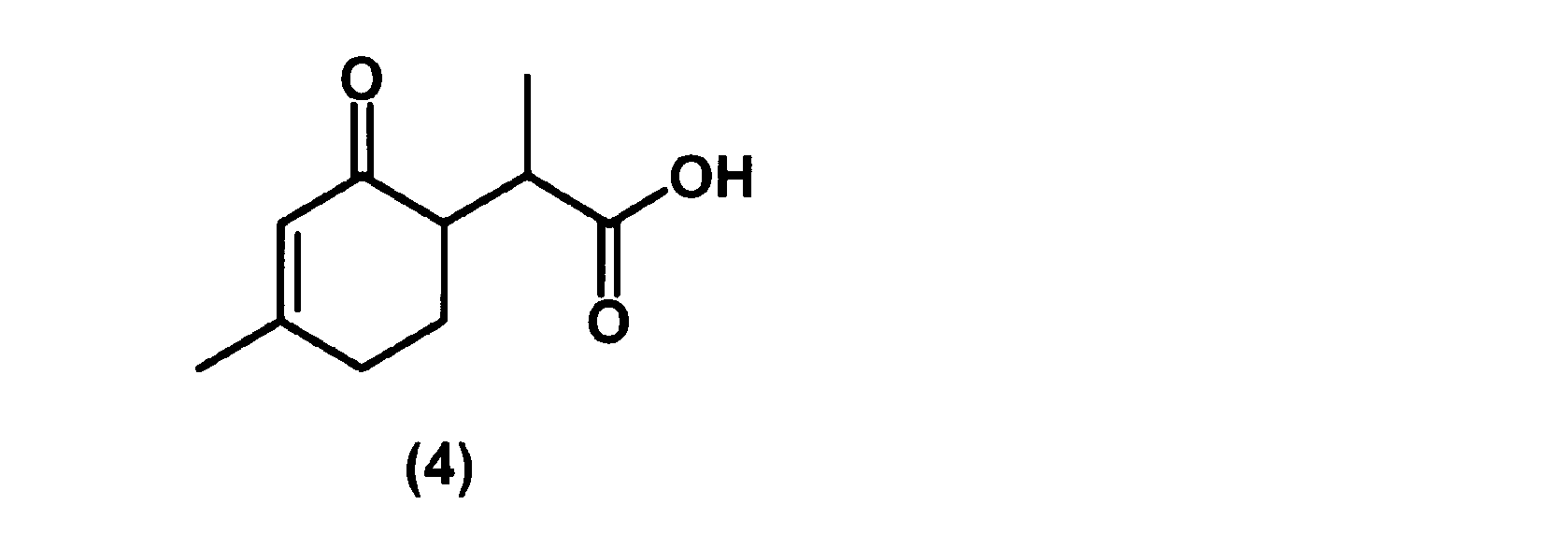
で示されるα-メチル-γ-ケト酸を得る工程;
C)前記工程B-1)で得られたα-メチル-γ-ケト酸を還元して、前記式(a)で示される化合物を得る工程を含む、方法。
[2] ワインラクトンもしくはその立体異性体またはそれらの混合物としての式(a):

で示される化合物の製造方法であって、
A)式(1):
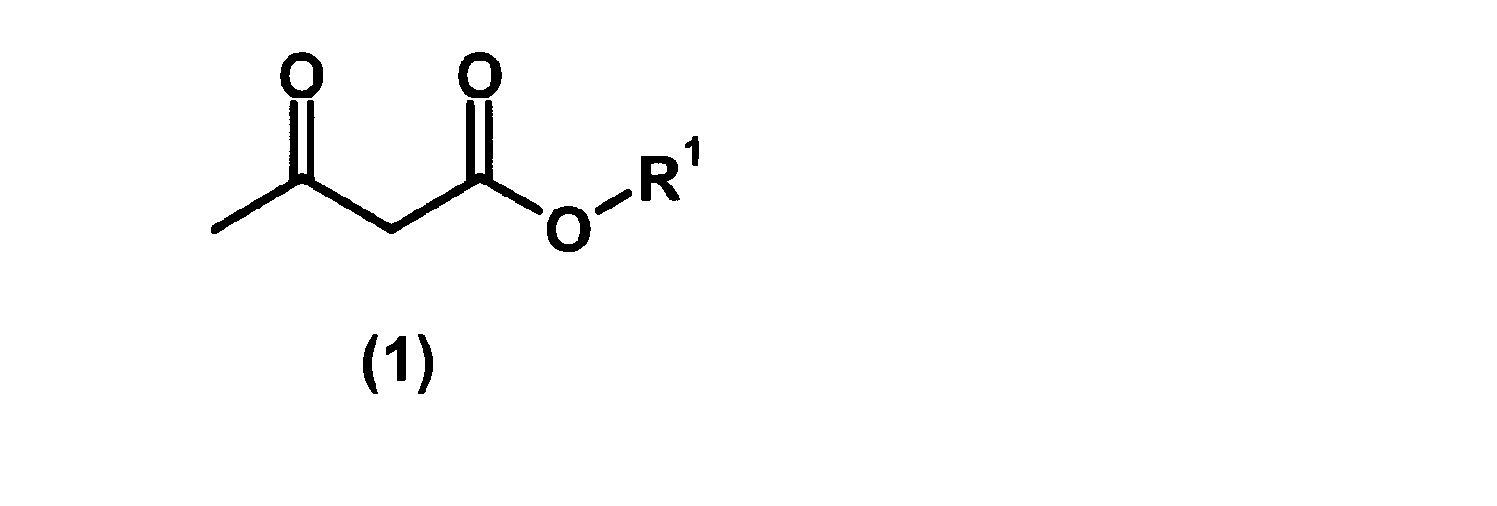
[式中、R1は炭素数1~4のアルキル基である。]
で示されるβ-ケトエステルと、式(2):

[式中、R2は炭素数1~4のアルキル基であり、Xは塩素原子または臭素原子である。]
で示される2-ハロエステルとを、塩基性条件下にて反応させて、式(3):

[式中、R1は、式(1)の定義と同じである。R2は、式(2)の定義と同じである。]
で示される2-アセト-3-メチル-コハク酸エステルを得る工程;
B-2)前記工程A)で得られた2-アセト-3-メチル-コハク酸エステルと、メチルビニルケトンとを、塩基性条件下にて反応させ、その後に脱炭酸反応させて、式(5):

[式中、R2は、式(2)の定義と同じである。]
で示されるα-メチル-γ-ケト酸エステルを得る工程;
B-3)前記工程B-2)で得られたα-メチル-γ-ケト酸エステルを加水分解して、式(4):
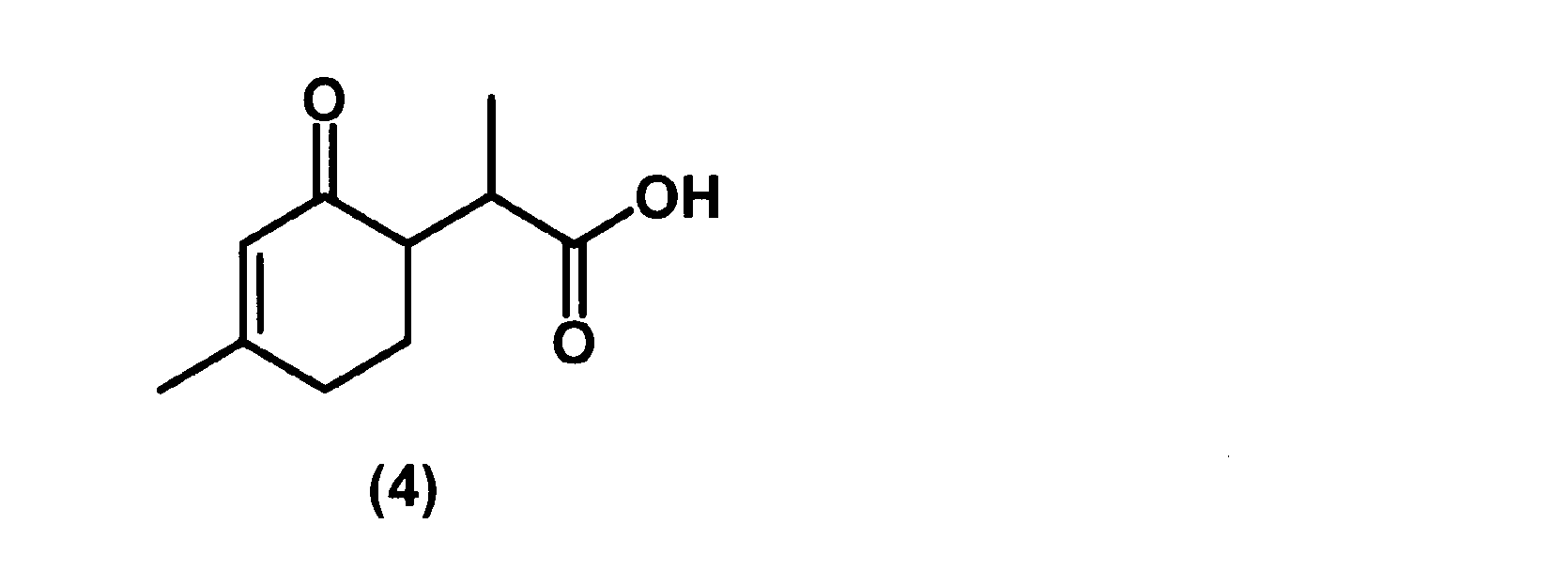
で示されるα-メチル-γ-ケト酸を得る工程;
C)前記工程B-3で得られたα-メチル-γ-ケト酸を還元して、前記式(a)で示される化合物を得る工程を含む、方法。
[3] 前記工程C)が、式(6)または(7)で示される化合物から選ばれるルテニウム錯体の光学活性体及び水素供与体の存在下にて不斉還元反応させることを含む、[1]または[2]に記載の方法。

[式中、*は不斉炭素原子であり、
R31は、炭素数1~10のアルキル基;炭素数1~10のハロゲン化アルキル基;10-カンフォリル基;1又は2個の炭素数1~10のアルキル基で置換されていてもよいアミノ基;又は、炭素数1~10のアルキル基、炭素数1~10のハロゲン化アルキル基、ハロゲン原子、シアノ基(-CN)、アミノ基、アルキルアミノ基(-NR20R21)、5員若しくは6員の環状アミノ基、アシルアミノ基(-NH-CO-R20)、水酸基、アルコキシ基(-OR20)、アシル基(-CO-R20)、カルボキシル基、アルコキシカルボニル基(-COOR20)、フェノキシカルボニル基、メルカプト基、アルキルチオ基(-SR20)、シリル基(-SiR20R21R22)及びニトロ基(-NO2)からなる群より選ばれる少なくとも一つの置換基で置換されていてもよいアリール基であり、ここで、R20、R21及びR22は、それぞれ独立して、水素原子、炭素数1~10のアルキル基、又は炭素数3~10のシクロアルキル基であり、
Yは水素原子であり、
Wはトリフルオロメタンスルホニルオキシ基、p-トルエンスルホニルオキシ基、メタンスルホニルオキシ基、ベンゼンスルホニルオキシ基、水素原子、又は、ハロゲン原子であり、
j及びkは、それぞれ独立して、0又は1であり、但し、j+kが1になることはなく、
R32及びR33は、それぞれ独立して、水素原子;炭素数1~10のアルキル基;炭素数1~10のアルキル基、炭素数1~10のアルコキシ基及びハロゲン原子からなる群より選ばれる少なくとも一つの置換基で置換されていてもよいフェニル基;又は、炭素数3~8のシクロアルキル基であり、あるいは、R32及びR33は一緒になって環を形成してもよく、
R11、R12、R13、R14及びR15は、それぞれ独立して、水素原子、炭素数1~10のアルキル基、又は炭素数1~10のアルコキシ基を示す。
R16、R17、R18及びR19はそれぞれ独立して、水素原子、ヒドロキシル基、炭素数1~10のアルキル基、又は、炭素数1~10のアルコキシ基であり、あるいは、R16とR17とこれらが置換している炭素原子、及び/又は、R18とR19とこれらが置換している炭素原子とでカルボニル基を形成してもよく、
Zは酸素原子又は硫黄原子であり、
n1は1又は2であり、n2は1~3の整数である。]
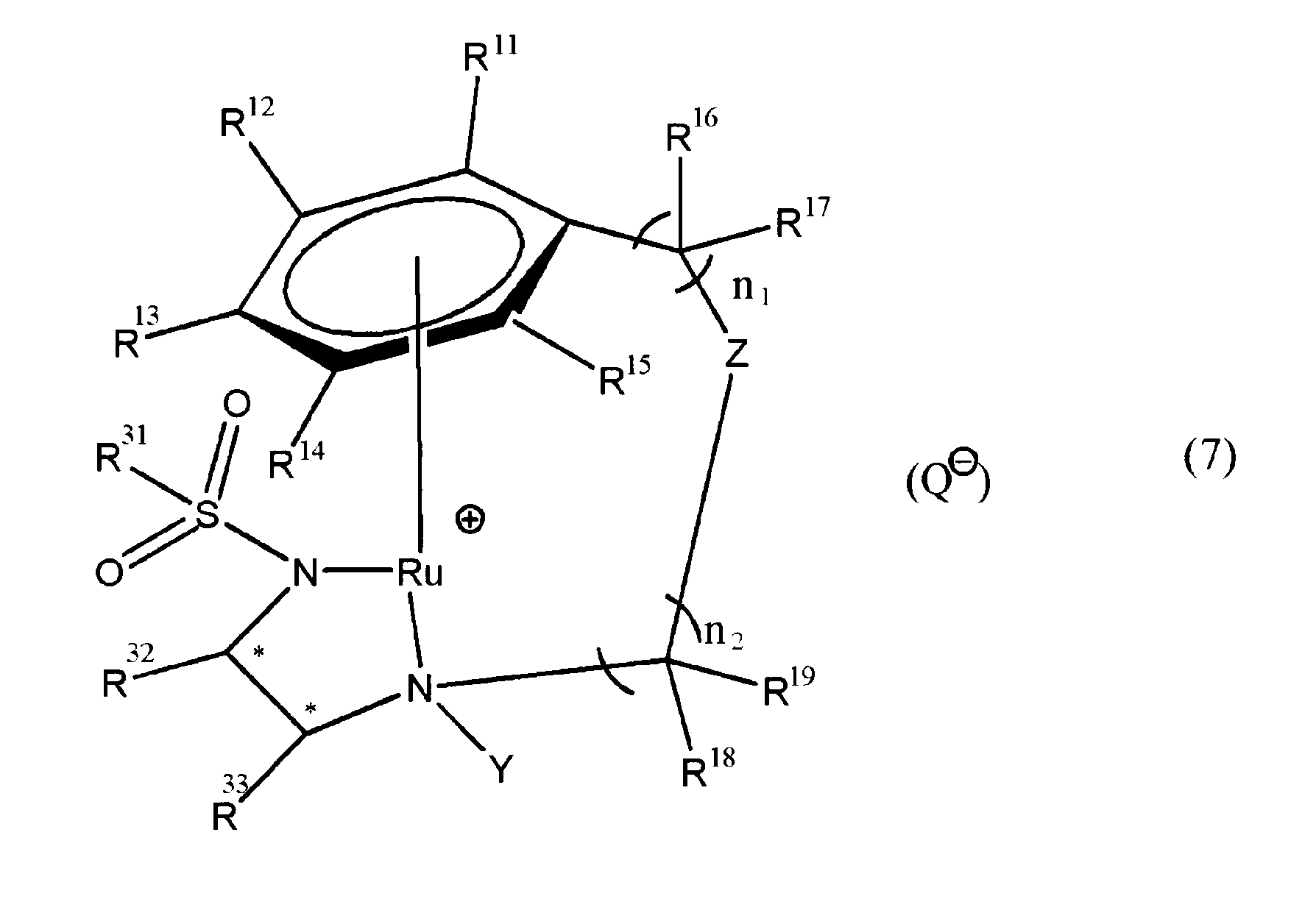
[式中、*は不斉炭素原子であり、
R31は、炭素数1~10のアルキル基;炭素数1~10のハロゲン化アルキル基;10-カンフォリル基;1又は2個の炭素数1~10のアルキル基で置換されていてもよいアミノ基;又は、炭素数1~10のアルキル基、炭素数1~10のハロゲン化アルキル基、ハロゲン原子、シアノ基(-CN)、アミノ基、アルキルアミノ基(-NR20R21)、5員若しくは6員の環状アミノ基、アシルアミノ基(-NH-CO-R20)、水酸基、アルコキシ基(-OR20)、アシル基(-CO-R20)、カルボキシル基、アルコキシカルボニル基(-COOR20)、フェノキシカルボニル基、メルカプト基、アルキルチオ基(-SR20)、シリル基(-SiR20R21R22)及びニトロ基(-NO2)からなる群より選ばれる少なくとも一つの置換基で置換されていてもよいアリール基であり、
R20、R21及びR22は、それぞれ独立して、水素原子、炭素数1~10のアルキル基、又は、炭素数3~10のシクロアルキル基であり、
Yは水素原子であり、
R32及びR33は、それぞれ独立して、水素原子;炭素数1~10のアルキル基;炭素数1~10のアルキル基、炭素数1~10のアルコキシ基及びハロゲン原子からなる群より選ばれる少なくとも一つの置換基で置換されていてもよいフェニル基;又は、炭素数3~8のシクロアルキル基であり、あるいは、R32及びR33は一緒になって環を形成してもよく、
R11、R12、R13、R14及びR15は、それぞれ独立して、水素原子、炭素数1~10のアルキル基、又は、炭素数1~10のアルコキシ基であり、
R16、R17、R18及びR19は、それぞれ独立して、水素原子、ヒドロキシル基、炭素数1~10のアルキル基、又は、炭素数1~10のアルコキシ基であり、あるいは、R16とR17とこれらが置換している炭素原子、及び/又は、R18とR19とこれらが置換している炭素原子とでカルボニル基を形成してもよく、
Zは酸素原子又は硫黄原子であり、Q-はカウンターアニオンであり、
n1は1又は2であり、n2は1~3の整数である。]
[4] 式(6)で示されるルテニウム錯体が次式で示される化合物である、[3]に記載の方法。
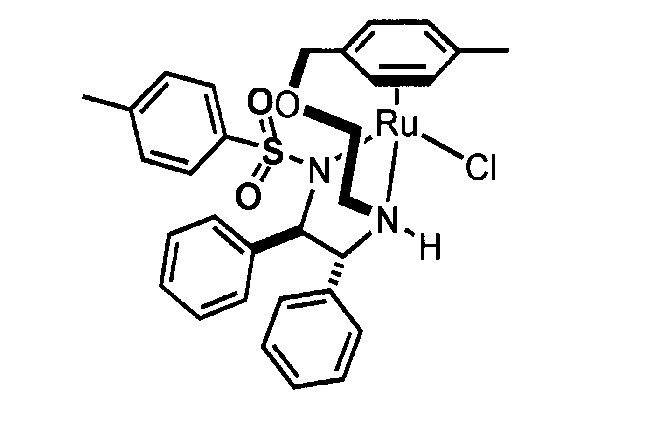
[5] 前記工程C)で得られた化合物を塩基性条件下にて蒸留して、式:

で示される(3S,3aS,7aR)体及び(3R,3aR,7aS)体から構成されるジアステレオマー異性体混合物を得る工程をさらに含む、[1]または[2]に記載の方法。
[6](3S,3aS,7aR)体及び(3R,3aR,7aS)体から構成されるジアステレオマー異性体混合物の含有率が式(a)で示される化合物の全重量に対して90重量%以上である、[5]に記載の方法。
[7] 前記工程C)で得られた化合物を塩基性条件下にて蒸留して、式:
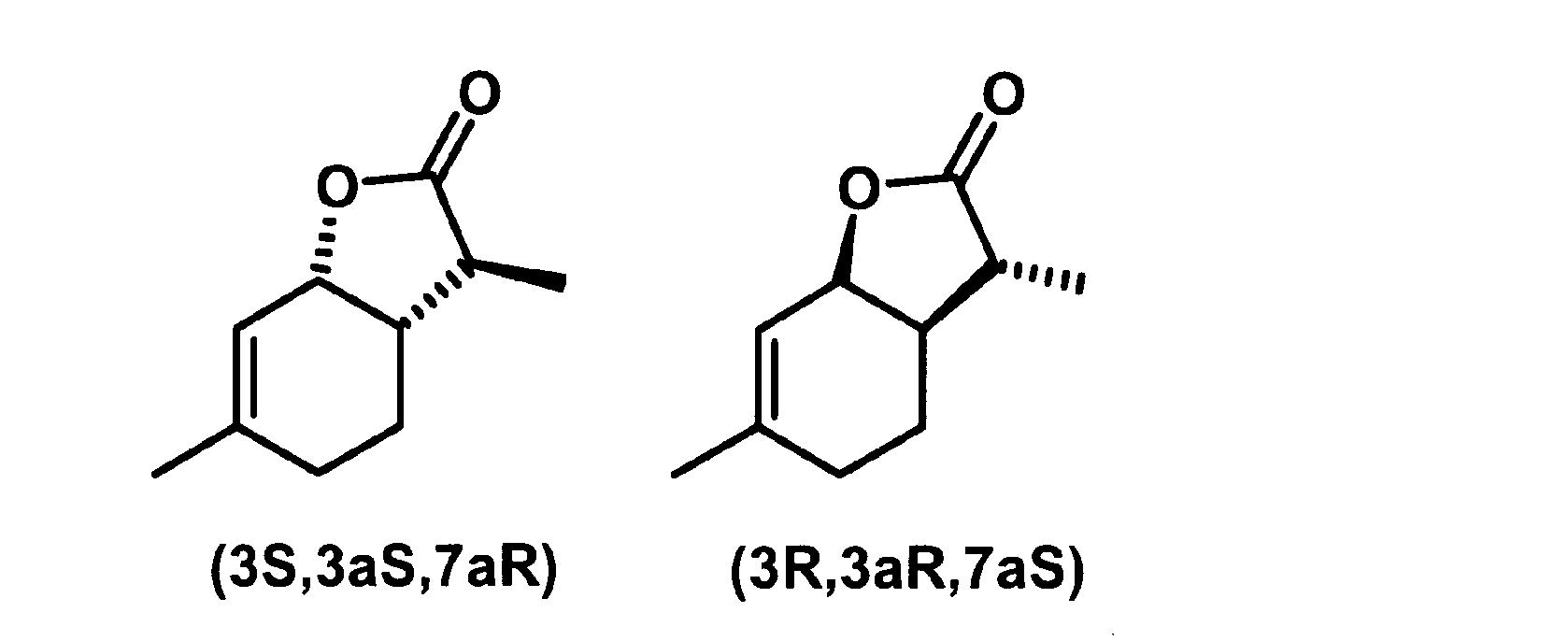
で示される(3S,3aS,7aR)体及び(3R,3aR,7aS)体から構成されるジアステレオマー異性体混合物を得る工程をさらに含む、[3]または[4]に記載の方法。
[8] さらに再結晶することにより、式:
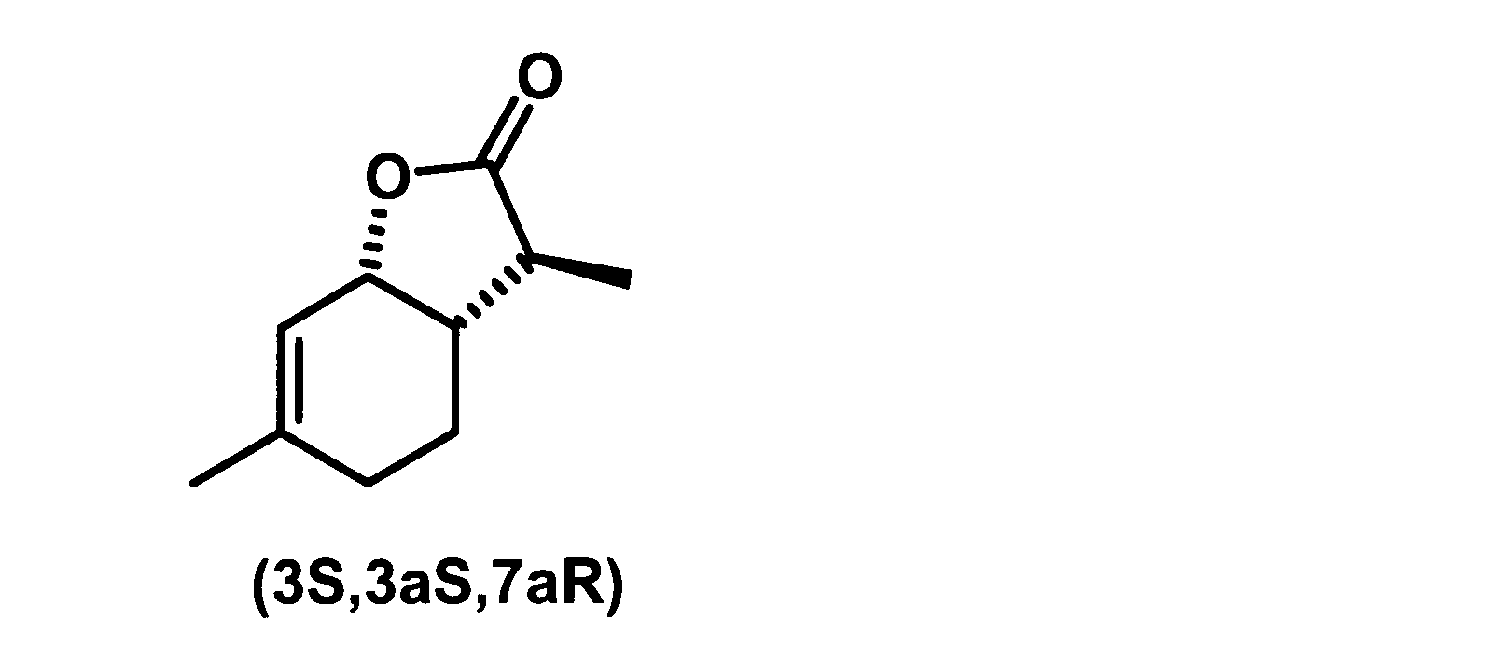
で示される(3S,3aS,7aR)体を得る工程を含む、[7]に記載の方法。
[1] ワインラクトンもしくはその立体異性体またはそれらの混合物としての式(a):
で示される化合物の製造方法であって、
A)式(1):
[式中、R1は炭素数1~4のアルキル基である。]
で示されるβ-ケトエステルと、式(2):
[式中、R2は炭素数1~4のアルキル基であり、Xは塩素原子または臭素原子である。]
で示される2-ハロエステルとを、塩基性条件下にて反応させて、式(3):
[式中、R1は、式(1)の定義と同じである。R2は、式(2)の定義と同じである。]
で示される2-アセト-3-メチル-コハク酸エステルを得る工程;
B-1)前記工程A)で得られた2-アセト-3-メチル-コハク酸エステルと、メチルビニルケトンとを、塩基性条件下にて反応させ、その後に加水分解して、式(4):
で示されるα-メチル-γ-ケト酸を得る工程;
C)前記工程B-1)で得られたα-メチル-γ-ケト酸を還元して、前記式(a)で示される化合物を得る工程を含む、方法。
[2] ワインラクトンもしくはその立体異性体またはそれらの混合物としての式(a):
で示される化合物の製造方法であって、
A)式(1):
[式中、R1は炭素数1~4のアルキル基である。]
で示されるβ-ケトエステルと、式(2):
[式中、R2は炭素数1~4のアルキル基であり、Xは塩素原子または臭素原子である。]
で示される2-ハロエステルとを、塩基性条件下にて反応させて、式(3):
[式中、R1は、式(1)の定義と同じである。R2は、式(2)の定義と同じである。]
で示される2-アセト-3-メチル-コハク酸エステルを得る工程;
B-2)前記工程A)で得られた2-アセト-3-メチル-コハク酸エステルと、メチルビニルケトンとを、塩基性条件下にて反応させ、その後に脱炭酸反応させて、式(5):
[式中、R2は、式(2)の定義と同じである。]
で示されるα-メチル-γ-ケト酸エステルを得る工程;
B-3)前記工程B-2)で得られたα-メチル-γ-ケト酸エステルを加水分解して、式(4):
で示されるα-メチル-γ-ケト酸を得る工程;
C)前記工程B-3で得られたα-メチル-γ-ケト酸を還元して、前記式(a)で示される化合物を得る工程を含む、方法。
[3] 前記工程C)が、式(6)または(7)で示される化合物から選ばれるルテニウム錯体の光学活性体及び水素供与体の存在下にて不斉還元反応させることを含む、[1]または[2]に記載の方法。
[式中、*は不斉炭素原子であり、
R31は、炭素数1~10のアルキル基;炭素数1~10のハロゲン化アルキル基;10-カンフォリル基;1又は2個の炭素数1~10のアルキル基で置換されていてもよいアミノ基;又は、炭素数1~10のアルキル基、炭素数1~10のハロゲン化アルキル基、ハロゲン原子、シアノ基(-CN)、アミノ基、アルキルアミノ基(-NR20R21)、5員若しくは6員の環状アミノ基、アシルアミノ基(-NH-CO-R20)、水酸基、アルコキシ基(-OR20)、アシル基(-CO-R20)、カルボキシル基、アルコキシカルボニル基(-COOR20)、フェノキシカルボニル基、メルカプト基、アルキルチオ基(-SR20)、シリル基(-SiR20R21R22)及びニトロ基(-NO2)からなる群より選ばれる少なくとも一つの置換基で置換されていてもよいアリール基であり、ここで、R20、R21及びR22は、それぞれ独立して、水素原子、炭素数1~10のアルキル基、又は炭素数3~10のシクロアルキル基であり、
Yは水素原子であり、
Wはトリフルオロメタンスルホニルオキシ基、p-トルエンスルホニルオキシ基、メタンスルホニルオキシ基、ベンゼンスルホニルオキシ基、水素原子、又は、ハロゲン原子であり、
j及びkは、それぞれ独立して、0又は1であり、但し、j+kが1になることはなく、
R32及びR33は、それぞれ独立して、水素原子;炭素数1~10のアルキル基;炭素数1~10のアルキル基、炭素数1~10のアルコキシ基及びハロゲン原子からなる群より選ばれる少なくとも一つの置換基で置換されていてもよいフェニル基;又は、炭素数3~8のシクロアルキル基であり、あるいは、R32及びR33は一緒になって環を形成してもよく、
R11、R12、R13、R14及びR15は、それぞれ独立して、水素原子、炭素数1~10のアルキル基、又は炭素数1~10のアルコキシ基を示す。
R16、R17、R18及びR19はそれぞれ独立して、水素原子、ヒドロキシル基、炭素数1~10のアルキル基、又は、炭素数1~10のアルコキシ基であり、あるいは、R16とR17とこれらが置換している炭素原子、及び/又は、R18とR19とこれらが置換している炭素原子とでカルボニル基を形成してもよく、
Zは酸素原子又は硫黄原子であり、
n1は1又は2であり、n2は1~3の整数である。]
[式中、*は不斉炭素原子であり、
R31は、炭素数1~10のアルキル基;炭素数1~10のハロゲン化アルキル基;10-カンフォリル基;1又は2個の炭素数1~10のアルキル基で置換されていてもよいアミノ基;又は、炭素数1~10のアルキル基、炭素数1~10のハロゲン化アルキル基、ハロゲン原子、シアノ基(-CN)、アミノ基、アルキルアミノ基(-NR20R21)、5員若しくは6員の環状アミノ基、アシルアミノ基(-NH-CO-R20)、水酸基、アルコキシ基(-OR20)、アシル基(-CO-R20)、カルボキシル基、アルコキシカルボニル基(-COOR20)、フェノキシカルボニル基、メルカプト基、アルキルチオ基(-SR20)、シリル基(-SiR20R21R22)及びニトロ基(-NO2)からなる群より選ばれる少なくとも一つの置換基で置換されていてもよいアリール基であり、
R20、R21及びR22は、それぞれ独立して、水素原子、炭素数1~10のアルキル基、又は、炭素数3~10のシクロアルキル基であり、
Yは水素原子であり、
R32及びR33は、それぞれ独立して、水素原子;炭素数1~10のアルキル基;炭素数1~10のアルキル基、炭素数1~10のアルコキシ基及びハロゲン原子からなる群より選ばれる少なくとも一つの置換基で置換されていてもよいフェニル基;又は、炭素数3~8のシクロアルキル基であり、あるいは、R32及びR33は一緒になって環を形成してもよく、
R11、R12、R13、R14及びR15は、それぞれ独立して、水素原子、炭素数1~10のアルキル基、又は、炭素数1~10のアルコキシ基であり、
R16、R17、R18及びR19は、それぞれ独立して、水素原子、ヒドロキシル基、炭素数1~10のアルキル基、又は、炭素数1~10のアルコキシ基であり、あるいは、R16とR17とこれらが置換している炭素原子、及び/又は、R18とR19とこれらが置換している炭素原子とでカルボニル基を形成してもよく、
Zは酸素原子又は硫黄原子であり、Q-はカウンターアニオンであり、
n1は1又は2であり、n2は1~3の整数である。]
[4] 式(6)で示されるルテニウム錯体が次式で示される化合物である、[3]に記載の方法。
[5] 前記工程C)で得られた化合物を塩基性条件下にて蒸留して、式:
で示される(3S,3aS,7aR)体及び(3R,3aR,7aS)体から構成されるジアステレオマー異性体混合物を得る工程をさらに含む、[1]または[2]に記載の方法。
[6](3S,3aS,7aR)体及び(3R,3aR,7aS)体から構成されるジアステレオマー異性体混合物の含有率が式(a)で示される化合物の全重量に対して90重量%以上である、[5]に記載の方法。
[7] 前記工程C)で得られた化合物を塩基性条件下にて蒸留して、式:
で示される(3S,3aS,7aR)体及び(3R,3aR,7aS)体から構成されるジアステレオマー異性体混合物を得る工程をさらに含む、[3]または[4]に記載の方法。
[8] さらに再結晶することにより、式:
で示される(3S,3aS,7aR)体を得る工程を含む、[7]に記載の方法。
[9] ワインラクトンもしくはその立体異性体またはそれらの混合物としての式(a):

で示される化合物の製造方法であって、
A)式(1):
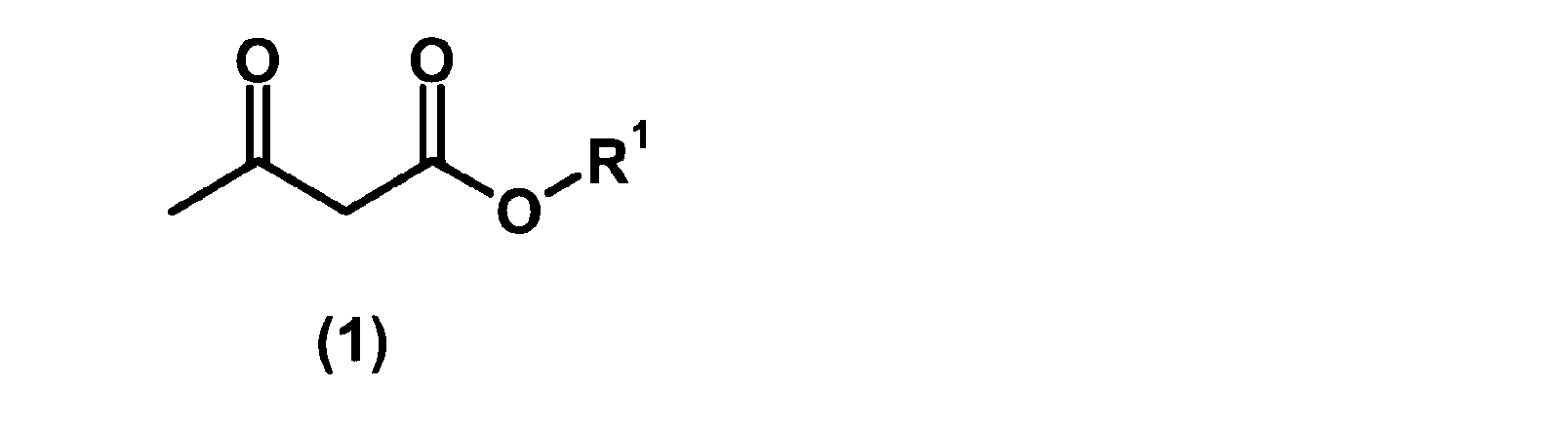
[式中、R1は炭素数1~4のアルキル基である。]
で示されるβ-ケトエステルと、式(2):

[式中、R2は炭素数1~4のアルキル基であり、Xは塩素原子または臭素原子である。]
で示される2-ハロエステルとを、塩基性条件下にて反応させて、式(3):
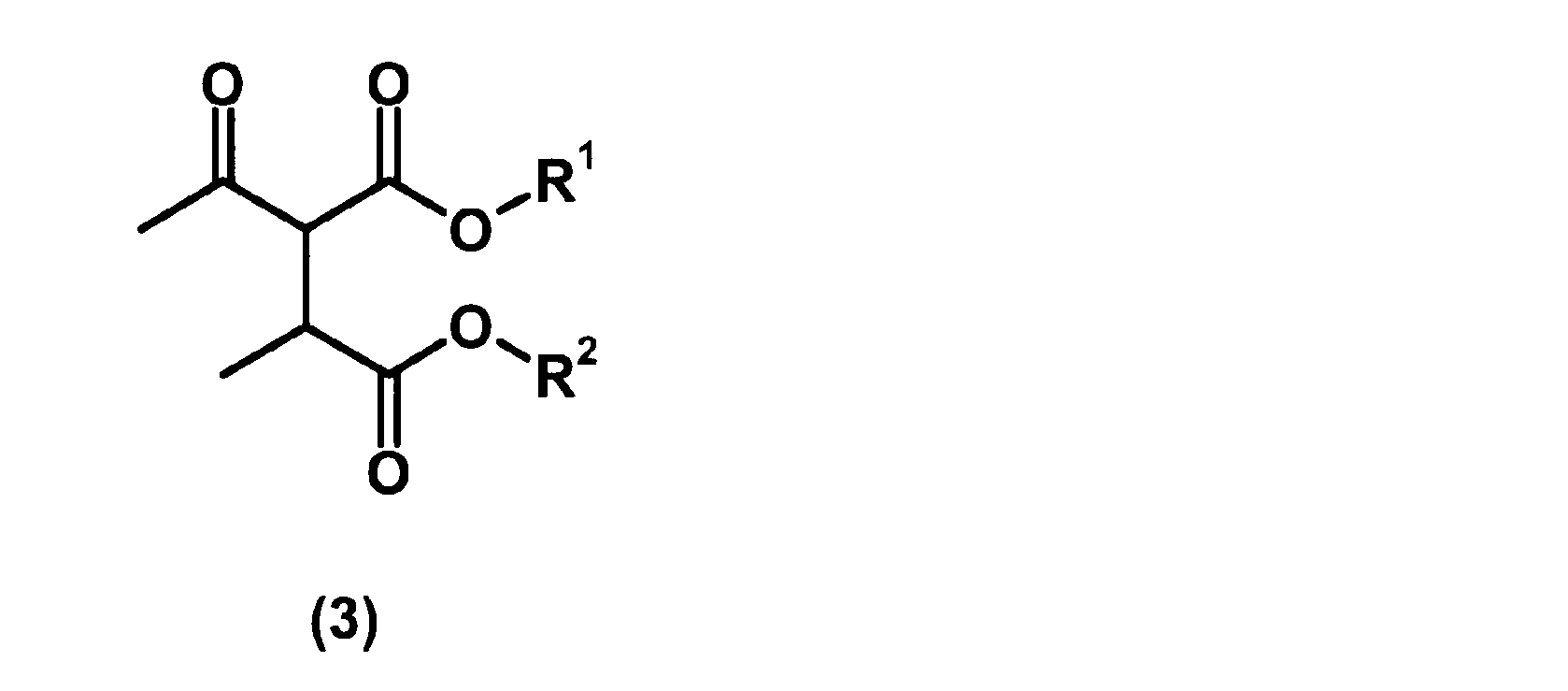
[式中、R1は、式(1)の定義と同じである。R2は、式(2)の定義と同じである。]
で示される2-アセト-3-メチル-コハク酸エステルを得る工程;
B-2)前記工程A)で得られた2-アセト-3-メチル-コハク酸エステルと、メチルビニルケトンとを、塩基性条件下にて反応させ、その後に脱炭酸反応させて、式(5):
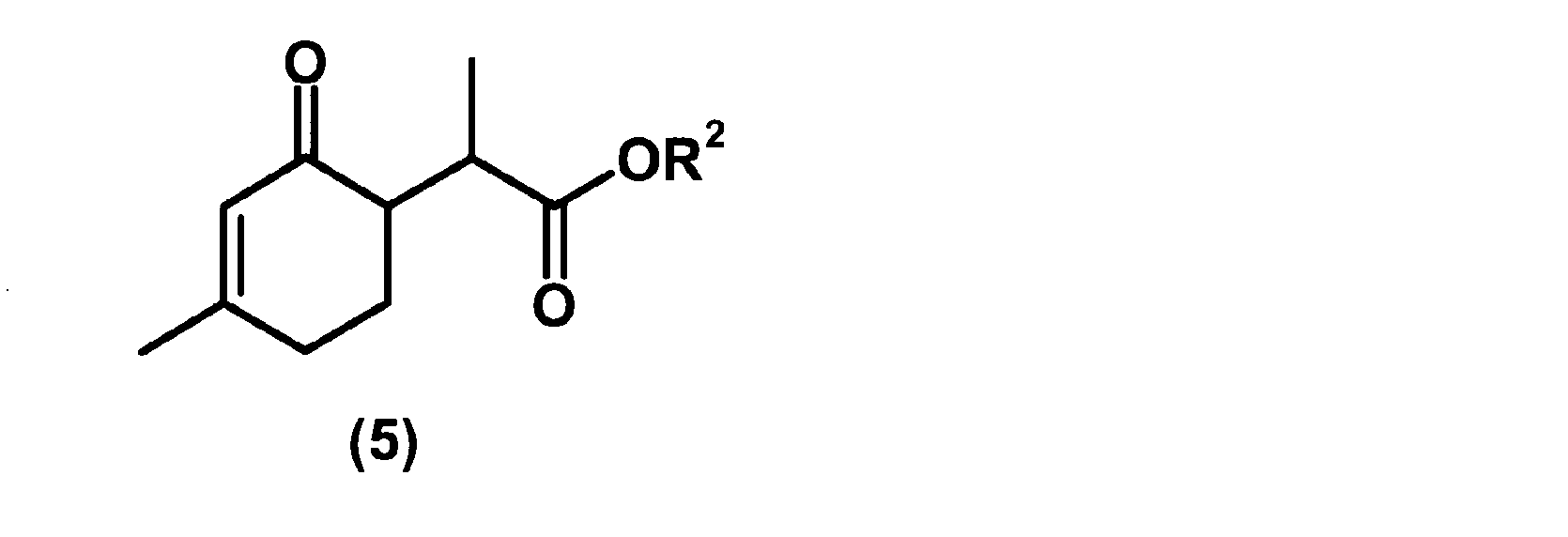
[式中、R2は、式(2)の定義と同じである。]
で示されるα-メチル-γ-ケト酸エステルを得る工程;
E)前記工程B-2)で得られたα-メチル-γ-ケト酸エステルを式(6)または(7)で示される化合物から選ばれるルテニウム錯体及び水素供与体の存在下にて還元して、前記式(a)で示される化合物を得る工程

[式中、*は不斉炭素原子であり、
R31は、炭素数1~10のアルキル基;炭素数1~10のハロゲン化アルキル基;10-カンフォリル基;1又は2個の炭素数1~10のアルキル基で置換されていてもよいアミノ基;又は炭素数1~10のアルキル基、炭素数1~10のハロゲン化アルキル基、ハロゲン原子、シアノ基(-CN)、アミノ基、アルキルアミノ基(-NR20R21)、5員若しくは6員の環状アミノ基、アシルアミノ基(-NH-CO-R20)、水酸基、アルコキシ基(-OR20)、アシル基(-CO-R20)、カルボキシル基、アルコキシカルボニル基(-COOR20)、フェノキシカルボニル基、メルカプト基、アルキルチオ基(-SR20)、シリル基(-SiR20R21R22)及びニトロ基(-NO2)からなる群より選ばれる少なくとも一つの置換基で置換されていてもよいアリール基であり、ここで、R20、R21及びR22は、それぞれ独立して、水素原子、炭素数1~10のアルキル基、又は、炭素数3~10のシクロアルキル基であり、
Yは水素原子であり、
Wはトリフルオロメタンスルホニルオキシ基、p-トルエンスルホニルオキシ基、メタンスルホニルオキシ基、ベンゼンスルホニルオキシ基、水素原子、又は、ハロゲン原子であり、
j及びkは、それぞれ独立して、0又は1であり、但し、j+kが1になることはなく、
R32及びR33は、それぞれ独立して、水素原子;炭素数1~10のアルキル基;炭素数1~10のアルキル基、炭素数1~10のアルコキシ基及びハロゲン原子からなる群より選ばれる少なくとも一つの置換基で置換されていてもよいフェニル基;又は、炭素数3~8のシクロアルキル基であり、あるいは、R32及びR33は一緒になって環を形成してもよく、
R11、R12、R13、R14及びR15は、それぞれ独立して、水素原子、炭素数1~10のアルキル基、又は炭素数1~10のアルコキシ基を示す。
R16、R17、R18、R19はそれぞれ独立して、水素原子、ヒドロキシル基、炭素数1~10のアルキル基、又は、炭素数1~10のアルコキシ基であり、あるいは、R16とR17とこれらが置換している炭素原子、及び/又は、R18とR19とこれらが置換している炭素原子とでカルボニル基を形成してもよく、
Zは酸素原子又は硫黄原子であり、
n1は1又は2であり、n2は1~3の整数である。]
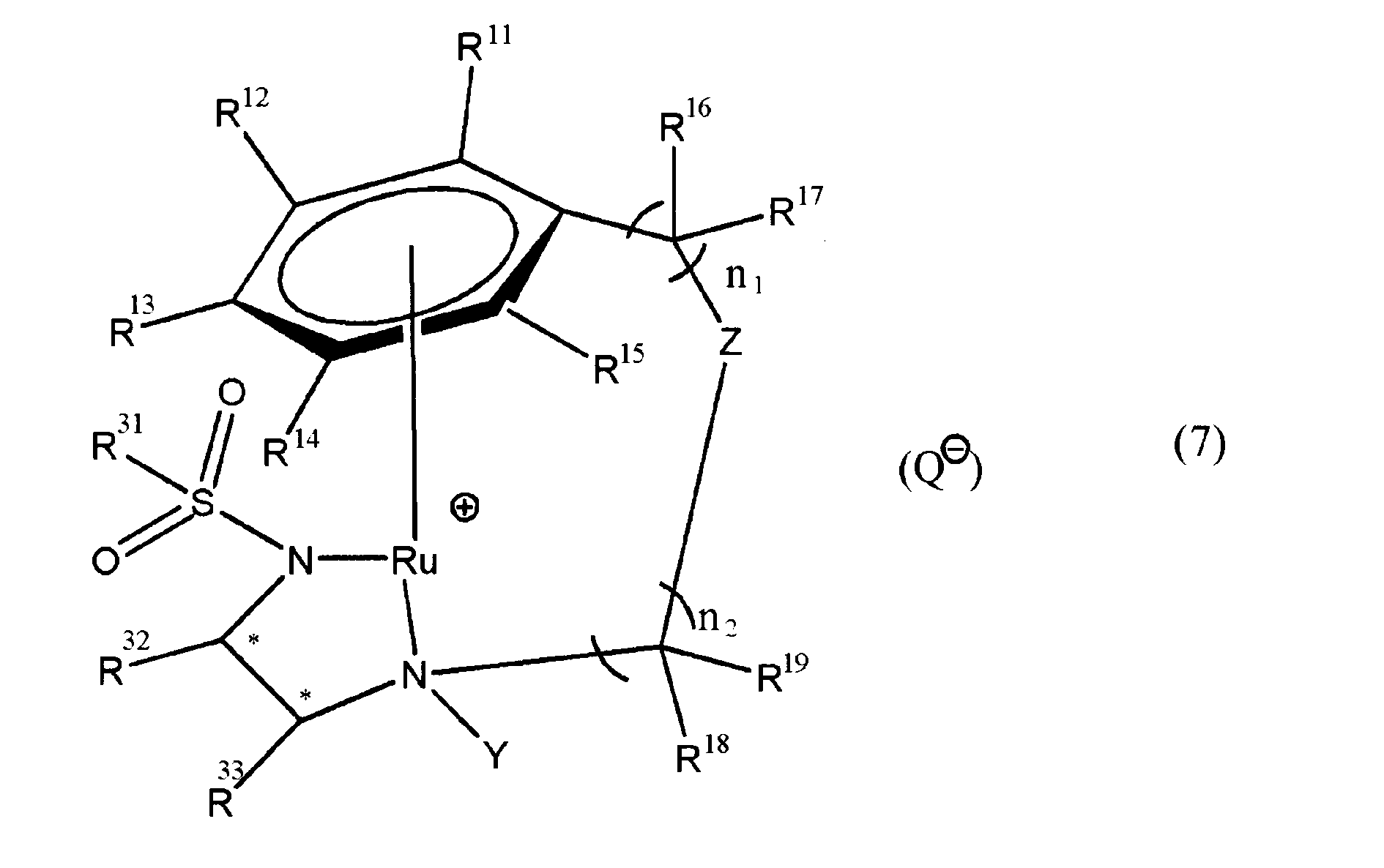
[式中、*は不斉炭素原子であり、
R31は、炭素数1~10のアルキル基;炭素数1~10のハロゲン化アルキル基;10-カンフォリル基;1又は2個の炭素数1~10のアルキル基で置換されていてもよいアミノ基;又は、炭素数1~10のアルキル基、炭素数1~10のハロゲン化アルキル基、ハロゲン原子、シアノ基(-CN)、アミノ基、アルキルアミノ基(-NR20R21)、5員若しくは6員の環状アミノ基、アシルアミノ基(-NH-CO-R20)、水酸基、アルコキシ基(-OR20)、アシル基(-CO-R20)、カルボキシル基、アルコキシカルボニル基(-COOR20)、フェノキシカルボニル基、メルカプト基、アルキルチオ基(-SR20)、シリル基(-SiR20R21R22)及びニトロ基(-NO2)からなる群より選ばれる少なくとも一つの置換基で置換されていてもよいアリール基であり、
R20、R21及びR22は、それぞれ独立して、水素原子、炭素数1~10のアルキル基、又は、炭素数3~10のシクロアルキル基であり、
Yは水素原子であり、
R32及びR33は、それぞれ独立して、水素原子;炭素数1~10のアルキル基;炭素数1~10のアルキル基、炭素数1~10のアルコキシ基及びハロゲン原子からなる群より選ばれる少なくとも一つの置換基で置換されていてもよいフェニル基;又は、炭素数3~8のシクロアルキル基であり、あるいは、R32及びR33は一緒になって環を形成してもよく、
R11、R12、R13、R14及びR15は、それぞれ独立して、水素原子、炭素数1~10のアルキル基、又は、炭素数1~10のアルコキシ基であり、
R16、R17、R18及びR19は、それぞれ独立して、水素原子、ヒドロキシル基、炭素数1~10のアルキル基、又は、炭素数1~10のアルコキシ基であり、あるいは、R16とR17とこれらが置換している炭素原子、及び/又は、R18とR19とこれらが置換している炭素原子とでカルボニル基を形成してもよく、
Zは酸素原子又は硫黄原子であり、Q-はカウンターアニオンであり、
n1は1又は2であり、n2は1~3の整数である。]
を含む、方法。
[10] 前記工程E)において、式(6)または(7)で示される化合物から選ばれるルテニウム錯体が光学活性ルテニウム錯体であり、不斉還元反応させる、[9]に記載の方法。
[11] 前記式(6)で示されるルテニウム錯体が次式で示される化合物である、[9]または[10]に記載の方法。
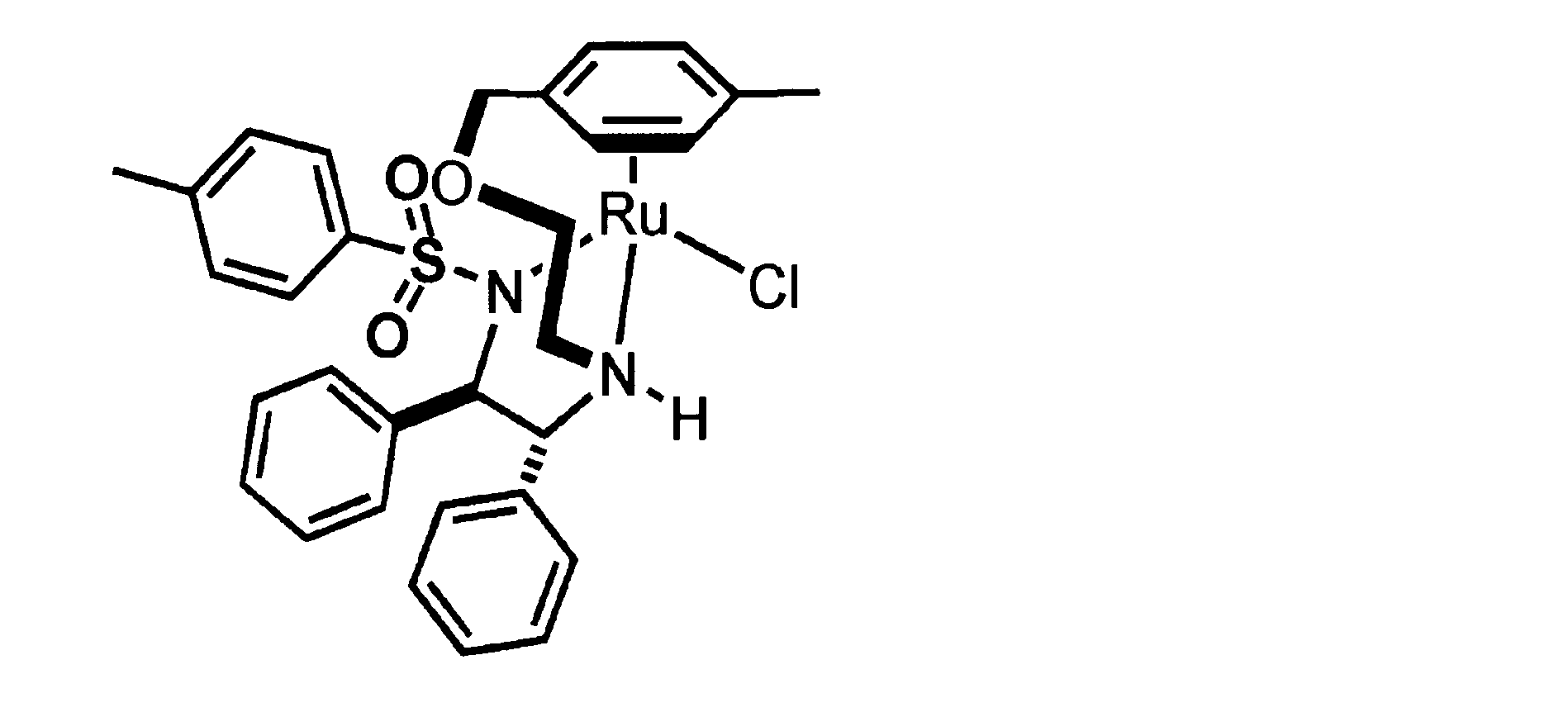
[12] ワインラクトンもしくはその立体異性体またはそれらの混合物としての式(a):

で示される化合物の製造方法であって、
A)式(1):
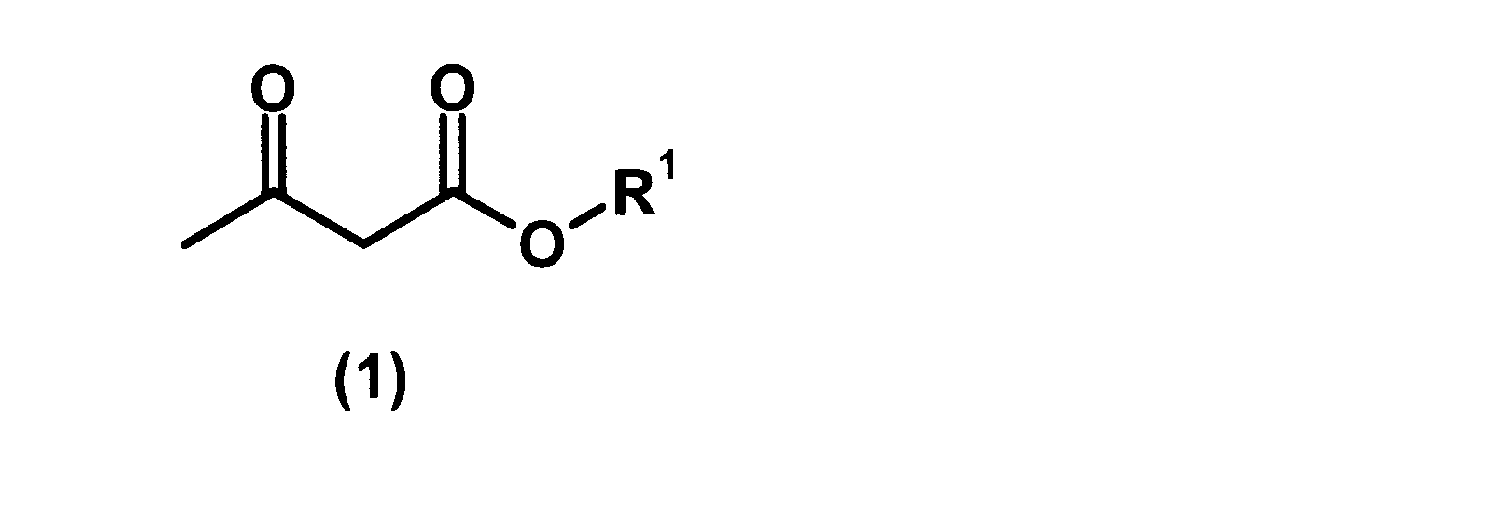
[式中、R1は炭素数1~4のアルキル基である。]
で示されるβ-ケトエステルと、式(2):
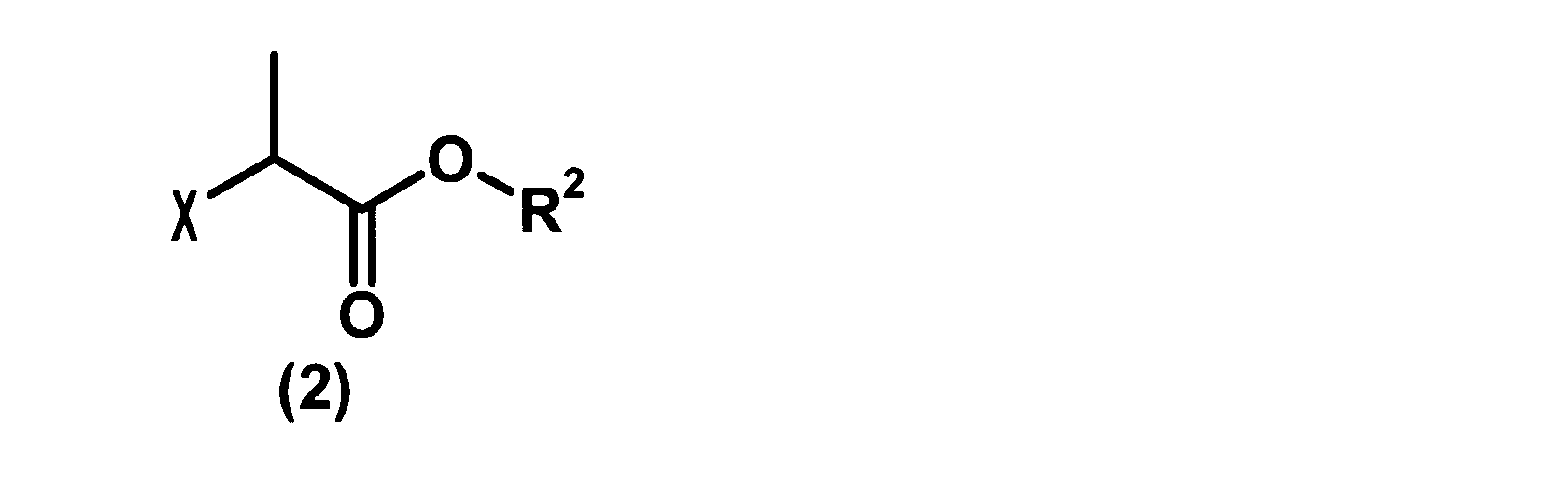
[式中、R2は炭素数1~4のアルキル基であり、Xは塩素原子または臭素原子である。]
で示される2-ハロエステルとを、塩基性条件下にて反応させて、式(3):
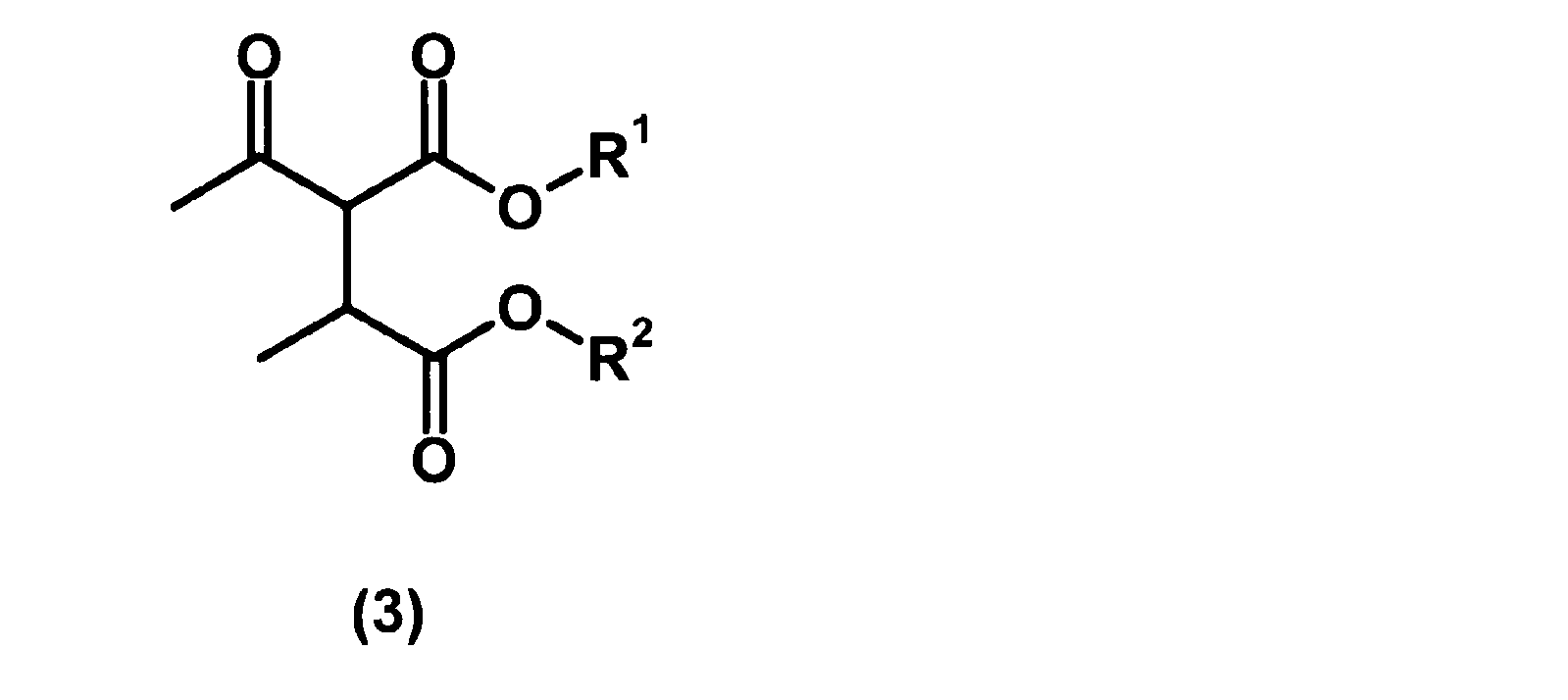
[式中、R1は、式(1)の定義と同じである。R2は、式(2)の定義と同じである。]
で示される2-アセト-3-メチル-コハク酸エステルを得る工程;
B-2)前記工程A)で得られた2-アセト-3-メチル-コハク酸エステルと、メチルビニルケトンとを、塩基性条件下にて反応させ、その後に脱炭酸反応させて、式(5):
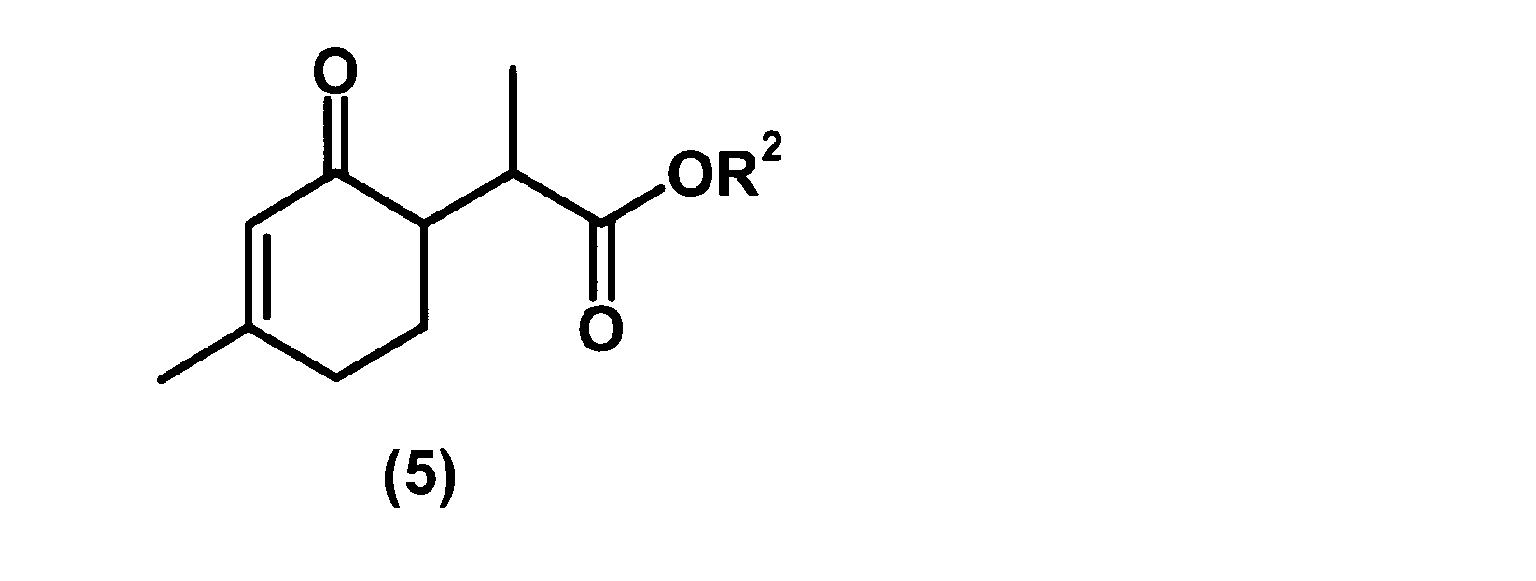
[式中、R2は、式(2)の定義と同じである。]
で示されるα-メチル-γ-ケト酸エステルを得る工程;
E)前記工程B-2)で得られたα-メチル-γ-ケト酸エステルを、塩基性条件下、式(8)で示される光学活性ルテニウム錯体及び水素ガスの存在下にて不斉水素化反応させて、前記式(a)で示される化合物を得る工程
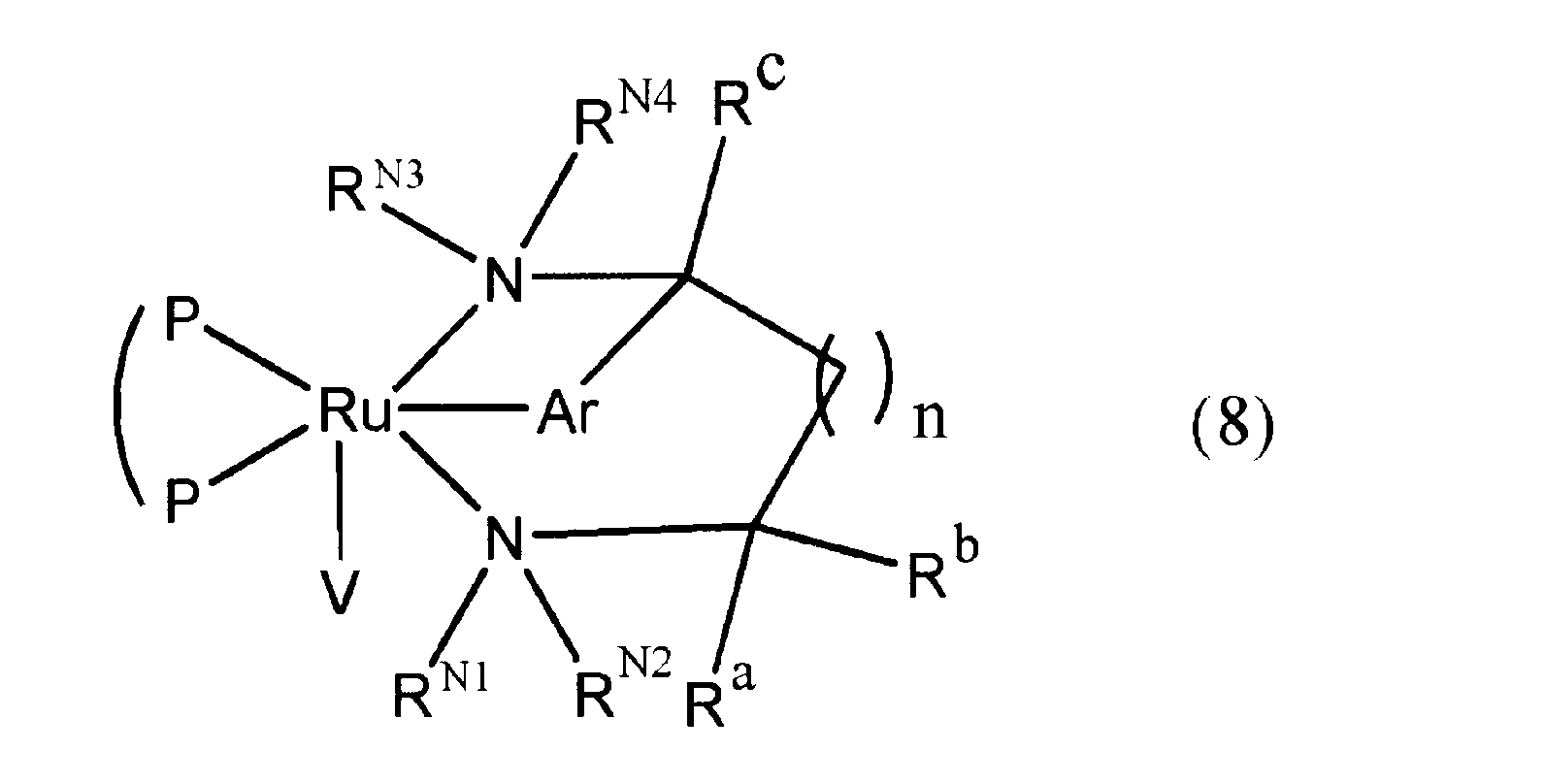
[式中、P⌒Pは光学活性ジホスフィンであり、
Vはアニオン性基であり、
Ra、Rb及びRcは、それぞれ独立して、水素原子、置換基を有してもよいC1~C20アルキル基、置換基を有してもよいC2~C20アルケニル基、置換基を有してもよいC3~C8シクロアルキル基、置換基を有してもよいC7~C20アラルキル基、置換基を有してもよいアリール基、又は、置換基を有してもよいヘテロ環基であり、あるいは、RbとRcとでアルキレン基又はアルキレンジオキシ基を形成してもよく、
RN1、RN2、RN3及びRN4は、それぞれ独立して、水素原子、置換基を有してもよいC1~C20アルキル基、置換基を有してもよいC2~C20アルケニル基、置換基を有してもよいC7~C20アラルキル基、又は、置換基を有してもよいC3~C8シクロアルキル基であり、但し、RN1、RN2、RN3及びRN4のうち少なくとも一つは水素原子であり、RN1とRaとでアルキレン基を形成してもよく、
nは0~3の整数であり、
Arは置換基を有していてもよいアリーレン基である。]
を含む、方法。
[13] 式(8)の光学活性ルテニウム錯体が次式で示される化合物である、[12]に記載の方法。

[式中、Meはメチル基を表す。]
[14] 前記工程E)で得られた化合物を塩基性条件下にて蒸留して、式:
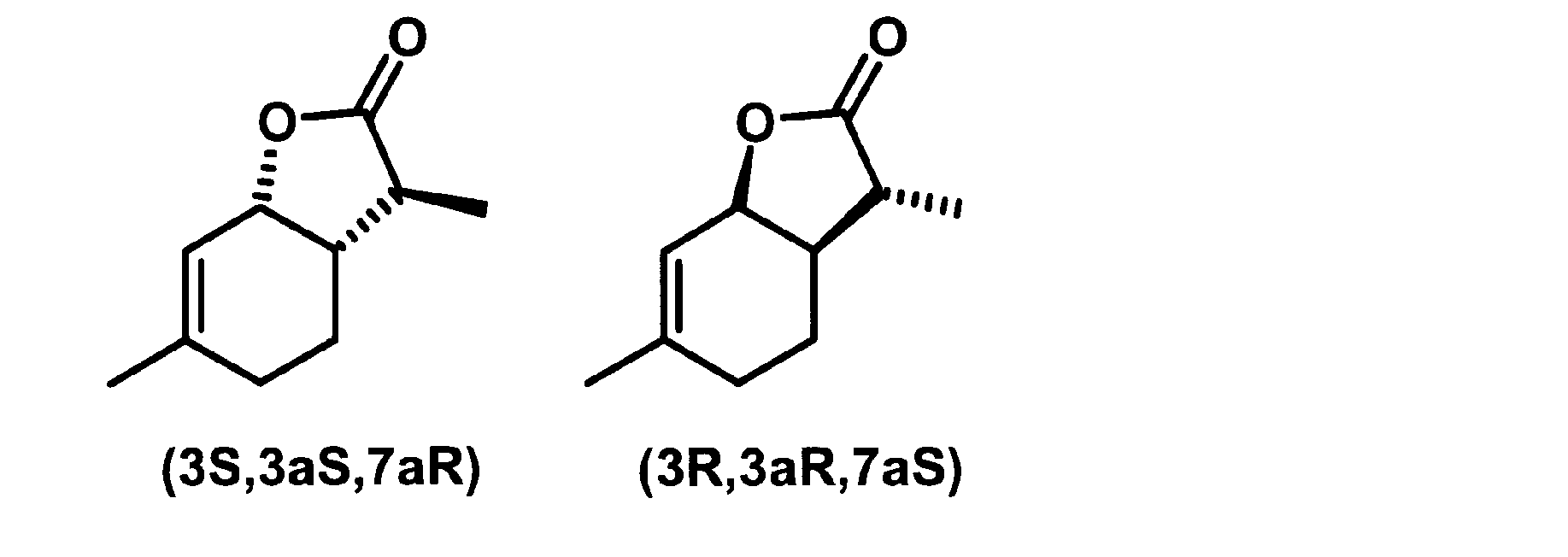
で示される(3S,3aS,7aR)体及び(3R,3aR,7aS)体から構成されるジアステレオマー異性体混合物を得る工程をさらに含む、[9]~[13]の何れか1項に記載の方法。
[15] さらに再結晶することにより、式:
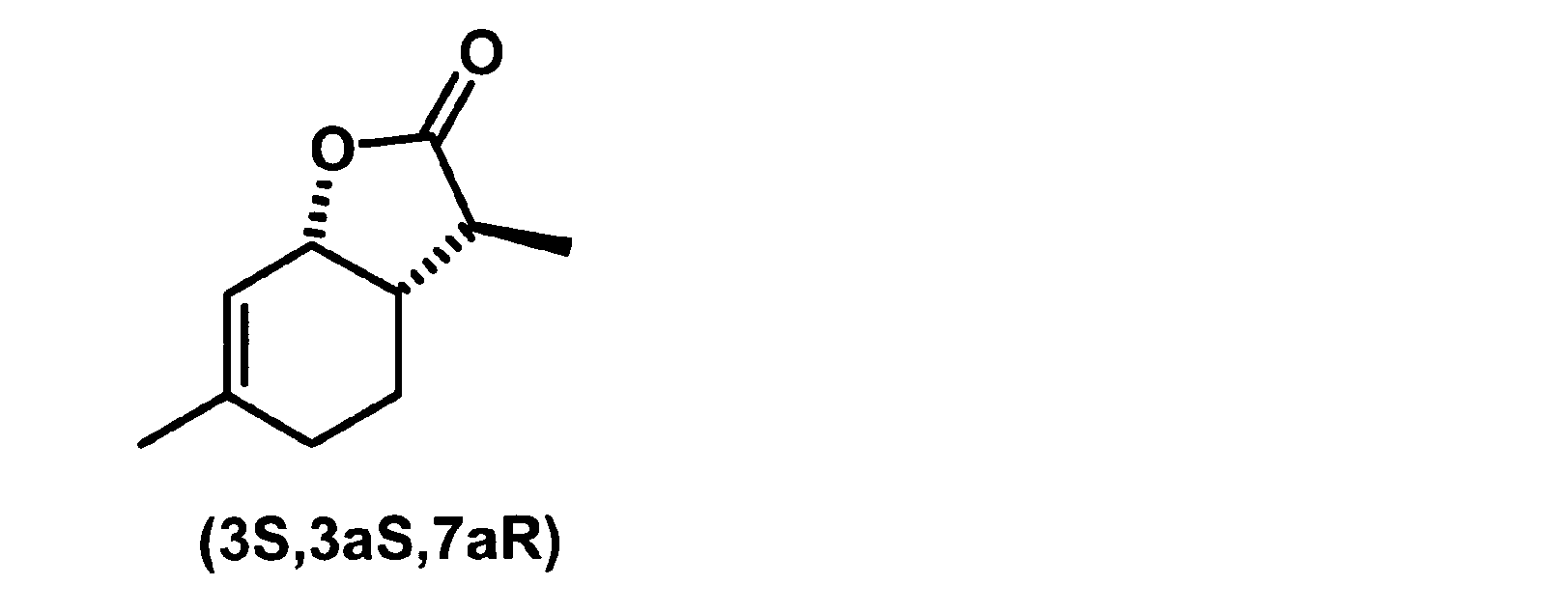
で示される(3S,3aS,7aR)体を得る工程を含む、[14]に記載の方法。
[16] 全ての製造工程が0℃以上130℃以下で行われ、且つ、全ての製造工程においてシリカゲルカラムクロマトグラフィーによる精製工程を必要としない、[1]~[15]の何れか1項に記載の方法。
で示される化合物の製造方法であって、
A)式(1):
[式中、R1は炭素数1~4のアルキル基である。]
で示されるβ-ケトエステルと、式(2):
[式中、R2は炭素数1~4のアルキル基であり、Xは塩素原子または臭素原子である。]
で示される2-ハロエステルとを、塩基性条件下にて反応させて、式(3):
[式中、R1は、式(1)の定義と同じである。R2は、式(2)の定義と同じである。]
で示される2-アセト-3-メチル-コハク酸エステルを得る工程;
B-2)前記工程A)で得られた2-アセト-3-メチル-コハク酸エステルと、メチルビニルケトンとを、塩基性条件下にて反応させ、その後に脱炭酸反応させて、式(5):
[式中、R2は、式(2)の定義と同じである。]
で示されるα-メチル-γ-ケト酸エステルを得る工程;
E)前記工程B-2)で得られたα-メチル-γ-ケト酸エステルを式(6)または(7)で示される化合物から選ばれるルテニウム錯体及び水素供与体の存在下にて還元して、前記式(a)で示される化合物を得る工程
[式中、*は不斉炭素原子であり、
R31は、炭素数1~10のアルキル基;炭素数1~10のハロゲン化アルキル基;10-カンフォリル基;1又は2個の炭素数1~10のアルキル基で置換されていてもよいアミノ基;又は炭素数1~10のアルキル基、炭素数1~10のハロゲン化アルキル基、ハロゲン原子、シアノ基(-CN)、アミノ基、アルキルアミノ基(-NR20R21)、5員若しくは6員の環状アミノ基、アシルアミノ基(-NH-CO-R20)、水酸基、アルコキシ基(-OR20)、アシル基(-CO-R20)、カルボキシル基、アルコキシカルボニル基(-COOR20)、フェノキシカルボニル基、メルカプト基、アルキルチオ基(-SR20)、シリル基(-SiR20R21R22)及びニトロ基(-NO2)からなる群より選ばれる少なくとも一つの置換基で置換されていてもよいアリール基であり、ここで、R20、R21及びR22は、それぞれ独立して、水素原子、炭素数1~10のアルキル基、又は、炭素数3~10のシクロアルキル基であり、
Yは水素原子であり、
Wはトリフルオロメタンスルホニルオキシ基、p-トルエンスルホニルオキシ基、メタンスルホニルオキシ基、ベンゼンスルホニルオキシ基、水素原子、又は、ハロゲン原子であり、
j及びkは、それぞれ独立して、0又は1であり、但し、j+kが1になることはなく、
R32及びR33は、それぞれ独立して、水素原子;炭素数1~10のアルキル基;炭素数1~10のアルキル基、炭素数1~10のアルコキシ基及びハロゲン原子からなる群より選ばれる少なくとも一つの置換基で置換されていてもよいフェニル基;又は、炭素数3~8のシクロアルキル基であり、あるいは、R32及びR33は一緒になって環を形成してもよく、
R11、R12、R13、R14及びR15は、それぞれ独立して、水素原子、炭素数1~10のアルキル基、又は炭素数1~10のアルコキシ基を示す。
R16、R17、R18、R19はそれぞれ独立して、水素原子、ヒドロキシル基、炭素数1~10のアルキル基、又は、炭素数1~10のアルコキシ基であり、あるいは、R16とR17とこれらが置換している炭素原子、及び/又は、R18とR19とこれらが置換している炭素原子とでカルボニル基を形成してもよく、
Zは酸素原子又は硫黄原子であり、
n1は1又は2であり、n2は1~3の整数である。]
[式中、*は不斉炭素原子であり、
R31は、炭素数1~10のアルキル基;炭素数1~10のハロゲン化アルキル基;10-カンフォリル基;1又は2個の炭素数1~10のアルキル基で置換されていてもよいアミノ基;又は、炭素数1~10のアルキル基、炭素数1~10のハロゲン化アルキル基、ハロゲン原子、シアノ基(-CN)、アミノ基、アルキルアミノ基(-NR20R21)、5員若しくは6員の環状アミノ基、アシルアミノ基(-NH-CO-R20)、水酸基、アルコキシ基(-OR20)、アシル基(-CO-R20)、カルボキシル基、アルコキシカルボニル基(-COOR20)、フェノキシカルボニル基、メルカプト基、アルキルチオ基(-SR20)、シリル基(-SiR20R21R22)及びニトロ基(-NO2)からなる群より選ばれる少なくとも一つの置換基で置換されていてもよいアリール基であり、
R20、R21及びR22は、それぞれ独立して、水素原子、炭素数1~10のアルキル基、又は、炭素数3~10のシクロアルキル基であり、
Yは水素原子であり、
R32及びR33は、それぞれ独立して、水素原子;炭素数1~10のアルキル基;炭素数1~10のアルキル基、炭素数1~10のアルコキシ基及びハロゲン原子からなる群より選ばれる少なくとも一つの置換基で置換されていてもよいフェニル基;又は、炭素数3~8のシクロアルキル基であり、あるいは、R32及びR33は一緒になって環を形成してもよく、
R11、R12、R13、R14及びR15は、それぞれ独立して、水素原子、炭素数1~10のアルキル基、又は、炭素数1~10のアルコキシ基であり、
R16、R17、R18及びR19は、それぞれ独立して、水素原子、ヒドロキシル基、炭素数1~10のアルキル基、又は、炭素数1~10のアルコキシ基であり、あるいは、R16とR17とこれらが置換している炭素原子、及び/又は、R18とR19とこれらが置換している炭素原子とでカルボニル基を形成してもよく、
Zは酸素原子又は硫黄原子であり、Q-はカウンターアニオンであり、
n1は1又は2であり、n2は1~3の整数である。]
を含む、方法。
[10] 前記工程E)において、式(6)または(7)で示される化合物から選ばれるルテニウム錯体が光学活性ルテニウム錯体であり、不斉還元反応させる、[9]に記載の方法。
[11] 前記式(6)で示されるルテニウム錯体が次式で示される化合物である、[9]または[10]に記載の方法。
[12] ワインラクトンもしくはその立体異性体またはそれらの混合物としての式(a):
で示される化合物の製造方法であって、
A)式(1):
[式中、R1は炭素数1~4のアルキル基である。]
で示されるβ-ケトエステルと、式(2):
[式中、R2は炭素数1~4のアルキル基であり、Xは塩素原子または臭素原子である。]
で示される2-ハロエステルとを、塩基性条件下にて反応させて、式(3):
[式中、R1は、式(1)の定義と同じである。R2は、式(2)の定義と同じである。]
で示される2-アセト-3-メチル-コハク酸エステルを得る工程;
B-2)前記工程A)で得られた2-アセト-3-メチル-コハク酸エステルと、メチルビニルケトンとを、塩基性条件下にて反応させ、その後に脱炭酸反応させて、式(5):
[式中、R2は、式(2)の定義と同じである。]
で示されるα-メチル-γ-ケト酸エステルを得る工程;
E)前記工程B-2)で得られたα-メチル-γ-ケト酸エステルを、塩基性条件下、式(8)で示される光学活性ルテニウム錯体及び水素ガスの存在下にて不斉水素化反応させて、前記式(a)で示される化合物を得る工程
[式中、P⌒Pは光学活性ジホスフィンであり、
Vはアニオン性基であり、
Ra、Rb及びRcは、それぞれ独立して、水素原子、置換基を有してもよいC1~C20アルキル基、置換基を有してもよいC2~C20アルケニル基、置換基を有してもよいC3~C8シクロアルキル基、置換基を有してもよいC7~C20アラルキル基、置換基を有してもよいアリール基、又は、置換基を有してもよいヘテロ環基であり、あるいは、RbとRcとでアルキレン基又はアルキレンジオキシ基を形成してもよく、
RN1、RN2、RN3及びRN4は、それぞれ独立して、水素原子、置換基を有してもよいC1~C20アルキル基、置換基を有してもよいC2~C20アルケニル基、置換基を有してもよいC7~C20アラルキル基、又は、置換基を有してもよいC3~C8シクロアルキル基であり、但し、RN1、RN2、RN3及びRN4のうち少なくとも一つは水素原子であり、RN1とRaとでアルキレン基を形成してもよく、
nは0~3の整数であり、
Arは置換基を有していてもよいアリーレン基である。]
を含む、方法。
[13] 式(8)の光学活性ルテニウム錯体が次式で示される化合物である、[12]に記載の方法。
[式中、Meはメチル基を表す。]
[14] 前記工程E)で得られた化合物を塩基性条件下にて蒸留して、式:
で示される(3S,3aS,7aR)体及び(3R,3aR,7aS)体から構成されるジアステレオマー異性体混合物を得る工程をさらに含む、[9]~[13]の何れか1項に記載の方法。
[15] さらに再結晶することにより、式:
で示される(3S,3aS,7aR)体を得る工程を含む、[14]に記載の方法。
[16] 全ての製造工程が0℃以上130℃以下で行われ、且つ、全ての製造工程においてシリカゲルカラムクロマトグラフィーによる精製工程を必要としない、[1]~[15]の何れか1項に記載の方法。
本発明によれば、有害な試薬または高価な試薬を使用することなく、極度の低温や高温の反応条件を必要とせずに、少ない工程数で簡便にワインラクトンもしくはその立体異性体またはそれらの混合物を製造することができる。また、本発明の好ましい態様によれば、ワインラクトンを高選択的に製造することができる。本発明の方法は、工業的規模での利用に適している。
以下、本発明の製造方法について具体的に説明する。本発明の製造方法は、ワインラクトンもしくはその立体異性体またはそれらの混合物としての式(a):
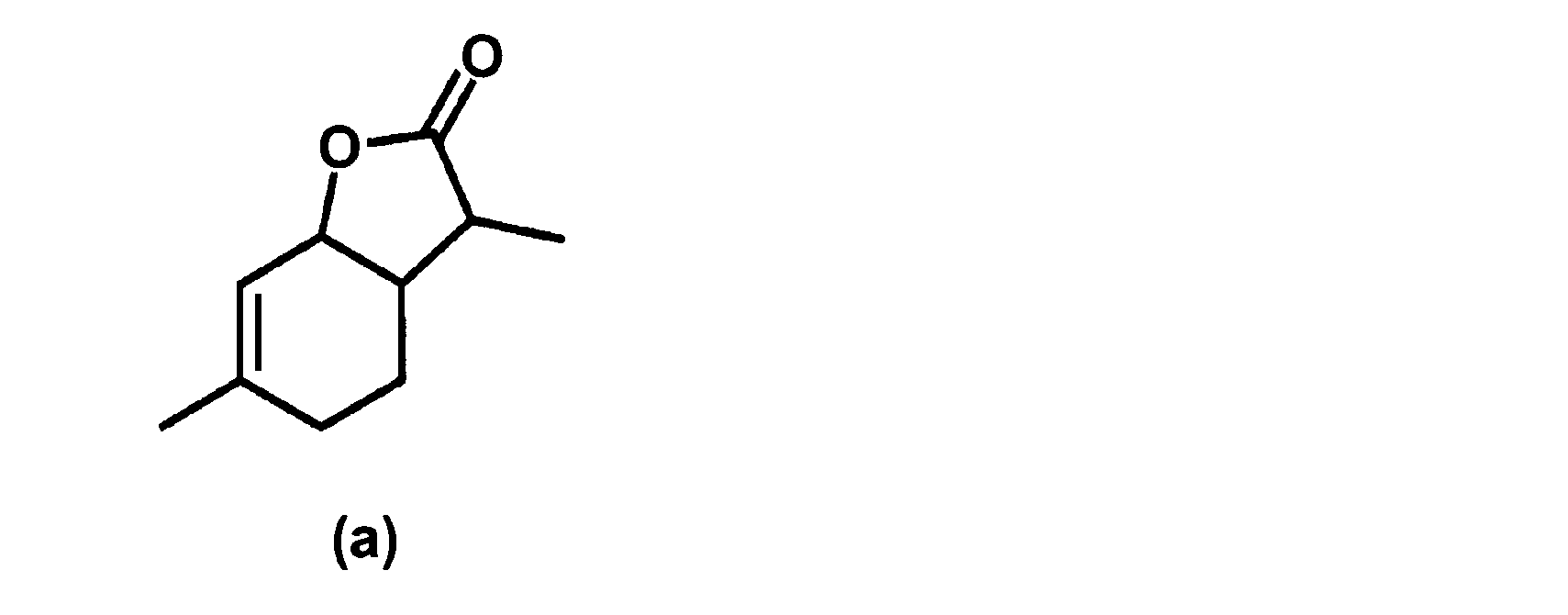
で示される化合物の製造方法であって、下記反応スキームで示される工程A)、B)及びC)を含むことを特徴としている。

[式中、R1は炭素数1~4のアルキル基であり、R2は炭素数1~4のアルキル基であり、Xは塩素原子または臭素原子である。]
で示される化合物の製造方法であって、下記反応スキームで示される工程A)、B)及びC)を含むことを特徴としている。
[式中、R1は炭素数1~4のアルキル基であり、R2は炭素数1~4のアルキル基であり、Xは塩素原子または臭素原子である。]
工程B)は、式(3)で示される化合物を環化反応させることにより式(4)で示される化合物を得る工程である。工程B)としては、例えば、式(3)で示される化合物を塩基性条件下にて反応させ、その後、加水分解することにより式(4)で示される化合物を得る方法(工程B-1)と、式(3)で示される化合物を塩基性条件下にて反応させ、無機塩の存在下にて脱炭酸反応させた後(工程B-2)、加水分解することにより式(4)で示される化合物を得る方法とが挙げられる(工程B-3)。
また、本発明の製造方法は、ワインラクトンもしくはその立体異性体またはそれらの混合物としての式(a):

で示される化合物の製造方法であって、下記反応スキームで示される工程A)、B-2)及びE)を含むことを特徴としている。
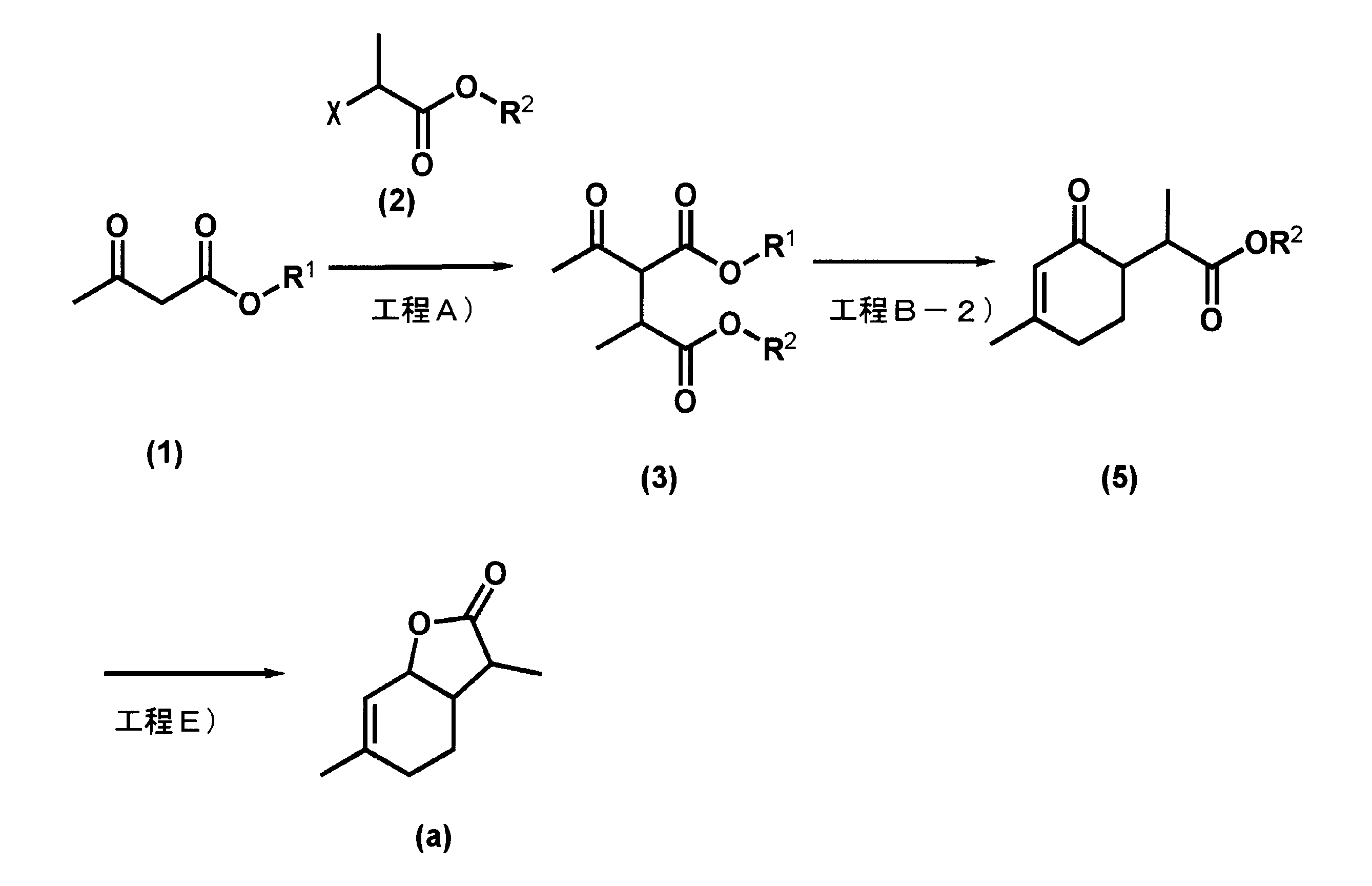
[式中、R1は炭素数1~4のアルキル基であり、R2は炭素数1~4のアルキル基であり、Xは塩素原子または臭素原子である。]
で示される化合物の製造方法であって、下記反応スキームで示される工程A)、B-2)及びE)を含むことを特徴としている。
[式中、R1は炭素数1~4のアルキル基であり、R2は炭素数1~4のアルキル基であり、Xは塩素原子または臭素原子である。]
以下、工程A)、工程B-1)及び工程C)を含む方法を第1実施態様とし、工程A)、工程B-2)、工程B-3)及び工程C)を含む方法を第2実施態様とし、工程A)、工程B-2)及び工程E)を含む方法を第3実施態様として、それぞれの態様ごとに説明する。
1.第1実施態様
本発明の第1実施態様の製造方法は、工程A)、工程B-1)及び工程C)を含むことを特徴とする。

[式中、R1は炭素数1~4のアルキル基であり、R2は炭素数1~4のアルキル基であり、Xは塩素原子または臭素原子である。]
本発明の第1実施態様の製造方法は、工程A)、工程B-1)及び工程C)を含むことを特徴とする。
[式中、R1は炭素数1~4のアルキル基であり、R2は炭素数1~4のアルキル基であり、Xは塩素原子または臭素原子である。]
以下、各工程について詳しく説明する。
(1)工程A)
工程A)は、式(1):
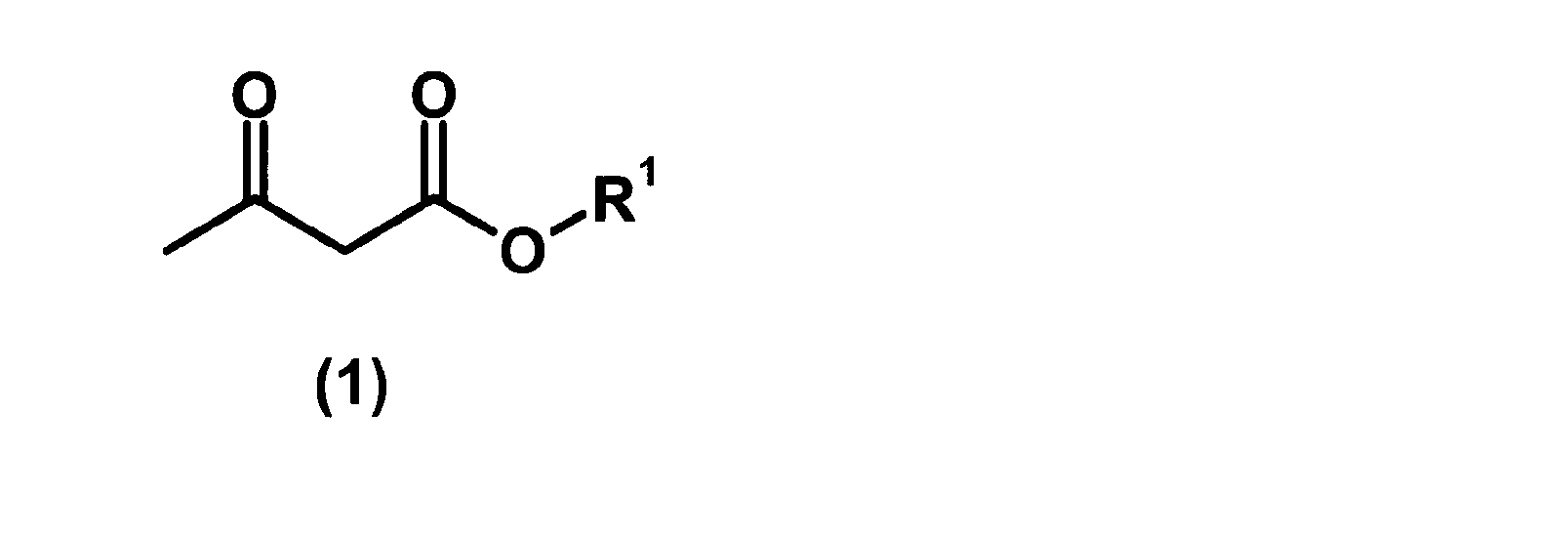
[式中、R1は炭素数1~4のアルキル基である。]
で示されるβ-ケトエステルと、式(2):

[式中、R2は炭素数1~4のアルキル基であり、Xは塩素原子または臭素原子である。]
で示される2-ハロエステルとを、塩基性条件下にて反応させて、式(3):
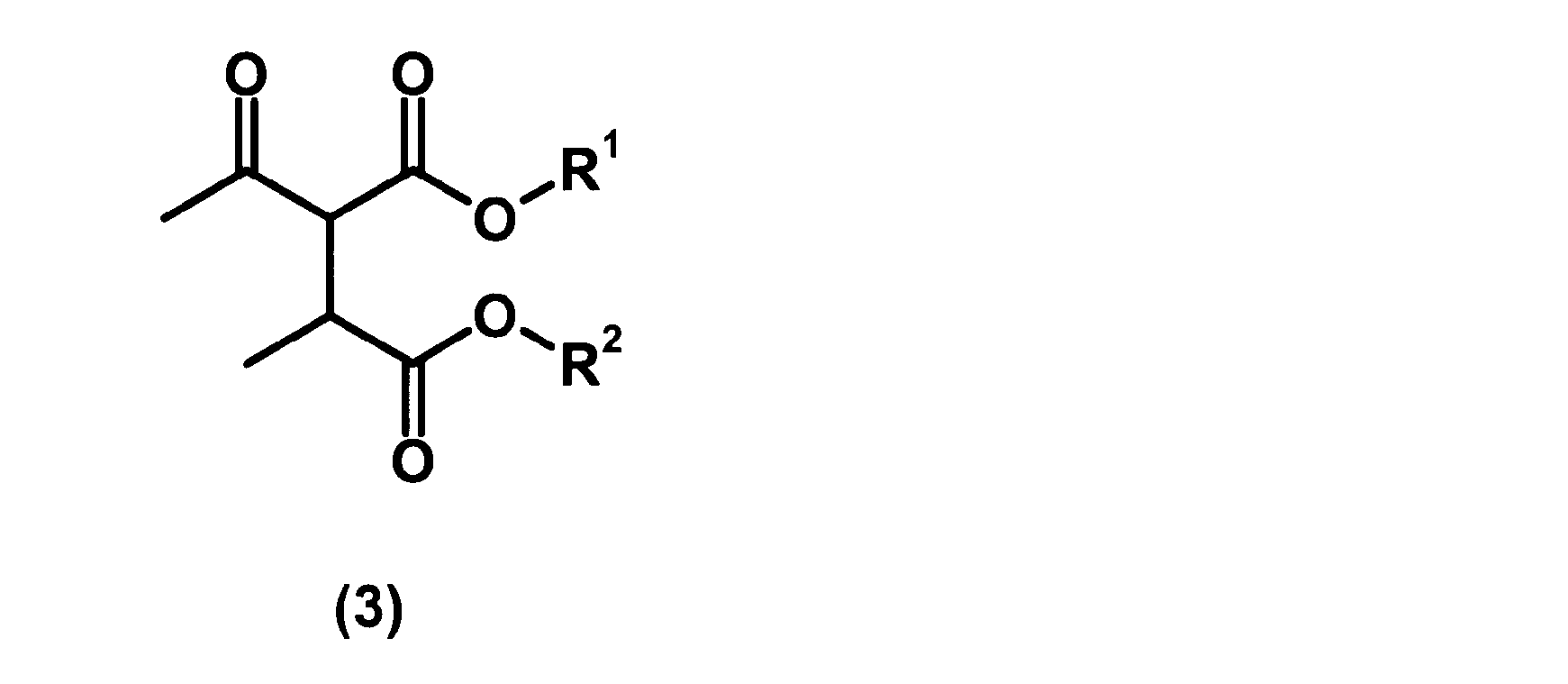
[式中、R1は、式(1)の定義と同じである。R2は、式(2)の定義と同じである。]
で示される2-アセト-3-メチル-コハク酸エステルを得る工程である。
(1)工程A)
工程A)は、式(1):
[式中、R1は炭素数1~4のアルキル基である。]
で示されるβ-ケトエステルと、式(2):
[式中、R2は炭素数1~4のアルキル基であり、Xは塩素原子または臭素原子である。]
で示される2-ハロエステルとを、塩基性条件下にて反応させて、式(3):
[式中、R1は、式(1)の定義と同じである。R2は、式(2)の定義と同じである。]
で示される2-アセト-3-メチル-コハク酸エステルを得る工程である。
上記式中、R1及びR2は、それぞれ、炭素数1~4のアルキル基であり、これらは同一であっても異なっていてもよい。なお、本明細書において、炭素数1~4のアルキル基としては、メチル基、エチル基、プロピル基、イソプロピル基、ブチル基、イソブチル基、s-ブチル基、t-ブチル基などが挙げられる。中でも、メチル基、エチル基が好ましい。
式(2)で示される2-ハロエステルとしては、下記に示す化合物が挙げられる。
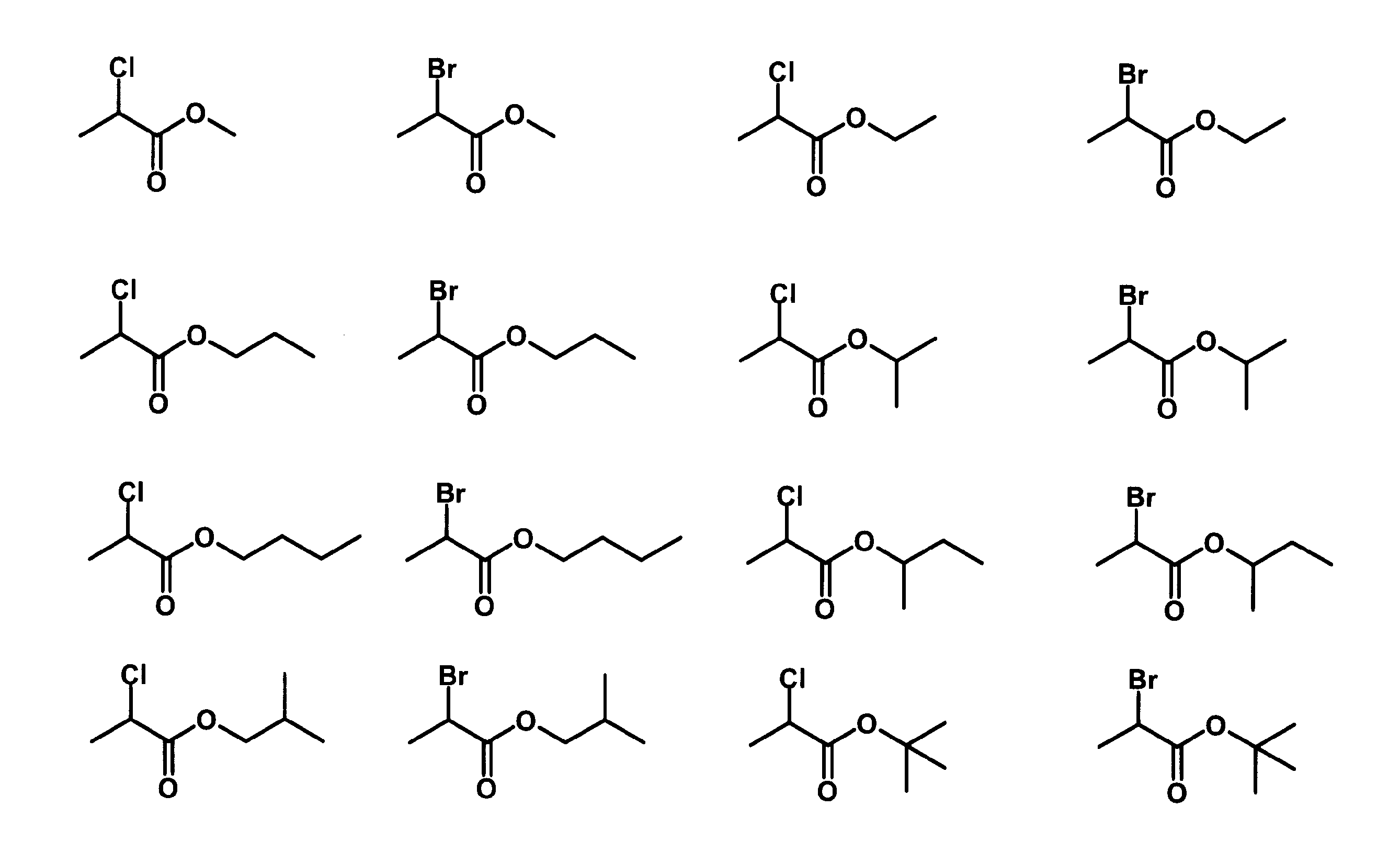
中でも、2-ブロモプロピオン酸アルキルが好ましく、2-ブロモプロピオン酸メチル、2-ブロモプロピオン酸エチルが特に好ましい。
式(2)で示される2-ハロエステルの使用量は、式(1)で示されるβ-ケトエステルに対して通常0.5~10モル当量、好ましくは0.8~1.2モル当量の範囲から適宜選択される。
本工程は塩基性条件下にて行う。使用する塩基としては無機塩基及び有機塩基等が挙げられる。
無機塩基としては、例えば、炭酸カリウム、水酸化カリウム、水酸化リチウム、炭酸水素ナトリウム、炭酸ナトリウム、炭酸水素カリウム、水酸化ナトリウム、炭酸マグネシウム、炭酸カルシウム等のアルカリ金属またはアルカリ土類金属塩; 水素化ナトリウム、等の金属水素化物類等が挙げられる。
有機塩基としては、例えば、カリウムメトキシド、ナトリウムメトキシド、リチウムメトキシド、ナトリウムエトキシド、カリウムイソプロポキシド、カリウムtert-ブトキシド、カリウムナフタレニド等のアルカリ金属アルコキシド; 酢酸ナトリウム、酢酸カリウム、酢酸マグネシウム、酢酸カルシウム等のアルカリ金属・アルカリ土類金属の酢酸塩類; トリエチルアミン、ジイソプロピルエチルアミン、N,N-ジメチルアニリン、ピペリジン、ピリジン、4-ジメチルアミノピリジン、1,5-ジアザビシクロ[4.3.0]ノナ-5-エン、1,8-ジアザビシクロ[5.4.0]ウンデカ-7-エン、トリ-n-ブチルアミン、N-メチルモルホリン等の有機アミン類; 4級アンモニウム塩等 が挙げられる。
これらの中でも有機塩基が好ましい。特に、ナトリウムメトキシド、ナトリウムエトキシドが好ましく使用できる。
無機塩基としては、例えば、炭酸カリウム、水酸化カリウム、水酸化リチウム、炭酸水素ナトリウム、炭酸ナトリウム、炭酸水素カリウム、水酸化ナトリウム、炭酸マグネシウム、炭酸カルシウム等のアルカリ金属またはアルカリ土類金属塩; 水素化ナトリウム、等の金属水素化物類等が挙げられる。
有機塩基としては、例えば、カリウムメトキシド、ナトリウムメトキシド、リチウムメトキシド、ナトリウムエトキシド、カリウムイソプロポキシド、カリウムtert-ブトキシド、カリウムナフタレニド等のアルカリ金属アルコキシド; 酢酸ナトリウム、酢酸カリウム、酢酸マグネシウム、酢酸カルシウム等のアルカリ金属・アルカリ土類金属の酢酸塩類; トリエチルアミン、ジイソプロピルエチルアミン、N,N-ジメチルアニリン、ピペリジン、ピリジン、4-ジメチルアミノピリジン、1,5-ジアザビシクロ[4.3.0]ノナ-5-エン、1,8-ジアザビシクロ[5.4.0]ウンデカ-7-エン、トリ-n-ブチルアミン、N-メチルモルホリン等の有機アミン類; 4級アンモニウム塩等 が挙げられる。
これらの中でも有機塩基が好ましい。特に、ナトリウムメトキシド、ナトリウムエトキシドが好ましく使用できる。
塩基の使用量は、式(1)で示されるβ-ケトエステルに対して、通常0.5~10モル当量、好ましくは1.0~3.0モル当量の範囲から適宜選択される。
反応は、溶媒の存在下で行うことが好ましい。使用する溶媒としては、例えば、ペンタン、ヘキサン、ヘプタン、オクタン、デカン、シクロヘキサン等の脂肪族炭化水素類; ベンゼン、トルエン、キシレン等の芳香族炭化水素類; ジクロロメタン、1,2-ジクロロエタン、クロロホルム、四塩化炭素、o-ジクロロベンゼン等のハロゲン化炭化水素類; ジエチルエーテル、ジイソプロピルエーテル、tert-ブチルメチルエーテル、ジメトキシエタン、エチレングリコールジエチルエーテル、テトラヒドロフラン、1,4-ジオキサン、1,3-ジオキソラン等のエーテル類; メタノール、エタノール、2-プロパノール、n-ブタノール、2-エトキシエタノール、ベンジルアルコール等のアルコール類; アセトン、メチルエチルケトン、メチルイソブチルケトン、シクロヘキサノン等のケトン類; 酢酸メチル、酢酸エチル、酢酸n-ブチル、プロピオン酸メチル等のエステル類; ホルムアミド、N,N-ジメチルホルムアミド、N,N-ジメチルアセトアミド等のアミド類; ジメチルスルホキシド等のスルホキシド類; アセトニトリル等の含シアノ有機化合物類; N-メチルピロリドン、水等が挙げられる。これらの溶媒は、単独で用いてもよいし、2種以上を適宜組み合わせて用いてもよい。これらの中でも、アルコール類が特に好ましい。
溶媒の使用量は、式(1)で示されるβ-ケトエステルの重量(g)に対して、通常0.5~100倍容量(ml)[溶媒ml/基質g] (以下、「倍容量」とは同義を表す)、好ましくは1~40倍容量の範囲から適宜選択される。
上記反応の反応温度は、通常0~100℃、好ましくは0~80℃の範囲から適宜選択される。また、反応時間は、通常0.5~20時間、好ましくは1~10時間の範囲から適宜選択される。
反応終了後、得られた式(3)で示される2-アセト-3-メチル-コハク酸エステルは、後処理等をせずにそのまま次の工程に用いてもよく、必要に応じて後処理、精製、単離等を行って次の工程に用いてもよい。後処理の具体的な方法としては、溶媒抽出、転溶、塩析、蒸留、晶出、再結晶等の公知の方法が挙げられる。ただし、シリカゲルカラムクロマトグラフィーによる精製は、大量の溶媒を必要とするため、経済的あるいは作業効率の観点から好ましくない。
なお、工程Aの反応条件等については、非特許文献5(J.Org.Chem.54,1876-1883(1989))に記載されたメチル 2-ブロモプロピオネートとメチルアセトアセテートを反応させ、メチル 3-(メトキシカルボニル)-2-メチル-4-オキソペンタノエートを得る反応を参照することができる。
(2)工程B-1)
工程B-1)は、工程A)で得られた式(3)で示される2-アセト-3-メチル-コハク酸エステルと、メチルビニルケトンとを、塩基性条件下にて反応させ、その後に加水分解して、式(4):

で示されるα-メチル-γ-ケト酸を得る工程である。
工程B-1)は、工程A)で得られた式(3)で示される2-アセト-3-メチル-コハク酸エステルと、メチルビニルケトンとを、塩基性条件下にて反応させ、その後に加水分解して、式(4):
で示されるα-メチル-γ-ケト酸を得る工程である。
メチルビニルケトンは、市販品を使用することができる。また、合成品を使用することもできる。例えば、ホルマリンとアセトンの縮合により容易に合成可能な4-ヒドロキシ-2-ブタノンを脱水して調製したり、あるいは、アセトン、ホルムアルデヒド及びアミンを反応させて得られる4-アミノ-2-ブタノン(マンニッヒ塩基)のホフマン脱離により調製することで、メチルビニルケトンを得ることができる。上述した反応により得られるメチルビニルケトンは蒸留等の精製を行って使用してもよいし、反応粗製物をそのまま使用してもよい。
メチルビニルケトンの使用量は、式(3)で示される2-アセト-3-メチル-コハク酸エステルに対して通常0.5~10モル当量、好ましくは0.8~1.5モル当量の範囲から適宜選択される。
本工程は塩基性条件下にて行う。使用する塩基としては無機塩基及び有機塩基等が挙げられる。無機塩基及び有機塩基としては、工程A)で例示した化合物と同じものを使用できるが、本工程においては無機塩基が好ましく用いられる。中でも、水酸化カリウム、水酸化ナトリウムが好ましい。
塩基の使用量は、式(3)で示される2-アセト-3-メチル-コハク酸エステルに対して、通常0.0001~10モル当量、好ましくは0.0005~3モル当量の範囲から適宜選択される。
反応は、溶媒の存在下で行うことが好ましい。溶媒の具体例としては、工程A)で例示した溶媒と同じものを挙げることができる。溶媒は、単独で用いてもよいし、2種以上を適宜組み合わせて用いてもよい。中でも、アルコール類またはスルホキシド類が好ましい。
溶媒の使用量は、式(3)で示される2-アセト-3-メチル-コハク酸エステルに対して、通常0.5~100倍容量、好ましくは1~40倍容量の範囲から適宜選択される。
上記反応の反応温度は、通常0~100℃、好ましくは0~80℃の範囲から適宜選択される。また、反応時間は、通常0.5~20時間、好ましくは1~10時間の範囲から適宜選択される。
工程B-1)においては、式(3)で示される2-アセト-3-メチル-コハク酸エステルとメチルビニルケトンとを反応させた後、続けて加水分解反応を行う。加水分解反応は、酸または塩基を添加して行うことが好ましい。
加水分解反応に使用する酸としては、無機酸、有機酸及びルイス酸等が挙げられる。
無機酸としては、例えば、塩酸、臭化水素酸、硫酸、リン酸、テトラフルオロホウ酸、過塩素酸、過ヨウ素酸等が挙げられる。
有機酸としては、例えば、ギ酸、酢酸、吉草酸、ヘキサン酸、クエン酸、クロロ酢酸、ジクロロ酢酸、トリクロロ酢酸、トリフルオロ酢酸、安息香酸、サリチル酸、シュウ酸、コハク酸、マロン酸、フタル酸、酒石酸、リンゴ酸、グリコール酸等のカルボン酸; メタンスルホン酸、ベンゼンスルホン酸、p-トルエンスルホン酸、トリフルオロメタンスルホン酸等のスルホン酸等が挙げられる。
ルイス酸としては、例えば、塩化アルミニウム、臭化アルミニウム等のハロゲン化アルミニウム; 塩化ジエチルアルミニウム、臭化ジエチルアルミニウム、塩化ジイソプロピルアルミニウム等のハロゲン化ジアルキルアルミニウム; トリエトキシアルミニウム、トリイソプロポキシアルミニウム、トリ-tert-ブトキシアルミニウム等のトリアルコキシアルミニウム; 四塩化チタン等のハロゲン化チタン; テトライソプロポキシチタニウム等のテトラアルコキシチタニウム; 三フッ化ホウ素、三塩化ホウ素、三臭化ホウ素、三フッ化ホウ素ジエチルエーテル錯体等のハロゲン化ホウ素; 塩化亜鉛、臭化亜鉛等のハロゲン化亜鉛等が挙げられる。
これらの中でも、無機酸が好ましい。中でも塩酸、硫酸が好ましい。
無機酸としては、例えば、塩酸、臭化水素酸、硫酸、リン酸、テトラフルオロホウ酸、過塩素酸、過ヨウ素酸等が挙げられる。
有機酸としては、例えば、ギ酸、酢酸、吉草酸、ヘキサン酸、クエン酸、クロロ酢酸、ジクロロ酢酸、トリクロロ酢酸、トリフルオロ酢酸、安息香酸、サリチル酸、シュウ酸、コハク酸、マロン酸、フタル酸、酒石酸、リンゴ酸、グリコール酸等のカルボン酸; メタンスルホン酸、ベンゼンスルホン酸、p-トルエンスルホン酸、トリフルオロメタンスルホン酸等のスルホン酸等が挙げられる。
ルイス酸としては、例えば、塩化アルミニウム、臭化アルミニウム等のハロゲン化アルミニウム; 塩化ジエチルアルミニウム、臭化ジエチルアルミニウム、塩化ジイソプロピルアルミニウム等のハロゲン化ジアルキルアルミニウム; トリエトキシアルミニウム、トリイソプロポキシアルミニウム、トリ-tert-ブトキシアルミニウム等のトリアルコキシアルミニウム; 四塩化チタン等のハロゲン化チタン; テトライソプロポキシチタニウム等のテトラアルコキシチタニウム; 三フッ化ホウ素、三塩化ホウ素、三臭化ホウ素、三フッ化ホウ素ジエチルエーテル錯体等のハロゲン化ホウ素; 塩化亜鉛、臭化亜鉛等のハロゲン化亜鉛等が挙げられる。
これらの中でも、無機酸が好ましい。中でも塩酸、硫酸が好ましい。
酸の使用量は、式(3)で示される2-アセト-3-メチル-コハク酸エステルに対して、通常0.001~10モル当量、好ましくは0.01~3モル当量の範囲から適宜選択される。
塩基としては、無機塩基及び有機塩基等が挙げられる。無機塩基及び有機塩基の具体例としては、工程A)で例示したものと同じものを挙げることができる。それらの中でも、無機塩基としては、水酸化カリウム、水酸化ナトリウムが好ましく、有機塩基としては、カリウムメトキシド、ナトリウムメトキシド、ナトリウムエトキシドが好ましい。
塩基の使用量は、式(3)で示される2-アセト-3-メチル-コハク酸エステルに対して0.001~10モル当量、好ましくは0.01~4モル当量の範囲から適宜選択される。
加水分解反応は、溶媒中で行うことが好ましい。
溶媒としては、例えば、ペンタン、ヘキサン、ヘプタン、オクタン、デカン、シクロヘキサン等の脂肪族炭化水素類; ベンゼン、トルエン、キシレン等の芳香族炭化水素類; ジクロロメタン、クロロホルム、四塩化炭素、o-ジクロロベンゼン等のハロゲン化炭化水素類; ジエチルエーテル、ジイソプロピルエーテル、tert-ブチルメチルエーテル、ジメトキシエタン、エチレングリコールジエチルエーテル、テトラヒドロフラン、1,4-ジオキサン、1,3-ジオキソラン等のエーテル類; メタノール、エタノール、2-プロパノール、n-ブタノール、2-エトキシエタノール、ベンジルアルコール等のアルコール類; エチレングリコール、プロピレングリコール、1,2-プロパンジオール、グリセリン等の多価アルコール類; ギ酸、酢酸、プロピオン酸等の酸類; ジメチルスルホキシド等のスルホキシド類; N-メチルピロリドン、水等が挙げられる。
これらの溶媒は、単独で用いてもよいし、2種以上を適宜組み合わせて用いてもよい。これらの中でも、アルコール類またはスルホキシド類が好ましい。
溶媒としては、例えば、ペンタン、ヘキサン、ヘプタン、オクタン、デカン、シクロヘキサン等の脂肪族炭化水素類; ベンゼン、トルエン、キシレン等の芳香族炭化水素類; ジクロロメタン、クロロホルム、四塩化炭素、o-ジクロロベンゼン等のハロゲン化炭化水素類; ジエチルエーテル、ジイソプロピルエーテル、tert-ブチルメチルエーテル、ジメトキシエタン、エチレングリコールジエチルエーテル、テトラヒドロフラン、1,4-ジオキサン、1,3-ジオキソラン等のエーテル類; メタノール、エタノール、2-プロパノール、n-ブタノール、2-エトキシエタノール、ベンジルアルコール等のアルコール類; エチレングリコール、プロピレングリコール、1,2-プロパンジオール、グリセリン等の多価アルコール類; ギ酸、酢酸、プロピオン酸等の酸類; ジメチルスルホキシド等のスルホキシド類; N-メチルピロリドン、水等が挙げられる。
これらの溶媒は、単独で用いてもよいし、2種以上を適宜組み合わせて用いてもよい。これらの中でも、アルコール類またはスルホキシド類が好ましい。
溶媒の使用量は、式(3)で示される2-アセト-3-メチル-コハク酸エステルに対して、通常0.5~100倍容量、好ましくは1~40倍容量の範囲から適宜選択される。
加水分解反応の反応温度は、通常0℃~100℃、好ましくは0℃~80℃の範囲から適宜選択される。また、反応時間は、通常0.5~24時間、好ましくは1~20時間の範囲から適宜選択される。
反応終了後、得られた式(4)で示されるα-メチル-γ-ケト酸は、後処理等をせずにそのまま次の工程に用いてもよいし、必要に応じて後処理、精製、単離等を行って次の工程に用いてもよい。後処理の具体的な方法は、工程A)で述べた後処理の方法と同様である。
(3)工程C)
工程C)は、工程B-1)で得られた式(4):

で示されるα-メチル-γ-ケト酸を還元して、ワインラクトンもしくはその立体異性体またはそれらの混合物として式(a):

で示される化合物を得る工程である。
工程C)は、工程B-1)で得られた式(4):
で示されるα-メチル-γ-ケト酸を還元して、ワインラクトンもしくはその立体異性体またはそれらの混合物として式(a):
で示される化合物を得る工程である。
本工程における還元反応は、特に制限されるものではないが、式(4)で示されるα-メチル-γ-ケト酸のケトン部位を、ヒドリド還元等により還元することにより行われる。式(4)で示されるα-メチル-γ-ケト酸の空間的に空いている側から還元試薬が近づくため、本工程では、次式:

で示される(3S,3aS,7aR)体、(3R,3aR,7aS)体、(3R,3aS,7aR)体及び(3S,3aR,7aS)体を立体選択的に得ることができる。
で示される(3S,3aS,7aR)体、(3R,3aR,7aS)体、(3R,3aS,7aR)体及び(3S,3aR,7aS)体を立体選択的に得ることができる。
ヒドリド還元試薬としては、例えば、水素化ホウ素ナトリウム、シアノ水素化ホウ素ナトリウム、水素化トリエチルホウ素リチウム、水素化トリ(sec-ブチル)ホウ素リチウム、水素化トリ(sec-ブチル)ホウ素カリウム、水素化ホウ素リチウム、水素化ホウ素亜鉛、水素化アルミニウムリチウム、水素化ビス(2-メトキシエトキシ)アルミニウムナトリウム、ジボラン、水素化ジイソブチルアルミニウム等が挙げられる。
ヒドリド還元試薬の使用量は、(4)のα-メチル-γ-ケト酸に対して0.01~10モル当量、好ましくは0.1~3モル当量の範囲から適宜選択される。
必要に応じて、塩化セリウム、塩化カルシウムなどの反応助剤の存在下で還元反応を行うことにより、α-メチル-γ-ケト酸の環上のケトンを選択的に還元することができる。
還元反応は、溶媒中で行うことが好ましい。溶媒の具体例としては、工程B-1)の加水分解反応で例示した溶媒と同じものを挙げることができる。溶媒は、単独で用いてもよいし、2種以上を適宜組み合わせて用いてもよい。中でも、アルコール類が好ましい。
溶媒の使用量は、式(4)で示されるα-メチル-γ-ケト酸に対して、通常0.5~100倍容量、好ましくは1~40倍容量の範囲から適宜選択される。
還元反応の反応温度は、通常0~100℃、好ましくは0~80℃の範囲から適宜選択される。また、反応時間は、通常0.5~20時間、好ましくは1~10時間の範囲から適宜選択される。
また、ヒドリド還元反応では、必要に応じて、塩基性条件下、遷移金属錯体及び水素ガスの存在下で不斉水素化反応させることにより、(3S,3aS,7aR)体のワインラクトンを高選択的に得ることが可能である。
遷移金属錯体は、例えば、特開平11-189600号公報に記載の遷移金属錯体を使用することができる。遷移金属錯体の具体例としては、特に制限されるものではないが、RuCl2[(R)-binap][(R,R)-dpen]、RuCl2[(R)-binap][(R)-daipen]、RuCl2[(R)-Tol-binap][(R,R)-dpen]、RuCl2[(R)-Tol-binap][(R)-daipen]、RuCl2[(R)-DM-binap][(R,R)-dpen]、RuCl2[(R)-DM-binap][(R)-daipen]、RuCl2[(S)-binap][(S,S)-dpen]、RuCl2[(S)-binap][(S)-daipen]、RuCl2[(S)-Tol-binap][(S,S)-dpen]、RuCl2[(S)-Tol-binap][(S)-daipen]、RuCl2[(S)-DM-binap][(S,S)-dpen]、RuCl2[(S)-DM-binap][(S)-daipen]等が挙げられる。
ここで、binapは2,2’-ビス-(ジフェニルホスフィノ)-1,1’-ビナフチル、Tol-binapは2,2’-ビス-(ジ-p-トリルホスフィノ)-1,1’-ビナフチル、DM-binapは2,2’-ビス[ビス(3,5-ジメチルフェニル)ホスフィノ]-1,1’-ビナフチル、dpenは1,2-ジフェニル-エチレンジアミン、daipenは1,1-ジ(4-メトキシフェニル)-2-イソプロピル-1,2-エチレンジアミンを表す。
ここで、binapは2,2’-ビス-(ジフェニルホスフィノ)-1,1’-ビナフチル、Tol-binapは2,2’-ビス-(ジ-p-トリルホスフィノ)-1,1’-ビナフチル、DM-binapは2,2’-ビス[ビス(3,5-ジメチルフェニル)ホスフィノ]-1,1’-ビナフチル、dpenは1,2-ジフェニル-エチレンジアミン、daipenは1,1-ジ(4-メトキシフェニル)-2-イソプロピル-1,2-エチレンジアミンを表す。
遷移金属錯体の使用量は、反応容器や反応の形式あるいは経済性によっても異なるが、反応基質であるα-メチル-γ-ケト酸に対してモル比で1/10~1/100,000の範囲、好ましくは1/50~1/10,000の範囲で用いることができる。
必要に応じて用いられる塩基としては、炭酸カリウム(K2CO3)、水酸化カリウム(KOH)、水酸化リチウム(LiOH)、カリウムメトキシド(KOCH3)、カリウムイソプロポキシド(KOCH(CH3)2)、カリウムtert-ブトキシド(KOC(CH3)3)、リチウムメトキシド(LiOCH3)、カリウムナフタレン(KC10H8)、リチウムイソプロポキシド(LiOCH(CH3)2)等のアルカリ金属またはアルカリ土類金属の塩; 4級アンモニウム塩等が挙げられる。これらのうち、アルカリ金属またはアルカリ土類金属の塩が好ましい。
塩基の使用量は、式(4)で示されるα-メチル-γ-ケト酸に対して0.001~10モル当量であり、好ましくは0.01~2モル当量である。
あるいは、ヒドリド還元反応に代えて、式(4)で示されるα-メチル-γ-ケト酸を以下に示される式(6)または(7)で示される化合物から選ばれるルテニウム錯体の光学活性体および水素供与体の存在下にて、不斉還元反応させることにより、(3S,3aS,7aR)体のワインラクトンを高選択的に得ることも可能である。
以下、式(6)で示されるルテニウム錯体及び式(7)で示されるルテニウム錯体についてそれぞれ説明する。
式(6)で示されるルテニウム錯体:
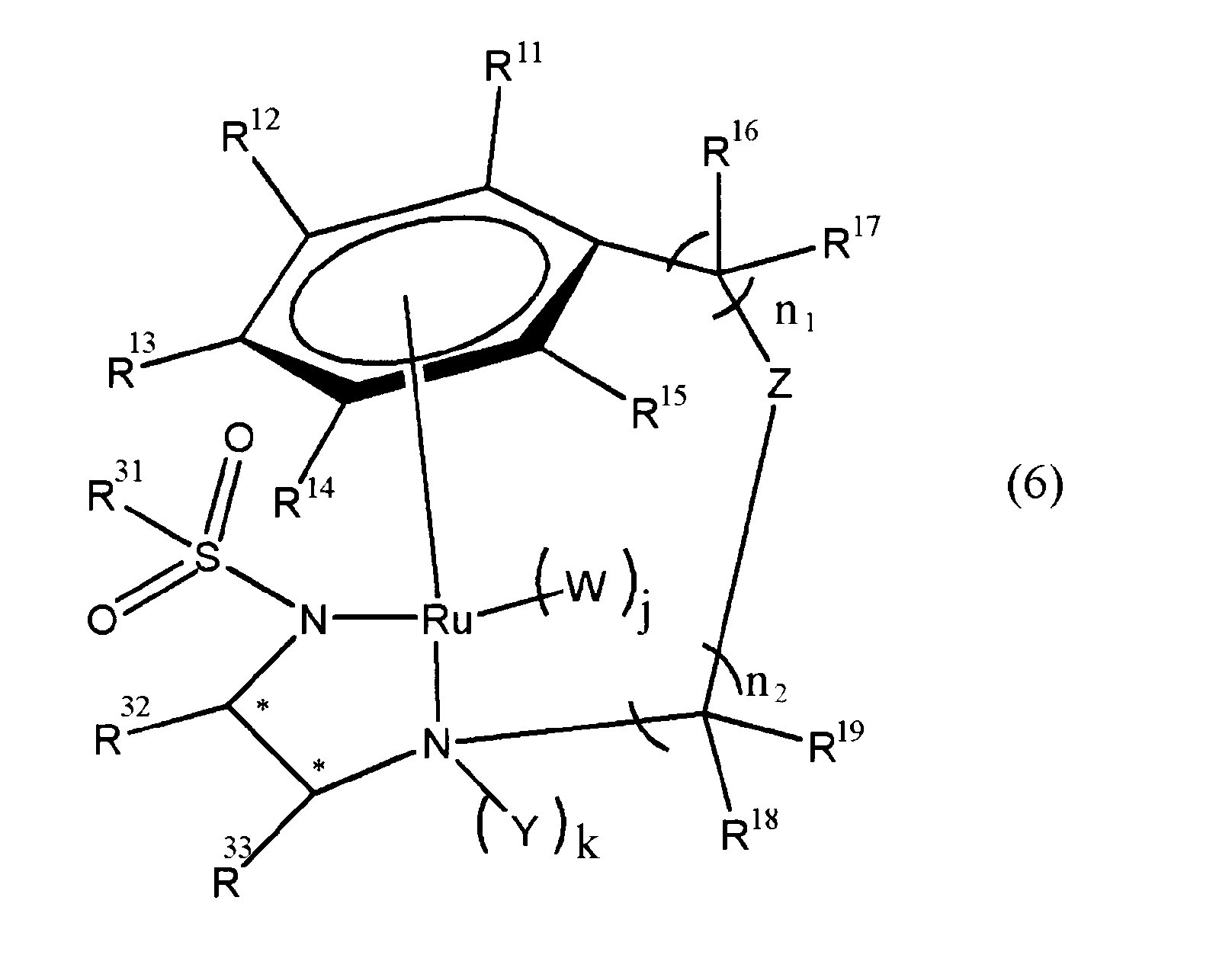
[式中、*は不斉炭素原子であり、
R31は、炭素数1~10のアルキル基;炭素数1~10のハロゲン化アルキル基;10-カンフォリル基;1又は2個の炭素数1~10のアルキル基で置換されていてもよいアミノ基;又は、炭素数1~10のアルキル基、炭素数1~10のハロゲン化アルキル基、ハロゲン原子、シアノ基(-CN)、アミノ基、アルキルアミノ基(-NR20R21)、5員若しくは6員の環状アミノ基、アシルアミノ基(-NH-CO-R20)、水酸基、アルコキシ基(-OR20)、アシル基(-CO-R20)、カルボキシル基、アルコキシカルボニル基(-COOR20)、フェノキシカルボニル基、メルカプト基、アルキルチオ基(-SR20)、シリル基(-SiR20R21R22)及びニトロ基(-NO2)からなる群より選ばれる少なくとも一つの置換基で置換されていてもよいアリール基であり、ここで、R20、R21及びR22は、それぞれ独立して、水素原子、炭素数1~10のアルキル基、又は、炭素数3~10のシクロアルキル基であり、
Yは水素原子であり、
Wはトリフルオロメタンスルホニルオキシ基、p-トルエンスルホニルオキシ基、メタンスルホニルオキシ基、ベンゼンスルホニルオキシ基、水素原子、又は、ハロゲン原子であり、
j及びkは、それぞれ独立して、0又は1であり但し、j+kが1になることはなく、
R32及びR33は、それぞれ独立して、水素原子;炭素数1~10のアルキル基;炭素数1~10のアルキル基、炭素数1~10のアルコキシ基及びハロゲン原子からなる群より選ばれる少なくとも一つの置換基で置換されていてもよいフェニル基;又は、炭素数3~8のシクロアルキル基であり、あるいは、R32及びR33は一緒になって環を形成してもよく、
R11、R12、R13、R14及びR15は、それぞれ独立して、水素原子、炭素数1~10のアルキル基、又は、炭素数1~10のアルコキシ基であり、
R16、R17、R18及びR19は、それぞれ独立して、水素原子、ヒドロキシル基、炭素数1~10のアルキル基、又は、炭素数1~10のアルコキシ基であり、あるいは、R16とR17とこれらが置換している炭素原子、及び/又は、R18とR19とこれらが置換している炭素原子とでカルボニル基を形成してもよく、
Zは酸素原子又は硫黄原子であり、
n1は1又は2であり、n2は1~3の整数である。]
式(6)で示されるルテニウム錯体:
[式中、*は不斉炭素原子であり、
R31は、炭素数1~10のアルキル基;炭素数1~10のハロゲン化アルキル基;10-カンフォリル基;1又は2個の炭素数1~10のアルキル基で置換されていてもよいアミノ基;又は、炭素数1~10のアルキル基、炭素数1~10のハロゲン化アルキル基、ハロゲン原子、シアノ基(-CN)、アミノ基、アルキルアミノ基(-NR20R21)、5員若しくは6員の環状アミノ基、アシルアミノ基(-NH-CO-R20)、水酸基、アルコキシ基(-OR20)、アシル基(-CO-R20)、カルボキシル基、アルコキシカルボニル基(-COOR20)、フェノキシカルボニル基、メルカプト基、アルキルチオ基(-SR20)、シリル基(-SiR20R21R22)及びニトロ基(-NO2)からなる群より選ばれる少なくとも一つの置換基で置換されていてもよいアリール基であり、ここで、R20、R21及びR22は、それぞれ独立して、水素原子、炭素数1~10のアルキル基、又は、炭素数3~10のシクロアルキル基であり、
Yは水素原子であり、
Wはトリフルオロメタンスルホニルオキシ基、p-トルエンスルホニルオキシ基、メタンスルホニルオキシ基、ベンゼンスルホニルオキシ基、水素原子、又は、ハロゲン原子であり、
j及びkは、それぞれ独立して、0又は1であり但し、j+kが1になることはなく、
R32及びR33は、それぞれ独立して、水素原子;炭素数1~10のアルキル基;炭素数1~10のアルキル基、炭素数1~10のアルコキシ基及びハロゲン原子からなる群より選ばれる少なくとも一つの置換基で置換されていてもよいフェニル基;又は、炭素数3~8のシクロアルキル基であり、あるいは、R32及びR33は一緒になって環を形成してもよく、
R11、R12、R13、R14及びR15は、それぞれ独立して、水素原子、炭素数1~10のアルキル基、又は、炭素数1~10のアルコキシ基であり、
R16、R17、R18及びR19は、それぞれ独立して、水素原子、ヒドロキシル基、炭素数1~10のアルキル基、又は、炭素数1~10のアルコキシ基であり、あるいは、R16とR17とこれらが置換している炭素原子、及び/又は、R18とR19とこれらが置換している炭素原子とでカルボニル基を形成してもよく、
Zは酸素原子又は硫黄原子であり、
n1は1又は2であり、n2は1~3の整数である。]
式(7)で表されるルテニウム錯体:

[式中、*は不斉炭素原子であり、
R31は、炭素数1~10のアルキル基;炭素数1~10のハロゲン化アルキル基;10-カンフォリル基;1又は2個の炭素数1~10のアルキル基で置換されていてもよいアミノ基;又は、炭素数1~10のアルキル基、炭素数1~10のハロゲン化アルキル基、ハロゲン原子、シアノ基(-CN)、アミノ基、アルキルアミノ基(-NR20R21)、5員若しくは6員の環状アミノ基、アシルアミノ基(-NH-CO-R20)、水酸基、アルコキシ基(-OR20)、アシル基(-CO-R20)、カルボキシル基、アルコキシカルボニル基(-COOR20)、フェノキシカルボニル基、メルカプト基、アルキルチオ基(-SR20)、シリル基(-SiR20R21R22)及びニトロ基(-NO2)からなる群より選ばれる少なくとも一つの置換基で置換されていてもよいアリール基であり、ここでR20、R21及びR22は、それぞれ独立して、水素原子、炭素数1~10のアルキル基、又は、炭素数3~10のシクロアルキル基であり、
Yは水素原子であり、
R32及びR33は、それぞれ独立して、水素原子;炭素数1~10のアルキル基;炭素数1~10のアルキル基、炭素数1~10のアルコキシ基及びハロゲン原子からなる群より選ばれる少なくとも一つの置換基で置換されていてもよいフェニル基;又は、炭素数3~8のシクロアルキル基であるが、あるいは、R32及びR33は一緒になって環を形成してもよく、
R11、R12、R13、R14及びR15は、それぞれ独立して、水素原子、炭素数1~10のアルキル基、又は、炭素数1~10のアルコキシ基であり、
R16、R17、R18及びR19は、それぞれ独立して、水素原子、ヒドロキシル基、炭素数1~10のアルキル基、又は、炭素数1~10のアルコキシ基であり、あるいは、R16とR17とこれらが置換している炭素原子、及び/又は、R18とR19とこれらが置換している炭素原子とでカルボニル基を形成してもよく、
Zは酸素原子又は硫黄原子であり、Q-はカウンターアニオンであり、
n1は1又は2であり、n2は1~3の整数である。]
[式中、*は不斉炭素原子であり、
R31は、炭素数1~10のアルキル基;炭素数1~10のハロゲン化アルキル基;10-カンフォリル基;1又は2個の炭素数1~10のアルキル基で置換されていてもよいアミノ基;又は、炭素数1~10のアルキル基、炭素数1~10のハロゲン化アルキル基、ハロゲン原子、シアノ基(-CN)、アミノ基、アルキルアミノ基(-NR20R21)、5員若しくは6員の環状アミノ基、アシルアミノ基(-NH-CO-R20)、水酸基、アルコキシ基(-OR20)、アシル基(-CO-R20)、カルボキシル基、アルコキシカルボニル基(-COOR20)、フェノキシカルボニル基、メルカプト基、アルキルチオ基(-SR20)、シリル基(-SiR20R21R22)及びニトロ基(-NO2)からなる群より選ばれる少なくとも一つの置換基で置換されていてもよいアリール基であり、ここでR20、R21及びR22は、それぞれ独立して、水素原子、炭素数1~10のアルキル基、又は、炭素数3~10のシクロアルキル基であり、
Yは水素原子であり、
R32及びR33は、それぞれ独立して、水素原子;炭素数1~10のアルキル基;炭素数1~10のアルキル基、炭素数1~10のアルコキシ基及びハロゲン原子からなる群より選ばれる少なくとも一つの置換基で置換されていてもよいフェニル基;又は、炭素数3~8のシクロアルキル基であるが、あるいは、R32及びR33は一緒になって環を形成してもよく、
R11、R12、R13、R14及びR15は、それぞれ独立して、水素原子、炭素数1~10のアルキル基、又は、炭素数1~10のアルコキシ基であり、
R16、R17、R18及びR19は、それぞれ独立して、水素原子、ヒドロキシル基、炭素数1~10のアルキル基、又は、炭素数1~10のアルコキシ基であり、あるいは、R16とR17とこれらが置換している炭素原子、及び/又は、R18とR19とこれらが置換している炭素原子とでカルボニル基を形成してもよく、
Zは酸素原子又は硫黄原子であり、Q-はカウンターアニオンであり、
n1は1又は2であり、n2は1~3の整数である。]
式(6)及び(7)において、R31で示される炭素数1~10のアルキル基としては、炭素数1~10、好ましくは炭素数1~5の直鎖又は分岐のアルキル基が挙げられる。具体的なアルキル基としては、例えばメチル基、エチル基、n-プロピル基、イソプロピル基、n-ブチル基、イソブチル基、s-ブチル基、t-ブチル基、n-ペンチル基、n-ヘキシル基、n-ヘプチル基、n-オクチル基、n-ノニル基及びn-デシル基等が挙げられる。
式(6)及び(7)において、R31で示される炭素数1~10のハロゲン化アルキル基としては、例えばメチル基、エチル基、n-プロピル基、イソプロピル基、n-ブチル基、n-ヘキシル基等の前記した直鎖又は分岐のアルキル基において、フッ素原子、塩素原子、臭素原子などのハロゲン原子が1個以上置換した炭素数1~10のアルキル基である。具体的には、トリフルオロメチル基、ペンタフルオロエチル基、ヘプタフルオロプロピル基等のパーフルオロアルキル基が挙げられる。
式(6)及び(7)において、R31で示される炭素数1~10のハロゲン化アルキル基としては、例えばメチル基、エチル基、n-プロピル基、イソプロピル基、n-ブチル基、n-ヘキシル基等の前記した直鎖又は分岐のアルキル基において、フッ素原子、塩素原子、臭素原子などのハロゲン原子が1個以上置換した炭素数1~10のアルキル基である。具体的には、トリフルオロメチル基、ペンタフルオロエチル基、ヘプタフルオロプロピル基等のパーフルオロアルキル基が挙げられる。
式(6)及び(7)において、R31で示される炭素数1~10のアルキル基、炭素数1~10のハロゲン化アルキル基、ハロゲン原子、シアノ基(-CN)、アミノ基、アルキルアミノ基(-NR20R21)、5員若しくは6員の環状アミノ基、アシルアミノ基(-NH-CO-R20)、水酸基、アルコキシ基(-OR20)、アシル基(-CO-R20)、カルボキシル基、アルコキシカルボニル基(-COOR20)、フェノキシカルボニル基、メルカプト基、アルキルチオ基(-SR20)、シリル基(-SiR20R21R22)及びニトロ基(-NO2)からなる群より選ばれる少なくとも一つの置換基で置換されていてもよいアリール基のアリール基としては、フェニル基又はナフチル基等の炭素数1~20、好ましくは炭素数6~12の単環式、多環式又は縮合環式のアリール基が挙げられる。
前記アリール基の置換基である炭素数1~10のアルキル基としては、前記したようなアルキル基が挙げられる。
炭素数1~10のハロゲン化アルキル基としては、前記したようなハロゲン化アルキル基、例えばパーフルオロアルキル基が挙げられる。
ハロゲン原子としては、フッ素原子又は塩素原子等が挙げられる。
-NR20R21で示されるアルキルアミノ基としては、例えばN-メチルアミノ基、N,N-ジメチルアミノ基、N,N-ジイソプロピルアミノ基若しくはN-シクロヘキシルアミノ基等のモノアルキルアミノ基、又は、ジアルキルアミノ基が挙げられる。
5員若しくは6員の環状アミノ基としては、例えばピロリジニル基、ピペリジノ基、モルホニル基等の、5員~6員で1若しくは2個の窒素原子を有する不飽和又は飽和複素環基が挙げられる。
-CO-R20で表されるアシル基としては、ホルミル基、アセチル基、プロピオニル基、ブチリル基、ピバロイル基、ペンタノイル基、又は、ヘキサノイル基等が挙げられる。
-NH-CO-R20で示されるアシルアミノ基としては、ホルミルアミノ基、アセチルアミノ基、プロピオニルアミノ基、ピバロイルアミノ基、ペンタノイルアミノ基、又は、ヘキサノイルアミノ基等が挙げられる。
-OR20で表されるアルコキシ基としては、例えばメトキシ基、エトキシ基、n-プロポキシ基、イソプロポキシ基、n-ブトキシ基、s-ブトキシ基、イソブトキシ基、t-ブトキシ基、n-ペンチルオキシ基、2-メチルブトキシ基、3-メチルブトキシ基、2,2-ジメチルプロピルオキシ基、n-ヘキシルオキシ基、2-メチルペンチルオキシ基、3-メチルペンチルオキシ基、4-メチルペンチルオキシ基、5-メチルペンチルオキシ基またはシクロヘキシルオキシ基等が挙げられる。
-COOR20で表されるアルコキシカルボニル基としては、例えばメトキシカルボニル基、エトキシカルボニル基、n-プロポキシカルボニル基、イソプロポキシカルボニル基、n-ブトキシカルボニル基、t-ブトキシカルボニル基、ペンチルオキシカルボニル基、ヘキシルオキシカルボニル基または2-エチルヘキシルオキシカルボニル基等が挙げられる
-SR20で表されるアルキルチオ基としては、例えばメチルチオ基、エチルチオ基、n-プロピルチオ基、イソプロピルチオ基、n-ブチルチオ基、s-ブチルチオ基、イソブチルチオ基、t-ブチルチオ基、ペンチルチオ基、ヘキシルチオ基またはシクロヘキシル基等が挙げられる。
-SiR20R21R22で表されるシリル基としては、例えばトリメチルシリル基、トリイソプロピルシリル基、t-ブチルジメチルシリル基、t-ブチルジフェニルシリル基またはトリフェニルシリル基等が挙げられる。
上記式において、R20、R21及びR22は、それぞれ独立して、水素原子、炭素数1~10のアルキル基、又は、3~10個の炭素原子を有するシクロアルキル基である。
R20、R21及びR22の炭素数1~10のアルキル基としては、前記したようなアルキル基が挙げられる。
R20、R21及びR22の3~10個の炭素原子を有するシクロアルキル基としては、単環、多環式若しくは縮合環の3~10個の炭素原子を有する飽和又は不飽和の3員~7員のシクロアルキル基が挙げられる。
炭素数1~10のハロゲン化アルキル基としては、前記したようなハロゲン化アルキル基、例えばパーフルオロアルキル基が挙げられる。
ハロゲン原子としては、フッ素原子又は塩素原子等が挙げられる。
-NR20R21で示されるアルキルアミノ基としては、例えばN-メチルアミノ基、N,N-ジメチルアミノ基、N,N-ジイソプロピルアミノ基若しくはN-シクロヘキシルアミノ基等のモノアルキルアミノ基、又は、ジアルキルアミノ基が挙げられる。
5員若しくは6員の環状アミノ基としては、例えばピロリジニル基、ピペリジノ基、モルホニル基等の、5員~6員で1若しくは2個の窒素原子を有する不飽和又は飽和複素環基が挙げられる。
-CO-R20で表されるアシル基としては、ホルミル基、アセチル基、プロピオニル基、ブチリル基、ピバロイル基、ペンタノイル基、又は、ヘキサノイル基等が挙げられる。
-NH-CO-R20で示されるアシルアミノ基としては、ホルミルアミノ基、アセチルアミノ基、プロピオニルアミノ基、ピバロイルアミノ基、ペンタノイルアミノ基、又は、ヘキサノイルアミノ基等が挙げられる。
-OR20で表されるアルコキシ基としては、例えばメトキシ基、エトキシ基、n-プロポキシ基、イソプロポキシ基、n-ブトキシ基、s-ブトキシ基、イソブトキシ基、t-ブトキシ基、n-ペンチルオキシ基、2-メチルブトキシ基、3-メチルブトキシ基、2,2-ジメチルプロピルオキシ基、n-ヘキシルオキシ基、2-メチルペンチルオキシ基、3-メチルペンチルオキシ基、4-メチルペンチルオキシ基、5-メチルペンチルオキシ基またはシクロヘキシルオキシ基等が挙げられる。
-COOR20で表されるアルコキシカルボニル基としては、例えばメトキシカルボニル基、エトキシカルボニル基、n-プロポキシカルボニル基、イソプロポキシカルボニル基、n-ブトキシカルボニル基、t-ブトキシカルボニル基、ペンチルオキシカルボニル基、ヘキシルオキシカルボニル基または2-エチルヘキシルオキシカルボニル基等が挙げられる
-SR20で表されるアルキルチオ基としては、例えばメチルチオ基、エチルチオ基、n-プロピルチオ基、イソプロピルチオ基、n-ブチルチオ基、s-ブチルチオ基、イソブチルチオ基、t-ブチルチオ基、ペンチルチオ基、ヘキシルチオ基またはシクロヘキシル基等が挙げられる。
-SiR20R21R22で表されるシリル基としては、例えばトリメチルシリル基、トリイソプロピルシリル基、t-ブチルジメチルシリル基、t-ブチルジフェニルシリル基またはトリフェニルシリル基等が挙げられる。
上記式において、R20、R21及びR22は、それぞれ独立して、水素原子、炭素数1~10のアルキル基、又は、3~10個の炭素原子を有するシクロアルキル基である。
R20、R21及びR22の炭素数1~10のアルキル基としては、前記したようなアルキル基が挙げられる。
R20、R21及びR22の3~10個の炭素原子を有するシクロアルキル基としては、単環、多環式若しくは縮合環の3~10個の炭素原子を有する飽和又は不飽和の3員~7員のシクロアルキル基が挙げられる。
これらの置換基で置換されていてもよいアリール基としては、例えば、フェニル基、o-,m-及びp-トリル基、o-,m-及びp-エチルフェニル基、o-,m-及びp-イソプロピルフェニル基、o-,m-及びp-t-ブチルフェニル基、2,4,6-トリメチルフェニル基、3,5-キシリル基、2,4,6-トリイソプロピルフェニル基、o-,m-及びp-トリフルオロメチルフェニル基、o-,m-及びp-フルオロフェニル基、o-,m-及びp-クロロフェニル基、ならびに、ペンタフルオロフェニル基などが挙げられる。
式(6)及び(7)において、R32及びR33で示される炭素数1~10のアルキル基としては、炭素数1~10、好ましくは炭素数1~5の直鎖又は分岐のアルキル基が挙げられる。具体的なアルキル基としては、例えばメチル基、エチル基、n-プロピル基、イソプロピル基、n-ブチル基、イソブチル基、s-ブチル基、t-ブチル基、n-ペンチル基、n-ヘキシル基、n-ヘプチル基、n-オクチル基、n-ノニル基及びn-デシル基等が挙げられる。
式(6)及び(7)において、R32及びR33で示される、炭素数1~10のアルキル基、炭素数1~10のアルコキシ基及びハロゲン原子からなる群より選ばれる少なくとも一つの置換基で置換されていてもよいフェニル基における炭素数1~10のアルキル基としては、例えば前記したようなアルキル基が挙げられる。
炭素数1~10のアルコキシ基としては、炭素数1~10、好ましくは炭素数1~5の直鎖又は分岐のアルコキシ基が挙げられる。具体的なアルコキシ基としては、例えばメトキシ基、エトキシ基、n-プロポキシ基、イソプロポキシ基、n-ブトキシ基、イソブトキシ基、s-ブトキシ基、t-ブトキシ基、n-ペンチルオキシ基、n-ヘキシルオキシ基、n-ヘプチルオキシ基、n-オクチルオキシ基、n-ノニルオキシ基及びn-デシルオキシ基等が挙げられる。
ハロゲン原子としては、例えば、フッ素原子、塩素原子及び臭素原子が挙げられる。
式(6)及び(7)において、R32及びR33で示される、炭素数1~10のアルキル基、炭素数1~10のアルコキシ基及びハロゲン原子からなる群より選ばれる少なくとも一つの置換基で置換されていてもよいフェニル基における炭素数1~10のアルキル基としては、例えば前記したようなアルキル基が挙げられる。
炭素数1~10のアルコキシ基としては、炭素数1~10、好ましくは炭素数1~5の直鎖又は分岐のアルコキシ基が挙げられる。具体的なアルコキシ基としては、例えばメトキシ基、エトキシ基、n-プロポキシ基、イソプロポキシ基、n-ブトキシ基、イソブトキシ基、s-ブトキシ基、t-ブトキシ基、n-ペンチルオキシ基、n-ヘキシルオキシ基、n-ヘプチルオキシ基、n-オクチルオキシ基、n-ノニルオキシ基及びn-デシルオキシ基等が挙げられる。
ハロゲン原子としては、例えば、フッ素原子、塩素原子及び臭素原子が挙げられる。
式(6)及び(7)において、R32及びR33で示される炭素数3~8のシクロアルキル基としては、炭素数3~8、好ましくは炭素数5~8の単環式、多環式又は架橋式のシクロアルキル基が挙げられる。具体的には、例えば、シクロプロピル基、シクロブチル基、シクロペンチル基、シクロヘキシル基、シクロヘプチル基及びシクロオクチル基などが挙げられる。これらのシクロアルキル基は、メチル基、イソプロピル基、t-ブチル基等のアルキル基などで置換されていてもよい。
また、R32及びR33が一緒になって環を形成する場合、R32及びR33が一緒になって炭素数2~10、好ましくは3~10の直鎖状又は分岐状のアルキレン基となり、隣接する不斉炭素原子と共に4~8員、好ましくは5~8員のシクロアルカン環を形成する。
好ましいシクロアルカン環としては、シクロペンタン環、シクロヘキサン環及びシクロヘプタン環が挙げられる。これらの環は置換基としてメチル基、イソプロピル基、t-ブチル基等のアルキル基などを有していてもよい。
また、R32及びR33が一緒になって環を形成する場合、R32及びR33が一緒になって炭素数2~10、好ましくは3~10の直鎖状又は分岐状のアルキレン基となり、隣接する不斉炭素原子と共に4~8員、好ましくは5~8員のシクロアルカン環を形成する。
好ましいシクロアルカン環としては、シクロペンタン環、シクロヘキサン環及びシクロヘプタン環が挙げられる。これらの環は置換基としてメチル基、イソプロピル基、t-ブチル基等のアルキル基などを有していてもよい。
式(6)及び(7)で表されるarene部分において、R11、R12、R13、R14及びR15は、それぞれ独立して、水素原子、炭素数1~10のアルキル基、又は、炭素数1~10のアルコキシ基である。
炭素数1~10のアルキル基としては、前記したアルキル基が挙げられる。具体的には、例えばメチル基、エチル基、n-プロピル基、イソプロピル基、n-ブチル基、イソブチル基、s-ブチル基、t-ブチル基、n-ペンチル基、n-ヘキシル基、n-ヘプチル基、n-オクチル基、n-ノニル基及びn-デシル基等が挙げられる。
炭素数1~10のアルコキシ基としては、前記してきた直鎖又は分岐のアルコキシ基が挙げられる。具体的なアルコキシ基としては、例えばメトキシ基、エトキシ基、n-プロポキシ基、イソプロポキシ基、n-ブトキシ基、イソブトキシ基、s-ブトキシ基、t-ブトキシ基、n-ペンチルオキシ基、n-ヘキシルオキシ基、n-ヘプチルオキシ基、n-オクチルオキシ基、n-ノニルオキシ基及びn-デシルオキシ基等が挙げられる。
炭素数1~10のアルキル基としては、前記したアルキル基が挙げられる。具体的には、例えばメチル基、エチル基、n-プロピル基、イソプロピル基、n-ブチル基、イソブチル基、s-ブチル基、t-ブチル基、n-ペンチル基、n-ヘキシル基、n-ヘプチル基、n-オクチル基、n-ノニル基及びn-デシル基等が挙げられる。
炭素数1~10のアルコキシ基としては、前記してきた直鎖又は分岐のアルコキシ基が挙げられる。具体的なアルコキシ基としては、例えばメトキシ基、エトキシ基、n-プロポキシ基、イソプロポキシ基、n-ブトキシ基、イソブトキシ基、s-ブトキシ基、t-ブトキシ基、n-ペンチルオキシ基、n-ヘキシルオキシ基、n-ヘプチルオキシ基、n-オクチルオキシ基、n-ノニルオキシ基及びn-デシルオキシ基等が挙げられる。
式(6)及び(7)で表されるarene部位とジアミン部分を連結する鎖状部分の炭素原子に置換する置換基として表される、R16、R17、R18及びR19は、それぞれ独立して、水素原子、ヒドロキシル基、炭素数1~10のアルキル基、又は、炭素数1~10のアルコキシ基を示す。
炭素数1~10のアルキル基としては、前記したアルキル基が挙げられる。具体的には例えばメチル基、エチル基、n-プロピル基、イソプロピル基、n-ブチル基、イソブチル基、s-ブチル基、t-ブチル基、n-ペンチル基、n-ヘキシル基、n-ヘプチル基、n-オクチル基、n-ノニル基及びn-デシル基等が挙げられる。
炭素数1~10のアルコキシ基としては、前記した直鎖又は分岐のアルコキシ基が挙げられる。具体的なアルコキシ基としては、例えばメトキシ基、エトキシ基、n-プロポキシ基、イソプロポキシ基、n-ブトキシ基、イソブトキシ基、s-ブトキシ基、t-ブトキシ基、n-ペンチルオキシ基、n-ヘキシルオキシ基、n-ヘプチルオキシ基、n-オクチルオキシ基、n-ノニルオキシ基及びn-デシルオキシ基等が挙げられる。
好ましい-(-C(R16)R17-)n1-基としては、例えば、-CH2-基、-CH(CH3)-基及び-CO-基などが挙げられるが、これらの基に限定されるものではない。
好ましい-(-C(R18)R19-)n2-基としては、例えば、-CH2―CH2―基などが挙げられるが、これらの基に限定されるものではない。
炭素数1~10のアルキル基としては、前記したアルキル基が挙げられる。具体的には例えばメチル基、エチル基、n-プロピル基、イソプロピル基、n-ブチル基、イソブチル基、s-ブチル基、t-ブチル基、n-ペンチル基、n-ヘキシル基、n-ヘプチル基、n-オクチル基、n-ノニル基及びn-デシル基等が挙げられる。
炭素数1~10のアルコキシ基としては、前記した直鎖又は分岐のアルコキシ基が挙げられる。具体的なアルコキシ基としては、例えばメトキシ基、エトキシ基、n-プロポキシ基、イソプロポキシ基、n-ブトキシ基、イソブトキシ基、s-ブトキシ基、t-ブトキシ基、n-ペンチルオキシ基、n-ヘキシルオキシ基、n-ヘプチルオキシ基、n-オクチルオキシ基、n-ノニルオキシ基及びn-デシルオキシ基等が挙げられる。
好ましい-(-C(R16)R17-)n1-基としては、例えば、-CH2-基、-CH(CH3)-基及び-CO-基などが挙げられるが、これらの基に限定されるものではない。
好ましい-(-C(R18)R19-)n2-基としては、例えば、-CH2―CH2―基などが挙げられるが、これらの基に限定されるものではない。
式(6)及び(7)においてZは、酸素原子(-O-)又は硫黄原子(-S-)である。
式(6)においてk及びjは、0又は1の整数である。但し、j+kが1になることはない。即ち、kが1であればjも1であり、kが0であればjも0である。kが1のときのYは水素原子である。
式(6)においてjが1のときのWは、トリフルオロメタンスルホニルオキシ基、p-トルエンスルホニルオキシ基、メタンスルホニルオキシ基、ベンゼンスルホニルオキシ基、水素原子、又は、ハロゲン原子のいずれであってもよいが、好ましいWとしてハロゲン原子が挙げられ、具体的には例えば塩素原子が好ましい。
式(6)及び(7)におけるY、ならびに式(6)におけるWの水素原子としては、通常の水素原子だけでなく、水素原子の同位体であってもよい。好ましい同位体としては重水素原子が挙げられる。
式(6)及び(7)におけるY、ならびに式(6)におけるWの水素原子としては、通常の水素原子だけでなく、水素原子の同位体であってもよい。好ましい同位体としては重水素原子が挙げられる。
式(7)におけるQ-はカウンターアニオンを表す。具体的なカウンターアニオンとしては、トリフルオロメタンスルホニルオキシイオン(TfO-)、p-トルエンスルホニルオキシイオン(TsO-)、メタンスルホニルオキシイオン(MsO-)、ベンゼンスルホニルオキシイオン(BsO-)などのアルキル若しくはアレーンスルホニルオキシイオン;又は、BF4
-、SbF6
-、CF3COO-、CH3COO-、PF6
-、NO3
-、ClO4
-、SCN-、OCN-、ReO4
-、MoO4
-、BPh4
-、B(C6F5)4
-、及び、B(3,5-(CF3)2C6F3)4
-などのイオンが挙げられる。
式(6)で示されるルテニウム錯体の化合物の中でも、
R31が、炭素数1~10のアルキル基;又は炭素数1~10のアルキル基及び炭素数1~10のハロゲン化アルキル基からなる群より選ばれる少なくとも一つの置換基で置換されていてもよいアリール基であり、
Yが水素原子であり、
Wがハロゲン原子であり、
R32及びR33が、それぞれ独立して、炭素数1~10のアルキル基;又は炭素数1~10のアルキル基、炭素数1~10のアルコキシ基及びハロゲン原子からなる群より選ばれる少なくとも一つの置換基で置換されていてもよいフェニル基であり、
R11、R12、R13、R14及びR15が、それぞれ独立して、水素原子又は炭素数1~10のアルキル基であり、
R16、R17、R18及びR19が、それぞれ独立して、水素原子であり、
Zが酸素原子又は硫黄原子であり、
j=1であり、k=1であり、
n1が1であり、n2が2である化合物が好適である。
R31が、炭素数1~10のアルキル基;又は炭素数1~10のアルキル基及び炭素数1~10のハロゲン化アルキル基からなる群より選ばれる少なくとも一つの置換基で置換されていてもよいアリール基であり、
Yが水素原子であり、
Wがハロゲン原子であり、
R32及びR33が、それぞれ独立して、炭素数1~10のアルキル基;又は炭素数1~10のアルキル基、炭素数1~10のアルコキシ基及びハロゲン原子からなる群より選ばれる少なくとも一つの置換基で置換されていてもよいフェニル基であり、
R11、R12、R13、R14及びR15が、それぞれ独立して、水素原子又は炭素数1~10のアルキル基であり、
R16、R17、R18及びR19が、それぞれ独立して、水素原子であり、
Zが酸素原子又は硫黄原子であり、
j=1であり、k=1であり、
n1が1であり、n2が2である化合物が好適である。
また、式(7)で示される化合物の中でも、
R31が、炭素数1~10のアルキル基;又は炭素数1~10のアルキル基及び炭素数1~10のハロゲン化アルキル基からなる群より選ばれる少なくとも一つの置換基で置換されていてもよいアリール基であり、
Yが水素原子であり、
R32及びR33が、それぞれ独立して、炭素数1~10のアルキル基;又は炭素数1~10のアルキル基、炭素数1~10のアルコキシ基及びハロゲン原子からなる群より選ばれる少なくとも一つの置換基で置換されていてもよいフェニル基であり、
R11、R12、R13、R14及びR15は、それぞれ独立して、水素原子又は炭素数1~10のアルキル基であり、
R16、R17、R18及びR19は、それぞれ独立して、水素原子であり、
Zは酸素原子又は硫黄原子であり、Q-はカウンターアニオンであり、
n1は1であり、n2は2である化合物が好適である。
R31が、炭素数1~10のアルキル基;又は炭素数1~10のアルキル基及び炭素数1~10のハロゲン化アルキル基からなる群より選ばれる少なくとも一つの置換基で置換されていてもよいアリール基であり、
Yが水素原子であり、
R32及びR33が、それぞれ独立して、炭素数1~10のアルキル基;又は炭素数1~10のアルキル基、炭素数1~10のアルコキシ基及びハロゲン原子からなる群より選ばれる少なくとも一つの置換基で置換されていてもよいフェニル基であり、
R11、R12、R13、R14及びR15は、それぞれ独立して、水素原子又は炭素数1~10のアルキル基であり、
R16、R17、R18及びR19は、それぞれ独立して、水素原子であり、
Zは酸素原子又は硫黄原子であり、Q-はカウンターアニオンであり、
n1は1であり、n2は2である化合物が好適である。
これらの中でも、式(6)で示されるルテニウム錯体が好ましく、式(6)で示されるルテニウム錯体の中でも、以下の化合物がさらに好ましい。

これらの式(6)で示されるルテニウム錯体は、J.Am.Chem.soc.,2011,133,14960-14963、特開2012-67071号公報、PCT公報 WO2012/26201A1に記載の方法に従って製造することができる。式(7)で示されるルテニウム錯体は、特開2012-67071号公報、PCT公報 WO2012/26201A1に記載の方法に従って製造することができる。また、市販品を用いてもよい。例えば、式(6)で示されるルテニウム錯体については、STREM社より販売されている(R,R)-Ts-DENEBTMが挙げられる。
本不斉還元反応は、式(4)で示されるα-メチル-γ-ケト酸を水素供与体の共存下、式(6)または(7)で示される化合物から選ばれるルテニウム錯体の光学活性体と反応させることにより行われる。
水素供与体としては、ギ酸又はギ酸アルカリ金属塩、水酸基が置換している炭素原子のα位に水素原子を有するアルコールであるイソプロパノール等の水素移動型還元反応に一般的に用いられるようなものであれば特に限定されない。
水素供与体としては、ギ酸又はギ酸アルカリ金属塩、水酸基が置換している炭素原子のα位に水素原子を有するアルコールであるイソプロパノール等の水素移動型還元反応に一般的に用いられるようなものであれば特に限定されない。
本不斉還元反応は、塩基の存在下で実施されることが好ましい。塩基としては、トリメチルアミン、トリエチルアミン、トリイソプロピルアミン、1,4-ジアザビシクロ[2,2,2]オクタン(DABCO)及び1,8-ジアザビシクロ[5,4,0]ウンデカ-7-エン(DBU)などの第3級有機アミン類;及びLiOH、NaOH、KOH、K2CO3などの無機塩基が挙げられる。好ましい塩基としては、トリエチルアミン、DABCOが挙げられる。
塩基は、式(6)または(7)で示されるルテニウム錯体に対して過剰量、例えばモル比で1~100000倍の量が用いられる。トリエチルアミンを使用する場合は、ルテニウム錯体に対して、モル比で1~10000倍の量で用いるのが好ましい。
塩基は、式(6)または(7)で示されるルテニウム錯体に対して過剰量、例えばモル比で1~100000倍の量が用いられる。トリエチルアミンを使用する場合は、ルテニウム錯体に対して、モル比で1~10000倍の量で用いるのが好ましい。
水素供与体と塩基との組み合わせの中で、水素供与体がギ酸の場合にはアミンを塩基として用いるのが好ましい。この場合、ギ酸とアミンは別々に反応系に添加してもよいが、あらかじめギ酸とアミンの共沸混合物を調製して用いてもよい。好ましいギ酸とアミンの共沸混合物としては、例えば、ギ酸:アミン--=1:1~5:2(モル比)の共沸混合物などが挙げられる。
反応は通常、水素供与体が液体であればそれを反応溶媒として利用できるが、α-メチル-γ-ケト酸を溶解させるために、トルエン、テトラヒドロフラン、アセトニトリル、ジメチルホルムアミド、ジメチルスルホキシド、アセトン、塩化メチレン、メタノール等の非水素供与性溶媒を単独又は複数種混合して助溶媒として使用してもよい。ギ酸アルカリ金属塩を用いる時などは、ギ酸アルカリ金属塩を溶解させるため、水を助溶媒として有機溶媒と併せて用い二層系で反応を行うこともできる。この場合、反応を加速させるため相関移動触媒を併せて用いてもよい。
触媒であるルテニウム錯体の使用量は、ルテニウム金属原子(C)に対する基質であるα-メチル-γ-ケト酸(S)のモル比(S/C)が10~1000000、好ましくは100~15000の範囲から選ばれる。
α-メチル-γ-ケト酸に対する水素供与体の量としては、通常等モル量以上用いられる。このうち水素供与体がギ酸又はギ酸アルカリ金属塩である場合には、1.0倍モル量以上が好ましく、また、20倍モル量以下、好ましくは10倍モル量以下の範囲で用いられる。一方、水素供与体がイソプロパノール等の場合には、反応平衡の観点からα-メチル-γ-ケト酸に対して大過剰量(10モル倍以上)用いられ、通常1000モル倍以下の範囲で用いられる。
α-メチル-γ-ケト酸に対する水素供与体の量としては、通常等モル量以上用いられる。このうち水素供与体がギ酸又はギ酸アルカリ金属塩である場合には、1.0倍モル量以上が好ましく、また、20倍モル量以下、好ましくは10倍モル量以下の範囲で用いられる。一方、水素供与体がイソプロパノール等の場合には、反応平衡の観点からα-メチル-γ-ケト酸に対して大過剰量(10モル倍以上)用いられ、通常1000モル倍以下の範囲で用いられる。
反応温度は0~100℃、好ましくは0~70℃の範囲から選ばれる。
反応圧力は特に限定されず、通常0.05~0.2MPa、好ましくは常圧のもとで行われる。
反応時間は触媒比によって異なるが1~100時間、通常は2~90時間である。
反応圧力は特に限定されず、通常0.05~0.2MPa、好ましくは常圧のもとで行われる。
反応時間は触媒比によって異なるが1~100時間、通常は2~90時間である。
以上のとおり、第1実施態様においては、工程A)、工程B-1)及び工程C)により、式(a):

で示される化合物を得ることができる。前述したとおり、本実施態様では、工程C)において還元反応を工夫することにより、有害な試薬または高価な試薬を用いることなく、通常の反応条件下にてワインラクトンを高選択的に得ることができる。
で示される化合物を得ることができる。前述したとおり、本実施態様では、工程C)において還元反応を工夫することにより、有害な試薬または高価な試薬を用いることなく、通常の反応条件下にてワインラクトンを高選択的に得ることができる。
2.第2実施態様
本発明の第2実施態様の製造方法は、工程A)、工程B-2)、工程B-3)及び工程C)を含む方法である。

[式中、R1は炭素数1~4のアルキル基であり、R2は炭素数1~4のアルキル基であり、Xは塩素原子または臭素原子である。]
本発明の第2実施態様の製造方法は、工程A)、工程B-2)、工程B-3)及び工程C)を含む方法である。
[式中、R1は炭素数1~4のアルキル基であり、R2は炭素数1~4のアルキル基であり、Xは塩素原子または臭素原子である。]
第2実施態様における上記工程のうち、工程A)及び工程C)は、第1実施態様の工程A)及び工程C)と同じであるので、ここでは説明を繰り返さない。以下、工程B-2)及び工程B-3)について具体的に説明する。
(1)工程B-2)
工程B-2)は、工程A)で得られた2-アセト-3-メチル-コハク酸エステルと、メチルビニルケトンとを、塩基性条件下にて反応させ、その後に脱炭酸反応させて、式(5):
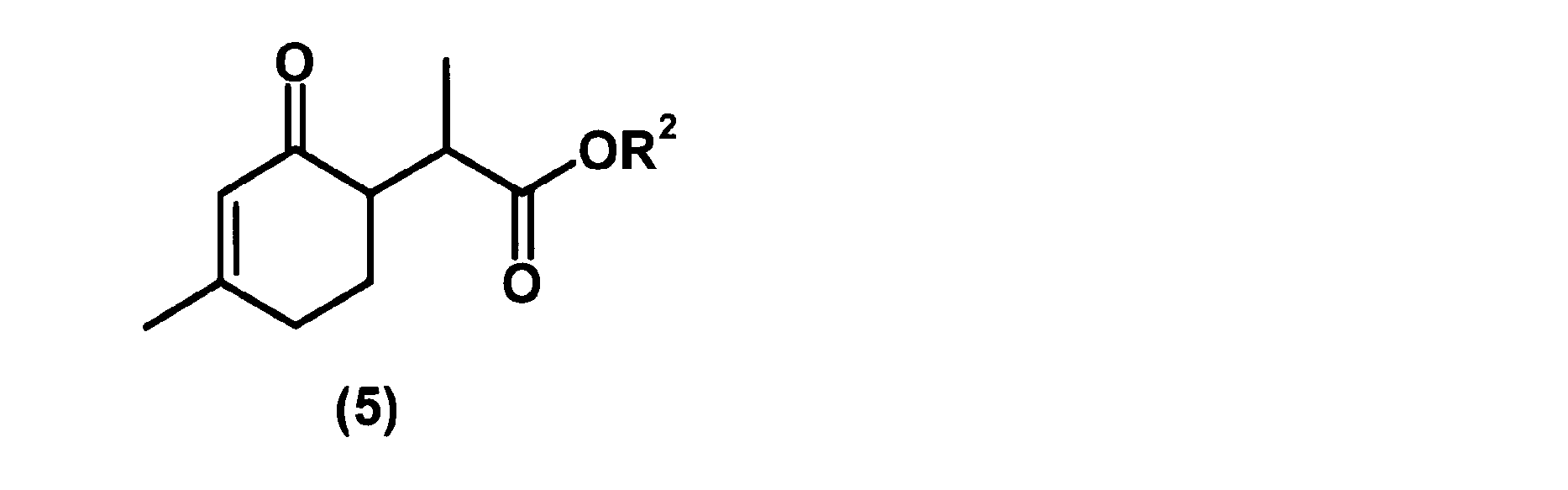
[式中、R2は、式(2)の定義と同じである。]
で示されるα-メチル-γ-ケト酸エステルを得る工程である。
工程B-2)は、工程A)で得られた2-アセト-3-メチル-コハク酸エステルと、メチルビニルケトンとを、塩基性条件下にて反応させ、その後に脱炭酸反応させて、式(5):
[式中、R2は、式(2)の定義と同じである。]
で示されるα-メチル-γ-ケト酸エステルを得る工程である。
本反応に使用するメチルビニルケトンは、第1実施態様で述べたとおり、市販品または合成品の何れを使用することもできる。
メチルビニルケトンの使用量は、式(3)で示される2-アセト-3-メチル-コハク酸エステルに対して通常0.5~10モル当量、好ましくは0.8~1.5モル当量の範囲から適宜選択される。
メチルビニルケトンの使用量は、式(3)で示される2-アセト-3-メチル-コハク酸エステルに対して通常0.5~10モル当量、好ましくは0.8~1.5モル当量の範囲から適宜選択される。
工程B-2)では塩基性条件下にて反応を行う。使用する塩基としては無機塩基及び有機塩基等が挙げられる。無機塩基及び有機塩基としては、工程B-1)と同じものを使用できる。
塩基の使用量は、式(3)で示される2-アセト-3-メチル-コハク酸エステルに対して、通常0.0001~10モル当量、好ましくは0.0005~3モル当量の範囲から適宜選択される。
反応は、溶媒の存在下で行うことが好ましい。溶媒の具体例としては、工程B-1)における式(3)で示される2-アセト-3-メチルーコハク酸エステルとメチルビニルケトンとの反応で例示した溶媒と同じものを挙げることができる。溶媒は、単独で用いてもよいし、2種以上を適宜組み合わせて用いてもよい。これらの中でも、アルコール類またはスルホキシド類が好ましい。
溶媒の使用量は、式(3)で示される2-アセト-3-メチル-コハク酸エステルに対して、通常0.5~100倍容量、好ましくは1~40倍容量の範囲から適宜選択される。
上記反応の反応温度は、通常0~100℃、好ましくは0~80℃の範囲から適宜選択される。また、反応時間は、通常0.5~20時間、好ましくは1~10時間の範囲から適宜選択される。
工程B-2)では、式(3)で示される2-アセト-3-メチル-コハク酸エステルとメチルビニルケトンとを塩基性条件下にて反応させた後、続いて脱炭酸反応を行う。脱炭酸反応は、無機塩を添加して行うことが好ましい。なお、脱炭酸反応を行う際は、溶媒を除去せずに反応を行ってもよいし、溶媒を除去した後に反応を行ってもよい。あるいは、溶媒を除去した後に新たに溶媒を添加して反応を行うこともできる。
脱炭酸反応に使用する無機塩としては、例えば、塩化ナトリウム、塩化マグネシウム、塩化カリウム、塩化カルシウム、シアン化ナトリウム、シアン化マグネシウム、シアン化カリウム、シアン化カルシウム等が挙げられる。中でも、塩化ナトリウム、塩化マグネシウムが好ましい。
無機塩の使用量は、式(3)で示される2-アセト-3-メチル-コハク酸エステルに対して、通常0.01~10モル当量、好ましくは0.1~5モル当量の範囲から適宜選択される。
脱炭酸反応の際に使用する溶媒の具体例としては、工程B-1)における式(3)で示される2-アセト-3-メチルーコハク酸エステルとメチルビニルケトンとの反応で例示した溶媒と同じものを挙げることができる。溶媒は、単独で用いてもよいし、2種以上を適宜組み合わせて用いてもよい。これらの中でもスルホキシド類が好ましい。
脱炭酸反応の際に使用する溶媒の使用量は、式(3)で示される2-アセト-3-メチル-コハク酸エステルに対して、通常0.5~100倍容量、好ましくは1~40倍容量の範囲から適宜選択される。
脱炭酸反応の反応温度は、通常50~130℃、好ましくは80~130℃の範囲から適宜選択される。反応時間は、通常0.5~30時間、好ましくは1~20時間の範囲から適宜選択される。
上記反応終了後、得られた式(5)で示されるα-メチル-γ-ケト酸エステルは、後処理等をせずにそのまま次の工程に用いてもよく、必要に応じて後処理、精製、単離等を行って次の工程に用いてもよい。後処理の具体的な方法は、前記と同じである。
(2)工程B-3)
工程B-3)は、工程B-2)で得られた式(5)で示されるα-メチル-γ-ケト酸エステルを加水分解して、式(4):

で示されるα-メチル-γ-ケト酸を得る工程である。
工程B-3)は、工程B-2)で得られた式(5)で示されるα-メチル-γ-ケト酸エステルを加水分解して、式(4):
で示されるα-メチル-γ-ケト酸を得る工程である。
式(5)で示されるα-メチル-γ-ケト酸エステルの加水分解は、酸または塩基の存在下で行うことが好ましい。使用できる酸または塩基の具体例は、工程B-1)における加水分解に使用できる化合物として例示したものを挙げることができる。
酸の使用量は、式(5)で示されるα-メチル-γ-ケト酸エステルに対して、通常0.001~10モル当量、好ましくは0.01~3モル当量の範囲から適宜選択される。
塩基の使用量は、式(5)で示されるα-メチル-γ-ケト酸エステルに対して0.001~10モル当量、好ましくは0.01~3モル当量の範囲から適宜選択される。
本工程において、加水分解は、溶媒の存在下で行ってもよいし、無溶媒下で行ってもよい。
溶媒の存在下で加水分解を行う場合、使用できる溶媒としては、工程B-1)において加水分解に使用できる溶媒として例示したものと同じものを挙げることができる。中でも、アルコール類、スルホキシド類、水が好ましい。
溶媒の存在下で加水分解を行う場合、使用できる溶媒としては、工程B-1)において加水分解に使用できる溶媒として例示したものと同じものを挙げることができる。中でも、アルコール類、スルホキシド類、水が好ましい。
溶媒の使用量は、式(5)で示されるα-メチル-γ-ケト酸エステルに対して、通常0.5~100倍容量、好ましくは1~40倍容量の範囲から適宜選択される。
反応温度は、通常0~100℃、好ましくは0~80℃の範囲から適宜選択される。また、反応時間は、通常0.5~24時間、好ましくは1~20時間の範囲から適宜選択される。
反応終了後、得られた式(4)で示されるα-メチル-γ-ケト酸は、後処理等をせずにそのまま次の工程に用いてもよいし、必要に応じて後処理、精製、単離等を行って次の工程に用いてもよい。後処理の具体的な方法は、前記と同じである。
第2実施態様においても、工程B-3)に続いて行う工程C)において還元反応を工夫することにより、有害な試薬または高価な試薬を用いることなく、通常の反応条件下にてワインラクトンを高選択的に得ることができる。
3.第3実施態様
本発明の第3実施態様の製造方法は、工程A)、工程B-2)及び工程E)を含む方法である。
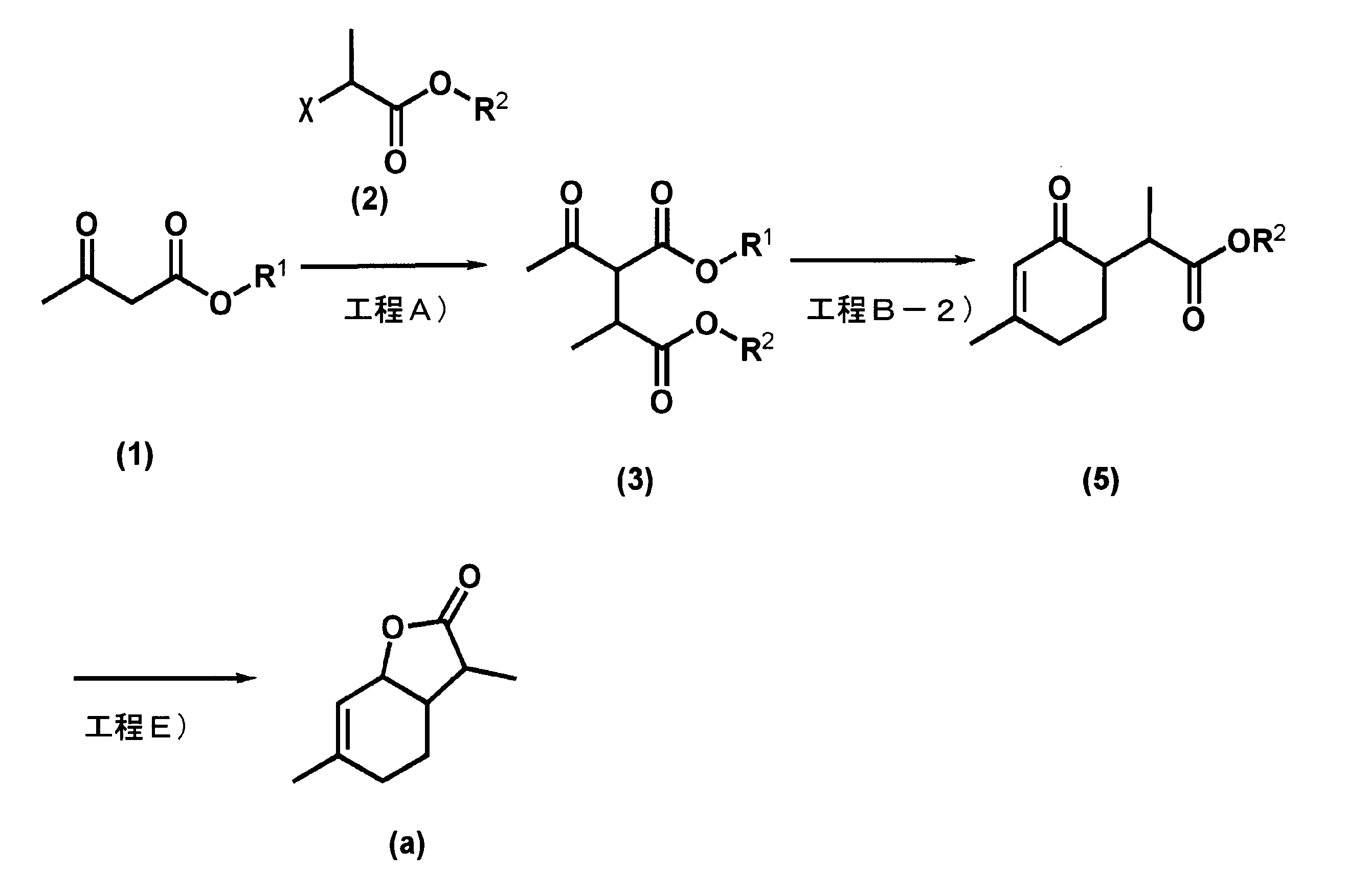
[式中、R1は炭素数1~4のアルキル基であり、R2は炭素数1~4のアルキル基であり、Xは塩素原子または臭素原子である。]
本発明の第3実施態様の製造方法は、工程A)、工程B-2)及び工程E)を含む方法である。
[式中、R1は炭素数1~4のアルキル基であり、R2は炭素数1~4のアルキル基であり、Xは塩素原子または臭素原子である。]
第3実施態様における上記工程のうち、工程A)は第1実施態様の工程A)、工程B-2)は第2実施態様の工程B-2)と同じであるので、ここでは説明を繰り返さない。以下、工程E)について具体的に説明する。
(1)工程E)
工程E)の第1の態様は、工程B-2)で得られたα-メチル-γ-ケト酸エステルを式(6)または(7)で示される化合物から選ばれるルテニウム錯体及び水素供与体の存在下にて還元反応させ、式(a):
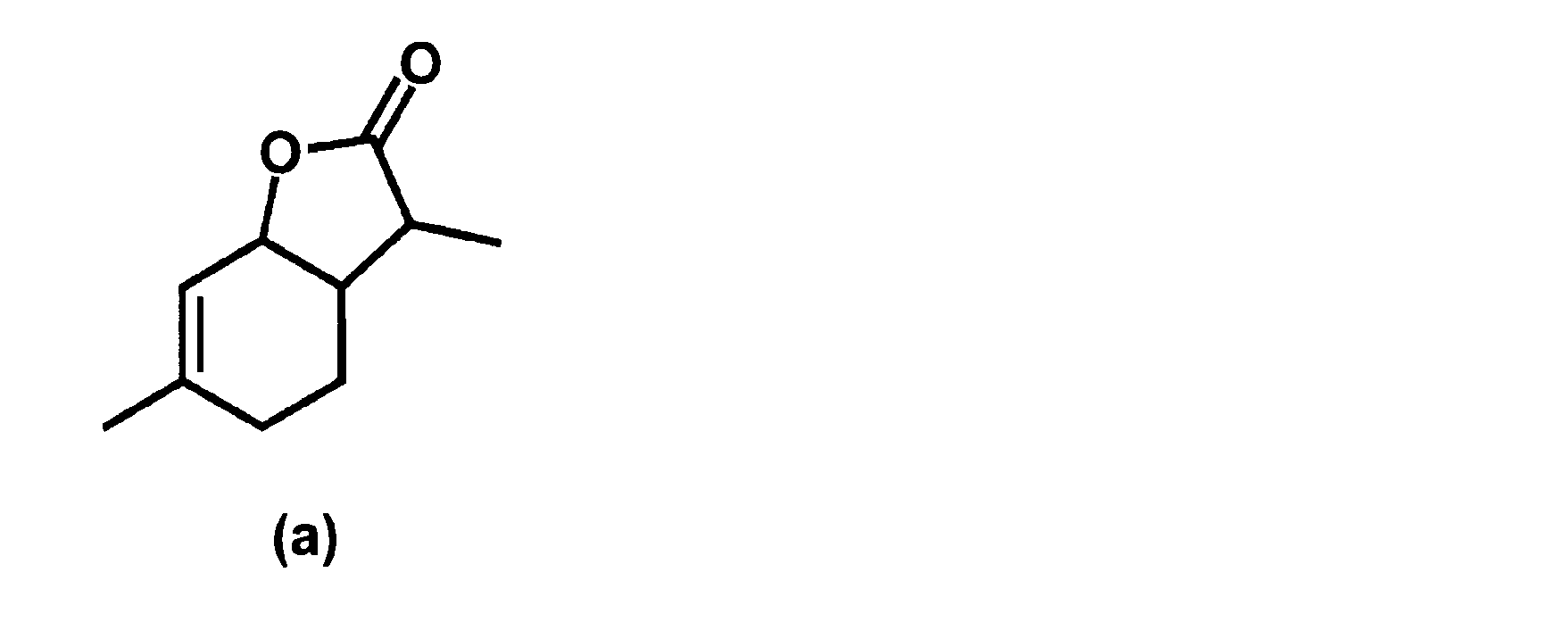
で示される化合物を得る工程である。
工程E)の第1の態様は、工程B-2)で得られたα-メチル-γ-ケト酸エステルを式(6)または(7)で示される化合物から選ばれるルテニウム錯体及び水素供与体の存在下にて還元反応させ、式(a):
で示される化合物を得る工程である。
式(6)で示されるルテニウム錯体及び式(7)で示されるルテニウム錯体は、前記した第1実施態様の工程C)で説明したものと同じものを用いることができる。好ましい化合物についても同様であるので、ここでは説明を繰り返さない。但し、工程E)において式(6)及び(7)における*印は、当該*印が付されている炭素原子が不斉炭素原子となる場合があることを示している。当該炭素原子が不斉炭素原子となる場合には、光学活性体であってもよいし、光学活性体の混合物であってもよいし、ラセミ体(ラセミ化合物を含む)であってもよい。これらの中でも、式(6)及び(7)は光学活性体であることが好ましい。
これらの中でも、式(6)で示されるルテニウム錯体が好ましく、式(6)で示されるルテニウム錯体の中でも、以下の化合物がさらに好ましい。
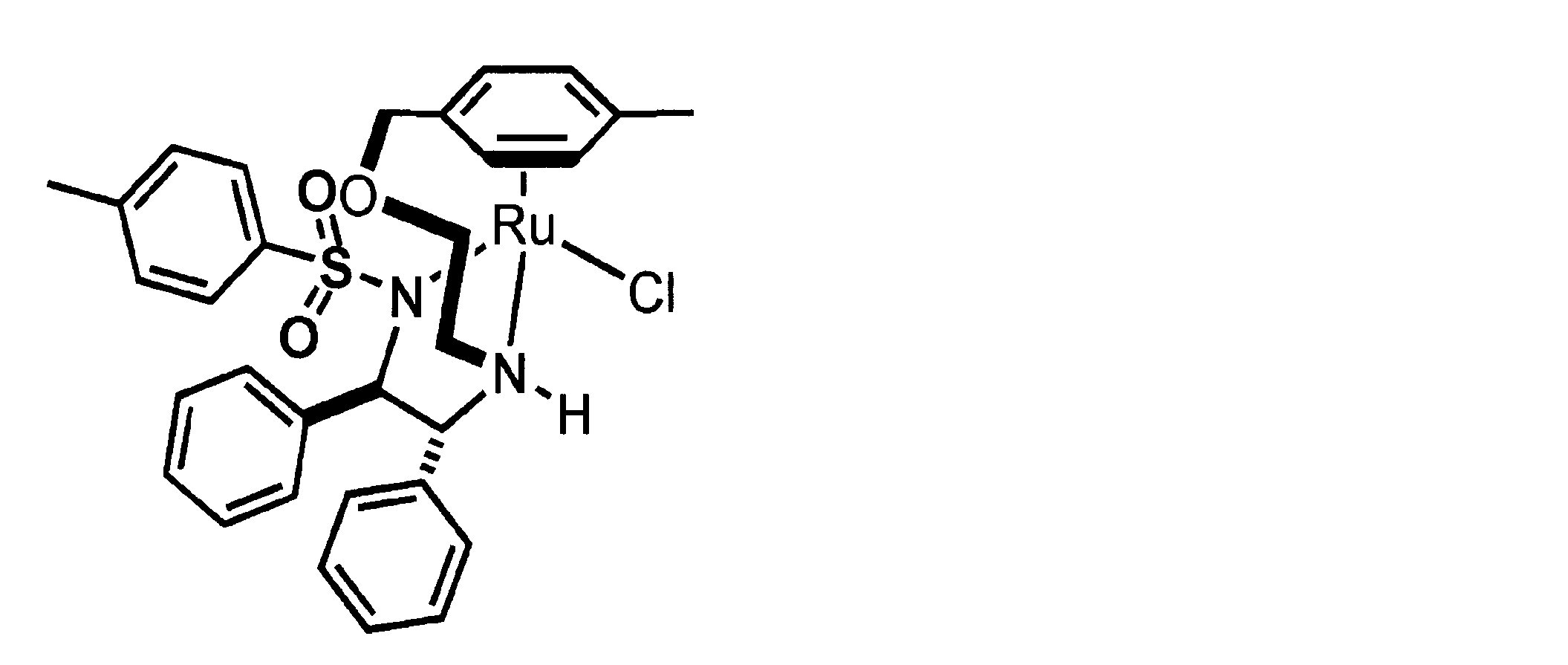
工程E)は、式(5)で示されるα-メチル-γ-ケト酸エステルを水素供与体の共存下、式(6)及び(7)から選ばれるルテニウム錯体と反応させることにより行われる。
水素供与体としては、ギ酸又はギ酸アルカリ金属塩、水酸基が置換している炭素原子のα位に水素原子を有するアルコールであるイソプロパノール等の水素移動型還元反応に一般的に用いられるようなものであれば特に限定されない。
工程E)は、塩基の存在下で実施されることが好ましい。塩基としては、トリメチルアミン、トリエチルアミン、トリイソプロピルアミン、1,4-ジアザビシクロ[2,2,2]オクタン(DABCO)、1,8-ジアザビシクロ[5,4,0]ウンデカ-7-エン(DBU)などの第3級有機アミン類やLiOH、NaOH、KOH、K2CO3などの無機塩基が挙げられる。好ましい塩基は、トリエチルアミン、DABCOである。
塩基は、式(6)または(7)で示されるルテニウム錯体に対して過剰量、例えばモル比で1~100000倍の量で用いられる。トリエチルアミンを使用する場合は、ルテニウム錯体に対して、モル比で1~10000倍の量で用いるのが好ましい。
水素供与体と塩基との組み合わせの中で、水素供与体がギ酸の場合にはアミンを塩基として用いるのが好ましい。この場合、ギ酸とアミンは別々に反応系に添加してもよいが、あらかじめギ酸とアミンの共沸混合物を調製して用いてもよい。好ましいギ酸とアミンの共沸混合物としては、例えば、ギ酸:アミン=1:1~5:2(モル比)の共沸混合物などが挙げられる。
水素供与体としては、ギ酸又はギ酸アルカリ金属塩、水酸基が置換している炭素原子のα位に水素原子を有するアルコールであるイソプロパノール等の水素移動型還元反応に一般的に用いられるようなものであれば特に限定されない。
工程E)は、塩基の存在下で実施されることが好ましい。塩基としては、トリメチルアミン、トリエチルアミン、トリイソプロピルアミン、1,4-ジアザビシクロ[2,2,2]オクタン(DABCO)、1,8-ジアザビシクロ[5,4,0]ウンデカ-7-エン(DBU)などの第3級有機アミン類やLiOH、NaOH、KOH、K2CO3などの無機塩基が挙げられる。好ましい塩基は、トリエチルアミン、DABCOである。
塩基は、式(6)または(7)で示されるルテニウム錯体に対して過剰量、例えばモル比で1~100000倍の量で用いられる。トリエチルアミンを使用する場合は、ルテニウム錯体に対して、モル比で1~10000倍の量で用いるのが好ましい。
水素供与体と塩基との組み合わせの中で、水素供与体がギ酸の場合にはアミンを塩基として用いるのが好ましい。この場合、ギ酸とアミンは別々に反応系に添加してもよいが、あらかじめギ酸とアミンの共沸混合物を調製して用いてもよい。好ましいギ酸とアミンの共沸混合物としては、例えば、ギ酸:アミン=1:1~5:2(モル比)の共沸混合物などが挙げられる。
反応は通常、水素供与体が液体であればそれを反応溶媒として利用できるが、α-メチル-γ-ケト酸エステルを溶解させるために、トルエン、テトラヒドロフラン、アセトニトリル、ジメチルホルムアミド、ジメチルスルホキシド、アセトン、塩化メチレン、メタノール等の非水素供与性溶媒を単独又は複数種混合して助溶媒として使用することも可能である。ギ酸アルカリ金属塩を用いる時などは、ギ酸アルカリ金属塩を溶解させるため水を助溶媒として有機溶媒と併せて用い二層系で反応を行うこともできる。この場合、反応を加速させるため相関移動触媒を併せて用いてもよい。
触媒であるルテニウム錯体の使用量は、ルテニウム金属原子(C)に対する基質であるα-メチル-γ-ケト酸エステル(S)のモル比(S/C)が10~1000000、好ましくは100~15000の範囲から選ばれる。
α-メチル-γ-ケト酸エステルに対する水素供与体の量としては、通常等モル量以上用いられる。このうち水素供与体がギ酸又はギ酸アルカリ金属塩である場合には、1.0倍モル量以上が好ましく、また、20倍モル量以下、好ましくは10倍モル量以下の範囲で用いられる。一方、水素供与体がイソプロパノール等の場合には、反応平衡の観点からα-メチル-γ-ケト酸エステルに対して大過剰量(10モル倍以上)用いられ、通常1000モル倍以下の範囲で用いられる。
α-メチル-γ-ケト酸エステルに対する水素供与体の量としては、通常等モル量以上用いられる。このうち水素供与体がギ酸又はギ酸アルカリ金属塩である場合には、1.0倍モル量以上が好ましく、また、20倍モル量以下、好ましくは10倍モル量以下の範囲で用いられる。一方、水素供与体がイソプロパノール等の場合には、反応平衡の観点からα-メチル-γ-ケト酸エステルに対して大過剰量(10モル倍以上)用いられ、通常1000モル倍以下の範囲で用いられる。
反応温度は0~100℃、好ましくは0~70℃の範囲から選ばれる。
反応圧力は特に限定されず、通常0.05~0.2MPa、好ましくは常圧のもとで行われる。
反応時間は触媒比によって異なるが1~100時間、通常は2~90時間である。
反応圧力は特に限定されず、通常0.05~0.2MPa、好ましくは常圧のもとで行われる。
反応時間は触媒比によって異なるが1~100時間、通常は2~90時間である。
工程E)の第2の態様は、工程B-2)で得られたα-メチル-γ-ケト酸エステルを塩基性条件下、式(8)で示される光学活性ルテニウム錯体および水素ガスの存在下にて不斉水素化反応させることにより、式(a):

で示される化合物を得る工程である。
で示される化合物を得る工程である。
以下、式(8)で示される光学活性ルテニウム錯体について説明する。
式(8)で示される光学活性ルテニウム錯体:
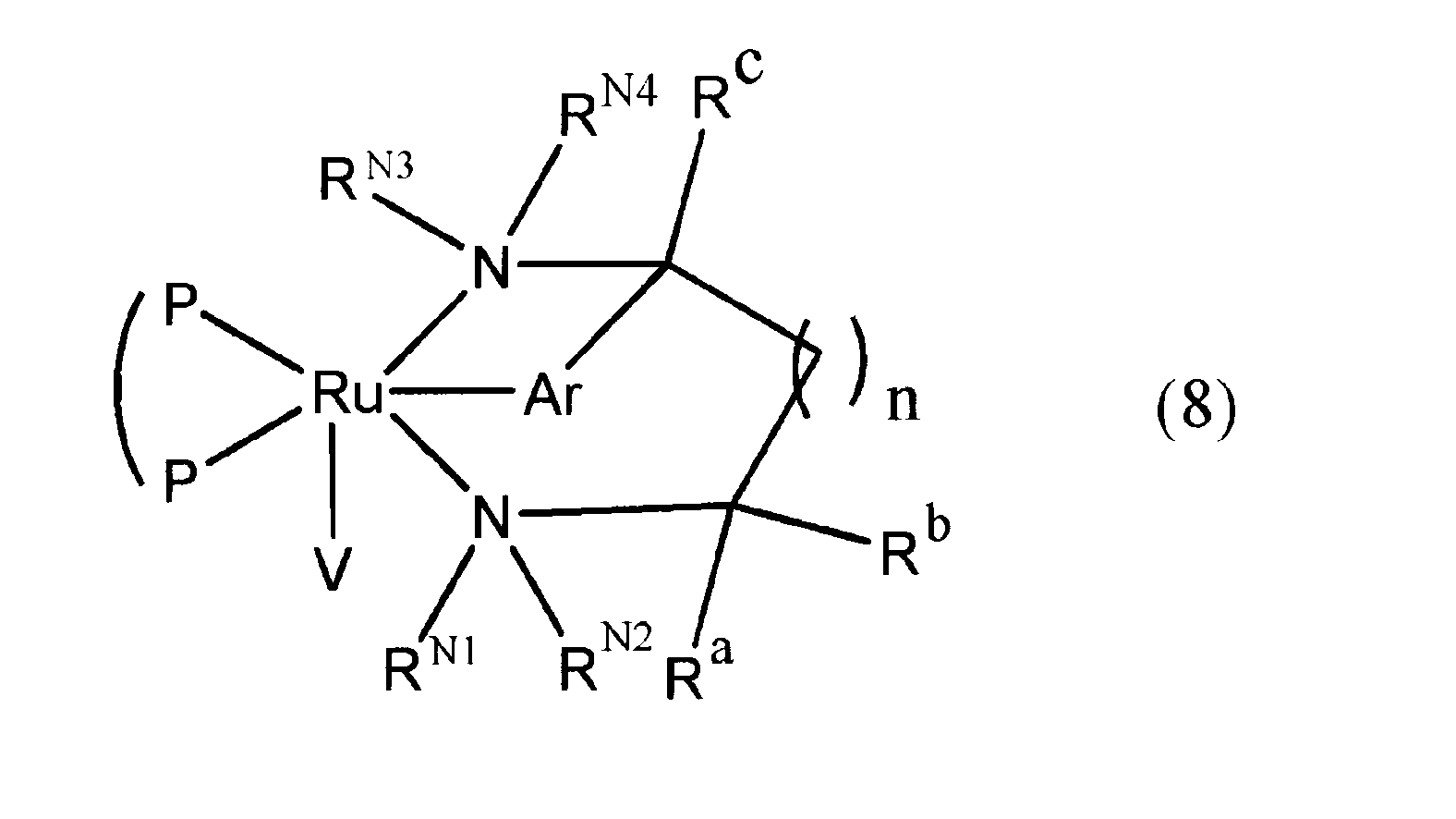
[式中、P⌒Pは光学活性ジホスフィンであり、
Vはアニオン性基であり、
Ra、Rb及びRcは、それぞれ独立して、水素原子、置換基を有してもよいC1~C20アルキル基、置換基を有してもよいC2~C20アルケニル基、置換基を有してもよいC3~C8シクロアルキル基、置換基を有してもよいC7~C20アラルキル基、置換基を有してもよいアリール基、又は、置換基を有してもよいヘテロ環基であり、あるいは、RbとRcとでアルキレン基又はアルキレンジオキシ基を形成してもよく、
RN1、RN2、RN3及びRN4は、それぞれ独立して、水素原子、置換基を有してもよいC1~C20アルキル基、置換基を有してもよいC2~C20アルケニル基、置換基を有してもよいC7~C20アラルキル基、又は、置換基を有してもよいC3~C8シクロアルキル基であり、但し、RN1、RN2、RN3及びRN4のうち少なくとも一つは水素原子であり、RN1とRaとでアルキレン基を形成してもよく、
nは0~3の整数であり、
Arは置換基を有していてもよいアリーレン基である。]
式(8)で示される光学活性ルテニウム錯体:
[式中、P⌒Pは光学活性ジホスフィンであり、
Vはアニオン性基であり、
Ra、Rb及びRcは、それぞれ独立して、水素原子、置換基を有してもよいC1~C20アルキル基、置換基を有してもよいC2~C20アルケニル基、置換基を有してもよいC3~C8シクロアルキル基、置換基を有してもよいC7~C20アラルキル基、置換基を有してもよいアリール基、又は、置換基を有してもよいヘテロ環基であり、あるいは、RbとRcとでアルキレン基又はアルキレンジオキシ基を形成してもよく、
RN1、RN2、RN3及びRN4は、それぞれ独立して、水素原子、置換基を有してもよいC1~C20アルキル基、置換基を有してもよいC2~C20アルケニル基、置換基を有してもよいC7~C20アラルキル基、又は、置換基を有してもよいC3~C8シクロアルキル基であり、但し、RN1、RN2、RN3及びRN4のうち少なくとも一つは水素原子であり、RN1とRaとでアルキレン基を形成してもよく、
nは0~3の整数であり、
Arは置換基を有していてもよいアリーレン基である。]
式(8)で示される光学活性ルテニウム錯体のうち、下記式(9)で示される光学活性ルテニウム錯体が好ましい。
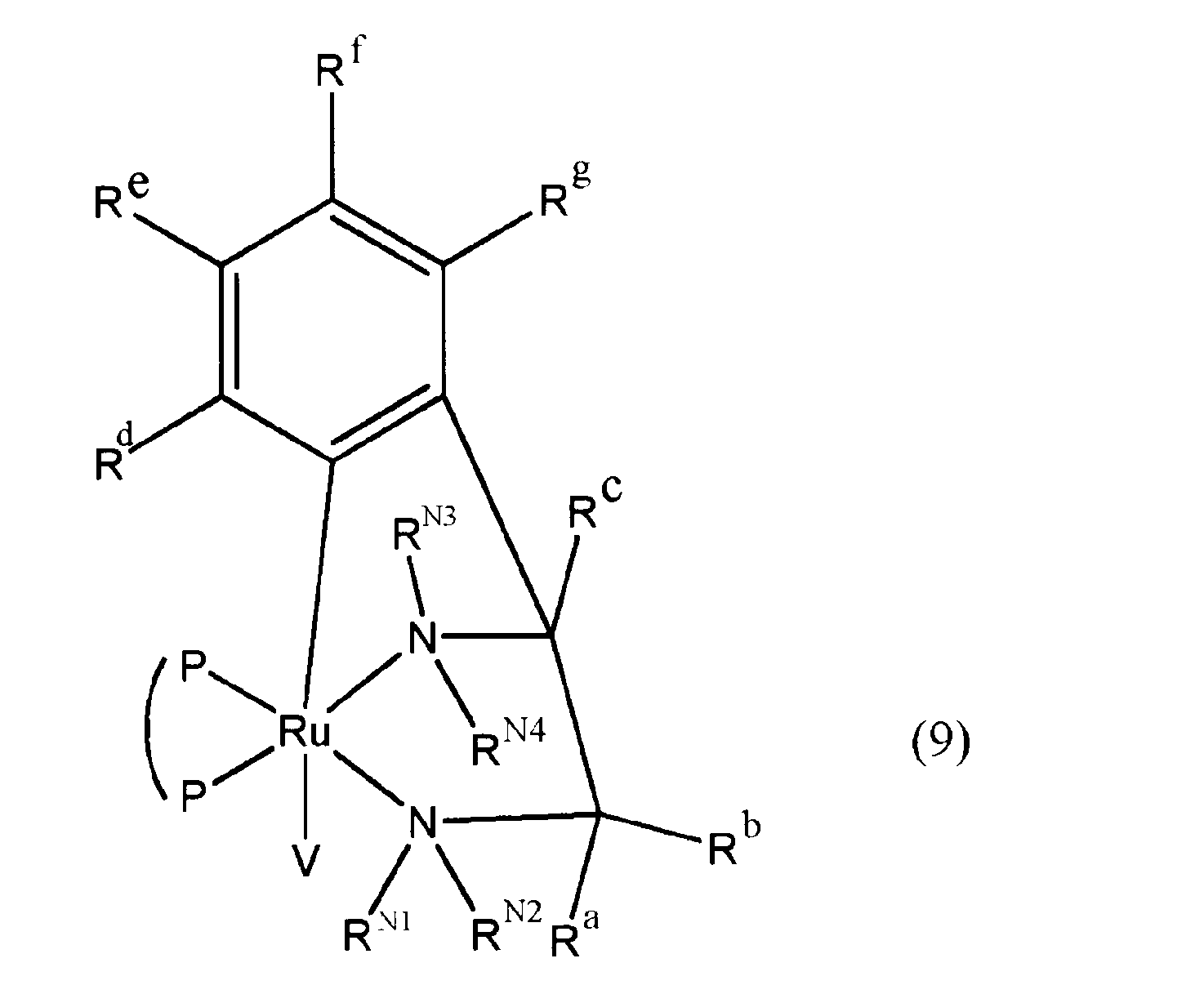
[式中、P⌒Pは光学活性ジホスフィンであり、
Vはアニオン性基であり、
Ra、Rb及びRcは、それぞれ独立して、水素原子、置換基を有してもよいC1~C20アルキル基、置換基を有してもよいC2~C20アルケニル基、置換基を有してもよいC3~C8シクロアルキル基、置換基を有してもよいC7~C20アラルキル基、置換基を有してもよいアリール基、又は、置換基を有してもよいヘテロ環基であり、あるいは、RbとRcとでアルキレン基又はアルキレンジオキシ基を形成してもよく、
Rd、Re、Rf及びRgは、それぞれ独立して、水素原子、置換基を有してもよい炭素数1~20アルキル基、置換基を有してもよい炭素数1~5のハロゲン化アルキル基、ハロゲン原子、置換基を有してもよいアリール基、置換基を有してもよいC3~C8シクロアルキル基、置換基を有してもよい3置換シリル基、又は、置換基を有してもよい炭素数1~20アルコキシ基であり、
RN1、RN2、RN3及びRN4は、それぞれ独立して、水素原子、置換基を有してもよいC1~C20アルキル基、置換基を有してもよいC2~C20アルケニル基、置換基を有してもよいC7~C20アラルキル基、又は、置換基を有してもよいC3~C8シクロアルキル基であり、但し、RN1、RN2、RN3及びRN4のうち少なくとも一つは水素原子であり、RN1とRaとでアルキレン基を形成してもよい。]
[式中、P⌒Pは光学活性ジホスフィンであり、
Vはアニオン性基であり、
Ra、Rb及びRcは、それぞれ独立して、水素原子、置換基を有してもよいC1~C20アルキル基、置換基を有してもよいC2~C20アルケニル基、置換基を有してもよいC3~C8シクロアルキル基、置換基を有してもよいC7~C20アラルキル基、置換基を有してもよいアリール基、又は、置換基を有してもよいヘテロ環基であり、あるいは、RbとRcとでアルキレン基又はアルキレンジオキシ基を形成してもよく、
Rd、Re、Rf及びRgは、それぞれ独立して、水素原子、置換基を有してもよい炭素数1~20アルキル基、置換基を有してもよい炭素数1~5のハロゲン化アルキル基、ハロゲン原子、置換基を有してもよいアリール基、置換基を有してもよいC3~C8シクロアルキル基、置換基を有してもよい3置換シリル基、又は、置換基を有してもよい炭素数1~20アルコキシ基であり、
RN1、RN2、RN3及びRN4は、それぞれ独立して、水素原子、置換基を有してもよいC1~C20アルキル基、置換基を有してもよいC2~C20アルケニル基、置換基を有してもよいC7~C20アラルキル基、又は、置換基を有してもよいC3~C8シクロアルキル基であり、但し、RN1、RN2、RN3及びRN4のうち少なくとも一つは水素原子であり、RN1とRaとでアルキレン基を形成してもよい。]
さらには、式(8)及び(9)で示される光学活性ルテニウム錯体のうち、下記式(10)で示される光学活性ルテニウム錯体がより好ましい。

[式中、P⌒Pは光学活性ジホスフィンであり、
Vはアニオン性基であり、
Ra及びRbは、それぞれ独立して、水素原子、置換基を有してもよいC1~C20アルキル基、置換基を有してもよいC2~C20アルケニル基、置換基を有してもよいC3~C8シクロアルキル基、置換基を有してもよいC7~C20アラルキル基、置換基を有してもよいアリール基、又は、置換基を有してもよいヘテロ環基であり、
RN1、RN2、RN3及びRN4は、それぞれ独立して、水素原子、置換基を有してもよいC1~C20アルキル基、置換基を有してもよいC2~C20アルケニル基、置換基を有してもよいC7~C20アラルキル基、又は、置換基を有してもよいC3~C8シクロアルキル基であり、但し、RN1、RN2、RN3及びRN4のうち少なくとも一つは水素原子であり、RN1とRaとでアルキレン基を形成してもよい。]
[式中、P⌒Pは光学活性ジホスフィンであり、
Vはアニオン性基であり、
Ra及びRbは、それぞれ独立して、水素原子、置換基を有してもよいC1~C20アルキル基、置換基を有してもよいC2~C20アルケニル基、置換基を有してもよいC3~C8シクロアルキル基、置換基を有してもよいC7~C20アラルキル基、置換基を有してもよいアリール基、又は、置換基を有してもよいヘテロ環基であり、
RN1、RN2、RN3及びRN4は、それぞれ独立して、水素原子、置換基を有してもよいC1~C20アルキル基、置換基を有してもよいC2~C20アルケニル基、置換基を有してもよいC7~C20アラルキル基、又は、置換基を有してもよいC3~C8シクロアルキル基であり、但し、RN1、RN2、RN3及びRN4のうち少なくとも一つは水素原子であり、RN1とRaとでアルキレン基を形成してもよい。]
式(8)で示される光学活性ルテニウム錯体において、Arで表される、置換基を有していてもよいアリーレン基としては、炭素数6~36、好ましくは炭素数6~18、より好ましくは炭素数6~12の単環式、多環式又は縮合環式の二価のアリーレン基、又は、1~4個、好ましくは1~3個、より好ましくは1~2個の窒素原子、酸素原子及び硫黄原子から選ばれる異種原子を含有する3~8員、好ましくは5~8員の環を有する単環式、多環式又は縮合環式の二価のヘテロアリーレン基が挙げられる。好ましいアリーレン基としては、例えば、フェニレン基、ナフタレンジイル基、ピリジンジイル基、チオフェンジイル基、フランジイル基等が挙げられるが、フェニレン基が特に好ましい。二価のアリーレン基の結合する位置は特に制限はないが、隣接する2個の炭素原子の位置(オルト位)が好ましい。
また、前記アリーレン基に置換する置換基としては、直鎖又は分岐のアルキル基、直鎖又は分岐のアルコキシ基、シクロアルキル基、ハロゲン原子、アリール基、ヘテロアリール基、及び、三置換シリル基等が挙げられる。
また、前記アリーレン基に置換する置換基としては、直鎖又は分岐のアルキル基、直鎖又は分岐のアルコキシ基、シクロアルキル基、ハロゲン原子、アリール基、ヘテロアリール基、及び、三置換シリル基等が挙げられる。
以下、アリーレン基に置換する置換基について説明する。
直鎖又は分岐のアルキル基としては、例えば炭素数1~10、好ましくは炭素数1~6、より好ましくは炭素数1~4の直鎖又は分岐のアルキル基が挙げられる。該アルキル基はフッ素原子等のハロゲン原子で置換されていてもよい。具体的にはメチル基、エチル基、n-プロピル基、イソプロピル基、n-ブチル基、イソブチル基、s-ブチル基、t-ブチル基、トリフルオロメチル基等が挙げられる。
直鎖又は分岐のアルキル基としては、例えば炭素数1~10、好ましくは炭素数1~6、より好ましくは炭素数1~4の直鎖又は分岐のアルキル基が挙げられる。該アルキル基はフッ素原子等のハロゲン原子で置換されていてもよい。具体的にはメチル基、エチル基、n-プロピル基、イソプロピル基、n-ブチル基、イソブチル基、s-ブチル基、t-ブチル基、トリフルオロメチル基等が挙げられる。
直鎖又は分岐のアルコキシ基としては、例えば炭素数1~10、好ましくは炭素数1~6、より好ましくは炭素数1~4の直鎖又は分岐のアルコキシ基が挙げられる。具体的にはメトキシ基、エトキシ基、n-プロポキシ基、イソプロポキシ基、n-ブトキシ基、s-ブトキシ基、イソブトキシ基及びt-ブトキシ基などが挙げられる。
シクロアルキル基としては、炭素数3~15、好ましくは炭素数5~7の飽和又は不飽和の単環式、多環式又は縮合環式のシクロアルキル基が挙げられ、具体的にはシクロペンチル基、シクロヘキシル基などが挙げられる。これらシクロアルキル基の環上においては、炭素数1~4のアルキル基又は炭素数1~4のアルコキシ基で、1又は2個以上置換されていてもよい。
ハロゲン原子としては、塩素原子、臭素原子、フッ素原子等が挙げられる。
シクロアルキル基としては、炭素数3~15、好ましくは炭素数5~7の飽和又は不飽和の単環式、多環式又は縮合環式のシクロアルキル基が挙げられ、具体的にはシクロペンチル基、シクロヘキシル基などが挙げられる。これらシクロアルキル基の環上においては、炭素数1~4のアルキル基又は炭素数1~4のアルコキシ基で、1又は2個以上置換されていてもよい。
ハロゲン原子としては、塩素原子、臭素原子、フッ素原子等が挙げられる。
アリール基としては、例えば炭素数6~14のアリール基が挙げられる。具体的にはフェニル基、ナフチル基、アントリル基、フェナントリル基及びビフェニル基などが挙げられる。これらアリール基は1又は2以上の置換基を有していてもよく、該置換基としては、前述したような炭素数1~4のアルキル基、炭素数1~4のアルコキシ基などが挙げられる。
ヘテロアリール基としては、酸素原子、硫黄原子、窒素原子等を含む5員環又は6員環状の基が挙げられる。具体的には、フリル基、チエニル基、ピリジル基等が挙げられる。
三置換シリル基としては、前記したアルキル基やアリール基で三置換されたシリル基が挙げられる。例えば、トリメチルシリル基、トリエチルシリル基、トリイソプロピルシリル基、tert-ブチルジメチルシリル基、ジフェニルメチルシリル基、ジメチルフェニルシリル基などが挙げられる。
ヘテロアリール基としては、酸素原子、硫黄原子、窒素原子等を含む5員環又は6員環状の基が挙げられる。具体的には、フリル基、チエニル基、ピリジル基等が挙げられる。
三置換シリル基としては、前記したアルキル基やアリール基で三置換されたシリル基が挙げられる。例えば、トリメチルシリル基、トリエチルシリル基、トリイソプロピルシリル基、tert-ブチルジメチルシリル基、ジフェニルメチルシリル基、ジメチルフェニルシリル基などが挙げられる。
式(8)、(9)及び(10)において、Vで表されるアニオン性基としては、ヒドリドイオン(H-);塩素イオン(Cl-)、臭素イオン(Br-)、又は、ヨウ素イオン(I-)等のハロゲンイオン;BH4、BF4、BPh4、PF6、アセトキシ基(OAc)、トリフルオロメタンスルホニルオキシ基(OTf)等の複合アニオンなどが挙げられる。これらの中でもハロゲンイオンが好ましい。
式(8)、(9)及び(10)におけるRa、Rb、Rc、Rd、Re、Rf、Rg、RN1、RN2、RN3及びRN4で表される基を以下に説明する。
C1~C20アルキル基としては、炭素数1~20、好ましくは炭素数1~5、より好ましくは炭素数1~4の直鎖状又は分枝状のアルキル基が挙げられる。例えば、メチル基、エチル基、n-プロピル基、イソプロピル基、n-ブチル基、イソブチル基、sec-ブチル基、t-ブチル基、n-ペンチル基、n-ヘキシル基、デシル基、ドデシル基、ヘキサデシル基等が挙げられる。
C2~C20アルケニル基としては、炭素数2~20、好ましくは炭素数2~10、より好ましくは炭素数2~6の直鎖状又は分枝状のアルケニル基が挙げられる。例えば、エテニル基、n-プロペニル基、イソプロペニル基、1-ブテニル基、1-ブテン-2-イル基、ペンテニル基、ヘキセニル基等が挙げられる。
C1~C20アルコキシ基としては、前記した炭素数1~20のアルキル基に酸素原子結合した基が挙げられる。例えば、メトキシ基、エトキシ基、n-プロポキシ基、イソプロポキシ基、n-ブトキシ基、s-ブトキシ基、イソブトキシ基及びt-ブトキシ基などが挙げられる。
C2~C20アルケニル基としては、炭素数2~20、好ましくは炭素数2~10、より好ましくは炭素数2~6の直鎖状又は分枝状のアルケニル基が挙げられる。例えば、エテニル基、n-プロペニル基、イソプロペニル基、1-ブテニル基、1-ブテン-2-イル基、ペンテニル基、ヘキセニル基等が挙げられる。
C1~C20アルコキシ基としては、前記した炭素数1~20のアルキル基に酸素原子結合した基が挙げられる。例えば、メトキシ基、エトキシ基、n-プロポキシ基、イソプロポキシ基、n-ブトキシ基、s-ブトキシ基、イソブトキシ基及びt-ブトキシ基などが挙げられる。
炭素数1~5のハロゲン化アルキル基としては、トリフルオロメチル基、ペンタフルオロエチル基、ヘプタフルオロプロピル基、トリクロロメチル基などが挙げられる。
C3~C8シクロアルキル基としては、炭素数3~8、好ましくは炭素数5~7の飽和又は不飽和の単環式、多環式又は縮合環式のシクロアルキル基が挙げられる。例えば、シクロペンチル基、シクロヘキシル基などが挙げられる。
ハロゲン原子としては、塩素原子、臭素原子、フッ素原子等が挙げられる。
三置換シリル基としては、前記したアルキル基又はアリール基で三置換されたシリル基が挙げられる。例えば、トリメチルシリル基、トリエチルシリル基、トリイソプロピルシリル基、tert-ブチルジメチルシリル基、ジフェニルメチルシリル基、ジメチルフェニルシリル基などが挙げられる。
C3~C8シクロアルキル基としては、炭素数3~8、好ましくは炭素数5~7の飽和又は不飽和の単環式、多環式又は縮合環式のシクロアルキル基が挙げられる。例えば、シクロペンチル基、シクロヘキシル基などが挙げられる。
ハロゲン原子としては、塩素原子、臭素原子、フッ素原子等が挙げられる。
三置換シリル基としては、前記したアルキル基又はアリール基で三置換されたシリル基が挙げられる。例えば、トリメチルシリル基、トリエチルシリル基、トリイソプロピルシリル基、tert-ブチルジメチルシリル基、ジフェニルメチルシリル基、ジメチルフェニルシリル基などが挙げられる。
C7~C20アラルキル基としては、炭素数6~20、好ましくは炭素数6~14の単環式、多環式又は縮合環式のアリール基に、前記した炭素数1~19のアルキル基が結合した、炭素数7~20、好ましくは炭素数7~15、炭素数7~10のアラルキル基が挙げられる。例えば、ベンジル基、α-メチルベンジル基、α,α-ジメチルベンジル基、2-フェニルエチル基、3-フェニルプロピル基等が挙げられる。
また、前記C1~C20アルキル基、C2~C20アルケニル基、C1~C20アルコキシ基、ハロゲン化アルキル基、C3~C8シクロアルキル基、三置換シリル基、及びC7~C20アラルキル基に置換する置換基としては、前述したような直鎖又は分岐のアルキル基、直鎖又は分岐のアルコキシ基、シクロアルキル基、ハロゲン原子、アリール基、及び、三置換シリル基等が挙げられる。
置換基を有していてもよいアリール基のアリール基としては、炭素数6~20、好ましくは炭素数6~14、炭素数6~12の単環式、多環式又は縮合環式のアリール基が挙げられる。具体的にはフェニル基、ナフチル基、アントリル基、フェナントリル基、ビフェニル基などが挙げられ、フェニル基が好ましい。これらアリール基は1又は2個以上の置換基を有していてもよい。該置換基としては、前述したようなメチル基、イソプロピル基及びt-ブチル基等の炭素数1~4のアルキル基;メトキシ基、エトキシ基、n-プロポキシ基、イソプロポキシ基、n-ブトキシ基、イソブトキシ基、s-ブトキシ基及びt-ブトキシ基等の炭素数1~4のアルコキシ基などが挙げられる。
置換基を有していてもよいヘテロ環基としては、酸素原子、硫黄原子、窒素原子等を含む飽和又は不飽和の5員環又は6員環状の基が挙げられ、具体的にはフリル基、チエニル基、ピリジル基等が挙げられる。これらヘテロ環基は1又は2個以上の置換基を有していてもよい。該置換基としては、前述したようなメチル基、イソプロピル基及びt-ブチル基等の炭素数1~4のアルキル基;メトキシ基、エトキシ基、n-プロポキシ基、イソプロポキシ基、n-ブトキシ基、イソブトキシ基、s-ブトキシ基及びt-ブトキシ基等の炭素数1~4のアルコキシ基などが挙げられる。
RbとRcとで形成するアルキレン基としては、炭素数1~6、好ましくは炭素数1~4の直鎖又は分岐のアルキレン基が挙げられる。例えば、メチレン基、エチレン基、トリメチレン基、プロピレン基、テトラメチレン基等が挙げられ、これらアルキレン基は炭素数1~4のアルキル基、炭素数1~4のアルコキシ基で置換されていてもよい。
RbとRcとで形成するアルキレンジオキシ基としては、炭素数1~6、好ましくは炭素数1~4の直鎖又は分岐のアルキレンジオキシ基が挙げられる。例えば、メチレンジオキシ基、エチレンジオキシ基、トリメチレンジオキシ基等が挙げられる。
RN1とRaとで形成するアルキレン基としては、炭素数1~6、好ましくは炭素数1~4の直鎖又は分岐のアルキレン基が挙げられる。例えば、メチレン基、エチレン基、トリメチレン基、プロピレン基、テトラメチレン基等が挙げられ、これらアルキレン基は炭素数1~4のアルキル基、炭素数1~4のアルコキシ基で置換されていてもよい。
RbとRcとで形成するアルキレンジオキシ基としては、炭素数1~6、好ましくは炭素数1~4の直鎖又は分岐のアルキレンジオキシ基が挙げられる。例えば、メチレンジオキシ基、エチレンジオキシ基、トリメチレンジオキシ基等が挙げられる。
RN1とRaとで形成するアルキレン基としては、炭素数1~6、好ましくは炭素数1~4の直鎖又は分岐のアルキレン基が挙げられる。例えば、メチレン基、エチレン基、トリメチレン基、プロピレン基、テトラメチレン基等が挙げられ、これらアルキレン基は炭素数1~4のアルキル基、炭素数1~4のアルコキシ基で置換されていてもよい。
本発明の式(8)、(9)及び(10)において、P⌒Pで表される光学活性ジホスフィン(ビスホスフィンということもある。)としては、ルテニウムに配位することができるジホスフィンであれば特に制限はないが、例えば下記式(11)で表されるものが挙げられる。
R41R42P-T-PR43R44 (11)
(式中、R41、R42、R43及びR44は、それぞれ独立して、置換基を有していてもよいアリール基、置換基を有していてもよいシクロアルキル基、又は、置換基を有していてもよいアルキル基であり、R41とR42とで、及び/又は、R43とR44とで環を形成してもよく、
Tは置換基を有していてもよい二価のアリーレン基、置換基を有していてもよいビフェニルジイル基、置換基を有していてもよいビナフタレンジイル基、置換基を有していてもよいビピリジンジイル基、置換基を有していてもよいパラシクロファンジイル基、又は、置換基を有していてもよいフェロセンジイル基である。)
R41R42P-T-PR43R44 (11)
(式中、R41、R42、R43及びR44は、それぞれ独立して、置換基を有していてもよいアリール基、置換基を有していてもよいシクロアルキル基、又は、置換基を有していてもよいアルキル基であり、R41とR42とで、及び/又は、R43とR44とで環を形成してもよく、
Tは置換基を有していてもよい二価のアリーレン基、置換基を有していてもよいビフェニルジイル基、置換基を有していてもよいビナフタレンジイル基、置換基を有していてもよいビピリジンジイル基、置換基を有していてもよいパラシクロファンジイル基、又は、置換基を有していてもよいフェロセンジイル基である。)
式(11)中、R41、R42、R43及びR44で表される、置換基を有していてもよいアリール基のアリール基としては、例えば炭素数6~14のアリール基が挙げられる。具体的にはフェニル基、ナフチル基、アントリル基、フェナントリル基、ビフェニル基などが挙げられる。
これらアリール基は1又は2個以上の置換基を有していてもよく、該置換基としては、アルキル基、アルコキシ基などが挙げられる。
該アリール基の置換基としてのアルキル基としては、直鎖状又は分岐状の、例えば炭素数1~15、好ましくは炭素数1~10、より好ましくは炭素数1~6のアルキル基が挙げられる。具体例としては、例えばメチル基、エチル基、n-プロピル基、イソプロピル基、n-ブチル基、s-ブチル基、イソブチル基及びt-ブチル基などが挙げられる。
前記アリール基の置換基としてのアルコキシ基としては、直鎖状又は分岐状の、例えば炭素数1~6のアルコキシ基が挙げられる。具体的にはメトキシ基、エトキシ基、n-プロポキシ基、イソプロポキシ基、n-ブトキシ基、s-ブトキシ基、イソブトキシ基及びt-ブトキシ基などが挙げられる。
該アリール基の置換基としてのアルキル基としては、直鎖状又は分岐状の、例えば炭素数1~15、好ましくは炭素数1~10、より好ましくは炭素数1~6のアルキル基が挙げられる。具体例としては、例えばメチル基、エチル基、n-プロピル基、イソプロピル基、n-ブチル基、s-ブチル基、イソブチル基及びt-ブチル基などが挙げられる。
前記アリール基の置換基としてのアルコキシ基としては、直鎖状又は分岐状の、例えば炭素数1~6のアルコキシ基が挙げられる。具体的にはメトキシ基、エトキシ基、n-プロポキシ基、イソプロポキシ基、n-ブトキシ基、s-ブトキシ基、イソブトキシ基及びt-ブトキシ基などが挙げられる。
R41、R42、R43及びR44で表される、置換基を有していてもよいシクロアルキル基のシクロアルキル基としては、5員環又は6員環のシクロアルキル基が挙げられる。好ましいシクロアルキル基としては、シクロペンチル基、シクロヘキシル基などが挙げられる。これらシクロアルキル基の環上においては、前記アリール基の置換基として挙げたようなアルキル基又はアルコキシ基などの置換基で、1又は2個以上置換されていてもよい。
R41、R42、R43及びR44で表される、置換基を有していてもよいアルキル基のアルキル基としては、直鎖状又は分岐状の、例えば炭素数1~15、好ましくは炭素数1~10、より好ましくは炭素数1~6のアルキル基が挙げられる。具体例としては、例えばメチル基、エチル基、n-プロピル基、イソプロピル基、n-ブチル基、s-ブチル基、イソブチル基及びt-ブチル基などが挙げられる。これらのアルキル基においては、前記アリール基の置換基として挙げたようなアルコキシ基などの置換基で、1又は2個以上置換されていてもよい。
R41とR42とで、及び/又は、R43とR44とで形成してもよい環としては、R41、R42、R43及びR44が結合しているリン原子を含めた環として、四員環、五員環又は六員環の環が挙げられる。具体的な環としては、ホスフェタン環、ホスホラン環、ホスファン環、2,4-ジメチルホスフェタン環、2,4-ジエチルホスフェタン環、2,5-ジメチルホスホラン環、2,5-ジエチルホスホラン環、2,6-ジメチルホスファン環、2,6-ジエチルホスファン環などが挙げられる。これらの環は光学活性体でもよい。
R41、R42、R43及びR44で表される、置換基を有していてもよいアルキル基のアルキル基としては、直鎖状又は分岐状の、例えば炭素数1~15、好ましくは炭素数1~10、より好ましくは炭素数1~6のアルキル基が挙げられる。具体例としては、例えばメチル基、エチル基、n-プロピル基、イソプロピル基、n-ブチル基、s-ブチル基、イソブチル基及びt-ブチル基などが挙げられる。これらのアルキル基においては、前記アリール基の置換基として挙げたようなアルコキシ基などの置換基で、1又は2個以上置換されていてもよい。
R41とR42とで、及び/又は、R43とR44とで形成してもよい環としては、R41、R42、R43及びR44が結合しているリン原子を含めた環として、四員環、五員環又は六員環の環が挙げられる。具体的な環としては、ホスフェタン環、ホスホラン環、ホスファン環、2,4-ジメチルホスフェタン環、2,4-ジエチルホスフェタン環、2,5-ジメチルホスホラン環、2,5-ジエチルホスホラン環、2,6-ジメチルホスファン環、2,6-ジエチルホスファン環などが挙げられる。これらの環は光学活性体でもよい。
Tは、置換基を有していてもよい二価のアリーレン基、置換基を有していてもよいビフェニルジイル基、置換基を有していてもよいビナフタレンジイル基、置換基を有していてもよいビピリジンジイル基、置換基を有していてもよいパラシクロファンジイル基、及び、置換基を有していてもよいフェロセンジイル基などが挙げられる。
二価のアリーレン基としては、R41~R44で説明したアリール基から誘導される二価のアリーレン基が挙げられる。好ましいアリーレン基としてはフェニレン基が挙げられる。フェニレン基としては、o又はm-フェニレン基が挙げられる。該アリーレン基の置換基としては、メチル基、エチル基、n-プロピル基、イソプロピル基、n-ブチル基、s-ブチル基、イソブチル基及びt-ブチル基などの炭素数1~6のアルキル基;メトキシ基、エトキシ基、n-プロポキシ基、イソプロポキシ基、n-ブトキシ基、s-ブトキシ基、イソブトキシ基及びt-ブトキシ基などの炭素数1~6のアルコキシ基;水酸基;アミノ基;又は、置換アミノ基などが挙げられる。
ビフェニルジイル基、ビナフタレンジイル基及びビピリジンジイル基としては、軸不斉構造を有する1,1’-ビアリール-2,2’-ジイル型の構造を有するものが好ましい。該ビフェニルジイル基、ビナフタレンジイル基及びビピリジンジイル基の置換基としては、前記した二価のアリーレン基の置換基として列挙した基、又は、例えばメチレンジオキシ基、エチレンジオキシ基、トリメチレンジオキシ基などのアルキレンジオキシ基などが挙げられる。
パラシクロファンジイル基及びフェロセンジイル基の置換基としては、前記ビフェニルジイル基の置換基として説明した基が挙げられる。
これらの置換アミノ基としては、炭素数1~6のアルキルが1又は2個以上置換されたアミノ基が挙げられる。
二価のアリーレン基としては、R41~R44で説明したアリール基から誘導される二価のアリーレン基が挙げられる。好ましいアリーレン基としてはフェニレン基が挙げられる。フェニレン基としては、o又はm-フェニレン基が挙げられる。該アリーレン基の置換基としては、メチル基、エチル基、n-プロピル基、イソプロピル基、n-ブチル基、s-ブチル基、イソブチル基及びt-ブチル基などの炭素数1~6のアルキル基;メトキシ基、エトキシ基、n-プロポキシ基、イソプロポキシ基、n-ブトキシ基、s-ブトキシ基、イソブトキシ基及びt-ブトキシ基などの炭素数1~6のアルコキシ基;水酸基;アミノ基;又は、置換アミノ基などが挙げられる。
ビフェニルジイル基、ビナフタレンジイル基及びビピリジンジイル基としては、軸不斉構造を有する1,1’-ビアリール-2,2’-ジイル型の構造を有するものが好ましい。該ビフェニルジイル基、ビナフタレンジイル基及びビピリジンジイル基の置換基としては、前記した二価のアリーレン基の置換基として列挙した基、又は、例えばメチレンジオキシ基、エチレンジオキシ基、トリメチレンジオキシ基などのアルキレンジオキシ基などが挙げられる。
パラシクロファンジイル基及びフェロセンジイル基の置換基としては、前記ビフェニルジイル基の置換基として説明した基が挙げられる。
これらの置換アミノ基としては、炭素数1~6のアルキルが1又は2個以上置換されたアミノ基が挙げられる。
式(11)で表される光学活性ジホスフィンの具体例としては、例えば公知の光学活性なジホスフィン類が挙げられ、そのうちの好ましい例の一つとして下記式(12)で表される化合物が挙げられる。
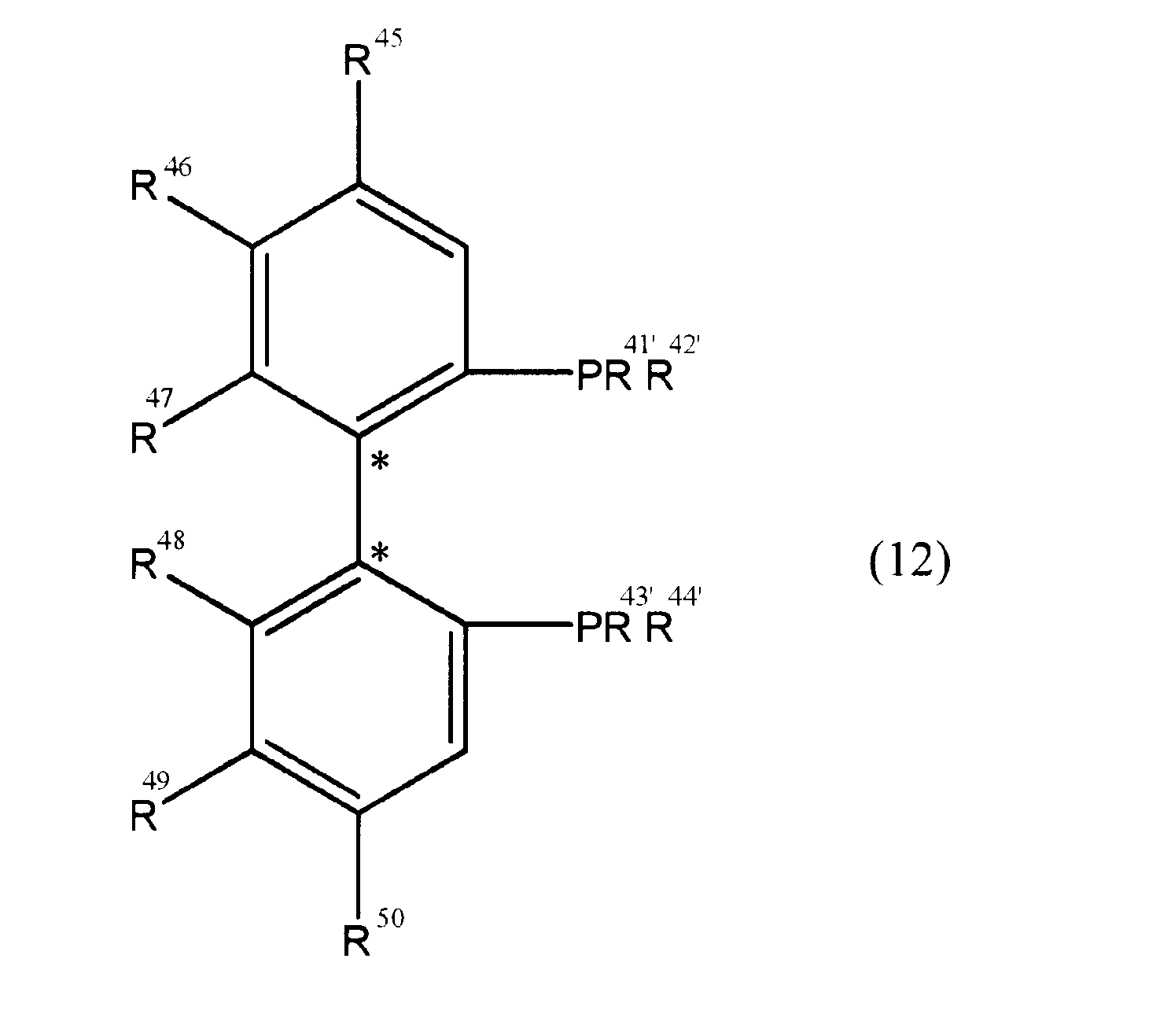
[式中、*は不斉炭素原子であり、
R41’、R42’、R43’及びR44’は、それぞれ独立して、炭素数1~4のアルキル基及び炭素数1~4のアルコキシ基からなる群より選ばれる置換基で置換されていてもよいフェニル基;炭素数1~4のアルキル基及び炭素数1~4のアルコキシ基からなる群より選ばれる置換基で置換されていてもよいシクロペンチル基;又は、炭素数1~4のアルキル基及び炭素数1~4のアルコキシ基からなる群より選ばれる置換基で置換されていてもよいシクロヘキシル基であり、
R45、R46、R47、R48、R49及びR50は、それぞれ独立して、水素原子、炭素数1~4のアルキル基、炭素数1~4のアルコキシ基、ハロゲン原子、炭素数1~4のハロゲン化アルキル基、又は、ジアルキルアミノ基であり、
R45、R46及びR47のうちの二つにより、置換基を有していてもよいアルキレン基;置換基を有していてもよいアルキレンジオキシ基;又は、置換基を有していてもよい芳香環を形成していてもよく、
R48、R49及びR50のうちの二つにより、置換基を有していてもよいアルキレン基;置換基を有していてもよいアルキレンジオキシ基;又は、置換基を有していてもよい芳香環を形成していてもよく、
R47とR48とで置換基を有していてもよいアルキレン基;置換基を有していてもよいアルキレンジオキシ基;又は、置換基を有していてもよい芳香環を形成していてもよい。但し、R47とR48は水素原子ではない。]
[式中、*は不斉炭素原子であり、
R41’、R42’、R43’及びR44’は、それぞれ独立して、炭素数1~4のアルキル基及び炭素数1~4のアルコキシ基からなる群より選ばれる置換基で置換されていてもよいフェニル基;炭素数1~4のアルキル基及び炭素数1~4のアルコキシ基からなる群より選ばれる置換基で置換されていてもよいシクロペンチル基;又は、炭素数1~4のアルキル基及び炭素数1~4のアルコキシ基からなる群より選ばれる置換基で置換されていてもよいシクロヘキシル基であり、
R45、R46、R47、R48、R49及びR50は、それぞれ独立して、水素原子、炭素数1~4のアルキル基、炭素数1~4のアルコキシ基、ハロゲン原子、炭素数1~4のハロゲン化アルキル基、又は、ジアルキルアミノ基であり、
R45、R46及びR47のうちの二つにより、置換基を有していてもよいアルキレン基;置換基を有していてもよいアルキレンジオキシ基;又は、置換基を有していてもよい芳香環を形成していてもよく、
R48、R49及びR50のうちの二つにより、置換基を有していてもよいアルキレン基;置換基を有していてもよいアルキレンジオキシ基;又は、置換基を有していてもよい芳香環を形成していてもよく、
R47とR48とで置換基を有していてもよいアルキレン基;置換基を有していてもよいアルキレンジオキシ基;又は、置換基を有していてもよい芳香環を形成していてもよい。但し、R47とR48は水素原子ではない。]
式(12)における炭素数1~4のアルキル基としては、具体的にはメチル基、エチル基、n-プロピル基、イソプロピル基、n-ブチル基、イソブチル基、s-ブチル基、t-ブチル基などが挙げられる。
炭素数1~4のアルコキシ基としては、具体的にはメトキシ基、エトキシ基、n-プロポキシ基、イソプロポキシ基、n-ブトキシ基、s-ブトキシ基、イソブトキシ基及びt-ブトキシ基などが挙げられる。
ハロゲン原子としては、塩素原子、臭素原子、フッ素原子等が挙げられる。
炭素数1~4のハロゲン化アルキル基としては、トリフルオロメチル基、ペンタフルオロエチル基、ヘプタフルオロプロピル基、トリクロロメチル基などが挙げられる。
ジアルキルアミノ基は、前記アルキル基が置換したアミノ基が挙げられる。
炭素数1~4のアルコキシ基としては、具体的にはメトキシ基、エトキシ基、n-プロポキシ基、イソプロポキシ基、n-ブトキシ基、s-ブトキシ基、イソブトキシ基及びt-ブトキシ基などが挙げられる。
ハロゲン原子としては、塩素原子、臭素原子、フッ素原子等が挙げられる。
炭素数1~4のハロゲン化アルキル基としては、トリフルオロメチル基、ペンタフルオロエチル基、ヘプタフルオロプロピル基、トリクロロメチル基などが挙げられる。
ジアルキルアミノ基は、前記アルキル基が置換したアミノ基が挙げられる。
R45、R46及びR47のうちの2つ、またはR48、R49及びR50のうちの2つにより形成されるアルキレン基としては、炭素数1~6、好ましくは炭素数1~4の直鎖又は分岐のアルキレン基が挙げられる。例えば、メチレン基、エチレン基、トリメチレン基、プロピレン基、テトラメチレン基等が挙げられる。アルキレン基の置換基としては、炭素数1~4のアルキル基、炭素数1~4のアルコキシ基などが挙げられる。
R45、R46及びR47のうちの2つ、またはR48、R49及びR50のうちの2つにより形成されるアルキレンジオキシ基としては、炭素数1~6、好ましくは炭素数1~4の直鎖又は分岐のアルキレンジオキシ基が挙げられる。例えば、メチレンジオキシ基、エチレンジオキシ基、トリメチレンジオキシ基等が挙げられる。アルキレンジオキシ基の置換基としては、炭素数1~4のアルキル基、炭素数1~4のアルコキシ基などが挙げられる。
R45、R46及びR47のうちの2つ、又は、R48、R49及びR50のうちの2つにより形成される芳香環は、隣接する原子と共に6員の芳香環を形成する場合が挙げられる。芳香環の置換基としては、アルキル基やアルコキシ基などが挙げられる。
R45、R46及びR47のうちの2つ、またはR48、R49及びR50のうちの2つにより形成されるアルキレンジオキシ基としては、炭素数1~6、好ましくは炭素数1~4の直鎖又は分岐のアルキレンジオキシ基が挙げられる。例えば、メチレンジオキシ基、エチレンジオキシ基、トリメチレンジオキシ基等が挙げられる。アルキレンジオキシ基の置換基としては、炭素数1~4のアルキル基、炭素数1~4のアルコキシ基などが挙げられる。
R45、R46及びR47のうちの2つ、又は、R48、R49及びR50のうちの2つにより形成される芳香環は、隣接する原子と共に6員の芳香環を形成する場合が挙げられる。芳香環の置換基としては、アルキル基やアルコキシ基などが挙げられる。
式(12)における好ましい例としては、例えば、R41’、R42’、R43’及びR44’は、それぞれ独立して、炭素数1~4のアルキル基及び炭素数1~4のアルコキシ基からなる群より選ばれる置換基で、単数又は複数個置換されていてもよいフェニル基であって、R46とR47とでテトラメチレン基;炭素数1~4のアルキル基若しくはフッ素原子などで置換されていてもよいメチレンジオキシ基;又は、隣接する炭素原子と共にベンゼン環を形成し、R48とR49とでテトラメチレン基;炭素数1~4のアルキル基若しくはフッ素原子などで置換されていてもよいメチレンジオキシ基;又は、隣接する炭素原子と共にベンゼン環を形成する場合が挙げられる。
式(12)で示される光学活性なジホスフィン類のさらに好ましい例としては、下記の式(13)又は(14)で示される光学活性ジホスフィンが挙げられる。
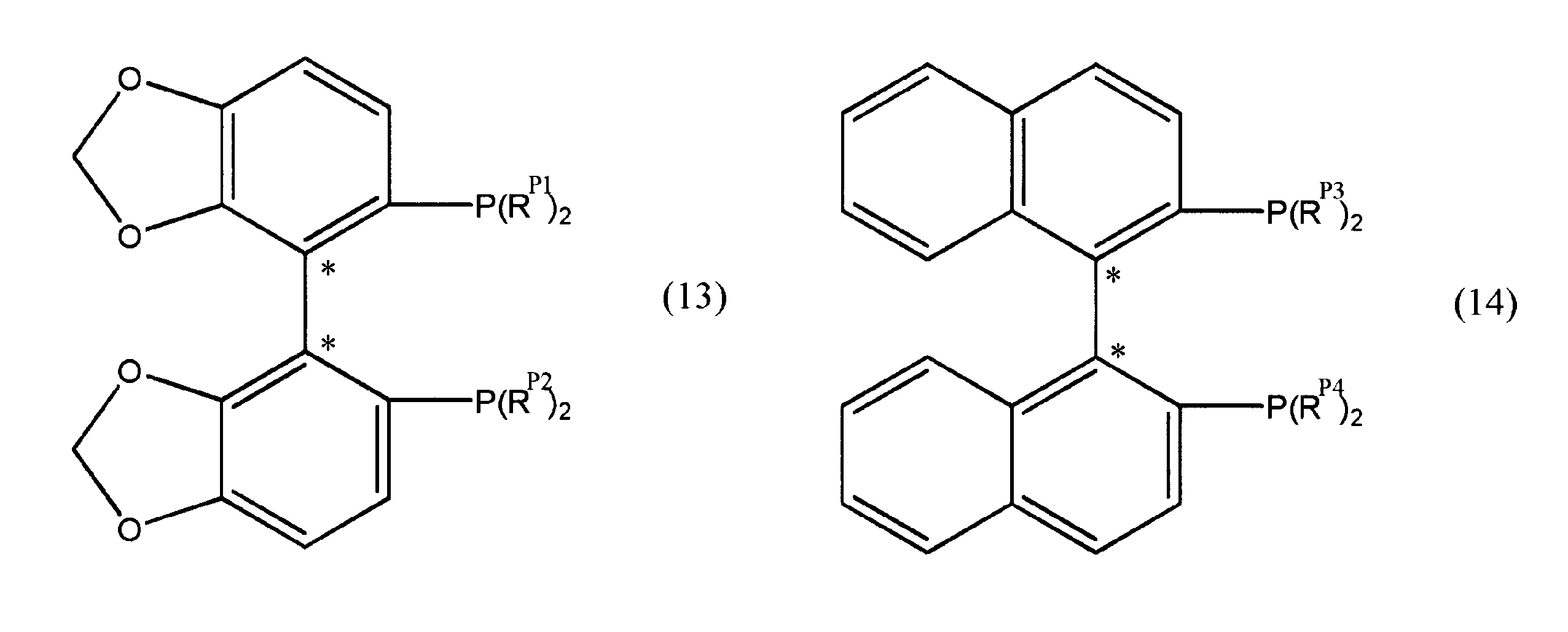
式(13)におけるRP1及びRP2の具体例、及び、式(14)におけるRP3及びRP4の具体例としては、例えば、フェニル基、p-トリル基、m-トリル基、o-トリル基、3,5-キシリル基、3,5-ジ-t-ブチルフェニル基、p-t-ブチルフェニル基、p-メトキシフェニル基、3,5-ジ-t-ブチル-4-メトキシフェニル基、p-クロロフェニル基、m-クロロフェニル基、p-フルオロフェニル基、m-フルオロフェニル基などが挙げられる。これらの中でも、3,5-キシリル基が好ましい。
式(10)で示される光学活性ルテニウム錯体の化合物の中でも、
P⌒Pが式(14)で示される光学活性ジホスフィンであり、
Vがハロゲンイオンであり、
Ra及びRbが、それぞれ独立して、水素原子又は置換基を有してもよいC1~C20アルキル基であり、
RN1、RN2、RN3及びRN4が、水素原子である化合物が好適である。
P⌒Pが式(14)で示される光学活性ジホスフィンであり、
Vがハロゲンイオンであり、
Ra及びRbが、それぞれ独立して、水素原子又は置換基を有してもよいC1~C20アルキル基であり、
RN1、RN2、RN3及びRN4が、水素原子である化合物が好適である。
特に、式(10)で示される光学活性ルテニウム錯体のうち、以下の化合物が好ましい。なお、以下の化合物中、Meはメチル基を表す。
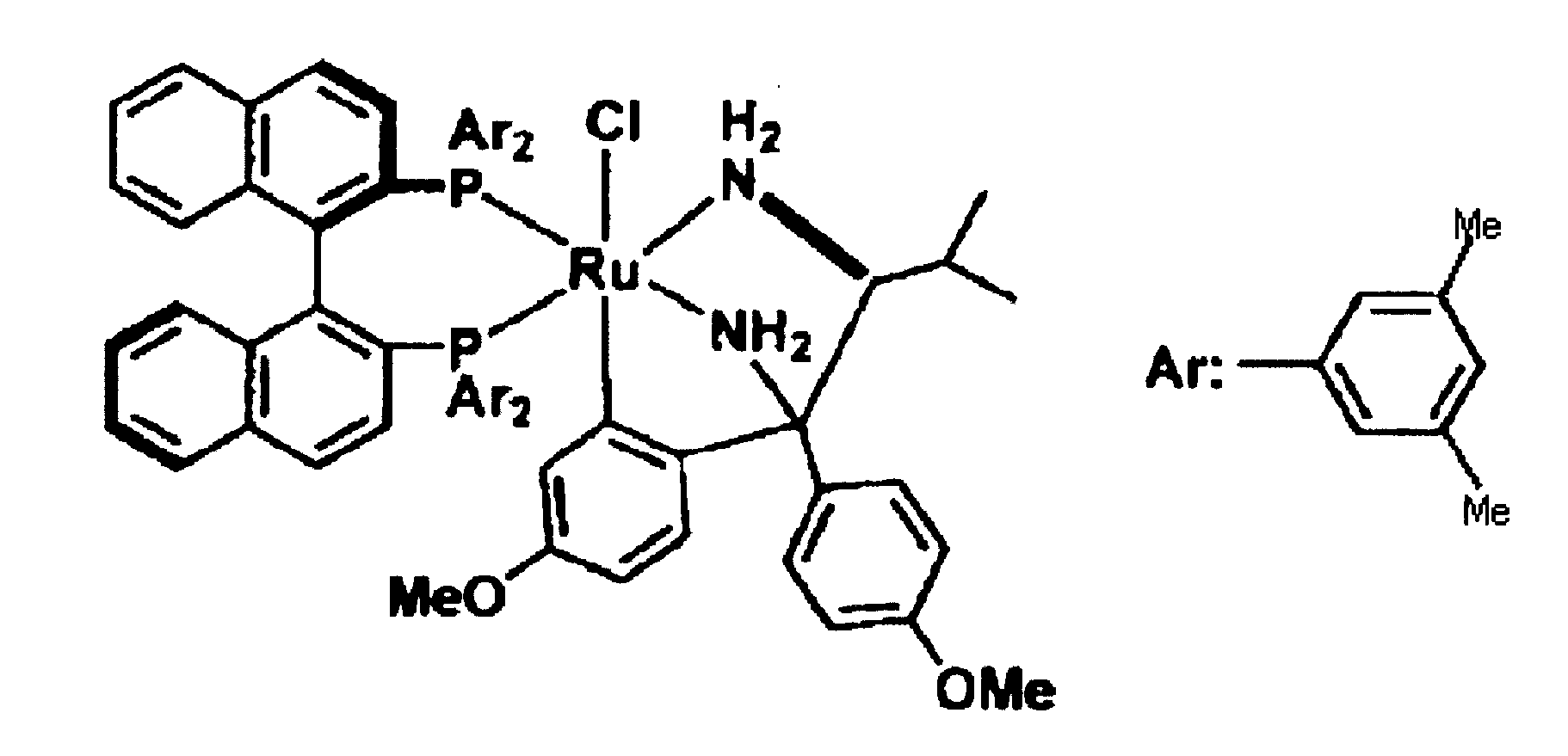
式(8)、(9)及び(10)で示される光学活性ルテニウム錯体は、J.Am.Chem.Soc.,2011,133,10696-10699、特開2011-246435号公報、PCT国際公報 WO2011/135753A1に記載の方法に従って製造することができる。また、市販品を用いてもよい。例えば、STREM社より販売されている(R)-RUCYTM-XylBINAPや(S)-RUCYTM-XylBINAPが挙げられる。
式(8)で示される光学活性ルテニウム錯体の使用量は、反応容器や反応の形式あるいは経済性によっても異なるが、反応基質である式(5)で示されるα-メチル-γ-ケト酸エステルに対してモル比で1/10~1/100,000の範囲、好ましくは1/50~1/10,000の範囲で用いることができる。
用いられる塩基としては、炭酸カリウム(K2CO3)、水酸化カリウム(KOH)、水酸化リチウム(LiOH)、カリウムメトキシド(KOCH3)、カリウムイソプロポキシド(KOCH(CH3)2)、カリウムtert-ブトキシド(KOC(CH3)3)、リチウムメトキシド(LiOCH3)、カリウムナフタレン(KC10H8)、リチウムイソプロポキシド(LiOCH(CH3)2)等のアルカリ金属又はアルカリ土類金属の塩;4級アンモニウム塩等が挙げられる。これらのうち、アルカリ金属又はアルカリ土類金属の塩が好ましい。
塩基の使用量は、式(5)で示されるα-メチル-γ-ケト酸エステルに対して0.001~10モル当量であり、好ましくは0.01~2モル当量である。
反応は、無溶媒又は溶媒中で好適に実施することができるが、溶媒を使用することが好ましい。用いられる溶媒としては、基質及び触媒を溶解できるものが好ましく、単一溶媒あるいは混合溶媒が用いられる。具体的にはトルエン、キシレン等の芳香族炭化水素;ヘキサン、ヘプタン等の脂肪族炭化水素;塩化メチレン、クロロベンゼン等のハロゲン化炭化水素;ジエチルエーテル、テトラヒドロフラン、メチルtert-ブチルエーテル、シクロペンチルメチルエーテル等のエーテル類;メタノール、エタノール、2-プロパノール、n-ブチルアルコール、2-ブタノール、tert-ブチルアルコール等のアルコール類;エチレングリコール、プロピレングリコール、1,2-プロパンジオール及びグリセリン等の多価アルコール類が挙げられる。これらの中でも、エーテル類又はアルコール類が好ましく、特に好ましい溶媒としては、テトラヒドロフラン、メタノール、エタノール又は2-プロパノールが挙げられる。溶媒の使用量は、反応条件等により適宜選択することができる。反応は必要に応じ撹拌下に行われる。
反応温度は、0℃~100℃が好ましく、より好ましくは0℃~50℃の範囲である。反応温度が低すぎると未反応の原料が多く残存する場合があり、また高すぎると、原料、触媒等の分解が起こる場合があり、好ましくない。
水素の圧力は、本触媒系が極めて高活性であることから常圧で十分反応は進行するが、好ましくは0.1MPa~10MPa、より好ましくは0.1MPa~6MPa、さらに好ましくは0.1MPa~3MPaである。
反応時問は1分間~72時間、好ましくは30分間~48時間である。
水素の圧力は、本触媒系が極めて高活性であることから常圧で十分反応は進行するが、好ましくは0.1MPa~10MPa、より好ましくは0.1MPa~6MPa、さらに好ましくは0.1MPa~3MPaである。
反応時問は1分間~72時間、好ましくは30分間~48時間である。
工程E)において、式(6)または(7)で示される化合物から選ばれるルテニウム錯体を使用して還元反応することにより、また、式(8)で示される光学活性なルテニウム錯体を使用して不斉水素化反応することにより、有害な試薬または高価な試薬を用いることなく、通常の反応条件下にてワインラクトンを高選択的に得ることができる。
以上のとおり、第3実施態様においては、工程B-2)に続いて行う工程E)において式(6)または(7)で示される化合物から選ばれるルテニウム錯体を使用して還元反応することにより、また、式(8)で示される光学活性なルテニウム錯体を使用して不斉水素化反応させることにより、式(a)で示される化合物を簡便に製造することができる。
特に、工程E)において式(6)または(7)で示されるルテニウム錯体の光学活性体を使用して不斉還元反応させること、あるいは、式(8)で示される光学活性なルテニウム錯体を使用して不斉水素化反応させることにより、選択的に(3S,3aS,7aR)体及び(3R,3aS,7aR)体を製造することができる。特に、(3S,3aS,7aR)体を高選択的に製造することができる。工程E)の後に、さらに工程D)である蒸留を行うことにより、(3R,3aS,7aR)体が(3S,3aS,7aR)体に異性化するため、(3S,3aS,7aR)体のワインラクトンを、簡便に、高選択的に、光学純度が高く、かつ高収率で製造することができる。
特に、工程E)において式(6)または(7)で示されるルテニウム錯体の光学活性体を使用して不斉還元反応させること、あるいは、式(8)で示される光学活性なルテニウム錯体を使用して不斉水素化反応させることにより、選択的に(3S,3aS,7aR)体及び(3R,3aS,7aR)体を製造することができる。特に、(3S,3aS,7aR)体を高選択的に製造することができる。工程E)の後に、さらに工程D)である蒸留を行うことにより、(3R,3aS,7aR)体が(3S,3aS,7aR)体に異性化するため、(3S,3aS,7aR)体のワインラクトンを、簡便に、高選択的に、光学純度が高く、かつ高収率で製造することができる。
工程D)
本発明の製造方法においては、第1実施態様、第2実施態様、及び第3実施態様で得られた化合物をさらに塩基性条件下にて蒸留することにより、次式:

で示される(3S,3aS,7aR)体及び(3R,3aR,7aS)体から構成されるジアステレオマー異性体混合物を選択的に製造することができる。第1実施態様、第2実施態様及び第3実施態様においては、上記工程(工程D))をさらに含むことが好ましい。
本発明の製造方法においては、第1実施態様、第2実施態様、及び第3実施態様で得られた化合物をさらに塩基性条件下にて蒸留することにより、次式:
で示される(3S,3aS,7aR)体及び(3R,3aR,7aS)体から構成されるジアステレオマー異性体混合物を選択的に製造することができる。第1実施態様、第2実施態様及び第3実施態様においては、上記工程(工程D))をさらに含むことが好ましい。
工程D)は塩基性条件下にて行う。本工程で使用する塩基としては、無機塩基及び有機塩基等が挙げられる。無機塩基及び有機塩基の具体例としては、第1実施態様の工程A)で例示したものを挙げることができる。それらの中でも、有機塩基が好ましい。中でもナトリウムメトキシド、ナトリウムエトキシドが好ましい。
塩基の使用量は、式(a)で示される化合物に対して0.001~10モル当量、好ましくは0.01~3モル当量の範囲から適宜選択される。
蒸留は、次式:

で示される(3S,3aS,7aR)体及び(3R,3aR,7aS)体から構成されるジアステレオマー異性体混合物と、(3R,3aS,7aR)体及び(3S,3aR,7aS)体から構成されるジアステレオマー異性体混合物とが十分に分離される条件であればよい。(3S,3aS,7aR)体及び(3R,3aR,7aS)体から構成されるジアステレオマー異性体混合物と、(3R,3aS,7aR)体及び(3S,3aR,7aS)体から構成されるジアステレオマー異性体混合物とは、沸点が異なるため、沸点差を利用して分離することができる。
で示される(3S,3aS,7aR)体及び(3R,3aR,7aS)体から構成されるジアステレオマー異性体混合物と、(3R,3aS,7aR)体及び(3S,3aR,7aS)体から構成されるジアステレオマー異性体混合物とが十分に分離される条件であればよい。(3S,3aS,7aR)体及び(3R,3aR,7aS)体から構成されるジアステレオマー異性体混合物と、(3R,3aS,7aR)体及び(3S,3aR,7aS)体から構成されるジアステレオマー異性体混合物とは、沸点が異なるため、沸点差を利用して分離することができる。
例えば、充填塔等を用いて蒸留を行うことで、上記の条件を満たすことができる。
使用する充填物としては、ラシヒリング、レッシングリング、ポールリング、スルーザーパッキン等が挙げられる。
蒸留温度は、式(a):
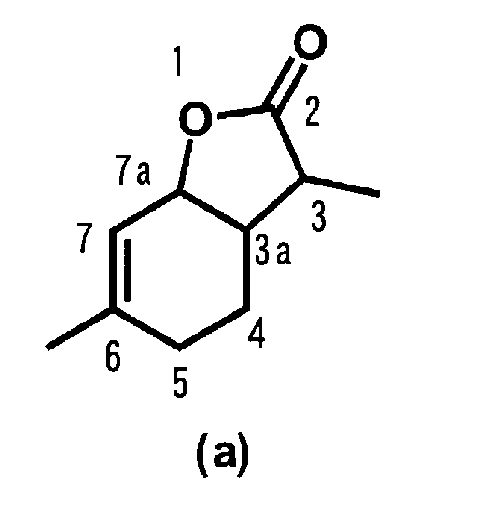
で示される化合物の3位のメチル基の異性化反応が進行する温度以上が好ましく、通常0~130℃であるが、好ましくは50~130℃の範囲から適宜選択される。
使用する充填物としては、ラシヒリング、レッシングリング、ポールリング、スルーザーパッキン等が挙げられる。
蒸留温度は、式(a):
で示される化合物の3位のメチル基の異性化反応が進行する温度以上が好ましく、通常0~130℃であるが、好ましくは50~130℃の範囲から適宜選択される。
ワインラクトンすなわち(3S,3aS,7aR)体は、香質に優れており、香りの強度も強い。そのため、(3S,3aS,7aR)体及び(3R,3aR,7aS)体から構成されるジアステレオマー異性体混合物を蒸留により選択的に製造することは、経済的観点からも好ましい。
本発明の好ましい態様によれば、工程D)により、(3S,3aS,7aR)体及び(3R,3aR,7aS)体から構成されるジアステレオマー異性体混合物が、工程C)で得られた式(a)で示される化合物、特に(3S,3aS,7aR)体、(3R,3aR,7aS)体、(3R,3aS,7aR)体及び(3S,3aR,7aS)体の全重量に対して90重量%以上含有する式(a)で示される化合物を製造することができる。
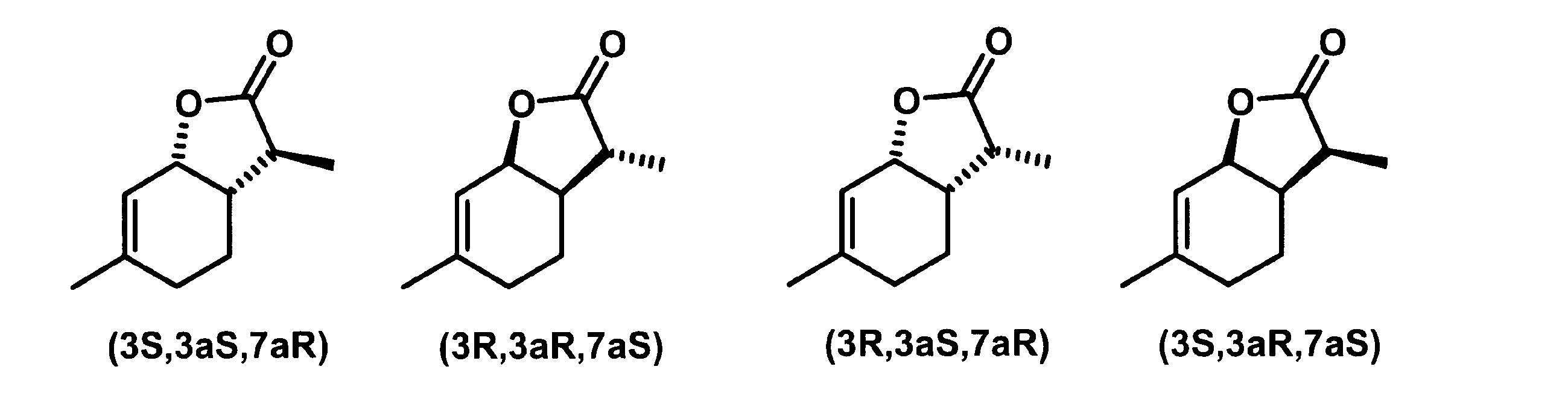
また、第1及び第2実施態様の工程C)の還元反応において、式(6)または(7)で示されるルテニウム錯体の光学活性体及び水素供与体の存在下で不斉還元反応させること; 第3実施態様の工程E)において式(6)または(7)で示されるルテニウム錯体の光学活性体及び水素供与体の存在下で不斉還元反応させること;あるいは、第3実施態様の工程E)において式(8)で示される光学活性ルテニウム錯体及び水素ガスの存在下にて不斉水素化反応させることにより、(3S,3aS,7aR)体を選択的に製造してから、工程D)を行うことにより、(3S,3aS,7aR)体及び(3R,3aR,7aS)体から構成されるジアステレオマー異性体混合物中の(3S,3aS,7aR)体を多く含有するジアステレオマー異性体混合物を製造することができる。
さらには、第3実施態様の工程E)において式(6)または(7)で示されるルテニウム錯体の光学活性体及び水素供与体の存在下で不斉還元反応させてから、工程D)を行うことにより、(3S,3aS,7aR)体を、工程E)で得られた式(a)で示される化合物、特に(3S,3aS,7aR)体、(3R,3aR,7aS)体、(3R,3aS,7aR)体及び(3S,3aR,7aS)体の全重量に対して85重量%以上含有する式(a)で示される化合物を製造することができる。
さらには、第3実施態様の工程E)において式(6)または(7)で示されるルテニウム錯体の光学活性体及び水素供与体の存在下で不斉還元反応させてから、工程D)を行うことにより、(3S,3aS,7aR)体を、工程E)で得られた式(a)で示される化合物、特に(3S,3aS,7aR)体、(3R,3aR,7aS)体、(3R,3aS,7aR)体及び(3S,3aR,7aS)体の全重量に対して85重量%以上含有する式(a)で示される化合物を製造することができる。
工程F)
第1実施態様及び第2実施態様の工程C)の還元反応において式(6)または(7)で示されるルテニウム錯体の光学活性体及び水素供与体の存在下で不斉還元反応させる場合;第3実施態様の工程E)において一般式(6)または(7)で示されるルテニウム錯体の光学活性体及び水素供与体の存在下で不斉還元反応させる場合;あるいは、第3実施態様の工程E)において式(8)で示される光学活性ルテニウム錯体と水素ガスとの存在下にて不斉水素化反応させる場合;その後に行う工程D)の蒸留により収率よく(3S,3aS,7aR)体のワインラクトンを製造できるが、得られた高収率の(3S,3aS,7aR)体のワインラクトンを、再結晶(工程F))によりさらに精製することで、ほぼ純粋な(3S,3aS,7aR)体のワインラクトン、つまり高光学純度の(3S,3aS,7aR)体のワインラクトンを製造することが可能である。
第1実施態様及び第2実施態様の工程C)の還元反応において式(6)または(7)で示されるルテニウム錯体の光学活性体及び水素供与体の存在下で不斉還元反応させる場合;第3実施態様の工程E)において一般式(6)または(7)で示されるルテニウム錯体の光学活性体及び水素供与体の存在下で不斉還元反応させる場合;あるいは、第3実施態様の工程E)において式(8)で示される光学活性ルテニウム錯体と水素ガスとの存在下にて不斉水素化反応させる場合;その後に行う工程D)の蒸留により収率よく(3S,3aS,7aR)体のワインラクトンを製造できるが、得られた高収率の(3S,3aS,7aR)体のワインラクトンを、再結晶(工程F))によりさらに精製することで、ほぼ純粋な(3S,3aS,7aR)体のワインラクトン、つまり高光学純度の(3S,3aS,7aR)体のワインラクトンを製造することが可能である。
工程F)で使用する溶媒としては、特に制限されないが、例えば、ペンタン、ヘキサン、ヘプタン、オクタン、デカン、シクロヘキサン等の脂肪族炭化水素類; ベンゼン、トルエン、キシレン等の芳香族炭化水素類; ジクロロメタン、クロロホルム、四塩化炭素、o-ジクロロベンゼン等のハロゲン化炭化水素類; ジエチルエーテル、ジイソプロピルエーテル、tert-ブチルメチルエーテル、ジメトキシエタン、エチレングリコールジエチルエーテル、テトラヒドロフラン、1,4-ジオキサン、1,3-ジオキソラン等のエーテル類; メタノール、エタノール、2-プロパノール、n-ブタノール、2-エトキシエタノール、ベンジルアルコール等のアルコール類; エチレングリコール、プロピレングリコール、1,2-プロパンジオール、グリセリン等の多価アルコール類; ギ酸、酢酸、プロピオン酸等の酸類; ジメチルスルホキシド等のスルホキシド類; N-メチルピロリドン、水等が挙げられる。
これらの溶媒は、単独で用いてもよいし、2種以上を適宜組み合わせて用いてもよい。これらの中でも、脂肪族炭化水素類及びアルコール類が好ましい。
溶媒の使用量は、次式:

で示される(3S,3aS,7aR)体及び(3R,3aR,7aS)体から構成されるジアステレオマー異性体混合物に対して、通常0.5~100倍容量、好ましくは1~40倍容量の範囲から適宜選択される。
再結晶の反応温度は、通常0℃~100℃、好ましくは0℃~80℃の範囲から適宜選択される。また、反応時間は、通常0.5~48時間、好ましくは1~24時間の範囲から適宜選択される。
これらの溶媒は、単独で用いてもよいし、2種以上を適宜組み合わせて用いてもよい。これらの中でも、脂肪族炭化水素類及びアルコール類が好ましい。
溶媒の使用量は、次式:
で示される(3S,3aS,7aR)体及び(3R,3aR,7aS)体から構成されるジアステレオマー異性体混合物に対して、通常0.5~100倍容量、好ましくは1~40倍容量の範囲から適宜選択される。
再結晶の反応温度は、通常0℃~100℃、好ましくは0℃~80℃の範囲から適宜選択される。また、反応時間は、通常0.5~48時間、好ましくは1~24時間の範囲から適宜選択される。
上述したとおり、本発明では、全ての製造工程が0℃以上130℃以下で行われ、極度の低温や高温を必要とせずにワインラクトンもしくはその立体異性体またはそれらの混合物を製造することができる。
さらには、全ての製造工程においてシリカゲルカラムクロマトグラフィーによる精製工程を特に必要とせずにワインラクトンもしくはその立体異性体またはそれらの混合物を製造することができる。
本発明で得られたワインラクトンもしくはその立体異性体またはそれらの混合物は、飲食品、香粧品、日用・雑貨品、口腔用組成物、医薬品等に添加することができる。
ワインラクトンもしくはその立体異性体またはそれらの混合物を飲食品、香粧品、日用・雑貨品、口腔用組成物、医薬品に添加することにより、これらの製品に果汁感や完熟感、ボディ感を与えることができる。
飲食品としては、例えば、果汁飲料類、果実酒類、乳飲料類、炭酸飲料、清涼飲料、ドリンク剤類などの飲料類; アイスクリーム類、シャーベット類、アイスキャンディー類などの冷菓類;ゼリー、プリンなどのデザート類; ケーキ、クッキー、チョコレート、チューインガムなどの洋菓子類; 饅頭、羊羹、ウイロウなどの和菓子類; ジャム類; キャンディー類; パン類; 緑茶、ウーロン茶、紅茶、柿の葉茶、カミツレ茶、クマザサ茶、桑茶、ドクダミ茶、プアール茶、マテ茶、ルイボス茶、ギムネマ茶、グアバ茶、コーヒー、ココアなどの茶飲料または嗜好飲料類; 和風スープ、洋風スープ、中華スープなどのスープ類; 風味調味料; 各種インスタント飲料または食品類; 各種スナック食品類などを挙げることができる。
飲食品としては、例えば、果汁飲料類、果実酒類、乳飲料類、炭酸飲料、清涼飲料、ドリンク剤類などの飲料類; アイスクリーム類、シャーベット類、アイスキャンディー類などの冷菓類;ゼリー、プリンなどのデザート類; ケーキ、クッキー、チョコレート、チューインガムなどの洋菓子類; 饅頭、羊羹、ウイロウなどの和菓子類; ジャム類; キャンディー類; パン類; 緑茶、ウーロン茶、紅茶、柿の葉茶、カミツレ茶、クマザサ茶、桑茶、ドクダミ茶、プアール茶、マテ茶、ルイボス茶、ギムネマ茶、グアバ茶、コーヒー、ココアなどの茶飲料または嗜好飲料類; 和風スープ、洋風スープ、中華スープなどのスープ類; 風味調味料; 各種インスタント飲料または食品類; 各種スナック食品類などを挙げることができる。
香粧品としては、例えば、フレグランス製品、基礎化粧品、仕上げ化粧品、頭髪化粧品、日焼け化粧品、薬用化粧品などを挙げることができる。
具体的には、フレグランス製品としては、例えば、香水、オードパルファム、オードトワレ、オーデコロンなど;
基礎化粧品としては、例えば、洗顔クリーム、バニシングクリーム、クレンジングクリーム、コールドクリーム、マッサージクリーム、乳液、化粧水、美容液、パック、メイク落としなど;
仕上げ化粧品としては、例えば、ファンデーション、粉おしろい、固形おしろい、タルカムパウダー、口紅、リップクリーム、頬紅、アイライナー、マスカラ、アイシャドウ、眉墨、アイパック、ネイルエナメル、エナメルリムーバーなど;
頭髪化粧品としては、例えば、ポマード、ブリランチン、セットローション、ヘアースティック、ヘアーソリッド、ヘアーオイル、ヘアートリートメント、ヘアークリーム、ヘアートニック、ヘアーリキッド、ヘアースプレー、バンドリン、養毛剤、染毛剤など;
日焼け化粧品としては、例えば、サンタン製品、サンスクリーン製品など;
薬用化粧品としては、例えば、制汗剤、アフターシェービングローション、ジェル、パーマネントウェーブ剤、薬用石鹸、薬用シャンプー、薬用皮膚化粧料など;
が挙げられる。
基礎化粧品としては、例えば、洗顔クリーム、バニシングクリーム、クレンジングクリーム、コールドクリーム、マッサージクリーム、乳液、化粧水、美容液、パック、メイク落としなど;
仕上げ化粧品としては、例えば、ファンデーション、粉おしろい、固形おしろい、タルカムパウダー、口紅、リップクリーム、頬紅、アイライナー、マスカラ、アイシャドウ、眉墨、アイパック、ネイルエナメル、エナメルリムーバーなど;
頭髪化粧品としては、例えば、ポマード、ブリランチン、セットローション、ヘアースティック、ヘアーソリッド、ヘアーオイル、ヘアートリートメント、ヘアークリーム、ヘアートニック、ヘアーリキッド、ヘアースプレー、バンドリン、養毛剤、染毛剤など;
日焼け化粧品としては、例えば、サンタン製品、サンスクリーン製品など;
薬用化粧品としては、例えば、制汗剤、アフターシェービングローション、ジェル、パーマネントウェーブ剤、薬用石鹸、薬用シャンプー、薬用皮膚化粧料など;
が挙げられる。
日用・雑貨品としては、例えば、ヘアケア製品、石鹸、身体洗浄剤、浴用剤、洗剤、柔軟仕上げ剤、洗浄剤、台所用洗剤、漂白剤、エアゾール剤、消臭・芳香剤、雑貨、シェービング製品、スキンケア製品、忌避剤、煙草製品などを挙げることができる。
具体的には、ヘアケア製品としては、例えば、シャンプー、リンス、リンスインシャンプー、コンディショナー、トリートメント、ヘアパックなど;
石鹸としては、例えば、化粧石鹸、浴用石鹸、香水石鹸、透明石鹸、合成石鹸など;
身体洗浄剤としては、例えば、ボディソープ、ボディシャンプー、ハンドソープなど;
浴用剤としては、例えば、入浴剤(バスソルト、バスタブレット、バスリキッド等)、フォームバス(バブルバス等)、バスオイル(バスパフューム、バスカプセル等)、ミルクバス、バスジェリー、バスキューブなど;
洗剤としては、例えば、衣料用重質洗剤、衣料用軽質洗剤、液体洗剤、洗濯石鹸、コンパクト洗剤、粉石鹸など;
柔軟仕上げ剤としては、例えば、ソフナー、ファーニチャーケアなど;
洗浄剤としては、例えば、クレンザー、ハウスクリーナー、トイレ洗浄剤、浴室用洗浄剤、ガラスクリーナー、カビ取り剤、排水管用洗浄剤など;
台所用洗剤としては、例えば、台所用石鹸、台所用合成石鹸、食器用洗剤など;
漂白剤としては、例えば、酸化型漂白剤(塩素系漂白剤、酸素系漂白剤等)、還元型漂白剤(硫黄系漂白剤等)、光学的漂白剤など)など;
エアゾール剤としては、例えば、スプレータイプ、パウダースプレーなど;
消臭・芳香剤としては、例えば、固形状タイプ、ゲル状タイプ、リキッドタイプなど;
雑貨としては、例えば、ティッシュペーパー、トイレットペーパーなど;
シェービング製品としては、例えば、シェービングフォームなど;
スキンケア製品としては、ハンドクリーム、ボディクリーム、ボディーローションなど;
を挙げることができる。
石鹸としては、例えば、化粧石鹸、浴用石鹸、香水石鹸、透明石鹸、合成石鹸など;
身体洗浄剤としては、例えば、ボディソープ、ボディシャンプー、ハンドソープなど;
浴用剤としては、例えば、入浴剤(バスソルト、バスタブレット、バスリキッド等)、フォームバス(バブルバス等)、バスオイル(バスパフューム、バスカプセル等)、ミルクバス、バスジェリー、バスキューブなど;
洗剤としては、例えば、衣料用重質洗剤、衣料用軽質洗剤、液体洗剤、洗濯石鹸、コンパクト洗剤、粉石鹸など;
柔軟仕上げ剤としては、例えば、ソフナー、ファーニチャーケアなど;
洗浄剤としては、例えば、クレンザー、ハウスクリーナー、トイレ洗浄剤、浴室用洗浄剤、ガラスクリーナー、カビ取り剤、排水管用洗浄剤など;
台所用洗剤としては、例えば、台所用石鹸、台所用合成石鹸、食器用洗剤など;
漂白剤としては、例えば、酸化型漂白剤(塩素系漂白剤、酸素系漂白剤等)、還元型漂白剤(硫黄系漂白剤等)、光学的漂白剤など)など;
エアゾール剤としては、例えば、スプレータイプ、パウダースプレーなど;
消臭・芳香剤としては、例えば、固形状タイプ、ゲル状タイプ、リキッドタイプなど;
雑貨としては、例えば、ティッシュペーパー、トイレットペーパーなど;
シェービング製品としては、例えば、シェービングフォームなど;
スキンケア製品としては、ハンドクリーム、ボディクリーム、ボディーローションなど;
を挙げることができる。
口腔用組成物としては、例えば、歯磨き剤、口腔洗浄料、マウスウォッシュ、トローチ、チューインガム類などを挙げることができる。
医薬品としては、例えば、ハップ剤、軟膏剤などの皮膚外用剤、内服剤などを挙げることができる。
医薬品としては、例えば、ハップ剤、軟膏剤などの皮膚外用剤、内服剤などを挙げることができる。
以下、実施例を用いて本発明をより具体的に説明するが、本発明はこれらにより何ら限定されるものではない。
[測定機器]
実施例において得られた化合物の物性の測定には次の機器を用いた。
(1)NMR:DRX500(Bruker社製)
(2)GC/MS:GCMS-QP2010(島津製作所社製)
カラム:RTX-1(長さ30m×内径0.25mm、液相膜厚0.25μm)
(3)ガスクロマトグラフィー純度分析:GC-4000(GLサイエンス製)
カラム:RTX-1(長さ30m×内径0.25mm、液相膜厚0.25μm)
温度条件:カラム100℃→250℃(10℃/分)
注入口250℃、検出器250℃(FID)
(4)光学純度分析(ガスクロマトグラフィー):GC-4000(GLサイエンス製)
カラム:Beta DEXTM-225(長さ30m×内径0.25mm、液相膜厚0.25μm)
温度条件:カラム100℃→200℃(2℃/分)
注入口200℃、検出器200℃(FID)
融点測定器:YANAGIMOTO MICRO MELTING POINT APPARATUS
実施例において得られた化合物の物性の測定には次の機器を用いた。
(1)NMR:DRX500(Bruker社製)
(2)GC/MS:GCMS-QP2010(島津製作所社製)
カラム:RTX-1(長さ30m×内径0.25mm、液相膜厚0.25μm)
(3)ガスクロマトグラフィー純度分析:GC-4000(GLサイエンス製)
カラム:RTX-1(長さ30m×内径0.25mm、液相膜厚0.25μm)
温度条件:カラム100℃→250℃(10℃/分)
注入口250℃、検出器250℃(FID)
(4)光学純度分析(ガスクロマトグラフィー):GC-4000(GLサイエンス製)
カラム:Beta DEXTM-225(長さ30m×内径0.25mm、液相膜厚0.25μm)
温度条件:カラム100℃→200℃(2℃/分)
注入口200℃、検出器200℃(FID)
融点測定器:YANAGIMOTO MICRO MELTING POINT APPARATUS
なお、以下の式中、Meはメチル基を表す。
〔実施例1〕
[1]工程A
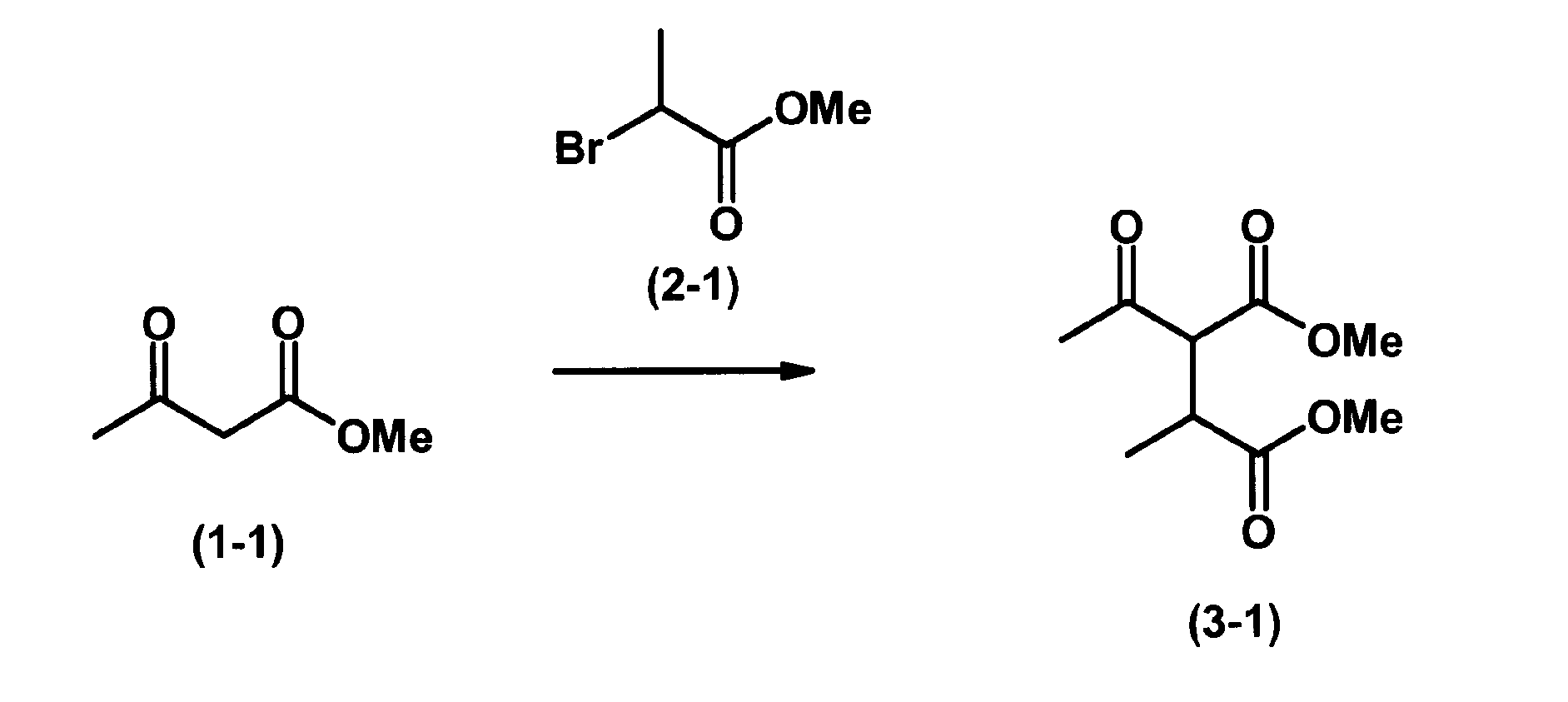
[1]工程A
窒素気流下、28%ナトリウムメトキシドのメタノール溶液577.5g(2.99mol)及びメタノール500mlを内温3℃で撹拌し、アセト酢酸メチル(1-1)347.6g(2.99mol)を滴下した後、2-ブロモプロピオン酸メチル(2-1)577.5g(2.99mol,1eq)を滴下した。滴下終了後、70℃にて3時間攪拌を行って反応させ、その後0.5N HCl350mlを加えて反応を停止させた。減圧下にて溶媒を回収後、トルエンにより生成物を抽出し、628.5gの粗2-アセト-3-メチル-コハク酸エステル(3-1)を得た。120℃にて蒸留することにより2-アセト-3-メチル-コハク酸エステル(3-1)を460.9g得た。
1H-NMR(CDCl3)(Isomer major):δ 1.17(d,3H,J=8.9),2.26(s、3H)、3.22(m、1H),3.65(s、3H),3.73(s、3H),3.85(d、1H、J=10.3)
1H-NMR(CDCl3)(Isomer minor):δ 1.15(d,3H,J=9.0),2.28(s、3H)、3.22(m、1H),3.67(s、3H),3.70(s、3H),3.82(d、1H、J=9.5)
13C-NMR(CDCl3):δ 15.07,15.26,29.59,38.68、38.71、52.07、52.58、52.61、61.41、62.01、168.15、175.00、201.27
GC/MS(m/e);202(M+,),171、160、143、128、113、101、85、70、69、43、41、36
1H-NMR(CDCl3)(Isomer minor):δ 1.15(d,3H,J=9.0),2.28(s、3H)、3.22(m、1H),3.67(s、3H),3.70(s、3H),3.82(d、1H、J=9.5)
13C-NMR(CDCl3):δ 15.07,15.26,29.59,38.68、38.71、52.07、52.58、52.61、61.41、62.01、168.15、175.00、201.27
GC/MS(m/e);202(M+,),171、160、143、128、113、101、85、70、69、43、41、36
[2]工程B-1
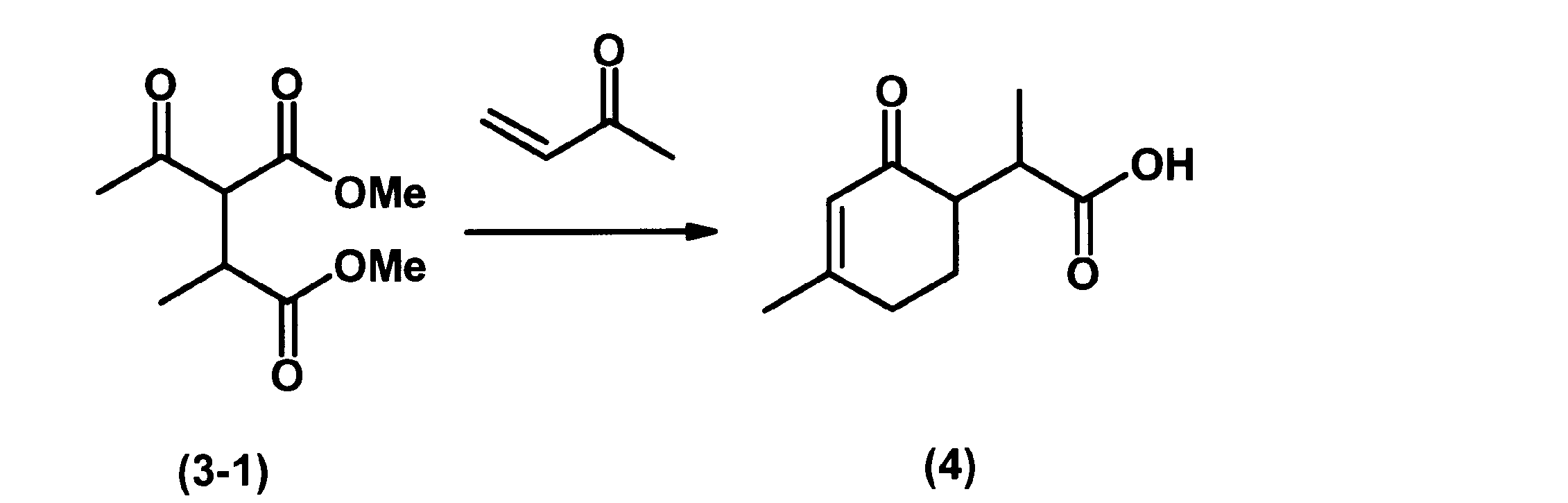
上記[1]で得られた2-アセト-3-メチル-コハク酸エステル(3-1)250.0g(1.24mol)をジメチルスルホキシド(以下、DMSOと記す)500mlに溶解し、水酸化カリウム1.04g(0.02mol)を加えて内温40℃にて30分攪拌した。同温にて、メチルビニルケトン113ml(1.35mol)を滴下した後、同温にて3時間攪拌した。反応液にメタノール500mlを加え、0~10℃で冷却し、28%ナトリウムメトキシドのメタノール溶液239.0g(1.24mol)を0~10℃にて滴下し、30分間攪拌した後、2N NaOH1.58L(3.16mol)を滴下し、40℃に加温して7時間攪拌した。
減圧下にて溶媒を回収した後、5N HCl892ml(4.46mol)を加え、酢酸エチルにて抽出後、有機層をエバポレーターにて濃縮して、250gの粗α-メチル-γ-ケト酸(4)を得た。
減圧下にて溶媒を回収した後、5N HCl892ml(4.46mol)を加え、酢酸エチルにて抽出後、有機層をエバポレーターにて濃縮して、250gの粗α-メチル-γ-ケト酸(4)を得た。
1H-NMR(CDCl3)(Isomer major):δ 1.22(d,3H,J=7.3),1.98(s、3H)、2.04(m、2H),2.38(m、2H),2.63(dt、1H、J=4.7、12.5),2.99(dq、1H、J=4.5、7.2)、5.90(s、1H)、6.22(bs、1H)
1H-NMR(CDCl3)(Isomer minor):δ 1.11(d,3H,J=7.2),1.97(s、3H)、2.04(m、2H),2.38(m、2H),2.76(dt、1H、J=4.9、14.1),3.15(dq、1H、J=5.3、7.2)、5.89(s、1H)、6.22(bs、1H)
13C-NMR(CDCl3):δ 12.54、13.16、24.21、25.38、30.96、31.24、37.88、38.99,47.81,48.07、126.37、126.43、162.79、178.97、181.25、198.81、199.59
GC/MS(m/e);164(M-H2O,),136、123、109、95、82、67、54、39、36
1H-NMR(CDCl3)(Isomer minor):δ 1.11(d,3H,J=7.2),1.97(s、3H)、2.04(m、2H),2.38(m、2H),2.76(dt、1H、J=4.9、14.1),3.15(dq、1H、J=5.3、7.2)、5.89(s、1H)、6.22(bs、1H)
13C-NMR(CDCl3):δ 12.54、13.16、24.21、25.38、30.96、31.24、37.88、38.99,47.81,48.07、126.37、126.43、162.79、178.97、181.25、198.81、199.59
GC/MS(m/e);164(M-H2O,),136、123、109、95、82、67、54、39、36
(3)工程C
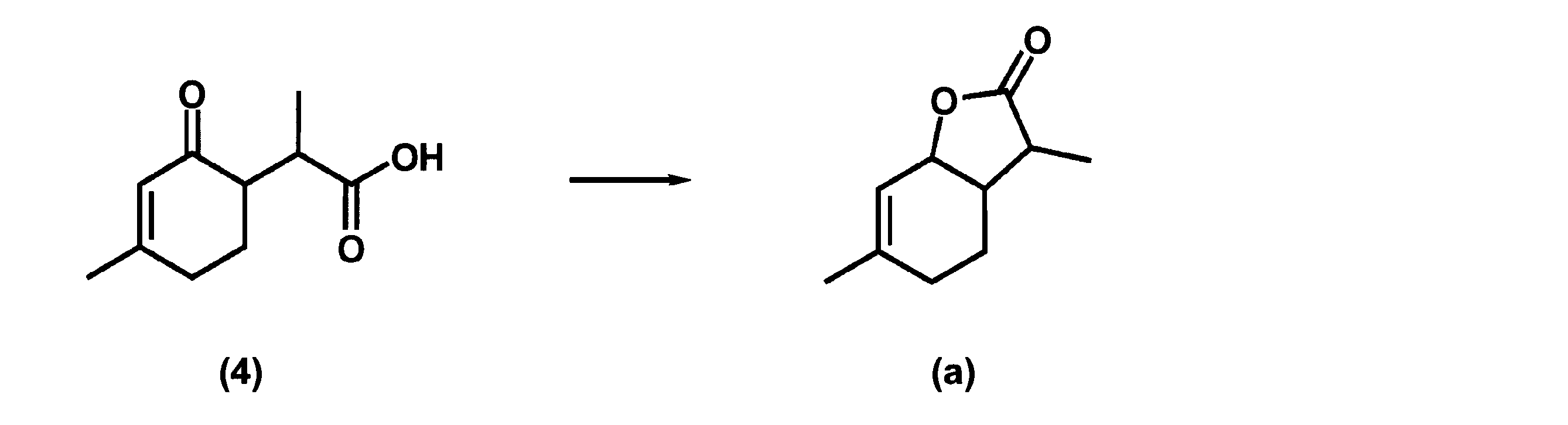
[γ-ケト酸ナトリウム塩-塩化セリウム混合溶液の調製]
上記[2]で得られた粗α-メチル-γ-ケト酸(4)130.0g(0.45mol)をエタノール950mlに溶解させた溶液を、窒素雰囲気下、0~10℃にて攪拌し、そこへ28%ナトリウムメトキシドのメタノール溶液138.4g(0.72mol)および塩化セリウム七水和物101.5g(0.27mol)を加え、30分間攪拌し、γ-ケト酸ナトリウム塩-塩化セリウム混合溶液を調製した。
上記[2]で得られた粗α-メチル-γ-ケト酸(4)130.0g(0.45mol)をエタノール950mlに溶解させた溶液を、窒素雰囲気下、0~10℃にて攪拌し、そこへ28%ナトリウムメトキシドのメタノール溶液138.4g(0.72mol)および塩化セリウム七水和物101.5g(0.27mol)を加え、30分間攪拌し、γ-ケト酸ナトリウム塩-塩化セリウム混合溶液を調製した。
[還元反応]
エタノール1.0Lを内温2℃で攪拌し、水素化ホウ素ナトリウム9.45g(0.25mol)を加えた。そこへ調製したγ-ケト酸ナトリウム塩-塩化セリウム混合溶液全量を滴下した。引き続き0~10℃で1.5時間攪拌して反応させた後、アセトン102 ml(1.38mol)、水2.6L、および5N塩酸300g(1.50mol)を滴下し、反応を停止した。
その後、減圧下にて溶媒回収を行った後、トルエンを加えて生成物を抽出し、得られた有機層を5%炭酸ナトリウム水溶液および5%塩化ナトリウム水溶液にて洗浄した。得られた有機層を減圧下にて濃縮し化合物(a)((3S,3aS,7aR)+(3R,3aR,7aS):(3R,3aS,7aR)+(3S,3aR,7aS)=57:43)を得た。
エタノール1.0Lを内温2℃で攪拌し、水素化ホウ素ナトリウム9.45g(0.25mol)を加えた。そこへ調製したγ-ケト酸ナトリウム塩-塩化セリウム混合溶液全量を滴下した。引き続き0~10℃で1.5時間攪拌して反応させた後、アセトン102 ml(1.38mol)、水2.6L、および5N塩酸300g(1.50mol)を滴下し、反応を停止した。
その後、減圧下にて溶媒回収を行った後、トルエンを加えて生成物を抽出し、得られた有機層を5%炭酸ナトリウム水溶液および5%塩化ナトリウム水溶液にて洗浄した。得られた有機層を減圧下にて濃縮し化合物(a)((3S,3aS,7aR)+(3R,3aR,7aS):(3R,3aS,7aR)+(3S,3aR,7aS)=57:43)を得た。
前記[γ-ケト酸ナトリウム塩-塩化セリウム混合溶液の調製]および[還元反応]の操作を3回行い、化合物(a)を合計194.6g得た。
[4]工程D(蒸留)
上記(3)で得られた化合物(a)194.6g(1.17mol)((3S,3aS,7aR)+(3R,3aR,7aS):(3R,3aS,7aR)+(3S,3aR,7aS)=57:43)にナトリウムメトキシドを0.03モル当量加え、異性化させながら精密蒸留(100~130℃)を行い、153.5gの精製した化合物(a)((3S,3aS,7aR)+(3R,3aR,7aS):(3R,3aS,7aR)+(3S,3aR,7aS)=97:3)を得た。
上記(3)で得られた化合物(a)194.6g(1.17mol)((3S,3aS,7aR)+(3R,3aR,7aS):(3R,3aS,7aR)+(3S,3aR,7aS)=57:43)にナトリウムメトキシドを0.03モル当量加え、異性化させながら精密蒸留(100~130℃)を行い、153.5gの精製した化合物(a)((3S,3aS,7aR)+(3R,3aR,7aS):(3R,3aS,7aR)+(3S,3aR,7aS)=97:3)を得た。
1H-NMR(CDCl3):δ 1.24(d,3H,J=7.2),1.71(s、3H)、1.73(m、1H),1.82(m、1H),1.97(m、2H),2.25(m、1H),2.41(dq、1H、J=7.2、8.5)、4.88(m、1H)、5.49(m、1H)
13C-NMR(CDCl3):δ 13.95、22.23、23.59、25.90、37.56、40.32、75.38、118.76、140.72、179.68
GC/MS(m/e);166(M+,),151、138、123、107、93、79、69、55、39、36
13C-NMR(CDCl3):δ 13.95、22.23、23.59、25.90、37.56、40.32、75.38、118.76、140.72、179.68
GC/MS(m/e);166(M+,),151、138、123、107、93、79、69、55、39、36
〔実施例2〕
[1]工程B-2
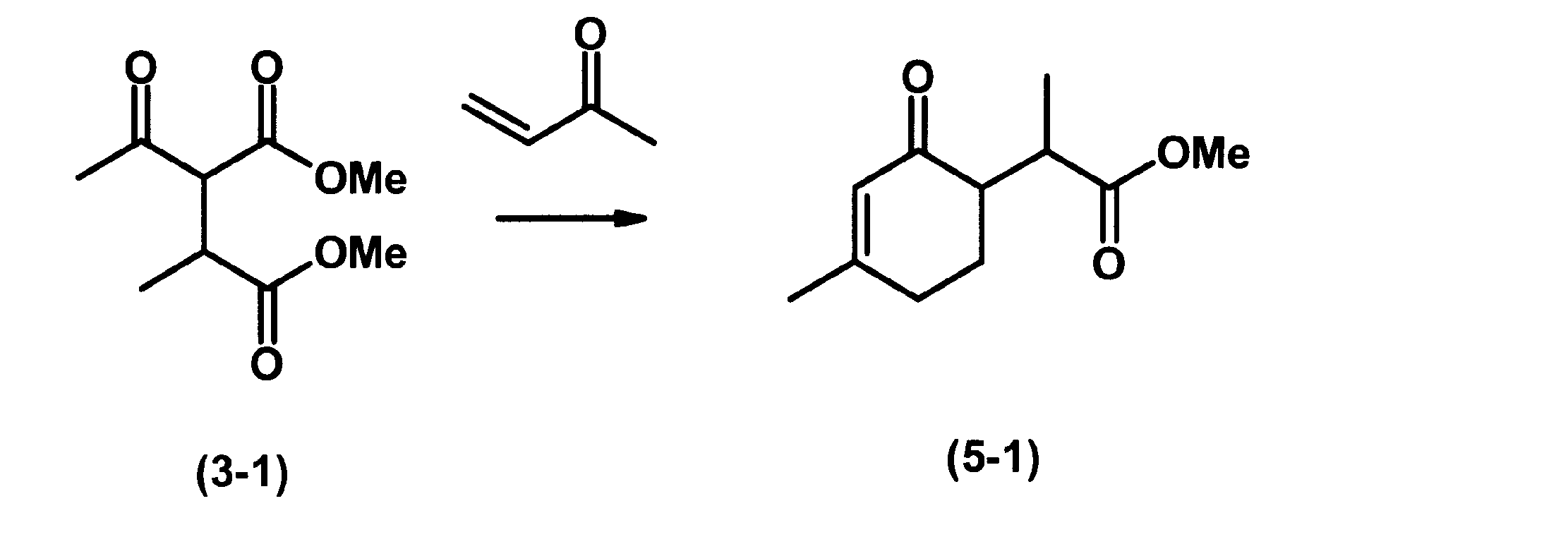
[1]工程B-2
実施例1の[1]<工程A>で得られた未蒸留品の粗2-アセト-3-メチル-コハク酸エステル(3-1)265.0g(1.31mol)をDMSO530mlに溶解し、水酸化カリウム1.10g(0.02mol)を加えて内温40℃にて30分攪拌した。同温にて、メチルビニルケトン120ml(1.44mol)を滴下した後、同温にて3時間攪拌し反応させた。反応液を0~10℃に冷却し、メタノール500mlを加えた後、28%ナトリウムメトキシドのメタノール溶液75.8g(0.39mol)を0~10℃にて滴下し、30分攪拌した後、5N HCl78.0g(0.39mol)を滴下し、中和した(pH=6~7)。
減圧下にて溶媒を回収した後、無水塩化マグネシウム93.5g(0.98mol)を加えて、130℃にて18時間加熱し、脱炭酸反応を行った。反応液を室温まで冷却し、水530mlを加え、酢酸エチルで抽出した。有機層を濃縮し、190.5gの粗α-メチル-γ-ケト酸エステル(5-1)を得た。蒸留精製を行い、α-メチル-γ-ケト酸エステル(5-1)121.9gを得た。
減圧下にて溶媒を回収した後、無水塩化マグネシウム93.5g(0.98mol)を加えて、130℃にて18時間加熱し、脱炭酸反応を行った。反応液を室温まで冷却し、水530mlを加え、酢酸エチルで抽出した。有機層を濃縮し、190.5gの粗α-メチル-γ-ケト酸エステル(5-1)を得た。蒸留精製を行い、α-メチル-γ-ケト酸エステル(5-1)121.9gを得た。
1H-NMR(Isomer major)(CDCl3 ,σ in ppm)
1.10(3H,d,J=7.2),1.72-1.76(1H,m),1.95(3H, s),1.97-2.05(1H,m),2.38-2.47(2H,m),2.72-2.77(1H,m)、3.05-3.10(1H,m),3.71(3H,s)
1H-NMR(Isomer minor)(CDCl3 ,σ in ppm)
1.19(3H、d、J=7.2)、1.72-1.76(1H,m),1.95(3H, s),1.97-2.05(1H,m),2.38-2.47(2H,m),2.55-2.59(1H,m)、2.96-3.02(1H,m),3.67(3H,s)
13C-NMR(CDCl3 ,500 MHz)198.83,198.74,176.64,175.27,161.86,161.51,126.47,126.43,77.26,77.00,76.75,51.75,51.64,48.45,48.01,38.48,38.10,31.18,30.75,25.21,24.45,24.12, 24.10,13.69,12.93
1.10(3H,d,J=7.2),1.72-1.76(1H,m),1.95(3H, s),1.97-2.05(1H,m),2.38-2.47(2H,m),2.72-2.77(1H,m)、3.05-3.10(1H,m),3.71(3H,s)
1H-NMR(Isomer minor)(CDCl3 ,σ in ppm)
1.19(3H、d、J=7.2)、1.72-1.76(1H,m),1.95(3H, s),1.97-2.05(1H,m),2.38-2.47(2H,m),2.55-2.59(1H,m)、2.96-3.02(1H,m),3.67(3H,s)
13C-NMR(CDCl3 ,500 MHz)198.83,198.74,176.64,175.27,161.86,161.51,126.47,126.43,77.26,77.00,76.75,51.75,51.64,48.45,48.01,38.48,38.10,31.18,30.75,25.21,24.45,24.12, 24.10,13.69,12.93
[2]工程B-3および工程C
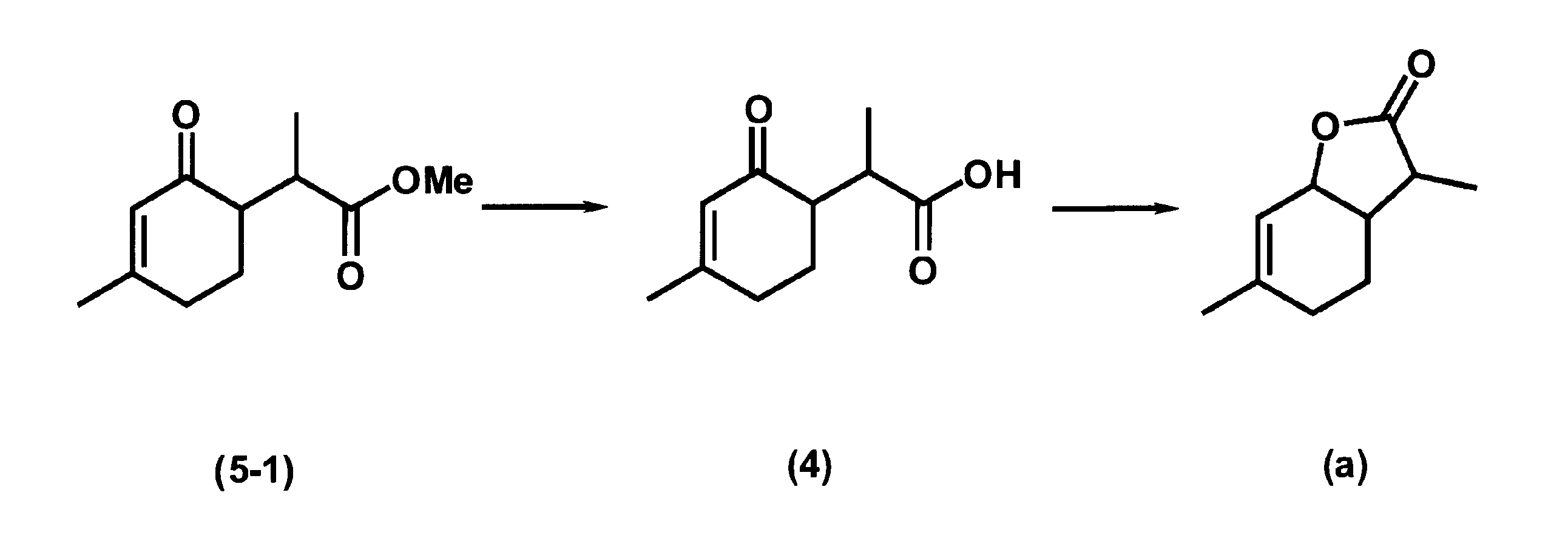
<工程B-3>
上記[1]で得られたα-メチル-γ-ケト酸エステル(5-1)60.0g(0.31mol)を0~10℃にて冷却した。2N NaOH水溶液230ml(0.46mol)を加え、室温にて1時間攪拌した。5N HCl122mlを滴下した後、生成物を酢酸エチルで抽出し、得られた有機層を濃縮し、α-メチル-γ-ケト酸(4)51.7gを得た。
上記[1]で得られたα-メチル-γ-ケト酸エステル(5-1)60.0g(0.31mol)を0~10℃にて冷却した。2N NaOH水溶液230ml(0.46mol)を加え、室温にて1時間攪拌した。5N HCl122mlを滴下した後、生成物を酢酸エチルで抽出し、得られた有機層を濃縮し、α-メチル-γ-ケト酸(4)51.7gを得た。
<工程C>
上記工程B-3で得られたα-メチル-γ-ケト酸(4)51.7g(0.284mol)をメタノール500mlに溶解し、2℃まで冷却した。28%ナトリウムメトキシドのメタノール溶液49.4g(0.26mol)および塩化セリウム7水和物21.7g(0.06mol)を加え、更に30分間攪拌した。そこへ水素化ホウ素ナトリウム5.5g(0.15mol)を加え、1時間攪拌し反応させた後、アセトン51ml(0.69mol)、水665ml、および5N HCl107.0gを加えて反応を停止した。
減圧下にて溶媒を回収した後、トルエンにて生成物を抽出し、得られた有機層を5%炭酸ナトリウム水溶液および5%塩化ナトリウム水溶液により洗浄後、減圧下にて濃縮した。
上記工程B-3で得られたα-メチル-γ-ケト酸(4)51.7g(0.284mol)をメタノール500mlに溶解し、2℃まで冷却した。28%ナトリウムメトキシドのメタノール溶液49.4g(0.26mol)および塩化セリウム7水和物21.7g(0.06mol)を加え、更に30分間攪拌した。そこへ水素化ホウ素ナトリウム5.5g(0.15mol)を加え、1時間攪拌し反応させた後、アセトン51ml(0.69mol)、水665ml、および5N HCl107.0gを加えて反応を停止した。
減圧下にて溶媒を回収した後、トルエンにて生成物を抽出し、得られた有機層を5%炭酸ナトリウム水溶液および5%塩化ナトリウム水溶液により洗浄後、減圧下にて濃縮した。
前記工程B-3および工程Cの操作を2回行い、合計72.9gの化合物(a)((3S,3aS,7aR)+(3R,3aR,7aS):(3R,3aS,7aR)+(3S,3aR,7aS)=58:42)を得た。
[3]工程D(蒸留)
上記[2]で得られた化合物(a)72.9g(0.439mol)にナトリウムメトキシド0.73g(0.0135mol)を加え、異性化させながら精密蒸留(100~130℃)を行い、59.4gの精製した化合物((3S,3aS,7aR)+(3R,3aR,7aS):(3R,3aS,7aR)+(3S,3aR,7aS)=97:3、収率76.8%)を得た。
上記[2]で得られた化合物(a)72.9g(0.439mol)にナトリウムメトキシド0.73g(0.0135mol)を加え、異性化させながら精密蒸留(100~130℃)を行い、59.4gの精製した化合物((3S,3aS,7aR)+(3R,3aR,7aS):(3R,3aS,7aR)+(3S,3aR,7aS)=97:3、収率76.8%)を得た。
1H-NMR(CDCl3):δ 1.24(d,3H,J=7.2),1.71(s、3H)、1.73(m、1H),1.82(m、1H),1.97(m、2H),2.25(m、1H),2.41(dq、1H、J=7.2、8.5)、4.88(m、1H)、5.49(m、1H)
13C-NMR(CDCl3):δ 13.95、22.23、23.59、25.90、37.56、40.32、75.38、118.76、140.72、179.68
GC/MS(m/e);166(M+,),151、138、123、107、93、79、69、55、39、36
13C-NMR(CDCl3):δ 13.95、22.23、23.59、25.90、37.56、40.32、75.38、118.76、140.72、179.68
GC/MS(m/e);166(M+,),151、138、123、107、93、79、69、55、39、36
〔実施例3〕
[1]工程C

[1]工程C
実施例2の[2]<工程B-3>で得られたα-メチル-γ-ケト酸(4)0.4g(0.0022mol)をメタノール4mlに溶解し、そこへ、トリエチルアミン 433mg(0.00428mol)、 式(20)で示されるルテニウム錯体 14.3mg(0.0220mmol)、ギ酸 0.404ml(0.0107mol)を加え、60℃にて20時間攪拌した。そこへ更にギ酸0.404ml(0.0107mol)を加え、20時間攪拌し反応させて、化合物(a)を得た。
その後、ガスクロマトグラフィーにて転化率を確認したところ、55%の転化率であり、ジアステレオ選択性は56%d.e.であり、(3S,3aS,7aR)体の光学純度は42%eeであった。

その後、ガスクロマトグラフィーにて転化率を確認したところ、55%の転化率であり、ジアステレオ選択性は56%d.e.であり、(3S,3aS,7aR)体の光学純度は42%eeであった。
〔実施例4〕
[1]工程C

[1]工程C
実施例2の[2]<工程B-3>で得られたα-メチル-γ-ケト酸(4)0.4g(0.0022mol)をメタノール4mlに溶解し、そこへ、DABCO 1.64g (0.01463mol)、式(20)で示されるルテニウム錯体 14.3mg (0.0220mmol)、ギ酸0.55ml(0.01463mol)を加え、60℃にて20時間攪拌し反応させて、化合物(a)を得た。
その後、ガスクロマトグラフィーにて転化率を確認したところ、26%の転化率であり、ジアステレオ選択性は36%d.e.であり、目的とする天然型のワインラクトン(3S,3aS,7aR)体の光学純度は57%eeであった。

その後、ガスクロマトグラフィーにて転化率を確認したところ、26%の転化率であり、ジアステレオ選択性は36%d.e.であり、目的とする天然型のワインラクトン(3S,3aS,7aR)体の光学純度は57%eeであった。
〔実施例5〕
[1]工程E

[1]工程E
実施例2の[1]<工程B-2>で得られたα-メチル-γ-ケト酸エステル(5-1)0.4g(0.00204mol)をエタノール4mlに溶解し、そこへ、式(21)で示されるルテニウム錯体 12mg(0.0102mmol)、tert-ブトキシカリウム11mg(0.102mmol)を加え、水素圧3MPa、40℃にて21時間攪拌し反応させ、化合物(a)を得た。
その後、ガスクロマトグラフィーにて転化率を確認したところ、9%の転化率であり、ジアステレオ選択性は24%d.e.であり、(3S,3aS,7aR)体の光学純度は25%eeであった。

その後、ガスクロマトグラフィーにて転化率を確認したところ、9%の転化率であり、ジアステレオ選択性は24%d.e.であり、(3S,3aS,7aR)体の光学純度は25%eeであった。
〔実施例6〕
[1]工程E

[1]工程E
実施例2の[1]<工程B-2>で得られたα-メチル-γ-ケト酸エステル(5-1)80g(0.4076mol)をメタノール200mlに溶解し、そこへ、DABCO 45.7g(0.4076mol)、以下の式(20)で示されるルテニウム錯体2.65g(0.004076mol)、ギ酸15.3ml(0.4076mol)を加え、60℃にて25時間攪拌した。そこへ更にギ酸15.3ml(0.4076mol)を加え、45時間攪拌し反応させた。
その後、反応液に水2mlおよびトルエン2mlを加えて生成物を抽出し、得られた有機層を5%炭酸ナトリウム水溶液および5%塩化ナトリウム水溶液により洗浄した。得られた有機層を減圧下にて濃縮し、化合物(a)((3S,3aS,7aR)+(3R,3aR,7aS):(3R,3aS,7aR)+(3S,3aR,7aS)=80:20、(3S,3aS,7aR):(3R,3aR,7aS)=90:10、(3S,3aS,7aR)体の光学純度80%ee)を61.7g得た。
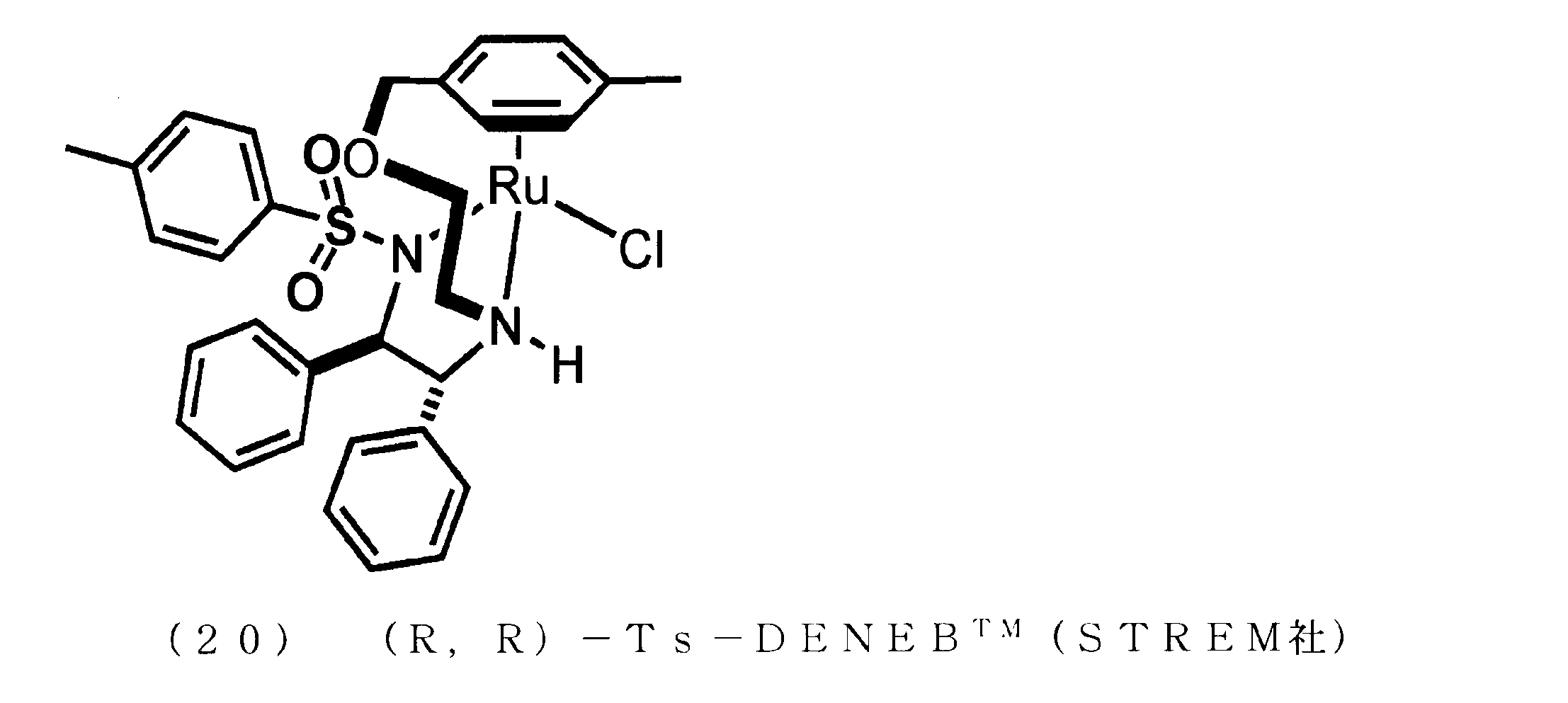
その後、反応液に水2mlおよびトルエン2mlを加えて生成物を抽出し、得られた有機層を5%炭酸ナトリウム水溶液および5%塩化ナトリウム水溶液により洗浄した。得られた有機層を減圧下にて濃縮し、化合物(a)((3S,3aS,7aR)+(3R,3aR,7aS):(3R,3aS,7aR)+(3S,3aR,7aS)=80:20、(3S,3aS,7aR):(3R,3aR,7aS)=90:10、(3S,3aS,7aR)体の光学純度80%ee)を61.7g得た。
[2]工程D(蒸留)
上記[1]で得られた化合物(a)61.7g(0.3712mol)にナトリウムメトキシド0.62g(0.0111mol)を加え、異性化させながら精密蒸留(100~130℃)を行い、14.7gの精製した化合物(a)((3S,3aS,7aR):(3R,3aR,7aS)=90:10、(3S,3aS,7aR)+(3R,3aR,7aS):(3R,3aS,7aR)+(3S,3aR,7aS)=100:0、収率22%)を得た。
1H-NMR(CDCl3):δ 1.26(d,3H,J=7.3),1.73(s、3H)、1.73(m、1H),1.82(m、1H),1.97(m、2H),2.25(m、1H),2.41(dq、1H、J=7.3、8.6)、4.89(m、1H)、5.51(m、1H)
13C-NMR(CDCl3):δ 14.03、22.31、23.67、25.98、37.62、40.40、75.42、118.85、140.76、179.70
GC/MS(m/e);166(M+,),151、138、123、107、93、79、69、55、39、36
上記[1]で得られた化合物(a)61.7g(0.3712mol)にナトリウムメトキシド0.62g(0.0111mol)を加え、異性化させながら精密蒸留(100~130℃)を行い、14.7gの精製した化合物(a)((3S,3aS,7aR):(3R,3aR,7aS)=90:10、(3S,3aS,7aR)+(3R,3aR,7aS):(3R,3aS,7aR)+(3S,3aR,7aS)=100:0、収率22%)を得た。
1H-NMR(CDCl3):δ 1.26(d,3H,J=7.3),1.73(s、3H)、1.73(m、1H),1.82(m、1H),1.97(m、2H),2.25(m、1H),2.41(dq、1H、J=7.3、8.6)、4.89(m、1H)、5.51(m、1H)
13C-NMR(CDCl3):δ 14.03、22.31、23.67、25.98、37.62、40.40、75.42、118.85、140.76、179.70
GC/MS(m/e);166(M+,),151、138、123、107、93、79、69、55、39、36
[3]工程F(再結晶)
上記[2]で得られた化合物(a)14.7g((3S,3aS,7aR):(3R,3aR,7aS)=90:10)をヘプタン74mlおよび2-プロパノール5mlの混合液に溶解し、5℃にて静置した。18時間後に生成した結晶をろ別し、10.6gの精製した化合物((3S,3aS,7aR):(3R,3aR,7aS)=99.93:0.07、収率72%、(3S,3aS,7aR)体の光学純度99.86%ee)を得た。
1H-NMR(CDCl3):δ 1.26(d,3H,J=7.3),1.73(s、3H)、1.73(m、1H),1.82(m、1H),1.97(m、2H),2.25(m、1H),2.41(dq、1H、J=7.3、8.6)、4.89(m、1H)、5.51(m、1H)
13C-NMR(CDCl3):δ 14.03、22.31、23.67、25.98、37.62、40.40、75.42、118.85、140.76、179.70
GC/MS(m/e);166(M+,),151、138、123、107、93、79、69、55、39、36
融点 47-51℃
上記[2]で得られた化合物(a)14.7g((3S,3aS,7aR):(3R,3aR,7aS)=90:10)をヘプタン74mlおよび2-プロパノール5mlの混合液に溶解し、5℃にて静置した。18時間後に生成した結晶をろ別し、10.6gの精製した化合物((3S,3aS,7aR):(3R,3aR,7aS)=99.93:0.07、収率72%、(3S,3aS,7aR)体の光学純度99.86%ee)を得た。
1H-NMR(CDCl3):δ 1.26(d,3H,J=7.3),1.73(s、3H)、1.73(m、1H),1.82(m、1H),1.97(m、2H),2.25(m、1H),2.41(dq、1H、J=7.3、8.6)、4.89(m、1H)、5.51(m、1H)
13C-NMR(CDCl3):δ 14.03、22.31、23.67、25.98、37.62、40.40、75.42、118.85、140.76、179.70
GC/MS(m/e);166(M+,),151、138、123、107、93、79、69、55、39、36
融点 47-51℃
本発明によれば、有害な試薬または高価な試薬を使用することなく、極度の低温または高温などの苛酷な反応条件を必要とせずに、香料化合物として有用なワインラクトンもしくはその立体異性体またはそれらの混合物を製造することができる。本発明の好ましい態様によれば、簡便且つ安全な方法で、高選択的にワインラクトンを含む化合物を製造することができる。本発明の方法は、工業的規模でのワインラクトンもしくはその立体異性体またはそれらの混合物の製造に好適に使用することができる。
Claims (16)
- ワインラクトンもしくはその立体異性体またはそれらの混合物としての式(a):

で示される化合物の製造方法であって、
A)式(1):
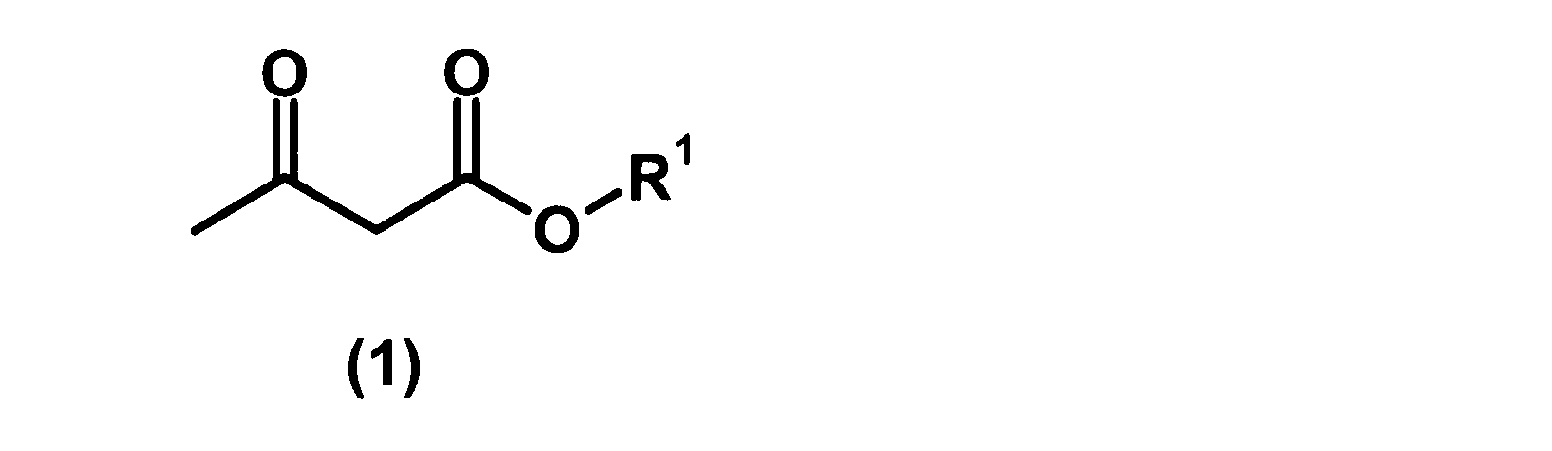
[式中、R1は炭素数1~4のアルキル基である。]
で示されるβ-ケトエステルと、式(2):
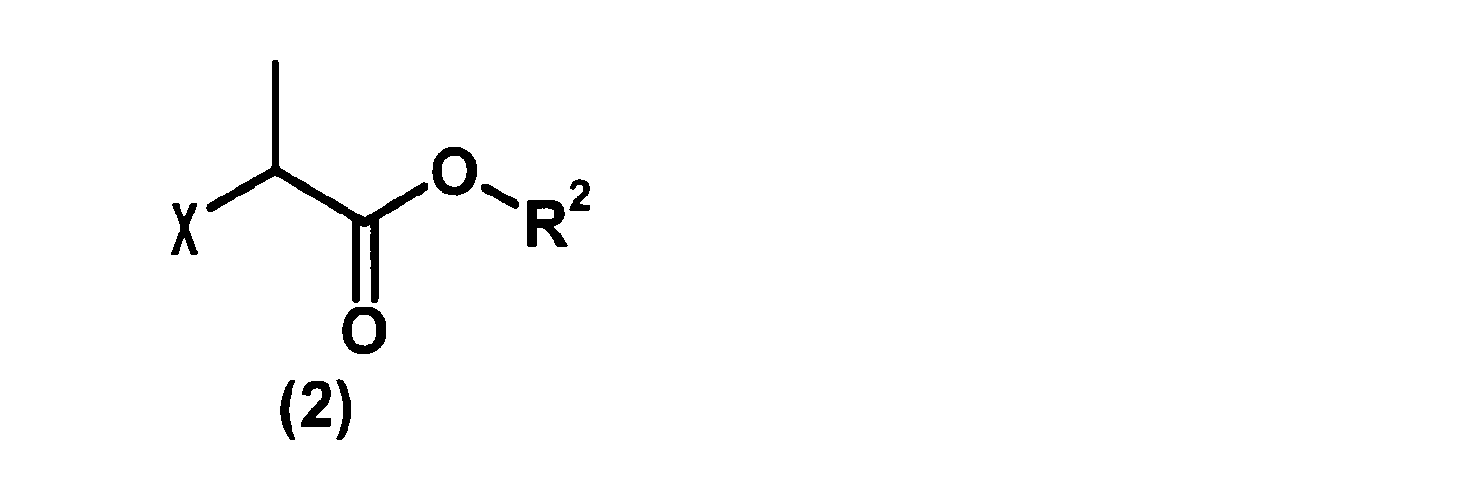
[式中、R2は炭素数1~4のアルキル基であり、Xは塩素原子または臭素原子である。]
で示される2-ハロエステルとを、塩基性条件下にて反応させて、式(3):
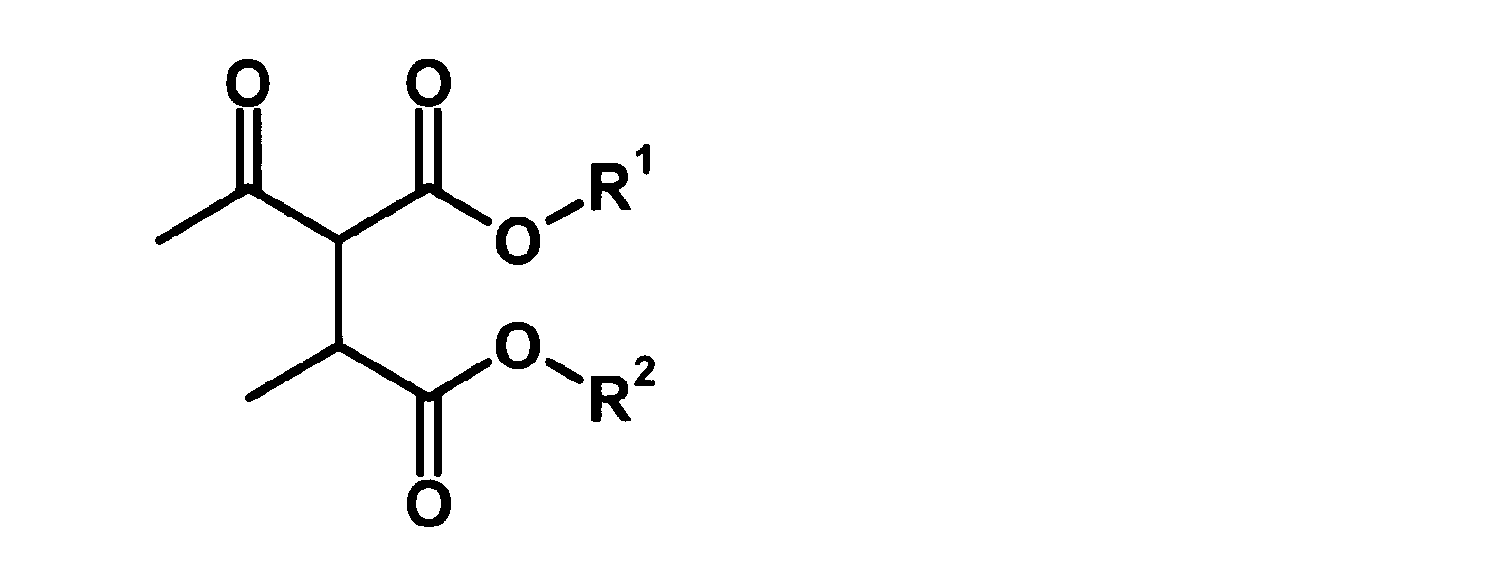
[式中、R1は、式(1)の定義と同じである。R2は、式(2)の定義と同じである。]
で示される2-アセト-3-メチル-コハク酸エステルを得る工程;
B-1)前記工程A)で得られた2-アセト-3-メチル-コハク酸エステルと、メチルビニルケトンとを、塩基性条件下にて反応させ、その後に加水分解して、式(4):
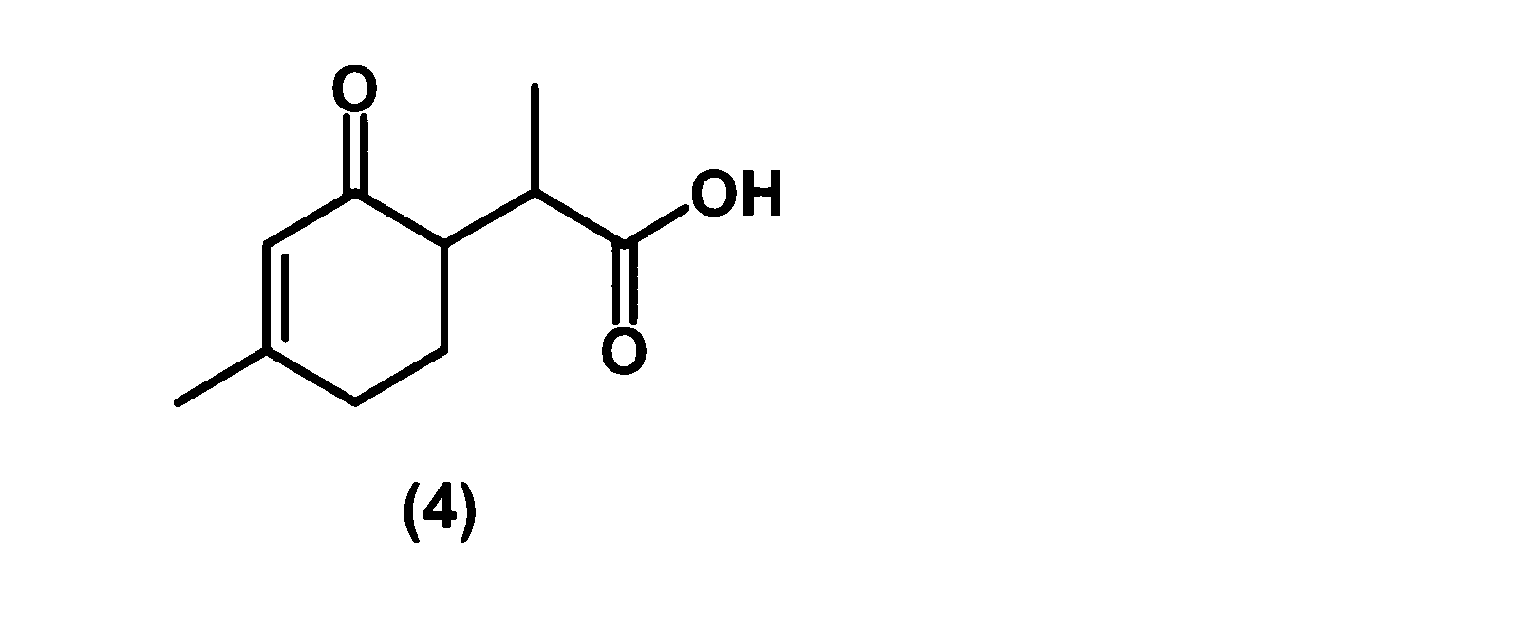
で示されるα-メチル-γ-ケト酸を得る工程;
C)前記工程B-1)で得られたα-メチル-γ-ケト酸を還元して、前記式(a)で示される化合物を得る工程を含む、方法。 - ワインラクトンもしくはその立体異性体またはそれらの混合物としての式(a):
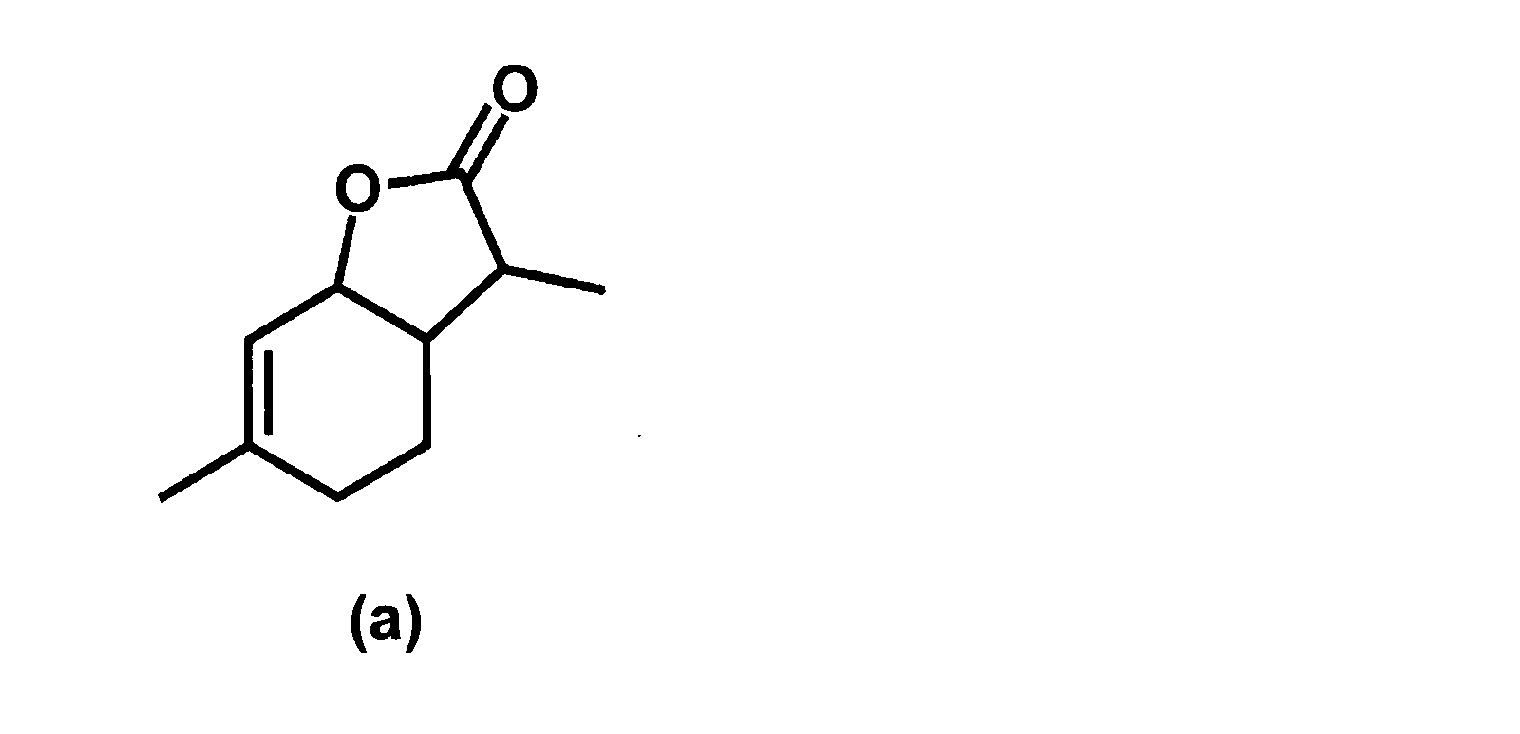
で示される化合物の製造方法であって、
A)式(1):
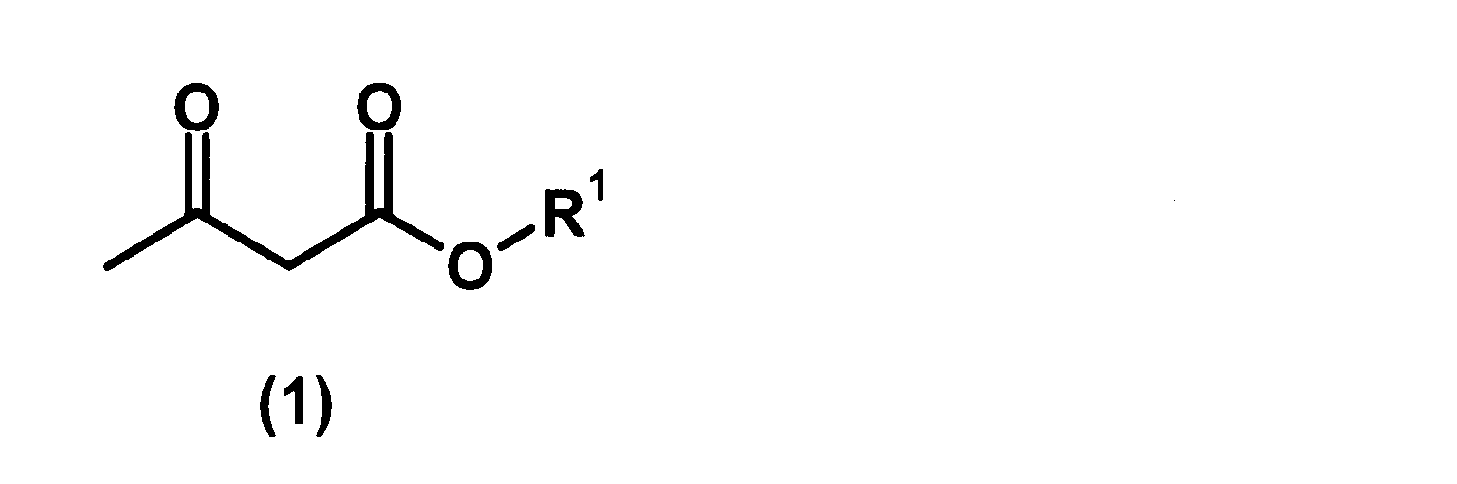
[式中、R1は炭素数1~4のアルキル基である。]
で示されるβ-ケトエステルと、式(2):

[式中、R2は炭素数1~4のアルキル基であり、Xは塩素原子または臭素原子である。]
で示される2-ハロエステルとを、塩基性条件下にて反応させて、式(3):

[式中、R1は、式(1)の定義と同じである。R2は、式(2)の定義と同じである。]
で示される2-アセト-3-メチル-コハク酸エステルを得る工程;
B-2)前記工程A)で得られた2-アセト-3-メチル-コハク酸エステルと、メチルビニルケトンとを、塩基性条件下にて反応させ、その後に脱炭酸反応させて、式(5):

[式中、R2は、式(2)の定義と同じである。]
で示されるα-メチル-γ-ケト酸エステルを得る工程;
B-3)前記工程B-2)で得られたα-メチル-γ-ケト酸エステルを加水分解して、式(4):
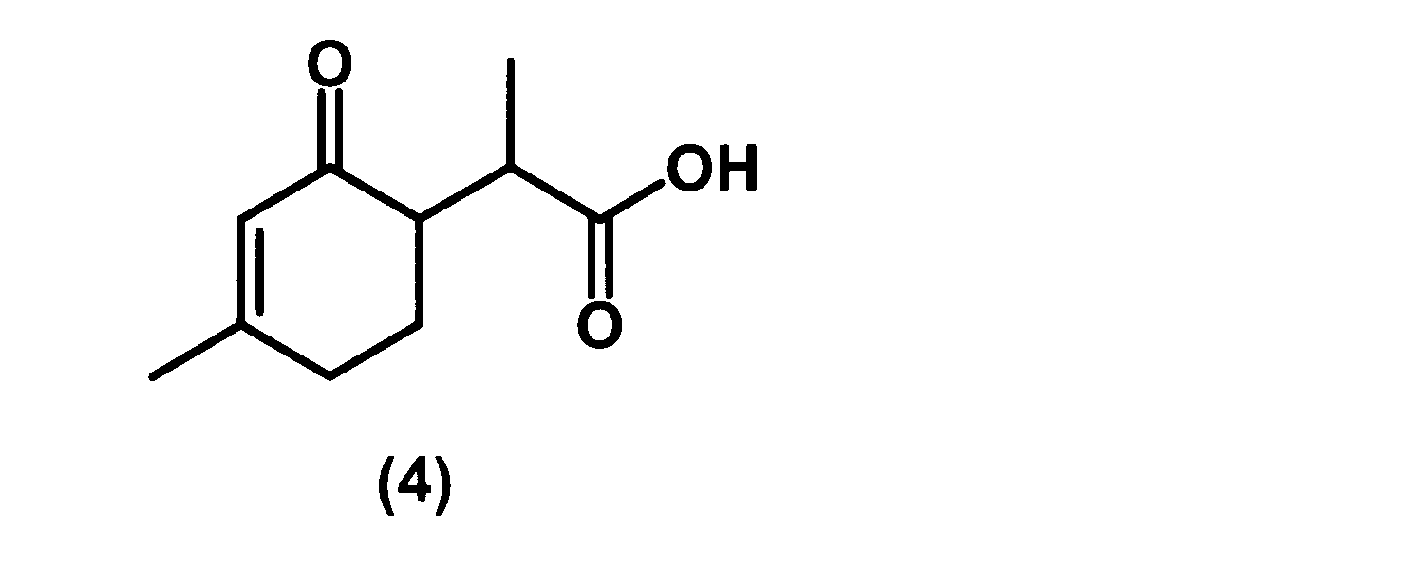
で示されるα-メチル-γ-ケト酸を得る工程;
C)前記工程B-3で得られたα-メチル-γ-ケト酸を還元して、前記式(a)で示される化合物を得る工程を含む、方法。 - 前記工程C)が、式(6)または(7)で示される化合物から選ばれるルテニウム錯体の光学活性体及び水素供与体の存在下にて不斉還元反応させることを含む、請求項1または2に記載の方法。
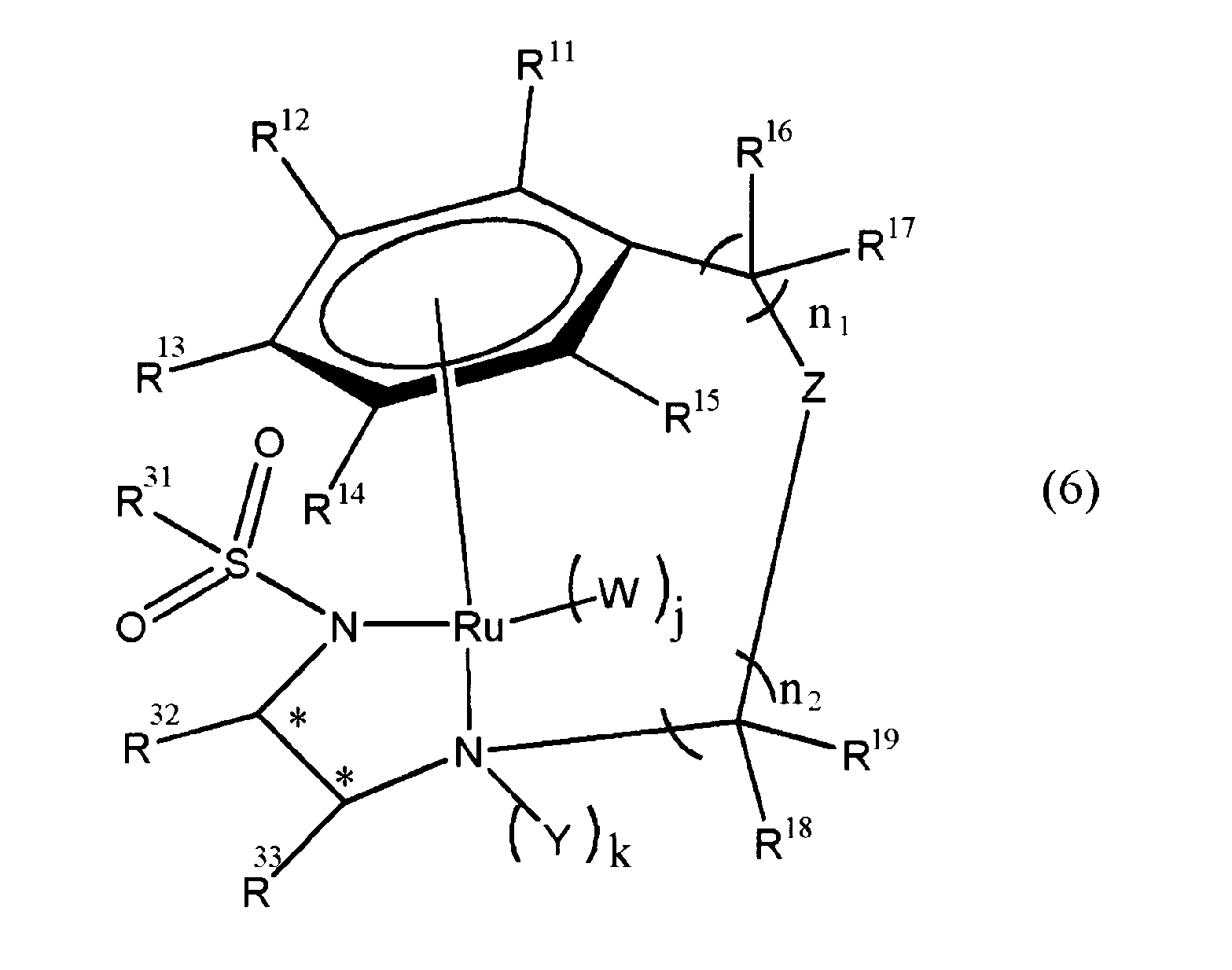
[式中、*は不斉炭素原子であり、
R31は、炭素数1~10のアルキル基;炭素数1~10のハロゲン化アルキル基;10-カンフォリル基;1又は2個の炭素数1~10のアルキル基で置換されていてもよいアミノ基;又は、炭素数1~10のアルキル基、炭素数1~10のハロゲン化アルキル基、ハロゲン原子、シアノ基(-CN)、アミノ基、アルキルアミノ基(-NR20R21)、5員若しくは6員の環状アミノ基、アシルアミノ基(-NH-CO-R20)、水酸基、アルコキシ基(-OR20)、アシル基(-CO-R20)、カルボキシル基、アルコキシカルボニル基(-COOR20)、フェノキシカルボニル基、メルカプト基、アルキルチオ基(-SR20)、シリル基(-SiR20R21R22)及びニトロ基(-NO2)からなる群より選ばれる少なくとも一つの置換基で置換されていてもよいアリール基であり、ここで、R20、R21及びR22は、それぞれ独立して、水素原子、炭素数1~10のアルキル基、又は炭素数3~10のシクロアルキル基であり、
Yは水素原子であり、
Wはトリフルオロメタンスルホニルオキシ基、p-トルエンスルホニルオキシ基、メタンスルホニルオキシ基、ベンゼンスルホニルオキシ基、水素原子、又は、ハロゲン原子であり、
j及びkは、それぞれ独立して、0又は1であり、但し、j+kが1になることはなく、
R32及びR33は、それぞれ独立して、水素原子;炭素数1~10のアルキル基;炭素数1~10のアルキル基、炭素数1~10のアルコキシ基及びハロゲン原子からなる群より選ばれる少なくとも一つの置換基で置換されていてもよいフェニル基;又は、炭素数3~8のシクロアルキル基であり、あるいは、R32及びR33は一緒になって環を形成してもよく、
R11、R12、R13、R14及びR15は、それぞれ独立して、水素原子、炭素数1~10のアルキル基、又は炭素数1~10のアルコキシ基を示す。
R16、R17、R18及びR19はそれぞれ独立して、水素原子、ヒドロキシル基、炭素数1~10のアルキル基、又は、炭素数1~10のアルコキシ基であり、あるいは、R16とR17とこれらが置換している炭素原子、及び/又は、R18とR19とこれらが置換している炭素原子とでカルボニル基を形成してもよく、
Zは酸素原子又は硫黄原子であり、
n1は1又は2であり、n2は1~3の整数である。]
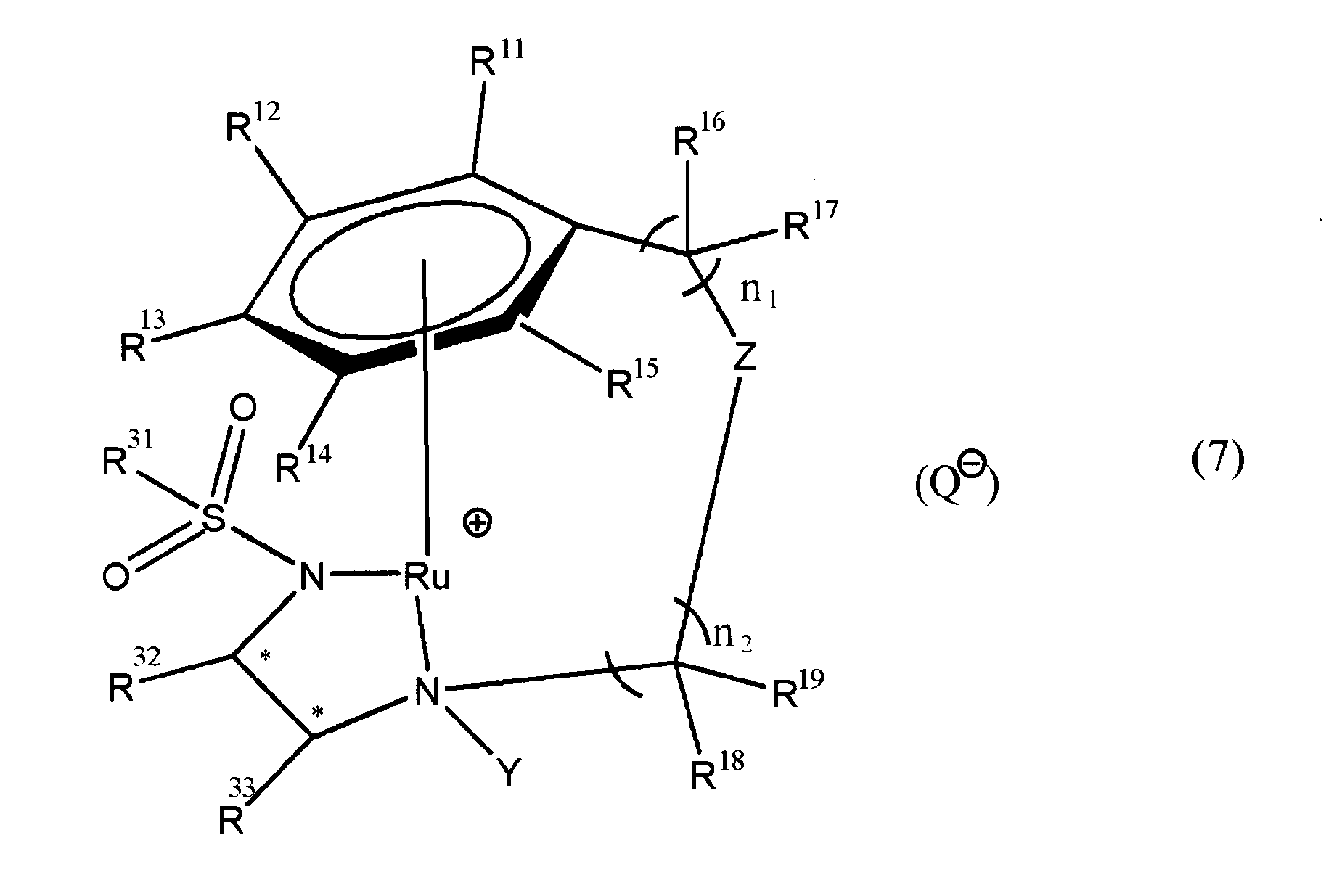
[式中、*は不斉炭素原子であり、
R31は、炭素数1~10のアルキル基;炭素数1~10のハロゲン化アルキル基;10-カンフォリル基;1又は2個の炭素数1~10のアルキル基で置換されていてもよいアミノ基;又は、炭素数1~10のアルキル基、炭素数1~10のハロゲン化アルキル基、ハロゲン原子、シアノ基(-CN)、アミノ基、アルキルアミノ基(-NR20R21)、5員若しくは6員の環状アミノ基、アシルアミノ基(-NH-CO-R20)、水酸基、アルコキシ基(-OR20)、アシル基(-CO-R20)、カルボキシル基、アルコキシカルボニル基(-COOR20)、フェノキシカルボニル基、メルカプト基、アルキルチオ基(-SR20)、シリル基(-SiR20R21R22)及びニトロ基(-NO2)からなる群より選ばれる少なくとも一つの置換基で置換されていてもよいアリール基であり、
R20、R21及びR22は、それぞれ独立して、水素原子、炭素数1~10のアルキル基、又は、炭素数3~10のシクロアルキル基であり、
Yは水素原子であり、
R32及びR33は、それぞれ独立して、水素原子;炭素数1~10のアルキル基;炭素数1~10のアルキル基、炭素数1~10のアルコキシ基及びハロゲン原子からなる群より選ばれる少なくとも一つの置換基で置換されていてもよいフェニル基;又は、炭素数3~8のシクロアルキル基であり、あるいは、R32及びR33は一緒になって環を形成してもよく、
R11、R12、R13、R14及びR15は、それぞれ独立して、水素原子、炭素数1~10のアルキル基、又は、炭素数1~10のアルコキシ基であり、
R16、R17、R18及びR19は、それぞれ独立して、水素原子、ヒドロキシル基、炭素数1~10のアルキル基、又は、炭素数1~10のアルコキシ基であり、あるいは、R16とR17とこれらが置換している炭素原子、及び/又は、R18とR19とこれらが置換している炭素原子とでカルボニル基を形成してもよく、
Zは酸素原子又は硫黄原子であり、Q-はカウンターアニオンであり、
n1は1又は2であり、n2は1~3の整数である。] - 式(6)で示されるルテニウム錯体が次式で示される化合物である、請求項3に記載の方法。
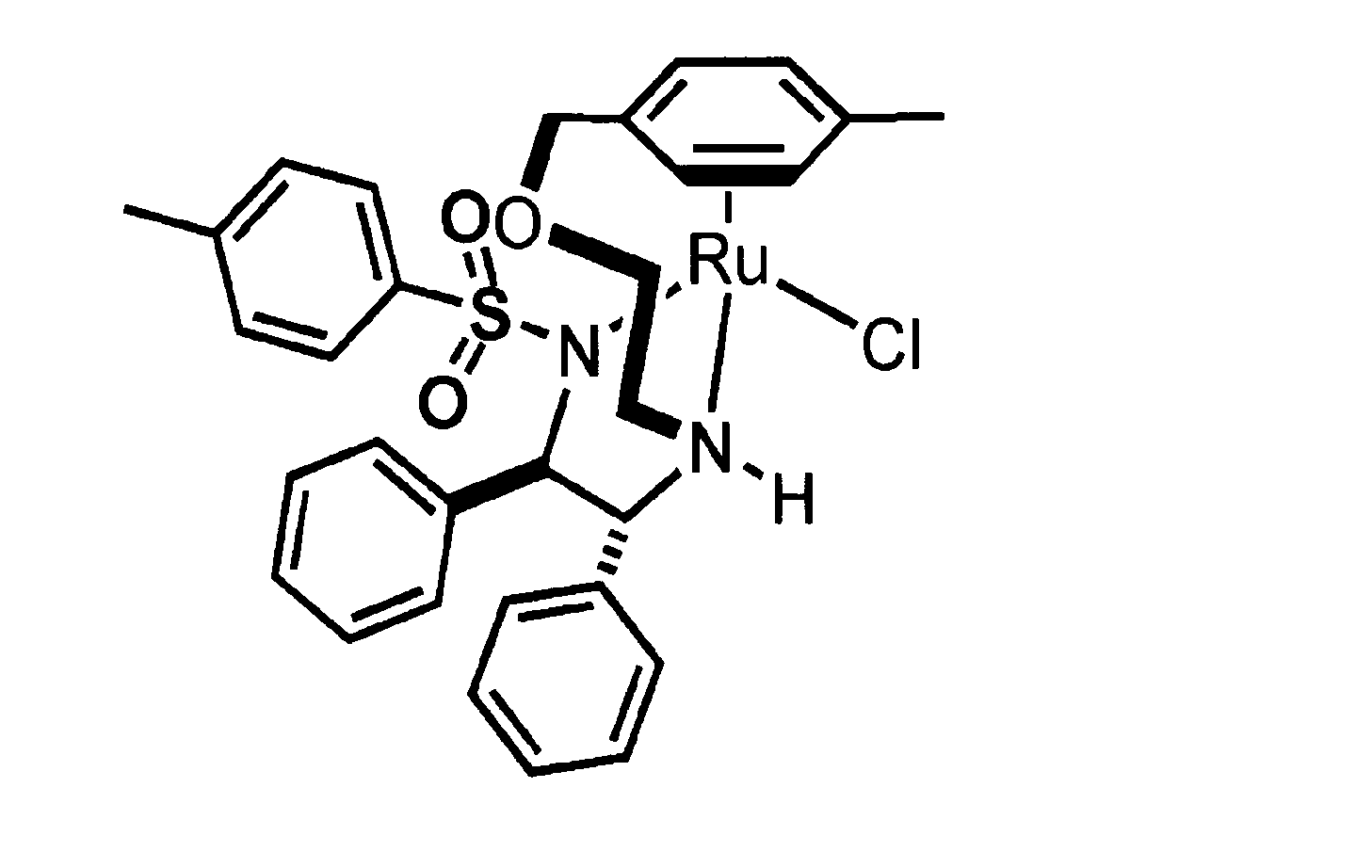
- 前記工程C)で得られた化合物を塩基性条件下にて蒸留して、式:

で示される(3S,3aS,7aR)体及び(3R,3aR,7aS)体から構成されるジアステレオマー異性体混合物を得る工程をさらに含む、請求項1または2に記載の方法。 - (3S,3aS,7aR)体及び(3R,3aR,7aS)体から構成されるジアステレオマー異性体混合物の含有率が式(a)で示される化合物の全重量に対して90重量%以上である、請求項5に記載の方法。
- 前記工程C)で得られた化合物を塩基性条件下にて蒸留して、式:

で示される(3S,3aS,7aR)体及び(3R,3aR,7aS)体から構成されるジアステレオマー異性体混合物を得る工程をさらに含む、請求項3または4に記載の方法。 - さらに再結晶することにより、式:
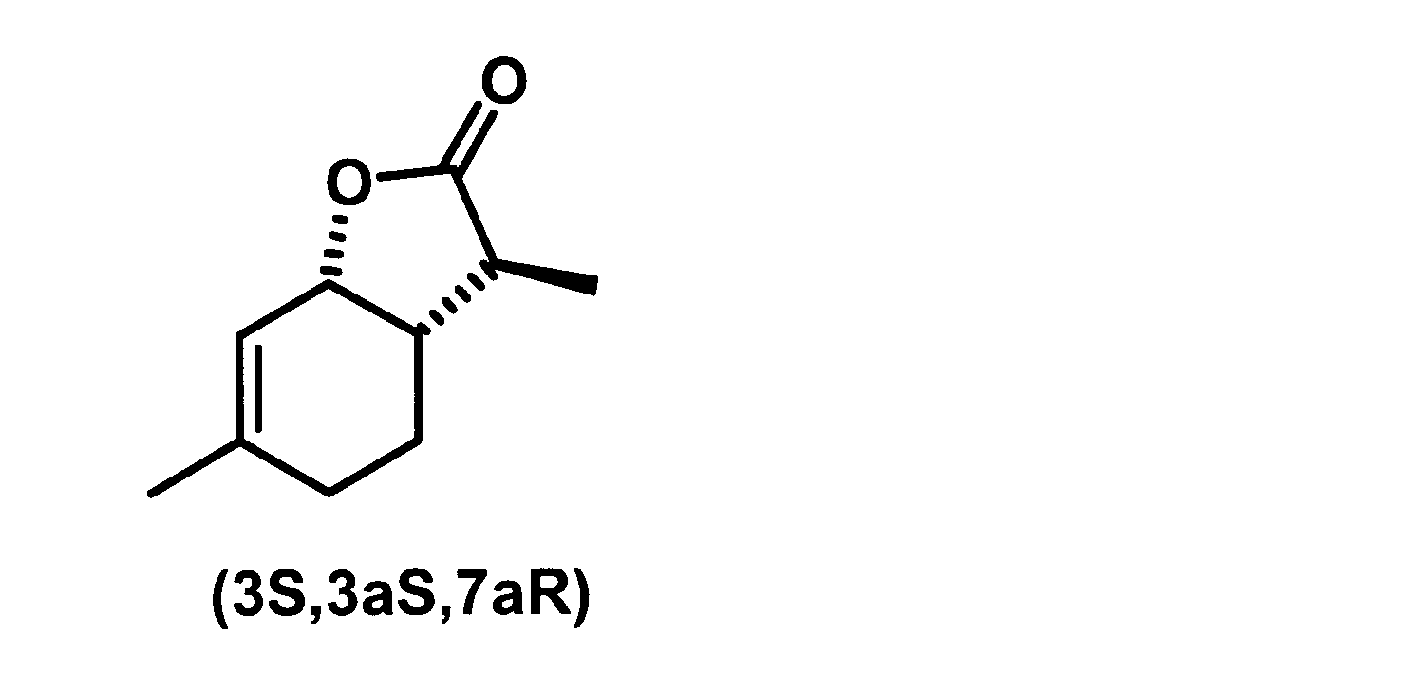
で示される(3S,3aS,7aR)体を得る工程を含む、請求項7に記載の方法。 - ワインラクトンもしくはその立体異性体またはそれらの混合物としての式(a):

で示される化合物の製造方法であって、
A)式(1):

[式中、R1は炭素数1~4のアルキル基である。]
で示されるβ-ケトエステルと、式(2):
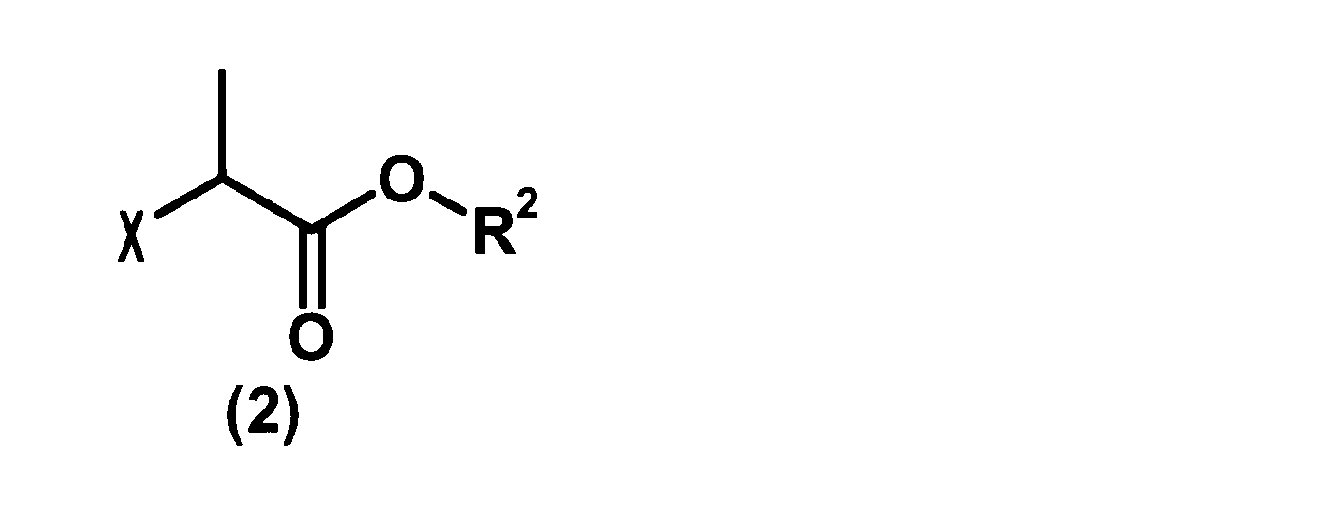
[式中、R2は炭素数1~4のアルキル基であり、Xは塩素原子または臭素原子である。]
で示される2-ハロエステルとを、塩基性条件下にて反応させて、式(3):
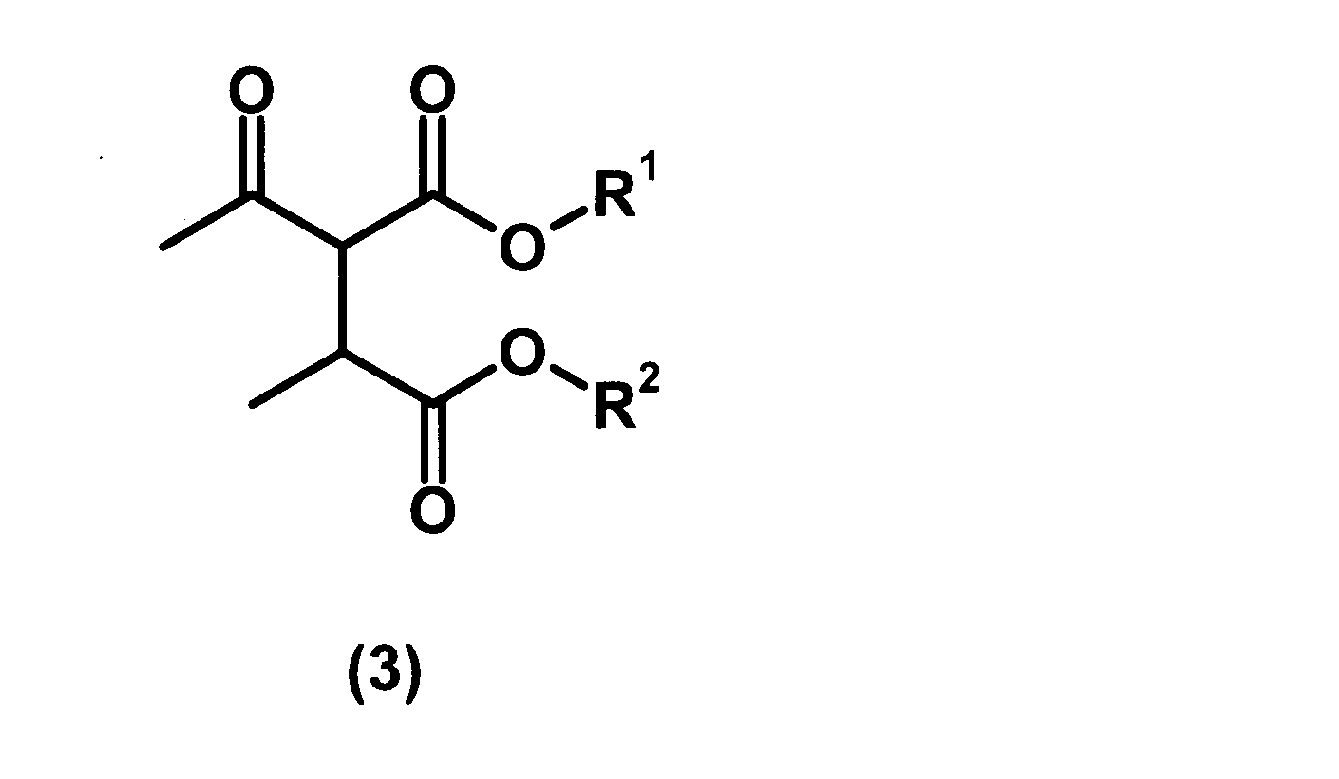
[式中、R1は、式(1)の定義と同じである。R2は、式(2)の定義と同じである。]
で示される2-アセト-3-メチル-コハク酸エステルを得る工程;
B-2)前記工程A)で得られた2-アセト-3-メチル-コハク酸エステルと、メチルビニルケトンとを、塩基性条件下にて反応させ、その後に脱炭酸反応させて、式(5):
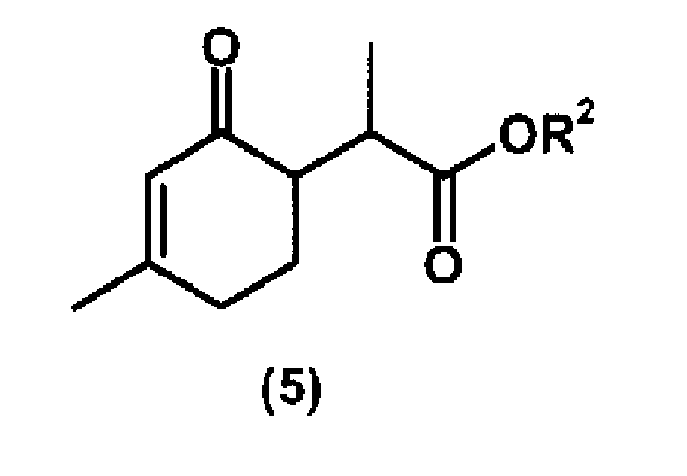
[式中、R2は、式(2)の定義と同じである。]
で示されるα-メチル-γ-ケト酸エステルを得る工程;
E)前記工程B-2)で得られたα-メチル-γ-ケト酸エステルを式(6)または(7)で示される化合物から選ばれるルテニウム錯体及び水素供与体の存在下にて還元して、前記式(a)で示される化合物を得る工程

[式中、*は不斉炭素原子であり、
R31は、炭素数1~10のアルキル基;炭素数1~10のハロゲン化アルキル基;10-カンフォリル基;1又は2個の炭素数1~10のアルキル基で置換されていてもよいアミノ基;又は炭素数1~10のアルキル基、炭素数1~10のハロゲン化アルキル基、ハロゲン原子、シアノ基(-CN)、アミノ基、アルキルアミノ基(-NR20R21)、5員若しくは6員の環状アミノ基、アシルアミノ基(-NH-CO-R20)、水酸基、アルコキシ基(-OR20)、アシル基(-CO-R20)、カルボキシル基、アルコキシカルボニル基(-COOR20)、フェノキシカルボニル基、メルカプト基、アルキルチオ基(-SR20)、シリル基(-SiR20R21R22)及びニトロ基(-NO2)からなる群より選ばれる少なくとも一つの置換基で置換されていてもよいアリール基であり、ここで、R20、R21及びR22は、それぞれ独立して、水素原子、炭素数1~10のアルキル基、又は、炭素数3~10のシクロアルキル基であり、
Yは水素原子であり、
Wはトリフルオロメタンスルホニルオキシ基、p-トルエンスルホニルオキシ基、メタンスルホニルオキシ基、ベンゼンスルホニルオキシ基、水素原子、又は、ハロゲン原子であり、
j及びkは、それぞれ独立して、0又は1であり、但し、j+kが1になることはなく、
R32及びR33は、それぞれ独立して、水素原子;炭素数1~10のアルキル基;炭素数1~10のアルキル基、炭素数1~10のアルコキシ基及びハロゲン原子からなる群より選ばれる少なくとも一つの置換基で置換されていてもよいフェニル基;又は、炭素数3~8のシクロアルキル基であり、あるいは、R32及びR33は一緒になって環を形成してもよく、
R11、R12、R13、R14及びR15は、それぞれ独立して、水素原子、炭素数1~10のアルキル基、又は炭素数1~10のアルコキシ基を示す。
R16、R17、R18、R19はそれぞれ独立して、水素原子、ヒドロキシル基、炭素数1~10のアルキル基、又は、炭素数1~10のアルコキシ基であり、あるいは、R16とR17とこれらが置換している炭素原子、及び/又は、R18とR19とこれらが置換している炭素原子とでカルボニル基を形成してもよく、
Zは酸素原子又は硫黄原子であり、
n1は1又は2であり、n2は1~3の整数である。]

[式中、*は不斉炭素原子であり、
R31は、炭素数1~10のアルキル基;炭素数1~10のハロゲン化アルキル基;10-カンフォリル基;1又は2個の炭素数1~10のアルキル基で置換されていてもよいアミノ基;又は、炭素数1~10のアルキル基、炭素数1~10のハロゲン化アルキル基、ハロゲン原子、シアノ基(-CN)、アミノ基、アルキルアミノ基(-NR20R21)、5員若しくは6員の環状アミノ基、アシルアミノ基(-NH-CO-R20)、水酸基、アルコキシ基(-OR20)、アシル基(-CO-R20)、カルボキシル基、アルコキシカルボニル基(-COOR20)、フェノキシカルボニル基、メルカプト基、アルキルチオ基(-SR20)、シリル基(-SiR20R21R22)及びニトロ基(-NO2)からなる群より選ばれる少なくとも一つの置換基で置換されていてもよいアリール基であり、
R20、R21及びR22は、それぞれ独立して、水素原子、炭素数1~10のアルキル基、又は、炭素数3~10のシクロアルキル基であり、
Yは水素原子であり、
R32及びR33は、それぞれ独立して、水素原子;炭素数1~10のアルキル基;炭素数1~10のアルキル基、炭素数1~10のアルコキシ基及びハロゲン原子からなる群より選ばれる少なくとも一つの置換基で置換されていてもよいフェニル基;又は、炭素数3~8のシクロアルキル基であり、あるいは、R32及びR33は一緒になって環を形成してもよく、
R11、R12、R13、R14及びR15は、それぞれ独立して、水素原子、炭素数1~10のアルキル基、又は、炭素数1~10のアルコキシ基であり、
R16、R17、R18及びR19は、それぞれ独立して、水素原子、ヒドロキシル基、炭素数1~10のアルキル基、又は、炭素数1~10のアルコキシ基であり、あるいは、R16とR17とこれらが置換している炭素原子、及び/又は、R18とR19とこれらが置換している炭素原子とでカルボニル基を形成してもよく、
Zは酸素原子又は硫黄原子であり、Q-はカウンターアニオンであり、
n1は1又は2であり、n2は1~3の整数である。]
を含む、方法。 - 前記工程E)において、式(6)または(7)で示される化合物から選ばれるルテニウム錯体が光学活性ルテニウム錯体であり、不斉還元反応させる、請求項9に記載の方法。
- 前記式(6)で示されるルテニウム錯体が次式で示される化合物である、請求項9または10に記載の方法。

- ワインラクトンもしくはその立体異性体またはそれらの混合物としての式(a):
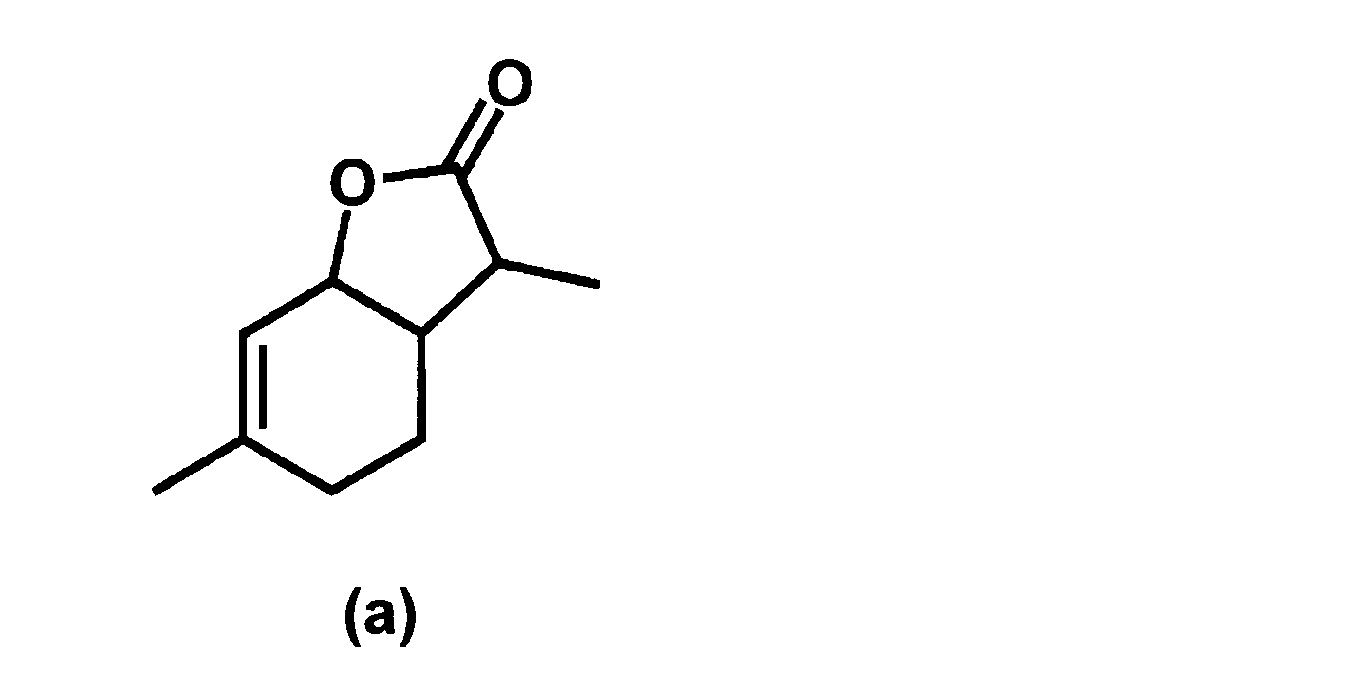
で示される化合物の製造方法であって、
A)式(1):
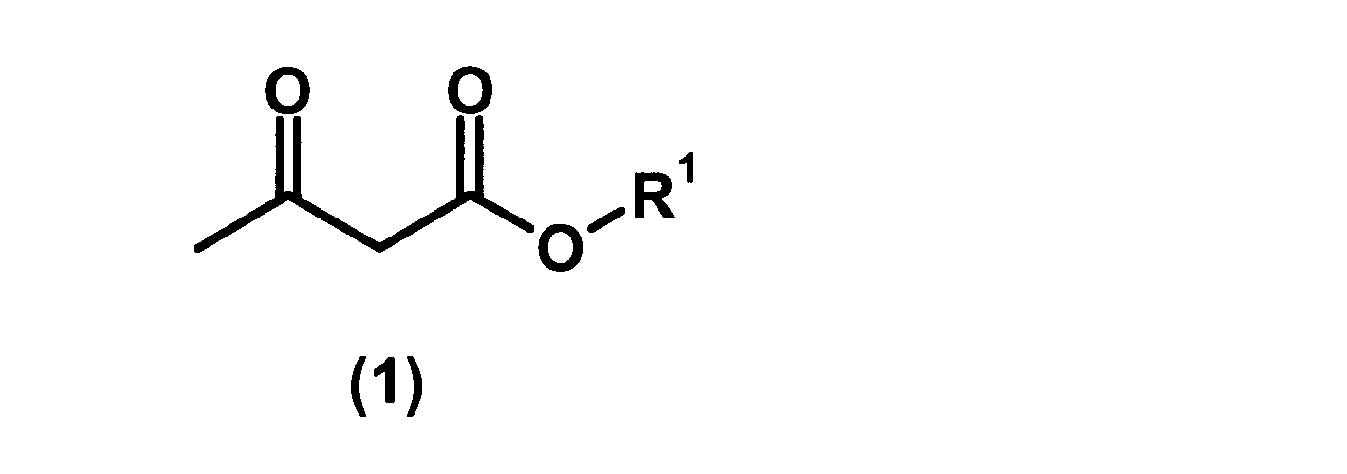
[式中、R1は炭素数1~4のアルキル基である。]
で示されるβ-ケトエステルと、式(2):
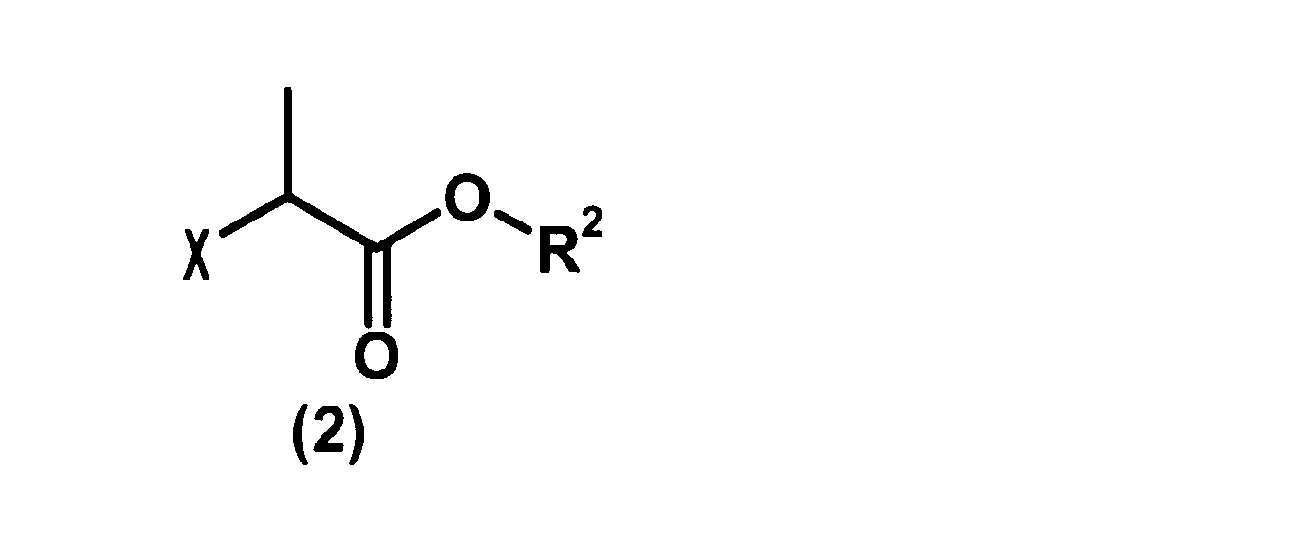
[式中、R2は炭素数1~4のアルキル基であり、Xは塩素原子または臭素原子である。]
で示される2-ハロエステルとを、塩基性条件下にて反応させて、式(3):
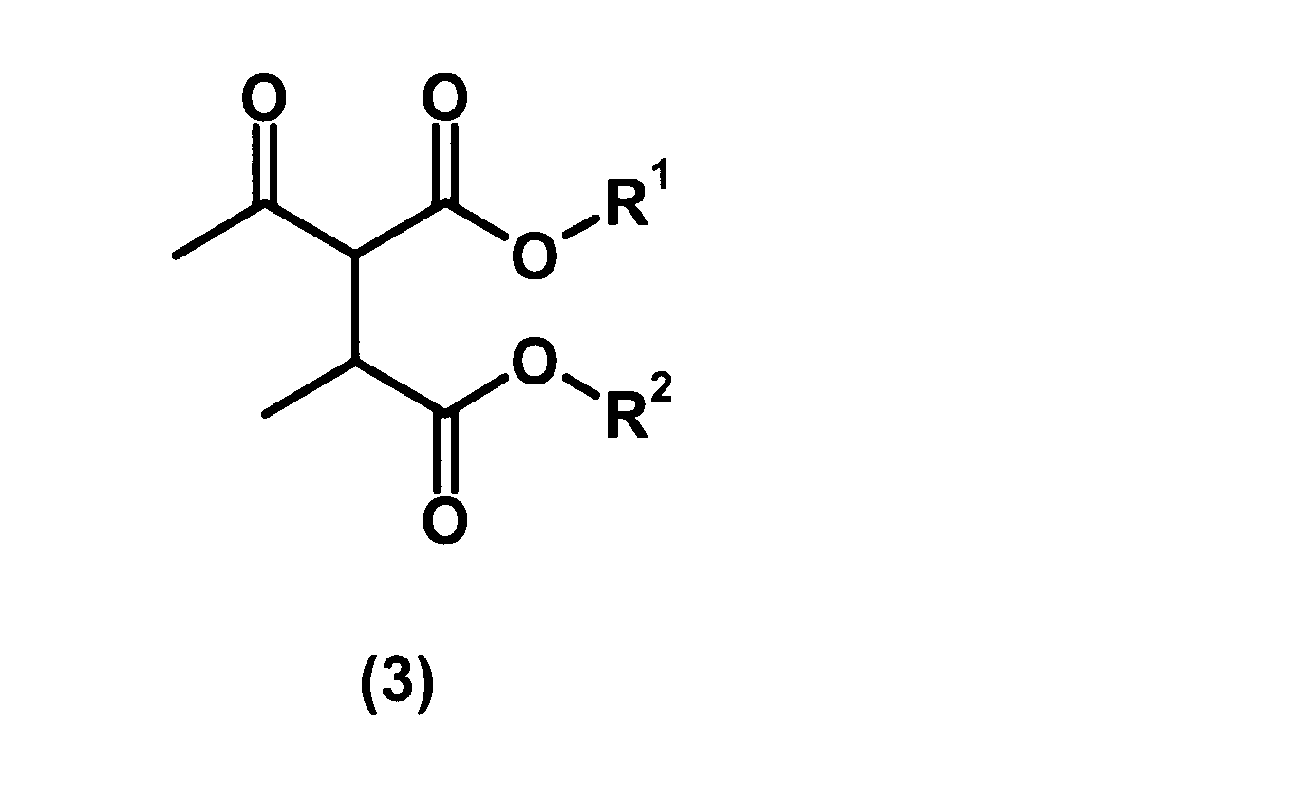
[式中、R1は、式(1)の定義と同じである。R2は、式(2)の定義と同じである。]
で示される2-アセト-3-メチル-コハク酸エステルを得る工程;
B-2)前記工程A)で得られた2-アセト-3-メチル-コハク酸エステルと、メチルビニルケトンとを、塩基性条件下にて反応させ、その後に脱炭酸反応させて、式(5):

[式中、R2は、式(2)の定義と同じである。]
で示されるα-メチル-γ-ケト酸エステルを得る工程;
E)前記工程B-2)で得られたα-メチル-γ-ケト酸エステルを、塩基性条件下、式(8)で示される光学活性ルテニウム錯体及び水素ガスの存在下にて不斉水素化反応させて、前記式(a)で示される化合物を得る工程

[式中、P⌒Pは光学活性ジホスフィンであり、
Vはアニオン性基であり、
Ra、Rb及びRcは、それぞれ独立して、水素原子、置換基を有してもよいC1~C20アルキル基、置換基を有してもよいC2~C20アルケニル基、置換基を有してもよいC3~C8シクロアルキル基、置換基を有してもよいC7~C20アラルキル基、置換基を有してもよいアリール基、又は、置換基を有してもよいヘテロ環基であり、あるいは、RbとRcとでアルキレン基又はアルキレンジオキシ基を形成してもよく、
RN1、RN2、RN3及びRN4は、それぞれ独立して、水素原子、置換基を有してもよいC1~C20アルキル基、置換基を有してもよいC2~C20アルケニル基、置換基を有してもよいC7~C20アラルキル基、又は、置換基を有してもよいC3~C8シクロアルキル基であり、但し、RN1、RN2、RN3及びRN4のうち少なくとも一つは水素原子であり、RN1とRaとでアルキレン基を形成してもよく、
nは0~3の整数であり、
Arは置換基を有していてもよいアリーレン基である。]
を含む、方法。 - 式(8)の光学活性ルテニウム錯体が次式で示される化合物である、請求項12に記載の方法。

[式中、Meはメチル基を表す。] - 前記工程E)で得られた化合物を塩基性条件下にて蒸留して、式:

で示される(3S,3aS,7aR)体及び(3R,3aR,7aS)体から構成されるジアステレオマー異性体混合物を得る工程をさらに含む、請求項9~13の何れか1項に記載の方法。 - さらに再結晶することにより、式:
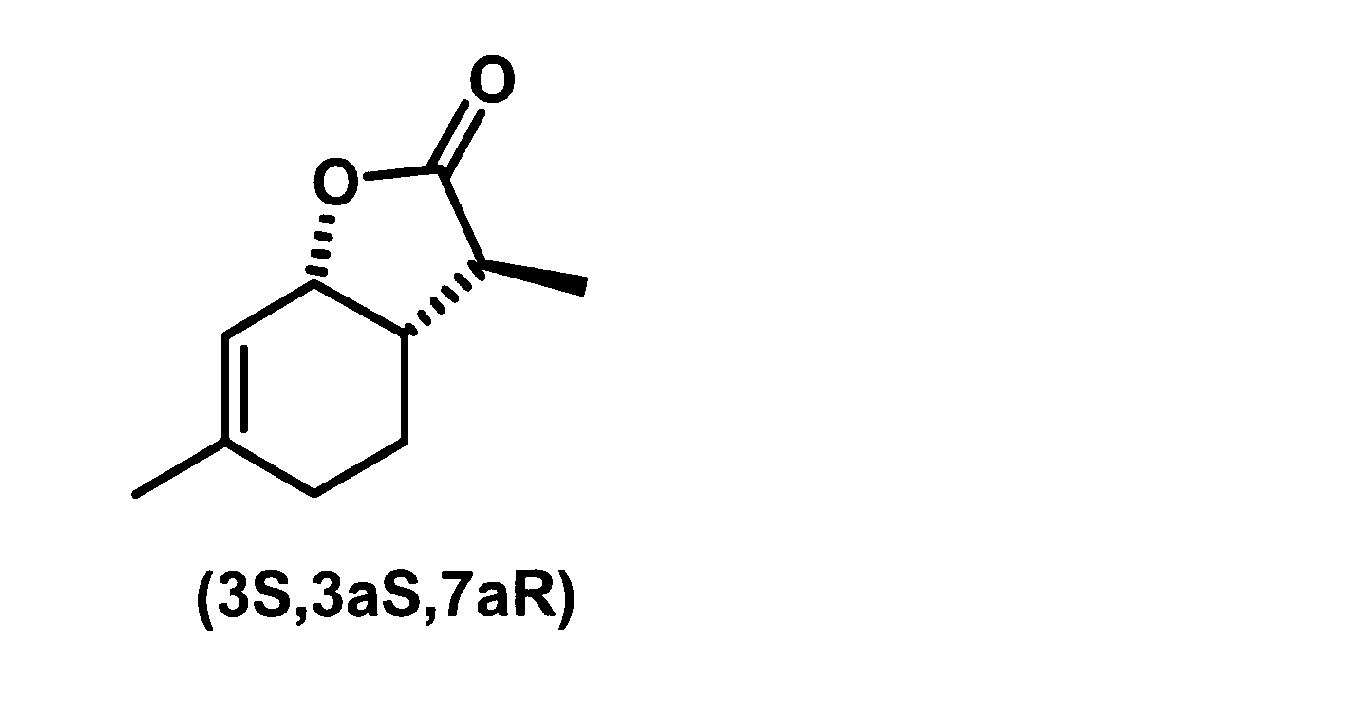
で示される(3S,3aS,7aR)体を得る工程を含む、請求項14に記載の方法。 - 全ての製造工程が0℃以上130℃以下で行われ、且つ、全ての製造工程においてシリカゲルカラムクロマトグラフィーによる精製工程を必要としない、請求項1~15の何れか1項に記載の方法。
Applications Claiming Priority (2)
| Application Number | Priority Date | Filing Date | Title |
|---|---|---|---|
| JP2011123267 | 2011-06-01 | ||
| JP2011-123267 | 2011-06-01 |
Publications (1)
| Publication Number | Publication Date |
|---|---|
| WO2012165164A1 true WO2012165164A1 (ja) | 2012-12-06 |
Family
ID=47259027
Family Applications (1)
| Application Number | Title | Priority Date | Filing Date |
|---|---|---|---|
| PCT/JP2012/062669 Ceased WO2012165164A1 (ja) | 2011-06-01 | 2012-05-17 | ワインラクトンの製造方法 |
Country Status (3)
| Country | Link |
|---|---|
| US (3) | US8481759B2 (ja) |
| JP (1) | JPWO2012165164A1 (ja) |
| WO (1) | WO2012165164A1 (ja) |
Cited By (3)
| Publication number | Priority date | Publication date | Assignee | Title |
|---|---|---|---|---|
| WO2015133405A1 (ja) * | 2014-03-06 | 2015-09-11 | 日産化学工業株式会社 | 光学活性アゼチジノン化合物の製造方法 |
| WO2019198678A1 (ja) | 2018-04-11 | 2019-10-17 | 高砂香料工業株式会社 | 新規ラクトン化合物及び新規エーテル化合物 |
| WO2025187133A1 (ja) * | 2024-03-08 | 2025-09-12 | 長谷川香料株式会社 | 消費財添加用組成物 |
Families Citing this family (1)
| Publication number | Priority date | Publication date | Assignee | Title |
|---|---|---|---|---|
| JPWO2012165164A1 (ja) * | 2011-06-01 | 2015-02-23 | 高砂香料工業株式会社 | ワインラクトンの製造方法 |
Citations (3)
| Publication number | Priority date | Publication date | Assignee | Title |
|---|---|---|---|---|
| JPH04108782A (ja) * | 1990-08-30 | 1992-04-09 | Takasago Internatl Corp | 光学活性γ―ブチロラクトン誘導体の製造方法 |
| JP2011246435A (ja) * | 2010-04-28 | 2011-12-08 | Takasago Internatl Corp | 新規ルテニウム錯体及びこれを触媒とする光学活性アルコール化合物の製造方法 |
| JP2012067071A (ja) * | 2010-08-26 | 2012-04-05 | Takasago Internatl Corp | ルテニウム−ジアミン錯体及び光学活性化合物の製造方法 |
Family Cites Families (3)
| Publication number | Priority date | Publication date | Assignee | Title |
|---|---|---|---|---|
| JP4472262B2 (ja) | 2003-03-11 | 2010-06-02 | 三栄源エフ・エフ・アイ株式会社 | ワインラクトン及びその中間体の製造法並びにその応用 |
| JP5328564B2 (ja) | 2009-01-27 | 2013-10-30 | 長谷川香料株式会社 | ワインラクトンの製造方法 |
| JPWO2012165164A1 (ja) * | 2011-06-01 | 2015-02-23 | 高砂香料工業株式会社 | ワインラクトンの製造方法 |
-
2012
- 2012-05-17 JP JP2013517958A patent/JPWO2012165164A1/ja active Pending
- 2012-05-17 WO PCT/JP2012/062669 patent/WO2012165164A1/ja not_active Ceased
- 2012-05-30 US US13/483,373 patent/US8481759B2/en not_active Expired - Fee Related
-
2013
- 2013-05-06 US US13/887,564 patent/US20130245287A1/en not_active Abandoned
- 2013-05-06 US US13/887,566 patent/US20130245286A1/en not_active Abandoned
Patent Citations (3)
| Publication number | Priority date | Publication date | Assignee | Title |
|---|---|---|---|---|
| JPH04108782A (ja) * | 1990-08-30 | 1992-04-09 | Takasago Internatl Corp | 光学活性γ―ブチロラクトン誘導体の製造方法 |
| JP2011246435A (ja) * | 2010-04-28 | 2011-12-08 | Takasago Internatl Corp | 新規ルテニウム錯体及びこれを触媒とする光学活性アルコール化合物の製造方法 |
| JP2012067071A (ja) * | 2010-08-26 | 2012-04-05 | Takasago Internatl Corp | ルテニウム−ジアミン錯体及び光学活性化合物の製造方法 |
Non-Patent Citations (5)
| Title |
|---|
| GUTH, H.: "Determination of the configuration of wine lactone", HELVETICA CHIMICA ACTA, vol. 79, no. 6, 1996, pages 1559 - 1571 * |
| JOHN E.B. ET AL.: "Synthesis and characterization of monothiosuccinimides", JOURNAL OF ORGANIC CHEMISTRY, vol. 54, no. 8, 1989, pages 1876 - 1883 * |
| KREISER, W. ET AL.: "Regioselectivity of the aldol ring closure", TETRAHEDRON LETTERS, vol. 22, no. 5, 1981, pages 429 - 432 * |
| MORENO-DORADO, F.J. ET AL.: "An easy route to 11- hydroxy-eudesmanolides. Synthesis of (±)- decipienin A", TETRAHEDRON, vol. 55, no. 22, 1999, pages 6997 - 7010 * |
| SHI, B. ET AL.: "OSW Saponins: Facile Synthesis toward a New Type of Structures with Potent Antitumor Activities", JOURNAL OF ORGANIC CHEMISTRY, vol. 70, no. 25, 2005, pages 10354 - 10367 * |
Cited By (8)
| Publication number | Priority date | Publication date | Assignee | Title |
|---|---|---|---|---|
| WO2015133405A1 (ja) * | 2014-03-06 | 2015-09-11 | 日産化学工業株式会社 | 光学活性アゼチジノン化合物の製造方法 |
| JPWO2015133405A1 (ja) * | 2014-03-06 | 2017-04-06 | 日産化学工業株式会社 | 光学活性アゼチジノン化合物の製造方法 |
| WO2019198678A1 (ja) | 2018-04-11 | 2019-10-17 | 高砂香料工業株式会社 | 新規ラクトン化合物及び新規エーテル化合物 |
| JPWO2019198678A1 (ja) * | 2018-04-11 | 2021-04-30 | 高砂香料工業株式会社 | 新規ラクトン化合物及び新規エーテル化合物 |
| US11427554B2 (en) | 2018-04-11 | 2022-08-30 | Takasago International Corporation | Lactone compound and novel ether compound |
| JP7401426B2 (ja) | 2018-04-11 | 2023-12-19 | 高砂香料工業株式会社 | 新規ラクトン化合物及び新規エーテル化合物 |
| WO2025187133A1 (ja) * | 2024-03-08 | 2025-09-12 | 長谷川香料株式会社 | 消費財添加用組成物 |
| JPWO2025187133A1 (ja) * | 2024-03-08 | 2025-09-12 |
Also Published As
| Publication number | Publication date |
|---|---|
| US20130030193A1 (en) | 2013-01-31 |
| US20130245286A1 (en) | 2013-09-19 |
| US20130245287A1 (en) | 2013-09-19 |
| US8481759B2 (en) | 2013-07-09 |
| JPWO2012165164A1 (ja) | 2015-02-23 |
Similar Documents
| Publication | Publication Date | Title |
|---|---|---|
| CN102414290B (zh) | (3r)-3-羟基丁酸l-薄荷酯、其制备方法、以及包含它的感觉刺激组合物 | |
| EP1761238B1 (en) | Menthol derivative and cooling agent composition comprising the same | |
| JP5546788B2 (ja) | (3S)−3−ヒドロキシブタン酸−l−メンチルの製造方法および冷感剤組成物 | |
| WO2012165164A1 (ja) | ワインラクトンの製造方法 | |
| CN106458807B (zh) | 新型化合物和含有其的香料组合物 | |
| JP2011526252A (ja) | 匂い物質として適するイソロンギホラニル誘導体 | |
| JPWO2019078185A1 (ja) | 2,2,6−トリメチルシクロヘキサンカルボン酸誘導体を含有する冷感剤組成物 | |
| JP7401426B2 (ja) | 新規ラクトン化合物及び新規エーテル化合物 | |
| JP4840749B2 (ja) | (5s)−または(5r)−5−メチル−5−(4−メチル−3−ペンテニル)−4,5−ジヒドロ−2(3h)−フラノンからなる香料、その製法およびそれを含有する香料組成物 | |
| CN103254052B (zh) | 一种顺式5-6并环化合物及其合成方法 | |
| CN117417318A (zh) | 一种制备降龙涎香醚的方法 | |
| ES2380095T3 (es) | Derivados canfolénicos bicíclicos | |
| CN103880705B (zh) | 二肟基紫罗兰酮及其制备方法和应用 | |
| KR100645373B1 (ko) | 세 고리형 테트라하이드로퓨란 락톤 화합물과 이의 제조방법 | |
| WO2014106419A1 (zh) | 一种合成1-甲基-2-氧代-3,6,7-三氧杂二环[2,2,2]辛烷的方法 | |
| WO2006027856A1 (ja) | ワインラクトン及びその中間体の製造法並びにその応用 | |
| JP2010083894A (ja) | ワインラクトン及びその中間体の製造法並びにその応用 | |
| Mathieson | A flexible one-step synthesis of dienamides: approaches towards a total synthesis of the Crocacins | |
| CN105541779A (zh) | 一种海洋天然产物Haterumadienone的合成方法 | |
| JP2008094731A (ja) | エステル化合物 |
Legal Events
| Date | Code | Title | Description |
|---|---|---|---|
| 121 | Ep: the epo has been informed by wipo that ep was designated in this application |
Ref document number: 12792559 Country of ref document: EP Kind code of ref document: A1 |
|
| ENP | Entry into the national phase |
Ref document number: 2013517958 Country of ref document: JP Kind code of ref document: A |
|
| NENP | Non-entry into the national phase |
Ref country code: DE |
|
| 122 | Ep: pct application non-entry in european phase |
Ref document number: 12792559 Country of ref document: EP Kind code of ref document: A1 |