WO2012161215A1 - コンディショナー組成物 - Google Patents
コンディショナー組成物 Download PDFInfo
- Publication number
- WO2012161215A1 WO2012161215A1 PCT/JP2012/063167 JP2012063167W WO2012161215A1 WO 2012161215 A1 WO2012161215 A1 WO 2012161215A1 JP 2012063167 W JP2012063167 W JP 2012063167W WO 2012161215 A1 WO2012161215 A1 WO 2012161215A1
- Authority
- WO
- WIPO (PCT)
- Prior art keywords
- group
- quaternary ammonium
- carbon atoms
- examples
- alkyl
- Prior art date
- Legal status (The legal status is an assumption and is not a legal conclusion. Google has not performed a legal analysis and makes no representation as to the accuracy of the status listed.)
- Ceased
Links
Classifications
-
- A—HUMAN NECESSITIES
- A61—MEDICAL OR VETERINARY SCIENCE; HYGIENE
- A61K—PREPARATIONS FOR MEDICAL, DENTAL OR TOILETRY PURPOSES
- A61K8/00—Cosmetics or similar toiletry preparations
- A61K8/18—Cosmetics or similar toiletry preparations characterised by the composition
- A61K8/30—Cosmetics or similar toiletry preparations characterised by the composition containing organic compounds
- A61K8/40—Cosmetics or similar toiletry preparations characterised by the composition containing organic compounds containing nitrogen
- A61K8/41—Amines
- A61K8/416—Quaternary ammonium compounds
-
- A—HUMAN NECESSITIES
- A61—MEDICAL OR VETERINARY SCIENCE; HYGIENE
- A61K—PREPARATIONS FOR MEDICAL, DENTAL OR TOILETRY PURPOSES
- A61K8/00—Cosmetics or similar toiletry preparations
- A61K8/18—Cosmetics or similar toiletry preparations characterised by the composition
- A61K8/30—Cosmetics or similar toiletry preparations characterised by the composition containing organic compounds
- A61K8/33—Cosmetics or similar toiletry preparations characterised by the composition containing organic compounds containing oxygen
- A61K8/34—Alcohols
- A61K8/342—Alcohols having more than seven atoms in an unbroken chain
-
- A—HUMAN NECESSITIES
- A61—MEDICAL OR VETERINARY SCIENCE; HYGIENE
- A61K—PREPARATIONS FOR MEDICAL, DENTAL OR TOILETRY PURPOSES
- A61K8/00—Cosmetics or similar toiletry preparations
- A61K8/18—Cosmetics or similar toiletry preparations characterised by the composition
- A61K8/72—Cosmetics or similar toiletry preparations characterised by the composition containing organic macromolecular compounds
- A61K8/84—Cosmetics or similar toiletry preparations characterised by the composition containing organic macromolecular compounds obtained by reactions otherwise than those involving only carbon-carbon unsaturated bonds
- A61K8/87—Polyurethanes
-
- A—HUMAN NECESSITIES
- A61—MEDICAL OR VETERINARY SCIENCE; HYGIENE
- A61Q—SPECIFIC USE OF COSMETICS OR SIMILAR TOILETRY PREPARATIONS
- A61Q5/00—Preparations for care of the hair
- A61Q5/004—Preparations used to protect coloured hair
-
- A—HUMAN NECESSITIES
- A61—MEDICAL OR VETERINARY SCIENCE; HYGIENE
- A61Q—SPECIFIC USE OF COSMETICS OR SIMILAR TOILETRY PREPARATIONS
- A61Q5/00—Preparations for care of the hair
- A61Q5/12—Preparations containing hair conditioners
-
- A—HUMAN NECESSITIES
- A61—MEDICAL OR VETERINARY SCIENCE; HYGIENE
- A61K—PREPARATIONS FOR MEDICAL, DENTAL OR TOILETRY PURPOSES
- A61K2800/00—Properties of cosmetic compositions or active ingredients thereof or formulation aids used therein and process related aspects
- A61K2800/40—Chemical, physico-chemical or functional or structural properties of particular ingredients
- A61K2800/59—Mixtures
- A61K2800/592—Mixtures of compounds complementing their respective functions
- A61K2800/5922—At least two compounds being classified in the same subclass of A61K8/18
Definitions
- the present invention relates to a conditioner composition, and in particular, to its hair color fading inhibiting effect and improvement in use feeling.
- Patent Document 1 describes a shampoo having a discoloration suppressing effect, in which a silylated peptide-silane compound copolymer composition is blended.
- Patent Document 2 describes a treatment having an anti-fading effect containing a lipophilic cationic surfactant and sterols. However, none of these effects were sufficient, and it was impossible to realize the goodness of the hair color.
- conditioners used for hair that has been colored not only the combination of ingredients having a high fading-inhibiting effect, but also the effects of the ingredients are promoted, and the above-mentioned specification is more specific than those incorporated in ordinary conditioners. It has been demanded to have a component having an excellent use feeling such as an effect (flexibility after drying). However, a composition of a conditioner component that can enhance the effect of the blended component having an anti-fading effect and that is remarkably excellent in use feeling has not been obtained at present.
- This invention is made
- the quaternary ammonium group-containing silylated urethane-based polymer greatly suppresses the discoloration of the hair color after using the conditioner.
- the present invention is completed by finding that the combination of a specific cationic surfactant and a higher aliphatic alcohol results in further improvement of the fading-inhibiting effect and an excellent feeling in use in the hair after dyeing. It came to.
- the conditioner composition according to the present invention comprises (i) a cationic surfactant, (Ii) a higher aliphatic alcohol, and (iii) 0.01 to 1% by mass of a quaternary ammonium group-containing silylated urethane polymer, and (i) a cationic surfactant,
- R 1 and R 2 may be the same or different and each represents an alkyl group or alkenyl group having 12 to 22 carbon atoms, and Z represents an anion selected from a halogen atom, a methyl sulfate group and an ethyl sulfate
- any two of R 3 to R 6 are each a linear or branched alkyl group having 8 to 36 carbon atoms which may be substituted with a hydroxyl group, or R 7 — (Z1) q.
- R 7 represents a linear or branched alkyl group having 8 to 36 carbon atoms which may be substituted by a hydroxyl group
- Y1 represents —CH 2 CH 2 —
- —CH 2 CH 2 represents a bonding group selected from —CH 2 —, —CH 2 CH 2 O—, —CH (OH) CH 2 O—
- Z1 represents an amide bond (—CONH—), an ether bond (—O—), an ester
- p and q each represent an integer of 0 or 1, and the remaining two of R 3 to R 6 are each substituted with a hydroxyl group.
- Alkyl group having 1 to 3 carbon atoms or ben X may be the same or different, and X is a quaternary ammonium such as a halogen atom, an alkyl sulfate group having 1 or 2 carbon atoms, or a residue excluding a hydrogen atom of an organic acid.
- An anion that can form a salt. (In the above formula, R 8 represents a linear or branched alkyl group having 8 to 36 carbon atoms which may be substituted by a hydroxyl group, or R 12 — (Z1) q — (Y1) p —.
- R 12 Represents a linear or branched alkyl group having 8 to 36 carbon atoms which may be substituted with a hydroxyl group
- Y1 represents —CH 2 CH 2 —, —CH 2 CH 2 CH 2 —, —CH 2 CH 2 O
- Z1 is a bond selected from an amide bond (—CONH—), an ether bond (—O—), and an ester bond (—COO—).
- P and q each represents an integer of 0 or 1.
- R 9 , R 10 and R 11 represent an alkyl group having 1 to 3 carbon atoms or a benzyl group which may be substituted by a hydroxyl group.
- X represents an anion capable of forming a salt with a quaternary ammonium such as a halogen atom, an alkyl sulfate group having 1 or 2 carbon atoms, or a residue excluding a hydrogen atom of an organic acid.
- the component (a) of the cationic surfactant is 0.05 to 2% by mass of an imidazoline type quaternary ammonium salt represented by the above general formula (I), Alternatively, 0.01 to 3% by mass of the di-long-chain alkyl quaternary ammonium salt represented by the general formula (II) is preferable.
- the component (a) of the (i) cationic surfactant is selected from the group consisting of dibehenylimidazolinium methosulfate, distearyldimethylammonium chloride, and dicocoylhydroxyethylmethylmonium methosulfate. It is suitable that it is one or more selected.
- a conditioner composition excellent in use feeling such as fading suppression effect on hair after dyeing and the flexibility of hair dried after using the conditioner it is possible to obtain a conditioner composition excellent in use feeling such as fading suppression effect on hair after dyeing and the flexibility of hair dried after using the conditioner.
- the conditioner composition according to the present invention contains (i) a cationic surfactant, (ii) a higher aliphatic alcohol, and (iii) a quaternary ammonium group-containing silylated urethane-based polymer. First, each component will be described.
- (I) Cationic surfactant The cationic surfactant used in the present invention imparts a good feeling after use (the suppleness of hair after drying) to the composition, and is also a quaternary ammonium. From the point of improving the anti-fading effect of the group-containing silylated urethane polymer, (A) an imidazoline type quaternary ammonium salt (a1) represented by the following general formula (I), or a dilong chain alkyl type quaternary ammonium salt (a2) represented by the following general formula (II): (B) a mono long-chain alkyl-type quaternary ammonium salt represented by the following general formula (III): Is used.
- a1 imidazoline type quaternary ammonium salt
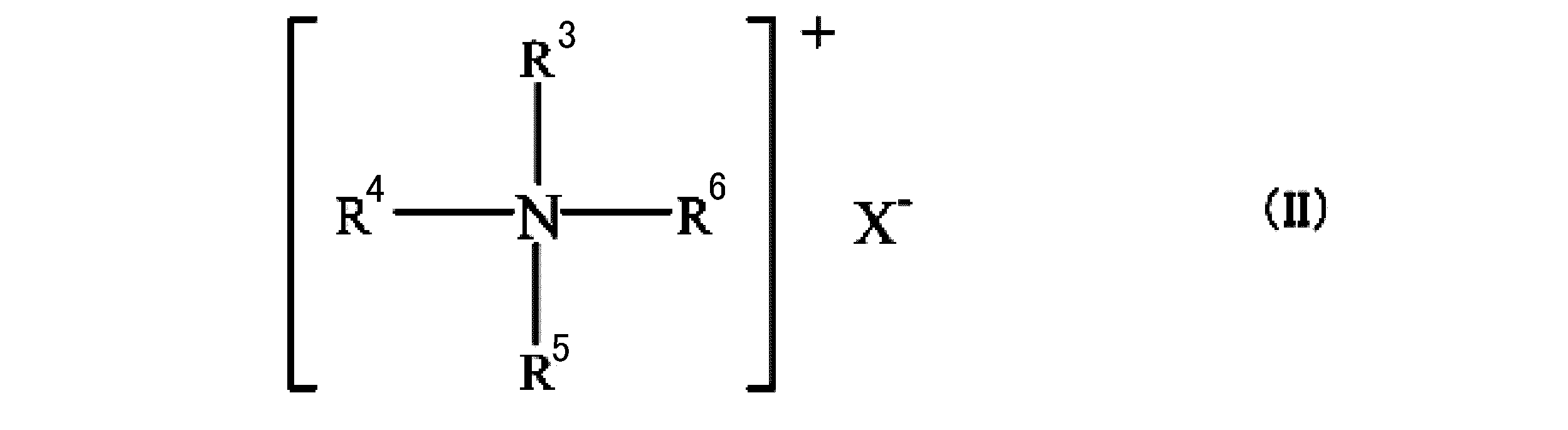
- a2 dilong chain alkyl type quaternary ammonium salt
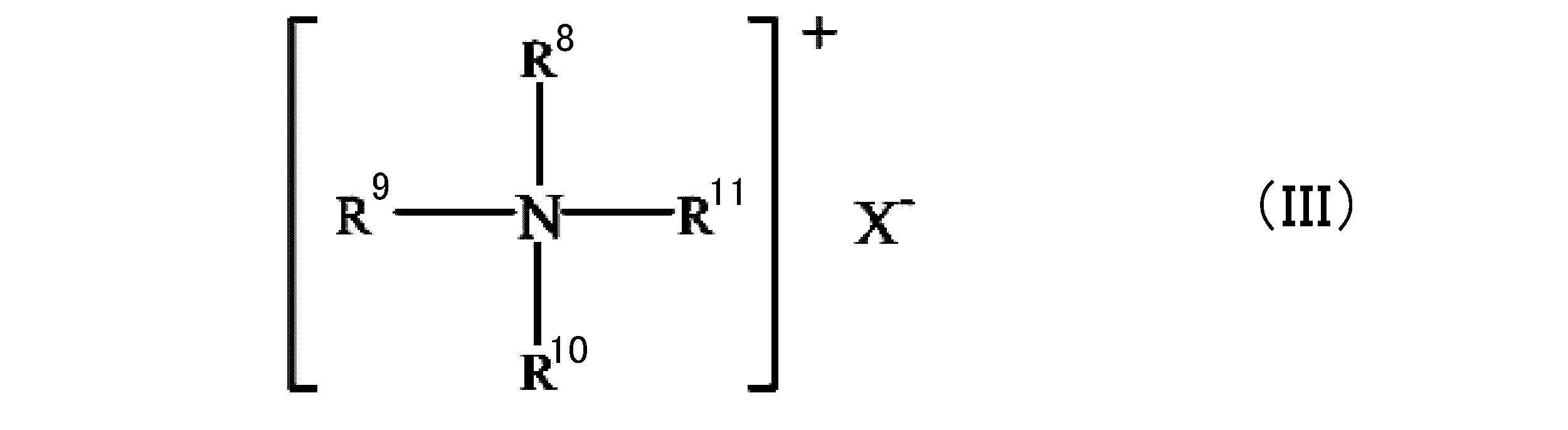
- II a mono long-chain alkyl-type quaternary ammonium salt represented by the following general formula (III): Is used.
- Imidazoline-type quaternary ammonium salt used in the present invention is a compound represented by the following general formula (I).
- R 1 and R 2 may be the same or different and each represents an alkyl group or alkenyl group having 12 to 22 carbon atoms, and Z represents a halogen atom, a methyl sulfate group or an ethyl sulfate group. Represents a selected anionic group.
- Examples of the alkyl group having 12 to 22 carbon atoms in R 1 and R 2 include a dodecyl group, a tridecyl group, a tetradecyl group, a pentadecyl group, a hexadecyl group, a heptadecyl group, an octadecyl group, a nonadecyl group, an icosyl group, a heneicosyl group, A docosyl (behenyl) group etc. can be illustrated.
- alkenyl group having 12 to 22 carbon atoms examples include dodecenyl group, tridecenyl group, pentadecenyl group, hexadecenyl group, heptadecenyl group, octadecenyl group, nonadecenyl group, icosadecenyl group, helicosadecenyl group, docosadecenyl group and the like. It can be illustrated. When the carbon number of R 1 or R 2 exceeds 22, the solubility in water tends to be remarkably lowered.
- halogen atom that Z can take include a chlorine atom, a bromine atom, a fluorine atom, and an iodine atom, and a chlorine atom is particularly preferable.
- Z is particularly preferably a methyl sulfate group.
- imidazoline type quaternary ammonium salt examples include dialkyl or dialkenyl imidazolinium such as dioleoyl imidazolinium methosulfate, distearyl imidazolinium methosulfate, dibehenyl imidazolinium methosulfate (quaternium-91) and the like. And the use of dibehenylimidazolinium methosulfate is particularly suitable.
- the di long chain alkyl type quaternary ammonium salt used in the present invention is a compound represented by the following general formula (II).
- any two of R 3 to R 6 are each a linear or branched alkyl group having 8 to 36 carbon atoms which may be substituted with a hydroxyl group, or R 7 — ( Z1) represents q- (Y1) p- .
- R 7 represents a linear or branched alkyl group having 8 to 36 carbon atoms which may be substituted with a hydroxyl group
- Y 1 represents —CH 2 CH 2 —, —CH 2 CH 2 CH 2 —, —CH 2 CH 2 represents a bonding group selected from —O—, —CH (OH) CH 2 O—
- Z1 is selected from an amide bond (—CONH—), an ether bond (—O—), and an ester bond (—COO—).
- p and q each represents an integer of 0 or 1.
- R 3 to R 6 each represent an alkyl group having 1 to 3 carbon atoms or a benzyl group which may be substituted with a hydroxyl group, Each may be different.
- X represents an anion capable of forming a salt with a quaternary ammonium such as a halogen atom, an alkyl sulfate group having 1 or 2 carbon atoms, or a residue excluding a hydrogen atom of an organic acid.
- Examples of the dilong chain alkyl quaternary ammonium salt represented by the general formula (II) include didecyldimethylammonium chloride, dicocoyldimethylammonium chloride, dicocoyldimethylammonium bromide, dilauryldimethylammonium chloride, Dimyristyldimethylammonium chloride, dicetyldimethylammonium chloride, dipalmityldimethylammonium chloride, distearyldimethylammonium chloride, distearyldimethylammonium bromide, dioleyldimethylammonium chloride, dicocoylethylhydroxyethylmonium methosulfate, dipalmitoylethyl Hydroxyethylmonium methosulfate, dicocoyl hydroxyethyl methylmonium methosulfate, distearyl ethyl hydroxyethyl moni Chloride
- the mono long chain alkyl type quaternary ammonium salt used in the present invention is a compound represented by the following general formula (III).
- R 8 represents a linear or branched alkyl group having 8 to 36 carbon atoms which may be substituted with a hydroxyl group, or R 12 — (Z1) q — (Y1) p —. .
- R 12 represents a linear or branched alkyl group having 8 to 36 carbon atoms which may be substituted with a hydroxyl group
- Y 1 represents —CH 2 CH 2 —, —CH 2 CH 2 CH 2 —, —CH 2 CH 2 represents a bonding group selected from —O—, —CH (OH) CH 2 O—
- Z1 is selected from an amide bond (—CONH—), an ether bond (—O—), and an ester bond (—COO—).
- R 9 , R 10 and R 11 represent an alkyl group having 1 to 3 carbon atoms or a benzyl group which may be substituted with a hydroxyl group, and are the same or different. May be.
- X represents an anion capable of forming a salt with a quaternary ammonium such as a halogen atom, an alkyl sulfate group having 1 or 2 carbon atoms, or a residue excluding a hydrogen atom of an organic acid.
- Examples of the mono long chain alkyl type quaternary ammonium salt represented by the general formula (III) include lauryl trimethyl ammonium chloride, lauryl trimethyl ammonium bromide, myristyl trimethyl ammonium chloride, myristyl trimethyl ammonium bromide, cetyl trimethyl chloride.
- the mono long-chain alkyl amine represented by the following general formula (IV) and the organic acid are used as components for producing the mono long-chain alkyl quaternary ammonium salt of the general formula (III). Can be combined.
- R 13 and R 14 each represents an alkyl group having 1 to 3 carbon atoms or a benzyl group which may be substituted with a hydroxyl group, and may be the same or different.
- R 15 represents a linear or branched alkyl group having 8 to 36 carbon atoms which may be substituted with a hydroxyl group.
- Y2 represents a linking group selected from —CH 2 CH 2 —, —CH 2 CH 2 CH 2 —, —CH 2 CH 2 O—, —CH (OH) CH 2 O—, and Z2 represents an amide bond
- a linking group selected from (—CONH—), an ether bond (—O—), and an ester bond (—COO—) is shown.
- s and t each represents an integer of 0 or 1.
- Examples of the combination of a mono long chain alkyl amine represented by the above formula (IV) and an organic acid suitable for blending in the present invention include stearic acid dimethylamidopropylamide-glutamic acid, stearic acid diethylamidopropylamide-lactic acid, Examples include stearoxypropyldimethylamide-malic acid, stearyl PGdimethylamine-glutamic acid, behenamidopropyldimethylamine-succinic acid, stearamidepropyldimethanolamine-tartaric acid, and the like.
- a cationic surfactant (A1) 0.05 to 2% by mass, more preferably 0.05 to 1% by mass of an imidazoline type quaternary ammonium salt, or (A2) 0.01 to 3% by mass, more preferably 1 to 3% by mass of a dilong chain alkyl type quaternary ammonium salt, based on the composition of the present invention; (B) Preferably, 0.1 to 5% by mass, more preferably 0.5 to 3% by mass of a mono long chain alkyl type quaternary ammonium salt is blended with the composition of the present invention. It is.
- the suppleness of the hair dried after using the conditioner may be insufficient.
- the mono long-chain alkyl quaternary ammonium salt is produced so that the mono long-chain alkyl quaternary ammonium salt is generated in the above blending amount range.
- the compounding quantity of an alkyl type amine and organic acid is adjusted.
- the conditioner composition according to the present invention contains a higher aliphatic alcohol.
- the higher aliphatic alcohol in the present application represents a linear aliphatic alcohol or a branched aliphatic alcohol having 12 to 36 carbon atoms, which is usually used in cosmetics and pharmaceuticals.
- linear aliphatic alcohols include lauryl alcohol, cetyl alcohol, stearyl alcohol, behenyl alcohol, myristyl alcohol, oleyl alcohol, cetostearyl alcohol, aralkyl alcohol, jojoba alcohol, hardened rapeseed oil alcohol, tetradecyl alcohol, Examples include hexadecyl alcohol and octadecyl alcohol.
- Examples of branched aliphatic alcohols include batyl alcohol, chimyl alcohol, 2-decyltetradecinol, lanolin alcohol, cholesterol, phytosterol, hexyldodecanol, isostearyl alcohol, octyldodecanol, decyltetradecanol, Examples include hexyl decanol, dodecyl hexadecanol, tetradecyl octadecanol, hexadecyl eicosanol and the like. Among the above higher aliphatic alcohols, cetyl alcohol is particularly preferable.
- the higher aliphatic alcohol has a molar ratio of the higher aliphatic alcohol to the cationic surfactant (component (a) + component (b)), preferably 1: 0.5 to 1:10. More preferably, it is blended so as to be 1: 1 to 1: 6. When blended outside the range of the molar ratio, the flexibility of the hair dried after using the conditioner may be insufficient.
- Quaternary ammonium group-containing silylated urethane polymer includes at least one quaternary ammonium group and at least one reactive silyl group in the urethane polymer. Any compound having any of Examples of reactive silyl groups include hydrolyzable silyl groups and silanol groups.
- the quaternary ammonium-containing silylated urethane-based polymer in the present invention includes, among others, constituent units for the following component (A), component (B), and component (C), and is derived from the component (C).
- a compound having a structure in which the following component (D) is bonded to an isocyanate terminal of a urethane polymer in which a quaternary amine moiety is quaternary ammonium ionized to form a urea bond is preferable.
- R 5 represents an alkyl group, a cycloalkyl group, an aryl group or an aralkyl group
- R 6 represents a hydrogen atom or —COOR 6 ′
- R 6 ′ represents an alkyl group.
- M is an integer of 1 to 3.
- m is 1, two R 2 may be the same or different, and when m is an integer of 2 or more, 2
- the above R 1 O— groups may be the same or different
- the quaternary ammonium group-containing silylated urethane polymer can be synthesized through at least the following steps (1), (2), and (3).
- Step (1) A step of synthesizing a urethane polymer by reacting the component (A), the component (B), and the component (C)
- Step (2) A tertiary amine site derived from the component (C) Step of quaternary ammonium ionization
- Step (3) Step of reacting the component (D) with the isocyanate terminal of the urethane polymer
- Component (A) Polyisocyanate compound
- the component (A) may be a compound having at least two isocyanate groups in the molecule, and examples thereof include aliphatic polyisocyanates, alicyclic polyisocyanates, aromatic polyisocyanates, and araliphatic polyisocyanates. it can.
- aliphatic polyisocyanate examples include 1,3-trimethylene diisocyanate, 1,4-tetramethylene diisocyanate, 1,3-pentamethylene diisocyanate, 1,5-pentamethylene diisocyanate, 1,6-hexamethylene diisocyanate, , 2-propylene diisocyanate, 1,2-butylene diisocyanate, 2,3-butylene diisocyanate, 1,3-butylene diisocyanate, 2-methyl-1,5-pentamethylene diisocyanate, 3-methyl-1,5-pentamethylene diisocyanate 2,4,4-trimethyl-1,6-hexamethylene diisocyanate, 2,2,4-trimethyl-1,6-hexamethylene diisocyanate, 2,6-diisocyanate methylcaproate, lysine dii Aliphatic diisocyanates such as cyanate and the like.
- alicyclic polyisocyanate examples include 1,3-cyclopentane diisocyanate, 1,4-cyclohexane diisocyanate, 1,3-cyclohexane diisocyanate, 4,4′-methylenebis (cyclohexyl isocyanate), and methyl-2,4-cyclohexane.
- Examples include alicyclic diisocyanates such as diisocyanate, methyl-2,6-cyclohexane diisocyanate, 1,3-bis (isocyanate methyl) cyclohexane, 1,4-bis (isocyanate methyl) cyclohexane, isophorone diisocyanate (IPDI), norbornane diisocyanate, and the like. be able to.
- alicyclic diisocyanates such as diisocyanate, methyl-2,6-cyclohexane diisocyanate, 1,3-bis (isocyanate methyl) cyclohexane, 1,4-bis (isocyanate methyl) cyclohexane, isophorone diisocyanate (IPDI), norbornane diisocyanate, and the like.
- aromatic polyisocyanate examples include m-phenylene diisocyanate, p-phenylene diisocyanate, 2,4-tolylene diisocyanate, 2,6-tolylene diisocyanate, naphthylene-1,4-diisocyanate, and naphthylene-1,5-diisocyanate.
- Examples of the araliphatic polyisocyanate include 1,3-xylylene diisocyanate, 1,4-xylylene diisocyanate, ⁇ , ⁇ ′-diisocyanate-1,4-diethylbenzene, 1,3-bis (1-isocyanate-1 And aromatic aliphatic diisocyanates such as -methylethyl) benzene, 1,4-bis (1-isocyanate-1-methylethyl) benzene, and 1,3-bis ( ⁇ , ⁇ -dimethylisocyanatomethyl) benzene. .
- dimers and trimers, reactive organisms or polymers for example, diphenylmethane diisocyanate dimers and trimers of diphenylmethane diisocyanate based on the aliphatic polyisocyanate, alicyclic polyisocyanate, aromatic polyisocyanate, and araliphatic polyisocyanate.
- Reactive products of trimethylolpropane and tolylene diisocyanate, reactive products of trimethylolpropane and hexamethylene diisocyanate, polymethylene polyphenol isocyanate, polyether polyisocyanate, polyester polyisocyanate, etc. it can.
- Component (A) in the present invention includes, among others, 1,6-hexamethylene diisocyanate, 4,4′-methylenebis (cyclohexyl isocyanate), 1,3-bis (isocyanatomethyl) cyclohexane, 1,4-bis (isocyanate).
- Methyl) cyclohexane isophorone diisocyanate (IPDI), 2,4-tolylene diisocyanate, 2,6-tolylene diisocyanate, 4,4′-diphenylmethane diisocyanate, 1,3-xylylene diisocyanate, 1,4-xylylene diisocyanate, Norbornane diisocyanate, 1,3-bis ( ⁇ , ⁇ -dimethylisocyanatomethyl) benzene and the like can be suitably used. These can be used alone or in admixture of two or more. Moreover, when aliphatic polyisocyanate is used, a resin with little discoloration can be obtained.
- IPDI isophorone diisocyanate
- 2,4-tolylene diisocyanate 2,6-tolylene diisocyanate
- 4,4′-diphenylmethane diisocyanate 1,3-xylylene diisocyanate
- Component (B): Polyol compound As the component (B), any compound having two or more hydroxyl groups may be used.
- a polyhydric alcohol a polyether polyol, a polyester polyol, a polycarbonate polyol, a polyolefin polyol, a polyacryl polyol, a trihydric or higher polyhydric alcohol.
- the component (B) in the present invention is, among others, a polyether polyol, a polyester polyol, a polycarbonate polyol, a polyalkylene oxide adduct of a trihydric or higher polyhydric alcohol, or its A compound selected from derivatives having a terminal hydroxyl group sealed is preferred.
- polyether polyol examples include polyalkylene glycols such as polyethylene glycol, polypropylene glycol and polytetramethylene ether glycol (PTMG); and a plurality of alkylene oxides such as ethylene oxide-propylene oxide copolymers (alkylene oxide-other An alkylene oxide) copolymer etc. can be mentioned.
- PTMG2000 trade name “manufactured by Mitsubishi Chemical Corporation”
- polyester polyol examples include a condensation polymer of a polyhydric alcohol and a polycarboxylic acid; a ring-opening polymer of a cyclic ester (lactone); a polyhydric alcohol, a polycarboxylic acid, and a cyclic ester.
- a reactant or the like can be used. These can be used alone or in admixture of two or more.
- polyhydric alcohol examples include ethylene glycol, diethylene glycol, propylene glycol, dipropylene glycol, trimethylene glycol, 1,4-tetramethylene diol, 1,3-tetramethylene diol, 2-methyl-1,3-trimethyl.
- Methylene diol 1,5-pentamethylene diol, neopentyl glycol, 1,6-hexamethylene diol, 3-methyl-1,5-pentamethylene diol, 2,4-diethyl-1,5-pentamethylene diol, glycerin , Trimethylolpropane, trimethylolethane, cyclohexanediols (1,4-cyclohexanediol, etc.), bisphenols (bisphenol A, etc.), sugar alcohols (xylitol, sorbitol, etc.), etc.
- the polyvalent carboxylic acid include aliphatic dicarboxylic acids such as malonic acid, maleic acid, succinic acid, glutaric acid, adipic acid, suberic acid, azelaic acid, sebacic acid, and dodecanedioic acid; 1,4-cyclohexanedicarboxylic acid And alicyclic dicarboxy
- polycarbonate polyol examples include a reaction product of polyhydric alcohol and phosgene; a ring-opening polymerization product of a cyclic carbonate. These can be used alone or in admixture of two or more.
- polyhydric alcohol used for the reaction between the polyhydric alcohol and phosgene examples include the same examples as those of the polyhydric alcohol.
- the cyclic carbonate include alkylene carbonates such as ethylene carbonate, trimethylene carbonate, tetramethylene carbonate, and hexamethylene carbonate.
- the polycarbonate polyol may be a compound having a carbonate bond in the molecule and having a hydroxyl group at the end, and may have an ester bond together with the carbonate bond.
- polyalkylene oxide adduct of a trihydric or higher polyhydric alcohol or a derivative in which a terminal hydroxyl group is capped polyalkylene oxide is added to one of the hydroxyl groups of the trihydric or higher polyhydric alcohol.
- examples thereof include derivatives in which the terminal hydroxyl group of the resulting compound or the adduct is blocked with an alkyl group such as methyl or ethyl group or an acyl group such as acetyl or benzoyl group.
- trihydric or higher polyhydric alcohol examples include trimethylolpropane, trimethylolethane, glycerin, pentaerythritol, xylitol, sorbitol and the like. These can be used alone or in admixture of two or more. In the present invention, trimethylolpropane and trimethylolethane are particularly preferable.
- polyalkylene oxide examples include an alkylene oxide derivative containing a single alkylene oxide and a copolymer containing a plurality of alkylene oxides (alkylene oxide-other alkylene oxides).
- alkylene oxide examples include ethylene oxide, propylene oxide, butylene oxide, isobutylene oxide, 1-butene oxide, 2-butene oxide, trimethylethylene oxide, tetramethylene oxide, tetramethylethylene oxide, butadiene monooxide, and octylene oxide.
- alkylene oxides having 2 to 8 carbon atoms In addition to alkylene oxides having 2 to 8 carbon atoms, aliphatic epoxides such as dipentane ethylene oxide and dihexane ethylene oxide; alicyclic epoxides such as trimethylene oxide, tetramethylene oxide, tetrahydrofuran, tetrahydropyran, and octylene oxide; styrene oxide, And aromatic epoxides such as 1,1-diphenylethylene oxide.
- the polyalkylene oxide in the present invention preferably contains an alkylene oxide having 2 to 4 carbon atoms such as ethylene oxide and propylene oxide in view of excellent water dispersion stability, and particularly preferably contains ethylene oxide.
- polyalkylene oxide adduct of a trihydric or higher polyhydric alcohol in the present invention or a derivative in which a terminal hydroxyl group is blocked examples include, for example, trimethylolpropane mono (polyethylene oxide methyl ether), trimethylolpropane mono (polyethylene oxide ethyl).
- Ether trimethylolpropane mono (polyalkylene oxide alkyl ether); polyoxyethylene sorbitan monolaurate, polyoxyalkylene sorbitan monofatty acid ester such as polyoxyethylene sorbitan monostearate; polyoxyethylene glyceryl monolaurate, poly Polyoxyethylene glyceryl mono fatty acid esters such as oxyethylene glyceryl monostearate; trimethylolpropane mono (polyethylene oxide methyl ester) May be mentioned ether) trimethylolpropane and mono- (polyalkylene oxide alkyl ether) and the like.
- trimethylolpropane mono (polyalkylene oxide alkyl ether) is particularly preferable, and in particular, the following formula (b) (In the above formula, n1 represents an integer of 10 to 40) The compound represented by these is preferable.
- a commercial product such as a trade name “YmerN120” (manufactured by Perstorp) may be used.
- the number average molecular weight of the component (B) in the present invention is, for example, preferably about 500 to 5000, and more preferably about 800 to 3000.
- the number average molecular weight is less than 500, the fading suppression effect tends to decrease.
- the number average molecular weight exceeds 5000, the water dispersion stability tends to decrease.
- component (B) in the present invention one or more selected from polyether polyol, polyester polyol, polycarbonate polyol, polyalkylene oxide adduct of trihydric or higher polyhydric alcohol or a derivative in which a terminal hydroxyl group is capped. It is preferable to contain a compound.
- a pendant nonionic side chain (hydrophilic group) into the urethane-based polymer, the adsorptivity to the hair surface is further improved, and the discoloration suppressing effect can be further improved.
- a polyalkylene oxide adduct of at least a trihydric or higher polyhydric alcohol or a derivative in which a terminal hydroxyl group is capped particularly a compound represented by the above formula (b)
- the ratio of the polyalkylene oxide adduct of a polyhydric alcohol having a valence of 3 or more in the component (B) or the derivative in which the terminal hydroxyl group of the adduct is blocked is, for example, 5 to 100% by mass, preferably 10 to 50% by mass. %, Particularly preferably 20 to 40% by mass.
- Component (C) Tertiary amine compound having two or more hydroxyl groups
- Component (C) may be any cationizable tertiary amine and two or more hydroxyl groups, such as triethanolamine, tri-n-propanolamine, tri-iso-propanolamine, etc.
- Trialkanolamines N-hydrocarbon group-substituted dialkanolamines such as N-methyldiethanolamine and N-phenyldiethanolamine.
- N-hydrocarbon group-substituted N, N-dialkanolamine is preferable, and N-methyl-N, N-diethanolamine, N-ethyl-N, N-diethanolamine are particularly preferable. N-methyl-N, N-dipropanolamine is preferred.
- Component (D) Ester-modified amino group-containing alkoxysilane
- Component (D) in the present invention is represented by the above formula (d1), (d2) or (d3).
- R ⁇ 1 >, R ⁇ 2 > is the same or different and shows an alkyl group
- R ⁇ 3 >, R ⁇ 4 > is the same or different, and has the alkylene group or substituent which may have a substituent.
- the arylene group which may be sufficient is shown.
- R 5 represents an alkyl group, a cycloalkyl group, an aryl group or an aralkyl group
- R 6 represents a hydrogen atom or —COOR 6 ′
- R 6 ′ represents an alkyl group.
- M is an integer of 1 to 3.
- When m is 1, two R2s may be the same or different.
- m is an integer of 2 or more, two or more R 1 O— groups may be the same or different.
- R 1 and R 2 in the above formulas (d1), (d2), and (d3) are the same or different and represent an alkyl group.
- the alkyl group include methyl, ethyl, propyl, isopropyl, butyl, isobutyl, s-butyl, t-butyl, pentyl, isopentyl, s-pentyl, t-pentyl, hexyl, isohexyl, s-hexyl, t- Examples include hexyl, heptyl, octyl, nonyl, decyl, undecyl, dodecyl, tridecyl, tetradecyl, pentadecyl, hexadecyl, heptadecyl, octadecyl, nonadecyl, and eicosyl groups.
- R 3 and R 4 in the above formulas (d1), (d2) and (d3) are the same or different and may have an alkylene group which may have a substituent or an arylene group which may have a substituent.
- Examples of the alkylene group include methylene, ethylene, trimethylene, tetramethylene, pentamethylene, decamethylene, and tetradecamethylene groups.
- the alkylene group for R 3 and R 4 of the present invention is particularly preferably an alkylene group having 1 to 10 carbon atoms.
- the arylene group include phenylene, naphthylene, and anthrylene group.
- an alkylene group having 6 to 10 carbon atoms is particularly preferable.
- R 3 and R 4 may have include, for example, an aryl group such as a phenyl group; an alkyl group such as a methyl group, an ethyl group, a propyl group, and a butyl group; and a cycloalkyl such as a cyclohexyl group. Groups and the like.
- the substituent is a further substituent (for example, an alkoxy group, an aryloxy group, a cycloalkyloxy group, an alkoxycarbonyl group, an aryloxycarbonyl group, a cycloalkyloxycarbonyl group, an acyl group, an amino group, etc.). You may have.
- R 5 in the above formulas (d1), (d2), and (d3) represents an alkyl group, a cycloalkyl group, an aryl group, or an aralkyl group.
- the alkyl group include the same examples as the alkyl groups in R 1 and R 2 above.
- the alkyl group in R 5 of the present invention is particularly preferably an alkyl group having 1 to 20 carbon atoms.
- the cycloalkyl group include monocyclic, polycyclic or condensed cyclic cycloalkyl groups having 3 to 20 carbon atoms such as cyclopropyl, cyclopentyl, cyclohexyl, and cyclooctyl groups.
- aryl group examples include aryl groups having 6 to 20 carbon atoms such as phenyl, tolyl, xylyl, naphthyl, methylnaphthyl, anthryl, phenanthryl, and biphenyl groups.
- aralkyl group examples include the alkyl group substituted with the aryl group.
- R 6 in the above formulas (d1), (d2), and (d3) represents a hydrogen atom or —COOR 6 ′
- R 6 ′ represents an alkyl group.
- the alkyl group for R 6 ′ include the same examples as the alkyl groups for R 1 and R 2 above. Among them, an alkyl group having 1 to 20 carbon atoms is preferable.
- the ester-modified amino group-containing alkoxysilanes represented by the above formulas (d1), (d2), and (d3) are, for example, the following formulas (d1, 2-1) (In the above formula, R 1 , R 2 , R 3 , R 4 , m are the same as the above formulas (d1) to (d3))
- R 5 and R 6 are the same as the above formulas (d1) to (d3)).
- the Michael addition reaction can be performed in the presence or absence of a solvent. Moreover, you may heat and pressurize in the case of reaction.
- Examples of the primary and secondary amino group-containing alkoxysilane compounds represented by the formula (d1, 2-1) include N- ⁇ (aminoethyl) - ⁇ -aminopropyltrimethoxysilane, N- ⁇ ( N- (aminoalkyl) aminoalkyltrialkoxysilanes such as aminoethyl) - ⁇ -aminotopyltriethoxysilane; N- ⁇ (aminoethyl) - ⁇ -aminopropylmethyldimethoxysilane, N- ⁇ (aminoethyl)- Examples thereof include N- (aminoalkyl) aminoalkylalkyldialkoxysilanes such as ⁇ -aminopropylmethyldiethoxysilane.
- commercial products such as trade names “KBE602”, “KBM602”, “KBE603”, and “KBM603” (manufactured by Shin-Etsu Chemical Co., Ltd.
- Examples of the primary amino group-containing alkoxysilane compound represented by the formula (d3-1) include aminomethyltrimethoxysilane, aminomethyltriethoxysilane, 2-aminoethyltrimethoxysilane, 2-aminoethyltriethoxy.
- Aminoalkyltrialkoxysilanes such as silane, 3-aminopropyltrimethoxysilane, 3-aminopropyltriethoxysilane, 3-aminopropyltripropoxysilane, 3-aminopropyltriisopropoxysilane, 3-aminopropyltributoxysilane;
- Aminoalkyl) alkoxysilanes such as 2-aminoethylmethyldimethoxysilane, 2-aminoethylmethyldiethoxysilane, 3-aminopropylmethyldipropoxysilane and the like can be mentioned.
- commercially available products such as trade names “KBE902”, “KBM902”, “KBE903”, “KBM903” (manufactured by Shin-Etsu Chemical Co., Ltd.) may be used.
- Examples of the unsaturated carboxylic acid ester represented by the above formula (1) include n-butyl acrylate, isobutyl acrylate, cyclohexyl acrylate, 2-ethylhexyl acrylate, 3-butylcyclohexyl acrylate, lauryl acrylate, cetyl acrylate, stearyl acrylate, Examples include behenyl acrylate and glycidyl acrylate.
- n-butyl acrylate, lauryl acrylate, 2-ethylhexyl acrylate and the like are particularly preferable.
- Step (1) Synthesis of urethane polymer
- the urethane polymer can be synthesized by reacting the components (A), (B), and (C) according to a known or conventional method for preparing a urethane polymer from a polyol compound and a polyisocyanate compound. .
- a polymerization catalyst may be used to accelerate the reaction.
- a known or commonly used polymerization catalyst (curing catalyst) used for the reaction between a polyol compound and a polyisocyanate compound can be used, and examples thereof include basic compounds such as amine compounds.
- basic compounds such as amine compounds include aminosilanes such as ⁇ -aminopropyltrimethoxysilane and ⁇ -aminopropyltriethoxysilane; quaternary ammonium salts such as tetramethylammonium chloride and benzalkonium chloride; Linear products containing a plurality of nitrogen atoms such as the product names “DABCO” series and “DABCO BL” series manufactured by Air Products, or 1,8-diazabicyclo [5.4.0] undec-7-ene (DBU) Examples thereof include cyclic tertiary amines or quaternary ammonium salts.
- the reaction can be carried out in a solvent.
- the solvent include acetone, methyl ethyl ketone, methyl isobutyl ketone, N-methylpyrrolidone, tetrahydrofuran, ethyl acetate and the like.
- the atmosphere during the reaction is not particularly limited, and is selected from an air atmosphere, a nitrogen atmosphere, an argon atmosphere, and the like.
- the reaction temperature can be appropriately selected depending on the type of reaction components, and is, for example, about 20 to 150 ° C., preferably about 20 to 100 ° C.
- the reaction may be performed under normal pressure, or may be performed under reduced pressure or under pressure.
- the reaction time can be appropriately selected according to the reactivity of the components, and is, for example, about 2 to 20 hours, preferably about 3 to 10 hours.
- the amount of component (A), component (B), and component (C) used is not particularly limited and can be appropriately adjusted according to various physical properties to be obtained.
- the isocyanate group / component in component (A) The hydroxyl group (NCO / OH group) (equivalent ratio) in the component (B) and the component (C) is greater than 1 and less than or equal to 1.5 (preferably greater than 1 and less than or equal to 1.3, more preferably greater than 1 and 1. 2 or less).
- the NCO / OH group ratio is too large (for example, exceeding 1.5 (equivalent ratio))
- the dispersibility tends to decrease.
- the NCO / OH group ratio is too small (for example, 1 or less (equivalent ratio))
- silyl group introduction cannot be performed sufficiently, and the discoloration suppressing effect tends to decrease.
- the component (C) has a cationizable tertiary amine content in the urethane polymer of 2 to 90% by mass (preferably 2 to 50% by mass, more preferably 5 to 20% by mass). It is preferable that it is contained in such a ratio.
- the content of the tertiary amine that can be cationized exceeds the above range, the viscosity tends to be too high, making it difficult to use.
- the content of the tertiary amine that can be cationized is below the above range, the water dispersion stability tends to decrease.
- the terminal isocyanate group content of the urethane polymer is preferably, for example, about 0.3 to 7.0% by weight.
- the content of the terminal isocyanate group exceeds 7.0% by weight, water dispersion tends to be difficult.
- the terminal isocyanate group content is less than 0.3% by weight, the viscosity at the time of synthesis tends to be too high, and the synthesis tends to be difficult.
- a quaternary ammonium group-containing urethane polymer is synthesized by ionizing (cationizing) the tertiary amine moiety derived from the component (C) in the urethane polymer obtained through the step (1). can do.
- an alkylating agent (a quaternizing agent) is allowed to react with the urethane polymer obtained through the above step (1) to obtain a component (C).
- alkylating agent examples include sulfate esters such as dimethyl sulfate and diethyl sulfate; halides such as methyl chloride, methyl bromide, methyl iodide, benzyl chloride, and benzyl bromide. Can do.
- the amount of the alkylating agent used can be appropriately adjusted, and is, for example, 30 mol% or more (preferably 50 mol) with respect to 1 mol of the tertiary amine moiety (tertiary amino group) in the urethane polymer. ⁇ 120 mol%, more preferably 80 to 100 mol%).
- amount of the alkylating agent used exceeds the above range, the heat rise during the reaction tends to be severe and the workability tends to decrease.
- the usage-amount of an alkylating agent is less than the said range, there exists a tendency for the fading suppression effect to fall.
- the cationization reaction can be performed in a solvent.
- the solvent include acetone, methyl ethyl ketone, methyl isobutyl ketone, N-methylpyrrolidone, tetrahydrofuran, ethyl acetate and the like.
- the atmosphere during the reaction is not particularly limited, and is selected from an air atmosphere, a nitrogen atmosphere, an argon atmosphere, and the like.
- the reaction temperature can be appropriately selected according to the type of reaction components, and is, for example, about 0 to 100 ° C., preferably about 20 to 80 ° C.
- the reaction may be performed under normal pressure, or may be performed under reduced pressure or under pressure.
- the reaction time can be appropriately selected depending on the reaction rate, and is, for example, about 10 minutes to 5 hours, preferably about 30 minutes to 3 hours.
- Step (3): Silylation To synthesize a quaternary ammonium group-containing silylated urethane polymer by enriching the component (D) at the isocyanate terminal of the quaternary ammonium group-containing urethane polymer obtained in the step (2). (Silylation reaction). In addition, you may perform the process of a process (3) before performing the process of the said process (2). In that case, a silylated urethane-based polymer is synthesized by adding the component (D) to the isocyanate terminal of the urethane-based polymer obtained in the step (1).
- a quaternary ammonium group-containing silylated urethane polymer can be synthesized by ionizing the nitrogen atom of the quaternary amine moiety with quaternary ammonium ions.
- step (2) -step (3) the method of step (2) -step (3) will be described, but the same applies to the case of step (3) -step (2).
- the silylation reaction can be performed by mixing the quaternary ammonium group-containing urethane polymer obtained in the step (2) and the component (D) and heating as necessary.
- the terminal isocyanate group of the quaternary ammonium group-containing urethane polymer is ester-modified alkoxysilylated to obtain a quaternary ammonium group-containing silylated urethane polymer.
- a polymerization catalyst may be used as necessary.
- this reaction can be performed in the presence or absence of a solvent.
- Component (D) has a quaternary ammonium group-containing silylated urethane-based polymer having a silicon atom content of 0.05 to 10% by mass (preferably 0.05 to 5% by mass, more preferably 0.05 to 5% by mass). (2% by mass) is preferably added at such a ratio.
- silicon content exceeds the above range, the storage stability tends to decrease, whereas when the silicon content falls below the above range, the fading suppression effect tends to decrease.
- the atmosphere during the silylation reaction is not particularly limited and is selected from an air atmosphere, a nitrogen atmosphere, an argon atmosphere, and the like.
- the reaction temperature can be appropriately selected according to the type of reaction components, and is, for example, about 20 to 100 ° C., preferably about 40 to 80 ° C.
- the reaction may be performed under normal pressure, or may be performed under reduced pressure or under pressure.
- the reaction time can be appropriately selected, and is, for example, about 10 minutes to 3 hours, preferably about 20 minutes to 2 hours.
- Step (4): Silicone chain addition The quaternary ammonium group-containing silylated urethane-based polymer obtained through the steps (1) to (3) further contains a hydrolyzable silicon atom in addition to the terminal alkoxysilyl group derived from the component (D).
- a step of reacting a compound having a group to add a silicone chain to the quaternary ammonium group-containing silylated urethane polymer may be provided (step (4)).
- the compound having a hydrolyzable silicon atom-containing group is not particularly limited as long as it is a compound having at least one hydrolyzable silicon atom-containing group in the molecule.
- hydrolyzable silicon atom-containing groups include hydrosilylation such as alkoxysilyl groups, hydrosilyl groups, halogenated silyl groups (for example, chlorinated silyl groups, brominated silyl groups, iodinated silyl groups, fluorine or silyl groups, etc.).
- a decomposable silyl group etc. can be mentioned.
- the group or atom bonded to the silicon atom is usually 1 to 3 (preferably 2 or 3) per silicon atom.
- the same group (especially alkoxy group) or atoms may be bonded, or two or more different groups or atoms may be combined and bonded.
- an alkoxysilyl group or a hydrosilyl group is preferable, and an alkoxysilyl group is particularly preferable.
- the compound having at least one alkoxysilyl group in the molecule in particular, the following formula (e1) or (e2)
- the compound (E) represented by can be used suitably.
- R 7 , R 8 , R 9 and R 10 are the same or different and represent a hydrogen atom or an alkyl group.
- m ′ is 1 or 2.
- n2 is an integer of 1 or more.
- R 11 represents (OR 7 ) or R 8
- R 12 represents an organic group.
- n3 is an integer of 1 or more.
- R 7 , R 8 and m ′ are the same as described above.
- Examples of the alkyl group in R 7 , R 8 , R 9 , and R 10 include the same examples as the examples of the alkyl group in R 1 and R 2 above. Among them, the number of carbon atoms is 1 to 10 (more preferably 1 Alkyl groups of -6, especially 1-4 are preferred.
- the alkyl group of R ⁇ 7 >, R ⁇ 8 > may have a substituent. Further, through the substituent such as an alkyl group R 7, R 8 is combined with other alkyl groups (e.g., alkyl groups R 7, R 8 attached to other silicon atoms, etc.) A ring (aromatic ring or non-aromatic ring) may be formed. Furthermore, R 7 and R 8 may be bonded to R 7 and R 8 bonded to the same or different silicon atoms, respectively.
- n2 is 1 or 2, preferably 2. When m ′ is 2, it means that R 8 does not exist and two (OR 7 ) groups are bonded to the silicon atom in the formula (e1). n2 is an integer of 1 or more. When n2 is 1, the compound represented by the formula (e1) means a monomer, and when n2 is an integer of 2 or more, it is a multimer such as an oligomer or a polymer. It means that.
- Examples of the compound represented by the formula (e1) include tetraalkoxysilanes such as tetramethoxysilane, tetraethoxysilane, tetrapropoxysilane, tetraisopropoxysilane, and tetrabutoxysilane; alkoxytrialkoxy such as methoxytriethoxysilane.
- Silane monomer compounds such as dialkoxydialkoxysilane such as dimethoxydiethoxysilane; polytetramethoxysilane, polytetraethoxysilane, polytetrapropoxysilane, polytetraisopropoxysilane, polytetrabutoxysilane and other polytetra Poly (alkoxyalkoxysilane) such as poly (methoxyethoxysilane); poly (alkoxysilane) such as poly (methoxysilane) and poly (butoxysilane); Rushiran), poly (methoxyethyl silane), poly (Compound multimeric poly (alkoxyalkylsilane) etc. ethoxymethyl silane) and the like, and the like.
- dialkoxydialkoxysilane such as dimethoxydiethoxysilane
- polytetramethoxysilane polytetraethoxysilane, polytetrapropoxysilane, polyte
- R 11 is OR 7 or R 8, R 7, R 8 , m ' is, R 7, R 8, m in formula (e1)' is the same as. Further, the plurality of OR 7 and R 8 bonded to the same silicon atom may be the same or different.
- Examples of the organic group for R 12 include an alkyl group which may have a substituent, and atoms other than carbon atoms (oxygen atom, nitrogen atom, sulfur atom, etc.) in the main chain of the alkyl group.
- the alkyl group and the hetero atom containing group which may have these substituents may have either monovalent or polyvalent form.
- Examples of the organic group for R 12 include a vinyl group, mercapto group, vinyl-alkyl group, vinyl- (alkyl) -aryl group, vinyl- (alkyl) -cycloalkyl group, (meth) acryloyl group, (meth ) Acryloyloxyalkyl group (vinyl-carbonyloxyalkyl group), (meth) acryloyloxyaryl group, mercapto-alkyl group, mercapto- (alkyl) -aryl group, mercapto- (alkyl) -cycloalkyl group, etc. it can.
- n3 is an integer of 1 or more, preferably an integer of 1 to 4 (more preferably 1 or 2, particularly preferably 1).
- n3 is an integer of 2 or more, it means that two or more hydrolyzable silicon atom-containing groups are bonded to the organic group of R 12 .
- examples of the compound in which R 12 is an alkyl group include alkyltrialkoxysilanes such as methyltrimethoxysilane, ethyltrimethoxysilane, and methyltriethoxysilane, and dimethyldimethoxy.
- alkyltrialkoxysilanes such as methyltrimethoxysilane, ethyltrimethoxysilane, and methyltriethoxysilane, and dimethyldimethoxy.
- dialkyl dialkoxysilanes such as silane, dimethyldiethoxysilane, diethyldiethoxysilane, diisopropyldimethoxysilane, isopropyldimethoxymethylsilane, isopropyldiethoxymethylsilane, and the like.
- R 12 is a substituent (e.g., a glycidoxy group, an isocyanate group, an amino group, etc.)
- R 12 is a substituent (e.g., a glycidoxy group, an isocyanate group, an amino group, etc.)
- the compound is an alkyl radical having, for example, compounds corresponding to those wherein R 12 is exemplified as a compound is an alkyl group Etc.
- examples of the compound in which R 12 is a vinyl group include vinyltrialkoxysilanes such as vinyltrimethoxysilane and vinyltriethoxysilane; vinylmethyldimethoxysilane, vinylmethyldi (Vinyl) alkyldialkoxysilanes such as ethoxysilane, (vinyl) dialkyl (mono) alkoxysilanes corresponding to these, and the like can be mentioned.
- examples of the compound in which R 12 is a (meth) acryloyloxyalkyl group include 3- (meth) acryloxypropyl-trimethoxysilane, 3- (meth) acrylic (Meth) acryloxyalkyl-trialkoxysilane such as loxypropyl-triethoxysilane; (meth) such as 3- (meth) acryloxypropyl-methyldimethoxysilane, 3- (meth) acryloxypropyl-methyldiethoxysilane Examples include acryloxyalkyl-alkyl dialkoxysilanes, and (meth) acryloxyalkyl-dialkyl (mono) alkoxysilanes corresponding to these.
- examples of the compound in which R 12 is a mercapto-alkyl group include mercaptoalkyltrialkoxysilanes such as 3-mercaptopropyltrimethoxysilane and 3-mercaptopropyltriethoxysilane. And (mercaptoalkyl) alkyl dialkoxysilanes such as 3-mercaptopropylmethyldipropoxysilane, 3-mercaptopropylmethyldiisopropoxysilane, and the corresponding (mercaptoalkyl) dialkyl (mono) alkoxysilanes. it can.
- Such compounds having a dialkoxysilyl group are dimethyldimethoxysilane, dimethyldiethoxysilane, dimethyldipropoxysilane, diethyldimethoxysilane, diethyldiethoxysilane, diethyldipropoxysilane, isopropyldimethoxymethylsilane, isopropyl, among others.
- Dialkyldialkoxysilanes such as diethoxymethylsilane; (vinyl) alkyldialkoxysilanes such as vinylmethyldimethoxysilane and vinylmethyldiethoxysilane; 3-methacryloxypropylmethyldimethoxysilane, 3-methacryloxypropylmethyldiethoxysilane, etc.
- (meth) acryloxyalkyl-alkyldialkoxysilane and the like can be suitably used.
- Examples of the compound having a trialkoxysilyl group include methyltrimethoxysilane, methyltriethoxysilane, methyltripropoxysilane, ethyltrimethoxysilane, ethyltriethoxysilane, ethyltripropoxysilane, isopropyltrimethoxysilane, Alkyltrialkoxysilanes such as isopropyltriethoxysilane; vinyltrialkoxysilanes such as vinyltrimethoxysilane and vinyltriethoxysilane; 3- (meth) acryloxypropyl-trimethoxysilane, 3- (meth) acryloxypropyl-tri (Meth) acryloxyalkyl-trialkoxysilane such as ethoxysilane can be preferably used.
- the amount of the compound (E) used is, for example, 1 to 50 mol (preferably 5 to 40 mol, more preferably 5 to 20 mol) per 1 mol of silyl group in the quaternary ammonium group-containing silylated urethane polymer. It is preferable to use at a ratio such that When the usage-amount of a compound (E) exceeds the said range, there exists a tendency for storage stability to fall.
- the atmosphere during the silicone chain addition reaction is not particularly limited and is selected from an air atmosphere, a nitrogen atmosphere, an argon atmosphere, and the like.
- the reaction temperature can be appropriately selected according to the type of reaction components, and is, for example, about 20 to 100 ° C., preferably about 40 to 80 ° C.
- the reaction may be performed under normal pressure, or may be performed under reduced pressure or under pressure.
- the reaction time can be appropriately selected and is, for example, about 1 to 20 hours, preferably about 1 to 5 hours.
- the amount of (iii) the quaternary ammonium group-containing silylated urethane polymer in the conditioner composition according to the present invention is not particularly limited, but in view of its fading inhibiting effect, it is preferably 0.01 to 1 relative to the composition.
- the mass is more preferably 0.05 to 0.6 mass%. If the blending amount is less than 0.01% by mass, the fading-inhibiting effect is insufficient, and if it exceeds 1% by mass, the feel after use may be degraded, for example, the hair after application may be stiff.
- the conditioner composition according to the present invention can be produced by a conventional method by blending other components usually used in cosmetics and pharmaceuticals within a range not impairing the effects of the present invention.
- Other components include, for example, oils, cationic surfactants other than the above, nonionic surfactants, powder components, humectants, natural polymers, synthetic polymers, ultraviolet absorbers, sequestering agents, pH Examples thereof include regulators, skin nutrients, vitamins, antioxidants, antioxidant aids, fragrances, and water.
- oils include liquid oils, solid oils, hydrocarbon oils, and silicone oils.
- liquid oils include avocado oil, camellia oil, turtle oil, macadamia nut oil, corn oil, mink oil, olive oil, rapeseed oil, egg yolk oil, sesame oil, persic oil, wheat germ oil, southern castor oil, castor oil, linseed oil , Safflower oil, cottonseed oil, eno oil, soybean oil, peanut oil, tea seed oil, kaya oil, rice bran oil, cinnagiri oil, Japanese kiri oil, jojoba oil, germ oil, triglycerin and the like.
- solid fat examples include cacao butter, palm oil, horse fat, hydrogenated palm oil, palm oil, beef tallow, sheep fat, hydrogenated beef tallow, palm kernel oil, pork fat, beef bone fat, owl kernel oil, hydrogenated oil, cattle Leg fats, moles, hydrogenated castor oil and the like.
- hydrocarbon oil examples include liquid paraffin, ozokerite, squalane, pristane, paraffin, ceresin, squalene, petrolatum, and microcrystalline wax.
- silicone oil examples include linear polysiloxanes (for example, dimethylpolysiloxane, methylphenylpolysiloxane, diphenylpolysiloxane, etc.); cyclic polysiloxanes (for example, octamethylcyclotetrasiloxane, decamethylcyclopentasiloxane, dodecamethylcyclohexyl).
- linear polysiloxanes for example, dimethylpolysiloxane, methylphenylpolysiloxane, diphenylpolysiloxane, etc.
- cyclic polysiloxanes for example, octamethylcyclotetrasiloxane, decamethylcyclopentasiloxane, dodecamethylcyclohexyl.
- Silicone resin silicone rubber, various modified polysiloxanes (amino-modified polysiloxane, polyether-modified polysiloxane, alkyl-modified polysiloxane, polyether-alkyl co-modified polysiloxane, Fluorine-modified polysiloxane, polyoxyethylene / polyoxypropylene copolymer-modified polysiloxane, linear amino polyether-modified polysiloxane, amide alkyl-modified polysiloxane, Roh glycol modified polysiloxane, aminophenyl modified polysiloxane, carbinol modified polysiloxane, polyglycerin modified polysiloxane, polyglycerin-alkyl co-modified polysiloxane), dimethiconol, and acrylic silicones, or the like.
- the blending conditions of the silicone oil may be solubilized or emulsified in the composition, and the particle diameter when emul
- alkylpyridinium salts for example, cetylpyridinium chloride
- poly N, N′-dimethyl-3,5-methylenepiperidinium chloride
- alkylisoquinolinium salts dialkyl Morphonium salts
- POE alkylamines alkylamine salts
- polyamine fatty acid derivatives amyl alcohol fatty acid derivatives
- benzalkonium chloride benzethonium chloride and the like.
- nonionic surfactants include fatty acid alkanolamides such as coconut oil fatty acid monoethanolamide, coconut oil fatty acid diethanolamide, lauric acid isopropanolamide, and oleic acid diethanolamide; sorbitan monostearate, sorbitan sesquioleate, and the like Sorbitan fatty acid esters; alkylene glycol fatty acid esters such as diethylene glycol laurate, propylene glycol laurate, ethylene glycol monooleate, ethylene glycol distearate; hardened castor oil derivatives, glycerin alkyl ether, POE sorbitan monooleate, monostearin POE sorbitan fatty acid esters such as polyoxyethylene sorbitan acid; POE sol such as POE-sorbite monolaurate POE glycerin fatty acid esters such as POE-glycerin monoisostearate; POE glycerin fatty acid esters such as polyethylene glycol
- the powder component examples include inorganic powders (for example, talc, kaolin, mica, sericite (sericite), muscovite, phlogopite, synthetic mica, saucite, biotite, permiculite, magnesium carbonate, calcium carbonate, silicic acid.
- inorganic powders for example, talc, kaolin, mica, sericite (sericite), muscovite, phlogopite, synthetic mica, saucite, biotite, permiculite, magnesium carbonate, calcium carbonate, silicic acid.
- Red No. 204 Yellow No. 205, Yellow No. 401, and Blue No. 404, Red No. 3, Red No. 104, Red No. 106, Red No. 227, Red No. 230, Red No. 401, Red No. 505, Orange 205 No. 4, Yellow No. 4, Yellow No. 5, Yellow No. 202, Yellow No. 203, Green No. 3 and Blue No. 1, etc.); natural pigments (eg chlorophyll, ⁇ -carotene, etc.); clay minerals (bentonite, hectorite, laponite) Etc.).
- natural pigments eg chlorophyll, ⁇ -carotene, etc.
- clay minerals bentonite, hectorite, laponite
- humectant examples include polyethylene glycol, propylene glycol, dipropylene glycol, isoprene glycol, glycerin, 1,3-butylene glycol, xylitol, sorbitol, maltitol, chondroitin sulfate, hyaluronic acid, mucoitin sulfate, caronic acid, atelocollagen, Cholesteryl-12-hydroxystearate, sodium lactate, bile salt, dl-pyrrolidone carboxylate, short-chain soluble collagen, diglycerin (EO) PO adduct, Izayoi rose extract, yarrow extract, Merrilot extract, etc. Can be mentioned.
- EO diglycerin
- natural water-soluble polymers include plant-based polymers (eg, gum arabic, gum tragacanth, galactan, guar gum, carob gum, caraya gum, carrageenan, tamarind gum, locust bean gum, pectin, agar, quince seed (malmello), Arge colloid (gypsum extract), starch (rice, corn, potato, wheat), glycyrrhizic acid); microbial polymer (eg, xanthan gum, dextran, succinoglucan, bull run); animal polymer (eg, collagen, casein) , Albumin, gelatin, etc.). Further, derivatives thereof (POE / POP modification, alkyl modification, cationization, anionization, silylation) are also included.
- plant-based polymers eg, gum arabic, gum tragacanth, galactan, guar gum, carob gum, caraya gum, carrageenan, tamarind gum, locust bean gum,
- Semi-synthetic water-soluble polymers include, for example, starch polymers (eg, carboxymethyl starch, methylhydroxypropyl starch, etc.); cellulose polymers (methylcellulose, ethylcellulose, methylhydroxypropylcellulose, hydroxyethylcellulose, sodium cellulose sulfate) , Dialkyldimethylammonium sulfate cellulose, hydroxypropylcellulose, carboxymethylcellulose, sodium carboxymethylcellulose, crystalline cellulose, cellulose powder and hydrophobically modified compounds of these polymers ⁇ Example: partly stearoxy-modified> and cationically modified compounds of these polymers, etc.) Alginate-based polymers (eg, sodium alginate, propylene glycol alginate, etc.); sodium pectate, etc. And the like.
- starch polymers eg, carboxymethyl starch, methylhydroxypropyl starch, etc.
- cellulose polymers methylcellulose, ethylcellulose, methyl
- Synthetic water-soluble polymers include, for example, vinyl polymers (eg, polyvinyl alcohol, polyvinyl methyl ether, polyvinyl pyrrolidone, carboxyvinyl polymer); polyoxyethylene polymers (eg, polyethylene glycol 20,000, 40).
- vinyl polymers eg, polyvinyl alcohol, polyvinyl methyl ether, polyvinyl pyrrolidone, carboxyvinyl polymer
- polyoxyethylene polymers eg, polyethylene glycol 20,000, 40.
- poly (dimethyldiallylammonium halide) type cationic polymer for example, Mercat 100 (Merquat 100) manufactured by Merck & Co., USA); dimethyldiallylammonium halide And acrylamide copolymer type cationic polymer (for example, Merquat 550 manufactured by Merck USA); acrylic polymer (for example, sodium polyacrylate, polyethylacrylate) Over DOO, polyacrylamide), polyethylene imine; cationic polymers; AlMg silicate (bee gum); -39 etc. polyquaternium like.
- poly (dimethyldiallylammonium halide) type cationic polymer for example, Mercat 100 (Merquat 100) manufactured by Merck & Co., USA
- dimethyldiallylammonium halide And acrylamide copolymer type cationic polymer for example, Merquat 550 manufactured by Merck USA
- acrylic polymer for example, sodium polyacrylate, polyethylacrylate
- ultraviolet absorber examples include benzoic acid-based ultraviolet absorbers (for example, paraaminobenzoic acid (hereinafter abbreviated as PABA), PABA monoglycerin ester, N, N-dipropoxy PABA ethyl ester, N, N-diethoxy PABA ethyl ester.
- PABA paraaminobenzoic acid
- PABA monoglycerin ester N, N-dipropoxy PABA ethyl ester
- N, N-diethoxy PABA ethyl ester examples include benzoic acid-based ultraviolet absorbers (for example, paraaminobenzoic acid (hereinafter abbreviated as PABA), PABA monoglycerin ester, N, N-dipropoxy PABA ethyl ester, N, N-diethoxy PABA ethyl ester.
- PABA paraaminobenzoic acid
- sequestering agent examples include 1-hydroxyethane-1,1-diphosphonic acid, 1-hydroxyethane-1,1-diphosphonic acid tetrasodium salt, disodium edetate, trisodium edetate, and tetrasodium edetate.
- Examples of the pH adjuster include buffers such as lactic acid-sodium lactate, citric acid-sodium citrate, and succinic acid-sodium succinate.
- Examples of vitamins include vitamins A, B1, B2, B6, C, E and derivatives thereof, pantothenic acid and derivatives thereof, biotin and the like.
- Examples of the antioxidant include tocopherols, dibutylhydroxytoluene, butylhydroxyanisole, gallic acid esters and the like.
- ingredients that can be blended include, for example, preservatives (ethyl paraben, butyl paraben, 1,2-alkanediol (carbon chain length 6-14) and derivatives thereof, phenoxyethanol, methylchloroisothiozoline, etc.); (For example, glycyrrhizic acid derivatives, glycyrrhetinic acid derivatives, salicylic acid derivatives, hinokitiol, zinc oxide, allantoin, etc.); whitening agents (for example, yukinoshita extract, arbutin, etc.); Sembli, birch, sage, loquat, carrot, aloe, mallow, iris, grape, yokoinin, loofah, lily, saffron, peony, ginger, hypericum, onionis, garlic, capsicum, chimpi, cypress, seaweed, etc.), activator ( For example, Blood accelerating agents (eg, nonyl
- the quaternary ammonium group-containing silylated urethane-based polymer is quickly and firmly adsorbed on the hair surface and is not washed away even by rinsing with water. Therefore, the penetration of moisture into the hair can be suppressed during shampooing, the outflow of dye from the inside of the hair can be suppressed, and an excellent fading suppression effect can be exhibited. Furthermore, by using a specific cationic surfactant and a higher aliphatic alcohol in combination, the fading-inhibiting effect is further promoted, and the dyed hair is good in the suppleness of the hair dried after using the conditioner. It is possible to give a feeling of use. Therefore, if the conditioner etc.
- the discoloration suppressing effect of the hair color in the conditioner composition according to the present invention is measured using a spectrocolorimeter before and after shampooing the hair that has been subjected to hair coloring, and the color difference thereof. It can be evaluated by ( ⁇ E). The closer the color difference ( ⁇ E) is to zero, the higher the fading suppression effect.
- the color difference ( ⁇ Es) of the hair before and after the hair washing treatment is, for example, 3.3 or less, preferably Is 2.8 or less.
- the color difference exceeds the above range, it tends to be difficult to realize the fading suppression effect.
- ⁇ Method for evaluating fading suppression effect 1.
- a hair bundle of 100% gray hair (manufactured by Beaulux) was dyed using a brown hair color (trade name “Dianist NB8”, manufactured by Shiseido Professional Co., Ltd.).
- the color of the hair was measured using a spectrocolorimeter (trade name “CM-2500d”, manufactured by Konica Minolta) (C 1 ).
- the conditioner obtained in Examples and Comparative Examples (the number of samples was set to 10 for each conditioner) was used for the above-mentioned dyed hair bundle, and a pretreatment of rinsing was performed. Thereafter, the dyed hair bundle after the pretreatment was subjected to a washing treatment (treatment of repeating shampoo-rinse-dry five times). 4).
- a washing treatment treatment of repeating shampoo-rinse-dry five times. 4).
- the color of the hair was measured using a spectrocolorimeter in the same manner as described above, the average value (C 2 ) was calculated, and the color difference before and after the washing treatment ( ⁇ Es: C 1 ⁇ C 2 ) was obtained and compared with the comparative example, the fading suppression effect was evaluated according to the following evaluation criteria.
- Evaluation Criteria ( ⁇ Es of each Example) ⁇ ( ⁇ Es of Comparative Example) is ⁇ 1 or less: ⁇ ( ⁇ Es of each example) ⁇ ( ⁇ Es of comparative example) exceeds ⁇ 1 and is ⁇ 0.5 or less: The value of (Es in each example) ⁇ ( ⁇ Es in the comparative example) exceeds ⁇ 0.5 and 0 or less: ⁇ The value of ( ⁇ Es in each example) ⁇ ( ⁇ Es in the comparative example) exceeds 0: ⁇
- reaction mixture of the quaternary ammonium group-containing urethane polymer was mixed with 9.9 parts of the compound A obtained in Preparation Example 1, and then reacted at a temperature of 65 to 75 ° C. for 1 hour in a nitrogen atmosphere.
- a reaction mixture (1) containing a quaternary ammonium group-containing silylated urethane polymer was obtained.
- reaction mixture (1) was cooled to 40 ° C.
- 1000 parts of deionized water was added under restrained stirring. Thereafter, the solvent was distilled off at 45 to 50 ° C. under reduced pressure to obtain an aqueous dispersion (1).
- the imidazoline type quaternary ammonium salt exhibited a sufficient effect when blended in an amount of 0.01% by mass (Example 1-1), but Examples 1-2 to 1-6 blended in an amount of 0.05 to 2% by mass.
- both the fading suppression effect and the flexibility after drying were high, and this tendency was particularly remarkable in Examples 1-2 to 1-5 containing 0.05 to 1% by mass.
- the di-long-chain alkyl quaternary ammonium salt is 0.01 to 3% by mass, particularly 1 to 3% by mass, as shown in Examples 1-8 to 1-10 and 1-11 to 1-13. In the blending with, good results were obtained for both the fading suppression effect and the flexibility after drying.
- a cationic surfactant in addition to the quaternary ammonium group-containing urethane polymer.
- the cationic surfactant it is particularly preferable to use an imidazoline type quaternary ammonium salt or a di-long chain alkyl type quaternary ammonium salt in combination with a mono long chain alkyl type quaternary ammonium salt,
- the blending amount of the imidazoline type quaternary ammonium salt is preferably 0.05 to 2% by mass, more preferably 0.05 to 1% by mass.
- the amount of the di-long alkyl quaternary ammonium salt is preferably 0.01 to 3% by mass, more preferably 1 to 3% by mass.
Landscapes
- Health & Medical Sciences (AREA)
- Life Sciences & Earth Sciences (AREA)
- Animal Behavior & Ethology (AREA)
- General Health & Medical Sciences (AREA)
- Public Health (AREA)
- Veterinary Medicine (AREA)
- Birds (AREA)
- Epidemiology (AREA)
- Emergency Medicine (AREA)
- Dermatology (AREA)
- Cosmetics (AREA)
Abstract
【課題】褪色抑制効果及び使用感触に優れたコンディショナー組成物を提供する。 【解決手段】(i)カチオン性界面活性剤と、(ii)高級脂肪族アルコールと、(iii)4級アンモニウム基含有シリル化ウレタン系ポリマー0.01~1質量%と、を含有し、且つ、(i)カチオン性界面活性剤が、(a)特定構造を有するイミダゾリン型第4級アンモニウム塩、又は特定構造を有するジ長鎖アルキル型第4級アンモニウム塩と、(b)特定構造を有するモノ長鎖アルキル型第4級アンモニウム塩と、からなることを特徴とする請求項1に記載のコンディショナー組成物。
Description
本出願は、2011年 5月25日付け出願の日本国特許出願2011-116993号の優先権を主張しており、ここに折り込まれるものである。
本発明はコンディショナー組成物、特にそのヘアカラー褪色抑制効果及び使用感触の改善に関する。
近年、酸化染料を使用した頭髪のカラーリングが広く行われている。頭髪のカラーリングを楽しむ人々の主な悩みとしては、色持ちが悪く、染色後は通常1ヶ月程度で褪色が目立つようになり、頻回に染色を繰り返さなければ、綺麗なヘアカラーを保持することができないことが挙げられる。酸化染料の褪色は、洗髪等の際に毛髪内部に水が浸透して、毛髪内部に取り込まれていた染料が洗い流されることによって引き起こされるということが分かっており、ヘアカラーの褪色抑制効果を有するシャンプーやコンディショナー等が求められている。
特許文献1には、シリル化ペプチド-シラン化合物共重合組成物を配合した、褪色抑制効果を有するシャンプーが記載されている。また、特許文献2には、親油性カチオン界面活性剤とステロール類とを含有した、褪色抑制効果を有するトリートメントが記載されている。しかし、これらは何れも効果が不十分であり、ヘアカラーの持ちのよさを実感することができなかった。
また、酸化染料によるヘアカラーの場合、脱色に伴う毛髪の損傷により染色後に多少のきしみやごわつきを生じることがある。したがって、染色後の毛髪の場合、コンディショナー使用後に乾かした毛髪のしなやかさの違いが、通常の毛髪よりも強く感じられる傾向にある。そのため、ヘアカラーを行った毛髪に使用するコンディショナーにおいては、高い褪色抑制効果を有する成分の配合のみならず、該成分の効果を促進し、且つ、通常のコンディショナーに配合されるものよりも前記特定効果(ドライ後のしなやかさ)といった使用感触が優れた成分を有することが求められてきた。
しかしながら、配合された褪色抑制効果を有する成分に対し、その効果を高めることが可能で、さらに使用感触も顕著に優れたコンディショナー成分の構成は、現在のところ得られていなかった。
しかしながら、配合された褪色抑制効果を有する成分に対し、その効果を高めることが可能で、さらに使用感触も顕著に優れたコンディショナー成分の構成は、現在のところ得られていなかった。
本発明は上記課題に鑑みてなされたものであり、褪色抑制効果及び使用感触に優れたコンディショナー組成物を提供することを目的とする。
上記課題を解決するために本発明者らが鋭意検討をした結果、4級アンモニウム基含有シリル化ウレタン系ポリマーが、コンディショナー使用後のヘアカラーの褪色を大きく抑制し、また、該成分に対して特定のカチオン性界面活性剤と、高級脂肪族アルコールとを併用することにより、前記褪色抑制効果のさらなる向上と、染色後の髪における優れた使用感触がもたらされることを見出し、本発明を完成するに至った。
すなわち、本発明にかかるコンディショナー組成物は、(i)カチオン性界面活性剤と、
(ii)高級脂肪族アルコールと、(iii)4級アンモニウム基含有シリル化ウレタン系ポリマー0.01~1質量%と、を含有し、且つ、(i)カチオン性界面活性剤が、(a)下記一般式(I)で表されるイミダゾリン型第4級アンモニウム塩、又は下記一般式(II)で表されるジ長鎖アルキル型第4級アンモニウム塩と、(b)下記一般式(III)で表されるモノ長鎖アルキル型第4級アンモニウム塩と、からなることを特徴とする。
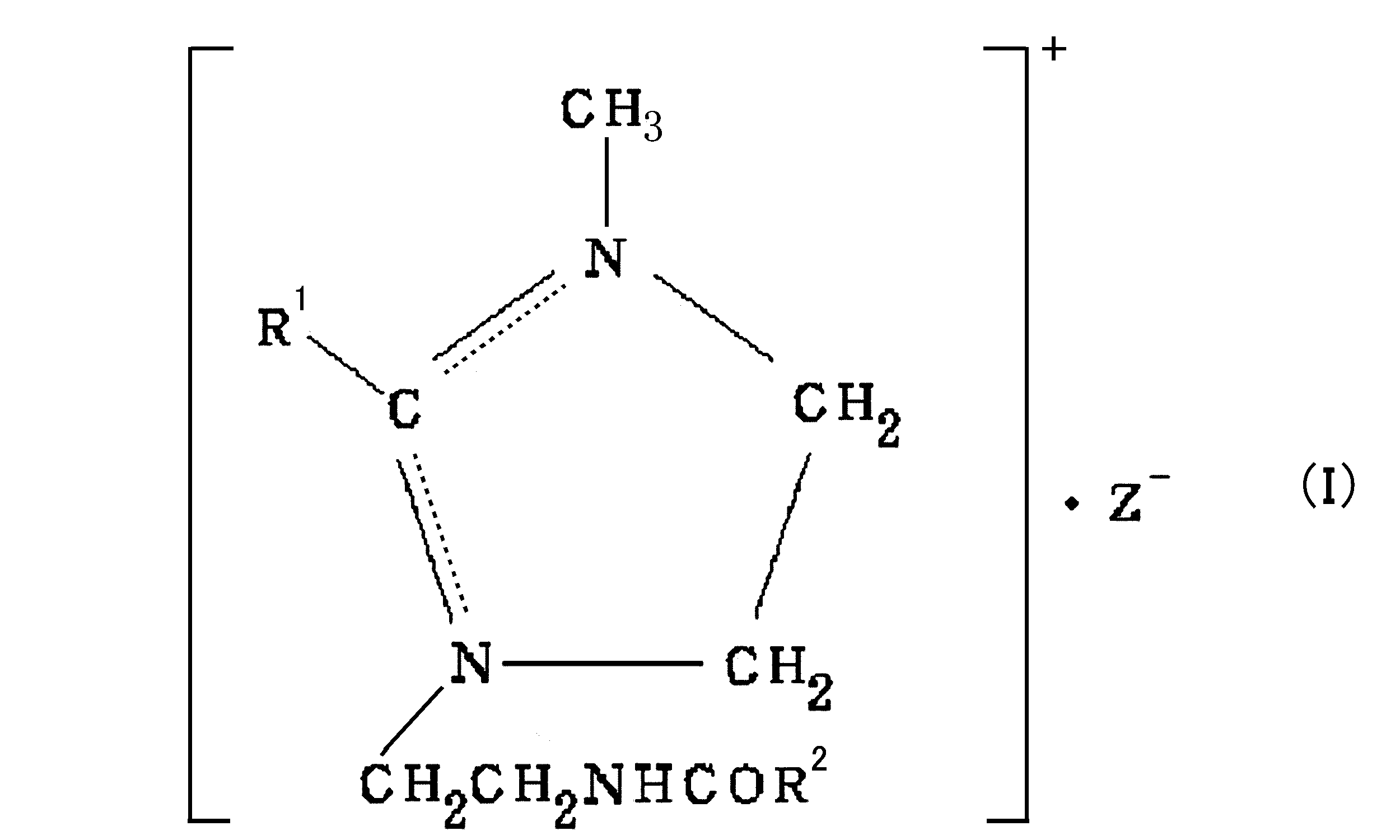
(上記式中、R1及びR2は互いに同一でも異なってもよく、炭素数が12~22のアルキル基又はアルケニル基を表し、Zはハロゲン原子、メチルサルフェート基及びエチルサルフェート基から選ばれるアニオン性基を表す。)
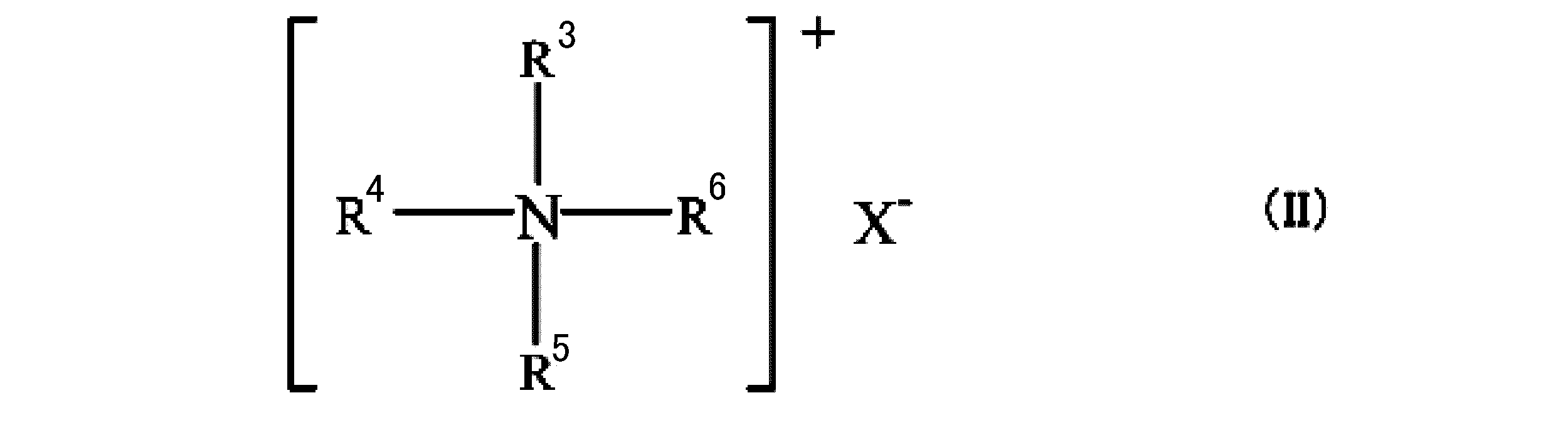
(上記式中、R3~R6のうちいずれか2つはそれぞれ、ヒドロキシル基が置換していてもよい炭素数8~36の直鎖または分岐のアルキル基、またはR7-(Z1)q-(Y1)p-を表す。R7はヒドロキシル基が置換していてもよい炭素数8~36の直鎖または分岐のアルキル基を表し、Y1は-CH2CH2-、-CH2CH2CH2-、-CH2CH2O-、-CH(OH)CH2O-から選択される結合基を示し、Z1はアミド結合(-CONH-)、エーテル結合(-O-)、エステル結合(-COO-)から選択される結合基を示す。p及びqはそれぞれ0または1の整数を表す。また、R3~R6の残りの2つはそれぞれ、ヒドロキシル基が置換していてもよい炭素数1~3のアルキル基またはベンジル基を表し、同一であってもそれぞれ異なっていてもよい。Xはハロゲン原子、炭素数1又は2のアルキル硫酸基、または有機酸の水素原子を除いた残基等の第4級アンモニウムと塩を形成し得るアニオンを示す。)
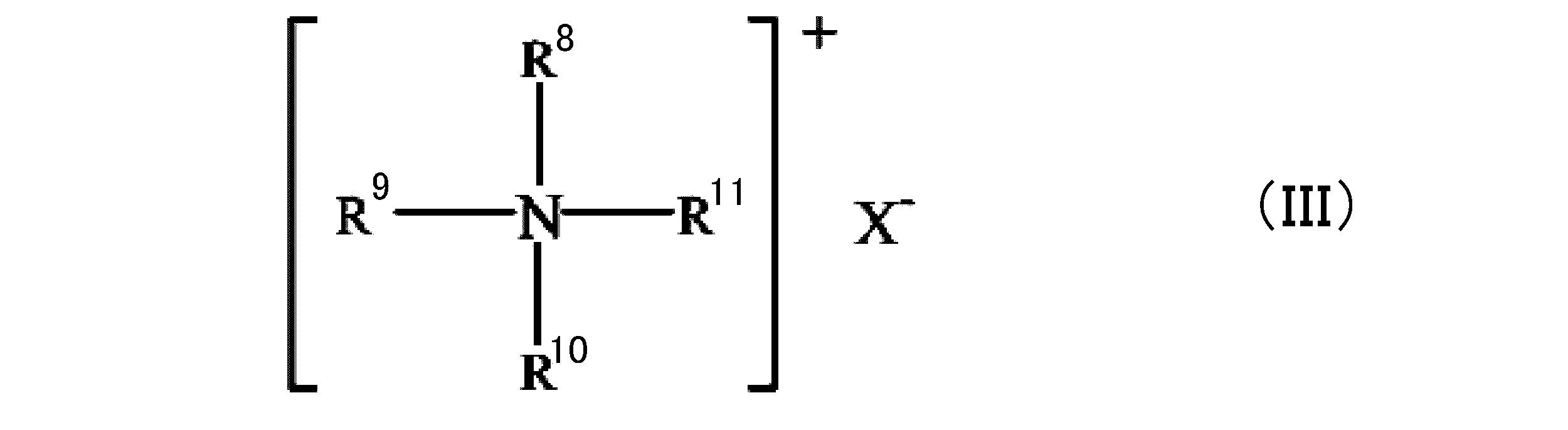
(上記式中、R8はヒドロキシル基が置換していてもよい炭素数8~36の直鎖または分岐のアルキル基、またはR12-(Z1)q-(Y1)p-を表す。R12はヒドロキシル基が置換していてもよい炭素数8~36の直鎖または分岐のアルキル基を表し、Y1は-CH2CH2-、-CH2CH2CH2-、-CH2CH2O-、-CH(OH)CH2O-から選択される結合基を示し、Z1はアミド結合(-CONH-)、エーテル結合(-O-)、エステル結合(-COO-)から選択される結合基を示す。p及びqはそれぞれ0または1の整数を表す。また、R9、R10及びR11は、ヒドロキシル基が置換していてもよい炭素数1~3のアルキル基またはベンジル基を表し、同一であってもそれぞれ異なっていてもよい。Xはハロゲン原子、炭素数1又は2のアルキル硫酸基、または有機酸の水素原子を除いた残基等の第4級アンモニウムと塩を形成し得るアニオンを示す。)
(ii)高級脂肪族アルコールと、(iii)4級アンモニウム基含有シリル化ウレタン系ポリマー0.01~1質量%と、を含有し、且つ、(i)カチオン性界面活性剤が、(a)下記一般式(I)で表されるイミダゾリン型第4級アンモニウム塩、又は下記一般式(II)で表されるジ長鎖アルキル型第4級アンモニウム塩と、(b)下記一般式(III)で表されるモノ長鎖アルキル型第4級アンモニウム塩と、からなることを特徴とする。
また、前記コンディショナー組成物において、前記(i)カチオン性界面活性剤の(a)成分が、0.05~2質量%の上記一般式(I)で表されるイミダゾリン型第4級アンモニウム塩、又は、0.01~3質量%の上記一般式(II)で表されるジ長鎖アルキル型第4級アンモニウム塩、であることが好適である。
また、前記コンディショナー組成物において、前記(i)カチオン性界面活性剤の(a)成分が、ジベヘニルイミダゾリニウムメトサルフェート、塩化ジステアリルジメチルアンモニウム、ジココイルヒドロキシエチルメチルモニウムメトサルフェートからなる群より選択される1種以上であることが好適である。
また、前記コンディショナー組成物において、前記(i)カチオン性界面活性剤の(a)成分が、ジベヘニルイミダゾリニウムメトサルフェート、塩化ジステアリルジメチルアンモニウム、ジココイルヒドロキシエチルメチルモニウムメトサルフェートからなる群より選択される1種以上であることが好適である。
本発明によれば、染色後の毛髪に対する褪色抑制効果と、コンディショナー使用後に乾かした毛髪のしなやかさといった使用感触に優れたコンディショナー組成物を得ることができる。
以下、本発明の好適な実施形態について詳細に説明する。
本発明にかかるコンディショナー組成物は、(i)カチオン性界面活性剤と、(ii)高級脂肪族アルコールと、(iii)4級アンモニウム基含有シリル化ウレタン系ポリマーと、を含有する。まず、各成分について説明する。
本発明にかかるコンディショナー組成物は、(i)カチオン性界面活性剤と、(ii)高級脂肪族アルコールと、(iii)4級アンモニウム基含有シリル化ウレタン系ポリマーと、を含有する。まず、各成分について説明する。
(i)カチオン性界面活性剤
本発明に使用されるカチオン性界面活性剤には、使用後における良好な使用感触(ドライ後の髪のしなやかさ)を組成物に付与し、且つ、4級アンモニウム基含有シリル化ウレタンポリマーの褪色抑制効果を向上させる点から、特に、
(a)下記一般式(I)で表されるイミダゾリン型第4級アンモニウム塩(a1)、又は下記一般式(II)で表されるジ長鎖アルキル型第4級アンモニウム塩(a2)と、
(b)下記一般式(III)で表されるモノ長鎖アルキル型第4級アンモニウム塩と、
からなるものが使用される。
本発明に使用されるカチオン性界面活性剤には、使用後における良好な使用感触(ドライ後の髪のしなやかさ)を組成物に付与し、且つ、4級アンモニウム基含有シリル化ウレタンポリマーの褪色抑制効果を向上させる点から、特に、
(a)下記一般式(I)で表されるイミダゾリン型第4級アンモニウム塩(a1)、又は下記一般式(II)で表されるジ長鎖アルキル型第4級アンモニウム塩(a2)と、
(b)下記一般式(III)で表されるモノ長鎖アルキル型第4級アンモニウム塩と、
からなるものが使用される。
(a1)イミダゾリン型第4級アンモニウム塩
本発明に使用されるイミダゾリン型第4級アンモニウム塩は、下記一般式(I)で表される化合物である。
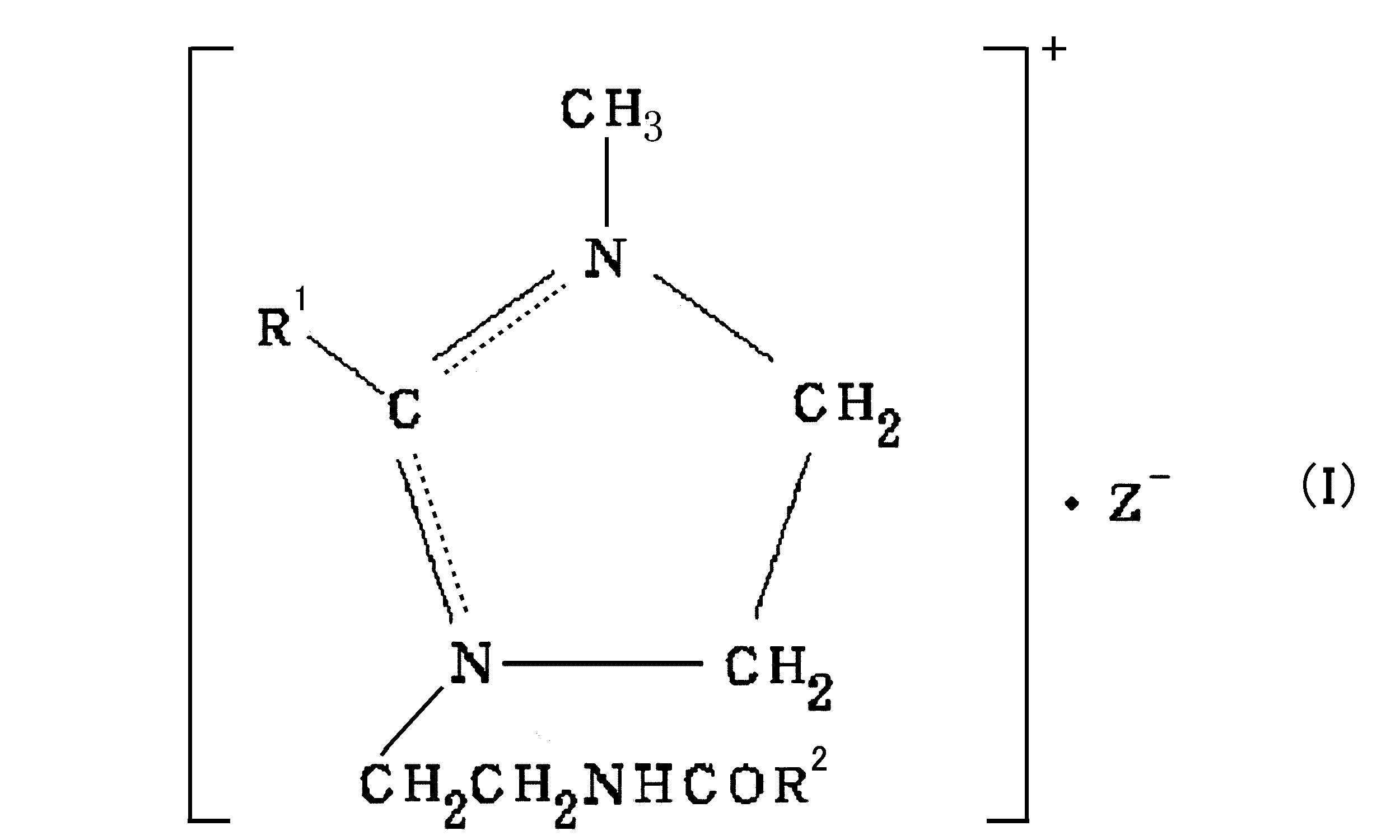
本発明に使用されるイミダゾリン型第4級アンモニウム塩は、下記一般式(I)で表される化合物である。
上記一般式(I)中、R1及びR2は互いに同一でも異なってもよく、炭素数が12~22のアルキル基又はアルケニル基を表し、Zはハロゲン原子、メチルサルフェート基及びエチルサルフェート基から選ばれるアニオン性基を表す。
R1及びR2において、炭素数が12~22のアルキル基としては、例えばドデシル基、トリデシル基、テトラデシル基、ペンタデシル基、ヘキサデシル基、ヘプタデシル基、オクタデシル基、ノナデシル基、イコシル基、ヘンエイコシル基、ドコシル(ベヘニル)基等を例示することができる。また、炭素数が12~22のアルケニル基としては、例えばドデセニル基、トリデセニル基、ペンタデセニル基、ヘキサデセニル基、ヘプタデセニル基、オクタデセニル基、ノナデセニル基、イコサデセニル基、ヘンイコサデセニル基、ドコサデセニル基等を例示することができる。R1又はR2の炭素数が22を越えると、水に対する溶解性が著しく低下する傾向がある。
また、Zがとり得るハロゲン原子としては、例えば、塩素原子、臭素原子、フッ素原子、ヨウ素原子を挙げることができ、特に塩素原子が好ましい。また、Zとしては特にメチルサルフェート基が好ましい。
R1及びR2において、炭素数が12~22のアルキル基としては、例えばドデシル基、トリデシル基、テトラデシル基、ペンタデシル基、ヘキサデシル基、ヘプタデシル基、オクタデシル基、ノナデシル基、イコシル基、ヘンエイコシル基、ドコシル(ベヘニル)基等を例示することができる。また、炭素数が12~22のアルケニル基としては、例えばドデセニル基、トリデセニル基、ペンタデセニル基、ヘキサデセニル基、ヘプタデセニル基、オクタデセニル基、ノナデセニル基、イコサデセニル基、ヘンイコサデセニル基、ドコサデセニル基等を例示することができる。R1又はR2の炭素数が22を越えると、水に対する溶解性が著しく低下する傾向がある。
また、Zがとり得るハロゲン原子としては、例えば、塩素原子、臭素原子、フッ素原子、ヨウ素原子を挙げることができ、特に塩素原子が好ましい。また、Zとしては特にメチルサルフェート基が好ましい。
上記イミダゾリン型第4級アンモニウム塩としては、例えば、ジオレイルイミダゾリニウムメトサルフェート、ジステアリルイミダゾリニウムメトサルフェート、ジベヘニルイミダゾリニウムメトサルフェート(クオタニウム-91)等のジアルキル又はジアルケニルイミダゾリニウム塩が挙げられ、特に、ジベヘニルイミダゾリニウムメトサルフェートの使用が好適である。
(a2)ジ長鎖アルキル型第4級アンモニウム塩
本発明に使用されるジ長鎖アルキル型第4級アンモニウム塩は、下記一般式(II)で表される化合物である。
本発明に使用されるジ長鎖アルキル型第4級アンモニウム塩は、下記一般式(II)で表される化合物である。
上記一般式(II)中、R3~R6のうちいずれか2つはそれぞれ、ヒドロキシル基が置換していてもよい炭素数8~36の直鎖または分岐のアルキル基、またはR7-(Z1)q-(Y1)p-を表す。
R7はヒドロキシル基が置換していてもよい炭素数8~36の直鎖または分岐のアルキル基を表し、Y1は-CH2CH2-、-CH2CH2CH2-、-CH2CH2O-、-CH(OH)CH2O-から選択される結合基を示し、Z1はアミド結合(-CONH-)、エーテル結合(-O-)、エステル結合(-COO-)から選択される結合基を示す。p及びqはそれぞれ0または1の整数を表す。
また、上記式(II)中、R3~R6の残りの2つはそれぞれ、ヒドロキシル基が置換していてもよい炭素数1~3のアルキル基またはベンジル基を表し、同一であってもそれぞれ異なっていてもよい。Xはハロゲン原子、炭素数1又は2のアルキル硫酸基、または有機酸の水素原子を除いた残基等の第4級アンモニウムと塩を形成し得るアニオンを示す。
R7はヒドロキシル基が置換していてもよい炭素数8~36の直鎖または分岐のアルキル基を表し、Y1は-CH2CH2-、-CH2CH2CH2-、-CH2CH2O-、-CH(OH)CH2O-から選択される結合基を示し、Z1はアミド結合(-CONH-)、エーテル結合(-O-)、エステル結合(-COO-)から選択される結合基を示す。p及びqはそれぞれ0または1の整数を表す。
また、上記式(II)中、R3~R6の残りの2つはそれぞれ、ヒドロキシル基が置換していてもよい炭素数1~3のアルキル基またはベンジル基を表し、同一であってもそれぞれ異なっていてもよい。Xはハロゲン原子、炭素数1又は2のアルキル硫酸基、または有機酸の水素原子を除いた残基等の第4級アンモニウムと塩を形成し得るアニオンを示す。
上記一般式(II)で表されるジ長鎖アルキル型第4級アンモニウム塩としては、例えば、塩化ジデシルジメチルアンモニウム、塩化ジココイルジメチルアンモニウム、臭化ジココイルジメチルアンモニウム、塩化ジラウリルジメチルアンモニウム、塩化ジミリスチルジメチルアンモニウム、塩化ジセチルジメチルアンモニウム、塩化ジパルミチルジメチルアンモニウム、塩化ジステアリルジメチルアンモニウム、臭化ジステアリルジメチルアンモニウム、塩化ジオレイルジメチルアンモニウム、ジココイルエチルヒドロキシエチルモニウムメトサルフェート、ジパルミトイルエチルヒドロキシエチルモニウムメトサルフェート、ジココイルヒドロキシエチルメチルモニウムメトサルフェート、ジステアリルエチルヒドロキシエチルモニウムクロライド等が挙げられる。本発明において特に好ましくは、塩化ジステアリルジメチルアンモニウム、ジココイルヒドロキシエチルメチルモニウムメトサルフェートである。
(b)モノ長鎖アルキル型第4級アンモニウム塩
本発明に使用されるモノ長鎖アルキル型第4級アンモニウム塩は、下記一般式(III)で表される化合物である。
本発明に使用されるモノ長鎖アルキル型第4級アンモニウム塩は、下記一般式(III)で表される化合物である。
上記一般式(III)中、R8はヒドロキシル基が置換していてもよい炭素数8~36の直鎖または分岐のアルキル基、またはR12-(Z1)q-(Y1)p-を表す。
R12はヒドロキシル基が置換していてもよい炭素数8~36の直鎖または分岐のアルキル基を表し、Y1は-CH2CH2-、-CH2CH2CH2-、-CH2CH2O-、-CH(OH)CH2O-から選択される結合基を示し、Z1はアミド結合(-CONH-)、エーテル結合(-O-)、エステル結合(-COO-)から選択される結合基を示す。p及びqはそれぞれ0または1の整数を表す。
また、上記式(III)中のR9、R10及びR11は、ヒドロキシル基が置換していてもよい炭素数1~3のアルキル基またはベンジル基を表し、同一であってもそれぞれ異なっていてもよい。Xはハロゲン原子、炭素数1又は2のアルキル硫酸基、または有機酸の水素原子を除いた残基等の第4級アンモニウムと塩を形成し得るアニオンを示す。
R12はヒドロキシル基が置換していてもよい炭素数8~36の直鎖または分岐のアルキル基を表し、Y1は-CH2CH2-、-CH2CH2CH2-、-CH2CH2O-、-CH(OH)CH2O-から選択される結合基を示し、Z1はアミド結合(-CONH-)、エーテル結合(-O-)、エステル結合(-COO-)から選択される結合基を示す。p及びqはそれぞれ0または1の整数を表す。
また、上記式(III)中のR9、R10及びR11は、ヒドロキシル基が置換していてもよい炭素数1~3のアルキル基またはベンジル基を表し、同一であってもそれぞれ異なっていてもよい。Xはハロゲン原子、炭素数1又は2のアルキル硫酸基、または有機酸の水素原子を除いた残基等の第4級アンモニウムと塩を形成し得るアニオンを示す。
上記一般式(III)で表されるモノ長鎖アルキル型第4級アンモニウム塩としては、例えば、塩化ラウリルトリメチルアンモニウム、臭化ラウリルトリメチルアンモニウム、塩化ミリスチルトリメチルアンモニウム、臭化ミリスチルトリメチルアンモニウム、塩化セチルトリメチルアンモニウム、臭化セチルトリメチルアンモニウム、塩化ステアリルトリメチルアンモニウム、臭化ステアリルトリメチルアンモニウム、塩化ベヘニルトリメチルアンモニウム、臭化ベヘニルトリメチルアンモニウム、セチルトリメチルアンモニウムメタンスルホネート、ステアリルトリメチルアンモニウムメトサルフェート、塩化ミリスチルジメチルベンジルアンモニウム、塩化セチルジメチルベンジルアンモニウム、塩化ステアリルジメチルベンジルアンモニウム、塩化オクチルジヒドロキシエチルメチルアンモニウム、塩化2-デシルテトラデシルトリメチルアンモニウム、塩化2-ドデシルヘキサデシルトリメチルアンモニウム、塩化ステアロキシプロピルトリメチルアンモニウム、臭化ステアリルPGトリメチルアミン等を挙げることができる。本発明において特に好ましくは、塩化ステアリルトリメチルアンモニウムである。
また、本発明においては、上記一般式(III)のモノ長鎖アルキル型の第4級アンモニウム塩を生成する成分として、下記一般式(IV)で表されるモノ長鎖アルキル型アミン及び有機酸を組み合わせて配合することができる。

上記一般式(IV)中、R13及びR14はヒドロキシル基が置換していてもよい炭素数1~3のアルキル基またはベンジル基を表し、同一であってもそれぞれ異なっていてもよい。R15はヒドロキシル基が置換していてもよい炭素数8~36の直鎖または分岐のアルキル基を表す。
また、Y2は-CH2CH2-、-CH2CH2CH2-、-CH2CH2O-、-CH(OH)CH2O-から選択される結合基を示し、Z2はアミド結合(-CONH-)、エーテル結合(-O-)、エステル結合(-COO-)から選択される結合基を示す。s及びtはそれぞれ0または1の整数を表す。
また、Y2は-CH2CH2-、-CH2CH2CH2-、-CH2CH2O-、-CH(OH)CH2O-から選択される結合基を示し、Z2はアミド結合(-CONH-)、エーテル結合(-O-)、エステル結合(-COO-)から選択される結合基を示す。s及びtはそれぞれ0または1の整数を表す。
本発明への配合に適した上記式(IV)で表されるモノ長鎖アルキル型アミンと有機酸の組み合わせとしては、例えば、ステアリン酸ジメチルアミドプロピルアミド-グルタミン酸、ステアリン酸ジエチルアミドプロピルアミド-乳酸、ステアロキシプロピルジメチルアミド-リンゴ酸、ステアリルPGジメチルアミン-グルタミン酸、ベヘナミドプロピルジメチルアミン-コハク酸、ステアラミドプロピルジメタノールアミン-酒石酸などを挙げることができる。
本発明においては、(i)カチオン性界面活性剤として、
(a1)本発明の組成物に対し、好ましくは0.05~2質量%、より好ましくは0.05~1質量%のイミダゾリン型第4級アンモニウム塩、又は、
(a2)本発明の組成物に対し、好ましくは0.01~3質量%、より好ましくは1~3質量%のジ長鎖アルキル型第4級アンモニウム塩と、
(b)本発明の組成物に対し、好ましくは0.1~5質量%、より好ましくは0.5~3質量%のモノ長鎖アルキル型第4級アンモニウム塩とを、配合することが好適である。
(a1)又は(a2)成分の配合量が、前記配合量範囲外であると、コンディショナー使用後に乾かした毛髪のしなやかさが不十分になることがある。
なお、(a2)の化合物として、モノ長鎖アルキル型アミン及び有機酸を組み合わせて配合する場合は、モノ長鎖アルキル型第4級アンモニウム塩が上記配合量範囲で生成されるよう、モノ長鎖アルキル型アミン及び有機酸の配合量を調整する。
(a1)本発明の組成物に対し、好ましくは0.05~2質量%、より好ましくは0.05~1質量%のイミダゾリン型第4級アンモニウム塩、又は、
(a2)本発明の組成物に対し、好ましくは0.01~3質量%、より好ましくは1~3質量%のジ長鎖アルキル型第4級アンモニウム塩と、
(b)本発明の組成物に対し、好ましくは0.1~5質量%、より好ましくは0.5~3質量%のモノ長鎖アルキル型第4級アンモニウム塩とを、配合することが好適である。
(a1)又は(a2)成分の配合量が、前記配合量範囲外であると、コンディショナー使用後に乾かした毛髪のしなやかさが不十分になることがある。
なお、(a2)の化合物として、モノ長鎖アルキル型アミン及び有機酸を組み合わせて配合する場合は、モノ長鎖アルキル型第4級アンモニウム塩が上記配合量範囲で生成されるよう、モノ長鎖アルキル型アミン及び有機酸の配合量を調整する。
(ii)高級脂肪族アルコール
本発明にかかるコンディショナー組成物は、高級脂肪族アルコールを含有する。本願における高級脂肪族アルコールとは、化粧品や医薬品等において通常使用される、炭素数12~36の、直鎖脂肪族アルコール又は分岐鎖脂肪族アルコールを表す。
このような直鎖脂肪族アルコールとしては、例えば、ラウリルアルコール、セチルアルコール、ステアリルアルコール、ベヘニルアルコール、ミリスチルアルコール、オレイルアルコール、セトステアリルアルコール、アラキルアルコール、ホホバアルコール、硬化ナタネ油アルコール、テトラデシルアルコール、ヘキサデシルアルコール、オクタデシルアルコール等が挙げられる。
本発明にかかるコンディショナー組成物は、高級脂肪族アルコールを含有する。本願における高級脂肪族アルコールとは、化粧品や医薬品等において通常使用される、炭素数12~36の、直鎖脂肪族アルコール又は分岐鎖脂肪族アルコールを表す。
このような直鎖脂肪族アルコールとしては、例えば、ラウリルアルコール、セチルアルコール、ステアリルアルコール、ベヘニルアルコール、ミリスチルアルコール、オレイルアルコール、セトステアリルアルコール、アラキルアルコール、ホホバアルコール、硬化ナタネ油アルコール、テトラデシルアルコール、ヘキサデシルアルコール、オクタデシルアルコール等が挙げられる。
また、分岐鎖脂肪族アルコールとしては、例えば、バチルアルコール、キミルアルコール、2-デシルテトラデシノール、ラノリンアルコール、コレステロール、フィトステロール、ヘキシルドデカノール、イソステアリルアルコール、オクチルドデカノール、デシルテトラデカノール、ヘキシルデカノール、ドデシルヘキサデカノール、テトラデシルオクタデカノール、ヘキサデシルエイコサノール等が挙げられる。
上記高級脂肪族アルコールにおいて、特に好ましくはセチルアルコールである。
上記高級脂肪族アルコールにおいて、特に好ましくはセチルアルコールである。
本発明において、上記高級脂肪族アルコールは、前述のカチオン性界面活性剤((a)成分+(b)成分)に対する高級脂肪族アルコールのモル比が、好ましくは1:0.5~1:10、より好ましくは1:1~1:6となるように配合することが好ましい。前記モル比の範囲外で配合した場合、コンディショナー使用後に乾かした毛髪のしなやかさが不十分になることがある。
(iii)第4級アンモニウム基含有シリル化ウレタンポリマー
第4級アンモニウム基含有シリル化ウレタン系ポリマーとしては、ウレタン系ポリマーに少なくとも1個の第4級アンモニウム基と、少なくとも1個の反応性シリル基を有する化合物であればよい。反応性シリル基としては、加水分解性シリル基とシラノール基を挙げることができる。
第4級アンモニウム基含有シリル化ウレタン系ポリマーとしては、ウレタン系ポリマーに少なくとも1個の第4級アンモニウム基と、少なくとも1個の反応性シリル基を有する化合物であればよい。反応性シリル基としては、加水分解性シリル基とシラノール基を挙げることができる。
本発明における第4級アンモニウム含有シリル化ウレタン系ポリマーとしては、なかでも、下記成分(A)、成分(B)、及び成分(C)に対する構成単位を含み、前記成分(C)由来の第3級アミン部位が第4級アンモニウムイオン化されたウレタン系ポリマーのイソシアネート末端に、下記成分(D)が結合してウレア結合を形成した構造を有する化合物が好ましい。
成分(A):ポリイソシアネート化合物
成分(B):ポリオール化合物
成分(C):ヒドロキシル基を2個以上有する第3級アミン化合物
成分(D):下記式(d1)、(d2)又は(d3)で表されるエステル変性アミノ基含有アルコキシシラン

(上記式中、R1、R2は、同一又は異なって、アルキル基を示し、R3、R4は、同一又は異なって、置換基を有していてもよいアルキレン基又は置換基を有していてもよいアリーレン基を示す。R5はアルキル基、シクロアルキル基、アリール基又はアラルキル基を示し、R6は水素原子又は-COOR6’を示し、R6’はアルキル基を示す。また、mは1~3の整数である。mが1である場合、2個のR2は同一であってもよく、異なっていてもよい。mが2以上の整数である場合、2個以上のR1O-基は同一であってもよく、異なっていてもよい)
成分(A):ポリイソシアネート化合物
成分(B):ポリオール化合物
成分(C):ヒドロキシル基を2個以上有する第3級アミン化合物
成分(D):下記式(d1)、(d2)又は(d3)で表されるエステル変性アミノ基含有アルコキシシラン
上記第4級アンモニウム基含有シリル化ウレタン系ポリマーは、少なくとも下記工程(1)、(2)、(3)を経て合成することができる。
工程(1):上記成分(A)、成分(B)、及び成分(C)を反応させてウレタン系ポリマーを合成する工程
工程(2):成分(C)由来の第3級アミン部位を第4級アンモニウムイオン化する工程
工程(3):ウレタン系ポリマーのイソシアネート末端に、上記成分(D)を反応させる工程
工程(1):上記成分(A)、成分(B)、及び成分(C)を反応させてウレタン系ポリマーを合成する工程
工程(2):成分(C)由来の第3級アミン部位を第4級アンモニウムイオン化する工程
工程(3):ウレタン系ポリマーのイソシアネート末端に、上記成分(D)を反応させる工程
[成分(A):ポリイソシアネート化合物]
成分(A)は、分子内に少なくとも2つのイソシアネート基を有する化合物であればよく、例えば、脂肪族ポリイソシアネート、脂環式ポリイソシアネート、芳香族ポリイソシアネート、芳香脂肪族ポリイソシアネート等を挙げることができる。
成分(A)は、分子内に少なくとも2つのイソシアネート基を有する化合物であればよく、例えば、脂肪族ポリイソシアネート、脂環式ポリイソシアネート、芳香族ポリイソシアネート、芳香脂肪族ポリイソシアネート等を挙げることができる。
脂肪族ポリイソシアネートとしては、例えば、1,3-トリメチレンジイソシアネート、1,4-テトラメチレンジイソシアネート、1,3-ペンタメチレンジイソシアネート、1,5-ペンタメチレンジイソシアネート、1,6-ヘキサメチレンジイソシアネート、1,2-プロピレンジイソシアネート、1,2-ブチレンジイソシアネート、2,3-ブチレンジイソシアネート、1,3-ブチレンジイソシアネート、2-メチル-1,5-ペンタメチレンジイソシアネート、3-メチル-1,5-ペンタメチレンジイソシアネート、2,4,4-トリメチル-1,6-ヘキサメチレンジイソシアネート、2,2,4-トリメチル-1,6-ヘキサメチレンジイソシアネート、2,6-ジイソシアネートメチルカプロエート、リジンジイソシアネート等の脂肪族ジイソシアネート等を挙げることができる。
脂環式ポリイソシアネートとしては、例えば、1,3-シクロペンタンジイソシアネート、1,4-シクロヘキサンジイソシアネート、1,3-シクロヘキサンジイソシアネート、4,4’-メチレンビス(シクロヘキシルイソシアネート)、メチル-2,4-シクロヘキサンジイソシアネート、メチル-2,6-シクロヘキサンジイソシアネート、1,3-ビス(イソシアネートメチル)シクロヘキサン、1,4-ビス(イソシアネートメチル)シクロヘキサン、イソホロンジイソシアネート(IPDI)、ノルボルナンジイソシアネート等の脂環式ジイソシアネート等を挙げることができる。
芳香族ポリイソシアネートとしては、例えば、m-フェニレンジイソシアネート、p-フェニレンジイソシアネート、2,4-トリレンジイソシアネート、2,6-トリレンジイソシアネート、ナフチレン-1,4-ジイソシアネート、ナフチレン-1,5-ジイソシアネート、4,4’-ジフェニルジイソシアネート、4,4’-ジフェニルエーテルジイソシアネート、2-ニトロジフェニル-4,4’-ジイソシアネート、2,2’-ジフェニルプロパン-4,4’-ジイソシアネート、3,3’-ジメチルジフェニルメタン-4,4’-ジイソシアネート、4,4’-ジフェニルプロパンジイソシアネート、3,3’-ジメトキシジフェニル-4,4’-ジイソシアネート等の芳香族ジイソシアネート等を挙げることができる。
芳香脂肪族ポリイソシアネートとしては、例えば、1,3-キシリレンジイソシアネート、1,4-キシリレンジイソシアネート、ω,ω’-ジイソシアネート-1,4-ジエチルベンゼン、1,3-ビス(1-イソシアネート-1-メチルエチル)ベンゼン、1,4-ビス(1-イソシアネート-1-メチルエチル)ベンゼン、1,3-ビス(α,α-ジメチルイソシアネートメチル)ベンゼン等の芳香脂肪族ジイソシアネート等を挙げることができる。
また、前記脂肪族ポリイソシアネート、脂環式ポリイソシアネート、芳香族ポリイソシアネート、芳香脂肪族ポリイソシアネートによる二量体や三量体、反応性生物又は重合物(例えば、ジフェニルメタンジイソシアネートの二量体や三量体、トリメチロールプロパンとトリレンジイソシアネートとの反応性生物、トリメチロールプロパンとヘキサメチレンジイソシアネートとの反応性生物、ポリメチレンポリフェノルイソシアネート、ポリエーテルポリイソシアネート、ポリエステルポリイソシアネート等)等も挙げることができる。
本発明における成分(A)としては、なかでも、1,6-ヘキサメチレンジイソシアネート、4,4’-メチレンビス(シクロヘキシルイソシアネート)、1,3-ビス(イソシアネートメチル)シクロヘキサン、1,4-ビス(イソシアネートメチル)シクロヘキサン、イソホロンジイソシアネート(IPDI)、2,4-トリレンジイソシアネート、2,6-トリレンジイソシアネート、4,4’-ジフェニルメタンジイソシアネート、1,3-キシリレンジイソシアネート、1,4-キシリレンジイソシアネート、ノルボルナンジイソシアネート、1,3-ビス(α,α-ジメチルイソシアネートメチル)ベンゼン等を好適に用いることができる。これらは単独で、又は2種以上を混合して使用することができる。また、脂肪族ポリイソシアネートを使用すると変色の少ない樹脂を得ることができる。
[成分(B):ポリオール化合物]
成分(B)としては、ヒドロキシル基を2個以上有する化合物であればよく、例えば、多価アルコール、ポリエーテルポリオール、ポリエステルポリオール、ポリカーボネートポリオール、ポリオレフィンポリオール、ポリアクリルポリオール、3価以上の多価アルコールのポリアルキレンオキシド付加物又はその末端水酸基が封止された誘導体、ヒマシ油等を挙げることができる。本発明における成分(B)としては、なかでも、製造時の取り扱いが比較的容易なことから、ポリエーテルポリオール、ポリエステルポリオール、ポリカーボネートポリオール、3価以上の多価アルコールのポリアルキレンオキシド付加物又はその末端水酸基が封止された誘導体から選択される化合物が好ましい。
成分(B)としては、ヒドロキシル基を2個以上有する化合物であればよく、例えば、多価アルコール、ポリエーテルポリオール、ポリエステルポリオール、ポリカーボネートポリオール、ポリオレフィンポリオール、ポリアクリルポリオール、3価以上の多価アルコールのポリアルキレンオキシド付加物又はその末端水酸基が封止された誘導体、ヒマシ油等を挙げることができる。本発明における成分(B)としては、なかでも、製造時の取り扱いが比較的容易なことから、ポリエーテルポリオール、ポリエステルポリオール、ポリカーボネートポリオール、3価以上の多価アルコールのポリアルキレンオキシド付加物又はその末端水酸基が封止された誘導体から選択される化合物が好ましい。
前記ポリエーテルポリオールとしては、例えば、ポリエチレングリコール、ポリプロピレングリコール、ポリテトラメチレンエーテルグリコール(PTMG)等のポリアルキレングリコール;エチレンオキシド-プロピレンオキシド共重合体等の複数のアルキレンオキシドを含む(アルキレンオキサイド-他のアルキレンオキサイド)共重合体等を挙げることができる。本発明においては、商品名「PTMG2000」(三菱化学(株)製)等の市販品を使用してもよい。
前記ポリエステルポリオールとしては、例えば、多価アルコールと多価カルボン酸との縮合重合物;環状エステル(ラクトン)の開環重合物;多価アルコール、多価カルボン酸及び環状エステルの3種類の成分による反応物等を用いることができる。これらは単独で、又は2種以上を混合して使用することができる。
前記多価アルコールとしては、例えば、エチレングリコール、ジエチレングリコール、プロピレングリコール、ジプロピレングリコール、トリメチレングリコール、1,4-テトラメチレンジオール、1,3-テトラメチレンジオール、2-メチル-1,3-トリメチレンジオール、1,5-ペンタメチレンジオール、ネオペンチルグリコール、1,6-ヘキサメチレンジオール、3-メチル-1,5-ペンタメチレンジオール、2,4-ジエチル-1,5-ペンタメチレンジオール、グリセリン、トリメチロールプロパン、トリメチロールエタン、シクロヘキサンジオール類(1,4-シクロヘキサンジオール等)、ビスフェノール類(ビスフェノールA等)、糖アルコール類(キシリトール、ソルビトール等)等を挙げることができる。多価カルボン酸としては、例えば、マロン酸、マレイン酸、コハク酸、グルタル酸、アジピン酸、スベリン酸、アゼライン酸、セバシン酸、ドデカンジオン酸等の脂肪族ジカルボン酸;1,4-シクロヘキサンジカルボン酸等の脂環式ジカルボン酸;テレフタル酸、イソフタル酸、オルトフタル酸、2,6-ナフタレンジカルボン酸、パラフェニレンジカルボン酸、トリメリット酸等の芳香族ジカルボン酸等を挙げることができる。また、環状エステルとしては、例えば、プロピオラクトン、β-メチル-δ-バレロラクトン、ε-カプロラクトン等を挙げることができる。
前記ポリカーボネートポリオールとしては、例えば、多価アルコールとホスゲンとの反応物;環状炭酸エステルの開環重合物等を挙げることができる。これらは単独で、又は2種以上を混合して使用することができる。多価アルコールとホスゲンとの反応に使用する多価アルコールとしては、前記多価アルコールの例と同様の例を挙げることができる。また、前記環状炭酸エステルとしては、例えば、エチレンカーボネート、トリメチレンカーボネート、テトラメチレンカーボネート、ヘキサメチレンカーボネート等のアルキレンカーボネート等を挙げることができる。なお、本発明においてポリカーボネートポリオールとは、分子内にカーボネート結合を有し、末端がヒドロキシル基である化合物であればよく、カーボネート結合と共にエステル結合を有していてもよい。
前記3価以上の多価アルコールのポリアルキレンオキシド付加物又はその末端水酸基が封止された誘導体としては、3価以上の多価アルコールが有するヒドロキシル基の1つに、ポリアルキレンオキシドが付加して得られる化合物又は該付加物の末端水酸基がメチル、エチル基等のアルキル基やアセチル、ベンゾイル基等のアシル基で封止された誘導体を挙げることができる。
前記3価以上の多価アルコールとしては、例えば、トリメチロールプロパン、トリメチロールエタン、グリセリン、ペンタエリスリトール、キシリトール、ソルビトール等を挙げることができる。これらは単独で、又は2種以上を混合して使用することができる。本発明においては、なかでもトリメチロールプロパン、トリメチロールエタンが好ましい。
また、前記ポリアルキレンオキシドとしては、単一のアルキレンオキシドを含むアルキレンオキシド誘導体、複数のアルキレンオキシドを含む(アルキレンオキサイド-他のアルキレンオキサイド)共重合体を挙げることができる。そして、前記アルキレンオキシドとしては、例えば、エチレンオキシド、プロピレンオキシド、ブチレンオキシド、イソブチレンオキシド、1-ブテンオキシド、2-ブテンオキシド、トリメチルエチレンオキシド、テトラメチレンオキシド、テトラメチルエチレンオキシド、ブタジエンモノオキシド、オクチレンオキシド等の炭素数2~8のアルキレンオキシドの他、ジペンタンエチレンオキシド、ジヘキサンエチレンオキシド等の脂肪族エポキシド;トリメチレンオキシド、テトラメチレンオキシド、テトラヒドロフラン、テトラヒドロピラン、オクチレンオキシド等の脂環エポキシド;スチレンオキシド、1,1-ジフェニルエチレンオキシド等の芳香族エポキシド等を挙げることができる。本発明におけるポリアルキレンオキシドとしては、なかでも、水分散安定性に優れる点でエチレンオキシド、プロピレンオキシド等の炭素数2~4のアルキレンオキシドを含むことが好ましく、特にエチレンオキシドを含むことが好ましい。
本発明における3価以上の多価アルコールのポリアルキレンオキシド付加物又はその末端水酸基が封止された誘導体としては、例えば、トリメチロールプロパンモノ(ポリエチレンオキシドメチルエーテル)、トリメチロールプロパンモノ(ポリエチレンオキシドエチルエーテル)等のトリメチロールプロパンモノ(ポリアルキレンオキシドアルキルエーテル);ポリオキシエチレンソルビタンモノラウレート、ポリオキシエチレンソルビタンモノステアレート等のポリオキシアルキレンソルビタンモノ脂肪酸エステル;ポリオキシエチレングリセリルモノラウレート、ポリオキシエチレングリセリルモノステアレート等のポリオキシエチレングリセリルモノ脂肪酸エステル;トリメチロールプロパンモノ(ポリエチレンオキシドメチルエーテル)等のトリメチロールプロパンモノ(ポリアルキレンオキシドアルキルエーテル)等を挙げることができる。
本発明においては、なかでも、トリメチロールプロパンモノ(ポリアルキレンオキシドアルキルエーテル)が好ましく、特に、下記式(b)

(上記式中、n1は10~40の整数を示す)
で表される化合物が好ましい。本発明においては、商品名「YmerN120」(Perstorp社製)等の市販品を使用してもよい。
で表される化合物が好ましい。本発明においては、商品名「YmerN120」(Perstorp社製)等の市販品を使用してもよい。
本発明における成分(B)の数平均分子量としては、例えば、500~5000程度が好ましく、なかでも800~3000程度が好ましい。数平均分子量が500を下回ると、褪色抑制効果が低下する傾向がある。一方、数平均分子量が5000を上回ると、水分散安定性が低下する傾向がある。
本発明における成分(B)としては、ポリエーテルポリオール、ポリエステルポリオール、ポリカーボネートポリオール、3価以上の多価アルコールのポリアルキレンオキシド付加物又はその末端水酸基が封止された誘導体から選択される1以上の化合物を含むことが好ましく、特に、ウレタン系ポリマーにペンダント型のノニオン側鎖(親水基)を導入することにより、更に毛髪表面への吸着性が向上し、褪色抑制効果をより一層向上させることができる点で、少なくとも3価以上の多価アルコールのポリアルキレンオキシド付加物又はその末端水酸基が封止された誘導体(特に、上記式(b)で表される化合物)を含むことが好ましい。
成分(B)中の3価以上の多価アルコールのポリアルキレンオキシド付加物又は該付加物の末端水酸基が封止された誘導体の割合としては、例えば5~100質量%、好ましくは10~50質量%、特に好ましくは20~40質量%である。
[成分(C):ヒドロキシル基を2個以上有する第3級アミン化合物]
成分(C)としては、カチオン化し得る第3級アミンと2個以上のヒドロキシル基を有していればよく、例えば、トリエタノールアミン、トリ-n-プロパノールアミン、トリ-iso-プロパノールアミン等のトリアルカノールアミン;N-メチルジエタノールアミン、N-フェニルジエタノールアミン等のN-炭化水素基置換-ジアルカノールアミン等を挙げることができる。
成分(C)としては、カチオン化し得る第3級アミンと2個以上のヒドロキシル基を有していればよく、例えば、トリエタノールアミン、トリ-n-プロパノールアミン、トリ-iso-プロパノールアミン等のトリアルカノールアミン;N-メチルジエタノールアミン、N-フェニルジエタノールアミン等のN-炭化水素基置換-ジアルカノールアミン等を挙げることができる。
本発明における成分(C)としては、なかでも、N-炭化水素基置換-N,N-ジアルカノールアミンが好ましく、特にN-メチル-N,N-ジエタノールアミン、N-エチル-N,N-ジエタノールアミン、N-メチル-N,N-ジプロパノールアミンが好ましい。
[成分(D):エステル変性アミノ基含有アルコキシシラン]
本発明における成分(D)は、上記式(d1)、(d2)又は(d3)で表される。式中、R1、R2は、同一又は異なって、アルキル基を示し、R3、R4は、同一又は異なって、置換基を有していてもよいアルキレン基又は置換基を有していてもよいアリーレン基を示す。R5はアルキル基、シクロアルキル基、アリール基又はアラルキル基を示し、R6は水素原子又は-COOR6’を示し、R6’はアルキル基を示す。また、mは1~3の整数である。mが1である場合、2個のR2は同一であってもよく、異なっていてもよい。mが2以上の整数である場合、2個以上のR1O-基は同一であってもよく、異なっていてもよい。
本発明における成分(D)は、上記式(d1)、(d2)又は(d3)で表される。式中、R1、R2は、同一又は異なって、アルキル基を示し、R3、R4は、同一又は異なって、置換基を有していてもよいアルキレン基又は置換基を有していてもよいアリーレン基を示す。R5はアルキル基、シクロアルキル基、アリール基又はアラルキル基を示し、R6は水素原子又は-COOR6’を示し、R6’はアルキル基を示す。また、mは1~3の整数である。mが1である場合、2個のR2は同一であってもよく、異なっていてもよい。mが2以上の整数である場合、2個以上のR1O-基は同一であってもよく、異なっていてもよい。
上記式(d1)、(d2)、(d3)中のR1、R2は、同一又は異なってアルキル基を示す。前記アルキル基としては、例えば、メチル、エチル、プロピル、イソプロピル、ブチル、イソブチル、s-ブチル、t-ブチル、ペンチル、イソペンチル、s-ペンチル、t-ペンチル、ヘキシル、イソヘキシル、s-ヘキシル、t-ヘキシル、へプチル、オクチル、ノニル、デシル、ウンデシル、ドデシル、トリデシル、テトラデシル、ペンタデシル、ヘキサデシル、ヘプタデシル、オクタデシル、ノナデシル、エイコシル基等を挙げることができる。本発明のR1、R2におけるアルキル基としては、なかでも炭素数1~6程度のアルキル基(特に安全性の点でエチル基)が好ましい。
上記式(d1)、(d2)、(d3)中のR3、R4は、同一又は異なって、置換基を有していてもよいアルキレン基又は置換基を有していてもよいアリーレン基を示す。前記アルキレン基としては、例えば、メチレン、エチレン、トリメチレン、テトラメチレン、ペンタメチレン、デカメチレン、テトラデカメチレン基等を挙げることができる。本発明のR3、R4におけるアルキレン基としては、なかでも炭素数1~10のアルキレン基が好ましい。前記アリーレン基としては、例えば、フェニレン、ナフチレン、アントリレン基等を挙げることができる。本発明のR3、R4におけるアリーレン基としては、なかでも炭素数6~10のアルキレン基が好ましい。
また、R3、R4が有していてもよい置換基としては、例えば、フェニル基等のアリール基;メチル基、エチル基、プロピル基、ブチル基等のアルキル基;シクロヘキシル基等のシクロアルキル基等を挙げることができる。また、該置換基は、さらに他の置換基(例えば、アルコキシ基、アリールオキシ基、シクロアルキルオキシ基、アルコキシカルボニル基、アリールオキシカルボニル基、シクロアルキルオキシカルボニル基、アシル基、アミノ基等)を有していてもよい。
上記式(d1)、(d2)、(d3)中のR5は、アルキル基、シクロアルキル基、アリール基又はアラルキル基を示す。前記アルキル基としては、上記R1、R2におけるアルキル基の例と同様の例を挙げることができる。本発明のR5におけるアルキル基としては、なかでも炭素数1~20のアルキル基が好ましい。前記シクロアルキル基としては、例えば、シクロプロピル、シクロペンチル、シクロヘキシル、シクロオクチル基等の炭素数3~20の単環、多環又は縮合環式のシクロアルキル基等を挙げることができる。前記アリール基としては、例えば、フェニル、トリル、キシリル、ナフチル、メチルナフチル、アントリル、フェナントリル、ビフェニル基等の炭素数6~20のアリール基等を挙げることができる。前記アラルキル基としては、例えば、前記アリール基で置換された前記アルキル基等を挙げることができる。
上記式(d1)、(d2)、(d3)中のR6は、水素原子又は-COOR6’を示し、R6’はアルキル基を示す。R6’におけるアルキル基としては、上記R1、R2におけるアルキル基の例と同様の例を挙げることができ、なかでも炭素数1~20のアルキル基が好ましい。
上記式(d1)、(d2)、(d3)で表されるエステル変性アミノ基含有アルコキシシランは、例えば、下記式(d1、2-1)

(上記式中、R1、R2、R3、R4、mは前記式(d1)~(d3)に同じ)
で表される第1級及び第2級アミノ基含有アルコキシシラン化合物、又は下記式(d3-1)
(上記式中、R1、R2、R3、mは前記式(d1)~(d3)に同じ)
で表される第1級アミノ基含有アルコキシシラン化合物における第1級又は第2級アミノ基の窒素原子に、下記式(1)

(上記式中、R5、R6は前記式(d1)~(d3)に同じ)
で表される不飽和カルボン酸エステルの不飽和結合(炭素-炭素二重結合)をマイケル付加反応することにより合成することができる。前記マイケル付加反応は、溶媒の存在下又は非存在下で行うことができる。また、反応に際し加熱や加圧を行ってもよい。
で表される第1級及び第2級アミノ基含有アルコキシシラン化合物、又は下記式(d3-1)
で表される第1級アミノ基含有アルコキシシラン化合物における第1級又は第2級アミノ基の窒素原子に、下記式(1)
で表される不飽和カルボン酸エステルの不飽和結合(炭素-炭素二重結合)をマイケル付加反応することにより合成することができる。前記マイケル付加反応は、溶媒の存在下又は非存在下で行うことができる。また、反応に際し加熱や加圧を行ってもよい。
式(d1、2-1)で表される第1級及び第2級アミノ基含有アルコキシシラン化合物としては、例えば、N-β(アミノエチル)-γ-アミノプロピルトリメトキシシラン、N-β(アミノエチル)-γ-アミノプトピルトリエトキシシラン等のN-(アミノアルキル)アミノアルキルトリアルコキシシラン;N-β(アミノエチル)-γ-アミノプロピルメチルジメトキシシラン、N-β(アミノエチル)-γ-アミノプロピルメチルジエトキシシラン等のN-(アミノアルキル)アミノアルキルアルキルジアルコキシシラン等を挙げることができる。本発明においては、商品名「KBE602」、「KBM602」、「KBE603」、「KBM603」(以上、信越化学工業(株)製)等の市販品を使用してもよい。
式(d3-1)で表される第1級アミノ基含有アルコキシシラン化合物としては、例えば、アミノメチルトリメトキシシラン、アミノメチルトリエトキシシラン、2-アミノエチルトリメトキシシラン、2-アミノエチルトリエトキシシラン、3-アミノプロピルトリメトキシシラン、3-アミノプロピルトリエトキシシラン、3-アミノプロピルトリプロポキシシラン、3-アミノプロピルトリイソプロポキシシラン、3-アミノプロピルトリブトキシシラン等のアミノアルキルトリアルコキシシラン;2-アミノエチルメチルジメトキシシラン、2-アミノエチルメチルジエトキシシラン、3-アミノプロピルメチルジプロポキシシラン等の(アミノアルキル)アルコキシシラン等を挙げることができる。本発明においては、商品名「KBE902」、「KBM902」、「KBE903」、「KBM903」(以上、信越化学工業(株)製)等の市販品を使用してもよい。
上記式(1)で表される不飽和カルボン酸エステルとしては、例えば、n-ブチルアクリレート、イソブチルアクリレート、シクロヘキシルアクリレート、2-エチルヘキシルアクリレート、3-ブチルシクロヘキシルアクリレート、ラウリルアクリレート、セチルアクリレート、ステアリルアクリレート、ベヘニルアクリレート、グリシジルアクリレート等を挙げることができる。本発明における式(1)で表される不飽和カルボン酸エステルとしては、なかでも、n-ブチルアクリレート、ラウリルアクリレート、2-エチルヘキシルアクリレート等が好ましい。
[工程(1):ウレタン系ポリマーの合成]
ウレタン系ポリマーは、上記成分(A)、(B)、(C)を、ポリオール化合物とポリイソシアネート化合物からウレタン系ポリマーを調製する公知乃至慣用の方法に準じて反応させることにより合成することができる。ウレタン系ポリマー合成には、反応促進のために重合触媒を用いてもよい。
ウレタン系ポリマーは、上記成分(A)、(B)、(C)を、ポリオール化合物とポリイソシアネート化合物からウレタン系ポリマーを調製する公知乃至慣用の方法に準じて反応させることにより合成することができる。ウレタン系ポリマー合成には、反応促進のために重合触媒を用いてもよい。
前記重合触媒としては、ポリオール化合物とポリイソシアネート化合物との反応に用いられる公知乃至慣用の重合触媒(硬化触媒)を用いることができ、例えば、アミン化合物等の塩基性化合物を挙げることができる。アミン化合物等の塩基性化合物としては、例えば、γ-アミノプロピルトリメトキシシラン、γ-アミノプロピルトリエトキシシラン等のアミノシラン類;テトラメチルアンモニウムクロライド、ベンザルコニウムクロライド等の第四級アンモニウム塩類;三共エアプロダクツ社製の商品名「DABCO」シリーズや「DABCO BL」シリーズ、1,8-ジアザビシクロ[5.4.0]ウンデセ-7-エン(DBU)等の複数の窒素原子を含む直鎖状或いは環状の第三級アミン又は第四級アンモニウム塩等を挙げることができる。
また、反応は溶媒中で行うことができる。溶媒としては、例えば、アセトン、メチルエチルケトン、メチルイソブチルケトン、N-メチルピロリドン、テトラヒドロフラン、酢酸エチル等を挙げることができる。反応時の雰囲気は特に制限されず、空気雰囲気、窒素雰囲気、アルゴン雰囲気等から選択される。反応温度は、反応成分の種類等に応じて適宜選択でき、例えば、20~150℃、好ましくは20~100℃程度である。反応は常圧下で行ってもよく、減圧下又は加圧下で行ってもよい。反応時間は、成分の反応性に応じて適宜選択でき、例えば、2~20時間、好ましくは3~10時間程度である。
成分(A)、成分(B)、成分(C)の使用量としては、特に制限されることがなく求める諸物性に応じて適宜調整することができ、例えば、成分(A)におけるイソシアネート基/成分(B)及び成分(C)におけるヒドロキシル基(NCO/OH基)(当量比)が、1より大きく1.5以下(好ましくは1より大きく1.3以下、さらに好ましくは1より大きく1.2以下)となるような範囲である。該NCO/OH基の比が大きすぎると(例えば、1.5(当量比)を越えると)、分散性が低下する傾向がある。一方、該NCO/OH基の比が小さすぎると(例えば、1以下(当量比)であると)、シリル基導入が十分に行えず、褪色抑制効果が低下する傾向がある。
さらに、成分(C)は、ウレタン系ポリマー中のカチオン化し得る第3級アミンの含有量が、2~90質量%(好ましくは2~50質量%、更に好ましくは5~20質量%)となるような割合で含まれていることが好ましい。該カチオン化し得る第3級アミンの含有量が上記範囲を上回ると、粘度が高くなりすぎ、使用しづらくなる傾向がある。一方、該カチオン化し得る第3級アミンの含有量が上記範囲を下回ると、水分散安定性が低下する傾向がある。
ウレタン系ポリマーの末端イソシアネート基含有量としては、例えば、0.3~7.0重量%程度が好ましい。末端イソシアネート基含有量が7.0重量%を上回ると、水分散が困難となる傾向がある。一方、末端イソシアネート基含有量が0.3重量%を下回ると、合成時の粘度が高くなりすぎて、合成が困難杜なる傾向がある。
[工程(2):第3級アミン部位の第4級アンモニウムイオン化]
上記工程(1)を経て得られたウレタン系ポリマーにおける成分(C)由来の第3級アミン部位を第4級アンモニウムイオン化(カチオン化)することにより、第4級アンモニウム基含有ウレタン系ポリマーを合成することができる。
上記工程(1)を経て得られたウレタン系ポリマーにおける成分(C)由来の第3級アミン部位を第4級アンモニウムイオン化(カチオン化)することにより、第4級アンモニウム基含有ウレタン系ポリマーを合成することができる。
第3級アミンの窒素原子をカチオン化する方法としては、例えば、上記工程(1)を経て得られたウレタン系ポリマーにアルキル化剤(第4級化剤)を反応させて、成分(C)由来の第3級アミン部位に、メチル、エチル、プロピル、ブチル、ペンチル等の炭素数1~20のアルキル基;ビニル、イソプロペニル、アリル、メタリル、3-ブテニル、2-メチル-1-ブテニル、3-メチル-1-ブテニル、2-メチル-3-ブテニル、3-メチル-3-ブテニル基等の炭素数2~20のアルケニル基;ベンジル、2-フェニルエチル基等の炭素数7~11のアラルキル基等を導入する方法等を挙げることができる。
前記アルキル化剤(第4級化剤)としては、例えば、ジメチル硫酸、ジエチル硫酸等の硫酸エステル;塩化メチル、臭化メチル、ヨウ化メチル、ベンジルクロリド、ベンジルブロミド等のハロゲン化物等を挙げることができる。
上記アルキル化剤の使用量としては、適宜調整することができ、ウレタン系ポリマー中の第3級アミン部位(第3級アミノ基)1モルに対して、例えば、30モル%以上(好ましくは50~120モル%、さらに好ましくは80~100モル%)となるような範囲内である。アルキル化剤の使用量が上記範囲を上回ると、反応時の熱上昇が激しく作業性が低下する傾向がある。一方、アルキル化剤の使用量が上記範囲を下回ると、褪色抑制効果が低下する傾向がある。
また、上記カチオン化反応は溶媒中で行うことができる。溶媒としては、例えば、アセトン、メチルエチルケトン、メチルイソブチルケトン、N-メチルピロリドン、テトラヒドロフラン、酢酸エチル等を挙げることができる。反応時の雰囲気は特に制限されず、空気雰囲気、窒素雰囲気、アルゴン雰囲気等から選択される。反応温度は、反応成分の種類等に応じて適宜選択でき、例えば、0~100℃、好ましくは20~80℃程度である。反応は常圧下で行ってもよく、減圧下又は加圧下で行ってもよい。反応時間は、反応率に応じて適宜選択でき、例えば、10分~5時間、好ましくは30分~3時間程度である。
[工程(3):シリル化]
上記工程(2)で得られた第4級アンモニウム基含有ウレタン系ポリマーのイソシアネート末端に、上記成分(D)を富化させることにより、第4級アンモニウム基含有シリル化ウレタン系ポリマーを合成することができる(シリル化反応)。尚、工程(3)の処理は上記工程(2)の処理を施す前に行ってもよい。その場合は、上記工程(1)で得られたウレタン系ポリマーのイソシアネート末端に、上記成分(D)を付加させることにより、シリル化ウレタン系ポリマーを合成し、その後、工程(2)において第3級アミン部位の窒素原子を第4級アンモニウムイオン化することにより、第4級アンモニウム基含有シリル化ウレタン系ポリマーを合成することができる。以下、工程(2)-工程(3)の方法について記載するが、工程(3)-工程(2)の場合も同様である。
上記工程(2)で得られた第4級アンモニウム基含有ウレタン系ポリマーのイソシアネート末端に、上記成分(D)を富化させることにより、第4級アンモニウム基含有シリル化ウレタン系ポリマーを合成することができる(シリル化反応)。尚、工程(3)の処理は上記工程(2)の処理を施す前に行ってもよい。その場合は、上記工程(1)で得られたウレタン系ポリマーのイソシアネート末端に、上記成分(D)を付加させることにより、シリル化ウレタン系ポリマーを合成し、その後、工程(2)において第3級アミン部位の窒素原子を第4級アンモニウムイオン化することにより、第4級アンモニウム基含有シリル化ウレタン系ポリマーを合成することができる。以下、工程(2)-工程(3)の方法について記載するが、工程(3)-工程(2)の場合も同様である。
上記シリル化反応は、上記工程(2)で得られた第4級アンモニウム基含有ウレタン系ポリマーと成分(D)を混合し、必要に応じて加熱することにより行うことができる。該シリル化反応を行うことにより、前記第4級アンモニウム基含有ウレタン系ポリマーの末端のイソシアネート基がエステル変性アルコキシシリル化されて、第4級アンモニウム基含有シリル化ウレタン系ポリマーが得られる。シリル化反応に際しては、必要に応じて重合触媒を使用してもよい。また、この反応は、溶媒の存在下又は非存在下で行うことができる。
成分(D)は、第4級アンモニウム基含有シリル化ウレタン系ポリマー中のケイ素原子の含有量が0.05~10質量%(好ましくは0.05~5質量%、さらに好ましくは0.05~2質量%)となるような割合で付加することが好ましい。該ケイ素含有量が上記範囲を上回ると、保存安定性が低下する傾向があり、一方、該ケイ素含有量が上記範囲を下回ると、褪色抑制効果が低下する傾向がある。
シリル化反応時の雰囲気は特に制限されず、空気雰囲気、窒素雰囲気、アルゴン雰囲気等から選択される。反応温度は、反応成分の種類等に応じて適宜選択でき、例えば、20~100℃、好ましくは40~80℃程度である。反応は常圧下で行ってもよく、減圧下又は加圧下で行ってもよい。反応時間は、適宜選択でき、例えば、10分~3時間、好ましくは20分~2時間程度である。
[工程(4):シリコーン鎖付加]
上記工程(1)~(3)を経て得られた、第4級アンモニウム基含有シリル化ウレタン系ポリマーには、上記成分(D)由来の末端アルコキシシリル基に、更に、加水分解性珪素原子含有基を有する化合物を反応させて、前記第4級アンモニウム基含有シリル化ウレタン系ポリマーにシリコーン鎖を付加する工程を設けてもよい(工程(4))。第4級アンモニウム基含有シリル化ウレタン系ポリマーにシリコーン鎖を付加することにより、毛髪表面への吸着性を更に向上させることができ、褪色抑制効果をより一層向上させることができる。
上記工程(1)~(3)を経て得られた、第4級アンモニウム基含有シリル化ウレタン系ポリマーには、上記成分(D)由来の末端アルコキシシリル基に、更に、加水分解性珪素原子含有基を有する化合物を反応させて、前記第4級アンモニウム基含有シリル化ウレタン系ポリマーにシリコーン鎖を付加する工程を設けてもよい(工程(4))。第4級アンモニウム基含有シリル化ウレタン系ポリマーにシリコーン鎖を付加することにより、毛髪表面への吸着性を更に向上させることができ、褪色抑制効果をより一層向上させることができる。
加水分解性珪素原子含有基を有する化合物としては、加水分解性珪素原子含有基を分子中に少なくとも1つ有する化合物であれば特に制限されない。加水分解性珪素原子含有基としては、例えば、アルコキシシリル基、ヒドロシリル基、ハロゲン化シリル基(例えば、塩素化シリル基、ブロモ化シリル基、ヨウ素化シリル基、フッ素かシリル基等)等の加水分解性シリル基等を挙げることができる。なお、加水分解性シリル基において、珪素原子に結合している基又は原子(アルコキシ基、水素原子、ハロゲン原子等)は、1つの珪素原子に、通常、1~3個(好ましくは2又は3個)結合しており、同一の基(特にアルコキシ基)や原子が結合していてもよく、異なる基や原子が2種以上組み合わせられて結合していてもよい。
本発明における加水分解性シリル基としては、アルコキシシリル基やヒドロシリル基が好ましく、特にアルコキシシリル基が好ましい。アルコキシシリル基を分子中に少なくとも1つ有する化合物としては、特に、下記式(e1)又は(e2)
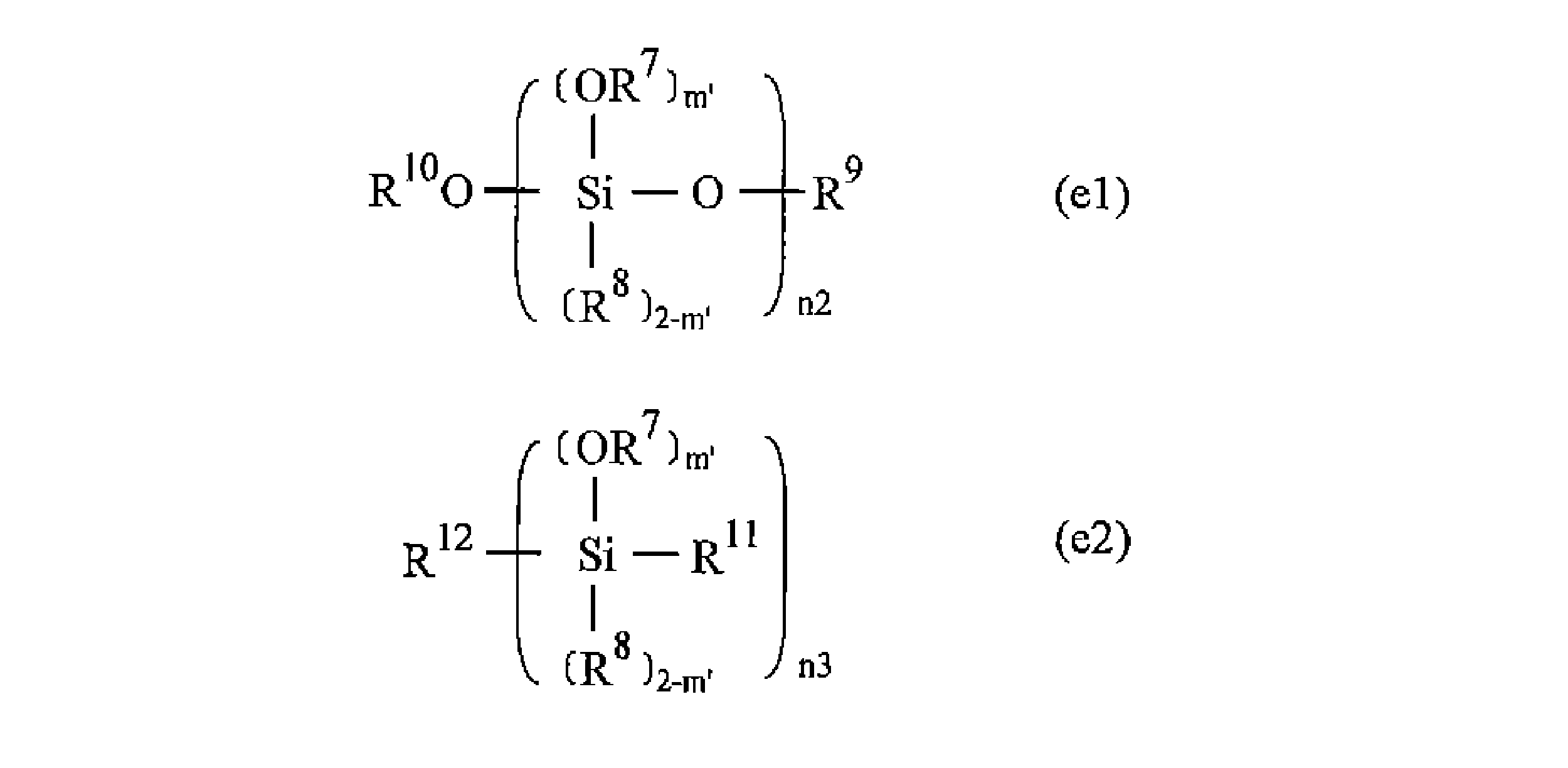
で表されている化合物(E)を好適に用いることができる。
式(e1)中、R7、R8、R9、R10は、同一又は異なって、水素原子又はアルキル基を示す。m’は1又は2である。n2は1以上の整数である。また、式(e2)中、R11は(OR7)又はR8を示し、R12は有機基を示す。n3は1以上の整数である。R7、R8、m’は前記に同じ。
R7、R8、R9、R10におけるアルキル基としては、上記R1、R2におけるアルキル基の例と同様の例を挙げることができ、なかでも炭素数1~10(さらに好ましくは1~6、特に1~4)のアルキル基が好ましい。
また、R7、R8のアルキル基は置換基を有していてもよい。また、該置換基等を介して、R7、R8のアルキル基は、他のアルキル基(例えば、他の珪素原子に結合しているR7、R8のアルキル基等)と結合して環(芳香族性環や非芳香族性環)を形成していてもよい。さらにまた、R7とR8は、それぞれ、同一又は異なる珪素原子に結合しているR7、R8と結合していてもよい。
m’は1又は2であり、好ましくは2である。なお、m’が2の場合は、R8が存在せず、式(e1)中の珪素原子に2つの(OR7)基が結合していることを意味している。n2は1以上の整数である。前記式(e1)で表される化合物は、n2が1の場合は、単量体であることを意味しており、n2が2以上の整数の場合は、オリゴマー又はポリマー等の多量体であることを意味している。
前記式(e1)で表される化合物としては、例えば、テトラメトキシシラン、テトラエトキシシラン、テトラプロポキシシラン、テトライソプロポキシシラン、テトラブトキシシラン等のテトラアルコキシシラン;メトキシトリエトキシシラン等のアルコキシトリアルコキシシラン;ジメトキシジエトキシシラン等のジアルコキシジアルコキシシラン等の単量体の化合物;ポリテトラメトキシシラン、ポリテトラエトキシシラン、ポリテトラプロポキシシラン、ポリテトライソプロポキシシラン、ポリテトラブトキシシラン等のポリテトラアルコキシシラン;ポリ(メトキシエトキシシラン)等のポリ(アルコキシアルコキシシラン);ポリ(メトキシシラン)、ポリ(ブトキシシラン)等のポリ(アルコキシシラン);ポリ(メトキシメチルシラン)、ポリ(メトキシエチルシラン)、ポリ(エトキシメチルシラン)等のポリ(アルコキシアルキルシラン)等の多量体の化合物等が挙げられる。
前記式(e2)において、R11はOR7又はR8であり、R7、R8、m’は、式(e1)におけるR7、R8、m’と同じである。また、同一の珪素原子に結合している複数のOR7やR8は、それぞれ同一であってもよく、異なっていてもよい。
また、R12の有機基としては、例えば、置換基を有していてもよいアルキル基や、該アルキル基の主鎖中に炭素原子以外の原子(酸素原子、窒素原子、硫黄原子等)を有するヘテロ原子含有基等が挙げられ、これらの置換基を有していてもよいアルキル基やヘテロ原子含有基は、1価又は多価のいずれの形態を有していてもよい。R12の有機基としては、例えば、ビニル基、メルカプト基の他、ビニル-アルキル基、ビニル-(アルキル)-アリール基、ビニル-(アルキル)-シクロアルキル基、(メタ)アクリロイル基、(メタ)アクリロイルオキシアルキル基(ビニル-カルボニルオキシアルキル基)、(メタ)アクリロイルオキシアリール基、メルカプト-アルキル基、メルカプト-(アルキル)-アリール基、メルカプト-(アルキル)-シクロアルキル基等を挙げることができる。
n3は1以上の整数であり、好ましくは1~4の整数(更に好ましくは1又は2、特に好ましくは1)である。なお、n3が2以上の整数である場合、R12の有機基に、2つ以上の加水分解性珪素原子含有基が結合していることを意味している。
前記式(e2)で表される化合物のうち、R12がアルキル基である化合物としては、例えば、メチルトリメトキシシラン、エチルトリメトキシシラン、メチルトリエトキシシラン等のアルキルトリアルコキシシランや、ジメチルジメトキシシラン、ジメチルジエトキシシラン、ジエチルジエトキシシラン、ジイソプロピルジメトキシシラン、イソプロピルジメトキシメチルシラン、イソプロピルジエトキシメチルシラン等のジアルキルジアルコキシシランの他、これらに対応するトリアルキルアルコキシシラン等を挙げることができる。
また、R12が置換基(例えば、グリシドキシ基、イソシアネート基、アミノ基等)を有するアルキル基である化合物としては、例えば、前記R12がアルキル基である化合物として例示されたものに対応する化合物等を挙げることができる。
前記式(e2)で表される化合物のうち、R12がビニル基である化合物としては、例えば、ビニルトリメトキシシラン、ビニルトリエトキシシラン等のビニルトリアルコキシシラン;ビニルメチルジメトキシシラン、ビニルメチルジエトキシシラン等の(ビニル)アルキルジアルコキシシランや、これらに対応する(ビニル)ジアルキル(モノ)アルコキシシラン等を挙げることができる。
前記式(e2)で表される化合物のうち、R12が(メタ)アクリロイルオキシアルキル基である化合物としては、例えば、3-(メタ)アクリロキシプロピル-トリメトキシシラン、3-(メタ)アクリロキシプロピル-トリエトキシシラン等の(メタ)アクリロキシアルキル-トリアルコキシシラン;3-(メタ)アクリロキシプロピル-メチルジメトキシシラン、3-(メタ)アクリロキシプロピル-メチルジエトキシシラン等の(メタ)アクリロキシアルキル-アルキルジアルコキシシランや、これらに対応する(メタ)アクリロキシアルキル-ジアルキル(モノ)アルコキシシラン等を挙げることができる。
前記式(e2)で表される化合物のうち、R12がメルカプト-アルキル基である化合物としては、例えば、3-メルカプトプロピルトリメトキシシラン、3-メルカプトプロピルトリエトキシシラン等のメルカプトアルキルトリアルコキシシラン;3-メルカプトプロピルメチルジプロポキシシラン、3-メルカプトプロピルメチルジイソプロポキシシラン等の(メルカプトアルキル)アルキルジアルコキシシランや、これらに対応する(メルカプトアルキル)ジアルキル(モノ)アルコキシシラン等を挙げることができる。
このようなジアルコキシシリル基を有する化合物としては、なかでも、ジメチルジメトキシシラン、ジメチルジエトキシシラン、ジメチルジプロポキシシラン、ジエチルジメトキシシラン、ジエチルジエトキシシラン、ジエチルジプロポキシシラン、イソプロピルジメトキシメチルシラン、イソプロピルジエトキシメチルシラン等のジアルキルジアルコキシシラン;ビニルメチルジメトキシシラン、ビニルメチルジエトキシシラン等の(ビニル)アルキルジアルコキシシラン;3-メタクリロキシプロピルメチルジメトキシシラン、3-メタクリロキシプロピルメチルジエトキシシラン等の(メタ)アクリロキシアルキル-アルキルジアルコキシシラン等を好適に用いることができる。
また、トリアルコキシシリル基を有する化合物としては、なかでも、メチルトリメトキシシラン、メチルトリエトキシシラン、メチルトリプロポキシシラン、エチルトリメトキシシラン、エチルトリエトキシシラン、エチルトリプロポキシシラン、イソプロピルトリメトキシシラン、イソプロピルトリエトキシシラン等のアルキルトリアルコキシシラン;ビニルトリメトキシシラン、ビニルトリエトキシシラン等のビニルトリアルコキシシラン;3-(メタ)アクリロキシプロピル-トリメトキシシラン、3-(メタ)アクリロキシプロピル-トリエトキシシラン等の(メタ)アクリロキシアルキル-トリアルコキシシラン等を好適に用いることができる。
化合物(E)の使用量としては、例えば、第4級アンモニウム基含有シリル化ウレタン系ポリマー中のシリル基1モルに対して1~50モル(好ましくは5~40モル、さらに好ましくは5~20モル)となるような割合で使用することが好ましい。化合物(E)の使用量が上記範囲を上回ると、保存安定性が低下する傾向がある。
シリコーン鎖付加反応時の雰囲気は特に制限されず、空気雰囲気、窒素雰囲気、アルゴン雰囲気等から選択される。反応温度は、反応成分の種類等に応じて適宜選択でき、例えば20~100℃、好ましくは40~80℃程度である。反応は常圧下で行ってもよく、減圧下又は加圧下で行ってもよい。反応時間は、適宜選択でき、例えば、1~20時間、好ましくは1~5時間程度である。
本発明にかかるコンディショナー組成物における(iii)第4級アンモニウム基含有シリル化ウレタンポリマーの配合量は特に制限されないが、その褪色抑制効果を考慮すると、好ましくは組成物に対して0.01~1質量%、より好ましくは0.05~0.6質量%である。前記配合量が0.01質量%に満たないと、褪色抑制効果が不十分であり、1質量%を超えると、適用後の毛髪がごわごわする等、使用感触を低下させることがある。
本発明にかかるコンディショナー組成物は、上記成分に加え、本発明の効果を損ねない範囲において、通常化粧品や医薬品に用いられる他の成分を配合し、常法により製造することができる。
他の成分としては、例えば、油分、上記以外のカチオン性界面活性剤、非イオン性界面活性剤、粉末成分、保湿剤、天然高分子、合成高分子、紫外線吸収剤、金属イオン封鎖剤、pH調整剤、皮膚栄養剤、ビタミン、酸化防止剤、酸化防止助剤、香料、水等が挙げられる。
他の成分としては、例えば、油分、上記以外のカチオン性界面活性剤、非イオン性界面活性剤、粉末成分、保湿剤、天然高分子、合成高分子、紫外線吸収剤、金属イオン封鎖剤、pH調整剤、皮膚栄養剤、ビタミン、酸化防止剤、酸化防止助剤、香料、水等が挙げられる。
油分としては、液体油脂、固体油脂、炭化水素油、シリコーン油が挙げられる。
液体油脂としては、例えば、アボガド油、ツバキ油、タートル油、マカデミアナッツ油、トウモロコシ油、ミンク油、オリーブ油、ナタネ油、卵黄油、ゴマ油、パーシック油、小麦胚芽油、サザンカ油、ヒマシ油、アマニ油、サフラワー油、綿実油、エノ油、大豆油、落花生油、茶実油、カヤ油、コメヌカ油、シナギリ油、日本キリ油、ホホバ油、胚芽油、トリグリセリン等が挙げられる。
液体油脂としては、例えば、アボガド油、ツバキ油、タートル油、マカデミアナッツ油、トウモロコシ油、ミンク油、オリーブ油、ナタネ油、卵黄油、ゴマ油、パーシック油、小麦胚芽油、サザンカ油、ヒマシ油、アマニ油、サフラワー油、綿実油、エノ油、大豆油、落花生油、茶実油、カヤ油、コメヌカ油、シナギリ油、日本キリ油、ホホバ油、胚芽油、トリグリセリン等が挙げられる。
固体油脂としては、例えば、カカオ脂、ヤシ油、馬脂、硬化ヤシ油、パーム油、牛脂、羊脂、硬化牛脂、パーム核油、豚脂、牛骨脂、モクロウ核油、硬化油、牛脚脂、モクロウ、硬化ヒマシ油等が挙げられる。
炭化水素油としては、例えば、流動パラフィン、オゾケライト、スクワラン、プリスタン、パラフィン、セレシン、スクワレン、ワセリン、マイクロクリスタリンワックス等が挙げられる。
シリコーン油としては、例えば、鎖状ポリシロキサン(例えば、ジメチルポリシロキサン、メチルフェニルポリシロキサン、ジフェニルポリシロキサン等);環状ポリシロキサン(例えば、オクタメチルシクロテトラシロキサン、デカメチルシクロペンタシロキサン、ドデカメチルシクロヘキサシロキサン等)、3次元網目構造を形成しているシリコーン樹脂、シリコーンゴム、各種変性ポリシロキサン(アミノ変性ポリシロキサン、ポリエーテル変性ポリシロキサン、アルキル変性ポリシロキサン、ポリエーテル・アルキル共変性ポリシロキサン、フッ素変性ポリシロキサン、ポリオキシエチレン/ポリオキシプロピレン共重合変性ポリシロキサン、直鎖アミノポリエーテル変性ポリシロキサン、アミドアルキル変性ポリシロキサン、アミノグリコール変性ポリシロキサン、アミノフェニル変性ポリシロキサン、カルビノール変性ポリシロキサン、ポリグリセリン変性ポリシロキサン、ポリグリセリン・アルキル共変性ポリシロキサン等)、ジメチコノール、アクリルシリコーン類等が挙げられる。シリコーン油の配合条件としては、組成物中で可溶化されていても、乳化されていてもよく、また乳化した場合の粒子径も、通常の洗浄剤組成物の技術と同一である。
カチオン性界面活性剤としては、例えば、アルキルピリジニウム塩(例えば、塩化セチルピリジニウム等);塩化ポリ(N,N’-ジメチル-3,5-メチレンピペリジニウム);アルキルイソキノリニウム塩;ジアルキルモリホニウム塩;POEアルキルアミン;アルキルアミン塩;ポリアミン脂肪酸誘導体;アミルアルコール脂肪酸誘導体;塩化ベンザルコニウム;塩化ベンゼトニウム等が挙げられる。
非イオン性界面活性剤としては、例えば、ヤシ油脂肪酸モノエタノールアミド、ヤシ油脂肪酸ジエタノールアミド、ラウリン酸イソプロパノールアミド、オレイン酸ジエタノールアミド等の脂肪酸アルカノールアミド類;ソルビタンモノステアレート、セスキオレイン酸ソルビタン等のソルビタン脂肪酸エステル類;ラウリン酸ジエチレングリコール、ラウリン酸プロピレングリコール、モノオレイン酸エチレングリコール、ジステアリン酸エチレングリコール等のアルキレングリコール脂肪酸エステル類;硬化ヒマシ油誘導体、グリセリンアルキルエーテル、POEソルビタンモノオレエート、モノステアリン酸ポリオキシエチレンソルビタン等のPOEソルビタン脂肪酸エステル類;POE-ソルビットモノラウレート等のPOEソルビット脂肪酸エステル類;POE-グリセリンモノイソステアレート等のPOEグリセリン脂肪酸エステル類;ポリエチレングリコールモノオレート、POEジステアレート等のPOEグリセリン脂肪酸エステル類;POE-オクチルドデシルエーテル等のPOEアルキルエーテル類;POEノニルフェニルエーテル等のPOEアルキルフェニルエーテル類;POE・POPアルキルエーテル類;プルロニック型類;POEヒマシ油;POE硬化ヒマシ油誘導体;糖エステル系、糖エーテル系、糖アミド系等の糖類;アルキルグリコシドなどが挙げられる。
粉末成分としては、例えば、無機粉末(例えば、タルク、カオリン、雲母、絹雲母(セリサイト)、白雲母、金雲母、合成雲母、紅雲母、黒雲母、パーミキュライト、炭酸マグネシウム、炭酸カルシウム、ケイ酸アルミニウム、ケイ酸バリウム、ケイ酸カルシウム、ケイ酸マグネシウム、ケイ酸ストロンチウム、タングステン酸金属塩、マグネシウム、シリカ、ゼオライト、硫酸バリウム、焼成硫酸カルシウム(焼セッコウ)、リン酸カルシウム、弗素アパタイト、ヒドロキシアパタイト、セラミックパウダー、金属石鹸(例えば、ミリスチン酸亜鉛、パルミチン酸カルシウム、ステアリン酸アルミニウム)、窒化ホウ素等);有機粉末(例えば、ポリアミド樹脂粉末(ナイロン粉末)、ポリエチレン粉末、ポリメタクリル酸メチル粉末、ポリスチレン粉末、スチレンとアクリル酸の共重合体樹脂粉末、ベンゾグアナミン樹脂粉末、ポリ四弗化エチレン粉末、セルロース粉末等);無機白色顔料(例えば、二酸化チタン、酸化亜鉛等);無機赤色系顔料(例えば、酸化鉄(ベンガラ)、チタン酸鉄等);無機褐色系顔料(例えば、γ-酸化鉄等);無機黄色系顔料(例えば、黄酸化鉄、黄土等);無機黒色系顔料(例えば、黒酸化鉄、低次酸化チタン等);無機紫色系顔料(例えば、マンゴバイオレット、コバルトバイオレット等);無機緑色系顔料(例えば、酸化クロム、水酸化クロム、チタン酸コバルト等);無機青色系顔料(例えば、群青、紺青等);パール顔料(例えば、酸化チタンコーテッドマイカ、酸化チタンコーテッドオキシ塩化ビスマス、酸化チタンコーテッドタルク、着色酸化チタンコーテッドマイカ、オキシ塩化ビスマス、魚鱗箔等);金属粉末顔料(例えば、アルミニウムパウダー、カッパーパウダー等) ;
ジルコニウム、バリウム又はアルミニウムレーキ等の有機顔料(例えば、赤色201号、赤色202 号、赤色204号、赤色205号、赤色220号、赤色226号、赤色228号、赤色405号、橙色203号、橙色204号、黄色205号、黄色401号、及び青色404号などの有機顔料、赤色3号、赤色104号、赤色106号、赤色227号、赤色230号、赤色401号、赤色505号、橙色205号、黄色4号、黄色5号、黄色202号、黄色203号、緑色3 号及び青色1号等);天然色素(例えば、クロロフィル、β-カロチン等);粘土鉱物(ベントナイト、ヘクトライト、ラポナイト等)等が挙げられる。
ジルコニウム、バリウム又はアルミニウムレーキ等の有機顔料(例えば、赤色201号、赤色202 号、赤色204号、赤色205号、赤色220号、赤色226号、赤色228号、赤色405号、橙色203号、橙色204号、黄色205号、黄色401号、及び青色404号などの有機顔料、赤色3号、赤色104号、赤色106号、赤色227号、赤色230号、赤色401号、赤色505号、橙色205号、黄色4号、黄色5号、黄色202号、黄色203号、緑色3 号及び青色1号等);天然色素(例えば、クロロフィル、β-カロチン等);粘土鉱物(ベントナイト、ヘクトライト、ラポナイト等)等が挙げられる。
保湿剤としては、例えば、ポリエチレングリコール、プロピレングリコール、ジプロピレングリコール、イソプレングリコール、グリセリン、1,3-ブチレングリコール、キシリトール、ソルビトール、マルチトール、コンドロイチン硫酸、ヒアルロン酸、ムコイチン硫酸、カロニン酸、アテロコラーゲン、コレステリル-12-ヒドロキシステアレート、乳酸ナトリウム、胆汁酸塩、dl-ピロリドンカルボン酸塩、短鎖可溶性コラーゲン、ジグリセリン(EO)PO付加物、イザヨイバラ抽出物、セイヨウノコギリソウ抽出物、メリロート抽出物などが挙げられる。
天然の水溶性高分子としては、例えば、植物系高分子(例えば、アラビアガム、トラガカントガム、ガラクタン、グアガム、キャロブガム、カラヤガム、カラギーナン、タマリンドガム、ローカストビーンガム、ペクチン、カンテン、クインスシード(マルメロ)、アルゲコロイド(カッソウエキス)、デンプン(コメ、トウモロコシ、バレイショ、コムギ)、グリチルリチン酸);微生物系高分子(例えば、キサンタンガム、デキストラン、サクシノグルカン、ブルラン等);動物系高分子(例えば、コラーゲン、カゼイン、アルブミン、ゼラチン等)等が挙げられる。また、これらの誘導体(POE・POP変性、アルキル変性、カチオン化、アニオン化、シリル化類)も挙げられる。
半合成の水溶性高分子としては、例えば、デンプン系高分子(例えば、カルボキシメチルデンプン、メチルヒドロキシプロピルデンプン等);セルロース系高分子(メチルセルロース、エチルセルロース、メチルヒドロキシプロピルセルロース、ヒドロキシエチルセルロース、セルロース硫酸ナトリウム、ジアルキルジメチルアンモニウム硫酸セルロース、ヒドロキシプロピルセルロース、カルボキシメチルセルロース、カルボキシメチルセルロースナトリウム、結晶セルロース、セルロース末及びこれら高分子の疎水変性化合物<例:一部をステアロキシ変性>及びこれら高分子のカチオン変性化合物等);アルギン酸系高分子(例えば、アルギン酸ナトリウム、アルギン酸プロピレングリコールエステル等);ペクチン酸ナトリウム等が挙げられる。
合成の水溶性高分子としては、例えば、ビニル系高分子(例えば、ポリビニルアルコール、ポリビニルメチルエーテル、ポリビニルピロリドン、カルボキシビニルポリマー等);ポリオキシエチレン系高分子(例えば、ポリエチレングリコール20,000、40,000、60,000のポリオキシエチレンポリオキシプロピレン共重合体等);ポリ(ジメチルジアリルアンモニウムハライド)型カチオン性高分子(例えば、マーコート100(Merquat 100)米国メルク社製);ジメチルジアリルアンモニウムハライドとアクリルアミドの共重合体型カチオン性ポリマー(例えば、マーコート550(Merquat 550)米国メルク社製);アクリル系高分子(例えば、ポリアクリル酸ナトリウム、ポリエチルアクリレート、ポリアクリルアミド等);ポリエチレンイミン;カチオンポリマー;ケイ酸AlMg(ビーガム);ポリクオタニウム-39等が挙げられる。
紫外線吸収剤としては、例えば、安息香酸系紫外線吸収剤(例えば、パラアミノ安息香酸(以下、PABAと略す)、PABAモノグリセリンエステル、N,N-ジプロポキシPABAエチルエステル、N,N-ジエトキシPABAエチルエステル、N,N-ジメチルPABAエチルエステル、N,N-ジメチルPABAブチルエステル等);アントラニル酸系紫外線吸収剤(例えば、ホモメンチル-N-アセチルアントラニレート等);サリチル酸系紫外線吸収剤(例えば、アミルサリシレート、メンチルサリシレート、ホモメンチルサリシレート、オクチルサリシレート、フェニルサリシレート、ベンジルサリシレート、p-イソプロパノールフェニルサリシレート等);桂皮酸系紫外線吸収剤(例えば、オクチルシンナメート、エチル-4-イソプロピルシンナメート、メチル-2,5-ジイソプロピルシンナメート、エチル-2,4-ジイソプロピルシンナメート、メチル-2,4-ジイソプロピルシンナメート、プロピル-p-メトキシシンナメート、イソプロピル-p-メトキシシンナメート、イソアミル-p-メトキシシンナメート、オクチル-p-メトキシシンナメート(2-エチルヘキシル-p-メトキシシンナメート)、2-エトキシエチル-p-メトキシシンナメート、シクロヘキシル-p-メトキシシンナメート、エチル-α-シアノ-β-フェニルシンナメート、2-エチルヘキシル-α-シアノ-β-フェニルシンナメート、グリセリルモノ-2-エチルヘキサノイル-ジパラメトキシシンナメート等);ベンゾフェノン系紫外線吸収剤(例えば、2,4-ジヒドロキシベンゾフェノン、2,2’-ジヒドロキシ-4-メトキシベンゾフェノン、2,2’-ジヒドロキシ-4,4’-ジメトキシベンゾフェノン、2,2’,4,4’-テトラヒドロキシベンゾフェノン、2-ヒドロキシ-4-メトキシベンゾフェノン、2-ヒドロキシ-4-メトキシ-4’-メチルベンゾフェノン、2-ヒドロキシ-4-メトキシベンゾフェノン-5-スルホン酸塩、4-フェニルベンゾフェノン、2-エチルヘキシル-4’-フェニル-ベンゾフェノン-2-カルボキシレート、2-ヒドロキシ-4-n-オクトキシベンゾフェノン、4-ヒドロキシ-3-カルボキシベンゾフェノン等);3-(4’-メチルベンジリデン)-d,l-カンファー、3-ベンジリデン-d,l-カンファー;2-フェニル-5-メチルベンゾキサゾール;2,2’-ヒドロキシ-5-メチルフェニルベンゾトリアゾール;2-(2’-ヒドロキシ-5’-t-オクチルフェニル)ベンゾトリアゾール;2-(2’-ヒドロキシ-5’-メチルフェニルベンゾトリアゾール;ジアニソイルメタン;4-メトキシ-4’-t-ブチルジベンゾイルメタン;5-(3,3-ジメチル-2-ノルボルニリデン)-3-ペンタン-2-オン等);トリアジン系紫外線吸収剤(例えば、2-4-[(2-ヒドロキシ-3-ドデシルオキシプロピル)オキシ]-2-ヒドロキシフェニル)-4,6-ビス(2,4-ジメチルフェニル)-1,3,5-トリアジン、2-4-[(2-ヒドロキシ-3-トリデシルオキシプロピル)オキシ]-2-ヒドロキシフェニル)-4,6-ビス(2,4-ジメチルフェニル)-1,3,5-トリアジン等)が挙げられる。
金属イオン封鎖剤としては、例えば、1-ヒドロキシエタン-1,1-ジフォスホン酸、1-ヒドロキシエタン-1,1-ジフォスホン酸四ナトリウム塩、エデト酸二ナトリウム、エデト酸三ナトリウム、エデト酸四ナトリウム、クエン酸ナトリウム、ポリリン酸ナトリウム、メタリン酸ナトリウム、グルコン酸、リン酸、クエン酸、アスコルビン酸、コハク酸、エデト酸、エチレンジアミンヒドロキシエチル三酢酸3ナトリウム等が挙げられる。
pH調整剤としては、例えば、乳酸-乳酸ナトリウム、クエン酸-クエン酸ナトリウム、コハク酸-コハク酸ナトリウム等の緩衝剤等が挙げられる。
ビタミン類としては、例えば、ビタミンA、B1、B2、B6、C、E及びその誘導体、パントテン酸及びその誘導体、ビオチン等が挙げられる。
酸化防止剤としては、例えば、トコフェロール類、ジブチルヒドロキシトルエン、ブチルヒドロキシアニソール、没食子酸エステル類等が挙げられる。
ビタミン類としては、例えば、ビタミンA、B1、B2、B6、C、E及びその誘導体、パントテン酸及びその誘導体、ビオチン等が挙げられる。
酸化防止剤としては、例えば、トコフェロール類、ジブチルヒドロキシトルエン、ブチルヒドロキシアニソール、没食子酸エステル類等が挙げられる。
その他の配合可能成分としては、例えば、防腐剤(エチルパラベン、ブチルパラベン、1,2-アルカンジオール(炭素鎖長6~14)及びその誘導体、フェノキシエタノール、メチルクロロイソチオゾリンオン等);消炎剤(例えば、グリチルリチン酸誘導体、グリチルレチン酸誘導体、サリチル酸誘導体、ヒノキチオール、酸化亜鉛、アラントイン等);美白剤(例えば、ユキノシタ抽出物、アルブチン等);各種抽出物(例えば、オウバク、オウレン、シコン、シャクヤク、センブリ、バーチ、セージ、ビワ、ニンジン、アロエ、ゼニアオイ、アイリス、ブドウ、ヨクイニン、ヘチマ、ユリ、サフラン、センキョウ、ショウキョウ、オトギリソウ、オノニス、ニンニク、トウガラシ、チンピ、トウキ、海藻等)、賦活剤(例えば、ローヤルゼリー、感光素、コレステロール誘導体等);血行促進剤(例えば、ノニル酸ワレニルアミド、ニコチン酸ベンジルエステル、ニコチン酸β-ブトキシエチルエステル、カプサイシン、ジンゲロン、カンタリスチンキ、イクタモール、タンニン酸、α-ボルネオール、ニコチン酸トコフェロール、イノシトールヘキサニコチネート、シクランデレート、シンナリジン、トラゾリン、アセチルコリン、ベラパミル、セファランチン、γ-オリザノール等);抗脂漏剤(例えば、硫黄、チアントール等);抗炎症剤(例えば、トラネキサム酸、チオタウリン、ヒポタウリン等);芳香族アルコール(ベンジルアルコール、ベンジルオキシエタノール等)等が挙げられる。
本発明に係るコンディショナー組成物を毛髪に適用すると、上記第4級アンモニウム基含有シリル化ウレタン系ポリマーが速やかに毛髪表面に強固に吸着し、水ですすいでも洗い流されることがない。そのため、洗髪の際に毛髪内部への水分の浸透を抑制することができ、毛髪内部からの染料の流出を抑制し、優れた褪色抑制効果を発揮することができる。
さらに、特定カチオン性界面活性剤及び高級脂肪族アルコールを併用することにより、前記褪色抑制効果がより促進されると共に、染色後の毛髪に対し、コンディショナー使用後に乾かした毛髪のしなやかさ等において、良好な使用感触を付与することができる。
そのため、日々の洗髪用途に、本発明に係るコンディショナー組成物からなるコンディショナー等を使用すると、ヘアカラーの褪色を有意に抑制することができ、美しいヘアカラーを維持することができる。また同時に、染色によるごわつき等を緩和し、しなやかな毛髪を得ることができる。
さらに、特定カチオン性界面活性剤及び高級脂肪族アルコールを併用することにより、前記褪色抑制効果がより促進されると共に、染色後の毛髪に対し、コンディショナー使用後に乾かした毛髪のしなやかさ等において、良好な使用感触を付与することができる。
そのため、日々の洗髪用途に、本発明に係るコンディショナー組成物からなるコンディショナー等を使用すると、ヘアカラーの褪色を有意に抑制することができ、美しいヘアカラーを維持することができる。また同時に、染色によるごわつき等を緩和し、しなやかな毛髪を得ることができる。
なお、本発明に係るコンディショナー組成物におけるヘアカラーの褪色抑制効果は、ヘアカラーを施した毛髪について、洗髪等を施す前と後に毛髪の色を分光測色計を使用して測定し、その色差(ΔE)によって評価することができる。色差(ΔE)がゼロに近いほど褪色抑制効果が高いことを意味する。
本発明にかかるコンディショナー組成物を使用して洗髪処理(洗浄-すすぎ-乾燥を5回繰り返す処理)を施す場合、洗髪処理の前後における毛髪の色差(ΔEs)としては、例えば3.3以下、好ましくは2.8以下である。色差が上記範囲を超えると、褪色抑制効果を実感することが困難となる傾向がある。
以下、実施例により本発明をより具体的に説明するが、本発明はこれらの実施例に限定されるものではない。なお、以下、特に断りのない限り、「部」は「質量部」を、「%」は「質量%」を表す。
まず、以下の試験で用いた褪色抑制効果及び使用感触の評価方法を説明する。
<褪色抑制効果の評価方法>
1.白髪100%の毛束(ビューラックス社製)をブラウン系ヘアカラー(商品名「ディアニストNB8」、資生堂プロフェッショナル(株)製)を使用して染色した。
2.染色を施した毛束(染色毛束)について、毛の色を分光測色計(商品名「CM-2500d」、コニカミノルタ社製)を使用して測定した(C1)。
3.上記染色毛束に実施例及び比較例で得られたコンディショナー(各コンディショナーについて、サンプル数を10とした)を使用し、すすぐという事前処理を施した。その後、前記事前処理後の染色毛束に洗浄処理(シャンプー-すすぎ-乾燥を5回繰り返す処理)を施した。
4.洗浄後の染色毛束について、毛の色を上記と同様に分光測色計を使用して測定し、その平均値(C2)を算出し、洗浄処理の前後における色差(ΔEs:C1-C2)を求め、比較例と比較して、下記評価基準に従って褪色抑制効果を評価した。
評価基準
(各実施例のΔEs)-(比較例のΔEs)の値が-1以下:◎◎
(各実施例のΔEs)-(比較例のΔEs)の値が-1を越え、-0.5以下:◎
(各実施例のΔEs)-(比較例のΔEs)の値が-0.5を越え、0以下:○
(各実施例のΔEs)-(比較例のΔEs)の値が0を越える:×
<褪色抑制効果の評価方法>
1.白髪100%の毛束(ビューラックス社製)をブラウン系ヘアカラー(商品名「ディアニストNB8」、資生堂プロフェッショナル(株)製)を使用して染色した。
2.染色を施した毛束(染色毛束)について、毛の色を分光測色計(商品名「CM-2500d」、コニカミノルタ社製)を使用して測定した(C1)。
3.上記染色毛束に実施例及び比較例で得られたコンディショナー(各コンディショナーについて、サンプル数を10とした)を使用し、すすぐという事前処理を施した。その後、前記事前処理後の染色毛束に洗浄処理(シャンプー-すすぎ-乾燥を5回繰り返す処理)を施した。
4.洗浄後の染色毛束について、毛の色を上記と同様に分光測色計を使用して測定し、その平均値(C2)を算出し、洗浄処理の前後における色差(ΔEs:C1-C2)を求め、比較例と比較して、下記評価基準に従って褪色抑制効果を評価した。
評価基準
(各実施例のΔEs)-(比較例のΔEs)の値が-1以下:◎◎
(各実施例のΔEs)-(比較例のΔEs)の値が-1を越え、-0.5以下:◎
(各実施例のΔEs)-(比較例のΔEs)の値が-0.5を越え、0以下:○
(各実施例のΔEs)-(比較例のΔEs)の値が0を越える:×
<使用感触の評価方法>
洗浄後の染色毛束について、10名の専門パネラーによる官能試験を行い、比較例と比較したコンディショナー使用後に乾かした毛髪のしなやかさ(ドライ後のしなやかさ)を下記の基準で評価した。
比較例に比べ、同等又は良いと回答したパネラーが70%以上:◎◎
比較例に比べ、同等又は良いと回答したパネラーが50%以上70%未満:◎
比較例に比べ、同等又は良いと回答したパネラーが30%以上50%未満:○
比較例に比べ、同等又は良いと回答したパネラーが30%未満:×
洗浄後の染色毛束について、10名の専門パネラーによる官能試験を行い、比較例と比較したコンディショナー使用後に乾かした毛髪のしなやかさ(ドライ後のしなやかさ)を下記の基準で評価した。
比較例に比べ、同等又は良いと回答したパネラーが70%以上:◎◎
比較例に比べ、同等又は良いと回答したパネラーが50%以上70%未満:◎
比較例に比べ、同等又は良いと回答したパネラーが30%以上50%未満:○
比較例に比べ、同等又は良いと回答したパネラーが30%未満:×
次に、以下の試験で使用した第4級アンモニウム基含有ウレタン系ポリマーの製造方法を説明する。
第4級アンモニウム基含有シリル化ウレタン系ポリマーの調製例1
エステル変性アミノ基含有アルコキシシラン(化合物A)の調製例
γ-アミノプロピルトリエトキシシラン(商品名「KBE903」、信越化学工業(株)製)221.4部に対して、ラウリルアクリレート240.4部の割合で混合し、50℃で7日間反応させて、エステル変性アミノ基含有アルコキシシラン(化合物A)を得た。
第4級アンモニウム基含有シリル化ウレタン系ポリマーの調製例1
エステル変性アミノ基含有アルコキシシラン(化合物A)の調製例
γ-アミノプロピルトリエトキシシラン(商品名「KBE903」、信越化学工業(株)製)221.4部に対して、ラウリルアクリレート240.4部の割合で混合し、50℃で7日間反応させて、エステル変性アミノ基含有アルコキシシラン(化合物A)を得た。
製造例1
窒素導入管、温度計、コンデンサー及び撹拌装置の付いた4つ口フラスコに、ポリテトラメチレンエーテルグリコール(数平均分子量:1944.5、商品名「PTMG2000」、三菱化学(株)製)50部、下記式(2)で表されるトリメチロールプロパンモノ(ポリエチレンオキシドメチルエーテル)(数平均分子量:1089.3、商品名「YmerN120」、Perstorp社製)25部、N-メチル-N,N-ジエタノールアミン(MDA)25部、イソホロンジイソシアネート(IPDI)60.4部、及びメチルエチルケトン(MEK)50部、触媒として1,8-ジアザビシクロ[5.4.0]ウンデカ-7-エン(DBU)0.1部を配合し、80~85℃の温度で、窒素雰囲気下、5時間反応を行い、第3級アミンを含有するウレタン系ポリマーを含む反応混合物を得た。
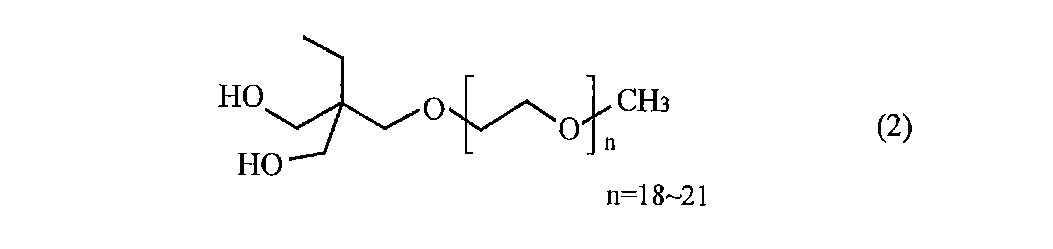
窒素導入管、温度計、コンデンサー及び撹拌装置の付いた4つ口フラスコに、ポリテトラメチレンエーテルグリコール(数平均分子量:1944.5、商品名「PTMG2000」、三菱化学(株)製)50部、下記式(2)で表されるトリメチロールプロパンモノ(ポリエチレンオキシドメチルエーテル)(数平均分子量:1089.3、商品名「YmerN120」、Perstorp社製)25部、N-メチル-N,N-ジエタノールアミン(MDA)25部、イソホロンジイソシアネート(IPDI)60.4部、及びメチルエチルケトン(MEK)50部、触媒として1,8-ジアザビシクロ[5.4.0]ウンデカ-7-エン(DBU)0.1部を配合し、80~85℃の温度で、窒素雰囲気下、5時間反応を行い、第3級アミンを含有するウレタン系ポリマーを含む反応混合物を得た。
このウレタン系ポリマーを含む反応混合物にメチルエチルケトン(MEK)150部を加えて50℃に冷却し、第4級化剤としてジメチル硫酸25.2部を加え、50~60℃で30分~1時間かけて第3級アミン部位の第4級アンモニウムイオン化を行い、第4級アンモニウム基含有ウレタン系ポリマーを製造した。
この第4級アンモニウム基含有ウレタン系ポリマーの反応混合物に、調製例1で得られた化合物A9.9部を配合して混合した後、65~75℃の温度で窒素雰囲気下1時間反応を行い、第4級アンモニウム基含有シリル化ウレタン系ポリマーを含む反応混合物(1)を得た。
次に、反応混合物(1)を40℃まで冷却した後、拘束撹拌下、脱イオン水1000部を加えた。その後、減圧下、45~50℃で溶剤を留去して水性分散液(1)を得た。
下記表1及び2に示す処方により製造した各コンディショナー組成物について、上記評価(褪色抑制効果及び使用感触)を行った。結果を表1及び2に示す。なお、各評価における実施例との比較には、比較例1-1を基準として用いた。


(製造方法)
精製水にカチオン性界面活性剤を加え、十分に撹拌溶解させた後、残りの成分を順次添加しコンディショナー組成物を得た。
精製水にカチオン性界面活性剤を加え、十分に撹拌溶解させた後、残りの成分を順次添加しコンディショナー組成物を得た。
表1及び2に示すとおり、第4級アンモニウム基含有ウレタン系ポリマーを配合しない比較例1-1に比べ、該ポリマーを配合した他の例では全て褪色抑制効果が向上した。
また、コンディショニング剤であるカチオン性界面活性剤として、モノ長鎖アルキル型第4級アンモニウム塩(塩化ステアリルトリメチルアンモニウム)のみを配合した比較例1-2に比べ、さらにイミダゾリン型第4級アンモニウム塩(ジベヘニルイミダゾリニウムメトサルフェート)を配合した実施例1-1~1-7、又は、ジ長鎖アルキル型第4級アンモニウム塩(ジココイルヒドロキシエチルメチルアンモニウムメトサルフェート又は塩化ジステアリルジメチルアンモニウム)を配合した実施例1-8~1-13は、いずれもドライ後のしなやかさに改善が認められた。
また、コンディショニング剤であるカチオン性界面活性剤として、モノ長鎖アルキル型第4級アンモニウム塩(塩化ステアリルトリメチルアンモニウム)のみを配合した比較例1-2に比べ、さらにイミダゾリン型第4級アンモニウム塩(ジベヘニルイミダゾリニウムメトサルフェート)を配合した実施例1-1~1-7、又は、ジ長鎖アルキル型第4級アンモニウム塩(ジココイルヒドロキシエチルメチルアンモニウムメトサルフェート又は塩化ジステアリルジメチルアンモニウム)を配合した実施例1-8~1-13は、いずれもドライ後のしなやかさに改善が認められた。
イミダゾリン型第4級アンモニウム塩は、0.01質量%(実施例1-1)の配合で十分な効果を発揮したが、0.05~2質量%配合した実施例1-2~1-6では、褪色抑制効果とドライ後のしなやかさが共に高く、この傾向は0.05~1質量%配合した実施例1-2~1-5で特に顕著であった。
また、ジ長鎖アルキル型第4級アンモニウム塩については、実施例1-8~1-10及び1-11~1-13に示すとおり、0.01~3質量%、特に1~3質量%での配合において、褪色抑制効果、ドライ後のしなやかさ共に良好な結果が得られた。
したがって、本発明においては、第4級アンモニウム基含有ウレタン系ポリマーに加え、カチオン性界面活性剤を配合することが好ましい。また、前記カチオン性界面活性剤として、特に、イミダゾリン型第4級アンモニウム塩又はジ長鎖アルキル型第4級アンモニウム塩と、モノ長鎖アルキル型第4級アンモニウム塩とを併用することが好ましく、また、イミダゾリン型第4級アンモニウム塩の配合量として好ましくは0.05~2質量%、より好ましくは0.05~1質量%である。ジ長鎖アルキル型第4級アンモニウム塩の配合量として好ましくは0.01~3質量%、より好ましくは1~3質量%である。
また、ジ長鎖アルキル型第4級アンモニウム塩については、実施例1-8~1-10及び1-11~1-13に示すとおり、0.01~3質量%、特に1~3質量%での配合において、褪色抑制効果、ドライ後のしなやかさ共に良好な結果が得られた。
したがって、本発明においては、第4級アンモニウム基含有ウレタン系ポリマーに加え、カチオン性界面活性剤を配合することが好ましい。また、前記カチオン性界面活性剤として、特に、イミダゾリン型第4級アンモニウム塩又はジ長鎖アルキル型第4級アンモニウム塩と、モノ長鎖アルキル型第4級アンモニウム塩とを併用することが好ましく、また、イミダゾリン型第4級アンモニウム塩の配合量として好ましくは0.05~2質量%、より好ましくは0.05~1質量%である。ジ長鎖アルキル型第4級アンモニウム塩の配合量として好ましくは0.01~3質量%、より好ましくは1~3質量%である。
また、下記表3に示す処方により製造した各コンディショナー組成物について、上記評価(褪色抑制効果及び使用感触)を行った。結果を表3に示す。なお、各評価における実施例との比較には、比較例2-1を基準として用いた。

(製造方法)
精製水にカチオン性界面活性剤を加え、十分に撹拌溶解させた後、残りの成分を順次添加しコンディショナー組成物を得た。
精製水にカチオン性界面活性剤を加え、十分に撹拌溶解させた後、残りの成分を順次添加しコンディショナー組成物を得た。
表3に示すとおり、第4級アンモニウム基含有ウレタン系ポリマー無配合の比較例2-1に比べ、該ポリマーを0.01~1質量%配合した実施例では、褪色抑制効果だけでなく、使用感触も向上した。特に、第4級アンモニウム基含有ウレタン系ポリマーの配合量が0.05~0.6質量%のとき、褪色抑制効果及び使用感触ともに著しく高まった。
一方、第4級アンモニウム基含有ウレタン系ポリマーを1.1質量%配合した比較例2-2では、褪色抑制効果は向上したものの、使用感触の改善はほとんど認められなかった。
したがって、本発明における第4級アンモニウム基含有ウレタン系ポリマーの配合量は、0.01~1質量%であり、好ましくは0.05~0.6質量%である。
一方、第4級アンモニウム基含有ウレタン系ポリマーを1.1質量%配合した比較例2-2では、褪色抑制効果は向上したものの、使用感触の改善はほとんど認められなかった。
したがって、本発明における第4級アンモニウム基含有ウレタン系ポリマーの配合量は、0.01~1質量%であり、好ましくは0.05~0.6質量%である。
Claims (3)
- (i)カチオン性界面活性剤と、
(ii)高級脂肪族アルコールと、
(iii)4級アンモニウム基含有シリル化ウレタン系ポリマー0.01~1質量%と、
を含有し、且つ、(i)カチオン性界面活性剤が、
(a)下記一般式(I)で表されるイミダゾリン型第4級アンモニウム塩、又は下記一般式(II)で表されるジ長鎖アルキル型第4級アンモニウム塩と、
(b)下記一般式(III)で表されるモノ長鎖アルキル型第4級アンモニウム塩と、
からなることを特徴とする請求項1に記載のコンディショナー組成物。

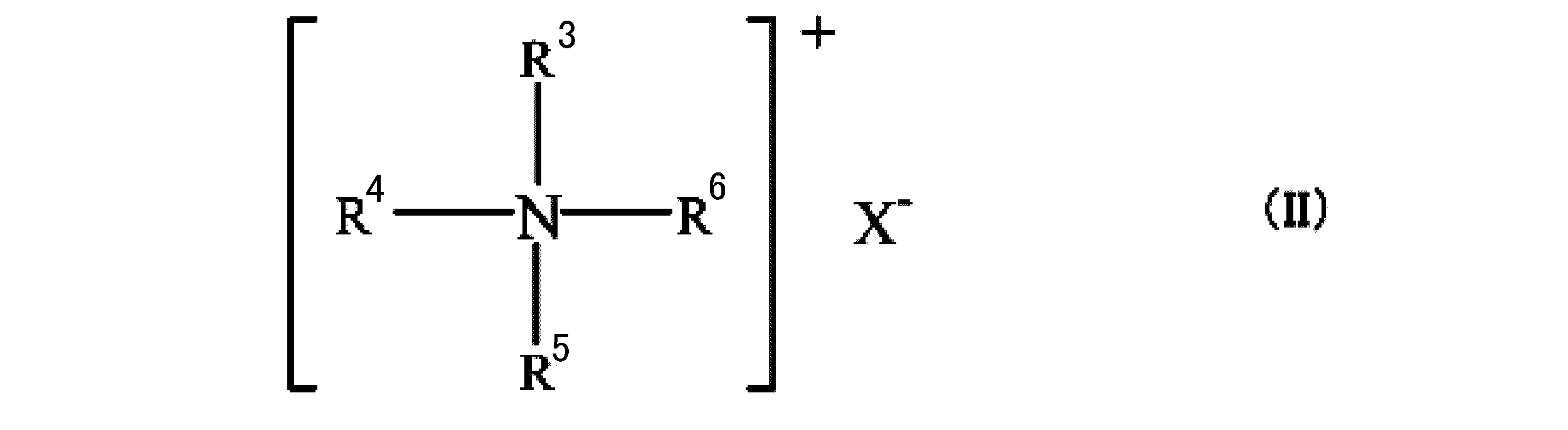

- 前記(i)カチオン性界面活性剤の(a)成分が、
0.05~2質量%の上記一般式(I)で表されるイミダゾリン型第4級アンモニウム塩、又は
0.01~3質量%の上記一般式(II)で表されるジ長鎖アルキル型第4級アンモニウム塩、
であることを特徴とする請求項1に記載のコンディショナー組成物。 - 前記(i)カチオン性界面活性剤の(a)成分が、ジベヘニルイミダゾリニウムメトサルフェート、塩化ジステアリルジメチルアンモニウム、ジココイルヒドロキシエチルメチルモニウムメトサルフェートからなる群より選択される1種以上であることを特徴とする請求項1又は2に記載のコンディショナー組成物。
Priority Applications (1)
| Application Number | Priority Date | Filing Date | Title |
|---|---|---|---|
| JP2013513478A JPWO2012161215A1 (ja) | 2011-05-25 | 2012-05-23 | コンディショナー組成物 |
Applications Claiming Priority (2)
| Application Number | Priority Date | Filing Date | Title |
|---|---|---|---|
| JP2011116993 | 2011-05-25 | ||
| JP2011-116993 | 2011-05-25 |
Publications (1)
| Publication Number | Publication Date |
|---|---|
| WO2012161215A1 true WO2012161215A1 (ja) | 2012-11-29 |
Family
ID=47217291
Family Applications (1)
| Application Number | Title | Priority Date | Filing Date |
|---|---|---|---|
| PCT/JP2012/063167 Ceased WO2012161215A1 (ja) | 2011-05-25 | 2012-05-23 | コンディショナー組成物 |
Country Status (3)
| Country | Link |
|---|---|
| JP (1) | JPWO2012161215A1 (ja) |
| TW (1) | TW201302234A (ja) |
| WO (1) | WO2012161215A1 (ja) |
Cited By (4)
| Publication number | Priority date | Publication date | Assignee | Title |
|---|---|---|---|---|
| JP2014101308A (ja) * | 2012-11-20 | 2014-06-05 | Milbon Co Ltd | 毛髪用処理剤 |
| JP2016540005A (ja) * | 2013-12-19 | 2016-12-22 | ザ プロクター アンド ギャンブル カンパニー | 炭酸エステルを使用したケラチン繊維の成形 |
| JP2019019110A (ja) * | 2017-07-21 | 2019-02-07 | 株式会社アリミノ | 毛髪用処理剤および毛髪処理方法 |
| WO2020095877A1 (ja) * | 2018-11-06 | 2020-05-14 | Dic株式会社 | 有機重合体、それを含む組成物及びその製造方法 |
Citations (4)
| Publication number | Priority date | Publication date | Assignee | Title |
|---|---|---|---|---|
| JP2003176214A (ja) * | 2001-12-12 | 2003-06-24 | Arimino Kagaku Kk | 毛髪化粧料組成物 |
| JP2004315369A (ja) * | 2003-04-11 | 2004-11-11 | Seiwa Kasei:Kk | 毛髪処理剤 |
| JP2005097157A (ja) * | 2003-09-24 | 2005-04-14 | Cognis Japan Ltd | 頭髪用化粧料 |
| JP2006213706A (ja) * | 2005-01-07 | 2006-08-17 | Shiseido Co Ltd | 毛髪化粧料 |
Family Cites Families (3)
| Publication number | Priority date | Publication date | Assignee | Title |
|---|---|---|---|---|
| WO2009112417A1 (de) * | 2008-03-11 | 2009-09-17 | Momentive Performance Materials Gmbh | Neue ammonium-polyurethan- und/oder polycarbonat-verbindungen |
| JP2012057110A (ja) * | 2010-09-11 | 2012-03-22 | Konishi Co Ltd | 第4級アンモニウム基含有シリル化ウレタン系ポリマー、及びその製造方法 |
| JP2012167055A (ja) * | 2011-02-15 | 2012-09-06 | Konishi Co Ltd | 毛髪化粧料 |
-
2012
- 2012-05-23 JP JP2013513478A patent/JPWO2012161215A1/ja active Pending
- 2012-05-23 WO PCT/JP2012/063167 patent/WO2012161215A1/ja not_active Ceased
- 2012-05-25 TW TW101118680A patent/TW201302234A/zh unknown
Patent Citations (4)
| Publication number | Priority date | Publication date | Assignee | Title |
|---|---|---|---|---|
| JP2003176214A (ja) * | 2001-12-12 | 2003-06-24 | Arimino Kagaku Kk | 毛髪化粧料組成物 |
| JP2004315369A (ja) * | 2003-04-11 | 2004-11-11 | Seiwa Kasei:Kk | 毛髪処理剤 |
| JP2005097157A (ja) * | 2003-09-24 | 2005-04-14 | Cognis Japan Ltd | 頭髪用化粧料 |
| JP2006213706A (ja) * | 2005-01-07 | 2006-08-17 | Shiseido Co Ltd | 毛髪化粧料 |
Cited By (5)
| Publication number | Priority date | Publication date | Assignee | Title |
|---|---|---|---|---|
| JP2014101308A (ja) * | 2012-11-20 | 2014-06-05 | Milbon Co Ltd | 毛髪用処理剤 |
| JP2016540005A (ja) * | 2013-12-19 | 2016-12-22 | ザ プロクター アンド ギャンブル カンパニー | 炭酸エステルを使用したケラチン繊維の成形 |
| JP2019019110A (ja) * | 2017-07-21 | 2019-02-07 | 株式会社アリミノ | 毛髪用処理剤および毛髪処理方法 |
| WO2020095877A1 (ja) * | 2018-11-06 | 2020-05-14 | Dic株式会社 | 有機重合体、それを含む組成物及びその製造方法 |
| JPWO2020095877A1 (ja) * | 2018-11-06 | 2021-05-13 | Dic株式会社 | 有機重合体、それを含む組成物及びその製造方法 |
Also Published As
| Publication number | Publication date |
|---|---|
| JPWO2012161215A1 (ja) | 2014-07-31 |
| TW201302234A (zh) | 2013-01-16 |
Similar Documents
| Publication | Publication Date | Title |
|---|---|---|
| JP5323282B2 (ja) | シャンプー組成物 | |
| KR101385425B1 (ko) | 모발 화장료 | |
| KR102339211B1 (ko) | 폴리우레탄 라텍스 중합체 및 증점제를 포함하는 모발-트리트먼트 조성물 | |
| JP2012057110A (ja) | 第4級アンモニウム基含有シリル化ウレタン系ポリマー、及びその製造方法 | |
| JP5997155B2 (ja) | 水性環境で安定している糖シロキサン並びにそのような糖シロキサンの調製及び使用方法 | |
| CN110958875B (zh) | 包括带有多羟基芳族部分的聚有机基硅氧烷的毛发处理 | |
| EP3360537B1 (en) | Oil-in-water type organopolysiloxane emulsion and method for producing same, cosmetic raw material, and cosmetic product | |
| US20150272838A1 (en) | Inorganic powder coated with biocompatible polymer, and cosmetic composition comprising same | |
| EP3492064B1 (en) | Bicontinuous microemulsion composition and cosmetic | |
| CN101917964A (zh) | 皮肤化妆品 | |
| EP2581401B1 (en) | Glycerol group-containing organopolysiloxane, cosmetic, and method for producing glycerol group-containing organopolysiloxane | |
| WO2012161215A1 (ja) | コンディショナー組成物 | |
| EP3618930A1 (en) | Hair-treatment compositions comprising a polyurethane latex polymer and cationic compound | |
| JP2012167055A (ja) | 毛髪化粧料 | |
| US11666521B2 (en) | Conditioning compositions containing cationic compounds, a silane compound and silica particles and methods for use | |
| US12128119B2 (en) | Essentially anhydrous hair-treatment compositions comprising a polyurethane latex polymer and bis-urea derivative | |
| JP2012232953A (ja) | シャンプー組成物 | |
| JP2006225318A (ja) | 毛髪化粧料 | |
| EP4424382A1 (en) | Hair cosmetic composition | |
| EP4424383A1 (en) | Hair cosmetic composition |
Legal Events
| Date | Code | Title | Description |
|---|---|---|---|
| 121 | Ep: the epo has been informed by wipo that ep was designated in this application |
Ref document number: 12790138 Country of ref document: EP Kind code of ref document: A1 |
|
| ENP | Entry into the national phase |
Ref document number: 2013513478 Country of ref document: JP Kind code of ref document: A |
|
| NENP | Non-entry into the national phase |
Ref country code: DE |
|
| 122 | Ep: pct application non-entry in european phase |
Ref document number: 12790138 Country of ref document: EP Kind code of ref document: A1 |