WO2012124727A1 - 機械加工性を有するゼオライトバルク体、その水熱合成用反応溶液および製造方法、ならびにその用途 - Google Patents
機械加工性を有するゼオライトバルク体、その水熱合成用反応溶液および製造方法、ならびにその用途 Download PDFInfo
- Publication number
- WO2012124727A1 WO2012124727A1 PCT/JP2012/056535 JP2012056535W WO2012124727A1 WO 2012124727 A1 WO2012124727 A1 WO 2012124727A1 JP 2012056535 W JP2012056535 W JP 2012056535W WO 2012124727 A1 WO2012124727 A1 WO 2012124727A1
- Authority
- WO
- WIPO (PCT)
- Prior art keywords
- zeolite
- bulk body
- hydrothermal synthesis
- silica
- reaction solution
- Prior art date
- Legal status (The legal status is an assumption and is not a legal conclusion. Google has not performed a legal analysis and makes no representation as to the accuracy of the status listed.)
- Ceased
Links
Images







Classifications
-
- C—CHEMISTRY; METALLURGY
- C01—INORGANIC CHEMISTRY
- C01B—NON-METALLIC ELEMENTS; COMPOUNDS THEREOF; METALLOIDS OR COMPOUNDS THEREOF NOT COVERED BY SUBCLASS C01C
- C01B39/00—Compounds having molecular sieve and base-exchange properties, e.g. crystalline zeolites; Their preparation; After-treatment, e.g. ion-exchange or dealumination
- C01B39/02—Crystalline aluminosilicate zeolites; Isomorphous compounds thereof; Direct preparation thereof; Preparation thereof starting from a reaction mixture containing a crystalline zeolite of another type, or from preformed reactants; After-treatment thereof
- C01B39/04—Crystalline aluminosilicate zeolites; Isomorphous compounds thereof; Direct preparation thereof; Preparation thereof starting from a reaction mixture containing a crystalline zeolite of another type, or from preformed reactants; After-treatment thereof using at least one organic template directing agent, e.g. an ionic quaternary ammonium compound or an aminated compound
Definitions
- the present invention relates to a zeolite bulk body that can be machined and a method for producing the same. More specifically, the present invention relates to a zeolite bulk body having a strength capable of being machined without using a binder, and a simple production method using hydrothermal processing.
- Zeolites that are useful as industrial and environmental materials are generally obtained as powdered solids by hydrothermal synthesis, but research on the production of membranous zeolites and bulk zeolites has been actively conducted in order to utilize their functions to a higher degree. Yes.
- zeolite When zeolite is used as a bulk body, it is difficult to form a zeolite powder into a bulk body by a sintering method. Therefore, conventionally, an inorganic binder (inorganic oxide, clay, etc.) or an organic binder ( (Thickeners such as cellulose derivatives) have been used.
- Patent Document 1 Japanese Patent Laid-Open No. 2000-126602
- zeolite powder is formed into a pellet using a binder such as silica, alumina, titania, etc., and then palladium is uniformly dispersed and supported on the pellet. For this reason, a method for producing a palladium-supported zeolite shaped catalyst, which requires pretreatment with ammonia water and post-treatment by rapid drying of hot hot air, is disclosed.
- the fine structure of the zeolite is buried in the binder, the original adsorption and ion exchange ability may not function, and the performance may be greatly impaired.
- the content of zeolite is also reduced.
- an organic binder it cannot be used at a high temperature, and is vulnerable to acids and alkalis.
- Patent Document 2 Japanese Patent Laid-Open No. 6-183725
- a synthetic NaX-type zeolite powder, kaolin-type clay and sodium hydroxide are mixed and molded, and the resulting molded body is dried and fired
- a binderless X-type zeolite molded body by contacting with a mixed aqueous solution of sodium hydroxide and sodium silicate, by using the kaolin-type clay having an average particle diameter of 1.5 ⁇ m or more, containing the X-type zeolite
- a method for producing a binderless X-type zeolite compact having an amount of 98 wt% or more is disclosed.
- Patent Document 3 discloses that 20 to 35 parts by weight of kaolin clay and 100% by weight of zeolite (X-type or A-type powder) and an inorganic dispersant (condensed phosphorus) in which the aqueous solution is alkaline and highly water-soluble.
- the binder-less by bringing it into contact the zeolite content rate is 95% or more, and the average value of the pressure strength of particles having a particle size of 1.7 mm or more among all particles is 6 kgf or more.
- a method for producing a binderless zeolite bead compact is disclosed.
- Patent Document 3 describes that a zeolite bead molded body having strong physical properties (pressure strength) required for a dry dehydrating agent can be produced by the method described in the document. It is not described that the molded body has physical properties that can be machined without causing brittle fracture.
- the paragraph [0035] states that in order to obtain a molded body strength of 6 kgf or more, it is preferable that the range of 1.7 to 2.4 mm is a zeolite bead molded body of 90% or more.
- Patent Document 2 does not specifically describe the strength physical properties of the zeolite molded body obtained by the method described in the document.
- Patent Document 4 Japanese Patent Application Laid-Open No. 2001-58817 discloses a formula Si 1 Al x M y obtained by supporting a raw material containing an aluminum component, an alkali metal component, and a tetraalkylammonium component on a silica molding.
- the aluminosilicate precursor represented by the formula (2) is brought into contact with saturated water vapor to have a ZSM-5 type crystal structure, and the composition ratio (atomic ratio) between silicon and aluminum constituting the crystal structure is , All aluminum in which aluminum is in the range of 0.0001 to 0.5 with respect to silicon 1 and the aluminum content outside the crystal lattice is contained in the molded body Is 3% or less, a method for producing a binderless crystalline aluminosilicate molded is disclosed.
- Patent Document 5 Japanese Unexamined Patent Application Publication No. 2009-190915 discloses that a silica molded body containing an alkali metal component and a quaternary ammonium salt and further supporting a raw material component containing an aluminum component as necessary is brought into contact with water vapor.
- a silica molded body having a pore volume of 0.3 to 0.55 cc / g is used, and the supported amount of quaternary ammonium salt is further increased in the silica molded body.
- the binderless zeolite molded body is produced by hydrothermal synthesis treatment of a silica molded body as a base on which other raw material components are supported.
- the mechanical strength of the resulting zeolite molded body depends on the mechanical strength of the silica molded body used as a raw material (see, for example, paragraph [0023] in Patent Document 5), but the mechanical strength is lowered through the manufacturing process. It is inevitable.
- a zeolite molded body having a certain mechanical strength that does not cause problems such as destruction when a zeolite molded body is filled in a reactor as a catalyst can be obtained (for example, Patent Document 5 [0037]). Paragraph), it is not described that the zeolite molding has physical properties that can be machined without causing brittle fracture.
- Patent Document 6 Japanese Patent Laid-Open No. 7-89716
- an aqueous mixture comprising colloidal silica as a silica source, an alumina source, an alkali metal source, a tetrapropylammonium salt as a crystallization agent and water is enclosed in a pressure vessel.
- the synthesized zeolite is membranous ZSM-5, characterized in that it is heated to a hydrothermal synthesis temperature at a rate of 0.1-5 ° C / min and maintained at a hydrothermal synthesis temperature of 160-200 ° C.
- a process for producing a membranous synthetic zeolite is disclosed.
- the zeolite obtained by the method described in this document is in the form of a film to the extent that a zeolite bulk body having strength that can be machined can be obtained, or hydrothermal synthesis from which such a zeolite bulk body can be obtained.
- a reaction solution can be prepared.
- both the “film-like” zeolite obtained in Example 11 of Patent Document 6 and the “lumpy” zeolite obtained in Comparative Example 2 have machinability. It is a substance which does not correspond to the zeolite bulk body of the present invention which is not present.
- An object of the present invention is to provide a binder-free (binderless) zeolite bulk body having a strength capable of machining and a method for producing such a zeolite bulk body as simple as possible.
- a reaction solution containing water, a silica source, an alumina source, an alkali metal component, and an organic template As a structure-directing agent in a predetermined ratio, the inventors have obtained water under appropriate reaction temperature and reaction time conditions. Although it is a simple manufacturing method that uses thermal synthesis processing, it has a strength that enables machining such as cutting, drilling, and polishing without causing brittle fracture, and it is a relatively large bulk rather than powder or film. It has been found that a zeolite can be produced. Furthermore, in the above production method, not only can a hydrophobic zeolite bulk body be produced by making the alumina source in the reaction solution relatively small, but also an organic template is not blended in the reaction solution. Further, it became clear that a hydrophilic zeolite bulk body can be produced by using a relatively large amount of alumina source, and the present invention has been completed.
- the present invention includes the following matters.
- It is composed of a zeolite component (A) of 50 to 100 mass% and a silica component (B) of 50 to 0 mass% of ⁇ -SiO 2 and / or amorphous SiO 2 and has a tensile strength of 3 MPa or more
- An adsorptive separation agent comprising the zeolite bulk according to any one of [1] to [6] or the machined product thereof according to [13].
- a catalyst comprising the bulk zeolite according to any one of [1] to [6] or the machined product thereof according to [13].
- the reaction solution of the present invention contains “0 mol of the alumina source (c) as an alumina conversion amount per mol of silica in the silica source” or “0 mol of organic template per mol of silica in the silica source”. “Contains (d)” means that each reaction solution contains substantially no alumina source (c) or organic template (d).
- the alumina source (c) in the reaction solution for a hydrophobic zeolite bulk body in which “0” is defined as the lower limit of the content of the alumina source (c), the alumina source (c) is not an essential component but an optional component, and organic In the reaction solution for a hydrophilic zeolite bulk body in which “0” is defined as the lower limit of the content of the template (d), the organic template (d) is not an essential component but an optional component.
- a relatively large zeolite bulk body that can be processed into an arbitrary form by machining can be efficiently manufactured by a simple method using hydrothermal processing. Since the obtained zeolite bulk material does not use any material that impairs the porosity of the zeolite, such as an organic binder, it is expected to have high performance in various applications that utilize characteristics such as the porosity of the zeolite. .
- Such a zeolite bulk body can be used as, for example, a membrane support or a catalyst carrier after being formed into an appropriate shape by machining as required. As an example, it can be used as an excellent support for membranous zeolite.
- zeolite such as adsorption, molecular sieving, ion exchange, and catalyst to a higher degree
- the formation of a membrane has attracted attention.
- zeolite is formed into a film, the film itself is not strong enough, so that it is often formed on a support that is a porous body such as alumina, zirconia, and stainless steel.
- the components of the support and the membrane are the same, the components dissolved from the support when synthesizing the membrane on the support are integrated with the support without deteriorating the performance of the zeolite membrane.
- a heat-resistant zeolite membrane can be produced.
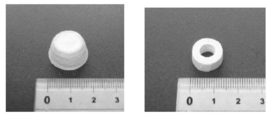
- FIG. 1 is a photograph of a zeolite bulk body (left) produced in Example 1 and a machined product (right) thereof.
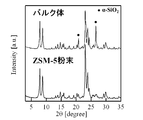
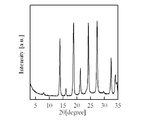
- FIG. 2 is an XRD pattern of the zeolite bulk body produced in Example 1.
- FIG. 3 is an SEM image of a cut surface of the zeolite bulk body produced in Example 1.
- FIG. 4 is a photograph of the zeolite bulk body produced in Example 2.
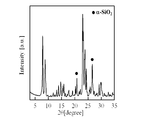
- FIG. 5 is an XRD pattern of the bulk zeolite produced in Example 2.
- FIG. 6 is a photograph of the product obtained in Reference Example 2.
- FIG. 7 is an XRD pattern of the product after the heat treatment of Reference Example 2.
- FIG. 8 is an SEM image of the product after heat treatment of Reference Example 2.
- FIG. 1 is a photograph of a zeolite bulk body (left) produced in Example 1 and a machined product (right) thereof.
- FIG. 2 is an XRD pattern of the zeolite bulk body produced in Example 1.
- FIG. 3 is an SEM
- FIG. 9 is a schematic diagram of an apparatus for separating and concentrating an aqueous ethanol solution by a vapor permeation method using the bulk machined product produced in Example 1.
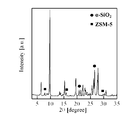
- FIG. 10 is an XRD pattern of the zeolite bulk body produced in Example 4.
- FIG. 11 is a photograph of a zeolite bulk body (left) and a machined product (right) produced in Example 5.
- FIG. 12 is an XRD pattern of the zeolite bulk body produced in Example 5.
- FIG. 13 is a photograph of the powdered zeolite (upper part) and the membranous zeolite (lower part) obtained in Comparative Example 1.
- FIG. 14 is a photograph of a brittle aggregate of zeolite powder obtained in Comparative Example 2.
- the reaction solution for hydrothermal synthesis of the present invention contains a silica source, an alkali metal component, water, and, if necessary, an alumina source and an organic template as a structure directing agent in a predetermined ratio.
- a silica source a silica source
- an alkali metal component a silica source
- an alumina source a substance used as an organic template, and an addition amount thereof.
- silica source As the silica source, a commercially available colloidal silica, fumed silica, tetraethyl orthosilicate (TEOS), amorphous silica, amorphous silica, or the like, which is the same as a known zeolite synthesis method, is used. be able to.
- Each silica source may be prepared by an alkoxide method or may be prepared from water glass (sodium silicate). Properties such as silica concentration, particle diameter and pH are not particularly limited.
- the amount of the alkali metal component in the reaction solution is usually 0. It is adjusted in the range of 1 to 0.8 mol, preferably 0.15 to 0.65 mol, more preferably 0.2 to 0.65 mol.
- the amount of the alkali metal component in the reaction solution is usually 0.3 to 3.0 mol as an alkali metal atom conversion amount per mol of silica in the silica source. , Preferably 0.4 to 2.8 mol, more preferably 0.5 to 2.5 mol.
- an alkali metal salt of aluminate such as sodium aluminate
- the remaining amount of the alkali metal component obtained by subtracting the amount of alkali metal contained therein from the predetermined amount is added as a raw material. That's fine.
- alkali metal component hydroxides, halides, etc. of alkali metals such as lithium, sodium and potassium can be used as in the known zeolite synthesis methods, but sodium hydroxide is preferred.
- (C) Alumina source When preparing a reaction solution for a hydrophobic zeolite bulk body, the amount of alumina source in the reaction solution is usually as alumina (Al 2 O 3 ) equivalent per mol of silica in the silica source. It is adjusted in the range of 0 to 0.05 mol, preferably 0 to 0.45 mol, more preferably 0 to 0.04 mol.
- the amount of the alumina source in the reaction solution is usually 0.05 to 0 in terms of alumina (Al 2 O 3 ) per mole of silica in the silica source. 0.7 mol, preferably 0.07 to 0.6 mol, more preferably 0.1 to 0.5 mol.
- the amount of the aluminum component is larger than the above range, even if a bulk body is obtained, it is not dense but brittle and tends to be inappropriate for machining.
- aluminate or nitrates, sulfates, halides, hydroxides, etc. of alumina can be used as in the known zeolite synthesis methods, but aluminates are preferred.
- alkali metal salts such as sodium aluminate
- organic amine salts such as quaternary ammonium aluminate and guanidine aluminate, among which sodium aluminate (NaAlO 2 ) is particularly preferable.
- an aluminum acid prepared by dissolving an aluminum compound such as aluminum powder or aluminum hydroxide in an alkaline aqueous solution (for example, an aqueous solution containing a quaternary ammonium aqueous solution such as tetramethylammonium hydroxide aqueous solution or an organic amine such as guanidine or trimethylamine).
- an aqueous salt solution may be used as a raw material.
- the amount of the organic template in the reaction solution is usually 0.02 to 0.15 mol per mol of silica in the silica source, preferably It is adjusted in the range of 0.03 to 0.13 mol, more preferably 0.04 to 0.12 mol.
- the amount of the organic template in the reaction solution is usually 0 to 0.1 mol, preferably 0 to 0.07 mol, per mol of silica in the silica source. More preferably, it is adjusted in the range of 0 to 0.05 mol.
- quaternary ammonium salts As the organic template, quaternary ammonium salts, crown ethers, alcohols and the like similar to the known zeolite synthesis methods can be used, and among them, quaternary ammonium salts are preferable. Further, among the quaternary ammonium salts, tetraalkylammonium salts are more preferable.
- the amount of water in the reaction solution is usually 10 to 45 mol, preferably 10 to 40 mol, per mol of silica in the silica source. Preferably, it is adjusted in the range of 10 to 35 mol.
- the amount of water in the reaction solution is usually 5 to 50 mol, preferably 5 to 47 mol, more preferably 5 to 5 mol per mol of silica in the silica source. It is adjusted in the range of 45 mol.
- the zeolite contained in the zeolite component (A) generally, when the amount of water is larger or smaller than the above range, voids are easily formed in the bulk body, and when the amount is particularly large, the bulk body is difficult to obtain.
- Ease of formation of the zeolite bulk body may vary depending on the mixing ratio of each component in the reaction solution, but those skilled in the art can prepare a reaction solution that can obtain a zeolite bulk body without undue trial and error. It is possible.
- a zeolite zeolite may be easily formed by adjusting the amount of water slightly within the above range.
- the amount of water used in the method for producing a zeolite bulk body of the present invention is significantly smaller than that in the case of synthesizing zeolite powder by a conventional method (about 1/4 to 1/10).
- the method for producing a zeolite bulk body according to the present invention comprises hydrothermal synthesis based on conditions suitable for hydrothermal synthesis reaction solutions for hydrophobic zeolite bulk bodies or hydrophilic zeolites containing the above-mentioned specific components. It is characterized by including a process, and an optional process may be further included as necessary. Appropriate conditions for the time and temperature of the hydrothermal synthesis reaction described below can be adjusted by those skilled in the art without undue trial and error.
- the reaction solution for hydrothermal synthesis is prepared in advance before the hydrothermal synthesis step. What is necessary is just to put a raw material into a suitable container and to stir and mix for a suitable time so that it may become the predetermined
- the reaction solution for hydrothermal synthesis is prepared as a solution (suspension) in which each raw material is uniformly suspended.
- the reaction solution is put in a pressure-resistant container (generally, the inner container is an autoclave made of Teflon (registered trademark)) in the heating apparatus, as in the hydrothermal synthesis process in the known zeolite production method. It is performed by heating at a predetermined temperature for a predetermined time. What is necessary is just to heat up in the heating apparatus beforehand to the temperature for a hydrothermal synthesis process.
- a pressure vessel a vessel having a desired size can be used, and a zeolite bulk body corresponding to the size of the pressure vessel (for example, a truncated cone shape having a bottom diameter of 1 cm or more) is obtained.
- the zeolite bulk is usually generated at the bottom of the pressure vessel.
- the treatment time of the hydrothermal synthesis step is preferably 1 to 10 days, and more preferably 3 to 8 days.
- the treatment time in the hydrothermal synthesis step is preferably 6 hours to 5 days, more preferably 12 hours to 4 days. If the treatment time is shorter than the above range, it is difficult to obtain a zeolite bulk body (becomes a powder or amorphous bulk body), and if necessary, the organic template (d) inside the amorphous body is also subjected to heat treatment performed after this step. May be carbonized without being removed.
- zeolites for example, analcime: structure code ANA
- ZSM-5 structure code MFI
- mordenite structure code MOR
- the treatment temperature in the hydrothermal synthesis step is preferably adjusted in the range of 175 to 225 ° C., more preferably 190 to 210 ° C.
- the treatment temperature in the hydrothermal synthesis step is preferably adjusted in the range of 80 to 200 ° C, more preferably 80 to 180 ° C. If the treatment temperature is lower than the above range, it is difficult to obtain a bulk material. Conversely, if the treatment temperature is high, a bulk material containing a large amount of zeolite having a structure other than the target zeolite may be obtained.
- a water washing step for removing alkali and a heat treatment step for removing the organic template are further performed as necessary. These steps may be performed in the same manner as the steps in a known zeolite production method.
- the zeolite bulk body of the present invention has machinability and is typically obtained by the above-described method for producing a zeolite bulk body of the present invention.
- the zeolite bulk body is mainly composed of the zeolite component (A).
- the amount of the zeolite component (A) in the zeolite bulk body is usually 50 to 100 mass%, preferably 60 to 100 mass%, more preferably 75-100 mass%.
- the zeolite bulk body may contain a silica component (B) composed of ⁇ -SiO 2 (crystal) and / or amorphous SiO 2 in addition to the zeolite component (A).
- the amount of silica component (B) in the zeolite bulk body (when the component includes both ⁇ -SiO 2 and amorphous SiO 2 ) is usually 50 to 0 mass%, preferably 40 to 0 mass% More preferably, it is 25 to 0 mass%.
- components other than the components (A) and (B) derived from the raw materials described above remain in the zeolite bulk body to some extent. It is also acceptable.
- Zeolite bulk has strength that allows machining without causing brittle fracture.
- the tensile strength measured according to JIS M 0303: 2000 (Tensile strength test method of rock) is used as an index
- the tensile strength of the zeolite bulk body is usually 3 MPa or more, preferably 4 MPa or more. is there.
- the bending strength of the zeolite bulk body is usually 3 MPa or more, preferably 4 MPa. That's it.
- the size of the bulk zeolite is not particularly limited as long as it can be distinguished from the conventional zeolite in the form of at least a fine powder or a thin film.
- the size of the zeolite bulk body is typically may vary depending on the size of the container used in the manufacturing method of the zeolite bulk body of the present invention described above, preferably 0.05 cm 3 or more, more preferably 0.1 cm 3 or more, More preferably, it is 0.5 cm 3 or more.
- the obtained bulk zeolite may not be solid, and some voids may be formed inside, but the required strength and performance can be ensured depending on the application. It is acceptable if it is within range.
- the zeolite bulk body can be either hydrophobic or hydrophilic depending on the crystal structure of the zeolite contained in the zeolite component (A).
- the terms hydrophobic and hydrophilic are relative expressions, but in the present invention, the zeolite bulk is “hydrophobic” when the Si / Al ratio of the zeolite component (A) is 3 or more.
- the zeolite bulk body is “hydrophilic” when the Si / Al ratio of the zeolite component (A) is 1 or more and less than 3 (usually, the Si / Al ratio of the zeolite is less than 1). None).
- the Si / Al ratio of the obtained zeolite bulk can be determined by a general method (fluorescence X-ray analysis, ICP emission analysis, etc.).
- Table 1 shows typical zeolites.
- Representative examples of hydrophobic zeolite include MFI (ZSM-5), MOR (mordenite) and the like, while representative examples of hydrophilic zeolite include LTA (A type), FAU (X type or Y type). ), CAN (cancrinite), and the like, but the crystal structure contained in the bulk zeolite of the present invention is not limited to both hydrophobic and hydrophilic.
- the crystal structure of zeolite may be occupied by only one kind, or may be occupied by two or more kinds.
- the crystal structure of the zeolite bulk body can be adjusted by the treatment time and treatment temperature of the hydrothermal synthesis step in the production method described above.
- the contents of the zeolite component (A) and the silica component (B) in the zeolite bulk body can be quantified from the X-ray diffraction (XRD) pattern of the crystal structure of the zeolite bulk body according to a conventional method.
- XRD X-ray diffraction
- the zeolite bulk body of the present invention has a molecular sieving ability, adsorption ability, ion exchange ability, solid acidity, etc., as in the case of conventional powdery or membrane-like zeolites and molded articles produced by adding a binder to them. It can be used for various applications utilizing the characteristics of zeolite.
- the use of the zeolite bulk material is not particularly limited, but as one of the typical applications, a liquid in which various molecules are mixed depending on properties such as the atoms constituting the zeolite and the size of the zeolite pores. Alternatively, it can be used as a separation / adsorption material for separating or adsorbing specific molecules from gas.
- hydrophobic zeolite can be used as a separator for organic substances such as alcohol.
- General bioethanol is recovered as an aqueous ethanol solution with a concentration of about 5 to 10 mass%.
- ethanol is allowed to pass through the zeolite pores while keeping the water molecules away from the zeolite pores.
- the aqueous ethanol solution can be concentrated. By repeating the concentration operation about 2 to 3 times, the ethanol concentration is increased to about 99 mass% that can be used as bioethanol fuel much more efficiently (with low energy) than known methods such as distillation. be able to.
- hydrophilic zeolite can adsorb water mixed in liquid or gas to the zeolite pores, it can be used as a dehydrating / drying material.
- Zeolite can be used as a catalyst for various reactions. For example, for the purpose of improving the octane number of gasoline, a reaction in which a long-chain alkane is shortened (catalytic decomposition) or a linear alkane is branched (catalytic reforming) is widely performed.
- a zeolitic catalyst for example, zeolite carrying Pt
- a zeolite-based catalyst can also be used for the isomerization of xylene obtained by converting p-xylene from other isomers (such as ethylbenzene and m-xylene).
- ZSM-5 in particular, has a pore size just as large as that of the target p-xylene, and therefore can selectively generate p-xylene while suppressing disproportionation.
- the zeolite bulk body can be processed into an arbitrary shape by machining such as cutting, drilling, and polishing depending on the application. For example, it can be machined into a tube having openings at both ends or one end for applications such as separation of mixed solutions and gas separation. It can also be machined into a disk shape for applications such as membrane zeolite supports.
- Example 1 Colloidal silica (formula 60.09, purity 40%, balance is water, Nissan Chemical Industries), sodium hydroxide (formula 40.00, purity 96%, Nacalai Tesque), sodium aluminate (formula 81.97, Purity 69.5%, Kanto Chemical), TPAOH (formula weight 203.36, 1M in H 2 O, ALDRICH) and ultrapure water, SiO 2 : 0.3NaOH: 0.016Al 2 O 3 : 0.066TPAOH: 22.5H 2 The mixture was mixed at a composition ratio of O and stirred with a stirrer for 24 hours to obtain a reaction solution.
- the Si / Al ratio was estimated to be about 25 by XRD and fluorescent X-ray.
- Rigaku RINT2100 / PC (CuK ⁇ ray, ⁇ -2 ⁇ , timed measurement method) was used for XRD, and Rigaku ZSX Primus II-R1 was used for fluorescent X-ray.
- the photograph of the bulk body obtained in FIG. 1 (left) is shown.
- FIG. 2 shows an XRD pattern of the bulk body
- FIG. 3 shows an SEM image of the bulk body.
- the tensile strength of the bulk body was measured in accordance with JIS M 0303 (Method of testing tensile strength of rocks).
- JIS M 0303 Method of testing tensile strength of rocks.
- “Autograph DCS-R-10TS” Shiadzu Corporation
- the crosshead speed was 0.5 mm / min.
- the tensile strength was 4 MPa.
- the bending strength of the bulk body was measured according to JIS R 1601 (room temperature bending strength test method for fine ceramics). “Autograph EZ-Test” (Shimadzu Corporation) was used for the measurement, and the crosshead speed was 0.5 mm / min. As a result, the bending strength was 5 MPa.
- Example 2 200 ml of the same reaction solution as in Example 1 was placed in a 350 ml Teflon container, hydrothermally synthesized at 240 ° C. for 1 hour, and then hydrothermally synthesized at 200 ° C. for 5 days.
- FIG. 4 shows a photograph of the obtained bulk body
- FIG. 5 shows an XRD pattern.
- Example 1 About Example 1, when the composition ratio of H 2 O in the reaction solution was changed from 22.5 to 100, 50, 10, the bulk body was not generated in the case of 100, but the bulk body was generated in the case of 50. There were large pores, and in the case of 10, a bulk body was formed but there were many voids.
- Example 1 was treated in the same manner except that the hydrothermal synthesis temperature was changed to 190 ° C. and the time was changed to one of 1, 3 hours, 12 hours, 24 hours, 3 days, 7 days, and 9 days. .
- FIG. 6 shows photographs of the products (after hydrothermal synthesis and after heat treatment) obtained by each treatment.
- FIG. 7 shows the XRD of the product after each heat treatment.
- FIG. 8 the SEM image of the product after each heat processing is shown.
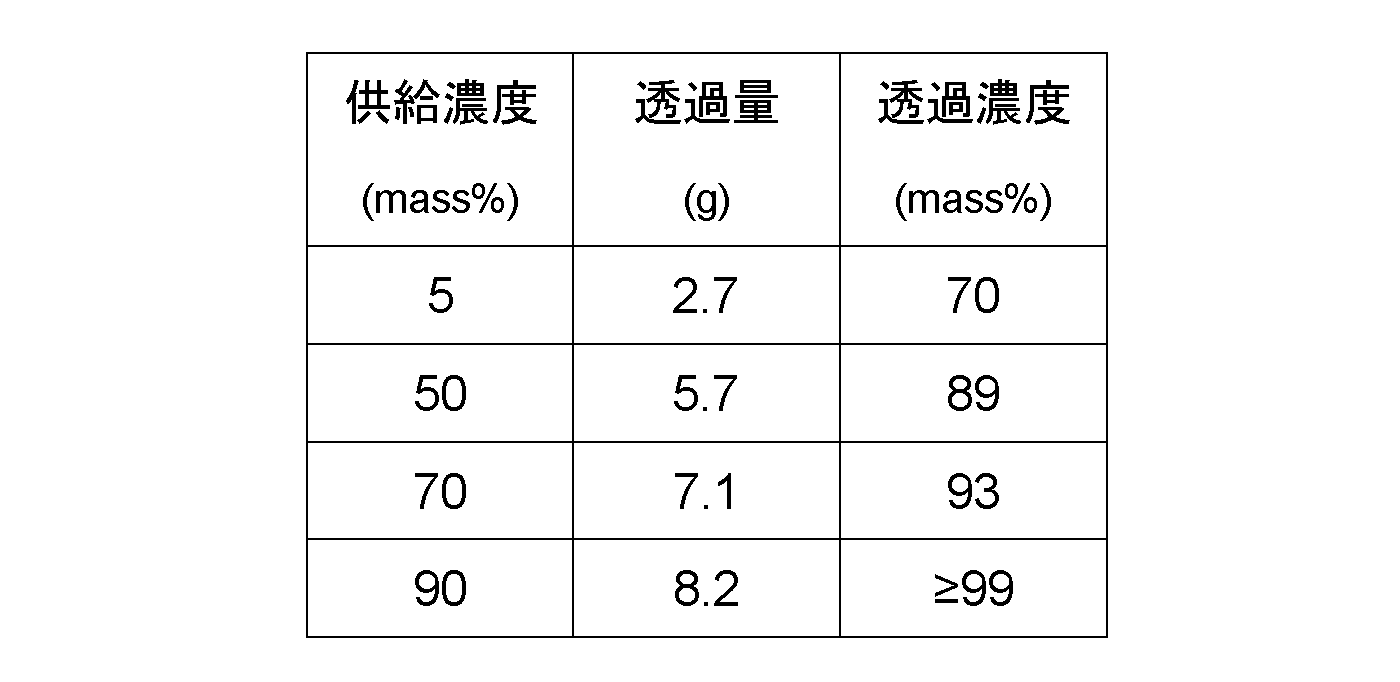
- Example 3 The bulk body produced in Example 1 was processed into a diameter of 10 mm and a thickness of 3 mm, and an ethanol aqueous solution concentration experiment was performed using the vapor permeation method (see FIG. 9). 200 ml of an ethanol aqueous solution of 5 mass%, 50 mass%, 70 mass%, and 90 mass% was heated to 40 ° C. and sucked with a vacuum pump for 30 minutes. The permeated solution was aggregated with a cold trap, and the ethanol concentration in the aggregate was measured with a gas chromatograph (Shimadzu Corporation, GC14A) equipped with FID. Table 2 shows the results.
- a gas chromatograph Shiadzu Corporation, GC14A
- ethanol aqueous solution In the 5 mass% ethanol aqueous solution, 2.7 g of an ethanol aqueous solution having a concentration of about 70 mass% permeated. In a 50 mass% ethanol aqueous solution, 5.7 g of an ethanol aqueous solution having a concentration of about 89 mass% permeated. In the 70 mass% ethanol aqueous solution, 7.1 g of an ethanol aqueous solution having a concentration of about 93 mass% permeated. In the 90 mass% ethanol aqueous solution, 8.2 g of ethanol aqueous solution having a concentration of 99 mass% or more permeated.
- Example 4 Sodium hydroxide (formula 40.00, purity 96%, Nacalai Tesque), sodium aluminate (formula 81.97, purity 69.5%, Kanto Chemical), TPAOH (formula 203.36, 1M in H 2 O, ALDRICH) and ultrapure water were mixed at a composition ratio of SiO 2 : 0.55NaOH: 0.025Al 2 O 3 : 0.09TPAOH: 27.3H 2 O and stirred with a stirrer for 24 hours to obtain a reaction solution. Thereafter, 20 ml was placed in a 30 ml Teflon container, and hydrothermal synthesis was performed at a synthesis temperature of 200 ° C. for 5 days. Then, in order to remove an alkali content, it wash
- FIG. 10 shows the XRD pattern of the bulk body. .
- Example 5 Colloidal silica (formula 60.09, purity 40%, balance is water, Nissan Chemical Industries), sodium hydroxide (formula 40.00, purity 96%, Nacalai Tesque), sodium aluminate (formula 81.97, (Purity 69.5%, Kanto Chemical) and ultrapure water were mixed at a composition ratio of SiO 2 : 1.3NaOH: 0.2Al 2 O 3 : 7.8H 2 O and stirred for 24 hours with a stirrer. After preparing the solution, 20 ml was put into a 30 ml Teflon container, and hydrothermal synthesis was performed at a synthesis temperature of 185 ° C. for 2 days.
- FIG. 11 shows a photograph of this machined product.
- FIG. 12 shows the XRD pattern of the bulk body. Further, the bending strength in accordance with JIS R 1601 (room temperature bending strength test method for fine ceramics) was measured under the same conditions as in Example 1. As a result, the bending strength was 4 MPa.
- Example 11 of Patent Document 6 Japanese Patent Laid-Open No. 7-89716
- composition of SiO 2 / Al 2 O 3 20.0
- crystallization agent / SiO 2 0.08
- crystallization agent tetrapropylammonium bromide
- Na 2 O / SiO 2 0.296
- H 2 O / SiO 2 20.0
- the temperature was raised to 180 ° C. at a constant rate of 2 ° C./min and held at that temperature for 36 hours.
- the obtained zeolite was identified as a mixture of mordenite and Na-P zeolite and was not ZSM-5. Moreover, a zeolite bulk body that can be machined is not obtained, and a powdery zeolite (upper part of FIG. 13) and a thin film of zeolite particles (lower part of FIG. 13) are obtained in a Teflon reaction vessel. It was. The obtained zeolite membrane was far from a dense membrane and was brittle with many holes in the surface. The follow-up experiment was performed twice, but the results were the same for both.
Landscapes
- Chemical & Material Sciences (AREA)
- Life Sciences & Earth Sciences (AREA)
- General Life Sciences & Earth Sciences (AREA)
- Geology (AREA)
- Organic Chemistry (AREA)
- Engineering & Computer Science (AREA)
- Chemical Kinetics & Catalysis (AREA)
- Materials Engineering (AREA)
- Inorganic Chemistry (AREA)
- Silicates, Zeolites, And Molecular Sieves (AREA)
Abstract
本発明に係る、バインダー不使用の、機械加工性を有するゼオライトバルク体は、50~100mass%のゼオライト成分(A)と、50~0mass%のα-SiO2および/または非晶質SiO2からなるシリカ成分(B)とから構成され、引張強度が3MPa以上または曲げ強度が3MPa以上であることを特徴とする。このようなゼオライトバルク体は、疎水性(Si/Al比が3以上)とすることも、親水性(Si/Al比が1以上3未満)とすることもでき、シリカ源(a)と、それぞれ該シリカ源中のシリカ(SiO2)1モルあたり、アルカリ金属原子換算量として0.1~3.0モルのアルカリ金属成分(b)と、アルミナ(Al2O3)換算量として0~0.7モルのアルミナ源(c)と、0~0.15モルの有機テンプレート(d)と、5~50モルの水(e)とを含有する水熱合成用反応溶液を、80~225℃の温度で6時間~10日間水熱合成処理することにより製造することができる。
Description
本発明は、機械加工が可能なゼオライトバルク体およびその製造方法に関する。より詳しくは、本発明は、バインダー不使用で機械加工が可能な強度を有するゼオライトバルク体、および水熱加工処理を利用したその簡便な製造方法に関する。
工業材料および環境材料として有用なゼオライトは、水熱合成法により一般に粉末状固体として得られるが、機能をより高度に利用するため膜状ゼオライトやバルク状ゼオライトの作製に関する研究が盛んに行われている。
ゼオライトをバルク体として利用する場合、焼結法によりゼオライト粉末をバルク体に成型することは困難であるので、従来、成型のために無機系バインダー(無機酸化物、粘土等)または有機系バインダー(セルロース誘導体等、増粘剤)が用いられていた。たとえば、特許文献1(特開2000-126602号公報)には、ゼオライト粉体をシリカ、アルミナ、チタニア等のバインダーを用いてペレット状に成型した後、このペレットにパラジウムを均一に高分散担持させるために、アンモニア水で前処理を行うことと、高温熱風の迅速乾燥で後処理を行うことを必須とする、パラジウム担持ゼオライト成型触媒の製造方法が開示されている。
しかしながら、そのようなバインダーを利用する方法により得られるバルク体は、ゼオライトの微細な構造がバインダーに埋もれ、本来の吸着やイオン交換能が機能しなくなり、性能が大きく損なわれる可能性がある上、ゼオライトの含有率も低下してしまう。また、有機系バインダーを用いた場合には高温で利用することができず、酸やアルカリにも弱い。
それに対し、水熱処理を利用することにより、上記のような問題のあるバインダーを使用することなく、ゼオライトバルク体を製造する方法も提案されている。
たとえば、特許文献2(特開平6-183725号公報)には、合成NaX型ゼオライト粉末とカオリン型粘土と水酸化ナトリウムとを混合し、成形し、得られた成形体を乾燥し、焼成し、水酸化ナトリウムと珪酸ナトリウムとの混合水溶液と接触させることによってバインダーレスX型ゼオライト成形体を製造するにあたり、該カオリン型粘土として平均粒子径1.5μm以上のものを用いることにより、X型ゼオライト含有量が98wt%以上のバインダーレスX型ゼオライト成形体を製造する方法が開示されている。
特許文献3には、(X型またはA型の、粉末状の)ゼオライト100重量部に対し、カオリン系粘土20~35重量部と、水溶液がアルカリ性で高水溶性の無機系分散剤(縮合リン酸塩、アルミン酸塩等)4~10重量部又は/及びセルロース誘導体0.5~5重量部との混合物から転動造粒によって成形したゼオライトビーズ成形体を焼成した後、水酸化ナトリウム水溶液と接触させることによりバインダーレス化し、活性化することにより、ゼオライト含有率が95%以上であり、かつ、全粒子の内、粒径が1.7mm以上である粒子の耐圧強度の平均値が6kgf以上である、バインダーレスゼオライトビーズ成形体を製造する方法が開示されている。
上記の特許文献2および3に記載の方法では、ゼオライト粉体とカオリン型粘土との混合物を焼成して焼結体とした後に、アルカリ水溶液中で水熱処理によりカオリン型粘土をゼオライトに転換することで、バインダーレスのゼオライト成形体を作製している。しかしながら、これらの方法は、原料の混合および成型工程、焼成工程、水酸化ナトリウム水溶液等を用いた水熱処理工程などを含む複雑なものである。
また、特許文献3には、当該文献に記載の方法により、乾燥脱水剤用途に要求される強い強度物性(耐圧強度)を有するゼオライトビーズ成型体が製造できることは記載されているが、このゼオライトビーズ成型体が脆性破壊を生じない機械加工が可能な物性を有するものであることは記載されていない。特に、[0035]段落には、6kgf以上の成型体強度を得るためには、1.7~2.4mmの範囲が90%以上のゼオライトビーズ成形体であることが好ましい旨が記載されており、これより大きなサイズのバルク体で機械加工が可能な強度を有するものやその製造方法は、当該文献には記載されていない。特許文献2には、当該文献に記載の方法により得られるゼオライト成型体の強度物性については、何ら具体的に記載されていない。
特許文献4(特開2001-58817号公報)には、アルミニウム成分とアルカリ金属成分とテトラアルキルアンモニウム成分とを含む原料物質をシリカ成型体に担持することにより得られる、式Si1AlxMy(SDA)z(ただし、式中、Mはアルカリ金属、SDAはテトラアルキルアンモニウムを表し、xは0.0001~0.5、yは0.0001~1、zは0.001~1の範囲を表す。)で表されるアルミノシリケート前駆体を、飽和水蒸気と接触させることにより、ZSM-5型結晶構造を有し、該結晶構造を構成するケイ素とアルミニウムとの組成比(原子比)が、ケイ素1に対して、アルミニウムが0.0001~0.5の範囲であり、前記結晶格子外のアルミニウムの含有量が前記成型体に含まれる全アルミニウムの3%以下である、バインダーレス結晶性アルミノシリケート成型体を製造する方法が開示されている。
特許文献5(特開2009-190915号公報)には、アルカリ金属成分と4級アンモニウム塩とを含み、必要に応じてさらにアルミニウム成分を含む原料成分を担持させたシリカ成型体に水蒸気に接触させることによりバインダーレスゼオライト成型体を製造する際に、シリカ成型体として細孔容積が0.3~0.55cc/gであるものを使用し、更に4級アンモニウム塩の担持量がシリカ成型体に含まれるケイ素に対して0.001~0.02モルの範囲となるように調整することにより、機械強度が20N以上である、ZMS-5結晶構造を有するバインダーレスゼオライト成型体を製造する方法が開示されている。
上記の特許文献4および5に記載の方法では、シリカ成型体をベースとして、これに他の原料成分を担持させたものを水熱合成処理して、バインダーレスゼオライト成形体を作製している。得られるゼオライト成型体の機械的強度は、原料として用いたシリカ成型体の機械的強度に依存するが(たとえば特許文献5[0023]段落参照)、製造工程を経ることで機械的強度が低下することは避けがたい。そして、ゼオライト成型体を触媒として反応器に充填したときに破壊などの問題が起きない一定の機械的強度を有するゼオライト成型体が得られることは記載されているが(たとえば特許文献5[0037]段落参照)、そのゼオライト成型体が脆性破壊を生じない機械加工が可能な物性を有するものであることは記載されていない。
特許文献6(特開平7-89716号公報)には、シリカ源としてのコロイダルシリカ、アルミナ源、アルカリ金属源、結晶化剤としてのテトラプロピルアンモニウム塩および水からなる水性混合物を耐圧容器中に封入し、0.1~5℃/分の昇温速度で水熱合成温度迄昇温させ、160~200℃の水熱合成温度に保持することを特徴とする、合成されたゼオライトが膜状ZSM-5である膜状合成ゼオライトの製造法が開示されている。しかしながら、この文献に記載の方法により得られるゼオライトはあくまでも膜状のものであり、機械加工が可能な強度を有するゼオライトバルク体が得られること、あるいはそのようなゼオライトバルク体が得られる水熱合成用の反応溶液が調製可能であることは記載も示唆もされていない。なお、後記比較例として示す追試結果から分かるように、特許文献6の実施例11により得られる「膜状」のゼオライトおよび比較例2により得られる「塊状」のゼオライトは、いずれも機械加工性を有さない、本発明のゼオライトバルク体には該当しない物質である。
脆性破壊を生じない機械加工が可能な強度を有するゼオライトバルク体が得られれば、ゼオライトの用途をより一層拡充させることが可能であるが、そのような物性を有し、かつバインダーを用いることなくゼオライト本来の機能を保持したままの比較的大型のバルク体はこれまでに得られていない。本発明は、機械加工が可能な強度を有する、バインダー不使用の(バインダーレス)ゼオライトバルク体、およびそのようなゼオライトバルク体の極力簡便な製造方法を提供することを課題とする。
発明者らは、水、シリカ源、アルミナ源、アルカリ金属成分、および構造規定剤としての有機テンプレートを所定の比率で含有する反応溶液を用いることにより、適切な反応温度および反応時間条件下における水熱合成処理を利用する簡明な製造方法でありながら、脆性破壊を生じることなく切削加工、ドリル加工、研磨加工等の機械加工ができる強度を有する、粉状や膜状ではなく比較的大型のバルク状のゼオライトを製造することができることを見いだした。さらに、上記の製造方法では、上記反応溶液中のアルミナ源を比較的少量とすることにより疎水性のゼオライトバルク体を製造することができるのみならず、上記反応溶液中に有機テンプレートを配合せず、アルミナ源を比較的多量とすることにより親水性のゼオライトバルク体を製造できることも明らかとなり、本発明を完成させるに至った。
すなわち、本発明は下記の事項を包含する。
[1] 50~100mass%のゼオライト成分(A)と、50~0mass%のα-SiO2および/または非晶質SiO2からなるシリカ成分(B)とから構成され、引張強度が3MPa以上または曲げ強度が3MPa以上であることを特徴とする、機械加工性を有するゼオライトバルク体。
[2] 前記ゼオライト成分(A)が60~100mass%であり、前記シリカ成分(B)が40~0mass%である、[1]に記載のゼオライトバルク体。
[3] 前記引張強度が4MPa以上または曲げ強度が4MPa以上である、[1]または[2]に記載のゼオライトバルク体。
[4] 体積が0.05cm3以上である、[1]~[3]のいずれかに記載のゼオライトバルク体。
[5] 前記ゼオライト成分(A)が、Si/Al比が3以上の疎水性である、[1]~[4]のいずれかに記載のゼオライトバルク体。
[6] 前記ゼオライト成分(A)が、Si/Al比が1以上3未満の親水性である、[1]~[4]のいずれかに記載のゼオライトバルク体。
[7] シリカ源(a)と、それぞれ該シリカ源中のシリカ(SiO2)1モルあたり、アルカリ金属原子換算量として0.1~0.8モルのアルカリ金属成分(b)と、アルミナ(Al2O3)換算量として0~0.05モルのアルミナ源(c)と、0.02~0.15モルの有機テンプレート(d)と、10~45モルの水(e)とを含有することを特徴とする、[5]に記載のゼオライトバルク体を製造するための水熱合成用反応溶液。
[8] シリカ源(a)と、それぞれ該シリカ源中のシリカ(SiO2)1モルあたり、アルカリ金属原子換算量として0.3~3.0モルのアルカリ金属成分(b)と、アルミナ(Al2O3)換算量として0.05~0.7モルのアルミナ源(c)と、0~0.1モルの有機テンプレート(d)と、5~50モルの水(e)とを含有することを特徴とする、[6]に記載のゼオライトバルク体を製造するための水熱合成用反応溶液。
[9] [7]に記載の水熱合成用反応溶液を175~225℃の温度で水熱合成処理する工程を含むことを特徴とする、[5]に記載のゼオライトバルク体の製造方法。
[10] 前記水熱合成処理の時間が1~10日間である、[9]に記載の製造方法。
[11] [8]に記載の水熱合成用反応溶液を80~200℃の温度で水熱合成処理する工程を含むことを特徴とする、[6]に記載のゼオライトバルク体の製造方法。
[12] 前記水熱合成処理の時間が6時間~5日間である、[11]に記載の製造方法。
[13] [1]~[6]のいずれかに記載のゼオライトバルク体の機械加工品。
[14] [1]~[6]のいずれかに記載のゼオライトバルク体または[13]に記載のその機械加工品からなる吸着分離剤。
[15] [1]~[6]のいずれかに記載のゼオライトバルク体または[13]に記載のその機械加工品からなる触媒。
[1] 50~100mass%のゼオライト成分(A)と、50~0mass%のα-SiO2および/または非晶質SiO2からなるシリカ成分(B)とから構成され、引張強度が3MPa以上または曲げ強度が3MPa以上であることを特徴とする、機械加工性を有するゼオライトバルク体。
[2] 前記ゼオライト成分(A)が60~100mass%であり、前記シリカ成分(B)が40~0mass%である、[1]に記載のゼオライトバルク体。
[3] 前記引張強度が4MPa以上または曲げ強度が4MPa以上である、[1]または[2]に記載のゼオライトバルク体。
[4] 体積が0.05cm3以上である、[1]~[3]のいずれかに記載のゼオライトバルク体。
[5] 前記ゼオライト成分(A)が、Si/Al比が3以上の疎水性である、[1]~[4]のいずれかに記載のゼオライトバルク体。
[6] 前記ゼオライト成分(A)が、Si/Al比が1以上3未満の親水性である、[1]~[4]のいずれかに記載のゼオライトバルク体。
[7] シリカ源(a)と、それぞれ該シリカ源中のシリカ(SiO2)1モルあたり、アルカリ金属原子換算量として0.1~0.8モルのアルカリ金属成分(b)と、アルミナ(Al2O3)換算量として0~0.05モルのアルミナ源(c)と、0.02~0.15モルの有機テンプレート(d)と、10~45モルの水(e)とを含有することを特徴とする、[5]に記載のゼオライトバルク体を製造するための水熱合成用反応溶液。
[8] シリカ源(a)と、それぞれ該シリカ源中のシリカ(SiO2)1モルあたり、アルカリ金属原子換算量として0.3~3.0モルのアルカリ金属成分(b)と、アルミナ(Al2O3)換算量として0.05~0.7モルのアルミナ源(c)と、0~0.1モルの有機テンプレート(d)と、5~50モルの水(e)とを含有することを特徴とする、[6]に記載のゼオライトバルク体を製造するための水熱合成用反応溶液。
[9] [7]に記載の水熱合成用反応溶液を175~225℃の温度で水熱合成処理する工程を含むことを特徴とする、[5]に記載のゼオライトバルク体の製造方法。
[10] 前記水熱合成処理の時間が1~10日間である、[9]に記載の製造方法。
[11] [8]に記載の水熱合成用反応溶液を80~200℃の温度で水熱合成処理する工程を含むことを特徴とする、[6]に記載のゼオライトバルク体の製造方法。
[12] 前記水熱合成処理の時間が6時間~5日間である、[11]に記載の製造方法。
[13] [1]~[6]のいずれかに記載のゼオライトバルク体の機械加工品。
[14] [1]~[6]のいずれかに記載のゼオライトバルク体または[13]に記載のその機械加工品からなる吸着分離剤。
[15] [1]~[6]のいずれかに記載のゼオライトバルク体または[13]に記載のその機械加工品からなる触媒。
なお、本発明の反応溶液が「シリカ源中のシリカ1モルあたり、アルミナ換算量として0モルのアルミナ源(c)を含有する」または「シリカ源中のシリカ1モルあたり、0モルの有機テンプレート(d)を含有する」ことは、それぞれの反応溶液が実質的にアルミナ源(c)または有機テンプレート(d)を含有しないことを意味する。すなわち、アルミナ源(c)の含有量の下限値として「0」が規定されている疎水性ゼオライトバルク体用の反応溶液において、アルミナ源(c)は必須成分ではなく任意成分であり、また有機テンプレート(d)の含有量の下限値として「0」が規定されている親水性ゼオライトバルク体用の反応溶液において、有機テンプレート(d)は必須成分ではなく任意成分である。
本発明により、機械加工により任意の形態に加工することができる比較的大型のゼオライトバルク体を、水熱処理加工を利用した簡便な方法で効率的に製造することができるようになる。得られるゼオライトバルク体には、有機バインダーのようなゼオライトの多孔質性を損なう物質は全く用いられていないので、ゼオライトの多孔質性等の特性を利用する各種の用途における高い性能が期待される。
このようなゼオライトバルク体は、必要に応じて機械加工により適切な形状に成形した上で、たとえば膜の支持体や触媒担体等として利用することができる。一例として、膜状ゼオライトの優れた支持体として利用することが可能である。ゼオライトの有する吸着、分子ふるい、イオン交換、触媒等の機能をより高度に利用するために、その膜化が注目されている。ゼオライトを膜化する場合、膜自体では強度が十分でないので、従来、アルミナ、ジルコニア、ステンレスなどの多孔質体である支持体上に形成させる場合が多い。しかし、それらの支持体とゼオライト膜との熱膨張などの性質の違いから割れなどが発生しやすいため、ゼオライト膜を高温下では使用することができない。また、それらの支持体はゼオライトとは異なる物質であるため膜との密着性が悪く、耐久性にも不安がある。支持体の成分が膜作製時に溶け出し、触媒作用、分子ふるい、吸着などゼオライトが持つ本来の機能に悪影響を及ぼすおそれもある。これに対し、本発明のゼオライトバルク体から形成された支持体は、熱膨張などの性質が膜と等しいので、膨張の違いによる割れを防ぐことができる。その上、支持体と膜の成分が同じであるので、支持体上に膜を合成する際に支持体から溶け出した成分がゼオライト膜の性能を悪化させることが無く、支持体と一体化した耐熱性のゼオライト膜を作製することができる。
-水熱合成用反応溶液-
本発明の水熱合成用反応溶液は、シリカ源、アルカリ金属成分、水、必要に応じてアルミナ源および構造規定剤としての有機テンプレートを所定の割合で含有する。ゼオライトバルク体に含まれるゼオライト成分(A)を疎水性のものとするか親水性のものとするかに応じて、上記各成分の配合割合を適切に調整することができる。このような疎水性ゼオライトバルク体用および親水性ゼオライトバルク体用の反応溶液を、それぞれに適した合成温度、合成時間で水熱合成をすることにより、疎水性および親水性のゼオライトバルク体を製造することができる。以下に、水熱合成用反応溶液に添加する(a)シリカ源、(b)アルカリ金属成分、(c)アルミナ源、(d)有機テンプレートとして用いる物質およびその添加量などについて詳細に述べる。
本発明の水熱合成用反応溶液は、シリカ源、アルカリ金属成分、水、必要に応じてアルミナ源および構造規定剤としての有機テンプレートを所定の割合で含有する。ゼオライトバルク体に含まれるゼオライト成分(A)を疎水性のものとするか親水性のものとするかに応じて、上記各成分の配合割合を適切に調整することができる。このような疎水性ゼオライトバルク体用および親水性ゼオライトバルク体用の反応溶液を、それぞれに適した合成温度、合成時間で水熱合成をすることにより、疎水性および親水性のゼオライトバルク体を製造することができる。以下に、水熱合成用反応溶液に添加する(a)シリカ源、(b)アルカリ金属成分、(c)アルミナ源、(d)有機テンプレートとして用いる物質およびその添加量などについて詳細に述べる。
(a)シリカ源
シリカ源は、市販されているコロイダルシリカ、ヒュームドシリカ、オルトケイ酸テトラエチル(TEOS)、無定形シリカ、アモルファスシリカなど、公知のゼオライトの合成法と同様の一般的なものを用いることができる。上記各シリカ源は、アルコキシド法により調製されたものであっても、水ガラス(珪酸ナトリウム)から調製されたものであってもよい。シリカの濃度、粒子径、pHなどの性状は特に限定されるものではない。
シリカ源は、市販されているコロイダルシリカ、ヒュームドシリカ、オルトケイ酸テトラエチル(TEOS)、無定形シリカ、アモルファスシリカなど、公知のゼオライトの合成法と同様の一般的なものを用いることができる。上記各シリカ源は、アルコキシド法により調製されたものであっても、水ガラス(珪酸ナトリウム)から調製されたものであってもよい。シリカの濃度、粒子径、pHなどの性状は特に限定されるものではない。
(b)アルカリ金属成分
疎水性ゼオライトバルク体用の反応溶液を調製する場合、反応溶液中のアルカリ金属成分の量は、シリカ源中のシリカ1モルあたり、アルカリ金属原子換算量として、通常0.1~0.8モル、好ましくは0.15~0.65モル、より好ましくは0.2~0.65モルの範囲で調整される。
疎水性ゼオライトバルク体用の反応溶液を調製する場合、反応溶液中のアルカリ金属成分の量は、シリカ源中のシリカ1モルあたり、アルカリ金属原子換算量として、通常0.1~0.8モル、好ましくは0.15~0.65モル、より好ましくは0.2~0.65モルの範囲で調整される。
親水性ゼオライトバルク体用の反応溶液を調製する場合、反応溶液中のアルカリ金属成分の量は、シリカ源中のシリカ1モルあたり、アルカリ金属原子換算量として、通常0.3~3.0モル、好ましくは0.4~2.8モル、より好ましくは0.5~2.5モルの範囲で調整される。
なお、前記アルミニウム成分としてアルミン酸のアルカリ金属塩(アルミン酸ナトリウム等)を用いる場合は、それに含まれるアルカリ金属の量を上記所定の量から差し引いた残りの量のアルカリ金属成分を原料として添加すればよい。
アルカリ金属成分の原料としては、公知のゼオライトの合成法と同様に、リチウム、ナトリウム、カリウム等のアルカリ金属の、水酸化物、ハロゲン化物等を用いることができるが、水酸化ナトリウムが好ましい。
(c)アルミナ源
疎水性ゼオライトバルク体用の反応溶液を調製する場合、反応溶液中のアルミナ源の量は、シリカ源中のシリカ1モルあたり、アルミナ(Al2O3)換算量として、通常0~0.05モル、好ましくは0~0.45モル、より好ましくは0~0.04モルの範囲で調整される。
疎水性ゼオライトバルク体用の反応溶液を調製する場合、反応溶液中のアルミナ源の量は、シリカ源中のシリカ1モルあたり、アルミナ(Al2O3)換算量として、通常0~0.05モル、好ましくは0~0.45モル、より好ましくは0~0.04モルの範囲で調整される。
親水性ゼオライトバルク体用の反応溶液を調製する場合、反応溶液中のアルミナ源の量は、シリカ源中のシリカ1モルあたり、アルミナ(Al2O3)換算量として、通常0.05~0.7モル、好ましくは0.07~0.6モル、より好ましくは0.1~0.5モルの範囲で調整される。
アルミニウム成分の量が上記範囲よりも多いと、バルク体は得られても、緻密でなく脆く、機械加工に不適切なものとなる傾向にある。
アルミナ源としては、公知のゼオライトの合成法と同様に、アルミン酸塩またはアルミニウムの硝酸塩、硫酸塩、ハロゲン化物、水酸化物などを用いることができるが、アルミン酸塩が好ましい。たとえば、アルミン酸ナトリウムなどのアルカリ金属塩、アルミン酸第四級アンモニウム、アルミン酸グアニジンなどの有機アミン塩が挙げられるが、中でもアルミン酸ナトリウム(NaAlO2)が特に好ましい。また、アルミニウム粉末または水酸化アルミニウムなどのアルミニウム化合物をアルカリ水溶液(たとえばテトラメチルアンモニウムヒドロキシド水溶液などの第四級アンモニウム水溶液、グアニジン、トリメチルアミンなどの有機アミンを含む水溶液)に溶解させて調製したアルミン酸塩水溶液を原料として用いてもよい。
(d)有機テンプレート
疎水性ゼオライトバルク体用の反応溶液を調製する場合、反応溶液中の有機テンプレートの量は、シリカ源中のシリカ1モルあたり、通常0.02~0.15モル、好ましくは0.03~0.13モル、より好ましくは0.04~0.12モルの範囲で調整される。
疎水性ゼオライトバルク体用の反応溶液を調製する場合、反応溶液中の有機テンプレートの量は、シリカ源中のシリカ1モルあたり、通常0.02~0.15モル、好ましくは0.03~0.13モル、より好ましくは0.04~0.12モルの範囲で調整される。
親水性ゼオライトバルク体用の反応溶液を調製する場合、反応溶液中の有機テンプレートの量は、シリカ源中のシリカ1モルあたり、通常0~0.1モル、好ましくは0~0.07モル、より好ましくは0~0.05モルの範囲で調整される。
有機テンプレートには4級アンモニウム塩やクラウンエーテル、アルコールなど、公知のゼオライトの合成法と同様のものを用いることができるが、その中でも4級アンモニウム塩が好ましい。さらに、4級アンモニウム塩の中でもテトラアルキルアンモニウム塩がより好ましい。たとえば、テトラメチルアンモニウム、テトラエチルアンモニウム、テトラ-n-プロピルアンモニウム、テトライソプロピルアンモニウム、テトラ-n-ブチルアンモニウム、テトラ-n-ペンチルアンモニウム、トリエチルメチルアンモニウム、トリエチル-n-プロピルアンモニウム、トリ-n-プロピルメチルアンモニウム、トリ-n-ブチルメチルアンモニウム等のハロゲン化物(たとえば臭化物)、水酸化物が挙げられるが、中でもテトラ-n-プロピルアンモニウムヒドロキシド(TPAOH)が疎水性のゼオライト等を効率よく合成できる点で特に好ましい。
(e)水
疎水性ゼオライトバルク体用の反応溶液を調製する場合、反応溶液中の水の量は、シリカ源中のシリカ1モルあたり、通常10~45モル、好ましくは10~40モル、より好ましくは10~35モルの範囲で調整される。
疎水性ゼオライトバルク体用の反応溶液を調製する場合、反応溶液中の水の量は、シリカ源中のシリカ1モルあたり、通常10~45モル、好ましくは10~40モル、より好ましくは10~35モルの範囲で調整される。
親水性ゼオライトバルク体用の反応溶液を調製する場合、反応溶液中の水の量は、シリカ源中のシリカ1モルあたり、通常5~50モル、好ましくは5~47モル、より好ましくは5~45モルの範囲で調整される。
ゼオライト成分(A)に含まれるゼオライトの構造によらず全般的に、水の量が上記範囲よりも多いまたは少ないとバルク体に空隙ができやすくなり、特に多いとバルク体が得られにくくなる。
反応溶液中の各成分の配合比によってゼオライトバルク体の生成のしやすさは変動しうるが、当業者であれば過度の試行錯誤を要することなく、ゼオライトバルク体が得られる反応溶液を調製することが可能である。たとえば、水の量を上記範囲内で少なめに調節することによりゼオライトバルク体が生成しやすくなる場合がある。なお、本発明のゼオライトバルク体の製造方法に用いる水の量は、従来の手法によりゼオライト粉末を合成する場合よりも大幅に少ない(約1/4~1/10)。
-製造方法-
本発明によるゼオライトバルク体の製造方法は、上記特定の成分を含有する疎水性ゼオライトバルク体用または親水性ゼオライト用の水熱合成用反応溶液を用いた、それぞれに適した条件に基づく水熱合成工程を含むことを特徴とし、必要に応じて、さらに任意の工程を含んでいてもよい。後述するような水熱合成反応の時間および温度の適切な条件は、当業者であれば過度の試行錯誤を要することなく調節することが可能である。
本発明によるゼオライトバルク体の製造方法は、上記特定の成分を含有する疎水性ゼオライトバルク体用または親水性ゼオライト用の水熱合成用反応溶液を用いた、それぞれに適した条件に基づく水熱合成工程を含むことを特徴とし、必要に応じて、さらに任意の工程を含んでいてもよい。後述するような水熱合成反応の時間および温度の適切な条件は、当業者であれば過度の試行錯誤を要することなく調節することが可能である。
水熱合成用反応溶液は、水熱合成工程の前にあらかじめ調製しておく。前述した所定の配合組成となるよう、原料を適切な容器に投入し、適切な時間撹拌して混合すればよい。通常、水熱合成用反応溶液は、各原料が均一に懸濁した溶液(懸濁液)として調製される。
水熱合成工程は、公知のゼオライトの製造方法における水熱合成工程と同様、反応溶液を耐圧容器(一般的には、内容器がテフロン(登録商標)製のオートクレーブ)に入れ、加熱装置内で所定の時間、所定の温度で加熱することにより行われる。加熱装置内は、あらかじめ水熱合成処理のための温度にまで昇温しておけばよい。上記耐圧容器としては、所望のサイズを有するものを用いることができ、その耐圧容器のサイズに応じた(たとえば、底面の直径が1cm以上の円錐台状の)ゼオライトバルク体が得られる。ゼオライトバルク体は通常、耐圧容器の底部に生成する。
疎水性ゼオライトバルク体用の反応溶液を用いる場合、水熱合成工程の処理時間は、1~10日間が好ましく、3~8日間がより好ましい。親水性ゼオライトバルク体用の反応溶液を用いる場合、水熱合成工程の処理時間は、6時間~5日間が好ましく、12時間~4日間がより好ましい。上記範囲より処理時間が短いとゼオライトバルク体は得られにくく(粉末もしくは非晶質のバルク体となり)、必要に応じてこの工程の後に行われる熱処理によっても非晶質内部の有機テンプレート(d)が除去されず炭化する場合がある。逆に処理時間が長いと、目的とするゼオライト(例えばZSM-5:構造コードMFIやモルデナイト:構造コードMOR)よりもそれ以外の構造のゼオライト(例えばアナルサイム:構造コードANA)を多く含むバルク体となる場合がある。
疎水性ゼオライトバルク体用の反応溶液を用いる場合、水熱合成工程の処理温度は、好ましくは175~225℃、より好ましくは190~210℃の範囲で調整される。親水性ゼオライトバルク体用の反応溶液を用いる場合、水熱合成工程の処理温度は、好ましくは80~200℃、より好ましくは80~180℃の範囲で調整される。上記範囲より処理温度が低いとバルク体は得られにくく、逆に処理温度が高いと目的とするゼオライト以外の構造のゼオライトを多く含むバルク体となる場合がある。
水熱合成工程の後、必要に応じてさらに、アルカリ分を除去するための水洗工程や、有機テンプレートを除去するための熱処理工程が行われる。これらの工程は、公知のゼオライトの製造方法における工程と同様にして行えばよい。
-ゼオライトバルク体-
本発明のゼオライトバルク体は、機械加工性を有するものであって、典型的には、上述した本発明のゼオライトバルク体の製造方法により得られる。
本発明のゼオライトバルク体は、機械加工性を有するものであって、典型的には、上述した本発明のゼオライトバルク体の製造方法により得られる。
ゼオライトバルク体は、ゼオライト成分(A)を主体とする。ゼオライトバルク体中のゼオライト成分(A)の量(当該成分が複数の構造のゼオライトを含む場合はそれらの合計量)は、通常50~100mass%であり、好ましくは60~100mass%、より好ましくは75~100mass%である。
また、ゼオライトバルク体は、上記ゼオライト成分(A)の他に、α-SiO2(水晶)および/または非晶質SiO2からなるシリカ成分(B)を含んでもよい。ゼオライトバルク体中のシリカ成分(B)の量(当該成分がα-SiO2および非晶質SiO2の両方を含む場合はそれらの合計量)は通常50~0mass%、好ましくは40~0mass%、より好ましくは25~0mass%である。
ゼオライトバルク体またはその機械加工品の用途において実際上問題のない範囲であれば、前述した原料に由来する上記成分(A)および(B)以外の成分がゼオライトバルク体中に多少残存していることも許容される。
ゼオライトバルク体は、脆性破壊を引き起こすことなく機械加工が可能な強度を有する。たとえば、JIS M 0303:2000(岩石の引張強さ試験方法)に準拠して測定される「引張強度」を指標とすれば、ゼオライトバルク体の引張強度は、通常3MPa以上、好ましくは4MPa以上である。また、JIS R 1601:2008(ファインセラミックスの室温曲げ強さ試験方法)に準拠して測定される「曲げ強度」を指標とすれば、ゼオライトバルク体の曲げ強度は、通常3MPa以上、好ましくは4MPa以上である。
ゼオライトバルク体は、少なくとも微細な粉末状や薄い膜状の形態をとる従来のゼオライトと区別しうる限り、そのサイズは特に限定されるものではない。ゼオライトバルク体のサイズは、一般的には上述した本発明のゼオライトバルク体の製造方法に用いる容器のサイズによって変動しうるが、好ましくは0.05cm3以上、より好ましくは0.1cm3以上、さらに好ましくは0.5cm3以上である。
なお、反応溶液および製造方法の各条件により、得られたゼオライトバルク体が中実ではなく、内部に多少の空隙が形成されることがあるが、用途に応じて必要な強度や性能が確保できる範囲であれば許容される。
ゼオライトバルク体は、ゼオライト成分(A)に含まれるゼオライトの結晶構造によって、疎水性ともなり得るし、親水性ともなり得る。疎水性および親水性という用語は相対的な表現であるが、本発明においては、ゼオライトバルク体が「疎水性」であるとは、ゼオライト成分(A)のSi/Al比が3以上である場合を指し、ゼオライトバルク体が「親水性」であるとは、ゼオライト成分(A)のSi/Al比が1以上3未満である場合を指す(通常、ゼオライトのSi/Al比が1未満となることはない)。得られたゼオライトバルク体のSi/Al比は一般的な手法(蛍光X線分析、ICP発光分析など)により求めることができる。
表1に代表的なゼオライトを示す。疎水性のゼオライトの代表例としては、MFI(ZSM-5)、MOR(モルデナイト)などが挙げられ、一方親水性のゼオライトの代表例としては、LTA(A型)、FAU(X型またはY型)、CAN(カンクリナイト)などが挙げられるが、本発明のゼオライトバルク体が含有する結晶構造は疎水性、親水性ともにこれらに限定されるものではない。ゼオライトの結晶構造は、いずれか1種のみで占められていてもよいし、2種以上で占められていてもよい。

ゼオライトバルク体の結晶構造は、前述した製造方法における水熱合成工程の処理時間および処理温度により調整することができる。
ゼオライトバルク体中のゼオライト成分(A)およびシリカ成分(B)の含有量は、常法に従って、ゼオライトバルク体の結晶構造のX線回折(XRD)パターンから定量することができる。
-用途-
本発明のゼオライトバルク体は、従来の粉状または膜状のゼオライトや、それらにバインダーを添加して製造される成型体と同様に、分子ふるい能、吸着能、イオン交換能、固体酸性などのゼオライトの特性を活かした各種の用途に利用することができる。
本発明のゼオライトバルク体は、従来の粉状または膜状のゼオライトや、それらにバインダーを添加して製造される成型体と同様に、分子ふるい能、吸着能、イオン交換能、固体酸性などのゼオライトの特性を活かした各種の用途に利用することができる。
ゼオライトバルク体の用途は特に限定されるものではないが、代表的な用途の一つとして、ゼオライトを構成する原子やゼオライト孔のサイズ等の性質に応じて、様々な分子が混合している液体または気体中から特定の分子を分離ないし吸着する分離・吸着材としての用途が挙げられる。
たとえば、疎水性ゼオライトは、アルコール等の有機物の分離材として利用することができる。一般的なバイオエタノールは濃度5~10mass%程度のエタノール水溶液として回収されるが、疎水性ゼオライトを用いて、水の分子をゼオライト孔に近づけないようにしつつ、エタノールにゼオライト孔を通過させることにより、上記エタノール水溶液を濃縮することができる。2~3回程度濃縮操作を繰り返すことにより、蒸溜等の公知の手法に比べて遙かに効率的に(低エネルギーで)、バイオエタノール燃料として利用可能な99mass%程度にまでエタノールの濃度を高めることができる。
一方、親水性ゼオライトは、液体または気体中に混合している水をゼオライト孔に吸着させることができるので、脱水・乾燥材として利用することができる。
また、ゼオライトは各種の反応の触媒として利用することができる。たとえば、ガソリンのオクタン価を向上させる目的で、長鎖のアルカンを短鎖にしたり(接触分解)、直鎖状のアルカンを分岐状にしたり(接触改質)する反応が広く行われているが、それらの反応用の触媒としてゼオライト系触媒(たとえばPtを担持したゼオライト)などを用いることができる。また、p-キシレンを他の異性体(エチルベンゼンやm-キシレンなど)から変換して得る、キシレンの異性化のためにも、ゼオライト系触媒を用いることができる。ゼオライトの中でも特にZSM-5は、細孔径が目的物のp-キシレンに丁度よい大きさのため、不均化を抑制しつつ選択的にp-キシレンを生成させることができる。
ゼオライトバルク体は、用途に応じて、切削加工、ドリル加工、研磨加工等の機械加工により任意の形状に加工することが可能である。たとえば、混合溶液の分離やガス分離などの用途のために、両端または一端に開口を有するチューブ状に機械加工することができる。また、膜状ゼオライトの支持体などの用途のために、円盤状に機械加工することもできる。
[実施例1]
コロイダルシリカ(式量60.09、純度40%、残部は水、日産化学工業)、水酸化ナトリウム(式量40.00、純度96%、ナカライテスク)、アルミン酸ナトリウム(式量81.97、純度69.5%、関東化学)、TPAOH(式量203.36、1M in H2O、ALDRICH)および超純水を、SiO2:0.3NaOH:0.016Al2O3:0.066TPAOH:22.5H2Oの組成比にて混合し、スターラーにて24時間撹拌して、反応溶液とした。この反応溶液を容積30mlのテフロン容器に20ml入れ、この容器をあらかじめ200℃に加熱しておいた加熱装置に投入し、合成温度200℃で5日間水熱合成を施した。その後、アルカリ分を除去するため純水にて2時間超音波処理により洗浄し、有機物を除去するため600℃、5時間熱処理をした。得られたバルク体の質量は1.98g、密度は2.1g/cm2であった。また、バルク体中のZSM-5、α-SiO2、非晶質のSiO2量は、市販のZSM-5粉末とα-SiO2、Siを用いて、XRDにより検量線を作成し、定量された。その結果、ZSM-5:78mass%、α-SiO2:12mass%、非晶質SiO2:10mass%であった。また、XRDと蛍光X線により、Si/Al比は約25と見積もられた。なお、XRDには、リガクRINT2100/PC(CuKα線,θ-2θ,定時測定法)を、蛍光X線にはリガクZSX Primus II-R1を用いた。図1(左)に得られたバルク体の写真を示す。
コロイダルシリカ(式量60.09、純度40%、残部は水、日産化学工業)、水酸化ナトリウム(式量40.00、純度96%、ナカライテスク)、アルミン酸ナトリウム(式量81.97、純度69.5%、関東化学)、TPAOH(式量203.36、1M in H2O、ALDRICH)および超純水を、SiO2:0.3NaOH:0.016Al2O3:0.066TPAOH:22.5H2Oの組成比にて混合し、スターラーにて24時間撹拌して、反応溶液とした。この反応溶液を容積30mlのテフロン容器に20ml入れ、この容器をあらかじめ200℃に加熱しておいた加熱装置に投入し、合成温度200℃で5日間水熱合成を施した。その後、アルカリ分を除去するため純水にて2時間超音波処理により洗浄し、有機物を除去するため600℃、5時間熱処理をした。得られたバルク体の質量は1.98g、密度は2.1g/cm2であった。また、バルク体中のZSM-5、α-SiO2、非晶質のSiO2量は、市販のZSM-5粉末とα-SiO2、Siを用いて、XRDにより検量線を作成し、定量された。その結果、ZSM-5:78mass%、α-SiO2:12mass%、非晶質SiO2:10mass%であった。また、XRDと蛍光X線により、Si/Al比は約25と見積もられた。なお、XRDには、リガクRINT2100/PC(CuKα線,θ-2θ,定時測定法)を、蛍光X線にはリガクZSX Primus II-R1を用いた。図1(左)に得られたバルク体の写真を示す。
さらに、上記実施例で得られたバルク体を円盤状(径13mm、厚さ7mm)に削った後、炭素鋼鉄工ドリル(径8mm)を付けた電動ドリル(リョービ製)で穿孔して中心部に穴を空けた。図1(右)にこの機械加工品の写真を示す。
このバルク体はXRDより疎水性のゼオライトであるZSM-5(構造コード:MFI)に同定された。図2にバルク体のXRDパターンを、図3にバルク体のSEM像をそれぞれ示す。
また、JIS M 0303(岩石の引張強さ試験方法)に準拠して、バルク体の引張強度を測定した。測定には「オートグラフDCS-R-10TS」(島津製作所)を用い、クロスヘッドスピードは0.5mm/minで実施した。その結果、引張強度は4MPaであった。
次に、JIS R 1601(ファインセラミックスの室温曲げ強さ試験方法)に準拠して、バルク体の曲げ強度を測定した。測定には「オートグラフ EZ-Test」(島津製作所)を用い、クロスヘッドスピードは0.5mm/minで実施した。その結果、曲げ強度は5MPaであった。
[実施例2]
実施例1と同じ反応溶液を、容積350mlのテフロン容器に200ml投入し、240℃で1時間水熱合成後、200℃で5日間水熱合成を施した。図4に得られたバルク体の写真を、図5にXRDパターンを示す。得られたバルク体の組成は、XRDによる定量分析から、ZSM-5:83mass%、α-SiO2:7mass%、非晶質SiO2:10mass%であった。
実施例1と同じ反応溶液を、容積350mlのテフロン容器に200ml投入し、240℃で1時間水熱合成後、200℃で5日間水熱合成を施した。図4に得られたバルク体の写真を、図5にXRDパターンを示す。得られたバルク体の組成は、XRDによる定量分析から、ZSM-5:83mass%、α-SiO2:7mass%、非晶質SiO2:10mass%であった。
[参考例1]
実施例1について、反応溶液におけるH2Oの組成比を22.5から100,50,10に変更したところ、100の場合はバルク体は生成せず、50の場合はバルク体は生成したものの大きな空孔があり、10の場合はバルク体は生成したものの多数の空隙があった。
実施例1について、反応溶液におけるH2Oの組成比を22.5から100,50,10に変更したところ、100の場合はバルク体は生成せず、50の場合はバルク体は生成したものの大きな空孔があり、10の場合はバルク体は生成したものの多数の空隙があった。
[参考例2]
実施例1について、水熱合成の温度を190℃、時間を1時間、3時間、12時間、24時間、3日間、7日間および9日間のいずれかに変更した以外は同様の処理を行った。
実施例1について、水熱合成の温度を190℃、時間を1時間、3時間、12時間、24時間、3日間、7日間および9日間のいずれかに変更した以外は同様の処理を行った。
図6に、それぞれの処理により得られた(水熱合成後および熱処理後の)生成物の写真を示す。図7に、それぞれの熱処理後の生成物のXRDを示す。図8に、それぞれの熱処理後の生成物のSEM像を示す。
水熱合成の時間が1時間の場合、バルク状のゼオライトは得られなかった。3時間および12時間の場合、水熱合成後の生成物は非晶質の半透明バルク体であり、熱処理によって非晶質内部の有機物は十分に除去されずに炭化し、その結果、黒くなり破壊された。24時間および3日間以降の場合、白いバルク体が形成されていた。XRDパターンよりZSM-5以外のピークは観察できかった。7日間の場合、α-SiO2を含んだゼオライトバルク体が得られ、結晶がさらに大きく成長していた。9日間の場合、得られたバルク体にはアナルサイム、ZSM-5およびα-SiO2が含まれていた。
[実施例3]
実施例1で作製したバルク体を直径10mm、厚さ3mmに加工し、それを用いて蒸気透過法によるエタノール水溶液の濃縮実験を行った(図9参照)。5mass%、50mass%、70mass%、90mass%のエタノール水溶液200mlを40℃に加温し、真空ポンプで30分間吸引した。透過した溶液をコールドトラップにより凝集させ、FIDを備えたガスクロマトグラフ(島津製作所、GC14A)で凝集体中のエタノール濃度を測定した。表2に結果を示す。5mass%のエタノール水溶液では、濃度約70mass%のエタノール水溶液2.7gが透過した。50mass%のエタノール水溶液では、濃度約89mass%のエタノール水溶液5.7gが透過した。70mass%のエタノール水溶液では、濃度約93mass%のエタノール水溶液7.1gが透過した。90mass%のエタノール水溶液では、濃度99mass%以上のエタノール水溶液8.2gが透過した。
実施例1で作製したバルク体を直径10mm、厚さ3mmに加工し、それを用いて蒸気透過法によるエタノール水溶液の濃縮実験を行った(図9参照)。5mass%、50mass%、70mass%、90mass%のエタノール水溶液200mlを40℃に加温し、真空ポンプで30分間吸引した。透過した溶液をコールドトラップにより凝集させ、FIDを備えたガスクロマトグラフ(島津製作所、GC14A)で凝集体中のエタノール濃度を測定した。表2に結果を示す。5mass%のエタノール水溶液では、濃度約70mass%のエタノール水溶液2.7gが透過した。50mass%のエタノール水溶液では、濃度約89mass%のエタノール水溶液5.7gが透過した。70mass%のエタノール水溶液では、濃度約93mass%のエタノール水溶液7.1gが透過した。90mass%のエタノール水溶液では、濃度99mass%以上のエタノール水溶液8.2gが透過した。
[実施例4]
水酸化ナトリウム(式量40.00、純度96%、ナカライテスク)、アルミン酸ナトリウム(式量81.97、純度69.5%、関東化学)、TPAOH(式量203.36、1M in H2O、ALDRICH)および超純水を、SiO2:0.55NaOH:0.025Al2O3:0.09TPAOH:27.3H2Oの組成比にて混合し、スターラーにて24時間撹拌して、反応溶液とした後、容積30mlのテフロン容器に20ml入れ、合成温度200℃で5日間水熱合成を施した。その後、アルカリ分を除去するため純水にて2時間超音波処理により洗浄し、有機物を除去するため600℃、5時間熱処理をした。
水酸化ナトリウム(式量40.00、純度96%、ナカライテスク)、アルミン酸ナトリウム(式量81.97、純度69.5%、関東化学)、TPAOH(式量203.36、1M in H2O、ALDRICH)および超純水を、SiO2:0.55NaOH:0.025Al2O3:0.09TPAOH:27.3H2Oの組成比にて混合し、スターラーにて24時間撹拌して、反応溶液とした後、容積30mlのテフロン容器に20ml入れ、合成温度200℃で5日間水熱合成を施した。その後、アルカリ分を除去するため純水にて2時間超音波処理により洗浄し、有機物を除去するため600℃、5時間熱処理をした。
得られたバルク体はXRDより疎水性ゼオライトであるモルデナイト(Si/Al=5、構造コード:MOR)に同定された。図10にバルク体のXRDパターンを示す。
[実施例5]
コロイダルシリカ(式量60.09、純度40%、残部は水、日産化学工業)、水酸化ナトリウム(式量40.00、純度96%、ナカライテスク)、アルミン酸ナトリウム(式量81.97、純度69.5%、関東化学)、および超純水を、SiO2:1.3NaOH:0.2Al2O3:7.8H2Oの組成比にて混合し、スターラーにて24時間撹拌して、反応溶液とした後、容積30mlのテフロン容器に20ml入れ、合成温度185℃で2日間水熱合成を施した。その後、アルカリ分を除去するため純水にて2時間超音波処理により洗浄した。その結果、テフロン容器いっぱいにバルク体が出来、切断面を見ても、目立った空隙は無かった。図11(左)に得られたバルク体の写真を示す。
コロイダルシリカ(式量60.09、純度40%、残部は水、日産化学工業)、水酸化ナトリウム(式量40.00、純度96%、ナカライテスク)、アルミン酸ナトリウム(式量81.97、純度69.5%、関東化学)、および超純水を、SiO2:1.3NaOH:0.2Al2O3:7.8H2Oの組成比にて混合し、スターラーにて24時間撹拌して、反応溶液とした後、容積30mlのテフロン容器に20ml入れ、合成温度185℃で2日間水熱合成を施した。その後、アルカリ分を除去するため純水にて2時間超音波処理により洗浄した。その結果、テフロン容器いっぱいにバルク体が出来、切断面を見ても、目立った空隙は無かった。図11(左)に得られたバルク体の写真を示す。
さらに、上記実施例で得られたバルク体を円筒状(径18mm、厚さ13mm)に削った後、炭素鋼鉄工ドリル(径8mm)を付けた電動ドリル(リョービ製)で穿孔して中心部に穴を空けた。図11(右)にこの機械加工品の写真を示す。
得られたバルク体はXRDより親水性のゼオライトであるカンクリナイト(Si/Al=1、構造コード:CAN)に同定された。得られたバルク体の組成は、XRDによる定量分析から、カンクリナイト:85mass%、α-SiO2:0mass%、非晶質SiO2:15mass%であった。図12にバルク体のXRDパターンを示す。また、JIS R 1601(ファインセラミックスの室温曲げ強さ試験方法)に準拠した曲げ強度を、実施例1と同じ条件で測定した。その結果、曲げ強度は4MPaであった。
[比較例1]
特許文献6(特開平7-89716)の実施例11の追実験を行った。すなわち、SiO2/Al2O3=20.0、結晶化剤/SiO2=0.08(結晶化剤=テトラプロピルアンモニウムブロマイド)、Na2O/SiO2=0.296、H2O/SiO2=20.0の組成の合成母液を調製し、これを用いた水熱合成において、2℃/分の一定昇温速度で180℃まで昇温させ、その温度で36時間保持した。その結果、得られたゼオライトはモルデナイトとNa-Pゼオライトとの混合物と同定され、ZSM-5ではなかった。しかも機械加工が可能なゼオライトバルク体は得られず、テフロン製の反応容器内に粉末状のゼオライト(図13の上部)とゼオライト粒子が薄く集まった膜状のもの(図13の下部)が得られた。得られたゼオライト膜は緻密膜とはほど遠く、表面に多数の穴が開いた脆いものであった。追実験を2回行なったが、2回とも同じ結果であった。
特許文献6(特開平7-89716)の実施例11の追実験を行った。すなわち、SiO2/Al2O3=20.0、結晶化剤/SiO2=0.08(結晶化剤=テトラプロピルアンモニウムブロマイド)、Na2O/SiO2=0.296、H2O/SiO2=20.0の組成の合成母液を調製し、これを用いた水熱合成において、2℃/分の一定昇温速度で180℃まで昇温させ、その温度で36時間保持した。その結果、得られたゼオライトはモルデナイトとNa-Pゼオライトとの混合物と同定され、ZSM-5ではなかった。しかも機械加工が可能なゼオライトバルク体は得られず、テフロン製の反応容器内に粉末状のゼオライト(図13の上部)とゼオライト粒子が薄く集まった膜状のもの(図13の下部)が得られた。得られたゼオライト膜は緻密膜とはほど遠く、表面に多数の穴が開いた脆いものであった。追実験を2回行なったが、2回とも同じ結果であった。
[比較例2]
特許文献6(特開平7-89716)の比較例2の追実験を行った。すなわち、SiO2/Al2O3=10.0、結晶化剤/SiO2=0.20(結晶化剤=テトラプロピルアンモニウムブロマイド)、Na2O/SiO2=0.373、H2O/SiO2=20.0の組成の合成母液を調製し、これを用いた水熱合成において、2℃/分の一定昇温速度で180℃まで昇温させ、その温度で36時間保持した。その結果、テフロン製の反応容器の底に塊状のゼオライトが得られたが、これはアナルサイムと同定され、ZSM-5ではなかった。しかし、それを取り出したところ、図14のように簡単に崩れた。すなわち、この塊は雪を手で軽く固めたような粉末の脆い集合体であった。追実験を2回行なったが、2回とも同じ結果であった。
特許文献6(特開平7-89716)の比較例2の追実験を行った。すなわち、SiO2/Al2O3=10.0、結晶化剤/SiO2=0.20(結晶化剤=テトラプロピルアンモニウムブロマイド)、Na2O/SiO2=0.373、H2O/SiO2=20.0の組成の合成母液を調製し、これを用いた水熱合成において、2℃/分の一定昇温速度で180℃まで昇温させ、その温度で36時間保持した。その結果、テフロン製の反応容器の底に塊状のゼオライトが得られたが、これはアナルサイムと同定され、ZSM-5ではなかった。しかし、それを取り出したところ、図14のように簡単に崩れた。すなわち、この塊は雪を手で軽く固めたような粉末の脆い集合体であった。追実験を2回行なったが、2回とも同じ結果であった。
Claims (15)
- 50~100mass%のゼオライト成分(A)と、50~0mass%のα-SiO2および/または非晶質SiO2からなるシリカ成分(B)とから構成され、引張強度が3MPa以上または曲げ強度が3MPa以上であることを特徴とする、機械加工性を有するゼオライトバルク体。
- 前記ゼオライト成分(A)が60~100mass%であり、前記シリカ成分(B)が40~0mass%である、請求項1に記載のゼオライトバルク体。
- 前記引張強度が4MPa以上または曲げ強度が4MPa以上である、請求項1または2に記載のゼオライトバルク体。
- 体積が0.05cm3以上である、請求項1~3のいずれかに記載のゼオライトバルク体。
- 前記ゼオライト成分(A)が、Si/Al比が3以上の疎水性である、請求項1~4のいずれかに記載のゼオライトバルク体。
- 前記ゼオライト成分(A)が、Si/Al比が1以上3未満の親水性である、請求項1~4のいずれかに記載のゼオライトバルク体。
- シリカ源(a)と、それぞれ該シリカ源中のシリカ(SiO2)1モルあたり、アルカリ金属原子換算量として0.1~0.8モルのアルカリ金属成分(b)と、アルミナ(Al2O3)換算量として0~0.05モルのアルミナ源(c)と、0.02~0.15モルの有機テンプレート(d)と、10~45モルの水(e)とを含有することを特徴とする、請求項5に記載のゼオライトバルク体を製造するための水熱合成用反応溶液。
- シリカ源(a)と、それぞれ該シリカ源中のシリカ(SiO2)1モルあたり、アルカリ金属原子換算量として0.3~3.0モルのアルカリ金属成分(b)と、アルミナ(Al2O3)換算量として0.05~0.7モルのアルミナ源(c)と、0~0.1モルの有機テンプレート(d)と、5~50モルの水(e)とを含有することを特徴とする、請求項6に記載のゼオライトバルク体を製造するための水熱合成用反応溶液。
- 請求項7に記載の水熱合成用反応溶液を175~225℃の温度で水熱合成処理する工程を含むことを特徴とする、請求項5に記載のゼオライトバルク体の製造方法。
- 前記水熱合成処理の時間が1~10日間である、請求項9に記載の製造方法。
- 請求項8に記載の水熱合成用反応溶液を80~200℃の温度で水熱合成処理する工程を含むことを特徴とする、請求項6に記載のゼオライトバルク体の製造方法。
- 前記水熱合成処理の時間が6時間~5日間である、請求項11に記載の製造方法。
- 請求項1~6のいずれかに記載のゼオライトバルク体の機械加工品。
- 請求項1~6のいずれかに記載のゼオライトバルク体または請求項13に記載のその機械加工品からなる吸着分離剤。
- 請求項1~6のいずれかに記載のゼオライトバルク体または請求項13に記載のその機械加工品からなる触媒。
Priority Applications (1)
| Application Number | Priority Date | Filing Date | Title |
|---|---|---|---|
| JP2013504754A JP5858492B2 (ja) | 2011-03-14 | 2012-03-14 | 機械加工性を有するゼオライトバルク体、その水熱合成用反応溶液および製造方法、ならびにその用途 |
Applications Claiming Priority (2)
| Application Number | Priority Date | Filing Date | Title |
|---|---|---|---|
| JP2011055816 | 2011-03-14 | ||
| JP2011-055816 | 2011-03-14 |
Publications (1)
| Publication Number | Publication Date |
|---|---|
| WO2012124727A1 true WO2012124727A1 (ja) | 2012-09-20 |
Family
ID=46830792
Family Applications (1)
| Application Number | Title | Priority Date | Filing Date |
|---|---|---|---|
| PCT/JP2012/056535 Ceased WO2012124727A1 (ja) | 2011-03-14 | 2012-03-14 | 機械加工性を有するゼオライトバルク体、その水熱合成用反応溶液および製造方法、ならびにその用途 |
Country Status (2)
| Country | Link |
|---|---|
| JP (2) | JP5858492B2 (ja) |
| WO (1) | WO2012124727A1 (ja) |
Cited By (2)
| Publication number | Priority date | Publication date | Assignee | Title |
|---|---|---|---|---|
| CN106672991A (zh) * | 2015-11-11 | 2017-05-17 | 中国石油化工股份有限公司 | 一种纳米级超细方沸石的制备方法 |
| CN115814842A (zh) * | 2023-01-06 | 2023-03-21 | 四川大学 | 生物油加氢脱氧催化剂载体和催化剂及应用 |
Citations (4)
| Publication number | Priority date | Publication date | Assignee | Title |
|---|---|---|---|---|
| JPH06157025A (ja) * | 1992-09-22 | 1994-06-03 | Nok Corp | 膜状合成ゼオライトおよびその製造法 |
| JP2002249312A (ja) * | 2001-02-16 | 2002-09-06 | Ngk Insulators Ltd | ゼオライト成形体、ゼオライト積層中間体、ゼオライト積層複合体及びそれらの製造方法 |
| JP2009519205A (ja) * | 2005-12-13 | 2009-05-14 | エクソンモービル リサーチ アンド エンジニアリング カンパニー | 高活性zsm−48および脱ろう方法 |
| JP2010280532A (ja) * | 2009-06-04 | 2010-12-16 | Central Res Inst Of Electric Power Ind | ゼオライト含有硬化体の製造方法 |
Family Cites Families (4)
| Publication number | Priority date | Publication date | Assignee | Title |
|---|---|---|---|---|
| JPH11193358A (ja) * | 1997-10-17 | 1999-07-21 | Mizusawa Ind Chem Ltd | 耐変色性に優れた無機抗菌剤及びその製造方法 |
| JP4584474B2 (ja) * | 2001-02-16 | 2010-11-24 | 日本碍子株式会社 | ゼオライト成形体、ゼオライト積層中間体及びゼオライト積層複合体の製造方法 |
| JP4589073B2 (ja) * | 2004-10-07 | 2010-12-01 | 日本碍子株式会社 | ゼオライト成形体の製造方法 |
| JP5569901B2 (ja) * | 2009-06-08 | 2014-08-13 | 独立行政法人産業技術総合研究所 | ゼオライト膜、分離膜モジュール及びその製造方法 |
-
2012
- 2012-03-14 JP JP2013504754A patent/JP5858492B2/ja not_active Expired - Fee Related
- 2012-03-14 WO PCT/JP2012/056535 patent/WO2012124727A1/ja not_active Ceased
-
2015
- 2015-12-09 JP JP2015240280A patent/JP6052749B2/ja active Active
Patent Citations (4)
| Publication number | Priority date | Publication date | Assignee | Title |
|---|---|---|---|---|
| JPH06157025A (ja) * | 1992-09-22 | 1994-06-03 | Nok Corp | 膜状合成ゼオライトおよびその製造法 |
| JP2002249312A (ja) * | 2001-02-16 | 2002-09-06 | Ngk Insulators Ltd | ゼオライト成形体、ゼオライト積層中間体、ゼオライト積層複合体及びそれらの製造方法 |
| JP2009519205A (ja) * | 2005-12-13 | 2009-05-14 | エクソンモービル リサーチ アンド エンジニアリング カンパニー | 高活性zsm−48および脱ろう方法 |
| JP2010280532A (ja) * | 2009-06-04 | 2010-12-16 | Central Res Inst Of Electric Power Ind | ゼオライト含有硬化体の製造方法 |
Cited By (3)
| Publication number | Priority date | Publication date | Assignee | Title |
|---|---|---|---|---|
| CN106672991A (zh) * | 2015-11-11 | 2017-05-17 | 中国石油化工股份有限公司 | 一种纳米级超细方沸石的制备方法 |
| CN106672991B (zh) * | 2015-11-11 | 2018-10-12 | 中国石油化工股份有限公司 | 一种纳米级超细方沸石的制备方法 |
| CN115814842A (zh) * | 2023-01-06 | 2023-03-21 | 四川大学 | 生物油加氢脱氧催化剂载体和催化剂及应用 |
Also Published As
| Publication number | Publication date |
|---|---|
| JP2016052997A (ja) | 2016-04-14 |
| JP6052749B2 (ja) | 2016-12-27 |
| JPWO2012124727A1 (ja) | 2014-07-24 |
| JP5858492B2 (ja) | 2016-02-10 |
Similar Documents
| Publication | Publication Date | Title |
|---|---|---|
| CN110740973B (zh) | 氨的分离方法及沸石 | |
| CN106573204B (zh) | 沸石膜、其制备方法及使用了该沸石膜的分离方法 | |
| JP4355478B2 (ja) | Ddr型ゼオライトの製造方法 | |
| EP3225297B1 (en) | Use of a porous support-cha zeolite membrane composite for separation of a gas mixture | |
| CN100337917C (zh) | 沸石复合膜及其制备方法 | |
| US10933382B2 (en) | Supported zeolite membranes | |
| JP5087644B2 (ja) | Zsm−5型ゼオライト膜の製造方法 | |
| JP6171151B2 (ja) | ゼオライト膜およびその製造方法 | |
| CN108264052B (zh) | 一种x/zsm-5核/壳分子筛及其制备方法 | |
| WO2005047182A1 (ja) | 高シリカ型cds−1ゼオライト | |
| JP6052749B2 (ja) | 機械加工性を有するゼオライトバルク体を製造するための水熱合成用反応溶液およびゼオライトバルク体の製造方法 | |
| JP5734196B2 (ja) | Ddr型ゼオライトの製造方法 | |
| JP6785483B2 (ja) | ゼオライト薄膜を有する複合膜およびその製造方法 | |
| CN1269562C (zh) | 沸石叠层复合体以及使用该沸石叠层复合体的沸石膜式反应器 | |
| JP4751996B2 (ja) | Zsm−5型ゼオライト膜の製造方法 | |
| US20030228969A1 (en) | Method for synthesizing zeolite membranes | |
| JP2017018848A (ja) | ゼオライト膜を用いたエチレンアミンの脱水濃縮方法 | |
| CN1688510A (zh) | 沸石成型体的制备方法和沸石层压复合体的制备方法 | |
| US20120213696A1 (en) | Process for production of ddr-type zeolite | |
| Madhusoodana et al. | Preparation of fiber-reinforced binderless zeolite disks in solid state. | |
| JP2023151632A (ja) | ゼオライト膜複合体 | |
| JP2023151631A (ja) | ゼオライト膜複合体 | |
| JP2023151629A (ja) | ゼオライト膜複合体 | |
| Kazemimoghadam | Optimization of conditions for the preparation of zeolite HS membrane | |
| Xu | Synthesis of ZSM-5, silicalite, and X zeolite films under elevated gravity and their characterization |
Legal Events
| Date | Code | Title | Description |
|---|---|---|---|
| 121 | Ep: the epo has been informed by wipo that ep was designated in this application |
Ref document number: 12757751 Country of ref document: EP Kind code of ref document: A1 |
|
| DPE1 | Request for preliminary examination filed after expiration of 19th month from priority date (pct application filed from 20040101) | ||
| ENP | Entry into the national phase |
Ref document number: 2013504754 Country of ref document: JP Kind code of ref document: A |
|
| NENP | Non-entry into the national phase |
Ref country code: DE |
|
| 122 | Ep: pct application non-entry in european phase |
Ref document number: 12757751 Country of ref document: EP Kind code of ref document: A1 |