WO2012121257A1 - 組成物、液晶配向処理剤、液晶配向膜、及び液晶表示素子 - Google Patents
組成物、液晶配向処理剤、液晶配向膜、及び液晶表示素子 Download PDFInfo
- Publication number
- WO2012121257A1 WO2012121257A1 PCT/JP2012/055709 JP2012055709W WO2012121257A1 WO 2012121257 A1 WO2012121257 A1 WO 2012121257A1 JP 2012055709 W JP2012055709 W JP 2012055709W WO 2012121257 A1 WO2012121257 A1 WO 2012121257A1
- Authority
- WO
- WIPO (PCT)
- Prior art keywords
- liquid crystal
- formula
- carbon atoms
- group
- polyimide
- Prior art date
- Legal status (The legal status is an assumption and is not a legal conclusion. Google has not performed a legal analysis and makes no representation as to the accuracy of the status listed.)
- Ceased
Links
- 0 C*c1ccc(*)cc1 Chemical compound C*c1ccc(*)cc1 0.000 description 6
- WZCQRUWWHSTZEM-UHFFFAOYSA-N Nc1cc(N)ccc1 Chemical compound Nc1cc(N)ccc1 WZCQRUWWHSTZEM-UHFFFAOYSA-N 0.000 description 2
- HKKGIHCPNBYMFD-UHFFFAOYSA-N C1=CC=[I]C=C1 Chemical compound C1=CC=[I]C=C1 HKKGIHCPNBYMFD-UHFFFAOYSA-N 0.000 description 1
- CJMOJJMONWIMEV-UHFFFAOYSA-N CC(CC1)(C(CC2)C(CCC=C(C)C)C(C)=[IH])C2C2C1C(C)(CCC(C1(C)C)Oc(ccc(N)c3)c3N=C)C1=CC2 Chemical compound CC(CC1)(C(CC2)C(CCC=C(C)C)C(C)=[IH])C2C2C1C(C)(CCC(C1(C)C)Oc(ccc(N)c3)c3N=C)C1=CC2 CJMOJJMONWIMEV-UHFFFAOYSA-N 0.000 description 1
- QGVMYAZLXHQRON-UHFFFAOYSA-N CCC(Cc(cc1)ccc1-c1ccc(COC(C)CC2(CC)COC2)cc1)OCC1(CC)COC1 Chemical compound CCC(Cc(cc1)ccc1-c1ccc(COC(C)CC2(CC)COC2)cc1)OCC1(CC)COC1 QGVMYAZLXHQRON-UHFFFAOYSA-N 0.000 description 1
- QLRTUDZGDSUULT-UHFFFAOYSA-N CCC1(COC(C)(C)Cc2ccc(COC)cc2)COC1 Chemical compound CCC1(COC(C)(C)Cc2ccc(COC)cc2)COC1 QLRTUDZGDSUULT-UHFFFAOYSA-N 0.000 description 1
- WGESLFUSXZBFQF-UHFFFAOYSA-N CN(CC=C)CC=C Chemical compound CN(CC=C)CC=C WGESLFUSXZBFQF-UHFFFAOYSA-N 0.000 description 1
- NVMHHXLEDGFQPF-UHFFFAOYSA-N O=C([N]1(C(O2)=O)C2=O)OC1=O Chemical compound O=C([N]1(C(O2)=O)C2=O)OC1=O NVMHHXLEDGFQPF-UHFFFAOYSA-N 0.000 description 1
- AAWKZVNKVDGBLP-UHFFFAOYSA-N O=C1OC(CN(CC(CO2)OC2=O)c(cc2)ccc2OCC(CO2)OC2=O)CO1 Chemical compound O=C1OC(CN(CC(CO2)OC2=O)c(cc2)ccc2OCC(CO2)OC2=O)CO1 AAWKZVNKVDGBLP-UHFFFAOYSA-N 0.000 description 1
- ZCIAOEQKRANVCA-UHFFFAOYSA-N O=C1OC(COCC2CCC(COCC(CO3)OC3=O)CC2)CO1 Chemical compound O=C1OC(COCC2CCC(COCC(CO3)OC3=O)CC2)CO1 ZCIAOEQKRANVCA-UHFFFAOYSA-N 0.000 description 1
Classifications
-
- C—CHEMISTRY; METALLURGY
- C08—ORGANIC MACROMOLECULAR COMPOUNDS; THEIR PREPARATION OR CHEMICAL WORKING-UP; COMPOSITIONS BASED THEREON
- C08L—COMPOSITIONS OF MACROMOLECULAR COMPOUNDS
- C08L79/00—Compositions of macromolecular compounds obtained by reactions forming in the main chain of the macromolecule a linkage containing nitrogen with or without oxygen or carbon only, not provided for in groups C08L61/00 - C08L77/00
- C08L79/04—Polycondensates having nitrogen-containing heterocyclic rings in the main chain; Polyhydrazides; Polyamide acids or similar polyimide precursors
- C08L79/08—Polyimides; Polyester-imides; Polyamide-imides; Polyamide acids or similar polyimide precursors
-
- C—CHEMISTRY; METALLURGY
- C08—ORGANIC MACROMOLECULAR COMPOUNDS; THEIR PREPARATION OR CHEMICAL WORKING-UP; COMPOSITIONS BASED THEREON
- C08G—MACROMOLECULAR COMPOUNDS OBTAINED OTHERWISE THAN BY REACTIONS ONLY INVOLVING UNSATURATED CARBON-TO-CARBON BONDS
- C08G73/00—Macromolecular compounds obtained by reactions forming a linkage containing nitrogen with or without oxygen or carbon in the main chain of the macromolecule, not provided for in groups C08G12/00 - C08G71/00
- C08G73/06—Polycondensates having nitrogen-containing heterocyclic rings in the main chain of the macromolecule
- C08G73/10—Polyimides; Polyester-imides; Polyamide-imides; Polyamide acids or similar polyimide precursors
-
- C—CHEMISTRY; METALLURGY
- C08—ORGANIC MACROMOLECULAR COMPOUNDS; THEIR PREPARATION OR CHEMICAL WORKING-UP; COMPOSITIONS BASED THEREON
- C08G—MACROMOLECULAR COMPOUNDS OBTAINED OTHERWISE THAN BY REACTIONS ONLY INVOLVING UNSATURATED CARBON-TO-CARBON BONDS
- C08G73/00—Macromolecular compounds obtained by reactions forming a linkage containing nitrogen with or without oxygen or carbon in the main chain of the macromolecule, not provided for in groups C08G12/00 - C08G71/00
- C08G73/06—Polycondensates having nitrogen-containing heterocyclic rings in the main chain of the macromolecule
- C08G73/10—Polyimides; Polyester-imides; Polyamide-imides; Polyamide acids or similar polyimide precursors
- C08G73/1003—Preparatory processes
- C08G73/1007—Preparatory processes from tetracarboxylic acids or derivatives and diamines
- C08G73/1028—Preparatory processes from tetracarboxylic acids or derivatives and diamines characterised by the process itself, e.g. steps, continuous
- C08G73/1032—Preparatory processes from tetracarboxylic acids or derivatives and diamines characterised by the process itself, e.g. steps, continuous characterised by the solvent(s) used
-
- C—CHEMISTRY; METALLURGY
- C08—ORGANIC MACROMOLECULAR COMPOUNDS; THEIR PREPARATION OR CHEMICAL WORKING-UP; COMPOSITIONS BASED THEREON
- C08G—MACROMOLECULAR COMPOUNDS OBTAINED OTHERWISE THAN BY REACTIONS ONLY INVOLVING UNSATURATED CARBON-TO-CARBON BONDS
- C08G73/00—Macromolecular compounds obtained by reactions forming a linkage containing nitrogen with or without oxygen or carbon in the main chain of the macromolecule, not provided for in groups C08G12/00 - C08G71/00
- C08G73/06—Polycondensates having nitrogen-containing heterocyclic rings in the main chain of the macromolecule
- C08G73/10—Polyimides; Polyester-imides; Polyamide-imides; Polyamide acids or similar polyimide precursors
- C08G73/1042—Copolyimides derived from at least two different tetracarboxylic compounds or two different diamino compounds
-
- C—CHEMISTRY; METALLURGY
- C08—ORGANIC MACROMOLECULAR COMPOUNDS; THEIR PREPARATION OR CHEMICAL WORKING-UP; COMPOSITIONS BASED THEREON
- C08K—Use of inorganic or non-macromolecular organic substances as compounding ingredients
- C08K5/00—Use of organic ingredients
- C08K5/04—Oxygen-containing compounds
- C08K5/07—Aldehydes; Ketones
-
- G—PHYSICS
- G02—OPTICS
- G02F—OPTICAL DEVICES OR ARRANGEMENTS FOR THE CONTROL OF LIGHT BY MODIFICATION OF THE OPTICAL PROPERTIES OF THE MEDIA OF THE ELEMENTS INVOLVED THEREIN; NON-LINEAR OPTICS; FREQUENCY-CHANGING OF LIGHT; OPTICAL LOGIC ELEMENTS; OPTICAL ANALOGUE/DIGITAL CONVERTERS
- G02F1/00—Devices or arrangements for the control of the intensity, colour, phase, polarisation or direction of light arriving from an independent light source, e.g. switching, gating or modulating; Non-linear optics
- G02F1/01—Devices or arrangements for the control of the intensity, colour, phase, polarisation or direction of light arriving from an independent light source, e.g. switching, gating or modulating; Non-linear optics for the control of the intensity, phase, polarisation or colour
- G02F1/13—Devices or arrangements for the control of the intensity, colour, phase, polarisation or direction of light arriving from an independent light source, e.g. switching, gating or modulating; Non-linear optics for the control of the intensity, phase, polarisation or colour based on liquid crystals, e.g. single liquid crystal display cells
- G02F1/133—Constructional arrangements; Operation of liquid crystal cells; Circuit arrangements
- G02F1/1333—Constructional arrangements; Manufacturing methods
- G02F1/1337—Surface-induced orientation of the liquid crystal molecules, e.g. by alignment layers
-
- G—PHYSICS
- G02—OPTICS
- G02F—OPTICAL DEVICES OR ARRANGEMENTS FOR THE CONTROL OF LIGHT BY MODIFICATION OF THE OPTICAL PROPERTIES OF THE MEDIA OF THE ELEMENTS INVOLVED THEREIN; NON-LINEAR OPTICS; FREQUENCY-CHANGING OF LIGHT; OPTICAL LOGIC ELEMENTS; OPTICAL ANALOGUE/DIGITAL CONVERTERS
- G02F1/00—Devices or arrangements for the control of the intensity, colour, phase, polarisation or direction of light arriving from an independent light source, e.g. switching, gating or modulating; Non-linear optics
- G02F1/01—Devices or arrangements for the control of the intensity, colour, phase, polarisation or direction of light arriving from an independent light source, e.g. switching, gating or modulating; Non-linear optics for the control of the intensity, phase, polarisation or colour
- G02F1/13—Devices or arrangements for the control of the intensity, colour, phase, polarisation or direction of light arriving from an independent light source, e.g. switching, gating or modulating; Non-linear optics for the control of the intensity, phase, polarisation or colour based on liquid crystals, e.g. single liquid crystal display cells
- G02F1/133—Constructional arrangements; Operation of liquid crystal cells; Circuit arrangements
- G02F1/1333—Constructional arrangements; Manufacturing methods
- G02F1/1337—Surface-induced orientation of the liquid crystal molecules, e.g. by alignment layers
- G02F1/133711—Surface-induced orientation of the liquid crystal molecules, e.g. by alignment layers by organic films, e.g. polymeric films
- G02F1/133723—Polyimide, polyamide-imide
Definitions
- the present invention relates to a composition used for forming a film, in particular, a liquid crystal alignment treatment agent used for forming a liquid crystal alignment film, a liquid crystal alignment film to be obtained, and a liquid crystal display element using the liquid crystal alignment film.
- a film made of an organic material such as a polymer material has been widely used as an interlayer insulating film, a protective film, and the like in electronic devices because of its ease of formation and insulation performance.
- an organic film made of an organic material is used as a liquid crystal alignment film.
- the liquid crystal alignment film is formed on the surface of the substrate that sandwiches the liquid crystal, and plays a role of aligning the liquid crystal in a certain direction. Further, the liquid crystal alignment film has a role of controlling the pretilt angle of the liquid crystal in addition to the role of aligning the liquid crystal in a certain direction.
- liquid crystal display elements have become highly functional, and the range of use of these liquid crystal display elements has expanded, and the liquid crystal alignment film has performance and reliability for achieving high display quality by suppressing display defects of the liquid crystal display elements. Is also sought.
- the liquid crystal alignment film made of this polyimide organic film is composed of a polyamic acid (also called polyamic acid) which is a polyimide precursor and / or a liquid crystal aligning agent which is a composition containing a polyimide solution imidized with polyamic acid. It is formed. That is, the polyimide-based liquid crystal alignment film is formed by applying a liquid crystal alignment treatment agent comprising a polyimide solution or a polyamic acid solution, which is a polyimide precursor, to a substrate and firing at a high temperature of about 200 ° C. to 300 ° C. (For example, refer to Patent Document 1).
- a liquid crystal alignment treatment agent comprising a polyimide solution or a polyamic acid solution, which is a polyimide precursor
- the baking process for forming the polyimide-based liquid crystal alignment film requires a particularly high temperature in the process of manufacturing a liquid crystal display element. Therefore, in the case where a thin and light plastic substrate having a low heat resistance is used in place of a normal glass substrate as the substrate of the liquid crystal display element, it is required to enable firing at a lower temperature. Similarly, low-temperature firing of the liquid crystal alignment film is also required in order to suppress deterioration such as a decrease in color characteristics in the color filter and to reduce energy costs in manufacturing the liquid crystal display element. Furthermore, the temperature of the baking process is also required to be lowered from the viewpoint of suppressing a decrease in reliability of the liquid crystal display element (such as a decrease in characteristics during long-term use).
- the present invention provides a composition capable of forming a polyimide organic film formed by heating at a low temperature, particularly a liquid crystal alignment treatment agent capable of forming a liquid crystal alignment film by heating at a low temperature, and the liquid crystal alignment treatment agent.
- An object is to provide a liquid crystal alignment film and a liquid crystal display element using the liquid crystal alignment film.
- a polyimide-based film for example, a liquid crystal alignment film is formed using a polyimide solution obtained by dissolving polyimide or a polyimide precursor in a solvent, or a polyimide precursor solution, as described above.
- the solution is applied to the substrate and is usually heat-treated at a high temperature of about 200 ° C. to 300 ° C.
- a film is formed by performing a dehydration ring-closing reaction (thermal imidization) of polyamic acid and simultaneously removing the solvent.
- a polyimide solution is used for film formation, the main purpose of the heat treatment is to remove the solvent.
- the heat treatment temperature in the case of using the polyimide solution is usually lower than that in the case of using polyamic acid, although it is affected by the boiling point of the solvent used.
- a film can be formed at a heat treatment temperature of about 200 ° C. Therefore, it is more preferable to use a polyimide solution at a low heat treatment temperature.
- a highly polar solvent such as N-methyl-2-pyrrolidone (hereinafter also referred to as NMP) has been used.
- NMP N-methyl-2-pyrrolidone
- the boiling point of the highly polar solvent is high such that, for example, the boiling point of NMP is 200 ° C. or higher.
- a high heat treatment temperature of about 200 ° C. near the boiling point of NMP is required.
- the solvent (NMP) remains in the resulting film.
- the characteristics are degraded, and the characteristics of the liquid crystal display element are degraded.
- NMP which is a highly polar solvent
- NMP has a relatively high surface tension characteristic
- the wetting and spreading characteristics on the substrate are not good.
- the surface tension of the solvent used can be made lower, the coating property to the substrate becomes better.
- lowering the heat treatment and improving the coatability during film formation are important in the formation of polyimide films for the purpose of insulating films and protective films for electronic devices, especially liquid crystal alignment films. Become.
- the present inventor conducted research to reduce the heat treatment temperature and improve the coating property in the formation of polyimide-based films, particularly polyimide-based liquid crystal alignment films, and found that a diamine component having a specific structure and tetracarboxylic dianhydride.
- a polyimide precursor obtained from a raw material and / or a polyimide obtained by imidizing the polyimide precursor dissolves well in a solvent containing a cyclic ketone having a low boiling point and a low surface tension characteristic, and as a result
- the inventors have found that such an object can be sufficiently achieved.
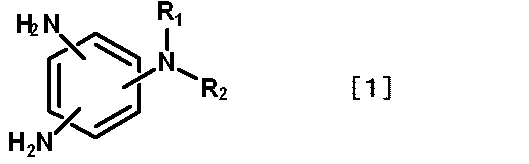
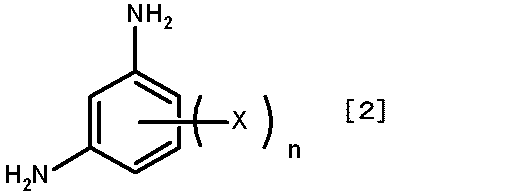
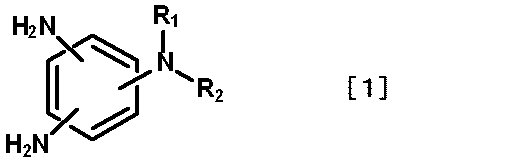
- a diamine component containing a first diamine represented by the following formula [1] and a second diamine represented by the following formula [2] is reacted with a tetracarboxylic dianhydride component having an alicyclic structure.
- a composition comprising: a polyimide precursor to be obtained and / or a polyimide obtained by imidizing the polyimide precursor; and a cyclic ketone solvent for dissolving the polyimide precursor and / or the polyimide.
- R 1 and R 2 are each independently a linear or branched hydrocarbon group having 1 to 12 carbon atoms.
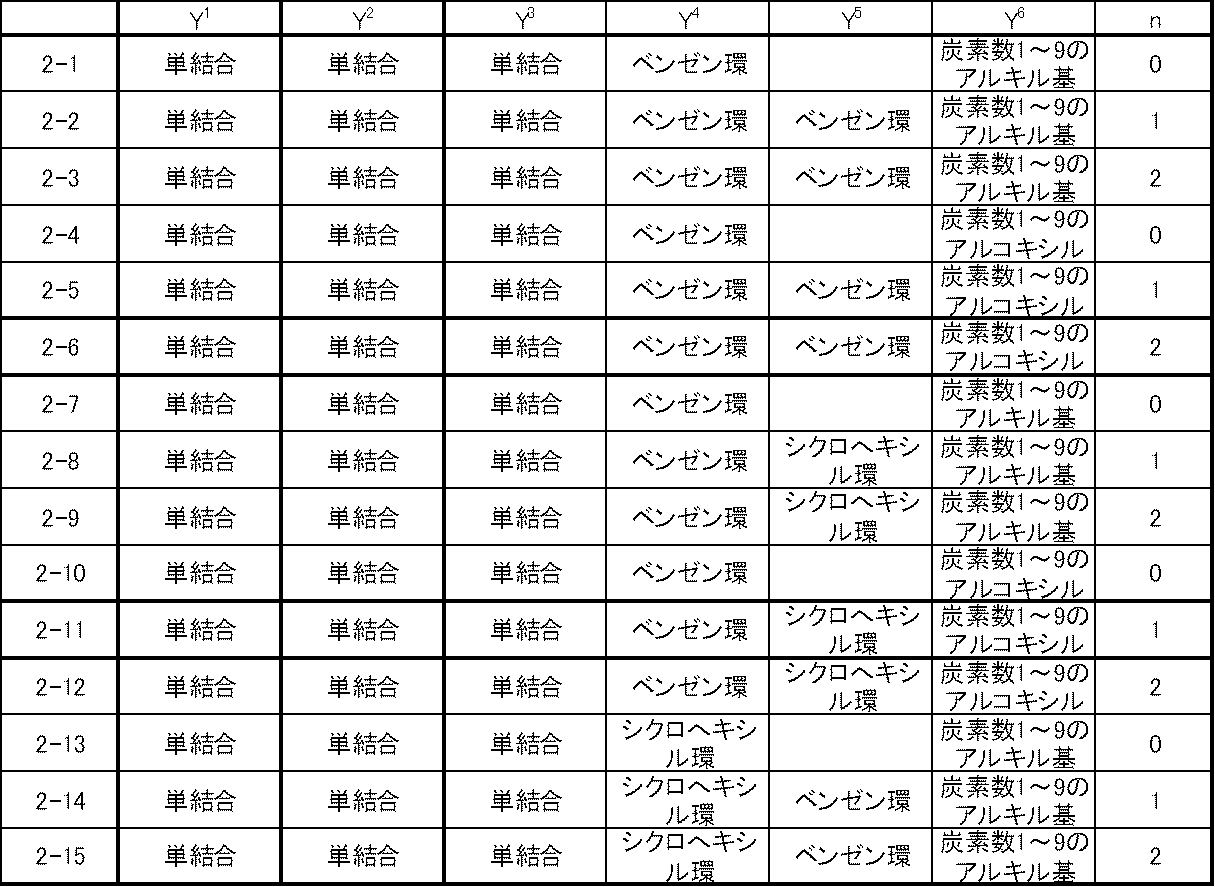
- X represents a substituent, which is a hydrocarbon group having 8 to 22 carbon atoms or a group represented by the following formula [2A], and n is an integer of 1 to 4.
- Y 1 is a single bond, — (CH 2 ) a — (a is an integer of 1 to 15), —O—, —CH 2 O—, —COO— or OCO—.
- Y 2 is a single bond or (CH 2 ) b — (b is an integer of 1 to 15), Y 3 is a single bond, — (CH 2 ) c — (c is an integer of 1 to 15) ), —O—, —CH 2 O—, —COO— or OCO—.
- Y 4 is a cyclic group selected from the group consisting of a benzene ring, a cyclohexane ring and a heterocyclic ring (an arbitrary hydrogen atom on these cyclic groups is an alkyl group having 1 to 3 carbon atoms, an alkoxyl having 1 to 3 carbon atoms) Or a fluorine-containing alkyl group having 1 to 3 carbon atoms, a fluorine-containing alkoxyl group having 1 to 3 carbon atoms, or a fluorine atom, or an organic group having 12 to 25 carbon atoms having a steroid skeleton.
- Y 5 is a cyclic group selected from the group consisting of a benzene ring, a cyclohexane ring, and a heterocyclic ring (any hydrogen atom on these cyclic groups has 1 to 3 carbon atoms). And an alkyl group having 1 to 3 carbon atoms, a fluorine-containing alkyl group having 1 to 3 carbon atoms, a fluorine-containing alkoxyl group having 1 to 3 carbon atoms, or a fluorine atom.
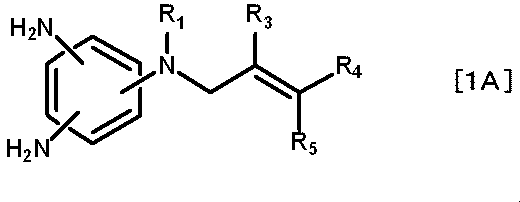
- composition according to (1) wherein the diamine having the structure represented by the formula [1] is a diamine having a structure represented by the following formula [1A].
- R 1 is a linear or branched hydrocarbon group having 1 to 12 carbon atoms
- R 5 is a hydrogen atom or a hydrocarbon group having 1 to 12 carbon atoms
- R 3 and R 4 is independently a hydrogen atom or a methyl group.
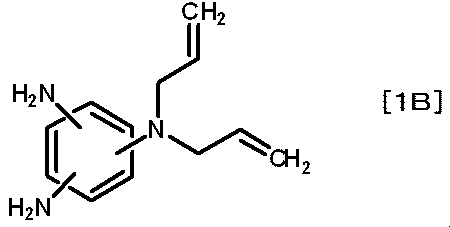
- composition according to (2) above, wherein the diamine having the structure represented by the formula [1A] is a diamine having a structure represented by the following formula [1B].
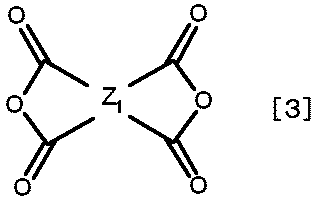
- the tetracarboxylic dianhydride is a compound represented by the following formula [3]. (In Formula [3], Z 1 is a tetravalent organic group having 4 to 13 carbon atoms and contains a non-aromatic cyclic hydrocarbon group having 4 to 10 carbon atoms.)
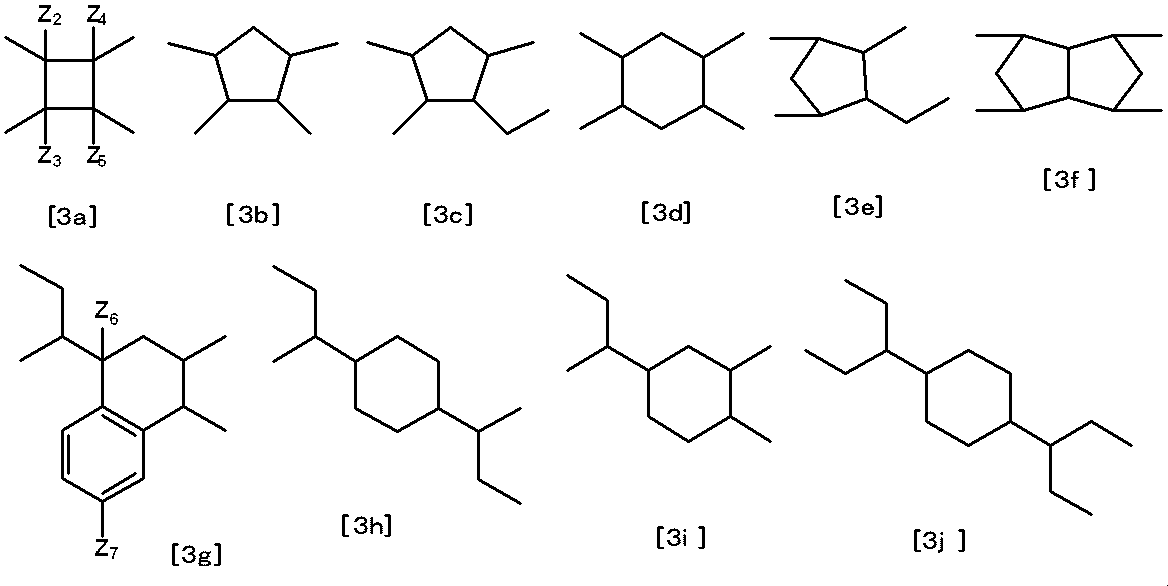
- Z 1 in the formula [3] is a structure represented by the following formulas [3a] to [3j].
- Z 2 to Z 5 are a hydrogen atom, a methyl group, a chlorine atom or a benzene ring, and may be the same or different.
- Z 6 and Z 7 are hydrogen atoms or methyl groups, which may be the same or different.
- a liquid crystal aligning agent comprising the composition according to any one of (1) to (9) above.
- a liquid crystal alignment film obtained from the liquid crystal aligning agent according to (10).
- a liquid crystal composition having a liquid crystal layer between a pair of substrates provided with electrodes and including a polymerizable compound that is polymerized by at least one of active energy rays and heat is disposed between the pair of substrates.
- the liquid crystal alignment film according to (11) which is used for a liquid crystal display device produced through a step of polymerizing the polymerizable compound while applying a voltage between the electrodes.
- a liquid crystal display device having the liquid crystal alignment film according to (11).
- a polymerizable compound having a liquid crystal layer between a pair of substrates provided with an electrode and the liquid crystal alignment film, and polymerized by at least one of active energy rays and heat between the pair of substrates.
- membrane of a more uniform characteristic by low heat processing temperature is provided.
- a liquid crystal aligning agent capable of forming a liquid crystal alignment film having excellent electrical properties without defects because it has excellent coating properties and can be fired at a low temperature. From the liquid crystal alignment film obtained by using the liquid crystal aligning agent of the present invention, a liquid crystal display element having high reliability can be obtained because of excellent electrical characteristics.
- the diamine component and tetracarboxylic dianhydride used to obtain the polyimide precursor and / or polyimide imidized with the polyimide precursor used in the present invention (hereinafter collectively referred to as the polyimide of the present invention).
- the components will be described.
- the 1st diamine used in order to obtain the polyimide of this invention is shown by following formula [1].
- the diamine represented by the formula [1] is used for improving the solubility of the polyimide in the solvent.
- R 1 and R 2 are each independently a hydrocarbon group having 1 to 12 carbon atoms.
- the amount of the first diamine used is preferably 10% by mass or more of the entire diamine component used in the reaction for obtaining the polyimide. From the relationship with the usage amount of the second diamine represented by the formula [2] described later, it is preferably 90% by mass or less. A more preferable amount of the first diamine is 30 to 80% by mass.
- Preferable examples of the first diamine include a compound having an N-allylaniline structure, for example, a compound of the following formula [1A].
- R 1 represents a hydrocarbon group having 1 to 12 carbon atoms.
- the hydrocarbon group preferably contains a carbon-carbon double bond, and more preferably the double bond is between the second and third carbons from the nitrogen atom.
- the number of carbon atoms of R 1 is 6 or less are preferred from the viewpoint of printability of the liquid crystal alignment treating agent, and more preferably 3 or less.
- R 5 is a hydrogen atom or a hydrocarbon group having 1 to 12 carbon atoms. This hydrocarbon group may contain a carbon-carbon double bond. Further, R 5 preferably has 6 or less carbon atoms, more preferably 3 or less. Particularly preferred R 5 is a hydrogen atom.
- R 3 and R 4 are independently a hydrogen atom or a methyl group. R 3 and R 4 are preferably hydrogen atoms.
- preferred positions of the two amino groups are the 2,4 position, the 2,5 position, or the 3,5 position on the benzene ring with respect to the N-allyl group.
- diamine represented by the formula [1A] include the structure of the following formula [1B].
- diamine represented by the formula [1] for example, a diamine having a structure of the following formula [1C] can be exemplified.
- the diamine represented by the formula [1] is one or two types depending on the properties such as solubility in a solvent when polyimide is used, liquid crystal orientation when a liquid crystal alignment film is used, voltage holding ratio, accumulated charge, and the like. A mixture of more than one can also be used.
- the 2nd diamine used in order to obtain the polyimide used by this invention is shown by following formula [2].
- the second diamine is used for the purpose of improving the solubility of the resulting polyimide in a solvent, or for the purpose of imparting vertical alignment when the polyimide film is used as a liquid crystal alignment film.
- X is a hydrocarbon group having 8 to 22 carbon atoms or a group represented by the following formula [2A].
- N is an integer of 1 to 4.
- the substituent X preferably forms a hydrophobic side chain structure.
- the amount of the second diamine used is preferably 10% by mass or more based on the total amount of the diamine component used in the reaction for obtaining the polyimide, and is preferably 90% by mass or less in relation to the amount of the first diamine used. A more preferable amount of the second diamine is 25 to 80% by mass.
- Y 1 is a single bond, — (CH 2 ) a — (a is an integer of 1 to 15), —O—, —CH 2 O—, —COO— and OCO—.
- any one of a single bond, — (CH 2 ) a — (a is an integer of 1 to 15), —O—, —CH 2 O—, and COO— is a synthesis of a side chain structure. From the viewpoint of facilitating the process.
- a single bond, — (CH 2 ) a — (a is an integer of 1 to 10), —O—, —CH 2 O—, and COO— are more preferable.
- Y 2 is any one of a single bond and (CH 2 ) b — (b is an integer of 1 to 15). Among these, a single bond or (CH 2 ) b — (b is an integer of 1 to 10) is preferable.
- Y 3 is a single bond, — (CH 2 ) c — (c is an integer of 1 to 15), —O—, —CH 2 O—, —COO— and OCO—.
- Y 4 is a cyclic group selected from the group consisting of a benzene ring, a cyclohexane ring and a heterocyclic ring (an arbitrary hydrogen atom on these cyclic groups is an alkyl group having 1 to 3 carbon atoms, carbon Any one of an alkoxyl group having 1 to 3 carbon atoms, a fluorine-containing alkyl group having 1 to 3 carbon atoms, a fluorine-containing alkoxyl group having 1 to 3 carbon atoms and a fluorine atom), or a steroid skeleton
- a divalent organic group selected from organic groups having 12 to 25 carbon atoms Among these, a divalent organic group having 12 to 25 carbon atoms and having any one of a benzene ring, a cyclohexane ring, and a steroid skeleton is preferable.
- Y 5 is a cyclic group selected from the group consisting of a benzene ring, a cyclohexane ring and a heterocyclic ring, and an arbitrary hydrogen atom on these cyclic groups is an alkyl having 1 to 3 carbon atoms.
- the group may be substituted with any one of a group, an alkoxyl group having 1 to 3 carbon atoms, a fluorine-containing alkyl group having 1 to 3 carbon atoms, a fluorine-containing alkoxyl group having 1 to 3 carbon atoms, and a fluorine atom.
- n is an integer of 0 to 4.
- it is an integer of 0-2.
- Y 6 is an alkyl group having 1 to 18 carbon atoms, a fluorine-containing alkyl group having 1 to 18 carbon atoms, an alkoxyl group having 1 to 18 carbon atoms, or a fluorine-containing alkoxyl group having 1 to 18 carbon atoms.
- a fluorine-containing alkyl group having 1 to 18 carbon atoms is one of an alkyl group having 1 to 18 carbon atoms, a fluorine-containing alkyl group having 1 to 10 carbon atoms, an alkoxyl group having 1 to 18 carbon atoms, and a fluorine-containing alkoxyl group having 1 to 10 carbon atoms. Is preferred.
- it is any one of an alkyl group having 1 to 12 carbon atoms and an alkoxyl group having 1 to 12 carbon atoms. More preferably, it is any one of an alkyl group having 1 to 9 carbon atoms and an alkoxyl group having 1 to 9 carbon atoms.
- c is an integer having 1 to 10 carbon atoms
- diamine of the structure shown by Formula [2] is not limited to these examples.
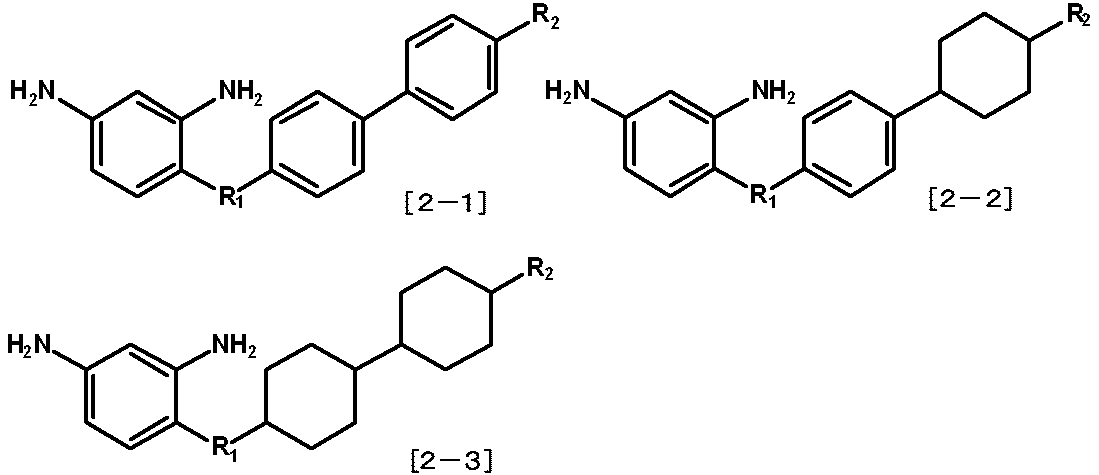
- diamines represented by the following formulas [2-1] to [2-31] can be mentioned.
- R 1 represents —O—, —OCH 2 —, —CH 2 O—, —COOCH 2 —, or CH 2 OCO—
- R 2 represents the number of carbon atoms.
- a linear or branched alkyl group having 1 to 22 carbon atoms, a linear or branched alkoxyl group having 1 to 22 carbon atoms, a linear or branched fluorine-containing alkyl group having 1 to 22 carbon atoms, or 1 to 22 carbon atoms A linear or branched fluorine-containing alkoxyl group.
- R 3 represents —COO—, —OCO—, —COOCH 2 —, —CH 2 OCO—, —CH 2 O—, —OCH 2 — or CH 2
- R 4 is a linear or branched alkyl group having 1 to 22 carbon atoms, a linear or branched alkoxyl group having 1 to 22 carbon atoms, or a linear or branched fluorine group having 1 to 22 carbon atoms.
- R 5 represents —COO—, —OCO—, —COOCH 2 —, —CH 2 OCO—, —CH 2 O—, —OCH 2 —, — CH 2 — or O—
- R 6 represents a fluorine group, a cyano group, a trifluoromethyl group, a nitro group, an azo group, a formyl group, an acetyl group, an acetoxy group, or a hydroxyl group.
- R 7 is a linear or branched alkyl group having 3 to 12 carbon atoms, and cis-trans isomerism of 1,4-cyclohexylene is Trans isomer.
- R 8 is a linear or branched alkyl group having 3 to 12 carbon atoms, and the cis-trans isomerism of 1,4-cyclohexylene is Trans isomer.
- a 4 is a linear or branched alkyl group having 3 to 20 carbon atoms which may be substituted with a fluorine atom, and A 3 is a 1,4-cyclohexylene group or A 2 -phenylene group, A 2 is an oxygen atom or COO— * (where a bond marked with “*” is bonded to A 3 ), and A 1 is an oxygen atom or COO — * ( However, a bond marked with “*” is combined with (CH 2 ) a 2 ).
- a 1 is an integer of 0 or 1
- a 2 is an integer of 2 to 10
- a 3 is an integer of 0 or 1.
- the diamine represented by the formula [2] may be one kind or two depending on properties such as solubility in a solvent when polyimide is used, liquid crystal orientation when a liquid crystal alignment film is used, voltage holding ratio, accumulated charge, and the like. A mixture of more than one can also be used.
- the composition of the present invention contains a polyimide obtained by reacting a diamine component containing a first diamine and a second diamine with a tetracarboxylic dianhydride component having an alicyclic structure.
- diamines other than the above also referred to as other diamines
- Specific examples of the other diamines are listed below.
- diamines include, for example, m-phenylenediamine, p-phenylenediamine, 2,5-diaminophenol, 2,4-diaminophenol, 3,5-diaminophenol, 3,5-diaminobenzyl alcohol, 2,4 -Diaminobenzyl alcohol, 4,6-diaminoresorcinol, 2,5-diaminobenzoic acid, 2,4-diaminobenzoic acid, 3,5-diaminobenzoic acid, 4,4'-diaminobiphenyl, 3,3'-dimethyl -4,4'-diaminobiphenyl, 3,3'-dimethoxy-4,4'-diaminobiphenyl, 3,3'-dihydroxy-4,4'-diaminobiphenyl, 3,3'-dicarboxy-4,4 '-Diaminobiphenyl, 3,3'-difluoro-4,4'-biphenyl, 3,3'-
- diamines examples include those having an alkyl group, a fluorine-containing alkyl group, an aromatic ring, an aliphatic ring or a heterocyclic ring in the diamine side chain, or those having a macrocyclic substituent composed of these. .
- diamines represented by the following formulas [DA1] to [DA15] can be exemplified.
- a 2 is -COO -, - OCO -, - CONH -, - NHCO -, - CH 2 -, - O -, - CO- or a NH-
- a 3 Is a linear or branched alkyl group having 1 to 22 carbon atoms, or a linear or branched fluorine-containing alkyl group having 1 to 22 carbon atoms.
- n is an integer of 1 to 5.
- a diamine having a carboxyl group in the molecule represented by the following formulas [DA16] to [DA20] can also be used.
- m1 is an integer of 1 to 4.
- a 4 is a single bond, —CH 2 —, —C 2 H 4 —, —C (CH 3 ) 2 —. , —CF 2 —, —C (CF 3 ) —, —O—, —CO—, —NH—, —N (CH 3 ) —, —CONH—, —NHCO—, —CH 2 O—, —OCH 2 -, - COO -, - OCO -, - CON (CH 3) - or N (CH 3) a CO-, m 2 and m 3 is an integer of 0 to 4, and, m 2 + m 3 Is an integer from 1 to 4.
- m 4 and m 5 are each an integer of 1 to 5.
- a 5 is a linear or branched alkyl group having 1 to 5 carbon atoms, and m 6 is an integer of 1 to 5.
- a 6 represents a single bond, —CH 2 —, —C 2 H 4 —, —C (CH 3 ) 2 —, —CF 2 —, —C (CF 3 ) —, —O—.
- —CO— —NH—, —N (CH 3 ) —, —CONH—, —NHCO—, —CH 2 O—, —OCH 2 —, —COO—, —OCO—, —CON (CH 3 ) — Or N (CH 3 ) CO—, and m 7 is an integer of 1 to 4.
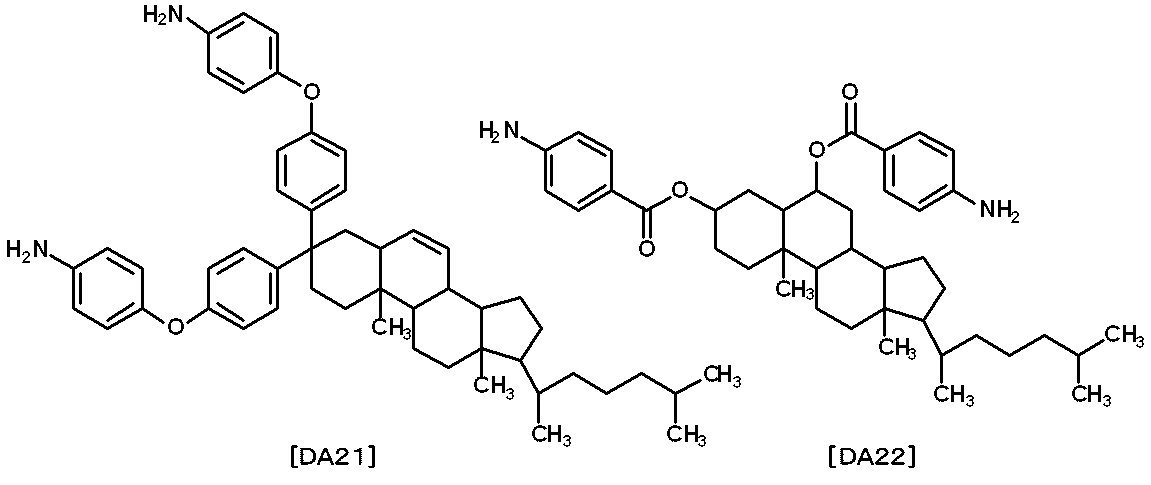
- a diamine represented by the following formula [DA21] or [DA22] can be used as long as the effects of the present invention are not impaired.
- diamines represented by the following formulas [DA23] to [DA27] can be used as long as the effects of the present invention are not impaired.
- a 1 is a linear or branched alkyl group having 1 to 22 carbon atoms or a linear or branched fluorine-containing alkyl group having 1 to 22 carbon atoms.
- One of the other diamines described above depends on important properties of the liquid crystal alignment film, such as solubility in a solvent when used as a polyimide, liquid crystal alignment when used as a liquid crystal alignment film, voltage holding ratio, and accumulated charge. Alternatively, two or more types can be mixed and used.
- a tetracarboxylic dianhydride having an alicyclic structure (also referred to as a specific tetracarboxylic dianhydride) is used as the tetracarboxylic dianhydride component.
- a specific tetracarboxylic dianhydride a tetracarboxylic dianhydride having an alicyclic structure represented by the following formula [3] is preferable.
- Z 1 is a tetravalent organic group having 4 to 13 carbon atoms, and contains a non-aromatic cyclic hydrocarbon group having 4 to 10 carbon atoms.
- the structure is represented by the following formulas [3a] to [3j].
- Z 2 to Z 5 are groups selected from the group consisting of a hydrogen atom, a methyl group, a chlorine atom and a benzene ring, and may be the same or different.
- Z 6 and Z 7 are a hydrogen atom or a methyl group, and may be the same or different.
- particularly preferred structure of Z 1 is the formula [3a], the formula [3c], the formula [3d], the formula [3e], the formula [3f] or the formula from the viewpoint of polymerization reactivity and ease of synthesis. [3g].
- the formula [3a] or the formula [3f] is preferable, and the formula [3a] is most preferable.
- the amount used is preferably 40% by mass or more, more preferably 50% by mass or more, of the total tetracarboxylic dianhydride component. .
- All of the tetracarboxylic dianhydride components used for the polyimide synthesis may be tetracarboxylic dianhydrides of the formula [3].
- tetracarboxylic dianhydrides other than specific tetracarboxylic dianhydride can be used.
- specific examples of other tetracarboxylic dianhydrides include, for example, pyromellitic acid, 2,3,6,7-naphthalenetetracarboxylic acid, 1,2,5,6-naphthalenetetracarboxylic acid, 1,4,4 5,8-naphthalenetetracarboxylic acid, 2,3,6,7-anthracenetetracarboxylic acid, 1,2,5,6-anthracenetetracarboxylic acid, 3,3 ′, 4,4′-biphenyltetracarboxylic acid, 2,3,3 ′, 4-biphenyltetracarboxylic acid, bis (3,4-dicarboxyphenyl) ether, 3,3 ′, 4,4′-benzophenonetetracarboxylic acid, bis (3,4-dicarboxy
- composition of the present invention among the above-mentioned other tetracarboxylic dianhydrides, for example, in the case of a liquid crystal alignment film, in consideration of characteristics such as liquid crystal alignment properties, voltage holding characteristics and accumulated charges, one type or two More than one type can be selected and used.
- polyimide precursor and polyimide used in the composition of the present invention are preferably obtained as follows.
- the polyimide precursor represents polyimide acid (also referred to as polyamic acid). That is, the polyimide precursor includes a diamine component containing the first diamine represented by the above formula [1] and the second diamine represented by the above formula [2], and a tetracarboxylic acid having the above alicyclic structure. It is obtained by reacting with an acid dianhydride component.
- the amount of the first diamine used is preferably 20 mol% or more, more preferably 30 mol% or more of the entire diamine component.
- 80 mol% or less is preferable from the relationship with the preferable usage-amount of a 2nd diamine.
- the usage-amount of 2nd diamine has preferable 10 mol% or more of the whole diamine component, More preferably, it is 25 mol% or more.
- a specific method for producing a polyimide precursor by a reaction between a diamine component and tetracarboxylic dianhydride a known synthesis method can be used.
- a method in which a diamine component and tetracarboxylic dianhydride are reacted in an organic solvent This method is preferable in that the reaction proceeds relatively efficiently in an organic solvent and generation of by-products is small.
- the organic solvent used for the reaction between the diamine component and tetracarboxylic dianhydride is not particularly limited as long as the produced polyamic acid is soluble. Specific examples thereof include, for example, N, N-dimethylformamide, N, N-dimethylacetamide, N-methyl-2-pyrrolidone, N-ethyl-2-pyrrolidone, dimethyl sulfoxide, ⁇ -butyrolactone, 1,3-dimethyl. -Imidazolidinone, methyl ethyl ketone, cyclohexanone, cyclopentanone or 4-hydroxy-4-methyl-2-pentanone. These may be used alone or in combination.
- a solvent that does not dissolve the polyimide precursor can be used by mixing with the above solvent as long as the produced polyamic acid does not precipitate.
- moisture content in an organic solvent inhibits a polymerization reaction and causes the produced
- the solution in which the diamine component is dispersed or dissolved in the organic solvent is stirred, and the tetracarboxylic dianhydride is used as it is or in the organic solvent. It is possible to use a method of adding it after being dispersed or dissolved. Conversely, a method of adding a diamine component to a solution in which tetracarboxylic dianhydride is dispersed or dissolved in an organic solvent, a method of adding tetracarboxylic dianhydride and a diamine component alternately, etc. Can do. In the present invention, any of these methods may be used.
- the diamine component or tetracarboxylic dianhydride when they are composed of a plurality of types of compounds, they may be reacted in a premixed state, may be individually reacted sequentially, or may be further reacted individually. It is good also as a high molecular weight body by carrying out a mixing reaction.
- the temperature at which the diamine component and tetracarboxylic dianhydride are reacted can be arbitrarily selected within the range of ⁇ 20 to 150 ° C., but in the range of ⁇ 5 to 100 ° C. in consideration of the reaction efficiency. It is preferable.
- reaction can be performed by arbitrary density
- the ratio between the total number of moles of the diamine component and the total number of moles of the tetracarboxylic dianhydride is preferably 0.8 to 1.2. Similar to the normal polycondensation reaction, the closer the molar ratio is to 1.0, the higher the molecular weight of the polymer produced. Therefore, it is possible to determine the total molar ratio by appropriately selecting depending on the case.
- the polyimide used in the present invention is obtained by dehydrating and ring-closing the above polyimide precursor to imidize it.
- the dehydration cyclization rate (imidation rate) of the polyimide precursor is not necessarily 100%, and is, for example, in the range of 35 to 95%, more preferably 45 to 80%, depending on the application and purpose. It can be adjusted within the range.
- Examples of the method for imidizing the polyimide precursor include thermal imidization in which the polyimide precursor solution is heated as it is, and catalyst imidization in which a catalyst is added to the polyimide precursor solution.
- the temperature when the polyimide precursor is thermally imidized in the solution is 100 to 400 ° C., preferably 120 to 250 ° C.
- the imidization of the polyimide precursor is preferably performed while removing water generated by the imidization reaction from the reaction system.
- the catalytic imidation of the polyimide precursor can be carried out by adding a basic catalyst and an acid anhydride to the polyimide precursor solution and stirring at -20 to 250 ° C, preferably 0 to 180 ° C.
- the amount of the basic catalyst is 0.5 to 30 mol times, preferably 2 to 20 mol times the amidic acid group, and the amount of the acid anhydride is 1 to 50 mol times, preferably 3 to 30 mol times the amido group. 30 mole times.
- Examples of the basic catalyst include pyridine, triethylamine, trimethylamine, tributylamine, trioctylamine and the like, and among them, pyridine is preferable in that it has an appropriate basicity for proceeding with the reaction.
- Examples of the acid anhydride include acetic anhydride, trimellitic anhydride, pyromellitic anhydride, and the like. Among them, acetic anhydride is preferable because purification after the completion of the reaction is easy.
- the imidization rate by catalytic imidation can be controlled by adjusting the amount of catalyst, reaction temperature, and reaction time.
- the reaction solution may be poured into a poor solvent and precipitated.
- the poor solvent used for precipitation include methanol, acetone, hexane, butyl cellosolve, heptane, methyl ethyl ketone, methyl isobutyl ketone, ethanol, toluene, benzene, and water.
- the polymer deposited in a poor solvent and precipitated can be recovered by filtration and then dried at normal temperature or under reduced pressure at room temperature or by heating.
- impurities in the polymer can be reduced.
- the poor solvent at this time include alcohols, ketones, hydrocarbons and the like, and it is preferable to use three or more kinds of poor solvents selected from these to further improve the efficiency of purification.
- the molecular weight of the polyimide precursor and polyimide is the weight average molecular weight measured by the GPC (Gel Permeation Chromatography) method in consideration of the strength of the coating film obtained by using this, the workability during coating film formation, and the uniformity of the coating film. It is preferably 5,000 to 1,000,000, more preferably 10,000 to 150,000.
- composition for forming a film of the present invention for example, a liquid crystal aligning agent is a composition containing the imide polymer of the present invention obtained as described above and a solvent in which the polyimide polymer is dissolved.
- the content of the polyimide polymer of the present invention contained in the composition is preferably 1 to 20% by mass, more preferably 3 to 15% by mass, and particularly preferably 3 to 10% by mass.
- all of the polymer components contained in the composition may be the polyimide of the present invention, but in addition to the polyimide of the present invention, the diamine component containing the first diamine and the second diamine described above, Other than the polyimide synthesized from tetracarboxylic dianhydride having an alicyclic structure, a polyimide having another structure may be contained.
- the content of the polyimide having another structure in the polymer component can be 0.5 to 15% by mass, preferably 1 to 10% by mass.
- the polymer component containing the polyimide of the present invention is contained in a dissolved state.
- a cyclic ketone is used as the solvent.
- Cyclic ketone is a solvent that dissolves the polyimide of the present invention, has a lower boiling point than NMP, and has low surface tension characteristics.
- the cyclic ketone is preferably a ketone having a 4- to 10-membered ring, particularly preferably a 5- to 7-membered alicyclic structure.
- Preferred specific examples include cyclopentanone, cyclohexanone, cycloheptanone, cyclooctanone, Examples thereof include cyclononanone and cyclodecanone. Of these, any of cyclohexanone and cyclopentanone, or a mixture thereof is particularly preferable.
- the solvent content is preferably 70 to 99% by mass from the viewpoint of forming a uniform film by coating. This content can be appropriately changed depending on the desired thickness of the film.
- the solvent it is possible to use only a cyclic ketone solvent. For example, as long as it does not interfere with low-temperature baking and improvement in coating properties required when obtaining a liquid crystal alignment film, other solvents are appropriately used. It is also possible to mix organic solvents.
- organic solvents include N, N-dimethylformamide, N, N-dimethylacetamide, N-methyl-2-pyrrolidone, N-ethyl-2-pyrrolidone, dimethyl sulfoxide, ⁇ -butyrolactone, , 3-dimethyl-imidazolidinone, methyl ethyl ketone, cyclohexanone, cyclopentanone or 4-hydroxy-4-methyl-2-pentanone. These may be used alone or in combination. Even when these other organic solvents are contained, the content of the cyclic ketone solvent is preferably 50% by mass or more, more preferably 60% by mass or more, and particularly preferably 70% by mass or more in the total solvent. It is.
- composition of the present invention for example, a liquid crystal aligning agent is another organic solvent for improving coating properties for the purpose of further improving the uniformity of film thickness and surface smoothness, as long as the effects of the present invention are not impaired.
- a poor solvent for example, a solvent for improving coating properties for the purpose of further improving the uniformity of film thickness and surface smoothness, as long as the effects of the present invention are not impaired.
- the content of the cyclic ketone solvent is preferably 50% by mass or more, more preferably 60% by mass or more, and particularly preferably 70% by mass or more.
- composition of the present invention improves the adhesion between the formed film and the substrate, a compound that improves the thickness uniformity and surface smoothness of the coated film, as long as the effects of the present invention are not impaired.
- Compounds can be included.
- Examples of the compound that improves the uniformity of the film thickness and the surface smoothness include fluorine-based surfactants, silicone-based surfactants, and nonionic surfactants.
- fluorine-based surfactants silicone-based surfactants
- nonionic surfactants examples include fluorine-based surfactants, silicone-based surfactants, and nonionic surfactants.
- F-top EF301, EF303, EF352 manufactured by Tochem Products
- MegaFuck F171, F173, R-30 manufactured by Dainippon Ink
- Florard FC430, FC431 manufactured by Sumitomo 3M
- Asahi Guard AG710 Surflon S-382, SC101, SC102, SC103, SC104, SC105, SC106 (Asahi Glass Co., Ltd.) and the like.
- the use ratio of these surfactants is preferably 0.01 to 2 parts by mass, more preferably 0.01 to 1 part by mass with respect to 100 parts by mass of the resin component contained in the composition.
- the compound that improves the adhesion between the formed film and the substrate include the following functional silane-containing compounds and epoxy group-containing compounds.
- the amount of the compound added is 0.1 to 30 parts by mass with respect to 100 parts by mass of the polymer component contained in the composition.
- the amount is preferably 1 to 20 parts by mass. If the amount is less than 0.1 part by mass, the effect of improving the adhesion cannot be expected, and if it exceeds 30 parts by mass, the orientation of the liquid crystal may deteriorate.
- the composition of the present invention comprises a crosslinkable compound having an epoxy group, an isocyanate group, an oxetane group, a cyclocarbonate group, a hydroxyl group, a hydroxyalkyl group, and a lower alkoxyalkyl group. It is also possible to contain a crosslinkable compound having at least one selected substituent or a crosslinkable compound having a polymerizable unsaturated bond.
- crosslinkable compound having an epoxy group or an isocyanate group examples include bisphenolacetone glycidyl ether, phenol novolac epoxy resin, cresol novolac epoxy resin, triglycidyl isocyanurate, tetraglycidylaminodiphenylene, tetraglycidyl-m-xylenediamine.
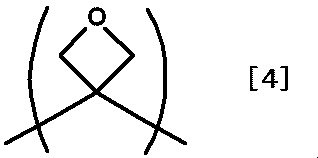
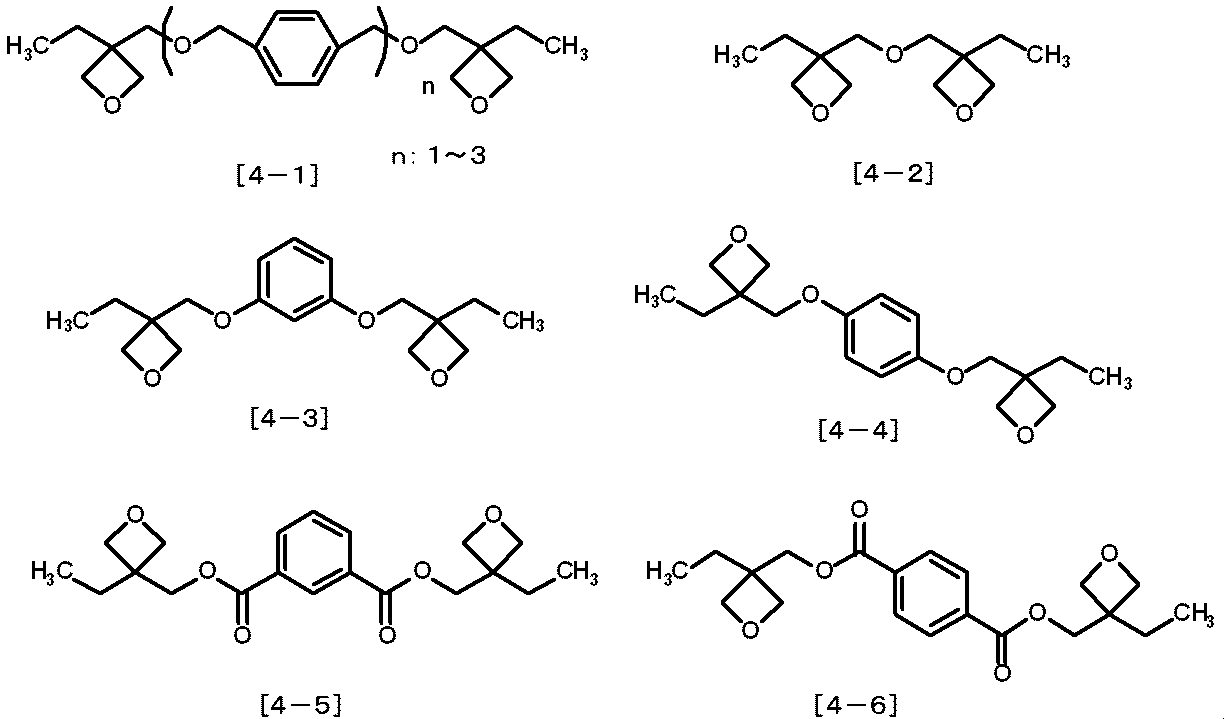
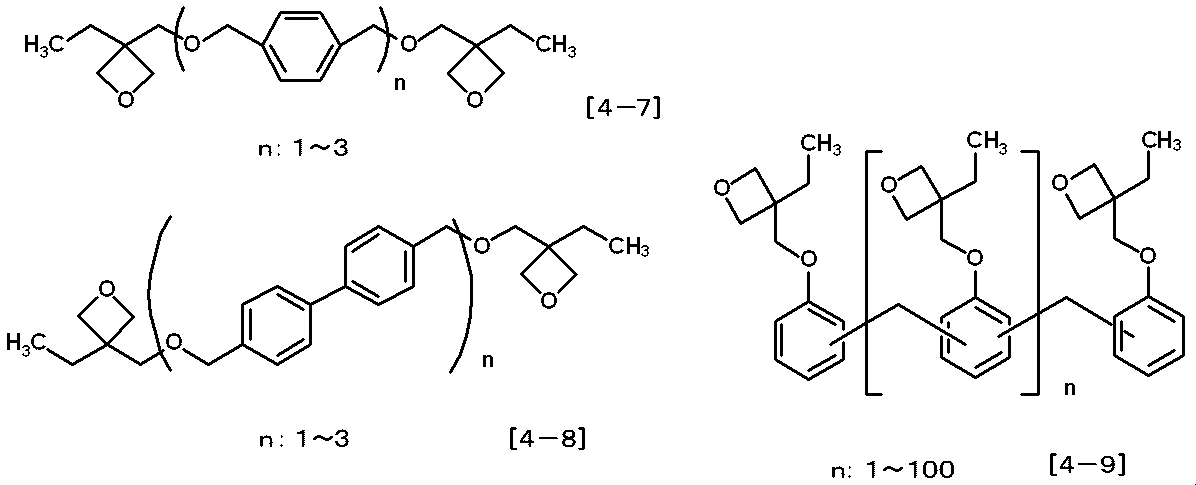
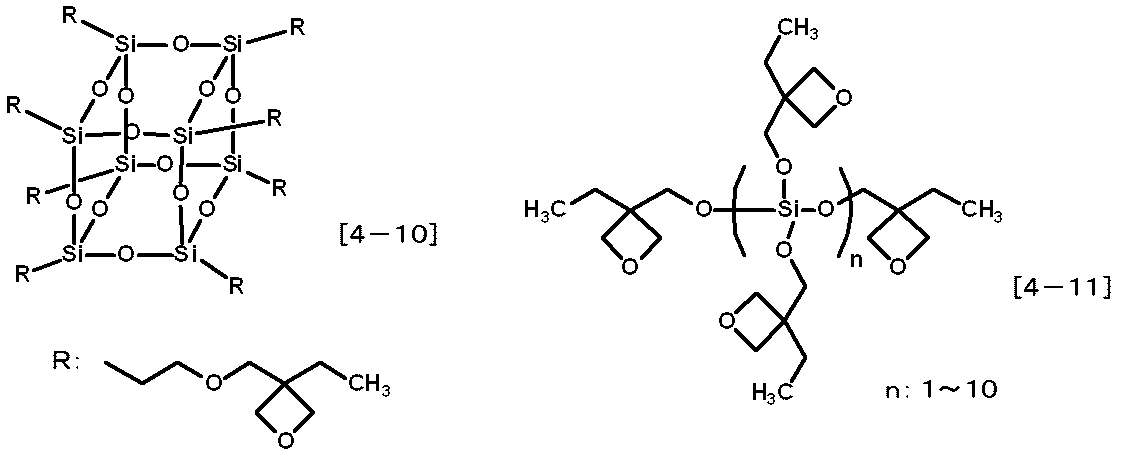
- the crosslinkable compound having an oxetane group is a crosslinkable compound having at least two oxetane groups represented by the following formula [4].
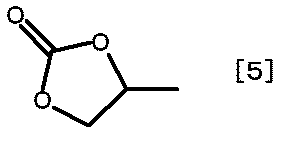
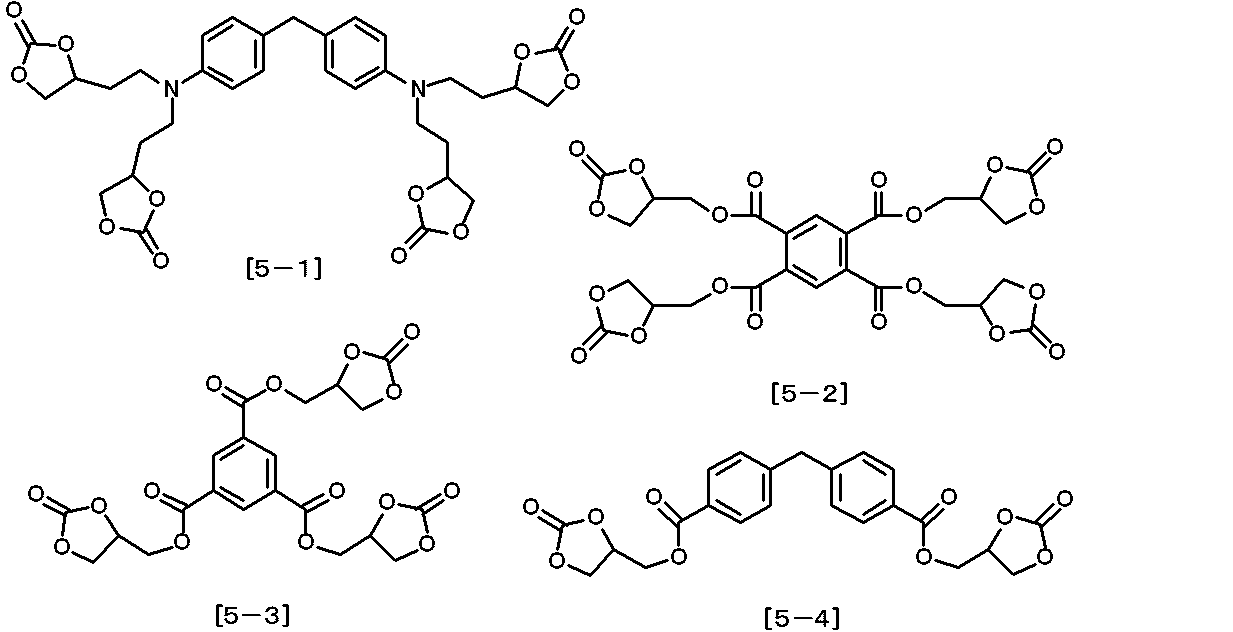
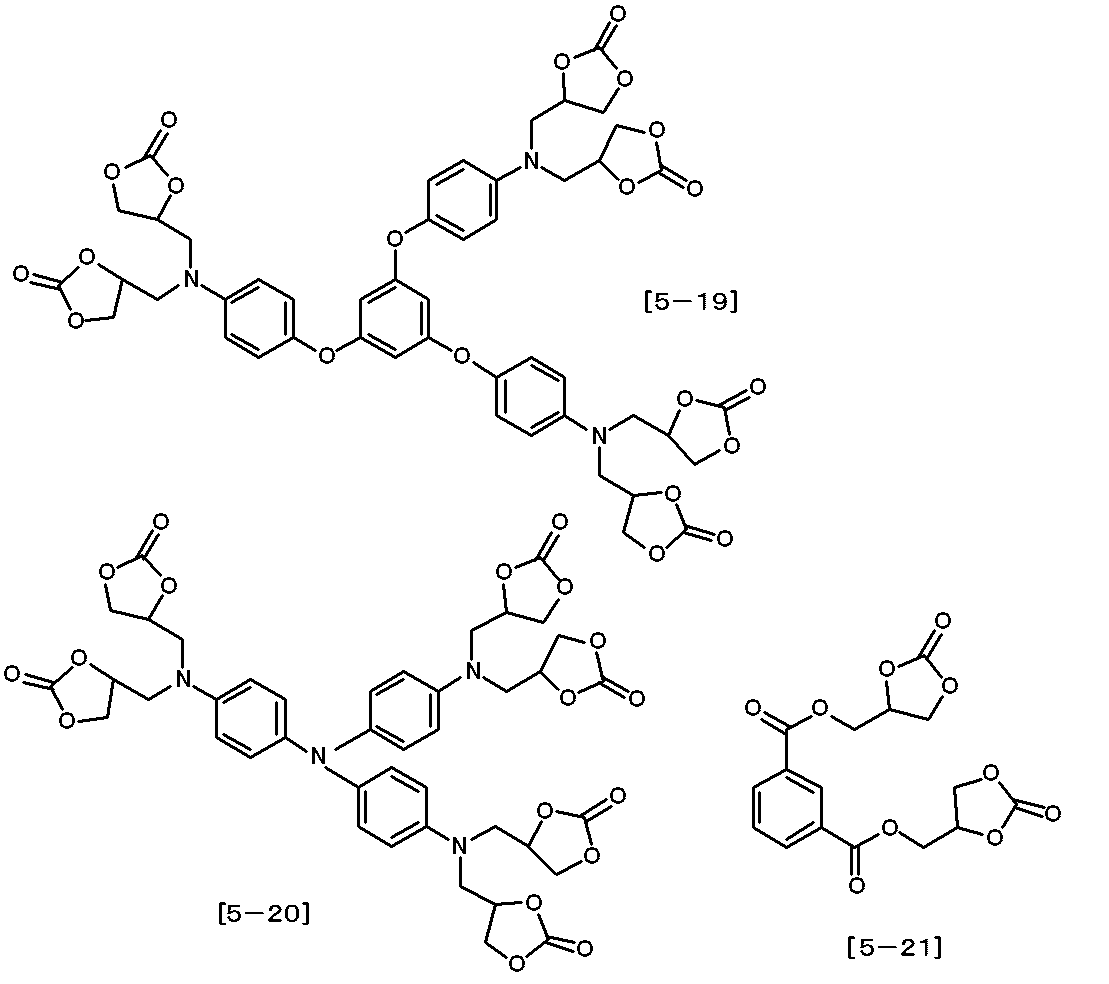
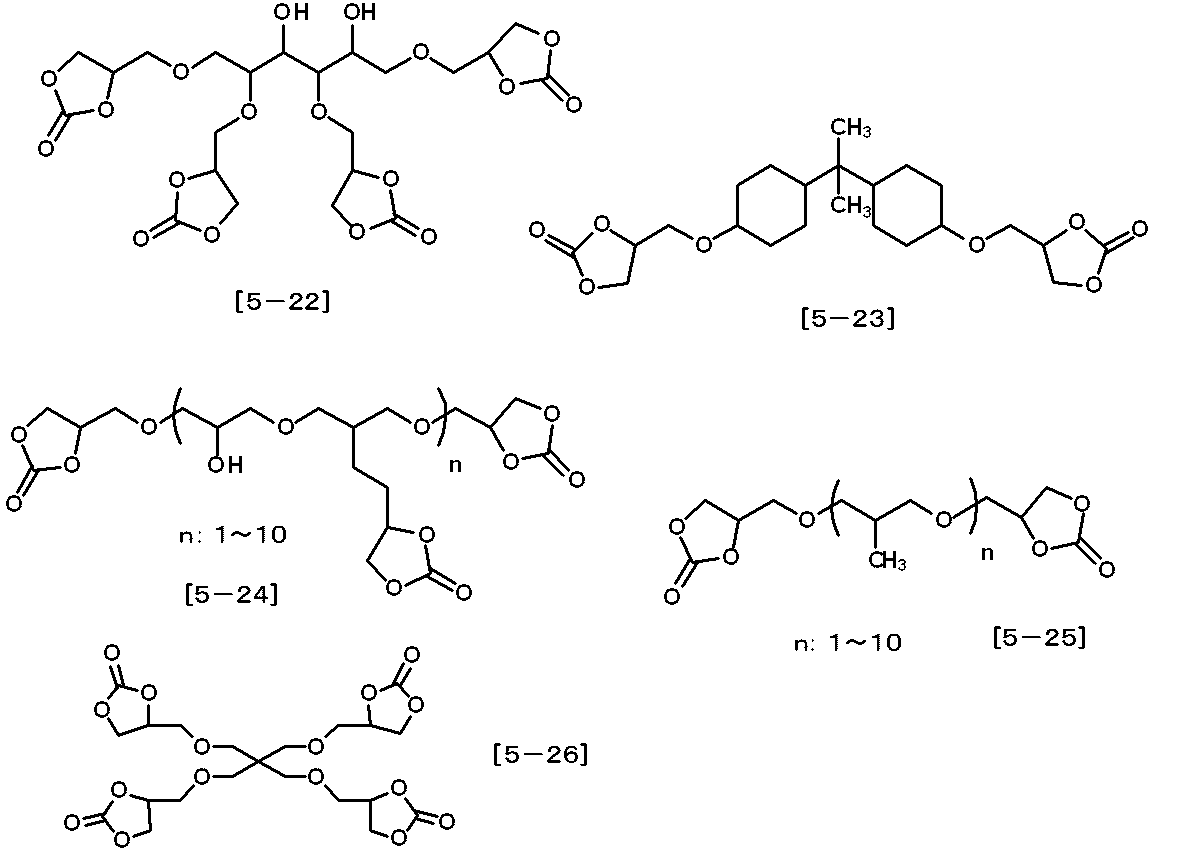
- the crosslinkable compound having a cyclocarbonate group is a crosslinkable compound having at least two cyclocarbonate groups represented by the following formula [5].
- n is an integer of 1 to 5
- n is an integer of 1 to 5
- n is 1 to 100
- n is an integer of 1 to 10.
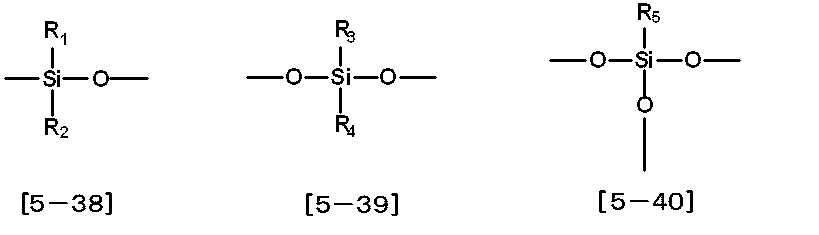
- polysiloxanes having at least one structure represented by the following formulas [5-38] to [5-40] can also be mentioned.
- R 1 , R 2 , R 3 , R 4 and R 5 each independently represents a structure represented by the formula [5], a hydrogen atom, a hydroxyl group, An alkyl group having 1 to 10 carbon atoms, an alkoxyl group, an aliphatic ring or an aromatic ring, at least one of which is a structure represented by the formula [5]).
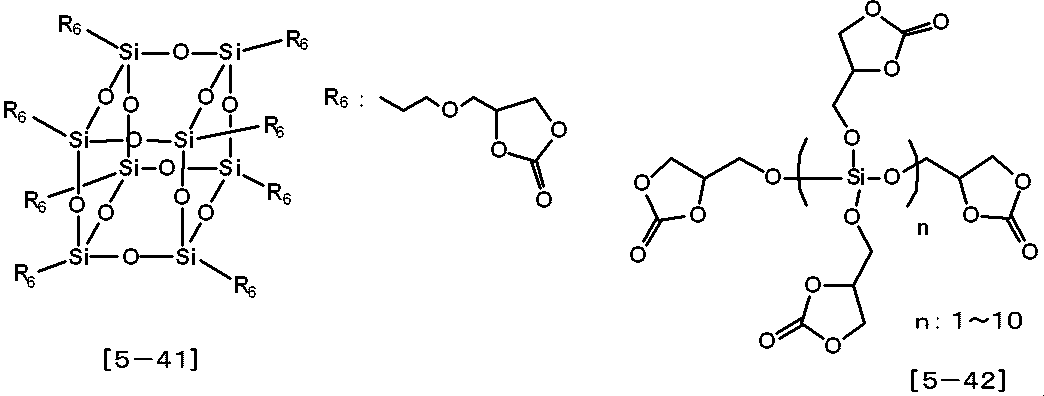
- R 6 is a structure represented by the formula [5], a hydrogen atom, a hydroxyl group, an alkyl group having 1 to 10 carbon atoms, an alkoxyl group, an aliphatic ring or an aromatic ring,
- n is an integer of 1 to 10.
- Examples of the crosslinkable compound having at least one substituent selected from the group consisting of a hydroxyl group and an alkoxyl group include an amino resin having a hydroxyl group or an alkoxyl group, such as a melamine resin, a urea resin, a guanamine resin, and a glycoluril.
- a melamine resin, a urea resin, a guanamine resin, and a glycoluril such as a melamine resin, a urea resin, a guanamine resin, and a glycoluril.
- a melamine derivative, a benzoguanamine derivative, or glycoluril in which a hydrogen atom of an amino group is substituted with a methylol group and / or an alkoxymethyl group can be used.
- These melamine derivatives or benzoguanamine derivatives can also exist as dimers or trimers. These preferably have an average of 3 to 6 methylol groups or alkoxymethyl groups per
- Examples of melamine derivatives or benzoguanamine derivatives include MX-750 with an average of 3.7 substituted methoxymethyl groups per triazine ring, and an average of 5.8 substituted methoxymethyl groups per triazine ring.
- MW-30 manufactured by Sanwa Chemical Co., Ltd.
- glycoluril examples include butoxymethylated glycoluril such as Cymel 1170, methylolated glycoluril such as Cymel 1172, methoxymethylolated glycoluril such as Powderlink 1174, and the like.
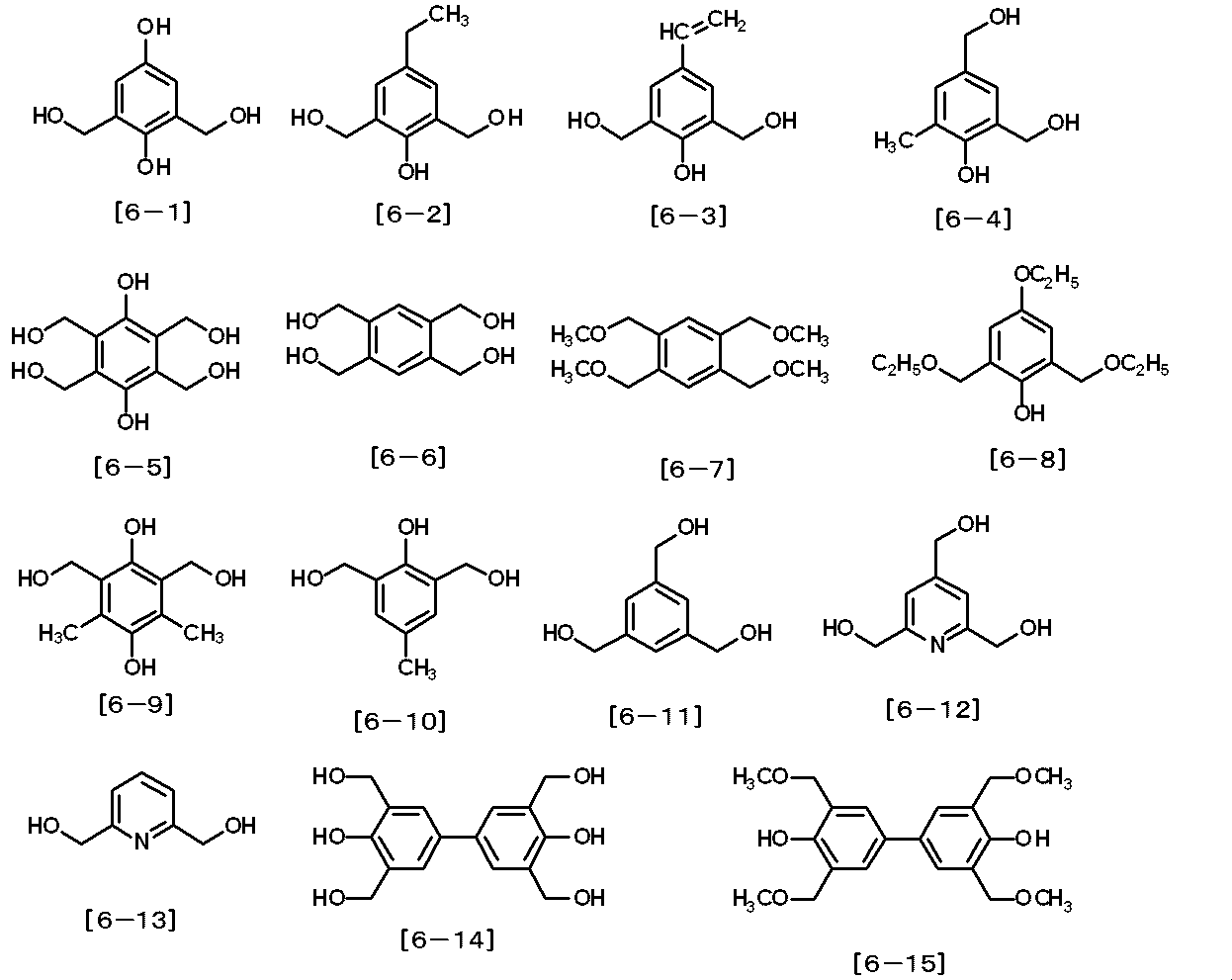
- benzene or phenolic compound having a hydroxyl group or an alkoxyl group examples include 1,3,5-tris (methoxymethyl) benzene, 1,2,4-tris (isopropoxymethyl) benzene, 1,4-bis ( sec-butoxymethyl) benzene, 2,6-dihydroxymethyl-p-tert-butylphenol and the like. Specifically, it is a crosslinkable compound represented by the following formulas [6-1] to [6-48].
- crosslinkable compound having a polymerizable unsaturated bond examples include trimethylolpropane tri (meth) acrylate, pentaerythritol tri (meth) acrylate, dipentaerythritol penta (meth) acrylate, and tri (meth) acryloyloxyethoxytrimethylol.
- Crosslinkable compounds having three polymerizable unsaturated groups in the molecule such as propane and glycerin polyglycidyl ether poly (meth) acrylate; ethylene glycol di (meth) acrylate, diethylene glycol di (meth) acrylate, tetraethylene glycol di (meth) ) Acrylate, polyethylene glycol di (meth) acrylate, propylene glycol di (meth) acrylate, polypropylene glycol di (meth) acrylate, butylene glycol di (me ) Acrylate, neopentyl glycol di (meth) acrylate, ethylene oxide bisphenol A type di (meth) acrylate, propylene oxide bisphenol type di (meth) acrylate, 1,6-hexanediol di (meth) acrylate, glycerin di (meth) ) Acrylate, pentaerythritol di (meth) acrylate, ethylene glycol digly
- E 1 is a group selected from the group consisting of a cyclohexane ring, a bicyclohexane ring, a benzene ring, a biphenyl ring, a terphenyl ring, a naphthalene ring, a fluorene ring, an anthracene ring, and a phenanthrene ring
- E 2 is It is a group selected from the following formula [7a] and formula [7b], and n is an integer of 1 to 4.
- the said compound is an example of a crosslinkable compound, It is not limited to these.
- the crosslinkable compound contained in the composition of the present invention may be one kind or a combination of two or more kinds.
- the content of the crosslinkable compound in the composition of the present invention is preferably 0.1 to 150 parts by mass with respect to 100 parts by mass of the polymer component.
- the amount is more preferably 0.1 to 100 parts by weight, particularly 1 to 50 parts by weight, based on 100 parts by weight of the polymer component. Part is most preferred.
- composition of the present invention in addition to the above, as long as the effects of the present invention are not impaired, a dielectric for the purpose of changing the electrical properties such as the resistance of the film and the dielectric constant and conductivity of the liquid crystal alignment film, A conductive substance may be added.
- the composition of the present invention is a liquid crystal alignment treatment agent
- the compound represented by the following formula is used as a compound that promotes charge transfer in a liquid crystal alignment film to be formed and promotes charge release of a liquid crystal cell using the liquid crystal alignment film
- Nitrogen-containing heterocyclic amines represented by M1] to [M156] can also be added. These amines may be added directly to the solution of the composition, but it is preferable to add them after making a solution having a concentration of 0.1 to 10% by mass, preferably 1 to 7% by mass with an appropriate solvent.
- the solvent is not particularly limited as long as it is an organic solvent that dissolves polyimide in addition to the cyclic ketone solvent described above.
- liquid crystal aligning agent is formed from a liquid crystal aligning agent which is one of the compositions of the present invention as an example.
- the liquid crystal alignment treatment agent is applied onto a substrate, fired by heat treatment, and then subjected to alignment treatment by rubbing treatment or light irradiation to form a liquid crystal alignment film.
- a liquid crystal alignment film can be formed without alignment treatment.
- the substrate is not particularly limited as long as it is a highly transparent substrate.
- a plastic substrate such as an acrylic substrate or a polycarbonate substrate can also be used.
- a substrate on which an ITO electrode for driving a liquid crystal is formed.
- an opaque substrate such as a silicon wafer can be used if only one substrate is used, and a material that reflects light such as aluminum can be used as an electrode in this case.
- the method for applying the liquid crystal aligning agent is not particularly limited, but industrially, methods such as screen printing, offset printing, flexographic printing, and ink jet methods are generally used. Other coating methods include a dipping method, a roll coater method, a slit coater method, a spinner method, and a spray method, and these may be used depending on the purpose.
- the liquid crystal aligning agent of the present invention has good coating properties even when the above coating method is used.
- the solvent is evaporated at 50 ° C. to 180 ° C., preferably 80 ° C. to 150 ° C. by a heating means such as a hot plate, a heat circulation oven, or an IR (infrared) oven. It can be made into a coating film. If the thickness of the coating film after baking is too thick, it is disadvantageous in terms of power consumption of the liquid crystal display element, and if it is too thin, the reliability of the liquid crystal display element may be lowered. Therefore, it is preferably 5 to 300 nm, more preferably 10 to 100 nm. When the liquid crystal is horizontally or tilted, the fired coating film is treated by rubbing or irradiation with polarized ultraviolet rays.
- the liquid crystal display element is a liquid crystal display element obtained by obtaining a substrate with a liquid crystal alignment film from the liquid crystal alignment treatment agent of the present invention by the method described above, and then preparing a liquid crystal cell by a known method.
- a liquid crystal cell manufacturing method a pair of substrates on which a liquid crystal alignment film is formed are prepared, spacers are dispersed on the liquid crystal alignment film of one substrate, and the liquid crystal alignment film surface is on the inside, so that the other Examples include a method in which substrates are attached and liquid crystal is injected under reduced pressure, or a method in which liquid crystal is dropped onto a liquid crystal alignment film surface on which spacers are dispersed and then a substrate is attached and sealed.
- the liquid crystal alignment film has a liquid crystal layer between a pair of substrates provided with electrodes, and a liquid crystal composition containing a polymerizable compound that is polymerized by at least one of active energy rays and heat is disposed between the pair of substrates. And it is preferably used also for the liquid crystal display element manufactured through the process of superposing
- ultraviolet rays are suitable as the active energy ray.
- the above liquid crystal display element controls the pretilt of liquid crystal molecules by a PSA (Polymer Sustained Alignment) method.
- a PSA method a small amount of a photopolymerizable compound, for example, a photopolymerizable monomer is mixed in a liquid crystal material, and after assembling a liquid crystal cell, a predetermined voltage is applied to the liquid crystal layer and an ultraviolet ray is applied to the photopolymerizable compound.
- the pretilt of the liquid crystal molecules is controlled by the produced polymer. Since the alignment state of the liquid crystal molecules when the polymer is formed is stored even after the voltage is removed, the pretilt of the liquid crystal molecules can be adjusted by controlling the electric field formed in the liquid crystal layer.
- the PSA method does not require a rubbing process and is suitable for forming a vertical alignment type liquid crystal layer in which it is difficult to control the pretilt by the rubbing process.
- a liquid crystal cell is prepared, and a polymerizable compound is polymerized by at least one of ultraviolet irradiation and heating.
- the alignment of liquid crystal molecules can be controlled.
- a pair of substrates on which a liquid crystal alignment film is formed is prepared, spacers are dispersed on the liquid crystal alignment film of one substrate, and the liquid crystal alignment film surface is on the inside. Then, the other substrate is bonded together, the liquid crystal is injected under reduced pressure and sealed, and the liquid crystal is dropped on the liquid crystal alignment film surface on which the spacers are dispersed, and then the substrate is bonded and sealed.
- a polymerizable compound that is polymerized by heat or ultraviolet irradiation is mixed.
- the polymerizable compound include compounds having at least one polymerizable unsaturated group such as an acrylate group or a methacrylate group in the molecule.
- the polymerizable compound is preferably 0.01 to 10 parts by mass, more preferably 0.1 to 5 parts by mass with respect to 100 parts by mass of the liquid crystal component.
- the polymerizable compound When the polymerizable compound is less than 0.01 part by mass, the polymerizable compound is not polymerized and the alignment of the liquid crystal cannot be controlled, and when it exceeds 10 parts by mass, the amount of the unreacted polymerizable compound increases and the liquid crystal display The burn-in characteristic of the element is deteriorated.
- the polymerizable compound After the liquid crystal cell is produced, the polymerizable compound is polymerized by irradiating heat or ultraviolet rays while applying an AC or DC voltage to the liquid crystal cell. Thereby, the alignment of liquid crystal molecules can be controlled.
- the liquid crystal aligning agent of the present invention has a liquid crystal layer between a pair of substrates provided with electrodes, and is polymerized by at least one of active energy rays and heat between the pair of substrates. It is also preferably used for a liquid crystal display device manufactured through a step of disposing a liquid crystal alignment film containing a group and applying a voltage between the electrodes.
- ultraviolet rays are suitable as the active energy ray.
- the wavelength of ultraviolet rays is 300 to 400 nm, preferably 310 to 360 nm. In the case of polymerization by heating, the heating temperature is 40 to 120 ° C, preferably 60 to 80 ° C.
- liquid crystal alignment film containing a polymerizable group that is polymerized by at least one of active energy rays and heat a method of adding a compound containing this polymerizable group to a liquid crystal aligning agent, A method using a coalescing component may be mentioned.
- the liquid crystal alignment treatment agent of the present invention contains a specific compound having a double bond site that reacts by irradiation with heat or ultraviolet rays, the alignment of liquid crystal molecules can be controlled by at least one of ultraviolet irradiation and heating. it can.
- liquid crystal cell production prepare a pair of substrates on which a liquid crystal alignment film is formed, spread spacers on the liquid crystal alignment film of one substrate, and make the liquid crystal alignment film surface inside.
- Examples include a method in which the other substrate is bonded and liquid crystal is injected under reduced pressure to seal, and a method in which the liquid crystal is dropped on the liquid crystal alignment film surface on which spacers are dispersed and then the substrate is bonded and sealed.
- a liquid crystal display element is obtained through the above steps. Since these liquid crystal display elements use the liquid crystal alignment film of the present invention as the liquid crystal alignment film, the manufacturing process becomes lower temperature, excellent in reliability, and suitable for a large-screen, high-definition liquid crystal television. Is available.
- the imidation ratio of polyimide in the synthesis example was measured as follows. Polyimide powder (20 mg) is put into an NMR sample tube (NMR sampling tube standard ⁇ 5 (manufactured by Kusano Kagaku)) and deuterated dimethyl sulfoxide (DMSO-d6, 0.05 mass% TMS (tetramethylsilane) mixture) ( 0.53 ml) was added and completely dissolved by applying ultrasonic waves. This solution was measured for proton NMR at 500 MHz with an NMR (nuclear magnetic resonance) measuring instrument (JNW-ECA500) (manufactured by JEOL Datum).
- the imidation rate is determined based on protons derived from structures that do not change before and after imidation as reference protons, and the peak integrated value of these protons and proton peaks derived from NH groups of amic acid appearing in the vicinity of 9.5 to 10.0 ppm. It calculated
- Imidization rate (%) (1 ⁇ ⁇ x / y) ⁇ 100
- x is a proton peak integrated value derived from NH group of amic acid
- y is a peak integrated value of reference proton
- ⁇ is one NH group proton of amic acid in the case of polyamic acid (imidation rate is 0%) Is the number ratio of the reference proton to.
- This deposit was wash
- the imidation ratio of this polyimide was 53%, the number average molecular weight was 19,800, and the weight average molecular weight was 55,900.
- This reaction solution was poured into methanol (124 ml), and the resulting precipitate was filtered off. This deposit was wash
- the imidation ratio of this polyimide was 48%, the number average molecular weight was 17,200, and the weight average molecular weight was 48,100.
- Examples 13 to 15> CHN (13.3 g) was added to each of the polyimide powders (A) to (C) of Synthesis Examples 1 to 3 (1.0 g each) and stirred at 50 ° C. for 24 hours to dissolve each polyimide. Thereafter, NMP (14.3 g) was further added to each of the obtained solutions and stirred to obtain each polyimide solution containing CHN and NMP. In any of the polyimide solutions, no abnormality such as turbidity or precipitation was observed, and it was confirmed that the solution was uniform.
- each polyimide solution containing CHN and NMP is subjected to pressure filtration with a membrane filter having a pore diameter of 1 ⁇ m, and the liquid crystal aligning agents (9) to (11) having a polyimide component content of 3.5% by mass.
- each polyimide solution containing CPN and NMP is subjected to pressure filtration with a membrane filter having a pore diameter of 1 ⁇ m, and the liquid crystal aligning agent (12) to (14) having a polyimide component content of 3.5% by mass.
- Examples 19 to 21> CHN (13.3 g) was added to each of the polyimide powders (A) to (C) of Synthesis Examples 1 to 3 (1.0 g each) and stirred at 50 ° C. for 24 hours to dissolve each polyimide. Thereafter, NMP (5.72 g) and BCS (8.57 g) were further added to each of the obtained solutions and stirred to obtain each polyimide solution containing CHN, NMP, and BCS. In any of the polyimide solutions, no abnormality such as turbidity or precipitation was observed, and it was confirmed that the solution was uniform.
- each polyimide solution containing CHN, NMP, and BCS is subjected to pressure filtration with a membrane filter having a pore diameter of 1 ⁇ m, and the liquid crystal aligning agent (15) to (15) to (15) to ( 17) was obtained.
- Examples 25 to 27> CHN (19.0 g) was added to each of the polyimide powders (A) to (C) of Synthesis Examples 1 to 3 (1.0 g each) and stirred at 50 ° C. for 24 hours to dissolve each polyimide. Then, PGME (8.57g) was further added and stirred with respect to each obtained solution, and each polyimide solution containing CHN and PGME was obtained. In any of the polyimide solutions, no abnormality such as turbidity or precipitation was observed, and it was confirmed that the solution was uniform.
- each polyimide solution containing CHN and PGME is subjected to pressure filtration with a membrane filter having a pore diameter of 1 ⁇ m, and the liquid crystal aligning agent (21) to (23) having a polyimide component content of 3.5% by mass.
- each polyimide solution containing CPN and PGME is subjected to pressure filtration with a membrane filter having a pore diameter of 1 ⁇ m, and the liquid crystal aligning agent (24) to (26) having a polyimide component content of 3.5% by mass.
- a liquid crystal alignment film was prepared using the liquid crystal alignment treatment agents obtained in Examples 5 to 30, and a liquid crystal surface element using the liquid crystal alignment film was prepared.
- a vertically aligned liquid crystal cell was produced corresponding to the characteristics of the liquid crystal alignment film.
- a liquid crystal cell was prepared by spin-coating a liquid crystal aligning agent on a glass substrate with an ITO electrode (length 40 mm ⁇ width 30 mm, thickness 0.7 mm), and heat-circulating clean for 5 minutes on a hot plate at 80 ° C. After heat-treating at 220 ° C.
- a liquid crystal alignment film was formed as a coating film having a thickness of 100 nm to obtain a substrate with a liquid crystal alignment film. It was found that all the liquid crystal alignment films formed on the substrate were excellent in film thickness uniformity, and the liquid crystal alignment treatment agent showed excellent coating properties.
- Tables 48 and 49 show the results of the alignment state of the liquid crystal of the liquid crystal display element.
- liquid crystal display elements were produced using the liquid crystal alignment treatment agents of Examples 5 to 11 and Comparative Examples 2 to 4.
- the liquid crystal display element was produced by the method described above. A voltage of 1 V was applied to these liquid crystal display elements at a temperature of 80 ° C. at 60 ⁇ m, the voltage after 50 ms was measured, and how much the voltage was held compared to immediately after the application was shown as a voltage holding ratio. The measurement was performed using a VHR-1 voltage holding ratio measuring device (manufactured by Toyo Technica Co., Ltd.) with settings of Voltage: ⁇ 1 V, Pulse Width: 60 ⁇ s, and Frame Period: 50 ms. Table 50 shows the results of the voltage holding ratio of the liquid crystal display element.
- the liquid crystal aligning agent of the present invention can be provided, and the liquid crystal aligning agent is excellent in coatability. Moreover, it turns out that the liquid crystal aligning film using the liquid-crystal aligning agent of this invention is possible by low-temperature baking.
- the composition of the present invention can be widely used for the formation of films such as interlayer insulating films and protective films in electronic devices and the like, and in particular, as a liquid crystal alignment treatment agent, it has excellent coating properties and can be fired at a low temperature. It is used for forming a liquid crystal alignment film used for a highly reliable liquid crystal display element.
Landscapes
- Chemical & Material Sciences (AREA)
- Health & Medical Sciences (AREA)
- Chemical Kinetics & Catalysis (AREA)
- Medicinal Chemistry (AREA)
- Polymers & Plastics (AREA)
- Organic Chemistry (AREA)
- Physics & Mathematics (AREA)
- Nonlinear Science (AREA)
- Mathematical Physics (AREA)
- Crystallography & Structural Chemistry (AREA)
- Spectroscopy & Molecular Physics (AREA)
- General Physics & Mathematics (AREA)
- Optics & Photonics (AREA)
- Liquid Crystal (AREA)
- Macromolecular Compounds Obtained By Forming Nitrogen-Containing Linkages In General (AREA)
- Compositions Of Macromolecular Compounds (AREA)
Abstract
Description
また、近年、液晶表示素子が高機能化し、その利用範囲が益々拡大する中で、液晶配向膜には、液晶表示素子の表示不良を抑制して高い表示品位を実現するための性能や信頼性も求められている。
また、他の電子デバイスなどにおける層間絶縁膜や保護膜などの膜の形成においても、その熱処理プロセスの低温化が求められている。低温焼成化は、電子デバイスの特性低下を防止し、エネルギーコストの削減に有効となる。
すなわち、一般に、ポリイミド系の膜、例えば、液晶配向膜の形成は、上述のように、ポリイミド又はポリイミド前駆体を溶媒に溶かして得たポリイミドの溶液、又はポリイミド前駆体の溶液を用い、これらの溶液を基板に塗布し、通常、200℃~300℃程度の高い温度で熱処理することにより行われる。
膜形成にポリイミドの溶液を用いる場合、熱処理では溶媒を除去するのが主な目的となる。そのため、ポリイミド溶液を用いる場合の熱処理温度は、使用される溶媒の沸点の影響を受けるものの、通常は、ポリアミド酸を用いる場合に比べて低くすることができる。例えば、日本特開平9-194725号公報に開示されるように、200℃程度の熱処理温度により膜形成できる。従って、熱処理温度の低温では、ポリイミド溶液を使用することがより好ましい。
上記のように、膜形成の際の熱処理の低温化や塗布性の向上は、電子デバイスの絶縁膜や保護膜、特に、液晶配向膜などを目的とするポリイミド系の膜の形成においては重要となる。
(1)下記式[1]で示される第1のジアミン及び下記式[2]で示される第2のジアミンを含むジアミン成分と脂環構造を有するテトラカルボン酸二無水物成分とを反応させて得られるポリイミド前駆体及び/又は該ポリイミド前駆体をイミド化したポリイミドと、該ポリイミド前駆体及び/又はポリイミドを溶解する環状ケトン溶媒と、を含有することを特徴とする組成物。

Y4はベンゼン環、シクロへキサン環及び複素環よりなる群から選ばれる環状基(これらの環状基上の任意の水素原子は、炭素数1~3のアルキル基、炭素数1~3のアルコキシル基、炭素数1~3のフッ素含有アルキル基、炭素数1~3のフッ素含有アルコキシル基又はフッ素原子で置換されていてもよい。)、又は、ステロイド骨格を有する炭素数12~25の有機基より選ばれる2価の有機基であり、Y5はベンゼン環、シクロへキサン環及び複素環よりなる群から選ばれる環状基(これらの環状基上の任意の水素原子は、炭素数1~3のアルキル基、炭素数1~3のアルコキシル基、炭素数1~3のフッ素含有アルキル基、炭素数1~3のフッ素含有アルコキシル基又はフッ素原子で置換されていてもよい。)であり、Y6は炭素数1~18のアルキル基、炭素数1~18のフッ素含有アルキル基、炭素数1~18のアルコキシル基又は炭素数1~18のフッ素含有アルコキシル基であり、nは0~4の整数である。)


(6)前記ジアミン成分のうち、前記式[2]で示される構造のジアミンが、10~80モル%である上記(1)~(4)のいずれかに記載の組成物。
(7)前記テトラカルボン酸二無水物が、下記式[3]で示される化合物である上記(1)~(6)のいずれかに記載の組成物。
(10)上記(1)~(9)のいずれかに記載の組成物からなる液晶配向処理剤。
(11)上記(10)に記載の液晶配向処理剤から得られる液晶配向膜。
(12)電極を備えた一対の基板の間に液晶層を有してなり、前記一対の基板の間に活性エネルギー線及び熱の少なくとも一方により重合する重合性化合物を含む液晶組成物を配置し、前記電極間に電圧を印加しつつ前記重合性化合物を重合させる工程を経て製造される液晶表示素子に用いられる、上記(11)に記載の液晶配向膜。
(14)電極と前記液晶配向膜とを備えた一対の基板の間に液晶層を有してなり、前記一対の基板の間に活性エネルギー線及び熱の少なくとも一方により重合する重合性化合物を含む液晶組成物を配置し、前記電極間に電圧を印加しつつ前記重合性化合物を重合させる工程を経て製造される、上記(13)に記載の液晶表示素子。
特に、本発明によれば、塗布性に優れ、かつ低温焼成し得るために、欠陥のない電気的特性に優れた液晶配向膜を形成できる液晶配向処理剤が提供される。本発明の液晶配向処理剤を用いて得られる液晶配向膜からは、電気的特性に優れるために高い信頼性を有する液晶表示素子が得られる。
本発明のポリイミドを得るために用いられる第1のジアミンは、下記式[1]で示される。式[1]で示されるジアミンは、ポリイミドの溶媒に対する溶解性を向上させるために使用される。
R5は水素原子又は炭素数1~12の炭化水素基である。この炭化水素基は、炭素-炭素二重結合を含んでいても構わない。また、R5の炭素数は6以下が好ましく、より好ましくは3以下である。特に好ましいR5は、水素原子である。
R3及びR4は、独立して水素原子又はメチル基である。R3、R4は、いずれも、水素原子が好ましい。
式[1A]において、2つのアミノ基の好ましい位置は、N-アリル基に対して、ベンゼン環上の2,4の位置、2,5の位置、又は3,5の位置である。


本発明で使用されるポリイミドを得るために用いられる第2のジアミンは、下記式[2]で示される。第2のジアミンは、得られるポリイミドの溶媒に対する溶解性を向上させる目的や、ポリイミド膜が液晶配向膜として使用された場合に垂直配向性を付与する目的で使用される。

第2のジアミンの使用量は、ポリイミドを得る反応に用いるジアミン成分全体の10質量%以上が好ましく、第1のジアミンの使用量との関係から、90質量%以下とすることが好ましい。第2のジアミンのより好ましい使用量は、25~80質量%である。

Y3は単結合、-(CH2)c-(cは1~15の整数である。)、-O-、-CH2O-、-COO-及びOCO-のうちのいずれかである。なかでも、単結合、-(CH2)c-(cは1~15の整数である。)、-O-、-CH2O-、-COO-及びOCO-のうちのいずれかが、側鎖構造の合成を容易にする観点から好ましい。また、単結合、-(CH2)c-(cは1~10の整数である。)、-O-、-CH2O-、-COO-及びOCO-のうちのいずれかがより好ましい。
式[2A]中、nは0~4の整数である。好ましくは、0~2の整数である。
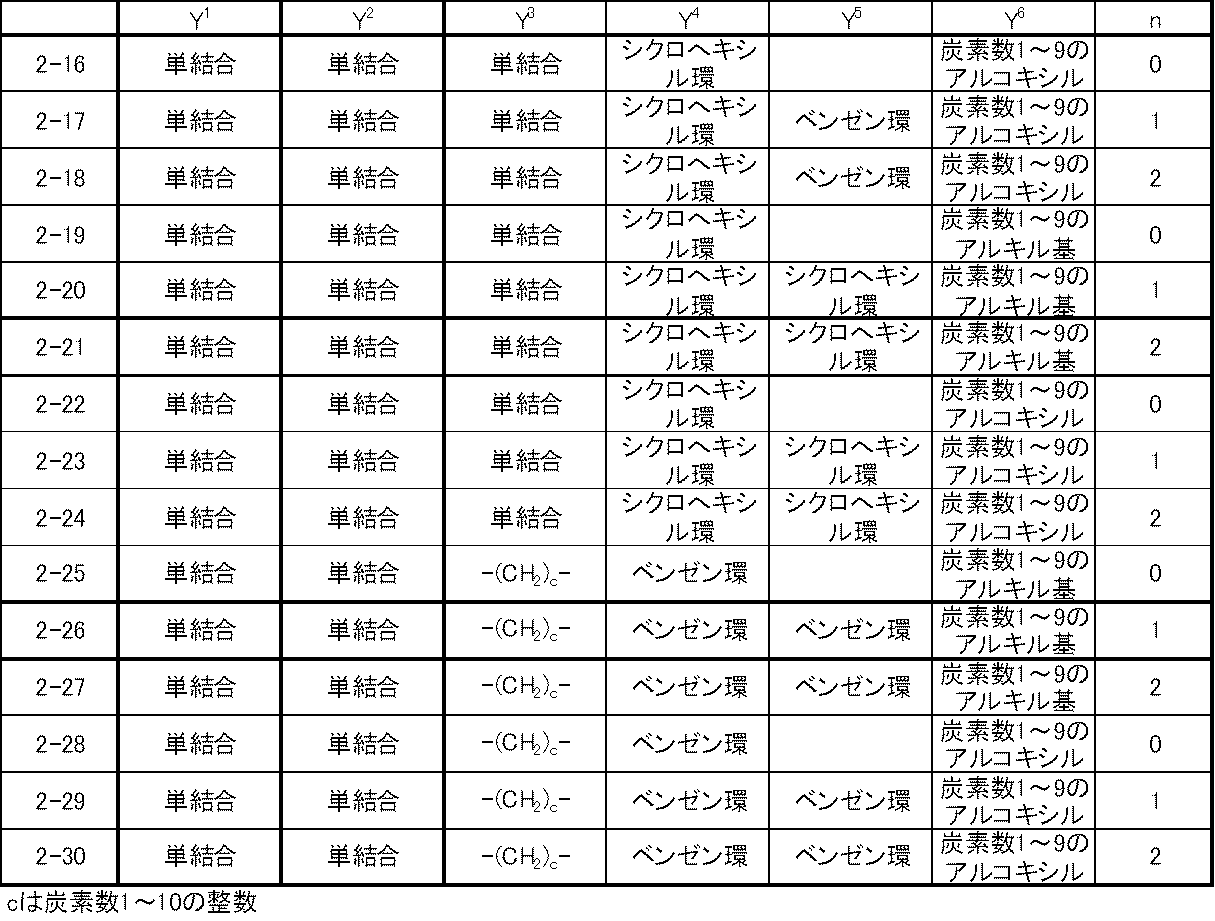
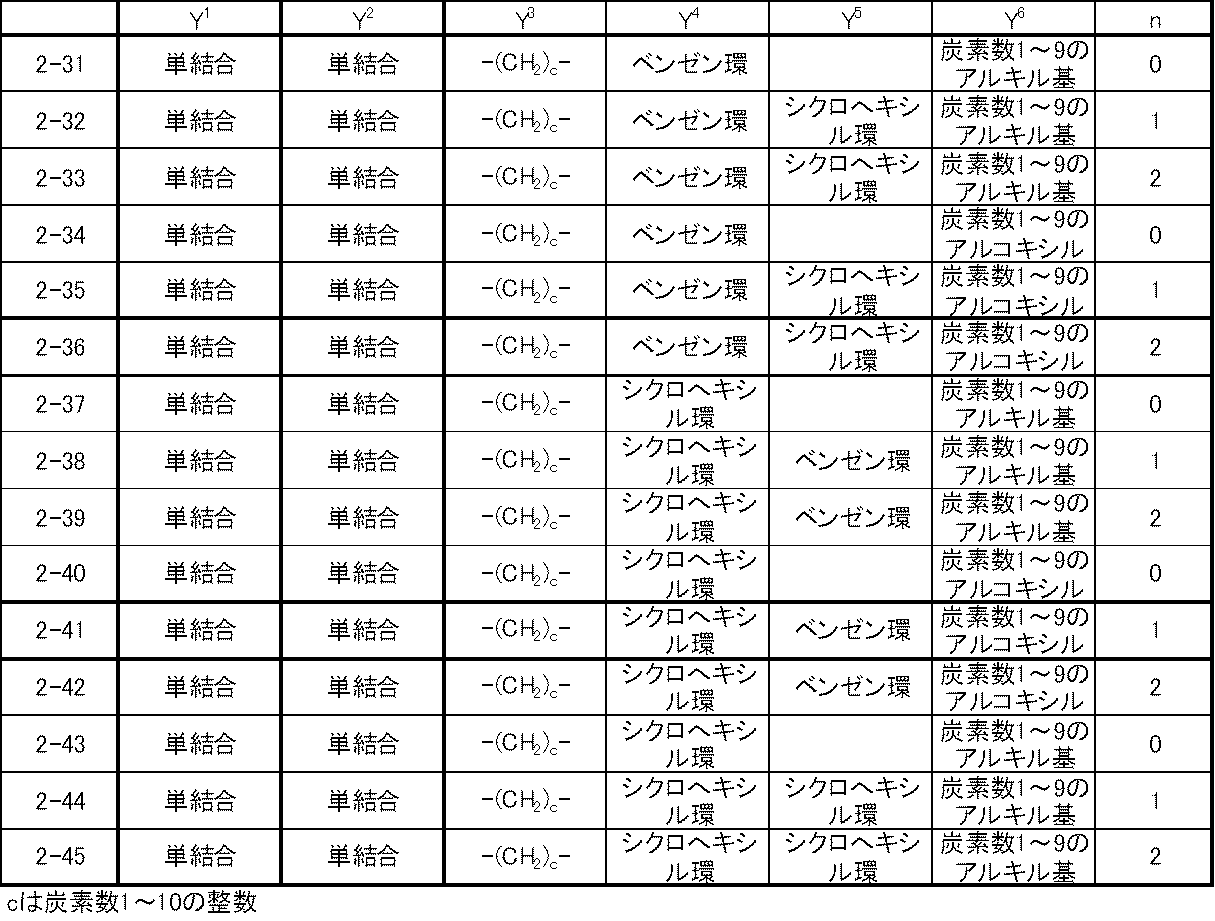

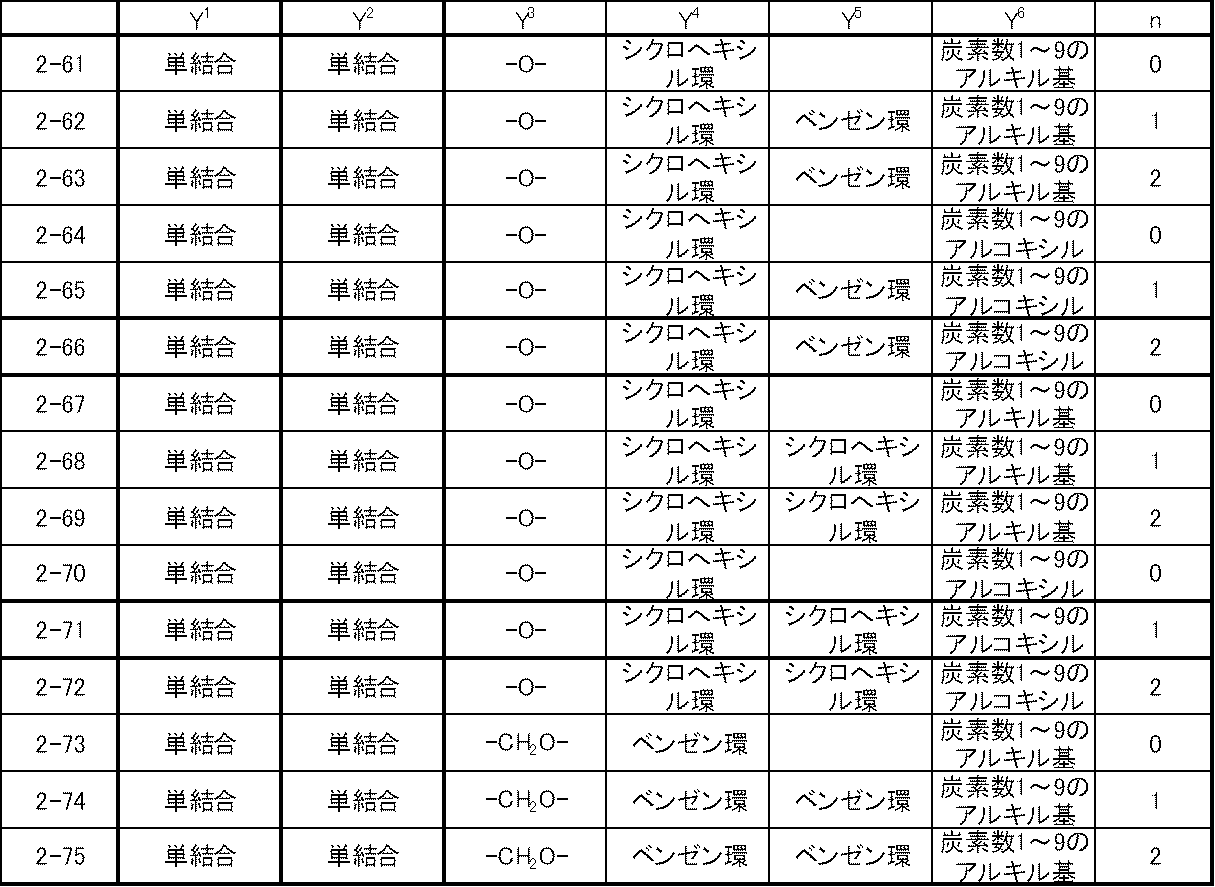
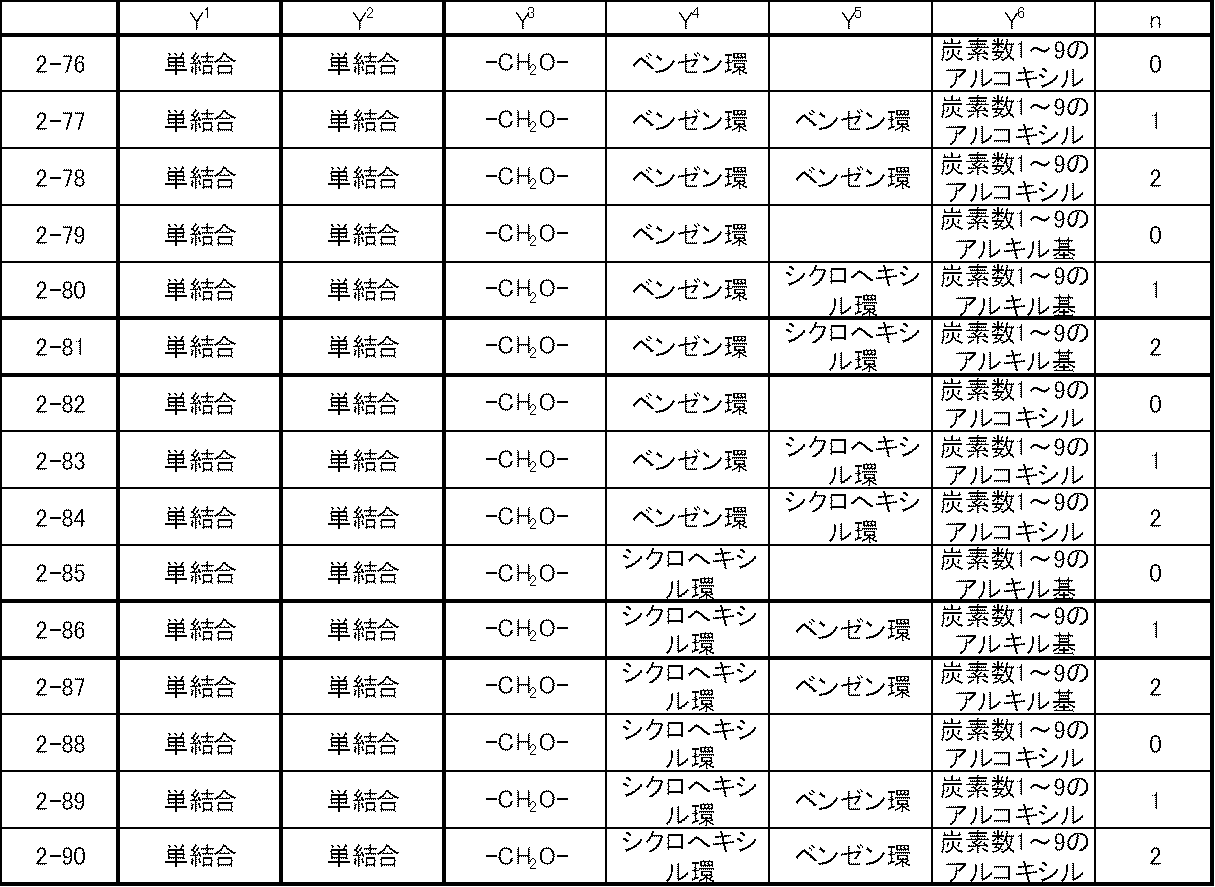
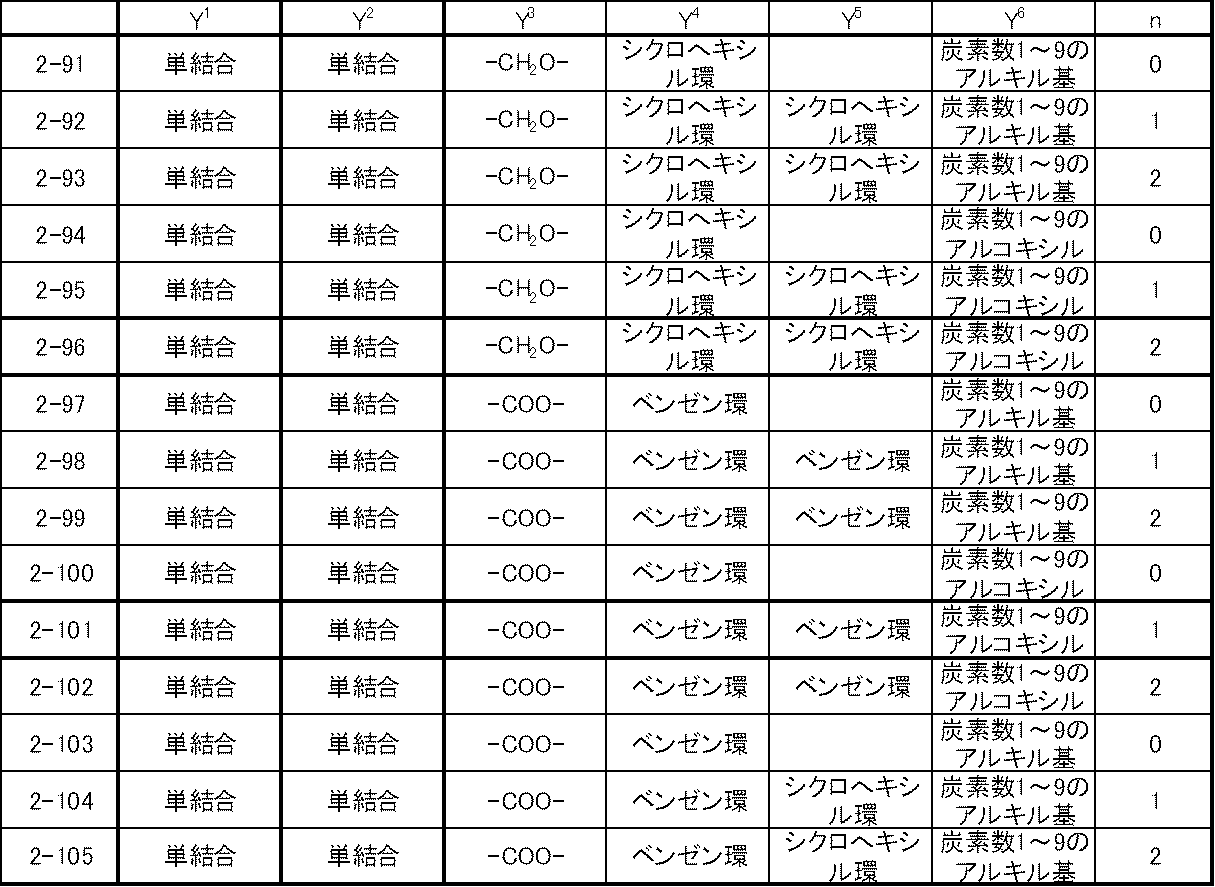
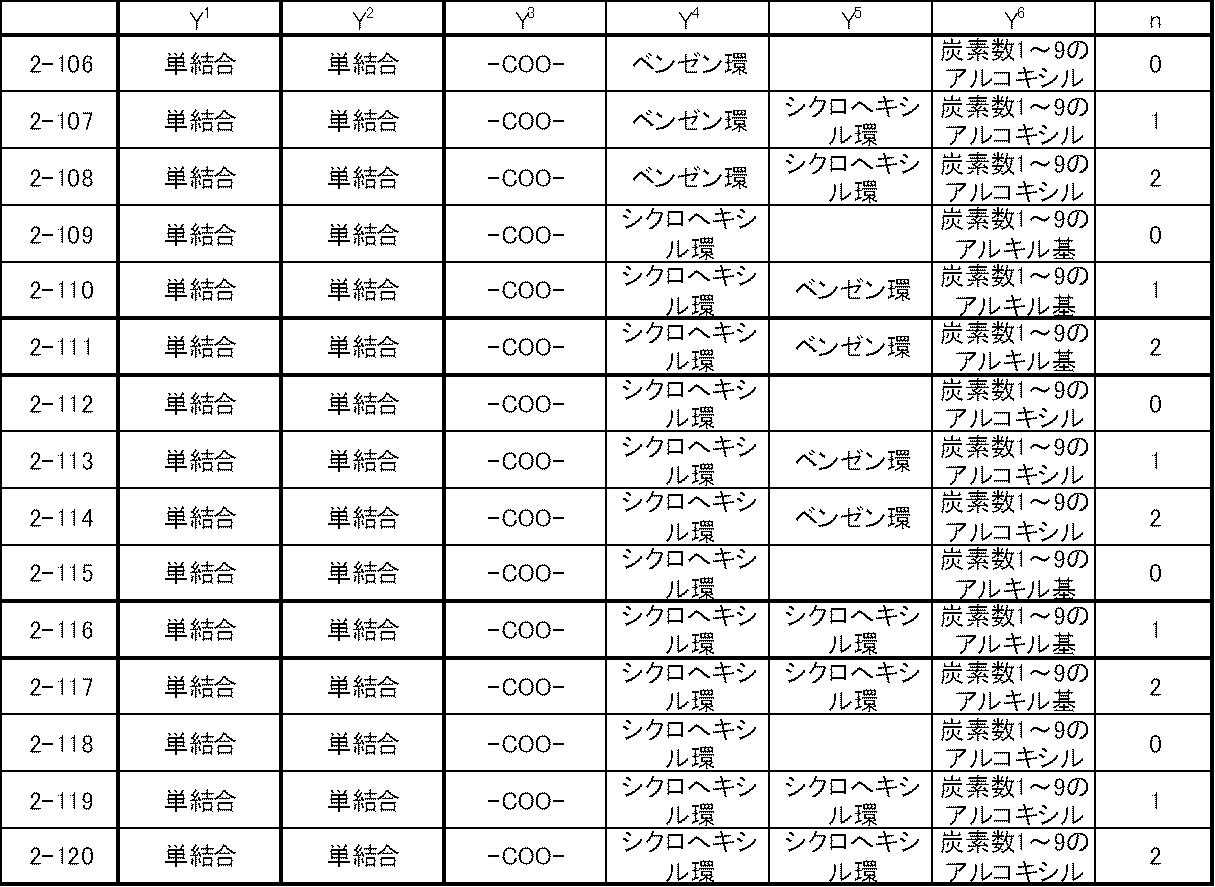

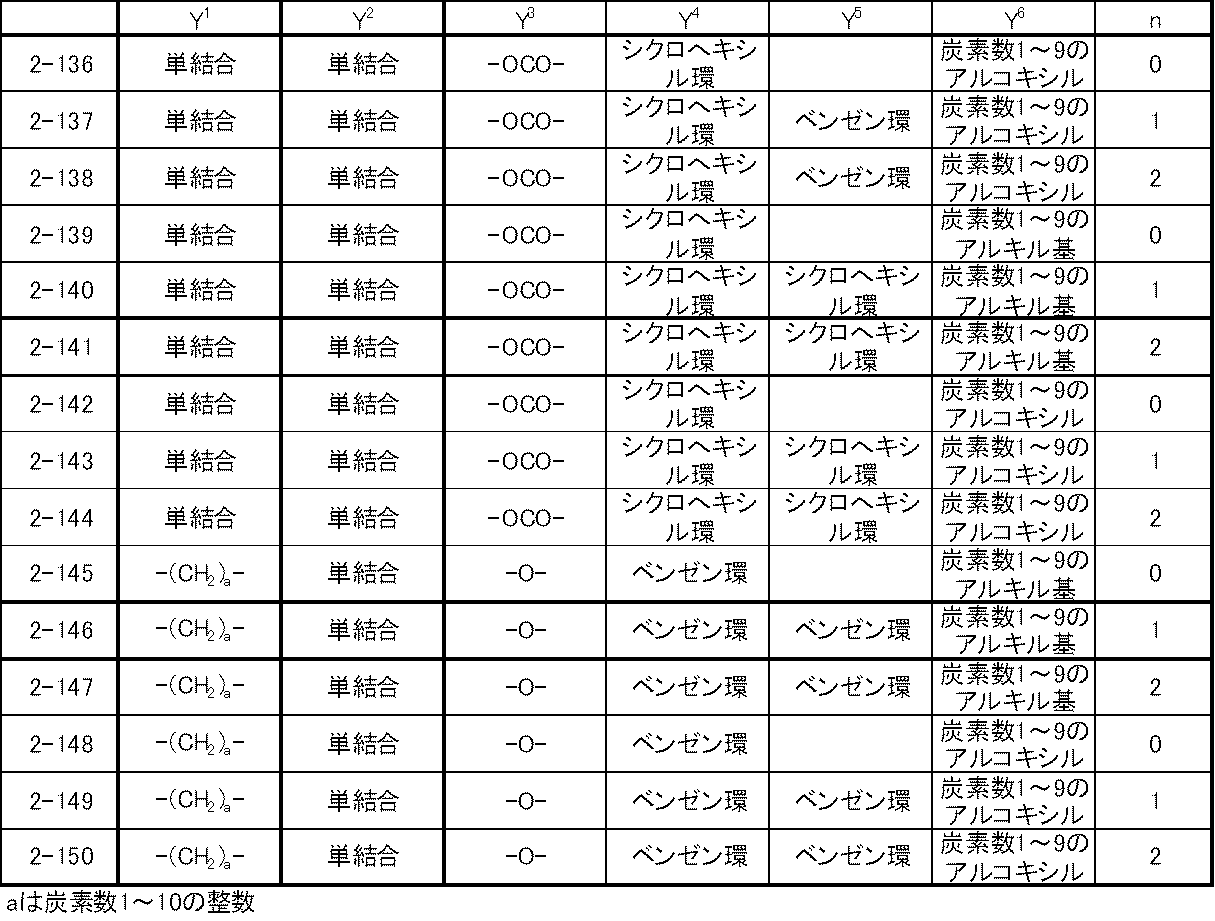
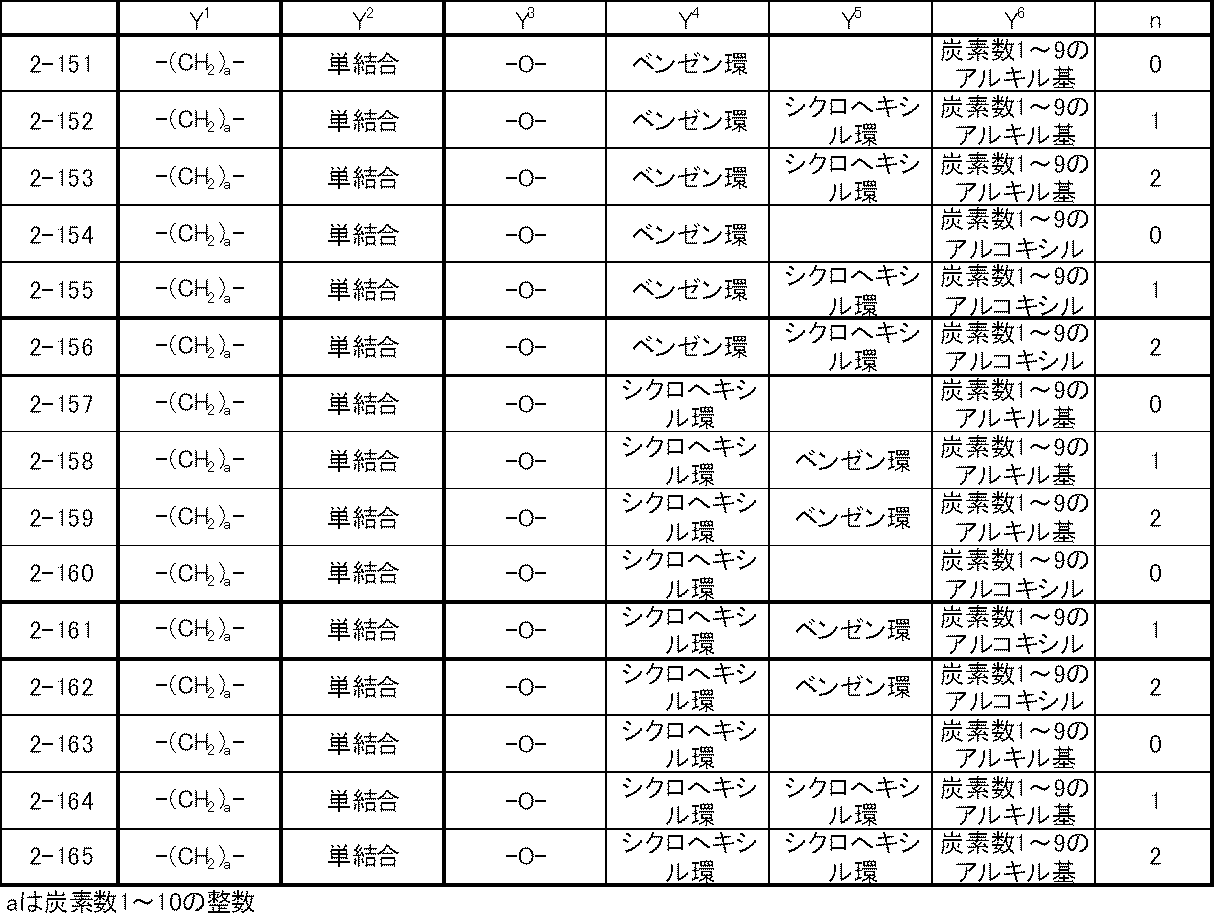

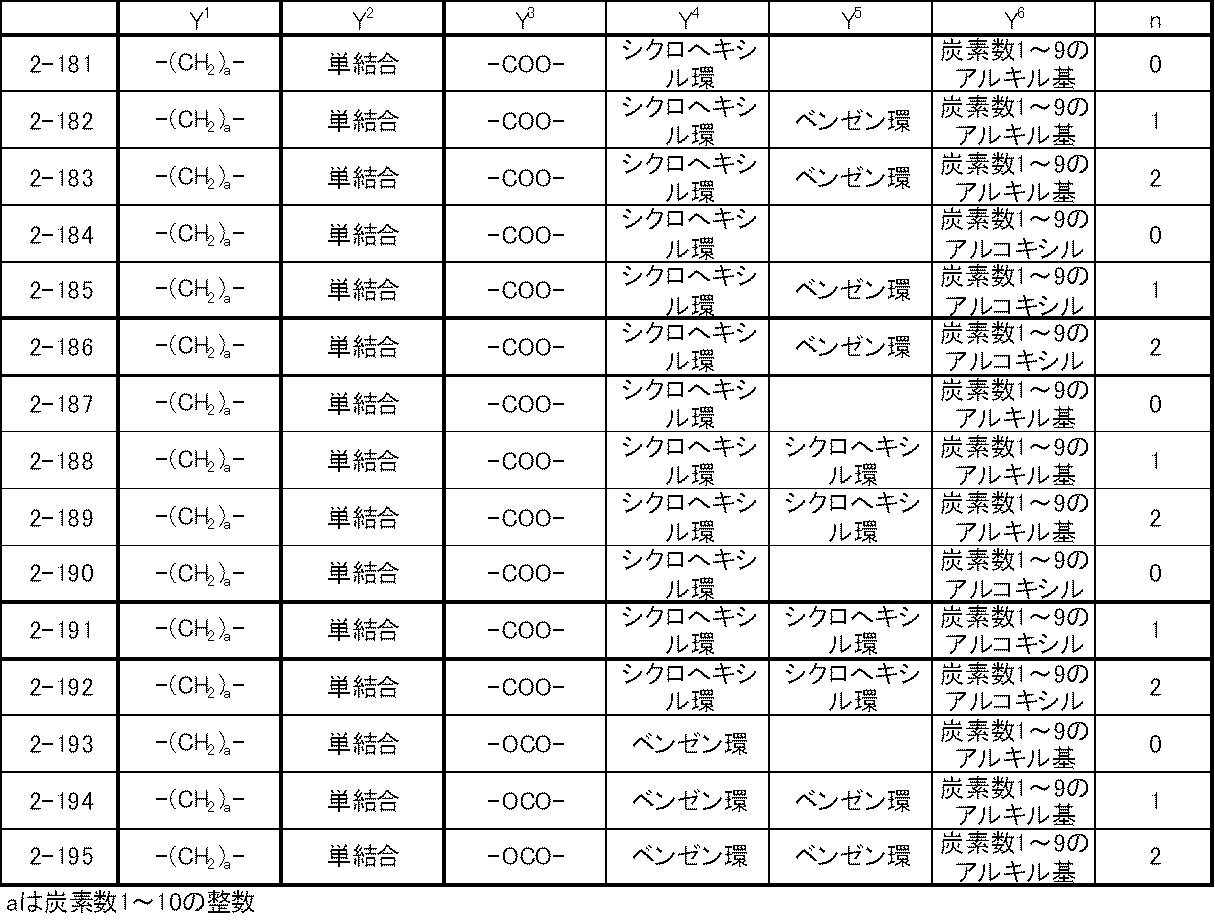


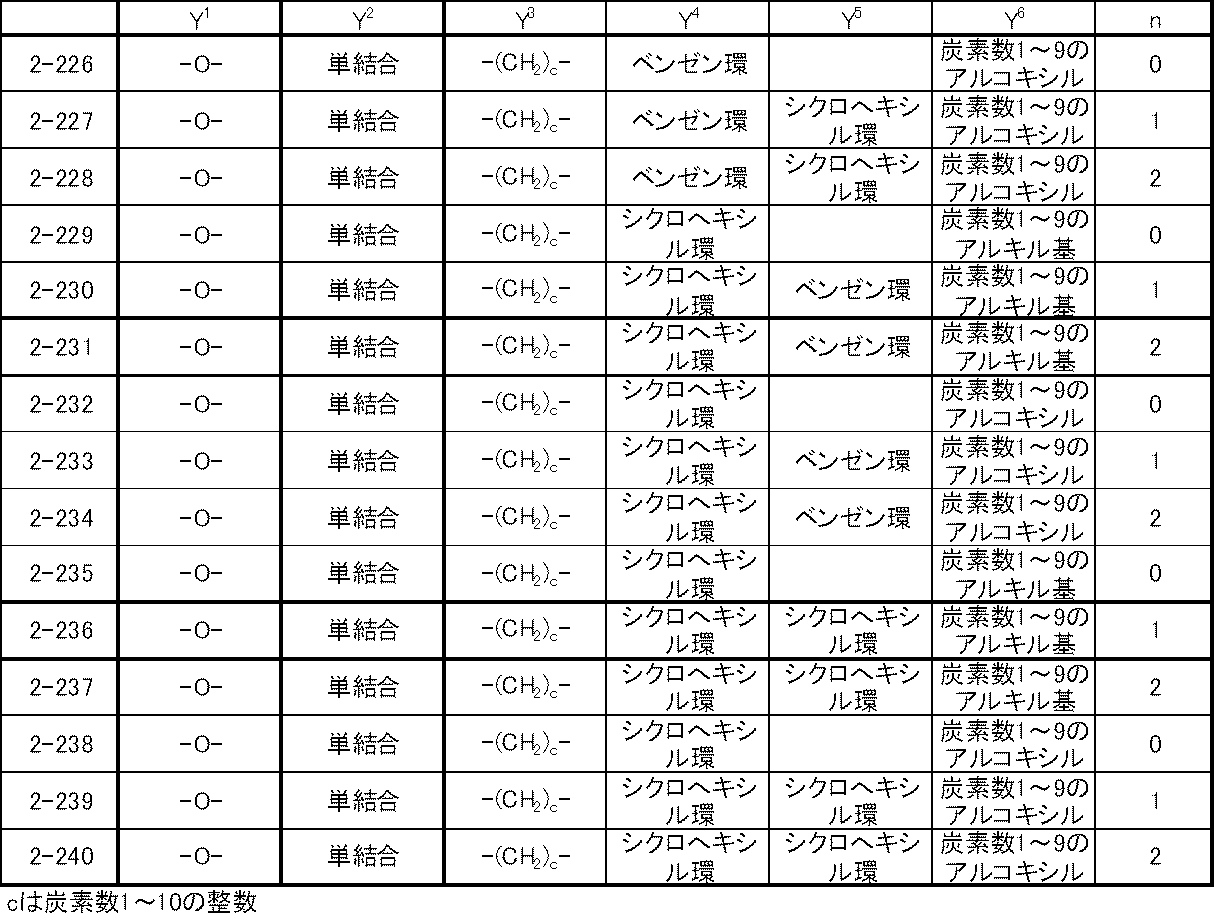
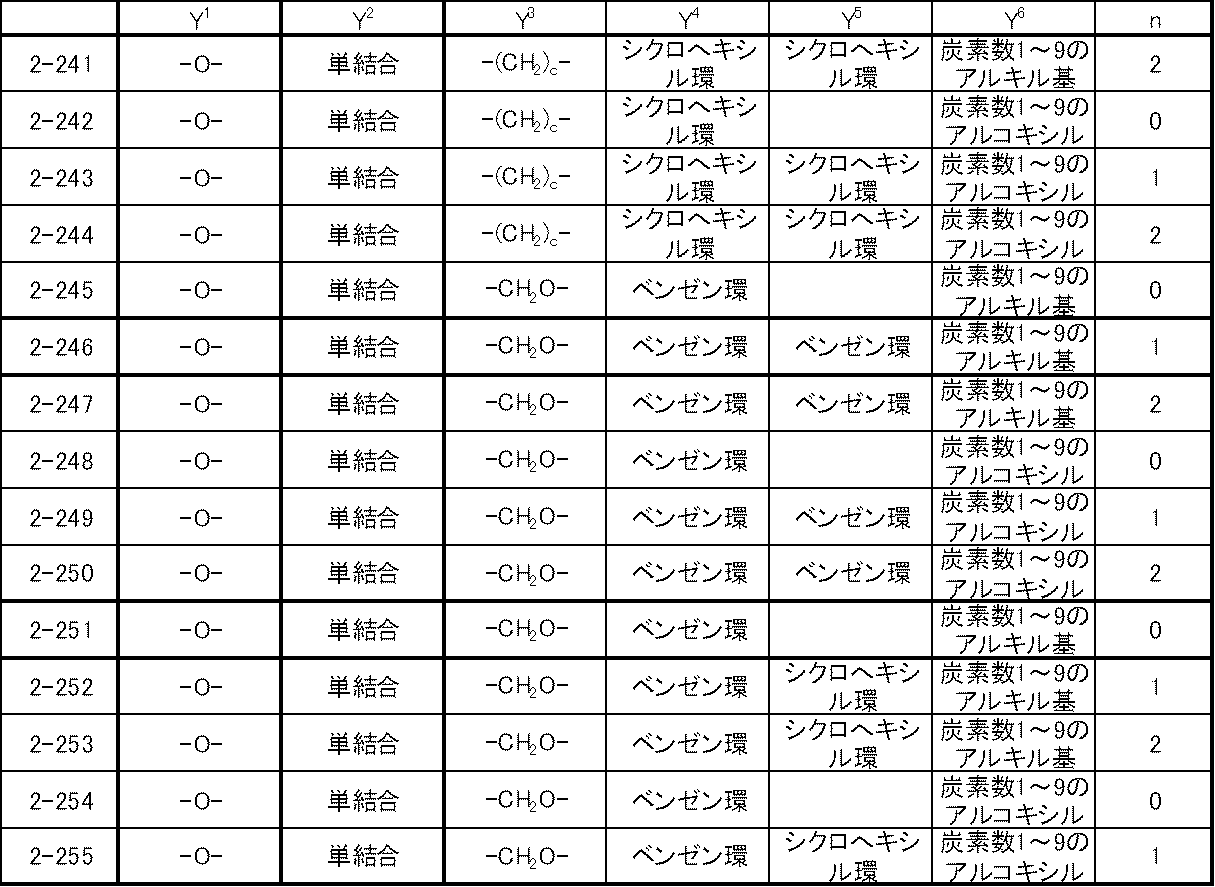

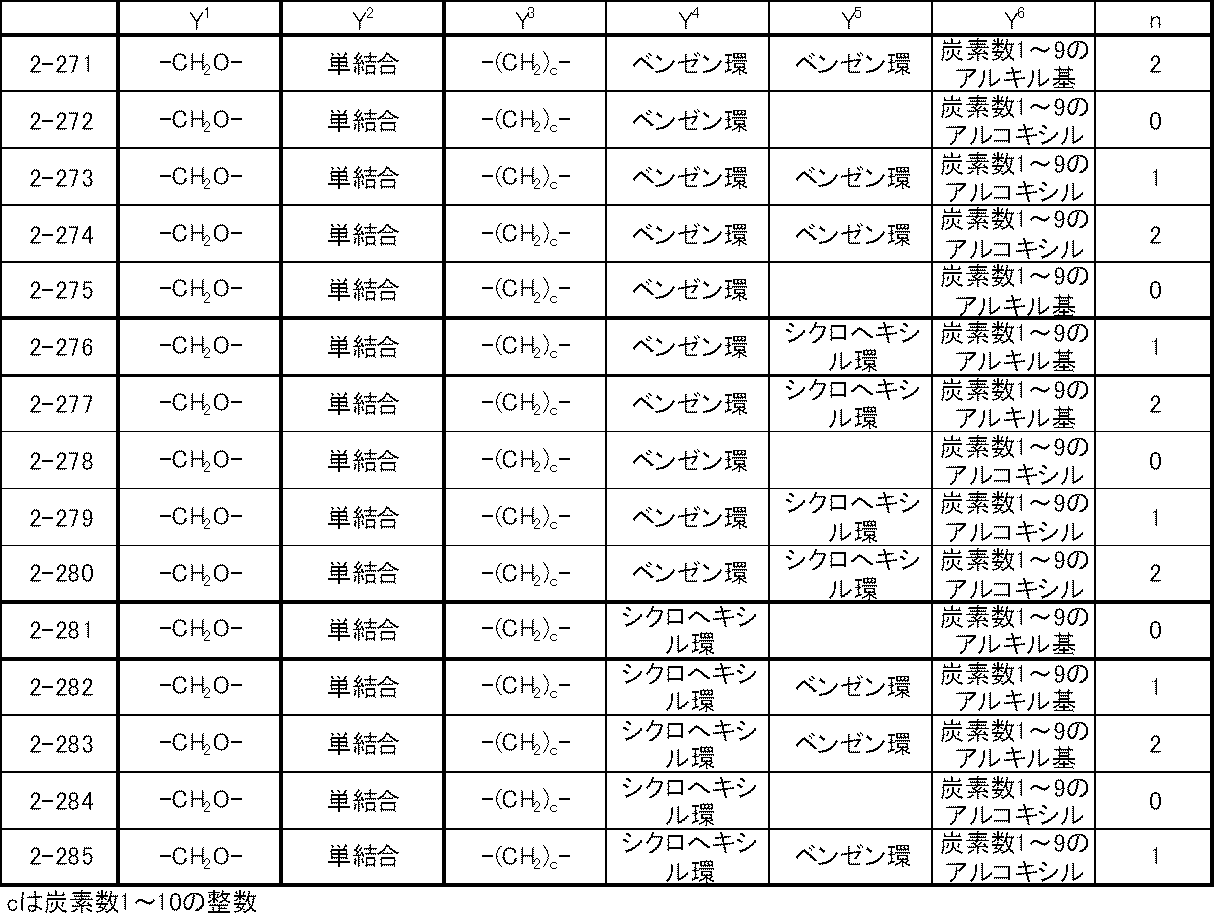


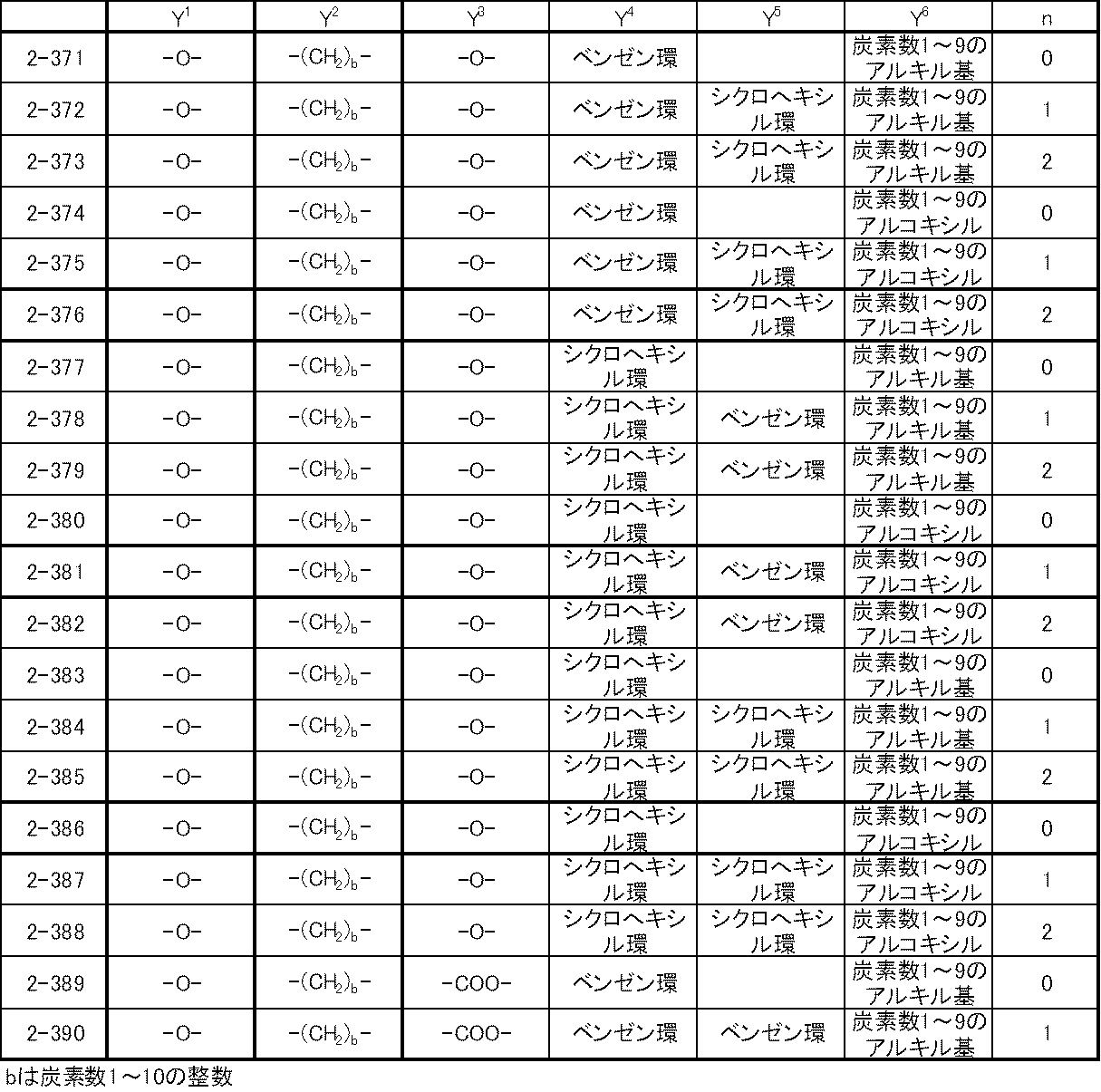
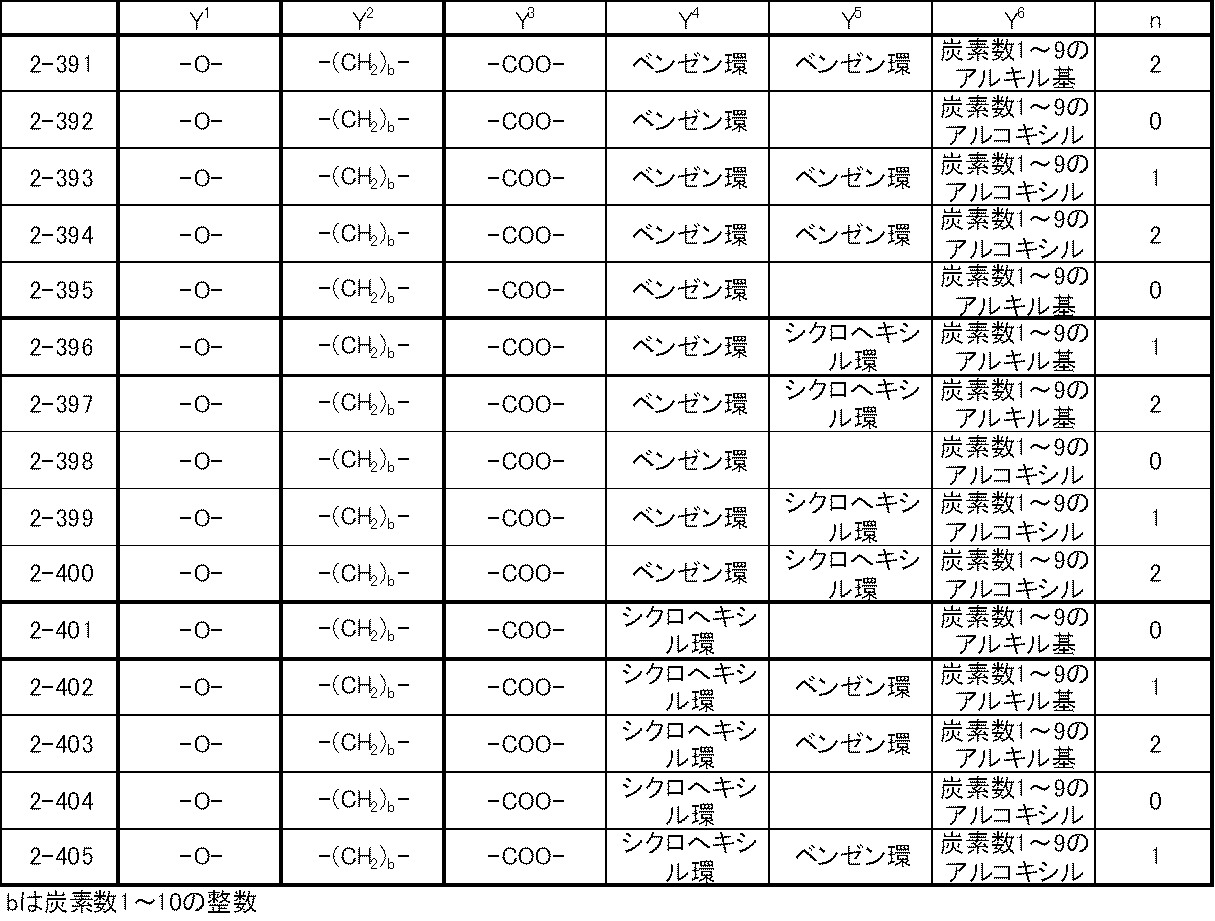
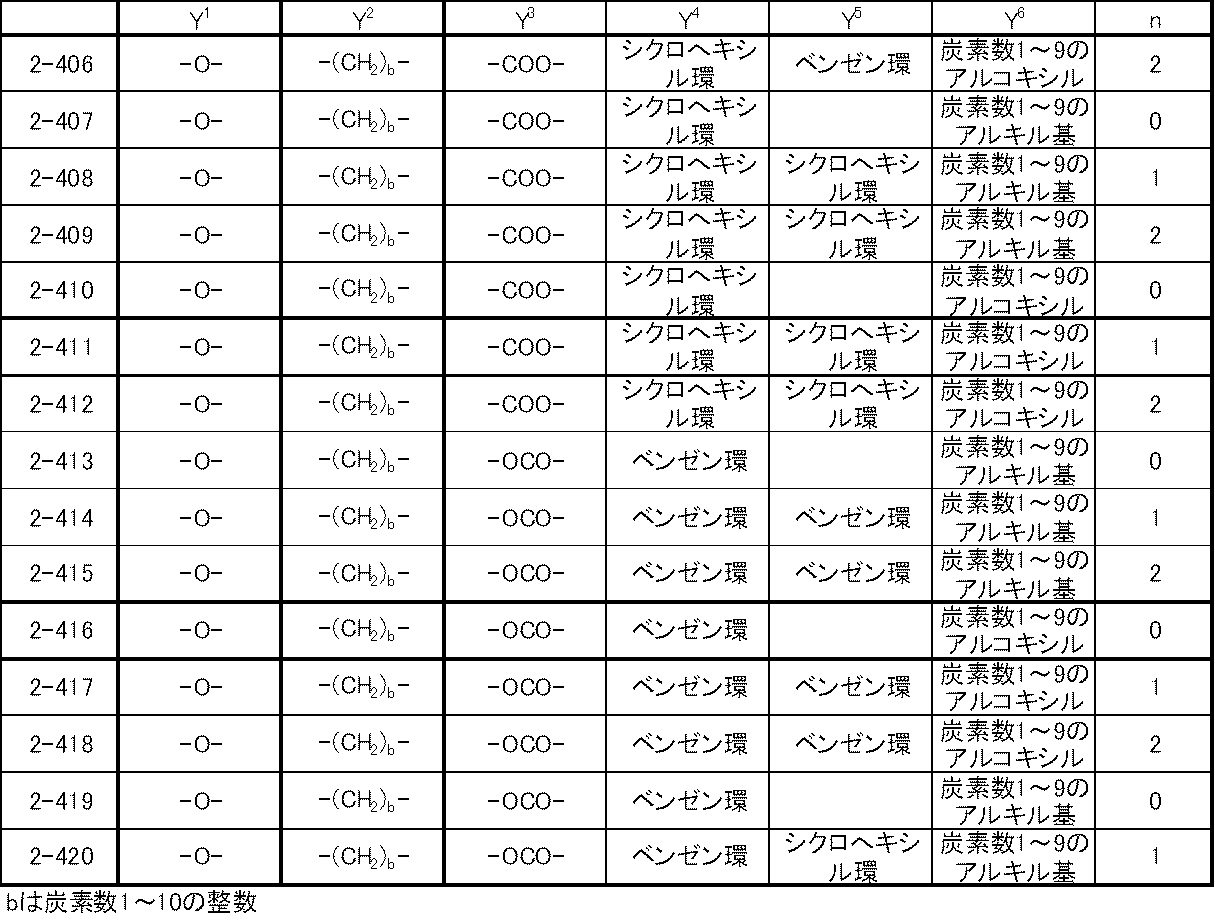
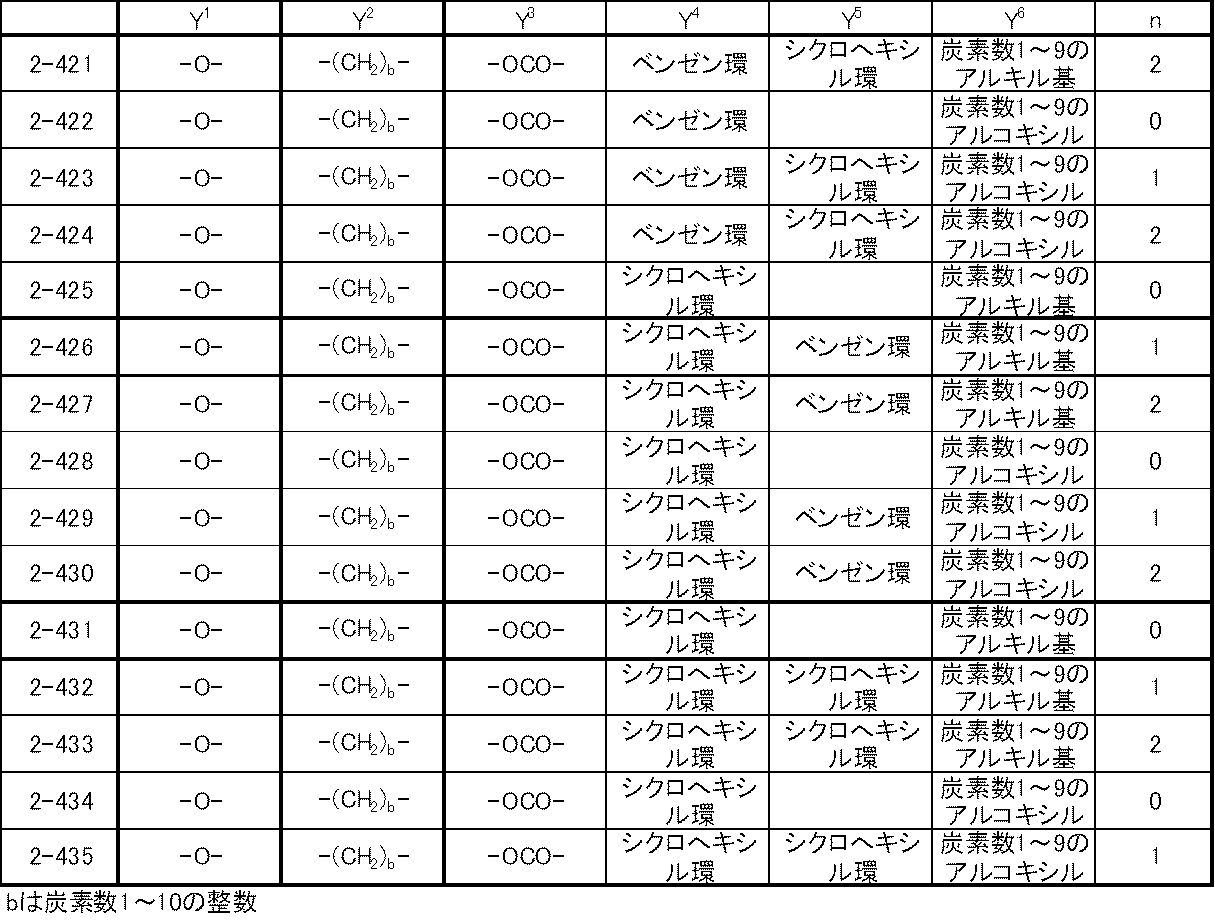


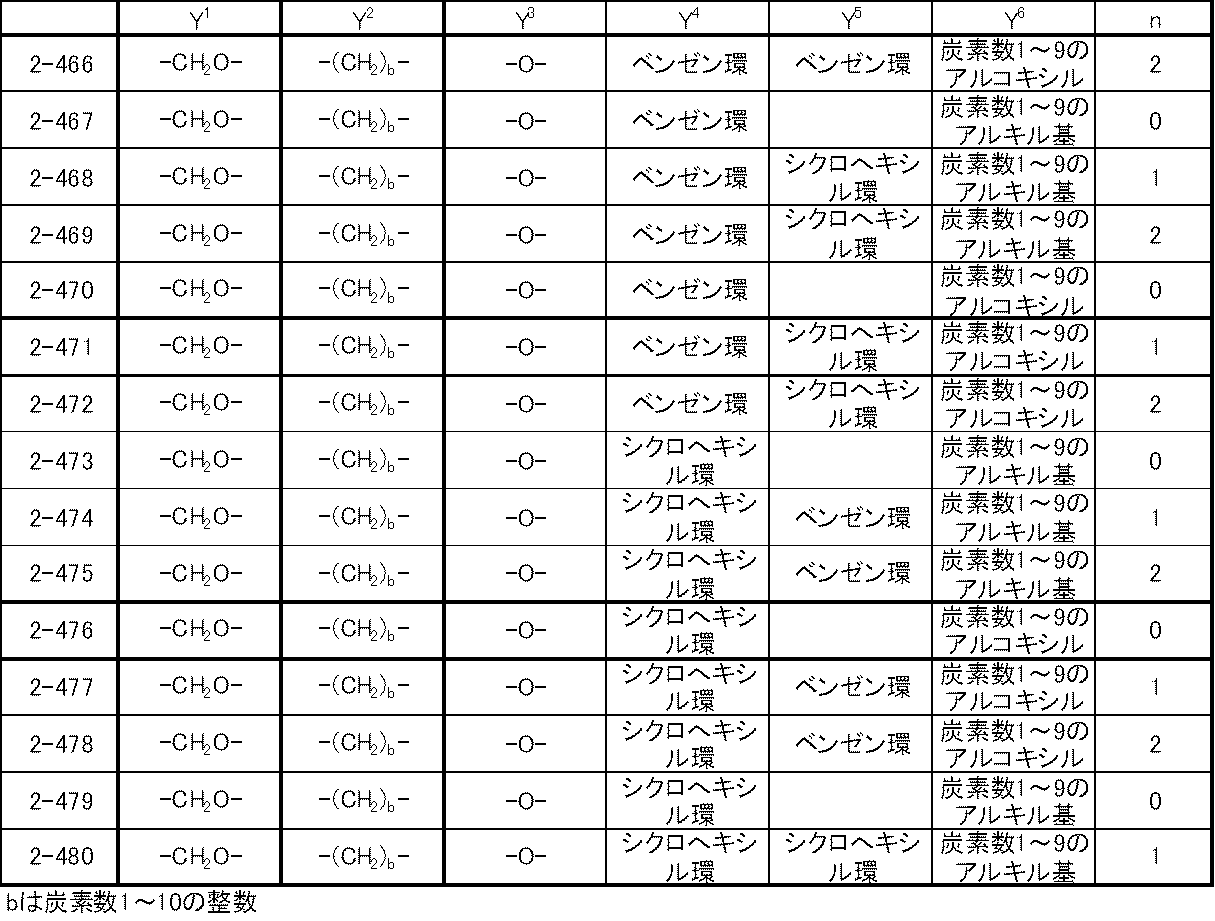

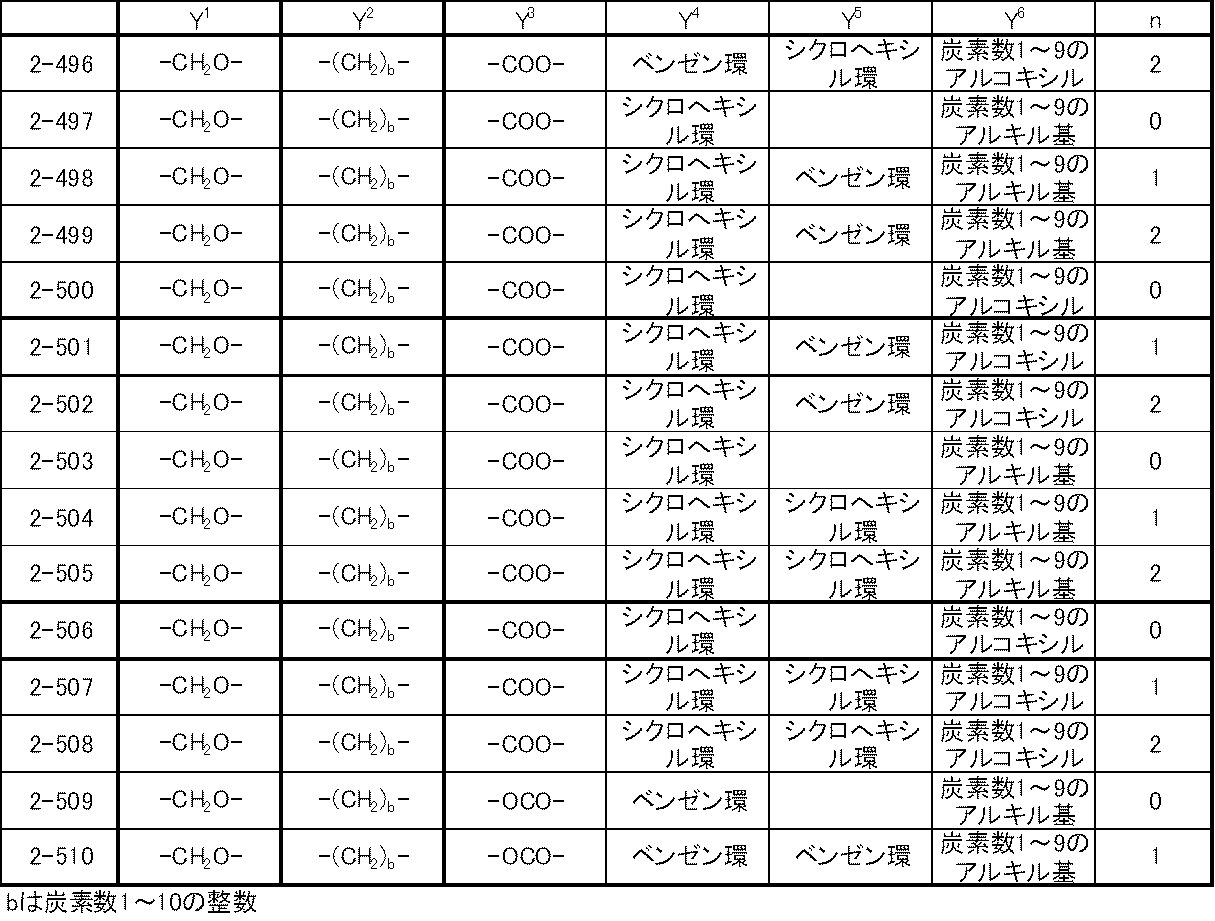


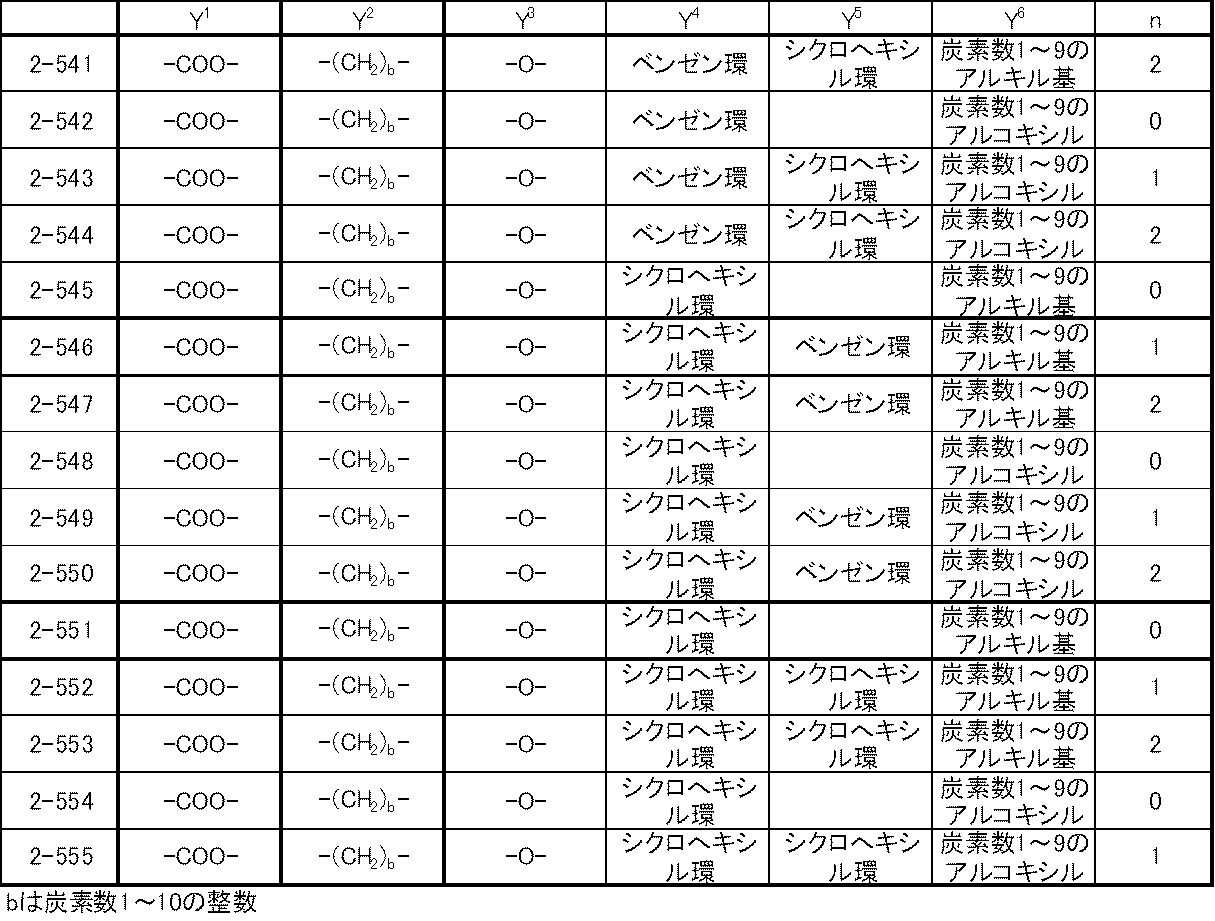

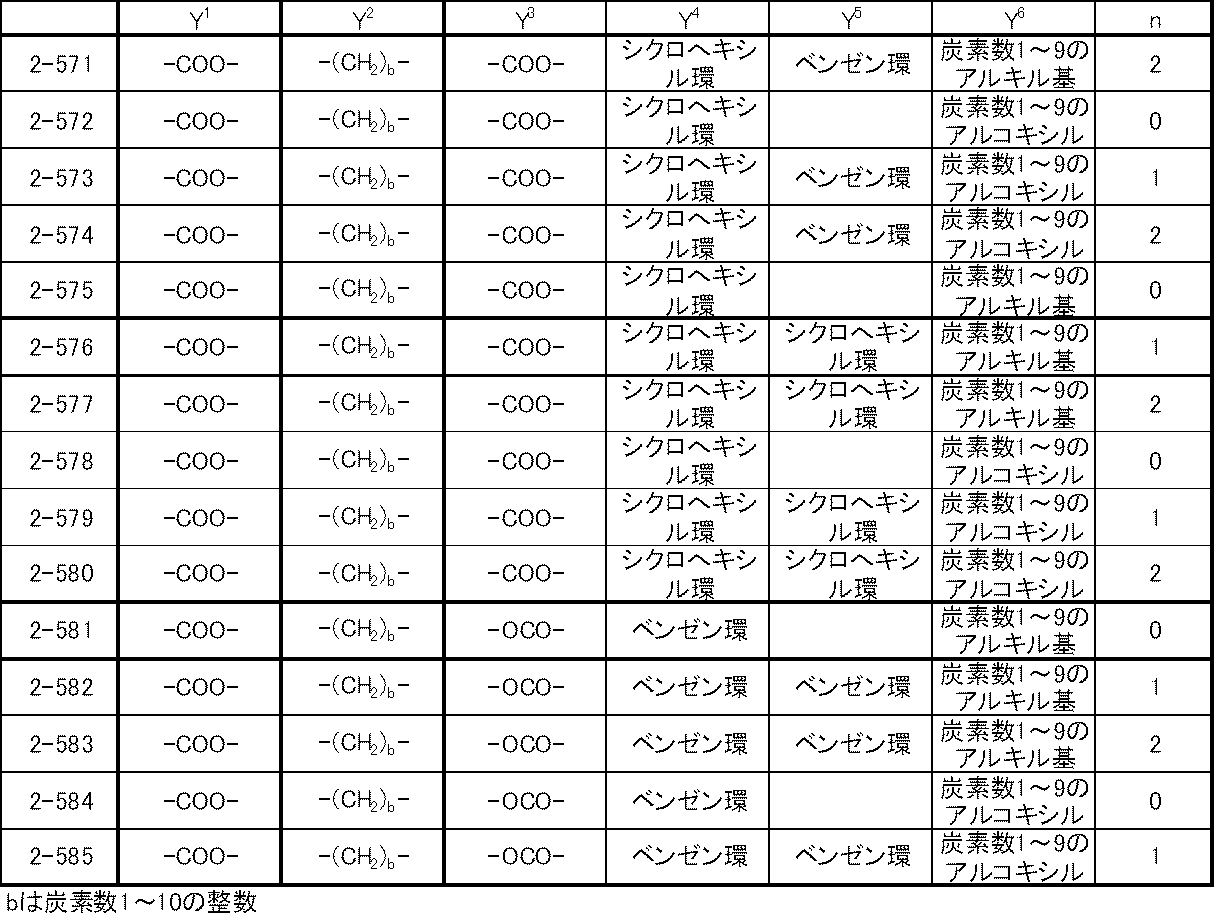
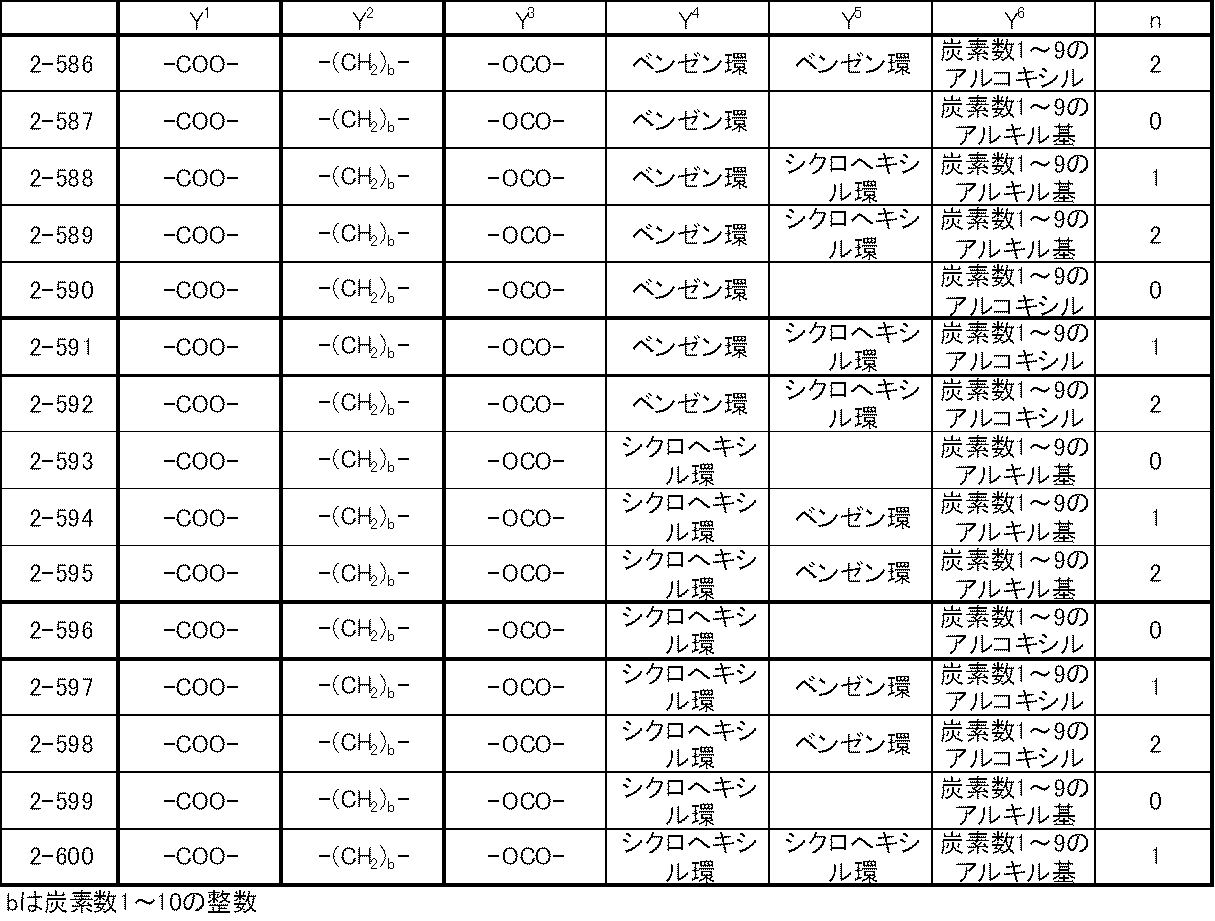
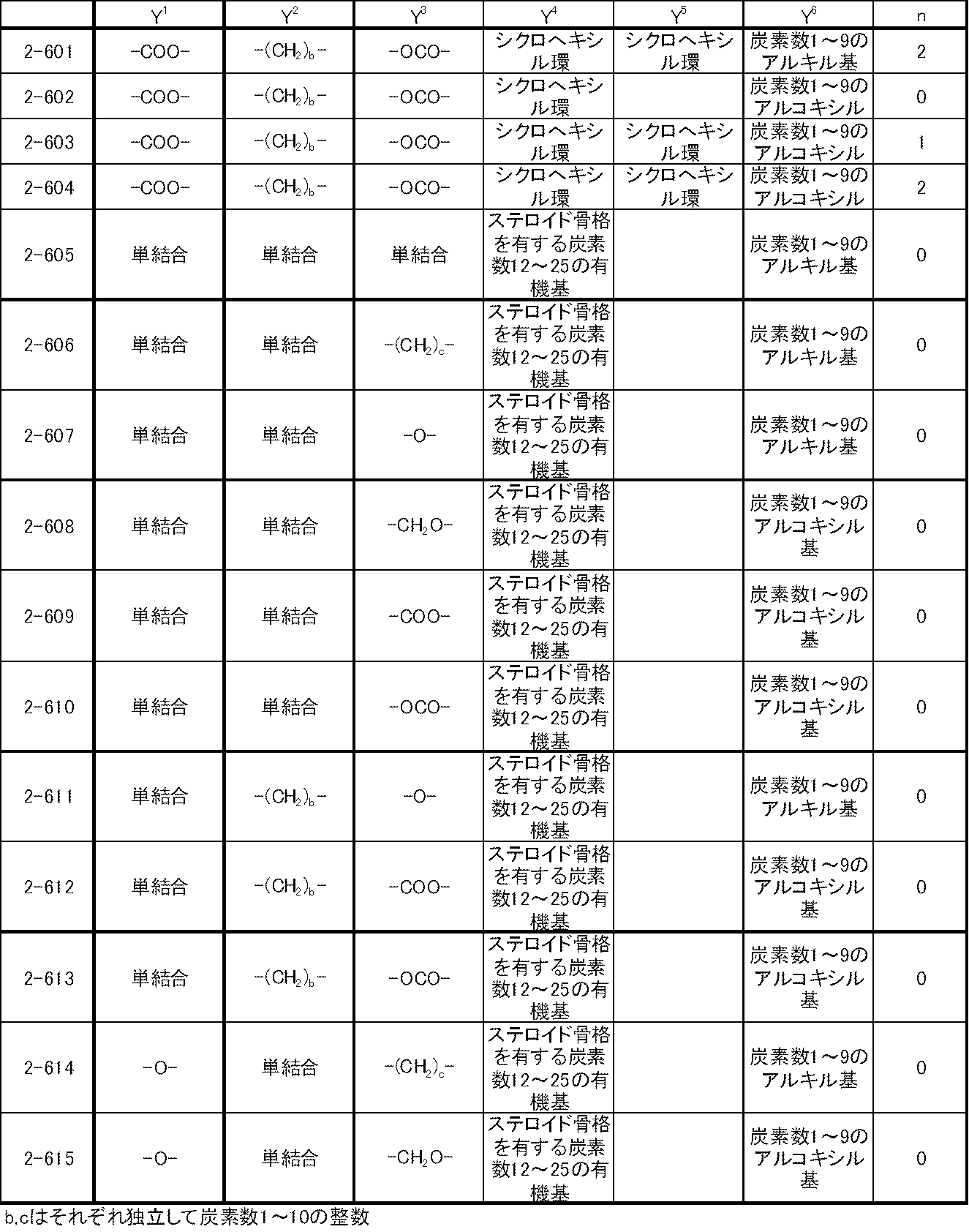

すなわち、2,3,5,6-テトラメチル-p-フェニレンジアミン、2,5-ジメチル-p-フェニレンジアミン、2,4-ジメチル-m-フェニレンジアミン、2,5-ジアミノトルエン、2,6-ジアミノトルエン、の他、下記式[2-1]~[2-31]で示されるジアミンを挙げることができる。
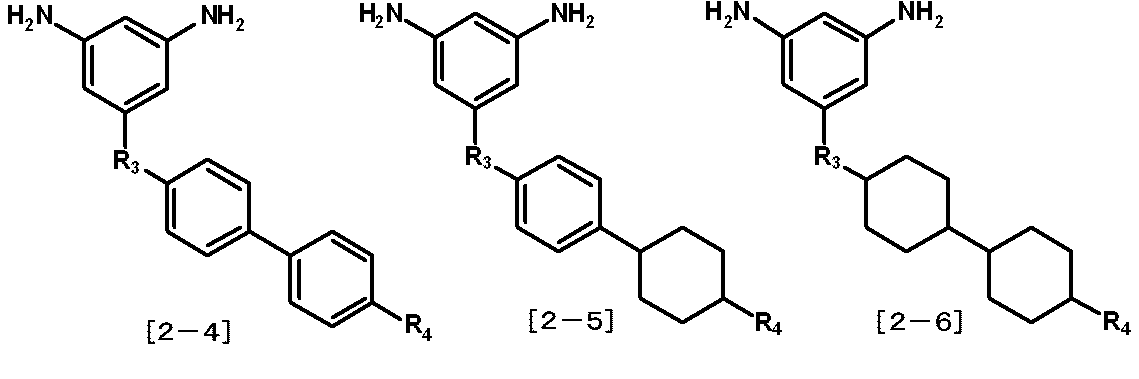

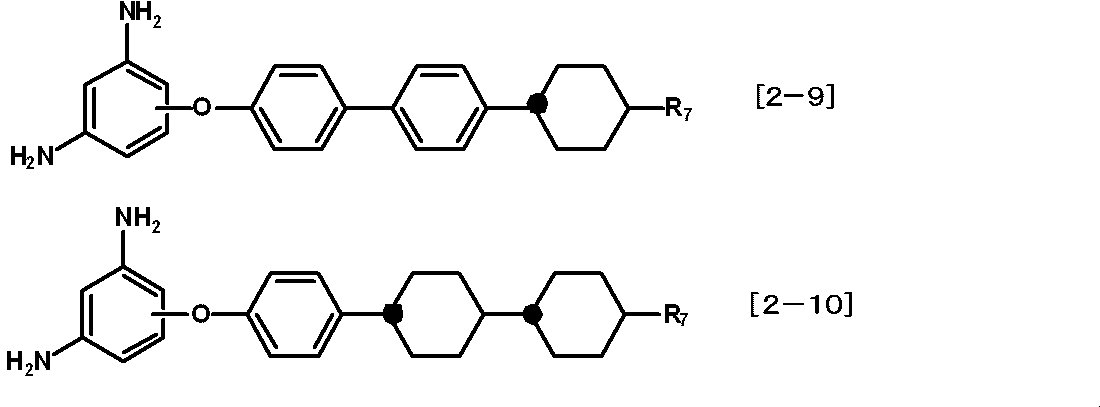

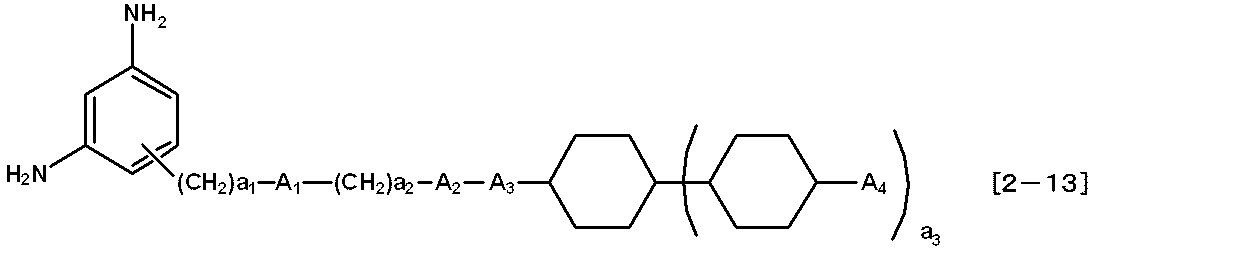


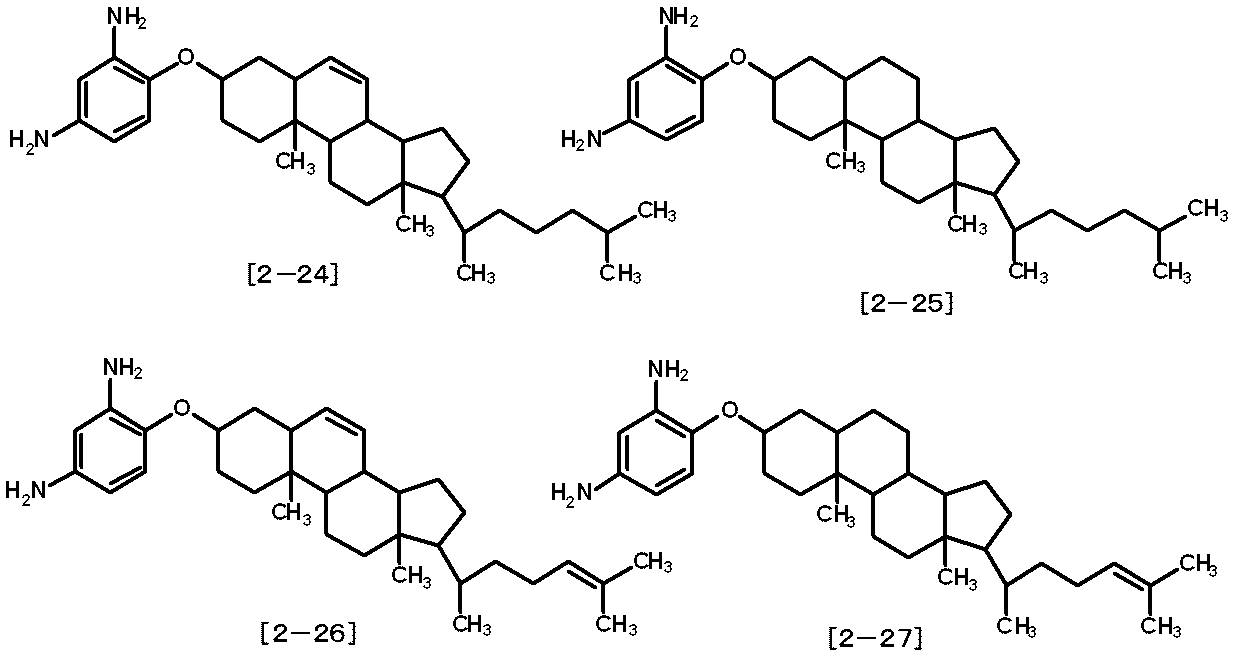

本発明の組成物は、第1のジアミンと第2のジアミンとを含むジアミン成分と、脂環構造を有するテトラカルボン酸二無水物成分とを反応させて得られるポリイミドを含有する。このとき、本発明の効果を損なわない限りにおいて、上記以外の他のジアミン(その他のジアミンともいう。)を併用できる。
上記その他のジアミンの具体例を以下に挙げる。



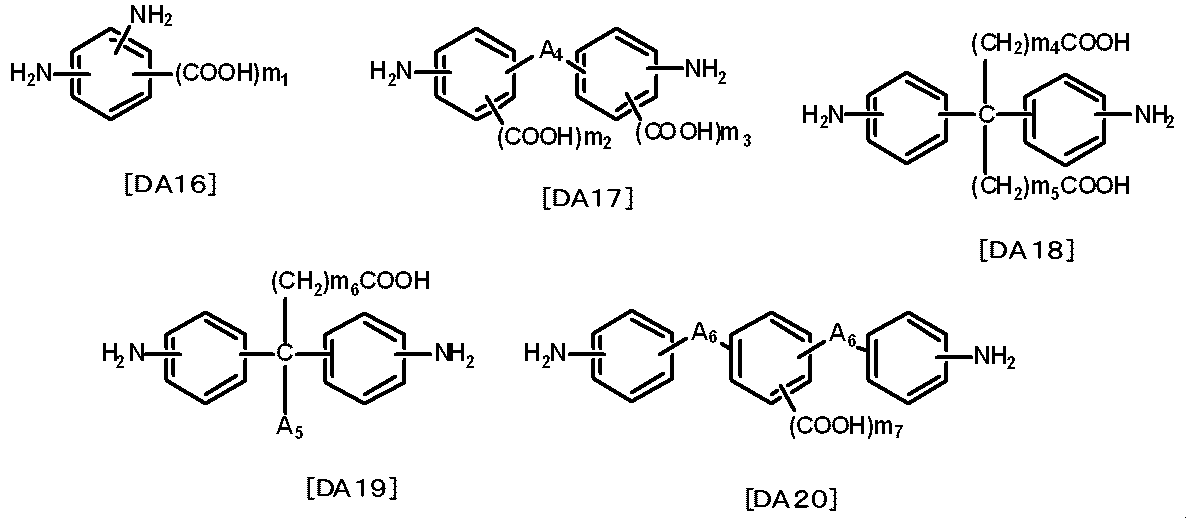
式[DA18]中、m4及びm5はそれぞれ1~5の整数である。
式[DA19]中、A5は、炭素数1~5の直鎖状若しくは分岐状アルキル基であり、m6は1~5の整数である。
式[DA20]中、A6は、単結合、-CH2-、-C2H4-、-C(CH3)2-、-CF2-、-C(CF3)-、-O-、-CO-、-NH-、-N(CH3)-、-CONH-、-NHCO-、-CH2O-、-OCH2-、-COO-、-OCO-、-CON(CH3)-又はN(CH3)CO-であり、m7は1~4の整数である。)

本発明のポリイミドを得るために、テトラカルボン酸二無水物成分として、脂環構造を有するテトラカルボン酸二無水物(特定テトラカルボン酸二無水物ともいう。)が使用される。かかる特定テトラカルボン酸二無水物としては、下記式[3]で示される脂環構造を有するテトラカルボン酸二無水物が好ましい。

具体的には、下記式[3a]~[3j]で示される構造である。

式[3g]中、Z6及びZ7は、水素原子又はメチル基であり、それぞれ同じであっても異なってもよい。
式[3]中、Z1の特に好ましい構造は、重合反応性や合成の容易性から、式[3a]、式[3c]、式[3d]、式[3e]、式[3f]又は式[3g]で示されるものである。なかでも、式[3a]又は式[3f]が好ましく、式[3a]が最も好ましい。
式[3]で表わされるテトラカルボン酸二無水物を用いる場合、その使用量はテトラカルボン酸二無水物成分の全体のうちの40質量%以上が好ましく、より好ましくは、50質量%以上である。ポリイミド合成に用いるテトラカルボン酸二無水物成分の全てを式[3]のテトラカルボン酸二無水物とすることも可能である。
その他のテトラカルボン酸二無水物の具体例としては、例えば、ピロメリット酸、2,3,6,7-ナフタレンテトラカルボン酸、1,2,5,6-ナフタレンテトラカルボン酸、1,4,5,8-ナフタレンテトラカルボン酸、2,3,6,7-アントラセンテトラカルボン酸、1,2,5,6-アントラセンテトラカルボン酸、3,3’,4,4’-ビフェニルテトラカルボン酸、2,3,3’,4-ビフェニルテトラカルボン酸、ビス(3,4-ジカルボキシフェニル)エーテル、3,3’,4,4’-ベンゾフェノンテトラカルボン酸、ビス(3,4-ジカルボキシフェニル)スルホン、ビス(3,4-ジカルボキシフェニル)メタン、2,2-ビス(3,4-ジカルボキシフェニル)プロパン、1,1,1,3,3,3-ヘキサフルオロ-2,2-ビス(3,4-ジカルボキシフェニル)プロパン、ビス(3,4-ジカルボキシフェニル)ジメチルシラン、ビス(3,4-ジカルボキシフェニル)ジフェニルシラン、2,3,4,5-ピリジンテトラカルボン酸、2,6-ビス(3,4-ジカルボキシフェニル)ピリジン、3,3’,4,4’-ジフェニルスルホンテトラカルボン酸、3,4,9,10-ペリレンテトラカルボン酸、1,3-ジフェニル-1,2,3,4-シクロブタンテトラカルボン酸などが挙げられる。
本発明の組成物で使用されるポリイミド前駆体及びポリイミドは、好ましくは以下のようにして得られる。ここで、ポリイミド前駆体とは、ポリイミド酸(ポリアミック酸ともいう。)を表す。すなわち、ポリイミド前駆体は、上記の式[1]で示される第1のジアミンと上記の式[2]で示される第2のジアミンとを含むジアミン成分と、上記した脂環構造を有するテトラカルボン酸二無水物成分とを反応させることにより得られる。
ポリイミド前駆体を溶液中で熱イミド化させる場合の温度は、100~400℃、好ましくは120~250℃である。ポリイミド前駆体のイミド化においては、イミド化反応により生成する水を反応系外に除きながら行うことが好ましい。
ポリイミド前駆体の触媒イミド化は、ポリイミド前駆体の溶液に、塩基性触媒と酸無水物とを添加し、-20~250℃、好ましくは0~180℃で攪拌することにより行うことができる。塩基性触媒の量は、アミド酸基の0.5~30モル倍、好ましくは2~20モル倍であり、酸無水物の量は、アミド酸基の1~50モル倍、好ましくは3~30モル倍である。
本発明の膜形成用の組成物、例えば、液晶配向処理剤は、上記のように得られる本発明のイミド重合体と、該ポリイミド重合体を溶解させた溶媒と、含有する組成物である。組成物に含有される本発明のポリイミド重合体の含有量は、1~20質量%が好ましく、より好ましくは3~15質量%、特に好ましくは3~10質量%である。
本発明では、組成物に含まれる重合体成分の全てが本発明のポリイミドであってもよいが、本発明のポリイミドに加えて、上記した第1のジアミン及び第2のジアミンを含むジアミン成分と、脂環構造を有するテトラカルボン酸二無水物とから合成されたポリイミド以外の、他の構造のポリイミドが含有されていてもよい。その際、重合体成分中における他の構造のポリイミドの含有量は、0.5~15質量%とすることができ、好ましくは1~10質量%である。
これらの他の有機溶媒を含有させる場合でも、環状ケトン溶媒の含有量は、全溶媒中、50質量%以上が好ましく、より好ましくは、60質量%以上であり、特に好ましくは、70質量%以上である。
具体例としては、次のものが挙げられる。例えば、イソプロピルアルコール、メトキシメチルペンタノール、メチルセロソルブ、エチルセロソルブ、ブチルセロソルブ、メチルセロソルブアセテート、エチルセロソルブアセテート、ブチルカルビトール、エチルカルビトール、エチルカルビトールアセテート、エチレングリコール、エチレングリコールモノアセテート、エチレングリコールモノイソプロピルエーテル、エチレングリコールモノブチルエーテル、プロピレングリコール、プロピレングリコールモノアセテート、プロピレングリコールモノメチルエーテル、プロピレングリコール-tert-ブチルエーテル、ジプロピレングリコールモノメチルエーテル、ジエチレングリコール、ジエチレングリコールモノアセテート、ジエチレングリコールジメチルエーテル、ジプロピレングリコールモノアセテートモノメチルエーテル、ジプロピレングリコールモノメチルエーテル、ジプロピレングリコールモノエチルエーテル、ジプロピレングリコールモノアセテートモノエチルエーテル、ジプロピレングリコールモノプロピルエーテル、ジプロピレングリコールモノアセテートモノプロピルエーテル、3-メチル-3-メトキシブチルアセテート、トリプロピレングリコールメチルエーテル、3-メチル-3-メトキシブタノール、ジイソプロピルエーテル、エチルイソブチルエーテル、ジイソブチレン、アミルアセテート、ブチルブチレート、ブチルエーテル、ジイソブチルケトン、メチルシクロへキセン、プロピルエーテル、ジヘキシルエーテル、n-へキサン、n-ペンタン、n-オクタン、ジエチルエーテル、乳酸メチル、乳酸エチル、酢酸メチル、酢酸エチル、酢酸n-ブチル、酢酸プロピレングリコールモノエチルエーテル、ピルビン酸メチル、ピルビン酸エチル、3-メトキシプロピオン酸メチル、3-エトキシプロピオン酸メチルエチル、3-メトキシプロピオン酸エチル、3-エトキシプロピオン酸、3-メトキシプロピオン酸、3-メトキシプロピオン酸プロピル、3-メトキシプロピオン酸ブチル、1-メトキシ-2-プロパノール、1-エトキシ-2-プロパノール、1-ブトキシ-2-プロパノール、1-フェノキシ-2-プロパノール、プロピレングリコールモノアセテート、プロピレングリコールジアセテート、プロピレングリコール-1-モノメチルエーテル-2-アセテート、プロピレングリコール-1-モノエチルエーテル-2-アセテート、ジプロピレングリコール、2-(2-エトキシプロポキシ)プロパノール、乳酸メチルエステル、乳酸エチルエステル、乳酸n-プロピルエステル、乳酸n-ブチルエステル、乳酸イソアミルエステルなどの低表面張力を有する溶媒などである。これらの貧溶媒は、1種類で用いてもよく、複数種類を混合して用いてもよい。




ヒドロキシル基若しくはアルコキシル基を有するベンゼン又はフェノール性化合物としては、例えば、1,3,5-トリス(メトキシメチル)ベンゼン、1,2,4-トリス(イソプロポキシメチル)ベンゼン、1,4-ビス(sec-ブトキシメチル)ベンゼン、2,6-ジヒドロキシメチル-p-tert-ブチルフェノール等が挙げられる。
具体的には、下記式[6-1]~[6-48]で示される架橋性化合物である。
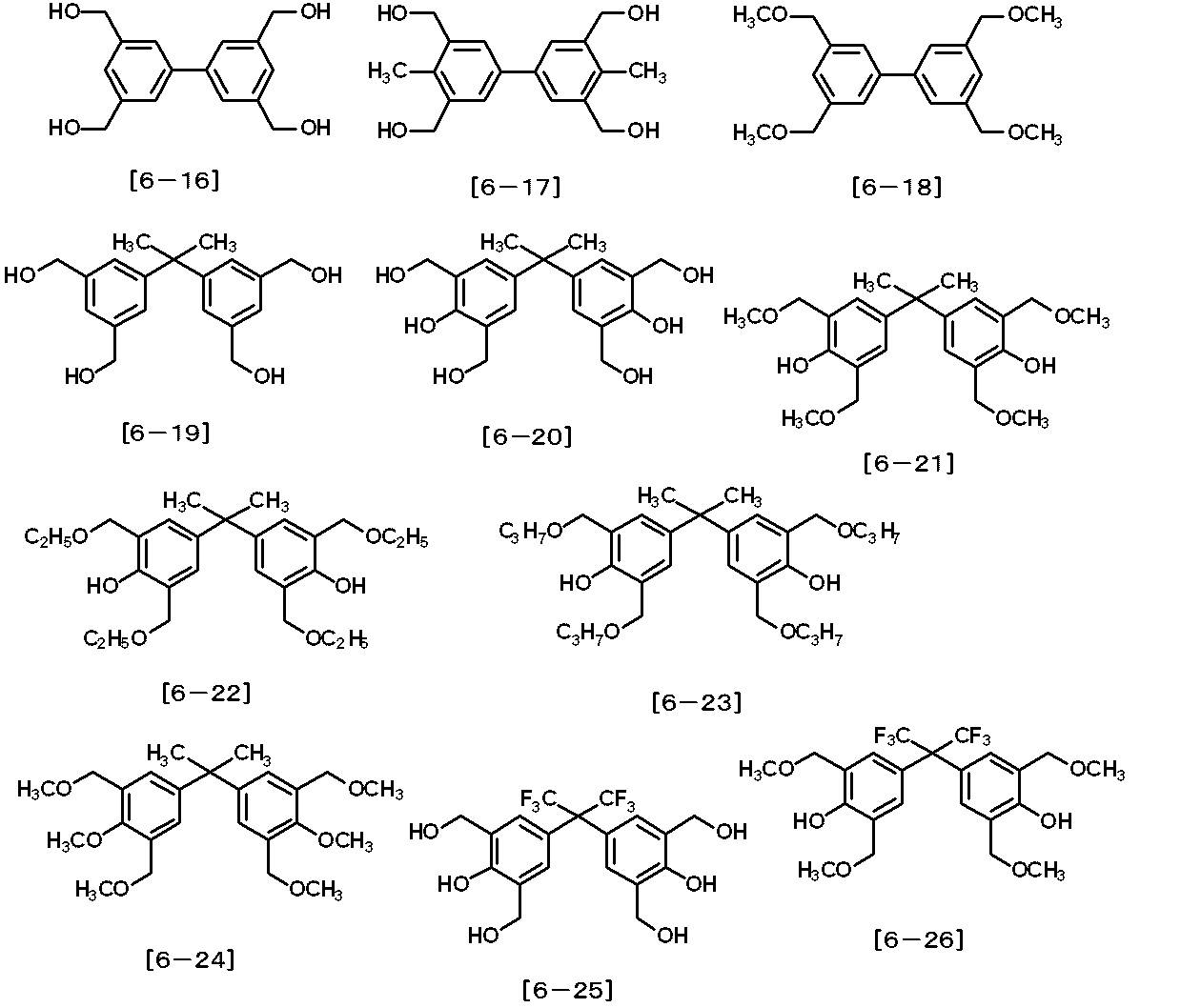
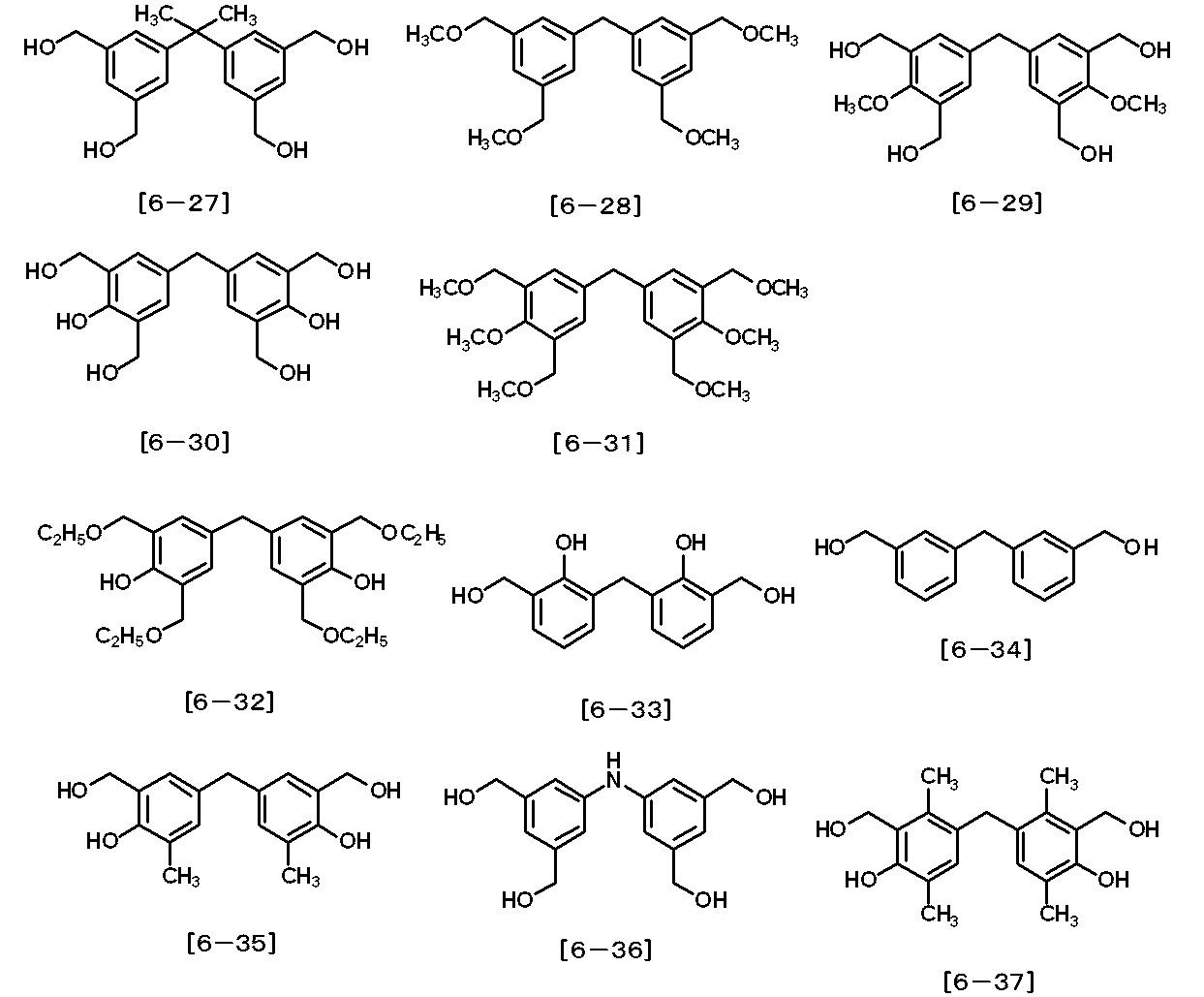
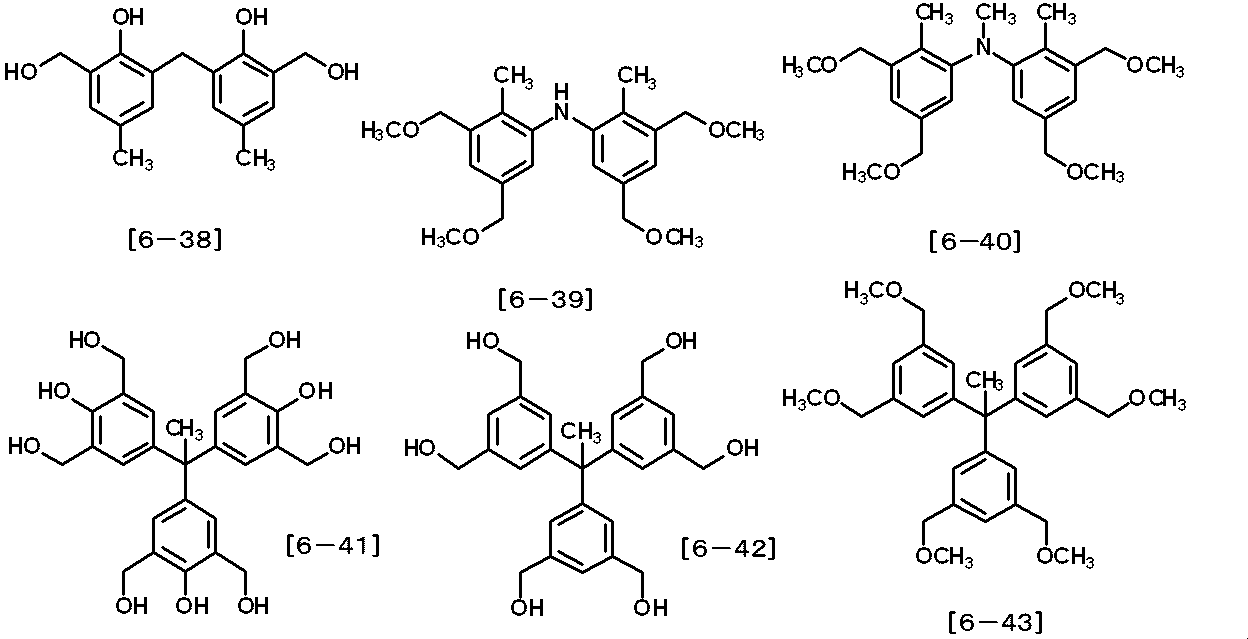



本発明の組成物における、架橋性化合物の含有量は、重合体成分100質量部に対して、0.1~150質量部であることが好ましい。架橋反応が進行し目的の効果を発現し、かつ液晶の配向性を低下させないためには、重合体成分100質量部に対して0.1~100質量部がより好ましく、特に、1~50質量部が最も好ましい。
本発明の組成物には、上記の他、本発明の効果が損なわれない範囲であれば、膜の抵抗や液晶配向膜の誘電率や導電性などの電気特性を変化させる目的の誘電体や導電物質を添加してもよい。
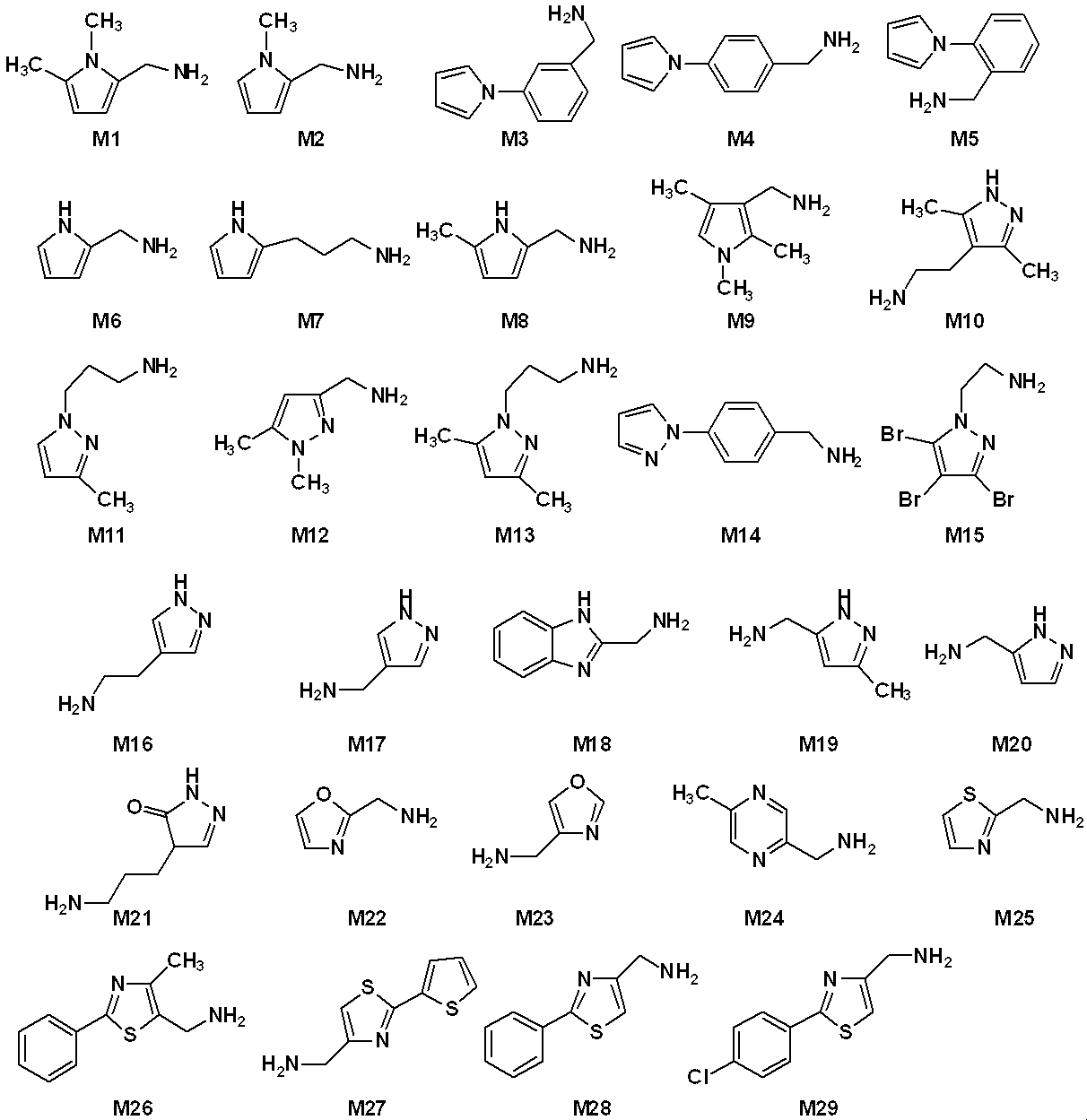
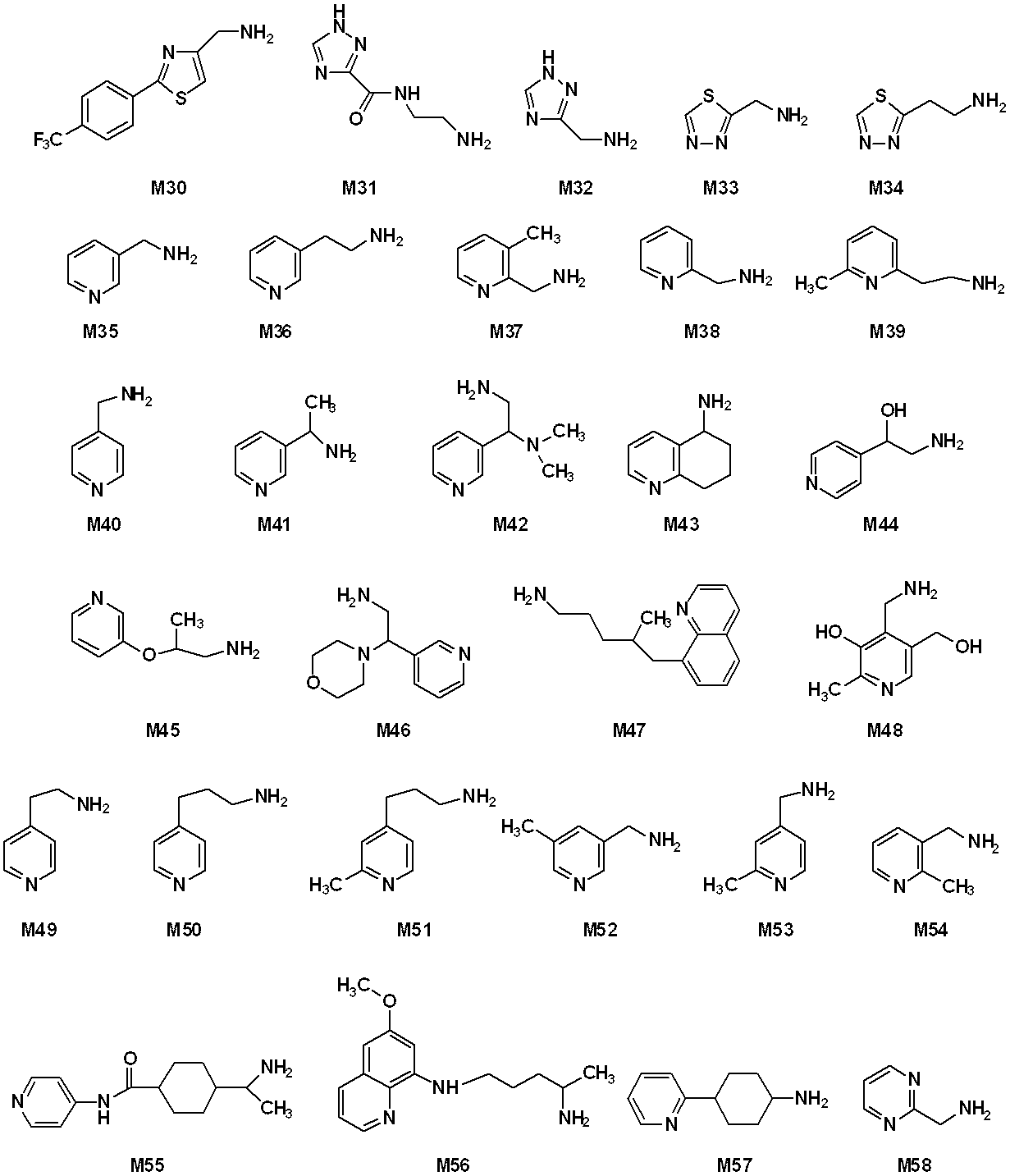
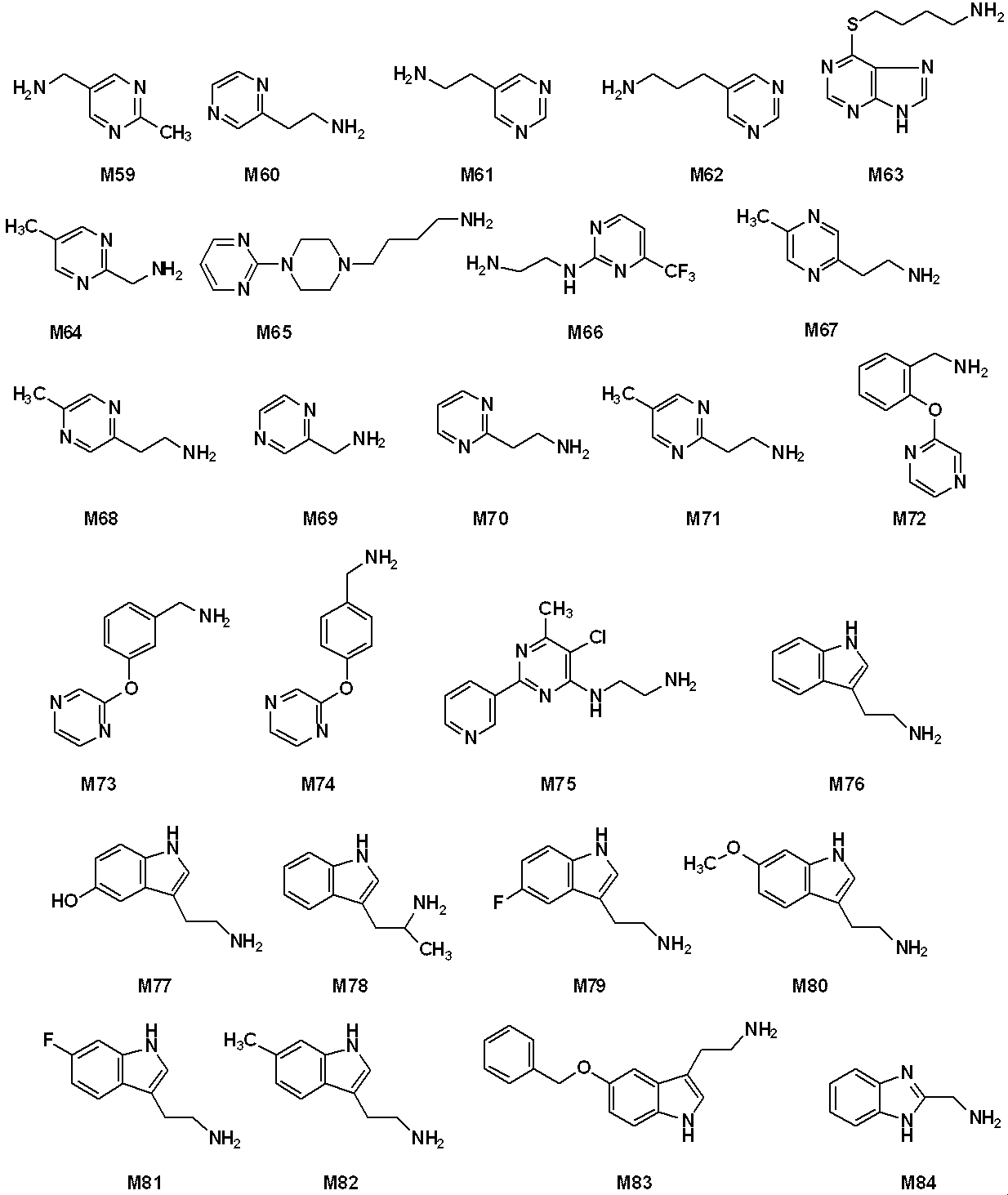

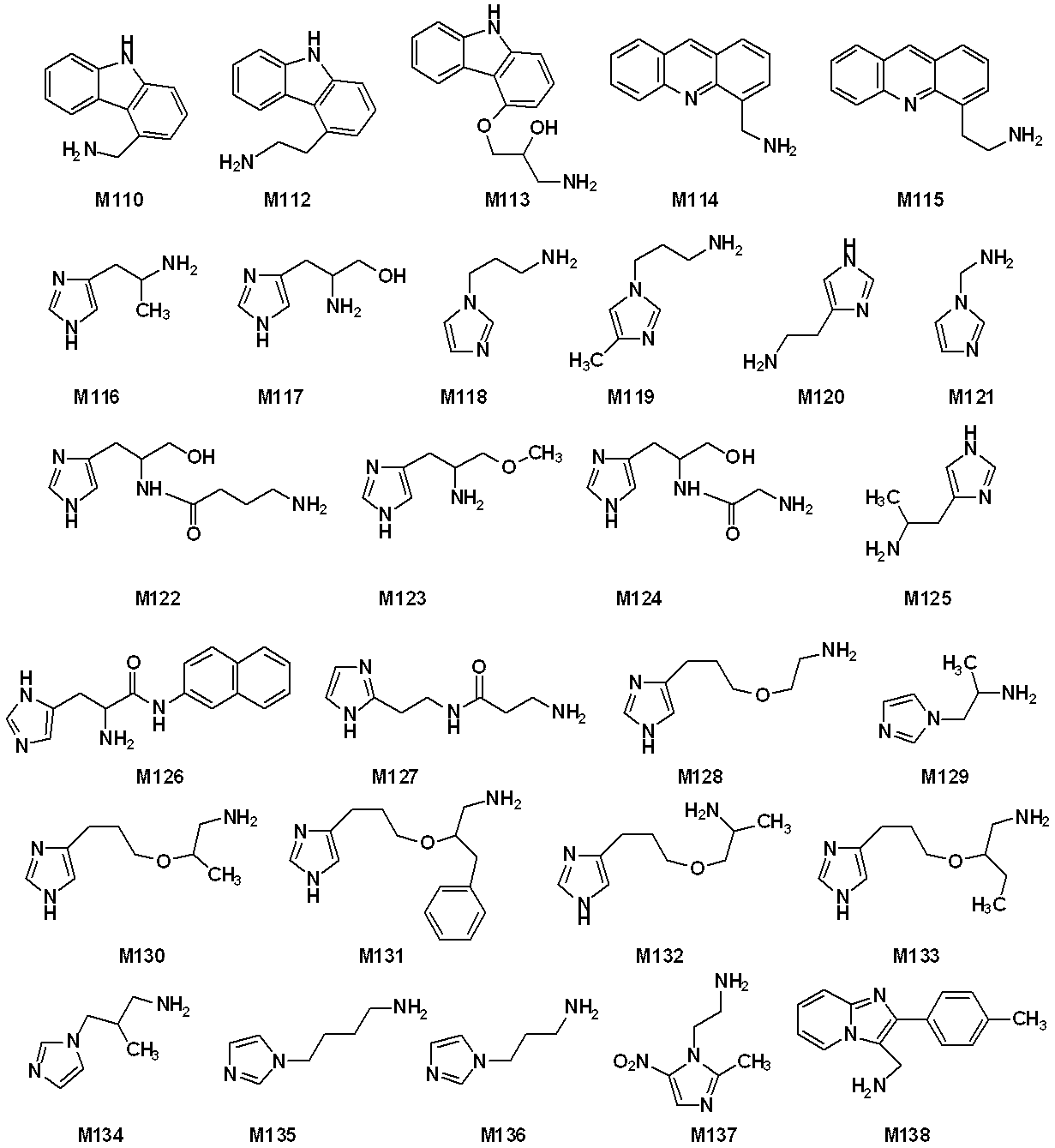

本発明の組成物の一つである液晶配向処理剤を例にして、液晶配向処理剤から液晶配向膜を形成する場合について説明する。液晶配向処理剤は、基板上に塗布し、熱処理により焼成した後、ラビング処理や光照射などで配向処理をして、液晶配向膜が形成される。なお、垂直配向用途などの場合では、配向処理なしでも液晶配向膜が形成できる。
基板としては、透明性の高い基板であれば特に限定されず、ガラス基板の他、アクリル基板やポリカーボネート基板などのプラスチック基板なども用いることができる。プロセスの簡素化の観点からは、液晶駆動のためのITO電極などが形成された基板を用いることが好ましい。また、反射型の液晶表示素子では、片側の基板のみにならばシリコンウェハなどの不透明な基板も使用でき、この場合の電極としてはアルミなどの光を反射する材料も使用できる。
液晶セル作製方法としては、液晶配向膜の形成された一対の基板を用意し、片方の基板の液晶配向膜上にスペーサを散布し、液晶配向膜面が内側になるようにして、もう片方の基板を貼り合わせ、液晶を減圧注入して封止する方法、又は、スペーサを散布した液晶配向膜面に液晶を滴下した後に基板を貼り合わせて封止を行う方法などが例示できる。
PSA方式の液晶セル作製の一例を挙げるならば、液晶配向膜の形成された一対の基板を用意し、片方の基板の液晶配向膜上にスペーサを散布し、液晶配向膜面が内側になるようにして、もう片方の基板を貼り合わせ、液晶を減圧注入して封止する方法、スペーサを散布した液晶配向膜面に液晶を滴下した後に基板を貼り合わせて封止を行う方法などが挙げられる。
液晶セルを作製した後は、液晶セルに交流又は直流の電圧を印加しながら、熱や紫外線を照射して重合性化合物を重合する。これにより、液晶分子の配向を制御することができる。
上記した工程を経ることにより液晶表示素子は得られる。これらの液晶表示素子は、液晶配向膜として本発明の液晶配向膜を使用していることから、製造プロセスがより低温なものとなり、信頼性に優れ、大画面で高精細の液晶テレビなどに好適に利用可能である。
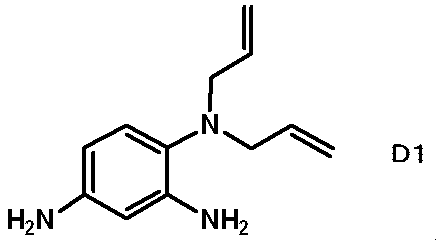
D1:N,N-ジアリル-2,4-ジアミノアニリン
D2:1,3-ジアミノ-4-〔4-(トランス-4-n-ヘプチルシクロヘキシル)フェノキシ〕ベンゼン

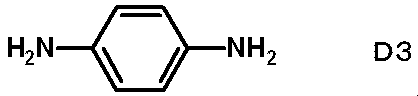
D3:p-フェニレンジアミン
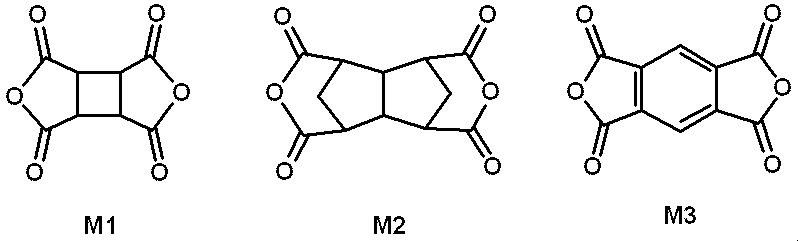
M1:1,2,3,4-シクロブタンテトラカルボン酸二無水物
M2:ビシクロ[3,3,0]オクタン-2,4,6,8-テトラカルボン酸二無水物
M3:ピロメリット酸二無水物
CHN:シクロヘキサノン
CPN:シクロペンタノン
<他の有機溶媒>
NMP:N-メチル-2-ピロリドン
BCS:エチレングリコールモノブチルエーテル
PGME:プロピレングリコールモノメチルエーテル
(ポリイミドの分子量測定)
合成例におけるポリイミドの分子量は、常温ゲル浸透クロマトグラフィー(GPC)装置(GPC-101)(昭和電工社製)、カラム(KD-803、KD-805)(Shodex社製)を用いて、以下のようにして測定した。
カラム温度:50℃。
溶離液:N,N’-ジメチルホルムアミド(添加剤として、臭化リチウム-水和物(LiBr・H2O)が30mmol/L(リットル)、リン酸・無水結晶(o-リン酸)が30mmol/L、テトラヒドロフラン(THF)が10ml/L)。
流速:1.0ml/分。
検量線作成用標準サンプル:TSK 標準ポリエチレンオキサイド(分子量;約900,000、150,000、100,000、及び30,000)(東ソー社製)及びポリエチレングリコール(分子量;約12,000、4,000、及び1,000)(ポリマーラボラトリー社製)。
合成例におけるポリイミドのイミド化率は次のようにして測定した。
ポリイミド粉末(20mg)をNMRサンプル管(NMRサンプリングチューブスタンダード φ5(草野科学社製))に入れ、重水素化ジメチルスルホキシド(DMSO-d6、0.05質量%TMS(テトラメチルシラン)混合品)(0.53ml)を添加し、超音波をかけて完全に溶解させた。この溶液をNMR(核磁気共鳴)測定機(JNW-ECA500)(日本電子データム社製)にて500MHzのプロトンNMRを測定した。イミド化率は、イミド化前後で変化しない構造に由来するプロトンを基準プロトンとして決め、このプロトンのピーク積算値と、9.5~10.0ppm付近に現れるアミド酸のNH基に由来するプロトンピーク積算値とを用い、以下の式によって求めた。
イミド化率(%)=(1-α・x/y)×100
上記式において、xはアミド酸のNH基由来のプロトンピーク積算値、yは基準プロトンのピーク積算値、αはポリアミド酸(イミド化率が0%)の場合におけるアミド酸のNH基プロトン1個に対する基準プロトンの個数割合である。
<合成例1>
M2(2.75g,11.0mmol)、D1(2.68g,13.2mmol)、及びD2(3.35g,8.8mmol)をNMP(26.4g)中で混合し、80℃で5時間反応させた後、M1(2.14g,10.9mmol)とNMP(17.3g)を加え、40℃で6時間反応させポリアミド酸溶液を得た。
このポリアミド酸溶液(20.0g)にNMPを加え6質量%に希釈した後、イミド化触媒として無水酢酸(4.11g)、及びピリジン(1.59g)を加え、100℃で3時間反応させた。この反応溶液をメタノール(253ml)中に投入し、得られた沈殿物を濾別した。この沈殿物をメタノールで洗浄し、100℃で減圧乾燥し、ポリイミド粉末(A)を得た。このポリイミドのイミド化率は80%であり、数平均分子量は21,500、重量平均分子量は68,700であった。
M1(3.61g,18.4mmol)、D1(2.81g,13.8mmol)、及びD2(3.50g,9.2mmol)をNMP(29.7g)中で混合し、25℃で15時間反応させた後、M3(0.95g,4.4mmol)とNMP(13.7g)を加え、25℃で4時間反応させポリアミド酸溶液を得た。
このポリアミド酸溶液(20.0g)にNMPを加え6質量%に希釈した後、イミド化触媒として無水酢酸(2.58g)、及びピリジン(1.07g)を加え、40℃で1時間30分反応させた。この反応溶液をメタノール(246ml)中に投入し、得られた沈殿物を濾別した。この沈殿物をメタノールで洗浄し、100℃で減圧乾燥し、ポリイミド粉末(B)を得た。このポリイミドのイミド化率は51%であり、数平均分子量は18,700、重量平均分子量は57,800であった。
M1(4.29g,21.9mmol)、D1(3.13g,15.4mmol)、及びD2(2.51g、6.6mmol)をNMP(39.7g)中で混合し、25℃で24時間反応させ、ポリアミド酸溶液を得た。
このポリアミド酸溶液(10.0g)にNMPを加え6質量%に希釈した後、イミド化触媒として無水酢酸(1.35g)、及びピリジン(0.56g)を加え、40℃で2時間反応させた。この反応溶液をメタノール(123ml)中に投入し、得られた沈殿物を濾別した。この沈殿物をメタノールで洗浄し、100℃で減圧乾燥し、ポリイミド粉末(C)を得た。このポリイミドのイミド化率は53%であり、数平均分子量は19,800、重量平均分子量は55,900であった。
M1(4.61g,23.5mmol)、D1(1.95g,9.6mmol)、D2(2.74g,7.2mmol)、及びD3(0.78g,7.2mmol)をNMP(40.3g)中で混合し、25℃で24時間反応させ、ポリアミド酸溶液を得た。
このポリアミド酸溶液(10.0g)にNMPを加え6質量%に希釈した後、イミド化触媒として無水酢酸(1.44g)、及びピリジン(0.60g)を加え、40℃で2時間反応させた。この反応溶液をメタノール(124ml)中に投入し、得られた沈殿物を濾別した。この沈殿物をメタノールで洗浄し、100℃で減圧乾燥し、ポリイミド粉末(D)を得た。このポリイミドのイミド化率は48%であり、数平均分子量は17,200、重量平均分子量は48,100であった。
M2(5.63g,22.5mmol)、及びD3(3.24g,30.0mmol)をNMP(26.6g)中で混合し、40℃で5時間反応させた後、M1(1.24g,6.3mmol)とNMP(13.8g)を加え、25℃で6時間反応させポリアミド酸溶液を得た。
このポリアミド酸溶液(20.0g)にNMPを加え5質量%に希釈した後、イミド化触媒として無水酢酸(2.96g)、及びピリジン(2.29g)を加え、90℃で2.5時間反応させた。この反応溶液をメタノール(298ml)中に投入し、得られた沈殿物を濾別した。この沈殿物をメタノールで洗浄し、100℃で減圧乾燥し、ポリイミド粉末(E)を得た。このポリイミドのイミド化率は51%であり、数平均分子量は15,300、重量平均分子量は68,800であった。また、このポリイミドは、ジアミン成分に第1及び第2のジアミンを用いていない。
合成例1~5で得られたポリイミドの組成及びイミド化率を表43にまとめて示す。
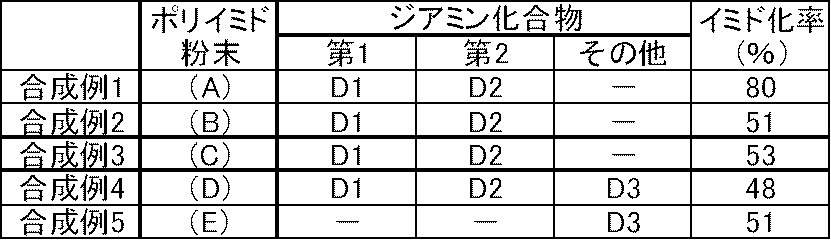
<実施例1~4及び比較例1>
合成例1~5で得られたポリイミド粉末を用い、環状ケトン溶媒であるシクロヘキサノン(CHN)及びシクロペンタノン(CPN)への溶解性の試験を行った。
ポリイミド粉末(A)~(E)のそれぞれのポリイミド粉末(1.0g)に、CHN(15.7g)を加え、25℃にて24時間攪拌し、濁りや析出などの有無を目視で確認した。
溶解性試験の結果を表44に示す。

<実施例5~8>
合成例1~4のポリイミド粉末(A)~(D)(各1.0g)のそれぞれに、CHN(27.57g)を加え、50℃にて24時間攪拌し、各ポリイミドを溶解させた。いずれのポリイミド溶液とも、濁りや析出などの異常は見られず、均一な溶液であることが確認された。
次いで、得られた各ポリイミド溶液について、細孔径1μmのメンブランフィルタで加圧濾過し、ポリイミド成分の含有量が3.5質量%である液晶配向処理剤(1)~(4)を得た。
合成例1~4のポリイミド粉末(A)~(D)(各1.0g)のそれぞれに、CPN(27.6g)を加え、50℃にて24時間攪拌し、各ポリイミドを溶解させた。いずれのポリイミド溶液とも、濁りや析出などの異常は見られず、均一な溶液であることが確認された。
次いで、得られた各ポリイミド溶液について、細孔径1μmのメンブランフィルタで加圧濾過し、ポリイミド成分の含有量が3.5質量%である液晶配向処理剤(5)~(8)を得た。
合成例1~3のポリイミド粉末(A)~(C)(各1.0g)のそれぞれに、CHN(13.3g)を加え、50℃にて24時間攪拌し、各ポリイミドを溶解させた。その後、得られた各溶液に、さらにNMP(14.3g)を加えて、攪拌し、CHNとNMPとを含有する各ポリイミド溶液を得た。いずれのポリイミド溶液とも、濁りや析出などの異常は見られず、均一な溶液であることが確認された。
次いで、CHNとNMPとを含有する各ポリイミド溶液について、細孔径1μmのメンブランフィルタで加圧濾過し、ポリイミド成分の含有量が3.5質量%である液晶配向処理剤(9)~(11)を得た。
合成例1~3のポリイミド粉末(A)~(C)(各1.0g)のそれぞれに、CPN(13.3g)を加え、50℃にて24時間攪拌し、各ポリイミドを溶解させた。その後、得られた各溶液に対して、さらにNMP(14.3g)を加えて、攪拌し、CPNとNMPとを含有する各ポリイミド溶液を得た。いずれのポリイミド溶液とも、濁りや析出などの異常は見られず、均一な溶液であることが確認された。
次いで、CPNとNMPとを含有する各ポリイミド溶液について、細孔径1μmのメンブランフィルタで加圧濾過し、ポリイミド成分の含有量が3.5質量%である液晶配向処理剤(12)~(14)を得た。
合成例1~3のポリイミド粉末(A)~(C)(各1.0g)のそれぞれに、CHN(13.3g)を加え、50℃にて24時間攪拌し、各ポリイミドを溶解させた。その後、得られた各溶液に対して、さらにNMP(5.72g)及びBCS(8.57g)を加えて、攪拌し、CHN、NMP、及びBCSを含有する各ポリイミド溶液を得た。いずれのポリイミド溶液とも、濁りや析出などの異常は見られず、均一な溶液であることが確認された。
次いで、CHN、NMP、及びBCSを含有する各ポリイミド溶液について、細孔径1μmのメンブランフィルタで加圧濾過し、ポリイミド成分の含有量が3.5質量%である液晶配向処理剤(15)~(17)を得た。
合成例1~3のポリイミド粉末(A)~(C)(各1.0g)のそれぞれに、CPN(13.3g)を加え、50℃にて24時間攪拌し、各ポリイミドを溶解させた。その後、得られた各溶液に対して、さらにNMP(5.72g)及びBCS(8.57g)を加えて、攪拌し、CPN、NMP、及びBCSを含有する各ポリイミド溶液を得た。いずれのポリイミド溶液とも、濁りや析出などの異常は見られず、均一な溶液であることが確認された。
次いで、CPN、NMP、及びBCSを含有する各ポリイミド溶液について、細孔径1μmのメンブランフィルタで加圧濾過し、ポリイミド成分の含有量が3.5質量%である液晶配向処理剤(18)~(20)を得た。
合成例1~3のポリイミド粉末(A)~(C)(各1.0g)のそれぞれに、CHN(19.0g)を加え、50℃にて24時間攪拌し、各ポリイミドを溶解させた。その後、得られた各溶液に対して、さらにPGME(8.57g)を加えて、攪拌し、CHNとPGMEとを含有する各ポリイミド溶液を得た。いずれのポリイミド溶液とも、濁りや析出などの異常は見られず、均一な溶液であることが確認された。
次いで、CHNとPGMEとを含有する各ポリイミド溶液について、細孔径1μmのメンブランフィルタで加圧濾過し、ポリイミド成分の含有量が3.5質量%である液晶配向処理剤(21)~(23)を得た。
合成例1~3のポリイミド粉末(A)~(C)(各1.0g)のそれぞれに、CPN(19.0g)を加え、50℃にて24時間攪拌し、各ポリイミドを溶解させた。その後、得られた各溶液に対して、さらにPGME(8.57g)を加えて、攪拌し、CPNとPGMEとを含有する各ポリイミド溶液を得た。いずれのポリイミド溶液とも、濁りや析出などの異常は見られず、均一な溶液であることが確認された。
次いで、CPNとPGMEとを含有する各ポリイミド溶液について、細孔径1μmのメンブランフィルタで加圧濾過し、ポリイミド成分の含有量が3.5質量%である液晶配向処理剤(24)~(26)を得た。
実施例1~3のポリイミド粉末(A)~(C)(各2.0g)のそれぞれに、NMP(31.3g)を加え、50℃にて24時間攪拌し、各ポリイミドを溶解させた。いずれのポリイミド溶液とも、濁りや析出などの異常は見られず、均一な溶液であることが確認された。
次いで、得られた各ポリイミド溶液について、細孔径1μmのメンブランフィルタで加圧濾過し、ポリイミド成分の含有量が6質量%である液晶配向処理剤(27)~(29)を得た。
実施例5~30及び比較例2~4で得られた液晶配向処理剤のポリイミドと溶媒の種類、溶解性を表45~47に示す。

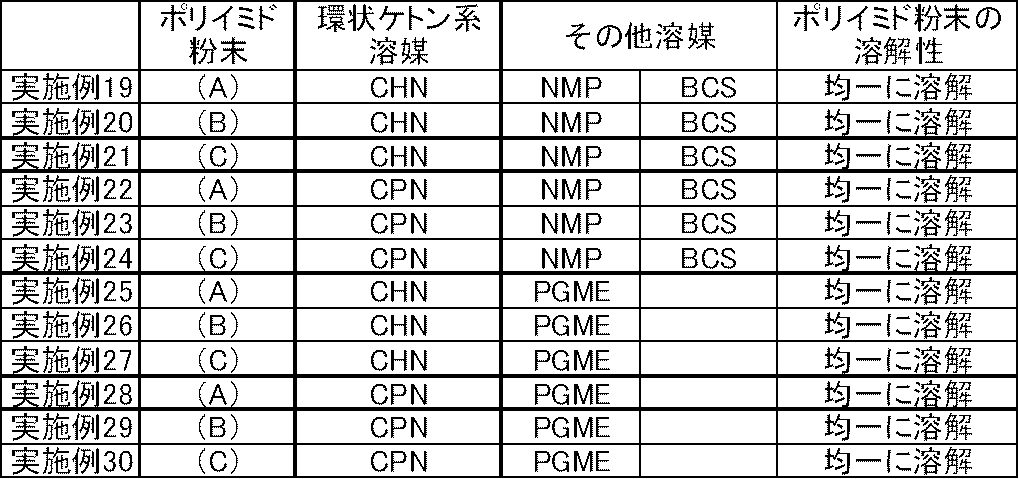

実施例5~30で得られた液晶配向処理剤を用いて液晶配向膜を作製し、その液晶配向膜を用いた液晶表素子を作製した。液晶表示素子としては、液晶配向膜の特性に対応して、垂直配向の液晶セルを作製した。
液晶セルの作製方法としては、液晶配向処理剤をITO電極付きガラス基板(縦40mm×横30mm、厚さ0.7mm)にスピンコートし、80℃のホットプレート上で5分間、熱循環型クリーンオーブン中にて220℃で30分間加熱処理をした後、膜厚100nmの塗膜として液晶配向膜を形成し、液晶配向膜付き基板を得た。基板上に形成された液晶配向膜はいずれも膜厚の均一性に優れ、液晶配向処理剤は優れた塗布性を示すことがわかった。
得られた液晶セルについて、液晶の配向状態を偏光顕微鏡(ECLIPSE E600WPOL、ニコン社製)で観察したところ、欠陥の無い均一な液晶の垂直配向が形成されていることが確認された。


液晶表示素子の電圧保持率の結果を表50に示す。
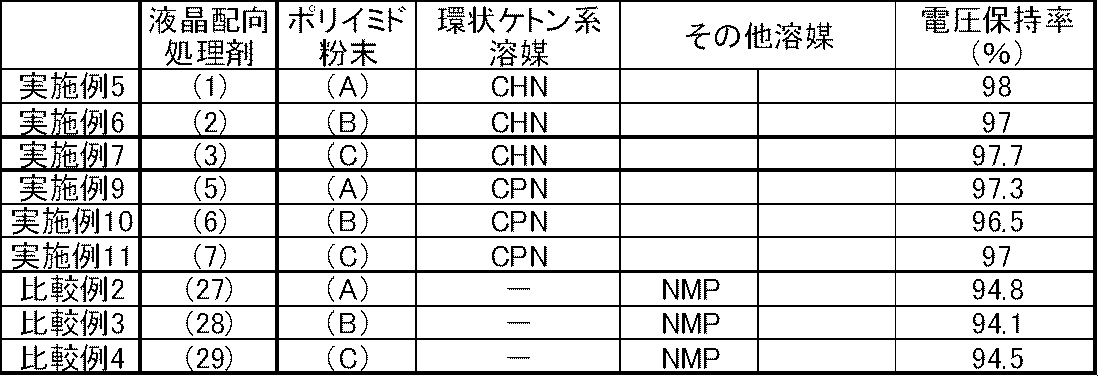
Claims (14)
- 下記式[1]で示される第1のジアミン及び下記式[2]で示される第2のジアミンを含むジアミン成分と脂環構造を有するテトラカルボン酸二無水物成分とを反応させて得られるポリイミド前駆体及び/又は該ポリイミド前駆体をイミド化したポリイミドと、該ポリイミド前駆体及び/又はポリイミドを溶解する環状ケトン溶媒と、を含有することを特徴とする組成物。

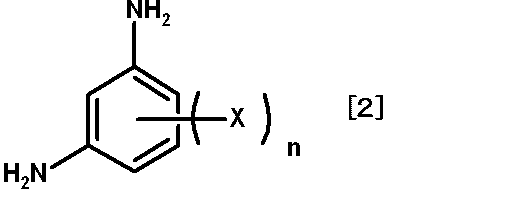

Y4はベンゼン環、シクロへキサン環及び複素環よりなる群から選ばれる環状基(これらの環状基上の任意の水素原子は、炭素数1~3のアルキル基、炭素数1~3のアルコキシル基、炭素数1~3のフッ素含有アルキル基、炭素数1~3のフッ素含有アルコキシル基又はフッ素原子で置換されていてもよい。)、又は、ステロイド骨格を有する炭素数12~25の有機基より選ばれる2価の有機基であり、Y5はベンゼン環、シクロへキサン環及び複素環よりなる群から選ばれる環状基(これらの環状基上の任意の水素原子は、炭素数1~3のアルキル基、炭素数1~3のアルコキシル基、炭素数1~3のフッ素含有アルキル基、炭素数1~3のフッ素含有アルコキシル基又はフッ素原子で置換されていてもよい。)であり、Y6は炭素数1~18のアルキル基、炭素数1~18のフッ素含有アルキル基、炭素数1~18のアルコキシル基又は炭素数1~18のフッ素含有アルコキシル基であり、nは0~4の整数である。) - 前記式[1]で示されるジアミンが、下記式[1A]で示されるジアミンである請求項1に記載の組成物。
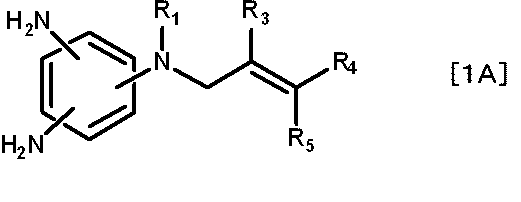
- 前記式[1A]で示される構造のジアミンが、下記式[1B]で示されるジアミンである請求項2に記載の組成物。

- 前記式[1]で示される構造のジアミンが、下記式[1C]で示されるジアミンである請求項1に記載の組成物。

- 前記ジアミン成分のうち、前記式[1]で示される構造のジアミンが、20~80モル%である請求項1~4のいずれか1項に記載の組成物。
- 前記ジアミン成分のうち、前記式[2]で示される構造のジアミンが、10~80モル%である請求項1~4のいずれか1項に記載の組成物。
- 前記テトラカルボン酸二無水物が、下記式[3]で示される化合物である請求項1~6のいずれか1項に記載の組成物。
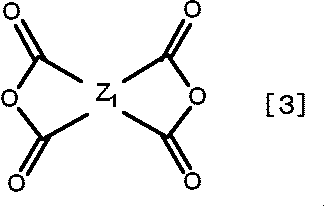
- 前記式[3]のZ1が、下記式[3a]~[3j]で示される構造である請求項7に記載の組成物。
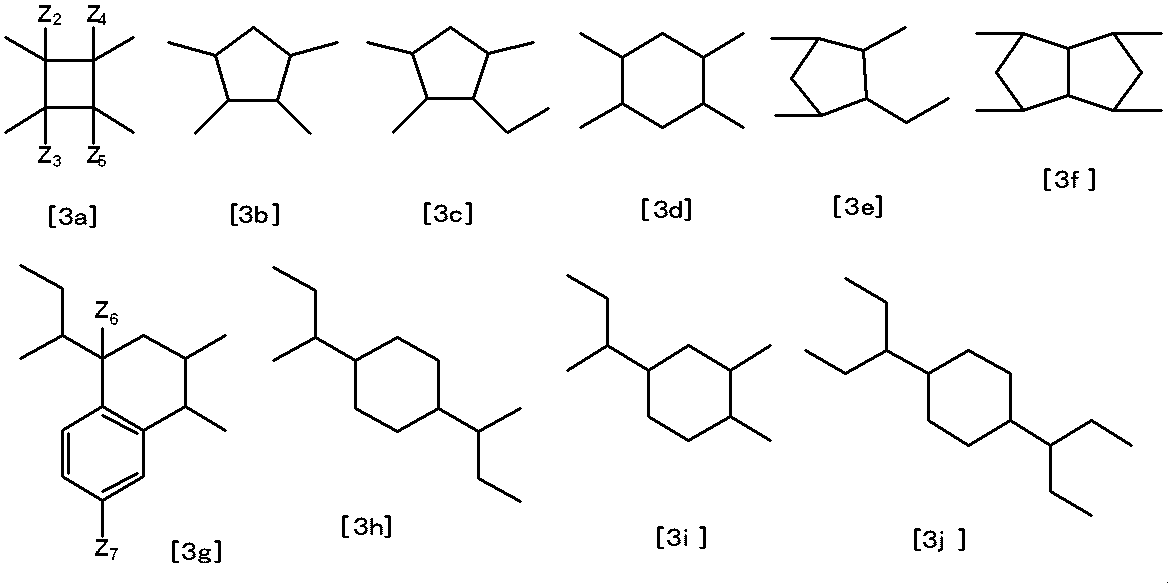
- 前記環状ケトン溶媒は、5員環及び6員環の環状ケトンのうちの少なくとも一方の環状ケトンを含む請求項1~8のいずれか1項に記載の組成物。
- 請求項1~9のいずれか1項に記載の組成物からなる液晶配向処理剤。
- 請求項10に記載の液晶配向処理剤から得られる液晶配向膜。
- 電極を備えた一対の基板の間に液晶層を有してなり、前記一対の基板の間に活性エネルギー線及び熱の少なくとも一方により重合する重合性化合物を含む液晶組成物を配置し、前記電極間に電圧を印加しつつ前記重合性化合物を重合させる工程を経て製造される液晶表示素子に用いられる請求項11に記載の液晶配向膜。
- 請求項11に記載の液晶配向膜を有する液晶表示素子。
- 電極と前記液晶配向膜とを備えた一対の基板の間に液晶層を有してなり、前記一対の基板の間に活性エネルギー線及び熱の少なくとも一方により重合する重合性化合物を含む液晶組成物を配置し、前記電極間に電圧を印加しつつ前記重合性化合物を重合させる工程を経て製造される請求項13に記載の液晶表示素子。
Priority Applications (3)
| Application Number | Priority Date | Filing Date | Title |
|---|---|---|---|
| KR1020137026221A KR101842740B1 (ko) | 2011-03-07 | 2012-03-06 | 조성물, 액정 배향 처리제, 액정 배향막, 및 액정 표시 소자 |
| JP2013503559A JP6003882B2 (ja) | 2011-03-07 | 2012-03-06 | 組成物、液晶配向処理剤、液晶配向膜、及び液晶表示素子 |
| CN201280020127.9A CN103502312B (zh) | 2011-03-07 | 2012-03-06 | 组合物、液晶取向处理剂、液晶取向膜及液晶显示元件 |
Applications Claiming Priority (2)
| Application Number | Priority Date | Filing Date | Title |
|---|---|---|---|
| JP2011-049430 | 2011-03-07 | ||
| JP2011049430 | 2011-03-07 |
Publications (1)
| Publication Number | Publication Date |
|---|---|
| WO2012121257A1 true WO2012121257A1 (ja) | 2012-09-13 |
Family
ID=46798214
Family Applications (1)
| Application Number | Title | Priority Date | Filing Date |
|---|---|---|---|
| PCT/JP2012/055709 Ceased WO2012121257A1 (ja) | 2011-03-07 | 2012-03-06 | 組成物、液晶配向処理剤、液晶配向膜、及び液晶表示素子 |
Country Status (5)
| Country | Link |
|---|---|
| JP (1) | JP6003882B2 (ja) |
| KR (1) | KR101842740B1 (ja) |
| CN (1) | CN103502312B (ja) |
| TW (1) | TWI525129B (ja) |
| WO (1) | WO2012121257A1 (ja) |
Cited By (1)
| Publication number | Priority date | Publication date | Assignee | Title |
|---|---|---|---|---|
| CN105940342A (zh) * | 2013-11-28 | 2016-09-14 | 日产化学工业株式会社 | 液晶取向剂和使用了其的液晶表示元件 |
Families Citing this family (3)
| Publication number | Priority date | Publication date | Assignee | Title |
|---|---|---|---|---|
| CN108474981B (zh) * | 2015-10-14 | 2021-04-16 | 日产化学工业株式会社 | 液晶取向剂、液晶取向膜和液晶表示元件 |
| CN115490852A (zh) * | 2022-06-21 | 2022-12-20 | 广东鸿翔瑞材料科技有限公司 | 改性聚酰亚胺及其制备方法、聚酰亚胺膜 |
| CN119192636B (zh) * | 2024-10-24 | 2026-04-21 | 中南大学 | 一种半芳香聚酰亚胺电介质薄膜及其制备方法 |
Citations (10)
| Publication number | Priority date | Publication date | Assignee | Title |
|---|---|---|---|---|
| JPS6183228A (ja) * | 1984-09-29 | 1986-04-26 | Nitto Electric Ind Co Ltd | 溶剤可溶性ポリイミド |
| WO2006077964A2 (ja) * | 2005-01-21 | 2006-07-27 | Mitsubishi Gas Chemical Co | ポリイミド樹脂、ポリイミドフィルム及びポリイミド積層体 |
| WO2008146637A1 (ja) * | 2007-05-24 | 2008-12-04 | Mitsubishi Gas Chemical Company, Inc. | 無色透明樹脂フィルムの製造方法及び製造装置 |
| JP2010002880A (ja) * | 2008-03-18 | 2010-01-07 | Jsr Corp | 液晶配向剤および液晶表示素子 |
| JP2010039032A (ja) * | 2008-08-01 | 2010-02-18 | Kaneka Corp | 新規な塗布型光学補償フィルムおよびその製造方法 |
| WO2010035719A1 (ja) * | 2008-09-24 | 2010-04-01 | 日産化学工業株式会社 | 液晶配向処理剤及びそれを用いた液晶表示素子 |
| WO2010047316A1 (ja) * | 2008-10-22 | 2010-04-29 | 日産化学工業株式会社 | 液晶配向処理剤及びそれを用いた液晶表示素子 |
| WO2011010619A1 (ja) * | 2009-07-21 | 2011-01-27 | 日産化学工業株式会社 | ジアミン化合物、ポリアミド酸、ポリイミド及び液晶配向処理剤 |
| JP2011213849A (ja) * | 2010-03-31 | 2011-10-27 | Nippon Kodoshi Corp | ポリアミドイミド樹脂材料、ポリアミドイミド溶液及びポリアミドイミド薄膜 |
| WO2012014898A1 (ja) * | 2010-07-26 | 2012-02-02 | 日産化学工業株式会社 | 液晶配向処理剤、液晶配向膜及び液晶表示素子 |
Family Cites Families (3)
| Publication number | Priority date | Publication date | Assignee | Title |
|---|---|---|---|---|
| CN101085867A (zh) * | 2006-06-05 | 2007-12-12 | 大立高分子工业股份有限公司 | 聚酰胺酸组合物和利用其制成的液晶取向剂和取向膜 |
| JP5444690B2 (ja) * | 2007-12-06 | 2014-03-19 | Jsr株式会社 | 液晶配向剤および液晶表示素子 |
| JP5633667B2 (ja) | 2009-06-11 | 2014-12-03 | Jsr株式会社 | 液晶配向剤、液晶配向膜および液晶表示素子 |
-
2012
- 2012-03-06 JP JP2013503559A patent/JP6003882B2/ja active Active
- 2012-03-06 KR KR1020137026221A patent/KR101842740B1/ko active Active
- 2012-03-06 CN CN201280020127.9A patent/CN103502312B/zh active Active
- 2012-03-06 WO PCT/JP2012/055709 patent/WO2012121257A1/ja not_active Ceased
- 2012-03-07 TW TW101107660A patent/TWI525129B/zh active
Patent Citations (10)
| Publication number | Priority date | Publication date | Assignee | Title |
|---|---|---|---|---|
| JPS6183228A (ja) * | 1984-09-29 | 1986-04-26 | Nitto Electric Ind Co Ltd | 溶剤可溶性ポリイミド |
| WO2006077964A2 (ja) * | 2005-01-21 | 2006-07-27 | Mitsubishi Gas Chemical Co | ポリイミド樹脂、ポリイミドフィルム及びポリイミド積層体 |
| WO2008146637A1 (ja) * | 2007-05-24 | 2008-12-04 | Mitsubishi Gas Chemical Company, Inc. | 無色透明樹脂フィルムの製造方法及び製造装置 |
| JP2010002880A (ja) * | 2008-03-18 | 2010-01-07 | Jsr Corp | 液晶配向剤および液晶表示素子 |
| JP2010039032A (ja) * | 2008-08-01 | 2010-02-18 | Kaneka Corp | 新規な塗布型光学補償フィルムおよびその製造方法 |
| WO2010035719A1 (ja) * | 2008-09-24 | 2010-04-01 | 日産化学工業株式会社 | 液晶配向処理剤及びそれを用いた液晶表示素子 |
| WO2010047316A1 (ja) * | 2008-10-22 | 2010-04-29 | 日産化学工業株式会社 | 液晶配向処理剤及びそれを用いた液晶表示素子 |
| WO2011010619A1 (ja) * | 2009-07-21 | 2011-01-27 | 日産化学工業株式会社 | ジアミン化合物、ポリアミド酸、ポリイミド及び液晶配向処理剤 |
| JP2011213849A (ja) * | 2010-03-31 | 2011-10-27 | Nippon Kodoshi Corp | ポリアミドイミド樹脂材料、ポリアミドイミド溶液及びポリアミドイミド薄膜 |
| WO2012014898A1 (ja) * | 2010-07-26 | 2012-02-02 | 日産化学工業株式会社 | 液晶配向処理剤、液晶配向膜及び液晶表示素子 |
Cited By (2)
| Publication number | Priority date | Publication date | Assignee | Title |
|---|---|---|---|---|
| CN105940342A (zh) * | 2013-11-28 | 2016-09-14 | 日产化学工业株式会社 | 液晶取向剂和使用了其的液晶表示元件 |
| CN105940342B (zh) * | 2013-11-28 | 2019-06-21 | 日产化学工业株式会社 | 液晶取向剂和使用了其的液晶表示元件 |
Also Published As
| Publication number | Publication date |
|---|---|
| CN103502312B (zh) | 2015-07-29 |
| CN103502312A (zh) | 2014-01-08 |
| TWI525129B (zh) | 2016-03-11 |
| TW201249897A (en) | 2012-12-16 |
| JPWO2012121257A1 (ja) | 2014-07-17 |
| KR101842740B1 (ko) | 2018-05-14 |
| KR20140015441A (ko) | 2014-02-06 |
| JP6003882B2 (ja) | 2016-10-05 |
Similar Documents
| Publication | Publication Date | Title |
|---|---|---|
| JP5904121B2 (ja) | 液晶配向処理剤、液晶配向膜及び液晶表示素子 | |
| WO2011132751A1 (ja) | 液晶配向処理剤、液晶配向膜及び液晶表示素子 | |
| JP2018083943A (ja) | 組成物、液晶配向処理剤、液晶配向膜及び液晶表示素子 | |
| JP2016194707A (ja) | 液晶配向処理剤、液晶配向膜及び液晶表示素子 | |
| JP6065074B2 (ja) | ジアミン化合物、ポリイミド前駆体及びポリイミド | |
| JP6052171B2 (ja) | 組成物、液晶配向処理剤、液晶配向膜及び液晶表示素子 | |
| WO2014133042A1 (ja) | 重合体、液晶配向処理剤、液晶配向膜および液晶表示素子 | |
| JP5900337B2 (ja) | 液晶配向処理剤、液晶配向膜及び液晶表示素子 | |
| JP5998931B2 (ja) | 液晶配向処理剤、液晶配向膜、及び液晶表示素子 | |
| JP6079627B2 (ja) | 組成物、液晶配向処理剤、液晶配向膜及び液晶表示素子 | |
| JP5874646B2 (ja) | 液晶配向処理剤、液晶配向膜および液晶表示素子 | |
| WO2014084309A1 (ja) | 液晶配向処理剤、液晶配向膜および液晶表示素子 | |
| JP6075286B2 (ja) | 組成物、液晶配向処理剤、液晶配向膜、及び液晶表示素子 | |
| JP6003882B2 (ja) | 組成物、液晶配向処理剤、液晶配向膜、及び液晶表示素子 | |
| WO2014126102A1 (ja) | 液晶配向膜の製造方法、液晶配向膜、液晶表示素子及び液晶配向剤 | |
| WO2014133043A1 (ja) | 液晶配向処理剤、液晶配向膜および液晶表示素子 |
Legal Events
| Date | Code | Title | Description |
|---|---|---|---|
| 121 | Ep: the epo has been informed by wipo that ep was designated in this application |
Ref document number: 12755474 Country of ref document: EP Kind code of ref document: A1 |
|
| ENP | Entry into the national phase |
Ref document number: 2013503559 Country of ref document: JP Kind code of ref document: A |
|
| NENP | Non-entry into the national phase |
Ref country code: DE |
|
| ENP | Entry into the national phase |
Ref document number: 20137026221 Country of ref document: KR Kind code of ref document: A |
|
| 122 | Ep: pct application non-entry in european phase |
Ref document number: 12755474 Country of ref document: EP Kind code of ref document: A1 |