WO2012073949A1 - 有機肥料製造方法 - Google Patents
有機肥料製造方法 Download PDFInfo
- Publication number
- WO2012073949A1 WO2012073949A1 PCT/JP2011/077506 JP2011077506W WO2012073949A1 WO 2012073949 A1 WO2012073949 A1 WO 2012073949A1 JP 2011077506 W JP2011077506 W JP 2011077506W WO 2012073949 A1 WO2012073949 A1 WO 2012073949A1
- Authority
- WO
- WIPO (PCT)
- Prior art keywords
- larvae
- organic fertilizer
- prey
- fertilizer
- eggs
- Prior art date
- Legal status (The legal status is an assumption and is not a legal conclusion. Google has not performed a legal analysis and makes no representation as to the accuracy of the status listed.)
- Ceased
Links
Images



Classifications
-
- A—HUMAN NECESSITIES
- A01—AGRICULTURE; FORESTRY; ANIMAL HUSBANDRY; HUNTING; TRAPPING; FISHING
- A01K—ANIMAL HUSBANDRY; AVICULTURE; APICULTURE; PISCICULTURE; FISHING; REARING OR BREEDING ANIMALS, NOT OTHERWISE PROVIDED FOR; NEW BREEDS OF ANIMALS
- A01K67/00—Rearing or breeding animals, not otherwise provided for; New or modified breeds of animals
- A01K67/30—Rearing or breeding invertebrates
- A01K67/34—Insects
- A01K67/36—Industrial rearing of insects, e.g. insect farms
- A01K67/368—Feeding; Watering
-
- A—HUMAN NECESSITIES
- A01—AGRICULTURE; FORESTRY; ANIMAL HUSBANDRY; HUNTING; TRAPPING; FISHING
- A01K—ANIMAL HUSBANDRY; AVICULTURE; APICULTURE; PISCICULTURE; FISHING; REARING OR BREEDING ANIMALS, NOT OTHERWISE PROVIDED FOR; NEW BREEDS OF ANIMALS
- A01K67/00—Rearing or breeding animals, not otherwise provided for; New or modified breeds of animals
- A01K67/30—Rearing or breeding invertebrates
- A01K67/34—Insects
- A01K67/36—Industrial rearing of insects, e.g. insect farms
- A01K67/364—Heating, ventilating or air conditioning
-
- A—HUMAN NECESSITIES
- A23—FOODS OR FOODSTUFFS; TREATMENT THEREOF, NOT COVERED BY OTHER CLASSES
- A23K—FODDER
- A23K10/00—Animal feeding-stuffs
- A23K10/20—Animal feeding-stuffs from material of animal origin
- A23K10/26—Animal feeding-stuffs from material of animal origin from waste material, e.g. feathers, bones or skin
-
- A—HUMAN NECESSITIES
- A23—FOODS OR FOODSTUFFS; TREATMENT THEREOF, NOT COVERED BY OTHER CLASSES
- A23K—FODDER
- A23K10/00—Animal feeding-stuffs
- A23K10/30—Animal feeding-stuffs from material of plant origin, e.g. roots, seeds or hay; from material of fungal origin, e.g. mushrooms
- A23K10/37—Animal feeding-stuffs from material of plant origin, e.g. roots, seeds or hay; from material of fungal origin, e.g. mushrooms from waste material
-
- A—HUMAN NECESSITIES
- A23—FOODS OR FOODSTUFFS; TREATMENT THEREOF, NOT COVERED BY OTHER CLASSES
- A23K—FODDER
- A23K50/00—Feeding-stuffs specially adapted for particular animals
- A23K50/90—Feeding-stuffs specially adapted for particular animals for insects, e.g. bees or silkworms
-
- C—CHEMISTRY; METALLURGY
- C05—FERTILISERS; MANUFACTURE THEREOF
- C05F—ORGANIC FERTILISERS NOT COVERED BY SUBCLASSES C05B, C05C, e.g. FERTILISERS FROM WASTE OR REFUSE
- C05F17/00—Preparation of fertilisers characterised by biological or biochemical treatment steps, e.g. composting or fermentation
- C05F17/05—Treatments involving invertebrates, e.g. worms, flies or maggots
-
- Y—GENERAL TAGGING OF NEW TECHNOLOGICAL DEVELOPMENTS; GENERAL TAGGING OF CROSS-SECTIONAL TECHNOLOGIES SPANNING OVER SEVERAL SECTIONS OF THE IPC; TECHNICAL SUBJECTS COVERED BY FORMER USPC CROSS-REFERENCE ART COLLECTIONS [XRACs] AND DIGESTS
- Y02—TECHNOLOGIES OR APPLICATIONS FOR MITIGATION OR ADAPTATION AGAINST CLIMATE CHANGE
- Y02P—CLIMATE CHANGE MITIGATION TECHNOLOGIES IN THE PRODUCTION OR PROCESSING OF GOODS
- Y02P20/00—Technologies relating to chemical industry
- Y02P20/141—Feedstock
- Y02P20/145—Feedstock the feedstock being materials of biological origin
-
- Y—GENERAL TAGGING OF NEW TECHNOLOGICAL DEVELOPMENTS; GENERAL TAGGING OF CROSS-SECTIONAL TECHNOLOGIES SPANNING OVER SEVERAL SECTIONS OF THE IPC; TECHNICAL SUBJECTS COVERED BY FORMER USPC CROSS-REFERENCE ART COLLECTIONS [XRACs] AND DIGESTS
- Y02—TECHNOLOGIES OR APPLICATIONS FOR MITIGATION OR ADAPTATION AGAINST CLIMATE CHANGE
- Y02P—CLIMATE CHANGE MITIGATION TECHNOLOGIES IN THE PRODUCTION OR PROCESSING OF GOODS
- Y02P60/00—Technologies relating to agriculture, livestock or agroalimentary industries
- Y02P60/80—Food processing, e.g. use of renewable energies or variable speed drives in handling, conveying or stacking
- Y02P60/87—Re-use of by-products of food processing for fodder production
-
- Y—GENERAL TAGGING OF NEW TECHNOLOGICAL DEVELOPMENTS; GENERAL TAGGING OF CROSS-SECTIONAL TECHNOLOGIES SPANNING OVER SEVERAL SECTIONS OF THE IPC; TECHNICAL SUBJECTS COVERED BY FORMER USPC CROSS-REFERENCE ART COLLECTIONS [XRACs] AND DIGESTS
- Y02—TECHNOLOGIES OR APPLICATIONS FOR MITIGATION OR ADAPTATION AGAINST CLIMATE CHANGE
- Y02W—CLIMATE CHANGE MITIGATION TECHNOLOGIES RELATED TO WASTEWATER TREATMENT OR WASTE MANAGEMENT
- Y02W30/00—Technologies for solid waste management
- Y02W30/40—Bio-organic fraction processing; Production of fertilisers from the organic fraction of waste or refuse
Definitions
- the present invention relates to an organic fertilizer production method for producing organic fertilizer from livestock excreta using housefly larvae.
- the insect bioprocessing system disclosed in Patent Document 1 includes a processing container transporting means for sequentially transporting a processing container in which livestock droppings are placed, and waste provision for donating livestock droppings to empty processing containers that are sequentially sent by the processing container transporting means.
- a waste collection means for collecting the cured animal dung from the processing containers that are sequentially sent.
- the livestock feces can be rendered harmless or reduced by feeding them to the larvae of the housefly.
- Patent Document 1 feeds livestock feces to housefly larvae and renders the livestock feces detoxified or attenuated.
- livestock feces When only livestock feces are fed to larvae, It is difficult to improve, and a large amount of livestock droppings may not be processed in a short time.
- larva breeding conditions are not clear, and depending on the breeding conditions, egg hatching rate may decrease, larvae survival rate may decrease, larvae growth may be delayed, and animal manure may not be processed efficiently .
- An object of the present invention is to provide an organic fertilizer production method capable of efficiently converting livestock excretion into organic fertilizer in a short period of time using housefly larvae.
- the premise of the present invention for solving the above-mentioned problem is an organic fertilizer production method for producing organic fertilizer from livestock excreta using housefly larvae.
- the organic fertilizer manufacturing method is a prey preparation process in which a food-enhancement product that enhances the food habits of larvae is mixed with excrement to produce a prey, and a predetermined amount of prey in a predetermined volume of processing container
- the prey containment process to house, the egg inoculation process to inoculate the prey housed in the processing container with multiple housefly eggs, and the larvae hatched from the eggs to feed the prey contained in the processing container to raise larvae
- a fertilizer base material producing process for producing a fertilizer base material for organic fertilizer by enzymatic degradation in the body of the larvae and excretion from the larvae.
- an organic fertilizer manufacturing method is a fertilizer preparation process in which an organic fertilizer is made by adding dead carcasses of a housefly and dead shell of a house fly to a fertilizer base made by the fertilizer base preparation process. Including.
- the organic fertilizer manufacturing method includes a separation process in which the larvae and the fertilizer base material are separated using the active peristaltic discrete habits of the larvae that have eaten prey and have reached the stage of persimmon metamorphosis.
- a plurality of eggs are inoculated on the surface of the prey.
- the housefly larvae are classified into 1st instar larvae just after hatching, 2nd instar larvae after one molting, and 3rd instar larvae after 2 molting before cocoon metamorphosis.
- 1st instar larvae are reared in the dark, and 3rd instar larvae are reared in the lighting.
- the 2nd instar larva is bred in the dark or twilight.
- the separation between the larvae and the fertilizer base material utilizing the active peristaltic discrete behavior of the larvae starts on the fourth day after the eggs are inoculated into the prey and ends on the seventh day.
- the fertilizer manufacturing method is a killing process that kills the larvae separated from the fertilizer substrate on the 4th day after inoculating the prey with eggs, and the fertilizer base on and after the 5th day after inoculating the prey with eggs.
- a feed processing process for processing a group of larvae separated from the material into feed is a killing process that kills the larvae separated from the fertilizer substrate on the 4th day after inoculating the prey with eggs, and the fertilizer base on and after the 5th day after inoculating the prey with eggs.
- a feed processing process for processing a group of larvae separated from the material into feed.
- the organic fertilizer manufacturing method extracts a part of larvae from a group of larvae on and after the fifth day after inoculating eggs into a prey, grows the extracted larvae into adults, and these adults Including a recycling process that inoculates the next generation of eggs laid in the prey.
- a plurality of processing containers are stacked in a vertical direction to create a breeding floor, and a plurality of breeding floors are stored in a breeding room having a predetermined volume.
- the temperature inside the breeding room is maintained in the range of 27 to 31 ° C.
- the humidity inside the breeding room is maintained in the range of 50 to 70%.
- the weight ratio of excreta to the total weight of the prey is in the range of 60 to 80% by weight, and the weight ratio of the food enhancement product to the total weight of the prey is in the range of 20 to 40% by weight. is there.
- the weight ratio of the egg to the total weight of the prey is in the range of 0.002 to 0.004% by weight.
- the food enhancement is rice husk and okara
- the weight ratio of rice husk to the total weight of the food enhancement is in the range of 10 to 15% by weight
- the total weight of the food enhancement The weight ratio of okara to is in the range of 85 to 90% by weight.
- the weight ratio of the food residue to the total weight of excrement is in the range of 10 to 50% by weight.
- the livestock is at least one of a pig and a chicken.
- a dietary enhancement product that enhances the feeding property of larvae is mixed with the excrement of livestock to make a prey, and the prey contained in the processing container is fed to the housefly larvae. It is possible to efficiently convert a large amount of excreta of livestock into a fertilizer base material of organic fertilizer in a short period of time while improving the feeding property of larvae. In addition, when incinerating excreta, not only fuel is consumed, but a large amount of carbon dioxide is emitted, which has an adverse effect on the environment.
- this method of producing organic fertilizer can produce organic substances by digesting prey containing livestock excreta in the body of the larvae and excreting them from the larvae.
- Organic fertilizer manufacturing methods include chitosan, which is rich in fertilizer base materials. From these fertilizer base materials, organic fertilizers excellent in soil improvement, antibacterial action, plant growth promotion, plant disease control effect, fruit quality improvement, etc. Can be made.
- Organic fertilizer manufacturing method including fertilizer preparation process to make organic fertilizer by adding carcass of housefly adult and dead shell of house fly to fertilizer base material made by fertilizer base material preparation process is not enough All of them can be used as organic fertilizer materials, and waste of materials can be saved.
- Organic fertilizer production methods include chitosan, which is rich in house fly carcasses and house fly husks, and can be added to the fertilizer base to improve soil, antibacterial action, promote plant growth, Organic fertilizers with excellent disease control and fruit improvement can be made.
- the organic fertilizer manufacturing method which includes the separation process of separating the larvae from the fertilizer base using the active peristaltic discrete habits of the larvae that have eaten prey and have reached the stage of cocoon metamorphosis, By using the peristaltic behavior, it is possible to eliminate manual separation of the housefly larvae and the fertilizer base material, and to separate the larvae from the fertilizer base material without taking time and effort. Can do.
- the organic fertilizer manufacturing method does not leave the housefly larvae on the fertilizer base material and can not only collect the fertilizer base material efficiently but also prevent the occurrence of adult housefly from the fertilizer base material. it can.
- the organic fertilizer manufacturing method in which multiple eggs are inoculated on the surface of the prey, the housefly in the natural world lays multiple eggs in a pile on the medium, and thereby the hatching rate from the eggs In the same way, it is possible to improve the hatching rate of larvae hatched from the inoculated eggs by inoculating a plurality of eggs in a pile on the surface of the prey. The survival rate of larvae can be improved.
- the organic fertilizer production method has a high hatching rate of larvae that hatch from eggs, so it can eliminate waste of eggs and efficiently use livestock excreta as a fertilizer base material for organic fertilizers using the minimum necessary eggs. Can be changed.
- Housefly larvae are divided into 1st instar larvae just after hatching, 2nd instar larvae after one molting, and 3rd instar larvae after 2 moltings before transformation, and in the fertilizer base preparation process,
- the organic fertilizer production method in which the 3rd instar larvae are bred in the dark is raised in the dark, and the 1st instar larvae sink under the prey without being stimulated by light by raising the 1st instar larvae in the dark And hiding inside the prey, the larvae can be eaten from the surface of the prey. Since the organic fertilizer production method allows the larvae to eat the prey from the surface, the residual rate of the prey can be reduced, and the larvae can eat most of the prey.
- the third-instar larvae are bred under illumination, and therefore, the larvae and the fertilizer base material can be reliably separated using the phototaxis of the larvae that have reached the stage of cocoon metamorphosis.
- the method for producing organic fertilizer in which the second-instar larvae are bred in the dark or twilight does not stimulate the larvae by light by breeding the second-instar larvae in the dark or twilight. Can be prevented from sinking under the prey and hiding inside the prey, and the larvae can be eaten from the surface of the prey. Since the organic fertilizer production method allows the larvae to eat the prey from the surface, the residual rate of the prey can be reduced, and the larvae can eat most of the prey.
- the killing process of killing the larvae separated from the fertilizer base on the 4th day after inoculating the prey with eggs, and the 5th day after inoculating the prey with the eggs were separated from the fertilizer base
- the organic fertilizer manufacturing method including the feed processing process for processing the larvae into feed killed the larvae separated from the fertilizer base on the fourth day, and other types of insect larvae were mixed in. Since other insect larvae can be excluded from the group of larvae, only the housefly larvae used in this method can be extracted, and a feed using only the housefly larvae can be produced.
- the organic fertilizer manufacturing method processes the larvae grouped from the fertilizer base material into the feed after the 5th day, it is only from the housefly larvae used in this method with the exclusion of other types of insect larvae. Made feed can be produced.
- the organic fertilizer production method can make a high protein feed rich in antibacterial proteins by using the fly larvae as a feed, and also make a feed excellent in promoting growth, strengthening tolerance, improving meat quality, etc. be able to.
- the organic fertilizer manufacturing method includes the next generation of eggs produced by adults that have grown a part of the larvae group, and the excreta is converted into fertilizer bases using the eggs. It is not necessary to procure the material, and the house fly can be used in a semi-permanent cycle, and a fertilizer base material can be made at low cost.
- the organic fertilizer manufacturing method that grows 1.5 to 3% of larvae to adults uses 97 to 98.5% of 3rd instar larvae hatched from eggs while using the minimum amount of eggs for recycling. Since it is processed into feed, a large amount of feed can be made.
- the organic fertilizer production method grows 1.5 to 3% of the 3rd instar larvae into adults, and uses the flies in a semi-permanent cycle because the eggs laid on these adults are used again for excrement disposal. It is possible to make a fertilizer base material at low cost.
- the organic fertilizer manufacturing method of stacking a plurality of treatment containers in the vertical direction to create a breeding floor and storing a plurality of breeding floors in a breeding room of a predetermined volume uses a plurality of treatment containers and a plurality of breeding floors. By using it, a large amount of excrement can be efficiently converted into a fertilizer base material in a short period of time, and a large amount of excrement can be safely processed.
- the organic fertilizer manufacturing method can raise a large amount of larvae at a time, can produce a large amount of feed, and can also produce a large amount of fertilizer base material.
- Organic fertilizer manufacturing method can improve the emergence rate by promoting the hatching of larvae from eggs, can prevent the death of larvae due to environmental degradation, improve the survival rate, and promote the growth of larvae be able to.
- Organic fertilizer production methods can not only ensure the survival of eggs and larvae during the growth process, but also improve the survival rate of eggs and larvae, as well as the excrement of livestock using larvae. It can be efficiently converted into an organic fertilizer base material in a short period of time.
- the organic fertilizer manufacturing method in which the weight ratio of excreta to the total weight of the prey is in the range of 60 to 80% by weight and the weight ratio of the dietary enhancement to the total weight of the prey is in the range of 20 to 40% by weight is The weight ratio of the larvae is in the above range, and the weight ratio of the edible food is in the above range, so that the larval diet can be enhanced, and a large amount of excreta can be efficiently used as a fertilizer base material for organic fertilizers in a short period of time. Can be changed.
- Organic fertilizer production method does not emit carbon dioxide, does not adversely affect the environment, does not generate long-term odors and breeds pathogens, and uses the food habits of housefly larvae to ensure safe excretion of livestock Can be processed.
- the weight ratio of the eggs to the total weight of the prey is in the range of 0.002 to 0.004% by weight
- the number of larvae hatched from the eggs is small when the weight ratio of the eggs is less than the weight%.
- Most of the prey cannot be eaten, a large amount of prey remains, and it is difficult to change most of the prey to a fertilizer base.
- the weight ratio of the eggs exceeds the above weight%, too many larvae hatched from the eggs, and the growth of larvae is delayed due to lack of prey, and excreta cannot be processed efficiently.
- the egg weight ratio is in the above range, so that the balance between the prey and the number of larvae hatched from the egg is balanced, so that the larvae hatched from the egg do not run out of prey and waste the egg.
- the food enhancement product is rice husk and okara
- the weight ratio of rice husk to the total weight of the food enhancement product is in the range of 10-15% by weight
- the weight ratio of okara to the total weight of the food enhancement product is 85-
- the organic fertilizer production method in the range of 90% by weight uses rice husk and okara as a food enhancement product, and the weight ratio of rice husk is in the above range, and the weight ratio of okara is in the above range.
- the larvae's feeding ability can be improved, and a large amount of excreta can be efficiently converted into a fertilizer base material of organic fertilizer in a short time.
- Organic fertilizer production method does not emit carbon dioxide, does not adversely affect the environment, does not generate long-term odors and breeds pathogens, and uses the food habits of housefly larvae to ensure safe excretion of livestock Can be processed.
- the organic fertilizer manufacturing method in which the food residue is spoiled in the excrement to produce a prey is a large amount of food residues (residue) that humans produce with livestock excreta.
- the food residue that can be treated and disposed of in large quantities can be efficiently converted into a fertilizer base material of organic fertilizer in a short time.
- incinerating food residues not only fuel is consumed, but a large amount of carbon dioxide is emitted, which has an adverse effect on the environment.
- this method of producing organic fertilizers may cause the generation of pathogenic bacteria
- the organic fertilizer production method is based on the fact that prey containing food residues is enzymatically decomposed and excreted from the larvae. Since the fertilizer base material is made, there is no consumption of fuel when incinerated, it does not emit carbon dioxide, it does not adversely affect the environment, there is no generation of bad odors and the propagation of pathogenic bacteria The food residue can be safely treated by utilizing the food habits of the housefly larvae.
- the food residue to be disposed of in large quantities is excreted by the livestock. It can be efficiently converted into a fertilizer base material of organic fertilizer in a short period of time together with the product.
- Organic fertilizer manufacturing method is that there is no consumption of fuel when incineration disposal because the fertilizer base of organic fertilizer is made by enzymatic degradation of the prey containing food residues in the body of the larvae and excreted from the larvae Of course, it does not emit carbon dioxide, does not adversely affect the environment, does not generate long-term odors, or propagates pathogens, and can safely treat food residues using the diet of housefly larvae. it can.
- the organic fertilizer manufacturing method in which the livestock is at least one of pig and chicken can efficiently convert the excrement of pig and chicken excreted in large quantities into a fertilizer base material of organic fertilizer in a short time.
- the organic fertilizer production method uses the diet of housefly larvae because the fertilizer containing pig and chicken excrement is enzymatically decomposed in the larvae and excreted from the larvae. And pig and bird excrement can be processed safely.
- the side view of the breeding room which accommodated the several breeding floor.
- the elements on larger scale of FIG. The flowchart which shows an example of the procedure of the organic fertilizer manufacturing method.
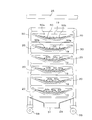
- the side view of the breeding floor which piled up several prey accommodation trays.
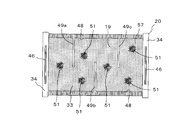
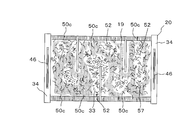
- the top view of the prey accommodation tray in the breeding floor of FIG. The side view of the breeding floor in the state where the 1st instar larvae or the 2nd instar larvae are eating prey.
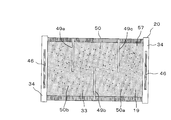
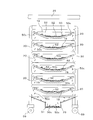
- the top view of the prey accommodation tray in the breeding floor of FIG. The side view of the breeding floor which shows the state in which a 3rd instar larva falls to a collection box.
- the top view of the prey accommodation tray in the breeding floor of FIG. The schematic block diagram of the organic fertilizer manufacturing equipment shown as another example.
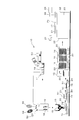
- FIG. 1 is a schematic configuration diagram of an organic fertilizer manufacturing facility shown as an example.
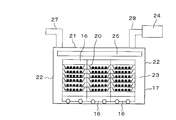
- 2 is a side view of a breeding room 17 that houses a plurality of breeding floors 16
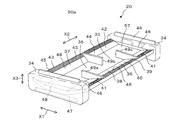
- FIG. 3 is a perspective view of a prey containing tray 20 used in the organic fertilizer manufacturing method.
- FIG. 4 is a partially enlarged view showing the convex portion 45 of the storage tray 20 of FIG.
- the front-rear direction is indicated by an arrow X1
- the lateral direction is indicated by an arrow X2
- the up-down direction is indicated by an arrow X3.
- the organic fertilizer manufacturing method is performed in the organic fertilizer manufacturing facility 10 shown in FIG. 1, and the organic fertilizer is manufactured from the livestock excreta 18 using the housefly larva 50 (see FIG. 9).
- the organic fertilizer manufacturing method uses the organic fertilizer manufacturing facility 10 to execute a prey preparation process, a prey containment process, an egg inoculation process, a fertilizer base material preparation process, a separation process, a fertilizer preparation process, a killing process, and a feed processing process. .
- the kind of housefly larvae 50 has a habit of eating a large amount of food in a short period of time, transforms into a pupa in a short period of time, and emerges from a pupa into an adult.
- Pigs and chickens can be exemplified as livestock, but this method can also be used to treat the excrement of other livestock (cattle, horses, sheep, etc.). This method can also be used for the treatment of excreta.
- the organic fertilizer manufacturing facility 10 includes a raw material receiving pit 11, a stirrer 12, a quantitative cutting machine, a conveyor 13, a belt conveyor 14, a lifter 15, a breeding floor 16, and a breeding room 17.
- the raw material receiving pit 11 is a facility for temporarily storing the transported excrement 18 and has a shutter for preventing the emission of malodor, although not shown.
- the agitator 12 is disposed on the downstream side of the raw material receiving pit 11, and makes the prey 19 by stirring and mixing the excrement 18 and the food enhancement material.
- the fixed quantity cutting machine 13 measures the prey 19 and places a set amount of prey 19 on the prey storage tray 20 (processing container).
- the lifter 15 is stacked in the vertical direction of the prey storage tray 20 and used for assembling the breeding floor 16.
- the breeding room 17 is capable of adjusting the brightness of the airtight space 23, the internal airtight space 23 having a predetermined volume surrounded by the ceiling 21 and the peripheral wall 22, the air conditioner 24 capable of adjusting the temperature and humidity of the airtight space 23, and the airtight space 23.
- the lighting device 25 is formed. As shown in FIG. 2, the breeding room 17 is capable of accommodating a plurality of breeding floors 16 in an internal airtight space 25 so as to be detachable, and is provided with an opening / closing door 26 (see FIG. 7) that can be locked and unlocked.
- a ventilation duct 27 is connected to the ceiling 21 of the breeding room 17.
- the air conditioner 24 and the lighting device 25 are connected to a controller (control device) (not shown) via an interface.
- the air conditioner 24 is connected to the breeding room 17 via a duct 28 extending from the ceiling 21 of the breeding room 17.
- the air conditioner 24 ventilates the internal hermetic space 23 of the breeding room 17, raises or lowers the temperature of the hermetic space 23 according to an instruction from the controller, and raises or lowers the humidity of the hermetic space 23.
- the illuminating device 25 is installed in the internal airtight space 23 in the vicinity of the ceiling 21 of the breeding room 17, and adjusts (dimming) the brightness of the airtight space 23 according to an instruction from the controller.
- the lighting device 25 is located above the breeding floor 16 and in the vicinity of the front end portions 39 and 43 of the front and rear portions 36 and 37, which will be described later, of the prey storage tray 20 located at the top. To do.
- the illumination device 25 a fluorescent lamp or LED illumination is used.
- the controller is a computer having a central processing unit (CPU or MPU) and a memory. Input / output devices such as a numeric keypad unit and a display are connected to the controller via an interface.
- a temperature sensor (not shown) and a humidity sensor (not shown) installed in the internal airtight space 23 are connected to the controller via an interface, and an illuminance sensor (not shown) installed in the airtight space 23 is connected to the controller. Connected through an interface.
- the controller memory stores the set temperature, set humidity, and set illuminance of the internal hermetic space 23.
- the set temperature, set humidity, and set illuminance can be freely set via the numeric keypad unit.
- the temperature sensor measures the temperature of the internal hermetic space 23 and outputs the measured temperature to the controller.
- the humidity sensor measures the humidity of the internal airtight space 23 and outputs the measured humidity to the controller.
- the illuminance sensor measures the illuminance of the internal hermetic space 23 and outputs the measured illuminance to the controller.
- the controller compares the measured temperature output from the temperature sensor with a preset temperature, and performs feedback control so that the measured temperature falls within the set temperature range. Specifically, when the measured temperature is outside the set temperature range, a feedback signal that eliminates the error between the measured temperature and the set temperature is output to the air conditioner 24, and the air conditioner 24 is feedback controlled (inverter control). The temperature of the internal airtight space 23 is maintained at a set temperature.
- the controller compares the actually measured humidity output from the humidity sensor with a preset set humidity, and performs feedback control so that the actually measured humidity falls within the set humidity range. Specifically, when the actually measured humidity is outside the range of the set humidity, a feedback signal for eliminating an error between the actually measured humidity and the set humidity is output to the air conditioner 24, and the air conditioner 24 is feedback controlled to control the internal airtightness.
- the humidity of the space 23 is maintained at the set humidity.
- the controller compares the measured illuminance output from the illuminance sensor with the preset illuminance, and controls the illuminance of the lighting device 25 so that the measured illuminance becomes the set illuminance.
- the breeding floor 16 is formed of a collection box 29 (see FIG. 7), a plurality of prey storage trays 20, a collection box 29 and a fixed frame 30 (see FIG. 7) that detachably supports the storage trays 20. ing.
- the collection box 29 is disposed inside the fixed frame 30 and is located below the prey storage tray 20 disposed at the lowest position.
- the collection box 29 includes an accommodation recess 31 having a rectangular planar shape and an inclined wall 32 connected to the periphery of the accommodation recess 31.
- the inclined wall 32 is inclined upward and downward in the vertical direction from the housing recess 31 outward.
- the prey storage tray 20 is disposed inside the fixed frame 30 and is arranged at regular intervals in the vertical direction.
- the collection box 29 and the prey storage tray 20 are made of a plastic such as a thermosetting synthetic resin or a thermoplastic synthetic resin, or a metal such as aluminum or duralumin.
- the prey containing tray 20 has a bottom wall 33 having a rectangular planar shape, and both side walls 34 vertically rising from both side edges of the bottom wall 33.
- the bottom wall 33 includes a central portion 35 that extends horizontally, a front portion 36 that extends forward from the central portion 35 in the front-rear direction, and a rear portion 37 that extends rearward from the central portion 35 in the front-rear direction.
- a base end portion 38 positioned on the side of the central portion 35 is connected to the central portion 35, and a tip end portion 39 positioned on the opposite side of the base end portion 38 is connected to the upper portions of the side walls 34.
- the front portion 36 is inclined at a predetermined angle upward in the vertical direction from the proximal end portion 38 toward the distal end portion 39.
- the front portion 36 is formed with an inclined surface 40 inclined upward at a predetermined angle from the base end portion 38 toward the tip end portion 39 in the vertical direction.
- a plurality of convex portions 41 are formed at the front end portion 39 of the front portion 36 so as to be spaced apart at equal intervals in the lateral direction.
- a slope 40 is located between the convex portions 41.
- the rear portion 37 has a proximal end portion 42 located on the central portion 35 side connected to the central portion 35 and a distal end portion 43 located on the opposite side of the proximal end portion 42 connected to the upper portions of the side walls 34.
- the rear portion 37 is inclined at a predetermined angle upward in the vertical direction from the proximal end portion 42 toward the distal end portion 43.
- the rear portion 37 is formed with a slope 44 that is inclined upward at a predetermined angle from the base end portion 42 toward the tip end portion 43 in the vertical direction.
- a plurality of convex portions 45 are formed at the distal end portion 43 of the rear portion 37 so as to be spaced apart at equal intervals in the lateral direction.
- a slope 44 is located between the convex portions 45.
- Locating convex portions 46 that are convex upward in the vertical direction are formed on the upper portions of the side walls 34.
- a positioning recess 47 is formed in the lower part of the side walls 34 so as to be recessed upward in the vertical direction and to which the positioning protrusion 46 is detachably fitted.
- a predetermined volume of prey storage recess 57 is defined by the bottom wall 33 and the side walls 34.
- a guide line 48 serving as a reference when the prey 19 is spread there is displayed.
- partition plates 49a to 49c extending in the front-rear direction and spaced apart at equal intervals in the lateral direction are installed.
- the partition plates 49 a and 49 c extend from the front end portion 39 of the front portion 36 of the bottom wall 33 toward the central portion 35 and reach the center of the central portion 35.
- the partition plate 49 b extends from the distal end portion 43 of the rear portion 37 of the bottom wall 33 toward the central portion 35 and reaches the center of the central portion 35.
- the number of partition plates is not limited to three in the drawing, and four or more partition plates may be installed in the prey accommodation recess 57.
- the prey accommodation tray 20 is arranged and fixed inside the fixed frame 30, and six of them are stacked in a state of being spaced apart at equal intervals in the vertical direction.
- the positioning convex portion 46 of the storage tray 20 positioned above is fitted into the positioning concave portion 47 of the storage tray 20 positioned below, and the storage trays 20 are fixed in the vertical direction.
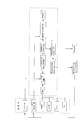
- FIG. 5 is a flowchart showing an example of a procedure of the organic fertilizer manufacturing method
- FIG. 6 is a diagram showing a change in illuminance of the breeding room 17.
- FIG. 7 is a side view of the breeding floor 16 in which a plurality of food storage trays 20 are stacked
- FIG. 8 is a top view of the food storage tray 20 in the breeding floor 16 of FIG.
- FIG. 9 is a side view of the breeding floor 16 in a state where the first-instar larva 50a or the second-instar larva 50b eats the prey 19
- FIG. 10 is a top view of the prey containing tray 20 in the rearing floor 16 of FIG. is there.
- FIG. 10 is a top view of the prey containing tray 20 in the rearing floor 16 of FIG. is there.
- FIG. 11 is a side view of the breeding floor 16 showing a state in which the third-instar larva 50c falls into the collection box 29
- FIG. 12 is a top view of the prey containing tray 20 on the breeding floor 16 of FIG. 7 and 8, the prey 19 is stored in the prey storage tray 20, and the eggs 51 are inoculated on the surface of the prey 19.
- 11 and 12 a part of the prey 19 eaten by the larva 50c is changed to a fertilizer base material 52. 7, 9, and 11, illustration of the partition plates 49 a to 49 c and the air conditioner 24 is omitted.
- the procedure for manufacturing organic fertilizer using the organic fertilizer manufacturing facility 10 of FIG. 1 will be described as follows.
- pig excrement will be described as an example of the excrement 18.
- the excrement 18 (feces and urine) of the pigs raised in the pig farms in various places is collected by the transport vehicle 53 (vacuum car), and the excrement 18 is conveyed to the organic fertilizer manufacturing facility 10.
- the waste 18 is transferred from the transport vehicle 53 to the raw material receiving pit 11 and pooled (stored) in the raw material receiving pit 11.
- a predetermined amount of excreta 18 is charged into the stirrer 12 from the raw material receiving pit 11 using a belt conveyor (not shown).
- rice husk 54 (food enhancement product) and okara 55 (food enhancement product) are added to the agitator 12, and they are agitated and mixed in the agitator 12 to produce a prey 19 (prey preparation process). ).
- Eating habits not only enhance the eating habits of the housefly larva 50, but also function as a moisture control material for the excreta 18.
- the amount of the food enhancement product (mixed amount) is increased.
- the water content of the excrement 18 is insufficient, the water 56 is added to the excrement 18 together with the food-enhancing product.
- the water content of the prey 19 is adjusted and the viscosity (hardness) of the prey 19 is adjusted by mixing the food-enhancement product and water 56 into the excreta 18. It should be noted that at least one of rice husk 54 and okara 55 can be used as the food enhancement product.
- the food enhancement products include sake lees, stepping lees, mirin lees, coffee lees, shochu lees, beer lees, rapeseed lees, pine lees, tea lees, wine lees, starch lees Can be used.
- the weight ratio of the excreta 18 to the total weight of the prey 19 is in the range of 60 to 80% by weight. If the weight ratio of the excrement 18 is less than 60% by weight, it takes time to treat the excrement 18, and a large amount of the excretion 18 cannot be efficiently converted into the fertilizer base material 52 of organic fertilizer in a short time. When the weight ratio of the excreta 18 exceeds 80% by weight, the weight ratio of the food-enhancing product to the prey 19 decreases, and the food quality of the larvae 50 cannot be increased, and most of the excreta 18 is eaten by the larvae 50.
- a large amount of waste 18 may remain, and the large amount of waste 18 cannot be efficiently converted to the fertilizer base material 52 of organic fertilizer in a short period of time.
- the fertilizer of the organic fertilizer can be efficiently used in a short period of time while increasing the diet of the larva 50.
- the substrate 52 can be changed.
- the weight ratio of the food enhancement product to the total weight of the prey 19 is in the range of 20-40% by weight.
- the weight ratio of the dietary enhancement product is less than 20% by weight, the dietary enhancement product is less than the prey 19, and the food quality of the larvae 50 cannot be enhanced.
- the fertilizer base material 52 cannot be changed.
- the weight ratio of the dietary enhancement exceeds 40% by weight, the weight ratio of the excrement 18 to the prey 19 decreases, and it takes time to process the excretion 18, and a large amount of the excretion 18 is efficiently organicized in a short time.
- the fertilizer base material 52 cannot be changed.
- the moisture of the prey 19 decreases, the viscosity of the prey 19 increases more than necessary, the prey 19 hardens, and the larva 50 may not be able to eat the prey 19 smoothly.
- the weight ratio of the food enhancement product to the total weight of the prey 19 is in the above range, the food property of the larvae 50 can be improved, and a large amount of the excreta 18 can be efficiently removed in a short time.
- the fertilizer base material 52 can be changed.
- the weight ratio of the food enhancement product to the total weight of the prey 19 is adjusted to a range of 20 to 40% by weight.
- the weight ratio of the rice husk 54 to the total weight of the food enhancement product is in the range of 10 to 15% by weight, and the weight ratio of Okara 55 to the total weight of the food enhancement product is in the range of 85 to 90% by weight. If the weight ratio of the rice husk 54 exceeds 15% by weight and the weight ratio of okara 55 is less than 85% by weight, it is difficult to sufficiently improve the eating habits of the larvae 50, and a large amount of excreta 18 is efficiently produced in a short period of time.
- the weight ratio of the rice husk 54 and the okara 55 to the total weight of the food-enhancing product is within the above range, so that the food property of the larva 50 can be sufficiently improved, and a large amount of the excreta 18 is produced.
- the organic fertilizer base material 52 can be efficiently changed in a short time.
- the food 19 is prepared by stirring and mixing them. It is transferred from the stirrer 12 to the quantitative cutout machine 13.
- the quantitative cutting machine 13 the prey 19 is weighed, and a set amount of prey 19 is discharged from its outlet.
- the set amount of prey 19 discharged from the discharge port of the fixed quantity cutting machine 13 falls to the prey storage tray 20 located below the cutting machine 13 and accommodates the prey in the storage tray 20 placed on the belt conveyor 14. It is accommodated in the recess 57 (prey accommodation process).
- the prey 19 is leveled substantially flat according to the reference line 48 of the prey containing tray 20.
- the prey storage tray 20 in which the prey 19 is stored moves from the fixed quantity cutter 13 to the lifter 15 by the belt conveyor 14.
- a predetermined amount of the housefly eggs 51 are inoculated on the surface of the prey 19 (egg inoculation process).
- the eggs 51 are not uniformly spread over the entire surface of the prey 19, but a plurality of eggs 51 are formed on the surface of the prey 19, as shown in FIG.
- the heap is inoculated in a state where the front and rear portions 36 and 37 are spaced apart at substantially equal intervals in the horizontal direction.
- a plurality of eggs 51 can be obtained because naturally occurring house flies spawn a plurality of eggs in a medium in a medium, thereby increasing the hatching rate from the eggs and improving the survival rate of the seeds.
- the surface of the prey 19 is inoculated in a pile. Thereby, the hatching rate of the larva 50 which hatches from the inoculated egg 51 can be improved, and it becomes possible to improve the survival rate of the larva 50.
- the weight ratio of the egg 51 to the total weight of the prey 19 is in the range of 0.002 to 0.004% by weight.
- the weight ratio of the eggs 51 is less than 0.002% by weight, the number of larvae 50 hatched from the eggs 51 is small, and the larvae 50 cannot feed most of the prey 19, and a large amount of prey 19 remains, and the prey 19 It is difficult to change most of them to the fertilizer base material 52.
- the weight ratio of the eggs 51 exceeds 0.004% by weight, too many larvae 50 hatched from the eggs 51, the prey 19 becomes insufficient, and the growth of the larvae 50 is delayed, so that the excreta 18 can be processed efficiently. I can't.
- the prey 19 can be fed in a short time using the larva 50 hatched from the egg 51 without wasting the egg 51, and the excreta 18 can be efficiently removed without leaving a large amount of prey 19. It can change into the fertilizer base material 52 of an organic fertilizer.
- the prey storage tray 20 is stacked in the vertical direction by the lifter 15 to form a rearing floor 16 having a hierarchical structure.
- a plurality of breeding floors 16 are accommodated in an internal airtight space 23 of the breeding room 17.
- Rails 58 are laid in the breeding room 17, and the wheels 59 of the breeding floor 16 are fitted to the rails 58, and the breeding floor 16 is fixed to the breeding room 17 so as to be able to run.
- breeding floors 16 are accommodated in the breeding room 17, but the number of breeding floors 16 is not limited to three, and four or more breeding floors 16 are accommodated in the breeding room 17. There is also a case. After housing the breeding floor 16 in the breeding room 17, the door 26 is closed and the door 26 is locked. Note that when the breeding floor 16 is housed in the breeding room 17, the air conditioner 24, the lighting device 25, and the controller are in operation.
- the controller maintains the temperature of the internal airtight space 23 of the breeding room 17 at the set temperature via the air conditioner 24 while comparing the measured temperature output from the temperature sensor with the set temperature, and the measured temperature output from the humidity sensor.
- the humidity of the airtight space 23 is maintained at the set humidity via the air conditioner 24 while comparing the humidity with the set humidity.
- the controller maintains the temperature of the internal airtight space 23 of the breeding room 17 in the range of 27 to 31 ° C., and maintains the humidity of the airtight space 23 in the range of 50 to 70%.
- the temperature of the internal airtight space 23 is less than 27 ° C.
- the hatching of the eggs 51 is delayed and the growth of the larvae 50 is delayed, so that a large amount of excreta 18 cannot be efficiently converted into the fertilizer base material 52 of organic fertilizer in a short time.
- the temperature of the internal airtight space 23 exceeds 31 ° C.
- the hatching rate of the eggs 51 decreases due to heat, the number of larvae 50 decreases, and the hatched larvae 50 may die, and the excreta 18 is processed. It may not be possible.
- the organic fertilizer manufacturing method can promote the hatching of the larva 50 from the egg 51 by maintaining the temperature of the internal airtight space 23 in the above range and maintaining the humidity of the airtight space 23 in the above range. 50 can be promoted, and the eggs 51 and the larvae 50 can be reliably survived during the growth process, and the hatching rate of the eggs 51 and the survival rate of the larvae 50 can be improved.
- the larva 50 hatches from the egg 51 on the first day after inoculating the egg 51 into the prey 19.
- the larvae 50 hatched from the eggs 51 are classified into a first-instar larva 50a immediately after hatching, a second-instar larva 50b after one molting, and a third-instar larva 50c after two moltings before cocoon transformation.
- the first-instar larvae 50a are larvae 50a from the inoculation of the egg 51 to the second day, and the second-instar larvae 50b are inoculated until the first day after the second day after the inoculation of the egg 51 (the egg 51 It is a larva 50b on the third day after inoculation).
- the third-instar larvae 50c are larvae 50c from the first day to the third day after the third day after the inoculation of the egg 51 (the fourth to seventh days after the inoculation of the egg 51).
- the larvae 50a to 50c grow on the prey 19 stored in the prey storage tray 20.
- the larvae 50a to 50c are fed by feeding the prey 19 to the larvae 50a to 50c, and in the rearing process in which the larvae 50a to 50c grow using the prey 19 as a prey, the prey 19 is the larvae 50a to 50c.
- the prey 19 livestock excrement 18
- the prey 19 is changed to a fertilizer base material 52 of organic fertilizer (fertilizer base material creation process).
- the prey 19 left by the larvae 50a to 50c becomes a part of the fertilizer base material 52 by fermentation.
- the fertilizer base material preparation process as shown in FIG.
- the first-instar larvae 50a are reared in the dark in the dark breeding room 17a, and the second-instar larvae 50b are reared in the dark or twilight rearing room 17b.
- the third-instar larvae 50c are bred in a bright breeding room 17c under illumination.
- the controller darkens the breeding room 17a and keeps the eggs 51 to the first-instar larvae 50a in the dark without turning on the lighting device 25 until the second day after the inoculation of the eggs 51.
- the breeding room 17 has a structure in which light is not inserted from the outside.
- the organic fertilizer manufacturing method raises the first-instar larva 50a in the dark (darkness), and does not stimulate the larva 50a with light, so that the first-instar larva 50a can enter under the prey 19 or the inside of the prey 19 It is possible to prevent the larva 50a from eating from the surface of the prey 19.
- the controller makes the breeding room 17b dark without turning on the lighting device 25 until the first day after the second day after inoculating the egg 51 (the third day after inoculating the egg 51).
- the larvae 50b are reared in the dark (darkness), or the lighting device 25 is turned on to light the rearing room 17b, and the second-instar larvae 50b are reared in the twilight.
- the organic fertilizer manufacturing method does not stimulate the larvae 50b with light by raising the 2nd instar larvae 50b in the dark or twilight. It can be prevented from being hidden, and the larva 50b can be fed from the surface of the prey 19.
- the controller From the first day to the third day after the third day after the inoculation of the egg 51 (from the fourth to the seventh day after the inoculation of the egg 51), the controller turns on the lighting device 25 and raises the breeding room 17c.
- the 3rd instar larvae 50c are reared in the lighting.
- the light from the illumination device 25 illuminates the front end portions 39 and 43 of the front and rear portions 36 and 37 of the prey storage tray 20, and the third-instar larva 50 c moves to the front end portions 39 and 43 of the front and rear portions 36 and 37 of the storage tray 20.
- the larvae 50 eat most of the prey 19, the larvae 50 become the third-instar larvae 50 c, and the cocoon transformation period is reached.
- the third instar larva 50c has a discrete behavior (peristaltic discrete behavior) when it transforms into a cocoon. In other words, he actively moves for a place to become a habit.
- the third-instar larvae 50c that have reached the stage of cocoon transformation are actively perturbed in search of a place to become a cocoon, and are guided to the lighting device 25 by the phototaxis while moving around the bottom wall 33 of the prey storage tray 20,
- the slopes 40 and 44 are scooped up from the central portion 35 of the wall 33 and moved from the central portion 35 toward the front end portions 39 and 43 of the front and rear portions 36 and 37.
- the third instar larva 50c that has moved to the tip portions 39 and 43 of the front and rear portions 36 and 37 is formed by the projections 41 and 45 formed on the tip portions 39 and 43 of the front and rear portions 36 and 37. It enters the slopes 40 and 44 between them, climbs further up the slopes 40 and 44, gets over the front ends of the front and rear portions 36 and 37, and falls from the front ends of the front and rear portions 36 and 37 toward the collection box 29.
- the third-instar larvae 50c from the central portion 35 of the bottom wall 33 toward the both side walls 34 abut against the partition plates 49a to 49c, and the inclined surfaces 40 and 44 from the central portion 35 of the bottom wall 33 along the partition plates 49a to 49c. Is moved from the central portion 35 toward the front end portions 39 and 43 of the front and rear portions 36 and 37, gets over the front ends of the front and rear portions 36 and 37, and falls toward the collection box 29. Alternatively, it strikes against the side walls 34 and rises along the side walls 34 from the central portion 35 of the bottom wall 33 to the slopes 40 and 44, and moves from the central portion 35 toward the tip portions 39 and 43 of the front and rear portions 36 and 37. Then, it passes over the front and rear ends of the front and rear portions 36 and 37 and falls toward the collection box 29.
- the third-instar larvae 50c that have reached the stage of cocoon metamorphosis fall to the collection box 29 from the tips of the front and rear portions 36 and 37 of the prey storage tray 20, and thus the habits of the third-instar larvae 50c are utilized. And the fertilizer base material 52 are separated (sorting process). In this method, the larva 50c and the fertilizer base material 52 can be separated without manual intervention by utilizing the habit of the third-instar larva 50c. In addition, by breeding the third-instar larvae 50c in the light, it is possible to reliably separate the larvae 50c and the fertilizer base material 52 using the phototaxis of the larvae 50c that have reached the stage of cocoon metamorphosis.
- the separation between the 3rd instar larva 50c and the fertilizer base material 52 starts on the fourth day after the inoculation of the eggs 51 on the prey 19 and ends on the seventh day. Therefore, it grows from the egg 51 to the third instar larva 50c before metamorphosis in a maximum of 7 days.
- a group of third-instar larvae 50c separated from the fertilizer base material 52 is killed on the fourth day after the eggs 19 are inoculated on the prey 19 (killing process).
- the killing process the third-instar larvae 50c on the fourth day after inoculating the prey 19 with the eggs 51 are taken out from the collection box 29, and the larvae 50c are incinerated.
- the livestock excreta 18 may contain not only housefly larvae 50 but also other kinds of insect larvae used in this method, but the third age separated from the fertilizer base material 52 on the fourth day. By killing the group of larvae 50c, other types of insect larvae trapped in the excreta 18 can be excluded from the group of housefly larvae 50 utilized in this method.
- the reason for killing the group of 3rd instar larvae 50c separated from the fertilizer substrate 52 on the 4th day after inoculating the prey 19 with the egg 51 is that the excrement should occur before the prey 19 is inoculated with the egg 51. Since larvae of other insects are lurking in 18 and have already grown as larvae, on the 4th day they are often the last-aged larvae just before becoming pupae, This is because the larvae of other insects can be eliminated together by killing the group.
- these 3rd instar larvae 50c are treated with hot water, dehydrated and stored frozen. Alternatively, the larvae 50c are subjected to a hot water bath, dehydrated, dried, and stored at room temperature. Alternatively, these larvae 50c are subjected to a hot water treatment, then dehydrated, dried, powdered and stored at room temperature.
- the feed produced by the feed processing process is mixed with pet food or used as fish food or bird food.
- the organic fertilizer manufacturing method uses the third instar larvae 50c group separated from the fertilizer base material 52 after the fifth day to feed, and is used in this method in a state in which other types of insect larvae are excluded.
- a feed made only from the housefly larvae 50 can be produced.
- the housefly larva 50 as a feed, a high-protein feed rich in antibacterial proteins can be made, and a feed excellent in promoting growth, strengthening tolerance and improving meat quality can be made. .
- the airtight space 23 is maintained at the set temperature (27 to 31 ° C.) using the air conditioner 24 while maintaining the temperature of the internal airtight space 23 in the breeding room 17.
- the humidity of 23 is maintained at the set humidity (50 to 70%), and the remaining larvae 50c are transformed into cocoons.
- the pupae are collected from the collection box 29, transferred to a breeding gauge (not shown), and the pupae emerge as adults of the house fly. After emergence, the cocoon shells are collected from the breeding gauge.
- the next-generation eggs 51 are collected by feeding the house flies that emerged from the cocoon and breeding the house flies while spawning the house flies. The adult housefly carcasses are recovered from the rearing gauge. By inoculating the next-generation egg 51 into the prey 19, the larva 50 hatched from the egg 51 is treated with the excreta 18.
- the next-generation egg 51 is born to the adult housefly which has grown the remaining larvae 50c extracted from the group of the 3rd instar larvae 50c, and the excreta 18 is used as a fertilizer base material using the eggs 51. Therefore, it is not necessary to procure a new housefly egg 51 from the outside, the housefly can be used in a semi-permanent cycle, and the fertilizer base material 52 can be made at low cost.
- the fertilizer base material 52 made by the fertilizer base material creation process is collected from the prey storage tray 20 and is put into a dryer (not shown). In addition to the fertilizer base material 52, cocoon shells and adult housefly dead bodies are fed into the dryer. The fertilizer base material 52, the cocoon husks, and the adult carcasses of the housefly are stirred and mixed in a dryer at a predetermined temperature for a predetermined time and dried.
- the organic fertilizer is made by mixing the fertilizer base material 52, the cocoon shell of the cocoon, and the dead carcass of the housefly. The organic fertilizer is weighed and then packaged.
- the organic fertilizer production method can use all of the house flies as materials for organic fertilizers, and can eliminate waste of materials.
- the organic fertilizer manufacturing method includes chitosan rich in house fly carcasses and house fly husks, so that they can be added to the fertilizer base 52 to improve soil, antibacterial action, promote plant growth, plant It is possible to produce organic fertilizers with excellent disease control effects, improved fruit quality, etc.
- a dietary enhancement product that enhances the food habits of the housefly larvae 50 is mixed with the livestock excreta 18 to create a prey 19, and the prey 19 contained in the prey containing tray 20 is transferred to the larvae 50a to 50c. Since the food is eaten, a large amount of livestock excreta 18 can be efficiently converted to the fertilizer base material 52 of organic fertilizer in a short period of time while enhancing the food habits of the larvae 50a to 50c. In addition, when the excreta 18 is disposed of by incineration, not only fuel is consumed, but a large amount of carbon dioxide is discharged, which has an adverse effect on the environment.
- the organic fertilizer production method emits malodor for a long period of time and may cause the propagation of pathogenic bacteria.
- the prey 19 including the livestock excreta 18 is enzymatically decomposed in the larvae 50a to 50c, and the larvae.
- the fertilizer base material 52 of organic fertilizer is made, so there is no consumption of fuel when incinerated, no carbon dioxide is emitted, and there is no negative impact on the environment
- the excreta 18 can be safely treated using the food of the larvae 50a to 50c without the occurrence of long-term malodor and the propagation of pathogenic bacteria.
- FIG. 13 is a schematic configuration diagram of an organic fertilizer manufacturing facility 10 shown as another example.
- the organic fertilizer production facility 10 in FIG. 13 is different from that in FIG. 1 in that the food residue 60 is mixed into the excrement 18 stored in the raw material receiving pit 11, and the other configuration is the production of organic fertilizer in FIG. Since it is the same as the facility 10, the same reference numerals as those in FIG. 1 are attached, and the description of FIG. 1 is used, and the detailed description of the other components of the organic fertilizer manufacturing facility 10 is omitted.
- the food residue 60 (residue) is mixed into the excrement pooled (stored) in the raw material receiving pit 11, and the food residue 60 rots in the excrement 18. After the food residue 60 has been rotted, a predetermined amount of excreta 18 and the food residue 60 are introduced into the agitator 12 from the raw material receiving pit 11.
- the stirrer 12 is supplied with rice husk 54 (food enhancement product) and okara 55 (food enhancement product), which are stirred and mixed in the stirrer 12 to produce a prey 19. (Prey creation process).
- rice husk 54 food enhancement product
- okara 55 food enhancement product
- the weight ratio of the food residue 60 to the total weight of the excreta 18 is in the range of 10 to 50% by weight. If the weight ratio of the food residue 60 is less than 10% by weight, the treatment amount of the food residue 60 is small, and a large amount of the food residue 60 cannot be efficiently converted into the fertilizer base material 52 of organic fertilizer in a short time. If the weight ratio of the food residue 60 exceeds 50% by weight, it takes a long time to cause the food residue 60 to rot in the excreta 18 and it is difficult to make the prey 19 in a short time. Moreover, the processing amount of excrement falls and excrement cannot be efficiently changed into the fertilizer base material 52 of an organic fertilizer in a short time.
- the weight ratio of the food residue 60 is in the above range, a large amount of food residue 60 produced by humans can be processed together with the livestock excreta 18, and the food residue 60 to be discarded in a large amount is short-term. In the meantime, the fertilizer base material 52 of organic fertilizer can be efficiently changed.
- the weight ratio of the excrement 18 to the total weight of the prey 19, the weight ratio of the food enhancement to the total weight of the prey 19, the weight ratio of the rice husk 54 to the total weight of the food enhancement, and 55 to the total weight of the food enhancement is the same as that of the organic fertilizer manufacturing facility 10 of FIG.
- the prey 19 is weighed in the quantitative cutting machine 13, and the set amount The prey 19 is discharged from the outlet.
- the prey 19 falls on a prey storage tray 20 located below the cutting machine 13 and is stored in a prey storage recess 57 of the storage tray 20 placed on the belt conveyor 14 (prey storage process).
- the prey 19 is leveled substantially flat according to the reference line 48 of the prey containing tray 20.
- the prey storage tray 20 storing the prey 19 is moved to the lifter 15 by the belt conveyor 14.
- a predetermined amount of the house fly eggs 51 are inoculated on the surface of the prey 19 (egg inoculation process).
- a plurality of eggs 51 are inoculated on the top of the prey 19 in a state of being spaced apart from the central portion 35 of the bottom wall 33 in the horizontal direction at substantially equal intervals (see FIG. 7).
- the weight ratio of the egg 51 to the total weight of the prey 19 is the same as that of the organic fertilizer manufacturing facility 10 of FIG.
- the prey storage tray 20 is stacked in the vertical direction by the lifter 15 to form a rearing floor 16 having a hierarchical structure.
- a plurality of the breeding floors 16 are accommodated in the internal airtight space 23 of the breeding room 17 (supporting FIG. 2).
- the controller maintains the temperature of the internal airtight space 23 of the breeding room 17 at the set temperature via the air conditioner 24 while comparing the measured temperature output from the temperature sensor with the set temperature, and the measured temperature output from the humidity sensor.
- the humidity of the airtight space 23 is maintained at the set humidity via the air conditioner 24 while comparing the humidity with the set humidity.
- the temperature of the internal airtight space 23 of the breeding room 17 is maintained in the range of 27 to 31 ° C., and the humidity of the airtight space 23 is maintained in the range of 50 to 70%.
- the prey 19 is enzymatically degraded in the larvae 50a to 50c.
- the prey 19 livestock excrement 18 and food residue 60
- the prey 19 is changed to a fertilizer base material 52 of organic fertilizer (fertilizer base material creation process).
- the prey 19 left by the larvae 50a to 50c becomes a part of the fertilizer base material 52 by fermentation.
- the first-instar larvae 50a are reared in the dark in the dark rearing room 17a
- the second-instar larvae 50b are reared in the dark or twilight rearing room 17b
- the bright rearing room 17c are reared in illumination (see FIG. 6).
- the third-instar larvae 50c that have reached the stage of cocoon transformation are actively perturbed in search of a place to become a cocoon, and are guided to the lighting device 25 by the phototaxis while moving around the bottom wall 33 of the prey storage tray 20,
- the slopes 40 and 44 are scooped up from the central portion 35 of the wall 33 and moved from the central portion 35 toward the front end portions 39 and 43 of the front and rear portions 36 and 37.
- the third-instar larvae 50c enter the slopes 40, 44 between the convex parts 41, 45 formed at the tip portions 39, 43 of the front and rear parts 36, 37, and further scoop up the slopes 40, 44 to Overcoming the tip of 37, it falls toward the collection box 29 from the tip of the front and rear portions 36, 37 (FIGS. 11 and 12 are supported).
- the larvae 50c, the fertilizer base material 52 are separated (sorting process).
- a group of third-instar larvae 50c separated from the fertilizer base material 52 is killed on the fourth day after inoculating the prey 19 with the eggs 51 (killing process).
- the killing process the third-instar larvae 50c on the fourth day after inoculating the prey 19 with the eggs 51 are taken out from the collection box 29, and the larvae 50c are incinerated.
- these 3rd instar larvae 50c are treated with hot water, dehydrated and stored frozen. Alternatively, the larvae 50c are subjected to a hot water bath, dehydrated, dried, and stored at room temperature. Alternatively, these larvae 50c are subjected to a hot water treatment, then dehydrated, dried, powdered and stored at room temperature.
- the feed produced by the feed processing process is mixed with pet food or used as fish food or bird food.
- the temperature of the airtight space 23 in the breeding room 17 is maintained at the set temperature (27 to 31 ° C.) using the air conditioner 24, and the humidity of the airtight space 23 is set to the set humidity (50 to 70%).
- the remaining larvae 50c are transformed into cocoons.
- the pupae are collected from the collection box 29, the pupae are transferred to a breeding gauge, and the pupae emerge as adults of the house fly. After emergence, the cocoon shells are collected from the breeding gauge.
- the next-generation eggs 51 are collected by feeding the house flies that emerged from the cocoon and breeding the house flies while spawning the house flies. The adult housefly carcasses are recovered from the rearing gauge. By inoculating the next-generation egg 51 into the prey 19, the larva 50 hatched from the egg 51 is treated with the excreta 18.
- the fertilizer base material 52, the cocoon husk and the house fly adult carcass made by the fertilizer base material creation process are collected from the prey storage tray 20 and put into a dryer.
- the fertilizer base 52, the cocoon shell of the moth, and the adult housefly are stirred and mixed in a dryer for a predetermined temperature and for a predetermined time and dried to produce an organic fertilizer.
- the organic fertilizer is weighed and then packaged.
- the organic fertilizer production method implemented in the organic fertilizer production facility 10 in FIG. 13 has the following effects in addition to the effects of the organic fertilizer production method implemented in the organic fertilizer production facility 10 in FIG.
- the organic fertilizer manufacturing method since the excrement 18 and the food residue 60 are included in the prey 19, and the prey 19 is processed by the housefly larva 50, a large amount of food residue 60 (manufactured by humans together with the livestock excreta 18) The food residue 60 that is discarded in large quantities can be efficiently converted into the fertilizer base material 52 of organic fertilizer in a short time.
- the food residue 60 When the food residue 60 is disposed of by incineration, not only fuel is consumed, but a large amount of carbon dioxide is discharged, which has an adverse effect on the environment. In this case, the organic fertilizer production method emits malodor for a long time and may cause pathogenic bacteria. However, in this method of producing organic fertilizer, the prey 19 including the food residue 60 is enzymatically decomposed in the body of the larva 50 and excreted from the larva 50.
- the fertilizer base material 52 of organic fertilizer is made by this, there is no consumption of fuel in the case of incineration disposal, it does not emit carbon dioxide, it does not adversely affect the environment, There is no outbreak or propagation of pathogenic bacteria, and the excreta 18 and food residue 60 can be safely treated using the food habits of the housefly larvae 50.
Landscapes
- Life Sciences & Earth Sciences (AREA)
- Chemical & Material Sciences (AREA)
- Environmental Sciences (AREA)
- Engineering & Computer Science (AREA)
- Animal Husbandry (AREA)
- Zoology (AREA)
- Polymers & Plastics (AREA)
- Health & Medical Sciences (AREA)
- Biodiversity & Conservation Biology (AREA)
- Biotechnology (AREA)
- Molecular Biology (AREA)
- Animal Behavior & Ethology (AREA)
- Food Science & Technology (AREA)
- Physiology (AREA)
- Biochemistry (AREA)
- Organic Chemistry (AREA)
- Microbiology (AREA)
- General Chemical & Material Sciences (AREA)
- Chemical Kinetics & Catalysis (AREA)
- Insects & Arthropods (AREA)
- Botany (AREA)
- Mycology (AREA)
- Biomedical Technology (AREA)
- Tropical Medicine & Parasitology (AREA)
- Birds (AREA)
- Processing Of Solid Wastes (AREA)
- Treatment Of Sludge (AREA)
- Fertilizers (AREA)
- Feed For Specific Animals (AREA)
- Fodder In General (AREA)
Abstract
【課題】イエバエの幼虫を利用して家畜の多量の排泄物を短期間に効率よく有機肥料に変えることができる有機肥料製造方法を提供する。 【解決手段】有機肥料製造方法は、幼虫の食性を増進させるもみ殻54、おから55を排泄物18に混合して餌食19を作る餌食作成プロセスと、所定量の餌食19を餌食収容トレー20に収容する餌食収容プロセスと、収容トレー20に収容された餌食19にイエバエの卵51を接種する卵接種プロセスと、収容トレー20に収容された餌食19を卵51から孵化した幼虫に食させて幼虫を飼育し、幼虫の飼育過程において餌食19が幼虫の体内で酵素分解されてその幼虫から排泄されることで有機肥料の肥料基材を作る肥料基材作成プロセスとを有する。
Description
本発明は、イエバエの幼虫を利用して家畜の排泄物から有機肥料を製造する有機肥料製造方法に関する。
悪臭を放つ不衛生な家畜の排泄物を未処理のまま自然界に投棄することは認められず、排泄物を所定期間養生させて無害化処理をした後、それを廃棄する必要がある。しかし、畜産規模の拡大に伴って大量に発生する家畜の排泄物を短期間に効率よく処理することは難しく、畜産農家にとって家畜の排泄物の処理が多大な負担となっている。そのような負担を軽減するための畜糞を処理する昆虫バイオ処理システムが提案されている(特許文献1参照)。
特許文献1に開示の昆虫バイオ処理システムは、畜糞が置かれる処理容器を順次搬送する処理容器搬送手段と、処理容器搬送手段により順次送られてくる空の処理容器に畜糞を供与する廃棄物供与手段と、畜糞が供与されて送られてくる処理容器中の未養生の畜糞にイエバエの卵または弱齢幼虫を付与する虫付与手段と、処理容器を多段に積み上げて必要な期間中保管して畜糞を養生する廃棄物養生手段と、養生中の処理容器より這い出してくるイエバエの幼虫または這い出した幼虫が変態して生じた蛹を回収する虫回収手段と、養生を済ませて処理容器搬送手段により順次送られてくる処理容器から養生済の畜糞を回収する廃棄物回収手段とを備えている。この昆虫バイオ処理システムでは、畜糞をイエバエの幼虫に食させることによってその畜糞を無害化または低害化にすることができる。
前記特許文献1に開示の昆虫バイオ処理システムは、畜糞をイエバエの幼虫に食させてその畜糞を無害化処理または低害化処理するが、畜糞のみを幼虫に食させた場合、幼虫の食性を増進させることが難しく、短期間に多量の畜糞を処理することができない場合がある。また、幼虫の飼育条件が明確ではなく、飼育条件によっては卵の孵化率が低下し、幼虫の生存率が低下するとともに、幼虫の成長が遅れ、畜糞を効率よく処理することができない場合がある。
本発明の目的は、イエバエの幼虫を利用して家畜の排泄物を短期間に効率よく有機肥料に変えることができる有機肥料製造方法を提供することにある。
前記課題を解決するための本発明の前提は、イエバエの幼虫を利用して家畜の排泄物から有機肥料を製造する有機肥料製造方法である。
前記前提における本発明の特徴は、有機肥料製造方法が、幼虫の食性を増進させる食性増進物を排泄物に混合して餌食を作る餌食作成プロセスと、所定量の餌食を所定容積の処理容器に収容する餌食収容プロセスと、処理容器に収容された餌食にイエバエの卵の複数個を接種する卵接種プロセスと、処理容器に収容された餌食を卵から孵化した幼虫に食させて幼虫を飼育し、幼虫の飼育過程において餌食が幼虫の体内で酵素分解されてその幼虫から排泄されることで有機肥料の肥料基材を作る肥料基材作成プロセスとを有することにある。
本発明の一例としては、有機肥料製造方法が肥料基材作成プロセスによって作られた肥料基材にイエバエの成虫の死骸とイエバエの蛹の脱け殻とを加えて有機肥料を作る肥料作成プロセスを含む。
本発明の他の一例としては、有機肥料製造方法が餌食を食して蛹変態期を迎えた幼虫の活発な蠕動離散習性を利用して幼虫と肥料基材とを分別する分別プロセスを含む。
本発明の他の一例として、卵接種プロセスでは、卵の複数個を餌食の表面に山盛りに接種する。
本発明の他の一例としては、イエバエの幼虫が孵化直後の1齢幼虫と1回の脱皮後の2齢幼虫と2回の脱皮後の蛹変態前の3齢幼虫とに区分され、肥料基材作成プロセスでは、1齢幼虫を暗中で飼育し、3齢幼虫を照明中で飼育する。
本発明の他の一例として、基材作成プロセスでは、2齢幼虫を暗中または薄明中で飼育する。
本発明の他の一例としては、幼虫の活発な蠕動離散習性を利用した幼虫と肥料基材との分別が餌食に卵を接種してから4日目に始まって7日目に終了し、有機肥料製造方法が、餌食に卵を接種してから4日目に肥料基材から分別された幼虫群を殺処分する殺処分プロセスと、餌食に卵を接種してから5日目以降に肥料基材から分別された幼虫群を飼料に加工する飼料加工プロセスとを含む。
本発明の他の一例としては、有機肥料製造方法が、餌食に卵を接種してから5日目以降の幼虫群から一部の幼虫を抽出し、抽出した幼虫を成虫に成長させ、それら成虫に産ませた次世代の卵を餌食に接種するリサイクルプロセスを含む。
本発明の他の一例として、飼料加工プロセスでは、餌食に卵を接種してから5日目以降の幼虫群の97~98.5%を飼料に加工し、リサイクルプロセスでは、餌食に卵を接種してから5日目以降の幼虫群の1.5~3%を成虫に成長させる。
本発明の他の一例として、有機肥料製造方法では、複数個の処理容器を上下方向へ積み重ねて飼育床を作り、飼育床の複数を所定容積の飼育室に収納する。
本発明の他の一例として、有機肥料製造方法では、飼育室内部の温度が27~31℃の範囲に維持され、飼育室内部の湿度が50~70%の範囲に維持される。
本発明の他の一例としては、餌食の全重量に対する排泄物の重量比が60~80重量%の範囲にあり、餌食の全重量に対する食性増進物の重量比が20~40重量%の範囲にある。
本発明の他の一例としては、餌食の全重量に対する卵の重量比が0.002~0.004重量%の範囲にある。
本発明の他の一例としては、食性増進物がもみ殻とおからとであり、食性増進物の全重量に対するもみ殻の重量比が10~15重量%の範囲にあり、食性増進物の全重量に対するおからの重量比が85~90重量%の範囲にある。
本発明の他の一例として、餌食作成プロセスでは、排泄物に食物残渣が混入され、食物残渣が排泄物中において腐敗して餌食が作られる。
本発明の他の一例としては、排泄物の全重量に対する食物残渣の重量比が10~50重量%の範囲にある。
本発明の他の一例としては、家畜が豚と鶏との少なくとも一方である。
本発明にかかる有機肥料製造方法によれば、幼虫の食性を増進させる食性増進物を家畜の排泄物に混合して餌食を作り、処理容器に収容されたその餌食をイエバエの幼虫に食させるから、幼虫の食性を増進させつつ、家畜の大量な排泄物を短期間に効率よく有機肥料の肥料基材に変えることができる。なお、排泄物を焼却処分する場合、燃料を消費するのみならず、多量の二酸化炭素を排出し、環境に悪影響を与えることになり、また、排泄物を長期間養生して無害化処理する場合、長期間悪臭を放つとともに病原菌の繁殖原因となる場合があるが、この有機肥料製造方法は、家畜の排泄物を含む餌食が幼虫の体内で酵素分解されてその幼虫から排泄されることで有機肥料の肥料基材が作られるから、焼却処分する場合の燃料の消費がないことはもちろん、二酸化炭素を排出せず、環境に悪影響を与えることはなく、長期間の悪臭の発生や病原菌の繁殖もなく、イエバエの幼虫の食性を利用して排泄物を安全に処理することができる。有機肥料製造方法は、肥料基材が豊富なキトサンを含むから、それら肥料基材から土壌改良や抗菌作用、植物の成長促進、植物の病気抑制効果、果実質の改良等に優れた有機肥料を作ることができる。
肥料基材作成プロセスによって作られた肥料基材にイエバエの成虫の死骸とイエバエの蛹の脱け殻とを加えて有機肥料を作る肥料作成プロセスを含む有機肥料製造方法は、イエバエを余すところなくその全てを有機肥料の材料として使用することができ、材料の無駄を省くことができる。有機肥料製造方法は、イエバエの成虫の死骸やイエバエの蛹の脱け殻が豊富なキトサンを含むから、それらを肥料基材に加えることで、土壌改良や抗菌作用、植物の成長促進、植物の病気抑制効果、果実質の改良等に優れた有機肥料を作ることができる。
餌食を食して蛹変態期を迎えた幼虫の活発な蠕動離散習性を利用して幼虫と肥料基材とを分別する分別プロセスを含む有機肥料製造方法は、幼虫が蛹変態する時に肥料基材から蠕動離散する習性を利用することで、イエバエの幼虫と肥料基材との人手を介した分別作業を省くことができ、手間と時間とをかけることなく、幼虫と肥料基材とを分離することができる。有機肥料製造方法は、肥料基材にイエバエの幼虫が残存することはなく、肥料基材のみを効率よく採集することができるのみならず、肥料基材からのイエバエの成虫の発生を防ぐことができる。
卵接種プロセスにおいて、卵の複数個を餌食の表面に山盛りに接種する有機肥料製造方法は、自然界に存在するイエバエが培地に複数個の卵を山盛り状態に産卵し、それによって卵からの孵化率を高め、種の生存率を向上させていることから、同様に、卵の複数個を餌食の表面に山盛りに接種し、接種した卵から孵化する幼虫の孵化率を向上させることができ、イエバエの幼虫の生存率を向上させることができる。有機肥料製造方法は、卵から孵化する幼虫の孵化率が高いから、卵の無駄を省くことができ、必要最小限の卵を利用して家畜の排泄物を効率よく有機肥料の肥料基材に変えることができる。
イエバエの幼虫が孵化直後の1齢幼虫と1回の脱皮後の2齢幼虫と2回の脱皮後の蛹変態前の3齢幼虫とに区分され、肥料基材作成プロセスにおいて、1齢幼虫を暗中で飼育し、3齢幼虫を照明中で飼育する有機肥料製造方法は、1齢幼虫を暗中で飼育することでその幼虫を光によって刺激することがなく、1齢幼虫が餌食の下方へ潜り込むことや餌食の内部に隠れてしまうことを防ぐことができ、幼虫に餌食の表面からそれを食させることができる。有機肥料製造方法は、幼虫に餌食をその表面から食させることができるから、餌食の残存率を低下させることができ、幼虫に餌食の大部分を食させることができる。有機肥料製造方法は、3齢幼虫を照明中で飼育するから、蛹変態期を迎えた幼虫の走光性を利用して幼虫と肥料基材とを確実に分別することができる。
基材作成プロセスにおいて、2齢幼虫を暗中または薄明中で飼育する有機肥料製造方法は、2齢幼虫を暗中または薄明中で飼育することでその幼虫を光によって刺激することがなく、2齢幼虫が餌食の下方へ潜り込むことや餌食の内部に隠れてしまうことを防ぐことができ、幼虫に餌食の表面からそれを食させることができる。有機肥料製造方法は、幼虫に餌食をその表面から食させることができるから、餌食の残存率を低下させることができ、幼虫に餌食の大部分を食させることができる。
餌食に卵を接種してから4日目に肥料基材から分別された幼虫群を殺処分する殺処分プロセスと、餌食に卵を接種してから5日目以降に肥料基材から分別された幼虫群を飼料に加工する飼料加工プロセスとを含む有機肥料製造方法は、4日目に肥料基材から分別された幼虫群を殺処分することで、他の種類の昆虫の幼虫が紛れ込んでいたとしても他の昆虫の幼虫を幼虫群から排除することができるから、この方法で利用するイエバエの幼虫のみを抽出することができ、イエバエの幼虫のみを使用した飼料を製造することができる。有機肥料製造方法は、5日目以降に肥料基材から分別された幼虫群を飼料に加工するから、他の種類の昆虫の幼虫を排除した状態で、この方法で利用するイエバエの幼虫のみから作られた飼料を製造することができる。有機肥料製造方法は、イエバエの幼虫を飼料にすることで、抗菌性タンパク質を豊富に含んだ高タンパクの飼料を作ることができるとともに、成長促進や耐力増強、肉質向上等に優れた飼料を作ることができる。
餌食に卵を接種してから5日目以降の幼虫群から一部の幼虫を抽出し、抽出した幼虫を成虫に成長させ、それら成虫に産ませた次世代の卵を餌食に接種するリサイクルプロセスを含む有機肥料製造方法は、幼虫群の一部を成長させた成虫に次世代の卵を産ませ、その卵を利用して排泄物を肥料基材に変えるから、イエバエの卵を外部から新たに調達する必要はなく、半永久的なサイクルでイエバエを利用することができ、低コストで肥料基材を作ることができる。
飼料加工プロセスにおいて、餌食に卵を接種してから5日目以降の幼虫群の97~98.5%を飼料に加工し、リサイクルプロセスにおいて、餌食に卵を接種してから5日目以降の幼虫群の1.5~3%を成虫に成長させる有機肥料製造方法は、必要最小限の量の卵をリサイクルに使用しつつ、卵から孵化した3齢幼虫群の97~98.5%を飼料に加工するから、大量の飼料を作ることができる。有機肥料製造方法は、3齢幼虫群の1.5~3%を成虫に成長させ、それら成虫に産ませた卵を再び排泄物の処理に使用するから、半永久的なサイクルでイエバエを利用することができ、低コストで肥料基材を作ることができる。
複数個の処理容器を上下方向へ積み重ねて飼育床を作り、飼育床の複数を所定容積の飼育室に収納する有機肥料製造方法は、複数個の処理容器を利用するとともに、複数の飼育床を利用することで、一度に大量の排泄物を短期間に効率よく肥料基材に変えることができ、大量の排泄物を安全に処理することができる。有機肥料製造方法は、一度に大量の幼虫を飼育することができ、大量の飼料を作ることができるとともに、大量の肥料基材を作ることができる。
飼育室内部の温度が27~31℃の範囲に維持され、飼育室内部の湿度が50~70%の範囲に維持される有機肥料製造方法は、飼育室内部の温度を前記範囲に維持するとともに、飼育室内部の湿度を前記範囲に維持することで、イエバエにとっての飼育室の環境を最適にすることができる。有機肥料製造方法は、卵からの幼虫の孵化を促進させて羽化率を向上させることができ、環境悪化による幼虫の死亡を防いで生存率を向上させることができるとともに、幼虫の成長を促進することができる。有機肥料製造方法は、イエバエの卵や幼虫をその成長過程において確実に生存させることができ、卵や幼虫の生存率を向上させることができるのみならず、幼虫を利用して家畜の排泄物を短期間に効率よく有機肥料の肥料基材に変えることができる。
餌食の全重量に対する排泄物の重量比が60~80重量%の範囲にあり、餌食の全重量に対する食性増進物の重量比が20~40重量%の範囲にある有機肥料製造方法は、排泄物の重量比が前記範囲にあるとともに、食性増進物の重量比が前記範囲にあるから、幼虫の食性を増進させることができ、大量な排泄物を短期間に効率よく有機肥料の肥料基材に変えることができる。有機肥料製造方法は、二酸化炭素を排出せず、環境に悪影響を与えることはなく、長期間の悪臭の発生や病原菌の繁殖もなく、イエバエの幼虫の食性を利用して家畜の排泄物を安全に処理することができる。
餌食の全重量に対する前記卵の重量比が0.002~0.004重量%の範囲にある有機肥料製造方法は、卵の重量比が前記重量%未満では卵から孵化した幼虫が少なく、幼虫に餌食の大部分を食させることができず、多量の餌食が残存し、餌食の大部分を肥料基材に変えることが難しい。また、卵の重量比が前記重量%を超過すると、卵から孵化した幼虫が多すぎ、餌食不足となって幼虫の成長が遅れてしまい、排泄物を効率よく処理することができない。しかし、この方法では卵の重量比が前記範囲にあるから、餌食と卵から孵化した幼虫の数とのバランスがとれ、卵から孵化した幼虫が餌食不足にならず、卵を無駄にすることなく、卵から孵化したイエバエの幼虫の食性を利用して餌食を短期間に食させることができ、多量の餌食が残存することなく、排泄物を効率よく有機肥料の肥料基材に変えることができる。
食性増進物がもみ殻とおからとであり、食性増進物の全重量に対するもみ殻の重量比が10~15重量%の範囲にあり、食性増進物の全重量に対するおからの重量比が85~90重量%の範囲にある有機肥料製造方法は、食性増進物としてもみ殻とおからとを利用し、もみ殻の重量比が前記範囲にあるとともに、おからの重量比が前記範囲にあるから、幼虫の食性を増進させることができ、大量な排泄物を短期間に効率よく有機肥料の肥料基材に変えることができる。有機肥料製造方法は、二酸化炭素を排出せず、環境に悪影響を与えることはなく、長期間の悪臭の発生や病原菌の繁殖もなく、イエバエの幼虫の食性を利用して家畜の排泄物を安全に処理することができる。
餌食作成プロセスにおいて、排泄物に食物残渣が混合され、食物残渣が排泄物中において腐敗して餌食が作られる有機肥料製造方法は、家畜の排泄物とともに人間が出す大量の食物残渣(残飯)を処理することができ、大量に廃棄される食物残渣を短期間に効率よく有機肥料の肥料基材に変えることができる。なお、食物残渣を焼却処分する場合、燃料を消費するのみならず、多量の二酸化炭素を排出し、環境に悪影響を与えることになり、また、食物残渣を長期間養生して無害化処理する場合、長期間悪臭を放つとともに病原菌の発生原因となる場合があるが、この有機肥料製造方法は、食物残渣を含む餌食が幼虫の体内で酵素分解されてその幼虫から排泄されることで有機肥料の肥料基材が作られるから、焼却処分する場合の燃料の消費がないことはもちろん、二酸化炭素を排出せず、環境に悪影響を与えることはなく、長期間の悪臭の発生や病原菌の繁殖もなく、イエバエの幼虫の食性を利用して食物残渣を安全に処理することができる。
排泄物の全重量に対する食物残渣の重量比が10~50重量%の範囲にある有機肥料製造方法は、食物残渣の重量比が前記範囲にあるから、大量に廃棄される食物残渣を家畜の排泄物とともに短期間に効率よく有機肥料の肥料基材に変えることができる。有機肥料製造方法は、食物残渣を含む餌食が幼虫の体内で酵素分解されてその幼虫から排泄されることで有機肥料の肥料基材が作られるから、焼却処分する場合の燃料の消費がないことはもちろん、二酸化炭素を排出せず、環境に悪影響を与えることはなく、長期間の悪臭の発生や病原菌の繁殖もなく、イエバエの幼虫の食性を利用して食物残渣を安全に処理することができる。
家畜が豚と鶏との少なくとも一方である有機肥料製造方法は、大量に排泄される豚や鶏の排泄物を短期間に効率よく有機肥料の肥料基材に変えることができる。有機肥料製造方法は、豚や鶏の排泄物を含む餌食が幼虫の体内で酵素分解されてその幼虫から排泄されることで有機肥料の肥料基材が作られるから、イエバエの幼虫の食性を利用して豚や鳥の排泄物を安全に処理することができる。
一例として示す有機肥料製造設備の概略構成図である図1等の添付の図面を参照し、本発明に係る有機肥料製造方法の詳細を説明すると、以下のとおりである。なお、図2は、複数の飼育床16を収容した飼育室17の側面図であり、図3は、有機肥料製造方法において利用する餌食収容トレー20の斜視図である。図4は、図3の収容トレー20の凸部45を示す部分拡大図である。図3では、前後方向を矢印X1、横方向を矢印X2で示し、上下方向を矢印X3で示す。
有機肥料製造方法は、図1に示す有機肥料製造設備10において実施され、イエバエの幼虫50(図9参照)を利用して家畜の排泄物18から有機肥料を製造する。有機肥料製造方法は、有機肥料製造設備10を利用して餌食作成プロセス、餌食収容プロセス、卵接種プロセス、肥料基材作成プロセス、分別プロセス、肥料作成プロセス、殺処分プロセス、飼料加工プロセスを実行する。
イエバエの種類としては、「Musca Domestica」を使用することが好ましい。前記種類のイエバエの幼虫50は、短期間に大量の餌を食べる習性を有するとともに、短期間に蛹に変態し、蛹から成虫に羽化する。家畜として豚や鶏を例示することができるが、他の家畜(牛、馬、羊等)の排泄物の処理にこの方法を利用することもでき、家畜の排泄物のみならず、食物残渣を含む排泄物の処理にこの方法を利用することもできる。
有機肥料製造設備10は、原料受入ピット11、攪拌機12、定量切出機、コンベアー13、ベルトコンベアー14、昇降リフター15、飼育床16、飼育室17を備えている。原料受入ピット11は、搬送された排泄物18を一時的に貯留する設備であり、図示なしていないが、悪臭の放出を防止するためのシャッターを有する。攪拌機12は、原料受入ピット11の下流側に配置され、排泄物18と食性増進物とを攪拌混合して餌食19を作る。定量切出機13は、餌食19を計量し、設定量の餌食19を餌食収容トレー20(処理容器)に載せる。昇降リフター15は、餌食収容トレー20の上下方向へ積み上げ、飼育床16の組み立てに使用する。
飼育室17は、天井21と周壁22とに囲繞された所定容積の内部気密空間23と、気密空間23の温度および湿度を調節可能な空調機24と、気密空間23の明るさを調光可能な照明装置25とから形成されている。飼育室17は、図2に示すように、その内部気密空間25に複数の飼育床16を挿脱可能に収容可能であり、施解錠可能な開閉扉26(図7参照)を備えている。飼育室17の天井21には、換気ダクト27が連結されている。
空調機24や照明装置25は、インターフェイスを介してコントローラ(制御装置)(図示せず)に接続されている。空調機24は、飼育室17の天井21から延びるダクト28を介して飼育室17に連結されている。空調機24は、飼育室17の内部気密空間23の換気を行い、コントローラからの指示にしたがって気密空間23の温度を上昇または下降させるとともに、気密空間23の湿度を上昇または下降させる。照明装置25は、飼育室17の天井21近傍の内部気密空間23に設置され、コントローラからの指示にしたがって気密空間23の明るさを調節(調光)する。
飼育床16を飼育室17に収容すると、照明装置25が飼育床16の上方であって、最上部に位置する餌食収容トレー20の後記する前後部36,37の先端部分39,43近傍に位置する。照明装置25には、蛍光灯またはLED照明が使用されている。コントローラは、中央処理部(CPUまたはMPU)とメモリとを有するコンピュータである。コントローラには、テンキーユニットやディスプレイ等の入出力装置がインターフェイスを介して接続されている。
コントローラには、内部気密空間23に設置された温度センサ(図示せず)および湿度センサ(図示せず)がインターフェイスを介して接続され、気密空間23に設置された照度センサ(図示せず)がインターフェイスを介して接続されている。コントローラのメモリには、内部気密空間23の設定温度や設定湿度、設定照度が格納されている。設定温度や設定湿度、設定照度は、テンキーユニットを介して自由に設定することができる。温度センサは、内部気密空間23の温度を測定し、実測温度をコントローラに出力する。湿度センサは、内部気密空間23の湿度を測定し、実測湿度をコントローラに出力する。照度センサは、内部気密空間23の照度を測定し、実測照度をコントローラに出力する。
コントローラは、温度センサから出力された実測温度とあらかじめ設定された設定温度とを比較し、実測温度が設定温度の範囲内に入るように、フィードバック制御を行う。具体的には、実測温度が設定温度の範囲外にある場合、実測温度と設定温度との誤差を解消するフィードバック信号を空調機24に出力し、空調機24をフィードバック制御(インバータ制御)して内部気密空間23の温度を設定温度に維持する。
コントローラは、湿度センサから出力された実測湿度とあらかじめ設定された設定湿度とを比較し、実測湿度が設定湿度の範囲内に入るように、フィードバック制御を行う。具体的には、実測湿度が設定湿度の範囲外にある場合、実測湿度と設定湿度との誤差を解消するためのフィードバック信号を空調機24に出力し、空調機24をフィードバック制御して内部気密空間23の湿度を設定湿度に維持する。コントローラは、照度センサから出力された実測照度とあらかじめ設定された設定照度とを比較し、実測照度が設定照度になるように、照明装置25の照度を制御する。
飼育床16は、採集箱29(図7参照)と、複数個の餌食収容トレー20と、採集箱29およびそれら収容トレー20を着脱可能に支持する固定枠30(図7参照)とから形成されている。採集箱29は、固定枠30の内側に配置され、最下位に配置された餌食収容トレー20の下方に位置している。採集箱29は、平面形状が矩形の収容凹部31と、収容凹部31の周縁につながる傾斜壁32とを有する。傾斜壁32は、収容凹部31から外方へ向かって上下方向上方へ傾斜している。餌食収容トレー20は、固定枠30の内側に配置され、上下方向へ等間隔離間して並んでいる。採集箱29やそれら餌食収容トレー20は、熱硬化性合成樹脂や熱可塑性合成樹脂等のプラスチック、アルミやジュラルミン等の金属から作られている。
餌食収容トレー20は、図3に示すように、平面形状が矩形の底壁33と、底壁33の両側縁から上下方向へ垂直に起立する両側壁34とを有する。底壁33は、水平に延びる中央部35と、中央部35から前後方向前方へ延びる前部36と、中央部35から前後方向後方へ延びる後部37とを有する。前部36は、中央部35の側に位置する基端部分38が中央部35につながり、基端部分38の反対側に位置する先端部分39が両側壁34の上部につながっている。前部36は、基端部分38から先端部分39に向かって上下方向上方へ所定角度で傾斜している。前部36には、その基端部分38から先端部分39に向かって上下方向上方へ所定角度で登り勾配に傾斜する斜面40が形成されている。前部36の先端部分39には、図4に示すように、横方向へ等間隔離間して並ぶ複数の凸部41が形成されている。それら凸部41の間には、斜面40が位置している。
後部37は、中央部35の側に位置する基端部分42が中央部35につながり、基端部分42の反対側に位置する先端部分43が両側壁34の上部につながっている。後部37は、基端部分42から先端部分43に向かって上下方向上方へ所定角度で傾斜している。後部37には、基端部分42から先端部分43に向かって上下方向上方へ所定角度で登り勾配に傾斜する斜面44が形成されている。後部37の先端部分43には、横方向へ等間隔離間して並ぶ複数の凸部45が形成されている。それら凸部45の間には、斜面44が位置している。
両側壁34の上部には、上下方向上方へ凸となる位置決め凸部46が形成されている。両側壁34の下部には、上下方向上方へ凹んでいて位置決め凸部46を着脱可能に嵌合させる位置決め凹部47が形成されている。餌食収容トレー20では、底壁33とそれら側壁34とから所定容積の餌食収容凹部57が画成されている。餌食収容トレー20の餌食収容凹部57には、そこに餌食19を敷き詰めるときの目安となる目安線48が表示されている。
餌食収容凹部57には、横方向へ等間隔離間して前後方向へ直状に延びる3個の仕切板49a~49cが設置されている。仕切板49a,49cは、底壁33の前部36の先端部分39から中央部35に向かって延び、中央部35の中央に達している。仕切板49bは、底壁33の後部37の先端部分43から中央部35に向かって延び、中央部35の中央に達している。なお、仕切板の個数を図示の3個に限定するものではなく、4個以上の仕切板が餌食収容凹部57に設置されていてもよい。
餌食収容トレー20は、固定枠30の内側に配置固定された状態で、6個のそれらが上下方向へ等間隔離間した状態で積み重なっている。なお、飼育床16における餌食収容トレー20の個数に特に限定はなく、7個以上の収容トレー20が積み重なっていてもよい。餌食収容トレー20では、上方に位置する収容トレー20の位置決め凸部46が下方に位置する収容トレー20の位置決め凹部47に嵌合し、それら収容トレー20どうしが上下方向へ固定されている。
図5は、有機肥料製造方法の手順の一例を示すフロー図であり、図6は、飼育室17の照度の変化を表す図である。図7は、複数個の餌食収容トレー20を積み重ねた飼育床16の側面図であり、図8は、図7の飼育床16における餌食収容トレー20の上面図である。図9は、1齢幼虫50aまたは2齢幼虫50bが餌食19を食している状態の飼育床16の側面図であり、図10は、図9の飼育床16における餌食収容トレー20の上面図である。図11は、3齢幼虫50cが採集箱29に落下する状態を示す飼育床16の側面図であり、図12は、図11の飼育床16における餌食収容トレー20の上面図である。図7,8では、餌食収容トレー20に餌食19が収容され、その餌食19の表面に卵51が接種されている。図11,12は、幼虫50cによって食された餌食19の一部が肥料基材52に変わっている。なお、図7,9,11では、仕切板49a~49cや空調機24の図示を省略している。
図1の有機肥料製造設備10を利用して有機肥料を製造する手順を説明すると、以下のとおりである。なお、以下の手順では排泄物18として豚の糞尿を例に説明する。各地の養豚場において飼育されている豚の排泄物18(糞尿)が輸送車53(バキュームカー)によって集められ、排泄物18が有機肥料製造設備10に搬送される。排泄物18は、輸送車53から原料受入ピット11に移され、原料受入ピット11においてプール(貯留)される。次に、ベルトコンベアー(図示せず)を利用して所定量の排泄物18が原料受入ピット11から攪拌機12に投入される。排泄物18の他に、攪拌機12にはもみ殻54(食性増進物)およびおから55(食性増進物)が投入され、それらが攪拌機12において攪拌混合されて餌食19が作られる(餌食作成プロセス)。
食性増進物(もみ殻54およびおから55)は、イエバエの幼虫50の食性を増進させる他、排泄物18の水分調節材としても機能する。排泄物18が水分を多く含む場合、食性増進物の投入量(混合量)を多くする。排泄物18の水分が不足している場合は、食性増進物とともに排泄物18に水56を加える。この有機肥料製造方法では、食性増進物や水56を排泄物18に混入することで、餌食19の水分含有量を調節し、餌食19の粘度(硬度)を調節している。なお、食性増進物には、もみ殻54とおから55とのうちの少なくとも一方を利用することができる。また、食性増進物には、もみ殻54やおから55の他に、酒粕、踏込粕、みりん粕、コーヒー粕、焼酎粕、ビール粕、菜種粕、パイン粕、紅茶粕、ワイン粕、デンプン粕を利用することができる。
餌食19の全重量に対する排泄物18の重量比は、60~80重量%の範囲にある。排泄物18の重量比が60重量%未満では、排泄物18の処理に時間を要し、多量の排泄物18を短期間に効率よく有機肥料の肥料基材52に変えることができない。排泄物18の重量比が80重量%を超過すると、餌食19に対する食性増進物の重量比が低下し、幼虫50の食性を増進させることができず、大部分の排泄物18を幼虫50に食させることが難しく、多量の排泄物18が残存する場合があり、多量の排泄物18を短期間に効率よく有機肥料の肥料基材52に変えることができない。この有機肥料製造方法では、餌食19の全重量に対する排泄物18の重量比が前記範囲にあるから、幼虫50の食性を増進させつつ、多量の排泄物18を短期間に効率よく有機肥料の肥料基材52に変えることができる。
餌食19の全重量に対する食性増進物の重量比は、20~40重量%の範囲にある。食性増進物の重量比が20重量%未満では、餌食19に対して食性増進物が少なく、幼虫50の食性を増進させることができず、多量の排泄物18を短期間に効率よく有機肥料の肥料基材52に変えることができない。食性増進物の重量比が40重量%を超過すると、餌食19に対する排泄物18の重量比が低下し、排泄物18の処理に時間を要し、多量の排泄物18を短期間に効率よく有機肥料の肥料基材52に変えることができない。また、餌食19の水分が減少し、餌食19の粘度が必要以上に増加して餌食19が硬化し、幼虫50が円滑に餌食19を食することができない場合がある。この有機肥料製造方法では、餌食19の全重量に対する食性増進物の重量比が前記範囲にあるから、幼虫50の食性を増進させることができ、多量の排泄物18を短期間に効率よく有機肥料の肥料基材52に変えることができる。なお、食性増進物としてもみ殻54やおから55以外の物を使用する場合、餌食19の全重量に対する食性増進物の重量比を20~40重量%の範囲に調節する。
食性増進物としてもみ殻54とおから55とを利用する場合、おから55は水分調節の役割を有するものの食性増進効果が大きく、もみ殻54は食性増進効果を有するものの水分調節の役割が大きいことから、食性増進物の全重量に対するもみ殻54の重量比を10~15重量%の範囲とし、食性増進物の全重量に対するおから55の重量比を85~90重量%の範囲とする。もみ殻54の重量比が15重量%を超過し、おから55の重量比が85重量%未満では、幼虫50の食性を十分に増進させることが難しく、多量の排泄物18を短期間に効率よく有機肥料の肥料基材52に変えることが難しい。この有機肥料製造方法では、食性増進物の全重量に対するもみ殻54やおから55の重量比が前記範囲にあるから、幼虫50の食性を十分に増進させることができ、多量の排泄物18を短期間に効率よく有機肥料の肥料基材52に変えることができる。
攪拌機12に排泄物18と食性増進物(もみ殻54、おから55)とを投入し(水56を投入する場合がある)、それらを攪拌混合して餌食19を作った後、餌食19が攪拌機12から定量切出機13に移される。定量切出機13では、餌食19が計量され、設定量の餌食19がその排出口から排出される。定量切出機13の排出口から排出された設定量の餌食19は、切出機13の下方に位置する餌食収容トレー20に落下し、ベルトコンベアー14に載置された収容トレー20の餌食収容凹部57に収容される(餌食収容プロセス)。餌食19は、餌食収容トレー20の目安線48に合わせて略平坦に均される。
餌食19が収容された餌食収容トレー20は、ベルトコンベアー14によって定量切出機13から昇降リフター15に移動する。餌食収容トレー20がベルトコンベアー14上を定量切出機13から昇降リフター15に移動する過程において、所定量のイエバエの卵51の複数個が餌食19の表面に接種される(卵接種プロセス)。卵接種プロセスでは、卵51を餌食19の表面全域に均一に散布するのではなく、図7に示すように、卵51の複数個を餌食19の表面であって底壁33の中央部35や前後部36,37に横方向へ略等間隔離間させた状態で山盛りに接種する。自然界に存在するイエバエが培地に複数個の卵を山盛り状態に産卵し、それによって卵からの孵化率を高め、種の生存率を向上させていりことから、同様に、卵51の複数個を餌食19の表面に山盛りに接種する。これにより、接種した卵51から孵化する幼虫50の孵化率を向上させることができ、幼虫50の生存率を向上させることが可能となる。
卵接種プロセスでは、餌食19の全重量に対する卵51の重量比が0.002~0.004重量%の範囲にある。卵51の重量比が0.002重量%未満では、卵51から孵化した幼虫50が少なく、幼虫50に餌食19の大部分を食させることができず、多量の餌食19が残存し、餌食19の大部分を肥料基材52に変えることが難しい。卵51の重量比が0.004重量%を超過すると、卵51から孵化した幼虫50が多すぎ、餌食19不足となって幼虫50の成長が遅れてしまい、排泄物18を効率よく処理することができない。この有機肥料製造方法では、卵51の重量比が前記範囲にあるから、餌食19と卵51から孵化した幼虫50の数とのバランスがとれ、卵51から孵化した幼虫50が餌食19不足にならず、卵51を無駄にすることなく、卵51から孵化した幼虫50を利用して餌食19を短期間に食させることができ、多量の餌食19が残存することなく、排泄物18を効率よく有機肥料の肥料基材52に変えることができる。
卵51を接種した後、餌食収容トレー20が昇降リフター15によって上下方向へ積み重ねられ、階層構造の飼育床16が作られる。飼育床16は、図2に示すように、その複数が飼育室17の内部気密空間23に収容される。飼育室17にはレール58が敷設されており、そのレール58に飼育床16の車輪59が嵌合し、飼育室17に飼育床16が走行可能に固定される。
なお、図2では3つの飼育床16が飼育室17に収容されているが、飼育床16の数を3つに限定するものではなく、4つ以上の飼育床16が飼育室17に収容される場合もある。飼育床16を飼育室17に収容した後、扉26が閉められ、その扉26が施錠される。なお、飼育床16の飼育室17への収容時では、空調機24や照明装置25、コントローラが稼動している。
コントローラは、温度センサから出力された実測温度と設定温度とを比較しつつ、空調機24を介して飼育室17の内部気密空間23の温度を設定温度に維持し、湿度センサから出力された実測湿度と設定湿度とを比較しつつ、空調機24を介して気密空間23の湿度を設定湿度に維持する。コントローラは、飼育室17の内部気密空間23の温度を27~31℃の範囲に維持し、気密空間23の湿度を50~70%の範囲に維持する。内部気密空間23の温度が27℃未満では、卵51の孵化が遅れるとともに、幼虫50の成長が遅れ、多量の排泄物18を短期間に効率よく有機肥料の肥料基材52に変えることができない。内部気密空間23の温度が31℃を超過すると、暑さで卵51の孵化率が低下し、幼虫50の数が少なくなるとともに、孵化した幼虫50が死ぬ場合があり、排泄物18を処理することができない場合がある。
飼育室17の内部気密空間23の湿度が50%未満では、卵51の孵化率が低下し、幼虫50の数が少なくなるとともに、幼虫50の成長が遅れ、多量の排泄物18を短期間に効率よく有機肥料の肥料基材52に変えることができない。内部気密空間23の湿度が70%を超過すると、幼虫50の食欲が低下し、幼虫50が罹患し易くなって幼虫50が死ぬ場合があり、排泄物18を処理することができない場合がある。有機肥料製造方法は、内部気密空間23の温度を前記範囲に維持するとともに、気密空間23の湿度を前記範囲に維持することで、卵51からの幼虫50の孵化を促進することができ、幼虫50の成長を促進することができるとともに、卵51や幼虫50をその成長過程において確実に生存させることができ、卵51の孵化率や幼虫50の生存率を向上させることができる。
飼育室17では、卵51を餌食19に接種して1日目に卵51から幼虫50が孵化する。卵51から孵化した幼虫50は、孵化直後の1齢幼虫50a、1回の脱皮後の2齢幼虫50b、2回の脱皮後の蛹変態前の3齢幼虫50cに区分される。1齢幼虫50aは、卵51を接種してから2日目までの幼虫50aであり、2齢幼虫50bは、卵51を接種してから2日目の後の1日目まで(卵51を接種してから3日目)の幼虫50bである。3齢幼虫50cは、卵51を接種してから3日目の後の1日目から3日目まで(卵51を接種してから4日目~7日目)の幼虫50cである。それら幼虫50a~50cは、餌食収容トレー20に収容された餌食19を餌として成長する。
この有機肥料製造方法では、餌食19を幼虫50a~50cに食させて幼虫50a~50cを飼育し、幼虫50a~50cが餌食19を餌として成長する飼育過程において、餌食19が幼虫50a~50cの体内で酵素分解されてその幼虫50a~50cから排泄されることで、餌食19(家畜の排泄物18)が有機肥料の肥料基材52に変わる(肥料基材作成プロセス)。なお、幼虫50a~50cが食べ残した餌食19は、発酵によって肥料基材52の一部となる。肥料基材作成プロセスでは、図6に示すように、暗闇の飼育室17aにおいて1齢幼虫50aを暗中で飼育し、暗闇または薄明かりの飼育室17bにおいて2齢幼虫50bを暗中または薄明中で飼育するとともに、明るい飼育室17cにおいて3齢幼虫50cを照明中で飼育する。
コントローラは、卵51を接種してから2日目まで照明装置25を点灯させることなく、飼育室17aを暗闇にし、卵51から1齢幼虫50aまでを暗闇で飼育する。なお、飼育室17は外部から光が差し込まない構造に作られている。有機肥料製造方法は、1齢幼虫50aを暗中(暗闇)で飼育することで、その幼虫50aを光によって刺激することがなく、1齢幼虫50aが餌食19の下方へ潜り込むことや餌食19の内部に隠れてしまうことを防ぐことができ、幼虫50aに餌食19の表面からそれを食させることができる。
コントローラは、卵51を接種してから2日目の後の1日目まで(卵51を接種してから3日目)照明装置25を点灯させることなく、飼育室17bを暗闇にし、2齢幼虫50bを暗中(暗闇)で飼育し、または、照明装置25を点灯させて飼育室17bを薄明かりにし、2齢幼虫50bを薄明中で飼育する。有機肥料製造方法は、2齢幼虫50bを暗中または薄明中で飼育することでその幼虫50bを光によって刺激することがなく、2齢幼虫50bが餌食19の下方へ潜り込むことや餌食19の内部に隠れてしまうことを防ぐことができ、幼虫50bに餌食19の表面からそれを食させることができる。
コントローラは、卵51を接種してから3日目の後の1日目から3日目まで(卵51を接種してから4日目~7日目)照明装置25を点灯させて飼育室17cを明るくし、3齢幼虫50cを照明中で飼育する。照明装置25からの光は、餌食収容トレー20の前後部36,37の先端部分39,43を照らし、3齢幼虫50cの収容トレー20の前後部36,37の先端部分39,43への移動を促進する。餌食19の大部分を幼虫50が食べた後、幼虫50が3齢幼虫50cとなり、蛹変態時期を迎える。3齢幼虫50cは、それが蛹変態する時に離散習性(蠕動離散習性)を有する。すなわち、蛹になる場所を求めて活発に蠕動する。
蛹変態時期を迎えた3齢幼虫50cは、蛹になる場所を求めて活発に蠕動離散し、餌食収容トレー20の底壁33を動き回りながら、その走光性によって、照明装置25に導かれ、底壁33の中央部35から斜面40,44を這い上がり、中央部35から前後部36,37の先端部分39,43に向かって移動する。前後部36,37の先端部分39,43に移動した3齢幼虫50cは、図11,12に示すように、前後部36,37の先端部分39,43に形成された凸部41,45の間の斜面40,44に入り、その斜面40,44をさらに這い上がって前後部36,37の先端を乗り越えて、前後部36,37の先端から採集箱29に向かって落下する。
なお、底壁33の中央部35から両側壁34に向かった3齢幼虫50cは、仕切板49a~49cに突き当たり、仕切板49a~49cに沿って底壁33の中央部35から斜面40,44を這い上がり、中央部35から前後部36,37の先端部分39,43に向かって移動し、前後部36,37の先端を乗り越えて採集箱29に向かって落下する。または、両側壁34に突き当たり、両側壁34に沿って底壁33の中央部35から斜面40,44を這い上がり、中央部35から前後部36,37の先端部分39,43に向かって移動し、前後部36,37の先端を乗り越えて採集箱29に向かって落下する。
有機肥料製造方法では、蛹変態時期を迎えた3齢幼虫50cが餌食収容トレー20の前後部36,37の先端から採集箱29に落下するから、3齢幼虫50cの習性を利用して幼虫50cと肥料基材52とが分別される(分別プロセス)。この方法は、3齢幼虫50cの習性を利用することで、人手を介すことなく幼虫50cと肥料基材52とを分離することができる。また、3齢幼虫50cを照明中で飼育することで、蛹変態期を迎えた幼虫50cの走光性を利用し、幼虫50cと肥料基材52とを確実に分別することができる。
有機肥料製造方法では、3齢幼虫50cと肥料基材52との分別が餌食19に卵51を接種してから4日目に始まって7日目に終了する。したがって、最長7日で卵51から蛹変態前の3齢幼虫50cに育つ。この方法では、餌食19に卵51を接種してから4日目に肥料基材52から分別された3齢幼虫50cのグループを殺処分する(殺処分プロセス)。殺処分プロセスでは、餌食19に卵51を接種してから4日目の3齢幼虫50cを採集箱29から取り出し、それら幼虫50cを焼却処分する。家畜の排泄物18にはこの方法で利用するイエバエの幼虫50のみならず、他の種類の昆虫の幼虫が紛れ込んでいる場合があるが、4日目に肥料基材52から分別された3齢幼虫50cのグループを殺処分することで、排泄物18に紛れ込んでいる他の種類の昆虫の幼虫をこの方法において利用するイエバエの幼虫50のグループから排除することができる。
なお、餌食19に卵51を接種してから4日目に肥料基材52から分別された3齢幼虫50cのグループを殺処分する理由は、餌食19に卵51を接種する以前に、排泄物18には他の昆虫の幼虫が潜んでおり、幼虫として既に成長していることから、4日目には蛹になる直前の終齢幼虫になっている場合が多く、4日目の幼虫のグループを殺処分することで、他の昆虫の幼虫を一緒に排除することができるからである。
有機肥料製造方法では、餌食19に卵51を接種してから5日目以降に有機肥料52から分別された3齢幼虫50cのグループのうちの95~99%、好ましくは97~98.5%の幼虫50cを飼料に加工するとともに(飼料加工プロセス)、残余の1~5%、好ましくは1.5~3%の幼虫50cを抽出し、それら幼虫50cを成虫に成長させ、それら成虫50cから成長した成虫に次世代の卵51を産ませる(リサイクルプロセス)。
飼料加工プロセスでは、それら3齢幼虫50cを湯煎処理した後、脱水処理して冷凍保存する。または、それら幼虫50cを湯煎処理した後、脱水処理、乾燥処理し、常温保存する。あるいは、それら幼虫50cを湯煎処理した後、脱水処理、乾燥処理、粉末処理し、常温保存する。飼料加工プロセスによって作られた飼料は、ペットフードに混入したり、魚類の餌や鳥の餌として利用される。
有機肥料製造方法は、5日目以降に肥料基材52から分別された3齢幼虫50cのグループを飼料に加工するから、他の種類の昆虫の幼虫を排除した状態で、この方法で利用するイエバエの幼虫50のみから作られた飼料を製造することができる。また、イエバエの幼虫50を飼料にすることで、抗菌性タンパク質を豊富に含んだ高タンパクの飼料を作ることができるとともに、成長促進や耐力増強、肉質向上等に優れた飼料を作ることができる。
リサイクルプロセスでは、3齢幼虫50cを採集箱29に収容したまま、空調機24を利用して飼育室17の内部気密空間23の温度を設定温度(27~31℃)に維持しつつ、気密空間23の湿度を設定湿度(50~70%)に維持し、残余の幼虫50cを蛹に変態させる。次に、蛹を採集箱29から回収し、蛹を飼育ゲージ(図示せず)に移し、蛹をイエバエの成虫に羽化させる。羽化した後の蛹の脱け殻は飼育ゲージから回収される。蛹から羽化したそれらイエバエに餌を与え、イエバエを飼育しつつ、イエバエに産卵させることで、次世代の卵51を収集する。なお、イエバエの成虫の死骸は飼育ゲージから回収される。次世代の卵51を餌食19に接種することで、その卵51から孵化した幼虫50に排泄物18を処理させる。
有機肥料製造方法は、3齢幼虫50cのグループから抜き出した残余の幼虫50cを成長させたイエバエの成虫に次世代の卵51を産ませ、その卵51を利用して排泄物18を肥料基材52に変えるから、イエバエの卵51を外部から新たに調達する必要はなく、半永久的なサイクルでイエバエを利用することができ、低コストで肥料基材52を作ることができる。
肥料基材作成プロセスによって作られた肥料基材52は、餌食収容トレー20から回収され、乾燥機(図示せず)に投入される。乾燥機には、肥料基材52の他に、蛹の脱け殻とイエバエの成虫の死骸とが投入される。肥料基材52や蛹の脱け殻、イエバエの成虫の死骸は、乾燥機において所定温度、所定時間攪拌混合されるとともに乾燥される。肥料基材作成プロセスでは、肥料基材52や蛹の脱け殻、イエバエの成虫の死骸を混合して有機肥料が作られる。有機肥料は、計量された後、袋詰めされる。
有機肥料製造方法は、イエバエを余すところなくその全てを有機肥料の材料として使用することができ、材料の無駄を省くことができる。有機肥料製造方法は、イエバエの成虫の死骸やイエバエの蛹の脱け殻が豊富なキトサンを含むから、それらを肥料基材52に加えることで、土壌改良や抗菌作用、植物の成長促進、植物の病気抑制効果、果実質の改良等に優れた有機肥料を作ることができる。
有機肥料製造方法は、イエバエの幼虫50の食性を増進させる食性増進物を家畜の排泄物18に混合して餌食19を作り、餌食収容トレー20に収容されたその餌食19を幼虫50a~50cに食させるから、幼虫50a~50cの食性を増進させつつ、家畜の大量な排泄物18を短期間に効率よく有機肥料の肥料基材52に変えることができる。なお、排泄物18を焼却処分する場合、燃料を消費するのみならず、多量の二酸化炭素を排出し、環境に悪影響を与えることになり、また、排泄物118を長期間養生して無害化処理する場合、長期間悪臭を放つとともに病原菌の繁殖原因となる場合があるが、この有機肥料製造方法は、家畜の排泄物18を含む餌食19が幼虫50a~50cの体内で酵素分解されてその幼虫50a~50cから排泄されることで有機肥料の肥料基材52が作られるから、焼却処分する場合の燃料の消費がないことはもちろん、二酸化炭素を排出せず、環境に悪影響を与えることはなく、長期間の悪臭の発生や病原菌の繁殖もなく、幼虫50a~50cの食性を利用して排泄物18を安全に処理することができる。
図13は、他の一例として示す有機肥料製造設備10の概略構成図である。図13の有機肥料製造設備10が図1のそれと異なるところは、原料受入ピット11に貯留された排泄物18に食物残渣60が混入される点にあり、その他の構成は図1の有機肥料製造設備10と同一であるから、図1と同一の符号を付すとともに、図1の説明を援用し、この有機肥料製造設備10のその他の構成の詳細な説明は省略する。
図13の有機肥料製造設備10は、原料受入ピット11、攪拌機12、定量切出機、コンベアー13、ベルトコンベアー14、昇降リフター15、飼育床16、飼育室17を備えている。原料受入ピット11においてプール(貯留)されている排泄物に食物残渣60(残飯)が混入され、食物残渣60が排泄物18中において腐敗する。食物残渣60が腐敗した後、所定量の排泄物18と食物残渣60とが原料受入ピット11から攪拌機12に投入される。排泄物18と食物残渣60との他に、攪拌機12にはもみ殻54(食性増進物)およびおから55(食性増進物)が投入され、それらが攪拌機12において攪拌混合されて餌食19が作られる(餌食作成プロセス)。排泄物18や食物残渣60の水分が不足している場合は、食性増進物とともに排泄物18に水56を加える。
なお、排泄物18の全重量に対する食物残渣60の重量比は、10~50重量%の範囲にある。食物残渣60の重量比が10重量%未満では、食物残渣60の処理量が少なく、多量の食物残渣60を短期間に効率よく有機肥料の肥料基材52に変えることができない。食物残渣60の重量比が50重量%を超過すると、食物残渣60を排泄物18中において腐敗させるまでに長期間を要し、餌食19を短期間に作ることが難しい。また、排泄物の処理量が低下し、排泄物を短期間に効率よく有機肥料の肥料基材52に変えることができない。有機肥料製造方法は、食物残渣60の重量比が前記範囲にあるから、家畜の排泄物18とともに人間が出す大量の食物残渣60を処理することができ、大量に廃棄される食物残渣60を短期間に効率よく有機肥料の肥料基材52に変えることができる。
餌食19の全重量に対する排泄物18の重量比や餌食19の全重量に対する食性増進物の重量比、食性増進物の全重量に対するもみ殻54の重量比、食性増進物の全重量に対するおから55の重量比は、図1の有機肥料製造設備10のそれらと同一である。
排泄物18、食物残渣60、食性増進物(もみ殻54、おから55)を攪拌機12において攪拌混合して餌食19を作った後、定量切出機13において餌食19が計量され、設定量の餌食19がその排出口から排出される。餌食19は、切出機13の下方に位置する餌食収容トレー20に落下し、ベルトコンベアー14に載置された収容トレー20の餌食収容凹部57に収容される(餌食収容プロセス)。餌食19は、餌食収容トレー20の目安線48に合わせて略平坦に均される。
餌食19が収容された餌食収容トレー20は、ベルトコンベアー14によって昇降リフター15に移動する。餌食収容トレー20がベルトコンベアー14上を移動する過程において、所定量のイエバエの卵51の複数個が餌食19の表面に接種される(卵接種プロセス)。卵接種プロセスでは、卵51の複数個を餌食19の表面であって底壁33の中央部35に横方向へ略等間隔離間させた状態で山盛りに接種する(図7援用)。餌食19の全重量に対する卵51の重量比は、図1の有機肥料製造設備10のそれと同一である。
卵51を接種した後、餌食収容トレー20が昇降リフター15によって上下方向へ積み重ねられ、階層構造の飼育床16が作られる。飼育床16は、その複数が飼育室17の内部気密空間23に収容される(図2援用)。コントローラは、温度センサから出力された実測温度と設定温度とを比較しつつ、空調機24を介して飼育室17の内部気密空間23の温度を設定温度に維持し、湿度センサから出力された実測湿度と設定湿度とを比較しつつ、空調機24を介して気密空間23の湿度を設定湿度に維持する。飼育室17の内部気密空間23の温度は、27~31℃の範囲に維持され、気密空間23の湿度は、50~70%の範囲に維持される。
餌食19を幼虫50a~50cに食させて幼虫50a~50cを飼育し、幼虫50a~50cが餌食19を餌として成長する飼育過程において、餌食19が幼虫50a~50cの体内で酵素分解されてその幼虫50a~50cから排泄されることで、餌食19(家畜の排泄物18および食物残渣60)が有機肥料の肥料基材52に変わる(肥料基材作成プロセス)。なお、幼虫50a~50cが食べ残した餌食19は、発酵によって肥料基材52の一部となる。肥料基材作成プロセスでは、暗闇の飼育室17aにおいて1齢幼虫50aを暗中で飼育し、暗闇または薄明かりの飼育室17bにおいて2齢幼虫50bを暗中または薄明中で飼育するとともに、明るい飼育室17cにおいて3齢幼虫50cを照明中で飼育する(図6援用)。
蛹変態時期を迎えた3齢幼虫50cは、蛹になる場所を求めて活発に蠕動離散し、餌食収容トレー20の底壁33を動き回りながら、その走光性によって、照明装置25に導かれ、底壁33の中央部35から斜面40,44を這い上がり、中央部35から前後部36,37の先端部分39,43に向かって移動する。3齢幼虫50cは、前後部36,37の先端部分39,43に形成された凸部41,45の間の斜面40,44に入り、その斜面40,44をさらに這い上がって前後部36,37の先端を乗り越えて、前後部36,37の先端から採集箱29に向かって落下する(図11,12援用)。
蛹変態時期を迎えた3齢幼虫50cが餌食収容トレー20の前後部36,37の先端から採集箱29に落下するから、3齢幼虫50cの習性を利用して幼虫50cと肥料基材52とが分別される(分別プロセス)。有機肥料製造方法では、餌食19に卵51を接種してから4日目に肥料基材52から分別された3齢幼虫50cのグループを殺処分する(殺処分プロセス)。殺処分プロセスでは、餌食19に卵51を接種してから4日目の3齢幼虫50cを採集箱29から取り出し、それら幼虫50cを焼却処分する。
有機肥料製造方法では、餌食19に卵51を接種してから5日目以降に有機肥料52から分別された3齢幼虫50cのグループのうちの95~99%、好ましくは97~98.5%の幼虫50cを飼料に加工するとともに(飼料加工プロセス)、残余の1~5%、好ましくは1.5~3%の幼虫50cを抜き出し、それら幼虫50cを成虫に成長させ、それら成虫50cから成長した成虫に次世代の卵51を産ませる(リサイクルプロセス)。
飼料加工プロセスでは、それら3齢幼虫50cを湯煎処理した後、脱水処理して冷凍保存する。または、それら幼虫50cを湯煎処理した後、脱水処理、乾燥処理し、常温保存する。あるいは、それら幼虫50cを湯煎処理した後、脱水処理、乾燥処理、粉末処理し、常温保存する。飼料加工プロセスによって作られた飼料は、ペットフードに混入したり、魚類の餌や鳥の餌として利用される。
リサイクルプロセスでは、空調機24を利用して飼育室17の内部気密空間23の温度を設定温度(27~31℃)に維持しつつ、気密空間23の湿度を設定湿度(50~70%)に維持し、残余の幼虫50cを蛹に変態させる。次に、蛹を採集箱29から回収し、蛹を飼育ゲージに移し、蛹をイエバエの成虫に羽化させる。羽化した後の蛹の脱け殻は飼育ゲージから回収される。蛹から羽化したそれらイエバエに餌を与え、イエバエを飼育しつつ、イエバエに産卵させることで、次世代の卵51を収集する。なお、イエバエの成虫の死骸は飼育ゲージから回収される。次世代の卵51を餌食19に接種することで、その卵51から孵化した幼虫50に排泄物18を処理させる。
肥料基材作成プロセスによって作られた肥料基材52や蛹の脱け殻、イエバエの成虫の死骸は、餌食収容トレー20から回収され、乾燥機に投入される。肥料基材52や蛹の脱け殻、イエバエの成虫の死骸は、乾燥機において所定温度、所定時間攪拌混合されるとともに乾燥され、有機肥料が作られる。有機肥料は、計量された後、袋詰めされる。
図13の有機肥料製造設備10において実施される有機肥料製造方法は、図1の有機肥料製造設備10において実施される有機肥料製造方法が有する効果に加え、以下の効果を有する。有機肥料製造方法は、餌食19に排泄物18と食物残渣60とが含まれ、その餌食19がイエバエの幼虫50によって処理されるから、家畜の排泄物18とともに人間が出す大量な食物残渣60(残飯)を処理することができ、大量に廃棄される食物残渣60を短期間に効率よく有機肥料の肥料基材52に変えることができる。
なお、食物残渣60を焼却処分する場合、燃料を消費するのみならず、多量の二酸化炭素を排出し、環境に悪影響を与えることになり、また、食物残渣60を長期間養生して無害化処理する場合、長期間悪臭を放つとともに病原菌の発生原因となる場合があるが、この有機肥料製造方法は、食物残渣60を含む餌食19が幼虫50の体内で酵素分解されてその幼虫50から排泄されることで有機肥料の肥料基材52が作られるから、焼却処分する場合の燃料の消費がないことはもちろん、二酸化炭素を排出せず、環境に悪影響を与えることはなく、長期間の悪臭の発生や病原菌の繁殖もなく、イエバエの幼虫50の食性を利用して排泄物18や食物残渣60を安全に処理することができる。
10 有機肥料製造設備
16 飼育床
17 飼育室
18 排泄物
19 餌食
20 餌食収容トレー(処理容器)
23 内部気密空間
24 空調機
25 照明装置
29 採集箱
30 固定枠
33 底壁
34 両側壁
35 中央部
36 前部
37 後部
50 幼虫
50a 1齢幼虫
50b 2齢幼虫
50c 3齢幼虫
51 卵
52 肥料基材
54 もみ殻(食性増進物)
55 おから(食性増進物)
16 飼育床
17 飼育室
18 排泄物
19 餌食
20 餌食収容トレー(処理容器)
23 内部気密空間
24 空調機
25 照明装置
29 採集箱
30 固定枠
33 底壁
34 両側壁
35 中央部
36 前部
37 後部
50 幼虫
50a 1齢幼虫
50b 2齢幼虫
50c 3齢幼虫
51 卵
52 肥料基材
54 もみ殻(食性増進物)
55 おから(食性増進物)
Claims (17)
- イエバエの幼虫を利用して家畜の排泄物から有機肥料を製造する有機肥料製造方法において、
前記有機肥料製造方法が、前記幼虫の食性を増進させる食性増進物を前記排泄物に混合して餌食を作る餌食作成プロセスと、所定量の前記餌食を所定容積の処理容器に収容する餌食収容プロセスと、前記処理容器に収容された前記餌食に前記イエバエの卵の複数個を接種する卵接種プロセスと、前記処理容器に収容された餌食を前記卵から孵化した幼虫に食させて該幼虫を飼育し、前記幼虫の飼育過程において前記餌食が幼虫の体内で酵素分解されてその幼虫から排泄されることで前記有機肥料の肥料基材を作る肥料基材作成プロセスとを有することを特徴とする有機肥料製造方法。 - 前記有機肥料製造方法が、前記肥料基材作成プロセスによって作られた前記肥料基材に前記イエバエの成虫の死骸と該イエバエの蛹の脱け殻とを加えて前記有機肥料を作る肥料作成プロセスを含む請求項1記載の有機肥料製造方法。
- 前記有機肥料製造方法が、前記餌食を食して蛹変態期を迎えた前記幼虫の活発な蠕動離散習性を利用して該幼虫と前記肥料基材とを分別する分別プロセスを含む請求項1または請求項2に記載の有機肥料製造方法。
- 前記卵接種プロセスでは、前記卵の複数個を前記餌食の表面に山盛りに接種する請求項1ないし請求項3いずれかに記載の有機肥料製造方法。
- 前記イエバエの幼虫が、孵化直後の1齢幼虫と1回の脱皮後の2齢幼虫と2回の脱皮後の蛹変態前の3齢幼虫とに区分され、前記肥料基材作成プロセスでは、前記1齢幼虫を暗中で飼育し、前記3齢幼虫を照明中で飼育する請求項1ないし請求項4いずれかに記載の有機肥料製造方法。
- 前記基材作成プロセスでは、前記2齢幼虫を暗中または薄明中で飼育する請求項5記載の有機肥料製造方法。
- 前記幼虫の活発な蠕動離散習性を利用した該幼虫と前記肥料基材との分別が、前記餌食に前記卵を接種してから4日目に始まって7日目に終了し、前記有機肥料製造方法が、前記餌食に前記卵を接種してから4日目に前記肥料基材から分別された幼虫群を殺処分する殺処分プロセスと、前記餌食に前記卵を接種してから5日目以降に前記肥料基材から分別された幼虫群を飼料に加工する飼料加工プロセスとを含む請求項3ないし請求項6いずれかに記載の有機肥料製造方法。
- 前記有機肥料製造方法が、前記餌食に前記卵を接種してから5日目以降の幼虫群から一部の幼虫を抽出し、抽出した幼虫を成虫に成長させ、それら成虫に産ませた次世代の卵を前記餌食に接種するリサイクルプロセスを含む請求項7記載の有機肥料製造方法。
- 前記飼料加工プロセスでは、前記餌食に前記卵を接種してから5日目以降の幼虫群の97~98.5%を飼料に加工し、前記リサイクルプロセスでは、前記餌食に前記卵を接種してから5日目以降の幼虫群の1.5~3%を成虫に成長させる請求項8記載の有機肥料製造方法。
- 前記有機肥料製造方法では、複数個の前記処理容器を上下方向へ積み重ねて飼育床を作り、前記飼育床の複数を所定容積の飼育室に収納する請求項1ないし請求項9いずれかに記載の有機肥料製造方法。
- 前記有機肥料製造方法では、前記飼育室内部の温度が27~31℃の範囲に維持され、前記飼育室内部の湿度が50~70%の範囲に維持される請求項10記載の有機肥料製造方法。
- 前記餌食の全重量に対する前記排泄物の重量比が、60~80重量%の範囲にあり、前記餌食の全重量に対する前記食性増進物の重量比が、20~40重量%の範囲にある請求項1ないし請求項11いずれかに記載の有機肥料製造方法。
- 前記餌食の全重量に対する前記卵の重量比が、0.002~0.004重量%の範囲にある請求項1ないし請求項12いずれかに記載の有機肥料製造方法。
- 前記食性増進物が、もみ殻とおからとであり、前記食性増進物の全重量に対する前記もみ殻の重量比が、10~15重量%の範囲にあり、前記食性増進物の全重量に対する前記おからの重量比が、85~90重量%の範囲にある請求項1ないし請求項13いずれかに記載の有機肥料製造方法。
- 前記餌食作成プロセスでは、前記排泄物に食物残渣が混入され、前記食物残渣が前記排泄物中において腐敗して前記餌食が作られる請求項1ないし請求項14いずれかに記載の有機肥料製造方法。
- 前記排泄物の全重量に対する前記食物残渣の重量比が、10~50重量%の範囲にある請求項15記載の有機肥料製造方法。
- 前記家畜が、豚と鶏との少なくとも一方である請求項1ないし請求項16いずれかに記載の有機肥料製造方法。
Applications Claiming Priority (2)
| Application Number | Priority Date | Filing Date | Title |
|---|---|---|---|
| JP2010-264785 | 2010-11-29 | ||
| JP2010264785A JP5718033B2 (ja) | 2010-11-29 | 2010-11-29 | 有機肥料製造方法 |
Publications (1)
| Publication Number | Publication Date |
|---|---|
| WO2012073949A1 true WO2012073949A1 (ja) | 2012-06-07 |
Family
ID=46171878
Family Applications (1)
| Application Number | Title | Priority Date | Filing Date |
|---|---|---|---|
| PCT/JP2011/077506 Ceased WO2012073949A1 (ja) | 2010-11-29 | 2011-11-29 | 有機肥料製造方法 |
Country Status (2)
| Country | Link |
|---|---|
| JP (1) | JP5718033B2 (ja) |
| WO (1) | WO2012073949A1 (ja) |
Cited By (13)
| Publication number | Priority date | Publication date | Assignee | Title |
|---|---|---|---|---|
| US20130319334A1 (en) * | 2011-02-21 | 2013-12-05 | G. Larry Newton | Systems and Methods for Rearing Insect Larvae |
| NL2010666C (en) * | 2013-04-19 | 2014-10-21 | Protix Biosystems B V | Method and system for breeding insects, using a plurality of individual crates. |
| EP2703372A4 (en) * | 2011-04-28 | 2014-10-29 | E S Inc | SYSTEM FOR THE MANUFACTURE OF AN ORGANIC FERTILIZER |
| CN104186425A (zh) * | 2014-07-15 | 2014-12-10 | 中山大学 | 利用耐烟碱家蝇幼虫生物处理不适用鲜烟叶同时获得有机肥和生物蛋白的方法 |
| CN104186426A (zh) * | 2014-07-15 | 2014-12-10 | 中国烟草总公司广东省公司 | 利用棕尾别麻蝇幼虫生物处理不适用鲜烟叶同时获得有机肥和生物蛋白的方法 |
| CN107787925A (zh) * | 2017-11-23 | 2018-03-13 | 广州飞禧特生物科技有限公司 | 黑水虻幼虫养殖分离干燥设备及方法 |
| CN108719206A (zh) * | 2018-05-09 | 2018-11-02 | 河北绿龙环保工程有限公司 | 一种蚯蚓自动化养殖生产线 |
| IT201800000628A1 (it) * | 2018-01-09 | 2019-07-09 | Francesco Caprio | Vasca per la bioconversione di rifiuti organici in sistemi industriali basati sull'utilizzo di insetti saprofagi |
| CN110537527A (zh) * | 2019-09-29 | 2019-12-06 | 福建农林大学 | 一种茶尺蠖幼虫饲养装置及其使用方法 |
| CN113399425A (zh) * | 2021-06-08 | 2021-09-17 | 江苏汇龙水务集团有限公司 | 一种市政污泥和农村有机废弃物共同处理的方法 |
| CN113575520A (zh) * | 2021-08-11 | 2021-11-02 | 浙江省农业科学院 | 一种基于有效积温累积值的苍蝇蝇蛹保藏方法 |
| CN117158385A (zh) * | 2023-10-08 | 2023-12-05 | 浙江三利农业科技(集团)有限公司 | 一种用于黑水虻养殖饲料中的永久性辅料及其使用方法 |
| CN117837565A (zh) * | 2024-03-08 | 2024-04-09 | 四川朕源生物科技有限公司 | 提高蝙蝠蛾幼虫外观品质的饲养方法 |
Families Citing this family (13)
| Publication number | Priority date | Publication date | Assignee | Title |
|---|---|---|---|---|
| PL2880440T3 (pl) | 2012-07-30 | 2019-05-31 | In Ovo B V | Ustalanie płci, żywotności i/lub stadium rozwojowego zarodków ptasich in ovo |
| JP5913044B2 (ja) * | 2012-10-26 | 2016-04-27 | 株式会社イーズ | 有機肥料及び飼料製造システム |
| CN104145879B (zh) * | 2014-07-16 | 2017-02-22 | 中山大学 | 利用黑水虻幼虫生物处理不适用鲜烟叶的方法 |
| WO2017204636A2 (en) | 2016-05-24 | 2017-11-30 | In Ovo B.V. | Method and system for the non-destructive in ovo determination of fowl gender |
| KR102067463B1 (ko) * | 2018-05-11 | 2020-01-17 | 주대성 | 파리애벌레를 이용한 유기성폐기물 처리시설 |
| JP7162249B2 (ja) * | 2019-01-09 | 2022-10-28 | 株式会社フジタ | おから処理システム |
| JP6746153B1 (ja) * | 2019-09-19 | 2020-08-26 | 株式会社ムスカ | イエバエ幼虫飼育方法及びその飼育設備 |
| JP6952375B2 (ja) * | 2019-09-19 | 2021-10-20 | 株式会社ムスカ | イエバエ幼虫飼育方法及びその飼育設備 |
| WO2022024588A1 (ja) * | 2020-07-28 | 2022-02-03 | 株式会社日立製作所 | 汚泥処理システム及び汚泥処理方法 |
| JP7448154B2 (ja) * | 2020-10-01 | 2024-03-12 | 株式会社フジタ | 幼虫回収装置 |
| JP7902785B2 (ja) * | 2023-11-15 | 2026-08-10 | 株式会社新菱 | 昆虫生物の飼育方法、および混合飼料 |
| KR102741299B1 (ko) * | 2024-01-12 | 2024-12-12 | 유광산 | ICT 및 IoT 기술을 이용한 축분처리시스템 |
| KR102741292B1 (ko) * | 2024-02-16 | 2024-12-11 | 유광산 | 축분 처리 효율이 향상된 ICT 및 IoT 기술을 이용한 축분처리시스템 |
Citations (6)
| Publication number | Priority date | Publication date | Assignee | Title |
|---|---|---|---|---|
| JPH0947231A (ja) * | 1995-08-08 | 1997-02-18 | Field:Kk | 焼酎粕の処理方法 |
| JPH10215785A (ja) * | 1997-02-07 | 1998-08-18 | Field:Kk | 食品廃棄物の処理方法 |
| JP2002011440A (ja) * | 2000-06-29 | 2002-01-15 | Yoshiharu Fuchigami | 有機廃棄物の昆虫バイオ処理システムと有機廃棄物養生棚 |
| JP2002020190A (ja) * | 2000-07-04 | 2002-01-23 | Takeshima:Kk | 有機肥料製造装置 |
| JP2006347858A (ja) * | 2005-06-13 | 2006-12-28 | Sds:Kk | 農作物の育成促進材 |
| JP2008245532A (ja) * | 2007-03-29 | 2008-10-16 | Sanai Fujita | イエバエ幼虫用餌 |
Family Cites Families (3)
| Publication number | Priority date | Publication date | Assignee | Title |
|---|---|---|---|---|
| JPH06116073A (ja) * | 1992-10-08 | 1994-04-26 | Takenaka Komuten Co Ltd | 閉鎖環境における動物廃棄物の有効利用方法 |
| JPH10245289A (ja) * | 1997-03-04 | 1998-09-14 | Nourinsuisan Gijutsu Joho Kyokai | 排出物処理方法及び排出物処理装置 |
| JP3463166B2 (ja) * | 2000-03-02 | 2003-11-05 | ホクト産業株式会社 | 家畜糞尿堆肥化処理装置及び該装置を使用した豚糞尿堆肥化処理方法 |
-
2010
- 2010-11-29 JP JP2010264785A patent/JP5718033B2/ja active Active
-
2011
- 2011-11-29 WO PCT/JP2011/077506 patent/WO2012073949A1/ja not_active Ceased
Patent Citations (6)
| Publication number | Priority date | Publication date | Assignee | Title |
|---|---|---|---|---|
| JPH0947231A (ja) * | 1995-08-08 | 1997-02-18 | Field:Kk | 焼酎粕の処理方法 |
| JPH10215785A (ja) * | 1997-02-07 | 1998-08-18 | Field:Kk | 食品廃棄物の処理方法 |
| JP2002011440A (ja) * | 2000-06-29 | 2002-01-15 | Yoshiharu Fuchigami | 有機廃棄物の昆虫バイオ処理システムと有機廃棄物養生棚 |
| JP2002020190A (ja) * | 2000-07-04 | 2002-01-23 | Takeshima:Kk | 有機肥料製造装置 |
| JP2006347858A (ja) * | 2005-06-13 | 2006-12-28 | Sds:Kk | 農作物の育成促進材 |
| JP2008245532A (ja) * | 2007-03-29 | 2008-10-16 | Sanai Fujita | イエバエ幼虫用餌 |
Cited By (21)
| Publication number | Priority date | Publication date | Assignee | Title |
|---|---|---|---|---|
| US9629339B2 (en) * | 2011-02-21 | 2017-04-25 | The University Of Georgia Research Foundation, Inc. | Systems and methods for rearing insect larvae |
| US20130319334A1 (en) * | 2011-02-21 | 2013-12-05 | G. Larry Newton | Systems and Methods for Rearing Insect Larvae |
| EP2703372A4 (en) * | 2011-04-28 | 2014-10-29 | E S Inc | SYSTEM FOR THE MANUFACTURE OF AN ORGANIC FERTILIZER |
| US10362772B2 (en) | 2013-04-19 | 2019-07-30 | Bühler Insect Technology Solutions Ag | Method and system for breeding insects, using a plurality of individual crates |
| NL2010666C (en) * | 2013-04-19 | 2014-10-21 | Protix Biosystems B V | Method and system for breeding insects, using a plurality of individual crates. |
| WO2014171829A1 (en) * | 2013-04-19 | 2014-10-23 | Protix Biosystems B.V. | Method and system for breeding insects, using a plurality of individual crates |
| CN104186425A (zh) * | 2014-07-15 | 2014-12-10 | 中山大学 | 利用耐烟碱家蝇幼虫生物处理不适用鲜烟叶同时获得有机肥和生物蛋白的方法 |
| CN104186426A (zh) * | 2014-07-15 | 2014-12-10 | 中国烟草总公司广东省公司 | 利用棕尾别麻蝇幼虫生物处理不适用鲜烟叶同时获得有机肥和生物蛋白的方法 |
| CN104186426B (zh) * | 2014-07-15 | 2016-08-24 | 中国烟草总公司广东省公司 | 利用棕尾别麻蝇幼虫生物处理不适用鲜烟叶同时获得有机肥和生物蛋白的方法 |
| CN107787925A (zh) * | 2017-11-23 | 2018-03-13 | 广州飞禧特生物科技有限公司 | 黑水虻幼虫养殖分离干燥设备及方法 |
| CN107787925B (zh) * | 2017-11-23 | 2023-08-11 | 广州飞禧特生物科技有限公司 | 黑水虻幼虫养殖分离干燥设备及方法 |
| IT201800000628A1 (it) * | 2018-01-09 | 2019-07-09 | Francesco Caprio | Vasca per la bioconversione di rifiuti organici in sistemi industriali basati sull'utilizzo di insetti saprofagi |
| CN108719206A (zh) * | 2018-05-09 | 2018-11-02 | 河北绿龙环保工程有限公司 | 一种蚯蚓自动化养殖生产线 |
| CN110537527A (zh) * | 2019-09-29 | 2019-12-06 | 福建农林大学 | 一种茶尺蠖幼虫饲养装置及其使用方法 |
| CN110537527B (zh) * | 2019-09-29 | 2023-05-12 | 福建农林大学 | 一种茶尺蠖幼虫饲养装置及其使用方法 |
| CN113399425A (zh) * | 2021-06-08 | 2021-09-17 | 江苏汇龙水务集团有限公司 | 一种市政污泥和农村有机废弃物共同处理的方法 |
| CN113575520A (zh) * | 2021-08-11 | 2021-11-02 | 浙江省农业科学院 | 一种基于有效积温累积值的苍蝇蝇蛹保藏方法 |
| CN117158385A (zh) * | 2023-10-08 | 2023-12-05 | 浙江三利农业科技(集团)有限公司 | 一种用于黑水虻养殖饲料中的永久性辅料及其使用方法 |
| CN117158385B (zh) * | 2023-10-08 | 2024-03-12 | 浙江三利农业科技(集团)有限公司 | 一种用于黑水虻养殖饲料中的永久性辅料及其使用方法 |
| CN117837565A (zh) * | 2024-03-08 | 2024-04-09 | 四川朕源生物科技有限公司 | 提高蝙蝠蛾幼虫外观品质的饲养方法 |
| CN117837565B (zh) * | 2024-03-08 | 2024-05-14 | 四川朕源生物科技有限公司 | 提高蝙蝠蛾幼虫外观品质的饲养方法 |
Also Published As
| Publication number | Publication date |
|---|---|
| JP5718033B2 (ja) | 2015-05-13 |
| JP2012116665A (ja) | 2012-06-21 |
Similar Documents
| Publication | Publication Date | Title |
|---|---|---|
| JP5718033B2 (ja) | 有機肥料製造方法 | |
| JP5714878B2 (ja) | 有機肥料製造システム | |
| RU2603029C1 (ru) | Система получения органического удобрения и корма из экскрементов домашних животных | |
| CN103649018B (zh) | 有机肥料制造系统 | |
| KR102196309B1 (ko) | 도축 폐기물 처리 및 동애등에 유충 사육방법 | |
| CN106386703A (zh) | 一种利用动物性原料进行蛆虫养殖的方法 | |
| KR100786021B1 (ko) | 파리포식천적 대량사육장치 | |
| JP2002020190A (ja) | 有機肥料製造装置 | |
| JP7162249B2 (ja) | おから処理システム | |
| KR20060082344A (ko) | 사료공급용 파리애벌레 사육통 | |
| JP2022059479A (ja) | 有機性廃棄物の処理方法 | |
| TWM551534U (zh) | 便於收集蟲體及飼養黑水虻之廢料處理裝置 | |
| KR200349666Y1 (ko) | 집파리 성충 사육장치 및 이를 이용한 음식물 쓰레기의 처리 시스템 | |
| JPH10245289A (ja) | 排出物処理方法及び排出物処理装置 | |
| RU2719727C1 (ru) | Способ выращивания личинок мух рода lucilia | |
| KR20220169076A (ko) | 식용 및 사료용 곤충의 대량절식장치 | |
| KR100664977B1 (ko) | 파리 유충을 이용한 유기성 폐기물 처리 장치 | |
| JP3564457B2 (ja) | 植物性搾汁粕の処理方法及び飼料 | |
| WO2022024588A1 (ja) | 汚泥処理システム及び汚泥処理方法 |
Legal Events
| Date | Code | Title | Description |
|---|---|---|---|
| 121 | Ep: the epo has been informed by wipo that ep was designated in this application |
Ref document number: 11845587 Country of ref document: EP Kind code of ref document: A1 |
|
| NENP | Non-entry into the national phase |
Ref country code: DE |
|
| 122 | Ep: pct application non-entry in european phase |
Ref document number: 11845587 Country of ref document: EP Kind code of ref document: A1 |