WO2011147196A1 - 低聚合度多羧酸染料 - Google Patents
低聚合度多羧酸染料 Download PDFInfo
- Publication number
- WO2011147196A1 WO2011147196A1 PCT/CN2011/000888 CN2011000888W WO2011147196A1 WO 2011147196 A1 WO2011147196 A1 WO 2011147196A1 CN 2011000888 W CN2011000888 W CN 2011000888W WO 2011147196 A1 WO2011147196 A1 WO 2011147196A1
- Authority
- WO
- WIPO (PCT)
- Prior art keywords
- nhr
- nhcor
- coor
- conhr
- nhch
- Prior art date
- Legal status (The legal status is an assumption and is not a legal conclusion. Google has not performed a legal analysis and makes no representation as to the accuracy of the status listed.)
- Ceased
Links
- 0 C*=*c1ccc(*)cc1* Chemical compound C*=*c1ccc(*)cc1* 0.000 description 7
- AFBPFSWMIHJQDM-UHFFFAOYSA-N CNc1ccccc1 Chemical compound CNc1ccccc1 AFBPFSWMIHJQDM-UHFFFAOYSA-N 0.000 description 2
- CXXJPBGCXOPTJA-FOCLMDBBSA-N C=Nc(cc1)ccc1/N=N/c1ccccc1 Chemical compound C=Nc(cc1)ccc1/N=N/c1ccccc1 CXXJPBGCXOPTJA-FOCLMDBBSA-N 0.000 description 1
Classifications
-
- C—CHEMISTRY; METALLURGY
- C08—ORGANIC MACROMOLECULAR COMPOUNDS; THEIR PREPARATION OR CHEMICAL WORKING-UP; COMPOSITIONS BASED THEREON
- C08F—MACROMOLECULAR COMPOUNDS OBTAINED BY REACTIONS ONLY INVOLVING CARBON-TO-CARBON UNSATURATED BONDS
- C08F122/00—Homopolymers of compounds having one or more unsaturated aliphatic radicals each having only one carbon-to-carbon double bond, and at least one being terminated by a carboxyl radical and containing at least one other carboxyl radical in the molecule; Salts, anhydrides, esters, amides, imides or nitriles thereof
- C08F122/04—Anhydrides, e.g. cyclic anhydrides
- C08F122/06—Maleic anhydride
-
- C—CHEMISTRY; METALLURGY
- C08—ORGANIC MACROMOLECULAR COMPOUNDS; THEIR PREPARATION OR CHEMICAL WORKING-UP; COMPOSITIONS BASED THEREON
- C08F—MACROMOLECULAR COMPOUNDS OBTAINED BY REACTIONS ONLY INVOLVING CARBON-TO-CARBON UNSATURATED BONDS
- C08F222/00—Copolymers of compounds having one or more unsaturated aliphatic radicals, each having only one carbon-to-carbon double bond, and at least one being terminated by a carboxyl radical and containing at least one other carboxyl radical in the molecule; Salts, anhydrides, esters, amides, imides, or nitriles thereof
- C08F222/04—Anhydrides, e.g. cyclic anhydrides
- C08F222/06—Maleic anhydride
-
- C—CHEMISTRY; METALLURGY
- C08—ORGANIC MACROMOLECULAR COMPOUNDS; THEIR PREPARATION OR CHEMICAL WORKING-UP; COMPOSITIONS BASED THEREON
- C08F—MACROMOLECULAR COMPOUNDS OBTAINED BY REACTIONS ONLY INVOLVING CARBON-TO-CARBON UNSATURATED BONDS
- C08F8/00—Chemical modification by after-treatment
- C08F8/30—Introducing nitrogen atoms or nitrogen-containing groups
-
- C—CHEMISTRY; METALLURGY
- C08—ORGANIC MACROMOLECULAR COMPOUNDS; THEIR PREPARATION OR CHEMICAL WORKING-UP; COMPOSITIONS BASED THEREON
- C08L—COMPOSITIONS OF MACROMOLECULAR COMPOUNDS
- C08L35/00—Compositions of homopolymers or copolymers of compounds having one or more unsaturated aliphatic radicals, each having only one carbon-to-carbon double bond, and at least one being terminated by a carboxyl radical, and containing at least one other carboxyl radical in the molecule, or of salts, anhydrides, esters, amides, imides or nitriles thereof; Compositions of derivatives of such polymers
- C08L35/02—Homopolymers or copolymers of esters
-
- C—CHEMISTRY; METALLURGY
- C08—ORGANIC MACROMOLECULAR COMPOUNDS; THEIR PREPARATION OR CHEMICAL WORKING-UP; COMPOSITIONS BASED THEREON
- C08L—COMPOSITIONS OF MACROMOLECULAR COMPOUNDS
- C08L37/00—Compositions of homopolymers or copolymers of compounds having one or more unsaturated aliphatic radicals, each having only one carbon-to-carbon double bond, and at least one being terminated by a heterocyclic ring containing oxygen; Compositions of derivatives of such polymers
-
- C—CHEMISTRY; METALLURGY
- C09—DYES; PAINTS; POLISHES; NATURAL RESINS; ADHESIVES; COMPOSITIONS NOT OTHERWISE PROVIDED FOR; APPLICATIONS OF MATERIALS NOT OTHERWISE PROVIDED FOR
- C09B—ORGANIC DYES OR CLOSELY-RELATED COMPOUNDS FOR PRODUCING DYES, e.g. PIGMENTS; MORDANTS; LAKES
- C09B1/00—Dyes with anthracene nucleus not condensed with any other ring
- C09B1/16—Amino-anthraquinones
- C09B1/20—Preparation from starting materials already containing the anthracene nucleus
- C09B1/22—Dyes with unsubstituted amino groups
-
- C—CHEMISTRY; METALLURGY
- C09—DYES; PAINTS; POLISHES; NATURAL RESINS; ADHESIVES; COMPOSITIONS NOT OTHERWISE PROVIDED FOR; APPLICATIONS OF MATERIALS NOT OTHERWISE PROVIDED FOR
- C09B—ORGANIC DYES OR CLOSELY-RELATED COMPOUNDS FOR PRODUCING DYES, e.g. PIGMENTS; MORDANTS; LAKES
- C09B1/00—Dyes with anthracene nucleus not condensed with any other ring
- C09B1/16—Amino-anthraquinones
- C09B1/20—Preparation from starting materials already containing the anthracene nucleus
- C09B1/22—Dyes with unsubstituted amino groups
- C09B1/24—Dyes with unsubstituted amino groups sulfonated
-
- C—CHEMISTRY; METALLURGY
- C09—DYES; PAINTS; POLISHES; NATURAL RESINS; ADHESIVES; COMPOSITIONS NOT OTHERWISE PROVIDED FOR; APPLICATIONS OF MATERIALS NOT OTHERWISE PROVIDED FOR
- C09B—ORGANIC DYES OR CLOSELY-RELATED COMPOUNDS FOR PRODUCING DYES, e.g. PIGMENTS; MORDANTS; LAKES
- C09B29/00—Monoazo dyes prepared by diazotising and coupling
- C09B29/34—Monoazo dyes prepared by diazotising and coupling from other coupling components
- C09B29/36—Monoazo dyes prepared by diazotising and coupling from other coupling components from heterocyclic compounds
- C09B29/3604—Monoazo dyes prepared by diazotising and coupling from other coupling components from heterocyclic compounds containing only a nitrogen as heteroatom
-
- C—CHEMISTRY; METALLURGY
- C09—DYES; PAINTS; POLISHES; NATURAL RESINS; ADHESIVES; COMPOSITIONS NOT OTHERWISE PROVIDED FOR; APPLICATIONS OF MATERIALS NOT OTHERWISE PROVIDED FOR
- C09B—ORGANIC DYES OR CLOSELY-RELATED COMPOUNDS FOR PRODUCING DYES, e.g. PIGMENTS; MORDANTS; LAKES
- C09B29/00—Monoazo dyes prepared by diazotising and coupling
- C09B29/34—Monoazo dyes prepared by diazotising and coupling from other coupling components
- C09B29/36—Monoazo dyes prepared by diazotising and coupling from other coupling components from heterocyclic compounds
- C09B29/3604—Monoazo dyes prepared by diazotising and coupling from other coupling components from heterocyclic compounds containing only a nitrogen as heteroatom
- C09B29/3647—Monoazo dyes prepared by diazotising and coupling from other coupling components from heterocyclic compounds containing only a nitrogen as heteroatom containing a five-membered ring with two nitrogen atoms as heteroatoms
- C09B29/3652—Monoazo dyes prepared by diazotising and coupling from other coupling components from heterocyclic compounds containing only a nitrogen as heteroatom containing a five-membered ring with two nitrogen atoms as heteroatoms containing a 1,2-diazoles or hydrogenated 1,2-diazoles
- C09B29/366—Monoazo dyes prepared by diazotising and coupling from other coupling components from heterocyclic compounds containing only a nitrogen as heteroatom containing a five-membered ring with two nitrogen atoms as heteroatoms containing a 1,2-diazoles or hydrogenated 1,2-diazoles containing hydroxy-1,2-diazoles, e.g. pyrazolone
-
- C—CHEMISTRY; METALLURGY
- C09—DYES; PAINTS; POLISHES; NATURAL RESINS; ADHESIVES; COMPOSITIONS NOT OTHERWISE PROVIDED FOR; APPLICATIONS OF MATERIALS NOT OTHERWISE PROVIDED FOR
- C09B—ORGANIC DYES OR CLOSELY-RELATED COMPOUNDS FOR PRODUCING DYES, e.g. PIGMENTS; MORDANTS; LAKES
- C09B69/00—Dyes not provided for by a single group of this subclass
- C09B69/10—Polymeric dyes; Reaction products of dyes with monomers or with macromolecular compounds
- C09B69/101—Polymeric dyes; Reaction products of dyes with monomers or with macromolecular compounds containing an anthracene dye
-
- C—CHEMISTRY; METALLURGY
- C09—DYES; PAINTS; POLISHES; NATURAL RESINS; ADHESIVES; COMPOSITIONS NOT OTHERWISE PROVIDED FOR; APPLICATIONS OF MATERIALS NOT OTHERWISE PROVIDED FOR
- C09B—ORGANIC DYES OR CLOSELY-RELATED COMPOUNDS FOR PRODUCING DYES, e.g. PIGMENTS; MORDANTS; LAKES
- C09B69/00—Dyes not provided for by a single group of this subclass
- C09B69/10—Polymeric dyes; Reaction products of dyes with monomers or with macromolecular compounds
- C09B69/106—Polymeric dyes; Reaction products of dyes with monomers or with macromolecular compounds containing an azo dye
-
- C—CHEMISTRY; METALLURGY
- C09—DYES; PAINTS; POLISHES; NATURAL RESINS; ADHESIVES; COMPOSITIONS NOT OTHERWISE PROVIDED FOR; APPLICATIONS OF MATERIALS NOT OTHERWISE PROVIDED FOR
- C09B—ORGANIC DYES OR CLOSELY-RELATED COMPOUNDS FOR PRODUCING DYES, e.g. PIGMENTS; MORDANTS; LAKES
- C09B69/00—Dyes not provided for by a single group of this subclass
- C09B69/10—Polymeric dyes; Reaction products of dyes with monomers or with macromolecular compounds
- C09B69/109—Polymeric dyes; Reaction products of dyes with monomers or with macromolecular compounds containing other specific dyes
Definitions
- the present invention relates to a low polymerization degree polycarboxylic acid dye.
- Polymeric dyes have high strength, good film formability, solvent resistance and processability, and have excellent migration and wet fastness. They are a new field of functional macromolecules and dye chemistry. Polycarboxylate-type dyes can not only impart water solubility to the dye due to the molecular weight of the carboxyl group, but are suitable for coloring natural fibers and leather products, and can be removed or amidated or esterified under certain conditions. It is a hydrophobic dye, and thus the synthetic fiber is colored. Therefore, the polycarboxylic acid dye has universal applicability and has important application value and prospect.
- Lewis et al. reacted aspartic acid with the double reactive dye C ⁇ active red 120 to form a tetracarboxylic acid dye, which was baked at 180-210 ° C for 1-2.5 minutes. The state reacts with the fiber to dye. However, the dye fixation rate is low and the dyeing temperature is also high (Lewis, AATCC, 1995, 536-544).
- USP3911 164, USP 6764541 copolymerize maleic anhydride with mercapto vinyl ether to obtain a copolymerized polymer, and then react with a dye to obtain a copolymerized macromolecular dye containing a carboxyl group, but the introduction of a copolymer group reduces the polymer
- the content of the acid anhydride is such that the amount of the dye grafted is lowered.
- polycarboxylic acid dyes are strong and easy to synthesize, and are a kind of dye with development prospects.
- polycarboxylic acid dyes especially the polymaleic acid type polycarboxylic acid which directly uses a polymaleic acid homopolymer as a macromolecular skeleton, an amide or ester bond as a bridging group, and an organic small molecule dye. Dyes have not been reported in the literature.
- the object of the present invention is to develop a new class of low-polymerization polycarboxylic acid dyes which directly use a polymaleic acid homopolymer as a macromolecular skeleton and an amide or ester bond as a bridging group to link small organic molecules.
- Dye suitable for dyeing and printing of leather, natural fiber and synthetic fiber; improving the color fastness of dye by increasing the binding force of dye to coloring matrix by means of the presence of polycarboxyl group.
- the dye synthesis process is simple, convenient to apply, and has broad application prospects.
- the present invention provides a class of low polymerization polycarboxylic acid dyes.
- the dye is a macromolecular skeleton of polymaleic acid, and is bridged by an amide or ester bond.
- a polymeric polycarboxylic acid dye of a hair coloring body having the following structural formula
- the structural component A contains or mainly comprises the following monomer units of the number n 2 and n 3 which are randomly, block or alternately connected in any order:
- A may have the same or different n!, have the same or different n 2 and/or have the same or different n 3 ,
- ] ⁇ is ⁇ 1, Na, K or a quaternary ammonium cation as shown in Formula 1-1:
- ⁇ , r 2 , r 3 , and r 4 are hydrogen, a linear alkyl group of dC 12 , a linear alkenyl group of d-Cu, and r 2 , r 3 , and r 4 may be the same or different. ;
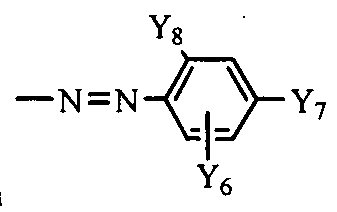
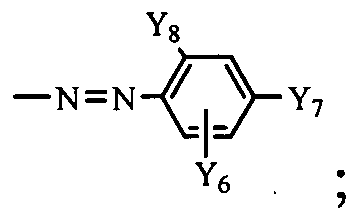
- D is a chromophore group having an azo, azo metal complex or fluorene structure, and its structure is (2), (3), (4), (5), (6), (7), (8), (9), (10), (11), (12), (13), (14), (15), (16) (17), (18)
- the structure of (14) (15) (16), (17), (18) or (19) is as follows:
- the chromophore group (2) is:
- R 2 is H, CI, CN, S0 3 Na, S0 2 NHR, S0 2 CH2CH 2 Y! or S02NHCH2CH 2 Y!;
- R 3 is H, Cl, CN, CONHR or COOR;
- R 4 is H, CH 3 , CN, COOR or C 6 H 5 ;
- R 5 is H, Cl, NHR, CN,
- R 6 is H, CI, CN, N0 2 , S0 2 NHR, CONHR or COOR;
- R is a linear saturated alkyl group of H, C p H 2p+1 , wherein: l ⁇ p ⁇ 18, p is an integer; Is H, Na or K; the chromophore group (3) is:
- Ri is H, OCH 3 or OCH 2 CH 3 ;
- R 2 is CH 3 , CH 2 CH 3 , CH 2 CH 2 OH, CH 2 CH 2 OCH 3 , CH 2 CH 2 C1, CH 2 CH 2 CN or CH 2 CH 2 OCOCH 3 ;
- R 3 is CH 3 , CH 2 CH 3 , CH 2 CH 2 OH, CH 2 CH 2 OCH 3 , CH 2 CH 2 C1, CH 2 CH 2 CN
- R is a linear saturated alkyl group of H, C p H 2p+1 , wherein: l ⁇ p ⁇ 18, p is an integer; X is H,
- the chromophore group (4) is:
- R 3 is H, NHCOCH 3 , NHCOC 2 H 5 , R ,
- NHCOCY 4 CHY 5 or NHCOCHY 4 CH 2 Y 6 ;
- R 4 is H, CI, Br, CN, N0 2 , S0 3 Na, S0 2 NHR, CONHR or COOR;
- R 5 is
- Yj is CI, OS0 3 X or N(CH 3 )CH 2 CH 2 S0 3 X;
- R is a linear saturated alkyl group of H, C p H 2p+1 , wherein: l ⁇ p ⁇ 18, p is an integer; X is H, Na Or K; the chromophore group (5) is:
- R 2 is H, OH, OCH 3 , CI, CN or OCOCH 3
- R 3 is H, OH, OCH 3 , CI, CN or OCOCH 3
- R4 is H, CI, Br, CN, N0 2 , S0 3 Na, S0 2 NHR, CONHR or COOR
- R 5 is H, CI, Br, CN, N0 2 , S0 2 NHR, CONHR, S0 2 CH 2 CH 2 Yi,
- NHCOCHY 4 CH 2 Y 6 Yi is CI, OSO3X or N(CH 3 )CH 2 CH 2 S0 3 X;
- R is a linear saturated alkyl group of H, C p H 2p+1 , wherein: l ⁇ p ⁇ 18, p is an integer; X is H, Na Or K;
- the chromophore group (6) is:
- R 2 is H, S0 3 Na or S0 2 NHR
- R 3 is H, CI, CN, S0 2 NHR , CONHR , COOR, NHR, NHCOR ,
- NHCOCY 4 CHY 5 or NHCOCHY 4 CH 2 Y 6 ; is Cl, OS0 3 X or
- ⁇ SH / or ⁇ SH
- ⁇ 4 is H or Br
- Y 5 is H, CI or Br
- Y 6 is Br or OS0 3 X
- Q is CI or CH 3 ; is 11, S0 3 Na, S0 2 NHR, NHR Or NHCOR
- R 5 is H, S0 2 NHR, NHR or NHCOR
- R 6 is H, Cl, NHR, CN, S0 3 Na, S0 2 NHR, CONHR, COOR or NHCOR;
- R 7 is H, Cl, CH 3 , OCH 3 , OC 2 H 5 , OH, CN, CONH 2 , COOCH 3 or
- COOC 2 H 5 ; 11 is 11, C p H 2p+1 linear saturated alkyl group, wherein: l ⁇ p ⁇ 18, p is an integer; X is H, Na or K; chromophore group (7) for:
- R is H, OCH3 or NHR
- R 2 is H, S0 3 Na or S0 2 NHR
- R 3 is H, Cl, CN, S0 3 Na, S0 2 NHR, CONHR, COOR, NHR or NHCOR
- R 4 is H, S0 2 NHR, NHR or NHCOR
- R 5 is H, S0 3 Na, S0 2 NHR, NHR, CONHR, COOR, NHCOR, SOaCH ⁇ H ⁇ , SC ⁇ NHCi ⁇ CHzY!
- Y 2 is CI or F
- Y 3 is CI, F
- NHCOCY 3 CHY 4 or NHCOCHY 4 CH 2 Y 5 ; is CI or F;
- Q is CI or CH 3 ;
- Y 2 is Cl F OR, NHCH 2 S0 3 XN(R ) 2 , N(CH 2 OH) 2
- Y 3 is H or Br
- Y 4 is H C1 or Br
- Y 5 is Br or OS0 3 X ;
- R 3 is H NHR, S0 3 Na S0 2 NHR, NHCOR or ; Y 6 is H,
- Y 7 is H CI, OR, CN, N0 2 S0 3 Na S0 2 NHR, S0 2 CH 2 CH 2 Y 9 ,
- R 4 is H, NHR, S0 3 Na, S0 2 NHR or NHCOR;
- R 5 is H NHR, S0 3 Na S0 2 NHR or NHCOR
- R 6 is H, S0 3 Na or S0 2 NHR
- R 7 is H, CI, NHR, CN, S0 3 Na, S0 2 NHR CONHR or COOR
- R 8 Is H, CI, CH 3 , OCH 3 , OC2H5 , OH, CN, CONH 2 , COOCH 3 or COOC 2 H 5 ;
- R is a linear saturated alkyl group of H, C p H 2p+1 , wherein: l ⁇ p ⁇ 18, p is an integer; X is H,
- the chromophore group (9) is:
- R 4 is H, NHR, S0 3 Na, S0 2 NHR, NHCOR, ⁇ , Y 2 ,
- NHCOCY 3 CHY 3 , Yi is CI or F; Q is CI or CH 3 ; Y 2 is Cl, F, OR, NHCH 2 S0 3 X, N(R ) 2 ,
- Y 9 is CI, OSO3X or N(CH 3 )CH 2 CH 2 S0 3 X; R 5 is H, NHR, S0 3 Na,
- R 6 is H, S0 3 Na or S0 2 NHR
- R 7 is H, CI, R,
- R 8 is H, CI, CH 3 , OCH 3 ,
- R is a linear saturated alkyl group of H, C p H 2p+ i, wherein: l ⁇ p ⁇ 18, p is an integer; X is H, Na or K;
- the chromophore group (10) is:
- NHCOCY 3 CHY 3 , NHCOCHY 4 CH 2 Y 5 or Yi is CI or F;
- Q is CI or CH 3 ;
- Y 2 is CI, F, OR, NHCH 2 S0 3 X, N(R ) 2 , N(CH 2 OH) 2 ,
- Y 3 is H or Br
- Y 4 is H, CI or Br
- Y 5 is Br or OS0 3
- X ⁇ 6 is H, CI, NHR, OR, CN, S0 3 Na, S0 2 NHR, CONHR, COOR or NHCOR
- Y 7 is H, Cl, OR, CN, N0 2 , S0 3 Na, S0 2 NHR,
- Y 9 is Cl, OSO3X or N(CH 3 )CH 2 CH 2 S0 3 X; R 2 is H, NHR, S0 3 Na,
- R 3 is H, S0 3 Na or S0 2 NHR; 5 is 11, NHR,
- R 6 is H, NHR, S0 3 Na, S0 2 NHR or NHCOR;
- R 7 is H , S0 3 Na or S0 2 NHR;
- R 8 is H, CI, NHR, CN, S0 3 Na,
- R is a linear saturated alkyl group of H, C p H 2p+1 , wherein: l ⁇ p ⁇ 18, an integer; X is H, Na or K;
- the chromophore group (11) is:
- ⁇ 3 is H or Br
- Y 9 is CI, OS0 3 X or
- R 4 is H OH or NH 2 ;
- R 5 is H NHR, S0 3 Na, S0 2 NHR;
- R 6 is H NHR, S0 3 Na, S0 2 NHR or NHCOR;
- R 7 is H,
- R 8 is H, CI, NHR, CN, S0 3 Na, S0 2 NHR or COOR; R 8 is H, CI, NHR,
- CN S0 3 Na, S0 2 NHR or COOR; is 11, Cl, CH 3 , OCH 3 , OC 2 H 5 ,
- R is a linear saturated alkyl group of HC p H 2p+1 wherein: l ⁇ p ⁇ 18, p is an integer; X is H Na or K; chromophore group Group (12) is:
- NH , NHCOCY 3 CHY 3 , NHCOCHY 4 CH 2 Y 5 or ; (1 or F; Q is CI or CH 3 ; Y 2 is CI, F, OR, NHCH 2 S0 3 X, N(R) 2 , N(CH 2 OH) 2 , N(C 2 H 4 OH ) 2 , ,
- Y 5 is Br or OS0 3 X
- Y 6 is H, CI, NHR, OR, CN,
- CN N0 2 , S0 3 Na, S0 2 NHR, S0 2 CH 2 CH 2 Y 9 , S0 2 NHCH 2 CH 2 Y 9 , CONHR or COOR;
- Y 8 is H, OH, CI, CH 3 , OCH 3 , OC 2 H 5 , CN,
- R 4 is H, OH or NH 2 ;
- R 5 is H, NHR, S0 3 Na or S0 2 NHR;
- R 6 is H, NHR, S0 3 Na, S0 2 NHR or NHCOR;
- R 7 is H,
- R 8 is H, NHR, S0 3 Na, S0 2 NHR or NHCOR
- R 9 is H, CI, NHR, CN, S0 3 Na, S0 2 NHR or COOR
- R 10 For H, CI, NHR, CN, S0 3 Na, S0 2 NHR or COOR
- R n is H, Cl, CH 3 , OCH 3 ,
- R is a linear saturated alkyl group of H, C p H 2p+1 , wherein: l ⁇ p ⁇ 18, p is an integer; Is H, Na or K; the chromophore group (13) is:
- Y 5 is Br or OS0 3 X
- Y 6 is H, CI, NHR, OR, CN,
- CN N0 2 , S0 3 Na, S0 2 NHR, S0 2 CH 2 CH 2 Y 9 , S0 2 NHCH 2 CH 2 Y 9 , CONHR or COOR;
- Y 8 is H, OH, CI, CH 3 , OCH 3 , OC 2 H 5 , CN,
- Y 9 is CI, OS0 3 X or N(CH 3 )CH 2 CH 2 S0 3 X;
- R 4 is H, OH or NH 2 ;
- R 5 is H, NHR, S0 3 Na or S0 2 NHR;
- R 6 is H, NHR, S0 3 Na, S0 2 NHR or NHCOR;
- R 7 is H, NHR, S0 3 Na or S0 2 NHR;
- R 8 is H, NHR, S0 3 Na, S0 2 NHR or NHCOR;
- R 9 is H, CI, NHR, CN, S0 3 Na, S0 2 NHR or COOR;
- R 10 is H, CI, NHR, CN, S0 3 Na, S0 2 NHR or COOR;
- R u is H, CI, CH 3 , OCH 3 , OC 2 H 5 , OH, NHR , CN, CONH 2 , COOCH 3 or COOC 2 H 5 ;
- R is
- R is OH or NH 2 ;
- R 2 , R 3 is H, S0 3 Na, S0 2 NHR,
- NHCOR, , NHCOCY 3 CHY 3 , NHCOCHY 4 CH 2 Y 5
- ⁇ ! is (1 or F; Q is C1 or CH 3 ; Y 2 is CI, F,
- Y 5 is Br or OS0 3 X
- Y 6 is H, CI, NHR, OR, CN,
- CN N0 2 , S0 3 Na, S0 2 NHR, S0 2 CH 2 CH 2 Y 9 , S0 2 NHCH 2 CH 2 Y 9 , CONHR or COOR;
- Y 8 is H, OH, CI, CH 3 , OCH 3 , OC 2 H 5 , CN, CONH2 , COOCH3 or COOC 2 H 5 ;
- Y 9 is CI, OSO3X or N(CH 3 )CH 2 CH 2 S0 3 X;
- R 4 is H, OH or NH 2 ;
- R 5 is H , NHR, S0 3 Na or S0 2 NHR;
- R 6 is H, NHR, S0 3 Na, S0 2 NHR or NHCOR;
- R 7 is H, NHR, S0 3 Na or S0 2 NHR;
- R 8 is H, NHR, S0 3 Na, S0 2 NHR or NHCOR;
- R 9 is H, CI, NHR, CN,
- R u is H, CI, CH 3 , OCH 3 , OC2H5 , OH, NHR, CN, CONH 2 , COOCH 3 or COOC 2 H 5
- R 12 is H, CI, CH 3 , OCH 3 , OC 2 H 5 , OH, NHR, CN, CONH 2 , COOCH 3 or COOC 2 H 5
- R 13 is H, CI, CH 3 , OCH3 , OC2H5 , OH, NHR, CN, CONH 2 , COOCH 3 or COOC 2 H 5
- R is a linear saturated alkyl group of H, C p H 2p+1 , wherein: l ⁇ p ⁇ 18, p is an integer;
- X is H, Na or K;
- the chromophore group (15) is:
- R! is H, CH 3 , CI, OR, CN, N0 2 , S0 3 Na or S0 2 NHR;
- R 2 is H, CH 3 , C1, OR, CN, N0 2 , S0 3 Na or S0 2 NHR;
- R 3 is H, NHR or NHCOR;
- R 4 , R 9 is H, CH 3 , CI, OR, CN , N0 2 , SQ 3 Na, S0 2 NHR,
- Y 2 is Cl, F, OR, NHCH2SO3X, N(R) 2 , N(CH 2 OH) 2 , N(C 2 H 4 OH) 2 ,
- R 10 is H, OH, NH 2 , NHR, CN, S0 3 Na,
- R is a linear saturated alkyl group of H, C p H 2p+1 , wherein: l ⁇ p ⁇ 18, p is an integer; X is H, Na or K;
- the chromophore group (16) is:
- R 2 is H, CH 3 , C1, OR, CN, N0 2 , S0 3 Na or S0 2 NHR; R 3 is H, NHR
- NHCOR ; R 4 , R 9 is H, NHR , S0 3 Na, S0 2 NHR , NHCOR
- NHCOCY 4 CHY 5 or NHCOCHY 4 CH 2 Y 6 ; Yi is Cl, OSO3X or N(CH 3 )CH 2 CH 2 S0 3 X; Q is CI or CH 3 ; Y 2 is CI or F; Y 3 is Cl ,
- ⁇ 4 is ⁇ or Br
- R 8 is H, S0 3 Na, S0 2 NHR or NHCOR;
- R 10 is H, OH, NH 2 , NHR,
- R is a linear saturated alkyl group of H, C p H 2p+1 , wherein: l ⁇ p ⁇ 18, p is an integer; X is H, Na or K;
- the chromophore group (17) is:
- NHCOCY 4 CHY 5 or NHCOCHY 4 CH 2 Y 6 ; Y! is CI, OS0 3 X or N(CH 3 )CH 2 CH 2 S0 3 X; Q is CI or CH 3 ; Y 2 is CI or F; Y 3 is Cl,
- ⁇ 4 is H or Br
- the chromophore group (18) is
- R! is H, CH 3 , CI, OR, CN, N0 2 , S0 3 Na or S0 2 NHR;
- R 2 is H, CH 3 , C1, OR, CN, N0 2 , S0 3 Na or S0 2 NHR;
- R 3 is NH:
- R 4 is NH 2 , OH or OR
- R 5 is H, CH 3 , Cl, OR, CN
- ⁇ ⁇ is or Br
- Y 4 is ⁇ , CI or Br
- Y 5 is Br or OS0 3 X
- Y 6 is H, CI
- Y 8 is H, OH, CI, CH 3 , OCH 3 , OC 2 H 5 , CN, CONH 2 , COOCH 3 or COOC 2 H 5 ;
- Y 9 is CI, OS0 3 X or
- R 6 is H, S0 3 Na, S0 2 NHR or NHCOR; R 7 is H,
- R 8 is H , S0 3 Na or S0 2 NHR;
- R is a linear saturated alkyl group of H, C p H 2p+1 , wherein: l ⁇ p ⁇ 18, p is an integer;
- X is H, Na or K;
- the chromophore group (19) is:
- CI or F is CI or CH 3 ;
- Y 2 is CI, F, OR, NHCH 2 S0 3 X, N(R ) 2 ,
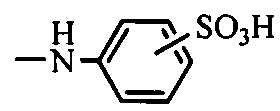
- N(CH 2 OH) 2 , N(C 2 H 4 OH) 2 , a " ⁇ 7 or N ⁇ SO 3 H ; ⁇ 3 is H or Br; Y 4 is H, CI or Br; Y 5 is
- Y 6 is H, CI, NHR, OR, CN, S0 3 Na, S0 2 NHR, CONHR, COOR or NHCOR
- Y 7 is H, CI, OR, CN, N0 2 , S0 3 Na, S0 2 NHR, S0 2 CH 2 CH 2 Y 9 , S0 2 NHCH 2 CH 2 Y 9 , CONHR or COOR
- Y 8 is H, OH, CI, CH 3 , OCH 3 , OC2H5, CN, CONH 2 , COOCH 3 or COOC 2 H 5
- Y 9 is CI, OSO3X or N(CH 3 )CH 2 CH 2 S0 3 X
- R is a linear saturated alkyl group of H, C p H 2p+1 , wherein: l ⁇ p ⁇ 18, p is an integer;
- X is H, Na or K; azo metal complexing chromophore group (20) , (21), (22) or (2
- the chromophore group (20) is:
- ⁇ in the formula! ⁇ is H, S0 3 Na or S0 2 NHR; R 2 is H, Cl, CN, S0 2 NHR,
- ⁇ 4 is H or Br
- R 5 is H, Cl, NHR, CN, S0 3 Na, S0 2 NHR, CONHR, COOR or NHCOR;
- R is a linear saturated alkyl group of H, C p H 2p+1 , wherein: l ⁇ p ⁇ 18, p is an integer;
- X is H, Na or K;
- Me is Cu, Co, Ni, Cr or Fe;
- the chromophore group (21) is:
- NHCOCY 4 CHY 5 or NHCOCHY 4 CH 2 Y 6 ; Yi is Cl, OS0 3 X or N(CH 3 )CH 2 CH 2 S0 3 X; Y 2 is CI or F; Y 3 is C1, F, OR, NHCH 2 S0 3 X,
- the chromophore group (22) is
- NHCOCY 3 CHY 3 or NHCOCHY 4 CH 2 Y 5 ; is CI or F; Q is CI or CH 3 ; Y 2 is Cl, F, OR, NHCH 2 S0 3 X, N(R) 2 , N(CH 2 OH) 2 , Y 3 is H or Br; Y 4 is H, C1 or Br; Y 5 is Br or OS0 3 X;
- R 2 is H, NHR, S0 3 Na, S0 2 NHR, Y 6 is H,
- Y 7 is H, CI, OR, CN, N0 2 , S0 3 Na, S0 2 NHR, S0 2 CH 2 CH 2 Y,
- Y 8 is H, OH, Cl, CH 3 , OCH OC2H5 , CN, CONH 2 , COOCH 3 or COOC 2 H 5 ;
- Y 9 is Cl, OSO3X or
- R 3 is H, NHR, S0 3 Na, S0 2 NHCOR
- R 4 is H NHR S0 3 Na S0 2 NHR or NHCOR
- R 5 is H S0 3 Na or S0 2 NHR
- R 6 is H, CI, NHR, CN, S0 3 Na, S0 2 NHR CONHR or COOR;
- R is a linear saturated alkyl group of HC p H 2p+1 , wherein: l ⁇ p ⁇ 18, p is an integer; H
- Me is Cu, Co, Ni Cr or Fe
- the chromophore group (23) is:
- R 2 is H, OH, NH 2 , For CI or F;
- Q is CI or CH 3 ;
- Y 2 is Cl F OR, NHCH 2 S0 3 XN(R) 2 , N(CH 2 OH) 2:
- Y 4 is H, CI or Br
- Y 5 is Br or OS0 3 X
- Y 6 is H, CI, NHR, OR CN, S0 3 Na S0 2 NHR CONHR, COOR or NHCOR
- Y 7 is H, CI, OR, CN, N0 2 , S0 3 Na, S0 2 NHR, S0 2 CH 2 CH 2 Y 9 , S0 2 NHCH 2 CH 2 Y 9 , CONHR or COOR
- Y 8 is H, OH, CI, CH 3 , OCH 3 , OC 2 H 5 , CN, CONH 2 , COOCH3 COOC2H5
- Y 9 is Cl, OSO3X or N ( CH 3 )CH 2 CH 2 S0 3 X
- R 3 is H, NHR, S0 3 Na, S0 2 NHR or NHCOR
- R 4 is H, S0 3 Na or S0 2 NHR
- R 5 is H, CI, NHR, CN
- the structure of the chromophore group (24), (25) or (26) is as follows:
- the chromophore group (24) has the following structure:
- ⁇ is H, CI, Br, CH 3 , OCH 3 , OC 2 H 5 , OH, NHR, CN, CONH 2 , NHCOR,
- R 2 is H, S0 3 Na, SO2NHR or;
- ML is H, CI, OR, CN, N0 2 , S0 3 Na or S0 2 NHR;
- M 2 is H, CI, OR, CN, N0 2 S0 3 Na or S0 2 NHR;
- R 3 is H CH 3 Cl OR, CN N0 2:
- NHCOCY 4 CHY 5 or NHCOCHY 4 CH 2 Y 6 ; is Cl OS0 3 X or
- R is a linear saturated alkyl group of HC P H : wherein: l ⁇ p ⁇ 18 p is an integer; X is H Na or K ;
- the structure of the chromophore group (25) is:
- Y 7 is H, CI, OR, CN, N0 2 , S0 3 Na, S0 2 NHR,
- Y 9 is CI, OSO3X or N(CH 3 )CH 2 CH 2 S0 3 X; R 2 is H, CI, Br, CH 3 ,
- Mi is H, CI, OR, CN, N0 2 , S0 3 Na or S0 2 NHR
- M 2 is H, CI, OR, CN, N0 2 , S0 3 Na or S0 2 NHR
- R is H, C p a linear saturated alkyl group of H 2p+1 , wherein: l ⁇ p ⁇ 18, p is an integer
- X is H, Na or K;
- the structure of the chromophore group (26) is:
- ⁇ is CI, Br, CH 3 , OCH 3 , OC 2 H 5 , OH, NHR
- _HNOC or n ⁇ SO 3 H ; ⁇ 3 is H or Br; Y 4 is H, CI or Br; Y 5 is Br or OS0 3 X ; Y 6 is H, CI, NHR, OR, CN, S0 3 Na , S0 2 NHR, CONHR,
- Y 9 is Cl, OS0 3 X or N(CH 3 )CH 2 CH 2 S0 3 X; R 2 is H, S0 3 Na, S0 2 NHR
- the preparation method of the low polymerization degree polycarboxylic acid dye of the invention comprises: taking 10 ⁇ 10g of dye containing aromatic primary or aromatic hydroxyl group, l ⁇ 100g of polymaleic anhydride, 10 ⁇ 500mL of solvent, and adding to the three-necked bottle with stirring, The reaction is carried out at 20 to 150 ° C for 1 to 72 hours, the solvent is distilled off under reduced pressure, and the solid is taken out and dried to obtain a product.
- the solvent selected for the method is tetrahydrofuran, petroleum ether, acetone, butanone, chloroform, dichloromethane, carbon tetrachloride, carbon disulfide, DMF, DMSO, benzene, toluene, diphenylbenzene, nitrobenzene, chlorobenzene, ring.
- the low polymerization degree polycarboxylic acid dye of the invention not only imparts good water solubility to the dye due to the introduction of polycarboxyl groups in the dye structure, but also forms a salt bond or an amide bond with a carboxyl group by means of a carboxyl group, and easily forms a hydrogen bond with a polyhydroxy compound. Or the characteristics of the ester bond, improve the adhesion of the dye to the fiber, and improve its application performance.
- the low-polymerization polycarboxylic acid dye developed is suitable for dyeing and printing leather, cotton fiber, protein fiber and synthetic fiber, and has broad application prospects.
- Fig. 2 is an infrared spectrum of the dye obtained in Example 1 of the present invention. Detailed ways
- Example 1 In a 250 ml three-necked flask equipped with a stirrer, a thermometer and a spherical condenser, 1 to 20 g of maleic anhydride monomer and 10 to 100 ml of toluene were added, stirred, and heated to 50 to 110 °C. Take 0.01 ⁇ 5g of BPO or AIBN dissolved in l ⁇ 50ml toluene, add it to the three-necked bottle with constant pressure dropping funnel, and control the lint time to l ⁇ 100min. After the addition is completed, stir for 1-72 hours, stop.
- reaction product was poured into a beaker and stirred, and allowed to stand. After cooling, the mixture was filtered, and the filter cake was taken, and dried under vacuum at 60 ° C for 24 hours to obtain a polymaleic anhydride product.
- Nitro-containing pyrazolone azo dye is dissolved in 10 ⁇ 100ml benzene, heated to
- Example 1 Using o-nitroaniline or m-nitroaniline instead of p-nitroaniline, reacting with sodium nitrite in Example 1, and then reacting with 1, 3, 5-pyrazolone to obtain a pyrazolone dye containing a nitro group And reacting with sodium sulfide in Example 1, to obtain a corresponding amino group-containing pyrazolone dye, and reacting with the polymaleic anhydride in Example 1, to obtain a yellow low polymerization degree polycarboxylic acid dye, other conditions and implementation Example 1 is consistent.
- pyrazolone azo dye containing nitro group and sulfate group 1 ⁇ 5g is dissolved in 10 ⁇ 100ml of benzene, heated to 50 ⁇ 100 °C; weigh 2 ⁇ 7.4g sodium sulfide, 0.5 ⁇ 2.6g sodium bicarbonate Dissolve in 10 ⁇ 50ml water, add dropwise with constant pressure dropping funnel. After the addition is completed, react at constant temperature for l ⁇ 8h, red substance is precipitated, cooled to 20°C, filtered, and the filter cake is dried to obtain amino group and sulfate group. Pyrazolone azo dye.
- o-nitroaniline m-nitroaniline instead of p-nitroaniline, reacting with sodium nitrite in Example 1, and then 2-(4-(5-hydroxy-3-indolyl-1) in Example 4.
- -pyrazolyl)benzenesulfonylamino)ethylsulfate reacts to obtain a nitro-containing azo dye, which is reacted with sodium sulfide in Example 4 to obtain a corresponding amino-containing pyrazolone dye, and further examples
- the polymaleic anhydride in 4 is reacted to obtain a yellow oligomeric polycarboxylic acid dye, and other conditions and Example 4 Consistent.
- cyanuric chloride l ⁇ 18.4g put it into a beaker, add a small amount of crushed ice and water, beaten 0.1 ⁇ lh. During the period, weigh l ⁇ l lg, 2, 4-diaminobenzenesulfonic acid, add cyanuric chloride, and condense for 4 ⁇ 5h to obtain a condensation solution.
- Example 18 Substituting o-nitroaniline, m-nitroaniline, 2,4-dinitroaniline, 2,6-dibromo-4-nitroaniline for p-nitroaniline, and reacting with sodium nitrite in Example 18 Reaction with N-ethyl-N-ethylaniline to obtain a nitro-containing dye, which was reacted with sodium sulfide in Example 18 to obtain a corresponding amino group-containing dye, which was then reacted with the polymaleic anhydride of Example 18. A polycarboxylate dye having a low degree of polymerization was obtained, and other conditions were the same as in Example 18.
- Example 1 Using tetrahydrofuran, petroleum ether, acetone, chloroform, dichlorodecane, carbon tetrachloride, carbon disulfide, DMF, DMSO, benzene, toluene, diphenylbenzene, nitrobenzene, chlorobenzene, cyclohexane, dioxane Or n-hexane, instead of the butanone in Example 1, as a solvent for reacting polymaleic anhydride with the amino group-containing dye of Example 1, to obtain a polycarboxylic acid dye having a low degree of polymerization, and other conditions are in accordance with Example 1.
- 1 ⁇ 5g nitro-containing azo dye is dissolved in 10 ⁇ : 100ml benzene, heated to 50 ⁇ 100°C; 2 ⁇ 7.4g sodium sulfide is weighed, 0.5 ⁇ 2.6g sodium bicarbonate is dissolved in 10 ⁇ 50ml water, The mixture was added dropwise with a constant pressure dropping funnel. After the addition was completed, the reaction was carried out at a constant temperature for 1 to 8 hours, and the purple-red material was precipitated and cooled to 20 ° C. After filtration, the filter cake is dried to obtain an amino-containing azo dye.
- the coupling component is placed in an ice-water mixture, stirred, and the diazonium salt is added dropwise to the coupling component to adjust the pH of the solution to 5, and the orange-red material is precipitated. After 4 hours, the coupling reaction is finished, filtered, and dried. Hydroxyl-containing azo dye.
- Example 61 Using o-nitroaniline, m-nitroaniline, aniline, o-chloroaniline, p-chloroaniline, m-chlorobenzene, p-nonylaniline, p-methoxyaniline, 2,4-dinitroaniline, 2, 6- Dibromo-4-nitroaniline was substituted for p-nitroaniline, reacted with sodium nitrite in Example 61, and then reacted with N-ethyl-N-hydroxyethylaniline to obtain a hydroxyl-containing azo dye, and was carried out.
- the polymaleic anhydride in Example 61 was reacted to obtain a polycarboxylic acid dye having a low degree of polymerization, and other conditions were the same as in Example 61.
- the coupling component is placed in an ice-water mixture, stirred, and the diazonium salt is added dropwise to the coupling component to adjust the pH of the solution to 5, and the orange-red material is widely precipitated. After 4 hours, the coupling reaction is finished, filtered, and dried. An azo dye containing an amide group is obtained.
- 1 ⁇ 5g amide-containing azo dye is dissolved in 10 ⁇ 100ml water, heated to 50 ⁇ 100°C; 2 ⁇ 7.4g sodium hydroxide is weighed, dissolved in 10 ⁇ 50ml water, and added with constant pressure dropping funnel After the dropwise addition is completed, the reaction is carried out at a constant temperature for 1 to 8 hours, cooled to 20 ° C, filtered, and the filter cake is dried to obtain an amino-containing azo dye.
- Example 80 Using aniline, o-nitroaniline, m-nitroaniline instead of p-nitroaniline, reacting with sodium nitrite in Example 80, and then reacting with N,N-diethylm-acetylaniline to obtain an amide-containing couple
- the nitrogen dye was reacted with sodium hydroxide in Example 80 to obtain a corresponding amino group-containing azo dye, which was then reacted with polymaleic anhydride in Example 80 to obtain a low polymerization degree polycarboxylic acid dye.
- cyanuric chloride 1 ⁇ I8.4g, put it into a beaker, add a small amount of crushed ice and water, beaten 0.1 ⁇ lh. During the period, l ⁇ l lg, 2, 4-diaminobenzenesulfonic acid was weighed, cyanuric chloride was added, and condensation was carried out for 4 to 5 hours to obtain a condensation liquid.
- the first condensation liquid is added to concentrated hydrochloric acid 1 ⁇ 25ml, to be completely dissolved, and stirred; 0.5 ⁇ 7.25g of sodium nitrite is weighed, dissolved in 5 ⁇ 30ml of water, and added to the condensation solution once. After 30 min, the mixture was then added to O.lg sulfamic acid. During this period, 1 to 5 g of hydrazine, hydrazine-diethyl-m-acetylaniline was weighed and dissolved in 200 ml of water to be completely dissolved, and cooled to below 5 °C. Then, the coupling component is placed in an ice water mixture, stirred, and the diazonium salt is added dropwise to the coupling component. After 4 hours, the coupling reaction is finished, and the temperature is raised to 40 ° C, and 1-2 g of aniline is added, and the condensation is 4 to 5 Hour, got Acylaminopyrazolone dye.
- 1 ⁇ 5g amide containing azo dye is dissolved in 10 ⁇ 100ml water, heated to 50 ⁇ ; 100°C; weigh 2 ⁇ 7.4g sodium hydroxide, dissolve in 10 ⁇ 50ml water, drop with constant pressure dropping funnel After the addition is completed, the reaction is carried out at a constant temperature for 1 to 8 hours, cooled to 20 ° C, filtered, and the filter cake is dried to obtain an amino-containing azo dye.
- nitro-containing azo dye 1 ⁇ 5g nitro-containing azo dye is dissolved in 10 ⁇ 100ml benzene, heated to 50 ⁇ 100°C; 2 ⁇ 7.4g sodium sulfide is weighed, 0.5 ⁇ 2.6g sodium bicarbonate is dissolved in 10 ⁇ 50ml water, use The constant pressure dropping funnel is added dropwise, and after the dropwise addition is completed, the reaction is carried out at a constant temperature for 1-8 hours, the purple-red material is precipitated, cooled to 20 ° C, filtered, and the filter cake is dried to obtain an amino-containing azo dye.
- Example 89 Using o-nitroaniline, m-nitroaniline, 2,4-dinitroaniline, 2, 6-dibromo-4- Nitroaniline was substituted for p-nitroaniline, reacted with sodium nitrite in Example 89, and then reacted with 2-naphthol to obtain a dye containing nitro group, which was reduced by sodium sulfide, and then with the polyma of Example 89. The anhydride was reacted to obtain a polycarboxylic acid dye having a low degree of polymerization, and other conditions were the same as in Example 89.
- nitro-containing azo dye 1 ⁇ 5g nitro-containing azo dye is dissolved in 10 ⁇ 100ml toluene, heated to 50 ⁇ 100°C; 2 ⁇ 7.4g sodium sulfide is weighed, 0.5 ⁇ 2.6g sodium bicarbonate is dissolved in 10 ⁇ 50ml water, with constant The dropping funnel is added dropwise. After the dropwise addition is completed, the reaction is carried out at a constant temperature for 1 to 8 hours, cooled to 20 ° C, filtered, and the filter cake is dried to obtain an amino-containing azo dye.
- 2-anilino-4,6-dichlorocyanuric acid 2-p-sulfonic acid anilino-4,6-dichlorocyanuric acid, 2-anilino-4-anilino-6-chlorotriene Polycyanamide, 2-p-nonylanilino-4 (p-vinylsulfone sulfate anilino)-6-chloro cyanuric chloride, 2-(2, 5-sulfonylanilino)-4-(p-vinylsulfone) Sulfate anilino)-6-chlorocyanuric acid replaces the cyanuric chloride in Example 94 and condenses with an amino-containing azo dye to obtain an azo dye containing a triazine group and a nitro group, and sodium sulfide. Reduction, finally reacting with polymaleic anhydride to obtain a polycarboxylic acid dye having a low degree of polymerization, other conditions and examples
- the chromium hydroxide precipitate was stirred with water to form a slurry of 8-10%, and then citric acid was added. Heating to 90 ° C, the transparent liquid of chromium citrate is added, and the above azo dye is added to the boiling temperature for 12-24 hours, and filtered to obtain a chromium complex dye.
- chrome complex azo dye is dissolved in 10 ⁇ 100ml benzene, heated to 50 ⁇ 100°C; 2 ⁇ 7.4g sodium sulfide is weighed, 0.5 ⁇ 2.6g sodium bicarbonate is dissolved in 10 ⁇ 50ml water, with constant The dropping funnel is added dropwise. After the dropwise addition is completed, the reaction is carried out at a constant temperature for 1 to 8 hours. The purple-red material is precipitated, cooled to 20 ° C, filtered, and the filter cake is dried to obtain an amino-containing chromium azo dye.
- Cobalt chloride, copper sulfate, and ferric chloride were used instead of chromium formate to complex with the azo dye in Example 100 to obtain cobalt complex, copper complex and iron complex dye, respectively, and then reduced by nitro group.
- the maleic anhydride is condensed to obtain a metal complexed polydegree of polymerization polycarboxylic acid dye.
- the chromium hydroxide precipitate was stirred with water to form a slurry of 8-10%, and then citric acid was added. Heating to 90 ° C, the transparent liquid of chromium citrate is added, and the above azo dye is added at boiling temperature for 12 to 24 hours, and filtered to obtain a chromium complex dye.
- cyanuric chloride l ⁇ 18.4g put it into a beaker, add a small amount of crushed ice and water, beaten 0.1 ⁇ lh. During the period, weighed l ⁇ 17.4g, the above azo dye, added cyanuric chloride, condensed for 4 ⁇ 5h, heated to 40 degrees, added with aniline, and condensed for 4 ⁇ 5h to obtain dye containing triazine group and nitro group.
- nitro-containing azo dye 1 ⁇ 5g of nitro-containing azo dye is dissolved in 10 ⁇ 100ml of benzene, heated to 50 ⁇ 100 °C; Weigh 2 ⁇ 7.4g sodium sulfide, 0.5 ⁇ 2.6g sodium bicarbonate dissolved in 10 ⁇ 50ml water, add it with constant pressure dropping funnel, after the addition is completed, the temperature is reacted for l ⁇ 8h, the purple-red material is precipitated and cooled to The filter cake was dried at 20 ° C, and an amino dye-containing azo dye was obtained.
- Example 125 Using o-nitroaniline, m-nitroaniline, aniline, o-chloroaniline, p-chloroaniline, m-chlorobenzene, p-methylaniline, p-methoxyaniline, 2,4-dinitroaniline, 2, 6- Dibromo-4-nitroaniline was substituted for p-nitroaniline, reacted with sodium nitrite in Example 125, and then reacted with 1-naphthol to obtain a hydroxyl group-containing dye, followed by polymaleic anhydride in Example 125. The reaction gave a polycarboxylic acid dye having a low degree of polymerization, and other conditions were the same as in Example 125.
- nitro-containing azo dye 1 ⁇ 5g nitro-containing azo dye is dissolved in 10-100ml benzene, heated to 50 ⁇ : 100°C; 2 ⁇ 7.4g sodium sulfide is weighed, 0.5 ⁇ 2.6g sodium bicarbonate is dissolved in 10 ⁇ 50ml water, The mixture was added dropwise with a constant pressure dropping funnel. After the dropwise addition, the reaction was carried out at a constant temperature for 1 to 8 hours. The purple-red material was precipitated, cooled to 20 ° C, filtered, and the filter cake was dried to obtain an amino-containing azo dye.
- cyanuric chloride l ⁇ 18.4g put it into a beaker, add a small amount of crushed ice and water, beaten 0.1 ⁇ lh.
- the amino group-containing azo dye is added and condensed for 4 to 5 hours to obtain an azo dye containing a triazine group and a hydroxyl group.
- the chromium hydroxide precipitate was stirred with water to form a slurry of 8-10%, and then citric acid was added. Heating to 90 °C, the transparent liquid of chromium citrate is added, and the above azo dye is added at boiling temperature for 12 to 24 hours, and filtered to obtain a chromium complex dye.
- nitro-containing azo dye 1 ⁇ 5g nitro-containing azo dye is dissolved in 10 ⁇ 100ml benzene, heated to 50 ⁇ 100°C; 2 ⁇ 7.4g sodium sulfide is weighed, 0.5 ⁇ 2.6g sodium bicarbonate is dissolved in 10 ⁇ 50ml water, The constant pressure dropping funnel was added dropwise, and after the completion of the dropwise addition, the reaction was carried out at a constant temperature for 1 to 8 hours, the purple-red material was precipitated, cooled to 20 ° C, filtered, and the filter cake was dried to obtain an amino-containing azo dye.
- nitro-containing azo dye 1 ⁇ 5g of nitro-containing azo dye is dissolved in 10 ⁇ 100ml of benzene, heated to 50 ⁇ 100°C; 2 ⁇ 7.4g of sodium sulfide is weighed, 0.5 ⁇ 2.6g of sodium bicarbonate is dissolved in 10 ⁇ 50ml of water, The mixture was added dropwise with a constant pressure dropping funnel. After the dropwise addition was completed, the reaction was carried out at a constant temperature for 1 to 8 hours. The red material was precipitated, cooled to 20 ° C, filtered, and the filter cake was dried to obtain an amino-containing disazo dye.
- Example 164 Using o-nitroaniline or m-nitroaniline instead of p-nitroaniline, reacting with sodium nitrite in Example 164, and then reacting with 1-amino-8-naphthol-3,6-disulfonic acid to obtain nitrate
- the base monoazo dye was coupled to the aniline diazonium salt of Example 164 twice to obtain the corresponding nitro-containing disazo dye, which was then reacted with sodium sulfide in Example 164 to obtain an amino group-containing double couple.
- the nitrogen dye was finally reacted with polymaleic anhydride in Example 164 to give a blue-black, low-polymerization polycarboxylic acid dye, and the other conditions were the same as in Example 164.
- nitro-containing azo dye 1 ⁇ 5g nitro-containing azo dye is dissolved in 10 ⁇ 100ml toluene, heated to 50 ⁇ 100°C; 2 ⁇ 7.4g sodium sulfide is weighed, 0.5 ⁇ 2.6g sodium bicarbonate is dissolved in 10 ⁇ 50ml water, with constant The dropping funnel is added dropwise. After the addition is completed, the reaction is carried out at a constant temperature for 1 to 8 hours. The purple-red material is precipitated, cooled to 20 ° C, filtered, and the filter cake is dried to obtain an amino-containing azo dye.
- the chromium hydroxide precipitate was stirred with water to form a slurry of 8-10%, and then citric acid was added. Heating to 90 °C, the transparent liquid of chromium formate is added, and the above azo dye is added at boiling temperature for 12-24 hours, and filtered to obtain a chromium complex dye.
- 1 ⁇ 5g chrome complex azo dye is dissolved in 10 ⁇ 100ml toluene, heated to 50 ⁇ 100°C; 2 ⁇ 7.4g sodium sulfide is weighed, 0.5 ⁇ 2.6g sodium bicarbonate is dissolved in 10 ⁇ 50ml water, with constant pressure
- the dropping funnel is added dropwise, and after the dropwise addition is completed, the reaction is carried out at a constant temperature for 1 to 8 hours, the purple-red material is precipitated, cooled to 20 ° C, filtered, and the filter cake is dried to obtain an amino-containing chromium azo dye.
- Cobalt chloride, copper sulfate, ferric chloride were used instead of chromium formate, and complexed with the azo dye in Example 188 to obtain cobalt complex, copper complex and iron complex dye, respectively, and then reduced by nitro group.
- the maleic anhydride is condensed to obtain a metal complexed polydegree of polymerization polycarboxylic acid dye.
- the chromium hydroxide precipitate was stirred with water to form a slurry of 8-10%, and then citric acid was added.
- citric acid was added.
- a transparent liquid of chromium citrate is added, and the above azo dye is added at a boiling temperature for 12 to 24 hours, and filtered to obtain a chromium complex dye.
- nitro-containing azo dye 1 ⁇ 5g nitro-containing azo dye is dissolved in 10 ⁇ 100ml benzene, heated to 50 ⁇ 100°C; 2 ⁇ 7.4g sodium sulfide is weighed, 0.5 ⁇ 2.6g sodium bicarbonate is dissolved in 10 ⁇ 50ml water, use The constant pressure dropping funnel is added dropwise. After the addition is completed, the constant temperature reaction is carried out for l ⁇ 8h, the purple-red material shield is precipitated, cooled to 20 ° C, filtered, and the filter cake is dried to obtain an amino-containing azo dye.
- Example 213 4-bromo-1-naphthylamine, sodium 4-amino-1-naphthalenesulfonate, 1-naphthylamine-6-sulfonic acid, 1-naphthylamine-7-sulfonic acid, 1-naphthylamine-5-sulfonic acid
- 1-naphthylamine it was reacted with sodium nitrite in Example 213 and then reacted with 1-naphthylamine to obtain an amino group-containing azo dye, which was then reacted with polymaleic anhydride in Example 213 to obtain a low degree of polymerization.
- Polycarboxylic acid dye, other conditions are the same as in Example 213.
- nitro-containing azo dye 1 ⁇ 5g nitro-containing azo dye is dissolved in 10 ⁇ : 100ml benzene, heated to 50 ⁇ 100°C; 2 ⁇ 7.4g sodium sulfide is weighed, 0.5 ⁇ 2.6g sodium bicarbonate is dissolved in 10 ⁇ 50ml water, The mixture was added dropwise with a constant pressure dropping funnel. After the dropwise addition, the reaction was carried out at a constant temperature for 1 to 8 hours. The purple-red material was precipitated, cooled to 20 ° C, filtered, and the filter cake was dried to obtain an amino-containing azo dye.
- the chromium hydroxide precipitate was stirred with water to form a slurry of 8-10%, and then citric acid was added.
- citric acid was added.
- a transparent liquid of chromium citrate is added, and the above azo dye is added to the boiling temperature for 12-24 hours, and filtered to obtain a chromium complex dye.
- Cobalt chloride, copper sulfate, and ferric chloride were used instead of chromium citrate to complex with the azo dye of Example 240 to obtain cobalt complex, copper complex and iron complex dye, respectively, and then condensed with polymaleic anhydride. , obtaining a metal complexed polycarboxylic acid dye having a low degree of polymerization.
- the chromium hydroxide precipitate was stirred with water to form a slurry of 8-10%, and then formic acid was added. Heating to 90 ° C, that is, a transparent solution of chromium formate, adding the above azo dye at boiling temperature After 12-24 hours, filter to obtain a chromium complex dye.
- cyanuric chloride l ⁇ 18.4g put it into a beaker, add a small amount of crushed ice and water, beaten 0.1 ⁇ lh. During the period, weighed l ⁇ 17.4g, the above chrome complexed azo dye, added cyanuric chloride, condensed for 4 ⁇ 5h, heated to 40 degrees, added with aniline, condensed for 4 ⁇ 5h, to obtain triazine group and nitro group dye.
- nitro-containing azo dye 1 ⁇ 5g nitro-containing azo dye is dissolved in 10 ⁇ 100ml benzene, heated to 50 ⁇ : 100°C; 2 ⁇ 7.4g sodium sulfide is weighed, 0.5 ⁇ 2.6g sodium bicarbonate is dissolved in 10 ⁇ 50ml water, The mixture was added dropwise with a constant pressure dropping funnel. After the dropwise addition was completed, the reaction was carried out at a constant temperature for 1 to 8 hours. The purple-red material was precipitated, cooled to 20 ° C, filtered, and the filter cake was dried to obtain an amino-containing azo dye.
- Hydroxyl-containing azo dye is added to 10 ⁇ 40ml of methyl ethyl ketone, and l ⁇ 2.45g of polymaleic anhydride is added, and stirred at 30 ⁇ 80°C for l ⁇ 24h.
- the filter was cooled and dried, and the filter cake was dried to obtain a polycarboxylate dye having a low degree of polymerization.
- Example 265 Using 4-bromo-1-naphthylamine, sodium 4-amino-1-naphthalenesulfonate, 1-naphthylamine-6-sulfonic acid, 1-naphthylamine-7-sulfonic acid, 1-naphthylamine-5-sulfonic acid Instead of reacting 1-naphthylamine with sodium nitrite in Example 265, it was reacted with 2-naphthol to obtain a hydroxyl group-containing azo dye, which was then reacted with polymaleic anhydride in Example 265 to obtain a low polymerization. Polycarboxylic acid dye, other conditions and Example 265.
- the 1-naphthylamine diazonium salt was added, and after 4 hours, the coupling reaction was completed, filtered, and dried to obtain an azo dye containing a hydroxyl group and a nitro group.
- l ⁇ 5g nitro-containing azo dye is dissolved in 10 ⁇ 100ml benzene, heated to 50 ⁇ 100°C; 2 ⁇ 7.4g sodium sulfide is weighed, 0.5 ⁇ 2.6g sodium bicarbonate is dissolved in 10 ⁇ 50ml water, use The constant pressure dropping funnel is added dropwise, and after the dropwise addition is completed, the reaction is carried out at a constant temperature for 1-8 hours, the purple-red material is precipitated, cooled to 20 ° C, filtered, and the filter cake is dried to obtain an amino-containing azo dye.
- l ⁇ 5g nitro-containing azo dye is dissolved in 10 ⁇ 100ml toluene, heated to 50 ⁇ 100°C; weigh 2 ⁇ 7.4g sodium sulfide, 0.5 ⁇ 2.6g sodium bicarbonate dissolved in 10 ⁇ 50ml water, with constant The dropping funnel is added dropwise. After the dropwise addition is completed, the reaction is carried out at a constant temperature for 1 to 8 hours, precipitated, cooled to 20 ° C, filtered, and the filter cake is dried to obtain an amino-containing azo dye.
- cyanuric chloride l ⁇ 18.4g put it into a beaker, add a small amount of crushed ice and water, beaten 0.1 ⁇ lh. During the period, weighed l ⁇ 17.4g, the above amino-containing azo dye, added cyanuric chloride, condensed for 4 ⁇ 5h, heated to 40 degrees, added with aniline, condensed for 4 ⁇ 5h, and obtained triazine group and nitro group dye.
- nitro-containing azo dye 1 ⁇ 5g nitro-containing azo dye is dissolved in 10 ⁇ 100ml toluene, heated to 50 ⁇ 100°C; 2 ⁇ 7.4g sodium sulfide is weighed, 0.5 ⁇ 2.6g sodium bicarbonate is dissolved in 10 ⁇ 50ml water, with constant The dropping funnel is added dropwise. After the dropwise addition is completed, the reaction is carried out at a constant temperature for 1 to 8 hours, and the mixture is precipitated, cooled to 20 ° C, filtered, and the filter cake is dried to obtain an amino-containing azo dye.
- O.lg sulfamic acid After 30 minutes, then add O.lg sulfamic acid; weigh 1 ⁇ 5g 2-naphthylamine-6-sulfonic acid in 5 ⁇ 50ml water, add concentrated hydrochloric acid l ⁇ 25ml, heat to dissolve, to be completely dissolved, stir, quickly Cool to 0-5 ° C; weigh 0.5 ⁇ 7.25g sodium nitrite, dissolve in 5 ⁇ 30ml water, add 2-naphthylamine-6-sulfonate. After 30 minutes, the mixture was then added with O.lg sulfamic acid.
- nitro-containing azo dye 1 ⁇ 5g nitro-containing azo dye is dissolved in 10 ⁇ 100ml toluene, heated to 50 ⁇ 100°C; 2 ⁇ 7.4g sodium sulfide is weighed, 0.5 ⁇ 2.6g sodium bicarbonate is dissolved in 10 ⁇ 50ml water, with constant The dropping funnel is added dropwise. After the dropwise addition is completed, the reaction is carried out at a constant temperature for 1 to 8 hours, and the mixture is precipitated, cooled to 20 ° C, filtered, and the filter cake is dried to obtain an amino-containing azo dye.
- O.lg sulfamic acid After 30 minutes, then add O.lg sulfamic acid; weigh 1 ⁇ 5g 2-naphthylamine-6-sulfonic acid in 5 ⁇ 50ml water, add concentrated hydrochloric acid l ⁇ 25ml, heat to dissolve, to be completely dissolved, stir, quickly Cool to 0-5 °C; weigh 0.5 ⁇ 7.25g sodium nitrite, dissolve in 5 ⁇ 30ml water, add 2-naphthylamine-6-sulfonate. After 30 min, the mixture was then added to O.lg sulfamic acid.
- the amino group-containing azo dye added cyanuric chloride, condensed for 4 ⁇ 5h, heated to 40 degrees, added with aniline, condensed for 4 ⁇ 5h, and obtained a triazine group and a nitro group. dye.
- nitro-containing azo dye 1 ⁇ 5g nitro-containing azo dye is dissolved in 10 ⁇ 100ml benzene, heated to 50 ⁇ : 100°C; 2 ⁇ 7.4g sodium sulfide is weighed, 0.5 ⁇ 2.6g sodium bicarbonate is dissolved in 10 ⁇ 50ml water, The mixture was added dropwise with a constant pressure dropping funnel. After the dropwise addition was completed, the reaction was carried out at a constant temperature for 1 to 8 hours, and the mixture was precipitated, cooled to 20 ° C, filtered, and the filter cake was dried to obtain an amino-containing azo dye.
- nitro-containing azo dye 1 ⁇ 5g nitro-containing azo dye is dissolved in 10 ⁇ 100ml toluene and heated to 50 ⁇ 100°C; 2 ⁇ 7.4g sodium sulfide is weighed, 0.5 ⁇ 2.6g sodium bicarbonate is dissolved in 10 ⁇ 50ml water, with constant The dropping funnel is added dropwise. After the dropwise addition is completed, the reaction is carried out at a constant temperature for 1 to 8 hours, precipitated, cooled to 20 ° C, filtered, and the filter cake is dried to obtain an amino-containing azo dye.
- the mixture is then added with O.lg sulfamic acid; weigh 1 ⁇ 5g 2-amino-5-nitro-naphthalene in 5 ⁇ 50ml water, add concentrated HCl 1 ⁇ 25ml, heat to dissolve, to be completely dissolved, stir, Cool rapidly to 0-5 Torr; weigh 0.5 ⁇ 7.25g sodium nitrite, dissolve in 5 ⁇ 30ml water, add 2-amino-5-nitro-Cai. After 30 min, the mixture was then added with O. lg sulfamic acid.
- nitro-containing azo dye 1 ⁇ 5g nitro-containing azo dye is dissolved in 10 ⁇ 100ml benzene, heated to 50 ⁇ 100°C; 2 ⁇ 7.4g sodium sulfide is weighed, 0.5 ⁇ 2.6g sodium bicarbonate is dissolved in 10 ⁇ 50ml water, use The constant pressure dropping funnel was added dropwise. After the dropwise addition was completed, the reaction was carried out at a constant temperature for 8 hours, precipitated, cooled to 20 ° C, filtered, and the filter cake was dried to obtain an amino-containing azo dye. 1 ⁇ 2.9g of amino-containing disazo dye in 10 ⁇ 40ml of methyl ethyl ketone, adding l ⁇ 2.45g of polymaleic anhydride, stirring at 30 ⁇ 80 °C for l ⁇ 24h. Cool the filter and dry the filter cake. A polycarboxylic acid dye having a low degree of polymerization is obtained.
- nitro-containing azo dye 1 ⁇ 5g nitro-containing azo dye is dissolved in 10-100ml benzene, heated to 50 ⁇ : 100°C; 2 ⁇ 7.4g sodium sulfide is weighed, 0.5 ⁇ 2.6g sodium bicarbonate is dissolved in 10 ⁇ 50ml water, The mixture was added dropwise with a constant pressure dropping funnel. After the dropwise addition was completed, the reaction was carried out at a constant temperature for 1 to 8 hours, and the mixture was precipitated, cooled to 20 ° C, filtered, and the filter cake was dried to obtain an amino-containing azo dye.
- nitro-containing azo dye 1 ⁇ 5g nitro-containing azo dye is dissolved in 10 ⁇ 100ml benzene, heated to 50 ⁇ 100°C; 2 ⁇ 7.4g sodium sulfide is weighed, 0.5 ⁇ 2.6g sodium bicarbonate is dissolved in 10 ⁇ 50ml water, use The constant pressure dropping funnel is added dropwise, and after the dropwise addition is completed, the reaction is carried out at a constant temperature for 1-8 hours, precipitated, cooled to 20 ° C, filtered, and the filter cake is dried to obtain an amino-containing azo dye.
- 1 ⁇ 5g amide-containing azo dye is dissolved in 10 ⁇ ; 100ml water, heated to 50 ⁇ 100°C; weigh 2 ⁇ 7.4g sodium hydroxide, dissolve in 10 ⁇ 50ml water, drop with constant pressure dropping funnel After the addition is completed, the reaction is carried out at a constant temperature for 1 to 8 hours, cooled to 20 ° C, filtered, and the filter cake is dried to obtain an amino-containing azo dye.
- amide-containing azo dye 1 ⁇ 5g of amide-containing azo dye is dissolved in 10 ⁇ 100ml water and heated to 50 ⁇ 100 °C; Weigh 2 ⁇ 7.4g sodium hydroxide, dissolve it in 10 ⁇ 50ml water, add it with constant pressure dropping funnel, after the addition is completed, react at constant temperature for l ⁇ 8h, cool to 20°C, filter, filter cake dry, get Amino dye containing an amino group.
- cyanuric chloride l ⁇ 9g put it into a beaker, add a small amount of crushed ice and water, beaten 0.1 ⁇ lh. During the period, l ⁇ 17.4 g of the above amino group-containing azo dye was added, cyanuric chloride was added, and condensation was carried out for 4 to 5 hours to obtain a dye containing a triazine group and an amino group.
- 1 ⁇ 5g amide-containing azo dye is dissolved in 10 ⁇ : 100ml water, heated to 50 ⁇ 100°C; 2 ⁇ 7.4g sodium hydroxide is weighed, dissolved in 10 ⁇ 50ml water, dripped with constant pressure dropping funnel Add, after the addition is completed, the temperature is reacted for 1 ⁇ 8h, cooled to 20 ° C, filtered, and the filter cake is dried to obtain an amino-containing azo dye.
- nitro-containing azo dye 1 ⁇ 5g nitro-containing azo dye is dissolved in 10 ⁇ : 100ml benzene, heated to 50 ⁇ : 100°C; 2 ⁇ 7.4g sodium sulfide is weighed, 0.5 ⁇ 2.6g sodium bicarbonate is dissolved in 10 ⁇ 50ml water The mixture was added dropwise with a constant pressure dropping funnel. After the dropwise addition was completed, the reaction was carried out at a constant temperature for 1 to 8 hours, and the mixture was precipitated, cooled to 20 ° C, filtered, and the filter cake was dried to obtain an amino-containing azo dye.
- cyanuric chloride l ⁇ 18.4g put it into a beaker, add a small amount of crushed ice and water, beaten 0.1 ⁇ lh. During the period, weighed l ⁇ 17.4g, the above amino-containing azo dye, added cyanuric chloride, condensed for 4 ⁇ 5h, heated to 40 degrees, added with aniline, condensed for 4 ⁇ 5h, and obtained triazine group and amide group. dye.
- l ⁇ 5g amide group-containing azo dye is dissolved in 10 ⁇ : 100ml water, heated to 50 ⁇ : 100°C; weigh 2 ⁇ 7.4g sodium hydroxide, dissolve in 10 ⁇ 50ml water, use constant pressure dropping funnel After the dropwise addition is completed, the reaction is carried out at a constant temperature for 1 to 8 hours, cooled to 20 ° C, filtered, and the filter cake is dried to obtain an amino-containing azo dye.
- l ⁇ 5g amide-containing azo dye is dissolved in 10 ⁇ 100ml water, heated to 50 ⁇ 100°C; 2 ⁇ 7.4g sodium hydroxide is weighed, dissolved in 10 ⁇ 50ml water, added with constant pressure dropping funnel After the dropwise addition is completed, the reaction is carried out at a constant temperature for 1 to 8 hours, cooled to 20 ° C, filtered, and the filter cake is dried to obtain an amino-containing azo dye.
- cyanuric chloride l ⁇ 18.4g put it into a beaker, add a small amount of crushed ice and water, beaten 0.1 ⁇ lh.
- weighed l ⁇ 17.4g 1-amino-8-naphthol-3,6-disulfonic acid in 200ml water
- weighed 2 ⁇ 7.4g sodium hydroxide dissolved in 10 ⁇ 50ml water
- l ⁇ 5g amide-containing azo dye is dissolved in 10 ⁇ 100ml water, heated to 50 ⁇ 100°C; weigh 2 ⁇ 7.4g sodium hydroxide, dissolve in 10 ⁇ 50ml water, add dropwise with constant pressure dropping funnel After the addition is completed, the reaction is carried out at a constant temperature for 1 to 8 hours, and cooled to 20° (filtered, and the filter cake is dried to obtain an amino-containing azo dye.
- cyanuric chloride l ⁇ 18.4g put it into a beaker, add a small amount of crushed water and water, beaten 0.1 ⁇ lh. During the period, weigh 1 ⁇ 17.4g, 1-amino-8-naphthalene-3,6-disulfonic acid in 200ml water, weigh 2 ⁇ 7.4g sodium hydroxide, dissolve in 10 ⁇ 50ml water, add cyanuric chloride The condensation is carried out for 4 to 5 hours, and then condensed with p-phenylenediamine for 4 hours to obtain a coupling component containing a triazine group.
- cyanuric chloride l ⁇ 18.4g put it into a beaker, add a small amount of crushed water and water, beaten 0.1 ⁇ lh.
- weighed 17.4g 1-amino-8-naphthol-3,6-disulfonic acid in 200ml water, weighed 2 ⁇ 7.4g sodium hydroxide, dissolved in 10 ⁇ 50ml water, added cyanuric chloride, The condensation is carried out for 4 to 5 hours, and then condensed with p-phenylenediamine for 4 hours to obtain a coupling component containing a triazine group.
- Example 1 Using 1-aminoindole, 1-amino-4-phenylaminopurine, 1-amino-2-p-hydroxyphenoxy 4-phenylaminoguanidine, 1-amino-2-sulfonyl-4-anilinoguanidine, respectively, was reacted with polymaleic anhydride in Example 1 to obtain a low polymerization degree polycarboxylate containing a oxime chromophore. Acid dyes, other conditions are in accordance with Example 1.
- Amino-containing anthraquinone dye is added to l ⁇ 2.45g polymaleic anhydride in 10 ⁇ 40ml methyl ethyl ketone, and stirred at 30 ⁇ 80°C for l ⁇ 24h.
- the filter was cooled and dried, and the filter cake was dried to obtain a polycarboxylate dye having a low degree of polymerization.
- Amino-containing anthraquinone dye is added to l ⁇ 2.45g polymaleic anhydride in 10 ⁇ 40ml butanone, and stirred at 30 ⁇ 80°C for l ⁇ 24h.
- the filter was cooled and dried, and the filter cake was dried to obtain a polycarboxylate dye having a low degree of polymerization.
- Examples 557-576 Using 2-hydroxy-4,6-dichlorocyanurethane, 2-methoxy-4,6-dichlorocyanuric chloride, 2-ethoxy-4,6-dichlorocyanuric chloride, 2-anilino-4,6-dichlorotrichlorocyanide, 2-p-sulfonic acid anilino-4,6-dichlorocyanuric chloride, 2-m-sulfonic acid anilino-4,6-dichlorotri Polycyanamide, 2-o-sulfonic acid anilino-4,6-dichlorotrichlorocyanide, 2-p-nonylanilino-4,6-dichlorocyanuric chloride, 2-p-chloroanilino-4 , 6-dichlorotrichlorocyanide, 2-(2,5-sulfonic acid anilino)-4,6-dichlorocyanuric chloride, 2-hydroxy-4-hydroxy-6-chlorocyanuric chloride, 2-methoxy
- Nitro-containing pyrazolone azo dye is dissolved in 10 ⁇ : 100ml benzene, heated to 50 ⁇ 100°C; weigh 2 ⁇ 7.4g sodium sulfide, 0.5 ⁇ 2.6g sodium bicarbonate dissolved in 10 ⁇ 50ml water, add dropwise with constant pressure dropping funnel, after constant addition, constant temperature reaction l ⁇ 8h, red The material was precipitated, cooled to 20 ° C, filtered, and the filter cake was dried to give an amino-containing pyrazolone azo dye.
- cyanuric chloride l ⁇ 18.4g put it into a beaker, add a small amount of crushed ice and water, beaten 0.1 ⁇ lh. During the period, l ⁇ l lg, 2, 4-diaminobenzenesulfonic acid was weighed, cyanuric chloride was added, and condensation was carried out for 4 to 5 hours to obtain a condensation liquid.
- the first condensation liquid is added to concentrated hydrochloric acid 1 ⁇ 25ml, to be completely dissolved and stirred; 0.5 ⁇ 7.25g sodium nitrite is weighed, dissolved in 5 ⁇ 30ml water, and added to the condensation solution. After 30 minutes, the mixture was then added with O.lg sulfamic acid. During this time, 1 to 5 g of 1-phenyl-3 methyl-5-pyrazolone was weighed and dissolved in 200 ml of water to be completely dissolved, and cooled to below 5 °C. The coupling component was then placed in an ice-water mixture, stirred, and the diazonium salt was added dropwise to the coupling component. After 4 hours, the coupling reaction was completed. The temperature was raised to 40 ° C, l-2 g of p-phenylenediamine was added, and the mixture was condensed. After 3 hours, the end was obtained to obtain an amino-containing pyrazolone dye.
- Example 578 The use of sodium carbonate or potassium carbonate in place of triethylamine in Example 578 gave a low degree of polymerization polycarboxylic acid dye, and other conditions were consistent with Example 578.
- nitro-containing azo dye 5g nitro-containing azo dye is dissolved in 10 ⁇ 100ml toluene, heated to 50 ⁇ 100°C; 2 ⁇ 7.4g sodium sulfide is weighed, 0.5 ⁇ 2.6g sodium bicarbonate is dissolved in 10 ⁇ 50ml water, with constant pressure
- the dropping funnel is added dropwise, and after the addition is completed, the temperature is reacted for 1 ⁇ 8 hours, and the purple-red material is precipitated and cooled to 20 ° C. After filtration, the filter cake is dried to obtain an amino-containing azo dye.
- cyanuric chloride l ⁇ 18.4g put it into a beaker, add a small amount of crushed ice and water, beaten 0.1 ⁇ lh. During the period, weighed 1 ⁇ 17.4g, N,N-diethyl m-acetamidoaniline, weighed 2 ⁇ 7.4g of sodium hydroxide in 200ml water, dissolved in 10 ⁇ 50ml water, and reacted at 40 ⁇ 90°C at constant temperature. l ⁇ 8h, cooled to 20 ° C, added cyanuric chloride, and condensed for 4 ⁇ 5h to obtain a coupling component containing a triazine group.
- nitro-containing azo dye 1 ⁇ 5g nitro-containing azo dye is dissolved in 10 ⁇ 100ml toluene, heated to 50 ⁇ 100°C; 2 ⁇ 7.4g sodium sulfide is weighed, 0.5 ⁇ 2.6g sodium bicarbonate is dissolved in 10 ⁇ 50ml water, with constant The dropping liquid is added to the funnel. After the addition is completed, the reaction is carried out at a constant temperature for 1 to 8 hours. The purple-red material is precipitated, cooled to 20 ° C, filtered, and the filter cake is dried to obtain an amino-containing azo dye.
- nitro-containing azo dye 1 ⁇ 5g nitro-containing azo dye is dissolved in 10 ⁇ 100ml benzene, heated to 50 ⁇ 100°C; 2 ⁇ 7.4g sodium sulfide is weighed, 0.5 ⁇ 2.6g sodium carbonate is dissolved in 10 ⁇ 50ml water, use The constant pressure dropping funnel was added dropwise, and after the completion of the dropwise addition, the reaction was carried out at a constant temperature for 1 to 8 hours, the purple-red material was precipitated, cooled to 20 ° C, filtered, and the filter cake was dried to obtain an amino-containing azo dye.
- Amino-containing anthraquinone dye is added to l ⁇ 2.45g polymaleic anhydride in 10 ⁇ 40ml methyl ethyl ketone, and stirred at 30 80 °C for l ⁇ 24h. Add l-2g of diamine to react for l-2h. The filter was cooled and the filter cake was dried to obtain a polycarboxylate dye having a low degree of polymerization.
- Example 584 Using sodium carbonate, potassium carbonate, aqueous ammonia, aqueous guanamine solution, tridecylamine, di-n-butylamine, and tri-n-butylamine in place of the decylamine in Example 584, a polycarboxylic acid dye having a low degree of polymerization was obtained, and other conditions and implementation were carried out. Example 584. Technical effect
- Tables 3 and 4 below are illustrations of the dyes and comparative examples (prior art dyes) of Example 1 of the present invention, respectively.
- Table 3. Inventive Example 1 Structure and Properties of Dyes
- the dyes of the present invention have superior fixation and color fastness compared to prior art dyes.
Landscapes
- Chemical & Material Sciences (AREA)
- Organic Chemistry (AREA)
- Health & Medical Sciences (AREA)
- Chemical Kinetics & Catalysis (AREA)
- Medicinal Chemistry (AREA)
- Polymers & Plastics (AREA)
- General Chemical & Material Sciences (AREA)
- Investigating Or Analysing Biological Materials (AREA)
- Measuring Or Testing Involving Enzymes Or Micro-Organisms (AREA)
- Cosmetics (AREA)
- Polysaccharides And Polysaccharide Derivatives (AREA)
- Medicines Containing Antibodies Or Antigens For Use As Internal Diagnostic Agents (AREA)
- Detergent Compositions (AREA)
- Solid-Sorbent Or Filter-Aiding Compositions (AREA)
- Investigating, Analyzing Materials By Fluorescence Or Luminescence (AREA)
- Heat Sensitive Colour Forming Recording (AREA)
Description






Claims




Priority Applications (2)
| Application Number | Priority Date | Filing Date | Title |
|---|---|---|---|
| US13/700,092 US9040634B2 (en) | 2010-05-25 | 2011-05-23 | Polycarboxylic acid dye with low polymerization degree |
| DE112011101754.5T DE112011101754B4 (de) | 2010-05-25 | 2011-05-23 | Polycarbonsäurefarbstoff mit niedrigem Polymerisationsgrad |
Applications Claiming Priority (2)
| Application Number | Priority Date | Filing Date | Title |
|---|---|---|---|
| CN201010193521.5 | 2010-05-25 | ||
| CN201010193521.5A CN101891968B (zh) | 2010-05-25 | 2010-05-25 | 低聚合度多羧酸染料 |
Publications (1)
| Publication Number | Publication Date |
|---|---|
| WO2011147196A1 true WO2011147196A1 (zh) | 2011-12-01 |
Family
ID=43101324
Family Applications (1)
| Application Number | Title | Priority Date | Filing Date |
|---|---|---|---|
| PCT/CN2011/000888 Ceased WO2011147196A1 (zh) | 2010-05-25 | 2011-05-23 | 低聚合度多羧酸染料 |
Country Status (4)
| Country | Link |
|---|---|
| US (1) | US9040634B2 (zh) |
| CN (1) | CN101891968B (zh) |
| DE (1) | DE112011101754B4 (zh) |
| WO (1) | WO2011147196A1 (zh) |
Families Citing this family (5)
| Publication number | Priority date | Publication date | Assignee | Title |
|---|---|---|---|---|
| CN105859961B (zh) * | 2016-04-22 | 2018-03-13 | 大连理工大学 | 一种聚乙烯胺‑co‑丙烯酸型染料及其制备方法和应用 |
| CN105860574B (zh) * | 2016-05-11 | 2018-03-20 | 南京晓庄学院 | 一种高溶解性活性染料及其制备方法 |
| CN108385411B (zh) * | 2018-02-02 | 2020-03-24 | 山东理工大学 | 海藻纤维织物用印花色浆及其制备方法与应用 |
| CN108342912B (zh) * | 2018-02-02 | 2020-08-11 | 山东理工大学 | 多羧酸型染料染色海藻纤维的方法 |
| CN111716476B (zh) * | 2020-06-18 | 2021-09-28 | 德华兔宝宝装饰新材股份有限公司 | 木材染色方法 |
Citations (5)
| Publication number | Priority date | Publication date | Assignee | Title |
|---|---|---|---|---|
| US4093793A (en) * | 1974-02-08 | 1978-06-06 | Produits Chimiques Ugine Kuhlmann | Copolymers of anthraquinone dyes and acrylamide |
| US6497732B1 (en) * | 2000-02-28 | 2002-12-24 | Nano-Tex, Llc | Fiber-reactive polymeric dyes |
| EP1489144A1 (en) * | 2003-06-18 | 2004-12-22 | DSM IP Assets B.V. | Water-soluble polymeric dye |
| CN1665892A (zh) * | 2002-05-06 | 2005-09-07 | 卡伯特公司 | 制备改性颜料的方法 |
| WO2009048564A2 (en) * | 2007-10-10 | 2009-04-16 | Cabot Corporation | Modified colored pigments |
Family Cites Families (8)
| Publication number | Priority date | Publication date | Assignee | Title |
|---|---|---|---|---|
| GB392197A (en) | 1930-11-10 | 1933-05-10 | British Thomson Houston Co Ltd | Improvements in means for controlling the intensity of current in electric lamps andother circuits |
| GB392097A (en) | 1931-11-23 | 1933-05-11 | Scheibe Paul | Improvements in or relating to mangle rollers |
| GB1193151A (en) | 1967-06-15 | 1970-05-28 | Oreal | Coloured Polymers |
| US3911164A (en) | 1970-11-27 | 1975-10-07 | Upjohn Co | Novel compounds and process |
| DE3921498A1 (de) | 1988-09-28 | 1990-03-29 | Bayer Ag | Polymer-gebundene-farbstoffe, verfahren zu deren herstellung und verwendung |
| FR2690453B1 (fr) * | 1992-04-25 | 1995-11-03 | Sandoz Sa | Nouveaux composes polymeres ayant des proprietes optiques non lineaires. |
| DE4312243A1 (de) | 1992-04-25 | 1993-10-28 | Sandoz Ag | Polymere Verbindungen mit nichtlinearen optischen Eigenschaften |
| US6764541B1 (en) | 2003-04-24 | 2004-07-20 | Xerox Corporation | Colorant compositions |
-
2010
- 2010-05-25 CN CN201010193521.5A patent/CN101891968B/zh active Active
-
2011
- 2011-05-23 WO PCT/CN2011/000888 patent/WO2011147196A1/zh not_active Ceased
- 2011-05-23 DE DE112011101754.5T patent/DE112011101754B4/de active Active
- 2011-05-23 US US13/700,092 patent/US9040634B2/en active Active
Patent Citations (5)
| Publication number | Priority date | Publication date | Assignee | Title |
|---|---|---|---|---|
| US4093793A (en) * | 1974-02-08 | 1978-06-06 | Produits Chimiques Ugine Kuhlmann | Copolymers of anthraquinone dyes and acrylamide |
| US6497732B1 (en) * | 2000-02-28 | 2002-12-24 | Nano-Tex, Llc | Fiber-reactive polymeric dyes |
| CN1665892A (zh) * | 2002-05-06 | 2005-09-07 | 卡伯特公司 | 制备改性颜料的方法 |
| EP1489144A1 (en) * | 2003-06-18 | 2004-12-22 | DSM IP Assets B.V. | Water-soluble polymeric dye |
| WO2009048564A2 (en) * | 2007-10-10 | 2009-04-16 | Cabot Corporation | Modified colored pigments |
Also Published As
| Publication number | Publication date |
|---|---|
| US9040634B2 (en) | 2015-05-26 |
| US20130289218A1 (en) | 2013-10-31 |
| DE112011101754T5 (de) | 2013-06-27 |
| DE112011101754T9 (de) | 2013-12-05 |
| CN101891968A (zh) | 2010-11-24 |
| CN101891968B (zh) | 2016-04-13 |
| DE112011101754B4 (de) | 2018-08-02 |
Similar Documents
| Publication | Publication Date | Title |
|---|---|---|
| WO2011147196A1 (zh) | 低聚合度多羧酸染料 | |
| CN105859961B (zh) | 一种聚乙烯胺‑co‑丙烯酸型染料及其制备方法和应用 | |
| Nie et al. | Supramolecular hydrogen-bonded photodriven actuators based on an azobenzene-containing main-chain liquid crystalline poly (ester-amide) | |
| Saeed et al. | Synthesis and characterization of high wash fastness novel azo reactive dyes incorporating aromatic bridged diamines | |
| CN115821417A (zh) | 共聚自着色芳纶的制备方法及共聚自着色芳纶纤维 | |
| Zhang et al. | Innovation and application of dyes with high fixation | |
| CN101787222B (zh) | 一种重氮偶合法制备水溶性乙烯砜型环氧树脂基高分子活性染料的方法 | |
| TW440596B (en) | Reactive halotriazinyl dyes containing a 1-hydroxy-6-alkylaminonaphthalene-3-sulfonic acid coupling component and a monoazo, diazo or formazan chromophore, their preparation and use | |
| Wei et al. | Synthesis, characterization, and photo‐responsive properties of Y‐shaped amphiphilic azo triblock copolymer | |
| Shan et al. | Synthesis and application of poly (vinylamine-co-acrylic acid) macromolecule dyes with high light fastness | |
| CN103665934B (zh) | 一种聚乙烯胺-co-丙烯腈型自交联染料,其制备方法及应用 | |
| CN106496557A (zh) | 一种高透明耐高温含氟聚酰亚胺树脂的制备方法 | |
| Wang et al. | Synthesis and properties of poly (styrene‐co‐maleic acid) macromolecular reactive dyes | |
| CN102329521A (zh) | 一种红色活性染料及其制备方法 | |
| CN100494234C (zh) | 氨基乙烯基聚合物及其抗紫外整理衍生物的制备与应用 | |
| TW483925B (en) | A reactive dye of water-soluble disazo compounds having arylcarboxamide diazo components, preparation thereof and use thereof | |
| JP2000219706A (ja) | N−ビニルアミド−酢酸ビニル系共重合体加水分解物の製造方法及びその用途 | |
| CN106833015B (zh) | 一种三偶氮多发色基团深褐色活性染料及其制备方法和应用 | |
| CN104693836B (zh) | 蒽醌偶氮型活性染料 | |
| TW406114B (en) | Fiber reactive anthraquinone dyes | |
| Wang et al. | Copolymerization of 4‐vinylsulfonyl aniline with acrylamide and its application as macromolecular dye backbone | |
| TW494129B (en) | Reactive diamine-linked monoazo dyes and preparation thereof | |
| CN110066527B (zh) | 一种红色活性染料及其制备方法 | |
| WO2023151118A1 (zh) | 一种苯乙烯马来酸共聚大分子反应性染料及其制备方法 | |
| CN114933818B (zh) | 一种吲哚啉分散染料及其制备方法 |
Legal Events
| Date | Code | Title | Description |
|---|---|---|---|
| 121 | Ep: the epo has been informed by wipo that ep was designated in this application |
Ref document number: 11785968 Country of ref document: EP Kind code of ref document: A1 |
|
| WWE | Wipo information: entry into national phase |
Ref document number: 13700092 Country of ref document: US Ref document number: 1120111017545 Country of ref document: DE Ref document number: 112011101754 Country of ref document: DE |
|
| 122 | Ep: pct application non-entry in european phase |
Ref document number: 11785968 Country of ref document: EP Kind code of ref document: A1 |