WO2010073551A1 - C1orf59 peptides and vaccines including the same - Google Patents
C1orf59 peptides and vaccines including the same Download PDFInfo
- Publication number
- WO2010073551A1 WO2010073551A1 PCT/JP2009/006944 JP2009006944W WO2010073551A1 WO 2010073551 A1 WO2010073551 A1 WO 2010073551A1 JP 2009006944 W JP2009006944 W JP 2009006944W WO 2010073551 A1 WO2010073551 A1 WO 2010073551A1
- Authority
- WO
- WIPO (PCT)
- Prior art keywords
- c1orf59
- peptide
- peptides
- seq
- cancer
- Prior art date
- Legal status (The legal status is an assumption and is not a legal conclusion. Google has not performed a legal analysis and makes no representation as to the accuracy of the status listed.)
- Ceased
Links
Images


Classifications
-
- C—CHEMISTRY; METALLURGY
- C07—ORGANIC CHEMISTRY
- C07K—PEPTIDES
- C07K7/00—Peptides having 5 to 20 amino acids in a fully defined sequence; Derivatives thereof
- C07K7/04—Linear peptides containing only normal peptide links
- C07K7/06—Linear peptides containing only normal peptide links having 5 to 11 amino acids
-
- A—HUMAN NECESSITIES
- A61—MEDICAL OR VETERINARY SCIENCE; HYGIENE
- A61K—PREPARATIONS FOR MEDICAL, DENTAL OR TOILETRY PURPOSES
- A61K39/00—Medicinal preparations containing antigens or antibodies
- A61K39/0005—Vertebrate antigens
- A61K39/0011—Cancer antigens
-
- A—HUMAN NECESSITIES
- A61—MEDICAL OR VETERINARY SCIENCE; HYGIENE
- A61P—SPECIFIC THERAPEUTIC ACTIVITY OF CHEMICAL COMPOUNDS OR MEDICINAL PREPARATIONS
- A61P35/00—Antineoplastic agents
-
- A—HUMAN NECESSITIES
- A61—MEDICAL OR VETERINARY SCIENCE; HYGIENE
- A61P—SPECIFIC THERAPEUTIC ACTIVITY OF CHEMICAL COMPOUNDS OR MEDICINAL PREPARATIONS
- A61P37/00—Drugs for immunological or allergic disorders
- A61P37/02—Immunomodulators
- A61P37/04—Immunostimulants
-
- C—CHEMISTRY; METALLURGY
- C07—ORGANIC CHEMISTRY
- C07K—PEPTIDES
- C07K14/00—Peptides having more than 20 amino acids; Gastrins; Somatostatins; Melanotropins; Derivatives thereof
- C07K14/435—Peptides having more than 20 amino acids; Gastrins; Somatostatins; Melanotropins; Derivatives thereof from animals; from humans
- C07K14/46—Peptides having more than 20 amino acids; Gastrins; Somatostatins; Melanotropins; Derivatives thereof from animals; from humans from vertebrates
- C07K14/47—Peptides having more than 20 amino acids; Gastrins; Somatostatins; Melanotropins; Derivatives thereof from animals; from humans from vertebrates from mammals
- C07K14/4701—Peptides having more than 20 amino acids; Gastrins; Somatostatins; Melanotropins; Derivatives thereof from animals; from humans from vertebrates from mammals not used
- C07K14/4748—Tumour specific antigens; Tumour rejection antigen precursors [TRAP], e.g. MAGE
-
- C—CHEMISTRY; METALLURGY
- C12—BIOCHEMISTRY; BEER; SPIRITS; WINE; VINEGAR; MICROBIOLOGY; ENZYMOLOGY; MUTATION OR GENETIC ENGINEERING
- C12N—MICROORGANISMS OR ENZYMES; COMPOSITIONS THEREOF; PROPAGATING, PRESERVING, OR MAINTAINING MICROORGANISMS; MUTATION OR GENETIC ENGINEERING; CULTURE MEDIA
- C12N5/00—Undifferentiated human, animal or plant cells, e.g. cell lines; Tissues; Cultivation or maintenance thereof; Culture media therefor
- C12N5/06—Animal cells or tissues; Human cells or tissues
- C12N5/0602—Vertebrate cells
- C12N5/0634—Cells from the blood or the immune system
- C12N5/0635—B lymphocytes
-
- C—CHEMISTRY; METALLURGY
- C12—BIOCHEMISTRY; BEER; SPIRITS; WINE; VINEGAR; MICROBIOLOGY; ENZYMOLOGY; MUTATION OR GENETIC ENGINEERING
- C12N—MICROORGANISMS OR ENZYMES; COMPOSITIONS THEREOF; PROPAGATING, PRESERVING, OR MAINTAINING MICROORGANISMS; MUTATION OR GENETIC ENGINEERING; CULTURE MEDIA
- C12N5/00—Undifferentiated human, animal or plant cells, e.g. cell lines; Tissues; Cultivation or maintenance thereof; Culture media therefor
- C12N5/06—Animal cells or tissues; Human cells or tissues
- C12N5/0602—Vertebrate cells
- C12N5/0634—Cells from the blood or the immune system
- C12N5/0636—T lymphocytes
- C12N5/0638—Cytotoxic T lymphocytes [CTL] or lymphokine activated killer cells [LAK]
-
- C—CHEMISTRY; METALLURGY
- C12—BIOCHEMISTRY; BEER; SPIRITS; WINE; VINEGAR; MICROBIOLOGY; ENZYMOLOGY; MUTATION OR GENETIC ENGINEERING
- C12N—MICROORGANISMS OR ENZYMES; COMPOSITIONS THEREOF; PROPAGATING, PRESERVING, OR MAINTAINING MICROORGANISMS; MUTATION OR GENETIC ENGINEERING; CULTURE MEDIA
- C12N5/00—Undifferentiated human, animal or plant cells, e.g. cell lines; Tissues; Cultivation or maintenance thereof; Culture media therefor
- C12N5/06—Animal cells or tissues; Human cells or tissues
- C12N5/0602—Vertebrate cells
- C12N5/0634—Cells from the blood or the immune system
- C12N5/0639—Dendritic cells, e.g. Langherhans cells in the epidermis
-
- C—CHEMISTRY; METALLURGY
- C12—BIOCHEMISTRY; BEER; SPIRITS; WINE; VINEGAR; MICROBIOLOGY; ENZYMOLOGY; MUTATION OR GENETIC ENGINEERING
- C12N—MICROORGANISMS OR ENZYMES; COMPOSITIONS THEREOF; PROPAGATING, PRESERVING, OR MAINTAINING MICROORGANISMS; MUTATION OR GENETIC ENGINEERING; CULTURE MEDIA
- C12N5/00—Undifferentiated human, animal or plant cells, e.g. cell lines; Tissues; Cultivation or maintenance thereof; Culture media therefor
- C12N5/06—Animal cells or tissues; Human cells or tissues
- C12N5/0602—Vertebrate cells
- C12N5/0634—Cells from the blood or the immune system
- C12N5/0645—Macrophages, e.g. Kuepfer cells in the liver; Monocytes
-
- G—PHYSICS
- G01—MEASURING; TESTING
- G01N—INVESTIGATING OR ANALYSING MATERIALS BY DETERMINING THEIR CHEMICAL OR PHYSICAL PROPERTIES
- G01N33/00—Investigating or analysing materials by specific methods not covered by groups G01N1/00 - G01N31/00
- G01N33/48—Biological material, e.g. blood, urine; Haemocytometers
- G01N33/50—Chemical analysis of biological material, e.g. blood, urine; Testing involving biospecific ligand binding methods; Immunological testing
- G01N33/53—Immunoassay; Biospecific binding assay; Materials therefor
- G01N33/574—Immunoassay; Biospecific binding assay; Materials therefor for cancer
- G01N33/57484—Immunoassay; Biospecific binding assay; Materials therefor for cancer involving compounds serving as markers for tumor, cancer, neoplasia, e.g. cellular determinants, receptors, heat shock/stress proteins, A-protein, oligosaccharides, metabolites
-
- A—HUMAN NECESSITIES
- A61—MEDICAL OR VETERINARY SCIENCE; HYGIENE
- A61K—PREPARATIONS FOR MEDICAL, DENTAL OR TOILETRY PURPOSES
- A61K39/00—Medicinal preparations containing antigens or antibodies
-
- C—CHEMISTRY; METALLURGY
- C12—BIOCHEMISTRY; BEER; SPIRITS; WINE; VINEGAR; MICROBIOLOGY; ENZYMOLOGY; MUTATION OR GENETIC ENGINEERING
- C12N—MICROORGANISMS OR ENZYMES; COMPOSITIONS THEREOF; PROPAGATING, PRESERVING, OR MAINTAINING MICROORGANISMS; MUTATION OR GENETIC ENGINEERING; CULTURE MEDIA
- C12N2501/00—Active agents used in cell culture processes, e.g. differentation
- C12N2501/998—Proteins not provided for elsewhere
-
- C—CHEMISTRY; METALLURGY
- C12—BIOCHEMISTRY; BEER; SPIRITS; WINE; VINEGAR; MICROBIOLOGY; ENZYMOLOGY; MUTATION OR GENETIC ENGINEERING
- C12N—MICROORGANISMS OR ENZYMES; COMPOSITIONS THEREOF; PROPAGATING, PRESERVING, OR MAINTAINING MICROORGANISMS; MUTATION OR GENETIC ENGINEERING; CULTURE MEDIA
- C12N2710/00—MICROORGANISMS OR ENZYMES; COMPOSITIONS THEREOF; PROPAGATING, PRESERVING, OR MAINTAINING MICROORGANISMS; MUTATION OR GENETIC ENGINEERING; CULTURE MEDIA dsDNA viruses
- C12N2710/00011—Details
- C12N2710/16011—Herpesviridae
- C12N2710/16211—Lymphocryptovirus, e.g. human herpesvirus 4, Epstein-Barr Virus
- C12N2710/16222—New viral proteins or individual genes, new structural or functional aspects of known viral proteins or genes
-
- G—PHYSICS
- G01—MEASURING; TESTING
- G01N—INVESTIGATING OR ANALYSING MATERIALS BY DETERMINING THEIR CHEMICAL OR PHYSICAL PROPERTIES
- G01N2333/00—Assays involving biological materials from specific organisms or of a specific nature
- G01N2333/435—Assays involving biological materials from specific organisms or of a specific nature from animals; from humans
- G01N2333/46—Assays involving biological materials from specific organisms or of a specific nature from animals; from humans from vertebrates
- G01N2333/47—Assays involving proteins of known structure or function as defined in the subgroups
Definitions
- the present application claims the benefit of Japanese Patent Application No. 2008-327358, filed on December 24, 2008, and U.S. Provisional Applications No. 61/145,912, filed on January 20, 2009, the entire contents of which are incorporated by reference herein.
- the present invention relates to the field of biological science, more specifically to the field of cancer therapy.
- the present invention relates to novel peptides that are extremely effective as cancer vaccines, and drugs for treating and preventing tumors.
- TTLs CD8 positive cytotoxic T lymphocytes
- TAAs tumor-associated antigens
- MHC major histocompatibility complex
- NPL 1 Boon T, Int J Cancer 1993 May 8, 54(2): 177-80
- NPL 2 Boon T & van der Bruggen P, J Exp Med 1996 Mar 1, 183(3): 725-9.
- NPL 3 Harris CC, J Natl Cancer Inst 1996 Oct 16, 88(20): 1442-55; NPL 4: Butterfield LH et al., Cancer Res 1999 Jul 1, 59(13): 3134-42; NPL 5: Vissers JL et al., Cancer Res 1999 Nov 1, 59(21): 5554-9; NPL 6: van der Burg SH et al., J Immunol 1996 May 1, 156(9): 3308-14; NPL 7: Tanaka F et al., Cancer Res 1997 Oct 15, 57(20): 4465-8; NPL 8: Fujie T et al., Int J Cancer 1999 Jan 18, 80(2): 169-72; NPL 9: Kikuchi M et al., Int J Cancer 1999 May 5, 81(3): 459-66; NPL 10: Oiso M
- NPL 11 Belli F et al., J Clin Oncol 2002 Oct 15, 20(20): 4169-80
- NPL 12 Coulie PG et al., Immunol Rev 2002 Oct, 188: 33-42
- NPL 13 Rosenberg SA et al., Nat Med 2004 Sep, 10(9): 909-15).
- Chromosome 1 open reading frame 59 (C1orf59) has been identified through cDNA library screening by Mammalian Gene Collection (MGC) (NPL 14: MGC Program Team, Proc Natl Acad Sci U S A. 2002 Dec 24; 99(26):16899-903). However, it has not been confirmed whether C1orf59 might be used as a target for cancer immunotherapy against patients with tumors.
- MGC Mammalian Gene Collection
- C1orf59 (SEQ ID NO: 43 encoded by the gene of GenBank Accession No. NM_144584 (SEQ ID NO: 42)) has been identified as up-regulated in tissues of cancers, such as bladder cancer, breast cancer, cervical cancer, colorectal cancer, esophagus cancer, non-small cell lung cancer (NSCLC), osteosarcoma, ovarian cancer, pancreatic cancer, prostate cancer and small cell lung cancer (SCLC).
- NSCLC non-small cell lung cancer
- SCLC small cell lung cancer
- the present invention is based, at least in part, on the identification of specific epitope peptides of C1orf59, which possess the ability to induce cytotoxic T lymphocytes (CTLs) specific to C1orf59.
- CTLs cytotoxic T lymphocytes
- peripheral blood mononuclear cells (PBMCs) obtained from a healthy donor were stimulated using HLA-A*0201 or A*2402 binding candidate peptides derived from C1orf59.
- CTL lines with specific cytotoxicity against HLA-A02 or A24 positive target cells pulsed with each of candidate peptides were then established.
- the present invention provides isolated peptides derived from C1orf59 (SEQ ID NO: 43) or immunologically active fragments thereof that bind to HLA antigens.
- the present peptides are expected to have CTL inducibility. They can be used to induce CTL ex vivo or can be administered to a subject for inducing immune responses against cancers such as bladder cancer, breast cancer, cervical cancer, colorectal cancer, esophagus cancer, NSCLC, osteosarcoma, ovarian cancer, pancreatic cancer, prostate cancer and SCLC.
- the peptides are nonapeptides or decapeptides, and typically, consist of the amino acid sequence selected from the group of SEQ ID NOs: 1, 3, 4, 7, 9, 13, 15, 17, 20, 26, 32, 34, 40 and 41, show strong CTL inducibility.
- the present invention contemplates modified peptides, having an amino acid sequence of SEQ ID NOs: 1, 3, 4, 7, 9, 13, 15, 17, 20, 26, 32, 34, 40 and 41 wherein one, two or more amino acid(s) is/are substituted or added, so long as the modified peptides retain the original CTL inducibility.
- the present invention provides isolated polynucleotides encoding any of the peptides of the present invention. These polynucleotides can be used for inducing antigen-expressing cells (APCs) with CTL inducibility or can be administered to a subject for inducing immune responses against cancers as well as the present peptides.
- APCs antigen-expressing cells
- agents including any peptides or polynucleotides of the present invention for inducing CTL.
- agents including any of the peptides or polynucleotides can be used for treating and/or for the prophylaxis of cancers, such as bladder cancer, breast cancer, cervical cancer, colorectal cancer, esophagus cancer, NSCLC, osteosarcoma, ovarian cancer, pancreatic cancer, prostate cancer and SCLC, and/or for preventing postoperative recurrence thereof.
- the present agents or pharmaceutical agents may include, as the active ingredients, APCs or exosomes which present any of the present peptides.
- the peptides or polynucleotides of the present invention may be used to induce APCs which present on its surface a complex of an HLA antigen and the present peptide, for example, by contacting APCs derived from a subject with the present peptide or introducing a polynucleotide encoding the present peptide into APCs.
- APCs have high CTL inducibility against the target peptides and are useful for cancer immunotherapy. Therefore, it is another object of the present invention to provide methods for inducing APCs with CTL inducibility as well as APCs obtained by the methods.
- the CTLs obtainable by the present methods also find use in treating and/or preventing cancers in which C1orf59 is overexpressed, such as bladder cancer, breast cancer, cervical cancer, colorectal cancer, esophagus cancer, NSCLC, osteosarcoma, ovarian cancer, pancreatic cancer, prostate cancer and SCLC. Therefore, it is another object of the present invention to provide CTLs obtainable by the present methods.
- a further object of the present invention is to provide methods for inducing immune response against cancers, which methods include the step of administering agents or compositions containing C1orf59 or immunologically active fragments thereof, polynucleotides encoding C1orf59 or the fragments thereof, or exosomes or APCs presenting C1orf59 or the fragments thereof.
- the present invention may be applied to any diseases related to C1orf59 overexpression including cancer, such as bladder cancer, breast cancer, cervical cancer, colorectal cancer, esophagus cancer, NSCLC, osteosarcoma, ovarian cancer, pancreatic cancer, prostate cancer and SCLC.
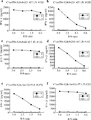
- Fig. 1 includes a series of photographs (a)-(j) depicting the results of IFN-gamma ELISPOT assay on CTLs that were induced with peptides derived from C1orf59.
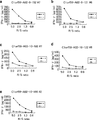
- Fig. 2 includes a series of line graphs (a)-(e) depicting the IFN- gamma production of CTL lines stimulated with C1orf59-A02-9-152 (SEQ ID NO: 3) (a), C1orf59-A02-9-121 (SEQ ID NO: 4) (b), C1orf59-A02-10-188 (SEQ ID NO: 15) (c), C1orf59-A02-10-122 (SEQ ID NO: 17) (d), and C1orf59-A02-10-196 (SEQ ID NO: 20) (e) with IFN-gamma ELISA assay.
- CTL lines established by stimulation with each peptide showed potent IFN-gamma production as compared with the control.
- "+" indicates the IFN-gamma production against target cells pulsed with the appropriate peptide and "-" indicates that the IFN-gamma production against target cells had not been pulsed with any peptides.
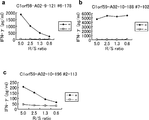
- Fig. 3 depicts the IFN-gamma production of the CTL clones established by limiting dilution from the CTL lines stimulated with C1orf59-A02-9-121 (SEQ ID NO: 4) (a), C1orf59-A02-10-188 (SEQ ID NO: 15) (b) and C1orf59-A02-10-196 (SEQ ID NO: 20) (c).
- the results depicted herein demonstrate that the CTL clones established by stimulation with each of the peptides showed potent IFN-gamma production as compared with the control.
- "+" indicates the IFN-gamma production against target cells pulsed with the appropriate peptide
- "-" indicates that the IFN- gamma production against target cells had not been pulsed with any peptides.
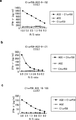
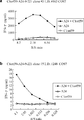
- Fig. 4 includes a series of line graphs (a)-(c) depicting specific CTL activity against target cells that exogenously express C1orf59 and HLA-A*0201.
- COS7 cells transfected with HLA-A*0201 or with the full length C1orf59 gene were prepared as control.
- the CTL lines established with C1orf59-A02-9-152 (SEQ ID NO: 3) (a), C1orf59-A02-9-121 (SEQ ID NO: 4) (b) and C1orf59-A02-10-188 (SEQ ID NO: 15) (c) showed specific CTL activity against COS7 cells transfected with both C1orf59 and HLA-A*0201 (black lozenge). In contrast, no significant specific CTL activity was detected against target cells expressing either HLA-A*0201 (triangle) or C1orf59 (circle).
- Fig. 5 depicts photographs showing the results of IFN-gamma ELISPOT assay on CTLs that were induced with peptides derived from C1orf59.
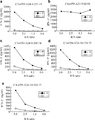
- Fig. 6 depicts line graphs showing the IFN-gamma production of CTL lines stimulated with C1orf59-A24-9-221 (SEQ ID NO: 26) (a), C1orf59-A24-9-66 (SEQ ID NO: 32) (b), C1orf59-A24-9-200 (SEQ ID NO: 34) (c), C1orf59-A24-10-124 (SEQ ID NO: 40) (d) and C1orf59-A24-10-363 (SEQ ID NO: 41) (e) with ELISA. It demonstrated that CTL lines established by stimulation with each peptide showed potent IFN-gamma production compared with the control. In the figures, "+" indicates that the cells were pulsed with the appropriate peptide and "-" indicates that the cells had not been pulsed with any peptides.
- Fig. 7 shows the IFN-gamma production of the CTL clones established by limiting dilution from the CTL lines stimulated with C1orf59-A24-9-221 (SEQ ID NO: 26) (a and b), C1orf59-A24-9-66 (SEQ ID NO: 32) (c), C1orf59-A24-9-200 (SEQ ID NO: 34) (d), C1orf59-A24-10-124 (SEQ ID NO: 40) (e) and C1orf59-A24-10-363 (SEQ ID NO: 41) (f). It demonstrated that the CTL clones established by these peptides showed potent IFN-gamma production compared with the control.
- Fig. 8 depicts line graphs showing specific CTL activity against the target cells that express C1orf59 and HLA-A*2402.
- COS7 cells transfected with only HLA-A*2402 or with the full length C1orf59 gene only were prepared as control.
- the CTL clones established with C1orf59-A24-9-221 SEQ ID NO: 26
- showed specific CTL activity against COS7 cells transfected with both C1orf59 and HLA-A*2402 black lozenge.
- no significant specific CTL activity was detected against target cells expressing either HLA-A*2402 (triangle) or C1orf59 (circle).
- amino acid refers to naturally occurring and synthetic amino acids, as well as amino acid analogs and amino acid mimetics that similarly function to the naturally occurring amino acids.
- Amino acid can be either L-amino acids or D-amino acids.
- Naturally occurring amino acids are those encoded by the genetic code, as well as those modified after translation in cells (e.g., hydroxyproline, gamma-carboxyglutamate, and O-phosphoserine).
- amino acid analog refers to compounds that have the same basic chemical structure (an alpha carbon bound to a hydrogen, a carboxy group, an amino group, and an R group) as a naturally occurring amino acid but have a modified R group or modified backbones (e.g., homoserine, norleucine, methionine, sulfoxide, methionine methyl sulfonium).
- modified R group or modified backbones e.g., homoserine, norleucine, methionine, sulfoxide, methionine methyl sulfonium.
- amino acid mimetic refers to chemical compounds that have different structures but similar functions to general amino acids.
- Amino acids may be referred to herein by their commonly known three letter symbols or the one-letter symbols recommended by the IUPAC-IUB Biochemical Nomenclature Commission.
- the terms "gene”, “polynucleotides”, “nucleotides” and “nucleic acids” are used interchangeably herein and, unless otherwise specifically indicated are similarly to the amino acids referred to by their commonly accepted single-letter codes.
- cancer refers to the cancers overexpressing C1orf59 gene, examples of which include, but are not limited to bladder cancer, breast cancer, cervical cancer, colorectal cancer, esophagus cancer, non-small cell lung cancer (NSCLC), osteosarcoma, ovarian cancer, pancreatic cancer, prostate cancer and small cell lung cancer (SCLC)s.
- NSCLC non-small cell lung cancer
- SCLC small cell lung cancer
- cytotoxic T lymphocyte refers to a sub-group of T lymphocytes that are capable of recognizing non-self cells (e.g., tumor cells, virus-infected cells) and inducing the death of such cells.
- HLA-A02 refers to the HLA-A2 type containing the subtypes such as HLA-A0201 or HLA-A0206.
- all technical and scientific terms used herein have the same meaning as commonly understood by one of ordinary skill in the art to which this invention belongs.
- peptides derived from C1orf59 function as an antigen recognized by CTLs
- peptides derived from C1orf59 were analyzed to determine whether they were antigen epitopes restricted by HLA-A02 or A24 which are commonly encountered HLA alleles (Date Y et al., Tissue Antigens 47: 93-101, 1996; Kondo A et al., J Immunol 155: 4307-12, 1995; Kubo RT et al., J Immunol 152: 3913-24, 1994).
- Candidates of HLA-A02 binding peptides derived from C1orf59 were identified based on their binding affinities to HLA-A02.
- the following peptides are the candidate peptides: C1orf59-A02-9-261 (SEQ ID NO: 1), C1orf59-A02-9-333 (SEQ ID NO: 2), C1orf59-A02-9-152 (SEQ ID NO: 3), C1orf59-A02-9-121 (SEQ ID NO: 4), C1orf59-A02-9-271 (SEQ ID NO: 5), C1orf59-A02-9-63 (SEQ ID NO: 6), C1orf59-A02-9-122 (SEQ ID NO: 7), C1orf59-A02-10-240 (SEQ ID NO: 9), C1orf59-A02-10-260 (SEQ ID NO: 10), C1orf59-A02-10-270 (SEQ ID NO: 11), C1orf59-A02-10-346 (SEQ ID NO: 12), C1orf59-A02-10-90 (SEQ ID NO: 13), C1orf59-A02-10-334 (
- CTLs were successfully established using each of the following peptides: C1orf59-A02-9-261 (SEQ ID NO: 1), C1orf59-A02-9-152 (SEQ ID NO: 3), C1orf59-A02-9-121 (SEQ ID NO: 4), C1orf59-A02-9-122 (SEQ ID NO: 7), C1orf59-A02-10-240 (SEQ ID NO: 9), C1orf59-A02-10-90 (SEQ ID NO: 13), C1orf59-A02-10-188 (SEQ ID NO: 15), C1orf59-A02-10-122 (SEQ ID NO: 17), and C1orf59-A02-10-196 (SEQ ID NO: 20).
- Candidates of HLA-A24 binding peptides derived from C1orf59 were identified based on their binding affinities to HLA-A24.
- the following peptides are the candidate peptides: C1orf59-A24-9-385-25 (SEQ ID NO: 25), C1orf59-A24-9-221-26 (SEQ ID NO: 26), C1orf59-A24-9-338-27 (SEQ ID NO: 27), C1orf59-A24-9-339-28 (SEQ ID NO: 28), C1orf59-A24-9-182-29 (SEQ ID NO: 29), C1orf59-A24-9-35-30 (SEQ ID NO: 30), C1orf59-A24-9-253-31 (SEQ ID NO: 31), C1orf59-A24-9-66-32 (SEQ ID NO: 32), C1orf59-A24-9-145-33 (SEQ ID NO: 33), C1orf59-A24-9-200-34 (SEQ
- CTLs were successfully established using each of the following peptides: C1orf59-A24-9-221-26 (SEQ ID NO: 26), C1orf59-A24-9-66-32 (SEQ ID NO: 32), C1orf59-A24-9-200-34 (SEQ ID NO: 34), C1orf59-A24-9-124-40 (SEQ ID NO: 40), and C1orf59-A24-9-363-41 (SEQ ID NO: 41).
- C1orf59 is an antigen recognized by CTL and that the peptides are epitope peptides of C1orf59 restricted by HLA-A02 or A24. Since the C1orf59 gene is over expressed in cancer cells of such as bladder cancer, breast cancer, cervical cancer, colorectal cancer, esophagus cancer, NSCLC, osteosarcoma, ovarian cancer, pancreatic cancer, prostate cancer and SCLC and not expressed in most normal organs, it is a good target for immunotherapy.
- nonapeptides peptides consisting of nine amino acid residues
- decapeptides peptides consisting of ten amino acid residues corresponding to CTL-recognized epitopes of C1orf59.
- Preferred examples of nonapeptides and decapeptides of the present invention include those peptides consisting of the amino acid sequence selected among SEQ ID NOs: 1, 3, 4, 7, 9, 13, 15, 17, 20, 26, 32, 34, 40 and 41.
- the present invention encompasses peptides consisting of any immunologically active fragments derived from C1orf59 which bind with HLA antigens identified using such known programs.
- the peptide of the present invention may be the peptide consisting of the full length of C1orf59.
- the peptides of the present invention can be flanked with additional amino acid residues so long as the resulting peptide retains its CTL inducibility.
- the amino acid residues to be flanked to the present peptides may be composed of any kind of amino acids so long as they do not impair the CTL inducibility of the original peptide.
- the present invention encompasses peptides which include the peptides derived from C1orf59 and have binding affinity to HLA antigens. Such peptides are typically less than about 40 amino acids, often less than about 20 amino acids, usually less than about 15 amino acids.
- modified peptides i.e., peptides composed of an amino acid sequence in which one, two or several amino acid residues have been modified (i.e., substituted, deleted, added or inserted as compared to an original reference sequence) have been known to retain the biological activity of the original peptide (Mark et al., Proc Natl Acad Sci USA 1984, 81: 5662-6; Zoller and Smith, Nucleic Acids Res 1982, 10: 6487-500; Dalbadie-McFarland et al., Proc Natl Acad Sci USA 1982, 79: 6409-13).
- the peptides of the present invention may have both CTL inducibility and an amino acid sequence selected from among SEQ ID NOs: 1, 3, 4, 7, 9, 13, 15, 17, 20, 26, 32, 34, 40 and 41, wherein one, two or even more amino acids are added, inserted and/or substituted.
- amino acid side chain characteristics that are desirable to conserve include, for example, hydrophobic amino acids (A, I, L, M, F, P, W, Y, V), hydrophilic amino acids (R, D, N, C, E, Q, G, H, K, S, T), and side chains having the following functional groups or characteristics in common: an aliphatic side-chain (G, A, V, L, I, P); a hydroxyl group containing side-chain (S, T, Y); a sulfur atom containing side-chain (C, M); a carboxylic acid and amide containing side-chain (D, N, E, Q); a base containing side-chain (R, K, H); and an aromatic containing side-chain (H, F, Y, W).
- A, I, L, M, F, P, W, Y, V hydrophilic amino acids
- R, D, N, C, E, Q amino acids
- G, A, V, L, I, P a hydroxyl group containing side
- the following eight groups each contain amino acids that are accepted in the art as conservative substitutions for one another: 1) Alanine (A), Glycine (G); 2) Aspartic acid (D), Glutamic acid (E); 3) Aspargine (N), Glutamine (Q); 4) Arginine (R), Lysine (K); 5) Isoleucine (I), Leucine (L), Methionine (M), Valine (V); 6) Phenylalanine (F), Tyrosine (Y), Tryptophan (W); 7) Serine (S), Threonine (T); and 8) Cysteine (C), Methionine (M) (see, e.g., Creighton, Proteins 1984).
- Such conservatively modified peptides are also considered to be peptides of the present invention.
- peptides of the present invention are not restricted thereto and can include non-conservative modifications, so long as the modified peptide retains the CTL inducibility of the original peptide.
- modified peptides should not exclude CTL inducible peptides of polymorphic variants, interspecies homologues, and alleles of C1orf59.
- modify insert, delete, add and/or substitute
- a small number for example, 1, 2 or several
- the term "several" means 5 or fewer amino acids, for example, 4, 3 or fewer.
- the percentage of amino acids to be modified is preferably 20% or less, more preferably 15% of less, even more preferably 10% or less or 1 to 5%.
- peptides of the present invention can be inserted, substituted or added with amino acid residues or amino acid residues may be deleted to achieve a higher binding affinity.
- the present peptides should be presented on the surface of a cell or exosome, preferably as a complex with an HLA antigen.
- modifications based on such regularity can be introduced into the immunogenic peptides of the invention.
- peptides possessing high HLA-A02 binding affinity have their second amino acid from the N-terminus substituted with leucine or methionine, and the amino acid at the C-terminus is substituted with valine or leucine.
- peptides having the amino acid sequences of SEQ ID NOs: 1, 3, 4, 7, 9, 13, 15, 17 and 20 wherein the second amino acid from the N-terminus is substituted with leucine or methionine, and/or wherein the C-terminus is substituted with valine or leucine are encompassed by the present invention. Substitutions can be introduced not only at the terminal amino acids but also at the position of potential T cell receptor (TCR) recognition of peptides.
- TCR T cell receptor
- a peptide with amino acid substitutions can be equal to or better than the original, for example CAP1, p53 (264-272), Her-2/neu (369-377) or gp100 (209-217) (Zaremba et al. Cancer Res. 57, 4570-4577, 1997, T. K. Hoffmann et al. J Immunol. (2002) Feb 1;168(3):1338-47., S. O. Dionne et al. Cancer Immunol immunother. (2003) 52: 199-206 and S. O. Dionne et al. Cancer Immunology, Immunotherapy (2004) 53, 307-314).
- the present invention also contemplates the addition of one, two or several amino acids to the N and/or C-terminus of the described peptides.
- modified peptides having high HLA antigen binding affinity and retained CTL inducibility are also included in the present invention.
- the peptide sequence is identical to a portion of the amino acid sequence of an endogenous or exogenous protein having a different function, side effects such as autoimmune disorders and/or allergic symptoms against specific substances may be induced. Therefore, it is preferable to first perform homology searches using available databases to avoid situations in which the sequence of the peptide matches the amino acid sequence of another protein.
- the objective peptide can be modified in order to increase its binding affinity with HLA antigens, and/or increase its CTL inducibility without any danger of such side effects.
- CTL inducibility indicates the ability of the peptide to induce CTLs when presented on antigen-presenting cells (APCs). Further, “CTL inducibility” includes the ability of the peptide to induce CTL activation, CTL proliferation, promote CTL lysis of target cells, and to increase CTL IFN-gamma production.
- Confirmation of CTL inducibility is accomplished by inducing APCs carrying human MHC antigens (for example, B-lymphocytes, macrophages, and dendritic cells (DCs)), or more specifically DCs derived from human peripheral blood mononuclear leukocytes, and after stimulation with the peptides, mixing with CD8-positive cells, and then measuring the IFN-gamma produced and released by CTL against the target cells.
- human MHC antigens for example, B-lymphocytes, macrophages, and dendritic cells (DCs)
- DCs dendritic cells
- transgenic animals that have been produced to express a human HLA antigen (for example, those described in BenMohamed L, Krishnan R, Longmate J, Auge C, Low L, Primus J, Diamond DJ, Hum Immunol 2000 Aug, 61(8): 764-79, Related Articles, Books, Linkout Induction of CTL response by a minimal epitope vaccine in HLA A*0201/DR1 transgenic mice: dependence on HLA class II restricted T(H) response) can be used.
- the target cells can be radio-labeled with 51 Cr and such, and cytotoxic activity can be calculated from radioactivity released from the target cells.
- CTL inducibility can be assessed by measuring IFN-gamma produced and released by CTL in the presence of APCs that carry immobilized peptides, and visualizing the inhibition zone on the media using anti-IFN-gamma monoclonal antibodies.
- nonapeptides or decapeptides selected from peptides consisting of the amino acid sequences indicated by SEQ ID NOs: 1, 3, 4, 7, 9, 13, 15, 17, 20, 26, 32, 34, 40 and 41 showed particularly high CTL inducibility as well as high binding affinity to an HLA antigen.
- these peptides are exemplified as preferred embodiments of the present invention.
- the result of homology analysis showed that those peptides do not have significant homology with peptides derived from any other known human gene products. This lowers the possibility of unknown or undesired immune responses when used for immunotherapy.
- these peptides find use for eliciting immunity in cancer patients against C1orf59.
- the peptides of the present invention preferably, peptides consisting of the amino acid sequence selected from the group consisting of SEQ ID NOs: 1, 3, 4, 7, 9, 13, 15, 17, 20, 26, 32, 34, 40 and 41.
- the described peptides can be further linked to other substances, so long as they retain the CTL inducibility of the original peptide.
- exemplary substances include: peptides, lipids, sugar and sugar chains, acetyl groups, natural and synthetic polymers, etc.
- the present peptides can contain modifications such as glycosylation, side chain oxidation, and/or phosphorylation; so long as the modifications do not destroy the biological activity of the original peptide. These kinds of modifications may confer additional functions (e.g., targeting function, and delivery function) and/or stabilize the peptides.
- a polypeptide For example, to increase the in vivo stability of a polypeptide, it is known in the art to introduce D-amino acids, amino acid mimetics or unnatural amino acids; this concept can also be adopted to the present polypeptides.
- the stability of a polypeptide can be assayed in a number of ways. For instance, peptidases and various biological media, such as human plasma and serum, can be used to test stability (see, e.g., Verhoef et al., Eur J Drug Metab Pharmacokin 1986, 11: 291-302).
- the peptides of the present invention can also be described as "C1orf59 peptide(s)" or "C1orf59 polypeptide(s)".
- the peptides of the invention can be prepared using well known techniques. For example, the peptides can be prepared synthetically, using recombinant DNA technology or chemical synthesis. The peptides of the invention can be synthesized individually or as longer polypeptides composed of two or more peptides. The peptides can then be isolated i.e., purified or isolated so as to be substantially free of other naturally occurring host cell proteins and fragments thereof, or any other chemical substances. A peptide of the present invention can be obtained through chemical synthesis based on the selected amino acid sequence.
- Examples of conventional peptide synthesis methods that can be adapted to the synthesis include, but are not limited to: (i) Peptide Synthesis, Interscience, New York, 1966; (ii) The Proteins, Vol. 2, Academic Press, New York, 1976; (iii) Peptide Synthesis (in Japanese), Maruzen Co., 1975; (iv) Basics and Experiment of Peptide Synthesis (in Japanese), Maruzen Co., 1985; (v) Development of Pharmaceuticals (second volume) (in Japanese), Vol. 14 (peptide synthesis), Hirokawa, 1991; (vi) WO99/67288; and (vii) Barany G. & Merrifield R.B., Peptides Vol. 2, "Solid Phase Peptide Synthesis", Academic Press, New York, 1980, 100-118.
- the present peptides can be obtained adapting any known genetic engineering methods for producing peptides (e.g., Morrison J, J Bacteriology 1977, 132: 349-51; Clark-Curtiss & Curtiss, Methods in Enzymology (eds. Wu et al.) 1983, 101: 347-62).
- a suitable vector harboring a polynucleotide encoding the objective peptide in an expressible form e.g., downstream of a regulatory sequence corresponding to a promoter sequence
- the host cell is then cultured to produce the peptide of interest.
- the peptide can also be produced in vitro adapting an in vitro translation system.
- polynucleotides which encodes any of the aforementioned peptides of the present invention. These include polynucleotides derived from the natural occurring C1orf59 gene (GenBank Accession No. NM_144584 (SEQ ID NO: 42)) as well as those having a conservatively modified nucleotide sequence thereof.
- conservatively modified nucleotide sequence refers to sequences which encode identical or essentially identical amino acid sequences. Due to the degeneracy of the genetic code, a large number of functionally identical nucleic acids encode any given protein.
- the codons GCA, GCC, GCG, and GCU all encode the amino acid alanine.
- the codon can be altered to any of the corresponding codons described without altering the encoded polypeptide.
- Such nucleic acid variations are "silent variations," which are one species of conservatively modified variations. Every nucleic acid sequence herein which encodes a peptide also describes every possible silent variation of the nucleic acid.
- each codon in a nucleic acid can be modified to yield a functionally identical molecule. Accordingly, each silent variation of a nucleic acid that encodes a peptide is implicitly described in each disclosed sequence.
- the polynucleotide of the present invention can be composed of DNA, RNA, and derivatives thereof.
- a DNA is suitably composed of bases such as A, T, C, and G, and T is replaced by U in an RNA.
- the polynucleotide of the present invention can encode multiple peptides of the present invention with or without intervening amino acid sequences in between.
- the intervening amino acid sequence can provide a cleavage site (e.g., enzyme recognition sequence) of the polynucleotide or the translated peptides.
- the polynucleotide can include any additional sequences to the coding sequence encoding the peptide of the present invention.
- the polynucleotide can be a recombinant polynucleotide that includes regulatory sequences required for the expression of the peptide or can be an expression vector (plasmid) with marker genes and such.
- recombinant polynucleotides can be prepared by the manipulation of polynucleotides through conventional recombinant techniques using, for example, polymerases and endonucleases.
- a polynucleotide can be produced by insertion into an appropriate vector, which can be expressed when transfected into a competent cell.
- a polynucleotide can be amplified using PCR techniques or expression in suitable hosts (see, e.g., Sambrook et al., Molecular Cloning: A Laboratory Manual, Cold Spring Harbor Laboratory, New York, 1989).
- a polynucleotide can be synthesized using the solid phase techniques, as described in Beaucage SL & Iyer RP, Tetrahedron 1992, 48: 2223-311; Matthes et al., EMBO J 1984, 3: 801-5.
- Exosomes The present invention further provides intracellular vesicles called exosomes, which present complexes formed between the peptides of this invention and HLA antigens on their surface.
- Exosomes can be prepared, for example, by using the methods detailed in Japanese Patent Application Kohyo Publications Nos. Hei 11-510507 and WO99/03499, and can be prepared using APCs obtained from patients who are subject to treatment and/or prevention.
- the exosomes of this invention can be inoculated as vaccines, in a fashion similar to the peptides of this invention.
- HLA-A02 particularly, A*0201 and also A*0206
- A24 particularly, A*2402
- the use of the A02 or A24 type that is highly expressed among the Japanese and Caucasian is favorable for obtaining effective results.
- the type of HLA antigen of the patient requiring treatment is investigated in advance, which enables the appropriate selection of peptides having high levels of binding affinity to the particular antigen, or having CTL inducibility by antigen presentation.
- substitution, insertion and/or addition of 1, 2, or several amino acids can be performed based on the amino acid sequence of the naturally occurring C1orf59 partial peptide.
- the peptides having a sequence of any one of SEQ ID NOs: 1, 3, 4, 7, 9, 13, 15, 17 and, 20 find use.
- the peptides having a sequence of any one of SEQ ID NOs: 26, 32, 34, 40 and 41 find use.
- the present invention also provides isolated APCs that present complexes formed between HLA antigens and the peptides of this invention on its surface.
- the APCs can be derived from patients who are subjected to treatment and/or prevention, and can be administered as vaccines by themselves or in combination with other drugs including the peptides of this invention, exosomes, or CTLs.
- the APCs are not limited to a particular kind of cells and include DCs, Langerhans cells, macrophages, B cells, and activated T cells, which are known to present proteinaceous antigens on their cell surface so as to be recognized by lymphocytes. Since a DC is a representative APC having the strongest CTL inducing action among APCs, DCs find use as the APCs of the present invention.
- the APCs of the present invention can be obtained by inducing DCs from peripheral blood monocytes and then contacting (stimulating) them with the peptides of this invention in vitro, ex vivo or in vivo.
- the APCs of this invention can be obtained by collecting the APCs from the subject after administering the peptides of this invention to the subject.
- the APCs of this invention can be obtained by contacting APCs collected from a subject with the peptide of this invention.
- the APCs of the present invention can be administered alone or in combination with other drugs including the peptides, exosomes or CTLs of this invention to a subject for inducing immune response against cancer in the subject.
- the ex vivo administration can include steps of: a: collecting APCs from a first subject, b: contacting the APCs of step a, with the peptide and c: administering the APCs of step b to a second subject.
- the first subject and the second subject can be the same individual, or may be different individuals.
- the APCs obtained by step b can be administered as a vaccine for treating and/or preventing cancer including bladder cancer, breast cancer, cervical cancer, colorectal cancer, esophagus cancer, NSCLC, osteosarcoma, ovarian cancer, pancreatic cancer, prostate cancer and SCLC.
- the present invention also provides a method or process for manufacturing a pharmaceutical composition inducing APCs, wherein the method includes the step of admixing or formulating the peptide of the invention with a pharmaceutically acceptable carrier.
- the APCs have a high level of CTL inducibility.
- high level of CTL inducibility the high level is relative to the level of that by APC contacting with no peptide or peptides which cannot induce the CTL.
- Such APCs having a high level of CTL inducibility can be prepared by a method which includes the step of transferring a polynucleotide encoding the peptide of this invention to APCs in vitro as well as the method mentioned above.
- the introduced genes can be in the form of DNAs or RNAs. Examples of methods for introduction include, without particular limitations, various methods conventionally performed in this field, such as lipofection, electroporation, and calcium phosphate method.
- CTLs Cytotoxic T lymphocytes
- a CTL induced against any of the peptides of the present invention strengthens the immune response targeting cancer cells in vivo and thus can be used as vaccines in a fashion similar to the peptides per se.
- the present invention also provides isolated CTLs that are specifically induced or activated by any of the present peptides.
- Such CTLs can be obtained by (1) administering the peptide(s) of the present invention to a subject, and collecting CTLs from the subject; (2) contacting (stimulating) subject-derived APCs and CD8-positive cells, or peripheral blood mononuclear leukocytes in vitro with the peptide(s) of the present invention and then isolating CTLs; (3) contacting CD8-positive cells or peripheral blood mononuclear leukocytes in vitro with APCs or exosomes presenting a complex of an HLA antigen and the present peptide on its surface and then isolating CTLs; or (4) introducing a gene including a polynucleotide encoding a T cell receptor (TCR) subunit binding to the peptide of this invention to the CTLs.
- TCR T cell receptor
- the CTLs of this invention can be derived from patients who are subject to treatment and/or prevention, and can be administered by themselves or in combination with other drugs including the peptides of this invention or exosomes for the purpose of regulating effects.
- the obtained CTLs act specifically against target cells presenting the peptides of this invention, for example, the same peptides used for induction.
- the target cells can be cells that endogenously express C1orf59, such as cancer cells, or cells that are transfected with the C1orf59 gene; and cells that present a peptide of this invention on the cell surface due to stimulation by the peptide can also serve as targets of activated CTL attack.
- T cell receptor The present invention also provides a composition containing nucleic acids encoding polypeptides that are capable of forming a subunit of a T cell receptor (TCR), and methods of using the same.
- the TCR subunits have the ability to form TCRs that confer specificity to T cells against tumor cells expressing C1orf59.
- the nucleic acid sequence encoding alpha- and beta- chains of the TCR subunits which are carried by the CTLs induced with peptides of this invention can be identified (WO2007/032255 and Morgan et al., J Immunol, 171, 3288 (2003)).
- the PCR primers for the analysis can be, for example, 5'-R primers (5'-gtctaccaggcattcgcttcat-3') as 5' side primers (SEQ ID NO: 44) and 3-TRa-C primers (5'-tcagctggaccacagccgcagcgt-3') specific to TCR alpha chain C region (SEQ ID NO: 45), 3-TRb-C1 primers (5'-tcagaaatcctttctctttgac-3') specific to TCR beta chain C1 region (SEQ ID NO: 46) or 3-TRbeta-C2 primers (5'- ctagcctctggaatcctttctcttt-3') specific to TCR beta chain C2 region (SEQ ID NO: 47) as 3' side primers, but not limited.
- the derivative TCRs can bind target
- the nucleic acids encoding the TCR subunits can be incorporated into suitable vectors, e.g., retroviral vectors. These vectors are well known in the art.
- the nucleic acids or the vectors containing them can be transferred into a T cell, for example, a T cell from a patient, using methods well known in the arts.
- the present invention provides an off-the-shelf composition allowing rapid modification of a patient's own T cells (or those of another mammal) to rapidly and easily produce modified T cells having excellent cancer cell killing properties.
- the TCR encoded by the nucleic acids isolated from a CTL induced by the peptide of the present invention is capable of specifically recognizing a complex of the peptide of the present invention and HLA molecule, giving a T cell specific activity against the target cell when the TCR is carried on the surface of the T cell.
- Such specific recognition may be confirmed by any known methods, and preferred methods include, for example, tetramer analysis using HLA molecule and the peptide of the present invention (e.g., Altman et al. Science. 274, 94-96 (1996); McMichael et al. J Exp Med. 187, 1367-1371 (1998)), and ELISPOT assay.
- a T cell expressing the TCR on the cell surface recognizes a cell by the TCR, and the signal is transmitted intracellularly, and then cytokine, such as INF-gamma, is released from the T cell.
- cytokine such as INF-gamma
- the cytotoxic activity of the T cell against target cells can be examined using the methods well-know in the arts.
- a preferred method includes, for example, chromium release assay using HLA positive cells expressing C1orf59 as target cells.
- the present invention provides CTLs which are prepared by transduction with the nucleic acids encoding the TCR subunits polypeptides that bind to the C1orf59 peptide of, e.g. SEQ ID NOs: 1, 3, 4, 7, 9, 13, 15, 17 and, 20 in the context of HLA-A02 and also the peptides of SEQ ID NOs: 26, 32, 34, 40 and 41 in the context of HLA-A24.
- the transduced CTLs are capable of homing to cancer cells in vivo, and can be expanded by well known in vitro culturing methods (e.g., Kawakami et al., J Immunol., 142, 3452-3461 (1989)).
- the CTLs of the present invention can be used to form an immunogenic composition useful in treating or the prevention of cancer in a patient in need of therapy or protection (WO2006/031221).
- Prevention and prophylaxis include any activity which reduces the burden of mortality or morbidity from disease. Prevention and prophylaxis can occur "at primary, secondary and tertiary prevention levels.” While primary prevention and prophylaxis avoid the development of a disease, secondary and tertiary levels of prevention and prophylaxis encompass activities aimed at the prevention and prophylaxis of the progression of a disease and the emergence of symptoms as well as reducing the negative impact of an already established disease by restoring function and reducing disease-related complications. Alternatively, prevention and prophylaxis include a wide range of prophylactic therapies aimed at alleviating the severity of the particular disorder, e.g.
- Treating and/or for the prophylaxis of cancer or, and/or the prevention of postoperative recurrence thereof includes any of the following steps, such as surgical removal of cancer cells, inhibition of the growth of cancerous cells, involution or regression of a tumor, induction of remission and suppression of occurrence of cancer, tumor regression, and reduction or inhibition of metastasis.
- Effectively treating and/or the prophylaxis of cancer decreases mortality and improves the prognosis of individuals having cancer, decreases the levels of tumor markers in the blood, and alleviates detectable symptoms accompanying cancer.
- reduction or improvement of symptoms constitutes effectively treating and/or the prophylaxis include 10%, 20%, 30% or more reduction, or stable disease.
- the peptides of the present invention or polynucleotides encoding such peptides can be used for the treatment and/or for the prophylaxis of cancer or tumor, and/or prevention of postoperative recurrence thereof.
- the present invention provides a pharmaceutical agent or composition for treating and/or for the prophylaxis of cancer or tumor, and/or prevention of postoperative recurrence thereof, which includes one or more of the peptides of the present invention, or polynucleotides encoding the peptides as an active ingredient.
- the present peptides can be expressed on the surface of any of the foregoing exosomes or cells, such as APCs for the use as pharmaceutical agents or compositions.
- the aforementioned CTLs which target any of the peptides of the invention can also be used as the active ingredient of the present pharmaceutical agents or compositions.
- the present invention also provides the use of an active ingredient selected from among: (a) a peptide of the present invention; (b) a nucleic acid encoding such a peptide as disclosed herein in an expressible form; (c) an APC or an exosome presenting a peptide of the present invention on its surface; and (d) a cytotoxic T cell of the present invention in manufacturing a pharmaceutical composition or agent for treating cancer or tumor.
- an active ingredient selected from among: (a) a peptide of the present invention; (b) a nucleic acid encoding such a peptide as disclosed herein in an expressible form; (c) an APC or an exosome presenting a peptide of the present invention on its surface; and (d) a cytotoxic T cell of the present invention in manufacturing a pharmaceutical composition or agent for treating cancer or tumor.
- the present invention further provides an active ingredient selected from among: (a) a peptide of the present invention; (b) a nucleic acid encoding such a peptide as disclosed herein in an expressible form; (c) an APC or an exosome presenting a peptide of the present invention on its surface; and (d) a cytotoxic T cell of the present invention for use in treating cancer of tumor.
- an active ingredient selected from among: (a) a peptide of the present invention; (b) a nucleic acid encoding such a peptide as disclosed herein in an expressible form; (c) an APC or an exosome presenting a peptide of the present invention on its surface; and (d) a cytotoxic T cell of the present invention for use in treating cancer of tumor.
- the present invention further provides a method or process for manufacturing a pharmaceutical composition or agent for treating cancer or tumor, wherein the method or process includes the step of formulating a pharmaceutically or physiologically acceptable carrier with an active ingredient selected from among: (a) a peptide of the present invention; (b) a nucleic acid encoding such a peptide as disclosed herein in an expressible form; (c) an APC or an exosome presenting a peptide of the present invention on its surface; and (d) a cytotoxic T cell of the present invention as active ingredients.
- a pharmaceutically or physiologically acceptable carrier with an active ingredient selected from among: (a) a peptide of the present invention; (b) a nucleic acid encoding such a peptide as disclosed herein in an expressible form; (c) an APC or an exosome presenting a peptide of the present invention on its surface; and (d) a cytotoxic T cell of the present invention as active ingredients.
- the present invention also provides a method or process for manufacturing a pharmaceutical composition or agent for treating cancer or tumor, wherein the method or process includes the steps of admixing an active ingredient with a pharmaceutically or physiologically acceptable carrier, wherein the active ingredient is selected from among: (a) a peptide of the present invention; (b) a nucleic acid encoding such a peptide as disclosed herein in an expressible form; (c) an APC or an exosome presenting a peptide of the present invention on its surface; and (d) a cytotoxic T cell of the present invention.
- the pharmaceutical composition or agent or the present invention may be used for either or both the prophylaxis of cancer or tumor and prevention of postoperative recurrence thereof.
- the present pharmaceutical agents or compositions find use as a vaccine.
- the phrase "vaccine” also referred to as an "immunogenic composition” refers to a substance that has the function to induce anti-tumor immunity upon inoculation into animals.
- the pharmaceutical agents or compositions of the present invention can be used to treat and/or prevent cancers or tumors, and/or prevention of postoperative recurrence thereof in subjects or patients including human and any other mammal including, but not limited to, mouse, rat, guinea-pig, rabbit, cat, dog, sheep, goat, pig, cattle, horse, monkey, baboon, and chimpanzee, particularly a commercially important animal or a domesticated animal.
- peptides having an amino acid sequence of any one of SEQ ID NOs: 1, 3, 4, 7, 9, 13, 15, 17, 20, 26, 32, 34, 40 and 41 have been found to be HLA-A02 or A24 restricted epitope peptides or candidates that can induce potent and specific immune response. Therefore, the present pharmaceutical agents or compositions which include any of these peptides having the amino acid sequences of SEQ ID NOs: 1, 3, 4, 7, 9, 13, 15, 17 and, 20 are particularly suited for the administration to subjects whose HLA antigen is HLA-A02, and the peptides having the amino acid sequences of SEQ ID NOs: 26, 32, 34, 40 and 41 are particularly suited for the administration to subjects whose HLA antigen is HLA-A24.
- Cancers or tumors to be treated by the pharmaceutical agents or compositions of the present invention are not limited and include all kinds of cancers or tumors wherein C1orf59 is involved, including for example, bladder cancer, breast cancer, cervical cancer, colorectal cancer, esophagus cancer, NSCLC, osteosarcoma, ovarian cancer, pancreatic cancer, prostate cancer and SCLC.
- the present pharmaceutical agents or compositions can contain in addition to the aforementioned active ingredients, other peptides which have the ability to induce CTLs against cancerous cells, other polynucleotides encoding the other peptides, other cells that present the other peptides, or such.
- the other peptides that have the ability to induce CTLs against cancerous cells are exemplified by cancer specific antigens (e.g., identified TAAs), but are not limited thereto.
- the pharmaceutical agents or compositions of the present invention can optionally include other therapeutic substances as an active ingredient, so long as the substance does not inhibit the antitumoral effect of the active ingredient, e.g., any of the present peptides.
- formulations can include anti-inflammatory agents, pain killers, chemotherapeutics, and the like.
- the medicaments of the present invention can also be administered sequentially or concurrently with the one or more other pharmacologic agents.
- the amounts of medicament and pharmacologic agent depend, for example, on what type of pharmacologic agent(s) is/are used, the disease being treated, and the scheduling and routes of administration.
- the pharmaceutical agents or compositions of this invention can include other agents conventional in the art having regard to the type of formulation in question.
- the present pharmaceutical agents or compositions can be included in articles of manufacture and kits containing materials useful for treating the pathological conditions of the disease to be treated, e.g., cancer.
- the article of manufacture can include a container of any of the present pharmaceutical agents or compositions with a label. Suitable containers include bottles, vials, and test tubes. The containers can be formed from a variety of materials, such as glass or plastic.
- the label on the container should indicate the agent is used for treating or prevention of one or more conditions of the disease.
- the label can also indicate directions for administration and so on.
- kits including a pharmaceutical agent or composition of the present invention can optionally further include a second container housing a pharmaceutically-acceptable diluent. It can further include other materials desirable from a commercial and user standpoint, including other buffers, diluents, filters, needles, syringes, and package inserts with instructions for use.
- the pharmaceutical agents or compositions can, if desired, be presented in a pack or dispenser device which can contain one or more unit dosage forms containing the active ingredient.
- the pack can, for example, include metal or plastic foil, such as a blister pack.
- the pack or dispenser device can be accompanied by instructions for administration.
- compositions containing the peptides as the active ingredient can be administered directly as a pharmaceutical agent or composition, or if necessary, that has been formulated by conventional formulation methods.
- carriers, excipients, and such that are ordinarily used for drugs can be included as appropriate without particular limitations. Examples of such carriers are sterilized water, physiological saline, phosphate buffer, culture fluid and such.
- the pharmaceutical agents or compositions can contain as necessary, stabilizers, suspensions, preservatives, surfactants and such.
- the pharmaceutical agents or compositions of this invention can be used for anticancer purposes.
- the peptides of this invention can be prepared as a combination composed of two or more of the peptides of the present invention, to induce CTLs in vivo.
- the peptide combination can take the form of a cocktail or can be conjugated to each other using standard techniques.
- the peptides can be chemically linked or expressed as a single fusion polypeptide sequence.
- the peptides in the combination can be the same or different.
- APCs that present any of the peptides of this invention on their cell surface which may be obtained by stimulating APCs (e.g., DCs) derived from a subject with the peptides of this invention may be administered to the subjects, and as a result, CTLs are induced in the subject and aggressiveness towards the cancer cells can be increased.
- APCs e.g., DCs
- the pharmaceutical agents or compositions for the treatment and/or prevention of cancer or tumor which include a peptide of this invention as the active ingredient, can also include an adjuvant known to effectively induce cellular immunity.
- the pharmaceutical agents or compositions can be administered with other active ingredients or administered by formulation into granules.
- An adjuvant refers to a compound that enhances the immune response against the protein when administered together (or successively) with the protein having immunological activity.
- Adjuvants contemplated herein include those described in the literature (Clin Microbiol Rev 1994, 7: 277-89).
- suitable adjuvants include aluminum phosphate, aluminum hydroxide, alum, cholera toxin, salmonella toxin, and such, but are not limited thereto.
- liposome formulations may be conveniently used.
- the peptides of the present invention may also be administered in the form of a pharmaceutically acceptable salt.
- the salts include salts with an alkali metal, salts with a metal, salts with an organic base, salts with an organic acid and salts with an inorganic acid.
- the pharmaceutical agents or compositions of the present invention may further include a component which primes CTLs.
- Lipids have been identified as agents capable of priming CTLs in vivo against viral antigens.
- palmitic acid residues can be attached to the epsilon -and alpha-amino groups of a lysine residue and then linked to a peptide of the present invention.
- the lipidated peptide can then be administered either directly in a micelle or particle, incorporated into a liposome, or emulsified in an adjuvant.
- lipid priming of CTL responses E.
- coli lipoproteins such as tripalmitoyl-S-glycerylcysteinlyseryl- serine (P3CSS) can be used to prime CTL when covalently attached to an appropriate peptide (see, e.g., Deres et al., Nature 1989, 342: 561-4).
- P3CSS tripalmitoyl-S-glycerylcysteinlyseryl- serine
- the method of administration can be oral, intradermal, subcutaneous, intravenous injection, or such, and systemic administration or local administration to the vicinity of the targeted sites.
- the administration can be performed by single administration or boosted by multiple administrations.
- the dose of the peptides of this invention can be adjusted appropriately according to the disease to be treated, age of the patient, weight, method of administration, and such, and is ordinarily 0.001 mg to 1000 mg, for example, 0.001 mg to 1000 mg, for example, 0.1 mg to 10 mg, and can be administered once in a few days to few months.
- One skilled in the art can appropriately select a suitable dose.
- compositions containing polynucleotides as the active ingredient can also contain nucleic acids encoding the peptides disclosed herein in an expressible form.
- the phrase "in an expressible form” means that the polynucleotide, when introduced into a cell, will be expressed in vivo as a polypeptide that induces anti-tumor immunity.
- the nucleic acid sequence of the polynucleotide of interest includes regulatory elements necessary for expression of the polynucleotide.
- the polynucleotide(s) can be equipped so to achieve stable insertion into the genome of the target cell (see, e.g., Thomas KR & Capecchi MR, Cell 1987, 51: 503-12 for a description of homologous recombination cassette vectors). See, e.g., Wolff et al., Science 1990, 247: 1465-8; U.S. Patent Nos. 5,580,859; 5,589,466; 5,804,566; 5,739,118; 5,736,524; 5,679,647; and WO 98/04720.
- DNA-based delivery technologies include "naked DNA”, facilitated (bupivacaine, polymers, peptide-mediated) delivery, cationic lipid complexes, and particle-mediated (“gene gun”) or pressure-mediated delivery (see, e.g., U.S. Patent No. 5,922,687).
- the peptides of the invention can also be expressed by viral or bacterial vectors.
- expression vectors include attenuated viral hosts, such as vaccinia or fowlpox. This approach involves the use of vaccinia virus, e.g., as a vector to express nucleotide sequences that encode the peptide. Upon introduction into a host, the recombinant vaccinia virus expresses the immunogenic peptide, and thereby elicits an immune response.
- Vaccinia vectors and methods useful in immunization protocols are described in, e.g., U.S. Patent No. 4,722,848. Another vector is BCG (Bacille Calmette Guerin).
- BCG vectors are described in Stover et al., Nature 1991, 351: 456-60.
- a wide variety of other vectors useful for therapeutic administration or immunization e.g., adeno and adeno-associated virus vectors, retroviral vectors, Salmonella typhi vectors, detoxified anthrax toxin vectors, and the like, will be apparent. See, e.g., Shata et al., Mol Med Today 2000, 6: 66-71; Shedlock et al., J Leukoc Biol 2000, 68: 793-806; Hipp et al., In Vivo 2000, 14: 571-85.
- Delivery of a polynucleotide into a subject can be either direct, in which case the subject is directly exposed to a polynucleotide-carrying vector, or indirect, in which case, cells are first transformed with the polynucleotide of interest in vitro, then the cells are transplanted into the subject.
- two approaches are known, respectively, as in vivo and ex vivo gene therapies.
- the method of administration can be oral, intradermal, subcutaneous, intravenous injection, or such, and systemic administration or local administration to the vicinity of the targeted sites finds use.
- the administration can be performed by single administration or boosted by multiple administrations.
- the dose of the polynucleotide in the suitable carrier or cells transformed with the polynucleotide encoding the peptides of this invention can be adjusted appropriately according to the disease to be treated, age of the patient, weight, method of administration, and such, and is ordinarily 0.001 mg to 1000 mg, for example, 0.001 mg to 1000 mg, for example, 0.1 mg to 10 mg, and can be administered once every a few days to once every few months.
- One skilled in the art can appropriately select the suitable dose.
- peptides, exosomes, APCs and CTLs Methods using the peptides, exosomes, APCs and CTLs
- the peptides and polynucleotides of the present invention can be used for inducing APCs and CTLs.
- the exosomes and APCs of the present invention can be also used for inducing CTLs.
- the peptides, polynucleotides, exosomes and APCs can be used in combination with any other compounds so long as the compounds do not inhibit their CTL inducibility.
- any of the aforementioned pharmaceutical agents or compositions of the present invention can be used for inducing CTLs, and in addition thereto, those including the peptides and polynucleotides can be also be used for inducing APCs as discussed explained below.
- the present invention provides methods of inducing APCs with high CTL inducibility using the peptides or polynucleotides of this invention.
- the methods of the present invention include the step of contacting APCs with the peptides of this invention in vitro, ex vivo or in vivo.
- the method contacting APCs with the peptides ex vivo can include the steps of: a: collecting APCs from a subject:, and b: contacting the APCs of step a with the peptide.
- the APCs are not limited to a particular kind of cells and include DCs, Langerhans cells, macrophages, B cells, and activated T cells, which are known to present proteinaceous antigens on their cell surface so as to be recognized by lymphocytes.
- DCs can be preferably used due to its strongest CTL inducibility among the APCs.
- Any peptides of the present invention can be used as the peptide of step b by themselves or in combination with other peptides of this invention.
- the peptides of the present invention may be administered to a subject to contact the peptides with APCs in vivo. Consequently, APCs with high CTL inducibility can be induced in the body of the subject.
- the present invention also contemplates a method of administering the peptides of this invention to a subject to induce APCs in vivo. It is also possible to administer polynucleotides encoding the peptides of this invention to a subject in an expressible form, so that the peptides of this invention are expressed and contacted with APCs in vivo, to consequently induce APCs with high CTL inducibility in the body of the subject.
- the present invention also contemplates a method of administering the polynucleotides of this invention to a subject to induce APCs in vivo.
- the phrase "expressible form" is defined above in section "IX.
- Pharmaceutical agents (2) Pharmaceutical agents containing polynucleotides as the active ingredient”.
- the present invention includes introducing the polynucleotide of this invention into an APC to induce APCs with CTL inducibility.
- the method may include the steps of: a: collecting APCs from a subject:, and b: introducing a polynucleotide encoding a peptide of this invention. Step b can be performed as described above in section "VI. Antigen-presenting cells".
- the present invention provides methods for inducing CTLs using the peptides, polynucleotides, or exosomes or APCs of this invention.
- the present invention also provides methods for inducing CTLs using a polynucleotide encoding a polypeptide that is capable of forming a T cell receptor (TCR) subunit recognizing a complex of the peptides of the present invention and HLA antigens.
- TCR T cell receptor
- the methods for inducing CTLs include at least one step selected from the group consisting of: a) contacting a CD8-positive T cell with an antigen-presenting cell and/or an exosome that presents on its surface a complex of an HLA antigen and a peptide of the preset invention; and b) introducing a polynucleotide encoding a polypeptide that is capable of forming a TCR subunit recognizing a complex of a peptide of the present invention and an HLA antigen into a CD8 positive cell.
- the present invention also contemplates a method which includes the step of administering the peptides, the polynucleotides, the APCs or exosomes of this invention to a subject to induce CTLs.
- CTLs can be also induced by their ex vivo use.
- the activated CTLs would be returned to the subject.
- a method of the present invention to induce CTLs can include steps of: a) collecting APCs from a subject; b) contacting the APCs of step a) with the peptide; and c) co-culturing the APCs of step b with CD8-positive cells.
- the APCs to be co-cultured with the CD8-positive cells in above step c can also be prepared by transferring a gene that includes a polynucleotide of this invention into APCs as described above in section "VI.
- Antigen-presenting cells are not limited thereto and any APCs which effectively presents on its surface a complex of an HLA antigen and the peptide of this invention can be used for the instant method.
- the exosomes that presents on its surface a complex of an HLA antigen and the peptide of this invention can be also used.
- the present invention also contemplates a method wherein exosomes presenting on its surface a complex of an HLA antigen and the peptide of this invention are co-cultured with CD8-positive cells.
- exosomes may be prepared by the methods described above in section "V. Exosomes”.
- CTL can be induced by introducing a gene that includes a polynucleotide encoding the TCR subunit binding to the peptide of this invention into CD8-positive cells. Such transduction can be performed as described above in section "VIII. T cell receptor (TCR)".
- TCR T cell receptor
- the present invention provides a method or process for manufacturing a pharmaceutical agent or composition inducing CTLs, wherein the method includes the step of admixing or formulating the peptide of the present invention with a pharmaceutically acceptable carrier.
- the present invention provides methods for inducing immune response against diseases related to C1orf59.
- Suitable disease include cancer, examples of which include bladder cancer, breast cancer, cervical cancer, colorectal cancer, esophagus cancer, NSCLC, osteosarcoma, ovarian cancer, pancreatic cancer, prostate cancer and SCLC.
- the methods include the step of administering agents or compositions containing any of the peptides of the present invention or polynucleotides encoding them.
- the present inventive method also contemplates the administration of exosomes or APCs presenting any of the peptides of the present invention. For details, see the item of "IX.
- compositions particularly the part describing the use of the pharmaceutical agents and compositions of the present invention as vaccines.
- exosomes and APCs that can be employed for the present methods for inducing immune response are described in detail under the items of "V. Exosomes”, “VI. Antigen-presenting cells (APCs)", and (1) and (2) of “X. Methods using the peptides, exosomes, APCs and CTLs", supra.
- the present invention also provides a method or process for manufacturing a pharmaceutical agent or composition inducing immune response, wherein the method includes the step of admixing or formulating the peptide of the present invention with a pharmaceutically acceptable carrier.
- the method of the present invention may include the step of administrating a vaccine or a pharmaceutical composition, which contains: (a) a peptide of the present invention; (b) a nucleic acid encoding such a peptide as disclosed herein in an expressible form; (c) an APC or an exosome presenting a peptide of the present invention on its surface; and (d) a cytotoxic T cell of the present invention
- cancer overexpressing C1orf59 can be treated with these active ingredients.
- the cancer includes, but is not limited to, bladder cancer, breast cancer, cervical cancer, colorectal cancer, esophagus cancer, non-small cell lung cancer (NSCLC), osteosarcoma, ovarian cancer, pancreatic cancer, prostate cancer, and small cell lung cancer (SCLC). Accordingly, prior to the administration of the vaccines or pharmaceutical compositions comprising the active ingredients, it is preferable to confirm whether the expression level of C1orf59 in the cancer cells or tissues to be treated is enhanced compared with normal cells of the same organ.
- the present invention provides a method for treating cancer (over) expressing C1orf59, which method may include the steps of: i) determining the expression level of C1orf59 in cancer cells or tissue(s) obtained from a subject with the cancer to be treated; ii) comparing the expression level of C1orf59 with normal control; and iii) administrating at least one component selected from the group consisting of (a) to (d) described above to a subject with cancer overexpressing C1orf59 compared with normal control.
- the present invention also provides a vaccine or pharmaceutical composition comprising at least one component selected from the group consisting of (a) to (d) described above, for use in administrating to a subject having cancer overexpressing C1orf59.
- the present invention further provides a method for identifying a subject to be treated with the C1orf59 polypeptide of the present invention, which method may include the step of determining an expression level of C1orf59 in subject-derived cancer cells or tissue, wherein an increase of the level compared to a normal control level of the gene indicates that the subject has cancer which may be treated with the C1orf59 polypeptide of the present invention.
- the expression level of C1orf59 in the cancer cells or tissues obtained from a subject is determined.
- the expression level can be determined at the transcription (nucleic acid) product level, using methods known in the art.
- the mRNA of C1orf59 may be quantified using probes by hybridization methods (e.g., Northern hybridization).
- the detection may be carried out on a chip or an array.
- the use of an array is preferable for detecting the expression level of C1orf59.
- Those skilled in the art can prepare such probes utilizing the sequence information of C1orf59.
- the cDNA of C1orf59 may be used as the probes.
- the probe may be labeled with a suitable label, such as dyes, fluorescent substances and isotopes, and the expression level of the gene may be detected as the intensity of the hybridized labels.
- a suitable label such as dyes, fluorescent substances and isotopes
- the transcription product of C1orf59 may be quantified using primers by amplification-based detection methods (e.g., RT-PCR). Such primers may be prepared based on the available sequence information of the gene.
- a probe or primer used for the present method hybridizes under stringent, moderately stringent, or low stringent conditions to the mRNA of C1orf59.
- stringent (hybridization) conditions refers to conditions under which a probe or primer will hybridize to its target sequence, but not to other sequences. Stringent conditions are sequence-dependent and will be different under different circumstances. Specific hybridization of longer sequences is observed at higher temperatures than shorter sequences. Generally, the temperature of a stringent condition is selected to be about 5 degree Centigrade lower than the thermal melting point (Tm) for a specific sequence at a defined ionic strength and pH.
- the Tm is the temperature (under a defined ionic strength, pH and nucleic acid concentration) at which 50% of the probes complementary to their target sequence hybridize to the target sequence at equilibrium. Since the target sequences are generally present at excess, at Tm, 50% of the probes are occupied at equilibrium.
- stringent conditions will be those in which the salt concentration is less than about 1.0 M sodium ion, typically about 0.01 to 1.0 M sodium ion (or other salts) at pH 7.0 to 8.3 and the temperature is at least about 30 degree Centigrade for short probes or primers (e.g., 10 to 50 nucleotides) and at least about 60 degree Centigrade for longer probes or primers. Stringent conditions may also be achieved with the addition of destabilizing agents, such as formamide.
- the translation product may be detected for the determination of the C1orf59 expression level.
- the quantity of C1orf59 protein may be determined.
- Methods for determining the quantity of the protein as the translation product include immunoassay methods that use an antibody specifically recognizing the protein.
- the antibody may be monoclonal or polyclonal.
- any fragment or modification (e.g., chimeric antibody, scFv, Fab, F(ab')2, Fv, etc.) of the antibody may be used for the detection, so long as the fragment or modified antibody retains the binding ability to C1orf59 protein.
- Methods to prepare these kinds of antibodies for the detection of proteins are well known in the art, and any method may be employed in the present invention to prepare such antibodies and equivalents thereof.
- the intensity of staining may be observed via immunohistochemical analysis using an antibody against C1orf59 protein. Namely, in this measurement, strong staining indicates increased presence/level of the protein and, at the same time, high expression level of C1orf59 gene.
- the expression level of C1orf59 gene in cancer cells can be determined to be increased if the level increases from the control level (e.g., the level in normal cells) of the target gene by, for example, 10%, 25%, or 50%; or increases to more than 1.1 fold, more than 1.5 fold, more than 2.0 fold, more than 5.0 fold, more than 10.0 fold, or more.
- the control level may be determined at the same time with the cancer cells by using a sample(s) previously collected and stored from a subject/subjects whose disease state(s) (cancerous or non-cancerous) is/are known.
- normal cells obtained from non-cancerous regions of an organ that has the cancer to be treated may be used as normal control.
- the control level may be determined by a statistical method based on the results obtained by analyzing previously determined expression level(s) of C1orf59 gene in samples from subjects whose disease states are known.
- the control level can be derived from a database of expression patterns from previously tested cells.
- the expression level of C1orf59 gene in a subject-derived sample may be compared to multiple control levels, which are determined from multiple reference samples. It is preferred to use a control level determined from a reference sample derived from a tissue type similar to that of the subject-derived sample. Moreover, it is preferred, to use the standard value of the expression levels of C1orf59 gene in a population with a known disease state. The standard value may be obtained by any method known in the art. For example, a range of mean +/- 2 S.D. or mean +/- 3 S.D. may be used as the standard value.
- a control level determined from a biological sample that is known to be non-cancerous is referred to as a "normal control level”.
- the control level is determined from a cancerous biological sample, it is referred to as a "cancerous control level”.
- the expression level of C1orf59 gene is increased as compared to the normal control level, or is similar/equivalent to the cancerous control level, the subject is preferably treated with a vaccine or pharmaceutical composition of the present invention.
- the present invention provides a method of (i) diagnosing whether a subject has the cancer to be treated, and/or (ii) selecting a subject for cancer treatment, which method includes the steps of: a) determining the expression level of C1orf59 in cancer cells or tissue(s) obtained from a subject who is suspected to have the cancer to be treated; b) comparing the expression level of C1orf59 with a normal control level; c) diagnosing the subject as having the cancer to be treated, if the expression level of C1orf59 is increased as compared to the normal control level; and d) selecting the subject for cancer treatment, if the subject is diagnosed as having the cancer to be treated, in step c).
- such a method includes the steps of: a) determining the expression level of C1orf59 in cancer cells or tissue(s) obtained from a subject who is suspected to have the cancer to be treated; b) comparing the expression level of C1orf59 with a cancerous control level; c) diagnosing the subject as having the cancer to be treated, if the expression level of C1orf59 is similar or equivalent to the cancerous control level; and d) selecting the subject for cancer treatment, if the subject is diagnosed as having the cancer to be treated, in step c).
- the present invention also provides a kit for determining a subject suffering from cancer that can be treated with the C1orf59 polypeptide of the present invention, which may also be useful in assessing and/or monitoring the efficacy of a cancer immunotherapy.
- the cancer includes, but is not limited to, bladder cancer, breast cancer, cervical cancer, colorectal cancer, esophagus cancer, non-small cell lung cancer (NSCLC), osteosarcoma, ovarian cancer, pancreatic cancer, prostate cancer, and small cell lung cancer (SCLC).
- the kit preferably includes at least one reagent for detecting the expression of the C1orf59 gene in a subject-derived cancer cell, which reagent may be selected from the group of: (a) a reagent for detecting mRNA of the C1orf59 gene; (b) a reagent for detecting the C1orf59 protein; and (c) a reagent for detecting the biological activity of the C1orf59 protein.
- Suitable reagents for detecting mRNA of the C1orf59 gene include nucleic acids that specifically bind to or identify the C1orf59 mRNA, such as oligonucleotides which have a complementary sequence to a portion of the C1orf59 mRNA. These kinds of oligonucleotides are exemplified by primers and probes that are specific to the C1orf59 mRNA. These kinds of oligonucleotides may be prepared based on methods well known in the art. If needed, the reagent for detecting the C1orf59 mRNA may be immobilized on a solid matrix. Moreover, more than one reagent for detecting the C1orf59 mRNA may be included in the kit.
- suitable reagents for detecting the C1orf59 protein include antibodies to the C1orf59 protein.
- the antibody may be monoclonal or polyclonal.
- any fragment or modification (e.g., chimeric antibody, scFv, Fab, F(ab')2, Fv, etc.) of the antibody may be used as the reagent, so long as the fragment or modified antibody retains the binding ability to the C1orf59 protein.
- Methods to prepare these kinds of antibodies for the detection of proteins are well known in the art, and any method may be employed in the present invention to prepare such antibodies and equivalents thereof.
- the antibody may be labeled with signal generating molecules via direct linkage or an indirect labeling technique.
- Labels and methods for labeling antibodies and detecting the binding of the antibodies to their targets are well known in the art, and any labels and methods may be employed for the present invention. Moreover, more than one reagent for detecting the C1orf59 protein may be included in the kit.
- the kit may contain more than one of the aforementioned reagents.
- tissue samples obtained from subjects without cancer or suffering from cancer may serve as useful control reagents.
- a kit of the present invention may further include other materials desirable from a commercial and user standpoint, including buffers, diluents, filters, needles, syringes, and package inserts (e.g., written, tape, CD-ROM, etc.) with instructions for use.
- These reagents and such may be retained in a container with a label.
- Suitable containers include bottles, vials, and test tubes.
- the containers may be formed from a variety of materials, such as glass or plastic.
- the reagent when the reagent is a probe against the C1orf59 mRNA, the reagent may be immobilized on a solid matrix, such as a porous strip, to form at least one detection site.
- the measurement or detection region of the porous strip may include a plurality of sites, each containing a nucleic acid (probe).
- a test strip may also contain sites for negative and/or positive controls. Alternatively, control sites may be located on a strip separated from the test strip.
- the different detection sites may contain different amounts of immobilized nucleic acids, i.e., a higher amount in the first detection site and lesser amounts in subsequent sites.
- the number of sites displaying a detectable signal provides a quantitative indication of the amount of C1orf59 mRNA present in the sample.
- the detection sites may be configured in any suitably detectable shape and are typically in the shape of a bar or dot spanning the width of a test strip.
- the kit of the present invention may further include a positive control sample or C1orf59 standard sample.
- the positive control sample of the present invention may be prepared by collecting C1orf59 positive samples and then assaying their C1orf59 levels.
- a purified C1orf59 protein or polynucleotide may be added to cells that do not express C1orf59 to form the positive sample or the C1orf59 standard sample.
- purified C1orf59 may be a recombinant protein.
- the C1orf59 level of the positive control sample is, for example, more than the cut off value.
- Example 1 Materials and Methods Cell lines T2 (HLA-A2), human B-lymphoblastoid cell line, and COS7, African green monkey kidney cell line, were purchased from ATCC.
- Candidate selection of peptides derived from C1orf59 9-mer and 10-mer peptides derived from C1orf59 that bind to HLA-A*0201 molecule were predicted using binding prediction software "BIMAS" (www-bimas.cit.nih.gov/molbio/hla_bind) (Parker et al., J Immunol 1994, 152(1): 163-75), Kuzushima et al., Blood 2001, 98(6): 1872-81)). These peptides were synthesized by Biosynthesis (Lewisville, Texas) according to a standard solid phase synthesis method and purified by reversed phase high performance liquid chromatography (HPLC). The purity (>90%) and the identity of the peptides were determined by analytical HPLC and mass spectrometry analysis, respectively. Peptides were dissolved in dimethylsulfoxide (DMSO) at 20 mg/ml and stored at -80 degrees C.
- DMSO dimethylsulfoxide
- DCs In vitro CTL Induction Monocyte-derived dendritic cells (DCs) were used as antigen-presenting cells (APCs) to induce cytotoxic T lymphocyte (CTL) responses against peptides presented on human leukocyte antigen (HLA). DCs were generated in vitro as described elsewhere (Nakahara S et al., Cancer Res 2003 Jul 15, 63(14): 4112-8). Specifically, peripheral blood mononuclear cells (PBMCs) isolated from a normal volunteer (HLA-A*0201 positive) by Ficoll-Plaque (Pharmacia) solution were separated by adherence to a plastic tissue culture dish (Becton Dickinson) so as to enrich them as the monocyte fraction.
- PBMCs peripheral blood mononuclear cells isolated from a normal volunteer (HLA-A*0201 positive) by Ficoll-Plaque (Pharmacia) solution were separated by adherence to a plastic tissue culture dish (Becton Dickinson) so as to enrich them as the mon
- the monocyte-enriched population was cultured in the presence of 1,000 U/ml of granulocyte-macrophage colony-stimulating factor (GM-CSF) (R&D System) and 1,000 U/ml of interleukin (IL)-4 (R&D System) in AIM-V Medium (Invitrogen) containing 2% heat-inactivated autologous serum (AS). After 7 days of culture, the cytokine-induced DCs were pulsed with 20 micro grams/ml of each of the synthesized peptides in the presence of 3 micro grams/ml of beta 2-microglobulin for 3 hrs at 37 degrees C in AIM-V Medium.
- GM-CSF granulocyte-macrophage colony-stimulating factor
- IL interleukin-4
- AS heat-inactivated autologous serum
- the generated cells appeared to express DC-associated molecules, such as CD80, CD83, CD86 and HLA class II, on their cell surfaces (data not shown).
- DC-associated molecules such as CD80, CD83, CD86 and HLA class II
- These peptide-pulsed DCs were then inactivated by X-irradiated (20 Gy) and mixed at a 1:20 ratio with autologous CD8+ T cells, obtained by positive selection with CD8 Positive Isolation Kit (Dynal). These cultures were set up in 48-well plates (Corning); each well contained 1.5 x 10 4 peptide-pulsed DCs, 3 x 10 5 CD8+ T cells and 10 ng/ml of IL-7 (R&D System) in 0.5 ml of AIM-V/2% AS medium.
- CTL Expansion Procedure CTLs were expanded in culture using the method similar to the one described by Riddell et al. (Walter EA et al., N Engl J Med 1995 Oct 19, 333(16): 1038-44; Riddell SR et al., Nat Med 1996 Feb, 2(2): 216-23). A total of 5 x 10 4 CTLs were suspended in 25 ml of AIM-V/5% AS medium with 2 kinds of human B-lymphoblastoid cell lines, inactivated by Mitomycin C, in the presence of 40 ng/ml of anti-CD3 monoclonal antibody (Pharmingen). One day after initiating the cultures, 120 IU/ml of IL-2 were added to the cultures.
- CTL clones The dilutions were made to have 0.3, 1, and 3 CTLs/well in 96 round-bottomed micro titer plate (Nalge Nunc International). CTLs were cultured with 1 X 10 4 cells/well of 2 kinds of human B-lymphoblastoid cell lines, 30 ng/ml of anti-CD3 antibody, and 125 U/ml of IL-2 in a total of 150 microlitter/well of AIM-V Medium containing 5% AS. 50 microlitter /well of IL-2 was added to the medium 10 days later so to reach a final concentration of 125 U/ml IL-2.
- CTL activity was tested on the 14th day, and CTL clones were expanded using the same method as described above (Uchida N et al., Clin Cancer Res 2004 Dec 15, 10(24): 8577-86; Suda T et al., Cancer Sci 2006 May, 97(5): 411-9; Watanabe T et al., Cancer Sci 2005 Aug, 96(8): 498-506).
- interferon (IFN)-gamma enzyme-linked immunospot (ELISPOT) assay and IFN-gamma enzyme-linked immunosorbent assay (ELISA) were performed. Specifically, peptide-pulsed T2 (1 x 10 4 /well) was prepared as stimulator cells. Cultured cells in 48 wells were used as responder cells. IFN-gamma ELISPOT assay and IFN-gamma ELISA assay were performed under manufacture procedures.
- the cDNA encoding an open reading frame of target genes or HLA-A02 was amplified by PCR.
- the PCR-amplified product was cloned into pCAGGS vector.
- the plasmids were transfected into COS7, which is the target genes and HLA-A02-null cell line, using lipofectamine 2000 (Invitrogen) according to the manufacturer's recommended procedures. After 2 days from transfection, the transfected cells were harvested with versene (Invitrogen) and used as the target cells (5 X 10 4 cells/ well) for CTL activity assay.
- C1orf59 (GenBank Accession No. NM_144584; SEQ ID No: 42) expression was elevated.
- C1orf59 expression was validly elevated in 31 out of 33 bladder cancers, 34 out of 70 breast cancers, 11 out of 12 cervical cancers, 8 out of 8 colorectal cancers, 25 out of 57 esophageal cancers, 2 out of 10 NSCLCs, 8 out of 16 osteosarcomas, 1 out of 1 ovarian cancers, 3 out of 6 pancreatic cancers, 20 out of 41 prostate cancers, 7 out of 13 SCLCs and 25 out of 34 soft tissue tumors as compared with corresponding normal tissue (Table 1).
- Table 2 shows the HLA-A02 binding peptides of C1orf59 in the order of high binding affinity. A total of 24 peptides with potential HLA-A02 binding ability were selected and examined to determine the epitope peptides (Table 2).
- CTL activity of those CTL lines was determined by IFN-gamma ELISA assay (Fig. 2 (a)-(e)). It showed that all CTL lines demonstrated potent IFN-gamma production against the target cells pulsed with corresponding peptide as compared to target cells without peptide pulse. Furthermore, CTL clones were established by limiting dilution from CTL lines as described in "Materials and Methods", and IFN-gamma production from CTL clones against target cells pulsed peptide were determined by IFN-gamma ELISA assay (Fig. 3 (a)-(c)).
- C1orf59-A02-9-261 SEQ ID NO: 1
- C1orf59-A02-9-152 SEQ ID NO: 3
- C1orf59-A02-9-121 SEQ ID NO: 4
- C1orf59-A02-9-122 SEQ ID NO: 7
- C1orf59-A02-10-240 SEQ ID NO: 9
- C1orf59-A02-10-90 SEQ ID NO: 13
- C1orf59-A02-10-188 SEQ ID NO: 15
- C1orf59-A02-10-122 SEQ ID NO: 17
- C1orf59-A02-10-196 SEQ ID NO: 20
- C1orf59-A02-9-261 SEQ ID NO: 1
- C1orf59-A02-9-152 SEQ ID NO: 3
- C1orf59-A02-9-121 SEQ ID NO: 4
- C1orf59-A02-9-122 SEQ ID NO: 7
- C1orf59-A02-10-240 SEQ ID NO: 9
- C1orf59-A02-10-90 SEQ ID NO: 13
- C1orf59-A02-10-188 SEQ ID NO: 15
- C1orf59-A02-10-122 SEQ ID NO: 17
- C1orf59-A02-10-196 SEQ ID NO: 20
- A24 lymphoblastoid cell line (A24LCL) was established by transformation with Epstein-bar virus into HLA-A24 positive human B lymphocyte.
- COS7 African green monkey kidney cell line, was purchased from ATCC.
- Candidate selection of peptides derived from C1orf59 9-mer and 10-mer peptides derived from C1orf59 that bind to HLA-A*2402 molecule were predicted using binding prediction software "BIMAS" (www-bimas.cit.nih.gov/molbio/hla_bind) (Parker et al.(J Immunol 1994, 152(1): 163-75), Kuzushima et al.(Blood 2001, 98(6): 1872-81) ). These peptides were synthesized by Sigma (Sapporo, Japan) according to a standard solid phase synthesis method and purified by reversed phase high performance liquid chromatography (HPLC). The purity (>90%) and the identity of the peptides were determined by analytical HPLC and mass spectrometry analysis, respectively. Peptides were dissolved in dimethylsulfoxide (DMSO) at 20 mg/ml and stored at -80 degrees C.
- DMSO dimethylsulfoxide
- DCs In vitro CTL Induction Monocyte-derived dendritic cells (DCs) were used as antigen-presenting cells (APCs) to induce cytotoxic T lymphocyte (CTL) responses against peptides presented on human leukocyte antigen (HLA). DCs were generated in vitro as described elsewhere (Nakahara S et al., Cancer Res 2003 Jul 15, 63(14): 4112-8). Specifically, peripheral blood mononuclear cells (PBMCs) isolated from a normal volunteer (HLA-A*2402 positive) by Ficoll-Plaque (Pharmacia) solution were separated by adherence to a plastic tissue culture dish (Becton Dickinson) so as to enrich them as the monocyte fraction.
- PBMCs peripheral blood mononuclear cells isolated from a normal volunteer (HLA-A*2402 positive) by Ficoll-Plaque (Pharmacia) solution were separated by adherence to a plastic tissue culture dish (Becton Dickinson) so as to enrich them as the mon
- the monocyte-enriched population was cultured in the presence of 1000 U/ml of granulocyte-macrophage colony-stimulating factor (GM-CSF) (R&D System) and 1000 U/ml of interleukin (IL)-4 (R&D System) in AIM-V Medium (Invitrogen) containing 2% heat-inactivated autologous serum (AS). After 7 days of culture, the cytokine-induced DCs were pulsed with 20 micro gram/ml of each of the synthesized peptides in the presence of 3 micro gram/ml of beta 2-microglobulin for 3 hrs at 37 degrees C in AIM-V Medium.
- GM-CSF granulocyte-macrophage colony-stimulating factor
- IL interleukin-4
- AS heat-inactivated autologous serum
- the generated cells appeared to express DC-associated molecules, such as CD80, CD83, CD86 and HLA class II, on their cell surfaces (data not shown).
- DC-associated molecules such as CD80, CD83, CD86 and HLA class II
- These peptide-pulsed DCs were then inactivated by X-irradiated (20 Gy) and mixed at a 1:20 ratio with autologous CD8+ T cells, obtained by positive selection with CD8 Positive Isolation Kit (Dynal). These cultures were set up in 48-well plates (Corning); each well contained 1.5 x 10 4 peptide-pulsed DCs, 3 x 10 5 CD8+ T cells and 10 ng/ml of IL-7 (R&D System) in 0.5 ml of AIM-V/2% AS medium.
- CTL Expansion Procedure CTLs were expanded in culture using the method similar to the one described by Riddell et al. (Walter EA et al., N Engl J Med 1995 Oct 19, 333(16): 1038-44; Riddell SR et al., Nat Med 1996 Feb, 2(2): 216-23). A total of 5 x 10 4 CTLs were suspended in 25 ml of AIM-V/5% AS medium with 2 kinds of human B-lymphoblastoid cell lines, inactivated by MMC, in the presence of 40 ng/ml of anti-CD3 monoclonal antibody (Pharmingen). One day after initiating the cultures, 120 IU/ml of IL-2 were added to the cultures.
- CTL clones The dilutions were made to have 0.3, 1, and 3 CTLs/well in 96 round-bottomed micro titer plate (Nalge Nunc International). CTLs were cultured with 1 X 10 4 cells/well of 2 kinds of human B-lymphoblastoid cell lines, 30 ng/ml of anti-CD3 antibody, and 125 U/ml of IL-2 in a total of 150 microlitter/well of AIM-V Medium containing 5% AS. 50 microlitter/well of IL-2 were added to the medium 10 days later so to reach a final concentration of 125 U/ml IL-2.
- CTL activity was tested on the 14th day, and CTL clones were expanded using the same method as described above (Uchida N et al., Clin Cancer Res 2004 Dec 15, 10(24): 8577-86; Suda T et al., Cancer Sci 2006 May, 97(5): 411-9; Watanabe T et al., Cancer Sci 2005 Aug, 96(8): 498-506).
- interferon (IFN)-gamma enzyme-linked immunospot (ELISPOT) assay and IFN-gamma enzyme-linked immunosorbent assay (ELISA) were performed. Specifically, peptide-pulsed A24 LCL (1 x 10 4 /well) was prepared as stimulator cells. Cultured cells in 48 wells were used as responder cells. IFN-gamma ELISPOT assay and IFN-gamma ELISA assay were performed under manufacture procedure.
- the cDNA encoding an open reading frame of target genes or HLA-A24 was amplified by PCR.
- the PCR-amplified product was cloned into pCAGGS vector.
- the plasmids were transfected into COS7, which is the target genes and HLA-A24-null cell line, using lipofectamine 2000 (Invitrogen) according to the manufacturer's recommended procedures. After 2 days from transfection, the transfected cells were harvested with versene (Invitrogen) and used as the target cells (5 X 10 4 cells/ well) for CTL activity assay.
- Table 3 shows the HLA-A24 binding peptides of C1orf59 in the order of high binding affinity. A total of 17 peptides with potential HLA-A24 binding ability were selected and examined to determine the epitope peptides (Table 3).
- CTL activity of those CTL lines was determined by IFN-gamma ELISA assay (Fig. 6a-e). It showed that all CTL lines demonstrated potent IFN-gamma production against the target cells pulsed with corresponding peptide as compared to target cells without peptide pulse. On the other hand, no CTL lines could be established by stimulation with other peptides shown in Table 3, despite those peptide had possible binding activity with HLA-A*2402 (data not shown). As a result, it indicated that 5 peptides derived from C1orf59 were screened as the peptides that could induce potent CTL lines.
- CTL clones were established by limiting dilution from CTL lines as described in "Materials and Methods", and IFN-gamma production from CTL clones against target cells pulsed peptide were determined by IFN-gamma ELISA assay.
- Potent IFN-gamma productions were determined from CTL clones stimulated with C1orf59-A24-9-221 (SEQ ID NO: 26), C1orf59-A24-9-66 (SEQ ID NO: 32), C1orf59-A24-9-200 (SEQ ID NO: 34), C1orf59-A24-10-124 (SEQ ID NO: 40) and C1orf59-A24-10-363 (SEQ ID NO: 41) in Fig. 7.
- C1orf59-A24-9-221 SEQ ID NO: 26
- C1orf59-A24-9-66 SEQ ID NO: 32
- C1orf59-A24-9-200 SEQ ID NO: 34
- C1orf59-A24-10-124 SEQ ID NO: 40
- C1orf59-A24-10-363 SEQ ID NO: 41
- the present invention describes new TAAs, particularly those derived from C1orf59 which induce potent and specific anti-tumor immune responses and have applicability to a wide array of cancer types.
- TAAs are useful as peptide vaccines against diseases associated with C1orf59 overexpression, e.g., cancer, more particularly, bladder cancer, breast cancer, cervical cancer, colorectal cancer, esophagus cancer, non-small cell lung cancer (NSCLC), osteosarcoma, ovarian cancer, pancreatic cancer, prostate cancer and small cell lung cancer (SCLC).
- diseases associated with C1orf59 overexpression e.g., cancer, more particularly, bladder cancer, breast cancer, cervical cancer, colorectal cancer, esophagus cancer, non-small cell lung cancer (NSCLC), osteosarcoma, ovarian cancer, pancreatic cancer, prostate cancer and small cell lung cancer (SCLC).
- NSCLC non-small cell lung cancer
- SCLC small cell lung cancer
Landscapes
- Health & Medical Sciences (AREA)
- Life Sciences & Earth Sciences (AREA)
- Engineering & Computer Science (AREA)
- Chemical & Material Sciences (AREA)
- Immunology (AREA)
- Biomedical Technology (AREA)
- Organic Chemistry (AREA)
- Genetics & Genomics (AREA)
- Zoology (AREA)
- Biotechnology (AREA)
- Bioinformatics & Cheminformatics (AREA)
- Wood Science & Technology (AREA)
- General Health & Medical Sciences (AREA)
- Biochemistry (AREA)
- Microbiology (AREA)
- Cell Biology (AREA)
- Hematology (AREA)
- General Engineering & Computer Science (AREA)
- Medicinal Chemistry (AREA)
- Molecular Biology (AREA)
- Gastroenterology & Hepatology (AREA)
- Public Health (AREA)
- Animal Behavior & Ethology (AREA)
- Pharmacology & Pharmacy (AREA)
- Veterinary Medicine (AREA)
- Oncology (AREA)
- Proteomics, Peptides & Aminoacids (AREA)
- Biophysics (AREA)
- Mycology (AREA)
- Epidemiology (AREA)
- Toxicology (AREA)
- Urology & Nephrology (AREA)
- General Chemical & Material Sciences (AREA)
- Chemical Kinetics & Catalysis (AREA)
- Nuclear Medicine, Radiotherapy & Molecular Imaging (AREA)
- Hospice & Palliative Care (AREA)
- General Physics & Mathematics (AREA)
- Food Science & Technology (AREA)
- Physics & Mathematics (AREA)
- Analytical Chemistry (AREA)
Priority Applications (12)
| Application Number | Priority Date | Filing Date | Title |
|---|---|---|---|
| BRPI0923402-0A BRPI0923402A2 (pt) | 2008-12-24 | 2009-12-17 | Peptídeos c10rf59 e vacinas incluindo os mesmos. |
| CN200980157412.3A CN102333867B (zh) | 2008-12-24 | 2009-12-17 | C1orf59肽及包含它的疫苗 |
| RU2011130796/10A RU2011130796A (ru) | 2008-12-24 | 2009-12-17 | Пептиды c1orf59 и содержащие их вакцины |
| SG2011046497A SG172374A1 (en) | 2008-12-24 | 2009-12-17 | C1orf59 peptides and vaccines including the same |
| AU2009332389A AU2009332389A1 (en) | 2008-12-24 | 2009-12-17 | C1orf59 peptides and vaccines including the same |
| JP2011527091A JP5728716B2 (ja) | 2008-12-24 | 2009-12-17 | C1orf59ペプチドおよびそれを含むワクチン |
| EP09834363A EP2382314A4 (en) | 2008-12-24 | 2009-12-17 | C1ORF59 PEPTIDES AND VACCINES COMPRISING THEM |
| CA2747686A CA2747686A1 (en) | 2008-12-24 | 2009-12-17 | C1orf59 peptides and vaccines including the same |
| US13/141,389 US8735361B2 (en) | 2008-12-24 | 2009-12-17 | C1ORF59 peptides and vaccines including the same |
| MX2011006755A MX2011006755A (es) | 2008-12-24 | 2009-12-17 | Peptidos clorf59 y vacunas que los incluyen. |
| IL213318A IL213318A0 (en) | 2008-12-24 | 2011-06-02 | C1orf59 peptides and vaccines including the same |
| US14/199,784 US20140199335A1 (en) | 2008-12-24 | 2014-03-06 | C1orf59 peptides and vaccines including the same |
Applications Claiming Priority (4)
| Application Number | Priority Date | Filing Date | Title |
|---|---|---|---|
| JP2008327358 | 2008-12-24 | ||
| JP2008-327358 | 2008-12-24 | ||
| US14591209P | 2009-01-20 | 2009-01-20 | |
| US61/145,912 | 2009-01-20 |
Related Child Applications (2)
| Application Number | Title | Priority Date | Filing Date |
|---|---|---|---|
| US13/141,389 A-371-Of-International US8735361B2 (en) | 2008-12-24 | 2009-12-17 | C1ORF59 peptides and vaccines including the same |
| US14/199,784 Division US20140199335A1 (en) | 2008-12-24 | 2014-03-06 | C1orf59 peptides and vaccines including the same |
Publications (1)
| Publication Number | Publication Date |
|---|---|
| WO2010073551A1 true WO2010073551A1 (en) | 2010-07-01 |
Family
ID=42287204
Family Applications (1)
| Application Number | Title | Priority Date | Filing Date |
|---|---|---|---|
| PCT/JP2009/006944 Ceased WO2010073551A1 (en) | 2008-12-24 | 2009-12-17 | C1orf59 peptides and vaccines including the same |
Country Status (14)
| Country | Link |
|---|---|
| US (2) | US8735361B2 (enExample) |
| EP (1) | EP2382314A4 (enExample) |
| JP (1) | JP5728716B2 (enExample) |
| KR (1) | KR20110117112A (enExample) |
| CN (2) | CN102333867B (enExample) |
| AU (1) | AU2009332389A1 (enExample) |
| BR (1) | BRPI0923402A2 (enExample) |
| CA (1) | CA2747686A1 (enExample) |
| IL (1) | IL213318A0 (enExample) |
| MX (1) | MX2011006755A (enExample) |
| RU (1) | RU2011130796A (enExample) |
| SG (1) | SG172374A1 (enExample) |
| TW (1) | TW201030018A (enExample) |
| WO (1) | WO2010073551A1 (enExample) |
Cited By (4)
| Publication number | Priority date | Publication date | Assignee | Title |
|---|---|---|---|---|
| WO2011161960A1 (en) * | 2010-06-23 | 2011-12-29 | Oncotherapy Science, Inc. | C1orf59 for target genes of cancer therapy and diagnosis |
| WO2013133405A1 (ja) | 2012-03-09 | 2013-09-12 | オンコセラピー・サイエンス株式会社 | ペプチドを含む医薬組成物 |
| US8735361B2 (en) | 2008-12-24 | 2014-05-27 | Oncotherapy Science, Inc. | C1ORF59 peptides and vaccines including the same |
| US10092634B2 (en) | 2012-09-11 | 2018-10-09 | Oncotherapy Science, Inc. | UBE2T peptides and vaccines containing the same |
Citations (2)
| Publication number | Priority date | Publication date | Assignee | Title |
|---|---|---|---|---|
| WO2004024766A1 (ja) * | 2002-09-12 | 2004-03-25 | Oncotherapy Science, Inc. | Kdrペプチド及びこれを含むワクチン |
| JP2006052216A (ja) * | 2004-08-10 | 2006-02-23 | Oncotherapy Science Ltd | Cxadrl1またはgcud1タンパク質を発現する胃癌または結腸直腸癌の治療のためのペプチドワクチン |
Family Cites Families (13)
| Publication number | Priority date | Publication date | Assignee | Title |
|---|---|---|---|---|
| WO1997044667A2 (fr) * | 1996-05-21 | 1997-11-27 | Institut Pasteur | Methodes d'utilisation de complexes peptide/complexe majeur d'histocompatibilite pour obtenir ou purifier des cellules t antigene-specifiques et pour stimuler des cellules t |
| CN1280307C (zh) * | 2001-04-03 | 2006-10-18 | 宝生物工程株式会社 | 细胞毒性t淋巴细胞 |
| US20040142325A1 (en) * | 2001-09-14 | 2004-07-22 | Liat Mintz | Methods and systems for annotating biomolecular sequences |
| EP1453471B1 (en) | 2001-11-07 | 2011-01-05 | Mannkind Corporation | Expression vectors encoding epitopes of antigens and methods for their design |
| TWI324608B (en) | 2003-02-28 | 2010-05-11 | Oncotherapy Science Inc | Genes and polypeptides relating to human colorectal cancers |
| WO2005005631A1 (ja) * | 2003-07-11 | 2005-01-20 | Dainippon Sumitomo Pharma Co., Ltd. | リビン由来のhla-a24結合性癌抗原ペプチド |
| KR20080013850A (ko) * | 2005-02-08 | 2008-02-13 | 더 카운실 오브 더 퀸즐랜드 인스티튜트 오브 메디컬 리서치 | 면역원성 분자 |
| PT2325305E (pt) | 2005-02-25 | 2014-04-29 | Oncotherapy Science Inc | Vacinas peptídicas para cancros do pulmão que expressam polipéptidos ttk, urlc10 ou koc1 |
| CN1948342B (zh) * | 2005-10-14 | 2010-12-29 | 中国人民解放军第二军医大学 | 一种新的候选癌基因hRabJ来源的HLA-A2限制性表位多肽及其应用 |
| TWI441648B (zh) * | 2007-01-03 | 2014-06-21 | Oncotherapy Science Inc | Foxp3胜肽疫苗 |
| CA2676090A1 (en) * | 2007-02-06 | 2008-10-02 | Genizon Biosciences Inc. | Genemap of the human genes associated with adhd |
| TWI596109B (zh) * | 2007-02-21 | 2017-08-21 | 腫瘤療法 科學股份有限公司 | 表現腫瘤相關抗原之癌症的胜肽疫苗 |
| AU2009332389A1 (en) | 2008-12-24 | 2011-07-14 | Oncotherapy Science, Inc. | C1orf59 peptides and vaccines including the same |
-
2009
- 2009-12-17 AU AU2009332389A patent/AU2009332389A1/en not_active Abandoned
- 2009-12-17 CN CN200980157412.3A patent/CN102333867B/zh not_active Expired - Fee Related
- 2009-12-17 SG SG2011046497A patent/SG172374A1/en unknown
- 2009-12-17 KR KR1020117017449A patent/KR20110117112A/ko not_active Withdrawn
- 2009-12-17 CN CN201410336021.0A patent/CN104193816A/zh active Pending
- 2009-12-17 WO PCT/JP2009/006944 patent/WO2010073551A1/en not_active Ceased
- 2009-12-17 RU RU2011130796/10A patent/RU2011130796A/ru not_active Application Discontinuation
- 2009-12-17 BR BRPI0923402-0A patent/BRPI0923402A2/pt not_active IP Right Cessation
- 2009-12-17 JP JP2011527091A patent/JP5728716B2/ja not_active Expired - Fee Related
- 2009-12-17 EP EP09834363A patent/EP2382314A4/en not_active Withdrawn
- 2009-12-17 US US13/141,389 patent/US8735361B2/en not_active Expired - Fee Related
- 2009-12-17 CA CA2747686A patent/CA2747686A1/en not_active Abandoned
- 2009-12-17 MX MX2011006755A patent/MX2011006755A/es active IP Right Grant
- 2009-12-22 TW TW098144135A patent/TW201030018A/zh unknown
-
2011
- 2011-06-02 IL IL213318A patent/IL213318A0/en unknown
-
2014
- 2014-03-06 US US14/199,784 patent/US20140199335A1/en not_active Abandoned
Patent Citations (2)
| Publication number | Priority date | Publication date | Assignee | Title |
|---|---|---|---|---|
| WO2004024766A1 (ja) * | 2002-09-12 | 2004-03-25 | Oncotherapy Science, Inc. | Kdrペプチド及びこれを含むワクチン |
| JP2006052216A (ja) * | 2004-08-10 | 2006-02-23 | Oncotherapy Science Ltd | Cxadrl1またはgcud1タンパク質を発現する胃癌または結腸直腸癌の治療のためのペプチドワクチン |
Non-Patent Citations (4)
| Title |
|---|
| DATABASE NCBI 3 February 2010 (2010-02-03), "GDS1761 / 54 / C1orf59 / Homo sapiens", XP055051218, Database accession no. GDS1761 * |
| DATABASE NCBI 3 February 2010 (2010-02-03), retrieved from http://www.ncbi.nlm.nih.gov/geo/gds/profileGr aph.cgo?&dataset=AAzm&dataset=ccgfs&gmin=25.8 00000&gmax=39.600000&absc=&gds=2902&idref=225 841_at&annot=C1orf59 Database accession no. GDS2902 * |
| DATABASE NCBI 3 February 2010 (2010-02-03), XP008154580, Database accession no. GDS823 * |
| See also references of EP2382314A4 * |
Cited By (5)
| Publication number | Priority date | Publication date | Assignee | Title |
|---|---|---|---|---|
| US8735361B2 (en) | 2008-12-24 | 2014-05-27 | Oncotherapy Science, Inc. | C1ORF59 peptides and vaccines including the same |
| WO2011161960A1 (en) * | 2010-06-23 | 2011-12-29 | Oncotherapy Science, Inc. | C1orf59 for target genes of cancer therapy and diagnosis |
| WO2013133405A1 (ja) | 2012-03-09 | 2013-09-12 | オンコセラピー・サイエンス株式会社 | ペプチドを含む医薬組成物 |
| US10092634B2 (en) | 2012-09-11 | 2018-10-09 | Oncotherapy Science, Inc. | UBE2T peptides and vaccines containing the same |
| US11266729B2 (en) | 2012-09-11 | 2022-03-08 | Oncotherapy Science, Inc. | UBE2T peptides and vaccines containing the same |
Also Published As
| Publication number | Publication date |
|---|---|
| RU2011130796A (ru) | 2013-01-27 |
| JP5728716B2 (ja) | 2015-06-03 |
| SG172374A1 (en) | 2011-07-28 |
| AU2009332389A1 (en) | 2011-07-14 |
| US20120003253A1 (en) | 2012-01-05 |
| EP2382314A1 (en) | 2011-11-02 |
| CN102333867A (zh) | 2012-01-25 |
| TW201030018A (en) | 2010-08-16 |
| JP2012513742A (ja) | 2012-06-21 |
| BRPI0923402A2 (pt) | 2015-08-04 |
| KR20110117112A (ko) | 2011-10-26 |
| US8735361B2 (en) | 2014-05-27 |
| CN104193816A (zh) | 2014-12-10 |
| MX2011006755A (es) | 2011-07-20 |
| EP2382314A4 (en) | 2013-03-06 |
| CN102333867B (zh) | 2015-01-14 |
| CA2747686A1 (en) | 2010-07-01 |
| IL213318A0 (en) | 2011-07-31 |
| US20140199335A1 (en) | 2014-07-17 |
Similar Documents
| Publication | Publication Date | Title |
|---|---|---|
| US8617562B2 (en) | FOXM1 peptides and immunogenic compositions containing them | |
| US20140199335A1 (en) | C1orf59 peptides and vaccines including the same | |
| US9745343B2 (en) | Method of inducing an immune response by administering WDRPUH epitope peptides | |
| WO2010070877A1 (en) | Elovl7 epitope peptides and vaccines containing the same | |
| AU2010216980B2 (en) | FOXM1 peptides and vaccines containing the same | |
| HK1240953A1 (en) | Wdrpuh epitope peptides and vaccines containing the same | |
| HK1165460A (en) | Foxm1 peptides and vaccines containing the same | |
| HK1165460B (en) | Foxm1 peptides and vaccines containing the same |
Legal Events
| Date | Code | Title | Description |
|---|---|---|---|
| WWE | Wipo information: entry into national phase |
Ref document number: 200980157412.3 Country of ref document: CN |
|
| 121 | Ep: the epo has been informed by wipo that ep was designated in this application |
Ref document number: 09834363 Country of ref document: EP Kind code of ref document: A1 |
|
| WWE | Wipo information: entry into national phase |
Ref document number: 2747686 Country of ref document: CA |
|
| WWE | Wipo information: entry into national phase |
Ref document number: 2009332389 Country of ref document: AU |
|
| WWE | Wipo information: entry into national phase |
Ref document number: MX/A/2011/006755 Country of ref document: MX |
|
| ENP | Entry into the national phase |
Ref document number: 2011527091 Country of ref document: JP Kind code of ref document: A |
|
| NENP | Non-entry into the national phase |
Ref country code: DE |
|
| ENP | Entry into the national phase |
Ref document number: 2009332389 Country of ref document: AU Date of ref document: 20091217 Kind code of ref document: A |
|
| WWE | Wipo information: entry into national phase |
Ref document number: 5235/CHENP/2011 Country of ref document: IN |
|
| WWE | Wipo information: entry into national phase |
Ref document number: 2009834363 Country of ref document: EP |
|
| ENP | Entry into the national phase |
Ref document number: 20117017449 Country of ref document: KR Kind code of ref document: A |
|
| WWE | Wipo information: entry into national phase |
Ref document number: 2011130796 Country of ref document: RU |
|
| WWE | Wipo information: entry into national phase |
Ref document number: 13141389 Country of ref document: US |
|
| REG | Reference to national code |
Ref country code: BR Ref legal event code: B01A Ref document number: PI0923402 Country of ref document: BR |
|
| REG | Reference to national code |
Ref country code: BR Ref legal event code: B01E Ref document number: PI0923402 Country of ref document: BR Free format text: COM BASE NA RESOLUCAO 228/09, SOLICITA-SE A APRESENTACAO DA DECLARACAO IMPRESSA E ASSINADA. |
|
| ENP | Entry into the national phase |
Ref document number: PI0923402 Country of ref document: BR Kind code of ref document: A2 Effective date: 20110621 |