WO2010032360A1 - 通信機器、情報通信システム、通信機器の通信制御方法およびプログラム - Google Patents
通信機器、情報通信システム、通信機器の通信制御方法およびプログラム Download PDFInfo
- Publication number
- WO2010032360A1 WO2010032360A1 PCT/JP2009/003620 JP2009003620W WO2010032360A1 WO 2010032360 A1 WO2010032360 A1 WO 2010032360A1 JP 2009003620 W JP2009003620 W JP 2009003620W WO 2010032360 A1 WO2010032360 A1 WO 2010032360A1
- Authority
- WO
- WIPO (PCT)
- Prior art keywords
- information
- output
- communication
- importance
- Prior art date
- Legal status (The legal status is an assumption and is not a legal conclusion. Google has not performed a legal analysis and makes no representation as to the accuracy of the status listed.)
- Ceased
Links
Images




Classifications
-
- H—ELECTRICITY
- H04—ELECTRIC COMMUNICATION TECHNIQUE
- H04M—TELEPHONIC COMMUNICATION
- H04M1/00—Substation equipment, e.g. for use by subscribers
- H04M1/60—Substation equipment, e.g. for use by subscribers including speech amplifiers
- H04M1/6033—Substation equipment, e.g. for use by subscribers including speech amplifiers for providing handsfree use or a loudspeaker mode in telephone sets
- H04M1/6041—Portable telephones adapted for handsfree use
- H04M1/6075—Portable telephones adapted for handsfree use adapted for handsfree use in a vehicle
- H04M1/6083—Portable telephones adapted for handsfree use adapted for handsfree use in a vehicle by interfacing with the vehicle audio system
- H04M1/6091—Portable telephones adapted for handsfree use adapted for handsfree use in a vehicle by interfacing with the vehicle audio system including a wireless interface
-
- H—ELECTRICITY
- H04—ELECTRIC COMMUNICATION TECHNIQUE
- H04M—TELEPHONIC COMMUNICATION
- H04M1/00—Substation equipment, e.g. for use by subscribers
- H04M1/72—Mobile telephones; Cordless telephones, i.e. devices for establishing wireless links to base stations without route selection
- H04M1/724—User interfaces specially adapted for cordless or mobile telephones
- H04M1/72403—User interfaces specially adapted for cordless or mobile telephones with means for local support of applications that increase the functionality
- H04M1/7243—User interfaces specially adapted for cordless or mobile telephones with means for local support of applications that increase the functionality with interactive means for internal management of messages
- H04M1/72436—User interfaces specially adapted for cordless or mobile telephones with means for local support of applications that increase the functionality with interactive means for internal management of messages for text messaging, e.g. short messaging services [SMS] or e-mails
-
- H—ELECTRICITY
- H04—ELECTRIC COMMUNICATION TECHNIQUE
- H04M—TELEPHONIC COMMUNICATION
- H04M1/00—Substation equipment, e.g. for use by subscribers
- H04M1/57—Arrangements for indicating or recording the number of the calling subscriber at the called subscriber's set
- H04M1/575—Means for retrieving and displaying personal data about calling party
-
- H—ELECTRICITY
- H04—ELECTRIC COMMUNICATION TECHNIQUE
- H04M—TELEPHONIC COMMUNICATION
- H04M2250/00—Details of telephonic subscriber devices
- H04M2250/60—Details of telephonic subscriber devices logging of communication history, e.g. outgoing or incoming calls, missed calls, messages or URLs
-
- H—ELECTRICITY
- H04—ELECTRIC COMMUNICATION TECHNIQUE
- H04W—WIRELESS COMMUNICATION NETWORKS
- H04W4/00—Services specially adapted for wireless communication networks; Facilities therefor
- H04W4/12—Messaging; Mailboxes; Announcements
Definitions
- the present invention relates to a communication device capable of communicating with a mobile device, an information communication system, a communication control method for a communication device, and a program.
- the present invention has been made in view of the above problems, and a communication device, an information communication system, and a communication device capable of notifying a user of unconfirmed information in a portable device after establishing communication with the portable device.
- An object of the present invention is to provide a communication control method and program.
- the communication device includes a communication unit that communicates with a mobile device, an unconfirmed information acquisition unit that acquires unconfirmed information that is unconfirmed by the user in the mobile device from the mobile device when communication is established by the communication unit, And an information output means for displaying or outputting the acquired unconfirmed information.
- a communication control method for a communication device is a communication control method for a communication device capable of communicating with a mobile device.
- the communication device establishes communication with the mobile device.
- a step of acquiring unconfirmed information that is unconfirmed information by a user in the device and a step of displaying or outputting the acquired unconfirmed information are characterized.
- unconfirmed information information that is considered to be unconfirmed by the user (unconfirmed information) is acquired from the portable device and displayed or output by voice, thereby eliminating problems associated with cooperation with the portable device. be able to.
- the user is absent after establishing communication with the communication device. Since the information related to the incoming call is displayed or outputted by voice, the user can surely confirm the missed call.
- the “unconfirmed information” refers to information that requires a confirmation operation by the user and that has not been confirmed.
- the “communication device” refers to an electronic device having a communication function, and is a concept including “in-vehicle device”, “watch”, “personal computer (portable type)”, and the like.
- the “in-vehicle device” referred to here is a concept including not only a device fixed to a vehicle but also a device (portable in-vehicle device) detachably provided in the vehicle.
- the mobile device has at least an e-mail function or a call function
- the unconfirmed information acquisition unit relates to one or more e-mails in an unread state at the time of communication establishment by the communication unit as unconfirmed information.
- the present invention is characterized in that unread mail information or missed call information related to one or more missed calls received before communication is established by the communication means is acquired.
- the user confirms as unconfirmed information unread mail information related to one or more unread e-mails at the time of communication establishment, or missed call information related to one or more missed calls received before the communication is established.
- the “unread mail information” refers to information on the number of unread mails, mail reception date / time, sender name, sender (sender) address, e-mail text, title, attached file, and the like.
- “Missed call information” refers to information on the number of missed calls, the date and time of incoming calls, the name of the caller, the telephone number of the caller (caller), the presence or absence of an answering memo and message memo, the contents of the message memo, and the like.
- the mobile device has at least a call function and a message recording function, and the unconfirmed information acquisition means records the message as one or more missed calls as at least part of the missed call information. Message information relating to one or more message memos recorded by the function is obtained.
- the “message recording function” is a function that is often installed in a mobile phone, and is a function that records a voice message of a caller in a mobile device.
- the “answering machine function” provided as a network service by mobile phone operators.
- voice messages recorded with this "answering machine function” can be used as at least part of missed call information. You may make it acquire.
- the communication device described above further includes importance level determining means for determining the importance level for each of one or more e-mails and one or more missed calls, and the information output means is provided when the portable device has an e-mail function. Displays or outputs unread mail information according to the importance of one or more e-mails, and displays or sounds missed call information according to the importance of one or more missed calls when the mobile device has a call function. It is characterized by outputting.
- display or audio output can be performed in accordance with the importance of electronic mail (unread mail) or missed calls.
- “Displaying or voice outputting unread mail information according to the importance of one or more unread e-mails” includes one or more e-mails having high (or low) importance.
- the output form of the unread mail information may be changed, or only one of the one or more e-mails having high importance may be output as the unread mail information.
- the output form refers to output speed, output order, output size (in case of display), character decoration (in case of display), output volume (in case of sound output), output sound (in case of sound output) and the like.
- the output form of unread mail information may be changed according to the number of high importance emails (or the number of low importance emails) included in one or more emails. Whether or not to output unread mail information may be determined according to the proportion of emails with high importance in the email (or the proportion of emails with low importance). The same applies to “missed call information”.
- the information output means includes, as at least a part of the unread mail information, at least information or a title related to the sender of the e-mail determined to be high in importance among the one or more e-mails. For the missed call that is determined to be high in importance among the one or more missed calls, at least information about the caller or the date and time of arrival is output as at least part of the missed call information.
- At least the information (sender name and sender address) or title (subject name) related to the sender is output for the email determined to have a high importance, and the email is determined to have a high importance.
- at least information about the caller (name of caller or caller telephone number) or date and time of call arrival is output, so that the user can efficiently check necessary information related to unconfirmed information in a short time.
- the communication device described above further includes new mail information acquisition means for acquiring new mail information related to an email received after establishment of communication by the communication means from a portable device having at least an email function, and the information output means includes a new When the mail information is acquired, the new mail information is displayed or output by voice.
- the user can check not only an unread e-mail at the time of establishing communication but also information related to an e-mail received after the establishment of communication.
- new mail information refers to information related to mail reception date / time, sender name, sender (sender) address, e-mail text, title, attached file, and the like.
- the communication device described above further includes importance determining means for determining the importance of the e-mail, and the information output means displays or outputs new mail information according to the importance of the received e-mail. It is characterized by.
- display or audio output in accordance with the importance of the e-mail.
- display or voice output of new mail information according to the importance level of the received email may change the output form of the new mail information according to the importance level of the email, The presence or absence of output may be determined.
- a text output instructing unit for instructing the text output of an e-mail that has been determined to be high by the importance determining unit, and a text output instructing unit And a text output means for displaying or outputting the text of the electronic mail that has been determined to have a high importance in accordance with the instruction.
- the portable device when the portable device has an e-mail function, the text of the e-mail determined to be high by the importance determining unit is displayed or voiced after being output by the information output unit. It further comprises a text output means for outputting.
- the body of an e-mail that has been determined to be highly important is displayed or voiced following the output of unread e-mail information or new e-mail information, so the user needs a special operation.
- the content of the e-mail can be quickly confirmed without any problem.
- the communication device described above includes destination setting means for setting a destination and route guidance means for guiding a route to the set destination. It is preferable that the text of the electronic mail determined to be low in importance is displayed or output as voice after the route guidance is completed.
- a mail output length determining means for determining whether or not the output length of the body text of the email determined to be high by the importance determining means exceeds a predetermined output length.
- the body output means is characterized in that when the output length of the body text of the e-mail exceeds a predetermined output length, only the head portion of the body text is displayed or outputted.
- the importance level determination means includes at least one of the priority flag added to the e-mail, the sender's address, and the presence / absence of opening confirmation. It is characterized in that the importance level of the e-mail is determined based on the information.
- an address containing a predetermined character string may be determined as having a high degree of importance, or stored in a telephone directory stored in a mobile device or communication device.
- the degree of importance may be determined according to whether or not there is.
- the communication unit transmits output completion information indicating the mail ID of the e-mail output by the text output unit to the mobile device, and the output completion information is received by the mobile device.
- This information is information for setting an e-mail corresponding to the mail ID to a read state.
- the output completion information is information for setting an output completion portion of an electronic mail corresponding to the mail ID to a read state.
- the output completion part that has been output by the communication device can be set to the read state, the user can grasp the read e-mail and the read part. Can do. Thereby, it is possible to eliminate the trouble of reconfirming the same electronic mail on the portable device side even though the communication device has already read it.
- the corresponding e-mail itself is set to a read state with the reception of the output completion information (e-mail ID) (read processing is already performed). Therefore, it is possible to save time and effort for setting unread mail to a read state on the mobile device side.
- the mobile device has at least a call function and a message recording function
- the confirmation information acquisition means records the message as one or more missed calls as at least part of the missed call information.
- Acquires message information related to one or more message memos recorded by the function and displays or voices a message output instruction means for instructing to output a message memo for a missed call, and a message memo for a missed call according to an instruction from the message output instruction means And a message output means for outputting.
- the user can check the message memo recorded on the portable device on the communication device side.
- the communication unit transmits output completion information indicating the missed call in which the message memo is output by the message output unit to the portable device, and the output completion information is transmitted from the portable device to the output completion information.
- the message is information for deleting the corresponding missed message memo or setting it to the reproduced state.
- the message memo that has been output by the communication device can be deleted or played on the mobile phone side, the user can grasp the message memo that has already been confirmed, and the message memo It is possible to save the trouble of deleting or making the playback completed.
- the communication device described above further includes confirmation completion information acquisition means for acquiring confirmation completion information indicating an e-mail or a missed call confirmed after establishment of communication by the communication means from the portable device, and the information output means includes confirmation completion information Is received, the information about the confirmed electronic mail is deleted from the unread mail information, or the information about the confirmed missed call is deleted from the missed call information.
- An information communication system includes the communication device described above and a portable device.
- the program of the present invention is for causing a computer to execute each step in the communication control method for a communication device described above.
- FIG. 5 is a sub flow of FIG. 4 showing unconfirmed information acquisition processing.
- FIG. 5 is a flowchart showing an unconfirmed information display process, which is a sub-flow of FIG. 4.
- It is a functional block diagram of the information communication system which concerns on 2nd Embodiment. It is a flowchart which shows the information output process of the vehicle equipment which concerns on 2nd Embodiment.
- the communication device an in-vehicle device having a communication function with a mobile device (for example, a mobile phone) (particularly, a function for acquiring information related to an e-mail or an incoming call) and a car navigation function is illustrated.
- a mobile device for example, a mobile phone
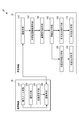
- FIG. 1 is a control block diagram of the in-vehicle device 10.
- the in-vehicle device 10 includes a GPS (Global Positioning System) receiver 11, an antenna 12, a self-contained navigation sensor 13, a display 14, a touch panel 15, a speaker 16, a microphone 18, a communication unit 19, a control unit 20, A map database 25, a registration database 26, and a connection bus 27 are provided.
- GPS Global Positioning System
- a GPS (Global Positioning System) receiver 11 receives GPS information (including position information and time information) via an antenna 12.
- the self-contained navigation sensor 13 includes an angle sensor and a distance sensor (both not shown), and is used for specifying the current position of the vehicle by combining with the GPS receiver 11.
- the display 14 displays the contents of the e-mail acquired from the mobile device 30 via the communication unit 19 (such as the sender, title, date and time of reception, and the text of the e-mail), and various operation screens as necessary. (See FIG. 3) is displayed. In addition, map information and guidance information are displayed during route guidance.
- the touch panel 15 is configured by a matrix switch that is superimposed on the display 14 and detects a touch of a finger or the like. In the present embodiment, it is mainly used for performing operations on the various operation screens.
- the speaker 16 provides voice notification to the user (driver) that an e-mail has been received, a call has been received, and a message memo recorded at the time of a missed call. Further, various voice confirmations (voice guidance for prompting the user to make selections and confirmations) are performed as necessary, and guidance guidance information by voice is output during route guidance.
- the microphone 18 performs various operations in a hands-free manner, and is used for a selection operation and the like as with the touch panel 15.
- the microphone 18 is also used to perform a hands-free call when the mobile device 30 is a mobile phone.
- the communication unit 19 performs short-range wireless communication and infrared communication with the mobile device 30. Note that wired communication such as bus connection may be employed instead of these non-contact communication.
- the communication unit 19 mainly acquires unread mail information related to unread mail and missed call information related to missed calls (including message information related to message memos recorded in the mobile device 30 when missed calls are received). Used for.
- these “unread mail information” and “missed call information” are collectively referred to as “unconfirmed information” in the sense of information that has not been confirmed in the mobile device 30.
- the control unit 20 includes a CPU (Central Processing Unit) 21 and a ROM (Read It consists of only memory (RAM) 22 and random access memory (RAM) 23.
- the CPU 21 is a central processing unit and performs various arithmetic processes.
- the ROM 22 stores a control program for the CPU 21 to perform various arithmetic processes, and the RAM 23 is used as a work area when the CPU 21 performs various arithmetic processes.
- the map database 25 stores map data for route guidance in a nonvolatile manner.
- the registration database 26 stores various registration information and communication history. As various registration information, the point registration information and the telephone book (address book) by which the point registration was carried out are memorize
- the communication history includes a telephone call history and an incoming call history, and an e-mail transmission history and a reception history.
- the mobile device 30 includes an electronic mail unit 310, a call unit 320, a message recording unit 330, and a communication unit 340 as main functional configurations.
- the e-mail means 310 is means for the mobile device 30 to realize an e-mail function, and includes e-mail receiving means, e-mail generating means, and e-mail transmitting means.
- the e-mail means 310 also includes mail ID giving means for giving a mail ID for identifying each e-mail to the received e-mail.
- the call means 320 is means for the mobile device 30 to realize a call function, and includes a telephone call means and a telephone call reception means. Calling means 320 also includes a telephone ID giving means for giving a telephone ID for identifying each incoming call to the incoming call.
- the message recording means 330 is a means for the mobile device 30 to realize a message recording function (a function of recording a voice message of a caller). Note that the message memo recorded by the message recording means 330 is stored in a predetermined storage area in the portable device 30.
- the communication means 340 is used for input / output (transmission / reception) of information with the in-vehicle device 10, and in this embodiment, mainly transmission of unconfirmed information and output completion information (e-mails that have been output, Used to receive information).
- the portable device 30 When the portable device 30 receives the output completion information from the in-vehicle device 10, the portable device 30 performs the read processing by the e-mail unit 310 or the message recording unit 330. Specifically, the output completion part of the electronic mail specified by the mail ID is set to the read state (the read part and the unread part are displayed so as to be distinguishable). If the output of the entire e-mail has been completed, the e-mail itself is set to the read state (the display of “unread mail” is canceled). Further, the missed call specified by the telephone ID is set to the read state.
- the message memo When the output of the message memo has been completed, the message memo is deleted, and the display of “with message memo” is also deleted along with the deletion. In this case, it is not essential to delete the message memo. For example, the message memo may be reproduced instead.
- the in-vehicle device 10 includes, as main functional configurations, a communication unit 110, an unconfirmed information acquisition unit 120, an importance level determination unit 140, an information output unit 150, a text output instruction unit 160, a text output unit 170, and a message output instruction unit 180. And message output means 190.
- the communication means 110 is for performing input / output of information with the portable device 30. Further, the unconfirmed information acquisition unit 120 acquires unconfirmed information that is unconfirmed information by the user in the mobile device 30 via the communication unit 110.
- the communication unit 110 and the unconfirmed information acquisition unit 120 have the communication unit 19 as a main component.
- the “unconfirmed information” includes “unread mail information” regarding one or more e-mails in the unread state at the portable device 30 at the time of establishment of communication by the communication unit 110, and 1 received before communication establishment by the communication unit 110. “Missed call information” regarding the above missed calls is acquired.
- the “unread mail information” includes the number of unread mails, the mail ID of each unread mail, the mail reception date, the sender name, the sender (sender) address, the e-mail body, the title, the attached file, and the like.
- “Missed call information” includes the number of missed calls, telephone ID of each missed call, incoming date and time, caller name, caller (sender) phone number, presence / absence of answering memo and message memo, message memo, etc. It is.
- the importance determination unit 140 determines the importance of each of one or more e-mails and one or more missed calls included in the unconfirmed information acquired by the unconfirmed information acquisition unit 120. It is a component.
- the importance level of the e-mail can be determined based on information such as a priority flag (mail header) added to the e-mail, the sender's address, and the presence / absence of opening confirmation. For example, for “sender's address”, an address containing a predetermined character string may be determined as having a high degree of importance, or a telephone book (address) stored in the mobile device 30 or the in-vehicle device 10.
- the degree of importance can be determined according to whether or not the address of the caller is stored in the book.
- the importance of missed calls can be determined based on the caller's telephone number and call / call history.
- a telephone number that includes a predetermined numeric string such as a station number
- the degree of importance can be determined according to whether or not the telephone number of the caller is stored in the existing telephone book (address book).
- the degree of importance is determined according to whether the telephone number of the caller is recorded in the outgoing / incoming history recorded in the mobile device 30 or the in-vehicle device 10. It is also possible.
- the importance level may be determined on the in-vehicle device 10 side based on unacknowledged information transmitted from the mobile device 30 or based on information acquired before and after receiving the unconfirmed information, or on the mobile device 30 side.
- the in-vehicle device 10 may acquire the determination result determined based on these pieces of information. In the latter case, the importance level determination unit 140 determines the importance level according to the determination result acquired from the mobile device 30.
- the information output unit 150 displays or outputs the unconfirmed information (unread mail information and / or missed call information) acquired by the unconfirmed information acquisition unit 120.
- the information output unit 150 mainly includes the control unit 20, the display 14, and the speaker 16. It is a component.
- the information output means 150 displays or outputs unread mail information according to the importance of one or more e-mails included in the unread mail information, and sets the missed call information to the importance of one or more missed calls included therein. Display or output sound accordingly.
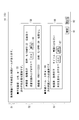
- FIG. 3 is a diagram showing a display example (an example of an unconfirmed information display screen) when unconfirmed information is output by display display.
- the screen title 51 (there is unconfirmed information)
- the missed call information 52 the unread mail information 53
- the confirmation button 61 the confirmation button 61
- the close button 62 are displayed on the unconfirmed information display screen.
- the missed call information 52 the number of missed calls 55 and information 58 regarding missed calls determined to be high in importance by the importance level determination means 140 are displayed.
- information 58 regarding missed calls information related to the caller (caller name or telephone number), date and time of incoming call, and presence / absence of a message memo (message information) are displayed.
- a message prompting the user to select whether or not to read the message and a selection button 66 (“OK” or “NG”) are displayed.
- the unread mail information 53 the number of unread mails 56 and information 59 about the electronic mail determined to be high in importance by the importance level determination means 140 are displayed.
- the information 59 regarding the e-mail a message (selector name or e-mail address) and a title regarding the caller and a title are displayed, and a message and a selection button 67 (“ OK ”or“ NG ”).
- the user selects “OK” or “NG” with the selection buttons 66 and 67 displayed for the missed call and unread mail, and then touches the confirmation button 61 provided at the bottom of the screen, so that the message memo or electronic You can check the body of the email. Further, by touching the close button 62, the unconfirmed information display screen can be closed without requiring selection of the selection buttons 66 and 67.
- the text output instructing means 160 instructs the text output of an e-mail that has been determined to have high importance, and includes the touch panel 15 and the microphone 18 as main components. Specifically, when displaying the unconfirmed information display screen (see FIG. 3) as described above, the text output instruction means 160 includes a selection button 67 included in the unread mail information 53 and a confirmation button provided at the bottom of the screen. 61. The selection button 67 and the confirmation button 61 can also be selected by voice operation using the microphone 18.
- the text output means 170 displays or voices the text of the e-mail that is determined to be high in importance by the importance level determination means 140 in accordance with an instruction from the text output instruction means 160.
- the speaker 16 is a main component. In this embodiment, it is assumed that output is performed mainly by display 14 display.
- the message output instruction means 180 instructs to output a missed call message memo determined to have high importance, and includes the touch panel 15 and the microphone 18 as main components. Specifically, when displaying the unconfirmed information display screen (see FIG. 3) as described above, the message output instruction means 180 includes a selection button 66 included in the missed call information 52 and a confirmation button provided at the bottom of the screen. 61. Similar to the text output instruction unit 160, these buttons can be operated by voice (selection operation) using the microphone 18.
- the message output means 190 displays or outputs the missed call message memo determined to be high in importance by the importance level determination means 140 in accordance with the instruction from the message output instruction means 180.
- 14 and the speaker 16 are main components. In the present embodiment, audio output (reading) is mainly performed by the speaker 16.
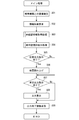
- FIG. 4 shows the main flow of the information output process
- FIGS. 5 and 6 show the sub-flows.
- the mobile device 30 that can communicate with the in-vehicle device 10 exists in the vehicle, and the mobile device 30 includes a missed call and / or an unread mail.
- the in-vehicle device 10 when the in-vehicle device 10 establishes communication with the mobile device 30 (S01), it issues an information acquisition request to the mobile device 30 (S02). The in-vehicle device 10 acquires the unconfirmed information transmitted by the mobile device 30 in response to the information acquisition request (S03). The unconfirmed information acquisition process corresponding to S03 will be described later with reference to FIG. Thereafter, the in-vehicle device 10 displays the acquired unconfirmed information (S04, see FIG. 3). The unconfirmed information display process corresponding to S04 will be described later with reference to FIG.
- the in-vehicle device 10 transmits the output completion information to the portable device 30 (S09).
- the output completion information is added with a missed call telephone ID in which a message memo is recorded and / or an e-mail ID.
- the mobile device 30 obtains the output completion information from the in-vehicle device 10, the mobile device 30 performs the corresponding missed call (message memo) and / or the read process of the e-mail based on the telephone ID and the mail ID included therein.
- the text of the e-mail is displayed after reading the message memo.
- the order may be reversed, and the display and reading may be performed in parallel.
- the message memo may be displayed and the electronic mail text may be read out, or both the message memo and the electronic mail text may be output (displayed or read out) by the same output method.
- the user may be able to set the output method for the message memo and the e-mail body.
- the in-vehicle device 10 first resets the value of i indicating the number of processed missed calls (S11), and acquires information on the i-th missed call from the portable device 30 (S12). Thereafter, the value of i is counted up (S13), and S11 to S14 are repeated until the value of i reaches the number of missed calls n1 existing in the mobile device 30 (S14: Yes). Note that steps S11 to S14 indicate missed call information acquisition processing.
- the in-vehicle device 10 resets the value of j indicating the number of processed unread emails (S15), and acquires information about the jth email (unread email) from the mobile device 30 (S16). Thereafter, the value of j is counted up (S17), and S15 to S18 are repeated until the value of j reaches the number of unread mails n2 existing in the mobile device 30 (S18: Yes). Note that steps S15 to S18 indicate unread mail information acquisition processing.
- the unacknowledged information acquisition process (see S03 in FIG. 4) can be realized by the missed call information acquisition process and the unread mail information acquisition process.
- the processing order of the missed call information acquisition process and the unread mail information acquisition process may be reversed or may be performed in parallel.
- the in-vehicle device 10 displays the number of missed calls (n1) from the acquisition result of the missed call information acquisition process in the unconfirmed information display process (S21, see 55 in FIG. 3). Further, the value of i indicating the number of processed missed calls is reset (S22), and the importance of the i-th missed call is determined (S23). If it is determined that the message is important (S23: Yes), the i-th missed caller, the date and time of incoming call, and the presence or absence of a message memo are displayed (S24, refer to 58 in FIG. 3). Thereafter, the value of i is counted up (S25), and S23 to S26 are repeated until the value of i reaches the number of missed calls n1 (S26: Yes). Note that steps S21 to S26 show missed call information display processing.
- the in-vehicle device 10 displays the number of unread mails (n2) from the acquisition result of the unread mail information acquisition process (S27, refer to 56 in FIG. 3). Further, the value of j indicating the number of processed unread mails is reset (S28), and the importance of the jth electronic mail is determined (S29). If it is determined that the message is important (S29: Yes), the sender and title of the j-th e-mail are displayed (S30, see 59 in FIG. 3). Thereafter, the value of j is counted up (S31), and S29 to S32 are repeated until the value of j reaches the number of unread mails n2 (S32: Yes). The steps S27 to S32 show the unread mail information display process.
- the unacknowledged information display process (see S04 in FIG. 4) can be realized by the missed call information display process and the unread mail information display process.
- the processing order of the missed call information display process and the unread mail information display process may be reversed or may be performed in parallel.
- the number of missed calls (n1) is displayed (see S21) and then missed calls with high importance are displayed (see S24). May be. The same applies to the unread mail information display process.
- Missed call information and unread e-mail information are displayed only for e-mail and missed calls with high importance, so the time required for user confirmation can be shortened and the safe driving is not affected as much as possible. be able to.
- the unread mail information related to the unread mail is acquired for the e-mail, but the new mail information related to the new mail received by the mobile device 30 after the communication is established is acquired from the in-vehicle device 10. You may make it output.
- the in-vehicle device 10 preferably displays or outputs the new mail information when the new mail information is acquired from the mobile device 30.
- the user can quickly confirm information related to the electronic mail received after the communication is established.
- the importance determination unit 140 also determines the importance of the email received after the communication is established, and the information output unit 150 outputs new mail information according to the determined importance.
- the text output unit 170 preferably displays or outputs the text of the electronic mail at that time.
- unread mail information detailed information is displayed only for a highly important email (see 58 in FIG. 3), but detailed information is also displayed for a low importance email. You may make it do. However, in that case, it is preferable that the importance of each electronic mail is displayed in a state where the user can distinguish it. In addition, when the unread mail information does not include information related to highly important electronic mail, the unread mail information may not be displayed.
- these variations on e-mail can also be applied to incoming calls. That is, when there is an incoming call to the mobile device 30 after communication is established (for example, while the vehicle is traveling) and the user (driver) does not make a call, the missed call information is output from the in-vehicle device 10. May be. In addition, detailed information may be displayed for a missed call with low importance. When missed call information does not include information about missed call with high importance, the missed call information is displayed. You may make it not.
- the in-vehicle device 10 does not output the body text of the low-importance e-mail.
- the text of the low-importance e-mail is not displayed after the route guidance ends. It differs in that output is performed. Another difference is that a highly important e-mail is output without a user's output instruction, and that the output length of the e-mail is determined.
- a description will be given focusing on differences from the first embodiment.
- only e-mail is referred to, and reference to an incoming call is omitted.
- the information about the received e-mail is simply referred to as “mail information” without distinguishing whether the e-mail is received before or after the communication is established (whether it is unread mail or new mail). .
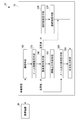
- FIG. 7 is a functional block diagram of the information communication system SY according to the second embodiment. Since the configuration of the mobile device 30 is the same as that of the first embodiment, the description thereof is omitted. For the in-vehicle device 10 as well, components having the same functions as those in the first embodiment are denoted by the same reference numerals and description thereof is omitted.
- the in-vehicle device 10 of the second embodiment includes a communication unit 110, a mail information acquisition unit 210, an importance level determination unit 140, an information output unit 150, a destination setting unit 220, a route guidance unit 230, and a mail output as main functional configurations.
- a length determination unit 240 and a text output unit 250 are included.
- the mail information acquisition unit 210 acquires mail information (unread mail information or new mail information) via the communication unit 110.
- the destination setting unit 220 sets a destination for vehicle travel, and includes the control unit 20 and the map database 25 as main components.
- the route guidance unit 230 performs route search and route guidance (including route guidance display and voice guidance) to the destination set by the destination setting unit 220, and includes the self-contained navigation sensor 13 and the control unit 20.
- the map database 25 is a main component.
- the mail output length discriminating means 240 discriminates whether or not the output length of the text of the email (hereinafter referred to as “mail output length”) exceeds a predetermined output length.
- the main component refers to the size or display time of the display area required for displaying the text of the e-mail, or the output time required for outputting the text of the e-mail.
- the size and output time of these display areas are parameters such as the number of characters included in an e-mail (characters such as pictograms and symbols, and characters included in attached files), data amount, presence / absence of attached files, and the like. It can be calculated by the predetermined algorithm.
- the text output means 250 displays or voices the text of the electronic mail that has been determined to be highly important by the importance level determination means 140 following the output from the information output means 150.
- the text of the e-mail that has been determined to be low in importance is displayed or output by voice after the end of route guidance (that is, after arrival at the destination).
- the mail output length discriminating unit 240 determines that the mail output length of the e-mail that has been determined to be high in importance exceeds the predetermined output length
- the text output unit 250 determines the beginning of the text of the e-mail. Only the part (specified number of characters) is displayed or output as audio.
- the information output process of the in-vehicle device 10 will be described with reference to the flowchart of FIG.
- the text of the e-mail is output by voice output (reading).
- the in-vehicle device 10 receives an incoming e-mail notification from the portable device 30 (S31: Yes), it continuously acquires mail information (S32) and displays it (S33).
- S31 to S33 the electronic mail received after the mobile device 30 establishes communication with the in-vehicle device 10 is processed one by one.
- e-mails received before communication is established, one or more unread e-mails are processed together.
- the in-vehicle device 10 determines the importance of the e-mail (S34), and if the importance is high (S34: Yes), the e-mail output length (the reading time of the e-mail text) is a predetermined output length. It is determined whether or not (reference time) is exceeded (S35). If the mail output length exceeds the predetermined output length (S35: Yes), only the head part of the body of the electronic mail is read out by the speaker 16 (S36). If the mail output length does not exceed the predetermined output length (S35: No), the entire text of the e-mail is read out (S37).
- the “read-read FIFO” refers to a digital circuit having a first-in first-out buffering function.
- the text of an electronic mail that has been determined to be high in importance is output following the display of mail information (see S33) (see S36 and S37). )
- the user can quickly confirm the content of the e-mail without requiring any special operation. Also, in this case, it is determined whether or not the output length of the body text of the e-mail exceeds a predetermined output length (see S35). If the output length exceeds the predetermined output length, only the head portion is output. (See S36), the confirmation time of the user can be shortened, and the influence on the safety aspect of vehicle driving can be reduced.
- the e-mail determined to be low in importance is output after the end of route guidance (see S43), and thus does not hinder the safety of vehicle driving.
- the user when the mail output length exceeds the predetermined output length, only the specified number of characters at the beginning is read out (see S35, 36), but the user can set the specified number of characters. It is also good. Further, instead of reading out only the prescribed number of characters, it may be read out at a predetermined rate such as the first half (1/2 of the whole body) when the body of the email is divided into the first half and the second half. Also, in order to eliminate the uncomfortable feeling when reading only the first part, it may be read only to the end of the sentence within the specified number of characters (up to the punctuation mark), or read to the end of the sentence containing the last character of the specified number of characters. You may do it.
- the head part when only the head part is read out, it is preferable to prompt the user to select whether or not to read out the remaining part, and when the user gives an output instruction, it is also preferable to output the remaining part.
- the remaining part When outputting the remaining part, it is preferable to start output from the beginning of the sentence to which the first character of the remaining part belongs, or from the beginning of the paragraph to which the first character of the remaining part belongs. According to this configuration, it is possible to eliminate a sense of incongruity and misrecognition due to output from the middle of a sentence.
- the text of an e-mail that has been determined to be low in importance is output after the end of route guidance.
- the body of the e-mail may be output. According to this configuration, since the contents of the e-mail can be confirmed when the vehicle is stopped, the vehicle driving safety is not hindered.
- each embodiment is not necessarily realized independently, and may be configured by combining the embodiments.
- the missed call information and the unread mail information are exemplified as the “unconfirmed information”.
- various other error information, inquiry information for the user, application download confirmation information, new news, etc. may be confirmed on the in-vehicle device 10 side. That is, information that requires a confirmation operation by the user and that has not been confirmed may be displayed or output as “unconfirmed information”.
- the message memo recorded by the “message recording function” installed in the mobile device 30 is read out.
- the message memo is recorded by the “answer machine function” provided as a network service by the mobile phone operator. You may make it read out the recorded answering memo.
- the in-vehicle device 10 issues an answering note output command to the portable device 30, and the portable device 30 side obtains the answering note from the “answering machine function” provided by the cellular phone operator in accordance with the output command. Then, the acquired answering memo is provided to the in-vehicle device 10.
- various information is output as missed call information and unread mail information (see FIG. 3).
- only information (flag information) related to the presence of missed calls or the presence of unread mails. May be output. That is, when outputting by display, it is possible to display only “with / without missed call” or “with / without unread mail” as missed call information or unread mail information. Further, information regarding the presence / absence of a missed call or the presence / absence of an unread mail may be always displayed with an icon or the like. Furthermore, it is possible to display only when there is missed call information or unread mail information, and not display when there is no missed call information or unread mail information.
- the unread mail or the missed call is confirmed on the in-vehicle device 10 side.
- the mobile device 30 side is operated to obtain the information. Can be confirmed.
- unconfirmed information missed call information and unread mail information
- the unread mail or missed call is confirmed by the operation on the mobile device 30 side
- the information output unit 150 deletes the information related to the confirmed e-mail from the unread mail information or deletes the information related to the confirmed missed call from the missed call information with the reception of the confirmation completion information. .
- the information output unit 150 deletes the information related to the confirmed e-mail from the unread mail information or deletes the information related to the confirmed missed call from the missed call information with the reception of the confirmation completion information.
- the unconfirmed information is stored on the in-vehicle device 10 side, and when the user calls the unconfirmed information, missed call information or unread mail information It is preferable that the display and status are updated.
- each component in the in-vehicle device 10 and the portable device 30 shown in the above embodiment is a program.
- the program can be provided by being stored in a recording medium (not shown). That is, a program for causing a computer to function as each component of the in-vehicle device 10 and the portable device 30 and a recording medium recording the program are also included in the scope of the right of the present invention.
- the present invention can be applied not only to the in-vehicle device 10 but also to communication devices such as “watch” and “personal computer (portable type)”. Other modifications can be made as appropriate without departing from the scope of the present invention.
Landscapes
- Engineering & Computer Science (AREA)
- Computer Networks & Wireless Communication (AREA)
- Signal Processing (AREA)
- Business, Economics & Management (AREA)
- General Business, Economics & Management (AREA)
- Human Computer Interaction (AREA)
- Multimedia (AREA)
- Telephone Function (AREA)
- Information Transfer Between Computers (AREA)
- Mobile Radio Communication Systems (AREA)
Priority Applications (1)
| Application Number | Priority Date | Filing Date | Title |
|---|---|---|---|
| US12/998,073 US20110270935A1 (en) | 2008-09-16 | 2009-07-30 | Communication device, information communication system, method for controlling communication of communication device and program therefor |
Applications Claiming Priority (2)
| Application Number | Priority Date | Filing Date | Title |
|---|---|---|---|
| JP2008-235988 | 2008-09-16 | ||
| JP2008235988A JP2010074215A (ja) | 2008-09-16 | 2008-09-16 | 通信機器、情報通信システム、通信機器の通信制御方法およびプログラム |
Publications (1)
| Publication Number | Publication Date |
|---|---|
| WO2010032360A1 true WO2010032360A1 (ja) | 2010-03-25 |
Family
ID=42039213
Family Applications (1)
| Application Number | Title | Priority Date | Filing Date |
|---|---|---|---|
| PCT/JP2009/003620 Ceased WO2010032360A1 (ja) | 2008-09-16 | 2009-07-30 | 通信機器、情報通信システム、通信機器の通信制御方法およびプログラム |
Country Status (3)
| Country | Link |
|---|---|
| US (1) | US20110270935A1 (enExample) |
| JP (1) | JP2010074215A (enExample) |
| WO (1) | WO2010032360A1 (enExample) |
Cited By (1)
| Publication number | Priority date | Publication date | Assignee | Title |
|---|---|---|---|---|
| JP2021150665A (ja) * | 2020-03-16 | 2021-09-27 | パナソニックIpマネジメント株式会社 | ハンズフリー装置、データ転送方法、およびプログラム |
Families Citing this family (14)
| Publication number | Priority date | Publication date | Assignee | Title |
|---|---|---|---|---|
| CN102318378B (zh) * | 2009-02-16 | 2016-04-13 | 阿尔卡特朗讯 | 提供针对遗漏呼叫确认的通报的系统和方法 |
| JP5548541B2 (ja) | 2010-07-13 | 2014-07-16 | 富士通テン株式会社 | 情報提供システムおよび車載装置 |
| JP6202419B2 (ja) | 2011-09-12 | 2017-09-27 | パナソニックIpマネジメント株式会社 | 照明器具 |
| JP2014086878A (ja) * | 2012-10-23 | 2014-05-12 | Sharp Corp | 自走式電子機器および携帯端末 |
| JP6167577B2 (ja) * | 2013-03-13 | 2017-07-26 | カシオ計算機株式会社 | リスト端末装置、通信端末装置及びプログラム |
| KR101670808B1 (ko) * | 2013-09-03 | 2016-10-31 | 삼성전자주식회사 | 알림을 제공하는 방법 및 그 전자 장치 |
| KR102241318B1 (ko) * | 2013-10-11 | 2021-04-16 | 삼성전자주식회사 | 통신 서비스 운용 방법 및 이를 지원하는 전자 장치 |
| JP2015138538A (ja) | 2014-01-24 | 2015-07-30 | 富士通株式会社 | 電子機器、通知方法およびプログラム |
| RU2646351C2 (ru) * | 2014-03-27 | 2018-03-02 | Общество С Ограниченной Ответственностью "Яндекс" | Способ передачи пользователю уведомления о непрочитанном сообщении электронной почты (варианты ) и электронное устройство, используемое в нем |
| CN107428295A (zh) * | 2015-03-19 | 2017-12-01 | 三菱电机株式会社 | 未确认信息输出装置、未确认信息输出方法 |
| DE102016109988A1 (de) * | 2016-05-31 | 2017-11-30 | Konsole Labs GmbH | Verfahren zur Generierung und automatischen Wiedergabe eines akustischen Datenaktualisierungssignals |
| KR102054993B1 (ko) * | 2016-10-25 | 2019-12-11 | 삼성전자주식회사 | 알림을 제공하는 방법 및 그 전자 장치 |
| US11702082B2 (en) | 2020-11-19 | 2023-07-18 | Toyota Motor North America, Inc. | Virtual sim for vehicle |
| CN116074810A (zh) * | 2022-12-30 | 2023-05-05 | 深圳市沃特沃德信息有限公司 | 一种信息漏接处理方法、装置、设备及存储介质 |
Citations (4)
| Publication number | Priority date | Publication date | Assignee | Title |
|---|---|---|---|---|
| JP2000184044A (ja) * | 1998-12-18 | 2000-06-30 | Kenwood Corp | 電話機 |
| JP2004104548A (ja) * | 2002-09-11 | 2004-04-02 | Nec Access Technica Ltd | 携帯電話機及びその着信表示制御方法 |
| JP2005176194A (ja) * | 2003-12-15 | 2005-06-30 | Denso Corp | 自動車用不在着信通知システム |
| WO2008069299A1 (ja) * | 2006-12-08 | 2008-06-12 | Denso Corporation | 車載ハンズフリー装置およびデータ転送方法 |
Family Cites Families (30)
| Publication number | Priority date | Publication date | Assignee | Title |
|---|---|---|---|---|
| JP3287281B2 (ja) * | 1997-07-31 | 2002-06-04 | トヨタ自動車株式会社 | メッセージ処理装置 |
| US6792085B1 (en) * | 1999-09-10 | 2004-09-14 | Comdial Corporation | System and method for unified messaging with message replication and synchronization |
| US20040255043A1 (en) * | 1999-11-10 | 2004-12-16 | Randy Salo | Data transmission architecture for secure remote access to enterprise networks |
| US6697458B1 (en) * | 2000-07-10 | 2004-02-24 | Ulysses Esd, Inc. | System and method for synchronizing voice mailbox with e-mail box |
| US6970906B1 (en) * | 2000-10-30 | 2005-11-29 | Nortel Networks Limited | Voice mail caller identification |
| JP2002351799A (ja) * | 2001-05-25 | 2002-12-06 | Calsonic Kansei Corp | メール受信装置 |
| GB0116771D0 (en) * | 2001-07-10 | 2001-08-29 | Ibm | System and method for tailoring of electronic messages |
| US7260607B2 (en) * | 2001-08-02 | 2007-08-21 | Siemens Communications, Inc. | Methods and apparatus for performing media/device sensitive processing of messages stored in unified multimedia and plain text mailboxes |
| US20040236834A1 (en) * | 2003-05-22 | 2004-11-25 | Motorola, Inc. | Delivery of wireless email based on user viewing interest |
| US20050044500A1 (en) * | 2003-07-18 | 2005-02-24 | Katsunori Orimoto | Agent display device and agent display method |
| US7702733B2 (en) * | 2003-09-18 | 2010-04-20 | Vulcan Portals Inc. | Low power email functionality for an electronic device |
| US7089035B2 (en) * | 2003-10-28 | 2006-08-08 | Omron Corporation | Wireless operating system |
| JP2005234700A (ja) * | 2004-02-17 | 2005-09-02 | Sanyo Electric Co Ltd | 携帯電話装置及び電子メール内容表示方法 |
| US7512658B2 (en) * | 2004-02-26 | 2009-03-31 | International Business Machines Corporation | Providing a portion of an electronic mail message based upon a transfer rate, a message size, and a file format |
| JP4363267B2 (ja) * | 2004-07-05 | 2009-11-11 | マツダ株式会社 | 車両用情報表示装置 |
| US7286650B2 (en) * | 2004-07-21 | 2007-10-23 | Advanced Logic Industries, Inc. | System and method for voice-mail and e-mail synchronization |
| US8175581B2 (en) * | 2004-11-15 | 2012-05-08 | International Business Machines Corporation | Selective message notification system |
| US7643818B2 (en) * | 2004-11-22 | 2010-01-05 | Seven Networks, Inc. | E-mail messaging to/from a mobile terminal |
| US20060143272A1 (en) * | 2004-12-27 | 2006-06-29 | Alcatel | Electronic communications content elaboration assistant |
| EP1891848B1 (en) * | 2005-06-13 | 2015-07-22 | Intelligent Mechatronic Systems Inc. | Vehicle immersive communication system |
| JP4787708B2 (ja) * | 2005-10-13 | 2011-10-05 | Necカシオモバイルコミュニケーションズ株式会社 | 通信端末、受信報知方法、及びプログラム |
| US20090327714A1 (en) * | 2005-12-19 | 2009-12-31 | Karim Yaghmour | System and Method for End-to-End Electronic Mail-Encryption |
| US7974946B2 (en) * | 2006-03-28 | 2011-07-05 | Alps Electric (North America), Inc. | System and method for synchronizing personal data among a plurality of devices storing such data |
| US20070274465A1 (en) * | 2006-05-02 | 2007-11-29 | Core Mobility, Inc. | Providing unified access to voice messages from disparate systems |
| US20080222257A1 (en) * | 2007-03-10 | 2008-09-11 | Shamik Mukherjee | Systems and methods for sending customized emails to recipient groups |
| US8621024B2 (en) * | 2007-04-24 | 2013-12-31 | Blackberry Limited | System and method for prioritizing and displaying messages |
| US20080275762A1 (en) * | 2007-05-03 | 2008-11-06 | Resource Communications, Inc. | Video email with information tracking |
| JP4957999B2 (ja) * | 2007-05-30 | 2012-06-20 | いすゞ自動車株式会社 | 電子メール受信装置及び電子メール送受信システム |
| US8081963B2 (en) * | 2008-02-12 | 2011-12-20 | Microsoft Corporation | Utilizing mobile device functionality from remote computers |
| JP4864950B2 (ja) * | 2008-09-16 | 2012-02-01 | パイオニア株式会社 | 車載機器、情報通信システム、車載機器の制御方法およびプログラム |
-
2008
- 2008-09-16 JP JP2008235988A patent/JP2010074215A/ja active Pending
-
2009
- 2009-07-30 WO PCT/JP2009/003620 patent/WO2010032360A1/ja not_active Ceased
- 2009-07-30 US US12/998,073 patent/US20110270935A1/en not_active Abandoned
Patent Citations (4)
| Publication number | Priority date | Publication date | Assignee | Title |
|---|---|---|---|---|
| JP2000184044A (ja) * | 1998-12-18 | 2000-06-30 | Kenwood Corp | 電話機 |
| JP2004104548A (ja) * | 2002-09-11 | 2004-04-02 | Nec Access Technica Ltd | 携帯電話機及びその着信表示制御方法 |
| JP2005176194A (ja) * | 2003-12-15 | 2005-06-30 | Denso Corp | 自動車用不在着信通知システム |
| WO2008069299A1 (ja) * | 2006-12-08 | 2008-06-12 | Denso Corporation | 車載ハンズフリー装置およびデータ転送方法 |
Cited By (2)
| Publication number | Priority date | Publication date | Assignee | Title |
|---|---|---|---|---|
| JP2021150665A (ja) * | 2020-03-16 | 2021-09-27 | パナソニックIpマネジメント株式会社 | ハンズフリー装置、データ転送方法、およびプログラム |
| US11496616B2 (en) | 2020-03-16 | 2022-11-08 | Panasonic Intellectual Property Management Co., Ltd. | Hands-free device, data transfer method, and computer program product |
Also Published As
| Publication number | Publication date |
|---|---|
| JP2010074215A (ja) | 2010-04-02 |
| US20110270935A1 (en) | 2011-11-03 |
Similar Documents
| Publication | Publication Date | Title |
|---|---|---|
| WO2010032360A1 (ja) | 通信機器、情報通信システム、通信機器の通信制御方法およびプログラム | |
| US8744492B2 (en) | Method of responding to incoming calls and messages while driving | |
| US9307065B2 (en) | Method and apparatus for processing E-mail and outgoing calls | |
| CN104101358B (zh) | 信息显示装置和信息显示方法 | |
| JP4864950B2 (ja) | 車載機器、情報通信システム、車載機器の制御方法およびプログラム | |
| JP4844645B2 (ja) | 近距離無線通信機能付きメール操作装置 | |
| US20080092082A1 (en) | Mobile terminal | |
| JP4697290B2 (ja) | ハンズフリー機能付き車載装置 | |
| KR20080078300A (ko) | 카네비게이션 시스템 및 그 제어방법 | |
| JP2010130672A (ja) | 車載システム | |
| JP5097638B2 (ja) | 車載ナビゲーション装置、ナビゲーションシステム、及びその制御方法 | |
| JP2010136073A (ja) | ハンズフリー機能付き車載装置 | |
| US9167394B2 (en) | In-vehicle messaging | |
| JP2003051896A (ja) | 車載用通信装置及びその方法 | |
| KR20130080739A (ko) | 네비게이션 시스템 및 그 네비게이션 방법 | |
| JP2008096289A (ja) | 多言語対応ナビゲーション装置 | |
| JPH1155417A (ja) | 車載用通信電文処理装置 | |
| JP4297276B2 (ja) | 車載用通話装置 | |
| JP5316613B2 (ja) | 近距離無線通信機能付きメール操作装置 | |
| JP4040252B2 (ja) | 携帯端末装置 | |
| JP6382018B2 (ja) | 電子装置、ハンズフリーの制御方法およびプログラム | |
| JP2007121153A (ja) | 携帯端末装置 | |
| JP2010087916A (ja) | 通信装置 | |
| JP4783264B2 (ja) | 電子メール作成方法及び通信端末装置 | |
| JP2006003321A (ja) | 車両用情報提供システム |
Legal Events
| Date | Code | Title | Description |
|---|---|---|---|
| 121 | Ep: the epo has been informed by wipo that ep was designated in this application |
Ref document number: 09814206 Country of ref document: EP Kind code of ref document: A1 |
|
| NENP | Non-entry into the national phase |
Ref country code: DE |
|
| WWE | Wipo information: entry into national phase |
Ref document number: 12998073 Country of ref document: US |
|
| 122 | Ep: pct application non-entry in european phase |
Ref document number: 09814206 Country of ref document: EP Kind code of ref document: A1 |