WO2010029639A1 - 楽曲再生装置、楽曲再生方法、及び楽曲再生プログラム - Google Patents
楽曲再生装置、楽曲再生方法、及び楽曲再生プログラム Download PDFInfo
- Publication number
- WO2010029639A1 WO2010029639A1 PCT/JP2008/066580 JP2008066580W WO2010029639A1 WO 2010029639 A1 WO2010029639 A1 WO 2010029639A1 JP 2008066580 W JP2008066580 W JP 2008066580W WO 2010029639 A1 WO2010029639 A1 WO 2010029639A1
- Authority
- WO
- WIPO (PCT)
- Prior art keywords
- episode
- music
- information
- list
- determining
- Prior art date
- Legal status (The legal status is an assumption and is not a legal conclusion. Google has not performed a legal analysis and makes no representation as to the accuracy of the status listed.)
- Ceased
Links
Images




Classifications
-
- G—PHYSICS
- G06—COMPUTING OR CALCULATING; COUNTING
- G06F—ELECTRIC DIGITAL DATA PROCESSING
- G06F16/00—Information retrieval; Database structures therefor; File system structures therefor
- G06F16/60—Information retrieval; Database structures therefor; File system structures therefor of audio data
- G06F16/63—Querying
- G06F16/635—Filtering based on additional data, e.g. user or group profiles
- G06F16/637—Administration of user profiles, e.g. generation, initialization, adaptation or distribution
Definitions
- the present invention relates to a technique for playing music.
- HDD hard disk drives
- flash memories have become larger in capacity, and it is possible to store a large amount of music on the storage medium.
- Patent Document 1 an apparatus that preferentially reproduces music with a large number of reproductions in a situation that holds past reproduction history information and approximates the current situation information (weather, season, etc.), and the user's year of birth From the attribute information of the content to make it easier for the user to visually grasp the existence of the content information (for example, Patent Document 2) that accepts the month and day and presents music information related to the specified age.
- Patent Document 2 There is a device that selects attribute information (music ranking, etc.) as a reference for the content, and arranges and displays an image corresponding to the content information based on the selected attribute information (Patent Document 3).
- JP 2006-294212 A Japanese Patent Laid-Open No. 2006-4152 JP 2007-179400 A
- music is searched and played based on the playback history, music ranking, and user's age, but the music corresponding to the user's episode (for example, elementary school age, junior high school age, etc.)
- the music corresponding to the user's episode for example, elementary school age, junior high school age, etc.
- automatically switching and playing episodes frees the user from complicated operations and at the same time reminds the user of nostalgia, which can bring benefits such as energy, relaxation, and exhilaration to the user. it can.
- An object of the present invention is to provide a music playback device that automatically transitions episodes in a plurality of divided episodes and plays back music corresponding to the episodes.
- the invention according to claim 1 is a music playback device, a music information holding means for holding music information including music attribute information, a music playback history information holding means for holding music playback history information of a user, Episode period setting means for setting a plurality of episode periods based on user-specific information, Episode determination means for determining an episode for which a music playback list is to be generated using the music playback history information, and the episode determination means
- a music reproduction list generation unit that generates a music reproduction list of the music related to the determined episode, a music reproduction unit that reproduces a music based on the music reproduction list, and the song reproduction list generation target for the episode determination unit
- Change timing determining means for determining a timing for changing an episode, and the episode determining unit , When determined in episodes other than the most recent episode, after being subjected to a re-determination of the episode of a predetermined number of times, and characterized in that a transition to the latest episode.
- the invention according to claim 7 is a music playback method that uses music information including music attribute information and user music playback history information, and sets a plurality of episode periods based on user-specific information
- An episode period setting step an episode determination step for determining an episode for which a music playback list is to be generated using the music playback history information, and a music playback for generating a music playback list of songs related to the episode determined in the episode determination step
- a list generation step a music playback step for playing back a music based on the music playback list, and a change timing determination step for determining a timing for changing the episode of the music playback list generation target in the episode determination step.
- the episode determination step if an episode other than the latest episode is determined, After being subjected to a re-determination of the number of episodes, wherein the transitioning to the latest episode.
- a music reproduction program that is executed by an apparatus that includes a computer and that stores music information including music attribute information and music reproduction history information of the user, and is based on user-specific information.
- An episode period setting means for setting a plurality of episode periods, an episode determination means for determining an episode for which a music playback list is to be generated using the music playback history information, and a music playlist for songs related to the episodes determined by the episode determination means
- Change timing determination for determining the timing for changing the episode for which the music play list is to be generated for the music play list generation means for generating the music, the music playback means for playing back the music based on the music play list, and the episode determination means Means for causing the computer to function as the episodic device.
- De determining means when determining the episode other than the most recent episode, after being subjected to a re-determination of the episode of a predetermined number of times, and characterized in that a transition to the latest episode.
- a music playback apparatus a music information holding unit that holds music information including music attribute information, a music playback history information holding unit that holds music playback history information of a user, and use
- the episode period setting means for setting a plurality of episode periods based on the information unique to the person, the episode determination means for determining the episode to be generated by the music reproduction list using the music playback history information, and the episode determination means
- a song reproduction list generation unit that generates a song reproduction list of songs related to the episode, a song reproduction unit that reproduces a song based on the song reproduction list, and an episode for which the song reproduction list is to be generated.
- Change timing determining means for determining a timing for changing the episode, and the episode determining means If you decide to episodes other than the most recent episode, after being subjected to a re-determination of the episode of a predetermined number of times, to shift to the most recent episode.
- the above-described music reproducing device can be applied to a device capable of reproducing music such as a navigation device.
- the music playback device holds music information including music attribute information in advance.
- the music attribute information refers to information such as a music release date and a genre.
- the music playback device also holds information related to the history played by the user.
- the episode period setting means sets the episode period based on the user's specific information (for example, the date of birth) acquired by a predetermined method (for example, an input operation).
- the episode period refers to a period divided into a plurality of user growth processes.
- the episode period is based on an era such as “elementary school age”, “junior high school age”, “working person”, etc. To do.
- the episode setting means sets an episode obtained by dividing a human growth process into a plurality of times.
- the episode determining means determines an episode to be a target of the music playback list using the above-described user playback history information.
- the music reproduction list generating means generates a music reproduction list related to the episode determined by the episode determining means.
- a change timing determination means determines the timing which changes the episode of a music reproduction list production
- the episode determination means transitions to the latest episode after a predetermined number of episode re-determination.
- the music playback device can change the episode several times and change to the latest episode even if it changes to an episode other than the latest episode as a result of changing the episode in the music playback list. it can. According to this, the music reproducing device can avoid leaving the episode corresponding to the music to be reproduced soaked in so-called past memories by transitioning to the past episode. .
- the episode period setting means sets based on music evaluation.
- the music playback device can generate a music list according to the degree of subdivision of the episode period by setting the episode period based on the music evaluation.
- the episode period setting unit subdivides the episode period hierarchically, and the music playback list generation unit generates a music playback list according to the level of the episode period hierarchy. Is generated.
- the music reproduction list generating means changes the number of songs to be selected according to the hierarchy level or weights the music evaluation, the deeper the hierarchy level, the clearer the memory and experience for the user. , And the user can enjoy emotions such as “Energy”, “Relax” and “Exhilaration”.
- the episode determining means discontinuously transitions to the latest episode after determining an episode other than the latest episode.
- the music reproducing device can skip the episode when the reproduction time of the music does not reach a certain value or when the evaluation of the music is equal to or less than the certain value.
- the episode determining means continuously transitions to the latest episode after determining an episode other than the latest episode.
- the music playback device will provide music for successive episodes, so it will play along the flow of time from the past, Users can naturally recall memories and experiences, and enjoy emotions such as “Energy”, “Relax” and “Exhilaration”.
- the music can be played in a useful order for the user.
- the episode determining means determines the first episode according to the length of the period during which the reproduction has not been performed when the reproduction has not been performed for a predetermined period.
- the music playback device 300 plays back from a relatively past episode (for example, elementary school or junior high school), and gradually gradually becomes the current episode. Transition.
- the music reproducing device 300 determines a past episode to be reproduced first according to a time when the music is not listened to. In other words, the longer the period of not listening to the music, the longer the past episode.
- the music playback device 300 plays the past experiences or episodes for the user by playing from the past episode. Recalling nostalgia with memory, you can enjoy positive emotions.
- a music playback method is performed using music information including music attribute information and music playback history information of a user, and sets a plurality of episode periods based on user-specific information.
- An episode period setting step an episode determination step for determining an episode for which a music playback list is to be generated using the music playback history information, and a music playback list for generating a music playback list of songs related to the episode determined in the episode determination step
- a generation step a music reproduction step for reproducing a music based on the music reproduction list, and a change timing determination step for determining a timing for changing the episode for which the music reproduction list is generated in the episode determination step,
- the episode determination step when an episode other than the latest episode is determined, a predetermined After being subjected to a re-determination of the number of episodes, it shifts to the latest episode.
- a music playback program that is executed by an apparatus that includes a computer and that stores music information including music attribute information and music playback history information of the user, based on user-specific information.
- An episode period setting means for setting a plurality of episode periods, an episode determination means for determining an episode for which a music playback list is to be generated using the music playback history information, and a music playback list of songs related to the episodes determined by the episode determination means.
- a music reproduction list generating means for generating, a music reproducing means for reproducing music based on the music reproduction list, and a change timing determining means for determining a timing for changing the episode to be generated for the music reproduction list with respect to the episode determining means.
- Function the computer as the episode Constant means, when determining the episode other than the most recent episode, after being subjected to a re-determination of the episode of a predetermined number of times, to shift to the most recent episode.
- the music playback device of the present invention can be realized by executing this program on various devices.
- the program can be suitably handled in a state recorded on a recording medium.
- the music reproducing device of the present invention acquires information necessary for dividing an episode (such as a user's date of birth) from the user, divides the episode based on the acquired information, and divides the episode (Hereinafter also referred to as episode division information).
- the music playback device uses the playback history information stored therein to determine an episode for which a playlist is to be generated, generates a playlist related to the songs of the determined episode, and based on the playlist, Play. Then, the music playback device changes the episode of the music playback list at a predetermined timing, and when the episode transitions to an episode other than the latest episode, after the predetermined number of episode changes, the latest episode Control to return to.
- the music reproducing device is applied to a navigation device.
- the music here includes not only audio content but also music video and video content in a television song program.
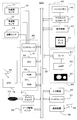
- FIG. 1 shows a configuration of a navigation device 200 according to an embodiment of the present invention.
- the navigation device 200 includes a self-supporting positioning device 10, a GPS receiver 18, a system controller 20, a disk drive 31, a data storage unit 36, a communication interface 37, a communication device 38, a display unit 40, a voice output.
- a unit 50 and an input device 60 are provided.
- the self-supporting positioning device 10 includes an acceleration sensor 11, an angular velocity sensor 12, and a distance sensor 13.
- the acceleration sensor 11 is made of, for example, a piezoelectric element, detects vehicle acceleration, and outputs acceleration data.
- the angular velocity sensor 12 is composed of, for example, a vibrating gyroscope, detects the angular velocity of the vehicle when the direction of the vehicle is changed, and outputs angular velocity data and relative azimuth data.
- the distance sensor 13 measures a vehicle speed pulse composed of a pulse signal generated with the rotation of the vehicle wheel.
- the GPS receiver 18 receives radio waves 19 carrying downlink data including positioning data from a plurality of GPS satellites.
- the positioning data is used to detect the absolute position of the vehicle from latitude and longitude information.
- the system controller 20 includes an interface 21, a CPU (Central Processing Unit) 22, a ROM (Read Only Memory) 23, and a RAM (Random Access Memory) 24, and controls the entire navigation device 200.
- a CPU Central Processing Unit
- ROM Read Only Memory
- RAM Random Access Memory
- the interface 21 performs an interface operation with the acceleration sensor 11, the angular velocity sensor 12, the distance sensor 13, and the GPS receiver 18. From these, vehicle speed pulses, acceleration data, relative azimuth data, angular velocity data, GPS positioning data, absolute azimuth data, and the like are input to the system controller 20.
- the CPU 22 controls the entire system controller 20.
- the ROM 23 includes a nonvolatile memory (not shown) in which a control program for controlling the system controller 20 is stored.
- the RAM 24 stores various data such as route data preset by the user via the input device 60 so as to be readable, and provides a working area to the CPU 22.
- a system controller 20 a disk drive 31 such as a CD-ROM drive or a DVD-ROM drive, a data storage unit 36, a communication interface 37, a display unit 40, an audio output unit 50 and an input device 60 are mutually connected via a bus line 30. It is connected to the.
- the disk drive 31 reads and outputs content data such as music data and video data from a disk 33 such as a CD or DVD under the control of the system controller 20.
- the disk drive 31 may be either a CD-ROM drive or a DVD-ROM drive, may be a CD and DVD compatible drive, or may be a hard disk recorder with a built-in TV tuner.
- the data storage unit 36 includes, for example, an HDD and stores various data used for navigation processing such as map data and facility data.
- the communication device 38 includes, for example, an FM tuner, a beacon receiver, a mobile phone, a dedicated communication card, and the like, and traffic congestion and traffic information distributed from a VICS (Vehicle Information Communication System) center via the communication interface 37, etc.
- VICS Vehicle Information Communication System
- Road traffic information or various information for example, weather information
- the display unit 40 displays various display data on a display device such as a display under the control of the system controller 20. Specifically, the system controller 20 reads map data from the data storage unit 36. The display unit 40 displays the map data read from the data storage unit 36 by the system controller 20 on a display screen such as a display.
- the display unit 40 includes a graphic controller 41 that controls the entire display unit 40 based on control data sent from the CPU 22 via the bus line 30 and a memory such as a VRAM (Video RAM), and can display image information that can be displayed immediately.
- VRAM Video RAM
- a buffer memory 42 that temporarily stores, a display control unit 43 that controls display of a display 44 such as a liquid crystal or a CRT (Cathode Ray Tube) based on image data output from the graphic controller 41, and a display 44 are provided.
- the display 44 is composed of, for example, a liquid crystal display device having a diagonal size of about 5 to 10 inches, and is mounted near the front panel in the vehicle.
- the audio output unit 50 is a D / A converter 51 that performs D / A (Digital to Analog) conversion of audio digital data sent from the disk drive 31 or the RAM 24 via the bus line 30 under the control of the system controller 20. And an amplifier (AMP) 52 that amplifies the audio analog signal output from the D / A converter 51, and a speaker 53 that converts the amplified audio analog signal into audio and outputs the audio into the vehicle. .
- AMP Analog to Analog
- the input device 60 includes keys, switches, buttons, a remote controller, a voice input device, and the like for inputting various commands and data.
- the input device 60 is disposed around the front panel and the display 44 of the main body of the in-vehicle electronic system mounted in the vehicle.
- the display 44 is a touch panel system
- the touch panel provided on the display screen of the display 44 also functions as the input device 60.
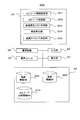
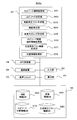
- FIG. 2 shows a functional configuration of the music playback device 300.
- the music reproducing device 300 includes a system controller 20, a communication device 38, an audio unit 50, an input unit 60, a data storage unit 36, and a display unit 40 as illustrated.
- the data storage unit 36 holds various information such as a map information DB 350, a music information DB 360, and an episode division information DB 370.
- the system controller 20 performs overall control of the entire music playback device 300.
- the system controller 20 includes an episode period setting unit 301, an episode determination unit 302, a music reproduction list generation unit 303, a music reproduction unit 304, and a change timing determination unit 305. That is, when the system controller 20 executes a predetermined program, an episode period setting unit 301, an episode determination unit 302, a music reproduction list generation unit 303, a music reproduction unit 304, and a change timing determination unit 305 are realized. To do.
- the communication device 38 transmits and receives various types of information.
- the input unit 60 includes a keyboard, a mouse, and the like for inputting various commands and data.
- the data storage unit 36 holds a map information DB 350, a music information DB 360, an episode division information DB 370, and the like.
- the map information DB 350 is a map information database.
- the music information DB 360 is a database having music information and music attribute information (release date, etc.). Further, it is assumed that the music information DB 360 also holds the user's past reproduction history information. That is, the music information DB 360 functions as a reproduction history information holding unit.
- the reproduction history information here refers to information in which information related to the reproduced music (music name, music identification information, etc.) and the number of times of reproduction are associated with each other.
- the episode division information DB 370 is a database having episode division information. Episode division information here is information in which a user's episode and the duration of the episode are defined.
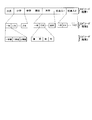
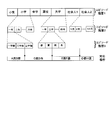
- FIG. 3 shows a conceptual diagram regarding episode division.
- the user's episode is divided (for example, “children”, “elementary school”, etc.) based on the input operation (for example, the date of birth) by the user.
- the episode divided first is the episode hierarchy 1, and the episodes in the episode hierarchy 1 are changed to the episode hierarchy 2 and the episode hierarchy 3 according to various events (for example, when the number of times the corresponding episode has been played exceeds a threshold). Subdivide.
- Fig. 4 shows an example of the data structure based on the conceptual diagram of Fig. 3.
- the episode division information is information including an episode and a period of the episode.
- the episode period setting unit 301 determines the user's growth process for a plurality of periods based on the user's specific information (for example, the date of birth) acquired via a predetermined input device (for example, a keyboard, a touch panel, etc.). Divide into In the present embodiment, as shown in FIG. 3, the episode period setting unit 301 sets the episode period based on a simple time segment in the age-related growth process such as “elementary school”, “junior high school”, “working person”, etc. Set and generate episode division information that is information about the set episode period.
- the episode period setting unit 301 may determine the episode period based on the time division in the psychological growth process (for example, “adolescence”, “adolescence”, “mature period”, etc.). May be set, or the episode period may be set based on a relative time segment (for example, 10 years ago).
- the episode determination unit 302 determines an episode for which a music reproduction list is to be generated. Specifically, the episode determination unit 302 determines the transition destination episode according to various conditions based on the reproduction history information held in the music information DB 360. For example, when the music has not been listened to for a while, and when it is played back after a long time, it is played back from a relatively past episode (for example, elementary school, junior high school), and the current episode is gradually transitioned automatically.
- a relatively past episode for example, elementary school, junior high school
- the music reproduction list generation unit 303 generates a music reproduction list related to the episode determined by the episode determination unit 302 using the music attribute information managed by the music information DB 360.
- the music playback unit 304 plays back music based on the music playback list generated by the music playback list generation unit 303.
- the change timing determination unit 305 determines the timing for changing the episode of the music reproduction list. The determination method will be described later.
- the music reproduction method (1) refers to a method of transitioning again to the latest episode when the episode for which the music reproduction list is generated transitions from the latest episode to another episode.
- the episode period setting unit 301 sets a plurality of episode periods based on user-specific information (birth date information, etc.), and stores episode information related to the set episode periods in the episode division information DB 370. To do.
- the episode determination unit 302 determines the transition destination episode using the reproduction history information. When the music reproduction list is not yet created, the episode determination unit 302 determines a predetermined episode as an episode for which a music reproduction list is to be generated.
- the music reproduction list generation unit 303 generates a music reproduction list for the episode determined by the episode determination unit 302.
- the music playback unit 304 plays back the music in the music playback list generated by the music playback list generation unit 303.
- the episode determination unit 302 displays the playback history information.
- the transition destination episode is determined according to various conditions based on, and the music reproduction list generation unit 303 generates a music reproduction list of the episode determined by the episode determination unit 302.
- the episode determination unit 302 determines that the episode is final. Then, the episode is determined so as to transition to the latest episode “working person 2”. For example, as a result of changing the episode, the episode determination unit 302 transitions to the latest episode continuously or discontinuously when the latest episode “Society 2” transitions to an episode other than “Society 2”.
- the music playback device 300 changes the episode several times and changes to the latest episode even when the episode changes in the music playlist as a result of changing to an episode other than the latest episode. be able to.
- the music playback device 300 can avoid leaving the episode corresponding to the music to be played back soaked in so-called past memories by transitioning to the past episode. it can.
- the music playback device 300 divides and manages user episodes, provides music corresponding to the divided episodes, and changes episodes of the music to be provided at a predetermined timing.
- a person's growth process includes a stage of forming a preference for the person.
- information on episodes and related places is stored as human memory.
- the user response in such a long span is effective.
- episodes are automatically transitioned at a predetermined timing, and music suitable for the user's psychology is provided.
- This system captures information according to the user's growth process, captures the user's psychology from the playback history, automatically transitions episodes, and provides the optimal music. At the same time, the memory is aroused and the user can enjoy emotions such as “Energy”, “Relax”, and “Refreshing”.
- the above-described music reproduction device 300 controls to automatically return to the current episode when the episode for which the music reproduction list is generated transitions to a past episode.
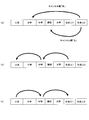
- FIG. 5A and FIG. 5B show an example in which an episode in the music reproduction list returns to the latest episode after transitioning from the latest episode to another episode.
- the music playback device 300 provides music for consecutive episodes when transitioning from the latest episode to other episodes.
- a person can naturally recall memories and experiences and enjoy emotions such as “Energy”, “Relax” and “Exhilaration”.
- the music playback device 300 can skip the episode when the playback time of the music does not reach a certain value or when the music evaluation is less than a certain value. . This makes it possible for the music playback device 300 not to play back music related to episodes of memories or experiences that are not so important to the user or that are not preferable, and that is more “good”, “relaxed”, “ Emotions such as “exhilarating” can be enjoyed by the user.
- the music playback method (2) means that the number of cancellations is counted when the music is played back based on the music playback list, and the transition destination is changed according to the counted cancellation number at the change timing.
- the episode period setting unit 301 sets a plurality of episode periods based on user-specific information (birth date information, etc.), and stores episode information related to the set episode periods in the episode division information DB 370. To do.
- the episode determining unit 302 determines a predetermined episode as an episode for which a music reproduction list is to be generated.
- the music reproduction list generation unit 303 generates a music reproduction list for the episode determined by the episode determination unit 302.
- the music playback unit 304 plays back the music in the music playback list generated by the music playback list generation unit 303. If there is a cancel request while the music playback unit 304 is playing, the change timing determination unit 305 counts the number of cancels.
- the episode determination unit 302 determines that it is the episode change timing, such as when the number of songs reproduced based on the music reproduction list exceeds a threshold.
- the transition destination episode is determined in accordance with the number of canceled music pieces in the episode music reproduction list. For example, as shown in FIG. 6A, when the number of cancellations is large, the episode determination unit 302 makes a transition to an episode far from the episode of the currently played music. If the number of cancellations is small, the episode determination unit 302 makes a transition from the episode of the currently playing music to a near episode.
- the music reproduction list generation unit 303 generates a music reproduction list of the episode determined by the episode determination unit 302, and the music reproduction unit 304 reproduces music based on the music reproduction list.
- the music playback device 300 determines the transition destination of the episode according to the number of cancellations related to the music in the music playback list. According to this, since the music reproducing device 300 reproduces the music of a farther episode as the number of cancellations is larger, the music reproducing apparatus 300 can provide the user with fresh music as compared to the case of reproducing the nearby episode. , The user can recall memories farther away in time and enjoy emotions such as “goodness”, “relaxation”, and “exhilaration”.
- the episode determination unit 302 determines the transition destination episode according to the number of cancellations of the music in the music playback list of the episode before the change, but the transition from the current episode to the past or the current direction Whether to transit to is determined based on the following conditions.
- Condition 1 In the episodes at both ends (for example, “children”, “working person 2”), the transition direction is one direction.
- Condition 2 For episodes other than the above (Condition 1), follow the direction of transition to the current episode. That is, when the transition is made in the past direction, the transition is made in the past direction (for example, FIG. 6B), and when the transition is made toward the current direction, the transition is made in the current direction (for example, FIG. 6C). ).
- the music playback device 300 makes a transition according to the direction of transition, the music is replayed along the flow of time, so that the memory of the user is recalled in order. You can enjoy feelings such as “relaxing” and “exhilarating”.
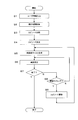
- the input unit 60 acquires information such as the date of birth via a predetermined input device (for example, a touch panel or a voice recognition device) (step S1).
- a predetermined input device for example, a touch panel or a voice recognition device
- the current time is acquired using the timer function provided in the music playback device 300 (step S2).
- the episode period setting unit 301 sets a plurality of episode periods based on the user specific information (step S3).
- the episode determination unit 302 determines the episode for which the music playback list is to be generated by a predetermined method (step S4), and the music playback list generation unit 303 plays the music corresponding to the episode determined by the episode determination unit 302.
- a list is generated (step S5).
- the music reproduction unit 304 reproduces the music based on the music reproduction list (step S6), and ends the music reproduction without stopping the episode transition, for example, when the music reproduction device 300 is turned off.
- Step S7; Yes If the music reproduction is to be continued (Step S7; No), the change timing determination unit 305 determines whether or not it is the timing to change the episode of the music reproduction list, and the music reproduction is performed. If it is not time to change the episodes in the list (step S8; No), the process proceeds to step S6, and the music is reproduced based on the generated music reproduction list.
- step S8 If the change timing determination unit 305 determines that it is time to change the episode of the music reproduction list (step S8; Yes), the episode determination unit 302 selects the target of the music reproduction list based on a predetermined control criterion. (Step S9), the process proceeds to step S5, and the music reproduction list generation unit 303 regenerates the music reproduction list for the episode determined by the episode determination unit 302.
- step S7 when the music playback is to be terminated, such as when the music playback device 300 is turned off, the episode transition process is terminated without performing the episode transition (step S7; Yes).
- step S9 when applying said music reproduction method (1) to said episode transition process, as a result of changing an episode, when changing from the latest episode to another episode, in step S9, the episode determination unit 302 is updated The episode for which the music reproduction list is to be generated is determined so as to be close to the episode.
- step S9 based on the number of cancellations until the episode determination unit 302 reaches the transition timing, the music reproduction list generation target Determine the episode.
- episode transition method (1) and episode transition method (2) simultaneously.
- the episode determining unit 302 determines the transition destination episode based on the number of cancellations while determining whether it is the transition timing.
- the transition from the latest episode to another episode is made.
- the episode determination unit 302 determines a transition destination episode so as to approach the latest episode.
- the episode period setting unit 301 determines the hierarchy for the certain period when the song evaluation for a certain period (for example, the first semester of elementary school) within a predetermined episode period exceeds a predetermined threshold. Subdivided.
- the music evaluation refers to the number of reproductions, evaluation information input by the user, and the like. Thereby, the music playback device 300 can generate a music playback list according to the hierarchical level.
- the music reproduction list generation unit 303 changes the number of songs to be selected according to the hierarchical level, a music list centered on music that matches the user's preference can be generated.
- the episode period setting unit 301 may subdivide when the number of times of driving to the place corresponding to the episode is equal to or greater than a predetermined threshold.
- FIG. 8 shows a schematic configuration of a music playback device 300a according to the second embodiment.
- symbol is attached
- the “episode period location information acquisition unit 306”, “living and living list information generation unit 307”, “position information acquisition unit 308”, “ A GPS receiver 18 ” is provided, and a living and living list information DB 380 for managing the living and living list information generated by the living and living list information generating unit 307 is held.
- the living and living list information DB 380 includes living and living list information, which is information that associates the episode division information including the user's episode and the duration of the episode with the location of the episode.
- FIG. 9 is a conceptual diagram showing the relationship between the episode period and the location corresponding to the episode.
- the user's episode is divided (for example, “children”, “elementary school”, etc.) based on the input operation (for example, the date of birth, etc.) by the user.
- the episode divided first is the episode hierarchy 1, and the episodes in the episode hierarchy 1 are changed to the episode hierarchy 2 and the episode hierarchy 3 according to various events (for example, when the number of times the corresponding episode has been played exceeds a threshold). Subdivide.
- the music reproduction apparatus 300a acquires the place regarding the said episode by input operation etc. by a user. Then, the music reproducing device 300a associates the episode period with the place related to the episode.
- FIG. 10 shows an example of the data structure based on the conceptual diagram of FIG.
- the living and living list information is information including an episode, a duration of the episode, a place related to the episode, and range information of the place related to the episode.
- the range information of the place regarding the episode here may be defined according to the input operation of the user, or may be defined by the music reproducing device 300a.
- the music reproducing device 300a determines the range information according to the degree of distribution of places corresponding to each episode period.
- each area information is large, and conversely a narrow area such as the same city. If the degree of dispersion is low, the range information is reduced.
- the music reproducing device 300a is supposed to correspond to a plurality of episode periods at the same position, or the range of the location corresponding to the episode is narrow. It is possible to avoid that the position corresponding to the episode is limited by being too much.
- the episode period location information acquisition unit 306 acquires location information corresponding to the episode period based on user input information and the like.
- the living and living list information generating unit 307 generates the living and living list information in which the episode period setting unit 301 associates the set episode period with the location information corresponding to the episode period acquired by the episode period location information acquiring unit 306. Generate.
- the location information acquisition unit 308 acquires location information (latitude and longitude information) of the music playback device 300a via the GPS receiver 18.
- the position of the music playback apparatus 300a A music reproduction list of past episodes corresponding to a distance from a place registered as any one of the living and living list information is generated.
- the point P1 shown in FIG. 11 corresponds to “working person 2”, and the point P2 and the point P3 do not have corresponding living and living list information. Thereby, it is determined that the point P2 and the point P3 are unvisited places.
- the music reproducing device 300a moves to an unvisited place, that is, when it is a stress relieving means such as driving or traveling, or when expectation and anxiety such as moving are mixed, etc.
- a stress relieving means such as driving or traveling, or when expectation and anxiety such as moving are mixed, etc.
- the input unit 60 acquires information such as the date of birth via a predetermined input device (for example, a touch panel or a voice recognition device) (step S11).
- a predetermined input device for example, a touch panel or a voice recognition device
- the current time is acquired using the timer function provided in the music playback device 300 (step S12).
- the episode period setting unit 301 sets a plurality of episode periods based on the user specific information (step S13).
- episode period place information acquisition part 306 acquires the place information corresponding to an episode period by input operation by a user, etc. (Step S14).
- the living and living list information generating unit 307 generates living and living list information (step S15).
- the position information acquisition unit 308 acquires the position information of the music playback device 300 (step S16), and the episode determination unit 302 searches for the living and living list corresponding to the position information, and the episode of the corresponding living and living list. Is determined as an episode for which a music reproduction list is to be generated (step S17). And the music reproduction list production
- the unit 305 determines whether or not it is the episode change timing, and if it is not the episode change timing (step S21; No), the unit 305 moves to step S19 and continuously reproduces the music based on the music reproduction list.
- the change timing determination unit 305 determines that it is the episode change timing (step S21; Yes)
- the position information acquisition unit 308 acquires the position information again (step S22), and corresponds to the re-acquired position information. If there is no life residence list information having location information, the episode determination unit 302 determines the transition destination episode based on the distance between the position information reacquired by the position information acquisition unit 308 and a predetermined reference position. (Step S23), the process proceeds to Step S18, and the music reproduction list generation unit 303 generates a music reproduction list based on the transition destination episode (Step S18).
- step S20 when the music playback is to be terminated, such as when the music playback device 300 is turned off, the music playback process is terminated without performing the episode transition (step S20; Yes).
- the music playback device 300 includes music information holding means for holding music information including music attribute information, music playback history information holding means for holding user music playback history information, and user-specific information.
- the episode period setting means for setting a plurality of episode periods
- the episode determination means for determining the episode for which the music reproduction list is to be generated using the music playback history information
- the song related to the episode determined by the episode determination means A change for determining a timing for changing an episode for which a music play list is to be generated for a music play list generating means for generating a music play list, a music playing means for playing a music based on the music play list, and an episode determining means.
- a timing determination means, and the episode determination means is an epi other than the latest episode. If you decide to over de, after being subjected to a re-determination of the episode of a predetermined number of times, to shift to the most recent episode.
- the music playback device 300 can change the episode several times and change to the latest episode even if the song playback device 300 changes to an episode other than the latest episode as a result of changing the episode in the music playback list. According to this, the music playback device 300 can avoid leaving the episode corresponding to the music to be played back soaked in so-called past memories by transitioning to the past episode. it can.
- the music playback device 300 can generate a music playback list according to the degree of subdivision.
- the music playback device 300 may preferentially include songs in an episode period with a high degree of subdivision (short episode period) in the playlist.
- an episode at a predetermined time is associated with the location of the episode.
- the present invention is not limited to this, and a plurality of locations may be defined in the same episode.
- an episode of “working person” may be associated with an address or associated with a work location.
- an episode of a certain length of time is associated with the location of the episode.
- a temporary event for example, summer vacation, birthday, You may make it match
- the position information acquisition unit 308 specifies the position of the music playback device 300 using the GPS receiver 18 .
- the present invention is not limited thereto, and predetermined position information is obtained. You may make it specify using IC card (for example, watermelon (trademark)) which can be acquired, wireless LAN spot information, etc.
- the episode determination unit 302 determines the transition destination episode according to the number of cancellations.
- the number of playbacks is referred to by referring to deeper episodes or playback history information. You may make it change to an episode with many.
- the transition is made in the past direction, the transition is made in the past direction, and when the transition is made in the current direction (latest direction), the transition is made in the current direction.
- the episode determination unit 302 determines the transition destination episode according to the number of cancellations.
- the present invention is not limited to this, and the episode before the transition is the latest episode ( In the above-described embodiment, in the case of “Working Person 2”), another piece of music that is not held in the music information DB 360 may be downloaded via the communication device 38 without changing the episode.
- the episode determination unit 302 when there is an input operation by the user while the music is being reproduced and a music reproduction request corresponding to the episode in the current direction is generated, the episode determination unit 302 The subsequent episode transition direction may be changed to the current direction, or the speed of transition to the latest episode may be increased.
- the episode determination unit 302 transitions to the latest episode while passing through many past episodes. You may do it.
- the evaluation information is the number of times of reproduction or information input by the user.
- the present invention is not limited to this, and repeat or cancellation may be used as the evaluation information.
- a button for inputting repeat or cancel may be provided in the music playback device 300.
- the episode determination unit 302 may notify the changed episode content via the audio unit 50 at the timing of transition of the episode.
- the guidance is “I am in elementary school” or “I am in college”.
- the music reproducing device 300 can explicitly notify the user of the episode change.
- the episode determination unit 302 refers to the music playback history information and determines that it has not been played back for a predetermined period, it determines a relatively past episode as an episode for which a music playback list is to be generated.
- the music playback device 300 plays back from a relatively past episode (for example, elementary school or junior high school), and automatically transitions to the current episode gradually.
- a relatively past episode for example, elementary school or junior high school
- the music playback device 300 reproduces the past experiences and / or Along with memory, nostalgia can be recalled and positive emotions can be enjoyed.
- users can experience past experiences even if they are too busy or depressed because they have no time to listen to the songs. Along with memory and memory, you can recall nostalgia and enjoy positive emotions.
- the music reproducing device 300 is applied to a navigation device.
- the present invention is not limited to this, and can be applied to various audio players such as a mobile phone capable of reproducing audio.
- the present invention can be used for various music playback devices that play back a large number of music stored in a storage medium, such as a mini component, a portable audio player, a car audio, a karaoke device, and a mobile phone.
- a storage medium such as a mini component, a portable audio player, a car audio, a karaoke device, and a mobile phone.
Landscapes
- Engineering & Computer Science (AREA)
- Theoretical Computer Science (AREA)
- Multimedia (AREA)
- Data Mining & Analysis (AREA)
- Databases & Information Systems (AREA)
- Physics & Mathematics (AREA)
- General Engineering & Computer Science (AREA)
- General Physics & Mathematics (AREA)
- Information Retrieval, Db Structures And Fs Structures Therefor (AREA)
- Management Or Editing Of Information On Record Carriers (AREA)
Abstract
楽曲再生装置は、利用者の成長過程に基づいてエピソードを定義し、当該エピソードに対応する楽曲再生リストを生成し、楽曲再生リストに基づいて楽曲を再生する。また、所定のタイミングでエピソード単位での自動遷移を行い、当該エピソードに対応するエピソード期間の曲を再生することになり、利用者を煩雑な操作から解放すると同時に、利用者に懐かしさを想起させるので、利用者に元気、リラックス、爽快などの効果をもたらすことができる。
Description
本発明は、音楽を再生する手法に関する。
近年、ハードディスクドライブ(HDD)やフラッシュメモリなどの記憶媒体が大容量化し、記憶媒体に大量の楽曲を記憶しておくことが可能となっており、記憶している楽曲について自動で楽曲を再生したり、楽曲情報を検索したりする装置がある。
例えば、過去の再生履歴情報を保持し、現在の状況情報(天候・季節等)に近似した状況で、再生回数が多い楽曲を優先的に再生する装置(特許文献1)や、利用者の生年月日を受け付けて、指定された年代に関する楽曲情報を提示する装置(例えば、特許文献2)や、利用者が視覚的にコンテンツ情報の存在を把握しやすくするためにコンテンツの属性情報から、軸の基準となる属性情報(楽曲のランキング等)を選択させ、コンテンツ情報に対応した画像をその選択した属性情報に基づいて配置し、表示させる装置等がある(特許文献3)。
上記の装置の場合、再生履歴や楽曲のランキングや利用者の年代に基づいて楽曲の検索・再生を行っているが、利用者のエピソード(例えば、小学時代、中学時代等)に対応する楽曲を、エピソード単位で自動的に遷移させて再生する方が、利用者を煩雑な操作から解放すると同時に、利用者に懐かしさを想起させるので、利用者に元気、リラックス、爽快などの効果をもたらすことができる。
本発明が解決しようとする課題としては、上記のようなものが例として挙げられる。本発明は、複数に分割したエピソードにおいて、自動的にエピソードを遷移させて、当該エピソードに対応する楽曲を再生する楽曲再生装置を提供することを課題とする。
請求項1に記載の発明では、楽曲再生装置であって、楽曲属性情報を含む楽曲情報を保持する楽曲情報保持手段と、利用者の楽曲再生履歴情報を保持する楽曲再生履歴情報保持手段と、利用者固有の情報に基づいて、複数のエピソード期間を設定するエピソード期間設定手段と、前記楽曲再生履歴情報を用いて楽曲再生リスト生成対象のエピソードを決定するエピソード決定手段と、前記エピソード決定手段が決定したエピソードに関する楽曲の楽曲再生リストを生成する楽曲再生リスト生成手段と、前記楽曲再生リストに基づいて楽曲を再生する楽曲再生手段と、前記エピソード決定手段に対して、前記楽曲再生リスト生成対象のエピソードを変更させるタイミングを決定する変更タイミング決定手段と、を備え、前記エピソード決定手段は、最新のエピソード以外のエピソードに決定した場合、所定回数のエピソードの再決定を経た後に、最新のエピソードに遷移させることを特徴とする。
請求項7に記載の発明では、楽曲属性情報を含む楽曲情報及び利用者の楽曲再生履歴情報を用いて行う楽曲再生方法であって、利用者固有の情報に基づいて、複数のエピソード期間を設定するエピソード期間設定工程と、前記楽曲再生履歴情報を用いて楽曲再生リスト生成対象のエピソードを決定するエピソード決定工程と、前記エピソード決定工程で、決定したエピソードに関する楽曲の楽曲再生リストを生成する楽曲再生リスト生成工程と、前記楽曲再生リストに基づいて楽曲を再生する楽曲再生工程と、前記エピソード決定工程で、前記楽曲再生リスト生成対象のエピソードを変更させるタイミングを決定する変更タイミング決定工程と、を備え、前記エピソード決定工程では、最新のエピソード以外のエピソードに決定した場合、所定回数のエピソードの再決定を経た後に、最新のエピソードに遷移させることを特徴とする。
請求項8に記載の発明では、コンピュータを備え、楽曲属性情報を含む楽曲情報及び利用者の楽曲再生履歴情報を保持する装置によって実行される楽曲再生プログラムであって、利用者固有の情報に基づいて、複数のエピソード期間を設定するエピソード期間設定手段、前記楽曲再生履歴情報を用いて楽曲再生リスト生成対象のエピソードを決定するエピソード決定手段、前記エピソード決定手段が決定したエピソードに関する楽曲の楽曲再生リストを生成する楽曲再生リスト生成手段、前記楽曲再生リストに基づいて楽曲を再生する楽曲再生手段、前記エピソード決定手段に対して、前記楽曲再生リスト生成対象のエピソードを変更させるタイミングを決定する変更タイミング決定手段、として前記コンピュータを機能させ、前記エピソード決定手段は、最新のエピソード以外のエピソードに決定した場合、所定回数のエピソードの再決定を経た後に、最新のエピソードに遷移させることを特徴とする。
300 楽曲再生装置
301 エピソード期間設定部
302 エピソード決定部
303 楽曲再生リスト生成部
304 楽曲再生部
305 変更タイミング決定部
360 音楽情報DB
370 エピソード分割情報
301 エピソード期間設定部
302 エピソード決定部
303 楽曲再生リスト生成部
304 楽曲再生部
305 変更タイミング決定部
360 音楽情報DB
370 エピソード分割情報
本発明の1つの観点では、楽曲再生装置であって、楽曲属性情報を含む楽曲情報を保持する楽曲情報保持手段と、利用者の楽曲再生履歴情報を保持する楽曲再生履歴情報保持手段と、利用者固有の情報に基づいて、複数のエピソード期間を設定するエピソード期間設定手段と、前記楽曲再生履歴情報を用いて楽曲再生リスト生成対象のエピソードを決定するエピソード決定手段と、前記エピソード決定手段が決定したエピソードに関する楽曲の楽曲再生リストを生成する楽曲再生リスト生成手段と、前記楽曲再生リストに基づいて楽曲を再生する楽曲再生手段と、前記エピソード決定手段に対して、前記楽曲再生リスト生成対象のエピソードを変更させるタイミングを決定する変更タイミング決定手段と、を備え、前記エピソード決定手段は、最新のエピソード以外のエピソードに決定した場合、所定回数のエピソードの再決定を経た後に、最新のエピソードに遷移させる。
上記の楽曲再生装置は、具体的には、ナビゲーション装置等、楽曲を再生することが可能な装置に適用することができる。楽曲再生装置では、予め楽曲属性情報を含む楽曲情報を保持している。ここで、楽曲属性情報とは、楽曲のリリース日、ジャンル等の情報をいう。また、楽曲再生装置は、利用者が再生した履歴に関する情報も保持している。
エピソード期間設定手段は、所定の方法(例えば、入力操作等)で取得した利用者の固有情報(例えば、生年月日等)に基づいてエピソード期間を設定する。ここで、エピソード期間とは、利用者の成長過程について、複数に分けた期間をいい、例えば、エピソード期間を、「小学時代」、「中学時代」、「社会人」などの時代に基づくものとする。このように、エピソード設定手段は、人間の成長過程を複数の時代に分割したエピソードを設定する。
エピソード決定手段は、上記の利用者の再生履歴情報を用いて、楽曲再生リストの対象となるエピソードを決定する。そして、楽曲再生リスト生成手段は、上記エピソード決定手段が決定したエピソードに関する楽曲再生リストを生成する。そして、変更タイミング決定手段は、上記エピソード決定手段に対して、楽曲再生リスト生成対象のエピソードを変更させるタイミングを決定する。変更タイミング決定手段は、例えば、同一の楽曲再生リストについて、所定曲数再生した場合に、変更タイミングであると決定する。エピソード決定手段は、最新のエピソード以外のエピソードに決定した場合、所定回数のエピソードの再決定を経た後に、最新のエピソードに遷移させる。
この場合、楽曲再生装置は、楽曲再生リストのエピソードを変更した結果、最新のエピソード以外のエピソードへ遷移した場合であっても、何度かエピソード変更をして、最新のエピソードへ遷移させることができる。これによれば、楽曲再生装置は、再生対象の楽曲に対応するエピソードを過去のエピソードへ遷移したままにすることにより、いわゆる過去の思い出に浸らせたままにしてしまうことを回避することができる。
上記の楽曲再生装置の一態様では、前記エピソード期間設定手段は、楽曲評価に基づいて設定する。この場合、楽曲再生装置は、エピソード期間を楽曲評価に基づいて設定しておくことにより、エピソード期間の細分化度合いにより、楽曲リストを生成することができる。
上記の楽曲再生装置の他の一態様では、前記エピソード期間設定手段は、前記エピソード期間を階層的に細分化し、前記楽曲再生リスト生成手段は、前記エピソード期間の階層のレベルに応じて楽曲再生リストを生成する。この場合、楽曲再生リスト生成手段が、階層レベルに応じて楽曲を選択する曲数を変更したり、楽曲評価に重み付けを行えば、階層レベルが深くなるほど、利用者に対して鮮明な記憶や体験を想起させ、利用者により「元気」や「リラックス」や「爽快」などの感情を享受させることができる。
上記の楽曲再生装置の他の一態様では、前記エピソード決定手段は、最新のエピソード以外のエピソードに決定した後に、不連続に最新のエピソードへ遷移させる。楽曲再生装置は、楽曲の再生時間がある一定値に達していない場合や楽曲の評価が一定値以下の場合はそのエピソードを飛ばすことができる。利用者にとってあまり重要ではないか、もしくは好ましくない記憶や体験のエピソードに関連した楽曲を再生しないことにより、より「元気」や「リラックス」や「爽快」などの感情を享受させることができる。
上記の楽曲再生装置の他の一態様では、前記エピソード決定手段は、最新のエピソード以外のエピソードに決定した後に、連続的に最新のエピソードへ遷移させる。この場合、楽曲再生装置は、最新のエピソードから、他のエピソードへ遷移した際に、連続したエピソードの楽曲を提供することになるので、過去からの時間の流れに沿って再生することになり、利用者により自然に記憶や体験を想起させ、「元気」や「リラックス」や「爽快」などの感情を享受させることができる。
利用者にとって、有用な順序で楽曲を再生することができる。
利用者にとって、有用な順序で楽曲を再生することができる。
上記の楽曲再生装置の他の一態様では、前記エピソード決定手段は、所定期間再生を行っていなかった場合、再生を行っていなかった期間の長さに応じて、最初のエピソードを決定する。
この場合、楽曲再生装置は、利用者が長い間楽曲を聴いていない場合に、楽曲再生装置300が、比較的過去のエピソード(例えば、小学や中学)から再生を行い、現在のエピソードへ次第に自動的に遷移させる。楽曲再生装置300は、楽曲を聴かなかった時間に応じて最初に再生される過去のエピソードを決定する。すなわち、楽曲を聴かなかった時間が長いほど遠い過去のエピソードとなる。利用者が楽曲を聴く暇もないほど忙しい状況にあった場合や気分的に沈んでいる場合に、楽曲再生装置300が、過去のエピソードから再生することにより、利用者に対して過去の体験や記憶とともに懐かしさを想起させ、ポジティブな感情を享受させることができる。
本発明の他の観点では、楽曲属性情報を含む楽曲情報及び利用者の楽曲再生履歴情報を用いて行う楽曲再生方法であって、利用者固有の情報に基づいて、複数のエピソード期間を設定するエピソード期間設定工程と、前記楽曲再生履歴情報を用いて楽曲再生リスト生成対象のエピソードを決定するエピソード決定工程と、前記エピソード決定工程で、決定したエピソードに関する楽曲の楽曲再生リストを生成する楽曲再生リスト生成工程と、前記楽曲再生リストに基づいて楽曲を再生する楽曲再生工程と、前記エピソード決定工程で、前記楽曲再生リスト生成対象のエピソードを変更させるタイミングを決定する変更タイミング決定工程と、を備え、前記エピソード決定工程では、最新のエピソード以外のエピソードに決定した場合、所定回数のエピソードの再決定を経た後に、最新のエピソードに遷移させる。
上記の楽曲再生方法によっても、楽曲再生リストのエピソードを変更した結果、最新のエピソード以外のエピソードへ遷移した場合であっても、何度かエピソード変更をして、最新のエピソードへ遷移させることができる。
本発明の他の観点では、コンピュータを備え、楽曲属性情報を含む楽曲情報及び利用者の楽曲再生履歴情報を保持する装置によって実行される楽曲再生プログラムであって、利用者固有の情報に基づいて、複数のエピソード期間を設定するエピソード期間設定手段、前記楽曲再生履歴情報を用いて楽曲再生リスト生成対象のエピソードを決定するエピソード決定手段、前記エピソード決定手段が決定したエピソードに関する楽曲の楽曲再生リストを生成する楽曲再生リスト生成手段、前記楽曲再生リストに基づいて楽曲を再生する楽曲再生手段、前記エピソード決定手段に対して、前記楽曲再生リスト生成対象のエピソードを変更させるタイミングを決定する変更タイミング決定手段、として前記コンピュータを機能させ、前記エピソード決定手段は、最新のエピソード以外のエピソードに決定した場合、所定回数のエピソードの再決定を経た後に、最新のエピソードに遷移させる。
このプログラムを、各種装置上で実行することにより、本発明の楽曲再生装置を実現することができる。なお、上記プログラムは、記録媒体に記録した状態で好適に取り扱うことができる。
以下、図面を参照して本発明の好適な実施例について説明する。
[概要説明]
本願発明の楽曲再生装置は、エピソードを分割するために必要な情報(利用者の生年月日等)を利用者から取得し、上記取得した情報に基づいてエピソード分割し、当該エピソードを分割した情報(以下、エピソード分割情報とも呼ぶ)を保持する。
本願発明の楽曲再生装置は、エピソードを分割するために必要な情報(利用者の生年月日等)を利用者から取得し、上記取得した情報に基づいてエピソード分割し、当該エピソードを分割した情報(以下、エピソード分割情報とも呼ぶ)を保持する。
上記楽曲再生装置は、保持している再生履歴情報を用いて、再生リストを生成する対象となるエピソードを決定し、決定したエピソードの楽曲に関する再生リストを生成し、当該再生リストに基づいて、楽曲を再生する。そして、楽曲再生装置は、所定のタイミングで、楽曲再生リストのエピソードの変更を行い、当該エピソードが最新のエピソード以外のエピソードへ遷移した場合に、所定回数のエピソード変更を行った後に、最新のエピソードへ戻るように制御する。本実施例では、上記楽曲再生装置をナビゲーション装置に適用するものとする。また、ここでいう楽曲には、オーディオコンテンツのみならず、ミュージックビデオや、テレビの歌番組中のビデオコンテンツも含まれる。
[ナビゲーション装置]
図1に、本発明の実施例に係るナビゲーション装置200の構成を示す。図1に示すように、ナビゲーション装置200は、自立測位装置10、GPS受信機18、システムコントローラ20、ディスクドライブ31、データ記憶ユニット36、通信用インタフェース37、通信装置38、表示ユニット40、音声出力ユニット50及び入力装置60を備える。
図1に、本発明の実施例に係るナビゲーション装置200の構成を示す。図1に示すように、ナビゲーション装置200は、自立測位装置10、GPS受信機18、システムコントローラ20、ディスクドライブ31、データ記憶ユニット36、通信用インタフェース37、通信装置38、表示ユニット40、音声出力ユニット50及び入力装置60を備える。
自立測位装置10は、加速度センサ11、角速度センサ12及び距離センサ13を備える。加速度センサ11は、例えば圧電素子からなり、車両の加速度を検出し、加速度データを出力する。角速度センサ12は、例えば振動ジャイロからなり、車両の方向変換時における車両の角速度を検出し、角速度データ及び相対方位データを出力する。距離センサ13は、車両の車輪の回転に伴って発生されているパルス信号からなる車速パルスを計測する。
GPS受信機18は、複数のGPS衛星から、測位用データを含む下り回線データを搬送する電波19を受信する。測位用データは、緯度及び経度情報等から車両の絶対的な位置を検出するために用いられる。
システムコントローラ20は、インタフェース21、CPU(Central Processing Unit)22、ROM(Read Only Memory)23及びRAM(Random Access Memory)24を含んでおり、ナビゲーション装置200全体の制御を行う。
インタフェース21は、加速度センサ11、角速度センサ12及び距離センサ13並びにGPS受信機18とのインタフェース動作を行う。そして、これらから、車速パルス、加速度データ、相対方位データ、角速度データ、GPS測位データ、絶対方位データ等をシステムコントローラ20に入力する。CPU22は、システムコントローラ20全体を制御する。ROM23は、システムコントローラ20を制御する制御プログラム等が格納された図示しない不揮発性メモリ等を有する。RAM24は、入力装置60を介して利用者により予め設定された経路データ等の各種データを読み出し可能に格納したり、CPU22に対してワーキングエリアを提供したりする。
システムコントローラ20、CD-ROMドライブ又はDVD-ROMドライブなどのディスクドライブ31、データ記憶ユニット36、通信用インタフェース37、表示ユニット40、音声出力ユニット50及び入力装置60は、バスライン30を介して相互に接続されている。
ディスクドライブ31は、システムコントローラ20の制御の下、CD又はDVDといったディスク33から、音楽データ、映像データなどのコンテンツデータを読み出し、出力する。なお、ディスクドライブ31は、CD-ROMドライブ又はDVD-ROMドライブのうち、いずれか一方としても良いし、CD及びDVDコンパチブルのドライブとしても良く、また、テレビチューナを内蔵したハードディスクレコーダでも良い。
データ記憶ユニット36は、例えば、HDDなどにより構成され、地図データや施設データなどのナビゲーション処理に用いられる各種データを記憶する。
通信装置38は、例えば、FMチューナやビーコンレシーバ、携帯電話や専用の通信カードなどにより構成され、通信用インタフェース37を介して、VICS(Vehicle Information Communication System)センタから配信される渋滞や交通情報などの道路交通情報を受信したり、所定のサーバからの種々の情報(例えば、天気情報等)を受信したりする。
表示ユニット40は、システムコントローラ20の制御の下、各種表示データをディスプレイなどの表示装置に表示する。具体的には、システムコントローラ20は、データ記憶ユニット36から地図データを読み出す。表示ユニット40は、システムコントローラ20によってデータ記憶ユニット36から読み出された地図データを、ディスプレイなどの表示画面上に表示する。表示ユニット40は、バスライン30を介してCPU22から送られる制御データに基づいて表示ユニット40全体の制御を行うグラフィックコントローラ41と、VRAM(Video RAM)等のメモリからなり即時表示可能な画像情報を一時的に記憶するバッファメモリ42と、グラフィックコントローラ41から出力される画像データに基づいて、液晶、CRT(Cathode Ray Tube)等のディスプレイ44を表示制御する表示制御部43と、ディスプレイ44とを備える。ディスプレイ44は、例えば対角5~10インチ程度の液晶表示装置等からなり、車内のフロントパネル付近に装着される。
音声出力ユニット50は、システムコントローラ20の制御の下、ディスクドライブ31、又はRAM24等からバスライン30を介して送られる音声デジタルデータのD/A(Digital to Analog)変換を行うD/Aコンバータ51と、D/Aコンバータ51から出力される音声アナログ信号を増幅する増幅器(AMP)52と、増幅された音声アナログ信号を音声に変換して車内に出力するスピーカ53とを備えて構成されている。
入力装置60は、各種コマンドやデータを入力するための、キー、スイッチ、ボタン、リモコン、音声入力装置等から構成されている。入力装置60は、車内に搭載された当該車載用電子システムの本体のフロントパネルやディスプレイ44の周囲に配置される。また、ディスプレイ44がタッチパネル方式である場合には、ディスプレイ44の表示画面上に設けられたタッチパネルも入力装置60として機能する。
[楽曲再生装置]
図2に楽曲再生装置300の機能構成を示す。楽曲再生装置300は、図示のように、システムコントローラ20と、通信装置38と、音声ユニット50と、入力部60と、データ記憶ユニット36と、表示部40と、を備える。データ記憶ユニット36は、地図情報DB350、音楽情報DB360、及びエピソード分割情報DB370等、種々の情報を保持する。システムコントローラ20は、楽曲再生装置300全体を統括制御する。そしてシステムコントローラ20は、エピソード期間設定部301と、エピソード決定部302と、楽曲再生リスト生成部303と、楽曲再生部304と、変更タイミング決定部305とを備える。即ち、システムコントローラ20が所定のプログラムを実行することにより、エピソード期間設定部301と、エピソード決定部302と、楽曲再生リスト生成部303と、楽曲再生部304と、変更タイミング決定部305とを実現する。
図2に楽曲再生装置300の機能構成を示す。楽曲再生装置300は、図示のように、システムコントローラ20と、通信装置38と、音声ユニット50と、入力部60と、データ記憶ユニット36と、表示部40と、を備える。データ記憶ユニット36は、地図情報DB350、音楽情報DB360、及びエピソード分割情報DB370等、種々の情報を保持する。システムコントローラ20は、楽曲再生装置300全体を統括制御する。そしてシステムコントローラ20は、エピソード期間設定部301と、エピソード決定部302と、楽曲再生リスト生成部303と、楽曲再生部304と、変更タイミング決定部305とを備える。即ち、システムコントローラ20が所定のプログラムを実行することにより、エピソード期間設定部301と、エピソード決定部302と、楽曲再生リスト生成部303と、楽曲再生部304と、変更タイミング決定部305とを実現する。
通信装置38は、各種情報の送受信を行う。入力部60は、各種コマンドやデータを入力するための、キーボード、マウス等から構成されている。データ記憶ユニット36は、地図情報DB350、音楽情報DB360、エピソード分割情報DB370等を保持する。
なお、地図情報DB350は、地図情報のデータベースである。音楽情報DB360は、楽曲情報や楽曲の属性情報(リリース年月日等)を有するデータベースである。また、音楽情報DB360では、利用者の過去の再生履歴情報も保持しているものとする。即ち、当該音楽情報DB360は、再生履歴情報保持手段として機能する。ここでいう再生履歴情報とは、再生した楽曲に関する情報(楽曲名称や、楽曲識別情報等)と、再生した回数とが関連付けられた情報をいう。エピソード分割情報DB370は、エピソード分割情報を有するデータベースである。ここでいうエピソード分割情報とは、利用者のエピソード及び当該エピソードの期間が定義づけられた情報をいう。
ここで、図3及び図4を用いて、エピソード分割情報について説明する。まず図3に、エピソード分割に関する概念図を示す。図3に示すように、利用者による入力操作(例えば、生年月日の入力等)に基づき、利用者のエピソードを分割する(例えば、「小児」、「小学」等)。なお、最初に分割したエピソードをエピソード階層1とし、各種イベント(例えば、対応するエピソードの再生回数が閾値を超えた場合等)に応じて、エピソード階層1のエピソードをエピソード階層2、エピソード階層3と細分化する。
図3の概念図に基づいたデータ構造例について図4に示す。図4に示すように、エピソード分割情報は、エピソードと、当該エピソードの期間を含む情報である。
エピソード期間設定部301は、所定の入力装置(例えば、キーボード、タッチパネル等)を介して取得した利用者の固有情報(例えば、生年月日等)に基づいて、利用者の成長過程を複数の期間に分割する。本実施例では、エピソード期間設定部301は、図3に示したように、「小学」、「中学」、「社会人」等、年齢的な成長過程における単純な時間区分に基づいてエピソード期間を設定し、設定したエピソード期間に関する情報であるエピソード分割情報を生成する。
なお、本発明は、これに限られず、エピソード期間設定部301が、心理的な成長過程における時間区分(例えば、「思春期」、「青年期」、「壮年期」等)に基づいてエピソード期間を設定しても良いし、相対的な時間区分(例えば、今から10年前等)に基づいてエピソード期間を設定しても良い。
エピソード決定部302は、楽曲再生リスト生成対象のエピソードを決定する。具体的に、エピソード決定部302は、楽曲情報DB360で保持している再生履歴情報に基づいた種々の条件により遷移先のエピソードを決定する。例えば、しばらく楽曲を聴かなかった場合で、久しぶりに再生を行う場合は比較的過去のエピソード(例えば、小学、中学)から再生を行い、現在のエピソードへ次第に自動的に遷移させる。
楽曲再生リスト生成部303は、エピソード決定部302が決定したエピソードに関する楽曲再生リストを音楽情報DB360で管理している楽曲属性情報を用いて生成する。
楽曲再生部304は、楽曲再生リスト生成部303が生成した楽曲再生リストに基づいて楽曲を再生する。
変更タイミング決定部305は、楽曲再生リストのエピソードを変更するタイミングを決定する。決定方法については、後述する。
[楽曲再生方法(1)]
次に、楽曲再生方法(1)について、説明する。ここで、楽曲再生方法(1)とは、楽曲再生リスト生成対象のエピソードが、最新のエピソードから、別のエピソードへ遷移した場合に、最新のエピソードへ再度遷移させる方法をいう。
次に、楽曲再生方法(1)について、説明する。ここで、楽曲再生方法(1)とは、楽曲再生リスト生成対象のエピソードが、最新のエピソードから、別のエピソードへ遷移した場合に、最新のエピソードへ再度遷移させる方法をいう。
楽曲再生装置300では、エピソード期間設定部301が、利用者固有情報(生年月日情報等)に基づいて複数のエピソード期間を設定し、設定したエピソード期間に関するエピソード情報をエピソード分割情報DB370内に保存する。
エピソード決定部302は、再生履歴情報を用いて遷移先のエピソードを決定する。なお、楽曲再生リストが未作成の状態である場合、エピソード決定部302は、予め定められているエピソードを楽曲再生リスト生成対象のエピソードとして決定する。
そして、楽曲再生リスト生成部303は、エピソード決定部302が決定したエピソードについて楽曲再生リストを生成する。
そして、楽曲再生部304は、楽曲再生リスト生成部303が生成した楽曲再生リストの楽曲を再生する。
そして、変更タイミング決定部305が、楽曲再生リストに基づいて再生した曲数が閾値以上になった場合等、エピソード変更タイミングとなっていると判断した場合に、エピソード決定部302は、再生履歴情報に基づいた種々の条件により遷移先のエピソードを決定し、楽曲再生リスト生成部303は、エピソード決定部302が決定したエピソードの楽曲再生リストを生成する。
なお、上記エピソード決定部302が、エピソードを変更した結果、最新のエピソードである「社会人2」から、「社会人2」以外のエピソードへ遷移した場合、エピソード決定部302は、エピソードが最終的に、最新のエピソードである「社会人2」に遷移するように、エピソードを決定する。例えば、エピソード決定部302は、エピソードを変更した結果、最新のエピソードである「社会人2」から、「社会人2」以外のエピソードへ遷移した場合に、最新のエピソードへ連続または不連続で遷移させる。
このように、楽曲再生装置300は、楽曲再生リストのエピソードを変更した結果、最新のエピソード以外のエピソードへ遷移した場合であっても、何度かエピソード変更をして、最新のエピソードへ遷移させることができる。
これによれば、楽曲再生装置300は、再生対象の楽曲に対応するエピソードを過去のエピソードへ遷移したままにすることにより、いわゆる過去の思い出に浸らせたままにしてしまうことを回避することができる。
上述のように、楽曲再生装置300は、利用者のエピソードを分割管理し、分割したエピソードに該当する楽曲を提供し、所定のタイミングで提供対象の楽曲のエピソード変更を行っている。
一般的に、人の成長過程は、本人に嗜好を形成する段階が含まれている。また同時にこの成長過程のなかにはエピソードやこれに関連する場所の情報が人の記憶として蓄積されている。こうした長いスパンでの利用者の反応は有効である。また、所定のタイミングにおいて、エピソードを自動的に遷移させており、利用者の心理に適した楽曲を提供している。
こうした利用者の成長過程に即して情報を捉え、再生履歴からの利用者の心理を捉え、エピソードを自動的に遷移させ、最適な楽曲を提供する仕組みによって、操作の煩わしさから解放されると共に、利用者は記憶が喚起され「元気」や「リラックス」、「爽快」などの感情を享受できる。
ただし、過度に過去の思い出に浸りすぎるのも現実逃避などの観点から好ましいとはいえない。そこで、上述の楽曲再生装置300は、楽曲再生リスト生成対象のエピソードが過去のエピソードへ遷移した場合に、現在のエピソードへ自動的に戻すように制御している。
楽曲再生リストのエピソードが、最新のエピソードから別のエピソードへ遷移した後に、最新のエピソードへ戻る場合の例を図5(a)及び(b)に示す。
図5(a)の例では、「社会人2」から「小学」へ遷移した後に、「小学」から「社会人2」まで連続して遷移する。この場合、楽曲再生装置300は、最新のエピソードから、他のエピソードへ遷移した際に、連続したエピソードの楽曲を提供することになるため、過去からの時間に沿って再生することになり、利用者により自然に記憶や体験を想起させ、「元気」や「リラックス」や「爽快」などの感情を享受させることができる。
図5(b)の例では、「社会人2」から「小学」へ遷移した後に、「小学」、「高校」、「高校」、「社会人2」という順で不連続に、社会人2まで遷移する。このように、不連続に再生することにより、楽曲再生装置300は、楽曲の再生時間がある一定値に達していない場合や楽曲の評価がある一定値以下の場合はそのエピソードを飛ばすことができる。これによれば、楽曲再生装置300は、利用者にとってあまり重要ではないか、もしくは好ましくない記憶や体験のエピソードに関連した楽曲を再生しないことが可能となり、より「元気」や「リラックス」や「爽快」などの感情を利用者に対して享受させることができる。
[楽曲再生方法(2)]
次に、楽曲再生方法(2)について、説明する。ここで、楽曲再生方法(2)とは、楽曲再生リストに基づいて楽曲を再生していた際に、キャンセル数をカウントしておき、変更タイミングにおいて、カウントしたキャンセル数に応じて、遷移先のエピソードを決定する方法をいう。
次に、楽曲再生方法(2)について、説明する。ここで、楽曲再生方法(2)とは、楽曲再生リストに基づいて楽曲を再生していた際に、キャンセル数をカウントしておき、変更タイミングにおいて、カウントしたキャンセル数に応じて、遷移先のエピソードを決定する方法をいう。
楽曲再生装置300では、エピソード期間設定部301が、利用者固有情報(生年月日情報等)に基づいて複数のエピソード期間を設定し、設定したエピソード期間に関するエピソード情報をエピソード分割情報DB370内に保存する。
エピソード決定部302は、予め定められているエピソードを楽曲再生リスト生成対象のエピソードとして決定する。
そして、楽曲再生リスト生成部303は、エピソード決定部302が決定したエピソードについて楽曲再生リストを生成する。
そして、楽曲再生部304は、楽曲再生リスト生成部303が生成した楽曲再生リストの楽曲を再生する。楽曲再生部304が再生している際に、キャンセル要求があった場合、変更タイミング決定部305は、キャンセル数をカウントする。
そして、変更タイミング決定部305が、楽曲再生リストに基づいて再生した曲数が閾値以上になった場合等、エピソード変更タイミングとなっていると判断した場合に、エピソード決定部302は、変更前のエピソードの楽曲再生リスト中の楽曲のキャンセル数に応じて遷移先のエピソードを決定する。例えば、図6(a)に示すように、キャンセル数が多い場合、エピソード決定部302は、現在再生中の楽曲のエピソードから遠いエピソードに遷移させる。そして、キャンセル数が少ない場合、エピソード決定部302は、現在再生中の楽曲のエピソードから近いエピソードに遷移させる。
楽曲再生リスト生成部303は、エピソード決定部302が決定したエピソードの楽曲再生リストを生成し、楽曲再生部304は、楽曲再生リストに基づいて楽曲を再生する。
このように、楽曲再生装置300は、楽曲再生リスト中の楽曲に関するキャンセル数に応じて、エピソードの遷移先を決定している。これによれば、楽曲再生装置300は、キャンセル数が多い程、遠くのエピソードの楽曲を再生するので、近くのエピソードについて再生する場合に比して、利用者に新鮮な楽曲を提供できると同時に、利用者に対してより時間的に遠くの記憶を想起させ、「元気」や「リラックス」、「爽快」などの感情を享受させることができる。
エピソード決定部302が、変更前のエピソードの楽曲再生リスト中の楽曲のキャンセル数に応じて遷移先のエピソードを決定する旨について記載したが、現時点でのエピソードから過去へ遷移するか又は、現在方向へ遷移するかは、以下の条件をもとに決定する。
(条件1)両端のエピソード(例えば、「小児」、「社会人2」)では、遷移する方向が一方向なので、これに従う。
(条件2)上記(条件1)以外のエピソードでは、現時点のエピソードへ遷移してきた方向に従う。即ち、過去方向へ遷移してきた場合は、過去方向へ遷移させ(例えば、図6(b))、現在方向へ向かって遷移してきた場合は、現在方向へ遷移させる(例えば、図6(c))。
(条件1)両端のエピソード(例えば、「小児」、「社会人2」)では、遷移する方向が一方向なので、これに従う。
(条件2)上記(条件1)以外のエピソードでは、現時点のエピソードへ遷移してきた方向に従う。即ち、過去方向へ遷移してきた場合は、過去方向へ遷移させ(例えば、図6(b))、現在方向へ向かって遷移してきた場合は、現在方向へ遷移させる(例えば、図6(c))。
このように、楽曲再生装置300は、遷移してきた方向に応じて、遷移させるので、時間の流れに沿って楽曲を再生することにより、利用者の記憶を順を追って想起させるので、「元気」や「リラックス」、「爽快」などの感情を享受させることができる。
[楽曲再生処理]
以下に、楽曲再生処理の手順について図7に示すフローチャートを用いて説明する。この処理は、楽曲再生装置300のシステムコントローラ20が、予め用意されたプログラムを実行することにより実現される。
以下に、楽曲再生処理の手順について図7に示すフローチャートを用いて説明する。この処理は、楽曲再生装置300のシステムコントローラ20が、予め用意されたプログラムを実行することにより実現される。
まず、入力部60は、所定の入力装置(例えば、タッチパネルや音声認識装置等)を介して生年月日等の情報を取得する(ステップS1)。
そして、楽曲再生装置300が備えているタイマー機能を用いて、現在時刻を取得する(ステップS2)。そして、エピソード期間設定部301は、利用者固有情報に基づいて複数のエピソード期間を設定する(ステップS3)。そして、エピソード決定部302が、所定の方法で楽曲再生リスト生成対象のエピソードを決定し(ステップS4)、楽曲再生リスト生成部303は、エピソード決定部302が決定したエピソードに対応する楽曲の楽曲再生リストを生成する(ステップS5)。
そして、楽曲再生部304は、上記楽曲再生リストに基づいて楽曲を再生し(ステップS6)、楽曲再生装置300の電源を落とす等、楽曲の再生を終了させる場合は、エピソード遷移を行うことなく終了し(ステップS7;Yes)、楽曲の再生を継続する場合は(ステップS7;No)、変更タイミング決定部305が、楽曲再生リストのエピソード変更を行うタイミングであるか否かを判断し、楽曲再生リストのエピソードの変更タイミングでない場合(ステップS8;No)、ステップS6へ移り、生成済みの楽曲再生リストに基づいて楽曲を再生する。
そして、変更タイミング決定部305が、楽曲再生リストのエピソード変更を行うタイミングであると判断した場合(ステップS8;Yes)、エピソード決定部302は、所定の制御基準に基いて、楽曲再生リストの対象となるエピソードを再決定し(ステップS9)、ステップS5へ移り、上記エピソード決定部302が決定したエピソードについて楽曲再生リスト生成部303が楽曲再生リストを再生成する。
そして、上述のように、楽曲再生装置300の電源を落とす等、楽曲の再生を終了させる場合は、エピソード遷移を行うことなく、エピソード遷移処理を終了する(ステップS7;Yes)。
なお、上記の楽曲再生方法(1)を上記のエピソード遷移処理に適用する場合、エピソードを変更した結果、最新のエピソードから別のエピソードへ遷移した場合に、ステップS9で、エピソード決定部302が最新のエピソードに近づけるように、楽曲再生リスト生成対象のエピソードを決定する。
また、上記の楽曲再生方法(2)を上記のエピソード遷移処理に適用する場合、ステップS9で、エピソード決定部302が、遷移タイミングとなるに至るまでのキャンセル回数に基づいて、楽曲再生リスト生成対象のエピソードを決定する。
なお、上記のエピソード遷移方法(1)とエピソード遷移方法(2)を同時に適用するようにしても良い。例えば、遷移タイミングであるか否かを判断している間のキャンセル数に基づいて、エピソード決定部302が、遷移先のエピソードを決定した結果、最新のエピソードから他のエピソードに遷移することになった場合に、次回のエピソード変更タイミング以降では、エピソード決定部302が、最新のエピソードへ近づくように、遷移先のエピソードを決定する。
[エピソード期間の階層化]
なお、エピソード期間設定部301は、所定のエピソード期間内における、一定期間(例えば、小学1年の一学期等)の楽曲についての楽曲評価が所定閾値以上になった場合、上記一定期間について、階層的に細分化する。ここで楽曲評価とは、再生回数や、利用者によって入力された評価情報等をいう。これにより、楽曲再生装置300は、階層レベルに応じて楽曲再生リストを生成することが可能となる。
なお、エピソード期間設定部301は、所定のエピソード期間内における、一定期間(例えば、小学1年の一学期等)の楽曲についての楽曲評価が所定閾値以上になった場合、上記一定期間について、階層的に細分化する。ここで楽曲評価とは、再生回数や、利用者によって入力された評価情報等をいう。これにより、楽曲再生装置300は、階層レベルに応じて楽曲再生リストを生成することが可能となる。
例えば、楽曲再生リスト生成部303が、階層レベルに応じて、楽曲を選択する曲数を変更すれば、利用者の嗜好に合致した楽曲を中心とした楽曲リストを生成することができる。
また、エピソード期間設定部301は、エピソードに対応する場所へのドライブ回数が所定の閾値以上になった場合に、細分化するようにしても良い。
[第2実施例]
次に、本発明の第2実施例について説明する。図8に、第2実施例に係る楽曲再生装置300aの概略構成を示す。なお、図8に示す第2実施例の楽曲再生装置300と同一の構成要素には同一の符号を付し、その説明を省略する。
次に、本発明の第2実施例について説明する。図8に、第2実施例に係る楽曲再生装置300aの概略構成を示す。なお、図8に示す第2実施例の楽曲再生装置300と同一の構成要素には同一の符号を付し、その説明を省略する。
第2実施例における楽曲再生装置300aでは、第1実施例の楽曲再生装置300に「エピソード期間場所情報取得部306」、「生活居住リスト情報生成部307」、「位置情報取得部308」、「GPS受信機18」を備え、さらに、上記生活居住リスト情報生成部307が生成した生活居住リスト情報を管理する生活居住リスト情報DB380を保持している。
生活居住リスト情報DB380は、利用者のエピソード及び当該エピソードの期間を有するエピソード分割情報と、当該エピソードの場所とを関連付けた情報である生活居住リスト情報を有する。
ここで、図9及び図10を用いて、生活居住リスト情報について説明する。まず図9に、エピソード期間と、当該エピソードに対応する場所との関係を示す概念図を示す。図9に示すように、利用者による入力操作(例えば、生年月日の入力等)に基づき、利用者のエピソードを分割する(例えば、「小児」、「小学」等)。なお、最初に分割したエピソードをエピソード階層1とし、各種イベント(例えば、対応するエピソードの再生回数が閾値を超えた場合等)に応じて、エピソード階層1のエピソードをエピソード階層2、エピソード階層3と細分化する。そして、楽曲再生装置300aは、利用者による入力操作等により、上記エピソードに関する場所を取得する。そして、楽曲再生装置300aは、エピソード期間と、上記エピソードに関する場所とを関連付ける。
図9の概念図に基づいたデータ構造例について図10に示す。図10に示すように、生活居住リスト情報は、エピソードと、エピソードの期間と、当該エピソードに関する場所、及びエピソードに関する場所の範囲情報を含む情報である。ここでいう、エピソードに関する場所の範囲情報は、利用者の入力操作に応じて定義するようにしても良いし、楽曲再生装置300aが定義するようにしても良い。本実施例では、楽曲再生装置300aが、各エピソード期間に対応する場所の分散度合いに応じて範囲情報を定める。例えば、生活居住リスト中の場所が、「北海道」や「九州」に及ぶ比較的広範囲(分散度合いが大)である場合は、それぞれの範囲情報は大きく取り、逆に同じ市内等の狭い範囲(分散度合いが小)の場合は、範囲情報を小さくする。
これによれば、楽曲再生装置300aは、エピソードに対応する場所の範囲が広すぎることにより同一位置で、複数のエピソード期間に対応することになってしまったり、エピソードに対応する場所の範囲が狭すぎることにより、エピソードに対応する位置が限られてしまったりするということを回避することができる。
エピソード期間場所情報取得部306は、利用者の入力情報等に基づいて上記エピソード期間に対応する場所情報を取得する。
生活居住リスト情報生成部307は、上記エピソード期間設定部301が、設定したエピソード期間と、上記エピソード期間場所情報取得部306が取得したエピソード期間に対応する場所情報とを関連付けた生活居住リスト情報を生成する。
位置情報取得部308は、GPS受信機18を介して楽曲再生装置300aの位置情報(緯度経度情報)を取得する。
第2実施例における、楽曲再生装置300aは、位置情報取得部308が取得した位置情報が、保持している生活居住リスト情報の範囲情報に含まれていない場合、楽曲再生装置300aの位置と、いずれかの生活居住リスト情報として登録されている場所との距離に応じた過去のエピソードの楽曲再生リストを生成する。
例えば、図11に示す地点P1が、「社会人2」に対応し、地点P2及び地点P3は、対応する生活居住リスト情報がないものとする。これにより、地点P2及び地点P3は、未訪問の場所であると判断する。
この場合、地点P1から、比較的近い地点P2にいる際には、「高校」のエピソードに関する楽曲再生リストを生成し、遠い地点P3にいる際には、「小学」のエピソードに関する楽曲再生リストを生成する。
これによれば、楽曲再生装置300aは、未訪問の場所への移動すなわち、ドライブや旅行等のストレス解消手段である場合や引越し等の期待と不安が混在する場合などで、移動距離に応じた過去のエピソードから再生することにより、利用者に対して過去の体験や記憶とともに懐かしさを想起させ、「元気」や「リラックス」などの効果をもたらすことができる。
[楽曲再生処理(2)]
以下に、楽曲再生処理(2)の手順について図12に示すフローチャートを用いて説明する。この処理は、楽曲再生装置300のシステムコントローラ20が、予め用意されたプログラムを実行することにより実現される。
以下に、楽曲再生処理(2)の手順について図12に示すフローチャートを用いて説明する。この処理は、楽曲再生装置300のシステムコントローラ20が、予め用意されたプログラムを実行することにより実現される。
まず、入力部60は、所定の入力装置(例えば、タッチパネルや音声認識装置等)を介して生年月日等の情報を取得する(ステップS11)。
そして、楽曲再生装置300が備えているタイマー機能を用いて、現在時刻を取得する(ステップS12)。そして、エピソード期間設定部301は、利用者固有情報に基づいて複数のエピソード期間を設定する(ステップS13)。そして、エピソード期間場所情報取得部306は、利用者による入力操作等により、エピソード期間に対応する場所情報を取得する(ステップS14)。そして、生活居住リスト情報生成部307は、生活居住リスト情報を生成する(ステップS15)。
そして、位置情報取得部308は、楽曲再生装置300の位置情報を取得し(ステップS16)、エピソード決定部302は、上記位置情報に対応する生活居住リストを検索し、対応する生活居住リストのエピソードを、楽曲再生リスト生成対象のエピソードに決定する(ステップS17)。そして、楽曲再生リスト生成部303は、位置情報に対応する場所情報を有する生活居住リスト情報のエピソードに基づいた楽曲再生リストを生成する(ステップS18)。そして、楽曲再生部304が上記楽曲再生リストに基づいて楽曲を再生し(ステップS19)、楽曲再生装置300の電源を落とす等の終了要求がなされていない場合(ステップS20;No)、変更タイミング決定部305は、エピソードの変更タイミングであるか否かを判断し、エピソード変更タイミングでなければ(ステップS21;No)、ステップS19へ移動し、継続して楽曲再生リストに基づいて楽曲を再生する。そして、変更タイミング決定部305が、エピソード変更タイミングであると判断した場合(ステップS21;Yes)、位置情報取得部308が再度位置情報を取得し(ステップS22)、再取得した位置情報に対応する場所情報を有する生活居住リスト情報がない場合には、エピソード決定部302は、位置情報取得部308が再取得した位置情報と、所定の基準位置との距離に基づいて、遷移先のエピソードを決定し(ステップS23)、ステップS18に移動し、楽曲再生リスト生成部303が遷移先のエピソードに基づいた楽曲再生リストを生成する(ステップS18)。
そして、楽曲再生装置300の電源を落とす等、楽曲の再生を終了させる場合は、エピソード遷移を行うことなく、楽曲再生処理を終了する(ステップS20;Yes)。
以上述べたように、楽曲再生装置300は、楽曲属性情報を含む楽曲情報を保持する楽曲情報保持手段と、利用者の楽曲再生履歴情報を保持する楽曲再生履歴情報保持手段と、利用者固有の情報に基づいて、複数のエピソード期間を設定するエピソード期間設定手段と、楽曲再生履歴情報を用いて楽曲再生リスト生成対象のエピソードを決定するエピソード決定手段と、エピソード決定手段が決定したエピソードに関する楽曲の楽曲再生リストを生成する楽曲再生リスト生成手段と、楽曲再生リストに基づいて楽曲を再生する楽曲再生手段と、エピソード決定手段に対して、楽曲再生リスト生成対象のエピソードを変更させるタイミングを決定する変更タイミング決定手段と、を備え、エピソード決定手段は、最新のエピソード以外のエピソードに決定した場合、所定回数のエピソードの再決定を経た後に、最新のエピソードに遷移させる。
楽曲再生装置300は、楽曲再生リストのエピソードを変更した結果、最新のエピソード以外のエピソードへ遷移した場合であっても、何度かエピソード変更をして、最新のエピソードへ遷移させることができる。これによれば、楽曲再生装置300は、再生対象の楽曲に対応するエピソードを過去のエピソードへ遷移したままにすることにより、いわゆる過去の思い出に浸らせたままにしてしまうことを回避することができる。
[他の実施例]
上述の実施例では、楽曲評価に基づいて、階層化する場合について述べたが、本発明は、これに限られず、階層化せずに、楽曲評価に基づいてエピソード期間を細分化するようにしても良い。この場合、楽曲再生装置300は、細分化度合いに応じて、楽曲再生リストを生成することができる。例えば、楽曲再生装置300が、細分化度合いが高い(エピソード期間が短い)エピソード期間の楽曲を優先的に再生リストに含めるようにするなどがある。
上述の実施例では、楽曲評価に基づいて、階層化する場合について述べたが、本発明は、これに限られず、階層化せずに、楽曲評価に基づいてエピソード期間を細分化するようにしても良い。この場合、楽曲再生装置300は、細分化度合いに応じて、楽曲再生リストを生成することができる。例えば、楽曲再生装置300が、細分化度合いが高い(エピソード期間が短い)エピソード期間の楽曲を優先的に再生リストに含めるようにするなどがある。
上述の実施例では、所定の時期のエピソードと、当該エピソードの場所を対応付ける場合について述べたが、本発明は、これに限られず、同一エピソードで、複数の場所を定義するようにしても良い。例えば、「社会人」のエピソードについて、住所と対応付けたり、勤務地と対応付けたりする等がある。
上述の実施例では、ある程度長期間のエピソードと、当該エピソードの場所とを対応付けるようにする場合について述べたが、本発明は、これに限られず、一時的なイベント(例えば、夏休み、誕生日、帰省等)をエピソードとして、当該エピソードの場所とを対応付けるようにしても良い。
上述の実施例では、位置情報取得部308がGPS受信機18を用いて、楽曲再生装置300の位置を特定する場合について、述べたが、本発明は、これに限られず、所定の位置情報を取得できるICカード(例えば、スイカ(登録商標))、無線LANスポット情報等を用いて特定するようにしても良い。
上述の実施例では、エピソード決定部302が、キャンセル数に応じて、遷移先のエピソードを決定する場合について述べたが、この場合に、階層の深いエピソードや、再生履歴情報を参照し、再生数が多いエピソードに遷移させるようにしても良い。このときも、上述したように、過去方向に向かって遷移した場合は、過去方向へ遷移させ、現在方向(最新の方向)へ向かって遷移してきた場合は、現在方向へ遷移させる。
上述の実施例では、エピソード決定部302が、キャンセル数に応じて、遷移先のエピソードを決定する場合について述べたが、本発明は、これに限られず、遷移前のエピソードが、最新のエピソード(上述の実施例では「社会人2」)である場合、エピソードを遷移させずに、通信装置38を介して、音楽情報DB360で保持していない別の楽曲をダウンロードするようにしても良い。
上述の実施例では、特に述べなかったが、楽曲を再生している途中で、利用者による入力操作があり、現在方向のエピソードに対応する楽曲の再生要求が発生した場合、エピソード決定部302は、以降のエピソード遷移方向を、現在方向へしたり、最新のエピソードへ遷移する速度を速めるようにしたりしても良い。また、上記の利用者による入力操作が、過去方向のエピソードに対応する楽曲の再生要求である場合は、エピソード決定部302は、過去のエピソードを多く経由するようにしつつ、最新のエピソードに遷移するようにしても良い。
上述の実施例では、評価情報を、再生回数や、利用者によって入力された情報とする場合について述べたが、本発明は、これに限られず、リピートやキャンセルを評価情報としても良い。なお、リピートやキャンセルを入力するボタンを楽曲再生装置300に備えておいても良い。
上述の実施例では、特に述べなかったが、エピソード決定部302が、エピソードを遷移したタイミングで、音声ユニット50を介して、変更後のエピソード内容を通知するようにしても良い。例えば、「小学時代です」とか「大学時代です」という案内を行う。これにより、楽曲再生装置300は、利用者に対して、エピソード変更を明示的に知らせることができる。
上述の実施例では、特に述べなかったが、利用者がしばらく楽曲を聴かなかった場合、久しぶりに楽曲再生を行う場合は、比較的過去のエピソード(例えば、小学、中学)から再生を行い、現在のエピソードへ次第に自動的に遷移させても良い。即ち、楽曲を聴かなかった時間が長い程、遠い過去のエピソードとなる。具体的には、エピソード決定部302が、楽曲再生履歴情報を参照し、所定期間再生されていないと判断した場合に、比較的過去のエピソードを楽曲再生リスト生成対象のエピソードに決定する。
このように、利用者が長い間楽曲を聴いていない場合に、楽曲再生装置300は、比較的過去のエピソード(例えば、小学や中学)から再生を行い、現在のエピソードへ次第に自動的に遷移させる。利用者が楽曲を聴く暇もないほど忙しい状況にあった場合や気分的に沈んでいる場合に、楽曲再生装置300は、過去のエピソードから再生することにより、利用者に対して過去の体験や記憶とともに懐かしさが想起させ、ポジティブな感情を享受させることができる。
過去のエピソードから現在のエピソードへと楽曲を再生することにより、利用者が楽曲を聴く暇もないほど忙しい状況にあった場合や気分的に沈んでいる場合でも、利用者に対して過去の体験や記憶と共に懐かしさを想起させ、ポジティブな感情を享受させることができる。
過去のエピソードから現在のエピソードへと楽曲を再生することにより、利用者が楽曲を聴く暇もないほど忙しい状況にあった場合や気分的に沈んでいる場合でも、利用者に対して過去の体験や記憶と共に懐かしさを想起させ、ポジティブな感情を享受させることができる。
上述の実施例では、楽曲再生装置300をナビゲーション装置に適用する場合について述べたが、本発明は、これに限られず、オーディオ再生可能な携帯電話等、種々のオーディオプレイヤーに適用することができる。
本発明は、例えばミニコンポ、ポータブルオーディオプレーヤー、カーオーディオ、カラオケ装置、携帯電話など、記憶媒体に記憶された多数の楽曲を再生する各種の楽曲再生装置に利用することができる。
Claims (8)
- 楽曲属性情報を含む楽曲情報を保持する楽曲情報保持手段と、
利用者の楽曲再生履歴情報を保持する楽曲再生履歴情報保持手段と、
利用者固有の情報に基づいて、複数のエピソード期間を設定するエピソード期間設定手段と、
前記楽曲再生履歴情報を用いて楽曲再生リスト生成対象のエピソードを決定するエピソード決定手段と、
前記エピソード決定手段が決定したエピソードに関する楽曲の楽曲再生リストを生成する楽曲再生リスト生成手段と、
前記楽曲再生リストに基づいて楽曲を再生する楽曲再生手段と、
前記エピソード決定手段に対して、前記楽曲再生リスト生成対象のエピソードを変更させるタイミングを決定する変更タイミング決定手段と、
を備え、
前記エピソード決定手段は、最新のエピソード以外のエピソードに決定した場合、所定回数のエピソードの再決定を経た後に、最新のエピソードに遷移させることを特徴とする楽曲再生装置。 - 前記エピソード期間設定手段は、楽曲評価に基づいて設定することを特徴とする請求項1に記載の楽曲再生装置。
- 前記エピソード期間設定手段は、前記エピソード期間を階層的に細分化し、
前記楽曲再生リスト生成手段は、前記エピソード期間の階層のレベルに応じて楽曲再生リストを生成することを特徴とする請求項1又は2に記載の楽曲再生装置。 - 前記エピソード決定手段は、最新のエピソード以外のエピソードに決定した後に、不連続に最新のエピソードへ遷移させることを特徴とする請求項1乃至3のいずれか一項に記載の楽曲再生装置。
- 前記エピソード決定手段は、最新のエピソード以外のエピソードに決定した後に、連続的に最新のエピソードへ遷移させることを特徴とする請求項1乃至3のいずれか一項に記載の楽曲再生装置。
- 前記エピソード決定手段は、所定期間再生を行っていなかった場合、再生を行っていなかった期間の長さに応じて、最初のエピソードを決定することを特徴とする請求項1乃至5のいずれか一項に記載の楽曲再生装置。
- 楽曲属性情報を含む楽曲情報及び利用者の楽曲再生履歴情報を用いて行う楽曲再生方法であって、
利用者固有の情報に基づいて、複数のエピソード期間を設定するエピソード期間設定工程と、
前記楽曲再生履歴情報を用いて楽曲再生リスト生成対象のエピソードを決定するエピソード決定工程と、
前記エピソード決定工程で、決定したエピソードに関する楽曲の楽曲再生リストを生成する楽曲再生リスト生成工程と、
前記楽曲再生リストに基づいて楽曲を再生する楽曲再生工程と、
前記エピソード決定工程で、前記楽曲再生リスト生成対象のエピソードを変更させるタイミングを決定する変更タイミング決定工程と、
を備え、
前記エピソード決定工程では、最新のエピソード以外のエピソードに決定した場合、所定回数のエピソードの再決定を経た後に、最新のエピソードに遷移させることを特徴とする楽曲再生方法。 - コンピュータを備え、楽曲属性情報を含む楽曲情報及び利用者の楽曲再生履歴情報を保持する装置によって実行される楽曲再生プログラムであって、
利用者固有の情報に基づいて、複数のエピソード期間を設定するエピソード期間設定手段、
前記楽曲再生履歴情報を用いて楽曲再生リスト生成対象のエピソードを決定するエピソード決定手段、
前記エピソード決定手段が決定したエピソードに関する楽曲の楽曲再生リストを生成する楽曲再生リスト生成手段、
前記楽曲再生リストに基づいて楽曲を再生する楽曲再生手段、
前記エピソード決定手段に対して、前記楽曲再生リスト生成対象のエピソードを変更させるタイミングを決定する変更タイミング決定手段、として前記コンピュータを機能させ、
前記エピソード決定手段は、最新のエピソード以外のエピソードに決定した場合、所定回数のエピソードの再決定を経た後に、最新のエピソードに遷移させることを特徴とする楽曲再生プログラム。
Priority Applications (1)
| Application Number | Priority Date | Filing Date | Title |
|---|---|---|---|
| PCT/JP2008/066580 WO2010029639A1 (ja) | 2008-09-12 | 2008-09-12 | 楽曲再生装置、楽曲再生方法、及び楽曲再生プログラム |
Applications Claiming Priority (1)
| Application Number | Priority Date | Filing Date | Title |
|---|---|---|---|
| PCT/JP2008/066580 WO2010029639A1 (ja) | 2008-09-12 | 2008-09-12 | 楽曲再生装置、楽曲再生方法、及び楽曲再生プログラム |
Publications (1)
| Publication Number | Publication Date |
|---|---|
| WO2010029639A1 true WO2010029639A1 (ja) | 2010-03-18 |
Family
ID=42004907
Family Applications (1)
| Application Number | Title | Priority Date | Filing Date |
|---|---|---|---|
| PCT/JP2008/066580 Ceased WO2010029639A1 (ja) | 2008-09-12 | 2008-09-12 | 楽曲再生装置、楽曲再生方法、及び楽曲再生プログラム |
Country Status (1)
| Country | Link |
|---|---|
| WO (1) | WO2010029639A1 (ja) |
Citations (5)
| Publication number | Priority date | Publication date | Assignee | Title |
|---|---|---|---|---|
| WO2005008668A1 (ja) * | 2003-07-18 | 2005-01-27 | Sony Corporation | 再生装置及び再生制御方法 |
| WO2005062293A1 (ja) * | 2003-12-05 | 2005-07-07 | Kabushikikaisha Kenwood | オーディオ機器制御装置、オーディオ機器制御方法及びプログラム |
| JP2006004152A (ja) * | 2004-06-17 | 2006-01-05 | Sony Corp | 検索装置、検索方法、情報処理システム |
| JP2006252758A (ja) * | 2006-03-13 | 2006-09-21 | Sony Corp | 再生装置および再生方法、記録媒体、並びにプログラム |
| US20070233743A1 (en) * | 2005-01-27 | 2007-10-04 | Outland Research, Llc | Method and system for spatial and environmental media-playlists |
-
2008
- 2008-09-12 WO PCT/JP2008/066580 patent/WO2010029639A1/ja not_active Ceased
Patent Citations (5)
| Publication number | Priority date | Publication date | Assignee | Title |
|---|---|---|---|---|
| WO2005008668A1 (ja) * | 2003-07-18 | 2005-01-27 | Sony Corporation | 再生装置及び再生制御方法 |
| WO2005062293A1 (ja) * | 2003-12-05 | 2005-07-07 | Kabushikikaisha Kenwood | オーディオ機器制御装置、オーディオ機器制御方法及びプログラム |
| JP2006004152A (ja) * | 2004-06-17 | 2006-01-05 | Sony Corp | 検索装置、検索方法、情報処理システム |
| US20070233743A1 (en) * | 2005-01-27 | 2007-10-04 | Outland Research, Llc | Method and system for spatial and environmental media-playlists |
| JP2006252758A (ja) * | 2006-03-13 | 2006-09-21 | Sony Corp | 再生装置および再生方法、記録媒体、並びにプログラム |
Similar Documents
| Publication | Publication Date | Title |
|---|---|---|
| US11168996B2 (en) | Duration-based customized media program | |
| US6738698B2 (en) | Apparatus for and method of controlling electronic system for movable body, electronic system for movable body, program storage device and computer data signal embodied in carrier wave | |
| US6975938B2 (en) | Driving plan producing device and method, and navigation apparatus | |
| JP2018040574A (ja) | コンテンツ利用支援装置、コンテンツ利用支援方法及びコンテンツ利用支援プログラム | |
| US20240155199A1 (en) | Media program having selectable content depth | |
| JPWO2010073344A1 (ja) | プレイリスト生成装置、プレイリスト生成方法、プレイリスト生成プログラムおよび記録媒体 | |
| JP2012018719A (ja) | 車載用楽曲再生装置および車載用楽曲再生装置における楽曲再生方法 | |
| JP2010032533A (ja) | 移動体用電子システムの制御装置及び制御方法、移動体用電子システム並びにコンピュータプログラム | |
| JP4209838B2 (ja) | 車載マルチメディアシステム、車載マルチメディア装置およびポータブルプレーヤ | |
| US20050103186A1 (en) | Music reproducing unit | |
| WO2010029639A1 (ja) | 楽曲再生装置、楽曲再生方法、及び楽曲再生プログラム | |
| WO2010029640A1 (ja) | 楽曲再生装置、楽曲再生方法、及び楽曲再生プログラム | |
| WO2010026639A1 (ja) | 楽曲再生装置、楽曲再生方法、及び楽曲再生プログラム | |
| JP2008014711A (ja) | コンテンツデータ管理装置およびナビゲーション装置 | |
| JP2005196918A (ja) | 記録装置、車載装置、及びプログラム | |
| JP4004920B2 (ja) | 情報出力装置、情報出力方法、情報出力用プログラム並びに情報記録媒体 | |
| JP2006201853A (ja) | コンテンツ再生装置 | |
| JP2007041979A (ja) | 情報処理装置、及び情報処理方法 | |
| JP2010169760A (ja) | プレイリスト生成装置、プレイリスト生成方法、プレイリスト生成プログラムおよび記録媒体 | |
| JP4295718B2 (ja) | 車載マルチメディアシステム、コンピュータ装置、車載マルチメディア装置およびポータブルプレーヤ | |
| JP4411118B2 (ja) | カーナビゲーション装置及びカーナビゲーション装置用制御方法 | |
| JP2008243104A (ja) | 楽曲分類装置、および楽曲分類方法 | |
| JP2008251077A (ja) | 楽曲再生装置及びその制御方法 | |
| JP2012103046A (ja) | 地図表示装置、楽曲再生方法及びコンピュータプログラム | |
| JP4135021B2 (ja) | 記録再生装置及びプログラム |
Legal Events
| Date | Code | Title | Description |
|---|---|---|---|
| 121 | Ep: the epo has been informed by wipo that ep was designated in this application |
Ref document number: 08810631 Country of ref document: EP Kind code of ref document: A1 |
|
| NENP | Non-entry into the national phase |
Ref country code: DE |
|
| 122 | Ep: pct application non-entry in european phase |
Ref document number: 08810631 Country of ref document: EP Kind code of ref document: A1 |
|
| NENP | Non-entry into the national phase |
Ref country code: JP |