WO2010026698A1 - 車載機器、経路誘導システム、車載機器の通信制御方法およびプログラム - Google Patents
車載機器、経路誘導システム、車載機器の通信制御方法およびプログラム Download PDFInfo
- Publication number
- WO2010026698A1 WO2010026698A1 PCT/JP2009/003618 JP2009003618W WO2010026698A1 WO 2010026698 A1 WO2010026698 A1 WO 2010026698A1 JP 2009003618 W JP2009003618 W JP 2009003618W WO 2010026698 A1 WO2010026698 A1 WO 2010026698A1
- Authority
- WO
- WIPO (PCT)
- Prior art keywords
- destination
- vehicle
- route guidance
- information
- destination information
- Prior art date
- Legal status (The legal status is an assumption and is not a legal conclusion. Google has not performed a legal analysis and makes no representation as to the accuracy of the status listed.)
- Ceased
Links
Images




Classifications
-
- G—PHYSICS
- G01—MEASURING; TESTING
- G01C—MEASURING DISTANCES, LEVELS OR BEARINGS; SURVEYING; NAVIGATION; GYROSCOPIC INSTRUMENTS; PHOTOGRAMMETRY OR VIDEOGRAMMETRY
- G01C21/00—Navigation; Navigational instruments not provided for in groups G01C1/00 - G01C19/00
- G01C21/26—Navigation; Navigational instruments not provided for in groups G01C1/00 - G01C19/00 specially adapted for navigation in a road network
- G01C21/34—Route searching; Route guidance
- G01C21/3407—Route searching; Route guidance specially adapted for specific applications
- G01C21/3423—Multimodal routing
-
- G—PHYSICS
- G01—MEASURING; TESTING
- G01C—MEASURING DISTANCES, LEVELS OR BEARINGS; SURVEYING; NAVIGATION; GYROSCOPIC INSTRUMENTS; PHOTOGRAMMETRY OR VIDEOGRAMMETRY
- G01C21/00—Navigation; Navigational instruments not provided for in groups G01C1/00 - G01C19/00
- G01C21/26—Navigation; Navigational instruments not provided for in groups G01C1/00 - G01C19/00 specially adapted for navigation in a road network
- G01C21/34—Route searching; Route guidance
- G01C21/36—Input/output arrangements for on-board computers
- G01C21/3688—Systems comprising multiple parts or multiple output devices (not client-server), e.g. detachable faceplates, key fobs or multiple output screens
Definitions
- the present invention relates to an in-vehicle device, a route guidance system, a communication control method for an in-vehicle device, and a program that perform route guidance of a vehicle in cooperation with a portable device that performs route guidance of a human.
- a route guidance system for guiding a route by linking a portable device (for example, a mobile phone) and a vehicle-mounted device (for example, a car navigation device)
- the vehicle-mounted device is currently located at the timing when the vehicle enters the parking lot.
- route guidance information indicating a route from the destination to the destination is generated and transmitted to the information center, and the portable device receives the route guidance information from the information center and performs route guidance to the destination.
- the route guidance system for example, even when there is no parking lot around the destination (when the vehicle cannot be guided to the destination), the remaining route only has to walk according to the guidance of the mobile device. Even the first place is convenient without getting lost.
- the present invention provides an in-vehicle device, a route guidance system, and an in-vehicle device that can omit an operation for terminating the route guidance of the in-vehicle device when the vehicle arrives at the destination according to the guidance of the portable device. It is an object to provide a communication control method and program.
- the in-vehicle device of the present invention provides destination setting means for setting a destination, route guidance means for guiding the route of the vehicle to a parking position corresponding to the destination, and destination information indicating the destination in the portable device.
- a communication control method for an in-vehicle device is a communication control method for an in-vehicle device that performs route guidance for a vehicle in cooperation with a portable device that performs route guidance for a human, wherein the in-vehicle device sets a destination. And a step of guiding the vehicle to a parking position corresponding to the destination, a step of transmitting destination information indicating the destination to the mobile device, and an arrival indicating that the mobile device has arrived at the destination A step of receiving confirmation information and a step of ending the route guidance of the vehicle to the parking position after transmitting the destination information or receiving the arrival confirmation information are characterized in that:
- the “arrival confirmation information” may be information indicating that the mobile device (owner of the mobile device) has actually arrived at the destination, or that the owner of the mobile device has performed a predetermined operation. It may be information indicating. In the former case, the mobile device can determine whether or not the vehicle has actually arrived at the destination based on the current position information acquired by the GPS receiver or the like and the destination information received from the in-vehicle device. In the latter case, it is possible to determine that the user has arrived at the destination when a predetermined operation is performed by the user regardless of whether the user has actually arrived at the destination. That is, the in-vehicle device can receive these determination results by the mobile device as “arrival confirmation information”.
- the “in-vehicle device” is a concept that includes not only a device fixed to the vehicle but also a device (portable in-vehicle device) that is detachably provided in the vehicle.
- the “parking position” refers to the destination of the in-vehicle device, but the “destination” and “parking position” may indicate the same point.
- the destination information transmitting means transmits the destination information when the route guidance of the vehicle is interrupted.
- the destination information can be transmitted to the portable device at an appropriate timing.
- the interruption of the route guidance is specifically when the vehicle engine stops, when the on-vehicle device is turned off, or when the on-vehicle device receives a route guidance interruption instruction.
- the in-vehicle device described above further includes an activation command transmission unit that transmits an activation command for a human route guidance function to the portable device before transmission of the destination information by the destination information transmission unit.
- the mobile device further has a destination setting function for setting a destination, and receives destination information set by the destination setting function from the mobile device. And a stop instruction transmitting means for transmitting a stop instruction for the route guidance function to the portable device in accordance with the reception of the destination information, and the destination setting means is based on the received destination information. The destination is set.
- route guidance can be performed based on destination information set on the mobile device side.
- the driver can set destination information in advance in the portable device before boarding, and can start route guidance immediately after boarding.
- the fact that the destination information is transmitted from the mobile device to the in-vehicle device is considered to eliminate the need for route guidance on the mobile device side, so a command to stop the route guidance function is issued when the destination information is received.
- the user's trouble for stopping the route guidance function on the mobile device side can be saved.
- the destination information transmission means is selected to perform the cooperation processing by the cooperation selection means In addition, the destination information is transmitted.
- the in-vehicle device described above further includes current position information acquisition means for acquiring current position information indicating the current position, and the destination information transmission means includes a current position and a parking position when the route guidance of the vehicle is interrupted.
- the destination information is transmitted when the separation distance is within a predetermined distance.
- the destination information is transmitted. Transmission of the destination information can be prevented.
- the current position the position where the vehicle is parked
- the route guidance of the vehicle is interrupted is far from the parking position (when it is considered impossible to move the remaining route on foot) Since it can be determined that the vehicle has been parked on a detour or break, in such cases, the convenience of route guidance by cooperation with the mobile device can be improved by not transmitting destination information to the mobile device. Can do.
- the destination information transmitting means transmits the current position information indicating the current position when the route guidance of the vehicle is interrupted together with the destination information.
- the parking position of the vehicle and the like can be registered in the portable device. This eliminates the need for a user who arrives at the destination to get lost when returning to the vehicle, or to forget the parking position and search for the vehicle.
- the route guidance means interrupts route guidance triggered by a power-off operation of the in-vehicle device or a vehicle engine stop during the route guidance of the vehicle, and the destination information transmission means The destination information is transmitted before the operation of the in-vehicle device due to the off operation or the engine stop is stopped.
- the destination information transmitting means transmits the destination information when the parking position is other than a predetermined registration point registered in advance.
- the destination information is not transmitted when the parking position is a predetermined registration point registered in advance, unnecessary information transmission can be prevented.
- the predetermined registration point is your school, company, or home, it is difficult to imagine a situation where route guidance is required to reach those places. That is, even when the route guidance is interrupted near the home or the like (within a predetermined distance from the destination), the destination information is not transmitted to the portable device, which is convenient.
- the route guidance system of the present invention is characterized by comprising the above-described in-vehicle device and a portable device.
- the program of the present invention is a program for causing a computer to execute each step in the communication control method for an in-vehicle device described above.
- FIG. 8 is a sequence diagram following FIG. 7.
- FIG. 1 is a control block diagram of the in-vehicle device 10.
- the in-vehicle device 10 includes a GPS (Global Positioning System) receiver 11, an antenna 12, a self-contained navigation sensor 13, a display 14, a speaker 15, a remote control receiver 16, a remote control 17, a microphone 18, and a communication unit 19.
- a control unit 20 a map database 24, a point registration database 25, a power button 26 and a connection bus 28.
- a GPS (Global Positioning System) receiver 11 receives GPS information (including position information and time information) via an antenna 12.
- the self-contained navigation sensor 13 includes an angle sensor and a distance sensor (both not shown), and is used for specifying the current position of the vehicle by combining with the GPS receiver 11.
- the display 14 displays route guidance information and various setting / selection screens as necessary.
- the speaker 15 outputs route guidance information by voice.
- the remote control light receiver 16 acquires an operation signal from the remote control 17.
- the remote controller 17 performs various operations using an operator, and is mainly used for information input to the various setting / selection screens.
- the microphone 18 is used to perform a hands-free call when the mobile device 30 is a mobile phone.
- the microphone 18 is also used for performing various operations by hands-free voice input.
- the communication unit 19 performs short-range wireless communication and infrared communication with the mobile device 30.
- Bluetooth registered trademark
- ZigBee registered trademark
- UWB Ultra Wide Band
- Wi-Fi registered trademark
- Wireless Wireless
- the communication unit 19 may perform wired communication such as bus connection instead of the non-contact communication.
- the control unit 20 is a CPU (Central It consists of a processing unit (21), a ROM (Read Only Memory) 22 and a RAM (Random Access Memory) 23.
- the CPU 21 is a central processing unit and performs various arithmetic processes.
- the ROM 22 stores a control program for the CPU 21 to perform various arithmetic processes, and the RAM 23 is used as a work area when the CPU 21 performs various arithmetic processes.
- the map database 24 stores map information for route guidance.
- the point registration database 25 stores point registration information for which points have been registered, and registers frequently visited places, places where destinations have been set in the past, and the like.
- the in-vehicle device 10 of the present embodiment can register a specific place (your company, school, home, etc.) differently from other registration points, and the specific place Is hereinafter referred to as a “predetermined registration point”.
- the power button 26 is an operator for turning on / off the operation of the in-vehicle device 10.
- the power button 26 may be turned ON / OFF in conjunction with the position of the vehicle engine start key (eg, accessory ON).
- the power source of the in-vehicle device 10 is directly connected to the vehicle battery and is energized regardless of the state of the engine or engine key.
- “engine stop” refers to the engine stop state of the vehicle, and does not refer to the operation stop state of the in-vehicle device 10. That is, the in-vehicle device 10 receives an engine stop signal from the vehicle, performs a shutdown process, and then shifts to an operation stop state. Similarly, when an OFF operation is performed by the power button 26, the shutdown process is performed and then the operation is stopped.
- the mobile device 30 includes a destination setting unit 310 (destination setting function), a route guidance unit 320 (route guidance function), and a communication unit 330 as main functional configurations.
- the destination setting means 310 sets a destination for route guidance (hereinafter also referred to as “final destination”).
- the set destination can be transmitted to the in-vehicle device 10 as destination information.
- the driver can set the destination information using the portable device 30 before boarding, and after the boarding, the destination information is transmitted to the in-vehicle device 10 to guide the route immediately after boarding.
- the destination information transmitted to the in-vehicle device 10 may not be latitude / longitude information itself indicating an arbitrary point, but may be a facility name or a telephone number.
- the route guidance unit 320 is for performing route guidance to the destination set by the destination setting unit 310. In this case, route guidance is performed by displaying route guidance information and / or outputting voice of the route guidance information. Therefore, the route guidance means 320 is a concept including display means and voice output means. The route guidance unit 320 can also guide the route to the destination based on the destination information transmitted from the in-vehicle device 10. Details will be described later.
- the communication means 330 is used for input / output (transmission / reception) of information with the in-vehicle device 10, mainly for transmission / reception of destination information and arrival confirmation information (the owner of the mobile device 30 is actually at the destination). Used to transmit information indicating arrival).
- the arrival confirmation information is determined when the mobile device 30 has actually arrived at the destination specified by the destination information received from the in-vehicle device 10 based on the current position information acquired by the GPS receiver or the like. Shall be transmitted.
- the in-vehicle device 10 includes, as main functional configurations, a destination setting unit 110, a predetermined distance determining unit 120, a route guiding unit 130, a destination information transmitting unit 140, an activation command transmitting unit 150, an arrival confirmation information receiving unit 160, a destination Information reception means 170, stop command transmission means 180, map information storage means 210, peripheral information search means 220, current position information acquisition means 230, separation distance determination means 240, predetermined facility determination means 250, point registration information storage means 260, cooperation A selection unit 270 and a predetermined registration point determination unit 280 are provided.
- the destination setting means 110 sets a route guidance destination (final destination), and includes the control unit 20, the display 14, the speaker 15, the remote controller 17, and the microphone 18 as main components.
- the destination information indicating the destination set by the destination setting means 110 can be transmitted to the mobile device 30 as described above.
- the destination setting means 110 can also set the destination based on the destination information received from the mobile device 30.
- the predetermined distance determining unit 120 determines a predetermined distance X for determining “separation distance” which is one of transmission conditions for transmitting destination information to the mobile device 30. It is a component.
- the in-vehicle device 10 transmits destination information to the mobile device 30 when the route guidance is interrupted assuming that it is difficult to move the vehicle to the destination (remaining to the destination). Command route guidance for However, when the vehicle is stopped for a break, route guidance is not instructed to the portable device 30 unnecessarily. Therefore, whether the vehicle stops for a break or the vehicle stops due to difficulty in moving the vehicle to the destination is determined based on whether the stop position exceeds a predetermined distance X from the destination.
- the predetermined distance determining unit 120 determines the predetermined distance X based on the search result of the peripheral information searching unit 220 (main component: control unit 20). That is, the surrounding information search unit 220 determines the surrounding information of the parking position as the map information storage unit 210 in accordance with the determination of the parking position (hereinafter also referred to as “car navigation destination”) determined by the route guidance unit 130 described later. Search is performed from the map information stored in (main component: map database 24). Specifically, the distribution status of parking lots (parking facilities) in the vicinity of the car navigation destination is searched from the map information, and the predetermined distance determining unit 120 determines a long predetermined distance when the distribution covers a wide range.
- the “car navigation destination” indicates not only latitude / longitude information itself indicating an arbitrary point but also information that can indirectly specify an arbitrary point such as a map code, an address, and a telephone number.
- the route guidance unit 130 determines a parking position corresponding to the destination set by the destination setting unit 110 (or the destination setting unit 310 on the portable device 30 side) as a car navigation destination, and a route to the car navigation destination Search and vehicle route guidance (route guidance display and voice guidance) are performed, and the GPS receiver 11, the self-contained navigation sensor 13, the display 14, the speaker 15, the control unit 20, and the map database 24 are the main components.
- the car navigation destination (parking position) determined by the route guiding unit 130 may be a position linked to the final destination set by the destination setting unit 110 or the final set by the destination setting unit 110. It may be the destination itself.
- the route guidance means 130 interrupts route guidance triggered by a power-off operation of the in-vehicle device 10 (depression of the power button 26) or an engine stop of the vehicle during route guidance of the vehicle.
- the destination information transmission unit 140 transmits destination information indicating the destination set by the destination setting unit 110 to the portable device 30 and includes the control unit 20 and the communication unit 19 as main components.
- the control unit 20 and the communication unit 19 are the main components of the activation command transmission unit 150, arrival confirmation information reception unit 160, destination information reception unit 170, and stop command transmission unit 180 described below.
- the destination information transmission means 140 transmits the destination information when the four transmission conditions are satisfied.
- the four transmission conditions are “separation distance”, “predetermined facility”, “predetermined registration point”, and “cooperation processing”.
- the destination information transmission unit 140 determines that the separation distance between the current position of the vehicle and the car navigation destination is within the predetermined distance X by the separation distance determination unit 240 (main component: the control unit 20). Destination information is transmitted to the mobile device 30.
- the separation distance determination unit 240 is a predetermined distance determined by the predetermined distance determination unit 120 when the route guidance of the vehicle by the route guidance unit 130 is interrupted, and the separation distance between the current position of the vehicle and the car navigation destination is determined. It is determined whether or not the distance is within X.
- the current position is specified based on the current position information acquired by the current position information acquisition unit 230 (main component: GPS receiver 11).
- the destination information transmission unit 140 is based on the determination result of the predetermined facility determination unit 250 (main component: control unit 20), and the current position at the time when the route guidance is interrupted (the current position acquired by the current position information acquisition unit 230). If the location information is not within the predetermined facility, the destination information is transmitted.
- the predetermined facility determination unit 250 determines whether or not the current position of the vehicle is within the predetermined facility when the route guidance of the vehicle by the route guidance unit 130 is interrupted.
- the predetermined facility refers to a resting facility used mainly for driving breaks such as a service area or a roadside station.
- the destination information transmission unit 140 based on the determination result of the predetermined registration point determination unit 280 (main component: the control unit 20), outputs the destination information when the car navigation destination is other than the predetermined registration point registered in advance. Send. That is, the predetermined registration point discriminating means 280 shifts the in-vehicle device 10 to a normal operation that does not link with the portable device 30 when the car navigation destination is a predetermined registration point registered in advance. Whether or not the car navigation destination is a predetermined registration point is based on the reference result of the point registration information storage unit 260 (main component: the point registration database 25).
- the destination information transmission means 140 only outputs the destination information when the cooperation selection means 270 (main components: the control unit 20, the display 14, the speaker 15, the remote controller 17, and the microphone 18) is selected to perform the cooperation processing.
- the cooperation selecting unit 270 selects whether or not to perform cooperation processing with the portable device 30 after the destination setting by the destination setting unit 110 or after the destination information receiving unit 170 receives the destination information.
- a selection screen for prompting the user is displayed on the display 14 or selection information is output from the speaker 15.
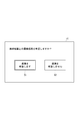
- FIG. 3 is a diagram showing an example of the selection screen. The user selects whether to perform cooperation processing with the mobile device 30 by selecting one of the two icons 51 and 52 displayed on the selection screen using the remote controller 17 or the microphone 18.
- the cooperation selection means 270 can set the presence / absence of cooperation processing in advance in the environment setting or the like, not after the destination setting (car navigation destination determination).
- the destination information transmission means 140 determines whether or not the car navigation destination matches the final destination when the route guidance of the vehicle is finished. If not, the four transmission conditions are set as described above. If it meets, send destination information.
- the destination information when transmitting the destination information, current position information indicating the current position at the time when the route guidance of the vehicle is interrupted is also transmitted. Thereby, there is no problem that the user who arrives at the destination according to the guidance of the portable device 30 gets lost when returning to the vehicle, or forgets the parking position and searches for the vehicle.
- the in-vehicle device 10 may end the route guidance.
- the owner moves to the destination without using the vehicle, so that route guidance on the in-vehicle device 10 side becomes unnecessary.
- route guidance on the in-vehicle device 10 side becomes unnecessary.
- by automatically ending the route guidance it is possible to save the trouble of manually canceling the route guidance, and the convenience of route guidance by cooperation with the mobile device 30 can be improved.
- the activation command transmission unit 150 transmits an activation command for the route guidance unit 320 (activation command for the route guidance application) to the portable device 30 before transmission of the destination information by the destination information transmission unit 140. . Since there is a possibility that the mobile device 30 is in the power OFF state, an operation start command for turning on the mobile device 30 may be transmitted together with the start command for the route guiding means 320.
- the arrival confirmation information receiving means 160 receives arrival confirmation information indicating that the mobile device 30 has arrived at the destination (final destination).
- the route guidance unit 130 ends the route guidance of the vehicle when the arrival confirmation information receiving unit 160 receives the arrival confirmation information.
- an arrival confirmation command is transmitted when it is determined that the route is being guided after the power is turned on (see S04 in FIG. 5).
- the mobile device 30 may transmit the arrival confirmation information including information on the arrival place (destination). According to this configuration, when a plurality of destinations (route points) are set on the in-vehicle device 10, the route guidance to the destination is terminated, and the route guidance is continued for other destinations. Can do.
- the destination information receiving means 170 is for receiving destination information from the portable device 30.
- the stop command transmission unit 180 transmits a stop command for the route guidance unit 320 to the portable device 30 when the destination information reception unit 170 receives the destination information. That is, the fact that the destination information is transmitted from the mobile device 30 to the in-vehicle device 10 is considered that the route guidance on the mobile device 30 side is no longer necessary, and therefore the route guidance is accompanied with the reception of the destination information.
- the stop instruction of the means 320 it is possible to save the user's trouble for stopping the route guidance function on the portable device 30 side.
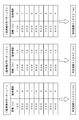
- the figure shows the result of detecting the number of parking lots for each predetermined unit distance (100 [m]) in three patterns.
- ⁇ parking lot distribution pattern 1> there are three parking lots within a radius of 100 [m] from the car navigation destination (parking position), and a radius of 200 [m] from the car navigation destination. Indicates that there are six parking lots in addition to three parking lots within 100 [m].
- the detection result from radius 100 [m] to radius 900 [m] is shown.
- the predetermined distance X is determined. First, the distance immediately before the distance at which the number of parking spaces is minimized is determined as the predetermined distance X. In the case of ⁇ parking lot distribution pattern 1>, the distance at which the number of parking lots is minimum (in this case “0”) is 500 [m], and therefore the predetermined distance X is 400 [m].
- the maximum distance is determined as the predetermined distance X. That is, in the case of ⁇ parking lot distribution pattern 2>, the predetermined distance X is 900 [m].
- the distance at which the number of parking lots is the minimum is near the car navigation destination (for example, within a distance of 300 [m]), the distance is not used as a reference, and is a certain distance (400 [m]) from the car navigation destination From the detection results, the distance that minimizes the number of parking spaces is searched between the detection results of the maximum distance 900 [m], and the distance immediately before the minimum distance is determined as the predetermined distance X. That is, in the case of ⁇ parking lot distribution pattern 3>, the predetermined distance X is 600 [m].
- the minimum value of the number of parking lots is set to “0”, but the minimum value of the number of parking lots may be determined as 1 or more.
- the predetermined distance X 300 [m]
- the predetermined distance X 500 [m].
- a destination arrival confirmation command is transmitted to the mobile device 30 (S04).
- the destination arrival confirmation command receives arrival confirmation information indicating that the mobile device 30 has arrived at the destination while the in-vehicle device 10 is in the power-off state. It is sent to confirm.
- the route guidance is terminated (S06).
- a destination information confirmation command is transmitted to the mobile device 30 (S07).
- the destination information confirmation command is transmitted to confirm whether the portable device 30 holds the destination information and makes a transfer reservation for the destination information. If the destination information is received as a result of sending the destination information confirmation command (S08: Yes), a stop command for the route guidance means 320 is sent to the portable device 30 (S09). When the destination information is not received (S08: No), the destination setting is performed on the in-vehicle device 10 side (S11).
- the destination is searched and the car navigation destination which is the destination of the in-vehicle device 10 is determined (S10).
- a parking lot nearest to the destination may be determined as the car navigation destination.
- the step of S 10 is necessary.
- the destination received in S08 or the destination set in S11 is determined as the car navigation destination.
- the car navigation destination is determined, as shown in FIG. 6, it is determined whether or not the car navigation destination is a predetermined registration point (S20).
- the routine proceeds to normal operation (S24). If the car navigation destination is not the predetermined registration point (S20: No), the vicinity of the car navigation destination is searched (S21), and the predetermined distance X is determined (S22).
- the peripheral search is performed by referring to the map information in the map database 24, and specifically, the distribution of parking lots is detected.
- the user is allowed to select whether or not a cooperation process with the portable device 30 is desired (S23).
- S23 the process proceeds to the normal operation (S24). If it is selected as desired (S23: Yes), route guidance is started (S25).
- a normal shutdown process is performed to place the in-vehicle device 10 in a power OFF state (operation stop state) (S35).
- FIG. 7 and FIG. 8 a cooperation process between the in-vehicle device 10 and the portable device 30 will be described. Since the operation of the in-vehicle device 10 has been described with reference to the flowcharts of FIGS. 5 and 6, a sequence diagram is mainly used here, focusing on the exchange of information between the in-vehicle device 10 and the portable device 30 and the operation of the portable device 30. I will explain.
- the parenthesis (S **) of the process number indicating the operation of the in-vehicle device 10 indicates the corresponding process number in the flowcharts shown in FIGS. 5 and 6.
- rounded rectangles among the rectangular frames indicating the respective steps in the sequence diagram indicate steps that involve operations by the user.
- the in-vehicle device 10 performs a destination search based on the destination information received from the mobile device 30, and determines a car navigation destination based on the search result (S44). Thereafter, route guidance is started (S45), and traveling and route guidance are continued until the engine is stopped (until route guidance is interrupted). When engine stop is detected (S46), it is determined whether or not the destination information transmission condition is satisfied (S47). If the transmission condition is satisfied (S47: Yes), as shown in FIG. The route guidance function activation command is transmitted to the portable device 30.
- the portable device 30 activates the route guidance function by receiving the activation command from the in-vehicle device 10 (S52), and stores the current position information as a return point by receiving the current position information from the in-vehicle device 10 (S53).
- the destination is stored by receiving the destination information from the in-vehicle device 10 (S54).
- the in-vehicle device 10 enters a power-off state after transmitting these pieces of information (S48).
- the portable device 30 starts route guidance to the destination (S55).
- the portable device 30 may simply display the destination information received from the in-vehicle device 10, and the owner may move to the destination based on the displayed destination information.
- the “destination information” here refers to, for example, a map on which a return point (parking position) and a final destination are displayed.
- the mobile device 30 stores therein arrival confirmation information indicating that the mobile device 30 has arrived at the destination. (S56), and the route guidance is terminated.
- the arrival confirmation information can be received when arrival confirmation is performed when the in-vehicle device 10 is activated (see S05 in FIG. 5).
- the route guidance is performed on the in-vehicle device 10 side based on the destination information set on the portable device 30 side.
- the route guidance is interrupted.
- Information transmission by the in-vehicle device 10 at the time of stopping the engine may be only the current position information. That is, by saving the destination information on the mobile device 30 side, transmission of the destination information when the route guidance is interrupted may be omitted.
- the separation distance between the current position of the vehicle and the car navigation destination is the car navigation system. It is determined whether or not the distance is within a predetermined distance X determined according to the destination. If the distance is within the predetermined distance X, the destination information is transmitted to the mobile device 30. Whether it is necessary or not can be appropriately determined according to the car navigation destination.
- the predetermined distance X is lengthened, and the distribution of parking lots such as the city center is limited to the vicinity of the destination. For example, by shortening the predetermined distance X, the convenience of route guidance by cooperation with the mobile device 30 can be enhanced.
- the in-vehicle device 10 when the in-vehicle device 10 receives the arrival confirmation information from the mobile device 30, the in-vehicle device 10 automatically ends the route guidance, so that the user operation for terminating the route guidance on the in-vehicle device 10 side can be omitted. Thereby, the convenience of route guidance by cooperation with the mobile device 30 can be further enhanced.
- the distribution status of the parking lots around the car navigation destination is searched from the map information, and the predetermined distance X is determined based on the search result, but the distance from the car navigation destination to the nearest parking lot is determined.
- the determination method is arbitrary, such as determining the predetermined distance X according to the distance or determining the predetermined distance X according to the number of parking lots existing within a certain distance from the car navigation destination.
- a predetermined distance X may be determined in advance for each car navigation destination.
- distance information storage that stores each point that can be determined as a car navigation destination and distance information to be used as a predetermined distance in association with each other.
- Means (not shown), and the predetermined distance determining means 120 refers to the distance information storage means and determines the predetermined distance based on the distance information associated with the car navigation destination when the car navigation destination is determined. Will be.
- the predetermined distance can be stored in a database, a predetermined distance having an appropriate length corresponding to the car navigation destination can be easily determined (without performing a search around the car navigation destination). be able to.
- the predetermined distance may be determined by referring to the distance information storage means when the route guidance is interrupted, instead of determining the predetermined distance along with the determination of the car navigation destination.
- the above distance information storage means may be provided in an external device (a server configured to be communicable with the in-vehicle device 10).
- the external device reads the distance information associated with the parking position from the distance information storage unit and transmits the distance information to the in-vehicle device 10.
- the in-vehicle device 10 (predetermined distance determining means 120) determines the predetermined distance based on the distance information acquired from the external device. According to this configuration, since it is not necessary to provide the distance information storage means in the in-vehicle device 10, the device configuration of the in-vehicle device 10 can be simplified and reduced in price. In addition, since the distance information storage means can be collectively managed by the external device, the update process is easy.
- the destination information is transmitted to the mobile device 30 only when the transmission condition is satisfied due to the suspension of route guidance in the in-vehicle device 10. You may enable it to transmit destination information at arbitrary timings by operation. Further, the destination information may be transmitted from the in-vehicle device 10 by a user operation on the portable device 30. In this case, the mobile device 30 transmits a destination information transmission request to the in-vehicle device 10. In response to the transmission request, the in-vehicle device 10 transmits destination information indicating a destination that is performing route guidance at that time.
- a place registered as a specific place (your company, school, home, etc.) is set as a predetermined registration point.
- a frequently visited place for example, a past predetermined number of times or more
- a car navigation destination for which the cooperation processing has been canceled in the past may be stored, and the car navigation destination may be registered as a predetermined registration point.
- the mobile device 30 determines that the mobile device 30 has actually arrived at the destination based on the current position information acquired by the GPS receiver or the like and the destination information received from the in-vehicle device 10.
- the arrival confirmation information is transmitted to the in-vehicle device 10, but the owner of the portable device 30 transmits the arrival confirmation information by performing a predetermined operation (for example, pressing an arrival confirmation button). You may do it.
- the portable device 30 determines that the mobile device 30 has arrived at the destination when a predetermined operation is performed by the user regardless of whether the mobile device 30 has actually arrived at the destination.
- the route guidance is automatically terminated, but conversely, the mobile device 30 is disconnected from the in-vehicle device 10. Even when the arrival confirmation information is received, the route guidance function on the portable device 30 side may be terminated. According to this configuration, even when the destination information is transmitted from the portable device 30 to the in-vehicle device 10 and the route guidance is taken over, it is possible to save the user's trouble of terminating the route guidance function on the portable device 30 side.
- each component in the vehicle equipment 10 and the portable device 30 shown in said embodiment can be provided by being stored in a recording medium (not shown). That is, a program for causing a computer to function as each component of the in-vehicle device 10 and the portable device 30 and a recording medium recording the program are also included in the scope of the right of the present invention. Other modifications can be made as appropriate without departing from the scope of the present invention.
Landscapes
- Engineering & Computer Science (AREA)
- Radar, Positioning & Navigation (AREA)
- Remote Sensing (AREA)
- Automation & Control Theory (AREA)
- Physics & Mathematics (AREA)
- General Physics & Mathematics (AREA)
- Navigation (AREA)
- Traffic Control Systems (AREA)
- Instructional Devices (AREA)
Abstract
携帯機器の誘導にしたがって目的地まで到着した場合に、車載機器の経路誘導を終了させるための操作を省略可能な車載機器等を提供することを課題とする。本発明の車載機器10は、目的地を設定する目的地設定手段110と、目的地に対応する駐車位置まで車両の経路誘導を行う経路誘導手段130と、車両の経路誘導の中断に伴って、目的地を示す目的地情報を、人間の経路誘導機能を有する携帯機器30に送信する目的地情報送信手段140と、携帯機器30から、目的地に到着した旨を示す到着確認情報を受信する到着確認情報受信手段160と、を備え、経路誘導手段130は、目的地情報を送信した場合、若しくは到着確認情報を受信した場合、駐車位置までの車両の経路誘導を終了する。
Description
本発明は、人間の経路誘導を行う携帯機器と連携して、車両の経路誘導を行う車載機器、経路誘導システム、車載機器の通信制御方法およびプログラムに関する。
従来、携帯機器(例えば、携帯電話)と、車載機器(例えば、カーナビゲーション装置)と、を連携させて経路誘導を行う経路誘導システムとして、車両が駐車場に入るタイミングで、車載機器が現在位置から目的地までの経路を示す経路案内情報を生成して情報センタに送信しておき、携帯機器が情報センタから経路案内情報を受信して、目的地までの経路案内を行うものが知られている(例えば、特許文献1)。この経路誘導システムによれば、例えば目的地周辺に駐車場が無い場合(目的地まで車両を誘導することができない場合)でも、残りの経路は、携帯機器の誘導にしたがって歩行すれば良いため、初めての場所でも道に迷うことが無く、便利である。
一方、一般的な車載機器は、目的地まで到着していない状態で車両のエンジンが停止された場合、一時的に経路誘導が中断された状態となり、エンジン再開時には、再度現在位置(駐車場)から目的地までの経路誘導を開始するようになっている。したがって、上記の経路誘導システムでは、携帯機器の誘導にしたがって目的地まで到着したにも関わらず、駐車場まで戻って車両の運転を再開すると、車載機器の経路誘導が再開されてしまう。このため、ユーザは、車両に戻ってから、手動で経路誘導を終了させる必要があり、その操作が煩わしいといった問題があった。
本発明は、上記の問題点に鑑み、携帯機器の誘導にしたがって目的地まで到着した場合に、車載機器の経路誘導を終了させるための操作を省略可能な車載機器、経路誘導システム、車載機器の通信制御方法およびプログラムを提供することを目的とする。
本発明の車載機器は、目的地を設定する目的地設定手段と、目的地に対応する駐車位置まで、車両の経路誘導を行う経路誘導手段と、目的地を示す目的地情報を、携帯機器に送信する目的地情報送信手段と、携帯機器から、目的地に到着した旨を示す到着確認情報を受信する到着確認情報受信手段と、を備え、経路誘導手段は、目的地情報を送信した場合、若しくは到着確認情報を受信した場合、駐車位置までの車両の経路誘導を終了することを特徴とする。
本発明の車載機器の通信制御方法は、人間の経路誘導を行う携帯機器と連携して、車両の経路誘導を行う車載機器の通信制御方法であって、車載機器が、目的地を設定するステップと、目的地に対応する駐車位置まで、車両の経路誘導を行うステップと、目的地を示す目的地情報を、携帯機器に送信するステップと、携帯機器から、目的地に到着した旨を示す到着確認情報を受信するステップと、目的地情報を送信した後、若しくは到着確認情報を受信した後、駐車位置までの車両の経路誘導を終了するステップと、を実行することを特徴とする。
これらの構成によれば、携帯機器からの到着確認情報の受信に伴って、車両の経路誘導を終了するため、車載機器側における経路誘導を終了させるための操作を省略することができる。そもそも、車載機器側で設定した目的地を示す目的地情報を携帯機器に送信するということは、目的地まで車両移動が不可能な場合と考えられるが、そのような場合は携帯機器の経路誘導機能を用いて目的地まで移動する。したがって、目的地情報を携帯機器に送信した場合、若しくは携帯機器から目的地に到着した旨を示す到着確認情報を受信した場合は、車載機器側における経路誘導が不要となるため、自動的に経路誘導を終了することで、経路誘導を手動で解除する手間を省くことができ、携帯機器との連携による経路誘導の利便性を高めることができる。
なお、「到着確認情報」は、携帯機器(携帯機器の所持者)が実際に目的地に到着したことを示す情報であっても良いし、携帯機器の所持者が所定の操作を行ったことを示す情報であっても良い。前者の場合、携帯機器は、GPS受信機等によって取得した現在位置情報と、車載機器から受信した目的地情報と、に基づいて、実際に目的地に到着したか否かを判別できる。また、後者の場合は、実際に目的地に到着したか否かに関わらず、ユーザによる所定の操作が行われた場合に、目的地に到着したことを判別できる。つまり、車載機器は、携帯機器によるこれらの判別結果を、「到着確認情報」として受信できる。
また、「車載機器」とは、車両に固定して設けられる機器だけでなく、車両に着脱可能に設けられる機器(ポータブル型車載機器)も含む概念である。
また、「駐車位置」とは、車載機器の目的地を指すものであるが、「目的地」と「駐車位置」は、同一の地点を示すものであっても良い。
なお、「到着確認情報」は、携帯機器(携帯機器の所持者)が実際に目的地に到着したことを示す情報であっても良いし、携帯機器の所持者が所定の操作を行ったことを示す情報であっても良い。前者の場合、携帯機器は、GPS受信機等によって取得した現在位置情報と、車載機器から受信した目的地情報と、に基づいて、実際に目的地に到着したか否かを判別できる。また、後者の場合は、実際に目的地に到着したか否かに関わらず、ユーザによる所定の操作が行われた場合に、目的地に到着したことを判別できる。つまり、車載機器は、携帯機器によるこれらの判別結果を、「到着確認情報」として受信できる。
また、「車載機器」とは、車両に固定して設けられる機器だけでなく、車両に着脱可能に設けられる機器(ポータブル型車載機器)も含む概念である。
また、「駐車位置」とは、車載機器の目的地を指すものであるが、「目的地」と「駐車位置」は、同一の地点を示すものであっても良い。
上記に記載の車載機器において、目的地情報送信手段は、車両の経路誘導の中断に伴って、目的地情報を送信することを特徴とする。
一般的に、目的地まで車両移動が不可能と考えられる場合は、車両を駐車して、残りの経路を別の交通手段を使って移動するため、車両の経路誘導の中断(車両のエンジン停止など)をトリガとすることで、適切なタイミングで、携帯機器に目的地情報を送信することができる。尚、経路誘導の中断とは、具体的には、車両のエンジンが停止したときや車載機器がOFF動作されたとき、又は車載機器が経路誘導中断指示を受け取った場合である。
上記に記載の車載機器において、目的地情報送信手段による目的地情報の送信前に、携帯機器に対して、人間の経路誘導機能の起動命令を送信する起動命令送信手段をさらに備えたことを特徴とする。
この構成によれば、車載機器から目的地情報が送信される前に、予め携帯機器側で経路誘導機能(経路誘導アプリケーション)を起動させておくといったユーザの手間を省くことができる。
上記に記載の車載機器において、携帯機器は、目的地を設定する目的地設定機能をさらに有しており、携帯機器から、目的地設定機能により設定された目的地情報を受信する目的地情報受信手段と、目的地情報の受信に伴い、携帯機器に対して、経路誘導機能の停止命令を送信する停止命令送信手段と、をさらに備え、目的地設定手段は、受信した目的地情報に基づいて、目的地を設定することを特徴とする。
この構成によれば、携帯機器側で設定された目的地情報に基づいて経路誘導を行うことができる。これにより、運転者は乗車前に予め携帯機器に目的地情報を設定しておくことができ、搭乗直後に経路誘導を開始させることができる。また、携帯機器から車載機器に目的地情報が送信されるということは、携帯機器側での経路誘導が不要になったと考えられるため、目的地情報の受信に伴って経路誘導機能の停止命令を携帯機器に送信することで、携帯機器側で経路誘導機能を停止させるためのユーザの手間を省くことができる。
上記に記載の車載機器において、携帯機器との連携処理を行うか否かを選択する連携選択手段をさらに備え、目的地情報送信手段は、連携選択手段により連携処理を行うことが選択された場合に、目的地情報を送信することを特徴とする。
この構成によれば、ユーザのニーズに応じて、携帯機器との連携処理を行うか否かを選択することができる。
上記に記載の車載機器において、現在位置を示す現在位置情報を取得する現在位置情報取得手段をさらに備え、目的地情報送信手段は、車両の経路誘導が中断された時点の現在位置と駐車位置との離間距離が、所定距離以内である場合に、目的地情報を送信することを特徴とする。
この構成によれば、車両の経路誘導が中断された時点の現在位置と駐車位置(車載機器の目的地)との離間距離が、所定距離以内である場合に目的地情報を送信するため、無駄な目的地情報の送信を防止することができる。つまり、車両の経路誘導が中断された時点の現在位置(車両が駐車された位置)が、駐車位置から遠く離れている場合(残りの経路を徒歩で移動するには不可能と考えられる場合)は、寄り道や休憩で車両が駐車されたものと判断できるため、このような場合、携帯機器に対して目的地情報を送信しないことで、携帯機器との連携による経路誘導の利便性を高めることができる。
上記に記載の車載機器において、目的地情報送信手段は、目的地情報と共に、車両の経路誘導が中断された時点の現在位置を示す現在位置情報を送信することを特徴とする。
この構成によれば、車両の経路誘導が中断された時点の現在位置を示す現在位置情報を送信するため、車両の駐車位置などを携帯機器に登録しておくことができる。これにより、目的地まで到着したユーザが、車両まで戻るときに道に迷ったり、駐車位置を忘れて車両を探し回ったりする必要がない。
上記に記載の車載機器において、経路誘導手段は、車両の経路誘導中における、車載機器の電源オフ操作、または車両のエンジン停止をトリガとして、経路誘導を中断し、目的地情報送信手段は、電源オフ操作またはエンジン停止を起因とする車載機器の動作停止前に、目的地情報を送信することを特徴とする。
この構成によれば、車載機器の電源オフ操作や車両のエンジン停止によって、容易且つ確実に経路誘導の中断を検出することができる。また、電源オフ操作またはエンジン停止を起因とする車載機器の動作停止前に、目的地情報を送信するため、目的地情報が未送信となることがない。
上記に記載の車載機器において、目的地情報送信手段は、駐車位置が、予め登録された所定登録地点以外の場合に、目的地情報を送信することを特徴とする。
この構成によれば、駐車位置が、予め登録された所定登録地点の場合は、目的地情報を送信しないため、不要な情報送信を防止することができる。例えば、所定登録地点が、自分の学校や会社または自宅の場合、それらの場所まで携帯機器による経路誘導が必要となる状況は考え難い。つまり、自宅等の近くで(目的地から所定距離以内で)経路誘導が中断された場合でも、携帯機器に目的地情報が送信されることがないため、便利である。
本発明の経路誘導システムは、上記に記載の車載機器と、携帯機器と、から成ることを特徴とする。
本発明のプログラムは、コンピュータに、上記に記載の車載機器の通信制御方法における各ステップを実行させるためのものであることを特徴とする。
これらの構成によれば、携帯機器の誘導にしたがって目的地まで到着した場合に、車載機器の経路誘導を終了させるための操作を省略可能な経路誘導システムまたはプログラムを提供することができる。
以下、本発明の一実施形態に係る車載機器、経路誘導システム、車載機器の通信制御方法およびプログラムについて説明する。図1は、車載機器10の制御ブロック図である。同図に示すように、車載機器10は、GPS(Global Positioning System)受信機11、アンテナ12、自立航法センサ13、ディスプレイ14、スピーカー15、リモコン受光器16、リモコン17、マイク18、通信部19、制御部20、地図データベース24、地点登録データベース25、電源ボタン26および接続バス28を備えている。
GPS(Global Positioning System)受信機11は、アンテナ12を介してGPS情報(位置情報および時刻情報を含む)を受信する。自立航法センサ13は、角度センサおよび距離センサから成り(いずれも、図示省略)、GPS受信機11との組み合わせにより、車両の現在位置を特定するために利用される。ディスプレイ14は、経路案内情報を表示すると共に、必要に応じて各種設定・選択画面を表示する。スピーカー15は、音声による経路案内情報を出力する。
リモコン受光器16は、リモコン17から操作信号を取得する。リモコン17は、操作子を用いて各種操作を行うものであり、主に上記の各種設定・選択画面に対する情報入力に用いられる。マイク18は、携帯機器30が携帯電話の場合、ハンズフリー通話を行うために用いられる。また、マイク18は、ハンズフリーによる音声入力によって各種操作を行うためにも用いられる。
通信部19は、携帯機器30と近距離無線通信や赤外線通信を行う。なお、近距離無線通信の通信方式は、Bluetooth(登録商標)や、ZigBee(登録商標)、UWB(Ultra Wide Band)を適用しても良いし、Wi‐Fi(登録商標)等のIEEE802.11無線を適用しても良い。また、通信部19は、これら非接触通信ではなく、バス接続などの有線通信を行っても良い。制御部20は、CPU(Central
Processing Unit)21、ROM(Read Only Memory)22およびRAM(Random Access Memory)23から成る。CPU21は、中央処理装置であり、各種演算処理を行う。ROM22は、CPU21が各種演算処理を行うための制御プログラムを記憶し、RAM23は、CPU21が各種演算処理を行う際のワークエリアとして用いられる。
Processing Unit)21、ROM(Read Only Memory)22およびRAM(Random Access Memory)23から成る。CPU21は、中央処理装置であり、各種演算処理を行う。ROM22は、CPU21が各種演算処理を行うための制御プログラムを記憶し、RAM23は、CPU21が各種演算処理を行う際のワークエリアとして用いられる。
地図データベース24は、経路案内を行うための地図情報を記憶する。地点登録データベース25は、地点登録された地点登録情報を記憶するものであり、頻繁に行く場所や過去に目的地設定された場所などが登録される。なお、本実施形態の車載機器10は、特定の場所(自分の会社や学校、自宅など)を他の登録地点と差別化して登録しておくことができるようになっており、当該特定の場所を、以下「所定登録地点」と称する。
電源ボタン26は、車載機器10の動作をON・OFFするための操作子である。なお、電源ボタン26は車両エンジンスタートキーの位置(例:アクセサリーON)と連動しON・OFFされてもよい。また、車載機器10の電源は車両のバッテリーと直接接続されており、エンジンやエンジンキーの状態に関係なく通電されている。なお、以下の説明において、「エンジン停止」とは、車両のエンジン停止状態を指すものであり、車載機器10の動作停止状態を指すものではない。つまり、車載機器10は、車両からのエンジン停止信号を受けて、シャットダウン処理を行い、その後動作停止状態に移行する。同様に、電源ボタン26によりOFF操作が行われた場合も、シャットダウン処理を行った後、動作停止状態に移行する。
次に、図2を参照し、車載機器10および携帯機器30から成る経路誘導システムSYの機能構成について説明する。携帯機器30は、主な機能構成として、目的地設定手段310(目的地設定機能)、経路誘導手段320(経路誘導機能)および通信手段330を有している。
目的地設定手段310は、経路誘導の目的地(以下、「最終目的地」とも称する)を設定するものである。なお、設定した目的地は、目的地情報として、車載機器10に送信することができる。これにより、運転者は乗車前に携帯機器30を用いて目的地情報を設定しておくことができ、搭乗後、当該目的地情報を車載機器10に送信することで、搭乗直後に経路誘導を開始させることができるといった利点がある。なお、車載機器10に送信する目的地情報は、任意の地点を示す緯度・経度情報そのものではなく、施設名や電話番号などであっても良い。
経路誘導手段320は、目的地設定手段310により設定された目的地への経路誘導を行うためのものである。この場合、経路誘導は、経路案内情報の表示および/または経路案内情報の音声出力により行われる。したがって、経路誘導手段320は、表示手段および音声出力手段を含む概念である。なお、経路誘導手段320は、車載機器10から送信された目的地情報に基づく目的地への経路誘導も可能である。詳細については、後述する。
通信手段330は、車載機器10との情報の入出力(送受信)を行うためのものであり、主に目的地情報の送受信や、到着確認情報(携帯機器30の所持者が実際に目的地に到着したことを示す情報)の送信に用いられる。なお、到着確認情報は、携帯機器30が、GPS受信機等によって取得した現在位置情報に基づいて、車載機器10から受信した目的地情報により特定される目的地に実際に到着したと判定した場合に、送信されるものとする。
続いて、車載機器10側の機能構成について説明する。車載機器10は、主な機能構成として、目的地設定手段110、所定距離決定手段120、経路誘導手段130、目的地情報送信手段140、起動命令送信手段150、到着確認情報受信手段160、目的地情報受信手段170、停止命令送信手段180、地図情報記憶手段210、周辺情報検索手段220、現在位置情報取得手段230、離間距離判別手段240、所定施設判別手段250、地点登録情報記憶手段260、連携選択手段270および所定登録地点判別手段280を有している。
目的地設定手段110は、経路誘導の目的地(最終目的地)を設定するものであり、制御部20、ディスプレイ14、スピーカー15、リモコン17およびマイク18を主要構成要素とする。目的地設定手段110により設定した目的地を示す目的地情報は、上記の通り、携帯機器30に送信することが可能である。また、目的地設定手段110は、携帯機器30から受信した目的地情報に基づいて、目的地を設定することも可能である。
所定距離決定手段120は、携帯機器30に対して目的地情報を送信する送信条件の一つである「離間距離」を判別するための所定距離Xを決定するものであり、制御部20を主要構成要素とする。本実施形態の車載機器10は、目的地までの車両移動が困難な場合を想定して、経路誘導が中断されたとき、携帯機器30に対して目的地情報を送信する(目的地までの残りの経路の経路誘導を指令する)。但し、休憩のために車両停止した場合には、むやみに携帯機器30に対して経路誘導を指令しないようになっている。したがって、休憩のための車両停止か、目的地までの車両移動が困難なことによる車両停止かを、停車位置が目的地から所定距離Xを超えるか否かによって判定している。
ここで、所定距離決定手段120は、周辺情報検索手段220(主要構成要素:制御部20)の検索結果に基づいて、所定距離Xを決定する。つまり、周辺情報検索手段220は、後述する経路誘導手段130により決定された駐車位置(以下「カーナビ目的地」とも称する)の決定に伴って、当該駐車位置の周辺情報を、地図情報記憶手段210(主要構成要素:地図データベース24)に記憶された地図情報から検索する。具体的には、地図情報から、カーナビ目的地の周辺における駐車場(駐車施設)の分布状況を検索し、所定距離決定手段120は、その分布が広範囲に渡る場合、長い所定距離を決定する。また、駐車場の分布がカーナビ目的地近辺に集中している場合は、短い所定距離を決定する。なお、所定距離Xの決定方法の詳細については、図4を参照して後述する。また、「カーナビ目的地」とは、任意の地点を示す緯度・経度情報そのものだけでなく、マップコード、住所、電話番号など、間接的に任意の地点を特定できる情報を指す。
経路誘導手段130は、目的地設定手段110(または携帯機器30側の目的地設定手段310)により設定された目的地に対応する駐車位置をカーナビ目的地として決定し、当該カーナビ目的地までのルート探索および車両の経路誘導(経路誘導表示および音声案内)を行うものであり、GPS受信機11、自立航法センサ13、ディスプレイ14、スピーカー15、制御部20および地図データベース24を主要構成要素とする。なお、経路誘導手段130が決定するカーナビ目的地(駐車位置)は、目的地設定手段110により設定された最終目的地と紐付けされた位置でも良いし、目的地設定手段110により設定された最終目的地そのものであっても良い。なお、経路誘導手段130は、車両の経路誘導中における、車載機器10の電源オフ操作(電源ボタン26の押下)、または車両のエンジン停止をトリガとして、経路誘導を中断する。
目的地情報送信手段140は、目的地設定手段110により設定された目的地を示す目的地情報を携帯機器30に送信するものであり、制御部20および通信部19を主要構成要素とする。なお、以下に示す起動命令送信手段150、到着確認情報受信手段160、目的地情報受信手段170および停止命令送信手段180についても、制御部20および通信部19を主要構成要素とする。目的地情報送信手段140は、4つの送信条件を満たした場合、目的地情報を送信する。4つの送信条件とは、「離間距離」、「所定施設」、「所定登録地点」および「連携処理」である。
まず、送信条件「離間距離」について説明する。目的地情報送信手段140は、離間距離判別手段240(主要構成要素:制御部20)により、車両の現在位置とカーナビ目的地との離間距離が所定距離X以内であると判別された場合に、携帯機器30に対して目的地情報を送信する。ここで、離間距離判別手段240は、経路誘導手段130による車両の経路誘導が中断されたときに、車両の現在位置とカーナビ目的地との離間距離が、所定距離決定手段120により決定された所定距離X以内であるか否かを判別するものである。なお、現在位置は、現在位置情報取得手段230(主要構成要素:GPS受信機11)により取得した現在位置情報に基づいて特定される。
続いて、送信条件「所定施設」について説明する。目的地情報送信手段140は、所定施設判別手段250(主要構成要素:制御部20)の判別結果に基づいて、経路誘導が中断された時点における現在位置(現在位置情報取得手段230により取得した現在位置情報に基づく)が所定施設内ではない場合に、目的地情報を送信する。ここで、所定施設判別手段250は、経路誘導手段130による車両の経路誘導が中断されたときに、車両の現在位置が所定施設内であるか否かを判別するものである。なお、所定施設とは、サービスエリアや道の駅など、主に運転休憩を目的として利用される休憩施設を指す。つまり、車両の経路誘導が中断された時点の現在位置がサービスエリアの場合、サービスエリアをカーナビ目的地とすることは少ないため、そのような施設内で車両の経路誘導が中断された場合は、休憩であると判定して、目的地情報を送信しない。したがって、目的地の近くで(カーナビ目的地から所定距離X以内で)サービスエリアに立ち寄った場合でも、携帯機器30に無駄な情報(目的地情報)が送信されることがないため、便利である。
続いて、送信条件「所定登録地点」について説明する。目的地情報送信手段140は、所定登録地点判別手段280(主要構成要素:制御部20)の判別結果に基づき、カーナビ目的地が、予め登録された所定登録地点以外の場合に、目的地情報を送信する。つまり、所定登録地点判別手段280は、カーナビ目的地が予め登録された所定登録地点の場合、車載機器10を携帯機器30と連係動作しない通常動作へ移行させるようになっている。カーナビ目的地が所定登録地点であるか否かは、地点登録情報記憶手段260(主要構成要素:地点登録データベース25)の参照結果に基づく。つまり、所定登録地点(自分の学校や会社または自宅などの特定の場所)については、それらの場所まで携帯機器30による経路誘導が必要となる状況は考え難い。したがって、自宅等の近くで(カーナビ目的地から所定距離X以内で)経路誘導を中断した場合は、携帯機器30に目的地情報が送信されることがないため、便利である。
続いて、送信条件「連携処理」について説明する。目的地情報送信手段140は、連携選択手段270(主要構成要素:制御部20、ディスプレイ14、スピーカー15、リモコン17およびマイク18)により連携処理を行うことが選択された場合のみ、目的地情報を送信する。ここで、連携選択手段270は、目的地設定手段110による目的地設定後、または目的地情報受信手段170による目的地情報の受信後に、携帯機器30との連携処理を行うか否かの選択をユーザに促すための選択画面をディスプレイ14に表示したり、スピーカー15から選択情報を出力したりするものである。図3は、その選択画面の一例を示す図である。ユーザは、選択画面に表示された2つのアイコン51,52から、リモコン17やマイク18を用いていずれかを選択することにより、携帯機器30との連携処理を行うか否かを選択する。なお、連携選択手段270は、目的地設定(カーナビ目的地決定)後ではなく、環境設定等において、予め連携処理の有無を設定しておくことも可能である。
また、目的地情報送信手段140は、車両の経路誘導を終了したとき、カーナビ目的地が最終目的地と一致するか否かを判別し、一致しない場合は、上記の通り、4つの送信条件を満たした場合に、目的地情報を送信する。なお、本実施形態では、目的地情報を送信する際、車両の経路誘導が中断された時点の現在位置を示す現在位置情報も送信する。これにより、携帯機器30の誘導にしたがって目的地まで到着したユーザが、車両まで戻るときに道に迷ったり、駐車位置を忘れて車両を探し回ったりするといった問題がない。
また、車載機器10が携帯機器30に目的地情報を送信した後、車載機器10は経路誘導を終了するようにしてもよい。目的地情報が携帯機器30へ送信された場合、目的地へは所持者が車両を用いずに移動するため、車載機器10側における経路誘導が不要となる。このような場合、自動的に経路誘導を終了することで、経路誘導を手動で解除する手間を省くことができ、携帯機器30との連携による経路誘導の利便性を高めることができる。
起動命令送信手段150は、目的地情報送信手段140による目的地情報の送信前に、携帯機器30に対して、経路誘導手段320の起動命令(経路誘導アプリケーションの起動命令)を送信するものである。なお、携帯機器30が電源OFF状態である可能性もあるため、経路誘導手段320の起動命令と共に、携帯機器30を電源ON状態とするための動作起動命令を送信しても良い。
到着確認情報受信手段160は、携帯機器30から、目的地(最終目的地)に到着した旨を示す到着確認情報を受信するものである。なお、上記の経路誘導手段130は、到着確認情報受信手段160による到着確認情報を受信した場合、車両の経路誘導を終了する。以下の説明では、電源ON後、経路誘導中であると判別した場合に到着確認命令を送信するものとする(図5のS04参照)。
なお、携帯機器30は、到着確認情報に、到着した場所(目的地)に関する情報を含めて送信するようにしても良い。この構成によれば、車載機器10側で複数の目的地(経由地)が設定されている場合、その目的地までの経路誘導を終了し、その他の目的地については、経路誘導を続行することができる。
目的地情報受信手段170は、携帯機器30から目的地情報を受信するものである。また、停止命令送信手段180は、目的地情報受信手段170による目的地情報の受信に伴い、携帯機器30に対して、経路誘導手段320の停止命令を送信するものである。つまり、携帯機器30から車載機器10に対して目的地情報が送信されるということは、携帯機器30側での経路誘導が不要になったと考えられるため、目的地情報の受信に伴って経路誘導手段320の停止命令を携帯機器30に送信することで、携帯機器30側で経路誘導機能を停止させるためのユーザの手間を省くことができる。
次に、図4を参照し、所定距離Xの決定方法の詳細について説明する。同図は、所定の単位距離(100〔m〕)毎に駐車場の数を検出した結果を3つのパターンで示したものである。例えば、<駐車場分布パターン1>の場合、カーナビ目的地(駐車位置)から半径100〔m〕以内の範囲に、3つの駐車場が存在し、カーナビ目的地から半径200〔m〕以内の範囲には、100〔m〕以内の3つの駐車場に加え、6つの駐車場が存在することを示している。また、同図の例では、半径100〔m〕から半径900〔m〕までの検出結果を示している。
ここで、所定距離Xの決定方法であるが、まず駐車場の数が最小となる距離の一つ前の距離を所定距離Xとして決定する。<駐車場分布パターン1>の場合、駐車場の数が最小(この場合「0」)となる距離は、500〔m〕であるから、所定距離Xは、400〔m〕となる。
また、駐車場の数が最小となる距離が存在しない場合は、最大距離を所定距離Xとして決定する。つまり、<駐車場分布パターン2>の場合、所定距離Xは、900〔m〕となる。
さらに、駐車場の数が最小となる距離がカーナビ目的地付近(例えば、距離300〔m〕以内)の場合、その距離は基準とせず、カーナビ目的地から一定距離(400〔m〕)離れた検出結果から最大距離900〔m〕の検出結果の間で、駐車場の数が最小となる距離を検索し、最小となる距離の一つ前の距離を所定距離Xとして決定する。つまり、<駐車場分布パターン3>の場合、所定距離Xは、600〔m〕となる。
なお、上記の例では、駐車場の数の最小値を「0」としたが、駐車場の数の最小値を、1以上として判断しても良い。この場合、<駐車場分布パターン1>の例では、所定距離X=300〔m〕、<駐車場分布パターン3>の例では、所定距離X=500〔m〕となる。
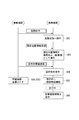
次に、図5および図6のフローチャートを参照し、車載機器10の動作を説明する。図5に示すように、車載機器10は、電源ボタン26による操作、若しくは車両のエンジン始動により、電源ON状態になると(S00)、携帯機器30が接続されているか否か(通信が確立されているか否か)を判別する(S01)。携帯機器30が接続されていない場合は(S01:No)、通常動作(車載機器10単体による動作)へ移行する(S02)。
また、携帯機器30が接続されている場合は(S01:Yes)、経路誘導中であるか否かを判別する(S03)。経路誘導中である場合は(S03:Yes)、携帯機器30に対して、目的地到着確認命令を送信する(S04)。当該目的地到着確認命令は、車載機器10が電源OFF状態の間に、携帯機器30が目的地に到着している可能性があるため、目的地に到着したことを示す到着確認情報の受信を確認するために送信するものである。目的地到着確認命令を送信した結果、目的地に到着していることを確認した場合は(S05:Yes)、経路誘導を終了する(S06)。
一方、S03において経路誘導中でないと判別した場合は(S03:No)、携帯機器30に対し、目的地情報確認命令を送信する(S07)。当該目的地情報確認命令は、携帯機器30が目的地情報を保持しており、当該目的地情報の転送予約を行っているか否かを確認するために送信するものである。目的地情報確認命令を送信した結果、目的地情報を受信した場合は(S08:Yes)、携帯機器30に対して、経路誘導手段320の停止命令を送信する(S09)。また、目的地情報を受信しなかった場合は(S08:No)、車載機器10側で目的地設定を行う(S11)。
目的地情報の受信、または目的地設定が行われると、目的地検索を行い、車載機器10の目的地であるカーナビ目的地を決定する(S10)。このとき、目的地の最寄りの駐車場などをカーナビ目的地として決定してもよい。つまり、目的地によっては、設定された目的地そのものではなく、目的地に併設された駐車場を車載機器10の目的地として設定する場合もあるため、S10の工程が必要となる。また目的地に併設された駐車場をカーナビ目的地として設定しない場合は、S08で受信した目的地又はS11で設定した目的地をカーナビ目的地として決定する。
カーナビ目的地を決定すると、図6に示すように、カーナビ目的地が、所定登録地点であるか否かを判別する(S20)。ここで、カーナビ目的地が、所定登録地点である場合は(S20:Yes)、通常動作へ移行する(S24)。また、カーナビ目的地が、所定登録地点でない場合は(S20:No)、カーナビ目的地の周辺検索を行い(S21)、所定距離Xを決定する(S22)。周辺検索は、地図データベース24内の地図情報を参照することにより行い、具体的には駐車場の分布を検出する。
所定距離Xを決定すると(S22)、携帯機器30との連携処理を希望するか否かをユーザに選択させる(S23)。ここで、希望しないと選択された場合は(S23:No)、通常動作へ移行する(S24)。また、希望すると選択された場合は(S23:Yes)、経路誘導を開始する(S25)。
その後、車両のエンジン停止等により経路誘導が中断されると(S26:Yes)、カーナビ目的地に到着したか否かを判別する(S27)。ここで、カーナビ目的地に到着した場合は(S27:Yes)、経路誘導を終了する(S28)。また、カーナビ目的地に到着していない場合は(S27:No)、現在位置がサービスエリア等の所定施設であるか否かを判別する(S30)。さらに、現在位置が所定施設でない場合は(S30:No)、カーナビ目的地から、所定距離X〔m〕以内であるか否かを判別する(S31)。ここで、現在位置が所定施設である場合(S30:Yes)、並びに、カーナビ目的地から所定距離X〔m〕以内でない場合は(S31:No)、目的地情報等の送信を行うことなく、通常のシャットダウン処理を行って、車載機器10を電源OFF状態(動作停止状態)とする(S35)。
一方、カーナビ目的地に到着して経路誘導を終了した場合(S27:Yes,S28)、カーナビ目的地が目的地(S08,S11の目的地)であるかどうか判別する(S29)。カーナビ目的地が目的地である場合は(S29:Yes)、それ以上経路誘導の必要は無いので、目的地情報等の送信を行うことなく、通常のシャットダウン処理を行って、車載機器10を電源OFF状態(動作停止状態)とする(S35)。一方、カーナビ目的地が目的地(S08,S11の目的地)でない場合(S29:No)、若しくは、現在位置が所定施設ではなく(S30:No)且つカーナビ目的地から所定距離X〔m〕以内の場合は(S31:Yes)、携帯機器30に対して、経路誘導手段320の起動命令を送信する(S32)。その後、携帯機器30に対して、現在位置情報(駐車場など)を送信し(S33)、さらに目的地情報(この場合は、S08,S11の目的地を示す情報)を送信して(S34)、通常のシャットダウン処理を行った後、車載機器10を電源OFF状態(動作停止状態)とする(S35)。
次に、図7および図8を参照し、車載機器10と携帯機器30との連携処理について説明する。なお、車載機器10の動作については図5および図6のフローチャートにて説明したため、ここでは車載機器10および携帯機器30間における情報の授受と、携帯機器30の動作を中心に、シーケンス図を用いて説明する。また、図7および図8において、車載機器10の動作を示す工程番号の括弧書き(S**)は、図5および図6に示したフローチャートの対応する工程番号を指す。また、シーケンス図の各工程を示す矩形枠のうち角丸のものは、ユーザによる操作を伴う工程であることを示している。
図7に示すように、車両のエンジン始動により車載機器10が電源ON状態となると(S41)、携帯機器30の接続を確認し(S42)、接続されている場合は(S42:Yes)、経路誘導中であるか否かを判別する(S43)。ここで、経路誘導中でない場合は(S43:No)、携帯機器30に対して目的地情報確認命令を送信する。これに対し、携帯機器30が設定した目的地情報を送信すると、車載機器10は、携帯機器30に対して経路誘導機能の停止命令を送信する。その後、携帯機器30は、経路誘導機能(経路誘導手段320)を停止する(S51)。
車載機器10は、携帯機器30から受信した目的地情報に基づいて、目的地検索を行い、その検索結果に基づいてカーナビ目的地を決定する(S44)。その後、経路誘導を開始し(S45)、エンジン停止となるまで(経路誘導が中断されるまで)、走行および経路誘導を続行する。エンジン停止を検知すると(S46)、目的地情報の送信条件が成立しているか否かを判別し(S47)、送信条件が成立している場合は(S47:Yes)、図8に示すように、携帯機器30に対して経路誘導機能の起動命令を送信する。
携帯機器30は、車載機器10からの起動命令の受信により、経路誘導機能を起動し(S52)、車載機器10からの現在位置情報の受信により、現在位置情報を帰着地点として保存し(S53)、車載機器10からの目的地情報の受信により、目的地を保存する(S54)。車載機器10は、これらの情報の送信後、電源OFF状態となる(S48)。携帯機器30は、目的地を保存した後、当該目的地への経路誘導を開始する(S55)。なお、本実施例では携帯機器30が経路誘導機能を有することを想定しているが、必ずしもその必要はない。例えば携帯機器30は車載機器10から受信した目的地情報を単に表示し、所持者は表示された目的地情報に基づいて目的地まで移動しても良い。ここで言う「目的地情報」とは、例えば帰着地点(駐車位置)と最終目的地とが表示された地図を指す。
携帯機器30の所持者が、経路誘導にしたがって移動(歩行)し、最終的に目的地に到着すると、携帯機器30は、目的地に到着した旨を示す到着確認情報を携帯機器30内部に保存し(S56)、経路誘導を終了する。なお、到着確認情報は、車載機器10起動時に到着確認を行った際(図5のS05参照)に受信可能である。
なお、図7および図8に示したシーケンス図では、携帯機器30側で設定された目的地情報に基づいて、車載機器10側で経路誘導を行っているが、この場合、経路誘導が中断した際(エンジン停止の際)の、車載機器10による情報送信は、現在位置情報のみとしても良い。つまり、携帯機器30側で目的地情報を保存しておくことで、経路誘導が中断した際の目的地情報の送信を省略しても良い。
以上説明したとおり、本実施形態の経路誘導システムSYによれば、車載機器10側で経路誘導が中断されたとき、車両の現在位置とカーナビ目的地(駐車位置)との離間距離が、当該カーナビ目的地に応じて決定された所定距離X以内であるか否かを判別し、所定距離X以内である場合に、携帯機器30に対して目的地情報を送信するため、目的地情報の送信が必要であるか否かを、カーナビ目的地に応じて適切に判定することができる。これにより、例えば観光地など駐車場の分布が広範囲に広がるようなカーナビ目的地であれば、所定距離Xを長くし、都心部など駐車場の分布が目的地近辺に限られるカーナビ目的地であれば、所定距離Xを短くすることで、携帯機器30との連携による経路誘導の利便性を高めることができる。
また、車載機器10は、携帯機器30から到着確認情報を受信した場合、自動的に経路誘導を終了するため、車載機器10側における経路誘導を終了させるためのユーザ操作を省略することができる。これにより、携帯機器30との連携による経路誘導の利便性をさらに高めることができる。
なお、上記の実施形態では、地図情報からカーナビ目的地周辺における駐車場の分布状況を検索し、その検索結果に基づいて、所定距離Xを決定したが、カーナビ目的地から最寄りの駐車場までの距離に応じて所定距離Xを決定したり、カーナビ目的地から一定距離以内に存在する駐車場の数に応じて所定距離Xを決定したりするなど、その決定方法は任意である。
また、地図情報から目的地周辺を検索するのではなく、予めカーナビ目的地毎に所定距離Xを定めておいても良い。この場合、図2に示した機能構成における周辺情報検索手段220に代えて、カーナビ目的地として決定可能な各地点と、所定距離として用いるための距離情報と、をそれぞれ関連付けて記憶した距離情報記憶手段(図示省略)を備え、所定距離決定手段120は、カーナビ目的地の決定に伴って、距離情報記憶手段を参照し、当該カーナビ目的地に関連付けられた距離情報に基づいて、所定距離を決定することとなる。この構成によれば、所定距離をデータベース化しておくことができるため、容易に(カーナビ目的地の周辺検索などを行うことなく)、カーナビ目的地に応じた適切な長さの所定距離を決定することができる。なお、カーナビ目的地の決定に伴って所定距離を決定するのではなく、経路誘導が中断された時点で距離情報記憶手段を参照して、所定距離を決定するようにしても良い。
また、上記の距離情報記憶手段を、外部装置(車載機器10と通信可能に構成されたサーバ)に備えておいても良い。この場合、車載機器10から外部装置に対して駐車位置を送信すると、外部装置は当該駐車位置に関連付けられた距離情報を距離情報記憶手段から読み出し、車載機器10に送信する。車載機器10(所定距離決定手段120)は、外部装置から取得した距離情報に基づいて、所定距離を決定する。この構成によれば、車載機器10内に距離情報記憶手段を備える必要がないため、車載機器10の装置構成の簡素化および低廉化を図ることができる。また、外部装置で距離情報記憶手段を一括管理できるため、更新処理が容易である。
また、上記の実施形態では、車載機器10における経路誘導の中断に伴い、送信条件を満たした場合のみ、携帯機器30に対して目的地情報を送信するものとしたが、車載機器10に対するユーザの操作により任意のタイミングで目的地情報を送信できるようにしても良い。また、携帯機器30におけるユーザの操作によっても車載機器10から目的地情報を送信できるようにしても良い。この場合、携帯機器30は車載機器10に対して、目的地情報の送信要求を送信する。車載機器10は、当該送信要求に対して、そのとき経路誘導を行っている目的地を示す目的地情報を送信する。
また、上記の実施形態では、特定の場所として登録された場所(自分の会社や学校、自宅など)を、所定登録地点とするものとしたが、頻繁に訪れる場所(例えば、過去所定回数以上目的地設定したことがある場所)を学習して、自動的に所定登録地点として登録できるようにしても良い。また、過去に連携処理をキャンセルされたことがあるカーナビ目的地(図6のS23参照)を記憶しておき、当該カーナビ目的地を所定登録地点として登録しておくようにしても良い。
また、上記の実施形態では、携帯機器30が、GPS受信機等によって取得した現在位置情報と、車載機器10から受信した目的地情報と、に基づいて、実際に目的地に到着したことを判定した場合、車載機器10に対して、到着確認情報を送信するものとしたが、携帯機器30の所持者が所定の操作(例えば、到着確認ボタンの押下)を行うことで到着確認情報を送信するようにしても良い。この場合、携帯機器30は、実際に目的地に到着したか否かに関わらず、ユーザによる所定の操作が行われた場合に、目的地に到着したと判定する。したがって、携帯機器30の所持者は、実際に目的地に到着していなくても、車両に戻った後の車載機器10による経路誘導が不要と判断した場合は、所定の操作を行うことで、車載機器10側の経路誘導を終了させることができるため、便利である。
また、上記の実施形態では、車載機器10が、携帯機器30から到着確認情報を受信した場合、自動的に経路誘導を終了させるものとしたが、逆に、携帯機器30が、車載機器10から到着確認情報を受信した場合も、携帯機器30側における経路誘導機能を終了させるようにしても良い。この構成によれば、携帯機器30から車載機器10に目的地情報を送信して、経路誘導を引き継いだ場合でも、携帯機器30側の経路誘導機能を終了させるユーザの手間を省くことができる。
なお、上記の実施形態に示した車載機器10や携帯機器30における各構成要素をプログラムとして提供することが可能である。また、そのプログラムを記録媒体(図示省略)に格納して提供することも可能である。すなわち、コンピュータを、車載機器10や携帯機器30の各構成要素として機能させるためのプログラム、およびそれを記録した記録媒体も、本発明の権利範囲に含まれるものである。その他、本発明の要旨を逸脱しない範囲で、適宜変更が可能である。
10…車載機器 11…GPS受信機 12…アンテナ 13…自立航法センサ 14…ディスプレイ 15…スピーカー 16…リモコン受光器 17…リモコン 18…マイク 19…通信部 20…制御部 21…CPU 22…ROM 23…RAM 24…地図データベース 25…地点登録データベース 26…電源ボタン 28…接続バス 30…携帯機器 SY…経路誘導システム
Claims (12)
- 目的地を設定する目的地設定手段と、
前記目的地に対応する駐車位置まで、車両の経路誘導を行う経路誘導手段と、
前記目的地を示す目的地情報を、携帯機器に送信する目的地情報送信手段と、
前記携帯機器から、前記目的地に到着した旨を示す到着確認情報を受信する到着確認情報受信手段と、を備え、
前記経路誘導手段は、前記目的地情報を送信した場合、若しくは前記到着確認情報を受信した場合、前記駐車位置までの前記車両の経路誘導を終了することを特徴とする車載機器。 - 前記目的地情報送信手段は、前記車両の経路誘導の中断に伴って、前記目的地情報を送信することを特徴とする請求項1に記載の車載機器。
- 前記目的地情報送信手段による前記目的地情報の送信前に、前記携帯機器に対して、人間の経路誘導機能の起動命令を送信する起動命令送信手段をさらに備えたことを特徴とする請求項1に記載の車載機器。
- 前記携帯機器は、目的地を設定する目的地設定機能をさらに有しており、
前記携帯機器から、前記目的地設定機能により設定された目的地情報を受信する目的地情報受信手段と、
前記目的地情報の受信に伴い、前記携帯機器に対して、前記経路誘導機能の停止命令を送信する停止命令送信手段と、をさらに備え、
前記目的地設定手段は、受信した前記目的地情報に基づいて、前記目的地を設定することを特徴とする請求項1に記載の車載機器。 - 前記携帯機器との連携処理を行うか否かを選択する連携選択手段をさらに備え、
前記目的地情報送信手段は、前記連携選択手段により前記連携処理を行うことが選択された場合に、前記目的地情報を送信することを特徴とする請求項1に記載の車載機器。 - 現在位置を示す現在位置情報を取得する現在位置情報取得手段をさらに備え、
前記目的地情報送信手段は、前記車両の経路誘導が中断された時点の前記現在位置と前記駐車位置との離間距離が、所定距離以内である場合に、前記目的地情報を送信することを特徴とする請求項2に記載の車載機器。 - 前記目的地情報送信手段は、前記目的地情報と共に、前記車両の経路誘導が中断された時点の前記現在位置を示す現在位置情報を送信することを特徴とする請求項6に記載の車載機器。
- 前記経路誘導手段は、前記車両の経路誘導中における、車載機器の電源オフ操作、または前記車両のエンジン停止をトリガとして、前記経路誘導を中断し、
前記目的地情報送信手段は、前記電源オフ操作または前記エンジン停止を起因とする車載機器の動作停止前に、前記目的地情報を送信することを特徴とする請求項2に記載の車載機器。 - 前記目的地情報送信手段は、前記駐車位置が、予め登録された所定登録地点以外の場合に、前記目的地情報を送信することを特徴とする請求項2に記載の車載機器。
- 請求項1ないし9のいずれか1項に記載の車載機器と、前記携帯機器と、から成ることを特徴とする経路誘導システム。
- 人間の経路誘導を行う携帯機器と連携して、車両の経路誘導を行う車載機器の通信制御方法であって、
前記車載機器が、
目的地を設定するステップと、
前記目的地に対応する駐車位置まで、前記車両の経路誘導を行うステップと、
前記目的地を示す目的地情報を、前記携帯機器に送信するステップと、
前記携帯機器から、前記目的地に到着した旨を示す到着確認情報を受信するステップと、
前記目的地情報を送信した後、若しくは前記到着確認情報を受信した後、前記駐車位置までの前記車両の経路誘導を終了するステップと、を実行することを特徴とする車載機器の通信制御方法。 - コンピュータに、請求項11に記載の車載機器の通信制御方法における各ステップを実行させるためのプログラム。
Priority Applications (1)
| Application Number | Priority Date | Filing Date | Title |
|---|---|---|---|
| US13/062,642 US20110213551A1 (en) | 2008-09-05 | 2009-07-30 | On-board device, route guidance system, method for controlling communication of on-board device, and computer program therefor |
Applications Claiming Priority (2)
| Application Number | Priority Date | Filing Date | Title |
|---|---|---|---|
| JP2008-228657 | 2008-09-05 | ||
| JP2008228657A JP2010060505A (ja) | 2008-09-05 | 2008-09-05 | 車載機器、経路誘導システム、車載機器の通信制御方法およびプログラム |
Publications (1)
| Publication Number | Publication Date |
|---|---|
| WO2010026698A1 true WO2010026698A1 (ja) | 2010-03-11 |
Family
ID=41796884
Family Applications (1)
| Application Number | Title | Priority Date | Filing Date |
|---|---|---|---|
| PCT/JP2009/003618 Ceased WO2010026698A1 (ja) | 2008-09-05 | 2009-07-30 | 車載機器、経路誘導システム、車載機器の通信制御方法およびプログラム |
Country Status (3)
| Country | Link |
|---|---|
| US (1) | US20110213551A1 (ja) |
| JP (1) | JP2010060505A (ja) |
| WO (1) | WO2010026698A1 (ja) |
Cited By (1)
| Publication number | Priority date | Publication date | Assignee | Title |
|---|---|---|---|---|
| CN103528581A (zh) * | 2013-10-16 | 2014-01-22 | 上海大众汽车有限公司 | 导航系统及运用方法 |
Families Citing this family (11)
| Publication number | Priority date | Publication date | Assignee | Title |
|---|---|---|---|---|
| CN102822707A (zh) | 2010-03-17 | 2012-12-12 | 日本电气株式会社 | 光波导和光波导器件 |
| US9797730B2 (en) * | 2010-08-27 | 2017-10-24 | Cellco Partnership | Detected arrival at navigated destination automatically triggers delivery of relevant local information to user |
| JP5630643B2 (ja) * | 2010-09-29 | 2014-11-26 | 株式会社アドヴィックス | 電子制御装置 |
| JP2012222403A (ja) * | 2011-04-04 | 2012-11-12 | Denso Corp | 情報表示システム、当該システムを構成する車載装置及び携帯装置 |
| KR20170023085A (ko) | 2014-06-18 | 2017-03-02 | 센시티 시스템즈 아이엔씨. | 인터액티브 광 센서 네트워크들을 위한 애플리케이션 프레임워크 |
| US20160018230A1 (en) * | 2014-07-17 | 2016-01-21 | Ford Global Technologies, Llc | Multiple destination vehicle interface |
| US10801850B2 (en) | 2017-08-09 | 2020-10-13 | Curbside Inc. | Arrival predictions based on destination specific model |
| CN111801550B (zh) * | 2018-02-21 | 2023-04-07 | 北美日产公司 | 将现有路线延伸至目的地的远程操作 |
| JP6991328B2 (ja) * | 2018-06-18 | 2022-01-12 | 日立Astemo株式会社 | 車両制御装置、車両管制センタおよび駐車支援システム |
| US20230194270A1 (en) * | 2021-12-21 | 2023-06-22 | Rivian Ip Holdings, Llc | Multi-modal navigation system |
| CN116448133A (zh) * | 2023-03-24 | 2023-07-18 | 中国第一汽车股份有限公司 | 导航信息的确定方法、装置、处理器和车辆 |
Citations (4)
| Publication number | Priority date | Publication date | Assignee | Title |
|---|---|---|---|---|
| JP2005147946A (ja) * | 2003-11-18 | 2005-06-09 | Oki Joho Systems:Kk | カーナビゲーション装置 |
| JP2006258607A (ja) * | 2005-03-17 | 2006-09-28 | Clarion Co Ltd | ナビゲーション装置及びその制御方法 |
| JP2007132735A (ja) * | 2005-11-09 | 2007-05-31 | Denso Corp | カーナビゲーション装置 |
| JP2007256137A (ja) * | 2006-03-24 | 2007-10-04 | Clarion Co Ltd | 車載用ナビゲーション装置、その制御方法及び制御プログラム |
Family Cites Families (6)
| Publication number | Priority date | Publication date | Assignee | Title |
|---|---|---|---|---|
| US6208934B1 (en) * | 1999-01-19 | 2001-03-27 | Navigation Technologies Corp. | Method and system for providing walking instructions with route guidance in a navigation program |
| JP4187419B2 (ja) * | 2001-03-01 | 2008-11-26 | アルパイン株式会社 | 歩行経路案内システム |
| JP3996552B2 (ja) * | 2003-06-02 | 2007-10-24 | Necソフト株式会社 | ナビゲーションシステム |
| JP4072853B2 (ja) * | 2003-06-06 | 2008-04-09 | アルパイン株式会社 | ナビゲーション装置 |
| JP4436701B2 (ja) * | 2004-03-02 | 2010-03-24 | 株式会社ザナヴィ・インフォマティクス | ナビゲーションシステム、ナビゲーション装置 |
| JP5049233B2 (ja) * | 2008-09-05 | 2012-10-17 | パイオニア株式会社 | 車載機器、経路誘導システム、車載機器の通信制御方法およびプログラム |
-
2008
- 2008-09-05 JP JP2008228657A patent/JP2010060505A/ja not_active Ceased
-
2009
- 2009-07-30 WO PCT/JP2009/003618 patent/WO2010026698A1/ja not_active Ceased
- 2009-07-30 US US13/062,642 patent/US20110213551A1/en not_active Abandoned
Patent Citations (4)
| Publication number | Priority date | Publication date | Assignee | Title |
|---|---|---|---|---|
| JP2005147946A (ja) * | 2003-11-18 | 2005-06-09 | Oki Joho Systems:Kk | カーナビゲーション装置 |
| JP2006258607A (ja) * | 2005-03-17 | 2006-09-28 | Clarion Co Ltd | ナビゲーション装置及びその制御方法 |
| JP2007132735A (ja) * | 2005-11-09 | 2007-05-31 | Denso Corp | カーナビゲーション装置 |
| JP2007256137A (ja) * | 2006-03-24 | 2007-10-04 | Clarion Co Ltd | 車載用ナビゲーション装置、その制御方法及び制御プログラム |
Cited By (1)
| Publication number | Priority date | Publication date | Assignee | Title |
|---|---|---|---|---|
| CN103528581A (zh) * | 2013-10-16 | 2014-01-22 | 上海大众汽车有限公司 | 导航系统及运用方法 |
Also Published As
| Publication number | Publication date |
|---|---|
| US20110213551A1 (en) | 2011-09-01 |
| JP2010060505A (ja) | 2010-03-18 |
Similar Documents
| Publication | Publication Date | Title |
|---|---|---|
| WO2010026698A1 (ja) | 車載機器、経路誘導システム、車載機器の通信制御方法およびプログラム | |
| JP2003106845A (ja) | ナビゲーションシステム、移動体ナビゲーション装置及び通信ナビゲーション装置並びに情報サーバ装置、ナビゲーション方法、移動体ナビゲーション方法及び通信ナビゲーション方法並びにサーバ処理方法、ナビゲーション用プログラム、移動体ナビゲーション用プログラム及び通信ナビゲーション用プログラム並びにサーバ処理用プログラム及び情報記録媒体 | |
| KR20190000126A (ko) | 내비게이션 장치와 연동하여 자율 주차와 자율 주행을 제어하는 장치 및 방법 | |
| JP2003106847A (ja) | 通信ナビゲーションシステム、通信ナビゲーションシステム用情報サーバ装置および通信端末装置、並びに、通信ナビゲーション方法および通信ナビゲーションプログラム | |
| JP4499127B2 (ja) | 携帯端末 | |
| US20180300777A1 (en) | Parking management system, mobile terminal and parking management method | |
| JP5380883B2 (ja) | 車載機及び経路案内システム並びに経路案内方法 | |
| JP5049233B2 (ja) | 車載機器、経路誘導システム、車載機器の通信制御方法およびプログラム | |
| US20110237184A1 (en) | On-board device, information communication system, method for controlling communication of on-board device, and computer program therefor | |
| JP2019158648A (ja) | 運転支援装置、制御方法、及びプログラム | |
| JP2012173902A (ja) | 警告制御装置及び警告制御方法 | |
| JP2015219119A (ja) | 探索装置、探索装置の制御方法およびプログラム | |
| JP7043853B2 (ja) | 表示制御システムおよび表示制御方法 | |
| JPH11295080A (ja) | 車載電子機器制御装置及びこれに使用する携帯機 | |
| WO2019093032A1 (ja) | 車載装置、記録媒体、通知方法 | |
| JP4769614B2 (ja) | 車載用ナビゲーション装置、その制御方法及び制御プログラム | |
| JP5314987B2 (ja) | 車載システム | |
| JP3852754B2 (ja) | 携帯ナビゲーションシステム及びナビゲーションシステムを有する携帯電話 | |
| JP5754997B2 (ja) | 移動体通信装置及び通信制御方法 | |
| JP2004108803A (ja) | ナビゲーション端末、ナビゲーションシステム、そのプログラム、及び走行案内方法 | |
| JP5206180B2 (ja) | 経路探索システム | |
| JP2011172151A (ja) | 情報制御システム及び情報制御方法 | |
| JP2007080081A (ja) | 駐車位置通知システム、駐車位置通知システム用の管理者側装置および車両側装置 | |
| JP2025116233A (ja) | 探索装置 | |
| JP5853434B2 (ja) | 歩行者端末装置、コンピュータプログラム、路側装置、車載装置、及び、情報記憶方法 |
Legal Events
| Date | Code | Title | Description |
|---|---|---|---|
| 121 | Ep: the epo has been informed by wipo that ep was designated in this application |
Ref document number: 09811228 Country of ref document: EP Kind code of ref document: A1 |
|
| NENP | Non-entry into the national phase |
Ref country code: DE |
|
| WWE | Wipo information: entry into national phase |
Ref document number: 13062642 Country of ref document: US |
|
| 122 | Ep: pct application non-entry in european phase |
Ref document number: 09811228 Country of ref document: EP Kind code of ref document: A1 |