WO2010016593A1 - 携帯端末およびその制御方法 - Google Patents
携帯端末およびその制御方法 Download PDFInfo
- Publication number
- WO2010016593A1 WO2010016593A1 PCT/JP2009/064065 JP2009064065W WO2010016593A1 WO 2010016593 A1 WO2010016593 A1 WO 2010016593A1 JP 2009064065 W JP2009064065 W JP 2009064065W WO 2010016593 A1 WO2010016593 A1 WO 2010016593A1
- Authority
- WO
- WIPO (PCT)
- Prior art keywords
- setting information
- unit
- time
- restriction
- information
- Prior art date
- Legal status (The legal status is an assumption and is not a legal conclusion. Google has not performed a legal analysis and makes no representation as to the accuracy of the status listed.)
- Ceased
Links
Images


Classifications
-
- H—ELECTRICITY
- H04—ELECTRIC COMMUNICATION TECHNIQUE
- H04M—TELEPHONIC COMMUNICATION
- H04M1/00—Substation equipment, e.g. for use by subscribers
- H04M1/66—Substation equipment, e.g. for use by subscribers with means for preventing unauthorised or fraudulent calling
- H04M1/667—Preventing unauthorised calls from a telephone set
- H04M1/67—Preventing unauthorised calls from a telephone set by electronic means
-
- H—ELECTRICITY
- H04—ELECTRIC COMMUNICATION TECHNIQUE
- H04M—TELEPHONIC COMMUNICATION
- H04M1/00—Substation equipment, e.g. for use by subscribers
- H04M1/72—Mobile telephones; Cordless telephones, i.e. devices for establishing wireless links to base stations without route selection
- H04M1/724—User interfaces specially adapted for cordless or mobile telephones
- H04M1/72448—User interfaces specially adapted for cordless or mobile telephones with means for adapting the functionality of the device according to specific conditions
- H04M1/72463—User interfaces specially adapted for cordless or mobile telephones with means for adapting the functionality of the device according to specific conditions to restrict the functionality of the device
- H04M1/724631—User interfaces specially adapted for cordless or mobile telephones with means for adapting the functionality of the device according to specific conditions to restrict the functionality of the device by limiting the access to the user interface, e.g. locking a touch-screen or a keypad
-
- H—ELECTRICITY
- H04—ELECTRIC COMMUNICATION TECHNIQUE
- H04M—TELEPHONIC COMMUNICATION
- H04M1/00—Substation equipment, e.g. for use by subscribers
- H04M1/72—Mobile telephones; Cordless telephones, i.e. devices for establishing wireless links to base stations without route selection
- H04M1/724—User interfaces specially adapted for cordless or mobile telephones
- H04M1/72448—User interfaces specially adapted for cordless or mobile telephones with means for adapting the functionality of the device according to specific conditions
- H04M1/72457—User interfaces specially adapted for cordless or mobile telephones with means for adapting the functionality of the device according to specific conditions according to geographic location
-
- H—ELECTRICITY
- H04—ELECTRIC COMMUNICATION TECHNIQUE
- H04M—TELEPHONIC COMMUNICATION
- H04M2250/00—Details of telephonic subscriber devices
- H04M2250/10—Details of telephonic subscriber devices including a GPS signal receiver
-
- H—ELECTRICITY
- H04—ELECTRIC COMMUNICATION TECHNIQUE
- H04W—WIRELESS COMMUNICATION NETWORKS
- H04W48/00—Access restriction; Network selection; Access point selection
- H04W48/02—Access restriction performed under specific conditions
Definitions
- the present invention relates to a portable terminal such as a cellular phone capable of function restriction and a control method thereof.
- a mobile terminal such as a mobile phone that can be used only by an administrator to restrict a specific function and remove the restriction is widely used in companies and the like.
- the administrator when an administrator of a company or the like causes an employee or the like to possess a mobile terminal, the administrator restricts functions other than the internal call function of the mobile terminal such as e-mail, Only calls can be allowed. Thus, security can be improved by restricting a specific function of the mobile terminal.
- the portable terminal of the present invention includes a storage unit that stores a restriction on a predetermined function or a condition for releasing the restriction as initial setting information, a determination unit that determines whether the setting information of the storage unit is satisfied, The condition for changing the initial setting information in the storage unit is changed by changing the initial setting information by a setting information change signal, and when the determination unit determines that the changed setting information is satisfied,
- the changed setting information is stored in the storage unit, and a restriction releasing unit that restricts use of the function or releases the restriction based on the changed setting information.
- the mobile terminal includes a receiving unit that receives the changed setting information and stores the changed setting information in the storage unit.
- the mobile terminal has a position information acquisition unit that acquires position information related to the position of the own terminal, and the changed setting information stored in the storage unit by the receiving unit is the position of the own terminal.
- the position determination information is compared with the position setting information acquired by the position acquisition unit and the position setting information of the storage unit, and the position of the terminal is set in the position setting information. It is determined whether or not it exists in the area.
- the mobile terminal has a movement speed information acquisition unit that acquires movement speed information related to a movement speed associated with movement of the own terminal, and the changed setting information stored in the storage unit by the reception unit is , Including moving speed setting information regarding a moving speed condition associated with the movement of the terminal, and the determining unit includes the moving speed information acquired by the moving speed information acquiring unit and the moving speed setting information of the storage unit. A comparison is made to determine whether or not the movement speed associated with the movement of the terminal exceeds the setting speed of the movement speed setting information.
- the mobile terminal has a time counting unit for measuring time
- the changed setting information stored in the storage unit by the receiving unit includes time setting information related to a time condition, and the determination
- the unit compares the time measured by the time measuring unit with the set time of the time setting information in the storage unit, and whether the time measured by the time measuring unit has reached the set time of the time setting information Determine whether or not.
- the time counting unit counts the accumulated time of the time measuring time
- the determination unit compares the accumulated time of the time measured by the time counting unit with the set time of the time setting information, It is determined whether the accumulated time of the timekeeping time has reached the set time of the time setting information.
- the mobile terminal has a function of processing an e-mail, and a transmission count acquisition unit that acquires transmission count information related to the transmission count of the e-mail transmitted by the terminal, and is stored in the storage unit by the receiving unit.
- the changed setting information stored includes transmission number setting information relating to the condition of the number of times of transmission of the e-mail
- the determination unit includes the transmission number information acquired by the transmission number acquisition unit and the storage unit. It is compared with the transmission count setting information, and it is determined whether or not the transmission count of the e-mail exceeds the set transmission count of the transmission count setting information.
- the mobile terminal lock setting method of the present invention includes a first step of storing a restriction on the use of the function of the own terminal or a condition relating to the release of the restriction in the storage unit as setting information, and the use state of the own terminal is: A second step of determining whether or not a condition of the setting information of the storage unit is satisfied; and a setting information change for changing the setting information of the storage unit acquired by the terminal in the second step Based on the setting information changed by the signal, when it is determined that the use state of the terminal satisfies the changed setting information condition of the storage unit, the own terminal stored in the storage unit A third step of generating a restriction change request signal for requesting a restriction on the use of the function of the terminal or a change of conditions relating to the release of the restriction; and the restriction change generated in the first step.
- a fourth step of limiting or release of the restriction of the use of the function of the own terminal based on the setting information changed is stored in the storage unit.
- the lock of the mobile terminal can be easily set.
- FIG. 1 is a diagram illustrating a configuration example of a communication system according to an embodiment of the present invention.
- the communication system 1 illustrated in FIG. 1 includes a mobile terminal 10, a GPS satellite 20, a base station 30, a server device 40, a communication network 50, and a data terminal 60.
- the mobile terminal 10 is a mobile phone in this embodiment.
- the mobile terminal 10 is a PHS (Personal Handy Phone System) terminal, for example, but may be a CDMA terminal, a GSM terminal, or the like.
- the mobile terminal 10 has functions for performing voice calls, creating and sending / receiving e-mails, browsing a WEB (World Wide Web) site, and the like.
- the portable terminal 10 has a lock function that restricts the use of a desired function and can release this restriction.
- the restriction of the function includes, for example, restriction of the call partner and restriction of browsing the WEB site, and the use of the function itself can be restricted or the use range of the function can be restricted. Limiting the use of the function in this way is also simply referred to as “lock”.
- password authentication is adopted as an authentication method for setting the lock function of the mobile terminal 10.
- the lock is released by entering a password.
- other authentication methods such as fingerprint authentication and voice authentication can be suitably employed as the authentication method.
- the mobile terminal 10 sets the lock setting previously set for a predetermined function to the usage state of the mobile terminal 10 (for example, the time when the mobile terminal 10 is used, the position of the mobile terminal 10, the movement of the mobile terminal 10 A function that can be changed according to speed, accumulated call time or continuous call time of the mobile terminal 10, and the number of times the function of the mobile phone 10 is used). With this function, a function whose use is restricted can be temporarily released. Conversely, a new restriction can be temporarily added to a function whose use is restricted.
- the mobile terminal 10 has a GPS (Global Positioning System) function.
- the mobile terminal 10 calculates the position of its own terminal by using the GPS information received from the GPS satellite 20 and the assist data acquired from the server device 40 by the MS-Based method.
- GPS information includes navigation data.
- This navigation data includes time data, Ephemeris data, Almanac data, and the like.
- the assist data includes navigation data, position data of the base station 30, time data for demodulating a signal received from the GPS satellite 20, and the like.
- the positioning method of the portable terminal 10 includes a stand-alone (Stand ⁇ ⁇ Alone) method in which all calculation processes are performed by the own terminal, or an SMS that the server device 40 performs all the calculation processes and transmits only the calculation results to the portable terminal 10.
- An assisted (MS-Assisted) method can also be adopted.
- the mobile terminal 10 communicates with the base station 30 based on the control of the server device 40 connected to the communication network 50. As a result, voice calls, transmission / reception of e-mails, browsing of WEB sites, and the like can be performed.
- the portable terminal 10 can be connected to the data terminal 60 by, for example, USB (Universal Serial Bus) or Bluetooth (registered trademark).
- USB Universal Serial Bus
- Bluetooth registered trademark
- the GPS satellite 20 orbits the earth in a predetermined orbit, and periodically transmits navigation data including time data, ephemeris data, almanac data, and the like.
- the base station 30 is connected to the communication network 50.
- the base station 30 communicates with the mobile terminal 10 in the cell and relays data with the server device 40.
- the server device 40 is connected to the communication network 50.
- the server device 40 processes various data input / output via the communication network 50.
- Various data includes, for example, voice data, character data, and moving image data.
- the server device 40 receives navigation data from the GPS satellite 20, and performs a positioning calculation process for the mobile terminal 10 based on the navigation data.
- the server device 40 transmits assist data obtained by the calculation process to the mobile terminal 10 via the base station 30.
- the assist data is a set of parameters widely used for positioning by GPS.
- the communication network 50 is connected to the mobile terminal 10, the base station 30, and the server device 40.
- the communication network 50 is a network that can handle voice data and packet data.
- the data terminal 60 is a personal computer, for example.
- the data terminal 60 can be connected to the mobile terminal 10 by USB or Bluetooth.
- the data terminal 60 performs data communication with the mobile terminal 10 and sets the lock of the mobile terminal 10.
- the data terminal 60 can be connected to the communication network 50.
- the data terminal 60 has a function of transmitting / receiving e-mail and the like and accessing a WEB site, and can exchange e-mail and the like with the mobile terminal 10 via the communication network 50.
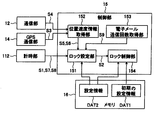
- FIG. 2 is a schematic block diagram showing a configuration example of the mobile terminal according to the embodiment of the present invention.
- the 2 includes an antenna 11, a communication unit 12, a GPS antenna 13, a GPS communication unit 14, a control unit 15, a memory 16, a voice processing unit 17, a speaker 18, a microphone 19, a display unit 110, and an operation unit. 111, a time measuring unit 112, and an external device communication unit 113.
- the memory 16 corresponds to the storage unit of the present invention.
- the communication unit 12 and the external device communication unit 113 correspond to the reception unit of the present invention.
- the time measuring unit 112 corresponds to the time measuring unit of the present invention.
- the antenna 11 is a built-in antenna in this embodiment.
- the antenna 11 transmits or receives electromagnetic waves in a predetermined frequency band toward the base station 30.
- the antenna 11 may be a rod antenna, for example.
- the communication unit 12 modulates the transmission signal output from the control unit 15 into a predetermined modulation method, and transmits the modulated transmission signal to the base station 30 via the antenna 11 as a radio wave signal.
- the communication unit 12 demodulates the radio wave signal received from the base station 30 via the antenna 11 and outputs the demodulated signal to the control unit 15 as a received signal.
- the GPS antenna 13 receives an electromagnetic wave in a predetermined frequency band from the GPS satellite 20.
- the GPS communication unit 14 performs processing such as amplification and modulation on the radio wave signal received from the GPS satellite 20 via the GPS antenna 13, and acquires GPS information including navigation data.
- the GPS communication unit 14 outputs GPS information to the position / velocity information acquisition unit 152 (see FIG. 3) of the control unit 15.
- the control unit 15 controls the overall operation of the mobile terminal 10 so that various processes are executed in an appropriate procedure according to the operation of the operation unit 111 by the user.
- the processing performed by the control unit 15 includes, for example, voice communication performed via the communication network 50, processing of an application for browsing electronic mail and WEB, and password authentication. Other processes performed by the control unit 15 will be described later.
- the control performed by the control unit 15 includes, for example, communication control in the communication unit 12, GPS communication unit 14, and external device communication unit 113, access to the memory 16, display of an image on the display unit 110, and audio in the audio processing unit 17. Includes control of processing.
- the control unit 15 executes processing based on a program (operating system, application program, etc.) stored in the memory 16.
- the control unit 15 executes the various processes and controls described above according to the procedure instructed in the program.
- the memory 16 is composed of, for example, a nonvolatile storage device (flash memory), a randomly accessible storage device (SRAM, DRAM), or the like.
- the memory 16 stores initial setting information and setting information to be described later.
- the initial setting information and setting information are written in the memory 16 when the setting information change signal S0 is input from the communication unit 12, the operation unit 111, or the external device communication unit 113 to the control unit 15.
- the memory 16 stores various data such as an output result of the control unit 15, an application program, temporary data used in the process of the program, an address book, and the like.
- the address book is composed of, for example, the name and telephone number of the other party.
- the audio processing unit 17 Since the audio processing unit 17 outputs the digital audio data supplied from the control unit 15 via the speaker 18, signal processing such as digital / analog (D / A) conversion and amplification is performed on the digital audio data. Apply.
- the audio processing unit 17 converts the analog audio signal input from the microphone 19 into digital audio data and outputs the digital audio data to the control unit 15, the analog audio signal is amplified, analog / digital (A / D) ) Perform processing such as conversion and encoding.
- the display unit 110 includes a display device such as a liquid crystal display panel or an organic EL (Electro-Luminescence) panel.
- the display unit 110 displays various information according to the video signal supplied from the control unit 15.
- the operation unit 111 includes a plurality of keys to which various functions such as a power key, a call key, a numeric key, a character key, a direction key, a determination key, and a call key are assigned. When these keys are operated by the user, the operation unit 111 generates a signal corresponding to the operation content, and outputs the signal to the control unit 15 as a user instruction.
- Time measuring unit 112 measures time. Thereby, information such as year, month, minute, hour, second can be acquired.
- the time measuring unit 112 has a counter (not shown) and measures the accumulated time.
- the time measuring unit 112 outputs the time measured or the accumulated time to the lock setting unit 151 (see FIG. 3) of the control unit 15 in response to a request from the control unit 15.
- the external device communication unit 113 is connected to the data terminal 60 by USB or Bluetooth.
- the external device communication unit 113 converts the data input from the data terminal 60 into a data method that can be processed by the control unit 15, and outputs the converted data to the control unit 15.
- control unit 15 Details of the control unit 15 and the memory 16 will be described.
- FIG. 3 is a schematic block diagram showing a configuration example of the control unit and the memory according to the embodiment of the present invention.
- FIG. 3 also shows other components such as the communication unit 12.
- control unit 15 includes a lock setting unit 151, a position speed information acquisition unit 152, an email transmission frequency acquisition unit 153, and a lock control unit 154.
- the lock setting unit 151 corresponds to the determination unit and the generation unit of the present invention.
- the position speed information acquisition unit 152 corresponds to the position information acquisition unit and the movement speed information acquisition unit of the present invention.
- the email transmission number acquisition unit 153 corresponds to the transmission number acquisition unit of the present invention.
- the lock control unit 154 corresponds to the restriction release unit of the present invention.
- the initial setting information DAT1 corresponds to the setting information of the present invention
- the setting information DAT2 corresponds to the changed setting information of the present invention.
- the lock control unit 154 accesses the initial setting information DAT1 in the memory 16, and locks the call function of the mobile terminal 10 based on the initial setting information DAT1.
- the initial setting information DAT1 is configured according to various conditions regarding the lock setting.
- the initial setting information DAT1 is set by the administrator and written in the memory 16.
- the lock setting unit 151 accesses the memory 16 and reads the setting information DAT2.
- the setting information DAT2 includes various conditions related to the lock changing condition.
- the setting information DAT2 is written in the memory 16 by the operation of the administrator.
- the following information is appropriately input to the lock setting unit 151 in accordance with the read setting information DAT2.
- This information includes time information S1, cumulative call time information S7, and continuous call time information S8 input from the time measuring unit 112.
- the information includes position information S5 and speed information (movement speed information of the present invention) S6 input from the position / speed information acquisition unit 152, and the number of email transmissions input from the email transmission number acquisition unit 153.
- Information S9 is included.
- the lock setting unit 151 determines whether or not a lock change condition is satisfied based on the setting information DAT2 and information such as the time information S1 input to the lock setting unit 151.
- the lock setting unit 151 When the lock change condition is satisfied, the lock setting unit 151 generates a limit change request signal S2 and outputs the limit change request signal S2 to the lock control unit 154.
- the position / velocity information acquisition unit 152 calculates the position of the mobile terminal 10 based on the GPS information S3 input from the GPS communication unit 14 and the assist data S4 input from the communication unit 12.
- the position / velocity information acquisition unit 152 outputs the information regarding the calculated position to the lock setting unit 151 as the position information S5.
- the position speed information acquisition unit 152 calculates the speed of the mobile terminal 10 moving with the user from the position data and time data included in the GPS information S3 and the assist data S4.
- the position speed information acquisition unit 152 outputs the calculated speed to the lock setting unit 151 as speed information S6.
- the e-mail transmission count acquisition unit 153 counts the number of e-mail transmissions.
- the email transmission count acquisition unit 153 outputs the email transmission count to the lock setting unit 151 as email transmission count information S9.
- the lock control unit 154 detects the restriction change request signal S2 output from the lock setting unit 151. When detecting the restriction change request signal S2, the lock control unit 154 releases the lock based on the setting information DAT2 in the memory 16. The lock control unit 154 can also lock in accordance with the setting information DAT2.
- Each component of the mobile terminal 10 described above is stored in a predetermined location of the upper and lower casings illustrated in FIG.
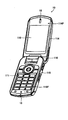
- FIG. 4 is a perspective view showing an appearance example of the mobile terminal according to the embodiment of the present invention.
- FIG. 4 illustrates an open state in which the upper and lower housings are opened.
- the display unit 110 and the speaker 18 are disposed on the surface 114 ⁇ / b> F of the upper housing 114.
- Various keys of the operation unit 111 and the microphone 19 are disposed on the surface 115F of the lower housing 115.
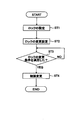
- FIG. 5 is a flowchart showing an operation example of the portable terminal constituting the communication system according to the embodiment of the present invention.
- each employee also referred to as a user
- Company A has a portable terminal 10.
- the manager of company A locks each mobile terminal 10 to restrict the call partner.
- This call partner is, for example, a person registered in the address book.
- the administrator is a person who can set the lock of the mobile terminal 10 by password authentication.
- the administrator changes the lock setting under the predetermined conditions described below in consideration of the convenience of employees and the like.
- Operation example 1 Operation example 1 will be described with reference to FIG.
- Step ST1 The administrator operates the operation unit 111 of the mobile terminal 10 to set the lock of the mobile terminal 10. This lock setting locks the call function and restricts the call partner to those registered in the address book. The lock is set after password authentication.
- the lock setting by the administrator is written to the memory 16 via the control unit 15 as initial setting information DAT1.
- the lock control unit 154 accesses the initial setting information DAT1 in the memory 16, and locks the call function of the mobile terminal 10 based on the initial setting information DAT1.
- the call partner is limited to those registered in the address book.
- the administrator operates the operation unit 111 of the mobile terminal 10 to perform a lock change setting for the mobile terminal 10.
- the lock change setting is limited only to the call partner described in the address book only during working hours (for example, between 9 am and 5 pm on weekdays). The time set at this time is called the set time.
- Step ST3 The lock setting unit 151 monitors the writing of the setting information DAT2 to the memory 16 and the time being measured by the time measuring unit 112. When the lock setting unit 151 detects writing of the setting information DAT2 to the memory 16, the lock setting unit 151 reads the setting information DAT2.
- the lock setting unit 151 determines whether or not the lock change condition is satisfied based on the time information S1 input from the time measuring unit 112.
- the lock change condition is a condition that the current time is outside the set time range of the setting information DAT2. For example, when the time measured by the time measuring unit 112 is outside the working hours, the lock setting unit 151 determines that the condition for changing the lock is satisfied.
- the lock setting unit 151 If the determination result of the lock setting unit 151 satisfies the lock change condition (YES), the lock setting unit 151 generates a limit change request signal S2 and sends the limit change request signal S2 to the lock control unit. To 154.
- the lock setting unit 151 determines again whether or not the lock change condition is satisfied.
- Step ST4 When the lock control unit 154 detects the restriction change request signal S2 output from the lock setting unit 151, the lock control unit 154 releases the lock applied in step ST1 based on the setting information DAT2 in the memory 16.
- step ST1 and ST3 the administrator can set the lock of the mobile terminal 10 by the following operation method instead of operating the operation unit 111 of the mobile terminal 10 to set the lock.
- the process of step ST1 will be described as an example.
- the initial setting information may be read as setting information.
- the initial setting information DAT1 and the setting information DAT2 are individually written in different storage areas of the memory 16, but the setting information DAT2 may be overwritten in the storage area of the initial setting information DAT1.
- Application example 1 of the operation method is to set the lock of the mobile terminal 10 by operating the data terminal 60.
- the administrator connects the data terminal 60 to the external device communication unit 113 of the mobile terminal 10.
- the lock setting is input to the external device communication unit 113 as initial setting information.
- the initial setting information is converted into a data method that can be processed by the control unit 15 by the external device communication unit 113. Thereafter, when the setting information change signal S0 is input from the external device communication unit 113 to the control unit 15 (see FIG. 2), the initial setting information is stored in the memory 16 via the control unit 15 as the initial setting information DAT1. Is written to.
- a personal computer can be used as the data terminal 60. Therefore, there is an advantage that the lock settings for each employee can be stored in a database and the lock settings for a plurality of portable terminals 10 can be set at a time.
- the application example 2 of the operation method is to set the lock of the mobile terminal 10 by remote operation by e-mail or the like.
- the administrator operates the data terminal 60 to create an e-mail regarding the lock setting, and transmits this e-mail to the mobile terminal 10.
- This e-mail is described by, for example, a command for executing a lock setting.
- the communication unit 12 of the mobile terminal 10 receives an e-mail from the base station 30 via the communication network 50, and performs a process such as demodulation on the e-mail.
- the setting information change signal S0 is input from the communication unit 12 to the control unit 15 (see FIG. 2), the electronic mail is written into the memory 16 by the control unit 15 as the initial setting information DAT1.
- short message service Short Message Service
- WEB WEB
- the lock can be set by remote operation by e-mail or the like.
- the lock setting in step ST1 may be, for example, a restriction on browsing the WEB site, a restriction on the use of e-mail, and the like, and various function restrictions can be suitably set for the mobile terminal 10.
- step ST4 a desired function of the mobile terminal 10 can be locked. Specific examples are given below.
- the administrator sets a lock change condition so as to limit the browsing of the WEB site within working hours (step ST2). If it is within working hours (step ST3), browsing of the WEB site is restricted (step ST4).
- the administrator or the like can freely and specifically control the restriction or release of the function of the mobile terminal 10. Accordingly, there is an advantage that it is not necessary for the user who cannot perform the lock control to request the administrator to change the lock.
- Operation example 2 Operation example 2 will be described.
- the place where the call can be made is limited to a predetermined area such as the vicinity of the building of the company A during working hours.
- differences from the operation example 2 will be described.
- step ST2 the manager performs a lock change setting so as to limit places where calls can be made to the vicinity of the building of company A only during working hours.
- the place set at this time is called a set place.
- the setting location is written in the memory 16 as setting information DAT2.
- step ST3 is executed.
- the lock changing condition in step ST3 is a condition that the position of the mobile terminal 10 is outside the range of the setting location of the setting information DAT2.
- the GPS communication unit 14 receives the GPS information S3 from the GPS satellite 20, and the communication unit 12 receives the assist data S4 from the server device 40 via the communication network 50.
- the position / speed information acquisition unit 152 receives GPS information S3 from the GPS communication unit 14 and assist data S4 from the communication unit 12.
- the position / velocity information acquisition unit 152 calculates the position information S5 of the mobile terminal 10 and outputs the position information S5 to the lock setting unit 151.
- the lock setting unit 151 determines whether or not the lock change condition is satisfied based on the time information S1 and the position information S5. This time information S1 has been described in the first operation example.
- the lock setting unit 151 receives the position information S5 from the position / velocity information acquisition unit 152 and the time information S1 from the time measuring unit 112.
- the lock setting unit 151 determines whether or not the position of the position information S5 is outside the set location of the setting information DAT2. In addition, the lock setting unit 151 determines whether or not the current time of the time information S1 is outside the set time range of the setting information DAT2.
- the lock setting unit 151 determines that the lock change condition is satisfied.
- step ST4 If the determination result of the lock setting unit 151 satisfies the lock change condition (YES), the process of step ST4 is executed. On the other hand, if the determination result of the lock setting unit 151 does not satisfy the lock change condition (NO), the process of step ST3 is executed.
- Operation example 3 Operation example 3 will be described.
- the employee who has the mobile terminal 10 is moving by car or public transportation, a call is prohibited.
- step ST1 it is assumed that the administrator does not restrict the functions of the mobile terminal 10.
- step ST2 the manager performs a lock change setting so as to prohibit calls when employees move by car or public transportation.
- the setting information DAT2 includes a setting speed related to speed (for example, walking speed).
- step ST3 is executed.
- the lock changing condition in step ST3 is a condition that the speed of the mobile terminal 10 moving with the employee (simply referred to as “speed of the mobile terminal 10”) is outside the range of the set speed of the setting information DAT2.
- the GPS information S3 and the assist data S4 are input to the position / velocity information acquisition unit 152.
- the position / velocity information acquisition unit 152 calculates the speed of the mobile terminal 10 from the position data and time data included in the GPS information S3 and the assist data S4.
- the position speed information acquisition unit 152 outputs the calculated speed to the lock setting unit 151 as speed information S6.
- the lock setting unit 151 determines whether or not the lock change condition is satisfied based on the speed information S6. Specifically, the lock setting unit 151 determines whether or not the speed of the speed information S6 is outside the range of the set speed of the setting information DAT2.
- the lock setting unit 151 determines that the condition for changing the lock is satisfied.
- step ST4 If the determination result of the lock setting unit 151 satisfies the lock change condition (YES), the process of step ST4 is executed. On the other hand, if the determination result of the lock setting unit 151 does not satisfy the lock change condition (NO), the process of step ST3 is executed.
- the lock can be controlled in accordance with the user's state. By performing such a lock setting change, safety during movement of the user can be achieved.
- the operation example 4 will be described.
- the operation example 4 for example, when the accumulated call time of the mobile terminal 10 exceeds a predetermined time, the call is prohibited.
- the cumulative call time is the cumulative call time.
- step ST1 it is assumed that the administrator does not restrict the functions of the mobile terminal 10.
- step ST2 when the accumulated call time exceeds a set time (for example, 1 hour), the administrator performs a lock change setting so as to prohibit the call.
- the setting information DAT2 includes a set time related to the accumulated call time.
- step ST3 is executed.
- the lock change condition in step ST3 is a condition that the accumulated call time by the time measuring unit 112 exceeds the set time of the setting information DAT2.
- the time measuring unit 112 counts the accumulated call time, and outputs this accumulated call time to the lock setting unit 151 as accumulated call time information S7.
- the lock setting unit 151 determines whether or not the accumulated call time of the accumulated call time information S7 exceeds the set time of the setting information DAT2.
- the lock setting unit 151 determines that the lock change condition is satisfied.
- step ST4 If the determination result of the lock setting unit 151 satisfies the lock change condition (YES), the process of step ST4 is executed. On the other hand, if the determination result of the lock setting unit 151 does not satisfy the lock change condition (NO), the process of step ST3 is executed.
- the lock can be controlled according to the accumulated call time.
- billing measures and the like can be taken.
- the continuous call time is limited.
- the continuous call time is a continuous time from the start to the end of the call.
- step ST1 it is assumed that the administrator does not restrict the functions of the mobile terminal 10.
- step ST2 when the continuous call time exceeds a set time (for example, 30 minutes), the administrator performs a lock change setting so as to prohibit the call.
- the setting information DAT2 includes a set time related to the continuous call time.
- step ST3 is executed.
- the lock change condition in step ST3 is a condition as to whether or not the continuous call time by the timer 112 exceeds the set time of the setting information DAT2.
- the time measuring unit 112 counts the accumulation of continuous call time, and outputs the continuous call time to the lock setting unit 151 as continuous call time information S8.
- the lock setting unit 151 determines whether or not the continuous call time of the continuous call time information S8 exceeds the set time of the setting information DAT2.
- step ST4 If the determination result of the lock setting unit 151 satisfies the lock change condition (YES), the process of step ST4 is executed. On the other hand, if the determination result of the lock setting unit 151 does not satisfy the lock change condition (NO), the process of step ST3 is executed.
- the lock can be controlled according to the continuous call time.
- billing measures and the like can be taken.
- step ST1 it is assumed that the administrator does not restrict the functions of the mobile terminal 10.
- step ST2 when the number of times of e-mail transmission exceeds a set number (for example, 10), the administrator performs a lock change setting so as to prohibit a call.
- the setting information DAT2 is composed of the set number of times.
- step ST3 is executed.
- the lock changing condition in step ST3 is a condition that the number of times the e-mail is transmitted from the mobile terminal 10 exceeds the set number of the setting information DAT2.
- the e-mail transmission count acquisition unit 153 counts the e-mail transmission count and outputs the e-mail transmission count to the lock setting unit 151 as the e-mail transmission count information S9.
- the lock setting unit 151 determines whether or not the number of email transmissions in the email transmission number information S9 exceeds the number of times set in the setting information DAT2.
- step ST4 If the determination result of the lock setting unit 151 satisfies the lock change condition (YES), the process of step ST4 is executed. On the other hand, if the determination result of the lock setting unit 151 does not satisfy the lock change condition (NO), the process of step ST3 is executed.
- the operation example 6 is characterized in that the lock can be controlled in accordance with the number of times of e-mail transmission. By making such a lock setting change, billing measures and the like can be taken.
- the above-described operation examples 1 to 6 can also be automatically executed by scheduling lock change conditions for each date and time.
- the operation examples 1 to 6 described above can be variously combined as in the operation example 2.
- the operation example 1 and the operation example 5 can be combined to limit the call partner and the number of e-mail transmissions only within a desired period.
- the lock change setting can be performed for a plurality of functions of the mobile terminal 10 under one change condition. For example, e-mail, WEB browsing, and call partner restrictions can be locked simultaneously by determining the accumulated call time. As described above, various modifications can be made to the embodiment of the present invention.
- a mobile phone is exemplified as the mobile terminal, but the present invention is also applicable to a PDA (Personal Digital Assistant), a notebook personal computer, or the like having the same configuration as the present embodiment.
- PDA Personal Digital Assistant
- a lock on a mobile terminal which is useful for a mobile terminal such as a mobile phone having a lock function and a method for setting the lock.
- SYMBOLS 1 Communication system, 10 ... Portable terminal, 11 ... Antenna, 12 ... Communication part, 13 ... GPS antenna, 14 ... GPS communication part, 15 ... Control part, 16 ... Memory (memory
Landscapes
- Engineering & Computer Science (AREA)
- Computer Security & Cryptography (AREA)
- Signal Processing (AREA)
- Human Computer Interaction (AREA)
- Computer Networks & Wireless Communication (AREA)
- Telephone Function (AREA)
- Mobile Radio Communication Systems (AREA)
Abstract
本発明の目的の一つは、機能制限の設定又は設定解除を容易に行うことができる携帯端末およびそのロックの設定方法を提供することである。 携帯端末(10)は、所定の機能に対する制限または制限の解除条件を初期の設定情報(DAT1)として記憶するメモリ(16)と、メモリの設定情報の条件を満足するか否かを判別する判別部と、メモリの初期の設定情報を変更する条件を設定情報変更信号によって初期の設定情報を変更するとともに、判別部が変更された設定情報の条件を満足するものと判別した場合に、メモリに記憶されている機能の制限または制限の解除条件の変更を要求する制限変更要求信号(S2)を生成する生成部と、生成部が生成した制限変更要求信号を検知した場合に、変更された設定情報をメモリに記憶するとともに、この変更された設定情報に基づいて機能の使用の制限または制限の解除を行う制限解除部とを有する。
Description
本発明は、機能制限が可能な携帯電話機等の携帯端末およびその制御方法に関するものである。
管理者のみが特定の機能に対して制限を行い、この制限を解除することができる携帯電話機等の携帯端末が、会社等で広く使用されている。
たとえば、会社等の管理者が従業員等に携帯端末を所持させた場合、管理者は、電子メール等、携帯端末の社内通話機能以外の機能に対して制限を行い、従業員等には社内通話のみを許可することができる。このように、携帯端末の特定の機能に対して制限を行うことにより、セキュリティの向上を図ることができる。
しかし、携帯端末の特定の機能に対して制限を行うことによりセキュリティの向上を図ることができる反面、社外では、従業員等はこの携帯端末を用いて通話をすることができない。したがって、従業員等が社外で携帯端末を用いて通話を行うためには、事前に管理者が通話機能の制限を解除しておく必要がある。
このように、管理者は、携帯端末の機能制限の設定及び設定解除をその都度行う必要があるため、非常に不便である。
したがって、機能制限の設定又は設定解除を容易に行うことができる携帯端末およびその制御方法を提供することが望まれている。
本発明の携帯端末は、所定の機能に対する制限または該制限の解除条件を初期の設定情報として記憶する記憶部と、該記憶部の前記設定情報を満足するか否かを判別する判別部と、前記記憶部の前記初期の設定情報を変更する条件を設定情報変更信号によって前記初期の設定情報を変更するとともに、前記判別部が前記変更された設定情報を満足するものと判別した場合に、前記記憶部に記憶されている前記機能の制限または該制限の解除条件の変更を要求する制限変更要求信号を生成する生成部と、該生成部が生成した前記制限変更要求信号を検知した場合に、前記変更された設定情報を前記記憶部に記憶するとともに、この変更された設定情報に基づいて前記機能の使用の制限または該制限の解除を行う制限解除部とを有する。
好適には、携帯端末は、前記変更された設定情報を受信し、前記変更された設定情報を前記記憶部に記憶する受信部を有する。
好適には、携帯端末は、自端末の位置に関する位置情報を取得する位置情報取得部を有し、前記受信部によって前記記憶部に記憶された前記変更された設定情報は、前記自端末の位置の条件に関する位置設定情報を含み、前記判別部は、前記位置取得部が取得した前記位置情報と前記記憶部の前記位置設定情報とを比較し、前記自端末の位置が前記位置設定情報の設定領域内に存在するか否かを判別する。
好適には、携帯端末は、自端末の移動に伴う移動速度に関する移動速度情報を取得する移動速度情報取得部を有し、前記受信部によって前記記憶部に記憶された前記変更された設定情報は、前記自端末の移動に伴う移動速度の条件に関する移動速度設定情報を含み、前記判別部は、前記移動速度情報取得部が取得した前記移動速度情報と前記記憶部の前記移動速度設定情報とを比較し、前記自端末の移動に伴う移動速度が前記移動速度設定情報の設定速度を超えるか否かを判別する。
好適には、携帯端末は、時間を計時する時間計時部を有し、前記受信部によって前記記憶部に記憶された前記変更された設定情報は、時間の条件に関する時間設定情報を含み、前記判別部は、前記時間計時部が計時した前記時間と前記記憶部の前記時間設定情報の設定時間とを比較し、前記時間計時部が計時した時間が前記時間設定情報の前記設定時間に達したか否かを判別する。
好適には、前記時間計時部は、計時時間の累積時間を計時し、前記判別部は、前記時間計時部が計時した前記計時時間の累積時間と前記時間設定情報の設定時間とを比較し、前記計時時間の累積時間が前記時間設定情報の前記設定時間に達したか否かを判別する。
好適には、携帯端末は、電子メールを処理する機能と、自端末が送信した電子メールの送信回数に関する送信回数情報を取得する送信回数取得部とを有し、前記受信部によって前記記憶部に記憶された前記変更された設定情報は、前記電子メールの送信回数の条件に関する送信回数設定情報を含み、前記判別部は、前記送信回数取得部が取得した前記送信回数情報と前記記憶部の前記送信回数設定情報とを比較し、前記電子メールの送信回数が前記送信回数設定情報の設定送信回数を超えるか否かを判別する。
本発明の携帯端末のロックの設定方法は、自端末の機能の使用の制限または前記制限の解除に関する条件を設定情報として記憶部に記憶する第1のステップと、前記自端末の使用状態が、前記記憶部の前記設定情報の条件を満足するか否かを判別する第2のステップと、前記第2のステップにおいて、前記自端末が取得した前記記憶部の前記設定情報を変更する設定情報変更信号によって変更された設定情報に基づいて、前記自端末の使用状態が前記記憶部の前記変更された設定情報の条件を満足するものと判別した場合に、前記記憶部に記憶されている前記自端末の機能の使用の制限または前記制限の解除に関する条件の変更を要求する制限変更要求信号を生成する第3のステップと、前記第1のステップにおいて生成された前記制限変更要求信号を検知した場合に、前記記憶部に記憶された変更された設定情報に基づいて前記自端末の機能の使用の制限または前記制限の解除を行う第4のステップとを有する。
本発明によれば、携帯端末のロックの設定を容易に行うことができる。
以下、本発明の実施形態を図面に関連付けて説明する。
図1は、本発明の実施形態に係る通信システムの構成例を示す図である。
図1に図示する通信システム1は、携帯端末10、GPS衛星20、基地局30、サーバ装置40、通信網50、およびデータ端末60を有する。
携帯端末10は、本実施形態においては、携帯電話機である。携帯端末10は、たとえばPHS(Personal Handy phone System)端末であるが、CDMA端末や、GSM端末等であってもよい。携帯端末10は、たとえば、音声通話、電子メールの作成とその送受信、WEB(World Wide Web)サイトの閲覧等を行う機能を有する。
携帯端末10は、所望する機能の使用を制限し、また、この制限を解除することができるロック機能を有する。機能の制限には、たとえば、通話相手の制限、WEBサイトの閲覧の制限が含まれ、機能自体の使用を制限したり、機能の使用範囲を制限することができる。このように、機能の使用を制限することを単に「ロック」ともいう。
本実施形態においては、携帯端末10のロック機能の設定を行うための認証方式として、パスワード認証が採用される。たとえば、パスワード入力によってロックが解除される。なお、認証方式には、指紋認証や音声認証等、他の認証方式を好適に採用することもできる。
携帯端末10は、所定の機能に対して予め設定しておいたロックの設定を携帯端末10の使用状態(たとえば、携帯端末10が使用される時間、携帯端末10の位置、携帯端末10の移動速度、携帯端末10の累積通話時間や連続通話時間、携帯電話10の機能の使用回数など)に応じて変更することができる機能を有する。この機能により、使用が制限されている機能を一時的に解除することができる。逆に、使用が制限されている機能に新たな制限を一時的に加えることもできる。
携帯端末10は、GPS(Global Positioning System)機能を有する。携帯端末10は、エムエス-ベースド(MS-Based)方式により、GPS衛星20から受信したGPS情報と、サーバ装置40から取得したアシストデータとを用いて自端末の位置を算出する。
GPS情報には、航法データが含まれる。この航法データには、時間データ、エフェメリス(Ephemeris)データ、アルマナック(Almanac)データ等が含まれる。アシストデータには、航法データ、基地局30の位置データ、GPS衛星20から受信した信号を復調するための時間データ等が含まれる。
携帯端末10の測位方式には、全ての算出処理を自端末で行うスタンドアロン(Stand Alone)方式や、サーバ装置40が全ての算出処理を行って、算出結果のみを携帯端末10に送信するエムエス-アシスド(MS-Assisted)方式を採用することもできる。
携帯端末10は、通信網50に接続されたサーバ装置40の制御に基づいて基地局30と通信を行う。これによって、音声通話や電子メールの送受信、WEBサイトの閲覧等を行うことができる。
携帯端末10は、たとえば、USB(Universal Serial Bus)やブルートゥース(Bluetooth)(登録商標)によってデータ端末60と接続することができる。この場合、携帯端末10は、後述するデータ端末60によって、ロックの設定が行われる。
GPS衛星20は、地球の所定の軌道上を周回しており、時間データ、エフェメリスデータ、アルマナックデータ等を含む航法データを定期的にブロードキャスト送信する。
基地局30は、通信網50に接続されている。基地局30は、セル内の携帯端末10と通信し、サーバ装置40とのデータの中継を行う。
サーバ装置40は、通信網50に接続されている。サーバ装置40は、通信網50を介して入出力される各種データを処理する。各種データには、たとえば、音声データ、文字データ、動画像データが含まれる。
サーバ装置40は、GPS衛星20から航法データを受信し、航法データに基づいて携帯端末10に関する測位の算出処理を行う。サーバ装置40は、算出処理によって得られたアシストデータを基地局30を介して携帯端末10に送信する。アシストデータとは、GPSによる測位で広く使用されているパーラメータの集合である。
通信網50は、携帯端末10、基地局30およびサーバ装置40が接続されている。通信網50は、音声データおよびパケットデータが扱えるネットワークである。
データ端末60は、たとえばパーソナルコンピュータである。データ端末60は、USBやブルートゥースによって携帯端末10に接続することができる。データ端末60は、携帯端末10に接続されると、携帯端末10とデータ通信を行い、携帯端末10のロックの設定を行う。
データ端末60は、通信網50に接続することができる。データ端末60は、電子メール等の送受信、WEBサイトへのアクセスを行う機能を有し、通信網50を介して携帯端末10と電子メール等の授受をすることができる。
携帯端末10の構成例を図2に関連づけて説明する。
図2は、本発明の実施形態に係る携帯端末の構成例を示す概略ブロック図である。
図2に図示する携帯端末10は、アンテナ11、通信部12、GPSアンテナ13、GPS通信部14、制御部15、メモリ16、音声処理部17、スピーカ18、マイクロフォン19、表示部110、操作部111、計時部112、および外部機器用通信部113を有する。
メモリ16は、本発明の記憶部に対応する。通信部12および外部機器用通信部113は、本発明の受信部に対応する。計時部112は、本発明の時間計時部に対応する。
アンテナ11は、本実施形態においては内蔵型アンテナである。アンテナ11は、所定の周波数帯域における電磁波を基地局30に向けて送信、あるいは基地局30から受信する。アンテナ11は、たとえばロッドアンテナであってもよい。
通信部12は、制御部15が出力した送信信号を所定の変調方式に変調し、変調した送信信号を電波信号としてアンテナ11を介して基地局30に送信する。通信部12は、アンテナ11を介して基地局30から受信した電波信号を変調方式に対応した復調を行い、復調した信号を受信信号として制御部15に出力する。
GPSアンテナ13は、所定の周波数帯域における電磁波をGPS衛星20から受信する。
GPS通信部14は、GPSアンテナ13を介してGPS衛星20から受信した電波信号に増幅、変調等の処理を行って、航法データを含むGPS情報を取得する。GPS通信部14は、GPS情報を制御部15の位置速度情報取得部152(図3参照)に出力する。
制御部15は、ユーザによる操作部111の操作に応じて、各種処理が適切な手順で実行されるように、携帯端末10の全般の動作を制御する。
制御部15が行う処理には、たとえば、通信網50を介して行われる音声通話、電子メールやWEBの閲覧を行うためのアプリケーションの処理、パスワード認証が含まれる。制御部15が行う他の処理については後述する。
制御部15が行う制御には、たとえば、通信部12、GPS通信部14、外部機器用通信部113における通信制御、メモリ16とのアクセス、表示部110における画像の表示、音声処理部17における音声処理の制御が含まれる。
制御部15は、メモリ16に格納されたプログラム(オペレーティングシステム、アプリケーションプログラム等)に基づいて処理を実行する。制御部15は、プログラムにおいて指示された手順に従って上述した各種処理や制御を実行する。
メモリ16は、たとえば不揮発性の記憶デバイス(フラッシュメモリ)やランダムアクセス可能な記憶デバイス(SRAM、DRAM)等で構成されている。
メモリ16は、後述する初期の設定情報および設定情報を記憶する。初期の設定情報および設定情報は、通信部12、操作部111、あるいは外部機器用通信部113から制御部15に設定情報変更信号S0が入力されると、メモリ16に書き込まれる。この他、メモリ16は、制御部15の出力結果、アプリケーションプログラム、プログラムの処理過程で利用される一時的なデータ、アドレス帳等、種々のデータを記憶する。アドレス帳は、たとえば、通話相手の名前や電話番号等で構成されている。
音声処理部17は、制御部15から供給されたデジタルの音声データをスピーカ18を介して出力するため、デジタルの音声データに対して、デジタル・アナログ(D/A)変換、増幅等の信号処理を施す。
音声処理部17は、マイクロフォン19から入力されたアナログの音声信号をデジタルの音声データに変換して制御部15に出力するため、アナログの音声信号に対して、増幅、アナログ・デジタル(A/D)変換、符号化等の処理を施す。
表示部110は、たとえば液晶表示パネルや有機EL(Electro-Luminescence)パネル等の表示デバイスで構成されている。表示部110は、制御部15から供給された映像信号に応じた種々の情報を表示する。
操作部111は、たとえば電源キー、通話キー、数字キー、文字キー、方向キー、決定キー、発信キーなど各種機能が割り当てられた複数のキーを有する。操作部111は、これらのキーがユーザによって操作された場合、その操作内容に対応する信号を発生し、これをユーザの指示として制御部15に出力する。
計時部112は、時間を計時する。これにより、年、月、分、時、秒等の情報を取得することができる。この他、計時部112は、不図示のカウンタを有し、時間の累積時間を計時する。計時部112は、制御部15の要求に応じて、計時した時間、あるいは累積時間を制御部15のロック設定部151(図3参照)に出力する。
外部機器用通信部113には、USBやブルートゥースによってデータ端末60に接続される。外部機器用通信部113は、データ端末60から入力されたデータを制御部15が処理可能なデータ方式に変換し、変換したデータを制御部15に出力する。
制御部15およびメモリ16の詳細について説明する。
図3は、本発明の実施形態に係る制御部およびメモリの構成例を示す概略ブロック図である。図3には、通信部12等の他の構成要素も図示されている。
図3に図示するように、制御部15は、ロック設定部151、位置速度情報取得部152、電子メール送信回数取得部153、およびロック制御部154を有する。
なお、ロック設定部151は、本発明の判別部および生成部に対応する。位置速度情報取得部152は、本発明の位置情報取得部および移動速度情報取得部に対応する。電子メール送信回数取得部153は、本発明の送信回数取得部に対応する。ロック制御部154は、本発明の制限解除部に対応する。
初期の設定情報DAT1は、本発明の設定情報に対応し、設定情報DAT2は、本発明の変更された設定情報に対応する。
ロック制御部154は、メモリ16の初期の設定情報DAT1にアクセスし、初期の設定情報DAT1に基づいて携帯端末10の通話機能にロックを掛ける。
この初期の設定情報DAT1は、ロックの設定に関する種々の条件によって構成されている。初期の設定情報DAT1は、管理者によって設定され、メモリ16に書き込まれる。
ロック設定部151は、メモリ16にアクセスし、設定情報DAT2を読み出す。この設定情報DAT2には、ロックの変更条件に関する種々の条件によって構成されている。設定情報DAT2は、管理者の操作によってメモリ16に書き込まれる。
ロック設定部151には、読み出した設定情報DAT2に応じて、次の情報が適宜入力される。
この情報には、計時部112から入力される、時間情報S1、累積通話時間情報S7および連続通話時間情報S8が含まれる。
この他、この情報には、位置速度情報取得部152から入力される、位置情報S5および速度情報(本発明の移動速度情報)S6、電子メール送信回数取得部153から入力される電子メール送信回数情報S9が含まれる。
ロック設定部151は、設定情報DAT2とロック設定部151に入力された時間情報S1等の情報に基づいて、ロックの変更条件を満たすか否かの判別を行う。
ロックの変更条件を満足する場合には、ロック設定部151は、制限変更要求信号S2を生成し、制限変更要求信号S2をロック制御部154に出力する。
位置速度情報取得部152は、GPS通信部14から入力されたGPS情報S3、通信部12から入力されたアシストデータS4に基づいて、携帯端末10の位置を算出する。位置速度情報取得部152は、この算出した位置に関する情報を位置情報S5として、ロック設定部151に出力する。
この他、位置速度情報取得部152は、GPS情報S3およびアシストデータS4に含まれる位置データおよび時間データから、ユーザと共に移動している携帯端末10の速度を算出する。位置速度情報取得部152は、算出した速度を速度情報S6として、ロック設定部151に出力する。
電子メール送信回数取得部153は、電子メールの送信回数をカウントする。電子メール送信回数取得部153は、この電子メールの送信回数を電子メール送信回数情報S9としてロック設定部151に出力する。
ロック制御部154は、ロック設定部151が出力した制限変更要求信号S2を検知する。ロック制御部154は、制限変更要求信号S2を検知すると、メモリ16の設定情報DAT2に基づいて、ロックを解除する。ロック制御部154は、設定情報DAT2に応じて、ロックを掛けることもできる。
上述した携帯端末10の各構成要素は、図4に図示する上下筐体の所定の場所に格納されている。
図4は、本発明の実施形態に係る携帯端末の外観例を示す斜視図である。
図4に図示するように、携帯端末10は、上筐体114および下筐体115がヒンジ部116によって連結されている。携帯端末10は、上下筐体を開閉することができる折りたたみ型(フォルダ型ともいう)の携帯端末である。図4には、上下筐体が開いた開状態の様子が図示されている。
図4に図示するように、上筐体114の面114Fには、表示部110およびスピーカ18が配置されている。下筐体115の面115Fには、操作部111の各種キーおよびマイクロフォン19が配置されている。
通信システム1を構成する携帯端末10の動作例1~7を図3および図5に関連付けて説明する。
図5は、本発明の実施形態に係る通信システムを構成する携帯端末の動作例を示すフローチャートである。
以下の動作例1~7の説明に当たっては、次のような状況を想定している。
たとえば、A社では、A社の各々の従業員(ユーザともいう)が携帯端末10を所持しているものとする。A社の管理者は、各携帯端末10に通話相手を制限するためにロックを掛ける。この通話相手は、たとえば、アドレス帳に登録されている者である。
なお、管理者とは、パスワード認証によって、携帯端末10のロックの設定を行うことができる者である。
したがって、パスワードを認知しない各々の従業員は、アドレス帳に登録されている者以外に通話することができない。管理者は、従業員等の便宜を考慮し、以下に説明する所定の条件下で、ロックの設定を変更するものとする。
(動作例1)
動作例1について、図5を参照しながら説明する。
動作例1について、図5を参照しながら説明する。
(ステップST1)
管理者は、携帯端末10の操作部111を操作し、携帯端末10のロックの設定を行う。このロックの設定は、通話機能にロックを掛け、通話相手をアドレス帳に登録されている者に制限するものである。ロックの設定は、パスワード認証を経た後、行われる。
管理者は、携帯端末10の操作部111を操作し、携帯端末10のロックの設定を行う。このロックの設定は、通話機能にロックを掛け、通話相手をアドレス帳に登録されている者に制限するものである。ロックの設定は、パスワード認証を経た後、行われる。
管理者によるロックの設定は、初期の設定情報DAT1として、制御部15を介してメモリ16に書き込まれる。
ロック制御部154は、メモリ16の初期の設定情報DAT1にアクセスし、初期の設定情報DAT1に基づいて携帯端末10の通話機能にロックを掛ける。これにより、通話相手がアドレス帳に登録されている者に制限される。
(ステップST2)
管理者は、携帯端末10の操作部111を操作し、携帯端末10のロックの変更設定を行う。このロックの変更設定は、たとえば、就業時間(たとえば平日の午前9時から午後5時の間)にのみ、通話相手がアドレス帳に記載された通話相手にのみ制限されるものである。このとき設定された時間を設定時間という。
(ステップST2)
管理者は、携帯端末10の操作部111を操作し、携帯端末10のロックの変更設定を行う。このロックの変更設定は、たとえば、就業時間(たとえば平日の午前9時から午後5時の間)にのみ、通話相手がアドレス帳に記載された通話相手にのみ制限されるものである。このとき設定された時間を設定時間という。
管理者によるロックの変更設定は、操作部111から制御部15に設定情報変更信号S0が入力されると(図2参照)、設定情報DAT2として、制御部15を介してメモリ16に書き込まれる。
(ステップST3)
ロック設定部151は、メモリ16への設定情報DAT2の書き込みを監視すると共に、計時部112が計時している時間を監視している。ロック設定部151は、メモリ16への設定情報DAT2の書き込みを検知すると、設定情報DAT2を読み出す。
ロック設定部151は、メモリ16への設定情報DAT2の書き込みを監視すると共に、計時部112が計時している時間を監視している。ロック設定部151は、メモリ16への設定情報DAT2の書き込みを検知すると、設定情報DAT2を読み出す。
その後、ロック設定部151は、計時部112から入力された時間情報S1に基づいて、ロックの変更条件を満足するか否かを判別する。
ロックの変更条件とは、現在時間が設定情報DAT2の設定時間の範囲外にあるという条件である。たとえば、計時部112が計時した時間が、就業時間外の場合、ロック設定部151は、ロックの変更条件を満たすものと判別する。
ロック設定部151の判別結果がロックの変更条件を満足するものであった場合には(YES)、ロック設定部151は、制限変更要求信号S2を生成し、制限変更要求信号S2をロック制御部154に出力する。
一方、ロック設定部151の判別結果がロックの変更条件を満足しないものであった場合には(NO)、ロック設定部151は、再び、ロックの変更条件を満足するか否かを判別する。
(ステップST4)
ロック制御部154は、ロック設定部151が出力した制限変更要求信号S2を検知すると、メモリ16の設定情報DAT2に基づいて、ステップST1にて掛けたロックを解除する。
ロック制御部154は、ロック設定部151が出力した制限変更要求信号S2を検知すると、メモリ16の設定情報DAT2に基づいて、ステップST1にて掛けたロックを解除する。
これにより、就業時間外には、通話相手が制限されず、従業員は通話相手を自由に選択することができる。
ステップST1およびステップST3において、管理者は、携帯端末10の操作部111を操作してロックを設定する代わりに、次に示す操作方法で携帯端末10のロックを設定することができる。以下の操作方法では、ステップST1の処理を例に挙げて説明する。なお、ステップST3の処理の場合、初期の設定情報を設定情報に読み替えればよい。
本実施形態においては、初期の設定情報DAT1および設定情報DAT2が、メモリ16の異なる記憶領域に個別に書き込まれるが、初期の設定情報DAT1の記憶領域に設定情報DAT2が上書きされてもよい。
(操作方法の応用例1)
操作方法の応用例1は、データ端末60の操作によって、携帯端末10のロックの設定を行うものである。
操作方法の応用例1は、データ端末60の操作によって、携帯端末10のロックの設定を行うものである。
詳細には、管理者は、データ端末60を携帯端末10の外部機器用通信部113に接続する。管理者がデータ端末60を操作することによって、ロックの設定は、初期の設定情報として外部機器用通信部113に入力される。
この初期の設定情報は、外部機器用通信部113によって、制御部15が処理可能なデータ方式に変換される。その後、初期の設定情報は、外部機器用通信部113から制御部15に設定情報変更信号S0が入力されると(図2参照)、初期の設定情報DAT1として、制御部15を介してメモリ16に書き込まれる。
操作方法の応用例1によれば、データ端末60として、たとえばパーソナルコンピュータを使用することができる。したがって、従業員別のロックの設定をデータベース化し、一度に複数の携帯端末10のロックの設定を行うことができる利点がある。
(操作方法の応用例2)
操作方法の応用例2は、電子メール等による遠隔操作によって、携帯端末10のロックの設定を行うものである。
操作方法の応用例2は、電子メール等による遠隔操作によって、携帯端末10のロックの設定を行うものである。
詳細には、管理者は、たとえばデータ端末60を操作して、ロックの設定に関する電子メールを作成し、この電子メールを携帯端末10に送信する。この電子メールは、たとえば、ロックの設定を実行するためのコマンド等によって記述されている。
携帯端末10の通信部12は、通信網50を介して基地局30から電子メールを受信し、この電子メールに復調等の処理を施す。この電子メールは、通信部12から制御部15に設定情報変更信号S0が入力されると(図2参照)、初期の設定情報DAT1として、制御部15によってメモリ16に書き込まれる。
なお、電子メールの代わりに、ショートメッセージサービス(Short Message Service)、
あるいはWEBを利用することができる。
あるいはWEBを利用することができる。
操作方法の応用例2によれば、電子メール等による遠隔操作によって、ロックの設定を行うことができる利点がある。
ステップST1におけるロックの設定は、たとえば、WEBサイトの閲覧の制限、電子メールの使用の制限等であってもよく、携帯端末10に対して種々の機能の制限を好適に設定することができる。
上述の動作例では、ステップST4において、ロックが解除される例を挙げて説明した。これとは逆に、ステップST4において、携帯端末10の所望する機能にロックを掛けることもできる。以下に具体例を挙げる。
管理者は、ステップST1の後、就業時間内にWEBサイトの閲覧を制限するようにロックの変更条件を設定する(ステップST2)。就業時間内であれば(ステップST3)、WEBサイトの閲覧が制限される(ステップST4)。
本実施形態によれば、管理者等が、携帯端末10の機能の制限または解除を自由かつ詳細に制御することができる。これに伴い、ロックの制御を実行することができないユーザにとっても、管理者にロックの変更を依頼する必要がないという利点がある。
(動作例2)
動作例2について説明する。動作例2では、就業時間内には、通話可能な場所がA社の建物付近等の所定エリアに限定される。以下、動作例2と異なる点について説明する。
動作例2について説明する。動作例2では、就業時間内には、通話可能な場所がA社の建物付近等の所定エリアに限定される。以下、動作例2と異なる点について説明する。
ステップST2において、管理者は、就業時間内にのみ、通話が可能場所をA社の建物付近に制限するように、ロックの変更設定を行う。このとき設定された場所を設定場所という。設定場所は、設定情報DAT2として、メモリ16に書き込まれる。
ステップST2の後、ステップST3が実行される。ステップST3におけるロックの変更条件とは、携帯端末10の位置が設定情報DAT2の設定場所の範囲外にあるという条件である。
このとき、GPS通信部14は、GPS衛星20からGPS情報S3を受信すると共に、通信部12は、サーバ装置40から通信網50を介してアシストデータS4を受信する。
位置速度情報取得部152には、GPS通信部14からGPS情報S3が入力されると共に、通信部12からアシストデータS4が入力される。
位置速度情報取得部152は、GPS情報S3およびアシストデータS4が入力されると、携帯端末10の位置情報S5を算出し、位置情報S5をロック設定部151に出力する。
ロック設定部151は、時間情報S1および位置情報S5に基づいて、ロックの変更条件を満足するか否かを判別する。この時間情報S1は、動作例1にて説明したものである。
具体的には、ロック設定部151には、位置速度情報取得部152から位置情報S5が入力されると共に、計時部112から時間情報S1が入力される。
ロック設定部151は、位置情報S5の位置が設定情報DAT2の設定場所の範囲外にあるか否かを判別する。これに加え、ロック設定部151は、時間情報S1の現在時間が設定情報DAT2の設定時間の範囲外にあるか否かを判別する。
携帯端末10の位置が設定場所外に存在し、かつ、現在時間が就業時間外の場合、ロック設定部151は、ロックの変更条件を満たすものと判別する。
ロック設定部151の判別結果がロックの変更条件を満足するものであった場合には(YES)、ステップST4の処理が実行される。一方、ロック設定部151の判別結果がロックの変更条件を満足しないものであった場合には(NO)、ステップST3の処理が実行される。
動作例2によれば、時間に加え、携帯端末10の場所に応じてロックを制御することができるという利点がある。
(動作例3)
動作例3について説明する。動作例3では、携帯端末10を所持した従業員が自動車または公共交通機関で移動している場合には、通話が禁止される。
動作例3について説明する。動作例3では、携帯端末10を所持した従業員が自動車または公共交通機関で移動している場合には、通話が禁止される。
ステップST1において、管理者は、携帯端末10の機能に制限を掛けていないものとする。
ステップST2において、管理者は、従業員が自動車または公共交通機関での移動時には、通話を禁止するように、ロックの変更設定を行う。設定情報DAT2には、速度(たとえば歩行速度)に関する設定速度で構成される。
ステップST2の後、ステップST3が実行される。ステップST3におけるロックの変更条件とは、従業員と共に移動する携帯端末10の速度(単に「携帯端末10の速度」という)が設定情報DAT2の設定速度の範囲外にあるという条件である。
このとき、動作例2の場合と同様に、位置速度情報取得部152には、GPS情報S3およびアシストデータS4が入力される。
位置速度情報取得部152は、GPS情報S3およびアシストデータS4に含まれる位置データおよび時間データから、携帯端末10の速度を算出する。位置速度情報取得部152は、算出した速度を速度情報S6として、ロック設定部151に出力する。
ロック設定部151は、速度情報S6に基づいて、ロックの変更条件を満足するか否かを判別する。具体的には、ロック設定部151は、速度情報S6の速度が設定情報DAT2の設定速度の範囲外にあるか否かを判別する。
携帯端末10の速度が設定された速度以上の場合、ロック設定部151は、ロックの変更条件を満たすものと判別する。
ロック設定部151の判別結果がロックの変更条件を満足するものであった場合には(YES)、ステップST4の処理が実行される。一方、ロック設定部151の判別結果がロックの変更条件を満足しないものであった場合には(NO)、ステップST3の処理が実行される。
動作例3によれば、ユーザの置かれた状態に応じてロックを制御することができるという特徴がある。このようなロックの設定変更を行うことで、ユーザの移動中の安全を図ることができる。
(動作例4)
動作例4について説明する。動作例4では、たとえば、携帯端末10の累積通話時間が所定時間を超えた場合には、通話が禁止される。累積通話時間とは、通話時間の累積時間である。
動作例4について説明する。動作例4では、たとえば、携帯端末10の累積通話時間が所定時間を超えた場合には、通話が禁止される。累積通話時間とは、通話時間の累積時間である。
ステップST1において、管理者は、携帯端末10の機能に制限を掛けていないものとする。
ステップST2において、管理者は、累積通話時間が設定時間(たとえば1時間)を超えた場合には、通話を禁止するように、ロックの変更設定を行う。設定情報DAT2は、累積通話時間に関する設定時間で構成される。
ステップST2の後、ステップST3が実行される。ステップST3におけるロックの変更条件とは、計時部112による累積通話時間が設定情報DAT2の設定時間を超えたという条件である。
このとき、計時部112は、累積通話時間をカウントし、この累積通話時間を累積通話時間情報S7としてロック設定部151に出力する。ロック設定部151は、累積通話時間情報S7の累積通話時間が設定情報DAT2の設定時間を超えるか否かを判別する。
累積通話時間が設定時間以上の場合、ロック設定部151は、ロックの変更条件を満たすものと判別する。
ロック設定部151の判別結果がロックの変更条件を満足するものであった場合には(YES)、ステップST4の処理が実行される。一方、ロック設定部151の判別結果がロックの変更条件を満足しないものであった場合には(NO)、ステップST3の処理が実行される。
動作例4によれば、累積通話時間に応じてロックを制御することができるという特徴がある。このようなロックの設定変更を行うことで、課金対策等を図ることができる。
(動作例5)
動作例5について説明する。動作例5では、連続通話時間が制限される。連続通話時間とは、通話の開始から終了までの連続した時間である。
動作例5について説明する。動作例5では、連続通話時間が制限される。連続通話時間とは、通話の開始から終了までの連続した時間である。
ステップST1において、管理者は、携帯端末10の機能に制限を掛けていないものとする。
ステップST2において、管理者は、連続通話時間が設定時間(たとえば30分)を超えた場合には、通話を禁止するように、ロックの変更設定を行う。設定情報DAT2には、連続通話時間に関する設定時間で構成される。
ステップST2の後、ステップST3が実行される。ステップST3におけるロックの変更条件とは、計時部112による連続通話時間が設定情報DAT2の設定時間を超えたか否かという条件である。
このとき、計時部112は、連続通話時間の累積をカウントし、この連続通話時間を連続通話時間情報S8としてロック設定部151に出力する。ロック設定部151は、連続通話時間情報S8の連続通話時間が設定情報DAT2の設定時間を超えるか否かを判別する。
ロック設定部151の判別結果がロックの変更条件を満足するものであった場合には(YES)、ステップST4の処理が実行される。一方、ロック設定部151の判別結果がロックの変更条件を満足しないものであった場合には(NO)、ステップST3の処理が実行される。
動作例5によれば、連続通話時間に応じてロックを制御することができるという特徴がある。このようなロックの設定変更を行うことで、課金対策等を図ることができる。
(動作例6)
動作例6について説明する。動作例6では、電子メールの送信回数が制限される。
動作例6について説明する。動作例6では、電子メールの送信回数が制限される。
ステップST1において、管理者は、携帯端末10の機能に制限を掛けていないものとする。
ステップST2において、管理者は、電子メールの送信回数が設定回数(たとえば10通)を超えた場合には、通話を禁止するように、ロックの変更設定を行う。設定情報DAT2は、この設定回数で構成される。
ステップST2の後、ステップST3が実行される。ステップST3におけるロックの変更条件は、携帯端末10の電子メールの送信回数が設定情報DAT2の設定数を超えたという条件である。
このとき、電子メール送信回数取得部153は、電子メールの送信回数をカウントし、この電子メールの送信回数を電子メール送信回数情報S9としてロック設定部151に出力する。ロック設定部151は、電子メール送信回数情報S9の電子メールの送信回数が設定情報DAT2の設定回数を超えるか否かを判別する。
ロック設定部151の判別結果がロックの変更条件を満足するものであった場合には(YES)、ステップST4の処理が実行される。一方、ロック設定部151の判別結果がロックの変更条件を満足しないものであった場合には(NO)、ステップST3の処理が実行される。
動作例6によれば、電子メールの送信回数に応じてロックを制御することができるという特徴がある。このようなロックの設定変更を行うことで、課金対策等を図ることができる。
上述した動作例1~6は、日時毎にロックの変更条件をスケジュール化し、自動的に実行することもできる。
上述した動作例1~6は、動作例2のように、種々の組み合わせが可能である。たとえば、動作例1および動作例5を組合わせ、所望する期間内にのみ通話相手および電子メールの送信回数を制限することができる。
携帯端末10の複数の機能を一つの変更条件でロックの変更設定を行うことができる。たとえば、電子メール、WEB閲覧、通話相手の制限を累積通話時間の判別によって同時にロックすることができる。このように、本発明の実施形態は、種々の変更が可能である。
本実施形態では、携帯端末として携帯電話機を例示したが、本発明は、本実施形態と同様の構成を有するPDA(Personal Digital Assistant)、ノート型パーソナルコンピュータ等にも適用可能である。
本発明を詳細にまた特定の実施態様を参照して説明したが、本発明の精神と範囲を逸脱することなく様々な変更や修正を加えることができることは当業者にとって明らかである。
本出願は、2008年8月8日出願の日本特許出願・出願番号2008-206405に基づくものであり、その内容はここに参照として取り込まれる。
本出願は、2008年8月8日出願の日本特許出願・出願番号2008-206405に基づくものであり、その内容はここに参照として取り込まれる。
本発明によれば、携帯端末のロックの設定を容易に行うことができ、ロック機能を有する携帯電話機等の携帯端末およびそのロックの設定方法等に有用である。
1…通信システム、10…携帯端末、11…アンテナ、12…通信部、13…GPSアンテナ、14…GPS通信部、15…制御部、16…メモリ(記憶部)、17…音声処理部、18…スピーカ、19…マイクロフォン、110…表示部、111…操作部、112…計時部(時間計時部)、113…外部機器用通信部、114…上筐体、114F…上筐体面、115…下筐体、115F…下筐体面、116…ヒンジ部、151…ロック設定部(判別部および生成部)、152…位置速度情報取得部(位置情報取得部および移動速度情報取得部)、153…電子メール送信回数取得部(送信回数取得部)、154…ロック制御部(制限解除部)、DAT1…初期の設定情報(設定情報)、DAT2…設定情報(変更された設定情報)、20…GPS衛星、30…基地局、40…サーバ装置、50…通信網、60…データ端末、S0…設定情報変更信号、S1…時間情報、S2…制限変更要求信号、S3…GPS情報、S4…アシストデータ、S5…位置情報、S6…速度情報(移動速度情報)、S7…累積通話時間情報、S8…連続通話時間情報、S9…電子メール送信回数情報
Claims (8)
- 所定の機能に対する制限または該制限の解除条件を初期の設定情報として記憶する記憶部と、
該記憶部の前記設定情報を満足するか否かを判別する判別部と、
前記記憶部の前記初期の設定情報を変更する条件を設定情報変更信号によって前記初期の設定情報を変更するとともに、前記判別部が前記変更された設定情報を満足するものと判別した場合に、前記記憶部に記憶されている前記機能の制限または該制限の解除条件の変更を要求する制限変更要求信号を生成する生成部と、
該生成部が生成した前記制限変更要求信号を検知した場合に、前記変更された設定情報を前記記憶部に記憶するとともに、この変更された設定情報に基づいて前記機能の使用の制限または該制限の解除を行う制限解除部と
を有する携帯端末。 - 前記変更された設定情報を受信し、前記変更された設定情報を前記記憶部に記憶する受信部を有する
請求項1に記載の携帯端末。 - 自端末の位置に関する位置情報を取得する位置情報取得部を有し、
前記受信部によって前記記憶部に記憶された前記変更された設定情報は、前記自端末の位置の条件に関する位置設定情報を含み、
前記判別部は、
前記位置取得部が取得した前記位置情報と前記記憶部の前記位置設定情報とを比較し、前記自端末の位置が前記位置設定情報の設定領域内に存在するか否かを判別する
請求項2記載の携帯端末。 - 自端末の移動に伴う移動速度に関する移動速度情報を取得する移動速度情報取得部を有し、
前記受信部によって前記記憶部に記憶された前記変更された設定情報は、前記自端末の移動に伴う移動速度の条件に関する移動速度設定情報を含み、
前記判別部は、
前記移動速度情報取得部が取得した前記移動速度情報と前記記憶部の前記移動速度設定情報とを比較し、前記自端末の移動に伴う移動速度が前記移動速度設定情報の設定速度を超えるか否かを判別する
請求項2記載の携帯端末。 - 時間を計時する時間計時部を有し、
前記受信部によって前記記憶部に記憶された前記変更された設定情報は、時間の条件に関する時間設定情報を含み、
前記判別部は、
前記時間計時部が計時した前記時間と前記記憶部の前記時間設定情報の設定時間とを比較し、前記時間計時部が計時した時間が前記時間設定情報の前記設定時間に達したか否かを判別する
請求項2に記載の携帯端末。 - 前記時間計時部は、計時時間の累積時間を計時し、
前記判別部は、
前記時間計時部が計時した前記計時時間の累積時間と前記時間設定情報の設定時間とを比較し、前記計時時間の累積時間が前記時間設定情報の前記設定時間に達したか否かを判別する
請求項5記載の携帯端末。 - 電子メールを処理する機能と、
自端末が送信した電子メールの送信回数に関する送信回数情報を取得する送信回数取得部とを有し、
前記受信部によって前記記憶部に記憶された前記変更された設定情報は、前記電子メールの送信回数の条件に関する送信回数設定情報を含み、
前記判別部は、
前記送信回数取得部が取得した前記送信回数情報と前記記憶部の前記送信回数設定情報とを比較し、前記電子メールの送信回数が前記送信回数設定情報の設定送信回数を超えるか否かを判別する
請求項2に記載の携帯端末。 - 自端末の機能の使用の制限または前記制限の解除に関する条件を設定情報として記憶部に記憶する第1のステップと、
前記自端末の使用状態が、前記記憶部の前記設定情報の条件を満足するか否かを判別する第2のステップと、
前記第2のステップにおいて、前記自端末が取得した前記記憶部の前記設定情報を変更する設定情報変更信号によって変更された設定情報に基づいて、前記自端末の使用状態が前記記憶部の前記変更された設定情報の条件を満足するものと判別した場合に、前記記憶部に記憶されている前記自端末の機能の使用の制限または前記制限の解除に関する条件の変更を要求する制限変更要求信号を生成する第3のステップと、
前記第1のステップにおいて生成された前記制限変更要求信号を検知した場合に、前記記憶部に記憶された変更された設定情報に基づいて前記自端末の機能の使用の制限または前記制限の解除を行う第4のステップと
を有する携帯端末のロックの設定方法。
Priority Applications (1)
| Application Number | Priority Date | Filing Date | Title |
|---|---|---|---|
| US13/057,686 US8977299B2 (en) | 2008-08-08 | 2009-08-07 | Mobile terminal device having settable and releasable function restriction and method thereof |
Applications Claiming Priority (2)
| Application Number | Priority Date | Filing Date | Title |
|---|---|---|---|
| JP2008-206405 | 2008-08-08 | ||
| JP2008206405A JP5420210B2 (ja) | 2008-08-08 | 2008-08-08 | 携帯端末および携帯端末におけるロック設定方法 |
Publications (1)
| Publication Number | Publication Date |
|---|---|
| WO2010016593A1 true WO2010016593A1 (ja) | 2010-02-11 |
Family
ID=41663805
Family Applications (1)
| Application Number | Title | Priority Date | Filing Date |
|---|---|---|---|
| PCT/JP2009/064065 Ceased WO2010016593A1 (ja) | 2008-08-08 | 2009-08-07 | 携帯端末およびその制御方法 |
Country Status (3)
| Country | Link |
|---|---|
| US (1) | US8977299B2 (ja) |
| JP (1) | JP5420210B2 (ja) |
| WO (1) | WO2010016593A1 (ja) |
Families Citing this family (8)
| Publication number | Priority date | Publication date | Assignee | Title |
|---|---|---|---|---|
| US8718633B2 (en) * | 2011-07-13 | 2014-05-06 | Qualcomm Incorporated | Intelligent parental controls for wireless devices |
| JP2015052852A (ja) * | 2013-09-05 | 2015-03-19 | 富士通株式会社 | 情報処理装置、機能制限プログラム及び機能制限方法 |
| US10235726B2 (en) * | 2013-09-24 | 2019-03-19 | GeoFrenzy, Inc. | Systems and methods for secure encryption of real estate titles and permissions |
| US10198030B2 (en) | 2014-05-15 | 2019-02-05 | Federal Express Corporation | Wearable devices for courier processing and methods of use thereof |
| US10237232B2 (en) | 2014-07-29 | 2019-03-19 | GeoFrenzy, Inc. | Geocoding with geofences |
| US10805761B2 (en) * | 2014-07-29 | 2020-10-13 | GeoFrenzy, Inc. | Global registration system for aerial vehicles |
| EP3249896A4 (en) * | 2015-01-22 | 2018-08-22 | Olympus Corporation | Portable terminal apparatus, information management apparatus, and information management system |
| JP6511578B1 (ja) * | 2018-11-05 | 2019-05-15 | マルワソフト株式会社 | 携帯端末及びそのアプリケーション使用制限方法 |
Citations (3)
| Publication number | Priority date | Publication date | Assignee | Title |
|---|---|---|---|---|
| JP2005117673A (ja) * | 2004-10-25 | 2005-04-28 | Toshiba Corp | 通信端末 |
| JP2006186625A (ja) * | 2004-12-27 | 2006-07-13 | Fujitsu Ten Ltd | 電話機を用いた通信装置および電話機 |
| JP2007274427A (ja) * | 2006-03-31 | 2007-10-18 | Nec Commun Syst Ltd | 携帯端末制御システム、携帯端末、携帯端末制御方法及び携帯端末制御プログラム |
Family Cites Families (18)
| Publication number | Priority date | Publication date | Assignee | Title |
|---|---|---|---|---|
| US6405031B1 (en) * | 1997-02-28 | 2002-06-11 | Dieceland Technologies Corp. | Wireless telephone system, telephone and method |
| US6973333B1 (en) * | 2001-04-10 | 2005-12-06 | At&T Corp. | Modification of portable communications device operation in vehicles |
| US7444141B2 (en) * | 2003-06-12 | 2008-10-28 | Sergio Rivera | Method and system for programmable control of mobile communications units |
| JP4385725B2 (ja) * | 2003-10-29 | 2009-12-16 | カシオ計算機株式会社 | 撮影装置、撮影制限装置およびプログラム |
| JP4188802B2 (ja) * | 2003-11-04 | 2008-12-03 | 株式会社エヌ・ティ・ティ・ドコモ | メールサーバ及びプログラム |
| US20050107093A1 (en) * | 2003-11-13 | 2005-05-19 | Interdigital Technology Corporation | Extraneous control of mobile telephone |
| JP2005184153A (ja) | 2003-12-16 | 2005-07-07 | Nec Access Technica Ltd | 携帯電話機使用制限システム、携帯電話機使用制限方法、使用制限制御プログラム、及び携帯電話機 |
| US20070142068A1 (en) * | 2004-06-04 | 2007-06-21 | Masatoshi Matsuo | Mobile-object terminal device, mobile-object-function restriction system and method, and record medium |
| JP2006020295A (ja) * | 2004-06-04 | 2006-01-19 | Matsushita Electric Ind Co Ltd | 移動体端末装置と移動体機能制限システム及び機能制限方法並びに記録媒体 |
| JP4695039B2 (ja) | 2005-08-12 | 2011-06-08 | エスアイアイ移動通信株式会社 | リモートロックシステムおよび移動通信端末 |
| WO2007043659A1 (ja) * | 2005-10-13 | 2007-04-19 | Ntt Docomo, Inc. | 携帯端末、アクセス制御管理装置及びアクセス制御管理方法 |
| TWI273825B (en) * | 2005-10-28 | 2007-02-11 | Inventec Appliances Corp | Communication mode switching system and method |
| JP2007228176A (ja) * | 2006-02-22 | 2007-09-06 | Murata Mach Ltd | 通信装置 |
| JP5049189B2 (ja) * | 2008-04-10 | 2012-10-17 | 京セラドキュメントソリューションズ株式会社 | 画像形成システムおよび画像形成装置 |
| JP5226074B2 (ja) * | 2008-08-28 | 2013-07-03 | 京セラ株式会社 | 通信機器 |
| JP2011209595A (ja) * | 2010-03-30 | 2011-10-20 | Kyocera Mita Corp | 画像形成装置および印刷制限プログラム |
| JP5660802B2 (ja) * | 2010-04-23 | 2015-01-28 | 京セラ株式会社 | 無線基地局及び通信制御方法 |
| JP5660868B2 (ja) * | 2010-11-26 | 2015-01-28 | 京セラ株式会社 | 携帯端末装置 |
-
2008
- 2008-08-08 JP JP2008206405A patent/JP5420210B2/ja active Active
-
2009
- 2009-08-07 WO PCT/JP2009/064065 patent/WO2010016593A1/ja not_active Ceased
- 2009-08-07 US US13/057,686 patent/US8977299B2/en active Active
Patent Citations (3)
| Publication number | Priority date | Publication date | Assignee | Title |
|---|---|---|---|---|
| JP2005117673A (ja) * | 2004-10-25 | 2005-04-28 | Toshiba Corp | 通信端末 |
| JP2006186625A (ja) * | 2004-12-27 | 2006-07-13 | Fujitsu Ten Ltd | 電話機を用いた通信装置および電話機 |
| JP2007274427A (ja) * | 2006-03-31 | 2007-10-18 | Nec Commun Syst Ltd | 携帯端末制御システム、携帯端末、携帯端末制御方法及び携帯端末制御プログラム |
Also Published As
| Publication number | Publication date |
|---|---|
| US8977299B2 (en) | 2015-03-10 |
| JP2010045461A (ja) | 2010-02-25 |
| JP5420210B2 (ja) | 2014-02-19 |
| US20110136515A1 (en) | 2011-06-09 |
Similar Documents
| Publication | Publication Date | Title |
|---|---|---|
| JP5420210B2 (ja) | 携帯端末および携帯端末におけるロック設定方法 | |
| JP4832579B2 (ja) | 携帯電子機器及び地磁気センサ較正方法 | |
| JP2010086281A (ja) | 携帯端末 | |
| JP2012105163A (ja) | 情報処理システム、サーバ、端末、情報処理方法、および、コンピュータ・プログラム | |
| JP2009118355A (ja) | 個人情報管理システム、移動通信端末、個人情報管理方法及び制御プログラム | |
| JP2006350450A (ja) | 決済システム、決済端末、ユーザ端末及び決済方法 | |
| JP4078362B2 (ja) | 携帯端末 | |
| JP4462545B2 (ja) | 非接触icカード機能付き携帯電話端末およびその動作方法 | |
| JP2008104231A (ja) | 携帯端末 | |
| JP4990850B2 (ja) | 位置情報管理装置及び方法 | |
| JP2005136920A (ja) | 移動通信端末悪用防止プログラム、システムおよび方法 | |
| WO2003073393A1 (en) | Method of membership protection using mobile communication device | |
| JP4440710B2 (ja) | 携帯電話機 | |
| JP2011124613A (ja) | 携帯電子機器 | |
| JP2004032367A (ja) | 位置検索システム | |
| JP2002111858A (ja) | 置き忘れ対策機能内蔵携帯電話機 | |
| JP2006060685A (ja) | 携帯情報端末、携帯情報端末の制御方法、携帯情報端末の制御プログラム、及び記録媒体 | |
| JP2009212656A (ja) | 携帯情報処理装置およびロック解除方法 | |
| JP2008148048A (ja) | 情報端末、ロック制御方法及びロック制御プログラム | |
| JP2007110321A (ja) | PTT(PushToTalk)システム、携帯電話機、PTTサーバ | |
| JP2006324915A (ja) | 位置検索方法および位置検索プログラム | |
| JP5299048B2 (ja) | 携帯端末 | |
| JP2010160621A (ja) | 携帯端末、携帯端末の防犯方法、携帯端末の防犯プログラム、および通信システム | |
| JP2011172068A (ja) | 携帯端末の遠隔操作システム及びその遠隔操作方法 | |
| JP2008199325A (ja) | 情報端末装置およびその位置情報通知方法 |
Legal Events
| Date | Code | Title | Description |
|---|---|---|---|
| 121 | Ep: the epo has been informed by wipo that ep was designated in this application |
Ref document number: 09805075 Country of ref document: EP Kind code of ref document: A1 |
|
| WWE | Wipo information: entry into national phase |
Ref document number: 13057686 Country of ref document: US |
|
| NENP | Non-entry into the national phase |
Ref country code: DE |
|
| 122 | Ep: pct application non-entry in european phase |
Ref document number: 09805075 Country of ref document: EP Kind code of ref document: A1 |