WO2010002129A2 - 복수의 광개시제를 포함한 감광성 수지 조성물, 이를 이용한 투명 박막층 및 액정 표시 장치 - Google Patents
복수의 광개시제를 포함한 감광성 수지 조성물, 이를 이용한 투명 박막층 및 액정 표시 장치 Download PDFInfo
- Publication number
- WO2010002129A2 WO2010002129A2 PCT/KR2009/003324 KR2009003324W WO2010002129A2 WO 2010002129 A2 WO2010002129 A2 WO 2010002129A2 KR 2009003324 W KR2009003324 W KR 2009003324W WO 2010002129 A2 WO2010002129 A2 WO 2010002129A2
- Authority
- WO
- WIPO (PCT)
- Prior art keywords
- resin composition
- photosensitive resin
- weight
- thin film
- photoinitiator
- Prior art date
- Legal status (The legal status is an assumption and is not a legal conclusion. Google has not performed a legal analysis and makes no representation as to the accuracy of the status listed.)
- Ceased
Links
Images


Classifications
-
- G—PHYSICS
- G03—PHOTOGRAPHY; CINEMATOGRAPHY; ANALOGOUS TECHNIQUES USING WAVES OTHER THAN OPTICAL WAVES; ELECTROGRAPHY; HOLOGRAPHY
- G03F—PHOTOMECHANICAL PRODUCTION OF TEXTURED OR PATTERNED SURFACES, e.g. FOR PRINTING, FOR PROCESSING OF SEMICONDUCTOR DEVICES; MATERIALS THEREFOR; ORIGINALS THEREFOR; APPARATUS SPECIALLY ADAPTED THEREFOR
- G03F7/00—Photomechanical, e.g. photolithographic, production of textured or patterned surfaces, e.g. printing surfaces; Materials therefor, e.g. comprising photoresists; Apparatus specially adapted therefor
- G03F7/004—Photosensitive materials
- G03F7/027—Non-macromolecular photopolymerisable compounds having carbon-to-carbon double bonds, e.g. ethylenic compounds
- G03F7/028—Non-macromolecular photopolymerisable compounds having carbon-to-carbon double bonds, e.g. ethylenic compounds with photosensitivity-increasing substances, e.g. photoinitiators
- G03F7/031—Organic compounds not covered by group G03F7/029
-
- C—CHEMISTRY; METALLURGY
- C08—ORGANIC MACROMOLECULAR COMPOUNDS; THEIR PREPARATION OR CHEMICAL WORKING-UP; COMPOSITIONS BASED THEREON
- C08F—MACROMOLECULAR COMPOUNDS OBTAINED BY REACTIONS ONLY INVOLVING CARBON-TO-CARBON UNSATURATED BONDS
- C08F2/00—Processes of polymerisation
- C08F2/46—Polymerisation initiated by wave energy or particle radiation
- C08F2/48—Polymerisation initiated by wave energy or particle radiation by ultraviolet or visible light
- C08F2/50—Polymerisation initiated by wave energy or particle radiation by ultraviolet or visible light with sensitising agents
-
- G—PHYSICS
- G03—PHOTOGRAPHY; CINEMATOGRAPHY; ANALOGOUS TECHNIQUES USING WAVES OTHER THAN OPTICAL WAVES; ELECTROGRAPHY; HOLOGRAPHY
- G03F—PHOTOMECHANICAL PRODUCTION OF TEXTURED OR PATTERNED SURFACES, e.g. FOR PRINTING, FOR PROCESSING OF SEMICONDUCTOR DEVICES; MATERIALS THEREFOR; ORIGINALS THEREFOR; APPARATUS SPECIALLY ADAPTED THEREFOR
- G03F7/00—Photomechanical, e.g. photolithographic, production of textured or patterned surfaces, e.g. printing surfaces; Materials therefor, e.g. comprising photoresists; Apparatus specially adapted therefor
- G03F7/004—Photosensitive materials
- G03F7/027—Non-macromolecular photopolymerisable compounds having carbon-to-carbon double bonds, e.g. ethylenic compounds
Definitions
- the present invention relates to a photosensitive resin composition which is excellent in sensitivity by using two or more kinds of photoinitiators having different activation wavelengths and which is easily changed in thickness according to exposure illumination, a transparent thin film layer manufactured therefrom, and a liquid crystal display device including the transparent thin film layer.
- a photosensitive resin composition which is excellent in sensitivity by using two or more kinds of photoinitiators having different activation wavelengths and which is easily changed in thickness according to exposure illumination, a transparent thin film layer manufactured therefrom, and a liquid crystal display device including the transparent thin film layer.
- the liquid crystal cell used in the liquid crystal display device is largely composed of a thin film transistor substrate for driving, a color filter for implementing color, and a liquid crystal between the two substrates.
- the color filter is a substrate which forms a pixel by using a photoetch method using a photosensitive organic material in which pigments are dispersed, and then uses a color ink having three or more transmission-absorption wavelengths to form a color image.
- an overcoat may be used in the color filter substrate to reduce the step difference of the pixel in some cases, or the column spacer is patterned to maintain a constant gap inside the liquid crystal cell.
- the photosensitive resin composition in which photoetching is possible the negative composition among them is generally used.
- the negative composition is a polyfunctional monomer containing two or more polymers and acrylates easily soluble in alkali, and a mixture of a solvent, a surfactant, and an adhesion aid based on a photoinitiator.
- the photoinitiator is decomposed to generate activating radicals. The activating radical again activates the acrylate contained in the polyfunctional monomer, and the photopolymerization reaction is performed.
- the solubility in alkali decreases due to the increase in the molecular weight, and thus remains after the development process, thereby enabling the production of a fine pattern using the photoetching method.
- the sensitivity of the photosensitive composition means the minimum exposure amount (light energy) in which the pattern is stably formed. The lower the value, the shorter the process time and the better the productivity. In particular, in the case of the column spacer maintaining the gap of the liquid crystal cell, it is determined based on the point where the change in the thickness of the pattern greatly decreases according to the exposure amount.
- the present invention is to solve the above problems of the transparent thin film prepared from the conventional photosensitive resin composition, the sensitivity is increased, but the thickness is easily changed according to the exposure roughness to easily adjust the thickness when using a slit or semi-transmissive mask
- the objective is to provide the photosensitive resin composition which can be obtained.
- an object of the present invention is to provide a transparent thin film prepared from the photosensitive resin composition.
- Another object of the present invention is to provide a liquid crystal display device including the transparent thin film.
- the present invention by using two or more photoinitiators having a difference in active wave wavelength of 20 nm or more in the photosensitive resin composition, it is excellent in sensitivity and easy to change in thickness according to exposure illumination, and thus can be usefully used as a transparent thin film layer such as a liquid crystal display device. Therefore, the above problems can be solved.
- the photosensitive resin composition according to the present invention it is easy to change the thickness of the thin film pattern according to the exposure illuminance while excellent in sensitivity, it is easy to control the thickness when using a slit or a semi-transmissive mask, using such a photosensitive resin composition It is advantageous to form column spacers, overcoats, passivation materials and the like of display elements.
- Fig. 2 is a graph of the results of comparative examples and examples of the present invention observed as a correlation between sensitivity and (pattern saturation thickness-semi-transmissive pattern thickness).
- the present invention relates to a photosensitive resin composition
- a photosensitive resin composition comprising two or more kinds of photoinitiators at the same time having a difference of 20 nm or more of active wave wavelengths of the photoinitiator.
- the present invention comprises at least two photoinitiators, including an alkali-soluble resin, an ethylenically unsaturated compound and a solvent, the content of the component is 1 to 20% by weight alkali-soluble resin, 1 to 20% by weight ethylenically unsaturated compound , 0.05-10% by weight of photoinitiator and 50-95% by weight of solvent.
- the photoinitiator in the composition according to the present invention includes two or more kinds of photoinitiators having a difference in activation wavelength of 20 nm or more.
- one embodiment of the present invention is a method using a mixture of Irgacure 369 (Ciba Geigy) having an activation wavelength of 325 nm and Hexa-aryl-bis-imidazole having an activation wavelength of 270 nm.
- Irgacure OXE-02 (Ciba Geigy) having an activation wavelength of 333 nm and Irgacure 907 (Ciba Geigy) having an activation wavelength of 305 nm may be mixed and used.
- the photoinitiator is not limited to the above embodiment as long as the activation wavelength meets the object of the present invention, and those known in the art may be used.
- the photoinitiator is a material having an activation wavelength of 250 to 450 nm, and those having an activation wavelength in the above range can effectively use the wavelengths of mercury vapor arc, carbon arc, xenon arc, and halogen arc which are commonly used in the industry. Preferred at
- the photoinitiator according to the present invention uses two or more kinds of photoinitiators having a difference in the activation wavelength of 20 nm or more, and the difference in the activation wavelength of the two photoinitiators used is preferably 20 to 100 nm, more preferably 20 to 70 nm.
- the difference between the activation wavelengths of the two photoinitiators is less than 20 nm, the value of the pattern saturation thickness-slit pattern or the pattern saturation thickness-semi-transmissive pattern thickness, which is an important effect of the present invention, is not sufficiently formed, and when the light source exceeds 100 nm, It is not desirable because there may be a problem that cannot be used efficiently.
- the content in 0.05 to 10 weight% of the whole photosensitive resin composition.
- the content of the photoinitiator is less than 0.05% by weight, sufficient photoactive reaction may not be obtained, resulting in uneven pattern formation, and when the content is more than 10% by weight, solubility may be exceeded.
- the content of the two types of photoinitiator is preferably included in the range of 1: 3 to 3: 1 with respect to each other photoinitiator. If either photoinitiator is included in less than 1/3, it is not preferable because it is difficult to obtain the desired effect in the present invention, and only the properties of the relatively large amount of photoinitiator itself become superior.
- Alkali-soluble resin in the photosensitive resin composition which concerns on this invention means the polymeric resin which contains a carboxylic acid and shows solubility in alkali, and is not limited to a structure in particular as long as it shows the same effect.
- a polymethacrylate may be used as a main component, but a copolymer containing methacrylic acid or a polyamic acid may be used.
- the content of the alkali-soluble resin is preferably used in 1 to 20% by weight of the total photosensitive resin composition. If the content of the alkali-soluble resin is less than 1% by weight, it is difficult and undesirable to form a pattern due to the lack of solubility in a developing solution. When the content of the alkali-soluble resin exceeds 20% by weight, the viscosity of the entire solution becomes too high, which is not preferable because of difficulty in coating.
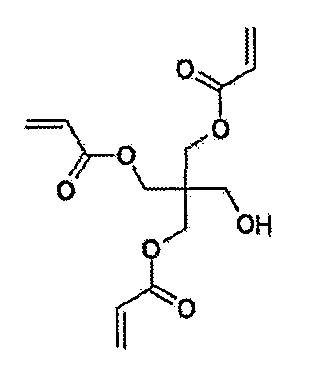
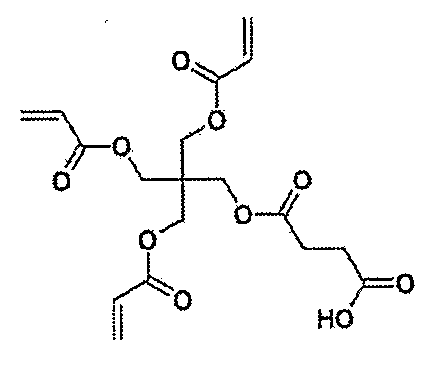
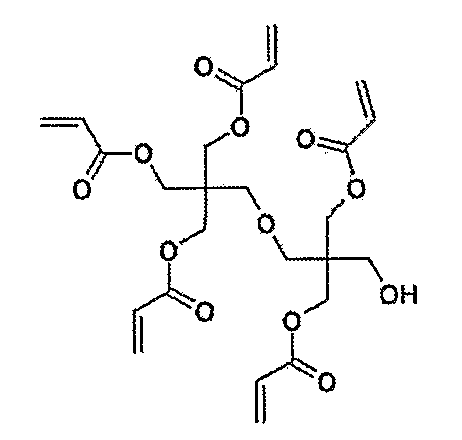
- the ethylenically unsaturated compound in the photosensitive resin composition according to the present invention may be a representative example of the following formulas (1) to (4), but is not limited to these as long as it is in accordance with the spirit of the present invention, and those known in the art may be used. have.
- the ethylenically unsaturated compound is preferably used in an amount of 0.7 to 3 times the weight of the alkali-soluble resin, and less than 0.7 times, it is difficult to expect a sufficient polymerization effect, and if it exceeds 3 times, the relative amount of the polymer resin is insufficient to thin the thin film. It is difficult to form.
- the content of the ethylenically unsaturated compound is preferably used in 1 to 20% by weight of the total photosensitive resin composition. If the content of the ethylenically unsaturated compound is less than 1% by weight is not preferable because the cross-linking reaction by the light does not proceed, if it exceeds 20% by weight is not preferable because there is a disadvantage that the pattern is difficult to form a poor solubility in alkali.
- ethylenically unsaturated compounds may be used in the photosensitive resin composition of the present invention.
- Other functional monomers having ethylenically unsaturated bonds include epoxy acrylates of bisphenol A derivatives, novolak-epoxy acrylates, and urethane-based polyfunctional acrylates, such as U-324A, U15HA, and U-4HA. have.
- the functional monomer which has the said ethylenically unsaturated double bond can be used individually or in mixture of 2 or more types.
- one or more solvents may be used as the solvent.
- solvents include methyl ethyl ketone, methyl cellosolve, ethyl cellosolve, propyl cellosolve, ethylene glycol dimethyl ether, Ethylene glycol diethyl ether, ethylene glycol methylethyl ether, propylene glycol dimethyl ether, propylene glycol diethyl ether, propylene glycol methylethyl ether, 2-ethoxypropanol, 2-methoxypropanol, 3-methoxybutanol, cyclopentanone , Cyclohexanone, propylene glycol methyl ether acetate, propylene glycol ethyl ether acetate, 3-methoxybutyl acetate, ethyl 3-ethoxy propionate, ethyl cellosolve acetate, methyl cellosolve acetate, butyl
- the photosensitive resin composition of the present invention may further include one or more additives such as a curing accelerator, a thermal polymerization inhibitor, a plasticizer, an adhesion promoter, a filler, or a surfactant as necessary.
- additives such as a curing accelerator, a thermal polymerization inhibitor, a plasticizer, an adhesion promoter, a filler, or a surfactant as necessary.
- cure accelerators examples include 2-mercaptobenzoimidazole, 2-mercaptobenzothiazole, 2-mercaptobenzoxazole, 2,5-dimercapto-1,3,4-thiadiazole, and 2- One selected from the group consisting of mercapto-4,6-dimethylaminopyridine, but is not limited thereto, and curing accelerators known in the art may be used.
- thermal polymerization inhibitor examples include p-anisole, hydroquinone, and the like, but are not limited thereto, and thermal polymerization inhibitors known in the art may be used.
- plasticizers adhesion promoters, fillers, surfactants and the like can also be used for all compounds that can be included in conventional photosensitive resin compositions.
- the photosensitive resin composition according to the present invention may be applied to a support such as a metal, paper, glass, or plastic base by using a roll coater, a curtain coater, a spin coater, a slot die coater, various printing methods, or a deposition method. It is also possible to transfer onto another support after being applied on the support, or to the second support after being applied to the first support and then to a blanket or the like, and the application method is not particularly limited. .
- mercury vapor arc, carbon arc, xenon arc, halogen arc, etc. which emit light having a wavelength of 250 to 450 nm may be used, but are not particularly limited thereto. Any known in the art can be used.
- the photosensitive resin composition according to the present invention can be used for the production of a photocurable paint, a photocurable ink, a transparent photosensitive composition for preparing an LCD color filter, a pigment dispersion photosensitive resin composition, a photosensitive resin composition for forming a light shielding film of an LCD or an organic light emitting diode, There is no restriction in particular in the use.
- this invention provides the transparent thin film layer for liquid crystal display devices manufactured using said photosensitive resin composition.
- the transparent thin film layer for the liquid crystal display device may be manufactured through a general manufacturing method known in the art, except for using the photosensitive resin composition according to the present invention.
- the present invention provides a liquid crystal display device including the transparent thin film layer for the liquid crystal display device.
- the liquid crystal display device may be manufactured by a general manufacturing method known in the art, except that the liquid crystal display device is manufactured by including a transparent thin film layer for a liquid crystal display device manufactured using the photosensitive resin composition according to the present invention.
- the following photosensitive resin composition was used to form the column spacer. 8 parts by weight of BzMA / MAA (molar ratio: 70/30, Mw: 24,000) as the alkali-soluble resin binder, 16 parts by weight of dipentaerythritol hexaacrylate as a polymerizable compound, 2-benzyl-2-dimethylamino-1- as a photoinitiator 1 part by weight of (4-morpholinophenyl) -butan-1-one (trade name Irgacure-369, Ciba Geigy) and 1 part by weight of hexa-aryl-bis-imidazole (Aldrich), and PGMEA 79 weight with an organic solvent.
- the portions were mixed for 3 hours using a shaker.
- the mixed photosensitive solution was filtered using a 5 micron filter, spin-coated to glass, and subjected to electrothermal treatment at about 100 ° C. for 2 minutes to form a uniform film having a thickness of about 3.0 ⁇ m.
- the film has a 100% transmittance and a 15 ⁇ m circular isolated pattern photomask and a 15 ⁇ m circular independent pattern with a chromium evaporated thin film adjusted to 10% transmittance.
- the pattern was developed with an aqueous KOH alkali solution of pH 11.3 to 11.7 and washed with deionized water. This was followed by post-heat treatment at 200 ° C. for about 50 minutes to form a spacer pattern.
- the thickness of the pattern thus formed is measured to define the starting point of the region where the thickness no longer increases in accordance with the exposure amount. Therefore, since a lower value is obtained, it means that the pattern is stably formed even with a small amount of light energy.
- photoinitiator 1.5 parts by weight of 2-benzyl-2-dimethylamino-1- (4-morpholinophenyl) -butan-1-one (trade name Irgacure-369, Ciba Geigy) and hexa-aryl-bis-imidazole (Aldrich ) was used in the same manner as in Example 1 except that 1.5 parts by weight of the mixture was used to form a spacer pattern.
- Example 2 The same method as in Example 1 except that 1 part by weight of 2-benzyl-2-dimethylamino-1- (4-morpholinophenyl) -butan-1-one (trade name Irgacure-369, manufactured by Ciba Geigy) was used as the photoinitiator.
- the spacer pattern was formed.
- Example 2 The same method as in Example 1 except that 1.5 parts by weight of 2-benzyl-2-dimethylamino-1- (4-morpholinophenyl) -butan-1-one (trade name Irgacure-369, manufactured by Ciba Geigy) was used as the photoinitiator.
- the spacer pattern was formed.
- a spacer pattern was formed in the same manner as in Example 1, except that 1 part by weight of hexa-aryl-bis-imidazole (Aldrich) was used as a photoinitiator.
- a spacer pattern was formed in the same manner as in Example 1, except that 1.5 parts by weight of hexa-aryl-bis-imidazole (Aldrich) was used as the photoinitiator.
- a spacer pattern was formed in the same manner as in Example 1, except that 1 part by weight of 2-Methyl 1- [4- (methylthio) phenyl] 2-morpholinopropan-1-one (trade name Irgacure 907, Ciba Geigy) was used as the photoinitiator. .
- a spacer pattern was formed in the same manner as in Example 1, except that 1.5 parts by weight of 2-Methyl 1- [4- (methylthio) phenyl] 2-morpholinopropan-1-one (trade name Irgacure 907, manufactured by Ciba Geigy) was used as the photoinitiator. .
- ethanone 1- [9-ethyl-6- (2-methylbenzyl) -9H-carbazol-3-yl] -1- (0-acetyloxime) (trade name Irgacure OXE-02, Ciba Geigy) as a photoinitiator and 2 Spacer pattern in the same manner as in Example 1, except that 1 part by weight of -benzyl-2-dimethylamino-1- (4-morpholinophenyl) -butan-1-one (trade name Irgacure-369, manufactured by Ciba Geigy) Formed.
- the pattern saturation is improved as the sensitivity is improved.
- Thickness-slit pattern thickness or pattern saturation thickness-value of semi-transmissive pattern thickness decreases, but in the case of using two or more photoinitiators in which the difference in active wave wavelengths is 20 nm or more according to an embodiment of the present invention, the sensitivity is maintained. It can be seen that the value of the pattern saturation thickness-slit pattern thickness or the pattern saturation thickness-semi-transmissive pattern thickness is high.
- the thickness of the thin film pattern according to the exposure illuminance is easy while the sensitivity of the photosensitive resin composition is easy, so that when the slit or the semi-transmissive mask is used, the thickness can be easily adjusted. It is advantageous to form column spacers, overcoats, passivation materials and the like of display elements.
Landscapes
- Physics & Mathematics (AREA)
- Spectroscopy & Molecular Physics (AREA)
- General Physics & Mathematics (AREA)
- Chemical & Material Sciences (AREA)
- Health & Medical Sciences (AREA)
- Chemical Kinetics & Catalysis (AREA)
- Medicinal Chemistry (AREA)
- Polymers & Plastics (AREA)
- Organic Chemistry (AREA)
- Materials For Photolithography (AREA)
- Liquid Crystal (AREA)
Abstract
Description


Claims (15)
- 활성파 파장의 차이가 20㎚ 이상인 2종의 광개시제를 포함하는 감광성 수지 조성물.
- 제 1항에 있어서, 상기 조성물은 2종의 광개시제를 포함하며, 상기 2종의 광개시제의 함량비는 1:3 ~ 3:1인 것을 특징으로 하는 감광성 수지 조성물.
- 제 1항에 있어서, 상기 광개시제의 활성화 파장의 차이는 20 내지 100nm인 것을 특징으로 하는 감광성 수지 조성물.
- 제 1항에 있어서, 상기 광개시제의 활성화 파장은 250 내지 450nm 범위인 것을 특징으로 하는 감광성 수지 조성물.
- 제 1항에 있어서, 상기 감광성 수지 조성물은 알칼리 가용성 수지, 에틸렌성 불포화 화합물, 광개시제 및 용매를 포함하는 것을 특징으로 하는 감광성 수지 조성물.
- 제 5항에 있어서, 상기 감광성 수지 조성물은 알칼리 가용성 수지 1 ~ 20중량%, 에틸렌성 불포화 화합물 1 ~ 20중량%, 광개시제 0.05 ~ 10중량% 및 용매 50 ~ 95중량%를 포함하는 것을 특징으로 하는 감광성 수지 조성물.
- [규칙 제26조에 의한 보정 05.08.2009]
제 5항에 있어서, 상기 에틸렌성 불포화 화합물은 하기 화학식 1 ~ 4로 표시되는 화합물 중 1종인 것을 특징으로 하는 감광성 수지 조성물. [화학식 1][화학식 2]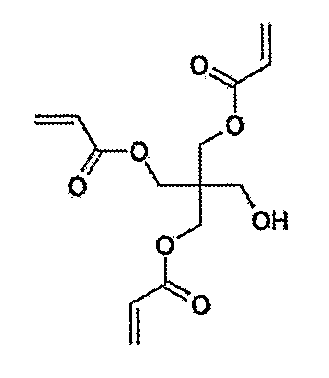 [화학식 3]
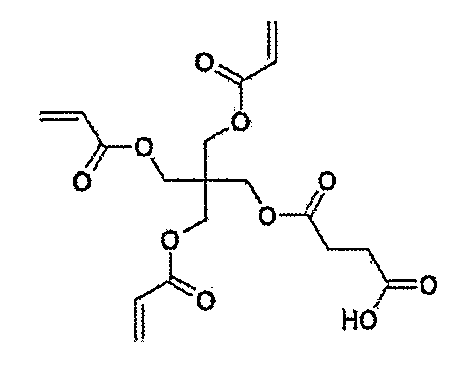 [화학식 4]
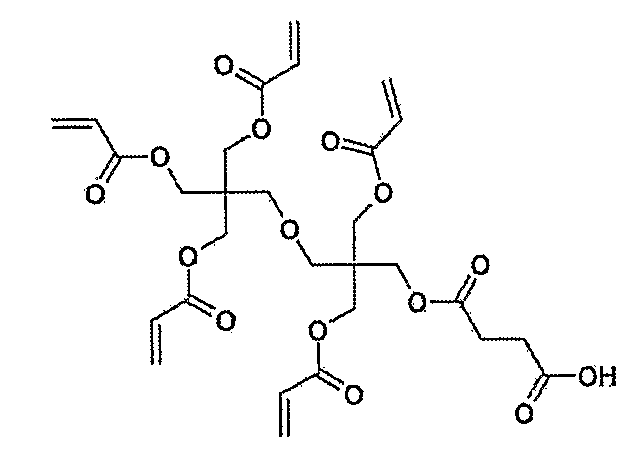
- 제 5항에 있어서, 상기 용매는 메틸에틸케톤, 메틸셀로솔브, 에틸셀로솔브, 프로필셀로솔브, 에틸렌글리콜 디메틸에테르, 에틸렌글리콜 디에틸에테르, 에틸렌글리콜 메틸에틸에테르, 프로필렌글리콜 디메틸에테르, 프로필글리콜 디에틸에테르, 프로필렌글리콜 메틸에틸에테르, 2-에톡시프로판올, 2-메톡시프로판올, 3-메톡시부탄올, 시클로펜타논, 시클로헥사논, 프로필렌글리콜 메틸에테르 아세테이트, 프로필렌글리콜 에틸에테르 아세테이트, 3-메톡시부틸 아세테이트, 에틸 3-에톡시 프로피오네이트, 에틸 셀로솔브 아세테이트, 메틸 셀로솔브 아세테이트, 부틸 아세테이트, 또는 디프로필렌글리콜 모노메틸에테르인 것을 특징으로 하는 감광성 수지 조성물.
- 제 1항에 있어서, 상기 감광성 수지 조성물은 경화촉진제, 열중합억제제, 가소제, 접착촉진제, 충전제 또는 계면활성제를 더 포함하는 것을 특징으로 하는 감광성 수지 조성물.
- 제 9항에 있어서, 상기 경화촉진제는 2-머캡토벤조이미다졸, 2-머캡토벤조티아졸, 2-머캡토벤조옥사졸, 2,5,-디머캡토-1,3,4-티아디아졸, 또는 2-머캡토-4,6-디메틸아미노피리딘인 것을 특징으로 하는 감광성 수지 조성물.
- 제 9항에 있어서, 상기 열중합억제제는 P-아나솔 또는 히드로퀴논인 것을 특징으로 하는 감광성 수지 조성물.
- 제 1항에 따른 감광성 수지 조성물을 이용하여 제조된 투명 박막층.
- 제 12항에 있어서, 상기 투명 박막층 패턴의 포화 두께-슬릿 패턴 두께는 3500Å 이상인 것을 특징으로 하는 투명 박막층.
- 제 12항에 있어서, 상기 투명 박막층 패턴의 포화 두께-반투과 패턴 두께는 4000Å 이상인 것을 특징으로 하는 투명 박막층.
- 제 12항에 따른 투명 박막층을 이용하여 제조된 액정 표시 장치.
Priority Applications (3)
| Application Number | Priority Date | Filing Date | Title |
|---|---|---|---|
| CN2009801083066A CN101965541A (zh) | 2008-07-01 | 2009-06-22 | 含有多种光敏引发剂的光敏树脂组合物和使用该光敏树脂组合物的透明薄膜层和液晶显示器 |
| JP2010526836A JP2011501816A (ja) | 2008-07-01 | 2009-06-22 | 複数の光開始剤を含む感光性樹脂組成物、これを用いた透明薄膜層及び液晶表示装置 |
| US12/674,408 US8409782B2 (en) | 2008-07-01 | 2009-06-22 | Photoresist composition comprising photoinitiators, and transparent thin film and liquid crystal display device using the composition |
Applications Claiming Priority (4)
| Application Number | Priority Date | Filing Date | Title |
|---|---|---|---|
| KR20080063313 | 2008-07-01 | ||
| KR10-2008-0063313 | 2008-07-01 | ||
| KR1020090054850A KR101121038B1 (ko) | 2008-07-01 | 2009-06-19 | 복수의 광개시제를 포함한 감광성 수지 조성물, 이를 이용한 투명 박막층 및 액정 표시 장치 |
| KR10-2009-0054850 | 2009-06-19 |
Publications (2)
| Publication Number | Publication Date |
|---|---|
| WO2010002129A2 true WO2010002129A2 (ko) | 2010-01-07 |
| WO2010002129A3 WO2010002129A3 (ko) | 2010-03-25 |
Family
ID=41466424
Family Applications (1)
| Application Number | Title | Priority Date | Filing Date |
|---|---|---|---|
| PCT/KR2009/003324 Ceased WO2010002129A2 (ko) | 2008-07-01 | 2009-06-22 | 복수의 광개시제를 포함한 감광성 수지 조성물, 이를 이용한 투명 박막층 및 액정 표시 장치 |
Country Status (1)
| Country | Link |
|---|---|
| WO (1) | WO2010002129A2 (ko) |
Cited By (2)
| Publication number | Priority date | Publication date | Assignee | Title |
|---|---|---|---|---|
| JP4849197B1 (ja) * | 2010-07-30 | 2012-01-11 | 日立化成工業株式会社 | 感光性樹脂組成物、並びに、これを用いた感光性エレメント、レジストパターン製造方法、リードフレームの製造方法、プリント配線板、及びプリント配線板の製造方法 |
| KR20160002040A (ko) | 2014-06-30 | 2016-01-07 | 주식회사 엘지화학 | 감광성 수지 조성물 |
Family Cites Families (4)
| Publication number | Priority date | Publication date | Assignee | Title |
|---|---|---|---|---|
| EP1395615B1 (en) * | 2001-06-11 | 2009-10-21 | Basf Se | Oxime ester photoinitiators having a combined structure |
| KR100708311B1 (ko) * | 2003-12-15 | 2007-04-17 | 주식회사 코오롱 | 액정 표시 소자의 칼럼 스페이서용 감광성 수지 조성물 |
| JP2006220790A (ja) * | 2005-02-09 | 2006-08-24 | Taiyo Ink Mfg Ltd | 表示パネル用感光性樹脂組成物、及びその硬化物並びに表示パネル用スペーサー |
| KR100793946B1 (ko) * | 2006-11-17 | 2008-01-16 | 제일모직주식회사 | 액정표시소자 칼럼 스페이서용 감광성 수지 조성물, 이를이용한 액정표시소자 칼럼 스페이서의 제조방법,액정표시소자용 칼럼 스페이서 및 이를 포함하는디스플레이 장치 |
-
2009
- 2009-06-22 WO PCT/KR2009/003324 patent/WO2010002129A2/ko not_active Ceased
Cited By (3)
| Publication number | Priority date | Publication date | Assignee | Title |
|---|---|---|---|---|
| JP4849197B1 (ja) * | 2010-07-30 | 2012-01-11 | 日立化成工業株式会社 | 感光性樹脂組成物、並びに、これを用いた感光性エレメント、レジストパターン製造方法、リードフレームの製造方法、プリント配線板、及びプリント配線板の製造方法 |
| WO2012014580A1 (ja) * | 2010-07-30 | 2012-02-02 | 日立化成工業株式会社 | 感光性樹脂組成物、並びに、これを用いた感光性エレメント、レジストパターン製造方法、リードフレームの製造方法、プリント配線板、及びプリント配線板の製造方法 |
| KR20160002040A (ko) | 2014-06-30 | 2016-01-07 | 주식회사 엘지화학 | 감광성 수지 조성물 |
Also Published As
| Publication number | Publication date |
|---|---|
| WO2010002129A3 (ko) | 2010-03-25 |
Similar Documents
| Publication | Publication Date | Title |
|---|---|---|
| KR101121038B1 (ko) | 복수의 광개시제를 포함한 감광성 수지 조성물, 이를 이용한 투명 박막층 및 액정 표시 장치 | |
| WO2015005546A1 (ko) | 흑색 감광성 수지 조성물 및 이를 이용한 차광층 | |
| CN101735344B (zh) | 含不饱和双键和肟酯基团的光聚合引发剂及含有该引发剂的光敏树脂组合物 | |
| WO2011002247A2 (ko) | 300nm 이하의 초단파장 노광기를 이용한 고체 촬상 소자의 컬러 필터 제조용 착색 감광성 수지 조성물, 이를 이용한 컬러 필터 및 이를 포함하는 고체 촬상 소자 | |
| WO2017069501A1 (ko) | 수지 조성물 및 이를 이용하여 제조된 블랙뱅크를 포함하는 디스플레이 장치 | |
| WO2012044027A2 (en) | Photosensitive resin composition | |
| WO2018159975A1 (ko) | 고분자 수지 화합물 및 이를 포함하는 블랙 뱅크용 감광성 수지 조성물 | |
| WO2013018986A1 (ko) | 염료를 포함하는 고분자 화합물 및 이를 포함하는 경화성 수지 조성물 | |
| WO2012125009A2 (ko) | 화학증폭형 포지티브 감광형 유기절연막 조성물 및 이를 이용한 유기절연막의 형성방법 | |
| WO2012067457A2 (ko) | 아크릴레이트계 화합물을 포함하는 감광성 조성물 | |
| WO2012099366A2 (ko) | 감광성 수지 조성물 및 이를 포함하는 감광재 | |
| WO2010151078A9 (en) | Photopolymerizable resin composition | |
| WO2013018988A1 (ko) | 불소계 수지 및 이를 포함하는 감광성 수지 조성물 | |
| WO2015160229A1 (ko) | 폴리실세스퀴옥산 공중합체 및 이를 포함하는 감광성 수지 조성물 | |
| WO2010041810A1 (ko) | 우레탄계 다관능성 모노머, 그의 제조방법 및 이를 포함하는 감광성 수지 조성물 | |
| WO2013129864A1 (ko) | 내열성이 우수한 화학증폭형 포지티브 감광형 고감도 유기절연막 조성물 및 이를 이용한 유기절연막의 형성방법 | |
| TWI469984B (zh) | 新穎化合物、包含其之光敏性組成物及光敏性材料 | |
| CN101960381A (zh) | 用于形成着色层的放射线敏感性组合物、滤色器和彩色液晶显示元件 | |
| KR101265313B1 (ko) | 다관능 아크릴 화합물 및 이를 포함하는 감광성 조성물 | |
| WO2010002129A2 (ko) | 복수의 광개시제를 포함한 감광성 수지 조성물, 이를 이용한 투명 박막층 및 액정 표시 장치 | |
| WO2011002252A2 (ko) | 초단파장 노광기를 이용한 고체 촬상 소자용 컬러 필터의 제조방법, 그 방법에 의해 제조된 컬러 필터 및 이를 포함하는 고체 촬상 소자 | |
| WO2012044070A2 (en) | Photosensitive resin composition for organic insulator | |
| WO2010090406A2 (ko) | 착색 감광성 수지 조성물, 컬러필터, 및 이를 구비한 액정표시장치 | |
| WO2021125821A1 (ko) | 화합물, 바인더 수지, 네가티브형 감광성 수지 조성물 및 이를 이용하여 형성된 블랙뱅크를 포함하는 디스플레이 장치 | |
| WO2017052169A1 (ko) | 크산텐계 화합물, 이를 포함하는 색재 조성물 및 이를 포함하는 수지 조성물 |
Legal Events
| Date | Code | Title | Description |
|---|---|---|---|
| WWE | Wipo information: entry into national phase |
Ref document number: 200980108306.6 Country of ref document: CN |
|
| WWE | Wipo information: entry into national phase |
Ref document number: 12674408 Country of ref document: US |
|
| 121 | Ep: the epo has been informed by wipo that ep was designated in this application |
Ref document number: 09773665 Country of ref document: EP Kind code of ref document: A2 |
|
| WWE | Wipo information: entry into national phase |
Ref document number: 2010526836 Country of ref document: JP |
|
| NENP | Non-entry into the national phase |
Ref country code: DE |
|
| 122 | Ep: pct application non-entry in european phase |
Ref document number: 09773665 Country of ref document: EP Kind code of ref document: A2 |