WO2009101692A1 - 前方監視装置、前方監視方法及び前方監視プログラム - Google Patents
前方監視装置、前方監視方法及び前方監視プログラム Download PDFInfo
- Publication number
- WO2009101692A1 WO2009101692A1 PCT/JP2008/052426 JP2008052426W WO2009101692A1 WO 2009101692 A1 WO2009101692 A1 WO 2009101692A1 JP 2008052426 W JP2008052426 W JP 2008052426W WO 2009101692 A1 WO2009101692 A1 WO 2009101692A1
- Authority
- WO
- WIPO (PCT)
- Prior art keywords
- vehicle
- detection means
- detecting
- unit
- color
- Prior art date
- Legal status (The legal status is an assumption and is not a legal conclusion. Google has not performed a legal analysis and makes no representation as to the accuracy of the status listed.)
- Ceased
Links
Images

Classifications
-
- G—PHYSICS
- G06—COMPUTING OR CALCULATING; COUNTING
- G06V—IMAGE OR VIDEO RECOGNITION OR UNDERSTANDING
- G06V20/00—Scenes; Scene-specific elements
- G06V20/50—Context or environment of the image
- G06V20/56—Context or environment of the image exterior to a vehicle by using sensors mounted on the vehicle
- G06V20/58—Recognition of moving objects or obstacles, e.g. vehicles or pedestrians; Recognition of traffic objects, e.g. traffic signs, traffic lights or roads
- G06V20/584—Recognition of moving objects or obstacles, e.g. vehicles or pedestrians; Recognition of traffic objects, e.g. traffic signs, traffic lights or roads of vehicle lights or traffic lights
Definitions
- the present invention relates to a method of monitoring the front while driving a vehicle and performing control based on the result.
- Patent Document 1 that recognizes the color of a traffic light based on image data captured by an in-vehicle camera and controls the vehicle based on the recognition result is known.
- the invention according to claim 1 is a forward monitoring device installed in a vehicle, wherein vehicle detection means for detecting a preceding vehicle located in front of the vehicle, and when the vehicle detection means detects the preceding vehicle , A start detection means for detecting that the preceding vehicle has started, a signal detection means for detecting the color of the vehicle traffic light and detecting whether the vehicle can start, the start detection means and the signal Control means for performing control based on the detection result of the detection means.
- the invention according to claim 12 is a forward monitoring method executed by a forward monitoring device installed in a vehicle, wherein a vehicle detection step of detecting a preceding vehicle located in front of the vehicle, and the vehicle detection step includes A start detection step for detecting that the preceding vehicle has started when a preceding vehicle is detected; a signal detection step for detecting the color of the traffic signal for the vehicle and detecting whether the vehicle is capable of starting; A control step of performing control based on detection results of the start detection step and the signal detection step.
- the invention according to claim 13 is a forward monitoring program executed by a computer installed in a vehicle, wherein vehicle detection means for detecting a preceding vehicle located in front of the vehicle, and the vehicle detection means detects the preceding vehicle.
- vehicle detection means for detecting a preceding vehicle located in front of the vehicle, and the vehicle detection means detects the preceding vehicle.
- a start detection means for detecting that the preceding vehicle has started, a signal detection means for detecting the color of the traffic light for the vehicle and detecting whether the vehicle can start, and the start detection means;
- the computer is caused to function as control means for performing control based on a detection result by the signal detection means.
- Independent positioning device 18 GPS receiver 20 System controller 22 CPU 36 data storage unit 40 display unit 60 input device 100 navigation device 200 forward monitoring unit
- One aspect of the present invention is a forward monitoring device installed in a vehicle, wherein vehicle detection means for detecting a preceding vehicle located in front of the vehicle, and when the vehicle detection means detects the preceding vehicle, Start detection means for detecting that the preceding vehicle has started, signal detection means for detecting the color of the vehicle traffic light and detecting whether the vehicle is in a color capable of starting, the start detection means and the signal detection Control means for performing control based on a detection result by the means.
- the vehicle detection means detects a preceding vehicle existing in front of the vehicle on which the forward monitoring apparatus is installed.
- the start detection means detects that the preceding vehicle has started.
- the signal detection means detects the color of the vehicle traffic signal existing in front of the vehicle, and detects whether the vehicle is a color that allows the vehicle to start.
- a control means performs control based on the detection result by a start detection means and a signal detection means. According to this, the forward monitoring device determines whether or not the preceding vehicle existing in front of the vehicle has started, and whether or not the color of the vehicle traffic signal existing in front of the vehicle is a color that allows the vehicle to start. Based on whether or not, the driver can perform control for safely driving the vehicle.
- the signal detection means includes a change detection means for detecting a change in the color of the vehicle traffic signal.
- the forward monitoring device is based on whether or not the preceding vehicle that is in front of the vehicle has started, and whether or not the color of the traffic light that is in front of the vehicle has changed.
- control for driving the vehicle can be performed.
- the change detection unit detects a color change of the vehicle traffic signal when the vehicle detection unit does not detect the preceding vehicle, and the control Means for controlling when the start detection means detects that the preceding vehicle has started, and when the change detection means detects that the color of the vehicle traffic light has changed from red to blue.
- the change detection unit detects a change in the color of the vehicle traffic signal when the vehicle detection unit does not detect the preceding vehicle.
- the control means performs control when the change detecting means detects that the color of the vehicle traffic signal has changed from red to blue.
- the start detection means detects that the preceding vehicle has started when the vehicle detection means detects the preceding vehicle.
- the control means performs control when the start detection means detects that the preceding vehicle has started. According to this, it is possible to perform safe control for preventing a vehicle accident without increasing the throughput of the front monitoring device.
- the vehicle further includes a traffic signal detection unit that detects the vehicle traffic signal, and the change detection unit detects the vehicle traffic signal when the traffic signal detection unit detects the vehicle traffic signal.
- a change in color wherein the control means does not detect the traffic signal for the vehicle and the start detection means detects that the preceding vehicle has started; and When the vehicle detection means does not detect the preceding vehicle, and the change detection means detects that the color of the vehicle traffic signal has changed from red to blue, and the start detection means starts the start vehicle. And the control is performed when the change detecting means detects that the color of the vehicle traffic light has changed from red to blue.
- the traffic light detection means detects the vehicle traffic signal existing in front of the vehicle. Further, the change detection means detects a change in the color of the vehicle traffic signal when the traffic signal detection means detects the vehicle traffic signal.
- the control means performs control when the preceding vehicle starts when there is no vehicle traffic signal in front of the vehicle. Further, the control means performs control when the color of the vehicle traffic signal changes from red to blue when there is no preceding vehicle ahead of the vehicle. Further, the control means is configured such that when both the preceding vehicle and the vehicle traffic signal exist in front of the vehicle, the preceding vehicle starts and the color of the vehicle traffic signal changes from red to blue, that is, two conditions are satisfied. Control only if they match. According to this, it is possible to prevent a rear-end collision or a parting car departure while giving priority to the monitoring of the preceding vehicle over the monitoring of the vehicle traffic light.
- the vehicle detection unit detects the preceding vehicle
- the start detection unit detects that the preceding vehicle has started
- the traffic signal detection unit detects the vehicle signal.
- the process of detecting the color change of the vehicle traffic signal by the change detecting means is executed in parallel, and the control means is based on the detection result executed in parallel. Control. According to this, since the control is performed when the conditions are met based on the detection results of the processes executed in parallel, safe control that prevents a vehicle accident can be accurately performed.
- the vehicle further comprises space determining means for determining whether or not a space equal to or greater than a threshold exists in front of the vehicle, and the control means further includes the space determining means for the vehicle. Control is performed only when it is determined that there is a space equal to or larger than the threshold ahead.
- the space determination means determines whether or not there is a space equal to or greater than a threshold in front of the vehicle in which the forward monitoring apparatus is installed.
- the control means performs control only when the monitoring results of the preceding vehicle and the vehicle traffic light match the control conditions, and the space determination means determines that there is a space equal to or larger than the threshold in front of the vehicle. According to this, it becomes possible to prevent a mistake that a vehicle stops in an intersection or a pedestrian crossing during a traffic jam, causing trouble to pedestrians and other vehicles.
- the front monitoring apparatus includes a voice output unit, and the control means outputs a voice prompting the start of the vehicle from the voice output unit. According to this, the driver can recognize the voice that prompts the vehicle to start at an appropriate timing during driving of the vehicle. In other words, the forward monitoring device can provide information for safely driving to the driver at an appropriate timing based on the result of forward monitoring.
- the front monitoring apparatus includes a camera that acquires image data, and the vehicle detection unit, the start detection unit, the traffic light detection unit, and the change detection unit are acquired by the camera. Detection is performed on the basis of the obtained image data.
- a vehicle detection means detects that a preceding vehicle exists ahead of a vehicle by performing an image recognition process based on the image data which the camera acquired by imaging
- the start detection means detects that the preceding vehicle has started by executing an image recognition process based on the image data acquired by the camera.
- the traffic light detection means detects the presence of a traffic signal for a vehicle in front of the vehicle by executing an image recognition process based on image data acquired by the camera.
- the change detection means detects that the color of the traffic signal for the vehicle has changed from red to blue by executing an image recognition process based on the image data acquired by the camera. That is, it is possible to easily detect the detection target by executing the image recognition processing based on the image data.
- the front monitoring apparatus includes a camera that acquires image data
- the space determination unit is configured to be equal to or greater than a threshold value in front of the vehicle based on the image data acquired by the camera. It is characterized in that it is determined whether or not there is a space. According to this, the space determination means can easily determine whether or not there is a space equal to or larger than the threshold ahead of the vehicle by executing image recognition processing based on the image data acquired by the camera. Can do.
- the camera is movable in a shooting direction on a drive unit installed in the vehicle, and the front monitoring device detects the vehicle traffic signal by the traffic signal detection means. And when the color change of the vehicle traffic signal is detected by the change detection means, a first change means for changing the angle of the camera forward and upward, and the preceding vehicle is detected by the vehicle detection means. And a second changing means for changing the angle of the camera to the front horizontal when the start detecting means detects that the preceding vehicle has started.
- a driving unit such as a free pan head
- the camera can take a shooting direction on the driving unit.
- the first changing means changes the angle of the camera forward and upward to match the traffic signal when detecting the traffic signal for the vehicle and when detecting a color change of the traffic signal for the vehicle.
- the second changing means changes the camera to the front horizontal to match the preceding vehicle when detecting the preceding vehicle and detecting that the preceding vehicle has started.
- the front monitoring device includes a sound output unit, and detects pedestrian traffic light that is different from the vehicle traffic light.
- the traffic light detection means detects the pedestrian traffic light
- the pedestrian change detection means detects the color change of the pedestrian traffic light
- the pedestrian change detection means blinks the pedestrian traffic light.
- Audio output means for outputting a sound indicating that the time when the color of the vehicle traffic light is approaching is approaching when it is detected that the vehicle is being operated. .
- the pedestrian traffic light detection means detects that a pedestrian traffic signal different from the vehicle traffic signal is present in front of the vehicle. Subsequently, the pedestrian change detection means detects a color change of the pedestrian traffic light when the pedestrian traffic light detection means detects the pedestrian traffic light. Furthermore, when the pedestrian change detecting means detects that the pedestrian traffic light is blinking, the audio output means outputs a voice indicating that the time when the color of the vehicle traffic light changes is approaching. To do. According to this, since the front monitoring apparatus can notify that the time when the color of the vehicle traffic light changes is approaching, it can provide additional information for safe driving to the driver. .
- a forward monitoring method executed by a forward monitoring device installed in a vehicle, wherein a vehicle detection step of detecting a preceding vehicle located in front of the vehicle, and the vehicle detection step includes the preceding detection step.
- a start detection step for detecting that the preceding vehicle has started when a vehicle is detected;
- a signal detection step for detecting the color of the vehicle traffic light and detecting whether the vehicle is a color capable of starting;
- a forward monitoring program executed by a computer installed in a vehicle, wherein the vehicle detection means detects a preceding vehicle located in front of the vehicle, and the vehicle detection means detects the preceding vehicle.
- the computer is caused to function as control means for performing control based on a detection result by the signal detection means.
- the forward monitoring device is a navigation device.
- the vehicle is equipped with a camera that can be controlled by a navigation device and whose imaging angle (direction) is movable on a drive unit (free platform) installed in the vehicle.
- the camera may be mounted on the front monitoring device.
- FIG. 1 shows a configuration of a navigation device 100 according to an embodiment of the present invention.
- the navigation device 100 includes a self-supporting positioning device 10, a GPS receiver 18, a system controller 20, a disk drive 31, a data storage unit 36, a communication interface 37, a communication device 38, a display unit 40, and an audio output.
- a unit 50 and an input device 60 are provided.
- the self-supporting positioning device 10 includes an acceleration sensor 11, an angular velocity sensor 12, and a distance sensor 13.
- the acceleration sensor 11 is made of, for example, a piezoelectric element, detects vehicle acceleration, and outputs acceleration data.
- the angular velocity sensor 12 is composed of, for example, a vibrating gyroscope, detects the angular velocity of the vehicle when the direction of the vehicle is changed, and outputs angular velocity data and relative azimuth data.
- the distance sensor 13 measures a vehicle speed pulse composed of a pulse signal generated with the rotation of the vehicle wheel.
- the GPS receiver 18 receives radio waves 19 carrying downlink data including positioning data from a plurality of GPS satellites.
- the positioning data is used to detect the absolute position of the vehicle from latitude and longitude information.
- the system controller 20 includes an interface 21, a CPU 22, a ROM 23, and a RAM 24, and controls the entire navigation apparatus 100. Specifically, the system controller 20 changes the shooting angle (direction) of a camera mounted on the vehicle, acquires image data shot by the camera, detects an object based on the image data, and outputs sound based on the detection result. The process is performed.
- the interface 21 performs an interface operation with the acceleration sensor 11, the angular velocity sensor 12, the distance sensor 13, and the GPS receiver 18. From these, vehicle speed pulses, acceleration data, relative azimuth data, angular velocity data, GPS positioning data, absolute azimuth data, and the like are input to the system controller 20.
- the CPU 22 controls the entire system controller 20.
- the ROM 23 includes a nonvolatile memory (not shown) in which a control program for controlling the system controller 20 is stored.
- the RAM 24 stores various data preset by the user via the input device 60 so as to be readable, and provides a working area to the CPU 22.
- a system controller 20 a disk drive 31 such as a CD-ROM drive or a DVD-ROM drive, a data storage unit 36, a communication interface 37, a display unit 40, an audio output unit 50 and an input device 60 are mutually connected via a bus line 30. It is connected to the.
- the disk drive 31 reads and outputs content data such as music data and video data from a disk 33 such as a CD or DVD under the control of the system controller 20.
- the disk drive 31 may be either a CD-ROM drive or a DVD-ROM drive, or may be a CD and DVD compatible drive.
- the data storage unit 36 includes, for example, an HDD and stores various data used for navigation processing such as map data.
- the map data includes position data (for example, latitude and longitude information) such as traffic lights, signs, stop lines, and pedestrian crossings installed on the road.
- the data storage unit 36 stores various data used for image recognition processing such as image recognition data.
- the image recognition data includes traffic lights (including those for vehicles and pedestrians), signs, stop lines, pedestrian crossings, etc., and traffic light color data that have been taken in advance by a camera mounted on the vehicle. ing.
- the communication device 38 includes, for example, an FM tuner, a beacon receiver, a mobile phone, a dedicated communication card, and the like, and is jammed from a VICS (Vehicle Information Communication System) center (registered trademark) via a communication interface 37. Receive road traffic information such as traffic information and other information.
- VICS Vehicle Information Communication System
- the display unit 40 displays various display data on a display device such as a display under the control of the system controller 20. Specifically, the system controller 20 reads map data from the data storage unit 36. The display unit 40 displays the map data read from the data storage unit 36 by the system controller 20 on a display screen such as a display.
- the display unit 40 includes a graphic controller 41 that controls the entire display unit 40 based on control data sent from the CPU 22 via the bus line 30 and a memory such as a VRAM (Video RAM), and can display image information that can be displayed immediately.
- VRAM Video RAM
- a buffer memory 42 that temporarily stores, a display control unit 43 that controls display of a display 44 such as a liquid crystal or a CRT (Cathode Ray Tube) based on image data output from the graphic controller 41, and a display 44 are provided.
- the display 44 is composed of, for example, a liquid crystal display device having a diagonal of about 5 to 10 inches, and is mounted near the front panel in the vehicle.
- the audio output unit 50 is a D / A converter that performs D / A conversion of audio digital data sent from the CD-ROM drive 31, DVD-ROM 32, RAM 24, or the like via the bus line 30 under the control of the system controller 20. 51, an amplifier (AMP) 52 that amplifies the audio analog signal output from the D / A converter 51, and a speaker 53 that converts the amplified audio analog signal into sound and outputs the sound into the vehicle. Yes.
- AMP amplifier
- the input device 60 includes keys, switches, buttons, a remote controller, a voice input device, and the like for inputting various commands and data.
- the input device 60 is arranged around the front panel and the display 44 of the main body of the in-vehicle electronic system mounted in the vehicle.
- the display 44 is a touch panel system
- the touch panel provided on the display screen of the display 44 also functions as the input device 60.
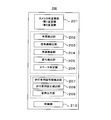
- FIG. 2 shows a functional configuration of the front monitoring unit 200 that reduces the accident by prompting the driver to start the vehicle based on the detection result by the front monitoring.
- the front monitoring unit 200 is actually composed of the components of the navigation device 100.
- the front monitoring unit 200 includes a camera direction changing unit 201, a vehicle detection unit 202, a traffic light detection unit 203, a start detection unit 204, a change detection unit 205, a space determination unit 206, a pedestrian traffic light detection unit 207, a walking as illustrated.
- a person change detecting unit 208, an audio output unit 209, and a control unit 210 are provided.
- the camera direction changing unit 201 has a first changing unit and a second changing unit.
- the camera direction changing unit 201 changes the shooting direction of the camera mounted on the vehicle. Specifically, the first changing unit moves the camera angle forward when detecting the traffic signal for the vehicle by the traffic signal detection unit 203 described later, and when detecting the color change of the traffic signal for the vehicle by the change detection unit 205. Change upward.
- the second changing unit changes the angle of the camera to the front horizontal when the preceding vehicle is detected by the vehicle detecting unit 202 described later and when the preceding detecting unit 204 detects that the preceding vehicle has started. .
- the camera direction changing unit 201 functions as a first changing unit and a second changing unit in the present invention.
- the vehicle detection unit 202 detects a preceding vehicle based on image data acquired by photographing with a camera mounted on the vehicle. Specifically, the vehicle detection unit 202 executes an image recognition process based on image data acquired by a camera whose angle has been changed horizontally forward by the second changing unit, so that a preceding vehicle existing ahead of the vehicle. Is detected.
- the vehicle detection unit 202 functions as vehicle detection means in the present invention.
- the traffic signal detection unit 203 detects a traffic signal for a vehicle based on image data acquired by photographing with a camera mounted on the vehicle. Specifically, the traffic light detection unit 203 performs image recognition processing based on the image data acquired by the camera whose angle has been changed forward and upward by the first changing unit, and the vehicle traffic signal read from the data storage unit 36 By comparing with the image data, the vehicle traffic signal existing in front of the vehicle is detected.
- the traffic signal detector 203 functions as a traffic signal detector in the present invention.
- the start detection unit 204 detects that the preceding vehicle has started based on image data acquired by photographing with a camera mounted on the vehicle. Specifically, the start detection unit 204 performs image recognition processing based on the image data acquired by the camera whose angle has been changed horizontally in front by the second changing unit, and verifies the size and the like of the preceding vehicle. Then, it is detected that the preceding vehicle has started.
- the start detection unit 204 functions as start detection means in the present invention.
- the change detection unit 205 detects that the color of the vehicle traffic signal has changed from red to blue based on image data acquired by photographing with a camera mounted on the vehicle. Specifically, the change detection unit 205 performs image recognition processing based on the image data acquired by the camera whose angle has been changed forward and upward by the first change unit, and the vehicle traffic signal read out from the data storage unit 36. By comparing with the color data, it is detected that the color of the vehicle traffic signal has changed from red to blue.
- the change detection unit 205 functions as a change detection unit in the present invention.
- the space determination unit 206 determines whether or not there is a space equal to or greater than a threshold value in front of the vehicle based on image data acquired by photographing with a camera mounted on the vehicle.
- the space above the threshold is a space necessary for stopping at a safe position without stopping in an intersection or the like even if the vehicle starts following the start of a preceding vehicle or the like.
- the threshold value can be set arbitrarily.
- the space determination unit 206 functions as a space determination unit in the present invention.
- the space determination unit 206 first refers to the traffic light, stop line, crosswalk position data and image data read from the data storage unit 36, so that the area in the intersection existing in front of the vehicle. Recognize Then, the space determination unit 206 performs image recognition processing based on image data acquired by photographing by a camera mounted on the vehicle, and based on the position of the preceding vehicle that has started and the recognized area in the intersection, the preceding vehicle Subsequently, when the vehicle starts, it is determined whether or not the vehicle will not stop in the area within the intersection. When it is determined that the vehicle does not stop in the area within the intersection, the space determination unit 206 determines that there is a space equal to or greater than the threshold in front of the vehicle. On the other hand, when the space determination unit 206 determines that the vehicle stops in an area within the intersection, the space determination unit 206 determines that there is no space equal to or larger than the threshold in front of the vehicle.
- the space determination unit 206 performs image recognition processing based on image data acquired by photographing with a camera mounted on the vehicle, and uses the pedestrian crossing position data and image data read from the data storage unit 36. Based on this, it is determined whether or not the vehicle will stop on the pedestrian crossing when the vehicle starts following the preceding vehicle. When it is determined that the vehicle does not stop on the pedestrian crossing, the space determination unit 206 determines that there is a space equal to or greater than the threshold in front of the vehicle. On the other hand, when the space determination unit 206 determines that the vehicle stops on the pedestrian crossing, the space determination unit 206 determines that there is no space equal to or greater than the threshold in front of the vehicle.
- the space determination unit 206 executes image recognition processing based on image data acquired by photographing with a camera mounted on the vehicle, and refers to the traffic signal position data and image data read from the data storage unit 36. Thus, it is determined from the positional relationship between the preceding vehicle and the traffic signal for the vehicle whether or not there is a space of a threshold value or more in front of the vehicle.
- the pedestrian traffic light detection unit 207 detects a pedestrian traffic light based on image data acquired by photographing with a camera mounted on the vehicle. Specifically, the pedestrian traffic light detection unit 207 performs image recognition processing based on the image data acquired by the camera, and compares it with the image data of the pedestrian traffic light read from the data storage unit 36. A pedestrian traffic light different from the vehicle traffic light existing in front of the vehicle is detected.
- the pedestrian traffic light detector 207 functions as a pedestrian traffic light detector in the present invention.
- the pedestrian change detection unit 208 determines the color of the pedestrian traffic light based on image data acquired by the camera mounted on the vehicle. Detects a change from red to blue. Specifically, the pedestrian change detection unit 208 performs image recognition processing based on the image data acquired by the camera, and compares it with the color data of the pedestrian traffic light read from the data storage unit 36. It detects that the color of the traffic light for passengers has changed from red to blue.
- the pedestrian change detection unit 208 functions as pedestrian change detection means in the present invention.
- the audio output unit 209 changes the color of the vehicle traffic signal from the speaker 53 by the audio output unit 50.
- the sound that tells that the time to do is approaching is output. It is assumed that the audio data that informs that the time when the color of the vehicle traffic signal changes is approaching is stored in the data storage unit 36 in advance.
- the audio output unit 209 functions as an audio output unit in the present invention.
- the control unit 210 controls the vehicle based on the detection result by each detection unit and / or the determination result by the space determination unit 206. Specifically, the control unit 210 controls the sound output unit 50 to output sound prompting the vehicle to start from the speaker 53. It is assumed that the voice data that prompts the vehicle to start is stored in the data storage unit 36 in advance.
- the control unit 210 functions as a control unit in the present invention.
- the above-described units are realized by the CPU 22 of the navigation device 100 executing a program prepared in advance.
- the front monitoring unit 200 includes a change detection unit 205, and the change detection unit 205 detects that the color of the vehicle traffic signal has changed from red to blue.
- the change in the color of the vehicle traffic signal from red to blue is an example of the change, and the present invention is not limited to this.
- the front monitoring unit 200 may include a signal detection unit, and the signal detection unit may detect the color of the traffic light for the vehicle and detect whether the vehicle can start the vehicle.
- the control unit 210 performs control for prompting the vehicle to start if the color of the vehicle traffic signal is a color that allows the vehicle to start.
- the signal detector functions as a signal detector in the present invention.
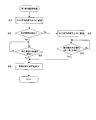
- FIG. 3 is a flowchart of the first forward monitoring process according to this embodiment.
- the first forward monitoring process monitors the preceding vehicle and the traffic signal for the vehicle that are present in front of the vehicle when the vehicle is stopped by a signal during boarding the vehicle, and outputs a sound that prompts the vehicle to start based on the result. It is processing.
- the forward monitoring unit 200 is configured by the components of the navigation device 100, and the first forward monitoring process is realized by the CPU 22 shown in FIG. 1 executing a program stored in the ROM 23. In executing the first forward monitoring process, the forward monitoring unit 200 includes a traffic light detection unit 203, a space determination unit 206, a pedestrian traffic light detection unit 207, a pedestrian change detection unit 208, and an audio output unit 209. It does not have to be.
- the second changing unit of the front monitoring unit 200 first changes the angle of the camera mounted on the vehicle to the front horizontal (step S1). Then, the vehicle detection part 202 detects a preceding vehicle based on the image data acquired by imaging
- step S2 when the vehicle detection unit 202 does not detect the preceding vehicle in step S2 (step S2; No), the first changing unit changes the angle of the camera mounted on the vehicle to the front upper side (step S5). Then, the change detection unit 205 detects that the color of the vehicle traffic signal has changed from red to blue based on the image data acquired by the camera (step S6). When it is not detected that the color of the vehicle traffic signal has changed from red to blue (step S6; No), the change detection unit 205 repeatedly performs a process of detecting that the color of the vehicle traffic signal has changed from red to blue. .
- step S6 when it is detected that the color of the vehicle traffic signal has changed from red to blue (step S6; Yes), the control unit 210 starts the vehicle from the speaker 53 based on the audio data read from the data storage unit 36. A voice prompting the user is output (step S4). Thereby, the first forward monitoring process is completed.
- the forward monitoring device detects that the preceding vehicle has started when there is a preceding vehicle, and controls the vehicle based on the detection result.
- the color of the vehicle traffic signal has changed from red to blue, and the vehicle is controlled based on the detection result.
- time-series image data is required and the amount of processing is large, so it has been necessary to focus only on detection of the traffic light.
- the forward monitoring apparatus can perform safe control for preventing an accident without increasing the processing amount of the image recognition process.
- the angle (direction) of the camera mounted on the vehicle variable it becomes possible to monitor both the vehicle traffic signal and the preceding vehicle with a single camera.
- the driver can know the current monitoring target by referring to the angle of the camera.
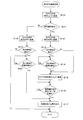
- FIG. 4 is a flowchart of the second forward monitoring process according to this embodiment.
- the second forward monitoring process when the vehicle is stopped by a signal while the vehicle is on board, the preceding vehicle and the traffic signal for the vehicle that are present in front of the vehicle are prioritized and monitored based on both monitoring results. This is a process for outputting a voice prompting the start.
- the forward monitoring unit 200 is constituted by the components of the navigation device 100, and the second forward monitoring process is realized by the CPU shown in FIG. 1 executing a program stored in the ROM 23. In performing the second forward monitoring process, the forward monitoring unit 200 may not include the space determination unit 206, the pedestrian traffic light detection unit 207, the pedestrian change detection unit 208, and the audio output unit 209. .
- the first changing unit of the front monitoring unit 200 first changes the angle of the camera mounted on the vehicle to the front upper side (step S10). Then, the traffic signal detection unit 203 detects a vehicle traffic signal existing in front of the vehicle based on the image data acquired by the camera (step S11). When the traffic signal detection unit 203 detects a vehicle traffic signal (step S11: Yes), the second change unit changes the angle of the camera mounted on the vehicle to the front horizontal (step S12). Then, the vehicle detection part 202 detects a preceding vehicle based on the image data acquired by imaging
- step S15 the front monitoring device proceeds to the process of step S15, and the first change unit sets the angle of the camera mounted on the vehicle upward and upward. Change (step S15).
- step S13; Yes the start detection unit 204 detects that the preceding vehicle has started based on image data acquired by the camera (step S14). .
- step S14; No the start detection unit 204 repeatedly performs a process of detecting that the preceding vehicle has started.
- the first changing unit changes the angle of the camera mounted on the vehicle to the upper front (step S15). Then, the change detection unit 205 detects that the color of the vehicle traffic signal has changed from red to blue based on the image data acquired by the camera (step S16). When it is not detected that the color of the vehicle traffic signal has changed from red to blue (step S16; No), the change detection unit 205 repeatedly performs a process of detecting that the color of the vehicle traffic signal has changed from red to blue. .
- step S16 when it is detected that the color of the vehicle traffic signal has changed from red to blue (step S16; Yes), the control unit 210 starts the vehicle from the speaker 53 based on the audio data read from the data storage unit 36. A voice prompting the user is output (step S17).
- step S11 When the traffic light detection unit 203 does not detect the vehicle traffic signal in step S11 (step S11; No), the second changing unit changes the angle of the camera mounted on the vehicle to the front horizontal (step S18). Then, the vehicle detection part 202 detects a preceding vehicle based on the image data acquired by imaging
- Step S19; No since the vehicle traffic signal and the preceding vehicle do not exist in front of the vehicle, the front monitoring device ends the second front monitoring process.
- the vehicle detection unit 202 detects the preceding vehicle (step S19; Yes)
- the start detection unit 204 detects that the preceding vehicle has started based on the image data acquired by the camera (step S20).
- the start detection unit 204 repeatedly performs a process of detecting that the preceding vehicle has started.
- step S20 when it is detected that the preceding vehicle has started (step S20; Yes), the control unit 210 outputs a sound prompting the vehicle to start from the speaker 53 based on the sound data read from the data storage unit 36 ( Step S17). Thereby, the second forward monitoring process is completed.
- the signal detection, the detection of the preceding vehicle, the detection of the start of the preceding vehicle, and the detection of the color change of the traffic signal are performed in this order.
- the process of detecting the preceding vehicle and detecting the start of the preceding vehicle and the process of detecting the vehicle traffic light and detecting the color change of the vehicle traffic signal are executed in parallel. That is, the control unit 210 performs control based on the detection result executed in parallel.
- the forward monitoring device detects that the preceding vehicle has started when the preceding vehicle and the traffic signal are present, and the color of the traffic signal changes from red to blue. When it is detected that the vehicle has changed, a sound for urging the vehicle control, that is, starting is output.
- a sound for urging the vehicle control that is, starting is output.
- the preceding vehicle makes a parting departure even though the vehicle traffic light is red, a voice that prompts the start is output, which may be dangerous for the driver. Therefore, in the second forward monitoring process, even if the preceding vehicle starts, the vehicle traffic signal is continuously monitored, and not only the condition of starting the preceding vehicle but also the second condition of color change of the vehicle traffic signal is cleared. The voice that prompts the start is output for the first time.
- the monitoring of the vehicle traffic signal and the monitoring of the preceding vehicle are simultaneously performed in parallel.
- the second forward monitoring process when there is a preceding vehicle, no sound prompting to start is output even if the color of the vehicle traffic light changes from red to blue. That is, the monitoring of the preceding vehicle is prioritized over the monitoring of the vehicle signal. In this way, by determining the priority of the detection target, it is possible to avoid the danger of a rear-end collision such as outputting a sound prompting the start because the color of the vehicle traffic signal has changed despite the presence of a preceding vehicle. .
- the forward monitoring device can prevent a parting vehicle and a rear-end collision and perform safer control.
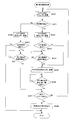
- FIG. 5 is a flowchart of the third forward monitoring process according to this embodiment.
- priorities are given to a preceding vehicle, a traffic signal for a vehicle, and a space that are present in front of the vehicle when the vehicle is stopped by a signal while the vehicle is on the vehicle, and the vehicle is based on the monitoring result.
- This is a process for outputting a sound prompting the user to send a message.
- the forward monitoring unit 200 is constituted by the components of the navigation device 100, and the third forward monitoring process is realized by the CPU shown in FIG. 1 executing a program stored in the ROM 23. In executing the third forward monitoring process, the forward monitoring unit 200 may not include the pedestrian traffic light detection unit 207, the pedestrian change detection unit 208, and the audio output unit 209.
- the first changing unit of the front monitoring unit 200 first changes the angle of the camera mounted on the vehicle to the front upper side (step S30). Then, the traffic light detection unit 203 detects a vehicle traffic signal existing in front of the vehicle based on the image data acquired by the camera (step S31). When the traffic signal detection unit 203 detects a vehicle traffic signal (step S31: Yes), the second change unit changes the angle of the camera mounted on the vehicle to the front horizontal (step S32). Then, the vehicle detection part 202 detects a preceding vehicle based on the image data acquired by imaging
- step S33; No the front monitoring device proceeds to the process of step S35, and the first change unit sets the angle of the camera mounted on the vehicle upward and upward. Change (step S35).
- step S33; Yes the start detection unit 204 detects that the preceding vehicle has started based on image data acquired by the camera (step S34). .
- step S34; No the start detection unit 204 repeatedly performs a process of detecting that the preceding vehicle has started.
- step S34 when it is detected that the preceding vehicle has started (step S34; Yes), the first changing unit changes the angle of the camera mounted on the vehicle to the upper front (step S35). Then, the change detection unit 205 detects that the color of the vehicle traffic signal has changed from red to blue based on the image data acquired by the camera (step S36). When it is not detected that the color of the vehicle traffic signal has changed from red to blue (step S36; No), the change detection unit 205 repeatedly performs a process of detecting that the color of the vehicle traffic signal has changed from red to blue. .
- step S36 when it is detected that the color of the vehicle traffic signal has changed from red to blue (step S36; Yes), the space determination unit 206 detects the vehicle based on the image data acquired by the camera mounted on the vehicle. It is determined whether or not there is a space above the threshold in front (step S37). When the space determination unit 206 determines that there is no space equal to or greater than the threshold in front of the vehicle (step S37; No), the front monitoring apparatus repeatedly performs the processes of steps S30 to S37.
- step S37 when the space determination unit 206 determines that there is a space equal to or larger than the threshold value in front of the vehicle (step S37; Yes), the control unit 210 determines whether the vehicle from the speaker 53 is based on the audio data read from the data storage unit 36. A voice prompting to start is output (step S38).
- the second changing unit changes the angle of the camera mounted on the vehicle to the front horizontal (step S39). Then, the vehicle detection part 202 detects a preceding vehicle based on the image data acquired by imaging
- step S41; No When it is not detected that the preceding vehicle has started (step S41; No), the start detection unit 204 repeatedly performs a process of detecting that the preceding vehicle has started.
- step S41; Yes when it is detected that the preceding vehicle has started (step S41; Yes), the space determination unit 206 has a space equal to or larger than the threshold in front of the vehicle based on the image data acquired by the camera mounted on the vehicle. It is determined whether or not it exists (step S37). When the space determination unit 206 determines that there is no space equal to or greater than the threshold in front of the vehicle (step S37; No), the front monitoring apparatus repeatedly performs the processes of steps S30 to S37.
- step S37 when the space determination unit 206 determines that there is a space equal to or larger than the threshold in front of the vehicle (step S37; Yes), the control unit 210 uses the speaker 53 to read the vehicle based on the audio data read from the data storage unit 36. A voice prompting to start is output (step S38). Thereby, the third forward monitoring process is completed.
- the forward monitoring device When the third forward monitoring process is executed, the forward monitoring device indicates that the preceding vehicle has started or that the preceding vehicle does not exist, that the color of the vehicle traffic light has changed from red to blue, or that no vehicle traffic signal exists. In addition, control is performed to output a sound for prompting the vehicle to start only when all three conditions are met, that is, that there is a space equal to or greater than the threshold in front of the vehicle. That is, in the third forward monitoring process, the monitoring of the vehicle traffic light, the monitoring of the preceding vehicle, and the monitoring of the front space are simultaneously performed in parallel. In this case, the priority is higher in the order of monitoring of the vehicle traffic light, monitoring of the preceding vehicle, and monitoring of the front space.
- the vehicle traffic signal changes from red to blue. Even if it changes to, if there is no space equal to or greater than the threshold in front, no sound prompting the vehicle to start is output. Therefore, it is possible to prevent a mistake that the vehicle stops in an intersection or a pedestrian crossing during a traffic jam, causing trouble to pedestrians and other vehicles.
- an imaging device such as a camera is used as a device for detecting a preceding vehicle.
- the present invention is not limited to this, and a device such as an infrared laser is used. It is good to do.
- control unit 210 performs control to output a sound prompting the vehicle to start from the speaker 53.
- the present invention is not limited to this, and the display 44 starts the vehicle. Control for displaying a message prompting the user may be performed.
- the control method by the control unit 210 can be arbitrarily set.
- the forward monitoring device is a navigation device
- the forward monitoring unit 200 is configured by the navigation device 100.
- the present invention is not limited to this, and may be configured by an in-vehicle robot with a built-in camera.
- the in-vehicle robot functions as a forward monitoring device, and each unit described above is realized by the CPU of the in-vehicle robot executing a program prepared in advance.
- the front monitoring device monitors a pedestrian traffic light different from the vehicle traffic light, and based on the result, the vehicle It is good also as performing the notification process which notifies that the time when the color of a traffic light changes is approaching.
- the notification process is realized by the CPU shown in FIG. 1 executing a program stored in the ROM 23.
- the notification process is executed in the first to third forward monitoring processes before detecting the color change of the vehicle traffic signal.
- the pedestrian traffic light detector 207 of the front monitoring unit 200 detects the pedestrian traffic light based on image data acquired by photographing with a camera mounted on the vehicle.
- the pedestrian change detection unit 208 detects that the color of the pedestrian traffic signal has changed from red to blue.
- the audio output unit 209 is approaching the time when the color of the vehicle traffic signal changes from the speaker 53. Outputs audio that conveys
- the pedestrian changing unit 208 detects that the color of the pedestrian traffic light has changed from red to blue.
- the present invention is not limited to this, and the pedestrian is not limited to this. It is good also as detecting that the traffic signal is blinking.
- the audio output unit 209 conveys that the time when the color of the vehicle traffic signal changes from the speaker 53 is approaching. Is output.
- the audio output unit 209 when the pedestrian changing unit 208 detects that the color of the pedestrian traffic light has changed from red to blue, the audio output unit 209 outputs audio from the speaker 53.
- the invention is not limited to this.
- a message indicating that the time for the color of the traffic signal for the vehicle to change is approaching may be displayed on the display 44.
- the audio output unit can be a notification unit, or a video output unit (not shown) can be a notification unit to output a message.
- the front monitoring apparatus can notify that the time when the color of the vehicle traffic light changes is approaching, it can provide additional information for safe driving to the driver. .
- the present invention can be used for various vehicles as a forward monitoring method capable of providing information for safe driving to the driver by determining the detection target and its priority and performing forward monitoring.
Landscapes
- Engineering & Computer Science (AREA)
- Physics & Mathematics (AREA)
- General Physics & Mathematics (AREA)
- Multimedia (AREA)
- Theoretical Computer Science (AREA)
- Traffic Control Systems (AREA)
Abstract
前方監視装置は、まず、車両の前方に存在する先行車両を検出する。先行車両を検出した場合、前方監視装置は、当該先行車両が発進したことを検出する。また、前方監視装置は、車両の前方に存在する車両用信号機の色を検知し、車両の発進が可能な色であるかを検知する。そして、前方監視装置は、前方監視による検出結果に基づいて制御を行う。これによれば、前方監視装置は、車両の前方に存在する先行車両が発進したか否か、及び、車両の前方に存在する車両用信号機が当該車両の発進が可能な色であるか否かに基づいて、運転者が安全に車両を運転するための制御を行うことができる。
Description
本発明は、車両の運転中に前方を監視し、その結果に基づいて制御を行う方法に関する。
従来から、自動車等の車両にカメラを搭載し、そのカメラが撮影した画像データを運転者の事故防止に役立てることが知られている。具体的には、車載カメラが撮影した画像データに基づいて信号機の色を認識し、認識結果に基づいて車両を制御する特許文献1が知られている。
しかし、従来の制御方法では、前方の車両を考慮せず、信号機の色のみに基づいて車両が制御されるため、追突などの事故が発生する可能性があった。
本発明が解決しようとする課題としては、上記のようなものが例として挙げられる。本発明は、前方監視により検出する対象とその優先度を決めることで、車両乗車中の運転者にとって安全な前方監視装置を提供することを課題とする。
請求項1に記載の発明は、車両に設置する前方監視装置であって、前記車両の前方に位置する先行車両を検出する車両検出手段と、前記車両検出手段が前記先行車両を検出した場合に、前記先行車両が発進したことを検出する発進検出手段と、車両用信号機の色を検知し、車両の発進が可能な色であるかを検知する信号検知手段と、前記発進検出手段及び前記信号検知手段による検出結果に基づいて制御を行う制御手段と、を備えることを特徴とする。
請求項12に記載の発明は、車両に設置する前方監視装置により実行される前方監視方法であって、前記車両の前方に位置する先行車両を検出する車両検出工程と、前記車両検出工程が前記先行車両を検出した場合に、前記先行車両が発進したことを検出する発進検出工程と、車両用信号機の色を検知し、車両の発進が可能な色であるかを検知する信号検知工程と、前記発進検出工程及び前記信号検知工程による検出結果に基づいて制御を行う制御工程と、を備えることを特徴とする。
請求項13に記載の発明は、車両に設置するコンピュータにより実行される前方監視プログラムであって、前記車両の前方に位置する先行車両を検出する車両検出手段、前記車両検出手段が前記先行車両を検出した場合に、前記先行車両が発進したことを検出する発進検出手段、車両用信号機の色を検知し、車両の発進が可能な色であるかを検知する信号検知手段、前記発進検出手段及び前記信号検知手段による検出結果に基づいて制御を行う制御手段、として前記コンピュータを機能させることを特徴とする。
10 自立測位装置
18 GPS受信機
20 システムコントローラ
22 CPU
36 データ記憶ユニット
40 表示ユニット
60 入力装置
100 ナビゲーション装置
200 前方監視ユニット
18 GPS受信機
20 システムコントローラ
22 CPU
36 データ記憶ユニット
40 表示ユニット
60 入力装置
100 ナビゲーション装置
200 前方監視ユニット
本発明の1つの観点では、車両に設置する前方監視装置であって、前記車両の前方に位置する先行車両を検出する車両検出手段と、前記車両検出手段が前記先行車両を検出した場合に、前記先行車両が発進したことを検出する発進検出手段と、車両用信号機の色を検知し、車両の発進が可能な色であるかを検知する信号検知手段と、前記発進検出手段及び前記信号検知手段による検出結果に基づいて制御を行う制御手段と、を備えることを特徴とする。
上記のように構成された前方監視装置において車両検出手段は、当該前方監視装置が設置された車両の前方に存在する先行車両を検出する。車両検出手段が先行車両を検出した場合、発進検出手段は、当該先行車両が発進したことを検出する。また、信号検知手段は、車両の前方に存在する車両用信号機の色を検知し、車両の発進が可能な色であるかを検知する。そして、制御手段は、発進検出手段及び信号検知手段による検出結果に基づいて制御を行う。これによれば、前方監視装置は、車両の前方に存在する先行車両が発進したか否か、及び、車両の前方に存在する車両用信号機の色が当該車両の発進が可能な色であるか否かに基づいて、運転者が安全に車両を運転するための制御を行うことができる。
上記前方監視装置の一態様では、前記信号検知手段は、前記車両用信号機の色の変化を検出する変化検出手段を備えることを特徴とする。これによれば、前方監視装置は、車両の前方に存在する先行車両が発進したか否か、及び、車両の前方に存在する信号機の色が変化したか否かに基づいて、運転者が安全に車両を運転するための制御を行うことができる。
上記前方監視装置の他の一態様では、前記変化検出手段は、前記車両検出手段が前記先行車両を検出しなかった場合に前記車両用信号機の色の変化を検出するものであって、前記制御手段は、前記発進検出手段が前記先行車両が発進したことを検出した場合と、前記変化検出手段が前記車両用信号機の色が赤から青へ変化したことを検出した場合に制御を行うことを特徴とする。
上記のように構成された前方監視装置において変化検出手段は、車両検出手段が先行車両を検出しなかった場合に、車両用信号機の色の変化を検出する。そして、制御手段は、変化検出手段が、車両用信号機の色が赤から青へ変化したことを検出した場合に制御を行う。一方、発進検出手段は、車両検出手段が先行車両を検出した場合に、先行車両が発進したことを検出する。そして、制御手段は、発進検出手段が、先行車両が発進したことを検出した場合に制御を行う。これによれば、前方監視装置の処理量を増加させることなく、車両の事故を防止するための安全な制御を行うことが可能となる。
上記前方監視装置の他の一態様では、前記車両用信号機を検出する信号機検出手段をさらに備え、前記変化検出手段は、前記信号機検出手段が前記車両用信号機を検出した場合に前記車両用信号機の色の変化を検出するものであって、前記制御手段は、前記信号機検出手段が前記車両用信号機を検出せず、且つ、前記発進検出手段が前記先行車両が発進したことを検出した場合と、前記車両検出手段が前記先行車両を検出せず、且つ、前記変化検出手段が前記車両用信号機の色が赤から青へ変化したことを検出した場合と、前記発進検出手段が前記先行車両が発進したことを検出し、且つ、前記変化検出手段が前記車両用信号機の色が赤から青へ変化したことを検出した場合に制御を行うことを特徴とする。
上記のように構成された前方監視装置において信号機検出手段は、車両の前方に存在する車両用信号機を検出する。さらに、変化検出手段は、信号機検出手段が車両用信号機を検出した場合に、車両用信号機の色の変化を検出する。制御手段は、車両の前方に車両用信号機が存在しない場合、先行車両が発進すると制御を行う。また、制御手段は、車両の前方に先行車両が存在しない場合、車両用信号機の色が赤から青へ変化すると制御を行う。また、制御手段は、車両の前方に先行車両及び車両用信号機の双方が存在する場合、先行車両が発進し、且つ、車両用信号機の色が赤から青へ変化した場合、即ち2つの条件が合致した場合にのみ制御を行う。これによれば、車両用信号機の監視よりも先行車両の監視を優先しつつ、追突事故や見切り発車を防止することが可能となる。
上記前方監視装置の他の一態様では、前記車両検出手段により前記先行車両を検出し、前記発進検出手段により当該先行車両が発進したことを検出する処理と、前記信号機検出手段により前記車両用信号機を検出し、前記変化検出手段により当該車両用信号機の色の変化を検出する処理と、は同時並行で実行されるものであって、前記制御手段は、同時並行で実行された検出結果に基づいて制御を行うことを特徴とする。これによれば、同時並行で実行された処理の検出結果に基づいて条件が合致したときに制御を行うため、車両の事故を防止するような安全な制御を的確に行うことができる。
上記前方監視装置の他の一態様では、前記車両の前方に閾値以上のスペースが存在するか否かを判定するスペース判定手段をさらに備え、前記制御手段は、さらに前記スペース判定手段が前記車両の前方に閾値以上のスペースが存在すると判定した場合にのみ制御を行うことを特徴とする。
上記のように構成された前方監視装置においてスペース判定手段は、前方監視装置が設置された車両の前方に閾値以上のスペースが存在するか否かを判定する。そして、制御手段は、先行車両及び車両用信号機の監視結果が制御の条件に合致し、且つ、スペース判定手段により車両の前方に閾値以上のスペースが存在すると判定された場合にのみ制御を行う。これによれば、渋滞中に交差点内や横断歩道内に車両が停車してしまい、歩行者や他の車両に迷惑をかけるといったミスを防止することが可能となる。
上記前方監視装置の他の一態様では、前記前方監視装置は、音声出力部を備え、前記制御手段は、前記音声出力部から前記車両の発進を促す音声を出力することを特徴とする。これによれば、運転者は車両の運転中に適切なタイミングで車両の発進を促す音声を認識することができる。換言すると、前方監視装置は、前方監視の結果に基づいて、適切なタイミングで運転者に対し安全に運転するための情報を提供することができる。
上記前方監視装置の他の一態様では、前記前方監視装置は、画像データを取得するカメラを備え、前記車両検出手段、前記発進検出手段、信号機検出手段及び前記変化検出手段は、前記カメラが取得した画像データに基づいて検出を行うことを特徴とする。これによれば、車両検出手段は、カメラが撮影により取得した画像データに基づいて画像認識処理を実行することにより、車両の前方に先行車両が存在することを検出する。そして、発進検出手段は、カメラが撮影により取得した画像データに基づいて画像認識処理を実行することにより、先行車両が発進したことを検出する。また、信号機検出手段は、カメラが撮影により取得した画像データに基づいて画像認識処理を実行することにより、車両の前方に車両用信号機が存在することを検出する。さらに、変化検出手段は、カメラが撮影により取得した画像データに基づいて画像認識処理を実行することにより、車両用信号機の色が赤から青へ変化したことを検出する。即ち、画像データに基づいて画像認識処理を実行することで、容易に検出対象を検出することが可能となる。
上記前方監視装置の他の一態様では、前記前方監視装置は、画像データを取得するカメラを備え、前記スペース判定手段は、前記カメラが取得した画像データに基づいて、前記車両の前方に閾値以上のスペースが存在するか否かを判定することを特徴とする。これによれば、スペース判定手段は、カメラが撮影により取得した画像データに基づいて画像認識処理を実行することにより、車両の前方に閾値以上のスペースが存在するか否かを容易に判定することができる。
上記前方監視装置の他の一態様では、前記カメラは、前記車両に設置された駆動部上で撮影方向が可動であって、前記前方監視装置は、前記信号機検出手段により前記車両用信号機を検出する場合、及び、前記変化検出手段により前記車両用信号機の色の変化を検出する場合に、前記カメラの角度を前方上方に変更する第1変更手段と、前記車両検出手段により前記先行車両を検出する場合、及び、前記発進検出手段により前記先行車両が発進したことを検出する場合に、前記カメラの角度を前方水平に変更する第2変更手段と、を備えることを特徴とする。
上記のように構成された前方監視装置には自由雲台等の駆動部が設置されており、カメラは、駆動部上で撮影方向が可能である。第1変更手段は、車両用信号機を検出する場合及び車両用信号機の色の変化を検出する場合、カメラの角度を信号機に合わせるため前方上方に変更する。また、第2変更手段は、先行車両を検出する場合及び先行車両が発進したことを検出する場合、カメラを先行車両に合わせるため前方水平に変更する。このようにカメラの角度(方向)を可変とすることで車両用信号機と先行車両の双方を1台のカメラで監視することが可能となる。また、運転者は、カメラの角度を参照することで、現在の監視対象を知ることができる。
上記前方監視装置のさらに他の一態様では、前記前方監視装置は、音声出力部を備え、前記車両用信号機とは異なる歩行者用信号機を検出する歩行者用信号機検出手段と、前記歩行者用信号機検出手段が前記歩行者用信号機を検出した場合に、前記歩行者用信号機の色の変化を検出する歩行者用変化検出手段と、前記歩行者用変化検出手段が前記歩行者用信号機が点滅していることを検出した場合に、前記音声出力部から、前記車両用信号機の色が変化する時間が近づいていることを伝える音声を出力する音声出力手段と、をさらに備えることを特徴とする。
上記のように構成された前方監視装置において、歩行者用信号機検出手段は、車両用信号機とは異なる歩行者用信号機が車両の前方に存在することを検出する。続いて、歩行者用変化検出手段は、歩行者用信号機検出手段が歩行者用信号機を検出した場合に、歩行者用信号機の色の変化を検出する。さらに、音声出力手段は、歩行者用変化検出手段が歩行者用信号機が点滅していることを検出した場合に、前記車両用信号機の色が変化する時間が近づいていることを伝える音声を出力する。これによれば、前方監視装置は、車両用信号機の色が変化する時間が近づいていることを報知することができるため、運転者に安全な運転をするための付加情報を提供することができる。
本発明の別の観点では、車両に設置する前方監視装置により実行される前方監視方法であって、前記車両の前方に位置する先行車両を検出する車両検出工程と、前記車両検出工程が前記先行車両を検出した場合に、前記先行車両が発進したことを検出する発進検出工程と、車両用信号機の色を検知し、車両の発進が可能な色であるかを検知する信号検知工程と、前記発進検出工程及び前記信号検知工程による検出結果に基づいて制御を行う制御工程と、を備えることを特徴とする。このような前方監視方法によっても、車両の前方に存在する先行車両が発進したか否か、及び、車両の前方に存在する車両用信号機が当該車両の発進が可能な色であるか否かに基づいて、運転者が安全に車両を運転するための制御を行うことが可能となる。
本発明のさらに別の観点では、車両に設置するコンピュータにより実行される前方監視プログラムであって、前記車両の前方に位置する先行車両を検出する車両検出手段、前記車両検出手段が前記先行車両を検出した場合に、前記先行車両が発進したことを検出する発進検出手段、車両用信号機の色を検知し、車両の発進が可能な色であるかを検知する信号検知手段、前記発進検出手段及び前記信号検知手段による検出結果に基づいて制御を行う制御手段、として前記コンピュータを機能させることを特徴とする。このような前方監視プログラムをコンピュータ上で実行させることによっても、車両の前方に存在する先行車両が発進したか否か、及び、車両の前方に存在する車両用信号機が当該車両の発進が可能な色であるか否かに基づいて、運転者が安全に車両を運転するための制御を行うことが可能となる。
以下、図面を参照して本発明の好適な実施例について説明する。なお、以下の説明は、本発明を車両に搭載されるナビゲーション装置に適用した例を示す。即ち、本実施例において、前方監視装置は、ナビゲーション装置である。また、車両には、ナビゲーション装置で制御可能であって、当該車両に設置された駆動部(自由雲台)上で撮影角度(方向)が可動なカメラが搭載されている。なお、カメラは前方監視装置に搭載されていることとしてもよい。
[ナビゲーション装置]
図1に、本発明の実施例に係るナビゲーション装置100の構成を示す。図1に示すように、ナビゲーション装置100は、自立測位装置10、GPS受信機18、システムコントローラ20、ディスクドライブ31、データ記憶ユニット36、通信用インタフェース37、通信装置38、表示ユニット40、音声出力ユニット50及び入力装置60を備える。
図1に、本発明の実施例に係るナビゲーション装置100の構成を示す。図1に示すように、ナビゲーション装置100は、自立測位装置10、GPS受信機18、システムコントローラ20、ディスクドライブ31、データ記憶ユニット36、通信用インタフェース37、通信装置38、表示ユニット40、音声出力ユニット50及び入力装置60を備える。
自立測位装置10は、加速度センサ11、角速度センサ12及び距離センサ13を備える。加速度センサ11は、例えば圧電素子からなり、車両の加速度を検出し、加速度データを出力する。角速度センサ12は、例えば振動ジャイロからなり、車両の方向変換時における車両の角速度を検出し、角速度データ及び相対方位データを出力する。距離センサ13は、車両の車輪の回転に伴って発生されているパルス信号からなる車速パルスを計測する。
GPS受信機18は、複数のGPS衛星から、測位用データを含む下り回線データを搬送する電波19を受信する。測位用データは、緯度及び経度情報等から車両の絶対的な位置を検出するために用いられる。
システムコントローラ20は、インタフェース21、CPU22、ROM23及びRAM24を含んでおり、ナビゲーション装置100全体の制御を行う。具体的に、システムコントローラ20は、車両に搭載されたカメラの撮影角度(方向)の変更やカメラが撮影した画像データの取得、当該画像データに基づく対象物の検出、検出結果に基づく音声の出力といった処理を行う。
インタフェース21は、加速度センサ11、角速度センサ12及び距離センサ13並びにGPS受信機18とのインタフェース動作を行う。そして、これらから、車速パルス、加速度データ、相対方位データ、角速度データ、GPS測位データ、絶対方位データ等をシステムコントローラ20に入力する。CPU22は、システムコントローラ20全体を制御する。ROM23は、システムコントローラ20を制御する制御プログラム等が格納された図示しない不揮発性メモリ等を有する。RAM24は、入力装置60を介して使用者により予め設定された各種データを読み出し可能に格納したり、CPU22に対してワーキングエリアを提供したりする。
システムコントローラ20、CD-ROMドライブ又はDVD-ROMドライブなどのディスクドライブ31、データ記憶ユニット36、通信用インタフェース37、表示ユニット40、音声出力ユニット50及び入力装置60は、バスライン30を介して相互に接続されている。
ディスクドライブ31は、システムコントローラ20の制御の下、CD又はDVDといったディスク33から、音楽データ、映像データなどのコンテンツデータを読み出し、出力する。なお、ディスクドライブ31は、CD-ROMドライブ又はDVD-ROMドライブのうち、いずれか一方としてもよいし、CD及びDVDコンパチブルのドライブとしてもよい。
データ記憶ユニット36は、例えば、HDDなどにより構成され、地図データなどのナビゲーション処理に用いられる各種データを記憶する。地図データには、道路上に設置された信号機、標識、停止線、横断歩道等の位置データ(例えば、緯度及び経度情報)が含まれている。また、データ記憶ユニット36は、画像認識用データなどの画像認識処理に用いられる各種データを記憶する。画像認識用データには、車両に搭載されたカメラで予め撮影された信号機(車両用及び歩行者用双方を含む)、標識、停止線、横断歩道等の画像データ、信号機の色データが含まれている。
通信装置38は、例えば、FMチューナやビーコンレシーバ、携帯電話や専用の通信カードなどにより構成され、通信用インタフェース37を介して、VICS(Vehicle Information Communication System)センター(登録商標)から配信される渋滞や交通情報などの道路交通情報、その他の情報を受信する。
表示ユニット40は、システムコントローラ20の制御の下、各種表示データをディスプレイなどの表示装置に表示する。具体的には、システムコントローラ20は、データ記憶ユニット36から地図データを読み出す。表示ユニット40は、システムコントローラ20によってデータ記憶ユニット36から読み出された地図データを、ディスプレイなどの表示画面上に表示する。表示ユニット40は、バスライン30を介してCPU22から送られる制御データに基づいて表示ユニット40全体の制御を行うグラフィックコントローラ41と、VRAM(Video RAM)等のメモリからなり即時表示可能な画像情報を一時的に記憶するバッファメモリ42と、グラフィックコントローラ41から出力される画像データに基づいて、液晶、CRT(Cathode Ray Tube)等のディスプレイ44を表示制御する表示制御部43と、ディスプレイ44とを備える。ディスプレイ44は、例えば対角5~10インチ程度の液晶表示装置等からなり、車内のフロントパネル付近に装着される。
音声出力ユニット50は、システムコントローラ20の制御の下、CD-ROMドライブ31又はDVD-ROM32、若しくはRAM24等からバスライン30を介して送られる音声デジタルデータのD/A変換を行うD/Aコンバータ51と、D/Aコンバータ51から出力される音声アナログ信号を増幅する増幅器(AMP)52と、増幅された音声アナログ信号を音声に変換して車内に出力するスピーカ53とを備えて構成されている。
入力装置60は、各種コマンドやデータを入力するための、キー、スイッチ、ボタン、リモコン、音声入力装置等から構成されている。入力装置60は、車内に搭載された当該車載用電子システムの本体のフロントパネルやディスプレイ44の周囲に配置される。また、ディスプレイ44がタッチパネル方式である場合には、ディスプレイ44の表示画面上に設けられたタッチパネルも入力装置60として機能する。
[前方監視ユニット]
図2に、前方監視による検出結果に基づいて、運転者に車両の発進を促すことで事故を軽減させる前方監視ユニット200の機能構成を示す。前方監視ユニット200は、実態的には、ナビゲーション装置100の構成要素により構成される。前方監視ユニット200は、図示のようにカメラ方向変更部201、車両検出部202、信号機検出部203、発進検出部204、変化検出部205、スペース判定部206、歩行者用信号機検出部207、歩行者用変化検出部208、音声出力部209及び制御部210を備える。
図2に、前方監視による検出結果に基づいて、運転者に車両の発進を促すことで事故を軽減させる前方監視ユニット200の機能構成を示す。前方監視ユニット200は、実態的には、ナビゲーション装置100の構成要素により構成される。前方監視ユニット200は、図示のようにカメラ方向変更部201、車両検出部202、信号機検出部203、発進検出部204、変化検出部205、スペース判定部206、歩行者用信号機検出部207、歩行者用変化検出部208、音声出力部209及び制御部210を備える。
カメラ方向変更部201は、第1変更部及び第2変更部を有する。カメラ方向変更部201は、車両に搭載されたカメラの撮影方向を変更する。具体的に、第1変更部は、後述する信号機検出部203により車両用信号機を検出する場合、及び、変化検出手段205により車両用信号機の色の変化を検出する場合に、カメラの角度を前方上方に変更する。また、第2変更部は、後述する車両検出手段202により先行車両を検出する場合、及び、発進検出手段204により先行車両が発進したことを検出する場合に、カメラの角度を前方水平に変更する。カメラ方向変更部201は、本発明における第1変更手段及び第2変更手段として機能する。
車両検出部202は、車両に搭載されたカメラが撮影により取得した画像データに基づいて先行車両を検出する。具体的に、車両検出部202は、第2変更部により前方水平に角度が変更されたカメラが取得した画像データに基づいて画像認識処理を実行することで、当該車両の前方に存在する先行車両を検出する。車両検出部202は、本発明における車両検出手段として機能する。
信号機検出部203は、車両に搭載されたカメラが撮影により取得した画像データに基づいて車両用信号機を検出する。具体的に、信号機検出部203は、第1変更部により前方上方に角度が変更されたカメラが取得した画像データに基づいて画像認識処理を実行し、データ記憶ユニット36から読み出した車両用信号機の画像データと比較することで、当該車両の前方に存在する車両用信号機を検出する。信号機検出部203は、本発明における信号機検出手段として機能する。
発進検出部204は、車両検出部203が先行車両を検出した場合に、車両に搭載されたカメラが撮影により取得した画像データに基づいて、当該先行車両が発進したことを検出する。具体的に、発進検出部204は、第2変更部により前方水平に角度が変更されたカメラが取得した画像データに基づいて画像認識処理を実行し、先行車両の大きさ等を検証することで、当該先行車両が発進したことを検出する。発進検出部204は、本発明における発進検出手段として機能する。
変化検出部205は、車両に搭載されたカメラが撮影により取得した画像データに基づいて車両用信号機の色が赤から青へ変化したことを検出する。具体的に、変化検出部205は、第1変更部により前方上方に角度が変更されたカメラが取得した画像データに基づいて画像認識処理を実行し、データ記憶ユニット36から読み出した車両用信号機の色データと比較することで、車両用信号機の色が赤から青へ変化したことを検出する。変化検出部205は、本発明における変化検出手段として機能する。
スペース判定部206は、車両に搭載されたカメラが撮影により取得した画像データに基づいて車両の前方に閾値以上のスペースが存在するか否かを判定する。閾値以上のスペースとは、車両が、先行車両が発進した場合等に続いて発進したとしても、交差点内等に停車することなく、安全な位置に停車するために必要なスペースのことである。スペース判定部206による判定方法としては、3つの方法が挙げられる。なお、閾値は任意に設定することができる。スペース判定部206は、本発明におけるスペース判定手段として機能する。
第1の方法においてスペース判定部206は、まず、データ記憶ユニット36から読み出した信号機、停止線、横断歩道の位置データ及び画像データを参照することで、当該車両の前方に存在する交差点内の領域を認識する。そして、スペース判定部206は、車両に搭載されたカメラが撮影により取得した画像データに基づいて画像認識処理を実行し、発進した先行車両の位置及び認識した交差点内の領域に基づいて、先行車両に続いて当該車両が発進した場合に、交差点内の領域に停車することがないか否かを判定する。スペース判定部206は、車両が交差点内の領域に停車することがないと判定した場合に、車両の前方に閾値以上のスペースが存在すると判定する。一方、スペース判定部206は、車両が交差点内の領域に停車すると判定した場合に、車両の前方に閾値以上のスペースが存在しないと判定する。
第2の方法においてスペース判定部206は、車両に搭載されたカメラが撮影により取得した画像データに基づいて画像認識処理を実行し、データ記憶ユニット36から読み出した横断歩道の位置データ及び画像データに基づいて、先行車両に続いて当該車両が発進した場合に、横断歩道上に停車することがないか否かを判定する。スペース判定部206は、車両が横断歩道上に停車することがないと判定した場合に、車両の前方に閾値以上のスペースが存在すると判定する。一方、スペース判定部206は、車両が横断歩道上に停車すると判定した場合に、車両の前方に閾値以上のスペースが存在しないと判定する。
第3の方法においてスペース判定部206は、車両に搭載されたカメラが撮影により取得した画像データに基づいて画像認識処理を実行し、データ記憶ユニット36から読み出した信号機の位置データ及び画像データを参照することで先行車両と車両用信号機との位置関係から、車両の前方に閾値以上のスペースが存在するか否かを判定する。
歩行者用信号機検出部207は、車両に搭載されたカメラが撮影により取得した画像データに基づいて歩行者用信号機を検出する。具体的に、歩行者用信号機検出部207は、カメラが取得した画像データに基づいて画像認識処理を実行し、データ記憶ユニット36から読み出した歩行者用信号機の画像データと比較することで、当該車両の前方に存在する車両用信号機とは異なる歩行者用信号機を検出する。歩行者用信号機検出部207は、本発明における歩行者用信号機検出手段として機能する。
歩行者用変化検出部208は、歩行者用信号機検出部207が歩行者用信号を検出した場合に、車両に搭載されたカメラが撮影により取得した画像データに基づいて歩行者用信号機の色が赤から青へ変化したことを検出する。具体的に、歩行者用変化検出部208は、カメラが取得した画像データに基づいて画像認識処理を実行し、データ記憶ユニット36から読み出した歩行者用信号機の色データと比較することで、歩行者用信号機の色が赤から青へ変化したことを検出する。歩行者用変化検出部208は、本発明における歩行者用変化検出手段として機能する。
音声出力部209は、歩行者用変化検出部208が歩行者用信号機の色が赤から青へ変化したことを検出した場合に、音声出力ユニット50によりスピーカ53から、車両用信号機の色が変化する時間が近づいていることを伝える音声を出力する。なお、車両用信号機の色が変化する時間が近づいていることを伝える音声データは、予めデータ記憶ユニット36に記憶されているものとする。音声出力部209は、本発明における音声出力手段として機能する。
制御部210は、各検出部による検出結果及び/又はスペース判定部206による判定結果に基づいて、車両の制御を行う。具体的に、制御部210は、音声出力ユニット50によりスピーカ53から、車両の発進を促す音声を出力する制御を行う。なお、車両の発進を促す音声データは、予めデータ記憶ユニット36に記憶されているものとする。制御部210は、本発明における制御手段として機能する。
上述の各部は、ナビゲーション装置100のCPU22が予め用意されたプログラムを実行することにより実現される。
なお、本実施例において前方監視ユニット200は、変化検出部205を備え、変化検出部205により車両用信号機の色が赤から青へ変化したことを検出することとしている。しかし、車両用信号機の色が赤から青へ変化したことは変化の一例であって、本発明はこれに限定されるものではない。例えば、前方監視ユニット200は、信号検知部を備え、信号検知部により車両用信号機の色を検知し、車両の発進が可能な色であるかを検知することとしてもよい。この場合、制御部210は、信号検知部による検知結果に基づいて、車両用信号機の色が車両の発進が可能な色であれば、当該車両の発進を促す制御を行う。信号検知部は、本発明における信号検知手段として機能する。
[第1前方監視処理]
次に、本実施例による第1前方監視処理について図3を参照して説明する。図3は、本実施例による第1前方監視処理のフローチャートである。第1前方監視処理は、車両乗車時中、信号で車両が停止した際に車両の前方に存在する先行車両及び車両用信号機を監視し、その結果に基づいて車両の発進を促す音声を出力する処理である。
次に、本実施例による第1前方監視処理について図3を参照して説明する。図3は、本実施例による第1前方監視処理のフローチャートである。第1前方監視処理は、車両乗車時中、信号で車両が停止した際に車両の前方に存在する先行車両及び車両用信号機を監視し、その結果に基づいて車両の発進を促す音声を出力する処理である。
前方監視ユニット200は、ナビゲーション装置100の構成要素により構成されるものであって、第1前方監視処理は、図1に示すCPU22がROM23に記憶されたプログラムを実行することにより実現される。なお、第1前方監視処理を実行するにあたり、前方監視ユニット200は、信号機検出部203、スペース判定部206、歩行者用信号機検出部207、歩行者用変化検出部208及び音声出力部209を備えていなくてもよい。
前方監視ユニット200の第2変更部は、まず、車両に搭載されたカメラの角度を前方水平に変更する(ステップS1)。すると、車両検出部202は、カメラが撮影により取得した画像データに基づいて先行車両を検出する(ステップS2)。車両検出部202が先行車両を検出した場合(ステップS2;Yes)、発進検出部204は、カメラが撮影により取得した画像データに基づいて先行車両が発進したことを検出する(ステップS3)。先行車両が発進したことを検出しない場合(ステップS3;No)、発進検出部204は、先行車両が発進したことを検出する処理を繰り返し行う。一方、先行車両が発進したことを検出した場合(ステップS3;Yes)、制御部210は、データ記憶ユニット36から読み出した音声データに基づいて、スピーカ53から車両の発進を促す音声を出力する(ステップS4)。
一方、ステップS2において車両検出部202が先行車両を検出しなかった場合(ステップS2;No)、第1変更部は、車両に搭載されたカメラの角度を前方上方に変更する(ステップS5)。すると、変化検出部205は、カメラが撮影により取得した画像データに基づいて車両用信号機の色が赤から青へ変化したことを検出する(ステップS6)。車両用信号機の色が赤から青へ変化したことを検出しない場合(ステップS6;No)、変化検出部205は、車両用信号機の色が赤から青へ変化したことを検出する処理を繰り返し行う。一方、車両用信号機の色が赤から青へ変化したことを検出した場合(ステップS6;Yes)、制御部210は、データ記憶ユニット36から読み出した音声データに基づいて、スピーカ53から車両の発進を促す音声を出力する(ステップS4)。これにより、第1前方監視処理は完了する。
このような第1前方監視処理を実行すると前方監視装置は、先行車両がいる場合には先行車両が発進したことを検出し、その検出結果に基づいて車両の制御を行う。一方、先行車両がいない場合には車両用信号機の色が赤から青へ変化したことを検出し、その検出結果に基づいて車両の制御を行う。従来、画像認識処理を用いて信号機を監視する技術においてその精度を向上するためには、時系列的な画像データが必要となり処理量も多いため、信号機の検出のみに注力する必要があった。しかし、信号機の検出結果のみに基づいて車両の制御を行うと、先行車両に激突しかねないといった問題が発生していた。第1前方監視処理を実行することで前方監視装置は、画像認識処理の処理量を増加させることなく、事故を防止するための安全な制御を行うことが可能となる。
また、車両に搭載されたカメラの角度(方向)を可変とすることで車両用信号機と先行車両の双方を1台のカメラで監視することが可能となる。また、運転者は、カメラの角度を参照することで、現在の監視対象を知ることができる。
[第2前方監視処理]
次に、本実施例による第2前方監視処理について図4を参照して説明する。図4は、本実施例による第2前方監視処理のフローチャートである。第2前方監視処理は、車両乗車時中、信号で車両が停止した際に車両の前方に存在する先行車両及び車両用信号機を優先度を付けて監視し、双方の監視結果に基づいて車両の発進を促す音声を出力する処理である。
次に、本実施例による第2前方監視処理について図4を参照して説明する。図4は、本実施例による第2前方監視処理のフローチャートである。第2前方監視処理は、車両乗車時中、信号で車両が停止した際に車両の前方に存在する先行車両及び車両用信号機を優先度を付けて監視し、双方の監視結果に基づいて車両の発進を促す音声を出力する処理である。
前方監視ユニット200は、ナビゲーション装置100の構成要素により構成されるものであって、第2前方監視処理は、図1に示すCPUがROM23に記憶されたプログラムを実行することにより実現される。なお、第2前方監視処理を実行するにあたり、前方監視ユニット200は、スペース判定部206、歩行者用信号機検出部207、歩行者用変化検出部208及び音声出力部209を備えていなくてもよい。
前方監視ユニット200の第1変更部は、まず、車両に搭載されたカメラの角度を前方上方に変更する(ステップS10)。すると、信号機検出部203は、カメラが撮影により取得した画像データに基づいて、車両の前方に存在する車両用信号機を検出する(ステップS11)。信号機検出部203が車両用信号機を検出した場合(ステップS11:Yes)、第2変更部は、車両に搭載されたカメラの角度を前方水平に変更する(ステップS12)。すると、車両検出部202は、カメラが撮影により取得した画像データに基づいて先行車両を検出する(ステップS13)。
車両検出部202が先行車両を検出しなかった場合(ステップS13;No)、前方監視装置は、ステップS15の処理に進み、第1変更部は、車両に搭載されたカメラの角度を前方上方に変更する(ステップS15)。一方、車両検出部202が先行車両を検出した場合(ステップS13;Yes)、発進検出部204は、カメラが撮影により取得した画像データに基づいて先行車両が発進したことを検出する(ステップS14)。先行車両が発進したことを検出しない場合(ステップS14;No)、発進検出部204は、先行車両が発進したことを検出する処理を繰り返し行う。
一方、先行車両が発進したことを検出した場合(ステップS14;Yes)、第1変更部は、車両に搭載されたカメラの角度を前方上方に変更する(ステップS15)。すると、変化検出部205は、カメラが撮影により取得した画像データに基づいて車両用信号機の色が赤から青へ変化したことを検出する(ステップS16)。車両用信号機の色が赤から青へ変化したことを検出しない場合(ステップS16;No)、変化検出部205は、車両用信号機の色が赤から青へ変化したことを検出する処理を繰り返し行う。一方、車両用信号機の色が赤から青へ変化したことを検出した場合(ステップS16;Yes)、制御部210は、データ記憶ユニット36から読み出した音声データに基づいて、スピーカ53から車両の発進を促す音声を出力する(ステップS17)。
ステップS11において信号機検出部203が車両用信号機を検出しなかった場合(ステップS11;No)、第2変更部は、車両に搭載されたカメラの角度を前方水平に変更する(ステップS18)。すると、車両検出部202は、カメラが撮影により取得した画像データに基づいて先行車両を検出する(ステップS19)。
車両検出部202が先行車両を検出しなかった場合(ステップS19;No)、車両の前方に車両用信号機も先行車両も存在しないため、前方監視装置は、第2前方監視処理を終了する。一方、車両検出部202が先行車両を検出した場合(ステップS19;Yes)、発進検出部204は、カメラが撮影により取得した画像データに基づいて先行車両が発進したことを検出する(ステップS20)。先行車両が発進したことを検出しない場合(ステップS20;No)、発進検出部204は、先行車両が発進したことを検出する処理を繰り返し行う。一方、先行車両が発進したことを検出した場合(ステップS20;Yes)、制御部210は、データ記憶ユニット36から読み出した音声データに基づいて、スピーカ53から車両の発進を促す音声を出力する(ステップS17)。これにより、第2前方監視処理は完了する。
なお、第2前方監視処理のフローチャートでは、便宜上、信号機の検出、先行車両の検出、先行車両の発進の検出及び信号機の色の変化の検出の順に処理を行うこととしているが、実際には「先行車両を検出し、当該先行車両の発進を検出する処理」と「車両用信号機を検出し、当該車両用信号機の色の変化を検出する処理」とは同時並行で実行される。つまり、制御部210は、同時並行で実行された検出結果に基づいて制御を行う。
このような第2前方監視処理を実行すると前方監視装置は、先行車両及び車両用信号機が存在する場合には、先行車両が発進したことを検出し、且つ、車両用信号機の色が赤から青へ変化したことを検出すると車両の制御、即ち発進を促す音声を出力する。先行車両のみを監視している場合、車両用信号機が赤であるにも関わらず先行車両が見切り発車をした際に、発進を促す音声を出力してしまい運転者にとって危険な場面が考えられる。そのため、第2前方監視処理では、先行車両が発進しても車両用信号機の監視をし続け、先行車両の発進という条件だけでなく、車両用信号機の色変化という第2の条件もクリアした場合に初めて発進を促す音声を出力する。
また、第2前方監視処理では、車両用信号機の監視と先行車両の監視とを同時に並行して行う。第2前方監視処理では、先行車両がいる場合には、車両用信号機の色が赤から青に変化しても発進を促す音声は出力しない。即ち、車両用信号機の監視よりも先行車両の監視を優先する。このように、検出対象の優先度を決めることで、先行車両がいるにも関わらず車両用信号機の色が変化したために発進を促す音声を出力するといった追突事故の危険性を回避することができる。このような第2前方監視処理を実行することで前方監視装置は、見切り発車や追突事故を防止し、より安全な制御を行うことが可能となる。
[第3前方監視処理]
次に、本実施例による第3前方監視処理について図5を参照して説明する。図5は、本実施例による第3前方監視処理のフローチャートである。第3前方監視処理は、車両乗車時中、信号で車両が停止した際に車両の前方に存在する先行車両、車両用信号機及びスペースを優先度を付けて関し、それらの監視結果に基づいて車両の発信を促す音声を出力する処理である。
次に、本実施例による第3前方監視処理について図5を参照して説明する。図5は、本実施例による第3前方監視処理のフローチャートである。第3前方監視処理は、車両乗車時中、信号で車両が停止した際に車両の前方に存在する先行車両、車両用信号機及びスペースを優先度を付けて関し、それらの監視結果に基づいて車両の発信を促す音声を出力する処理である。
前方監視ユニット200は、ナビゲーション装置100の構成要素により構成されるものであって、第3前方監視処理は、図1に示すCPUがROM23に記憶されたプログラムを実行することにより実現される。なお、第3前方監視処理を実行するにあたり、前方監視ユニット200は、歩行者用信号機検出部207、歩行者用変化検出部208及び音声出力部209を備えていなくてもよい。
前方監視ユニット200の第1変更部は、まず、車両に搭載されたカメラの角度を前方上方に変更する(ステップS30)。すると、信号機検出部203は、カメラが撮影により取得した画像データに基づいて、車両の前方に存在する車両用信号機を検出する(ステップS31)。信号機検出部203が車両用信号機を検出した場合(ステップS31:Yes)、第2変更部は、車両に搭載されたカメラの角度を前方水平に変更する(ステップS32)。すると、車両検出部202は、カメラが撮影により取得した画像データに基づいて先行車両を検出する(ステップS33)。
車両検出部202が先行車両を検出しなかった場合(ステップS33;No)、前方監視装置は、ステップS35の処理に進み、第1変更部は、車両に搭載されたカメラの角度を前方上方に変更する(ステップS35)。一方、車両検出部202が先行車両を検出した場合(ステップS33;Yes)、発進検出部204は、カメラが撮影により取得した画像データに基づいて先行車両が発進したことを検出する(ステップS34)。先行車両が発進したことを検出しない場合(ステップS34;No)、発進検出部204は、先行車両が発進したことを検出する処理を繰り返し行う。
一方、先行車両が発進したことを検出した場合(ステップS34;Yes)、第1変更部は、車両に搭載されたカメラの角度を前方上方に変更する(ステップS35)。すると、変化検出部205は、カメラが撮影により取得した画像データに基づいて車両用信号機の色が赤から青へ変化したことを検出する(ステップS36)。車両用信号機の色が赤から青へ変化したことを検出しない場合(ステップS36;No)、変化検出部205は、車両用信号機の色が赤から青へ変化したことを検出する処理を繰り返し行う。一方、車両用信号機の色が赤から青へ変化したことを検出した場合(ステップS36;Yes)、スペース判定部206は、車両に搭載されたカメラが撮影により取得した画像データに基づいて車両の前方に閾値以上のスペースが存在するか否かを判定する(ステップS37)。スペース判定部206が車両の前方に閾値以上のスペースが存在しないと判定した場合(ステップS37;No)、前方監視装置は、ステップS30乃至37の処理を繰り返し行う。一方、スペース判定部206が車両の前方に閾値以上のスペースが存在すると判定した場合(ステップS37;Yes)、制御部210は、データ記憶ユニット36から読み出した音声データに基づいて、スピーカ53から車両の発進を促す音声を出力する(ステップS38)。
ステップS31において信号機検出部203が車両用信号機を検出しなかった場合(ステップS31;No)、第2変更部は、車両に搭載されたカメラの角度を前方水平に変更する(ステップS39)。すると、車両検出部202は、カメラが撮影により取得した画像データに基づいて先行車両を検出する(ステップS40)。車両検出部202が先行車両を検出しなかった場合(ステップS40;No)、車両の前方に車両用信号機も先行車両も存在しないため、前方監視装置は、第2前方監視処理を終了する。一方、車両検出部202が先行車両を検出した場合(ステップS40;Yes)、発進検出部204は、カメラが撮影により取得した画像データに基づいて先行車両が発進したことを検出する(ステップS41)。先行車両が発進したことを検出しない場合(ステップS41;No)、発進検出部204は、先行車両が発進したことを検出する処理を繰り返し行う。一方、先行車両が発進したことを検出した場合(ステップS41;Yes)、スペース判定部206は、車両に搭載されたカメラが撮影により取得した画像データに基づいて車両の前方に閾値以上のスペースが存在するか否かを判定する(ステップS37)。スペース判定部206が車両の前方に閾値以上のスペースが存在しないと判定した場合(ステップS37;No)、前方監視装置は、ステップS30乃至37の処理を繰り返し行う。一方、スペース判定部206が車両の前方に閾値以上のスペースが存在すると判定した場合(ステップS37;Yes)、制御部210は、データ記憶ユニット36から読み出した音声データに基づいて、スピーカ53から車両の発進を促す音声を出力する(ステップS38)。これにより、第3前方監視処理は完了する。
このような第3前方監視処理を実行すると前方監視装置は、先行車両が発進したこと又は先行車両が存在しないこと、車両用信号機の色が赤から青に変化したこと又は車両用信号機が存在しないこと、及び、車両の前方に閾値以上のスペースが存在することという3つの条件全てに合致した場合に限り、車両の発進を促す音声を出力する制御を行う。つまり、第3前方監視処理では、車両用信号機の監視、先行車両の監視及び前方スペースの監視を同時に並行して行う。この場合、車両用信号機の監視、先行車両の監視及び前方スペースの監視の順に優先度が高い。このように、検出対象の優先度を決め、前方に閾値以上のスペースが存在することを制御の条件に加えることで、例えば渋滞中に先行車両が発進し、且つ、車両用信号機が赤から青に変化した場合であっても、前方に閾値以上のスペースが存在しなければ車両の発進を促す音声は出力しない。よって、渋滞中に交差点内や横断歩道内に車両が停車してしまい、歩行者や他の車両に迷惑をかけるといったミスを防止することが可能となる。
なお、本実施例において、先行車両を検出するための装置としてカメラをはじめとする撮像装置を利用しているが、本発明はこれに限定されるものではなく、赤外レーザー等の装置を利用することとしてもよい。
また、本実施例において、制御部210は、スピーカ53から車両の発進を促す音声を出力する制御を行うこととしているが、本発明はこれに限定されるものではなく、ディスプレイ44に車両の発進を促すメッセージを表示する制御を行うこととしてもよい。このように、制御部210による制御方法は任意に設定することができる。
また、本実施例において、前方監視装置はナビゲーション装置であって、前方監視ユニット200は、ナビゲーション装置100により構成されることとしている。しかし、本発明はこれに限定されるものではなく、カメラが内蔵された車載ロボットにより構成されることとしてもよい。この場合、車載ロボットは、前方監視装置として機能し、上述の各部は車載ロボットのCPUが予め用意されたプログラムを実行することにより実現される。
[変形例]
上記の実施例では記載していないが、車両乗車時中、信号で車両が停止した際に、前方監視装置が車両用信号機とは異なる歩行者用信号機を監視し、その結果に基づいて車両用信号機の色が変化する時間が近づいていることを通達する通達処理を行うこととしてもよい。
上記の実施例では記載していないが、車両乗車時中、信号で車両が停止した際に、前方監視装置が車両用信号機とは異なる歩行者用信号機を監視し、その結果に基づいて車両用信号機の色が変化する時間が近づいていることを通達する通達処理を行うこととしてもよい。
通達処理は、図1に示すCPUがROM23に記憶されたプログラムを実行することにより実現される。なお、通達処理は、第1乃至第3前方監視処理において、車両用信号機の色の変化を検出する前に実行される。
通達処理において前方監視ユニット200の歩行者用信号機検出部207は、車両に搭載されたカメラが撮影により取得した画像データに基づいて歩行者用信号機を検出する。歩行者用信号機検出部207が歩行者用信号機を検出した場合、歩行者用変化検出部208は、歩行者用信号機の色が赤から青へ変化したことを検出する。歩行者用信号変化部208が歩行者用信号機の色が赤から青へ変化したことを検出した場合、音声出力部209は、スピーカ53から車両用信号機の色が変化する時間が近づいていることを伝える音声を出力する。
なお、本変形例では、歩行者用変化部208が歩行者用信号機の色が赤から青へ変化したことを検出することとしているが、本発明はこれに限定されるものではなく、歩行者用信号機が点滅していることを検出することとしてもよい。この場合、音声出力部209は、歩行者用変化部208が歩行者用信号機が点滅していることを検出すると、スピーカ53から車両用信号機の色が変化する時間が近づいていることを伝える音声を出力する。
また、本変形例では、歩行者用変化部208が歩行者用信号機の色が赤から青へ変化したことを検出した場合、音声出力部209がスピーカ53から音声出力することとしているが、本発明はこれに限定されるものではない。例えばディスプレイ44に車両用信号機の色が変化する時間が近づいていることを伝えるメッセージを表示することとしてもよい。このように音声出力部が報知手段となることも可能であるし、図示しない映像出力部が報知手段となってメッセージを出力する態様であってもよい。
これによれば、前方監視装置は、車両用信号機の色が変化する時間が近づいていることを報知することができるため、運転者に安全な運転をするための付加情報を提供することができる。
本発明は、検出対象とその優先度を決めて前方監視を行うことで、安全に運転する為の情報を運転者に提供することが可能な前方監視方法として各種車両に利用することができる。
Claims (14)
- 車両に設置する前方監視装置であって、
前記車両の前方に位置する先行車両を検出する車両検出手段と、
前記車両検出手段が前記先行車両を検出した場合に、前記先行車両が発進したことを検出する発進検出手段と、
車両用信号機の色を検知し、車両の発進が可能な色であるかを検知する信号検知手段と、
前記発進検出手段及び前記信号検知手段による検出結果に基づいて制御を行う制御手段と、を備えることを特徴とする前方監視装置。 - 前記信号検知手段は、前記車両用信号機の色の変化を検出する変化検出手段を備えることを特徴とする請求項1に記載の前方監視装置。
- 前記変化検出手段は、前記車両検出手段が前記先行車両を検出しなかった場合に前記車両用信号機の色の変化を検出するものであって、
前記制御手段は、
前記発進検出手段が前記先行車両が発進したことを検出した場合と、
前記変化検出手段が前記車両用信号機の色が赤から青へ変化したことを検出した場合に制御を行うことを特徴とする請求項2に記載の前方監視装置。 - 前記車両用信号機を検出する信号機検出手段をさらに備え、
前記変化検出手段は、前記信号機検出手段が前記車両用信号機を検出した場合に前記車両用信号機の色の変化を検出するものであって、
前記制御手段は、
前記信号機検出手段が前記車両用信号機を検出せず、且つ、前記発進検出手段が前記先行車両が発進したことを検出した場合と、
前記車両検出手段が前記先行車両を検出せず、且つ、前記変化検出手段が前記車両用信号機の色が赤から青へ変化したことを検出した場合と、
前記発進検出手段が前記先行車両が発進したことを検出し、且つ、前記変化検出手段が前記車両用信号機の色が赤から青へ変化したことを検出した場合に制御を行うことを特徴とする請求項2に記載の前方監視装置。 - 前記車両検出手段により前記先行車両を検出し、前記発進検出手段により当該先行車両が発進したことを検出する処理と、
前記信号機検出手段により前記車両用信号機を検出し、前記変化検出手段により当該車両用信号機の色の変化を検出する処理と、は同時並行で実行されるものであって、
前記制御手段は、同時並行で実行された検出結果に基づいて制御を行うことを特徴とする請求項4に記載の前方監視装置。 - 前記車両の前方に閾値以上のスペースが存在するか否かを判定するスペース判定手段をさらに備え、
前記制御手段は、さらに前記スペース判定手段が前記車両の前方に閾値以上のスペースが存在すると判定した場合にのみ制御を行うことを特徴とする請求項1乃至5のいずれか一項に記載の前方監視装置。 - 前記前方監視装置は、音声出力部を備え、
前記制御手段は、前記音声出力部から前記車両の発進を促す音声を出力することを特徴とする請求項1乃至6のいずれか一項に記載の前方監視装置。 - 前記前方監視装置は、画像データを取得するカメラを備え、
前記車両検出手段、前記発進検出手段、信号機検出手段及び前記変化検出手段は、前記カメラが取得した画像データに基づいて検出を行うことを特徴とする請求項4及び5に記載の前方監視装置。 - 前記前方監視装置は、画像データを取得するカメラを備え、
前記スペース判定手段は、前記カメラが取得した画像データに基づいて、前記車両の前方に閾値以上のスペースが存在するか否かを判定することを特徴とする請求項6に記載の前方監視装置。 - 前記カメラは、前記車両に設置された駆動部上で撮影方向が可動であって、
前記前方監視装置は、
前記信号機検出手段により前記車両用信号機を検出する場合、及び、前記変化検出手段により前記車両用信号機の色の変化を検出する場合に、前記カメラの角度を前方上方に変更する第1変更手段と、
前記車両検出手段により前記先行車両を検出する場合、及び、前記発進検出手段により前記先行車両が発進したことを検出する場合に、前記カメラの角度を前方水平に変更する第2変更手段と、を備えることを特徴とする請求項8に記載の前方監視装置。 - 前記前方監視装置は、音声出力部を備え、
前記車両用信号機とは異なる歩行者用信号機を検出する歩行者用信号機検出手段と、
前記歩行者用信号機検出手段が前記歩行者用信号機を検出した場合に、前記歩行者用信号機の色の変化を検出する歩行者用変化検出手段と、
前記歩行者用変化検出手段が前記歩行者用信号機が点滅していることを検出した場合に、前記音声出力部から、前記車両用信号機の色が変化する時間が近づいていることを伝える音声を出力する音声出力手段と、をさらに備えることを特徴とする請求項1乃至10のいずれか一項に記載の前方監視装置。 - 車両に設置する前方監視装置により実行される前方監視方法であって、
前記車両の前方に位置する先行車両を検出する車両検出工程と、
前記車両検出工程が前記先行車両を検出した場合に、前記先行車両が発進したことを検出する発進検出工程と、
車両用信号機の色を検知し、車両の発進が可能な色であるかを検知する信号検知工程と、
前記発進検出工程及び前記信号検知工程による検出結果に基づいて制御を行う制御工程と、を備えることを特徴とする前方監視方法。 - 車両に設置するコンピュータにより実行される前方監視プログラムであって、
前記車両の前方に位置する先行車両を検出する車両検出手段、
前記車両検出手段が前記先行車両を検出した場合に、前記先行車両が発進したことを検出する発進検出手段、
車両用信号機の色を検知し、車両の発進が可能な色であるかを検知する信号検知手段、
前記発進検出手段及び前記信号検知手段による検出結果に基づいて制御を行う制御手段、として前記コンピュータを機能させることを特徴とする前方監視プログラム。 - 請求項13に記載の前方監視プログラムを記憶したことを特徴とする記憶媒体。
Priority Applications (1)
| Application Number | Priority Date | Filing Date | Title |
|---|---|---|---|
| PCT/JP2008/052426 WO2009101692A1 (ja) | 2008-02-14 | 2008-02-14 | 前方監視装置、前方監視方法及び前方監視プログラム |
Applications Claiming Priority (1)
| Application Number | Priority Date | Filing Date | Title |
|---|---|---|---|
| PCT/JP2008/052426 WO2009101692A1 (ja) | 2008-02-14 | 2008-02-14 | 前方監視装置、前方監視方法及び前方監視プログラム |
Publications (1)
| Publication Number | Publication Date |
|---|---|
| WO2009101692A1 true WO2009101692A1 (ja) | 2009-08-20 |
Family
ID=40956736
Family Applications (1)
| Application Number | Title | Priority Date | Filing Date |
|---|---|---|---|
| PCT/JP2008/052426 Ceased WO2009101692A1 (ja) | 2008-02-14 | 2008-02-14 | 前方監視装置、前方監視方法及び前方監視プログラム |
Country Status (1)
| Country | Link |
|---|---|
| WO (1) | WO2009101692A1 (ja) |
Cited By (4)
| Publication number | Priority date | Publication date | Assignee | Title |
|---|---|---|---|---|
| JP2010123100A (ja) * | 2008-10-24 | 2010-06-03 | Kinki Univ | 交通信号検出・通知システム |
| JP2011070299A (ja) * | 2009-09-24 | 2011-04-07 | Fuji Heavy Ind Ltd | 車両用運転支援装置 |
| JP2013218571A (ja) * | 2012-04-10 | 2013-10-24 | Toyota Motor Corp | 画像認識装置および運転支援装置 |
| CN104508720A (zh) * | 2012-08-01 | 2015-04-08 | 丰田自动车株式会社 | 驾驶辅助装置 |
Citations (7)
| Publication number | Priority date | Publication date | Assignee | Title |
|---|---|---|---|---|
| JPH08223566A (ja) * | 1995-02-10 | 1996-08-30 | Hitachi Ltd | 車両用周囲状況認識装置 |
| JPH112143A (ja) * | 1997-06-11 | 1999-01-06 | Aqueous Res:Kk | 車両用制御装置 |
| JPH11306498A (ja) * | 1998-04-16 | 1999-11-05 | Matsushita Electric Ind Co Ltd | 車載カメラシステム |
| JP2004310280A (ja) * | 2003-04-03 | 2004-11-04 | Alpine Electronics Inc | 車両発進支援装置 |
| JP2005079725A (ja) * | 2003-08-28 | 2005-03-24 | Aisin Seiki Co Ltd | 車両用報知装置 |
| JP2007011937A (ja) * | 2005-07-04 | 2007-01-18 | Nissan Motor Co Ltd | 信号機検出システム、信号機検出装置、情報センター、および信号機検出方法 |
| JP2007207274A (ja) * | 2007-04-23 | 2007-08-16 | Mitsubishi Electric Corp | 発進報知装置 |
-
2008
- 2008-02-14 WO PCT/JP2008/052426 patent/WO2009101692A1/ja not_active Ceased
Patent Citations (7)
| Publication number | Priority date | Publication date | Assignee | Title |
|---|---|---|---|---|
| JPH08223566A (ja) * | 1995-02-10 | 1996-08-30 | Hitachi Ltd | 車両用周囲状況認識装置 |
| JPH112143A (ja) * | 1997-06-11 | 1999-01-06 | Aqueous Res:Kk | 車両用制御装置 |
| JPH11306498A (ja) * | 1998-04-16 | 1999-11-05 | Matsushita Electric Ind Co Ltd | 車載カメラシステム |
| JP2004310280A (ja) * | 2003-04-03 | 2004-11-04 | Alpine Electronics Inc | 車両発進支援装置 |
| JP2005079725A (ja) * | 2003-08-28 | 2005-03-24 | Aisin Seiki Co Ltd | 車両用報知装置 |
| JP2007011937A (ja) * | 2005-07-04 | 2007-01-18 | Nissan Motor Co Ltd | 信号機検出システム、信号機検出装置、情報センター、および信号機検出方法 |
| JP2007207274A (ja) * | 2007-04-23 | 2007-08-16 | Mitsubishi Electric Corp | 発進報知装置 |
Cited By (9)
| Publication number | Priority date | Publication date | Assignee | Title |
|---|---|---|---|---|
| JP2010123100A (ja) * | 2008-10-24 | 2010-06-03 | Kinki Univ | 交通信号検出・通知システム |
| JP2011070299A (ja) * | 2009-09-24 | 2011-04-07 | Fuji Heavy Ind Ltd | 車両用運転支援装置 |
| JP2013218571A (ja) * | 2012-04-10 | 2013-10-24 | Toyota Motor Corp | 画像認識装置および運転支援装置 |
| CN104508720A (zh) * | 2012-08-01 | 2015-04-08 | 丰田自动车株式会社 | 驾驶辅助装置 |
| CN104508720B (zh) * | 2012-08-01 | 2016-09-07 | 丰田自动车株式会社 | 驾驶辅助装置 |
| US10163348B2 (en) | 2012-08-01 | 2018-12-25 | Toyota Jidosha Kabushiki Kaisha | Drive assist device |
| US10867515B2 (en) | 2012-08-01 | 2020-12-15 | Toyota Jidosha Kabushiki Kaisha | Drive assist device |
| US11205348B2 (en) | 2012-08-01 | 2021-12-21 | Toyota Jidosha Kabushiki Kaisha | Drive assist device |
| US11688162B2 (en) | 2012-08-01 | 2023-06-27 | Toyota Jidosha Kabushiki Kaisha | Drive assist device |
Similar Documents
| Publication | Publication Date | Title |
|---|---|---|
| CN109383404B (zh) | 显示系统、显示方法及存储程序的介质 | |
| JP6425597B2 (ja) | 運転支援システム | |
| KR20120127830A (ko) | 차량용 단말을 위한 사용자 인터페이스 방법 및 장치 | |
| WO2015162764A1 (ja) | 車載情報機器および車載情報機器の機能制限方法 | |
| WO2018163457A1 (ja) | 運転モード切替制御装置、方法およびプログラム | |
| US11958497B2 (en) | Guidance device, guidance control device, guidance method, and program | |
| JP7736106B2 (ja) | 通信装置及び通信方法 | |
| JP4561338B2 (ja) | 走行支援装置 | |
| WO2018198614A1 (ja) | 推奨運転出力装置、推奨運転出力方法、及び推奨運転出力システム | |
| JP2010026618A (ja) | 車載用ナビゲーション装置及び交差点進入案内方法 | |
| JP2009003595A (ja) | ナビゲーション装置、運転支援装置、信号機状態告知方法及びプログラム、並びに、運転支援方法及びプログラム | |
| WO2015045112A1 (ja) | 運転支援装置、制御方法、プログラム、及び記憶媒体 | |
| JPWO2008107944A1 (ja) | 車線逸脱防止装置、車線逸脱防止方法、車線逸脱防止プログラム及び記憶媒体 | |
| JP2006172215A (ja) | 運転支援システム | |
| JP6949288B2 (ja) | 運転支援装置、運転支援システムおよび運転支援方法 | |
| US10800431B2 (en) | Vehicle | |
| WO2016030934A1 (ja) | 情報処理装置、制御方法、プログラム及び記憶媒体 | |
| WO2009101692A1 (ja) | 前方監視装置、前方監視方法及び前方監視プログラム | |
| JP2014044458A (ja) | 車載機器、及び、危険報知方法 | |
| WO2013145146A1 (ja) | ナビゲーション装置、ナビゲーション方法及びナビゲーションプログラム | |
| JP2005182308A (ja) | 車両運転支援装置 | |
| WO2014076841A1 (ja) | 表示装置、制御方法、プログラム、及び記憶媒体 | |
| JP2008018798A (ja) | 表示制御装置、表示制御方法、表示制御プログラムおよびコンピュータに読み取り可能な記録媒体 | |
| JP5099246B2 (ja) | 運転支援装置 | |
| JP2009223187A (ja) | 表示内容制御装置、表示内容制御方法及び表示内容制御方法プログラム |
Legal Events
| Date | Code | Title | Description |
|---|---|---|---|
| 121 | Ep: the epo has been informed by wipo that ep was designated in this application |
Ref document number: 08711268 Country of ref document: EP Kind code of ref document: A1 |
|
| NENP | Non-entry into the national phase |
Ref country code: DE |
|
| 122 | Ep: pct application non-entry in european phase |
Ref document number: 08711268 Country of ref document: EP Kind code of ref document: A1 |
|
| NENP | Non-entry into the national phase |
Ref country code: JP |