WO2009084592A1 - 車載用バックライト用の導光板、車載用バックライト、および車載用液晶表示装置 - Google Patents
車載用バックライト用の導光板、車載用バックライト、および車載用液晶表示装置 Download PDFInfo
- Publication number
- WO2009084592A1 WO2009084592A1 PCT/JP2008/073614 JP2008073614W WO2009084592A1 WO 2009084592 A1 WO2009084592 A1 WO 2009084592A1 JP 2008073614 W JP2008073614 W JP 2008073614W WO 2009084592 A1 WO2009084592 A1 WO 2009084592A1
- Authority
- WO
- WIPO (PCT)
- Prior art keywords
- guide plate
- light guide
- aromatic polycarbonate
- light
- polycarbonate resin
- Prior art date
- Legal status (The legal status is an assumption and is not a legal conclusion. Google has not performed a legal analysis and makes no representation as to the accuracy of the status listed.)
- Ceased
Links
Images






Classifications
-
- G—PHYSICS
- G02—OPTICS
- G02B—OPTICAL ELEMENTS, SYSTEMS OR APPARATUS
- G02B6/00—Light guides; Structural details of arrangements comprising light guides and other optical elements, e.g. couplings
- G02B6/0001—Light guides; Structural details of arrangements comprising light guides and other optical elements, e.g. couplings specially adapted for lighting devices or systems
- G02B6/0011—Light guides; Structural details of arrangements comprising light guides and other optical elements, e.g. couplings specially adapted for lighting devices or systems the light guides being planar or of plate-like form
- G02B6/0065—Manufacturing aspects; Material aspects
-
- C—CHEMISTRY; METALLURGY
- C08—ORGANIC MACROMOLECULAR COMPOUNDS; THEIR PREPARATION OR CHEMICAL WORKING-UP; COMPOSITIONS BASED THEREON
- C08K—Use of inorganic or non-macromolecular organic substances as compounding ingredients
- C08K5/00—Use of organic ingredients
- C08K5/49—Phosphorus-containing compounds
- C08K5/51—Phosphorus bound to oxygen
- C08K5/52—Phosphorus bound to oxygen only
- C08K5/521—Esters of phosphoric acids, e.g. of H3PO4
-
- G—PHYSICS
- G02—OPTICS
- G02B—OPTICAL ELEMENTS, SYSTEMS OR APPARATUS
- G02B6/00—Light guides; Structural details of arrangements comprising light guides and other optical elements, e.g. couplings
- G02B6/0001—Light guides; Structural details of arrangements comprising light guides and other optical elements, e.g. couplings specially adapted for lighting devices or systems
- G02B6/0011—Light guides; Structural details of arrangements comprising light guides and other optical elements, e.g. couplings specially adapted for lighting devices or systems the light guides being planar or of plate-like form
- G02B6/0033—Means for improving the coupling-out of light from the light guide
- G02B6/0035—Means for improving the coupling-out of light from the light guide provided on the surface of the light guide or in the bulk of it
- G02B6/0036—2-D arrangement of prisms, protrusions, indentations or roughened surfaces
-
- G—PHYSICS
- G02—OPTICS
- G02F—OPTICAL DEVICES OR ARRANGEMENTS FOR THE CONTROL OF LIGHT BY MODIFICATION OF THE OPTICAL PROPERTIES OF THE MEDIA OF THE ELEMENTS INVOLVED THEREIN; NON-LINEAR OPTICS; FREQUENCY-CHANGING OF LIGHT; OPTICAL LOGIC ELEMENTS; OPTICAL ANALOGUE/DIGITAL CONVERTERS
- G02F1/00—Devices or arrangements for the control of the intensity, colour, phase, polarisation or direction of light arriving from an independent light source, e.g. switching, gating or modulating; Non-linear optics
- G02F1/01—Devices or arrangements for the control of the intensity, colour, phase, polarisation or direction of light arriving from an independent light source, e.g. switching, gating or modulating; Non-linear optics for the control of the intensity, phase, polarisation or colour
- G02F1/13—Devices or arrangements for the control of the intensity, colour, phase, polarisation or direction of light arriving from an independent light source, e.g. switching, gating or modulating; Non-linear optics for the control of the intensity, phase, polarisation or colour based on liquid crystals, e.g. single liquid crystal display cells
- G02F1/133—Constructional arrangements; Operation of liquid crystal cells; Circuit arrangements
- G02F1/1333—Constructional arrangements; Manufacturing methods
- G02F1/1335—Structural association of cells with optical devices, e.g. polarisers or reflectors
- G02F1/1336—Illuminating devices
- G02F1/133615—Edge-illuminating devices, i.e. illuminating from the side
Definitions
- the present invention relates to an in-vehicle backlight light guide plate, an in-vehicle backlight, and an in-vehicle liquid crystal display device. More specifically, the present invention relates to an in-vehicle backlight with less chromaticity shift under high temperature and high humidity conditions.
- the present invention relates to a light guide plate that can be suitably used as a light guide plate, a vehicle-mounted backlight including the light guide plate, and a vehicle-mounted liquid crystal display device.
- a planar light source device called a backlight is incorporated in order to meet demands for thinning, lightening, power saving, and high definition.
- the backlight is provided on the back surface of the liquid crystal panel, that is, on the side opposite to the display surface of the liquid crystal panel.
- the backlight is provided with a light guide plate for the purpose of uniformly and efficiently guiding incident light to the liquid crystal panel.
- a light guide plate used for a backlight in a small-sized liquid crystal display device such as a mobile phone or a PDA (Personal Digital Assistant) is made of polycarbonate (PC) material because chips are not generated at the time of cutting and the productivity is high.
- PC polycarbonate
- Patent Document 5 Japanese Patent Publication “Japanese Patent Laid-Open No. 2004-250557 (Publication Date: September 9, 2004)” Japanese Patent Publication “Japanese Unexamined Patent Application Publication No. 2004-109162 (Publication Date: April 8, 2004)” Japanese Patent Publication “Japanese Patent Laid-Open No.
- PC has lower light transmittance in the visible region than acrylic resin.
- the resin since the PC does not easily transmit blue wavelengths of 400 nm to 500 nm, the resin itself has a yellowish color as compared with the acrylic resin. That is, chromaticity (x, y) is high.
- the PC has a problem that the display is tinged with yellow when used as a light guide plate for a backlight in a liquid crystal display device.
- Such coloring is not a problem in extremely small liquid crystal display devices such as mobile phones and PDAs, but cannot be tolerated because the display quality is significantly lowered when the display surface is enlarged.
- a light guide plate made of PC has not been actually used for in-vehicle applications, and is exclusively used as a light guide plate material in small liquid crystal display devices such as mobile phones and PDAs that do not require high transparency. It is here.
- phosphorus stabilizers antioxidants
- phosphites and phosphates are effective in improving the light transmittance in the short wavelength region of the light guide plate of the backlight size for in-vehicle use.
- the present inventors have found that a light guide plate having a level of transparency that can be used as a light guide plate of an on-vehicle backlight size can be obtained.
- the object of the present invention has been made in view of the above-mentioned problems, and is excellent in transparency and heat resistance, as well as chromaticity (x, y) under high temperature and high humidity in a use-resistant environmental condition required for in-vehicle use.
- An object of the present invention is to provide a light guide plate for a vehicle-mounted backlight, a vehicle-mounted backlight, and a vehicle-mounted liquid crystal display device that are small in increase.
- the light guide plate for the on-vehicle backlight includes an aromatic polycarbonate resin and a general formula (1)
- R 1 represents an aryl group or an alkyl group
- R 2 and R 3 each independently represents an aryl group
- R 1 , R 2 and R 3 may be the same or different from each other
- n is Represents 0 or 1
- It consists of an aromatic polycarbonate resin composition containing the phosphorus stabilizer shown by these.
- heat resistance is improved compared with the conventional light-guide plate which consists of an acrylic resin by using the aromatic polycarbonate resin excellent in heat resistance as compared with an acrylic resin as a material of the said light-guide plate. be able to.
- the phosphorus stabilizer by adding the phosphorus stabilizer, light transmittance in a short wavelength region is improved, and a light guide plate having a level of transparency that can be used as a light guide plate of an in-vehicle backlight size can be obtained. .
- the above phosphorus-based stabilizer it is possible to suppress an increase in chromaticity (x, y) under high temperature and high humidity under use-resistant environmental conditions required for in-vehicle use.
- a light guide plate practical as the light guide plate can be provided.
- the vehicle-mounted backlight includes a light source and the light guide plate for the vehicle-mounted backlight according to the present invention.
- the said vehicle-mounted backlight is equipped with the light guide plate for the said vehicle-mounted backlight, and it is excellent in transparency and heat resistance, and the high temperature in the use-resistant environmental conditions requested
- An in-vehicle backlight with a small increase in chromaticity (x, y) under high humidity can be provided.
- the in-vehicle liquid crystal display device includes the in-vehicle backlight.
- the said vehicle-mounted liquid crystal display device is equipped with the said vehicle-mounted backlight, it is excellent in transparency and heat resistance, and is in high temperature, high humidity in the use-resistant environmental conditions required for vehicle mounting.
- An in-vehicle liquid crystal display device with a small increase in chromaticity (x, y) can be provided.
- (A) is a figure which shows the relationship between the chromaticity x on a liquid crystal panel, and the boundary point from which a discomfort appears in a display
- (b) is the boundary from which the chromaticity y on a liquid crystal panel and a discomfort appear in a display It is a figure which shows the relationship with a point
- (c) is a figure which shows the relationship between the chromaticity x on a backlight, and the boundary point which produces discomfort in a display
- (d) is the color on a backlight. It is a figure which shows the relationship between degree y and the boundary point in which discomfort appears in a display.
- the light guide plate according to the present invention is a light guide plate used for an on-vehicle backlight, and is made of an aromatic polycarbonate resin composition obtained by blending a specific phosphorus stabilizer with an aromatic polycarbonate resin.
- the aromatic polycarbonate resin used in the aromatic polycarbonate resin composition is a thermoplastic resin obtained by reacting an aromatic hydroxy compound or an aromatic hydroxy compound with a small amount of an aromatic polyhydroxy compound with phosgene or a carbonic acid diester.
- An aromatic polycarbonate polymer or copolymer (hereinafter referred to as (co) polymer), which may be linear or branched.
- the aromatic polycarbonate resin can be produced by a known method such as an interfacial polymerization method or a transesterification method.
- the aromatic dihydroxy compound used as a raw material for the above aromatic polycarbonate resin is represented by the following general formula (2)
- W is an alkylene group having 1 to 8 carbon atoms, an alkylidene group having 2 to 8 carbon atoms, a cycloalkylene group having 5 to 15 carbon atoms, or a carbon atom having 5 to 15 carbon atoms, each consisting of a single bond.
- X and Y represent a halogen atom or a hydrocarbon group having 1 to 6 carbon atoms
- p and q represent an integer of 0 to 2
- X and Y, p and q may be the same May be different
- the aromatic dihydroxy compound is not particularly limited. Specifically, for example, 2,2-bis (4-hydroxyphenyl) propane (also known as bisphenol A), 2,2-bis (3 , 5-Dibromo-4-hydroxyphenyl) propane (also known as tetrabromobisphenol A), bis (4-hydroxyphenyl) methane, 1,1-bis (4-hydroxyphenyl) ethane, 2,2-bis (4- Hydroxyphenyl) butane, 2,2-bis (4-hydroxyphenyl) octane, 2,2-bis (4-hydroxy-3-methylphenyl) propane, 1,1-bis (3-tert-butyl-4-hydroxy) Phenyl) propane, 2,2-bis (4-hydroxy-3,5-dimethylphenyl) propane, 2,2-bis (3-bromo) 4-hydroxyphenyl) propane, 2,2-bis (3,5-dichloro-4-hydroxyphenyl) propane, 2,2-bis (3-phenyl-4-hydroxyphenyl) propane, 2,2-bis (3 -Cyclohexyl
- bis (hydroxyaryl) alkanes are preferable, and bis (4-hydroxyphenyl) alkanes are more preferable, and bisphenol A is particularly preferable from the viewpoint of impact resistance.
- derivatives of the above-exemplified aromatic dihydroxy compounds in which one or more tetraalkylphosphonium sulfonates are bonded to the above-exemplified aromatic dihydroxy compounds may also be used as aromatic dihydroxy compounds. Can do. These aromatic dihydroxy compounds may be used alone or in appropriate combination of two or more.
- aromatic polyhydroxy compound a polymer or copolymer of the above aromatic dihydroxy compound can be used.
- phloroglucin 4,6-dimethyl-2,4,6-tris (4-hydroxyphenyl) heptene-2, 4, 6-dimethyl-2,4,6-tris (4-hydroxyphenyl) heptane, 2,6-dimethyl-2,4,6-tris (4-hydroxyphenyl) heptene-3, 1,3,5-tris
- Polyhydroxy compounds such as 4-hydroxyphenyl) benzene, 1,1,1-tris (4-hydroxyphenyl) ethane; 3,3-bis (4-hydroxyaryl) oxindole (ie, isatin bisphenol);
- a branching agent such as chlorisatin; 5,7-dichloroisatin; 5-bromoisatin; It may be used as part of the alkoxy compound.
- the amount of these branching agents used is not particularly limited, but is usually 0.01 to 10 mol%, preferably 0.1 to 2 mol%, based on the aromatic dihydroxy compound.
- the addition of the branching agent is optional, and a branched aromatic polycarbonate resin can be obtained by adjusting the reaction temperature and the amount of catalyst.
- the interfacial polymerization method is another method called a phosgene method. Specifically, an aromatic dihydroxy compound (which may be used in combination with an aromatic polyhydroxy compound if necessary) and phosgene (carbonyl dichloride) are usually adjusted to pH in the presence of an organic solvent and an alkaline aqueous solution. After making it react at 9 or more, an aromatic polycarbonate resin can be obtained by adding a polymerization catalyst and performing interfacial polymerization.
- the organic solvent is not particularly limited as long as it is inert to the reaction.
- the organic solvent include chlorinated hydrocarbons such as dichloromethane, 1,2-dichloroethane, chloroform, monochlorobenzene and dichlorobenzene; aromatic hydrocarbons such as benzene, toluene and xylene.
- alkali compound used in the alkaline aqueous solution examples include alkali metal hydroxides such as sodium hydroxide and potassium hydroxide.
- polymerization catalyst examples include tertiary amines and quaternary ammonium salts.
- reaction conditions such as reaction temperature, reaction time, reaction pressure and the like may be set as appropriate so that the polymerization reaction is completed, and are not particularly limited.
- the temperature is, for example, 0 to 40 ° C.
- the reaction time is, for example, several minutes (for example, 10 minutes) to several hours (for example, 6 hours).
- the reaction pressure is normal pressure (atmospheric pressure).
- a molecular weight adjusting agent (terminal terminator) and an antioxidant for preventing the oxidation of the aromatic dihydroxy compound are used as necessary.
- the molecular weight regulator examples include compounds having a monovalent phenolic hydroxyl group. Specifically, for example, monovalent phenolic hydroxyl groups such as m-methylphenol, p-methylphenol, m-propylphenol, p-propylphenol, p-tert-butylphenol, p-long chain alkyl-substituted phenol, etc. The compound which has is mentioned.
- the amount of the molecular weight regulator used is not particularly limited, but is usually in the range of 50 to 0.5 mol, preferably 30 to 1 mol, per 100 mol of the aromatic dihydroxy compound.
- the transesterification method is another method called a melting method, and is a transesterification reaction between a carbonic acid diester and an aromatic dihydroxy compound.
- carbonic acid diester for example, the following general formula (3)
- a 1 and A 2 each independently represent a linear, branched or cyclic monovalent hydrocarbon group having 1 to 10 carbon atoms, which may be substituted, May be different
- the compound represented by these is mentioned.
- examples of the substituent represented by A 1 and A 2 include a halogen atom, an alkyl group having 1 to 10 carbon atoms, an alkoxy group having 1 to 10 carbon atoms, a phenyl group, a phenoxy group, A vinyl group, a cyano group, an ester group, an amide group, a nitro group, etc. are mentioned.
- carbonic acid diester examples include DPC (diphenyl carbonate); substituted DPC (substituted diphenyl carbonate) such as ditolyl carbonate; dialkyl carbonates such as dimethyl carbonate, diethyl carbonate, and di-t-butyl carbonate; Can be mentioned.
- DPC diphenyl carbonate
- substituted DPC substituted diphenyl carbonate
- dialkyl carbonates such as dimethyl carbonate, diethyl carbonate, and di-t-butyl carbonate
- DPC and substituted DPC are preferably used. These carbonic acid diesters may be used alone or as a mixture of two or more thereof.
- a part of the carbonic acid diester may be substituted with dicarboxylic acid or dicarboxylic acid ester.
- the substitution ratio is usually 50 mol% or less, preferably 30 mol% or less.
- Examples of typical dicarboxylic acid or dicarboxylic acid ester include terephthalic acid, isophthalic acid, diphenyl terephthalate, and diphenyl isophthalate.
- a polyester carbonate is obtained.
- an unsubstituted carbonic acid diester and a carbonic acid diester substituted with a dicarboxylic acid or a dicarboxylic acid ester are collectively referred to simply as “carbonic acid diester”.
- the carbonic acid diester is used in excess of the aromatic dihydroxy compound regardless of whether it is substituted with a dicarboxylic acid or a dicarboxylic acid ester.
- the ratio (molar ratio) of the carbonic acid diester to the aromatic dihydroxy compound is in the range of 1.01 to 1.30, preferably 1.02 to 1.25, more preferably 1.02 to 1.20.
- the amount of terminal hydroxyl groups in the resulting aromatic polycarbonate increases, and the thermal stability of the resin. Tend to get worse.
- the amount of terminal OH groups greatly affects the thermal stability, hydrolysis stability, color tone, etc. of the polycarbonate product.
- the amount of terminal OH groups is preferably 500 ppm or less, preferably 300 ppm or less, for reasons of hydrolysis resistance. Is more preferable.
- the amount of terminal OH groups is 100 ppm or more. By setting it as such terminal OH group amount, the fall of molecular weight can be suppressed and a color tone becomes more favorable.
- an aromatic polycarbonate resin having a desired molecular weight and terminal OH group amount is obtained by adjusting the mixing ratio of the carbonic acid diester and the aromatic dihydroxy compound or by adjusting the degree of vacuum during the reaction. be able to.
- a method of adding a terminal terminator separately during the reaction is also known.
- terminal terminator examples include monohydric phenols, monovalent carboxylic acids, and carbonic acid diesters.
- a transesterification catalyst is usually used when producing an aromatic polycarbonate by a transesterification method.
- the transesterification catalyst is not particularly limited, but is preferably at least one selected from the group consisting of alkali metal compounds and alkaline earth metal compounds.
- a basic compound such as a basic boron compound, a basic phosphorus compound, a basic ammonium compound, and an amine compound in combination.
- alkali metal compounds are preferable from a practical viewpoint.
- the amount of the transesterification catalyst used is usually 1 ⁇ 10 ⁇ 9 to 1 ⁇ 10 ⁇ 1 mol, preferably 1 ⁇ 10 ⁇ 7 to 1 ⁇ 10 ⁇ 3 mol, more preferably 1 mol, per mol of the aromatic dihydroxy compound. It is in the range of ⁇ 10 ⁇ 7 to 1 ⁇ 10 ⁇ 6 mol.
- alkali metal compound used in the transesterification catalyst examples include inorganic alkali metal compounds such as alkali metal hydroxides, carbonates, hydrogencarbonate compounds; alkali metal alcohols (or phenols), alkali metal, And organic alkali metal compounds such as salts with organic carboxylic acids.
- alkali metal examples include lithium, sodium, potassium, rubidium, cesium and the like.
- cesium compounds are preferable, and cesium carbonate, cesium hydrogen carbonate, and cesium hydroxide are particularly preferable.
- the transesterification reaction between the aromatic dihydroxy compound and the carbonic acid diester can be performed, for example, as follows.
- a mixed melt of raw materials is prepared using a batch, semi-batch or continuous stirring tank type apparatus in an atmosphere of an inert gas such as nitrogen or argon.
- an inert gas such as nitrogen or argon.
- the melt mixing temperature is usually in the range of 120 ° C. to 180 ° C., preferably 125 ° C. to 160 ° C.
- an ester exchange reaction between an aromatic dihydroxy compound and a carbonic acid diester compound is performed.
- the transesterification reaction is usually carried out continuously in a multistage system of two or more stages, preferably 3 to 7 stages.
- the specific reaction conditions for each tank may be set as appropriate so as to obtain the desired aromatic polycarbonate resin, and are not particularly limited.
- the reaction temperature is in the range of 150 to 320 ° C.
- the reaction pressure is preferably from normal pressure to reduced pressure (0.01 Torr: 1.3 Pa), and the average residence time is preferably in the range of 5 to 150 minutes.
- each multi-stage reactor in order to more effectively remove by-product phenol out of the system as the polycondensation reaction proceeds, a higher temperature and higher vacuum stepwise within the above reaction conditions. In the end, the pressure is reduced to 2 Torr (266.6 Pa) or less. Thereby, a melt polycondensation reaction can be performed while removing by-products such as aromatic hydroxy compounds. In addition, in order to prevent quality deterioration of the hue etc. of the aromatic polycarbonate resin obtained, it is preferable to set it as low temperature and short residence time as possible within said range.
- melt polycondensation can be carried out batchwise or continuously, but the continuous method is preferred in view of the stability of the resulting aromatic polycarbonate resin.
- a deactivator of the transesterification catalyst in the obtained aromatic polycarbonate resin a compound that neutralizes the catalyst, for example, a sulfur-containing acidic compound or a derivative thereof can be used.
- the amount of the deactivator used for the transesterification catalyst is usually in the range of 0.5 to 10 equivalents, preferably 1 to 5 equivalents, relative to the alkali metal contained in the transesterification catalyst.
- the ratio of the above-mentioned quenching agent to the aromatic polycarbonate resin is usually 1 to 100 ppm, preferably 1 to 20 ppm.
- a polymer or oligomer having a siloxane structure may be copolymerized with the aromatic polycarbonate resin.
- aromatic polycarbonate resins may be used singly or as a mixture of two or more thereof.
- the transesterification method is used as described above as a method for producing the aromatic polycarbonate resin, an aromatic polycarbonate resin in which the amount of terminal OH groups is adjusted can be obtained. Further, by reacting an aromatic dihydroxy compound with a carbonate-binding compound such as phosgene or DPC, an aromatic polycarbonate having high heat resistance and excellent transparency can be obtained.
- a carbonate-binding compound such as phosgene or DPC
- the viscosity average molecular weight (Mv) of the aromatic polycarbonate resin according to the present embodiment is preferably in the range of 13,000 to 17,500, and preferably in the range of 1,500 to 17,500. More preferably, it is more preferably in the range of 16,000 to 17,000.
- the viscosity average molecular weight of the aromatic polycarbonate is a viscosity average molecular weight calculated from intrinsic viscosity [ ⁇ ] measured at a temperature of 20 ° C. using methylene chloride as a solvent.
- the viscosity average molecular weight of the aromatic polycarbonate resin When the viscosity average molecular weight of the aromatic polycarbonate resin is less than 13,000, the strength as a product tends to be insufficient when a light guide plate is used. In addition, when the viscosity average molecular weight of the aromatic polycarbonate resin is 15,500 or more, the effect of suppressing an increase in chromaticity (x, y) under high temperature and high humidity of the obtained light guide plate is enhanced.
- the aromatic polycarbonate resin having the above viscosity average molecular weight can be produced, for example, by selecting the amount of the molecular weight regulator used. That is, more molecular weight regulator is used than the amount used when obtaining an aromatic polycarbonate resin having a molecular weight larger than the above-mentioned viscosity average molecular weight.
- the weight average molecular weight (Mw) in terms of polystyrene of the aromatic polycarbonate resin measured by gel permeation chromatography (GPC) is preferably in the range of 15,000 to 40,000, preferably 30,000 to More preferably, it is within the range of 40,000, and further preferably within the range of 32,000-37,000.
- the polystyrene-equivalent number average molecular weight (Mn) of the aromatic polycarbonate resin measured by gel permeation chromatography (GPC) is preferably in the range of 6,000 to 20,000. It is more preferably in the range of 20,000, and still more preferably in the range of 12,000 to 17,000.
- the weight average molecular weight or number average molecular weight is smaller than the above range, the strength as a product tends to be insufficient.
- the weight average molecular weight or the number average molecular weight is larger than the above range, it is necessary to increase the molding temperature, so that the hue of the obtained light guide plate tends to deteriorate.
- the ratio (Mw / Mn) of polystyrene-equivalent weight average molecular weight and number average molecular weight of the aromatic polycarbonate resin measured by gel permeation chromatography (GPC) is in the range of 1.5 to 2.7. It is preferable that it is within the range of 1.8 to 2.6.
- Mw / Mn molecular weight distribution
- the fluidity tends to be insufficient and the hue tends to deteriorate.
- the hydrolysis resistance tends to decrease.
- the GPC measurement will be described in detail in the examples described later.
- aromatic polycarbonate resin examples include poly-4,4-isopropylidene diphenyl carbonate.
- the structural unit of the aromatic polycarbonate is represented by the following structural formula (4).
- the degradation product after hydrolysis of the above aromatic polycarbonate includes the following general formula (5)
- These different structural units represented by the general formula (5), the general formula (6), and the structural formula (7) are all structural units present in the hydrolyzate of the aromatic polycarbonate resin.
- the structural unit before the structural unit is hydrolyzed has a very small part of the structural unit represented by the structural formula (4) due to a side reaction in the production process (especially transesterification process) of the aromatic polycarbonate resin. Transformed to form.
- the total content of the different structural units contained in the hydrolyzed decomposition product of the aromatic polycarbonate according to the present embodiment is preferably less than 3,500 ppm, more preferably less than 3,200 ppm. preferable.
- the content of the different structural unit is 3,500 ppm or more, the initial hue of the light guide plate tends to deteriorate.
- the content of the low molecular weight aromatic polycarbonate (co) polymer (low molecular weight) having a weight average molecular weight (Mw) of less than 1,000 in the aromatic polycarbonate resin is preferably 2% by weight or less. Satisfying the above conditions can suppress mold deposits and appearance deterioration (burning).
- the molecular weight of a low molecular weight aromatic polycarbonate means the weight average molecular weight (Mw) of polycarbonate conversion measured by GPC.
- An aromatic polycarbonate resin having a specific molecular weight distribution and a low molecular weight content as described above can be produced, for example, as follows. That is, in the production method using the interfacial polymerization method, the molecular weight regulator is used in a specific range, the addition timing of the molecular weight regulator is changed, or the reaction conditions (reaction time, reaction temperature, etc.) are controlled. Can be manufactured. Specifically, the molecular weight regulator (ratio to 100 moles of aromatic dihydroxy compound) is used in the range of 7.0 to 8.5 moles, the molecular weight regulator is added after phosgenation, or the molecular weight regulator. Is added in portions before and after phosgenation, the reaction time is within 2 hours, or the reaction temperature is 30 ° C. or lower.
- a non-solvent precipitation method or non-solvent extraction method of polycarbonate using acetone or the like is also applicable as a method for reducing the content of low molecular weight substances.
- the branching species formed during melt polycondensation can be reduced as much as possible by adjusting the molar ratio balance between the carbonic acid diester / aromatic dihydroxy compound and keeping the amount of catalyst low. .
- an aromatic polycarbonate resin having a specific molecular weight distribution and a low molecular weight content can be obtained.
- the use ratio (molar ratio) of the carbonic acid diester to the aromatic dihydroxy compound is in the range of 1.10 to 1.20
- the use amount of the transesterification catalyst is 1 mol of the aromatic dihydroxy compound. Examples thereof include a method in which the range is from 1 ⁇ 10 ⁇ 7 to 1 ⁇ 10 ⁇ 6 mol.
- the phosphorus stabilizer used in the present embodiment is represented by the following general formula (1)
- R 1 represents an aryl group or an alkyl group
- R 2 and R 3 each independently represents an aryl group
- R 1 , R 2 and R 3 may be the same or different from each other
- n is Represents 0 or 1
- It is a compound (phosphorous ester) shown by these.
- Examples of the phosphorus stabilizer include, in general formula (1), the substituent represented by R 1 is an aryl group having 6 to 27 carbon atoms or an alkyl group having 1 to 20 carbon atoms, and R 2 , R 3 Each independently represents an aryl group having 6 to 27 carbon atoms (provided that the substituents represented by R 1 , R 2 and R 3 may be the same as or different from each other), and represented by n And compounds in which the repeating units are each 0 or 1.
- phosphorus stabilizers in which R 1 is an aryl group, specifically, an aryl group having 6 to 27 carbon atoms are preferable from the viewpoint of hydrolysis resistance.
- R 1 is an aryl group, specifically, an aryl group having 6 to 27 carbon atoms
- R 2 or R 3 is represented by the following general formula (8).
- the aryl group represented by R 2 and R 3 is more preferably a phosphorus stabilizer represented by the general formula (8), and the substituents represented by R 1 , R 2 and R 3 Are more preferably phosphorus-based stabilizers represented by the general formula (8).
- a phosphorus stabilizer for example, tris (2,4-di-tert-) in which the substituent represented by R 1 , R 2 , R 3 is a 2,4-di-tert-butylphenyl group is used. Butylphenyl) phosphite.
- phosphorus stabilizer examples are those commercially available from Asahi Denka Kogyo Co., Ltd. under the trade name “ADK STAB 2112”, or Ciba What is marketed with the brand name of "Irgaphos 168" from specialty chemicals can be used.
- the amount of the phosphorus stabilizer in the aromatic polycarbonate resin composition is in the range of 0.005 to 0.2 parts by weight with respect to 100 parts by weight of the aromatic polycarbonate resin. Is more preferable, and is more preferably within the range of 0.01 to 0.15 parts by weight.
- the amount of the phosphorus stabilizer When the amount of the phosphorus stabilizer is less than 0.005 parts by weight, the improvement tendency of hue and light transmittance tends to be small. On the other hand, if the amount of the phosphorus stabilizer exceeds 0.2 parts by weight, hydrolysis resistance tends to decrease, mold deposits are generated, and the cost tends to be disadvantageous.
- the above phosphorus stabilizers may be used alone or as appropriate in combination of two or more.
- the use of an aromatic polycarbonate resin that is superior in heat resistance as compared to an acrylic resin as a material for the light guide plate improves heat resistance compared to a conventional light guide plate made of an acrylic resin.
- the phosphorus stabilizer by adding the phosphorus stabilizer, light transmittance in a short wavelength region is improved, and a light guide plate having a level of transparency that can be used as a light guide plate of an in-vehicle backlight size can be obtained. .
- the value of chromaticity shift ( ⁇ x, ⁇ y) under in-vehicle use environment conditions is preferably 0.02 or less for both ⁇ x and ⁇ y, and both ⁇ x and ⁇ y are 0. It is more preferable that it is 0.01 or less.
- an increase (chromaticity shift) in chromaticity (x, y) under high-temperature and high-humidity conditions in a use-resistant environment required for in-vehicle use More specifically, the light received from the light incident part of the light guide plate is guided along with the yellowing (chromaticity shift) before and after exposure in the high temperature and high humidity environment and the increase in chromaticity due to the exposure.
- yellowing caused by absorption of light in the short wavelength region that is, chromaticity shift in the optical path direction, can be suppressed, and a light guide plate that can be used as a light guide plate for a vehicle-mounted backlight can be provided.
- a release agent is further blended in the aromatic polycarbonate resin composition for the purpose of improving the releasability at the time of molding.
- the release agent is preferably at least one compound selected from the group consisting of aliphatic carboxylic acids, aliphatic carboxylic acid esters, aliphatic hydrocarbons having a number average molecular weight of 200 to 15,000, and polysiloxane silicone oil.
- the aliphatic carboxylic acid examples include saturated or unsaturated aliphatic monocarboxylic acid, dicarboxylic acid, and tricarboxylic acid.
- the aliphatic carboxylic acid also includes an alicyclic carboxylic acid.
- a mono- or di-carboxylic acid having 6 to 36 carbon atoms is preferable, and an aliphatic saturated monocarboxylic acid having 6 to 36 carbon atoms is more preferable.
- aliphatic carboxylic acids include palmitic acid, stearic acid, valeric acid, caproic acid, capric acid, lauric acid, arachidic acid, behenic acid, lignoceric acid, serotic acid, melicic acid, tetratriacontanoic acid. , Montanic acid, glutaric acid, adipic acid, azelaic acid and the like.
- the aliphatic carboxylic acid component constituting the aliphatic carboxylic acid ester the same aliphatic carboxylic acid as that described above can be used.
- the alcohol component that reacts with an aliphatic carboxylic acid ester to form an ester include saturated or unsaturated monohydric alcohol or polyhydric alcohol. These alcohols may have a substituent such as a fluorine atom or an aryl group. Among these alcohols, monovalent or polyvalent saturated alcohols having 30 or less carbon atoms are preferable, and aliphatic saturated monohydric alcohols or polyhydric alcohols having 30 or less carbon atoms are more preferable.
- the aliphatic alcohol also includes an alicyclic alcohol.
- the alcohol examples include octanol, decanol, dodecanol, tetradecanol, stearyl alcohol, behenyl alcohol, ethylene glycol, diethylene glycol, glycerin, pentaerythritol, 2,2-dihydroxyperfluoropropanol, neopentylene glycol, ditrimethylolpropane, And dipentaerythritol.
- the aliphatic carboxylic acid ester as described above may contain at least one of an aliphatic carboxylic acid and an alcohol as an impurity, or may be a mixture of a plurality of compounds.
- aliphatic carboxylic acid ester examples include beeswax (a mixture mainly composed of myristyl palmitate), stearyl stearate, behenyl behenate, octyldodecyl behenate, glycerin monopalmitate, glycerin monostearate, glycerin.
- Examples of the aliphatic hydrocarbon having a number average molecular weight of 200 to 15,000 include liquid paraffin, paraffin wax, microwax, polyethylene wax, Fischer-Tropsch wax, and ⁇ -olefin oligomer having 3 to 12 carbon atoms.
- aliphatic hydrocarbon alicyclic hydrocarbon is also included. Further, these aliphatic hydrocarbons may be partially oxidized.
- the kinematic viscosity at 25 ° C. of the polysiloxane silicone oil is usually 1 to 200 cSt, preferably 5 to 100 cSt, more preferably 10 to 50 cSt.
- the polysiloxane silicone oil those having at least a phenyl group in the side chain and those having a branched siloxane structure are preferable, and may be a single compound or a mixture. In the case of a mixture, a combination of a polyorganosiloxane having a phenyl group at least in the side chain and a polyorganosiloxane having at least a branched siloxane structure is also preferred.
- Such a polysiloxane silicone oil can be easily obtained by a conventional organic reaction.
- the addition effect of the polysiloxane-based silicone oil includes an effect of further improving the transparency, brightness, and hue of the light guide plate in addition to the mold release improvement effect at the time of molding. These effects are remarkable in a polysiloxane silicone oil having a kinematic viscosity of 200 cSt or less.
- the release agent is preferably at least one selected from the aliphatic carboxylic acids, aliphatic carboxylic acid esters, aliphatic hydrocarbon compounds, and polysiloxane silicone oils. From the viewpoints of releasability, transparency, brightness, and hue, polysiloxane silicone oil is particularly preferable.
- the compounding ratio of the release agent is usually 2 parts by weight or less, preferably 1 part by weight or less with respect to 100 parts by weight of the aromatic polycarbonate resin. When it exceeds 2 parts by weight, there are problems such as degradation of hydrolysis resistance and mold contamination during injection molding.
- the aromatic polycarbonate resin composition includes other additives other than stabilizers and release agents, for example, known ultraviolet absorbers, fluorescent whitening agents, dyes, and the like within a range not impairing the object of the present invention.
- Pigments, flame retardants, impact modifiers, antistatic agents, lubricants, plasticizers, compatibilizers, antibacterial agents, fillers, and the like may be blended.
- the blending amount of these other additives depends on the type of the additive, but is preferably 10 parts by weight or less, more preferably 5 parts by weight or less, based on 100 parts by weight of the aromatic polycarbonate resin. .
- the aromatic polycarbonate resin composition may contain other resins as long as the effects of the present invention are not impaired.
- other resins include polyamide resins; polyimide resins; polyetherimide resins; polyurethane resins; polyphenylene ether resins; polyphenylene sulfide resins; polysulfone resins; polyolefin resins such as polyethylene and polypropylene; polystyrene, acrylonitrile-styrene copolymers, etc.
- Styrenic resin polymethacrylate resin, phenol resin, epoxy resin and the like.
- the blending amount of the other resin is preferably 40 parts by weight or less, and more preferably 30 parts by weight or less with respect to 100 parts by weight of the aromatic polycarbonate resin.
- the amount of dust in the obtained aromatic polycarbonate resin composition is preferably 30,000 or less. When the amount of dust exceeds 30,000, the light transmittance and hydrolysis resistance are likely to decrease.
- the dust refers to foreign materials such as dust mixed from the raw material aromatic polycarbonate resin and the molding process.
- the dust amount can be measured by a light scattering method and a light blocking method.
- the method for producing the aromatic polycarbonate resin composition is not particularly limited, and examples thereof include a method in which the components are mixed together or divided and melt-kneaded at an arbitrary stage until immediately before the final molded product is molded. .
- the blending method for example, a method using a tumbler, a Henschel mixer, etc., a method of quantitatively feeding to an extruder hopper with a feeder, and the like. .
- Examples of the kneading method include a method using a kneader such as a single screw extruder (single screw kneading extruder), a twin screw extruder (biaxial kneading extruder), a kneader, a Banbury mixer, a roll, or a Brabender. Moreover, you may supply components other than the said aromatic polycarbonate resin from the middle of an extruder etc. at the time of melt-kneading, without premixing.
- a kneader such as a single screw extruder (single screw kneading extruder), a twin screw extruder (biaxial kneading extruder), a kneader, a Banbury mixer, a roll, or a Brabender.
- the aromatic polycarbonate resin, the phosphorus stabilizer, and various additive components such as a release agent blended as necessary are premixed using various mixers such as a tumbler and a Henschel mixer. Thereafter, the aromatic polycarbonate resin composition according to the present embodiment can be obtained by melt-kneading with the above-described kneader.
- the aromatic polycarbonate resin composition can be obtained without mixing each component in advance, or by mixing only a part of the components in advance and supplying them to an extruder using a feeder and melt-kneading them. That is, for example, after preparing an intermediate composition by melting and kneading a part of the components in advance, other components can be blended and melt-kneading to produce a resin composition.
- a master batch may be manufactured by melt-kneading a part of the components, and the obtained master batch and other components may be melt-kneaded to obtain a target resin composition.
- these additives can be directly mixed (kneaded) with an aromatic polycarbonate, or these additives are dissolved in an appropriate solvent, or It can also be added as a master batch of a high concentration additive made of a small amount of aromatic polycarbonate resin or other resin.
- the addition time of each component and the mixing / kneading method are not particularly limited, but the kneading of the aromatic polycarbonate resin and the phosphorus stabilizer is performed as follows: It is preferable to carry out in a nitrogen atmosphere.
- an extruder provided with a vent in the raw material supply unit is preferable.
- the number of vents is not limited, but usually 1 to 10 stage vents are used.
- the extruder may be either a single-screw extruder or a twin-screw extruder, but a twin-screw extruder is more preferable, and a meshing-type twin-screw extruder is more preferable.
- the rotation direction may be the same direction rotation or a different direction rotation.
- a twin screw extruder with a vent such as “TEX30HSST” manufactured by Nippon Steel Works is used, and the raw material supply unit of the twin screw extruder with a vent is used. Nitrogen replacement (nitrogen sealing) and melt-kneading.
- the mechanical setting conditions when the aromatic polycarbonate resin and the phosphorus stabilizer are kneaded in a nitrogen atmosphere are the same as those in the past, and are not particularly limited. Is preferably in the range of 200 ° C. to 300 ° C. for reasons of hue stability.
- the effect of improving the chromaticity shift can be further enhanced by kneading the aromatic polycarbonate resin and the phosphorus stabilizer in a nitrogen atmosphere.
- Gas chromatography of components derived from the phosphorus stabilizer in the supernatant when pellets obtained by melt-kneading the resin composition are dissolved in dichloromethane and then precipitated with n-hexane (normal hexane) ( It is possible to obtain a light guide plate whose detection amount by GC) is 85% by weight or less of the charged amount of the phosphorus stabilizer.
- the initial color of the light guide plate is compared with the case where the same phosphorus stabilizer is used.
- the degree (x, y) can be reduced. For this reason, the hue and light transmittance can be improved by adding a smaller amount of a phosphorus stabilizer.
- the fact that the detected amount of the component derived from the phosphorus stabilizer becomes 85% by weight or less of the charged amount of the phosphorus stabilizer by performing the above kneading in a nitrogen atmosphere is the system in the above kneading.
- nitrogen By introducing nitrogen into the inside, it is understood that it means that a part of the component derived from the phosphorus stabilizer is bound to the aromatic polycarbonate resin.
- the aromatic polycarbonate resin and the phosphorus stabilizer are kneaded in a nitrogen atmosphere, so that the aromatic polycarbonate resin is derived from a specific phosphorus stabilizer.
- Part of the components are combined, and as a result, it is possible to suppress the initial coloring (chromaticity) and to obtain a light guide plate that is excellent in improving the chromaticity shift under high temperature and high humidity conditions. It is done.
- the components derived from the phosphorus stabilizer are specifically the phosphorus stabilizer itself, the oxide of the phosphorus stabilizer, the decomposition product of the phosphorus stabilizer, and the production of the phosphorus stabilizer. By-product of time.
- the detection method of the component originating in the said phosphorus stabilizer by GC is explained in full detail in the Example mentioned later.
- the detection of the component derived from the said phosphorus stabilizer by GC can be performed by dissolving the light-guide plate itself with a dichloromethane as shown in the Example mentioned later, as mentioned above, the said aromatic polycarbonate is used. You may carry out using what was pelletized by melt-kneading a composition.
- the aromatic polycarbonate resin composition is molded by a known molding method after being once pelletized as necessary, for example, by the melt kneading.
- the light guide plate according to the present embodiment can be obtained by molding the aromatic polycarbonate resin composition.
- the method for forming the light guide plate various known forming methods conventionally known as a method for forming the light guide plate can be used.
- the molding method include an injection molding method, a compression molding method, and an injection compression molding method, and an injection molding method is preferable.
- the molding conditions of the light guide plate may be set in the same manner as in the past according to the molding method, and are not particularly limited.
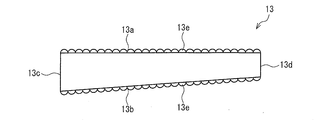
- the shape of the light guide plate 13 may have a thick portion and a thin portion, and one main surface may be a wedge shape having an inclined surface, as shown in FIG. It may be flat.
- processing or processing for controlling light distribution characteristics is performed on both main surfaces or one main surface of the light guide plate 13.
- both main surfaces or one main surface of the light guide plate 13 are processed or processed to emit light from the light exit surface 13a to the outside.
- processing or processing examples include prism processing, dot processing, embossing processing, and printing processing.
- the uneven pattern 13 e for example, a prism shape or a columnar pattern
- the uneven pattern 13e may be provided on at least one of the light exit surface 13a and the back surface 13b of the light guide plate 13 as long as it is provided on the main surface of the light guide plate 13. It may be provided inside.
- the concavo-convex pattern 13e can be applied, for example, by transferring a concavo-convex portion formed on a part of the surface of a mold during injection molding.
- die is simple and preferable.
- a method of manufacturing a thin light guide plate by an injection molding method for example, a method using a general steel mold, a low thermal conductive material (resin or resin composition such as ceramics or polyimide) is used as a part of the mold
- die, the method of selectively rapidly heating and cooling the mold surface vicinity etc. are mentioned.
- the method of using a heat insulating mold using zirconia ceramics can avoid the formation of a solidified layer due to the rapid cooling of the molten thermoplastic resin in the cavity, so that the thickness in the cavity is very thin.
- the density of the uneven pattern 13e may be constant, and the distance from the light source (that is, the distance from the light incident end surface 13c of the light guide plate 13), in other words, the light emission amount on the light exit surface 13a of the light guide plate 13. May be different.
- the luminance on the light exit surface 13a can be made uniform.
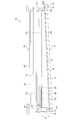
- FIG. 1 shows an example of a liquid crystal display device provided with a backlight using the light guide plate according to the present embodiment.
- FIG. 1 is a cross-sectional view showing a schematic configuration of the liquid crystal display device according to the present embodiment.
- the liquid crystal display device 30 includes a backlight 10 (illumination device) and a liquid crystal panel 20 disposed to face the backlight 10.
- the configuration of the liquid crystal panel 20 is the same as that of a general liquid crystal panel used in a conventional liquid crystal display device, and thus detailed description and illustration thereof are omitted.
- the structure of the liquid crystal panel 20 is not specifically limited, A well-known liquid crystal panel can be applied suitably.
- the liquid crystal panel 20 includes, for example, a liquid crystal cell 23 in which a liquid crystal layer (not shown) is sandwiched between an active matrix substrate 21 (array substrate) and a color filter substrate 22 (counter substrate). That is, the lower polarizing plate 24 and the upper polarizing plate 25 sandwiching the liquid crystal cell 23 are provided on the opposite side of the liquid crystal cell 23 from the liquid crystal layer.
- the liquid crystal panel 20 includes a source driver 26 as a drive circuit and a gate driver (not shown).
- the source driver 26 and the gate driver may be provided on a substrate constituting the liquid crystal panel 20 as illustrated in FIG. 1 or may be provided outside the liquid crystal panel 20.
- a retardation film (retardation plate) (not shown) is used as necessary. ) May be provided.
- the backlight 10 is disposed behind the liquid crystal panel 20 (on the side opposite to the display surface). As shown in FIG. 1, the backlight 10 includes, for example, a light source 12, a light guide plate 13, a reflection sheet 14, an optical sheet 15, and a driver for lighting the light source 12 in a backlight case 11. It has a configuration including a mounted substrate 16 and the like.
- the periphery of the backlight case 11 is supported by a backlight frame 31 and is fixed to the liquid crystal panel 20 by a double-sided tape 32, for example.
- the periphery of the backlight frame 31 is supported by a bezel 33, and the backlight case 11 and the liquid crystal panel 20 are accommodated in the bezel 33.
- the backlight 10 is provided with a light source 12 facing one end surface (light incident end surface 13 c) of the light guide plate 13, and light incident from the end surface is transmitted from one main surface (board surface). It is a side light type surface light source unit that emits (surface radiation), and the light source 12 is fixed to the inner wall of the backlight case via the substrate 16.
- the light source 12 examples include self-luminous elements such as light emitting diodes (LEDs: Light Emitting Diodes), cold cathode tubes (CCFTs), fluorescent lamps, laser diodes, and organic electroluminescence (EL).
- LEDs Light Emitting Diodes
- CCFTs cold cathode tubes
- EL organic electroluminescence
- a plurality of the light guide plates 13 facing the light incident end face 13c are preferably used as the light source 12.
- the effect of the present invention does not depend on the type of the light source 12.
- the light source 12 may be an LED or a CCFT, and the various light sources described above can be used.
- the effect of the present invention can be more remarkably obtained from the LCD having a larger blue component than the CCFT.
- the optical sheet 15 is composed of a plurality of sheets arranged on the light exit surface 13a (light emitting surface) of the light guide plate 13, and uniformizes and collects the light emitted from the light guide plate 13. Then, the liquid crystal panel 20 is irradiated.
- Such an optical sheet 15 includes, for example, a diffusion plate for irradiating the liquid crystal panel 20 with uniform light, a diffusion sheet for condensing and condensing light, and a lens for condensing light and improving luminance in the front direction.
- a sheet light collecting sheet
- a polarization reflecting sheet or the like that improves the luminance of the liquid crystal display device 30 by reflecting one polarization component (single polarization component) of light and transmitting the other polarization component (single polarization component) Composed.
- the optical sheet 15 has a configuration in which a diffusion sheet 15a, a lens sheet 15b, and a polarization reflection sheet 15c are laminated in this order from the light guide plate 13 side.
- the reflection sheet 14 is provided.
- the light emitted from the light source 12 travels through the light guide plate 13 while receiving the scattering action and the reflection action, exits from the light exit surface 13 a, reaches the liquid crystal panel 20 through the optical sheet 15. In the liquid crystal panel, display is performed.
- the light guide plate 13 may have a wedge shape as shown in FIGS. 1 and 2 or a flat plate shape as shown in FIG. 3, but the wedge shape is more suitable for the present invention. The effect can be obtained more remarkably. The reason is as follows.
- the chromaticity shift of the light guide plate is a phenomenon that occurs when water enters the light guide plate 13 under high temperature and high humidity conditions and the aromatic polycarbonate resin undergoes hydrolysis. Since hydrolysis proceeds from the surface, the chromaticity shift is more susceptible to exposure under high temperature and high humidity conditions as the light guide plate 13 is thinner. For this reason, the wedge shape is more susceptible to high temperature and high humidity than the flat plate shape, and is more severely conditional. However, since the present invention can improve the chromaticity shift under high temperature and high humidity conditions, the thinner the light guide plate 13, the more remarkable the difference from the prior art. Therefore, the wedge shape can obtain the effect of the present invention more remarkably.
- the thickness d2 of the end surface 13d (thin wall portion) opposite to the light incident end surface 13c is 1.3 mm or less.
- the effect of the invention can be obtained more remarkably.
- the wedge-shaped light guide plate 13 can suppress the chromaticity shift
- the flat light guide plate 13 can also achieve the chromaticity shift suppressive effect.
- the chromaticity shift in the optical path direction is such that light in the short wavelength region is absorbed while the light received from the light incident portion (light incident end surface 13 c) of the light guide plate 13 is guided through the light guide plate 13. To be generated.
- the chromaticity shift in the optical path direction increases as the distance in the optical path direction from the light incident portion, that is, the distance from the light incident end face 13c in the direction orthogonal to the light incident end face 13c of the light guide plate 13 increases.
- the light guide plate 13 is easily affected by yellowing. Therefore, the light guide plate 13 can obtain the effect of the present invention more remarkably when the distance between the light incident end face 13c and the end face 13d opposite to the light incident end face 13c is 50 mm or more. it can.
- the light guide plate according to the present invention is a light guide plate for a vehicle-mounted backlight, and is preferably used as a light guide plate for a backlight incorporated in, for example, an instrument panel mounted on an automobile. Can do. Further, as described above, the light guide plate has a small chromaticity shift due to exposure under a high temperature and high humidity condition, and is suitable for a backlight in an in-vehicle liquid crystal display device such as an in-vehicle navigation system or a television receiver. Can be used.
- the obtained polymerization solution was separated into an aqueous phase and an organic phase, the organic phase was neutralized with phosphoric acid, and washed with pure water until the pH of the washing solution became neutral.
- the organic solvent was evaporated away from the purified polycarbonate solution to obtain a powdery aromatic polycarbonate resin.
- the polymerization liquid discharged from the bottom of the tank is continuously continuously supplied to the second and third vertical stirring polymerization tanks and the fourth horizontal stirring polymerization tank, and the polymer outlet at the bottom of the fourth horizontal stirring polymerization tank More extracted.
- the conditions of each reaction tank were set so that the temperature became high and high vacuum as the reaction progressed.
- polymerization was carried out while controlling the temperature to 240 to 280 ° C. and 13 to 264 Pa, and simultaneously removing by-product phenol.
- the obtained aromatic polycarbonate resin was introduced in a molten state into a twin-screw extruder, and 4.4 ⁇ mol of butyl p-toluenesulfonate was continuously kneaded. And then pelletized.
- Stabilizer-1 Tris (2,4-di-tert-butylphenyl) phosphite (trade name “ADK STAB 2112” manufactured by Asahi Denka Kogyo Co., Ltd.)
- Stabilizer for comparison-2 bis (2,6-di-tert-butyl-4-methylphenyl) pentaerythritol diphosphite (trade name “ADK STAB PEP-36” manufactured by Asahi Denka Kogyo Co., Ltd.)
- Mw, Mn, Mw / Mn the content of low molecular weight materials with Mw ⁇ 1,000, and the content of heterogeneous structural units are as follows: It measured by the method of
- Measuring device Waters “Alliance” Column: Showa Denko “Shodex K-805L” (two) Detector: UV detector (245 nm) Eluent: Chloroform
- the relationship between the elution time and the molecular weight of polycarbonate (PC) was determined by the universal calibration method to obtain a calibration curve.
- the elution curve (chromatogram) of PC was measured under the same conditions as in the calibration curve, and each average molecular weight was determined from the elution time (molecular weight) and the peak area (number of molecules) of the elution time.
- the number average molecular weight and the weight average molecular weight are expressed as follows, where Ni is the number of molecules of the molecular weight Mi.
- MPC represents the molecular weight of PC
- MPS represents the molecular weight of PS.
- the calculation formula was obtained from the following Mark-Houwink formula representing the relationship between the intrinsic viscosity [ ⁇ ] and the molecular weight M.
- the PC elution curve (chromatogram) was measured under the same conditions as in the calibration curve, and each average molecular weight was determined from the elution time (molecular weight) and the peak area of the elution time (proportional to the number of molecules). .
- 0.05 g of the above hydrolyzate was dissolved in 10 ml of acetonitrile, and measurement was performed using reverse phase high performance liquid chromatography (HPLC).
- HPLC reverse phase high performance liquid chromatography
- a mixed solvent consisting of acetonitrile and 10 mM ammonium acetate aqueous solution was used as an eluent, and a gradient of acetonitrile / 10 mM ammonium acetate aqueous solution was applied to a ratio of 20/80 to 80/20. I went there.
- a UV detector “SPD-6A” manufactured by Shimadzu Corporation was used.
- LC-MS (“Agilent-100”) manufactured by Agilent Co., Ltd. and JEOL Ltd. are used to identify the different structural units represented by the general formula (5), general formula (6) and structural formula (7).
- NMR (“AL-400") manufactured by the same company was used. The content of these different structural units was calculated from each peak area with respect to the peak area of bisphenol A by preparing a calibration curve of bisphenol A.
- the light guide plate 13 as a sample was incorporated in a backlight for evaluation, and chromaticity (x, y) (chromaticity distribution) was measured.
- the light guide plate 13 was aged by being put into the aging tank alone and left (stored) for 1,000 hours.
- the light guide plate 13 is incorporated in an evaluation backlight, and the chromaticity (x, y) (chromaticity distribution) is measured by a chromaticity meter disposed at a position approximately 50 cm above the light guide plate 13.
- Detector “GC-2014” manufactured by Shimadzu Corporation Column: “Rtx-1” manufactured by Restek, 0.32 mmid ⁇ 15 m Measurement temperature: Column 100 ° C. ⁇ 350 ° C. (10 ° C./min) Inlet 285 ° C Detector 351 ° C Carrier gas: Helium 4 ml / min
- the components derived from the phosphorus stabilizer are tris (2,4-di-tert-butylphenyl) phosphite, tris (2,4-di-). tert-butylphenyl) phosphate and di-tert-butylphenol.
- a molded product (light guide plate 13 or pellet) serving as a sample was dissolved in dichloromethane and then precipitated with n-hexane.
- pellets (the pellets of the aromatic polycarbonate resin composition obtained in each example) were used for simplification.
- 1 g of the precipitate thus obtained is wet-decomposed with a mixed solution obtained by mixing 7 ml of 30% by weight hydrogen peroxide with 2 ml of sulfuric acid, and a high resolution ICP mass spectrometer (Thermo Fisher).
- Examples 1 to 4 After blending the raw materials in the proportions shown in Table 1, using a twin screw extruder with a screw diameter of 32 mm (“TEX30HSST” manufactured by Nippon Steel), the raw material supply section of the vented twin screw extruder is replaced with nitrogen. (Nitrogen sealing) and melt kneading at a cylinder temperature of 240 ° C., and pellets were prepared by strand cutting. Using this pellet, a light guide plate 13 as a sample was produced. The size and shape of the light guide plate 13 as a sample are as follows.
- the measurement points are 80 mm apart from the light incident end surface 13c of the light guide plate 13 serving as a sample in a direction orthogonal to the light incident end surface 13c, and from each end surface along the direction orthogonal to the light incident end surface 13c, etc. The position was in the distance.
- the distance from the light incident end surface 13c (light incident portion) in the direction perpendicular to the light incident end surface 13c of the light guide plate 13 as a sample is simply referred to as “from the light incident portion. "Distance”.
- the measurement positions are equidistant from the position on the center line of each end surface along the direction orthogonal to the light incident end surface 13c (that is, from each end surface along the direction orthogonal to the light incident end surface 13c). Position).
- “Initial” and “After wet heat test” mean before aging and after aging, respectively.
- the amount of the component derived from the phosphorus-based stabilizer in the decomposition solution obtained by dissolving the pellet obtained by dissolving with dichloromethane and then precipitating with n-hexane by wet decomposition that is, The amount of the phosphorus-derived stabilizer-derived component bound to the aromatic polycarbonate resin
- the detected amount / preparation amount of the phosphorus-based stabilizer-bound component bound to the aromatic polycarbonate resin were determined by the methods described above. The results are shown in Table 2.
- the light guide plate 13 obtained in Comparative Example 1 is incorporated in an evaluation backlight, and a liquid crystal panel for evaluation is mounted on the light emitting surface, and a light incident part (light incident end surface 13c of the light guide plate 13) is visually observed.
- the distance between the first and second light incident end faces 13c in the direction perpendicular to the incident light end face 13c was checked to see if there was any discomfort in the display, and the boundary point where the discomfort was felt in the display was identified based on the statistics.
- the boundary point was a position on the center line of each end face along the direction orthogonal to the light incident end face 13c (that is, a position equidistant from each end face along the direction perpendicular to the light incident end face 13c).
- the boundary point was a position slightly closer to the light source in plan view from the center of the display area of the liquid crystal panel.
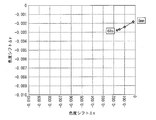
- FIG. 8 shows the result of comparison with the chromaticity shift ( ⁇ x, ⁇ y) of the obtained light guide plate 13.
- the measurement point at a distance of 28 mm from the light entrance corresponds to the center of the 4.3 type backlight.
- the measurement point at a distance of 48 mm from the light incident part corresponds to the center part of the 7.0-type backlight.
- the measurement point at a distance of 68 mm from the light incident portion corresponds to the center portion of the 8.0-type backlight.
- “before charging” and “1000H” mean before the aging (before the light guide plate 13 is charged into the aging tank) and after 1,000 hours of aging, respectively. .
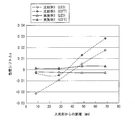
- FIG. 9 shows the relationship between the chromaticity shift ⁇ x of each light guide plate 13 obtained in Example 1 and Comparative Example 1, the distance from the light incident portion of the light guide plate 13, and the type of light source.
- FIG. 10 shows the relationship between the chromaticity shift ⁇ y of each light guide plate 13 obtained in Example 1 and Comparative Example 1, the distance from the light incident portion of the light guide plate 13, and the type of light source.
- FIG. 11 shows the relationship between the wavelength and spectral radiance of the LED and CCFT, respectively.
- SR-2 manufactured by Topcon Corporation was used.
- the spectral radiance is shown with a peak value of 100% when each light source is used.
- the chromaticity y increases (yellowing), and a chromaticity shift occurs.
- the chromaticity shift is integrated as the distance from the light incident portion of the light guide plate 13 increases, and even if it is a phosphite, it differs from the phosphite represented by the general formula (1) as a phosphorus stabilizer. In the light guide plate 13 using the phosphite ester (comparative example), it becomes unacceptable if it is 50 mm away from the incident portion.
- the initial chromaticity (x, A light guide plate having a small y) and excellent transparency can be obtained, and the light guide plate obtained in this example has a chromaticity shift (shown in Tables 1 and 3 and FIGS. 5 to 10). It can be seen that ⁇ x, ⁇ y) both satisfy the conditions of ⁇ x ⁇ 0.01 and ⁇ y ⁇ 0.01, and the chromaticity shift ( ⁇ x, ⁇ y) can be greatly reduced (improved).
- the pellet for obtaining such a light-guide plate and this light-guide plate can be obtained by performing kneading
- the pellet for obtaining such a light guide plate and the light guide plate has a part of the phosphorus stabilizer bonded to the aromatic polycarbonate resin, and this obtains the above-described effects. It can be seen that this is one of the possible reasons.
- the effect of the light guide plate 13 of the present invention does not depend on the type of the light source.
- the increase in chromaticity was large when the distance from the light incident portion was 48 mm or more, and the decrease in chromaticity was less when the distance was less than 28 mm. This result is shown in FIG. This is considered to be due to the difference in spectral radiation between CCFT and CCFT.
- the effect of the present invention is greater in the pseudo white LED having a larger blue component than the CCFT (a blue excited yellow phosphor usually referred to as a white LED).
- the light guide plate 13 is made of the aromatic polycarbonate resin composition, the light guide plate 13 is excellent in transparency and heat resistance, and has chromaticity under high temperature and high humidity in a use-resistant environmental condition required for in-vehicle use.
- the increase in (x, y) is small. For this reason, it is suitable as a light guide plate for a vehicle-mounted backlight and can provide a light guide plate that can be put to practical use for the first time as a light guide plate for a vehicle-mounted backlight using an aromatic polycarbonate resin. It is.
- the above-mentioned light guide plate for the on-vehicle backlight is composed of an aromatic polycarbonate resin and a general formula (1).
- R 1 represents an aryl group or an alkyl group
- R 2 and R 3 each independently represents an aryl group
- R 1 , R 2 and R 3 may be the same or different from each other
- n is Represents 0 or 1
- It is the structure which consists of an aromatic polycarbonate resin composition containing the phosphorus stabilizer shown by these.
- the light guide plate for the on-vehicle backlight is obtained by dissolving the light guide plate or pellets obtained by melting and kneading the aromatic polycarbonate resin composition in dichloromethane and then precipitating with n-hexane. It is preferable that the amount detected by gas chromatography of the component derived from the phosphorus stabilizer in the supernatant is 85% by weight or less of the charged amount of the phosphorus stabilizer.
- the initial color of the light guide plate is compared with the case where the same phosphorus stabilizer is used.
- the degree (x, y) can be reduced. For this reason, the hue and light transmittance can be improved by adding a smaller amount of a phosphorus stabilizer.
- the initial coloration (chromaticity) can be suppressed, and a light guide plate excellent in the effect of improving chromaticity shift under high temperature and high humidity conditions can be obtained.
- R 1 is preferably an aryl group.
- the phosphorus stabilizer in which R 1 is an aryl group has a high effect of inhibiting hydrolysis of the aromatic polycarbonate resin.
- the blending amount of the phosphorus stabilizer in the aromatic polycarbonate resin composition is preferably in the range of 0.005 to 0.2 parts by weight with respect to 100 parts by weight of the aromatic polycarbonate resin.
- the amount of the phosphorus stabilizer When the amount of the phosphorus stabilizer is less than 0.005 parts by weight, the improvement tendency of hue and light transmittance tends to be small. On the other hand, if the amount of the phosphorus stabilizer exceeds 0.2 parts by weight, hydrolysis resistance tends to decrease, mold deposits are generated, and the cost tends to be disadvantageous.
- the light guide plate for the vehicle-mounted backlight may be wedge-shaped or flat.
- the chromaticity shift is more susceptible to high temperature and humidity as the light guide plate is thinner.
- the wedge shape is more susceptible to high temperature and humidity than the flat plate shape, and is more severely conditional.
- the present invention can improve the chromaticity shift under high temperature and high humidity conditions, the thinner the light guide plate, the more significant the difference from the conventional one. Therefore, the wedge shape can obtain the effect of the present invention more remarkably.
- the vehicle-mounted backlight includes a light source and a light guide plate for the vehicle-mounted backlight
- the vehicle-mounted liquid crystal display device includes the vehicle-mounted backlight. It is the composition which is.
- a light guide plate, a vehicle-mounted backlight, and a vehicle-mounted liquid crystal display device can be provided.
- the light source is preferably a light emitting diode or a cold cathode tube.
- the effect of the present invention does not depend on the type of light source.
- the light source may be a light emitting diode or a cold cathode tube.
- the effect of the present invention can be obtained more remarkably in a light emitting diode having a larger blue component than in a cold cathode tube.
- the light guide plate according to the present invention is a light guide plate for a vehicle-mounted backlight, and can be suitably used as a light guide plate for a backlight incorporated in, for example, an instrument panel mounted on an automobile. Further, the light guide plate has a small chromaticity shift due to exposure under high temperature and high humidity conditions, and can be suitably used for a backlight in an in-vehicle liquid crystal display device such as an in-vehicle navigation system or a television receiver. .
Landscapes
- Physics & Mathematics (AREA)
- Chemical & Material Sciences (AREA)
- Liquid Crystal (AREA)
- Polymers & Plastics (AREA)
- Health & Medical Sciences (AREA)
- Organic Chemistry (AREA)
- Engineering & Computer Science (AREA)
- Manufacturing & Machinery (AREA)
- Medicinal Chemistry (AREA)
- General Physics & Mathematics (AREA)
- Optics & Photonics (AREA)
- Chemical Kinetics & Catalysis (AREA)
- Planar Illumination Modules (AREA)
- Fittings On The Vehicle Exterior For Carrying Loads, And Devices For Holding Or Mounting Articles (AREA)
- Compositions Of Macromolecular Compounds (AREA)
- Light Guides In General And Applications Therefor (AREA)
Abstract
車載用バックライト用の導光板は、芳香族ポリカーボネート樹脂と、一般式(1)
【化1】
(式中、R1はアリール基またはアルキル基を表し、R2、R3は各々独立してアリール基を表し、R1、R2、R3は互いに同一でも異なっていてもよく、nは0または1を表す)で示されるリン系安定剤とを含む芳香族ポリカーボネート樹脂組成物からなる。これにより、透明性、耐熱性に優れ、かつ車載に要求される耐使用環境条件における高温高湿下での色度(x,y)の増加が小さい、車載用バックライト用の導光板を提供する。
Description
本発明は、車載用バックライト用導光板、車載用バックライト、および車載用液晶表示装置に関するものであり、より詳しくは、高温高湿条件下での色度シフトが少なく、車載用バックライト用の導光板として好適に使用することができる導光板および該導光板を備えた車載用バックライト並びに車載用液晶表示装置に関するものである。
液晶表示装置には、その薄型化、軽量化、省電力、高精細化の要求に対応するために、バックライトと称される面状光源装置が組み込まれている。バックライトは、液晶パネルの背面、すなわち、液晶パネルにおける表示面とは反対側に設けられている。バックライトには、入光する光を液晶パネルに均一かつ効率的に導く役割を果たす目的で導光板が備えられている。
従来、携帯電話、PDA(Personal Digital Assistant)等の小型の液晶表示装置におけるバックライトに使用される導光板は、切断時に切屑が生じず、生産性が高いことから、ポリカーボネート(PC)材料が用いられている(例えば特許文献1~4参照)。
これに対し、車載用のナビゲーションシステムやテレビジョン受像機等、生産性よりも光学性能が重視される車載用液晶表示装置に用いられるバックライトの導光板材料としては、一般的に、ポリメチルメタクリレート(PMMA)等、高透光性を有するアクリル樹脂が用いられている(例えば、特許文献5参照)。
日本国公開特許公報「特開2004-250557号公報(公開日:2004年9月9日)」
日本国公開特許公報「特開2004-109162号公報(公開日:2004年4月8日)」
日本国公開特許公報「特開2004-51700号公報(公開日:2004年2月19日)」
日本国公開特許公報「特開2007-204737号公報(公開日:2007年8月16日)」
日本国公開特許公報「特開2006-178135号公報(公開日:2006年7月6日)」
日本国公開特許公報「特開2002-60609号公報(公開日:2002年2月26日)」
しかしながら、アクリル樹脂は耐熱性が十分ではなく、近年、車載用途として、より高い耐熱性を有する導光板の開発が求められている。
アクリル樹脂よりも耐熱性が高い材料としては、上記PCがよく知られている。このため、PCを車載用途に適用することが試みられてはいるものの(例えば特許文献5、6参照)、実用化には至っていない。
PCは、アクリル樹脂と比較して可視領域における光の透過率が低い。特に、PCは、400nm~500nmの青色の波長が透過し難いことから、アクリル樹脂に比べ、樹脂自体が黄色味を帯びている。つまり、色度(x,y)が高い。このため、PCは、液晶表示装置におけるバックライトの導光板として使用したときに、表示が黄色味を帯びるという問題点を有している。このような着色は、携帯電話やPDA等の極めて小型の液晶表示装置においてはあまり問題とはならないが、表示面が大きくなると著しく表示品位を下げることから、許容することができない。従来、PCからなる導光板が車載用途としては実使用されておらず、専ら、携帯電話やPDA等、高い透明性が必要とされない小型の液晶表示装置における導光板材料として使用されている理由はここにある。
そこで、本願発明者らは、上記短波長領域での光の透過率を改善すべく、鋭意検討を行った。この結果、亜リン酸エステル、リン酸エステル等のリン系安定化剤(酸化防止剤)が、車載用バックライトサイズの導光板における上記短波長領域での光の透過率の改善に有効であり、車載用バックライトサイズの導光板として使用できるレベルの透明性を有する導光板を得ることができることを見出した。
しかしながら、一方で、このような添加剤の添加が、車載に要求される耐使用環境条件における高温高湿下での色度(x,y)の増加(黄変)をもたらすことが判った。
つまり、PCにこのような添加剤を添加した場合、通常条件における透明性を向上させることができるとともに、アクリル樹脂と比較して高い耐熱性を得ることができるものの、車載に要求される耐使用環境条件である80℃、90%RHもの高温高湿環境下で暴露すると、導光板の入光部から受光した光が導光する間に短波長領域の光が吸収され、黄変度、すなわち色度シフトが増加する。
本発明の目的は、上記問題点に鑑みなされたものであり、透明性、耐熱性に優れ、かつ車載に要求される耐使用環境条件における高温高湿下での色度(x,y)の増加が小さい、車載用バックライト用の導光板および車載用バックライト並びに車載用液晶表示装置を提供することにある。
本願発明者らは、上記課題を解決すべく鋭意検討を行った結果、芳香族ポリカーボネート樹脂に、特定のリン系安定剤を配合してなる芳香族ポリカーボネート樹脂組成物を成形材料として車載バックライト用導光板を成形することにより、上記目的を達成することができることを見出して、本発明を完成させるに至った。
すなわち、上記課題を解決するために、車載用バックライト用の導光板は、芳香族ポリカーボネート樹脂と、一般式(1)

(式中、R1はアリール基またはアルキル基を表し、R2、R3は各々独立してアリール基を表し、R1、R2、R3は互いに同一でも異なっていてもよく、nは0または1を表す)
で示されるリン系安定剤とを含む芳香族ポリカーボネート樹脂組成物からなる。
で示されるリン系安定剤とを含む芳香族ポリカーボネート樹脂組成物からなる。
上記の構成によれば、上記導光板の材料として、アクリル樹脂よりも耐熱性に優れた芳香族ポリカーボネート樹脂を使用することで、アクリル樹脂からなる従来の導光板と比較して耐熱性を向上させることができる。また、上記リン系安定剤を添加することで、短波長領域での光の透過率が改善され、車載用バックライトサイズの導光板として使用できるレベルの透明性を有する導光板を得ることができる。また、上記リン系安定剤を添加することで、車載に要求される耐使用環境条件における高温高湿下での色度(x,y)の増加を抑えることができ、車載用バックライト用の導光板として実用可能な導光板を提供することができる。
また、上記課題を解決するために、車載用バックライトは、光源と、本発明にかかる上記車載用バックライト用の導光板とを備えている。
上記の構成によれば、上記車載用バックライトが、上記車載用バックライト用の導光板を備えていることで、透明性、耐熱性に優れ、かつ車載に要求される耐使用環境条件における高温高湿下での色度(x,y)の増加が小さい車載用バックライトを提供することができる。
また、上記課題を解決するために、車載用液晶表示装置は、上記車載用バックライトを備えている。
上記の構成によれば、上記車載用液晶表示装置が、上記車載用バックライトを備えていることで、透明性、耐熱性に優れ、かつ車載に要求される耐使用環境条件における高温高湿下での色度(x,y)の増加が小さい車載用液晶表示装置を提供することができる。
10 バックライト
11 バックライトケース
12 光源
13 導光板
13a 出光面
13b 裏面
13c 入光端面
13d 端面
13e 凹凸パターン
14 反射シート
15 光学シート
15a 拡散シート
15b レンズシート
15c 偏光反射シート
16 基板
20 液晶パネル
21 アクティブマトリクス基板
22 カラーフィルタ基板
23 液晶セル
24 下側偏光板
25 上側偏光板
26 ソースドライバ
30 液晶表示装置
31 バックライトフレーム
32 両面テープ
33 ベゼル
11 バックライトケース
12 光源
13 導光板
13a 出光面
13b 裏面
13c 入光端面
13d 端面
13e 凹凸パターン
14 反射シート
15 光学シート
15a 拡散シート
15b レンズシート
15c 偏光反射シート
16 基板
20 液晶パネル
21 アクティブマトリクス基板
22 カラーフィルタ基板
23 液晶セル
24 下側偏光板
25 上側偏光板
26 ソースドライバ
30 液晶表示装置
31 バックライトフレーム
32 両面テープ
33 ベゼル
以下、本発明について詳しく説明する。本発明にかかる導光板は、車載用のバックライトに使用される導光板であり、芳香族ポリカーボネート樹脂に、特定のリン系安定剤を配合してなる芳香族ポリカーボネート樹脂組成物からなる。
上記芳香族ポリカーボネート樹脂組成物に用いられる芳香族ポリカーボネート樹脂は、芳香族ヒドロキシ化合物、または芳香族ヒドロキシ化合物と少量の芳香族ポリヒドロキシ化合物とを、ホスゲンまたは炭酸ジエステルと反応させることによって得られる熱可塑性芳香族ポリカーボネート重合体または共重合体(以下、(共)重合体と記す)であり、直鎖状であってもよく、分岐していてもよい。
上記芳香族ポリカーボネート樹脂は、例えば、界面重合法、エステル交換法等、公知の方法によって製造することができる。
上記芳香族ポリカーボネート樹脂の原料として使用される芳香族ジヒドロキシ化合物は、下記一般式(2)

(式中、Wは、各々単結合にて構成される、炭素数1~8のアルキレン基、炭素数2~8のアルキリデン基、炭素数5~15のシクロアルキレン基、炭素数5~15のシクロアルキリデン基からなる群より選ばれる基、または、-O-基、-S-基、-CO-基、-SO-基、および-SO2-基からなる群より選ばれる2価の基を示し、XおよびYは、ハロゲン原子または炭素数1~6の炭化水素基を示し、pおよびqは0~2の整数を示し、XとY、pとqは、何れも、同一であっても異なっていてもよい)
で表される化合物である。
で表される化合物である。
上記芳香族ジヒドロキシ化合物としては、特に限定されるものではないが、具体的には、例えば、2,2-ビス(4-ヒドロキシフェニル)プロパン(別名:ビスフェノールA)、2,2-ビス(3,5-ジブロモ-4-ヒドロキシフェニル)プロパン(別名:テトラブロモビスフェノールA)、ビス(4-ヒドロキシフェニル)メタン、1,1-ビス(4-ヒドロキシフェニル)エタン、2,2-ビス(4-ヒドロキシフェニル)ブタン、2,2-ビス(4-ヒドロキシフェニル)オクタン、2,2-ビス(4-ヒドロキシ-3-メチルフェニル)プロパン、1,1-ビス(3-tert-ブチル-4-ヒドロキシフェニル)プロパン、2,2-ビス(4-ヒドロキシ-3,5-ジメチルフェニル)プロパン、2,2-ビス(3-ブロモ-4-ヒドロキシフェニル)プロパン、2,2-ビス(3,5-ジクロロ-4-ヒドロキシフェニル)プロパン、2,2-ビス(3-フェニル-4-ヒドロキシフェニル)プロパン、2,2-ビス(3-シクロヘキシル-4-ヒドロキシフェニル)プロパン、1,1-ビス(4-ヒドロキシフェニル)-1-フェニルエタン、ビス(4-ヒドロキシフェニル)ジフェニルメタン、2,2-ビス(4-ヒドロキシフェニル)-1,1,1-トリクロロプロパン、2,2-ビス(4-ヒドロキシフェニル)-1,1,1,3,3,3-ヘキサクロロプロパン、2,2-ビス(4-ヒドロキシフェニル)-1,1,1,3,3,3-ヘキサフルオロプロパン等のビス(ヒドロキシアリール)アルカン類;1,1-ビス(4-ヒドロキシフェニル)シクロペンタン、1,1-ビス(4-ヒドロキシフェニル)シクロヘキサン、1,1-ビス(4-ヒドロキシフェニル)-3,3,5-トリメチルシクロヘキサン等のビス(ヒドロキシアリール)シクロアルカン類;9,9-ビス(4-ヒドロキシフェニル)フルオレン、9,9-ビス(4-ヒドロキシ-3-メチルフェニル)フルオレン等のカルド構造含有ビスフェノール類;4,4'-ジヒドロキシジフェニルエーテル、4,4'-ジヒドロキシ-3,3'-ジメチルジフェニルエーテル等のジヒドロキシジアリールエーテル類;4,4'-ジヒドロキシジフェニルスルフィド、4,4'-ジヒドロキシ-3,3'-ジメチルジフェニルスルフィド等のジヒドロキシジアリールスルフィド類;4,4'-ジヒドロキシジフェニルスルホキシド、4,4'-ジヒドロキシ-3,3'-ジメチルジフェニルスルホキシド等のジヒドロキシジアリールスルホキシド類;4,4'-ジヒドロキシジフェニルスルホン、4,4'-ジヒドロキシ-3,3'-ジメチルジフェニルスルホン等のジヒドロキシジアリールスルホン類;ハイドロキノン;レゾルシン;4,4'-ジヒドロキシジフェニル;等が挙げられる。
これら例示の化合物のなかでもビス(ヒドロキシアリール)アルカン類が好ましく、そのなかでもビス(4-ヒドロキシフェニル)アルカン類がより好ましく、耐衝撃性の点から、ビスフェノールAが特に好ましい。また、難燃性を高める目的で、上記例示の芳香族ジヒドロキシ化合物にスルホン酸テトラアルキルホスホニウムが1個以上結合した、上記例示の芳香族ジヒドロキシ化合物の誘導体もまた、芳香族ジヒドロキシ化合物として使用することができる。これら芳香族ジヒドロキシ化合物は、各々単独で用いてもよく、適宜、二種以上を組み合わせて使用してもよい。
また、芳香族ポリヒドロキシ化合物としては、上記芳香族ジヒドロキシ化合物の重合体または共重合体を用いることができる。
上記芳香族ポリカーボネート樹脂として分岐した芳香族ポリカーボネート樹脂を得るには、界面重合法においては、フロログルシン、4,6-ジメチル-2,4,6-トリス(4-ヒドロキシフェニル)ヘプテン-2、4,6-ジメチル-2,4,6-トリス(4-ヒドロキシフェニル)ヘプタン、2,6-ジメチル-2,4,6-トリス(4-ヒドロキシフェニル)ヘプテン-3、1,3,5-トリス(4-ヒドロキシフェニル)ベンゼン、1,1,1-トリス(4-ヒドロキシフェニル)エタン等のポリヒドロキシ化合物;3,3-ビス(4-ヒドロキシアリール)オキシインドール(すなわち、イサチンビスフェノール);5-クロルイサチン;5,7-ジクロルイサチン;5-ブロムイサチン;等の分岐化剤を、前記芳香族ジヒドロキシ化合物の一部として使用すればよい。
これら分岐化剤の使用量は、特に限定されるものではないが、芳香族ジヒドロキシ化合物に対し、通常0.01~10モル%、好ましくは0.1~2モル%の範囲内である。
一方、エステル交換法においては、上記分岐化剤の添加は任意であり、反応温度や触媒量を調節することにより、分岐した芳香族ポリカーボネート樹脂を得ることができる。
次に、上記芳香族ポリカーボネート樹脂の製造方法について、界面重合法およびエステル交換法を例に挙げて説明する。
〈界面重合法〉
界面重合法は、別名、ホスゲン法と称される方法である。具体的には、芳香族ジヒドロキシ化合物(必要に応じて芳香族ポリヒドロキシ化合物を併用してもよい)と、ホスゲン(二塩化カルボニル)とを、有機溶媒およびアルカリ水溶液の存在下、通常はpHを9以上に保って反応させた後、重合触媒を添加して界面重合を行うことで、芳香族ポリカーボネート樹脂を得ることができる。
界面重合法は、別名、ホスゲン法と称される方法である。具体的には、芳香族ジヒドロキシ化合物(必要に応じて芳香族ポリヒドロキシ化合物を併用してもよい)と、ホスゲン(二塩化カルボニル)とを、有機溶媒およびアルカリ水溶液の存在下、通常はpHを9以上に保って反応させた後、重合触媒を添加して界面重合を行うことで、芳香族ポリカーボネート樹脂を得ることができる。
上記有機溶媒としては、上記反応に不活性な有機溶媒であれば、特に限定されるものではない。上記有機溶媒としては、例えばジクロロメタン、1,2-ジクロロエタン、クロロホルム、モノクロロベンゼン、ジクロロベンゼン等の塩素化炭化水素;ベンゼン、トルエン、キシレン等の芳香族炭化水素;等が挙げられる。
上記アルカリ水溶液に使用されるアルカリ化合物としては、水酸化ナトリウム、水酸化カリウム等、アルカリ金属の水酸化物が挙げられる。
上記重合触媒としては、例えば第三級アミン、第四級アンモニウム塩等が挙げられる。
また、反応温度、反応時間、反応圧力等の反応条件(重合条件)としては、上記重合反応が完結するように適宜設定すればよく、特に限定されるものではないが、一般的には、反応温度は例えば0~40℃であり、反応時間は例えば数分(例えば10分)~数時間(例えば6時間)である。また、反応圧力は、常圧(大気圧)である。
上記重合反応には、必要に応じて、分子量調整剤(末端停止剤)、芳香族ジヒドロキシ化合物の酸化防止のための酸化防止剤が用いられる。
上記分子量調節剤としては、一価のフェノール性水酸基を有する化合物が挙げられる。具体的には、例えば、m-メチルフェノール、p-メチルフェノール、m-プロピルフェノール、p-プロピルフェノール、p-tert-ブチルフェノール、p-長鎖アルキル置換フェノール等の、一価のフェノール性水酸基を有する化合物が挙げられる。
分子量調節剤の使用量は、特に限定されるものではないが、芳香族ジヒドロキシ化合物100モルに対し、通常、50~0.5モル、好ましくは30~1モルの範囲内である。
〈エステル交換法〉
エステル交換法は、別名、溶融法と称される方法であり、炭酸ジエステルと芳香族ジヒドロキシ化合物とのエステル交換反応である。
エステル交換法は、別名、溶融法と称される方法であり、炭酸ジエステルと芳香族ジヒドロキシ化合物とのエステル交換反応である。
炭酸ジエステルとしては、例えば、下記一般式(3)

(式中、A1、A2は、各々独立して、置換されていてもよい、炭素数1~10の直鎖状、分岐状または環状の1価の炭化水素基を表し、互いに同一でも異なっていてもよい)
で表される化合物が挙げられる。
で表される化合物が挙げられる。
上記一般式(2)において、A1、A2で示される置換基としては、例えば、ハロゲン原子、炭素数1~10のアルキル基、炭素数1~10のアルコキシ基、フェニル基、フェノキシ基、ビニル基、シアノ基、エステル基、アミド基、ニトロ基等が挙げられる。
上記炭酸ジエステルとしては、具体的には、例えばDPC(ジフェニルカーボネート);ジトリルカーボネート等の置換DPC(置換ジフェニルカーボネート);ジメチルカーボネート、ジエチルカーボネート、ジ-t-ブチルカーボネート等のジアルキルカーボネート;等が挙げられる。
これら例示の炭酸ジエステルのなかでも、DPC、置換DPCが好適に用いられる。これら炭酸ジエステルは、単独で用いてもよく、適宜、2種以上を混合して用いてもよい。
上記炭酸ジエステルは、その一部が、ジカルボン酸またはジカルボン酸エステルで置換されていてもよい。置換割合は、通常、50モル%以下、好ましくは30モル%以下である。代表的なジカルボン酸またはジカルボン酸エステルとしては、例えば、テレフタル酸、イソフタル酸、テレフタル酸ジフェニル、イソフタル酸ジフェニル等が挙げられる。炭酸ジエステルを、このようなジカルボン酸またはジカルボン酸エステルで置換した場合には、ポリエステルカーボネートが得られる。以下、無置換の炭酸ジエステルおよびジカルボン酸またはジカルボン酸エステルで置換されている炭酸ジエステルを総称して単に「炭酸ジエステル」と称する。
エステル交換法で製造されるポリカーボネートでは、炭酸ジエステルは、ジカルボン酸またはジカルボン酸エステルで置換されているか否かに拘らず、芳香族ジヒドロキシ化合物に対して過剰に使用される。芳香族ジヒドロキシ化合物に対する炭酸ジエステルの割合(モル比)は、1.01~1.30、好ましくは1.02~1.25、より好ましくは1.02~1.20の範囲内である。
モル比が過度に小さい場合には、得られる芳香族ポリカーボネートの末端ヒドロキシル基量(末端基のヒドロキシル基の量、以下、単に「末端OH基量」と記す)が多くなり、樹脂の熱安定性が悪化する傾向がある。末端OH基量は、ポリカーボネート製品の熱安定性、加水分解安定性、色調等に大きな影響を及ぼす。上記芳香族ポリカーボネート樹脂を車載用バックライト用の導光板の材料として使用するためには、末端OH基量は、耐加水分解性の理由から、500ppm以下であることが好ましく、300ppm以下であることがより好ましい。
一方、モル比が過度に大きい場合には、エステル交換の反応速度が低下し、分子量が大きくならず、所望の分子量を有する芳香族ポリカーボネートの生産が困難となる傾向がある。また、樹脂中の炭酸ジエステルの残存量が多くなり、成形加工時や成形品としたときの臭気の原因となるとともに、色調が低下する。このため、末端OH基量は、100ppm以上であることが好ましい。このような末端OH基量とすることにより、分子量の低下を抑制することができ、色調もより良好となる。
上記したように、炭酸ジエステルと芳香族ジヒドロキシ化合物との混合比率を調節したり、反応時の減圧度を調整したりすることにより、所望の分子量および末端OH基量を有する芳香族ポリカーボネート樹脂を得ることができる。より積極的な方法として、反応時に、別途、末端停止剤を添加する方法も知られている。
上記末端停止剤の一例としては、例えば、一価フェノール類、一価カルボン酸類、炭酸ジエステル類が挙げられる。
また、通常、エステル交換法により芳香族ポリカーボネートを製造する際には、エステル交換触媒が使用される。エステル交換触媒は、特に制限されないが、アルカリ金属化合物およびアルカリ土類金属化合物からなる群より選ばれる少なくとも一種であることが好ましい。また、補助的に、塩基性ホウ素化合物、塩基性リン化合物、塩基性アンモニウム化合物、アミン系化合物等の塩基性化合物を併用することも可能である。これらエステル交換触媒のなかでも、実用的観点から、アルカリ金属化合物が好ましい。
エステル交換触媒の使用量は、芳香族ジヒドロキシ化合物1モルに対し、通常1×10⁻⁹~1×10⁻¹モル、好ましくは1×10⁻⁷~1×10⁻³モル、より好ましくは1×10⁻⁷~1×10⁻⁶モルの範囲内である。
エステル交換触媒に用いられる上記アルカリ金属化合物としては、例えば、アルカリ金属の水酸化物、炭酸塩、炭酸水素化合物等の無機アルカリ金属化合物;アルカリ金属のアルコール類(またはフェノール類)、アルカリ金属の、有機カルボン酸類との塩等の有機アルカリ金属化合物等が挙げられる。また、上記アルカリ金属としては、例えば、リチウム、ナトリウム、カリウム、ルビジウム、セシウム等が挙げられる。これらアルカリ金属化合物のなかでも、セシウム化合物が好ましく、炭酸セシウム、炭酸水素セシウム、水酸化セシウムが特に好ましい。
芳香族ジヒドロキシ化合物と炭酸ジエステルとのエステル交換反応は、例えば、以下のようにして行うことができる。
先ず、原料調製工程として、窒素、アルゴン等の不活性ガスの雰囲気下、バッチ式、半回分式または連続式の撹拌槽型の装置を使用し、原料の混合溶融液を調製する。溶融混合の温度は、例えば、芳香族ジヒドロキシ化合物としてビスフェノールAを使用し、炭酸ジエステルとしてジフェニルカーボネートを使用する場合は、通常120℃~180℃、好ましくは125℃~160℃の範囲である。
次いで、重縮合工程として、芳香族ジヒドロキシ化合物と炭酸ジエステル化合物とのエステル交換反応を行う。エステル交換反応は、通常2段階以上、好ましくは3段~7段の多段方式で連続的に行われる。各槽の具体的な反応条件は、所望の芳香族ポリカーボネート樹脂が得られるように適宜設定すればよく、特に限定されるものではないが、具合的には、反応温度が150~320℃の範囲内、反応圧力が常圧~減圧(0.01Torr:1.3Pa)、平均滞留時間が5~150分の範囲内であることが好ましい。
そして、多段方式の各反応器においては、重縮合反応の進行と共に副生するフェノールをより効果的に系外に除去するため、上記の反応条件内において、段階的に、より高温、より高真空に設定し、最終的には2Torr(266.6Pa)以下の減圧とする。これにより、芳香族ヒドロキシ化合物等の副生成物を除去しながら溶融重縮合反応を行うことができる。なお、得られる芳香族ポリカーボネート樹脂の色相等の品質低下を防止するため、上記の範囲内で、できるだけ低温かつ短滞留時間に設定することが好ましい。
溶融重縮合は、バッチ式または連続式で行うことができるが、得られる芳香族ポリカーボネート樹脂の安定性等を考慮すると、連続式が好ましい。
また、得られた芳香族ポリカーボネート樹脂中のエステル交換触媒の失活剤としては、上記触媒を中和する化合物、例えば、硫黄含有酸性化合物またはその誘導体を使用することができる。
エステル交換触媒に対する上記失活剤の使用量は、エステル交換触媒が含有するアルカリ金属に対し、通常0.5~10当量、好ましくは1~5当量の範囲である。また、芳香族ポリカーボネート樹脂に対する上記失活剤の使用割合は、通常1~100ppm、好ましくは1~20ppmの範囲内である。
また、上記芳香族ポリカーボネート樹脂に難燃性を付与する目的で、上記芳香族ポリカーボネート樹脂に、シロキサン構造を有するポリマーまたはオリゴマーを共重合させてもよい。これら芳香族ポリカーボネート樹脂は、単独で用いてもよく、適宜、二種以上を混合して用いてもよい。
上記芳香族ポリカーボネート樹脂の製造方法として上記したようにエステル交換法を用いれば、末端OH基量が調節された芳香族ポリカーボネート樹脂を得ることができる。また、芳香族ジヒドロキシ化合物と、ホスゲン、DPC等のカーボネート結合性の化合物とを反応させることにより、耐熱性が高く、透明性に優れた芳香族ポリカーボネートを得ることができる。
本実施の形態にかかる上記芳香族ポリカーボネート樹脂の粘度平均分子量(Mv)は、13,000~17,500の範囲内であることが好ましく、15,500~17,500の範囲内であることがより好ましく、16,000~17,000の範囲内であることがさらに好ましい。
上記芳香族ポリカーボネートの粘度平均分子量は、溶媒として塩化メチレンを使用し、温度20℃で測定された極限粘度[η]より換算した粘度平均分子量である。
上記芳香族ポリカーボネート樹脂の粘度平均分子量が13,000未満であると、導光板としたときに、製品としての強度が不足し易い。また、上記芳香族ポリカーボネート樹脂の粘度平均分子量が15,500以上であると、得られる導光板の高温高湿下での色度(x,y)の増加の抑制効果が高くなる。
一方、上記芳香族ポリカーボネート樹脂の粘度平均分子量が17,500を超えると、成形温度を高くする必要が生じるため、得られる導光板の色相が悪化し易い。なお、粘度平均分子量の測定方法については、後述する実施例において詳述する。
上記の粘度平均分子量を有する芳香族ポリカーボネート樹脂は、例えば、分子量調節剤の使用量を選択することにより製造することができる。すなわち、上記の粘度平均分子量よりも大きい分子量の芳香族ポリカーボネート樹脂を得る場合に使用される量より多くの分子量調節剤を使用する。
また、ゲルパーミエーションクロマトグラフィー(GPC)により測定した上記芳香族ポリカーボネート樹脂のポリスチレン換算の重量平均分子量(Mw)は、15,000~40,000の範囲内であることが好ましく、30,000~40,000の範囲内であることがより好ましく、32,000~37,000の範囲内であることがさらに好ましい。
また、ゲルパーミエーションクロマトグラフィー(GPC)により測定した上記芳香族ポリカーボネート樹脂のポリスチレン換算の数平均分子量(Mn)は、6,000~20,000の範囲内であることが好ましく、10,000~20,000の範囲内であることがより好ましく、12,000~17,000の範囲内であることがさらに好ましい。
上記重量平均分子量または数平均分子量が上記範囲よりも小さいと、製品としての強度が不足し易い。一方、上記重量平均分子量または数平均分子量が上記範囲よりも大きいと、成形温度を高くする必要が生じるため、得られる導光板の色相が悪化し易い。
また、ゲルパーミエーションクロマトグラフィー(GPC)により測定した上記芳香族ポリカーボネート樹脂のポリスチレン換算の重量平均分子量と数平均分子量との比(Mw/Mn)は、1.5~2.7の範囲内であることが好ましく、1.8~2.6の範囲内であることがより好ましい。上記Mw/Mn(分子量分布)が1.5未満の場合は、流動性が不足し易く、色相が悪化し易い。一方、2.7を超える場合は、耐加水分解性が低下し易い。なお、上記GPC測定については、後述する実施例において詳述する。
本実施の形態にかかる上記芳香族ポリカーボネート樹脂としては、具体的には、例えばポリ-4,4-イソプロピリデンジフェニルカーボネートが挙げられる。
上記芳香族ポリカーボネートの構造単位は、下記構造式(4)で表される。
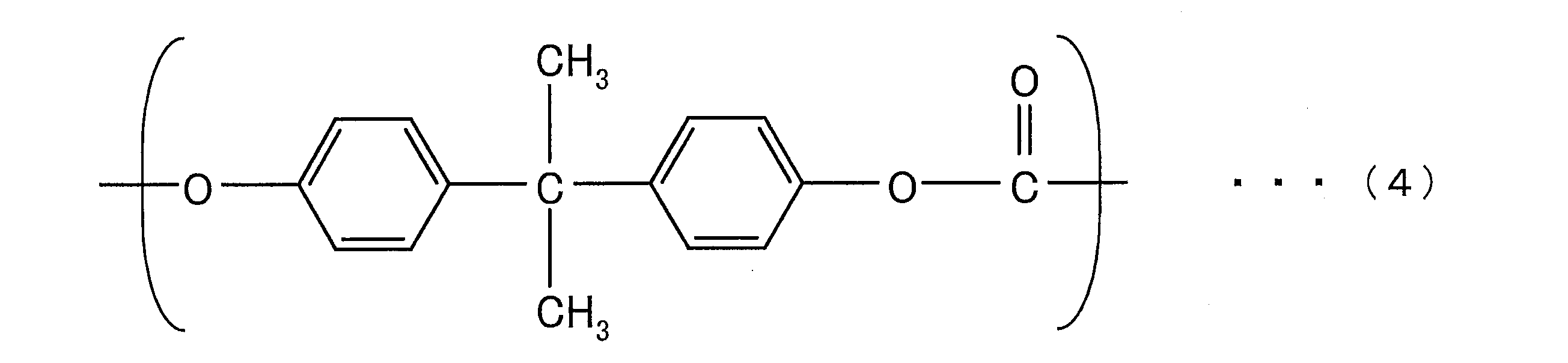
上記芳香族ポリカーボネートの加水分解後の分解物には、下記一般式(5)
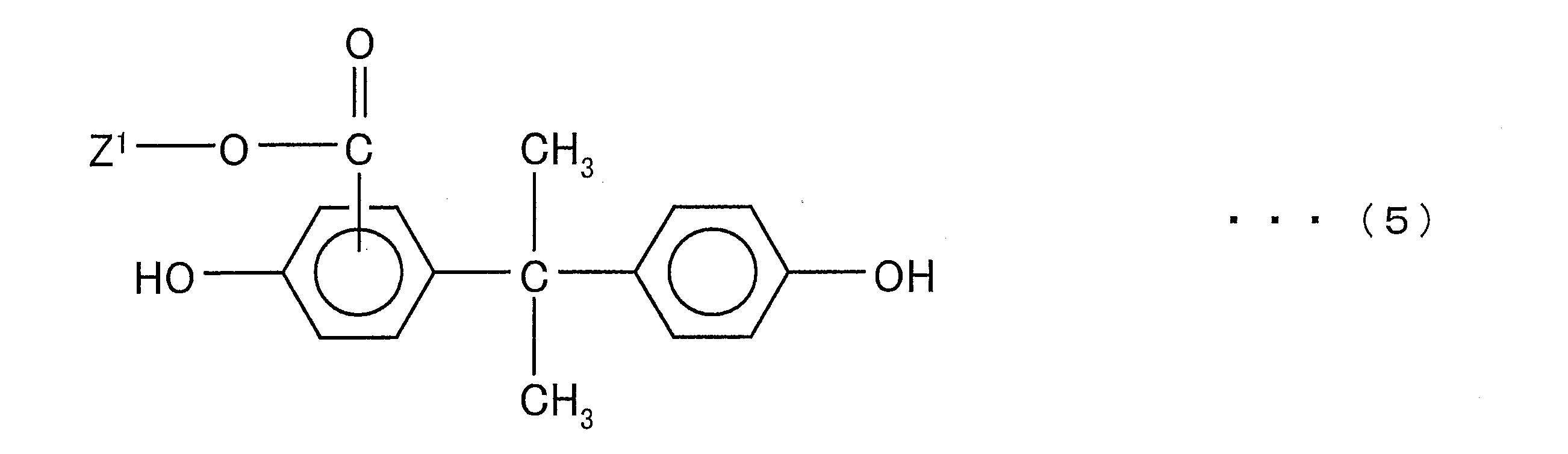
(式中、Z1は、水素原子またはメチル基を表す)
で示される異種構造単位(サリチル酸フェニル構造)、一般式(6)
で示される異種構造単位(サリチル酸フェニル構造)、一般式(6)

(式中、Z2は、水素原子またはメチル基を表す)
で示される異種構造単位(フェノキシ安息香酸構造)、構造式(7)
で示される異種構造単位(フェノキシ安息香酸構造)、構造式(7)

で示される異種構造単位(キサントン構造)が少なくとも1種類含まれている。
これら一般式(5)、一般式(6)、構造式(7)で表される異種構造単位は、何れも、芳香族ポリカーボネート樹脂の加水分解物中に存在する構造単位である。これら構造単位が加水分解される前の構造単位は、芳香族ポリカーボネート樹脂の製造過程(特にエステル交換反応過程)における副反応により、前記構造式(4)で表される構造単位の極一部が変換されて形成される。
本実施の形態にかかる上記芳香族ポリカーボネートの加水分解後の分解物中に含まれる上記異種構造単位の総含有量は、3,500ppm未満であることが好ましく、3,200ppm未満であることがより好ましい。上記異種構造単位の含有量が3,500ppm以上であると、導光板の初期の色相が悪化し易い。
また、上記芳香族ポリカーボネート樹脂における重量平均分子量(Mw)が1,000未満の低分子量芳香族ポリカーボネート(共)重合体(低分子量体)の含有量は、2重量%以下であることが好ましい。上記条件を満足することにより、金型付着物や外観悪化(焼け)を抑制することができる。なお、低分子量芳香族ポリカーボネートの分子量は、GPCにより測定した、ポリカーボネート換算の重量平均分子量(Mw)を意味する。
上記のような特定の分子量分布と低分子量体含有率を有する芳香族ポリカーボネート樹脂は、例えば、次のようにして製造することができる。すなわち、界面重合法による製造法では、分子量調節剤を特定の範囲の量で使用したり、分子量調節剤の添加時期を変更したり、反応条件(反応時間、反応温度等)を制御する方法により製造できる。具体的には、分子量調節剤の使用割合(芳香族ジヒドロキシ化合物100モルに対する割合)を7.0~8.5モルの範囲としたり、ホスゲン化の後に分子量調節剤を添加したり、分子量調節剤をホスゲン化の前後に分割して添加したり、反応時間を2時間以内にしたり、反応温度を30℃以下にしたりする。
なお、上記の方法の他、低分子量体の含有率を低下させる方法としては、アセトン等を使用したポリカーボネートの非溶剤沈殿法や非溶剤抽出法も適用可能である。
また、溶融エステル交換法においては、炭酸ジエステル/芳香族ジヒドロキシ化合物とのモル比バランスを調節し、かつ触媒量を低く抑えることにより、溶融重縮合中に形成される分岐種を極力減らすことができる。その結果、特定の分子量分布と低分子量体含有率とを有する芳香族ポリカーボネート樹脂を得ることができる。具体的には、芳香族ジヒドロキシ化合物に対して炭酸ジエステルの使用割合(モル比)を1.10~1.20の範囲とし、かつエステル交換触媒の使用量を芳香族ジヒドロキシ化合物1モルに対して1×10-7~1×10-6モルの範囲内とする方法が挙げられる。
また、本実施の形態で用いられるリン系安定剤は、下記一般式(1)

(式中、R1はアリール基またはアルキル基を表し、R2、R3は各々独立してアリール基を表し、R1、R2、R3は互いに同一でも異なっていてもよく、nは0または1を表す)
で示される化合物(亜リン酸エステル)である。
で示される化合物(亜リン酸エステル)である。
上記リン系安定剤としては、例えば、一般式(1)中、R1で示される置換基が炭素数6~27のアリール基または炭素数1~20のアルキル基であり、R2、R3で示される置換基が各々独立して炭素数6~27のアリール基(但し、R1、R2、R3で示される置換基は互いに同一でも異なっていてもよい)であり、nで示される繰り返し単位が各々0または1である化合物が挙げられる。
これらリン系安定剤の中でも、上記R1がアリール基、具体的には、炭素数6~27のアリール基であるリン系安定剤が、耐加水分解性の観点から好ましい。また、これらリン系安定剤の中でも、R2、R3で示されるアリール基が、下記一般式(8)

(式中、R4、R5は各々独立して炭素数1~10のアルキル基を表す)
、一般式(9)
、一般式(9)
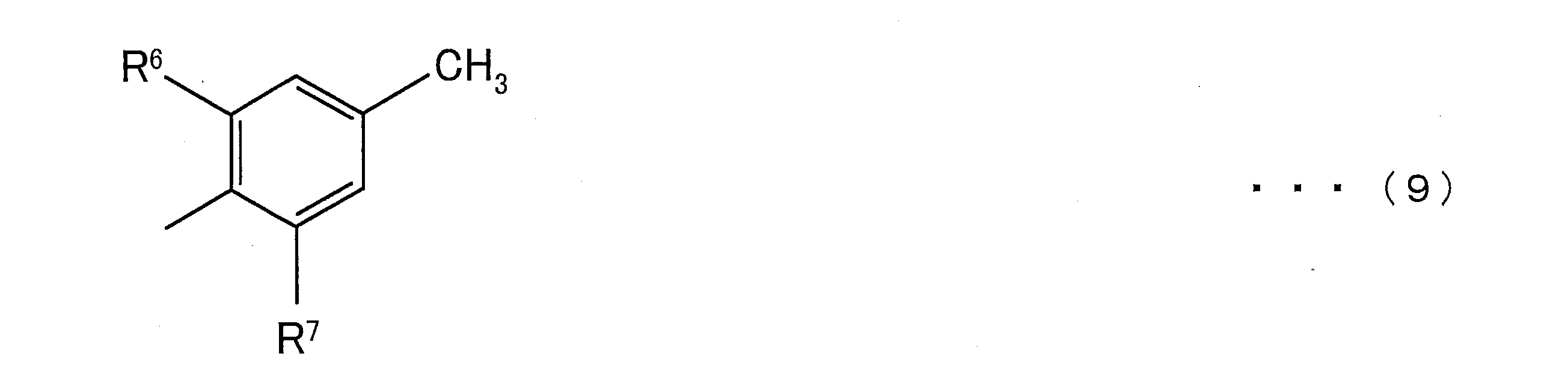
(式中、R6、R7は各々独立して炭素数1~10のアルキル基を表す)
、または構造式(10)
、または構造式(10)
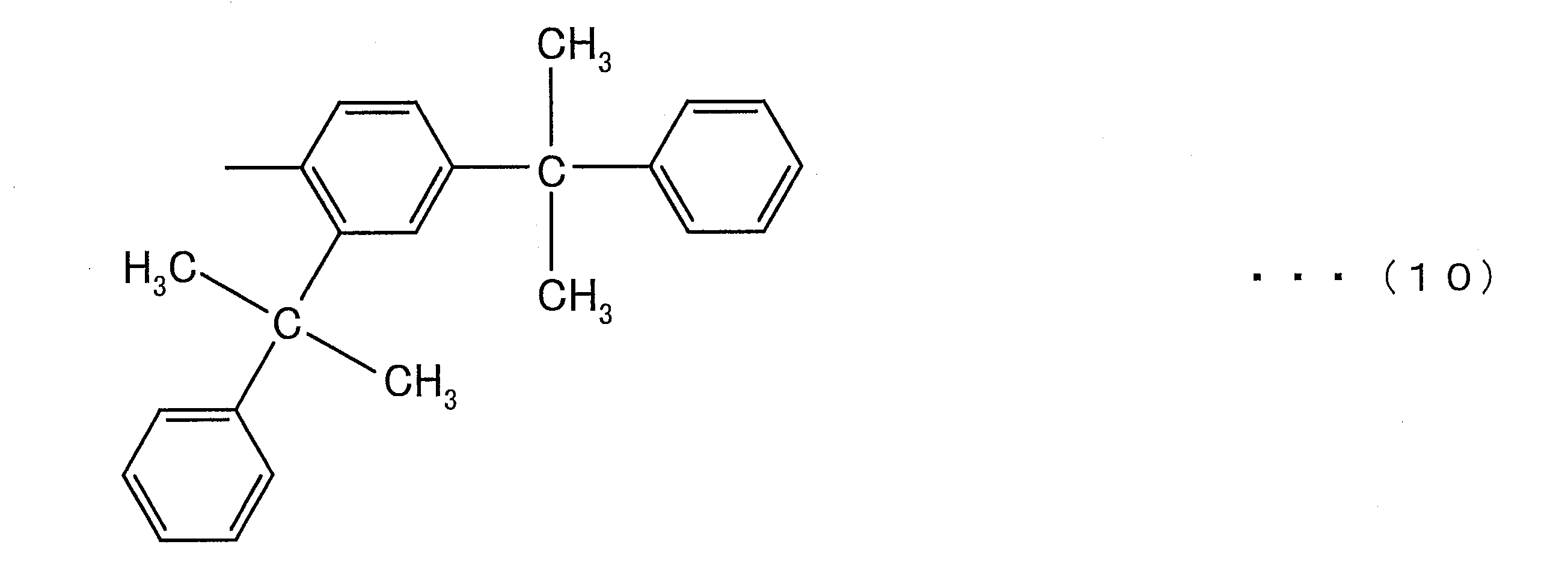
で示されるリン系安定剤が、耐加水分解性の観点から好ましい。
また、これらリン系安定剤の中でも、R2、R3で示されるアリール基が一般式(8)で示されるリン系安定剤がより好ましく、R1、R2、R3で示される置換基が各々一般式(8)で示されるリン系安定剤がさらに好ましい。このようなリン系安定剤としては、例えば、R1、R2、R3で示される置換基が2,4-ジ-tert-ブチルフェニル基である、トリス(2,4-ジ-tert-ブチルフェニル)フォスファイトが挙げられる。このリン系安定剤(トリス(2,4-ジ-tert-ブチルフェニル)フォスファイト)としては、例えば、旭電化工業株式会社から「アデカスタブ2112」の商品名で市販されているもの、あるいは、チバスペシャリティケミカルより「イルガフォス168」の商品名で市販されているものを用いることができる。
本実施の形態において、上記芳香族ポリカーボネート樹脂組成物における上記リン系安定剤の配合量は、上記芳香族ポリカーボネート樹脂100重量部に対し、0.005~0.2重量部の範囲内であることが好ましく、0.01~0.15重量部の範囲内であることがより好ましい。
上記リン系安定剤の配合量が0.005重量部未満では色相や光線透過率の改善傾向が小さい傾向がある。逆に、上記リン系安定剤の配合量が0.2重量部を越えると、耐加水分解性が低下し易く、また、モールドデポジットが発生し、コスト的にも不利になる傾向がある。上記リン系安定剤は、単独で用いてもよく、適宜、二種類以上を混合して用いても構わない。
本実施の形態によれば、上記導光板の材料として、アクリル樹脂よりも耐熱性に優れた芳香族ポリカーボネート樹脂を使用することで、アクリル樹脂からなる従来の導光板と比較して耐熱性を向上させることができる。また、上記リン系安定剤を添加することで、短波長領域での光の透過率が改善され、車載用バックライトサイズの導光板として使用できるレベルの透明性を有する導光板を得ることができる。
車載用バックライトサイズの導光板としては、車載における使用環境条件下での色度シフト(Δx,Δy)の値が、Δx,Δyともに0.02以下であることが好ましく、Δx,Δyともに0.01以下であることがより好ましい。
本実施の形態によれば、上記リン系安定剤を添加することで、車載に要求される耐使用環境条件における高温高湿下での色度(x,y)の増加(色度シフト)、より具体的には、上記高温高湿環境下での暴露前後の黄変(色度シフト)並びに上記暴露による色度の増加に伴い、導光板の入光部から受光した光が導光する間に短波長領域の光が吸収されて生じる黄変、すなわち光路方向の色度シフトを抑えることができ、車載用バックライト用の導光板として実用可能な導光板を提供することができる。
上記芳香族ポリカーボネート樹脂組成物には、成形時の離型性改良の目的で、さらに離型剤が配合されていることが好ましい。上記離型剤としては、脂肪族カルボン酸、脂肪族カルボン酸エステル、数平均分子量200~15,000の脂肪族炭化水素、ポリシロキサン系シリコーンオイルからなる群より選ばれる少なくとも一種の化合物が好ましい。
上記脂肪族カルボン酸としては、飽和または不飽和の、脂肪族モノカルボン酸、ジカルボン酸またはトリカルボン酸が挙げられる。ここで、脂肪族カルボン酸は、脂環式カルボン酸も包含する。脂肪族カルボン酸としては、炭素数6~36のモノ-またはジ-カルボン酸が好ましく、炭素数6~36の脂肪族飽和モノカルボン酸がさらに好ましい。このような脂肪族カルボン酸の具体例としては、パルミチン酸、ステアリン酸、吉草酸、カプロン酸、カプリン酸、ラウリン酸、アラキジン酸、ベヘン酸、リグノセリン酸、セロチン酸、メリシン酸、テトラトリアコンタン酸、モンタン酸、グルタル酸、アジピン酸、アゼライン酸等が挙げられる。
上記脂肪族カルボン酸エステルを構成する脂肪族カルボン酸成分としては、上記の脂肪族カルボン酸と同じものが使用できる。一方、脂肪族カルボン酸エステルと反応してエステルを形成するアルコール成分としては、飽和または不飽和の、1価アルコールまたは多価アルコールが挙げられる。これらアルコールは、フッ素原子、アリール基等の置換基を有していてもよい。これらアルコールの中では、炭素数30以下の1価または多価の飽和アルコールが好ましく、炭素数30以下の脂肪族飽和1価アルコールまたは多価アルコールがさらに好ましい。ここで、脂肪族アルコールは、脂環式アルコールも包含する。
上記アルコールの具体例としては、オクタノール、デカノール、ドデカノール、テトラデカノール、ステアリルアルコール、ベヘニルアルコール、エチレングリコール、ジエチレングリコール、グリセリン、ペンタエリスリトール、2,2-ジヒドロキシペルフルオロプロパノール、ネオペンチレングリコール、ジトリメチロールプロパン、ジペンタエリスリトール等が挙げられる。
上記のような脂肪族カルボン酸エステルは、不純物として、脂肪族カルボン酸およびアルコールの少なくとも一方を含有していてもよく、複数の化合物の混合物であってもよい。
また、脂肪族カルボン酸エステルの具体例としては、蜜蝋(ミリスチルパルミテートを主成分とする混合物)、ステアリン酸ステアリル、ベヘン酸ベヘニル、ベヘン酸オクチルドデシル、グリセリンモノパルミテート、グリセリンモノステアレート、グリセリンジステアレート、グリセリントリステアレート、ペンタエリスリトールモノパルミテート、ペンタエリスリトールモノステアレート、ペンタエリスリトールジステアレート、ペンタエリスリトールトリステアレート、ペンタエリスリトールテトラステアレート等が挙げられる。
数平均分子量200~15,000の脂肪族炭化水素としては、流動パラフィン、パラフィンワックス、マイクロワックス、ポリエチレンワックス、フィッシャートロプシュワックス又は炭素数3~12のα-オレフィンオリゴマーが挙げられる。ここで、脂肪族炭化水素としては、脂環式炭化水素も含まれる。また、これら脂肪族炭化水素は部分酸化されていてもよい。
ポリシロキサン系シリコーンオイルの25℃における動粘度は、通常1~200cSt、好ましくは5~100cSt、より好ましくは10~50cStである。また、ポリシロキサン系シリコーンオイルとしては、少なくとも側鎖にフェニル基を有するもの、分岐シロキサン構造を有するものが好ましく、単一の化合物であっても、混合物であってもよい。混合物の場合、少なくとも側鎖にフェニル基を有するポリオルガノシロキサンと、少なくとも分岐シロキサン構造を有するポリオルガノシロキサンとを併用したものも好ましい。このようなポリシロキサン系シリコーンオイルは、慣用の有機反応によって容易に得ることができる。
ポリシロキサン系シリコーンオイルの添加効果としては、成形時の離型改良効果に加え、導光板の透明性、輝度、色相をより向上させる効果が挙げられる。これらの効果は、動粘度が200cSt以下のポリシロキサン系シリコーンオイルにおいて顕著である。
本実施の形態において、離型剤としては、前記脂肪族カルボン酸、脂肪族カルボン酸エステル、脂肪族炭化水素化合物、ポリシロキサン系シリコーンオイルから選ばれた少なくとも一種が好ましい。離型性、透明性、輝度、色相の観点から、ポリシロキサン系シリコーンオイルが特に好ましい。
離型剤の配合率は、芳香族ポリカーボネート樹脂100重量部に対し、通常2重量部以下、好ましくは1重量部以下である。2重量部を超える場合は、耐加水分解性の低下、射出成形時の金型汚染等の問題がある。
また、上記芳香族ポリカーボネート樹脂組成物には、本発明の目的を損なわない範囲内で、安定剤および離型剤以外のその他の添加剤、例えば、公知の紫外線吸収剤、蛍光増白剤、染顔料、難燃剤、耐衝撃改良剤、帯電防止剤、滑剤、可塑剤、相溶化剤、抗菌剤、充填剤等が配合されていてもよい。これら、その他の添加剤の配合量は、添加剤の種類にもよるが、芳香族ポリカーボネート樹脂100重量部に対し、10重量部以下とすることが好ましく、5重量部以下とすることがより好ましい。
また、上記芳香族ポリカーボネート樹脂組成物は、本発明の効果を損なわない範囲において、他の樹脂を含んでいてもよい。他の樹脂としては、例えば、ポリアミド樹脂;ポリイミド樹脂;ポリエーテルイミド樹脂;ポリウレタン樹脂;ポリフェニレンエーテル樹脂;ポリフェニレンスルフィド樹脂;ポリスルホン樹脂;ポリエチレン、ポリプロピレン等のポリオレフィン樹脂;ポリスチレン、アクリロニトリル-スチレン共重合体等のスチレン系樹脂;ポリメタクリレート樹脂、フェノール樹脂、エポキシ樹脂等が挙げられる。但し、上記他の樹脂の配合量は、芳香族ポリカーボネート樹脂100重量部に対し、40重量部以下とすることが好ましく、30重量部以下とすることがより好ましい。
また、得られた芳香族ポリカーボネート樹脂組成物中のダスト量は、30,000個以下であることが好ましい。上記ダスト量が30,000個を超えると、光線透過率および耐加水分解性が低下し易い。
なお、本実施の形態において、上記ダストとは、原料の芳香族ポリカーボネート樹脂および成形工程等から混入する埃等の異物を示す。上記ダスト量は、光散乱法および光遮断法によって測定することができる。
上記芳香族ポリカーボネート樹脂組成物の製造方法としては、特に制限されず、最終成形品を成形する直前までの任意の段階で、各成分を一括または分割して配合し、溶融混練する方法が挙げられる。
配合方法は、当業者に周知の種々の方法を採用することができ、例えば、タンブラー、ヘンシェルミキサー等を使用する方法、フィーダーにより定量的に押出機ホッパーに供給して混合する方法等が挙げられる。
混練方法としては、単軸押出機(一軸混練押出機)、二軸押出機(二軸混練押出機)、ニーダー、バンバリーミキサー、ロール、ブラベンダー等の混練機を使用する方法が挙げられる。また、上記芳香族ポリカーボネート樹脂以外の成分は、予備混合せずに、溶融混練時に、押出機等の途中から供給してもよい。
例えば、上記芳香族ポリカーボネート樹脂と、上記リン系安定剤と、必要に応じて配合される離型剤等の上記した各種添加成分とを、タンブラー、ヘンシェルミキサー等の各種混合機を用い予め混合した後、上記した混練機で溶融混練することによって、本実施の形態にかかる上記芳香族ポリカーボネート樹脂組成物を得ることができる。
また、各成分を予め混合せずに、或いは一部の成分のみ予め混合してフィーダーを用いて押出機に供給して溶融混練することにより上記芳香族ポリカーボネート樹脂組成物を得ることもできる。すなわち、例えば、予め一部の成分を溶融混練して中間組成物を製造した後、その他の成分を配合し、溶融混練して樹脂組成物を製造することもできる。
さらに、一部の成分を溶融混練してマスターバッチを製造し、得られたマスターバッチとその他の成分とを溶融混練し、目的の樹脂組成物を得てもよい。
また、上記リン系安定剤およびその他の添加剤の添加方法としては、芳香族ポリカーボネートにこれら添加剤を直接混合(混練)することもできるが、適当な溶媒でこれら添加剤を溶解し、または、少量の芳香族ポリカーボネート樹脂または他の樹脂等で作成した高濃度の添加剤のマスターバッチとして添加することもできる。
上記したように、本実施の形態において、上記各成分の添加時期並びに混合・混練方法は、特に限定されるものではないが、上記芳香族ポリカーボネート樹脂と、上記リン系安定剤との混練は、窒素雰囲気下にて行われることが好ましい。
この場合、上記混練機としては、原料供給部にベントが設けられている押出機が好ましい。ベント数は制限されないが、通常、1~10段のベントが使用される。
上記押出機としては、単軸押出機、二軸押出機の何れであってもよいが、二軸押出機がより好適であり、噛み合い型二軸押出機がより好適である。なお、回転方向は同方向回転でも異方向回転でもよい。
具体的には、例えば、上記各成分(原料)をブレンドした後、日本製鋼所製の「TEX30HSST」等のベント付二軸押出機を使用し、該ベント付二軸押出機の原料供給部を窒素置換(窒素シール)して溶融混練する。
上記芳香族ポリカーボネート樹脂と、上記リン系安定剤との混練を窒素雰囲気下にて行う場合の機械的設定条件としては、従来と同様であり、特に限定されるものではないが、例えば、シリンダー温度としては、色相安定性の理由から、200℃~300℃の範囲内であることが好ましい。
上記したように上記芳香族ポリカーボネート樹脂と、上記リン系安定剤との混練を、窒素雰囲気下で行うことで、上記色度シフトの改善効果をさらに高めることができる。
本実施の形態によれば、このように、上記芳香族ポリカーボネート樹脂と、上記リン系安定剤との混練を、窒素雰囲気下で行うことで、得られた導光板、もしくは得られた芳香族ポリカーボネート樹脂組成物を溶融混練してなるペレットを、ジクロロメタンで溶解させた後、n-ヘキサン(ノルマルヘキサン)で沈殿させたときの、上澄み中の上記リン系安定剤に由来する成分のガスクロマトグラフィー(GC)による検出量が、上記リン系安定剤の仕込み量の85重量%以下の導光板を得ることができる。上記リン系安定剤に由来する成分の検出量が上記リン系安定剤の仕込み量の85重量%以下である場合、同じリン系安定剤を用いた場合と比較して、導光板の初期の色度(x,y)を小さくすることができる。このため、より少量のリン系安定剤の添加で色相や光線透過率の改善が可能となる。
なお、上記混練を窒素雰囲気下で行うことで、上記リン系安定剤に由来する成分の検出量が、上記リン系安定剤の仕込み量の85重量%以下となるという事実は、上記混練において系内に窒素を導入することにより、上記芳香族ポリカーボネート樹脂に上記リン系安定剤に由来する成分の一部が結合したことを意味すると解される。
つまり、本実施の形態によれば、上記芳香族ポリカーボネート樹脂と、上記リン系安定剤との混練を、窒素雰囲気下で行うことにより、上記芳香族ポリカーボネート樹脂に特定のリン系安定剤に由来する成分の一部が結合し、この結果、初期の着色(色度)を抑えることができるとともに、高温高湿条件下での色度シフトの改善効果に優れた導光板を得ることができると考えられる。
本実施の形態において、上記リン系安定剤に由来する成分とは、具体的には、リン系安定剤そのもの、リン系安定剤の酸化物、リン系安定剤の分解物およびリン系安定剤製造時の副生成物である。なお、GCによる上記リン系安定剤に由来する成分の検出方法については、後述する実施例において詳述する。
なお、GCによる上記リン系安定剤に由来する成分の検出は、後述する実施例に示すように導光板そのものをジクロロメタンで溶解させることにより行うことができるが、上記したように、上記芳香族ポリカーボネート組成物を溶融混練することによりペレット化したものを用いて行っても構わない。
以上のように、上記芳香族ポリカーボネート樹脂組成物は、上記溶融混練によって、必要に応じて例えば一旦ペレットした後、公知の成形方法により成形される。本実施の形態にかかる導光板は、上記芳香族ポリカーボネート樹脂組成物を成形することによって得ることができる。
上記導光板の成形方法としては、従来、導光板の成形方法として知られている公知の各種成形方法を用いることができる。上記成形方法としては、例えば、射出成形法、圧縮成形法、射出圧縮成形法等が挙げられるが、好ましくは射出成形法である。
なお、上記導光板の成形条件は、成形方法に応じて従来と同様に設定すればよく、特に限定されるものではない。
図2および図3に、本実施の形態にかかる導光板13の形状の一例を示す。上記導光板13の形状としては、図2に示すように、厚肉部と薄肉部とを有し、一方の主面が傾斜面である楔状であってもよく、図3に示すように、平板状であってもよい。何れの場合にも、上記導光板13の両主面もしくは一方の主面には、配光特性(導光特性)を制御するための加工もしくは処理が施されていることが好ましい。言い換えれば、上記導光板13の両主面もしくは一方の主面には、上記出光面13aから光を外部に面放射させるための加工もしくは処理が施されていることが好ましい。
このような加工もしくは処理としては、例えば、プリズム加工、ドット加工、シボ加工、印刷処理等が挙げられる。
なお、図2および図3では、上記加工もしくは処理によって、導光板13の出光面13aおよびその裏面13bに凹凸パターン13e(例えば、プリズム形状や円柱状のパターン)が設けられている構成について図示したが、本実施の形態はこれに限定されるものではない。上記凹凸パターン13eは、上記導光板13の主面に設けられてさえいえれば、上記導光板13の出光面13aおよびその裏面13bのうち少なくとも一方に設けられていてもよく、上記導光板13の内部に設けられていても構わない。
上記凹凸パターン13eは、例えば、射出成形の際、金型の一部の表面に形成された凹凸部を転写することによって付与することができる。なお、凹凸部は金型の一部である入れ子に形成する方法が簡便で好ましい。
射出成形法により薄肉の導光板を製造する方法としては、例えば、一般の鋼材金型を使用する方法、低熱伝導性材料(セラミックスやポリイミド等の樹脂または樹脂組成物)を金型の一部に使用した断熱金型を使用する方法、金型表面付近を選択的に急加熱急冷却する方法等が挙げられる。例えば、ジルコニアセラミックスを使用した断熱金型を使用する方法は、キャビティ内の溶融熱可塑性樹脂の急冷による固化層の形成を回避することができるため、キャビティ内の厚みが非常に薄い場合であっても、一般の鋼材金型や他の方法と比べ、キャビティ内に熱可塑性樹脂を充填することが容易であり、微細な凹凸パターン13eの転写性に優れている。
また、上記凹凸パターン13eの密度は一定であってもよく、光源からの距離(つまり、導光板13の入光端面13cからの距離)、言い換えれば、上記導光板13の出光面13aにおける発光量に応じて異なっていてもよい。例えば、光源からの距離が大きくなるにしたがって上記凹凸パターン13eの密度または面積を増加させることで、出光面13aにおける輝度の均一化を図ることができる。
このようにして得られた導光板(導光体)は、車載用のバックライトにおける導光板として使用される。図1に、本実施形態にかかる導光板を用いたバックライトを備えた液晶表示装置の一例を示す。図1は、本実施形態にかかる液晶表示装置の概略構成を示す断面図である。
図1に示すように、本実施形態にかかる液晶表示装置30は、バックライト10(照明装置)と、バックライト10に対向配置される液晶パネル20とを備えている。
なお、上記液晶パネル20の構成は、従来の液晶表示装置に使用される一般的な液晶パネルと同様であるため、その詳細な説明並びに図示を省略する。液晶パネル20の構成は特に限定されず、適宜公知の液晶パネルを適用することができる。上記液晶パネル20は、例えば、アクティブマトリクス基板21(アレイ基板)とカラーフィルタ基板22(対向基板)との間に図示しない液晶層が挟持された液晶セル23を備え、該液晶セル23の外側、つまり、該液晶セル23における上記液晶層とは反対側に、上記液晶セル23を挟持する下側偏光板24および上側偏光板25が設けられている構成を有している。
また、上記液晶パネル20は、駆動回路としてのソースドライバ26および図示しないゲートドライバを備えている。なお、ソースドライバ26およびゲートドライバは、図1に示すように液晶パネル20を構成する基板上に備えられていてもよく、液晶パネル20の外部に備えられていてもよい。
なお、上記液晶セル23と上記下側偏光板24および上側偏光板4との間には、各々、表示の視野角特性を向上するために、必要に応じて図示しない位相差フィルム(位相差板)が設けられていてもよい。
次に、上記液晶表示装置30に備えられたバックライト10の構成について説明する。
上記バックライト10は、液晶パネル20の背後(表示面とは反対の側)に配置されている。図1に示すように、上記バックライト10は、例えば、バックライトケース11内に、光源12、導光板13、反射シート14、光学シート15、並びに、上記光源12を点灯駆動するためのドライバが実装された基板16等を備えた構成を有している。
上記バックライトケース11は、その周囲が、バックライトフレーム31にて支持されているとともに、例えば両面テープ32によって、上記液晶パネル20に固定されている。バックライトフレーム31は、その周囲が、ベゼル33にて支持されており、ベゼル33内には、上記バックライトケース11および液晶パネル20が収容されている。
上記バックライト10は、図1に示すように、導光板13の一端面(入光端面13c)に面して光源12が設けられ、該端面から入射した光を一方の主面(盤面)から出射(面放射)するサイドライト型の面光源ユニットであり、上記光源12は、上記基板16を介して、上記バックライトケースの内壁に固定されている。
上記光源12としては、例えば、発光ダイオード(LED:Light Emitting Diode)、冷陰極管(CCFT:Cold Cathode fluorescent Tube)、蛍光ランプ、レーザダイオード、有機エレクトロルミネセンス(EL:electroluminescence)等の自己発光体等からなり、上記導光板13の入光端面13cに面して、例えば複数並んで設けられている。そのなかでも、上記光源12としては、LED、CCFTが好適に用いられる。
後述する実施例に示すように本発明の効果は、上記光源12の種類には依存しない。このため、上記光源12は、LEDであってもよく、CCFTであってもよく、上記した各種光源を使用することができる。しかしながら、CCFTよりも青色成分の多いLCD発の方が、本発明の効果をより顕著に得ることができる。
また、上記光学シート15は、上記導光板13の出光面13a(発光面)上に重ねて配置された複数のシートによって構成され、上記導光板13から出射された光を均一化するとともに集光して上記液晶パネル20に照射するようになっている。
このような光学シート15は、例えば、上記液晶パネル20に均一な光を照射するための拡散板、光を集光しつつ散乱させる拡散シート、光を集光し正面方向の輝度を向上させるレンズシート(集光シート)、光の一方の偏光成分(片偏光成分)を反射し、他方の偏光成分(片偏光成分)を透過することによって液晶表示装置30の輝度を向上させる偏光反射シート等によって構成される。これらは、液晶表示装置30の価格や性能によって適宜組み合わせて使用される。
本実施の形態にかかる光学シート15は、一例として、導光板13側から、拡散シート15a、レンズシート15b、偏光反射シート15cが、この順に積層されている構成を有している。
また、上記導光板13の裏面13b(出光面13aとは反対側の面)には、上記導光板13から照射される光の一部と上記光学シート15によって再帰される光とを反射するために、上記反射シート14が設けられている。
上記の構成により、上記光源12から出射された光は、散乱作用と反射作用とを受けながら導光板13内を進み、出光面13aから出射し、光学シート15を通って液晶パネル20に到達し、該液晶パネルにおいて表示が行われる。
なお、上記導光板13の形状としては、図1および図2に示すように楔状であってもよく、図3に示すように平板状であってもよいが、楔状の方が、本発明の効果をより顕著に得ることができる。この理由は以下の通りである。
導光板の色度シフトは、高温高湿条件下で導光板13内に水が侵入し、芳香族ポリカーボネート樹脂が加水分解を受けることによって発現する現象である。加水分解は表面から進行するため、色度シフトは、導光板13が薄いほど高温高湿条件下での暴露による影響を受け易い。このため、楔形状の方が、平板状よりも高温高湿による影響を受け易く、条件的により厳しい。しかしながら、本発明は、高温高湿条件下での色度シフトを改善することができるので、導光板13が薄いほど従来との差異は顕著なものとなる。したがって、楔状の方が本発明の効果をより顕著に得ることができる。特に、本発明によれば、上記導光板13が楔状である場合には、上記入光端面13cとは反対側の端面13d(薄肉部)の厚みd2が1.3mm以下である場合に、本発明の効果をより顕著に得ることができる。また、上記した理由により、楔形状の導光板13によって色度シフトの抑制効果が得られれば、平板状の導光板13においても色度シフトの抑制効果を得ることができる。
また、前記したように、光路方向の色度シフトは、導光板13の入光部(入光端面13c)から受光した光が導光板13内を導光する間に短波長領域の光が吸収されて生じる。このため、光路方向の色度シフトは、入光部からの光路方向の距離、つまり、導光板13の入光端面13cに直交する方向における入光端面13cからの距離が長いほど大きく、上記暴露による導光板13の黄変の影響を受け易い。このため、上記導光板13は、上記入光端面13cと該入光端面13cとは反対側の端面13dとの間の距離が50mm以上の場合に、本発明の効果をより顕著に得ることができる。
上記したように、本発明にかかる導光板は、車載用バックライト用の導光板であり、例えば自動車に搭載されたインストルメントパネル等に組み込まれたバックライト用の導光板として好適に使用することができる。また、上記導光板は、前記したように、高温高湿条件下での暴露による色度シフトが小さく、例えば車載用のナビゲーションシステムやテレビジョン受像機等の車載用液晶表示装置におけるバックライトに好適に用いることができる。
以下、実施例および比較例により、本発明をさらに具体的に説明するが、本発明はこれらにより何ら限定されるものではない。以下の実施例および比較例で使用した原料並びに評価方法は次の通りである。
<芳香族ポリカーボネート樹脂>
〔製造例1〕
8重量%水酸化ナトリウム水溶液34Lに、2,2-ビス(4-ヒドロキシフェニル)プロパン(BPA)8.00kg(35mol)とハイドロサルファイト50gとを添加し、溶解させた後、さらにジクロロメタン11Lを加え、撹拌しながら溶液温度を20℃に保ち、ホスゲン4.0kgを30分かけて吹き込んだ。ホスゲンの吹き込み終了後、8重量%水酸化ナトリウム水溶液6L、ジクロロメタン14Lおよびp-tert-ブチルフェノール329g(2.2mol)を加え、激しく攪拌させて乳化させた後、重合触媒として10mlのトリエチルアミンを加え、約1時間重合させた。
〔製造例1〕
8重量%水酸化ナトリウム水溶液34Lに、2,2-ビス(4-ヒドロキシフェニル)プロパン(BPA)8.00kg(35mol)とハイドロサルファイト50gとを添加し、溶解させた後、さらにジクロロメタン11Lを加え、撹拌しながら溶液温度を20℃に保ち、ホスゲン4.0kgを30分かけて吹き込んだ。ホスゲンの吹き込み終了後、8重量%水酸化ナトリウム水溶液6L、ジクロロメタン14Lおよびp-tert-ブチルフェノール329g(2.2mol)を加え、激しく攪拌させて乳化させた後、重合触媒として10mlのトリエチルアミンを加え、約1時間重合させた。
次いで、得られた重合液を水相と有機相に分離し、有機相をリン酸で中和し、洗液のpHが中性になるまで純水で水洗を繰り返した。この精製されたポリカーボネート溶液から有機溶媒を蒸発留去することにより、粉末状の芳香族ポリカーボネート樹脂を得た。
この芳香族ポリカーボネート樹脂は、粘度平均分子量16,500、Mw=35,000、Mn=15,600、Mw/Mn=2.2、末端OH基量110ppm、異種構造単位0ppmであった(以下、PC-1と称す)。
〔製造例2〕
窒素ガス雰囲気下、ビスフェノールA(BPA)とジフェニルカーボネートとから混合調整した溶融液を、220℃、1.33×10⁴Paに制御した第1竪型攪拌重合槽内に連続供給し、触媒として、炭酸セシウムを水溶液としてBPA1モルに対し、1.1μmolの濃度となる様に連続供給した。
窒素ガス雰囲気下、ビスフェノールA(BPA)とジフェニルカーボネートとから混合調整した溶融液を、220℃、1.33×10⁴Paに制御した第1竪型攪拌重合槽内に連続供給し、触媒として、炭酸セシウムを水溶液としてBPA1モルに対し、1.1μmolの濃度となる様に連続供給した。
槽底より排出された重合液は、引き続き、第2および第3の竪型攪拌重合槽並びに第4の横型攪拌重合槽に逐次連続供給し、第4の横型攪拌重合槽の底部のポリマー排出口より抜出した。各反応槽の条件は、反応の進行とともに高温かつ高真空となるように条件設定した。また、第4の横型攪拌重合槽では、240~280℃、13~264Paに制御し、同時に副生するフェノールの除去を行いながら重合を行った。
重合終了後、得られた芳香族ポリカーボネート樹脂を溶融状態のままで2軸押出機に導入し、p-トルエンスルホン酸ブチル4.4μmolを連続して混練し、脱気後、ストランド状とし、カッターで切断してペレット化した。
上記芳香族ポリカーボネート樹脂は、粘度平均分子量16,000、Mw=33,100、Mn=13,100、Mw/Mn=2.5、末端ヒドロキシル基量430ppm、異種構造単位3,000ppmであった(以下、PC-2と称す)。
〔製造例3〕
製造例1において、p-tert-ブチルフェノールの添加量を404g(2.7mol)に変更した以外は、製造例1と同様の反応・操作を行って芳香族ポリカーボネート樹脂を製造した。
製造例1において、p-tert-ブチルフェノールの添加量を404g(2.7mol)に変更した以外は、製造例1と同様の反応・操作を行って芳香族ポリカーボネート樹脂を製造した。
この芳香族ポリカーボネート樹脂は、粘度平均分子量14,000、Mw=15,600、Mn=6,500、Mw/Mn=2.4、末端ヒドロキシル基量120ppm、異種構造単位0ppmであった(以下、PC-3と称す)。
<安定化剤>
安定化剤-1:トリス(2,4-ジ-tert-ブチルフェニル)フォスファイト(旭電化工業社製、商品名「アデカスタブ2112」)
比較用安定化剤-2:ビス(2,6-ジ-tert-ブチル-4-メチルフェニル)ペンタエリスリトールジフォスファイト(旭電化工業社製、商品名「アデカスタブPEP-36」)
<離型剤>
グリセリンモノステアレート(理研ビタミン社製、商品名「リケマールS-100A」)
また、以下の実施例および比較例で使用した芳香族ポリカーボネート樹脂の粘度平均分子量、Mw、Mn、Mw/Mn、Mw<1,000の低分子量体の含有率、異種構造単位の含有率は以下の方法により測定した。
安定化剤-1:トリス(2,4-ジ-tert-ブチルフェニル)フォスファイト(旭電化工業社製、商品名「アデカスタブ2112」)
比較用安定化剤-2:ビス(2,6-ジ-tert-ブチル-4-メチルフェニル)ペンタエリスリトールジフォスファイト(旭電化工業社製、商品名「アデカスタブPEP-36」)
<離型剤>
グリセリンモノステアレート(理研ビタミン社製、商品名「リケマールS-100A」)
また、以下の実施例および比較例で使用した芳香族ポリカーボネート樹脂の粘度平均分子量、Mw、Mn、Mw/Mn、Mw<1,000の低分子量体の含有率、異種構造単位の含有率は以下の方法により測定した。
<芳香族ポリカーボネート樹脂の粘度平均分子量>
ウベローデ粘度計を使用し、塩化メチレン中、20℃の極限粘度[η]を測定し、下記式により求めた。
ウベローデ粘度計を使用し、塩化メチレン中、20℃の極限粘度[η]を測定し、下記式により求めた。

<芳香族ポリカーボネート樹脂のMw、Mn、Mw/Mn>
先ず、標準ポリマーとしてポリスチレン(PS)を使用したゲルパーミエーションクロマトグラフィー(GPC)により、平均分子量の測定を行った。この測定条件を以下に示す。
先ず、標準ポリマーとしてポリスチレン(PS)を使用したゲルパーミエーションクロマトグラフィー(GPC)により、平均分子量の測定を行った。この測定条件を以下に示す。
測定装置:Waters社「Aliiance」
カラム:昭和電工製「ShodexK-805L」(2本)
検出器:UV検出器(245nm)
溶離液:クロロホルム
次いで、GPC測定後、ユニバーサルキャリブレーション法により溶出時間とポリカーボネート(PC)の分子量との関係を求めて検量線とした。PCの溶出曲線(クロマトグラム)を検量線の場合と同一の条件で測定し、溶出時間(分子量)とその溶出時間のピーク面積(分子数)とから各平均分子量を求めた。
カラム:昭和電工製「ShodexK-805L」(2本)
検出器:UV検出器(245nm)
溶離液:クロロホルム
次いで、GPC測定後、ユニバーサルキャリブレーション法により溶出時間とポリカーボネート(PC)の分子量との関係を求めて検量線とした。PCの溶出曲線(クロマトグラム)を検量線の場合と同一の条件で測定し、溶出時間(分子量)とその溶出時間のピーク面積(分子数)とから各平均分子量を求めた。
数平均分子量および重量平均分子量は、分子量Miの分子数をNiとすると、以下のように表される。

換算式としては以下の計算式を使用した。計算式中、MPCはPCの分子量、MPSはPSの分子量を示す。計算式は、以下の極限粘度[η]と分子量Mの関係を表したMark-Houwinkの式から求めた。但し、K、αの値は、PSの場合、K=1.11×10⁻⁴、α=0.725とし、PCの場合、K=3.89×10⁻⁴、α=0.700の値を使用した。

そして、PCの溶出曲線(クロマトグラム)を、検量線の場合と同一の条件で測定し、溶出時間(分子量)とその溶出時間のピーク面積(分子数に比例)とから各平均分子量を求めた。
<異種構造単位の含有量>
芳香族ポリカーボネート樹脂1gを塩化メチレン100mlに溶解した後、28重量%ナトリウムメトキシドメタノール溶液を18ml、メタノール80mlを加え、さらに純水25mlを添加した後、室温で2時間攪拌して完全に加水分解した。その後、1N塩酸を加えて中和し、塩化メチレン層を分離して加水分解物を得た。
芳香族ポリカーボネート樹脂1gを塩化メチレン100mlに溶解した後、28重量%ナトリウムメトキシドメタノール溶液を18ml、メタノール80mlを加え、さらに純水25mlを添加した後、室温で2時間攪拌して完全に加水分解した。その後、1N塩酸を加えて中和し、塩化メチレン層を分離して加水分解物を得た。
アセトニトリル10mlに上記の加水分解物0.05gを溶解し、逆相高速液体クロマトグラフィー(HPLC)を使用して測定を行った。測定は、溶離液としてアセトニトリルと10mM酢酸アンモニウム水溶液からなる混合溶媒を使用し、アセトニトリル/10mM酢酸アンモニウム水溶液の比率20/80~80/20までグラジュエントをかけ、カラム温度40℃、検出波長280nmの条件で行った。測定には、株式会社島津製作所製のUV検出器「SPD-6A」を使用した。
前記一般式(5)、一般式(6)、構造式(7)で各々示される異種構造単位の同定には、Agilent株式会社製のLC-MS(「Agilent-100」)および日本電子株式会社製のNMR(「AL-400」)を用いた。これら異種構造単位の含有量は、ビスフェノールAの検量線を作成し、ビスフェノールAのピーク面積に対する各ピーク面積より算出した。
<色度(x,y)、色度シフト(Δx,Δy)>
先ず、試料となる導光板13を、評価用のバックライトに組み込んで色度(x,y)(色度分布)を測定した。次に、この導光板13を、単体でエージング槽内に投入して1,000時間放置(保存)することによりエージングした。次いで、この導光板13を、評価用のバックライトに組み込んで、上記導光板13の上方約50cmの位置に配設された色度計にて、その色度(x,y)(色度分布)を測定し、エージング前の導光板13の色度に対するエージング後の導光板13の色度の差分を、色度xおよび色度yについて各々求めることにより、色度xの色度シフトΔxおよび色度yの色度シフトΔyを算出した。この測定条件を以下に示す。
先ず、試料となる導光板13を、評価用のバックライトに組み込んで色度(x,y)(色度分布)を測定した。次に、この導光板13を、単体でエージング槽内に投入して1,000時間放置(保存)することによりエージングした。次いで、この導光板13を、評価用のバックライトに組み込んで、上記導光板13の上方約50cmの位置に配設された色度計にて、その色度(x,y)(色度分布)を測定し、エージング前の導光板13の色度に対するエージング後の導光板13の色度の差分を、色度xおよび色度yについて各々求めることにより、色度xの色度シフトΔxおよび色度yの色度シフトΔyを算出した。この測定条件を以下に示す。
エージング槽:エスペック株式会社製「SH-661」
エージング(暴露)条件:温度80℃、相対湿度(RH)95%、1,000時間
色度測定条件:温度24℃、湿度54%
色度測定装置(色度計):コニカミノルタセンシング株式会社製「CA-1500」
なお、評価用バックライトには、図1に示す構成を有するバックライトを使用した。なお、特に言及しない限りは、光源にはLEDを使用した。光源にCCFTを使用した場合の色度は、上記評価用バックライトのLEDを取り外し、代わりに、CCFTを組み込んで測定した。
エージング(暴露)条件:温度80℃、相対湿度(RH)95%、1,000時間
色度測定条件:温度24℃、湿度54%
色度測定装置(色度計):コニカミノルタセンシング株式会社製「CA-1500」
なお、評価用バックライトには、図1に示す構成を有するバックライトを使用した。なお、特に言及しない限りは、光源にはLEDを使用した。光源にCCFTを使用した場合の色度は、上記評価用バックライトのLEDを取り外し、代わりに、CCFTを組み込んで測定した。
<リン系安定剤由来成分量、リン系安定剤由来成分の検出量/仕込み量>
先ず、試料となる成形品(導光板13もしくはペレット)を、ジクロロメタンで溶解した後、ヘキサン(n-ヘキサン)で析出させて沈殿させた。なお、以下の実施例では、簡易化のためにペレット(各実施例で得られた芳香族ポリカーボネート樹脂組成物をペレット化したもの)を使用した。次に、これにより得られた上澄み(n-ヘキサン可溶部)を、GCにより定量することで、リン系安定剤に由来する成分量の検出を行った。そして、リン系安定剤の仕込み量(添加量)に対する、GCにより検出された上記リン系安定剤に由来する成分量の割合を求めることにより、リン系安定剤由来成分の検出量/仕込み量とした。GC条件を以下に示す。
先ず、試料となる成形品(導光板13もしくはペレット)を、ジクロロメタンで溶解した後、ヘキサン(n-ヘキサン)で析出させて沈殿させた。なお、以下の実施例では、簡易化のためにペレット(各実施例で得られた芳香族ポリカーボネート樹脂組成物をペレット化したもの)を使用した。次に、これにより得られた上澄み(n-ヘキサン可溶部)を、GCにより定量することで、リン系安定剤に由来する成分量の検出を行った。そして、リン系安定剤の仕込み量(添加量)に対する、GCにより検出された上記リン系安定剤に由来する成分量の割合を求めることにより、リン系安定剤由来成分の検出量/仕込み量とした。GC条件を以下に示す。
検出装置:株式会社島津製作所製「GC-2014」
カラム:Restek社製「Rtx-1」、0.32mmid×15m
測定温度:カラム 100℃→350℃(10℃/分)
注入口 285℃
検出器 351℃
キャリヤーガス:ヘリウム 4ml/分
なお、以下の実施例において、リン系安定剤に由来する成分とは、トリス(2,4-ジ-tert-ブチルフェニル)フォスファイト、トリス(2,4-ジ-tert-ブチルフェニル)フォスフェート、ジ-tert-ブチルフェノールであった。
カラム:Restek社製「Rtx-1」、0.32mmid×15m
測定温度:カラム 100℃→350℃(10℃/分)
注入口 285℃
検出器 351℃
キャリヤーガス:ヘリウム 4ml/分
なお、以下の実施例において、リン系安定剤に由来する成分とは、トリス(2,4-ジ-tert-ブチルフェニル)フォスファイト、トリス(2,4-ジ-tert-ブチルフェニル)フォスフェート、ジ-tert-ブチルフェノールであった。
<芳香族ポリカーボネート樹脂に結合したリン系安定剤由来成分量、芳香族ポリカーボネート樹脂に結合したリン系安定剤由来成分の検出量/仕込み量>
先ず、試料となる成形品(導光板13もしくはペレット)を、ジクロロメタンで溶解した後、n-ヘキサンで析出させて沈殿させた。なお、以下の実施例および比較例では、簡易化のためにペレット(各実施例で得られた芳香族ポリカーボネート樹脂組成物をペレット化したもの)を使用した。次に、これにより得られた沈殿物1gを、硫酸2mlに対し30重量%濃度の過酸化水素水7mlの割合で混合させてなる混合溶液で湿式分解し、高分解能ICP質量分析装置(Thermo Fisher Scientific社製の高分解能ICP質量分析装置「ELEMENT型」)で、分解溶液中のリン成分の含有量(リン原子換算量)を測定(検出)することにより、この検出量を、芳香族ポリカーボネート樹脂に結合したリン安定剤由来成分量(ppm)として得た。そして、リン系安定剤の仕込み量(添加量)をリン原子換算したときのリン原子換算量に対する、上記高分解能ICP質量分析装置により検出されたリン原子量の割合(重量%)を求めることにより、芳香族ポリカーボネート樹脂に結合したリン系安定剤由来成分の検出量/仕込み量とした。
先ず、試料となる成形品(導光板13もしくはペレット)を、ジクロロメタンで溶解した後、n-ヘキサンで析出させて沈殿させた。なお、以下の実施例および比較例では、簡易化のためにペレット(各実施例で得られた芳香族ポリカーボネート樹脂組成物をペレット化したもの)を使用した。次に、これにより得られた沈殿物1gを、硫酸2mlに対し30重量%濃度の過酸化水素水7mlの割合で混合させてなる混合溶液で湿式分解し、高分解能ICP質量分析装置(Thermo Fisher Scientific社製の高分解能ICP質量分析装置「ELEMENT型」)で、分解溶液中のリン成分の含有量(リン原子換算量)を測定(検出)することにより、この検出量を、芳香族ポリカーボネート樹脂に結合したリン安定剤由来成分量(ppm)として得た。そして、リン系安定剤の仕込み量(添加量)をリン原子換算したときのリン原子換算量に対する、上記高分解能ICP質量分析装置により検出されたリン原子量の割合(重量%)を求めることにより、芳香族ポリカーボネート樹脂に結合したリン系安定剤由来成分の検出量/仕込み量とした。
〔実施例1~4〕
表1に示す割合で各原料をブレンドした後、スクリュー径32mmのベント付二軸押出機(日本製鋼所製「TEX30HSST」)を使用し、該ベント付二軸押出機の原料供給部を窒素置換(窒素シール)してシリンダー温度240℃で溶融混練し、ストランドカットによりペレットを作成した。このペレットを用いて、試料となる導光板13を作製した。試料となる導光板13の大きさ並びに形状は以下の通りである。
表1に示す割合で各原料をブレンドした後、スクリュー径32mmのベント付二軸押出機(日本製鋼所製「TEX30HSST」)を使用し、該ベント付二軸押出機の原料供給部を窒素置換(窒素シール)してシリンダー温度240℃で溶融混練し、ストランドカットによりペレットを作成した。このペレットを用いて、試料となる導光板13を作製した。試料となる導光板13の大きさ並びに形状は以下の通りである。
形状:楔状
出光面の大きさ:96mm×155mm
入光端面13c(厚肉部)の厚みd1:1.8mm
入光端面13cとは反対側の端面13d(薄肉部)の厚みd2:1mm
〔実施例5および比較例1~2〕
表1に示す割合で各原料をブレンドした後、上記ベント付二軸押出機の原料供給部を窒素置換しなかった以外は、実施例1~4と同じ条件でペレットを作成した。次に、得られたペレットを用いて、実施例1~4と同じ条件で導光板13を作製した。
出光面の大きさ:96mm×155mm
入光端面13c(厚肉部)の厚みd1:1.8mm
入光端面13cとは反対側の端面13d(薄肉部)の厚みd2:1mm
〔実施例5および比較例1~2〕
表1に示す割合で各原料をブレンドした後、上記ベント付二軸押出機の原料供給部を窒素置換しなかった以外は、実施例1~4と同じ条件でペレットを作成した。次に、得られたペレットを用いて、実施例1~4と同じ条件で導光板13を作製した。
実施例および比較例で作製した導光板13を評価用のバックライトに組み込んだときの導光板13の出光面13aにおける以下の測定ポイントの色度(x,y)および色度シフト、並びに、実施例1・2・5において、得られたペレットをジクロロメタンで溶解した後、n-ヘキサンで沈殿させたときの上澄み中のリン系安定剤由来成分の検出量/仕込み量を、前述した方法により測定した結果を、芳香族ポリカーボネート樹脂組成物の組成(配合)と併せて表1に示す。
なお、測定ポイントは、試料となる導光板13の入光端面13cから、該入光端面13cに直交する方向に80mm離間し、かつ、入光端面13cに直交する方向に沿った各端面から等距離にある位置とした。
以下、試料となる導光板13の入光端面13cに直交する方向における入光端面13c(入光部)からの距離(入光部からの光路方向の距離)を、単に「入光部からの距離」と記す。また、特に言及しない限り、測定位置は、入光端面13cに直交する方向に沿った各端面の中央線上の位置(つまり、入光端面13cに直交する方向に沿った各端面から等距離にある位置)とする。また、表1において、「初期」並びに「湿熱試験後」とは、各々、前記エージング前、エージング後を意味する。
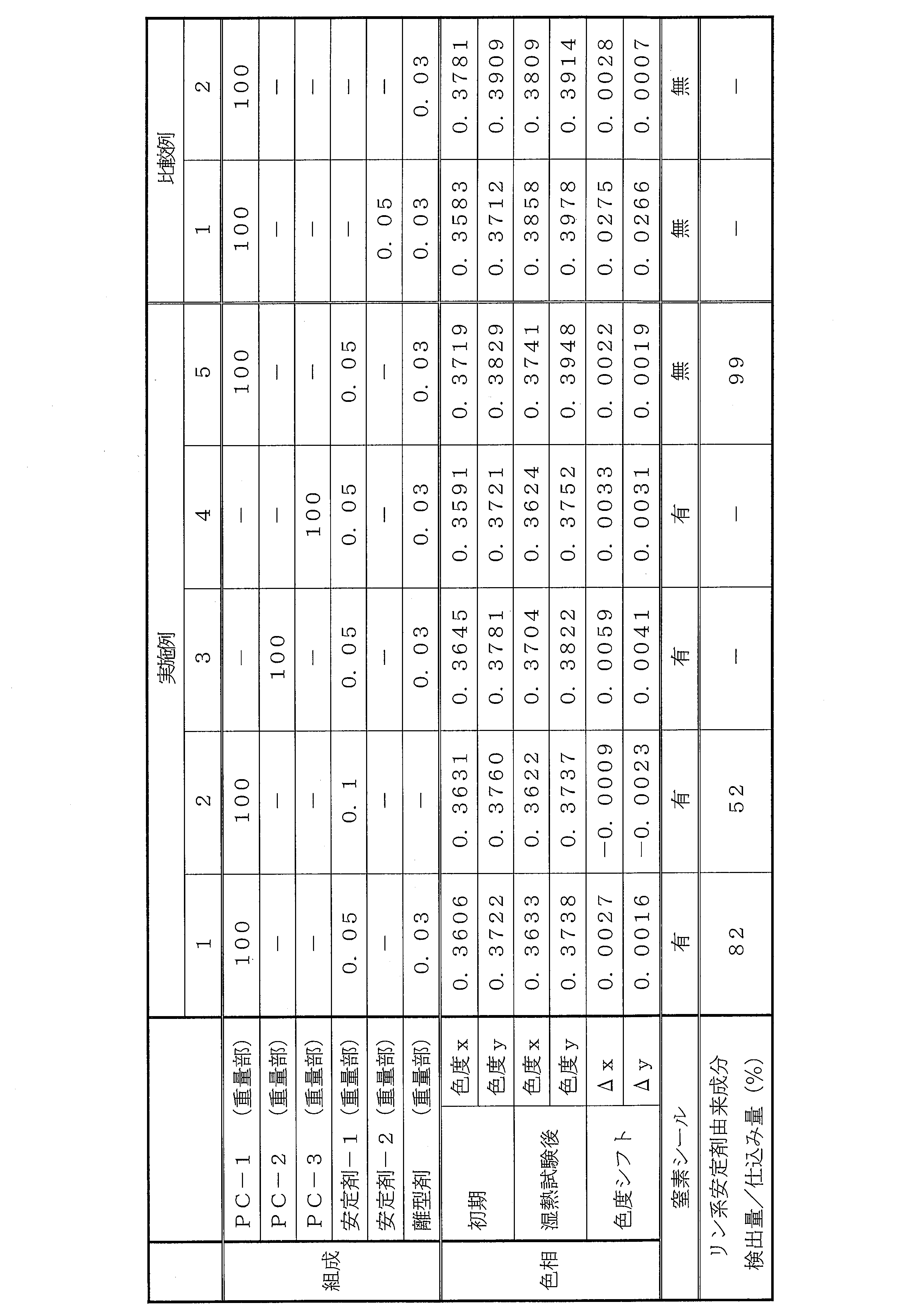
また、実施例1・2において、得られたペレットをジクロロメタンで溶解した後、n-ヘキサンで沈殿させたときの沈殿物を湿式分解してなる分解溶液中のリン系安定剤由来成分量(すなわち、芳香族ポリカーボネート樹脂に結合したリン系安定剤由来成分量)、および、芳香族ポリカーボネート樹脂に結合したリン系安定剤由来成分の検出量/仕込み量を、前記した方法により求めた。この結果を表2に示す。

表2に示す結果から、得られた芳香族ポリカーボネート樹脂組成物において、添加したリン系安定剤は、その多くは該芳香族ポリカーボネート樹脂組成物中に安定剤として存在しているが、その一部は、ポリマー(芳香族ポリカーボネート樹脂)中に取り込まれていることが判る。つまり、上記した実施例に示すように、本発明によれば、添加したリン系安定剤の一部はポリマーに結合(化学結合)していることが判る。
また、色度シフトの許容範囲を、以下の方法により測定した。
<色度シフトの許容範囲>
比較例1で得られた導光板13を評価用のバックライトに組み込み、その発光面上に、評価用の液晶パネルを搭載し、目視で、入光部(導光板13の入光端面13c)から入光端面13cに直交する方向にどの程度の距離まで離間しても表示に違和感がないか確認を行い、その統計により、表示に違和感が生じる境界点を特定した。なお、境界点は、入光端面13cに直交する方向に沿った各端面の中央線上の位置(つまり、入光端面13cに直交する方向に沿った各端面から等距離にある位置)とした。境界点は、上記液晶パネルの表示エリアの中央から、平面視でやや光源よりの位置であった。
比較例1で得られた導光板13を評価用のバックライトに組み込み、その発光面上に、評価用の液晶パネルを搭載し、目視で、入光部(導光板13の入光端面13c)から入光端面13cに直交する方向にどの程度の距離まで離間しても表示に違和感がないか確認を行い、その統計により、表示に違和感が生じる境界点を特定した。なお、境界点は、入光端面13cに直交する方向に沿った各端面の中央線上の位置(つまり、入光端面13cに直交する方向に沿った各端面から等距離にある位置)とした。境界点は、上記液晶パネルの表示エリアの中央から、平面視でやや光源よりの位置であった。
次いで、上記液晶パネルを外し、バックライト上の色度分布を測定し、導光板13の出光面13aにおける、上記境界点と入光部(入光端面13c)との色度差を算出した。上記境界点における色度と入光部との色度との差は、座標x、座標yともに0.02であった。従って、色度シフト(Δx,Δy)の許容範囲は、何れも0.02であることが判った。上記液晶パネル上の色度xおよび色度y、並びに、上記バックライト(BL)上の色度xおよび色度yと、境界点との関係を、各々、図4(a)~(d)に示す。
<入光部からの距離と色度シフトとの関係>
また、実施例1、実施例2および比較例1で得られた各導光板13を用いて、入光部(入光端面13c)からの距離を種々変更することにより、入光部からの距離と色度シフトとの関係を調べた。この結果を表3に示す。また、実施例1および比較例1で得られた各導光板13の入光部からの距離と、色度x、色度yとの関係を、各々、図5、図6に示す。また、実施例1で得られた導光板13の色度シフト(Δx,Δy)を図7に、実施例1で得られた導光板13の色度シフト(Δx,Δy)と比較例1で得られた導光板13の色度シフト(Δx,Δy)とを比較した結果を図8に示す。
また、実施例1、実施例2および比較例1で得られた各導光板13を用いて、入光部(入光端面13c)からの距離を種々変更することにより、入光部からの距離と色度シフトとの関係を調べた。この結果を表3に示す。また、実施例1および比較例1で得られた各導光板13の入光部からの距離と、色度x、色度yとの関係を、各々、図5、図6に示す。また、実施例1で得られた導光板13の色度シフト(Δx,Δy)を図7に、実施例1で得られた導光板13の色度シフト(Δx,Δy)と比較例1で得られた導光板13の色度シフト(Δx,Δy)とを比較した結果を図8に示す。
なお、入光部からの距離が28mmにおける測定ポイントは、4.3型のバックライトの中央部に相当する。また、入光部からの距離が48mmにおける測定ポイントは、7.0型のバックライトの中央部に相当する。また、入光部からの距離が68mmにおける測定ポイントは、8.0型のバックライトの中央部に相当する。なお、表3および図5~図6において、「投入前」並びに「1000H」とは、各々、前記エージング前(エージング槽への導光板13の投入前)、1,000時間エージング後を意味する。

<光源の種類と色度シフトとの関係>
また、実施例1および比較例1で得られた各導光板13を用いて、光源12としてLED、CCFTを各々使用したときの光源の種類と色度シフト(Δx,Δy)との関係を調べた。図9に、実施例1および比較例1で得られた各導光板13の色度シフトΔxと、導光板13の入光部からの距離と、光源の種類との関係を示す。また、図10に、実施例1および比較例1で得られた各導光板13の色度シフトΔyと、導光板13の入光部からの距離と、光源の種類との関係を示す。
また、実施例1および比較例1で得られた各導光板13を用いて、光源12としてLED、CCFTを各々使用したときの光源の種類と色度シフト(Δx,Δy)との関係を調べた。図9に、実施例1および比較例1で得られた各導光板13の色度シフトΔxと、導光板13の入光部からの距離と、光源の種類との関係を示す。また、図10に、実施例1および比較例1で得られた各導光板13の色度シフトΔyと、導光板13の入光部からの距離と、光源の種類との関係を示す。
また、図11に、LEDとCCFTとにおける波長と分光放射輝度との関係を各々示す。なお、分光放射輝度の測定には、株式会社トプコン製の「SR-2」を使用した。図11中、分光放射輝度は、各々の光源を使用したときのピーク値を100%として示している。
以上の結果から判るように、導光板13を、80℃、90%RH以上の高温高湿環境で暴露すると、例えば表1、表3および図5~図10に示すように、色度xおよび色度yともに増加(黄変)し、色度シフトが生じる。特に、色度シフトは、導光板13の入光部から離れるに従って積算され、リン系安定剤として、亜リン酸エステルではあっても前記一般式(1)で示される亜リン酸エステルとは異なる亜リン酸エステルを使用した導光板13(比較例)では、入射部から50mm離れると許容することができなくなる。
しかしながら、本発明によれば、例えば表1および表3において実施例1~5と比較例2とから判るように、添加剤を使用しない場合(比較例2)よりも初期の色度(x,y)が小さく、透明性に優れた導光板を得ることができるとともに、本実施例で得られた導光板は、表1、表3および図5~図10に示すように、色度シフト(Δx,Δy)が何れもΔx≦0.01、かつ、Δy≦0.01の条件を満足するとともに色度シフト(Δx,Δy)を大幅に低減(改善)させることができることが判る。
また、表1に示す結果から、ジクロロメタン溶解物(上記した実施例においては、得られたペレットをジクロロメタンで溶解したもの)を、n-ヘキサンで沈殿させたときの上澄み中のリン系安定剤に由来する成分のGCによる検出量が、上記リン系安定剤の仕込み量の85重量%以下である場合、初期の着色(色度)を抑えることができるとともに、高温高湿条件下での色度シフトの改善効果に優れた導光板を得ることができることが判る。また、このような導光板並びに該導光板を得るためのペレットは、芳香族ポリカーボネート樹脂と、上記リン系安定剤との混練を、窒素雰囲気下で行うことで得ることができることが判る。そして、表2に示す結果から、このような導光板並びに該導光板を得るためのペレットは、芳香族ポリカーボネート樹脂にリン系安定剤の一部が結合しており、これが、上記した効果を得ることができる一因になっていることが判る。
また、例えば図5および図6から判るように、上記比較例で得られた導光板13では、80℃、90%RH以上の高温高湿環境で暴露すると、出光面13aにおける入光部近傍では青色(波長400nm~500nm)の分光透過率が上がり、出射光が分光として青色にシフトする。このことは、出光面13aにおける入光部とは反対側の他端における色度差を際立たせる一因となる。
しかしながら、本発明によれば、例えば図5~図8から判るように、上記比較例における導光板13に見られるような、入光部近傍での青色へのシフトは殆ど見られない。このため、上記問題が生じず、導光板13の入光端面13cに直交する方向における色度差を大幅に改善することができる。
また、図9および図10から判るように、本発明の導光板13の効果は、光源の種類に依存しないことが判った。なお、LEDと比較するとCCFTでは、入光部からの距離が48mm以上のときの色度増加が大きく、28mm未満での色度低下は少なかったが、この結果は、図11に示すようにLEDとCCFTとの分光放射の違いによるものと判断される。
また、図9および図10に示す結果から、本発明の効果は、CCFTより青色成分の多い擬似白色LED(通常白色LEDと称される青色励起の黄色蛍光体)の方が大きいことが判る。
以上のように、上記導光板13は、上記芳香族ポリカーボネート樹脂組成物からなることで、透明性、耐熱性に優れ、かつ車載に要求される耐使用環境条件における高温高湿下での色度(x,y)の増加が小さい。このため、車載用バックライト用の導光板として好適であり、かつ、芳香族ポリカーボネート樹脂を用いた車載用バックライト用の導光板としては初めて実用化が可能な導光板を提供することができるものである。
以上のように、上記車載用バックライト用の導光板は、芳香族ポリカーボネート樹脂と、一般式(1)

(式中、R1はアリール基またはアルキル基を表し、R2、R3は各々独立してアリール基を表し、R1、R2、R3は互いに同一でも異なっていてもよく、nは0または1を表す)
で示されるリン系安定剤とを含む芳香族ポリカーボネート樹脂組成物からなる構成である。
で示されるリン系安定剤とを含む芳香族ポリカーボネート樹脂組成物からなる構成である。
また、上記車載用バックライト用の導光板は、当該導光板、または上記芳香族ポリカーボネート樹脂組成物を溶融混練してなるペレットを、ジクロロメタンに溶解させた後、n-ヘキサンで沈殿させたときの、上澄み中の上記リン系安定剤に由来する成分のガスクロマトグラフィーによる検出量が、上記リン系安定剤の仕込み量の85重量%以下であることが好ましい。
上記リン系安定剤に由来する成分の検出量が上記リン系安定剤の仕込み量の85重量%以下である場合、同じリン系安定剤を用いた場合と比較して、導光板の初期の色度(x,y)を小さくすることができる。このため、より少量のリン系安定剤の添加で色相や光線透過率の改善が可能となる。
また、上記リン系安定剤の仕込み量の85重量%以下となるという事実は、上記芳香族ポリカーボネート樹脂に上記リン系安定剤に由来する成分の一部が結合したことを意味する。そして、このことは、前記したように、実験にて証明された。
すなわち、本発明によれば、上記ガスクロマトグラフィーにより検出されなかったリン系安定剤に由来する成分の少なくとも一部が、上記芳香族ポリカーボネート樹脂に結合していることで、初期の着色(色度)を抑えることができるとともに、高温高湿条件下での色度シフトの改善効果に優れた導光板を得ることができる。
上記R1は、アリール基であることが好ましい。上記R1が、アリール基であるリン系安定剤は、芳香族ポリカーボネート樹脂の加水分解抑制効果が高い。
また、上記芳香族ポリカーボネート樹脂組成物における上記リン系安定剤の配合量は、上記芳香族ポリカーボネート樹脂100重量部に対し、0.005~0.2重量部の範囲内であることが好ましい。
上記リン系安定剤の配合量が0.005重量部未満では色相や光線透過率の改善傾向が小さい傾向がある。逆に、上記リン系安定剤の配合量が0.2重量部を越えると、耐加水分解性が低下し易く、また、モールドデポジットが発生し、コスト的にも不利になる傾向がある。
上記車載用バックライト用の導光板は、楔状であってもよく、平板状であってもよい。しかしながら、色度シフトは、導光板が薄いほど高温高湿による影響を受け易い。このため、楔状の方が、平板状よりも高温高湿による影響を受け易く、条件的により厳しい。しかしながら、本発明は、高温高湿条件下での色度シフトを改善することができるので、導光板が薄いほど従来との差異は顕著なものとなる。したがって、楔状の方が本発明の効果をより顕著に得ることができる。
また、以上のように、上記車載用バックライトは、光源と、上記車載用バックライト用の導光板とを備えている構成であり、上記車載用液晶表示装置は、上記車載用バックライトを備えている構成である。
上記の構成によれば、透明性、耐熱性に優れ、かつ車載に要求される耐使用環境条件における高温高湿下での色度(x,y)の増加が小さい、車載用バックライト用の導光板および車載用バックライト並びに車載用液晶表示装置を提供することができる。
上記光源は、発光ダイオードあるいは冷陰極管であることが好ましい。
本発明の効果は、光源の種類には依存しない。このため、上記光源は、発光ダイオードであってもよく、冷陰極管であってもよい。しかしながら、冷陰極管よりも青色成分の多い発光ダイオードの方が、本発明の効果をより顕著に得ることができる。
本発明は上述した実施形態に限定されるものではなく、請求項に示した範囲で種々の変更が可能である。すなわち、請求項に示した範囲で適宜変更した技術的手段を組み合わせて得られる実施形態についても本発明の技術的範囲に含まれる。
本発明にかかる導光板は、車載用バックライト用の導光板であり、例えば自動車に搭載されたインストルメントパネル等に組み込まれたバックライト用の導光板として好適に使用することができる。また、上記導光板は、高温高湿条件下での暴露による色度シフトが小さく、例えば車載用のナビゲーションシステムやテレビジョン受像機等の車載用液晶表示装置におけるバックライトに好適に用いることができる。
Claims (11)
- 芳香族ポリカーボネート樹脂と、一般式(1)

で示されるリン系安定剤とを含む芳香族ポリカーボネート樹脂組成物からなることを特徴とする車載用バックライト用の導光板。 - 当該導光板、または上記芳香族ポリカーボネート樹脂組成物を溶融混練してなるペレットを、ジクロロメタンに溶解させた後、n-ヘキサンで沈殿させたときの、上澄み中の上記リン系安定剤に由来する成分のガスクロマトグラフィーによる検出量が、上記リン系安定剤の仕込み量の85重量%以下であることを特徴とする請求項1記載の車載用バックライト用の導光板。
- 上記ガスクロマトグラフィーにより検出されなかったリン系安定剤に由来する成分の少なくとも一部は、上記芳香族ポリカーボネート樹脂に結合していることを特徴とする請求項2記載の車載用バックライト用の導光板。
- 上記R1がアリール基であることを特徴とする請求項1~3の何れか1項に記載の車載用バックライト用の導光板。
- 上記芳香族ポリカーボネート樹脂組成物における上記リン系安定剤の配合量が、上記芳香族ポリカーボネート樹脂100重量部に対し、0.005~0.2重量部の範囲内であることを特徴とする請求項1~4の何れか1項に記載の車載用バックライト用の導光板。
- 楔状であることを特徴とする請求項1~5の何れか1項に記載の車載用バックライト用の導光板。
- 平板状であることを特徴とする請求項1~5の何れか1項に記載の車載用バックライト用の導光板。
- 光源と、請求項1~7の何れか1項に記載の車載用バックライト用の導光板とを備えていることを特徴とする車載用バックライト。
- 上記光源が発光ダイオードであることを特徴とする請求項8記載の車載用バックライト。
- 上記光源が冷陰極管であることを特徴とする請求項8記載の車載用バックライト。
- 請求項8~10の何れか1項に記載の車載用バックライトを備えていることを特徴とする車載用液晶表示装置。
Applications Claiming Priority (2)
| Application Number | Priority Date | Filing Date | Title |
|---|---|---|---|
| JP2007338283A JP2011053233A (ja) | 2007-12-27 | 2007-12-27 | 車載用バックライト用の導光板、車載用バックライト、および車載用液晶表示装置 |
| JP2007-338283 | 2007-12-27 |
Publications (1)
| Publication Number | Publication Date |
|---|---|
| WO2009084592A1 true WO2009084592A1 (ja) | 2009-07-09 |
Family
ID=40824306
Family Applications (1)
| Application Number | Title | Priority Date | Filing Date |
|---|---|---|---|
| PCT/JP2008/073614 Ceased WO2009084592A1 (ja) | 2007-12-27 | 2008-12-25 | 車載用バックライト用の導光板、車載用バックライト、および車載用液晶表示装置 |
Country Status (2)
| Country | Link |
|---|---|
| JP (1) | JP2011053233A (ja) |
| WO (1) | WO2009084592A1 (ja) |
Cited By (1)
| Publication number | Priority date | Publication date | Assignee | Title |
|---|---|---|---|---|
| CN106249472A (zh) * | 2015-06-12 | 2016-12-21 | 三星显示有限公司 | 弯曲显示装置及其制造方法 |
Families Citing this family (9)
| Publication number | Priority date | Publication date | Assignee | Title |
|---|---|---|---|---|
| WO2012141336A1 (ja) * | 2011-04-15 | 2012-10-18 | 帝人化成株式会社 | 薄板収納搬送容器用芳香族ポリカーボネート樹脂組成物 |
| EP2657298A1 (de) * | 2012-04-27 | 2013-10-30 | Bayer MaterialScience AG | PC/ABS-Zusammensetzungen mit guter thermischer und chemischer Beständigkeit |
| JP6181937B2 (ja) * | 2013-02-25 | 2017-08-16 | 恵和株式会社 | ライトガイドフィルム、超薄型液晶バックライトユニット及び携帯型コンピュータ |
| JP6189052B2 (ja) * | 2013-02-25 | 2017-08-30 | 恵和株式会社 | ライトガイドフィルム、超薄型液晶バックライトユニット及び携帯型コンピュータ |
| JP6181936B2 (ja) * | 2013-02-25 | 2017-08-16 | 恵和株式会社 | ライトガイドフィルムの製造方法、ライトガイドフィルム、超薄型液晶バックライトユニット及び携帯型コンピュータ |
| JP6293415B2 (ja) * | 2013-02-25 | 2018-03-14 | 恵和株式会社 | ライトガイドフィルム、超薄型液晶バックライトユニット及び携帯型コンピュータ |
| JP6208953B2 (ja) * | 2013-02-25 | 2017-10-04 | 恵和株式会社 | ライトガイドフィルム、超薄型液晶バックライトユニット及び携帯型コンピュータ |
| JP6203513B2 (ja) * | 2013-03-28 | 2017-09-27 | 恵和株式会社 | ライトガイドフィルム、バックライトユニット、携帯型コンピュータ及びライトガイドフィルムの製造方法 |
| JP7364321B2 (ja) * | 2017-12-26 | 2023-10-18 | 恵和株式会社 | 光拡散板及び直下型バックライトユニット |
Citations (2)
| Publication number | Priority date | Publication date | Assignee | Title |
|---|---|---|---|---|
| JP2006178135A (ja) * | 2004-12-22 | 2006-07-06 | Sanyo Epson Imaging Devices Corp | 液晶表示装置及びその液晶表示装置を使用した車載用ナビゲーション装置 |
| JP2007204737A (ja) * | 2006-01-06 | 2007-08-16 | Mitsubishi Engineering Plastics Corp | 導光板用芳香族ポリカーボネート樹脂組成物および導光板 |
-
2007
- 2007-12-27 JP JP2007338283A patent/JP2011053233A/ja active Pending
-
2008
- 2008-12-25 WO PCT/JP2008/073614 patent/WO2009084592A1/ja not_active Ceased
Patent Citations (2)
| Publication number | Priority date | Publication date | Assignee | Title |
|---|---|---|---|---|
| JP2006178135A (ja) * | 2004-12-22 | 2006-07-06 | Sanyo Epson Imaging Devices Corp | 液晶表示装置及びその液晶表示装置を使用した車載用ナビゲーション装置 |
| JP2007204737A (ja) * | 2006-01-06 | 2007-08-16 | Mitsubishi Engineering Plastics Corp | 導光板用芳香族ポリカーボネート樹脂組成物および導光板 |
Cited By (1)
| Publication number | Priority date | Publication date | Assignee | Title |
|---|---|---|---|---|
| CN106249472A (zh) * | 2015-06-12 | 2016-12-21 | 三星显示有限公司 | 弯曲显示装置及其制造方法 |
Also Published As
| Publication number | Publication date |
|---|---|
| JP2011053233A (ja) | 2011-03-17 |
Similar Documents
| Publication | Publication Date | Title |
|---|---|---|
| WO2009084592A1 (ja) | 車載用バックライト用の導光板、車載用バックライト、および車載用液晶表示装置 | |
| KR101479113B1 (ko) | 도광판용 방향족 폴리카보네이트 수지 조성물 및 도광판 | |
| CN101213256B (zh) | 光扩散性聚碳酸酯类树脂组合物以及使用该树脂组合物的光扩散板 | |
| EP2799200B1 (en) | Polycarbonate resin composition pellets and process for manufacturing same | |
| US8795824B2 (en) | Light diffusing resin composition and light diffusing plate using the same | |
| CN102844377B (zh) | 透明阻燃性的芳香族聚碳酸酯树脂组合物及成型品 | |
| JP5266639B2 (ja) | 導光板 | |
| US8119228B2 (en) | Polycarbonate resin composition, optical molded body using the same, and illumination unit | |
| KR20090020704A (ko) | 폴리카보네이트계 광확산성 수지 조성물 및 광확산판 | |
| US20220002540A1 (en) | Aromatic polycarbonate resin composition | |
| JP2006083230A (ja) | 芳香族ポリカーボネート樹脂組成物およびその成形体 | |
| JP6176066B2 (ja) | ポリカーボネート樹脂組成物 | |
| JP5073939B2 (ja) | 導光板 | |
| KR102046575B1 (ko) | 폴리카보네이트 수지 조성물 | |
| US7820778B2 (en) | Light guide member and illumination unit | |
| JP6408370B2 (ja) | ポリカーボネート樹脂組成物 | |
| KR20240166477A (ko) | 폴리카보네이트계 수지 조성물 | |
| KR20110033765A (ko) | 폴리카보네이트계 수지로부터 제조된 광학특성이 우수한 광학용 성형품 및 그 제조방법 |
Legal Events
| Date | Code | Title | Description |
|---|---|---|---|
| 121 | Ep: the epo has been informed by wipo that ep was designated in this application |
Ref document number: 08866240 Country of ref document: EP Kind code of ref document: A1 |
|
| NENP | Non-entry into the national phase |
Ref country code: DE |
|
| 122 | Ep: pct application non-entry in european phase |
Ref document number: 08866240 Country of ref document: EP Kind code of ref document: A1 |
|
| NENP | Non-entry into the national phase |
Ref country code: JP |