US9889194B2 - Immunogenic composition for MERS coronavirus infection - Google Patents
Immunogenic composition for MERS coronavirus infection Download PDFInfo
- Publication number
- US9889194B2 US9889194B2 US14/375,083 US201414375083A US9889194B2 US 9889194 B2 US9889194 B2 US 9889194B2 US 201414375083 A US201414375083 A US 201414375083A US 9889194 B2 US9889194 B2 US 9889194B2
- Authority
- US
- United States
- Prior art keywords
- protein
- cov
- mers
- sequence
- seq
- Prior art date
- Legal status (The legal status is an assumption and is not a legal conclusion. Google has not performed a legal analysis and makes no representation as to the accuracy of the status listed.)
- Active, expires
Links
Images
Classifications
-
- A—HUMAN NECESSITIES
- A61—MEDICAL OR VETERINARY SCIENCE; HYGIENE
- A61K—PREPARATIONS FOR MEDICAL, DENTAL OR TOILETRY PURPOSES
- A61K39/00—Medicinal preparations containing antigens or antibodies
- A61K39/12—Viral antigens
- A61K39/215—Coronaviridae, e.g. avian infectious bronchitis virus
-
- A—HUMAN NECESSITIES
- A61—MEDICAL OR VETERINARY SCIENCE; HYGIENE
- A61K—PREPARATIONS FOR MEDICAL, DENTAL OR TOILETRY PURPOSES
- A61K39/00—Medicinal preparations containing antigens or antibodies
- A61K39/12—Viral antigens
-
- C—CHEMISTRY; METALLURGY
- C07—ORGANIC CHEMISTRY
- C07K—PEPTIDES
- C07K14/00—Peptides having more than 20 amino acids; Gastrins; Somatostatins; Melanotropins; Derivatives thereof
- C07K14/005—Peptides having more than 20 amino acids; Gastrins; Somatostatins; Melanotropins; Derivatives thereof from viruses
-
- C—CHEMISTRY; METALLURGY
- C07—ORGANIC CHEMISTRY
- C07K—PEPTIDES
- C07K16/00—Immunoglobulins [IG], e.g. monoclonal or polyclonal antibodies
- C07K16/08—Immunoglobulins [IG], e.g. monoclonal or polyclonal antibodies against material from viruses
- C07K16/10—RNA viruses
-
- C—CHEMISTRY; METALLURGY
- C07—ORGANIC CHEMISTRY
- C07K—PEPTIDES
- C07K16/00—Immunoglobulins [IG], e.g. monoclonal or polyclonal antibodies
- C07K16/08—Immunoglobulins [IG], e.g. monoclonal or polyclonal antibodies against material from viruses
- C07K16/10—RNA viruses
- C07K16/102—Coronaviridae (F)
-
- C—CHEMISTRY; METALLURGY
- C12—BIOCHEMISTRY; BEER; SPIRITS; WINE; VINEGAR; MICROBIOLOGY; ENZYMOLOGY; MUTATION OR GENETIC ENGINEERING
- C12N—MICROORGANISMS OR ENZYMES; COMPOSITIONS THEREOF; PROPAGATING, PRESERVING, OR MAINTAINING MICROORGANISMS; MUTATION OR GENETIC ENGINEERING; CULTURE MEDIA
- C12N7/00—Viruses; Bacteriophages; Compositions thereof; Preparation or purification thereof
-
- A—HUMAN NECESSITIES
- A61—MEDICAL OR VETERINARY SCIENCE; HYGIENE
- A61K—PREPARATIONS FOR MEDICAL, DENTAL OR TOILETRY PURPOSES
- A61K39/00—Medicinal preparations containing antigens or antibodies
- A61K2039/555—Medicinal preparations containing antigens or antibodies characterised by a specific combination antigen/adjuvant
- A61K2039/55511—Organic adjuvants
- A61K2039/55561—CpG containing adjuvants; Oligonucleotide containing adjuvants
-
- A—HUMAN NECESSITIES
- A61—MEDICAL OR VETERINARY SCIENCE; HYGIENE
- A61K—PREPARATIONS FOR MEDICAL, DENTAL OR TOILETRY PURPOSES
- A61K39/00—Medicinal preparations containing antigens or antibodies
- A61K2039/555—Medicinal preparations containing antigens or antibodies characterised by a specific combination antigen/adjuvant
- A61K2039/55511—Organic adjuvants
- A61K2039/55566—Emulsions, e.g. Freund's adjuvant, MF59
-
- A—HUMAN NECESSITIES
- A61—MEDICAL OR VETERINARY SCIENCE; HYGIENE
- A61K—PREPARATIONS FOR MEDICAL, DENTAL OR TOILETRY PURPOSES
- A61K39/00—Medicinal preparations containing antigens or antibodies
- A61K2039/57—Medicinal preparations containing antigens or antibodies characterised by the type of response, e.g. Th1, Th2
- A61K2039/575—Medicinal preparations containing antigens or antibodies characterised by the type of response, e.g. Th1, Th2 humoral response
-
- C—CHEMISTRY; METALLURGY
- C07—ORGANIC CHEMISTRY
- C07K—PEPTIDES
- C07K2319/00—Fusion polypeptide
- C07K2319/20—Fusion polypeptide containing a tag with affinity for a non-protein ligand
- C07K2319/21—Fusion polypeptide containing a tag with affinity for a non-protein ligand containing a His-tag
-
- C—CHEMISTRY; METALLURGY
- C07—ORGANIC CHEMISTRY
- C07K—PEPTIDES
- C07K2319/00—Fusion polypeptide
- C07K2319/30—Non-immunoglobulin-derived peptide or protein having an immunoglobulin constant or Fc region, or a fragment thereof, attached thereto
-
- C—CHEMISTRY; METALLURGY
- C12—BIOCHEMISTRY; BEER; SPIRITS; WINE; VINEGAR; MICROBIOLOGY; ENZYMOLOGY; MUTATION OR GENETIC ENGINEERING
- C12N—MICROORGANISMS OR ENZYMES; COMPOSITIONS THEREOF; PROPAGATING, PRESERVING, OR MAINTAINING MICROORGANISMS; MUTATION OR GENETIC ENGINEERING; CULTURE MEDIA
- C12N2770/00—MICROORGANISMS OR ENZYMES; COMPOSITIONS THEREOF; PROPAGATING, PRESERVING, OR MAINTAINING MICROORGANISMS; MUTATION OR GENETIC ENGINEERING; CULTURE MEDIA ssRNA viruses positive-sense
- C12N2770/00011—Details
- C12N2770/20011—Coronaviridae
- C12N2770/20021—Viruses as such, e.g. new isolates, mutants or their genomic sequences
-
- C—CHEMISTRY; METALLURGY
- C12—BIOCHEMISTRY; BEER; SPIRITS; WINE; VINEGAR; MICROBIOLOGY; ENZYMOLOGY; MUTATION OR GENETIC ENGINEERING
- C12N—MICROORGANISMS OR ENZYMES; COMPOSITIONS THEREOF; PROPAGATING, PRESERVING, OR MAINTAINING MICROORGANISMS; MUTATION OR GENETIC ENGINEERING; CULTURE MEDIA
- C12N2770/00—MICROORGANISMS OR ENZYMES; COMPOSITIONS THEREOF; PROPAGATING, PRESERVING, OR MAINTAINING MICROORGANISMS; MUTATION OR GENETIC ENGINEERING; CULTURE MEDIA ssRNA viruses positive-sense
- C12N2770/00011—Details
- C12N2770/20011—Coronaviridae
- C12N2770/20022—New viral proteins or individual genes, new structural or functional aspects of known viral proteins or genes
-
- C—CHEMISTRY; METALLURGY
- C12—BIOCHEMISTRY; BEER; SPIRITS; WINE; VINEGAR; MICROBIOLOGY; ENZYMOLOGY; MUTATION OR GENETIC ENGINEERING
- C12N—MICROORGANISMS OR ENZYMES; COMPOSITIONS THEREOF; PROPAGATING, PRESERVING, OR MAINTAINING MICROORGANISMS; MUTATION OR GENETIC ENGINEERING; CULTURE MEDIA
- C12N2770/00—MICROORGANISMS OR ENZYMES; COMPOSITIONS THEREOF; PROPAGATING, PRESERVING, OR MAINTAINING MICROORGANISMS; MUTATION OR GENETIC ENGINEERING; CULTURE MEDIA ssRNA viruses positive-sense
- C12N2770/00011—Details
- C12N2770/20011—Coronaviridae
- C12N2770/20034—Use of virus or viral component as vaccine, e.g. live-attenuated or inactivated virus, VLP, viral protein
Definitions
- the present disclosure relates to the field of immunogenic compositions for the prevention and treatment of infection with human MERS coronavirus.
- Coronaviruses infect and cause disease in a wide variety of species, including bats, birds, cats, dogs, pigs, mice, horses, whales, and humans. Bats act as a natural reservoir for coronaviruses. Most infections caused by human coronaviruses are relatively mild. However, the outbreak of severe acute respiratory syndrome (SARS) caused by SARC-CoV in 2002-2003, and fatal infection in 2012 caused by a recently identified coronavirus, Middle East respiratory syndrome coronavirus (MERS-CoV, also known as hCoV-EMC or NCoV) demonstrated that coronaviruses are also able to cause severe, sometimes fatal disease in humans.
- SARS severe acute respiratory syndrome
- MERS-CoV Middle East respiratory syndrome coronavirus
- hCoV-EMC also known as hCoV-EMC or NCoV
- coronavirus MERS-CoV has over 40% mortality rate among the infected individuals. This virus also demonstrates person-to-person transmission, posing a continuous threat to public health worldwide. Thus, development of vaccines and antiviral agents against this new virus are urgently needed.
- immunogenic compositions for the prevention or treatment of infection with a new coronavirus MERS-CoV (also known as hCoV-EMC or NCoV).
- the disclosed immunogenic compositions are proteins comprising: 1) at least a portion of the MERS-CoV genome, and 2) an immunopotentiator sequence.
- the sequences are contiguous and expressed as a single protein in a mammalian expression system, or the MERS-CoV portion and the immunopotentiator are chemically linked and stabilized.
- a stabilization sequence and/or a linker sequence are disposed between the MERS-CoV sequence and the immunopotentiator.
- the MERS-CoV S protein sequence comprises an MERS-CoV S1 protein sequence, or a fragment thereof; a receptor-binding domain (RBD) sequence of an MERS-CoV S protein, or a fragment thereof; a fusion peptide sequence of an MERS-CoV S protein, or a fragment thereof; a heptad repeat sequence of an MERS-CoV S protein, or a fragment thereof; a nucleocapsid sequence of an MERS-CoV S protein, or a fragment thereof; or a membrane sequence of an MERS-CoV S protein, or a fragment thereof.
- the MERS-CoV S protein sequence comprises amino acids 377-588 of the MERS-CoV S protein sequence (SEQ ID NO:3).
- the MERS-CoV S protein sequence comprises an MERS-CoV S1 protein sequence, or a fragment thereof; a receptor-binding domain (RBD) sequence of an MERS-CoV S protein, or a fragment thereof; a fusion peptide sequence of an MERS-CoV S protein, or a fragment thereof; a heptad repeat sequence of an MERS-CoV S protein, or a fragment thereof; a nucleocapsid sequence of an MERS-CoV S protein, or a fragment thereof; or a membrane sequence of an MERS-CoV S protein, or a fragment thereof.
- the MERS-CoV S protein sequence comprises amino acids 377-588 of the MERS-CoV S protein sequence (SEQ ID NO:3).
- the MERS-CoV S protein sequence is 85% identical to the MERS-CoV S protein sequence, the MERS-CoV S1 protein sequence, the RBD sequence of the MERS-CoV S protein, the fusion peptide sequence of the MERS-CoV S protein, the heptad repeat sequence of the MERS-CoV S protein, the nucleocapsid sequence of the MERS-CoV S protein, or the membrane sequence of the MERS-CoV S protein, or a fragment thereof.
- the MERS-CoV S protein sequence is 90% identical to the MERS-CoV S protein sequence, the MERS-CoV S1 protein sequence, the RBD sequence of the MERS-CoV S protein, the fusion peptide sequence of the MERS-CoV S protein, the heptad repeat sequence of the MERS-CoV S protein, the nucleocapsid sequence of the MERS-CoV S protein, or the membrane sequence of the MERS-CoV S protein, or a fragment thereof.
- the MERS-CoV S protein sequence is 95% identical to the MERS-CoV S protein sequence, the MERS-CoV S1 protein sequence, the RBD sequence of the MERS-CoV S protein, the fusion peptide sequence of the MERS-CoV S protein, the heptad repeat sequence of the MERS-CoV S protein, the nucleocapsid sequence of the MERS-CoV S protein, or the membrane sequence of the MERS-CoV S protein, or a fragment thereof.
- the immunopotentiator sequence is an Fc fragment of human IgG (Fc), a C3d protein, an Onchocerca volvulus ASP-1, a cholera toxin, a muramyl peptide, or a cytokine. In another embodiment, the immunopotentiator is Fc.
- the protein further comprises a stabilization sequence disposed between the MERS-CoV S protein sequence and the immunopotentiator sequence.
- the stabilization sequence is a foldon (Fd) or GCN4.
- the protein further comprises a linker sequence disposed between the MERS-CoV S protein sequence and the immunopotentiator sequence, and the linker is (GGGGS) n , wherein n is an integer between 0 and 8. In another embodiment, n is 1.
- the protein is produced in a mammalian expression system.
- the protein comprises the sequence of S377-588-Fc (SEQ ID NO:12).
- the immunogenic composition further comprises an adjuvant.
- Also provided is a method of inducing a protective immune response against MERS-CoV comprising administering the immunogenic composition of claim 20 to a subject in need thereof; wherein the immunogenic composition induces a protective immune response against challenge with MERS-CoV in the host.
- the immunogenic composition further comprises an adjuvant.
- the administering step comprises a prime immunization and at least one boost immunization.
- the boost immunizations are administered at least twice.
- n the boost immunizations are administered weekly, every other week, monthly, or every other month.
- the boost immunizations are administered weekly, every 2 weeks, every 3 weeks, every 4 weeks, every 5 weeks, every 6 weeks, every 7 weeks, every 8 weeks, every 9 weeks, every 10 weeks, every 11 weeks, or every 12 weeks.
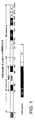
- FIG. 1 depicts the schematic representation of spike (S) protein of Middle East respiratory syndrome coronavirus (MERS-CoV) and the recombinant S377-662-Fc (human IgG Fc) protein.
- the MERS-CoV S protein includes the following functional domains in the 51 and S2: signal peptide (SP), receptor-binding domain (RBD), receptor-binding motif (RBM), fusion peptide (FP), heptad repeat 1 (HR1), heptad repeat 2 (HR2), transmembrane domain (TM), and cytoplasm domain (CP).
- SP signal peptide
- RBD receptor-binding domain
- RBM receptor-binding motif
- FP fusion peptide
- HR1 heptad repeat 1
- HR2 heptad repeat 2
- TM transmembrane domain
- CP cytoplasm domain
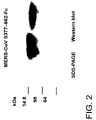
- FIG. 2 depicts the SDS-PAGE and Western blot analysis of the expressed protein S377-662-Fc.
- the protein molecular weight marker (kDa) is indicated on the left.
- Antisera from mice immunized with S377-662-Fc were used for Western blot analysis.
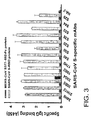
- FIG. 3 depicts the binding of a series of severe acute respiratory syndrome (SARS) S protein-specific mAbs (1 ⁇ g/ml) to MERS-CoV S377-662-Fc protein and SARS-CoV S-RBD protein.
- SARS severe acute respiratory syndrome
- the HA-7 mAb specific for the hemagglutinin (HA1) of H5N1 virus was used as an unrelated mAb control.
- the data are presented as mean A450 ⁇ standard deviation (SD) of duplicate wells.
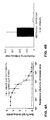
- FIG. 4A and FIG. 4B depict the antibody responses and neutralization induced by MERS-CoV S377-662-Fc protein.
- FIG. 4A depicts binding to MERS-CoV S377-662 and SARS-CoV S-RBD proteins by antibodies in mouse sera collected 10 days post-2 nd immunization. The data are presented as mean A450 ⁇ SD of five mice per group at various dilution points.
- FIG. 4B depicts neutralization of the MERS-CoV virus by the same antisera as in FIG. 4A .
- Neutralizing antibody titers were expressed as the reciprocal of the highest dilution of sera that completely inhibited virus-induced cytopathic effect (CPE) in at least 50% of the wells (NT 50 ), and are presented as mean ⁇ SD from five mice per group.
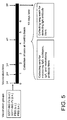
- FIG. 5 depicts mouse immunization, sample collection, and immune response detection strategy.
- mice were immunized subcutaneously (s.c.) or intranasally (i.n.) with MERS-CoV S377-662-Fc protein plus Montanide ISA51 (for s.c.) or poly(I:C) (for i.n.) adjuvant, or with PBS plus the corresponding adjuvant as their respective controls.
- Mouse sera and lung wash were collected as indicated and analyzed for humoral and mucosal immune responses and neutralization against MERS-CoV virus.
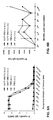
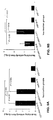
- FIG. 6A and FIG. 6B depict the IgG antibody responses in sera of mice immunized (s.c. and i.n.) with MERS-CoV S377-662-Fc protein.
- FIG. 6A depicts binding of IgG to a MERS-CoV S1 protein containing residues 18-725 of MERS-CoV S1 with a His6 tag (S1-His). Sera from 10 days post-last immunization were used for the detection, and the data are presented as mean A450 ⁇ SD of five mice per group at various dilution points.
- FIG. 6B depicts the long-term IgG antibody responses using sera collected at 0, 1, 2, 3, 4, 6 months after the first immunization and 10 days post-last immunization. The data are presented as mean (IgG endpoint titers) ⁇ SD of five mice per group.
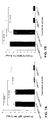
- FIG. 7A and FIG. 7B depict the IgG subtypes in sera of mice immunized (s.c. and i.n.) with MERS-CoV S377-662-Fc protein. Binding of IgG1 ( FIG. 7A ) and IgG2a ( FIG. 7B ) to MERS-CoV S1-His protein is shown. Sera from 10 days post-last immunization were used for the detection, and the data are presented as geometric mean titer (GMT, endpoint titers) ⁇ SD of five mice per group. P ⁇ 0.001 indicates significant difference.
- GTT geometric mean titer
- FIG. 8A and FIG. 8B depict the IgA antibody responses in lung wash and sera of mice immunized (s.c. and i.n.) with MERS-CoV S377-662-Fc protein. Binding of IgA in lung wash (1:1,000) ( FIG. 8A ) or sera ( FIG. 8B ) to MERS-CoV S1-His protein is shown. Samples from 10 days post-last immunization were used for the detection, and the data are presented as mean A450 ⁇ SD (lung wash) or mean (GMT endpoint titers) ⁇ SD (sera) of five mice per group. P ⁇ 0.05 indicates significant difference.
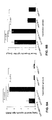
- FIG. 9A and FIG. 9B depict the neutralizing antibody titer against MERS-CoV infection from samples of mice immunized (s.c. and i.n.) with MERS-CoV S377-662-Fc protein.
- Sera FIG. 9A
- lung wash (1:1,000 dilution in PBS during collection)
- FIG. 9B were collected at 10 days post-last immunization and analyzed for neutralization of MERS-CoV infection in Vero E6 cells.
- Neutralizing antibody titers were expressed as the NT 50 , and are presented as GMT ⁇ SD from five mice per group. P ⁇ 0.05 indicates significant difference.
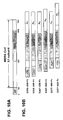
- FIG. 10A and FIG. 10B depict a schematic representation of the S1 subunit of MERS-CoV ( FIG. 10A ) and recombinant proteins containing various fragments of the RBD domain of MERS-CoV S protein ( FIG. 10B ).
- Recombinant proteins S350-588-Fc, S358-588-Fc, S367-588-Fc, S367-606-Fc, and S377-588-Fc were constructed by inserting the corresponding RBD fragments into Fc of human IgG, and compared with S377-662-Fc.
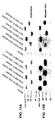
- FIG. 11A and FIG. 11B depict the SDS-PAGE ( FIG. 11A ) and Western blot ( FIG. 11B ) analysis of the expressed MERS CoV RBD-Fc proteins.
- the protein molecular weight marker (kDa) is indicated on the left. Antisera from mice immunized with MERS-CoV S1-His were used for Western blot analysis.
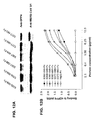
- FIG. 12A and FIG. 12B depict the binding of the purified MERS-CoV RBD-Fc proteins to cellular receptor dipeptidyl peptidase 4 (DPP4) in Huh-7 cells by co-immunoprecipitation followed by Western blot ( FIG. 12A ) and soluble DPP4 (sDPP4) by ELISA ( FIG. 12B ).
- DPP4 cellular receptor dipeptidyl peptidase 4
- FIG. 12B Proteins were mixed with Huh-7 cell lysates in the presence of protein A sepharose beads, and detected by Western blot using anti-DPP4 antibodies (1 ⁇ g/ml) or antisera from mice immunized with MERS-CoV S1-His (1:1,000), respectively.
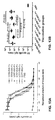
- FIG. 13A and FIG. 13B depict IgG antibody responses in sera of mice immunized s.c. with MERS-CoV RBD-Fc proteins.
- MERS-CoV S1-His protein S1-His was used to coat the ELISA plates.
- Sera from 10 days post-3 rd immunization were used for the detection, and the data are presented as mean A450 ( FIG. 13A ) or mean endpoint titers ( FIG. 13B ) ⁇ SD of five mice per group.
- Sera of mice injected with PBS were included as the control. P values from different groups were indicated.
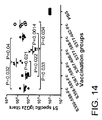
- FIG. 14 depicts the IgG subtype antibody responses by ELISA in sera of mice immunized s.c. with MERS-CoV RBD-Fc proteins.
- MERS-CoV S1-His protein S1-His was used to coat the ELISA plates.
- Sera from 10 days post-3 rd immunization were used for the detection, and the data are presented as mean endpoint titers ⁇ SD of five mice per group.
- Sera of mice injected with PBS were included as the control. P values from different groups were indicated.
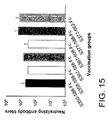
- FIG. 15 depicts the neutralizing antibody titer of antisera from mice immunized s.c. with MERS-CoV RBD-Fc proteins against MERS-CoV infection in Vero E6 cells. Sera from 10 days post-3 rd immunization were used for the assay. Neutralizing antibody titers were expressed as the NT 50 , and are presented as mean ⁇ SD from five mice per group.
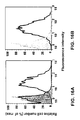
- FIG. 16A and FIG. 16B depict the flow cytometry detection of inhibition of MERS-CoV RBD-Fc protein (S377-588-Fc) binding to Huh-7 cells expressing DPP4 receptor by antisera from mice immunized with S377-588-Fc protein.
- FIG. 16A depicts S377-588-Fc protein (black line, right) bound to Huh-7 cells (gray shade), while the control human IgG Fc protein (black line, left) did not exhibit binding activity.
- FIG. 16B depicts the inhibition of S377-588-Fc binding to Huh-7 cells (gray shade) by sera from mice immunized with S377-588-Fc (white line), but not by sera from the PBS control group (black line).
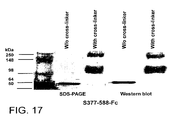
- FIG. 17 depicts the conformational structure of MERS-CoV S377-588-Fc protein by cross-linker analysis.
- the protein was cross-linked with glutaraldehyde or left uncross-linked (w/o cross-linker), followed by Western blot detection using antisera (1:1,000) from mice immunized with MERS-CoV 51-His.
- the protein molecular weight marker (kDa) is indicated on the left.
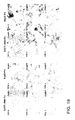
- FIG. 18 depicts the inhibition of MERS-CoV infection in Calu-3 cells by MERS-CoV S377-588-Fc protein.
- Human IgG Fc hlgG-Fc was used as the control.
- the CPE ranged from 0 (none), ⁇ ( ⁇ 5%), 1 (5-10%), 2 (10-25%), 3 (25-50%), and 4 (>50%).
- MERS-CoV coronavirus MERS-CoV
- S spike protein of MERS-CoV
- immunogenic composition refers to an expressed protein or a recombinant vector, with or without an adjuvant, which expresses and/or secretes an immunogen in vivo and wherein the immunogen elicits an immune response in the host.
- the immunogenic compositions disclosed herein may or may not be immunoprotective or therapeutic. When the immunogenic compositions may prevent, ameliorate, palliate, or eliminate disease from the host then the immunogenic composition may also optionally be referred to as a vaccine. However, the term immunogenic composition is not intended to be limited to vaccines.
- MERS-CoV is closely related to severe acute respiratory syndrome (SARS) coronavirus (SARS-CoV). Clinically similar to SARS, MERS-CoV infection leads to severe respiratory illness with renal failure. As the sixth coronavirus known to infect humans and the first human coronavirus in lineage C of betacoronavirus (the same lineage as BatCoV-HKU-4 and -HKU-5), MERS-CoV is closely related to SARS-CoV genetically (lineage B). Therefore, MERS-CoV has recently raised serious concerns of a potential pandemic and, as such, it poses a continuous threat to public health worldwide. Human dipeptidyl peptidase 4 (DPP4) has been identified as the MERS-CoV's receptor.
- DPP4 Human dipeptidyl peptidase 4
- the MERS-CoV virion utilizes a large surface S glycoprotein for interaction with, and entry into, the target cell.
- the S glycoprotein consists of a globular S1 domain at the N-terminal region, followed by membrane-proximal S2 domain, a transmembrane domain, and an intracellular domain.
- the receptor-binding domain (RBD) of SARS-CoV S protein contains a critical neutralizing domain (CND), which induces potent neutralizing antibodies and protection against SARS-CoV infection in animal models.
- CND critical neutralizing domain
- a recombinant protein containing residues 377-662 of MERS-CoV S fused to Fc (fragment, crystallizable) domain of human IgG (S377-662-Fc, FIG. 1 ) was expressed in a mammalian cell expression system ( FIG. 2 ) and is able to induce neutralizing antibodies through both subcutaneous (s.c.) and intranasal (i.n.) routes of administration in an established mouse model of MERS-CoV ( FIG. 9 ).
- RBD protein fragments spanning residues 350-606 of MERS-CoV S protein were fused to the Fc domain of human IgG (e.g., S350-588-Fc, S358-588-Fc, S367-588-Fc, S377-588-Fc, S367-606-Fc), were expressed in the mammalian cell expression system ( FIG. 11 ), and elicited neutralizing antibodies in immunized mice ( FIG. 15 ).
- a truncated RBD region containing residues 377-588 of MERS-CoV S protein fused to Fc of human IgG (S377-588-Fc) induced a potent neutralizing antibody response in immunized mice ( FIG. 15 ).
- Antisera from mice immunized with this protein effectively blocked the RBD protein binding to MERS-CoV's receptor DPP4 ( FIG. 16 ).
- the S377-588-Fc protein was able to form dimeric or tetrameric conformational structures ( FIG. 17 ), and effectively inhibited MERS-CoV infection in DPP4-expressing Calu-3 cells ( FIG. 18 ).
- the S protein sequence component of the instant immunogenic composition comprises a MERS-CoV S protein sequence, a MERS-CoV S1 protein sequence, a MERS-CoV S2 protein sequence, an RBD sequence of a MERS-CoV S protein, a fusion sequence of a MERS-CoV S protein, a heptad repeat sequence of a MERS-CoV S protein, a nucleocapsid sequence of a MERS-CoV S protein, a membrane sequence of a MERS-CoV S protein, or a portion of any of these sequences.
- the S protein sequence comprises amino acids 377-662 (SEQ ID NO:2), 377-588 (SEQ ID NO:3), 350-588 (SEQ ID NO:4), 358-588 (SEQ ID NO:5), 367-588 (SEQ ID NO:6), or 367-606 (SEQ ID NO:7) of MERS-CoV S protein.
- GYIPEAPRDGQAYVRKDGEVVVLLSTFL SEQ ID NO. 15 [human IgG Fc (hFc)]: RSDKTHTCPPCPAPELLGGPSVFLFPPKPKDTLMISRTPEVTCVVVDVSH EDPEVKFNWYVDGVEVHNAKTKPREEQYNSTYRVVSVLTVLHQDWLNGKE YKCKVSNKALPAPIEKTISKAKGQPREPQVYTLPPSREEMTKNQVSLTCL VKGFYPSDIAVEWESNGQPENNYKTTPPVLDSDGSFFLYSKLTVDKSRWQ QGNVFSCSVMHEALHNHYTQKSLSLSPGK SEQ ID NO.
- a trimerization stabilization sequence is disposed between the MERS-CoV sequence and the immunopotentiator.
- the stabilization sequence comprises a sequence that stabilizes the RGB protein sequence in a trimer or oligomer configuration.
- the terms stabilization sequence, trimeric motif, and trimerization sequence are interchangeable and equivalent.
- Suitable stabilization sequences include, but are not limited to, a 27 amino acid region of the C-terminal domain of T4 fibritin (a foldon-like sequence) (GYIPEAPRDGQAYVRKDGEWVLLSTFL, SEQ ID NO. 14 or GSGYIPEAPRDGQAYVRKDGE WVLLSTFL, SEQ ID NO.
- GCN4 MKQIEDKIEEILSKIYHIENEIARIKKLIGEV; SEQ ID NO. 21), an IQ (RMKQIEDKIEEIESKQKKIENEIARIKK; SEQ ID NO. 22), or an IZ (IKKEIEAIKKEQEAI KKKIEAIEK; SEQ ID NO. 23).
- Suitable stabilization methods include, but are not limited to, 2,2-bipyridine-5-carboxylic acid (BPY), disulfide bonds and facile ligation.
- the immunopotentiator comprises a sequence to enhance the immunogenicity of the immunogenic composition.
- Suitable immunopotentiators include, but are not limited to, an Fc fragment of human IgG, a C3d (a complement fragment that promotes antibody formation binding to antigens enhancing their uptake by dendritic cells and B cells) (SEQ ID NO:18), an Ov ASP-1 ( Onchocerca volvulus homologue of the activation associated secreted gene family) (see US 20060039921, which is incorporated by reference herein for all it discloses regarding ASP-1 adjuvants), a cholera toxin (SEQ ID NO:19), a muramyl peptide, and a cytokine.
- the immunopotentiator is an immunoglobulin Fc fragment.
- the immunoglobulin molecule consists of two light (L) chains and two heavy (H) chains held together by disulfide bonds such that the chains form a Y shape.
- the base of the Y (carboxyl terminus of the heavy chain) plays a role in modulating immune cell activity.
- This region is called the Fc region, and is composed of two heavy chains that contribute two or three constant domains depending on the class of the antibody. By binding to specific proteins, the Fc region ensures that each antibody generates an appropriate immune response for a given antigen.
- the Fc region also binds to various cell receptors, such as Fc receptors, and other immune molecules, such as complement proteins. By doing this, it mediates different physiological effects including opsonization, cell lysis, and degranulation of mast cells, basophils, and eosinophils.
- Exemplary subunit MERS-CoV immunogenic compositions are found in FIG. 1 .
- the coronavirus and immunopotentiator portions of the fusion protein are linked through a flexible linker comprising (GGGGS) n (SEQ ID NO:24), wherein n is an integer between 0 and 8.
- n is 0, n is 1, n is 2, n is 3, n is 4, n is 5, n is 6, n is 7, or n is 8.
- the disclosed MERS-CoV immunogenic compositions include conservative variants of the proteins.
- a conservative variant refers to a peptide or protein that has at least one amino acid substituted by another amino acid, or an amino acid analog, that has at least one property similar to that of the original amino acid from an exemplary reference peptide. Examples of properties include, without limitation, similar size, topography, charge, hydrophobicity, hydrophilicity, lipophilicity, covalent-bonding capacity, hydrogen-bonding capacity, a physicochemical property, of the like, or any combination thereof.
- a conservative substitution can be assessed by a variety of factors, such as, e.g., the physical properties of the amino acid being substituted (Table 1) or how the original amino acid would tolerate a substitution (Table 2).
- An MERS-CoV immunogenic composition can also comprise conservative variants to the disclosed proteins.
- a conservative variant of an MERS-CoV immunogenic composition can be, for example, an amino acid sequence having at least 75%, at least 80%, at least 85%, at least 90%, at least 95%, at least 97%, at least 98%, or at least 99% amino acid sequence identity to the MERS-CoV immunogenic compositions disclosed herein.
- a conservative variant of an MERS-CoV immunogenic composition can be, for example, an amino acid sequence having at most 75%, at most 80%, at most 85%, at most 90%, at most 95%, at most 97%, at most 98%, or at most 99% amino acid sequence identity to the MERS-CoV immunogenic compositions disclosed herein.
- the MERS-CoV S protein sequence comprises an amino acid sequence having at least 75%, at least 80%, at least 85%, at least 90%, at least 95%, at least 97%, at least 98%, or at least 99% amino acid sequence identity to the MERS-CoV S amino acid sequences of any of SEQ ID NOs.1-7.
- the immunopotentiator sequence comprises an amino acid sequence having at least 75%, at least 80%, at least 85%, at least 90%, at least 95%, at least 97%, at least 98%, or at least 99% amino acid sequence identity to the immunopotentiator amino acid sequences of any of SEQ ID NOs. 9-11, 17 or 18.
- a conservative variant of an MERS-CoV immunogenic composition, a MERS-CoV S protein amino acid sequence, or an immunopotentiator amino acid sequence can have, for example, 1, 2, 3, 4, 5, 6, 7, 8, 9, 10, 11, 12, 13, 14, 15, or more conservative substitutions, to the amino acid sequence of the MERS-CoV immunogenic compositions, MERS-CoV S protein, or immunopotentiator disclosed herein.
- a conservative variant of an MERS-CoV immunogenic composition, a MERS-CoV S protein amino acid sequence, or an immunopotentiator amino acid sequence can be, for example, an amino acid sequence having at least 1, at least 2, at least 3, at least 4, at least 5, at least 6, at least 7, at least 8, at least 9, at least 10, at least 11, at least 12, at least 13, at least 14, or at least 15 conservative substitutions to the amino acid sequence of the MERS-CoV immunogenic compositions, MERS-CoV S protein, or immunopotentiator disclosed herein.
- a conservative variant of an MERS-CoV immunogenic composition, a MERS-CoV S protein amino acid sequence, or an immunopotentiator amino acid sequence can be, for example, an amino acid sequence having at most 1, at most 2, at most 3, at most 4, at most 5, at most 6, at most 7, at most 8, at most 9, at most 10, at most 11, at most 12, at most 13, at most 14, or at most 15 conservative substitutions to the amino acid sequence of the MERS-CoV immunogenic compositions, MERS-CoV S protein, or immunopotentiator disclosed herein.
- a conservative variant of an MERS-CoV immunogenic composition, a MERS-CoV S protein amino acid sequence, or an immunopotentiator amino acid sequence can be, for example, an amino acid sequence having from 1 to 15, 2 to 15, 3 to 15, 4 to 15, 5 to 15, 6 to 15, 7 to 15, 1 to 12, 2 to 12, 3 to 12, 4 to 12, 5 to 12, 6 to 12, 7 to 12, 1 to 10, 2 to 10, 3 to 10, 4 to 10, 5 to 10, 6 to 10, 7 to 10, 1 to 8, 2 to 8, 3 to 8, 4 to 8, 5 to 8, 6 to 8, 1 to 6, 2 to 6, 3 to 6, 4 to 6, 1 to 4, 2 to 4, or 1 to 3 conservative substitutions to the amino acid sequence of the MERS-CoV immunogenic compositions, MERS-CoV S protein, or immunopotentiator disclosed herein.
- Expression systems such as the following are suitable for use in expressing the disclosed fusion proteins: mammalian cell expression systems such as, but not limited to, the pcDNA and GS Gene expression systems; insect cell expression systems such as, but not limited to, Bac-to-Bac, baculovirus, and DES expression systems; and E. coli expression systems including, but not limited to, pET, pSUMO, and GST expression systems.
- mammalian cell expression systems such as, but not limited to, the pcDNA and GS Gene expression systems
- insect cell expression systems such as, but not limited to, Bac-to-Bac, baculovirus, and DES expression systems
- E. coli expression systems including, but not limited to, pET, pSUMO, and GST expression systems.
- the mammalian cell expression system is a relatively mature eukaryotic system for expression of recombinant proteins. It is more likely to achieve a correctly folded soluble protein with proper glycosylation, making the expressed protein maintain its native conformation and keep sufficient bioactivity. This system can either transiently or stably express recombinant antigens, and promote signal synthesis. Recombinant proteins expressed in this way may maintain proper antigenicity and immunogenicity.
- both insect and bacterial expression systems provide inexpensive and efficient expression of proteins, which may be appropriate under certain conditions.
- the purification systems used to purify the recombinant proteins are dependent on whether a tag is linked or fused with the coronavirus sequence. If the fusion proteins are fused with IgG Fc, Protein A, or Protein G, affinity chromatography is used for the purification. If the fusion proteins are fused with GST proteins, the GST columns will be used for the purification. If the fusion proteins link with 6 ⁇ His tag at the N- or C-terminal, the expressed proteins are to be purified using His tag columns. If no tag is linked with the fusion protein, the expressed protein could be purified using fast protein liquid chromatography (FPLC), high performance liquid chromatography (HPLC), or other chromatography.
- FPLC fast protein liquid chromatography
- HPLC high performance liquid chromatography
- the immunogenic compositions further comprise or are administered with an adjuvant.
- adjuvants suitable for use in animals include, but are not limited to, Freund's complete or incomplete adjuvants, Sigma Adjuvant System (SAS), and Ribi adjuvants.
- Adjuvants suitable for use in humans include, but are not limited to, MF59 (an oil-in-water emulsion adjuvant); Montanide ISA 51 or 720 (a mineral oil-based or metabolizable oil-based adjuvant); aluminum hydroxide, -phosphate, or -oxide; HAVLOGEN® (an acrylic acid polymer-based adjuvant, Intervet Inc., Millsboro, Del.); polyacrylic acids; oil-in-water or water-in-oil emulsion based on, for example a mineral oil, such as BAYOLTM or MARCOLTM (Esso Imperial Oil Limited, Canada), or a vegetable oil such as vitamin E acetate; saponins; and Onchocerca volvulus activation-associated protein-1 (Ov ASP-1) (see US 20060039921, which is incorporated by reference herein for all it discloses regarding Ov ASP-1 adjuvants).
- Ov ASP-1 Onchocerca volvulus activation-associated protein-1
- Vaccines and/or immunogenic compositions can be prepared and/or marketed in the form of a liquid, frozen suspension, or in a lyophilized form.
- vaccines and/or immunogenic compositions prepared according to the present disclosure contain a pharmaceutically acceptable carrier or diluent customarily used for such compositions.
- Carriers include, but are not limited to, stabilizers, preservatives, and buffers. Suitable stabilizers are, for example SPGA, Tween compositions (such as are available from A.G.
- carbohydrates such as sorbitol, mannitol, starch, sucrose, dextran, glutamate, or glucose
- proteins such as dried milk serum, albumin, or casein
- suitable buffers include alkali metal phosphates.
- suitable preservatives include thimerosal, merthiolate, and gentamicin.
- Diluents include water, aqueous buffer (such as buffered saline), alcohols, and polyols (such as glycerol).
- the vaccine and/or immunogenic composition may be administered subcutaneously, intradermally, submucosally, intranasally, or intramuscularly in an effective amount to prevent infection from the MERS-CoV and/or treat an infection from the MERS-CoV.
- An effective amount to prevent infection is an amount of immunizing protein that will induce immunity in the immunized animals against challenge by a virulent virus such that infection is prevented or the severity is reduced.
- Immunity is defined herein as the induction of a significant higher level of protection in a subject after immunization compared to an unimmunized group.
- An effective amount to treat an infection is an amount of immunizing protein that induces an appropriate immune response against MERS-CoV such that severity of the infection is reduced.
- Protective immune responses can include humoral immune responses and cellular immune responses. Protection against MERS-CoV is believed to be conferred through serum antibodies (humoral immune response) directed to the surface proteins, with mucosal IgA antibodies and cell-mediated immune responses also playing a role. Cellular immune responses are useful in protection against MERS-CoV virus infection with CD4+ and CD8+ T cell responses being particularly important. CD8+ immunity is of particular importance in killing virally infected cells.
- the disclosed proteins and/or immunogenic compositions can be administered using immunization schemes known by persons of ordinary skill in the art to induce protective immune responses. These include a single immunization or multiple immunizations in a prime-boost strategy.
- a boosting immunization can be administered at a time after the initial, prime, immunization that is days, weeks, months, or even years after the prime immunization.
- a boost immunization is administered 2 weeks, 1 month, 2, months, 3 months, 4 months, 5 months, or 6 months or more after the initial prime immunization.
- Additional multiple boost immunizations can be administered such as weekly, every other week, monthly, every other month, every third month, or more.
- the boost immunization is administered every 3 weeks, every 4 weeks, every 5 weeks, every 6 weeks, every 7 weeks, every 8 weeks, every 9 weeks, every 10 weeks, every 11 weeks, or every 12 weeks.
- boosting immunizations can continue until a protective anti-MERS-CoV antibody titer is seen in the subject's serum.
- a subject is given one boost immunization, two boost immunizations, three boost immunizations, or four or more boost immunizations, as needed to obtain a protective antibody titer.
- the adjuvant in the initial prime immunization and the adjuvant in the boost immunizations are different.
- suitable excipients, stabilizers, and the like may be added as are known by persons of ordinary skill in the art.
- the disclosed proteins, immunogenic compositions, and methods may be used to prevent MERS-CoV virus infection in a subject susceptible thereto such as, but not limited to, a human, a primate, a domesticated animal, an animal in the wild, or a bird.
- Fc pFUSE-hIgG1-Fc2 expression vector
- S350-588-Fc, S358-588-Fc, S367-588-Fc, S367-606-Fc, S377-588-Fc, and S377-662-Fc proteins were then purified by Protein A affinity chromatography.
- the purified proteins were analyzed by SDS-PAGE and Western blot. Briefly, the proteins were either boiled at 95° C. for 5 min or not boiled, and separated by 10% Tris-Glycine gel. The proteins were then stained with Coomassie Blue or transferred to nitrocellulose membranes for Western blot analysis. After blocking with 5% non-fat milk in PBST overnight at 4° C., the blots were incubated for 1 hr at room temperature with MERS-CoV S1-specific polyclonal antibodies (1:1,000). After three washes, the blots were then incubated with horseradish peroxidase (HRP)-conjugated goat anti-mouse IgG (1:5,000) for 1 hr at room temperature. Signals were visualized with ECL Western blot substrate reagents and Amersham Hyperfilm.
- HRP horseradish peroxidase
- mice were prime-immunized s.c. with 10 ⁇ g/mouse of recombinant S350-588-Fc, S358-588-Fc, S367-588-Fc, S367-606-Fc, S377-588-Fc, or S377-662-Fc protein formulated with Montanide ISA 51 adjuvant, or i.n. with 10 ⁇ g/mouse of recombinant S377-662-Fc formulated with poly(I:C) adjuvant. Both groups were boosted with 10 ⁇ g/mouse of the same immunogen and adjuvant at 3-week intervals. Sera were collected at 10 days post-last immunization to detect MERS-CoV S1-specific IgG antibodies and neutralizing antibodies.
- mice sera were analyzed for MERS-CoV or SARS-CoV S-specific antibody responses by ELISA. Briefly, 96-well ELISA plates were respectively precoated with recombinant proteins overnight at 4° C. and blocked with 2% non-fat milk for 2 hr at 37° C. Serially diluted mouse sera or monoclonal antibodies (mAbs) were added to the plates and incubated at 37° C. for 1 hr, followed by four washes. Bound antibodies were incubated with HRP-conjugated goat anti-mouse IgG (1:2,000) for 1 hr at 37° C. The reaction was visualized by substrate 3,3′,5,5′-tetramethylbenzidine (TMB) and stopped by 1 N H 2 SO 4 . The absorbance at 450 nm (A450) was measured by ELISA plate reader.
- TMB 3,3′,5,5′-tetramethylbenzidine
- Neutralizing antibody titers of mouse sera against infection by live MERS-CoV or SARS-CoV were further detected as described below. Briefly, serial 2-fold dilutions of mouse sera or mAbs were incubated with 100 TCID 50 (50% tissue culture infective dose) of MERS-CoV or SARS-CoV for 1 hr at 37° C. prior to addition to a monolayer of fetal rhesus monkey kidney (FRhK4) cells for SARS-CoV and Vero E6 cells for MERS-CoV in triplicate. Virus supernatant was removed and replaced with fresh medium after 1 hr of culture at 37° C. The cytopathic effect (CPE) in each well was observed daily and recorded on day 3 post-infection. The neutralizing titers of mouse antisera that completely prevented CPE in 50% of the wells (NT 50 ) were calculated.
- TCID 50 tissue culture infective dose
- MERS-CoV pseudovirus neutralization assay was also established for detection of neutralizing activity induced by MERS-CoV RBD-Fc protein-immunized mouse sera against MERS-CoV infection. Briefly, a plasmid expressing codon-optimized MERS-CoV (hCoV-EMC, GenBank: AFS88936.1) genes was cotransfected with a plasmid encoding Env-defective, luciferase-expressing HIV-1 genome (pNL4-3.luc.RE) into 293T cells to collect pseudovirus in supernatants. Pseudovirus-containing supernatant was incubated with serially diluted mouse sera at 37° C. for 1 hr before adding to the target Huh-7 cells.
- hCoV-EMC GenBank: AFS88936.1
- MERS-CoV S protein was expressed and its reactivity was tested with a variety of SARS-CoV S protein-specific monoclonal antibodies (mAbs) including 24H8, 31H12, 35B5, 33G4, 19B2, 17H9, S40, S50, S20, S38, S53, S44, and S29 (He, et al., J. Immunol. 174:4908-15, 2005; He, et al., Vaccine 24:5498-508, 2006, which are incorporated by reference herein for all they disclose regarding SARS-CoV S protein-specific MAbs).
- An antibody to the HA1 domain of influenza H5N1 virus, HA-7 was used as a control.
- S377-662-Fc protein was expressed in soluble forms in the culture supernatant of transfected 293T cells, maintaining high expression with good purity ( FIG. 2 , left). This protein could be recognized by MERS-CoV S1-specific polyclonal antibodies, as detected by Western blot ( FIG. 2 , right). The expressed S377-662-Fc has a lower OD450 value (most antibodies have an OD450 value less 0.2) when tested by ELISA using S-specific SARS mAbs, with similar reactivity to the control HA-7 mAb ( FIG. 3 ). These data suggest that S377-662-Fc is highly specific to the S protein of MERS-CoV, and that it maintains lower or no cross-reactivity with the majority of SARS-CoV S-specific mAbs.
- MERS-CoV S377-662-Fc protein was tested, and the ability of S377-662-Fc to elicit cross-reactivity and cross-neutralizing activity with SARS-CoV was evaluated.
- Mice were immunized with MERS-CoV S377-662-Fc, and then mouse sera were collected for the detection.
- MERS-CoV S377-662-Fc induced IgG antibodies against the S protein of MERS-CoV after the 2 nd dose of immunogenic composition, which was confirmed by coating of the ELISA plates with an MERS-CoV S-specific protein not fused to Fc (MERS-CoV S377-662) ( FIG. 4A ).
- the MERS-CoV S-specific antibodies have low or no reactivity with a recombinant RBD protein of SARS-CoV used in development of a subunit SARS candidate vaccine ( FIG. 4A ). Nevertheless, the anti-MERS-CoV-S antibodies could neutralize live MERS-CoV infection in cell cultures in vitro, as detected by a MERS-CoV neutralization assay ( FIG. 4B ). However, the ability of the MERS-CoV S-specific antibodies to neutralize live SARS-CoV infection is very low ( ⁇ 1:40). The above data suggest that MERS-CoV has low to no cross-reactivity and cross-neutralizing activity with SARS-CoV.
- the systemic and mucosal immune responses induced by MERS-CoV RBD-Fc protein were further evaluated by immunizing mice with S377-662-Fc protein via the i.n. and s.c. immunization routes, and then detecting MERS-CoV S-specific IgG and IgA antibodies in immunized mouse sera and lung wash ( FIG. 5 ).
- sera from mice immunized via both administration routes could bind specifically to MERS-CoV S1-His protein, with the i.n. pathway inducing strong systemic humoral IgG antibody response similar to that of s.c. immunization ( FIG. 6A ).
- the s.c. route i.n.
- FIG. 10A Structural analysis of MERS-CoV RBD alone or complexed with its receptor DPP4 has identified residues 367-588 or 367-606 of MERS-CoV S1 subunit as the essential RBD ( FIG. 10A ).
- FIG. 10B To identify the CND in the RBD of MERS-CoV that potentially induces the highest neutralizing antibody response, five additional recombinant proteins were constructed based on the structure-defined RBD of MERS-CoV ( FIG. 10B ), and these proteins were evaluated for their receptor-binding, antibody responses, and neutralization activity in immunized animals. As shown in FIG.
- RBD-Fc proteins namely S350-588-Fc, S358-588-Fc, S367-588-Fc, S377-588-Fc, and S367-606-Fc, were expressed in a mammalian cell expression system at similar expression levels as S377-662-Fc.
- These proteins are capable of forming suitable conformational structures, having the molecular weight of non-boiled proteins 1-fold higher than that of the boiled proteins, and being recognized by MERS-CoV S1-specific antibodies ( FIG. 11B ), suggesting the high specificity of these proteins to MERS-CoV.
- the produced MERS pseudovirus was able to efficiently infect a variety of target cells, including DPP4-expressing Huh-7, FRhK-4, MDCK, Vero, Vero E6, HEP-G2, A549, and Caco-2.
- the infection of MERS pseudovirus in target Huh-7 cells was significantly inhibited by antisera from mice immunized with MERS-CoV RBD-Fc proteins, such as the S377-588-Fc protein.
- the S377-588-Fc protein was further characterized and evaluated for the potential as a therapeutic agent against MERS-CoV infection.
- Antisera from S377-588-Fc immunized mice can effectively block MERS-CoV RBD binding the DPP4 receptor, while control sera from PBS-immunized mice did not show any signs of inhibiting binding of S377-588 to DPP4-expressing Huh-7 cells ( FIG. 16 ).
- the cross-linker analysis of the conformation of the S377-588-Fc indicates that this protein was able to form dimeric or tetrameric conformational structures ( FIG. 17 , left), which was confirmed by MERS-CoV S1-specific antibodies ( FIG. 17 , right).
- the S377-588-Fc protein showed high ability to effectively inhibit MERS-CoV replication in the highly permissive human bronchial epithelial Calu-3 cells that express MERS-CoV's receptor DPP4, with the concentration as low as ⁇ 3 ⁇ g/ml inhibiting over 50% CPE formation caused by MERS-CoV infection ( FIG. 18 ). These results suggest the use of S377-588-Fc as an important therapeutic agent against infections from MERS-CoV.
- recombinant proteins containing RBD fragments of MERS-CoV S1 a novel critical neutralizing domain of a new human coronavirus, MERS-CoV.
- These recombinant proteins based on different fragments of RBD of MERS-CoV S protein linked to human IgG Fc, induced potent neutralizing antibodies against infection by MERS-CoV.
- Previous studies on S protein-based SARS vaccines have revealed that the mean neutralizing antibody titers as low as 1:284 could protect vaccinated animals against SARS-CoV challenge, suggesting that the expressed recombinant MERS-CoV RBD-Fc proteins have a great potential to be developed as a safe and effective vaccine and therapeutic agent against MERS-CoV infection.
Landscapes
- Health & Medical Sciences (AREA)
- Life Sciences & Earth Sciences (AREA)
- Chemical & Material Sciences (AREA)
- Virology (AREA)
- Organic Chemistry (AREA)
- Medicinal Chemistry (AREA)
- General Health & Medical Sciences (AREA)
- Genetics & Genomics (AREA)
- Immunology (AREA)
- Biochemistry (AREA)
- Microbiology (AREA)
- Zoology (AREA)
- Wood Science & Technology (AREA)
- Bioinformatics & Cheminformatics (AREA)
- Engineering & Computer Science (AREA)
- Veterinary Medicine (AREA)
- Proteomics, Peptides & Aminoacids (AREA)
- Pharmacology & Pharmacy (AREA)
- Epidemiology (AREA)
- Animal Behavior & Ethology (AREA)
- Public Health (AREA)
- Biophysics (AREA)
- Mycology (AREA)
- Molecular Biology (AREA)
- Gastroenterology & Hepatology (AREA)
- Biomedical Technology (AREA)
- Biotechnology (AREA)
- Communicable Diseases (AREA)
- Pulmonology (AREA)
- General Engineering & Computer Science (AREA)
- Peptides Or Proteins (AREA)
Priority Applications (2)
| Application Number | Priority Date | Filing Date | Title |
|---|---|---|---|
| US14/375,083 US9889194B2 (en) | 2013-03-01 | 2014-02-28 | Immunogenic composition for MERS coronavirus infection |
| US16/462,125 US11103575B2 (en) | 2014-02-28 | 2017-11-17 | Immunogenic composition for MERS coronavirus infection |
Applications Claiming Priority (4)
| Application Number | Priority Date | Filing Date | Title |
|---|---|---|---|
| US201361771561P | 2013-03-01 | 2013-03-01 | |
| US201461941076P | 2014-02-18 | 2014-02-18 | |
| US14/375,083 US9889194B2 (en) | 2013-03-01 | 2014-02-28 | Immunogenic composition for MERS coronavirus infection |
| PCT/US2014/019402 WO2014134439A1 (en) | 2013-03-01 | 2014-02-28 | Immunogenic composition for mers coronavirus infection |
Related Child Applications (1)
| Application Number | Title | Priority Date | Filing Date |
|---|---|---|---|
| US16/462,125 Continuation-In-Part US11103575B2 (en) | 2014-02-28 | 2017-11-17 | Immunogenic composition for MERS coronavirus infection |
Publications (2)
| Publication Number | Publication Date |
|---|---|
| US20160296617A1 US20160296617A1 (en) | 2016-10-13 |
| US9889194B2 true US9889194B2 (en) | 2018-02-13 |
Family
ID=51428838
Family Applications (1)
| Application Number | Title | Priority Date | Filing Date |
|---|---|---|---|
| US14/375,083 Active 2035-05-03 US9889194B2 (en) | 2013-03-01 | 2014-02-28 | Immunogenic composition for MERS coronavirus infection |
Country Status (4)
| Country | Link |
|---|---|
| US (1) | US9889194B2 (de) |
| EP (1) | EP2961768A4 (de) |
| IL (1) | IL240488A0 (de) |
| WO (1) | WO2014134439A1 (de) |
Cited By (5)
| Publication number | Priority date | Publication date | Assignee | Title |
|---|---|---|---|---|
| RU2709659C1 (ru) * | 2018-09-06 | 2019-12-19 | федеральное государственное бюджетное учреждение "Национальный исследовательский центр эпидемиологии и микробиологии имени почетного академика Н.Ф. Гамалеи" Министерства здравоохранения Российской Федерации | Иммунобиологическое средство и способ его использования для индукции специфического иммунитета к вирусу ближневосточного респираторного синдрома (варианты) |
| US10806784B1 (en) | 2018-11-27 | 2020-10-20 | King Abdulaziz University | Composition and method for treating MERS |
| WO2022031451A1 (en) * | 2020-08-05 | 2022-02-10 | Tactical Therapeutics, Inc | Methods and compositions for treating sars-cov-2 infection using carboxyamidotriazole orotate |
| US11690907B2 (en) | 2018-06-12 | 2023-07-04 | Kbio Holdings Limited | Vaccines formed by virus and antigen conjugation |
| US11696948B2 (en) | 2018-06-12 | 2023-07-11 | Kbio Holdings Limited | Vaccines formed by virus and antigen conjugation |
Families Citing this family (29)
| Publication number | Priority date | Publication date | Assignee | Title |
|---|---|---|---|---|
| US10421802B2 (en) | 2013-10-18 | 2019-09-24 | The United States Of America, As Represented By The Secretary, Department Of Health And Human Services | Human monoclonal antibodies against the middle east respiratory syndrome coronavirus (MERS-CoV) and engineered bispecific fusions with inhibitory peptides |
| US11103575B2 (en) | 2014-02-28 | 2021-08-31 | The New York Blood Center, Inc. | Immunogenic composition for MERS coronavirus infection |
| WO2018094241A1 (en) * | 2016-11-18 | 2018-05-24 | New York Blood Center, Inc. | Immunogenic composition for mers coronavirus infection |
| WO2016080591A1 (ko) * | 2014-11-17 | 2016-05-26 | 유한회사 바이오노트 | 중동호흡기증후군 코로나바이러스 뉴클레오캡시드를 인식하는 항체 및 그의 용도 |
| WO2016090345A1 (en) | 2014-12-05 | 2016-06-09 | Planet Biotechnology Inc. | Dpp4 immunoadhesin compositions and methods |
| NL2014148B1 (en) * | 2015-01-16 | 2017-01-05 | Univ Erasmus Med Ct Rotterdam | Combination vaccine for camelids. |
| WO2016130838A1 (en) * | 2015-02-11 | 2016-08-18 | New York Blood Center, Inc. | Porcine epidemic diarrhea virus immunogenic compositions |
| CN105543248A (zh) * | 2015-03-13 | 2016-05-04 | 中国疾病预防控制中心病毒病预防控制所 | 基于优化MERS-CoV棘突蛋白编码基因的重组5型腺病毒载体疫苗 |
| CN105273067A (zh) * | 2015-03-13 | 2016-01-27 | 中国疾病预防控制中心病毒病预防控制所 | 一种编码MERS-CoV棘突蛋白的重组41型腺病毒载体疫苗 |
| WO2017046801A1 (en) * | 2015-09-17 | 2017-03-23 | Ramot At Tel-Aviv University Ltd. | Coronaviruses epitope-based vaccines |
| WO2018097603A2 (ko) * | 2016-11-23 | 2018-05-31 | 에스케이케미칼 주식회사 | 중동호흡기증후군 코로나바이러스 s 단백질 면역원 조성물 및 이의 제작 방법 |
| RO132299A3 (ro) | 2017-06-06 | 2018-12-28 | Fântână Raul Sorin | Compoziţie şi metodă de preparare şi evaluare a unui imunogen complex numit i-spga, destinat producerii de proteine imunologic active () |
| WO2019066389A1 (ko) * | 2017-09-26 | 2019-04-04 | 한국생명공학연구원 | 메르스 코로나바이러스의 뉴클레오캡시드 단백질의 n-말단 도메인 단편 및 c-말단 도메인 단편을 포함한 nc 융합 단백질 및 이를 이용한 메르스 코로나바이러스 감염 진단용 키트 |
| WO2019078600A1 (ko) * | 2017-10-19 | 2019-04-25 | (주)에이티젠 | 중동호흡기증후군 코로나바이러스에 대한 항체 및 이를 이용한 항체역가 측정방법 |
| US11529413B2 (en) | 2018-06-12 | 2022-12-20 | Kbio Holdings Limited | Virus and antigen purification and conjugation |
| IL279295B2 (en) | 2018-06-12 | 2026-03-01 | Kentucky Bioprocessing Inc | Purification and cross-linking of virus and antigen |
| CN111607002B (zh) * | 2020-02-24 | 2021-07-09 | 中山大学 | 一种基于幽门螺旋杆菌铁蛋白的新型冠状病毒s蛋白双区域亚单位纳米疫苗 |
| CN115279785B (zh) * | 2020-03-25 | 2025-09-05 | 神州细胞工程有限公司 | SARS-CoV-2和SARS-CoV交叉中和抗体的制备及应用 |
| CN111499765B (zh) * | 2020-04-08 | 2022-04-08 | 四川携光生物技术有限公司 | 一种冠状病毒融合蛋白及其制备方法与应用 |
| CN115996750B (zh) * | 2020-04-21 | 2024-10-29 | Kbio控股有限公司 | 通过病毒和抗原偶联形成的疫苗 |
| KR102756774B1 (ko) * | 2020-05-08 | 2025-01-21 | 한림대학교 산학협력단 | 코로나 바이러스 억제용 펩타이드 및 그 용도 |
| CN113444155B (zh) * | 2020-05-18 | 2022-06-07 | 清华大学 | MERS-CoV膜蛋白受体结合域二聚体及其编码基因和应用 |
| JP2023538667A (ja) * | 2020-08-24 | 2023-09-08 | サノフィ パスツール インコーポレイテッド | Sars-cov-2感染症に対するワクチン |
| EP4212544A1 (de) * | 2020-09-07 | 2023-07-19 | GI Cell, Inc. | Von coronavirus abgeleitete rezeptorbindungsdomänenvariante mit reduzierter ace2-bindungskapazität und impfstoffzusammensetzung damit |
| CN114230674B (zh) * | 2020-12-01 | 2023-09-26 | 中国医学科学院基础医学研究所 | 一种含Fc结构域的新型冠状病毒S蛋白受体结合域融合蛋白及其用途 |
| CN112480268B (zh) * | 2020-12-10 | 2021-08-03 | 北京康乐卫士生物技术股份有限公司 | 一种新型冠状病毒的重组亚单位疫苗及其应用 |
| US20220244257A1 (en) * | 2021-01-29 | 2022-08-04 | King Abdulaziz University | Method for detection of mers-cov with igy antibodies |
| WO2022207645A1 (en) | 2021-03-30 | 2022-10-06 | Viravaxx AG | Sars-cov-2 subunit vaccine |
| GB202113559D0 (en) * | 2021-09-23 | 2021-11-10 | St Georges Hospital Medical School | Fusion polypeptide |
Citations (12)
| Publication number | Priority date | Publication date | Assignee | Title |
|---|---|---|---|---|
| WO2005018538A2 (en) | 2003-06-04 | 2005-03-03 | Vaxim, Inc. | Severe acute respiratory syndrome (sars) polypeptides, antibodies to sars polypeptides and the use thereof in diagnostic, vaccination and therapeutic applications |
| US20060257852A1 (en) | 2003-04-10 | 2006-11-16 | Chiron Corporation | Severe acute respiratory syndrome coronavirus |
| US20110086058A1 (en) | 2009-10-09 | 2011-04-14 | Shibo Jiang | Immunopotentiator-Linked Oligomeric Influenza Immunogenic Compositions |
| CN103554235A (zh) | 2013-06-17 | 2014-02-05 | 清华大学 | MERS-CoV病毒膜蛋白中的RBD片段及其编码基因和应用 |
| WO2014045254A2 (en) | 2012-09-23 | 2014-03-27 | Erasmus University Medical Center Rotterdam | Human betacoronavirus lineage c and identification of n-terminal dipeptidyl peptidase as its virus receptor |
| WO2014121132A1 (en) | 2013-01-31 | 2014-08-07 | The Oregon State Board Of Higher Education Acting By And Through Portland State University | Immunogenic compositions comprising silicified virus and methods of use |
| US20150017207A1 (en) | 2013-07-09 | 2015-01-15 | University Of Washington Through Its Center For Commercialization | Methods and Compositions for Activation of Innate Immune Responses Through RIG-I Like Receptor Signaling |
| US8936789B2 (en) | 2008-10-16 | 2015-01-20 | New York Bood Center, Inc. | Immunoenhancer-linked oligomeric HIV envelope peptides |
| WO2015042373A1 (en) | 2013-09-19 | 2015-03-26 | Novavax, Inc. | Immunogenic middle east respiratory syndrome coronavirus (mers-cov) compositions and methods |
| WO2015057966A2 (en) | 2013-10-16 | 2015-04-23 | Samuel Bogoch | THERAPIES, VACCINES, AND PREDICTIVE METHODS FOR MIDDLE EAST RESPIRATORY SYNDROME VIRUS (MERS CoV) |
| WO2015057942A1 (en) | 2013-10-18 | 2015-04-23 | The United States Of America, As Represented By The Secretary, Department Of Health And Human Services | Human monoclonal antibodies against the middle east respiratory syndrome coronavirus (mers-cov) and engineered bispecific fusions with inhibitory peptides |
| WO2015081155A1 (en) | 2013-11-29 | 2015-06-04 | The Trustees Of The University Of Pennsylvania | Mers-cov vaccine |
-
2014
- 2014-02-28 US US14/375,083 patent/US9889194B2/en active Active
- 2014-02-28 EP EP14757347.1A patent/EP2961768A4/de not_active Withdrawn
- 2014-02-28 WO PCT/US2014/019402 patent/WO2014134439A1/en not_active Ceased
-
2015
- 2015-08-10 IL IL240488A patent/IL240488A0/en unknown
Patent Citations (12)
| Publication number | Priority date | Publication date | Assignee | Title |
|---|---|---|---|---|
| US20060257852A1 (en) | 2003-04-10 | 2006-11-16 | Chiron Corporation | Severe acute respiratory syndrome coronavirus |
| WO2005018538A2 (en) | 2003-06-04 | 2005-03-03 | Vaxim, Inc. | Severe acute respiratory syndrome (sars) polypeptides, antibodies to sars polypeptides and the use thereof in diagnostic, vaccination and therapeutic applications |
| US8936789B2 (en) | 2008-10-16 | 2015-01-20 | New York Bood Center, Inc. | Immunoenhancer-linked oligomeric HIV envelope peptides |
| US20110086058A1 (en) | 2009-10-09 | 2011-04-14 | Shibo Jiang | Immunopotentiator-Linked Oligomeric Influenza Immunogenic Compositions |
| WO2014045254A2 (en) | 2012-09-23 | 2014-03-27 | Erasmus University Medical Center Rotterdam | Human betacoronavirus lineage c and identification of n-terminal dipeptidyl peptidase as its virus receptor |
| WO2014121132A1 (en) | 2013-01-31 | 2014-08-07 | The Oregon State Board Of Higher Education Acting By And Through Portland State University | Immunogenic compositions comprising silicified virus and methods of use |
| CN103554235A (zh) | 2013-06-17 | 2014-02-05 | 清华大学 | MERS-CoV病毒膜蛋白中的RBD片段及其编码基因和应用 |
| US20150017207A1 (en) | 2013-07-09 | 2015-01-15 | University Of Washington Through Its Center For Commercialization | Methods and Compositions for Activation of Innate Immune Responses Through RIG-I Like Receptor Signaling |
| WO2015042373A1 (en) | 2013-09-19 | 2015-03-26 | Novavax, Inc. | Immunogenic middle east respiratory syndrome coronavirus (mers-cov) compositions and methods |
| WO2015057966A2 (en) | 2013-10-16 | 2015-04-23 | Samuel Bogoch | THERAPIES, VACCINES, AND PREDICTIVE METHODS FOR MIDDLE EAST RESPIRATORY SYNDROME VIRUS (MERS CoV) |
| WO2015057942A1 (en) | 2013-10-18 | 2015-04-23 | The United States Of America, As Represented By The Secretary, Department Of Health And Human Services | Human monoclonal antibodies against the middle east respiratory syndrome coronavirus (mers-cov) and engineered bispecific fusions with inhibitory peptides |
| WO2015081155A1 (en) | 2013-11-29 | 2015-06-04 | The Trustees Of The University Of Pennsylvania | Mers-cov vaccine |
Non-Patent Citations (22)
| Title |
|---|
| Chen et al. Journal of Virology, 2013, vol. 87, No. 19, pp. 10777-10783. * |
| Du et al., "A truncated receptor-binding domain of MERS-CoV spike protein potently inhibits MERS-CoV infection and induces strong neutralizing antibody responses: implication for developing therapeutics and vaccines", Plos One, vol. 8, No. 12, Article No. e81587, pp. 1-9, Dec. 2013. |
| Du et al., Identification of a receptor-binding domain in the S protein of the novel human coronavirus middle east respiratory syndrome coronavirus as an essential target for vaccine development. Journal of Virology, vol. 87, No. 17, pp. 9939-9942 (2013). |
| Du et al., The spike protein of SARS-CoV-a target for vaccine and therapeutic development. Nature Reviews, Microbiology, vol. 7, No. 3, pp. 226-236 (2009). |
| Du et al., The spike protein of SARS-CoV—a target for vaccine and therapeutic development. Nature Reviews, Microbiology, vol. 7, No. 3, pp. 226-236 (2009). |
| Edmund et al. Arch. Immunol. Ther. Exp. 2009, vol. 57, pp. 311-323. * |
| Gierer et al., The spike protein of the emerging betacoronavirus EMC uses a novel coronavirus receptor for entry, can be activated by TMPRSS2, and is targeted by neutralizing antibodies. Journal of Virology, vol. 87, No. 10, pp. 5502-5511 (2013). |
| He et al., "Identification of immunodominant sites on the spike protein of severe acute respiratory syndrome (SARS) coronavirus: implication for developing SARS diagnostics and vaccines", The Journal of Immunology, vol. 173, No. 6, pp. 4050-4057, Sep. 15, 2004. |
| Jiang et al., A predicated receptor-binding and critical neutralizing domain in S protein of the novel human coronavirus HCoV-EMC. Journal of Infection, Letters to the Editor, vol. 66, No. 5, pp. 464-466 (2012). |
| Lu et al., Molecular basis of binding between novel human coronavirus MERS-CoV and its receptor CD26. Nature, vol. 500, pp. 227-232 (2013). |
| Perlman et al. "Human coronavirus EMC is not the same as Severe Acute Respiratory Syndrome coronavirus," mBio 4:e00002-13, 2013. |
| Perlman S. "The Middle East Respiratory Syndrome-How worried should we be?" mBio 4:e00531-13, 2013. |
| Perlman S. "The Middle East Respiratory Syndrome—How worried should we be?" mBio 4:e00531-13, 2013. |
| Qiu et al. Microbiology and immunology, 2012, vol. 56, pp. 554-561. * |
| Raj et al., Dipeptidyl peptidase 4 is a functional receptor for the emerging human coronavirus-EMC. Nature, vol. 495, pp. 251-256 (2013). |
| Raj et al., Dipeptidyl peptidase 4 is a functional receptor for the emerging human coronavirus—EMC. Nature, vol. 495, pp. 251-256 (2013). |
| Supplementary European Search Report dated Sep. 26, 2016 for European Patent Application No. EP 14757347.1 filed on Feb. 28, 2014. |
| Van Boheemen et al. "Genomic characterization of a newly discovered coronavirus associated with Acute Respiratory Distress Syndrome in humans," mBio 3:e00473-12, 2012. |
| Wang et al., Structure of MERS-CoV spike receptor-binding domain complexed with human receptor DPP4. Cell Research, 23:986-993 (2013). |
| Yan et al., Strategies for designing peptide immunogens to elicit [alpha]-helical conformation-specific antibodies reactive with native proteins. ACS Symposium Series, vol. 1095, pp. 93-136 (2012). |
| Zaki et al., "Isolation of a novel coronavirus from a man with pneumonia in Saudi Arabia", The new England Journal of Medicine, vol. 367, No. 19, pp. 1814-1820, Nov. 8, 2012. |
| Zhou et al., The receptor binding domain of MERS-CoV: the dawn of vaccine and treatment development. Journal of the Formosan Medical Association, 113:143-147 (2013). |
Cited By (12)
| Publication number | Priority date | Publication date | Assignee | Title |
|---|---|---|---|---|
| US11690907B2 (en) | 2018-06-12 | 2023-07-04 | Kbio Holdings Limited | Vaccines formed by virus and antigen conjugation |
| US11696948B2 (en) | 2018-06-12 | 2023-07-11 | Kbio Holdings Limited | Vaccines formed by virus and antigen conjugation |
| RU2709659C1 (ru) * | 2018-09-06 | 2019-12-19 | федеральное государственное бюджетное учреждение "Национальный исследовательский центр эпидемиологии и микробиологии имени почетного академика Н.Ф. Гамалеи" Министерства здравоохранения Российской Федерации | Иммунобиологическое средство и способ его использования для индукции специфического иммунитета к вирусу ближневосточного респираторного синдрома (варианты) |
| US10806784B1 (en) | 2018-11-27 | 2020-10-20 | King Abdulaziz University | Composition and method for treating MERS |
| US10849972B2 (en) | 2018-11-27 | 2020-12-01 | King Adulaziz University | Trimeric S1-CD40L fusion protein vaccine against Middle East respiratory syndrome-coronavirus |
| US11154612B2 (en) | 2018-11-27 | 2021-10-26 | King Abdulaziz University | MERS-CoV vaccine with trimeric S1-CD40L fusion protein |
| US11219685B1 (en) | 2018-11-27 | 2022-01-11 | King Abdulaziz University | Intranasal MERS-CoV vaccine |
| US11305008B2 (en) | 2018-11-27 | 2022-04-19 | King Abdulaziz University | Nucleic acid based vaccine against middle east respiratory syndrome-coronavirus |
| US11318198B2 (en) | 2018-11-27 | 2022-05-03 | King Abdulaziz University | MERS-CoV vaccine composition |
| US11529411B2 (en) | 2018-11-27 | 2022-12-20 | King Abdulaziz University | Polynucleotide encoding trimeric S1-CD40L fusion protein immunogen against middle east respiratory syndrome-corona virus |
| US11660334B2 (en) | 2018-11-27 | 2023-05-30 | King Abdulaziz University | Method for inducing immune response against middle east respiratory syndrome-corona virus using trimeric S1-CD40L fusion protein |
| WO2022031451A1 (en) * | 2020-08-05 | 2022-02-10 | Tactical Therapeutics, Inc | Methods and compositions for treating sars-cov-2 infection using carboxyamidotriazole orotate |
Also Published As
| Publication number | Publication date |
|---|---|
| EP2961768A4 (de) | 2016-10-26 |
| WO2014134439A1 (en) | 2014-09-04 |
| IL240488A0 (en) | 2015-09-24 |
| EP2961768A1 (de) | 2016-01-06 |
| US20160296617A1 (en) | 2016-10-13 |
Similar Documents
| Publication | Publication Date | Title |
|---|---|---|
| US9889194B2 (en) | Immunogenic composition for MERS coronavirus infection | |
| US9943589B2 (en) | Immunopotentiator-linked oligomeric influenza immunogenic compositions | |
| US11103575B2 (en) | Immunogenic composition for MERS coronavirus infection | |
| EP3541419B1 (de) | Immunogene zusammensetzung gegen mers-corona-virusinfektionen | |
| Rigter et al. | A protective and safe intranasal RSV vaccine based on a recombinant prefusion-like form of the F protein bound to bacterium-like particles | |
| US20230346916A1 (en) | Immunogenic compositions against severe acute respiratory syndrome coronavirus 2 | |
| Sui et al. | Cross-protection against influenza virus infection by intranasal administration of M1-based vaccine with chitosan as an adjuvant | |
| US9060975B2 (en) | Heat-stable respiratory syncytial virus F protein oligomers and their use in immunological compositions | |
| US12064476B2 (en) | Zika virus immunogenic compositions | |
| Guo et al. | Highly conserved M2e and hemagglutinin epitope-based recombinant proteins induce protection against influenza virus infection | |
| JP2016517391A (ja) | オリゴマーインフルエンザ免疫原性組成物 | |
| JP2021509254A (ja) | H3n2亜型インフルエンザウイルスのヘマグルチニンタンパク質の突然変異体及びその使用 | |
| US20230149537A1 (en) | Vaccines, adjuvants, and methods of generating an immune response | |
| WO2016130838A1 (en) | Porcine epidemic diarrhea virus immunogenic compositions | |
| US20250262294A1 (en) | Vaccine | |
| KR20240052044A (ko) | 코로나바이러스과 바이러스에 의한 감염을 치료 또는 예방하기 위한 바이러스-유사 입자 | |
| EP3202780A1 (de) | Fusionsprotein mit n proteinen von einem virus der pneumovirinae-unterfamilie | |
| KR101768600B1 (ko) | 범용성 개 인플루엔자 바이러스 백신 조성물 | |
| EP4477232A1 (de) | Rekombinanter multivalenter impfstoff | |
| Rigter et al. | A Protective and Safe Intranasal RSV Vaccine Based on a Recombinant |
Legal Events
| Date | Code | Title | Description |
|---|---|---|---|
| AS | Assignment |
Owner name: NEW YORK BLOOD CENTER, INC., NEW YORK Free format text: ASSIGNMENT OF ASSIGNORS INTEREST;ASSIGNORS:JIANG, SHIBO;DU, LANYING;REEL/FRAME:036262/0022 Effective date: 20140221 |
|
| AS | Assignment |
Owner name: NEW YORK BLOOD CENTER, INC., NEW YORK Free format text: ASSIGNMENT OF ASSIGNORS INTEREST;ASSIGNORS:ZHOU, YUSEN;ZHAO, GUANGYU;REEL/FRAME:037669/0201 Effective date: 20160118 |
|
| AS | Assignment |
Owner name: NATIONAL INSTITUTES OF HEALTH (NIH), U.S. DEPT. OF Free format text: CONFIRMATORY LICENSE;ASSIGNOR:NEW YORK BLOOD CENTER;REEL/FRAME:043338/0959 Effective date: 20170725 |
|
| STCF | Information on status: patent grant |
Free format text: PATENTED CASE |
|
| MAFP | Maintenance fee payment |
Free format text: PAYMENT OF MAINTENANCE FEE, 4TH YR, SMALL ENTITY (ORIGINAL EVENT CODE: M2551); ENTITY STATUS OF PATENT OWNER: SMALL ENTITY Year of fee payment: 4 |
|
| MAFP | Maintenance fee payment |
Free format text: PAYMENT OF MAINTENANCE FEE, 8TH YR, SMALL ENTITY (ORIGINAL EVENT CODE: M2552); ENTITY STATUS OF PATENT OWNER: SMALL ENTITY Year of fee payment: 8 |