US9878010B2 - Methods of treating metabolic disorders - Google Patents
Methods of treating metabolic disorders Download PDFInfo
- Publication number
- US9878010B2 US9878010B2 US14/778,379 US201414778379A US9878010B2 US 9878010 B2 US9878010 B2 US 9878010B2 US 201414778379 A US201414778379 A US 201414778379A US 9878010 B2 US9878010 B2 US 9878010B2
- Authority
- US
- United States
- Prior art keywords
- nrg4
- mice
- fold
- expression
- seq
- Prior art date
- Legal status (The legal status is an assumption and is not a legal conclusion. Google has not performed a legal analysis and makes no representation as to the accuracy of the status listed.)
- Expired - Fee Related
Links
Images




Classifications
-
- A—HUMAN NECESSITIES
- A61—MEDICAL OR VETERINARY SCIENCE; HYGIENE
- A61K—PREPARATIONS FOR MEDICAL, DENTAL OR TOILETRY PURPOSES
- A61K38/00—Medicinal preparations containing peptides
- A61K38/16—Peptides having more than 20 amino acids; Gastrins; Somatostatins; Melanotropins; Derivatives thereof
- A61K38/17—Peptides having more than 20 amino acids; Gastrins; Somatostatins; Melanotropins; Derivatives thereof from animals; from humans
- A61K38/18—Growth factors; Growth regulators
- A61K38/1883—Neuregulins, e.g.. p185erbB2 ligands, glial growth factor, heregulin, ARIA, neu differentiation factor
-
- A—HUMAN NECESSITIES
- A61—MEDICAL OR VETERINARY SCIENCE; HYGIENE
- A61K—PREPARATIONS FOR MEDICAL, DENTAL OR TOILETRY PURPOSES
- A61K45/00—Medicinal preparations containing active ingredients not provided for in groups A61K31/00 - A61K41/00
- A61K45/06—Mixtures of active ingredients without chemical characterisation, e.g. antiphlogistics and cardiaca
-
- A—HUMAN NECESSITIES
- A61—MEDICAL OR VETERINARY SCIENCE; HYGIENE
- A61P—SPECIFIC THERAPEUTIC ACTIVITY OF CHEMICAL COMPOUNDS OR MEDICINAL PREPARATIONS
- A61P3/00—Drugs for disorders of the metabolism
-
- G—PHYSICS
- G01—MEASURING; TESTING
- G01N—INVESTIGATING OR ANALYSING MATERIALS BY DETERMINING THEIR CHEMICAL OR PHYSICAL PROPERTIES
- G01N33/00—Investigating or analysing materials by specific methods not covered by groups G01N1/00 - G01N31/00
- G01N33/48—Biological material, e.g. blood, urine; Haemocytometers
- G01N33/50—Chemical analysis of biological material, e.g. blood, urine; Testing involving biospecific ligand binding methods; Immunological testing
- G01N33/68—Chemical analysis of biological material, e.g. blood, urine; Testing involving biospecific ligand binding methods; Immunological testing involving proteins, peptides or amino acids
- G01N33/6893—Chemical analysis of biological material, e.g. blood, urine; Testing involving biospecific ligand binding methods; Immunological testing involving proteins, peptides or amino acids related to diseases not provided for elsewhere
-
- G—PHYSICS
- G01—MEASURING; TESTING
- G01N—INVESTIGATING OR ANALYSING MATERIALS BY DETERMINING THEIR CHEMICAL OR PHYSICAL PROPERTIES
- G01N2333/00—Assays involving biological materials from specific organisms or of a specific nature
- G01N2333/435—Assays involving biological materials from specific organisms or of a specific nature from animals; from humans
- G01N2333/475—Assays involving growth factors
-
- G—PHYSICS
- G01—MEASURING; TESTING
- G01N—INVESTIGATING OR ANALYSING MATERIALS BY DETERMINING THEIR CHEMICAL OR PHYSICAL PROPERTIES
- G01N2800/00—Detection or diagnosis of diseases
- G01N2800/04—Endocrine or metabolic disorders
-
- G—PHYSICS
- G01—MEASURING; TESTING
- G01N—INVESTIGATING OR ANALYSING MATERIALS BY DETERMINING THEIR CHEMICAL OR PHYSICAL PROPERTIES
- G01N2800/00—Detection or diagnosis of diseases
- G01N2800/04—Endocrine or metabolic disorders
- G01N2800/042—Disorders of carbohydrate metabolism, e.g. diabetes, glucose metabolism
-
- G—PHYSICS
- G01—MEASURING; TESTING
- G01N—INVESTIGATING OR ANALYSING MATERIALS BY DETERMINING THEIR CHEMICAL OR PHYSICAL PROPERTIES
- G01N2800/00—Detection or diagnosis of diseases
- G01N2800/04—Endocrine or metabolic disorders
- G01N2800/044—Hyperlipemia or hypolipemia, e.g. dyslipidaemia, obesity
Definitions
- the invention relates to methods of treating conditions characterized by Neuregulin 4 (Nrg4) deficiency, such as metabolic disorders.
- Nrg4 Neuregulin 4
- Metabolic syndrome has become a global epidemic that dramatically increases the risk for type 2 diabetes, cardiovascular disease, and non-alcoholic fatty liver disease (NAFLD). Elevated hepatic glucose production and lipoprotein secretion contribute to the pathogenesis of hyperglycemia and hyperlipidemia in insulin resistance. Obesity is also associated with excess fat accumulation in the liver, a defining feature of NAFLD that affects both adults and children. While hepatic steatosis often exists as a benign condition with no apparent adverse effects on liver function, progressive liver injury, inflammation, and fibrosis are observed in 20-30% of NAFLD patients with non-alcoholic steatohepatitis (NASH). NASH is emerging as a major risk factor for end-stage liver diseases.
- NASH non-alcoholic steatohepatitis
- NRGs Neuregulins
- EGF epidermal growth factor
- Nrg1-4 four neuregulin genes
- NRGs are typically synthesized as transmembrane proteins that undergo proteolytic cleavage to liberate the extracellular fragments containing the EGF-like domain.
- Genetic and biochemical studies have demonstrated that NRGs signal through the ErbB family of tyrosine kinase receptors and exert their biological effects in a paracrine, autocrine, and endocrine manner.
- Nrg1 has been extensively characterized in the development of neuromuscular system, particularly the neuromuscular synapse and the peripheral nerve. In addition, Nrg1 plays an important role in the maintenance of cardiac homeostasis and central nervous system development. Genetic polymorphisms of Nrg1 and Nrg3 have been associated with the risk for schizophrenia and Hirschsprung Disease, respectively. NRGs elicit surprisingly specific biological response in target cells. Nrg4 was discovered based on its sequence homology to other NRG members and was predicted to encode a precursor protein of 115 amino acids. The relevant cellular receptors that mediate the biological effects of Nrg4, particularly on glucose and lipid metabolism and NAFLD, have not been established.
- compositions and formulations useful in treating diseases such as type 2 diabetes, cardiovascular disease, and non-alcoholic fatty liver disease (NAFLD).
- diseases such as type 2 diabetes, cardiovascular disease, and non-alcoholic fatty liver disease (NAFLD).
- NAFLD non-alcoholic fatty liver disease
- Nrg4 was identified as an adipocyte-derived factor that targets hepatocytes in the liver. The expression of Nrg4 was markedly decreased in adipose tissues in mouse models of obesity. Using Nrg4 knockout mice, it was determined that Nrg4 deficiency exacerbates diet-induced hyperglycemia, hyperlipidemia, and hepatic steatosis. In contrast, fat-specific transgenic expression of Nrg4 significantly improved these metabolic parameters following high-fat diet feeding. Together, these studies identified Nrg4 as a novel target for the development of therapeutic biologic for the treatments of type 2 diabetes, hyperlipidemia, and NAFLD.
- a method of treating a metabolic disorder comprising administering to a patient in need thereof a therapeutically effective amount of Nrg4, an Nrg4 variant, or a biologically active fragment thereof.
- the metabolic disorder is selected from the group consisting of non-alcoholic fatty liver disease (NAFLD), steatohepatitis, type II diabetes, hyperglycemia, hyperlipidemia, dyslipidemia, obesity, hyperinsulinemia, insulin resistance, hypercholesterolemia, non-familial hypercholesterolemia, familial hypercholesterolemia, heterozygous familial hypercholesterolemia, homozygous familial hypercholesterolemia, mixed dyslipidemia, atherosclerosis, early onset coronary heart disease, dyslipidemia, hypertriglyceridemia, hyperfattyacidemia, and cirrhosis.
- NAFLD non-alcoholic fatty liver disease
- steatohepatitis type II diabetes
- type II diabetes hyperglycemia
- hyperlipidemia hyperlipidemia
- dyslipidemia obesity
- hyperinsulinemia insulin resistance
- hypercholesterolemia non-familial hypercholesterolemia
- familial hypercholesterolemia non-familial hypercholesterolemia
- the biologically active fragment comprises residues 5-46, 5-55, 5-62, 1-46, 1-55, 1-52, 1-53, 4-52, 4-53, or 1-62 of SEQ ID NO: 1.
- the Nrg4 variant is at least 70%, 75%, 80%, 85%, 90%, 95%, or 99% identical to SEQ ID NO: 1.
- the Nrg4, Nrg4 variant, or biologically active fragment thereof is encoded by a viral vector.
- the Nrg4, Nrg4 variant, or biologically active fragment thereof is chemically synthesized or purified from recombinant sources.
- Nrg4 a deficiency in neuregulin 4
- a method of treating a disease or condition characterized by a deficiency in neuregulin 4 (Nrg4) comprising administering to a patient in need thereof a therapeutically effective amount of Nrg4 (SEQ ID NO: 1), an Nrg4 variant, or a biologically active fragment thereof.
- the disease or condition is reduced expression of NRG4 in adipose tissue compared to expression of NRG4 in adipose tissue from a healthy patient.
- the adipose tissue is brown adipose tissue or white adipose tissue.
- the disease or condition is aberrant communication between adipocytes and body tissues.
- the disease or condition is a metabolic disorder.
- the metabolic disorder is selected from the group consisting of non-alcoholic fatty liver disease (NAFLD), steatohepatitis, type II diabetes, hyperglycemia, hyperlipidemia, dyslipidemia, obesity, hyperinsulinemia, insulin resistance, hypercholesterolemia, non-familial hypercholesterolemia, familial hypercholesterolemia, heterozygous familial hypercholesterolemia, homozygous familial hypercholesterolemia, mixed dyslipidemia, atherosclerosis, early onset coronary heart disease, dyslipidemia, hypertriglyceridemia, hyperfattyacidemia, and cirrhosis.
- NAFLD non-alcoholic fatty liver disease
- steatohepatitis type II diabetes
- hyperglycemia hyperlipidemia
- dyslipidemia obesity
- hyperinsulinemia insulin resistance
- hypercholesterolemia non-familial hypercholesterolemia
- familial hypercholesterolemia non-familial hypercholesterolemia
- the biologically active fragment comprises residues 5-46, 5-55, 5-62, 1-46, 1-55, 1-52, 1-53, 4-52, 4-53, or 1-62 of SEQ ID NO: 1.
- the Nrg4 variant is at least 70%, 75%, 80%, 85%, 90%, 95%, or 99% identical to SEQ ID NO: 1.
- the Nrg4, Nrg4 variant, or biologically active fragment thereof is encoded by a viral vector.
- the Nrg4, Nrg4 variant, or biologically active fragment thereof is chemically synthesized or purified from recombinant sources.
- NASHD non-alcoholic fatty liver disease
- steatohepatitis type II diabetes
- hyperglycemia hyperlipidemia
- dyslipidemia obesity
- hyperinsulinemia insulin resistance
- hypercholesterolemia non-familial hyper
- the biologically active fragment comprises residues 5-46, 5-55, 5-62, 1-46, 1-55, 1-52, 1-53, 4-52, 4-53, or 1-62 of SEQ ID NO: 1.
- the Nrg4 variant is at least 70%, 75%, 80%, 85%, 90%, 95%, or 99% identical to SEQ ID NO: 1.
- a method of reducing fat accumulation in the liver comprising administering to a patient in need thereof a therapeutically effective amount of Nrg4, an Nrg4 variant, or a biologically active fragment thereof.
- the Nrg4, Nrg4 variant, or biologically active fragment thereof is co-administered with a therapeutically effective amount of a lipid-lowering agent.
- the lipid-lowering agent is selected from the group consisting of atorvastatin, simvastatin, rosuvastatin, fluvastatin, ezetimibe, bezafibrate, ciprofibrate, clofibrate, niacin, gemfibrozil, and fenofibrate.
- a method of reducing blood glucose levels comprising administering to a patient in need thereof a therapeutically effective amount of Nrg4, an Nrg4 variant, or a biologically active fragment thereof.
- the Nrg4, Nrg4 variant, or biologically active fragment thereof is co-administered with a therapeutically effective amount of insulin, GLP-1, metformin, or a DPP4 inhibitor.
- a pharmaceutical composition comprising Nrg4, an Nrg4 variant, or a biologically active fragment thereof and a pharmaceutically acceptable carrier.
- the biologically active fragment comprises residues 5-46, 5-55, 5-62, 1-46, 1-55, 1-52, 1-53, 4-52, 4-53, or 1-62 of SEQ ID NO: 1.
- the Nrg4 variant is at least 70%, 75%, 80%, 85%, 90%, 95%, or 99% identical to SEQ ID NO: 1.
- a method of diagnosing a metabolic disorder in a test individual comprising the step of determining a Nrg4 level in a sample from the test individual, wherein a Nrg4 level that is reduced in the test individual compared to a Nrg4 level in a normal individual is suggestive of the condition and wherein the normal individual is known not to suffer from the metabolic disorder.
- a method for diagnosing a metabolic disorder in an individual comprising the step of detecting Nrg4 levels in a sample from the individual, wherein a Nrg4 level that is reduced compared to a prior Nrg4 level in the same individual is suggestive of the metabolic disorder.
- a method for determining susceptibility to a metabolic disorder in a test individual comprising the step of determining a Nrg4 level in a sample from the test individual, wherein a reduced Nrg4 level in the test individual compared to Nrg4 level in a sample from a normal individual indicates susceptibility to the condition, and wherein the normal individual is known not to suffer from the metabolic disorder.
- a method for determining susceptibility to a metabolic disorder in an individual comprising the step of detecting a Nrg4 level in a sample from the individual, wherein a Nrg4 level that is reduced in the individual compared to a prior Nrg4 level in the same individual is suggestive of susceptibility to the metabolic disorder.
- a method for determining the progression of a metabolic disorder in an individual comprising the step of determining Nrg4 levels in samples from the individual over time, wherein a decrease in Nrg4 level over time is suggestive of progression of the metabolic disorder.
- a method for monitoring the effectiveness of treatment of a metabolic disorder in an individual comprising the step of determining Nrg4 levels in samples from the individual over time, wherein an increase in Nrg4 level over time is suggestive of effective treatment.
- the metabolic disorder is selected from the group consisting of non-alcoholic fatty liver disease (NAFLD), steatohepatitis, type II diabetes, hyperglycemia, hyperlipidemia, dyslipidemia, obesity, hyperinsulinemia, insulin resistance, hypercholesterolemia, non-familial hypercholesterolemia, familial hypercholesterolemia, heterozygous familial hypercholesterolemia, homozygous familial hypercholesterolemia, mixed dyslipidemia, atherosclerosis, early onset coronary heart disease, dyslipidemia, hypertriglyceridemia, hyperfattyacidemia, and cirrhosis.
- NAFLD non-alcoholic fatty liver disease
- steatohepatitis type II diabetes
- type II diabetes hyperglycemia
- hyperlipidemia hyperlipidemia
- dyslipidemia obesity
- hyperinsulinemia insulin resistance
- hypercholesterolemia non-familial hypercholesterolemia
- familial hypercholesterolemia familial hypercholesterolemia
- a Nrg4 level is a measure of serum protein concentration of the Nrg4.
- a Nrg4 level is a measure of Nrg4 activity.
- Nrg4 activity is specific binding activity.
- the disclosure includes uses of Nrg4 for the preparation of medicaments.
- the disclosure includes use of Nrg4 and compositions comprising Nrg4 for the treatment of NAFLD, steatohepatitis, type II diabetes, hyperglycemia, hyperlipidemia, dyslipidemia, obesity, hyperinsulinemia, insulin resistance, hypercholesterolemia, non-familial hypercholesterolemia, familial hypercholesterolemia, heterozygous familial hypercholesterolemia, homozygous familial hypercholesterolemia, mixed dyslipidemia, atherosclerosis, early onset coronary heart disease, dyslipidemia, hypertriglyceridemia, hyperfattyacidemia, and cirrhosis.
- Other related aspects are also provided in the disclosure.
- FIG. 3 Nrg4 deficient mice are cold-tolerant and have normal cold-induced thermogenesis.
- A Rectal temperature of wild type and Nrg4 KO mice following cold exposure. Mice were transferred from ambient temperature to 4° C. for a total of 4 hours with free access to food and water.
- D Plasma triglycerides (TG), ketone ( ⁇ -hydroxybutyrate), and non-esterified fatty acid (NEFA) concentrations in WT and Nrg4 KO mice following cold exposure.
- TG Plasma triglycerides
- ketone ⁇ -hydroxybutyrate
- NEFA non-esterified fatty acid
- FIG. 5 Regulation of adipose Nrg4 expression by obesity.
- FIG. 6 Correlation between Nrg4 expression levels and metabolic parameters.
- a group of 54 wild type C57BL/6J male mice were fed with high-fat diet for two months. Relative Nrg4 mRNA expression in epididymal WAT and metabolic parameters were measured.
- A-B Nrg4 mRNA expression inversely correlates with body weight (A) and epididymal white fat weight (B).
- C High Nrg4 (lower box) and low Nrg4 (upper box) expression levels are associated with low and high blood glucose levels, respectively.
- D High Nrg4 (lower box) and low Nrg4 (upper box) expression levels are associated with low and high hepatic fat content, respectively.
- FIG. 8 Nrg4 deficiency exacerbates diet-induced hepatic steatosis.
- FIG. 9 Transgenic expression of Nrg4 in adipose tissues protects mice from diet-induced metabolic disorders.
- A Fat-specific Nrg4 transgenic mice (TG) are protected from diet-induced obesity.
- C Plasma glucose (fed and fasted), total cholesterol (fed), and ⁇ -hydroxybutyrate (fasted) concentrations in WT and TG mice. Data in A-C represent mean ⁇ SEM. *p ⁇ 0.05.
- FIG. 10 Nrg4 transgenic mice are more glucose tolerant, insulin sensitive, and protected from diet-induced fatty liver.
- A Glucose tolerance test in WT and TG mice following 10 weeks of high-fat feeding.
- D H&E staining of epididymal WAT and liver sections.
- FIG. 11 qPCR analyses of liver gene expression in WT and TG mice following 11 weeks of HFD feeding. Data represent mean ⁇ SEM. *p ⁇ 0.05.
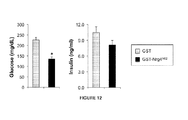
- FIG. 12 Recombinant Nrg4 lowers blood glucose in diet-induced obese mice. HFD-fed obese mice were injected intraperitoneally with GST or GST-Nrg4 N62 twice (4 ⁇ g per gram of body weight) for a total of 6 hrs. Note that Nrg4 lowers blood glucose levels not through promoting insulin secretion.
- FIG. 13 Model depicting Nrg4 as a potential therapeutic biologic for treating type 2 diabetes and non-alcoholic fatty liver disease.
- Nrg4 is an adipocyte-derived hormone that acts on the liver to lower blood glucose and lipids and reduce hepatic fat content.
- FIG. 17 Nrg4 deficiency exacerbates diet-induced hepatic steatosis.
- FIG. 18 Nrg4 null mice developed more severe high-fat diet-induced glucose intolerance and insulin resistance.
- A Fed and fasted blood glucose and fasted plasma insulin levels in HFD-fed WT and KO mice.
- FIG. 19 Nrg4 deficiency promotes aberrant activation of hepatic lipogenic gene program.
- A qPCR analysis of hepatic gene expression in ad lib WT and Nrg4 KO mice. Data represent mean ⁇ s.e.m. *p ⁇ 0.05, KO vs. WT.
- B Liver tissues were dissected from HFD-fed WT and Nrg4 KO mice and processed for qPCR and immunoblotting analyses. Immunoblots of total liver lysates using indicated antibodies (top); pSREBP1 denotes precursor SREBP1 protein. Immunoblots of nuclear SREBP1 (nSREBP1) using liver nuclear extracts (bottom). Lamin A/C immunoblot was included as loading control.
- FIG. 20 Nrg4 attenuates the induction of lipogenic gene expression by LXR activation in primary hepatocytes.
- FIG. 21 Transgenic expression of Nrg4 in adipose tissues protects mice from diet-induced obesity.
- B Body composition.
- C Food intake and VO2 in WT and aP2-Nrg4 Tg mice following 6 weeks of HFD feeding. VO2 values were normalized to body weight (middle panel) and lean body mass (right panel).
- FIG. 22 Nrg4 transgenic mice are protected from HFD-induced metabolic disorders.
- FIG. 23 Nrg4 transgenic mice are protected from HFD-induced glucose intolerance and insulin resistance.
- FIG. 24 Nrg4 transgenic mice are protected from HFD-induced fatty liver through attenuating hepatic lipogenesis.
- B Liver TAG content.
- C Immunoblots using total liver lysates (top) and liver nuclear extracts (bottom). Note that the levels of precursor and nuclear SREBP1 were reduced in the liver from Tg mice.
- D qPCR analysis of hepatic gene expression in ad lib WT (open) and Tg (solid) mice. Data represent mean ⁇ s.e.m. *p ⁇ 0.05, WT vs. Tg.
- FIG. 25 Recombinant Nrg4 lowers blood glucose and insulin in diet-induced obese mice. HFD-fed obese mice were injected intraperitoneally with GST or GST-Nrg4 N62 twice (4 ⁇ g per gram of body weight) per day for a total of 5 days. Note that Nrg4 lowers blood glucose levels not through promoting insulin secretion.
- Nrg4 refers to the protein encoded by the human NRG4 gene. Nrg4 was discovered based on its sequence homology to other NRG members and is predicted to encode a precursor protein of 115 amino acids. Nrg4 is highly conserved between mouse and human, with over 90% amino acid sequence identity in the EGF-like domain (approximately AA 1-52, FIG. 1 ). Thus, in some embodiments, the term “Nrg4” refers to SEQ ID NO: 2, i.e., the protein encoded by the mouse NRG4 gene.
- treating refers to administering a therapeutically effective amount of Nrg4, an Nrg4 variant, or a biologically active fragment thereof to a patient in need thereof as described herein to effect an alteration or improvement of the disease or condition.
- Treatment in certain aspects, requires administration of a single dose or multiple doses at regular intervals to alter the course of the condition.
- administering means providing a pharmaceutical agent to an animal, including a human patient, and includes, but is not limited to administering by a medical professional and self-administering.
- co-administration refers to administration of two or more pharmaceutical agents to an animal, including a human patient.
- the pharmaceutical agents are in a single pharmaceutical composition or in separate pharmaceutical compositions.
- Co-administration includes administering each pharmaceutical agent through the same or different routes of administration.
- Co-administration also encompasses administration in parallel or sequentially.
- terapéuticaally effective amount refers to an amount of a pharmaceutical agent that provides a therapeutic benefit to an animal, including a human patient.
- “pharmaceutically acceptable carrier” includes any and all solvents, dispersion media, coatings, surfactants, antioxidants, preservatives (e.g., antibacterial agents, antifungal agents), isotonic agents, absorption delaying agents, salts, preservatives, drugs, drug stabilizers, gels, binders, excipients, disintegration agents, lubricants, sweetening agents, flavoring agents, dyes, such like materials and combinations thereof, as would be known to one of ordinary skill in the art (Remington's, 1990).
- preservatives e.g., antibacterial agents, antifungal agents
- isotonic agents e.g., absorption delaying agents, salts, preservatives, drugs, drug stabilizers, gels, binders, excipients, disintegration agents, lubricants, sweetening agents, flavoring agents, dyes, such like materials and combinations thereof, as would be known to one of ordinary skill in the art (Remington's, 1990).
- metabolic disorder refers to a condition characterized by an alteration or disturbance in metabolic function.
- Metabolic and “metabolism” are terms well know in the art and generally include the whole range of biochemical processes that occur within a living organism.
- Nrg4 variants of the invention may comprise conservative substitutions of native amino acids at particular residues.
- Amino acid residues which share common side-chain properties and are appropriate for generating conservative substitutions are grouped as follows.
- Nrg4 Neuregulin 4
- a member of the neuregulin family of signaling ligands was discovered herein as a novel fat-derived hormone that regulates plasma glucose and lipid levels and the development NAFLD.
- Nrg4 expression is highly enriched in adipose tissues and is induced during differentiation of brown and white adipocytes.
- the levels of Nrg4 expression in adipocytes are significantly reduced in diet-induced and genetic models of obesity in mice, suggesting that Nrg4 insufficiency may contribute to the development of obesity-associated metabolic disorders.
- Nrg4 null mice developed more severe hyperglycemia, hyperlipidemia, and hepatic steatosis following high-fat diet feeding.
- fat-specific transgenic expression of Nrg4 lowered blood glucose and lipids and reduced liver fat content.
- the studies described herein established Nrg4 as a novel fat-derived hormone that serves a beneficial role in maintaining metabolic homeostasis.
- therapeutic targeting of Nrg4 provides a new avenue for treating, e.g., type 2 diabetes, hyperlipidemia, and NAFLD.
- Nrg4 to be administered is an Nrg4 variant at least 45% identical, at least 50% identical, at least 55% identical, at least 60% identical, at least 65% identical, at least 70% identical, at least 75% identical, at least 80% identical, at least 85% identical, at least 90% identical, at least 95% identical, at least 96% identical, at least 97% identical, at least 98% identical, or at least 99% identical to SEQ ID NO: 1.
- Nrg4 variants of the invention may comprise conservative substitutions of native amino acids at particular residues.
- Amino acid residues which share common side-chain properties and are appropriate for generating conservative substitutions are grouped as follows.
- Nrg4 fragments include, but are not limited to, an Nrg4fragment that lacks the first 4 residues of SEQ ID NO: 1, a fragment that comprises or consists of amino acid residues 5 through 46, 5 through 55, 5 through 62, 1 through 46, 1 through 55, 1 through 52, 1 through 53, 4 through 52, 4 through 53, or 1 through 62 of SEQ ID NO: 1.
- a person of skill in the art can readily screen for active fragments by screening for activity in a relevant biological assay.
- an Nrg4 fragment comprises or consists of amino acid residues x to y, wherein x is 1, 2, 3, 4, 5, 6, 7, 8, 9, 10, 11, 12, 13, 14, 15, 16, 17, 18, 19, 20, 21, 22, 23, 24, or 25, 26, 27, 28, 29, 30, 31, 32, 33, 34, 35, 36, 37, 38, 39, 40, 41, 42, 43, 44, 45, 46, 47, 48, 49, 50, 51, 52, 53, 54, or 55 and y is 26, 27, 28, 29, 30, 31, 32, 33, 34, 35, 36, 37, 38, 39, 40, 41, 42, 43, 44, 45, 46, 47, 48, 49, 50, 51, 52, 53, 54, 55, 56, 57, 58, 59, 60, 61, 62, 63, 64, 65, 66, 67, 68, 69, 70, 71, 72, 73, 74, 75, 76, 77, 78, 79, 80, 81, 82, 83, 84, 85, 86, 87,
- Nrg4 an Nrg4 variant, or a biologically active fragment thereof for use in a method provided is derived from any method known in the art.
- the Nrg4 in one aspect is derived from cells that express the endogenous Nrg4.
- the source of the Nrg4, variant, or fragment thereof is derived from cells that are transformed with a nucleic acid vector that encodes Nrg4 or a precursor thereof, and are in various aspects mammalian cells, bacterial cells, yeast cells, insect cells, whole organisms, or other cells that are a useful source recombinant protein.
- Nrg4 The N-terminal fragment of Nrg4 (amino acid 1 through approximately amino acid 52 of Nrg4) contains the EGF-like domain and is capable of binding to its receptors on hepatocytes.
- Synthetic peptides or recombinant Nrg4 produced and purified from mammalian cells may be used to lower blood glucose levels. Chronic treatments with Nrg4 may lower hepatic fat content, similar to the effects elicited by transgenic Nrg4 expression.
- the synthetic peptides may be modified with N-terminal acetylation, C-terminal amidation, acylation, glycosylation, and PEGylation, among others, to further improve pharmacokinetic profiles.
- smaller peptides that retain the biological activities of Nrg4 may be used.
- Nrg4 protein For recombinant production of an Nrg4 protein, isolated DNA and/or recombinant vectors that encode a recombinant Nrg4 protein and control sequences that direct protein expression in bacterial, mammalian or insect cells are provided. In some cases it is desirable that the recombinant Nrg4 coding sequence be fused with an additional amino acid sequence that can, without limitation, facilitate recombinant protein purification.
- expressed Nrg4 protein is expressed as a fusion protein that includes one or more histidine tags, glutathione S-transferase (GST) sequences, maltose binding protein (MBP) sequences, Flag sequences and/or myc tagged RGT sequences. These additional sequences which aid in purification of the recombinant protein are optionally removed by protease cleavage.
- Nrg4 modulators Compounds modulating Nrg4 expression (i.e., Nrg4 modulators) are also envisioned to be within the scope of the disclosure. Because Nrg4 expression is severely depressed in obesity, it is likely that compounds or treatments that restore Nrg4 expression in adipocytes may be used to generate therapeutic benefits. It is demonstrated herein that Nrg4 expression is inhibited by inflammatory signals, such as TNF ⁇ . As such, anti-inflammatory compounds that restore Nrg4 levels in adipocytes are considered to be within the scope of the disclosure.
- Nrg4 modulators Compounds modulating Nrg4 shedding/activation (i.e., Nrg4 modulators) are also envisioned to be within the scope of the disclosure.
- Nrg4 is synthesized as a precursor transmembrane protein that undergoes proteolytic cleavage and shedding, or release of the Nrg4 soluble, extracellular domain from the membrane-bound protein. The release of soluble Nrg4 into the tissue and circulation is important for activating Nrg4. The identity of exact protease(s) that cleaves Nrg4 remains unknown. Despite this uncertainty, compounds that activate the shedding event and increase the release of active Nrg4 may be screened for and used to achieve similar metabolic benefits as administered Nrg4.
- Nrg4 modulators Compounds modulating Nrg4 turnover (i.e., Nrg4 modulators) are also envisioned to be within the scope of the disclosure. Many hormones undergo rapid turnover in circulation. Compounds that block the proteolytic degradation of Nrg4 may increase the concentration of Nrg4 in plasma and achieve metabolic benefits.
- Nrg4 modulators Compounds modulating Nrg4 receptor binding and signaling (i.e., Nrg4 modulators) are also envisioned to be within the scope of the disclosure. Additional compounds that improve the binding of Nrg4 to its receptors and augment downstream signaling events may be used to prolong and/or enhance Nrg4 action in target cells.
- Methods provided are utilized for the treatment of any condition that can be alleviated by administration of Nrg4, an Nrg4 variant, or a biologically active fragment thereof.
- the condition is a metabolic disorder.
- Exemplary metabolic disorders include, but are not limited to, type 2 diabetes, hyperglycemia, hyperinsulinemia, insulin resistance, and obesity.
- the condition is non-alcoholic fatty liver disease (NAFLD), steatohepatitis, hyperlipidemia, dyslipidemia, hypercholesterolemia, non-familial hypercholesterolemia, familial hypercholesterolemia, heterozygous familial hypercholesterolemia, homozygous familial hypercholesterolemia, mixed dyslipidemia, atherosclerosis, early onset coronary heart disease, dyslipidemia, hypertriglyceridemia, hyperfattyacidemia, and cirrhosis.
- NAFLD non-alcoholic fatty liver disease
- steatohepatitis hyperlipidemia, dyslipidemia, hypercholesterolemia, non-familial hypercholesterolemia, familial hypercholesterolemia, heterozygous familial hypercholesterolemia, homozygous familial hypercholesterolemia, mixed dyslipidemia, atherosclerosis, early onset coronary heart disease, dyslipidemia, hypertriglyceridemia, hyperfattyacidemia, and cirrhosis.
- Methods also include those wherein administration of Nrg4, an Nrg4 variant, or a biologically active fragment thereof is to treat disorders or conditions characterized by elevated lipid levels, such lipids including LDL-C, ApoB, VLDL-C, IDL-C, non-HDL-C, Lp(a), serum triglyceride, liver triglyceride, Ox-LDL-C, small LDL particles, small VLDL, phospholipids, and oxidized phospholipids.
- lipids including LDL-C, ApoB, VLDL-C, IDL-C, non-HDL-C, Lp(a), serum triglyceride, liver triglyceride, Ox-LDL-C, small LDL particles, small VLDL, phospholipids, and oxidized phospholipids.
- the condition that can be alleviated by administration of Nrg4, an Nrg4 variant, or a biologically active fragment thereof is characterized by reduced expression of NRG4 in adipose tissue compared to expression of NRG4 in adipose tissue from a healthy patient.
- the adipose tissue can be brown adipose tissue or white adipose tissue.
- Reduced expression of NRG4 indicative of a condition treatable by administration of Nrg4, an Nrg4 variant, or a biologically active fragment thereof may be defined as the decreased level of NRG4 expression in samples from individuals known to have the condition over the NRG4 expression in samples from individuals known to be free of the condition.
- the level of NRG4 expression may be, for example, at least 1.1 fold, 1.2 fold, 1.3 fold, 1.4 fold, 1.5 fold, 1.6 fold, 1.7 fold, 1.8 fold, 1.9 fold, 2.0 fold, 2.1 fold, 2.2 fold, 2.3 fold, 2.4 fold, 2.5 fold, 2.6 fold, 2.7 fold, 2.8 fold, 2.9 fold, 3.0 fold, 3.1 fold, 3.2 fold, 3.3 fold, 3.4 fold, 3.5 fold, 3.6 fold, 3.7 fold, 3.8 fold, 3.9 fold, 4.0 fold, 4.1 fold, 4.2 fold, 4.3 fold, 4.4 fold, 4.5 fold, 4.6 fold, 4.7 fold, 4.8 fold, 4.9 fold, 5.0 fold, 5.1 fold, 5.2 fold, 5.3 fold, 5.4 fold, 5.5 fold, 5.6 fold, 5.7 fold, 5.8 fold, 5.9 fold, or 6.0 fold lower in a sample from an individual with the condition.
- the condition that can be alleviated by administration of Nrg4, an Nrg4 variant, or a biologically active fragment thereof is aberrant communication between adipocytes and body tissues.
- Nrg4 administered Nrg4, Nrg4 variant, or biologically active fragment thereof negatively regulates the expression of genes involved in de novo lipogenesis. This downregulation of hepatic lipogenesis likely underlies the beneficial metabolic effects of Nrg4.
- Nrg4 or Nrg4 modulator formulation will be determined by one of skill in the art depending on the route of administration and the desired dosage. Such formulations may influence the physical state, stability, rate of in vivo release and rate of in vivo clearance of the administered agents.
- Nrg4 or Nrg4 modulator dosage forms are generally known to those skilled in the art and are thus included in the instant invention.
- excipients and carriers are described, for example, in “Remingtons Pharmaceutical Sciences” Mack Pub. Co., New Jersey.
- compositions comprising Nrg4 or an Nrg4 modulator for use in accordance with the present invention are formulated in a conventional manner using one or more physiologically acceptable carriers comprising excipients and auxiliaries which facilitate processing of a therapeutic composition into preparations which can be used pharmaceutically.
- physiologically acceptable carriers comprising excipients and auxiliaries which facilitate processing of a therapeutic composition into preparations which can be used pharmaceutically.
- These pharmaceutical compositions may be manufactured in a manner that is itself known, e.g., by means of conventional mixing, dissolving, granulating, dragee-making, levigating, emulsifying, encapsulating, entrapping or lyophilizing processes. Proper formulation is dependent upon the route of administration chosen.
- an Nrg4 or Nrg4 modulator composition When a therapeutically effective amount of an Nrg4 or Nrg4 modulator composition is administered by e.g., intradermal, cutaneous or subcutaneous injection, the composition is, in one aspect, in the form of a pyrogen-free, parenterally acceptable aqueous solution.
- parenterally acceptable protein or polynucleotide solutions having due regard to pH, isotonicity, stability, and the like, is within the skill in the art.
- a composition optionally contains, in addition to Nrg4, Nrg4 modulator or other active ingredient of the present invention, an isotonic vehicle such as Sodium Chloride Injection, Ringer's Injection, Dextrose Injection, Dextrose and Sodium Chloride Injection, Lactated Ringer's Injection, or other vehicle as known in the art.
- the Nrg4 or Nrg4 modulator composition in another aspect, also contains stabilizers, preservatives, buffers, antioxidants, or other additives known to those of skill in the art.
- the agents of the invention are formulated in aqueous solutions, preferably in physiologically compatible buffers such as Hanks's solution, Ringer's solution, or physiological saline buffer.
- penetrants appropriate to the barrier to be permeated are used in the formulation. Such penetrants are generally known in the art.
- Nrg4 or Nrg4 modulator formulations are, in certain aspects, designed to be short-acting, fast-releasing, long-acting, or sustained-releasing as described below.
- one type of pharmaceutical formulations is formulated for controlled release or for slow release.
- the instant Nrg4 or Nrg4 modulator compositions in other aspects, comprise, for example, micelles or liposomes, or some other encapsulated form, or may be administered in an extended release form to provide a prolonged storage and/or delivery effect. Therefore, the pharmaceutical Nrg4 or Nrg4 modulator formulations are optionally compressed into pellets or cylinders and implanted intramuscularly or subcutaneously as depot injections or as implants such as stents. Such implants may employ known inert materials such as silicones and biodegradable polymers.
- compositions can be formulated readily by combining the active compounds with pharmaceutically acceptable carriers well known in the art.
- Such carriers enable the compounds of the invention to be formulated as tablets, pills, dragees, powders, capsules, liquids, solutions, gels, syrups, slurries, suspensions and the like, for oral ingestion by a patient to be treated.
- compositions for use according to the present invention are conveniently delivered in the form of an aerosol spray presentation from pressurized packs or a nebuliser, with the use of a suitable propellant, e.g., dichlorodifluoromethane, trichlorofluoromethane, dichlorotetrafluoroethane, carbon dioxide or other suitable gas.
- a suitable propellant e.g., dichlorodifluoromethane, trichlorofluoromethane, dichlorotetrafluoroethane, carbon dioxide or other suitable gas.
- the suspension may also contain suitable stabilizers or agents which increase the solubility of the compositions to allow for the preparation of highly concentrated solutions.
- the active ingredient may be in powder form for constitution with a suitable vehicle, e.g., sterile pyrogen-free water, before use.
- compositions may also be formulated in rectal compositions such as suppositories or retention enemas, e.g., containing conventional suppository bases such as cocoa butter or other glycerides.
- the compounds may also be formulated as a depot preparation.
- Such long acting formulations may be administered by implantation (for example subcutaneously or intramuscularly) or by intramuscular injection.
- the compositions may be formulated with suitable polymeric or hydrophobic materials (for example as an emulsion in an acceptable oil) or ion exchange resins, or as sparingly soluble derivatives, for example, as a sparingly soluble salt.
- compositions also may comprise suitable solid or gel phase carriers or excipients.
- compositions of the invention may be in the form of a complex of the protein(s) or other active ingredient of present invention along with protein or peptide antigens.
- compositions may include a matrix capable of delivering the protein-containing or other active ingredient-containing composition to the site of tissue damage, providing a structure for the developing bone and cartilage and optimally capable of being resorbed into the body.
- matrices may be formed of materials presently in use for other implanted medical applications. The choice of matrix material is based on biocompatibility, biodegradability, mechanical properties, cosmetic appearance and interface properties.
- composition may further contain other agents which either enhance the activity of the protein or other active ingredient or complement its activity or use in treatment.
- additional factors and/or agents may be included in the pharmaceutical composition to produce a synergistic effect with protein or other active ingredient of the invention, or to minimize side effects.
- a therapeutically effective dose refers to that ingredient alone.
- a therapeutically effective dose refers to combined amounts of the active ingredients that result in the therapeutic effect, whether administered in combination, serially or simultaneously.
- Nrg4 or an Nrg4 modulator will be via any route.
- Conventional routes of administration e.g., parenterally, subcutaneous, intravenous, intradermal, intramuscular, intramammary, intraperitoneal, intrathecal, intraocular, retrobulbar, intrapulmonary, intratracheal instillation, bronchial instillation, aerosol, sublingual, oral, nasal, anal, vaginal, or transdermal delivery, or by surgical implantation at a particular site are contemplated.
- methods including intravenous administration.
- Treatment in a method provided consists of a single dose or a plurality of doses over a period of time.
- Administration of Nrg4 or an Nrg4 modulator is systemic or local, and may comprise a single site injection or infusion of a therapeutically-effective amount of the Nrg4 protein composition.
- the therapeutic Nrg4 or Nrg4 modulator composition is delivered to the patient at multiple sites. Multiple administrations are rendered simultaneously or administered over a period of time.
- additional therapy wherein Nrg4 or an Nrg4 modulator is administered on a period basis, for example, daily, weekly, or monthly.
- parenteral administration of the therapeutic compounds is carried out with an initial bolus followed by continuous infusion to maintain therapeutic circulating levels of drug product.
- Methods provided include those wherein the Nrg4 is administered orally and by injection.
- the injection is intravenous or subcutaneous.
- injection is with a depot forming composition, and in embodiments including depot formation, the depot forming composition is administered by implanting a suitable delivery device in the patient.
- the delivery device is implanted subcutaneously, and in certain aspects, the delivery device is a pump.
- the frequency of dosing will depend on the pharmacokinetic parameters of the Nrg4 and the routes of administration. Depending on the route of administration, a suitable dose is calculated according to body weight, body surface areas or organ size. The availability of animal models is particularly useful in facilitating a determination of appropriate dosages of a given therapeutic.
- the final dosage regimen will be determined by the attending physician, considering factors which modify the action of the Nrg4 or Nrg4 modulator, e.g., the specific activity, the responsiveness of the patient, the age, condition, body weight, sex and diet of the patient, the severity of any condition, time of administration, kind of concurrent treatment, if any, frequency of treatment, and the nature of the effect desired, and other clinical factors. As studies are conducted, further information will emerge regarding appropriate dosage levels and duration of treatment for specific diseases and conditions.
- the Nrg4 or Nrg4 modulator is administered alone, in other embodiments the Nrg4 or Nrg4 modulator is administered in conjunction with other therapeutics directed to the target condition or directed to other symptoms thereof.
- Dosage levels of the order from about 0.01 mg to 30 mg per kilogram of body weight per day, for example from about 0.1 mg to 10 mg/kg.
- Unit dosages of a Nrg4 or Nrg4 modulator are also provided. “Unit dose” is defined as a discrete amount of a therapeutic composition dispersed in a suitable carrier.
- the subject to be treated is a mammal, such as a human or other mammalian animal.
- subjects include for example, farm animals including cows, sheep, pigs, horses and goats, companion animals such as dogs and cats, exotic and/or zoo animals, laboratory animals including mice rats, rabbits, guinea pigs and hamsters; and poultry such as chickens, turkeys, ducks and geese.
- the patient being treated is of any age, for example, between the ages of 10-50 years, age 20 or less, or age 10 or less.
- Nrg4 or Nrg4 modulator of the present invention is used in combination with any present treatments for non-alcoholic fatty liver disease (NAFLD), steatohepatitis, type II diabetes, hyperglycemia, hyperlipidemia, dyslipidemia, obesity, hyperinsulinemia, insulin resistance, hypercholesterolemia, non-familial hypercholesterolemia, familial hypercholesterolemia, heterozygous familial hypercholesterolemia, homozygous familial hypercholesterolemia, mixed dyslipidemia, atherosclerosis, early onset coronary heart disease, dyslipidemia, hypertriglyceridemia, hyperfattyacidemia, or cirrhosis.
- NAFLD non-alcoholic fatty liver disease
- steatohepatitis type II diabetes
- hyperglycemia hyperlipidemia
- dyslipidemia obesity
- hyperinsulinemia insulin resistance
- hypercholesterolemia non-familial hypercholesterolemia
- familial hypercholesterolemia non-familial hypercholesterolemia
- compositions comprising a Nrg4, variant, or a fragment, or Nrg4 modulator are administered before, after or during such therapy.
- Nrg4 or Nrg4 modulator compositions provided, it is in one aspect desirable to combine these compositions with other therapies effective in the treatment of specific diseases or conditions.
- compositions of the present invention precede or follow the other agent treatment by intervals ranging from minutes to weeks. It is contemplated that one administers both modalities within about 12-24 h of each other or within about 6-12 h of each other. In some situations, it is desirable to extend the time period for treatment significantly, where several days (2, 3, 4, 5, 6 or 7) to several weeks (1, 2, 3, 4, 5, 6, 7 or 8) lapse between the respective administrations.
- Nrg4 or Nrg4 modulator compositions are administered in combination with a second agent to prevent or treat a metabolic disorder or to prevent or treat a cardiovascular disease.
- agents that are useful in combination therapies include, but are not limited to, blood sugar-lowering agents (i.e., agents that lower blood sugar) or lipid-lowering agents (i.e., agents that reduce lipid levels).
- sulfonylureas e.g., glimepiride, glisentide, sulfonylurea, AY31637
- biguanides e.g., metformin
- alpha-glucosidase inhibitors e.g., acarbose, miglitol
- thiazol-idinediones e.g., troglitazone, pioglitazone, rosiglitazone, glipizide, balaglitazone, rivoglitazone, netoglitazone, troglitazone, englitazone, AD 5075
- exendin or stabilizers thereof (e.g. DPP4 inhibitors, such as sitagliptin) potentiate glucose-stimulated insulin secretion; and 6) insulin or analogues thereof (e.g. LANTUS®) stimulate tissue glucose utilization and inhibits hepatic glucose output.
- DPP4 inhibitors such as sitagliptin
- insulin or analogues thereof e.g. LANTUS®
- lipid-lowering agent refers to a pharmaceutical agent provided to a individual to achieve a lowering of lipids in the individual.
- a lipid-lowering agent is provided to an individual to reduce one or more of LDL-C, ApoB, VLDL-C, IDL-C, non-HDL-C, Lp(a), serum triglyceride, liver triglyceride, Ox-LDL-C, small LDL particles, small VLDL, phospholipids, and oxidized phospholipids.
- administration of a lipid-lowering agent leads to a reduction of one or more serum lipids in an individual over time.
- the lipid-lowering agent is administered prior to administration of a pharmaceutical composition of the present invention.
- the lipid-lowering agent is administered following administration of a pharmaceutical composition of the present invention.
- the lipid-lowering agent is administered at the same time as a pharmaceutical composition of the present invention.
- the dose of a co-administered lipid-lowering agent is the same as the dose that would be administered if the lipid-lowering agent was administered alone. In certain such embodiments the dose of a co-administered lipid-lowering agent is lower than the dose that would be administered if the lipid-lowering agent was administered alone. In certain such embodiments the dose of a co-administered lipid-lowering agent is greater than the dose that would be administered if the lipid-lowering agent was administered alone.
- kits for use in the treatment of a disorder described herein include at least a first sterile composition comprising an Nrg4 (SEQ ID NO: 1), an Nrg4 variant, or a biologically active fragment thereof described above in a pharmaceutically acceptable carrier.
- Another component is optionally a second therapeutic agent for the treatment of the disorder along with suitable container and vehicles for administrations of the therapeutic compositions.
- the kits optionally comprise solutions or buffers for suspending, diluting or effecting the delivery of the first and second compositions.
- the kits also optionally comprise catheters, syringes or other delivering devices for the delivery of one or more of the compositions used in the methods of the invention.
- the kits optionally further comprise instructions containing administration protocols for the therapeutic regimens.
- the present disclosure also contemplates methods of diagnosing a metabolic disorder selected from the group consisting of non-alcoholic fatty liver disease (NAFLD), steatohepatitis, type II diabetes, hyperglycemia, hyperlipidemia, dyslipidemia, obesity, hyperinsulinemia, insulin resistance, hypercholesterolemia, non-familial hypercholesterolemia, familial hypercholesterolemia, heterozygous familial hypercholesterolemia, homozygous familial hypercholesterolemia, mixed dyslipidemia, atherosclerosis, early onset coronary heart disease, dyslipidemia, hypertriglyceridemia, hyperfattyacidemia, and cirrhosis in a patient comprising determining Nrg4 levels in a sample from the patient suspected of suffering from the condition.
- NAFLD non-alcoholic fatty liver disease
- steatohepatitis type II diabetes
- type II diabetes hyperglycemia
- hyperlipidemia hyperlipidemia
- dyslipidemia obesity
- hyperinsulinemia insulin resistance
- hypercholesterolemia non
- Nrg4 in a patient sample will be useful in determining how to manage the condition in the patient. For example, since reduced levels of Nrg4 are associated with metabolic disorders and liver diseases, the clinician may use the information concerning the levels of Nrg4 to facilitate decision making regarding treatment of the patient. Thus, if the level of Nrg4 is indicative of an early stage of one of the above-mentioned conditions, appropriate treatment regimens may be prescribed.
- the methods of the invention include methods which aid diagnosis and methods of prognosis. It will also be appreciated that the methods of the invention are useful to the physician in determining a course of management or treatment of the patient.
- the NRG4 markers identified using the methods provided are, in one aspect, used to evaluate treatment efficacy (e.g., amelioration of one or more symptoms of a pathology).
- amelioration of a condition related to Nrg4 deficiency can be related to an increase in levels of Nrg4
- Nrg4 levels in a sample taken from the patient are measured before (for background) and during or after (e.g., at a designated time, periodically or randomly) the course of treatment.
- the method is, in one aspect, performed at regular intervals, (e.g., every 6 hours, every 12 hours, every 18 hours, every 24 hours, every 2 days, every 3 days, every 4 days, every 5 days, every 6 days, every 7 days, every 8 days, every 9 days, every 10 days, every 11 days, every 12 days, every 13 days, every 2 weeks, every 3 weeks, every 4 weeks, every 5 weeks, every 6 weeks, every 7 weeks, every 2 months, every 3 months, every 4 months, every 5 months, every 6 months, every 7 months, every 8 months, every 9 months, every 10 months, every 11 months, every year, or more) closely before and after each treatment.
- clinicians of ordinary skill in the art will be able to determine an appropriate schedule for performing the assay for diagnostic or disease/treatment monitoring purposes.
- the Nrg4 protein is detected and/or quantified in the sample using any of a number of well recognized immunological binding assays (see, e.g., U.S. Pat. Nos. 4,366,241; 4,376,110; 4,517,288; and 4,837,168).
- immunological binding assays see also Methods in Cell Biology Volume 37: Antibodies in Cell Biology, Asai, ed. Academic Press, Inc. New York (1993); Basic and Clinical Immunology 7th Edition, Stites & Terr, eds. (1991).
- immunoblot analysis is used to detect and quantify the presence of Nrg4 in the sample.
- the technique generally comprises separating sample proteins by gel electrophoresis on the basis of molecular weight, transferring the separated proteins to a suitable solid support, (such as a nitrocellulose filter, a nylon filter, or derivatized nylon filter), and incubating the sample with the antibodies that specifically bind the Nrg4.
- the anti-Nrg4 antibodies specifically bind to the Nrg4 on the solid support.
- These antibodies may be directly labeled or alternatively may be subsequently detected using labeled antibodies (e.g., labeled sheep anti-mouse antibodies) that specifically bind to the anti-Nrg4 antibody.
- a positive result e.g., elevated or decreased Nrg4 level
- the assay is deemed to show a positive result when the difference between sample and “control” is statistically significant (e.g. at the 85% or greater, preferably at the 90% or greater, more preferably at the 95% or greater and most preferably at the 98% or greater confidence level).
- antibodies immunoprecipitate Nrg4 proteins from solution as well as react with Nrg4 protein on western or immunoblots of polyacrylamide gels. In another embodiment, antibodies detect Nrg4 proteins in stored serum samples.
- Nrg4 knockout mice were purchased from Mutant Mice Regional Resource Center (MMRRC).
- TNF ⁇ treatment 10 ng/mL of TNF ⁇ were added to mature (day 8) 3T3-L1 adipocytes cultured in 10% FBS DMEM for six hours respectively before RNA isolation.
- IL-1 ⁇ treatment 40 ng/mL of IL-1 ⁇ were added to mature (day 8) 3T3-L1 adipocytes cultured in 10% FBS DMEM for six hours before RNA isolation.
- 293T cells were transfected with vectors expressing SEAP or SEAP-Nrg4 N62 . 24 hours after transfection, cells were switched to serum-free media for additional 2 days before the media were collected and concentrated using Centricon. Briefly, frozen tissue slices were incubated with SEAP or SEAP-Nrg4 N62 conditioned media for 45 min at room temperature before they were washed four times in 0.1% tween-20 containing PBS and fixed in a solution containing 20 mM HEPES (pH 7.4), 60% acetone, and 3% formaldehyde. After inactivating endogenous alkaline phosphatase at 65° C. for 30 min, the enzymatic activity derived from the fusion protein was detected using NBT/BCIP substrate. For competition binding, frozen tissue slices were pre-incubated with 4 ⁇ g/ ⁇ L GST or GST-Nrg4 N62 for 30 min, before co-incubation with SEAP-Nrg4 N62 conditioned media for another one hour.
- Nrg4 is a member of the neuregulin family of extracellular signaling ligands that also includes Nrg1, Nrg2, and Nrg3.
- the major coding isoform of Nrg4 is predicted to encode a protein of 115 a.a., which contains a single EGF-like domain with three characteristic disulfide bonds between Cys9-Cys23, Cys17-Cys34, and Cys36-Cys45, a putative N-linked glycosylation site, and a transmembrane domain ( FIG.
- Nrg4 is synthesized as a transmembrane protein and undergoes proteolytic cleavage that liberates the extracellular EGF-like peptide for receptor binding and signal transduction.
- the identity of proteases responsible for the shedding of Nrg4 is currently unknown, but it is likely to be matrix metalloproteases.
- Nrg4 is highly conserved between mouse and human with over 90% amino acid sequence identity in the EGF-like domain (amino acid 1 to approximately amino acid 52 of Nrg4, FIG. 1 ).
- Nrg4 expression has been reported in pancreas, mammary epithelial cells, prostate cancers, and lymphoma cell lines.
- Nrg4 pre-mRNA transcript undergoes complex alternative splicing and generates a number of splicing isoforms that appear to lack protein-coding potential.
- specificity of Nrg4 antibodies used in previous immunohistochemical studies remains uncertain. As such, the exact profile of Nrg4 expression and its regulation have not been conclusively established.
- a Taqman quantitative PCR (qPCR) method was developed herein that specifically detects the coding isoform of Nrg4.
- Nrg4 mRNA was found to be abundantly expressed in brown adipose tissue (BAT) and white adipose tissue (WAT), but not in other tissues examined, including kidney, skeletal muscle, brain, testis, small intestine, liver, heart, spleen, lung, and pancreas ( FIG. 2A ).
- BAT brown adipose tissue
- WAT white adipose tissue
- the restriction of Nrg4 expression to adipose tissues suggest that, under normal physiological conditions, Nrg4 may serve as a ligand that mediates the communication between adipocytes and other tissues in the body. Nrg4 expression was also examined to determine if it is regulated during brown and white adipocyte differentiation.
- Nrg4 mRNA expression is highly induced during brown adipocyte differentiation ( FIG. 2B ). Nrg4 mRNA levels also increased significantly during the differentiation of 3T3-L1 white adipocytes ( FIG. 2B ).
- Nrg4 is highly expressed in brown adipose tissue
- its potential role in cold-induced thermogenesis was evaluated. Wild type and Nrg4 deficient mice were exposed to cold temperature (4° C.) and rectal temperature was measured at different time points. Core body temperature in these two groups of mice was nearly indistinguishable during cold exposure, suggesting that Nrg4 is not required for defense against acute cold stress ( FIG. 3A ).
- the histological appearance of brown fat was similar between WT and KO groups ( FIG. 3B ).
- Nrg4 likely targets other cell types in the body.
- Nrg4 binding and action a fusion protein was generated between secreted alkaline phosphatase (SEAP) and the N-terminal 62 amino acids of Nrg4 (SEAP-Nrg4 N62 ) and binding assays were performed as previously described. This fragment of Nrg4 contains the EGF-like domain and is predicted to be competent in initiating signal transduction. Conditioned media was collected from HEK 293T cells transiently transfected with SEAP or SEAP-Nrg4 N62 plasmids and concentrated using a Centricon spin column.
- SEAP secreted alkaline phosphatase
- SEAP-Nrg4 N62 the N-terminal 62 amino acids of Nrg4
- Binding assays were performed on tissue sections followed by extensive washing, fixation, heat inactivation, and incubation with alkaline phosphatase substrates (BCIP/NBT). Only background signals were detected on brown fat, heart, skeletal muscle, and spleen for both SEAP and SEAP-Nrg4 N62 ( FIG. 4A ). In contrast, strong binding of SEAP-Nrg4 N62 to hepatocytes was observed ( FIG. 4B ). Further, the presence of excess GST-Nrg4 N62 , but not GST, abolished the binding of SEAP-Nrg4 N62 to hepatocytes, suggesting that the putative Nrg4 binding sites on hepatocytes are limited and saturable ( FIG. 4C ).
- BCIP/NBT alkaline phosphatase substrates
- Adipocyte Nrg4 Expression is Down-regulated in Obesity
- Plasma glycerol/triglyceride, ketone/cholesterol and non-esterified fatty acid concentrations were measured using commercial assay kits (Sigma, Stanbio Laboratory, Wako Diagnostics respectively).
- RNA from white adipose tissue was extracted using a commercial kit from Invitrogen. RNAs from other tissues and cultured cells was extracted using TRIzol method. For quantitative real-time PCR (qPCR) analysis, equal amount of RNA was reverse-transcribed using MMLV-RT followed by quantitative PCR reactions using SYBR Green (Life Technologies). Relative abundance of mRNA was normalized to ribosomal protein 36B4.
- qPCR quantitative real-time PCR
- a sense primer encompassing the junction of exon3 and exon6 (5′ CCCAGCCCATTCTGTAGGTG 3′ (SEQ ID NO: 3)), an anti-sense primer in exon6 (5′ACCACGAAAGCTG-CCGACAG 3′ (SEQ ID NO: 4)), and a taqman probe in exon6 but between sense and anti-sense primers (5′ 6-FAM-CGGAGCACGCTGCGAAGAGGTT-BHQ 3′ (SEQ ID NO: 5)) were generated.
- Taqman PCR was carried out using the Taqman Universal PCR Master Mix system from ABI, relative abundance of the Nrg4 coding isoform was normalized to ribosomal protein 36B4.
- Nrg4 expression is dysregulated in obesity
- qPCR analyses on total RNA isolated from adipose tissues from mice fed standard chow (lean) or a high-fat diet (HFD) containing 60% fat-derived calorie (obese) were performed.
- TNF ⁇ an inflammatory cytokine
- FIG. 5A While Nrg4 expression in brown fat was similar between two groups, its mRNA levels were markedly reduced in epididymal white fat in diet-induced obese mice ( FIG. 5A and FIG. 15A ).
- Nrg4 expression was also significantly reduced in both epididymal white fat and brown fat from leptin or leptin receptor-deficient (ob/ob or db/db) mice, two more severe genetic models of obesity ( FIG. 5B and FIG. 15A ).
- Down-regulation of Nrg4 expression occurred specifically in adipocytes ( FIG. 5C and FIG. 15B ).
- Nrg4 mRNA level was very low in the stromal vascular fraction of epididymal white fat.
- the mature adipocyte fraction expressed abundant Nrg4, which was decreased dramatically in obesity.
- Nrg4 expression in fats and the severity of obesity was further examined.
- a group of wild type C57BL/6J male mice was fed with high-fat diet for approximately two months to induce obesity.
- HFD-fed mice developed obesity of varying severity and had body weight ranging from 30.7 to 51.9 grams.
- Metabolic parameters were measured in these mice and their association with Nrg4 expression in visceral fats was examined.
- Nrg4 transgenic mice were generated to rescue the decrease in Nrg4 expression in obesity in this example.
- Nrg4 transgenic mice had significantly lowered blood glucose and lipid concentrations and reduced fat accumulation in the liver.
- augmentation of Nrg4 hormonal signaling is predicted to ameliorate the development of metabolic disorders associated with obesity.
- Nrg4 insufficiency contributes to the pathogenesis of metabolic disorders
- metabolic parameters were measured in wild type (WT) and Nrg4 knockout (KO) mice following HFD feeding.
- Nrg4 KO mice are viable, grow normally, and are indistinguishable from WT littermates when fed standard chow.
- Nrg4 null mice gained slightly more body weight than control ( FIG. 7A ).
- blood glucose levels were higher in Nrg4 null mice ( FIG. 7B ).
- Plasma insulin concentrations were also elevated in mice lacking Nrg4 ( FIG. 7B ), suggesting that Nrg4 may serve a protective role in maintaining glucose homeostasis, particularly in metabolic stress states such as obesity.
- Nrg4 null mice Plasma triglyceride levels were higher in Nrg4 null mice, whereas the concentrations of ⁇ -hydroxybutyrate, a major constituent of ketone bodies, were lower in the null group ( FIG. 7C ). Because ketone bodies are products of hepatic fatty acid ⁇ -oxidation, these results are consistent with Nrg4 binding to hepatocytes and a potential role of this factor in regulating hepatic lipid metabolism. To further test this possibility, hepatic fat content was measured. Compared to control, Nrg4 null mice have elevated triglyceride deposition in the liver following HFD feeding ( FIG. 8A ). Histological staining indicated that there was a marked increase of lipid accumulation in Nrg4 KO hepatocytes. In contrast, the histological appearance of adipose tissues remained similar between two groups ( FIG. 8B ).
- Nrg4 signaling exacerbates diet-induced metabolic dysregulation, particularly glycemic control, the progression of fatty liver, and plasma triglyceride homeostasis.
- Nrg4 in Adipose Tissues Ameliorates Diet-induced Metabolic Dysregulation
- Nrg4 signals through modulating metabolic gene expression.
- Nrg4 negatively regulates the expression of genes involved in de novo lipogenesis. This downregulation of hepatic lipogenesis likely underlies the beneficial metabolic effects of Nrg4.
- Nrg4 transgenic mice Five independent transgenic founders were generated with various levels of transgenic expression of Nrg4 in brown and white adipose tissues. Line #111 was chosen for further studies because Nrg4 transgene was specifically expressed in the adipose tissues to levels slightly above its expression in lean mice. AP2-Nrg4 transgenic mice were indistinguishable from non-transgenic littermates with regard to post-natal growth, physical appearance, and general behavioral characteristics.
- Glucose tolerance and insulin tolerance tests indicate that AP2-Nrg4 transgenic mice were more glucose tolerant and insulin sensitive ( FIGS. 10A-B ).
- liver fat accumulation was significantly reduced in transgenic mice ( FIGS. 10C-D ).
- gene expression analysis showed that liver from the transgenic mice had lower expression of major lipogenic genes.
- the expression of lipid droplet associated genes such as FSP27 and s3-12 was also significantly lower in transgenic liver ( FIG. 11 ).
- Nrg4 peptide corresponding to the EGF-like domain (a.a. 1-52) of Nrg4 is synthesized. N-terminal acetylation and C-terminal amidation is introduced to improve the stability of peptide in circulation.
- the biological activity of this peptide is evaluated in cultured cells and in vivo studies are performed under acute and chronic treatment conditions. For acute experiments, the peptide is delivered via i.p. injection at different doses and plasma and liver metabolite concentrations are measured following the injections. These studies are performed in diet-induced and genetic obese mouse models. Hepatic gene expression is analyzed to investigate the target metabolic pathways involved.
- Plasma concentrations of triglycerides (Sigma) and non-esterified fatty acid (Wako Diagnostics) were measured using commercial assay kits. Liver triglyceride was extracted and measured as previously described. Plasma insulin was measured using an ELISA assay kit (CrystalChem). Glucose and insulin tolerance tests were performed.
- Nrg4 plays a protective role in maintaining glucose homeostasis, particularly in metabolic stress states such as high-fat induced obesity.
- Nrg4 signaling exacerbates diet-induced metabolic dysregulation, particularly glycemic control, the progression of fatty liver, and plasma triglyceride homeostasis.
- Nrg4 Inhibits the Induction of a Lipogenic Gene Program in the Liver
- Nrg4 signals through attenuating lipogenic gene expression in the liver. Without being bound by theory, it is thought that this downregulation of hepatic lipogenesis likely underlies the beneficial metabolic effects of Nrg4.
- Total liver lysates were prepared by homogenizing livers in a lysis buffer containing 50 mM Tris (pH 7.5), 150 mM NaCl, 5 mM NaF, 25 mM ⁇ -glycerolphosphate, 1 mM sodium orthovanadate, 10% glycerol, 1% tritonX-100, 1 mM dithiothreitol (DTT), and freshly added protease inhibitors. Liver nuclear extracts were also prepared.
- the homogenates were briefly centrifuged at 450 rpm at 4° C. to remove tissue debris. The suspension was transferred to a new tube and centrifuged at 3,000 rpm for 5 min at 4° C.
- hepatocytes were isolated as by using collagenase type II (Invitrogen, Carlsbad, Calif.) from C57BL/6J mice. Hepatocytes were maintained in DMEM medium containing 10% BGS at 37° C. and 5% CO 2 . Adenovirus infection was performed on the same day of isolation. After 24 hrs, cells were treated with GST and GST-Nrg4Ex (10 ⁇ g/mL) with vehicle (DMSO) or T0901317 (5 ⁇ mol/L) for 24 hrs. For signaling, cells were switched to DMEM supplemented with 0.1% BSA for 12 hrs before GST and GST-Nrg4Ex treatment. Recombinant adenoviruses were generated using AdEasy adenoviral vector (Stratagene, Santa Clara, Calif.) as previously described (Li et al., Cell Metabolism 8: 105-117, 2008).
- AdEasy adenoviral vector (Stratagene, Santa Clara, Calif.) as
- Nrg4 null mouse livers may result from direct effects of Nrg4 signaling on the lipogenic gene program.
- increased adiposity while moderate, may contribute to the disruption of hepatic lipid metabolism in Nrg4 null mice.
- the effects of Nrg4 on lipogenic gene expression in primary hepatocytes was examined. Cultured hepatocytes were treated with vehicle (DMSO) or T0901317, an agonist for liver-X receptor that potently stimulates Srebp1c and lipogenic gene expression, in the presence of CM containing SEAP or SEAP-Nrg4N62. While basal expression of Srebp1c, Fasn, and Scd1 was comparable, their induction in response to LXR activation was significantly diminished by SEAP-Nrg4N62 ( FIG. 20 ).
- Nrg4 in Adipose Tissues Ameliorates Diet-induced Metabolic Dysregulation
- adipocyte Nrg4 expression was significantly decreased in diet-induced and genetic obesity in mice.
- transgenic overexpression of Nrg4 in adipose tissues may normalize or rescue the deterioration of metabolic homeostasis induced by obesity.
- administration of recombinant Nrg4 protein may provide therapeutic benefits in treating hyperglycemia, non-alcoholic fatty liver disease, and hyperlipidemia.
- transgenic mice were generated with fat-specific Nrg4 under the control of aP2 promoter/enhancer, which has been widely used in directing transgenic expression of genes in adipocytes. Five independent transgenic founders with various levels of transgenic expression of Nrg4 in brown and white adipose tissues were generated.
- Nrg4 transgene was specifically expressed in adipose tissues at levels slightly above Nrg4 expression in lean mice.
- AP2-Nrg4 transgenic mice were indistinguishable from non-transgenic littermates with regard to post-natal growth, physical appearance, and general behavioral characteristics.
- Transgenic mice had lower plasma TAG concentrations and higher levels of ketones following overnight starvation ( FIG. 22A ), suggesting that hepatic fatty acid oxidation and ketogenesis might be enhanced by transgenic expression of Nrg4. Total cholesterol levels were also lower in the transgenic group.
- Nrg4 transgenic mice had lower blood glucose levels than control under both fed and fasted conditions ( FIG. 22B ). Fasting plasma insulin level was also lower in the transgenic group.
- Glucose tolerance test indicate that Nrg4 transgenic mice had improved glucose tolerance following intraperitoneal challenge of glucose (2 mg/kg) ( FIG. 23A ). Consistent with improved glucose metabolism, transgenic mice were more responsive to insulin in insulin tolerance tests ( FIG. 23B ). Histological analyses indicated that transgenic mice developed less severe hepatic steatosis ( FIG. 24A ), whereas adipose tissue histology was similar between two groups. Consistently, liver triglyceride content was reduced in the transgenic group ( FIG. 24B ).
- Nrg4 a vector expressing recombinant Nrg4 protein
- GST-Nrg4 fusion protein and GST were expressed and purified from bacteria containing relevant expression vectors. Two doses of GST or GST-Nrg4 per day were administered intraperitoneally to diet-induced obese mice for 5 consecutive days. Plasma and tissue samples were harvested two hours after the last injection for metabolite measurements and gene expression analyses. Plasma glucose and insulin concentrations were lower in mice treated with GST-Nrg4 than in control ( FIG. 25 ).
- ADAM disintegrin and metalloprotease
- Neuregulin-4 a novel growth factor that acts through the ErbB-4 receptor tyrosine kinase. Oncogene 18, 2681-2689 (1999).
Landscapes
- Health & Medical Sciences (AREA)
- Life Sciences & Earth Sciences (AREA)
- Engineering & Computer Science (AREA)
- Chemical & Material Sciences (AREA)
- Medicinal Chemistry (AREA)
- General Health & Medical Sciences (AREA)
- Immunology (AREA)
- Hematology (AREA)
- Veterinary Medicine (AREA)
- Pharmacology & Pharmacy (AREA)
- Animal Behavior & Ethology (AREA)
- Public Health (AREA)
- Proteomics, Peptides & Aminoacids (AREA)
- Bioinformatics & Cheminformatics (AREA)
- Biomedical Technology (AREA)
- Urology & Nephrology (AREA)
- Molecular Biology (AREA)
- Epidemiology (AREA)
- Gastroenterology & Hepatology (AREA)
- Zoology (AREA)
- Microbiology (AREA)
- Cell Biology (AREA)
- Biotechnology (AREA)
- Food Science & Technology (AREA)
- Physics & Mathematics (AREA)
- Analytical Chemistry (AREA)
- Biochemistry (AREA)
- General Physics & Mathematics (AREA)
- Pathology (AREA)
- Diabetes (AREA)
- Obesity (AREA)
- Chemical Kinetics & Catalysis (AREA)
- General Chemical & Material Sciences (AREA)
- Nuclear Medicine, Radiotherapy & Molecular Imaging (AREA)
- Organic Chemistry (AREA)
- Medicines That Contain Protein Lipid Enzymes And Other Medicines (AREA)
- Pharmaceuticals Containing Other Organic And Inorganic Compounds (AREA)
- Acyclic And Carbocyclic Compounds In Medicinal Compositions (AREA)
- Peptides Or Proteins (AREA)
- Investigating Or Analysing Biological Materials (AREA)
Priority Applications (1)
| Application Number | Priority Date | Filing Date | Title |
|---|---|---|---|
| US14/778,379 US9878010B2 (en) | 2013-03-21 | 2014-03-19 | Methods of treating metabolic disorders |
Applications Claiming Priority (3)
| Application Number | Priority Date | Filing Date | Title |
|---|---|---|---|
| US201361804046P | 2013-03-21 | 2013-03-21 | |
| PCT/US2014/031171 WO2014153385A2 (en) | 2013-03-21 | 2014-03-19 | Methods of treating metabolic disorders |
| US14/778,379 US9878010B2 (en) | 2013-03-21 | 2014-03-19 | Methods of treating metabolic disorders |
Publications (2)
| Publication Number | Publication Date |
|---|---|
| US20160279201A1 US20160279201A1 (en) | 2016-09-29 |
| US9878010B2 true US9878010B2 (en) | 2018-01-30 |
Family
ID=51581794
Family Applications (1)
| Application Number | Title | Priority Date | Filing Date |
|---|---|---|---|
| US14/778,379 Expired - Fee Related US9878010B2 (en) | 2013-03-21 | 2014-03-19 | Methods of treating metabolic disorders |
Country Status (6)
| Country | Link |
|---|---|
| US (1) | US9878010B2 (enExample) |
| EP (1) | EP2976094B1 (enExample) |
| JP (1) | JP6565121B2 (enExample) |
| CN (1) | CN105228641A (enExample) |
| ES (1) | ES2751391T3 (enExample) |
| WO (1) | WO2014153385A2 (enExample) |
Cited By (1)
| Publication number | Priority date | Publication date | Assignee | Title |
|---|---|---|---|---|
| US11242370B2 (en) | 2019-04-01 | 2022-02-08 | Eli Lilly And Company | Neuregulin-4 compounds and methods of use |
Families Citing this family (8)
| Publication number | Priority date | Publication date | Assignee | Title |
|---|---|---|---|---|
| EP2744512B1 (en) | 2011-08-15 | 2019-07-03 | Children's Hospital Los Angeles | Use of neuregulin-4 for treatment of inflammatory bowel disease and necrotizing enterocolitis |
| AU2015336954A1 (en) * | 2014-10-22 | 2017-06-08 | Katholieke Universiteit Leuven Ku Leuven Research & Development | Modulating adipose tissue and adipogenesis |
| WO2016116477A1 (en) * | 2015-01-20 | 2016-07-28 | Universiteit Antwerpen | Neuregulin in the treatment of fibrotic disorders |
| WO2017058828A1 (en) | 2015-09-28 | 2017-04-06 | Children's Hospital Los Angeles | Methods for treating diseases mediated by erbb4-positive pro-inflammatory macrophages |
| WO2020086667A1 (en) * | 2018-10-25 | 2020-04-30 | American University | Method for promoting adipocyte differentiation and obesity-related disease treatment |
| CN110279860A (zh) * | 2019-07-31 | 2019-09-27 | 上海交通大学医学院附属瑞金医院 | Nrg4作为靶点在制备糖尿病药物中的应用 |
| CN114075272B (zh) * | 2020-08-10 | 2023-09-22 | 杭州俊丰生物工程有限公司 | 一种人神经调节蛋白4的制备方法 |
| WO2024163874A2 (en) * | 2023-02-03 | 2024-08-08 | Avexegen Therapeutics, Inc. | Stable and controlled release formulations of neuregulin-4 analogs |
Citations (11)
| Publication number | Priority date | Publication date | Assignee | Title |
|---|---|---|---|---|
| US4366241A (en) | 1980-08-07 | 1982-12-28 | Syva Company | Concentrating zone method in heterogeneous immunoassays |
| US4376110A (en) | 1980-08-04 | 1983-03-08 | Hybritech, Incorporated | Immunometric assays using monoclonal antibodies |
| US4517288A (en) | 1981-01-23 | 1985-05-14 | American Hospital Supply Corp. | Solid phase system for ligand assay |
| US4837168A (en) | 1985-12-23 | 1989-06-06 | Janssen Pharmaceutica N.V. | Immunoassay using colorable latex particles |
| WO2001081540A2 (en) | 2000-04-21 | 2001-11-01 | Yeda Research And Development Co. Ltd. | Growth factor which acts through erb b-4 rtk |
| US20040005622A1 (en) * | 2002-06-03 | 2004-01-08 | Chiron Corporation | Use of NRG4, or inhibitors thereof, in the treatment of colon and pancreatic cancers |
| US20040121326A1 (en) | 2000-04-21 | 2004-06-24 | Daniel Harari | Growth factor which acts through erb b-4 rtk |
| US20070015839A1 (en) | 2005-07-14 | 2007-01-18 | Franco Folli | Daily Dosage Regimen for Treating Diabetes, Obesity, Metabolic Syndrome and Polycystic Ovary Syndrome |
| WO2008006922A1 (es) | 2006-07-14 | 2008-01-17 | Universidad De Barcelona | Compuestos para el tratamiento de enfermedades relacionadas con la resistencia a la insulina |
| WO2010138387A2 (en) | 2009-05-29 | 2010-12-02 | Allergan, Inc. | Methods of treating chronic neurogenic inflammation using interleukin retargeted endopepidases |
| WO2012154987A1 (en) | 2011-05-10 | 2012-11-15 | Nestec Sa | Methods of disease activity profiling for personalized therapy management |
Family Cites Families (2)
| Publication number | Priority date | Publication date | Assignee | Title |
|---|---|---|---|---|
| WO2001014415A2 (en) * | 1999-08-20 | 2001-03-01 | Chiron Corporation | Egfh2 genes and gene products |
| US20050005622A1 (en) * | 2003-07-10 | 2005-01-13 | Powell Brian C. | Condiment holder |
-
2014
- 2014-03-19 WO PCT/US2014/031171 patent/WO2014153385A2/en not_active Ceased
- 2014-03-19 US US14/778,379 patent/US9878010B2/en not_active Expired - Fee Related
- 2014-03-19 CN CN201480029386.7A patent/CN105228641A/zh active Pending
- 2014-03-19 JP JP2016505495A patent/JP6565121B2/ja not_active Expired - Fee Related
- 2014-03-19 ES ES14768873T patent/ES2751391T3/es active Active
- 2014-03-19 EP EP14768873.3A patent/EP2976094B1/en active Active
Patent Citations (12)
| Publication number | Priority date | Publication date | Assignee | Title |
|---|---|---|---|---|
| US4376110A (en) | 1980-08-04 | 1983-03-08 | Hybritech, Incorporated | Immunometric assays using monoclonal antibodies |
| US4366241A (en) | 1980-08-07 | 1982-12-28 | Syva Company | Concentrating zone method in heterogeneous immunoassays |
| US4366241B1 (enExample) | 1980-08-07 | 1988-10-18 | ||
| US4517288A (en) | 1981-01-23 | 1985-05-14 | American Hospital Supply Corp. | Solid phase system for ligand assay |
| US4837168A (en) | 1985-12-23 | 1989-06-06 | Janssen Pharmaceutica N.V. | Immunoassay using colorable latex particles |
| WO2001081540A2 (en) | 2000-04-21 | 2001-11-01 | Yeda Research And Development Co. Ltd. | Growth factor which acts through erb b-4 rtk |
| US20040121326A1 (en) | 2000-04-21 | 2004-06-24 | Daniel Harari | Growth factor which acts through erb b-4 rtk |
| US20040005622A1 (en) * | 2002-06-03 | 2004-01-08 | Chiron Corporation | Use of NRG4, or inhibitors thereof, in the treatment of colon and pancreatic cancers |
| US20070015839A1 (en) | 2005-07-14 | 2007-01-18 | Franco Folli | Daily Dosage Regimen for Treating Diabetes, Obesity, Metabolic Syndrome and Polycystic Ovary Syndrome |
| WO2008006922A1 (es) | 2006-07-14 | 2008-01-17 | Universidad De Barcelona | Compuestos para el tratamiento de enfermedades relacionadas con la resistencia a la insulina |
| WO2010138387A2 (en) | 2009-05-29 | 2010-12-02 | Allergan, Inc. | Methods of treating chronic neurogenic inflammation using interleukin retargeted endopepidases |
| WO2012154987A1 (en) | 2011-05-10 | 2012-11-15 | Nestec Sa | Methods of disease activity profiling for personalized therapy management |
Non-Patent Citations (26)
| Title |
|---|
| Blobel et al., The role of protease activity in ErbB biology. Exp. Cell Res. 315: 671-82 (2009). |
| Browning et al. Prevalence of hepatic steatosis in an urban population in the United States: Impact of ethnicity. Hepatology 40: 1387-95 (2004). |
| Burgess et al., EGFR family: structure physiology signalling and therapeutic targets. Growth Factors 26: 263-74 (2008). |
| Chitturi et al., NASH and insulin resistance: Insulin hypersecretion and specific association with the insulin resistance syndrome. Hepatology 35: 373-9 (2002). |
| Cohen et al., Human fatty liver disease: Old questions and new insights. Science 332: 1519-23 (2011). |
| Dunn et al., Co-expression of neuregulins 1, 2, 3 and 4 in human breast cancer. J. Pathol. 203: 672-80 (2004). |
| Ebi et al., The role of neuregulin4 and HER4 in gastrointestinal malignant lymphoma. Molec. Med. Reports 4: 1151-5 (2011). |
| Falls, Neuregulins and the neuromuscular system: 10 years of answers and questions. J. Neurocytol. 32: 619-47 (2003). |
| Falls, Neuregulins: Functions, forms, and signaling strategies. Exp.Cell Res. 284: 14-30 (2003). |
| Harari et al., Neuregulin-4: a novel growth factor that acts through the ErbB-4 receptor tyrosine kinase. Oncogene 18: 2681-9 (1999). |
| Hayes et al., Characterization of the cell membrane-associated products of the Neuregulin 4 gene. Oncogene 27: 715-20 (2008). |
| Hayes et al., Identification and characterization of novel spliced variants of neuregulin 4 in prostate cancer. Clin. Cancer Res. 13: 3147-55 (2007). |
| International Search Report and Written Opinion of the International Searching Authority issued in connection with International Application No. PCT/US2014/031171, United States Patent and Trademark Office (ISA/US), dated Aug. 29, 2014. |
| James et al., Non-alcoholic steatohepatitis: another disease of affluence. Lancet 353: 1634-6 (1999). |
| Jornayvaz et al., The role of muscle insulin resistance in the pathogenesis of atherogenic dyslipidemia and nonalcoholic fatty liver disease associated with the metabolic syndrome. Annu. Rev. Nutr. 30: 273-90 (2010). |
| Li et al., Genome-wide coactivation analysis of PGC-1alpha identifies BAF60a as a regulator of hepatic lipid metabolism. Cell Metab. 8: 105-17 (2008). |
| Lin et al., Induction of megakaryocyte differentiation by a novel pregnancy-specific hormone. J. Biol. Chem. 274: 21485-9 (1999). |
| Loomba et al., Advances in pediatric nonalcoholic fatty liver disease. Hepatology, 50: 1282-93 (2009). |
| Muller et al., Placental lactogen-I (PL-I) target tissues identified with an alkaline phosphatase-PL-I fusion protein. J. Histochem. Cytochem. 46: 737-43 (1998). |
| Reiss et al., The "A disintegrin and metalloprotease" (ADAM) family of sheddases: Physiological and cellular functions. Sem. Cell Develop. Biol. 20: 126-37 (2009). |
| Schneider et al., The epidermal growth factor receptor ligands at a glance. J. Cell. Physiol. 218: 460-6 (2009). |
| Sequence Listing of WO 2008/006922 (Jan. 2008). * |
| Stefansson et al., Neuregulin 1 and susceptibility to schizophrenia. Am.J. Human Genet. 71: 877-92 (2002). |
| Sung et al., Adipose vascular endothelial growth factor regulates metabolic homeostasis through angiogenesis. Cell Metab.17: 61-72 (2013). |
| Szczepaniak et al., Magnetic resonance spectroscopy to measure hepatic triglyceride content: prevalence of hepatic steatosis in the general population. Am. J. Physiol. Endocrinol. Metab. 288: E462-8 (2005). |
| Tang et al., Genome-wide copy number analysis uncovers a new HSCR gene: NRG3. PLoS Genet. 8: e1002687 (2012). |
Cited By (2)
| Publication number | Priority date | Publication date | Assignee | Title |
|---|---|---|---|---|
| US11242370B2 (en) | 2019-04-01 | 2022-02-08 | Eli Lilly And Company | Neuregulin-4 compounds and methods of use |
| US12145972B2 (en) | 2019-04-01 | 2024-11-19 | Eli Lilly And Company | Neuregulin-4 compounds and methods of use |
Also Published As
| Publication number | Publication date |
|---|---|
| EP2976094B1 (en) | 2019-08-28 |
| CN105228641A (zh) | 2016-01-06 |
| EP2976094A4 (en) | 2016-09-14 |
| EP2976094A2 (en) | 2016-01-27 |
| JP6565121B2 (ja) | 2019-08-28 |
| WO2014153385A2 (en) | 2014-09-25 |
| WO2014153385A3 (en) | 2014-11-13 |
| ES2751391T3 (es) | 2020-03-31 |
| JP2016522163A (ja) | 2016-07-28 |
| US20160279201A1 (en) | 2016-09-29 |
Similar Documents
| Publication | Publication Date | Title |
|---|---|---|
| US9878010B2 (en) | Methods of treating metabolic disorders | |
| Bracey et al. | The Nlrp3 inflammasome promotes myocardial dysfunction in structural cardiomyopathy through interleukin‐1β | |
| US20250250576A1 (en) | Methods and compositions for treating atherosclerosis | |
| US20210196795A1 (en) | Therapeutic use of vegf-c and ccbe1 | |
| KR20150010793A (ko) | 열 충격 단백질 (hsp) 90-베타의 조절에 의한 대사 증후군의 치료 방법들 | |
| EP3104873B1 (en) | Fgf-8 for use in treating diseases or disorders of energy homeostasis | |
| Efthymiou et al. | Inhibition of AXL receptor tyrosine kinase enhances brown adipose tissue functionality in mice | |
| JP2010506897A (ja) | 脂肪貯蔵と関連した障害を治療する方法 | |
| EP4149962A1 (en) | Methods and compositions for inducing brown adipogenesis | |
| Yeh | Cellular senescence and aging. | |
| US8383580B2 (en) | Methods of administering lipocalins to treat metabolic disorders and cardiovascular diseases | |
| US20240342244A1 (en) | Isthmin Protein Therapeutics for the Treatment of Non-Alcoholic Fatty Liver Disease | |
| ES2402096T3 (es) | Uso de proteínas relacionadas con saposina para prevenir y tratar la obesidad, diabetes y/o síndrome metabólico | |
| JPWO2007139120A1 (ja) | アミロイドβクリアランス促進剤 | |
| US10626163B2 (en) | Methods of modulating GABAergic inhibitory synapse formation and function | |
| Alliouachene et al. | Uninephrectomy and class II PI3K-C2β inactivation synergistically protect against obesity, insulin resistance and liver steatosis in mice | |
| KR102433421B1 (ko) | Taz 단백질 또는 이의 변이체를 포함하는 제2형 당뇨병 예방 또는 치료용 약학적 조성물 | |
| US20200009227A1 (en) | Compositions and methods of controlling expression of thermogenin (ucp-1) in skeletal muscles | |
| Talpe Guruge | Investigating the effects of VEGF overexpression on hyperglycemia accelerated atherosclerosis | |
| Carpenter | Osteocyte Regulation of FGF23 by Sclerostin in the Disease Model of X-Linked Hypophosphatemia | |
| Yasom | Deprogramming senescence by genomic stabilizing molecules in vivo | |
| Suzuki et al. | The F2-Isoprostane: Thromboxane-prostanoid receptor signaling axis drives persistent fibroblast activation in pulmonary fibrosis | |
| McGaha | Lessons in fibrosis: From cause to treatment | |
| Bolus | The multifaceted role of eosinophils in adipose tissue: from metabolism to allergy | |
| Sun | Divergent Functions of Endotrophin on Different Cell Populations in Adipose Tissue 2 |
Legal Events
| Date | Code | Title | Description |
|---|---|---|---|
| AS | Assignment |
Owner name: BRADLEY FIXTURES CORPORATION, WISCONSIN Free format text: ASSIGNMENT OF ASSIGNORS INTEREST;ASSIGNORS:BAYLEY, GRAEME S.;FIGURSKI, MARK A.;KREITZER, KENNETH A.;AND OTHERS;SIGNING DATES FROM 20140609 TO 20140828;REEL/FRAME:033759/0577 |
|
| AS | Assignment |
Owner name: THE REGENTS OF THE UNIVERSITY OF MICHIGAN, MICHIGA Free format text: ASSIGNMENT OF ASSIGNORS INTEREST;ASSIGNORS:LIN, JIANDIE;WANG, GUOXIAO;SIGNING DATES FROM 20150925 TO 20151204;REEL/FRAME:037252/0711 |
|
| STCF | Information on status: patent grant |
Free format text: PATENTED CASE |
|
| FEPP | Fee payment procedure |
Free format text: MAINTENANCE FEE REMINDER MAILED (ORIGINAL EVENT CODE: REM.); ENTITY STATUS OF PATENT OWNER: SMALL ENTITY |
|
| LAPS | Lapse for failure to pay maintenance fees |
Free format text: PATENT EXPIRED FOR FAILURE TO PAY MAINTENANCE FEES (ORIGINAL EVENT CODE: EXP.); ENTITY STATUS OF PATENT OWNER: SMALL ENTITY |
|
| STCH | Information on status: patent discontinuation |
Free format text: PATENT EXPIRED DUE TO NONPAYMENT OF MAINTENANCE FEES UNDER 37 CFR 1.362 |
|
| FP | Lapsed due to failure to pay maintenance fee |
Effective date: 20220130 |