US6704875B1 - Method of operation controller having processor for controlling industrial machine - Google Patents
Method of operation controller having processor for controlling industrial machine Download PDFInfo
- Publication number
- US6704875B1 US6704875B1 US09/155,827 US15582798A US6704875B1 US 6704875 B1 US6704875 B1 US 6704875B1 US 15582798 A US15582798 A US 15582798A US 6704875 B1 US6704875 B1 US 6704875B1
- Authority
- US
- United States
- Prior art keywords
- controller
- processor
- temperature
- detected
- industrial machine
- Prior art date
- Legal status (The legal status is an assumption and is not a legal conclusion. Google has not performed a legal analysis and makes no representation as to the accuracy of the status listed.)
- Expired - Lifetime
Links
Images


Classifications
-
- G—PHYSICS
- G05—CONTROLLING; REGULATING
- G05B—CONTROL OR REGULATING SYSTEMS IN GENERAL; FUNCTIONAL ELEMENTS OF SUCH SYSTEMS; MONITORING OR TESTING ARRANGEMENTS FOR SUCH SYSTEMS OR ELEMENTS
- G05B19/00—Program-control systems
- G05B19/02—Program-control systems electric
- G05B19/18—Numerical control [NC], i.e. automatically operating machines, in particular machine tools, e.g. in a manufacturing environment, so as to execute positioning, movement or co-ordinated operations by means of program data in numerical form
- G05B19/404—Numerical control [NC], i.e. automatically operating machines, in particular machine tools, e.g. in a manufacturing environment, so as to execute positioning, movement or co-ordinated operations by means of program data in numerical form characterised by control arrangements for compensation, e.g. for backlash, overshoot, tool offset, tool wear, temperature, machine construction errors, load, inertia
-
- G—PHYSICS
- G05—CONTROLLING; REGULATING
- G05B—CONTROL OR REGULATING SYSTEMS IN GENERAL; FUNCTIONAL ELEMENTS OF SUCH SYSTEMS; MONITORING OR TESTING ARRANGEMENTS FOR SUCH SYSTEMS OR ELEMENTS
- G05B19/00—Program-control systems
- G05B19/02—Program-control systems electric
- G05B19/04—Program control other than numerical control, i.e. in sequence controllers or logic controllers
- G05B19/042—Program control other than numerical control, i.e. in sequence controllers or logic controllers using digital processors
-
- G—PHYSICS
- G05—CONTROLLING; REGULATING
- G05B—CONTROL OR REGULATING SYSTEMS IN GENERAL; FUNCTIONAL ELEMENTS OF SUCH SYSTEMS; MONITORING OR TESTING ARRANGEMENTS FOR SUCH SYSTEMS OR ELEMENTS
- G05B2219/00—Program-control systems
- G05B2219/20—Pc systems
- G05B2219/23—Pc programming
- G05B2219/23119—Display state, variable only when needed, energy saving
-
- G—PHYSICS
- G05—CONTROLLING; REGULATING
- G05B—CONTROL OR REGULATING SYSTEMS IN GENERAL; FUNCTIONAL ELEMENTS OF SUCH SYSTEMS; MONITORING OR TESTING ARRANGEMENTS FOR SUCH SYSTEMS OR ELEMENTS
- G05B2219/00—Program-control systems
- G05B2219/20—Pc systems
- G05B2219/24—Pc safety
- G05B2219/24205—Slow down processor activity if temperature rises above limit
-
- G—PHYSICS
- G05—CONTROLLING; REGULATING
- G05B—CONTROL OR REGULATING SYSTEMS IN GENERAL; FUNCTIONAL ELEMENTS OF SUCH SYSTEMS; MONITORING OR TESTING ARRANGEMENTS FOR SUCH SYSTEMS OR ELEMENTS
- G05B2219/00—Program-control systems
- G05B2219/20—Pc systems
- G05B2219/25—Pc structure of the system
- G05B2219/25289—Energy saving, brown out, standby, sleep, powerdown modus for microcomputer
-
- G—PHYSICS
- G05—CONTROLLING; REGULATING
- G05B—CONTROL OR REGULATING SYSTEMS IN GENERAL; FUNCTIONAL ELEMENTS OF SUCH SYSTEMS; MONITORING OR TESTING ARRANGEMENTS FOR SUCH SYSTEMS OR ELEMENTS
- G05B2219/00—Program-control systems
- G05B2219/30—Nc systems
- G05B2219/49—Nc machine tool, till multiple
- G05B2219/49073—Adapt machining parameters so as to keep temperature constant
-
- G—PHYSICS
- G05—CONTROLLING; REGULATING
- G05B—CONTROL OR REGULATING SYSTEMS IN GENERAL; FUNCTIONAL ELEMENTS OF SUCH SYSTEMS; MONITORING OR TESTING ARRANGEMENTS FOR SUCH SYSTEMS OR ELEMENTS
- G05B2219/00—Program-control systems
- G05B2219/30—Nc systems
- G05B2219/49—Nc machine tool, till multiple
- G05B2219/49209—Compensation by using temperature feelers on slide, base, workhead
-
- G—PHYSICS
- G05—CONTROLLING; REGULATING
- G05B—CONTROL OR REGULATING SYSTEMS IN GENERAL; FUNCTIONAL ELEMENTS OF SUCH SYSTEMS; MONITORING OR TESTING ARRANGEMENTS FOR SUCH SYSTEMS OR ELEMENTS
- G05B2219/00—Program-control systems
- G05B2219/30—Nc systems
- G05B2219/49—Nc machine tool, till multiple
- G05B2219/49215—Regulate temperature of coolant
-
- G—PHYSICS
- G05—CONTROLLING; REGULATING
- G05B—CONTROL OR REGULATING SYSTEMS IN GENERAL; FUNCTIONAL ELEMENTS OF SUCH SYSTEMS; MONITORING OR TESTING ARRANGEMENTS FOR SUCH SYSTEMS OR ELEMENTS
- G05B2219/00—Program-control systems
- G05B2219/30—Nc systems
- G05B2219/49—Nc machine tool, till multiple
- G05B2219/49216—Control of temperature of processor
-
- G—PHYSICS
- G06—COMPUTING OR CALCULATING; COUNTING
- G06F—ELECTRIC DIGITAL DATA PROCESSING
- G06F11/00—Error detection; Error correction; Monitoring
-
- G—PHYSICS
- G06—COMPUTING OR CALCULATING; COUNTING
- G06F—ELECTRIC DIGITAL DATA PROCESSING
- G06F11/00—Error detection; Error correction; Monitoring
- G06F11/004—Error avoidance
-
- Y—GENERAL TAGGING OF NEW TECHNOLOGICAL DEVELOPMENTS; GENERAL TAGGING OF CROSS-SECTIONAL TECHNOLOGIES SPANNING OVER SEVERAL SECTIONS OF THE IPC; TECHNICAL SUBJECTS COVERED BY FORMER USPC CROSS-REFERENCE ART COLLECTIONS [XRACs] AND DIGESTS
- Y02—TECHNOLOGIES OR APPLICATIONS FOR MITIGATION OR ADAPTATION AGAINST CLIMATE CHANGE
- Y02P—CLIMATE CHANGE MITIGATION TECHNOLOGIES IN THE PRODUCTION OR PROCESSING OF GOODS
- Y02P80/00—Climate change mitigation technologies for sector-wide applications
- Y02P80/10—Efficient use of energy, e.g. using compressed air or pressurized fluid as energy carrier
Definitions
- the present invention relates to an operation method of a controller for controlling an industrial machine such as a machine tool, and more specifically to an operation method of a controller having a processor, such as a CNC (computerized numerical control) apparatus for controlling a machine tool or a robot controller for controlling a robot.
- a controller having a processor such as a CNC (computerized numerical control) apparatus for controlling a machine tool or a robot controller for controlling a robot.
- a processor In the CNC apparatus for controlling a machine tool and the robot controller for controlling a robot, a processor is used. There are cases where the processor causes a thermal runaway or elements thereof are destroyed by heat generated by the processor itself as the generated heat increases with an increase of consumed electric power in high-speed processing of the processor.
- a conventional method adopted for preventing the runaway and the destruction of elements is to improve heat radiation from the processor so as to prevent a rise in temperature of the processor using a heat sink and/or a fan.
- a fan stops or efficiency of the heat radiation drops by inappropriate ventilation to rise the temperature of the processor abnormally, there is a possibility of causing the thermal runaway of the processor and further the thermal destruction.
- the controller is alarm-stopped, driving of a motor of a machine which is drivingly controlled by the controller is stopped, and operation of the entire system is stopped.
- An object of the present invention is to provide an operating method for a controller in which a rise in temperature of a processor is reduced, and control operation is restored and resumed easily even if the control operation is stopped due to the rise in temperature.
- Another object of the present invention is to provide an operating method for a controller in which the controller continues its control operation by possibly preventing a stop of the operation.
- a method of operating a controller comprises the steps of: detecting an operating state of a cooling fan for cooling an interior of the controller; detecting temperature inside the controller; and making the processor perform only minimum processing required for resuming a control operation thereof in the plurality of processings to be regularly performed by the processor in every predetermined period and operate in a low-electric-power consumption mode in a time period except the time period for performing the minimum processing when a stop of the cooling fan is detected or the detected temperature is higher than a set value.
- a control method for a controller comprises the steps of: detecting a temperature inside the controller; and controlling the industrial machine by changing an operating speed of the industrial machine depending on the detected temperature to reduce a rise in temperature in the controller.
- a rise in temperature of the processor is reduced.
- a rise in temperature of the processor is reduced by reducing luminous energy of a back light provided in a display device or turning off the back light or by changing an acceleration/deceleration time constant for a motor controlled by the controller.
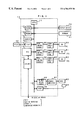
- FIG. 1 is a block diagram of a CNC apparatus to which the present invention is applied;
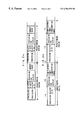
- FIGS. 2 a and 2 b are schematic diagrams for showing regular processing to be performed by a processor of a CNC apparatus, and processing in a low-electric-power consumption mode when temperature rises, according to a first embodiment of the invention
- FIG. 3 is a flowchart of processing to be performed by the processor in the first embodiment
- FIG. 4 is a flowchart of processing to be performed by the processor in a second embodiment of the invention.
- FIG. 5 is a diagram for showing a transition of the temperature rise in the second embodiment.
- the present invention relates to a method of operating a controller having a processor, for drivingly controlling a motor to thereby drivingly control operation of a machine, a robot, etc.
- a controller having a processor
- drivingly controlling a motor to thereby drivingly control operation of a machine, a robot, etc.
- an example in which the operating method of the present invention is applied to a CNC apparatus for controlling a machine tool will be described.
- FIG. 1 is a functional block diagram showing essential elements of a CNC apparatus 10 for drivingly controlling an NC machine tool.
- a processor capable of operating in a low-electric-power consumption mode is used as a processor 11 for generally controlling the CNC apparatus 10 .
- the processor 11 reads, through a bus 19 , a system program stored in a ROM 12 , and generally controls the CNC apparatus 10 according to the system program.
- a RAM 13 stores temporary calculation data, display data and a variety of data inputted by an operator through a keyboard 71 .
- a CMOS memory 14 is backed up by a battery (not shown) and functions as a non-volatile memory which retains its memorized state even when the power for the CNC apparatus 10 is switched off.
- the CMOS memory 14 stores machining programs read through an interface 15 or inputted using a display device 70 and the keyboard 71 .
- a variety of system programs are memorized in advance for performing processing in an edit mode necessary for creating and editing machining programs, and processing for automatic operation.
- the interface 15 is for external devices connectable to the CNC apparatus 10 .
- An external device 72 such as a floppy cassette adapter is connected to the interface 15 . Through the external device 72 , machining programs are read and also machining programs edited in the CNC apparatus 10 can be stored in a floppy cassette or the like.
- a PC (programmable controller) 16 controls auxiliary devices of the machine tool, such as an actuator of a robot hand for changing tools in accordance with sequence programs stored in the CNC apparatus 10 .
- the PC 16 converts M-function, S-function and T-function commands specified in machining programs into signals suitable for the auxiliary device according to the sequence program to output them to the auxiliary device side through an I/O unit 17 .
- Auxiliary devices such as various actuators operates in accordance with those output signals.
- the PC 16 further receives signals from various switches on an operating panel provided on the body of a machine tool and performs necessary processing on those signals to forward them to the processor 11 .
- a temperature sensor TS is provided in the vicinity of the processor 11 in the CNC apparatus 10 so that the processor 11 can detect a signal from the temperature sensor TS through the I/O unit 17 and the PC 16 .
- a fan stop detecting sensor FS is also provided.
- a fan for cooling the CNC apparatus 10 is connected to the I/O unit 17 and the processor 11 outputs a drive command to the fan F and also capable of detecting a fan stop detection signal from the fan stop detecting sensor FS through the I/O unit 17 and the PC 16 .
- Axis control circuits 30 to 32 for feed axes X, Y, Z of the machine tool respectively receive a motion command for their axes, which is outputted from the processor 11 in each distribution period, and perform position and speed loop processing to output a torque command to their servo amplifiers 40 to 42 .
- the servo amplifiers 40 to 42 drive their servo motors 50 to 52 for their axes of the machine tool.
- a position detector and a speed detector are provided, and a position feedback signal and a speed feedback signal are fed back from each position detector and each speed detector to each axis control circuit 30 to 32 .
- FIG. 1 indication of feedback of each position signal and each speed signal is omitted, and an example of a machine tool having three feed axes is shown.
- a spindle control circuit 60 receives a spindle rotation command for the machine tool and outputs a spindle speed signal to a spindle amplifier 61 .
- the spindle amplifier 61 receives the spindle speed signal, the spindle amplifier 61 makes a spindle motor 62 rotate at a commanded rotating speed.
- a position coder 63 is connected by a gear, a belt or the like. The position coder 63 outputs a feedback pulse in synchronism with the rotation of the spindle and the feedback pulse is read by the processor 11 through an interface 18 .
- the above described structure of the CNC apparatus is not different from the structure of conventional CNC apparatus.
- the present invention differs from the conventional method in controlling the operation of the CNC apparatus when a stop of operation of a fan or a rise in temperature is detected.
- the processor 11 of the CNC apparatus commands to drive the spindle motor and the servo motors 50 to 52 for the respective feed axes in accordance with an NC machining program stored in the CMOS memory 14 to thereby machine a workpiece.
- the processor 11 performs processing including calculation of a position of each axis, distribution of a motion command to each axis control circuit 30 to 32 for each axis, processing related to the PC, processing for display, memory check for program protection under interruption control in a predetermined period, as shown in FIG. 2 a.
- the processor 11 stops driving of the servo motors 50 to 52 for the respective axes and the spindled motor 62 , and transfers to processing in a low-electric-power consumption mode, as shown in FIG. 2 b.
- processing related to the axes control such as calculation of a position of each axis, distribution of a motion quantity to each axis, etc. is not necessary, and therefore not performed.
- the memory check is not performed, either. Only minimum processing necessary resuming control operation is performed.
- the processor 11 performs processing related to the PC and processing for display which are necessary for keeping a man/machine interface effective, in the same way as in the regular mode. Thus, dialogue between the CNC apparatus 10 and the operator is made possible. Then, the processor 11 transfers to a low-electric-power consumption mode.
- the processors 11 does not perform processing which is not required for the present state, such as introduction of a clock to a calculation and performing of the calculation. Instead, the processor 11 performs minimum processing required for keeping the CPU in an operating state, such as clock processing, processing for keeping coherence between a cache memory and a main memory.
- the processor 11 transfers to a normal mode in which is performs processing related to the PC and processing for display, again.
- a further fixed time period passes after the processor 11 has transferred to the normal mode, the processor 11 transfers to the low-electric-power consumption mode, in which it performs only the above mentioned processing. Referring to FIG.
- the processor 11 transfers to the normal mode, and at every point of time tb, each time a predetermined time elapses from each point of time ta, the processor 11 transfers to the low-electric-power consumption mode.
- the processor 11 repeats such switching of the modes. While this switching of the modes is repeated, since the processor 11 does not perform processing related to the axes control and only performs minimum processing required for resuming control operation, heating of the processor 11 is reduced to prevent thermal runaway and thermal destruction of the processor 11 .
- FIG. 3 is a flowchart showing the above described processing to be performed by the processor 11 .
- the processor 11 determines whether or not the fan stop signal is inputted and whether or not the detected temperature is equal to or higher than a predetermined value (Step S 1 ). If the fan stop signal is not inputted and the temperature detected by the temperature sensor is lower than the predetermined value, the processor 11 calculates positions of the respective axes according to the NC machining program (Step S 2 ), and outputs distributed data of a motion command to the axis control circuits 30 to 32 for the respective axes (Step S 3 ).
- the processor 11 performs processing of information cooperatively with a processor of the PC 16 , displays necessary information on the display device 70 (Steps S 4 , S 5 ), and performs memory check (Step S 6 ). Thus, the processor 11 ends the processing of the present processing cycle.
- the processor 11 performs only the aforementioned processing related to the PC and the processing for display (Steps S 7 , S 8 ), to terminate processing of the normal mode, and performs processing in the lowe-lectric-power consumption mode such as clock processing, processing for keeping coherence between the cache memory and the main memory (not illustrated).
- the processing to be performed by the processor 11 is little, so that a rise in temperature of the processor 11 is reduced.
- a threshold value T 1 for defining an upper limit of temperature below which the normal operation is allowed; a threshold value T 2 higher than the threshold value T 1 , for defining an upper limit of temperature below which a first operation stage in the low-electric-power consumption mode is allowed; a rate of dropping the operating speed, i.e., the feeding speed of the axes in that first stage (override value) n 1 [%]; a limit temperature T 3 higher than the threshold value T 2 for the first operation stage in low-electric-power consumption mode, for defining a value below which a second operation stage in the low-electric-power consumption mode is allowed and at or above which the operation is stopped; a rate of dropping an operating speed in the second operation stage in the low-electric-power consumption mode (override value) n 2 [%]; an acceleration/deceleration time constant for the normal operation; and an acceleration/deceleration time constant for the first and second stages in the low-electric-power consumption mode.
- the values T 1 , T 2 , T 3 are set as T 1 ⁇ T 2 ⁇ T 3
- the values n 1 , n 2 are set as n 2 ⁇ n 1 .
- the acceleration/deceleration time constant for the first and second stages in the low-electric-power consumption mode is larger than that in the normal operation mode to make the acceleration/deceleration period longer.
- the processor 11 performs processing shown in FIG. 4 in each predetermined processing cycle.
- the processor 11 determines whether or not the temperature Tr in the CNC control device 10 detected by the temperature sensor is lower than the set threshold T 1 below which the normal operation is allowed (Step A 1 ). If it is lower than the threshold T 1 , the processor 11 performs the normal operation at a normal speed (Step A 2 ). In accordance with the NC machining program, the processor distributes motion commands to the respective axes and drives the servo motors 50 to 52 for the respective axes with a feeding speed designated in the NC machining program.
- the acceleration/deceleration time constant used in this case is the set value for the normal operation.
- Step A 1 if the detected temperature Tr is equal to the threshold T 1 or higher, the processor 11 proceeds to Step A 3 , where it is determined whether or not the detected temperature Tr is lower than the set threshold T 2 defining an upper limit of temperature for the first stage in the low-electric-power consumption mode. If it is lower than the threshold value T 2 , a feeding speed in this case is set to a value obtained by multiplying the feeding speed designated in the NC machining program by the override value n 1 set for the first stage in the low-electric-power consumption mode (Step A 4 ).
- the processor 11 further turns off the back light of the display device 70 (or instead, reduces luminous energy of the back light to darken it so as to reduce heat generation), and changes the acceleration/deceleration time constant to the value set for the low electric power consumption mode (Step A 5 ).
- the feeding speed drops, so that calculation for obtaining motion quantities to be supplied to the respective axes in each distribution cycle becomes simpler, and thus, time required for processing related to the axes is smaller and quantity of heat generated by the processor 11 is reduced. Further, since the back light of the display device 70 is turned off and heat generation is reduced correspondingly, a rise in temperature of the CNC apparatus 10 is suppressed. Furthermore, when the acceleration/deceleration time constant is made larger, the value of current flowing through the servo motors 50 to 52 for the feed axes at the time of acceleration/deceleration is reduced. Accordingly, the heat generation of the motors is reduced, a rise in temperature of the entire system of the CNC apparatus 10 including the processor 11 is reduced.
- the feeding speed in this case is set to a value obtained by multiplying the feeding speed designated in the program by the override value n 2 set for the second stage in the low electrical power consumption mode to thereby drops the actual feeding speed steeply (Step A 7 ). Also in this case, the processor 11 further turns off the back light and changes the acceleration/deceleration time constant to the value set for the low-electric-power consumption mode (Step A 5 ). Thus, a rise in temperature in the CNC 10 and in the processor 11 is further reduced.
- Step A 8 the system is stopped since there is a risk that thermal runaway or thermal destruction of the processor 11 would happen.
- the operation of the CNC apparatus 10 is stopped with the temperature rising slowly, since the feeding speed, that is, the operating speed is already dropped before the stop of the operation.
- the temperature of the processor 11 can not rise steeply, so that thermal runaway of the processor 11 is prevented.
- FIG. 5 shows an example in which the feeding speed designated in the program is 10 m/min, the override values n 1 and n 2 for the first and second stages in the low- electric-power consumption mode are 75% and 50%, respectively.
- the feeding speed is further reduced to 50% of the speed specified in the program, i.e., 5 m/min.
- the heat generation is reduced, and the rise in temperature in the CNC apparatus is further reduced.
- the heat generation and the radiation by natural ventilation are equilibrated at this stage, so that the rise in temperature stops and the equilibrium is maintained.
- the processor performs only minimum required processing in each processing cycle and operates in the lowe-lectric-power consumption mode for the rest of time, when operation of the cooling fan of the controller stops or when the temperature in the controller rises. Therefore, heat generation of the processor is reduced to suppress the rise in temperature. Further, since the above-mentioned minimum required processing is related to a man/machine interface, the operation can be easily restored and resumed.
- an operating speed of a machine, a robot, etc. which is controlled by the controller is reduced as a temperature in the controller rises, so that a load on the processor is reduced to suppress the heat generation and the rise in temperature of the processor.
- the operation of the machine, the robot and the like can be continued without stopping the operation of the controller.
Landscapes
- Engineering & Computer Science (AREA)
- Physics & Mathematics (AREA)
- General Physics & Mathematics (AREA)
- Automation & Control Theory (AREA)
- Human Computer Interaction (AREA)
- Manufacturing & Machinery (AREA)
- Numerical Control (AREA)
Applications Claiming Priority (3)
| Application Number | Priority Date | Filing Date | Title |
|---|---|---|---|
| JP03694497A JP3168255B2 (ja) | 1997-02-06 | 1997-02-06 | 機械やロボットを駆動制御するプロセッサを備えた制御装置の運転方法 |
| JP9-36944 | 1997-02-06 | ||
| PCT/JP1998/000510 WO1998035273A1 (fr) | 1997-02-06 | 1998-02-06 | Procede d'exploitation d'un regulateur permettant de commander une machine industrielle dotee d'une processeur |
Publications (1)
| Publication Number | Publication Date |
|---|---|
| US6704875B1 true US6704875B1 (en) | 2004-03-09 |
Family
ID=12483873
Family Applications (1)
| Application Number | Title | Priority Date | Filing Date |
|---|---|---|---|
| US09/155,827 Expired - Lifetime US6704875B1 (en) | 1997-02-06 | 1998-02-06 | Method of operation controller having processor for controlling industrial machine |
Country Status (5)
| Country | Link |
|---|---|
| US (1) | US6704875B1 (de) |
| EP (1) | EP0909997B1 (de) |
| JP (1) | JP3168255B2 (de) |
| DE (1) | DE69841582D1 (de) |
| WO (1) | WO1998035273A1 (de) |
Cited By (14)
| Publication number | Priority date | Publication date | Assignee | Title |
|---|---|---|---|---|
| US20040203337A1 (en) * | 2002-09-05 | 2004-10-14 | Xytrans, Inc. | Low cost VSAT MMIC transceiver with automatic power control |
| US20050080949A1 (en) * | 2003-10-14 | 2005-04-14 | Vu Mieu V. | Method and system for direct access to a non-memory mapped device memory |
| US20050131584A1 (en) * | 2003-12-12 | 2005-06-16 | Octigabay Systems Corporation | Methods and apparatus for replacing cooling systems in operating computers |
| US20050289360A1 (en) * | 2004-06-01 | 2005-12-29 | Rajesh Banginwar | System to manage display power consumption |
| US20080091394A1 (en) * | 2006-09-15 | 2008-04-17 | Deckel Maho Pfronten Gmbh | Device and method for simulating a sequence for machining a workpiece on a machine tool |
| US20080112571A1 (en) * | 2006-11-09 | 2008-05-15 | Thomas Michael Bradicich | Noise control in proximity to a computer system |
| US20090063876A1 (en) * | 2007-09-03 | 2009-03-05 | Seiko Epson Corporation | Information processing apparatus and semiconductor integrated circuit |
| US20090168834A1 (en) * | 2007-12-27 | 2009-07-02 | Hon Hai Precision Industry Co., Ltd. | Apparatus and method for testing temperature |
| US20110154069A1 (en) * | 2009-12-23 | 2011-06-23 | Edward Costales | Dynamic power state determination |
| US20130018484A1 (en) * | 2007-11-13 | 2013-01-17 | Schultz Ronald E | Industrial Controller Using Shared Memory Multicore Architecture |
| US9809949B2 (en) | 2014-04-25 | 2017-11-07 | Harnischfeger Technologies, Inc. | Controlling crowd runaway of an industrial machine |
| US10808382B2 (en) | 2016-11-09 | 2020-10-20 | Joy Global Surface Mining Inc | Systems and methods of preventing a run-away state in an industrial machine |
| US20220137587A1 (en) * | 2019-02-15 | 2022-05-05 | Siemens Aktiengesellschaft | Method for operating a numerically controlled production machine, and corresponding numerical control |
| US11553619B2 (en) * | 2018-11-28 | 2023-01-10 | Fanuc Corporation | Control device and control method |
Families Citing this family (4)
| Publication number | Priority date | Publication date | Assignee | Title |
|---|---|---|---|---|
| GB2411475B (en) * | 2004-02-24 | 2006-10-25 | Elliott Ind Ltd | Position detecting system |
| JP4462059B2 (ja) * | 2005-02-14 | 2010-05-12 | ブラザー工業株式会社 | コントローラ温度診断装置及びモータ温度診断装置 |
| DE102010001518A1 (de) * | 2010-02-02 | 2011-08-04 | DECKEL MAHO Pfronten GmbH, 87459 | Vorrichtung zum Steuern von Betriebsfunktionen einer Werkzeugmaschine |
| US11511381B2 (en) * | 2018-08-29 | 2022-11-29 | Illinois Tool Works Inc. | Movement control of material removal systems |
Citations (30)
| Publication number | Priority date | Publication date | Assignee | Title |
|---|---|---|---|---|
| US3626385A (en) * | 1969-12-30 | 1971-12-07 | Ibm | Time-shared numerical control system |
| JPS5441516A (en) | 1977-09-08 | 1979-04-02 | Taiho Kensetsu Kk | Method of hardening soft ground |
| US4698655A (en) * | 1983-09-23 | 1987-10-06 | Motorola, Inc. | Overvoltage and overtemperature protection circuit |
| JPS6420990A (en) | 1987-07-13 | 1989-01-24 | Matsushita Electric Industrial Co Ltd | Controller for industrial robot |
| US4907117A (en) * | 1988-09-08 | 1990-03-06 | National Semiconductor Corporation | Integrated circuit thermal limit |
| JPH03107711A (ja) | 1989-09-21 | 1991-05-08 | Mitsubishi Motors Corp | 路面計測法 |
| JPH03163603A (ja) | 1989-11-21 | 1991-07-15 | Okuma Mach Works Ltd | 数値制御装置 |
| JPH03294904A (ja) | 1990-04-12 | 1991-12-26 | Amada Metrecs Co Ltd | 数値制御盤の温度管理装置 |
| JPH0457107A (ja) | 1990-06-27 | 1992-02-24 | Hitachi Ltd | ロボットの制御装置 |
| JPH0495109A (ja) | 1990-08-07 | 1992-03-27 | Fuji Electric Co Ltd | 電子機器の発熱対策装置 |
| JPH04281424A (ja) | 1991-03-08 | 1992-10-07 | Mitsubishi Electric Corp | 液晶表示板のバックライト装置 |
| JPH05150818A (ja) | 1991-06-28 | 1993-06-18 | Hitachi Seiki Co Ltd | 数値制御工作機械の故障診断方法およびその装置 |
| US5249741A (en) * | 1992-05-04 | 1993-10-05 | International Business Machines Corporation | Automatic fan speed control |
| JPH05297993A (ja) | 1992-04-16 | 1993-11-12 | Dia Semikon Syst Kk | マイクロプロセッサの駆動制御装置 |
| JPH05303417A (ja) | 1992-04-24 | 1993-11-16 | Yaskawa Electric Corp | 産業用ロボットの制御装置 |
| JPH075425A (ja) | 1993-06-14 | 1995-01-10 | Mitsubishi Electric Corp | モータコントローラ |
| US5448143A (en) * | 1993-11-17 | 1995-09-05 | Dell Usa, L.P. | Sensor for monitoring fan operation in a PC or PC based system |
| JPH07311634A (ja) | 1994-05-18 | 1995-11-28 | Fujitsu Ltd | 電源制御装置 |
| US5513361A (en) * | 1994-07-25 | 1996-04-30 | Intel Corporation | Method and apparatus for reducing power consumption of a fan in a computer system |
| US5534854A (en) * | 1995-07-10 | 1996-07-09 | Bradbury; Rod J. | Fan failure alert for electronic equipment |
| US5631852A (en) * | 1995-05-22 | 1997-05-20 | Eteq Microsystems, Inc. | Smart cooling security system |
| JPH09179623A (ja) | 1995-12-22 | 1997-07-11 | Makino Milling Mach Co Ltd | 数値制御による機械装置の制御方法および装置 |
| US5726874A (en) * | 1996-11-13 | 1998-03-10 | Liang; Charles | Power supply having a dual air flow control for reducing heat buildup |
| US5835885A (en) * | 1997-06-05 | 1998-11-10 | Giga-Byte Technology Co., Ltd. | Over temperature protection method and device for a central processing unit |
| US5848282A (en) * | 1996-01-26 | 1998-12-08 | Samsung Electronics Co., Ltd. | Computer system with a control funtion of rotation speed of a cooling fan for a microprocessor chip therein and a method of controlling the cooling fan |
| US5977733A (en) * | 1998-12-08 | 1999-11-02 | Shin Jiuh Corporation | Fan control device with breakdown warning capability |
| US6065930A (en) * | 1997-07-15 | 2000-05-23 | Fujitsu Limited | Cooling control apparatus |
| JP3107711B2 (ja) | 1994-08-09 | 2000-11-13 | 株式会社東芝 | 横流ファン |
| JP3163603B2 (ja) | 1991-11-08 | 2001-05-08 | 住友電気工業株式会社 | 光ファイバの融着接続装置 |
| JP3294904B2 (ja) | 1993-04-28 | 2002-06-24 | 株式会社荏原製作所 | スカムボックスの給水装置 |
Family Cites Families (4)
| Publication number | Priority date | Publication date | Assignee | Title |
|---|---|---|---|---|
| JPS5744794Y2 (de) * | 1977-08-30 | 1982-10-02 | ||
| EP0269373A3 (de) * | 1986-11-20 | 1988-08-17 | Unimation Inc. | Steuerung eines Mehrachsenroboters mit Schutzsystem mit Überwachung von Leistung und Geschwindigkeit |
| JP2714451B2 (ja) * | 1989-08-23 | 1998-02-16 | 住友ベークライト株式会社 | エポキシ樹脂組成物 |
| US5483102A (en) * | 1994-05-12 | 1996-01-09 | Intel Corporation | Employing on die temperature sensors and fan-heatsink failure signals to control power dissipation |
-
1997
- 1997-02-06 JP JP03694497A patent/JP3168255B2/ja not_active Expired - Lifetime
-
1998
- 1998-02-06 EP EP98901545A patent/EP0909997B1/de not_active Expired - Lifetime
- 1998-02-06 WO PCT/JP1998/000510 patent/WO1998035273A1/ja not_active Ceased
- 1998-02-06 DE DE69841582T patent/DE69841582D1/de not_active Expired - Lifetime
- 1998-02-06 US US09/155,827 patent/US6704875B1/en not_active Expired - Lifetime
Patent Citations (30)
| Publication number | Priority date | Publication date | Assignee | Title |
|---|---|---|---|---|
| US3626385A (en) * | 1969-12-30 | 1971-12-07 | Ibm | Time-shared numerical control system |
| JPS5441516A (en) | 1977-09-08 | 1979-04-02 | Taiho Kensetsu Kk | Method of hardening soft ground |
| US4698655A (en) * | 1983-09-23 | 1987-10-06 | Motorola, Inc. | Overvoltage and overtemperature protection circuit |
| JPS6420990A (en) | 1987-07-13 | 1989-01-24 | Matsushita Electric Industrial Co Ltd | Controller for industrial robot |
| US4907117A (en) * | 1988-09-08 | 1990-03-06 | National Semiconductor Corporation | Integrated circuit thermal limit |
| JPH03107711A (ja) | 1989-09-21 | 1991-05-08 | Mitsubishi Motors Corp | 路面計測法 |
| JPH03163603A (ja) | 1989-11-21 | 1991-07-15 | Okuma Mach Works Ltd | 数値制御装置 |
| JPH03294904A (ja) | 1990-04-12 | 1991-12-26 | Amada Metrecs Co Ltd | 数値制御盤の温度管理装置 |
| JPH0457107A (ja) | 1990-06-27 | 1992-02-24 | Hitachi Ltd | ロボットの制御装置 |
| JPH0495109A (ja) | 1990-08-07 | 1992-03-27 | Fuji Electric Co Ltd | 電子機器の発熱対策装置 |
| JPH04281424A (ja) | 1991-03-08 | 1992-10-07 | Mitsubishi Electric Corp | 液晶表示板のバックライト装置 |
| JPH05150818A (ja) | 1991-06-28 | 1993-06-18 | Hitachi Seiki Co Ltd | 数値制御工作機械の故障診断方法およびその装置 |
| JP3163603B2 (ja) | 1991-11-08 | 2001-05-08 | 住友電気工業株式会社 | 光ファイバの融着接続装置 |
| JPH05297993A (ja) | 1992-04-16 | 1993-11-12 | Dia Semikon Syst Kk | マイクロプロセッサの駆動制御装置 |
| JPH05303417A (ja) | 1992-04-24 | 1993-11-16 | Yaskawa Electric Corp | 産業用ロボットの制御装置 |
| US5249741A (en) * | 1992-05-04 | 1993-10-05 | International Business Machines Corporation | Automatic fan speed control |
| JP3294904B2 (ja) | 1993-04-28 | 2002-06-24 | 株式会社荏原製作所 | スカムボックスの給水装置 |
| JPH075425A (ja) | 1993-06-14 | 1995-01-10 | Mitsubishi Electric Corp | モータコントローラ |
| US5448143A (en) * | 1993-11-17 | 1995-09-05 | Dell Usa, L.P. | Sensor for monitoring fan operation in a PC or PC based system |
| JPH07311634A (ja) | 1994-05-18 | 1995-11-28 | Fujitsu Ltd | 電源制御装置 |
| US5513361A (en) * | 1994-07-25 | 1996-04-30 | Intel Corporation | Method and apparatus for reducing power consumption of a fan in a computer system |
| JP3107711B2 (ja) | 1994-08-09 | 2000-11-13 | 株式会社東芝 | 横流ファン |
| US5631852A (en) * | 1995-05-22 | 1997-05-20 | Eteq Microsystems, Inc. | Smart cooling security system |
| US5534854A (en) * | 1995-07-10 | 1996-07-09 | Bradbury; Rod J. | Fan failure alert for electronic equipment |
| JPH09179623A (ja) | 1995-12-22 | 1997-07-11 | Makino Milling Mach Co Ltd | 数値制御による機械装置の制御方法および装置 |
| US5848282A (en) * | 1996-01-26 | 1998-12-08 | Samsung Electronics Co., Ltd. | Computer system with a control funtion of rotation speed of a cooling fan for a microprocessor chip therein and a method of controlling the cooling fan |
| US5726874A (en) * | 1996-11-13 | 1998-03-10 | Liang; Charles | Power supply having a dual air flow control for reducing heat buildup |
| US5835885A (en) * | 1997-06-05 | 1998-11-10 | Giga-Byte Technology Co., Ltd. | Over temperature protection method and device for a central processing unit |
| US6065930A (en) * | 1997-07-15 | 2000-05-23 | Fujitsu Limited | Cooling control apparatus |
| US5977733A (en) * | 1998-12-08 | 1999-11-02 | Shin Jiuh Corporation | Fan control device with breakdown warning capability |
Cited By (28)
| Publication number | Priority date | Publication date | Assignee | Title |
|---|---|---|---|---|
| US20040203337A1 (en) * | 2002-09-05 | 2004-10-14 | Xytrans, Inc. | Low cost VSAT MMIC transceiver with automatic power control |
| US7076201B2 (en) * | 2002-09-05 | 2006-07-11 | Xytrans, Inc. | Low cost VSAT MMIC transceiver with automatic power control |
| US7293153B2 (en) | 2003-10-14 | 2007-11-06 | Freescale Semiconductor, Inc. | Method and system for direct access to a non-memory mapped device memory |
| US20050080949A1 (en) * | 2003-10-14 | 2005-04-14 | Vu Mieu V. | Method and system for direct access to a non-memory mapped device memory |
| WO2005038585A3 (en) * | 2003-10-14 | 2007-01-25 | Freescale Semiconductor Inc | Method and system for direct access to a non-memory mapped device memory |
| US20050131584A1 (en) * | 2003-12-12 | 2005-06-16 | Octigabay Systems Corporation | Methods and apparatus for replacing cooling systems in operating computers |
| US7017059B2 (en) * | 2003-12-12 | 2006-03-21 | Cray Canada Inc. | Methods and apparatus for replacing cooling systems in operating computers |
| US20060122740A1 (en) * | 2003-12-12 | 2006-06-08 | Cray Canada Inc. | Methods and apparatus for replacing cooling systems in operating computers |
| US7219247B2 (en) | 2003-12-12 | 2007-05-15 | Cray Canada Inc. | Methods and apparatus for replacing cooling systems in operating computers |
| US7570259B2 (en) * | 2004-06-01 | 2009-08-04 | Intel Corporation | System to manage display power consumption |
| US20050289360A1 (en) * | 2004-06-01 | 2005-12-29 | Rajesh Banginwar | System to manage display power consumption |
| US9360861B2 (en) * | 2006-09-15 | 2016-06-07 | Dmg Electronics Gmbh | Device and method for simulating a sequence for machining a workpiece on a machine tool |
| US20080091394A1 (en) * | 2006-09-15 | 2008-04-17 | Deckel Maho Pfronten Gmbh | Device and method for simulating a sequence for machining a workpiece on a machine tool |
| US20080112571A1 (en) * | 2006-11-09 | 2008-05-15 | Thomas Michael Bradicich | Noise control in proximity to a computer system |
| US7996692B2 (en) * | 2007-09-03 | 2011-08-09 | Seiko Epson Corporation | Information processing apparatus and semiconductor integrated circuit |
| US20090063876A1 (en) * | 2007-09-03 | 2009-03-05 | Seiko Epson Corporation | Information processing apparatus and semiconductor integrated circuit |
| US20130018484A1 (en) * | 2007-11-13 | 2013-01-17 | Schultz Ronald E | Industrial Controller Using Shared Memory Multicore Architecture |
| US9092023B2 (en) * | 2007-11-13 | 2015-07-28 | Rockwell Automation Technologies, Inc. | Industrial controller using shared memory multicore architecture |
| US7862231B2 (en) * | 2007-12-27 | 2011-01-04 | Foxnum Technology Co., Ltd. | Apparatus and method for testing temperature |
| US20090168834A1 (en) * | 2007-12-27 | 2009-07-02 | Hon Hai Precision Industry Co., Ltd. | Apparatus and method for testing temperature |
| US20110154069A1 (en) * | 2009-12-23 | 2011-06-23 | Edward Costales | Dynamic power state determination |
| US8555091B2 (en) | 2009-12-23 | 2013-10-08 | Intel Corporation | Dynamic power state determination of a graphics processing unit |
| US9809949B2 (en) | 2014-04-25 | 2017-11-07 | Harnischfeger Technologies, Inc. | Controlling crowd runaway of an industrial machine |
| US10683633B2 (en) | 2014-04-25 | 2020-06-16 | Joy Global Surface Mining Inc | Controlling crowd runaway of an industrial machine |
| US10808382B2 (en) | 2016-11-09 | 2020-10-20 | Joy Global Surface Mining Inc | Systems and methods of preventing a run-away state in an industrial machine |
| US11553619B2 (en) * | 2018-11-28 | 2023-01-10 | Fanuc Corporation | Control device and control method |
| US20220137587A1 (en) * | 2019-02-15 | 2022-05-05 | Siemens Aktiengesellschaft | Method for operating a numerically controlled production machine, and corresponding numerical control |
| US12422816B2 (en) * | 2019-02-15 | 2025-09-23 | Siemens Aktiengesellschaft | Method for operating a numerically controlled production machine, and corresponding numerical control |
Also Published As
| Publication number | Publication date |
|---|---|
| JPH10222214A (ja) | 1998-08-21 |
| DE69841582D1 (de) | 2010-05-12 |
| EP0909997B1 (de) | 2010-03-31 |
| EP0909997A4 (de) | 2004-05-12 |
| JP3168255B2 (ja) | 2001-05-21 |
| EP0909997A1 (de) | 1999-04-21 |
| WO1998035273A1 (fr) | 1998-08-13 |
Similar Documents
| Publication | Publication Date | Title |
|---|---|---|
| EP0909997B1 (de) | Betriebsverfahren für eine steuerung zur kontrolle einer industriellen maschine mit prozessor | |
| JP3363958B2 (ja) | ドリル加工方式 | |
| EP1083024A1 (de) | Verfahren und vorrichtung zur numerischen steuerung einer werkzeugmaschine | |
| JPH07132440A (ja) | 加工負荷監視方式 | |
| WO1995004633A1 (en) | Tool life estimation method | |
| EP0666138A1 (de) | Vorbeugungssystem fur werkzeugbruch | |
| US12542503B2 (en) | Control device | |
| JP4025999B2 (ja) | 自動機械の制御装置 | |
| US10564630B2 (en) | Numerical controller | |
| US10120367B2 (en) | Numerical controller performing repetitive machining | |
| US20200133236A1 (en) | Numerical controller | |
| US5289367A (en) | Numerical control apparatus using fuzzy control | |
| JPH0751999A (ja) | 工具破損検出方式 | |
| US11156986B2 (en) | Machining program editing device | |
| JPH11327624A (ja) | 送り速度制限機能付数値制御装置 | |
| JPH0751996A (ja) | Cncの過剰負荷検出方式 | |
| JP2880211B2 (ja) | 工具負荷監視制御方法 | |
| JPH0751997A (ja) | 加工負荷監視方式 | |
| JPH0751992A (ja) | 穴開け加工方式 | |
| JPH06297296A (ja) | 数値制御装置および自動プログラミング装置 | |
| JPH0750409B2 (ja) | ロボツトの制御装置 | |
| JP2622415B2 (ja) | 数値制御装置の教示データ作成方式及び加工速度制御方式 | |
| JPS58116092A (ja) | サ−ボモ−タ制御方法 | |
| JP3209344B2 (ja) | 産業用ロボットの制御方法 | |
| JPH0885044A (ja) | 加工負荷監視方式 |
Legal Events
| Date | Code | Title | Description |
|---|---|---|---|
| AS | Assignment |
Owner name: FANUC LTD., JAPAN Free format text: ASSIGNMENT OF ASSIGNORS INTEREST;ASSIGNORS:KINOSHITA, JIRO;AOYAMA, KAZUNARI;OKAMURA, YUKIO;REEL/FRAME:009726/0447 Effective date: 19981001 |
|
| STCF | Information on status: patent grant |
Free format text: PATENTED CASE |
|
| CC | Certificate of correction | ||
| FEPP | Fee payment procedure |
Free format text: PAYER NUMBER DE-ASSIGNED (ORIGINAL EVENT CODE: RMPN); ENTITY STATUS OF PATENT OWNER: LARGE ENTITY Free format text: PAYOR NUMBER ASSIGNED (ORIGINAL EVENT CODE: ASPN); ENTITY STATUS OF PATENT OWNER: LARGE ENTITY |
|
| FPAY | Fee payment |
Year of fee payment: 4 |
|
| CC | Certificate of correction | ||
| FEPP | Fee payment procedure |
Free format text: PAYER NUMBER DE-ASSIGNED (ORIGINAL EVENT CODE: RMPN); ENTITY STATUS OF PATENT OWNER: LARGE ENTITY Free format text: PAYOR NUMBER ASSIGNED (ORIGINAL EVENT CODE: ASPN); ENTITY STATUS OF PATENT OWNER: LARGE ENTITY |
|
| FPAY | Fee payment |
Year of fee payment: 8 |
|
| FPAY | Fee payment |
Year of fee payment: 12 |