US6147271A - Oligomerization process - Google Patents
Oligomerization process Download PDFInfo
- Publication number
- US6147271A US6147271A US09/201,514 US20151498A US6147271A US 6147271 A US6147271 A US 6147271A US 20151498 A US20151498 A US 20151498A US 6147271 A US6147271 A US 6147271A
- Authority
- US
- United States
- Prior art keywords
- oligomers
- oligomerization
- olefin
- preselected
- reaction
- Prior art date
- Legal status (The legal status is an assumption and is not a legal conclusion. Google has not performed a legal analysis and makes no representation as to the accuracy of the status listed.)
- Expired - Lifetime
Links
- 238000006384 oligomerization reaction Methods 0.000 title claims abstract description 81
- 238000000034 method Methods 0.000 title claims abstract description 40
- 230000008569 process Effects 0.000 title claims abstract description 32
- 238000009835 boiling Methods 0.000 claims abstract description 43
- 239000000178 monomer Substances 0.000 claims abstract description 24
- 150000005674 acyclic monoalkenes Chemical class 0.000 claims abstract description 7
- 230000003606 oligomerizing effect Effects 0.000 claims abstract description 4
- 238000006243 chemical reaction Methods 0.000 claims description 59
- 239000000203 mixture Substances 0.000 claims description 42
- 239000003054 catalyst Substances 0.000 claims description 23
- 239000004711 α-olefin Substances 0.000 claims description 18
- XLYOFNOQVPJJNP-UHFFFAOYSA-N water Substances O XLYOFNOQVPJJNP-UHFFFAOYSA-N 0.000 claims description 12
- -1 aliphatic polyol Chemical class 0.000 claims description 10
- 150000005673 monoalkenes Chemical class 0.000 claims description 9
- 239000004215 Carbon black (E152) Substances 0.000 claims description 7
- 125000004432 carbon atom Chemical group C* 0.000 claims description 7
- 229930195733 hydrocarbon Natural products 0.000 claims description 7
- 150000002430 hydrocarbons Chemical class 0.000 claims description 7
- RTZKZFJDLAIYFH-UHFFFAOYSA-N Diethyl ether Chemical compound CCOCC RTZKZFJDLAIYFH-UHFFFAOYSA-N 0.000 claims description 5
- LFQSCWFLJHTTHZ-UHFFFAOYSA-N Ethanol Chemical compound CCO LFQSCWFLJHTTHZ-UHFFFAOYSA-N 0.000 claims description 5
- 230000035484 reaction time Effects 0.000 claims description 3
- 150000008065 acid anhydrides Chemical class 0.000 claims description 2
- 150000001299 aldehydes Chemical class 0.000 claims description 2
- 150000002576 ketones Chemical class 0.000 claims description 2
- 229920005862 polyol Polymers 0.000 claims description 2
- 238000004064 recycling Methods 0.000 claims description 2
- DNIAPMSPPWPWGF-GSVOUGTGSA-N (R)-(-)-Propylene glycol Chemical group C[C@@H](O)CO DNIAPMSPPWPWGF-GSVOUGTGSA-N 0.000 claims 1
- 125000001931 aliphatic group Chemical group 0.000 claims 1
- JRZJOMJEPLMPRA-UHFFFAOYSA-N olefin Natural products CCCCCCCC=C JRZJOMJEPLMPRA-UHFFFAOYSA-N 0.000 description 87
- 150000001336 alkenes Chemical class 0.000 description 86
- 239000000047 product Substances 0.000 description 60
- BDERNNFJNOPAEC-UHFFFAOYSA-N propan-1-ol Chemical compound CCCO BDERNNFJNOPAEC-UHFFFAOYSA-N 0.000 description 44
- AFFLGGQVNFXPEV-UHFFFAOYSA-N 1-decene Chemical compound CCCCCCCCC=C AFFLGGQVNFXPEV-UHFFFAOYSA-N 0.000 description 30
- WTEOIRVLGSZEPR-UHFFFAOYSA-N boron trifluoride Chemical compound FB(F)F WTEOIRVLGSZEPR-UHFFFAOYSA-N 0.000 description 20
- 238000004821 distillation Methods 0.000 description 15
- 238000009826 distribution Methods 0.000 description 14
- 239000013638 trimer Substances 0.000 description 14
- 239000010689 synthetic lubricating oil Substances 0.000 description 12
- 239000007795 chemical reaction product Substances 0.000 description 10
- 239000007789 gas Substances 0.000 description 8
- 238000004519 manufacturing process Methods 0.000 description 7
- HEMHJVSKTPXQMS-UHFFFAOYSA-M Sodium hydroxide Chemical compound [OH-].[Na+] HEMHJVSKTPXQMS-UHFFFAOYSA-M 0.000 description 6
- 230000015572 biosynthetic process Effects 0.000 description 6
- 239000012188 paraffin wax Substances 0.000 description 6
- 238000010926 purge Methods 0.000 description 6
- 238000003786 synthesis reaction Methods 0.000 description 6
- 229910015900 BF3 Inorganic materials 0.000 description 5
- 238000005727 Friedel-Crafts reaction Methods 0.000 description 5
- 239000000539 dimer Substances 0.000 description 5
- IJGRMHOSHXDMSA-UHFFFAOYSA-N Atomic nitrogen Chemical compound N#N IJGRMHOSHXDMSA-UHFFFAOYSA-N 0.000 description 4
- VSCWAEJMTAWNJL-UHFFFAOYSA-K aluminium trichloride Chemical compound Cl[Al](Cl)Cl VSCWAEJMTAWNJL-UHFFFAOYSA-K 0.000 description 4
- 238000004587 chromatography analysis Methods 0.000 description 4
- 238000001816 cooling Methods 0.000 description 4
- 238000004817 gas chromatography Methods 0.000 description 4
- 239000000463 material Substances 0.000 description 4
- 230000000704 physical effect Effects 0.000 description 4
- 239000000376 reactant Substances 0.000 description 4
- LYCAIKOWRPUZTN-UHFFFAOYSA-N Ethylene glycol Chemical compound OCCO LYCAIKOWRPUZTN-UHFFFAOYSA-N 0.000 description 3
- PEDCQBHIVMGVHV-UHFFFAOYSA-N Glycerine Chemical compound OCC(O)CO PEDCQBHIVMGVHV-UHFFFAOYSA-N 0.000 description 3
- OKKJLVBELUTLKV-UHFFFAOYSA-N Methanol Chemical compound OC OKKJLVBELUTLKV-UHFFFAOYSA-N 0.000 description 3
- LRHPLDYGYMQRHN-UHFFFAOYSA-N N-Butanol Chemical compound CCCCO LRHPLDYGYMQRHN-UHFFFAOYSA-N 0.000 description 3
- 238000004458 analytical method Methods 0.000 description 3
- 238000002474 experimental method Methods 0.000 description 3
- 230000006872 improvement Effects 0.000 description 3
- GGQQNYXPYWCUHG-RMTFUQJTSA-N (3e,6e)-deca-3,6-diene Chemical compound CCC\C=C\C\C=C\CC GGQQNYXPYWCUHG-RMTFUQJTSA-N 0.000 description 2
- ZGEGCLOFRBLKSE-UHFFFAOYSA-N 1-Heptene Chemical compound CCCCCC=C ZGEGCLOFRBLKSE-UHFFFAOYSA-N 0.000 description 2
- VQOXUMQBYILCKR-UHFFFAOYSA-N 1-Tridecene Chemical compound CCCCCCCCCCCC=C VQOXUMQBYILCKR-UHFFFAOYSA-N 0.000 description 2
- SPURMHFLEKVAAS-UHFFFAOYSA-N 1-docosene Chemical compound CCCCCCCCCCCCCCCCCCCCC=C SPURMHFLEKVAAS-UHFFFAOYSA-N 0.000 description 2
- CRSBERNSMYQZNG-UHFFFAOYSA-N 1-dodecene Chemical compound CCCCCCCCCCC=C CRSBERNSMYQZNG-UHFFFAOYSA-N 0.000 description 2
- ADOBXTDBFNCOBN-UHFFFAOYSA-N 1-heptadecene Chemical compound CCCCCCCCCCCCCCCC=C ADOBXTDBFNCOBN-UHFFFAOYSA-N 0.000 description 2
- GQEZCXVZFLOKMC-UHFFFAOYSA-N 1-hexadecene Chemical compound CCCCCCCCCCCCCCC=C GQEZCXVZFLOKMC-UHFFFAOYSA-N 0.000 description 2
- LIKMAJRDDDTEIG-UHFFFAOYSA-N 1-hexene Chemical compound CCCCC=C LIKMAJRDDDTEIG-UHFFFAOYSA-N 0.000 description 2
- KWKAKUADMBZCLK-UHFFFAOYSA-N 1-octene Chemical compound CCCCCCC=C KWKAKUADMBZCLK-UHFFFAOYSA-N 0.000 description 2
- PJLHTVIBELQURV-UHFFFAOYSA-N 1-pentadecene Chemical compound CCCCCCCCCCCCCC=C PJLHTVIBELQURV-UHFFFAOYSA-N 0.000 description 2
- HFDVRLIODXPAHB-UHFFFAOYSA-N 1-tetradecene Chemical compound CCCCCCCCCCCCC=C HFDVRLIODXPAHB-UHFFFAOYSA-N 0.000 description 2
- DCTOHCCUXLBQMS-UHFFFAOYSA-N 1-undecene Chemical compound CCCCCCCCCC=C DCTOHCCUXLBQMS-UHFFFAOYSA-N 0.000 description 2
- VHUUQVKOLVNVRT-UHFFFAOYSA-N Ammonium hydroxide Chemical compound [NH4+].[OH-] VHUUQVKOLVNVRT-UHFFFAOYSA-N 0.000 description 2
- LCGLNKUTAGEVQW-UHFFFAOYSA-N Dimethyl ether Chemical compound COC LCGLNKUTAGEVQW-UHFFFAOYSA-N 0.000 description 2
- 230000008901 benefit Effects 0.000 description 2
- 229910052799 carbon Inorganic materials 0.000 description 2
- 230000008859 change Effects 0.000 description 2
- 239000012043 crude product Substances 0.000 description 2
- 238000006073 displacement reaction Methods 0.000 description 2
- 239000012530 fluid Substances 0.000 description 2
- 238000010438 heat treatment Methods 0.000 description 2
- 239000000314 lubricant Substances 0.000 description 2
- 239000010687 lubricating oil Substances 0.000 description 2
- 229910052757 nitrogen Inorganic materials 0.000 description 2
- CCCMONHAUSKTEQ-UHFFFAOYSA-N octadec-1-ene Chemical compound CCCCCCCCCCCCCCCCC=C CCCMONHAUSKTEQ-UHFFFAOYSA-N 0.000 description 2
- 239000012071 phase Substances 0.000 description 2
- 239000011541 reaction mixture Substances 0.000 description 2
- 239000000126 substance Substances 0.000 description 2
- ZDLBWMYNYNATIW-UHFFFAOYSA-N tetracos-1-ene Chemical compound CCCCCCCCCCCCCCCCCCCCCCC=C ZDLBWMYNYNATIW-UHFFFAOYSA-N 0.000 description 2
- SJDSOBWGZRPKSB-UHFFFAOYSA-N tricos-1-ene Chemical compound CCCCCCCCCCCCCCCCCCCCCC=C SJDSOBWGZRPKSB-UHFFFAOYSA-N 0.000 description 2
- 229910015844 BCl3 Inorganic materials 0.000 description 1
- WKBOTKDWSSQWDR-UHFFFAOYSA-N Bromine atom Chemical compound [Br] WKBOTKDWSSQWDR-UHFFFAOYSA-N 0.000 description 1
- 101100008049 Caenorhabditis elegans cut-5 gene Proteins 0.000 description 1
- 229910005267 GaCl3 Inorganic materials 0.000 description 1
- 229910021576 Iron(III) bromide Inorganic materials 0.000 description 1
- KDLHZDBZIXYQEI-UHFFFAOYSA-N Palladium Chemical compound [Pd] KDLHZDBZIXYQEI-UHFFFAOYSA-N 0.000 description 1
- VYPSYNLAJGMNEJ-UHFFFAOYSA-N Silicium dioxide Chemical compound O=[Si]=O VYPSYNLAJGMNEJ-UHFFFAOYSA-N 0.000 description 1
- 229910021627 Tin(IV) chloride Inorganic materials 0.000 description 1
- 230000002411 adverse Effects 0.000 description 1
- PQLAYKMGZDUDLQ-UHFFFAOYSA-K aluminium bromide Chemical compound Br[Al](Br)Br PQLAYKMGZDUDLQ-UHFFFAOYSA-K 0.000 description 1
- QGZKDVFQNNGYKY-UHFFFAOYSA-N ammonia Natural products N QGZKDVFQNNGYKY-UHFFFAOYSA-N 0.000 description 1
- 239000008346 aqueous phase Substances 0.000 description 1
- GDTBXPJZTBHREO-UHFFFAOYSA-N bromine Substances BrBr GDTBXPJZTBHREO-UHFFFAOYSA-N 0.000 description 1
- 229910052794 bromium Inorganic materials 0.000 description 1
- 230000003197 catalytic effect Effects 0.000 description 1
- 238000012512 characterization method Methods 0.000 description 1
- 238000007796 conventional method Methods 0.000 description 1
- 230000003247 decreasing effect Effects 0.000 description 1
- 230000000593 degrading effect Effects 0.000 description 1
- 239000008367 deionised water Substances 0.000 description 1
- 229910021641 deionized water Inorganic materials 0.000 description 1
- 229940069096 dodecene Drugs 0.000 description 1
- 230000000694 effects Effects 0.000 description 1
- 210000003918 fraction a Anatomy 0.000 description 1
- UPWPDUACHOATKO-UHFFFAOYSA-K gallium trichloride Chemical compound Cl[Ga](Cl)Cl UPWPDUACHOATKO-UHFFFAOYSA-K 0.000 description 1
- 239000011521 glass Substances 0.000 description 1
- 230000005484 gravity Effects 0.000 description 1
- 238000012986 modification Methods 0.000 description 1
- 230000004048 modification Effects 0.000 description 1
- TVMXDCGIABBOFY-UHFFFAOYSA-N n-Octanol Natural products CCCCCCCC TVMXDCGIABBOFY-UHFFFAOYSA-N 0.000 description 1
- 239000012074 organic phase Substances 0.000 description 1
- 150000003077 polyols Chemical class 0.000 description 1
- 238000005057 refrigeration Methods 0.000 description 1
- 238000000926 separation method Methods 0.000 description 1
- 239000000741 silica gel Substances 0.000 description 1
- 229910002027 silica gel Inorganic materials 0.000 description 1
- HPGGPRDJHPYFRM-UHFFFAOYSA-J tin(iv) chloride Chemical compound Cl[Sn](Cl)(Cl)Cl HPGGPRDJHPYFRM-UHFFFAOYSA-J 0.000 description 1
- FEONEKOZSGPOFN-UHFFFAOYSA-K tribromoiron Chemical compound Br[Fe](Br)Br FEONEKOZSGPOFN-UHFFFAOYSA-K 0.000 description 1
- FAQYAMRNWDIXMY-UHFFFAOYSA-N trichloroborane Chemical compound ClB(Cl)Cl FAQYAMRNWDIXMY-UHFFFAOYSA-N 0.000 description 1
- 238000005406 washing Methods 0.000 description 1
Images


Classifications
-
- C—CHEMISTRY; METALLURGY
- C07—ORGANIC CHEMISTRY
- C07C—ACYCLIC OR CARBOCYCLIC COMPOUNDS
- C07C2/00—Preparation of hydrocarbons from hydrocarbons containing a smaller number of carbon atoms
- C07C2/02—Preparation of hydrocarbons from hydrocarbons containing a smaller number of carbon atoms by addition between unsaturated hydrocarbons
- C07C2/04—Preparation of hydrocarbons from hydrocarbons containing a smaller number of carbon atoms by addition between unsaturated hydrocarbons by oligomerisation of well-defined unsaturated hydrocarbons without ring formation
- C07C2/06—Preparation of hydrocarbons from hydrocarbons containing a smaller number of carbon atoms by addition between unsaturated hydrocarbons by oligomerisation of well-defined unsaturated hydrocarbons without ring formation of alkenes, i.e. acyclic hydrocarbons having only one carbon-to-carbon double bond
- C07C2/08—Catalytic processes
- C07C2/14—Catalytic processes with inorganic acids; with salts or anhydrides of acids
- C07C2/20—Acids of halogen; Salts thereof ; Complexes thereof with organic compounds
-
- C—CHEMISTRY; METALLURGY
- C07—ORGANIC CHEMISTRY
- C07C—ACYCLIC OR CARBOCYCLIC COMPOUNDS
- C07C2527/00—Catalysts comprising the elements or compounds of halogens, sulfur, selenium, tellurium, phosphorus or nitrogen; Catalysts comprising carbon compounds
- C07C2527/06—Halogens; Compounds thereof
- C07C2527/08—Halides
- C07C2527/12—Fluorides
- C07C2527/1213—Boron fluoride
-
- C—CHEMISTRY; METALLURGY
- C07—ORGANIC CHEMISTRY
- C07C—ACYCLIC OR CARBOCYCLIC COMPOUNDS
- C07C2531/00—Catalysts comprising hydrides, coordination complexes or organic compounds
- C07C2531/02—Catalysts comprising hydrides, coordination complexes or organic compounds containing organic compounds or metal hydrides
-
- Y—GENERAL TAGGING OF NEW TECHNOLOGICAL DEVELOPMENTS; GENERAL TAGGING OF CROSS-SECTIONAL TECHNOLOGIES SPANNING OVER SEVERAL SECTIONS OF THE IPC; TECHNICAL SUBJECTS COVERED BY FORMER USPC CROSS-REFERENCE ART COLLECTIONS [XRACs] AND DIGESTS
- Y02—TECHNOLOGIES OR APPLICATIONS FOR MITIGATION OR ADAPTATION AGAINST CLIMATE CHANGE
- Y02P—CLIMATE CHANGE MITIGATION TECHNOLOGIES IN THE PRODUCTION OR PROCESSING OF GOODS
- Y02P20/00—Technologies relating to chemical industry
- Y02P20/50—Improvements relating to the production of bulk chemicals
- Y02P20/584—Recycling of catalysts
-
- Y—GENERAL TAGGING OF NEW TECHNOLOGICAL DEVELOPMENTS; GENERAL TAGGING OF CROSS-SECTIONAL TECHNOLOGIES SPANNING OVER SEVERAL SECTIONS OF THE IPC; TECHNICAL SUBJECTS COVERED BY FORMER USPC CROSS-REFERENCE ART COLLECTIONS [XRACs] AND DIGESTS
- Y10—TECHNICAL SUBJECTS COVERED BY FORMER USPC
- Y10S—TECHNICAL SUBJECTS COVERED BY FORMER USPC CROSS-REFERENCE ART COLLECTIONS [XRACs] AND DIGESTS
- Y10S585/00—Chemistry of hydrocarbon compounds
- Y10S585/8995—Catalyst and recycle considerations
- Y10S585/903—Catalyst and recycle considerations with hydrocarbon recycle to control synthesis reaction, e.g. by cooling, quenching
Definitions
- the present invention relates to a process for the oligomerization of an acyclic monoolefin monomer and more particularly concerns the control of the oligomerization reaction to produce predetermined relative amounts of at least two preselected oligomers in a higher boiling fraction of the oligomerization products and the recycle of a lower boiling fraction of the oligomerization products.
- the subsequent oligomerization essentially completely converts the C 8 -C 12 ⁇ -olefin and converts the low viscosity unsaturated trimer to an oligomerization product from which dimer and any unreacted C 8 -C 12 ⁇ -olefin monomer are removed.
- the remaining oligomerization product has a medium viscosity.
- Nelson et al. U.S. Pat. No. 4,484,014, issued on Nov. 20, 1984, discloses a process in which a branched olefin mixture is oligomerized to produce a lube-oil range hydrocarbon mixture and in which unreacted branched olefins after the oligomerization step or olefins remaining after the lube-oil range hydrocarbon mixture has been separated from the oligomerization mixture may be recycled to the oligomerization step.
- Nipe et al. U.S. Pat. No. 4,225,739, issued on Sep. 30, 1980, discloses that light boiling fractions of the oligomerization product are recycled to the oligomerization step in order to increase the yield of the desired heavier oligomerization product, hopefully without degrading the physical properties of the finished product.
- the patent reports that, in the oligomerization of short chain and long chain 1-olefins in the presence of Friedel-Crafts catalysts to produce super-quality synthetic lubricants, the use of recycle with catalysts such as aluminum chloride did increase the ultimate yield, but the physical properties were either unfavorable or showed little change compared with the properties obtained when recycle was not employed.
- Nipe et al. discloses that when a boron trifluoride catalyst promoted by either water or alcohol was employed, the product yield was essentially unchanged from the yield when recycle was not employed, but the fluid viscosity decreased markedly accompanied by an improvement in viscosity index.
- Nipe et al. discloses a process for producing lubricants having a low viscosity and a high viscosity index that comprises oligomerizing a mixture of short-chain 1-olefins, long chain 1-olefins, and low-boiling recycle from a previous oligomerization run in the presence of boron trifluoride catalyst promoted with water or alcohol.
- the recycle employed is obtained from a previous oligomerization run and is the overhead fluid fraction obtained when the total oligomerization product is topped to meet a flash point of at least 400° F.
- European Patent Application No. 95106749.5 filed May 4, 1995 and published Nov. 8, 1995, discloses a process for the oligomerization of alpha-olefin monomer in which the oligomerization product is fractionated and unreacted alpha-olefin monomer and a portion of the dimers and trimers in the product are separated and recycled to the oligomerization step.
- the patent application states that the use of recycle in the process results in an improvement in the yield of the higher oligomeric product and permits product properties to be adapted to the respective requirements.
- a process for producing a synthetic hydrocarbon having a predetermined composition comprising: oligomerizing an acyclic monoolefin monomer having from 6 to 30 carbon atoms in the presence of a recycled fraction and an oligomerization catalyst system, under conditions of reaction temperature, pressure, catalyst system composition and concentration and reaction time that are selected such that the ratio of the concentrations of at least two preselected oligomers in the mixture of oligomers produced having molecular weights at least as large as the lowest molecular weight of such preselected oligomers is within a predetermined range of values therefor, and the combination of such at least two oligomers comprises at least about 60 weight percent of those oligomers produced having molecular weights at least as large as the lowest molecular weight of such preselected oligomers; separating the catalyst from the product mixture and terminating the oligomerization either before the ratio of the aforesaid concentrations of the aforesaid at least two
- the higher boiling fractions of a number of oligomerization product mixtures can be characterized by their properties and by their compostions. More particularly, the compositions of such higher boiling fractions can be characterized in terms of the presence of certain oligomers in them, the relative concentrations of such certain oligomers in the higher boiling fractions, and the combined concentrations of such certain oligomers in the higher boiling fraction.
- an oligomerization product whose higher boiling fraction has a certain desired set of properties can be produced highly selectively by conducting the oligomerization reaction under conditions of reaction temperature, pressure, catalyst system composition and concentration and reaction time such that at least two desired oligomers--referred to hereafter as preselected oligomers--are produced and present in the higher boiling fraction, such that the ratio of the concentrations of the at least two preselected oligomers in the mixture of oligomers produced having molecular weights at least as large as the lowest molecular weight of the preselected oligomers is within a predetermined range of values therefor and such that in combined concentrations of the preselected oligomers comprises at least 60 weight percent of the oligomers produced having molecular weights at least as large as the lowest molecular weight of the preselected oligomers.
- Acyclic monoolefin monomers that are suitable for use in the method of the present invention include one or more linear alpha olefins, branched alpha olefins, linear internal olefins or branched internal olefins or a mixture thereof.
- the acyclic monoolefin monomers are predominantly one or more linear alpha olefins.
- the acyclic monoolefin monomers employed predominantly contain from six carbon atoms, preferably from eight carbon atoms, to thirty carbon atoms, preferably to fourteen carbon atoms. Minor amounts outside this range can be tolerated as long as they do not adversely affect the physical properties of the oligomers.
- suitable linear alpha olefins include 1-hexene, 1-heptene, 1-octene, 1-nonene, 1-decene, 1-undecene, 1-dodecene, 1-tridecene, 1-tetradecene, 1-pentadecene, 1-hexadecene, 1-heptadecene, 1-octadecene, 1-eicosane, 1-docosene, 1-tricosene, and 1-tetracosene.
- the oligomerization catalyst system comprises a Friedel-Crafts catalyst and a promoter.
- Representative Friedel-Crafts catalysts are BF 3 , BCl 3 , AlCl 3 , AlBr 3 , SnCl 4 , GaCl 3 , FeBr 3 , and the like.
- the catalyst is BF 3 .
- promoters include water, silica gel, aliphatic ethers such as dimethyl ether and diethyl ether, aliphatic alcohols such as methanol, ethanol, propanol, and n-butanol, polyols such as ethylene glycol and glycerol, aliphatic carboxylic esters, ketones, aldehydes and acid anhydrides.
- the promoter is n- butanol, n-propanol or water.
- the amount of Friedel-Crafts catalyst employed in the method of this invention should be a catalytic amount, that is an amount which when employed in the presence of a promoter will cause the reaction to proceed at a reasonable rate.
- a useful of amount of Friedel-Crafts catalyst in the method of this invention is in the range of from about 0.0001 moles, preferably from about 0.005 moles, to about 0.20 moles, preferably to about 0.03 moles of catalyst per mole of monoolefin monomer employed.
- the amount of promoter employed in the method of this invention is in the range of from about 0.0001 moles, preferably from about 0.0025 moles, to about 0.20 moles, preferably to about 0.025 moles per mole of monoolefin monomer employed.
- the oligomerization reaction is conducted at a temperature in the range of from about 0° C., preferably from about 20° C., to about 100° C., preferably to about 60° C., and at a pressure in the range of from about 0 psig, preferably from about 5 psig, to about 725 psig, preferably to about 50 psig.
- the dimers and trimers are the preselected oligomers, and the oligomerization is conducted such that the ratio of the concentration of trimers to the concentration of dimers in the mixture of oligomers produced is less than about 0.15, preferably less than about 0.1.
- the trimers and tetramers are the preselected oligomers, and the oligomerization is conducted such that the ratio of the concentration of tetramers to the concentration of trimers in the mixture of oligomers produced is (a) less than about 0.25, preferably less than about 0.23 and (b) greater than about 0.1, preferably greater than about 0.16.
- the trimers, tetramers and pentamers are the preselected oligomers, and the oligomerization is conducted such that the ratio of the concentration of pentamers to the concentration of tetramers in the mixture of oligomers produced is (a) less than about 0.55, preferably less than about 0.30, and (b) greater than about 0.15, preferably greater than about 0.2, and the ratio of the concentration of trimers to the concentration of tetramers is (a) less than 0.9, preferably less than or equal to about 0.76, and (b) greater than about 0.55, preferably greater than about 0.6.
- the trimers, tetramers and pentamers are the preselected oligomers, and the oligomerization is conducted such that the ratio of the concentration of pentamers to the concentration of tetramers in the mixture of oligomers produced is (a) less than about 0.65, preferably less than about 0.6, and (b) greater than about 0.45, preferably greater than about 0.5, and the ratio of the concentration of trimers to the concentration of tetramers is (a) less than about 0.25, preferably less than or equal to about 0.20, and (b) greater than about 0.08, preferably greater than about 0.12.
- the trimers, tetramers and pentamers are the preselected oligomers, and the oligomerization is conducted such that the ratio of the concentration of pentamers to the concentration of tetramers in the mixture of oligomers produced is (a) less than about 1.0, preferably less than about 0.90, and (b) greater than about 0.65, preferably greater than about 0.75, and the ratio of the concentration of trimers to the concentration of tetramers is (a) less than about 0.10, preferably less than or equal to about 0.05, and (b) greater than about 0.0, preferably greater than about 0.01.
- the oligomerization reaction is terminated either before the aforesaid ratio of the aforesaid concentrations of the at least two preselected oligomers falls outside the aforesaid range of values therefor, or before the combination of such at least two preselected oligomers comprises less than about 60 weight percent of the fraction of oligomers produced having molecular weights at least at large as the molecular weights of such at least two oligomers.
- the reaction is terminated and the Freidel-Crafts catalyst system is removed from the oligomerization product. This can be done by any convenient conventional technique, for example, by washing with water or aqueous ammonia.
- the lower boiling fraction is then removed from the oligomerization product, for example, by distillation.
- the lower boiling fraction comprises unreacted monomer, oligomers having lower molecular weights than the lowest molecular weight of the preselected oligomers, and optionally a minor portion (that is, less than about 15 weight percent, preferably less than about 5 weight percent) of the oligomers having molecular weights at least as large as the lowest molecular weight of the preselected oligomers.
- At least a portion of the separated lower boiling fraction is returned to the oligomerization reactor as the aforesaid recycled fraction.
- the weight ratio of recycled fraction to fresh monoolefin monomer fed to the oligomerization step is typically in the range of from about 0.1, preferably from about 0.25, to about 5.0, preferably to about 4.0.
- the distillation conditions employed are such as to remove as bottom fraction a higher boiling fraction that comprises a major portion (that is, at least about 85 weight percent, preferably at least about 95 weight percent) of the oligomers having molecular weights at least as large as the lowest molecular weight of the preselected oligomers.
- the higher boiling fraction is the synthetic hydrocarbon product of the method of this invention and has the desired physical characteristics for use as or in a synthetic lubricating oil having specific desired properties.
- the distillation conditions employed are not intended to effect a change in the composition of the higher boiling fraction.
- the following example illustrates a low conversion oligomerization of an alpha olefin and recycle of the undesired light cut to maximize production of the desired heavy cut oligomer distribution.
- the desired product was an oligomer distribution high in C 30 olefin content.
- a multipass batch synthesis was used to simulate a continuous recycle process as follows:
- a reaction apparatus was set up consisting of a 300 milliliter autoclave with agitator, internal heating/cooling coils, thermocouple and dip leg. A heating and refrigeration bath was used to control the reaction temperature through the internal coils. An external ice/water batch was also used to control the initial heat of reaction. A 100 grams boron triflouride charge cylinder (approximately 500 pounds per square inch gauge) was connected to the vapor space.
- the bath temperature for the cooling coils was set at 30° C. and the reactor was pressured up to 10 pounds per square inch gauge with boron triflouride.
- the reaction was depressurized and purged with nitrogen.
- the product was then quickly quenched in a 500 milliliter separatory funnel with approximately 150 milliliters of 5 wt % NaOH solution.
- the organic and aqueous phases were separated and the organic oligomer phase was then washed with approximately 150 milliliters of deionized water in the same separatory funnel. The phases were again separated and the water wash repeated.
- the selectivity of the C 30 olefin relative to the C 40+ olefin was very high.
- the ratio of C 30 to C 40+ olefin was 2.77
- reaction product was then flash distilled in a 300 milliliter round bottom flask with a NORMAG condenser at 10-40 millimeters of Hg vacuum to remove the C 20 and lighter olefin components from the C 30+ olefin product.
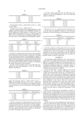
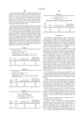
- a total of 63.5 wt % of the mass was distilled overhead for the first pass with the following gas chromatographic analysis:
- reaction products from the third pass were analyzed by gas chromatography to have the following oligomer distribution:
- the ratio of C 30 to C 40+ olefin was 2.44.
- a total of 61 wt % of the mass was distilled overhead on the third pass distillation with the following gas chromatographic analysis:
- the following example illustrates a low conversion oligomerization of an alpha olefin and recycle of the undesired light cut to maximize production of the desired heavy cut oligomer distribution.
- the desired product was an oligomer distribution high in C 30 oligomer content.
- a multipass semi-continuous synthesis was used to simulate a continuous recycle process, as follows:
- a reaction apparatus was set up consisting of one 1 liter autoclave with agitator, internal cooling coil, thermocouple and dip leg.
- a 10 gallon pressurized feed vessel and positive displacement metering pump were used to continuously feed a mixture of olefin and cocatalyst to the reactor.
- a pressurized gas cylinder and gas flow controller was also used to feed a continuous stream of boron trifluoride to the reactor. These two streams are premixed before entering the reactor.
- the reactor outlet flows through a dip leg set at a prescribed height (used to control reaction residence time) into a backpressure regulator used to control the reaction pressure.
- An automated system was also used to control the temperature of the reactor.
- the reactor was then prepressurized with boron triflouride to 10 pounds per square inch gauge.
- the backpressure regulator was set to control the reaction pressure at 10 pounds per square inch gauge and a continuous feed of boron triflouride was introduced to the system.
- the feed rate of boron triflouride was set to exceed 3 grams per hour.
- the reactor dip leg was set to provide a reaction volume of 250 milliliters.
- a continuous feed of olefin/propanol from (2) was then started to the reactor at 1100 milliliters per hour.
- This feed rate was set to provide a reaction residence time of approximately 13.6 minutes, that is, during the period while the ratio of the concentration of C 40 oligomers to the concentration of C 30 oligomers was less than 0.25 and the combined concentrations of C 30 and C 40 oligomers was at least 60 weight percent of C 30+ oligomers produced (approximately 13.6 minutes).
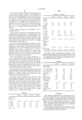
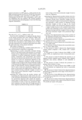
- Table 7 summarizes the results of a gas chromatographic analysis from each of the streams in a four pass synthesis along with the mass balance.
- the semi-continuous lab synthesis provides enough information to calculate the percent purge from the recycle stream necessary to stabilize the production rate for a steady state continuous recycle process.
- the estimated percent purge from the recycle for this series of runs is 15-20 wt %.
- the selectivity of the C 30 olefin relative to the C 40+ olefin was very high.
- Table 8 summarizes the properties of the distilled and hydrogenated bottoms product from the above four-pass reaction sequence after some of the excess C 10 and C 20 oligomers have been removed by distillation from the above distilled bottoms products.
- the following example illustrates a variable study for low conversion oligomerization of an alpha olefin and recycle of the undesired light cut to maximize production of the desired heavy cut oligomer distribution.
- the desired product was an oligomer distribution high in C 30 olefin content.
- the purpose of this experiment was to demonstrate a range of possible conditions and optimize those conditions for the desired C 30 olefin selectivity.
- Example 2 The experimental apparatus from Example 2 was used to study four different reaction variables on the low conversion oligomerization with recycle process.
- Tables 9 and 10 below summarize the results from the variable studies. Each variable study represents one run.
- the results tabulated included the weight average molecular weight of the heavy cut after distillation. For the desired C 30+ olefin product the optimal weight average molecular weight was approximately 450.
- the results tabulated include the conversion of C 10 monomer and the C 20 olefin content of the crude reaction product before distillation. The optimal results are achieved when the conversion is as high as possible while still minimizing C 20 olefin production and maintaining a distilled heavy cut weight average molecular weight of 450. No attempt was made in this experiment to optimize the recycle purge, but rather only to keep the feed composition constant for each variable.
- the following example illustrates a high conversion oligomerization of an alpha olefin to produce a normal oligomer distribution.
- the desired product was an oligomer distribution high in C 30 olefin content.
- the purpose of this example is to demonstrate the advantage of the low conversion with recycle process over the high conversion process to selectively generate the C 30 oligomer.
- a reaction apparatus was set up consisting of four one-liter autoclaves in series with agitators, internal cooling coils, thermocouples and dip legs.
- a 10 gallon pressurized feed vessel and positive displacement metering pump were used to continuously feed a mixture of olefin and cocatalyst to the first reactor in the series.
- a pressurized gas cylinder and gas flow controller was also used to feed a continuous stream of boron triflouride to the first reactor. These two streams were premixed before entering the reactor.
- Effluent from a given reactor flows through a dip leg set at a prescribed height (used to control reaction residence time) to the next reactor in the series.
- Effluent from the fourth reactor flowed into a backpressure regulator used to control the reaction pressure.
- An automated system is also used to control the temperature of each of the reactors.
- the reactor was then prepressurized with boron triflouride to 25 pounds per square inch gauge.
- the backpressure regulator was set to control the reaction pressure at 25 pounds per square inch gauge and a continuous feed of boron triflouride was introduced to the system.
- the feed rate of boron triflouride was set to exceed 3 grams per hour.
- the ratio of C 30 to C 40+ olefins is only 1.29.
Landscapes
- Chemical & Material Sciences (AREA)
- Organic Chemistry (AREA)
- Inorganic Chemistry (AREA)
- Chemical Kinetics & Catalysis (AREA)
- Organic Low-Molecular-Weight Compounds And Preparation Thereof (AREA)
- Low-Molecular Organic Synthesis Reactions Using Catalysts (AREA)
- Polymerisation Methods In General (AREA)
- Polymerization Catalysts (AREA)
- Addition Polymer Or Copolymer, Post-Treatments, Or Chemical Modifications (AREA)
- Lubricants (AREA)
Priority Applications (5)
| Application Number | Priority Date | Filing Date | Title |
|---|---|---|---|
| US09/201,514 US6147271A (en) | 1998-11-30 | 1998-11-30 | Oligomerization process |
| DE69909410T DE69909410T2 (de) | 1998-11-30 | 1999-11-22 | Oligomerisierungsverfahren |
| EP99309287A EP1006097B1 (de) | 1998-11-30 | 1999-11-22 | Oligomerisierungsverfahren |
| CA002290874A CA2290874C (en) | 1998-11-30 | 1999-11-26 | Oligomerization process |
| JP33820099A JP5036927B2 (ja) | 1998-11-30 | 1999-11-29 | オリゴマー化方法 |
Applications Claiming Priority (1)
| Application Number | Priority Date | Filing Date | Title |
|---|---|---|---|
| US09/201,514 US6147271A (en) | 1998-11-30 | 1998-11-30 | Oligomerization process |
Publications (1)
| Publication Number | Publication Date |
|---|---|
| US6147271A true US6147271A (en) | 2000-11-14 |
Family
ID=22746140
Family Applications (1)
| Application Number | Title | Priority Date | Filing Date |
|---|---|---|---|
| US09/201,514 Expired - Lifetime US6147271A (en) | 1998-11-30 | 1998-11-30 | Oligomerization process |
Country Status (5)
| Country | Link |
|---|---|
| US (1) | US6147271A (de) |
| EP (1) | EP1006097B1 (de) |
| JP (1) | JP5036927B2 (de) |
| CA (1) | CA2290874C (de) |
| DE (1) | DE69909410T2 (de) |
Cited By (28)
| Publication number | Priority date | Publication date | Assignee | Title |
|---|---|---|---|---|
| US6686511B2 (en) * | 1999-12-22 | 2004-02-03 | Chevron U.S.A. Inc. | Process for making a lube base stock from a lower molecular weight feedstock using at least two oligomerization zones |
| US20050272597A1 (en) * | 2002-10-28 | 2005-12-08 | Idemitsu Kosan Co., Ltd. | Processes for the recovery and recycling of boron trifluoride or complexes thereof |
| US20070043248A1 (en) * | 2005-07-19 | 2007-02-22 | Wu Margaret M | Process to produce low viscosity poly-alpha-olefins |
| US20080177121A1 (en) * | 2005-07-19 | 2008-07-24 | Margaret May-Som Wu | Process to produce high viscosity fluids |
| US20090036725A1 (en) * | 2007-08-01 | 2009-02-05 | Wu Margaret M | Process To Produce Polyalphaolefins |
| US20090221775A1 (en) * | 2008-01-31 | 2009-09-03 | Mark Hagemeister | Utilization Of Linear Alpha Olefins In The Production Of Metallocene Catalyzed Poly-Alpha Olefins |
| US20090240012A1 (en) * | 2008-03-18 | 2009-09-24 | Abhimanyu Onkar Patil | Process for synthetic lubricant production |
| US20100292424A1 (en) * | 2005-07-19 | 2010-11-18 | Wu Margaret M | Lubricants from Mixed Alpha-Olefin Feeds |
| US20110082063A1 (en) * | 2006-06-06 | 2011-04-07 | Exxonmobil Research And Engineering Company | Novel Base Stock Lubricant Blends |
| US20110136714A1 (en) * | 2006-06-06 | 2011-06-09 | Exxonmobil Research And Engineering Company | High Viscosity Novel Base Stock Lubricant Viscosity Blends |
| US8071835B2 (en) | 2006-07-19 | 2011-12-06 | Exxonmobil Chemical Patents Inc. | Process to produce polyolefins using metallocene catalysts |
| US8247358B2 (en) | 2008-10-03 | 2012-08-21 | Exxonmobil Research And Engineering Company | HVI-PAO bi-modal lubricant compositions |
| US8394746B2 (en) | 2008-08-22 | 2013-03-12 | Exxonmobil Research And Engineering Company | Low sulfur and low metal additive formulations for high performance industrial oils |
| US8530712B2 (en) | 2009-12-24 | 2013-09-10 | Exxonmobil Chemical Patents Inc. | Process for producing novel synthetic basestocks |
| US8535514B2 (en) | 2006-06-06 | 2013-09-17 | Exxonmobil Research And Engineering Company | High viscosity metallocene catalyst PAO novel base stock lubricant blends |
| US8598103B2 (en) | 2010-02-01 | 2013-12-03 | Exxonmobil Research And Engineering Company | Method for improving the fuel efficiency of engine oil compositions for large low, medium and high speed engines by reducing the traction coefficient |
| US8642523B2 (en) | 2010-02-01 | 2014-02-04 | Exxonmobil Research And Engineering Company | Method for improving the fuel efficiency of engine oil compositions for large low and medium speed engines by reducing the traction coefficient |
| US8716201B2 (en) | 2009-10-02 | 2014-05-06 | Exxonmobil Research And Engineering Company | Alkylated naphtylene base stock lubricant formulations |
| US8728999B2 (en) | 2010-02-01 | 2014-05-20 | Exxonmobil Research And Engineering Company | Method for improving the fuel efficiency of engine oil compositions for large low and medium speed engines by reducing the traction coefficient |
| US8748362B2 (en) | 2010-02-01 | 2014-06-10 | Exxonmobile Research And Engineering Company | Method for improving the fuel efficiency of engine oil compositions for large low and medium speed gas engines by reducing the traction coefficient |
| US8759267B2 (en) | 2010-02-01 | 2014-06-24 | Exxonmobil Research And Engineering Company | Method for improving the fuel efficiency of engine oil compositions for large low and medium speed engines by reducing the traction coefficient |
| US8834705B2 (en) | 2006-06-06 | 2014-09-16 | Exxonmobil Research And Engineering Company | Gear oil compositions |
| US8921290B2 (en) | 2006-06-06 | 2014-12-30 | Exxonmobil Research And Engineering Company | Gear oil compositions |
| US9266792B2 (en) | 2009-07-29 | 2016-02-23 | The United States Of America As Represented By The Secretary Of The Navy | Process and apparatus for the selective dimerization of terpenes and alpha-olefin oligomers with a single-stage reactor and a single-stage fractionation system |
| US9365788B2 (en) | 2011-10-10 | 2016-06-14 | Exxonmobil Chemical Patents Inc. | Process to produce improved poly alpha olefin compositions |
| US9365663B2 (en) | 2008-03-31 | 2016-06-14 | Exxonmobil Chemical Patents Inc. | Production of shear-stable high viscosity PAO |
| US9815915B2 (en) | 2010-09-03 | 2017-11-14 | Exxonmobil Chemical Patents Inc. | Production of liquid polyolefins |
| US11952323B2 (en) | 2021-06-15 | 2024-04-09 | Neste Oyj | Process and apparatus for producing poly-alpha-olefins |
Families Citing this family (3)
| Publication number | Priority date | Publication date | Assignee | Title |
|---|---|---|---|---|
| JP3929916B2 (ja) * | 2002-08-01 | 2007-06-13 | 出光興産株式会社 | ブテンオリゴマーの製造方法 |
| US7544850B2 (en) * | 2006-03-24 | 2009-06-09 | Exxonmobil Chemical Patents Inc. | Low viscosity PAO based on 1-tetradecene |
| EP2113521B1 (de) | 2007-02-19 | 2013-04-10 | Idemitsu Kosan Co., Ltd. | Alpha-olefinpolymer und herstellungsverfahren dafür |
Citations (4)
| Publication number | Priority date | Publication date | Assignee | Title |
|---|---|---|---|---|
| US4225739A (en) * | 1979-03-19 | 1980-09-30 | Mobil Oil Corporation | Process for improving olefin polymer oil properties |
| US4239930A (en) * | 1979-05-17 | 1980-12-16 | Pearsall Chemical Company | Continuous oligomerization process |
| US5877375A (en) * | 1995-06-12 | 1999-03-02 | Amoco Corporation | Production of monoolefin oligomer |
| US6002061A (en) * | 1995-09-13 | 1999-12-14 | Bp Amoco Corporation | Production of monoolefin oligomer |
Family Cites Families (3)
| Publication number | Priority date | Publication date | Assignee | Title |
|---|---|---|---|---|
| GB1497524A (en) * | 1975-11-20 | 1978-01-12 | Gulf Research Development Co | Method of oligomerizing 1-olefins |
| DE4415912A1 (de) * | 1994-05-05 | 1995-11-09 | Linde Ag | Verfahren zur Oligomerisierung von alpha-Olefinen zu Poly-alpha-Olefinen |
| ES2119141T5 (es) * | 1994-06-24 | 2005-03-16 | Fortum Oil And Gas Oy | Metodo para retirar el catalizador de un producto oligomero. |
-
1998
- 1998-11-30 US US09/201,514 patent/US6147271A/en not_active Expired - Lifetime
-
1999
- 1999-11-22 DE DE69909410T patent/DE69909410T2/de not_active Expired - Lifetime
- 1999-11-22 EP EP99309287A patent/EP1006097B1/de not_active Expired - Lifetime
- 1999-11-26 CA CA002290874A patent/CA2290874C/en not_active Expired - Lifetime
- 1999-11-29 JP JP33820099A patent/JP5036927B2/ja not_active Expired - Lifetime
Patent Citations (4)
| Publication number | Priority date | Publication date | Assignee | Title |
|---|---|---|---|---|
| US4225739A (en) * | 1979-03-19 | 1980-09-30 | Mobil Oil Corporation | Process for improving olefin polymer oil properties |
| US4239930A (en) * | 1979-05-17 | 1980-12-16 | Pearsall Chemical Company | Continuous oligomerization process |
| US5877375A (en) * | 1995-06-12 | 1999-03-02 | Amoco Corporation | Production of monoolefin oligomer |
| US6002061A (en) * | 1995-09-13 | 1999-12-14 | Bp Amoco Corporation | Production of monoolefin oligomer |
Cited By (48)
| Publication number | Priority date | Publication date | Assignee | Title |
|---|---|---|---|---|
| US6686511B2 (en) * | 1999-12-22 | 2004-02-03 | Chevron U.S.A. Inc. | Process for making a lube base stock from a lower molecular weight feedstock using at least two oligomerization zones |
| US7235509B2 (en) * | 2002-10-28 | 2007-06-26 | Idemitsu Kosan Co., Ltd. | Processes for the recovery and recycling of boron trifluoride or complexes thereof |
| US20050272597A1 (en) * | 2002-10-28 | 2005-12-08 | Idemitsu Kosan Co., Ltd. | Processes for the recovery and recycling of boron trifluoride or complexes thereof |
| US9796645B2 (en) | 2005-07-19 | 2017-10-24 | Exxonmobil Chemical Patents Inc. | Poly alpha olefin compositions |
| US20080177121A1 (en) * | 2005-07-19 | 2008-07-24 | Margaret May-Som Wu | Process to produce high viscosity fluids |
| US20090005279A1 (en) * | 2005-07-19 | 2009-01-01 | Margaret May-Som Wu | Polyalpha-Olefin Compositions and Processes to Produce the Same |
| US8921291B2 (en) | 2005-07-19 | 2014-12-30 | Exxonmobil Chemical Patents Inc. | Lubricants from mixed alpha-olefin feeds |
| US9593288B2 (en) | 2005-07-19 | 2017-03-14 | Exxonmobil Chemical Patents Inc. | Lubricants from mixed alpha-olefin feeds |
| US8748361B2 (en) | 2005-07-19 | 2014-06-10 | Exxonmobil Chemical Patents Inc. | Polyalpha-olefin compositions and processes to produce the same |
| US20100292424A1 (en) * | 2005-07-19 | 2010-11-18 | Wu Margaret M | Lubricants from Mixed Alpha-Olefin Feeds |
| US9409834B2 (en) | 2005-07-19 | 2016-08-09 | Exxonmobil Chemical Patents Inc. | Low viscosity poly-alpha-olefins |
| US20070043248A1 (en) * | 2005-07-19 | 2007-02-22 | Wu Margaret M | Process to produce low viscosity poly-alpha-olefins |
| US7989670B2 (en) | 2005-07-19 | 2011-08-02 | Exxonmobil Chemical Patents Inc. | Process to produce high viscosity fluids |
| US8207390B2 (en) | 2005-07-19 | 2012-06-26 | Exxonmobil Chemical Patents Inc. | Process to produce low viscosity poly-alpha-olefins |
| US8921290B2 (en) | 2006-06-06 | 2014-12-30 | Exxonmobil Research And Engineering Company | Gear oil compositions |
| US20110082063A1 (en) * | 2006-06-06 | 2011-04-07 | Exxonmobil Research And Engineering Company | Novel Base Stock Lubricant Blends |
| US8299007B2 (en) | 2006-06-06 | 2012-10-30 | Exxonmobil Research And Engineering Company | Base stock lubricant blends |
| US20110136714A1 (en) * | 2006-06-06 | 2011-06-09 | Exxonmobil Research And Engineering Company | High Viscosity Novel Base Stock Lubricant Viscosity Blends |
| US8501675B2 (en) | 2006-06-06 | 2013-08-06 | Exxonmobil Research And Engineering Company | High viscosity novel base stock lubricant viscosity blends |
| US8535514B2 (en) | 2006-06-06 | 2013-09-17 | Exxonmobil Research And Engineering Company | High viscosity metallocene catalyst PAO novel base stock lubricant blends |
| US8834705B2 (en) | 2006-06-06 | 2014-09-16 | Exxonmobil Research And Engineering Company | Gear oil compositions |
| US8071835B2 (en) | 2006-07-19 | 2011-12-06 | Exxonmobil Chemical Patents Inc. | Process to produce polyolefins using metallocene catalysts |
| US20090036725A1 (en) * | 2007-08-01 | 2009-02-05 | Wu Margaret M | Process To Produce Polyalphaolefins |
| US8513478B2 (en) | 2007-08-01 | 2013-08-20 | Exxonmobil Chemical Patents Inc. | Process to produce polyalphaolefins |
| CN101925617B (zh) * | 2008-01-31 | 2012-11-14 | 埃克森美孚化学专利公司 | 在生产茂金属催化的聚α烯烃中线性α烯烃的改进利用 |
| US9469704B2 (en) * | 2008-01-31 | 2016-10-18 | Exxonmobil Chemical Patents Inc. | Utilization of linear alpha olefins in the production of metallocene catalyzed poly-alpha olefins |
| US20090221775A1 (en) * | 2008-01-31 | 2009-09-03 | Mark Hagemeister | Utilization Of Linear Alpha Olefins In The Production Of Metallocene Catalyzed Poly-Alpha Olefins |
| US8865959B2 (en) | 2008-03-18 | 2014-10-21 | Exxonmobil Chemical Patents Inc. | Process for synthetic lubricant production |
| US20090240012A1 (en) * | 2008-03-18 | 2009-09-24 | Abhimanyu Onkar Patil | Process for synthetic lubricant production |
| US9365663B2 (en) | 2008-03-31 | 2016-06-14 | Exxonmobil Chemical Patents Inc. | Production of shear-stable high viscosity PAO |
| US8394746B2 (en) | 2008-08-22 | 2013-03-12 | Exxonmobil Research And Engineering Company | Low sulfur and low metal additive formulations for high performance industrial oils |
| US8476205B2 (en) | 2008-10-03 | 2013-07-02 | Exxonmobil Research And Engineering Company | Chromium HVI-PAO bi-modal lubricant compositions |
| US8247358B2 (en) | 2008-10-03 | 2012-08-21 | Exxonmobil Research And Engineering Company | HVI-PAO bi-modal lubricant compositions |
| US9266792B2 (en) | 2009-07-29 | 2016-02-23 | The United States Of America As Represented By The Secretary Of The Navy | Process and apparatus for the selective dimerization of terpenes and alpha-olefin oligomers with a single-stage reactor and a single-stage fractionation system |
| US9522854B2 (en) | 2009-07-29 | 2016-12-20 | The United States Of America As Represented By The Secretary Of The Navy | Process and apparatus for the selective dimerization of terpenes and poly-alpha-olefins with a single-stage reactor and a single-stage fractionation system |
| US9932279B2 (en) * | 2009-07-29 | 2018-04-03 | The United States Of America As Represented By The Secretary Of The Navy | Process and apparatus for the selective dimerization of terpenes and poly-alpha-olefins with a single-stage reactor and a single-stage fractionation system |
| US8716201B2 (en) | 2009-10-02 | 2014-05-06 | Exxonmobil Research And Engineering Company | Alkylated naphtylene base stock lubricant formulations |
| US9701595B2 (en) | 2009-12-24 | 2017-07-11 | Exxonmobil Chemical Patents Inc. | Process for producing novel synthetic basestocks |
| US8530712B2 (en) | 2009-12-24 | 2013-09-10 | Exxonmobil Chemical Patents Inc. | Process for producing novel synthetic basestocks |
| US8598103B2 (en) | 2010-02-01 | 2013-12-03 | Exxonmobil Research And Engineering Company | Method for improving the fuel efficiency of engine oil compositions for large low, medium and high speed engines by reducing the traction coefficient |
| US8759267B2 (en) | 2010-02-01 | 2014-06-24 | Exxonmobil Research And Engineering Company | Method for improving the fuel efficiency of engine oil compositions for large low and medium speed engines by reducing the traction coefficient |
| US8748362B2 (en) | 2010-02-01 | 2014-06-10 | Exxonmobile Research And Engineering Company | Method for improving the fuel efficiency of engine oil compositions for large low and medium speed gas engines by reducing the traction coefficient |
| US8728999B2 (en) | 2010-02-01 | 2014-05-20 | Exxonmobil Research And Engineering Company | Method for improving the fuel efficiency of engine oil compositions for large low and medium speed engines by reducing the traction coefficient |
| US8642523B2 (en) | 2010-02-01 | 2014-02-04 | Exxonmobil Research And Engineering Company | Method for improving the fuel efficiency of engine oil compositions for large low and medium speed engines by reducing the traction coefficient |
| US9815915B2 (en) | 2010-09-03 | 2017-11-14 | Exxonmobil Chemical Patents Inc. | Production of liquid polyolefins |
| US9399746B2 (en) | 2011-10-10 | 2016-07-26 | Exxonmobil Chemical Patents Inc. | Poly alpha olefin compositions |
| US9365788B2 (en) | 2011-10-10 | 2016-06-14 | Exxonmobil Chemical Patents Inc. | Process to produce improved poly alpha olefin compositions |
| US11952323B2 (en) | 2021-06-15 | 2024-04-09 | Neste Oyj | Process and apparatus for producing poly-alpha-olefins |
Also Published As
| Publication number | Publication date |
|---|---|
| JP5036927B2 (ja) | 2012-09-26 |
| CA2290874C (en) | 2009-04-14 |
| EP1006097A1 (de) | 2000-06-07 |
| DE69909410T2 (de) | 2004-04-22 |
| CA2290874A1 (en) | 2000-05-30 |
| EP1006097B1 (de) | 2003-07-09 |
| DE69909410D1 (de) | 2003-08-14 |
| JP2000159832A (ja) | 2000-06-13 |
Similar Documents
| Publication | Publication Date | Title |
|---|---|---|
| US6147271A (en) | Oligomerization process | |
| US5068487A (en) | Olefin oligomerization with BF3 alcohol alkoxylate co-catalysts | |
| RU2194031C2 (ru) | Селективная олигомеризация олефинов | |
| JP3178928B2 (ja) | ビニリデンオレフインとα−オレフインとからの合成油の製造 | |
| CA2394542C (en) | Selective olefin oligomerization | |
| US4032591A (en) | Preparation of alpha-olefin oligomer synthetic lubricant | |
| US4308414A (en) | Oligomerizing alpha-olefins with a heterogeneous catalyst | |
| EP1694439B1 (de) | Katalysatorrückgewinnungsverfahren | |
| US5284988A (en) | Preparation of synthetic oils from vinylidene olefins and alpha-olefins | |
| WO2007040812A9 (en) | Oligomerization reaction | |
| EP0077113B1 (de) | Oligomerisierung von Olefinen unter Verwendung von Bortrifluorid und einem Dreikomponenten-Kokatalysator | |
| US4417082A (en) | Thermal treatment of olefin oligomers via a boron trifluoride process to increase their molecular weight | |
| US5817899A (en) | Polyalphaolefin dimers having low kinematic viscosities | |
| US4650917A (en) | Method for upgrading olefinic lubes | |
| US4395578A (en) | Oligomerization of olefins over boron trifluoride in the presence of a transition metal cation-containing promoter | |
| US20240425624A1 (en) | Processes for converting c4 feeds to isobutylene,polyisobutylene, or derivatives thereof | |
| US5962761A (en) | Process for linear alpha-olefin production | |
| USRE30510E (en) | Process for preparing catalyst for olefin polymerization | |
| EP0699647B1 (de) | Verfahren zur Oligomerisierung von Olefinen mit hoher Ausbeute an Dimeren | |
| EP0634381A1 (de) | Oligomerisierungsverfahren für Olefine | |
| SU1723101A1 (ru) | Способ получени основы синтетического смазочного масла | |
| FI20215704A1 (en) | Process and apparatus for producing poly-alpha-olefins | |
| US5744676A (en) | Olefin oligomerization process | |
| CA3105355A1 (en) | Processes for the manufacture of isobutylene, polyisobutylene, and derivatives thereof | |
| US6002061A (en) | Production of monoolefin oligomer |
Legal Events
| Date | Code | Title | Description |
|---|---|---|---|
| AS | Assignment |
Owner name: AMOCO CORPORATION, ILLINOIS Free format text: ASSIGNMENT OF ASSIGNORS INTEREST;ASSIGNORS:STREBEL, ALLEN DAVID;WOLF, JEFFREY ROBERT;COX, WILLIAM LEE;REEL/FRAME:009697/0221;SIGNING DATES FROM 19981105 TO 19981116 |
|
| AS | Assignment |
Owner name: BP AMOCO CORPORATION, ILLINOIS Free format text: CHANGE OF NAME;ASSIGNOR:AMOCO CORPORATION;REEL/FRAME:010736/0326 Effective date: 19981231 |
|
| STCF | Information on status: patent grant |
Free format text: PATENTED CASE |
|
| FPAY | Fee payment |
Year of fee payment: 4 |
|
| AS | Assignment |
Owner name: INEOS USA LLC, ILLINOIS Free format text: CHANGE OF NAME;ASSIGNOR:INNOVENE USA LLC.;REEL/FRAME:018797/0038 Effective date: 20050525 Owner name: INNOVENE USA LLC, ILLINOIS Free format text: CHANGE OF NAME;ASSIGNOR:O&D USA LLC;REEL/FRAME:018797/0041 Effective date: 20050524 Owner name: O&D USA LLC, ILLINOIS Free format text: ASSIGNMENT OF ASSIGNORS INTEREST;ASSIGNOR:BP CORPORATION NORTH AMERICA INC. (FORMERLY KNOWN AS BP AMOCO CORPORATION).;REEL/FRAME:018797/0259 Effective date: 20050401 |
|
| FPAY | Fee payment |
Year of fee payment: 8 |
|
| FPAY | Fee payment |
Year of fee payment: 12 |
|
| AS | Assignment |
Owner name: BARCLAYS BANK PLC, UNITED KINGDOM Free format text: SECURITY AGREEMENT;ASSIGNOR:INEOS USA LLC;REEL/FRAME:028451/0309 Effective date: 20120504 |