US4385295A - Pager with visible display indicating unread messages - Google Patents
Pager with visible display indicating unread messages Download PDFInfo
- Publication number
- US4385295A US4385295A US06/306,798 US30679881A US4385295A US 4385295 A US4385295 A US 4385295A US 30679881 A US30679881 A US 30679881A US 4385295 A US4385295 A US 4385295A
- Authority
- US
- United States
- Prior art keywords
- pager
- page
- message
- read
- messages
- Prior art date
- Legal status (The legal status is an assumption and is not a legal conclusion. Google has not performed a legal analysis and makes no representation as to the accuracy of the status listed.)
- Expired - Lifetime
Links
- 230000000007 visual effect Effects 0.000 claims abstract description 10
- 230000006870 function Effects 0.000 claims description 19
- 238000000034 method Methods 0.000 claims description 6
- 230000004044 response Effects 0.000 claims description 5
- 230000030279 gene silencing Effects 0.000 claims 1
- KJBWWVTTZNVMKW-LPYMAVHISA-N 1-(dipyridin-2-ylmethylideneamino)-3-[(E)-(2-hydroxyphenyl)methylideneamino]thiourea Chemical compound Oc1ccccc1\C=N\N\C([S-])=[NH+]/N=C(c1ccccn1)c1ccccn1 KJBWWVTTZNVMKW-LPYMAVHISA-N 0.000 description 5
- 230000009471 action Effects 0.000 description 5
- 238000010586 diagram Methods 0.000 description 5
- 241000382353 Pupa Species 0.000 description 2
- 230000000994 depressogenic effect Effects 0.000 description 2
- 238000001514 detection method Methods 0.000 description 2
- 230000000694 effects Effects 0.000 description 2
- 230000008569 process Effects 0.000 description 2
- 230000005236 sound signal Effects 0.000 description 2
- 230000008901 benefit Effects 0.000 description 1
- 230000008859 change Effects 0.000 description 1
- 230000001351 cycling effect Effects 0.000 description 1
- 230000007423 decrease Effects 0.000 description 1
- 230000003247 decreasing effect Effects 0.000 description 1
- 230000003111 delayed effect Effects 0.000 description 1
- 238000005562 fading Methods 0.000 description 1
- 230000017105 transposition Effects 0.000 description 1
- 230000001960 triggered effect Effects 0.000 description 1
Images



Classifications
-
- H—ELECTRICITY
- H04—ELECTRIC COMMUNICATION TECHNIQUE
- H04M—TELEPHONIC COMMUNICATION
- H04M11/00—Telephonic communication systems specially adapted for combination with other electrical systems
- H04M11/02—Telephonic communication systems specially adapted for combination with other electrical systems with bell or annunciator systems
-
- H—ELECTRICITY
- H04—ELECTRIC COMMUNICATION TECHNIQUE
- H04W—WIRELESS COMMUNICATION NETWORKS
- H04W88/00—Devices specially adapted for wireless communication networks, e.g. terminals, base stations or access point devices
- H04W88/02—Terminal devices
- H04W88/022—Selective call receivers
-
- H—ELECTRICITY
- H04—ELECTRIC COMMUNICATION TECHNIQUE
- H04Q—SELECTING
- H04Q9/00—Arrangements in telecontrol or telemetry systems for selectively calling a substation from a main station, in which substation desired apparatus is selected for applying a control signal thereto or for obtaining measured values therefrom
Definitions
- This invention relates to pagers.
- it relates to pagers with visible displays of information that is sent.
- a pager is a portable device for allowing a user at a remote location to receive information from a central location.
- a pager may simply alert a number of users to the fact that their attention is required. They are then expected to call the central location to find who has called and what the message is.
- Some of the many refinements of this principle include selective calling which alerts only the user of a particular pager that he is being called.
- Another such feature is message paging which not only alerts the user with a signal of some sort but also delivers a message to the user.
- Other features are possible and have been used in some pagers. In increasing the number of available features, the designer of a pager normally maintains certain objectives, including some of the following.
- a user should be able to forget a pager until he is paged. This means that it is preferable that the pager be silent unless its user is called. It also means that the pager should be as light as possible since part of the weight of a pager is its batteries and one objective is to limit the needed electrical energy, and hence the size of the batteries required.
- a conflict in the use of pagers arises when the user of a pager is in a group of people.
- a pager it is desirable for a pager to make an unequivocal bid for the attention of its user.
- This has typically meant the use of a strident alert tone to minimize the possibility that the user might overlook a call.
- Such an alert tone can provide an unwelcome distraction when it interrupts the affairs of a group of people and may as a result become an embarrassment to the user of the pager.
- the only remedy available to the user of the pager is to turn off the pager and thereby run the risk of missing a call.
- a desirable feature of a pager is an unobstrusive alert to its user.
- Such alerts have been achieved in the past with some form of indicator to the user that a call has been made while his volume has been turned down.
- call indicative have been able to do no more than to alert the user of the need to call the communications center to find what message is there for him. If his pager is one that not only alerts him but also delivers a message, such as a numbered call, then that message is lost to him since it is not normally stored at the communications center.
- a priority feature could be combined with tone-only paging, with voice paging or with a data page.
- tone-only, page in the absence of a display merely alerts the user of a page to the fact that he has been paged without telling him of the source. It would be useful, in addition, to be able to inform him of the source of a tone-only page.
- the user of a pager has chosen to silence the alerts during a period when he receives a non-priority voice page, it would be useful to him to know that he has received a voice page during the period of silence.
- a pager with a visual display comprises a radio receiver, means for identifying a desired recipient of signals on the radio receiver, means for storing a signal received on the receiver, means for displaying the number of messages received during a given interval, and means for displaying a plurality of messages received.
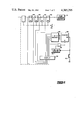
- FIG. 1 is an overall block diagram of a pager embodying the present invention.
- FIG. 2 is a circuit diagram of a circuit for indicating the status of memory in the display pager of the present invention.
- FIG. 3 is a circuit diagram of a circuit for storing and display the presence of unread messages in the pager of the present invention.
- FIG. 4 is a flowchart describing the method of operation of the pager of the present invention.
- FIGS. 5A,B,C show an expanded flowchart of the function generator of FIG. 4.
- FIG. 1 is a block diagram of a pager embodying the present invention.
- an antenna 10 receives a signal that is coupled to a receiver 12 that is subject to the control of function controller 14.
- the function controller not only controls switching on and off of receiver 12, it may also operate receiver 12 on an intermittent basis to extend the life of batteries in a pager.
- Receiver 12 has outputs to address decoder 16 and data decoder 18.
- Address decoder 16 compares received address words with an address program 20 to see if the particular pager has been called and keeps the pager from functioning if it is not called. If address decoder 16 and address program 20 detect a call to this pager, page type program 22 next determines the type of page that is being made by applying a signal to source-type decoder 24. If the page is a data page, then source-type decoder enables data decoder 18 which is controlled by data program 26 to supply data to display RAM 28. Display RAM 28 is controlled by display controller 30 under the control of function controller 14 to display data on display 32
- alert oscillator 34 feeds audio amplifier 36, which is also controlled by function controller 14, and delivers the alert to speaker 38. If the alert is followed by a voice page, the audio signal proceeds from receiver 12 to electronic attenuator 40 which sets an audio level subject to function controller 14. If the page is tone-only or data, then the alert signal is the only audible signal, and other information is made available to the user on display 32. If the page is a data page, then display 32 displays decoded data from data decoder 18 and display RAM 28, and it also displays the source under the control of function controller 14.
- the user hears the sound from receiver 12 through electronic attenuator 40, audio amplifier 36 and speaker 38. If the page is tone-only, the user hears an alert tone that is generated internally by alert oscillator 34 and connected to audio amplifier 36 and speaker 38. He also sees on display 32 the word "Call" and an indication of the source of the call.
- the particular advantage of a display pager is the ability to store messages that arrive at a time that is inconvenient for action and to make those messages available later to the user of the pager. To make this feature useful, the user of the pager must be able to check his pager to see if it contains any messages that he has not yet read.
- the circuit of FIG. 2 is a display controller to indicate the presence in memory of messages that have not yet been read.
- page address decoder 16 supplies an output when a tone-only or data page is received. This output is delayed in delay element 50 and is applied to clock flip-flops 52, 54, 56 and 58 which are connected in cascade to form a register.
- each of the flip-flops 52, 54, 56 and 58 are connected to a separate message indicator in display 32.
- a single output from address decoder 16 will set flip-flop 52 and provide an indication of a single message on display 32. Receipt of another message will set flip-flop 54, indicating the presence of a second message that is in memory and is subject to recall.
- Messages are recalled from memory by a read button 60 which clocks counter 62 and resets time-out counter 64.
- the output of counter 62 is applied to one of eight decoder 66 which produces a zero output under normal conditions. This sets a visual indicator in a standby position on the display, indicating that no messages are being recalled.
- the user of the pager thus has a display that indicates to him that there are no messages or one, two, three or four messages in memory in his pager. As new messages are received, they are placed first into memory and are read back first so that earlier messages, whether read or unread, are lost from memory. It would be useful to the user to know not only the number of messages in his memory but also to know whether he has read these messages.
- the circuit of FIG. 3 provides an indication to the user of the presence in memory of messages that have not been read.
- page address decoder 16 provides an indication of the receipt of a page. If that page is a data page or a tone-only page, a signal is provided to OR gate 70 and to flip-flop 72, as well as to AND gates 74, 76 and 78.
- Flip-flop 72 generates an output in response to the signal indicating a data page or a tone-only page. That response is taken as an input to AND gate 74 and as an input to AND gate 80.
- a second input to AND gate 80 is supplied by flash oscillator 82.
- the output of AND gate 80 is a flashing indication that is taken to display 32 to provide a flashing display indicating the receipt of a page. If a second page is received, AND gate 74 triggers flip-flop 84 which produces an output that is taken to AND gates 76 and 86.
- the output of AND gate 86 supplies a flashing indication of the receipt of a second page.
- flip-flops 88 and 90 supply indications of receipt of a third and fourth page, respectively. These indications are taken respectively to AND gates 92 and 94 to provide displays of receipt of a third and a fourth page.
- the circuit of FIG. 3 also includes means for controlling an audible alert.
- the alert is reset either by read button 60 or reset button 100.
- Each supplies an impulse to OR gate 102 that resets flip-flop 104.
- the receipt of a page of any kind produces an output from OR gate 70 that is taken to AND gate 106.
- flip-flop 110 If silent button 108 is depressed, flip-flop 110 generates a low input that inhibits AND gate 106. In the absence of such a signal, AND gate 106 triggers flip-flop 104 to enable audio alert 112, driving speaker 114 with an alert signal. If silent button 108 is depressed, resetting flip-flop 110, there will be no signal from speaker 114.
- OR gate 116 enables a visual display of a symbol of a speaker. This provides a visual indication to the user that his pager is in the silent mode. If he receives a voice page in the silent mode, this enables AND gate 118 which sets flip-flop 120, producing an output to enable flash oscillator 122. The output of flash oscillator 122 is taken to OR gate 116 to provide a flashing indication of a speaker on the display indicating to the user that he has received a voice page while in the silent mode.
- FIG. 4 is a block diagram of the method of operation of the display pager of the present invention.
- block 510 turns on the pager in response to the pressing of an "ON" button.
- This calls for the steps of initialization block 512, which sets the volume of the audio at a maximum level, opens a receiver channel, sounds an alert, and turns on a display for a user to check. After a timed interval, the audio signal is turned off, and the display is caused to show the word "ON".
- the next step in the method is indicated by block 514 which directs the reading of a code plug.
- the code plug contains information identifying one or a plurality of numbers assigned to a particular pager, together with information identifying the function associated with that number.
- the possible functions that may be encoded in the code plug are tone only, voice page and data page. Any of these may be subjected to a priority call, which overrides the selection of a silent mode.
- the particular functions chosen by the user and the calling identification numbers associated with each are stored in the code plug.
- the step of reading the code plug that is directed by block 514 reads that information from its place of permanent storage in the code plug into a buffer memory for quick access. With these functions complete, the pager is on and ready.
- Operations box 516 sets and starts a timer to develop interupts at a rate of 1200 Hz.
- Operations box 516 also directs the setting of a counter that produces an enable signal for a function controller.
- Decision block 518 next tests for the presence of an enable bit for the function controller. If there is no bit, control proceeds to operations box 520 which detects a wait. Exit from operations box 520 is to decision block 518, maintaining control in a waiting mode in the absence of an enable bit for the function controller. If the function controller bit is set, exit from decision block 518 is to operations block 522 which clears the controller enable bit until its next setting, and directs entry into function controller box 524.
- FIG. 5 is an expanded flowchart of function controller block 524 of FIG. 4.
- decision block 530 tests for the presence of a detect signal.
- the detect signal is zero if a page has not been received, and it is a number 1 through 9 if a page is received. If a zero detect signal is received, indicating the absence of a page, exit from decision block 530 is to decision block 532. If the detect signal is a number 1 through 9, exit from decision block 530 is to decision block 534 which tests for the presence of a data page. This represents a test for the presence of a detect number 9 which indicates that data will follow. Assume first that the page is not a data page.
- Exit from decision block 534 in this case is to operations box 536 which directs the storing of the detected number and clearing of the detect number to reset for a future page. Exit is then to decision block 538 which tests to see if the received page is tone only and also priority. A priority page of whatever type is one that allows the caller to override selection by the user of a silent mode. If the page that has been received is both tone only and priority, exit from decision box 538 is to operations box 540 to set a priority flag, then to operations box 542 to set an input code register for tone only. If the received page is not tone only and priority, exit from decision block 538 is to decision block 544 which tests to see if the page is tone only. If it is, exit is again to operations box 542.
- decision block 544 Exit from decision block 544 is then to decision block 546 which tests for the presence of a priority voice page. If there is one, exit is to decision box 548 to set a priority flag, then to operations box 550 to set the pager for a voice page input. If the page is not a priority voice page, exit from decision box 546 is to decision box 552 which tests for the presence of a voice page. If there is one, exit is also to operations box 550.
- decision block 560 tests whether the page is a priority data page. If it is, operations block 562 sets a priority flag and exits to decision block 564. If the page is not a priority data page and is therefore a data page only, exit from decision block 560 is to operations block 564 which sets a data page input.
- decision block 532 tests to see if the timer that was set in the action routine that corresponds to the state now in operation has counted to zero. If it has not, operations block 566 decreases the count in the timer by one, and decision block 568 checks to see if the timer is now at zero. If it is, exit is to operations block 570 to set the timeout input. If the indication from decision block 532 was that the timer equaled zero, exit is to decision block 572. If the timer was not at zero and did not reach zero after being once decreased, then exit from decision block 568 is also to decision block 572.
- the pager has alerts for a low battery, a full memory, the detection of bad data, the receipt of a data page and the receipt of a voice page. It is evident that only the low-battery alert need be operated in the absence of a page since all of the other alerts are triggered by the receipt of a page. Thus, the pager will have received information that control alerts relating to paging from an earlier portion of the flowchart of the FIG. 5 and will have received information as to a low battery from the sequence starting with decision block 572. These are tested by decision block 582 which tests to see if an alert flag is set. If an alert flag is set indicating the presence of one of the alert conditions described above, then operations block 584 generates the appropriate alert.
- Operations block 586 which directs the sensing of switch inputs.
- Operations block 588 next directs the determination of the next state. This will be discussed further in connection with an examination of a state table.
- Decision block 590 next asks whether the next state is equal to the current state. If it is, then exit is to the wait loop of FIG. 4, into the input of decision block 518. If the next state in the state table is not the same as the current state, then exit from decision block 590 is to operations block 592 which calls for the performance of the action of the next state.
- Operations block 594 next updates the current state and returns control to the wait loop of FIG. 4.
- the vertical column on the left lists all the possible state of operation of the pager.
- the headings listed horizontally across the top of the State Table are inputs that call various states.
- Three inputs are by manual controls. They are the on-off button, the read button, and the hold button.
- Two inputs are initiated by external action. They are the data page and the voice page. The last input is time out, which is generated internally to advance to another state if no other input causes an advance.
- Dashes in the State Table indicate inputs that are ignored when the pager is in a particular state.
- the interrogate state is called by a read button.
- the read button is used to interrogate memory and call something from memory to be placed on a display.
- the hold button calls a state marked "freeze display”. This interrupts the normal cycling of the display to provide time for such activities as writing down a displayed number.
Landscapes
- Engineering & Computer Science (AREA)
- Computer Networks & Wireless Communication (AREA)
- Signal Processing (AREA)
- Mobile Radio Communication Systems (AREA)
Priority Applications (12)
| Application Number | Priority Date | Filing Date | Title |
|---|---|---|---|
| US06/306,798 US4385295A (en) | 1981-09-29 | 1981-09-29 | Pager with visible display indicating unread messages |
| AU89536/82A AU557400B2 (en) | 1981-09-29 | 1982-09-07 | Pager with visible display indicating unread messages |
| JP57502894A JPH0638591B2 (ja) | 1981-09-29 | 1982-09-07 | 読まれてないメッセージを示す可視表示装置を具えたページャ及び読まれてないメッセージを区別する方法 |
| BR8207899A BR8207899A (pt) | 1981-09-29 | 1982-09-07 | Processo de indicar mensagens que nao foram lidas em paginador e respectivo paginador |
| EP19820902891 EP0089981A4 (en) | 1981-09-29 | 1982-09-07 | PERSONAL CALL DEVICE WITH VISIBLE DISPLAY OF UNREAD MESSAGES. |
| PCT/US1982/001213 WO1983001356A1 (en) | 1981-09-29 | 1982-09-07 | Pager with visible display indicating unread messages |
| CA000411501A CA1179737A (en) | 1981-09-29 | 1982-09-15 | Pager with visible display indicating unread messages |
| KR8204341A KR880002169B1 (ko) | 1981-09-29 | 1982-09-27 | 읽혀지지 않은 메세지를 눈으로 볼 수 있게 표시한 페이저 |
| DK236383A DK163199C (da) | 1981-09-29 | 1983-05-26 | Personsoeger med synlig udlaesning af hukommelsesstatus |
| NO831862A NO161199C (no) | 1981-09-29 | 1983-05-26 | Tr dloest anropsapparat. |
| FI831902A FI75957C (fi) | 1981-09-29 | 1983-05-27 | Personsoekningsanordning med indikering foer olaesta meddelanden. |
| MYPI88001023A MY103610A (en) | 1981-09-29 | 1988-09-13 | Pager with visible display indicating unread messages |
Applications Claiming Priority (1)
| Application Number | Priority Date | Filing Date | Title |
|---|---|---|---|
| US06/306,798 US4385295A (en) | 1981-09-29 | 1981-09-29 | Pager with visible display indicating unread messages |
Publications (1)
| Publication Number | Publication Date |
|---|---|
| US4385295A true US4385295A (en) | 1983-05-24 |
Family
ID=23186892
Family Applications (1)
| Application Number | Title | Priority Date | Filing Date |
|---|---|---|---|
| US06/306,798 Expired - Lifetime US4385295A (en) | 1981-09-29 | 1981-09-29 | Pager with visible display indicating unread messages |
Country Status (11)
| Country | Link |
|---|---|
| US (1) | US4385295A (da) |
| EP (1) | EP0089981A4 (da) |
| JP (1) | JPH0638591B2 (da) |
| KR (1) | KR880002169B1 (da) |
| AU (1) | AU557400B2 (da) |
| BR (1) | BR8207899A (da) |
| CA (1) | CA1179737A (da) |
| DK (1) | DK163199C (da) |
| FI (1) | FI75957C (da) |
| MY (1) | MY103610A (da) |
| WO (1) | WO1983001356A1 (da) |
Cited By (37)
| Publication number | Priority date | Publication date | Assignee | Title |
|---|---|---|---|---|
| US4477808A (en) * | 1982-02-01 | 1984-10-16 | Nippon Electric Co., Ltd. | Radio paging receiver having stored message protection means |
| US4477807A (en) * | 1981-06-10 | 1984-10-16 | Nippon Electric Co., Ltd. | Radio pager with display device |
| JPS609234A (ja) * | 1983-06-28 | 1985-01-18 | Matsushita Electric Ind Co Ltd | 表示付選択呼出受信装置 |
| US4644351A (en) * | 1984-05-08 | 1987-02-17 | Motorola, Inc. | Two way personal message system with extended coverage |
| US4682148A (en) * | 1982-11-27 | 1987-07-21 | Nec Corporation | Display pager having memory overflow indication and concurrent message display functions |
| US4701759A (en) * | 1984-04-03 | 1987-10-20 | Motorola, Inc. | Call reminder for a radio paging device |
| US4758834A (en) * | 1982-02-09 | 1988-07-19 | Nippon Electric Co., Ltd. | Pager receiver for giving at least one of extraordinary tones and extraordinary displays |
| US4766434A (en) * | 1985-09-17 | 1988-08-23 | Nec Corporation | Selective paging receiver with message display |
| US4769641A (en) * | 1983-09-30 | 1988-09-06 | Nec Corporation | Pager receiver capable of avoiding an unpleasing interruption of a displayed message |
| USH610H (en) | 1987-08-17 | 1989-03-07 | American Telephone And Telegraph Company | Cellular pager |
| US4887291A (en) * | 1987-07-23 | 1989-12-12 | American Monitoring Systems, Inc. | System for annunciating emergencies |
| WO1990010904A1 (en) * | 1989-03-08 | 1990-09-20 | Motorola, Inc. | Method and system for user controlled page disposition |
| WO1990011655A1 (en) * | 1989-03-27 | 1990-10-04 | Motorola, Inc. | Communication receiver having informational displays |
| WO1992008221A1 (en) * | 1990-11-05 | 1992-05-14 | Motorola, Inc. | Selective call receiver having a received message indicator |
| US5172092A (en) * | 1990-04-26 | 1992-12-15 | Motorola, Inc. | Selective call receiver having audible and tactile alerts |
| US5177477A (en) * | 1989-08-14 | 1993-01-05 | Motorola, Inc. | Selective call receiver having a file for retaining multiple messages |
| US5185604A (en) * | 1985-11-27 | 1993-02-09 | Seiko Corp. And Seiko Epson Corp. | Message indicating icon mechanism |
| US5398022A (en) * | 1993-01-22 | 1995-03-14 | Uniden America Corporation | Pager with display illumination |
| US5471204A (en) * | 1988-04-09 | 1995-11-28 | Nec Corporation | Radio communication apparatus capable of notifying reception of a call signal in a perceptual mode determined by counting a number of times of the reception |
| US5473320A (en) * | 1992-05-08 | 1995-12-05 | Motorola, Inc. | Apparatus and method for configuring the presentation of received messages based on time |
| US5682148A (en) * | 1985-11-27 | 1997-10-28 | Seiko Corporation | Paging system with message numbering prior to transmission |
| US5739764A (en) * | 1993-12-28 | 1998-04-14 | Nec Corporation | Selective calling receiver having an alerting time auto-control function |
| US5821874A (en) * | 1996-03-19 | 1998-10-13 | Sony Corporation | Messaging terminal with voice notification |
| US5844498A (en) * | 1987-11-13 | 1998-12-01 | Nec Corporation | Paging receiver with a message selection circuit |
| US5861818A (en) * | 1995-05-17 | 1999-01-19 | Nec Corporation | Radio paging selective receiver with display for notifying presence of unread message based on time of receipt |
| US5933088A (en) * | 1993-01-22 | 1999-08-03 | Uniden America Corporation | Pager with message sequencing |
| US6061570A (en) * | 1997-02-24 | 2000-05-09 | At & T Corp | Unified message announcing |
| US6157814A (en) * | 1998-11-12 | 2000-12-05 | Motorola, Inc. | Wireless subscriber unit and method for presenting advertisements as a message indicator |
| US6323783B1 (en) | 1998-09-24 | 2001-11-27 | Timex Group B.V. | Device with alternating status message display capability |
| US6393296B1 (en) * | 1997-04-03 | 2002-05-21 | Lucent Technologies, Inc. | E-mail access from cellular/PCS phones using user agents |
| US6400814B1 (en) * | 1997-12-02 | 2002-06-04 | Siemens Information And C Communication Mobile, Llc | Telephone with ringer silencer screening feature |
| US6429772B1 (en) | 1998-09-18 | 2002-08-06 | Timex Group B.V. | Pager with unread pager message indicator |
| US20040205106A1 (en) * | 1998-01-26 | 2004-10-14 | Alfred Adler | Communications system with radio device and server |
| US20050197154A1 (en) * | 2000-05-23 | 2005-09-08 | Robert Leon | Hybrid communication system and method |
| US20060126542A1 (en) * | 2000-05-23 | 2006-06-15 | Robert Leon | Communication system and method |
| US20100250587A1 (en) * | 2009-03-26 | 2010-09-30 | Novero Gmbh | Method for Operating a Portable Mobile Internet Media Recorder |
| US20100273532A1 (en) * | 2009-04-23 | 2010-10-28 | Novero Gmbh | Mobile Wireless Single Purpose Communication Device |
Families Citing this family (7)
| Publication number | Priority date | Publication date | Assignee | Title |
|---|---|---|---|---|
| JPS60191531A (ja) * | 1984-03-13 | 1985-09-30 | Nec Corp | 表示機能付無線選択呼出受信機 |
| EP0226436A3 (en) * | 1985-12-10 | 1988-09-21 | Nec Corporation | Radio paging receiver having a message protection capability |
| CA1332184C (en) * | 1987-06-30 | 1994-09-27 | Motorola, Inc. | Digitized stored voice paging receiver |
| EP0297367A3 (en) * | 1987-06-30 | 1990-09-19 | Motorola Inc. | Digitized stored voice paging receiver having a single input user control |
| JP3159121B2 (ja) * | 1987-09-30 | 2001-04-23 | カシオ計算機株式会社 | 情報受信装置 |
| US5478776A (en) * | 1993-12-27 | 1995-12-26 | At&T Corp. | Process for fabricating integrated circuit containing shallow junction using dopant source containing organic polymer or ammonium silicate |
| JP3012598B2 (ja) | 1998-06-29 | 2000-02-21 | 静岡日本電気株式会社 | 表示付き無線選択呼び出し受信機及びメッセージ情報表示方法 |
Citations (3)
| Publication number | Priority date | Publication date | Assignee | Title |
|---|---|---|---|---|
| US3976995A (en) * | 1975-05-22 | 1976-08-24 | Sanders Associates, Inc. | Precessing display pager |
| US4197526A (en) * | 1975-12-03 | 1980-04-08 | Boris Haskell | Miniature pager receiver with digital display and memory |
| US4249165A (en) * | 1978-04-18 | 1981-02-03 | Nippon Electric Co., Ltd. | Digital radio pager |
Family Cites Families (6)
| Publication number | Priority date | Publication date | Assignee | Title |
|---|---|---|---|---|
| US4019142A (en) * | 1974-08-16 | 1977-04-19 | Wycoff Keith H | Selectively callable receiver operated in accordance with tone characteristics |
| US4010461A (en) * | 1975-01-17 | 1977-03-01 | Bell & Howell Company | Alerting system with dual-address memory |
| JPS5518084B2 (da) * | 1975-01-28 | 1980-05-16 | ||
| US4336524A (en) * | 1979-07-17 | 1982-06-22 | Levine Alfred B | Video display pager receiver with memory |
| JPS5693440A (en) * | 1979-12-27 | 1981-07-29 | Nec Corp | Pocket type portable receiver |
| JPS5953736B2 (ja) * | 1980-07-22 | 1984-12-26 | 日本電気株式会社 | 個別選択呼出受信機 |
-
1981
- 1981-09-29 US US06/306,798 patent/US4385295A/en not_active Expired - Lifetime
-
1982
- 1982-09-07 BR BR8207899A patent/BR8207899A/pt not_active IP Right Cessation
- 1982-09-07 AU AU89536/82A patent/AU557400B2/en not_active Expired
- 1982-09-07 EP EP19820902891 patent/EP0089981A4/en not_active Ceased
- 1982-09-07 JP JP57502894A patent/JPH0638591B2/ja not_active Expired - Lifetime
- 1982-09-07 WO PCT/US1982/001213 patent/WO1983001356A1/en not_active Ceased
- 1982-09-15 CA CA000411501A patent/CA1179737A/en not_active Expired
- 1982-09-27 KR KR8204341A patent/KR880002169B1/ko not_active Expired
-
1983
- 1983-05-26 DK DK236383A patent/DK163199C/da not_active IP Right Cessation
- 1983-05-27 FI FI831902A patent/FI75957C/fi not_active IP Right Cessation
-
1988
- 1988-09-13 MY MYPI88001023A patent/MY103610A/en unknown
Patent Citations (3)
| Publication number | Priority date | Publication date | Assignee | Title |
|---|---|---|---|---|
| US3976995A (en) * | 1975-05-22 | 1976-08-24 | Sanders Associates, Inc. | Precessing display pager |
| US4197526A (en) * | 1975-12-03 | 1980-04-08 | Boris Haskell | Miniature pager receiver with digital display and memory |
| US4249165A (en) * | 1978-04-18 | 1981-02-03 | Nippon Electric Co., Ltd. | Digital radio pager |
Non-Patent Citations (1)
| Title |
|---|
| "Ericall Contactor-A Paging System with Message Transmission" Akerberg, vol. 56, pp. 22-27, Ericsson Review No. 1, 1979. * |
Cited By (43)
| Publication number | Priority date | Publication date | Assignee | Title |
|---|---|---|---|---|
| US4477807A (en) * | 1981-06-10 | 1984-10-16 | Nippon Electric Co., Ltd. | Radio pager with display device |
| US4477808A (en) * | 1982-02-01 | 1984-10-16 | Nippon Electric Co., Ltd. | Radio paging receiver having stored message protection means |
| US4758834A (en) * | 1982-02-09 | 1988-07-19 | Nippon Electric Co., Ltd. | Pager receiver for giving at least one of extraordinary tones and extraordinary displays |
| US4682148A (en) * | 1982-11-27 | 1987-07-21 | Nec Corporation | Display pager having memory overflow indication and concurrent message display functions |
| JPS609234A (ja) * | 1983-06-28 | 1985-01-18 | Matsushita Electric Ind Co Ltd | 表示付選択呼出受信装置 |
| US4855731A (en) * | 1983-09-30 | 1989-08-08 | Nec Corporation | Pager receiver capable of avoiding an unpleasing interruption of a displayed message |
| US4769641A (en) * | 1983-09-30 | 1988-09-06 | Nec Corporation | Pager receiver capable of avoiding an unpleasing interruption of a displayed message |
| US4701759A (en) * | 1984-04-03 | 1987-10-20 | Motorola, Inc. | Call reminder for a radio paging device |
| US4644351A (en) * | 1984-05-08 | 1987-02-17 | Motorola, Inc. | Two way personal message system with extended coverage |
| AU584557B2 (en) * | 1985-09-17 | 1989-05-25 | Nec Corporation | Selective paging receiver with message display |
| US4766434A (en) * | 1985-09-17 | 1988-08-23 | Nec Corporation | Selective paging receiver with message display |
| US5185604A (en) * | 1985-11-27 | 1993-02-09 | Seiko Corp. And Seiko Epson Corp. | Message indicating icon mechanism |
| US5682148A (en) * | 1985-11-27 | 1997-10-28 | Seiko Corporation | Paging system with message numbering prior to transmission |
| US4887291A (en) * | 1987-07-23 | 1989-12-12 | American Monitoring Systems, Inc. | System for annunciating emergencies |
| USH610H (en) | 1987-08-17 | 1989-03-07 | American Telephone And Telegraph Company | Cellular pager |
| US5844498A (en) * | 1987-11-13 | 1998-12-01 | Nec Corporation | Paging receiver with a message selection circuit |
| US5471204A (en) * | 1988-04-09 | 1995-11-28 | Nec Corporation | Radio communication apparatus capable of notifying reception of a call signal in a perceptual mode determined by counting a number of times of the reception |
| WO1990010904A1 (en) * | 1989-03-08 | 1990-09-20 | Motorola, Inc. | Method and system for user controlled page disposition |
| US4994797A (en) * | 1989-03-08 | 1991-02-19 | Motorola, Inc. | Method and system for user controlled page disposition |
| WO1990011655A1 (en) * | 1989-03-27 | 1990-10-04 | Motorola, Inc. | Communication receiver having informational displays |
| US5177477A (en) * | 1989-08-14 | 1993-01-05 | Motorola, Inc. | Selective call receiver having a file for retaining multiple messages |
| US5172092A (en) * | 1990-04-26 | 1992-12-15 | Motorola, Inc. | Selective call receiver having audible and tactile alerts |
| US5278546A (en) * | 1990-11-05 | 1994-01-11 | Motorola, Inc. | Selective call receiver having received message indicators |
| WO1992008221A1 (en) * | 1990-11-05 | 1992-05-14 | Motorola, Inc. | Selective call receiver having a received message indicator |
| US5473320A (en) * | 1992-05-08 | 1995-12-05 | Motorola, Inc. | Apparatus and method for configuring the presentation of received messages based on time |
| US5398022A (en) * | 1993-01-22 | 1995-03-14 | Uniden America Corporation | Pager with display illumination |
| US5933088A (en) * | 1993-01-22 | 1999-08-03 | Uniden America Corporation | Pager with message sequencing |
| CN1070674C (zh) * | 1993-12-28 | 2001-09-05 | 日本电气株式会社 | 具有通知时间自动控制功能的选呼接收机 |
| US5739764A (en) * | 1993-12-28 | 1998-04-14 | Nec Corporation | Selective calling receiver having an alerting time auto-control function |
| US5861818A (en) * | 1995-05-17 | 1999-01-19 | Nec Corporation | Radio paging selective receiver with display for notifying presence of unread message based on time of receipt |
| US5821874A (en) * | 1996-03-19 | 1998-10-13 | Sony Corporation | Messaging terminal with voice notification |
| US6061570A (en) * | 1997-02-24 | 2000-05-09 | At & T Corp | Unified message announcing |
| US6393296B1 (en) * | 1997-04-03 | 2002-05-21 | Lucent Technologies, Inc. | E-mail access from cellular/PCS phones using user agents |
| US6400814B1 (en) * | 1997-12-02 | 2002-06-04 | Siemens Information And C Communication Mobile, Llc | Telephone with ringer silencer screening feature |
| US20040205106A1 (en) * | 1998-01-26 | 2004-10-14 | Alfred Adler | Communications system with radio device and server |
| US6429772B1 (en) | 1998-09-18 | 2002-08-06 | Timex Group B.V. | Pager with unread pager message indicator |
| US6323783B1 (en) | 1998-09-24 | 2001-11-27 | Timex Group B.V. | Device with alternating status message display capability |
| US6157814A (en) * | 1998-11-12 | 2000-12-05 | Motorola, Inc. | Wireless subscriber unit and method for presenting advertisements as a message indicator |
| US20050197154A1 (en) * | 2000-05-23 | 2005-09-08 | Robert Leon | Hybrid communication system and method |
| US20060126542A1 (en) * | 2000-05-23 | 2006-06-15 | Robert Leon | Communication system and method |
| US7546141B2 (en) | 2000-05-23 | 2009-06-09 | Robert Leon | Hybrid communication system and method |
| US20100250587A1 (en) * | 2009-03-26 | 2010-09-30 | Novero Gmbh | Method for Operating a Portable Mobile Internet Media Recorder |
| US20100273532A1 (en) * | 2009-04-23 | 2010-10-28 | Novero Gmbh | Mobile Wireless Single Purpose Communication Device |
Also Published As
| Publication number | Publication date |
|---|---|
| EP0089981A1 (en) | 1983-10-05 |
| DK236383A (da) | 1983-05-26 |
| DK163199C (da) | 1992-06-22 |
| WO1983001356A1 (en) | 1983-04-14 |
| FI831902A0 (fi) | 1983-05-27 |
| AU557400B2 (en) | 1986-12-18 |
| KR840001979A (ko) | 1984-06-07 |
| JPH0638591B2 (ja) | 1994-05-18 |
| FI831902L (fi) | 1983-05-27 |
| DK236383D0 (da) | 1983-05-26 |
| CA1179737A (en) | 1984-12-18 |
| KR880002169B1 (ko) | 1988-10-17 |
| JPS58501569A (ja) | 1983-09-16 |
| FI75957C (fi) | 1988-08-08 |
| AU8953682A (en) | 1983-04-27 |
| FI75957B (fi) | 1988-04-29 |
| MY103610A (en) | 1993-08-28 |
| BR8207899A (pt) | 1983-09-13 |
| EP0089981A4 (en) | 1985-06-10 |
| DK163199B (da) | 1992-02-03 |
Similar Documents
| Publication | Publication Date | Title |
|---|---|---|
| US4385295A (en) | Pager with visible display indicating unread messages | |
| US4412217A (en) | Pager with visible display indicating status of memory | |
| US6351656B1 (en) | Method and apparatus for displaying a message which has been received | |
| HK108190A (en) | Encoder for transmitted message activation code | |
| JP2531074B2 (ja) | 無線選択呼出受信機 | |
| JP2990072B2 (ja) | 無線選択呼出受信機 | |
| US5430440A (en) | Urgent call displaying method for a radio paging receiver | |
| US5721537A (en) | Pager-recorder and methods | |
| US6559753B1 (en) | Selective radio call receiver capable of receiving common data in emergency mode | |
| US5177477A (en) | Selective call receiver having a file for retaining multiple messages | |
| JPH0325972B2 (da) | ||
| KR20000048515A (ko) | 음성 및 데이타 메세지를 가진 페이저 | |
| JPH0691489B2 (ja) | 無線選択受信機 | |
| US5532688A (en) | Selective calling receiver capable of providing a message by a speech sound | |
| JP3323528B2 (ja) | 無線選択呼出し受信機 | |
| WO1999018552A1 (en) | Communication device and method of use | |
| JPS62194750A (ja) | 無線呼出方式受信機 | |
| JPH05259965A (ja) | 選択呼出受信機 | |
| JPH03198440A (ja) | メッセージ受信機能付きページング受信機 | |
| KR20000010011A (ko) | 모스부호를 이용한 무선호출기의 호출장치 및 방법 | |
| JPH02179038A (ja) | ページング受信機 | |
| JPH0244456U (da) |
Legal Events
| Date | Code | Title | Description |
|---|---|---|---|
| AS | Assignment |
Owner name: MOTOROLA, INC., SCHAUMBURG, IL. A CORP. OF DE. Free format text: ASSIGNMENT OF ASSIGNORS INTEREST.;ASSIGNORS:WILLARD, DAVID F.;TIDWELL, GERALD W.;REEL/FRAME:003932/0573 Effective date: 19810928 |
|
| STCF | Information on status: patent grant |
Free format text: PATENTED CASE |
|
| MAFP | Maintenance fee payment |
Free format text: PAYMENT OF MAINTENANCE FEE, 4TH YEAR, PL 96-517 (ORIGINAL EVENT CODE: M170); ENTITY STATUS OF PATENT OWNER: LARGE ENTITY Year of fee payment: 4 |
|
| FEPP | Fee payment procedure |
Free format text: MAINTENANCE FEE REMINDER MAILED (ORIGINAL EVENT CODE: REM.); ENTITY STATUS OF PATENT OWNER: LARGE ENTITY |
|
| FEPP | Fee payment procedure |
Free format text: SURCHARGE FOR LATE PAYMENT, PL 96-517 (ORIGINAL EVENT CODE: M176); ENTITY STATUS OF PATENT OWNER: LARGE ENTITY |
|
| MAFP | Maintenance fee payment |
Free format text: PAYMENT OF MAINTENANCE FEE, 8TH YEAR, PL 96-517 (ORIGINAL EVENT CODE: M171); ENTITY STATUS OF PATENT OWNER: LARGE ENTITY Year of fee payment: 8 |
|
| MAFP | Maintenance fee payment |
Free format text: PAYMENT OF MAINTENANCE FEE, 12TH YEAR, LARGE ENTITY (ORIGINAL EVENT CODE: M185); ENTITY STATUS OF PATENT OWNER: LARGE ENTITY Year of fee payment: 12 |
|
| FEPP | Fee payment procedure |
Free format text: PAYOR NUMBER ASSIGNED (ORIGINAL EVENT CODE: ASPN); ENTITY STATUS OF PATENT OWNER: LARGE ENTITY |