US3336147A - Manufacture of pigment compositions - Google Patents
Manufacture of pigment compositions Download PDFInfo
- Publication number
- US3336147A US3336147A US385451A US38545164A US3336147A US 3336147 A US3336147 A US 3336147A US 385451 A US385451 A US 385451A US 38545164 A US38545164 A US 38545164A US 3336147 A US3336147 A US 3336147A
- Authority
- US
- United States
- Prior art keywords
- pigment
- parts
- chloromethyl
- derivative
- polymeric organic
- Prior art date
- Legal status (The legal status is an assumption and is not a legal conclusion. Google has not performed a legal analysis and makes no representation as to the accuracy of the status listed.)
- Expired - Lifetime
Links
Images
Classifications
-
- C—CHEMISTRY; METALLURGY
- C09—DYES; PAINTS; POLISHES; NATURAL RESINS; ADHESIVES; COMPOSITIONS NOT OTHERWISE PROVIDED FOR; APPLICATIONS OF MATERIALS NOT OTHERWISE PROVIDED FOR
- C09B—ORGANIC DYES OR CLOSELY-RELATED COMPOUNDS FOR PRODUCING DYES, e.g. PIGMENTS; MORDANTS; LAKES
- C09B67/00—Influencing the physical, e.g. the dyeing or printing properties of dyestuffs without chemical reactions, e.g. by treating with solvents grinding or grinding assistants, coating of pigments or dyes; Process features in the making of dyestuff preparations; Dyestuff preparations of a special physical nature, e.g. tablets, films
- C09B67/0033—Blends of pigments; Mixtured crystals; Solid solutions
-
- C—CHEMISTRY; METALLURGY
- C08—ORGANIC MACROMOLECULAR COMPOUNDS; THEIR PREPARATION OR CHEMICAL WORKING-UP; COMPOSITIONS BASED THEREON
- C08G—MACROMOLECULAR COMPOUNDS OBTAINED OTHERWISE THAN BY REACTIONS ONLY INVOLVING UNSATURATED CARBON-TO-CARBON BONDS
- C08G73/00—Macromolecular compounds obtained by reactions forming a linkage containing nitrogen with or without oxygen or carbon in the main chain of the macromolecule, not provided for in groups C08G12/00 - C08G71/00
- C08G73/02—Polyamines
- C08G73/0206—Polyalkylene(poly)amines
-
- C—CHEMISTRY; METALLURGY
- C08—ORGANIC MACROMOLECULAR COMPOUNDS; THEIR PREPARATION OR CHEMICAL WORKING-UP; COMPOSITIONS BASED THEREON
- C08L—COMPOSITIONS OF MACROMOLECULAR COMPOUNDS
- C08L75/00—Compositions of polyureas or polyurethanes; Compositions of derivatives of such polymers
-
- C—CHEMISTRY; METALLURGY
- C09—DYES; PAINTS; POLISHES; NATURAL RESINS; ADHESIVES; COMPOSITIONS NOT OTHERWISE PROVIDED FOR; APPLICATIONS OF MATERIALS NOT OTHERWISE PROVIDED FOR
- C09B—ORGANIC DYES OR CLOSELY-RELATED COMPOUNDS FOR PRODUCING DYES, e.g. PIGMENTS; MORDANTS; LAKES
- C09B3/00—Dyes with an anthracene nucleus condensed with one or more carbocyclic rings
- C09B3/22—Dibenzanthrones; Isodibenzanthrones
- C09B3/30—Preparation from starting materials already containing the dibenzanthrone or isodibenzanthrone nucleus
-
- C—CHEMISTRY; METALLURGY
- C09—DYES; PAINTS; POLISHES; NATURAL RESINS; ADHESIVES; COMPOSITIONS NOT OTHERWISE PROVIDED FOR; APPLICATIONS OF MATERIALS NOT OTHERWISE PROVIDED FOR
- C09B—ORGANIC DYES OR CLOSELY-RELATED COMPOUNDS FOR PRODUCING DYES, e.g. PIGMENTS; MORDANTS; LAKES
- C09B43/00—Preparation of azo dyes from other azo compounds
-
- C—CHEMISTRY; METALLURGY
- C09—DYES; PAINTS; POLISHES; NATURAL RESINS; ADHESIVES; COMPOSITIONS NOT OTHERWISE PROVIDED FOR; APPLICATIONS OF MATERIALS NOT OTHERWISE PROVIDED FOR
- C09B—ORGANIC DYES OR CLOSELY-RELATED COMPOUNDS FOR PRODUCING DYES, e.g. PIGMENTS; MORDANTS; LAKES
- C09B44/00—Azo dyes containing onium groups
- C09B44/10—Azo dyes containing onium groups containing cyclammonium groups attached to an azo group by a carbon atom of the ring system
-
- C—CHEMISTRY; METALLURGY
- C09—DYES; PAINTS; POLISHES; NATURAL RESINS; ADHESIVES; COMPOSITIONS NOT OTHERWISE PROVIDED FOR; APPLICATIONS OF MATERIALS NOT OTHERWISE PROVIDED FOR
- C09B—ORGANIC DYES OR CLOSELY-RELATED COMPOUNDS FOR PRODUCING DYES, e.g. PIGMENTS; MORDANTS; LAKES
- C09B47/00—Porphines; Azaporphines
- C09B47/04—Phthalocyanines abbreviation: Pc
- C09B47/08—Preparation from other phthalocyanine compounds, e.g. cobaltphthalocyanineamine complex
-
- C—CHEMISTRY; METALLURGY
- C09—DYES; PAINTS; POLISHES; NATURAL RESINS; ADHESIVES; COMPOSITIONS NOT OTHERWISE PROVIDED FOR; APPLICATIONS OF MATERIALS NOT OTHERWISE PROVIDED FOR
- C09B—ORGANIC DYES OR CLOSELY-RELATED COMPOUNDS FOR PRODUCING DYES, e.g. PIGMENTS; MORDANTS; LAKES
- C09B63/00—Lakes
-
- C—CHEMISTRY; METALLURGY
- C09—DYES; PAINTS; POLISHES; NATURAL RESINS; ADHESIVES; COMPOSITIONS NOT OTHERWISE PROVIDED FOR; APPLICATIONS OF MATERIALS NOT OTHERWISE PROVIDED FOR
- C09B—ORGANIC DYES OR CLOSELY-RELATED COMPOUNDS FOR PRODUCING DYES, e.g. PIGMENTS; MORDANTS; LAKES
- C09B63/00—Lakes
- C09B63/005—Metal lakes of dyes
Definitions
- This invention relates to pigment compositions having improved resistance to flocculation, and to the manufacture of such pigment compositions.
- pigments flocculate in organic media for example When paints or printing inks containing them are stored, or during slow evaporation of solvent from a thick coating, with resultant loss of tinctorial strength and of homogeneity. Flocculation of pigment in a printing ink can also result in increased viscosity. Many pigments also exhibit crystal-growth or polymorphic change in such media as are used for paints and printing inks and this frequently results in shade-change and loss of tinctorial strength. Phthalocyanine pigments, particularly copper phthalocyanine, frequently suifer from all these defects.
- a pigment composition comprising a pigment intimately incorporated with a minor quantity of a polymeric organic pigment derivative in which 2 or more pigment molecules are linked together through divalent linking groups containing nitrogen.
- a pigment composition by intimately incorporating a pigment with a polymeric organic pigment derivative as aforesaid.
- polymeric organic pigment derivatives used in our invention are substantially insoluble in dilute acids particularly 6% acetic acid and in organic solvents such as toluene. They are thereby distinguished from the organic pigment derivatives used in British application No. 9,804/62. They may be incorporated with the pigment in various ways, for example during salt milling or acid pasting.
- An excellent method for manufacturing the pigment compositions of our invention comprises milling an aqueous suspension of a pigment and a polymeric organic pigment derivative as hereinbefore defined by vigorous agitation with a grinding aid, preferably a particulate grinding aid such as sand or beads of porcelain, glass or insoluble soluble in this way.
- a grinding aid preferably a particulate grinding aid such as sand or beads of porcelain, glass or insoluble soluble in this way.
- Pigment compositions containing such derivatives may be obtained by suspending a pigment in a solution of the derivative in acetic acid of the appropriate strength and basifying the suspension to liberate the free base form of the derivative. This process is particularly useful for the manufacture of yellow pigment compositions in which the pigment is a benzidine yellow pigment.
- Polymeric organic pigment derivatives of especial value in the manufacture of our pigment compositions may be obtained from halogenomethylated pigments and primary amines or diamines.
- a halogenomethylated pigment may be reacted with an excess of amine to replace all the halogen atoms by teminal amino groups and the product, with or without isolation may subsequently be reacted with more halogenomethylated pigment.
- the halogenomethylated pigment interacts with less than the stoichiometric amount of amine, but in practice we may use a greater amount of amine than is theoretically required. We may, for example, add amine to a suspension of the halogenomethylated pigment in an inert solvent such as toluene at an elevated temperature e.g. the boiling point. When the condensation is carried out in this way the product is substantially polymeric even when a large excess (e.g. twice the stoichiometric quantity) of amine is used.
- halogenomethylated pigments we may mention bis-(chloromethyl)isodibenzanthrone, bis-, tris-, pentaand octa-(chloromethyl)-copper phthalocyamine, bis and tris-(chlor0methyl-4:4'-bis-(6-methylbenzthiazyl) azobenzene and chloromethyl-linquinacridone.
- Known chloromethylation procedures usually result in mixtures, for example of bisand tris-compounds.
- Amines which may be reacted with such halogenomethylated pigments or mixtures include primary aliphatic amines e.g. methylamine, ethylamine, isopropylamine, octylamine, dodecylamine, cetylamine, ethanolamine; primary cycloaliphatic amines, e.g. cyclohexylamine; primary araliphatic amines e.g. benzylamine; and aliphatic diamines e.g. ethylenediamine and hexamethylene diamine.
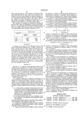
- the polymeric organic pigment derivatives obtained by interacting a halogenomethylated organic pigment (containing from 2 to 8 halogenomethylated groups per molecule) and a primary aliphatic, cycloaliphatic or araliphatic amine are of the formula and that those similarly obtained from an aliphatic diamine are of the formula wherein A represents an organic pigment molecule, R represents an aliphatic, cycloaliphatic or araliphatic radical, R represents an alkylene radical, x is 0 to 6 and y is at least 2.
- A represents an organic pigment molecule
- R represents an aliphatic, cycloaliphatic or araliphatic radical
- R represents an alkylene radical
- x is 0 to 6
- y is at least 2.
- the pigment compositions of the invention are of value as colouring matters for paints, lacquers, enamels, printing inks, plastic materials and the like because they disperse rapidly in non-aqueous media and have a high degree of resistance to flocculation and to crystal growth.
- Pigment compositions of the invention which are of RNH- a) great value are those containing blue phthalocyanine pigments, especially copper phthalocyanine pigments, for example copper phthalocyanine itself and its halogeno (particularly monochloro) derivatives, the pigments commonly called benzidine yellows, which are obtained by coupling tetrazotised benzidine and its derivatives (e.g. 3:3'-dichlorobenzidine) with acetoacetanilides, the quinacridone red pigments, and the chome yellow pigments.
- Such pigment compositions show pronounced advantages over the parent pigments in being more stable in shade and strength in paint and printing ink media and in that printing inks containing them are less viscous.
- a polymeric organic pigment derivative should be incorporated with a pigment of the same colour, and this may often be accomplished by using a derivative of the particular pigment whose properties it is desired to improve, for example by incorporating a copper phthalocyanine derivative with copper phthalocyanine itself. Sometimes, however, it is desirable to alter slightly the shade of a pigment and in this case the polymeric organic pigment derivative may be of a different colour from the pigment.
- the proportions of pigment and organic pigment derivative in the pigment composition of the invention are not critical. We find that pigment compositions containing from 1 to 20%, and especially from 2% to by weight of the organic pigment derivative have excellent properties.
- the pigment compositions of the present invention are superior to those of British application No. 9,804/ 62 because the polymeric organic pigment derivatives contained in the compositions do not diffuse from a paint layer into an oversprayed layer and because they do not diffuse from printed wrapping material into fatty materials such as soap.
- a mixture of 14 parts of copper tris-(chloromethyl) phthalocyanine, 46 parts of copper tris-(isopropylaminomethyl)phthalocyanine and 80 parts of methyl isobutyl ketone is stirred for 16 hours at 90 to 100. After cooling, 100 parts of water and 68 parts of 30% sodium hydroxide solution are added. The ketone is removed by steam distillation and the solid is filtered off, washed with water and dried. The product is only partly soluble in dilute acetic acid and almost insoluble in toluene.
- a mixture of 61 parts isopropylamine and 363 parts toluene is stirred at 20-25" C. while 100 parts of copper tris-(chloromethyl)phthalocyanine is added during 15 minutes. After stirring 2 hours at -25", the temperature is raised to 80 during 100 minutes. After stirring, 16 hours at 80-85 the toluene is removed by steam distillation. The product is filtered off, washed and dried. It is soluble in 30% acetic acid but almost insoluble in 6% acetic acid.
- a mixture of 7.3 parts of copper tris-(chloromethyl) phthalocyanine, 24 parts of copper tris(/3-aminoethylaminoethyl)phthalocyanine and 40 parts of methyl isobutyl ketone is stirred 16 hours at -100 C. After cooling, the solid is filtered off, washed with methanol then with water and stirred for 2 hours at 90 C. to C. with 200 parts of water and 6.5 parts of 30% sodium hydroxide solution. The solid is filtered off, washed with water and dried. It is almost insoluble in dilute acetic acid.
- a mixture of 40 parts of cyclohexylamine and 156 parts of toluene is stirred at 20-25 C. while 32 parts of copper penta(chloromethyl)phthalocyanine is added during 15 minutes. After stirring 2 hours at 20-25 the temperature is raised during 2 hours to 90. After stirring 16 hours at 9095, the toluene is removed by steam distillation. The product is filtered off, washed and dried. It is insoluble in 6% acetic acid.
- POLYMERIC PIGMENT DERIVATIVE VIII A mixture of 270 parts of 98% ethylene diamine and 200 parts water is stirred below 30 C. while 171 parts of copper tris(chloromethyl)phthalocyanine is added. After stirring 16 hours at 20, the temperature is raised to 90 during 70 minutes. After stirring 4 hours at 90, the product is filtered off, washed and dried. It is insoluble in acetic acid of any concentration and is regarded as a product of higher molecular weight than Polymeric Pigment Derivative II.
- POLYMERIC PIGMENT DERIVATIVE X A mixture of 18 parts of 3-dimethylaminopropylamine, 110 parts water and 29.7 parts of 30% sodium hydroxide solution is stirred at 20-25 C. while 48 parts copper tris- (chloromethyl)phthalocyanine is added during 15 minutes. After stirring 2 hours at 20-25", the temperature is raised to 90 during 2 hours. After stirring 16 hours at 90-95 50 parts water is added, and the product is filtered off, washed and dried.
- POLYMERIC PIGMENT DERIVATIVE XI POLYMERIC PIGMENT DERIVATIVE XII
- a mixture of 21.6 parts of cyclohexylamine and 86.6 parts of toluene is stirred at 20-25 C. While 25 parts of a mixture of bisand tris-(chloromethyl)-4:4'-bis-(6 methylbenzthiazyl)azobenzene (containing 13.8% chlorine) is added during 15 minutes. After stirring 2 hours at 20-25 the temperature is raised to 90 during 2 hours.
- the product shows improved rate of dispersion in paint media and much improved resistance to flocculation.
- the product also has excellent tinctorial strength.
- Example 2 30 parts of the crude copper phthalocyanine used in Example 1, 1.5 parts of Polymeric Organic Pigment Derivative II, 4.5 parts of 80% phosphoric acid and 115 parts of water are stirred rapidly in a stainless steel beaker with 360 parts of sand of particle size 0.25 to 0.3 millimetre. Stirring is continued for 3 hours with the stirrer driven at about 1800 revolutions per minute and the pigment suspension is then separated from the sand. The suspension is basified with dilute aqueous sodium hydroxide, and the pigment is filtered off, washed and dried.
- This pigment composition When used to print wrapping material for soap tablets does not discolour the soap. When incorporated into a paint film it does not cause staining of an oversprayed white paint. It also has excellent resistance to flocculation in paint films.
- aqueous acetic and phosphoric acids are used as media for manufacture of the pigment compositions.
- the choice of acid is not a critical factor and other acids which have been used equally successfully include hydrochloric, sulphuric, lactic, chloracetic, and formic acids.
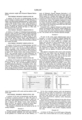
- the products obtained as indicated in the table all have excellent tinctorial strength and better resistance to flocculation in air drying alkyd than the pigments from which they are obtained.
- the products of Examples 4, 5 and 13 have outstanding overspray fastness in stoving media and the product of Example 5 is also outstanding in its resistance against diffusion from printed Wrapping material into soap.
- Example 16 A mixture of 108 parts of an 18.6% paste of Monolite Yellow 2GL (Colour Index ref. 0.1. 21,105), parts of water, and 20 parts of a solution of Polymeric Pigment Derivative XII in 30% acetic acid is stirred for 15 minutes, and then made alkaline by gradual addition of 4 N ammonium hydroxide solution. The solid is filtered 01f, washed free from electrolyte, and dried at 70 C. The product is superior to Monolite Yellow 2GL in resistance to flocculation in air drying alkyd media.
- the viscosity of a printing ink obtained by milling the product with 3 parts of lithographic varnish is lower than that of a corresponding ink made from Monolite Yellow 2GL over a wide range of rates of shear, as measured with a Ferranti-Shirley cone-and-plate viscometer at 25:
- Viscosity (poise) Rate of Shear see- Treated Untreated Pigment Pigment
- Example 17 A mixture of 91 parts of 22% Monolite Yellow GN paste (Colour Index reference C.I. 11,680), 100 parts of water, and 20 parts of a 5% solution of Polymeric Pigment Derivative XII in 30% acetic acid is stirred for 15 minutes, and then made alkaline by the gradual addition of 4 N ammonium hydroxide, the solid is filtered off, washed free of electrolyte, and dried at 70 C. The product is superior to Monolite Yellow GN in tinctorial strength in air drying alkyd medium.
- the viscosity of a printing ink containing 25% of the product is only 252 poises at 25 and a rate of shear of 1.54 secr compared with a viscosity of 524 poises for a corresponding ink from Monolite Yellow GN.
- Example 18 is repeated using Monolite Yellow G (Colour Index reference C.I. 11,710) in place of Monolite Yellow GN.
- the product is superior to Monolite Yellow 10G in tinctorial strength in air drying alkyd medium.
- the viscosity of a printing ink containing 25% of the product is 160 poises at a rate of shear of 1.54 sec. compared with a viscosity of 201 for a corresponding ink from Monolite Yellow 10G.
- a pigment composition consisting essentially of a pigment intimately incorporated with from 1 to 20% by weight of a polymeric organic pigment derivative in which at least two pigment molecules are linked together through divalent linking groups containing nitrogen, said polymeric organic pigment derivative being a condensate of (i) a chloromethyl compound selected from the class consisting of copper halogenomethylphthalocyanines containing from 2 to 8 chloromethyl groups, chloromethyl dimethyl dibenzthiazylazobenzenes containing from 2 to 3 chloromethyl groups and dichloromethylisodibenzanthrones with (ii) an amine selected from the class consisting of primary aliphatic, cycloaliphatic and araliphatic amines and diamines, said polymeric organic pigment derivative being substantially insoluble in 6% aqueous acetic acid.
- a chloromethyl compound selected from the class consisting of copper halogenomethylphthalocyanines containing from 2 to 8 chloromethyl groups, chloromethyl dimethyl dibenzthiazylazobenzenes
- a pigment composition according to claim 1 wherein the pigment is selected from the group consisting of a phthalocyanine pigment, a benzidine yellow pigment, a quinacridone red pigment and a chrome yellow pigment.
- a pigment composition according to claim 1 wherein the pigment is copper monochlorochlorophthalocyanine.
- a pigment composition according to claim 1 wherein the polymeric organic pigment derivative is of the formula wherein A represents the radical of said chloromethyl compound, R represents a radical selected from the group consisting of an aliphatic, cycloaliphatic and araliphatic radical, x is 0 to 6 and y is at least 2.
- a pigment composition according to claim 1 wherein the polymeric organic pigment derivative is of the formula wherein A represents the radical of said chloromethyl compound, R represents an alkylene radical, x is 0 to 6 and y is at least 2.
- a pigment composition according to claim 1 wherein the polymeric organic pigment derivative is a condensate of a halogenomethylated copper phthalocyanine containing from 2 to 8 chloromethyl groups with a primary aliphatic diamine.
- a process for the manufacture of a pigment composition according to claim 1 which comprises milling an aqueous suspension of a pigment and a polymeric organic pigment derivative as defined in claim 1 by vigorous agitation with a particulate grinding aid in the presence of an acid and subsequently basifying to liberate the free base form of the said derivative.
- a process for the manufacture of a pigment composition comprising a pigment initimately incorporated with a polymeric condensate of a halogenomethylated dimethyldibenzthiazylazobenzene with an amine selected from the class consisting of primary aliphatic, cycloaliphatic and araliphatic amines and diamines which process comprises suspending said pigment in a solution of said polymeric condensate in aqueous acetic acid of sufficient strength to dissolve said polymeric condensate and basifying the suspension to liberate the free base form of said polymeric condensate.
- a coating composition including the pigment composition of claim 1 and a vehicle therefor.
- a pigmented plastic composition including the pigment composition of claim 1.
Landscapes
- Chemical & Material Sciences (AREA)
- Organic Chemistry (AREA)
- Chemical Kinetics & Catalysis (AREA)
- Health & Medical Sciences (AREA)
- Medicinal Chemistry (AREA)
- Polymers & Plastics (AREA)
- Compositions Of Macromolecular Compounds (AREA)
- Paints Or Removers (AREA)
Applications Claiming Priority (2)
| Application Number | Priority Date | Filing Date | Title |
|---|---|---|---|
| GB31740/63A GB1082967A (en) | 1963-08-12 | 1963-08-12 | Manufacture of pigment compositions |
| GB3174064 | 1964-07-08 |
Publications (1)
| Publication Number | Publication Date |
|---|---|
| US3336147A true US3336147A (en) | 1967-08-15 |
Family
ID=26261057
Family Applications (1)
| Application Number | Title | Priority Date | Filing Date |
|---|---|---|---|
| US385451A Expired - Lifetime US3336147A (en) | 1963-08-12 | 1964-07-27 | Manufacture of pigment compositions |
Country Status (5)
| Country | Link |
|---|---|
| US (1) | US3336147A (de) |
| BE (1) | BE651510A (de) |
| CH (1) | CH457670A (de) |
| DE (1) | DE1285445B (de) |
| NL (1) | NL6409271A (de) |
Cited By (5)
| Publication number | Priority date | Publication date | Assignee | Title |
|---|---|---|---|---|
| US3534044A (en) * | 1967-01-10 | 1970-10-13 | American Cyanamid Co | Process for producing beta-quinacridones |
| US3691116A (en) * | 1969-08-13 | 1972-09-12 | Ciba Geigy Ag | Synthetic resin compounds of the phthalocyanine series |
| US3905825A (en) * | 1970-12-19 | 1975-09-16 | Acna | Azo-acetyl-acetaryl pigment compositions readily dispersed in organic media |
| US4142914A (en) * | 1977-02-24 | 1979-03-06 | Basf Aktiengesellschaft | Pigments which are stable in nitrocellulose |
| DE3022784A1 (de) * | 1979-06-21 | 1981-01-22 | Sun Chemical Corp | Verfahren zum modifizieren eines azoarylamid-pigments, nach diesem verfahren hergestellte azopigmentmasse und diese azopigmentmasse enthaltende druckfarbe |
Families Citing this family (1)
| Publication number | Priority date | Publication date | Assignee | Title |
|---|---|---|---|---|
| GB1356253A (en) * | 1970-05-06 | 1974-06-12 | Ciba Geigy Uk Ltd | Azo pigment compositions |
Citations (3)
| Publication number | Priority date | Publication date | Assignee | Title |
|---|---|---|---|---|
| US2855403A (en) * | 1956-02-16 | 1958-10-07 | American Cyanamid Co | Nonflocculating, noncrystallizing phthalocyanine pigments |
| US3065092A (en) * | 1959-05-05 | 1962-11-20 | Sandoz Ltd | Process for the production of copper phthalocyanine stable to separation |
| US3288621A (en) * | 1962-03-14 | 1966-11-29 | Ici Ltd | Manufacture of pigment compositions |
Family Cites Families (1)
| Publication number | Priority date | Publication date | Assignee | Title |
|---|---|---|---|---|
| FR1332175A (de) * | 1961-06-20 | 1963-12-16 |
-
1964
- 1964-07-27 US US385451A patent/US3336147A/en not_active Expired - Lifetime
- 1964-08-05 CH CH1020564A patent/CH457670A/de unknown
- 1964-08-06 BE BE651510D patent/BE651510A/xx unknown
- 1964-08-12 DE DEJ26382A patent/DE1285445B/de active Pending
- 1964-08-12 NL NL6409271A patent/NL6409271A/xx unknown
Patent Citations (3)
| Publication number | Priority date | Publication date | Assignee | Title |
|---|---|---|---|---|
| US2855403A (en) * | 1956-02-16 | 1958-10-07 | American Cyanamid Co | Nonflocculating, noncrystallizing phthalocyanine pigments |
| US3065092A (en) * | 1959-05-05 | 1962-11-20 | Sandoz Ltd | Process for the production of copper phthalocyanine stable to separation |
| US3288621A (en) * | 1962-03-14 | 1966-11-29 | Ici Ltd | Manufacture of pigment compositions |
Cited By (5)
| Publication number | Priority date | Publication date | Assignee | Title |
|---|---|---|---|---|
| US3534044A (en) * | 1967-01-10 | 1970-10-13 | American Cyanamid Co | Process for producing beta-quinacridones |
| US3691116A (en) * | 1969-08-13 | 1972-09-12 | Ciba Geigy Ag | Synthetic resin compounds of the phthalocyanine series |
| US3905825A (en) * | 1970-12-19 | 1975-09-16 | Acna | Azo-acetyl-acetaryl pigment compositions readily dispersed in organic media |
| US4142914A (en) * | 1977-02-24 | 1979-03-06 | Basf Aktiengesellschaft | Pigments which are stable in nitrocellulose |
| DE3022784A1 (de) * | 1979-06-21 | 1981-01-22 | Sun Chemical Corp | Verfahren zum modifizieren eines azoarylamid-pigments, nach diesem verfahren hergestellte azopigmentmasse und diese azopigmentmasse enthaltende druckfarbe |
Also Published As
| Publication number | Publication date |
|---|---|
| CH457670A (de) | 1968-06-15 |
| DE1285445B (de) | 1968-12-19 |
| BE651510A (de) | 1965-02-08 |
| NL6409271A (de) | 1965-02-15 |
Similar Documents
| Publication | Publication Date | Title |
|---|---|---|
| US4310359A (en) | Pigment compositions | |
| US4317682A (en) | Pigment compositions and use thereof | |
| JP3650633B2 (ja) | 顔料調製物 | |
| US4664714A (en) | Pigment composition | |
| JPH0667463B2 (ja) | 徴細な非磁気性固体組成物、及び分散剤 | |
| JPH0747697B2 (ja) | ペリレン化合物を基礎とする新規の顔料調製物 | |
| KR100509226B1 (ko) | 안료분산제 및 이것을 포함한 안료조성물 | |
| US5112404A (en) | Pigment formulations, processes for their preparation and their use | |
| JPS61281161A (ja) | 顔料分散用組成物および顔料分散組成物 | |
| JPS63305173A (ja) | 顔料分散剤 | |
| JPS6342672B2 (de) | ||
| EP1212377B1 (de) | Verflüssigungsmittel | |
| JPH06212088A (ja) | 顔料組成物及び塗料 | |
| US3336147A (en) | Manufacture of pigment compositions | |
| US2855403A (en) | Nonflocculating, noncrystallizing phthalocyanine pigments | |
| US3763182A (en) | Method for producing metal phthalocyanine type pigment | |
| US4732618A (en) | Powdered pigments with improved rheological properties, processes for their preparation and their use with a content of at least 5% of unsubstituted quinacridone | |
| JPS62295966A (ja) | 表面改質顔料組成物 | |
| US5360472A (en) | Waterfast dye compositions | |
| US3288621A (en) | Manufacture of pigment compositions | |
| JPH07110923B2 (ja) | 顔料組成物及び顔料分散体 | |
| US2932580A (en) | Pigment concentrate | |
| JPH0790190A (ja) | 顔料配合物 | |
| US5556456A (en) | Pigment compositions | |
| JP4536909B2 (ja) | 顔料分散剤およびこれを含んだ顔料組成物 |