US12090735B2 - Laminate, packaging bag, and method for manufacturing same - Google Patents
Laminate, packaging bag, and method for manufacturing same Download PDFInfo
- Publication number
- US12090735B2 US12090735B2 US17/793,474 US202017793474A US12090735B2 US 12090735 B2 US12090735 B2 US 12090735B2 US 202017793474 A US202017793474 A US 202017793474A US 12090735 B2 US12090735 B2 US 12090735B2
- Authority
- US
- United States
- Prior art keywords
- layer
- laminate
- polyethylene
- packaging bag
- melting point
- Prior art date
- Legal status (The legal status is an assumption and is not a legal conclusion. Google has not performed a legal analysis and makes no representation as to the accuracy of the status listed.)
- Active, expires
Links
Images


Classifications
-
- B—PERFORMING OPERATIONS; TRANSPORTING
- B32—LAYERED PRODUCTS
- B32B—LAYERED PRODUCTS, i.e. PRODUCTS BUILT-UP OF STRATA OF FLAT OR NON-FLAT, e.g. CELLULAR OR HONEYCOMB, FORM
- B32B27/00—Layered products comprising a layer of synthetic resin
- B32B27/06—Layered products comprising a layer of synthetic resin as the main or only constituent of a layer, which is next to another layer of the same or of a different material
- B32B27/08—Layered products comprising a layer of synthetic resin as the main or only constituent of a layer, which is next to another layer of the same or of a different material of synthetic resin
-
- B—PERFORMING OPERATIONS; TRANSPORTING
- B65—CONVEYING; PACKING; STORING; HANDLING THIN OR FILAMENTARY MATERIAL
- B65D—CONTAINERS FOR STORAGE OR TRANSPORT OF ARTICLES OR MATERIALS, e.g. BAGS, BARRELS, BOTTLES, BOXES, CANS, CARTONS, CRATES, DRUMS, JARS, TANKS, HOPPERS, FORWARDING CONTAINERS; ACCESSORIES, CLOSURES, OR FITTINGS THEREFOR; PACKAGING ELEMENTS; PACKAGES
- B65D75/00—Packages comprising articles or materials partially or wholly enclosed in strips, sheets, blanks, tubes or webs of flexible sheet material, e.g. in folded wrappers
- B65D75/52—Details
- B65D75/58—Opening or contents-removing devices added or incorporated during package manufacture
- B65D75/5816—Opening or contents-removing devices added or incorporated during package manufacture for tearing a corner or other small portion next to the edge, e.g. a U-shaped portion
- B65D75/5822—Opening or contents-removing devices added or incorporated during package manufacture for tearing a corner or other small portion next to the edge, e.g. a U-shaped portion and defining, after tearing, a small dispensing spout, a small orifice or the like
-
- B—PERFORMING OPERATIONS; TRANSPORTING
- B32—LAYERED PRODUCTS
- B32B—LAYERED PRODUCTS, i.e. PRODUCTS BUILT-UP OF STRATA OF FLAT OR NON-FLAT, e.g. CELLULAR OR HONEYCOMB, FORM
- B32B27/00—Layered products comprising a layer of synthetic resin
- B32B27/32—Layered products comprising a layer of synthetic resin comprising polyolefins
-
- B—PERFORMING OPERATIONS; TRANSPORTING
- B32—LAYERED PRODUCTS
- B32B—LAYERED PRODUCTS, i.e. PRODUCTS BUILT-UP OF STRATA OF FLAT OR NON-FLAT, e.g. CELLULAR OR HONEYCOMB, FORM
- B32B7/00—Layered products characterised by the relation between layers; Layered products characterised by the relative orientation of features between layers, or by the relative values of a measurable parameter between layers, i.e. products comprising layers having different physical, chemical or physicochemical properties; Layered products characterised by the interconnection of layers
- B32B7/02—Physical, chemical or physicochemical properties
- B32B7/022—Mechanical properties
-
- B—PERFORMING OPERATIONS; TRANSPORTING
- B32—LAYERED PRODUCTS
- B32B—LAYERED PRODUCTS, i.e. PRODUCTS BUILT-UP OF STRATA OF FLAT OR NON-FLAT, e.g. CELLULAR OR HONEYCOMB, FORM
- B32B7/00—Layered products characterised by the relation between layers; Layered products characterised by the relative orientation of features between layers, or by the relative values of a measurable parameter between layers, i.e. products comprising layers having different physical, chemical or physicochemical properties; Layered products characterised by the interconnection of layers
- B32B7/02—Physical, chemical or physicochemical properties
- B32B7/027—Thermal properties
-
- B—PERFORMING OPERATIONS; TRANSPORTING
- B32—LAYERED PRODUCTS
- B32B—LAYERED PRODUCTS, i.e. PRODUCTS BUILT-UP OF STRATA OF FLAT OR NON-FLAT, e.g. CELLULAR OR HONEYCOMB, FORM
- B32B7/00—Layered products characterised by the relation between layers; Layered products characterised by the relative orientation of features between layers, or by the relative values of a measurable parameter between layers, i.e. products comprising layers having different physical, chemical or physicochemical properties; Layered products characterised by the interconnection of layers
- B32B7/03—Layered products characterised by the relation between layers; Layered products characterised by the relative orientation of features between layers, or by the relative values of a measurable parameter between layers, i.e. products comprising layers having different physical, chemical or physicochemical properties; Layered products characterised by the interconnection of layers with respect to the orientation of features
- B32B7/035—Layered products characterised by the relation between layers; Layered products characterised by the relative orientation of features between layers, or by the relative values of a measurable parameter between layers, i.e. products comprising layers having different physical, chemical or physicochemical properties; Layered products characterised by the interconnection of layers with respect to the orientation of features using arrangements of stretched films, e.g. of mono-axially stretched films arranged alternately
-
- B—PERFORMING OPERATIONS; TRANSPORTING
- B32—LAYERED PRODUCTS
- B32B—LAYERED PRODUCTS, i.e. PRODUCTS BUILT-UP OF STRATA OF FLAT OR NON-FLAT, e.g. CELLULAR OR HONEYCOMB, FORM
- B32B7/00—Layered products characterised by the relation between layers; Layered products characterised by the relative orientation of features between layers, or by the relative values of a measurable parameter between layers, i.e. products comprising layers having different physical, chemical or physicochemical properties; Layered products characterised by the interconnection of layers
- B32B7/04—Interconnection of layers
- B32B7/12—Interconnection of layers using interposed adhesives or interposed materials with bonding properties
-
- B—PERFORMING OPERATIONS; TRANSPORTING
- B65—CONVEYING; PACKING; STORING; HANDLING THIN OR FILAMENTARY MATERIAL
- B65D—CONTAINERS FOR STORAGE OR TRANSPORT OF ARTICLES OR MATERIALS, e.g. BAGS, BARRELS, BOTTLES, BOXES, CANS, CARTONS, CRATES, DRUMS, JARS, TANKS, HOPPERS, FORWARDING CONTAINERS; ACCESSORIES, CLOSURES, OR FITTINGS THEREFOR; PACKAGING ELEMENTS; PACKAGES
- B65D31/00—Bags or like containers made of paper and having structural provision for thickness of contents
- B65D31/02—Bags or like containers made of paper and having structural provision for thickness of contents with laminated walls
-
- B—PERFORMING OPERATIONS; TRANSPORTING
- B65—CONVEYING; PACKING; STORING; HANDLING THIN OR FILAMENTARY MATERIAL
- B65D—CONTAINERS FOR STORAGE OR TRANSPORT OF ARTICLES OR MATERIALS, e.g. BAGS, BARRELS, BOTTLES, BOXES, CANS, CARTONS, CRATES, DRUMS, JARS, TANKS, HOPPERS, FORWARDING CONTAINERS; ACCESSORIES, CLOSURES, OR FITTINGS THEREFOR; PACKAGING ELEMENTS; PACKAGES
- B65D75/00—Packages comprising articles or materials partially or wholly enclosed in strips, sheets, blanks, tubes or webs of flexible sheet material, e.g. in folded wrappers
- B65D75/52—Details
- B65D75/58—Opening or contents-removing devices added or incorporated during package manufacture
- B65D75/5861—Spouts
- B65D75/5866—Integral spouts
-
- B—PERFORMING OPERATIONS; TRANSPORTING
- B32—LAYERED PRODUCTS
- B32B—LAYERED PRODUCTS, i.e. PRODUCTS BUILT-UP OF STRATA OF FLAT OR NON-FLAT, e.g. CELLULAR OR HONEYCOMB, FORM
- B32B2250/00—Layers arrangement
- B32B2250/03—3 layers
-
- B—PERFORMING OPERATIONS; TRANSPORTING
- B32—LAYERED PRODUCTS
- B32B—LAYERED PRODUCTS, i.e. PRODUCTS BUILT-UP OF STRATA OF FLAT OR NON-FLAT, e.g. CELLULAR OR HONEYCOMB, FORM
- B32B2250/00—Layers arrangement
- B32B2250/05—5 or more layers
-
- B—PERFORMING OPERATIONS; TRANSPORTING
- B32—LAYERED PRODUCTS
- B32B—LAYERED PRODUCTS, i.e. PRODUCTS BUILT-UP OF STRATA OF FLAT OR NON-FLAT, e.g. CELLULAR OR HONEYCOMB, FORM
- B32B2250/00—Layers arrangement
- B32B2250/24—All layers being polymeric
-
- B—PERFORMING OPERATIONS; TRANSPORTING
- B32—LAYERED PRODUCTS
- B32B—LAYERED PRODUCTS, i.e. PRODUCTS BUILT-UP OF STRATA OF FLAT OR NON-FLAT, e.g. CELLULAR OR HONEYCOMB, FORM
- B32B2250/00—Layers arrangement
- B32B2250/24—All layers being polymeric
- B32B2250/246—All polymers belonging to those covered by groups B32B27/32 and B32B27/30
-
- B—PERFORMING OPERATIONS; TRANSPORTING
- B32—LAYERED PRODUCTS
- B32B—LAYERED PRODUCTS, i.e. PRODUCTS BUILT-UP OF STRATA OF FLAT OR NON-FLAT, e.g. CELLULAR OR HONEYCOMB, FORM
- B32B2272/00—Resin or rubber layer comprising scrap, waste or recycling material
-
- B—PERFORMING OPERATIONS; TRANSPORTING
- B32—LAYERED PRODUCTS
- B32B—LAYERED PRODUCTS, i.e. PRODUCTS BUILT-UP OF STRATA OF FLAT OR NON-FLAT, e.g. CELLULAR OR HONEYCOMB, FORM
- B32B2307/00—Properties of the layers or laminate
- B32B2307/30—Properties of the layers or laminate having particular thermal properties
-
- B—PERFORMING OPERATIONS; TRANSPORTING
- B32—LAYERED PRODUCTS
- B32B—LAYERED PRODUCTS, i.e. PRODUCTS BUILT-UP OF STRATA OF FLAT OR NON-FLAT, e.g. CELLULAR OR HONEYCOMB, FORM
- B32B2307/00—Properties of the layers or laminate
- B32B2307/30—Properties of the layers or laminate having particular thermal properties
- B32B2307/31—Heat sealable
-
- B—PERFORMING OPERATIONS; TRANSPORTING
- B32—LAYERED PRODUCTS
- B32B—LAYERED PRODUCTS, i.e. PRODUCTS BUILT-UP OF STRATA OF FLAT OR NON-FLAT, e.g. CELLULAR OR HONEYCOMB, FORM
- B32B2307/00—Properties of the layers or laminate
- B32B2307/50—Properties of the layers or laminate having particular mechanical properties
- B32B2307/51—Elastic
-
- B—PERFORMING OPERATIONS; TRANSPORTING
- B32—LAYERED PRODUCTS
- B32B—LAYERED PRODUCTS, i.e. PRODUCTS BUILT-UP OF STRATA OF FLAT OR NON-FLAT, e.g. CELLULAR OR HONEYCOMB, FORM
- B32B2307/00—Properties of the layers or laminate
- B32B2307/50—Properties of the layers or laminate having particular mechanical properties
- B32B2307/514—Oriented
-
- B—PERFORMING OPERATIONS; TRANSPORTING
- B32—LAYERED PRODUCTS
- B32B—LAYERED PRODUCTS, i.e. PRODUCTS BUILT-UP OF STRATA OF FLAT OR NON-FLAT, e.g. CELLULAR OR HONEYCOMB, FORM
- B32B2307/00—Properties of the layers or laminate
- B32B2307/50—Properties of the layers or laminate having particular mechanical properties
- B32B2307/58—Cuttability
- B32B2307/581—Resistant to cut
-
- B—PERFORMING OPERATIONS; TRANSPORTING
- B32—LAYERED PRODUCTS
- B32B—LAYERED PRODUCTS, i.e. PRODUCTS BUILT-UP OF STRATA OF FLAT OR NON-FLAT, e.g. CELLULAR OR HONEYCOMB, FORM
- B32B2307/00—Properties of the layers or laminate
- B32B2307/50—Properties of the layers or laminate having particular mechanical properties
- B32B2307/582—Tearability
- B32B2307/5825—Tear resistant
-
- B—PERFORMING OPERATIONS; TRANSPORTING
- B32—LAYERED PRODUCTS
- B32B—LAYERED PRODUCTS, i.e. PRODUCTS BUILT-UP OF STRATA OF FLAT OR NON-FLAT, e.g. CELLULAR OR HONEYCOMB, FORM
- B32B2307/00—Properties of the layers or laminate
- B32B2307/70—Other properties
- B32B2307/732—Dimensional properties
-
- B—PERFORMING OPERATIONS; TRANSPORTING
- B32—LAYERED PRODUCTS
- B32B—LAYERED PRODUCTS, i.e. PRODUCTS BUILT-UP OF STRATA OF FLAT OR NON-FLAT, e.g. CELLULAR OR HONEYCOMB, FORM
- B32B2307/00—Properties of the layers or laminate
- B32B2307/70—Other properties
- B32B2307/732—Dimensional properties
- B32B2307/737—Dimensions, e.g. volume or area
- B32B2307/7375—Linear, e.g. length, distance or width
- B32B2307/7376—Thickness
-
- B—PERFORMING OPERATIONS; TRANSPORTING
- B32—LAYERED PRODUCTS
- B32B—LAYERED PRODUCTS, i.e. PRODUCTS BUILT-UP OF STRATA OF FLAT OR NON-FLAT, e.g. CELLULAR OR HONEYCOMB, FORM
- B32B2307/00—Properties of the layers or laminate
- B32B2307/70—Other properties
- B32B2307/75—Printability
-
- B—PERFORMING OPERATIONS; TRANSPORTING
- B32—LAYERED PRODUCTS
- B32B—LAYERED PRODUCTS, i.e. PRODUCTS BUILT-UP OF STRATA OF FLAT OR NON-FLAT, e.g. CELLULAR OR HONEYCOMB, FORM
- B32B2439/00—Containers; Receptacles
-
- B—PERFORMING OPERATIONS; TRANSPORTING
- B32—LAYERED PRODUCTS
- B32B—LAYERED PRODUCTS, i.e. PRODUCTS BUILT-UP OF STRATA OF FLAT OR NON-FLAT, e.g. CELLULAR OR HONEYCOMB, FORM
- B32B2439/00—Containers; Receptacles
- B32B2439/02—Open containers
- B32B2439/06—Bags, sacks, sachets
-
- B—PERFORMING OPERATIONS; TRANSPORTING
- B32—LAYERED PRODUCTS
- B32B—LAYERED PRODUCTS, i.e. PRODUCTS BUILT-UP OF STRATA OF FLAT OR NON-FLAT, e.g. CELLULAR OR HONEYCOMB, FORM
- B32B2439/00—Containers; Receptacles
- B32B2439/40—Closed containers
- B32B2439/46—Bags
-
- B—PERFORMING OPERATIONS; TRANSPORTING
- B32—LAYERED PRODUCTS
- B32B—LAYERED PRODUCTS, i.e. PRODUCTS BUILT-UP OF STRATA OF FLAT OR NON-FLAT, e.g. CELLULAR OR HONEYCOMB, FORM
- B32B2439/00—Containers; Receptacles
- B32B2439/70—Food packaging
-
- B—PERFORMING OPERATIONS; TRANSPORTING
- B32—LAYERED PRODUCTS
- B32B—LAYERED PRODUCTS, i.e. PRODUCTS BUILT-UP OF STRATA OF FLAT OR NON-FLAT, e.g. CELLULAR OR HONEYCOMB, FORM
- B32B2553/00—Packaging equipment or accessories not otherwise provided for
-
- Y—GENERAL TAGGING OF NEW TECHNOLOGICAL DEVELOPMENTS; GENERAL TAGGING OF CROSS-SECTIONAL TECHNOLOGIES SPANNING OVER SEVERAL SECTIONS OF THE IPC; TECHNICAL SUBJECTS COVERED BY FORMER USPC CROSS-REFERENCE ART COLLECTIONS [XRACs] AND DIGESTS
- Y02—TECHNOLOGIES OR APPLICATIONS FOR MITIGATION OR ADAPTATION AGAINST CLIMATE CHANGE
- Y02W—CLIMATE CHANGE MITIGATION TECHNOLOGIES RELATED TO WASTEWATER TREATMENT OR WASTE MANAGEMENT
- Y02W30/00—Technologies for solid waste management
- Y02W30/50—Reuse, recycling or recovery technologies
- Y02W30/62—Plastics recycling; Rubber recycling
-
- Y—GENERAL TAGGING OF NEW TECHNOLOGICAL DEVELOPMENTS; GENERAL TAGGING OF CROSS-SECTIONAL TECHNOLOGIES SPANNING OVER SEVERAL SECTIONS OF THE IPC; TECHNICAL SUBJECTS COVERED BY FORMER USPC CROSS-REFERENCE ART COLLECTIONS [XRACs] AND DIGESTS
- Y02—TECHNOLOGIES OR APPLICATIONS FOR MITIGATION OR ADAPTATION AGAINST CLIMATE CHANGE
- Y02W—CLIMATE CHANGE MITIGATION TECHNOLOGIES RELATED TO WASTEWATER TREATMENT OR WASTE MANAGEMENT
- Y02W30/00—Technologies for solid waste management
- Y02W30/50—Reuse, recycling or recovery technologies
- Y02W30/80—Packaging reuse or recycling, e.g. of multilayer packaging
Definitions
- the present invention relates to a laminate, and a packaging bag and a manufacturing method therefor.
- PET bottles as well as plastic containers and packaging are items designated for recycling in Japan in view of environmental conservation.
- PET bottles typically contain PET (polyethylene terephthalate) alone as a resin and hence are easily recycled. Consequently, horizontal recycling has been established therefor.
- plastic containers and packaging typically contain a plurality of resins, and it is difficult to separate these resins. Consequently, recycled products to be obtained are low in value.
- Exemplary methods of enhancing the value of recycled products from plastic containers and packaging include a method of using a single resin alone as a component resin of plastic containers and packaging (monomaterial packaging). Since plastic containers and packaging contain a single resin alone as a resin in this method, easy recycling is possible without any need to separate into each resin. Moreover, since recycled products to be obtained have high purity, it is possible to provide recycled products of high value.
- Patent Literature (PTL) 1 to 10 disclose a laminate containing polyethylene as a resin.
- the present inventors prepared a packaging bag using a film solely consisting of polyethylene layers instead of using a laminate including a nylon layer and a PET layer stacked on a polyethylene layer.
- the seal bars were stuck to the melt polyethylene layer surfaces. Consequently, it was impossible to perform heat sealing at a sufficiently high temperature and hence to attain satisfactory sealing strength in the sealed portion.
- the seal bars were stuck to the melt polyethylene layer surfaces, the resulting packaging bag had defective appearance.
- a packaging bag according to the present invention includes the laminate according to the present invention.
- FIG. 1 is a cross-sectional view of an exemplary laminate according to the present invention.
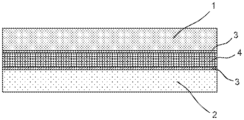
- FIG. 2 is a cross-sectional view of another exemplary laminate according to the present invention.
- FIG. 3 schematically illustrates an exemplary liquid refill pouch as an example of a packaging bag according to the present invention.
- a laminate according to the present invention includes: a first layer having a melting point of Tm 1 and containing a first polyethylene alone as a resin; and a second layer having a melting point of Tm 2 and containing a second polyethylene alone as a resin.
- the first layer and the second layer are disposed respectively as outermost surfaces of the laminate.
- the first layer is either of the outermost surface layers of the laminate, and the second layer is the other outermost surface layer of the laminate.
- the melting point Tm 1 and the melting point Tm 2 have a relationship of Tm 1 ⁇ Tm 2 ⁇ 24.0° C.
- the laminate according to the present invention two layers different in melting point by 24.0° C. or more are stacked respectively as the outermost surface layers.
- the first layer as a high-melting layer exhibits high heat resistance. For this reason, when heat sealing is performed by pressing a seal bar on the first layer, it is possible to suppress melt sticking to the seal bar even when the temperature of the seal bar is elevated. Consequently, heat sealing is possible at a high temperature.
- the second layer as a low-melting layer melts at a low temperature and thus readily melts with heat transferred from the first layer. Consequently, bonding at satisfactory sealing strength is possible.
- the laminate according to the present invention is excellent in heat sealing properties. Moreover, since the first layer and the second layer contain polyethylene alone as a resin, the laminate is suitable for reuse. Consequently, it is possible to provide recycled products of high purity and high value.
- the laminate according to the present invention includes at least the first layer and the second layer as outermost surface layers and may include other layers as intermediate layers.
- Exemplary other layers include a recycled layer from laminates, a bonding layer, an adhesive layer, a printed layer, a barrier layer, a layer for imparting easy openability, and other functional layers.
- one such functional layer may have a plurality of functions.
- the laminate may include one or two or more of these layers.
- the mass ratio of polyethylene contained in each laminate, relative to 100 mass % for all the resins contained in the laminate is preferably 90 mass % or more, more preferably 95 mass % or more, further preferably 99 mass % or more, and particularly preferably 100 mass %, in other words, the laminate contains polyethylene alone as a resin.
- the laminate may not contain nylon. Examples of the nylon include nylon 6, nylon 66, nylon 11, and nylon 12.
- the laminate may contain, in addition to resins, other components, such as a thermosetting resin, a metal, and a metal oxide. From a viewpoint of increasing the purity of recycled products from laminates, the content of other components is preferably 5 mass % or less and more preferably 1 mass % or less relative to 100 mass % for each laminate.
- the thickness of the entire laminate is preferably 10 to 500 ⁇ m and more preferably 50 to 200 ⁇ m.
- the total thickness ratio of the first layer and the second layer is preferably 1 to 100% and more preferably 5 to 100% relative to 100% for the thickness of the entire laminate.
- FIG. 1 An exemplary laminate according to the present invention is illustrated in FIG. 1 .
- the laminate illustrated in FIG. 1 includes a first layer 1 that is a stretched film of a first polyethylene, a second layer 2 that is an unstretched film of a second polyethylene, and an adhesive layer 3 for bonding the first layer 1 and the second layer 2 .
- the first layer has a melting point Tm 1 higher than the melting point Tm 2 of the second layer 2 by 24.0° C. or more.
- the adhesive layer 3 preferably has a smaller thickness and is preferably omitted when direct bonding between the first layer 1 and the second layer 2 is possible.
- FIG. 2 Another exemplary laminate according to the present invention is illustrated in FIG. 2 .
- the laminate illustrated in FIG. 2 includes a first layer 1 that is a stretched film of a first polyethylene, a second layer 2 that is an unstretched film of a second polyethylene, and a recycled layer 4 from laminates.
- the laminate also includes adhesive layers 3 respectively between the first layer 1 and the recycled layer 4 as well as between the second layer 2 and the recycled layer 4 .
- the first layer 1 has a melting point Tm 1 higher than the melting point Tm 2 of the second layer 2 by 24.0° C. or more.
- Tm 1 melting point
- the adhesive layers 3 preferably have a smaller thickness and are preferably omitted when direct bonding between the first layer 1 and the recycled layer 4 as well as between the second layer 2 and the recycled layer 4 is possible.
- the laminate may include a plurality of recycled layers 4 or may further include other layers.
- the first layer according to the present invention contains a first polyethylene alone as a resin.
- all the resins contained in the first layer is the first polyethylene, or the first layer does not contain other resins excluding the first polyethylene.
- the first polyethylene may contain a plurality of types of polyethylenes.
- the term “resin” indicates a melt-extrudable thermoplastic resin.
- the first polyethylene examples include high density polyethylene (HDPE), medium density polyethylene (MDPE), linear low density polyethylene (LLDPE), low density polyethylene (LDPE), and ethylene- ⁇ -olefin copolymers.
- the first polyethylene may contain one or two or more of these polyethylenes.
- high density polyethylene (HDPE) which has a high melting point, is preferable as the first polyethylene.
- the mass ratio of HDPE is preferably 50 mass % or more and more preferably 70 mass % or more relative to 100 mass % for the first polyethylene.
- the first polyethylene may consist of HDPE or may consist of HDPE and LLDPE.
- the first polyethylene may be derived from a petroleum raw material or a plant raw material or may be a mixture of those derived therefrom.
- the first polyethylene may contain a recycled material.
- the first layer is preferably a stretched film of the first polyethylene.
- the stretching ratio is preferably 1.2 to 10 times and more preferably 2 to 6 times.
- the stretching may be uniaxial stretching or biaxial stretching.
- the first layer has a inciting point Tm 1 higher than the melting point Tm 2 of the second layer by 24.0° C. or more, preferably 27.0° C. or more, and more preferably 30.0° C. or more.
- Tm 1 ⁇ Tm 2 difference in melting point
- the upper limit for the range of the difference in melting point is not particularly limited but may be 50.0° C. or less, for example.
- the melting point of each layer is a value measured in accordance with JIS K 7121-1987 by DSC under conditions of a temperature rising rate of 10° C./min.
- the melting point Tm 1 of the first layer is not particularly limited provided that the melting point is higher than the melting point Tm 2 of the second layer by 24.0° C. or more but is preferably 130.0° C. or higher, more preferably 132.0° C. or higher, and further preferably 135.0° C. or higher from a viewpoint of enabling heat sealing at a further high temperature.
- the thickness of the first layer is preferably 40 ⁇ m or less and more preferably 30 ⁇ m or less from a viewpoint of increasing heat transfer to the second layer during heat sealing.
- the lower limit for the thickness range of the first layer is not particularly limited but may be 1 ⁇ m or more, for example.
- the thickness ratio of the first layer is preferably 10 to 50%, more preferably 15 to 45%, and further preferably 20 to 40% relative to 100% for the thickness of the entire laminate from a viewpoint of enhancing adhesion and increasing heat transfer to the second layer during heat sealing.
- the first layer may contain, in addition to the first polyethylene, additives commonly used for polyethylene-based films, such as a lubricant, an antioxidant, and an antiblocking agent, as other components excluding resins. Nevertheless, the mass ratio of the first polyethylene, relative to 100 mass % for the first layer, is preferably 90 mass % or more, more preferably 95 mass % or more, further preferably 99 mass % or more, and particularly preferably 100 mass %, in other words, the first layer consists of the first polyethylene.
- the first layer surface may be printed using an ink that is removable in the recycling step.
- the second layer according to the present invention contains a second polyethylene alone as a resin.
- all the resins contained in the second layer is the second polyethylene, or the second layer does not contain other resins excluding the second polyethylene.
- the second polyethylene may contain a plurality of types of polyethylenes.
- the second polyethylene may be polyethylene of the same type as or different type from the first polyethylene.
- the second polyethylene examples include high density polyethylene (HDPE), medium density polyethylene (MDPE), linear low density polyethylene (LLDPE), low density polyethylene (LDPE), and ethylene- ⁇ -olefin copolymers.
- the second polyethylene may contain one or two or more of these polyethylenes.
- linear low density polyethylene (LLDPE) which has a low melting point, is preferable as the second polyethylene.
- LLDPE linear low density polyethylene
- the second polyethylene contains LLDPE
- the mass ratio of LLDPE is preferably 50% or more and more preferably 70% or more relative to 100 mass % for the second polyethylene.
- the second polyethylene may consist of LLDPE or may consist of LLDPE and LDPE.
- LLDPE low density polyethylene
- the second polyethylene may be derived from a petroleum raw material or a plant raw material or may be a mixture of those derived therefrom.
- the second polyethylene may contain a recycled material.
- the second layer is preferably an unstretched film of the second polyethylene. When the second polyethylene is not stretched, it is possible to lower the melting point of the second layer.
- the melting point Tm 2 of the second layer is not particularly limited provided that the melting point is lower than the melting point Tm 1 of the first layer by 24.0° C. or more but is preferably 115.0° C. or lower, and more preferably 110.0° C. or lower, and further preferably 107.0° C. or lower from a viewpoint of melting sufficiently at a further low temperature and attaining high sealing strength.
- the thickness of the second layer is preferably 50 ⁇ m or more and more preferably 60 ⁇ m or more from a viewpoint of enabling satisfactory bonding during heat sealing.
- the upper limit for the thickness range of the second layer is not particularly limited but may be 400 ⁇ m or less, for example.
- the thickness ratio of the second layer is preferably 50 to 90%, more preferably 55 to 85%, and further preferably 60 to 80% relative to 100% for the thickness of the entire laminate from a viewpoint of enhancing adhesion and increasing heat transfer to the second layer during heat sealing.
- the thickness ratio of the second layer is preferably 50 to 90%, more preferably 55 to 85%, and further preferably 60 to 80% relative to 100% for the total thickness of the first layer and the second layer from a viewpoint of enhancing adhesion and increasing heat transfer to the second layer during heat sealing.
- the second layer may contain, in addition to the second polyethylene, additives commonly used for polyethylene-based films, such as a lubricant, an antioxidant, and an antiblocking agent, as other components excluding resins.
- the mass ratio of the second polyethylene, relative to 100 mass % for the second layer is preferably 90 mass % or more, more preferably 95 mass % or more, further preferably 99 mass % or more, and particularly preferably 100 mass %, in other words, the second layer consists of the second polyethylene.
- the laminate according to the present invention preferably further includes, in addition to the first layer and the second layer, a recycled layer from laminates according to the present invention in view of environmental conservation.
- a recycled layer can be produced, for example, through pulverization, cleaning, remelting and extrusion, and formation into a film of wastes and rejects generated during the manufacture of laminates according to the present invention and packaging bags using such laminates as well as used laminates and packaging bags after having been marketed.
- the mass ratio of polyethylene contained in the recycled layer is preferably 90 mass % or more and more preferably 99 mass % or more relative to 100 mass % for all the resins contained in the recycled layer.
- the thickness of the recycled layer is not particularly limited but is preferably 2 to 400 ⁇ m and more preferably 10 to 200 ⁇ m.
- the thickness ratio of the recycled layer is preferably 1 to 99% and more preferably 10 to 90% relative to 100% for the thickness of the entire laminate.
- whether a layer included in the laminate is a recycled layer can be determined, for example, by the fact that the layer has two or more glass transition temperatures or melting points or contains an adhesive.
- the glass transition temperature and the melting point can be observed by DSC (differential scanning calorimetry).
- the presence or absence of an adhesive can be confirmed by chemical analysis, such as IR (infrared spectroscopy).
- the laminate according to the present invention may optionally include one or more adhesive layers for bonding the respective layers that constitute the laminate.
- the first layer is a stretched film
- the film of the first layer and another layer can be bonded to each other via an adhesive layer.
- Exemplary adhesives contained in an adhesive layer include urethane, acid-modified polyolefin, polyester, polyether, and polyamide adhesives.
- An adhesive layer may contain one or two or more of these adhesives.
- the thickness of an adhesive layer is not particularly limited and may be 0.1 to 10 ⁇ m, for example.
- the thickness ratio of an adhesive layer may be, for example, 0.01 to 10% relative to 100% for the thickness of the entire laminate.
- the ratio indicates the total thickness ratio of all the adhesive layers relative to 100% for the thickness of the entire laminate.
- an adhesive layer preferably has a smaller thickness and more preferably is not provided.
- the laminate according to the present invention has a puncture strength of preferably 5 N or more, more preferably 6 N or more, and further preferably 6.5 N or more.
- the puncture strength falls within such ranges, it is possible to have high pinhole resistance and hence to suppress liquid leakage satisfactorily particularly when a packaging bag for storing a liquid is manufactured using the laminate.
- the upper limit for the range of the puncture strength is not particularly limited.
- the laminate according to the present invention can be manufactured, for example, by coextruding a material for forming the first layer, a material for forming the second layer, and, as necessary, materials of other layers, such as a recycled layer.
- the laminate can be manufactured, for example, by bonding the film of the first layer, a film of the second layer, and, as necessary, other layers, such as a recycled layer, via adhesive layers mentioned above.
- a packaging bag according to the present invention includes the laminate according to the present invention.
- the packaging bag according to the present invention may consist of laminates according to the present invention.
- the packaging bag according to the present invention can be formed by heat sealing, as bonding surfaces, the respective second layers of laminates according to the present invention and exhibits high sealing strength since heat sealing is possible at a high temperature. For this reason, it is possible to suppress liquid leakage, for example, even when the packaging bag is filled inside with a liquid. Moreover, even when heat sealing is performed at a high temperature by bringing seal bars into contact with the respective first layer surfaces of the laminates, the resulting packaging bag exhibits satisfactory appearance since the surface melting is suppressed. Further, such a packaging bag, which consists of laminates according to the present invention, is suitable for reuse. In particular, since high pinhole resistance is exhibited when the first layers are stretched films, the packaging bag is suitable as a packaging bag for storing a liquid.
- FIG. 3 an exemplary liquid refill pouch is illustrated in FIG. 3 .
- the liquid refill pouch illustrated in FIG. 3 has a body portion 5 and a bottom portion 6 .
- the body portion 5 is formed from two laminates according to the present invention
- the bottom portion 6 is formed from one laminate according to the present invention.
- a side seal 7 and a top seal 9 are formed.
- a bottom seal 8 is formed.
- a nozzle section 10 that protrudes upward is provided.
- the nozzle section 10 is provided with a tear line 11 , and a spout for pouring out the contents is formed by opening through tearing off of, along the tear line 11 , a tip portion 12 of the nozzle section 10 .
- the contents can be poured into another container, such as a plastic bottle or a glass bottle, by inserting the spout into the inlet port of the container and by tilting the refill pouch.
- Exemplary contents of the liquid refill pouch include detergent, bleach, fabric softener, laundry starch, shampoo, conditioner, cosmetics, and deodorant.
- the method of manufacturing a packaging bag according to the present invention includes heat sealing the laminate according to the present invention. Since a packaging bag is manufactured using the laminate according to the present invention in this method, it is possible to obtain a packaging bag having excellent heat sealing properties and high sealing strength in the sealed portion. Moreover, since surface melting can be suppressed during heat sealing, it is possible to obtain a packaging bag having satisfactory appearance.
- a packaging bag according to the present invention An exemplary method of manufacturing a packaging bag according to the present invention will be described hereinafter.
- two laminates according to the present invention are prepared, and either of the laminates is placed on top of the other such that the respective second layers face each other.
- seal bars set to a predetermined temperature are pressed on the first layer surfaces corresponding to a seal portion.
- the temperature for heat sealing the laminates although depending on the melting point Tm 1 of the first layers, is preferably 130° C. or higher, more preferably 145° C. or higher, and further preferably 160° C. or higher from a viewpoint of sufficiently melting the second layers and attaining high sealing strength.
- Such seal portions can be formed on sides excluding one side for filling with the contents. A packaging bag is thus obtained. Later, the packaging bag is filled with the contents from the remaining open side, and a packaging bag filled with the contents is obtained by heat sealing the side.
- the melting point of each layer was measured in accordance with JIS K 7121-1987 by DSC (from PerkinElmer, Inc.) under conditions of a temperature rising rate of 10° C./min. When a plurality of peaks were observed, a main peak with the largest amount of heat absorbed was regarded as the melting point.
- the sealing strength was measured in accordance with JIS Z 0238 (1998) using an autograph (from Shimadzu Corporation) at a tensile speed of 300 mm/min and a sample width of 15 mm.
- the puncture strength of each laminate was measured in accordance with JIS Z 1707 (1997).
- a laminate illustrated in FIG. 1 comprising a first layer 1 and a second layer 2 bonded via an adhesive layer 3 was prepared. Specifically, a uniaxially stretched HDPE film (melting point: 139.0° C., thickness: 25 ⁇ m) as a first layer and an unstretched LLDPE film (melting point: 107.0° C., thickness: 60 ⁇ m) as a second layer were prepared respectively.
- the laminate was obtained through dry lamination of the first layer and the second layer using a urethane adhesive (applied amount of 3.5 g/m 2 ).
- the melting points of the first layer and the second layer, the upper limit temperature for sealing, the sealing strength, and the puncture strength were measured by the above-described methods. The results are shown in Table 1.
- a uniaxially stretched HDPE film (melting point: 132.2° C., thickness: 25 ⁇ m) was used. Except for this, a laminate was prepared and evaluated in the same manner as Example 1. The results are shown in Table 1.
- Example 2 Further, the recycled film as a recycled layer was sandwiched between a first layer as used in Example 2 and the film for a second layer. A laminate was obtained through dry lamination of these films using a urethane adhesive (applied amount of 3.5 g/m 2 ).
- an unstretched HDPE film (melting point: 130.6° C., thickness: 30 ⁇ m) was used. Except for this, a laminate was prepared and evaluated in the same manner as Example 1. The results are shown in Table 1.
- an unstretched HDPE film (melting point: 128.9° C., thickness: 40 ⁇ m) was used. Except for this, a laminate was prepared and evaluated in the same manner as Example 1. The results are shown in Table 1.
- Examples 1 to 4 in which the difference (Tm 1 ⁇ Tm 2 ) between the melting point Tm 1 of the first layer and the melting point Tm 2 of the second layer is 24.0° C. or more, exhibited a high upper limit temperature for sealing and a high sealing strength due to sufficient melting of the second layer during heat sealing. Moreover, the puncture strength was also high since a stretched film was used for the first layer. In contrast, Comparative Examples 1 and 2, in which the difference in inciting point (Tm 1 ⁇ Tm 2 ) is less than 24.0° C., exhibited a low upper limit temperature for sealing and a low sealing strength compared with Examples 1 to 4. Moreover, the puncture strength was low compared with Examples 1 to 4 since an unstretched film was used for the first layer.
- the resin type in the “Type” columns of the first layer and the second layer indicates a resin type contained as a main component.
- a packaging bag (130 mm ⁇ 213 mm) open on one side was produced using the laminate prepared in Example 1. Specifically, two laminates were prepared as in Example 1, and either of the laminates was placed on top of the other such that the respective second layers face each other. Next, seal bars set to 180° C. were pressed on the first layer surfaces corresponding to each seal portion, and seal portions were formed on sides excluding one side for filling with contents. A packaging bag was thus obtained. Subsequently, the packaging bag was filled with 300 g of water as the contents from the remaining open side, and the side was similarly heat-sealed at 180° C. to produce a packaging bag filled with the contents. Even when the packaging bag filled with the contents was positioned horizontal to the floor and dropped from the height of 100 cm five times, the breakage did not occur.
- a packaging bag filled with the contents was produced in the same manner as Example 5 except for using laminates prepared as in Example 2 and changing the set temperature of the seal bars to 155° C. Even when the packaging bag filled with the contents was positioned horizontal to the floor and dropped from the height of 100 cm five times, the breakage did not occur.
- a packaging bag filled with the contents was produced in the same manner as Example 5 except for using laminates prepared as in Example 3 and changing the set temperature of the seal bars to 155° C. Even when the packaging bag filled with the contents was positioned horizontal to the floor and dropped from the height of 100 cm five times, the breakage did not occur.
- a packaging bag filled with the contents was produced in the same manner as Example 5 except for using laminates prepared as in Example 4 and changing the set temperature of the seal bars to 155° C. Even when the packaging bag filled with the contents was positioned horizontal to the floor and dropped from the height of 100 cm five times, the breakage did not occur.
- a packaging bag filled with the contents was produced in the same manner as Example 5 except for using laminates prepared as in Comparative Example 1 and changing the set temperature of the seal bars to 135° C.
- the packaging bag filled with the contents was positioned horizontal to the floor and dropped from the height of 100 cm, the breakage occurred.
- a packaging bag filled with the contents was produced in the same manner as Example 5 except for using laminates prepared as in Comparative Example 2 and changing the set temperature of the seal bars to 135° C.
- the packaging bag filled with the contents was positioned horizontal to the floor and dropped from the height of 100 cm, the breakage occurred.
Landscapes
- Engineering & Computer Science (AREA)
- Mechanical Engineering (AREA)
- Physics & Mathematics (AREA)
- Thermal Sciences (AREA)
- Laminated Bodies (AREA)
- Wrappers (AREA)
- Bag Frames (AREA)
Abstract
Description
-
- PTL 1: Japanese Unexamined Patent Application Publication No. 64-51940
- PTL 2: Japanese Examined Patent Publication No. 6-77135
- PTL 3: Japanese Unexamined Patent Application Publication No. 60-134852
- PTL 4: Japanese Unexamined Patent Application Publication No. 2018-8456
- PTL 5: Japanese Unexamined Patent Application Publication No. 2018-62072
- PTL 6: Japanese Unexamined Patent Application Publication No. 2018-62073
- PTL 7: Japanese Unexamined Patent Application Publication No. 2019-171860
- PTL 8: Japanese Unexamined Patent Application Publication No. 2019-171861
- PTL 9: Japanese Unexamined Patent Application Publication No. 2019-189333
- PTL 10: Japanese Unexamined Patent Application Publication No. 2019-189334
| TABLE 1 | |||||||
| Laminate | |||||||
| First layer | Second layer | Recycled | Difference in | physical | |||
| Melting | Melting | layer | melting | Upper limit | properties | ||||||
| Thick- | point | Thick- | point | Thick- | point | temperature | Sealing | Puncture | |||
| ness | (Tm1) | ness | (Tm2) | ness | (Tm1 − Tm2) | for sealing | strength | strength | |||
| Type | μm | ° C. | Type | μm | ° C. | μm | ° C. | ° C. | N/15 mm | N | |
| Ex. 1 | uniaxially | 25 | 139.0 | Unstretched | 60 | 107.0 | — | 32.0 | 180 | 37.2 | 6.9 |
| stretched | |||||||||||
| HDPE | |||||||||||
| Ex. 2 | uniaxially | 25 | 132.2 | LLDPE | — | 25.2 | 155 | 33.9 | 7.1 | ||
| stretched | |||||||||||
| HDPE | |||||||||||
| Ex. 3 | uniaxially | 30 | 132.2 | — | 25.2 | 155 | 24.4 | 8.5 | |||
| stretched | |||||||||||
| HDPE | |||||||||||
| Ex. 4 | uniaxially | 25 | 132.2 | 30 | 30 | 25.2 | 155 | 32.3 | 6.7 | ||
| stretched | |||||||||||
| HDPE | |||||||||||
| Comp. | unstretched | 30 | 130.6 | 60 | — | 23.6 | 135 | 1.7 | 4.3 | ||
| Ex. 1 | HDPE | ||||||||||
| Comp. | unstretched | 40 | 128.9 | — | 21.9 | 135 | 1.1 | 4.3 | |||
| Ex. 2 | HDPE | ||||||||||
-
- 1 First layer
- 2 Second layer
- 3 Adhesive layer
- 4 Recycled layer
- 5 Body portion
- 6 Bottom portion
- 7 Side seal
- 8 Bottom seal
- 9 Top seal
- 10 Nozzle section
- 11 Tear line
- 12 Tip portion
Claims (8)
Applications Claiming Priority (3)
| Application Number | Priority Date | Filing Date | Title |
|---|---|---|---|
| JP2020014380A JP7516764B2 (en) | 2020-01-31 | 2020-01-31 | Laminate, packaging bag and method of manufacturing same |
| JP2020-014380 | 2020-01-31 | ||
| PCT/JP2020/042943 WO2021152969A1 (en) | 2020-01-31 | 2020-11-18 | Laminate, packaging bag, and method for manufacturing same |
Publications (2)
| Publication Number | Publication Date |
|---|---|
| US20230070188A1 US20230070188A1 (en) | 2023-03-09 |
| US12090735B2 true US12090735B2 (en) | 2024-09-17 |
Family
ID=77078810
Family Applications (1)
| Application Number | Title | Priority Date | Filing Date |
|---|---|---|---|
| US17/793,474 Active 2040-11-18 US12090735B2 (en) | 2020-01-31 | 2020-11-18 | Laminate, packaging bag, and method for manufacturing same |
Country Status (5)
| Country | Link |
|---|---|
| US (1) | US12090735B2 (en) |
| EP (1) | EP4098441A4 (en) |
| JP (1) | JP7516764B2 (en) |
| CN (1) | CN115023345A (en) |
| WO (1) | WO2021152969A1 (en) |
Families Citing this family (7)
| Publication number | Priority date | Publication date | Assignee | Title |
|---|---|---|---|---|
| JP2020157715A (en) * | 2019-03-28 | 2020-10-01 | 大日本印刷株式会社 | Laminate for packaging material, and packaging material |
| EP4219152A4 (en) * | 2020-09-25 | 2024-02-28 | Toppan Inc. | LAMINATE AND STAND-UP BAGS |
| JP2023064638A (en) * | 2021-10-26 | 2023-05-11 | 大日本印刷株式会社 | Laminates and packaging containers |
| JP2023064639A (en) * | 2021-10-26 | 2023-05-11 | 大日本印刷株式会社 | Small bag |
| JP2023064646A (en) * | 2021-10-26 | 2023-05-11 | 大日本印刷株式会社 | Laminate and packaging container |
| JP7793939B2 (en) * | 2021-11-02 | 2026-01-06 | 日本ポリエチレン株式会社 | Polyethylene resin composition for monomaterial sealant film and sealant film made thereof |
| JP7453633B1 (en) * | 2022-10-06 | 2024-03-21 | Dic株式会社 | Multilayer films and packaging materials |
Citations (22)
| Publication number | Priority date | Publication date | Assignee | Title |
|---|---|---|---|---|
| GB1583059A (en) * | 1976-08-10 | 1981-01-21 | Toyo Seikan Kaisha Ltd | Container and process for preparation thereof |
| PL230652A1 (en) * | 1981-04-10 | 1982-10-11 | Andrzej Bien | |
| JPS60134852A (en) | 1983-11-28 | 1985-07-18 | シイ・アイ・エル・インコーポレイテッド | Bag for transport |
| JPS6451940A (en) | 1987-08-24 | 1989-02-28 | Fuji Photo Film Co Ltd | Packaging material for photosensitive substance |
| JPH02127041A (en) | 1988-11-08 | 1990-05-15 | Mitsui Toatsu Chem Inc | twist packaging film |
| JPH0677135B2 (en) | 1986-09-30 | 1994-09-28 | 富士写真フイルム株式会社 | Packaging material for photographic materials |
| JP2000167924A (en) * | 1998-05-21 | 2000-06-20 | Sekisui Chem Co Ltd | Manufacture of laminate |
| JP2001301833A (en) | 2000-02-15 | 2001-10-31 | Kao Corp | Storage bag |
| JP2006176620A (en) | 2004-12-22 | 2006-07-06 | Denki Kagaku Kogyo Kk | the film |
| JP2008155549A (en) | 2006-12-26 | 2008-07-10 | Hosokawa Yoko Co Ltd | Polyethylene medical container and laminated film used therefor |
| US20160031191A1 (en) | 2014-07-31 | 2016-02-04 | Toray Plastics (America), Inc. | Biaxially oriented high density polyethylene film with improved sealant layer |
| JP2018008453A (en) | 2016-07-14 | 2018-01-18 | 大日本印刷株式会社 | Polyethylene laminated film and package using the same |
| JP2018008456A (en) | 2016-07-14 | 2018-01-18 | 大日本印刷株式会社 | Polyethylene laminated film and package using the same |
| JP2018062073A (en) | 2016-10-11 | 2018-04-19 | 凸版印刷株式会社 | Laminated film with heat sealability, rigidity and impact resistance |
| JP2018062072A (en) | 2016-10-11 | 2018-04-19 | 凸版印刷株式会社 | Laminated film with rigidity and impact resistance |
| JP2019166810A (en) | 2018-03-26 | 2019-10-03 | 大日本印刷株式会社 | Polyethylene laminate for packaging material and packaging material composed of laminate |
| WO2019189092A1 (en) | 2018-03-26 | 2019-10-03 | 大日本印刷株式会社 | Laminate, and packaging material, packaging bag and stand-up pouch each comprising said laminate, and multi-layer substrate |
| JP2019171861A (en) | 2018-03-26 | 2019-10-10 | 大日本印刷株式会社 | Laminate and packaging material composed of the laminate |
| JP2019171860A (en) | 2018-03-26 | 2019-10-10 | 大日本印刷株式会社 | Laminate and packaging material composed of the laminate |
| JP2019189334A (en) | 2018-04-27 | 2019-10-31 | 大日本印刷株式会社 | Polyethylene laminate for packaging material and packaging material including the laminate |
| JP2019189333A (en) | 2018-04-27 | 2019-10-31 | 大日本印刷株式会社 | Polyethylene laminate for packaging material and packaging material including the laminate |
| JP2020055162A (en) | 2018-09-28 | 2020-04-09 | 大日本印刷株式会社 | Laminate, packaging material, packaging bag and stand pouch |
Family Cites Families (1)
| Publication number | Priority date | Publication date | Assignee | Title |
|---|---|---|---|---|
| ES2724011T3 (en) * | 2015-02-27 | 2019-09-05 | Borealis Ag | Laminated film structure based on polyethylene only |
-
2020
- 2020-01-31 JP JP2020014380A patent/JP7516764B2/en active Active
- 2020-11-18 EP EP20917183.4A patent/EP4098441A4/en active Pending
- 2020-11-18 US US17/793,474 patent/US12090735B2/en active Active
- 2020-11-18 WO PCT/JP2020/042943 patent/WO2021152969A1/en not_active Ceased
- 2020-11-18 CN CN202080092273.7A patent/CN115023345A/en active Pending
Patent Citations (22)
| Publication number | Priority date | Publication date | Assignee | Title |
|---|---|---|---|---|
| GB1583059A (en) * | 1976-08-10 | 1981-01-21 | Toyo Seikan Kaisha Ltd | Container and process for preparation thereof |
| PL230652A1 (en) * | 1981-04-10 | 1982-10-11 | Andrzej Bien | |
| JPS60134852A (en) | 1983-11-28 | 1985-07-18 | シイ・アイ・エル・インコーポレイテッド | Bag for transport |
| JPH0677135B2 (en) | 1986-09-30 | 1994-09-28 | 富士写真フイルム株式会社 | Packaging material for photographic materials |
| JPS6451940A (en) | 1987-08-24 | 1989-02-28 | Fuji Photo Film Co Ltd | Packaging material for photosensitive substance |
| JPH02127041A (en) | 1988-11-08 | 1990-05-15 | Mitsui Toatsu Chem Inc | twist packaging film |
| JP2000167924A (en) * | 1998-05-21 | 2000-06-20 | Sekisui Chem Co Ltd | Manufacture of laminate |
| JP2001301833A (en) | 2000-02-15 | 2001-10-31 | Kao Corp | Storage bag |
| JP2006176620A (en) | 2004-12-22 | 2006-07-06 | Denki Kagaku Kogyo Kk | the film |
| JP2008155549A (en) | 2006-12-26 | 2008-07-10 | Hosokawa Yoko Co Ltd | Polyethylene medical container and laminated film used therefor |
| US20160031191A1 (en) | 2014-07-31 | 2016-02-04 | Toray Plastics (America), Inc. | Biaxially oriented high density polyethylene film with improved sealant layer |
| JP2018008453A (en) | 2016-07-14 | 2018-01-18 | 大日本印刷株式会社 | Polyethylene laminated film and package using the same |
| JP2018008456A (en) | 2016-07-14 | 2018-01-18 | 大日本印刷株式会社 | Polyethylene laminated film and package using the same |
| JP2018062073A (en) | 2016-10-11 | 2018-04-19 | 凸版印刷株式会社 | Laminated film with heat sealability, rigidity and impact resistance |
| JP2018062072A (en) | 2016-10-11 | 2018-04-19 | 凸版印刷株式会社 | Laminated film with rigidity and impact resistance |
| JP2019166810A (en) | 2018-03-26 | 2019-10-03 | 大日本印刷株式会社 | Polyethylene laminate for packaging material and packaging material composed of laminate |
| WO2019189092A1 (en) | 2018-03-26 | 2019-10-03 | 大日本印刷株式会社 | Laminate, and packaging material, packaging bag and stand-up pouch each comprising said laminate, and multi-layer substrate |
| JP2019171861A (en) | 2018-03-26 | 2019-10-10 | 大日本印刷株式会社 | Laminate and packaging material composed of the laminate |
| JP2019171860A (en) | 2018-03-26 | 2019-10-10 | 大日本印刷株式会社 | Laminate and packaging material composed of the laminate |
| JP2019189334A (en) | 2018-04-27 | 2019-10-31 | 大日本印刷株式会社 | Polyethylene laminate for packaging material and packaging material including the laminate |
| JP2019189333A (en) | 2018-04-27 | 2019-10-31 | 大日本印刷株式会社 | Polyethylene laminate for packaging material and packaging material including the laminate |
| JP2020055162A (en) | 2018-09-28 | 2020-04-09 | 大日本印刷株式会社 | Laminate, packaging material, packaging bag and stand pouch |
Non-Patent Citations (3)
| Title |
|---|
| English machine translation for JP2001301833 which was cited by applicant in the IDS of Jul. 18, 2022 (Year: 2001). * |
| English machine translation for JP2001-301833. (Year: 2001). * |
| International Application No. PCT/JP2020/042943, International Search Report mailed Feb. 2, 2021, 4 pages. |
Also Published As
| Publication number | Publication date |
|---|---|
| WO2021152969A1 (en) | 2021-08-05 |
| US20230070188A1 (en) | 2023-03-09 |
| JP2021120204A (en) | 2021-08-19 |
| JP7516764B2 (en) | 2024-07-17 |
| EP4098441A1 (en) | 2022-12-07 |
| EP4098441A4 (en) | 2024-02-14 |
| CN115023345A (en) | 2022-09-06 |
Similar Documents
| Publication | Publication Date | Title |
|---|---|---|
| US12090735B2 (en) | Laminate, packaging bag, and method for manufacturing same | |
| US11312113B2 (en) | Multilayer laminate film assembly and standing pouch | |
| CN118061636A (en) | Recyclable films for thermoforming | |
| US8617673B1 (en) | Thermoformable heat-sealable PET sheet material | |
| KR20160147721A (en) | Multilayer sealant film | |
| CN114423610A (en) | Packaging body | |
| KR100192653B1 (en) | Recyclable Refill Pack | |
| JP6003380B2 (en) | Easy-open multilayer container | |
| JP6988190B2 (en) | Films for packaging materials, and packaging materials and packaging materials using them. | |
| JP7659045B2 (en) | Containers containing polyethylene laminates | |
| JPH09174776A (en) | Laminated film and pouch for retort using the same | |
| KR20240028767A (en) | A method for manufacturing pouch packs using single material that prevents leakage and is recyclable, and pouch packs using the same | |
| JP7833439B2 (en) | Multilayer blow-molded container | |
| US20240042745A1 (en) | Laminate and packaging bag | |
| US20250153470A1 (en) | Laminated film and package | |
| JP7535253B1 (en) | Laminate, tube container body, and tube container | |
| JP6547468B2 (en) | Medical film and high frequency welder processed package | |
| EP4671151A1 (en) | POURERS AND PACKAGING CONTAINERS | |
| JP2024126128A (en) | Standing Pouch | |
| WO2025100421A1 (en) | Laminate and packaging container | |
| JP2025122487A (en) | Spouted packaging bag and method for manufacturing spouted packaging bag | |
| Barnetson | Plastic Materials for Packaging: Developments in Markets, Materials & Processes | |
| JP2025018128A (en) | Co-extrusion films, laminated films and packaging bags | |
| WO2024162182A1 (en) | Spouted packaging bag and method for producing spouted packaging bag | |
| JP2026013900A (en) | Laminate, sealant film using same, packaging material and packaging bag, and method for manufacturing laminate |
Legal Events
| Date | Code | Title | Description |
|---|---|---|---|
| AS | Assignment |
Owner name: TOYO SEIKAN CO., LTD., JAPAN Free format text: ASSIGNMENT OF ASSIGNORS INTEREST;ASSIGNORS:YAMADA, TOSHIKI;UEDA, YUJI;YASUUMI, TAKAHIRO;AND OTHERS;REEL/FRAME:060534/0452 Effective date: 20220530 |
|
| FEPP | Fee payment procedure |
Free format text: ENTITY STATUS SET TO UNDISCOUNTED (ORIGINAL EVENT CODE: BIG.); ENTITY STATUS OF PATENT OWNER: LARGE ENTITY |
|
| STPP | Information on status: patent application and granting procedure in general |
Free format text: NON FINAL ACTION MAILED |
|
| STPP | Information on status: patent application and granting procedure in general |
Free format text: RESPONSE TO NON-FINAL OFFICE ACTION ENTERED AND FORWARDED TO EXAMINER |
|
| STPP | Information on status: patent application and granting procedure in general |
Free format text: NON FINAL ACTION MAILED |
|
| STPP | Information on status: patent application and granting procedure in general |
Free format text: RESPONSE TO NON-FINAL OFFICE ACTION ENTERED AND FORWARDED TO EXAMINER |
|
| STPP | Information on status: patent application and granting procedure in general |
Free format text: FINAL REJECTION MAILED |
|
| STPP | Information on status: patent application and granting procedure in general |
Free format text: ADVISORY ACTION MAILED |
|
| STPP | Information on status: patent application and granting procedure in general |
Free format text: DOCKETED NEW CASE - READY FOR EXAMINATION |
|
| STPP | Information on status: patent application and granting procedure in general |
Free format text: NOTICE OF ALLOWANCE MAILED -- APPLICATION RECEIVED IN OFFICE OF PUBLICATIONS |
|
| STPP | Information on status: patent application and granting procedure in general |
Free format text: PUBLICATIONS -- ISSUE FEE PAYMENT RECEIVED |
|
| STPP | Information on status: patent application and granting procedure in general |
Free format text: PUBLICATIONS -- ISSUE FEE PAYMENT VERIFIED |
|
| STCF | Information on status: patent grant |
Free format text: PATENTED CASE |