EP4579544A1 - Vorrichtung und verfahren zur übertragung von zusatzinformationen über die reservierung von vds - Google Patents
Vorrichtung und verfahren zur übertragung von zusatzinformationen über die reservierung von vds Download PDFInfo
- Publication number
- EP4579544A1 EP4579544A1 EP24219294.6A EP24219294A EP4579544A1 EP 4579544 A1 EP4579544 A1 EP 4579544A1 EP 24219294 A EP24219294 A EP 24219294A EP 4579544 A1 EP4579544 A1 EP 4579544A1
- Authority
- EP
- European Patent Office
- Prior art keywords
- avds
- reservation
- information
- service
- request
- Prior art date
- Legal status (The legal status is an assumption and is not a legal conclusion. Google has not performed a legal analysis and makes no representation as to the accuracy of the status listed.)
- Pending
Links
Images


Classifications
-
- G—PHYSICS
- G06—COMPUTING OR CALCULATING; COUNTING
- G06Q—INFORMATION AND COMMUNICATION TECHNOLOGY [ICT] SPECIALLY ADAPTED FOR ADMINISTRATIVE, COMMERCIAL, FINANCIAL, MANAGERIAL OR SUPERVISORY PURPOSES; SYSTEMS OR METHODS SPECIALLY ADAPTED FOR ADMINISTRATIVE, COMMERCIAL, FINANCIAL, MANAGERIAL OR SUPERVISORY PURPOSES, NOT OTHERWISE PROVIDED FOR
- G06Q10/00—Administration; Management
- G06Q10/02—Reservations, e.g. for tickets, services or events
-
- G—PHYSICS
- G06—COMPUTING OR CALCULATING; COUNTING
- G06F—ELECTRIC DIGITAL DATA PROCESSING
- G06F9/00—Arrangements for program control, e.g. control units
- G06F9/06—Arrangements for program control, e.g. control units using stored programs, i.e. using an internal store of processing equipment to receive or retain programs
- G06F9/44—Arrangements for executing specific programs
- G06F9/445—Program loading or initiating
- G06F9/44505—Configuring for program initiating, e.g. using registry, configuration files
-
- B—PERFORMING OPERATIONS; TRANSPORTING
- B60—VEHICLES IN GENERAL
- B60W—CONJOINT CONTROL OF VEHICLE SUB-UNITS OF DIFFERENT TYPE OR DIFFERENT FUNCTION; CONTROL SYSTEMS SPECIALLY ADAPTED FOR HYBRID VEHICLES; ROAD VEHICLE DRIVE CONTROL SYSTEMS FOR PURPOSES NOT RELATED TO THE CONTROL OF A PARTICULAR SUB-UNIT
- B60W30/00—Purposes of road vehicle drive control systems not related to the control of a particular sub-unit, e.g. of systems using conjoint control of vehicle sub-units
- B60W30/06—Automatic manoeuvring for parking
-
- B—PERFORMING OPERATIONS; TRANSPORTING
- B60—VEHICLES IN GENERAL
- B60W—CONJOINT CONTROL OF VEHICLE SUB-UNITS OF DIFFERENT TYPE OR DIFFERENT FUNCTION; CONTROL SYSTEMS SPECIALLY ADAPTED FOR HYBRID VEHICLES; ROAD VEHICLE DRIVE CONTROL SYSTEMS FOR PURPOSES NOT RELATED TO THE CONTROL OF A PARTICULAR SUB-UNIT
- B60W60/00—Drive control systems specially adapted for autonomous road vehicles
- B60W60/001—Planning or execution of driving tasks
-
- B—PERFORMING OPERATIONS; TRANSPORTING
- B60—VEHICLES IN GENERAL
- B60W—CONJOINT CONTROL OF VEHICLE SUB-UNITS OF DIFFERENT TYPE OR DIFFERENT FUNCTION; CONTROL SYSTEMS SPECIALLY ADAPTED FOR HYBRID VEHICLES; ROAD VEHICLE DRIVE CONTROL SYSTEMS FOR PURPOSES NOT RELATED TO THE CONTROL OF A PARTICULAR SUB-UNIT
- B60W60/00—Drive control systems specially adapted for autonomous road vehicles
- B60W60/005—Handover processes
-
- G—PHYSICS
- G06—COMPUTING OR CALCULATING; COUNTING
- G06Q—INFORMATION AND COMMUNICATION TECHNOLOGY [ICT] SPECIALLY ADAPTED FOR ADMINISTRATIVE, COMMERCIAL, FINANCIAL, MANAGERIAL OR SUPERVISORY PURPOSES; SYSTEMS OR METHODS SPECIALLY ADAPTED FOR ADMINISTRATIVE, COMMERCIAL, FINANCIAL, MANAGERIAL OR SUPERVISORY PURPOSES, NOT OTHERWISE PROVIDED FOR
- G06Q10/00—Administration; Management
- G06Q10/02—Reservations, e.g. for tickets, services or events
- G06Q10/025—Coordination of plural reservations, e.g. plural trip segments, transportation combined with accommodation
-
- G—PHYSICS
- G06—COMPUTING OR CALCULATING; COUNTING
- G06Q—INFORMATION AND COMMUNICATION TECHNOLOGY [ICT] SPECIALLY ADAPTED FOR ADMINISTRATIVE, COMMERCIAL, FINANCIAL, MANAGERIAL OR SUPERVISORY PURPOSES; SYSTEMS OR METHODS SPECIALLY ADAPTED FOR ADMINISTRATIVE, COMMERCIAL, FINANCIAL, MANAGERIAL OR SUPERVISORY PURPOSES, NOT OTHERWISE PROVIDED FOR
- G06Q10/00—Administration; Management
- G06Q10/06—Resources, workflows, human or project management; Enterprise or organisation planning; Enterprise or organisation modelling
- G06Q10/063—Operations research, analysis or management
- G06Q10/0631—Resource planning, allocation, distributing or scheduling for enterprises or organisations
- G06Q10/06314—Calendaring for a resource
-
- G—PHYSICS
- G06—COMPUTING OR CALCULATING; COUNTING
- G06Q—INFORMATION AND COMMUNICATION TECHNOLOGY [ICT] SPECIALLY ADAPTED FOR ADMINISTRATIVE, COMMERCIAL, FINANCIAL, MANAGERIAL OR SUPERVISORY PURPOSES; SYSTEMS OR METHODS SPECIALLY ADAPTED FOR ADMINISTRATIVE, COMMERCIAL, FINANCIAL, MANAGERIAL OR SUPERVISORY PURPOSES, NOT OTHERWISE PROVIDED FOR
- G06Q50/00—Information and communication technology [ICT] specially adapted for implementation of business processes of specific business sectors, e.g. utilities or tourism
- G06Q50/40—Business processes related to the transportation industry
-
- B—PERFORMING OPERATIONS; TRANSPORTING
- B60—VEHICLES IN GENERAL
- B60W—CONJOINT CONTROL OF VEHICLE SUB-UNITS OF DIFFERENT TYPE OR DIFFERENT FUNCTION; CONTROL SYSTEMS SPECIALLY ADAPTED FOR HYBRID VEHICLES; ROAD VEHICLE DRIVE CONTROL SYSTEMS FOR PURPOSES NOT RELATED TO THE CONTROL OF A PARTICULAR SUB-UNIT
- B60W2556/00—Input parameters relating to data
- B60W2556/45—External transmission of data to or from the vehicle
-
- B—PERFORMING OPERATIONS; TRANSPORTING
- B60—VEHICLES IN GENERAL
- B60W—CONJOINT CONTROL OF VEHICLE SUB-UNITS OF DIFFERENT TYPE OR DIFFERENT FUNCTION; CONTROL SYSTEMS SPECIALLY ADAPTED FOR HYBRID VEHICLES; ROAD VEHICLE DRIVE CONTROL SYSTEMS FOR PURPOSES NOT RELATED TO THE CONTROL OF A PARTICULAR SUB-UNIT
- B60W2756/00—Output or target parameters relating to data
- B60W2756/10—Involving external transmission of data to or from the vehicle
Definitions
- the present disclosure relates to an apparatus or method for automated valet driving, and more particularly, to an apparatus for transmitting additional information on an Automated Valet Driving System (AVDS) reservation and method therefor.
- AVDS Automated Valet Driving System
- the present disclosure is to propose a scheme for transmitting additional information on an AVDS reservation.
- an apparatus including a transceiver, one or more processors configured to execute instructions and to control the transceiver to transmit or receive information on an Automated Valet Driving System (AVDS) reservation, and a memory storing the instructions, and an execution of the instructions configures the one or more processors to transmit, by the transceiver, an AVDS reservation request to a server, receive AVDS reservation information from the server, the AVDS reservation information being determined based on the AVDS reservation request, transmit reservation confirmation information for the AVDS reservation information to the server, and transmit an additional request related to the AVDS reservation request to the server.
- AVDS Automated Valet Driving System
- the transmitting the additional request may include sequentially transmitting the additional request to a local server and an additional server providing an additional service, the additional service being a service indicated by the additional request after being transmitted to the server.
- a response to the additional request may be determined by the local server.
- the processor may be configured to control a handover request to be transmitted to the server to hand over a control authority of a vehicle associated with the AVDS to the AVDS.
- the additional request may be transmitted to the server after a control authority for the vehicle is handed over to the AVDS.
- the additional request may be transmitted before a pickup time after a service according to the AVDS reservation being completed.
- the additional request may include includes one or more of a change or an addition of information related to the AVDS reservation included in the reservation confirmation information, a change of information related to a service of the AVDS reservation included in the reservation confirmation information, and information on an additional service.
- the additional request may be configured to indicate a change of a service of the AVDS reservation included in the reservation confirmation information.
- the additional request may indicate one or more of the AVDS reservation included in the reservation confirmation information, a service of the AVDS reservation included in the reservation confirmation information, and an additional service.
- the additional request may indicate one of a request for a change or an addition of details of the AVDS reservation included in the reservation confirmation information and a cancellation of the AVDS reservation included in the reservation confirmation information.
- the additional request may indicate one or more of a request for a change of the service of the AVDS reservation included in the reservation confirmation information, a change of details of the service of the AVDS reservation included in the reservation confirmation information, and a cancellation of the service of the AVDS reservation included in the reservation confirmation information.
- the additional request may indicate the additional service and details for the additional service.
- a processor-implemented method including transmitting an Automated Valet Driving System (AVDS) reservation request to a server, receiving AVDS reservation information determined based on the AVDS reservation request, transmitting reservation confirmation information for the AVDS reservation information to the server, and transmitting an additional request related to the AVDS reservation request to the server.
- AVDS Automated Valet Driving System
- the additional request may include one or more of a change or addition of information related to the AVDS reservation included in the reservation confirmation information, a change of information related to a service of the AVDS reservation included in the reservation confirmation information, and information on an additional service.
- the additional request may be configured to indicate a change of a service of the AVDS reservation included in the reservation confirmation information.
- any one element in a case in which any one element is described as being formed on or under another element, such a description includes both a case in which the two elements are formed in direct contact with each other and a case in which the two elements are in indirect contact with each other with one or more other elements interposed between the two elements.
- such a description may include a case in which the one element is formed at an upper side or a lower side with respect to another element.
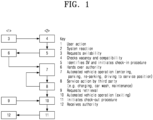
- FIG. 1 illustrates a basic flow of an AVDS according to embodiments.
- FIG. 1 illustrates a basic flow of an AVDS.
- the AVDS is extension of a use case of ISO 23374-1 automated valet parking system (AVPS) and an operational design domain (ODD).
- AVPS automated valet parking system
- ODD operational design domain
- the AVDS provides a low-speed automatic valet parking service to a vehicle owner.
- the service is not limited to driverless driving within dedicated parking facilities and allows driverless driving in designated outdoor spaces.
- both the AVPS and the AVDS describe a journey from a point A to a point B.
- Embodiments include specific technical solutions for communication interfaces (for example, communication methods and message protocols) due to differences in technologies (for example, spectrum allocation) that are available and commonly used worldwide. Therefore, the embodiments are linked to communication interfaces at national/regional level to ensure interoperability.
- communication interfaces for example, communication methods and message protocols
- technologies for example, spectrum allocation
- the embodiments designate system frameworks, operational sequences and communication interfaces, performance requirements for operation and management functions, environmental conditions within the operating area, and test procedures to verify performance requirements of the AVDS.
- the AVDS is considered a use case and ODD extension of ISO 23374-1, including indoor and outdoor applications, which are unmanned operation on company premises, driving on public roads, and outdoor valet parking (for example, from an airport terminal to a parking lot).
- the AVDS enables additional services.
- the AVDS is applied to the cases of driving to electric vehicle charging stations or car washes.
- These sessions which include additional services, include more missions and tasks than those of the AVPS (for example, in the following order: park, wait, charge, park, wait, wash, and park).
- An orchestration system is in charge of sequencing the requested services and organizing the corresponding mission within a given time. Additional services are treated as additional missions, and the vehicle is driven to a designated location where the service is performed and the vehicle is re-parked at the original parking location or another location. Re-parking automatically occurs after the requested service is completed (for example, charging is completed, and car washing is completed), and there is a parking space available for the next service or re-parking. No user request is required. For each additional service, compatibility of the vehicle and service needs to be checked. This includes geometric (for example, vehicle height, width, length, and charging plug location), electrical (for example, plug type, charging power, and requested charging level) and other specific service characteristics.
- an AVDS service is provided according to ⁇ 1> user action and ⁇ 2> system reaction.
- An autonomous driving method and apparatus may correspond to a terminal for the user action and/or a system for the system reaction.
- the autonomous driving method and apparatus according to embodiments may be referred to as an automated valet driving method/device, or a method/device, etc. for brevity.
- the method/apparatus according to embodiments receives a request from a user.
- the method/device according to embodiments checks empty space and compatibility for valet driving.
- the method/apparatus according to embodiments identifies an SV and activates a check-in process.
- the method/device according to embodiments receives autonomous driving authority from the user.
- the method/apparatus according to embodiments performs autonomous vehicle operation.
- operations according to embodiments may include entering, parking, re-parking, and driving to a service position.
- the method/apparatus according to embodiments may selectively perform a service action by a third party. For example, there may be charging, car washing, maintenance, etc.
- the method/apparatus according to embodiments may allow the user to request collection.
- the method/apparatus according to embodiments may perform autonomous vehicle operations. For example, it is possible to perform exiting.
- the method/apparatus according to embodiments may activate a check-out procedure.
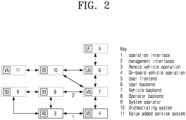
- FIG. 2 illustrates a system structure associated with the method/apparatus according to embodiments.
- FIG. 2 is a logical structure of a subsystem of the AVDS. Implementation of logical subsystems with respect to a physical component may vary depending on the system design.
- the subsystem may include a plurality of physical components.
- a remote vehicle operation subsystem may include a sensor, a control device, and a communication device.
- FIG. 3 illustrates a vehicle control device according to embodiments.
- the vehicle control device 3000 is a device that controls an operation of a vehicle according to embodiments.
- the vehicle control device may be referred to as an autonomous driving integrated controller 600.
- the vehicle control device may include an interface unit 3001, a processor 3002, and a memory 3003.
- the memory may store instructions, signaling information, data, etc. for performing operations according to embodiments.
- the memory may be connected to the interface unit and the processor to transmit and receive necessary signals.
- the interface unit may receive signals, information, data, etc. received from the vehicle control device and transmit the signals, information, data, etc. to the memory and/or the processor.
- signals, information, data, etc. generated from the memory and/or the processor may be transmitted to the vehicle and/or the driver and/or passengers.
- the processor may perform vehicle control operations according to embodiments based on data and/or instructions stored in the memory.
- the vehicle control device of FIG. 3 may correspond to a device mounted in a vehicle or a terminal device that controls the vehicle.
- FIG. 4 illustrates a structure of a vehicle according to embodiments.
- the vehicle according to embodiments may be configured as illustrated in FIG. 4 and may perform autonomous driving using an autonomous driving control system.
- the vehicles according to the embodiments may include autonomous vehicles, robots, UAM (Urban Air Mobility), aircraft, autonomous driving devices, and other devices or means of transportation that can be controlled through autonomous driving.
- UAM Ultraban Air Mobility
- aircraft autonomous driving devices
- other devices or means of transportation that can be controlled through autonomous driving.
- the scope of the present disclosure's rights is not limited by these names
- An autonomous vehicle 1000 may be implemented around the autonomous driving integrated controller 600 that transmits and receives data required for autonomous driving control of the vehicle through a driving information input interface 101, a traveling information input interface 201, a passenger output interface 301, and a vehicle control output interface 401.
- the autonomous driving integrated controller may be referred to as a controller, a processor, or simply a controller in this specification.
- the autonomous driving integrated controller may acquire driving information according to operation of a passenger for a user input unit in an autonomous driving mode or a manual driving mode of the vehicle through the driving information input interface.
- the user input unit may include a driving mode switch and a control panel 120 (for example, a navigation terminal mounted in the vehicle, a smartphone or a tablet computer carried by the passenger, etc.), and accordingly, the driving information may include driving mode information and navigation information of the vehicle.
- the autonomous driving integrated controller may provide warning information to the driver through the passenger output interface along with traveling state information.
- a speaker 310 and a display device 320 may be included to output such traveling state information and warning information audibly and visually.
- the display device may be implemented as the same device as the control panel described above, or may be implemented as a separate and independent device.
- the autonomous driving integrated controller may transmit control information for driving control of the vehicle to a sub-control system applied to the vehicle through the vehicle control output interface in the autonomous driving mode or the manual driving mode of the vehicle.
- the sub-control system for driving control of the vehicle may include at least one of a motor control system, an engine control system, a braking control system, or a steering control system, and the autonomous driving integrated controller may transmit at least one of motor control information, engine control information, braking control information, or steering control information as control information to each sub-control system through the vehicle control output interface.
- the autonomous driving integrated controller may acquire driving information according to operation of the driver and traveling information indicating a traveling state of the vehicle through the driving information input interface and a traveling information input interface, respectively, and provide traveling state information and warning information generated according to an autonomous driving algorithm through the passenger output interface.
- the autonomous driving device may include a sensor unit to detect objects around the vehicle, such as surrounding vehicles, pedestrians, roads, or fixed facilities (for example, traffic lights, signposts, traffic signs, construction fences, etc.).
- a sensor unit to detect objects around the vehicle, such as surrounding vehicles, pedestrians, roads, or fixed facilities (for example, traffic lights, signposts, traffic signs, construction fences, etc.).
- the sensor unit may include one or more of a LiDAR sensor, a radar sensor, and a camera sensor to detect surrounding objects outside the vehicle. It is possible to include a front LiDAR sensor 511, a front radar sensor 521, a rear LiDAR sensor 513, a rear radar sensor 524, a left camera sensor 532, a right camera sensor 533, an internal camera sensor 535, a front camera sensor 531, a rear camera sensor 534, etc.
- the sensor unit may be connected to microphones 551 and 552.
- the embodiments relate to a method of controlling driving of an ADS vehicle to an EV charging station by the AVDS.
- the embodiments relate to international standards ISO 23374-1 (AVPS) and ISO 12768-1 (AVDS).
- AVPS automated valet parking system
- AVDS automated valet driving system
- the embodiments provide a method and apparatus in which the ADS vehicle (conceptually the same concept as a standard "SV") is autonomously driven from a parking position to an EV charging station and charged with electricity and returns back to the parking position or is headed to another position through autonomous driving after completion of charging.
- the current international standard ISO 23374-1 or ISO 12768-1 merely describes a method/apparatus for moving the ADS vehicle to the EV charging station immediately after the EV charging station is vacated in response to completion of charging of a previous EV when the AVPS or AVDS sends the ADS vehicle to the EV charging station.
- the current international standard fails to define a method/apparatus for sending the ADS vehicle to the EV charging station before completion of charging of the previous EV in consideration of a charging completion time of the previous EV. Therefore, the embodiments describe a method/apparatus for driving the ADS vehicle in advance before completion of charging of the EV in consideration of the charging completion time of the previous EV to achieve efficient and safe automated valet driving. Accordingly, the embodiments have an effect of increasing efficiency of a charging service provided by the EV charging station since a return time of the ADS vehicle may be advanced.
- the embodiments related to a method of exchanging data with the EV charging station using the AVDS.
- the embodiments relate to international standards ISO 23374-1 (AVPS) and ISO 12768-1 (AVDS).
- AVPS automated valet parking system
- AVDS automated valet driving system
- the embodiments provide a method and apparatus in which the ADS vehicle (used as the same concept as a standard "subject vehicle (SV)") is autonomously driven from a parking position to an EV charging station and charged with electricity and returns back to the parking position or is headed to another position through autonomous driving after completion of charging.
- ADS vehicle used as the same concept as a standard "subject vehicle (SV)
- the current international standard ISO 23374-1 or ISO 12768-1 fails to define data exchanged between the AVPS or the AVDS and the EV charging station. Therefore, the embodiments provide data exchanged between the AVPS or the AVDS and the EV charging station to achieve efficient and safe automated valet driving.
- a description will be given of data used for mutual communication between the AVDS and the EV charging station according to embodiments. As a result, the embodiments have an effect of providing an efficient communication data protocol between the AVDS and the EV charging station.
- the global AVDS server manages the local AVDS server in each region and performs a function of directly transmitting and receiving data with a Vehicle Backend (VB), a User Backend (UB), and the like.
- the global AVDS server may be referred to as an Operator Backend (OB).
- the global AVDS server may be connected to at least one local AVDS server, and may manage the local AVDS server(s).
- the local AVDS server is a local server disposed by region, and may perform a function of transmitting and receiving data with a VA (e.g., EV charging station, car wash, etc.) and the global AVDS server (OB).
- VA e.g., EV charging station, car wash, etc.
- OB global AVDS server
- the local AVDS server may be referred to as an Orchestrating System (OS).
- OS Orchestrating System
- the availabilities in the step 1 may be different in part at least according to embodiments.
- the availability transmitted from the OB to the OS or transmitted from the OS to the VA may further include additional information compared to the availability transmitted from the UB to the OB.
- the availability transmitted from the OB to the OS may further include information on (i) ID of the UB and/or (ii) a timing point at which the OB has received the availability of the step 1.
- the AVDS reservation method through the AVDS access control of the vehicle by the AVDS server may include a step of requesting compatibility data.
- the VA may request compatibility data from the OS.
- the compatibility data may be information on an ID, size, and/or fuel type of the vehicle.
- the initial request for the compatibility data may be performed by the VA (value added system).
- a type of the information included in the compatibility data may vary according to the VA.
- some VA may request information such as vehicle model information (manufacturer/year) and the like instead of the size and/or fuel type of the vehicle as the compatibility data.
- Such a compatibility data request may be transmitted from the VA to the OS, from the OS to the OB, and from the OB to the VB.
- the compatibility data request in the step 2 may be all the same.
- the compatibility data requests in the step 2 may be different in part at least.
- the compatibility data request transmitted from the OB to the VB may include information on a VB ID, etc.
- the AVDS reservation method through AVDS access control of the vehicle by the AVDS server may include a step of receiving the compatibility data.
- the OB may receive the compatibility data from the VB.
- the compatibility data may include information on an ID, a size, a fuel type, and/or the like of the vehicle.
- Such compatibility data may be transmitted from the VB to the OB, from the OB to the OS, and from the OS to the VA.
- the AVDS reservation method through the AVDS access control of the vehicle by the AVDS server may include a step of determining transmitting, and receiving new reservation information.
- the VA may determine new reservation information and propose a new reservation to the OS.
- the new reservation information may include at least one of a reservation ID, an available time slot, an available service (e.g., EV charging, car washing, etc.), and/or service cost.
- the new reservation information may vary depending on the VA. For example, a VA for an EV charging station may configure an available time slot in unit of one hour, and a VA for a car wash may configure a time slot that is available in unit of 30 minutes.
- the new reservation information determined by the VA may be transmitted from the VA to the OS, from the OS to the OB, and from the OB to the UB. According to embodiments, the new reservation information in the step 4 may all be the same.
- the new reservation information in the step 4 may be different in part at least.
- the new reservation information transmitted from the OS to the OB may include an ID of the OS
- the new reservation information transmitted from the OB to the UB may further include an ID of the UB.
- the AVDS reservation method through AVDS access control of the vehicle by the AVDS server may include a step of transmitting and receiving reservation confirmation information.
- the UB may transmit reservation confirmation information to the OB and the UB may transmit reservation confirmation information to the VB.
- the reservation confirmation information may include at least one of a reservation ID, a determined time slot, and a determined service.
- the VB does not receive new reservation information and merely receives the reservation confirmation information from the UB. Yet, it is not limited to the embodiment in which the VB does not receive the new reservation information. That is, the VB may also receive new contract information, and the VB and/or the UB may transmit reservation confirmation information to the OB. Also, the UB may transmit the reservation confirmation information to the OB only without transmitting the reservation confirmation information to the VB.
- the reservation confirmation information transmitted by UB may be transmitted from the UB to the OB, from the OB to the OS, and from the OS to the VA.
- the reservation confirmation information of the step 5 may be all the same according to embodiments.
- the reservation confirmation information in the step 5 may be different in part at least according to embodiments.
- the reservation confirmation information transmitted from the OB to the OS may include ID information of the OB.
- the AVDS reservation is made according to the procedure illustrated in FIG. 6 .
- the AVDS reservation is for an additional service (e.g., EV charging service or car wash service).
- the AVDS reservation may provide a reservation for an additional service.
- FIG. 7 illustrates an operation of an AVDS during an AVDS handover according to embodiments.
- An AVDS handover may be performed by steps 11 to 19 of FIG. 7 .
- an AVDS handover method may include a step of recognizing that an SV has arrived in a drop-off area by an RO.
- the RO may recognize that a vehicle (SV) has arrived in the drop-off area through a sensing module of the drop-off area, for example, a camera, an ultrasonic sensor, an infrared sensor, and/or the like.
- the AVDS handover method may further include a step of notifying whether the SV is recognized in the drop-off area from the RO to a VO.
- the RO may inform the SV that the SV has been recognized in the drop-off area.
- the AVDS handover method may further include a step of transmitting information informing that the handover is ready from the VO to a VB and/or from the VB to a UB.
- the VO may notify the VB that the AVDS handover is ready, and the VB may notify the UB that the AVDS handover is ready.
- the AVDS handover method may further include a step of enabling a user to leave the SV.
- the user may leave the SV that has arrived in the drop-off area.
- the AVDS handover method may further include a step of requesting a handover from the UB to the VB and/or an OB, from the OB to the RO, and from the VB to the VO. Having received the handover request input from a UF, the UB transmits the handover request to the VB and/or the OB. The OB transmits the handover request to the RO and the VB transmits the handover request to the VO.
- the AVDS handover method may further include a step of recording, by the OB, that there is a handover request from a user.
- the OB records that there has been the handover request from the user. If the handover fails once, a plurality of handover attempts may be recorded.
- the AVDS handover method may further include a step of checking whether handover availability is present. For example, it may be finally confirmed whether it is an environment in which the RO, the VO, and/or the like is able to perform an AVDS control operation.
- the environment in which the AVDS control operation may be performed may mean, for example, whether it is the environment in which an autonomous driving level 4 is supported.
- the AVDS handover method may further include a step of determining, by the OB, whether the AVDS system has an authority.
- the OB may determine that the AVDS system possesses the authority.
- the OB may notify the VB, RO, UB, and/or OS of the handover of the authority from the VB to the VO. It is notified that the control authority has been handed over to the AVDS system. For example, the OB determines a system authority and transmits the authority handover result to the VB, RO, UB and OS. Here, upon receiving the handover result, the RO starts remote control (autonomous parking) for the SV. The VB records the authority handover to the AVDS system. Upon receiving the handover result, the UB notifies a user of the authority handover. For example, it may notify the user of the authority handover by displaying it as UI/UX information on the UF.
- step 16 and the step 18 may be performed by the OS instead of the OB.
- a handover may be requested from the OB to the OS.
- the step 16 it may be recorded by the OS that there is a handover request from a user.
- the step 18 it may be determined by the OS whether the AVDS system has the authority.
- FIG. 8 illustrates a procedure for transmitting and receiving an additional request for an AVDS reservation or an AVDS service related to the AVDS reservation according to the present disclosure.
- a procedure for transmitting and receiving an additional request for an AVDS reservation or an AVDS service related to the AVDS reservation is largely divided into three procedures. Signaling, messages, and data classified by the same procedure are denoted by the same number. Each procedure is expressed as a step, and steps 6 to 8 shown in FIG. 8 will be described.
- a method of making an additional request for an AVDS reservation or an AVDS service related to the AVDS reservation may include a step of transmitting an additional request.
- a UB may transmit an additional request to an OB.
- the additional request may include information change or information addition included in reservation confirmation information, i.e., related to a pre-confirmed AVDS reservation, and/or information related to the information change or the information addition.
- the additional request may include information change included in the reservation confirmation information, i.e., related to an AVDS service related to the pre-confirmed AVDS reservation, and/or information related to the information change.
- the additional request may include information on an additional service.
- the information on the additional service may not be related to an AVDS reservation included in the reservation confirmation information, that is, the pre-confirmed AVDS reservation.
- the additional request may include at least one of information change or information addition related to a pre-confirmed AVDS reservation, information change related to an AVDS service related to the pre-confirmed AVDS reservation, or information on an additional service.
- EV charging Chosen service may replace the original service.
- Car wash 1 1 change the detail of the service 0. desire rate (or cost) Determine the detail of the service (service B (refer to top of the row)) 1. desire time to be performed 2.
- SOC EV charging case
- washing type washing case
- 1 2 cancel the original service - Cancel the original service 2 additional service 0.
- Car wash desire time, prefer washing type, desire cost, etc. 2 0 EV charging 0. Desire time 0.
- Desire time date and time information may be signalled by using binary code 1. Desire SOC 1.
- an additional request indicates a pre-confirmed AVDS reservation (an AVDS reservation included in the reservation confirmation information)
- it may indicate a request for a change or addition of the details of the AVDS reservation or a cancellation of the AVDS reservation.
- an additional request indicates an additional service, it may indicate an additional service and details about the additional services (e.g., service time information, service type, service charge, etc.).
- Such additional requests may be delivered from the UB to the OB, from the OB to the OS, and from the OS to the VA.
- the additional requests in the step 6 may be all the same.
- the additional requests in the step 6 may be different in part at least.
- the additional request transmitted from the OB to the OS or transmitted from the OS to the VA may further include additional information compared to the additional request transmitted from the UB to the OB.
- the additional request transmitted from the OB to the OS may further include information about (i) the ID of the UB and/or (ii) a timing point at which the OB receives the additional information from the UB.
- the method of making the additional request for the AVDS reservation or the AVDS service related to the AVDS reservation may include a step of determining a response to the additional request and transmitting and receiving the determined response.
- the VA or the OS may determine a response to a received additional request.
- the response to the additional request may include different information depending on the additional request.
- the response to the additional request may include at least one of an AVDS reservation ID, information on a changed AVDS service related to the AVDS reservation, changed information on the AVDS service related to the AVDS reservation (e.g., service cost, service execution time (e.g., available time slot), charging state, car wash type, etc.), or cancellation information of the AVDS service.
- an AVDS reservation ID information on a changed AVDS service related to the AVDS reservation
- changed information on the AVDS service related to the AVDS reservation e.g., service cost, service execution time (e.g., available time slot), charging state, car wash type, etc.
- cancellation information of the AVDS service e.g., cancellation information of the AVDS service.
- the response to the additional request includes information on an additional service, and may include specific information on the additional service (for example, in the case of an EV charging service, at least one of a charging time, a charging state, a charging speed, and a charging type).
- a charging time for example, at least one of a charging time, a charging state, a charging speed, and a charging type.
- a car wash service at least one of a car wash time, a car wash type, and a car wash cost may be included.
- the response to the additional request may be configured to include information indicating acceptance or rejection of the additional request.
- the method of making the additional request for the AVDS reservation or the AVDS service related to the AVDS reservation may a step of transmitting and receiving additional request confirmation information in response to the additional request.
- the UB may determine additional request confirmation information in response to a response to a received additional request.
- the additional request determination information may include at least one of a reservation ID, time information related to a reservation or service, and a determined service.
- the additional request confirmation information may include information composed of information included in a response to the received additional request. That is, the response to the additional request may include information related to information change/addition of an AVDS reservation determined based on the additional request in the step 6, information change/addition of an AVDS service, or information related to an additional service. Accordingly, the additional request confirmation information provided in response to the response to the additional request may include information included in the response to the additional request or a portion thereof.
- the additional request confirmation information transmitted by UB may be transmitted from the UB to the OB, from the OB to the OS, and from the OS to the VA.
- the additional request confirmation information in the step 8 may all be the same.
- the additional request confirmation information in the step 8 may be different in part at least.
- the additional request confirmation information transmitted from the OB to the OS may include ID information of the OB.
- the step 6 of FIG. 8 may be performed after reservation confirmation (the step 5 of FIG. 6 ) is completed in connection with the procedure of FIG. 5 .
- the step 6 of FIG. 8 may be performed after the authority for the vehicle (SV) is handed over to the AVDS or the AVDS server (OB) in connection with the procedure of FIG. 7 . That is, the procedure of FIG. 8 may be performed in conjunction with the procedure of FIG. 6 or FIG. 7 .
- a pickup time which is a time for sending the vehicle (SV) to a user after completion of the Automated Valet Driving (AVD) and AVDS reservation and the AVDS service and transferring the authority for the vehicle (SV) back to the user, may be determined.
- the additional request may be transmitted before the pickup time.
- FIG. 9 illustrates a configuration and function of a system of an AVDS server according to embodiments.
- FIG. 9 shows main functions of an AVDS for each subsystem of a system of an AVDS server.
- An RO Remote vehicle Operation
- the RO has an autonomous vehicle control role. Specifically, with respect to steering, movement, and vehicle dynamics, the RO has functions such as SV identification, destination assignment, route planning, OEDR, SV localization, path determination, trajectory calculation, vehicle motion control, emergency stop, and the like.
- a VO on-board Vehicle Operation
- the function assignment between the RO and the VO subsystems may vary depending on a vehicle operation type.
- a UF (User Frontend) serves as a user interface. Specifically, it has a user request transmitting function and a function of receiving and updating a vehicle state from a user.
- the UF function may vary depending on the specifications of a provider.
- UB User Backend
- VB Vehicle Backend
- OB Oleticle Backend
- OS Orchestrating System
- PM Automaticed valet driving Premises Management
- the UB User Backend
- the VB Vehicle Backend
- the VB has remote participation and/or release functions.
- the OB (Operator Backend) 900 has functions related to managing parking facility availability, checking SV and parking facility compatibility, controlling SV as unmanned driving, performing remote support, etc.
- the OS (Orchestrating System) 901 has the function of coordinating and optimizing a service task at a corresponding location and coordinating various services using automated functions.
- the PM (automated valet driving Premises Management) has the function of managing environmental conditions and responding to the incapacitation of an operating function.
- Backend subsystems such as UB (User Backend), VB (Vehicle Backend), and OB (Operator Backend) work together to respond to user requests (e.g., vehicle search).
- UB User Backend
- VB Vehicle Backend
- OB Operaator Backend
- the PM automated valet driving Premises Management coordinates automatic driving activities in a facility area.
- the VA Value Added service system
- the VA has an additional service role.
- the VA has functions such as additional services (e.g., washing and charging). These services may be optional.
- the OB corresponds to a (global) AVDS server
- the OS corresponds to a local AVDS server.
- the UF or UB may correspond to a device or terminal on a user side.
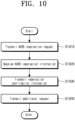
- FIG. 10 illustrates a flowchart of a method for transmitting an additional request for an AVDS reservation or a service related to the AVDS reservation according to the present disclosure.
- the flowchart of FIG. 10 may be performed by the device 3000 of FIG. 3 .
- the device 3000 may be configured to perform an operation according to the flowchart of FIG. 10 in a state in which the AVDS reservation and the AVDS handover described with reference to FIG. 6 or 7 are performed.
- contents not described with reference to FIG. 10 may refer to the description of FIG. 8 .
- the device 3000 includes an interface unit 3001, a processor 3002, and a memory 3003, and the interface unit 3001 may include a wired/wireless transceiver.
- the device 3000 may transmit an AVDS reservation request to a server (S810).
- the AVDS reservation request may correspond to the availability request of FIG. 6 .
- the server may include an OB, but may include an OS, VA, etc. as well as an OB to which the AVDS reservation request is directly transmitted.
- the device 3000 may receive AVDS reservation information determined based on the AVDS reservation request (S820).
- the AVDS reservation information may correspond to the new reservation information of FIG. 5 .
- the device 3000 may transmit reservation confirmation information on the AVDS reservation information to the server (S830).
- the device 3000 may transmit an additional request related to the AVDS reservation request to the server (S840).
- the device 3000 may additionally perform: addition, change, or cancellation for a pre-confirmed AVDS reservation; addition, change, or cancellation for a service of an AVDS reservation; a request for an additional service; and/or the like, thereby bringing a technical effect of providing more user convenience, such as user's time saving, energy consumption reduction, and the like, expected through AVDS.
- the device 3000 may include a transceiver 3001 and a processor 3002 that controls the transceiver 3001 to transmit or receive information about an AVDS reservation.
- the processor 3002 may control the transceiver 3001 to transmit an AVDS reservation request to a server. Furthermore, the processor 3002 may control the transceiver 3001 to receive AVDS reservation information determined based on the AVDS reservation request. Furthermore, the processor 3002 may control the transceiver 3001 to transmit reservation confirmation information for the AVDS reservation information. The processor 3002 may control the transceiver 3001 to transmit an additional request related to the AVDS reservation request to the server.
- the additional request may be transmitted to the server and then sequentially transmitted to a local server and an additional service providing server that provides an additional service related to a service indicated by the additional request.
- the processor 3002 may control a handover request, which is for handover of an authority for a vehicle to the AVDS, to be transmitted to the server.
- the additional request may be configured to be transmitted to the server after the authority for the vehicle is handed over to the AVDS.
- the additional request may be transmitted before a pickup time after a service according to the AVDS reservation is completed.
- the processor 3002 may receive a response to the additional request, and the response to the additional request may be determined by the local server.
- the additional request may include at least one of: changing or adding information related to an AVDS reservation included in the reservation confirmation information; changing information related to a service of the AVDS reservation included in the reservation confirmation information; or information on an additional service.
- the additional request may be configured to change a service of the AVDS reservation included in the reservation confirmation information.
- the additional request may indicate at least one of an AVDS reservation included in the reservation confirmation information, a service of the AVDS reservation included in the reservation confirmation information, or an additional service.
- the additional request may indicate a request for changing or adding details of an AVDS reservation included in the reservation confirmation information or for cancellation of the AVDS reservation included in the reservation confirmation information.
- the additional request may indicate a request for changing a service of an AVDS reservation included in the reservation confirmation information, changing details of a service of the AVDS reservation included in the reservation confirmation information, or cancelling the service of the AVDS reservation included in the reservation confirmation information.
- the additional request may indicate the additional service and details of the additional service.
- a vehicle (not shown) including the above-described device for transmitting the above-described AVDS reservation or the additional request for a service related to the AVDS reservation.
- the vehicle may include the device 3000 including the transceiver 3001 and the processor 3002 that controls the transceiver 3001 to transmit or receive information about an AVDS reservation.
- the description of the device 3000 may refer to the foregoing description.
- a “device” or a “server” that transmits/receives and processes AVDS reservation related information and the like or a configuration included therein is described as performing an operation. Yet, the "device”, “server” and components belonging thereto are just names and the scope of rights is not subordinate to them.
- the proposed technology may be performed with a name other than the device, and the method, scheme and the like described above may be performed by software for vehicle control or by computer-, machine-, or device-readable codes therefor.
- the operation of the proposed technology described above may be provided as a code that can be implemented, embodied, or executed by a "computer” (a comprehensive concept including a System-on-Chip (SoC), a (micro-) processor, etc.), a computer-readable storage medium or computer program product that stores or includes the code, and the like.
- a “computer” a comprehensive concept including a System-on-Chip (SoC), a (micro-) processor, etc.
- SoC System-on-Chip
- micro- micro-
- the scope of rights of the present disclosure may extend to the code or computer-readable storage medium or computer program product storing or including the code.
Landscapes
- Engineering & Computer Science (AREA)
- Business, Economics & Management (AREA)
- Tourism & Hospitality (AREA)
- Human Resources & Organizations (AREA)
- Theoretical Computer Science (AREA)
- Strategic Management (AREA)
- Economics (AREA)
- General Physics & Mathematics (AREA)
- Physics & Mathematics (AREA)
- Marketing (AREA)
- General Business, Economics & Management (AREA)
- Entrepreneurship & Innovation (AREA)
- Quality & Reliability (AREA)
- Operations Research (AREA)
- Development Economics (AREA)
- Transportation (AREA)
- Automation & Control Theory (AREA)
- Mechanical Engineering (AREA)
- Software Systems (AREA)
- Human Computer Interaction (AREA)
- General Engineering & Computer Science (AREA)
- Health & Medical Sciences (AREA)
- General Health & Medical Sciences (AREA)
- Primary Health Care (AREA)
- Educational Administration (AREA)
- Game Theory and Decision Science (AREA)
- Selective Calling Equipment (AREA)
- Telephonic Communication Services (AREA)
Applications Claiming Priority (2)
| Application Number | Priority Date | Filing Date | Title |
|---|---|---|---|
| KR20230193146 | 2023-12-27 | ||
| KR1020240084402A KR20250101809A (ko) | 2023-12-27 | 2024-06-27 | Avds 예약에 관한 추가 정보를 전송하는 장치 및 이를 위한 방법 |
Publications (1)
| Publication Number | Publication Date |
|---|---|
| EP4579544A1 true EP4579544A1 (de) | 2025-07-02 |
Family
ID=93923323
Family Applications (1)
| Application Number | Title | Priority Date | Filing Date |
|---|---|---|---|
| EP24219294.6A Pending EP4579544A1 (de) | 2023-12-27 | 2024-12-12 | Vorrichtung und verfahren zur übertragung von zusatzinformationen über die reservierung von vds |
Country Status (3)
| Country | Link |
|---|---|
| US (1) | US20250217721A1 (de) |
| EP (1) | EP4579544A1 (de) |
| CN (1) | CN120216048A (de) |
Citations (4)
| Publication number | Priority date | Publication date | Assignee | Title |
|---|---|---|---|---|
| US20160116293A1 (en) * | 2014-10-22 | 2016-04-28 | Myine Electronics, Inc. | System and Method to Provide Valet Instructions for a Self-Driving Vehicle |
| US20180261017A1 (en) * | 2015-05-15 | 2018-09-13 | Sang Cheol KIM | Method and apparatus for operating parking space for autonomous smart car |
| JP2022146456A (ja) * | 2021-03-22 | 2022-10-05 | パナソニックIpマネジメント株式会社 | 自動バレー駐車方法及び自動バレー駐車システム |
| CN116468502A (zh) * | 2022-01-07 | 2023-07-21 | 广州小鹏汽车科技有限公司 | 车辆控制方法及装置、终端设备及存储介质 |
Family Cites Families (3)
| Publication number | Priority date | Publication date | Assignee | Title |
|---|---|---|---|---|
| CN114402374B (zh) * | 2019-09-17 | 2024-11-05 | 株式会社电装 | 停车辅助装置以及停车辅助方法 |
| JP7302583B2 (ja) * | 2020-12-09 | 2023-07-04 | トヨタ自動車株式会社 | 車両及び車両制御方法 |
| EP4405926A4 (de) * | 2021-09-24 | 2025-04-23 | INTEL Corporation | Infrastrukturbasiertes kollaboratives automatisiertes parken und standortmanagement |
-
2024
- 2024-11-19 US US18/952,228 patent/US20250217721A1/en active Pending
- 2024-12-12 EP EP24219294.6A patent/EP4579544A1/de active Pending
- 2024-12-25 CN CN202411923683.8A patent/CN120216048A/zh active Pending
Patent Citations (4)
| Publication number | Priority date | Publication date | Assignee | Title |
|---|---|---|---|---|
| US20160116293A1 (en) * | 2014-10-22 | 2016-04-28 | Myine Electronics, Inc. | System and Method to Provide Valet Instructions for a Self-Driving Vehicle |
| US20180261017A1 (en) * | 2015-05-15 | 2018-09-13 | Sang Cheol KIM | Method and apparatus for operating parking space for autonomous smart car |
| JP2022146456A (ja) * | 2021-03-22 | 2022-10-05 | パナソニックIpマネジメント株式会社 | 自動バレー駐車方法及び自動バレー駐車システム |
| CN116468502A (zh) * | 2022-01-07 | 2023-07-21 | 广州小鹏汽车科技有限公司 | 车辆控制方法及装置、终端设备及存储介质 |
Non-Patent Citations (3)
| Title |
|---|
| FORD: "AVP TS 103 882 v0.0.4 (latest version)", vol. WG ITS WG1 Application Requirements and Services, 7 October 2022 (2022-10-07), pages 1 - 27, XP014440821, Retrieved from the Internet <URL:ftp://docbox.etsi.org/ITS/ITSWG1/05-CONTRIBUTIONS/2022/ITSWG1(22)000206_AVP_TS_103_882_v0_0_4__latest_version_.docx> [retrieved on 20221007] * |
| ZHANG XU ET AL: "An Integrated Framework on Autonomous-EV Charging and Autonomous Valet Parking (AVP) Management System", IEEE TRANSACTIONS ON TRANSPORTATION ELECTRIFICATION, IEEE, vol. 8, no. 2, 20 January 2022 (2022-01-20), pages 2836 - 2852, XP011906561, DOI: 10.1109/TTE.2022.3145198 * |
| ZHANG XU ET AL: "Reservation Enhanced Autonomous Valet Parking Concerning Practicality Issues", IEEE SYSTEMS JOURNAL, IEEE, US, vol. 16, no. 1, 25 November 2020 (2020-11-25), pages 351 - 361, XP011904239, ISSN: 1932-8184, DOI: 10.1109/JSYST.2020.3036627 * |
Also Published As
| Publication number | Publication date |
|---|---|
| CN120216048A (zh) | 2025-06-27 |
| US20250217721A1 (en) | 2025-07-03 |
Similar Documents
| Publication | Publication Date | Title |
|---|---|---|
| CN110741226B (zh) | 自动驾驶车辆增强系统的行动装置 | |
| CN112562408B (zh) | 基于车路协同的全局路径规划的方法、装置及系统 | |
| US9317033B2 (en) | Control of the autonomous mode of bimodal vehicles | |
| JP7006187B2 (ja) | 移動体、配車システム、サーバ、及び移動体の配車方法 | |
| CN106651175B (zh) | 无人驾驶车辆运营管理系统、总控平台、分控平台、车载计算装置和计算机可读存储介质 | |
| CN105679068B (zh) | 一种与智能停车场协同的智能车辆自动驾驶系统和方法 | |
| EP3864613B1 (de) | Fahrten mit mehreren zielen für autonome fahrzeuge | |
| US20190228664A1 (en) | Vehicle calling system | |
| CN110155078B (zh) | 移动店铺车以及移动店铺系统 | |
| CN111766867B (zh) | 车辆控制系统、车辆控制方法及存储介质 | |
| CN107633694A (zh) | 一种无人驾驶汽车的停车管理系统 | |
| CN110264727A (zh) | 面向智慧社区停车应用的多模式自主智能无人系统及方法 | |
| JP6969276B2 (ja) | 移動体の利用システム、サーバ、及び移動体の利用方法 | |
| CN106846892A (zh) | 基于机器视觉的停车场‑车辆协同智能停车系统及方法 | |
| US20200327460A1 (en) | Information processing apparatus, information processing method and program | |
| CN109040233A (zh) | 一种自动驾驶汽车的管理系统、方法、移动终端和服务器 | |
| US20200250599A1 (en) | Information processing device and mobile object | |
| US20220379916A1 (en) | Method and apparatus for vehicle sharing | |
| CN112863164A (zh) | 网约无人驾驶车辆系统和方法 | |
| US20250128699A1 (en) | Automated valet parking system server and automated valet parking method | |
| EP4579544A1 (de) | Vorrichtung und verfahren zur übertragung von zusatzinformationen über die reservierung von vds | |
| KR20250101809A (ko) | Avds 예약에 관한 추가 정보를 전송하는 장치 및 이를 위한 방법 | |
| US20250100587A1 (en) | Method and apparatus for controlling avds (automated valet driving system) access of vehicle by global avds server | |
| US20250033515A1 (en) | Method of controlling driving of ads vehicle by avds and apparatus for controlling driving of ads vehicle by avds | |
| KR20230004073A (ko) | 이동체의 경미 사고 판단 방법, 장치 및 시스템 |
Legal Events
| Date | Code | Title | Description |
|---|---|---|---|
| PUAI | Public reference made under article 153(3) epc to a published international application that has entered the european phase |
Free format text: ORIGINAL CODE: 0009012 |
|
| STAA | Information on the status of an ep patent application or granted ep patent |
Free format text: STATUS: THE APPLICATION HAS BEEN PUBLISHED |
|
| AK | Designated contracting states |
Kind code of ref document: A1 Designated state(s): AL AT BE BG CH CY CZ DE DK EE ES FI FR GB GR HR HU IE IS IT LI LT LU LV MC ME MK MT NL NO PL PT RO RS SE SI SK SM TR |
|
| STAA | Information on the status of an ep patent application or granted ep patent |
Free format text: STATUS: REQUEST FOR EXAMINATION WAS MADE |
|
| 17P | Request for examination filed |
Effective date: 20251230 |
|
| STAA | Information on the status of an ep patent application or granted ep patent |
Free format text: STATUS: EXAMINATION IS IN PROGRESS |
|
| 17Q | First examination report despatched |
Effective date: 20260210 |