EP4545950A1 - Röntgenanalysegerät - Google Patents
Röntgenanalysegerät Download PDFInfo
- Publication number
- EP4545950A1 EP4545950A1 EP24199568.7A EP24199568A EP4545950A1 EP 4545950 A1 EP4545950 A1 EP 4545950A1 EP 24199568 A EP24199568 A EP 24199568A EP 4545950 A1 EP4545950 A1 EP 4545950A1
- Authority
- EP
- European Patent Office
- Prior art keywords
- foreign matter
- sample
- detected
- ray analysis
- ray
- Prior art date
- Legal status (The legal status is an assumption and is not a legal conclusion. Google has not performed a legal analysis and makes no representation as to the accuracy of the status listed.)
- Pending
Links
Images


Classifications
-
- G—PHYSICS
- G01—MEASURING; TESTING
- G01N—INVESTIGATING OR ANALYSING MATERIALS BY DETERMINING THEIR CHEMICAL OR PHYSICAL PROPERTIES
- G01N23/00—Investigating or analysing materials by the use of wave or particle radiation, e.g. X-rays or neutrons, not covered by groups G01N3/00 – G01N17/00, G01N21/00 or G01N22/00
- G01N23/22—Investigating or analysing materials by the use of wave or particle radiation, e.g. X-rays or neutrons, not covered by groups G01N3/00 – G01N17/00, G01N21/00 or G01N22/00 by measuring secondary emission from the material
- G01N23/2206—Combination of two or more measurements, at least one measurement being that of secondary emission, e.g. combination of secondary electron [SE] measurement and back-scattered electron [BSE] measurement
-
- G—PHYSICS
- G01—MEASURING; TESTING
- G01N—INVESTIGATING OR ANALYSING MATERIALS BY DETERMINING THEIR CHEMICAL OR PHYSICAL PROPERTIES
- G01N23/00—Investigating or analysing materials by the use of wave or particle radiation, e.g. X-rays or neutrons, not covered by groups G01N3/00 – G01N17/00, G01N21/00 or G01N22/00
- G01N23/22—Investigating or analysing materials by the use of wave or particle radiation, e.g. X-rays or neutrons, not covered by groups G01N3/00 – G01N17/00, G01N21/00 or G01N22/00 by measuring secondary emission from the material
- G01N23/223—Investigating or analysing materials by the use of wave or particle radiation, e.g. X-rays or neutrons, not covered by groups G01N3/00 – G01N17/00, G01N21/00 or G01N22/00 by measuring secondary emission from the material by irradiating the sample with X-rays or gamma-rays and by measuring X-ray fluorescence
-
- G—PHYSICS
- G01—MEASURING; TESTING
- G01N—INVESTIGATING OR ANALYSING MATERIALS BY DETERMINING THEIR CHEMICAL OR PHYSICAL PROPERTIES
- G01N21/00—Investigating or analysing materials by the use of optical means, i.e. using sub-millimetre waves, infrared, visible or ultraviolet light
- G01N21/84—Systems specially adapted for particular applications
- G01N21/88—Investigating the presence of flaws or contamination
- G01N21/89—Investigating the presence of flaws or contamination in moving material, e.g. running paper or textiles
- G01N21/8914—Investigating the presence of flaws or contamination in moving material, e.g. running paper or textiles characterised by the material examined
-
- G—PHYSICS
- G01—MEASURING; TESTING
- G01N—INVESTIGATING OR ANALYSING MATERIALS BY DETERMINING THEIR CHEMICAL OR PHYSICAL PROPERTIES
- G01N23/00—Investigating or analysing materials by the use of wave or particle radiation, e.g. X-rays or neutrons, not covered by groups G01N3/00 – G01N17/00, G01N21/00 or G01N22/00
- G01N23/02—Investigating or analysing materials by the use of wave or particle radiation, e.g. X-rays or neutrons, not covered by groups G01N3/00 – G01N17/00, G01N21/00 or G01N22/00 by transmitting the radiation through the material
- G01N23/04—Investigating or analysing materials by the use of wave or particle radiation, e.g. X-rays or neutrons, not covered by groups G01N3/00 – G01N17/00, G01N21/00 or G01N22/00 by transmitting the radiation through the material and forming images of the material
-
- G—PHYSICS
- G01—MEASURING; TESTING
- G01N—INVESTIGATING OR ANALYSING MATERIALS BY DETERMINING THEIR CHEMICAL OR PHYSICAL PROPERTIES
- G01N23/00—Investigating or analysing materials by the use of wave or particle radiation, e.g. X-rays or neutrons, not covered by groups G01N3/00 – G01N17/00, G01N21/00 or G01N22/00
- G01N23/02—Investigating or analysing materials by the use of wave or particle radiation, e.g. X-rays or neutrons, not covered by groups G01N3/00 – G01N17/00, G01N21/00 or G01N22/00 by transmitting the radiation through the material
- G01N23/06—Investigating or analysing materials by the use of wave or particle radiation, e.g. X-rays or neutrons, not covered by groups G01N3/00 – G01N17/00, G01N21/00 or G01N22/00 by transmitting the radiation through the material and measuring the absorption
- G01N23/083—Investigating or analysing materials by the use of wave or particle radiation, e.g. X-rays or neutrons, not covered by groups G01N3/00 – G01N17/00, G01N21/00 or G01N22/00 by transmitting the radiation through the material and measuring the absorption the radiation being X-rays
-
- G—PHYSICS
- G01—MEASURING; TESTING
- G01N—INVESTIGATING OR ANALYSING MATERIALS BY DETERMINING THEIR CHEMICAL OR PHYSICAL PROPERTIES
- G01N23/00—Investigating or analysing materials by the use of wave or particle radiation, e.g. X-rays or neutrons, not covered by groups G01N3/00 – G01N17/00, G01N21/00 or G01N22/00
- G01N23/02—Investigating or analysing materials by the use of wave or particle radiation, e.g. X-rays or neutrons, not covered by groups G01N3/00 – G01N17/00, G01N21/00 or G01N22/00 by transmitting the radiation through the material
- G01N23/06—Investigating or analysing materials by the use of wave or particle radiation, e.g. X-rays or neutrons, not covered by groups G01N3/00 – G01N17/00, G01N21/00 or G01N22/00 by transmitting the radiation through the material and measuring the absorption
- G01N23/16—Investigating or analysing materials by the use of wave or particle radiation, e.g. X-rays or neutrons, not covered by groups G01N3/00 – G01N17/00, G01N21/00 or G01N22/00 by transmitting the radiation through the material and measuring the absorption the material being a moving sheet or film
-
- G—PHYSICS
- G01—MEASURING; TESTING
- G01N—INVESTIGATING OR ANALYSING MATERIALS BY DETERMINING THEIR CHEMICAL OR PHYSICAL PROPERTIES
- G01N23/00—Investigating or analysing materials by the use of wave or particle radiation, e.g. X-rays or neutrons, not covered by groups G01N3/00 – G01N17/00, G01N21/00 or G01N22/00
- G01N23/02—Investigating or analysing materials by the use of wave or particle radiation, e.g. X-rays or neutrons, not covered by groups G01N3/00 – G01N17/00, G01N21/00 or G01N22/00 by transmitting the radiation through the material
- G01N23/06—Investigating or analysing materials by the use of wave or particle radiation, e.g. X-rays or neutrons, not covered by groups G01N3/00 – G01N17/00, G01N21/00 or G01N22/00 by transmitting the radiation through the material and measuring the absorption
- G01N23/18—Investigating the presence of flaws defects or foreign matter
-
- G—PHYSICS
- G01—MEASURING; TESTING
- G01N—INVESTIGATING OR ANALYSING MATERIALS BY DETERMINING THEIR CHEMICAL OR PHYSICAL PROPERTIES
- G01N23/00—Investigating or analysing materials by the use of wave or particle radiation, e.g. X-rays or neutrons, not covered by groups G01N3/00 – G01N17/00, G01N21/00 or G01N22/00
- G01N23/22—Investigating or analysing materials by the use of wave or particle radiation, e.g. X-rays or neutrons, not covered by groups G01N3/00 – G01N17/00, G01N21/00 or G01N22/00 by measuring secondary emission from the material
- G01N23/2204—Specimen supports therefor; Sample conveying means therefore
-
- G—PHYSICS
- G01—MEASURING; TESTING
- G01N—INVESTIGATING OR ANALYSING MATERIALS BY DETERMINING THEIR CHEMICAL OR PHYSICAL PROPERTIES
- G01N33/00—Investigating or analysing materials by specific methods not covered by groups G01N1/00 - G01N31/00
- G01N33/0078—Testing material properties on manufactured objects
-
- G—PHYSICS
- G01—MEASURING; TESTING
- G01N—INVESTIGATING OR ANALYSING MATERIALS BY DETERMINING THEIR CHEMICAL OR PHYSICAL PROPERTIES
- G01N2223/00—Investigating materials by wave or particle radiation
- G01N2223/045—Investigating materials by wave or particle radiation combination of at least 2 measurements (transmission and scatter)
-
- G—PHYSICS
- G01—MEASURING; TESTING
- G01N—INVESTIGATING OR ANALYSING MATERIALS BY DETERMINING THEIR CHEMICAL OR PHYSICAL PROPERTIES
- G01N2223/00—Investigating materials by wave or particle radiation
- G01N2223/07—Investigating materials by wave or particle radiation secondary emission
- G01N2223/071—Investigating materials by wave or particle radiation secondary emission combination of measurements, at least 1 secondary emission
-
- G—PHYSICS
- G01—MEASURING; TESTING
- G01N—INVESTIGATING OR ANALYSING MATERIALS BY DETERMINING THEIR CHEMICAL OR PHYSICAL PROPERTIES
- G01N2223/00—Investigating materials by wave or particle radiation
- G01N2223/07—Investigating materials by wave or particle radiation secondary emission
- G01N2223/076—X-ray fluorescence
-
- G—PHYSICS
- G01—MEASURING; TESTING
- G01N—INVESTIGATING OR ANALYSING MATERIALS BY DETERMINING THEIR CHEMICAL OR PHYSICAL PROPERTIES
- G01N2223/00—Investigating materials by wave or particle radiation
- G01N2223/10—Different kinds of radiation or particles
- G01N2223/101—Different kinds of radiation or particles electromagnetic radiation
- G01N2223/1016—X-ray
-
- G—PHYSICS
- G01—MEASURING; TESTING
- G01N—INVESTIGATING OR ANALYSING MATERIALS BY DETERMINING THEIR CHEMICAL OR PHYSICAL PROPERTIES
- G01N2223/00—Investigating materials by wave or particle radiation
- G01N2223/30—Accessories, mechanical or electrical features
- G01N2223/309—Accessories, mechanical or electrical features support of sample holder
-
- G—PHYSICS
- G01—MEASURING; TESTING
- G01N—INVESTIGATING OR ANALYSING MATERIALS BY DETERMINING THEIR CHEMICAL OR PHYSICAL PROPERTIES
- G01N2223/00—Investigating materials by wave or particle radiation
- G01N2223/30—Accessories, mechanical or electrical features
- G01N2223/33—Accessories, mechanical or electrical features scanning, i.e. relative motion for measurement of successive object-parts
- G01N2223/3307—Accessories, mechanical or electrical features scanning, i.e. relative motion for measurement of successive object-parts source and detector fixed; object moves
-
- G—PHYSICS
- G01—MEASURING; TESTING
- G01N—INVESTIGATING OR ANALYSING MATERIALS BY DETERMINING THEIR CHEMICAL OR PHYSICAL PROPERTIES
- G01N2223/00—Investigating materials by wave or particle radiation
- G01N2223/60—Specific applications or type of materials
- G01N2223/642—Specific applications or type of materials moving sheet, web
-
- G—PHYSICS
- G01—MEASURING; TESTING
- G01N—INVESTIGATING OR ANALYSING MATERIALS BY DETERMINING THEIR CHEMICAL OR PHYSICAL PROPERTIES
- G01N2223/00—Investigating materials by wave or particle radiation
- G01N2223/60—Specific applications or type of materials
- G01N2223/645—Specific applications or type of materials quality control
-
- G—PHYSICS
- G01—MEASURING; TESTING
- G01N—INVESTIGATING OR ANALYSING MATERIALS BY DETERMINING THEIR CHEMICAL OR PHYSICAL PROPERTIES
- G01N2223/00—Investigating materials by wave or particle radiation
- G01N2223/60—Specific applications or type of materials
- G01N2223/646—Specific applications or type of materials flaws, defects
-
- G—PHYSICS
- G01—MEASURING; TESTING
- G01N—INVESTIGATING OR ANALYSING MATERIALS BY DETERMINING THEIR CHEMICAL OR PHYSICAL PROPERTIES
- G01N2223/00—Investigating materials by wave or particle radiation
- G01N2223/60—Specific applications or type of materials
- G01N2223/651—Specific applications or type of materials dust
-
- G—PHYSICS
- G01—MEASURING; TESTING
- G01N—INVESTIGATING OR ANALYSING MATERIALS BY DETERMINING THEIR CHEMICAL OR PHYSICAL PROPERTIES
- G01N2223/00—Investigating materials by wave or particle radiation
- G01N2223/60—Specific applications or type of materials
- G01N2223/652—Specific applications or type of materials impurities, foreign matter, trace amounts
-
- G—PHYSICS
- G01—MEASURING; TESTING
- G01N—INVESTIGATING OR ANALYSING MATERIALS BY DETERMINING THEIR CHEMICAL OR PHYSICAL PROPERTIES
- G01N2223/00—Investigating materials by wave or particle radiation
- G01N2223/60—Specific applications or type of materials
- G01N2223/66—Specific applications or type of materials multiple steps inspection, e.g. coarse/fine
Definitions
- the present disclosure relates to an X-ray analysis apparatus capable of detecting the location of a foreign matter present in a sample in the form of a continuously transferred strip-shaped sheet, while performing high-accuracy analysis of the foreign matter.
- Patent Document 1 discloses a transmission X-ray foreign matter inspection apparatus that inspects the presence of a foreign matter in a sample using transmission X-rays while continuously moving a roll-shaped or strip-shaped sample such as high-performance sheet material in a predetermined transfer direction.
- Patent Document 2 discloses an X-ray analysis apparatus that uses a combination of transmission X-rays and fluorescent X-rays.
- This X-ray analysis apparatus detects a foreign matter in a sheet-shaped sample using transmission X-rays, moves a sample stage to the location of the foreign matter based on the coordinate information of the foreign matter, and identifies elements in the foreign matter through fluorescent X-ray analysis.
- an objective of the present disclosure is to provide an X-ray analysis apparatus capable of detecting a foreign matter and identifying elements in the foreign matter with high accuracy even when applied to a roll-to-roll method, without reducing throughput.
- an X-ray analysis apparatus may include: an unwinding part continuously unwinding a sample, which is a sheet in strip-shaped, downstream at a constant unwinding speed; a foreign matter inspection and analysis part inspecting and analyzing a foreign matter in the sample unwound from the unwinding part; and a winding part winding the sample that passed through the foreign matter inspection and analysis part.
- the foreign matter inspection and analysis part may include: a foreign matter location detection part detecting a location of the foreign matter in the sample unwound from the unwinding part and moving; an intermittent transfer part intermittently stopping or slowing movement of a portion of the sample where the foreign matter is detected to a speed slower than the unwinding speed downstream of the foreign matter location detection part when the foreign matter is detected by the foreign matter location detection part; and an X-ray analysis part irradiating, with X-rays, the portion where the foreign matter is detected that is stopped or moving at the speed slower than the unwinding speed and performing analysis.
- the intermittent transfer part may discharge the portion where the foreign matter is detected that is stopped or moving at the speed slower than the unwinding speed to the winding part while the portion after the analysis.
- the foreign matter inspection and analysis part includes the foreign matter location detection part detecting the location of the foreign matter in the sample unwound from the unwinding part and moving, the intermittent transfer part intermittently stopping or slowing the movement of the portion of the sample where the foreign matter is detected to a speed slower than the unwinding speed downstream of the foreign matter location detection part when the foreign matter is detected by the foreign matter location detection part, and the X-ray analysis part irradiating, with X-rays, the portion where the foreign matter is detected that is stopped or moving at the speed slower than the unwinding speed and performing analysis.
- the location of the foreign matter can be detected by the foreign matter location detection part while the sample is in a continuously moving state, and the foreign matter can be identified and analyzed for elements by the X-ray analysis part that performs fluorescent X-ray analysis while the portion where the foreign matter is detected is in a stopped or slowly moving state.
- the intermittent transfer part discharges the portion where the foreign matter is detected that is stopped or moving at the speed slower than the unwinding speed to the winding part after analysis. Therefore, when analysis is completed, the portion in a stopped or slowly moving state is discharged and transferred toward a downstream side and wound on the winding part, thereby enabling X-ray analysis to be performed without entirely stopping the transfer of the sample.
- the foreign matter location detection part may be a transmission X-ray inspection part that detects the foreign matter by irradiating the sample with transmission X-rays
- the X-ray analysis part may be a fluorescent X-ray analysis part that detects fluorescent X-rays emitted from the sample by irradiating the portion where the foreign matter is detected with X-rays.
- the foreign matter location detection part is the transmission X-ray inspection part that detects the foreign matter by irradiating the sample with transmission X-rays
- the X-ray analysis part is the fluorescent X-ray analysis part that detects fluorescent X-rays emitted from the sample by irradiating the portion where the foreign matter is detected with X-rays. Therefore, the X-ray analysis part can perform elemental identification for the foreign matter with high accuracy by irradiating with X-rays the location of the foreign matter detected by the transmission X-rays and detecting the emitted fluorescent X-rays.
- the foreign matter location detection part may be a first transmission X-ray inspection part that detects the foreign matter by irradiating the sample with transmission X-rays
- the X-ray analysis part may be a second transmission X-ray inspection part that detects size of the foreign matter by irradiating the portion where the foreign matter is detected with X-rays.
- the foreign matter location detection part is the first transmission X-ray inspection part that detects the foreign matter by irradiating the sample with transmission X-rays
- the X-ray analysis part is the second transmission X-ray inspection part that detects the size of the foreign matter by irradiating the portion where the foreign matter is detected with transmission X-rays. Therefore, while the sample is moving, the first transmission X-ray inspection part (foreign matter location detection part) performs rough detection of only the location of the foreign matter, and then in a state where the sample is stopped or moving at a speed slower than the unwinding speed, the second transmission X-ray inspection part (X-ray analysis part) detects the size of the foreign matter. In this manner, a more detailed analysis of the foreign matter can be performed in two steps.
- the foreign matter location detection part may be a visible light inspection part that detects the foreign matter by detecting visible light from the sample
- the X-ray analysis part may be a fluorescent X-ray analysis part that detects fluorescent X-rays emitted from the sample by irradiating the portion where the foreign matter is detected with X-rays.
- the foreign matter location detection part is the visible light inspection part that detects the foreign matter by detecting visible light from the sample
- the X-ray analysis part is the fluorescent X-ray analysis part that detects fluorescent X-rays emitted from the sample by irradiating the portion where the foreign matter is detected with X-rays. Therefore, the visible light inspection part (foreign matter location detection part) can check the presence of a foreign matter, such as dust, wrinkles, bubbles, or discoloration, of the sample with visible light, and the fluorescent X-ray analysis part (X-ray analysis part) can identify elements constituting the foreign matter.
- a marking part marking the portion where the foreign matter is detected or a vicinity thereof may be further provided.
- this X-ray analysis apparatus has the following characteristics.
- the marking part that marks the portion where the foreign matter is detected or the vicinity thereof is further provided. Therefore, the portion where the foreign matter is detected can be visually confirmed by marking, making it easier to analyze the foreign matter in subsequent processes.
- the marking part may perform marking in a state where the sample is stopped or moving at a speed slower than the unwinding speed by the intermittent transfer part.
- this X-ray analysis apparatus has the following characteristics.
- the marking part performs marking in a state where the sample is stopped or moving at a speed slower than the unwinding speed by the intermittent transfer part. Therefore, the portion where the foreign matter is detected can be marked directly and accurately in a stopped state or slowly moving state.
- the marking part may perform marking only on the portion where the foreign matter meeting predetermined conditions is detected or the vicinity thereof based on results of analysis of the foreign matter analyzed by the X-ray analysis part, or may perform marking with a specific mark.
- this X-ray analysis apparatus has the following characteristics.
- the marking part performs marking only on the portion where the foreign matter meeting predetermined conditions is detected or the vicinity thereof based on results of analysis of the foreign matter analyzed by the X-ray analysis part, or performs marking with a specific mark. Therefore, a portion where a foreign matter that do not cause a defective product is detected and a portion where a foreign matter that causes a defective product is detected can be discriminated by the presence of marking or the difference in marks.
- the portion where the foreign matter is detected may be marked only when a specific element that causes a defective product is detected from the constituent elements of the detected foreign matter, and when the X-ray analysis part is the transmission X-ray analysis part, the portion where the foreign matter is detected may be marked only when the detected foreign matter is of size that causes a defective product.
- the portion where the foreign matter is detected may be marked only when the detected foreign matter is of size that causes a defective product.
- the present disclosure has the following effects.
- the foreign matter inspection and analysis part includes the foreign matter location detection part detecting the location of the foreign matter in the sample unwound from the unwinding part and moving, the intermittent transfer part intermittently stopping or slowing the movement of the portion of the sample where the foreign matter is detected to a speed slower than the unwinding speed downstream of the foreign matter location detection part when the foreign matter is detected by the foreign matter location detection part, and the X-ray analysis part irradiating, with X-rays, the portion where the foreign matter is detected that is stopped or moving at a speed slower than the unwinding speed and performing analysis; and the intermittent transfer part discharges the portion where the foreign matter is detected that is stopped or moving at the speed slower than the unwinding speed to the winding part after analysis.
- the X-ray analysis apparatus can complete both identification of the location of a foreign matter and identification of elements in the foreign matter within a roll-to-roll process during manufacture of sheet materials.
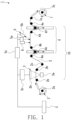
- FIGS. 1 to 2C a first embodiment of an X-ray analysis apparatus according to the present disclosure will be described with reference to FIGS. 1 to 2C .
- the X-ray analysis apparatus 1 includes an unwinding part 2 continuously unwinding a sample S, which is a sheet in strip-shape, downstream at a constant unwinding speed; a foreign matter inspection and analysis part 10 inspecting and analyzing a foreign matter in the sample S unwound from the unwinding part 2; and a winding part 7 winding the sample S that passed through the foreign matter inspection and analysis part 10.
- the foreign matter inspection and analysis part 10 includes a foreign matter location detection part 3 detecting the location of the foreign matter in the sample S unwound from the unwinding part 2 and moving; an intermittent transfer part 4 intermittently stopping or slowing the movement of a portion of the sample S where the foreign matter is detected to a speed slower than the unwinding speed downstream of the foreign matter location detection part 3 when the foreign matter is detected by the foreign matter location detection part 3; and an X-ray analysis part 5 irradiating, with X-rays, the portion where the foreign matter is detected that is stopped or moving at the speed slower than the unwinding speed and performing analysis.
- the intermittent transfer part 4 is set to discharge the portion in a stopped or slowly moving state where the foreign matter is detected to the winding part after the analysis. That is, the intermittent transfer part 4 is set so that the portion in a stopped or slowly moving state where the foreign matter is detected is discharged to the winding part 7 at a higher speed than the unwinding speed in a short period of time after X-ray analysis and an unwinding amount of the sample S from the unwinding part 2 matches with a winding amount of the sample S onto the winding part 7.
- the X-ray analysis apparatus 1 further includes a marking part 8 marking the portion where the foreign matter is detected or a vicinity thereof.
- the marking of the vicinity portion around the portion where the foreign matter is detected is achieved by, for example, marking a portion of the strip-shaped sample S where a side edge of the sample S meets an imaginary line extending in the width direction from the portion where the foreign matter is detected.
- the marking part 8 performs marking in a state where the sample S is stopped or moving at a speed slower than the unwinding speed by the intermittent transfer part 4.
- the marking part 8 performs marking only on the portion where the foreign matter meeting predetermined conditions is detected or the vicinity thereof based on results of analysis of the foreign matter analyzed by the X-ray analysis part 5 or performs marking with a specific mark.
- the foreign matter location detection part 3 is a transmission X-ray inspection part (XRT inspection part) that detects the foreign matter by irradiating the sample S with transmission X-rays
- the X-ray analysis part 5 is a fluorescent X-ray analysis part (XRF analysis part) that detects fluorescent X-rays emitted from the sample S by irradiating the portion where the foreign matter is detected with X-rays.
- XRT inspection part transmission X-ray inspection part
- XRF analysis part fluorescent X-ray analysis part
- the foreign matter location detection part 3 includes a first X-ray source 3a disposed below the transferred sample S and irradiating the sample S with X-rays; a first X-ray detector 3b disposed above the sample S to face the first X-ray source 3a and detecting X-rays passing through the sample S; and a foreign matter determination part 3c electrically connected to the first X-ray detector 3b, determining the presence and location of the foreign matter based on transmission X-rays detected by the first X-ray detector 3b and transmitting information on the location of the foreign matter.
- the X-ray analysis part 5 includes a second X-ray source 5a disposed above the sample S of the intermittent transfer part 4 and irradiating the foreign matter in the sample S with X-rays; a second X-ray detector 5b disposed above the sample S of the intermittent transfer part 4 and detecting fluorescent X-rays emitted from the foreign matter; and a foreign matter analysis part 5c electrically connected to the second X-ray detector 5b, identifying elements in the foreign matter, and transmitting information on the identified element.
- the unwinding part 2 includes an unwinding roller 2a for unwinding the sample S, on which the strip-shaped sample S before foreign matter detection is wound; a pair of foreign matter inspection rollers 2b horizontally arranged to horizontally transfer the sample S unwound from the unwinding roller 2a; and a first guide roller 2c guiding the sample S from the foreign matter inspection roller 2b to the intermittent transfer part 4.
- first X-ray source 3a is disposed below the sample S horizontally transferred between the pair of foreign matter inspection rollers 2b
- the first X-ray detector 3b is disposed above the sample S.
- the intermittent transfer part 4 includes first and second fixed rollers 4a and 4b guiding the sample S sent from the first guide roller 2c; a first moving roller 4c movable by a motor or the like in a direction orthogonal to a transfer path of the sample S (vertical direction in this embodiment) by passing through the space between the first and second fixed rollers 4a and 4b; third and fourth fixed rollers 4d and 4e guiding the sample S sent from the second fixed roller 4b; and a second moving roller 4f movable by a motor or the like in a direction orthogonal to the transfer path of the sample S (vertical direction in this embodiment) by passing through the space between the third and fourth fixed rollers 4d and 4e.
- the second fixed roller 4b and the third fixed roller 4d are arranged horizontally to each other so that the sample S therebetween is transferred horizontally.
- the first moving roller 4c is mounted on, for example, a ball screw (not illustrated) vertically extending to pass through the space between the first and second fixed rollers 4a and 4b, and is movable vertically by controlling a motor (not illustrated) that rotates the ball screw.
- a ball screw (not illustrated) vertically extending to pass through the space between the first and second fixed rollers 4a and 4b, and is movable vertically by controlling a motor (not illustrated) that rotates the ball screw.
- the second moving roller 4f is mounted on, for example, a ball screw (not illustrated) vertically extending to pass through the space between the third and fourth fixed rollers 4d and 4e, and is movable vertically by controlling a motor (not illustrated) that rotates the ball screw.
- the winding part 7 includes a second guide roller 7a guiding the sample S sent from the fourth fixed roller 4e, and a winding roller 7b winding the sample S from the second guide roller 7a at a constant winding speed. As described above, the transfer of the sample S in this embodiment is achieved by a roll-to-roll method. Additionally, the winding roller 7b is rotationally driven by a motor not illustrated.
- the first X-ray detector 3b of the foreign matter location detection part 3 is, for example, a time delay integration (TDI) sensor that has multiple rows of line sensors along a specific direction and pixels arranged in a matrix form and serves as an X-ray detection part that detects X-rays passing through the sample S at the pixels.
- TDI time delay integration
- the second X-ray detector 5b of the X-ray analysis part 5 is, for example, a silicon drift detector (SDD) in which a p-type semiconductor region is formed by injecting B (boron) into the window side of an n-type high-resistance substrate and a p-n junction is formed.
- SDD silicon drift detector
- the X-ray analysis part 5 includes an analysis part moving mechanism not shown, such as an XY stage, moving the second X-ray source 5a and the second X-ray detector 5b along the X-Y axis (the X direction is the extension direction of the sample S, and the Y direction is the width direction of the sample S) with respect to the plane of the sample S.
- an analysis part moving mechanism not shown, such as an XY stage, moving the second X-ray source 5a and the second X-ray detector 5b along the X-Y axis (the X direction is the extension direction of the sample S, and the Y direction is the width direction of the sample S) with respect to the plane of the sample S.
- the X-ray analysis apparatus 1 includes a controller C, which is a computer that controls the unwinding part 2, the intermittent transfer part 4, the foreign matter location detection part 3, the X-ray analysis part 5, the marking part 8, and the winding part 7 by electrically connecting thereto, and displays and records information on the location of the foreign matter received from the foreign matter location detection part 3 and information on the identified elements of the foreign matter received from the X-ray analysis part 5.
- a controller C which is a computer that controls the unwinding part 2, the intermittent transfer part 4, the foreign matter location detection part 3, the X-ray analysis part 5, the marking part 8, and the winding part 7 by electrically connecting thereto, and displays and records information on the location of the foreign matter received from the foreign matter location detection part 3 and information on the identified elements of the foreign matter received from the X-ray analysis part 5.
- the sample S is drawn out from the unwinding roller 2a of the unwinding part 2 at a constant unwinding speed and transferred to the location between the pair of foreign matter inspection rollers 2b, the sample S in a moving state is inspected for the presence of a foreign matter and the location of a foreign matter by the a foreign matter location detection part 3, which is a transmission X-ray inspection part.
- the sample S When no foreign matter is detected in the sample S, the sample S is constantly unwound in a constant amount from the unwinding roller 2a at a constant unwinding speed, and the sample S between the second fixed roller 4b and the third fixed roller 4d is also transferred at the same unwinding speed. Additionally, since no foreign matter is detected, foreign matter analysis is not performed in the foreign matter analysis part 5c.
- the foreign matter location detection part 3 transmits the presence of the foreign matter in the sample S and the location of the foreign matter as foreign matter information to the controller C. Additionally, even when a plurality of impurities are detected, information on each foreign matter is transmitted to the controller C.
- the controller C controls the intermittent transfer part 4 to temporarily stop the transfer between the second fixed roller 4b and the third fixed roller 4d or to perform the transfer at a lower speed than the unwinding speed based on the received foreign matter information.
- a measurement time for fluorescent X-ray analysis is set to, for example, 2 seconds, for one detected foreign matter, and the transfer of the sample S is stopped by the intermittent transfer part 4 for a period of time according to the number of impurities.
- the rotation of the third fixed roller 4d is stopped first, and then the transfer of the sample S between the second fixed roller 4b and the third fixed roller 4d is stopped so that the sample S becomes a stopped state.
- the rotation of the unwinding roller 2a which is driven to rotate at a constant rotation speed, is not stopped.
- the sample S is constantly unwound in a constant amount from the unwinding roller 2a, and the sample S constantly unwound in the constant amount is stored by moving the first moving roller 4c.
- the sample S is stored for the resumption of the next transfer.
- the sample S is stored between the first fixed roller 4a and the second fixed roller 4b by a length twice the distance between the first and second fixed rollers 4a and 4b and the first moving roller 4c.
- the length of the temporarily stored sample S corresponds to a time period during which transfer is stopped for foreign matter analysis, and is determined so that the overall throughput of the sample S is not reduced.
- the second moving roller 4f is gradually brought closer to the third and fourth fixed rollers 4d and 4e.
- the X-ray analysis part 5 performs fluorescent X-ray analysis on the foreign matter based on the foreign matter information.
- the second X-ray source 5a and the second X-ray analyzer 5b are moved by the analysis part moving mechanism, such as an XY stage, to the location of the foreign matter in the sample S that is in a stopped or slowly moving state and then irradiate the foreign matter with X-rays in a pin-point manner, and the foreign matter analysis part 5c identifies the elements of the foreign matter from fluorescent X-rays emitted and detected from the foreign matter.
- the marking part 8 marks a location where the foreign matter is detected or a vicinity location thereof.
- the marking part 8 when Cu is detected from the foreign matter by the X-ray analysis part 5, the marking part 8 does not perform marking or makes a mark indicating OK (positive) (e.g., ⁇ ⁇ ⁇ ), and when Fe is detected from the foreign matter by the X-ray analysis part 5, the marking part 8 performs marking or makes a mark indicating NG (defective) (e.g., ⁇ ⁇ ⁇ ). Additionally, the marking part 8 is also movable to mark the location where the foreign matter is detected or the vicinity location thereof by the analysis part moving mechanism such as an XY stage.
- the analysis part moving mechanism such as an XY stage.
- the first moving roller 4c is rapidly brought close to the first and second fixed rollers 4a and 4b in a short period of time in order to discharge a portion of the sample S stored by the first moving roller 4c in a short period of time.
- the first moving roller 4c is brought close to the first and second fixed rollers 4a and 4b by a distance corresponding to half the length of the sample S to be transferred.
- the approach of the first moving roller 4c is performed in synchronization with the rotation of the third fixed roller 4d.
- the sample S is wound around the first moving roller 4c in a U shape.
- the sample S is unwound from the second fixed roller 4b by a length corresponding to the sum of a length twice a moving distance of the first moving roller 4c and a length at which the sample S is unwound from the unwinding roller 2a in a short period of time.
- sample S unwound from the second fixed roller 4b and transferred via the third fixed roller 4d is stored in a short period of time by the movement of the second moving roller 4f.
- the sample S is stored for the discharge and winding.
- the third fixed roller 4d is rotationally driven by a motor to collect a portion of the sample S for which foreign matter analysis has been completed, and the sample S is stored between the third and fourth fixed rollers 4d and 4e by a length twice the distance between the third and fourth fixed rollers 4d and 4e and the second moving roller 4f.
- the sample S is wound around the second moving roller 4f in a U shape.
- the sample S is stored between the third fixed roller 4d and the fourth fixed roller 4e by a length corresponding to the sum of a length twice a moving distance of the second moving roller 4f and a length at which the sample S is wound on the winding roller 7b in a short period of time.
- the moving distance of the first moving roller 4c and the moving distance of the second moving roller 4f become the same.
- FIG. 2C illustrates a state immediately after the sample S in a stopped location between the second fixed roller 4b and the third fixed roller 4d is transferred and stored between the third fixed roller 4d and the fourth fixed roller 4e.
- the stored sample S is discharged by moving the second moving roller 4f and wound on the winding part 7. That is, as the second moving roller 4f between the third fixed roller 4d and the fourth fixed roller 4e is moved upward to be brought close to the third and fourth fixed rollers 4d and 4e, the stored sample S is discharged downstream from the fourth fixed roller 4e and wound on the winding roller 7b that is rotationally driven by a motor. Additionally, the winding roller 7b is set to constantly wind the sample S in a constant amount.
- the foreign matter inspection and analysis part 10 includes the foreign matter location detection part 3 detecting the location of the foreign matter in the sample S unwound from the unwinding part 2 and moving, the intermittent transfer part 4 intermittently stopping or slowing the movement of the portion of the sample S where the foreign matter is detected to a speed slower than the unwinding speed downstream of the foreign matter location detection part 3 when the foreign matter is detected by the foreign matter location detection part 3, and the X-ray analysis part 5 analyzing the portion where the foreign matter is detected in a state where the potion is stopped or moving at a speed slower than the unwinding speed by irradiating the portion with X-rays.
- the location of the foreign matter can be detected by the foreign matter location detection part 3 while the sample S is in a continuously moving state, and the foreign matter can be identified and analyzed for elements by the X-ray analysis part 5 that performs fluorescent X-ray analysis while the portion where the foreign matter is detected is in a stopped or slowly moving state.
- the foreign matter location detection part 3 is a transmission X-ray inspection part that detects the foreign matter by irradiating the sample S with transmission X-rays
- the X-ray analysis part 5 is a fluorescent X-ray analysis part that detects fluorescent X-rays emitted from the sample S by irradiating the portion where the foreign matter is detected with X-rays. Therefore, the X-ray analysis part 5 can perform elemental identification for the foreign matter with high accuracy by irradiating with X-rays the location of the foreign matter detected by the transmission X-rays and detecting the emitted fluorescent X-rays.
- the intermittent transfer part 4 discharges the portion where the foreign matter is detected that is stopped or moving at the speed slower than the unwinding speed to the winding part 7 after analysis. Therefore, when analysis is completed, the portion in a stopped or slowly moving state is discharged and transferred toward a downstream side and wound on the winding part 7, thereby enabling X-ray analysis to be performed without entirely stopping the transfer of the sample S.
- the marking part 8 that marks the portion where the foreign matter is detected or the vicinity thereof is further provided. Therefore, the portion where the foreign matter is detected can be visually confirmed by marking, making it easier to analyze the foreign matter in subsequent processes.
- the marking part 8 performs marking in a state where the sample S is stopped or moving at a speed slower than the unwinding speed by the intermittent transfer part 4. Therefore, the portion where the foreign matter is detected can be marked directly and accurately in a stopped state or slowly moving state.
- the marking part 8 performs marking only on the portion where the foreign matter meeting predetermined conditions is detected or the vicinity thereof based on results of analysis of the foreign matter analyzed by the X-ray analysis part 5, or performs marking with a specific mark. Therefore, for example, a portion where a foreign matter that do not cause a defective product is detected and a portion where a foreign matter that causes a defective product is detected can be distinguished by the presence of marking or the difference in marks.
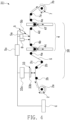
- the second embodiment and the first embodiment are different in the following aspect.
- the X-ray analysis part 5 is a fluorescent X-ray analysis part
- both a foreign matter location detection part 3 and an X-ray analysis part 25 are transmission X-ray inspection parts.
- the foreign matter location detection part 3 of a foreign matter inspection and analysis part 20 is a first transmission X-ray inspection part that detects a foreign matter by irradiating a sample S with transmission X-rays
- the X-ray analysis part 25 is a second transmission X-ray inspection part that detects the size of the foreign matter by irradiating a portion where the foreign matter is detected with transmission X-rays.
- the X-ray analysis part 25 includes a third X-ray source 25a disposed below the sample S between a second fixed roller 4b and a third fixed roller 4d of an intermittent transfer part 4; a third X-ray analyzer 25b disposed above the sample S between the second fixed roller 4b and the third fixed roller 4d so as to face the third X-ray source 25a; and a foreign matter analysis part 25c electrically connected to the third X-ray analyzer 25b and transmitting information on the size of the foreign matter.
- a marking part 28 marks the portion where the foreign matter is detected only when the detected foreign matter is of size that causes a defective product.
- the marking part 28 according to the second embodiment is disposed to enable marking on the sample S transferred between a fourth fixed roller 4e and a second guide roller 7a.
- the marking part 28 marks the location of the foreign matter or the vicinity location thereof, or marks it with a mark indicating NG.
- the marking part 28 does not perform marking or marks the location of the foreign matter or the vicinity location thereof with a mark indicating OK.
- the X-ray analysis apparatus 21 has the following characteristics.
- the foreign matter location detection part 3 is the first transmission X-ray inspection part that detects the foreign matter by irradiating the sample S with transmission X-rays
- the X-ray analysis part 25 is the second transmission X-ray inspection part that detects the size of the foreign matter by irradiating the portion where the foreign matter is detected with transmission X-rays.
- the first transmission X-ray inspection part (foreign matter location detection part 3) performs rough detection of only the location of the foreign matter, and then in a state while the sample S is stopped or moving at a speed slower than the unwinding speed, the second transmission X-ray inspection part (X-ray analysis part 25) detects the size of the foreign matter. In this manner, a more detailed analysis of the foreign matter can be performed in two steps.
- the foreign matter location detection part 3 is the transmission X-ray inspection part
- a foreign matter location detection part 33 of a foreign matter inspection and analysis part 30 is a visible light inspection part that detects a foreign matter by detecting visible light from a sample S.
- the foreign matter location detection part 3 is a visible light inspection part disposed above the sample S transferred between a pair of foreign matter inspection rollers 2b, and includes a visible light measurement device 33b, such as a CCD camera, capturing an image of a surface of the sample S and a foreign matter determination part 33c detecting a foreign matter from the image of the sample S.
- a visible light measurement device 33b such as a CCD camera
- the foreign matter location detection part 33 captures an image of the state of the surface of the sample S with the visible light measurement device 33b, detects a foreign matter such as dust, wrinkles, bubbles, or discoloration through the foreign matter determination part 33c, and transmits the location of the foreign matter as foreign matter information to a controller C.
- the foreign matter location detection part 33 is the visible light inspection part that detects the foreign matter by detecting visible light from the sample S. Therefore, the visible light inspection part (foreign matter location detection part 33) can check the foreign matter, such as dust, wrinkles, bubbles, or discoloration, of the sample S with visible light, and the fluorescent X-ray analysis part (X-ray analysis part 5) can identify elements constituting the foreign matter.
- an X-ray source and an X-ray analyzer for fluorescent X-ray analysis are disposed above the sample.
- the X-ray source and the X-ray analyzer for fluorescent X-ray analysis may be disposed below the sample. In this case, even when the sample is thick, it is possible to perform elemental identification with high accuracy not only for a foreign matter on the surface side of the sample but also for a foreign matter on the back surface side of the sample.
Landscapes
- Health & Medical Sciences (AREA)
- Chemical & Material Sciences (AREA)
- Life Sciences & Earth Sciences (AREA)
- Immunology (AREA)
- Analytical Chemistry (AREA)
- Biochemistry (AREA)
- General Health & Medical Sciences (AREA)
- General Physics & Mathematics (AREA)
- Physics & Mathematics (AREA)
- Pathology (AREA)
- Toxicology (AREA)
- Engineering & Computer Science (AREA)
- Textile Engineering (AREA)
- Food Science & Technology (AREA)
- Medicinal Chemistry (AREA)
- Analysing Materials By The Use Of Radiation (AREA)
- Controlling Rewinding, Feeding, Winding, Or Abnormalities Of Webs (AREA)
Applications Claiming Priority (1)
| Application Number | Priority Date | Filing Date | Title |
|---|---|---|---|
| JP2023183467A JP2025072964A (ja) | 2023-10-25 | 2023-10-25 | X線分析装置 |
Publications (1)
| Publication Number | Publication Date |
|---|---|
| EP4545950A1 true EP4545950A1 (de) | 2025-04-30 |
Family
ID=92762297
Family Applications (1)
| Application Number | Title | Priority Date | Filing Date |
|---|---|---|---|
| EP24199568.7A Pending EP4545950A1 (de) | 2023-10-25 | 2024-09-10 | Röntgenanalysegerät |
Country Status (5)
| Country | Link |
|---|---|
| US (1) | US20250137947A1 (de) |
| EP (1) | EP4545950A1 (de) |
| JP (1) | JP2025072964A (de) |
| KR (1) | KR20250060076A (de) |
| CN (1) | CN119880975A (de) |
Citations (5)
| Publication number | Priority date | Publication date | Assignee | Title |
|---|---|---|---|---|
| JP2008261712A (ja) * | 2007-04-11 | 2008-10-30 | Kimoto Denshi Kogyo Kk | 浮遊粒子状物質の測定装置 |
| KR100956797B1 (ko) * | 2009-11-19 | 2010-05-07 | (주)자비스 | 판상패드용 엑스레이검사장치 |
| JP2013170924A (ja) | 2012-02-21 | 2013-09-02 | Hitachi High-Tech Science Corp | 透過x線分析装置 |
| JP5956730B2 (ja) | 2011-08-05 | 2016-07-27 | 株式会社日立ハイテクサイエンス | X線分析装置及び方法 |
| US20200348242A1 (en) * | 2018-03-15 | 2020-11-05 | Toray Industries, Inc. | Foreign body inspecting method, inspecting device, film roll, and method of manufacturing film roll |
-
2023
- 2023-10-25 JP JP2023183467A patent/JP2025072964A/ja active Pending
-
2024
- 2024-07-10 KR KR1020240090856A patent/KR20250060076A/ko active Pending
- 2024-07-18 CN CN202410966461.8A patent/CN119880975A/zh active Pending
- 2024-09-10 EP EP24199568.7A patent/EP4545950A1/de active Pending
- 2024-09-27 US US18/900,264 patent/US20250137947A1/en active Pending
Patent Citations (5)
| Publication number | Priority date | Publication date | Assignee | Title |
|---|---|---|---|---|
| JP2008261712A (ja) * | 2007-04-11 | 2008-10-30 | Kimoto Denshi Kogyo Kk | 浮遊粒子状物質の測定装置 |
| KR100956797B1 (ko) * | 2009-11-19 | 2010-05-07 | (주)자비스 | 판상패드용 엑스레이검사장치 |
| JP5956730B2 (ja) | 2011-08-05 | 2016-07-27 | 株式会社日立ハイテクサイエンス | X線分析装置及び方法 |
| JP2013170924A (ja) | 2012-02-21 | 2013-09-02 | Hitachi High-Tech Science Corp | 透過x線分析装置 |
| US20200348242A1 (en) * | 2018-03-15 | 2020-11-05 | Toray Industries, Inc. | Foreign body inspecting method, inspecting device, film roll, and method of manufacturing film roll |
Also Published As
| Publication number | Publication date |
|---|---|
| KR20250060076A (ko) | 2025-05-07 |
| US20250137947A1 (en) | 2025-05-01 |
| CN119880975A (zh) | 2025-04-25 |
| JP2025072964A (ja) | 2025-05-12 |
Similar Documents
| Publication | Publication Date | Title |
|---|---|---|
| US5363968A (en) | Automatic blister inspection system | |
| US20050122510A1 (en) | System and method for process variation monitor | |
| CN105531214B (zh) | 用于跟踪片材中的缺陷的设备和方法 | |
| CN117055249B (zh) | 一种液晶显示屏组装加工线抽样质检分析系统 | |
| JP2010025566A (ja) | 電極用素材の異物検出装置 | |
| EP4545950A1 (de) | Röntgenanalysegerät | |
| CN117894702A (zh) | 一种用于检测晶圆表面缺陷的设备和方法 | |
| JP4621937B2 (ja) | ワークの曲がり不良検査装置 | |
| CN119804563A (zh) | 一种硅棒电性能检测设备及硅棒电性能检测方法 | |
| JP5884009B2 (ja) | スクリーン印刷機及びスクリーン印刷機のマスクのテンション計測方法 | |
| US20060109466A1 (en) | Copper foil inspection device copper foil inspection method defect inspection device and defeat inspection method | |
| CN219776673U (zh) | 一种新型片材平面视觉检测和厚度检测系统 | |
| JP7574116B2 (ja) | チップ強度の試験方法、及び、試験装置 | |
| CN216411102U (zh) | 一种硅片边缘检测系统 | |
| JP3765767B2 (ja) | ガラス管端の偏心検査装置及びガラス管端の偏心検査方法 | |
| JP4408902B2 (ja) | 異物検査方法および装置 | |
| CN211785189U (zh) | 一种自动检测缺陷并停机的装置 | |
| JP7574117B2 (ja) | チップ強度の試験方法 | |
| JPH08304006A (ja) | 軸部材の表面欠陥検査方法 | |
| JP7653320B2 (ja) | 試験装置、及び、チップの試験方法 | |
| US4925119A (en) | Method and apparatus for inspecting resistance to film draw-out | |
| CN117309888A (zh) | 石墨模切卷材的检测方法与系统 | |
| CN110455238A (zh) | 橡塑卷材在线自动检测厚度的装置及方法 | |
| KR102284046B1 (ko) | 이미지 트래킹을 이용한 기판 불량 검사 시스템 | |
| CN111948205B (zh) | 样品放置块、样品放置装置及其样品检测方法 |
Legal Events
| Date | Code | Title | Description |
|---|---|---|---|
| PUAI | Public reference made under article 153(3) epc to a published international application that has entered the european phase |
Free format text: ORIGINAL CODE: 0009012 |
|
| STAA | Information on the status of an ep patent application or granted ep patent |
Free format text: STATUS: THE APPLICATION HAS BEEN PUBLISHED |
|
| AK | Designated contracting states |
Kind code of ref document: A1 Designated state(s): AL AT BE BG CH CY CZ DE DK EE ES FI FR GB GR HR HU IE IS IT LI LT LU LV MC ME MK MT NL NO PL PT RO RS SE SI SK SM TR |
|
| RAP3 | Party data changed (applicant data changed or rights of an application transferred) |
Owner name: HITACHI HIGH-TECH ANALYSIS CORPORATION |
|
| STAA | Information on the status of an ep patent application or granted ep patent |
Free format text: STATUS: REQUEST FOR EXAMINATION WAS MADE |
|
| 17P | Request for examination filed |
Effective date: 20251027 |