EP4539445A2 - Automatische navigation eines baums für interaktive sprachantwort (ivr) für einen menschlichen benutzer - Google Patents
Automatische navigation eines baums für interaktive sprachantwort (ivr) für einen menschlichen benutzer Download PDFInfo
- Publication number
- EP4539445A2 EP4539445A2 EP25160332.0A EP25160332A EP4539445A2 EP 4539445 A2 EP4539445 A2 EP 4539445A2 EP 25160332 A EP25160332 A EP 25160332A EP 4539445 A2 EP4539445 A2 EP 4539445A2
- Authority
- EP
- European Patent Office
- Prior art keywords
- user
- ivr
- client device
- ivr tree
- tree
- Prior art date
- Legal status (The legal status is an assumption and is not a legal conclusion. Google has not performed a legal analysis and makes no representation as to the accuracy of the status listed.)
- Pending
Links
Images








Classifications
-
- H—ELECTRICITY
- H04—ELECTRIC COMMUNICATION TECHNIQUE
- H04M—TELEPHONIC COMMUNICATION
- H04M3/00—Automatic or semi-automatic exchanges
- H04M3/42—Systems providing special services or facilities to subscribers
- H04M3/487—Arrangements for providing information services, e.g. recorded voice services or time announcements
- H04M3/493—Interactive information services, e.g. directory enquiries ; Arrangements therefor, e.g. interactive voice response [IVR] systems or voice portals
-
- G—PHYSICS
- G06—COMPUTING OR CALCULATING; COUNTING
- G06F—ELECTRIC DIGITAL DATA PROCESSING
- G06F16/00—Information retrieval; Database structures therefor; File system structures therefor
- G06F16/90—Details of database functions independent of the retrieved data types
- G06F16/901—Indexing; Data structures therefor; Storage structures
- G06F16/9027—Trees
-
- H—ELECTRICITY
- H04—ELECTRIC COMMUNICATION TECHNIQUE
- H04M—TELEPHONIC COMMUNICATION
- H04M3/00—Automatic or semi-automatic exchanges
- H04M3/42—Systems providing special services or facilities to subscribers
- H04M3/42025—Calling or Called party identification service
- H04M3/42034—Calling party identification service
- H04M3/42059—Making use of the calling party identifier
- H04M3/42068—Making use of the calling party identifier where the identifier is used to access a profile
-
- H—ELECTRICITY
- H04—ELECTRIC COMMUNICATION TECHNIQUE
- H04M—TELEPHONIC COMMUNICATION
- H04M3/00—Automatic or semi-automatic exchanges
- H04M3/42—Systems providing special services or facilities to subscribers
- H04M3/42136—Administration or customisation of services
- H04M3/4217—Managing service interactions
-
- H—ELECTRICITY
- H04—ELECTRIC COMMUNICATION TECHNIQUE
- H04M—TELEPHONIC COMMUNICATION
- H04M3/00—Automatic or semi-automatic exchanges
- H04M3/42—Systems providing special services or facilities to subscribers
- H04M3/42204—Arrangements at the exchange for service or number selection by voice
-
- H—ELECTRICITY
- H04—ELECTRIC COMMUNICATION TECHNIQUE
- H04M—TELEPHONIC COMMUNICATION
- H04M3/00—Automatic or semi-automatic exchanges
- H04M3/42—Systems providing special services or facilities to subscribers
- H04M3/487—Arrangements for providing information services, e.g. recorded voice services or time announcements
- H04M3/493—Interactive information services, e.g. directory enquiries ; Arrangements therefor, e.g. interactive voice response [IVR] systems or voice portals
- H04M3/4931—Directory assistance systems
- H04M3/4935—Connection initiated by DAS system
-
- H—ELECTRICITY
- H04—ELECTRIC COMMUNICATION TECHNIQUE
- H04M—TELEPHONIC COMMUNICATION
- H04M3/00—Automatic or semi-automatic exchanges
- H04M3/42—Systems providing special services or facilities to subscribers
- H04M3/487—Arrangements for providing information services, e.g. recorded voice services or time announcements
- H04M3/493—Interactive information services, e.g. directory enquiries ; Arrangements therefor, e.g. interactive voice response [IVR] systems or voice portals
- H04M3/4936—Speech interaction details
-
- H—ELECTRICITY
- H04—ELECTRIC COMMUNICATION TECHNIQUE
- H04M—TELEPHONIC COMMUNICATION
- H04M3/00—Automatic or semi-automatic exchanges
- H04M3/42—Systems providing special services or facilities to subscribers
- H04M3/50—Centralised arrangements for answering calls; Centralised arrangements for recording messages for absent or busy subscribers ; Centralised arrangements for recording messages
- H04M3/51—Centralised call answering arrangements requiring operator intervention, e.g. call or contact centers for telemarketing
- H04M3/5166—Centralised call answering arrangements requiring operator intervention, e.g. call or contact centers for telemarketing in combination with interactive voice response systems or voice portals, e.g. as front-ends
Definitions
- Automated assistants can be interacted with by a user via a variety of computing devices, such as smart phones, tablet computers, wearable devices, automobile systems, standalone personal assistant devices, and so forth.
- the automated assistants receive input from the user (e.g., spoken, touch, and/or typed) and respond with responsive output (e.g., visual and/or audible).
- Implementations disclosed herein are directed to using an automated assistant to perform an assisted telephone call, with an entity, and on behalf of a given user, to navigate an interactive voice response (IVR) tree of an IVR system associated with the entity.
- the IVR tree of an IVR system associated with the entity can be stored in database(s) accessible at a client device of the given user.
- Performing the assisted telephone call to navigate the IVR tree can include automatically navigating the IVR tree to a target state of the IVR tree.
- the target state of the IVR tree can be determined, from among a plurality of based on user input detected at the client device of the given user.
- client device resource(s) and/or network resource(s) can be preserved by preventing the re-launching of another assisted telephone call that is performed with respect to an alternative target state and/or alternative value(s) for navigating the IVR tree. Further, the assisted telephone call can conclude more quickly, thereby lessening the overall duration that computer and/or network resources are utilized in performing the assisted telephone call. Moreover, battery resources of the client device may also be preserved in that the given user is not an active participant in the assisted telephone call, and the client device may be placed in a locked or low-power state during the assisted telephone call.
- Some additional or alternative implementations are directed to providing IVR deeplinks to candidate state(s) of the IVR tree along with search results that are received responsive to a search query determined based on user input.
- a given IVR deeplink can be provided based on recent user interactions at the client device prior to issuing of the search query. For example, assume the user of the client device is interacting with search results related to reporting lost baggage to an airlines entity, and then issues a search for the airline entity.
- the automated assistant can cause an IVR deeplink associated with a target state of reporting lost baggage to be provided for selection by the given user of the client device based on the recent user interactions (and optionally more prominently than other IVR deeplinks that may also be provided).
- a given IVR deeplink can be provided based term(s) the search query. For example, assume the given user of the client issues a search query of "report lost baggage to Example Airlines". In this example, the automated assistant can cause an IVR deeplink associated with a target state of reporting lost baggage to be provided for selection by the given user of the client device based on the term(s) of the search query including "report lost baggage” and "Example Airlines". In these and other manners, a quantity of user inputs can be reduced, thereby client device resource(s) may be preserved since the given user need only select the "IVR deeplink".
- assisted telephone call can conclude more quickly, thereby lessening the overall duration that computer and/or network resources are utilized in performing the assisted telephone call.
- battery resources of the client device may also be preserved in that the given user is not an active participant in the assisted telephone call, and the client device may be placed in a locked or low-power state during the assisted telephone call.
- the candidate states associated with the restaurant entity may not include a carryout candidate state or a delivery candidate state if the restaurant entity is closed, or may not include the delivery candidate state if the client device is located beyond a delivery radius even if the restaurant is open.
- the contextual information associated with the given user of the client device can include, for example, electronic communication(s) created by the user of the client device or received by the user of the client device, user account information associated with various user accounts of the given user of the client device, pecuniary information of the given user of the client device, photo album(s) of the given user of the client device, social media profile(s) of the given user of the client device, user preference(s) of the user of the client device, personal information of the given user of the client device, and/or other information associated with the given user of the client device.
- candidate states associated with a hotel entity may include a contact concierge state or request free upgrade state if the given user is a gold status member or above at the hotel entity. However, if the given user is not a gold status member or above at the hotel entity, the candidate states may omit these states.
- client device resource(s) and/or network resource(s) can be preserved by preventing the re-launching of another assisted telephone call that is performed with respect to the given user selecting a candidate state that may be unavailable. Further, the assisted telephone call can conclude more quickly, thereby lessening the overall duration that computer and/or network resources are utilized in performing the assisted telephone call.
- battery resources of the client device may also be preserved in that the given user is not an active participant in the assisted telephone call, and the client device may be placed in a locked or low-power state during the assisted telephone call.
- Some additional or alternative implementations are directed to rendering the candidate states in various manners based on a confidence level for the IVR tree associated with the entity.
- the confidence level for the IVR tree stored in association with the entity may be based on a quantity of assisted telephone calls with the entity that include navigating the IVR tree that is different from the IVR tree stored in association with the entity, and optionally based on an extent of the difference between the navigated IVR tree and the stored IVR tree.
- the automated assistant can cause a sequence of button presses to be rendered at the client device to notify the given user of the client device how to quickly navigate the IVR tree to one or more of the candidate states prior to initiating the assisted telephone call or upon initiating the assisted telephone call (e.g.
- the automated assistant can cause selectable graphical element(s) (that may not match the sequence of button presses) associated with the candidate state(s) to be rendered at the client device and that, when selected, cause the automated assistant to automatically navigate to a target state associated with the selected selectable graphical element prior to initiating the assisted telephone call or upon initiating the assisted telephone call ( e.g. , press "5" to report lost baggage).
- the automated assistant can cause the aforementioned selectable graphical element(s) (that may not match the sequence of button presses) associated with the candidate state(s) to be rendered at the client device and only when a portion of the IVR tree that the automated assistant is mildly confidence in is traversed.
- the automated assistant can cause the aforementioned selectable graphical element(s) (that may not match the sequence of button presses) associated with the candidate state(s) to be rendered at the client device after the automated assistant perceives the options for the IVR tree.
- client device resource(s) and/or network resource(s) can be preserved by preventing the re-launching of another assisted telephone call in the case that the automated assistant provided incorrect information to the user for navigating the IVR tree.
- assisted telephone call can conclude more quickly, thereby lessening the overall duration that computer and/or network resources are utilized in performing the assisted telephone call by providing the sequence of button presses or selectable elements associated with the candidate states.
- battery resources of the client device may also be preserved in that the given user is not an active participant in the assisted telephone call, and the client device may be placed in a locked or low-power state during the assisted telephone call.
- FIG. 1 a block diagram of an example environment that demonstrates various aspects of the present disclosure, and in which implementations disclosed herein can be implemented is depicted.
- a client device 110 is illustrated in FIG. 1 , and includes, in various implementations, user input engine 111, device state engine 112, rendering engine 113, search engine 114, speech recognition engine 120A1, natural language understanding (“NLU”) engine 130A1, and speech synthesis engine 140A1.
- user input engine 111 includes, in various implementations, user input engine 111, device state engine 112, rendering engine 113, search engine 114, speech recognition engine 120A1, natural language understanding (“NLU”) engine 130A1, and speech synthesis engine 140A1.
- NLU natural language understanding
- the automated assistant 115 can execute an assisted telephone call using the assisted telephone call system 160 in response to detecting user input, from the user of the client device 110, to initiate a telephone call using the automated assistant 115.
- the automated assistant 115 can determine a target state, from among a plurality of candidate states, for navigation of an IVR tree that is associated with an entity to engage with, on behalf of the user of the client device 110 and during the assisted telephone call, based on user input received at the client device 110.
- the automated assistant 115 can receive a selection of the target state prior to initiating of the assisted telephone call or upon the assisted telephone call being initiated.
- the assisted telephone call system 160 can be implemented remotely ( e.g. , via server(s) and/or other remote client device(s)) and in communication with the client device 110.
- the assisted telephone call system 160 is shown in FIG. 1 as being implemented remotely over the network(s) 190 and in communication with the client device 110, it should be understood that that is for sake of example and is not meant to be limiting.
- the assisted telephone call system 160 can be implemented locally on the client device 110.
- the assisted telephone call system 160 can be implemented remotely at the assistant telephone call system 160 without any connection to the client device 110 (e.g.
- the client device 110 may optionally be in an off state or not connected to any networks (e.g., determined using the device state engine 112).
- the automated assistant 115 is shown in FIG. 1 as being implemented both locally on the client device 110 and remotely at the assisted telephone call system 160, it should be understood that is also for the sake of example and is not meant to be limiting.
- the automated assistant 115 can be implemented locally on the client device 110, whereas in other implementations, the automated assistant 115 can be implemented locally on the client device 110 and interact with a separate, cloud-based automated assistant (e.g. , forming a logical instance of the automated assistant 115).
- the speech recognition engine 120A1 of the client device 110 can process, using speech recognition model(s) 120A, the audio data that captures the spoken input and/or that captures the additional spoken input.
- the speech recognition engine 120A1 can generate recognized text corresponding to the spoken input and/or the additional spoken input based on the processing of the audio data.
- the NLU engine 130A1 of the client device 110 can process, using NLU model(s) 130A, the recognized text generated by the speech recognition engine 120A1 to determine intent(s) included in the spoken input and/or the additional spoken input. For example, if the client device 110 detects spoken input of "call Hypothetical Airline to report lost luggage" from the user, the client device 110 can process, using the speech recognition model(s) 120A, audio data that captures the spoken input to generate recognized text corresponding to the spoken input of "call Hypothetical Airline to report lost luggage", and can process, using the NLU model(s) 130A, the recognized text to determine at least a first intent of initiating a call and a second intent of reporting lost luggage.
- the client device 110 can process, using the speech recognition model(s) 120A, audio data that captures the additional spoken input to generate recognized text corresponding to the additional spoken input of "tell us briefly why you are calling", and can process, using the NLU model(s) 130A, the recognized text to determine an intent of requesting natural language input that includes a request for information associated with why the assisted telephone call was initiated ( e.g. , to report lost luggage).
- the client device 110 can transmit the audio data, the recognized text, and/or the intent(s) to the assisted telephone call system 160.
- the automated assistant 115 can cause the client device 110 to transmit the audio data that captures the spoken input and/or the additional spoken input to the assisted telephone call system 160.
- the speech recognition engine 120A2 and/or the NLU engine 130A2 of the assisted telephone call system 160 can process the audio data that captures the spoken input and/or the audio data that captures the additional spoken utterance in similar manner described above with respect to the speech recognition engine 120A1 and/or the NLU engine 130A1 of the client device 110.
- the speech recognition engine 120A1 and/or the NLU engine 130A1 of the client device 110 can be used in the conjunction with the speech recognition engine 120A2 and/or the NLU engine 130A2 of the assisted telephone call system 160 in a distributed manner.
- the speech recognition model(s) 120A and/or the NLU model(s) 130A can be stored locally on the client device 110 and/or remotely at server(s) in communication with the client device 110 and/or the assisted telephone call system 160 over the network(s) 190.
- the speech recognition model(s) 120A are end-to-end speech recognition model(s), such that the speech recognition engine(s) 120A1 and/or 120A2 can generate recognized text corresponding to spoken input directly using the model.
- the speech recognition model(s) 120A can be end-to-end model(s) used to generate the recognized text on a character-by-character basis (or other token-by-token basis).
- One non-limiting example of such end-to-end model(s) used to generate the recognized text on a character-by-character basis is a recurrent neural network transducer (RNN-T) model.
- RNN-T recurrent neural network transducer
- An RNN-T model is a form of sequence-to-sequence model that does not employ attention mechanisms.
- the speech recognition model(s) 120A are not end-to-end speech recognition model(s) such that the speech recognition engine(s) 120A1 and/or 120A2 can instead generate predicted phoneme(s) (and/or other representations). For instance, the predicted phoneme(s) (and/or other representations) may then be utilized by the speech recognition engine(s) 120A1 and/or 120A2 to determine recognized text that conforms to the predicted phoneme(s). In doing so, the speech recognition engine(s) 120A1 and/or 120A2 can optionally employ a decoding graph, a lexicon, and/or other resource(s).
- the automated assistant 115 can cause an indication of the touch input and/or an indication the typed input to be transmitted from the client device 110 to the assisted telephone call system 160.
- the indication of the touch input and/or the indication the typed input can include underlying text or representations of the touch input and/or text of the typed input, and the underlying text the speech recognition model(s) 120A are end-to-end speech recognition model(s) can be processed, using the NLU model(s) 130A, to determine intent(s) for the underlying text and/or the text.
- the assisted telephone call engine 150 of the assisted telephone call system 160 can further process the recognized text generated by the speech recognition engine(s) 120A1 and/or 120A2, the underlying text or representations of touch input detected at the client device 110, the underlying text of typed input detected at the client device 110, and/or the intent(s) determined by the NLU engine(s) 130A1 and/or 130A2.
- the assisted telephone call engine 150 includes, in various implementations, entity identification engine 151, interactive voice response (IVR) engine 152, parameter(s) engine 153, user interaction engine 154, verification engine 155, notification engine 156, and task performance engine 157.
- the entity identification engine 151 can identify an entity to engage with, on behalf of the user of the client device 110.
- the entity can be, for example, a person entity, a business entity, a location entity, and/or other entities.
- a person entity can be a friend entity, a family member entity, a co-worker entity, and/or other particular types of person entities.
- a business entity can be a restaurant entity, an airline entity, a hotel entity, a salon entity, a doctor's office entity, and/or other particular types of business entities.
- a location entity can be a school entity, a museum entity, a library entity, a park entity, and/or other particular types of location entities.
- the entity identifying engine 151 can also determine a specific entity for the identified entity.
- a specific entity for a person entity can be a name of the person (e.g. , Jane Doe, John Doe etc.)
- a specific entity for a business entity can be a name of the business (e.g. , Hypothetical Airlines, Example Airlines, etc.)
- a specific entity for a location entity can be a name of the location (e.g. , Hypothetical University, Example National Park, etc.).
- entities described herein can be defined by various levels of granularity, they are collectively referred to herein as "entity" for the sake of simplicity.
- the entity identification engine 151 can identify the entity, from among a plurality of entities, that are stored in entity(s) database 151A.
- the plurality of entities stored in entity(s) database 151A can be indexed by entity and/or particular types of entities. For example, if the entity identification engine 151 identifies the entity "Hypothetical Airlines", then "Hypothetical Airlines” can be indexed in the entity(s) database 151A as a business entity, and can optionally be further indexed as an airlines entity.
- the entity identification engine 151 can easily identify and retrieve entities, thereby reducing subsequent processing to identify entities as they are encountered in future assisted telephone calls.
- each entity can be associated with task(s) in the entity(s) database 151A.
- the IVR engine 152 can identify an IVR tree (and optionally audio data associated with the IVR tree) that is associated with an entity that is identified via the entity identification engine 151.
- the IVR tree that is associated with the identified entity can be stored in association with the identified entity in IVR tree(s) database 152A.
- IVR trees stored in the IVR tree(s) database 152A can be mapped to corresponding entities stored in the entity(s) database 151A.
- the IVR trees can be stored in association with the corresponding entities in the entity(s) database 151A, and the IVR tree(s) database 152A may be omitted.
- the automated assistant 115 may initiate multiple automated telephone calls to a given entity, of the plurality of entities, to map variations of a given IVR tree that is associated with the given entity.
- the automated assistant 115 may initiate a first automated telephone call with a restaurant entity when the restaurant entity is open, and may initiate a second automated telephone call with the restaurant entity when the restaurant is closed.
- the IVR engine 152 can cause the automated assistant 115 to map the given IVR tree associated with the restaurant entity in different contexts (e.g. , contexts associated with a given client device or contexts associated with a user) to determine whether the given IVR tree is dynamic.
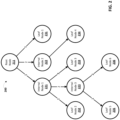
- the automated assistant 115 can track navigation of the IVR tree 200. By tracking navigation of the IVR tree 200, the automated assistant 115 can determine when to provide input (e.g. , synthesized speech, emulated button presses, and/or audio data) to navigate the IVR tree 200. For example, the automated assistant 115 can track initiating of the assisted telephone call beginning at the root node 211, and begin traversing the along the edges of the IVR tree 200 to the internal nodes 221, 222, and 223 and/or the leaf nodes 231, 232, 233, 234, 235, and 236 to navigate the IVR tree 200 to a target state determined based on user input detected at the client device 110.
- input e.g. , synthesized speech, emulated button presses, and/or audio data
- the automated assistant 115 can optionally generate a notification (e.g. , via the notification engine 156) to be rendered at the client device 110 ( e.g. , via the rendering engine 113) that requests the user join the assisted telephone call and/or alerts the user of the client device 110 of a result of cancelling the flight.
- a notification e.g. , via the notification engine 156
- the client device 110 e.g. , via the rendering engine 113
- the IVR tree 200 of FIG. 2 is depicted as having particular nodes configured it a particular manner based on the corresponding edges, it should be understood that is for the sake of example and is not meant to be limiting, and it should be understood that the IVR tree can be configured in virtually limitless different ways.
- some nodes of the IVR tree 200 may or may not be available to the user of the client device 110 based on certain contexts ( e.g. , as described with respect to FIGS. 7 and 8A-8D ). For example, assume a given IVR tree is associated with a restaurant entity. In this example, a target state associated with placing a carry out order may be available when the restaurant entity is opened. In contrast, the target state associated with placing the carry out order may not be available when the restaurant entity is closed.
- the user interaction engine 154 can detect user interactions at the client device 110.
- the user interactions can include, for example, a search interaction with a web browser or web browser application, a browsing interaction with the web browser or the web browser application, a navigation interaction with the web browser or a navigation application, an assistant interaction with the automated assistant 115, and/or other user interactions.
- the user interaction engine 154 can detect user interactions, of the user of the client device 110, at the client device 110, or at an additional client device in communication with the client device 110 ( e.g. , over networks 190), subsequent to the automated assistant 115 initiating performance of the assisted telephone call.
- the automated assistant 115 may determine whether the detected user interaction is associated with the entity engaged with, on behalf of the user of the client device 110, during the assisted telephone call. If the automated assistant 115 determines the detected user interaction is associated with the entity, the automated assistant 115 may generate one or more prompts ( e.g. , via the notification engine 156) asking the user of the client device 110 whether navigation of the IVR tree should be modified. In some further versions of those implementations, modifying navigation of the IVR tree may include navigating to a different target state.
- the automated assistant 115 may generate one or more prompts asking the user whether to additionally or alternatively navigate to a target state associated with the home and garden department.
- modifying navigation of the IVR tree may include navigating to the same IVR tree with different parameters.
- the automated assistant 115 may generate one or more prompts asking the user whether to utilize the particular paint manufacturer as a corresponding value for parameter in navigating to the target state associated with the paint department. Modifying navigation of the IVR tree is described in detail below ( e.g. , with respect to FIGS. 3 and 4A-4C ).
- the user interaction engine 154 can detect user interactions, of the user of the client device 110, at the client device 110, or at an additional client device in communication with the client device 110 ( e.g. , over networks 190), prior to the automated assistant 115 initiating performance of the assisted telephone call.
- the automated assistant 115 may identify an entity associated with the user interaction, and may cause the candidate states of the IVR tree to be rendered based on the user interaction if an assisted telephone call is subsequently initiated with the identified entity.
- the automated assistant 115 may render a selectable graphical element associated with a target state associated with reporting lost baggage (alone or more prominently than other selectable elements) for an IVR tree that is associated with Example Airlines.
- the automated assistant 115 can cause the selectable graphical element to be rendered as an "IVR deeplink" to the target state of the IVR tree based on the user researching how to report lost baggage prior to initiating an assisted telephone call ( e.g. , as described with respect to FIGS. 5 and 6A ).
- the verification engine 155 can verify whether a state navigated to by the automated assistant 115 during the assisted telephone call is in fact the target state.
- the automated assistant 115 can process received audio data that captures spoken input of the human representative to verify the state navigated to by the automated assistant 115 is in fact the target state. For example, assume the automated assistant 115 is navigating an IVR tree associated with a home improvement entity to a target state associated with a painting department of the home improvement entity.
- the verification engine 155 can cause the automated assistant 115 to process audio data that captures the spoken input using the speech recognition engine 120A1 and/or 120A2, and can determine the spoken input includes "paint department" based on processing the audio data that captures the spoken input.
- the spoken input may be received responsive to synthesized speech audio data that includes synthesized speech to verify the target state of navigating the IVR tree.
- the verification engine 155 can cause the automated assistant 115 to render synthesized speech of "Hello, is this the paint department?" at an additional client device associated with the human representative.
- the verification engine 155 can cause the automated assistant 115 to process audio data that captures spoken input that is responsive to the synthesized speech using the speech recognition engine 120A1 and/or 120A2, and can determine whether the spoken input verifies that the target state was reached ( e.g. , "yes", "this is the paint department", or some other affirmation).
- the verification engine 155 can cause the automated assistant 115 to render synthesized speech at the additional client device associated with the human representative requesting that the assisted telephone call be transferred to the target state.
- the verification engine 155 can cause the automated assistant 115 to render synthesized speech of "Can you transfer me to the paint department?" at the additional client device associated with the human representative, and can again verify the state, subsequent to the transfer, corresponds to the desired target state of the user of the client device 110.
- the notification engine 156 can generate various notifications based on navigating the IVR tree associated with the identified entity and/or based on task(s) performed by the automated assistant 115, and on behalf of the user of the client device 110, during the assisted telephone call and without suspending the assisted telephone call.
- the automated assistant 115 can cause the notification engine 156 to generate a notification that requests the user of the client device 110 join the assisted telephone call upon arriving at the target state.
- the notification engine 156 may only cause the automated assistant 115 to generate the notification that requests the user of the client device 110 join the assisted telephone call subsequent to the verification engine 155 verifying that the automated assistant has in fact arrived at the target state as described above with respect to the verification engine 155.
- a more intrusive notification can be provided (e.g ., visual and audible at a first volume level).
- a less intrusive notification can be provided (e.g. , visual only, or visual and audible at a second volume level that is lesser than the first volume level).
- a more intrusive notification can be provided when the state of the dialog indicates that the dialog is near completion, while a less intrusive notification can be provided when the state of the dialog indicates that the dialog is not near completion.
- the rendering engine 113 can render various notifications or other output at the client device 110.
- the rendering engine 113 can render the various notifications described herein audibly and/or visually.
- the rendering engine 113 can cause a transcript of dialog to be rendered on a user interface of the client device 110.
- the transcript can correspond to a dialog between the user of the client device 110 and the automated assistant 115.
- the transcript can correspond to a dialog between the IVR system that is associated with the identified entity and the automated assistant 115.
- the transcript can correspond to a dialog between a human representative that is associated with the identified entity and the automated assistant 115.
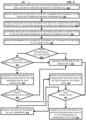
- the system determines, based on the user input or additional user input, a target state of the IVR tree from among the plurality of candidate states.
- the target state can be determined based on the user input received at block 352. For example, assume the IVR tree is associated with an entity of Example Airlines, and assume that a given candidate state of the IVR corresponds to a "report lost baggage" candidate state for the IVR tree that is associated with the entity of Example Airlines. Further assume spoken input of "report my lost baggage to Example Airlines" is received at the client device at block 352. In this example, the target state of "report lost baggage" can be identified based on the spoken input.
- the target state can be determined based on additional user input that is in addition to the user input received at block 352. For example, assume the IVR tree is associated with an entity of Example Airlines, and assume that a given candidate state of the IVR corresponds to a "report lost baggage" candidate state for the IVR tree that is associated with the entity of Example Airlines. Further assume spoken input of "call Example Airlines" is received at the client device at block 352 or a selection of a selectable graphical element associated with calling Example airlines is received at the client device at block 352.
- one or more of the plurality of candidate states can be presented as output at the client device in response to receiving the user input, and the target state can be based on additional user input that selects the target state of "report lost baggage" from among the one or more of the plurality of candidate states that are presented.
- the output may be presented prior to initiating the assisted telephone call or upon initiating the assisted telephone call.
- the system can also utilize corresponding value(s) for parameter(s) that are associated with navigating the IVR tree.
- the corresponding value(s) for the parameter(s) can be retrieved from one or more databases (e.g. , the user profile(s) database 153A of FIG. 1 ) and/or can be solicited from the given user associated with the client device.
- the system determines whether a user interaction is detected at the client device.
- the user interactions can include, for example, a search interaction with a web browser or web browser application, a browsing interaction with the web browser or the web browser application, a navigation interaction with the web browser or a navigation application, an assistant interaction with the automated assistant 115, and/or other user interactions with the client device.
- the given user associated with the client device may still interact with the client device, such that the assisted telephone call is executed in the background of the client device.
- the system may proceed to block 370. Block 370 is described in detail below. If, at an iteration of block 362, the system determines a user interaction is detected at the client device, the system may proceed to block 364.
- the system determines whether the user interaction detected at block 362 was associated with the entity identified at block 354. For example, the system can determine whether the user interaction is directed to a webpage associated with the entity identified at block 354, directed to obtaining directions to a brick and mortar store associated with the entity identified at block 354, and/or other user interactions directed to the entity. If, at an iteration of block 364, the system determines that the user interaction detected at block 362 was not associated with the entity identified at block 354, the system may proceed to block 370. Block 370 is described in detail below. If, at an iteration of block 364, the system determines that the user interaction detected at block 362 was associated with the entity identified at block 354, the system may proceed to block 366.
- modifying navigation of the IVR tree can include modifying the target state for navigating the IVR tree to an alternative target state. For example, assume an assisted telephone call is initiated to navigate to a target state associated with a flooring department of an IVR tree associated with a home improvement entity, and further assume a user interaction directed to a portion of a webpage associated with a lighting department of the home improvement entity is detected. In this example, the system can prompt the given user to change the target state from being associated with the flooring department to an alternative target state associated with the lighting department.
- modifying navigation of the IVR tree can include adding an additional target state for navigating the IVR tree.
- the system can prompt the given user to add the lighting department as an additional target state that is in addition to the target state associated with the flooring department.
- the user may be notified to join the assisted telephone call upon arriving at the target state associated with the flooring department.
- the given user may terminate the assisted telephone call.
- the system can keep the assisted telephone call connected, and can request a human representative associated with the flooring department transfer the assisted telephone call to the lighting department, or the system can re-navigate the IVR tree to the additional target state associated with the lighting department.
- modifying navigation of the IVR tree can include modifying corresponding value(s) for parameter(s) for navigating the IVR tree. For example, assume an assisted telephone call is initiated to navigate to a target state associated with a lighting department of and IVR tree associated with a home improvement entity, and further assume a user interaction directed to a portion of a webpage associated with a particular brand of smart light bulb sold at the home improvement entity is detected. In this example, the system can prompt the given user to include a corresponding value associated with the particular brand of smart light bulb for a parameter associated with navigating to the target state associated with the lighting department. Further, the system can cause the one or more prompts to be rendered visually and/or audibly at the client device associated with the given user.
- the system determines whether to modify navigation of the IVR tree based on additional user input received responsive to one or more of the prompts. For example, if the user affirmatively responds to one or more of the prompts rendered at the client device, then navigation of the IVR tree can be modified based on the user interaction detected at block 362. However, if the user does not affirmatively respond (or negatively responds) to one or more of the prompts, then navigation of the IVR tree may not be modified. If, at an iteration of block 368, the system determines not to modify navigation of the IVR tree based on the additional user input, the system may proceed to block 370.
- the system navigates the IVR tree to the target state.
- the system can continue navigating the IVR tree based on the target state determined at block 358.
- the system can navigate the IVR tree based on emulating button presses to navigate the IVR tree, causing synthesized speech audio data that includes synthesized speech to be rendered an additional client device associated with the entity identified at block 354, and/or causing audio data that includes spoken input to be rendered at the additional client device associated with the entity identified at block 354. If, at an iteration of block 368, the system determines to modify navigation of the IVR tree based on the additional user input, the system may proceed to block 372.
- the system modifies corresponding value(s) for parameter(s) for navigating the IVR tree or modify the target state to additionally include an additional target state or alternatively include an alternative target state as described above with respect to block 366. Navigating the IVR tree is described in above with respect to FIG. 2 .
- the system may proceed to block 374.
- the system can verify whether the assisted telephone call has arrived at the target state.
- the system can process spoken input received at the client device from a human representative associated with the entity that has joined the call or an additional automated assistant of the IVR system that is associated with the entity to determine whether the system has arrived at the target state. For example, assume that the target state of the IVR tree is associated with a lighting department of a home improvement store entity. Further assume the human representative or the additional automated assistant provides spoken input of "Thank you for calling the lighting department, how may I help?" In this example, the system can determine the spoken input includes the terms "lighting department" to verify the system has in fact arrived at the desired target state of the given user associated with the client device.
- the spoken input received at the client device may be provided responsive to the system soliciting the spoken input via synthesized speech rendered at the additional client device associated with the human representative or the additional automated assistant (e.g. , "Hello, is this the lighting department", or other synthesized speech requesting verification of the target state).
- synthesized speech rendered at the additional client device associated with the human representative or the additional automated assistant e.g. , "Hello, is this the lighting department", or other synthesized speech requesting verification of the target state.
- the request to transfer the assisted telephone call can be included in synthesized speech rendered at the additional client device associated with the human representative or the additional automated assistant (e.g., "Can you transfer me to the lighting department", or other synthesized speech requesting the assisted telephone call be transferred).
- the system may then return to block 374 to verify whether the representative associated with the target state corresponds to the target state subsequent to the transferring. If, at an iteration of block 374, the system determines the assisted telephone call has arrived at the target state, then the system may proceed to block 378.
- the system renders, via the client device, a notification indicating a result of the performance of navigating the IVR tree.
- the notification can include a request that the given user associated with the client device joins the assisted telephone call.
- the notification can additionally or alternatively include a result of performance of the task.
- FIGS. 4A-4C various non-limiting examples of user interfaces associated with modifying navigation of an IVR tree based on user interaction(s) at a client device 110 associated with a given user are depicted.
- FIGS. 4A-4C each depict the client device 110 having a graphical user interface 180, and may include one or more of the components of the client device of FIG. 1 .
- One or more aspects of an automated assistant associated with client device 110 e.g. , automated assistant 115 of FIG. 1
- FIGS. 4A-4C operations of FIGS. 4A-4C are described herein as being performed by the automated assistant.
- the client device 110 of FIGS. 4A-4C is depicted as a mobile phone, it should be understood that is not meant to be limiting.
- the client device 110 can be, for example, a stand-alone assistant device (e.g. , with speaker(s) and/or a display), a laptop, a desktop computer, a vehicular computing device, and/or any other client device capable of making telephonic calls.
- the graphical user interface 180 of FIGS. 4A-4C further includes a textual reply interface element 184 that the user may select to generate user input via a virtual keyboard or other touch and/or typed input, and a voice reply interface element 185 that the user may select to generate user input via microphone(s) of the client device 110.
- the user may generate user input via the microphone(s) without selection of the voice reply interface element 185.
- active monitoring for audible user input via the microphone(s) may occur to obviate the need for the user to select the voice reply interface element 185.
- the voice reply interface element 185 may be omitted.
- the user input can indicate that a browser-based action to display the departments for the grocer entity associated with the search results 420 and/or 430 should be performed.
- the assisted telephone call is initiated from a browser application in FIG. 4A , it should be understood that is for the sake of example, and not meant to be limiting.
- the automated assistant has navigated the IVR tree to the target state as indicated by the spoken utterance 452C1 of "Now connecting you with the produce department” from the Hypothetical Grocer IVR and the subsequent spoken utterance 452C2 of "Hello, produce department” from the Hypothetical Grocer Produce Representative. Further assume that the automated assistant arrived at the target state prior to receiving the user input indicated by 490B1 of FIG. 4B to modify navigation of the IVR to the alternative target state that is associated with the deli department.
- the system identifies, based on the issued search query, a given search result that is associated with an entity to engage with, on behalf of the given user, during an assisted telephone call, the given search result being associated with a target state, from among a plurality of candidate states, for an IVR tree that is associated with the identified entity.
- the system causes at least the given search result to be rendered at the client device.
- the system receives, from the given user and via the search interface of the client device, a selection of the given search result.
- the given search result can include content that is responsive to the search query issued at block 554.
- additional given search results that correspond to other candidate states can also be rendered along with the given search results.
- user input can be received, and a search query can be issued based on the user input.
- the user input can be spoken input, touch input, and/or typed input that includes the search query.
- search query 684A of "Lost Baggage Hypothetical Airlines”
- search results include a first search result 620 of "Hypothetical Airline” that provides flights servicing North America.
- the second IVR deeplink 620A2 of "speak with a representative" may be rendered at the client device 110 based on it being a most popular target state from among the candidate states.
- the first IVR deeplink 620A1 may be rendered more prominently than the second IVR deeplink 620A2 based on determining it is more relevant to the given user of the client device 110 ( e.g. , determined based on the search query 684A and/or the based on the given user of the client device 110 previously interacting with other search results).
- An assisted telephone to navigate the IVR tree associated with Hypothetical Airlines to a target state associated with reporting lost baggage can be initiated based on user input directed to the first IVR deeplink 620A1, and performance of the assisted telephone call to navigate the IVR tree to the target state can be initiated.
- the automated assistant can utilize resources of the client device 110 to initiate performance of the assisted telephone call.
- the automated assistant can utilize resources of a remote system to initiate performance of the assisted telephone call (e.g., a cloud-based assisted telephone call).
- the automated assistant 115 can cause a remote system (that may or may not be in communication with the client device 110) to initiate and perform the assisted telephone call on behalf of the user.
- a call details interface 670 can be rendered at the client device 110 prior to receiving user input to initiate a telephonic call with "Hypothetical Airline", or can be rendered at the client device 110 responsive to receiving user input to initiate a telephonic call with Hypothetical Airline. In some versions of those implementations, the call details interface 670 can be rendered at the client device 110 as part of the user interface 180.
- the call details interface 670 can be a separate interface from the user interface 180 that overlays the user interface 180, and can include a call details interface element 186 that allows the user to expand the call details interface 670 to display additional call details (e.g ., by swiping up on the call details interface element 186) and/or dismiss the call details interface 670 ( e.g. , by swiping down on the call details interface element 186).
- the call details interface 670 is depicted as being at the bottom of the user interface 180, it should be understood that is for the sake of example and not meant to be limiting.
- the call details interface 670 can be rendered at a top of the user interface 180, a side of the user interface 180, or an entirely separate interface from the user interface 180.
- the call details interface 670 can include, in various implementations, a plurality of graphical elements.
- the graphical elements can be selectable, such that, when a given one of the graphical elements is selected, the client device 110 can perform the corresponding action.
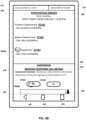
- the call details interface 670 includes a first graphical element 671 of "Assisted Call, Hypothetical Airline", a second graphical element 672A of "Regular Call”, and a third graphical element 673A of "Save Contact 'Hypothetical Airline'".
- the assisted telephone call can additionally or alternatively be initiated from the call details interface 670 based on user input directed to the first selectable graphical element 671, and performance of the assisted telephone call be based on a selection of the first selectable graphical element 671.
- the one or more IVR deeplinks associated with the candidate states may not be rendered.
- the automated assistant may visually render various nodes for navigating the IVR tree associated with the entity (e.g., internal nodes and/or leaf nodes as described with respect to FIG. 2 ).
- the visual rendering of the various nodes may be based on a confidence level for the IVR tree that is stored in association with the entity.
- the confidence level for the IVR tree stored in association with the entity may be based on a quantity of assisted telephone calls with the entity that include navigating an IVR tree that is different from the IVR tree stored in association with the entity, and optionally based on an extent of the difference between the navigated IVR tree and the stored IVR tree.
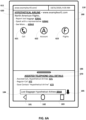
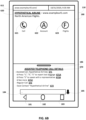
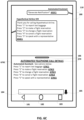
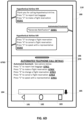
- FIGS. 6B-6E illustrate various non-limiting examples for how these various nodes may be presented to the user based on difference confidence levels for the IVR tree that is associated with Hypothetical Airline.
- the entity to be engaged with during the assisted telephone call is Hypothetical Airline described above with respect to FIG. 6A and that the user is viewing the first search result 610 that is associated with Hypothetical Airline., but that the user input that includes the search query 684A is not received.
- the automated assistant is highly confident in the IVR tree stored in association with Hypothetical Airline.
- the automated assistant may be highly confident in the IVR tree stored in association with Hypothetical Airline based on a confidence level determined based on the nodes of the IVR tree remaining the same for a majority (if not all) of the assisted telephone calls including the same IVR tree.
- call details interface 670 can include first information of 671A of "Press '1', '3', '5' to report lost baggage" that indicates a sequence of button presses the given user of the client device 110 can provide to arrive at a target state of the IVR tree that is associated with reporting lost baggage, and second information of 671B of "Press '5' to speak with a representative" that indicates a sequence of button presses the given user of the client device 110 can provide to arrive at a target state of the IVR tree that is associated with speaking with a representative.
- a graphical element 671C of "see more" may optionally be provided and, when selected, may cause additional information associated with other candidate states to be rendered along with the first information 671A and the second information 671B. Similar to FIG. 6A , the information associated with the candidate states rendered in the call details interface 670 may optionally be rendered based on recent user interactions with the client device 110 and/or overall popularity of the candidate states.
- the automated assistant is moderately confident in the IVR tree stored in association with Hypothetical Airline.
- the automated assistant may be moderately confident in the IVR tree stored in association with Hypothetical Airline based on a confidence level determined based on the nodes of the IVR tree including some differences for some of the assisted telephone calls including the same IVR tree.
- the automated assistant may wait until a first portion of a spoken response 652D1 that includes a subset of the candidate states is provided by the Hypothetical Airline IVR to render the notification 679C that includes the candidate states.
- the extent of the differences between the stored IVR tree that is associated with the Hypothetical Airline may only be moderately confident in the sub-set of the candidate state included in the first portion of the spoken utterance 652D1, but highly confident in the remaining candidate states.
- the automated assistant may generate the notification 679D as indicated by 654D1 prior to receiving a second portion of the spoken utterance 652D2. Similar to FIG. 6C , each of the candidate states included in the notification 679D may be selectable, such that the given user associated with the client device 110 can simply select a given one of the candidate states as the target state, and the automated assistant will automatically navigate the assisted telephone call to the target state.
- the automated assistant is not confident in the IVR tree stored in association with Hypothetical Airline.
- the automated assistant may not be confident in the IVR tree stored in association with Hypothetical Airline based on a confidence level determined based on the nodes of the IVR tree including differences for a threshold number of the assisted telephone calls including a different IVR tree.
- the automated assistant may wait until a spoken response 652E1 that includes the candidate states is provided by the Hypothetical Airline IVR to render the notification 679D that includes the candidate states as indicated by 654E1. Similar to FIG.
- each of the candidate states included in the notification 679E may be selectable, such that the given user associated with the client device 110 can simply select a given one of the candidate states as the target state, and the automated assistant will automatically navigate the assisted telephone call to the target state.
- FIGS. 6A-6E are described herein with respect to the entity Hypothetical Airline, and certain graphical elements and information are depicted along with the search result 620 and the call details interface, it should be understood that is for the sake of example and is not meant to be limiting. It should be understood an IVR tree that is associated with any entity that employs an IVR system can be stored, and subsequently utilized in performing assisted telephone calls. Further, it should be understood that graphical elements and information provided by the automated assistant may be based on the IVR tree, and that the configurations of the IVR tree that is associated with the entity are virtually limitless.
- FIG. 7 a flowchart illustrating an example method 700 of navigating a dynamic interactive voice response (IVR) tree is depicted.
- This system of the method 700 includes one or more processors and/or other component(s) of computing device(s) (e.g., client device 110 of FIGS. 1 , 4A-4D, 6A-6E , and/or 8A-8D , and/or computing device 910 of FIG. 9 , one or more servers, and/or other computing devices).
- computing device(s) e.g., client device 110 of FIGS. 1 , 4A-4D, 6A-6E , and/or 8A-8D , and/or computing device 910 of FIG. 9 , one or more servers, and/or other computing devices.
- operations of the method 700 are shown in a particular order, this is not meant to be limiting.
- One or more operations may be reordered, omitted, and/or added.
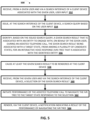
- the system receives, from a given user and via a client device associated with the given user, user input to initiate an assisted telephone call.
- the user input to initiate the assisted telephone call can be one or more of spoken input to initiate the assisted telephone call, touch input to initiate the assisted telephone call, or typed input to initiate the assisted telephone call.
- the user input to initiate the assisted telephone call can be received at various interfaces (e.g., a search interface, a voice interface, an automated assistant interface, and/or other interfaces from which the assisted telephone call can be initiated).
- the system identifies, based on the user input, an entity to engage with, on behalf of the given user, during the assisted telephone call.
- the system can identify the entity to engage with during the assisted telephone call based on the user input received at block 752 and/or user interactions with the client device immediately prior to initiating of the assisted telephone call. For example, the system can identify an entity of "Example Airlines” based on processing spoken input of "report my lost baggage to Example Airlines" that is received at the client device. As another example, the system can identify an entity of "Example Airlines” based on determining that the given user of the client device selected a call interface element that is associated with Example Airlines or a particular graphical element associated with a candidate state of an IVR tree associated with Example Airlines.
- the system identifies an IVR tree that is associated with the entity identified at block 754, the IVR tree including a plurality of candidate states.
- the IVR tree that is associated with the identified entity can stored in association with the entity identified at block 754 (e.g., in the entity(s) database 151A of FIG. 1 and/or in the IVR tree(s) database 152A of FIG. 1 ).
- the stored IVR tree that is associated by the entity may be previously stored in one or more databases based on the system (and/or additional instances of the system) previously crawling an IVR system associated with the identified entity, and/or the identified entity can provide the IVR tree for the IVR system associated with the identified entity.
- the system can continuously update the IVR tree for the IVR system associated with the identified entity based on a plurality of assisted telephone calls that navigate the IVR tree.
- the plurality of candidate states can correspond to particular nodes of the IVR tree to which the system can navigate to during the assisted telephone call.
- block 756 can include optional sub-block 758A and/or optional sub-block 758B. If included, at optional sub-block 758A, the system receives contextual information associated with the client device.
- the contextual information associated with the client device can include, for example, device state information (e.g., determined via the device state engine 112), date and/or time information associated with a current location of the client device, the current location of the client device, and/or other contextual information generated by the client device.
- device state information e.g., determined via the device state engine 112
- date and/or time information associated with a current location of the client device e.g., the current location of the client device
- other contextual information generated by the client device e.g., the system receives contextual information associated with the given user of the client device.
- the contextual information associated with the given user of the client device can include, for example, electronic communications created by the user of the client device or received by the user of the client device (e.g., emails, text messages, voice messages, and so on), user account information associated with various user accounts of the given user of the client device (e.g., account status information, account numbers, account user names, account passwords, and so on), pecuniary information of the given user of the client device (e.g., bank account number, credit card number, payment application information, etc.), photo albums of the given user of the client device, social media profile(s) of the given user of the client device, user preferences of the user of the client device, personal information of the given user of the client device (e.g., name, phone number, physical address, email address, social security number, date of birth, and so on), and/or other information associated with the given user of the client device.
- electronic communications created by the user of the client device or received by the user of the client device e.g., emails, text messages, voice
- the system determines, based on contextual information associated with the client device and/or the given user of the client device, availability of the plurality of candidate states as a target state of the IVR tree.
- some candidate states of an IVR tree may or may not be available to the given user of the client device based on the contextual information. For example, assume the entity identified at block 754 is a restaurant entity. In this example, some candidate states may only be available during operating hours of the restaurant (e.g., a candidate state associated with placing a carryout order). As another example, assume the entity identified at block 754 is an airline entity.
- some candidate states may only be available if the user account status is above a threshold membership status (e.g., only for gold status members and above).
- the IVR tree associated with the identified entity may be dynamic in that the candidate states may or may not be available in certain contexts.
- the system initiates performance of the assisted telephone call to navigate the IVR tree to the target state.
- the system can initiate performance of the assisted telephone call responsive to additional user input that selects the target state.
- the system can initiate performance of the assisted telephone by establishing a communications session between the client device that is associated with the given user and an additional client device that is associated with the entity identified at block 754.
- the communications session can be established using various voice communication protocols including, for example, VolP, PSTN, and/or other telephonic communication protocols.
- the system can navigate the IVR tree to the target state by emulating button presses to traverse nodes of the IVR tree, by rendering synthesized speech audio data that includes synthesized speech to traverse the nodes of the IVR tree, and/or by rendering audio data that includes spoken input of the given user associated with the client device (e.g., as described with respect to FIG. 2 ).
- the system can also utilize corresponding value(s) for parameter(s) that are associated with navigating the IVR tree.
- the corresponding value(s) for the parameter(s) can be retrieved from one or more databases (e.g., the user profile(s) database 153A of FIG. 1 ) and/or can be solicited from the given user associated with the client device.
- the system renders, via the client device, a notification indicating a result of performance of navigating the IVR tree.
- the notification can include a request that the given user associated with the client device joins the assisted telephone call.
- the notification can additionally or alternatively include a result of performance of the task.
- navigation of the IVR tree described with respect to FIG. 5 may be modified based on user interactions at the client device as described above with respect to FIGS. 3 and 4A-4C .
- FIGS. 8A-8D each depict the client device 110 having a graphical user interface 180, and may include one or more of the components of the client device of FIG. 1 .
- the client device 110 may be substantially similar to the client device of FIGS. 4A-4C , and include many of the same components described above with respect to FIGS. 4A-4C , including an instance of an automated assistant (e.g., the automated assistant 115 of FIG. 1 ).
- an automated assistant e.g., the automated assistant 115 of FIG. 1 .
- an IVR tree associated with an entity can be a dynamic IVR tree in that one or more candidate states associated with the IVR tree may or may not be available.
- the availability of one or more of the candidate state may be determined based on contextual information.
- the contextual information may be contextual information associated with the client device 110, and may include, for example, device state information of the client device 110 (e.g., determined via the device state engine 112), date and/or time information associated with a current location of the client device 110, the current location of the client device, and/or other contextual information generated by the client device 110.
- the contextual information may be contextual information associated with the given user of the client device 110, and may include, for example, electronic communications created by the user of the client device or received by the user of the client device (e.g., emails, text messages, voice messages, and so on), user account information associated with various user accounts of the given user of the client device 110 (e.g., account status information, account numbers, account user names, account passwords, and so on), pecuniary information of the given user of the client device110 (e.g., bank account number, credit card number, payment application information, etc.), photo albums of the given user of the client device 110, social media profile(s) of the given user of the client device 110, user preferences of the user of the client device 110, personal information of the given user of the client device (e.g., name, phone number, physical address, email address, social security number, date of birth, and so on), and/or other information associated with the given user of the client device.
- electronic communications created by the user of the client device or received by the user of the client device
- search results include at least search result 820A of "Hypothetical Restaurant” that is open from 9:00 AM to 11:00 PM.
- search result 820A can be associated with various selectable graphical elements that, when selected, cause the client device 110 to perform corresponding actions. For example, when a call graphical element 821A associated with the search result 820A is selected, the user input can indicate that a telephonic call action to Hypothetical Restaurant should be performed.
- the user input can indicate that navigation action to a brick and mortar location of Hypothetical Restaurant should be performed.
- the user input can indicate that a menu lookup action for a menu associated with Hypothetical Airline should be performed.
- a call details interface 870 can be rendered at the client device 110 prior to receiving user input to initiate a telephonic call with "Hypothetical Restaurant", or can be rendered at the client device 110 responsive to receiving user input to initiate a telephonic call with Hypothetical Restaurant. In some versions of those implementations, the call details interface 870 can be rendered at the client device 110 as part of the user interface 180.
- the call details interface 870 can be a separate interface from the user interface 180 that overlays the user interface 180, and can include a call details interface element 186 that allows the user to expand the call details interface 870 to display additional call details (e.g., by swiping up on the call details interface element 186) and/or dismiss the call details interface 870 (e.g., by swiping down on the call details interface element 186).
- the call details interface 870 is depicted as being at the bottom of the user interface 180, it should be understood that is for the sake of example and not meant to be limiting.
- the call details interface 870 can be rendered at a top of the user interface 180, a side of the user interface 180, or an entirely separate interface from the user interface 180.
- the call details interface 870 can include, in various implementations, a plurality of graphical elements.
- the graphical elements can be selectable, such that, when a given one of the graphical elements is selected, the client device 110 can perform the corresponding action.
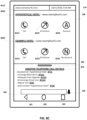
- the call details interface 870 includes a first graphical element 871A of "Assisted Call, Hypothetical Restaurant", a second graphical element 872A of "Regular Call”, and a third graphical element 873A of "Save Contact 'Hypothetical Restaurant'".
- the graphical elements may also include sub-elements that correspond to candidate states that are associated with an IVR tree that is associated with the Hypothetical Restaurant. For example, and as shown in FIG.
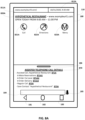
- the first graphical element 871A can include a first sub-element 871A1 of "Make Reservations" associated with a target state of navigating the IVR tree associated with the Hypothetical Restaurant to a portion that corresponds to making restaurant reservations, a second sub-element 871A2 of "Order Carryout” associated with a target state of navigating the IVR tree associated with the Hypothetical Restaurant to a portion that corresponds to ordering carryout from the restaurant, and a third sub-element 871A3 of "Order Delivery” associated with a target state of navigating the IVR tree associated with the Hypothetical Restaurant to a portion that corresponds to ordering delivery from the Hypothetical Restaurant.
- a first sub-element 871A1 of "Make Reservations" associated with a target state of navigating the IVR tree associated with the Hypothetical Restaurant to a portion that corresponds to making restaurant reservations
- a second sub-element 871A2 of "Order Carryout” associated with a target state of navigating the IVR tree associated with
- the first graphical element 871A can include a first sub-element 871B1 of "Make Reservations" associated with a target state of navigating the IVR tree associated with the Hypothetical Restaurant to a portion that corresponds to making restaurant reservations, and a second sub-element 871B2 of "Hours of Operation” associated with a target state of navigating the IVR tree associated with the Hypothetical Restaurant to a portion that corresponds to listening to hours of operation of the Hypothetical Restaurant.
- the difference in the candidate states included in FIGS. 8A and 8B may be based on contextual information associated with the client device 110 of the given user.
- time and date information 812A at a current location of the client device 110 indicates a time of 9:30 AM, and that corresponds to the Hypothetical Restaurant being open (e.g., based on the hours of operation being 9:00 AM - 11:00 PM).
- candidate states associated with the selectable sub-elements 871A2 and 871A3 may be available since Hypothetical Restaurant is open.
- FIG. 8A time and date information 812A at a current location of the client device 110 indicates a time of 9:30 AM, and that corresponds to the Hypothetical Restaurant being open (e.g., based on the hours of operation being 9:00 AM - 11:00 PM).
- time and date information 812B at a current location of the client device 110 indicates a time of 8:30 AM, and that corresponds to the Hypothetical Restaurant being closed ( e . g ., based on the hours of operation being 9:00 AM - 11:00 PM.
- candidate states associated with the selectable sub-elements 871A2 and 871A3 may not be available since Hypothetical Restaurant is closed, but the automated assistant may still be able to make restaurant reservations and/or inquire about hours of operation by navigating the IVR tree associated with the Hypothetical Restaurant even though it is closed.
- the IVR tree may be dynamic in that some of the candidate states may be available in a given context, whereas other candidate states may not be available in the given context.
- Hypothetical Restaurant is open, but a current location of the client device 110 is outside of a delivery radius for the Hypothetical Restaurant.
- the candidate state associated with the third sub-element 871A3 of "Order Delivery” may be omitted.
- Hypothetical Restaurant is open, but neither indoor nor outdoor dining is available at Hypothetical Restaurant.
- the candidate state associated with the first sub-element 871A1 of "Make Reservations" may be omitted.
- search results 820C and/or 830C can be associated with various selectable graphical elements that, when selected, cause the client device 110 to perform corresponding actions.
- the user input can indicate that a telephonic call action to the respective hotel entity should be performed.
- the user input can indicate that navigation action to a brick and mortar location of the respective hotel entity should be performed.
- the user input can indicate that an account lookup action for a user account associated with the respective hotel entity should be performed.
- a call details interface 870 can be rendered at the client device 110 prior to receiving user input to initiate a telephonic call with a respective one of the hotel entities, or can be rendered at the client device 110 responsive to receiving user input to initiate a telephonic call with a respective one of the hotel entities. In some versions of those implementations, the call details interface 870 can be rendered at the client device 110 as part of the user interface 180.
- the call details interface 870 can be a separate interface from the user interface 180 that overlays the user interface 180, and can include a call details interface element 186 that allows the user to expand the call details interface 870 to display additional call details (e.g., by swiping up on the call details interface element 186) and/or dismiss the call details interface 870 ( e.g., by swiping down on the call details interface element 186).
- the call details interface 870 is depicted as being at the bottom of the user interface 180, it should be understood that is for the sake of example and not meant to be limiting.
- the call details interface 870 can be rendered at a top of the user interface 180, a side of the user interface 180, or an entirely separate interface from the user interface 180.
- the call details interface 870 can include, in various implementations, a plurality of graphical elements.
- the graphical elements can be selectable, such that, when a given one of the graphical elements is selected, the client device 110 can perform the corresponding action.
- the call details interface 870 includes a first graphical element 871C of "Assisted Call, Hypothetical Hotel", a second graphical element 872C of "Regular Call”, and a third graphical element 873C of "Save Contact 'Hypothetical Hotel'".
- the graphical elements of FIG. 8C may also include sub-elements that correspond to candidate states that are associated with an IVR tree that is associated with the Hypothetical Hotel. For example, and as shown in FIG.
- the first graphical element 871C can include a first sub-element 871C1 of "Change Reservation” associated with a target state of navigating the IVR tree associated with the Hypothetical Hotel to a portion that corresponds to changing hotel reservations, a second sub-element 871C2 of "Request Free Upgrade” associated with a target state of navigating the IVR tree associated with the Hypothetical Hotel to a portion that corresponds to requesting a free upgrade for an existing hotel reservation, and a third sub-element 871C3 of "Concierge Direct Line” associated with a target state of navigating the IVR tree associated with the Hypothetical Hotel to a portion that corresponds to contacting a concierge of Hypothetical Hotel.
- the call details interface 870 includes a first graphical element 871D of "Assisted Call, Example Hotel” (as opposed to “Hypothetical Hotel” in FIG. 8C ), a second graphical element 872D of "Regular Call”, and a third graphical element 873D of "Save Contact 'Example Hotel'".
- the graphical elements of FIG. 8D may also include sub-elements that correspond to candidate states that are associated with an IVR tree that is associated with the Example Hotel. For example, and as shown in FIG.
- the first graphical element 871D can include a first sub-element 871D1 of "Change Reservation” associated with a target state of navigating the IVR tree associated with the Example Hotel to a portion that corresponds to changing hotel reservations, a second sub-element 871D2 of "Cancel Reservation” associated with a target state of navigating the IVR tree associated with the Example Hotel to a portion that corresponds to cancelling an existing hotel reservation, and a third sub-element 871D3 of "Front Desk" associated with a target state of navigating the IVR tree associated with the Hypothetical Hotel to a portion that corresponds to contacting a front desk at Example Hotel.
- the difference in the candidate states included in FIGS. 8C and 8D may be based on contextual information associated with the given user of the client device 110 of the given user.
- the automated assistant has access to a user account of the given user of the client device 110 that is associated with Hypothetical Hotel.
- the automated assistant can access a user account status (e.g., bronze member, silver member, gold member, and so on), a user account number, a user account history that includes stays at various locations of the Hypothetical Hotel, and so on.
- a user account status e.g., bronze member, silver member, gold member, and so on
- a user account number e.g., a user account number
- a user account history that includes stays at various locations of the Hypothetical Hotel, and so on.
- the given user of the client device 110 is a gold member of Hypothetical Hotel.
- candidate states associated with the selectable sub-elements 871C2 and 871C3 may be available based on the gold member status of the given user of the client device 110.
- the automated assistant may not have any record of a user account that is associated with Example Hotel.
- candidate states associated with the selectable sub-elements 871C2 and 871C3 may not be available, but the automated assistant may still be able to navigate to various candidate states depicted in FIG. 8D .
- the IVR tree may be dynamic in that some of the candidate states may be available in a given context, whereas other candidate states may not be available in the given context.
- FIGS. 8A and 8B are described herein with respect to availability of candidate states based on contextual information that is associated with the client device 110 of the given user
- FIGS. 8C and 8D are described herein with respect to availability of candidate states based on contextual information associated with the given user of the client device 110
- the availability of the candidate states can be based on both contextual information that is associated with the client device 110 of the given user and contextual information associated with the given user of the client device 110.
- the candidate state associated with the third sub-element 871C3 of "Concierge Direct Line" may be omitted even though the user account status of the user account associated with Hypothetical Hotel enables the given user of the client device 110 to directly contact the concierge of Hypothetical Hotel.
- FIGS. 8A-8D are described herein with respect to certain entities, and certain graphical elements are depicted along with the search results and the call details interface, it should be understood that is for the sake of example and is not meant to be limiting. It should be understood an IVR tree that is associated with any entity that employs an IVR system can be stored, and subsequently utilized in performing assisted telephone calls. Further, it should be understood that graphical elements and information provided by the automated assistant may be based on the IVR tree, and that the configurations of the IVR tree that is associated with the entity are virtually limitless.
- FIG. 9 is a block diagram of an example computing device 910 that may optionally be utilized to perform one or more aspects of techniques described herein.
- one or more of a client device, cloud-based automated assistant component(s), and/or other component(s) may comprise one or more components of the example computing device 910.
- Computing device 910 typically includes at least one processor 914 which communicates with a number of peripheral devices via bus subsystem 912. These peripheral devices may include a storage subsystem 924, including, for example, a memory subsystem 925 and a file storage subsystem 926, user interface output devices 920, user interface input devices 922, and a network interface subsystem 916. The input and output devices allow user interaction with computing device 910.
- Network interface subsystem 916 provides an interface to outside networks and is coupled to corresponding interface devices in other computing devices.
- User interface input devices 922 may include a keyboard, pointing devices such as a mouse, trackball, touchpad, or graphics tablet, a scanner, a touchscreen incorporated into the display, audio input devices such as voice recognition systems, microphones, and/or other types of input devices.
- pointing devices such as a mouse, trackball, touchpad, or graphics tablet
- audio input devices such as voice recognition systems, microphones, and/or other types of input devices.
- use of the term "input device” is intended to include all possible types of devices and ways to input information into computing device 910 or onto a communication network.
- User interface output devices 920 may include a display subsystem, a printer, a fax machine, or non-visual displays such as audio output devices.
- the display subsystem may include a cathode ray tube (CRT), a flat-panel device such as a liquid crystal display (LCD), a projection device, or some other mechanism for creating a visible image.
- the display subsystem may also provide non-visual display such as via audio output devices.
- output device is intended to include all possible types of devices and ways to output information from computing device 910 to the user or to another machine or computing device.
- Storage subsystem 924 stores programming and data constructs that provide the functionality of some or all of the modules described herein.
- the storage subsystem 924 may include the logic to perform selected aspects of the methods disclosed herein, as well as to implement various components depicted in FIG. 1 .
- Memory 925 used in the storage subsystem 924 can include a number of memories including a main random access memory (RAM) 930 for storage of instructions and data during program execution and a read only memory (ROM) 932 in which fixed instructions are stored.
- a file storage subsystem 926 can provide persistent storage for program and data files, and may include a hard disk drive, a floppy disk drive along with associated removable media, a CD-ROM drive, an optical drive, or removable media cartridges.
- the modules implementing the functionality of certain implementations may be stored by file storage subsystem 926 in the storage subsystem 924, or in other machines accessible by the processor(s) 914.
- Bus subsystem 912 provides a mechanism for letting the various components and subsystems of computing device 910 communicate with each other as intended. Although bus subsystem 912 is shown schematically as a single bus, alternative implementations of the bus subsystem 912 may use multiple busses.
- Computing device 910 can be of varying types including a workstation, server, computing cluster, blade server, server farm, or any other data processing system or computing device. Due to the ever-changing nature of computers and networks, the description of computing device 910 depicted in FIG. 9 is intended only as a specific example for purposes of illustrating some implementations. Many other configurations of computing device 910 are possible having more or fewer components than the computing device depicted in FIG. 9 .
- the users may be provided with an opportunity to control whether programs or features collect user information (e.g., information about a user's social network, social actions or activities, profession, a user's preferences, or a user's current geographic location), or to control whether and/or how to receive content from the content server that may be more relevant to the user.
- user information e.g., information about a user's social network, social actions or activities, profession, a user's preferences, or a user's current geographic location
- certain data may be treated in one or more ways before it is stored or used, so that personal identifiable information is removed.
- a user's identity may be treated so that no personal identifiable information can be determined for the user, or a user's geographic location may be generalized where geographic location information is obtained (such as to a city, ZIP code, or state level), so that a particular geographic location of a user cannot be determined.
- geographic location information such as to a city, ZIP code, or state level
- the user may have control over how information is collected about the user and/or used.
- a method implemented by one or more processors includes receiving, from a given user and via a client device associated with the given user, user input to initiate an assisted telephone call; identifying, based on the user input, an entity to engage with, on behalf of the given user, during the assisted telephone call; identifying an interactive voice response (IVR) tree that is associated with the identified entity, the IVR tree including a plurality of candidate states; determining, based on the user input or additional user input, a target state of the IVR tree from among the plurality of candidate states; and initiating performance of the assisted telephone call to navigate the IVR tree to the target state.
- Performance of the assisted telephone call comprises automatically navigating the assisted telephone call to the target state of the IVR tree.
- the method further includes, during performance of the assisted telephone call, and while the IVR tree is being navigated to the target state, detecting at least one user interaction that is directed to the client device and that is associated with the identified entity, and generating, based on the at least one user interaction directed to the client device, one or more prompts related to modifying navigation of the IVR tree.
- the method further includes, in response to determining that further additional user input, received responsive to rendering one or more of the additional prompts, modifies navigation of the IVR tree, modifying performance of the assisted telephone call based on the further additional user input.
- engaging in the conversation with the human representative to verify whether the particular state corresponds to the target state may include processing, using a speech recognition model, audio data that captures a spoken utterance of the human representative; and determining, based on processing the audio data, whether the human representative verifies the particular state corresponds to the target state.
- Generating the notification that requests the given user associated with the client device joins the assisted telephone call may be in response to determining that the human representative verifying that the particular state corresponds to the target state.
- the audio data that captures the spoken utterance of the human representative may be received in response to the synthesized speech audio data being rendered at the additional client device associated with the human representative.
- the method may further include, in response to determining that the human representative indicating that the particular state does not correspond to the target state, causing further synthesized speech audio data that includes further synthesized speech to request the assisted telephone call be transferred to another human representative that is associated with the identified entity to be rendered at an additional client device associated with the human representative.
- the method may further include identifying, based on the user input or the additional user input, a task to be performed, on behalf of the given user, and during the assisted telephone call; and subsequent to navigating the IVR tree to the target state, and during the assisted telephone call: engaging in a conversation with a human representative that is associated with the identified entity to complete the task on behalf of the given user.
- Engaging in the conversation with the human representative may include causing synthesized speech audio data that includes synthesized speech for completing the task to be rendered at an additional client device associated with the human representative, processing, using a speech recognition model, audio data that captures a spoken utterance of the human representative, and that is received responsive to rendering of the synthesized speech, and determining, based on processing the audio data, a result associated with performance of the task.
- the method may further include generating a notification based on the result associated with performance of the task; and causing the notification to be rendered at the client device associated with the given user.
- the method may further include, in response to determining that the further additional user input, received responsive to rendering one or more of the additional prompts, does not modify navigation of the IVR tree, continuing performance of the assisted telephone call to navigate the IVR tree to the target state.
- the method may further include, in response to identifying the IVR tree that is associated with the identified entity, obtaining one or more prompts related to navigating the IVR tree that is associated with the identified entity, and causing one or more of the prompts to be rendered at the client device associated with the given user.
- the additional user input may be received responsive to one or more of the prompts being rendered.
- the at least one user interaction at the client device associated with the given user may include one or more of: a search interaction at the client device that is associated with the identified entity, a browsing interaction at the client device that is associated with the identified entity, or a navigation interaction at the client device that is associated with the identified entity.
- automatically navigating the assisted telephone call to the target state of the IVR tree may include one or more of: determining one or more values associated with corresponding parameters for navigating the IVR tree based on the user input or the additional user input.
- modifying the navigation of the IVR may include determining, based on the user interaction or the further additional user input, an alternate target state of the IVR tree.
- Modified performance of the assisted telephone call may include automatically navigating the assisted telephone call to the alternate target state of the IVR tree based on one or more of the values associated with the corresponding parameters.
- modifying the navigation of the IVR may include determining, based on the user interaction or the further additional user input, one or more alternate target state of the IVR tree.
- Modified performance of the assisted telephone call may include automatically navigating the assisted telephone call to the target state of the IVR tree based on one or more alternate values associated with the corresponding parameters.
- automatically navigating the assisted telephone call to the target state of the IVR tree may include one or more of: emulating one or more button presses to be rendered at an additional client device associated with the identified entity to automatically navigate the IVR tree until arriving at the target state, causing synthesized speech audio data that includes synthesized speech to be rendered at an additional client device associated with the identified entity to automatically navigate the IVR tree until arriving at the target state, or causing audio data that captures a spoken utterance of the given user associated with the client device to be rendered at an additional client device associated with the identified entity.
- a method implemented by one or more processors includes receiving, from a given user and via a search interface of a client device associated with the given user, user input; issuing, at the search interface of the client device, a search query based on the user input; identifying, based on the issued search query, a given search result that is associated with an entity to engage with, on behalf of the given user, during an assisted telephone call, the given search result being associated with a target state, from among a plurality of candidate states, for an interactive voice response (IVR) tree that is associated with the identified entity; causing at least the given search result to be rendered at the search interface of the client device; in response to the given search result being rendered at the search interface of the client device, receiving, from the given user and via the search interface of the client device, a selection of the given search result; and in response to receiving the selection of the given search result, initiating performance of the assisted telephone call.
- Performance of the assisted telephone call includes automatically navigating the assisted telephone call to the target state of the I
- the method may further include identifying, based on the issued search query, an additional given search result that is associated with the entity, the additional given search result being associated with an additional target state, of the plurality of candidate states, for the IVR tree.
- the method may further include causing the additional given search result to be rendered along with the given search result.
- causing the additional given search result to be rendered along with the given search result may include rendering the given search result more prominently than the additional given search result.
- rendering the given search result more prominently than the additional given search result may include rendering the given search result more prominently than the additional given search result based on a recent user interaction, of the given user, with the client device.
- the recent user interaction, of the given user, with the client device may include the given user accessing content that is associated with the given search result.
- rendering the given search result more prominently than the additional given search result may include rendering the given search result more prominently than the additional given search result based on popularity of the given search result.
- the popularity of the given search result may be based on a click-through rate, of a plurality of users that are in addition to the given user, that is associated with the given search result.
- a method implemented by one or more processors includes receiving, from a given user and via a client device associated with the given user, user input to initiate an assisted telephone call; identifying, based on the user input, an entity to engage with, on behalf of the given user, during the assisted telephone call; identifying an interactive voice response (IVR) tree that is associated with the identified entity, the IVR tree including a plurality of candidate states; determining, based on contextual information associated with the client device or the given user associated with the client device, availability of the plurality of candidate states as a target state of the IVR tree; and determining, based on the user input or additional user input, the target state of the IVR tree from among the plurality of candidate states that are available; and initiating performance of the assisted telephone call to navigate the IVR tree to the target state. Performance of the assisted telephone call includes automatically navigating the assisted telephone call to the target state of the IVR tree.
- the contextual information may be associated with the client device, and the contextual information may include one or more of: a current location of the client device, a current time at the current location of the client device, or a current day at the current location of the client device.
- the given IVR tree that is selected from among the plurality of disparate IVR trees may be based on one or more of: the current location of the client device, or the current time at the current location of the client device.
- the contextual information may be associated with the given user associated with the client device, and the contextual information may include one or more of: electronic communications created at the client device or received at the client device, user account information associated with a user account of the given user, or pecuniary information associated with the given user.
- the given IVR tree that is selected from among the plurality of disparate IVR trees may be based on one or more of: the electronic communications created at the client device or received at the client device, the user account information associated with the user account of the given user, or the pecuniary information associated with the given user.
- some implementations include one or more processors (e . g ., central processing unit(s) (CPU(s)), graphics processing unit(s) (GPU(s), and/or tensor processing unit(s) (TPU(s)) of one or more computing devices, where the one or more processors are operable to execute instructions stored in associated memory, and where the instructions are configured to cause performance of any of the aforementioned methods.
- processors e . g ., central processing unit(s) (CPU(s)), graphics processing unit(s) (GPU(s), and/or tensor processing unit(s) (TPU(s)) of one or more computing devices, where the one or more processors are operable to execute instructions stored in associated memory, and where the instructions are configured to cause performance of any of the aforementioned methods.
- Some implementations also include one or more non-transitory computer readable storage media storing computer instructions executable by one or more processors to perform any of the aforementioned methods.
- Some implementations also include
Landscapes
- Engineering & Computer Science (AREA)
- Signal Processing (AREA)
- Human Computer Interaction (AREA)
- Databases & Information Systems (AREA)
- Theoretical Computer Science (AREA)
- Business, Economics & Management (AREA)
- Software Systems (AREA)
- Data Mining & Analysis (AREA)
- Physics & Mathematics (AREA)
- General Engineering & Computer Science (AREA)
- General Physics & Mathematics (AREA)
- Marketing (AREA)
- Telephonic Communication Services (AREA)
- User Interface Of Digital Computer (AREA)
Applications Claiming Priority (4)
| Application Number | Priority Date | Filing Date | Title |
|---|---|---|---|
| US202063088178P | 2020-10-06 | 2020-10-06 | |
| US17/068,511 US11303749B1 (en) | 2020-10-06 | 2020-10-12 | Automatic navigation of an interactive voice response (IVR) tree on behalf of human user(s) |
| EP20839194.6A EP4128730B1 (de) | 2020-10-06 | 2020-12-14 | Automatische navigation eines baums für interaktive sprachantwort (ivr) für einen menschlichen benutzer |
| PCT/US2020/064918 WO2022076009A1 (en) | 2020-10-06 | 2020-12-14 | Automatic navigation of an interactive voice response (ivr) tree on behalf of human user(s) |
Related Parent Applications (2)
| Application Number | Title | Priority Date | Filing Date |
|---|---|---|---|
| EP20839194.6A Division EP4128730B1 (de) | 2020-10-06 | 2020-12-14 | Automatische navigation eines baums für interaktive sprachantwort (ivr) für einen menschlichen benutzer |
| EP20839194.6A Division-Into EP4128730B1 (de) | 2020-10-06 | 2020-12-14 | Automatische navigation eines baums für interaktive sprachantwort (ivr) für einen menschlichen benutzer |
Publications (2)
| Publication Number | Publication Date |
|---|---|
| EP4539445A2 true EP4539445A2 (de) | 2025-04-16 |
| EP4539445A3 EP4539445A3 (de) | 2025-06-11 |
Family
ID=80932507
Family Applications (2)
| Application Number | Title | Priority Date | Filing Date |
|---|---|---|---|
| EP25160332.0A Pending EP4539445A3 (de) | 2020-10-06 | 2020-12-14 | Automatische navigation eines baums für interaktive sprachantwort (ivr) für einen menschlichen benutzer |
| EP20839194.6A Active EP4128730B1 (de) | 2020-10-06 | 2020-12-14 | Automatische navigation eines baums für interaktive sprachantwort (ivr) für einen menschlichen benutzer |
Family Applications After (1)
| Application Number | Title | Priority Date | Filing Date |
|---|---|---|---|
| EP20839194.6A Active EP4128730B1 (de) | 2020-10-06 | 2020-12-14 | Automatische navigation eines baums für interaktive sprachantwort (ivr) für einen menschlichen benutzer |
Country Status (6)
| Country | Link |
|---|---|
| US (4) | US11303749B1 (de) |
| EP (2) | EP4539445A3 (de) |
| JP (2) | JP7494319B2 (de) |
| KR (2) | KR102624148B1 (de) |
| CN (2) | CN115668904B (de) |
| WO (1) | WO2022076009A1 (de) |
Families Citing this family (16)
| Publication number | Priority date | Publication date | Assignee | Title |
|---|---|---|---|---|
| US11303749B1 (en) | 2020-10-06 | 2022-04-12 | Google Llc | Automatic navigation of an interactive voice response (IVR) tree on behalf of human user(s) |
| US20220294903A1 (en) * | 2021-03-12 | 2022-09-15 | Avaya Management L.P. | Virtual private agent for machine-based interactions with a contact center |
| US11798551B2 (en) * | 2021-03-25 | 2023-10-24 | Bank Of America Corporation | System and method for voice controlled automatic information access and retrieval |
| CN117716680A (zh) * | 2021-06-01 | 2024-03-15 | 派芒塔斯公司 | 用于动态导航交互式通信系统的方法、装置和系统 |
| US11637927B2 (en) * | 2021-07-15 | 2023-04-25 | International Business Machines Corporation | Automated chatbot generation from an interactive voice response tree |
| US20230058051A1 (en) * | 2021-08-17 | 2023-02-23 | Toshiba Tec Kabushiki Kaisha | System and method for voice activated file transfer |
| US11895270B2 (en) * | 2022-02-17 | 2024-02-06 | Lenovo (Singapore) Pte. Ltd | Phone tree traversal system and method |
| US12192405B2 (en) * | 2022-06-16 | 2025-01-07 | Optum, Inc. | Automated interactive voice response interaction using voice prompt classification machine learning frameworks |
| US20240205331A1 (en) * | 2022-12-15 | 2024-06-20 | Google Llc | Reducing telephone network traffic through utilization of pre-call information |
| US12581015B2 (en) | 2023-03-21 | 2026-03-17 | Google Llc | Automating telephone call(s) on behalf of user(s) |
| WO2024196397A1 (en) * | 2023-03-21 | 2024-09-26 | Google Llc | Automating telephone call(s) on behalf of user(s) |
| US12464074B2 (en) * | 2023-06-02 | 2025-11-04 | Google Llc | Dynamic interactive voice response (IVR) route estimation to reduce telephone network traffic |
| JP7808661B2 (ja) * | 2023-09-20 | 2026-01-29 | ソフトバンクグループ株式会社 | システム |
| JP7438479B1 (ja) | 2023-10-24 | 2024-02-27 | 株式会社IVRy | 音声自動応答装置、音声自動応答方法、音声自動応答プログラム及び音声自動応答システム |
| US12401680B1 (en) * | 2025-05-06 | 2025-08-26 | U.S. Bancorp, National Association | Agentic on-device adaptation for increasing node efficiency by accommodating distribution shifts |
| US12574461B1 (en) | 2025-08-27 | 2026-03-10 | Wishpond Technologies Ltd. | Adaptive voicemail and IVR detection for AI-driven call automation |
Family Cites Families (137)
| Publication number | Priority date | Publication date | Assignee | Title |
|---|---|---|---|---|
| US5815566A (en) | 1991-10-10 | 1998-09-29 | Executone Information Systems, Inc. | Apparatus and method for dynamic inbound/outbound call management and for scheduling appointments |
| US6061433A (en) * | 1995-10-19 | 2000-05-09 | Intervoice Limited Partnership | Dynamically changeable menus based on externally available data |
| US6377567B1 (en) | 1997-07-16 | 2002-04-23 | Mci Communications Corporation | System and method for distributing data collected from call center services |
| US6157705A (en) * | 1997-12-05 | 2000-12-05 | E*Trade Group, Inc. | Voice control of a server |
| US6304653B1 (en) | 1998-12-04 | 2001-10-16 | At&T Corp. | Method and apparatus for intelligent data network call setup |
| US7792773B2 (en) | 2002-10-23 | 2010-09-07 | Genesys Telecommunications Laboratories, Inc. | Method and system for enabling automated and real-time discovery of skills available to agents and systems in a multimedia communications network |
| US6731725B1 (en) | 1999-06-28 | 2004-05-04 | Keith A. Merwin | Computerized system for the receipt, recordation, scheduling and redelivery of telephone messages |
| US6922465B1 (en) | 1999-10-14 | 2005-07-26 | Gte Mobilnet Incorporated | Method and system for reporting events in telecommunication networks |
| US6757362B1 (en) | 2000-03-06 | 2004-06-29 | Avaya Technology Corp. | Personal virtual assistant |
| WO2001067225A2 (en) | 2000-03-06 | 2001-09-13 | Kanisa Inc. | A system and method for providing an intelligent multi-step dialog with a user |
| CA2420679C (en) | 2000-09-01 | 2010-11-09 | Eliza Corporation | Speech recognition method and system to determine the status of an outbound telephone call |
| US7299259B2 (en) | 2000-11-08 | 2007-11-20 | Genesys Telecommunications Laboratories, Inc. | Method and apparatus for intelligent routing of instant messaging presence protocol (IMPP) events among a group of customer service representatives |
| US20030009530A1 (en) | 2000-11-08 | 2003-01-09 | Laurent Philonenko | Instant message presence protocol for facilitating communication center activity |
| WO2002103486A2 (en) | 2001-06-18 | 2002-12-27 | Crandell Jeffrey L | Apparatus, systems and methods for managing incoming and outgoing communication |
| US7609829B2 (en) | 2001-07-03 | 2009-10-27 | Apptera, Inc. | Multi-platform capable inference engine and universal grammar language adapter for intelligent voice application execution |
| US7362854B2 (en) | 2001-09-28 | 2008-04-22 | Gateway Inc. | Portable electronic device having integrated telephony and calendar functions |
| US7200210B2 (en) | 2002-06-27 | 2007-04-03 | Yi Tang | Voice controlled business scheduling system and method |
| US7215743B2 (en) * | 2002-12-20 | 2007-05-08 | International Business Machines Corporation | Telephony signals containing an IVR decision tree |
| US20040193603A1 (en) * | 2003-03-28 | 2004-09-30 | Ljubicich Philip A. | Technique for effectively searching for information in response to requests in information assistance service |
| US20040213384A1 (en) | 2003-04-23 | 2004-10-28 | Alles Harold Gene | Remote access, control, and support of home automation system |
| US7180985B2 (en) * | 2003-08-27 | 2007-02-20 | International Business Machines Corporation | Interactive voice response (IVR) aggregation master service |
| US20050147227A1 (en) | 2003-12-31 | 2005-07-07 | France Telecom, S.A. | Method and system for alerting call participant of a change in a call hold status |
| WO2005067595A2 (en) | 2004-01-05 | 2005-07-28 | Tools For Health, Inc. | System for remote control of an automated call system |
| US7697026B2 (en) | 2004-03-16 | 2010-04-13 | 3Vr Security, Inc. | Pipeline architecture for analyzing multiple video streams |
| US7084758B1 (en) | 2004-03-19 | 2006-08-01 | Advanced Micro Devices, Inc. | Location-based reminders |
| US7933260B2 (en) | 2004-06-29 | 2011-04-26 | Damaka, Inc. | System and method for routing and communicating in a heterogeneous network environment |
| US7646858B2 (en) | 2004-08-06 | 2010-01-12 | Powerphone, Inc. | Protocol builder for a call handling system |
| US8185399B2 (en) | 2005-01-05 | 2012-05-22 | At&T Intellectual Property Ii, L.P. | System and method of providing an automated data-collection in spoken dialog systems |
| US20060215824A1 (en) | 2005-03-28 | 2006-09-28 | David Mitby | System and method for handling a voice prompted conversation |
| US7869583B2 (en) | 2005-08-05 | 2011-01-11 | International Business Machines Corporation | Real time meeting setup service |
| WO2007023585A1 (ja) | 2005-08-22 | 2007-03-01 | Matsushita Electric Industrial Co., Ltd. | 携帯通信端末 |
| US9009046B1 (en) * | 2005-09-27 | 2015-04-14 | At&T Intellectual Property Ii, L.P. | System and method for disambiguating multiple intents in a natural language dialog system |
| WO2007065193A1 (en) | 2005-12-06 | 2007-06-14 | Daniel John Simpson | Interactive natural language calling system |
| US7773731B2 (en) | 2005-12-14 | 2010-08-10 | At&T Intellectual Property I, L. P. | Methods, systems, and products for dynamically-changing IVR architectures |
| JP4197344B2 (ja) | 2006-02-20 | 2008-12-17 | インターナショナル・ビジネス・マシーンズ・コーポレーション | 音声対話システム |
| JP2008015439A (ja) | 2006-07-07 | 2008-01-24 | Takashi I | 音声認識システム |
| US9318108B2 (en) | 2010-01-18 | 2016-04-19 | Apple Inc. | Intelligent automated assistant |
| JP2010517450A (ja) | 2007-01-30 | 2010-05-20 | エリザ・コーポレーション | ビルド呼を生成するシステム及び方法 |
| JP4311458B2 (ja) | 2007-02-27 | 2009-08-12 | ブラザー工業株式会社 | コントロール配置情報設定装置及びコンピュータプログラム |
| US7920843B2 (en) | 2007-06-15 | 2011-04-05 | Alarm.Com Incorporated | Alarm system with two-way voice |
| US20090022293A1 (en) | 2007-07-18 | 2009-01-22 | Routt Karen E | Telecommunications System for Monitoring and for Enabling a Communication Chain between Care Givers and Benefactors and for Providing Alert Notification to Designated Recipients |
| US8549412B2 (en) | 2007-07-25 | 2013-10-01 | Yahoo! Inc. | Method and system for display of information in a communication system gathered from external sources |
| US8676273B1 (en) | 2007-08-24 | 2014-03-18 | Iwao Fujisaki | Communication device |
| US20090089100A1 (en) | 2007-10-01 | 2009-04-02 | Valeriy Nenov | Clinical information system |
| US7945456B2 (en) | 2007-10-01 | 2011-05-17 | American Well Corporation | Documenting remote engagements |
| US8175651B2 (en) | 2007-12-17 | 2012-05-08 | Motorola Mobility, Inc. | Devices and methods for automating interactive voice response system interaction |
| JP5189858B2 (ja) | 2008-03-03 | 2013-04-24 | アルパイン株式会社 | 音声認識装置 |
| US7734029B2 (en) | 2008-03-17 | 2010-06-08 | Transcend Products, Llc | Apparatus, system, and method for automated call initiation |
| US9008628B2 (en) | 2008-05-19 | 2015-04-14 | Tbm, Llc | Interactive voice access and notification system |
| US20140279050A1 (en) | 2008-05-21 | 2014-09-18 | The Delfin Project, Inc. | Dynamic chatbot |
| US9003300B2 (en) | 2008-10-03 | 2015-04-07 | International Business Machines Corporation | Voice response unit proxy utilizing dynamic web interaction |
| US8644488B2 (en) | 2008-10-27 | 2014-02-04 | Nuance Communications, Inc. | System and method for automatically generating adaptive interaction logs from customer interaction text |
| US8943394B2 (en) | 2008-11-19 | 2015-01-27 | Robert Bosch Gmbh | System and method for interacting with live agents in an automated call center |
| US20100228590A1 (en) | 2009-03-03 | 2010-09-09 | International Business Machines Corporation | Context-aware electronic social networking |
| JP5277067B2 (ja) * | 2009-04-27 | 2013-08-28 | 株式会社日立システムズ | Ivrシステム |
| US8611876B2 (en) | 2009-10-15 | 2013-12-17 | Larry Miller | Configurable phone with interactive voice response engine |
| US9313329B2 (en) | 2009-11-02 | 2016-04-12 | International Business Machines Corporation | Voice response systems browsing |
| US10276170B2 (en) | 2010-01-18 | 2019-04-30 | Apple Inc. | Intelligent automated assistant |
| US8903073B2 (en) | 2011-07-20 | 2014-12-02 | Zvi Or-Bach | Systems and methods for visual presentation and selection of IVR menu |
| US9001819B1 (en) * | 2010-02-18 | 2015-04-07 | Zvi Or-Bach | Systems and methods for visual presentation and selection of IVR menu |
| US20110270687A1 (en) | 2010-04-30 | 2011-11-03 | Bazaz Gaurav | Apparatus and method for controlled delivery of direct marketing messages |
| US8938058B2 (en) | 2010-10-21 | 2015-01-20 | Micro Macro Assets Llc | System and method for providing sales and marketing acceleration and effectiveness |
| CA2815399C (en) | 2010-10-21 | 2017-05-16 | Micro Macro Assets Llc | System and method for maximizing efficiency of call transfer speed |
| US20120109759A1 (en) | 2010-10-27 | 2012-05-03 | Yaron Oren | Speech recognition system platform |
| US8520504B2 (en) | 2010-12-10 | 2013-08-27 | Cable Television Laboratories, Inc. | Method and system of controlling state devices operable to support calls between endpoints |
| US8660543B2 (en) | 2010-12-21 | 2014-02-25 | Verizon Patent And Licensing Inc. | Call management system |
| US8612233B2 (en) | 2011-01-05 | 2013-12-17 | International Business Machines Corporation | Expert conversation builder |
| KR20140039194A (ko) | 2011-04-25 | 2014-04-01 | 비비오, 인크. | 지능형 개인용 타임라인 보조 시스템 및 방법 |
| EE05713B1 (et) * | 2011-06-15 | 2014-04-15 | Timo Engstr�m | Informatsiooni prioritiseerimisega terminalip?hine interaktiivne k?nede vastamise süsteem |
| RU2597074C2 (ru) | 2011-06-16 | 2016-09-10 | Конинклейке Филипс Н.В. | Усовершенствование пространственной выборки для сбора данных пэт в виде списка, использующее спланированное перемещение стола/гентри |
| US8572264B2 (en) | 2011-07-15 | 2013-10-29 | American Express Travel Related Services Company, Inc. | Systems and methods for state awareness across communication channels and statefully transitioning between communication channels |
| US20130060587A1 (en) | 2011-09-02 | 2013-03-07 | International Business Machines Corporation | Determining best time to reach customers in a multi-channel world ensuring right party contact and increasing interaction likelihood |
| US20130090098A1 (en) | 2011-10-10 | 2013-04-11 | Arvind Gidwani | Systems and methods for dialing into interactive voice systems with minimal user interaction |
| US9098551B1 (en) * | 2011-10-28 | 2015-08-04 | Google Inc. | Method and system for ranking content by click count and other web popularity signals |
| US9088650B2 (en) | 2011-11-29 | 2015-07-21 | Impact Dialing, Inc. | Predictive dialing based on simulation |
| US20140200928A1 (en) | 2011-12-15 | 2014-07-17 | Advance Response, LLC. | Methods and apparatus for automated web portal and voice system data aggregation |
| US8594297B2 (en) | 2011-12-27 | 2013-11-26 | Avaya Inc. | System and method for enhanced call routing |
| US9033781B2 (en) | 2011-12-30 | 2015-05-19 | Mindforce Consulting, Llc | Designing a real sports companion match-play crowdsourcing electronic game |
| US20140310365A1 (en) | 2012-01-31 | 2014-10-16 | Global Relay Communications Inc. | System and Method for Tracking Messages in a Messaging Service |
| KR20130099423A (ko) | 2012-02-29 | 2013-09-06 | 주식회사 예스피치 | 전문 상담원 안내 시스템 및 방법 |
| KR101959296B1 (ko) | 2012-07-23 | 2019-03-18 | 삼성전자 주식회사 | 휴대단말의 통화 연결 방법 및 장치 |
| KR101909141B1 (ko) | 2012-07-27 | 2018-10-17 | 엘지전자 주식회사 | 전자기기 및 전자기기의 제어방법 |
| JP6025037B2 (ja) | 2012-10-25 | 2016-11-16 | パナソニックIpマネジメント株式会社 | 音声エージェント装置、及びその制御方法 |
| US20140122618A1 (en) | 2012-10-26 | 2014-05-01 | Xiaojiang Duan | User-aided learning chatbot system and method |
| CN103795877A (zh) | 2012-10-29 | 2014-05-14 | 殷程 | 智能语音 |
| CN110727638B (zh) | 2012-11-12 | 2023-09-15 | 伊诺卡姆公司 | 电子系统中的数据系统和数据调度方法以及机器可读介质 |
| US9659298B2 (en) | 2012-12-11 | 2017-05-23 | Nuance Communications, Inc. | Systems and methods for informing virtual agent recommendation |
| KR101821358B1 (ko) | 2013-01-22 | 2018-01-25 | 네이버 주식회사 | 다자간 메신저 서비스를 제공하는 방법 및 시스템 |
| US9282157B2 (en) | 2013-03-12 | 2016-03-08 | Microsoft Technology Licensing, Llc | Intermediary API for providing presence data to requesting clients |
| KR101543366B1 (ko) | 2013-04-05 | 2015-08-11 | 포인트아이 주식회사 | 고객 감정 지수를 이용한 호 또는 상담원 평가 방법 및 장치 |
| US9619298B2 (en) | 2013-04-17 | 2017-04-11 | Empire Technology Development Llc | Scheduling computing tasks for multi-processor systems based on resource requirements |
| US9049274B2 (en) | 2013-05-03 | 2015-06-02 | James Siminoff | System and method for automatic call scheduling |
| HK1222726A1 (zh) | 2013-06-07 | 2017-07-07 | Apple Inc. | 智能自动化助理 |
| JP6180022B2 (ja) | 2013-09-27 | 2017-08-16 | 株式会社日本総合研究所 | コールセンタ応答制御システム及びその応答制御方法 |
| US10075592B2 (en) | 2013-11-19 | 2018-09-11 | Gen3Ventures, LLC | Intelligent call lead generation |
| US9189742B2 (en) | 2013-11-20 | 2015-11-17 | Justin London | Adaptive virtual intelligent agent |
| US9721570B1 (en) * | 2013-12-17 | 2017-08-01 | Amazon Technologies, Inc. | Outcome-oriented dialogs on a speech recognition platform |
| US9420097B2 (en) * | 2014-01-30 | 2016-08-16 | Plantronics, Inc. | Automated traversal of interactive voice response systems |
| US10469663B2 (en) | 2014-03-25 | 2019-11-05 | Intellisist, Inc. | Computer-implemented system and method for protecting sensitive information within a call center in real time |
| JP6642887B2 (ja) | 2014-04-02 | 2020-02-12 | ユニバーシティー オブ ロチェスター | アルファヘリックスを模倣した大環状ペプチドミメティック |
| US10104225B2 (en) | 2014-04-02 | 2018-10-16 | Softbank Corp. | Communication system and communication method |
| US9754284B2 (en) | 2014-05-22 | 2017-09-05 | Excalibur Ip, Llc | System and method for event triggered search results |
| US10104178B2 (en) | 2014-05-27 | 2018-10-16 | Genesys Telecommunications Laboratories, Inc. | System for managing communications activated by a trigger event |
| US20150347399A1 (en) | 2014-05-27 | 2015-12-03 | Microsoft Technology Licensing, Llc | In-Call Translation |
| EP3158691B1 (de) | 2014-06-06 | 2024-09-25 | Google LLC | Auf proaktiver umgebung basierendes chatinformationssystem |
| CN105450876A (zh) * | 2014-06-11 | 2016-03-30 | 阿里巴巴集团控股有限公司 | 一种语音播报方法及相关系统 |
| US9516167B2 (en) | 2014-07-24 | 2016-12-06 | Genesys Telecommunications Laboratories, Inc. | Media channel management apparatus for network communications sessions |
| US9407762B2 (en) | 2014-10-10 | 2016-08-02 | Bank Of America Corporation | Providing enhanced user authentication functionalities |
| CN105592237B (zh) | 2014-10-24 | 2019-02-05 | 中国移动通信集团公司 | 一种会话切换的方法、装置及智能客服机器人 |
| US9921922B2 (en) | 2014-11-18 | 2018-03-20 | Globally Tele-Connected, Llc | System, method and computer program product for contact information backup and recovery |
| AU2016204717A1 (en) * | 2015-01-06 | 2016-09-29 | Cyara Solutions Pty Ltd | Interactive voice response system crawler |
| US10091356B2 (en) | 2015-01-06 | 2018-10-02 | Cyara Solutions Pty Ltd | Interactive voice response system crawler |
| US10291776B2 (en) | 2015-01-06 | 2019-05-14 | Cyara Solutions Pty Ltd | Interactive voice response system crawler |
| EP3247092B1 (de) | 2015-01-16 | 2019-11-27 | Ntt Docomo, Inc. | Kommunikationsendgerät, verfahren zur steuerung ausgehender anrufe und programm |
| KR102217220B1 (ko) | 2015-02-02 | 2021-02-18 | 삼성전자주식회사 | 통화 예약을 수행하는 전자 장치 및 방법 |
| US20160277569A1 (en) | 2015-03-16 | 2016-09-22 | Tsemed Pitronot Ltd | System and method for coordinating calls between two or more communication devices |
| CN106303102A (zh) | 2015-06-25 | 2017-01-04 | 阿里巴巴集团控股有限公司 | 自动化外呼方法、装置及系统 |
| JP6100326B2 (ja) | 2015-07-15 | 2017-03-22 | ソフトバンク株式会社 | 自動音声応答システム |
| US9473637B1 (en) | 2015-07-28 | 2016-10-18 | Xerox Corporation | Learning generation templates from dialog transcripts |
| US20170039194A1 (en) | 2015-08-03 | 2017-02-09 | EDCO Health Information Soultions, Inc. | System and method for bundling digitized electronic records |
| US20170061091A1 (en) | 2015-08-26 | 2017-03-02 | Uptake Technologies, Inc. | Indication of Outreach Options for Healthcare Facility to Facilitate Patient Actions |
| US20170177298A1 (en) | 2015-12-22 | 2017-06-22 | International Business Machines Corporation | Interacting with a processing stsyem using interactive menu and non-verbal sound inputs |
| US20170289332A1 (en) | 2016-03-30 | 2017-10-05 | Tal Lavian | Systems and Methods for Visual Presentation and Selection of IVR Menu |
| US10827064B2 (en) | 2016-06-13 | 2020-11-03 | Google Llc | Automated call requests with status updates |
| KR102615111B1 (ko) | 2016-06-13 | 2023-12-20 | 구글 엘엘씨 | 인간 운영자로의 에스컬레이션 |
| US10593349B2 (en) | 2016-06-16 | 2020-03-17 | The George Washington University | Emotional interaction apparatus |
| US9992335B2 (en) * | 2016-10-28 | 2018-06-05 | Microsoft Technology Licensing, Llc | Caller assistance system |
| US20180133900A1 (en) | 2016-11-15 | 2018-05-17 | JIBO, Inc. | Embodied dialog and embodied speech authoring tools for use with an expressive social robot |
| US10257352B2 (en) | 2017-03-01 | 2019-04-09 | International Business Machines Corporation | End user experience via distributed option tree generation |
| US10666581B2 (en) | 2017-04-26 | 2020-05-26 | Google Llc | Instantiation of dialog process at a particular child node state |
| WO2018195875A1 (en) | 2017-04-27 | 2018-11-01 | Microsoft Technology Licensing, Llc | Generating question-answer pairs for automated chatting |
| US10447860B1 (en) * | 2017-05-17 | 2019-10-15 | Amazon Technologies, Inc. | Interactive voice response using a cloud-based service |
| CA3064565C (en) | 2017-05-22 | 2023-02-28 | Greeneden U.S. Holdings Ii, Llc | System and method for dynamic dialog control for contact center systems |
| US20190082043A1 (en) | 2017-09-14 | 2019-03-14 | Tal Lavian | Systems and methods for visual presentation and selection of ivr menu |
| US11200893B2 (en) * | 2018-05-07 | 2021-12-14 | Google Llc | Multi-modal interaction between users, automated assistants, and other computing services |
| US10645216B1 (en) | 2019-03-26 | 2020-05-05 | Ribbon Communications Operating Company, Inc. | Methods and apparatus for identification and optimization of artificial intelligence calls |
| US11303749B1 (en) * | 2020-10-06 | 2022-04-12 | Google Llc | Automatic navigation of an interactive voice response (IVR) tree on behalf of human user(s) |
-
2020
- 2020-10-12 US US17/068,511 patent/US11303749B1/en active Active
- 2020-12-14 KR KR1020227042494A patent/KR102624148B1/ko active Active
- 2020-12-14 WO PCT/US2020/064918 patent/WO2022076009A1/en not_active Ceased
- 2020-12-14 CN CN202080100936.5A patent/CN115668904B/zh active Active
- 2020-12-14 EP EP25160332.0A patent/EP4539445A3/de active Pending
- 2020-12-14 EP EP20839194.6A patent/EP4128730B1/de active Active
- 2020-12-14 JP JP2022570378A patent/JP7494319B2/ja active Active
- 2020-12-14 CN CN202510042731.0A patent/CN120075359A/zh active Pending
- 2020-12-14 KR KR1020247000568A patent/KR102800352B1/ko active Active
-
2022
- 2022-03-09 US US17/690,201 patent/US11843718B2/en active Active
-
2023
- 2023-10-02 US US18/375,857 patent/US12323556B2/en active Active
-
2024
- 2024-05-21 JP JP2024082495A patent/JP7791933B2/ja active Active
-
2025
- 2025-04-22 US US19/186,018 patent/US20250254239A1/en active Pending
Also Published As
| Publication number | Publication date |
|---|---|
| CN115668904A (zh) | 2023-01-31 |
| KR102800352B1 (ko) | 2025-04-25 |
| EP4539445A3 (de) | 2025-06-11 |
| EP4128730A1 (de) | 2023-02-08 |
| KR20240006719A (ko) | 2024-01-15 |
| EP4128730B1 (de) | 2025-04-02 |
| JP7791933B2 (ja) | 2025-12-24 |
| US20240031483A1 (en) | 2024-01-25 |
| US11303749B1 (en) | 2022-04-12 |
| JP7494319B2 (ja) | 2024-06-03 |
| US20220201119A1 (en) | 2022-06-23 |
| KR20230003253A (ko) | 2023-01-05 |
| CN120075359A (zh) | 2025-05-30 |
| KR102624148B1 (ko) | 2024-01-11 |
| US11843718B2 (en) | 2023-12-12 |
| US20220109753A1 (en) | 2022-04-07 |
| JP2023535120A (ja) | 2023-08-16 |
| JP2024109745A (ja) | 2024-08-14 |
| WO2022076009A1 (en) | 2022-04-14 |
| US20250254239A1 (en) | 2025-08-07 |
| CN115668904B (zh) | 2025-01-14 |
| US12323556B2 (en) | 2025-06-03 |
Similar Documents
| Publication | Publication Date | Title |
|---|---|---|
| US12323556B2 (en) | Automatic navigation of an interactive voice response (IVR) tree on behalf of human user(s) | |
| US20240371375A1 (en) | Semi-delegated calling by an automated assistant on behalf of human participant | |
| US12489840B2 (en) | Graphical user interface for a voice response system | |
| US20260039750A1 (en) | Dynamic interactive voice response (ivr) route estimation to reduce telephone network traffic | |
| US20240205331A1 (en) | Reducing telephone network traffic through utilization of pre-call information | |
| US12581015B2 (en) | Automating telephone call(s) on behalf of user(s) | |
| EP4573748A1 (de) | Automatisierung von telefonanrufen für benutzer |
Legal Events
| Date | Code | Title | Description |
|---|---|---|---|
| PUAI | Public reference made under article 153(3) epc to a published international application that has entered the european phase |
Free format text: ORIGINAL CODE: 0009012 |
|
| STAA | Information on the status of an ep patent application or granted ep patent |
Free format text: STATUS: THE APPLICATION HAS BEEN PUBLISHED |
|
| AC | Divisional application: reference to earlier application |
Ref document number: 4128730 Country of ref document: EP Kind code of ref document: P |
|
| AK | Designated contracting states |
Kind code of ref document: A2 Designated state(s): AL AT BE BG CH CY CZ DE DK EE ES FI FR GB GR HR HU IE IS IT LI LT LU LV MC MK MT NL NO PL PT RO RS SE SI SK SM TR |
|
| PUAL | Search report despatched |
Free format text: ORIGINAL CODE: 0009013 |
|
| AK | Designated contracting states |
Kind code of ref document: A3 Designated state(s): AL AT BE BG CH CY CZ DE DK EE ES FI FR GB GR HR HU IE IS IT LI LT LU LV MC MK MT NL NO PL PT RO RS SE SI SK SM TR |
|
| RIC1 | Information provided on ipc code assigned before grant |
Ipc: H04M 3/42 20060101ALI20250506BHEP Ipc: H04M 3/51 20060101ALI20250506BHEP Ipc: H04M 3/493 20060101AFI20250506BHEP |
|
| STAA | Information on the status of an ep patent application or granted ep patent |
Free format text: STATUS: REQUEST FOR EXAMINATION WAS MADE |
|
| 17P | Request for examination filed |
Effective date: 20251125 |
|
| GRAP | Despatch of communication of intention to grant a patent |
Free format text: ORIGINAL CODE: EPIDOSNIGR1 |
|
| STAA | Information on the status of an ep patent application or granted ep patent |
Free format text: STATUS: GRANT OF PATENT IS INTENDED |