EP4530341A1 - Biomatériau de champignon filamenteux, procédé de culture dudit champignon filamenteux, analogue de viande à base de mycélium et procédé d'élaboration correspondant - Google Patents
Biomatériau de champignon filamenteux, procédé de culture dudit champignon filamenteux, analogue de viande à base de mycélium et procédé d'élaboration correspondant Download PDFInfo
- Publication number
- EP4530341A1 EP4530341A1 EP23382990.2A EP23382990A EP4530341A1 EP 4530341 A1 EP4530341 A1 EP 4530341A1 EP 23382990 A EP23382990 A EP 23382990A EP 4530341 A1 EP4530341 A1 EP 4530341A1
- Authority
- EP
- European Patent Office
- Prior art keywords
- mycelium
- culture media
- pleurotus
- filamentous fungus
- biomaterial
- Prior art date
- Legal status (The legal status is an assumption and is not a legal conclusion. Google has not performed a legal analysis and makes no representation as to the accuracy of the status listed.)
- Withdrawn
Links
Images
Classifications
-
- C—CHEMISTRY; METALLURGY
- C12—BIOCHEMISTRY; BEER; SPIRITS; WINE; VINEGAR; MICROBIOLOGY; ENZYMOLOGY; MUTATION OR GENETIC ENGINEERING
- C12N—MICROORGANISMS OR ENZYMES; COMPOSITIONS THEREOF; PROPAGATING, PRESERVING, OR MAINTAINING MICROORGANISMS; MUTATION OR GENETIC ENGINEERING; CULTURE MEDIA
- C12N1/00—Microorganisms; Compositions thereof; Processes of propagating, maintaining or preserving microorganisms or compositions thereof; Processes of preparing or isolating a composition containing a microorganism; Culture media therefor
- C12N1/14—Fungi; Culture media therefor
-
- A—HUMAN NECESSITIES
- A23—FOODS OR FOODSTUFFS; TREATMENT THEREOF, NOT COVERED BY OTHER CLASSES
- A23J—PROTEIN COMPOSITIONS FOR FOODSTUFFS; WORKING-UP PROTEINS FOR FOODSTUFFS; PHOSPHATIDE COMPOSITIONS FOR FOODSTUFFS
- A23J3/00—Working-up of proteins for foodstuffs
- A23J3/20—Proteins from microorganisms or unicellular algae
-
- A—HUMAN NECESSITIES
- A23—FOODS OR FOODSTUFFS; TREATMENT THEREOF, NOT COVERED BY OTHER CLASSES
- A23L—FOODS, FOODSTUFFS OR NON-ALCOHOLIC BEVERAGES, NOT OTHERWISE PROVIDED FOR; PREPARATION OR TREATMENT THEREOF
- A23L31/00—Edible extracts or preparations of fungi; Preparation or treatment thereof
-
- C—CHEMISTRY; METALLURGY
- C12—BIOCHEMISTRY; BEER; SPIRITS; WINE; VINEGAR; MICROBIOLOGY; ENZYMOLOGY; MUTATION OR GENETIC ENGINEERING
- C12R—INDEXING SCHEME ASSOCIATED WITH SUBCLASSES C12C - C12Q, RELATING TO MICROORGANISMS
- C12R2001/00—Microorganisms ; Processes using microorganisms
- C12R2001/645—Fungi ; Processes using fungi
-
- C—CHEMISTRY; METALLURGY
- C12—BIOCHEMISTRY; BEER; SPIRITS; WINE; VINEGAR; MICROBIOLOGY; ENZYMOLOGY; MUTATION OR GENETIC ENGINEERING
- C12R—INDEXING SCHEME ASSOCIATED WITH SUBCLASSES C12C - C12Q, RELATING TO MICROORGANISMS
- C12R2001/00—Microorganisms ; Processes using microorganisms
- C12R2001/645—Fungi ; Processes using fungi
- C12R2001/66—Aspergillus
- C12R2001/69—Aspergillus oryzae
Definitions
- the invention relates to a filamentous fungus biomaterial, a method for culturing a filamentous fungus, a mycelium-based meat analogue and a meat analogue elaboration method.
- SSF solid-state fermentation
- StSF stirred submerged fermentation
- StSF offers several advantages for mycelium production. It involves the cultivation of fungi in a liquid medium with continuous agitation, which prevents the high entanglement of mycelial fibers with substrates found in SSF. Contrariwise, this approach also hinders the self-entanglement of mycelium fibers, thereby reducing the texture and strength of mycelium when grown under StSF conditions.
- StSF Mycelium in StSF is easily separated from the liquid medium using filtration or centrifugation, resulting in higher mycelium yields.
- StSF provides better control over growing conditions, leading to more consistent mycelium quality and reduced batch-to-batch variations in mycelium-based food products.
- StSF processes are easily scalable for commercial production, making it a cost-effective choice for mycelium production.
- StSF presents challenges due to mycelium entanglement with solid substrates, StSF offers a cost-effective and efficient alternative for mycelium production in the food industry, with reduced texture features. The choice between these methods should consider the desired characteristics of the final product and the scale of production. Innovations in SSF technology and continued research will further enhance the feasibility and sustainability of mycelium-based foods.
- An object of the invention is a filamentous fungus biomaterial, characterized in that it comprises:
- the invention further includes a number of preferred features that are object of the dependent claims and the utility of which will be highlighted hereinafter in the detailed description of an embodiment of the invention.
- it comprises less than 1% of culture media debris.
- it comprises a water content of between 70 and 90%.
- said filamentous fungus biomaterial comprises a strain selected from the group consisting of Aspergillus oryzae, Aspergillus glaucus, Cordyceps sinensis, Fusarium venenatum (Quom), Ganoderma lucidum (Reishi), Laetiporus sulphureus, Monascus purpureus, Neurospora intermedia, Neurospora crassa, Penicillium nalgiovense, Penicillium chrysogenum, Rhizopus oryzae, Rhizopus chinensis, Rhizopus nigricans, Rhizopus oligosporus, Ustilago maydis, Agaricus campestris, Agaricus sylvaticus, Agrocybe aegerita (cylindracea), Amanita caesarea (open volva), Amanita ponderosa, Boletus aereus, Boletus e
- said strain is selected from the group consisting of Aspergillus oryzae, Aspergillus glaucus, Cordyceps sinensis, Ganoderma lucidum (Reishi), Monascus purpureus, Neurospora intermedia, Neurospora crassa, Penicillium nalgiovense, Penicillium chrysogenum, Rhizopus oryzae, Rhizopus chinensis, Rhizopus nigricans, Ustilago maydis, Agaricus bisporus (Portobello), Aspergilus orizae, Fusarium venenatum (Quom), Laetiporus sulphureus, Pleurotus ostreatus (oyster mushroom), and Rhizopus oligosporus.
- Aspergillus oryzae Aspergillus glaucus, Cordyceps sinensis, Ganoderma lucidum (Reishi), Monascu
- Another object of the invention is a method for culturing a filamentous fungus comprising the following steps: a) providing a culture media, said culture media comprising a carbon source and a nitrogen source, wherein the ratio in dry weight between said carbon source and said nitrogen source is comprised between 0.5 and 50; b) inoculating said culture media with a mycelium-based strain to obtain an inoculated media; c) conducting static submerged fermentation of said inoculated media in a sealed tray, wherein before fermentation starts a ratio between air volume and inoculated media volume in said tray is comprised between 0.025 and 0.12, d) harvesting a filamentous fungus biomaterial.
- the static submerged fermentation method (also known as submerged unstirred fermentation, SUF) minimizes water consumption compared to traditional submerged fermentation methods, as the mycelium grows in a relatively low-volume liquid medium, where the mycelium itself becomes the dominant component. Thus, it contributes to more sustainable mycelium production by conserving water resources. This reduced volume of liquid translates to lower energy requirements for heating, cooling, and maintaining the fermentation environment, contributing to energy efficiency.
- the mycelium is exposed to a higher concentration of nutrients, promoting efficient nutrient utilization and potentially enhancing mycelium yield and quality.
- the mycelium produced with this method often exhibits a desirable texture that can mimic the mouthfeel of traditional meat or other protein sources. This texturized mycelium enhances the versatility of mycelium-based food products.
- the mycelium obtained with this method is largely free from solid substrate debris. This simplifies the separation process and results in purer mycelium, reducing the need for extensive cleaning and processing.
- said method further comprises a step e) of rinsing said filamentous fungus biomaterial with water to obtain a cleaner filamentous fungus biomaterial.
- said method further comprises a step f) of inactivating said filamentous fungus biomaterial, said step of inactivating said filamentous fungus biomaterial being performed at a temperature comprised between 60 °C and 100 °C for a duration of time comprised between 1 minute to 120 minutes, preferably said temperature is between 60 and 80 °C and said duration of time is between 25 and 35 minutes. Therefore, said filamentous fungus is inactivated.
- said step c) of conducting static submerged fermentation is carried out at a temperature between 0 °C and 55 °C, more preferably between 20 °C and 40 °C, even more preferably between 25 °C and 35 °C. This is the optimal range of temperature for the fungus to grow.
- said step c) of conducting static submerged fermentation is carried out for a duration of time comprised between 10 and 120 hours, more preferably between 40 and 90 hours, even more preferably between 70 and 80 hours. This is the optimal range of time for the fungus to grow.
- said culture media comprises an initial pH between 2 and 9, preferably between 4 and 7, and even more preferably between 5 and 6.
- said mycelium-based strain used to inoculate said culture media is in the type of spores, a concentration of said mycelium-based strain being between 2 ⁇ 10 4 and 2 ⁇ 10 7 spores per ml of culture media.
- said mycelium-based strain used to inoculate said culture media is in the type of pellets, said pellets representing at least 5% of the total liquid volume of the culture media, more preferably 10% of the total liquid volume of the culture media.
- said ratio in dry weight between said carbon source and said nitrogen source is comprised between 0.5 to 1.
- said ratio between air volume and culture media volume in said tray is comprised between 0.0375 and 0.08, more preferably between 0.01 and 0.03. This ratio allows to perform static submerged fermentation, as there is no need to provide aeration or additional moisture during the fermentation process.
- a contact surface between said culture media and said air is between 1 and 3 cm 2 /ml of culture media. This allows the fungus to grow in a way that it allows the filamentous fungus biomaterial to be separated from the culture media in a clean and easy manner.
- a thickness of said culture media is between 1 and 15 mm, preferably between 2.5 and 7.5 mm. This is the thickness that has been found to be optimal to enhance fungus growth in a way that it allows the filamentous fungus biomaterial to be separated from the culture media in a clean and easy manner.
- said carbon source is selected from the group comprising sucrose, oat flour, yeast extract and a combination thereof.
- said culture media comprises ingredients that enhance fungi growth, said ingredients being selected from the group comprising (NH4)2SO4, KH2P04, MgS04 ⁇ 7H2O, NaCl, CaCl2 ⁇ 2H20.
- said culture media further comprises a tracer metal solution selected from the group comprising iron sulfate, copper sulfate and zinc sulfate. This enhances fungus respiration.
- said culture media comprises insoluble particles, wherein at least 80% of said insoluble particles have a particle size of between 20 and 500 ⁇ m, preferably between 60 and 150 ⁇ m.
- This particle size enables the fungus to grow properly and in a manner that allows the filamentous fungus biomaterial to be separated from the culture media easily, this is, free of culture media debris.
- said insoluble particles are complex nitrogen source particles, such as cereals (for example, oats), Fabaceae (for example, soya beans and lentils), or yeast extract.
- cereals for example, oats
- Fabaceae for example, soya beans and lentils
- yeast extract for example, yeast extract
- said insoluble particles are inorganic nitrogen source particles.
- said mycelium-based strain is selected from an edible strain of the group consisting of Ascomycotal, Basidiomycota and Mucoromycota division.
- said mycelium-based strain is selected from an edible strain of the group consisting of Aspergillus and Rhizopus.
- said mycelium-based strain is selected from the group consisting of Aspergillus oryzae, Aspergillus glaucus, Cordyceps sinensis, Fusarium venenatum (Quom), Ganoderma lucidum (Reishi), Laetiporus sulphureus, Monascus purpureus, Neurospora intermedia, Neurospora crassa, Penicillium nalgiovense, Penicillium chrysogenum, Rhizopus oryzae, Rhizopus chinensis, Rhizopus nigricans, Rhizopus oligosporus, Ustilago maydis, Agaricus campestris, Agaricus sylvaticus, Agrocybe aegerita (cylindracea), Amanita caesarea (open volva), Amanita ponderosa, Boletus aereus, Boletus edulis,
- said strain is selected from the group consisting of Aspergillus oryzae, Aspergillus glaucus, Cordyceps sinensis, Ganoderma lucidum (Reishi), Monascus purpureus, Neurospora intermedia, Neurospora crassa, Penicillium nalgiovense, Penicillium chrysogenum, Rhizopus oryzae, Rhizopus chinensis, Rhizopus nigricans, Ustilago maydis, Agaricus bisporus (Portobello), Aspergilus orizae, Fusarium venenatum (Quom), Laetiporus sulphureus, Pleurotus ostreatus (oyster mushroom), and Rhizopus oligosporus.
- Aspergillus oryzae Aspergillus glaucus, Cordyceps sinensis, Ganoderma lucidum (Reishi), Monascu
- At least 95% of said filamentous fungus biomaterial is free of culture media debris, more preferably at least 99% of said filamentous fungus biomaterial is free of culture media debris. Therefore, it is possible to obtain a very pure filamentous fungus biomaterial.
- said filamentous fungus biomaterial presents a water content of between 60 and 95 %. More preferably, said water content is between 89 and 94 % after rinsing and draining said filamentous fungus material with a mesh.
- said water content of said filamentous fungus biomaterial is between 65 to 70% after having applied pressure to said filamentous fungus biomaterial.
- said filamentous fungus biomaterial presents a thickness of between 0.3 mm and 12 mm, preferably between 0.5 and 10 mm.
- filaments of said filamentous fungus biomaterial present an average filament length comprised between 1 cm and 1.5 cm.
- Another object of the invention is a mycelium-based meat analogue, characterized in that said meat analogue comprises, with respect of the total weight of said meat analogue:
- it further comprises a content of between 0.25 and 1.5% of aromatic agents.
- said at least one texturing agent is selected from the group comprising starch, alginates and carrageenans.
- said percentage of plant-based protein is between 7.5 and 12.5 % of the total weight of said meat analogue.
- said percentage of filamentous fungus biomaterial is between 70 and 90 % of the total weight of said meat analogue, obtaining therefore a mycelium-based meat analogue more pronounced of meat.
- said percentage of plant-based protein is between 7.5 and 12.5 % of the total weight of said meat analogue.
- said mycelium-based meat analogue is a chicken meat analogue.
- said filaments of said filamentous fungus biomaterial present an average filament length comprised between 1 cm and 1.5 cm.
- said mycelium-based meat analogue contains less than 5% of culture media debris, more preferably less than 1 % of culture media debris.
- Another object of the invention is a meat analogue elaboration method, characterized in that it comprises the following steps:
- it comprises a further step of adding at least one flavour enhancing ingredient.
- said flavour enhancing ingredient is selected from the group comprising salt, pepper, garlic powder and other spices and seasoning.
- a further step of cooking said mycelium-based matrix is performed at a temperature of between 60 and 95 °C.
- said plant-based protein source is selected from the group comprising pea, rice, potato, and bean protein and a combination thereof, more preferably said plant-based protein is pea protein.
- Pea protein has a high contain of protein, allows creating an emulsion, and has little flavour and smell.
- the term "static submerged fermentation” (also referred to as submerged unstirred fermentation, SUF) refers to a fermentation process that is carried out without moving or stirring the inoculated media and without aeration or supplying additional moisture. This is particularly important to let the fungus grow in a manner that will form a layer of filamentous biomaterial on top of the culture media. This biomaterial will be able to be separated easily from the culture media. Therefore, obtaining a filamentous fungus biomaterial which contains very little culture media debris.
- pellet refers to a specific growth morphology or structure formed by the fungal biomass during the fermentation process. Filamentous fungi are known for their multicellular, filament-like structures called hyphae. These hyphae can aggregate and clump together to form dense, spherical or irregularly shaped masses, which are referred to as pellets. Also, the term “flavour enhancing ingredient” must be understood in a broad sense, i.e. it refers to any ingredient that enhances either smell or flavour, or both.
- the culture of a filamentous fungus is as follows. First, an inoculation material must be prepared in advance to obtain enough spores or mycelia to start a new culture.
- the inoculation material can be in the type of spores, pellets or any other geometry. In the case of spores, between 2 ⁇ 10 4 and 2 ⁇ 10 7 spores must be used to inoculate 1 ml of culture media. In the case of pellets, 10% of the total liquid volume of the culture media must be pellets.
- the inoculation material is introduced to a culture media, which has been previously prepared, sterilized and stored under aseptic conditions at 4 °C, obtaining therefore an inoculated media.
- the culture media is a nutrient-rich culture media and can comprise carbon sources, nitrogen sources, vitamins, and essential minerals. It is important to mention that the culture media comprises insoluble particles that function as a micro-scaffold material, thereby facilitating fungal growth and hypha entanglement. The size of these insoluble particles is comprised between 20 and 500 ⁇ m. The size of these particles plays an important role in how the fungus grows. In fact, this range has been found to be optimal as it allows the fungus to grow in a manner that is later easily harvested.
- the inoculated media is then evenly distributed inside a sealed tray.
- Other containers can be used as long as they can be sealed so air or moist doesn't enter the container, as this is key to perform a static submerged fermentation.
- the containers can be made of several materials, such as plastic or metal.
- the sealed tray containing the inoculated media is then placed in an incubation room with controlled temperature and humidity, and it is left in the incubation room unstirred and with no movement at all until cultivation (also referred to as fermentation) is over. It is important to mention that during cultivation there is no additional air or moist supplementation.
- This unique cultivation method is referred hereinafter as static submerged fermentation, and it allows the mycelium to develop a unique texture and flavour profile.
- the static submerged fermentation method is carried out at a temperature between 25 and 35 °C, and for a duration of time between 70 and 80 hours.
- a ratio between air volume and culture media volume is an important parameter and has to be between 0.01 and 0.3.
- Another important parameter is the contact surface between the culture media and the air contained in the tray, as if the contact surface is not enough, the fungus won't grow as desired. This contact surface has to be between 1 and 3 cm 2 /ml of culture media.
- the mycelium proliferates and intertwines, forming a cohesive and filamentous structure reminiscent of meat tissue, specifically pronounced of chicken breast tissue.
- the tray is opened and a layer of grown mycelium (also referred to as filamentous fungus biomaterial) formed on the culture media is collected and rinsed with water. Thanks to the size of the insoluble particles and the static submerged fermentation method. Thus, the filamentous fungus biomaterial can be easily separated from the culture media, obtaining therefore a filamentous fungus biomaterial with a very low content of culture media debris.
- a layer of grown mycelium also referred to as filamentous fungus biomaterial
- the filamentous fungus biomaterial is deactivated at a temperature between 60 and 80 °C and for a duration of time between 25 and 35 minutes.
- the filamentous fungus biomaterial Once the filamentous fungus biomaterial has been deactivated, it can be combined with other ingredients to form a meat analogue.
- Example 1 (using Aspergillus oryzae):
- Pleurotus ostreatus (oyster mushroom) using static submerged fermentation in Erlenmeyer flasks with a liquid medium is described.
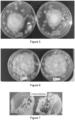
- Pleurotus ostratus formed a monolayer of hyphae but the material strength was weak and easy to break (see Figure 3 ). The layer of entangled mycelium was clearly matching the shape of the flask base. When the biomass was dried, it yielded a final biomass concentration of 3 g (dry weight) / I of culture. The final material was free of substrate debris.
- Ganoderma lucidum formed a monolayer of hyphae, the material was resistant and rather dry compared to Pleourotus ostratus one (see Figure 4 ). The layer of entangled mycelium was clearly matching the shape of the flask base. When the biomass was dried, it yielded a final biomass concentration of 8 g (dry weight) / l of culture. The final material was free of substrate debris.
- SSF solid-state fermentation
- the fungus did not grow forming a filamentous fungus layer, which indicates that this procedure is not suitable for achieving a filamentous fungus biomaterial according to the invention.
- the fungus did not grow forming a filamentous fungus layer, which indicates that this procedure is not suitable for achieving a filamentous fungus biomaterial according to the invention.
- Example 7 (chicken breast analogue recipe):
Landscapes
- Life Sciences & Earth Sciences (AREA)
- Chemical & Material Sciences (AREA)
- Engineering & Computer Science (AREA)
- Health & Medical Sciences (AREA)
- Biotechnology (AREA)
- Microbiology (AREA)
- Genetics & Genomics (AREA)
- Wood Science & Technology (AREA)
- Biochemistry (AREA)
- Food Science & Technology (AREA)
- Polymers & Plastics (AREA)
- Mycology (AREA)
- Organic Chemistry (AREA)
- Zoology (AREA)
- Nutrition Science (AREA)
- Bioinformatics & Cheminformatics (AREA)
- Virology (AREA)
- Biomedical Technology (AREA)
- Cell Biology (AREA)
- Tropical Medicine & Parasitology (AREA)
- Medicinal Chemistry (AREA)
- General Engineering & Computer Science (AREA)
- General Health & Medical Sciences (AREA)
- Botany (AREA)
- Micro-Organisms Or Cultivation Processes Thereof (AREA)
Priority Applications (1)
| Application Number | Priority Date | Filing Date | Title |
|---|---|---|---|
| EP23382990.2A EP4530341A1 (fr) | 2023-09-28 | 2023-09-28 | Biomatériau de champignon filamenteux, procédé de culture dudit champignon filamenteux, analogue de viande à base de mycélium et procédé d'élaboration correspondant |
Applications Claiming Priority (1)
| Application Number | Priority Date | Filing Date | Title |
|---|---|---|---|
| EP23382990.2A EP4530341A1 (fr) | 2023-09-28 | 2023-09-28 | Biomatériau de champignon filamenteux, procédé de culture dudit champignon filamenteux, analogue de viande à base de mycélium et procédé d'élaboration correspondant |
Publications (1)
| Publication Number | Publication Date |
|---|---|
| EP4530341A1 true EP4530341A1 (fr) | 2025-04-02 |
Family
ID=88295780
Family Applications (1)
| Application Number | Title | Priority Date | Filing Date |
|---|---|---|---|
| EP23382990.2A Withdrawn EP4530341A1 (fr) | 2023-09-28 | 2023-09-28 | Biomatériau de champignon filamenteux, procédé de culture dudit champignon filamenteux, analogue de viande à base de mycélium et procédé d'élaboration correspondant |
Country Status (1)
| Country | Link |
|---|---|
| EP (1) | EP4530341A1 (fr) |
Citations (3)
| Publication number | Priority date | Publication date | Assignee | Title |
|---|---|---|---|---|
| WO2019046480A1 (fr) * | 2017-08-30 | 2019-03-07 | Sustainable Bioproducts, Inc. | Composition comestible à champignons filamenteux et système de bioréacteur pour sa culture |
| WO2020106743A1 (fr) * | 2018-11-20 | 2020-05-28 | Ecovative Design Llc | Procédés de génération d'échafaudages mycéliens et leurs applications |
| WO2020176758A1 (fr) * | 2019-02-27 | 2020-09-03 | Sustainable Bioproducts, Inc. | Matériaux alimentaires comprenant des particules fongiques filamenteuses et conception de bioréacteur à membrane |
-
2023
- 2023-09-28 EP EP23382990.2A patent/EP4530341A1/fr not_active Withdrawn
Patent Citations (3)
| Publication number | Priority date | Publication date | Assignee | Title |
|---|---|---|---|---|
| WO2019046480A1 (fr) * | 2017-08-30 | 2019-03-07 | Sustainable Bioproducts, Inc. | Composition comestible à champignons filamenteux et système de bioréacteur pour sa culture |
| WO2020106743A1 (fr) * | 2018-11-20 | 2020-05-28 | Ecovative Design Llc | Procédés de génération d'échafaudages mycéliens et leurs applications |
| WO2020176758A1 (fr) * | 2019-02-27 | 2020-09-03 | Sustainable Bioproducts, Inc. | Matériaux alimentaires comprenant des particules fongiques filamenteuses et conception de bioréacteur à membrane |
Non-Patent Citations (1)
| Title |
|---|
| GAOSHENG HU ET AL: "Optimization of Culture Condition for Ganoderic Acid Production in Ganoderma lucidum Liquid Static Culture and Design of a Suitable Bioreactor", MOLECULES, vol. 23, no. 10, 8 October 2018 (2018-10-08), pages 2563, XP055692989, DOI: 10.3390/molecules23102563 * |
Similar Documents
| Publication | Publication Date | Title |
|---|---|---|
| AU2024219702A1 (en) | Edible composition with filamentous fungi and bioreactor system for the cultivation thereof | |
| CN102577840B (zh) | 一种使用醋糟栽培食用菌的方法 | |
| Straatsma et al. | Taxonomy of Scytalidium thermophilum, an important thermophilic fungus in mushroom compost | |
| Daba et al. | Production of mushroom (Pleurotus ostreatus) in Egypt as a source of nutritional and medicinal food | |
| CN101113415A (zh) | 固体培养虫草食用菌方法 | |
| KR20180130572A (ko) | 균사체화된 고단백 식품 조성물의 제조 방법 및 용도 | |
| CN101103814B (zh) | 菇菌营养蛋白粉制作方法 | |
| CN113637594B (zh) | 一种多脂鳞伞菌株yx1、培养方法及其应用 | |
| CN116622553B (zh) | 松乳菇菌根促生菌及其制备方法和其应用 | |
| CN104969773A (zh) | 利用甘薯渣发酵获得蛹虫草发酵物或子实体的方法 | |
| CN118530848A (zh) | 一种元蘑菌株及其子实体栽培方法 | |
| CN104871830A (zh) | 以豆虫为载体种植蛹虫草的方法 | |
| CN110819563A (zh) | 一株短波单孢杆菌3c及其在促进杏鲍菇生长中的应用 | |
| CN111512891A (zh) | 一种木腐菌液体培养基及其制备方法 | |
| EP4530341A1 (fr) | Biomatériau de champignon filamenteux, procédé de culture dudit champignon filamenteux, analogue de viande à base de mycélium et procédé d'élaboration correspondant | |
| CN113875496A (zh) | 一种蛹虫草菌株的复壮方法 | |
| CN116904325B (zh) | 高产葡聚糖的耐高温珊瑚状猴头菌菌株及选育和栽培方法 | |
| JPH02215314A (ja) | 茸菌成長促進剤並びに茸裁培用培地 | |
| CN118516241A (zh) | 一株优质高抗真姬菇新菌株hm58501及其分子标记和人工栽培方法 | |
| CN112779165A (zh) | 一种真姬菇菌种的蘑菇菇脚粉保藏培养基及其制备方法 | |
| CN107750819B (zh) | 一种柞树叶栽培灵芝的高效方法 | |
| CN116948842A (zh) | 一种富硒黑皮鸡枞菌菌株yjz05及其应用 | |
| CN117467548A (zh) | 一种菜用灵芝菌株及其人工栽培方法 | |
| CN114402913A (zh) | 一种杏鲍菇栽培基质及原始母种的制作方法 | |
| CN109644775B (zh) | 一种菇肚耳菌株yd99及其栽培方法 |
Legal Events
| Date | Code | Title | Description |
|---|---|---|---|
| PUAI | Public reference made under article 153(3) epc to a published international application that has entered the european phase |
Free format text: ORIGINAL CODE: 0009012 |
|
| STAA | Information on the status of an ep patent application or granted ep patent |
Free format text: STATUS: THE APPLICATION HAS BEEN PUBLISHED |
|
| AK | Designated contracting states |
Kind code of ref document: A1 Designated state(s): AL AT BE BG CH CY CZ DE DK EE ES FI FR GB GR HR HU IE IS IT LI LT LU LV MC ME MK MT NL NO PL PT RO RS SE SI SK SM TR |
|
| STAA | Information on the status of an ep patent application or granted ep patent |
Free format text: STATUS: THE APPLICATION IS DEEMED TO BE WITHDRAWN |
|
| 18D | Application deemed to be withdrawn |
Effective date: 20251003 |