EP4523948A1 - Steuersystem für elektrofahrzeuge mit soundsimulation - Google Patents
Steuersystem für elektrofahrzeuge mit soundsimulation Download PDFInfo
- Publication number
- EP4523948A1 EP4523948A1 EP24186337.2A EP24186337A EP4523948A1 EP 4523948 A1 EP4523948 A1 EP 4523948A1 EP 24186337 A EP24186337 A EP 24186337A EP 4523948 A1 EP4523948 A1 EP 4523948A1
- Authority
- EP
- European Patent Office
- Prior art keywords
- mode
- operating
- manual
- shifted
- motor
- Prior art date
- Legal status (The legal status is an assumption and is not a legal conclusion. Google has not performed a legal analysis and makes no representation as to the accuracy of the status listed.)
- Pending
Links
Images




Classifications
-
- B—PERFORMING OPERATIONS; TRANSPORTING
- B60—VEHICLES IN GENERAL
- B60L—PROPULSION OF ELECTRICALLY-PROPELLED VEHICLES; SUPPLYING ELECTRIC POWER FOR AUXILIARY EQUIPMENT OF ELECTRICALLY-PROPELLED VEHICLES; ELECTRODYNAMIC BRAKE SYSTEMS FOR VEHICLES IN GENERAL; MAGNETIC SUSPENSION OR LEVITATION FOR VEHICLES; MONITORING OPERATING VARIABLES OF ELECTRICALLY-PROPELLED VEHICLES; ELECTRIC SAFETY DEVICES FOR ELECTRICALLY-PROPELLED VEHICLES
- B60L50/00—Electric propulsion with power supplied within the vehicle
-
- B—PERFORMING OPERATIONS; TRANSPORTING
- B60—VEHICLES IN GENERAL
- B60W—CONJOINT CONTROL OF VEHICLE SUB-UNITS OF DIFFERENT TYPE OR DIFFERENT FUNCTION; CONTROL SYSTEMS SPECIALLY ADAPTED FOR HYBRID VEHICLES; ROAD VEHICLE DRIVE CONTROL SYSTEMS FOR PURPOSES NOT RELATED TO THE CONTROL OF A PARTICULAR SUB-UNIT
- B60W30/00—Purposes of road vehicle drive control systems not related to the control of a particular sub-unit, e.g. of systems using conjoint control of vehicle sub-units
- B60W30/18—Propelling the vehicle
- B60W30/182—Selecting between different operative modes, e.g. comfort and performance modes
-
- B—PERFORMING OPERATIONS; TRANSPORTING
- B60—VEHICLES IN GENERAL
- B60L—PROPULSION OF ELECTRICALLY-PROPELLED VEHICLES; SUPPLYING ELECTRIC POWER FOR AUXILIARY EQUIPMENT OF ELECTRICALLY-PROPELLED VEHICLES; ELECTRODYNAMIC BRAKE SYSTEMS FOR VEHICLES IN GENERAL; MAGNETIC SUSPENSION OR LEVITATION FOR VEHICLES; MONITORING OPERATING VARIABLES OF ELECTRICALLY-PROPELLED VEHICLES; ELECTRIC SAFETY DEVICES FOR ELECTRICALLY-PROPELLED VEHICLES
- B60L15/00—Methods, circuits, or devices for controlling the traction-motor speed of electrically-propelled vehicles
- B60L15/20—Methods, circuits, or devices for controlling the traction-motor speed of electrically-propelled vehicles for control of the vehicle or its driving motor to achieve a desired performance, e.g. speed, torque, programmed variation of speed
-
- B—PERFORMING OPERATIONS; TRANSPORTING
- B60—VEHICLES IN GENERAL
- B60L—PROPULSION OF ELECTRICALLY-PROPELLED VEHICLES; SUPPLYING ELECTRIC POWER FOR AUXILIARY EQUIPMENT OF ELECTRICALLY-PROPELLED VEHICLES; ELECTRODYNAMIC BRAKE SYSTEMS FOR VEHICLES IN GENERAL; MAGNETIC SUSPENSION OR LEVITATION FOR VEHICLES; MONITORING OPERATING VARIABLES OF ELECTRICALLY-PROPELLED VEHICLES; ELECTRIC SAFETY DEVICES FOR ELECTRICALLY-PROPELLED VEHICLES
- B60L50/00—Electric propulsion with power supplied within the vehicle
- B60L50/50—Electric propulsion with power supplied within the vehicle using propulsion power supplied by batteries or fuel cells
-
- G—PHYSICS
- G07—CHECKING-DEVICES
- G07C—TIME OR ATTENDANCE REGISTERS; REGISTERING OR INDICATING THE WORKING OF MACHINES; GENERATING RANDOM NUMBERS; VOTING OR LOTTERY APPARATUS; ARRANGEMENTS, SYSTEMS OR APPARATUS FOR CHECKING NOT PROVIDED FOR ELSEWHERE
- G07C5/00—Registering or indicating the working of vehicles
- G07C5/02—Registering or indicating driving, working, idle, or waiting time only
-
- G—PHYSICS
- G10—MUSICAL INSTRUMENTS; ACOUSTICS
- G10K—SOUND-PRODUCING DEVICES; METHODS OR DEVICES FOR PROTECTING AGAINST, OR FOR DAMPING, NOISE OR OTHER ACOUSTIC WAVES IN GENERAL; ACOUSTICS NOT OTHERWISE PROVIDED FOR
- G10K15/00—Acoustics not otherwise provided for
- G10K15/02—Synthesis of acoustic waves
-
- B—PERFORMING OPERATIONS; TRANSPORTING
- B60—VEHICLES IN GENERAL
- B60L—PROPULSION OF ELECTRICALLY-PROPELLED VEHICLES; SUPPLYING ELECTRIC POWER FOR AUXILIARY EQUIPMENT OF ELECTRICALLY-PROPELLED VEHICLES; ELECTRODYNAMIC BRAKE SYSTEMS FOR VEHICLES IN GENERAL; MAGNETIC SUSPENSION OR LEVITATION FOR VEHICLES; MONITORING OPERATING VARIABLES OF ELECTRICALLY-PROPELLED VEHICLES; ELECTRIC SAFETY DEVICES FOR ELECTRICALLY-PROPELLED VEHICLES
- B60L2200/00—Type of vehicles
-
- B—PERFORMING OPERATIONS; TRANSPORTING
- B60—VEHICLES IN GENERAL
- B60L—PROPULSION OF ELECTRICALLY-PROPELLED VEHICLES; SUPPLYING ELECTRIC POWER FOR AUXILIARY EQUIPMENT OF ELECTRICALLY-PROPELLED VEHICLES; ELECTRODYNAMIC BRAKE SYSTEMS FOR VEHICLES IN GENERAL; MAGNETIC SUSPENSION OR LEVITATION FOR VEHICLES; MONITORING OPERATING VARIABLES OF ELECTRICALLY-PROPELLED VEHICLES; ELECTRIC SAFETY DEVICES FOR ELECTRICALLY-PROPELLED VEHICLES
- B60L2240/00—Control parameters of input or output; Target parameters
- B60L2240/10—Vehicle control parameters
- B60L2240/32—Driving direction
-
- B—PERFORMING OPERATIONS; TRANSPORTING
- B60—VEHICLES IN GENERAL
- B60L—PROPULSION OF ELECTRICALLY-PROPELLED VEHICLES; SUPPLYING ELECTRIC POWER FOR AUXILIARY EQUIPMENT OF ELECTRICALLY-PROPELLED VEHICLES; ELECTRODYNAMIC BRAKE SYSTEMS FOR VEHICLES IN GENERAL; MAGNETIC SUSPENSION OR LEVITATION FOR VEHICLES; MONITORING OPERATING VARIABLES OF ELECTRICALLY-PROPELLED VEHICLES; ELECTRIC SAFETY DEVICES FOR ELECTRICALLY-PROPELLED VEHICLES
- B60L2240/00—Control parameters of input or output; Target parameters
- B60L2240/40—Drive Train control parameters
- B60L2240/42—Drive Train control parameters related to electric machines
- B60L2240/421—Speed
-
- B—PERFORMING OPERATIONS; TRANSPORTING
- B60—VEHICLES IN GENERAL
- B60L—PROPULSION OF ELECTRICALLY-PROPELLED VEHICLES; SUPPLYING ELECTRIC POWER FOR AUXILIARY EQUIPMENT OF ELECTRICALLY-PROPELLED VEHICLES; ELECTRODYNAMIC BRAKE SYSTEMS FOR VEHICLES IN GENERAL; MAGNETIC SUSPENSION OR LEVITATION FOR VEHICLES; MONITORING OPERATING VARIABLES OF ELECTRICALLY-PROPELLED VEHICLES; ELECTRIC SAFETY DEVICES FOR ELECTRICALLY-PROPELLED VEHICLES
- B60L2240/00—Control parameters of input or output; Target parameters
- B60L2240/40—Drive Train control parameters
- B60L2240/42—Drive Train control parameters related to electric machines
- B60L2240/423—Torque
-
- B—PERFORMING OPERATIONS; TRANSPORTING
- B60—VEHICLES IN GENERAL
- B60L—PROPULSION OF ELECTRICALLY-PROPELLED VEHICLES; SUPPLYING ELECTRIC POWER FOR AUXILIARY EQUIPMENT OF ELECTRICALLY-PROPELLED VEHICLES; ELECTRODYNAMIC BRAKE SYSTEMS FOR VEHICLES IN GENERAL; MAGNETIC SUSPENSION OR LEVITATION FOR VEHICLES; MONITORING OPERATING VARIABLES OF ELECTRICALLY-PROPELLED VEHICLES; ELECTRIC SAFETY DEVICES FOR ELECTRICALLY-PROPELLED VEHICLES
- B60L2260/00—Operating Modes
- B60L2260/20—Drive modes; Transition between modes
-
- B—PERFORMING OPERATIONS; TRANSPORTING
- B60—VEHICLES IN GENERAL
- B60L—PROPULSION OF ELECTRICALLY-PROPELLED VEHICLES; SUPPLYING ELECTRIC POWER FOR AUXILIARY EQUIPMENT OF ELECTRICALLY-PROPELLED VEHICLES; ELECTRODYNAMIC BRAKE SYSTEMS FOR VEHICLES IN GENERAL; MAGNETIC SUSPENSION OR LEVITATION FOR VEHICLES; MONITORING OPERATING VARIABLES OF ELECTRICALLY-PROPELLED VEHICLES; ELECTRIC SAFETY DEVICES FOR ELECTRICALLY-PROPELLED VEHICLES
- B60L2270/00—Problem solutions or means not otherwise provided for
- B60L2270/42—Means to improve acoustic vehicle detection by humans
-
- F—MECHANICAL ENGINEERING; LIGHTING; HEATING; WEAPONS; BLASTING
- F16—ENGINEERING ELEMENTS AND UNITS; GENERAL MEASURES FOR PRODUCING AND MAINTAINING EFFECTIVE FUNCTIONING OF MACHINES OR INSTALLATIONS; THERMAL INSULATION IN GENERAL
- F16H—GEARING
- F16H61/00—Control functions within control units of change-speed- or reversing-gearings for conveying rotary motion ; Control of exclusively fluid gearing, friction gearing, gearings with endless flexible members or other particular types of gearing
- F16H61/18—Preventing unintentional or unsafe shift, e.g. preventing manual shift from highest gear to reverse gear
-
- Y—GENERAL TAGGING OF NEW TECHNOLOGICAL DEVELOPMENTS; GENERAL TAGGING OF CROSS-SECTIONAL TECHNOLOGIES SPANNING OVER SEVERAL SECTIONS OF THE IPC; TECHNICAL SUBJECTS COVERED BY FORMER USPC CROSS-REFERENCE ART COLLECTIONS [XRACs] AND DIGESTS
- Y02—TECHNOLOGIES OR APPLICATIONS FOR MITIGATION OR ADAPTATION AGAINST CLIMATE CHANGE
- Y02T—CLIMATE CHANGE MITIGATION TECHNOLOGIES RELATED TO TRANSPORTATION
- Y02T10/00—Road transport of goods or passengers
- Y02T10/60—Other road transportation technologies with climate change mitigation effect
- Y02T10/72—Electric energy management in electromobility
Definitions
- Embodiments of the present invention relate to the art of a control system for an electric vehicle in which a motor serves as a prime mover.
- JP-A-2022-12205 discloses one example of an electric automobile in which a motor is adopted as a prime mover.
- the electric automobile described in JP-A-2022-12205 comprises a paddle switch and a shifter (or a shift lever) electrically connected to an electronic control unit.
- the electronic control unit is configured to control output torque of a motor with reference to a torque map determining the output torque with respect to a position of an accelerator pedal, and to select the torque map in response to an operation of the paddle switch or the shifter.
- characteristics of the motor torque is changed by changing the torque map so that the drive force to propel the electric automobile is changed stepwise to imitate a speed change operation of a multiple-stage transmission.
- JP-B1-6787507 describes an electric vehicle that allows a driver to virtually enjoy a manual gear change operation of a conventional vehicle having a manual transmission.
- the electric vehicle described in JP-B1-6787507 is provided with a shift lever and a clutch pedal operated cooperatively as in the vehicle having a manual transmission.
- the electric vehicle is further provided with a torque controller configured to control torque of an electric motor serving as a prime mover in response to an operation amount of the clutch pedal.
- the shift device is configured to select a mode of any one of a plurality of modes in which torque characteristics of the electric motor differ in stages with respect to a rotational speed of the electric motor, and the torque controller controls the torque of the electric motor in accordance with the mode selected by the shift device.
- a virtual (i.e., imitation) engine sound is added in response to operations of the shift device and the clutch pedal.
- the torque controller acquires a virtual engine speed that simulates an engine speed assuming that a traveling condition of the electric vehicle is realized by a drive force of an engine based on a driving state of the electric vehicle, and the engine sound is generated in accordance with the virtual engine speed.
- the motor employed as a prime mover in the electric vehicles of those kinds can generate large torque even when launching and when travelling at a low speed. Therefore, some of electric vehicles are not provided with a transmission for multiplying driving torque.
- both of the electric vehicles described in the above-mentioned prior art documents do not have a transmission, but those electric vehicles are individually provided with the imitation shift device and the shift switch.
- torque characteristics of the motor may be changed by manually changing the torque map or the mode to imitate behavior of the conventional vehicle having a transmission.
- the driver is allowed to virtually enjoy a manual shifting operation (i.e., a sequential shifting) by manipulating a paddle switch or a shift lever as in the conventional vehicle having a manual transmission.
- a manual shifting operation i.e., a sequential shifting
- the driver is also allowed to virtually enjoy a manual shifting operation and behaviors of the conventional vehicle having a manual transmission.
- the virtual engine sound is emitted in response to an execution of the virtual shifting operation so as to enhance the reality.
- the drive force derived from the output torque of the motor may be controlled smoothly and seamlessly, and hence noises and vibrations of the electric vehicles are less than those of the conventional vehicles having engines. That is, the above-mentioned virtual engine sound is unnecessary to maintain such advantages of the electric vehicles. Therefore, in the electric vehicles having a function to allow the driver to virtually enjoy a manual shifting operation, it is preferable to select an operating mode from a normal mode in which the virtual shifting operation is not available, and a manual mode in which the virtual engine sound is emitted in response to an execution of the virtual shifting operation.
- the normal mode is selected by positioning the shift lever at a drive position, and the virtual engine sound is not emitted during propulsion in the normal mode.
- the manual mode is selected by positioning the shift lever at a manual position, and in the manual mode, the virtual engine sound is emitted in response to an execution of the virtual shifting operation.
- the virtual engine sound is lost awkwardly when the shift lever is moved from the manual position to another position.
- the virtual engine sound is lost suddenly when the shift lever is moved from the drive position to a reverse position or a parking position.
- a revving sound may not be emitted virtually even if the driver depresses an accelerator pedal in the situation where the shift lever is positioned at the parking position or a neutral position.
- the conventional electric vehicles have to be improved to imitate the behaviors of the conventional vehicle having an engine and a transmission more realistically, without impairing comfort and quietness of the electric vehicles.
- the present invention relates to the art of a control system for an electric vehicle that controls a motor serving as a prime mover based on a target torque value set in accordance with a required drive force.
- the control system is provided with: a sound creator that creates a simulated engine sound in accordance with a travelling condition of the electric vehicle; a controller that controls an output torque of the motor based on the target torque value; and a shifting device that is operated manually by a driver.
- the shifting device that is operated manually by a driver to: select an operating mode of the electric vehicle from a first mode, a second mode, a third mode, and a fourth mode; and select an operating range of the electric vehicle from a plurality of ranges in which torque characteristics with respect to a speed of the motor differ from one another, in a situation where the third mode or the fourth mode is selected.
- the first mode corresponds to a drive mode in which the electric vehicle is propelled forward.
- the second mode includes a reverse mode in which the electric vehicle is reversed, a parking mode in which the electric vehicle is parked, and a neutral mode in which a torque transmission between the motor and a pair of drive wheels is interrupted.
- the third mode is shifted from the first mode, and in the third mode, the target torque value of the motor with respect to a speed of the motor varies stepwise in accordance with the operating range selected by operating the shifting device, and the simulated engine sound is emitted by the sound creator.
- the fourth mode is shifted from the first mode or the third mode, and in the fourth mode, the target torque value of the motor also varies stepwise in accordance with the operating range selected by operating the shifting device, and the emission of the simulated engine sound is maintained.
- the controller is configured to: control the output torque of the motor based on the target torque value set in accordance with the operating mode and the operating range selected by operating the shifting device; cancel the third mode being selected when the operating mode is shifted from the third mode to the first mode or the fourth mode; and cancel the fourth mode shifted from the third mode when the operating mode is shifted from the fourth mode to the third mode.
- the operation of the shifting device may be categorized into a first operation as a normal operation and a second operation different from the first operation.
- the operating mode may be shifted by the first operation between the first mode and the second mode, between the first mode and the third mode, from the third mode to the second mode, from the fourth mode to the first mode, from the fourth mode to the second mode, and from the fourth mode to the third mode.
- an operation of the shifting device to shift the operating mode from the second mode to the third mode or the fourth mode is rejected.
- the operating mode is shifted by the second operation from the first mode to the fourth mode, and from the third mode to the fourth mode.
- the controller may be further configured to calculate a virtual engine speed based on an assumption that a drive force to propel the electric vehicle in a current travelling condition is generated by a conventional internal combustion engine.
- the sound creator may be configured to emit the simulated engine sound in accordance with a change in the virtual engine speed.
- the control system is applied to the electric vehicle that is propelled by the output torque of the motor serving as a prime mover.
- the output torque of the motor is controlled based on the target torque value set in accordance with the required drive force as a target drive torque or a required drive torque.
- the target torque value is determined with reference to the maps in which torque characteristics are different from one another, and the torque map is selected by manually operating the shifting device.
- the operating mode of the electric vehicle is also selected by manually operating the shifting device from the first mode, the second mode, the third mode, and the fourth mode. Specifically, the first mode in which the electric vehicle is propelled forward is selected by moving the shift lever of the shifting device to the drive position.
- the second mode includes the parking mode, the reverse mode, and the neutral mode. That is, the second mode is selected by moving the shift lever of the shifting device to the parking position, the reverse position, or the neutral position.
- the third mode as the manual mode is selected by moving the shift lever of the shifting device to the manual position, and in the third mode, the operating range is selected manually by operating the shifting device.
- the fourth mode is shifted from the third mode, and the operating range is also selected manually in the fourth mode by operating the shifting device. In the third mode or the fourth mode, therefore, the torque characteristics of the motor is changed manually in response to the operation of the shifting device. That is, the target torque value of the motor varies stepwise in accordance with the operating range selected manually by operating the shifting device.
- the operating range may be shifted from a default range to a range in which a relatively larger torque is generated at a low speed. According to the exemplary embodiment of the present invention, therefore, the driver of the electric vehicle is allowed to virtually enjoy a manual shifting operation as in the conventional vehicle having a manual transmission or a multiple-stage transmission.
- the control system is provided with the sound creator configured to emit the simulated engine sound in the third mode and the fourth mode in accordance with the operating condition of the electric vehicle. Therefore, the driver of the electric vehicle is allowed to enjoy behaviors of the conventional vehicle having an engine and a transmission.
- the fourth mode is selected, the emission of the simulated engine sound is maintained even if the operating mode is shifted to other mode.
- the third mode is cancelled by shifting the operating mode from the third mode to the first mode or the fourth mode. That is, the third mode will not be cancelled even if the operating mode is shifted from the third mode to the second mode, and the simulated engine sound is emitted continuously in this case.
- the fourth mode is cancelled by shifting the operating mode from the fourth mode to the third mode. That is, the fourth mode will not be cancelled even if the operating mode is shifted from the fourth mode to the first mode or the second mode, and the simulated engine sound is also emitted continuously in this case. Then, even if the operating mode is shifted from the second mode to other mode, the fourth mode is still maintained and the simulated engine sound is emitted continuously. Likewise, even if the operating mode is shifted from the fourth mode to the first mode, the fourth mode is still maintained and the simulated engine sound is emitted continuously.
- the virtual shifting operation is still available and the simulated engine sound is emitted continuously as long as the third mode is maintained. Then, when the operating mode is shifted from the third mode to the first mode, the operating mode is returned to the normal mode and the emission of the simulated engine sound is terminated.
- the simulated engine sound will not be lost even if the operating mode is shifted from the third mode as the manual mode or the fourth mode as the manual hold mode to the second mode as the parking mode, the reverse mode, and the neutral mode.
- the simulated engine sound will not be lost even if the shift lever of the shifting device is moved from the manual position to the reverse position or the parking position.
- a simulated revving sound may be emitted in the parking mode or the neutral mode by depressing the accelerator pedal.
- the operation of the shifting device is categorized into the first operation and the second operation.
- the first operation as a normal operation includes an operation to move the shift lever and an operation of a paddle shifter for a normal period of time
- the second operation includes an operation of the paddle shifter for a longer period of time and an operation of a dedicated switch device.
- the operating mode is shifted from the first mode or the third mode to the fourth mode by the second operation. That is, the driver executes the second operation intentionally to keep emitting the simulated engine sound in the fourth mode. Therefore, the driver is allowed to enjoy the behavior of the conventional vehicle having an engine and a transmission certainly in line with his/her intention.
- the fourth mode is cancelled only by shifting the operating mode from the fourth mode to the first mode via the third mode to operate the electric vehicle in the first mode as the electric vehicle mode in which the electric vehicle is propelled quietly.
- the operating mode and the operating range may be shifted by the first operation and the second operation as in the conventional vehicle having an engine and a transmission.
- the vehicle Ve is an electric vehicle comprising a motor 1 as a prime mover, a shifting device 2, a sound creator 3, a detector 4, and a controller (referred to as ECU in Fig. 1 ) 5.
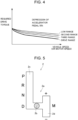
- Fig. 4 there is shown the required drive torque in each of the operating ranges given that a depression of the accelerator pedal is 50%.
- the required drive torque changes depending on the operating range selected from a drive range, a third range, a second range, and a low range (i.e., a first range).
- the required drive torque set in the operating ranges increases in order of the drive range, the third range, the second range, and the low range.
- the drive range is selected in a situation where the drive mode is selected to propel the vehicle Ve in a normal manner, and the required drive torque calculated in the drive range is the default required drive torque.
- a start switch may be turned on to bring the vehicle into a ready-on state in a situation where the shift lever is positioned at the parking position.
- the shift lever in order to operate the vehicle in the manual mode, the shift lever is moved from the parking position or the neutral position to the manual position via the drive position. That is, the shift lever may not be moved directly from the parking position or the neutral position to the manual position.
- the operating mode is shifted to the manual mode by moving the shift lever 2b from the drive position to the manual position. Otherwise, the operating mode is also shifted to the manual mode by operating the upshifting paddle 2f or the downshifting paddle 2g in a specific manner while maintaining the shift lever 2b to the drive position.
- the manual mode is cancelled by manually operating the shift lever 2b to other positions.
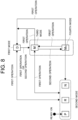
- a manual hold mode (M H ) shown in Fig. 8 may be selected to maintain the emission of the simulated engine sound even if the operating mode is shifted from the manual hold mode to e.g., the neutral mode.
- the target torque value of the motor 1 varies stepwise in accordance with the operating range selected from the plurality of ranges in which torque characteristics with respect to a speed of the motor 1 differ from one another. That is, the driver is allowed to virtually enjoy the manual shifting operation as the conventional vehicle having an engine and a transmission. In addition, the simulated engine sound is emitted during operation in the manual mode.
- the target torque value of the motor 1 also varies stepwise in accordance with the operating range selected from the plurality of ranges in which torque characteristics with respect to a speed of the motor 1 differ from one another. That is, the driver is also allowed to virtually enjoy the manual shifting operation of the conventional vehicle having an engine and a transmission.
- the simulated engine sound is also emitted during operation in the manual hold mode, and is maintained even when the operating mode is shifted to the neutral mode, the reverse mode, or the parking mode.
- the drive mode corresponds to a first mode
- a second mode includes the parking mode, the reverse mode, and the neutral mode.
- the operating mode of the vehicle Ve is shifted by manipulating the shift lever 2b of the lever shifter 2a among the above-mentioned positions, and a power switch (also referred to as a main switch or a start switch) may be turned on to bring the vehicle Ve into a ready-on state in a situation where the shift lever 2b is positioned at the parking position.
- a power switch also referred to as a main switch or a start switch
- the shift lever 2b may not be moved directly from the parking position, the reverse position, or the neutral position to the manual position. Therefore, the operating mode may not be shifted directly from the second mode including the parking mode, the reverse mode, and the neutral mode to the third mode as the manual mode and the fourth mode as the manual hold mode.
- the operating mode is shifted from the first mode as the drive mode to the third mode as the manual mode without exception.
- the operating mode is shifted to the manual mode by moving the shift lever 2b from the drive position to the manual position.
- the operating mode is also shifted to the manual mode by operating the upshifting paddle 2f or the downshifting paddle 2g in a normal manner while maintaining the shift lever 2b to the drive position.
- the manual mode is cancelled e.g., by manually shifting the operating mode to the manual hold mode or the first mode corresponding to the drive mode.
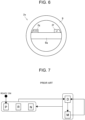
- the operating mode is shifted by manipulating the lever shifter 2a shown in Fig. 5 or the paddle shifter 2e shown in Fig. 6 in a normal manner among: the first mode corresponding to the drive mode; the second mode corresponding to the parking mode, the reverse mode, and the neutral mode; and the third mode corresponding to the manual mode.
- the operating mode is shifted among the first mode, the second mode, and the third mode by moving the shift lever 2b of the lever shifter 2a to a predetermined position within a normal (i.e., short) period of time.
- the operating mode is shifted among the first mode, the second mode, and the third mode by pulling the upshifting paddle 2f or the downshifting paddle 2g within a normal (i.e., short) period of time.
- a normal (i.e., short) period of time Such operations of the lever shifter 2a and the paddle shifter 2e in the normal manner correspond to the above-mentioned first operation.
- the operating mode is also shifted from the third mode as the manual mode to the second mode including the parking mode, the reverse mode, and the neutral mode by carrying out the first operation.
- the operating mode is shifted to the fourth mode as the manual hold mode from the first mode as the drive mode or the third mode as the manual mode without exception.
- the operating mode is shifted to the fourth mode as the manual hold mode by moving the shift lever 2b from the drive position to the manual position and operating the shift lever 2b in a different way than normal.
- the operating mode is shifted to the fourth mode as the manual hold mode by operating the upshifting paddle 2f or the downshifting paddle 2g in a different way than normal in the situation where the shift lever 2b is positioned at the drive position.
- the operating mode is shifted to the fourth mode as the manual hold mode by moving the shift lever 2b from the drive position to the manual position and keeping the shift lever 2b to be inclined for a longer period of time compared to the case of shifting the operating mode to the manual mode by the first operation.
- the operating mode may also be shifted to the fourth mode as the manual hold mode by moving the shift lever 2b from the drive position to a manual hold position which may be arranged e.g., in the vicinity of the manual position.
- the operating mode may also be shifted to the fourth mode as the manual hold mode by pulling the upshifting paddle 2f or the downshifting paddle 2g for a longer period of time compared to the first operation.
- the operating mode may also be shifted to the fourth mode as the manual hold mode by turning on the dedicated switch device (not shown).
- the above-mentioned second operation includes such operations of the lever shifter 2a and the paddle shifter 2e in a different way than the first operation as the normal operation, and the operation of the dedicated switch device to shift the operating mode to the manual hold mode.
- the manual hold mode is cancelled by carrying out any of the first operations to shift the operating mode from the manual hold mode to the manual mode. That is, the operating mode is shifted from the fourth mode to any of the first mode, the second mode, and the third mode by the first operation. Nonetheless, the manual hold mode may also be cancelled by the second operation by operating the lever shifter 2a or the paddle shifter 2e for a longer period of time.
- the simulated engine sound is emitted as long as the manual mode is maintained. Then, the emission of the simulated engine sound is terminated when the manual mode is cancelled.
- the operations of the shifting device 2 is categorized into the first operation and the second operation.
- the operating mode is shifted from the first mode or the third mode to the fourth mode as the manual hold mode by carrying out the second operation of the shifting device 2. That is, the driver executes the second operation intentionally to continue the emission of the simulated engine sound in the manual hold mode. Therefore, the driver is allowed to virtually enjoy the behavior of the conventional vehicle having an engine and a transmission in line with his/her intention.
- the manual hold mode is cancelled by shifting the operating mode from the manual hold mode to the manual mode.
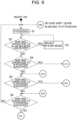
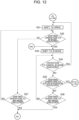
- step S4 determines whether an operation to shift the operating mode to the reverse mode is executed.
- step S41 the routine returns to step S41 to repeat the foregoing steps from step S41.
- the target torque value of the motor 1 set based on the torque characteristics of the motor 1 may be changed stepwise in response to a manual shifting operation of the operating range in the manual mode or the manual hold mode. Therefore, although the electric vehicle to which the control system according to the exemplary embodiment of the present invention is applied does not have a manual transmission, the driver is allowed to virtually enjoy the manual shifting operation as in the conventional vehicle having an engine and a transmission.
- the simulated engine sound is emitted during operation in the manual mode and the manual hold mode, and the simulated engine sound varies in response to an execution of the manual shifting operation and a change in the running condition of the vehicle Ve.
- the manual mode is cancelled by shifting the operating mode to the manual hold mode or the first mode corresponding to the drive mode
- the manual hold mode is cancelled by shifting the operating mode to the manual mode. That is, once the operating mode is shifted to the manual hold mode, the emission of the simulated engine sound is continued until the operating mode is shifted from the manual hold mode to the manual mode and further shifted to the first mode as the drive mode.
- the simulated engine sound will not be lost awkwardly even when the operating mode is shifted from the manual mode or the manual hold mode to the second mode including the parking mode, the reverse mode, and the neutral mode. For this reason, a simulated revving sound may be emitted in the parking mode or the neutral mode by depressing the accelerator pedal.
- the driver is allowed to enjoy the behavior of the conventional vehicle having an engine and a transmission more realistically, without impairing comfort and quietness of the electric vehicle.
Landscapes
- Engineering & Computer Science (AREA)
- Transportation (AREA)
- Mechanical Engineering (AREA)
- Power Engineering (AREA)
- Physics & Mathematics (AREA)
- General Physics & Mathematics (AREA)
- Health & Medical Sciences (AREA)
- Audiology, Speech & Language Pathology (AREA)
- General Health & Medical Sciences (AREA)
- Acoustics & Sound (AREA)
- Multimedia (AREA)
- Automation & Control Theory (AREA)
- Life Sciences & Earth Sciences (AREA)
- Sustainable Development (AREA)
- Sustainable Energy (AREA)
- Electric Propulsion And Braking For Vehicles (AREA)
Applications Claiming Priority (1)
| Application Number | Priority Date | Filing Date | Title |
|---|---|---|---|
| JP2023148753A JP7852597B2 (ja) | 2023-09-13 | 2023-09-13 | 電動車両の制御装置 |
Publications (1)
| Publication Number | Publication Date |
|---|---|
| EP4523948A1 true EP4523948A1 (de) | 2025-03-19 |
Family
ID=91810377
Family Applications (1)
| Application Number | Title | Priority Date | Filing Date |
|---|---|---|---|
| EP24186337.2A Pending EP4523948A1 (de) | 2023-09-13 | 2024-07-03 | Steuersystem für elektrofahrzeuge mit soundsimulation |
Country Status (4)
| Country | Link |
|---|---|
| US (1) | US12539771B2 (de) |
| EP (1) | EP4523948A1 (de) |
| JP (1) | JP7852597B2 (de) |
| CN (1) | CN119611379A (de) |
Families Citing this family (2)
| Publication number | Priority date | Publication date | Assignee | Title |
|---|---|---|---|---|
| JP7845320B2 (ja) * | 2023-09-13 | 2026-04-14 | トヨタ自動車株式会社 | 電動車両の制御装置 |
| JP2025077825A (ja) * | 2023-11-07 | 2025-05-19 | トヨタ自動車株式会社 | 電気自動車、制御システム |
Citations (7)
| Publication number | Priority date | Publication date | Assignee | Title |
|---|---|---|---|---|
| JP2009064028A (ja) * | 2003-10-09 | 2009-03-26 | Yamaha Motor Co Ltd | エンジン音合成装置、それを用いた車両およびゲーム機、エンジン音合成方法、エンジン音合成のためのコンピュータプログラムおよびそれを組み込んだゲームプログラム、ならびにエンジン音合成のためのコンピュータプログラムを記録した記録媒体 |
| JP6787507B1 (ja) | 2020-01-23 | 2020-11-18 | トヨタ自動車株式会社 | 電気自動車 |
| CN112622909A (zh) * | 2020-12-29 | 2021-04-09 | 一汽解放汽车有限公司 | 电动汽车安全驾驶的控制方法、电动汽车及存储介质 |
| JP2022012205A (ja) | 2020-07-01 | 2022-01-17 | マツダ株式会社 | 電気自動車のパワートレインシステム |
| JP2022030562A (ja) * | 2020-08-07 | 2022-02-18 | トヨタ自動車株式会社 | 電動車両の制御装置 |
| JP2022034647A (ja) * | 2020-08-19 | 2022-03-04 | トヨタ自動車株式会社 | 電動車両の制御装置 |
| JP2022034649A (ja) * | 2020-08-19 | 2022-03-04 | トヨタ自動車株式会社 | 電動車両の制御装置 |
Family Cites Families (9)
| Publication number | Priority date | Publication date | Assignee | Title |
|---|---|---|---|---|
| US9199626B2 (en) | 2011-04-27 | 2015-12-01 | Toyota Jidosha Kabushiki Kaisha | Control device of vehicle |
| JP7207031B2 (ja) | 2019-03-11 | 2023-01-18 | トヨタ自動車株式会社 | 電動車両の制御装置 |
| JP7326799B2 (ja) | 2019-03-22 | 2023-08-16 | 三菱自動車工業株式会社 | 電動車両 |
| JP7298565B2 (ja) | 2020-08-07 | 2023-06-27 | トヨタ自動車株式会社 | 電気自動車 |
| JP7302547B2 (ja) * | 2020-08-07 | 2023-07-04 | トヨタ自動車株式会社 | 車両の駆動力制御装置 |
| EP4396057A4 (de) * | 2021-04-12 | 2025-01-08 | Harman Becker Automotive Systems GmbH | Verfahren und system zur simulation des klangs einer fahrzeuggetriebeschaltung |
| EP4496726A1 (de) | 2022-03-22 | 2025-01-29 | Atieva, Inc. | Emulation eines verbrennungsmotors für den fahrer eines elektrofahrzeugs |
| US20250058710A1 (en) * | 2023-08-14 | 2025-02-20 | Hyundai Motor Company | System and method for controlling virtual engine sound of electric vehicle |
| JP7845320B2 (ja) | 2023-09-13 | 2026-04-14 | トヨタ自動車株式会社 | 電動車両の制御装置 |
-
2023
- 2023-09-13 JP JP2023148753A patent/JP7852597B2/ja active Active
-
2024
- 2024-06-27 US US18/756,367 patent/US12539771B2/en active Active
- 2024-07-03 EP EP24186337.2A patent/EP4523948A1/de active Pending
- 2024-09-06 CN CN202411245038.5A patent/CN119611379A/zh active Pending
Patent Citations (7)
| Publication number | Priority date | Publication date | Assignee | Title |
|---|---|---|---|---|
| JP2009064028A (ja) * | 2003-10-09 | 2009-03-26 | Yamaha Motor Co Ltd | エンジン音合成装置、それを用いた車両およびゲーム機、エンジン音合成方法、エンジン音合成のためのコンピュータプログラムおよびそれを組み込んだゲームプログラム、ならびにエンジン音合成のためのコンピュータプログラムを記録した記録媒体 |
| JP6787507B1 (ja) | 2020-01-23 | 2020-11-18 | トヨタ自動車株式会社 | 電気自動車 |
| JP2022012205A (ja) | 2020-07-01 | 2022-01-17 | マツダ株式会社 | 電気自動車のパワートレインシステム |
| JP2022030562A (ja) * | 2020-08-07 | 2022-02-18 | トヨタ自動車株式会社 | 電動車両の制御装置 |
| JP2022034647A (ja) * | 2020-08-19 | 2022-03-04 | トヨタ自動車株式会社 | 電動車両の制御装置 |
| JP2022034649A (ja) * | 2020-08-19 | 2022-03-04 | トヨタ自動車株式会社 | 電動車両の制御装置 |
| CN112622909A (zh) * | 2020-12-29 | 2021-04-09 | 一汽解放汽车有限公司 | 电动汽车安全驾驶的控制方法、电动汽车及存储介质 |
Also Published As
| Publication number | Publication date |
|---|---|
| JP2025041442A (ja) | 2025-03-26 |
| US12539771B2 (en) | 2026-02-03 |
| CN119611379A (zh) | 2025-03-14 |
| JP7852597B2 (ja) | 2026-04-28 |
| US20250083533A1 (en) | 2025-03-13 |
Similar Documents
| Publication | Publication Date | Title |
|---|---|---|
| US12545124B2 (en) | Control system for electric vehicle | |
| JP7302548B2 (ja) | 電気自動車 | |
| EP4523948A1 (de) | Steuersystem für elektrofahrzeuge mit soundsimulation | |
| US12263831B2 (en) | Drive force control system for vehicle | |
| EP4523946A1 (de) | Steuerungssystem für ein elektrofahrzeug | |
| JP2022030868A (ja) | 電気自動車 | |
| CN101648563B (zh) | 混合动力电动车辆中防止循环换档的方法 | |
| CN114248634A (zh) | 电动汽车的内燃机车辆特性虚拟实现装置及方法 | |
| JP2019081467A (ja) | ハイブリッド車両 | |
| JP2024073635A (ja) | 電気自動車 | |
| JP2022042730A (ja) | 電気自動車 | |
| JP7459718B2 (ja) | 電気自動車の制御装置 | |
| JP7424464B1 (ja) | 電気自動車 | |
| US20250018806A1 (en) | Control system for electric vehicle | |
| US20250145160A1 (en) | Electric vehicle and control system | |
| JP3948154B2 (ja) | 車両用モータの制御装置 | |
| EP4563399A1 (de) | Steuerungssystem für ein elektrofahrzeug | |
| US20250145142A1 (en) | Vehicle | |
| US20250145146A1 (en) | Battery electric vehicle | |
| EP4563398A1 (de) | Fahrzeugverwaltungssystem und batterieelektrofahrzeug | |
| JP2025144935A (ja) | 電気自動車 |
Legal Events
| Date | Code | Title | Description |
|---|---|---|---|
| PUAI | Public reference made under article 153(3) epc to a published international application that has entered the european phase |
Free format text: ORIGINAL CODE: 0009012 |
|
| STAA | Information on the status of an ep patent application or granted ep patent |
Free format text: STATUS: REQUEST FOR EXAMINATION WAS MADE |
|
| 17P | Request for examination filed |
Effective date: 20240720 |
|
| AK | Designated contracting states |
Kind code of ref document: A1 Designated state(s): AL AT BE BG CH CY CZ DE DK EE ES FI FR GB GR HR HU IE IS IT LI LT LU LV MC ME MK MT NL NO PL PT RO RS SE SI SK SM TR |