EP4516358A2 - Il-15-konjugate und verwendungen davon - Google Patents
Il-15-konjugate und verwendungen davon Download PDFInfo
- Publication number
- EP4516358A2 EP4516358A2 EP24210822.3A EP24210822A EP4516358A2 EP 4516358 A2 EP4516358 A2 EP 4516358A2 EP 24210822 A EP24210822 A EP 24210822A EP 4516358 A2 EP4516358 A2 EP 4516358A2
- Authority
- EP
- European Patent Office
- Prior art keywords
- polypeptide
- amino acid
- modified
- unnatural amino
- cell
- Prior art date
- Legal status (The legal status is an assumption and is not a legal conclusion. Google has not performed a legal analysis and makes no representation as to the accuracy of the status listed.)
- Withdrawn
Links
Images









Classifications
-
- A—HUMAN NECESSITIES
- A61—MEDICAL OR VETERINARY SCIENCE; HYGIENE
- A61K—PREPARATIONS FOR MEDICAL, DENTAL OR TOILETRY PURPOSES
- A61K38/00—Medicinal preparations containing peptides
- A61K38/16—Peptides having more than 20 amino acids; Gastrins; Somatostatins; Melanotropins; Derivatives thereof
- A61K38/17—Peptides having more than 20 amino acids; Gastrins; Somatostatins; Melanotropins; Derivatives thereof from animals; from humans
- A61K38/19—Cytokines; Lymphokines; Interferons
- A61K38/20—Interleukins [IL]
-
- A—HUMAN NECESSITIES
- A61—MEDICAL OR VETERINARY SCIENCE; HYGIENE
- A61K—PREPARATIONS FOR MEDICAL, DENTAL OR TOILETRY PURPOSES
- A61K38/00—Medicinal preparations containing peptides
- A61K38/16—Peptides having more than 20 amino acids; Gastrins; Somatostatins; Melanotropins; Derivatives thereof
- A61K38/17—Peptides having more than 20 amino acids; Gastrins; Somatostatins; Melanotropins; Derivatives thereof from animals; from humans
- A61K38/19—Cytokines; Lymphokines; Interferons
- A61K38/20—Interleukins [IL]
- A61K38/2086—IL-13 to IL-16
-
- A—HUMAN NECESSITIES
- A61—MEDICAL OR VETERINARY SCIENCE; HYGIENE
- A61K—PREPARATIONS FOR MEDICAL, DENTAL OR TOILETRY PURPOSES
- A61K47/00—Medicinal preparations characterised by the non-active ingredients used, e.g. carriers or inert additives; Targeting or modifying agents chemically bound to the active ingredient
- A61K47/50—Medicinal preparations characterised by the non-active ingredients used, e.g. carriers or inert additives; Targeting or modifying agents chemically bound to the active ingredient the non-active ingredient being chemically bound to the active ingredient, e.g. polymer-drug conjugates
- A61K47/51—Medicinal preparations characterised by the non-active ingredients used, e.g. carriers or inert additives; Targeting or modifying agents chemically bound to the active ingredient the non-active ingredient being chemically bound to the active ingredient, e.g. polymer-drug conjugates the non-active ingredient being a modifying agent
- A61K47/56—Medicinal preparations characterised by the non-active ingredients used, e.g. carriers or inert additives; Targeting or modifying agents chemically bound to the active ingredient the non-active ingredient being chemically bound to the active ingredient, e.g. polymer-drug conjugates the non-active ingredient being a modifying agent the modifying agent being an organic macromolecular compound, e.g. an oligomeric, polymeric or dendrimeric molecule
- A61K47/59—Medicinal preparations characterised by the non-active ingredients used, e.g. carriers or inert additives; Targeting or modifying agents chemically bound to the active ingredient the non-active ingredient being chemically bound to the active ingredient, e.g. polymer-drug conjugates the non-active ingredient being a modifying agent the modifying agent being an organic macromolecular compound, e.g. an oligomeric, polymeric or dendrimeric molecule obtained otherwise than by reactions only involving carbon-to-carbon unsaturated bonds, e.g. polyureas or polyurethanes
- A61K47/60—Medicinal preparations characterised by the non-active ingredients used, e.g. carriers or inert additives; Targeting or modifying agents chemically bound to the active ingredient the non-active ingredient being chemically bound to the active ingredient, e.g. polymer-drug conjugates the non-active ingredient being a modifying agent the modifying agent being an organic macromolecular compound, e.g. an oligomeric, polymeric or dendrimeric molecule obtained otherwise than by reactions only involving carbon-to-carbon unsaturated bonds, e.g. polyureas or polyurethanes the organic macromolecular compound being a polyoxyalkylene oligomer, polymer or dendrimer, e.g. PEG, PPG, PEO or polyglycerol
-
- A—HUMAN NECESSITIES
- A61—MEDICAL OR VETERINARY SCIENCE; HYGIENE
- A61P—SPECIFIC THERAPEUTIC ACTIVITY OF CHEMICAL COMPOUNDS OR MEDICINAL PREPARATIONS
- A61P35/00—Antineoplastic agents
-
- C—CHEMISTRY; METALLURGY
- C07—ORGANIC CHEMISTRY
- C07K—PEPTIDES
- C07K1/00—General methods for the preparation of peptides, i.e. processes for the organic chemical preparation of peptides or proteins of any length
- C07K1/107—General methods for the preparation of peptides, i.e. processes for the organic chemical preparation of peptides or proteins of any length by chemical modification of precursor peptides
- C07K1/1072—General methods for the preparation of peptides, i.e. processes for the organic chemical preparation of peptides or proteins of any length by chemical modification of precursor peptides by covalent attachment of residues or functional groups
- C07K1/1075—General methods for the preparation of peptides, i.e. processes for the organic chemical preparation of peptides or proteins of any length by chemical modification of precursor peptides by covalent attachment of residues or functional groups by covalent attachment of amino acids or peptide residues
-
- C—CHEMISTRY; METALLURGY
- C07—ORGANIC CHEMISTRY
- C07K—PEPTIDES
- C07K1/00—General methods for the preparation of peptides, i.e. processes for the organic chemical preparation of peptides or proteins of any length
- C07K1/107—General methods for the preparation of peptides, i.e. processes for the organic chemical preparation of peptides or proteins of any length by chemical modification of precursor peptides
- C07K1/1072—General methods for the preparation of peptides, i.e. processes for the organic chemical preparation of peptides or proteins of any length by chemical modification of precursor peptides by covalent attachment of residues or functional groups
- C07K1/1077—General methods for the preparation of peptides, i.e. processes for the organic chemical preparation of peptides or proteins of any length by chemical modification of precursor peptides by covalent attachment of residues or functional groups by covalent attachment of residues other than amino acids or peptide residues, e.g. sugars, polyols, fatty acids
-
- C—CHEMISTRY; METALLURGY
- C07—ORGANIC CHEMISTRY
- C07K—PEPTIDES
- C07K14/00—Peptides having more than 20 amino acids; Gastrins; Somatostatins; Melanotropins; Derivatives thereof
- C07K14/435—Peptides having more than 20 amino acids; Gastrins; Somatostatins; Melanotropins; Derivatives thereof from animals; from humans
- C07K14/52—Cytokines; Lymphokines; Interferons
- C07K14/54—Interleukins [IL]
- C07K14/5443—IL-15
-
- C—CHEMISTRY; METALLURGY
- C12—BIOCHEMISTRY; BEER; SPIRITS; WINE; VINEGAR; MICROBIOLOGY; ENZYMOLOGY; MUTATION OR GENETIC ENGINEERING
- C12N—MICROORGANISMS OR ENZYMES; COMPOSITIONS THEREOF; PROPAGATING, PRESERVING, OR MAINTAINING MICROORGANISMS; MUTATION OR GENETIC ENGINEERING; CULTURE MEDIA
- C12N5/00—Undifferentiated human, animal or plant cells, e.g. cell lines; Tissues; Cultivation or maintenance thereof; Culture media therefor
- C12N5/06—Animal cells or tissues; Human cells or tissues
- C12N5/0602—Vertebrate cells
- C12N5/0634—Cells from the blood or the immune system
- C12N5/0636—T lymphocytes
-
- C—CHEMISTRY; METALLURGY
- C12—BIOCHEMISTRY; BEER; SPIRITS; WINE; VINEGAR; MICROBIOLOGY; ENZYMOLOGY; MUTATION OR GENETIC ENGINEERING
- C12N—MICROORGANISMS OR ENZYMES; COMPOSITIONS THEREOF; PROPAGATING, PRESERVING, OR MAINTAINING MICROORGANISMS; MUTATION OR GENETIC ENGINEERING; CULTURE MEDIA
- C12N5/00—Undifferentiated human, animal or plant cells, e.g. cell lines; Tissues; Cultivation or maintenance thereof; Culture media therefor
- C12N5/06—Animal cells or tissues; Human cells or tissues
- C12N5/0602—Vertebrate cells
- C12N5/0634—Cells from the blood or the immune system
- C12N5/0646—Natural killers cells [NK], NKT cells
-
- C—CHEMISTRY; METALLURGY
- C07—ORGANIC CHEMISTRY
- C07K—PEPTIDES
- C07K2317/00—Immunoglobulins specific features
- C07K2317/50—Immunoglobulins specific features characterized by immunoglobulin fragments
- C07K2317/52—Constant or Fc region; Isotype
-
- C—CHEMISTRY; METALLURGY
- C07—ORGANIC CHEMISTRY
- C07K—PEPTIDES
- C07K2319/00—Fusion polypeptide
- C07K2319/31—Fusion polypeptide fusions, other than Fc, for prolonged plasma life, e.g. albumin
-
- C—CHEMISTRY; METALLURGY
- C12—BIOCHEMISTRY; BEER; SPIRITS; WINE; VINEGAR; MICROBIOLOGY; ENZYMOLOGY; MUTATION OR GENETIC ENGINEERING
- C12N—MICROORGANISMS OR ENZYMES; COMPOSITIONS THEREOF; PROPAGATING, PRESERVING, OR MAINTAINING MICROORGANISMS; MUTATION OR GENETIC ENGINEERING; CULTURE MEDIA
- C12N2310/00—Structure or type of the nucleic acid
- C12N2310/30—Chemical structure
- C12N2310/35—Nature of the modification
- C12N2310/351—Conjugate
- C12N2310/3513—Protein; Peptide
-
- C—CHEMISTRY; METALLURGY
- C12—BIOCHEMISTRY; BEER; SPIRITS; WINE; VINEGAR; MICROBIOLOGY; ENZYMOLOGY; MUTATION OR GENETIC ENGINEERING
- C12N—MICROORGANISMS OR ENZYMES; COMPOSITIONS THEREOF; PROPAGATING, PRESERVING, OR MAINTAINING MICROORGANISMS; MUTATION OR GENETIC ENGINEERING; CULTURE MEDIA
- C12N2310/00—Structure or type of the nucleic acid
- C12N2310/30—Chemical structure
- C12N2310/35—Nature of the modification
- C12N2310/351—Conjugate
- C12N2310/3515—Lipophilic moiety, e.g. cholesterol
-
- C—CHEMISTRY; METALLURGY
- C12—BIOCHEMISTRY; BEER; SPIRITS; WINE; VINEGAR; MICROBIOLOGY; ENZYMOLOGY; MUTATION OR GENETIC ENGINEERING
- C12N—MICROORGANISMS OR ENZYMES; COMPOSITIONS THEREOF; PROPAGATING, PRESERVING, OR MAINTAINING MICROORGANISMS; MUTATION OR GENETIC ENGINEERING; CULTURE MEDIA
- C12N2501/00—Active agents used in cell culture processes, e.g. differentation
- C12N2501/20—Cytokines; Chemokines
- C12N2501/23—Interleukins [IL]
- C12N2501/2315—Interleukin-15 (IL-15)
Definitions
- T cells modulate the immune system to maintain immune homeostasis and tolerance.
- regulatory T (Treg) cells prevent inappropriate responses by the immune system by preventing pathological self-reactivity while cytotoxic T cells target and destroy infected cells and/or cancerous cells.
- modulation of the different populations of T cells provides an option for treatment of a disease or indication.
- modified interleukin 15 (IL-15) polypeptides comprising at least one post-translationally modified unnatural amino acid, wherein the at least one unnatural amino acid is at a residue position that selectively decreases the binding affinity of the modified IL-15 polypeptide with interleukin 15 receptor ⁇ (IL-15R ⁇ ), wherein decrease in binding affinity is relative to binding affinity between a wild-type IL-15 polypeptide and the IL-15R ⁇ , and wherein interaction of the modified IL-15 polypeptide with interleukin 2/interleukin 15 receptor ⁇ (IL-2/IL-15R ⁇ ) is not significantly affected.
- IL-15 interleukin 15
- the residue position of the at least one unnatural amino acid is selected from N1, W2, V3, N4, 16, S7, D8, K10, K11, E13, D14, L15, Q17, S18, M19, H20, 121, D22, A23, T24, L25, Y26, E28, S29, D30, V31, H32, P33, S34, C35, K36, V37, T38, K41, L44, E46, Q48, V49, S51, L52, E53, S54, G55, D56, A57, S58, H60, D61, T62, V63, E64, N65, I67, I68, L69, N71, N72, S73, L74, S75, S76, N77, G78, N79, V80, T81, E82, S83, G84, C85, K86, E87, C88, E89, E90, L91, E92, E93, K94, N95,
- the residue position of the at least one unnatural amino acid is selected from D22, A23, T24, L25, Y26, L44, E46, Q48, V49, E53, E89, E90, and E93; Y26, E46, V49, E53, and L25; A23, T24, E89, and E93; D22, L44, Q48, and E90; L25, E53, N77, and S83; or L25 and E53.
- the residue position of the at least one unnatural amino acid is selected from V49, E53, and T24, wherein the residue positions correspond to the positions as set forth in SEQ ID NO: 1.
- the residue position of the at least one unnatural amino acid is selected from E46 and Y26, wherein the residue positions correspond to the positions as set forth in SEQ ID NO: 1.
- the residue position of the at least one unnatural amino acid is E46, wherein the residue position correspond to the position as set forth in SEQ ID NO: 1.
- the residue position of the at least one unnatural amino acid is Y26, wherein the residue position correspond to the position as set forth in SEQ ID NO: 1.
- the residue position of the at least one unnatural amino acid is V49, wherein the residue position correspond to the position as set forth in SEQ ID NO: 1.
- the residue position of the at least one unnatural amino acid is E53, wherein the residue position correspond to the position as set forth in SEQ ID NO: 1.
- the residue position of the at least one unnatural amino acid is T24, wherein the residue positions correspond to the position as set forth in SEQ ID NO: 1.
- the residue position of the at least one unnatural amino acid is selected from N4, K11, N65, L69, S18, H20, and S83, wherein the residue positions correspond to the positions as set forth in SEQ ID NO: 1.
- the at least one unnatural amino acid comprises p-acetyl-L-phenylalanine, p-iodo-L-phenylalanine, O-methyl-L-tyrosine, p-propargyloxyphenylalanine, p-propargyl-phenylalanine, L-3-(2-naphthyl)alanine, 3-methyl-phenylalanine, O- 4-allyl-L-tyrosine, 4-propyl-L-tyrosine, tri-O-acetyl-GlcNAcp-serine, L-Dopa, fluorinated phenylalanine, isopropyl-L-phenylalanine, p-azido-L-phenylalanine, p-acyl-L-phenylalanine, p-benzoyl-L-phenylalanine, L-phosphoserine, phosphonoserine, phosphonotyrosine, p-
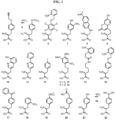
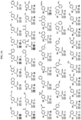
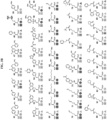
- the at least one unnatural amino acid comprises an unnatural amino acid as set forth in Figure 2C. In some embodiments, the at least one unnatural amino acid is incorporated into the modified IL-15 polypeptide by an orthogonal tRNA synthetase/tRNA pair. In some embodiments, the modified IL-15 polypeptide is conjugated to a conjugating moiety through the at least one unnatural amino acid. In some embodiments, the conjugating moiety comprises a water-soluble polymer, a protein, or a polypeptide.
- the water-soluble polymer comprises: polyethylene glycol (PEG), polypropylene glycol) (PPG), copolymers of ethylene glycol and propylene glycol, poly(oxyethylated polyol), poly(olefinic alcohol), poly(vinylpyrrolidone), poly(hydroxyalkylmethacrylamide), poly(hydroxyalkylmethacrylate), poly(saccharides), poly( ⁇ -hydroxy acid), poly(vinyl alcohol), polyphosphazene, polyoxazolines (POZ), poly(N-acryloylmorpholine), or a combination thereof; or a polysaccharide.
- the water-soluble polymer comprises PEG.
- the protein comprises an albumin, a transferrin, a transthyretin, or an Fc portion of an antibody.
- the polypeptide comprises a XTEN peptide, a glycine-rich homoamino acid polymer (HAP), a PAS polypeptide, an elastin-like polypeptide (ELP), a CTP peptide, or a gelatin-like protein (GLK) polymer.
- the conjugating moiety is directly bound to the at least one unnatural amino acid of the modified IL-15. In some embodiments, the conjugating moiety is indirectly bound to the at least one unnatural amino acid of the modified IL-15 through a linker.
- the linker comprises a homobifunctional linker.
- the homobifunctional linker comprises Lomant's reagent dithiobis (succinimidylpropionate) DSP, 3'3'-dithiobis(sulfosuccinimidyl proprionate) (DTSSP), disuccinimidyl suberate (DSS), bis(sulfosuccinimidyl)suberate (BS), disuccinimidyl tartrate (DST), disulfosuccinimidyl tartrate (sulfo DST), ethylene glycobis(succinimidylsuccinate) (EGS), disuccinimidyl glutarate (DSG), N,N'-disuccinimidyl carbonate (DSC), dimethyl adipimidate (DMA), dimethyl pimelimidate (DMP), dimethyl suberimidate (DMS), dimethyl-3,3'-dithiobispropion
- DFDNPS 4,4'-difluoro-3,3'-dinitrophenylsulfone
- BASED bis-[ ⁇ -(4-azidosalicylamido)ethyl]disulfide
- formaldehyde glutaraldehyde
- 1,4-butanediol diglycidyl ether 1,4-butanediol diglycidyl ether
- adipic acid dihydrazide carbohydrazide, o-toluidine, 3,3'-dimethylbenzidine, benzidine, ⁇ , ⁇ '-p-diaminodiphenyl, diiodo-p-xylene sulfonic acid, N,N'-ethylene-bis(iodoacetamide), or N,N'-hexamethylene-bis(iodoacetamide).
- the linker comprises a heterobifunctional linker.
- the heterobifunctional linker comprises N-succinimidyl 3-(2-pyridyldithio)propionate (sPDP), long-chain N-succinimidyl 3-(2-pyridyldithio)propionate (LC-sPDP), water-soluble-long-chain N-succinimidyl 3-(2-pyridyldithio) propionate (sulfo-LC-sPDP), succinimidyloxycarbonyl- ⁇ -methyl- ⁇ -(2-pyridyldithio)toluene (sMPT), sulfosuccinimidyl-6-[ ⁇ -methyl- ⁇ -(2-pyridyldithio)toluamido]hexanoate (sulfo-LC-sMPT), succinimidyl-4-(N-maleimidomethyl)cyclohex
- the linker comprises a cleavable or a non-cleavable dipeptide linker.
- the dipeptide linker comprises Val-Cit, Phe-Lys, Val-Ala, or Val-Lys.
- the linker comprises a maleimide group.
- the linker comprises a spacer.
- the spacer comprises p-aminobenzyl alcohol (PAB), p-aminobenzyoxycarbonyl (PABC), a derivative, or an analog thereof.
- the conjugating moiety is capable of extending the serum half-life of the modified IL-15 polypeptide.
- the decrease in binding affinity is about 10%, 20%, 30%, 40%, 50%, 60%, 70%, 80%, 90%, 95%, or 99% decrease in binding affinity to IL-15R ⁇ relative to a wild-type IL-15 polypeptide. In some embodiments, the decrease in binding affinity to IL-15R ⁇ is about 1-fold, 2-fold, 3-fold, 4-fold, 5-fold, 6-fold, 7-fold, 8-fold, 9-fold, 10-fold, or more relative to a wild-type IL-15 polypeptide. In some embodiments, the modified IL-15 polypeptide is a functionally active fragment of a full-length IL-15 polypeptide. In some embodiments, the modified IL-15 polypeptide is a recombinant IL-15 polypeptide.
- the modified IL-15 polypeptide is a recombinant human IL-15 polypeptide.
- the modified IL-15 polypeptide with the decrease in binding affinity to IL-15R ⁇ is capable of expanding effector T (Teff) cell and Natural Killer (NK) cell populations.
- modified interleukin 15 (IL-15) polypeptides comprising at least one post-translationally modified unnatural amino acid, wherein the at least one unnatural amino acid is at a residue position that does not significantly affect the binding affinity of the modified IL-15 polypeptide with interleukin 15 receptor ⁇ (IL-15R ⁇ ) or IL-2/interleukin 15 receptor ⁇ (IL-2/IL-15R ⁇ ).
- the modified IL-15 polypeptide comprises an extended half-life.
- the residue position of the at least one unnatural amino acid is selected from N1, W2, V3, N4, 16, S7, D8, K10, K11, E13, D14, L15, Q17, S18, M19, H20, 121, D22, A23, T24, L25, Y26, E28, S29, D30, V31, H32, P33, S34, C35, K36, V37, T38, K41, L44, E46, Q48, V49, S51, L52, E53, S54, G55, D56, A57, S58, H60, D61, T62, V63, E64, N65, 167, 168, L69, N71, N72, S73, L74, S75, S76, N77, G78, N79, V80, T81, E82, S83, G84, C85, K86, E87, C88, E89, E90, L91, E92, E93, K94, N95,
- the residue position of the at least one unnatural amino acid is selected from D22, A23, T24, L25, Y26, L44, E46, Q48, V49, E53, E89, E90, and E93; Y26, E46, V49, E53, and L25; A23, T24, E89, and E93; D22, L44, Q48, and E90; L25, E53, N77, and S83; or L25 and E53.
- the residue position of the at least one unnatural amino acid is selected from M1, S18, H20, K36, K41, G55, D56, S75, S76, N77, G78,V80, T81, S83, and K86, wherein the residue positions correspond to the positions as set forth in SEQ ID NO: 1.
- the at least one unnatural amino acid comprises p-acetyl-L-phenylalanine, p-iodo-L-phenylalanine, O-methyl-L-tyrosine, p-propargyloxyphenylalanine, p- propargyl-phenylalanine, L-3-(2-naphthyl)alanine, 3-methyl-phenylalanine, O- 4-allyl-L-tyrosine, 4-propyl-L-tyrosine, tri-O-acetyl-GlcNAcp-serine, L-Dopa, fluorinated phenylalanine, isopropyl-L-phenylalanine, p-azido-L-phenylalanine, p-acyl-L-phenylalanine, p-benzoyl-L-phenylalanine, L-phosphoserine, phosphonoserine, phosphonotyrosine, p-
- the at least one unnatural amino acid comprises an unnatural amino acid as set forth in Figure 2C. In some embodiments, the at least one unnatural amino acid is incorporated into the modified IL-15 polypeptide by an orthogonal tRNA synthetase/tRNA pair. In some embodiments, the modified IL-15 polypeptide is conjugated to a conjugating moiety through the at least one unnatural amino acid. In some embodiments, the conjugating moiety comprises a water-soluble polymer, a protein, or a polypeptide.
- the water-soluble polymer comprises: polyethylene glycol (PEG), polypropylene glycol) (PPG), copolymers of ethylene glycol and propylene glycol, poly(oxyethylated polyol), poly(olefinic alcohol), poly(vinylpyrrolidone), poly(hydroxyalkylmethacrylamide), poly(hydroxyalkylmethacrylate), poly(saccharides), poly( ⁇ -hydroxy acid), poly(vinyl alcohol), polyphosphazene, polyoxazolines (POZ), poly(N-acryloylmorpholine), or a combination thereof; or a polysaccharide.
- the water-soluble polymer comprises PEG.
- the PEG is a linear PEG or a branched PEG.
- the water-soluble polymers comprise a glycan.
- the polysaccharide comprises dextran, polysialic acid (PSA), hyaluronic acid (HA), amylose, heparin, heparan sulfate (HS), dextrin, or hydroxyethyl-starch (HES).
- the conjugating moiety comprises a saturated fatty acid.
- the saturated fatty acid comprises hexadecanoic acid, tetradecanoic acid, or 15-azidopentadecanoic acid.
- the protein comprises an albumin, a transferrin, a transthyretin, or an Fc portion of an antibody.
- the polypeptide comprises a XTEN peptide, a glycine-rich homoamino acid polymer (HAP), a PAS polypeptide, an elastin-like polypeptide (ELP), a CTP peptide, or a gelatin-like protein (GLK) polymer.
- the conjugating moiety is directly bound to the at least one unnatural amino acid of the modified IL-15. In some embodiments, the conjugating moiety is indirectly bound to the at least one unnatural amino acid of the modified IL-15 through a linker.
- the linker comprises a homobifunctional linker.
- the homobifunctional linker comprises Lomant's reagent dithiobis (succinimidylpropionate) DSP, 3'3'-dithiobis(sulfosuccinimidyl proprionate) (DTSSP), disuccinimidyl suberate (DSS), bis(sulfosuccinimidyl)suberate (BS), disuccinimidyl tartrate (DST), disulfosuccinimidyl tartrate (sulfo DST), ethylene glycobis(succinimidylsuccinate) (EGS), disuccinimidyl glutarate (DSG), N,N'-disuccinimidyl carbonate (DSC), dimethyl adipimidate (DMA), dimethyl pimelimidate (DMP), dimethyl suberimidate (DMS), dimethyl-3,3'-dithiobispropion
- DFDNPS 4,4'-difluoro-3,3'-dinitrophenylsulfone
- BASED bis-[ ⁇ -(4-azidosalicylamido)ethyl]disulfide
- formaldehyde glutaraldehyde
- 1,4-butanediol diglycidyl ether 1,4-butanediol diglycidyl ether
- adipic acid dihydrazide carbohydrazide, o-toluidine, 3,3'-dimethylbenzidine, benzidine, ⁇ , ⁇ '-p-diaminodiphenyl, diiodo-p-xylene sulfonic acid, N,N'-ethylene-bis(iodoacetamide), or N,N'-hexamethylene-bis(iodoacetamide).
- the linker comprises a heterobifunctional linker.
- the heterobifunctional linker comprises N-succinimidyl 3-(2-pyridyldithio)propionate (sPDP), long-chain N-succinimidyl 3-(2-pyridyldithio)propionate (LC-sPDP), water-soluble-long-chain N-succinimidyl 3-(2-pyridyldithio) propionate (sulfo-LC-sPDP), succinimidyloxycarbonyl- ⁇ -methyl- ⁇ -(2-pyridyldithio)toluene (sMPT), sulfosuccinimidyl-6-[ ⁇ -methyl- ⁇ -(2-pyridyldithio)toluamido]hexanoate (sulfo-LC-sMPT), succinimidyl-4-(N-maleimidomethyl)cyclohex
- the linker comprises a cleavable or a non-cleavable dipeptide linker.
- the dipeptide linker comprises Val-Cit, Phe-Lys, Val-Ala, or Val-Lys.
- the linker comprises a maleimide group.
- the linker comprises a spacer.
- the spacer comprises p-aminobenzyl alcohol (PAB), p-aminobenzyoxycarbonyl (PABC), a derivative, or an analog thereof.
- PAB p-aminobenzyl alcohol
- PABC p-aminobenzyoxycarbonyl
- the modified IL-15 polypeptide is a functionally active fragment of a full-length IL-15 polypeptide.
- the modified IL-15 polypeptide is a recombinant IL-15 polypeptide. In some embodiments, the modified IL-15 polypeptide is a recombinant human IL-15 polypeptide. In some embodiments, the modified IL-15 polypeptide with the decrease in binding affinity to IL-15R ⁇ is capable of expanding effector T (Teff) cell and Natural Killer (NK) cell populations.
- Teff effector T
- NK Natural Killer
- modified interleukin 15 (IL-15) polypeptides comprising at least one post-translationally modified unnatural amino acid, wherein the at least one unnatural amino acid is at a residue position that selectively decreases the binding affinity of the modified IL-15 polypeptide with interleukin 2/interleukin 15 receptor ⁇ (IL-2/IL-15R ⁇ ) but does not affect the interaction with the interleukin 15 receptor ⁇ (IL-15R ⁇ ).
- IL-15 interleukin 15
- residue position of the at least one unnatural amino acid is selected from V3, 16, K10, E28, S29, D30, V31, H32, P33, S102, V104, H105, Q108, M109, I111, N112, T113, and S114, wherein the residue positions correspond to the positions as set forth in SEQ ID NO: 1.
- the residue position of the at least one unnatural amino acid is selected from V3, K10, S29, D30, H32, H105, Q108, M109, I111, N112, T113, and S114; E28, P33, S102, and V104; or I6 and V31.
- the residue position of the at least one unnatural amino acid is selected from N1, N4, S7, D8, K11, D61, T62, E64, N65, 168, L69, and N72. In some embodiments, the residue position of the at least one unnatural amino acid is selected from N4, S7, K11, and D61; D8, E64, N65, 168, and N72; or N1, T62, and L69.
- the at least one unnatural amino acid comprises p-acetyl-L-phenylalanine, p-iodo-L-phenylalanine, O-methyl-L-tyrosine, p-propargyloxyphenylalanine, p-propargyl-phenylalanine, L-3-(2-naphthyl)alanine, 3-methyl-phenylalanine, O- 4-allyl-L-tyrosine, 4-propyl-L-tyrosine, tri-O-acetyl-GlcNAcp-serine, L-Dopa, fluorinated phenylalanine, isopropyl-L-phenylalanine, p-azido-L-phenylalanine, p-acyl-L-phenylalanine, p-benzoyl-L-phenylalanine, L-phosphoserine, phosphonoserine, phosphonotyrosine, p-
- the at least one unnatural amino acid comprises an unnatural amino acid as set forth in Figs. 1-3 .
- the at least one unnatural amino acid is incorporated into the modified IL-15 polypeptide by an orthogonal tRNA synthetase/tRNA pair.
- the modified IL-15 polypeptide is conjugated to a conjugating moiety through the at least one unnatural amino acid.
- the conjugating moiety comprises a water-soluble polymer, a protein, or a polypeptide.
- the water-soluble polymer comprises: polyethylene glycol (PEG), polypropylene glycol) (PPG), copolymers of ethylene glycol and propylene glycol, poly(oxyethylated polyol), poly(olefinic alcohol), poly(vinylpyrrolidone), poly(hydroxyalkylmethacrylamide), poly(hydroxyalkylmethacrylate), poly(saccharides), poly( ⁇ -hydroxy acid), poly(vinyl alcohol), polyphosphazene, polyoxazolines (POZ), poly(N-acryloylmorpholine), or a combination thereof; or a polysaccharide.
- the water-soluble polymer comprises PEG.
- the PEG is a linear PEG or a branched PEG.
- the water-soluble polymer comprises a glycan.
- the polysaccharide comprises dextran, polysialic acid (PSA), hyaluronic acid (HA), amylose, heparin, heparan sulfate (HS), dextrin, or hydroxyethyl-starch (HES).
- the conjugating moiety comprises a saturated fatty acid.
- the saturated fatty acid comprises hexadecanoic acid, tetradecanoic acid, or 15-azidopentadecanoic acid.
- the protein comprises an albumin, a transferrin, a transthyretin, or an Fc portion of an antibody.
- the polypeptide comprises a XTEN peptide, a glycine-rich homoamino acid polymer (HAP), a PAS polypeptide, an elastin-like polypeptide (ELP), a CTP peptide, or a gelatin-like protein (GLK) polymer.
- the conjugating moiety is directly bound to the at least one unnatural amino acid of the modified IL-15. In some embodiments, the conjugating moiety is indirectly bound to the at least one unnatural amino acid of the modified IL-15 through a linker.
- the linker comprises a heterobifunctional linker.
- the heterobifunctional linker comprises N-succinimidyl 3-(2-pyridyldithio)propionate (sPDP), long-chain N-succinimidyl 3-(2-pyridyldithio)propionate (LC-sPDP), water-soluble-long-chain N-succinimidyl 3-(2-pyridyldithio) propionate (sulfo-LC-sPDP), succinimidyloxycarbonyl- ⁇ -methyl- ⁇ -(2-pyridyldithio)toluene (sMPT), sulfosuccinimidyl-6-[ ⁇ -methyl- ⁇ -(2-pyridyldithio)toluamido]hexanoate (sulfo-LC-sMPT), succinimidyl-4-(N-maleimidomethyl)cyclohex
- the at least one unnatural amino acid comprises an unnatural amino acid as set forth in Figure 2C.
- the IL-15 conjugate has a decreased affinity to IL-15 receptor ⁇ (IL-15R ⁇ ) subunit relative to a wild-type IL-15 polypeptide.
- the decreased affinity is about 10%, 20%, 30%, 40%, 50%, 60%, 70%, 80%, 90%, 95%, or 99% decrease in binding affinity to IL-15R ⁇ relative to a wild-type IL-15 polypeptide.
- compositions comprising: a modified IL-15 polypeptide or an IL-15 conjugate; and a pharmaceutically acceptable excipient.
- the pharmaceutical composition is formulated for parenteral administration.
- the proliferative disease or condition is a cancer.
- the cancer is a solid tumor cancer.
- the solid tumor cancer is bladder cancer, bone cancer, brain cancer, breast cancer, colorectal cancer, esophageal cancer, eye cancer, head and neck cancer, kidney cancer, lung cancer, melanoma, ovarian cancer, pancreatic cancer, or prostate cancer.
- the cancer is a hematologic malignancy.
- the decreased affinity to IL-15R ⁇ is about IL-15R ⁇ 1-fold, 2-fold, 3-fold, 4-fold, 5-fold, 6-fold, 7-fold, 8-fold, 9-fold, 10-fold, or more relative to a wild-type IL-15 polypeptide.
- the conjugating moiety impairs or blocks the binding of IL-15 with IL-15R ⁇ .
- kits comprising a modified IL-15 polypeptide, an IL-15 conjugate, or a pharmaceutical composition.
- kits comprising a polynucleic acid molecule encoding a modified IL-15 polypeptide or an IL-15 polypeptide.
- Cancer is a complex group of diseases involving abnormal cell growth with the potential to invade or spread to other parts of the body.
- Cancer therapies such as radiation and chemotherapy that target cancer drivers and pathways can be successful.
- cancer cells are able to adapt to these therapies, limiting the efficacy of such therapies.
- Immunotherapy unlike surgery, chemotherapy, or radiation, stimulates the immune system to recognize and kill tumor cells.
- cytokines are used in immunotherapy for their ability to trigger an immune response.
- current immunotherapies utilizing cytokines result in several adverse effects including toxicity and uncontrolled cellular proliferation.
- modified cytokines or cytokine conjugates for use in treatment of cancer with ability to stimulate or expand specific T cell and NK populations resulting in improved treatment and reduced adverse events.
- Cytokines comprise a family of cell signaling proteins such as chemokines, interferons, interleukins, lymphokines, and tumor necrosis factors. Cytokines are produced by immune cells such as macrophages, B lymphocytes, T lymphocytes and mast cells, endothelial cells, fibroblasts, and different stromal cells. In some instances, cytokines modulate the balance between humoral and cell-based immune responses.
- Interleukins are signaling proteins which modulate the development and differentiation of T and B lymphocytes and hematopoietic cells. Interleukins are produced by helper CD4 T lymphocytes, monocytes, macrophages, and endothelial cells. In some cases, there are about 15 interleukins, interleukins 1-13, interleukin 15, and interleukin 17.
- Interleukin-15 is a pleiotropic cytokine whose structure is a 14-15 kDa glycoprotein. IL-15 transcription, translation and secretion are regulated through multiple complex mechanisms. IL-15 and IL-15 receptor ⁇ (IL-15R ⁇ , CD215) proteins are co-expressed predominantly by activated monocytes and dendritic cells (DCs). The transcription of the heterodimer IL-15/IL-15R ⁇ occurs following the interaction of monocytes/DCs with type 1 or type 2 interferons (IFN) or CD40 ligation or agents that act through Toll-like receptors (TLR) that activate NF-kB. Further, IL-15/IL-15R ⁇ protein expression is predominantly controlled at the levels of translation and secretion.
- IFN type 1 or type 2 interferons
- TLR Toll-like receptors
- IL-15 signals through a heterotrimeric receptor comprising a unique ⁇ chain (IL-15R ⁇ ), a shared ⁇ subunit (IL-15R ⁇ , CD132) with IL-2 (CD122) and a common ⁇ subunit (CD132; IL-15R ⁇ ) shared with several cytokines.
- IL-15R ⁇ has high affinity for IL-15 with a K d about 10 -11 M.
- IL-15 signaling is utilized to modulate T cell responses and subsequently for treatment of cancer.
- IL-15 signaling is utilized to simulate proliferation of activated CD4 - CD8 - , CD4 + CD8 + , CD4 + , and CD8 + T cells and their differentiation in defined effector T-cell subsets.
- IL-15 signaling is utilized to simulate the generation and proliferation of natural killer (NK) cells.
- NK natural killer
- IL-15 signaling is utilized to promote maintenance and survival of memory CD8 T cells, naive CD8 T cells, and NK cells.
- IL-15 signaling is utilized to induce formation of memory CD8 T cells.
- IL-15 signaling is utilized for priming NK cell target-specific activation. In some embodiments, IL-15 signaling does not result in Treg expansion.
- modified IL-15 polypeptides for modulating T cell responses and subsequently for treating cancer.
- the modified IL-15 polypeptide comprises decrease binding with interleukin 15 receptor ⁇ (IL-15R ⁇ ).
- the decrease in binding affinity is relative to binding affinity between a wild-type IL-15 polypeptide and the IL-15R ⁇ .
- the modified IL-15 polypeptide has little or no effect on interaction of the modified IL-15 polypeptide with interleukin 2/interleukin 15 receptor ⁇ (IL-2/IL-15R ⁇ ).
- the modified IL-15 polypeptide comprises one or more modifications that has little or no effect on the binding affinity of the modified IL-15 polypeptide with the IL-15R ⁇ and IL-15R ⁇ . In some embodiments, the modified IL-15 polypeptide comprises decrease binding with IL-2/IL-15R ⁇ and IL-15R ⁇ interaction is unaffected.
- modified IL-15 polypeptides or IL-15 conjugates with improved ability to stimulate an anti-tumor response.
- the modified IL-15 polypeptides or IL-15 conjugates have improved safety profile.
- the modified IL-15 polypeptides or IL-15 conjugates comprise a site-specific pegylation for increasing half-life.
- the site-specific pegylation increases half-life and has little or no effect on biological activity.
- signaling of the modified IL-15 polypeptides or IL-15 conjugates is biased to IL-15R ⁇ .
- the modified IL-15 polypeptides or IL-15 conjugates comprise a site-specific pegylation for increasing half-life and reducing toxicity. In some embodiments, the site-specific pegylation results in less dosing of the modified IL-15 polypeptides or IL-15 conjugates. In some embodiments, toxicity is reduced by the modified IL-15 polypeptides or IL-15 conjugates blocking IL-15R ⁇ interaction. In some embodiments, activity of the modified IL-15 polypeptides or IL-15 conjugates is limited to a tumor site.
- the modified IL-15 polypeptides or IL-15 conjugates comprise a site-specific pegylation such that trans-presentation of IL-15 is not required for natural killer (NK) and effector cell proliferation and function. In some embodiments, the modified IL-15 polypeptides or IL-15 conjugates comprise a site-specific pegylation such that clearance is inhibited or prohibited.
- IL-15 polypeptides are modified IL-15 polypeptides.
- the modification is to a natural amino acid.
- the modification is to an unnatural amino acid.
- described herein is an isolated and modified IL-15 polypeptide that comprises at least one unnatural amino acid.
- the IL-15 polypeptide is an isolated and purified mammalian IL-15, for example, a human IL-15 protein.
- the IL-15 polypeptide is a human IL-15 protein.
- the IL-15 polypeptide comprises about 80%, 85%, 90%, 95%, 96%, 97%, 98%, or 99% sequence identity to SEQ ID NO: 1 or 2.
- the IL-15 polypeptide comprises or consists of the sequence of SEQ ID NO: 1 or 2.
- the modified IL-15 polypeptide is a truncated variant.
- the truncation is an N-terminal deletion.
- the truncation is a C-terminal deletion.
- the truncation comprises both N-terminal and C-terminal deletions.
- the truncation can be a deletion of at least or about 1, 2, 3, 4, 5, 6, 7, 8, 9, 10, 11, 12, 13, 14, 15, 20, or more residues from either the N-terminus or the C-terminus, or both termini.
- the modified IL-15 polypeptide comprises an N-terminal deletion of at least or about 1, 2, 3, 4, 5, 6, 7, 8, 9, 10, 11, 12, 13, 14, 15, 20, or more residues.
- the modified IL-15 polypeptide comprises an N-terminal deletion of at least or about 1, 2, 3, 4, 5, 6, 7, 8, 9, or 10 residues. In some cases, the modified IL-15 polypeptide comprises an N-terminal deletion of at least or about 2 residues. In some cases, the modified IL-15 polypeptide comprises an N-terminal deletion of at least or about 3 residues. In some cases, the modified IL-15 polypeptide comprises an N-terminal deletion of at least or about 4 residues. In some cases, the modified IL-15 polypeptide comprises an N-terminal deletion of at least or about 5 residues. In some cases, the modified IL-15 polypeptide comprises an N-terminal deletion of at least or about 6 residues.
- the modified IL-15 polypeptide comprises an N-terminal deletion of at least or about 7 residues. In some cases, the modified IL-15 polypeptide comprises an N-terminal deletion of at least or about 8 residues. In some cases, the modified IL-15 polypeptide comprises an N-terminal deletion of at least or about 9 residues. In some cases, the modified IL-15 polypeptide comprises an N-terminal deletion of at least or about 10 residues.
- the modified IL-15 polypeptide is a functionally active fragment.
- the functionally active fragment comprises IL-15 region 5-114, 10-114, 15-114, 20-114, 1-110, 5-110, 10-110, 15-110, 20-110, 1-105, 5-105, 10-105, 15-105, 20-105, 1-100, 5-100, 10-100, 15-100, or 20-100, wherein the residue positions are in reference to the positions in SEQ ID NO: 1.
- the functionally active fragment comprises IL-15 region 5-114, 10-114, 15-114, or 20-114, wherein the residue positions are in reference to the positions in SEQ ID NO: 1.
- the functionally active fragment comprises IL-15 region 1-110, 5-110, 10-110, 15-110, or 20-110, wherein the residue positions are in reference to the positions in SEQ ID NO: 1.
- the functionally active fragment comprises IL-15 region 1-105, 5-105, 10-105, 15-105, or 20-105, wherein the residue positions are in reference to the positions in SEQ ID NO: 1.
- the functionally active fragment comprises IL-15 region 1-100, 5-100, 10-100, 15-100, or 20-100, wherein the residue positions are in reference to the positions in SEQ ID NO: 1.
- the functionally active IL-15 fragment comprises an internal deletion.
- the internal deletion comprises a loop region.
- the internal deletion comprises a deletion of 2, 3, 4, 5, 6, 7, 8, 9, 10, 11, 12, 13, 14, 15, or more residues.
- an IL-15 polypeptide described herein comprises at least one unnatural amino acid.
- the residue position of the at least one unnatural amino acid is selected from N1, W2, V3, N4, 16, S7, D8, K10, K11, E13, D14, L15, Q17, S18, M19, H20, I21, D22, A23, T24, L25, Y26, T27, E28, S29, D30, V31, H32, P33, S34, C35, K36, V37, T38, A39, K41, L44, L45, E46, Q48, V49, S51, L52, E53, S54, G55, D56, A57, S58, H60, D61, T62, V63, E64, N65, 167, 168, L69, N71, N72, S73, L74, S75, S76, N77, G78, N79, V80, T81, E82, S83, G84, C85
- the residue position of the at least one unnatural amino acid is selected from N1, W2, V3, N4, 16, S7, D8, K10, K11, E13, D14, L15, Q17, S18, M19, H20, I21, D22, A23, T24, L25, Y26, E28, S29, D30, V31, H32, P33, S34, C35, K36, V37, T38, K41, L44, E46, Q48, V49, S51, L52, E53, S54, G55, D56, A57, S58, H60, D61, T62, V63, E64, N65, 167, 168, L69, N71, N72, S73, L74, S75, S76, N77, G78, N79, V80, T81, E82, S83, G84, C85, K86, E87, C88, E89, E90, L91, E92, E93, K94, N95,
- the residue position of the at least one unnatural amino acid is selected from E13, D14, L15, Q17, S18, M19, H20, I21, S34, C35, K36, V37, T38, K41, L44, S51, L52, S54, G55, D56, A57, S58, H60, V63, 167, N71, S73, L74, S75, S76, N77, G78, N79, V80, T81, E82, S83, G84, C85, K86, E87, C88, L91, E92, K94, N95, 196, K97, E98, L100, Q101, and F110.
- the residue position of the at least one unnatural amino acid is selected from D14, Q17, S18, K41, S51, L52, G55, D56, A57, S58, S75, S76, N77, N79, V80, T81, S83, G84, E92, K94, N95, K97, and E98.
- the residue position of the at least one unnatural amino acid is selected from N1, N4, S7, D8, K11, D61, T62, E64, N65, 168, L69, and N72.
- the residue position of the at least one unnatural amino acid is selected from V3, I6, K10, E28, S29, D30, V31, H32, P33, S102, V104, H105, Q108, M109, I111, N112, T113, and S114. In some embodiments, the residue position of the at least one unnatural amino acid is selected from D22, A23, T24, L25, Y26, L44, E46, Q48, V49, E53, E89, E90, and E93. In some embodiments, the residue position of the at least one unnatural amino acid is selected from Y26, E46, V49, E53, and L25.
- the residue position of the at least one unnatural amino acid is selected from V3, K10, S29, D30, H32, H105, Q108, M109, I111, N112, T113, and S114. In some embodiments, the residue position of the at least one unnatural amino acid is selected from N4, S7, K11, and D61. In some embodiments, the residue position of the at least one unnatural amino acid is selected from L25, E53, N77, and S83. In some embodiments, the residue position of the at least one unnatural amino acid is selected from L25 and E53.
- the residue position of the at least one unnatural amino acid is selected from E46, Y26, V49, E53, T24, N4, K11, N65, L69, S18, H20, and S83. In some embodiments, the residue position of the at least one unnatural amino acid is selected from E46, Y26, V49, E53, and T24. In some embodiments, the residue position of the at least one unnatural amino acid is selected from E46, V49, E53, and T24. In some embodiments, the residue position of the at least one unnatural amino acid is selected from Y26, V49, E53, and T24. In some embodiments, the residue position of the at least one unnatural amino acid is selected from V49, E53, and T24.
- the residue position of the at least one unnatural amino acid is selected from E46 and Y26. In some embodiments, the residue position of the at least one unnatural amino acid is E46. In some embodiments, the residue position of the at least one unnatural amino acid is L25. In some embodiments, the residue position of the at least one unnatural amino acid is Y26. In some embodiments, the residue position of the at least one unnatural amino acid is V49. In some embodiments, the residue position of the at least one unnatural amino acid is E53. In some embodiments, the residue position of the at least one unnatural amino acid is T24. In some embodiments, the residue position of the at least one unnatural amino acid is N77.
- the residue position of the at least one unnatural amino acid is selected from N4, K11, N65, L69, S18, H20, and S83.
- An exemplary amino acids sequence for IL-15 is illustrated in Table 1 below. NAME SEQUENCE SEQ ID NO. IL-15 1 (mature form) IL-15 2 GenBank: CAA71044.1 (precursor)
- the at least one unnatural amino acid is located proximal to the N-terminus.
- proximal refers to a residue located at least 1 residue away from the N-terminal residue and up to about 50 residues away from the N-terminal residue.
- the at least one unnatural amino acid is located within the first 10, 20, 30, 40, or 50 residues from the N-terminal residue.
- the at least one unnatural amino acid is located within the first 10 residues from the N-terminal residue.
- the at least one unnatural amino acid is located within the first 20 residues from the N-terminal residue.
- the at least one unnatural amino acid is located within the first 30 residues from the N-terminal residue.
- the at least one unnatural amino acid is located within the first 40 residues from the N-terminal residue.
- the at least one unnatural amino acid is located within the first 50 residues from the N-terminal residue.
- the at least one unnatural amino acid is the N-terminal residue.
- the at least one unnatural amino acid is located proximal to the C-terminus.
- proximal refers to a residue located at least 1 residue away from the C-terminal residue and up to about 50 residues away from the C-terminal residue.
- the at least one unnatural amino acid is located within the first 10, 20, 30, 40, or 50 residues from the C-terminal residue.
- the at least one unnatural amino acid is located within the first 10 residues from the C-terminal residue.
- the at least one unnatural amino acid is located within the first 20 residues from the C-terminal residue.
- the at least one unnatural amino acid is located within the first 30 residues from the C-terminal residue.
- the at least one unnatural amino acid is located within the first 40 residues from the C-terminal residue.
- the at least one unnatural amino acid is located within the first 50 residues from the C-terminal residue.
- the at least one unnatural amino acid is the C-terminal residue.
- the modified IL-15 polypeptides comprising at least one unnatural amino acid, wherein a residue position of the at least one unnatural amino acid is at a residue position that selectively decreases the binding affinity of the IL-15 polypeptide with the interleukin 15 receptor ⁇ (IL-15R ⁇ ).
- the decrease in binding affinity is relative to binding affinity between a wild-type IL-15 polypeptide and the IL-15R ⁇ .
- the binding of the modified IL-15 polypeptide to IL-15R ⁇ does not affect the interaction of the modified IL-15 polypeptide with interleukin 2/ interleukin 15 receptor ⁇ (IL-2/IL-15R ⁇ ) or improves the interaction of the modified IL-15 polypeptide with IL-2/IL-15R ⁇ .
- the residue position of the at least one unnatural amino acid is selected from D22, A23, T24, L25, Y26, L44, E46, Q48, V49, E53, E89, E90, and E93, wherein the residue positions correspond to the positions as set forth in SEQ ID NO: 1.
- the residue position of the at least one unnatural amino acid is selected from Y26, E46, V49, E53, and L25, wherein the residue positions correspond to the positions as set forth in SEQ ID NO: 1.
- the residue position of the at least one unnatural amino acid is selected from A23, T24, E89, and E93, wherein the residue positions correspond to the positions as set forth in SEQ ID NO: 1.
- the residue position of the at least one unnatural amino acid is selected from D22, L44, Q48, and E90, wherein the residue positions correspond to the positions as set forth in SEQ ID NO: 1.
- the residue position of the at least one unnatural amino acid is Y26.
- the modified IL-15 polypeptide further comprises a PEG. In some cases, the PEG is conjugated at a residue position selected from D22, A23, T24, L25, Y26, L44, E46, Q48, V49, E53, E89, E90, and E93. In some embodiments, the modified IL-15 polypeptide further comprises a PEG for increased half-life.
- the PEG is conjugated at a residue position selected from E13, D14, L15, Q17, S18, M19, H20, I21, S34, C35, K36, V37, T38, K41, L44, S51, L52, S54, G55, D56, A57, S58, H60, V63, 167, N71, S73, L74, S75, S76, N77, G78, N79, V80, T81, E82, S83, G84, C85, K86, E87, C88, L91, E92, K94, N95, 196, K97, E98, L100, Q101, and F110, for increased half-life.
- the PEG is conjugated at a residue position selected from N71, N72, and N77.
- the residue conjugated to the PEG is mutated to a natural amino acid.
- the residue conjugated to the PEG is mutated to an unnatural amino acid.
- the mutation at N71, N72, or N77 further improves a CMC condition (e.g., yield, purity, stability, decreased aggregation, and/or improving protein folding), potency, or a combination thereof.
- the modified IL-15 polypeptides comprising at least one unnatural amino acid, wherein the at least one unnatural amino acid is at a residue position that selectively decreases the binding affinity of the modified IL-15 polypeptide with IL-2/IL-15R ⁇ , IL-15R ⁇ , or a combination thereof.
- the modified IL-15 has little or no effect on interaction with IL-15R ⁇ .
- the residue position of the at least one unnatural amino acid is selected from N1, V3, N4, 16, S7, D8, K10, K11, E28, S29, D30, V31, H32, P33, D61, T62, E64, N65, 168, L69, N72, S102, V104, H105, Q108, M109, I111, N112, T113, and S114, wherein the residue positions correspond to the positions as set forth in SEQ ID NO: 1.
- the at least one unnatural amino acid is at a residue position that selectively decreases the binding affinity of the modified IL-15 polypeptide with IL-2/IL-15R ⁇ .
- the residue position of the at least one unnatural amino acid is selected from N1, N4, S7, D8, K11, D61, T62, E64, N65, 168, L69, and N72, wherein the residue positions correspond to the positions as set forth in SEQ ID NO: 1.
- the residue position of the at least one unnatural amino acid is selected from N4, S7, K11, and D61.
- the residue position of the at least one unnatural amino acid is selected from D8, E64, N65, 168, and N72.
- the residue position of the at least one unnatural amino acid is selected from N1, T62, and L69.
- the residue position of the at least one unnatural amino acid is N4.
- the residue position of the at least one unnatural amino acid is S7. In some instances, the residue position of the at least one unnatural amino acid is K11. In some instances, the residue position of the at least one unnatural amino acid is D61. In some embodiments, the at least one unnatural amino acid is at a residue position that selectively decreases the binding affinity of the modified IL-15 polypeptide with IL-2/IL-15R ⁇ .
- the residue position of the at least one unnatural amino acid is selected from V3, 16, K10, E28, S29, D30, V31, H32, P33, S102, V104, H105, Q108, M109, I111, N112, T113, and S114, wherein the residue positions correspond to the positions as set forth in SEQ ID NO: 1.
- the residue position of the at least one unnatural amino acid is selected from V3, K10, S29, D30, H32, H105, Q108, M109, I111, N112, T113, and S114.
- the residue position of the at least one unnatural amino acid is selected from E28, P33, S102, and V104.
- the residue position of the at least one unnatural amino acid is selected from I6 and V31. In some instances, the residue position of the at least one unnatural amino acid is V3. In some instances, the residue position of the at least one unnatural amino acid is K10. In some instances, the residue position of the at least one unnatural amino acid is S29. In some instances, the residue position of the at least one unnatural amino acid is D30. In some instances, the residue position of the at least one unnatural amino acid is H32. In some instances, the residue position of the at least one unnatural amino acid is H105. In some instances, the residue position of the at least one unnatural amino acid is Q108. In some instances, the residue position of the at least one unnatural amino acid is M109.
- the residue position of the at least one unnatural amino acid is I111. In some instances, the residue position of the at least one unnatural amino acid is N112. In some instances, the residue position of the at least one unnatural amino acid is T113. In some instances, the residue position of the at least one unnatural amino acid is S114. In some embodiments, the modified IL-15 polypeptide further comprises a PEG.
- the PEG is conjugated at a residue position selected from N1, V3, N4, 16, S7, D8, K10, K11, E28, S29, D30, V31, H32, P33, D61, T62, E64, N65, 168, L69, N72, S102, V104, H105, Q108, M109, I111, N112, T113, and S114.
- the modified IL-15 polypeptide further comprises a PEG for increased half-life.
- the PEG is conjugated at a residue position selected from E13, D14, L15, Q17, S18, M19, H20, I21, S34, C35, K36, V37, T38, K41, L44, S51, L52, S54, G55, D56, A57, S58, H60, V63, I67, N71, S73, L74, S75, S76, N77, G78, N79, V80, T81, E82, S83, G84, C85, K86, E87, C88, L91, E92, K94, N95, I96, K97, E98, L100, Q101, and F110 for increased half-life.
- the PEG is conjugated at a residue position selected from N71, N72, and N77.
- the residue conjugated to the PEG is mutated to a natural amino acid.
- the residue conjugated to the PEG is mutated to an unnatural amino acid.
- the mutation at N71, N72, or N77 further improves a CMC condition (e.g., yield, purity, stability, decreased aggregation, and/or improving protein folding), potency, or a combination thereof.
- the modified IL-15 polypeptides comprising at least one unnatural amino acid, wherein the at least one unnatural amino acid is at a residue position that does not affect the binding affinity of the modified IL-15 polypeptide with the IL-15R ⁇ and IL-15R ⁇ .
- the modified IL-15 polypeptide further comprises a PEG for increased half-life.
- the modified IL-15 comprises a PEG with no change in biological activity.
- the residue is modified for half-life extension.
- the residue position of the at least one unnatural amino acid is selected from E13, D14, L15, Q17, S18, M19, H20, I21, S34, C35, K36, V37, T38, K41, L44, S51, L52, S54, G55, D56, A57, S58, H60, V63, 167, N71, S73, L74, S75, S76, N77, G78, N79, V80, T81, E82, S83, G84, C85, K86, E87, C88, L91, E92, K94, N95, 196, K97, E98, L100, Q101, and F110, wherein the residue positions correspond to the positions as set forth in SEQ ID NO: 1.
- the residue position of the at least one unnatural amino acid is selected from D14, Q17, S18, K41, S51, L52, G55, D56, A57, S58, S75, S76, N77, N79, V80, T81, S83, G84, E92, K94, N95, K97, and E98, wherein the residue positions correspond to the positions as set forth in SEQ ID NO: 1.
- the residue position of the at least one unnatural amino acid is selected from E13, L15, M19, H20, K36, V37, T38, S54, H60, 167, N71, G78, K86, E87, and Q101, wherein the residue positions correspond to the positions as set forth in SEQ ID NO: 1.
- the residue position of the at least one unnatural amino acid is selected from I21, S34, C35, L44, V63, S73, L74, E82, C85, C88, L91, I96, L100, and F110, wherein the residue positions correspond to the positions as set forth in SEQ ID NO: 1.
- the residue position of the at least one unnatural amino acid is selected from N71, N72, and N77, wherein the residue positions correspond to the positions as set forth in SEQ ID NO: 1. In some embodiments, the residue position of the at least one unnatural amino acid is selected from N77 and S83. In some embodiments, the residue position of the at least one unnatural amino acid is D14. In some embodiments, the residue position of the at least one unnatural amino acid is Q17. In some embodiments, the residue position of the at least one unnatural amino acid is S18. In some embodiments, the residue position of the at least one unnatural amino acid is K41. In some embodiments, the residue position of the at least one unnatural amino acid is S51.
- the residue position of the at least one unnatural amino acid is L52. In some embodiments, the residue position of the at least one unnatural amino acid is G55. In some embodiments, the residue position of the at least one unnatural amino acid is D56. In some embodiments, the residue position of the at least one unnatural amino acid is A57. In some embodiments, the residue position of the at least one unnatural amino acid is S58. In some embodiments, the residue position of the at least one unnatural amino acid is S75. In some embodiments, the residue position of the at least one unnatural amino acid is S76. In some embodiments, the residue position of the at least one unnatural amino acid is N77. In some embodiments, the residue position of the at least one unnatural amino acid is N79.
- the residue position of the at least one unnatural amino acid is V80. In some embodiments, the residue position of the at least one unnatural amino acid is T81. In some embodiments, the residue position of the at least one unnatural amino acid is S83. In some embodiments, the residue position of the at least one unnatural amino acid is G84. In some embodiments, the residue position of the at least one unnatural amino acid is E92. In some embodiments, the residue position of the at least one unnatural amino acid is K94. In some embodiments, the residue position of the at least one unnatural amino acid is N95. In some embodiments, the residue position of the at least one unnatural amino acid is K97. In some embodiments, the residue position of the at least one unnatural amino acid is E98.
- the mutation at N71, N72, or N77 comprises a mutation to a natural amino acid. In some cases, the mutation at N71, N72, or N77 further improves a CMC condition (e.g., yield, purity, stability, decreased aggregation, and/or improving protein folding), potency, or a combination thereof.
- a CMC condition e.g., yield, purity, stability, decreased aggregation, and/or improving protein folding
- the IL-15 polypeptide comprising at least one unnatural amino acid is further conjugated to a conjugating moiety to generate an IL-15 conjugate.
- the amino acid position of the at least one unnatural amino acid is at N1, W2, V3, N4, 16, S7, D8, K10, K11, E13, D14, L15, Q17, S18, M19, H20, 121, D22, A23, T24, L25, Y26, T27, E28, S29, D30, V31, H32, P33, S34, C35, K36, V37, T38, A39, K41, L44, L45, E46, Q48, V49, S51, L52, E53, S54, G55, D56, A57, S58, H60, D61, T62, V63, E64, N65, 167, 168, L69, N71, N72, S73, L74, S75, S76, N77, G78, N79,
- the amino acid position of the at least one unnatural amino acid is at N1, W2, V3, N4, 16, S7, D8, K10, K11, E13, D14, L15, Q17, S18, M19, H20, I21, D22, A23, T24, L25, Y26, E28, S29, D30, V31, H32, P33, S34, C35, K36, V37, T38, K41, L44, E46, Q48, V49, S51, L52, E53, S54, G55, D56, A57, S58, H60, D61, T62, V63, E64, N65, I67, I68, L69, N71, N72, S73, L74, S75, S76, N77, G78, N79, V80, T81, E82, S83, G84, C85, K86, E87, C88, E89, E90, L91, E92, E93, K94, N95, 196
- the conjugating moiety is bound to the at least one unnatural amino acid. In some cases, the conjugating moiety is bound to the N-terminal or the C-terminal amino acid residue. In some instances, the conjugating moiety is directly bound to the at least one unnatural amino acid or a terminal residue. In other instances, the conjugating moiety is indirectly bound to the at least one unnatural amino acid or a terminal residue via a linker described infra.
- the decreased affinity of the IL-15 polypeptide or IL-15 conjugate to an IL-15 receptor ⁇ (IL-15R ⁇ ) subunit relative to a wild-type IL-15 polypeptide is about 10%, 20%, 30%, 40%, 50%, 60%, 70%, 80%, 90%, 95%, or 99%. In some embodiments, the decreased affinity is about 10%. In some embodiments, the decreased affinity is about 20%. In some embodiments, the decreased affinity is about 40%. In some embodiments, the decreased affinity is about 50%. In some embodiments, the decreased affinity is about 60%. In some embodiments, the decreased affinity is about 80%. In some embodiments, the decreased affinity is about 90%. In some embodiments, the decreased affinity is about 95%. In some embodiments, the decreased affinity is 100%.
- the decreased affinity of the IL-15 polypeptide or IL-15 conjugate to an IL-15 receptor ⁇ (IL-15R ⁇ ) subunit relative to a wild-type IL-15 polypeptide is about 1-fold, 2-fold, 3-fold, 4-fold, 5-fold, 6-fold, 7-fold, 8-fold, 9-fold, 10-fold, or more.
- the decreased affinity is about 1-fold.
- the decreased affinity is about 2-fold.
- the decreased affinity is about 4-fold.
- the decreased affinity is about 5-fold.
- the decreased affinity is about 6-fold.
- the decreased affinity is about 8-fold.
- the decreased affinity is about 10-fold.
- the IL-15 polypeptide or IL-15 conjugate does not interact with IL-15R ⁇ .
- the decreased affinity of the IL-15 polypeptide or IL-15 conjugate to an IL-2 receptor (IL-2R) subunit relative to a wild-type IL-15 polypeptide is about 10%, 20%, 30%, 40%, 50%, 60%, 70%, 80%, 90%, 95%, or 99%.
- the IL-2R subunit is IL-2R ⁇ .
- the decreased affinity is about 10%.
- the decreased affinity is about 20%.
- the decreased affinity is about 40%.
- the decreased affinity is about 50%.
- the decreased affinity is about 60%.
- the decreased affinity is about 80%.
- the decreased affinity is about 90%.
- the decreased affinity is about 95%.
- the decreased affinity is 100%.
- the decreased affinity of the IL-15 polypeptide or IL-15 conjugate to an IL-2 receptor (IL-2R) subunit relative to a wild-type IL-15 polypeptide is about 1-fold, 2-fold, 3-fold, 4-fold, 5-fold, 6-fold, 7-fold, 8-fold, 9-fold, 10-fold, or more.
- the IL-2R subunit is IL-2R ⁇ .
- the decreased affinity is about 1-fold.
- the decreased affinity is about 2-fold.
- the decreased affinity is about 4-fold.
- the decreased affinity is about 5-fold.
- the decreased affinity is about 6-fold.
- the decreased affinity is about 8-fold.
- the decreased affinity is about 10-fold.
- the IL-15 polypeptide or IL-15 conjugate does not interact with IL-2R ⁇ .
- the IL-15 polypeptide or IL-15 conjugate has an enhanced half-life. In some instances, the enhanced half-life is compared to a half-life of a wild-type IL-15 protein or wild-type IL-15 conjugate.
- the enhanced half-life of the IL-15 polypeptide or IL-15 conjugate is at least 90 minutes, 2 hours, 3 hours, 4 hours, 5 hours, 6 hours, 7 hours, 8 hours, 9 hours, 10 hours, 11 hours, 12 hours, 18 hours, 24 hours, 36 hours, 48 hours, 3 days, 4 days, 5 days, 6 days, 7 days, 10 days, 12 days, 14 days, 21 days, 28 days, 30 days, or longer than the half-life of the wild-type IL-15 protein or wild-type IL-15 conjugate. In some cases, the enhanced half-life of the IL-15 polypeptide or IL-15 conjugate is at least 90 minutes or longer than the half-life of the wild-type IL-15 protein or wild-type IL-15 conjugate.
- the enhanced half-life of the IL-15 polypeptide or IL-15 conjugate is at least 2 hours or longer than the half-life of the wild-type IL-15 protein or wild-type IL-15 conjugate. In some cases, the enhancehalf-life of the IL-15 polypeptide or IL-15 conjugate is at least 3 hours or longer than the half-life of the wild-type IL-15 protein or wild-type IL-15 conjugate. In some cases, the enhanced half-life of the IL-15 polypeptide or IL-15 conjugate is at least 4 hours or longer than the half-life of the wild-type IL-15 protein or wild-type IL-15 conjugate.
- the enhanced half-life of the IL-15 polypeptide or IL-15 conjugate is at least 5 hours or longer than the half-life of the wild-type IL-15 protein or wild-type IL-15 conjugate. In some cases, the enhanced half-life of the IL-15 polypeptide or IL-15 conjugate is at least 6 hours or longer than the half-life of the wild-type IL-15 protein or wild-type IL-15 conjugate. In some cases, the enhanced half-life of the IL-15 polypeptide or IL-15 conjugate is at least 10 hours or longer than the half-life of the wild-type IL-15 protein or wild-type IL-15 conjugate.
- the enhanced half-life of the IL-15 polypeptide or IL-15 conjugate is at least 12 hours or longer than thehalf-life of the wild-type IL-15 protein or wild-type IL-15 conjugate. In some cases, the enhanced half-life of the IL-15 polypeptide or IL-15 conjugate is at least 18 hours or longer than the half-life of the wild-type IL-15 protein or wild-type IL-15 conjugate. In some cases, the enhanced half-life of the IL-15 polypeptide or IL-15 conjugate is at least 24 hours or longer than the half-life of the wild-type IL-15 protein or wild-type IL-15 conjugate.
- the enhanced half-life of the IL-15 polypeptide or IL-15 conjugate is at least 36 hours or longer than the half-life of the wild-type IL-15 protein or wild-type IL-15 conjugate. In some cases, the enhanced half-life of the IL-15 polypeptide or IL-15 conjugate is at least 48 hours or longer than the half-life of the wild-type IL-15 protein or wild-type IL-15 conjugate. In some cases, the enhanced half-life of the IL-15 polypeptide or IL-15 conjugate is at least 3 days or longer than the half-life of the wild-type IL-15 protein or wild-type IL-15 conjugate.
- the enhanced half-life of the IL-15 polypeptide or IL-15 conjugate is at least 4 days or longer than the half-life of the wild-type IL-15 protein or wild-type IL-15 conjugate. In some cases, the enhanced half-life of the IL-15 polypeptide or IL-15 conjugate is at least 5 days or longer than the half-life of the wild-type IL-15 protein or wild-type IL-15 conjugate. In some cases, the enhanced half-life of the IL-15 polypeptide or IL-15 conjugate is at least 6 days or longer than the half-life of the wild-type IL-15 protein or wild-type IL-15 conjugate.
- the enhanced half-life of the IL-15 polypeptide or IL-15 conjugate is at least 7 days or longer than the half-life of the wild-type IL-15 protein or wild-type IL-15 conjugate. In some cases, the enhanced half-life of the IL-15 polypeptide or IL-15 conjugate is at least 10 days or longer than thhalf-life of the wild-type IL-15 protein or wild-type IL-15 conjugate. In some cases, the enhanced half-life of the IL-15 polypeptide or IL-15 conjugate is at least 12 days or longer than the half-life of the wild-type IL-15 protein or wild-type IL-15 conjugate.
- the enhanced half-life of the IL-15 polypeptide or IL-15 conjugate is at least 14 days or longer than the half-life of the wild-type IL-15 protein or wild-type IL-15 conjugate. In some cases, the enhanced half-life of the IL-15 polypeptide or IL-15 conjugate is at least 21 days or longer than the half-life of the wild-type IL-15 protein or wild-type IL-15 conjugate. In some cases, the enhanced half-life of the IL-15 polypeptide or IL-15 conjugate is at least 28 days or longer than the half-life of the wild-type IL-15 protein or wild-type IL-15 conjugate. In some cases, the enhanced half-life of the IL-15 polypeptide or IL-15 conjugate is at least 30 days or longer than the half-life of the wild-type IL-15 protein or wild-type IL-15 conjugate.
- the enhanced half-life of the IL-15 polypeptide or IL-15 conjugate is about 4 hours, 5 hours, 6 hours, 7 hours, 8 hours, 9 hours, 10 hours, 11 hours, 12 hours, 18 hours, 24 hours, 36 hours, 48 hours, 3 days, 4 days, 5 days, 6 days, 7 days, 10 days, 12 days, 14 days, 21 days, 28 days, or 30 days compared to the half-life of the wild-type IL-15 protein or wild-type IL-15 conjugate.
- the biologically active IL-15 polypeptide or IL-15 conjugate has an enhanced half-life of about 90 minutes. In some cases, the biologically active IL-15 polypeptide or IL-15 conjugate has an enhanced half-life of about 2 hours.
- the biologically active IL-15 polypeptide or IL-15 conjugate has an enhanced half-life of about 3 hours. In some cases, the biologically active IL-15 polypeptide or IL-15 conjugate has an enhanced half-life of about 4 hours. In some cases, the biologically active IL-15 polypeptide or IL-15 conjugate has an enhanced half-life of about 5 hours. In some cases, the biologically active IL-15 polypeptide or IL-15 conjugate has an enhanced half-life of about 6 hours. In some cases, the biologically active IL-15 polypeptide or IL-15 conjugate has an enhanced half-life of about 7 hours. In some cases, the biologically active IL-15 polypeptide or IL-15 conjugate has an enhanced half-life of about 8 hours.
- the biologically active IL-15 polypeptide or IL-15 conjugate has an enhanced half-life of about 9 hours. In some cases, the biologically active IL-15 polypeptide or IL-15 conjugate has an enhanced half-life of about 10 hours. In some cases, the biologically active IL-15 polypeptide or IL-15 conjugate has an enhanced half-life of about 11 hours. In some cases, the biologically active IL-15 polypeptide or IL-15 conjugate has an enhanced half-life of about 12 hours. In some cases, the biologically active IL-15 polypeptide or IL-15 conjugate has an enhanced half-life of about 18 hours. In some cases, the biologically active IL-15 polypeptide or IL-15 conjugate has an enhanced half-life of about 24 hours.
- the biologically active IL-15 polypeptide or IL-15 conjugate has an enhanced half-life of about 36 hours. In some cases, the biologically active IL-15 polypeptide or IL-15 conjugate has an enhanced half-life of about 48 hours. In some cases, the biologically active IL-15 polypeptide or IL-15 conjugate has an enhanced half-life of about 3 days. In some cases, the biologically active IL-15 polypeptide or IL-15 conjugate has an enhanced half-life of about 4 days. In some cases, the biologically active IL-15 polypeptide or IL-15 conjugate has an enhanced half-life of about 5 days. In some cases, the biologically active IL-15 polypeptide or IL-15 conjugate has an enhanced half-life of about 6 days.
- the biologically active IL-15 polypeptide or IL-15 conjugate has an enhanced half-life of about 7 days. In some cases, the biologically active IL-15 polypeptide or IL-15 conjugate has an enhanced half-life of about 10 days. In some cases, the biologically active IL-15 polypeptide or IL-15 conjugate has an enhanced half-life of about 12 days. In some cases, the biologically active IL-15 polypeptide or IL-15 conjugate has an enhanced half-life of about 14 days. In some cases, the biologically active IL-15 polypeptide or IL-15 conjugate has an enhanced half-life of about 21 days. In some cases, the biologically active IL-15 polypeptide or IL-15 conjugate has an enhanced half-life of about 28 days. In some cases, the biologically active IL-15 polypeptide or IL-15 conjugate has an enhanced half-life of about 30 days.
- the modified IL-15 polypeptide retains significant signaling potency with interleukin 15 receptor ⁇ (IL-15R ⁇ ) signaling complex.
- the signaling potency is compared to a signaling potency between a wild-type IL-15 polypeptide and IL-15R ⁇ .
- a difference in receptor signaling potency between the modified IL-15/IL-15R ⁇ complex and the wild-type IL-15/IL-15R ⁇ complex is less than 1000-fold, less than 500-fold, less than 200-fold, less than 100-fold, less than 50-fold, less than 10-fold, less than 5-fold, less than 4-fold, less than 3-fold, less than 2-fold, or less than 1-fold.
- a difference in receptor signaling potency between the modified IL-15/IL-15R ⁇ complex and the wild-type IL-15/IL-15R ⁇ complex is greater than 10-fold, greater than 20-fold, greater than 30-fold, greater than 40-fold, greater than 50-fold, greater than 100-fold, greater than 200-fold, greater than 300-fold, greater than 400-fold, or greater than 500-fold.
- the modified IL-15 polypeptide is a partial agonist, e.g., an agonist that activates a receptor (e.g., an IL-15 ⁇ signaling complex) but has only a partial efficacy at the receptor relative to a full agonist.
- the modified IL-15 polypeptide is a full agonist, e.g., an agonist that activates a receptor (e.g., an IL-15 ⁇ signaling complex) at a maximum response.
- the receptor signaling potency is measured by an EC50 value.
- the modified IL-15 polypeptide provides an EC50 value that is less than 1000-fold, less than 500-fold, less than 200-fold, less than 100-fold, less than 50-fold, less than 10-fold, less than 5-fold, less than 4-fold, less than 3-fold, less than 2-fold, or less than 1-fold different than an EC50 value of the wild-type IL-15/IL-15R ⁇ complex.
- the modified IL-15 polypeptide provides an EC50 value that is greater than 10-fold, greater than 20-fold, greater than 30-fold, greater than 40-fold, greater than 50-fold, greater than 100-fold, greater than 200-fold, greater than 300-fold, greater than 400-fold, or greater than 500-fold different than an EC50 value of the wild-type IL-15/IL-15R ⁇ complex.
- the receptor signaling potency is measured by an ED50 value.
- the modified IL-15 polypeptide provides an ED50 value that is less than 1000-fold, less than 500-fold, less than 200-fold, less than 100-fold, less than 50-fold, less than 10-fold, less than 5-fold, less than 4-fold, less than 3-fold, less than 2-fold, or less than 1-fold different than an EC50 value of the wild-type IL-15/IL-15R ⁇ complex.
- the modified IL-15 polypeptide provides an ED50 value that is greater than 10-fold, greater than 20-fold, greater than 30-fold, greater than 40-fold, greater than 50-fold, greater than 100-fold, greater than 200-fold, greater than 300-fold, greater than 400-fold, or greater than 500-fold different than an EC50 value of the wild-type IL-15/IL-15R ⁇ complex.
- an IL-15 polypeptide is modified (e.g., pegylated) to extend half-life, improve stability, improve purification yield, improve purity, decrease aggregation, improve protein folding, or a combination thereof, during the Chemistry, Manufacturing and Controls (CMC) stage.
- the IL-15 polypeptide is modified at an amino acid position: N71, N72, or N77, wherein the residue positions correspond to the positions as set forth in SEQ ID NO: 1.
- the IL-15 polypeptide is modified at residue N77, e.g., via pegylation, to extend half-life, improve stability, improve purification yield, improve purity, decrease aggregation, improve protein folding, or a combination thereof, during the CMC stage.
- the IL-15 polypeptide is further modified at position N1, W2, V3, N4, 16, S7, D8, K10, K11, E13, D14, L15, Q17, S18, M19, H20, I21, D22, A23, T24, L25, Y26, E28, S29, D30, V31, H32, P33, S34, C35, K36, V37, T38, K41, L44, E46, Q48, V49, S51, L52, E53, S54, G55, D56, A57, S58, H60, D61, T62, V63, E64, N65, I67, I68, L69, N71, N72, S73, L74, S75, S76, N77, G78, N79, V80, T81, E82, S83, G84, C85, K86, E87, C88, E89, E90, L91, E92, E93, K94, N95, I96, K97
- the IL-15 polypeptide is further modified at a position D22, A23, T24, L25, Y26, L44, E46, Q48, V49, E53, E89, E90, or E93, wherein the modification impairs interaction with IL-15R ⁇ .
- the IL-15 polypeptide is further modified at a position N1, N4, S7, D8, K11, D61, T62, E64, N65, I68, L69, or N72, wherein the modification impairs interaction with IL-15R ⁇ .
- the IL-15 polypeptide is further modified at a position V3, 16, K10, E28, S29, D30, V31, H32, P33, S102, V104, H105, Q108, M109, I111, N112, T113, or S114, wherein the modification impairs interaction with IL-15R ⁇ .
- the IL-15 polypeptide is further modified at a position E13, D14, L15, Q17, S18, M19, H20, I21, S34, C35, K36, V37, T38, K41, L44, S51, L52, S54, G55, D56, A57, S58, H60, V63, I67, N71, S73, L74, S75, S76, N77, G78, N79, V80, T81, E82, S83, G84, C85, K86, E87, C88, L91, E92, K94, N95, I96, K97, E98, L100, Q101, or F110, wherein the modification improves half-life extension.
- the IL-15 polypeptide is further modified at one or more of the above positions for impairs interaction with IL-15R ⁇ , impairs interaction with IL-15R ⁇ , impairs interaction with IL-15Ry, improves half-life extension, or a combination thereof.
- IL-15 conjugate precursors comprising a modified IL-15 polypeptide, wherein one or more amino acids have been mutated from the wild type amino acid. Such precursors are often used with the methods disclosed herein for the treatment of diseases or conditions. In some embodiments, an IL-15 precursor is not conjugated.
- Such mutations variously comprise additions, deletions, or substitutions. In some cases, the addition comprises inclusion of 1, 2, 3, 4, 5, 6, 7, 8, 9, 10, or more residues at the N-terminus, the C-terminus, or an internal region of the IL-15 polypeptide. In additional cases, the deletion comprises removal of 1, 2, 3, 4, 5, 6, 7, 8, 9, 10, or more residues from the N-terminus, the C-terminus, or within an internal region of the IL-15 polypeptide.
- an amino acid residue disclosed herein is mutated to lysine, cysteine, histidine, arginine, aspartic acid, glutamic acid, serine, threonine, or tyrosine prior to binding to (or reacting with) a conjugating moiety.
- the side chain of lysine, cysteine, histidine, arginine, aspartic acid, glutamic acid, serine, threonine, or tyrosine may bind to a conjugating moiety disclosed herein.
- the amino acid residue is mutated to cysteine, lysine, or histidine.
- the amino acid residue is mutated to cysteine. In some cases, the amino acid residue is mutated to lysine. In some cases, the amino acid residue is mutated to histidine. In some cases, the amino acid residue is mutated to tyrosine. In some cases, the amino acid residue is mutated to tryptophan. In some instances, the amino acid residue is located proximal to the Nor C-terminus, at the N- or C-terminus, or at an internal residue position. In some instances, the amino acid residue is the N- or C-terminal residue and the mutation is to cysteine or lysine.
- the amino acid residue is located proximal to the N- or C-terminal residue (e.g., within 50, 40, 30, 20, or 10 residues from the N- or C-terminal residue) and the mutation is to cysteine or lysine.
- an amino acid residue is added to the N- or C-terminal residue, i.e., the IL-15 polypeptide comprises an additional amino acid residue at either the N- or C-terminus and the additional amino acid residue is cysteine or lysine. In some cases, the additional amino acid residue is cysteine. In some cases, the additional amino acid is conjugated to a conjugating moiety.
- an amino acid residue described herein is mutated to an unnatural amino acid.
- an unnatural amino acid is not conjugated with a conjugating moiety.
- an IL-15 polypeptide disclosed herein comprises an unnatural amino acid, wherein the IL-15 is conjugated to the protein, wherein the point of attachment is not the unnatural amino acid.
- an amino acid residue disclosed herein is mutated to an unnatural amino acid prior to binding to a conjugating moiety.
- the mutation to an unnatural amino acid prevents or minimizes a self-antigen response of the immune system.
- unnatural amino acid refers to an amino acid other than the 20 amino acids that occur naturally in protein.
- Non-limiting examples of unnatural amino acids include: p-acetyl-L-phenylalanine, p-iodo-L-phenylalanine, p-methoxyphenylalanine, O-methyl-L-tyrosine, p-propargyloxyphenylalanine, p- propargyl-phenylalanine, L-3-(2-naphthyl)alanine, 3-methyl-phenylalanine, O- 4-allyl-L-tyrosine, 4-propyl-L-tyrosine, tri-O-acetyl-GlcNAcp-serine, L-Dopa, fluorinated phenylalanine, isopropyl-L-phenylalanine, p-azido-L-phenylalanine, p-acyl-L-phenylalanine, p-benzoyl-L-phenylalanine, p-Boronophenylalanine
- the unnatural amino acid comprises a selective reactive group, or a reactive group for site-selective labeling of a target polypeptide.
- the chemistry is a biorthogonal reaction (e.g., biocompatible and selective reactions).
- the chemistry is a Cu(I)-catalyzed or "copper-free" alkyne-azide triazole-forming reaction, the Staudinger ligation, inverse-electron-demand Diels-Alder (IEDDA) reaction, "photo-click” chemistry, or a metal-mediated process such as olefin metathesis and Suzuki-Miyaura or Sonogashira cross-coupling.
- the unnatural amino acid comprises a photoreactive group, which crosslinks, upon irradiation with, e.g., UV.
- the unnatural amino acid comprises a photo-caged amino acid.
- the unnatural amino acid is a para-substituted, meta -substituted, or an ortho-substituted amino acid derivative.
- the unnatural amino acid comprises p-acetyl-L-phenylalanine, p-azidomethyl-L-phenylalanine (pAMF), p-iodo-L-phenylalanine, O-methyl-L-tyrosine, p-methoxyphenylalanine, p-propargyloxyphenylalanine, p-propargyl-phenylalanine, L-3-(2-naphthyl)alanine, 3-methyl-phenylalanine, O- 4-allyl-L-tyrosine, 4-propyl-L-tyrosine, tri-O-acetyl-GlcNAcp-serine, L-Dopa, fluorinated phenylalanine, isopropyl-L-phenylalanine, p-azido-L-phenylalanine, p-acyl-L-phenylalanine, p-benzoyl-L
- the unnatural amino acid is 3-aminotyrosine, 3-nitrotyrosine, 3,4-dihydroxyphenylalanine, or 3-iodotyrosine.
- the unnatural amino acid is phenylselenocysteine.
- the unnatural amino acid is a benzophenone, ketone, iodide, methoxy, acetyl, benzoyl, or azide containing lysine derivative.
- the unnatural amino acid comprises an aromatic side chain.
- the unnatural amino acid does not comprise an aromatic side chain.
- the unnatural amino acid comprises an azido group.
- the unnatural amino acid comprises a Michael-acceptor group.
- Michael-acceptor groups comprise an unsaturated moiety capable of forming a covalent bond through a 1,2-addition reaction.
- Michael-acceptor groups comprise electron-deficient alkenes or alkynes.
- Michael-acceptor groups include but are not limited to alpha,beta unsaturated: ketones, aldehydes, sulfoxides, sulfones, nitriles, imines, or aromatics.
- the unnatural amino acid comprises an aldehyde or ketone group.
- the unnatural amino acid is a lysine derivative that is not naturally-occurring post-translationally modified lysine.
- the unnatural amino acid comprises a cyclooctynyl group.
- the unnatural amino acid comprises a tetrazine group.
- the unnatural amino acid is 2-amino-6- ⁇ [(2-azidocyclopentyloxy)carbonyl]amino ⁇ hexanoic acid. In some instances, the unnatural amino acid is N6-[(2-azidoethoxy)carbonyl]lysine. In some instances, the unnatural amino acid is 2-amino-6- ⁇ [(2-nitrobenzyloxy)carbonyl]amino ⁇ hexanoic acid. In some instances, the unnatural amino acid is 2-amino-6- ⁇ [(2-cyclooctynyloxy)carbonyl]amino ⁇ hexanoic acid.
- the unnatural amino acid is N6-(2-aminobut-3-ynoyl)lysine. In some instances, the unnatural amino acid is 2-amino-6-((2-aminobut-3-ynoyl)oxy)hexanoic acid. In some instances, the unnatural amino acid is N6-(allyloxycarbonyl)lysine. In some instances, the unnatural amino acid is N6-(butenyl-4-oxycarbonyl)lysine. In some instances, the unnatural amino acid is N6-(pentenyl-5-oxycarbonyl)lysine. In some instances, the unnatural amino acid is N6-((but-3-yn-1-yloxy)carbonyl)-lysine.
- the unnatural amino acid is N6-((2-(3-methyl-3H-diazirin-3-yl)ethoxy)carbonyl)lysine. In some instances, the unnatural amino acid is N6-((3-(3-methyl-3H-diazirin-3-yl)propoxy)carbonyl)lysine. In some instances, the unnatural amino acid is N6-((meta nitrobenyloxy)N6-methylcarbonyl)lysine. In some instances, the unnatural amino acid is N6-((bicyclo[6.1.0]non-4-yn-9-ylmethoxy)carbonyl)-lysine. In some instances, the unnatural amino acid is N6-((cyclohept-3-en-1-yloxy)carbonyl)-L-lysine.
- the unnatural amino acid is 2-amino-3-(((((benzyloxy)carbonyl)amino)methyl)selanyl)propanoic acid.
- an orthogonal synthetase is a modified aspartic acid synthetase. In some embodiments, an orthogonal synthetase is a modified cysteine synthetase. In some embodiments, an orthogonal synthetase is a modified glutamine synthetase. In some embodiments, an orthogonal synthetase is a modified glutamic acid synthetase. In some embodiments, an orthogonal synthetase is a modified alanine glycine. In some embodiments, an orthogonal synthetase is a modified histidine synthetase.
- an orthogonal synthetase is a modified leucine synthetase. In some embodiments, an orthogonal synthetase is a modified isoleucine synthetase. In some embodiments, an orthogonal synthetase is a modified lysine synthetase. In some embodiments, an orthogonal synthetase is a modified methionine synthetase. In some embodiments, an orthogonal synthetase is a modified phenylalanine synthetase. In some embodiments, an orthogonal synthetase is a modified proline synthetase.
- an orthogonal tRNA is a modified alanine tRNA. In some embodiments, an orthogonal tRNA is a modified arginine tRNA. In some embodiments, an orthogonal tRNA is a modified asparagine tRNA. In some embodiments, an orthogonal tRNA is a modified aspartic acid tRNA. In some embodiments, an orthogonal tRNA is a modified cysteine tRNA. In some embodiments, an orthogonal tRNA is a modified glutamine tRNA. In some embodiments, an orthogonal tRNA is a modified glutamic acid tRNA. In some embodiments, an orthogonal tRNA is a modified alanine glycine.
- an orthogonal tRNA is a modified histidine tRNA. In some embodiments, an orthogonal tRNA is a modified leucine tRNA. In some embodiments, an orthogonal tRNA is a modified isoleucine tRNA. In some embodiments, an orthogonal tRNA is a modified lysine tRNA. In some embodiments, an orthogonal tRNA is a modified methionine tRNA. In some embodiments, an orthogonal tRNA is a modified phenylalanine tRNA. In some embodiments, an orthogonal tRNA is a modified proline tRNA. In some embodiments, an orthogonal tRNA is a modified serine tRNA.
- an orthogonal tRNA is a modified threonine tRNA. In some embodiments, an orthogonal tRNA is a modified tryptophan tRNA. In some embodiments, an orthogonal tRNA is a modified tyrosine tRNA. In some embodiments, an orthogonal tRNA is a modified valine tRNA. In some embodiments, an orthogonal tRNA is a modified phosphoserine tRNA.
- the unnatural amino acid is incorporated into the IL-15 polypeptide by an aminoacyl (aaRS or RS)-tRNA synthetase-tRNA pair.
- aaRS-tRNA pairs include, but are not limited to, Methanococcus jannaschii ( Mj-Tyr ) aaRS/tRNA pairs, E. coli TyrRS ( Ec- Tyr )/ B. stearothermophilus tRNA CUA pairs, E. coli LeuRS ( Ec-Leu )/ B. stearothermophilus tRNA CUA pairs, and pyrrolysyl-tRNA pairs.
- the unnatural amino acid is incorporated into the cytokine (e.g., the IL polypeptide) by a Mj - Tyr RS/tRNA pair.
- exemplary UAAs that can be incorporated by a Mj- TyrRS/tRNA pair include, but are not limited to, para-substituted phenylalanine derivatives such as p- aminophenylalanine and p -methoyphenylalanine; meta-substituted tyrosine derivatives such as 3-aminotyrosine, 3-nitrotyrosine, 3,4-dihydroxyphenylalanine, and 3-iodotyrosine; phenylselenocysteine; p-boronopheylalanine; and o-nitrobenzyltyrosine.
- the unnatural amino acid is incorporated into the IL-15 polypeptide by a Ec-Tyr /tRNA CUA or a Ec - Leu /tRNA CUA pair.
- Exemplary UAAs that can be incorporated by a Ec-Tyr /tRNA CUA or a Ec - Leu /tRNA CUA pair include, but are not limited to, phenylalanine derivatives containing benzophenoe, ketone, iodide, or azide substituents; O-propargyltyrosine; ⁇ -aminocaprylic acid, O-methyl tyrosine, O-nitrobenzyl cysteine; and 3-(naphthalene-2-ylamino)-2-amino-propanoic acid.
- the unnatural amino acid is incorporated into the IL-15 polypeptide by a pyrrolysyl-tRNA pair.
- the PylRS is obtained from an archaebacterial, e.g., from a methanogenic archaebacterial.
- the PylRS is obtained from Methanosarcina barkeri, Methanosarcina mazei, or Methanosarcina acetivorans.
- Exemplary UAAs that can be incorporated by a pyrrolysyl-tRNA pair include, but are not limited to, amide and carbamate substituted lysines such as 2-amino-6-((R)-tetrahydrofuran-2-carboxamido)hexanoic acid, N - ⁇ - D -prolyl- L -lysine, and N- ⁇ -cyclopentyloxycarbonyl- L -lysine; N- ⁇ -Acryloyl- L -lysine; N - ⁇ -[(1-(6-nitrobenzo[d][1,3]dioxol-5-yl)ethoxy)carbonyl]- L -lysine; and N - ⁇ -(1-methylcyclopro-2-enecarboxamido)lysine.
- amide and carbamate substituted lysines such as 2-amino-6-((R)-tetrahydrofuran-2-carbox
- an unnatural amino acid is incorporated into an IL-15 polypeptide by a synthetase disclosed in US 9,988,619 and US 9,938,516 .
- Exemplary UAAs that can be incorporated by such synthetases include para-methylazido-L-phenylalanine, aralkyl, heterocyclyl, heteroaralkyl unnatural amino acids, and others.
- such UAAs comprise pyridyl, pyrazinyl, pyrazolyl, triazolyl, oxazolyl, thiazolyl, thiophenyl, or other heterocycle.
- Such amino acids in some embodiments comprise azides, tetrazines, or other chemical group capable of conjugation to a coupling partner, such as a water soluble moiety.
- a coupling partner such as a water soluble moiety.
- such synthetases are expressed and used to incorporate UAAs into cytokines in-vivo. In some embodiments, such synthetases are used to incorporate UAAs into cytokines using a cell-free translation system.
- an unnatural amino acid is incorporated into an IL-15 polypeptide by a naturally occurring synthetase.
- an unnatural amino acid is incorporated into a cytokine by an organism that is auxotrophic for one or more amino acids.
- synthetases corresponding to the auxotrophic amino acid are capable of charging the corresponding tRNA with an unnatural amino acid.
- the unnatural amino acid is selenocysteine, or a derivative thereof.
- the unnatural amino acid is selenomethionine, or a derivative thereof.
- the unnatural amino acid is an aromatic amino acid, wherein the aromatic amino acid comprises an aryl halide, such as an iodide.
- the unnatural amino acid is structurally similar to the auxotrophic amino acid.
- the unnatural amino acid comprises an unnatural amino acid illustrated in FIG. 1 .
- the unnatural amino acid comprises a lysine or phenylalanine derivative or analogue. In some instances, the unnatural amino acid comprises a lysine derivative or a lysine analogue. In some instances, the unnatural amino acid comprises a pyrrolysine (Pyl). In some instances, the unnatural amino acid comprises a phenylalanine derivative or a phenylalanine analogue. In some instances, the unnatural amino acid is an unnatural amino acid described in Wan, et al., "Pyrrolysyl-tRNA synthetase: an ordinary enzyme but an outstanding genetic code expansion tool," Biocheim Biophys Aceta 1844(6): 1059-4070 (2014 ). In some instances, the unnatural amino acid comprises an unnatural amino acid illustrated in FIG. 2 (e.g., FIG. 2A and FIG. 2B ).
- the unnatural amino acid comprises an unnatural amino acid illustrated in FIG. 3A - FIG. 3D (adopted from Table 1 of Dumas et al., Chemical Science 2015, 6, 50-69 ).
- an unnatural amino acid incorporated into an IL-15 polypeptide is disclosed in US 9,840,493 ; US 9,682,934 ; US 2017/0260137 ; US 9,938,516 ; or US 2018/0086734 .
- Exemplary UAAs that can be incorporated by such synthetases include para-methylazido-L-phenylalanine, aralkyl, heterocyclyl, and heteroaralkyl, and lysine derivative unnatural amino acids.
- such UAAs comprise pyridyl, pyrazinyl, pyrazolyl, triazolyl, oxazolyl, thiazolyl, thiophenyl, or other heterocycle.
- Such amino acids in some embodiments comprise azides, tetrazines, or other chemical group capable of conjugation to a coupling partner, such as a water soluble moiety.
- a UAA comprises an azide attached to an aromatic moiety via an alkyl linker.
- an alkyl linker is a C 1 -C 10 linker.
- a UAA comprises a tetrazine attached to an aromatic moiety via an alkyl linker.
- a UAA comprises a tetrazine attached to an aromatic moiety via an amino group.
- a UAA comprises a tetrazine attached to an aromatic moiety via an alkylamino group.
- a UAA comprises an azide attached to the terminal nitrogen (e.g., N6 of a lysine derivative, or N5, N4, or N3 of a derivative comprising a shorter alkyl side chain) of an amino acid side chain via an alkyl chain.
- a UAA comprises a tetrazine attached to the terminal nitrogen of an amino acid side chain via an alkyl chain.
- a UAA comprises an azide or tetrazine attached to an amide via an alkyl linker.
- the UAA is an azide or tetrazine-containing carbamate or amide of 3-aminoalanine, serine, lysine, or derivative thereof.
- such UAAs are incorporated into cytokines in-vivo. In some embodiments, such UAAs are incorporated into cytokines in a cell-free system.
- conjugating moieties that are bound to one or more modified IL-15 polypeptide described supra.
- the conjugating moiety is a molecule that perturbs the interaction of IL-15 with its receptor.
- the conjugating moiety is any molecule that when bond to IL-15, enables IL-15 conjugate to modulate an immune response.
- the conjugating moiety is bound to the IL-15 through a covalent bond.
- an IL-15 described herein is attached to a conjugating moiety with a triazole group.
- an IL-15 described herein is attached to a conjugating moiety with a dihydropyridazine or pyridazine group.
- the conjugating moiety comprises a water-soluble polymer. In other instances, the conjugating moiety comprises a protein or a binding fragment thereof. In additional instances, the conjugating moiety comprises a peptide. In additional instances, the conjugating moiety comprises a nucleic acid. In additional instances, the conjugating moiety comprises a small molecule.
- the conjugating moiety comprises a bioconjugate (e.g., a TLR agonist such as a TLR1, TLR2, TLR3, TLR4, TLR5, TLR6, TLR7, TLR8, or TLR9 agonist; or a synthetic ligand such as Pam3Cys, CFA, MALP2, Pam2Cys, FSL-1, Hib-OMPC, Poly I:C, poly A:U, AGP, MPL A, RC-529, MDF2 ⁇ , CFA, or Flagellin).
- a TLR agonist such as a TLR1, TLR2, TLR3, TLR4, TLR5, TLR6, TLR7, TLR8, or TLR9 agonist
- a synthetic ligand such as Pam3Cys, CFA, MALP2, Pam2Cys, FSL-1, Hib-OMPC, Poly I:C, poly A:U, AGP, MPL A, RC-529, MDF2 ⁇ , CFA, or Flagellin.
- the conjugating moiety blocks IL-15 interaction with one or more IL-15 domains or subunits with its cognate receptor(s).
- IL-15 conjugates described herein comprise multiple conjugating moieties.
- a conjugating moiety is attached to an unnatural or natural amino acid in the IL-15 polypeptide.
- an IL-15 conjugate comprises a conjugating moiety attached to a natural amino acid.
- an IL-15 conjugate is attached to an unnatural amino acid in the cytokine peptide.
- a conjugating moiety is attached to the N or C terminal amino acid of the IL-15 polypeptide.
- a first conjugating moiety is attached to an unnatural or natural amino acid in the IL-15 polypeptide
- a second conjugating moiety is attached to the N or C terminal amino acid of the IL-15 polypeptide.
- a single conjugating moiety is attached to multiple residues of the IL-15 polypeptide (e.g. a staple).
- a conjugating moiety is attached to both the N and C terminal amino acids of the IL-15 polypeptide.
- a conjugating moiety descried herein is a water-soluble polymer.
- the water-soluble polymer is a nonpeptidic, nontoxic, and biocompatible.
- a substance is considered biocompatible if the beneficial effects associated with use of the substance alone or with another substance (e.g., an active agent such as an IL-15 moiety) in connection with living tissues (e.g., administration to a patient) outweighs any deleterious effects as evaluated by a clinician, e.g., a physician.
- a water-soluble polymer is further non-immunogenic.
- a substance is considered non-immunogenic if the intended use of the substance in vivo does not produce an undesired immune response (e.g., the formation of antibodies) or, if an immune response is produced, that such a response is not deemed clinically significant or important as evaluated by a clinician, e.g., a physician, a toxicologist, or a clinical development specialist.
- an undesired immune response e.g., the formation of antibodies
- an immune response is produced, that such a response is not deemed clinically significant or important as evaluated by a clinician, e.g., a physician, a toxicologist, or a clinical development specialist.
- the water-soluble polymer is characterized as having from about 2 to about 300 termini.
- Exemplary water soluble polymers include, but are not limited to, poly(alkylene glycols) such as polyethylene glycol (“PEG”), polypropylene glycol) (“PPG”), copolymers of ethylene glycol and propylene glycol and the like, poly(oxyethylated polyol), poly(olefinic alcohol), poly(vinylpyrrolidone), poly(hydroxyalkylmethacrylamide), poly(hydroxyalkylmethacrylate), poly(saccharides), poly( ⁇ -hydroxy acid), poly(vinyl alcohol), polyphosphazene, polyoxazolines (“POZ”) (which are described in WO 2008/106186 ), poly(N-acryloylmorpholine), and combinations of any of the foregoing.
- poly(alkylene glycols) such as polyethylene glycol (“PEG”), polypropylene glycol) (“PPG”), copolymers of ethylene
- the IL-15 polypeptides are generated recombinantly through a host cell system.
- the host cell is a eukaryotic cell (e.g., mammalian cell, insect cells, yeast cells or plant cell), a prokaryotic cell (e.g., gram-positive bacterium or a gram-negative bacterium), or an archaeal cell.
- a eukaryotic host cell is a mammalian host cell.
- a mammalian host cell is a stable cell line, or a cell line that has incorporated a genetic material of interest into its own genome and has the capability to express the product of the genetic material after many generations of cell division.
- a mammalian host cell is a transient cell line, or a cell line that has not incorporated a genetic material of interest into its own genome and does not have the capability to express the product of the genetic material after many generations of cell division.
- nucleotides containing modified phosphates include but are not limited to, 3,687,808 ; 4,469,863 ; 4,476,301 ; 5,023,243 ; 5,177,196 ; 5,188,897 ; 5,264,423 ; 5,276,019 ; 5,278,302 ; 5,286,717 ; 5,321,131 ; 5,399,676 ; 5,405,939 ; 5,453,496 ; 5,455,233 ; 5,466,677 ; 5,476,925 ; 5,519,126 ; 5,536,821 ; 5,541,306 ; 5,550,111 ; 5,563,253 ; 5,571,799 ; 5,587,361 ; and 5,625,050 .
- unnatural nucleic acids include 2',3'-dideoxy-2',3'-didehydro-nucleosides ( PCT/US2002/006460 ), 5'-substituted DNA and RNA derivatives ( PCT/US2011/033961 ; Saha et al., J.
- nucleic acids having modified sugar moieties include, without limitation, nucleic acids comprising 5'-vinyl, 5'-methyl (R or S), 4'-S, 2'-F, 2'-OCH 3 , and 2'-O(CH 2 ) 2 OCH 3 substituent groups.
- nucleic acids comprise linked nucleic acids.
- Nucleic acids can be linked together using any inter nucleic acid linkage.
- the two main classes of inter nucleic acid linking groups are defined by the presence or absence of a phosphorus atom.
- inter nucleic acids linkages having a chiral atom can be prepared as a racemic mixture, as separate enantiomers, e.g., alkylphosphonates and phosphorothioates.
- Unnatural nucleic acids can contain a single modification.
- Unnatural nucleic acids can contain multiple modifications within one of the moieties or between different moieties.
- Backbone phosphate modifications to nucleic acid include, but are not limited to, methyl phosphonate, phosphorothioate, phosphoramidate (bridging or non-bridging), phosphotriester, phosphorodithioate, phosphodithioate, and boranophosphate, and may be used in any combination. Other non- phosphate linkages may also be used.
- backbone modifications e.g., methylphosphonate, phosphorothioate, phosphoroamidate and phosphorodithioate internucleotide linkages
- backbone modifications can confer immunomodulatory activity on the modified nucleic acid and/or enhance their stability in vivo.
- a phosphorous derivative is attached to the sugar or sugar analog moiety in and can be a monophosphate, diphosphate, triphosphate, alkylphosphonate, phosphorothioate, phosphorodithioate, phosphoramidate or the like.
- Exemplary polynucleotides containing modified phosphate linkages or non-phosphate linkages can be found in Peyrottes et al., 1996, Nucleic Acids Res. 24: 1841-1848 ; Chaturvedi et al., 1996, Nucleic Acids Res. 24:2318-2323 ; and Schultz et al., (1996) Nucleic Acids Res.
- Substitutes for the phosphate include, for example, short chain alkyl or cycloalkyl internucleoside linkages, mixed heteroatom and alkyl or cycloalkyl internucleoside linkages, or one or more short chain heteroatomic or heterocyclic internucleoside linkages.
- morpholino linkages formed in part from the sugar portion of a nucleoside
- siloxane backbones sulfide, sulfoxide and sulfone backbones
- formacetyl and thioformacetyl backbones methylene formacetyl and thioformacetyl backbones
- alkene containing backbones sulfamate backbones
- sulfonate and sulfonamide backbones amide backbones; and others having mixed N, O, S and CH 2 component parts.
- nucleotide substitute that both the sugar and the phosphate moieties of the nucleotide can be replaced, by for example an amide type linkage (aminoethylglycine) (PNA).
- PNA aminoethylglycine
- United States Patent Nos. 5,539,082 ; 5,714,331 ; and 5,719,262 teach how to make and use PNA molecules, each of which is herein incorporated by reference. See also Nielsen et al., Science, 1991, 254, 1497-1500 . It is also possible to link other types of molecules (conjugates) to nucleotides or nucleotide analogs to enhance for example, cellular uptake.
- Conjugates can be chemically linked to the nucleotide or nucleotide analogs.
- Such conjugates include but are not limited to lipid moieties such as a cholesterol moiety ( Letsinger et al., Proc. Natl. Acad. Sci. USA, 1989, 86, 6553-6556 ), cholic acid ( Manoharan et al., Bioorg. Med. Chem. Let., 1994, 4, 1053-1060 ), a thioether, e.g ., hexyl-S-tritylthiol ( Manoharan et al., Ann. KY. Acad. Sci., 1992, 660, 306-309 ; Manoharan et al., Bioorg.
- lipid moieties such as a cholesterol moiety ( Letsinger et al., Proc. Natl. Acad. Sci. USA, 1989, 86, 6553-6556 ), cholic acid ( Manoharan e
- Acids Res., 1990, 18, 3777-3783 a polyamine or a polyethylene glycol chain ( Manoharan et al., Nucleosides & Nucleotides, 1995, 14, 969-973 ), or adamantane acetic acid ( Manoharan et al., Tetrahedron Lett., 1995, 36, 3651-3654 ), a palmityl moiety ( Mishra et al., Biochem. Biophys. Acta, 1995, 1264, 229-237 ), or an octadecylamine or hexylamino-carbonyl-oxycholesterol moiety ( Crooke et al., J. Pharmacol. Exp.
- the unnatural nucleic acids further form unnatural base pairs.
- exemplary unnatural nucleotides capable of forming an unnatural DNA or RNA base pair (UBP) under conditions in vivo includes, but is not limited to, 5SICS, d5SICS, NAM, dNaM, TPT3TP, dTPT3TP, and combinations thereof.
- unnatural nucleotides include:
- an unnatural base pair generate an unnatural amino acid described in Dumas et al., "Designing logical codon reassignment - Expanding the chemistry in biology,” Chemical Science, 6: 50-69 (2015 ).
- the host cell into which the constructs or vectors disclosed herein are introduced is cultured or maintained in a suitable medium such that the tRNA, the tRNA synthetase and the protein of interest are produced.
- the medium also comprises the unnatural amino acid(s) such that the protein of interest incorporates the unnatural amino acid(s).
- the orthogonal tRNA synthetase/tRNA pair charges a tRNA with an unnatural amino acid and incorporates the unnatural amino acid into the polypeptide chain in response to the codon.
- exemplary aaRS-tRNA pairs include, but are not limited to, Methanococcus jannaschii ( Mj-Tyr ) aaRS/tRNA pairs, E. coli TyrRS ( Ec-Tyr )/ B. stearothermophilus tRNA CUA pairs, E . coli LeuRS ( Ec-Leu )/ B. stearothermophilus tRNA CUA pairs, and pyrrolysyl-tRNA pairs.
- An IL-15 polypeptide comprising an unnatural amino acid(s) are prepared by introducing the nucleic acid constructs described herein comprising the tRNA and tRNA synthetase and comprising a nucleic acid sequence of interest with one or more in-frame orthogonal (stop) codons into a host cell.
- the host cell is exposed to a physiological solution comprising the unnatural amino acid(s), and the host cells are then maintained under conditions which permit expression of the protein of interest's encoding sequence.
- the unnatural amino acid(s) is incorporated into the polypeptide chain in response to the codon.
- one or more unnatural amino acids are incorporated into the IL-15 polypeptide.
- two or more unnatural amino acids may be incorporated into the IL-15 polypeptide at two or more sites in the protein.
- a second or further orthogonal tRNA-tRNA synthetase pair may be used to incorporate the second or further unnatural amino acid; suitably said second or further orthogonal tRNA-tRNA synthetase pair recognizes a different codon in the nucleic acid encoding the protein of interest so that the two or more unnatural amino acids can be specifically incorporated into different defined sites in the protein in a single manufacturing step.
- two or more orthogonal tRNA-tRNA synthetase pairs may therefore be used.
- the IL-15 polypeptide incorporating the unnatural amino acid(s) can be extracted therefrom by a variety of techniques known in the art, including enzymatic, chemical and/or osmotic lysis and physical disruption.
- the IL-15 polypeptide can be purified by standard techniques known in the art such as preparative chromatography, affinity purification or any other suitable technique.
- Suitable host cells may include bacterial cells (e.g., E. coli), but most suitably host cells are eukaryotic cells, for example insect cells (e.g. Drosophila such as Drosophila melanogaster), yeast cells, nematodes (e.g. Caenorhabditis elegans), mice (e.g. Mus musculus), or mammalian cells (such as Chinese hamster ovary cells (CHO) or COS cells, human 293T cells, HeLa cells, NIH 3T3 cells, and mouse erythroleukemia (MEL) cells) or human cells or other eukaryotic cells.
- suitable host cells are known to those skilled in the art.
- the host cell is a mammalian cell - such as a human cell or an insect cell.
- Vector DNA can be introduced into host cells via conventional transformation or transfection techniques.
- stable cell lines are prepared.
- a gene that encodes a selectable marker for example, for resistance to antibiotics
- Preferred selectable markers include those that confer resistance to drugs, such as G418, hygromycin, or methotrexate.
- Nucleic acid molecules encoding a selectable marker can be introduced into a host cell on the same vector or can be introduced on a separate vector. Cells stably transfected with the introduced nucleic acid molecule can be identified by drug selection (for example, cells that have incorporated the selectable marker gene will survive, while the other cells die).
- the constructs described herein are integrated into the genome of the host cell.
- An advantage of stable integration is that the uniformity between individual cells or clones is achieved. Another advantage is that selection of the best producers may be carried out. Accordingly, it is desirable to create stable cell lines.
- the constructs described herein are transfected into a host cell. An advantage of transfecting the constructs into the host cell is that protein yields may be maximized.
- a cell comprising the nucleic acid construct or the vector described herein.
- the pharmaceutical composition and formulations described herein are administered to a subject by multiple administration routes, including but not limited to, parenteral, oral, or transdermal administration routes.
- parenteral administration comprises intravenous, subcutaneous, intramuscular, intracerebral, intranasal, intra-arterial, intra-articular, intradermal, intravitreal, intraosseous infusion, intraperitoneal, or intrathecal administration.
- the pharmaceutical composition is formulated for local administration. In other instances, the pharmaceutical composition is formulated for systemic administration.
- the pharmaceutical formulations include, but are not limited to, aqueous liquid dispersions, self-emulsifying dispersions, liposomal dispersions, aerosols, immediate release formulations, controlled release formulations, delayed release formulations, extended release formulations, pulsatile release formulations, and mixed immediate and controlled release formulations.
- the pharmaceutical formulations include a carrier or carrier materials selected on the basis of compatibility with the composition disclosed herein, and the release profile properties of the desired dosage form.
- exemplary carrier materials include, e.g., binders, surfactants, solubilizers, stabilizers, lubricants, wetting agents, diluents, and the like.
- Pharmaceutically compatible carrier materials include, but are not limited to, acacia, gelatin, colloidal silicon dioxide, calcium glycerophosphate, calcium lactate, maltodextrin, glycerine, magnesium silicate, polyvinylpyrrollidone (PVP), cholesterol, cholesterol esters, sodium caseinate, soy lecithin, taurocholic acid, phosphotidylcholine, sodium chloride, tricalcium phosphate, dipotassium phosphate, cellulose and cellulose conjugates, sugars sodium stearoyl lactylate, carrageenan, monoglyceride, diglyceride, pregelatinized starch, and the like.
- PVP polyvinylpyrrollidone
- the pharmaceutical composition is formulated as an immunoliposome, which comprises a plurality of IL-15 conjugates bound either directly or indirectly to lipid bilayer of liposomes.
- exemplary lipids include, but are not limited to, fatty acids; phospholipids; sterols such as cholesterols; sphingolipids such as sphingomyelin; glycosphingolipids such as gangliosides, globosides, and cerebrosides; surfactant amines such as stearyl, oleyl, and linoleyl amines.
- the lipid comprises a cationic lipid.
- the lipid comprises a phospholipid.
- Exemplary phospholipids include, but are not limited to, phosphatidic acid (“PA”), phosphatidylcholine (“PC”), phosphatidylglycerol (“PG”), phophatidylethanolamine (“PE”), phophatidylinositol (“PI”), and phosphatidylserine (“PS”), sphingomyelin (including brain sphingomyelin), lecithin, lysolecithin, lysophosphatidylethanolamine, cerebrosides, diarachidoylphosphatidylcholine (“DAPC”), didecanoyl-L-alpha-phosphatidylcholine (“DDPC”), dielaidoylphosphatidylcholine (“DEPC”), dilauroylphosphatidylcholine (“DLPC”), dilinoleoylphosphatidylcholine, dimyristoylphosphatidylcholine (“DMPC
- the pharmaceutical formulations further include pH adjusting agents or buffering agents which include acids such as acetic, boric, citric, lactic, phosphoric and hydrochloric acids, bases such as sodium hydroxide, sodium phosphate, sodium borate, sodium citrate, sodium acetate, sodium lactate and tris-hydroxymethylaminomethane, and buffers such as citrate/dextrose, sodium bicarbonate and ammonium chloride.
- acids such as acetic, boric, citric, lactic, phosphoric and hydrochloric acids
- bases such as sodium hydroxide, sodium phosphate, sodium borate, sodium citrate, sodium acetate, sodium lactate and tris-hydroxymethylaminomethane
- buffers such as citrate/dextrose, sodium bicarbonate and ammonium chloride.
- acids, bases and buffers are included in an amount required to maintain pH of the composition in an acceptable range.
- the pharmaceutical formulation includes one or more salts in an amount required to bring osmolality of the composition into an acceptable range.
- salts include those having sodium, potassium or ammonium cations and chloride, citrate, ascorbate, borate, phosphate, bicarbonate, sulfate, thiosulfate or bisulfite anions
- suitable salts include sodium chloride, potassium chloride, sodium thiosulfate, sodium bisulfite and ammonium sulfate.
- the pharmaceutical formulations include, but are not limited to, sugars like trehalose, sucrose, mannitol, sorbitol, maltose, glucose, or salts like potassium phosphate, sodium citrate, ammonium sulfate and/or other agents such as heparin to increase the solubility and in vivo stability of polypeptides.
- the pharmaceutical formulations further include diluent which are used to stabilize compounds because they can provide a more stable environment.
- diluents which are used to stabilize compounds because they can provide a more stable environment.
- Salts dissolved in buffered solutions are utilized as diluents in the art, including, but not limited to a phosphate buffered saline solution.
- Stabilizers include compounds such as any antioxidation agents, buffers, acids, preservatives and the like.
- Exemplary stabilizers include L-arginine hydrochloride, tromethamine, albumin (human), citric acid, benzyl alcohol, phenol, disodium biphosphate dehydrate, propylene glycol, metacresol or m-cresol, zinc acetate, polysorbate-20 or Tween ® 20, or trometamol.
- Surfactants include compounds such as sodium lauryl sulfate, sodium docusate, Tween 60 or 80, triacetin, vitamin E TPGS, sorbitan monooleate, polyoxyethylene sorbitan monooleate, polysorbates, polaxomers, bile salts, glyceryl monostearate, copolymers of ethylene oxide and propylene oxide, e.g., Pluronic ® (BASF), and the like.
- Additional surfactants include polyoxyethylene fatty acid glycerides and vegetable oils, e.g ., polyoxyethylene (60) hydrogenated castor oil, and polyoxyethylene alkylethers and alkylphenyl ethers, e.g. , octoxynol 10, octoxynol 40. Sometimes, surfactants is included to enhance physical stability or for other purposes.
- the pharmaceutical compositions described herein are administered for therapeutic applications.
- the pharmaceutical composition is administered once per day, twice per day, three times per day or more.
- the pharmaceutical composition is administered daily, every day, every alternate day, five days a week, once a week, every other week, two weeks per month, three weeks per month, once a month, twice a month, three times per month, or more.
- the pharmaceutical composition is administered for at least 1 month, 2 months, 3 months, 4 months, 5 months, 6 months, 7 months, 8 months, 9 months, 10 months, 11 months, 12 months, 18 months, 2 years, 3 years, or more.
- the administration of the composition is given continuously, alternatively, the dose of the composition being administered is temporarily reduced or temporarily suspended for a certain length of time (i.e., a "drug holiday").
- the length of the drug holiday varies between 2 days and 1 year, including by way of example only, 2 days, 3 days, 4 days, 5 days, 6 days, 7 days, 10 days, 12 days, 15 days, 20 days, 28 days, 35 days, 50 days, 70 days, 100 days, 120 days, 150 days, 180 days, 200 days, 250 days, 280 days, 300 days, 320 days, 350 days, or 365 days.
- the dose reduction during a drug holiday is from 10%-100%, including, by way of example only, 10%, 15%, 20%, 25%, 30%, 35%, 40%, 45%, 50%, 55%, 60%, 65%, 70%, 75%, 80%, 85%, 90%, 95%, or 100%.
- a maintenance dose is administered if necessary. Subsequently, the dosage or the frequency of administration, or both, can be reduced, as a function of the symptoms, to a level at which the improved disease, disorder or condition is retained.
- toxicity and therapeutic efficacy of such therapeutic regimens are determined by standard pharmaceutical procedures in cell cultures or experimental animals, including, but not limited to, the determination of the LD50 (the dose lethal to 50% of the population) and the ED50 (the dose therapeutically effective in 50% of the population).
- the dose ratio between the toxic and therapeutic effects is the therapeutic index and it is expressed as the ratio between LD50 and ED50.
- Compounds exhibiting high therapeutic indices are preferred.
- the data obtained from cell culture assays and animal studies are used in formulating a range of dosage for use in human.
- the dosage of such compounds lies preferably within a range of circulating concentrations that include the ED50 with minimal toxicity. The dosage varies within this range depending upon the dosage form employed and the route of administration utilized.
- kits and articles of manufacture for use with one or more methods and compositions described herein.
- Such kits include a carrier, package, or container that is compartmentalized to receive one or more containers such as vials, tubes, and the like, each of the container(s) comprising one of the separate elements to be used in a method described herein.
- Suitable containers include, for example, bottles, vials, syringes, and test tubes.
- the containers are formed from a variety of materials such as glass or plastic.
- the articles of manufacture provided herein contain packaging materials.
- packaging materials include, but are not limited to, blister packs, bottles, tubes, bags, containers, bottles, and any packaging material suitable for a selected formulation and intended mode of administration and treatment.
- a kit typically includes labels listing contents and/or instructions for use, and package inserts with instructions for use. A set of instructions will also typically be included.
- a label is on or associated with the container.
- a label is on a container when letters, numbers or other characters forming the label are attached, molded or etched into the container itself, a label is associated with a container when it is present within a receptacle or carrier that also holds the container, e.g., as a package insert.
- a label is used to indicate that the contents are to be used for a specific therapeutic application. The label also indicates directions for use of the contents, such as in the methods described herein.
- the pharmaceutical compositions are presented in a pack or dispenser device which contains one or more unit dosage forms containing a compound provided herein.
- the pack for example, contains metal or plastic foil, such as a blister pack.
- the pack or dispenser device is accompanied by instructions for administration.
- the pack or dispenser is also accompanied with a notice associated with the container in form prescribed by a governmental agency regulating the manufacture, use, or sale of pharmaceuticals, which notice is reflective of approval by the agency of the form of the drug for human or veterinary administration. Such notice, for example, is the labeling approved by the U.S. Food and Drug Administration for drugs, or the approved product insert.
- compositions containing a compound provided herein formulated in a compatible pharmaceutical carrier are also prepared, placed in an appropriate container, and labeled for treatment of an indicated condition.
- ranges and amounts can be expressed as “about” a particular value or range. About also includes the exact amount. Hence “about 5 ⁇ L” means “about 5 ⁇ L” and also “5 ⁇ L.” Generally, the term “about” includes an amount that would be expected to be within experimental error.
- the terms "individual(s)", “subject(s)” and “patient(s)” mean any mammal.
- the mammal is a human.
- the mammal is a non-human. None of the terms require or are limited to situations characterized by the supervision (e.g. constant or intermittent) of a health care worker (e.g. a doctor, a registered nurse, a nurse practitioner, a physician's assistant, an orderly or a hospice worker).
- a health care worker e.g. a doctor, a registered nurse, a nurse practitioner, a physician's assistant, an orderly or a hospice worker.
- the terms “significant” and “significantly” in reference to receptor binding means a change sufficient to impact binding of the IL-15 polypeptide to a target receptor.
- the term refers to a change of at least 10%, 20%, 30%, 40%, 50%, 60%, 70%, 80%, 90%, 95%, or more.
- the term means a change of at least 2-fold, 3-fold, 4-fold, 5-fold, 6-fold, 7-fold, 8-fold, 9-fold, 10-fold, 50-fold, 100-fold, 500-fold, 1000-fold, or more.
- the term "significantly" in reference to activation of one or more cell populations via a cytokine signaling complex means a change sufficient to activate the cell population.
- the change to activate the cell population is measured as a receptor signaling potency.
- an EC50 value may be provided.
- an ED50 value may be provided.
- a concentration or dosage of the cytokine may be provided.
- the term “potency” refers to the amount of a cytokine (e.g., IL-15 polypeptide) required to produce a target effect. In some instances, the term “potency” refers to the amount of cytokine (e.g., IL-15 polypeptide) required to activate a target cytokine receptor (e.g., IL-15 receptor). In other instances, the term “potency” refers to the amount of cytokine (e.g., IL-15 polypeptide) required to activate a target cell population. In some cases, potency is measured as ED50 (Effective Dose 50), or the dose required to produce 50% of a maximal effect. In other cases, potency is measured as EC50 (Effective Concentration 50), or the dose required to produce the target effect in 50% of the population.
- ED50 Effective Dose 50
- EC50 Effective Concentration 50
- tumor infiltrating immune cell(s) refers to immune cells that have infiltrated into a region comprising tumor cells (e.g., in a tumor microenvironment).
- the tumor infiltrating immune cells are associated with tumor cell destruction, a decrease in tumor cell proliferation, a reduction in tumor burden, or combinations thereof.
- the tumor infiltrating immune cells comprise tumor infiltration lymphocytes (TILs).
- TILs tumor infiltration lymphocytes
- the tumor infiltrating immune cells comprise T cells, B cells, natural killer cells, macrophages, neutrophils, dendritic cells, mast cells, eosinophils or basophils.
- the tumor infiltrating immune cells comprise CD4+ or CD8+ T cells.
- the modified IL-16 polypeptide was grown at 37°C, 250 rpm, and 5 hours induction.
- the media component was as illustrated in Table 2.
- a 1L cell pellet was resuspended in 10 ml lysis buffer (20 mM Tris-HCl, pH 8.0; 150 mM NaCl; 1 mM DTT; and Protease inhibitor (1 pellet/50 ml)). After resuspension, the volume of 1 L pellet was increased to 45 ml with lysis buffer and run through the microfluidizer for 2x. The sample was then transferred to a 50 ml centrifuge tube and centrifuge at 16k rpm for 20 minutes at 4°C. Next, the pellet was resuspended pellet in 5 ml lysis buffer and the total volume was increased to 30 ml with lysis buffer.
- Triton X-100 was added to a final concentration of 0.5 %. Then the solution was centrifuged at 16k rpm for 20 minutes at 4°C, and the pellet was then collected and washed 3x with 30 ml lysis buffer. A 5 ml syringe with needles was used to fully resuspend with each wash. After a final spin, discard supernatant and the pellet was snap freeze to store at -80°C.
- solubilization buffer About 5 ml solubilization buffer was added to the inclusion body pellet. After resuspension, the volume was increased to 30 ml in solubilization buffer. Next, the sample was incubated at 4°C for 30-60 minutes. Then, the sample was transferred to 2 x 50 ml centrifuge tube (15 ml/tube) and 15 ml dilution buffer was added to each tube. The sample was then dialyzed subsequently in buffer A1 overnight at 4°C, followed by A2 dialysis buffer, A3 dialysis buffer, A4 dialysis buffer, and A5 dialysis buffer. After dialysis, the sample was centrifuged at 4000 rpm for 30 minutes at 4°C and concentrated to about 5 ml.
- Table 3 illustrates the solubilization buffers.
- Name Composition Solubilization Buffer 6 M Guanidine-HCL 20 mM Tris-HCl, pH 8.0 1 mM DTT 20 mM Imidazole Dilution Buffer 3 M Guanidine-HCL 20 mM Tris-HCl, pH 8.0 1 mM DTT 20 mM Imidazole A1 Dialysis Buffer 2 M Guanidine-HCl 20 mM Tris-HCl, pH 8.5 150 mM NaCl 1 mM GSH (reduced glutathione) 0.1 mM GSSG (oxidized glutathione) 0.4 M L-Arginine A2 Dialysis Buffer 0.75 M Guanidine-HCl 20 mM Tris-HCl, pH 8.5 150 mM NaCl 1 mM GSH (reduced glutathione) 0.1 mM GSSG (oxidized glutathione) 0.4 M L-Arginine A3 Dialysis Buffer 20 m
- the sample was purified first on a GE HiLoad 16/600 Superdex 200 pg gel filtration column with 1x PBS elution buffer, followed by a GE HiTrapQ anion exchange column to remove free PEG, and then a reverse phase chromatography with a gradient elution of 30%-70% elution buffer in 20 column volumes.
- Table 4 illustrates the buffers used for the anion exchange chromatography.
- Table 5 illustrates the buffers used for the reverse phase chromatography.
- Table 4 Name Composition Running buffer 20 mM Tris-HCl, pH 7.5 Elution buffer 20 mM Tris-HCl, pH 7.5 500 mM NaCl
- Table 5 Name Composition Running buffer 4.5% Acetonitrile 0.043% TFA Elution buffer 90% Acetonitrile 0.028% TFA
- Fig. 4 shows an exemplary run of anion exchange chromatography.
- Fig. 5 shows an exemplary run of reverse phase chromatography.
- IL-15/ heterotrimeric receptor signaling complex (PDB: 4GS7) were used to guide design of nAA-pegylation sites to either retain native interaction with the heterotrimeric receptor or specifically abrogate the interaction of IL-15 and IL-15 receptor ⁇ subunit (IL-15R ⁇ ).
- IL-15R ⁇ IL-15 receptor ⁇ subunit
- Exemplary IL-15 conjugates were subjected to functional analysis: S18, A23, T24, L25, Y26, E46, V49, L52, E53, N77, S83, E89, E90.
- the IL-15 conjugates were expressed as inclusion bodies in E.
- CTLL2 is a subclone of mouse T cells that expresses all three IL-15 receptor subunits and requires IL-2/IL-15 for growth. Preliminary experiments were performed to determine the optimal cell density, range of IL-15 standard or IL-15 conjugates for an adequate dose-response curve as well as the incubation time.
- rHuIL-15 An in-house recombinant human IL-15 (rHuIL-15) was compared to a commercial IL-15 standard (R&D, catalog # 247-IL). Under the defined conditions, the EC50 for the commercial IL-15 standard was about 10.7 pM and 9.7 pM for the in-house rHuIL-15.
- Table 6 shows the EC50 data for 30 kDa linear PEGylated IL-15 conjugates designed to retain native interaction with the heterotrimeric IL-15 receptor. Number of values included in the average are indicated between brackets. The results show that the bioconjugation to a 30 kDa PEG does not interfere with potency at the trimeric receptor with less than 5-fold reduced EC50 compare to natural IL-15.
- Table 7 shows the EC50 data for 30 kDa linear and 40 kDa branched PEGylated IL-15 conjugates designed to specifically abrogate the interaction of IL-15 and IL-15 receptor ⁇ subunit (IL-15R ⁇ ). Number of values included in the average is indicated between brackets. The results show that the bioconjugation to a 30 kDa PEG reduced potency at the trimeric receptor compare to natural IL-15.
- Bioconjugation of a linear PEG 30 kDa or a branched 40 kDa PEG to V49 moderately reduces the potency to the trimeric receptor compared to rHuIL-15 (-6-8 fold, 814.4 pg/mL to 1,029 pg/mL vs 124.62 pg/mL, respectively).
- the potency of L25 PEG39 was more strongly reduced relative to rHuIL-15 (-54-fold, 6,827 pg/mL vs 124.62 pg/mL, respectively).
- Fig. 6 illustrates the EC50 values for exemplary IL-15 conjugates with native potency in the CTLL2 proliferation assay. Results are plotted as percentage of response.
- Fig. 7 illustrates the EC50 values for exemplary IL-15 conjugates. As shown here, site-specific pegylation contributes to in vitro pharmacology. Results are plotted as percentage of response.
- Fig. 8 illustrates the EC50 values for exemplary IL-15 conjugated to different PEG sizes. Results are plotted as percentage of response.
- IL15R ⁇ -Fc fusion Approximately 400 RU of IL15R ⁇ -Fc fusion was captured on using a 4 min contact time followed by a 20 minutes wait time prior to the analyte injection. Regeneration of the surface between injections was carried achieved using a 100 mM phosphoric acid. Fresh receptor was captured each cycle following regeneration. These surfaces were probed in triplicates at 25 °C. In a typical experiment 10 doses of analyte with a highest concentration of 500 nM were injected. In some cases, a high concentration range was needed and in others the higher doses were omitted from the analysis.
- IL-15 On sensor surfaces containing immobilized IL-15R ⁇ , native IL-15 (rHuIL-15 and commercial IL-15 from R&D) showed rapid association and very slow dissociation kinetics, demonstrating very high-affinity binding ( Fig. 9A ).
- IL-15 pegylated variants designed to extend half-life without blocking interaction with IL-15 receptors show similar binding kinetics to native IL-15.
- K D The modest difference in K D ( ⁇ 10- and ⁇ 3-fold decreased K D for IL-15 N77PEG30 and IL-15 S83PEG30, respectively) observed between compounds for the subunit is due to the decreased on-rate of IL-15 conjugated compounds relative to rHuIL-15, expected from the lower diffusion coefficient of the pegylated compound and nonspecific shielding effects of the large PEG moiety on distant binding surfaces ( Fig. 9B ).
- IL-15 E46PEG30 interacts with IL-15 R ⁇ with slow association and slow dissociation while IL-15 E53PEG30 shows fast association and fast dissociation ( Fig. 9C ) due to the specific localization of the PEG moiety on the IL-15R ⁇ binding surface.
- Fig. 9A-Fig. 9C show response units (RU, Y-axis) versus time (s, X-axis) for rHuIL-15, an IL-15 conjugated compounds binding to IL-15R ⁇ . Binding kinetics analysis confirms site-specific pegylation modulates the interaction with IL-15R ⁇ .
- Fig. 10 shows response units (RU, Y-axis) versus time (s, X-axis) for rHuIL-15, an IL-15 N77PEG30 binding to IL-15R ⁇ and IL-2R ⁇ . Binding kinetics analysis confirms site-specific pegylation at position N77 retains native interaction with IL-15R ⁇ and IL-2R ⁇ .
- Fig. 11 shows response units (RU, Y-axis) versus time (s, X-axis) for rHuIL-15, an IL-15 E53PEG30 binding to IL-15R ⁇ and IL-2R ⁇ . Binding kinetics analysis confirms site-specific pegylation at position E53 reduces binding to IL-15R ⁇ while retaining native interaction with IL-2R ⁇ .
- PBMC peripheral blood mononuclear cell
- Multi-color flow cytometry was used to detect and quantify pSTAT5 activation in different Tcell and NK cell subsets.
- Flow cytometry data were analyzed for activation of different T and NK cell subsets in concentration-response mode, reading pSTAT5 accumulation after treatment with rHuIL-15 or IL-15 pegylated compounds.
- Table 11 Staining panel for flow cytometry study of LRS-derived PBMC samples
- IL-15 N77PEG30 and IL-15 S83PEG30 retained potency relative to rHuIL-15, with EC 50 values for pSTAT5 production within 2-fold of the native cytokine.
- the EC 50 values for pSTAT5 induction for IL-15 L25PEG30 in CD8+ T and NK cell populations was reduced by ⁇ 14 and ⁇ 18-fold, respectively, compared to rHuIL-15.
- the substantial increase in EC 50 for IL-15 L25PEG30 indicates that pegylation of IL-15 at this position reduces agonism of IL-15 receptors.
- Fig. 12A-Fig. 12D illustrate STATS phosphorylation on NK and CD8+ T cells upon stimulation with exemplary IL-15 PEG conjugates.
- mice were dosed with either rHuIL-15 and IL-15 conjugates S83-PEG 30kDa, V49-PEG 30kDa, L25-PEG 30kDa or N77-PEG 30kDa at 0.3 mg/Kg. Blood was drawn at the following time points: 0.25, 0.5, 2, 8, 24, 48, 72, 96,120, 144 and 192 hours. Table 13 shows the experimental setup. Each mouse received a single IV dose of either vehicle, rHuIL-15, or one of the three IL-15 conjugates.
- rHuIL-15, IL-15 pegylated compounds and the internal standard in samples derived from plasma were determined using an ELISA assay.
- PK data analysis was performed at NW Solutions (Seattle, WA).
- the PK data were imported into Phoenix WinNonlin v6.4 (CertaralPharsight, Princeton, NJ) for analysis.
- the group mean plasma concentration versus time data were analyzed with a 3-compartmental method using an IV bolus administration model.
- Table 14 shows the extended half-life of the IL-15 conjugates in mice relative to rHuIL-15.
- Fig. 13 shows plasma concentration profiles of rHuIL-15, IL-15 S83PEG30, IL-15 V49PEG30, IL-15 N77PEG30 and IL-15 L25 PEG30 at 0.3 mg/kg.
- pegylated compounds exhibit a superior PK profile relative to rHuIL-15 as summarized on Table 14.
- the MRT mean residence time
- Pegylated compounds show a ⁇ 5-fold increase in MRT compared to rHuIL-15.
- IL-15 S18PEG30 demonstrated ⁇ 15-fold extended beta t1/2 (15.8 h vs. 1.08 h) and about 59-fold reduced CL 2 (5.68 vs 333 mL/h/Kg) compared to the rHuIL-15.
- the distribution volume for pegylated compounds was reduced relative to rHuIL_15 suggesting that pegylated compounds are mostly distributed within systemic circulation.
- mice were dosed with either rHuIL-15, IL-15 conjugate S18-PEG 30kDa, IL-15 conjugate V49-PEG 30kDa or IL-15 conjugate S83-PEG 30kDa at 0.1, 0.3 or 1 mg/Kg (Table 10).
- Blood was drawn at the following time points: 0.25, 0.5, 2, 8, 24, 48, 72, 96, 120, 144 and 192 hours. An additional 0.13 time point was included for rHuIL-15 given the known short half-life.
- PD readouts included intracellular pSTAT5 monitoring, and phenotyping of CD8+ T cells for all time points. Table 15 shows the experimental setup.
- Each mouse received a single IV dose of either vehicle, rHuIL-15, or one of the three IL-15 conjugates.
- Group Treatment Dose (mg/Kg) 1 Vehicle 0 2 rHuIL-15 0.3 3 S18PEG30 0.1 4 S18PEG30 0.3 5 V49 PEG30 0.1 6 V49 PEG30 0.3 7 L25 PEG30 0.3 8 L25 PEG30 1.0
- STATS phosphorylation and induction of cell proliferation was used as pharmacodynamic readouts to assess the pharmacological profile of IL-15 S18PEG30, IL-15 V49PEG30 and IL-15 L25 PEG30. While lower or similar elevation of pSTAT5 was observed in mice dosed with pegylated compounds, STATS phosphorylation translated into a higher proliferation and sustained (days 1 to 7 post-dose) of NK cells and CD8+ effector and memory T cells but not Treg cells. ( Figures 14-17 ).
- Fig. 14A-Fig. 14D show % pSTAT5 in different peripheral blood cell populations.
- Fig. 15A-Fig. 15D show increased expression of the early proliferation molecular marker Ki67 in CD8+ T, CD8+ Tmem and NK cells but not Treg cells in animals dosed with pegylated compounds.
- Fig. 16A-Fig. 16C show robust peripheral CD8+ T, CD8+ Tmem and NK cells but not Treg cells in animals dosed with pegylated compounds.
- Fig. 17A-Fig. 17B show increased Ki67 expression in CD8+ T and NK cells with increased dose of IL-15 L25PEG30 compound in mice.
Landscapes
- Health & Medical Sciences (AREA)
- Chemical & Material Sciences (AREA)
- Life Sciences & Earth Sciences (AREA)
- Organic Chemistry (AREA)
- Engineering & Computer Science (AREA)
- General Health & Medical Sciences (AREA)
- Medicinal Chemistry (AREA)
- Genetics & Genomics (AREA)
- Zoology (AREA)
- Bioinformatics & Cheminformatics (AREA)
- Biochemistry (AREA)
- Proteomics, Peptides & Aminoacids (AREA)
- Biomedical Technology (AREA)
- Immunology (AREA)
- Pharmacology & Pharmacy (AREA)
- Veterinary Medicine (AREA)
- Public Health (AREA)
- Animal Behavior & Ethology (AREA)
- Molecular Biology (AREA)
- Biophysics (AREA)
- Wood Science & Technology (AREA)
- Biotechnology (AREA)
- Gastroenterology & Hepatology (AREA)
- Chemical Kinetics & Catalysis (AREA)
- General Chemical & Material Sciences (AREA)
- Epidemiology (AREA)
- Analytical Chemistry (AREA)
- Toxicology (AREA)
- Microbiology (AREA)
- General Engineering & Computer Science (AREA)
- Hematology (AREA)
- Cell Biology (AREA)
- Nuclear Medicine, Radiotherapy & Molecular Imaging (AREA)
- Peptides Or Proteins (AREA)
- Medicines That Contain Protein Lipid Enzymes And Other Medicines (AREA)
- Medicinal Preparation (AREA)
- Preparation Of Compounds By Using Micro-Organisms (AREA)
- Micro-Organisms Or Cultivation Processes Thereof (AREA)
Applications Claiming Priority (3)
| Application Number | Priority Date | Filing Date | Title |
|---|---|---|---|
| US201862635133P | 2018-02-26 | 2018-02-26 | |
| EP19758302.4A EP3758729B8 (de) | 2018-02-26 | 2019-02-26 | Il-15-konjugate und verwendungen davon |
| PCT/US2019/019637 WO2019165453A1 (en) | 2018-02-26 | 2019-02-26 | Il-15 conjugates and uses thereof |
Related Parent Applications (2)
| Application Number | Title | Priority Date | Filing Date |
|---|---|---|---|
| EP19758302.4A Division EP3758729B8 (de) | 2018-02-26 | 2019-02-26 | Il-15-konjugate und verwendungen davon |
| EP19758302.4A Division-Into EP3758729B8 (de) | 2018-02-26 | 2019-02-26 | Il-15-konjugate und verwendungen davon |
Publications (2)
| Publication Number | Publication Date |
|---|---|
| EP4516358A2 true EP4516358A2 (de) | 2025-03-05 |
| EP4516358A3 EP4516358A3 (de) | 2025-04-23 |
Family
ID=67688531
Family Applications (2)
| Application Number | Title | Priority Date | Filing Date |
|---|---|---|---|
| EP19758302.4A Active EP3758729B8 (de) | 2018-02-26 | 2019-02-26 | Il-15-konjugate und verwendungen davon |
| EP24210822.3A Withdrawn EP4516358A3 (de) | 2018-02-26 | 2019-02-26 | Il-15-konjugate und verwendungen davon |
Family Applications Before (1)
| Application Number | Title | Priority Date | Filing Date |
|---|---|---|---|
| EP19758302.4A Active EP3758729B8 (de) | 2018-02-26 | 2019-02-26 | Il-15-konjugate und verwendungen davon |
Country Status (19)
| Country | Link |
|---|---|
| US (2) | US11919934B2 (de) |
| EP (2) | EP3758729B8 (de) |
| JP (2) | JP7519296B2 (de) |
| KR (1) | KR102812714B1 (de) |
| CN (1) | CN112004547A (de) |
| AR (1) | AR114445A1 (de) |
| AU (1) | AU2019224159B2 (de) |
| BR (1) | BR112020017016A2 (de) |
| CA (1) | CA3091857A1 (de) |
| CO (1) | CO2020010303A2 (de) |
| ES (1) | ES3010583T3 (de) |
| IL (2) | IL276827B2 (de) |
| MA (1) | MA52426A (de) |
| MX (2) | MX2020008772A (de) |
| MY (1) | MY203509A (de) |
| PH (1) | PH12020551261A1 (de) |
| SG (1) | SG11202007728QA (de) |
| TW (2) | TWI834636B (de) |
| WO (1) | WO2019165453A1 (de) |
Families Citing this family (36)
| Publication number | Priority date | Publication date | Assignee | Title |
|---|---|---|---|---|
| US11629340B2 (en) | 2017-03-03 | 2023-04-18 | Obsidian Therapeutics, Inc. | DHFR tunable protein regulation |
| IL321812A (en) | 2017-08-03 | 2025-08-01 | Synthorx Inc | Cytokine complexes for the treatment of autoimmune diseases |
| AU2019224159B2 (en) | 2018-02-26 | 2025-05-29 | Sanofi | IL-15 conjugates and uses thereof |
| WO2019204646A1 (en) | 2018-04-18 | 2019-10-24 | Xencor, Inc. | Lag-3 targeted heterodimeric fusion proteins containing il-15/il-15ra fc-fusion proteins and lag-3 antigen binding domains |
| CN113286812B (zh) | 2018-09-27 | 2025-05-30 | 西里欧发展公司 | 掩蔽型细胞因子多肽 |
| TW202031284A (zh) | 2018-11-08 | 2020-09-01 | 美商新索思股份有限公司 | 介白素10結合物及其用途 |
| US11618776B2 (en) | 2018-12-20 | 2023-04-04 | Xencor, Inc. | Targeted heterodimeric Fc fusion proteins containing IL-15/IL-15RA and NKG2D antigen binding domains |
| MA54952A (fr) | 2019-02-06 | 2022-05-11 | Synthorx Inc | Conjugués d'il-2 et méthodes d'utilisation de ceux-ci |
| SG11202111409YA (en) | 2019-05-20 | 2021-12-30 | Cytune Pharma | IL-2/IL-15Rßy AGONIST DOSING REGIMENS FOR TREATING CANCER OR INFECTIOUS DISEASES |
| CA3148135A1 (en) | 2019-08-23 | 2021-03-04 | Carolina E. CAFFARO | Il-15 conjugates and uses thereof |
| WO2021050554A1 (en) | 2019-09-10 | 2021-03-18 | Synthorx, Inc. | Il-2 conjugates and methods of use to treat autoimmune diseases |
| TW202128757A (zh) * | 2019-10-11 | 2021-08-01 | 美商建南德克公司 | 具有改善之特性的 PD-1 標靶 IL-15/IL-15Rα FC 融合蛋白 |
| KR20220114063A (ko) * | 2019-12-13 | 2022-08-17 | 큐진 인크. | 신규한 인터루킨-15 (il-15) 융합 단백질 및 이의 용도 |
| CA3162320A1 (en) | 2019-12-23 | 2021-07-01 | Alexander V. SHIROKOV | Methods of preparing n6-((2-azidoethoxy)carbonyl)lysine |
| CA3179066A1 (en) * | 2020-05-18 | 2021-11-25 | Jing DENG | Human il-15 mutant and use thereof |
| WO2022090203A1 (en) | 2020-10-26 | 2022-05-05 | Cytune Pharma | IL-2/IL-15Rβү AGONIST FOR TREATING SQUAMOUS CELL CARCINOMA |
| KR20230096047A (ko) | 2020-10-26 | 2023-06-29 | 싸이튠 파마 | 비흑색종 피부암 치료용 IL-2/IL-15Rβγ 작용제 |
| EP4251187A4 (de) | 2020-11-25 | 2025-09-10 | Xilio Dev Inc | Tumorspezifische spaltbare linker |
| CN114573707A (zh) * | 2020-11-28 | 2022-06-03 | 北京志道生物科技有限公司 | 一种用于抗肿瘤的新型il-15融合蛋白 |
| CN117321087A (zh) | 2021-03-26 | 2023-12-29 | 先天制药公司 | 包含与细胞因子融合用于nk细胞衔接的nkp46结合位点、癌抗原结合位点的多特异性蛋白质 |
| MX2023011964A (es) * | 2021-04-09 | 2024-01-08 | Ose Immunotherapeutics | Nuevo andamio para moléculas bifuncionales con propiedades mejoradas. |
| TWI923597B (zh) * | 2021-04-30 | 2026-05-01 | 大陸商山東先聲生物製藥有限公司 | 人il-15突變體及其用途 |
| CN117616050A (zh) | 2021-06-09 | 2024-02-27 | 先天制药公司 | 与nkp46、细胞因子受体、肿瘤抗原和cd16a结合的多特异性蛋白质 |
| WO2022258691A1 (en) | 2021-06-09 | 2022-12-15 | Innate Pharma | Multispecific proteins binding to nkg2d, a cytokine receptor, a tumour antigen and cd16a |
| WO2022258678A1 (en) | 2021-06-09 | 2022-12-15 | Innate Pharma | Multispecific proteins binding to nkp30, a cytokine receptor, a tumour antigen and cd16a |
| JP2024526080A (ja) | 2021-06-23 | 2024-07-17 | サイチューン ファーマ | インターロイキン15多様体 |
| WO2023280307A1 (en) * | 2021-07-09 | 2023-01-12 | Nanjing Legend Biotech Co., Ltd. | Mutant il-15 compositions and methods thereof |
| WO2023280287A1 (en) * | 2021-07-09 | 2023-01-12 | Nanjing Legend Biotech Co., Ltd. | Interleukin-15 variants and uses thereof |
| US20240350589A1 (en) | 2021-08-13 | 2024-10-24 | Cytune Pharma | Il-2/il-15rbetagamma agonist combination with antibody-drug conjugates for treating cancer |
| JP2024540570A (ja) * | 2021-11-18 | 2024-10-31 | 山▲東▼先声生物制▲薬▼有限公司 | Il-15突然変異体融合タンパク質医薬組成物 |
| US20250082777A1 (en) | 2022-01-10 | 2025-03-13 | Sana Biotechnology, Inc. | Methods of ex vivo dosing and administration of lipid particles or viral vectors and related systems and uses |
| WO2023193015A1 (en) | 2022-04-01 | 2023-10-05 | Sana Biotechnology, Inc. | Cytokine receptor agonist and viral vector combination therapies |
| CN115850435A (zh) * | 2022-09-05 | 2023-03-28 | 惠大首业(北京)投资有限公司 | 非天然氨基酸取代il-15的突变体、偶联物及应用 |
| WO2024091794A1 (en) * | 2022-10-28 | 2024-05-02 | Nant Holdings IP, LLP | Vaccine composition for stimulation of broad-spectrum memory of b cell expansion |
| EP4694916A1 (de) | 2023-04-14 | 2026-02-18 | SOTIO Biotech Inc. | Gentechnisch veränderte immunzellen zur behandlung von krebs in kombination mit il-2/il-15-rezeptor agonisten |
| WO2025151752A1 (en) | 2024-01-10 | 2025-07-17 | Xilio Development, Inc. | Masked il-2 cytokines and methods of use thereof |
Citations (167)
| Publication number | Priority date | Publication date | Assignee | Title |
|---|---|---|---|---|
| US3687808A (en) | 1969-08-14 | 1972-08-29 | Univ Leland Stanford Junior | Synthetic polynucleotides |
| US4469863A (en) | 1980-11-12 | 1984-09-04 | Ts O Paul O P | Nonionic nucleic acid alkyl and aryl phosphonates and processes for manufacture and use thereof |
| US4476301A (en) | 1982-04-29 | 1984-10-09 | Centre National De La Recherche Scientifique | Oligonucleotides, a process for preparing the same and their application as mediators of the action of interferon |
| US4587044A (en) | 1983-09-01 | 1986-05-06 | The Johns Hopkins University | Linkage of proteins to nucleic acids |
| US4605735A (en) | 1983-02-14 | 1986-08-12 | Wakunaga Seiyaku Kabushiki Kaisha | Oligonucleotide derivatives |
| US4667025A (en) | 1982-08-09 | 1987-05-19 | Wakunaga Seiyaku Kabushiki Kaisha | Oligonucleotide derivatives |
| US4762779A (en) | 1985-06-13 | 1988-08-09 | Amgen Inc. | Compositions and methods for functionalizing nucleic acids |
| US4824941A (en) | 1983-03-10 | 1989-04-25 | Julian Gordon | Specific antibody to the native form of 2'5'-oligonucleotides, the method of preparation and the use as reagents in immunoassays or for binding 2'5'-oligonucleotides in biological systems |
| US4828979A (en) | 1984-11-08 | 1989-05-09 | Life Technologies, Inc. | Nucleotide analogs for nucleic acid labeling and detection |
| US4835263A (en) | 1983-01-27 | 1989-05-30 | Centre National De La Recherche Scientifique | Novel compounds containing an oligonucleotide sequence bonded to an intercalating agent, a process for their synthesis and their use |
| US4845205A (en) | 1985-01-08 | 1989-07-04 | Institut Pasteur | 2,N6 -disubstituted and 2,N6 -trisubstituted adenosine-3'-phosphoramidites |
| US4849513A (en) | 1983-12-20 | 1989-07-18 | California Institute Of Technology | Deoxyribonucleoside phosphoramidites in which an aliphatic amino group is attached to the sugar ring and their use for the preparation of oligonucleotides containing aliphatic amino groups |
| US4876335A (en) | 1986-06-30 | 1989-10-24 | Wakunaga Seiyaku Kabushiki Kaisha | Poly-labelled oligonucleotide derivative |
| US4904582A (en) | 1987-06-11 | 1990-02-27 | Synthetic Genetics | Novel amphiphilic nucleic acid conjugates |
| US4910300A (en) | 1985-12-11 | 1990-03-20 | Chiron Corporation | Method for making nucleic acid probes |
| US4948882A (en) | 1983-02-22 | 1990-08-14 | Syngene, Inc. | Single-stranded labelled oligonucleotides, reactive monomers and methods of synthesis |
| US4958013A (en) | 1989-06-06 | 1990-09-18 | Northwestern University | Cholesteryl modified oligonucleotides |
| US4981957A (en) | 1984-07-19 | 1991-01-01 | Centre National De La Recherche Scientifique | Oligonucleotides with modified phosphate and modified carbohydrate moieties at the respective chain termini |
| US5015733A (en) | 1983-12-20 | 1991-05-14 | California Institute Of Technology | Nucleosides possessing blocked aliphatic amino groups |
| US5023243A (en) | 1981-10-23 | 1991-06-11 | Molecular Biosystems, Inc. | Oligonucleotide therapeutic agent and method of making same |
| US5034506A (en) | 1985-03-15 | 1991-07-23 | Anti-Gene Development Group | Uncharged morpholino-based polymers having achiral intersubunit linkages |
| US5082830A (en) | 1988-02-26 | 1992-01-21 | Enzo Biochem, Inc. | End labeled nucleotide probe |
| US5093232A (en) | 1985-12-11 | 1992-03-03 | Chiron Corporation | Nucleic acid probes |
| US5109124A (en) | 1988-06-01 | 1992-04-28 | Biogen, Inc. | Nucleic acid probe linked to a label having a terminal cysteine |
| US5112963A (en) | 1987-11-12 | 1992-05-12 | Max-Planck-Gesellschaft Zur Foerderung Der Wissenschaften E.V. | Modified oligonucleotides |
| US5118802A (en) | 1983-12-20 | 1992-06-02 | California Institute Of Technology | DNA-reporter conjugates linked via the 2' or 5'-primary amino group of the 5'-terminal nucleoside |
| US5118800A (en) | 1983-12-20 | 1992-06-02 | California Institute Of Technology | Oligonucleotides possessing a primary amino group in the terminal nucleotide |
| US5130302A (en) | 1989-12-20 | 1992-07-14 | Boron Bilogicals, Inc. | Boronated nucleoside, nucleotide and oligonucleotide compounds, compositions and methods for using same |
| US5134066A (en) | 1989-08-29 | 1992-07-28 | Monsanto Company | Improved probes using nucleosides containing 3-dezauracil analogs |
| US5138045A (en) | 1990-07-27 | 1992-08-11 | Isis Pharmaceuticals | Polyamine conjugated oligonucleotides |
| US5166315A (en) | 1989-12-20 | 1992-11-24 | Anti-Gene Development Group | Sequence-specific binding polymers for duplex nucleic acids |
| US5175273A (en) | 1988-07-01 | 1992-12-29 | Genentech, Inc. | Nucleic acid intercalating agents |
| US5177196A (en) | 1990-08-16 | 1993-01-05 | Microprobe Corporation | Oligo (α-arabinofuranosyl nucleotides) and α-arabinofuranosyl precursors thereof |
| US5185444A (en) | 1985-03-15 | 1993-02-09 | Anti-Gene Deveopment Group | Uncharged morpolino-based polymers having phosphorous containing chiral intersubunit linkages |
| US5188897A (en) | 1987-10-22 | 1993-02-23 | Temple University Of The Commonwealth System Of Higher Education | Encapsulated 2',5'-phosphorothioate oligoadenylates |
| US5214134A (en) | 1990-09-12 | 1993-05-25 | Sterling Winthrop Inc. | Process of linking nucleosides with a siloxane bridge |
| US5214136A (en) | 1990-02-20 | 1993-05-25 | Gilead Sciences, Inc. | Anthraquinone-derivatives oligonucleotides |
| US5216141A (en) | 1988-06-06 | 1993-06-01 | Benner Steven A | Oligonucleotide analogs containing sulfur linkages |
| US5218105A (en) | 1990-07-27 | 1993-06-08 | Isis Pharmaceuticals | Polyamine conjugated oligonucleotides |
| US5235033A (en) | 1985-03-15 | 1993-08-10 | Anti-Gene Development Group | Alpha-morpholino ribonucleoside derivatives and polymers thereof |
| US5245022A (en) | 1990-08-03 | 1993-09-14 | Sterling Drug, Inc. | Exonuclease resistant terminally substituted oligonucleotides |
| US5254469A (en) | 1989-09-12 | 1993-10-19 | Eastman Kodak Company | Oligonucleotide-enzyme conjugate that can be used as a probe in hybridization assays and polymerase chain reaction procedures |
| US5258506A (en) | 1984-10-16 | 1993-11-02 | Chiron Corporation | Photolabile reagents for incorporation into oligonucleotide chains |
| US5262536A (en) | 1988-09-15 | 1993-11-16 | E. I. Du Pont De Nemours And Company | Reagents for the preparation of 5'-tagged oligonucleotides |
| US5264562A (en) | 1989-10-24 | 1993-11-23 | Gilead Sciences, Inc. | Oligonucleotide analogs with novel linkages |
| US5264564A (en) | 1989-10-24 | 1993-11-23 | Gilead Sciences | Oligonucleotide analogs with novel linkages |
| US5264423A (en) | 1987-03-25 | 1993-11-23 | The United States Of America As Represented By The Department Of Health And Human Services | Inhibitors for replication of retroviruses and for the expression of oncogene products |
| US5272250A (en) | 1992-07-10 | 1993-12-21 | Spielvogel Bernard F | Boronated phosphoramidate compounds |
| US5276019A (en) | 1987-03-25 | 1994-01-04 | The United States Of America As Represented By The Department Of Health And Human Services | Inhibitors for replication of retroviruses and for the expression of oncogene products |
| US5278302A (en) | 1988-05-26 | 1994-01-11 | University Patents, Inc. | Polynucleotide phosphorodithioates |
| US5292873A (en) | 1989-11-29 | 1994-03-08 | The Research Foundation Of State University Of New York | Nucleic acids labeled with naphthoquinone probe |
| US5317098A (en) | 1986-03-17 | 1994-05-31 | Hiroaki Shizuya | Non-radioisotope tagging of fragments |
| US5319080A (en) | 1991-10-17 | 1994-06-07 | Ciba-Geigy Corporation | Bicyclic nucleosides, oligonucleotides, process for their preparation and intermediates |
| US5321131A (en) | 1990-03-08 | 1994-06-14 | Hybridon, Inc. | Site-specific functionalization of oligodeoxynucleotides for non-radioactive labelling |
| WO1994014226A1 (en) | 1992-12-14 | 1994-06-23 | Honeywell Inc. | Motor system with individually controlled redundant windings |
| EP0614907A1 (de) | 1993-03-06 | 1994-09-14 | Ciba-Geigy Ag | Dinukleotid und Oligonukleotidanalog |
| US5359044A (en) | 1991-12-13 | 1994-10-25 | Isis Pharmaceuticals | Cyclobutyl oligonucleotide surrogates |
| US5367066A (en) | 1984-10-16 | 1994-11-22 | Chiron Corporation | Oligonucleotides with selectably cleavable and/or abasic sites |
| US5371241A (en) | 1991-07-19 | 1994-12-06 | Pharmacia P-L Biochemicals Inc. | Fluorescein labelled phosphoramidites |
| EP0629633A2 (de) | 1993-06-05 | 1994-12-21 | Ciba-Geigy Ag | Dinukleotidanaloga, Zwischenprodukte hierfür und daraus abgeleitete Oligonucleotide |
| US5391723A (en) | 1989-05-31 | 1995-02-21 | Neorx Corporation | Oligonucleotide conjugates |
| US5399676A (en) | 1989-10-23 | 1995-03-21 | Gilead Sciences | Oligonucleotides with inverted polarity |
| US5405939A (en) | 1987-10-22 | 1995-04-11 | Temple University Of The Commonwealth System Of Higher Education | 2',5'-phosphorothioate oligoadenylates and their covalent conjugates with polylysine |
| US5405938A (en) | 1989-12-20 | 1995-04-11 | Anti-Gene Development Group | Sequence-specific binding polymers for duplex nucleic acids |
| US5414077A (en) | 1990-02-20 | 1995-05-09 | Gilead Sciences | Non-nucleoside linkers for convenient attachment of labels to oligonucleotides using standard synthetic methods |
| US5432272A (en) | 1990-10-09 | 1995-07-11 | Benner; Steven A. | Method for incorporating into a DNA or RNA oligonucleotide using nucleotides bearing heterocyclic bases |
| US5434257A (en) | 1992-06-01 | 1995-07-18 | Gilead Sciences, Inc. | Binding compentent oligomers containing unsaturated 3',5' and 2',5' linkages |
| US5446137A (en) | 1993-12-09 | 1995-08-29 | Syntex (U.S.A.) Inc. | Oligonucleotides containing 4'-substituted nucleotides |
| US5451463A (en) | 1989-08-28 | 1995-09-19 | Clontech Laboratories, Inc. | Non-nucleoside 1,3-diol reagents for labeling synthetic oligonucleotides |
| US5455233A (en) | 1989-11-30 | 1995-10-03 | University Of North Carolina | Oligoribonucleoside and oligodeoxyribonucleoside boranophosphates |
| US5457187A (en) | 1993-12-08 | 1995-10-10 | Board Of Regents University Of Nebraska | Oligonucleotides containing 5-fluorouracil |
| US5459255A (en) | 1990-01-11 | 1995-10-17 | Isis Pharmaceuticals, Inc. | N-2 substituted purines |
| US5466786A (en) | 1989-10-24 | 1995-11-14 | Gilead Sciences | 2'modified nucleoside and nucleotide compounds |
| US5470967A (en) | 1990-04-10 | 1995-11-28 | The Dupont Merck Pharmaceutical Company | Oligonucleotide analogs with sulfamate linkages |
| US5476925A (en) | 1993-02-01 | 1995-12-19 | Northwestern University | Oligodeoxyribonucleotides including 3'-aminonucleoside-phosphoramidate linkages and terminal 3'-amino groups |
| US5484908A (en) | 1991-11-26 | 1996-01-16 | Gilead Sciences, Inc. | Oligonucleotides containing 5-propynyl pyrimidines |
| US5486603A (en) | 1990-01-08 | 1996-01-23 | Gilead Sciences, Inc. | Oligonucleotide having enhanced binding affinity |
| US5489677A (en) | 1990-07-27 | 1996-02-06 | Isis Pharmaceuticals, Inc. | Oligonucleoside linkages containing adjacent oxygen and nitrogen atoms |
| US5502177A (en) | 1993-09-17 | 1996-03-26 | Gilead Sciences, Inc. | Pyrimidine derivatives for labeled binding partners |
| US5510475A (en) | 1990-11-08 | 1996-04-23 | Hybridon, Inc. | Oligonucleotide multiple reporter precursors |
| US5512667A (en) | 1990-08-28 | 1996-04-30 | Reed; Michael W. | Trifunctional intermediates for preparing 3'-tailed oligonucleotides |
| US5512439A (en) | 1988-11-21 | 1996-04-30 | Dynal As | Oligonucleotide-linked magnetic particles and uses thereof |
| US5514785A (en) | 1990-05-11 | 1996-05-07 | Becton Dickinson And Company | Solid supports for nucleic acid hybridization assays |
| US5519126A (en) | 1988-03-25 | 1996-05-21 | University Of Virginia Alumni Patents Foundation | Oligonucleotide N-alkylphosphoramidates |
| US5519134A (en) | 1994-01-11 | 1996-05-21 | Isis Pharmaceuticals, Inc. | Pyrrolidine-containing monomers and oligomers |
| US5525465A (en) | 1987-10-28 | 1996-06-11 | Howard Florey Institute Of Experimental Physiology And Medicine | Oligonucleotide-polyamide conjugates and methods of production and applications of the same |
| US5525711A (en) | 1994-05-18 | 1996-06-11 | The United States Of America As Represented By The Secretary Of The Department Of Health And Human Services | Pteridine nucleotide analogs as fluorescent DNA probes |
| US5539082A (en) | 1993-04-26 | 1996-07-23 | Nielsen; Peter E. | Peptide nucleic acids |
| US5541307A (en) | 1990-07-27 | 1996-07-30 | Isis Pharmaceuticals, Inc. | Backbone modified oligonucleotide analogs and solid phase synthesis thereof |
| US5545730A (en) | 1984-10-16 | 1996-08-13 | Chiron Corporation | Multifunctional nucleic acid monomer |
| US5550111A (en) | 1984-07-11 | 1996-08-27 | Temple University-Of The Commonwealth System Of Higher Education | Dual action 2',5'-oligoadenylate antiviral derivatives and uses thereof |
| US5552540A (en) | 1987-06-24 | 1996-09-03 | Howard Florey Institute Of Experimental Physiology And Medicine | Nucleoside derivatives |
| US5561225A (en) | 1990-09-19 | 1996-10-01 | Southern Research Institute | Polynucleotide analogs containing sulfonate and sulfonamide internucleoside linkages |
| US5565552A (en) | 1992-01-21 | 1996-10-15 | Pharmacyclics, Inc. | Method of expanded porphyrin-oligonucleotide conjugate synthesis |
| US5567811A (en) | 1990-05-03 | 1996-10-22 | Amersham International Plc | Phosphoramidite derivatives, their preparation and the use thereof in the incorporation of reporter groups on synthetic oligonucleotides |
| US5571799A (en) | 1991-08-12 | 1996-11-05 | Basco, Ltd. | (2'-5') oligoadenylate analogues useful as inhibitors of host-v5.-graft response |
| US5574142A (en) | 1992-12-15 | 1996-11-12 | Microprobe Corporation | Peptide linkers for improved oligonucleotide delivery |
| US5576427A (en) | 1993-03-30 | 1996-11-19 | Sterling Winthrop, Inc. | Acyclic nucleoside analogs and oligonucleotide sequences containing them |
| US5578718A (en) | 1990-01-11 | 1996-11-26 | Isis Pharmaceuticals, Inc. | Thiol-derivatized nucleosides |
| US5580731A (en) | 1994-08-25 | 1996-12-03 | Chiron Corporation | N-4 modified pyrimidine deoxynucleotides and oligonucleotide probes synthesized therewith |
| US5585481A (en) | 1987-09-21 | 1996-12-17 | Gen-Probe Incorporated | Linking reagents for nucleotide probes |
| US5587371A (en) | 1992-01-21 | 1996-12-24 | Pharmacyclics, Inc. | Texaphyrin-oligonucleotide conjugates |
| US5587361A (en) | 1991-10-15 | 1996-12-24 | Isis Pharmaceuticals, Inc. | Oligonucleotides having phosphorothioate linkages of high chiral purity |
| US5591722A (en) | 1989-09-15 | 1997-01-07 | Southern Research Institute | 2'-deoxy-4'-thioribonucleosides and their antiviral activity |
| US5594121A (en) | 1991-11-07 | 1997-01-14 | Gilead Sciences, Inc. | Enhanced triple-helix and double-helix formation with oligomers containing modified purines |
| US5595726A (en) | 1992-01-21 | 1997-01-21 | Pharmacyclics, Inc. | Chromophore probe for detection of nucleic acid |
| US5596086A (en) | 1990-09-20 | 1997-01-21 | Gilead Sciences, Inc. | Modified internucleoside linkages having one nitrogen and two carbon atoms |
| US5596091A (en) | 1994-03-18 | 1997-01-21 | The Regents Of The University Of California | Antisense oligonucleotides comprising 5-aminoalkyl pyrimidine nucleotides |
| US5597909A (en) | 1994-08-25 | 1997-01-28 | Chiron Corporation | Polynucleotide reagents containing modified deoxyribose moieties, and associated methods of synthesis and use |
| US5597696A (en) | 1994-07-18 | 1997-01-28 | Becton Dickinson And Company | Covalent cyanine dye oligonucleotide conjugates |
| US5599923A (en) | 1989-03-06 | 1997-02-04 | Board Of Regents, University Of Tx | Texaphyrin metal complexes having improved functionalization |
| US5602240A (en) | 1990-07-27 | 1997-02-11 | Ciba Geigy Ag. | Backbone modified oligonucleotide analogs |
| US5608046A (en) | 1990-07-27 | 1997-03-04 | Isis Pharmaceuticals, Inc. | Conjugated 4'-desmethyl nucleoside analog compounds |
| US5610289A (en) | 1990-07-27 | 1997-03-11 | Isis Pharmaceuticals, Inc. | Backbone modified oligonucleotide analogues |
| US5610300A (en) | 1992-07-01 | 1997-03-11 | Ciba-Geigy Corporation | Carbocyclic nucleosides containing bicyclic rings, oligonucleotides therefrom, process for their preparation, their use and intermediates |
| US5614617A (en) | 1990-07-27 | 1997-03-25 | Isis Pharmaceuticals, Inc. | Nuclease resistant, pyrimidine modified oligonucleotides that detect and modulate gene expression |
| US5618704A (en) | 1990-07-27 | 1997-04-08 | Isis Pharmacueticals, Inc. | Backbone-modified oligonucleotide analogs and preparation thereof through radical coupling |
| US5623070A (en) | 1990-07-27 | 1997-04-22 | Isis Pharmaceuticals, Inc. | Heteroatomic oligonucleoside linkages |
| US5625050A (en) | 1994-03-31 | 1997-04-29 | Amgen Inc. | Modified oligonucleotides and intermediates useful in nucleic acid therapeutics |
| US5627053A (en) | 1994-03-29 | 1997-05-06 | Ribozyme Pharmaceuticals, Inc. | 2'deoxy-2'-alkylnucleotide containing nucleic acid |
| US5633360A (en) | 1992-04-14 | 1997-05-27 | Gilead Sciences, Inc. | Oligonucleotide analogs capable of passive cell membrane permeation |
| US5639873A (en) | 1992-02-05 | 1997-06-17 | Centre National De La Recherche Scientifique (Cnrs) | Oligothionucleotides |
| US5646265A (en) | 1990-01-11 | 1997-07-08 | Isis Pharmceuticals, Inc. | Process for the preparation of 2'-O-alkyl purine phosphoramidites |
| US5645985A (en) | 1991-11-26 | 1997-07-08 | Gilead Sciences, Inc. | Enhanced triple-helix and double-helix formation with oligomers containing modified pyrimidines |
| US5658873A (en) | 1993-04-10 | 1997-08-19 | Degussa Aktiengesellschaft | Coated sodium percarbonate particles, a process for their production and detergent, cleaning and bleaching compositions containing them |
| US5663312A (en) | 1993-03-31 | 1997-09-02 | Sanofi | Oligonucleotide dimers with amide linkages replacing phosphodiester linkages |
| US5670633A (en) | 1990-01-11 | 1997-09-23 | Isis Pharmaceuticals, Inc. | Sugar modified oligonucleotides that detect and modulate gene expression |
| WO1997035869A1 (en) | 1996-03-23 | 1997-10-02 | Novartis Ag | Dinucleotide and oligonucleotide analogues |
| US5677439A (en) | 1990-08-03 | 1997-10-14 | Sanofi | Oligonucleotide analogues containing phosphate diester linkage substitutes, compositions thereof, and precursor dinucleotide analogues |
| US5677437A (en) | 1990-07-27 | 1997-10-14 | Isis Pharmaceuticals, Inc. | Heteroatomic oligonucleoside linkages |
| US5681941A (en) | 1990-01-11 | 1997-10-28 | Isis Pharmaceuticals, Inc. | Substituted purines and oligonucleotide cross-linking |
| US5688941A (en) | 1990-07-27 | 1997-11-18 | Isis Pharmaceuticals, Inc. | Methods of making conjugated 4' desmethyl nucleoside analog compounds |
| US5714331A (en) | 1991-05-24 | 1998-02-03 | Buchardt, Deceased; Ole | Peptide nucleic acids having enhanced binding affinity, sequence specificity and solubility |
| US5719262A (en) | 1993-11-22 | 1998-02-17 | Buchardt, Deceased; Ole | Peptide nucleic acids having amino acid side chains |
| US5750692A (en) | 1990-01-11 | 1998-05-12 | Isis Pharmaceuticals, Inc. | Synthesis of 3-deazapurines |
| US5830653A (en) | 1991-11-26 | 1998-11-03 | Gilead Sciences, Inc. | Methods of using oligomers containing modified pyrimidines |
| WO1999062923A2 (en) | 1998-06-05 | 1999-12-09 | Dynavax Technologies Corporation | Immunostimulatory oligonucleotides with modified bases and methods of use thereof |
| US6268490B1 (en) | 1997-03-07 | 2001-07-31 | Takeshi Imanishi | Bicyclonucleoside and oligonucleotide analogues |
| US6525191B1 (en) | 1999-05-11 | 2003-02-25 | Kanda S. Ramasamy | Conformationally constrained L-nucleosides |
| US6670461B1 (en) | 1997-09-12 | 2003-12-30 | Exiqon A/S | Oligonucleotide analogues |
| US6770748B2 (en) | 1997-03-07 | 2004-08-03 | Takeshi Imanishi | Bicyclonucleoside and oligonucleotide analogue |
| US20040171570A1 (en) | 2002-11-05 | 2004-09-02 | Charles Allerson | Polycyclic sugar surrogate-containing oligomeric compounds and compositions for use in gene modulation |
| WO2004106356A1 (en) | 2003-05-27 | 2004-12-09 | Syddansk Universitet | Functionalized nucleotide derivatives |
| WO2005021570A1 (ja) | 2003-08-28 | 2005-03-10 | Gene Design, Inc. | N−0結合性架橋構造型新規人工核酸 |
| US20050130923A1 (en) | 2003-09-18 | 2005-06-16 | Balkrishen Bhat | 4'-thionucleosides and oligomeric compounds |
| US20060074035A1 (en) | 2002-04-17 | 2006-04-06 | Zhi Hong | Dinucleotide inhibitors of de novo RNA polymerases for treatment or prevention of viral infections |
| US7053207B2 (en) | 1999-05-04 | 2006-05-30 | Exiqon A/S | L-ribo-LNA analogues |
| WO2007090071A2 (en) | 2006-01-27 | 2007-08-09 | Isis Pharmaceuticals, Inc. | 6-modified bicyclic nucleic acid analogs |
| WO2007134181A2 (en) | 2006-05-11 | 2007-11-22 | Isis Pharmaceuticals, Inc. | 5'-modified bicyclic nucleic acid analogs |
| US20080039618A1 (en) | 2002-11-05 | 2008-02-14 | Charles Allerson | Polycyclic sugar surrogate-containing oligomeric compounds and compositions for use in gene modulation |
| WO2008101157A1 (en) | 2007-02-15 | 2008-08-21 | Isis Pharmaceuticals, Inc. | 5'-substituted-2'-f modified nucleosides and oligomeric compounds prepared therefrom |
| WO2008106186A2 (en) | 2007-02-28 | 2008-09-04 | Serina Therapeutics, Inc. | Activated polyoxazolines and compositions comprising the same |
| WO2008150729A2 (en) | 2007-05-30 | 2008-12-11 | Isis Pharmaceuticals, Inc. | N-substituted-aminomethylene bridged bicyclic nucleic acid analogs |
| WO2008154401A2 (en) | 2007-06-08 | 2008-12-18 | Isis Pharmaceuticals, Inc. | Carbocyclic bicyclic nucleic acid analogs |
| WO2009006478A2 (en) | 2007-07-05 | 2009-01-08 | Isis Pharmaceuticals, Inc. | 6-disubstituted bicyclic nucleic acid analogs |
| US8778631B2 (en) | 2009-01-12 | 2014-07-15 | Sutro Biopharma, Inc. | Mono charging system for selectively introducing non-native amino acids into proteins using an in vitro protein synthesis system |
| US20140315245A1 (en) | 2013-04-19 | 2014-10-23 | Sutro Biopharma, Inc. | Expression of biologically active proteins in a bacterial cell-free synthesis system using bacterial cells transformed to exhibit elevated levels of chaperone expression |
| WO2015038426A1 (en) | 2013-09-13 | 2015-03-19 | Asana Biosciences, Llc | Self-immolative linkers containing mandelic acid derivatives, drug-ligand conjugates for targeted therapies and uses thereof |
| US9089614B2 (en) | 2012-12-21 | 2015-07-28 | Bioalliance C.V. | Hydrophilic self-immolative linkers and conjugates thereof |
| US9201020B2 (en) | 2011-10-25 | 2015-12-01 | Apogee Enterprises, Inc. | Specimen viewing device |
| US9402993B2 (en) | 2011-04-11 | 2016-08-02 | Boston Scientific Neuromodulation Corporation | Systems and methods for enhancing paddle lead placement |
| US9682934B2 (en) | 2012-08-31 | 2017-06-20 | Sutro Biopharma, Inc. | Modified amino acids |
| US20170283469A1 (en) | 2012-10-12 | 2017-10-05 | Sutro Biopharma, Inc. | Proteolytic inactivation of select proteins in bacterial extracts for improved expression |
| US9840493B2 (en) | 2013-10-11 | 2017-12-12 | Sutro Biopharma, Inc. | Modified amino acids comprising tetrazine functional groups, methods of preparation, and methods of their use |
| US20180051065A1 (en) | 2014-12-19 | 2018-02-22 | Sutro Biopharma, Inc. | Codon optimization for titer and fidelity improvement |
| US9938516B2 (en) | 2013-10-11 | 2018-04-10 | Sutro Biopharma, Inc. | Non-natural amino acid tRNA synthetases for para-methylazido-L-phenylalanine |
| US9988619B2 (en) | 2013-10-11 | 2018-06-05 | Sutro Biopharma, Inc. | Non-natural amino acid tRNA synthetases for pyridyl tetrazine |
Family Cites Families (32)
| Publication number | Priority date | Publication date | Assignee | Title |
|---|---|---|---|---|
| US5672697A (en) | 1991-02-08 | 1997-09-30 | Gilead Sciences, Inc. | Nucleoside 5'-methylene phosphonates |
| EP0691979A1 (de) | 1993-03-31 | 1996-01-17 | Sanofi | Neue 5'-substituierte nucleoside und daraus hergestellte oligomere |
| US7008624B1 (en) * | 1995-02-22 | 2006-03-07 | Immunex Corporation | Antagonists of interleukin-15 |
| EP1015469B2 (de) | 1997-09-12 | 2015-11-18 | Exiqon A/S | Bi- und tri-zyklische - nukleosid, nukleotid und oligonukleotid-analoga |
| EP2223931A1 (de) | 1999-07-15 | 2010-09-01 | Japan Science and Technology Agency | Neuartiges Nukleinsäurebasispaar |
| RU2003129164A (ru) | 2001-03-01 | 2005-03-20 | Фармассет Лтд. (Bb) | Способ синтеза 2`,3`-дидезокси-2`,3`-дидегидронуклеозидов |
| EP1544294B8 (de) | 2002-07-17 | 2014-03-19 | Riken | Nukleoside und nukleotide mit neuen unnatürlichen basen und verwendung davon |
| WO2005026187A1 (ja) | 2003-09-10 | 2005-03-24 | Riken | 非天然型塩基を有するヌクレオシド又はヌクレオチド及びその利用 |
| BRPI0507169A (pt) * | 2004-02-02 | 2007-06-26 | Ambrx Inc | polipeptìdeos do hormÈnio de crescimento humano modificados e seu usos |
| ES2367027T3 (es) * | 2004-02-27 | 2011-10-27 | Inserm (Institut National De La Santé Et De La Recherche Medicale) | Sitio de unión de la il-15 para il-15ralfa y mutantes específicos de il-15 que tienen actividad agonista/antagonista. |
| US20060057680A1 (en) * | 2004-08-11 | 2006-03-16 | Zheng Xin X | Mutant interleukin-15 polypeptides |
| US20060104945A1 (en) * | 2004-10-05 | 2006-05-18 | Choi Yong S | Enhancement of B cell proliferation by IL-15 |
| US7960543B2 (en) | 2004-11-08 | 2011-06-14 | Riken | Nucleoside or nucleotide derivative and use thereof |
| JP5649018B2 (ja) | 2005-08-04 | 2015-01-07 | タグシクス・バイオ株式会社 | 新規人工塩基対及びその利用 |
| CA2642657A1 (en) | 2005-12-09 | 2007-06-14 | Riken | Method for replicating nucleic acids and novel unnatural base pairs |
| EP2388266B1 (de) * | 2007-05-11 | 2014-04-23 | Altor BioScience Corporation | Fusionsmoleküle und IL-15-Varianten |
| WO2009067647A1 (en) | 2007-11-21 | 2009-05-28 | Isis Pharmaceuticals, Inc. | Carbocyclic alpha-l-bicyclic nucleic acid analogs |
| WO2009123216A1 (ja) | 2008-03-31 | 2009-10-08 | 独立行政法人理化学研究所 | 高選択・高効率でpcr増幅が可能な新規dna |
| WO2010036698A1 (en) | 2008-09-24 | 2010-04-01 | Isis Pharmaceuticals, Inc. | Substituted alpha-l-bicyclic nucleosides |
| EP2487181A4 (de) | 2009-10-06 | 2013-08-28 | Riken | Künstliches basispaar zur formung spezifischer basispaare |
| WO2011139699A2 (en) | 2010-04-28 | 2011-11-10 | Isis Pharmaceuticals, Inc. | 5' modified nucleosides and oligomeric compounds prepared therefrom |
| JP6251570B2 (ja) * | 2010-09-21 | 2017-12-20 | アルター・バイオサイエンス・コーポレーション | 多量体il−15可溶性融合分子並びにその製造及び使用方法 |
| EP2537933A1 (de) | 2011-06-24 | 2012-12-26 | Institut National de la Santé et de la Recherche Médicale (INSERM) | Auf IL-15- und IL-15Ralpha-Sushi-Domäne basierende Immunozytokine |
| MA39711A (fr) | 2014-04-03 | 2015-10-08 | Nektar Therapeutics | Conjugués d'une fraction d'il-15 et d'un polymère |
| WO2016115168A1 (en) * | 2015-01-12 | 2016-07-21 | Synthorx, Inc. | Incorporation of unnatural nucleotides and methods thereof |
| EP3064507A1 (de) * | 2015-03-06 | 2016-09-07 | Deutsches Krebsforschungszentrum Stiftung des öffentlichen Rechts | Fusionsproteine mit einem bindenden Protein und einem Interleukin-15-Polypeptid mit reduzierter Affinität für IL15ra und therapeutische Verwendungen davon |
| MX2018007304A (es) * | 2015-12-21 | 2019-03-14 | Armo Biosciences Inc | Composiciones de interleucina-15 y sus usos. |
| IL321812A (en) | 2017-08-03 | 2025-08-01 | Synthorx Inc | Cytokine complexes for the treatment of autoimmune diseases |
| AU2019224159B2 (en) | 2018-02-26 | 2025-05-29 | Sanofi | IL-15 conjugates and uses thereof |
| MX387358B (es) * | 2018-02-28 | 2025-03-18 | Pfizer | Variantes de il-15 y usos de las mismas |
| TW202031284A (zh) | 2018-11-08 | 2020-09-01 | 美商新索思股份有限公司 | 介白素10結合物及其用途 |
| MA54952A (fr) | 2019-02-06 | 2022-05-11 | Synthorx Inc | Conjugués d'il-2 et méthodes d'utilisation de ceux-ci |
-
2019
- 2019-02-26 AU AU2019224159A patent/AU2019224159B2/en active Active
- 2019-02-26 TW TW108106584A patent/TWI834636B/zh active
- 2019-02-26 TW TW113105348A patent/TW202442671A/zh unknown
- 2019-02-26 MX MX2020008772A patent/MX2020008772A/es unknown
- 2019-02-26 KR KR1020207027445A patent/KR102812714B1/ko active Active
- 2019-02-26 CN CN201980027030.2A patent/CN112004547A/zh active Pending
- 2019-02-26 JP JP2020544821A patent/JP7519296B2/ja active Active
- 2019-02-26 IL IL276827A patent/IL276827B2/en unknown
- 2019-02-26 AR ARP190100466A patent/AR114445A1/es unknown
- 2019-02-26 MY MYPI2020004144A patent/MY203509A/en unknown
- 2019-02-26 IL IL317851A patent/IL317851A/en unknown
- 2019-02-26 ES ES19758302T patent/ES3010583T3/es active Active
- 2019-02-26 CA CA3091857A patent/CA3091857A1/en active Pending
- 2019-02-26 EP EP19758302.4A patent/EP3758729B8/de active Active
- 2019-02-26 SG SG11202007728QA patent/SG11202007728QA/en unknown
- 2019-02-26 BR BR112020017016-0A patent/BR112020017016A2/pt not_active Application Discontinuation
- 2019-02-26 WO PCT/US2019/019637 patent/WO2019165453A1/en not_active Ceased
- 2019-02-26 EP EP24210822.3A patent/EP4516358A3/de not_active Withdrawn
- 2019-02-26 MA MA052426A patent/MA52426A/fr unknown
-
2020
- 2020-08-17 PH PH12020551261A patent/PH12020551261A1/en unknown
- 2020-08-21 CO CONC2020/0010303A patent/CO2020010303A2/es unknown
- 2020-08-21 MX MX2025003080A patent/MX2025003080A/es unknown
- 2020-08-25 US US17/001,965 patent/US11919934B2/en active Active
-
2024
- 2024-01-17 US US18/415,445 patent/US20240287151A1/en active Pending
- 2024-05-28 JP JP2024085953A patent/JP2024109876A/ja active Pending
Patent Citations (195)
| Publication number | Priority date | Publication date | Assignee | Title |
|---|---|---|---|---|
| US3687808A (en) | 1969-08-14 | 1972-08-29 | Univ Leland Stanford Junior | Synthetic polynucleotides |
| US4469863A (en) | 1980-11-12 | 1984-09-04 | Ts O Paul O P | Nonionic nucleic acid alkyl and aryl phosphonates and processes for manufacture and use thereof |
| US5023243A (en) | 1981-10-23 | 1991-06-11 | Molecular Biosystems, Inc. | Oligonucleotide therapeutic agent and method of making same |
| US4476301A (en) | 1982-04-29 | 1984-10-09 | Centre National De La Recherche Scientifique | Oligonucleotides, a process for preparing the same and their application as mediators of the action of interferon |
| US4667025A (en) | 1982-08-09 | 1987-05-19 | Wakunaga Seiyaku Kabushiki Kaisha | Oligonucleotide derivatives |
| US4789737A (en) | 1982-08-09 | 1988-12-06 | Wakunaga Seiyaku Kabushiki Kaisha | Oligonucleotide derivatives and production thereof |
| US4835263A (en) | 1983-01-27 | 1989-05-30 | Centre National De La Recherche Scientifique | Novel compounds containing an oligonucleotide sequence bonded to an intercalating agent, a process for their synthesis and their use |
| US4605735A (en) | 1983-02-14 | 1986-08-12 | Wakunaga Seiyaku Kabushiki Kaisha | Oligonucleotide derivatives |
| US4948882A (en) | 1983-02-22 | 1990-08-14 | Syngene, Inc. | Single-stranded labelled oligonucleotides, reactive monomers and methods of synthesis |
| US5541313A (en) | 1983-02-22 | 1996-07-30 | Molecular Biosystems, Inc. | Single-stranded labelled oligonucleotides of preselected sequence |
| US4824941A (en) | 1983-03-10 | 1989-04-25 | Julian Gordon | Specific antibody to the native form of 2'5'-oligonucleotides, the method of preparation and the use as reagents in immunoassays or for binding 2'5'-oligonucleotides in biological systems |
| US4587044A (en) | 1983-09-01 | 1986-05-06 | The Johns Hopkins University | Linkage of proteins to nucleic acids |
| US4849513A (en) | 1983-12-20 | 1989-07-18 | California Institute Of Technology | Deoxyribonucleoside phosphoramidites in which an aliphatic amino group is attached to the sugar ring and their use for the preparation of oligonucleotides containing aliphatic amino groups |
| US5118800A (en) | 1983-12-20 | 1992-06-02 | California Institute Of Technology | Oligonucleotides possessing a primary amino group in the terminal nucleotide |
| US5118802A (en) | 1983-12-20 | 1992-06-02 | California Institute Of Technology | DNA-reporter conjugates linked via the 2' or 5'-primary amino group of the 5'-terminal nucleoside |
| US5015733A (en) | 1983-12-20 | 1991-05-14 | California Institute Of Technology | Nucleosides possessing blocked aliphatic amino groups |
| US5550111A (en) | 1984-07-11 | 1996-08-27 | Temple University-Of The Commonwealth System Of Higher Education | Dual action 2',5'-oligoadenylate antiviral derivatives and uses thereof |
| US4981957A (en) | 1984-07-19 | 1991-01-01 | Centre National De La Recherche Scientifique | Oligonucleotides with modified phosphate and modified carbohydrate moieties at the respective chain termini |
| US5552538A (en) | 1984-10-16 | 1996-09-03 | Chiron Corporation | Oligonucleotides with cleavable sites |
| US5545730A (en) | 1984-10-16 | 1996-08-13 | Chiron Corporation | Multifunctional nucleic acid monomer |
| US5258506A (en) | 1984-10-16 | 1993-11-02 | Chiron Corporation | Photolabile reagents for incorporation into oligonucleotide chains |
| US5578717A (en) | 1984-10-16 | 1996-11-26 | Chiron Corporation | Nucleotides for introducing selectably cleavable and/or abasic sites into oligonucleotides |
| US5367066A (en) | 1984-10-16 | 1994-11-22 | Chiron Corporation | Oligonucleotides with selectably cleavable and/or abasic sites |
| US4828979A (en) | 1984-11-08 | 1989-05-09 | Life Technologies, Inc. | Nucleotide analogs for nucleic acid labeling and detection |
| US4845205A (en) | 1985-01-08 | 1989-07-04 | Institut Pasteur | 2,N6 -disubstituted and 2,N6 -trisubstituted adenosine-3'-phosphoramidites |
| US5185444A (en) | 1985-03-15 | 1993-02-09 | Anti-Gene Deveopment Group | Uncharged morpolino-based polymers having phosphorous containing chiral intersubunit linkages |
| US5034506A (en) | 1985-03-15 | 1991-07-23 | Anti-Gene Development Group | Uncharged morpholino-based polymers having achiral intersubunit linkages |
| US5235033A (en) | 1985-03-15 | 1993-08-10 | Anti-Gene Development Group | Alpha-morpholino ribonucleoside derivatives and polymers thereof |
| US4762779A (en) | 1985-06-13 | 1988-08-09 | Amgen Inc. | Compositions and methods for functionalizing nucleic acids |
| US5093232A (en) | 1985-12-11 | 1992-03-03 | Chiron Corporation | Nucleic acid probes |
| US4910300A (en) | 1985-12-11 | 1990-03-20 | Chiron Corporation | Method for making nucleic acid probes |
| US5317098A (en) | 1986-03-17 | 1994-05-31 | Hiroaki Shizuya | Non-radioisotope tagging of fragments |
| US4876335A (en) | 1986-06-30 | 1989-10-24 | Wakunaga Seiyaku Kabushiki Kaisha | Poly-labelled oligonucleotide derivative |
| US5264423A (en) | 1987-03-25 | 1993-11-23 | The United States Of America As Represented By The Department Of Health And Human Services | Inhibitors for replication of retroviruses and for the expression of oncogene products |
| US5286717A (en) | 1987-03-25 | 1994-02-15 | The United States Of America As Represented By The Department Of Health And Human Services | Inhibitors for replication of retroviruses and for the expression of oncogene products |
| US5276019A (en) | 1987-03-25 | 1994-01-04 | The United States Of America As Represented By The Department Of Health And Human Services | Inhibitors for replication of retroviruses and for the expression of oncogene products |
| US4904582A (en) | 1987-06-11 | 1990-02-27 | Synthetic Genetics | Novel amphiphilic nucleic acid conjugates |
| US5552540A (en) | 1987-06-24 | 1996-09-03 | Howard Florey Institute Of Experimental Physiology And Medicine | Nucleoside derivatives |
| US5585481A (en) | 1987-09-21 | 1996-12-17 | Gen-Probe Incorporated | Linking reagents for nucleotide probes |
| US5405939A (en) | 1987-10-22 | 1995-04-11 | Temple University Of The Commonwealth System Of Higher Education | 2',5'-phosphorothioate oligoadenylates and their covalent conjugates with polylysine |
| US5188897A (en) | 1987-10-22 | 1993-02-23 | Temple University Of The Commonwealth System Of Higher Education | Encapsulated 2',5'-phosphorothioate oligoadenylates |
| US5525465A (en) | 1987-10-28 | 1996-06-11 | Howard Florey Institute Of Experimental Physiology And Medicine | Oligonucleotide-polyamide conjugates and methods of production and applications of the same |
| US5112963A (en) | 1987-11-12 | 1992-05-12 | Max-Planck-Gesellschaft Zur Foerderung Der Wissenschaften E.V. | Modified oligonucleotides |
| US5082830A (en) | 1988-02-26 | 1992-01-21 | Enzo Biochem, Inc. | End labeled nucleotide probe |
| US5519126A (en) | 1988-03-25 | 1996-05-21 | University Of Virginia Alumni Patents Foundation | Oligonucleotide N-alkylphosphoramidates |
| US5278302A (en) | 1988-05-26 | 1994-01-11 | University Patents, Inc. | Polynucleotide phosphorodithioates |
| US5453496A (en) | 1988-05-26 | 1995-09-26 | University Patents, Inc. | Polynucleotide phosphorodithioate |
| US5109124A (en) | 1988-06-01 | 1992-04-28 | Biogen, Inc. | Nucleic acid probe linked to a label having a terminal cysteine |
| US5216141A (en) | 1988-06-06 | 1993-06-01 | Benner Steven A | Oligonucleotide analogs containing sulfur linkages |
| US5175273A (en) | 1988-07-01 | 1992-12-29 | Genentech, Inc. | Nucleic acid intercalating agents |
| US5262536A (en) | 1988-09-15 | 1993-11-16 | E. I. Du Pont De Nemours And Company | Reagents for the preparation of 5'-tagged oligonucleotides |
| US5512439A (en) | 1988-11-21 | 1996-04-30 | Dynal As | Oligonucleotide-linked magnetic particles and uses thereof |
| US5599923A (en) | 1989-03-06 | 1997-02-04 | Board Of Regents, University Of Tx | Texaphyrin metal complexes having improved functionalization |
| US5391723A (en) | 1989-05-31 | 1995-02-21 | Neorx Corporation | Oligonucleotide conjugates |
| US5416203A (en) | 1989-06-06 | 1995-05-16 | Northwestern University | Steroid modified oligonucleotides |
| US4958013A (en) | 1989-06-06 | 1990-09-18 | Northwestern University | Cholesteryl modified oligonucleotides |
| US5451463A (en) | 1989-08-28 | 1995-09-19 | Clontech Laboratories, Inc. | Non-nucleoside 1,3-diol reagents for labeling synthetic oligonucleotides |
| US5134066A (en) | 1989-08-29 | 1992-07-28 | Monsanto Company | Improved probes using nucleosides containing 3-dezauracil analogs |
| US5254469A (en) | 1989-09-12 | 1993-10-19 | Eastman Kodak Company | Oligonucleotide-enzyme conjugate that can be used as a probe in hybridization assays and polymerase chain reaction procedures |
| US5591722A (en) | 1989-09-15 | 1997-01-07 | Southern Research Institute | 2'-deoxy-4'-thioribonucleosides and their antiviral activity |
| US5399676A (en) | 1989-10-23 | 1995-03-21 | Gilead Sciences | Oligonucleotides with inverted polarity |
| US5264564A (en) | 1989-10-24 | 1993-11-23 | Gilead Sciences | Oligonucleotide analogs with novel linkages |
| US5466786A (en) | 1989-10-24 | 1995-11-14 | Gilead Sciences | 2'modified nucleoside and nucleotide compounds |
| US5264562A (en) | 1989-10-24 | 1993-11-23 | Gilead Sciences, Inc. | Oligonucleotide analogs with novel linkages |
| US5466786B1 (en) | 1989-10-24 | 1998-04-07 | Gilead Sciences | 2' Modified nucleoside and nucleotide compounds |
| US5292873A (en) | 1989-11-29 | 1994-03-08 | The Research Foundation Of State University Of New York | Nucleic acids labeled with naphthoquinone probe |
| US5455233A (en) | 1989-11-30 | 1995-10-03 | University Of North Carolina | Oligoribonucleoside and oligodeoxyribonucleoside boranophosphates |
| US5130302A (en) | 1989-12-20 | 1992-07-14 | Boron Bilogicals, Inc. | Boronated nucleoside, nucleotide and oligonucleotide compounds, compositions and methods for using same |
| US5405938A (en) | 1989-12-20 | 1995-04-11 | Anti-Gene Development Group | Sequence-specific binding polymers for duplex nucleic acids |
| US5166315A (en) | 1989-12-20 | 1992-11-24 | Anti-Gene Development Group | Sequence-specific binding polymers for duplex nucleic acids |
| US5486603A (en) | 1990-01-08 | 1996-01-23 | Gilead Sciences, Inc. | Oligonucleotide having enhanced binding affinity |
| US5587469A (en) | 1990-01-11 | 1996-12-24 | Isis Pharmaceuticals, Inc. | Oligonucleotides containing N-2 substituted purines |
| US5670633A (en) | 1990-01-11 | 1997-09-23 | Isis Pharmaceuticals, Inc. | Sugar modified oligonucleotides that detect and modulate gene expression |
| US5578718A (en) | 1990-01-11 | 1996-11-26 | Isis Pharmaceuticals, Inc. | Thiol-derivatized nucleosides |
| US5459255A (en) | 1990-01-11 | 1995-10-17 | Isis Pharmaceuticals, Inc. | N-2 substituted purines |
| US5646265A (en) | 1990-01-11 | 1997-07-08 | Isis Pharmceuticals, Inc. | Process for the preparation of 2'-O-alkyl purine phosphoramidites |
| US5750692A (en) | 1990-01-11 | 1998-05-12 | Isis Pharmaceuticals, Inc. | Synthesis of 3-deazapurines |
| US5681941A (en) | 1990-01-11 | 1997-10-28 | Isis Pharmaceuticals, Inc. | Substituted purines and oligonucleotide cross-linking |
| US5214136A (en) | 1990-02-20 | 1993-05-25 | Gilead Sciences, Inc. | Anthraquinone-derivatives oligonucleotides |
| US5414077A (en) | 1990-02-20 | 1995-05-09 | Gilead Sciences | Non-nucleoside linkers for convenient attachment of labels to oligonucleotides using standard synthetic methods |
| US5541306A (en) | 1990-03-08 | 1996-07-30 | Worcester Foundation For Biomedical Research | Aminoalkylphosphotriester oligonucleotide derivatives |
| US5321131A (en) | 1990-03-08 | 1994-06-14 | Hybridon, Inc. | Site-specific functionalization of oligodeoxynucleotides for non-radioactive labelling |
| US5563253A (en) | 1990-03-08 | 1996-10-08 | Worcester Foundation For Biomedical Research | Linear aminoalkylphosphoramidate oligonucleotide derivatives |
| US5536821A (en) | 1990-03-08 | 1996-07-16 | Worcester Foundation For Biomedical Research | Aminoalkylphosphorothioamidate oligonucleotide deratives |
| US5470967A (en) | 1990-04-10 | 1995-11-28 | The Dupont Merck Pharmaceutical Company | Oligonucleotide analogs with sulfamate linkages |
| US5567811A (en) | 1990-05-03 | 1996-10-22 | Amersham International Plc | Phosphoramidite derivatives, their preparation and the use thereof in the incorporation of reporter groups on synthetic oligonucleotides |
| US5514785A (en) | 1990-05-11 | 1996-05-07 | Becton Dickinson And Company | Solid supports for nucleic acid hybridization assays |
| US5602240A (en) | 1990-07-27 | 1997-02-11 | Ciba Geigy Ag. | Backbone modified oligonucleotide analogs |
| US5623070A (en) | 1990-07-27 | 1997-04-22 | Isis Pharmaceuticals, Inc. | Heteroatomic oligonucleoside linkages |
| US5618704A (en) | 1990-07-27 | 1997-04-08 | Isis Pharmacueticals, Inc. | Backbone-modified oligonucleotide analogs and preparation thereof through radical coupling |
| US5614617A (en) | 1990-07-27 | 1997-03-25 | Isis Pharmaceuticals, Inc. | Nuclease resistant, pyrimidine modified oligonucleotides that detect and modulate gene expression |
| US5489677A (en) | 1990-07-27 | 1996-02-06 | Isis Pharmaceuticals, Inc. | Oligonucleoside linkages containing adjacent oxygen and nitrogen atoms |
| US5688941A (en) | 1990-07-27 | 1997-11-18 | Isis Pharmaceuticals, Inc. | Methods of making conjugated 4' desmethyl nucleoside analog compounds |
| US5138045A (en) | 1990-07-27 | 1992-08-11 | Isis Pharmaceuticals | Polyamine conjugated oligonucleotides |
| US5610289A (en) | 1990-07-27 | 1997-03-11 | Isis Pharmaceuticals, Inc. | Backbone modified oligonucleotide analogues |
| US5541307A (en) | 1990-07-27 | 1996-07-30 | Isis Pharmaceuticals, Inc. | Backbone modified oligonucleotide analogs and solid phase synthesis thereof |
| US5677437A (en) | 1990-07-27 | 1997-10-14 | Isis Pharmaceuticals, Inc. | Heteroatomic oligonucleoside linkages |
| US5608046A (en) | 1990-07-27 | 1997-03-04 | Isis Pharmaceuticals, Inc. | Conjugated 4'-desmethyl nucleoside analog compounds |
| US5218105A (en) | 1990-07-27 | 1993-06-08 | Isis Pharmaceuticals | Polyamine conjugated oligonucleotides |
| US5567810A (en) | 1990-08-03 | 1996-10-22 | Sterling Drug, Inc. | Nuclease resistant compounds |
| US5245022A (en) | 1990-08-03 | 1993-09-14 | Sterling Drug, Inc. | Exonuclease resistant terminally substituted oligonucleotides |
| US5677439A (en) | 1990-08-03 | 1997-10-14 | Sanofi | Oligonucleotide analogues containing phosphate diester linkage substitutes, compositions thereof, and precursor dinucleotide analogues |
| US5177196A (en) | 1990-08-16 | 1993-01-05 | Microprobe Corporation | Oligo (α-arabinofuranosyl nucleotides) and α-arabinofuranosyl precursors thereof |
| US5512667A (en) | 1990-08-28 | 1996-04-30 | Reed; Michael W. | Trifunctional intermediates for preparing 3'-tailed oligonucleotides |
| US5214134A (en) | 1990-09-12 | 1993-05-25 | Sterling Winthrop Inc. | Process of linking nucleosides with a siloxane bridge |
| US5561225A (en) | 1990-09-19 | 1996-10-01 | Southern Research Institute | Polynucleotide analogs containing sulfonate and sulfonamide internucleoside linkages |
| US5596086A (en) | 1990-09-20 | 1997-01-21 | Gilead Sciences, Inc. | Modified internucleoside linkages having one nitrogen and two carbon atoms |
| US5432272A (en) | 1990-10-09 | 1995-07-11 | Benner; Steven A. | Method for incorporating into a DNA or RNA oligonucleotide using nucleotides bearing heterocyclic bases |
| US5510475A (en) | 1990-11-08 | 1996-04-23 | Hybridon, Inc. | Oligonucleotide multiple reporter precursors |
| US5714331A (en) | 1991-05-24 | 1998-02-03 | Buchardt, Deceased; Ole | Peptide nucleic acids having enhanced binding affinity, sequence specificity and solubility |
| US5371241A (en) | 1991-07-19 | 1994-12-06 | Pharmacia P-L Biochemicals Inc. | Fluorescein labelled phosphoramidites |
| US5571799A (en) | 1991-08-12 | 1996-11-05 | Basco, Ltd. | (2'-5') oligoadenylate analogues useful as inhibitors of host-v5.-graft response |
| US5587361A (en) | 1991-10-15 | 1996-12-24 | Isis Pharmaceuticals, Inc. | Oligonucleotides having phosphorothioate linkages of high chiral purity |
| US5393878A (en) | 1991-10-17 | 1995-02-28 | Ciba-Geigy Corporation | Bicyclic nucleosides, oligonucleotides, process for their preparation and intermediates |
| US5319080A (en) | 1991-10-17 | 1994-06-07 | Ciba-Geigy Corporation | Bicyclic nucleosides, oligonucleotides, process for their preparation and intermediates |
| US5594121A (en) | 1991-11-07 | 1997-01-14 | Gilead Sciences, Inc. | Enhanced triple-helix and double-helix formation with oligomers containing modified purines |
| US5830653A (en) | 1991-11-26 | 1998-11-03 | Gilead Sciences, Inc. | Methods of using oligomers containing modified pyrimidines |
| US5645985A (en) | 1991-11-26 | 1997-07-08 | Gilead Sciences, Inc. | Enhanced triple-helix and double-helix formation with oligomers containing modified pyrimidines |
| US5484908A (en) | 1991-11-26 | 1996-01-16 | Gilead Sciences, Inc. | Oligonucleotides containing 5-propynyl pyrimidines |
| US5359044A (en) | 1991-12-13 | 1994-10-25 | Isis Pharmaceuticals | Cyclobutyl oligonucleotide surrogates |
| US5595726A (en) | 1992-01-21 | 1997-01-21 | Pharmacyclics, Inc. | Chromophore probe for detection of nucleic acid |
| US5587371A (en) | 1992-01-21 | 1996-12-24 | Pharmacyclics, Inc. | Texaphyrin-oligonucleotide conjugates |
| US5565552A (en) | 1992-01-21 | 1996-10-15 | Pharmacyclics, Inc. | Method of expanded porphyrin-oligonucleotide conjugate synthesis |
| US5639873A (en) | 1992-02-05 | 1997-06-17 | Centre National De La Recherche Scientifique (Cnrs) | Oligothionucleotides |
| US5633360A (en) | 1992-04-14 | 1997-05-27 | Gilead Sciences, Inc. | Oligonucleotide analogs capable of passive cell membrane permeation |
| US5434257A (en) | 1992-06-01 | 1995-07-18 | Gilead Sciences, Inc. | Binding compentent oligomers containing unsaturated 3',5' and 2',5' linkages |
| US5700920A (en) | 1992-07-01 | 1997-12-23 | Novartis Corporation | Carbocyclic nucleosides containing bicyclic rings, oligonucleotides therefrom, process for their preparation, their use and intermediates |
| US5610300A (en) | 1992-07-01 | 1997-03-11 | Ciba-Geigy Corporation | Carbocyclic nucleosides containing bicyclic rings, oligonucleotides therefrom, process for their preparation, their use and intermediates |
| US5272250A (en) | 1992-07-10 | 1993-12-21 | Spielvogel Bernard F | Boronated phosphoramidate compounds |
| WO1994014226A1 (en) | 1992-12-14 | 1994-06-23 | Honeywell Inc. | Motor system with individually controlled redundant windings |
| US5574142A (en) | 1992-12-15 | 1996-11-12 | Microprobe Corporation | Peptide linkers for improved oligonucleotide delivery |
| US5476925A (en) | 1993-02-01 | 1995-12-19 | Northwestern University | Oligodeoxyribonucleotides including 3'-aminonucleoside-phosphoramidate linkages and terminal 3'-amino groups |
| EP0614907A1 (de) | 1993-03-06 | 1994-09-14 | Ciba-Geigy Ag | Dinukleotid und Oligonukleotidanalog |
| US5466677A (en) | 1993-03-06 | 1995-11-14 | Ciba-Geigy Corporation | Dinucleoside phosphinates and their pharmaceutical compositions |
| US5576427A (en) | 1993-03-30 | 1996-11-19 | Sterling Winthrop, Inc. | Acyclic nucleoside analogs and oligonucleotide sequences containing them |
| US5663312A (en) | 1993-03-31 | 1997-09-02 | Sanofi | Oligonucleotide dimers with amide linkages replacing phosphodiester linkages |
| US5658873A (en) | 1993-04-10 | 1997-08-19 | Degussa Aktiengesellschaft | Coated sodium percarbonate particles, a process for their production and detergent, cleaning and bleaching compositions containing them |
| US5539082A (en) | 1993-04-26 | 1996-07-23 | Nielsen; Peter E. | Peptide nucleic acids |
| EP0629633A2 (de) | 1993-06-05 | 1994-12-21 | Ciba-Geigy Ag | Dinukleotidanaloga, Zwischenprodukte hierfür und daraus abgeleitete Oligonucleotide |
| US6005096A (en) | 1993-09-17 | 1999-12-21 | Gilead Sciences, Inc. | Pyrimidine derivatives |
| US5763588A (en) | 1993-09-17 | 1998-06-09 | Gilead Sciences, Inc. | Pyrimidine derivatives for labeled binding partners |
| US5502177A (en) | 1993-09-17 | 1996-03-26 | Gilead Sciences, Inc. | Pyrimidine derivatives for labeled binding partners |
| US5719262A (en) | 1993-11-22 | 1998-02-17 | Buchardt, Deceased; Ole | Peptide nucleic acids having amino acid side chains |
| US5457187A (en) | 1993-12-08 | 1995-10-10 | Board Of Regents University Of Nebraska | Oligonucleotides containing 5-fluorouracil |
| US5446137B1 (en) | 1993-12-09 | 1998-10-06 | Behringwerke Ag | Oligonucleotides containing 4'-substituted nucleotides |
| US5446137A (en) | 1993-12-09 | 1995-08-29 | Syntex (U.S.A.) Inc. | Oligonucleotides containing 4'-substituted nucleotides |
| US5519134A (en) | 1994-01-11 | 1996-05-21 | Isis Pharmaceuticals, Inc. | Pyrrolidine-containing monomers and oligomers |
| US5599928A (en) | 1994-02-15 | 1997-02-04 | Pharmacyclics, Inc. | Texaphyrin compounds having improved functionalization |
| US5596091A (en) | 1994-03-18 | 1997-01-21 | The Regents Of The University Of California | Antisense oligonucleotides comprising 5-aminoalkyl pyrimidine nucleotides |
| US5627053A (en) | 1994-03-29 | 1997-05-06 | Ribozyme Pharmaceuticals, Inc. | 2'deoxy-2'-alkylnucleotide containing nucleic acid |
| US5625050A (en) | 1994-03-31 | 1997-04-29 | Amgen Inc. | Modified oligonucleotides and intermediates useful in nucleic acid therapeutics |
| US5525711A (en) | 1994-05-18 | 1996-06-11 | The United States Of America As Represented By The Secretary Of The Department Of Health And Human Services | Pteridine nucleotide analogs as fluorescent DNA probes |
| US5597696A (en) | 1994-07-18 | 1997-01-28 | Becton Dickinson And Company | Covalent cyanine dye oligonucleotide conjugates |
| US5580731A (en) | 1994-08-25 | 1996-12-03 | Chiron Corporation | N-4 modified pyrimidine deoxynucleotides and oligonucleotide probes synthesized therewith |
| US5591584A (en) | 1994-08-25 | 1997-01-07 | Chiron Corporation | N-4 modified pyrimidine deoxynucleotides and oligonucleotide probes synthesized therewith |
| US5597909A (en) | 1994-08-25 | 1997-01-28 | Chiron Corporation | Polynucleotide reagents containing modified deoxyribose moieties, and associated methods of synthesis and use |
| WO1997035869A1 (en) | 1996-03-23 | 1997-10-02 | Novartis Ag | Dinucleotide and oligonucleotide analogues |
| US6770748B2 (en) | 1997-03-07 | 2004-08-03 | Takeshi Imanishi | Bicyclonucleoside and oligonucleotide analogue |
| US6268490B1 (en) | 1997-03-07 | 2001-07-31 | Takeshi Imanishi | Bicyclonucleoside and oligonucleotide analogues |
| US6670461B1 (en) | 1997-09-12 | 2003-12-30 | Exiqon A/S | Oligonucleotide analogues |
| US6794499B2 (en) | 1997-09-12 | 2004-09-21 | Exiqon A/S | Oligonucleotide analogues |
| US7034133B2 (en) | 1997-09-12 | 2006-04-25 | Exiqon A/S | Oligonucleotide analogues |
| WO1999062923A2 (en) | 1998-06-05 | 1999-12-09 | Dynavax Technologies Corporation | Immunostimulatory oligonucleotides with modified bases and methods of use thereof |
| US7053207B2 (en) | 1999-05-04 | 2006-05-30 | Exiqon A/S | L-ribo-LNA analogues |
| US6525191B1 (en) | 1999-05-11 | 2003-02-25 | Kanda S. Ramasamy | Conformationally constrained L-nucleosides |
| US20060074035A1 (en) | 2002-04-17 | 2006-04-06 | Zhi Hong | Dinucleotide inhibitors of de novo RNA polymerases for treatment or prevention of viral infections |
| US20040171570A1 (en) | 2002-11-05 | 2004-09-02 | Charles Allerson | Polycyclic sugar surrogate-containing oligomeric compounds and compositions for use in gene modulation |
| US20080039618A1 (en) | 2002-11-05 | 2008-02-14 | Charles Allerson | Polycyclic sugar surrogate-containing oligomeric compounds and compositions for use in gene modulation |
| WO2004106356A1 (en) | 2003-05-27 | 2004-12-09 | Syddansk Universitet | Functionalized nucleotide derivatives |
| WO2005021570A1 (ja) | 2003-08-28 | 2005-03-10 | Gene Design, Inc. | N−0結合性架橋構造型新規人工核酸 |
| US7427672B2 (en) | 2003-08-28 | 2008-09-23 | Takeshi Imanishi | Artificial nucleic acids of n-o bond crosslinkage type |
| US20050130923A1 (en) | 2003-09-18 | 2005-06-16 | Balkrishen Bhat | 4'-thionucleosides and oligomeric compounds |
| WO2007090071A2 (en) | 2006-01-27 | 2007-08-09 | Isis Pharmaceuticals, Inc. | 6-modified bicyclic nucleic acid analogs |
| US7399845B2 (en) | 2006-01-27 | 2008-07-15 | Isis Pharmaceuticals, Inc. | 6-modified bicyclic nucleic acid analogs |
| US20070287831A1 (en) | 2006-05-11 | 2007-12-13 | Isis Pharmaceuticals, Inc | 5'-modified bicyclic nucleic acid analogs |
| WO2007134181A2 (en) | 2006-05-11 | 2007-11-22 | Isis Pharmaceuticals, Inc. | 5'-modified bicyclic nucleic acid analogs |
| WO2008101157A1 (en) | 2007-02-15 | 2008-08-21 | Isis Pharmaceuticals, Inc. | 5'-substituted-2'-f modified nucleosides and oligomeric compounds prepared therefrom |
| WO2008106186A2 (en) | 2007-02-28 | 2008-09-04 | Serina Therapeutics, Inc. | Activated polyoxazolines and compositions comprising the same |
| WO2008150729A2 (en) | 2007-05-30 | 2008-12-11 | Isis Pharmaceuticals, Inc. | N-substituted-aminomethylene bridged bicyclic nucleic acid analogs |
| WO2008154401A2 (en) | 2007-06-08 | 2008-12-18 | Isis Pharmaceuticals, Inc. | Carbocyclic bicyclic nucleic acid analogs |
| WO2009006478A2 (en) | 2007-07-05 | 2009-01-08 | Isis Pharmaceuticals, Inc. | 6-disubstituted bicyclic nucleic acid analogs |
| US8778631B2 (en) | 2009-01-12 | 2014-07-15 | Sutro Biopharma, Inc. | Mono charging system for selectively introducing non-native amino acids into proteins using an in vitro protein synthesis system |
| US9402993B2 (en) | 2011-04-11 | 2016-08-02 | Boston Scientific Neuromodulation Corporation | Systems and methods for enhancing paddle lead placement |
| US9201020B2 (en) | 2011-10-25 | 2015-12-01 | Apogee Enterprises, Inc. | Specimen viewing device |
| US20170260137A1 (en) | 2012-08-31 | 2017-09-14 | Sutro Biopharma, Inc. | Modified amino acids |
| US9682934B2 (en) | 2012-08-31 | 2017-06-20 | Sutro Biopharma, Inc. | Modified amino acids |
| US20170283469A1 (en) | 2012-10-12 | 2017-10-05 | Sutro Biopharma, Inc. | Proteolytic inactivation of select proteins in bacterial extracts for improved expression |
| US9089614B2 (en) | 2012-12-21 | 2015-07-28 | Bioalliance C.V. | Hydrophilic self-immolative linkers and conjugates thereof |
| US20140315245A1 (en) | 2013-04-19 | 2014-10-23 | Sutro Biopharma, Inc. | Expression of biologically active proteins in a bacterial cell-free synthesis system using bacterial cells transformed to exhibit elevated levels of chaperone expression |
| WO2015038426A1 (en) | 2013-09-13 | 2015-03-19 | Asana Biosciences, Llc | Self-immolative linkers containing mandelic acid derivatives, drug-ligand conjugates for targeted therapies and uses thereof |
| US9840493B2 (en) | 2013-10-11 | 2017-12-12 | Sutro Biopharma, Inc. | Modified amino acids comprising tetrazine functional groups, methods of preparation, and methods of their use |
| US20180086734A1 (en) | 2013-10-11 | 2018-03-29 | Sutro Biopharma, Inc. | Modified amino acids comprising tetrazine functional groups, methods of preparation, and methods of their use |
| US9938516B2 (en) | 2013-10-11 | 2018-04-10 | Sutro Biopharma, Inc. | Non-natural amino acid tRNA synthetases for para-methylazido-L-phenylalanine |
| US9988619B2 (en) | 2013-10-11 | 2018-06-05 | Sutro Biopharma, Inc. | Non-natural amino acid tRNA synthetases for pyridyl tetrazine |
| US20180051065A1 (en) | 2014-12-19 | 2018-02-22 | Sutro Biopharma, Inc. | Codon optimization for titer and fidelity improvement |
Non-Patent Citations (72)
| Title |
|---|
| "Pharmaceutical Dosage Forms and Drug Delivery Systems", 1999, LIPPINCOTT WILLIAMS & WILKINS |
| "Pharmaceutical Dosage Forms", 1980, MARCEL DECKER |
| "Remington: The Science and Practice of Pharmacy", 1995, MACK PUBLISHING COMPANY |
| BOHRINGER ET AL., TET. LETT, vol. 34, 1993, pages 2723 - 2726 |
| BRAASCH ET AL., CHEM. BIOL, vol. 8, 2001, pages 1 - 7 |
| CHATTOPADHYAYA ET AL., J. ORG. CHEM., vol. 209, no. 74, 1998, pages 10035 - 10039 |
| CHATURVEDI ET AL., NUCLEIC ACIDS RES., vol. 24, pages 2318 - 2323 |
| CHEN ET AL., PHOSPHORUS, SULFUR AND SILICON, vol. 777, 2002, pages 1783 - 1786 |
| CHEN, XWU. Y-W, ORG. BIOMOL. CHEM., vol. 14, 2016, pages 5417 |
| COLLINGWOOD ET AL., SYNLETT, vol. 7, 1995, pages 703 - 705 |
| CROOKE ET AL., J. PHARMACOL. EXP. THER, vol. 277, 1996, pages 923 - 937 |
| DUMAS ET AL.: "Designing logical codon reassignment - Expanding the chemistry in biology", CHEMICAL SCIENCE, vol. 6, 2015, pages 50 - 69, XP055490374, DOI: 10.1039/C4SC01534G |
| ELAYADI ET AL., CURR. OPINION INVENS. DRUGS, vol. 2, 2001, pages 558 - 561 |
| ENGLISCH ET AL., ANGEWANDTE CHEMIE, INTERNATIONAL EDITION, vol. 30, 1991, pages 613 |
| EPPACHER ET AL., HELVETICA CHIMICA ACTA, vol. 87, 2004, pages 3004 - 3020 |
| FAIRHURST ET AL., SYNLETT, vol. 4, 2001, pages 467 - 472 |
| GALLIER ET AL., EUR. J. ORG. CHEM., 2007, pages 925 - 933 |
| GEZE ET AL., J. AM. CHEM. SOC, vol. 105, no. 26, 1983, pages 7638 - 7640 |
| GONG, YPAN, L, TETT. LETT, vol. 56, 2015, pages 2123 |
| HAMPTON ET AL., J. AM. CHEM. SOC, vol. 95, no. 13, 1973, pages 4404 - 4414 |
| HAMPTON ET AL., J. MED. CHEM., vol. 19, no. 8, 1976, pages 1371 - 1377 |
| HOOVER, JOHN E: "Remington's Pharmaceutical Sciences", 1975, MACK PUBLISHING CO |
| HUTTER ET AL., HELVETICA CHIMICA ACTA, vol. 85, 2002, pages 2777 - 2806 |
| IMRAN ET AL.: "Influence of architecture of high molecular weight linear and branched polyglycerols on their biocompatibility and biodistribution", BIOMATERIALS, vol. 33, 2012, pages 9135 - 9147, XP055115293, DOI: 10.1016/j.biomaterials.2012.09.007 |
| JAGER ET AL., BIOCHEM., vol. 27, 1988, pages 7247 - 7246 |
| JUNG ET AL., BIOORG. MED. CHEM, vol. 8, 2000, pages 2501 - 2509 |
| KABANOV ET AL., FEBS LETT, vol. 259, 1990, pages 327 - 330 |
| KANDIMALLA ET AL., BIOORG. MED. CHEM, vol. 9, 2001, pages 807 - 813 |
| KAPPLER ET AL., J. MED. CHEM., vol. 25, 1982, pages 1179 - 1184 |
| KAPPLER ET AL., J. MED. CHEM., vol. 29, 1986, pages 1030 - 1038 |
| KOSHKIN ET AL., TETRAHEDRON, vol. 54, 1998, pages 3607 - 3630 |
| KUMAR ET AL., BIOORG. MED. CHEM. LETT, vol. 8, 1998, pages 2219 - 2222 |
| LETSINGER ET AL., PROC. NATL. ACAD. SCI. USA, vol. 86, 1989, pages 6553 - 6556 |
| LI: "Synthesis of linear polyether polyol derivatives as new materials for bioconjugation", BIOCONJUGATE CHEM, vol. 20, 2009, pages 780 - 789, XP055194881, DOI: 10.1021/bc900036f |
| LYON ET AL.: "Self-hydrolyzing maleimides improve the stability and pharmacological properties of antibody-drug conjugates", NAT. BIOTECHNOL., vol. 32, no. 10, 2014, pages 1059 - 1062, XP093163446, DOI: 10.1038/nbt.2968 |
| MANOHARAN ET AL., ANN. KY. ACAD. SCI, vol. 660, 1992, pages 306 - 309 |
| MANOHARAN ET AL., BIOORG. MED. CHEM. LET, vol. 3, 1993, pages 2765 - 2770 |
| MANOHARAN ET AL., BIOORG. MED. CHEM. LET, vol. 4, 1994, pages 1053 - 1060 |
| MANOHARAN ET AL., NUCLEOSIDES & NUCLEOTIDES, vol. 14, 1995, pages 969 - 973 |
| MANOHARAN ET AL., TETRAHEDRON LETT., vol. 36, 1995, pages 3651 - 3654 |
| MATTEUCCI: "Oligonucleotides as Therapeutic Agents", 1997, JOHN WILEY AND SONS, article "Oligonucleotide Analogs: an Overview" |
| MESMAEKER ET AL., SYNLETT, 1997, pages 1287 - 1290 |
| MICKLEFIELD, CURR. MED. CHEM, vol. 8, 2001, pages 1157 - 1179 |
| MICKLEFIELD, CURRENT MEDICINAL CHEMISTRY, vol. 8, 2001, pages 1157 - 1179 |
| MIKHAILOV ET AL., NUCLEOSIDES & NUCLEOTIDES, vol. 10, no. 1-3, 1991, pages 339 - 343 |
| MILLER ET AL., JACS, vol. 93, 1971, pages 6657 - 6665 |
| MISHRA ET AL., BIOCHEM. BIOPHYS. ACTA, vol. 1264, 1995, pages 229 - 237 |
| NAPOLITANO ET AL.: "Emergent rules for codon choice elucidated by editing rare arginine codons in Escherichia coli", PNAS, vol. 113, no. 38, 2016, pages E5588 - 5597, XP055409571, DOI: 10.1073/pnas.1605856113 |
| NAWROT ET AL., OLIGONUCLEOTIDES, vol. 16, no. 1, 2006, pages 68 - 82 |
| NELSON ET AL., JOC, vol. 62, 1997, pages 7278 - 7287 |
| NEUMANN ET AL.: "Encoding multiple unnatural amino acids via evolution of a quadruplet-decoding ribosome", NATURE, vol. 464, no. 7287, 2010, pages 441 - 444, XP093014116, DOI: 10.1038/nature08817 |
| NIELSEN ET AL., SCIENCE, vol. 254, 1991, pages 1497 - 1500 |
| OBERHAUSER ET AL., NUCL. ACIDS RES, vol. 20, 1992, pages 533 - 538 |
| ORAM ET AL., CURR. OPINION MOL. THER, vol. 3, 2001, pages 239 - 243 |
| OSTROV ET AL.: "Design, synthesis, and testing toward a 57-codon genome", SCIENCE, vol. 353, no. 6301, 2016, pages 819 - 822, XP055409587, DOI: 10.1126/science.aaf3639 |
| PEYROTTES ET AL., NUCLEIC ACIDS RES., vol. 24, 1996, pages 2966 - 2973 |
| SAHA ET AL., J. ORG CHEM., vol. 60, 1995, pages 788 - 789 |
| SAISON-BEHMOARAS ET AL., EM5OJ, vol. 10, 1991, pages 1111 - 1118 |
| SHEA ET AL., NUCL. ACIDS RES, vol. 18, 1990, pages 3777 - 3783 |
| SINGH ET AL., CHEM. COMMUN., vol. 4, 1998, pages 455 - 456 |
| SRIVASTAVA ET AL., J. AM. CHEM. SOC., vol. 129, no. 26, 2007, pages 8362 - 8379 |
| SVINARCHUK ET AL., BIOCHIMIE, vol. 75, 1993, pages 49 - 54 |
| VRUDHULA ET AL., J. MED. CHEM., vol. 30, 1987, pages 888 - 894 |
| WAHLESTEDT ET AL., PROC. NATL. ACAD. SCI. U. S. A., vol. 97, 2000, pages 5633 - 5638 |
| WAN ET AL.: "Pyrrolysyl- tRNA synthetase: an ordinary enzyme but an outstanding genetic code expansion tool", BIOCHEIM BIOPHYS ACETA, vol. 1844, no. 6, 2014, pages 1059 - 4070, XP028638306, DOI: 10.1016/j.bbapap.2014.03.002 |
| WANG ET AL., BIOORGANIC & MEDICINAL CHEMISTRY LETTERS, vol. 9, 1999, pages 885 - 890 |
| WANG ET AL., NUCLEOSIDES NUCLEOTIDES & NUCLEIC ACIDS, vol. 23, no. 1 & 2, 2004, pages 317 - 337 |
| WU ET AL., BIOCONJUGATE CHEM, vol. 10, 1999, pages 921 - 924 |
| WU ET AL., HELVETICA CHIMICA ACTA, vol. 83, 2000, pages 1127 - 1143 |
| WURM: "Squaric acid mediated synthesis and biological activity of a library of linear and hyperbranched poly(glycerol)-protein conjugates", BIOMACROMOLECULES, vol. 13, 2012, pages 1161 - 1171, XP055212000, DOI: 10.1021/bm300103u |
| YOUNG ET AL.: "Beyond the canonical 20 amino acids: expanding the genetic lexicon", J. OF BIOLOGICAL CHEMISTRY, vol. 285, no. 15, 2010, pages 11039 - 11044, XP055157080, DOI: 10.1074/jbc.R109.091306 |
| ZON: "Protocols for Oligonucleotides and Analogs, Synthesis and Properties", 1993, HUMANA PRESS, article "Oligonucleoside Phosphorothioates", pages: 165 - 190 |
Also Published As
Similar Documents
| Publication | Publication Date | Title |
|---|---|---|
| US20240287151A1 (en) | IL-15 Conjugates and Uses Thereof | |
| US12491254B2 (en) | Interleukin 10 conjugates and uses thereof | |
| AU2018309172B2 (en) | Cytokine conjugates for the treatment of autoimmune diseases | |
| US20220273767A1 (en) | Interleukin 10 Conjugates and Uses Thereof | |
| AU2022361486A1 (en) | Engineered cytokine receptors for tunable adoptive cell therapy | |
| RU2793754C2 (ru) | Конъюгаты IL-15 и пути их применения | |
| RU2829811C1 (ru) | Конъюгаты интерлейкина 10 и варианты их применения | |
| RU2815891C2 (ru) | Конъюгаты интерлейкина 10 и варианты их применения | |
| HK40043342A (en) | Il-15 conjugates and uses thereof | |
| HK40043342B (en) | Il-15 conjugates and uses thereof |
Legal Events
| Date | Code | Title | Description |
|---|---|---|---|
| PUAI | Public reference made under article 153(3) epc to a published international application that has entered the european phase |
Free format text: ORIGINAL CODE: 0009012 |
|
| STAA | Information on the status of an ep patent application or granted ep patent |
Free format text: STATUS: THE APPLICATION HAS BEEN PUBLISHED |
|
| AC | Divisional application: reference to earlier application |
Ref document number: 3758729 Country of ref document: EP Kind code of ref document: P |
|
| AK | Designated contracting states |
Kind code of ref document: A2 Designated state(s): AL AT BE BG CH CY CZ DE DK EE ES FI FR GB GR HR HU IE IS IT LI LT LU LV MC MK MT NL NO PL PT RO RS SE SI SK SM TR |
|
| REG | Reference to a national code |
Ref country code: DE Ref legal event code: R079 Free format text: PREVIOUS MAIN CLASS: A61P0035000000 Ipc: A61K0038000000 |
|
| PUAL | Search report despatched |
Free format text: ORIGINAL CODE: 0009013 |
|
| AK | Designated contracting states |
Kind code of ref document: A3 Designated state(s): AL AT BE BG CH CY CZ DE DK EE ES FI FR GB GR HR HU IE IS IT LI LT LU LV MC MK MT NL NO PL PT RO RS SE SI SK SM TR |
|
| RIC1 | Information provided on ipc code assigned before grant |
Ipc: A61P 35/00 20060101ALI20250317BHEP Ipc: C12N 15/24 20060101ALI20250317BHEP Ipc: C07K 14/54 20060101ALI20250317BHEP Ipc: A61K 38/20 20060101ALI20250317BHEP Ipc: A61K 38/00 20060101AFI20250317BHEP |
|
| STAA | Information on the status of an ep patent application or granted ep patent |
Free format text: STATUS: THE APPLICATION IS DEEMED TO BE WITHDRAWN |
|
| 18D | Application deemed to be withdrawn |
Effective date: 20250507 |