EP4501795A1 - Flugvorrichtung und flugvorrichtungsteuerungsverfahren - Google Patents
Flugvorrichtung und flugvorrichtungsteuerungsverfahren Download PDFInfo
- Publication number
- EP4501795A1 EP4501795A1 EP23779662.8A EP23779662A EP4501795A1 EP 4501795 A1 EP4501795 A1 EP 4501795A1 EP 23779662 A EP23779662 A EP 23779662A EP 4501795 A1 EP4501795 A1 EP 4501795A1
- Authority
- EP
- European Patent Office
- Prior art keywords
- engine
- rotor
- unit
- power transmission
- transmission unit
- Prior art date
- Legal status (The legal status is an assumption and is not a legal conclusion. Google has not performed a legal analysis and makes no representation as to the accuracy of the status listed.)
- Pending
Links
Images



Classifications
-
- B—PERFORMING OPERATIONS; TRANSPORTING
- B64—AIRCRAFT; AVIATION; COSMONAUTICS
- B64U—UNMANNED AERIAL VEHICLES [UAV]; EQUIPMENT THEREFOR
- B64U50/00—Propulsion; Power supply
- B64U50/20—Transmission of mechanical power to rotors or propellers
- B64U50/27—Transmission of mechanical power to rotors or propellers with a single motor serving two or more rotors or propellers
-
- B—PERFORMING OPERATIONS; TRANSPORTING
- B64—AIRCRAFT; AVIATION; COSMONAUTICS
- B64D—EQUIPMENT FOR FITTING IN OR TO AIRCRAFT; FLIGHT SUITS; PARACHUTES; ARRANGEMENT OR MOUNTING OF POWER PLANTS OR PROPULSION TRANSMISSIONS IN AIRCRAFT
- B64D31/00—Power plant control systems; Arrangement of power plant control systems in aircraft
- B64D31/02—Initiating means
- B64D31/06—Initiating means actuated automatically
-
- B—PERFORMING OPERATIONS; TRANSPORTING
- B64—AIRCRAFT; AVIATION; COSMONAUTICS
- B64U—UNMANNED AERIAL VEHICLES [UAV]; EQUIPMENT THEREFOR
- B64U50/00—Propulsion; Power supply
- B64U50/10—Propulsion
- B64U50/11—Propulsion using internal combustion piston engines
-
- B—PERFORMING OPERATIONS; TRANSPORTING
- B64—AIRCRAFT; AVIATION; COSMONAUTICS
- B64U—UNMANNED AERIAL VEHICLES [UAV]; EQUIPMENT THEREFOR
- B64U50/00—Propulsion; Power supply
- B64U50/20—Transmission of mechanical power to rotors or propellers
- B64U50/23—Transmission of mechanical power to rotors or propellers with each propulsion means having an individual motor
-
- B—PERFORMING OPERATIONS; TRANSPORTING
- B64—AIRCRAFT; AVIATION; COSMONAUTICS
- B64U—UNMANNED AERIAL VEHICLES [UAV]; EQUIPMENT THEREFOR
- B64U50/00—Propulsion; Power supply
- B64U50/30—Supply or distribution of electrical power
- B64U50/33—Supply or distribution of electrical power generated by combustion engines
-
- B—PERFORMING OPERATIONS; TRANSPORTING
- B64—AIRCRAFT; AVIATION; COSMONAUTICS
- B64U—UNMANNED AERIAL VEHICLES [UAV]; EQUIPMENT THEREFOR
- B64U10/00—Type of UAV
- B64U10/10—Rotorcrafts
- B64U10/13—Flying platforms
- B64U10/16—Flying platforms with five or more distinct rotor axes, e.g. octocopters
-
- Y—GENERAL TAGGING OF NEW TECHNOLOGICAL DEVELOPMENTS; GENERAL TAGGING OF CROSS-SECTIONAL TECHNOLOGIES SPANNING OVER SEVERAL SECTIONS OF THE IPC; TECHNICAL SUBJECTS COVERED BY FORMER USPC CROSS-REFERENCE ART COLLECTIONS [XRACs] AND DIGESTS
- Y02—TECHNOLOGIES OR APPLICATIONS FOR MITIGATION OR ADAPTATION AGAINST CLIMATE CHANGE
- Y02T—CLIMATE CHANGE MITIGATION TECHNOLOGIES RELATED TO TRANSPORTATION
- Y02T50/00—Aeronautics or air transport
- Y02T50/60—Efficient propulsion technologies, e.g. for aircraft
Definitions
- the present invention relates to a flight device and specifically relates to a flight device in which the main rotor is driven by an engine and a method of controlling the flight device.
- Flight devices capable of unmanned flight in the air have been known. Such a flight device is able to fly in the air using the thrust of a rotor rotating about a vertical axis.
- Flight devices include the field of transportation, the field of surveying, and the field of photography, for example.
- surveying equipment and photography equipment are attached to the flight devices.
- the flight devices can fly in areas that human cannot access and perform transportation, photographing, and surveying of such areas.
- Inventions relating to such flight devices are described in Patent Literature 1 and Patent Literature 2, for example.
- a typical flight device the aforementioned rotor rotates using electric power supplied from a storage battery mounted on the flight device.
- energy supply by the electric power of the storage battery may not always be sufficient.
- flight devices equipped with engines also have emerged.
- a generator is rotated using driving force of the engine, and the rotor is rotationally driven using electric power generated by the generator.
- the engine and the generator are connected in series on a path of energy supplied from the power source to the rotor.
- Such a flight device is therefore called a series-type drone. Use of such flight devices enables photography and surveying of wide areas.
- Patent Literature 3 A flight device equipped with an engine is described in Patent Literature 3, for example. Furthermore, parallel-type hybrid drones are also gradually emerging, in which the main rotor is mechanically rotated using the driving force of the engine and a sub-rotor is rotated using a motor.
- a power connection/disconnection unit such as a clutch
- the power connection/disconnection unit is, for example, a centrifugal clutch, which does not connect the engine to the rotor while the engine speed is low and connects the engine to the rotor when the engine speed is increased.
- the present invention was made in the light of the aforementioned circumstances, and an object thereof is to provide a flight device and a flight device control method which ensure safety even if a defect occurs in the power connection/disconnection unit.
- a flight device of the present invention includes: an airframe; a main rotor; an engine; an engine-side power transmission unit; a rotor-side power transmission unit; a power connection/disconnection unit; and an arithmetic control unit, the main rotor rotates to generate driving force necessary for the airframe to float, the engine generates power necessary for the main rotor to rotate, the engine-side power transmission unit rotates using the power of the engine, the rotor-side power transmission unit is drivingly connected to the main rotor, the power connection/disconnection unit is provided between the engine-side power transmission unit and the rotor-side power transmission unit and transmits the power from the engine-side power transmission unit to the rotor-side power transmission unit according to conditions, and the arithmetic control unit changes a flight status when the degree to which the power connection/disconnection unit transmits the power differs from a predetermined value by a certain amount or more.
- a flight device of the present invention includes: an airframe; a main rotor; an engine; an engine-side power transmission unit; a rotor-side power transmission unit; a power connection/disconnection unit; and an arithmetic control unit,
- the main rotor rotates to generate driving force necessary for the airframe to float and includes a first main rotor and a second main rotor
- the engine generates power necessary for the first main rotor and the second main rotor to rotate
- the engine-side power transmission unit rotates using the power of the engine and includes a first engine-side power transmission unit and a second engine-side power transmission unit
- the rotor-side power transmission unit includes a first rotor-side power transmission unit drivingly connected to the first main rotor and a second rotor-side power transmission unit drivingly connected to the second main rotor
- the power connection/disconnection unit transmits the power according to conditions and includes a first power connection/disconnection unit and a second power connection/d
- the arithmetic control unit stops the engine.
- the arithmetic control unit in a case of changing the flight status in a flight state, the arithmetic control unit lands the flight device by using the driving force of the engine.
- the flight device of the present invention further includes: a sub-rotor; and a motor that rotates the sub-rotor, in a case of changing the flight status in a flight state, the arithmetic control unit stops the engine and lands the flight device by rotating the sub-rotor using the motor.
- the arithmetic control unit lands the flight device while running the engine when the difference between the degree to which the first power connection/disconnection unit transmits the power and the degree to which the second power connection/disconnection unit transmits the power is greater than a second setting value.
- the arithmetic control unit lands the flight device with the engine stopped when the difference between the degree to which the first power connection/disconnection unit transmits the power and the degree to which the second power connection/disconnection unit transmits the power is greater than a third setting value.
- the arithmetic control unit changes the flight status when the absolute value of the difference between the rotational speed of the first rotor-side power transmission unit and the rotational speed of the second rotor-side power transmission unit is more than or equal to a certain value.
- the present invention is a method of controlling a flight device, the flight device includes: an airframe; a main rotor; an engine; an engine-side power transmission unit; a rotor-side power transmission unit; and a power connection/disconnection unit, the main rotor rotating to generate driving force necessary for the airframe to float, the engine generating power necessary for the main rotor to rotate, the engine-side power transmission unit rotating using the power of the engine, the rotor-side power transmission unit being drivingly connected to the main rotor; and the power connection/disconnection unit being provided between the engine-side power transmission unit and the rotor-side power transmission unit and transmitting the power from the engine-side power transmission unit to the rotor-side power transmission unit according to conditions, the method includes: changing a flight status when the degree to which the power connection/disconnection unit transmits the power differs from a predetermined value by a certain amount or more.
- a flight device of the present invention includes an airframe, a main rotor, an engine, an engine-side power transmission unit, a rotor-side power transmission unit, a power connection/disconnection unit, and an arithmetic control unit, in which the main rotor rotates to generate driving force necessary for the airframe to float, the engine generates power necessary for the main rotor to rotate, the engine-side power transmission unit rotates using the power of the engine, the rotor-side power transmission unit is drivingly connected to the main rotor, the power connection/disconnection unit is provided between the engine-side power transmission unit and the rotor-side power transmission unit and transmits the power from the engine-side power transmission unit to the rotor-side power transmission unit according to conditions, and the arithmetic control unit changes a flight status when the degree to which the power connection/disconnection unit transmits the power differs from a predetermined value by a certain amount or more. According to the flight device of the present invention, the arithmetic control unit
- a flight device of the present invention includes an airframe, a main rotor, an engine, an engine-side power transmission unit, a rotor-side power transmission unit, a power connection/disconnection unit, and an arithmetic control unit, in which the main rotor rotates to generate driving force necessary for the airframe to float and includes a first main rotor and a second main rotor, the engine generates power necessary for the first main rotor and the second main rotor to rotate, the engine-side power transmission unit rotates using the power of the engine and includes a first engine-side power transmission unit and a second engine-side power transmission unit, the rotor-side power transmission unit includes a first rotor-side power transmission unit drivingly connected to the first main rotor and a second rotor-side power transmission unit drivingly connected to the second main rotor, the power connection/disconnection unit transmits the power according to conditions and includes a first power connection/disconnection unit and a second power connection/disconnection unit
- the flight status is changed when the degree to which the first power connection/disconnection unit transmits power and the degree to which the second power connection/disconnection unit transmits power differ by a certain amount or more, thus allowing the flight device to fly more safely.
- the flight device of the present invention further includes: a first rotational speed measurement unit measuring rotational speed of the first rotor-side power transmission unit; and a second rotational speed measurement unit measuring rotational speed of the second rotor-side power transmission unit, in which the arithmetic control unit changes the flight status when the rotational speed of the first rotor-side power transmission unit measured by the first rotational speed measurement unit and the rotational speed of the second rotor-side power transmission unit measured by the second rotational speed measurement unit differ by a certain amount or more.
- the flight status is changed when the rotational speed of the first rotor-side power transmission unit and the rotational speed of the second rotor-side power transmission unit differ by a certain amount or more, thus allowing the flight device to fly more safely.
- the arithmetic control unit stops the engine.
- the engine in a process of changing the flight status in the landing state, the engine is stopped, thus preventing the flight device from flying in the condition where power transmission by the power connection/disconnection unit is not good.
- the arithmetic control unit in a case of changing the flight status in a flight state, the arithmetic control unit lands the flight device by using the driving force of the engine. According to the flight device of the present invention, even when a defect occurs in the power connection/disconnection unit in the flight state, the flight device is able to land by using the driving force of the engine.
- the flight device of the present invention further includes: a sub-rotor; and a motor that rotates the sub-rotor, in which in a case of changing the flight status in a flight state, the arithmetic control unit stops the engine and lands the flight device by rotating the sub-rotor using the motor. According to the flight device of the present invention, even when a defect occurs in the power connection/disconnection unit in the flight state, the flight device is able to land safely due to the sub-rotor.
- the arithmetic control unit cancels the flight when the difference between the degree to which the first power connection/disconnection unit transmits the power and the degree to which the second power connection/disconnection unit transmits the power is greater than a first setting value.
- a defect in the power connection/disconnection unit is determined based on the first setting value, and the flight itself of the flight device is canceled. It is therefore possible to prevent unstable flight of the flight device.
- the arithmetic control unit lands the flight device while running the engine when the difference between the degree to which the first power connection/disconnection unit transmits the power and the degree to which the second power connection/disconnection unit transmits the power is greater than a second setting value.
- a defect in the power connection/disconnection unit is determined based on the second setting value, and the flight device is landed with the engine running. It is therefore possible to stably execute landing operation of the flight device when a defect occurs.
- the arithmetic control unit lands the flight device with the engine stopped when the difference between the degree to which the first power connection/disconnection unit transmits the power and the degree to which the second power connection/disconnection unit transmits the power is greater than a third setting value.
- a defect in the power connection/disconnection unit is determined based on the third setting value, and the flight device is landed after the engine is stopped. It is therefore possible to more stably execute landing operation of the flight device.
- the arithmetic control unit changes the flight status when the absolute value of the difference between the rotational speed of the first rotor-side power transmission unit and the rotational speed of the second rotor-side power transmission unit is more than or equal to a certain value. According to the flight device of the present invention, in a case where it is difficult to stabilize the flight state, the flight status is changed, and the flight device can thereby be operated more safely.
- the present invention is a method of controlling a flight device, the flight device including an airframe, a main rotor, an engine, an engine-side power transmission unit, a rotor-side power transmission unit, and a power connection/disconnection unit, the main rotor rotating to generate driving force necessary for the airframe to float, the engine generating power necessary for the main rotor to rotate, the engine-side power transmission unit rotating using the power of the engine, the rotor-side power transmission unit being drivingly connected to the main rotor; and the power connection/disconnection unit being provided between the engine-side power transmission unit and the rotor-side power transmission unit and transmitting the power from the engine-side power transmission unit to the rotor-side power transmission unit according to conditions, the method including: changing a flight status when the degree to which the power connection/disconnection unit transmits the power differs from a predetermined value by a certain amount or more.
- the arithmetic control unit changes the flight status when the
- a flight device 10 is also called a drone and specifically also called a parallel-type hybrid drone.
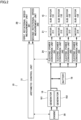
- Fig. 1 is a schematic diagram illustrating the flight device 10.
- the flight device 10 mainly includes an airframe 19, main rotors 14, an engine 30, engine-side power transmission units 25, rotor-side power transmission units 26, power connection/disconnection units 27, and an arithmetic control unit 31.
- the flight device 10 is a parallel-type hybrid drone including two driving systems in parallel, an electric driving system and a mechanical driving system.
- the electric driving system rotates motors 21 and sub-rotors 15, which will be described later.
- the mechanical driving system rotates the main rotors 14, which will be described later.
- the airframe 19 is a body supporting the units constituting the fright device 10 and is made of synthetic resin, metal, or a composite material thereof.
- the main rotors 14 rotate to generate driving force necessary for the airframe 19 to float and includes a first main rotor 141 and a second main rotor 142.
- the first main rotor 141 is arranged to the left of the airframe 19.
- the second main rotor 142 is arranged to the right of the airframe 19.
- the first main rotor 141 and the second main rotor 142 rotate in opposite directions at the same rotational speed.
- the first main rotor 141 is connected to the engine 30 so as to be driven, with a first engine-side power transmission unit 251, a first power connection/disconnection unit 271, and a first rotor-side power transmission unit 261 interposed therebetween.
- the second main rotor 142 is connected to the engine 30 so as to be driven, with a second engine-side power transmission unit 252, a second power connection/disconnection unit 272, and a second rotor-side power transmission unit 262 interposed therebetween.
- the engine 30 generates power necessary for the first main rotor 141 and the second main rotor 142 to rotate.
- the engine 30 is incorporated in the airframe 19 and rotates the first main rotor 141 and the second main rotor 142 at a predetermined rotational speed.
- the engine 30 includes a first engine unit 40 and a second engine unit 41 as will be described later with reference to Fig. 3 .
- the engine-side power transmission units 25 are, for example, a steel rod and rotate using the power of the engine 30.
- the engine-side power transmission units 25 include the first engine-side power transmission unit 251 and the second engine-side power transmission unit 252.
- the first engine-side power transmission unit 251 and the second engine-side power transmission unit 252 are connected to crankshafts of the engine 30 so as to be driven.
- the first engine-side power transmission unit 251 protrudes from the engine 30 to the left.
- the second engine-side power transmission unit 252 protrudes from the engine 30 to the right.
- the rotor-side power transmission units 26 are, for example, a steel rod.
- the rotor-side power transmission units 26 include the first rotor-side power transmission unit 261, which is drivingly connected to the first main rotor 141, and the second rotor-side transmission unit 262, which is drivingly connected to the second main rotor 142.
- the first rotor-side power transmission unit 261 and the first main rotor 141 are drivingly connected with a gear 171 interposed therebetween.
- the second rotor-side power transmission unit 262 and the second main rotor 142 are drivingly connected with a gear 172 interposed therebetween.
- the power connection/disconnection units 27 are constituent units that transmit power according to conditions and are, for example, a clutch.
- the power connection/disconnection units 27 are a centrifugal clutch by way of example.
- the power connection/disconnection units 27 include the first power connection/disconnection unit 271 and the second power connection/disconnection unit 272.
- the centrifugal clutch is also referred to as a centrifugal type clutch.
- the first power connection/disconnection unit 271 is provided between the first engine-side power transmission unit 251 and the first rotor-side power transmission unit 261.
- the first power connection/disconnection unit 271 does not transmit power.
- the first power connection/disconnection unit 271 transmits power from the first engine-side power transmission unit 251 to the first rotor-side power transmission unit 261.
- the power generated by the engine 30 is thereby transmitted to the first engine-side power transmission unit 251, the first power connection/disconnection unit 271, and the first rotor-side power transmission unit 261, so that the first main rotor 141 rotates.
- the configuration and operation of the second power connection/disconnection unit 272 are the same as those of the first power connection/disconnection unit 271. Specifically, the second power connection/disconnection unit 272 is provided between the second engine-side power transmission unit 252 and the second rotor-side power transmission unit 262. When the engine 30 is stopped and the second engine-side power transmission unit 252 does not rotate or when the rotational speed of the second engine-side power transmission unit 252 rotated by the engine 30 is lower than the certain level, the second power connection/disconnection unit 272 does not transmit power.
- the second power connection/disconnection unit 272 transmits power from the second engine-side power transmission unit 252 to the second rotor-side power transmission unit 262.
- the power generated by the engine 30 is thereby transmitted to the second engine-side power transmission unit 252, the second power connection/disconnection unit 272, and the second rotor-side power transmission unit 262, so that the second main rotor 142 rotates.
- a first main frame 121 extends to the left from the airframe 19.
- the first engine-side power transmission unit 251 and the first rotor-side power transmission unit 261, which are described above, are incorporated in the first main frame 121, which is tubular, for example.
- the first power connection/disconnection unit 271 is provided in the middle of the first main frame 121.
- a second main frame 122 extends to the right from the airframe 19.
- the second engine-side power transmission unit 252 and the second rotor-side power transmission unit 262, which are described above, are incorporated in the second main frame 122.
- the second power connection/disconnection unit 272 is provided in the middle of the second main frame 122.
- the flight device 10 includes sub-rotors 15.
- the sub-rotors 15 include sub-rotors 151 to 154.
- the sub-rotors 15 rotate to control the overall position and orientation of the flight device 10.
- the sub-rotor 151 is positioned at the front left of the airframe 19.
- the sub-rotor 151 is connected to the airframe 19 through a sub-frame 131 and is rotated by a motor 211.
- the sub-rotor 152 is positioned at the back left of the airframe 19.
- the sub-rotor 152 is connected to the airframe 19 through a sub-frame 132 and is rotated by a motor 212.
- the sub-rotor 153 is positioned at the front right of the airframe 19.
- the sub-rotor 153 is connected to the airframe 19 through a sub-frame 133 and is rotated by a motor 213.
- the sub-rotor 154 is positioned at the back right of the airframe 19.
- the sub-rotor 154 is connected to the airframe 19 through a sub-frame 134 and is rotated by a motor 214.
- the behavior of the power connection/disconnection units 27 will be described.
- the power connection/disconnection units 27, which are, for example, a centrifugal clutch, has a function of transmitting power when the rotational speed is not lower than a certain level.
- the power connection/disconnection units 27 are a complicated mechanical mechanism, and the components constituting the power connection/disconnection units 27 have a certain level of tolerance.
- the first power connection/disconnection unit 271 and the second power connection/disconnection unit 272 may therefore behave slightly differently.
- the first power connection/disconnection unit 271 transmits power to the first rotor-side power transmission unit 261 while the second power connection/disconnection unit 272 does not transmit power to the second rotor-side power transmission unit 262.
- the first main rotor 141 is rotating
- the second main rotor 142 does not rotate, so that the flight device 10 may be unable to take off stably.
- any one of the first power connection/disconnection unit 271 or the second power connection/disconnection unit 272 mechanically fails.
- the operation of the flight device 10 is controlled based on the rotational speeds of the first engine-side power transmission unit 251 and the second engine-side power transmission unit 252. This matter will be described later with reference to Fig. 4 .
- Fig. 2 is a diagram illustrating the flight device 10 and is a block diagram illustrating the connection configuration of each portion.
- the flight device 10 includes the arithmetic control unit 31, the engine 30, generators 16, a battery 18, electric power conversion units 24, the motors 21, the sub-rotors 15, and a rotational speed measurement unit 28.
- the arithmetic control unit 31 includes a CPU, a ROM, a RAM, and the like.
- the arithmetic control unit 31 controls the behavior of each unit constituting the flight device 10 based on inputs from various sensors and a controller not illustrated herein.
- the arithmetic control unit 31 serves as a flight controller that controls the rotational speed of the main rotors 14 and sub-rotors 15 based on inputs from various sensors.
- the engine 30 operates based on input signals from the arithmetic control unit 31 and generates energy necessary for the flight device 10 to fly.
- the specific configuration of the engine 30 will be described later with reference to a drawing.
- the generators 16 are units that generate electric power by using a part of the driving force of the engine 30 and include generators 161 and 162.
- the generator 161 is driven by the first engine unit 40 of the engine 30, which will be described later.
- the generator 162 is driven by the second engine unit 41 of the engine 30, which will be described later.
- the battery 18 is interposed between the generators 16 and the electric power conversion units 24.
- the battery 18 is charged by the generators 16.
- the electric power discharged from the battery 18 is supplied to the electric power conversion units 24, which will be described later.
- the electric power conversion units 24 are provided corresponding to the respective sub-rotors 15.
- Each power conversion unit 24 can be composed of a converter and an inverter to once convert alternating-current power supplied from the generator 162 into direct-current power and then convert the direct-current power into alternating-current power with a predetermined frequency.
- Each electric power conversion unit 24 also can be composed of an inverter to convert direct-current power supplied from the battery 18 into alternating-current power with a predetermined frequency.
- the electric power conversion units 24 include electric power conversion units 241, 242, 243, and 244.
- the motors 21 are provided corresponding to the respective sub-rotors 15.
- the motors 21 include motors 211, 212, 213, and 214.
- the motors 211, 212, 213, and 214 rotate at a predetermined speed using electric power supplied from the electric power conversion units 241 to 244, respectively.
- the sub-rotors 15 include the sub-rotors 151 to 154 as described above.
- the sub-rotors 151 to 154 are rotated by the motors 211 to 214, respectively.
- the rotational speed measurement unit 28 measures the rotational speed of the engine-side power transmission units 25, which is illustrated in Fig. 1 , and input an electric signal representing the measured rotational speed to the arithmetic control unit 31.
- the rotational speed measurement unit 28 includes a first rotational speed measurement unit 281 and a second rotational speed measurement unit 282.
- the first rotational speed measurement unit 281 measures the rotational speed of the first rotor-side power transmission unit 261.
- the second rotational speed measurement unit 282 measures the rotational speed of the second rotor-side power transmission unit 262.
- the arithmetic control unit 31 changes the flight status when the rotational speed of the first rotor-side power transmission unit 261 measured by the first rotational speed measurement unit 281 and the rotational speed of the second rotor-side power transmission unit 262 measured by the second rotational speed measurement unit 282 differ by a certain amount or more.
- changing the flight status is, for example stopping the flight device 10 from taking off, urgently landing the flight device 10 flying normally, and other operations.
- the flight status of the flight device 10 will be briefly described.
- the flight device 10 is operated in a landing state, a takeoff state, a hovering state, an ascending-descending state, a horizontal movement state, and an emergency flight state.
- the flight device 10 In the landing state, the flight device 10 is in contact with the ground. In this state, the engine 30 is not running, and the engine-side power transmission units 25 do not rotate. The power connection/disconnection units 27 are in a disconnected state, and the rotor-side power transmission units 26 and the main rotors 14 do not rotate.
- the flight device 10 In the takeoff state, the flight device 10 is rising away from the contact surface mainly due to the thrust generated by rotation of the main rotors 14.
- the main rotors 14 are rotated using the driving force generated by the engine 30 to keep the flight device 10 floating at a predetermined position in the air.
- the sub-rotors 15 are rotating based on an instruction from the arithmetic control unit 31.
- the arithmetic control unit 31 controls the electric power conversion units 24 to set the rotational speeds of the motors 21 and sub-rotors 15 to predetermined values so that the flight device 10 can maintain its predetermined altitude and orientation.
- the flight device 10 In the ascending-descending state, the flight device 10 is raised or lowered by controlling the rotational speed of the engine 30.
- the arithmetic control unit 31 controls the electric power conversion units 24 to set the rotational speeds of the motors 21 and sub-rotors 15 to predetermined values so that the flight device 10 can maintain its predetermined altitude and orientation.
- the arithmetic control unit 31 controls the electric power conversion units 24 to control the rotational speeds of the motors 21 and sub-rotors 15 so that the flight device 10 be tilted. In this process as well, the arithmetic control unit 31 controls the running state of the engine 30 to rotate the main rotors 14 at a predetermined speed.
- the arithmetic control unit 31 forces the flight device 10 that is flying to land.
- the emergency flight state is activated when the rotational speed measured in the first rotational speed measurement unit 281 and the rotational speed measured in the second rotational speed measurement unit 282 differ by a certain amount or more.
- Fig. 3 is a diagram illustrating the configuration and arrangement of the engine 30 of the flight device 10.
- the engine 30 includes the first engine unit 40 and the second engine unit 41.
- the first engine unit 40 and the second engine unit 41 are positioned opposite to each other.
- the first engine unit 40 is positioned in the back left while the second engine unit 41 is positioned in the front right.
- the first engine unit 40 includes: a first piston 43, which reciprocates; a first crankshaft 42, which converts reciprocating motion of the first piston 43 into rotational motion; and a first connecting rod 44, which rotatably couples the first piston 43 to the first crankshaft 42.
- the second engine unit 41 includes: a second piston 46, which reciprocates; a second crankshaft 45, which converts reciprocating motion of the second piston 46 into rotational motion; and a second connecting rod 47, which rotatably couples the second piston 46 to the second crankshaft 45.
- the first piston 43 of the first engine unit 40 and the second piston 46 of the second engine unit 41 share a combustion chamber 48.
- the first piston 43 and the second piston 46 reciprocate within a single continuing cylinder 49.
- the engine 30 includes a volume space (not illustrated herein) communicating with the combustion chamber 48.
- a spark plug is arranged in the volume space.
- an intake port and an exhaust port which are not illustrated herein, are formed in the combustion chamber 48.
- An air-mixture containing fuel, such as gasoline, is introduced into the combustion chamber 48 through the intake port, and exhaust gas after combustion is discharged from the combustion chamber 48 to the outside through the exhaust port.
- the flight device 10 By mounting the thus-configured engine 30 on the flight device 10, the flight device 10 can be reduced in size, weight, and vibrations. Due to the reduction in vibrations in particular, it is possible to prevent delicate equipment, such as arithmetic control devices and GPS sensors, from being adversely affected by orientation control or motor output control. Furthermore, it is possible to prevent parcels being transported by the flight device 10 from being damaged by vibrations.
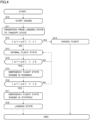
- step S10 the arithmetic control unit 31 starts the engine 30 based on an operator's instruction through the controller.
- the first engine-side power transmission unit 251 and the second engine-side power transmission unit 252 are thereby rotated using the driving force of the engine 30.
- the flight device 10 is placed on a contact surface, which is the ground, for example.
- step S11 the arithmetic control unit 31 transitions from the landing state to the takeoff state.
- the landing state refers to a state where the flight device 10 is in contact with the ground.
- the takeoff state refers to a state where the flight device 10 is rising from the landing state and lifting off from the ground.
- step S11 specifically, when the rotational speed of the first engine-side power transmission unit 251 reaches a predetermined rotational speed, the first power connection/disconnection unit 271 enters a connected state, and the first engine-side power transmission unit 251, the first rotor-side power transmission unit 261, and the first main rotor 141 rotate.
- the second power connection/disconnection unit 272 when the rotational speed of the second engine-side power transmission unit 252 reaches a predetermined rotational speed, the second power connection/disconnection unit 272 enters a connected state, and the second engine-side power transmission unit 252, the second rotor-side power transmission unit 262, and the second main rotor 142 rotate.
- step S11 is continued in this condition, the flight device 10 may lose its balance and may be unable to stably transition to the takeoff state. In this embodiment, therefore, the flight is cancelled depending on the condition of the first power connection/disconnection unit 271 or the second power connection/disconnection unit 272 as will be described later.
- step S12 the arithmetic control unit 31 checks the difference in rotational speed between the first rotor-side power transmission unit 261 and the second rotor-side power transmission unit 262. Specifically, the arithmetic control unit 31 determines whether the absolute value of the difference between ⁇ 1 and ⁇ 2 is greater than ⁇ 1 where ⁇ 1 is the rotational speed of the first rotor-side power transmission unit 261, ⁇ 2 is the rotational speed of the second rotor-side power transmission unit 262, and ⁇ 1 is a predetermined allowable speed difference.
- step S12 determines whether the determination in step S12 is YES, that is, if the absolute value of the difference between ⁇ 1 and ⁇ 2 is greater than ⁇ 1 (a first setting value).
- the arithmetic control unit 31 goes to step S19. In this case, there is a great difference between the degree to which the first power connection/disconnection unit 271 transmits power and the degree to which the second power connection/disconnection unit 272 transmits power. If the landing operation is continued in this condition, it is not easy to fly the flight device 10 safely.
- step S12 determines whether the determination in step S12 is NO, that is, if the absolute value of the difference between ⁇ 1 and ⁇ 2 is not greater than ⁇ 1, the arithmetic control unit 31 goes to step S13. Specifically, the degree to which the first power connection/disconnection unit 271 transmits power and the degree to which the second power connection/disconnection unit 272 transmits power do not differ greatly. Therefore, the arithmetic control unit 31 goes to a step of performing flight.
- step S14 in the normal flight state, the arithmetic control unit 31 checks the difference in rotational speed between the first rotor-side power transmission unit 261 and the second rotor-side power transmission unit 262. Specifically, the arithmetic control unit 31 determines whether the absolute value of the difference between ⁇ 1 and ⁇ 2 is greater than ⁇ 2 (a second setting value), which is a predetermined allowable speed difference.
- ⁇ 2 may be the same value as ⁇ 1 or may be a different value.
- ⁇ 2 is set to such a value that a significant difference is observed between the rotational speeds ⁇ 1 and ⁇ 2 but the flight with the engine 30 running can be continued.
- step S14 determines whether the flight device 10 is able to continue safely flying. If the determination in step S14 is NO, that is, if the absolute value of the difference between ⁇ 1 and ⁇ 2 is not greater than ⁇ 2, the arithmetic control unit 31 returns to step S13 and measures the normal flight state. In this case, during flight, the first power connection/disconnection unit 271 and the second power connection/disconnection unit 272 transmit power to substantially the same extent. The flight device 10 is therefore able to continue safely flying.
- step S16 the arithmetic control unit 31 determines during flight whether the absolute value of the difference between ⁇ 1 and ⁇ 2 is greater than ⁇ 3 (a third setting value), which is a predetermined allowable speed difference.
- ⁇ 3 is a value greater than ⁇ 2.
- step S16 determines whether the absolute value of the difference between ⁇ 1 and ⁇ 2 is greater than ⁇ 3. If the determination in step S16 is YES, that is, if the absolute value of the difference between ⁇ 1 and ⁇ 2 is greater than ⁇ 3, the arithmetic control unit 31 goes to step S17.
- step S16 determines whether the flight device 10 is able to continue safely flying.
- the arithmetic control unit 31 may return to step S15 and land the flight device 10 using the thrust of the main rotor 14.
- step S17 the arithmetic control unit 31 firstly stops the engine 30 as an example of the change in flight status. This is because the first main rotor 141 and the second main rotor 142 greatly differ in rotational speed herein and if the rotation of the first main rotor 141 and the second main rotor 142 is continued, it is difficult to fly the flight device 10 stably. Furthermore, the arithmetic control unit 31 urgently lands the flight device 10 using the thrust of only the sub-rotors 15. In this process, the arithmetic control unit 31 can make settings such that the thrust of the sub-rotors 15 is greater than that in the normal flight state.
- step S18 the flight device 10 is landed. Specifically, using the thrust of only the main rotors 14 or the thrust of both the main rotors 14 and the sub-rotors 15, the arithmetic control unit 31 lowers the flight device 10 until the flight device 10 comes into contact with the ground. In this process, the arithmetic control unit 31 may inform the operator through the controller that the flight device 10 will make emergency landing.
- step S19 the arithmetic control unit 31 cancels the flight as an example of the change in flight state.
- the arithmetic control unit 31 stops the engine 30, that is, does not allow the flight device 10 to take off and informs the operator through the controller or the like that the flight is difficult.
- Fig. 5 is a schematic diagram illustrating the flight device 10 according to another mode.
- the basic configuration of the flight device 10 illustrated in Fig. 5 is substantially the same as that of the flight device 10 illustrated in Fig. 1 and is different in not including the sub-rotors 15.
- the flight device 10 illustrated in Fig. 5 is an engine-type drone including the main rotors 14 mechanically rotating using the driving force of the engine 30, but not including the sub-rotors 15.
- the flight device 10 includes only the main rotors 14 as the mechanism for causing the airframe 19 to float.
- the main rotors 14 generate the thrust necessary for the airframe 19 to float in the air and furthermore controls the position and orientation of the flight device 10.
- the main rotors 14 include a control mechanism that controls the position and orientation of the flight device 10.
- Such a control mechanism can be, for example, a pitch control that properly changes the pitch angle of the blades of the main rotor 14.
- the flight device 10 is able to activate the hovering state, the ascending state, the descending state, and the horizontal movement state due to the control mechanism of the main rotor 14.
- the flight status is changed, thus further improving the safety of the flight device 10.
- the flight status is changed, thus allowing the flight device 10 to fly more safely.
- the engine 30 is stopped, thus preventing the flight device 10 from flying in the condition where the power transmission by the power connection/disconnection units 27 is not good.
- the flight device 10 is able to land by using the driving force of the engine 30.
- the flight device 10 is able to land safely due to the sub-rotors 15.
- the first engine unit 40 and the second engine unit 41 share the combustion chamber 48.
- the first engine unit 40 and the second engine unit 41 may be configured to include individual combustion chambers.
- the engine 30 includes the first engine unit 40 and the second engine unit 41.
- the engine 30 may be composed of only the first engine unit 40.
- the power from the first engine unit 40 is transmitted to the first engine-side power transmission unit 251 and the second engine-side transmission unit 252 through a gear.
- the flight device 10 includes the plural rotors: the first main rotor 141 and the second main rotor 142, but may include a single main rotor 14.
- the degree to which the power transmission connection/disconnection units transmit power is sensed based on the rotational speed.
- the degree to which the power transmission connection/disconnection units transmit power may be sensed based on another physical amount.
- the degree to which the power transmission connection/disconnection units transmit power can be calculated from the difference in temperature or the difference in magnitude of vibrations at each power connection/disconnection unit.
Landscapes
- Engineering & Computer Science (AREA)
- Chemical & Material Sciences (AREA)
- Combustion & Propulsion (AREA)
- Aviation & Aerospace Engineering (AREA)
- Mechanical Engineering (AREA)
- Remote Sensing (AREA)
- Control Of Vehicle Engines Or Engines For Specific Uses (AREA)
Applications Claiming Priority (2)
| Application Number | Priority Date | Filing Date | Title |
|---|---|---|---|
| JP2022054026A JP7838755B2 (ja) | 2022-03-29 | 2022-03-29 | 飛行装置 |
| PCT/JP2023/010250 WO2023189644A1 (ja) | 2022-03-29 | 2023-03-16 | 飛行装置および飛行装置制御方法 |
Publications (2)
| Publication Number | Publication Date |
|---|---|
| EP4501795A1 true EP4501795A1 (de) | 2025-02-05 |
| EP4501795A4 EP4501795A4 (de) | 2026-03-04 |
Family
ID=88201813
Family Applications (1)
| Application Number | Title | Priority Date | Filing Date |
|---|---|---|---|
| EP23779662.8A Pending EP4501795A4 (de) | 2022-03-29 | 2023-03-16 | Flugvorrichtung und flugvorrichtungsteuerungsverfahren |
Country Status (4)
| Country | Link |
|---|---|
| US (1) | US12441495B2 (de) |
| EP (1) | EP4501795A4 (de) |
| JP (1) | JP7838755B2 (de) |
| WO (1) | WO2023189644A1 (de) |
Cited By (1)
| Publication number | Priority date | Publication date | Assignee | Title |
|---|---|---|---|---|
| US20230042223A1 (en) * | 2017-09-27 | 2023-02-09 | Ishikawa Energy Research Co., Ltd. | Engine-mounted autonomous flying device |
Families Citing this family (2)
| Publication number | Priority date | Publication date | Assignee | Title |
|---|---|---|---|---|
| JP7170364B1 (ja) * | 2022-09-08 | 2022-11-14 | 株式会社石川エナジーリサーチ | 飛行装置 |
| CN117944912B (zh) * | 2024-03-21 | 2024-05-28 | 浙江华视智检科技有限公司 | 无人机双动力系统及其控制方法、无人机系统和相关装置 |
Family Cites Families (93)
| Publication number | Priority date | Publication date | Assignee | Title |
|---|---|---|---|---|
| US1130623A (en) * | 1914-04-17 | 1915-03-02 | Matts Jacob Mustonen | Flying-machine. |
| US3088694A (en) * | 1960-12-29 | 1963-05-07 | Gen Electric | Wing-fan doors |
| US3122343A (en) * | 1961-12-02 | 1964-02-25 | M A N Turbomotoren G M B H | Vertical take-off and landing aircraft |
| US3249323A (en) * | 1962-04-25 | 1966-05-03 | Piasecki Aircraft Corp | Closure for vtol aircraft |
| US4469294A (en) * | 1982-05-20 | 1984-09-04 | Clifton Robert T | V/STOL Aircraft |
| US4828203A (en) * | 1986-12-16 | 1989-05-09 | Vulcan Aircraft Corporation | Vertical/short take-off and landing aircraft |
| US5890441A (en) * | 1995-09-07 | 1999-04-06 | Swinson Johnny | Horizontal and vertical take off and landing unmanned aerial vehicle |
| JP3280633B2 (ja) | 1999-03-24 | 2002-05-13 | 株式会社コミュータヘリコプタ先進技術研究所 | ヘリコプタの動力伝達装置 |
| US6270038B1 (en) * | 1999-04-22 | 2001-08-07 | Sikorsky Aircraft Corporation | Unmanned aerial vehicle with counter-rotating ducted rotors and shrouded pusher-prop |
| US6655631B2 (en) * | 2000-07-28 | 2003-12-02 | John Frederick Austen-Brown | Personal hoverplane with four tiltmotors |
| US6824095B2 (en) * | 2001-11-29 | 2004-11-30 | Youbin Mao | VSTOL vehicle |
| US6561456B1 (en) * | 2001-12-06 | 2003-05-13 | Michael Thomas Devine | Vertical/short take-off and landing aircraft |
| US6843447B2 (en) * | 2003-01-06 | 2005-01-18 | Brian H. Morgan | Vertical take-off and landing aircraft |
| US7857253B2 (en) * | 2003-10-27 | 2010-12-28 | Urban Aeronautics Ltd. | Ducted fan VTOL vehicles |
| JPWO2006103774A1 (ja) * | 2005-03-30 | 2008-09-04 | 力也 石川 | 垂直移動可能な飛行体 |
| WO2006113877A2 (en) * | 2005-04-20 | 2006-10-26 | Lugg Richard H | Hybrid jet/electric vtol aircraft |
| US7470206B2 (en) * | 2006-07-24 | 2008-12-30 | General Motors Corporation | Multi-speed countershaft transmission with a planetary gear set |
| US20080184906A1 (en) * | 2007-02-07 | 2008-08-07 | Kejha Joseph B | Long range hybrid electric airplane |
| WO2011023834A1 (es) * | 2009-08-26 | 2011-03-03 | Munoz Saiz Manuel | Sistema sustentador propulsor y estabilizador para aeronaves de despegue y aterrizaje vertical |
| FR2961041B1 (fr) | 2010-06-02 | 2012-07-27 | Parrot | Procede de commande synchronisee des moteurs electriques d'un drone telecommande a voilure tournante tel qu'un quadricoptere |
| KR20130126756A (ko) * | 2010-07-19 | 2013-11-20 | 지.에어로 아이엔씨. | 개인용 항공기 |
| KR101042200B1 (ko) | 2010-09-02 | 2011-06-16 | 드림스페이스월드주식회사 | Pcb를 사용한 무인 비행체 |
| US8382030B2 (en) * | 2010-09-02 | 2013-02-26 | Patrick A. Kosheleff | Variable cycle VTOL powerplant |
| FR2979614B1 (fr) * | 2011-09-04 | 2013-09-20 | Eric Chantriaux | Transmission electromagnetique de puissance pour aeronef a voilure tournante ou fixe. |
| WO2013000036A1 (en) * | 2011-06-30 | 2013-01-03 | Orbital Australia Pty Limited | An air cooling system for an unmanned aerial vehicle |
| USD665333S1 (en) * | 2011-08-16 | 2012-08-14 | Garreau Oliver | VTOL aircraft |
| US20140060004A1 (en) * | 2011-09-20 | 2014-03-06 | Bell Helicopter Textron Inc. | Tiltrotor vectored exhaust system |
| US9254922B2 (en) * | 2012-03-05 | 2016-02-09 | Embry-Riddle Aeronautical University, Inc. | Hybrid clutch assembly for an aircraft |
| US9334060B2 (en) * | 2012-09-21 | 2016-05-10 | Bell Helicopter Textron Inc. | Infrared suppressing exhaust system |
| US10094295B2 (en) * | 2013-01-30 | 2018-10-09 | Pratt & Whitney Canada Corp. | Gas turbine engine with transmission |
| US9316159B2 (en) * | 2013-01-30 | 2016-04-19 | Pratt & Whitney Canada Corp. | Gas turbine engine with transmission |
| US9752500B2 (en) * | 2013-03-14 | 2017-09-05 | Pratt & Whitney Canada Corp. | Gas turbine engine with transmission and method of adjusting rotational speed |
| JP2014240242A (ja) | 2013-06-12 | 2014-12-25 | 富士重工業株式会社 | 垂直離着陸飛行体 |
| DE102013109392A1 (de) * | 2013-08-29 | 2015-03-05 | Airbus Defence and Space GmbH | Schnellfliegendes, senkrechtstartfähiges Fluggerät |
| WO2015094275A1 (en) * | 2013-12-19 | 2015-06-25 | Sikorsky Aircraft Corporation | De-rotation system for a shaft fairing |
| US10384765B2 (en) * | 2014-02-06 | 2019-08-20 | Bell Helicopter Textron Inc. | Interconnect drive system |
| US10850863B2 (en) * | 2014-03-04 | 2020-12-01 | Pratt & Whitney Canada Corp. | System and method for operating a multi-engine aircraft in an auxiliary power unit mode |
| BR112016025875B1 (pt) * | 2014-05-07 | 2022-08-23 | XTI Aircraft Company | Aeronave de vtol |
| EP3169586B1 (de) | 2014-07-18 | 2020-04-08 | Pegasus Universal Aerospace (Pty) Ltd. | Vertikal startendes und landendes flugzeug |
| US10759280B2 (en) * | 2014-09-23 | 2020-09-01 | Sikorsky Aircraft Corporation | Hybrid electric power drive system for a rotorcraft |
| FR3029172B1 (fr) * | 2014-11-27 | 2018-05-25 | Safran Helicopter Engines | Groupe propulseur a moyens d'accouplement selectif |
| FR3036096A1 (fr) * | 2015-05-11 | 2016-11-18 | Christian Roger Rene Deslypper | Avion convertible a rotors decouvrables |
| US9714090B2 (en) * | 2015-06-12 | 2017-07-25 | Sunlight Photonics Inc. | Aircraft for vertical take-off and landing |
| US10933996B2 (en) * | 2015-08-03 | 2021-03-02 | Lockheed Martin Corporation | Release and capture of a fixed-wing aircraft |
| KR101683525B1 (ko) * | 2015-09-02 | 2016-12-07 | 현대자동차 주식회사 | 하이브리드 차량의 엔진 제어 장치 및 엔진 제어 방법 |
| KR102740958B1 (ko) * | 2015-12-09 | 2024-12-09 | 아이디어포지 테크놀로지 피브이티. 엘티디. | 단일 팔 장애 리던던시를 갖는 멀티-로터 항공기 |
| FR3047974B1 (fr) * | 2016-02-18 | 2018-01-19 | Airbus Helicopters | Dispositif et methode de commande d'un embrayage entre le moteur et la boite de transmission principale de puissance d'un aeronef |
| JP2017154654A (ja) * | 2016-03-03 | 2017-09-07 | 双葉電子工業株式会社 | マルチコプター |
| CN109415120B (zh) * | 2016-04-19 | 2022-10-11 | 先进飞机公司 | 无人机 |
| US10494117B2 (en) * | 2017-08-14 | 2019-12-03 | Marinus Bernard Bosma | Parallel hybrid-electric aircraft engine |
| EP3529155A4 (de) * | 2016-10-24 | 2020-06-17 | Hybridskys Technology Pty Ltd | Hybridflugzeug |
| WO2018083839A1 (ja) | 2016-11-04 | 2018-05-11 | 英男 鈴木 | 垂直離着陸可能飛行体、垂直離着陸可能飛行体のコントローラ、制御方法及び制御プログラム |
| JP6707761B2 (ja) * | 2017-09-27 | 2020-06-10 | 株式会社石川エナジーリサーチ | エンジン搭載自立型飛行装置 |
| US11148820B1 (en) * | 2018-02-19 | 2021-10-19 | Parallel Flight Technologies, Inc. | System defining a hybrid power unit for thrust generation in an aerial vehicle and method for controlling the same |
| US20190256202A1 (en) * | 2018-02-19 | 2019-08-22 | Parallel Flight Technologies, Inc. | Method and apparatus for lifting a payload |
| US11325698B2 (en) * | 2018-07-27 | 2022-05-10 | Walmart Apollo, Llc | Hybrid unmanned aerial vehicle for delivering cargo |
| US20200039657A1 (en) * | 2018-08-02 | 2020-02-06 | Southwest Research Institute | Variable Cycle Hybrid Power and Propulsion System for Aircraft |
| US20220055743A1 (en) * | 2018-12-27 | 2022-02-24 | Honda Motor Co., Ltd. | Flying object |
| WO2020137104A1 (ja) * | 2018-12-27 | 2020-07-02 | 本田技研工業株式会社 | 飛行体 |
| US12071228B1 (en) * | 2019-03-28 | 2024-08-27 | Snap Inc. | Drone with propeller guard configured as an airfoil |
| US11479348B2 (en) * | 2019-08-31 | 2022-10-25 | Textron Innovations Inc. | Power management systems for multi engine rotorcraft |
| US11975821B2 (en) * | 2019-11-15 | 2024-05-07 | Ishikawa Energy Research Co., Ltd. | Flight device |
| US11738862B2 (en) * | 2020-01-28 | 2023-08-29 | Overair, Inc. | Fail-operational vtol aircraft |
| JP7226376B2 (ja) * | 2020-03-10 | 2023-02-21 | 株式会社デンソー | 異常診断システム |
| US11072423B1 (en) * | 2020-03-28 | 2021-07-27 | Textron Innovations Inc. | Low observable aircraft having a unitary lift fan |
| US11394335B1 (en) * | 2020-03-30 | 2022-07-19 | Amazon Technologies, Inc. | Sensor-less motor reversal apparatus |
| US11177746B1 (en) * | 2020-03-30 | 2021-11-16 | Amazon Technologies, Inc. | Inverted centrifugal clutch apparatus |
| EP4137404A4 (de) * | 2020-04-14 | 2024-01-17 | Kawasaki Jukogyo Kabushiki Kaisha | Multikopter |
| US11987349B2 (en) * | 2020-04-22 | 2024-05-21 | Jerrold Joseph Sheil | Rotatable nacelle for centrifugal fan on aircraft |
| FR3110695B1 (fr) * | 2020-05-20 | 2022-05-13 | Airbus Helicopters | Système et procédé de surveillance de l’usure d’une roue libre et appareil associé |
| CN116096634B (zh) * | 2020-09-07 | 2025-08-22 | 盐城辉空科技有限公司 | 飞行体 |
| US20220111960A1 (en) * | 2020-10-09 | 2022-04-14 | Bao Tran | Farm drone |
| US11858632B2 (en) * | 2020-12-28 | 2024-01-02 | Parallel Flight Technologies, Inc. | System defining a hybrid power unit for thrust generation in an aerial vehicle and method for controlling the same |
| JP6901815B1 (ja) * | 2021-04-02 | 2021-07-14 | 株式会社石川エナジーリサーチ | 飛行装置 |
| US11299287B1 (en) * | 2021-06-29 | 2022-04-12 | Beta Air, Llc | Methods and systems for orienting a thrust propulsor in response to a failure event of a vertical take-off and landing aircraft |
| IT202100018170A1 (it) * | 2021-07-09 | 2023-01-09 | Gen Electric | Aeroplano elettrico ibrido con controllo di stabilizzazione giroscopico |
| JP6954708B1 (ja) * | 2021-08-26 | 2021-10-27 | 株式会社石川エナジーリサーチ | エンジン搭載飛行装置 |
| JP6990477B1 (ja) * | 2021-09-14 | 2022-01-12 | 株式会社石川エナジーリサーチ | 飛行装置 |
| JP6979251B1 (ja) * | 2021-10-07 | 2021-12-08 | 株式会社石川エナジーリサーチ | 飛行装置 |
| JP7627780B2 (ja) * | 2021-10-29 | 2025-02-06 | 本田技研工業株式会社 | 搬送システム、情報処理装置、搬送方法、搬送プログラム、及び、記憶媒体 |
| JP7004369B1 (ja) * | 2021-11-08 | 2022-01-21 | 株式会社石川エナジーリサーチ | 飛行装置 |
| SE547263C2 (en) * | 2021-11-10 | 2025-06-17 | Airforestry Ab | An unmanned aerial system comprising an unmanned aerial vehicle and harvesting tool |
| US11859542B2 (en) * | 2021-12-20 | 2024-01-02 | Rolls-Royce North American Technologies, Inc. | Dual power lift system |
| SE545517C2 (en) * | 2022-02-01 | 2023-10-10 | Airforestry Ab | A method for remotely and/or autonomously harvesting a tree from air |
| JP7810965B2 (ja) * | 2022-04-12 | 2026-02-04 | 株式会社石川エナジーリサーチ | 飛行装置 |
| US12240621B2 (en) * | 2022-05-11 | 2025-03-04 | Parallel Flight Technologies, Inc. | Power module and clutch mechanism for unmanned aircraft systems |
| JP7178755B1 (ja) * | 2022-05-20 | 2022-11-28 | 株式会社石川エナジーリサーチ | 飛行装置 |
| US11808216B1 (en) * | 2022-06-10 | 2023-11-07 | Rolls-Royce North American Technologies Inc. | Air-provisioning system with ejectors |
| WO2024006164A1 (en) * | 2022-06-27 | 2024-01-04 | Melcher Thomas W | Industrial aerial robot systems and methods |
| US12168510B2 (en) * | 2023-02-07 | 2024-12-17 | Hunter William KOWALD | Compact personal flight vehicle |
| FR3148580A1 (fr) * | 2023-05-09 | 2024-11-15 | Airbus Helicopters | Procédé et dispositif d’entrée et de sortie d’un mode de fonctionnement économique pour un aéronef bimoteur |
| US12296941B2 (en) * | 2023-05-12 | 2025-05-13 | Pratt & Whitney Canada Corp. | System and method for controlling a propulsor for a hybrid-electric aircraft propulsion system |
| US12263969B1 (en) * | 2023-09-11 | 2025-04-01 | The United States Of America As Represented By The Secretary Of The Navy | Wall rolling UAV with ring cage |
-
2022
- 2022-03-29 JP JP2022054026A patent/JP7838755B2/ja active Active
-
2023
- 2023-03-16 US US18/851,260 patent/US12441495B2/en active Active
- 2023-03-16 EP EP23779662.8A patent/EP4501795A4/de active Pending
- 2023-03-16 WO PCT/JP2023/010250 patent/WO2023189644A1/ja not_active Ceased
Cited By (2)
| Publication number | Priority date | Publication date | Assignee | Title |
|---|---|---|---|---|
| US20230042223A1 (en) * | 2017-09-27 | 2023-02-09 | Ishikawa Energy Research Co., Ltd. | Engine-mounted autonomous flying device |
| US12428985B2 (en) * | 2017-09-27 | 2025-09-30 | Ishikawa Energy Research Co., Ltd. | Engine-mounted autonomous flying device |
Also Published As
| Publication number | Publication date |
|---|---|
| US20250214723A1 (en) | 2025-07-03 |
| US12441495B2 (en) | 2025-10-14 |
| JP7838755B2 (ja) | 2026-04-01 |
| JP2023146695A (ja) | 2023-10-12 |
| WO2023189644A1 (ja) | 2023-10-05 |
| EP4501795A4 (de) | 2026-03-04 |
Similar Documents
| Publication | Publication Date | Title |
|---|---|---|
| EP4501795A1 (de) | Flugvorrichtung und flugvorrichtungsteuerungsverfahren | |
| JP7004369B1 (ja) | 飛行装置 | |
| EP4414263A1 (de) | Flugvorrichtung | |
| US20250033761A1 (en) | Flight device | |
| CN109421926B (zh) | 液压多旋翼飞行器 | |
| KR101340409B1 (ko) | 하이브리드 무인비행체 | |
| US12092019B2 (en) | Power device, and propulsion device for movement | |
| US10343770B2 (en) | Torque and pitch managed quad-rotor aircraft | |
| JP7762997B2 (ja) | 飛行装置 | |
| US20180073437A1 (en) | Systems and methods for starting an engine | |
| CN105398570A (zh) | 油动多旋翼飞行器 | |
| US20220135241A1 (en) | Systems and Methods for Controlling Torque for Aerial Vehicle | |
| US20230303274A1 (en) | Systems and Methods for Controlling Engine Speed and/or Pitch of Propulsion Members for Aerial Vehicles | |
| CN208715474U (zh) | 一种多旋翼无人机 | |
| RU196251U1 (ru) | Беспилотный вертолёт "тень" | |
| US20090050733A1 (en) | Simple vtol flying machine | |
| US20240017846A1 (en) | Aircraft | |
| CN120903038A (zh) | 一种双螺旋桨可折叠固定翼无人机构造方法 | |
| RU2228285C2 (ru) | Система для создания крутящего момента на валу ротора автожира | |
| RU2260546C1 (ru) | Летательный аппарат вертикального взлета и посадки с аэродинамическим подъемно-тянущим движителем | |
| CN117255759A (zh) | 飞行装置 | |
| WO2025173191A1 (ja) | 飛行装置 | |
| CN119284235A (zh) | 一种多电垂直起降高速绿动飞机 | |
| CN121425562A (zh) | 一种无人机及其短距起降控制方法 | |
| CN109649649A (zh) | 倾转旋翼飞行器 |
Legal Events
| Date | Code | Title | Description |
|---|---|---|---|
| STAA | Information on the status of an ep patent application or granted ep patent |
Free format text: STATUS: THE INTERNATIONAL PUBLICATION HAS BEEN MADE |
|
| PUAI | Public reference made under article 153(3) epc to a published international application that has entered the european phase |
Free format text: ORIGINAL CODE: 0009012 |
|
| STAA | Information on the status of an ep patent application or granted ep patent |
Free format text: STATUS: REQUEST FOR EXAMINATION WAS MADE |
|
| 17P | Request for examination filed |
Effective date: 20241022 |
|
| AK | Designated contracting states |
Kind code of ref document: A1 Designated state(s): AL AT BE BG CH CY CZ DE DK EE ES FI FR GB GR HR HU IE IS IT LI LT LU LV MC ME MK MT NL NO PL PT RO RS SE SI SK SM TR |
|
| DAV | Request for validation of the european patent (deleted) | ||
| DAX | Request for extension of the european patent (deleted) | ||
| REG | Reference to a national code |
Ref country code: DE Ref legal event code: R079 Free format text: PREVIOUS MAIN CLASS: B64D0035040000 Ipc: B64U0050110000 |
|
| A4 | Supplementary search report drawn up and despatched |
Effective date: 20260130 |
|
| RIC1 | Information provided on ipc code assigned before grant |
Ipc: B64U 50/11 20230101AFI20260126BHEP Ipc: B64U 10/16 20230101ALI20260126BHEP Ipc: B64U 50/23 20230101ALI20260126BHEP Ipc: B64U 50/33 20230101ALI20260126BHEP |