EP4474518A1 - Oberflächenbehandeltes verzinktes stahlblech - Google Patents
Oberflächenbehandeltes verzinktes stahlblech Download PDFInfo
- Publication number
- EP4474518A1 EP4474518A1 EP22932290.4A EP22932290A EP4474518A1 EP 4474518 A1 EP4474518 A1 EP 4474518A1 EP 22932290 A EP22932290 A EP 22932290A EP 4474518 A1 EP4474518 A1 EP 4474518A1
- Authority
- EP
- European Patent Office
- Prior art keywords
- acid
- steel sheet
- coating
- carbon atoms
- bar coating
- Prior art date
- Legal status (The legal status is an assumption and is not a legal conclusion. Google has not performed a legal analysis and makes no representation as to the accuracy of the status listed.)
- Pending
Links
Images


Classifications
-
- B—PERFORMING OPERATIONS; TRANSPORTING
- B05—SPRAYING OR ATOMISING IN GENERAL; APPLYING FLUENT MATERIALS TO SURFACES, IN GENERAL
- B05D—PROCESSES FOR APPLYING FLUENT MATERIALS TO SURFACES, IN GENERAL
- B05D7/00—Processes, other than flocking, specially adapted for applying liquids or other fluent materials to particular surfaces or for applying particular liquids or other fluent materials
- B05D7/14—Processes, other than flocking, specially adapted for applying liquids or other fluent materials to particular surfaces or for applying particular liquids or other fluent materials to metal, e.g. car bodies
-
- B—PERFORMING OPERATIONS; TRANSPORTING
- B05—SPRAYING OR ATOMISING IN GENERAL; APPLYING FLUENT MATERIALS TO SURFACES, IN GENERAL
- B05D—PROCESSES FOR APPLYING FLUENT MATERIALS TO SURFACES, IN GENERAL
- B05D7/00—Processes, other than flocking, specially adapted for applying liquids or other fluent materials to particular surfaces or for applying particular liquids or other fluent materials
- B05D7/24—Processes, other than flocking, specially adapted for applying liquids or other fluent materials to particular surfaces or for applying particular liquids or other fluent materials for applying particular liquids or other fluent materials
-
- C—CHEMISTRY; METALLURGY
- C22—METALLURGY; FERROUS OR NON-FERROUS ALLOYS; TREATMENT OF ALLOYS OR NON-FERROUS METALS
- C22C—ALLOYS
- C22C38/00—Ferrous alloys, e.g. steel alloys
-
- C—CHEMISTRY; METALLURGY
- C23—COATING METALLIC MATERIAL; COATING MATERIAL WITH METALLIC MATERIAL; CHEMICAL SURFACE TREATMENT; DIFFUSION TREATMENT OF METALLIC MATERIAL; COATING BY VACUUM EVAPORATION, BY SPUTTERING, BY ION IMPLANTATION OR BY CHEMICAL VAPOUR DEPOSITION, IN GENERAL; INHIBITING CORROSION OF METALLIC MATERIAL OR INCRUSTATION IN GENERAL
- C23C—COATING METALLIC MATERIAL; COATING MATERIAL WITH METALLIC MATERIAL; SURFACE TREATMENT OF METALLIC MATERIAL BY DIFFUSION INTO THE SURFACE, BY CHEMICAL CONVERSION OR SUBSTITUTION; COATING BY VACUUM EVAPORATION, BY SPUTTERING, BY ION IMPLANTATION OR BY CHEMICAL VAPOUR DEPOSITION, IN GENERAL
- C23C2/00—Hot-dipping or immersion processes for applying the coating material in the molten state without affecting the shape; Apparatus therefor
- C23C2/26—After-treatment
-
- C—CHEMISTRY; METALLURGY
- C23—COATING METALLIC MATERIAL; COATING MATERIAL WITH METALLIC MATERIAL; CHEMICAL SURFACE TREATMENT; DIFFUSION TREATMENT OF METALLIC MATERIAL; COATING BY VACUUM EVAPORATION, BY SPUTTERING, BY ION IMPLANTATION OR BY CHEMICAL VAPOUR DEPOSITION, IN GENERAL; INHIBITING CORROSION OF METALLIC MATERIAL OR INCRUSTATION IN GENERAL
- C23C—COATING METALLIC MATERIAL; COATING MATERIAL WITH METALLIC MATERIAL; SURFACE TREATMENT OF METALLIC MATERIAL BY DIFFUSION INTO THE SURFACE, BY CHEMICAL CONVERSION OR SUBSTITUTION; COATING BY VACUUM EVAPORATION, BY SPUTTERING, BY ION IMPLANTATION OR BY CHEMICAL VAPOUR DEPOSITION, IN GENERAL
- C23C2/00—Hot-dipping or immersion processes for applying the coating material in the molten state without affecting the shape; Apparatus therefor
- C23C2/34—Hot-dipping or immersion processes for applying the coating material in the molten state without affecting the shape; Apparatus therefor characterised by the shape of the material to be treated
- C23C2/36—Elongated material
- C23C2/40—Plates; Strips
-
- C—CHEMISTRY; METALLURGY
- C23—COATING METALLIC MATERIAL; COATING MATERIAL WITH METALLIC MATERIAL; CHEMICAL SURFACE TREATMENT; DIFFUSION TREATMENT OF METALLIC MATERIAL; COATING BY VACUUM EVAPORATION, BY SPUTTERING, BY ION IMPLANTATION OR BY CHEMICAL VAPOUR DEPOSITION, IN GENERAL; INHIBITING CORROSION OF METALLIC MATERIAL OR INCRUSTATION IN GENERAL
- C23C—COATING METALLIC MATERIAL; COATING MATERIAL WITH METALLIC MATERIAL; SURFACE TREATMENT OF METALLIC MATERIAL BY DIFFUSION INTO THE SURFACE, BY CHEMICAL CONVERSION OR SUBSTITUTION; COATING BY VACUUM EVAPORATION, BY SPUTTERING, BY ION IMPLANTATION OR BY CHEMICAL VAPOUR DEPOSITION, IN GENERAL
- C23C22/00—Chemical surface treatment of metallic material by reaction of the surface with a reactive liquid, leaving reaction products of surface material in the coating, e.g. conversion coatings, passivation of metals
- C23C22/02—Chemical surface treatment of metallic material by reaction of the surface with a reactive liquid, leaving reaction products of surface material in the coating, e.g. conversion coatings, passivation of metals using non-aqueous solutions
-
- C—CHEMISTRY; METALLURGY
- C23—COATING METALLIC MATERIAL; COATING MATERIAL WITH METALLIC MATERIAL; CHEMICAL SURFACE TREATMENT; DIFFUSION TREATMENT OF METALLIC MATERIAL; COATING BY VACUUM EVAPORATION, BY SPUTTERING, BY ION IMPLANTATION OR BY CHEMICAL VAPOUR DEPOSITION, IN GENERAL; INHIBITING CORROSION OF METALLIC MATERIAL OR INCRUSTATION IN GENERAL
- C23C—COATING METALLIC MATERIAL; COATING MATERIAL WITH METALLIC MATERIAL; SURFACE TREATMENT OF METALLIC MATERIAL BY DIFFUSION INTO THE SURFACE, BY CHEMICAL CONVERSION OR SUBSTITUTION; COATING BY VACUUM EVAPORATION, BY SPUTTERING, BY ION IMPLANTATION OR BY CHEMICAL VAPOUR DEPOSITION, IN GENERAL
- C23C22/00—Chemical surface treatment of metallic material by reaction of the surface with a reactive liquid, leaving reaction products of surface material in the coating, e.g. conversion coatings, passivation of metals
- C23C22/05—Chemical surface treatment of metallic material by reaction of the surface with a reactive liquid, leaving reaction products of surface material in the coating, e.g. conversion coatings, passivation of metals using aqueous solutions
- C23C22/06—Chemical surface treatment of metallic material by reaction of the surface with a reactive liquid, leaving reaction products of surface material in the coating, e.g. conversion coatings, passivation of metals using aqueous solutions using aqueous acidic solutions with pH less than 6
- C23C22/40—Chemical surface treatment of metallic material by reaction of the surface with a reactive liquid, leaving reaction products of surface material in the coating, e.g. conversion coatings, passivation of metals using aqueous solutions using aqueous acidic solutions with pH less than 6 containing molybdates, tungstates or vanadates
- C23C22/44—Chemical surface treatment of metallic material by reaction of the surface with a reactive liquid, leaving reaction products of surface material in the coating, e.g. conversion coatings, passivation of metals using aqueous solutions using aqueous acidic solutions with pH less than 6 containing molybdates, tungstates or vanadates containing also fluorides or complex fluorides
-
- C—CHEMISTRY; METALLURGY
- C23—COATING METALLIC MATERIAL; COATING MATERIAL WITH METALLIC MATERIAL; CHEMICAL SURFACE TREATMENT; DIFFUSION TREATMENT OF METALLIC MATERIAL; COATING BY VACUUM EVAPORATION, BY SPUTTERING, BY ION IMPLANTATION OR BY CHEMICAL VAPOUR DEPOSITION, IN GENERAL; INHIBITING CORROSION OF METALLIC MATERIAL OR INCRUSTATION IN GENERAL
- C23C—COATING METALLIC MATERIAL; COATING MATERIAL WITH METALLIC MATERIAL; SURFACE TREATMENT OF METALLIC MATERIAL BY DIFFUSION INTO THE SURFACE, BY CHEMICAL CONVERSION OR SUBSTITUTION; COATING BY VACUUM EVAPORATION, BY SPUTTERING, BY ION IMPLANTATION OR BY CHEMICAL VAPOUR DEPOSITION, IN GENERAL
- C23C22/00—Chemical surface treatment of metallic material by reaction of the surface with a reactive liquid, leaving reaction products of surface material in the coating, e.g. conversion coatings, passivation of metals
- C23C22/70—Chemical surface treatment of metallic material by reaction of the surface with a reactive liquid, leaving reaction products of surface material in the coating, e.g. conversion coatings, passivation of metals using melts
- C23C22/72—Treatment of iron or alloys based thereon
-
- C—CHEMISTRY; METALLURGY
- C23—COATING METALLIC MATERIAL; COATING MATERIAL WITH METALLIC MATERIAL; CHEMICAL SURFACE TREATMENT; DIFFUSION TREATMENT OF METALLIC MATERIAL; COATING BY VACUUM EVAPORATION, BY SPUTTERING, BY ION IMPLANTATION OR BY CHEMICAL VAPOUR DEPOSITION, IN GENERAL; INHIBITING CORROSION OF METALLIC MATERIAL OR INCRUSTATION IN GENERAL
- C23C—COATING METALLIC MATERIAL; COATING MATERIAL WITH METALLIC MATERIAL; SURFACE TREATMENT OF METALLIC MATERIAL BY DIFFUSION INTO THE SURFACE, BY CHEMICAL CONVERSION OR SUBSTITUTION; COATING BY VACUUM EVAPORATION, BY SPUTTERING, BY ION IMPLANTATION OR BY CHEMICAL VAPOUR DEPOSITION, IN GENERAL
- C23C22/00—Chemical surface treatment of metallic material by reaction of the surface with a reactive liquid, leaving reaction products of surface material in the coating, e.g. conversion coatings, passivation of metals
- C23C22/73—Chemical surface treatment of metallic material by reaction of the surface with a reactive liquid, leaving reaction products of surface material in the coating, e.g. conversion coatings, passivation of metals characterised by the process
-
- C—CHEMISTRY; METALLURGY
- C23—COATING METALLIC MATERIAL; COATING MATERIAL WITH METALLIC MATERIAL; CHEMICAL SURFACE TREATMENT; DIFFUSION TREATMENT OF METALLIC MATERIAL; COATING BY VACUUM EVAPORATION, BY SPUTTERING, BY ION IMPLANTATION OR BY CHEMICAL VAPOUR DEPOSITION, IN GENERAL; INHIBITING CORROSION OF METALLIC MATERIAL OR INCRUSTATION IN GENERAL
- C23C—COATING METALLIC MATERIAL; COATING MATERIAL WITH METALLIC MATERIAL; SURFACE TREATMENT OF METALLIC MATERIAL BY DIFFUSION INTO THE SURFACE, BY CHEMICAL CONVERSION OR SUBSTITUTION; COATING BY VACUUM EVAPORATION, BY SPUTTERING, BY ION IMPLANTATION OR BY CHEMICAL VAPOUR DEPOSITION, IN GENERAL
- C23C22/00—Chemical surface treatment of metallic material by reaction of the surface with a reactive liquid, leaving reaction products of surface material in the coating, e.g. conversion coatings, passivation of metals
- C23C22/82—After-treatment
- C23C22/83—Chemical after-treatment
-
- C—CHEMISTRY; METALLURGY
- C23—COATING METALLIC MATERIAL; COATING MATERIAL WITH METALLIC MATERIAL; CHEMICAL SURFACE TREATMENT; DIFFUSION TREATMENT OF METALLIC MATERIAL; COATING BY VACUUM EVAPORATION, BY SPUTTERING, BY ION IMPLANTATION OR BY CHEMICAL VAPOUR DEPOSITION, IN GENERAL; INHIBITING CORROSION OF METALLIC MATERIAL OR INCRUSTATION IN GENERAL
- C23C—COATING METALLIC MATERIAL; COATING MATERIAL WITH METALLIC MATERIAL; SURFACE TREATMENT OF METALLIC MATERIAL BY DIFFUSION INTO THE SURFACE, BY CHEMICAL CONVERSION OR SUBSTITUTION; COATING BY VACUUM EVAPORATION, BY SPUTTERING, BY ION IMPLANTATION OR BY CHEMICAL VAPOUR DEPOSITION, IN GENERAL
- C23C28/00—Coating for obtaining at least two superposed coatings either by methods not provided for in a single one of groups C23C2/00 - C23C26/00 or by combinations of methods provided for in subclasses C23C and C25C or C25D
-
- B—PERFORMING OPERATIONS; TRANSPORTING
- B05—SPRAYING OR ATOMISING IN GENERAL; APPLYING FLUENT MATERIALS TO SURFACES, IN GENERAL
- B05D—PROCESSES FOR APPLYING FLUENT MATERIALS TO SURFACES, IN GENERAL
- B05D1/00—Processes for applying liquids or other fluent materials
- B05D1/26—Processes for applying liquids or other fluent materials performed by applying the liquid or other fluent material from an outlet device in contact with, or almost in contact with, the surface
-
- B—PERFORMING OPERATIONS; TRANSPORTING
- B05—SPRAYING OR ATOMISING IN GENERAL; APPLYING FLUENT MATERIALS TO SURFACES, IN GENERAL
- B05D—PROCESSES FOR APPLYING FLUENT MATERIALS TO SURFACES, IN GENERAL
- B05D2202/00—Metallic substrate
- B05D2202/10—Metallic substrate based on Fe
-
- B—PERFORMING OPERATIONS; TRANSPORTING
- B05—SPRAYING OR ATOMISING IN GENERAL; APPLYING FLUENT MATERIALS TO SURFACES, IN GENERAL
- B05D—PROCESSES FOR APPLYING FLUENT MATERIALS TO SURFACES, IN GENERAL
- B05D2350/00—Pretreatment of the substrate
- B05D2350/60—Adding a layer before coating
- B05D2350/65—Adding a layer before coating metal layer
-
- B—PERFORMING OPERATIONS; TRANSPORTING
- B05—SPRAYING OR ATOMISING IN GENERAL; APPLYING FLUENT MATERIALS TO SURFACES, IN GENERAL
- B05D—PROCESSES FOR APPLYING FLUENT MATERIALS TO SURFACES, IN GENERAL
- B05D3/00—Pretreatment of surfaces to which liquids or other fluent materials are to be applied; After-treatment of applied coatings, e.g. intermediate treating of an applied coating preparatory to subsequent applications of liquids or other fluent materials
- B05D3/02—Pretreatment of surfaces to which liquids or other fluent materials are to be applied; After-treatment of applied coatings, e.g. intermediate treating of an applied coating preparatory to subsequent applications of liquids or other fluent materials by baking
- B05D3/0254—After-treatment
- B05D3/0281—After-treatment with induction heating
-
- C—CHEMISTRY; METALLURGY
- C22—METALLURGY; FERROUS OR NON-FERROUS ALLOYS; TREATMENT OF ALLOYS OR NON-FERROUS METALS
- C22C—ALLOYS
- C22C38/00—Ferrous alloys, e.g. steel alloys
- C22C38/002—Ferrous alloys, e.g. steel alloys containing In, Mg, or other elements not provided for in one single group C22C38/001 - C22C38/60
-
- C—CHEMISTRY; METALLURGY
- C22—METALLURGY; FERROUS OR NON-FERROUS ALLOYS; TREATMENT OF ALLOYS OR NON-FERROUS METALS
- C22C—ALLOYS
- C22C38/00—Ferrous alloys, e.g. steel alloys
- C22C38/005—Ferrous alloys, e.g. steel alloys containing rare earths, i.e. Sc, Y, Lanthanides
-
- C—CHEMISTRY; METALLURGY
- C22—METALLURGY; FERROUS OR NON-FERROUS ALLOYS; TREATMENT OF ALLOYS OR NON-FERROUS METALS
- C22C—ALLOYS
- C22C38/00—Ferrous alloys, e.g. steel alloys
- C22C38/008—Ferrous alloys, e.g. steel alloys containing tin
-
- C—CHEMISTRY; METALLURGY
- C22—METALLURGY; FERROUS OR NON-FERROUS ALLOYS; TREATMENT OF ALLOYS OR NON-FERROUS METALS
- C22C—ALLOYS
- C22C38/00—Ferrous alloys, e.g. steel alloys
- C22C38/02—Ferrous alloys, e.g. steel alloys containing silicon
-
- C—CHEMISTRY; METALLURGY
- C22—METALLURGY; FERROUS OR NON-FERROUS ALLOYS; TREATMENT OF ALLOYS OR NON-FERROUS METALS
- C22C—ALLOYS
- C22C38/00—Ferrous alloys, e.g. steel alloys
- C22C38/04—Ferrous alloys, e.g. steel alloys containing manganese
-
- C—CHEMISTRY; METALLURGY
- C22—METALLURGY; FERROUS OR NON-FERROUS ALLOYS; TREATMENT OF ALLOYS OR NON-FERROUS METALS
- C22C—ALLOYS
- C22C38/00—Ferrous alloys, e.g. steel alloys
- C22C38/08—Ferrous alloys, e.g. steel alloys containing nickel
-
- C—CHEMISTRY; METALLURGY
- C22—METALLURGY; FERROUS OR NON-FERROUS ALLOYS; TREATMENT OF ALLOYS OR NON-FERROUS METALS
- C22C—ALLOYS
- C22C38/00—Ferrous alloys, e.g. steel alloys
- C22C38/12—Ferrous alloys, e.g. steel alloys containing tungsten, tantalum, molybdenum, vanadium, or niobium
-
- C—CHEMISTRY; METALLURGY
- C22—METALLURGY; FERROUS OR NON-FERROUS ALLOYS; TREATMENT OF ALLOYS OR NON-FERROUS METALS
- C22C—ALLOYS
- C22C38/00—Ferrous alloys, e.g. steel alloys
- C22C38/14—Ferrous alloys, e.g. steel alloys containing titanium or zirconium
-
- C—CHEMISTRY; METALLURGY
- C22—METALLURGY; FERROUS OR NON-FERROUS ALLOYS; TREATMENT OF ALLOYS OR NON-FERROUS METALS
- C22C—ALLOYS
- C22C38/00—Ferrous alloys, e.g. steel alloys
- C22C38/16—Ferrous alloys, e.g. steel alloys containing copper
-
- C—CHEMISTRY; METALLURGY
- C22—METALLURGY; FERROUS OR NON-FERROUS ALLOYS; TREATMENT OF ALLOYS OR NON-FERROUS METALS
- C22C—ALLOYS
- C22C38/00—Ferrous alloys, e.g. steel alloys
- C22C38/18—Ferrous alloys, e.g. steel alloys containing chromium
- C22C38/32—Ferrous alloys, e.g. steel alloys containing chromium with boron
-
- C—CHEMISTRY; METALLURGY
- C22—METALLURGY; FERROUS OR NON-FERROUS ALLOYS; TREATMENT OF ALLOYS OR NON-FERROUS METALS
- C22C—ALLOYS
- C22C38/00—Ferrous alloys, e.g. steel alloys
- C22C38/18—Ferrous alloys, e.g. steel alloys containing chromium
- C22C38/34—Ferrous alloys, e.g. steel alloys containing chromium with more than 1.5% by weight of silicon
-
- C—CHEMISTRY; METALLURGY
- C22—METALLURGY; FERROUS OR NON-FERROUS ALLOYS; TREATMENT OF ALLOYS OR NON-FERROUS METALS
- C22C—ALLOYS
- C22C38/00—Ferrous alloys, e.g. steel alloys
- C22C38/18—Ferrous alloys, e.g. steel alloys containing chromium
- C22C38/38—Ferrous alloys, e.g. steel alloys containing chromium with more than 1.5% by weight of manganese
-
- C—CHEMISTRY; METALLURGY
- C22—METALLURGY; FERROUS OR NON-FERROUS ALLOYS; TREATMENT OF ALLOYS OR NON-FERROUS METALS
- C22C—ALLOYS
- C22C38/00—Ferrous alloys, e.g. steel alloys
- C22C38/60—Ferrous alloys, e.g. steel alloys containing lead, selenium, tellurium, or antimony, or more than 0.04% by weight of sulfur
-
- C—CHEMISTRY; METALLURGY
- C23—COATING METALLIC MATERIAL; COATING MATERIAL WITH METALLIC MATERIAL; CHEMICAL SURFACE TREATMENT; DIFFUSION TREATMENT OF METALLIC MATERIAL; COATING BY VACUUM EVAPORATION, BY SPUTTERING, BY ION IMPLANTATION OR BY CHEMICAL VAPOUR DEPOSITION, IN GENERAL; INHIBITING CORROSION OF METALLIC MATERIAL OR INCRUSTATION IN GENERAL
- C23C—COATING METALLIC MATERIAL; COATING MATERIAL WITH METALLIC MATERIAL; SURFACE TREATMENT OF METALLIC MATERIAL BY DIFFUSION INTO THE SURFACE, BY CHEMICAL CONVERSION OR SUBSTITUTION; COATING BY VACUUM EVAPORATION, BY SPUTTERING, BY ION IMPLANTATION OR BY CHEMICAL VAPOUR DEPOSITION, IN GENERAL
- C23C2/00—Hot-dipping or immersion processes for applying the coating material in the molten state without affecting the shape; Apparatus therefor
- C23C2/04—Hot-dipping or immersion processes for applying the coating material in the molten state without affecting the shape; Apparatus therefor characterised by the coating material
- C23C2/06—Zinc or cadmium or alloys based thereon
-
- C—CHEMISTRY; METALLURGY
- C23—COATING METALLIC MATERIAL; COATING MATERIAL WITH METALLIC MATERIAL; CHEMICAL SURFACE TREATMENT; DIFFUSION TREATMENT OF METALLIC MATERIAL; COATING BY VACUUM EVAPORATION, BY SPUTTERING, BY ION IMPLANTATION OR BY CHEMICAL VAPOUR DEPOSITION, IN GENERAL; INHIBITING CORROSION OF METALLIC MATERIAL OR INCRUSTATION IN GENERAL
- C23C—COATING METALLIC MATERIAL; COATING MATERIAL WITH METALLIC MATERIAL; SURFACE TREATMENT OF METALLIC MATERIAL BY DIFFUSION INTO THE SURFACE, BY CHEMICAL CONVERSION OR SUBSTITUTION; COATING BY VACUUM EVAPORATION, BY SPUTTERING, BY ION IMPLANTATION OR BY CHEMICAL VAPOUR DEPOSITION, IN GENERAL
- C23C2222/00—Aspects relating to chemical surface treatment of metallic material by reaction of the surface with a reactive medium
- C23C2222/20—Use of solutions containing silanes
Definitions
- the present disclosure relates to a surface-treated galvanized steel sheet.
- Delayed fracture is a phenomenon in which brittle fracture occurs suddenly without plastic deformation when high tensile strength steel is under static load stress (load stress below the tensile strength) for a certain period of time.
- Delayed fracture is known to be caused by hydrogen entering the steel from the environment (hydrogen embrittlement). Hydrogen may enter the steel in a pickling process during the steel sheet manufacturing and processing, a wet coating or plating process, or by corrosion in atmospheric environments, or the like.
- TOJI et al. "Evaluation of Hydrogen Embrittlement for High Strength Steel Sheets", Tetsu-to-Hagane, Vol. 95, No. 12 (2009) 887 (NPL 1) reports that delayed fracture occurs in high strength steel sheets with a tensile strength of 1180 MPa or more.
- NPL 1 TOJI et al., "Evaluation of Hydrogen Embrittlement for High Strength Steel Sheets", Tetsu-to-Hagane, Vol. 95, No. 12 (2009) 887
- a surface-treated galvanized steel sheet that has excellent delayed fracture resistance even in a low-temperature environment regardless of the composition of a base steel sheet and that can be manufactured at low cost.
- a numerical range expressed by using "to” means a range including numerical values described before and after "to”, as the lower limit value and the upper limit value.
- the surface-treated galvanized steel sheet of the present disclosure has a steel sheet with a tensile strength of 1180 MPa or more, a galvanized layer formed on at least one side of the steel sheet, and a coating formed on the galvanized layer.
- the following is a detailed description of the surface-treated galvanized steel sheet.
- the steel sheet that serves as a base steel sheet of the surface-treated galvanized steel sheet will be described.
- the steel sheet is a high strength steel sheet with a tensile strength of 1180 MPa or more.
- the tensile strength of the steel sheet is preferably 1470 MPa or more. Delayed fracture is less likely to occur in steel sheets with a low tensile strength.
- the steel sheets with a low tensile strength also have the effect of excellent delayed fracture resistance even in low-temperature environments, but the effect is more pronounced in steel sheets with a tensile strength of 1180 MPa or more and even more pronounced in steel sheets with a tensile strength of 1470 MPa or more.
- the tensile strength of the steel sheet is measured as follows. A JIS No. 5 tensile test piece is taken from the steel sheet with the direction orthogonal to the rolling direction being the longitudinal direction (tensile direction), and the tensile strength (TS) is measured by a tensile test in accordance with JIS Z2241 (1998).
- the steel sheet needs to have the tensile strength described above, and the chemical composition of the steel sheet is not particularly limited.
- the chemical composition may contain C: 0.1 mass% to 0.4 mass%, Si: 0 mass% to 2.5 mass%, Mn: 1 mass% to 3.5 mass%, P: 0 mass% to 0.05 mass%, and S: 0 mass% to 0.005 mass%, with the balance being Fe and inevitable impurities.
- the chemical composition preferably contains C: 0.1 mass% to 0.4 mass%, Si: 0.01 mass% to 2.5 mass%, Mn: 1 mass% to 3.5 mass%, P: 0.0001 mass% to 0.05 mass%, and S: 0.0001 mass% to 0.005 mass%, with the balance being Fe and inevitable impurities.
- the chemical composition of the steel sheet may further contain, as optional elements, at least one selected from the group consisting of Cu: 1.0 mass% or less, Ti: 0.2 mass% or less, V: 0.5 mass% or less, sol. Al: 0.1 mass% or less, Cr: 1.0 mass% or less, Nb: 0.2 mass% or less, W: 0.5 mass% or less, Zr: 0.1 mass% or less and B: 0.005 mass% or less, N: 0.0005 mass% to 0.0100 mass%, Ni: 0.01 mass% to 2.00 mass%, Mo: 0.005 mass% to 2.000 mass%, Ca: 0.002 mass% to 0.0050 mass%, REM: 00002 mass% to 0.0050 mass%, Sb: 0.002 mass% to 0.200 mass%, and Sn: 0.002 mass% to 0.200 mass%.
- the steel sheet may have a chemical composition that allows solid solution strengthening by adding interstitial solute elements such as C and N and substitutional solute elements such as Si, Mn, P and Cr, for example.
- the steel sheet may have a chemical composition that allows strengthening by precipitation by carbides and nitrides of Ti, Nb, V, Al, and other elements.
- the chemical composition of the steel sheet may contain strengthening elements such as W, Zr, B, Cu, and rare earth elements.
- the steel microstructure of the steel sheet is also not limited.
- Various microstructural or structural modifications can be applied to the steel sheet, alone or in combination.
- Examples of commercially available steel sheets include JFE-CA1180, JFE-CA1320, JFE-CA1470, JFE-CA1180SF, JFE-CA1180Y1, JFE-CA1180Y2 (all manufactured by JFE Steel Corporation), and SAFC1180D (manufactured by NIPPON STEEL CORPORATION). Both a cold-rolled steel sheet and a hot-rolled steel sheet can be used as a high strength steel sheet.
- the thickness of the steel sheet is also not limited. In one example, the thickness of the steel sheet may be 0.8 mm or more and 5 mm or less. The thickness of the steel sheet is more preferably 1.2 mm or more. The thickness of the steel sheet is more preferably 2.0 mm or less.
- the surface-treated galvanized steel sheet of the present disclosure has a galvanized layer on at least one side of the steel sheet.
- the galvanized layer may be formed by any coating or plating method, such as hot dip coating, electroplating, electroless plating, or vapor deposition plating, but a hot-dip galvanized layer, an electrogalvanized layer, or the like is industrially commonly used.
- the hot-dip galvanized steel sheet includes a galvannealed steel sheet that is obtained by performing alloying treatment after hot-dip galvanizing.
- the surface-treated galvanized steel sheet of the present disclosure has a coating containing the additive described below on the galvanized layer of the galvanized steel sheet described above. This suppresses hydrogen entry in corrosion environments and provides excellent delayed fracture resistance.
- the additive contained in the coating is at least one selected from the group consisting of a salt of an aliphatic dicarboxylic acid having 2 to 8 carbon atoms and an alkylamine having 6 to 18 carbon atoms, a salt of an aliphatic dicarboxylic acid having 2 to 8 carbon atoms and a cycloalkylamine having 6 to 18 carbon atoms, and a salt of an aromatic monocarboxylic acid having 7 to 12 carbon atoms and an alkylamine having 6 to 18 carbon atoms.
- Galvanized steel sheets are widely used for members that require corrosion resistance in atmospheric environments. This is because zinc has an excellent sacrificial protection effect.
- a hydrogen evolution reaction occurs on the steel substrate of the galvanized steel sheet. Hydrogen entry into the galvanized steel sheet is largely due to the hydrogen evolution reaction. Therefore, we came up with the idea of suppressing hydrogen entry by suppressing the increase in exposed parts of steel substrate where hydrogen is generated, thereby completing the present disclosure.
- the additive added to the coating in the present disclosure is classified as a coating adsorption-type rust preventive additive that exhibits rust resistance by being adsorbed onto a metal surface.
- the coating adsorption-type rust preventive additive exhibits rust resistance by protecting a steel sheet surface from corrosion environments
- the alkylamine or cycloalkylamine contained in the additive is preferably a primary amine or a secondary amine because they easily form salts with carboxylates.
- the alkylamine having 6 to 18 carbon atoms is preferably at least one selected from the group consisting of octadecylamine, dodecylamine, decylamine, monooctylamine, monohexylamine, monodecanoic amine, monododecanoic amine, and mono-2-ethylhexylamine.
- the cycloalkylamine having 6 to 18 carbon atoms is preferably cyclohexylamine, dicyclohexylamine, or tricyclohexylamine. The above-mentioned alkylamines or cycloalkylamines may be used in combination.
- the aliphatic dicarboxylic acid having 2 to 8 carbon atoms or the aromatic monocarboxylic acid having 7 to 12 carbon atoms contained in the additive affects the ease of forming salts with alkylamines or cycloalkylamines. If an aliphatic dicarboxylic acid having 2 to 8 carbon atoms or an aromatic monocarboxylic acid having 7 to 12 carbon atoms is used as the carboxylic acid, forming a salt with a carboxylic acid and an amine becomes easy, and the solubility of amine improves.
- the aliphatic carboxylic acid may be an aliphatic dicarboxylic acid having 2 to 8 carbon atoms.
- the additive is a diamine salt obtained from one mole of aliphatic dicarboxylic acid and two moles of amine, or a monoamine salt obtained from one mole of aliphatic dicarboxylic acid and one mole of amine.
- the aliphatic dicarboxylic acid has 2 to 8 carbon atoms, the acid strength is increased, rendering it easier to form an amine salt, and the amine is more likely to be free in the coating, improving the solubility of the amine.
- the aliphatic dicarboxylic acid has 9 or more carbon atoms, it is difficult to form an amine salt (especially a diamine salt), and the pH of the component salt tends to decrease.
- the number of carbon atoms of the aliphatic dicarboxylic acid which is 2 to 8, includes the number of carbon atoms of the aliphatic group and the number of carbon atoms of the carboxylic acid. Therefore, the number of carbon atoms excluding dicarboxylic acid is 0 to 6.
- the number of carbon atoms of the aliphatic dicarboxylic acid is preferably 6 or less.
- the aliphatic group of the aliphatic dicarboxylic acid is preferably an alkylene group having 1 to 6 carbon atoms or an alkenyl group having 2 to 6 carbon atoms.
- the alkylene group is more preferably an alkylene group having 1 to 4 carbon atoms.
- the alkenyl group is more preferably an alkenyl group having 2 to 4 carbon atoms.
- the aliphatic dicarboxylic acid having 2 to 8 carbon atoms may be oxalic acid in which the carbon atoms of a carboxyl group are connected by a single bond.
- the aliphatic dicarboxylic acid having 2 to 8 carbon atoms is preferably at least one selected from the group consisting of oxalic acid, maleic acid, fumaric acid, malonic acid, succinic acid, glutaric acid, and adipic acid.
- the aromatic carboxylic acid may be an aromatic monocarboxylic acid having 7 to 12 carbon atoms.
- a salt of an aromatic carboxylic acid having 7 to 12 carbon atoms and an amine an amine salt is easily formed, and the amine is more likely to be free in the coating, which improves the solubility of the amine.
- the number of carbon atoms of the aromatic monocarboxylic acid which is 7 to 12, includes the number of carbon atoms of the aromatic group and the number of carbon atoms of the carboxylic acid. Therefore, the number of carbon atoms excluding monocarboxylic acid is 6 to 11.
- the aromatic ring contained in the aromatic monocarboxylic acid is preferably a benzene ring or a naphthalene ring because they are easy to manufacture.
- a substituent such as a methyl group, a hydroxyl group, an amino group, or a nitro group may be bonded to the aromatic ring.
- the aromatic monocarboxylic acid having 7 to 12 carbon atoms is preferably at least one selected from the group consisting of benzoic acid, m-aminobenzoic acid, p-aminobenzoic acid, p-nitrobenzoic acid, salicylic acid, p-hydroxybenzoic acid, toluic acid, p-t-butylbenzoic acid, and ⁇ -oxynaphthoic acid.
- the additive preferably satisfies the following Expression (1), where iHt is the hydrogen permeation current density measured by adding the additive to a solution simulating a corrosion environment at 1 g/L, and iH 0 is the hydrogen permeation current density measured without adding the additive to the solution. iH t / iH 0 ⁇ 0.50
- the hydrogen permeation current density iH is determined by electrically connecting a zinc sheet and a test steel sheet, exposing the zinc sheet and one side of the test steel sheet to the solution, taking this one side as a hydrogen entry surface, taking the other side of the test steel sheet as a hydrogen detection surface having a palladium coating or plating, and measuring the hydrogen permeation current density using an electrochemical cell provided on the hydrogen detection surface.
- the surface-treated galvanized steel sheet of the present disclosure has a coating containing the above-described additive, thereby suppressing hydrogen entry in corrosion environments and obtaining excellent delayed fracture resistance.
- the delayed fracture resistance can be further improved.
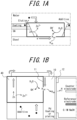
- FIGS. 1A and 1B provide an overview of a hydrogen permeation current density measurement method.
- the galvanized layer in a sacrificial protection reaction, the galvanized layer is preferentially corroded instead of the steel sheet surface.
- electrons generated by the corrosion of the galvanized layer react with water to produce hydrogen, and the hydrogen enters the steel.
- the additive in the coating is eluted from the coating and covers the exposed steel sheet surface, thereby preventing hydrogen entry.
- a model experiment is constructed to verify the effect of the additive contained in the coating on the sacrificial protection reaction (galvanic corrosion) of the galvanized layer when the steel substrate is exposed, as illustrated in FIG.
- a test steel sheet 10 is sandwiched between two reaction tanks (hydrogen generation tank 20 and hydrogen detection tank 21), and with the test steel sheet 10 in conduction with a zinc sheet 40, the zinc sheet 40 and one side 11 (hydrogen entry surface) of the test steel sheet 10 are exposed to a solution simulating a corrosion environment in the hydrogen generation tank 20.
- the chemical composition of the zinc sheet 40 contains zinc and inevitable impurities. Then, a sacrificial protection reaction of the zinc sheet 40 occurs in the hydrogen generation tank 20, electrons flow to the conductive test steel sheet 10, and a hydrogen evolution reaction occurs on the one side 11 of the test steel sheet 10.
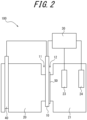
- FIG. 2 schematically illustrates a hydrogen entry amount measurement device 100 that is used to measure the hydrogen permeation current density.
- One side 11 of the test steel sheet 10 is exposed to a solution simulating a corrosion environment in the hydrogen generation tank 20 and is taken as the hydrogen entry surface 11, and the other side of the test steel sheet 10 is taken as the hydrogen detection surface 12.
- the hydrogen detection surface 12 has a palladium coating or plating 50 to prevent reactions other than a hydrogen oxidation reaction as much as possible.
- An electrochemical cell for measuring anodic current is also provided on the hydrogen detection surface 12. Any electrochemical cell that can measure anodic current at the hydrogen detection surface 12 can be used as the electrochemical cell.
- the electrochemical cell is the hydrogen detection tank 21 that has an electrolyte, a container for the electrolyte, and a reference electrode 23 and a counter electrode 24 installed inside the container.
- the present disclosure evaluates the effect of the additive on the hydrogen entry behavior into the steel sheet by a ratio iH t /iH 0 rather than the specific value of hydrogen permeation current density iH, where iHt is the hydrogen permeation current density measured by adding the additive to the solution in the hydrogen generation tank 20 at 1 g/L, and iH 0 is the hydrogen permeation current density measured without adding the additive to the solution in the hydrogen generation tank 20.
- the additive contained in the coating is preferably an additive where iH t /iH 0 satisfies the following Expression (1). iH t / iH 0 ⁇ 0.50
- the additive can be evaluated as an additive that can suitably reduce hydrogen entry into the steel.
- the iH t /iH 0 of the additive is more preferably 0.40 or less and even more preferably 0.30 or less.
- the iH t /iH 0 is preferably low, and the lower limit is not particularly limited. It may be 0.01 or more in one example.
- the hydrogen generation tank 20 is assembled so that the zinc sheet 40 and the test steel sheet 10 face each other with the hydrogen generation tank 20 in between.
- the temperature of the hydrogen generation tank 20 and the hydrogen detection tank 21 is adjusted to 10 °C using a temperature control device such as a water bath.
- the thickness of the test steel sheet 10 is 0.5 mm.
- the hydrogen detection surface 12 of the test steel sheet 10 in contact with the hydrogen detection tank 21 is coated or plated with about 100 nm palladium to prevent reactions other than a hydrogen oxidation reaction as much as possible.
- the hydrogen detection tank 21 is filled with 0.1M NaOH aqueous solution that has been subjected to nitrogen degassing as an electrolyte.
- a potentiostat 30 is connected to the test steel sheet 10 and the reference electrode 23 and the counter electrode 24 attached to the hydrogen detection tank 21, and anode polarization is started at a constant potential of 0 to 0.2 V vs SHE.
- the hydrogen generation tank 20 is filled with a 5 wt% NaCl aqueous solution as a corrosive solution.
- the additive is contained in the NaCl aqueous solution at a concentration of 1 g/L.
- the zinc sheet 40 and the test steel sheet 10 are connected with a copper wire or the like to establish electrical continuity, and a sacrificial protection reaction is started. After the sacrificial protection reaction starts and the current becomes sufficiently stable, that is, after 48 hours have passed from the start of the sacrificial protection reaction, the hydrogen permeation current densities iHt and iH 0 are evaluated.
- FIG. 3 illustrates an example of the hydrogen permeation current density measurement results.
- a diamine salt of fumaric acid and monooctylamine is used as the additive.
- the hydrogen permeation current density iH 0 when the additive was not contained in the solution in the hydrogen generation tank 20 and the hydrogen permeation current density iHt when the additive was contained in the solution in the hydrogen generation tank 20 were each measured twice under the same conditions, and the average value was obtained.
- the results of the first measurement are indicated as N1
- the results of the second measurement are indicated as N2.
- the hydrogen permeation current density iH 0 was 0.35 ⁇ A/cm 2 when the additive was not contained in the solution in the hydrogen generation tank 20, and the hydrogen permeation current density iHt was 0.07 ⁇ A/cm 2 when the additive was contained in the solution in the hydrogen generation tank 20.
- Table 1 lists the iH t /iH 0 of various additives.
- additives that satisfy Expression (1) include X1 to 60, 62 to 68, 70 to 76, 78 to 84, 86 to 92, 94 to 100, 102 to 108, 110 to 116, 118 to 124, and 126 to 149 in Table 1.
- the coating contains the above-described additive in an amount of 10 mass% or more and 50 mass% or less in terms of solid content.
- the content of the additive in the coating (as a ratio to the mass of the coating) is set to 10 mass% or more.
- the content of the additive in the coating increases, the area where the component alkylamine or cycloalkylamine with an amide group is adsorbed onto the steel sheet surface also increases, which is thought to improve the delayed fracture resistance.
- the content exceeds 50 mass% the strength of the coating itself may decrease. Therefore, the content of the additive is set to 50 mass% or less.
- the coating preferably contains 15 mass% or more and more preferably 20 mass% or more of the additive in terms of solid content. Further, the coating preferably contains 40 mass% or less and more preferably 30 mass% or less of the additive in terms of solid content. When the coating consists of multiple layers, the total content of the additive contained in the multiple layers is set to 10 mass% or more and 50 mass% or less in terms of solid content.
- the coating may contain an organic resin.
- the organic resin is preferably at least one selected from the group consisting of epoxy resin, acrylic resin, urethane resin, ethylene resin, phenol resin, polyester resin, fluororesin, polyolefin resin, and epoxy ester resin. This is because these organic resins act as a barrier layer that protects the steel sheet from corrosion factors to suppress corrosion due to hydrogen evolution reaction and prevent the galvanized layer from peeling off during processing.
- the above organic resins can be used in combination of two or more. It is also possible to form a coating consisting of multiple layers using two or more types of resins among the above organic resins.
- the coating preferably consists of two or more layers.
- the coating consists of two layers: a lower coating provided on the galvanized steel sheet and an upper coating provided on the lower coating. Both the upper and lower coatings may contain the additive, or only one of them may contain the additive.
- the lower coating is preferably a coating that has excellent conductivity without deteriorating corrosion resistance.
- the lower coating is preferably obtained by applying and drying a surface-treatment solution (A) on the surface of the galvanized steel sheet, where the surface-treatment solution (A) contains a water-soluble zirconium compound (a), a tetraalkoxysilane (b), a compound having an epoxy group (c), a chelating agent (d), a vanadate compound (e), and a metal compound containing at least one selected from the group consisting of Ti, Al and Zn (f) in ranges that satisfy the following conditions (I) to (IV), and the surface-treatment solution (A) has a pH of 8 to 10.
- the surface-treatment solution (A) contains a water-soluble zirconium compound (a), a tetraalkoxysilane (b), a compound having an epoxy group (c), a chelating agent (d), a vanadate compound (e), and a metal compound containing at least one selected from the group consisting of Ti, Al and Zn (f) in ranges that satisfy the
- the mass ratio azr/b is 1.0 or more, a surface-treated galvanized steel sheet with better corrosion resistance can be obtained.
- the mass ratio azr/b is 6.0 or less, the conductivity of the surface-treated galvanized steel sheet is improved.
- mass ratio b/cs When the mass ratio b/cs is 0.1 or more, a surface-treated galvanized steel sheet with better corrosion resistance can be obtained. When the mass ratio b/cs is 1.6 or less, the adhesion of the coating is improved.
- the mass ratio ev/ds is 0.03 or more, a surface-treated galvanized steel sheet with better corrosion resistance can be obtained.
- the mass ratio ev/ds is 1.0 or less, it is easier to dissolve the vanadate compound (e) in the surface-treatment solution (A).
- the thickness of the coating is not particularly limited.
- the thickness of the coating is preferably 0.3 ⁇ m or more in order to obtain better function as a barrier layer against corrosion environments.
- the thickness of the coating is preferably 4.0 ⁇ m or less. For a coating consisting of multiple layers, the total thickness of the multiple layers is taken as the thickness of the coating.
- the thickness of the coating a cross section of the coating is observed and the thickness of the coating (the thickness from the surface of the galvanized steel sheet to the surface of the coating) is measured at multiple locations (three locations) in an arbitrary field of view, and the average value of the results is taken as the thickness of the coating.
- the cross-sectioning method is not particularly limited, and examples thereof include focused ion beam (FIB) processing.
- the surface-treatment solution containing the additive is applied to at least one side of the above-described galvanized steel sheet, which is a base material, and dried to form a coating.
- the surface-treatment solution contains the above-described additive and organic resin.
- a method of applying the surface-treatment solution to the surface of the galvanized steel sheet is not particularly limited, and can be any of a coating method (bar coating), a spray method, and an immersing method (and roller squeezing).
- the heating and drying method after applying the surface-treatment solution is not particularly limited, and an induction heater or the like can be used.
- the heating temperature is preferably equal to or lower than the decomposition temperature of the additive component.
- the heating temperature after applying the surface-treatment solution is preferably 180 °C or lower, more preferably 160 °C or lower, and even more preferably 140 °C or lower.
- the surface-treated galvanized steel sheet obtains excellent delayed fracture resistance that effectively suppresses delayed fracture due to the formation of a coating containing specific components on its surface, and this excellent delayed fracture resistance can be obtained regardless of the composition of the base steel sheet and even in low-temperature environments. Further, the surface-treated galvanized steel sheet can be manufactured at low cost because it does not use expensive materials such as bismuth for the surface coating. Therefore, it is suitable for automobiles and building materials, and its use in these applications can reduce the weight.
- the following is supplement regarding the evaluation of tensile strength of the steel sheet (base steel sheet) of the surface-treated galvanized steel sheet.
- the coating and galvanized layer can be removed, for example, by immersing the surface-treated galvanized steel sheet in 10 mass% hydrochloric acid at 30 °C for 60 seconds.
- the method for removing the galvanized layer and the coating may be a method other than the above as long as it does not affect the tensile strength of the steel sheet.
- the tensile strength of the steel sheet, the tensile strength of the galvanized steel sheet, and the tensile strength of the surface-treated galvanized steel sheet are the same.
- the value of the tensile strength of the steel sheet may be replaced by the tensile strength of the galvanized steel sheet or the tensile strength of the surface-treated galvanized steel sheet. That is, the surface-treated galvanized steel sheet of the present disclosure has a tensile strength of 1180 MPa or more.
- a galvannealed steel sheet was used as the galvanized steel sheet, where the galvannealed steel sheet had a base steel sheet having a chemical composition containing C: 0.22 mass%, Si: 1.2 mass%, Mn: 3.0 mass%, P: 0.007 mass%, and S: 0.0005 mass%, with the balance being Fe and inevitable impurities, a tensile strength of 1580 MPa, a thickness of 1.4 mm, and a galvannealed layer on both the front and back sides of the steel sheet.
- the galvannealed steel sheet had a coating weight of 44 g/m 2 per side, and the Fe content in the alloyed galvanized layer was 14 mass%.
- the galvannealed steel sheet was immersed in toluene and ultrasonically cleaned for 5 minutes to remove rust-preventive oil, and then it was used as a sample steel sheet.
- Each carboxylic acid and amine were added to 1 kg of deionized water in the molar ratio listed in Table 1, and they were heated to 80 °C and dissolved to obtain a solution. Next, the solution was cooled to 20 °C to precipitate additive crystals.
- the obtained additive crystals were filtered and dried, and then mixed with an organic resin in the mass ratio listed in Table 2 to obtain a surface-treatment solution.
- the following A1 to A4 were used as the organic resins, and a surface-treatment solution containing any of the organic resins and the prescribed additive (in some comparative examples, a surface-treatment solution containing only the organic resin) was applied to the surface of the sample steel sheet.
- the method of applying the surface-treatment solution was as listed in Table 2.
- a coating was formed on the sample steel sheet by heating the sample steel sheet with an induction heater so that the sheet temperature reached 140 °C, and a surface-treated galvanized steel sheet was obtained.
- Galvanized steel sheets of Examples and Comparative Examples were each sheared to a size of 32 mm wide ⁇ 110 mm long and then ground to a width of 30 mm to remove residual stress of shearing to obtain test pieces.
- Each test piece was bent at 90 degrees using a 3-point bending tester so that the bending radius was 10 mm.
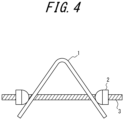
- the shape of the test piece 1 was fixed so that the inner distance between the flange ends after restricting the test piece using bolts 2 and a nut 3 (after fixing the test piece shape by tightening bolts 2 and a nut 3) was 13.8 mm narrower than the inner distance between the flange ends before restricting, thereby obtaining a test piece for delayed fracture resistance evaluation.
- the test piece for delayed fracture resistance evaluation thus prepared was subjected to a dry-wet cycle test simulating corrosion in a low-temperature environment, as illustrated in FIG. 5 , for a maximum of 28 days.
- the test temperature was kept constant (10 °C)
- one humidity cycle consisted of a total of four steps: a dry step with a relative humidity of 30 %, a wet step with a relative humidity of 90 %, a humidity increasing step, and a humidity decreasing step.
- the test was conducted by switching each step every 2 hours and repeating the cycle of 8 hours.
- chloride was applied to the test piece for delayed fracture resistance evaluation by washing the test piece with pure water and then spraying a 27 wt% salt water (amount of attached salt: 10000 mg/m 2 per side) onto the test piece twice a week at the start of the dry step.
- twice a week means that the second treatment is performed with an interval of 3 or 4 days after the first treatment. For example, if the first treatment is performed on Monday, then the second treatment is performed on Thursday and Friday. This is repeated thereafter.
- the presence or absence of crack at the bent part of the test piece for delayed fracture resistance evaluation was visually checked, and the number of days until cracking occurred (hereinafter referred to as "cracking day") was investigated.
- the cracking day being 29 means that no cracking occurred in this example.
- the symbols ⁇ , O, ⁇ and ⁇ mean good to poor in the stated order.
- the galvanized steel sheets of Examples and Comparative Examples were each sheared to a size of 150 mm ⁇ 70 mm to obtain a flat test piece, which was used as a test piece for corrosion resistance evaluation.
- the test piece for corrosion resistance evaluation was subjected to chemical conversion treatment by immersion under standard conditions (35 °C, 120 seconds) using "PALBOND” manufactured by Nihon Parkerizing Co., Ltd to obtain a chemical conversion treated test piece.
- the chemical conversion treated test piece was subjected to electrodeposition coating and baking treatment using electrodeposition paint "GT-100" manufactured by Kansai Paint Co.,Ltd. to obtain a post-coating test piece.
- the coating thickness of the electrodeposition coating was 15 ⁇ m, and the coating thickness was measured using a commercially available electromagnetic thickness tester.
- an X-shaped cut (cross angle: 60 ° to 90 °) was made on the post-coating test piece using a cutter so that the cut reached the coating of the surface-treated galvanized steel sheet, and a salt spray test specified in JIS Z2371 was performed for 840 hours.
- the maximum rust width from the cut of the post-coating test piece after the test was measured to evaluate the corrosion resistance.
- the corrosion resistance was evaluated as follows by calculating the maximum rust width A of each test piece, with the maximum rust width of a galvanized steel sheet without coating being 1.
- No. 1 (Comparative Example) is a coated or plated steel sheet without coating (a comparative example that is a galvanized steel sheet as it is). It is understood that cracking occurs early in No. 1, indicating poor delayed fracture resistance.
- the steel sheets of No. 3 to No. 161 are examples where a surface-treatment solution mixed with the additive and epoxy resin (A1) is applied to the surface of a galvannealed steel sheet with a coating method (bar coating) to form a coating.
- the steel sheet of No. 2 is an example where a surface-treatment solution containing epoxy resin (A1) but no additive is applied in the same manner to form a coating.
- the steel sheet of No. 2 where no additive is added, and the steel sheet of No. 3, where the additive content is less than the range of the present disclosure have slightly improved delayed fracture resistance compared to the steel sheet of No. 1 without coating, but they have poor delayed fracture resistance compared to the steel sheets of Nos. 4 to 163 that are Examples.
- the steel sheets of No. 162 and No. 163 are Examples where the method of forming the coating is changed from that of the steel sheet of No. 5, and they all have excellent delayed fracture resistance and good post-coating corrosion resistance.
- the steel sheets of No. 164 to No. 167 are Examples where the type of organic resin is changed, but they all have excellent delayed fracture resistance and good post-coating corrosion resistance.
- a galvannealed steel sheet was prepared as a sample steel sheet in the same manner as in Example 1.
- Additive crystals obtained with the method described in Example 1 were filtered, dried, and then mixed with a surface-treatment solution B having the following composition in the mass ratio listed in Table 3 to obtain a surface-treatment solution containing the additive.
- the mixing ratio (mass%) of 1-hydroxymethane-1,1-diphosphonic acid to tartaric acid is 9: 1.
- the surface-treatment solution was applied to the surface of the sample steel sheet by bar coating, and then heated by an induction heater so that the sheet temperature reached 140 °C to form a lower coating on the sample steel sheet.
- This lower coating is a coating (pre-treatment layer) that serves as the base of the upper coating described below.
- Additive crystals obtained with the method described in Example 1 were filtered, dried, and then mixed with an organic resin in the mass ratio listed in Table 3 to obtain a surface-treatment solution.
- the following A1 or A4 was used as the organic resin, and a surface-treatment solution containing any of the organic resins and the prescribed additive (in some comparative examples, a surface-treatment solution containing only the organic resin) was applied to the surface of the sample steel sheet after the formation of lower coating by bar coating.
- the sample steel sheet was heated by an induction heater so that the sheet temperature reached 140 °C to form an upper coating on the sample steel sheet where a lower coating had been formed, and a surface-treated galvanized steel sheet with a two-layer coating was obtained.
- Each galvanized steel sheet obtained as described above was evaluated in terms of delayed fracture resistance and post-coating corrosion resistance in the same manner as in Example 1. The evaluation results are listed in Table 3, along with the composition of the coating. The coating thickness was also measured in the same manner as in Example 1. The results are listed in Table 3.
- No. 1 (Comparative Example) is a coated or plated steel sheet without coating (a comparative example that is a galvannealed steel sheet as it is). It is understood that cracking occurs early in No. 1, indicating poor delayed fracture resistance.
- the steel sheets of No. 2 to No. 35 are examples of surface-treated galvanized steel sheets where a lower coating and an upper coating are formed on a hot-dip galvanized steel sheet.
- the steel sheet of No. 2 where no additive is added, and the steel sheets of No. 3 and No. 4, where the additive content is less than the range of the present disclosure have slightly improved delayed fracture resistance compared to the steel sheet of No. 1 without coating, but they have poor delayed fracture resistance compared to the steel sheets of Nos. 5 to 35 that are Examples.
Landscapes
- Chemical & Material Sciences (AREA)
- Engineering & Computer Science (AREA)
- Materials Engineering (AREA)
- Mechanical Engineering (AREA)
- Metallurgy (AREA)
- Organic Chemistry (AREA)
- Chemical Kinetics & Catalysis (AREA)
- General Chemical & Material Sciences (AREA)
- Life Sciences & Earth Sciences (AREA)
- Wood Science & Technology (AREA)
- Other Surface Treatments For Metallic Materials (AREA)
- Coating With Molten Metal (AREA)
- Laminated Bodies (AREA)
Applications Claiming Priority (2)
| Application Number | Priority Date | Filing Date | Title |
|---|---|---|---|
| JP2022043226 | 2022-03-17 | ||
| PCT/JP2022/038116 WO2023176027A1 (ja) | 2022-03-17 | 2022-10-12 | 表面処理亜鉛めっき鋼板 |
Publications (2)
| Publication Number | Publication Date |
|---|---|
| EP4474518A1 true EP4474518A1 (de) | 2024-12-11 |
| EP4474518A4 EP4474518A4 (de) | 2025-05-14 |
Family
ID=86610979
Family Applications (1)
| Application Number | Title | Priority Date | Filing Date |
|---|---|---|---|
| EP22932290.4A Pending EP4474518A4 (de) | 2022-03-17 | 2022-10-12 | Oberflächenbehandeltes verzinktes stahlblech |
Country Status (6)
| Country | Link |
|---|---|
| US (1) | US20250161982A1 (de) |
| EP (1) | EP4474518A4 (de) |
| JP (1) | JP7287590B1 (de) |
| KR (1) | KR20240152884A (de) |
| CN (1) | CN118891390A (de) |
| MX (1) | MX2024011239A (de) |
Family Cites Families (6)
| Publication number | Priority date | Publication date | Assignee | Title |
|---|---|---|---|---|
| CN106908375A (zh) * | 2012-10-03 | 2017-06-30 | 杰富意钢铁株式会社 | 金属内部侵入氢量的测定装置 |
| CN105814236B (zh) * | 2013-10-18 | 2018-09-07 | 日本帕卡濑精株式会社 | 金属材料用表面处理剂、表面处理金属材料的制备方法 |
| JP2015209585A (ja) | 2014-04-30 | 2015-11-24 | 新日鐵住金株式会社 | 耐遅れ破壊化成処理鋼材及びそれを用いた構造体 |
| KR102010048B1 (ko) * | 2017-06-01 | 2019-10-21 | 주식회사 포스코 | 도장 밀착성과 도장 후 내식성이 우수한 열간 프레스 성형 부재용 강판 및 그 제조방법 |
| JP2019026893A (ja) | 2017-07-31 | 2019-02-21 | Jfeスチール株式会社 | 耐遅れ破壊特性と耐食性に優れた高強度鋼板 |
| JP6741840B1 (ja) * | 2019-10-04 | 2020-08-19 | 日鉄鋼板株式会社 | 表面処理鋼材 |
-
2022
- 2022-10-12 EP EP22932290.4A patent/EP4474518A4/de active Pending
- 2022-10-12 JP JP2023506127A patent/JP7287590B1/ja active Active
- 2022-10-12 MX MX2024011239A patent/MX2024011239A/es unknown
- 2022-10-12 CN CN202280093657.XA patent/CN118891390A/zh active Pending
- 2022-10-12 US US18/839,726 patent/US20250161982A1/en active Pending
- 2022-10-12 KR KR1020247030909A patent/KR20240152884A/ko active Pending
Also Published As
| Publication number | Publication date |
|---|---|
| US20250161982A1 (en) | 2025-05-22 |
| MX2024011239A (es) | 2024-09-19 |
| EP4474518A4 (de) | 2025-05-14 |
| KR20240152884A (ko) | 2024-10-22 |
| JPWO2023176027A1 (de) | 2023-09-21 |
| CN118891390A (zh) | 2024-11-01 |
| JP7287590B1 (ja) | 2023-06-06 |
Similar Documents
| Publication | Publication Date | Title |
|---|---|---|
| Hong et al. | Corrosion behaviour of copper containing low alloy steels in sulphuric acid | |
| EP2578719B1 (de) | Durch schmelztauchen mit aluminiumlegierung plattierter stahl mit hervorragender schnittkantenkorrosionsfestigkeit und korrosionsfestigkeit verarbeiteter teile sowie herstellungsverfahren dafür | |
| EP3900866B1 (de) | Punktschweisselement | |
| EP3957765A1 (de) | Plattiertes stahlblech | |
| EP3239347A1 (de) | Mit zinklegierung plattiertes stahlmaterial mit hervorragender schweissbarkeit und verarbeitungsteilkorrosionsbeständigkeit und verfahren zur herstellung davon | |
| EP2801634B1 (de) | Feuerverzinktes galvannealed-stahlblech | |
| JP7239008B2 (ja) | 亜鉛めっき鋼板 | |
| EP3034646B1 (de) | Verfahren zur herstellung von hochfestem feuerverzinktem stahlblech und verfahren zur herstellung von hochfestem legierten feuerverzinkten stahlblech | |
| JPWO2013154184A1 (ja) | 電気めっき用鋼板および電気めっき鋼板ならびにそれらの製造方法 | |
| EP4474518A1 (de) | Oberflächenbehandeltes verzinktes stahlblech | |
| JP2018188707A (ja) | 引張強度が1180MPa以上である耐遅れ破壊性に優れた鋼板 | |
| CN100580130C (zh) | 合金化热浸镀锌钢板及其制造方法 | |
| JP4980266B2 (ja) | 高耐食性めっき鋼材およびその製造方法 | |
| Rodríguez et al. | Influence of the deposition conditions on the properties of D16 AM clad alloy, dip-coated in Ce-containing baths | |
| JP2013167016A (ja) | 酸洗後の鋼板表面の黄変防止方法 | |
| WO2023176027A1 (ja) | 表面処理亜鉛めっき鋼板 | |
| EP3508610A1 (de) | Feuerverzinktes plattiertes stahlblech auf al-zn-basis | |
| JP7816333B2 (ja) | 耐遅れ破壊性に優れた高強度鋼板 | |
| KR20160079944A (ko) | 용접성 및 가공부 내식성이 우수한 아연합금도금강판 및 그 제조방법 | |
| JP7652155B2 (ja) | 耐遅れ破壊特性に優れた亜鉛系めっき鋼板及びその製造方法 | |
| JP4485387B2 (ja) | 表面電気抵抗の低い有機質被覆ステンレス鋼板 | |
| JP5625442B2 (ja) | 耐遅れ破壊性に優れた引張強度1180MPa以上を有する高強度鋼板 | |
| JP7605164B2 (ja) | 高強度鋼板及び自動車車体 | |
| JPWO2017051477A1 (ja) | 鋼板 | |
| JP7601039B2 (ja) | 高強度鋼板および自動車車体 |
Legal Events
| Date | Code | Title | Description |
|---|---|---|---|
| STAA | Information on the status of an ep patent application or granted ep patent |
Free format text: STATUS: THE INTERNATIONAL PUBLICATION HAS BEEN MADE |
|
| PUAI | Public reference made under article 153(3) epc to a published international application that has entered the european phase |
Free format text: ORIGINAL CODE: 0009012 |
|
| STAA | Information on the status of an ep patent application or granted ep patent |
Free format text: STATUS: REQUEST FOR EXAMINATION WAS MADE |
|
| 17P | Request for examination filed |
Effective date: 20240904 |
|
| AK | Designated contracting states |
Kind code of ref document: A1 Designated state(s): AL AT BE BG CH CY CZ DE DK EE ES FI FR GB GR HR HU IE IS IT LI LT LU LV MC ME MK MT NL NO PL PT RO RS SE SI SK SM TR |
|
| A4 | Supplementary search report drawn up and despatched |
Effective date: 20250414 |
|
| RIC1 | Information provided on ipc code assigned before grant |
Ipc: B05D 3/02 20060101ALN20250409BHEP Ipc: B05D 1/26 20060101ALN20250409BHEP Ipc: C23C 22/72 20060101ALI20250409BHEP Ipc: C23C 22/44 20060101ALI20250409BHEP Ipc: C23C 22/83 20060101ALI20250409BHEP Ipc: C23C 22/73 20060101ALI20250409BHEP Ipc: C23C 28/00 20060101ALI20250409BHEP Ipc: C23C 2/40 20060101ALI20250409BHEP Ipc: C23C 2/06 20060101ALI20250409BHEP Ipc: C22C 38/60 20060101ALI20250409BHEP Ipc: C22C 38/00 20060101ALI20250409BHEP Ipc: C23C 2/26 20060101AFI20250409BHEP |
|
| DAV | Request for validation of the european patent (deleted) | ||
| DAX | Request for extension of the european patent (deleted) |