EP4462544A2 - Nicht-wässrige elektrolytzusammensetzungen - Google Patents
Nicht-wässrige elektrolytzusammensetzungen Download PDFInfo
- Publication number
- EP4462544A2 EP4462544A2 EP24194371.1A EP24194371A EP4462544A2 EP 4462544 A2 EP4462544 A2 EP 4462544A2 EP 24194371 A EP24194371 A EP 24194371A EP 4462544 A2 EP4462544 A2 EP 4462544A2
- Authority
- EP
- European Patent Office
- Prior art keywords
- tel
- electrolyte composition
- electrolyte
- sodium
- carbonate
- Prior art date
- Legal status (The legal status is an assumption and is not a legal conclusion. Google has not performed a legal analysis and makes no representation as to the accuracy of the status listed.)
- Pending
Links
Images







Classifications
-
- H—ELECTRICITY
- H01—ELECTRIC ELEMENTS
- H01M—PROCESSES OR MEANS, e.g. BATTERIES, FOR THE DIRECT CONVERSION OF CHEMICAL ENERGY INTO ELECTRICAL ENERGY
- H01M4/00—Electrodes
- H01M4/02—Electrodes composed of, or comprising, active material
- H01M4/36—Selection of substances as active materials, active masses, active liquids
- H01M4/38—Selection of substances as active materials, active masses, active liquids of elements or alloys
- H01M4/40—Alloys based on alkali metals
-
- H—ELECTRICITY
- H01—ELECTRIC ELEMENTS
- H01M—PROCESSES OR MEANS, e.g. BATTERIES, FOR THE DIRECT CONVERSION OF CHEMICAL ENERGY INTO ELECTRICAL ENERGY
- H01M10/00—Secondary cells; Manufacture thereof
- H01M10/05—Accumulators with non-aqueous electrolyte
- H01M10/054—Accumulators with insertion or intercalation of metals other than lithium, e.g. with magnesium or aluminium
-
- H—ELECTRICITY
- H01—ELECTRIC ELEMENTS
- H01M—PROCESSES OR MEANS, e.g. BATTERIES, FOR THE DIRECT CONVERSION OF CHEMICAL ENERGY INTO ELECTRICAL ENERGY
- H01M10/00—Secondary cells; Manufacture thereof
- H01M10/05—Accumulators with non-aqueous electrolyte
- H01M10/056—Accumulators with non-aqueous electrolyte characterised by the materials used as electrolytes, e.g. mixed inorganic/organic electrolytes
- H01M10/0564—Accumulators with non-aqueous electrolyte characterised by the materials used as electrolytes, e.g. mixed inorganic/organic electrolytes the electrolyte being constituted of organic materials only
- H01M10/0566—Liquid materials
- H01M10/0567—Liquid materials characterised by the additives
-
- H—ELECTRICITY
- H01—ELECTRIC ELEMENTS
- H01M—PROCESSES OR MEANS, e.g. BATTERIES, FOR THE DIRECT CONVERSION OF CHEMICAL ENERGY INTO ELECTRICAL ENERGY
- H01M10/00—Secondary cells; Manufacture thereof
- H01M10/05—Accumulators with non-aqueous electrolyte
- H01M10/056—Accumulators with non-aqueous electrolyte characterised by the materials used as electrolytes, e.g. mixed inorganic/organic electrolytes
- H01M10/0564—Accumulators with non-aqueous electrolyte characterised by the materials used as electrolytes, e.g. mixed inorganic/organic electrolytes the electrolyte being constituted of organic materials only
- H01M10/0566—Liquid materials
- H01M10/0568—Liquid materials characterised by the solutes
-
- H—ELECTRICITY
- H01—ELECTRIC ELEMENTS
- H01M—PROCESSES OR MEANS, e.g. BATTERIES, FOR THE DIRECT CONVERSION OF CHEMICAL ENERGY INTO ELECTRICAL ENERGY
- H01M10/00—Secondary cells; Manufacture thereof
- H01M10/05—Accumulators with non-aqueous electrolyte
- H01M10/056—Accumulators with non-aqueous electrolyte characterised by the materials used as electrolytes, e.g. mixed inorganic/organic electrolytes
- H01M10/0564—Accumulators with non-aqueous electrolyte characterised by the materials used as electrolytes, e.g. mixed inorganic/organic electrolytes the electrolyte being constituted of organic materials only
- H01M10/0566—Liquid materials
- H01M10/0569—Liquid materials characterised by the solvents
-
- H—ELECTRICITY
- H01—ELECTRIC ELEMENTS
- H01M—PROCESSES OR MEANS, e.g. BATTERIES, FOR THE DIRECT CONVERSION OF CHEMICAL ENERGY INTO ELECTRICAL ENERGY
- H01M4/00—Electrodes
- H01M4/02—Electrodes composed of, or comprising, active material
- H01M4/13—Electrodes for accumulators with non-aqueous electrolyte, e.g. for lithium-accumulators; Processes of manufacture thereof
- H01M4/133—Electrodes based on carbonaceous material, e.g. graphite-intercalation compounds or CFx
-
- H—ELECTRICITY
- H01—ELECTRIC ELEMENTS
- H01M—PROCESSES OR MEANS, e.g. BATTERIES, FOR THE DIRECT CONVERSION OF CHEMICAL ENERGY INTO ELECTRICAL ENERGY
- H01M4/00—Electrodes
- H01M4/02—Electrodes composed of, or comprising, active material
- H01M4/36—Selection of substances as active materials, active masses, active liquids
- H01M4/58—Selection of substances as active materials, active masses, active liquids of inorganic compounds other than oxides or hydroxides, e.g. sulfides, selenides, tellurides, halogenides or LiCoFy; of polyanionic structures, e.g. phosphates, silicates or borates
- H01M4/583—Carbonaceous material, e.g. graphite-intercalation compounds or CFx
- H01M4/587—Carbonaceous material, e.g. graphite-intercalation compounds or CFx for inserting or intercalating light metals
-
- H—ELECTRICITY
- H01—ELECTRIC ELEMENTS
- H01M—PROCESSES OR MEANS, e.g. BATTERIES, FOR THE DIRECT CONVERSION OF CHEMICAL ENERGY INTO ELECTRICAL ENERGY
- H01M4/00—Electrodes
- H01M4/02—Electrodes composed of, or comprising, active material
- H01M4/62—Selection of inactive substances as ingredients for active masses, e.g. binders, fillers
-
- C—CHEMISTRY; METALLURGY
- C07—ORGANIC CHEMISTRY
- C07D—HETEROCYCLIC COMPOUNDS
- C07D317/00—Heterocyclic compounds containing five-membered rings having two oxygen atoms as the only ring hetero atoms
- C07D317/08—Heterocyclic compounds containing five-membered rings having two oxygen atoms as the only ring hetero atoms having the hetero atoms in positions 1 and 3
- C07D317/10—Heterocyclic compounds containing five-membered rings having two oxygen atoms as the only ring hetero atoms having the hetero atoms in positions 1 and 3 not condensed with other rings
- C07D317/32—Heterocyclic compounds containing five-membered rings having two oxygen atoms as the only ring hetero atoms having the hetero atoms in positions 1 and 3 not condensed with other rings with hetero atoms or with carbon atoms having three bonds to hetero atoms with at the most one bond to halogen, e.g. ester or nitrile radicals, directly attached to ring carbon atoms
- C07D317/34—Oxygen atoms
- C07D317/36—Alkylene carbonates; Substituted alkylene carbonates
-
- H—ELECTRICITY
- H01—ELECTRIC ELEMENTS
- H01M—PROCESSES OR MEANS, e.g. BATTERIES, FOR THE DIRECT CONVERSION OF CHEMICAL ENERGY INTO ELECTRICAL ENERGY
- H01M4/00—Electrodes
- H01M4/86—Inert electrodes with catalytic activity, e.g. for fuel cells
- H01M2004/8678—Inert electrodes with catalytic activity, e.g. for fuel cells characterised by the polarity
- H01M2004/8684—Negative electrodes
-
- H—ELECTRICITY
- H01—ELECTRIC ELEMENTS
- H01M—PROCESSES OR MEANS, e.g. BATTERIES, FOR THE DIRECT CONVERSION OF CHEMICAL ENERGY INTO ELECTRICAL ENERGY
- H01M4/00—Electrodes
- H01M4/86—Inert electrodes with catalytic activity, e.g. for fuel cells
- H01M2004/8678—Inert electrodes with catalytic activity, e.g. for fuel cells characterised by the polarity
- H01M2004/8689—Positive electrodes
-
- H—ELECTRICITY
- H01—ELECTRIC ELEMENTS
- H01M—PROCESSES OR MEANS, e.g. BATTERIES, FOR THE DIRECT CONVERSION OF CHEMICAL ENERGY INTO ELECTRICAL ENERGY
- H01M2300/00—Electrolytes
- H01M2300/0017—Non-aqueous electrolytes
- H01M2300/0025—Organic electrolyte
-
- H—ELECTRICITY
- H01—ELECTRIC ELEMENTS
- H01M—PROCESSES OR MEANS, e.g. BATTERIES, FOR THE DIRECT CONVERSION OF CHEMICAL ENERGY INTO ELECTRICAL ENERGY
- H01M2300/00—Electrolytes
- H01M2300/0017—Non-aqueous electrolytes
- H01M2300/0025—Organic electrolyte
- H01M2300/0028—Organic electrolyte characterised by the solvent
-
- H—ELECTRICITY
- H01—ELECTRIC ELEMENTS
- H01M—PROCESSES OR MEANS, e.g. BATTERIES, FOR THE DIRECT CONVERSION OF CHEMICAL ENERGY INTO ELECTRICAL ENERGY
- H01M2300/00—Electrolytes
- H01M2300/0017—Non-aqueous electrolytes
- H01M2300/0025—Organic electrolyte
- H01M2300/0028—Organic electrolyte characterised by the solvent
- H01M2300/0037—Mixture of solvents
-
- Y—GENERAL TAGGING OF NEW TECHNOLOGICAL DEVELOPMENTS; GENERAL TAGGING OF CROSS-SECTIONAL TECHNOLOGIES SPANNING OVER SEVERAL SECTIONS OF THE IPC; TECHNICAL SUBJECTS COVERED BY FORMER USPC CROSS-REFERENCE ART COLLECTIONS [XRACs] AND DIGESTS
- Y02—TECHNOLOGIES OR APPLICATIONS FOR MITIGATION OR ADAPTATION AGAINST CLIMATE CHANGE
- Y02E—REDUCTION OF GREENHOUSE GAS [GHG] EMISSIONS, RELATED TO ENERGY GENERATION, TRANSMISSION OR DISTRIBUTION
- Y02E60/00—Enabling technologies; Technologies with a potential or indirect contribution to GHG emissions mitigation
- Y02E60/10—Energy storage using batteries
-
- Y—GENERAL TAGGING OF NEW TECHNOLOGICAL DEVELOPMENTS; GENERAL TAGGING OF CROSS-SECTIONAL TECHNOLOGIES SPANNING OVER SEVERAL SECTIONS OF THE IPC; TECHNICAL SUBJECTS COVERED BY FORMER USPC CROSS-REFERENCE ART COLLECTIONS [XRACs] AND DIGESTS
- Y02—TECHNOLOGIES OR APPLICATIONS FOR MITIGATION OR ADAPTATION AGAINST CLIMATE CHANGE
- Y02E—REDUCTION OF GREENHOUSE GAS [GHG] EMISSIONS, RELATED TO ENERGY GENERATION, TRANSMISSION OR DISTRIBUTION
- Y02E60/00—Enabling technologies; Technologies with a potential or indirect contribution to GHG emissions mitigation
- Y02E60/30—Hydrogen technology
- Y02E60/50—Fuel cells
Definitions
- the present invention relates to novel non-aqueous electrolyte compositions, a sodium-ion cell comprising said novel non-aqueous electrolyte compositions and energy storage devices such as batteries, rechargeable batteries, electrochemical devices, and electrochromic devices which include said non-aqueous electrolyte compositions.
- Sodium-ion batteries are analogous in many ways to the lithium-ion batteries that are in common use today; they are both reusable secondary batteries that comprise an anode (negative electrode), a cathode (positive electrode) and an electrolyte material, both are capable of storing energy, and they both charge and discharge via a similar reaction mechanism.
- Na + (or Li + ) ions de-intercalate from the cathode and insert into the anode.
- charge balancing electrons pass from the cathode through the external circuit containing the charger and into the anode of the battery. During discharge the same process occurs but in the opposite direction.
- Lithium-ion battery technology has enjoyed a lot of attention in recent years and provides the preferred portable battery for most electronic devices in use today.
- lithium is not a cheap metal to source and is considered too expensive for use in large scale applications.
- sodium-ion battery technology is still in its relative infancy but is seen as advantageous; sodium is much more abundant than lithium and some researchers predict this will provide a cheaper and more durable way to store energy into the future, particularly for large scale applications such as storing energy on the electrical grid. Nevertheless, a lot of work has yet to be done before sodium-ion batteries are a commercial reality.
- electrolyte compositions contain either LiPF 6 or LiBF 4 dissolved in organic carbonate-based solvents; electrolyte compositions comprising 1M LiPF 6 in either a mixture of EC (ethylene carbonate) / DMC (dimethyl carbonate) or a mixture of EC (ethylene carbonate) / EMC (ethyl methyl carbonate) are regarded by most workers as the "standard" Li-ion cell electrolytes.
- NaPF 6 sodium analogue
- LiPF 6 LiPF 6
- NaBF 4 a much more cost effective alternative
- NaBF 4 has very low solubility in organic carbonate-based electrolyte solvents, and this results in the ionic conductivity of the resulting electrolyte compositions being generally too low for practical application.
- poor solubility of NaBF 4 -containing electrolyte compositions in traditional organic carbonate-based solvents produce inferior electrochemical performance when compared against an equivalent cell using NaPF 6 .
- the aim of the present invention therefore is to provide improved sodium ion conducting electrolyte compositions (that is, they are electrolyte compositions which are designed for use in sodium-ion secondary cells) which use sodium-containing salts dissolved in a suitable solvent system.
- the electrolyte compositions of the present invention will be cost effective, will be non-flammable, will demonstrate enhanced separator wettability, particularly with polyolefin separators, and will demonstrate excellent electrochemical performance in sodium-ion cells.
- the electrolyte compositions of the present invention will be especially useful in sodium-ion cells which employ an anode electrode which comprises a non-graphitic carbon-containing material such as a hard carbon-containing material, or an anode which comprises a sodium insertion material or a conversion-alloying anode material.
- the present invention achieves these aims by providing a novel non-aqueous electrolyte composition comprising:
- the one or more sodium-containing salts preferably comprise one or more weakly coordinating anions.
- weakly coordinating anion or "WCA” is well known to those skilled in the art and is used to refer to anions which comprise several (more than one) elements, which may contain halogen atoms and/or oxygen atoms, and which share a single negative charge. This means that the negative charge is spread out over the anion and makes the coordinating ability of the anion comparatively weak, for example relative to the coordinating ability of an anion which has a concentrated negative charge or one with multiple negative charges.
- the sodium-containing salt is selected from one or more compounds of the formula NaM m X x ; one or more compounds of the formula NaXO 4 ; one or more fluoro sulfonyl-containing compounds; one or more fluoro sulfonate-containing compounds; one or more oxalato borate compounds; and compounds that contain a tetrahedral anion such as tetrakis[3,5-bis(trifluoromethyl)phenylborate anion (B[3,5-(CF 3 ) 2 C 6 H 3 ] - 4 ), tris(pentafluorophenyl)borate anion (B(C 6 F 5 ) - 4 ), and tetrakis carboxy (trifluoromethyl)aluminate anion (Al[OC(CF 3 ) 3 ] - 4 ).
- a tetrahedral anion such as tetrakis[3,5-bis(trifluoromethyl)phen
- M is one or more metals and/or non-metals and X is a group that comprises or consists of one or more halogens, preferably selected from fluorine, chlorine, bromine and iodine, further preferably fluorine.
- the one or more metals and/or non-metals, M is preferably selected from aluminium, boron, gallium, indium, iridium, platinum, scandium, Yttrium, lanthanum, antimony, arsenic and phosphorus. Particularly preferably, M is selected from aluminium, boron, gallium, phosphorus and arsenic.
- the most preferred sodium-containing salts of the general formula NaM n X x are one of more selected from sodium tetrafluoroborate (NaBF 4 ), sodium hexafluorophosphate (NaPF 6 ).
- the element X is preferably one or more halogens selected from fluorine, chlorine, bromine and iodine. Chlorine is particularly preferred, and the most preferred sodium-containing salt of the formula NaXO 4 is NaClO 4 .
- Preferred sodium salts of one or more fluoro sulfonyl- and/or sodium salts of one or more fluoro sulfonate- containing compounds include:
- Preferred sodium salts of one or more oxalate borate compounds include:
- the amount of the one or more sodium-containing salts in terms of "the molarity of the components in a) in the solvent system b)"; that is, the total number of moles of the one or more sodium-containing salts, per litre of the solvent system b).
- the molarity of each of the sodium-containing salt individually in a) is in the range 0.1 M to 5M, and further preferably in the range 0.1M to ⁇ 2M.
- the component in a) is NaBF 4 or NaPF 6
- the molarity is in the range 0.1M to ⁇ 2M.
- the total molarity of all of the sodium-containing salts in a) combined is preferably in the range 0.1 M to 10 M, and more preferably in the range 0.1 M to 6 M, and most preferably in the range 0.1 M to ⁇ 4 M.
- the R 1 and R 2 groups are preferably independently selected (i.e.
- Highly suitable electrolyte solvents include C 3 -C 10 cycloalkyl organo carbonates, such as propylene carbonate (C 4 H 6 O 3 ) and ethylene carbonate (C 3 H 4 O 3 ).
- Propylene carbonate (C 4 H 6 O 3 ) shows particularly favourable compatibility with electrode materials and the high solubility, wide liquidus range and a high boiling point of this material also makes this solvent advantageous for use in sodium-ion batteries.
- Other highly suitable organo carbonate-based compounds include diethyl carbonate (DEC), dimethyl carbonate (DMC), ethylene carbonate (EC), ethyl methyl carbonate (EMC), fluoroethylene carbonate (FEC) and vinylene carbonate (VC).
- Highly preferred electrolyte compositions of the present invention comprise a first solvent component which consists of propylene carbonate either alone or alternatively in combination with one or more further organo carbonate-based compounds.
- a first solvent component which consists of propylene carbonate either alone or alternatively in combination with one or more further organo carbonate-based compounds.
- organo carbonate-based compounds When a mixture of organo carbonate-based compounds is used, it is convenient to express the amount of each of the one or more organo carbonate-based solvents in terms of a weight ratio.
- a preferred organo carbonate-based solvent might contain a mixture of ethylene carbonate, diethyl carbonate and propylene carbonate, and this would ideally be in the weight ratio range 1 to 4 : 1 to 10 : 1 to 10 wt/wt and further ideally in the weight ratio 1 to 3 : 1 to 5 : 1 to 5 wt/wt and most ideally 1:2:1 wt/wt.
- Extremely advantageous electrolyte compositions of the present invention include propylene carbonate in an amount of at least 40%, preferably at least 50%, further preferably at least 60%, by weight of the organo carbonate-based solvent.
- propylene carbonate is the sole organo carbonate-based solvent i.e it is present in an amount of 100% by weight of the organo carbonate-based solvent.
- An alternative preferred electrolyte composition of the present invention comprises a mixture of ethylene carbonate and diethyl carbonate in the absence of propylene carbonate.
- organo carbonate-based components are preferably present in the weight ratio 1 to 20: 1 to 20 wt/wt, further preferably in the weight ratio 1 to 10 : 1 to 10 wt/wt, also preferably 1 to 5 : 1 to 5 wt/wt, and most preferably in the weight ratio 1:1 wt/wt.
- the one or more surfactants used in the second solvent component ii) of the present invention are preferably selected to enhance the ability of the electrolyte composition to wet the separator (particularly a polyolefin separator) of the battery which, in turn, advantageously promotes a longer battery cycle life.
- Such surfactants are ideally one or more selected from:
- the second solvent component ii) of the electrolyte composition of the present invention contains one or more non-ionic block copolymer-containing surfactants.
- the total amount of the one or more surfactants used in an electrolyte composition of the present invention is >0.5 to ⁇ 10% by weight of the solvent system, preferably ⁇ 0.6 to ⁇ 6% by weight of the solvent system, further preferably ⁇ 0.6 to ⁇ 4wt%, very preferably ⁇ 0.6 to ⁇ 3wt% and ideally 0.6wt% to ⁇ 2.5wt%, based on the total weight of the electrolyte solvent system used in the electrolyte composition.
- the non-aqueous electrolyte composition according to the present invention further comprises at least one additional compounds which may or may not be a solvent, and is preferably selected from a sulfur-containing compound, a flame retardant compound (such as a polyalkly phosphate-containing compound, preferably a non-fluorinatedpolyalkyl phosphate-containing compound), a diluent (such as a hydrofluoroether-containing compound, preferably a hydrofluoroalkyl ether-containing compound), a glycol diether (also known as a "glyme”), a glycol ether acetate, an ionic liquid, a nitrile-containing compound (such as adiponitrile, glutaronitrile), and any solvent which is capable of promoting the reduction of viscosity of the electrolyte by acting as an inert diluent (such as a hydrofluoroalkyl ether, preferably 1,1,2,2-Tetrafluoroe
- Suitable sulfur-containing compounds include cyclic and/or non-cyclic sulfur-containing compounds and are preferably selected to enable the formation of a stable cathode-electrolyte interphase (CEI) on the cathode and/or a stable solid-electrolyte interphase (SEI) on the anode, which in turn leads to advantages such as enhanced 1 st cycle coulombic efficiencies and cycle life enhancement.
- the one or more sulfur-based compound is a sulfone, i.e. it has a sulfonyl functional group which is attached to two carbon atoms.
- the central hexavalent sulfur atom is doubly-bonded to each of two oxygen atoms and has a single bond to each of two carbon atoms.
- the general formula of such compounds is R-SO 2 -R', in which R and R' may be independently selected (i.e.
- the sulfur-based compound is selected from a cyclic sulfone, non-cyclic sulfone and a cyclic sultone.
- Suitable examples include sulfolane ((CH 2 ) 4 SO 2 ), 3-methyl sulfolane ((CH 3 )CH(CH 2 ) 3 SO 2 ),) 1.3-propanediolcyclic sulfate (PCS) also known as 1,3,2-Dioxathiane 2,2-dioxide (DTD or (CH 2 ) 3 SO 4 )), trimethyl sulfone, 1-propene 1,3-sultone ((CH) 2 CH 2 SO 3) , 1,3-propane sultone (CH 2 ) 3 SO 3 , trimethylanesulfone ((CH 2 ) 3 SO 2 ) and methyl phenyl sulfone ((CH 3 )(C 6 H 5 )SO 2 ).
- PCS 1.3-propanediolcyclic sulfate
- DTD 1,3,2-Dioxathiane 2,2-dioxide
- DTD 1,3,2-Dioxathiane
- One or more cyclic sulfones and/or cyclic sultones and/or 1,3-propanediolcyclic sulfate are particularly preferred.
- the sulfur-containing compound used in the solvent system does not comprise a sulfoxide-containing compound, a sulfite-containing compound or a sulfide-containing compound, and ideally, the electrolyte composition does not comprise a sulfoxide-containing compound, a sulfite-containing compound or a sulfide-containing compound.
- the total amount of the one or more sulfur-based compounds is preferably ⁇ 80 wt%, further preferably ⁇ 60 wt%, ideally 0 wt% to ⁇ 60 wt% and most ideally 1 wt% to ⁇ 55 wt%, based on the total weight of the solvent system used in the electrolyte composition.
- Suitable optional flame retardant materials include one or more polyalkylphosphate-containing compounds which, when present in the electrolyte composition of the present invention, advantageously not only produce batteries with reduced flammability, but also their use has been discovered to significantly enhance battery cycle life, as well as promoting favourable separator wetting, particularly in the case of polyolefin separator wetting, as compared against conventional organo carbonate electrolyte which lacks a polyalkyl phosphate-containing compound.
- Suitable polyalkyl phosphates include trialkyl phosphates and particularly preferably trimethyl phosphate and/or triethyl phosphate.
- the total amount of the one or more polyalkyl phosphate-containing compounds is preferably at least 1 wt% to 90 wt%, further preferably at least 2 wt% to 70 wt%, more preferably at least 5 wt% to 70 wt% and ideally greater than 10 wt% to 70 wt%, of the total weight of the solvent system used in the electrolyte composition.
- an amount of ⁇ 5wt% of the one or more polyalkyl phosphate-containing compounds is found to be effective to reduce flammability and/or to enhance cycle life and/or to increase wettability of the separator.
- Suitable glymes may be selected from: ethylene glycol dimethyl ether (monoglyme CH3-O-CH2 CH2 -O-CH3); diethylene glycol dimethyl ether (diglyme CH3-O-(CH2 -O)2 - CH3); triethylene glycol dimethyl ether (triglyme, CH3-O-(CH2 -O)3-CH3); tetraethylene glycol dimethyl ether (tetraglyme, CH3-O-(CH2 -O)4-CH3); ethylene glycol diethyl ether (ethyl glyme, CH3CH2 -O-CH2 CH2 -O-CH2 CH3); diethylene glycol diethyl ether (ethyl diglyme, CH3CH2 -O-(CH2 -O)2 -CH2 CH3); diethylene glycol dibutyl ether (butyl diglyme, CH3CH2 CH2 -O-(CH2 -O
- Diethylene glycol dimethyl ether diglyme
- triethylene glycol dimethyl ether triglyme
- tetraethylene glycol dimethyl ether tetraglyme
- Suitable one or more glycol ether acetates may be selected from: propylene glycol methyl ether acetate; dipropylene glycol methyl ether acetate; ethylene glycol monobutyl ether acetate; ethylene glycol monomethyl ether acetate; ethylene glycol monoethyl ether acetate; diethylene glycol monobutyl ether acetate; diethylene glycol monoethyl ether acetate; and diethylene glycol monoethyl ether acetate.
- Ethylene glycol monomethyl ether acetate and ethylene glycol monoethyl ether acetate are particularly preferred.
- Suitable ionic liquids may combine any of the following: cations based on imidazolium, pyrrolidinium, and ammonium families, and anions based on tetrafluoroborate (BF 4 - ), bis(fluorosulfonyl)imide (FSI), tri(fluoromethanesulfonyl)imide (TFSI), perchlorate (ClO 4 - ), hexafluorophaphate (PF 6 - ), and ferric perchlorate (FeCl4 - ).
- the amount of the one or more additional compounds used in the electrolyte compositions of the present invention is preferably in the range 0.1 wt% to 80 wt%, preferably 0.1 wt% to 70 wt%, further preferably 0.2 wt% to 55 wt% and most preferably 0.5 wt% to 50 wt% of the total weight of the solvent system used in the electrolyte composition.
- the electrolyte composition according to the present invention may also optionally include one or more performance additives , typically an amount of ⁇ 15wt%, preferably ⁇ 10 wt% and further preferably 0.1 wt% to ⁇ 5 wt%, of the total weight of the solvent system used in the electrolyte composition, and preferably act at the electrolyte-electrode interface rather than in the bulk of the electrolyte.
- performance additives are useful, particularly in liquid electrolyte systems where insoluble degradation products form a solid passivation layer on the surface of the negative electrode (SEI), to optimise the ion and electron conductivity of the SEI and also to maximise its strength and adhesion to the surface of the negative electrode.
- Performance additives are also useful to increase the wetting of the surface of the separator, to protect the cell against overcharging events and to act as fluidity enhancers, viscosity reducers, and/or impurity or radical scavengers. Furthermore, such performance additives may render additional benefits to the cell performance such as providing a fail-safe in case the cell overcharges or impart further non-flammability characteristics to the electrolyte.
- Suitable performance additives may be selected from: polymerizable additives for promoting overcharge protection such as biphenyl, diphenylamine, dimethoxydiphenylsilane (DDS), 3-chloroanisole (3CA), N-phenylmaleimide, xylene (methyl-substituted benzene) and cyclohexylbenzene; additives for promoting overcharge protection based on redox-shuttle mechanism such as 2,5-di-tert-butyl-1,4 dimethoxybenzene (DDB), 4-tert-butyl-1,2-dimethoxybenzene (TDB), 1,4 bis(trimethylsilyl)-2,5-dimethoxybenzene (BTMSDB) and 1,4-bis(2-methoxyethoxy)-2,5 di-tert-butylbenzene; additives for imparting further flame retardancy attributes to the electrolyte such as dimethyl methylphosphonate (DMMP), ethoxy-p
- the electrolyte compositions of the present invention are preferably employed in a sodium-ion cell. Consequently, in a further aspect, the present invention provides a sodium-ion cell comprising a negative electrode, a positive electrode, and an electrolyte composition according to the present invention described above.
- a sodium-ion cell comprising a negative electrode, a positive electrode, and an electrolyte composition according to the present invention described above.
- Such sodium-ion cells may be used in an energy storage device, for example a battery, a rechargeable battery, an electrochemical device and an electrochromic device.
- the electrolyte compositions of the present invention are used in sodium-ion cells which employ a carbon-containing material as the active negative (anode) electrode material.
- a carbon-containing material is a non-graphitisable carbon-containing material.
- Such carbon materials include, but are not limited to modified graphitic carbon, non-graphitic carbon, isotropic carbon, partially graphitic carbon, exfoliated graphite, expanded graphite, amorphous carbon, non-crystalline carbon, soft carbon and hard carbon materials.
- non-graphitisable carbon material does not include any carbon with a natural graphite structure in a long-range order (prevalent in the bulk of the structure) or a synthesised graphite material with a structure identical to that of natural graphite material.
- Typical methods of producing non-graphitisable carbon employ heating starting materials, for example, sucrose, corn starch, glucose, organic polymers (e.g. polyacrylonitrile or resorcinol-formaldehyde gel), cellulose, petroleum coke or pitch coke, to about 1200°C.
- hard carbon materials Commercially available non-graphitisable carbon materials are termed as “hard carbon materials” and include those sold under the name “Carbotron TM hard carbon material” from Kureha Corporation, and “Bio-Carbotron TM hard carbon material” from Kuraray Chemical Company and Kureha Corporation.
- the sodium-ion cells of the present invention uses anode active materials that contain non-graphitisable carbon (e.g. hard carbon) alone, however it is also advantageous to employ materials that combine the non-graphitisable carbon with one or more other materials (as a mixture or as a composite) such as a Na-storable metal or alloy, or a metal or a non-metal in its elemental or compound form.
- Particularly preferred anode active materials include hard carbon/X materials, where X may be one or more elements such as antimony, tin, phosphorus, sulfur, boron, aluminium, gallium, indium, germanium, lead, arsenic, bismuth, titanium, molybdenum, selenium, tellurium, silicon or carbon.
- Hard carbon/Sb, hard carbon/Sn, hard carbon/Sb x Sn y and hard carbon/P are all suitable hard carbon-containing materials.
- non-graphitisable carbon materials termed as "expanded” or “exfoliated” graphite, have a structure which is recognizable as being similar to the structure of natural graphite but not identical to it because it is modified so that its carbons exhibit an interlayer spacing in the (001) direction which is greater than 3.35 Angstrom.
- non-aqueous electrolyte compositions of the present invention are used with a non-graphitisable carbon-containing anode, preferably a hard carbon anode.
- the present invention provides a non-aqueous electrolyte composition described above which is suitable for use in a sodium-ion cell which contains an anode comprising non-graphitisable carbon material, preferably a hard carbon anode.
- the electrolyte compositions of the present invention may be used in sodium-ion cells which employ an anode which comprises a sodium insertion material such as a titanate compound (either undoped or doped with small quantities of various other metals and/or Ti substituted with other transition metal and/or O substituted with other halogens), for example Na 2 Ti 3 O 7 ; NaHTi 3 O 7 ; Na 2 Ti 6 O 13 ; Na 2 Li 2 Ti 5 O 12 , K 2 Ti 3 O 7 , K 2 Ti 6 O 13 , TiO 2 , NaTiO 2 and H 2 Ti 3 O 7 .
- a sodium insertion material such as a titanate compound (either undoped or doped with small quantities of various other metals and/or Ti substituted with other transition metal and/or O substituted with other halogens)
- a sodium insertion material such as a titanate compound (either undoped or doped with small quantities of various other metals and/or Ti substituted with other transition metal and/or O substitute
- sodium insertion materials such as undoped or doped (with small quantities of various other metals and/or halogens) or partially substituted (with any metal, non-metal, metalloid and/or halogen) NaTi 2 (PO 4 ) 3 , and TiS 2 , either in conjunction with, or as an alternative to, a non-graphitisable carbon material.
- the electrolyte compositions of the present invention may be used in sodium-ion cells which employ an anode which comprises a conversion and/or alloying material and a material that displays conversion and alloying type reaction mechanism to store sodium, for example tin, antimony, molbdenum, phosphorus, sulfur, indium, lead, iron, manganese and germanium, either in elemental form or in compound form, preferably with one or more selected from oxygen, carbon, nitrogen, phosphorus, sulfur, silicon, fluorine, chlorine, bromine and iodine (such as SnO, SnO 2 , SnF 2 , SiP 2 , Fe 2 O 3 , Fe 3 O 4 , FeS, FeS 2 , MoS 2 , MoOs, Sb, Sb 2 O 3 , SnSb and SbO) either in conjunction with, or as an alternative to, a non-graphitisable carbon material.
- anode which comprises a conversion and/or alloying material and a material that displays conversion and alloy
- Secondary carbon-containing materials may also be used in combination with the above mentioned anode active materials, interalia, to improve the conductivity of the anode, for example: activated carbon materials, particulate carbon black materials, graphene, carbon nano-tubes and graphite.
- Example particulate carbon black materials include: "C65 TM carbon (also known as Super P TM carbon black) (BET nitrogen surface area 62m 2 /g) (available from Timcal Limited) although other carbon blacks are also available with a BET nitrogen surface area of ⁇ 900m 2 /g, for example "Ensaco 350g TM ' which is a carbon black with a BET nitrogen surface area of 770m 2 /g (available from Imerys Graphite and Carbon Limited as speciality carbons for rubber compositions).
- Carbon nano-tubes have a BET nitrogen surface area of 100-1000m 2 /g, graphene around 2630m 2 /g and activated carbon materials have a BET nitrogen surface area of >3000m 2 /g.
- the present invention also provides a sodium-ion cell comprising a negative electrode, a positive electrode and a non-aqueous electrolyte composition according to the present invention as described above, wherein the negative electrode comprises a non-graphitisable carbon material, preferably a hard carbon material.
- the negative electrode comprises a non-graphitisable carbon material, preferably a hard carbon material.
- Such sodium-ion cells may be used in an energy storage device, for example a battery, a rechargeable battery, an electrochemical device, and an electrochromic device.
- the electrolyte compositions according to the present invention find particular utility when employed in a sodium-ion cell which comprises a polyolefin separator.
- the sodium-ion secondary cells according to the present invention may comprise any cathode electrode active material, however preferred cathode electrode active materials are of the general formula: A 1 ⁇ M 1 V M 2 W M 3 X M 4 Y M 5 Z O 2-c wherein
- metal M 2 comprises one or more transition metals, and is preferably selected from manganese, titanium and zirconium;
- M 3 is preferably one or more selected from magnesium, calcium, copper, tin, zinc and cobalt;
- M 4 comprises one or more transition metals, preferably selected from manganese, titanium and zirconium;
- M 5 is preferably one or more selected from aluminium, iron, cobalt, tin, molybdenum, chromium, vanadium, scandium and yttrium.
- a particularly preferred cathode electrode active material will be a nickelate-based material.
- cathode electrode active material with any crystalline structure may be used, however, preferably the structure will be O3 or P2 or a derivative thereof, but, specifically, it is also possible that the cathode electrode active material will comprise a mixture of phases, i.e. it will have a non-uniform structure composed of several different crystalline forms.
- the cathode active material will comprise a compound with the general formula detailed above in a mixture of O3 and P2 phases.
- the ratio of O3:P2 phases is preferably 1 to 99: 99 to1.
- the electrolyte compositions of the present invention provide surprising and significant advantages, particularly regarding enhanced cycle life, and enhanced capacity and non-flammability, when compared against electrolyte compositions which fall outside the composition of the present invention, i.e compared against compounds that do not include one or more organo carbonate-based solvents in combination with one or more surfactants as described above.
- a non-aqueous electrolyte composition comprising: a) one or more sodium-containing salts; and b) a solvent system which comprises i) a first solvent component which comprises one or more organo carbonate-based solvents, and a ii) second solvent component which comprises at least one compound selected from, a glyme, a glycol ether acetate, an ionic liquid, a nitrile-containing compound, a diluent (such as a hydrofluoroalkyl ether diluent), a sulfur-containing compound, and a flame retardant (such as a polyalkly phosphate-containing compound); optionally in combination with one or more surfactants.
- a solvent system which comprises i) a first solvent component which comprises one or more organo carbonate-based solvents, and a ii) second solvent component which comprises at least one compound selected from, a glyme, a glycol ether acetate, an ionic liquid, a
- suitable glymes, glycol ether acetates, ionic liquids, nitrile-containing compounds, diluents, hydrofluoroalkyl ether diluents, sulfur-containing compounds, flame retardants, polyalkly phosphate-containing compounds and surfactants, are as described above.
- a sodium-ion cell and an energy storage device which comprise a non-aqueous electrolyte composition according to the alternative aspect described above.
- the electrolyte compositions under investigation were prepared using the following general procedure: appropriate amounts of the solvents for the desired solvent system were weighed out in an argon-filled glove box and added to a brown glass bottle. To dry the formed solvent thoroughly, 4 ⁇ molecular sieves (Sigma-Aldrich) were added and allowed to dry the solvent mixture for at least 24 h. Afterwards, this solvent mixture was transferred to another brown glass bottle which contained a magnetic stir bar while still in the glove box. The correct amount of one or more sodium-containing compounds was then weighed out in the argon-filled glovebox and slowly added to the solvent mixture under continued stirring. The electrolyte mixture was stirred until the salt was visually determined to have dissolved on a magnetic stirrer plate. The electrolyte mixture was then removed from the stirrer plate and stored and used in the argon-filled glovebox.
- EC Ethylene carbonate
- DEC Diethyl carbonate
- PC Propylene carbonate
- TMP Trimethyl phosphate
- PCS 1,3-propanediolcyclic sulfate
- P123 Poloxamer (Pluronic) P123
- F127 Poloxamer (Pluronic) F127
- TEP Triethyl phosphate
- HFE 1,1,2,2-Tetrafluoroethyl 2,2,3,3-tetrafluoropropyl ether
- TMSB Tris(trimethylsilyl) borate
- D2 1,1,2,2-Tetrafluoroethyl 2,2,2-trifluoroethyl ether
- Tetraglyme Tetraethylene glycol dimethyl ether.
- Sodium ion pouch cells were built using active material electrodes, separator and electrolyte; aluminium tabs were connected to each of the electrodes and the cell was encased in a polymer-coated aluminium pouch.
- the positive (cathode) electrode is prepared by solvent-casting a slurry of the active material, conductive carbon, binder and solvent.
- the conductive carbon used is C65 (Imerys).
- PVdF co-polymer e.g. W#7500 from Kureha Chemicals
- NMP is employed as the solvent.
- the slurry is then cast onto carbon-coated aluminium foil and dried at about 80°C.
- the electrode film contains the following components, expressed in percent by weight: 89% active material, 5% C65 carbon, and 6% W#7500 binder.
- the hard carbon negative (anode) electrode is prepared by solvent-casting a slurry of the hard carbon active material (Kuranode Type 1, supplied by Kureha), conductive carbon, binder and solvent.
- the conductive carbon used is C65 (Imerys).
- PVdF co-polymer e.g. W#9300, Kureha Chemicals
- NMP is employed as the solvent.
- the slurry is then cast onto carbon-coated aluminium foil and dried at about 80°C.
- the electrode film contains the following components, expressed in percent by weight: 88% active material, 3% C65 carbon, and 9% W#9300 binder.
- the cells are tested as follows using Constant Current (Galvanostatic) Cycling techniques.
- the cell is cycled at a given current density between pre-set voltage limits (at top of charge, a constant voltage step is administered).
- a commercial battery cycler from Maccor Inc. (Tulsa, OK, USA) is used).
- On charge alkali ions are inserted into the anode material.
- During discharge alkali ions are extracted from the anode and reinserted into the cathode active material.
- Electrolyte compositions TEL 3, TEL 3a, TEL 3b, TEL 4, TEL 4a, TEL 4b, TEL 9, TEL 10, as indicated in Table 1 above, were prepared, and the up-take of each of these samples by a separator (Asahi ND525) and by a hard carbon electrode (Kuraray's Type 1 hard carbon) was measured and the results compared against the uptake of a non-surfactant-containing control electrolyte composition, sample TEL 0.
- Electrolyte Uptate % M ⁇ M 0 M 0 ⁇ 100
- M 0 was the weight of the bare separator (or hard carbon electrode) and M was the weight of the separator (or hard carbon electrode) after it was allowed to soak the electrolyte.
- M was the weight of the separator (or hard carbon electrode) after it was allowed to soak the electrolyte.
- all separators/electrodes were submerged in a pool of electrolyte for 1 h.
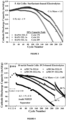
- the standard deviation is calculated from 3 different measurements: As the results in Figures 1a and 1b demonstrate, the electrolyte uptake on both the separator and the hard carbon (respectively) increased in the case of the surfactant-containing electrolytes.
- Example 2 was used to test whether or not improved up-take translates into better electrochemical performance.
- each of the sample electrolyte compositions TEL 3, TEL 3a, TEL 4, TEL 4a, and the control electrolyte composition TEL 0 were employed to prepare 10 mAh test cells.
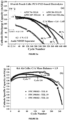
- the electrochemical performance of each test cell was then investigated by cycling between 4.2 and 1.0 V. From the results shown in Figure 2a , it is apparent that 1 wt% of either P123 or F127 delivered a longer cycle life than 0.2 wt % P123 or F127 and that both of these wt% amounts of surfactant outperformed the performance of TEL 0. The best performance was observed for the cell which contained the electrolyte composition TEL 3a (1 wt% P123) and this was marginally better than the performance of TEL 4a (1wt% F127).
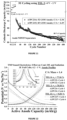
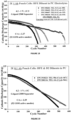
- Figure 3 shows the long-term cycling data on large-scale 5 Ah cells using either TEL 0, TEL 3a or TEL 4a electrolyte compositions, and confirms the trend of cycle life enhancement when a 1 wt% P123 or F127 surfactant is used, even in a large-scale 5 Ah cell.
- a cycle life enhancement of 51 cycles was also observed for the cell which used electrolyte composition TEL 3a as compared against a similar cell which used electrolyte composition TEL 0.
- PCS 1,3-Propanediolcyclic sulfate
- PCS-containing samples gave a 1 st cycle coulombic efficiency which increased from 77 % (for the cell which used the TEL 0 electrolyte composition) to 80 % (for cells which used the TEL 19, 19a and 19b electrolyte compositions). This increase in performance could explain the higher capacities observed for PCS-based electrolytes as lesser amount of Na + from the cathode was irreversibly consumed.
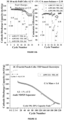
- the long-term cycling performance was investigated for 10 mAh cells which contained either the electrolyte composition of TEL 0 (control), or the composition of TEL 0 with 1% PCS (sample TEL 19), or the composition of TEL 0 and 1wt% PCS + 1wt% P123 (sample TEL 24), or the composition of TEL 0 and 0.5 wt% PCS + 0.5 wt% P123 (sample TEL 24a).
- the long-term cycling performance was further investigated for larger-scale 0.6 Ah cells which contained either the electrolyte composition of TEL 0 (control), or the compositions of the present invention: TEL 0 with 1% PCS (sample TEL 19), or the composition of TEL 0 and 1wt% PCS + 1wt% P123 (sample TEL 24).
- Figure 6 shows the cycling stability within a 3.75 - 2.5 V window to simulate the voltage profile for Starter-Ignition-Lighting (SLI) batteries currently used in automobiles.
- SLI Starter-Ignition-Lighting
- the delivered capacity could be further enhanced by increasing the C/A mass balance from 2.27 to 2.61 and 2.95.
- the long-term cycling performance was investigated, between 4.2 to 1 V for 10 mAh, for cells which used an electrolyte composition that contained either pure propylene carbonate (control sample TEL 36), or a mixture of propylene carbonate and 1 wt% PCS and 1wt% P123, (sample TEL 37), or the control electrolyte composition (control sample TEL 0).
- an electrolyte composition that contained propylene carbonate as the only organo carbonate-based solvent but which also contained 1 wt % PCS and 1 wt % P123 additives (sample TEL 37) delivered higher initial discharge capacities and also better cycling stability over 60 cycles, as compared against a similar cell using the control electrolyte TEL 0.
- This result demonstrates that pure PC-based electrolyte compositions are particularly effective in hard carbon-based sodium-ion cells, when a surfactant and a sulfur-containing additive is also present.
- control sample TEL 38 ethylene carbonate and diethyl carbonate
- ethylene carbonate and diethyl carbonate i.e. no propylene carbonate
- control electrolyte composition with 1 wt% PCS and 1 wt% P123, (sample TEL 38a), or the control electrolyte composition (sample TEL 0).
- the cycling performance of a non-PC based electrolyte composition including 1 wt% PCS and 1 wt% Ploxamer P123 delivered a markedly higher capacity (112.4 mAh/g) in the 5 th cycle (after 4 formation cycles at C/10) and significantly enhanced cycling stability in respect of a comparable cell that used an electrolyte composition with identical EC:DEC solvents but without the PCS and surfactant addition (sample TEL 38) which showed much lower 5 th cycle capacity (97.5 mAh/g) with very poor cycling stability.
- This result demonstrates that the electrochemical performance of organic carbonate-containing electrolyte compositions can be significantly enhanced by the inclusion of a sulfur-containing compound and a surfactant additive.
- the long-term cycling performance was investigated between 4.2 to 1 V for 10 mAh cells which used an electrolyte composition which contained either a 1:1 wt/wt ratio of organo carbonate : sulfolane with 1 wt% of the surfactant P123 (sample TEL 17), or a mixture of 5 wt% sulfolane and 1 wt% surfactant P123 (sample TEL 17b), or 1 wt% 1,3-propanediolcyclic sulfate (sample TEL 19, not according to the present invention) or 1 wt% 1-propene 1,3-sultone (sample 34), or 1 wt% 1,3 propanesultone (sample TEL 35, not according to the present invention), or the control electrolyte composition (control sample TEL 0).
- an electrolyte composition which contained either a 1:1 wt/wt ratio of organo carbonate : sulfolane with 1 wt% of the
- electrolyte compositions that contain sulfolane-based compounds cycle well and, by the presence of sulfolane, are expected to be non-flammable.
- the cycling stability is reduced as compared against the control electrolyte composition TEL 0, this is expected to improve with optimisation of the sulfolane-containing cells.
- the cycle life of cells using TEL 17 within the 3.75 - 2.5 V window can be as good as that seen for the control TEL 0 cells (refer to Figure 13 ), hence, sulfolane-based electrolytes can still show excellent cycling stability.
- Electrolyte samples 34 and 35 both show an enhanced initial discharge capacity and cycling stability (over 180 cycles) compared against the cycling results for a similar cell that used control electrolyte composition TEL 0.
- TMP trimethyl phosphate
- TEL 0, TEL 1a, TEL 2, TEL 2a, TEL 9 and TEL 10 (the compositions as detailed in Table 1 above) were prepared and their up-take by an Ashai ND525 separator was measured.
- the long-term cycling performance (between 4.2 - 1 V) for 0.5 Ah cells with C/A mass balances 1.52, 1.94 and 2.26 and the electrolyte composition TEL 2 (a combination of electrolyte composition TEL 0 with trimethyl phosphate (TMP) in a solvent ratio of 1:1 wt/wt).
- the cycle life of TMP-containing cells is increased from around 185 cycles to around 300 cycles when the mass balance of the cells is increased from 1.52 to 2.26.
- the cycle life can be further enhanced for TMP-based TEL 2 if cycled between 4 V - 1 V.
- both regular GSM Type 1 hard carbon anode (83 GSM active) and low GSM Type 1 hard carbon anode (52 GSM active) demonstrated excellent cycling stability over 400 cycles with capacity retention of 88 %.
- TMP-based electrolytes can produce very stable cycling with the added benefit that these sodium-ion cells would also be non-flammable.
- the 1 st cycle coulombic efficiency was investigated between 4.2 to 1 V for three-electrode (3E) full cells which used an electrolyte compositions TEL 2 and TEL 23 and the results were compared against those for a similar cell which used the control TEL 0 electrolyte composition.
- a PCS + P123 + TMP-based electrolyte composition (TEL 23, according to the present invention) produces an improved 1 st cycle efficiency as compared with TEL 2 (not according to the present invention) and TEL 0 (control sample).
- 2E 10 mAh cells were prepared using electrolyte compositions TEL 2, TEL 14b, TEL 14c, TEL 17 and TEL 23, and results for the long-term cycling performance (between 3.75 - 2.5 V) were obtained and compared against cycling results of a similar cell using the control electrolyte composition TEL 0.
- a 3.75 - 2.5 V window simulates the voltage profile for Starter-Ignition-Lighting (SLI) batteries currently used in automobiles, therefore is highly advantageous that the results shown in Figure 13 indicate that electrolyte compositions that contain TMP and NaBF 4 (samples TEL 14b, TEL 14c) and the composition which contains sulfolane and the surfactant P123 (TEL 17) are very well suited to this end-use application.
- the electrolyte composition TEL 2 also shows excellent cycling stability over 300 cycles under these voltage conditions.
- NaBF 4 may be used in place of NaPF 6 (sample TEL 14b), and that NaBF 4 -based TMP electrolytes are also compatible with 1wt% PCS and 1 wt% P123 additives (TEL 14c).
- Significant cost savings and greater flexibility in the choice of electrolyte salts are expected to be provided by the electrolyte compositions of the present invention.
- the 3E 10 mAh cells were charged at various rates as indicated on the figure with the discharge cycle always at C/5 (operating temperature was 30 °C).
- TEL 0c can enable fast charging at 2.5C or 3C but TEL 0 caused rapid capacity fade beyond 2C due to sodium plating on the hard carbon anode (the low coulombic efficiencies for TEL 0 at 2.5C and 3C shown in the right panel can be taken as a proxy for sodium plating).
- TEL 24b an electrolyte composition according to the present invention, achieves even better capacity retention at the fast 2.5C and 3C charge rates than TEL 0c - TEL 24b cell could deliver 90.2 mAh/g if charged at 3C as opposed to 87.5 mAh/g for the TEL 0c cell in like-for-like conditions.
- Figure 14b extends the above insights into further embodiments of the present invention to show 3E 10 mAh full cell fast charge cycling data on sodium-ion cells cycled at 4.2 - 1 V using three electrolytes: TEL 24 (0.5 m NaPF 6 ), TEL 24b (1 m NaPF 6 ), and TEL 24c (1.5 m NaPF 6 ).
- TEL 24 0.5 m NaPF 6
- TEL 24b 1 m NaPF 6
- TEL 24c 1.5 m NaPF 6
- the three cells were charged at various rates as indicated on the figure with the discharge cycle always at C/5 (operating temperature was 30 °C). While the TEL 24 cell (A3PC377) exhibited a precipitous decline in capacity after 1C, this did not occur for the TEL 24b cell (A3PC402) and the TEL 24c cell (A3PC398).
- TEL 24c exhibited the most superior charge acceptance characteristics at varying rates: the discharge capacity of cycle 26 was 112.3 mAh/g for A3PC398 at 3C rate while the corresponding value for A3PC377 was just 54.8 mAh/g, or just 49% of the value obtained for A3PC398.
- Figure 15 presents the long-term cycling of 2E 10 mAh cells using the TEP-containing TEL 40 electrolyte (not according to the present invention). It can be appreciated that TEP is in the same class of polyalkyl phosphate family as that containing TMP - an embodiment of the present invention discussed in Experiments 7 - 9. From Figure 15 , a cycle life of 196 cycles could be obtained to 20 % capacity fade at the C/A mass balance of around 1.4 for cell APFC221 if TEL 40 is used as the electrolyte.
- Figure 16 compares the long-term cycling of 2E 10 mAh cells using TEL 0 (APFC76) with APFC222 utilising TEL 0 with 50 wt% of the hydrofluoroether HFE (TEL 41).
- TEL 0 APFC76
- TEL 41 hydrofluoroether HFE
- Experiment 15a extends Experiment 14 in the domain of sodium-ion electrolytes containing majority PC as the solvent, in line with embodiments of the present invention.
- Figure 17 presents the long-term cycling of 2E 10 mAh full sodium-ion cells using either TEL 0 (control), TEL 37a (PC-based electrolyte with 2 wt% PCS and 1 wt% P123 surfactant additives), TEL 43 (TEL 37a with 20 wt% of HFE diluent) and TEL 43c (TEL 37a with 40 wt% HFE diluent and 1 m NaPF 6 ).
- Experiment 15b extends Experiment 15a into the domain of large-scale sodium-ion ion pouch cells of the type that would actually be used in commercial applications, such as 1 Ah pouch cells.
- Figure 18 shows long-term cycling of such 1 Ah cells at a ⁇ C/3 rate at 30 °C rate using commercial Celgard 2500 separators (these are also commercially-used polyolefin separators analogous to Asahi ND525 separators and it should be understood that the results obtained from such separators can be extended to all such commercially-used polyolefin separators). Results from 5 different electrolytes have been shown.
- the control cell using TEL 0 electrolyte demonstrated a cycle life of 308 cycles to 20 % capacity fade (in the figure legend, the cycle life to 20% capacity fade has been mentioned within parenthesis).
- FIG. 18 presents the long-term cycling of TEL 43 (according to the present invention) which is PC-based electrolyte with 20 wt% HFE diluent and 1wt% surfactant P123.
- Experiment 16 provides another example of a diluent that can be used to enable PC-dominant electrolytes to function in large-scale commercial sodium-ion cells.
- cycle lives at a fast ⁇ 1C were investigated at 30 °C within the 4.2 - 1 V window using either HFE-based TEL 43e (FPC200116) or the D2-based TEL 58a (FPC191023) electrolyte, as shown in Figure 19 (in the legend, the cycle life at 20% capacity fade has been indicated).
- cycle lives of both electrolytes at this fast 1C rate are higher than those seen even for small-scale cells using the control TEL 0 electrolyte at 4.2 - 1 V: using these diluent-based PC-based electrolytes, cycle lives of around 467 - 562 cycles are achievable which is almost double with respect to the cycle life of 271 cycles if using the control TEL 0 electrolyte (refer to Figure 17 and to cell APFC89) despite favourable conditions for the latter (small-scale 10 mAh cells and at the slower ⁇ C/2 cycling rate where likelihood of sodium plating would be even lesser).
- diluent solvents can also elicit such great performance form PC-dominant sodium-ion electrolytes.
- Some examples include, but not limited to the following: other hydrofluoroethers, low viscosity ethers or carbonate-ester or polyalkyl solvents with appropriate permittivity, inertness/stability and coordination properties such that they do not significantly influence solvation of the salt with PC solvent while still influencing the physical properties of the resulting electrolyte.
- Experiment 17 provides examples on using other types of electrolyte additives in PC+diluent-based electrolytes in realistic large-scale 0.1 Ah pouch cells.
- Figure 20 presents long-term cycling of 0.1 Ah cells at ⁇ C/2 within the 4.2 - 1 V window at 30 °C using TEL 24b, TEL 58a, TEL 43e and two new types of PC+HFE-based electrolytes: TEL 42d (using 1 wt% PCS, 1 wt% P123 and 1wt% TMSB additives), all according to the present invention and TEL 43g (using just 2.5 wt% EC additive), not according to the present invention.
- the move to PC-dominant electrolytes can have another positive effect apart from enhanced cycling stabilities - that of higher oxidative stability of the electrolyte in general which would prevent less amount of gas generation in such cells.
- EC has excellent reductive stability (at low voltages) but poor oxidative stability (at high voltages): EC is well known to decompose on the surface of the graphite anode used in lithium-ion batteries to form stable a SEI.
- PC-only or PC-dominant electrolytes cannot be used in lithium-ion batteries as PC exfoliates the graphite anode resulting in significantly poor cycling performance of such batteries.
- PC-only or PC-dominant based electrolytes can actually enable more superior cycling of sodium-ion cells than state-of-the-art EC-based sodium-ion electrolytes.
- Such an experiment is a cross between a cyclic voltammetry and LSV experiment.
- the advantage of such a modified LSV experiment is that one can accurately calculate the charge passed due to electrolyte oxidation on Al current collector at different V windows, such as 3.8 - 4.2 V, 4.2 - 4.4 V, 4.4 - 5 V and 5 - 8 V. Since the electrodes are just pure Al current collector foils with no active material, all charge passed should be correlated to electrolyte oxidation in theory. In such an experiment, the lower the charge consumed, the lesser would the electrolyte be prone to oxidation and hence, the better should the electrolyte's performance be when used in actual sodium-ion cells charged to around those voltages.
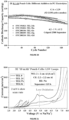
- FIG. 21 and Table 3 presents the results of the modified LSV experiments on four electrolytes: TEL 0 and TEL 36 (the control samples) and TEL 24 and TEL 37e, which are embodiments of the present invention.
- TABLE 3 Electrolyte Q(mC): 3.8 - 4.2 V (% wrt TEL 0) Q (mC): 4.2 - 4.4 V (% wrt TEL 0) Q (mC): 4.4 - 5 V (% wrt TEL 0) Q (mC): 5 - 8 V (% wrt TEL 0) Total Q (mC): 3.8 - 8 V (% wrt TEL 0)
- EC:DEC:PC 1:2:1 wt/wt-based Solvent System TEL 0 (CONTROL) 1.06 0.43 2.79 150.78 155.05 TEL 24 1.04 (-1.8%) 0.40 (-6.8 %) 1.94 (-30.4 %) 74.85 (-5
- Table 3 provides quantitative values to the amount of charge passed, Q (in units of mC), in the process of oxidation of the different electrolytes in the various voltage ranges as shown. From Table 3, it becomes obvious that TEL 24, TEL 37e and TEL 36 resulted in significantly lesser amount of charge consumed due to electrolyte oxidation than the values seen for the control TEL 0 electrolyte. For example, within the 4.4 - 5 V range, TEL 24 consumed 30.4 % lesser charge with respect to the charge consumed for TEL 0 indicating the positive effects of the PCS and P123 additives in shielding the base TEL 0 electrolyte from electrolyte oxidation (TEL 24 is simply TEL 0 with PCS and P123 additives).
- TEL 36 being pure PC-based with no additives, resulted in the lowest amount of charge passed within this voltage range (61.4 % lower than the TEL 0 sample) while TEL 37e, being based on PCS, P123 and EC additives, consumed 28.6% lesser charge than TEL 0.
- PC-only or PC-dominant electrolytes also benefit from additives as disclosed in this invention and this can be appreciated by considering the total amount of charge passed across 3.8 - 8 V range: in this full voltage range, TEL 37e actually displayed the lowest electrolyte oxidation and hence, it becomes obvious that additives such as PCS, P123 and EC help in making the PC-based electrolyte more resistant to oxidation.
- Such oxidatively stable electrolytes would also ensure that resultant sodium-ion cells do not exhibit significant gassing - as is well known to those skilled in the art of high voltage battery systems, the high voltages used for such batteries can lead to significant gas generation due to electrolyte oxidation and that this gassing can then have seriously detrimental knock-on effects such as capacity deterioration, metal plating due to uneven pressure distribution in the sealed cells or in the worst case, serious explosions.
- the additives mentioned in this disclosure can significantly enhance the oxidative stability of sodium-ion electrolytes, irrespective of the solvent system used.
- Figure 22 presents cycling results on large-scale 0.1 Ah pouch cells cycled at ⁇ 1C at 30 °C between 4 - 1 V using sodium-ion electrolytes based on NaTFSI salt.
- TEL 61 standard as TEL 24b but using NaTFSI salt as opposed to NaPF 6 salt
- PC+HFE-based TEL 61b delivered higher capacities than TEL 24b indicating that NaTFSI can be an attractive salt which results in even more superior performance when combined with the appropriate solvents and additives as disclosed herein.
- Figure 23 presents cycling results on small-scale 10 mAh pouch cells cycled at ⁇ C/2 at 30 °C between 4.2 - 1 V using either TEL 0 (control sample) or the dual-salt based TEL 44b (0.5 m NaPF 6 + 0.045 m NaBF 4 in a mixture of carbonate-ester, HFE diluent and tetraglyme based five solvent system).
- TEL 0 control sample
- dual-salt based TEL 44b 0.5 m NaPF 6 + 0.045 m NaBF 4 in a mixture of carbonate-ester, HFE diluent and tetraglyme based five solvent system.
- dual-salts with three different classes of solvent systems led to slightly higher capacities for the resultant sodium-ion cell (around 116 mAh/g for APFC246) with similar cycling stability over 90 cycles as compared to the TEL 0 cell (around 113 mAh/g for APFC 89).
- the first entry is that of a typical commercial lithium-ion electrolyte, LP 30 (control sample).
- LP 30 control sample
- a flash point of 32 °C was obtained for LP 30 indicating that it is a flammable liquid and consistent with prior reports, such as Hess et al.
- two other control sodium-ion control electrolytes (TEL 0+ and 151) were also found to be flammable.
- the control TEL 0 electrolyte demonstrated a higher flash point of 38.5 °C indicating lower flammability than amongst other control samples.
- TEL 24b is based on the same solvent system as the control TEL 0 just with PCS and P123 additives, it also delivered the same flash point value of 38.5 °C indicating that these PCS and P123 additives do not affect the flash point.
- TEL 14d being based on the non-flammable TMP solvent, demonstrated a higher flash point of 44 °C indicating its superior thermal stability.
- TMP-based electrolytes self-extinguish very rapidly even if it catches fire indicating that such TMP-based electrolytes are essentially non-flammable irrespective of the flash point.
- a non-aqueous electrolyte composition comprising:
- a non-aqueous electrolyte composition according to numbered embodiment 1 or 2 wherein the organo carbonate-based solvents are straight or cyclic compounds comprising a carbonyl group of the formula: R 1 O(C O)OR 2 , wherein R 1 and R 2 are independently chosen from hydrogen and a C 1 to C 20 -straight or cyclic, branched or unbranched, substituted or unsubstituted alkyl or alkenyl group.
- a sodium-ion cell comprising a negative electrode, a positive electrode and a non-aqueous electrolyte composition according to any of numbered embodiments 1 to 14.
- An energy storage device comprising a negative electrode, a positive electrode and a non-aqueous electrolyte composition according to any of numbered embodiments 1 to 14.
- An energy storage device selected from a battery, a rechargeable battery, an electrochemical device and an electrochromic device.
Landscapes
- Chemical & Material Sciences (AREA)
- General Chemical & Material Sciences (AREA)
- Chemical Kinetics & Catalysis (AREA)
- Electrochemistry (AREA)
- Engineering & Computer Science (AREA)
- Manufacturing & Machinery (AREA)
- Inorganic Chemistry (AREA)
- General Physics & Mathematics (AREA)
- Condensed Matter Physics & Semiconductors (AREA)
- Physics & Mathematics (AREA)
- Materials Engineering (AREA)
- Secondary Cells (AREA)
- Battery Electrode And Active Subsutance (AREA)
Applications Claiming Priority (3)
| Application Number | Priority Date | Filing Date | Title |
|---|---|---|---|
| GBGB1907612.4A GB201907612D0 (en) | 2019-05-29 | 2019-05-29 | Non-aqueous electrolyte compositions |
| EP20730701.8A EP3977546B8 (de) | 2019-05-29 | 2020-05-29 | Nicht-wässrige elektrolytzusammensetzungen |
| PCT/GB2020/051317 WO2020240209A1 (en) | 2019-05-29 | 2020-05-29 | Non-aqueous electrolyte compositions |
Related Parent Applications (2)
| Application Number | Title | Priority Date | Filing Date |
|---|---|---|---|
| EP20730701.8A Division-Into EP3977546B8 (de) | 2019-05-29 | 2020-05-29 | Nicht-wässrige elektrolytzusammensetzungen |
| EP20730701.8A Division EP3977546B8 (de) | 2019-05-29 | 2020-05-29 | Nicht-wässrige elektrolytzusammensetzungen |
Publications (2)
| Publication Number | Publication Date |
|---|---|
| EP4462544A2 true EP4462544A2 (de) | 2024-11-13 |
| EP4462544A3 EP4462544A3 (de) | 2025-01-15 |
Family
ID=67385438
Family Applications (3)
| Application Number | Title | Priority Date | Filing Date |
|---|---|---|---|
| EP20730701.8A Active EP3977546B8 (de) | 2019-05-29 | 2020-05-29 | Nicht-wässrige elektrolytzusammensetzungen |
| EP24194371.1A Pending EP4462544A3 (de) | 2019-05-29 | 2020-05-29 | Nicht-wässrige elektrolytzusammensetzungen |
| EP24205699.2A Pending EP4492500A1 (de) | 2019-05-29 | 2020-05-29 | Nicht-wässrige elektrolytzusammensetzungen |
Family Applications Before (1)
| Application Number | Title | Priority Date | Filing Date |
|---|---|---|---|
| EP20730701.8A Active EP3977546B8 (de) | 2019-05-29 | 2020-05-29 | Nicht-wässrige elektrolytzusammensetzungen |
Family Applications After (1)
| Application Number | Title | Priority Date | Filing Date |
|---|---|---|---|
| EP24205699.2A Pending EP4492500A1 (de) | 2019-05-29 | 2020-05-29 | Nicht-wässrige elektrolytzusammensetzungen |
Country Status (8)
| Country | Link |
|---|---|
| US (1) | US20220231340A1 (de) |
| EP (3) | EP3977546B8 (de) |
| JP (1) | JP7518099B2 (de) |
| KR (1) | KR20220013942A (de) |
| CN (2) | CN119786741A (de) |
| AU (1) | AU2020281311B2 (de) |
| GB (1) | GB201907612D0 (de) |
| WO (1) | WO2020240209A1 (de) |
Families Citing this family (18)
| Publication number | Priority date | Publication date | Assignee | Title |
|---|---|---|---|---|
| CN113474931A (zh) * | 2019-02-28 | 2021-10-01 | 三菱化学株式会社 | 钠离子二次电池用非水系电解液和钠离子二次电池 |
| EP3783720A1 (de) * | 2019-08-20 | 2021-02-24 | Altris AB | Elektrolytlösung mit alkalimetall-bis(oxalato)boratsalz |
| JP7356636B2 (ja) * | 2020-05-07 | 2023-10-05 | トヨタ自動車株式会社 | 非水電解液二次電池 |
| CN113871714B (zh) * | 2020-06-30 | 2025-03-25 | 张家港市国泰华荣化工新材料有限公司 | 一种钠离子电池的电解液及应用 |
| GB202110658D0 (en) | 2021-07-23 | 2021-09-08 | Faradion Ltd | Sodium-ion cells |
| JP2024540368A (ja) * | 2021-11-08 | 2024-10-31 | ファラディオン リミテッド | 非水電解質組成物 |
| GB202212271D0 (en) | 2022-08-23 | 2022-10-05 | Faradion Ltd | Electrolytes |
| GB202204201D0 (en) | 2022-03-24 | 2022-05-11 | Faradion Ltd | Electrolyte compositions |
| CN114709484A (zh) * | 2022-04-19 | 2022-07-05 | 珠海中科先进技术研究院有限公司 | 一种锂电池用电解质及其制备方法和应用 |
| CN118648134A (zh) * | 2022-07-29 | 2024-09-13 | 宁德时代新能源科技股份有限公司 | 钠离子电池电解液、二次电池、电池模块、电池包和用电装置 |
| CN117691182B (zh) * | 2022-09-02 | 2025-01-14 | 深圳新宙邦科技股份有限公司 | 一种钠离子二次电池 |
| CN116072972B (zh) * | 2022-12-02 | 2026-04-07 | 湖南法恩莱特新能源科技有限公司 | 一种钠离子电解液及其制备方法 |
| CN118352623A (zh) * | 2023-01-16 | 2024-07-16 | 宁德时代新能源科技股份有限公司 | 钠二次电池用电解液、钠二次电池及用电装置 |
| WO2024152146A1 (zh) * | 2023-01-16 | 2024-07-25 | 宁德时代新能源科技股份有限公司 | 非水电解液及包含该电解液的钠离子电池和用电装置 |
| CN116565321B (zh) * | 2023-06-26 | 2024-03-26 | 合肥市赛纬电子材料有限公司 | 非水电解液及其钠离子电池 |
| CN117543078A (zh) * | 2023-11-22 | 2024-02-09 | 惠州锂威新能源科技有限公司 | 一种电解液及其制备方法和应用 |
| CN118472397B (zh) * | 2024-04-18 | 2025-05-16 | 浙江山高新能源有限公司 | 一种钠离子电池电解液及其制备方法和应用 |
| CN118899536B (zh) * | 2024-09-04 | 2025-03-25 | 苏州润能动力科技有限公司 | 一种低温电解液添加剂及其制备方法 |
Family Cites Families (21)
| Publication number | Priority date | Publication date | Assignee | Title |
|---|---|---|---|---|
| KR100559110B1 (ko) * | 1997-12-10 | 2006-03-13 | 미네소타 마이닝 앤드 매뉴팩춰링 캄파니 | 전기화학 시스템에서의 비스(퍼플루오로알킬설포닐)이미드 계면활성제 염 |
| US8349502B2 (en) * | 2006-09-20 | 2013-01-08 | Lg Chem, Ltd. | Additive for non-aqueous electrolyte and secondary battery using the same |
| EP2768067B1 (de) * | 2006-12-06 | 2017-09-06 | Mitsubishi Chemical Corporation | Wasserfreie Elektrolytlösung und Sekundärbatterie mit wasserfreiem Elektrolyt |
| JP2012003994A (ja) * | 2010-06-17 | 2012-01-05 | Sony Corp | 非水電解質電池および非水電解質 |
| WO2012111681A1 (ja) * | 2011-02-15 | 2012-08-23 | 住友化学株式会社 | ナトリウム二次電池電極およびナトリウム二次電池 |
| WO2013031776A1 (ja) * | 2011-08-30 | 2013-03-07 | 国立大学法人名古屋工業大学 | 電池用電解液及びその製造方法、並びに当該電解液を備える電池 |
| JP5801765B2 (ja) * | 2012-06-20 | 2015-10-28 | 富士フイルム株式会社 | 非水二次電池用電解液および非水電解液二次電池 |
| US20180191033A1 (en) * | 2012-11-02 | 2018-07-05 | Natron Energy, Inc. | Electrolyte additives for electrochemical devices |
| WO2014073381A1 (ja) * | 2012-11-08 | 2014-05-15 | 住友化学株式会社 | ナトリウム二次電池 |
| JP6064825B2 (ja) * | 2013-07-26 | 2017-01-25 | 住友電気工業株式会社 | ナトリウム溶融塩電池 |
| JP2015069705A (ja) * | 2013-09-26 | 2015-04-13 | 旭硝子株式会社 | 二次電池用非水電解液およびリチウムイオン二次電池 |
| KR20150046878A (ko) * | 2013-10-23 | 2015-05-04 | 한국전자통신연구원 | 계면활성제를 이용한 다공성 신경전극 및 이의 제조방법 |
| KR20160100958A (ko) * | 2013-12-17 | 2016-08-24 | 옥시스 에너지 리미티드 | 리튬-황 셀용 전해질 |
| JP6342287B2 (ja) * | 2014-10-08 | 2018-06-13 | 住友電気工業株式会社 | ナトリウムイオン二次電池用電解質およびナトリウムイオン二次電池 |
| JP6570858B2 (ja) * | 2015-03-25 | 2019-09-04 | 住友化学株式会社 | ナトリウム二次電池用非水電解液およびナトリウム二次電池 |
| US9666865B2 (en) * | 2015-04-17 | 2017-05-30 | Nanotek Instruments, Inc. | Magnesium-sulfur secondary battery containing a metal polysulfide-preloaded active cathode layer |
| CN107925081B (zh) * | 2015-08-11 | 2021-07-13 | 日本电气硝子株式会社 | 蓄电器件用负极活性物质 |
| JP6558694B2 (ja) * | 2015-09-02 | 2019-08-14 | 国立大学法人 東京大学 | 二次電池用難燃性電解液、及び当該電解液を含む二次電池 |
| CN106654267A (zh) * | 2017-01-04 | 2017-05-10 | 华南理工大学 | 一种作为钠离子电池与锂离子电池负极材料的植物纤维三维结构碳材料及其制备方法 |
| WO2018151674A1 (en) * | 2017-02-14 | 2018-08-23 | National University Of Singapore | In-situ sodium plated battery |
| US10854923B2 (en) * | 2017-10-19 | 2020-12-01 | Battelle Memorial Institute | Low flammability electrolytes for stable operation of lithium and sodium ion batteries |
-
2019
- 2019-05-29 GB GBGB1907612.4A patent/GB201907612D0/en not_active Ceased
-
2020
- 2020-05-29 KR KR1020217041407A patent/KR20220013942A/ko active Pending
- 2020-05-29 EP EP20730701.8A patent/EP3977546B8/de active Active
- 2020-05-29 CN CN202411987090.8A patent/CN119786741A/zh active Pending
- 2020-05-29 WO PCT/GB2020/051317 patent/WO2020240209A1/en not_active Ceased
- 2020-05-29 JP JP2021569890A patent/JP7518099B2/ja active Active
- 2020-05-29 EP EP24194371.1A patent/EP4462544A3/de active Pending
- 2020-05-29 CN CN202080040092.XA patent/CN113906607B/zh active Active
- 2020-05-29 AU AU2020281311A patent/AU2020281311B2/en active Active
- 2020-05-29 EP EP24205699.2A patent/EP4492500A1/de active Pending
- 2020-05-29 US US17/614,596 patent/US20220231340A1/en active Pending
Non-Patent Citations (1)
| Title |
|---|
| HESS ET AL., JOURNAL OF THE ELECTROCHEMICAL SOCIETY, vol. 162, no. 2, 2015, pages A3084 - A3097 |
Also Published As
| Publication number | Publication date |
|---|---|
| EP3977546A1 (de) | 2022-04-06 |
| CN113906607A (zh) | 2022-01-07 |
| US20220231340A1 (en) | 2022-07-21 |
| AU2020281311B2 (en) | 2026-04-23 |
| KR20220013942A (ko) | 2022-02-04 |
| EP3977546B8 (de) | 2025-06-18 |
| EP3977546B1 (de) | 2024-10-16 |
| JP7518099B2 (ja) | 2024-07-17 |
| JP2022538380A (ja) | 2022-09-02 |
| EP4462544A3 (de) | 2025-01-15 |
| GB201907612D0 (en) | 2019-07-10 |
| WO2020240209A1 (en) | 2020-12-03 |
| CN119786741A (zh) | 2025-04-08 |
| AU2020281311A1 (en) | 2022-02-03 |
| EP4492500A1 (de) | 2025-01-15 |
| CN113906607B (zh) | 2025-01-03 |
Similar Documents
| Publication | Publication Date | Title |
|---|---|---|
| EP3977546B1 (de) | Nicht-wässrige elektrolytzusammensetzungen | |
| Lin et al. | Recent research progresses in ether‐and ester‐based electrolytes for sodium‐ion batteries | |
| EP4636890A2 (de) | Elektrolytzusammensetzungen | |
| EP2683014B1 (de) | Zusatz für ein nichtwässriges elektrolyt, nichtwässriges elektrolyt und sekundärbatterie mit dem nichtwässrigen elektrolyt | |
| EP2907183B1 (de) | Elektrochemische zellen | |
| KR20180061322A (ko) | 고 에너지 리튬-이온 전지용 비수성 전해질 | |
| EP1328036B1 (de) | Zusatzstoff für eine sekundärzelle mit wasserfreiem elektrolyt | |
| US20160156067A1 (en) | Non-aqueous electrolytic solution and non-aqueous electrolyte secondary cell using same | |
| US20250023104A1 (en) | Non-aqueous electrolyte compositions | |
| US12080850B2 (en) | Non-aqueous electrolyte compositions | |
| US12444768B2 (en) | Inorganic compounds having an argyrodite-type structure, their preparation processes and their uses in electrochemical applications | |
| Cheng et al. | Which factor dominates battery performance: metal ion solvation structure-derived interfacial behavior or solid electrolyte interphase layer? | |
| US20220037698A1 (en) | Non-aqueous electrolyte containing lifsi salt for fast charging/discharging of lithium-ion battery | |
| TWI763490B (zh) | 鋰離子電池之離子液體添加劑 | |
| JP2025528247A (ja) | 電解質 | |
| CN112585794A (zh) | 用于锂二次电池中的包含有机碳酸酯和环状亚砜的液体电解质 | |
| EP3782220A1 (de) | Elektrolytzusammensetzung für eine lithium-ionen-batterie sowie lithium-ionen-batterie | |
| WO2024127150A1 (en) | Liquid electrolyte |
Legal Events
| Date | Code | Title | Description |
|---|---|---|---|
| PUAI | Public reference made under article 153(3) epc to a published international application that has entered the european phase |
Free format text: ORIGINAL CODE: 0009012 |
|
| STAA | Information on the status of an ep patent application or granted ep patent |
Free format text: STATUS: REQUEST FOR EXAMINATION WAS MADE |
|
| 17P | Request for examination filed |
Effective date: 20240813 |
|
| AC | Divisional application: reference to earlier application |
Ref document number: 3977546 Country of ref document: EP Kind code of ref document: P |
|
| AK | Designated contracting states |
Kind code of ref document: A2 Designated state(s): AL AT BE BG CH CY CZ DE DK EE ES FI FR GB GR HR HU IE IS IT LI LT LU LV MC MK MT NL NO PL PT RO RS SE SI SK SM TR |
|
| REG | Reference to a national code |
Ref country code: DE Ref legal event code: R079 Free format text: PREVIOUS MAIN CLASS: H01M0010056800 Ipc: H01M0004587000 |
|
| PUAL | Search report despatched |
Free format text: ORIGINAL CODE: 0009013 |
|
| AK | Designated contracting states |
Kind code of ref document: A3 Designated state(s): AL AT BE BG CH CY CZ DE DK EE ES FI FR GB GR HR HU IE IS IT LI LT LU LV MC MK MT NL NO PL PT RO RS SE SI SK SM TR |
|
| RIC1 | Information provided on ipc code assigned before grant |
Ipc: H01M 10/0568 20100101ALI20241209BHEP Ipc: H01M 10/0567 20100101ALI20241209BHEP Ipc: H01M 10/054 20100101ALI20241209BHEP Ipc: H01M 4/587 20100101AFI20241209BHEP |
|
| RAP3 | Party data changed (applicant data changed or rights of an application transferred) |
Owner name: FARADION LIMITED |