EP4454485A1 - Zusammensetzung mit extrakt aus gerösteten zitrusnebenprodukten als wirkstoff zur prävention, linderung oder behandlung von schlafstörungen oder schlaflosigkeit - Google Patents
Zusammensetzung mit extrakt aus gerösteten zitrusnebenprodukten als wirkstoff zur prävention, linderung oder behandlung von schlafstörungen oder schlaflosigkeit Download PDFInfo
- Publication number
- EP4454485A1 EP4454485A1 EP22911933.4A EP22911933A EP4454485A1 EP 4454485 A1 EP4454485 A1 EP 4454485A1 EP 22911933 A EP22911933 A EP 22911933A EP 4454485 A1 EP4454485 A1 EP 4454485A1
- Authority
- EP
- European Patent Office
- Prior art keywords
- citrus
- extract
- byproduct
- sleep
- roasted
- Prior art date
- Legal status (The legal status is an assumption and is not a legal conclusion. Google has not performed a legal analysis and makes no representation as to the accuracy of the status listed.)
- Pending
Links
Images







Classifications
-
- A—HUMAN NECESSITIES
- A23—FOODS OR FOODSTUFFS; TREATMENT THEREOF, NOT COVERED BY OTHER CLASSES
- A23L—FOODS, FOODSTUFFS OR NON-ALCOHOLIC BEVERAGES, NOT OTHERWISE PROVIDED FOR; PREPARATION OR TREATMENT THEREOF
- A23L33/00—Modifying nutritive qualities of foods; Dietetic products; Preparation or treatment thereof
- A23L33/10—Modifying nutritive qualities of foods; Dietetic products; Preparation or treatment thereof using additives
- A23L33/105—Plant extracts, their artificial duplicates or their derivatives
-
- A—HUMAN NECESSITIES
- A23—FOODS OR FOODSTUFFS; TREATMENT THEREOF, NOT COVERED BY OTHER CLASSES
- A23L—FOODS, FOODSTUFFS OR NON-ALCOHOLIC BEVERAGES, NOT OTHERWISE PROVIDED FOR; PREPARATION OR TREATMENT THEREOF
- A23L19/00—Products from fruits or vegetables; Preparation or treatment thereof
- A23L19/01—Instant products; Powders; Flakes; Granules
-
- A—HUMAN NECESSITIES
- A23—FOODS OR FOODSTUFFS; TREATMENT THEREOF, NOT COVERED BY OTHER CLASSES
- A23L—FOODS, FOODSTUFFS OR NON-ALCOHOLIC BEVERAGES, NOT OTHERWISE PROVIDED FOR; PREPARATION OR TREATMENT THEREOF
- A23L2/00—Non-alcoholic beverages; Dry compositions or concentrates therefor; Preparation or treatment thereof
- A23L2/52—Adding ingredients
-
- A—HUMAN NECESSITIES
- A61—MEDICAL OR VETERINARY SCIENCE; HYGIENE
- A61K—PREPARATIONS FOR MEDICAL, DENTAL OR TOILETRY PURPOSES
- A61K31/00—Medicinal preparations containing organic active ingredients
- A61K31/01—Hydrocarbons
- A61K31/015—Hydrocarbons carbocyclic
-
- A—HUMAN NECESSITIES
- A61—MEDICAL OR VETERINARY SCIENCE; HYGIENE
- A61K—PREPARATIONS FOR MEDICAL, DENTAL OR TOILETRY PURPOSES
- A61K31/00—Medicinal preparations containing organic active ingredients
- A61K31/70—Carbohydrates; Sugars; Derivatives thereof
- A61K31/7042—Compounds having saccharide radicals and heterocyclic rings
- A61K31/7048—Compounds having saccharide radicals and heterocyclic rings having oxygen as a ring hetero atom, e.g. leucoglucosan, hesperidin, erythromycin, nystatin, digitoxin or digoxin
-
- A—HUMAN NECESSITIES
- A61—MEDICAL OR VETERINARY SCIENCE; HYGIENE
- A61K—PREPARATIONS FOR MEDICAL, DENTAL OR TOILETRY PURPOSES
- A61K36/00—Medicinal preparations of undetermined constitution containing material from algae, lichens, fungi or plants, or derivatives thereof, e.g. traditional herbal medicines
- A61K36/18—Magnoliophyta (angiosperms)
- A61K36/185—Magnoliopsida (dicotyledons)
- A61K36/75—Rutaceae (Rue family)
- A61K36/752—Citrus, e.g. lime, orange or lemon
-
- A—HUMAN NECESSITIES
- A61—MEDICAL OR VETERINARY SCIENCE; HYGIENE
- A61P—SPECIFIC THERAPEUTIC ACTIVITY OF CHEMICAL COMPOUNDS OR MEDICINAL PREPARATIONS
- A61P25/00—Drugs for disorders of the nervous system
-
- A—HUMAN NECESSITIES
- A61—MEDICAL OR VETERINARY SCIENCE; HYGIENE
- A61P—SPECIFIC THERAPEUTIC ACTIVITY OF CHEMICAL COMPOUNDS OR MEDICINAL PREPARATIONS
- A61P25/00—Drugs for disorders of the nervous system
- A61P25/20—Hypnotics; Sedatives
-
- A—HUMAN NECESSITIES
- A23—FOODS OR FOODSTUFFS; TREATMENT THEREOF, NOT COVERED BY OTHER CLASSES
- A23V—INDEXING SCHEME RELATING TO FOODS, FOODSTUFFS OR NON-ALCOHOLIC BEVERAGES AND LACTIC OR PROPIONIC ACID BACTERIA USED IN FOODSTUFFS OR FOOD PREPARATION
- A23V2002/00—Food compositions, function of food ingredients or processes for food or foodstuffs
-
- A—HUMAN NECESSITIES
- A23—FOODS OR FOODSTUFFS; TREATMENT THEREOF, NOT COVERED BY OTHER CLASSES
- A23V—INDEXING SCHEME RELATING TO FOODS, FOODSTUFFS OR NON-ALCOHOLIC BEVERAGES AND LACTIC OR PROPIONIC ACID BACTERIA USED IN FOODSTUFFS OR FOOD PREPARATION
- A23V2200/00—Function of food ingredients
- A23V2200/30—Foods, ingredients or supplements having a functional effect on health
- A23V2200/322—Foods, ingredients or supplements having a functional effect on health having an effect on the health of the nervous system or on mental function
-
- A—HUMAN NECESSITIES
- A23—FOODS OR FOODSTUFFS; TREATMENT THEREOF, NOT COVERED BY OTHER CLASSES
- A23V—INDEXING SCHEME RELATING TO FOODS, FOODSTUFFS OR NON-ALCOHOLIC BEVERAGES AND LACTIC OR PROPIONIC ACID BACTERIA USED IN FOODSTUFFS OR FOOD PREPARATION
- A23V2300/00—Processes
- A23V2300/14—Extraction
-
- A—HUMAN NECESSITIES
- A23—FOODS OR FOODSTUFFS; TREATMENT THEREOF, NOT COVERED BY OTHER CLASSES
- A23V—INDEXING SCHEME RELATING TO FOODS, FOODSTUFFS OR NON-ALCOHOLIC BEVERAGES AND LACTIC OR PROPIONIC ACID BACTERIA USED IN FOODSTUFFS OR FOOD PREPARATION
- A23V2300/00—Processes
- A23V2300/24—Heat, thermal treatment
-
- A—HUMAN NECESSITIES
- A23—FOODS OR FOODSTUFFS; TREATMENT THEREOF, NOT COVERED BY OTHER CLASSES
- A23V—INDEXING SCHEME RELATING TO FOODS, FOODSTUFFS OR NON-ALCOHOLIC BEVERAGES AND LACTIC OR PROPIONIC ACID BACTERIA USED IN FOODSTUFFS OR FOOD PREPARATION
- A23V2300/00—Processes
- A23V2300/38—Multiple-step
-
- A—HUMAN NECESSITIES
- A23—FOODS OR FOODSTUFFS; TREATMENT THEREOF, NOT COVERED BY OTHER CLASSES
- A23V—INDEXING SCHEME RELATING TO FOODS, FOODSTUFFS OR NON-ALCOHOLIC BEVERAGES AND LACTIC OR PROPIONIC ACID BACTERIA USED IN FOODSTUFFS OR FOOD PREPARATION
- A23V2300/00—Processes
- A23V2300/50—Concentrating, enriching or enhancing in functional factors
-
- A—HUMAN NECESSITIES
- A61—MEDICAL OR VETERINARY SCIENCE; HYGIENE
- A61K—PREPARATIONS FOR MEDICAL, DENTAL OR TOILETRY PURPOSES
- A61K2236/00—Isolation or extraction methods of medicinal preparations of undetermined constitution containing material from algae, lichens, fungi or plants, or derivatives thereof, e.g. traditional herbal medicine
- A61K2236/10—Preparation or pretreatment of starting material
- A61K2236/15—Preparation or pretreatment of starting material involving mechanical treatment, e.g. chopping up, cutting or grinding
-
- A—HUMAN NECESSITIES
- A61—MEDICAL OR VETERINARY SCIENCE; HYGIENE
- A61K—PREPARATIONS FOR MEDICAL, DENTAL OR TOILETRY PURPOSES
- A61K2236/00—Isolation or extraction methods of medicinal preparations of undetermined constitution containing material from algae, lichens, fungi or plants, or derivatives thereof, e.g. traditional herbal medicine
- A61K2236/10—Preparation or pretreatment of starting material
- A61K2236/17—Preparation or pretreatment of starting material involving drying, e.g. sun-drying or wilting
-
- A—HUMAN NECESSITIES
- A61—MEDICAL OR VETERINARY SCIENCE; HYGIENE
- A61K—PREPARATIONS FOR MEDICAL, DENTAL OR TOILETRY PURPOSES
- A61K2236/00—Isolation or extraction methods of medicinal preparations of undetermined constitution containing material from algae, lichens, fungi or plants, or derivatives thereof, e.g. traditional herbal medicine
- A61K2236/30—Extraction of the material
- A61K2236/33—Extraction of the material involving extraction with hydrophilic solvents, e.g. lower alcohols, esters or ketones
- A61K2236/333—Extraction of the material involving extraction with hydrophilic solvents, e.g. lower alcohols, esters or ketones using mixed solvents, e.g. 70% EtOH
-
- A—HUMAN NECESSITIES
- A61—MEDICAL OR VETERINARY SCIENCE; HYGIENE
- A61K—PREPARATIONS FOR MEDICAL, DENTAL OR TOILETRY PURPOSES
- A61K2236/00—Isolation or extraction methods of medicinal preparations of undetermined constitution containing material from algae, lichens, fungi or plants, or derivatives thereof, e.g. traditional herbal medicine
- A61K2236/30—Extraction of the material
- A61K2236/39—Complex extraction schemes, e.g. fractionation or repeated extraction steps
Definitions
- the present disclosure relates to a composition for preventing, ameliorating or treating sleep disorder or insomnia, which contains an extract of a roasted citrus byproduct as an active ingredient.
- sleep can be defined in many aspects, it is mainly defined as a state in which the ability of recognizing the external environment and responding thereto is reduced reversibly, repeatedly and normally with reduced physical activity. Although sleep is related with brain activities, it is also deeply related with the physiological changes of other body parts.
- Sleep disorder is one of the problems that afflict moderns. It is a very common disease that about 20% or more of the population have suffered or are suffering.
- the sleep disorder refers to a state of lack of sound sleep, inability to keep awakened during daytime, or trouble during sleeping or waking because of an irregular sleep rhythm.
- insomnia refers to a state in which the state of unsatisfactory sleep quantity and quality lasts for a very long time.
- the symptoms of insomnia include difficulty falling asleep, waking up easily, being unable to return to sleep, waking up too early in the morning, napping, waking during the night, failing to have a sound sleep, unsleepiness, frequent dreaming, etc.
- Sleep disorder can cause various individual and social problems and also causes learning disorder, lowering of work efficiency, traffic accidents, safety accidents, emotional disturbance, social isolation, unsatisfactory marriage life, industrial disasters, etc.
- sleep disorder may worsen or delay the recovery of existing internal, neurological or mental diseases and may cause severe diseases such as myocardial infarction, stroke.
- 43% of people suffer from sleep disorder and the incidence rate of insomnia is as high as 15%.
- chemical sleeping drugs are used to induce and maintain sleep by reversibly suppressing the central nervous system.
- the existing sleeping drugs suppress the central nervous system like anesthetics. They have sedative effects at low doses and induce sleep at moderate doses, but can cause coma and paralysis or decrease respiration at high doses.
- Barbital-based drugs may have tolerance and dependency problems due to low safety and can cause sleep disorder due to nightmares, etc. if use is stopped after long-term medication.
- benzodiazepine-based drugs with anti-anxiety activity and less harmful effects are used.
- Many drugs including benzodiazepine exhibit pharmacological activity by binding to the GABA A receptor.
- the affinity of the GABA A receptor for GABA is enhanced, and the effect of relieving anxiety, alleviating spasm and inducing sedation and sleep is exhibited as the influx of chloride ions into cells is increased.
- the GABA A receptor is a pentameric protein that constitutes a membrane ion channel. It is closely related to the regulation of sedation, sleep, anxiety, muscle tone, spasm, memory loss, etc.
- GABA ⁇ -aminobutyric acid
- the present disclosure is directed to providing a composition consisting of naturally derived ingredients, which is capable of effectively preventing, alleviating or treating sleep disorder or insomnia while ensuring safety without inducing the side effects of synthetic drugs including pentobarbital and benzodiazepine.
- the present disclosure is directed to providing a food composition capable of preventing or alleviating sleep disorder or insomnia, which contains an extract of a roasted citrus byproduct as an active ingredient.
- the present disclosure is also directed to providing a pharmaceutical composition capable of preventing or treating sleep disorder or insomnia, which contains an extract of a roasted citrus byproduct as an active ingredient.
- the present disclosure is also directed to providing a functional health food composition capable of preventing or alleviating sleep disorder or insomnia, which contains an extract of a roasted citrus byproduct as an active ingredient.
- the present disclosure is also directed to providing a method for preparing a citrus byproduct extract with enhanced effect of preventing or alleviating sleep disorder or insomnia.
- a food composition for preventing or alleviating sleep disorder or insomnia of the present disclosure may contain an extract obtained by extracting a roasted citrus byproduct with a C 1-6 lower alcohol or an aqueous solution thereof as an active ingredient.
- the citrus may be one or more selected from lemon, lime, tangerine, hallabong, cheonhyehyang, green tangerine, kumquat, orange, grapefruit, hardy orange and citron.
- the roasting may be performed at 150-230 °C for 5-20 minutes.
- the citrus byproduct may be one or more selected from the rind and pomace of a citrus.
- the extract of the citrus byproduct may be obtained by extracting with 10-90 vol% methanol, ethanol, butanol, propanol or an aqueous solution thereof.
- the extract of the citrus byproduct may be obtained by extracting with a 50-80 vol% ethanol aqueous solution.
- the extract of the citrus byproduct may be obtained by extracting at 10-80 °C.
- the extract of the citrus byproduct may be prepared by a method including: (1) a step of drying and pulverizing a byproduct of a citrus; (2) a step of roasting the pulverization product of the citrus byproduct; (3) a step of extracting the roasted pulverization product of the citrus byproduct with a C 1-6 lower alcohol or an aqueous solution thereof; and (4) a step of filtering and concentrating the extract of the citrus byproduct.
- the prevention or alleviation of sleep disorder or insomnia may be for decreasing sleep latency, increasing sleep duration or increasing non-REM sleep.
- the food composition may be in the form of a powder, a granule, a tablet, a capsule or a beverage.
- a pharmaceutical composition for preventing or treating sleep disorder or insomnia of the present disclosure may contain an extract obtained by extracting a roasted citrus byproduct with a C 1-6 lower alcohol or an aqueous solution thereof as an active ingredient.
- a functional health food composition for preventing or alleviating sleep disorder of the present disclosure may contain an extract obtained by extracting a roasted citrus byproduct with a C 1-6 lower alcohol or an aqueous solution thereof as an active ingredient.
- a method for preparing a citrus byproduct extract with enhanced effect of preventing or alleviating sleep disorder or insomnia of the present disclosure may include: (1) a step of drying and pulverizing a byproduct of a citrus; (2) a step of roasting the pulverization product of the citrus byproduct; (3) a step of extracting the roasted pulverization product of the citrus byproduct with a C 1-6 lower alcohol or an aqueous solution thereof; and (4) a step of filtering and concentrating the extract of the citrus byproduct.
- An extract of a roasted citrus byproduct of the present disclosure has excellent effect of decreasing sleep latency, increasing sleep duration and increasing non-REM sleep.
- the composition of the present disclosure which contains ingredients derived from the naturally occurring citrus byproduct, can ensure safety without inducing the side effects of synthetic drugs including pentobarbital and benzodiazepine and with no side effects such as cognitive impairment, tolerance or dependency even after long-term use. Accordingly, the composition for preventing, alleviating or treating sleep disorder, which contains an extract of a roasted citrus byproduct as an active ingredient, of the present disclosure is very useful for preparation of a food composition and a pharmaceutical composition.
- the present disclosure relates to a composition capable of preventing, ameliorating or treating sleep disorder or insomnia, which contains an extract of a roasted citrus byproduct as an active ingredient.
- the prevention, amelioration or treatment of sleep disorder or insomnia may refer to the effect of decreasing sleep latency, increasing sleep duration or increasing non-REM sleep, although not being limited thereto.
- the sleep disorder refers to a disrupted sleep pattern caused by various reasons including dysfunctional sleep mechanisms, abnormalities in physiological functions during sleep and disturbances induced by factors extrinsic to the sleep process.
- the sleep disorder may be, for example, insomnia.
- the insomnia may include middle-of-the-night insomnia, late night insomnia, prolonged awakening after sleep onset, sleep maintenance insomnia, and insomnia that follows middle-of-the-night awakening.
- the extract of a roasted citrus byproduct exhibits an effect of decreasing sleep latency and increasing sleep duration, which is comparable to or improved over that of doxepin hydrochloride or diazepam that have been used as sleeping drugs, and increases non-REM sleep time.
- the extract of a roasted citrus byproduct of the present disclosure may be used as an active ingredient of a composition for preventing, ameliorating or treating sleep disorder.
- the extract of a roasted citrus byproduct is derived from a natural product and exhibits very superior effect of inducing and maintaining sleep with no side effect. Therefore, it can be used usefully for preventing, ameliorating or treating sleep disorder.
- composition for preventing, alleviating or treating sleep disorder of the present disclosure contains an extract of a roasted citrus byproduct as an active ingredient.
- the "citrus” refers to plants belonging to the genera Citrus, Fortunella and Poncirus in the subfamily Aurantioideae of the family Rutaceae.
- the fruits of the citrus include lemon, lime, tangerine, hallabong, cheonhyehyang, green tangerine, kumquat, orange, grapefruit, hardy orange, citron, etc.
- the pulp or juice of the citrus is used to avoid astringent and sour taste. For this reason, over 50,000 tons of byproducts such as the rind, pomace, etc. of the citrus are produced in the process of preparing processed products such as beverages, chocolates, etc.
- the byproducts of the citrus are rich in flavonoids, pectins, oils, etc., most of them are being discarded.
- the citrus of the present disclosure may be one or more selected from lemon, lime, tangerine, hallabong, cheonhyehyang, green tangerine, kumquat, orange, grapefruit, hardy orange and citron, specifically one or more selected from lime, lemon, tangerine and kumquat, more specifically one or more selected from lime, lemon and kumquat, more specifically one or more selected from lime and lemon.
- the citrus byproduct of the present disclosure may be one or more selected from the rind and pomace of the citrus, which are obtained during the preparation of processed citrus products such as beverages, chocolates, etc. Specifically, it may be the rind of the citrus. In addition, the rind of the citrus may specifically be a byproduct obtained after extracting oil ingredients from the rind of the citrus in terms of the effect of improving sleep efficiency.
- the extract of a citrus byproduct of the present disclosure may be obtained by extracting the citrus byproduct which has or has not been roasted. Specifically, the extract may be obtained after roasting in terms of the effect on sleep disorder or insomnia.
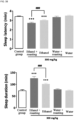
- the extract of a roasted citrus byproduct showed significant sleep latency-decreasing effect and sleep duration-increasing effect as compared to the extract of an unroasted citrus byproduct (see FIG. 3a and FIG. 3b ).
- the roasting of the citrus byproduct may be performed at 150-230 °C, specifically at 180-220 °C, more specifically at 190-210 °C, for 5-20 minutes, specifically for 10-20 minutes, more specifically for 12-18 minutes, more specifically for 14-16 minutes, in terms of the effect of improving sleep efficiency. If the roasting temperature is below the lower limit, the effect of improving sleep efficiency by the roasted citrus byproduct may not be achieved. And, if the roasting temperature exceeds the upper limit, the citrus byproduct may burn. If the roasting time is shorter than the lower limit, the citrus byproduct may not be roasted enough. And, if the roasting time exceeds the upper limit, the effect of improving sleep efficiency by the roasted citrus byproduct may be decreased on the contrary and the cost for commercial use may be increased.
- the roasted citrus byproduct may be prepared by prepared by mixing with an extraction solvent at a weight ratio of 1 : 5-20, specifically 1 : 5-15, more specifically 1 : 8-12, performing extraction at 10-80 °C, specifically at 20-70 °C, more specifically at 40-60 °C, more specifically at 45-55 °C, for 2-30 hours, specifically for 10-20 hours, more specifically for 14-18 hours, and then performing filtration and concentration under reduced pressure. If the weight ratio of the roasted citrus byproduct and the extraction solvent is outside the above range, the active ingredients of the roasted citrus byproduct may be extracted in a small amount. If the extraction temperature is below the lower limit, the active ingredients for improving sleep efficiency may not be extracted well.
- the extract may be denatured. If the extraction time is shorter than the lower limit, some of the active ingredients may not be extracted. And, if the extraction time exceeds the upper limit, impurities may be extracted together with the active ingredients.
- the extraction solvent may be a C 1-6 lower alcohol or an aqueous solution thereof.
- the extraction solvent may be specifically a 10-90 vol% C 1-6 lower alcohol aqueous solution, more specifically a 20-80 vol% C 1-6 lower alcohol aqueous solution, more specifically 20-80 vol% methanol, ethanol, butanol, propanol or an aqueous solution thereof, more specifically 50-80 vol% methanol, ethanol, butanol, propanol or an aqueous solution thereof.
- an extract extracted with a 50-80 vol% ethanol aqueous solution as the extraction solvent is more preferred for prevention, alleviation or treatment of sleep disorder or insomnia.
- the roasted citrus byproduct extract may be a fraction obtained by fractionating the extract obtained by extracting a roasted citrus byproduct with a C 1-6 lower alcohol or an aqueous solution thereof with a second organic solvent.
- the citrus byproduct extract may be a fraction obtained by fractionating the ethanol extract of the roasted citrus byproduct with hexane, ethyl acetate, butanol or water.
- the term "extract" used while mentioning the roasted citrus byproduct includes not only a crude extract obtained by treating with the extraction solvent but also a processed product of the roasted citrus byproduct extract.
- the roasted citrus byproduct extract may be prepared into a powder through additional processes such as vacuum filtration, freeze-drying, spray drying, etc.
- the extract of a citrus byproduct of the present disclosure may be prepared by a method including: (1) a step of drying and pulverizing a byproduct of a citrus; (2) a step of roasting the pulverization product of the citrus byproduct; (3) a step of extracting the roasted pulverization product of the citrus byproduct with a C 1-6 lower alcohol or an aqueous solution thereof; and (4) a step of filtering and concentrating the extract of the citrus byproduct. It was confirmed that the byproduct of a citrus of the step (1) has enhanced sleep efficiency when the byproduct is obtained after extracting oil ingredients from the rind of the citrus as compared to one from which the oil ingredients have not been extracted.
- the term "containing as an active ingredient” means that the extract of the roasted citrus byproduct is contained in an amount sufficient to achieve the desired effect or activity.
- a daily administration dose of the extract of the roasted citrus byproduct of the present disclosure may be 10-1,000 mg/kg, specifically 25-500 mg/kg, more specifically 50-500 mg/kg, more specifically 100-500 mg/kg, more specifically 100-300 mg/kg. If the administration dose of the extract of the roasted citrus byproduct of the present disclosure is smaller than the lower limit, the desired sleep efficiency may not be achieved. And, if the administration dose exceeds the upper limit, the sleep efficiency may not be improved enough when considering the increased administration dose.
- the upper limit of the amount of the extract contained in the composition of the present disclosure may be selected within a proper range by those skilled in the art.
- the plant extracts previously known to exhibit sleep efficiency such as bangpung extract, paddle weed extract, rice bran extract, etc.
- the extract of the roasted citrus byproduct of the present disclosure can exhibit significant sleep efficiency at a relatively low concentration.
- the extract of the roasted citrus byproduct of the present disclosure has an effect of ameliorating sleep disorder or insomnia since it decreased sleep latency and increased sleep duration when administered to a mouse model (see FIG. 2 and FIG. 3 ). This suggests that the extract of the roasted citrus byproduct of the present disclosure may be usefully used for preventing, ameliorating or treating sleep disorder or insomnia.
- prevention refers to any action of inhibiting or delaying sleep disorder or insomnia.
- treatment refers to reversal or amelioration of the symptoms of sleep disorder or insomnia or inhibition or prevention thereof, unless specified otherwise.
- the term “amelioration” refers to at least decreasing parameters related with the condition to be treated by administering a composition containing the extract of the roasted citrus byproduct of the present disclosure, e.g., the severity of symptoms.
- a food composition according to the present disclosure may be formulated into a powder, a granule, a tablet, a capsule, etc. using a sitologically appropriate and physiologically acceptable adjuvant for use as a functional food.
- a sitologically appropriate and physiologically acceptable adjuvant for use as a functional food.
- an excipient, a disintegrant, a sweetener, a binder, a coating agent, a swelling agent, a lubricant, a glidant, a flavorant, etc. may be used.
- the food composition according to the present disclosure may in the form of, for example, a beverage, an alcohol beverage, confectionery, a diet bar, a dairy product, meat, chocolate, pizza, ramen, other noodles, gum, ice cream, etc.
- the food composition of the present disclosure may contain an ingredient commonly added for preparation of food, e.g., a protein, a carbohydrate, a fat, a nutrient, a seasoning and a flavorant, in addition to the extract of the roasted citrus byproduct as an active ingredient.
- the carbohydrate may be, for example, a common sugar such as a monosaccharide, e.g., glucose, fructose, etc., a disaccharide, e.g., maltose, sucrose, oligosaccharides, etc., and a polysaccharide, e.g., dextrin, cyclodextrin, etc.
- a natural flavorant [thaumatin, stevia extract (e.g., rebaudioside A, glycyrrhizin, etc.)] or a synthetic flavorant (saccharine, aspartame, etc.) may be used.
- citric acid, fructose syrup, sugar, glucose, acetic acid, malic acid, fruit juice, plant extract, etc. may be further added in addition to the extract of the roasted citrus byproduct of the present disclosure.
- the food composition may be in the form of a powder, a granule, a tablet, a capsule or a beverage.
- the content of the extract of the roasted citrus byproduct in the food composition may be 0.001-20 wt%, specifically 0.001-10 wt%, 0.001-1 wt%, more specifically 0.001-0.5 wt%, more specifically 0.002-0.3 wt%, more specifically 0.005-0.3 wt%, more specifically 0.01-0.2 wt%, more specifically 0.02-0.1 wt%.
- the present disclosure also provides a pharmaceutical composition for preventing or treating sleep disorder or insomnia, which contains the extract of the roasted citrus byproduct as an active ingredient.
- the pharmaceutical composition of the present disclosure may be prepared using a pharmaceutically appropriate and physiologically acceptable adjuvant in addition to the active ingredient.
- a pharmaceutically appropriate and physiologically acceptable adjuvant in addition to the active ingredient.
- an excipient a disintegrant, a sweetener, a binder, a coating agent, a swelling agent, a lubricant, a glidant, a flavorant, etc. may be used.
- the pharmaceutical composition may be formulated using one or more pharmaceutically acceptable carrier in addition to the active ingredient for adm inistration.
- the pharmaceutical composition may be formulated a granule, a powder, a tablet, a coated tablet, a capsule, a suppository, a liquid, a syrup, a juice, a suspension, an emulsion, a medicinal drop, an injectable solution, etc.
- the active ingredient may be bound to a nontoxic, pharmaceutically acceptable inert carrier for oral administration such as ethanol, glycerol, water, etc.
- a suitable binder, lubricant, disintegrant and colorant may be added as a mixture.
- a suitable binder includes but is not limited to a natural sugar such as starch, gelatin, glucose or ⁇ -lactose, a corn sweetener, a natural or synthetic gum such as acacia, tragacanth or sodium oleate, sodium stearate, magnesium stearate, sodium benzoate, sodium acetate, sodium chloride, etc.
- the disintegrant includes but is not limited to starch, methyl cellulose, agar, bentonite, xanthan gum, etc.
- composition When the composition is formulated into a liquid solution, one or more of saline, sterile water, Ringer's solution, buffered saline, albumin injection solution, dextrose solution, maltodextrin solution, glycerol and ethanol may be used as a sterilized, biocompatible, pharmaceutically acceptable carrier. If necessary, other common additives such as an antioxidant, a buffer, a bacteriostat, etc. may be added.
- an injectable formulation such as an aqueous solution, a suspension, an emulsion, a pill, a capsule, a granule or a tablet may be prepared by further adding a diluent, a dispersant, a surfactant, a binder and a lubricant.
- composition may be formulated properly depending on the corresponding disease or ingredients using the method described in Remington's Pharmaceutical Science, Mack Publishing Company, Easton PA.
- the pharmaceutical composition of the present disclosure may be administered orally or parenterally.
- the parenteral administration may be made by intravenous injection, subcutaneous injection, intramuscular injection, intraperitoneal injection, transdermal administration, etc. Specifically, it may be administered orally.
- An adequate administration dose of the pharmaceutical composition of the present disclosure varies depending on factors such as formulation method, administration type, the age, body weight, sex, pathological condition and diet of a patient, administration time, administration route, excretion rate and response sensitivity.
- An ordinarily skilled physician can easily determine and prescribe an administration dose effective for the desired treatment or prevention.
- a daily administration dose of the pharmaceutical composition of the present disclosure may be 0.001-10 g/kg.
- the pharmaceutical composition of the present disclosure may be formulated into a single-dose or multiple-dose form using a pharmaceutically acceptable carrier and/or excipient.
- the formulation may be a solution in an oily or aqueous medium, a suspension, an emulsion, an extract, a powder, a granule, a tablet or a capsule, and may further contain a dispersant or a stabilizer.
- the present disclosure also provides a functional health food composition for preventing, ameliorating or treating sleep disorder, which contains the extract of the roasted citrus byproduct as an active ingredient.
- the functional health food refers to a food prepared into a capsule, a powder, a suspension, etc. by adding the extract of the roasted citrus byproduct to various food materials, which provides specific health benefit without side effects that may occur when a pharmaceutical drug is taken for a long time because food is used as a raw material.
- the functional health food of the present disclosure is very useful since it can be taken routinely.
- the addition amount of the extract of the roasted citrus byproduct in the functional health food can vary depending on the type of the functional health food, it is not specially limited as long as the taste of the food is not sacrificed.
- the addition amount is generally 0.01-50 wt%, specifically 0.1-20 wt%.
- the addition amount is generally 0.1-100 wt% specifically 0.5-80 wt%.
- the functional health food of the present disclosure may be in the form of a powder, a granule, a tablet, a capsule or a beverage.
- the present disclosure also provides a use of the extract of the roasted citrus byproduct for preparation of a drug or a food for preventing, ameliorating or treating sleep disorder.
- the extract of the roasted citrus byproduct may be used for preventing, ameliorating or treating sleep disorder or insomnia.
- the present disclosure also provides a method for preventing, ameliorating or treating sleep disorder or insomnia, which includes administering an effective amount of the extract of the roasted citrus byproduct to a mammal.
- mammal refers to a mammal which is a subject of treatment, monitoring or experiment, specifically human.
- the term "effective amount” refers to an amount of the active ingredient or the pharmaceutical composition that will elicit a biological or medical response in a tissue system, an animal or human that is being sought by a researcher, a veterinarian, a medical doctor or a clinician, including alleviation of the symptoms of the corresponding disease or disorder.
- the effective amount of the active ingredient of the present disclosure and the number of administration thereof will vary depending on the desired effect.
- optimum administration dose may be easily determined by those skilled in the art and it may be adjusted depending on various factors including the particular disease, the severity of the disease, the contents of the active ingredient and other ingredients contained in the composition, formulation type, the age, body weight, general physical conditions, sex and diet of a patient, administration time, administration route, the excretion rate of the composition, treatment period and drug(s) used in combination.
- a preferred daily dose of the extract of the roasted citrus byproduct for an adult is 0.001-10 g/kg, once or several times a day.
- composition containing the extract of the roasted citrus byproduct as an active ingredient may be administered orally, rectally, intravenously, intraarterially, intraperitoneally, intramuscularly, intrasternally, transdermally, topically, intraocularly or intradermally.
- the present disclosure also provides a method for preparing a citrus byproduct extract with enhanced effect of preventing or alleviating sleep disorder or insomnia, which includes: (1) a step of drying and pulverizing a byproduct of a citrus; (2) a step of roasting the pulverization product of the citrus byproduct; (3) a step of extracting the roasted pulverization product of the citrus byproduct with a C 1-6 lower alcohol or an aqueous solution thereof; and (4) a step of filtering and concentrating the extract of the citrus byproduct.
- the byproduct of a citrus may be a byproduct obtained after extracting oil ingredients from the rind of the citrus in terms of sleep efficiency.
- composition for preventing, ameliorating or treating sleep disorder or insomnia which contains the extract of the roasted citrus byproduct as an active ingredient, according to the present disclosure will be described in detail referring to examples and comparative examples.
- Example 1 Roasted lime rind ethanol extract (Lime)
- a roasted lemon rind ethanol extract was prepared in the same manner as in Example 1 using a lemon rind byproduct (Citromsx, Argentina) instead of the lime rind byproduct.
- Example 3 Roasted kumquat rind ethanol extract (Man)
- a roasted kumquat rind ethanol extract was prepared in the same manner as in Example 1 using a kumquat rind byproduct instead of the lime rind byproduct.
- Example 4 Ethanol extract of roasted lime rind (30%)
- a roasted lemon rind ethanol extract was prepared in the same manner as in Example 1 using a 30% ethanol aqueous solution instead of the 70% ethanol aqueous solution.
- Example 5 Ethanol extract of roasted lemon rind (30%)
- a roasted lemon rind ethanol extract was prepared in the same manner as in Example 2 using a 30% ethanol aqueous solution instead of the 70% ethanol aqueous solution.
- a lime rind ethanol extract was prepared in the same manner as in Example 1 without roasting.
- a lemon rind ethanol extract was prepared in the same manner as in Example 2 without roasting.
- a kumquat rind ethanol extract was prepared in the same manner as in Example 3 without roasting.
- a roasted lime rind hot water extract was prepared in the same manner as in Example 1 by conducting hot water extraction at 100 °C using distilled water instead of ethanol extraction at 50 °C using a 70% ethanol aqueous solution.
- a roasted lemon rind hot water extract was prepared in the same manner as in Example 2 by conducting hot water extraction at 100 °C using distilled water instead of ethanol extraction at 50 °C using a 70% ethanol aqueous solution.
- a lime rind hot water extract was prepared in the same manner as in Comparative Example 2-1 without roasting.
- a lemon rind hot water extract was prepared in the same manner as in Comparative Example 2-2 without roasting.
- ICR mice (18-22 g, male) and C57BL/6N mice (28-30 g, male) acquired from Koatech (Pyeongtaek, Gyeonggi-do, Korea) were accommodated to the experimental environment for a week. They were housed in cages maintained at a temperature of 25 ⁇ 1 °C and a humidity of 65 ⁇ 5%, with a light/dark cycle (lighting from 7 a.m. to 7 p.m., 3000 lux). They had free access to feed and water. All the animals were cared for in accordance with the guidelines of Pukyong University Animal Care Committee.
- Pentobarbital (Hanlim Pharm) was administered intraperitoneally (i.p.) at a concentration of 45 mg/kg (hypnotic dosage) according to the experimental design. After the pentobarbital treatment, the mice were transferred to separated spaces and sleep latency and sleep duration were measured. The sleep latency was determined by the time until the righting reflex was lost for 1 minute or longer after the intraperitoneal injection of pentobarbital, and the sleep duration was determined by the time until the righting reflex was restored. The mice which showed no sleeping behavior even 10 minutes after the administration of pentobarbital were excluded from the test.
- EEGs electroencephalograms
- EMGs electromyograms
- pentobarbital 50 mg/kg, i.p.
- the head was fixed in a stereotaxic instrument.
- a mouse EEG/EMG Headmount (Pinnacle Technology Inc, Oregon, USA) was inserted for EEG and EMG recording.
- antibiotics were injected for 3 days to prevent inflammation. The mice were allowed to recover for 7 days.
- the recording apparatus was connected from 4 days prior to the measurement.
- EEG and EMG were recorded for 24 hours from 17:00 using PAL-8200 (Pinnacle Technology Inc., Oregon, USA).
- Sampling rate was set at 200 Hz (epoch time: 10 s).
- Filtering range was 0.1-25 Hz for EEG and 10-100 Hz for EMG.
- Sleep architecture was analyzed according to the fast Fourier transform (FFT) algorithm using SleepSign (Ver. 3.0, Kissei Comtec, Nagono, Japan). The result was represented by dividing into wake (wakefulness), REMS (rapid eye movement sleep (theta band: 6-10 Hz) and NREMS (non-rapid eye movement sleep (delta band: 0.65-4 Hz). Sleep latency was determined by the time until non-REM sleep with 10-sec epoch occurred consecutively at least 12 times.
- FFT fast Fourier transform
- Test Example 1 Analysis of ingredients and size of raw materials
- the lime rind powder prepared in the step (1) of Example 1 contains only 0.08 wt% of oil ingredients because it is the powder of a byproduct remaining after extracting oil ingredients from the lime rind.
- [Table 2] Contents Particle size distribution (100 wt% in total) 4-15 mm 18.00 wt% 1-4 mm 76.00 wt% ⁇ 1 mm 6.00 wt%
- the lime rind powder prepared in the step (1) of Example 1 is a powder with a size of 15 mm or smaller, mostly in a range from 1 mm to 4 mm.
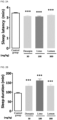
- Pentobarbital-induced sleep test was carried out to investigate the effect of the citrus byproduct extracts of Example 1 and Example 2 on sleep efficiency. For this, mice were divided into 10 groups of 10 mice per each. 5% Tween 80-saline was administered to a normal control group and 30 mg/kg doxepin hydrochloride (DH) was administered to a positive control group. And, the roasted lime rind ethanol extract of Example 1 (Lime) and the roasted lemon rind ethanol extract of Example 2 (Lemon) were administered orally (p.o.) at 100 mg/kg and 300 mg/kg, respectively. Then, the sleep-inducing effect by pentobarbital (45 mg/kg, i.p.) was investigated.
- pentobarbital 45 mg/kg, i.p.
- the roasted lime rind ethanol extract of Example 1 (Lime) and the roasted lemon rind ethanol extract of Example 2 (Lemon) showed significant sleep latency-decreasing effect (see FIG. 2a ) and sleep duration-increasing effect (see FIG. 2b ) at relatively low concentrations of 100 mg/kg and 300 mg/kg for plant extracts.
- the roasted lime rind ethanol extract of Example 1 showed further improved sleep efficiency as compared to doxepin hydrochloride, which is a commercially available sleeping drug.
- mice were divided into 10 groups of 10 mice per each. 5% Tween 80-saline was administered to a normal control group and 30 mg/kg doxepin hydrochloride (DH) was administered to a positive control group.
- DH doxepin hydrochloride
- the roasted lime rind ethanol extract of Example 1 (Lime, 100 mg/kg), the lime rind extracts of Comparative Example 1-1, Comparative Example 2-1 and Comparative Example 3-1 (100 mg/kg), the roasted lemon rind ethanol extract of Example 2 (Lemon, 300 mg/kg) and the lemon rind extracts of Comparative Example 1-2, Comparative Example 2-2 and Comparative Example 3-2 (300 mg/kg) were administered orally (p.o.). Then, the sleep-inducing effect by pentobarbital (45 mg/kg, i.p.) was investigated.
- the roasted lime rind ethanol extract of Example 1 (Lime, EtOH + roasting) and the unroasted lime rind ethanol extract of Comparative Example 1-1 (EtOH) showed significantly decreased sleep latency and significantly increased sleep duration as compared to the control group (CON).
- the roasted lime rind ethanol extract of Example 1 showed significantly decreased sleep latency and significantly increased sleep duration as compared to the unroasted lime rind ethanol extract of Comparative Example 1-1 (see FIG. 3a ).
- the roasted lemon rind ethanol extract of Example 2 (Lemon, EtOH + roasting) and the unroasted lemon rind ethanol extract of Comparative Example 1-2 (EtOH) showed significantly decreased sleep latency and significantly increased sleep duration as compared to the control group (CON).
- the roasted lemon rind ethanol extract of Example 2 showed significantly decreased sleep latency and significantly increased sleep duration as compared to the unroasted lemon rind ethanol extract of Comparative Example 1-2 (see FIG. 3b ).
- Pentobarbital-induced sleep test was carried out to investigate the effect of the citrus byproduct extracts of Examples 1, 2, 4 and 5 on sleep efficiency. For this, mice were divided into 10 groups of 10 mice per each. 5% Tween 80-saline was administered to a normal control group and 30 mg/kg doxepin hydrochloride (DH) was administered to a positive control group. And, the roasted lime rind ethanol extracts of Example 1 and Example 4 (Lime, 100 mg/kg) and the roasted lemon rind ethanol extracts of Example 2 and Example 5 (Lemon, 300 mg/kg) were administered orally (p.o.). Then, the sleep-inducing effect by pentobarbital (45 mg/kg, i.p.) was investigated.
- pentobarbital 45 mg/kg, i.p.
- the roasted citrus byproduct extracts of Examples 1, 2, 4 and 5 showed significantly increased sleep duration at relatively low concentrations of 100 mg/kg and 300 mg/kg.
- the roasted lime rind ethanol extracts of Example 1 and Example 4 showed remarkably improved sleep efficiency as compared to doxepin hydrochloride, which is a commercially available sleeping drug.
- Test Example 3 Comparison of sleep efficiency depending on roasting
- Pentobarbital-induced sleep test was carried out to investigate the effect of the citrus byproduct extracts of Example 3 and Comparative Examples 1-3 on sleep efficiency. For this, mice were divided into 2 groups of 10 mice per each. 5% Tween 80-saline was administered to a normal control group. And, the roasted kumquat rind ethanol extract of Example 3 (Roasting O, 200 mg/kg) and the kumquat rind ethanol extracts of Comparative Examples 1-3 (Roasting X, 200 mg/kg) were administered orally (p.o.). Then, the sleep-inducing effect by pentobarbital (45 mg/kg, i.p.) was investigated.
- the roasted kumquat rind ethanol extract of Example 3 (Roasting O) showed significant sleep latency-decreasing effect (see FIG. 4a ) and sleep duration-increasing effect (see FIG. 4b ) at a low concentration of 200 mg/kg for a plant extract.
- the kumquat rind ethanol extracts of Comparative Examples 1-3 did not show significant sleep latency-decreasing effect and the sleep duration-increasing effect was also remarkably lower as compared to the extract of Example 2.
- roasting is an essential process for improving sleep efficiency in the method for preparing a citrus byproduct extract according to the present disclosure.
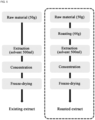
- FIG. 5 briefly compares the amount of the raw material used in the method of preparing an extract according to an exemplary embodiment of the present disclosure with the amount of the raw material used in the method of Comparative Example 1 without roasting.
- Test Example 4 Analysis of sleep architecture using roasted citrus byproduct extracts
- mice were divided into 4 groups of 8 mice per each. 5% Tween 80-saline was administered to a normal control group and 10 mg/kg zolpidem (ZPD) was administered to a positive control group. And, the sleep architecture of mice was analyzed after orally administering (p.o.) the roasted lime rind ethanol extract of Example 1 (Lime, 100 mg/kg) and the roasted lemon rind ethanol extract of Example 2 (Lemon, 300 mg/kg).
- ZPD zolpidem
- Example 1 and Example 2 exhibited sleep efficiency comparable to that of zolpidem. Specifically, sleep latency was decreased significantly, non-REM sleep was increased and wake was decreased, as compared to the control group (see FIGS. 6a and 6b ).
- the roasted lime rind ethanol extract of Example 1 (Lime, 100 mg/kg), the roasted lemon rind ethanol extract of Example 2 (Lemon, 300 mg/kg) or zolpidem (ZPD, 10 mg/kg), the change in wake, NREM sleep and REM sleep was measured while measuring the brain waves of C57BL/6N mice.
- the extract of Example 1 showed significantly increased NREM sleep for the first 2 hours after the oral administration
- the extract of Example 2 showed significantly increased NREM sleep for the first 1 hour after the oral administration.
- the positive control group i.e., zolpidem, showed significantly increased NREM sleep for the first 6 hours after the oral administration.
- Test Example 5 Sleep-improving mechanism of roasted citrus byproduct extract
- the sleep-improving mechanism of the roasted citrus byproduct extract was investigated by transforming cells with recombinant GABA subunits and primarily cultured neurons.
- HEK293T cells human embryonic kidney 293 cells
- FBS fetal bovine serum
- DMEM Dulbecco's modified Eagle's medium
- the cultured HEK293T cells were treated with the cDNAs of ⁇ 1, ⁇ 3 and ⁇ 2 subunits at 1:1:1 using a transfection reagent (QIAGEN) for transformation with the recombinant GABA receptors.
- the expression of the GABA receptors in the HEK293T cells was investigated using an AAV-GFP plasmid vector in which the ⁇ 1 cDNA was sub-cloned.
- An Axon 700B patch-clamp amplifier (Molecular device, Foster City, CA, USA), a Digidata 1440 interface, and a Clampex and Clampfit software (Version10, Molecular Device) were used.
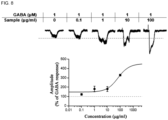
- the activity of the GABA receptors in the HEK-293T cells transformed with the recombinant GABA receptors was investigated depending on the concentration of the roasted lime rind ethanol extract of Example 1 (N1 sample).
- Example 1 increases the activity of the GABA receptors in a concentration-dependent manner.
- neurons were cultured primarily in order to investigate whether the increased activity of the GABA receptors by the roasted lime rind ethanol extract of Example 1 (N1 sample) is associated with the GABA-binding site or the benzodiazepam site.
- neurons were isolated from the brain of a P0 mouse and cultured in a neurobasal medium supplemented with 2% B-27, 2 mM L-glutamine and 20 IU/mL pen-strep. After culturing the cells for 3 weeks while replacing with a fresh medium every 3 days, the activity of the GABA receptor was investigated by an electrophysiolgical method.
- An Axon 700B patch-clamp amplifier (Molecular device, Foster City, CA, USA), a Digidata 1440 interface, and a Clampex and Clampfit software (Version10, Molecular Device) were used.
- Example 1 In order to investigate whether the increased activity of the GABA receptors by the roasted lime rind ethanol extract of Example 1 (N1 sample) is associated with the GABA-binding site or the benzodiazepam site, current flow through the receptors was measured in the cultured neurons in a voltage clamp mode. As a control group, after treating the cells with 1 ⁇ M GABA for 3 seconds, the magnitude of induced GABA-mediated current was recorded.
- the roasted lime rind ethanol extract of Example 1 significantly increased the activity of the GABA receptors.
- the increase was slightly inhibited by flumazenil, which is an antagonist against the benzodiazepine receptor, but the increase was not significant.
- the increased activity of the GABA receptors by the roasted lime rind ethanol extract of Example 1 was decreased remarkably by the addition of bicuculline, which is an antagonist of GABA receptors. Therefore, it can be seen that the roasted lime rind ethanol extract of Example 1 acts directly on the GABA receptors.
- 0.5 mL of a solution obtained by dissolving 20 mg of the extract of the examples or comparative examples in 100 mL of distilled water was analyzed using an Agilent 7890A GC instrument (mode: splitless) equipped with an Agilent DB-FFAP column (60 m ⁇ 0.26 mm ⁇ 0.5 ⁇ m). An injection volume of 0.5 mL was flown at a rate of 17 mL/min.
- a solution obtained by dissolving 20 mg of the extract of the examples or comparative examples in 100 mL of distilled water was analyzed using a reverse-phased HPLC system (Vltimate 3000; Thermo Fisher Scientific, Waltham, USA) consisting of an autosampler, a binary pump and a PDA detector.
- a C18 reverse-phased HPLC column (Discovery C18, 5 ⁇ m, 4.6 ⁇ 250 mm; Sigma, MO, USA) was used.
- An injection volume of 10 ⁇ L was flown at a rate of 0.8 mL/min.
- a solution obtained by dissolving 10 mg of the extract of the examples or comparative examples in 10 mL of a solvent was analyzed using a Hitach Chromaster CM5000 Series refractive index detector equipped with a symmetry C18 column (4.6 mm ⁇ 250 mm WAT054275).
- the solvent was a simple mixture of 50% DMSO and 50% methanol. 10 ⁇ L of the sample was injected at a rate of 0.7 mL/min.
- 1% acetic acid and 100% acetonitrile were used as mobile phases A and B in the liquid chromatography, respectively.
- the gradient elution was 90% A/10% B for 0-10 minutes, 90% A/10% B for 10-15 minutes, 70% A/30% B for 15-17.9 minutes, 70% A/30% B for 17.9-18 minutes, 55% A/45% B for 18-25 minutes, 55% A/45% B for 25-30 minutes, 30% A/70% B for 30-35 minutes, 0% A/100% B for 35-40 minutes, and 90% A/10% B for 40-45 minutes.
- Vicenin was detected at a wavelength of 320 nm and the analysis temperature was maintained at 40 °C.
- the vicenin content was significantly higher in the extracts of the roasted citrus byproducts of the examples as compared to the extracts of the unroasted citrus byproducts of the comparative examples.
- Pentobarbital-induced sleep test was performed to investigate the effect of vicenin on sleep efficiency. For this, mice were prepared with 10 mice per group. 5% Tween 80-saline was administered to a normal control group and 30 mg/kg doxepin hydrochloride (DH) was administered to a positive control group. The sleep-inducing effect by pentobarbital (45 mg/kg, i.p.) was analyzed after orally administering (p.o.) vicenin at 6.25, 12.5, 25 or 50 mg/kg.
- vicenin showed significant sleep latency-decreasing effect (see FIG. 10a ) and sleep duration-increasing effect (see FIG. 10b ) at a concentration of 50 mg/kg.
- formulation examples of a composition containing an extract of a roasted citrus byproduct of the present disclosure are described. However, they are provided to describe the present disclosure specifically not to limit the present disclosure.
- Extract powder obtained in Example 1 or 2 300 mg Lactose 100 mg Talc 10 mg
- a powder was prepared by mixing the above ingredients and filling in an airtight pouch.
- Extract powder obtained in Example 1 or 2 300 mg Cornstarch 100 mg Lactose 100 mg Magnesium stearate 2 mg
- Extract powder obtained in Example 1 or 2 300 mg Crystalline cellulose 3 mg Lactose 14.8 mg Magnesium stearate 0.2 mg
- a capsule was prepared by filling in a gelatin capsule by a common method.
- An injection was prepared by a common method with the contents described above per ampoule.
- Extract powder obtained in Example 1 or 2 4 g High-fructose corn syrup 10 g Mannitol 5 g Purified water Adequate
- purified water was added such that the total amount was 100 g.
- the prepared liquid formulation was filled in a brown bottle and then sterilized.
- Extract powder obtained in Example 1 or 2 1,000 mg Vitamin mixture Adequate Vitamin A acetate 70 ⁇ g Vitamin E 1.0 mg Vitamin B 1 0.13 mg Vitamin B 2 0.15 mg Vitamin B 6 0.5 mg Vitamin B 12 0.2 ⁇ g Vitamin C 10 mg Biotin 10 ⁇ g Nicotinamide 1.7 mg Folic acid 50 ⁇ g Calcium pantothenate 0.5 mg Mineral mixture Adequate Ferrous sulfate 1.75 mg Zinc oxide 0.82 mg Magnesium carbonate 25.3 mg Monopotassium phosphate 15 mg Dicalcium phosphate 55 mg Potassium citrate 90 mg Calcium carbonate 100 mg Magnesium chloride 24.8 mg
- compositions of the vitamin and mineral mixtures described above are provided as relatively appropriate examples for a granule but may be varied as desired. After preparing a granule by mixing the above ingredients according to a common method, it was used to prepare a functional health food composition by a common method.
- composition is provided as a relatively appropriate example for a preference beverage but may be varied as desired in consideration of the regional and ethnic preferences of consumers and countries, purpose of use, etc.
Landscapes
- Health & Medical Sciences (AREA)
- Life Sciences & Earth Sciences (AREA)
- Natural Medicines & Medicinal Plants (AREA)
- Chemical & Material Sciences (AREA)
- Engineering & Computer Science (AREA)
- Animal Behavior & Ethology (AREA)
- Veterinary Medicine (AREA)
- Public Health (AREA)
- Medicinal Chemistry (AREA)
- General Health & Medical Sciences (AREA)
- Pharmacology & Pharmacy (AREA)
- Epidemiology (AREA)
- Botany (AREA)
- Mycology (AREA)
- Food Science & Technology (AREA)
- Polymers & Plastics (AREA)
- Nutrition Science (AREA)
- Alternative & Traditional Medicine (AREA)
- General Chemical & Material Sciences (AREA)
- Medical Informatics (AREA)
- Biotechnology (AREA)
- Organic Chemistry (AREA)
- Bioinformatics & Cheminformatics (AREA)
- Biomedical Technology (AREA)
- Neurology (AREA)
- Neurosurgery (AREA)
- Chemical Kinetics & Catalysis (AREA)
- Microbiology (AREA)
- Nuclear Medicine, Radiotherapy & Molecular Imaging (AREA)
- Anesthesiology (AREA)
- Molecular Biology (AREA)
- Medicines Containing Plant Substances (AREA)
Applications Claiming Priority (3)
| Application Number | Priority Date | Filing Date | Title |
|---|---|---|---|
| KR20210184063 | 2021-12-21 | ||
| KR1020220175871A KR102569228B1 (ko) | 2021-12-21 | 2022-12-15 | 로스팅된 감귤류 부산물의 추출물을 유효성분으로 포함하는 수면장애 또는 불면증의 예방, 개선 또는 치료용 조성물 |
| PCT/KR2022/020972 WO2023121300A1 (ko) | 2021-12-21 | 2022-12-21 | 로스팅된 감귤류 부산물의 추출물을 유효성분으로 포함하는 수면장애 또는 불면증의 예방, 개선 또는 치료용 조성물 |
Publications (2)
| Publication Number | Publication Date |
|---|---|
| EP4454485A1 true EP4454485A1 (de) | 2024-10-30 |
| EP4454485A4 EP4454485A4 (de) | 2026-01-07 |
Family
ID=86903072
Family Applications (1)
| Application Number | Title | Priority Date | Filing Date |
|---|---|---|---|
| EP22911933.4A Pending EP4454485A4 (de) | 2021-12-21 | 2022-12-21 | Zusammensetzung mit extrakt aus gerösteten zitrusnebenprodukten als wirkstoff zur prävention, linderung oder behandlung von schlafstörungen oder schlaflosigkeit |
Country Status (4)
| Country | Link |
|---|---|
| US (1) | US20240382552A1 (de) |
| EP (1) | EP4454485A4 (de) |
| KR (1) | KR20230127167A (de) |
| WO (1) | WO2023121300A1 (de) |
Family Cites Families (5)
| Publication number | Priority date | Publication date | Assignee | Title |
|---|---|---|---|---|
| KR100665016B1 (ko) * | 2005-05-10 | 2007-01-05 | 동우당제약(주) | 유기농 감귤을 이용한 진피차의 제조 방법 |
| KR101483440B1 (ko) * | 2008-05-02 | 2015-01-19 | (주)아모레퍼시픽 | 포제를 활용한 약용식물 추출물 및 이를 함유하는 피부외용제 조성물 |
| KR20110120153A (ko) * | 2010-04-28 | 2011-11-03 | 고려대학교 산학협력단 | 리모넨을 함유하는 아데노신 A2a 수용체 작용제 |
| KR102139253B1 (ko) * | 2018-05-04 | 2020-07-29 | (주)노아스 | 시트러스 과피 추출물을 포함하는 카페인에 의한 수면장애 개선용 조성물 |
| KR102113583B1 (ko) * | 2019-10-25 | 2020-05-21 | 경희대학교 산학협력단 | 레몬 추출물 및 오렌지 추출물을 포함하는 카페인에 의한 수면장애 개선용 조성물 |
-
2022
- 2022-12-21 EP EP22911933.4A patent/EP4454485A4/de active Pending
- 2022-12-21 US US18/033,699 patent/US20240382552A1/en active Pending
- 2022-12-21 WO PCT/KR2022/020972 patent/WO2023121300A1/ko not_active Ceased
-
2023
- 2023-08-09 KR KR1020230104274A patent/KR20230127167A/ko active Pending
Also Published As
| Publication number | Publication date |
|---|---|
| KR20230127167A (ko) | 2023-08-31 |
| US20240382552A1 (en) | 2024-11-21 |
| EP4454485A4 (de) | 2026-01-07 |
| WO2023121300A1 (ko) | 2023-06-29 |
Similar Documents
| Publication | Publication Date | Title |
|---|---|---|
| EP2716296B1 (de) | Neue verwendung eines reiskleie- oder spreuextraktes als histaminrezeptorantagonist | |
| JP6335508B2 (ja) | 成長ホルモン分泌促進剤 | |
| KR102157248B1 (ko) | 방풍 추출물을 유효성분으로 함유하는 수면장애 또는 불면증의 개선, 예방 또는 치료용 조성물 | |
| KR101336502B1 (ko) | 쌀겨 추출물 또는 쌀겨 분말의 수면 장애, 불안 또는 우울증의 개선, 예방 또는 치료를 위한 신규 용도 | |
| KR101468551B1 (ko) | 황칠나무 추출물을 유효성분으로 포함하는 불면증 치료 또는 개선용 조성물 | |
| KR102527256B1 (ko) | 갯방풍 추출물을 유효성분으로 함유하는 수면장애 또는 불면증의 예방, 개선 또는 치료용 조성물 | |
| KR20210047416A (ko) | 강황 복합 추출물을 유효성분으로 함유하는 수면 장애의 예방, 개선 또는 치료용 조성물 | |
| KR102262752B1 (ko) | 강황 추출물을 유효성분으로 함유하는 수면 장애의 예방, 개선 또는 치료용 조성물 | |
| KR102187335B1 (ko) | 맥아 추출물로부터 분리된 화합물을 유효성분으로 포함하는 월경전 증후군 증상 개선용 조성물 | |
| US20240382552A1 (en) | Composition for preventing, ameliorating or treating sleep disorder or insomnia, containing extract of roasted citrus byproduct as active ingredient | |
| KR102773472B1 (ko) | 구릿대 추출물을 유효성분으로 포함하는 수면장애 또는 불면증의 예방, 개선 또는 치료용 조성물 | |
| KR102569228B1 (ko) | 로스팅된 감귤류 부산물의 추출물을 유효성분으로 포함하는 수면장애 또는 불면증의 예방, 개선 또는 치료용 조성물 | |
| KR20150005482A (ko) | 황칠나무 추출물을 유효성분으로 포함하는 불면증 치료 또는 개선용 조성물 | |
| KR102262759B1 (ko) | 강황 추출물을 유효성분으로 하는 gabaa 수용체 효능제의 부작용 경감용 조성물 | |
| KR101492213B1 (ko) | 폴리코사놀을 유효성분으로 하는 히스타민 수용체 길항제 조성물 | |
| CN116963617A (zh) | 包含经烘烤的柑橘类副产物的提取物作为活性成分的用于预防、改善或治疗睡眠障碍或失眠症的组合物 | |
| KR101444098B1 (ko) | 쌀, 쌀겨 또는 왕겨 추출물의 히스타민 수용체 길항제로서의 신규 용도 | |
| KR102957010B1 (ko) | 환삼덩굴 복합추출물을 유효성분으로 포함하는 호흡기 건강 개선용 조성물 | |
| KR101457442B1 (ko) | 감마오리자놀을 유효성분으로 하는 히스타민 수용체 길항제 조성물 | |
| KR101351883B1 (ko) | 왕겨 추출물의 수면 장애, 불안 또는 우울증의 개선, 예방 또는 치료를 위한 신규 용도 | |
| KR20260032528A (ko) | 가르시니아 캄보지아 추출물을 유효성분으로 포함하는 각성 유도용 조성물 | |
| KR20240125348A (ko) | 국화 추출물을 포함하는 수면장애 또는 불면증 예방, 개선 또는 치료용 조성물 | |
| JP2023124847A (ja) | 睡眠改善剤 | |
| TW202426021A (zh) | 西番蓮籽萃取物的製備方法及其用於製備提升睡眠品質的組合物的用途 | |
| KR20260050074A (ko) | 포포나무 열매 추출물을 유효성분으로 포함하는 수면장애 또는 불면증의 예방, 개선 또는 치료용 조성물 |
Legal Events
| Date | Code | Title | Description |
|---|---|---|---|
| STAA | Information on the status of an ep patent application or granted ep patent |
Free format text: STATUS: THE INTERNATIONAL PUBLICATION HAS BEEN MADE |
|
| PUAI | Public reference made under article 153(3) epc to a published international application that has entered the european phase |
Free format text: ORIGINAL CODE: 0009012 |
|
| STAA | Information on the status of an ep patent application or granted ep patent |
Free format text: STATUS: REQUEST FOR EXAMINATION WAS MADE |
|
| 17P | Request for examination filed |
Effective date: 20240501 |
|
| AK | Designated contracting states |
Kind code of ref document: A1 Designated state(s): AL AT BE BG CH CY CZ DE DK EE ES FI FR GB GR HR HU IE IS IT LI LT LU LV MC ME MK MT NL NO PL PT RO RS SE SI SK SM TR |
|
| DAV | Request for validation of the european patent (deleted) | ||
| DAX | Request for extension of the european patent (deleted) | ||
| A4 | Supplementary search report drawn up and despatched |
Effective date: 20251205 |
|
| RIC1 | Information provided on ipc code assigned before grant |
Ipc: A23L 33/105 20160101AFI20251201BHEP Ipc: A61K 36/752 20060101ALI20251201BHEP Ipc: A61P 25/20 20060101ALI20251201BHEP Ipc: A23L 19/00 20160101ALI20251201BHEP |