EP4427856B1 - Verfahren und anlage zur rückgewinnung von graphit aus schwarzer masse - Google Patents
Verfahren und anlage zur rückgewinnung von graphit aus schwarzer masse Download PDFInfo
- Publication number
- EP4427856B1 EP4427856B1 EP23160169.1A EP23160169A EP4427856B1 EP 4427856 B1 EP4427856 B1 EP 4427856B1 EP 23160169 A EP23160169 A EP 23160169A EP 4427856 B1 EP4427856 B1 EP 4427856B1
- Authority
- EP
- European Patent Office
- Prior art keywords
- suspension
- flotation
- black mass
- graphite
- process according
- Prior art date
- Legal status (The legal status is an assumption and is not a legal conclusion. Google has not performed a legal analysis and makes no representation as to the accuracy of the status listed.)
- Active
Links
Images

Classifications
-
- H—ELECTRICITY
- H01—ELECTRIC ELEMENTS
- H01M—PROCESSES OR MEANS, e.g. BATTERIES, FOR THE DIRECT CONVERSION OF CHEMICAL ENERGY INTO ELECTRICAL ENERGY
- H01M10/00—Secondary cells; Manufacture thereof
- H01M10/54—Reclaiming serviceable parts of waste accumulators
-
- B—PERFORMING OPERATIONS; TRANSPORTING
- B03—SEPARATION OF SOLID MATERIALS USING LIQUIDS OR USING PNEUMATIC TABLES OR JIGS; MAGNETIC OR ELECTROSTATIC SEPARATION OF SOLID MATERIALS FROM SOLID MATERIALS OR FLUIDS; SEPARATION BY HIGH-VOLTAGE ELECTRIC FIELDS
- B03D—FLOTATION; DIFFERENTIAL SEDIMENTATION
- B03D1/00—Flotation
- B03D1/02—Froth-flotation processes
-
- B—PERFORMING OPERATIONS; TRANSPORTING
- B09—DISPOSAL OF SOLID WASTE; RECLAMATION OF CONTAMINATED SOIL
- B09B—DISPOSAL OF SOLID WASTE NOT OTHERWISE PROVIDED FOR
- B09B3/00—Destroying solid waste or transforming solid waste into something useful or harmless
- B09B3/70—Chemical treatment, e.g. pH adjustment or oxidation
-
- B—PERFORMING OPERATIONS; TRANSPORTING
- B09—DISPOSAL OF SOLID WASTE; RECLAMATION OF CONTAMINATED SOIL
- B09B—DISPOSAL OF SOLID WASTE NOT OTHERWISE PROVIDED FOR
- B09B3/00—Destroying solid waste or transforming solid waste into something useful or harmless
- B09B3/80—Destroying solid waste or transforming solid waste into something useful or harmless involving an extraction step
-
- C—CHEMISTRY; METALLURGY
- C01—INORGANIC CHEMISTRY
- C01B—NON-METALLIC ELEMENTS; COMPOUNDS THEREOF; METALLOIDS OR COMPOUNDS THEREOF NOT COVERED BY SUBCLASS C01C
- C01B32/00—Carbon; Compounds thereof
- C01B32/05—Preparation or purification of carbon not covered by groups C01B32/15, C01B32/20, C01B32/25, C01B32/30
-
- C—CHEMISTRY; METALLURGY
- C01—INORGANIC CHEMISTRY
- C01B—NON-METALLIC ELEMENTS; COMPOUNDS THEREOF; METALLOIDS OR COMPOUNDS THEREOF NOT COVERED BY SUBCLASS C01C
- C01B32/00—Carbon; Compounds thereof
- C01B32/20—Graphite
- C01B32/21—After-treatment
- C01B32/215—Purification; Recovery or purification of graphite formed in iron making, e.g. kish graphite
-
- C—CHEMISTRY; METALLURGY
- C22—METALLURGY; FERROUS OR NON-FERROUS ALLOYS; TREATMENT OF ALLOYS OR NON-FERROUS METALS
- C22B—PRODUCTION AND REFINING OF METALS; PRETREATMENT OF RAW MATERIALS
- C22B23/00—Obtaining nickel or cobalt
- C22B23/04—Obtaining nickel or cobalt by wet processes
- C22B23/0407—Leaching processes
- C22B23/0415—Leaching processes with acids or salt solutions except ammonium salts solutions
- C22B23/043—Sulfurated acids or salts thereof
-
- C—CHEMISTRY; METALLURGY
- C22—METALLURGY; FERROUS OR NON-FERROUS ALLOYS; TREATMENT OF ALLOYS OR NON-FERROUS METALS
- C22B—PRODUCTION AND REFINING OF METALS; PRETREATMENT OF RAW MATERIALS
- C22B23/00—Obtaining nickel or cobalt
- C22B23/04—Obtaining nickel or cobalt by wet processes
- C22B23/0453—Treatment or purification of solutions, e.g. obtained by leaching
- C22B23/0461—Treatment or purification of solutions, e.g. obtained by leaching by chemical methods
-
- C—CHEMISTRY; METALLURGY
- C22—METALLURGY; FERROUS OR NON-FERROUS ALLOYS; TREATMENT OF ALLOYS OR NON-FERROUS METALS
- C22B—PRODUCTION AND REFINING OF METALS; PRETREATMENT OF RAW MATERIALS
- C22B26/00—Obtaining alkali, alkaline earth metals or magnesium
- C22B26/10—Obtaining alkali metals
- C22B26/12—Obtaining lithium
-
- C—CHEMISTRY; METALLURGY
- C22—METALLURGY; FERROUS OR NON-FERROUS ALLOYS; TREATMENT OF ALLOYS OR NON-FERROUS METALS
- C22B—PRODUCTION AND REFINING OF METALS; PRETREATMENT OF RAW MATERIALS
- C22B3/00—Extraction of metal compounds from ores or concentrates by wet processes
- C22B3/04—Extraction of metal compounds from ores or concentrates by wet processes by leaching
- C22B3/06—Extraction of metal compounds from ores or concentrates by wet processes by leaching in inorganic acid solutions, e.g. with acids generated in situ; in inorganic salt solutions other than ammonium salt solutions
- C22B3/08—Sulfuric acid, other sulfurated acids or salts thereof
-
- C—CHEMISTRY; METALLURGY
- C22—METALLURGY; FERROUS OR NON-FERROUS ALLOYS; TREATMENT OF ALLOYS OR NON-FERROUS METALS
- C22B—PRODUCTION AND REFINING OF METALS; PRETREATMENT OF RAW MATERIALS
- C22B47/00—Obtaining manganese
-
- C—CHEMISTRY; METALLURGY
- C22—METALLURGY; FERROUS OR NON-FERROUS ALLOYS; TREATMENT OF ALLOYS OR NON-FERROUS METALS
- C22B—PRODUCTION AND REFINING OF METALS; PRETREATMENT OF RAW MATERIALS
- C22B7/00—Working up raw materials other than ores, e.g. scrap, to produce non-ferrous metals and compounds thereof; Methods of a general interest or applied to the winning of more than two metals
- C22B7/006—Wet processes
- C22B7/007—Wet processes by acid leaching
-
- B—PERFORMING OPERATIONS; TRANSPORTING
- B09—DISPOSAL OF SOLID WASTE; RECLAMATION OF CONTAMINATED SOIL
- B09B—DISPOSAL OF SOLID WASTE NOT OTHERWISE PROVIDED FOR
- B09B2101/00—Type of solid waste
- B09B2101/15—Electronic waste
- B09B2101/16—Batteries
-
- H—ELECTRICITY
- H01—ELECTRIC ELEMENTS
- H01M—PROCESSES OR MEANS, e.g. BATTERIES, FOR THE DIRECT CONVERSION OF CHEMICAL ENERGY INTO ELECTRICAL ENERGY
- H01M4/00—Electrodes
- H01M4/02—Electrodes composed of, or comprising, active material
- H01M4/36—Selection of substances as active materials, active masses, active liquids
- H01M4/58—Selection of substances as active materials, active masses, active liquids of inorganic compounds other than oxides or hydroxides, e.g. sulfides, selenides, tellurides, halogenides or LiCoFy; of polyanionic structures, e.g. phosphates, silicates or borates
- H01M4/583—Carbonaceous material, e.g. graphite-intercalation compounds or CFx
- H01M4/587—Carbonaceous material, e.g. graphite-intercalation compounds or CFx for inserting or intercalating light metals
-
- Y—GENERAL TAGGING OF NEW TECHNOLOGICAL DEVELOPMENTS; GENERAL TAGGING OF CROSS-SECTIONAL TECHNOLOGIES SPANNING OVER SEVERAL SECTIONS OF THE IPC; TECHNICAL SUBJECTS COVERED BY FORMER USPC CROSS-REFERENCE ART COLLECTIONS [XRACs] AND DIGESTS
- Y02—TECHNOLOGIES OR APPLICATIONS FOR MITIGATION OR ADAPTATION AGAINST CLIMATE CHANGE
- Y02P—CLIMATE CHANGE MITIGATION TECHNOLOGIES IN THE PRODUCTION OR PROCESSING OF GOODS
- Y02P10/00—Technologies related to metal processing
- Y02P10/20—Recycling
-
- Y—GENERAL TAGGING OF NEW TECHNOLOGICAL DEVELOPMENTS; GENERAL TAGGING OF CROSS-SECTIONAL TECHNOLOGIES SPANNING OVER SEVERAL SECTIONS OF THE IPC; TECHNICAL SUBJECTS COVERED BY FORMER USPC CROSS-REFERENCE ART COLLECTIONS [XRACs] AND DIGESTS
- Y02—TECHNOLOGIES OR APPLICATIONS FOR MITIGATION OR ADAPTATION AGAINST CLIMATE CHANGE
- Y02W—CLIMATE CHANGE MITIGATION TECHNOLOGIES RELATED TO WASTEWATER TREATMENT OR WASTE MANAGEMENT
- Y02W30/00—Technologies for solid waste management
- Y02W30/50—Reuse, recycling or recovery technologies
- Y02W30/84—Recycling of batteries or fuel cells
Definitions
- the invention relates to a process for recovering graphite from black mass.
- the demand for the resources required for production namely raw materials such as lithium, graphite, and metals such as nickel, cobalt, and manganese, will increase accordingly.
- the required raw materials are mainly obtained from primary sources, but the proportion of secondary sources from recycling will increase in the future.
- Such secondary sources are processed into a so-called black mass, which is a mixture of lithium-ion battery scrap and/or scrap from battery production processes, which is processed into a fine powder.
- the black mass typically contains a mixture of active anode and/or cathode materials from batteries. It may also contain plastics and/or electrical conductors such as copper and/or aluminum. Organic binders and electrolytes may also be present.
- the typical black color of the black mass can be attributed to carbon, particularly graphite or carbon black, which is frequently used in active anode materials for ion batteries.
- the graphite content in the black mass is often only about 15 to 20 percent by weight, with advantageous starting material the content can be 20 to 40 percent by weight, so that recycling of the graphite is often not considered. is extracted. Instead, the graphite from the black mass is usually burned.
- the growing demand for graphite and the undesirable COx emissions during combustion are increasingly favoring the recycling of graphite from black mass.
- the purity requirements for graphite for use in battery cells are very high, which also places very high demands on recycling processes.
- the problem here is that conventional processing methods for extracting and purifying graphite from natural sources, such as flotation, show very low efficiencies with black mass and therefore prevent its use.
- the US 2022/0320619 A1 a process for recycling lithium batteries is known, wherein concentrated sulfuric acid is used at a temperature of at least 100°C, and wherein at least one metallic component is obtained by wet chemical extraction.
- the EP 3 535 803 A1 discloses a process for recovering materials from Li-ion batteries. The process involves processing the batteries into a crushed feed stream and then, through a series of separation, isolation, and/or leaching steps, enables the recovery of a copper, cobalt, nickel, manganese, and/or graphite product, as well as a lithium product.
- graphite concentrations of more than 90% can be achieved with a yield of more than 70% from the black mass.
- a carbon content of 91.5% can be achieved with a yield of 73%.
- the graphite from the black mass can be recovered very selectively, allowing the graphite to be put to further economic use and avoiding incineration.
- the recovery of other components from the black mass can be improved through the selective removal of carbon, especially graphite.
- the proposed process thus enables a very economical recovery of graphite from black mass.
- Black mass is material from discarded batteries, e.g., lithium-ion batteries, and/or discarded parts thereof, and/or discarded materials from battery production processes, such as anode materials.
- the black mass contains a proportion of graphite, which is typically used in the anode of a battery.
- the above-mentioned starting materials are mechanically processed into a powdery material, which is then referred to as black mass and has a high surface-to-mass ratio.
- Black mass therefore contains, within the meaning of this application, at least graphite and thus the element carbon (C) and generally several or all of the following elements: lithium (Li), cobalt (Co), nickel (Ni), manganese (Mn), iron (Fe), copper (Cu), aluminum (Al), phosphorus (P), fluorine (F).
- the proportions of graphite or other metals to be recovered in a recycling process can vary greatly. Different battery chemistries, known, for example, as NMC, NCA, LFP, can result in different proportions or the absence of valuable metals, e.g., Co, Ni, or Mn. Thus, different components with other elements in different compositions are possible.
- the black mass within the meaning of the invention always contains the element C in the form of graphite if black mass is provided in step (a).
- the black mass also contains Li, which can, for example, be chemically bound in the active cathode material and/or be metallic Li, particularly in/around the active anode material, which has a high graphite content.
- ozone is dosed into the suspension as an oxidizing agent while the suspension is stirred.
- ozone is dissolved in the water of the suspension.
- the black mass, or at least Parts of the black mass are oxidized with ozone.
- Ozone ( O3 ) is known to be a strong oxidizing agent.
- Ozone O3
- the use of ozone as an oxidizing agent has some disadvantages, as ozone is unstable towards dioxygen and decomposes rapidly. The half-life of ozone decreases further when dissolved in water, and it decreases even further with increasing temperature, which results in very low process efficiency and may even prevent the ozone from reacting as intended when dissolved in water at high temperatures.
- the solubility of ozone in water is very low.
- the suspension be stirred intensively or at high stirring speeds, while ozone is dosed into the suspension as an oxidant.
- an oxidation/reduction potential (ORP) of >850 mV is generated in step (c) by dosing ozone into the suspension while the suspension is stirred.
- the ORP can be further increased to >1200 mV by very intensive stirring during step (c).
- Ozone as a strong oxidant with a redox potential of >850 mV, oxidizes, for example, Co and Mn and does not require these to be present in the Co(III) and Mn(IV) state, so that black masses with different mineralogy and pretreatment can be successfully processed.
- the intensive stirring or stirring at high stirring speeds is above a threshold above which the proportion of ozone that can react with the black mass is greater than the proportion of ozone that decomposes prematurely at the beginning of step (c).
- step (c) the suspension is stirred at a shear rate of greater than 11000s -1 , preferably greater than 25000s -1 , more preferably greater than 27000s -1 , more preferably greater than 29000s -1 , for example 30000s -1 .
- a high shear rate particularly above 11000s -1 , for example 12000s -1 , preferably above 29000s -1 , increases mass transfer sufficiently to allow ozone to react with the black mass before it decomposes.
- a sufficiently high ORP can be achieved to leach the water and black mass suspension with ozone, although even higher shear rates can lead to an even higher ORP.
- an ORP of >850 mV can be achieved, while even higher shear rates can lead to an even higher ORP, e.g. >1200 mV.
- a shear rate in a fluid can be between two parallel plates can be determined by the relative speed of the two plates divided by the distance between the plates.
- This pretreatment enables graphite to be separated from the black mass by flotation, preferably by froth flotation. This is based on the varying hydrophobicity of the substances in the black mass, with different tendencies to cling to air bubbles and form a froth layer.
- the hydrophobic graphite can be separated from the black mass, while the remaining hydrophilic substances remain in the residue.
- this is only possible with high efficiency from black mass through the proposed pretreatment, which liberates the graphite particles in the black mass, as can be seen, for example, in a Mineral Liberation Analysis (MLA).
- MLA Mineral Liberation Analysis
- the graphite is largely present in composite particles due to processing into anode material, use in a battery, and processing into a black mass. These composite particles, unlike graphite from natural sources, are not accessible to flotation.
- the black mass provided in step (a) contains lithium. If Li is present in the black mass, step (c) allows lithium to be dissolved while the other components The black mass can remain as a solid or be reprecipitated. Accordingly, the suspension of water and black mass can be leached with ozone, especially in a neutral leaching process, where a very high selectivity for Li can be achieved.
- a step (d) the suspension from step (c) is filtered and the filtrate is separated, wherein the filtrate contains LiOH dissolved in water and the Li-depleted residue contains black mass with graphite.
- step (d) By filtering in step (d), a complete hydrometallurgical removal of Li can thus be carried out at the beginning of the recovery process, whereby the removal of Li can be carried out in parallel with the pretreatment of the black mass.
- the proposed process has a very high selectivity for Li with very low proportions of components other than LiOH dissolved in water.
- the leaching is extremely selective for Ni, Co, and Mn, down to below detectability, which are typically present in spent lithium-ion battery material and thus in the black mass.
- the high selectivity for Li can also be achieved for a wide range of black mass mineralogies and pretreatments.
- the proposed process also enables high extraction rates of Li >90%. Therefore, the process is very efficient and is preferably carried out as a batch process. Recirculation is possible and highly advantageous due to the high selectivity, as described below. In particular, contamination of the recovered lithium with alkali elements, especially Na and/or K, can be avoided.
- the lithium is extracted from the lithium-depleted black mass residue in the form of solids and/or slurries early in the recovery process. Extraction at the beginning of the process allows the residue, which contains valuable elements such as Ni, Co, and Mn in addition to graphite, to be processed independently using other processing options. Furthermore, lithium losses to other products and intermediates due to low washing efficiency or co-precipitation are reduced.
- a suspension of black mass in water containing graphite is again prepared.
- step (f) with flotation is preferably followed by step (f) with flotation, whereby in possible embodiments step (h) with acid leaching can be carried out in between, which will be described below.
- the suspension is floated in a flotation cell, for example, a conventional mechanical flotation cell, according to step (f).
- Flotation is preferably carried out according to the Froth method.
- the graphite is separated from the flotation residue in the flotation concentrate and can be skimmed off accordingly.
- the suspension contains graphite suspended in water with the black mass. After step (f), the graphite and/or carbon is removed from the suspension except for possible residues.
- step (h) it is particularly advantageous to carry out the acid leaching step (h) after step (d) or (e). It is also particularly advantageous if at least one acid is added to the residue from the filtration of step (d) in the acid leaching step (h), i.e., after step (c) and before the flotation according to step (f). Preferably, 200 to 400 g of solids per liter are present in the acid leaching step (h).
- the acid leaching step (h) can be carried out before step (c), which may be advantageous for black mass without lithium, for example from the recycling of Na-ion batteries, since possible process steps for separating lithium before the acid leaching do not offer any advantage in such a situation.
- the acid leaching step (h) is preferably initiated at a pH of 2 or less. Furthermore, in advantageous embodiments, the acid leaching step (h) is terminated at a pH in the range of 3 to 5.
- metals such as Ni, Co and Mn can be dissolved, whereas Cu and/or Al are present as solids.
- a reducing agent preferably sulfur dioxide (SO 2 )
- SO 2 sulfur dioxide
- a calcium source preferably calcium hydroxide (Ca(OH) 2 ) and/or calcium oxide (CaO) and/or calcium carbonate (CaCO 3 ), be added to the suspension from step (h). This can, for example, precipitate F.
- suspension from the acid leaching step (h) is filtered.
- the residue containing the graphite can then be brought back into a suspension with water, for example with 5 to 10% solids content, and fed to the flotation step (f).
- step (c) is carried out for at least 3 hours, preferably at least 3.5 hours, for example 4 hours.
- the concentration of Li dissolved in the water of the suspension increases over time up to the maximum extraction rate, which can be achieved, for example, within 4 hours.
- the oxidation of Co and Mn also depends on the reaction time, with a longer reaction time allowing complete recovery from the solution, e.g., after 3 hours for Mn and after 4 hours for Co.
- the Co and Mo oxides are thus precipitated after they have been dissolved in the solution. Therefore, performing step (c) for the above-mentioned duration enables a very high selectivity of the extraction process. This appropriate duration leads to good pretreatment of the black mass, so that good separation of graphite can be achieved by flotation.
- ozone is dosed into the suspension at a rate of at least 0.1 gram (O 3 )/hour/gram (black mass), for example 1 gram (O 3 )/hour/gram (black mass), and/or at a maximum rate of 2 grams (O 3 )/hour/gram (black mass).
- the mass flow of ozone per hour also depends on the mass of the supplied black mass in the suspension.
- the mass flow of ozone must be doubled if the supplied black mass is doubled.
- step (c) the temperature of the suspension is above 69°C, preferably above 80°C.
- a temperature of 70°C or higher enables high Li extraction rates of more than 90%, which can be increased to more than 95% at 90°C. Therefore, the suspension is preferably heated. Furthermore, this allows for good pretreatment of the graphite for flotation.
- an acid preferably sulfuric acid (H 2 SO 4 )
- H 2 SO 4 sulfuric acid
- a pH value below 4.5 increases the Li extraction rate even further compared to a process embodiment without lowering the pH, resulting in Li extraction rates above 90%, with Li extraction rates even above 95% possible. At the same time, improved pretreatment for liberating the graphite in the black mass is achieved.
- a pH value below 3 leads to an excessive loss of Li selectivity.
- the acid is preferably sulfuric acid (H 2 SO 4 ), which may have a further beneficial effect on the metal recovery process, e.g., for the crystallization of Ni sulfate.
- sulfuric acid H 2 SO 4
- other acids may also be suitable.
- step (c) the suspension of the black mass in water has a pH in the range of 6 to 8, preferably in the range of 7 to 8, e.g. a pH of 8.
- the extraction of Li in step (c) can, in an advantageous embodiment, be carried out in a neutral leaching without any pH adjustment, disregarding the effect of ozone, which simplifies the process and is therefore cost-effective.
- ozone is dosed into the suspension as an oxidizing agent and the suspension is stirred, preferably with a shear rate >11000s -1
- the suspension preferably has a pH in the range of 6 to 8, in particular in the range of 7 to 8, which enables extraction rates of approximately over 70% for Li.
- the proposed pH range in particular a pH of 7 to 8, has the advantageous effect that Co, Mn and especially Ni are precipitated from the solution or are not dissolved, which leads to a very high selectivity of Li extraction as LiOH in water from black mass, while still achieving good extraction rates for Li and, at the same time, a good liberation of the graphite in the black mass is achieved.
- the Li-containing filtrate from step (d) may also have a pH in the range of 6 to 8, in particular 7 to 8, which enables cost-effective further processing of the filtrate.
- a base preferably sodium hydroxide (NaOH) and/or calcium hydroxide (Ca(OH) 2 ) and/or calcium oxide (CaO) is added and the pH of the suspension before step (d) or the pH of the filtrate from step (d) is raised to a pH above 6, for example 9, preferably to a pH above 9, more preferably to a pH above 10.
- a pH value above 9, for example 10, preferably a pH value above 10, enables the complete precipitation of Ni(II) as hydroxide from the Li-containing liquor.
- This is particularly advantageous when the pH of the suspension has been lowered with an acid to below or equal to 6, or in particular to below or equal to 4.5, in order to maximize the Li extraction rate.
- the side effect of dissolved Ni can be reversed, resulting in a very high extraction rate of Li dissolved in water of over 90%, e.g., 95%, while at the same time achieving a very high selectivity or purity of the dissolved Li.
- Raising the pH of the suspension or filtrate with a base is preferably carried out at a temperature of 25°C to 70°C.
- the filtrate contains Li, dissolved in water as LiOH, with very high purity.
- pH adjustment with Ca-containing bases especially calcium hydroxide and/or calcium oxide, removes F and/or P from the solution, so that a lower content of F and P is achieved in the filtrate.
- the amount of Na required to adjust the pH to the values described above is well below the solubility limit and does not lead to Na contamination of the Li product.
- the filtrate produced by the proposed process which contains high-purity LiOH dissolved in water, and the Li-depleted residue or the residue with a greatly reduced Li content, can be independently processed to the desired final product form of the metals recovered from the black mass. This allows for the high selectivity and extraction rate for Li of the proposed process.
- the flotation according to step (f) is carried out after a filtering, for example according to step (d) and/or step (i), on a suspension prepared with the residue of this filtering, which suspension preferably has 5 to 10% solids in water.
- the flotation according to step (f) is preferably carried out with a supply of air, which is further preferably supplied at a rate of 0.8 to 5 l/min per l of floated suspension.
- step (f) during flotation the pH value is in a range of 9 to 10.
- kerosene per ton of black mass 80 to 5400 g of kerosene per ton of black mass and/or 100 to 1000 g of MIBC (4-methyl-2-pentanol) per ton of black mass are added as additives during the flotation in step (f).
- MIBC MIBC (4-methyl-2-pentanol) per ton of black mass
- the skimmed flotation concentrate is suspended in water with graphite from step (f), and a purification flotation of the suspension and skimming of graphite are carried out.
- the flotation residue from the flotation in step (f) be fed to a residual flotation unit. This allows additional liberated graphite to be recovered and the overall recovery rate to be further increased.
- the flotation concentrate with graphite from the residual flotation and/or the flotation residue from the purification flotation is recycled to step (f).
- the black mass is provided in step (a) as a graphite-containing feedstock.
- the black mass is made from Li-ion battery scrap that has been processed into a powder.
- the mineralogy of the black mass can vary depending on the feedstock or scrap materials.
- Table 1 shows a possible composition of black mass containing graphite. The black mass was ground into a powdery mass, resulting in a high surface-to-mass ratio. Table 1 shows the weight fractions of black mass for the listed elements. Table 1: element C Al Ca Co Cu Fe wt.% 31.1 4.4 0.30 16.0 5.6 0.72 element Li Mn No P F wt.% 4.4 6.9 9.6 0.70 2.7
- the carbon content is correspondingly high at 31.1%, so that in principle a large proportion of graphite should be available for recovery.
- Figure 1 shows the distribution of graphite particles from black mass across particle sizes and their availability for flotation by a Mineral Liberation Analysis (MLA).
- MLA Mineral Liberation Analysis
- Liberated graphite particles are symbolized by white bars and bound graphite particles by the black bar.
- MLA is used to quantitatively measure the extent to which the individual minerals, constituents and elements of a fine solid or powder, here black mass, are assembled into whole particles. If individual minerals, constituents and elements occur predominantly as individual particles, they are considered liberated or outsourced and can be recovered by physical separation processes (e.g. gravity/magnetic/flotation processes). If this is not the case, the minerals, constituents and elements are present in composite particles with others and are considered bound.
- the exemplary black mass with a graphite content according to Table 1 is provided as a powder according to step (a) and first brought into a suspension with water with a concentration of 100 to 200 g of solids per l of water according to step (b).
- step (c) the suspension is mixed and stirred at a very high shear rate, in this advantageous embodiment at a shear rate of 34,000 s -1 .
- ozone is added at a rate of, for example, 0.05 to 0.4 g of ozone per g of black mass per hour for several hours.
- the temperature of the suspension is maintained at more than 80°C during stirring and the simultaneous addition of ozone.
- the pH is adjusted and maintained in a range between 3 and 4. This step is maintained for several hours.
- the pH value is additionally increased significantly at the end of this step, for example to a pH value of 9, in order to selectively leach Li from the black mass.
- step (d) The suspension from step (c) is then filtered in a step (d) and the residue contains the Li-depleted residue black mass with graphite, while the filtrate contains LiOH dissolved in water.
- FIG 2 shows a further Mineral Liberation Analysis (MLA) of the residue of black mass with graphite after step (c) was carried out.
- MSA Mineral Liberation Analysis
- step (e) The residue containing the pretreated black mass with graphite is then brought back into a suspension with 5 to 10 wt% solids in water, according to step (e).
- the suspension is then floated in a flotation cell, for example, a conventional mechanical flotation cell, as described in step (f).
- the pH is preferably adjusted and maintained between 9 and 10.
- 800 to 5400 g of kerosene per ton of solids here, the black mass in the suspension
- 100 to 1000 g of MIBC (4-methyl-2-pentanol) per ton of solids in the suspension are also added.
- Air is supplied to the flotation cell, for example, at a flow rate of 0.8 to 5 l/min per liter of cell volume or suspension.
- Table 3 shows the resulting graphite concentrate after flotation with the proposed pretreatment, where a significantly increased selectivity for graphite can be achieved.
- a graphite content of over 80 wt.% can be achieved in the flotation concentrate, with the graphite recovery rate in the skimmed flotation concentrate exceeding 65%.
- the residue of the filtration is first fed to an acidic leaching step (h) before the flotation.
- the Li-depleted residue of the black mass with graphite is then brought back into a suspension in water, whereby the suspension is advantageously adjusted to 100 to 200 g solid/l.
- the suspension is then leached at a pH of 1 to 2, which can be achieved, for example, by adding sulfuric acid.
- the temperature is adjusted to more than 60°C, for example 70°C, by heating the container.
- sulfur dioxide (SO 2 ) is added while stirring. This process is continued for several hours, for example 2, 3 or 4, with the process being terminated at a pH value in the range 3 to 5.
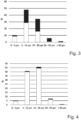
- Figure 3 shows in an MLA that the proposed process can liberate even more carbon across all particle size ranges, so that, for example, 54% of the carbon can be made accessible for physical separation.
- the suspension is then filtered and the solid residue is returned to a suspension containing 5 to 10 wt.% solids in water.
- the suspension is then floated in a flotation cell, for example a conventional mechanical flotation cell, in accordance with step (f).
- the pH is advantageously set and maintained in a range between 9 and 10. 800 to 5400 g of kerosene per t of solids, here black mass in the suspension, and 100 to 1000 g of MIBC (4-methyl-2-pentanol) per t of solids in the suspension are also added for the flotation.
- Air is supplied to the flotation, for example, at a flow rate of 0.8 to 5 l/min per liter of cell volume or suspension.
- Table 4 shows the resulting graphite concentrate after flotation, which was subjected to an additional acid leaching step prior to flotation, allowing for further increased graphite selectivity.
- a graphite concentration of over 90 wt.% can be achieved in the flotation concentrate, with 73% of the graphite being recoverable.
- the graphite concentrations obtained in the two previously described embodiments can be further increased by skimming after flotation in another advantageous embodiment.
- one of the previously described flotation processes is repeatedly performed on the skimmed concentrate from the flotation according to step (f).
- a further flotation process can be carried out using the flotation concentrate, which has undergone an acid leaching step during the process (see Table 4), as a purification flotation with, for example, the same parameters.
- the result of this repeated flotation is shown in Table 5.
- Table 5 Element / wt.% C Cu Al Li-Ni-Co-Mn Source material 91 68 64 62 Flotation concentrate 96.4 0.2 0.8 0.26
- the flotation residues from step (f) can be fed to a residual flotation according to one of the two embodiments described above, i.e., with or without an acid leaching step, and/or from a repeated flotation, which can also be referred to as purification flotation, whose concentrate can be recycled to step (f).
- the flotation residue from the purification flotation can be recycled directly to step (f).
Landscapes
- Chemical & Material Sciences (AREA)
- Engineering & Computer Science (AREA)
- Organic Chemistry (AREA)
- Environmental & Geological Engineering (AREA)
- Materials Engineering (AREA)
- Manufacturing & Machinery (AREA)
- Mechanical Engineering (AREA)
- Metallurgy (AREA)
- Life Sciences & Earth Sciences (AREA)
- General Life Sciences & Earth Sciences (AREA)
- Geology (AREA)
- Chemical Kinetics & Catalysis (AREA)
- General Chemical & Material Sciences (AREA)
- Inorganic Chemistry (AREA)
- Health & Medical Sciences (AREA)
- General Health & Medical Sciences (AREA)
- Toxicology (AREA)
- Electrochemistry (AREA)
- Geochemistry & Mineralogy (AREA)
- Secondary Cells (AREA)
- Carbon And Carbon Compounds (AREA)
- Processing Of Solid Wastes (AREA)
- Manufacture And Refinement Of Metals (AREA)
- Paper (AREA)
Description
- Die Erfindung betrifft ein Verfahren zur Rückgewinnung von Graphit aus schwarzer Masse.
- Die weltweite Batterieproduktion weist sehr hohe Wachstumsraten auf. Der Bedarf der für die Produktion benötigten Ressourcen, nämlich Rohstoffe wie Lithium, Graphit und Metalle wie Nickel, Kobalt und Mangan, wird dementsprechend ansteigen. Die benötigten Rohstoffe werden hauptsächlich aus primären Quellen gewonnen, dennoch wird der Anteil der sekundären Quellen aus dem Recycling in Zukunft steigen. Solche sekundären Quellen werden zu einer so genannten schwarzen Masse aufbereitet, die ein Gemisch aus Lithium-Ionen-Batterieschrott und/oder Schrott aus Batterieproduktionsprozessen ist, das zu einem feinen Pulver verarbeitet wird. So enthält die schwarze Masse in der Regel eine Mischung aus aktiven Anoden- und/oder Kathodenmaterialien von Batterien. Außerdem kann die schwarze Masse Kunststoffe und/oder Stromleiter wie Kupfer und/oder Aluminium enthalten. Weiterhin können organische Binder und Elektrolyte ebenfalls vorliegen. Die typisch schwarze Farbe der schwarzen Masse kann auf Kohlenstoff, insbesondere Graphit oder Carbon Black, zurückgeführt werden, der häufig in aktiven Anodenmaterialien von Ionen-Batterien verwendet wird.
- Der Graphitanteil in der schwarzen Masse beträgt häufig nur etwa 15 bis 20 Gewichtsprozent, bei vorteilhaftem Ausgangsmaterial kann der Anteil bei 20 bis 40 Gewichtsprozent liegen, so dass ein Recycling des Graphits häufig nicht in Betracht gezogen wird. Stattdessen wird das Graphit der schwarzen Masse in der Regel verbrannt. Der steigende Bedarf an Graphit sowie die unerwünschten COx Emissionen bei der Verbrennung begünstigen zunehmend ein Recycling von Graphit aus schwarzer Masse. Die Anforderungen an die Reinheit von Graphit für die Verwendung in Batteriezellen sind jedoch sehr hoch, was auch die Anforderung an Recyclingprozesse sehr hoch setzt. Problematisch ist hierbei, dass übliche Verarbeitungsprozesse bei der Gewinnung und Aufreinigung von Graphit aus natürlichen Quellen, wie beispielsweise Flotation, bei schwarzer Masse nur sehr geringe Effizienzen zeigen und daher eine Anwendung verhindern.
- Aus der
US 2023/0038978 A1 ist ein Verfahren für das Recycling von Lithiumeisenphosphatbatterien bekannt, wobei ein Oxidationsmittel einem Recyclingstrom zugegeben wird, um eine Laugenlösung zu erzeugen. Durch Filterung der Laugenlösung wird ein Rest von einer lithiumhaltigen Lösung abgetrennt. Das Lithium wird anschließend ausgefällt. - Weiterhin ist aus der
US 2022/0320619 A1 ein Verfahren zum Recycling von Lithiumbatterien bekannt, wobei konzentrierte Schwefelsäure bei einer Temperatur von wenigstens 100°C eingesetzt wird, und wobei wenigstens eine metallische Komponente durch nasschemische Extraktion gewonnen wird. - Die
EP 3 535 803 A1 offenbart einen Prozess zur Rückgewinnung von Materialien aus Li-Ionen-Batterien. Der Prozess umfasst die Verarbeitung der Batterien zu einem zerkleinerten Beschickungsstrom und ermöglicht dann über eine Reihe von Trenn-, Isolierungs- und/oder Auslaugungsschritten die Rückgewinnung eines Kupfer-, Kobalt-, Nickel-, Mangan- und/oder Graphitprodukts sowie eines Lithiumprodukts. - Es ist daher die Aufgabe der Erfindung, ein kosteneffizientes Verfahren zur Rückgewinnung von Graphit aus schwarzer Masse bereitzustellen, das eine effiziente Rückgewinnung mit hoher Reinheit ermöglicht.
- Die Erfindung löst dieses Problem mit den Merkmalen der unabhängigen Ansprüche.
- Es wird ein Verfahren zur Rückgewinnung von Graphit aus schwarzer Masse vorgeschlagen, dass die folgenden Schritte in der folgenden Reihenfolge aufweist:
- Schritt (a): Bereitstellung einer schwarzen Masse, die Graphit enthält;
- Schritt (b): Zugeben von Wasser zu der schwarzen Masse und Herstellung einer Suspension der schwarzen Masse in Wasser;
- Schritt (c): Dosieren von Ozon als Oxidationsmittel zu der Suspension und gleichzeitig Rühren der Suspension von schwarzer Masse mit Wasser, vorzugsweise mit einer Scherrate von größer 11000s-1;
- Schritt (f): Flotation der Suspension und Abschöpfen von Graphit.
- Es hat sich überraschender Weise gezeigt, dass die vorgeschlagenen Verfahrensschritte eine Vorbehandlung der schwarzen Masse erreichen, die eine Abtrennung von Graphit aus schwarzer Masse durch Flotation ermöglicht. Es können Reinheiten erreicht werden, die ähnlich der Abtrennung aus primären Graphitquellen sind.
- Mit dem vorgeschlagenen Verfahren können Konzentrationen von mehr als 90% Graphit bei einer Ausbeute von mehr als 70% aus der schwarzen Masse erreicht werden. Es kann beispielsweise ein Kohlenstoffgehalt von 91,5% bei einer Ausbeute von 73% erreicht werden. Auf diese Weise kann das Graphit der schwarzen Masse sehr selektiv zurückgewonnen werden, wodurch das Graphit einer weiteren wirtschaftlichen Verwendung zugeführt und eine Verbrennung vermieden werden kann. Weiterhin kann die Rückgewinnung von weiteren Bestandteilen aus der schwarzen Masse durch die selektive Entfernung von Kohlenstoff, insbesondere Graphit, verbessert werden. Das vorgeschlagene Verfahren ermöglicht somit eine sehr wirtschaftliche Rückgewinnung von Graphit aus schwarzer Masse.
- Schwarze Masse im Sinne der vorliegenden Erfindung ist Material aus ausrangierten Batterien, z.B. Lithium-Ionen-Batterien, und/oder ausrangierte Teile davon, und/oder ausrangierte Materialien aus Produktionsprozessen von Batterien, wie beispielsweise Anodenmaterialien. Die schwarze Masse weist einen Anteil von Graphit auf, der in der Regel in der Anode einer Batterie Anwendung gefunden hat. Die oben genannten Ausgangsmaterialien werden mechanisch zu einem pulverigen Material verarbeitet, das dann als schwarze Masse bezeichnet wird und ein großes Verhältnis von Oberfläche zu Masse aufweist.
- Schwarze Masse enthält daher im Sinne dieser Anmeldung zumindest Graphit und somit das Element Kohlenstoff (C) und in der Regel mehrere oder alle der folgenden Elemente: Lithium (Li), Kobalt (Co), Nickel (Ni), Mangan (Mn), Eisen (Fe), Kupfer (Cu), Aluminium (Al), Phosphor (P), Fluor (F).
- Je nach Ausgangsmaterial der schwarzen Masse können die Anteile von Graphit oder weiteren Metallen, die in einem Recyclingprozess zurückgewonnen werden sollen, sehr unterschiedlich sein. Unterschiedliche Batteriechemien, die z.B. als NMC, NCA, LFP bekannt sind, können zu unterschiedlichen Anteilen oder zum Fehlen wertvoller Metalle, z.B. Co, Ni oder Mn, führen. So sind unterschiedliche Bestandteile mit anderen Elementen in verschiedenen Zusammensetzungen möglich. Die schwarze Masse im Sinne der Erfindung enthält jedoch immer das Element C in Form von Graphit, wenn schwarze Masse in Schritt (a) bereitgestellt wird. Häufig weist die schwarze Masse auch Li auf, was beispielsweise chemisch im aktiven Kathodenmaterial gebunden und/oder metallisches Li sein kann, insbesondere in/um das aktive Anodenmaterial, welches einen hohen Graphitanteil aufweist.
- In Bezug auf Schritt (b) wird weiter vorgeschlagen, dass die schwarze Masse in Wasser mit einer Masse im Bereich von 10 g bis 300 g, vorzugsweise im Bereich von 10 g bis 250 g, weiter bevorzugt im Bereich von 100 g bis 200 g, pro 1 l Wasser in Suspension gebracht wird. Zum Beispiel werden 200 g schwarze Masse in 1 l Wasser suspendiert.
- In Schritt (c) des vorgeschlagenen Verfahrens wird Ozon als Oxidationsmittel in die Suspension dosiert, während die Suspension gerührt wird. Vorzugsweise wird Ozon in dem Wasser der Suspension gelöst. Somit wird die schwarze Masse oder zumindest Teile der schwarzen Masse mit Ozon oxidiert. Ozon (O3) ist als starkes Oxidationsmittel bekannt. Die Verwendung von Ozon als Oxidationsmittel ist jedoch mit einigen Nachteilen verbunden, da Ozon gegenüber Disauerstoff instabil ist und sich schnell zersetzt. Die Halbwertszeit von Ozon verringert sich weiter, wenn es in Wasser gelöst wird, und sie verringert sich mit steigender Temperatur noch weiter, was zu einer sehr geringen Effizienz des Verfahrens führt und sogar dazu führen kann, dass das Ozon nicht in der beabsichtigten Weise reagiert, wenn es bei hohen Temperaturen in Wasser gelöst wird. Die Löslichkeit von Ozon in Wasser ist sehr gering.
- Es hat sich gezeigt, dass durch Rühren der Suspension von schwarzer Masse in Wasser der Stoffaustausch so weit erhöht werden kann, dass das Ozon mit den Partikeln der schwarzen Masse, insbesondere mit der Oberfläche der Partikel der schwarzen Masse, in der Suspension reagieren kann, bevor sich das Ozon zersetzt. Der effektive Einsatz von Ozon beginnt bei hohen Rührgeschwindigkeiten und wird bei weiter erhöhten Rührgeschwindigkeiten noch effektiver, so dass sehr hohe Oxidationspotentiale (>850 mV) erzeugt werden können.
- Daher wird vorgeschlagen, dass die Suspension intensiv gerührt oder mit hohen Rührgeschwindigkeiten gerührt wird, während Ozon als Oxidationsmittel in die Suspension dosiert wird. Vorzugsweise wird in Schritt (c) ein Oxidations-/Reduktionspotenzial (ORP) von >850 mV erzeugt, indem der Suspension Ozon zudosiert wird, während die Suspension gerührt wird. Das ORP kann durch sehr intensives Rühren während des Schritts (c) weiter auf >1200 mV erhöht werden. Ozon als starkes Oxidationsmittel mit einem Redoxpotential von > 850 mV oxidiert beispielsweise Co und Mn und ist für die Rückgewinnung nicht darauf angewiesen, dass diese bereits im Co(III)- und Mn(IV)-Zstand vorliegen, so dass schwarze Massen mit unterschiedlicher Mineralogie und Vorbehandlung erfolgreich verarbeitet werden können.
- Es wird ferner vorgeschlagen, dass durch Rühren der Suspension während Schritt (c) eine turbulente Strömung in der Suspension erzeugt wird.
- Vorzugsweise liegt das intensive Rühren oder das Rühren mit hohen Rührgeschwindigkeiten über einem Schwellenwert, über dem der Anteil des Ozons, der mit der schwarzen Masse reagieren kann, größer ist als der Anteil des Ozons, der sich vorzeitig zu Beginn von Schritt (c) zersetzt.
- Gemäß einer Weiterentwicklung wird vorgeschlagen, dass in Schritt (c) die Suspension mit einer Scherrate von größer als 11000s-1, vorzugsweise größer als 25000s-1, weiter vorzugsweise größer als 27000s-1, weiter bevorzugt größer als 29000s-1, beispielsweise 30000s-1, in der Suspension gerührt wird.
- Eine hohe Scherrate, insbesondere über 11000s-1, beispielsweise 12000s-1, vorzugsweise über 29000s-1, erhöht den Stoffaustausch in ausreichendem Maße, so dass Ozon mit der schwarzen Masse reagieren kann, bevor es sich zersetzt. Bei einer Scherrate von über 11000s-1, beispielsweise 12000s-1, kann ein ausreichend hohes ORP erreicht werden, um die Suspension aus Wasser und schwarzer Masse mit Ozon auszulaugen, wobei noch höhere Scherraten zu einem noch höheren ORP führen können. Bei einer Scherrate von größer als 25000s-1 kann beispielsweise ein ORP von >850 mV erreicht werden, während noch höhere Scherraten zu einem noch höheren ORP, z.B. >1200 mV, führen können.
- Beispielsweise kann eine Scherrate in einem Fluid zwischen zwei parallelen Platten durch die relative Geschwindigkeit der beiden Platten geteilt durch den Abstand der Platten bestimmt werden.
- Diese Vorbehandlung ermöglicht es, dass Graphit mittels Flotation, vorzugsweise mittels Froth Flotation, aus der schwarzen Masse separiert werden kann. Dies basiert auf der unterschiedlichen Hydrophobie der Stoffe in der schwarzen Masse mit unterschiedlichen Neigungen sich an Luftblasen zu hängen und eine Froth-Schicht zu bilden. Das hydrophobe Graphit kann aus der schwarzen Masse abgetrennt werden, während die übrigen hydrophilen Stoffe im Rückstand verbleiben. Dies ist aus schwarzer Masse mit hohen Effizienzen jedoch erst durch die vorgeschlagene Vorbehandlung möglich, welche die Graphitpartikel in der schwarzen Masse befreit, was sich beispielsweise auch in einer Mineral Liberation Analysis (MLA) zeigt. In der schwarzen Masse liegt das Graphit aufgrund der Verarbeitung zu einem Anodenmaterial, dem Einsatz in einer Batterie und der Aufbereitung zu einer schwarzen Masse zu einem Großteil in Verbundpartikeln vor, die einer Flotation im Gegensatz zu Graphit aus natürlichen Quellen nicht zugänglich sind.
- Die vorgeschlagenen Prozessschritte werden grundsätzlich im Rahmen dieser Anmeldung in alphabetischer Reihenfolge durchgeführt, sofern die Reihenfolge nicht anders beschrieben ist, wobei auch einzelne Verfahrensschritte gemäß der alphabetischen Reihenfolge ausgelassen werden können oder vorteilhafte Weiterentwicklungen darstellen.
- Die bereitgestellte schwarze Masse enthält in Schritt (a) in möglichen Ausführungsformen Lithium. Sofern Li in der schwarzen Masse vorhanden ist, ermöglicht Schritt (c), dass Lithium in Lösung gebracht werden kann, während die weiteren Bestandteile der schwarzen Masse als Feststoff verbleiben oder wieder ausgefällt werden. Dementsprechend kann die Suspension aus Wasser und schwarzer Masse mit Ozon ausgelaugt werden, insbesondere in einer neutralen Laugung, wobei eine sehr hohe Selektivität für Li erreicht werden kann.
- Vorzugsweise wird in einem Schritt (d) die Suspension aus Schritt (c) gefiltert und das Filtrat abgetrennt wird, wobei das Filtrat in Wasser gelöstes LiOH enthält, und der an Li verarmte Rückstand schwarze Masse mit Graphit enthält.
- Durch die Filterung in Schritt (d) kann eine vollständige hydrometallurgische Entfernung von Li somit zu Beginn des Rückgewinnungsverfahrens durchgeführt werden, wobei die Entfernung von Li parallel zur Vorbehandlung der schwarzen Masse durchgeführt werden kann.
- Das vorgeschlagene Verfahren hat eine sehr hohe Selektivität für Li mit sehr geringen Anteilen anderer Bestandteile als in Wasser gelöstes LiOH. Die Laugung ist äußerst selektiv gegenüber Ni, Co und Mn bis unterhalb der Nachweisbarkeit, die typischerweise in verbrauchtem Lithium-Ionen-Batteriematerial und damit in der schwarzen Masse vorhanden sind. Die hohe Selektivität für Li kann auch für eine breite Auswahl von Mineralogien der schwarzen Massen und Vorbehandlungen erreicht werden. Darüber hinaus ermöglicht das vorgeschlagene Verfahren auch hohe Extraktionsraten von Li >90%. Daher ist das Verfahren sehr effizient und wird vorzugsweise als Batch-Verfahren durchgeführt, wobei eine Rezirkulation aufgrund der hohen Selektivität möglich und sehr vorteilhaft ist, wie weiter unten beschrieben. Insbesondere kann eine Verunreinigung des zurückgewonnenen Lithiums mit Alkalielementen, insbesondere Na und/oder K, vermieden werden.
- Dem an Li verarmten Rückstand der schwarzen Masse in Form von Feststoffen und/oder Schlämmen wird das Li bereits zu einem frühen Zeitpunkt im Verfahren der Rückgewinnung entzogen. Durch die Extraktion am Anfang des Verfahrens kann der Rückstand, der neben Graphit wertvolle Elemente wie z.B. Ni, Co, Mn enthält, unabhängig mit anderen Verarbeitungsoptionen verarbeitet werden. Darüber hinaus werden Lithiumverluste an andere Produkte und Zwischenprodukte durch eine niedrige Wascheffizienz oder Co-Ausfällung reduziert.
- In einer bevorzugten Ausführungsform wird in einem Schritt (e) mit dem Rückstand aus Schritt (d) unter Zugabe von Wasser und/oder rezykliertem Filtrat aus Schritt (d), deren Li Anteil reduziert wurde, wieder eine Suspension von schwarzer Masse in Wasser, die Graphit enthält, hergestellt.
- Hieran schließt sich vorzugsweise der Schritt (f) mit der Flotation an, wobei in möglichen Ausführungsformen dazwischen der Schritt (h) mit einer sauren Laugung durchgeführt werden können, der im Weiteren noch beschrieben wird.
- Die Suspension wird entsprechend Schritt (f) in einer Flotationszelle, beispielsweise einer konventionellen mechanischen Flotationszelle, flotiert. Die Flotation erfolgt vorzugsweise nach Froth. Das Graphit wird im Flotationskonzentrat von dem Flotationsrückstand abgetrennt und kann entsprechend abgeschöpft werden.
- Gemäß einer Weiterentwicklung wird vorgeschlagen, dass die Suspension
- nach Schritt (b) und vor Schritt (c), und/oder
- nach Schritt (c) und vor Schritt (f) in einem sauren Laugungsschritt (h) gelaugt wird, wobei mindestens eine Säure, vorzugsweise Schwefelsäure (H2SO4), und/oder rezirkulierte Säure zugegeben wird und der pH-Wert unter pH 3 gesenkt wird.
- Die Suspension weist vor Schritt (c) und nach Schritt (c) und vor Schritt (f) Graphit auf, das mit der schwarzen Masse in Wasser in Suspension vorliegt. Nach Schritt (f) ist das Graphit und/oder Kohlenstoff bis auf mögliche Reste aus der Suspension entfernt.
- Es ist insbesondere vorteilhaft den sauren Laugungsschritt (h) nach dem Schritt (d) oder (e) durchzuführen. Es ist weiterhin besonders vorteilhaft, wenn dem Rückstand aus der Filterung des Schritt (d), also nach der Durchführung des Schritts (c) und vor der Flotation gemäß Schritt (f) mindestens eine Säure im sauren Laugungsschritt (h) zugegeben. Vorzugsweise liegen 200 bis 400 g Feststoff pro l im sauren Laugungsschritt (h) vor.
- In einer möglichen Ausführungsform kann der saure Laugungsschritt (h) vor dem Schritt (c) ausgeführt werden, was beispielsweise für schwarze Masse ohne Lithium, beispielsweise aus dem Recycling von Na-Ionen-Batterien, vorteilhaft sein kann, da mögliche Prozessschritte zum Abtrennen von Lithium vor der sauren Laugung in einer solchen Situation keinen Vorteil bieten.
- Der saure Laugungsschritt (h) wird vorzugsweise bei einem pH-Wert von 2 oder weniger gestartet. Weiterhin wird der saure Laugungsschritt (h) in vorteilhaften Ausführungsformen bei einem pH-Wert im Bereich von 3 bis 5 beendet.
- Durch die saure Laugung in Schritt (h) können beispielsweise Metall wie Ni, Co und Mn in Lösung gebracht werden, wohingegen Cu und/oder Al als Feststoff vorliegen.
- Gemäß einer Weiterentwicklung wird vorgeschlagen, dass ein Reduktionsmittel, vorzugsweise Schwefeldioxid (SO2), zu dem sauren Laugungsschritt (h) zugegeben wird. Dies verbessert die Wirkung der sauren Laugung in Schritt (h).
- Es wird ferner vorgeschlagen, dass eine Calcium-Quelle, vorzugsweise Calciumhydroxid (Ca(OH)2) und/oder Calciumoxid (CaO) und/oder Calciumcarbonat (CaCO3), zu der Suspension aus Schritt (h) zugegeben wird. Hierdurch kann beispielsweise F ausgefällt werden.
- Vorzugsweise wird in einem Schritt (i) Suspension aus dem sauren Laugungsschritt (h) filtriert.
- Hierdurch kann im Rückstand Graphit sowie beispielsweise Cu, Al und F abgetrennt werden, während beispielsweise Ni, Co und/oder Mn aus dem sauren Laugungsschritt (h) in Lösung verbleiben.
- Der Rückstand mit dem Graphit kann anschließend mit Wasser wieder in eine Suspension, beispielsweise mit 5 bis 10% Feststoffanteil, gebracht und dem Flotationsschritt (f) zugeführt werden.
- Gemäß einer vorteilhaften Ausführungsform wird vorgeschlagen, dass Schritt (c) für mindestens 3h, vorzugsweise mindestens 3,5h, beispielsweise 4h, durchgeführt wird.
- Die Konzentration des im Wasser der Suspension gelösten Li steigt mit der Zeit bis zur maximalen Extraktionsrate, die z.B. innerhalb von 4 Stunden erreicht werden kann. Darüber hinaus ist die Oxidation von Co und Mn auch von der Reaktionsdauer abhängig, wobei eine längere Reaktionsdauer eine vollständige Rückgewinnung aus der Lösung ermöglicht, z.B. nach 3 Stunden für Mn und nach 4 Stunden für Co. Die Co- und Mo-Oxide werden also ausgefällt, nachdem sie in der Lösung gelöst wurden. Daher ermöglicht die Durchführung von Schritt (c) für die oben genannte Dauer eine sehr hohe Selektivität des Extraktionsverfahrens. Die entsprechende Zeitdauer führt zu einer guten Vorbehandlung der schwarzen Masse, so dass eine gute Abtrennung von Graphit durch Flotation erreicht werden kann.
- In einer bevorzugten Ausführungsform wird in Schritt (c) Ozon mit einer Rate von mindestens 0,1 Gramm (O3)/Stunde/Gramm (schwarze Masse), zum Beispiel 1 Gramm(O3)/Stunde /Gramm(schwarze Masse), und/oder mit einer maximalen Rate von 2 Gramm (O3)/Stunde/Gramm (schwarze Masse) in die Suspension dosiert.
- Dementsprechend ist der Massenstrom an Ozon pro Stunde auch abhängig von der Masse der bereitgestellten schwarzen Masse in der Suspension. Um Ozon mit einer gleichen Rate von z.B. 1,5 Gramm(O3)/Stunde/Gramm(schwarze Masse) bereitzustellen, muss der Massenstrom an Ozon z.B. verdoppelt werden, wenn die bereitgestellte schwarze Masse verdoppelt wird.
- Es gibt eine untere Grenze für die Dosierung von Ozon in die Suspension, um eine ausreichende Wirkung der Vorbehandlung der schwarzen Masse zu erzielen, während eine obere Grenze vor allem wirtschaftliche Gründe hat, da das vorgeschlagene Rühren die Wirksamkeit des zugeführten Ozons in ausreichender Weise erhöht.
- Gemäß einer Weiterentwicklung wird vorgeschlagen, dass in Schritt (c) die Temperatur der Suspension über 69°C, vorzugsweise über 80°C, ist.
- Eine Temperatur von 70°C oder mehr ermöglicht hohe Li-Extraktionsraten von mehr als 90%, die bei 90°C auf mehr als 95% gesteigert werden können. Daher wird die Suspension vorzugsweise erhitzt. Weiterhin kann dadurch eine gute Vorbehandlung des Graphits für die Flotation erreicht werden.
- In einer Weiterentwicklung wird vorgeschlagen, dass eine Säure, vorzugsweise Schwefelsäure (H2SO4), zu der Suspension in Schritt (b) und/oder Schritt (c) zugegeben wird und der pH-Wert der Suspension auf einen pH-Wert im Bereich von 3 und bis 4,5, vorzugsweise 3 bis 4 abgesenkt wird. Der Schritt (c) wird vorzugsweise bei einem pH-Wert von 9 beendet.
- Ein pH-Wert unter 4,5 erhöht die Extraktionsrate von Li sogar noch weiter im Vergleich zu einer Ausführungsform des Verfahrens ohne das Absenken des pH-Werts, was zu Li-Extraktionsraten über 90 % führt, wobei eine Extraktionsrate für Li sogar über 95 % möglich ist. Gleichzeitig wird eine verbesserte Vorbehandlung zur Befreiung des Graphits in der schwarzen Masse erreicht. Ein pH-Wert unter 3 führt zu einem übermäßigen Verlust an Li-Selektivität.
- Während Co und Mn mit der oben vorgeschlagenen Reaktionsdauer, z.B. 4 Stunden, vollständig zurückgewonnen werden können, hat das Absenken des pH-Werts in den Bereich von 3,5 bis 4,5 den Nebeneffekt, dass die Ni-Extraktion bei längerer Dauer zusammen mit der Li-Extraktion zunimmt. Somit wird die Extraktionsrate für Li auf einen sehr hohen Wert erhöht, aber auch Ni wird gelöst.
- Bei der Säure handelt es sich vorzugsweise um Schwefelsäure (H2SO4), die eine weitere vorteilhafte Wirkung auf das Verfahren zur Rückgewinnung von Metallen haben kann, z.B. für die Kristallisation von Ni-Sulfat. Je nach den gewünschten Endprodukten des Verfahrens zur Rückgewinnung von Metallen können jedoch auch andere Säuren geeignet sein.
- In einer alternativen Ausführungsform wird vorgeschlagen, dass in Schritt (c) die Suspension der schwarzen Masse in Wasser einen pH-Wert im Bereich von 6 bis 8, vorzugsweise im Bereich von 7 bis 8, z.B. einen pH-Wert von 8, aufweist.
- Die Extraktion von Li in Schritt (c) kann in einer vorteilhaften Ausführungsform in einer neutralen Laugung ohne jegliche pH-Einstellung durchgeführt werden, wobei die Wirkung des Ozons außer Acht gelassen wird, was das Verfahren vereinfacht und somit kostengünstig ist. Wird Ozon als Oxidationsmittel in die Suspension dosiert und die Suspension dabei gerührt, vorzugsweise mit einer Scherrate >11000s-1, hat die Suspension vorzugsweise einen pH-Wert im Bereich von 6 bis 8, insbesondere im Bereich von 7 bis 8, was Extraktionsraten von etwa über 70 % für Li ermöglicht. Darüber hinaus hat der vorgeschlagene pH-Bereich, insbesondere ein pH-Wert von 7 bis 8, den vorteilhaften Effekt, dass Co, Mn und insbesondere Ni aus der Lösung ausgefällt bzw. nicht in Lösung gebracht wird, was zu einer sehr hohen Selektivität der Li-Extraktion als LiOH in Wasser aus schwarzer Masse führt, während immer noch gute Extraktionsraten für Li erzielt und gleichzeitig eine gute Befreiung des Graphits in der schwarzen Masse erreicht wird.
- Dementsprechend kann das Li enthaltende Filtrat aus Schritt (d) auch einen pH-Wert im Bereich von 6 bis 8, insbesondere 7 bis 8, aufweisen, was eine kostengünstige Weiterverarbeitung des Filtrats ermöglicht.
- Es wird ferner vorgeschlagen, dass nach Schritt (c) eine Base, vorzugsweise Natriumhydroxid (NaOH) und/oder Calciumhydroxid (Ca(OH)2) und/oder Calciumoxid (CaO), zugegeben und der pH-Wert der Suspension vor Schritt (d) oder der pH-Wert des Filtrats von Schritt (d) auf einen pH-Wert über 6, beispielsweise 9, vorzugsweise auf einen pH-Wert über 9, weiter vorzugsweise auf einen pH-Wert über 10 angehoben wird.
- Insbesondere ein pH-Wert von mehr als 9, beispielsweise 10, vorzugsweise ein pH-Wert von mehr als 10, ermöglicht die vollständige Ausfällung des Ni(II) als Hydroxid aus der Lihaltigen Lauge. Dies ist besonders vorteilhaft, wenn der pH-Wert der Suspension mit einer Säure auf unter oder gleich 6 oder insbesondere auf unter oder gleich 4,5 gesenkt wurde, um die Li-Extraktionsrate zu maximieren. Auf diese Weise kann der Nebeneffekt des gelösten Ni umgekehrt werden, was zu einer sehr hohen Extraktionsrate von in Wasser gelöstem Li von über 90 %, z.B. 95 %, führt, während gleichzeitig eine sehr hohe Selektivität oder Reinheit des gelösten Li erreicht wird.
- Die Anhebung des pH-Wertes der Suspension oder des Filtrats mit einer Base wird vorzugsweise bei einer Temperatur von 25°C bis 70°C durchgeführt.
- Vorzugsweise wird der pH-Wert vor der Filtration der Suspension auf pH > 9, z.B. pH = 10, weiter bevorzugt auf pH > 10 eingestellt.
- Dementsprechend enthält das Filtrat Li, das als LiOH in Wasser gelöst ist, mit einer sehr hohen Reinheit. Das Graphit sowie andere Elemente, die in der schwarzen Masse vorhanden sein können, wie beispielsweise Ni, Co, Mn, Cu, Al, Fe, verbleiben im Rückstand.
- Darüber hinaus entfernt die pH-Einstellung mit Ca-haltigen Basen, insbesondere Calciumhydroxid und/oder Calciumoxid, F und/oder P aus der Lösung, so dass ein geringerer Gehalt an F und P im Filtrat erreicht wird.
- Die pH-Einstellung mit Na-haltigen Basen, insbesondere Natriumhydroxid, belässt F und P in der Lösung, was das Abtrennen von F aus dem Rückstand und die weitere Verarbeitung des Rückstands ermöglicht, was vorteilhafterweise die Anreicherung von HF in anderen nachgeschalteten Prozessen, z.B. in schwarze Säure, verhindern kann. Die zur Einstellung des pH-Wertes auf die oben beschriebenen Werte erforderliche Na-Menge liegt deutlich unter der Löslichkeitsgrenze und führt nicht zu einer Na-Kontamination des Li-Produkts.
- Infolgedessen können durch das vorgeschlagene Verfahren erzeugte Filtrat, das in Wasser gelöstes LiOH mit hoher Reinheit enthält, und der an Li abgereicherte Rückstand bzw. der Rückstand mit stark reduziertem Li-Gehalt unabhängig voneinander zu der gewünschten Form des Endprodukts der aus der schwarzen Masse zurückgewonnenen Metalle verarbeitet werden. Dabei ist es möglich, die hohe Selektivität und Extraktionsrate für Li des vorgeschlagenen Verfahrens zu nutzen.
- Die Flotation gemäß Schritt (f) wird in besonders vorteilhaften Ausführungsformen nach einer Filterung, beispielsweise gemäß Schritt (d) und/oder Schritt (i), an einer mit dem Rückstand dieser Filterung hergestellten Suspension durchgeführt, welche vorzugsweise 5 bis 10% Feststoff in Wasser aufweist.
- Die Flotation gemäß Schritt (f) erfolgt vorzugsweise mit einer Zuführung Luft, welche weiter vorzugsweise mit einer Rate von 0,8 bis 5 l/min per l flotierte Suspension zugeführt wird.
- In einer bevorzugten Ausführungsform ist in Schritt (f) bei der Flotation der pH Wert in einem Bereich von 9 bis 10.
- Vorzugsweise werden bei der Flotation in Schritt (f) 800 bis 5400g Kerosin pro t schwarze Masse und/oder 100 bis 1000 g MIBC(4-Methyl-2-pentanol) pro t schwarze Masse als Additive zugesetzt.
- In einer besonders vorteilhaften Ausführungsform wird das abgeschöpfte Flotationskonzentrat mit Graphit aus Schritt (f) in Wasser suspendiert wird, und eine Aufreinigungsflotation der Suspension und ein Abschöpfen von Graphit durchgeführt.
- Mit der vorgeschlagenen wiederholten Flotation in der Aufreinigungsflotation nach der entsprechenden Vorbehandlung der schwarzen Masse, welche einen hohen Grad der Befreiung des Graphits in der pulverförmigen schwarzen Masse zeigt, kann eine Konzentration von mehr als 96% Graphit in der Konzentration der wiederholten Flotation bei einer Rückgewinnungsquote von mehr 90% erreicht werden. Insgesamt kann somit über das Gesamtverfahren zur Rückgewinnung von Graphit aus schwarzer Masse eine Rückgewinnungsquote von mehr als 65% und eine Reinheit von über 96% erreicht werden, was ein sehr gutes Ergebnis für die Rückgewinnung von Graphit aus schwarzer Masse ist. Daher kann das auf diese Weise zurückgewonnene Graphit als hochwertiges Produkt wieder eingesetzt werden.
- Es wird weiterhin vorgeschlagen, dass der Flotationsrückstand aus der Flotation aus Schritt (f) einer Restflotation zugeführt wird. Hierdurch kann zusätzliches, befreites Graphit zurückzugewonnen werden und die Rückgewinnungsquote insgesamt noch weiter angehoben werden.
- Weiterhin wird zu diesem Zweck vorgeschlagen, dass das Flotationskonzentrat mit Graphit aus der Restflotation und/oder der Flotationsrückstand aus der Aufreinigungsflotation in den Schritt (f) zurückgeführt wird.
- Ferner wird eine Anlage zur Durchführung eines Verfahrens nach einem der Ansprüche 1 bis 19 vorgeschlagen.
- Im Folgenden wird die Erfindung anhand von bevorzugten Ausführungsformen unter Bezugnahme auf die Zeichnungen erläutert. Darin zeigt
- Fig. 1
- die Verteilung von Graphitpartikeln aus schwarzer Masse über den Partikelgrößen und deren Verfügbarkeit für Flotation im Stand der Technik;
- Fig. 2
- die Verteilung von Graphitpartikeln aus schwarzer Masse über den Partikelgrößen und deren Verfügbarkeit für Flotation nach Schritt (c);
- Fig. 3
- die Verteilung von Graphitpartikeln aus schwarzer Masse über den Partikelgrößen und deren Verfügbarkeit für Flotation nach Schritt (c) und (h); und
- Fig. 4
- die Verteilung von Graphitpartikeln aus schwarzer Masse über den Partikelgrößen und deren Verfügbarkeit für Flotation nach einer Aufreinigungsflotation.
- Die schwarze Masse wird in Schritt (a) als graphithaltiges Ausgangsmaterial bereitgestellt. Die schwarze Masse ist aus Li-Ionen-Batterieschrott hergestellt, der zu einem Pulver verarbeitet wurde. Die Mineralogie der schwarzen Masse kann in Abhängigkeit von den Ausgangsmaterialien bzw. Schrottmaterialien variieren.
- Anhand einer beispielhaften Zusammensetzung von schwarzer Masse soll der Effekt des vorgeschlagenen Verfahrens zur Rückgewinnung von Graphit aus schwarzer Masse dargestellt werden. Tabelle 1 zeigt hierbei eine mögliche Zusammensetzung von schwarzer Masse, die Graphit enthält. Die schwarze Masse wurde zu einer pulverartigen Masse zerkleinert, so dass ein hohes Verhältnis von Oberfläche zu Masse vorliegt. Tabelle 1 zeigt die Gewichtsanteile von schwarzer Masse für die aufgeführten Elemente.
Tabelle 1: Element C Al Ca Co Cu Fe Gew.% 31,1 4,4 0,30 16,0 5,6 0,72 Element Li Mn Ni P F Gew.% 4,4 6,9 9,6 0,70 2,7 - Der Kohlenstoffanteil ist mit 31,1% entsprechend hoch, so dass prinzipiell ein großer Anteil Graphit für die Rückgewinnung zur Verfügung stehen sollte.
- Zunächst soll eine direkte Flotation der vorliegenden schwarzen Masse nach dem Stand der Technik ohne die Anwendung des vorgeschlagenen Verfahrens dargestellt werden.
Figur 1 zeigt die Verteilung von Graphitpartikeln aus schwarzer Masse über den Partikelgrößen und deren Verfügbarkeit für Flotation durch eine Mineral Liberation Analysis (MLA). Befreite Graphitpartikel sind durch weißen Balken und gebunden Graphitpartikel durch den schwarzen Balken symbolisiert. MLA wird verwendet, um quantitativ zu messen, inwieweit die einzelnen Mineralien, Bestandteile und Elemente eines feinen Feststoffs oder Pulvers, hier schwarze Masse, zu ganzen Partikeln zusammengesetzt sind. Wenn einzelne Mineralien, Bestandteile und Elemente überwiegend als einzelne Partikel auftreten, gelten sie als befreit oder aufgeschlossen und können durch physikalische Trennverfahren (z.B. Schwerkraft-/Magnet-/Flotationsverfahren) gewonnen werden. Ist dies nicht der Fall, liegen die Mineralien, Bestandteile und Elemente in Verbundpartikeln mit anderen vor und gelten als gebunden. - Wie in der Darstellung der
Figur 1 erkennbar, ist nur in den Partikelgrößenklassen 5µm bis 15 µm und 15µm bis 30 µm ein messbarer Anteil des Kohlenstoffs befreit. Es sind daher insgesamt nur etwa 15% des Kohlenstoffs befreit, d.h. der Großteil von etwa 85% des Kohlenstoffs und somit des Graphits der schwarzen Masse ist in einem Verbundpartikel gebunden. Dementsprechend ist die Effizienz einer Rückgewinnung durch konventionelle Flotation nach dem Stand der Technik entsprechend niedrig, was in Tabelle 2 gezeigt ist.Tabelle 2: Element C Cu Al Li-Ni-Co-Mn Rückgewinnungsgrad im Konzentrat der Flotation / % 64,7 21,4 27,8 22,7 Konzentrat der Flotation / Gew.% 45,6 6,9 5,6 23,4 - In einem konventionellen Flotationsprozess wird daher ein signifikanter Anteil der aktiven Kathodenmaterialien und des Lithiums in das flotierte Graphit verschleppt, so dass keine effiziente Trennung und Rückgewinnung des Graphits aus schwarzer Masse mit einem konventionellen Verfahren erreicht werden können.
- In einem vorteilhaften Ausführungsbeispiel wird die exemplarische schwarze Masse mit einem Graphitanteil gemäß der Tabelle 1 als Pulver gemäß Schritt (a) bereitgestellt und zunächst in eine Suspension mit Wasser mit einer Konzentration von 100 bis 200 g Feststoffe pro l Wasser gemäß Schritt (b) gebracht.
- Die Suspension wird im folgenden Schritt (c) mit einer sehr hohen Scherrate, in diesem vorteilhaften Ausführungsbeispiel mit einer Scherrate von 34000s-1 gemixt und gerührt. Gleichzeitig wird Ozon mit einer Rate von beispielsweise 0,05 bis 0,4 g Ozon pro g schwarze Masse pro Stunde für mehrere Stunden zugeführt. Die Temperatur der Suspension wird während des Rührens und der gleichzeitigen Zugabe von Ozon bei mehr als 80°C gehalten. Weiterhin wird der pH-Wert in einem Bereich zwischen 3 und 4 eingestellt und gehalten. Dieser Schritt wird für mehrere Stunden aufrecht gehalten.
- In diesem vorteilhaften Ausführungsbeispiel wird zusätzlich am Ende dieses Schritts der pH-Wert deutlich angehoben, beispielsweise auf einen pH-Wert von 9, um selektiv Li aus der schwarzen Masse auszulaugen.
- Die Suspension aus Schritt (c) wird anschließend in einem Schritt (d) gefiltert und der Rückstand enthält den an Li verarmten Rückstand schwarze Masse mit Graphit, während das Filtrat in Wasser gelöstes LiOH enthält.
-
Figur 2 zeigt eine weitere Mineral Liberation Analysis (MLA) des Rückstands schwarzer Masse mit Graphit nachdem der Schritt (c) durchgeführt wurde. Der Anteil des befreiten Graphits, siehe weiße Balken, konnte im Vergleich zum Ausgangsmaterial, sieheFigur 1 deutlich gesteigert werden, so dass insgesamt 42,8% des Graphits befreit und nur noch 57,2% des Graphits gebunden sind. - Der Rückstand mit der vorbehandelten schwarzen Masse mit Graphit wird anschließend wieder in eine Suspension mit 5 bis 10 Gew.-% Feststoff in Wasser gebracht, entsprechend Schritt (e).
- Die Suspension wird nun entsprechend Schritt (f) in einer Flotationszelle, beispielsweise einer konventionellen mechanischen Flotationszelle, flotiert. Der pH-Wert wird hierbei vorteilhaft in einem Bereich zwischen 9 bis 10 eingestellt und gehalten. Es wird für die Flotation weiterhin 800 bis 5400 g Kerosin pro t Feststoff, hier schwarze Masse in der Suspension, und 100 bis 1000 g MIBC (4-Methyl-2-pentanol) pro t Feststoff in der Suspension zugegeben. Die Zuführung von Luft zur Flotation erfolgt beispielsweise mit einer Durchflussrate von 0,8 bis 5 l/min pro Liter Zellvolumen oder Suspension.
- Tabelle 3 zeigt hierbei das resultierende Graphitkonzentrat nach der Flotation mit der vorgeschlagenen Vorbehandlung, wobei eine deutlich gesteigerte Selektivität für Graphit erreicht werden kann. Es kann ein Anteil von über 80 Gew.-% Graphit in dem Konzentrat der Flotation erreicht werden, wobei der Rückgewinnungsgrad von Graphit im abgeschöpften Konzentrat der Flotation bei über 65% liegt.
Tabelle 3: Element / Gew.% C Cu Al Li-Ni-Co-Mn Rückgewinnungsgrad im Konzentrat der Flotation / % 66,2 24,5 20,2 3,73 Konzentrat der Flotation / Gew.% 83,5 3,0 0, 9 6,1 - In einem alternativen Ausführungsbeispiel wird nach dem Rühren und der parallelen Zuführung von Ozon entsprechend der zuvor ausgeführten Verfahrensweise und nachgelagerten Filtration entsprechend Schritt (d) der Rückstand der Filtration vor der Flotation zunächst einem sauren Laugungsschritt (h) zugeführt.
- Der an Li-verarmte Rückstand der schwarzen Masse mit Graphit wird hierbei wieder in eine Suspension in Wasser mit gebracht, wobei die Suspension vorteilhaft mit 100 bis 200 g Feststoff/l eingestellt wird.
- Die Suspension wird dann bei einem pH-Wert von 1 bis 2, der beispielsweise durch Zugabe von Schwefelsäure erreicht werden kann, gelaugt. Die Temperatur wird auf mehr als 60°C, beispielsweise 70°C, durch Heizen des Behälters eingestellt. Gleichzeitig wird unter Rühren Schwefeldioxid (SO2) zugegeben. Dieser Prozess wird mehrere Stunden, beispielsweise 2, 3 oder 4, fortgesetzt, wobei der Prozess bei einem pH-Wert im Bereich 3 bis 5 beendet wird.
-
Figur 3 zeigt in einer MLA, dass durch das vorgeschlagene Verfahren über alle Partikelgrößenbereiche nochmal mehr Kohlenstoff befreit werden kann, so dass beispielsweise 54% des Kohlenstoffs einer physikalischen Trennung zugänglich gemacht werden kann. - Die Suspension wird anschließend gefiltert und der feste Rückstand wieder einer Suspension mit 5 bis 10 Gew.-% Feststoff in Wasser gebracht. Die Suspension wird nun auch in diesem Ausführungsbeispiel entsprechend Schritt (f) in einer Flotationszelle, beispielsweise einer konventionellen mechanischen Flotationszelle flotiert. Der pH-Wert wird hierbei vorteilhaft in einem Bereich zwischen 9 bis 10 eingestellt und gehalten. Es wird für die Flotation weiterhin 800 bis 5400 g Kerosin pro t Feststoff, hier schwarze Masse in der Suspension, und 100 bis 1000 g MIBC (4-Methyl-2-pentanol) pro t Feststoff in der Suspension zugegeben. Die Zuführung von Luft zur Flotation erfolgt beispielsweise mit einer Durchflussrate von 0,8 bis 5 l/min pro Liter Zell Volumen oder Suspension.
- Tabelle 4 zeigt das resultierende Graphitkonzentrat nach der Flotation, welches vor der Flotation einem zusätzlichen sauren Laugungsschritt unterzogen wurde, wodurch eine nochmal gesteigerte Selektivität für Graphit erreicht werden kann. So kann eine Konzentration von über 90 Gew.-% für Graphit in dem Konzentrat der Flotation erreicht werden, wobei 73% des Graphits zurückgewonnen werden können.
Tabelle 4: Element / Gew.% C Cu Al Li-Ni-Co-Mn Rückgewinnungsgrad im Konzentrat der Flotation / % 73 10,2 9, 1 7,4 Konzentrat der Flotation / Gew.% 91,5 0,77 1 0,32 - Die in den beiden zuvor ausgeführten Ausführungsbeispielen erhaltenen Konzentrationen von Graphit können durch Abschöpfen nach der Flotation in einem weiteren vorteilhaften Ausführungsbeispiel weiter erhöht werden. Hierzu wird an dem abgeschöpften Konzentrat aus der Flotation gemäß Schritt (f) wiederholt einer der zuvor beschriebenen Flotationsprozesse durchgeführt.
- Es kann beispielsweise mit dem Konzentrat der Flotation, das im Prozessverlauf einem saurem Laugungsschritt unterzogen wurde, siehe Tabelle 4, ein weiterer Flotationsprozess als Aufreinigungsflotation mit beispielsweise den gleichen Parametern durchgeführt werden. Das Ergebnis dieser wiederholten Flotation ist in Tabelle 5 dargestellt.
Tabelle 5: Element / Gew.% C Cu Al Li-Ni-Co-Mn Ausgangsmaterial 91 68 64 62 Konzentrat der Flotation 96,4 0,2 0,8 0,26 - Die Konzentration des zurückgewonnenen Graphits erreicht über 96% Gewichtsanteil, wodurch das Graphit eine ausreichende Reinheit für eine erneute Verwendung aufweist. Weiterhin zeigt
Figur 4 eine MLA für das Konzentrat aus der wiederholten Flotation, wobei das befreite Graphit einen Anteil von 97,4% aufweist. Dies spiegelt die Bedeutung des befreiten Graphits durch die vorgeschlagenen Verfahrensschritte wider. - In einem weiteren möglichen Ausführungsbeispiel können die Flotationsrückstände aus dem Schritt (f) nach einem der beiden ausgeführten Ausführungsbeispiele, d.h. mit oder ohne sauren Laugungsschritt, und/oder aus einer wiederholten Flotation, welche auch als Aufreinigungsflotation bezeichnet werden kann, einer Restflotation zugeführt werden, deren Konzentrat der Flotation zu dem Schritt (f) zurückgeführt werden kann. Weiterhin kann der Flotationsrückstand der Aufreinigungsflotation in einem vorteilhaften Ausführungsbeispiel direkt zu dem Schritt (f) zurückgeführt werden.
Claims (19)
- Verfahren zur Rückgewinnung von Graphit aus schwarzer Masse, gekennzeichnet durch die folgenden Schritte in der folgenden Reihenfolge:- Schritt (a): Bereitstellung einer schwarzen Masse, die Graphit enthält;- Schritt (b): Zugeben von Wasser zu der schwarzen Masse und Herstellung einer Suspension der schwarzen Masse in Wasser;- Schritt (c): Dosieren von Ozon als Oxidationsmittel zu der Suspension und gleichzeitig Rühren der Suspension von schwarzer Masse mit Wasser;- Schritt (f): Flotation der Suspension und Abschöpfen von Graphit.
- Verfahren nach Anspruch 1, dadurch gekennzeichnet, dass- in Schritt (f) bei der Flotation der pH Wert in einem Bereich von 9 bis 10 ist.
- Verfahren nach Anspruch 1 oder 2, dadurch gekennzeichnet, dass- in Schritt (f) bei der Flotation 800 bis 5400g Kerosin pro t schwarze Masse und/oder 100 bis 1000 g MIBC(4-Methyl-2-pentanol) pro t schwarze Masse als Additive zugesetzt werden.
- Verfahren nach einem der vorangehenden Ansprüche, dadurch gekennzeichnet, dass- in einem Schritt (d) die Suspension aus Schritt (c) gefiltert und das Filtrat abgetrennt wird, wobei das Filtrat in Wasser gelöstes LiOH enthält, und der an Li verarmte Rückstand schwarze Masse mit Graphit enthält, wobei in einem Schritt (e) mit dem Rückstand aus Schritt (d) unter Zugabe von Wasser und/oder rezykliertem Filtrat aus Schritt (d), deren Li Anteil reduziert wurde, wieder eine Suspension von schwarzer Masse in Wasser, die Graphit enthält, hergestellt wird.
- Verfahren nach einem der vorangehenden Ansprüche, dadurch gekennzeichnet, dass die Suspension- nach Schritt (b) und vor Schritt (c), und/oder- unter Rückbezug auf Anspruch 4 nach Schritt (e) und vor Schritt (f) in einem sauren Laugungsschritt (h) gelaugt wird, wobei mindestens eine Säure, vorzugsweise Schwefelsäure (H2SO4), und/oder rezirkulierte Säure zugegeben wird und der pH-Wert unter pH 3 gesenkt wird.
- Verfahren nach Anspruch 5, gekennzeichnet durch- Zugeben eines Reduktionsmittels, vorzugsweise Schwefeldioxid (SO2), zu dem sauren Laugungsschritt (h).
- Verfahren nach Anspruch 5 oder 6, gekennzeichnet durch- Zugeben einer Calcium-Quelle, vorzugsweise Calciumhydroxid (Ca(OH)2) und/oder Calciumoxid (CaO) und/oder Calciumcarbonat (CaCO3), zu der Suspension aus Schritt (h).
- Verfahren nach einem der vorangehenden Ansprüche, dadurch gekennzeichnet, dass in einem Schritt (i) die Suspension aus Schritt (h) filtriert wird.
- Verfahren nach einem der vorangehenden Ansprüche, dadurch gekennzeichnet, dass- in Schritt (c) die Suspension mit einer Scherrate von größer als 11000s-1 in der Suspension gerührt wird.
- Verfahren nach einem der vorangehenden Ansprüche, dadurch gekennzeichnet, dass- in Schritt (c) die Suspension mit einer Scherrate von größer als 25000s-1 in der Suspension gerührt wird.
- Verfahren nach einem der vorangehenden Ansprüche, dadurch gekennzeichnet, dass- Schritt (c) für mindestens 3 Stunden durchgeführt wird.
- Verfahren nach einem der vorangehenden Ansprüche, dadurch gekennzeichnet, dass- in Schritt (c) Ozon mit einer Rate von mindestens 0,1 Gramm (O3)/Stunde/Gramm (schwarze Masse) und/oder mit einer maximalen Rate von 2 Gramm (O3)/Stunde/Gramm (schwarze Masse) in die Suspension dosiert wird.
- Verfahren nach einem der vorangehenden Ansprüche, dadurch gekennzeichnet, dass- in Schritt (c) die Temperatur der Suspension über 69°C ist.
- Verfahren nach einem der vorangehenden Ansprüche, dadurch gekennzeichnet, dass- in Schritt (c) die Suspension der schwarzen Masse in Wasser einen pH-Wert im Bereich von 6 bis 8 aufweist.
- Verfahren nach einem der Ansprüche 1 bis 13, gekennzeichnet durch den Schritt:- Zugabe einer Säure zu der Suspension in Schritt (b) und/oder Schritt (c) und Absenken des pH-Wertes der Suspension auf einen pH-Wert im Bereich von 3 und bis 4,5, vorzugsweise 3 bis 4.
- Verfahren nach Anspruch 15, gekennzeichnet durch den Schritt,- nach Schritt (c) Zugabe einer Base; und- Anheben des pH-Wertes der Suspension vor Schritt (d) oder Anheben des pH-Wertes des Filtrats von Schritt (d) auf einen pH-Wert von über 6.
- Verfahren nach einem der vorangehenden Ansprüche, dadurch gekennzeichnet, dass- das abgeschöpfte Flotationskonzentrat mit Graphit aus Schritt (f) in Wasser suspendiert wird, und eine Aufreinigungsflotation der Suspension und ein Abschöpfen von Graphit durchgeführt wird.
- Verfahren nach einem der vorangehenden Ansprüche, dadurch gekennzeichnet, dass- der Flotationsrückstand aus der Flotation aus Schritt (f) einer Restflotation zugeführt wird.
- Verfahren nach Anspruch 17 oder 18 unter Rückbezug auf Anspruch 17, dadurch gekennzeichnet, dass- das Flotationskonzentrat mit Graphit aus der Restflotation und/oder der Flotationsrückstand aus der Aufreinigungsflotation in den Schritt (f) zurückgeführt wird.
Priority Applications (15)
| Application Number | Priority Date | Filing Date | Title |
|---|---|---|---|
| HRP20250895TT HRP20250895T1 (hr) | 2023-03-06 | 2023-03-06 | Postupak i postrojenje za regeneraciju grafita iz crne mase |
| DK23160169.1T DK4427856T3 (da) | 2023-03-06 | 2023-03-06 | Fremgangsmåde og anlæg til genvinding af grafit fra sort masse |
| PL23160169.1T PL4427856T3 (pl) | 2023-03-06 | 2023-03-06 | Sposób i instalacja do odzysku grafitu z czarnej masy |
| PT231601691T PT4427856T (pt) | 2023-03-06 | 2023-03-06 | Método e instalação de recuperação de grafite a partir de massa negra |
| EP23160169.1A EP4427856B1 (de) | 2023-03-06 | 2023-03-06 | Verfahren und anlage zur rückgewinnung von graphit aus schwarzer masse |
| MA69316A MA69316B1 (fr) | 2023-03-06 | 2023-03-06 | Procédé et installation pour la récupération de graphite à partir de matière noire |
| ES23160169T ES3038871T3 (en) | 2023-03-06 | 2023-03-06 | Process and plant for recovering graphite from a black mass |
| LTEP23160169.1T LT4427856T (lt) | 2023-03-06 | 2023-03-06 | Būdas ir įranga grafito išskyrimui iš juodosios masės |
| HUE23160169A HUE072616T2 (hu) | 2023-03-06 | 2023-03-06 | Eljárás és üzem grafit kinyerésére fekete masszából |
| FIEP23160169.1T FI4427856T3 (fi) | 2023-03-06 | 2023-03-06 | Menettely ja laitos grafiitin talteenottamiseksi mustasta massasta |
| RS20250727A RS67028B1 (sr) | 2023-03-06 | 2023-03-06 | Postupak i postrojenje za regeneraciju grafita iz crne mase |
| JP2025552066A JP2026507278A (ja) | 2023-03-06 | 2023-12-14 | ブラックマスからグラファイトを回収するための方法及びシステム |
| KR1020257033202A KR20250160484A (ko) | 2023-03-06 | 2023-12-14 | 블랙 매스로부터 흑연을 회수하기 위한 방법 및 시스템 |
| PCT/EP2023/085808 WO2024183943A1 (de) | 2023-03-06 | 2023-12-14 | Verfahren und anlage zur rückgewinnung von graphit aus schwarzer masse |
| MX2025010495A MX2025010495A (es) | 2023-03-06 | 2025-09-05 | Procedimiento y planta para la recuperacion de grafito a partir de masa negra |
Applications Claiming Priority (1)
| Application Number | Priority Date | Filing Date | Title |
|---|---|---|---|
| EP23160169.1A EP4427856B1 (de) | 2023-03-06 | 2023-03-06 | Verfahren und anlage zur rückgewinnung von graphit aus schwarzer masse |
Publications (2)
| Publication Number | Publication Date |
|---|---|
| EP4427856A1 EP4427856A1 (de) | 2024-09-11 |
| EP4427856B1 true EP4427856B1 (de) | 2025-04-30 |
Family
ID=85505413
Family Applications (1)
| Application Number | Title | Priority Date | Filing Date |
|---|---|---|---|
| EP23160169.1A Active EP4427856B1 (de) | 2023-03-06 | 2023-03-06 | Verfahren und anlage zur rückgewinnung von graphit aus schwarzer masse |
Country Status (15)
| Country | Link |
|---|---|
| EP (1) | EP4427856B1 (de) |
| JP (1) | JP2026507278A (de) |
| KR (1) | KR20250160484A (de) |
| DK (1) | DK4427856T3 (de) |
| ES (1) | ES3038871T3 (de) |
| FI (1) | FI4427856T3 (de) |
| HR (1) | HRP20250895T1 (de) |
| HU (1) | HUE072616T2 (de) |
| LT (1) | LT4427856T (de) |
| MA (1) | MA69316B1 (de) |
| MX (1) | MX2025010495A (de) |
| PL (1) | PL4427856T3 (de) |
| PT (1) | PT4427856T (de) |
| RS (1) | RS67028B1 (de) |
| WO (1) | WO2024183943A1 (de) |
Family Cites Families (3)
| Publication number | Priority date | Publication date | Assignee | Title |
|---|---|---|---|---|
| KR102412404B1 (ko) * | 2017-05-30 | 2022-06-23 | 리-싸이클 코포레이션 | 배터리로부터 물질을 회수하기 위한 방법, 장치 및 시스템 |
| EP4004242A1 (de) * | 2019-07-26 | 2022-06-01 | Duesenfeld GmbH | Verfahren zum verwerten von lithium-batterien |
| CN117795736A (zh) * | 2021-08-02 | 2024-03-29 | 升腾元素公司 | 磷酸铁锂(lfp)电池回收 |
-
2023
- 2023-03-06 LT LTEP23160169.1T patent/LT4427856T/lt unknown
- 2023-03-06 FI FIEP23160169.1T patent/FI4427856T3/fi active
- 2023-03-06 DK DK23160169.1T patent/DK4427856T3/da active
- 2023-03-06 ES ES23160169T patent/ES3038871T3/es active Active
- 2023-03-06 HR HRP20250895TT patent/HRP20250895T1/hr unknown
- 2023-03-06 EP EP23160169.1A patent/EP4427856B1/de active Active
- 2023-03-06 PL PL23160169.1T patent/PL4427856T3/pl unknown
- 2023-03-06 PT PT231601691T patent/PT4427856T/pt unknown
- 2023-03-06 HU HUE23160169A patent/HUE072616T2/hu unknown
- 2023-03-06 MA MA69316A patent/MA69316B1/fr unknown
- 2023-03-06 RS RS20250727A patent/RS67028B1/sr unknown
- 2023-12-14 JP JP2025552066A patent/JP2026507278A/ja active Pending
- 2023-12-14 WO PCT/EP2023/085808 patent/WO2024183943A1/de not_active Ceased
- 2023-12-14 KR KR1020257033202A patent/KR20250160484A/ko active Pending
-
2025
- 2025-09-05 MX MX2025010495A patent/MX2025010495A/es unknown
Also Published As
| Publication number | Publication date |
|---|---|
| WO2024183943A1 (de) | 2024-09-12 |
| HRP20250895T1 (hr) | 2025-09-26 |
| PT4427856T (pt) | 2025-07-31 |
| HUE072616T2 (hu) | 2025-12-28 |
| DK4427856T3 (da) | 2025-08-18 |
| EP4427856A1 (de) | 2024-09-11 |
| ES3038871T3 (en) | 2025-10-15 |
| FI4427856T3 (fi) | 2025-07-25 |
| MA69316B1 (fr) | 2025-09-30 |
| RS67028B1 (sr) | 2025-08-29 |
| MX2025010495A (es) | 2025-10-01 |
| PL4427856T3 (pl) | 2025-09-01 |
| LT4427856T (lt) | 2025-08-25 |
| KR20250160484A (ko) | 2025-11-13 |
| JP2026507278A (ja) | 2026-02-27 |
Similar Documents
| Publication | Publication Date | Title |
|---|---|---|
| EP4225697B1 (de) | Verfahren zur rückgewinnung von metallen aus schwarzer masse | |
| EP3517641B2 (de) | Verfahren zum verwerten von lithium-batterien | |
| DE2647601C2 (de) | Verfahren zur Gewinnung von Zink aus zink- und eisenhaltigen Mineralsulfiden | |
| DE2706056C3 (de) | Verfahren zur Verwertung von verbrauchten Blei-Säure-Batterien | |
| DE2718462A1 (de) | Verfahren zur gewinnung von blei aus zu verschrottenden bleiakkumulatoren | |
| DE112021005338T5 (de) | Herstellungsverfahren für Heterosit-Eisenphosphat und Anwendung davon | |
| EP4359577A1 (de) | Verfahren zum recyceln von batteriematerialien mittels hydrometallurgischer behandlung | |
| CN108588420A (zh) | 一种废铅酸蓄电池湿法回收铅的方法 | |
| DE60004406T2 (de) | Verfahren zur elektrolytischen herstellung von hochreinem zink oder zinkverbindungen aus primärem oder sekundärem zinkrohmaterial | |
| DE3437858A1 (de) | Verbessertes verfahren zur herstellung von mangansulfatloesungen | |
| DE3209526A1 (de) | Doppelte ausfaellungsreaktion zur bildung von basischem bleicarbonat hoher reinheit und normalem bleicarbonat hoher reinheit | |
| EP4427856B1 (de) | Verfahren und anlage zur rückgewinnung von graphit aus schwarzer masse | |
| DE3437859A1 (de) | Verfahren zur erzeugung von mangansulfatloesungen mit verbesserter reinheit | |
| DE2741053A1 (de) | Verfahren zum aufarbeiten von eisen und kupfer enthaltenden sulfidischen nickel-feinerzen bzw. -erzkonzentraten | |
| DE112022000943T5 (de) | Verfahren zur rückgewinnung von wertvollen metallen und vorrichtung zur rückgewinnung | |
| DE3612491C2 (de) | ||
| DE102022121918B4 (de) | Verfahren zum Aufarbeiten von lithiumhaltigen Energiespeichern | |
| DE2311242C3 (de) | Verfahren zur Gewinnung von Kupfer, Zink oder Nickel aus sulfidischen Erzen | |
| DE102011012133B4 (de) | Verfahren zur Abtrennung von Blei aus dem Messing-Recycling-Kreislauf | |
| EP4428256A1 (de) | Verfahren und anlage zur gewinnung oder rückgewinnung von metallen | |
| DE102021006611A1 (de) | Verfahren und Anlage zur Rückgewinnung von Metallen aus schwarzer Masse | |
| DE102025105220B3 (de) | Verfahren zum Wiedergewinnen von Lithium als Sekundärrohstoff aus elektro-chemischen Energiespeichern | |
| DE4336124A1 (de) | Verfahren zur hydrometallurgischen Aufbereitung von verbrauchten Haushalts- und Gerätebatterien | |
| WO2025215014A1 (de) | Rückgewinnung von eisenphosphat aus einem multimetallgemisch | |
| DE3104578A1 (de) | Verfahren zum entfernen von metallen aus metallsalzloesungen |
Legal Events
| Date | Code | Title | Description |
|---|---|---|---|
| REG | Reference to a national code |
Ref country code: HR Ref legal event code: TUEP Ref document number: P20250895T Country of ref document: HR |
|
| PUAI | Public reference made under article 153(3) epc to a published international application that has entered the european phase |
Free format text: ORIGINAL CODE: 0009012 |
|
| STAA | Information on the status of an ep patent application or granted ep patent |
Free format text: STATUS: THE APPLICATION HAS BEEN PUBLISHED |
|
| STAA | Information on the status of an ep patent application or granted ep patent |
Free format text: STATUS: REQUEST FOR EXAMINATION WAS MADE |
|
| AK | Designated contracting states |
Kind code of ref document: A1 Designated state(s): AL AT BE BG CH CY CZ DE DK EE ES FI FR GB GR HR HU IE IS IT LI LT LU LV MC ME MK MT NL NO PL PT RO RS SE SI SK SM TR |
|
| 17P | Request for examination filed |
Effective date: 20240823 |
|
| RAV | Requested validation state of the european patent: fee paid |
Extension state: MA Effective date: 20240823 |
|
| RBV | Designated contracting states (corrected) |
Designated state(s): AL AT BE BG CH CY CZ DE DK EE ES FI FR GB GR HR HU IE IS IT LI LT LU LV MC ME MK MT NL NO PL PT RO RS SE SI SK SM TR |
|
| GRAP | Despatch of communication of intention to grant a patent |
Free format text: ORIGINAL CODE: EPIDOSNIGR1 |
|
| STAA | Information on the status of an ep patent application or granted ep patent |
Free format text: STATUS: GRANT OF PATENT IS INTENDED |
|
| RIC1 | Information provided on ipc code assigned before grant |
Ipc: C22B 3/08 20060101ALI20241107BHEP Ipc: C22B 47/00 20060101ALI20241107BHEP Ipc: C22B 3/00 20060101ALI20241107BHEP Ipc: B09B 101/16 20220101ALI20241107BHEP Ipc: B09B 3/70 20220101ALI20241107BHEP Ipc: H01M 10/54 20060101ALI20241107BHEP Ipc: C22B 26/12 20060101ALI20241107BHEP Ipc: C22B 7/00 20060101ALI20241107BHEP Ipc: C01B 32/05 20170101ALI20241107BHEP Ipc: B09B 3/80 20220101AFI20241107BHEP |
|
| INTG | Intention to grant announced |
Effective date: 20241210 |
|
| GRAS | Grant fee paid |
Free format text: ORIGINAL CODE: EPIDOSNIGR3 |
|
| GRAA | (expected) grant |
Free format text: ORIGINAL CODE: 0009210 |
|
| STAA | Information on the status of an ep patent application or granted ep patent |
Free format text: STATUS: THE PATENT HAS BEEN GRANTED |
|
| AK | Designated contracting states |
Kind code of ref document: B1 Designated state(s): AL AT BE BG CH CY CZ DE DK EE ES FI FR GB GR HR HU IE IS IT LI LT LU LV MC ME MK MT NL NO PL PT RO RS SE SI SK SM TR |
|
| REG | Reference to a national code |
Ref country code: CH Ref legal event code: EP Ref country code: GB Ref legal event code: FG4D Free format text: NOT ENGLISH |
|
| REG | Reference to a national code |
Ref country code: IE Ref legal event code: FG4D Free format text: LANGUAGE OF EP DOCUMENT: GERMAN |
|
| REG | Reference to a national code |
Ref country code: DE Ref legal event code: R096 Ref document number: 502023000883 Country of ref document: DE |
|
| REG | Reference to a national code |
Ref country code: FI Ref legal event code: FGE |
|
| REG | Reference to a national code |
Ref country code: PT Ref legal event code: SC4A Ref document number: 4427856 Country of ref document: PT Date of ref document: 20250731 Kind code of ref document: T Free format text: AVAILABILITY OF NATIONAL TRANSLATION Effective date: 20250724 |
|
| REG | Reference to a national code |
Ref country code: NL Ref legal event code: FP |
|
| REG | Reference to a national code |
Ref country code: DK Ref legal event code: T3 Effective date: 20250807 |
|
| REG | Reference to a national code |
Ref country code: SE Ref legal event code: TRGR |
|
| REG | Reference to a national code |
Ref country code: GR Ref legal event code: EP Ref document number: 20250401459 Country of ref document: GR Effective date: 20250808 |
|
| REG | Reference to a national code |
Ref country code: SK Ref legal event code: T3 Ref document number: E 46800 Country of ref document: SK |
|
| REG | Reference to a national code |
Ref country code: HR Ref legal event code: T1PR Ref document number: P20250895 Country of ref document: HR |
|
| REG | Reference to a national code |
Ref country code: MA Ref legal event code: VAGR Ref document number: 69316 Country of ref document: MA Kind code of ref document: B1 |
|
| REG | Reference to a national code |
Ref country code: ES Ref legal event code: FG2A Ref document number: 3038871 Country of ref document: ES Kind code of ref document: T3 Effective date: 20251015 Ref country code: EE Ref legal event code: FG4A Ref document number: E025192 Country of ref document: EE Effective date: 20250725 |
|
| P01 | Opt-out of the competence of the unified patent court (upc) registered |
Free format text: CASE NUMBER: UPC_APP_0011932_4427856/2025 Effective date: 20251103 |
|
| REG | Reference to a national code |
Ref country code: HU Ref legal event code: AG4A Ref document number: E072616 Country of ref document: HU |
|
| PG25 | Lapsed in a contracting state [announced via postgrant information from national office to epo] |
Ref country code: SM Free format text: LAPSE BECAUSE OF FAILURE TO SUBMIT A TRANSLATION OF THE DESCRIPTION OR TO PAY THE FEE WITHIN THE PRESCRIBED TIME-LIMIT Effective date: 20250430 |
|
| REG | Reference to a national code |
Ref country code: DE Ref legal event code: R097 Ref document number: 502023000883 Country of ref document: DE |
|
| PLBE | No opposition filed within time limit |
Free format text: ORIGINAL CODE: 0009261 |
|
| STAA | Information on the status of an ep patent application or granted ep patent |
Free format text: STATUS: NO OPPOSITION FILED WITHIN TIME LIMIT |
|
| REG | Reference to a national code |
Ref country code: CH Ref legal event code: L10 Free format text: ST27 STATUS EVENT CODE: U-0-0-L10-L00 (AS PROVIDED BY THE NATIONAL OFFICE) Effective date: 20260311 |
|
| REG | Reference to a national code |
Ref country code: HR Ref legal event code: ODRP Ref document number: P20250895 Country of ref document: HR Payment date: 20260225 Year of fee payment: 4 |
|
| REG | Reference to a national code |
Ref country code: CH Ref legal event code: U11 Free format text: ST27 STATUS EVENT CODE: U-0-0-U10-U11 (AS PROVIDED BY THE NATIONAL OFFICE) Effective date: 20260401 |
|
| PGFP | Annual fee paid to national office [announced via postgrant information from national office to epo] |
Ref country code: SE Payment date: 20260323 Year of fee payment: 4 |
|
| 26N | No opposition filed |
Effective date: 20260202 |
|
| PGFP | Annual fee paid to national office [announced via postgrant information from national office to epo] |
Ref country code: LT Payment date: 20260219 Year of fee payment: 4 |
|
| PGFP | Annual fee paid to national office [announced via postgrant information from national office to epo] |
Ref country code: DK Payment date: 20260323 Year of fee payment: 4 Ref country code: NO Payment date: 20260320 Year of fee payment: 4 Ref country code: IE Payment date: 20260323 Year of fee payment: 4 Ref country code: DE Payment date: 20260320 Year of fee payment: 4 |
|
| PGFP | Annual fee paid to national office [announced via postgrant information from national office to epo] |
Ref country code: HR Payment date: 20260225 Year of fee payment: 4 Ref country code: AT Payment date: 20260301 Year of fee payment: 4 |
|
| PGFP | Annual fee paid to national office [announced via postgrant information from national office to epo] |
Ref country code: RO Payment date: 20260224 Year of fee payment: 4 Ref country code: LU Payment date: 20260320 Year of fee payment: 4 Ref country code: BE Payment date: 20260323 Year of fee payment: 4 Ref country code: FI Payment date: 20260320 Year of fee payment: 4 |
|
| VSFP | Annual fee paid to validation state [announced via postgrant information from national office to epo] |
Ref country code: MA Payment date: 20260304 Year of fee payment: 4 |
|
| PGFP | Annual fee paid to national office [announced via postgrant information from national office to epo] |
Ref country code: HU Payment date: 20260226 Year of fee payment: 4 Ref country code: NL Payment date: 20260323 Year of fee payment: 4 |
|
| PGFP | Annual fee paid to national office [announced via postgrant information from national office to epo] |
Ref country code: RS Payment date: 20260227 Year of fee payment: 4 |
|
| PGFP | Annual fee paid to national office [announced via postgrant information from national office to epo] |
Ref country code: IS Payment date: 20260328 Year of fee payment: 4 Ref country code: FR Payment date: 20260324 Year of fee payment: 4 |
|
| PGFP | Annual fee paid to national office [announced via postgrant information from national office to epo] |
Ref country code: TR Payment date: 20260227 Year of fee payment: 4 |
|
| PGFP | Annual fee paid to national office [announced via postgrant information from national office to epo] |
Ref country code: PT Payment date: 20260223 Year of fee payment: 4 Ref country code: CZ Payment date: 20260223 Year of fee payment: 4 |
|
| PGFP | Annual fee paid to national office [announced via postgrant information from national office to epo] |
Ref country code: GR Payment date: 20260319 Year of fee payment: 4 Ref country code: PL Payment date: 20260223 Year of fee payment: 4 Ref country code: CY Payment date: 20260225 Year of fee payment: 4 |
|
| PGFP | Annual fee paid to national office [announced via postgrant information from national office to epo] |
Ref country code: LV Payment date: 20260320 Year of fee payment: 4 Ref country code: SK Payment date: 20260304 Year of fee payment: 4 Ref country code: EE Payment date: 20260323 Year of fee payment: 4 |