EP4406937A1 - Kleinmolekülige verbindung mit naphtholetherstruktur und verwendung davon - Google Patents
Kleinmolekülige verbindung mit naphtholetherstruktur und verwendung davon Download PDFInfo
- Publication number
- EP4406937A1 EP4406937A1 EP22871956.3A EP22871956A EP4406937A1 EP 4406937 A1 EP4406937 A1 EP 4406937A1 EP 22871956 A EP22871956 A EP 22871956A EP 4406937 A1 EP4406937 A1 EP 4406937A1
- Authority
- EP
- European Patent Office
- Prior art keywords
- hydrogen
- alkyl
- substituted
- phenyl
- halogen
- Prior art date
- Legal status (The legal status is an assumption and is not a legal conclusion. Google has not performed a legal analysis and makes no representation as to the accuracy of the status listed.)
- Pending
Links
Images
Classifications
-
- C—CHEMISTRY; METALLURGY
- C07—ORGANIC CHEMISTRY
- C07C—ACYCLIC OR CARBOCYCLIC COMPOUNDS
- C07C311/00—Amides of sulfonic acids, i.e. compounds having singly-bound oxygen atoms of sulfo groups replaced by nitrogen atoms, not being part of nitro or nitroso groups
- C07C311/15—Sulfonamides having sulfur atoms of sulfonamide groups bound to carbon atoms of six-membered aromatic rings
- C07C311/21—Sulfonamides having sulfur atoms of sulfonamide groups bound to carbon atoms of six-membered aromatic rings having the nitrogen atom of at least one of the sulfonamide groups bound to a carbon atom of a six-membered aromatic ring
-
- A—HUMAN NECESSITIES
- A61—MEDICAL OR VETERINARY SCIENCE; HYGIENE
- A61P—SPECIFIC THERAPEUTIC ACTIVITY OF CHEMICAL COMPOUNDS OR MEDICINAL PREPARATIONS
- A61P43/00—Drugs for specific purposes, not provided for in groups A61P1/00-A61P41/00
-
- A—HUMAN NECESSITIES
- A61—MEDICAL OR VETERINARY SCIENCE; HYGIENE
- A61K—PREPARATIONS FOR MEDICAL, DENTAL OR TOILETRY PURPOSES
- A61K31/00—Medicinal preparations containing organic active ingredients
- A61K31/185—Acids; Anhydrides, halides or salts thereof, e.g. sulfur acids, imidic, hydrazonic or hydroximic acids
- A61K31/19—Carboxylic acids, e.g. valproic acid
- A61K31/192—Carboxylic acids, e.g. valproic acid having aromatic groups, e.g. sulindac, 2-aryl-propionic acids, ethacrynic acid
-
- A—HUMAN NECESSITIES
- A61—MEDICAL OR VETERINARY SCIENCE; HYGIENE
- A61K—PREPARATIONS FOR MEDICAL, DENTAL OR TOILETRY PURPOSES
- A61K31/00—Medicinal preparations containing organic active ingredients
- A61K31/185—Acids; Anhydrides, halides or salts thereof, e.g. sulfur acids, imidic, hydrazonic or hydroximic acids
- A61K31/19—Carboxylic acids, e.g. valproic acid
- A61K31/195—Carboxylic acids, e.g. valproic acid having an amino group
- A61K31/196—Carboxylic acids, e.g. valproic acid having an amino group the amino group being directly attached to a ring, e.g. anthranilic acid, mefenamic acid, diclofenac, chlorambucil
-
- A—HUMAN NECESSITIES
- A61—MEDICAL OR VETERINARY SCIENCE; HYGIENE
- A61K—PREPARATIONS FOR MEDICAL, DENTAL OR TOILETRY PURPOSES
- A61K31/00—Medicinal preparations containing organic active ingredients
- A61K31/21—Esters, e.g. nitroglycerine, selenocyanates
- A61K31/215—Esters, e.g. nitroglycerine, selenocyanates of carboxylic acids
- A61K31/22—Esters, e.g. nitroglycerine, selenocyanates of carboxylic acids of acyclic acids, e.g. pravastatin
- A61K31/222—Esters, e.g. nitroglycerine, selenocyanates of carboxylic acids of acyclic acids, e.g. pravastatin with compounds having aromatic groups, e.g. dipivefrine, ibopamine
-
- A—HUMAN NECESSITIES
- A61—MEDICAL OR VETERINARY SCIENCE; HYGIENE
- A61K—PREPARATIONS FOR MEDICAL, DENTAL OR TOILETRY PURPOSES
- A61K31/00—Medicinal preparations containing organic active ingredients
- A61K31/21—Esters, e.g. nitroglycerine, selenocyanates
- A61K31/265—Esters, e.g. nitroglycerine, selenocyanates of carbonic, thiocarbonic, or thiocarboxylic acids, e.g. thioacetic acid, xanthogenic acid, trithiocarbonic acid
-
- A—HUMAN NECESSITIES
- A61—MEDICAL OR VETERINARY SCIENCE; HYGIENE
- A61K—PREPARATIONS FOR MEDICAL, DENTAL OR TOILETRY PURPOSES
- A61K31/00—Medicinal preparations containing organic active ingredients
- A61K31/275—Nitriles; Isonitriles
- A61K31/277—Nitriles; Isonitriles having a ring, e.g. verapamil
-
- A—HUMAN NECESSITIES
- A61—MEDICAL OR VETERINARY SCIENCE; HYGIENE
- A61K—PREPARATIONS FOR MEDICAL, DENTAL OR TOILETRY PURPOSES
- A61K31/00—Medicinal preparations containing organic active ingredients
- A61K31/33—Heterocyclic compounds
- A61K31/335—Heterocyclic compounds having oxygen as the only ring hetero atom, e.g. fungichromin
- A61K31/337—Heterocyclic compounds having oxygen as the only ring hetero atom, e.g. fungichromin having four-membered rings, e.g. taxol
-
- A—HUMAN NECESSITIES
- A61—MEDICAL OR VETERINARY SCIENCE; HYGIENE
- A61K—PREPARATIONS FOR MEDICAL, DENTAL OR TOILETRY PURPOSES
- A61K31/00—Medicinal preparations containing organic active ingredients
- A61K31/33—Heterocyclic compounds
- A61K31/38—Heterocyclic compounds having sulfur as a ring hetero atom
- A61K31/381—Heterocyclic compounds having sulfur as a ring hetero atom having five-membered rings
-
- A—HUMAN NECESSITIES
- A61—MEDICAL OR VETERINARY SCIENCE; HYGIENE
- A61K—PREPARATIONS FOR MEDICAL, DENTAL OR TOILETRY PURPOSES
- A61K31/00—Medicinal preparations containing organic active ingredients
- A61K31/33—Heterocyclic compounds
- A61K31/395—Heterocyclic compounds having nitrogen as a ring hetero atom, e.g. guanethidine or rifamycins
- A61K31/41—Heterocyclic compounds having nitrogen as a ring hetero atom, e.g. guanethidine or rifamycins having five-membered rings with two or more ring hetero atoms, at least one of which being nitrogen, e.g. tetrazole
-
- A—HUMAN NECESSITIES
- A61—MEDICAL OR VETERINARY SCIENCE; HYGIENE
- A61K—PREPARATIONS FOR MEDICAL, DENTAL OR TOILETRY PURPOSES
- A61K31/00—Medicinal preparations containing organic active ingredients
- A61K31/33—Heterocyclic compounds
- A61K31/395—Heterocyclic compounds having nitrogen as a ring hetero atom, e.g. guanethidine or rifamycins
- A61K31/41—Heterocyclic compounds having nitrogen as a ring hetero atom, e.g. guanethidine or rifamycins having five-membered rings with two or more ring hetero atoms, at least one of which being nitrogen, e.g. tetrazole
- A61K31/4196—1,2,4-Triazoles
-
- A—HUMAN NECESSITIES
- A61—MEDICAL OR VETERINARY SCIENCE; HYGIENE
- A61K—PREPARATIONS FOR MEDICAL, DENTAL OR TOILETRY PURPOSES
- A61K31/00—Medicinal preparations containing organic active ingredients
- A61K31/33—Heterocyclic compounds
- A61K31/395—Heterocyclic compounds having nitrogen as a ring hetero atom, e.g. guanethidine or rifamycins
- A61K31/41—Heterocyclic compounds having nitrogen as a ring hetero atom, e.g. guanethidine or rifamycins having five-membered rings with two or more ring hetero atoms, at least one of which being nitrogen, e.g. tetrazole
- A61K31/433—Thidiazoles
-
- A—HUMAN NECESSITIES
- A61—MEDICAL OR VETERINARY SCIENCE; HYGIENE
- A61K—PREPARATIONS FOR MEDICAL, DENTAL OR TOILETRY PURPOSES
- A61K31/00—Medicinal preparations containing organic active ingredients
- A61K31/33—Heterocyclic compounds
- A61K31/395—Heterocyclic compounds having nitrogen as a ring hetero atom, e.g. guanethidine or rifamycins
- A61K31/54—Heterocyclic compounds having nitrogen as a ring hetero atom, e.g. guanethidine or rifamycins having six-membered rings with at least one nitrogen and one sulfur as the ring hetero atoms, e.g. sulthiame
- A61K31/549—Heterocyclic compounds having nitrogen as a ring hetero atom, e.g. guanethidine or rifamycins having six-membered rings with at least one nitrogen and one sulfur as the ring hetero atoms, e.g. sulthiame having two or more nitrogen atoms in the same ring, e.g. hydrochlorothiazide
-
- C—CHEMISTRY; METALLURGY
- C07—ORGANIC CHEMISTRY
- C07C—ACYCLIC OR CARBOCYCLIC COMPOUNDS
- C07C323/00—Thiols, sulfides, hydropolysulfides or polysulfides substituted by halogen, oxygen or nitrogen atoms, or by sulfur atoms not being part of thio groups
- C07C323/50—Thiols, sulfides, hydropolysulfides or polysulfides substituted by halogen, oxygen or nitrogen atoms, or by sulfur atoms not being part of thio groups containing thio groups and carboxyl groups bound to the same carbon skeleton
- C07C323/51—Thiols, sulfides, hydropolysulfides or polysulfides substituted by halogen, oxygen or nitrogen atoms, or by sulfur atoms not being part of thio groups containing thio groups and carboxyl groups bound to the same carbon skeleton having the sulfur atoms of the thio groups bound to acyclic carbon atoms of the carbon skeleton
- C07C323/52—Thiols, sulfides, hydropolysulfides or polysulfides substituted by halogen, oxygen or nitrogen atoms, or by sulfur atoms not being part of thio groups containing thio groups and carboxyl groups bound to the same carbon skeleton having the sulfur atoms of the thio groups bound to acyclic carbon atoms of the carbon skeleton the carbon skeleton being acyclic and saturated
-
- C—CHEMISTRY; METALLURGY
- C07—ORGANIC CHEMISTRY
- C07C—ACYCLIC OR CARBOCYCLIC COMPOUNDS
- C07C381/00—Compounds containing carbon and sulfur and having functional groups not covered by groups C07C301/00 - C07C337/00
- C07C381/10—Compounds containing sulfur atoms doubly-bound to nitrogen atoms
-
- C—CHEMISTRY; METALLURGY
- C07—ORGANIC CHEMISTRY
- C07D—HETEROCYCLIC COMPOUNDS
- C07D249/00—Heterocyclic compounds containing five-membered rings having three nitrogen atoms as the only ring hetero atoms
- C07D249/02—Heterocyclic compounds containing five-membered rings having three nitrogen atoms as the only ring hetero atoms not condensed with other rings
- C07D249/08—1,2,4-Triazoles; Hydrogenated 1,2,4-triazoles
-
- C—CHEMISTRY; METALLURGY
- C07—ORGANIC CHEMISTRY
- C07D—HETEROCYCLIC COMPOUNDS
- C07D257/00—Heterocyclic compounds containing rings having four nitrogen atoms as the only ring hetero atoms
- C07D257/02—Heterocyclic compounds containing rings having four nitrogen atoms as the only ring hetero atoms not condensed with other rings
- C07D257/04—Five-membered rings
-
- C—CHEMISTRY; METALLURGY
- C07—ORGANIC CHEMISTRY
- C07D—HETEROCYCLIC COMPOUNDS
- C07D285/00—Heterocyclic compounds containing rings having nitrogen and sulfur atoms as the only ring hetero atoms, not provided for by groups C07D275/00 - C07D283/00
- C07D285/01—Five-membered rings
- C07D285/02—Thiadiazoles; Hydrogenated thiadiazoles
- C07D285/04—Thiadiazoles; Hydrogenated thiadiazoles not condensed with other rings
- C07D285/10—1,2,5-Thiadiazoles; Hydrogenated 1,2,5-thiadiazoles
-
- C—CHEMISTRY; METALLURGY
- C07—ORGANIC CHEMISTRY
- C07D—HETEROCYCLIC COMPOUNDS
- C07D285/00—Heterocyclic compounds containing rings having nitrogen and sulfur atoms as the only ring hetero atoms, not provided for by groups C07D275/00 - C07D283/00
- C07D285/15—Six-membered rings
- C07D285/16—Thiadiazines; Hydrogenated thiadiazines
-
- C—CHEMISTRY; METALLURGY
- C07—ORGANIC CHEMISTRY
- C07D—HETEROCYCLIC COMPOUNDS
- C07D305/00—Heterocyclic compounds containing four-membered rings having one oxygen atom as the only ring hetero atoms
- C07D305/02—Heterocyclic compounds containing four-membered rings having one oxygen atom as the only ring hetero atoms not condensed with other rings
- C07D305/04—Heterocyclic compounds containing four-membered rings having one oxygen atom as the only ring hetero atoms not condensed with other rings having no double bonds between ring members or between ring members and non-ring members
- C07D305/08—Heterocyclic compounds containing four-membered rings having one oxygen atom as the only ring hetero atoms not condensed with other rings having no double bonds between ring members or between ring members and non-ring members with hetero atoms or with carbon atoms having three bonds to hetero atoms with at the most one bond to halogen, e.g. ester or nitrile radicals, directly attached to ring atoms
-
- C—CHEMISTRY; METALLURGY
- C07—ORGANIC CHEMISTRY
- C07D—HETEROCYCLIC COMPOUNDS
- C07D333/00—Heterocyclic compounds containing five-membered rings having one sulfur atom as the only ring hetero atom
- C07D333/02—Heterocyclic compounds containing five-membered rings having one sulfur atom as the only ring hetero atom not condensed with other rings
- C07D333/04—Heterocyclic compounds containing five-membered rings having one sulfur atom as the only ring hetero atom not condensed with other rings not substituted on the ring sulphur atom
- C07D333/26—Heterocyclic compounds containing five-membered rings having one sulfur atom as the only ring hetero atom not condensed with other rings not substituted on the ring sulphur atom with hetero atoms or with carbon atoms having three bonds to hetero atoms with at the most one bond to halogen, e.g. ester or nitrile radicals, directly attached to ring carbon atoms
- C07D333/30—Hetero atoms other than halogen
- C07D333/34—Sulfur atoms
-
- C—CHEMISTRY; METALLURGY
- C07—ORGANIC CHEMISTRY
- C07C—ACYCLIC OR CARBOCYCLIC COMPOUNDS
- C07C2601/00—Systems containing only non-condensed rings
- C07C2601/02—Systems containing only non-condensed rings with a three-membered ring
Definitions
- the invention relates to the field of chemical drugs, and in particular to a small-molecule compound having naphthalenethiol ether structure and use thereof.
- mitochondria play a central role in energy supply through oxidative phosphorylation and have important functions including energy metabolism, amino acid production, lipid synthesis, and ion homeostasis, which are very important for maintaining the function of cell types that depend on aerobic metabolism, such as neuronal cells, muscle cells, and hepatocytes.
- Homeostatic regulation of mitochondrial production and autophagy is an important step in maintaining cellular function.
- Mitophagy dysfunction will lead to the accumulation of damaged mitochondria, a decrease in the ability to synthesize ATP+, and the production of a large amount of peroxide, which will lead to changes in cellular intermediate metabolites and trigger a series of pathologic consequences. If aging or dysfunctional mitochondria are cleared by enhancing mitophagy, mitophagy will play a protective role in cells.
- embodiments of the present invention provide a class of small molecule compounds with a naphthiophenol ether structure, which have a stronger ability to induce mitophagy as a mitophagy inducer.
- R 4 may not exist (that is, the number thereof is 0), or one or more R 4 may exist at the same time if the valence bond rules allow, so that the number of R 4 may be, for example, 0 ⁇ 5, preferably 0 ⁇ 4, more preferably 0 ⁇ 2 or 0 ⁇ 1.
- the C 1 ⁇ 6 alkyl is C 1 ⁇ 4 alkyl
- the C 1 ⁇ 4 alkyl is preferably methyl, ethyl, n-propyl , isopropyl, n-butyl , isobutyl or tert-butyl , for example: methyl or ethyl.
- the C 3 ⁇ 6 cycloalkyl is preferably C 3 ⁇ 5 cycloalkyl, and the C 3 ⁇ 5 cycloalkyl is preferably or for example:
- the three- to six-membered epoxyalkyl is preferably or for example:
- the phenyl substituted by C 1 ⁇ 6 alkyl is preferably a phenyl substituted by C 1 ⁇ 4 alkyl, more preferably a phenyl substituted by any one of methyl, ethyl, n-propyl, isopropyl ,n-butyl, isobutyl and tert-butyl.
- the C 1 ⁇ 6 alkoxy is preferably a C 1 ⁇ 4 alkoxy , more preferably methoxy, ethoxy, n-propoxy, isopropoxy, n-butoxy, tert-butoxy, sec-butoxy or isobutoxy.
- -N(R 3-2 R 3-2a ), -N(R 3-3a R 3-3b ), -N(R 4-1a R 4-1b ), -N(R 5-1 R 5-1a ) is preferably or
- the 5- or 6-membered monocyclic heteroaryl is preferably wherein Y 1 , Y 2 , Y 3 , Y 4 , Y 5 , Y 6 , Y 7 , Y 8 , Y 9 are each independently selected from C, N, O or S, and Y 1 , Y 2 , Y 3 , and Y 4 are not all C, and Y 5 , Y 6 , Y 7 , Y 8 , and Y 9 are not all C;
- the 5- or 6-membered monocyclic heteroaryl is more preferably pyrrolyl, furyl, thienyl, pyrazolyl, imidazolyl, oxazolyl, isoxazolyl, thiazolyl, pyridyl, pyranyl, thiapyran, pyridazinyl, pyrimidinyl, pyrazinyl, piperazinyl, triazolyl, tetra
- the 8- to 10-membered fused bicyclic heteroaryl is wherein Y 11 , Y 12 , Y 13 , Y 14 , Y 15 , Y 16 , Y 17 , Y 18 and Y 19 are each independently selected from C, N, O or S, and Y 11 , Y 12 , Y 13 , Y 14 , Y 15 , Y 16 , Y 17 , Y 18 and Y 19 are not all C ; Y 21 , Y 22 , Y 23 , Y 24 , Y 25 and Y 26 are each independently selected from C, N, O or S, and Y 21 , Y 22 , Y 23 , Y 24 , Y 25 and Y 26 are not all C; Y 31 , Y 32 , Y 33 , Y 34 , Y 35 , Y 36 and Y 37 are each independently selected from C, N, O or S, and Y 31 , Y 32 , Y
- the halogen is preferably fluorine, chlorine, bromine or iodine.
- the C 1 ⁇ 6 haloalkyl is preferably a C 1 ⁇ 3 haloalkyl; more preferably, fluoromethyl , fluoroethyl , fluoro-n-propyl , fluoroisopropyl , chloromethyl, chloroethyl, chloro-n-propyl, chloroisopropyl, bromomethyl, bromoethyl, bromo-n-propyl, bromoisopropyl, iodomethyl, iodoethyl, iodo-n-propyl, iodoisopropyl; most preferably, trifluoromethyl.
- the C 1-6 haloalkoxy is preferably a C 1-3 haloalkoxy; more preferably, fluoromethoxy, fluoroethoxy , fluoro-n-propoxy, fluoroisopropoxy, chloromethoxy, chloroethoxy, chloro-n-propoxy, chloroisopropoxy, bromomethoxy, bromoethoxy, bromo-n-propoxy, bromoisopropoxy, iodooxymethyl, iodoethoxy , iodo-n-propoxy , iodoisopropoxy ; most preferrably, trifluoromethoxy.
- R 1 is selected from hydrogen, C 1 ⁇ 6 alkyl (preferably methyl), three to six-membered cycloalkyl (preferably cyclopropyl), three to six-membered epoxyalkyl ( preferably oxetane), phenyl, C 1-6 alkyl with at least one hydrogen substituted by R 1-1 (as defined in the context of this specification, preferably hydroxyl) .
- each is independently selected from nitrile, amino, nitro, halogen , and C 1-6 haloalkyl.
- R 5 is selected from phenyl, naphthyl, 5- or 6-membered monocyclic heteroaryl (such as thienyl, pyrazolyl, isoxazolyl, pyridyl) , 8 to 10-membered fused bicyclic heteroaryl (such as thianaphthene), preferably phenyl or naphthyl ; which is optionally substituted by a group selected from halogen, phenyl, nitrile , hydroxyl, C 1 ⁇ 6 alkyl, C 1 ⁇ 6 haloalkyl ,
- m is 1.
- R 6 is selected from -C(O)OR 6-1 ( R 6-1 is as defined in the context of this specification, preferably hydrogen) and 5- or 6-membered monocyclic heteroaryl (preferably triazolyl and tetrazolyl) .
- X is nitrogen
- R 2 is selected from C 1 ⁇ 6 alkyl (preferably methyl), three- to six-membered cycloalkyl (preferably cyclopropyl), three- to six-membered epoxyalkyl (preferably oxetane), phenyl, C 1 ⁇ 6 alkyl with at least one hydrogen substituted by R 1-1 (preferably hydroxyl, as defined in the context of the present specification).
- R 1 and R 2 are selected from C 1 ⁇ 6 alkyl, and R 1 and R 2 are bonded to form a 4- to 8-membered (preferably 5- or 6-membered) ring.
- R 3 is hydrogen, or wherein R 31 and R 32 are each independently methyl, n-propyl or isopropyl, and n is 1.
- the number of R 4 is 0 ⁇ 2 (especially 0 ⁇ 1), and when the number of R 4 is not 0, each is independently selected from fluorine, chlorine, bromine, iodine , nitro, and nitrile .
- R 5 is phenyl, naphthyl, thienyl or phenyl with at least one hydrogen atom substituted by R 5-1 , wherein R 5-1 is fluorine, chlorine, bromine, iodine , phenyl, fluoromethyl or
- R 6 is -C(O)OH , triazolyl or tetrazolyl .
- the compound having the structure represented by the general formula (I) is selected from any one of the following compounds: 1 2 3 4 5 6 7 8 9 10 11 12 13 14 15 16 17 18 19 20 21 22 23 24 25 26
- the inventors have also found that UMI -77 cannot selectively induce autophagy in damaged mitochondria, based on the fact that it is beneficial for the compound to improve the ability to selectively induce autophagy in damaged mitochondria, in some preferred solutions, the compound has a structurerepresented by a formula (II);
- the compound has a structure represented by the formula (II) ,
- the compound is:
- the compound has a structure represented by a formula (III);
- R 1 is hydrogen, methyl, ethyl, cyclopropanyl or cyclobutanyl .
- R 2 is hydrogen, methyl, ethyl, phenyl, cyclopropyl, cyclobutanyl or 2-hydroxyethyl.
- R 1 and R 2 can be bonded to form a 5- to 6-membered ring.
- each is independently selected from bromine, nitro, and nitrile.
- R 5 is phenyl or phenyl with at least one hydrogen atom substituted by bromine.
- a pharmaceutical composition comprising the compound as described in the first aspect of the present invention, and a pharmaceutically acceptable salt, stereoisomer, solvate or prodrug thereof.
- a third aspect of the present invention provides a use of the compound, or a pharmaceutically acceptable salt, stereoisomer, solvate or prodrug thereof described in the first aspect of the present invention, or the pharmaceutical composition described in the second aspect of the present invention for the preparation of a mitophagy inducer (especially a selective mitophagy inducer) .
- the present invention has at least the following advantages:
- the compounds of the present invention have the effect of inducing autophagy in damaged mitochondria or improving metabolic stability.
- Preferred compounds of the present invention have the effect of both inducing autophagy in damaged mitochondria and improving metabolic stability.
- preferred compounds of the present invention have the effect of selectively inducing autophagy in damaged mitochondria or improving metabolic stability. Particularly preferred compounds of the present invention have the effect of both selectively inducing autophagy in damaged mitochondria and improving metabolic stability.
- UMI-77 has a relatively weak ability to induce mitophagy, and its metabolism is unstable and its druggability is poor.
- the inventors of the present invention have conducted a large number of experimental studies and found that the compound as described in the first aspect of the present invention is prepared by modifying part of the structure of UMI-77, which can significantly enhance the ability to induce autophagy in mitochondria, and at the same time improve the druggability.
- the inventors have found that on the basis of UMI-77 , modification of the hydrogen on the imine group directly attached to the naphthalene ring, such as alkylation ("H" is substituted by C 1-6 alkyl or three- to six-membered cycloalkyl) described in some embodiments of the present invention, or when "H” is substituted by the R 1 group described in some embodiments of the present invention , such as three to six-membered epoxyalkyl, phenyl substitution, allows the compounds to embody the ability to partially selectively induce autophagy in damaged mitochondria.
- alkylation H
- R 1 group such as three to six-membered epoxyalkyl, phenyl substitution
- the inventor has found that on the basis of UMI-77 , the ability of the compound to induce mitophagy can be further enhanced by modifying any of the oxygens on the group to "NH” or to " N-R 2 " as described in some embodiments of the present invention.
- the inventors have found that modifying the phenolic hydroxyl on the naphthalene ring as described in some embodiments of the present invention, such as esterification modification, is beneficial to shield ionizable sites and enhance transmembrane absorption.
- mitochondrial quality and quantity refers to a process of selective degradation of mitochondria by autophagy, which is an important mechanism for the control of mitochondrial quality and quantity.
- mitophagy inducer refers to a compound that can induce mitophagy function.
- alkyl refers to a straight-chain or branched saturated aliphatic hydrocarbon group.
- C 1-6 alkyl refers to a straight-chain or branched alkyl having 1 to 6 carbon atoms, non-limiting examples are: methyl, ethyl, n-propyl , isopropyl, n-butyl, isobutyl, tert-butyl, sec-butyl, n-pentyl, 1,1-dimethylpropyl, 1,2-dimethylpropyl, 2,2-dimethylpropyl, 1-ethylpropyl, 2-methylbutyl, 3-methylbutyl, n-hexyl, 1-ethyl-2-methylpropyl, 1,1,2-trimethylpropyl, 1,1-dimethylbutyl, 1,2-dimethylbutyl, 2,2-dimethylbutyl, 1,3-dimethylbutyl, 2-ethylbutyl
- C 1-4 alkyl refers to a straight-chain or branched alkyl having 1 to 4 carbon atoms. If the C 1-4 alkyl appears at the end of the molecule, non-limiting examples are: methyl, ethyl, n-propyl, isopropyl, n-butyl, isobutyl, sec-butyl, tert-butyl, or when two parts of the molecule are connected through the alkyl, non-limiting examples are: -CH 2 - , -CH 2 -CH 2 -, -CH(CH 3 )- , -CH 2 -CH 2 -CH 2 -, - CH(C 2 H 5 )-, -C(CH 3 ) 2 -, each hydrogen of the C 1-4 alkyl may be substituted by a substituent further enumerated herein.
- alkenyl refers to a straight or branched hydrocarbon chain containing at least one carbon-carbon double bond. Each hydrogen in the alkenyl carbon may be substituted by a substituent further enumerated herein.
- C 2 ⁇ 6 alkenyl refers to a straight or branched hydrocarbon chain of 1 to 6 carbon atoms containing at least one carbon-carbon double bond.
- Each hydrogen of the C 2 ⁇ 6 alkenyl carbons may be substituted by a substituent further enumerated herein.
- alkynyl refers to a straight or branched hydrocarbon chain containing at least one carbon-carbon triple bond. Each hydrogen in the alkynyl carbon may be substituted by a substituent further enumerated herein.
- C 2 ⁇ 6 alkynyl refers to a straight or branched hydrocarbon chain having 1 to 6 carbon atoms containing at least one carbon-carbon triple bond.
- alkoxy refers to a group having the structure "-O-alkyl", wherein the alkyl is as defined above.
- C 1 ⁇ 6 alkoxy refers to an alkoxy group having 1 to 6 carbon atoms , non-limiting examples are: methoxy, ethoxy, n-propoxy , isopropoxy, n-butoxy , tert-butoxy , isobutoxy , n- pentyloxy, etc.
- amido refers to a group formed by substituting at least one hydrogen atom in the amino with an alkyl.
- the amido either one of R 3-11 and R 3-12 is alkyl, the other is hydrogen; or R 3-11 and R 3-12 are all alkyl; when R 3-11 and R 3-12 are all alkyl, R 3-11 and R 3-12 can be bonded to form a ring.
- haloalkyl refers to an alkyl with one or more (e.g., 1, 2, 3, 4 or 5 ) hydrogen atoms substituted by halogen, wherein the alkyl is as defined above.
- halooxyalkyl refers to an alkoxy with one or more hydrogen atoms substituted by halogen, wherein the alkoxy is as defined above.
- aryl As used herein, the terms “aryl”, “aryl ring” and “aromatic ring” are used interchangeably and refer to all-carbon monocyclic, all-carbon non-fused polycyclic (rings connected by covalent bonds, non-fused ) or all-carbon fused polycyclic (that is, rings sharing pairs of adjacent carbon atoms) groups, at least one ring in the group is aromatic, that is, it has a ring-forming conjugated ⁇ electron system.
- heteroaryl refers to an aryl group in which at least one of the ring carbon atoms making up the aryl is replaced by a heteroatom that is a non-carbon atom , such as S, N, or O.
- the term "monocyclic heteroaryl” refers to a heteroaryl group having only one aromatic ring, wherein heteroaryl is as defined above.
- fused ring heteroaryl refers to having at least two aromatic rings in which two ring atoms are adjacent to each other, wherein heteroaryl is as defined above.
- fused bicyclic heteroaryl refers to a fused ring heteroaryl having two aromatic rings, wherein the fused ring heteroaryl is as defined above.
- non-limiting examples include: benzo[d] isoxazole , 1H-indole, isoindole, 1H-benzo[d]imidazole, benzo[d]isothiazole, 1H-benzo[d][1,2,3]triazole , benzo[d] oxazole , benzo[d]thiazole, indazole , benzofuran, benzo[b] thiophene, quinoline, isoquinoline, quinazoline, quinoxaline , cinnoline , pyrido[3,2-d]pyrimidine, pyrido[2,3-d]pyrimidine, pyri
- the term "effective dose” or “therapeutically effective dose” refers to a chemical entity (e.g., a compound that exhibits activity as a modulator of NLRP1/3, or a pharmaceutically acceptable salt and/or a hydrate and/or a cocrystal thereof;) in a sufficient amount that, when administered, the dose will alleviate to a certain extent one or more of the symptoms of the disease or condition being treated. Results include alleviation and/or remission of signs, symptoms or causes of disease or any other desired change in a biological system. The appropriate "effective" dose in any individual situation is determined using any appropriate technique, such as dose escalation studies.
- excipient or “pharmaceutically acceptable excipient” means a pharmaceutically acceptable material, composition or vehicle such as a liquid or solid filler, diluent, carrier, solvent, or packaging materials.
- each component is compatible with the other ingredients of the pharmaceutical formulation and is suitable for contacting with human and animal tissues or organs without undue toxicity, irritation, allergic response, immunogenicity or other problems or complications and is “pharmaceutically acceptable” in the sense of being proportionate to a reasonable benefit/risk ratio.
- pharmaceutically acceptable salts may refer to pharmaceutically acceptable addition salts prepared from pharmaceutically acceptable non-toxic acids, including inorganic acids and organic acids. In some cases, pharmaceutically acceptable salts are obtained by reacting a compound described herein with an acid.
- pharmaceutically acceptable salt may also refer to the formation of a salt by reacting a compound having an acidic group with a base or pharmaceutically acceptable addition salts prepared by other methods as previously determined. The pharmacologically acceptable salt is not particularly limited as long as it can be used in medicines.
- salts formed by the compounds described herein with bases include the following : salts with inorganic bases such as sodium, potassium, magnesium, calcium and aluminium; salts with organic bases such as methylamine , ethylamine, and ethanolamine; or formed by reaction with dicyclohexylamine, N-methyl-D-glucosamine or tris(hydroxymethyl)methylamine; salts with basic amino acids such as lysine and ornithine; and ammonium salts.
- the salt may be an acid addition salt, this is exemplified by the addition of salts to the following acids: inorganic acids, such as hydrochloric acid, hydrobromic acid, hydroiodic acid, sulfuric acid, nitric acid and phosphoric acid; organic acids, such as formic acid, acetic acid, propionic acid, oxalic acid, malonic acid, succinic acid, fumaric acid, maleic acid, lactic acid, malic acid, tartaric acid, citric acid, methane sulfonic acid and ethanesulfonic acid; acidic amino acids such as aspartic acid and glutamic acid .
- inorganic acids such as hydrochloric acid, hydrobromic acid, hydroiodic acid, sulfuric acid, nitric acid and phosphoric acid
- organic acids such as formic acid, acetic acid, propionic acid, oxalic acid, malonic acid, succinic acid, fumaric acid, maleic acid, lactic acid, malic
- excipient or “pharmaceutically acceptable excipient” means a pharmaceutically acceptable material, composition, or vehicle, such as a liquid or solid filler, diluent, carrier, solvent, or encapsulating material.
- each component is compatible with the other ingredients of the pharmaceutical formulation and is suitable for contacting with human and animal tissues or organs without undue toxicity, irritation, allergic response, immunogenicity or other problems or complications, and is “pharmaceutically acceptable” in the sense of being proportionate to a reasonable benefit/risk ratio.
- composition refers to a mixture of a compound described herein and "excipients” such as carriers, stabilizers, diluents, dispersing agents, suspending agents and/or thickening agents.
- excipients such as carriers, stabilizers, diluents, dispersing agents, suspending agents and/or thickening agents.
- Pharmaceutical compositions facilitate the administration of compounds to an organism.
- a variety of techniques for administering compounds exist in the art, including, but not limited to, rectal, oral, intravenous, aerosol, parenteral, ocular, pulmonary, and topical administration.
- the term "subject” refers to an animal, including, but not limited to, a primate (e.g., a human), a monkey, a cow, a pig, a sheep, a goat, a horse, a dog, a cat, a rabbit, a rat, or a mouse.
- a primate e.g., a human
- monkey e.g., a cow
- cow e.g., a pig
- sheep e.g., a goat
- the terms "treat, treating and treatment” in the context of treating a disease or disorder are meant to include alleviation or elimination of the disorder, disease or condition, wherein the term “disorder” as used herein shall always be understood to mean “a disorder, disease or condition” or one or more of the symptoms associated with a disorder; or slowing a disorder or condition or slowing the progression, spread or worsening of one or more of its symptoms.
- naphthalene ring (including the two benzene rings on the left and the right) is substituted by 0 , 1, 2, 3, 4 or 5 R 4 , and when the naphthalene ring is substituted by more than 1 of R 4 , each R 4 is the same or different.
- “selectively” as used herein refers to the property of significantly inducing damaged mitophagy without affecting normal mitochondria or only weakly affecting normal mitochondria .
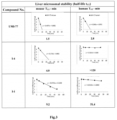
- “Metabolic stability” as used herein includes, but is not limited to, liver microsome stability and plasma stability.
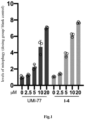
- compound I-4 induces mitophagy more strongly than UMI-77.
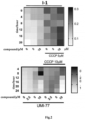
- the human embryonic kidney transformed cell HEK293T-mtkeima system is treated with 5uM or 10uM CCCP to induce mitochondrial damage, then adding compound I-1 compared with no CCCP treatment and only adding the test compound, the color of the block is darker, indicating that the compound I-1 is more likely to induce autophagy in damaged mitochondria.
- the color blocks of damaged mitochondria and undamaged mitochondria are both darker, indicating that UMI-77 is unable to selectively induce autophagy in damaged mitochondria.
- Table 1 Compound number Ability to induce mitophagy Compound number Ability to induce mitophagy I-1 +++ I-19 +++ I-2 ++ I-20 ++ I-3 ++ I-21 +++ I-4 +++ I-22 ++ I-5 +++ UMI-77 + I-6 +++ I-8 ++ I-9 ++ I-10 ++ I-11 ++ I-12 +++ I-13 ++ I-14 ++ I-17 +++ I-18 ++ "+++” indicates that the compound has a strong ability to induce mitophagy (number of cells in which mitophagy occurs / number of total cells > 0.30 ), and "++" indicates that the compound has a moderate ability to induce mitophagy ( number of cells in which mitophagy occurs / number of total cells is in the range of 0.2 ⁇ 0.3 ), "+” indicates that the compound has a weak ability to induce mitophagy (number of cells in which mitophagy occurs / number of total cells is in the range of 0.1
- the HEK293T-mtkeima cells used in the experiments are HEK293T-mtkeima cells obtained according to the method mentioned in the literature [ Cen, X. et al. Nat Commun 11, 5731 (2020 ). ], by using lentiviral packaging technology, and stably expressing mtkeima protein in HEK293T cells.
- the CCCP used in the experiments is purchased from TargetMol (Item No. T7081).
- Ketanserin as the reference compound.
- the specific method is as follows: Preparing 0.1M K 3 PO 4 (pH 7.4) buffer and 3 ⁇ NADPH stock solution (6mM, 5mg/mL), and preheating in a 37°C water bath; preparing of test compound and control compound spiking solution: adding 5 ⁇ L compound stock solution (10 nM) into 95 ⁇ L acetonitrile; preparing of 1.5 ⁇ M spiking solution in microsomes (0.75 mg/mL): adding 1.5 ⁇ L spiking solution and 18.75 ⁇ L liver microsomes solution (20 mg/mL) into 479.75 ⁇ L K 3 PO 4 buffer; taking 30 ⁇ L spiking solution in microsomes to the multi-well plate and incubating at 37°C for 5 minutes; adding 15 ⁇ L NADPH stock solution into each well to start the reaction, and timing; respectively at 0min, 5min, 15min, 30min and 45min, adding 150 ⁇ L of IS-containing acetonitrile solution
- mice and human liver microsomes used in the experiments are purchased from Xenotech .
Landscapes
- Chemical & Material Sciences (AREA)
- Organic Chemistry (AREA)
- Health & Medical Sciences (AREA)
- Life Sciences & Earth Sciences (AREA)
- Pharmacology & Pharmacy (AREA)
- Animal Behavior & Ethology (AREA)
- General Health & Medical Sciences (AREA)
- Public Health (AREA)
- Veterinary Medicine (AREA)
- Medicinal Chemistry (AREA)
- Epidemiology (AREA)
- Emergency Medicine (AREA)
- Engineering & Computer Science (AREA)
- Bioinformatics & Cheminformatics (AREA)
- Chemical Kinetics & Catalysis (AREA)
- General Chemical & Material Sciences (AREA)
- Nuclear Medicine, Radiotherapy & Molecular Imaging (AREA)
- Pharmaceuticals Containing Other Organic And Inorganic Compounds (AREA)
- Acyclic And Carbocyclic Compounds In Medicinal Compositions (AREA)
- Organic Low-Molecular-Weight Compounds And Preparation Thereof (AREA)
Applications Claiming Priority (2)
| Application Number | Priority Date | Filing Date | Title |
|---|---|---|---|
| CN202111106864.8A CN115894317B (zh) | 2021-09-22 | 2021-09-22 | 一类具有萘硫酚醚结构的小分子化合物及其应用 |
| PCT/CN2022/119826 WO2023045910A1 (zh) | 2021-09-22 | 2022-09-20 | 一类具有萘硫酚醚结构的小分子化合物及其应用 |
Publications (2)
| Publication Number | Publication Date |
|---|---|
| EP4406937A1 true EP4406937A1 (de) | 2024-07-31 |
| EP4406937A4 EP4406937A4 (de) | 2025-09-10 |
Family
ID=85720066
Family Applications (1)
| Application Number | Title | Priority Date | Filing Date |
|---|---|---|---|
| EP22871956.3A Pending EP4406937A4 (de) | 2021-09-22 | 2022-09-20 | Kleinmolekülige verbindung mit naphtholetherstruktur und verwendung davon |
Country Status (6)
| Country | Link |
|---|---|
| US (1) | US20240400500A1 (de) |
| EP (1) | EP4406937A4 (de) |
| JP (1) | JP2024535879A (de) |
| KR (1) | KR20240069779A (de) |
| CN (1) | CN115894317B (de) |
| WO (1) | WO2023045910A1 (de) |
Families Citing this family (2)
| Publication number | Priority date | Publication date | Assignee | Title |
|---|---|---|---|---|
| WO2024192873A1 (zh) * | 2023-03-20 | 2024-09-26 | 杭州天玑济世生物科技有限公司 | 一类具有萘胺结构的小分子化合物的用途 |
| CN119792262A (zh) * | 2023-10-10 | 2025-04-11 | 杭州天玑济世生物科技有限公司 | 包含线粒体自噬诱导剂的药物组合物 |
Family Cites Families (10)
| Publication number | Priority date | Publication date | Assignee | Title |
|---|---|---|---|---|
| US8673910B2 (en) * | 2008-06-30 | 2014-03-18 | H. Lee Moffitt Cancer Center And Research Institute | Proteasome inhibitors for selectively inducing apoptosis in cancer cells |
| WO2010102286A2 (en) * | 2009-03-06 | 2010-09-10 | H. Lee Moffitt Cancer Center And Research Institute, Inc. | Proteasome inhibitors having chymotrypsin-like activity |
| CN101836971A (zh) * | 2010-05-21 | 2010-09-22 | 徐学军 | 一种化合物在制备治疗癌症或牛皮癣药物方面的应用 |
| WO2013052943A2 (en) * | 2011-10-06 | 2013-04-11 | The Regents Of The University Of Michgian | Small molecule inhibitors of mcl-1 and uses thereof |
| CN102766103B (zh) * | 2012-07-24 | 2014-12-10 | 齐鲁制药有限公司 | 2-硫代-4-胺基-1-萘酚衍生物、其制备方法和用途 |
| CN104736202B (zh) * | 2012-08-22 | 2021-09-07 | 康奈尔大学 | 用于抑制肌成束蛋白的方法 |
| EP2757157A1 (de) * | 2013-01-17 | 2014-07-23 | Ecole Polytechnique Federale de Lausanne (EPFL) | Modulation von Mitophagie und Verwendung davon |
| ES2763527T3 (es) * | 2014-04-04 | 2020-05-29 | Univ Michigan Regents | Inhibidores de molécula pequeña de mcl-1 y usos de los mismos |
| CN111904958B (zh) * | 2019-05-09 | 2022-09-13 | 浙江大学 | Umi-77作为线粒体自噬诱导剂在制备治疗炎症及神经退行性疾病药物中的应用 |
| CN115023236A (zh) * | 2019-12-03 | 2022-09-06 | 贝勒医学院 | 用于胰岛素抵抗的使用方法的治疗性化合物 |
-
2021
- 2021-09-22 CN CN202111106864.8A patent/CN115894317B/zh active Active
-
2022
- 2022-09-20 EP EP22871956.3A patent/EP4406937A4/de active Pending
- 2022-09-20 JP JP2024517404A patent/JP2024535879A/ja active Pending
- 2022-09-20 KR KR1020247013180A patent/KR20240069779A/ko active Pending
- 2022-09-20 US US18/693,816 patent/US20240400500A1/en active Pending
- 2022-09-20 WO PCT/CN2022/119826 patent/WO2023045910A1/zh not_active Ceased
Also Published As
| Publication number | Publication date |
|---|---|
| CN115894317A (zh) | 2023-04-04 |
| EP4406937A4 (de) | 2025-09-10 |
| JP2024535879A (ja) | 2024-10-02 |
| WO2023045910A1 (zh) | 2023-03-30 |
| KR20240069779A (ko) | 2024-05-20 |
| US20240400500A1 (en) | 2024-12-05 |
| CN115894317B (zh) | 2024-09-03 |
Similar Documents
| Publication | Publication Date | Title |
|---|---|---|
| EP4406943A1 (de) | Kleinmolekülige verbindungen mit naphthylaminstruktur und anwendung davon | |
| CN105636953B (zh) | 1,4‑二取代的哒嗪衍生物及其用于治疗与smn缺乏相关的病症的用途 | |
| JP5972964B2 (ja) | 抗腫瘍剤としての三環式および四環式ピラゾロ[3,4−b]ピリジン化合物 | |
| TWI753918B (zh) | 作為jak抑制劑的吡咯並嘧啶化合物的結晶 | |
| TWI828712B (zh) | 作為trk抑制劑的雜環化合物 | |
| CN107312009B (zh) | 喹啉类化合物、其制备方法、中间体、药物组合物和应用 | |
| EP4406937A1 (de) | Kleinmolekülige verbindung mit naphtholetherstruktur und verwendung davon | |
| US20240182470A1 (en) | Krasg12c mutant protein inhibitor, prearation and use thereof | |
| CN105646389A (zh) | 一种作为吲哚胺-2,3-双加氧酶抑制剂的氨基磺酸脂及其制备方法和用途 | |
| JP2023539275A (ja) | 新規なrho関連タンパク質キナーゼ阻害剤の調製方法およびその調製方法における中間体 | |
| CN117088869A (zh) | 一种3cl蛋白酶抑制剂及其制备方法和应用 | |
| CN115073451A (zh) | Krasg12d突变蛋白抑制剂的制备及其应用 | |
| CN117177960A (zh) | 作为tyk2假激酶结构域抑制剂的杂环化合物及合成方法和用途 | |
| CN117624169A (zh) | 一类5-ht2a受体激动剂及其制备方法和应用 | |
| HK40091493A (zh) | 一类具有萘硫酚醚结构的小分子化合物及其应用 | |
| HK40091493B (zh) | 一类具有萘硫酚醚结构的小分子化合物及其应用 | |
| CN114075218A (zh) | Usp7抑制剂 | |
| HK40091491A (zh) | 一类具有萘胺结构的小分子化合物及其应用 | |
| HK40091491B (zh) | 一类具有萘胺结构的小分子化合物及其应用 | |
| CN116535424B (zh) | 作为malt1抑制剂的三并环化合物及其药物组合物和应用 | |
| CN113527305B (zh) | 喹啉类TGF-β1抑制剂的可药用盐及其制备方法 | |
| WO2025247067A1 (zh) | Kif18A抑制剂 | |
| KR20250141844A (ko) | 다환계 갑상선 호르몬 β수용체 아고니스트 및 그 사용 | |
| CN121511080A (zh) | 一类芳香酰胺类衍生物及其用途 | |
| HK1185079A1 (zh) | 新型二环式化合物或其盐 |
Legal Events
| Date | Code | Title | Description |
|---|---|---|---|
| STAA | Information on the status of an ep patent application or granted ep patent |
Free format text: STATUS: THE INTERNATIONAL PUBLICATION HAS BEEN MADE |
|
| PUAI | Public reference made under article 153(3) epc to a published international application that has entered the european phase |
Free format text: ORIGINAL CODE: 0009012 |
|
| STAA | Information on the status of an ep patent application or granted ep patent |
Free format text: STATUS: REQUEST FOR EXAMINATION WAS MADE |
|
| 17P | Request for examination filed |
Effective date: 20240328 |
|
| AK | Designated contracting states |
Kind code of ref document: A1 Designated state(s): AL AT BE BG CH CY CZ DE DK EE ES FI FR GB GR HR HU IE IS IT LI LT LU LV MC MK MT NL NO PL PT RO RS SE SI SK SM TR |
|
| DAV | Request for validation of the european patent (deleted) | ||
| DAX | Request for extension of the european patent (deleted) | ||
| REG | Reference to a national code |
Ref country code: DE Ref legal event code: R079 Free format text: PREVIOUS MAIN CLASS: C07C0323520000 Ipc: C07D0305080000 |
|
| A4 | Supplementary search report drawn up and despatched |
Effective date: 20250812 |
|
| RIC1 | Information provided on ipc code assigned before grant |
Ipc: C07D 305/08 20060101AFI20250806BHEP Ipc: C07C 311/21 20060101ALI20250806BHEP Ipc: A61K 31/38 20060101ALI20250806BHEP Ipc: A61P 31/04 20060101ALI20250806BHEP Ipc: A61P 9/10 20060101ALI20250806BHEP |