EP4403567A1 - Neues protein und pharmazeutische zusammensetzung damit zur prävention oder behandlung von krebs - Google Patents
Neues protein und pharmazeutische zusammensetzung damit zur prävention oder behandlung von krebs Download PDFInfo
- Publication number
- EP4403567A1 EP4403567A1 EP22870373.2A EP22870373A EP4403567A1 EP 4403567 A1 EP4403567 A1 EP 4403567A1 EP 22870373 A EP22870373 A EP 22870373A EP 4403567 A1 EP4403567 A1 EP 4403567A1
- Authority
- EP
- European Patent Office
- Prior art keywords
- cancer
- peptide
- ferritin
- cell
- anticancer drug
- Prior art date
- Legal status (The legal status is an assumption and is not a legal conclusion. Google has not performed a legal analysis and makes no representation as to the accuracy of the status listed.)
- Withdrawn
Links
Images



















Classifications
-
- A—HUMAN NECESSITIES
- A61—MEDICAL OR VETERINARY SCIENCE; HYGIENE
- A61K—PREPARATIONS FOR MEDICAL, DENTAL OR TOILETRY PURPOSES
- A61K47/00—Medicinal preparations characterised by the non-active ingredients used, e.g. carriers or inert additives; Targeting or modifying agents chemically bound to the active ingredient
- A61K47/50—Medicinal preparations characterised by the non-active ingredients used, e.g. carriers or inert additives; Targeting or modifying agents chemically bound to the active ingredient the non-active ingredient being chemically bound to the active ingredient, e.g. polymer-drug conjugates
- A61K47/51—Medicinal preparations characterised by the non-active ingredients used, e.g. carriers or inert additives; Targeting or modifying agents chemically bound to the active ingredient the non-active ingredient being chemically bound to the active ingredient, e.g. polymer-drug conjugates the non-active ingredient being a modifying agent
- A61K47/62—Medicinal preparations characterised by the non-active ingredients used, e.g. carriers or inert additives; Targeting or modifying agents chemically bound to the active ingredient the non-active ingredient being chemically bound to the active ingredient, e.g. polymer-drug conjugates the non-active ingredient being a modifying agent the modifying agent being a protein, peptide or polyamino acid
- A61K47/64—Drug-peptide, drug-protein or drug-polyamino acid conjugates, i.e. the modifying agent being a peptide, protein or polyamino acid which is covalently bonded or complexed to a therapeutically active agent
-
- A—HUMAN NECESSITIES
- A61—MEDICAL OR VETERINARY SCIENCE; HYGIENE
- A61K—PREPARATIONS FOR MEDICAL, DENTAL OR TOILETRY PURPOSES
- A61K31/00—Medicinal preparations containing organic active ingredients
- A61K31/28—Compounds containing heavy metals
- A61K31/295—Iron group metal compounds
-
- A—HUMAN NECESSITIES
- A61—MEDICAL OR VETERINARY SCIENCE; HYGIENE
- A61K—PREPARATIONS FOR MEDICAL, DENTAL OR TOILETRY PURPOSES
- A61K31/00—Medicinal preparations containing organic active ingredients
- A61K31/33—Heterocyclic compounds
- A61K31/395—Heterocyclic compounds having nitrogen as a ring hetero atom, e.g. guanethidine or rifamycins
- A61K31/40—Heterocyclic compounds having nitrogen as a ring hetero atom, e.g. guanethidine or rifamycins having five-membered rings with one nitrogen as the only ring hetero atom, e.g. sulpiride, succinimide, tolmetin, buflomedil
- A61K31/407—Heterocyclic compounds having nitrogen as a ring hetero atom, e.g. guanethidine or rifamycins having five-membered rings with one nitrogen as the only ring hetero atom, e.g. sulpiride, succinimide, tolmetin, buflomedil condensed with other heterocyclic ring systems, e.g. ketorolac, physostigmine
-
- A—HUMAN NECESSITIES
- A61—MEDICAL OR VETERINARY SCIENCE; HYGIENE
- A61K—PREPARATIONS FOR MEDICAL, DENTAL OR TOILETRY PURPOSES
- A61K31/00—Medicinal preparations containing organic active ingredients
- A61K31/70—Carbohydrates; Sugars; Derivatives thereof
- A61K31/7028—Compounds having saccharide radicals attached to non-saccharide compounds by glycosidic linkages
- A61K31/7034—Compounds having saccharide radicals attached to non-saccharide compounds by glycosidic linkages attached to a carbocyclic compound, e.g. phloridzin
- A61K31/704—Compounds having saccharide radicals attached to non-saccharide compounds by glycosidic linkages attached to a carbocyclic compound, e.g. phloridzin attached to a condensed carbocyclic ring system, e.g. sennosides, thiocolchicosides, escin, daunorubicin
-
- A—HUMAN NECESSITIES
- A61—MEDICAL OR VETERINARY SCIENCE; HYGIENE
- A61K—PREPARATIONS FOR MEDICAL, DENTAL OR TOILETRY PURPOSES
- A61K31/00—Medicinal preparations containing organic active ingredients
- A61K31/70—Carbohydrates; Sugars; Derivatives thereof
- A61K31/7042—Compounds having saccharide radicals and heterocyclic rings
- A61K31/7052—Compounds having saccharide radicals and heterocyclic rings having nitrogen as a ring hetero atom, e.g. nucleosides, nucleotides
- A61K31/706—Compounds having saccharide radicals and heterocyclic rings having nitrogen as a ring hetero atom, e.g. nucleosides, nucleotides containing six-membered rings with nitrogen as a ring hetero atom
- A61K31/7064—Compounds having saccharide radicals and heterocyclic rings having nitrogen as a ring hetero atom, e.g. nucleosides, nucleotides containing six-membered rings with nitrogen as a ring hetero atom containing condensed or non-condensed pyrimidines
- A61K31/7068—Compounds having saccharide radicals and heterocyclic rings having nitrogen as a ring hetero atom, e.g. nucleosides, nucleotides containing six-membered rings with nitrogen as a ring hetero atom containing condensed or non-condensed pyrimidines having oxo groups directly attached to the pyrimidine ring, e.g. cytidine, cytidylic acid
-
- A—HUMAN NECESSITIES
- A61—MEDICAL OR VETERINARY SCIENCE; HYGIENE
- A61K—PREPARATIONS FOR MEDICAL, DENTAL OR TOILETRY PURPOSES
- A61K47/00—Medicinal preparations characterised by the non-active ingredients used, e.g. carriers or inert additives; Targeting or modifying agents chemically bound to the active ingredient
- A61K47/50—Medicinal preparations characterised by the non-active ingredients used, e.g. carriers or inert additives; Targeting or modifying agents chemically bound to the active ingredient the non-active ingredient being chemically bound to the active ingredient, e.g. polymer-drug conjugates
- A61K47/51—Medicinal preparations characterised by the non-active ingredients used, e.g. carriers or inert additives; Targeting or modifying agents chemically bound to the active ingredient the non-active ingredient being chemically bound to the active ingredient, e.g. polymer-drug conjugates the non-active ingredient being a modifying agent
- A61K47/62—Medicinal preparations characterised by the non-active ingredients used, e.g. carriers or inert additives; Targeting or modifying agents chemically bound to the active ingredient the non-active ingredient being chemically bound to the active ingredient, e.g. polymer-drug conjugates the non-active ingredient being a modifying agent the modifying agent being a protein, peptide or polyamino acid
- A61K47/64—Drug-peptide, drug-protein or drug-polyamino acid conjugates, i.e. the modifying agent being a peptide, protein or polyamino acid which is covalently bonded or complexed to a therapeutically active agent
- A61K47/644—Transferrin, e.g. a lactoferrin or ovotransferrin
-
- A—HUMAN NECESSITIES
- A61—MEDICAL OR VETERINARY SCIENCE; HYGIENE
- A61K—PREPARATIONS FOR MEDICAL, DENTAL OR TOILETRY PURPOSES
- A61K47/00—Medicinal preparations characterised by the non-active ingredients used, e.g. carriers or inert additives; Targeting or modifying agents chemically bound to the active ingredient
- A61K47/50—Medicinal preparations characterised by the non-active ingredients used, e.g. carriers or inert additives; Targeting or modifying agents chemically bound to the active ingredient the non-active ingredient being chemically bound to the active ingredient, e.g. polymer-drug conjugates
- A61K47/69—Medicinal preparations characterised by the non-active ingredients used, e.g. carriers or inert additives; Targeting or modifying agents chemically bound to the active ingredient the non-active ingredient being chemically bound to the active ingredient, e.g. polymer-drug conjugates the conjugate being characterised by physical or galenical forms, e.g. emulsion, particle, inclusion complex, stent or kit
- A61K47/6921—Medicinal preparations characterised by the non-active ingredients used, e.g. carriers or inert additives; Targeting or modifying agents chemically bound to the active ingredient the non-active ingredient being chemically bound to the active ingredient, e.g. polymer-drug conjugates the conjugate being characterised by physical or galenical forms, e.g. emulsion, particle, inclusion complex, stent or kit the form being a particulate, a powder, an adsorbate, a bead or a sphere
- A61K47/6927—Medicinal preparations characterised by the non-active ingredients used, e.g. carriers or inert additives; Targeting or modifying agents chemically bound to the active ingredient the non-active ingredient being chemically bound to the active ingredient, e.g. polymer-drug conjugates the conjugate being characterised by physical or galenical forms, e.g. emulsion, particle, inclusion complex, stent or kit the form being a particulate, a powder, an adsorbate, a bead or a sphere the form being a solid microparticle having no hollow or gas-filled cores
- A61K47/6929—Medicinal preparations characterised by the non-active ingredients used, e.g. carriers or inert additives; Targeting or modifying agents chemically bound to the active ingredient the non-active ingredient being chemically bound to the active ingredient, e.g. polymer-drug conjugates the conjugate being characterised by physical or galenical forms, e.g. emulsion, particle, inclusion complex, stent or kit the form being a particulate, a powder, an adsorbate, a bead or a sphere the form being a solid microparticle having no hollow or gas-filled cores the form being a nanoparticle, e.g. an immuno-nanoparticle
-
- A—HUMAN NECESSITIES
- A61—MEDICAL OR VETERINARY SCIENCE; HYGIENE
- A61K—PREPARATIONS FOR MEDICAL, DENTAL OR TOILETRY PURPOSES
- A61K47/00—Medicinal preparations characterised by the non-active ingredients used, e.g. carriers or inert additives; Targeting or modifying agents chemically bound to the active ingredient
- A61K47/50—Medicinal preparations characterised by the non-active ingredients used, e.g. carriers or inert additives; Targeting or modifying agents chemically bound to the active ingredient the non-active ingredient being chemically bound to the active ingredient, e.g. polymer-drug conjugates
- A61K47/69—Medicinal preparations characterised by the non-active ingredients used, e.g. carriers or inert additives; Targeting or modifying agents chemically bound to the active ingredient the non-active ingredient being chemically bound to the active ingredient, e.g. polymer-drug conjugates the conjugate being characterised by physical or galenical forms, e.g. emulsion, particle, inclusion complex, stent or kit
- A61K47/6921—Medicinal preparations characterised by the non-active ingredients used, e.g. carriers or inert additives; Targeting or modifying agents chemically bound to the active ingredient the non-active ingredient being chemically bound to the active ingredient, e.g. polymer-drug conjugates the conjugate being characterised by physical or galenical forms, e.g. emulsion, particle, inclusion complex, stent or kit the form being a particulate, a powder, an adsorbate, a bead or a sphere
- A61K47/6927—Medicinal preparations characterised by the non-active ingredients used, e.g. carriers or inert additives; Targeting or modifying agents chemically bound to the active ingredient the non-active ingredient being chemically bound to the active ingredient, e.g. polymer-drug conjugates the conjugate being characterised by physical or galenical forms, e.g. emulsion, particle, inclusion complex, stent or kit the form being a particulate, a powder, an adsorbate, a bead or a sphere the form being a solid microparticle having no hollow or gas-filled cores
- A61K47/6929—Medicinal preparations characterised by the non-active ingredients used, e.g. carriers or inert additives; Targeting or modifying agents chemically bound to the active ingredient the non-active ingredient being chemically bound to the active ingredient, e.g. polymer-drug conjugates the conjugate being characterised by physical or galenical forms, e.g. emulsion, particle, inclusion complex, stent or kit the form being a particulate, a powder, an adsorbate, a bead or a sphere the form being a solid microparticle having no hollow or gas-filled cores the form being a nanoparticle, e.g. an immuno-nanoparticle
- A61K47/6931—Medicinal preparations characterised by the non-active ingredients used, e.g. carriers or inert additives; Targeting or modifying agents chemically bound to the active ingredient the non-active ingredient being chemically bound to the active ingredient, e.g. polymer-drug conjugates the conjugate being characterised by physical or galenical forms, e.g. emulsion, particle, inclusion complex, stent or kit the form being a particulate, a powder, an adsorbate, a bead or a sphere the form being a solid microparticle having no hollow or gas-filled cores the form being a nanoparticle, e.g. an immuno-nanoparticle the material constituting the nanoparticle being a polymer
- A61K47/6935—Medicinal preparations characterised by the non-active ingredients used, e.g. carriers or inert additives; Targeting or modifying agents chemically bound to the active ingredient the non-active ingredient being chemically bound to the active ingredient, e.g. polymer-drug conjugates the conjugate being characterised by physical or galenical forms, e.g. emulsion, particle, inclusion complex, stent or kit the form being a particulate, a powder, an adsorbate, a bead or a sphere the form being a solid microparticle having no hollow or gas-filled cores the form being a nanoparticle, e.g. an immuno-nanoparticle the material constituting the nanoparticle being a polymer the polymer being obtained otherwise than by reactions involving carbon to carbon unsaturated bonds, e.g. polyesters, polyamides or polyglycerol
-
- A—HUMAN NECESSITIES
- A61—MEDICAL OR VETERINARY SCIENCE; HYGIENE
- A61K—PREPARATIONS FOR MEDICAL, DENTAL OR TOILETRY PURPOSES
- A61K9/00—Medicinal preparations characterised by special physical form
- A61K9/0012—Galenical forms characterised by the site of application
- A61K9/0019—Injectable compositions; Intramuscular, intravenous, arterial, subcutaneous administration; Compositions to be administered through the skin in an invasive manner
-
- A—HUMAN NECESSITIES
- A61—MEDICAL OR VETERINARY SCIENCE; HYGIENE
- A61P—SPECIFIC THERAPEUTIC ACTIVITY OF CHEMICAL COMPOUNDS OR MEDICINAL PREPARATIONS
- A61P35/00—Antineoplastic agents
-
- C—CHEMISTRY; METALLURGY
- C07—ORGANIC CHEMISTRY
- C07K—PEPTIDES
- C07K14/00—Peptides having more than 20 amino acids; Gastrins; Somatostatins; Melanotropins; Derivatives thereof
- C07K14/435—Peptides having more than 20 amino acids; Gastrins; Somatostatins; Melanotropins; Derivatives thereof from animals; from humans
- C07K14/46—Peptides having more than 20 amino acids; Gastrins; Somatostatins; Melanotropins; Derivatives thereof from animals; from humans from vertebrates
- C07K14/47—Peptides having more than 20 amino acids; Gastrins; Somatostatins; Melanotropins; Derivatives thereof from animals; from humans from vertebrates from mammals
-
- A—HUMAN NECESSITIES
- A61—MEDICAL OR VETERINARY SCIENCE; HYGIENE
- A61K—PREPARATIONS FOR MEDICAL, DENTAL OR TOILETRY PURPOSES
- A61K38/00—Medicinal preparations containing peptides
-
- C—CHEMISTRY; METALLURGY
- C07—ORGANIC CHEMISTRY
- C07K—PEPTIDES
- C07K2319/00—Fusion polypeptide
- C07K2319/01—Fusion polypeptide containing a localisation/targetting motif
-
- C—CHEMISTRY; METALLURGY
- C07—ORGANIC CHEMISTRY
- C07K—PEPTIDES
- C07K2319/00—Fusion polypeptide
- C07K2319/20—Fusion polypeptide containing a tag with affinity for a non-protein ligand
- C07K2319/21—Fusion polypeptide containing a tag with affinity for a non-protein ligand containing a His-tag
-
- C—CHEMISTRY; METALLURGY
- C07—ORGANIC CHEMISTRY
- C07K—PEPTIDES
- C07K2319/00—Fusion polypeptide
- C07K2319/33—Fusion polypeptide fusions for targeting to specific cell types, e.g. tissue specific targeting, targeting of a bacterial subspecies
-
- C—CHEMISTRY; METALLURGY
- C07—ORGANIC CHEMISTRY
- C07K—PEPTIDES
- C07K2319/00—Fusion polypeptide
- C07K2319/50—Fusion polypeptide containing protease site
-
- C—CHEMISTRY; METALLURGY
- C07—ORGANIC CHEMISTRY
- C07K—PEPTIDES
- C07K2319/00—Fusion polypeptide
- C07K2319/70—Fusion polypeptide containing domain for protein-protein interaction
- C07K2319/74—Fusion polypeptide containing domain for protein-protein interaction containing a fusion for binding to a cell surface receptor
Definitions
- the present invention relates to a novel protein and a pharmaceutical composition for preventing or treating a cancer comprising the same.
- Chemotherapy is a systemic treatment with anti-cancer drugs and is one of the three main cancer treatment methods, along with surgery and radiation therapy.
- Chemotherapeutic anticancer drugs that are administered to the patients circulate throughout the body through blood vessels, preventing the growth of cancer cells or killing the cancer cells.
- Traditional anticancer drugs have non-specific cytotoxicity, meaning they attack rapidly proliferating cells, leading to both normal and cancer cell death.
- Chemotherapy is still widely used to treat most cancers, and there are many different types of chemotherapy.
- the duration and number of treatments for chemotherapy depends on the type of cancer, the type of anticancer drug, the response to treatment, and the severity of side effects.
- anticancer drugs affect the DNA or microtubules that are normally present in the cell, so while they have some therapeutic effect on cancer cells, they also have adverse effects on normal cells, and the side effects are usually severe enough to require an average rest period of two to three weeks to allow the damaged normal cells to recover.
- a peptide targeting a particular molecule e.g., epidermal growth factor receptor (EGFR)
- EGFR epidermal growth factor receptor
- a protein nanoparticle a protein nanoparticle
- the objective of the present invention is to combine protein nanoparticles that specifically target cancer cells and have a selective release function of chemotherapeutic anticancer drugs to specifically induce cancer cell death and simultaneously reduce cytotoxicity to normal cells, thereby minimizing side effects caused by conventional chemotherapeutic anticancer drugs.
- a ferritin fusion protein of the present invention may comprise a cancer-targeting peptide and a peptide to be cleaved in a cancer cell linked to the outer surface of the ferritin, and an anticancer drug linked to the peptide to be cleaved in the cancer cell, thereby improving anticancer efficacy, and minimizing side effects.
- the present invention relates to a ferritin fusion protein in which a cancer-targeting peptide and a peptide to be cleaved in a cancer cell are linked to the outer surface thereof.
- the ferritin is not limited in origin and may be derived from various animals including human, or microorganisms.
- Human ferritin is composed of heavy chains (21 kDa) and light chains (19 kDa), and the monomers constituting the ferritin have a characteristic of forming a spherical nanoparticle with self-assembly.
- the ferritin may form a self-assembly of 24 monomers with a spherical three-dimensional structure.
- Human ferritin has an outer diameter of about 12 nm and an inner diameter of about 8 nm.
- the structure of the ferritin monomer is a form in which five ⁇ -helix structures, i.e., A helix, B helix, C helix, D helix and E helix, are sequentially linked, and includes an atypical polypeptide, called a loop, connecting the polypeptides of each ⁇ -helix structure.
- a loop is a region that does not structurally break even if a peptide or small protein antigen is inserted into the ferritin.
- the peptide-ferritin fusion protein monomer in which the peptide is located in the ferritin monomer may be prepared by fusing the peptide using cloning.
- the loop connecting helix A and helix B is called the A-B loop
- the loop connecting helix B and helix C is called the B-C loop
- the loop connecting helix C and helix D is called the C-D loop
- the loop connecting helix D and helix E is called the D-E loop.
- the ferritin may be composed of ferritin heavy chains, and more specifically, human ferritin heavy chains.
- Human ferritin heavy chain may be a protein represented by an amino acid sequence of SEQ ID NO: 3 derived from human, and the term “ferritin” may be used interchangeably herein with "human ferritin heavy chain” or "huHF".
- the ferritin is made up of several monomers that self-assemble to form an organized structure or pattern.
- a ferritin fusion protein of the present invention may be a nanoscale protein.
- 24 ferritin monomers may self-assemble to form the ferritin.
- the ferritin fusion protein of the present invention may be spherical. If it is spherical, it may have the diameter of 8 to 50 nm. More specifically, the diameter of the ferritin fusion protein may be 8 nm to 50 nm, 8 nm to 45 nm, 8 nm to 40 nm, 8 nm to 35 nm, 8 nm to 30 nm, 8 nm to 25 nm, 8 nm to 20 nm, or 8 nm to 15 nm.
- the ferritin fusion protein of the present invention is obtained by linking a cancer-targeting peptide and a peptide to be cleaved in a cancer cell on its outer surface.
- the fusion position is not particularly limited as long as it does not interfere with the self-assembly of the ferritin monomers and may be exposed to the surface of the ferritin monomer.
- the peptides may be linked between adjacent ⁇ -helices, at the N-terminus, at the C-terminus, in the A-B loop, in the B-C loop, in the C-D loop, in the D-E loop, between the N-terminus and the A helix, between the E helix and the C-terminus, or inside the helices, etc.
- ferritin monomer Although there is an inwardly concave portion in the ferritin monomer, it may protrude outward by the binding of the peptide, causing the peptide to be exposed to the outside.
- the peptides may be linked to at least one of the sites between adjacent ⁇ -helices.
- the peptide also may be linked to the N-terminus or C-terminus of the ferritin monomer.
- the peptide also may be linked between the N-terminus and the A-helix or between the E-helix and the C-terminus of the ferritin monomer.
- the peptide also may be linked to the inside of at least one of the helices of the ferritin monomer.
- cancer-targeting peptide refers to a peptide capable of specifically binding to the cancer cell or cancer tissue both in vivo and in vitro, and it leads the protein of the present invention to the cancer cell to be treated.
- the cancer-targeting peptide may be appropriately selected by a person skilled in the art.
- the cancer-targeting peptide may be a peptide that induces binding to a receptor that is overexpressed in a target cancer cell.
- the cancer-targeting peptide has SEQ ID NO: 2, which can target cancer by binding to an epidermal growth factor receptor (EGFR) that is overexpressed in the cancer cell.
- EGFR epidermal growth factor receptor
- the cancer-targeting peptide may be linked anywhere on the ferritin monomer if it is exposed on the outer surface of the ferritin.
- the cancer-targeting peptide may be linked to a location that does not interfere with the self-assembly of the ferritin monomers.
- peptide to be cleaved in a cancer cell refers to a peptide comprising a cleavage site that may be cleaved in the cancer cell.
- the peptide to be cleaved in the cancer cell allows the therapeutic effect to be specific to the cancer cell.
- the cleavage method is not limited, and the peptide may be appropriately selected by the person skilled in the art.
- the peptide to be cleaved in the cancer cell may be a peptide to be cleaved by an enzyme specifically overexpressed in the cancer cell but is not limited thereto.
- the peptide to be cleaved in the cancer cell may be a peptide to be cleaved in the cancer cell by cathepsin E (CTSE), which is an enzyme overexpressed in the cancer cell.
- CSE cathepsin E
- the peptide to be cleaved in the cancer cell may be a peptide consisting of SEQ ID NO: 1.
- ferritin fusion protein of the present invention may be further linked with a peptide configured for loading the anticancer drug.
- peptide configured for loading an anticancer drug refers to a peptide utilized to load the anticancer drug to the ferritin fusion protein of the present invention.
- the peptide may be linked to the peptide to be cleaved in the cancer cell.
- the bond between the peptide and the anticancer drug may be by an ionic bond, a covalent bond, a coordination bond, a hydrogen bond, an electrostatic attraction, a van der Waals force, a hydrophobic bond, or the like, but is not limited thereto.
- the bond between the peptide and the anticancer drug may be the covalent bond.
- the person skilled in the art selects the anticancer drug suitable for a treatment
- the person may appropriately select the peptide configured for loading the anticancer drug and link it to the ferritin.
- the peptide configured for loading the anticancer drug may be a peptide having a functional group capable of loading the selected anticancer drug.
- the peptide configured for loading the anticancer drug may have a plurality of carboxy groups to load the anticancer drug.
- the anticancer drug may be bound to the peptide by an EDC-NHS binding reaction (EDC(1-ethyl-3-[3-dimethylaminopropyl] carbodiimide)-NHS(N-hydroxysuccinimide)).
- the peptide having the functional group capable of binding to the anticancer drug, the peptide modified to have the functional group, or the anticancer drug modified to have the functional group may be used to load the anticancer drug on the peptide.
- the peptide configured for loading the anticancer drug may comprise an amino acid sequence, DE.
- the peptide configured for loading the anticancer drug may comprise the amino acid sequence, DE, repeated a plurality of times to load the plurality of anticancer drugs.
- the amino acid sequence, DE may be repeated 2 to 10 times, 2 to 8 times, 2 to 6 times, 2 to 5 times, or 2 to 4 times.
- the peptide configured for loading the plurality of anticancer drugs may have the amino acid sequence, DE, repeated 2 to 4 times.
- anticancer drug refers to a therapeutic agent including a chemotherapeutic agent used to treat or prevent a hyperproliferative disease, such as a cancer.
- the anticancer drug may be directly linked to the peptide to be cleaved in the cancer cell or may be indirectly linked to the peptide to be cleaved in the cancer cell via the peptide configured for loading the anticancer drug. As described above, the anticancer drug may be loaded by ionic bonding, covalent bonding, or the like.
- the anticancer drug may be a compound that has anticancer activity.
- the anticancer drug may be selected from the group consisting of gemcitabine, mitomycin C, doxorubicin, methotrexate, bleomycin, melphalan, chlorambucil, dacarbazine, cytarabine, fludarabine, pemetrexed, dactinomycin, daunorubicin, idarubicin, cladribine, hydroxycarbamide, thioguanine, bendamustine, temozolomide, azacitidine, clofarabine, decitabine, nelarabine, pralatrexate, epirubicin, eribulin, bexarotene, buserelin, crizotinib, dabrafenib, degarelix, goserelin, ibrutinib, lanreotide, lenvatinib, leuprorelin, mifamurtide, niraparib, pazo
- the protein of the present invention may further comprise a linker.
- the linker may include, for example, glycine. Specifically, the linker may be G3SG3TG3SG3, but is not limited thereto.
- the peptide to be cleaved in the cancer cell may be linked to the ferritin via the linker.
- the peptide may be more easily cleaved in the cancer cell by being exposed to the outside, and the binding efficiency between the anticancer drug and the peptide configured for loading the anticancer drug may be increased.
- the cancer-targeting peptide and the peptide to be cleaved in the cancer cell may be independently linked to N-terminus or C-terminus of the ferritin.
- the cancer-targeting peptide is introduced at the N-terminus of the ferritin monomer
- the peptide to be cleaved in the cancer cell may be introduced at the C-terminus of the ferritin.
- the cancer-targeting peptide may be introduced at the C-terminus of the ferritin.
- the cancer-targeting peptide may be introduced at the N-terminus of the ferritin, and the linker or the like may be further included between the C-terminus of the ferritin and the peptide to be cleaved in the cancer cell.
- the linker or the like may be further included between the N-terminus of the ferritin and the peptide to be cleaved in the cancer cell, and the cancer-targeting peptide may be introduced at the C-terminus of the ferritin.
- the ferritin monomers may self-assemble to form an organized structure or pattern.
- the ferritin fusion protein of the present invention may be a nanoscale particle.
- 24 of the ferritin monomers may self-assemble to form a spherical ferritin protein.
- the present invention also provides a pharmaceutical composition for preventing or treating the cancer comprising the ferritin fusion protein.
- the pharmaceutical composition of the present invention may comprise the ferritin fusion protein and the anticancer drug which is linked to the peptide to be cleaved in the cancer cell. All of the matters described above with respect to the ferritin fusion protein are applicable to the ferritin fusion protein as an active ingredient in the pharmaceutical composition of the present invention.
- anticancer drug refers to the therapeutic agent used to treat or prevent the hyperproliferative disease, such as the cancer, as described above.
- the pharmaceutical composition of the present invention may comprise a pharmaceutically acceptable carrier.
- pharmaceutically acceptable carrier refers to a carrier or diluent that does not significantly irritate the organism and does not inhibit the biological activity and the property of the administered component.
- the pharmaceutically acceptable carrier in the present invention may be one of saline, sterile water, Ringer's solution, buffered saline, dextrose solution, maltodextrin solution, glycerol, ethanol and others, or may be a mixture of one or more thereof.
- other conventional additives such as antioxidants, buffers and bacteriostatic agents, may be added as needed to formulate an injection suitable for injection into a tissue or organ.
- a target organ-specific antibody or other ligands may be combined with the carrier so as to act specifically on the target organ.
- composition of the present invention may further comprise fillers, excipients, disintegrants, binders, or lubricants.
- the composition of the present invention may also be formulated by methods known in the art to provide a rapid, sustained or delayed release of the active ingredient after administration to a mammal.
- the pharmaceutical composition may be an injectable formulation and may be administered intravenously, but is not limited thereto.
- the term "effective amount” refers to an amount sufficient to delay or prevent the onset or progression of a specific disease to be treated, or to alleviate a condition to be treated.
- the composition may be administered in a pharmaceutically effective amount. It will be apparent to those skilled in the art that an adequate total daily dosage of the pharmaceutical composition may be determined by the practitioner within the scope of sound medical judgment.
- the pharmaceutically effective amount of the composition of the present invention may vary depending on a variety of factors including: the type and extent of a biological response to be achieved; the age, weight, general health condition, sex and diet of a patient; the time and route of administration; the rate of discharge and composition ratio of the composition; the duration of treatment; whether any other drug is used together or concurrently with the composition; and other factors well known in the pharmaceutical field.
- the term "administration” or “administering” refers to introducing the composition of the present invention to the patient by any suitable methods.
- the composition of the present invention may be administered by various routes, for example, oral or parenteral routes, as long as it may reach the target tissue.
- the composition of the present invention may be administered intraperitoneally, intravenously, intramuscularly, subcutaneously, intradermally, orally, topically, intranasally, intrapulmonary, or rectally, but the route of administration is not limited thereto.
- the pharmaceutical composition may be packaged in a form as directed by a government agency in charge of the manufacture, use and sale of drugs, and may be accompanied by an instruction related thereto.
- the instruction may indicate the approval of a private organization for the form of the composition or for administration to humans or animals, or may indicate the approval of the US Food and Drug Administration for the prescription of the drug, for example.
- the anticancer drug that may be included in the present invention are as described above.
- the protein of the present invention comprising the anticancer drug allows the targeted therapy as it releases the anticancer drug specifically in the cancer cell, i.e., it kills the cancer cell with low cytotoxicity to the normal cell.
- the anticancer activity in the cancer cell and normal cell administered with the composition of the present invention is significantly different.
- the cancer-targeting peptide, the peptide to be cleaved in the cancer cell, and the peptide configured for loading the anticancer drug may be linked to the surface of the human ferritin heavy chain (huHF).
- the "cancer-targeting peptide”, "peptide to be cleaved in the cancer cell” and “peptide configured for loading the anticancer drug” linked to the huHF surface may be a peptide targeting epidermal growth factor receptors (EGFRs) overexpressed in the cancer cell, a peptide to be cleaved by cathepsin E (CTSE) which is an enzyme overexpressed in the cancer cell (for example, a peptide consisting of SEQ ID NO: 1), and an oligopeptide which has the amino acid sequence, DE, repeated three times and is linked to the peptide to be cleaved in the cancer cell, respectively.
- CTSE cathepsin E
- huHF(+)-anticancer drug conjugate refers to the ferritin protein linked to the peptides and the anticancer drug.
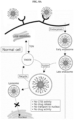
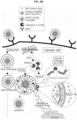
- the huHF(+)-anticancer drug conjugate may be transported to the cancer cell by the cancer-targeting peptide targeting epidermal growth factor receptors (EGFRs) overexpressed in the cancer cell, and be introduced to the cancer cell by endocytosis. Then, the peptide may be cleaved by cathepsin E (CTSE), an enzyme overexpressed in the cancer cell.
- CTSE cathepsin E
- the anticancer drug linked the peptide to be cleaved in the cancer cell may be cleave and released from the huHF(+)-anticancer drug conjugate and activated. The released anticancer drug may then be finally transported to the nucleus to exhibit anticancer activity, such as chromosomal DNA damage and/or DNA replication interference.
- huHF(+)-anticancer drug is rarely brought into the normal cell by endocytosis. Furthermore, the peptide is not cleaved by cathepsin E (CTSE) activity in the normal cell. Consequently, the anticancer drug is not released and remains inactive, and it is not transported to the nucleus and thus does not show anticancer activity.
- CSE cathepsin E
- the pharmaceutical composition of the present invention may be used for the treatment or prevention of the cancer.
- the cancer may be, for example, selected from the group consisting of brain cancer, head and neck cancer, bladder cancer, breast cancer, cervical cancer, colon cancer, colorectal cancer, endometrial cancer, esophageal cancer, leukemia, lung cancer, liver cancer, ovarian cancer, pancreatic cancer, prostate cancer, rectal cancer, kidney cancer, gastric cancer, testicular cancer, uterine cancer, vascular tumor, squamous cell carcinoma, adenocarcinoma, small cell carcinoma, melanoma, glioma, neuroblastoma, sarcoma, laryngeal cancer, parotid cancer, biliary tract cancer, thyroid cancer, actinic keratosis, acute lymphocytic leukemia, acute myeloid leukemia, adenoid cystic carcinoma, adenoma, adenoid squamous cell carcinoma, anal canal cancer, anal cancer, anorectal cancer, astrocytoma, ganglion
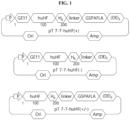
- huHF(+) is a human ferritin-derived protein in which GE11, cathepsin E cleavage-inducing peptide and chemotherapeutic anticancer drug binding-inducing peptide were linked and expressed
- huHF(-) is huHF(+) without cathepsin E cleavage-inducing peptide
- huHF(+/-) is huHF(+) without GE11. All of the prepared plasmid expression vectors were purified on agarose gels, and then sequences of each thereof were identified by total DNA sequencing.
- the PCR products were sequentially inserted into the pT7-7 expression vector to construct expression vectors capable of expressing each protein nanoparticle.
- Vectors for expressing each of the protein nanoparticles are pT7-huHF(+), pT7-huHF(-) and pT7-huHF(+/-) ( FIG. 1 ).
- E. coli strain BL21(DE3)[F-ompThsdSB(rB-mB-)] was transformed with each of the expression vectors prepared as described above, and ampicillin-resistant transformants were selected.
- the transformed E. coli was cultured in a flask (250 mL Erlenmeyer flask, 37 °C, 150 rpm) containing 50 mL of Luria-Bertani (LB) medium (containing 100 mg L -1 ampicillin). When the medium turbidity (O.D600) reached about 0.4 to 0.5, IPTG (Isopropyl- ⁇ -D-thiogalactopyranosid) (1.0 mM) was added to induce the expression of the recombinant gene.
- LB Luria-Bertani
- the cultured E. coli was centrifuged at 4,500 rpm for 10 min to obtain a cell precipitate.
- the obtained cell precipitate was then suspended in 5 mL of lysis solution (10 mM Tris-HCl buffer, pH 7.5, 10 mM EDTA) and lysed using an ultrasonicator (Branson Ultrasonics Corp., Danbury, CT, USA). The lysate was centrifuged at 13,000 rpm for 10 minutes to separate the supernatant and insoluble aggregates.
- the separated supernatant was subjected to Ni 2+ -NTA affinity chromatography using the binding of nickel to histidine linked to the recombinant protein, and then the recombinant protein was concentrated and a buffer was exchanged to obtain purified recombinant protein. Each step is described in detail below.
- E. coli cultured according to the aforementioned method were collected, and the cell pellet was resuspended in 5 mL lysis solution (50 mM NaH 2 PO 4 , 300 mM NaCl, 10 mM imidazole, 0.2 mM CuSO 4 , pH 8.0), followed by lysis using an ultrasonicator.
- 5 mL lysis solution 50 mM NaH 2 PO 4 , 300 mM NaCl, 10 mM imidazole, 0.2 mM CuSO 4 , pH 8.0
- the lysate was centrifuged at 13,000 rpm for 10 min to isolate the supernatant, and each recombinant protein was separated using a Ni 2+ -NTA column (Quiagen, Hilden, Germany) (washing buffer: 50 mM NaH 2 PO 4 , 300 mM NaCl, 10 mM imidazole, pH 8.0 / elution buffer: 50 mM NaH 2 PO 4 , 300 mM NaCl, 250 mM imidazole, pH 8.0).
- EDC (1-ethyl-3-[3-dimethylaminopropyl]carbodiimide)-NHS (N-hydroxysuccinimide) reaction was carried out to form a bond between the purified recombinant protein nanoparticles and chemotherapeutic anticancer drugs containing amine groups such as gemcitabine (GEM), mitomycin C (MMC), and doxorubicin (DOX).
- An EDC-NHS reaction buffer was prepared by adding 0.4 mg of EDC and 1.1 mg of Sulfo-NHS to 1 ml of a 2-[morpholino]ethanesulfonic acid (0.1 M, pH 6.0) buffer.
- chemotherapeutic anticancer drugs GEM, MMC and DOX were reacted at room temperature for 2 hours with molar ratio (molar concentration of chemotherapeutic anticancer drug : molar concentration of recombinant protein nanoparticle) of 288:1, 720:1 and 144:1, respectively.
- the reactant was placed in ultracentrifugal filter (Amicon Ultra 100K, Millipore, Billerica, MA) to exchange the reaction buffer with PBS buffer (137 mM NaCl, 2.7 mM KCl, 10 mM Na 2 HPO 4 , 1.8 mM KH 2 PO 4 , pH 7.4).
- PBS buffer 137 mM NaCl, 2.7 mM KCl, 10 mM Na 2 HPO 4 , 1.8 mM KH 2 PO 4 , pH 7.4
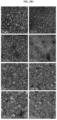
- the purified recombinant protein nanoparticles and the recombinant protein nanoparticle-chemotherapeutic anticancer drug conjugates prepared as described above were photographed using transmission electron microscopy (TEM) for structural analysis.
- TEM transmission electron microscopy
- Electron microscope grids containing air-dried samples were incubated with 2% (w/v) aqueous uranyl acetate solution for 1 h at room temperature to obtain stained images of protein nanoparticles. They were observed using a Tecnai 20 (FEI, Hillsboro, Oregon, U.S.A.) electron microscope operating at 200 kV to confirm that both protein nanoparticles and protein nanoparticle-anticancer drug conjugates form spherical nanoparticles.
- huHF(+) forms a spherical nanoparticle having a size of 12.32 ⁇ 2.88 nm
- huHF(+)-GEM forms a spherical nanoparticle having a size of 12.48 ⁇ 2.37 nm
- huHF(+)-MMC forms a spherical nanoparticle having a size of 12.67 ⁇ 2.80 nm
- huHF(+)-DOX forms a spherical nanoparticle having a size of 12.78 ⁇ 2.27 nm
- huHF(-) forms a spherical nanoparticle having a size of 12.09 ⁇ 2.05 nm
- huHF(-)-GEM forms a spherical nanoparticle having a size of 12.36 ⁇ 1.62 nm
- huHF(-)-MMC forms a spherical nanoparticle having a size of 12.56 ⁇ 1.03
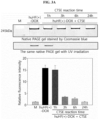
- the gel was stained with Coomassie blue staining solution to quantify protein nanoparticles. From 3 hours after staining, it was visually observed that the portion to which the anticancer drug was bound in the conjugate was effectively cleaved by cathepsin E. The intensity of doxorubicin was graphed by measuring its UV absorbance ( FIG. 3A ).
- CCK cell counting kit
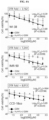
- the IC 50 the concentration of the drug at which the cellular activity reached 50%, was obtained, and it was found that the cytotoxicity was effectively reduced when the anticancer drug was conjugated with protein nanoparticles.
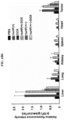
- the drug toxicity reduction (DTR) of the anticancer drugs was calculated, and the DTR of GEM, MMC and DOX in WI-38 cell was 3162, 56234 and 263, respectively; the DTR of GEM, MMC and DOX in IMR-90 cell was 7244, 31623 and 316, respectively; and the DTR of GEM, MMC and DOX in CCD-18co cell was 8913, 95499 and 91, respectively ( FIG. 4 ).
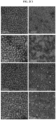
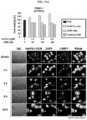
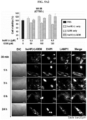
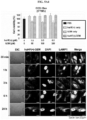
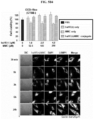
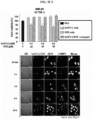
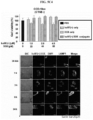
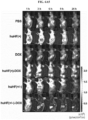
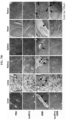
- huHF(+)-DOX FIG. 5C
- huHF(+)-GEM FIG. 5A
- huHF(+)-MMC FIG. 5B
- huHF(+)-DOX was used as it is because doxorubicin is a natural fluorophore, while gemcitabine and mitomycin C were observed by attaching a fluorescent material.
- Protein nanoparticle-chemotherapeutic anticancer drug conjugates not only target cancer, but also may transport to the liver.
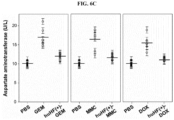
- AST aspartate aminotransferase
- AST concentration is low.
- liver toxicity occurs, the liver does not function properly and AST is released into the bloodstream in large amounts.
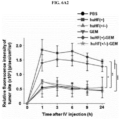
- the protein nanoparticle-chemotherapeutic anticancer drug conjugate, the anticancer drug and PBS buffer alone were administered to nude mice, respectively, and 24 hours later, blood was collected from nude mice, and AST activity assay was performed to measure hepatotoxicity.
- AST activity assay was performed to measure hepatotoxicity.
- the anticancer drugs bound to the protein nanoparticles significantly decreased the activity of AST compared to the anticancer drug alone ( FIG. 6C ). This verified that the protein nanoparticle-anticancer drug conjugate can be transported to the liver in large amounts but do not cause toxicity.
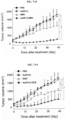
- Example 7 demonstrates that chemotherapeutic anticancer drugs conjugated to protein nanoparticles such as huHF(+)-GEM, huHF(+)-MMC and huHF(+)-DOX effectively target cancer and persist in the cancer for a long time. Therefore, we expected that in vivo injection of these protein nanoparticle-chemotherapeutic anticancer drug conjugates would show excellent anti-cancer effects since they specifically target cancer, so we conducted in vivo experiments to verify the extent of cancer size reduction in nude mice after intravenous injection of the conjugates at three-day intervals compared to the injection of buffer, protein nanoparticles, and anticancer drugs alone. The concentration of protein and the anticancer drug in the injections were the same.
- the volume of the cancer was measured over 42 days, and cancer growth was effectively inhibited when the anticancer drug was bound to protein nanoparticles and injected, compared to the anticancer drug alone.
- the cancers of each experimental group were extracted and their sizes were measured, and as a result, when the anticancer drugs were delivered by binding to the protein nanoparticles, all of them showed excellent anticancer effects ( FIG. 7A ).
- the protein nanoparticle huHF(+) exhibited a peptide on the surface, selectively inducing drug release by cathepsin E, so it was expected that it would not be toxic to normal cells, and as a result of testing toxicity to normal cells using cell lines of WI-38, IMR-90 and CCD-18co, it was verified that the toxicity to normal cells was significantly low.
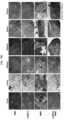
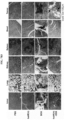
- liver, lung, kidney, spleen, heart and cancer of each experimental group were extracted and stained by H&E (hematoxylin & eosin), and each tissue was observed through an optical microscope ( FIG. 7B ).
Landscapes
- Health & Medical Sciences (AREA)
- Life Sciences & Earth Sciences (AREA)
- Chemical & Material Sciences (AREA)
- Medicinal Chemistry (AREA)
- General Health & Medical Sciences (AREA)
- Pharmacology & Pharmacy (AREA)
- Animal Behavior & Ethology (AREA)
- Public Health (AREA)
- Veterinary Medicine (AREA)
- Epidemiology (AREA)
- Engineering & Computer Science (AREA)
- Proteomics, Peptides & Aminoacids (AREA)
- Organic Chemistry (AREA)
- Bioinformatics & Cheminformatics (AREA)
- Molecular Biology (AREA)
- Nanotechnology (AREA)
- Zoology (AREA)
- Toxicology (AREA)
- Biochemistry (AREA)
- Gastroenterology & Hepatology (AREA)
- Chemical Kinetics & Catalysis (AREA)
- General Chemical & Material Sciences (AREA)
- Nuclear Medicine, Radiotherapy & Molecular Imaging (AREA)
- Biophysics (AREA)
- Genetics & Genomics (AREA)
- Immunology (AREA)
- Dermatology (AREA)
- Medicines That Contain Protein Lipid Enzymes And Other Medicines (AREA)
- Medicinal Preparation (AREA)
- Pharmaceuticals Containing Other Organic And Inorganic Compounds (AREA)
- Peptides Or Proteins (AREA)
- Saccharide Compounds (AREA)
- Acyclic And Carbocyclic Compounds In Medicinal Compositions (AREA)
Applications Claiming Priority (2)
| Application Number | Priority Date | Filing Date | Title |
|---|---|---|---|
| KR1020210125051A KR20230041901A (ko) | 2021-09-17 | 2021-09-17 | 신규 단백질 및 이를 포함하는 암의 예방 또는 치료용 약학적 조성물 |
| PCT/KR2022/013967 WO2023043291A1 (ko) | 2021-09-17 | 2022-09-19 | 신규 단백질 및 이를 포함하는 암의 예방 또는 치료용 약학적 조성물 |
Publications (2)
| Publication Number | Publication Date |
|---|---|
| EP4403567A1 true EP4403567A1 (de) | 2024-07-24 |
| EP4403567A4 EP4403567A4 (de) | 2025-05-07 |
Family
ID=85603271
Family Applications (1)
| Application Number | Title | Priority Date | Filing Date |
|---|---|---|---|
| EP22870373.2A Withdrawn EP4403567A4 (de) | 2021-09-17 | 2022-09-19 | Neues protein und pharmazeutische zusammensetzung damit zur prävention oder behandlung von krebs |
Country Status (9)
| Country | Link |
|---|---|
| US (1) | US20240374744A1 (de) |
| EP (1) | EP4403567A4 (de) |
| JP (1) | JP2024534452A (de) |
| KR (1) | KR20230041901A (de) |
| CN (1) | CN117940448A (de) |
| AU (1) | AU2022346534A1 (de) |
| CA (1) | CA3232442A1 (de) |
| MX (1) | MX2024003221A (de) |
| WO (1) | WO2023043291A1 (de) |
Family Cites Families (8)
| Publication number | Priority date | Publication date | Assignee | Title |
|---|---|---|---|---|
| EP2646059A4 (de) * | 2010-12-01 | 2016-07-27 | Methodist Hospital System | Durch protease abbaubare polypeptide und verwendungen davon |
| KR102272213B1 (ko) * | 2014-07-08 | 2021-07-01 | 삼성전자주식회사 | 표적화 부위, 절단 부위, 및 세포막 투과 부위를 포함하는 융합 단백질 및 그의 용도 |
| ES2665218T3 (es) * | 2014-09-30 | 2018-04-24 | Thena Biotech S.r.l. | Una proteína de fusión, una nanopartícula compuesta por una pluralidad de monómeros de dicha proteína de fusión y usos de la misma |
| CN105669964B (zh) * | 2016-03-04 | 2017-11-21 | 博瑞生物医药(苏州)股份有限公司 | 卵巢癌特异靶向的生物可降解双亲性聚合物、由其制备的聚合物囊泡及应用 |
| CN112912385A (zh) * | 2018-10-29 | 2021-06-04 | 味之素株式会社 | 包封有有机化合物的铁蛋白的制造方法 |
| KR102348838B1 (ko) | 2019-03-07 | 2022-01-11 | 경북대학교 산학협력단 | 트레일 트라이머와 암표적 펩타이드를 멀티디스플레이하는 페리틴 나노케이지 및 이의 항암제로서의 용도 |
| KR20210006224A (ko) * | 2019-07-08 | 2021-01-18 | 충남대학교산학협력단 | 암세포 표적지향성을 갖는 암 치료용 나노전달체 및 이의 제조방법 |
| CN119156343A (zh) * | 2019-07-30 | 2024-12-17 | 周美吟 | 搭载肽的载体系统及其用途 |
-
2021
- 2021-09-17 KR KR1020210125051A patent/KR20230041901A/ko not_active Ceased
-
2022
- 2022-09-19 US US18/692,984 patent/US20240374744A1/en active Pending
- 2022-09-19 EP EP22870373.2A patent/EP4403567A4/de not_active Withdrawn
- 2022-09-19 CA CA3232442A patent/CA3232442A1/en active Pending
- 2022-09-19 AU AU2022346534A patent/AU2022346534A1/en active Pending
- 2022-09-19 JP JP2024516966A patent/JP2024534452A/ja active Pending
- 2022-09-19 WO PCT/KR2022/013967 patent/WO2023043291A1/ko not_active Ceased
- 2022-09-19 CN CN202280059932.6A patent/CN117940448A/zh active Pending
- 2022-09-19 MX MX2024003221A patent/MX2024003221A/es unknown
Also Published As
| Publication number | Publication date |
|---|---|
| CN117940448A (zh) | 2024-04-26 |
| KR20230041901A (ko) | 2023-03-27 |
| CA3232442A1 (en) | 2023-03-23 |
| EP4403567A4 (de) | 2025-05-07 |
| AU2022346534A1 (en) | 2024-05-02 |
| MX2024003221A (es) | 2024-03-27 |
| JP2024534452A (ja) | 2024-09-20 |
| US20240374744A1 (en) | 2024-11-14 |
| WO2023043291A1 (ko) | 2023-03-23 |
Similar Documents
| Publication | Publication Date | Title |
|---|---|---|
| CN111328346B (zh) | 基于人铁蛋白和蛋白酶可切割肽的融合蛋白及其作为化学治疗载体的用途 | |
| JP6553105B2 (ja) | クロロトキシン変異体、コンジュゲート、およびそれらを使用する方法 | |
| US12296018B2 (en) | Albumin binding peptide-drug (AlBiPeD) conjugates and methods of making and using same | |
| Hu et al. | Design of tumor-homing and pH-responsive polypeptide–doxorubicin nanoparticles with enhanced anticancer efficacy and reduced side effects | |
| CN106922149B (zh) | 融合蛋白、由多个所述融合蛋白的单体组成的纳米颗粒及其用途 | |
| CZ20023913A3 (cs) | Kationtová diagnostická, zobrazovací a terapeutická činidla spojená s aktivovanými cévními místy | |
| US8541378B2 (en) | Recombinant albumins fused with poly-cysteine peptide and the methods for preparing the same | |
| US11833204B2 (en) | Visible light-activatable nanoparticles for cancer immunotherapy and use thereof | |
| KR102228271B1 (ko) | 항암활성을 갖는 면역조절 단백질-siRNA 복합체 | |
| Tao et al. | Multivalent assembly of nucleolin-targeted F3 peptide potentiates TRAIL's tumor penetration and antitumor effects | |
| EP4403567A1 (de) | Neues protein und pharmazeutische zusammensetzung damit zur prävention oder behandlung von krebs | |
| KR102129522B1 (ko) | 암세포 특이적 항암 단백질-형광 복합체 및 이를 포함하는 암의 진단 및 영상화용 조성물 | |
| Sun et al. | Cytotoxic conjugates of peptide hormones for cancer chemotherapy | |
| ES2320899T3 (es) | Peptidos biologicamente activos que comprenden isoleucil-valil-treonil-asparaginil-treonil-treonina (ivtntt). | |
| CN116390768B (zh) | 具有抗癌活性的免疫调节蛋白-siRNA复合物 | |
| KR101732380B1 (ko) | 상피성장인자 수용체를 표적으로 하는 신규 항암제 | |
| CN115806630A (zh) | 用于肿瘤免疫/靶向性治疗的pd-1蛋白-细胞毒素偶联物及其制备方法、应用 | |
| ES2365084T3 (es) | Derivados del péptido vapeehptllteaplnpk biológicamente activos. | |
| WO2020227620A1 (en) | Therapeutic peptides | |
| WO2018183232A2 (en) | Peptides and methods for targeted delivery to tumors | |
| US20230293704A1 (en) | Compositions and Methods for Tendon Regeneration | |
| JP2025531265A (ja) | 近赤外造影剤およびその用途 | |
| WO2025177045A1 (en) | Fusion-proteins based on human ferritin and their use as multiple bioactive peptides delivery system | |
| IT202200020571A1 (it) | Nuovo composto |
Legal Events
| Date | Code | Title | Description |
|---|---|---|---|
| STAA | Information on the status of an ep patent application or granted ep patent |
Free format text: STATUS: THE INTERNATIONAL PUBLICATION HAS BEEN MADE |
|
| PUAI | Public reference made under article 153(3) epc to a published international application that has entered the european phase |
Free format text: ORIGINAL CODE: 0009012 |
|
| STAA | Information on the status of an ep patent application or granted ep patent |
Free format text: STATUS: REQUEST FOR EXAMINATION WAS MADE |
|
| 17P | Request for examination filed |
Effective date: 20240327 |
|
| AK | Designated contracting states |
Kind code of ref document: A1 Designated state(s): AL AT BE BG CH CY CZ DE DK EE ES FI FR GB GR HR HU IE IS IT LI LT LU LV MC MK MT NL NO PL PT RO RS SE SI SK SM TR |
|
| DAV | Request for validation of the european patent (deleted) | ||
| DAX | Request for extension of the european patent (deleted) | ||
| A4 | Supplementary search report drawn up and despatched |
Effective date: 20250409 |
|
| RIC1 | Information provided on ipc code assigned before grant |
Ipc: A61K 47/69 20170101ALI20250403BHEP Ipc: A61K 38/00 20060101ALI20250403BHEP Ipc: A61K 31/7068 20060101ALI20250403BHEP Ipc: A61K 31/704 20060101ALI20250403BHEP Ipc: A61K 31/407 20060101ALI20250403BHEP Ipc: A61K 31/295 20060101ALI20250403BHEP Ipc: A61K 9/00 20060101ALI20250403BHEP Ipc: A61P 35/00 20060101ALI20250403BHEP Ipc: A61K 47/64 20170101ALI20250403BHEP Ipc: C07K 14/47 20060101AFI20250403BHEP |
|
| STAA | Information on the status of an ep patent application or granted ep patent |
Free format text: STATUS: THE APPLICATION IS DEEMED TO BE WITHDRAWN |
|
| 18D | Application deemed to be withdrawn |
Effective date: 20251030 |