EP4346773B1 - A plurality of tasquinimod particles and use thereof - Google Patents
A plurality of tasquinimod particles and use thereof Download PDFInfo
- Publication number
- EP4346773B1 EP4346773B1 EP22730773.3A EP22730773A EP4346773B1 EP 4346773 B1 EP4346773 B1 EP 4346773B1 EP 22730773 A EP22730773 A EP 22730773A EP 4346773 B1 EP4346773 B1 EP 4346773B1
- Authority
- EP
- European Patent Office
- Prior art keywords
- range
- particles
- tasquinimod
- cancer
- dosage unit
- Prior art date
- Legal status (The legal status is an assumption and is not a legal conclusion. Google has not performed a legal analysis and makes no representation as to the accuracy of the status listed.)
- Active
Links
Images


Classifications
-
- A—HUMAN NECESSITIES
- A61—MEDICAL OR VETERINARY SCIENCE; HYGIENE
- A61K—PREPARATIONS FOR MEDICAL, DENTAL OR TOILETRY PURPOSES
- A61K9/00—Medicinal preparations characterised by special physical form
- A61K9/14—Particulate form, e.g. powders, Processes for size reducing of pure drugs or the resulting products, Pure drug nanoparticles
-
- A—HUMAN NECESSITIES
- A61—MEDICAL OR VETERINARY SCIENCE; HYGIENE
- A61K—PREPARATIONS FOR MEDICAL, DENTAL OR TOILETRY PURPOSES
- A61K31/00—Medicinal preparations containing organic active ingredients
- A61K31/33—Heterocyclic compounds
- A61K31/395—Heterocyclic compounds having nitrogen as a ring hetero atom, e.g. guanethidine or rifamycins
- A61K31/435—Heterocyclic compounds having nitrogen as a ring hetero atom, e.g. guanethidine or rifamycins having six-membered rings with one nitrogen as the only ring hetero atom
- A61K31/47—Quinolines; Isoquinolines
- A61K31/4704—2-Quinolinones, e.g. carbostyril
-
- A—HUMAN NECESSITIES
- A61—MEDICAL OR VETERINARY SCIENCE; HYGIENE
- A61P—SPECIFIC THERAPEUTIC ACTIVITY OF CHEMICAL COMPOUNDS OR MEDICINAL PREPARATIONS
- A61P35/00—Antineoplastic agents
-
- A—HUMAN NECESSITIES
- A61—MEDICAL OR VETERINARY SCIENCE; HYGIENE
- A61P—SPECIFIC THERAPEUTIC ACTIVITY OF CHEMICAL COMPOUNDS OR MEDICINAL PREPARATIONS
- A61P35/00—Antineoplastic agents
- A61P35/02—Antineoplastic agents specific for leukemia
Definitions
- the present invention relates to a plurality of particles of tasquinimod or of a pharmaceutically acceptable salt of tasquinimod, and to the use thereof in therapy, as well as to a pharmaceutical composition containing such a plurality of particles.
- the invention further relates to a solid pharmaceutical dosage unit, e.g. a solid oral pharmaceutical dosage form, such as a capsule or tablet for oral administration, containing a plurality of such particles.
- Tasquinimod and a method for its preparation were described in International Applications No. PCT/SE99/00676 , published as WO 99/55678 and No. PCT/SE99/01270 , published as WO 00/03991 , which applications also disclosed the utility of tasquinimod and some other quinoline carboxamides for the treatment of diseases resulting from autoimmunity, such as multiple sclerosis, insulin-dependent diabetes mellitus, systemic lupus erythematosus, rheumatoid arthritis, inflammatory bowel disease and psoriasis and, furthermore, diseases where pathologic inflammation plays a major role, such as asthma, atherosclerosis, stroke and Alzheimer's disease.
- diseases resulting from autoimmunity such as multiple sclerosis, insulin-dependent diabetes mellitus, systemic lupus erythematosus, rheumatoid arthritis, inflammatory bowel disease and psoriasis and,
- PCT/EP2016/053288 published as WO 2016/146329 , discloses tasquinimod for use in combination with a PD-1 and/or PD-L1 inhibitor in the treatment of cancer, in particular bladder cancer.
- the use of tasquinimod for the treatment of myeloproliferative neoplasms, such as myelofibrosis, has been disclosed in International Application No. PCT/EP2021/070629 , published as WO 2022/018240 .
- the use of tasquinimod for the treatment of myelodysplastic syndrome has been described in International Application No. PCT/EP2022/050891 , not yet published.
- the above identified prior art publications are all incorporated herein by reference.
- a particular compound has a therapeutic activity useful in treatment of a particular disease, but a suitable form for administration thereof must also be provided to render it practically useful.
- oral administration of drugs is normally preferred.
- the bioavailability is an important factor to consider, and is generally governed by the solubility, gastrointestinal permeability, and dissolution rate of the substance to be administered. Further parameters that must be taken into consideration are associated with the oral administration form, including the ease of manufacturing, the drug product stability and shelf-life, the ease of use for the patient.
- unit dosage formulations such as capsules and tablets, may be preferred over liquid formulations, and the former are also generally preferred for ease of transportation and in case of ill-tasting drug substances.
- Tasquinimod or 4-hydroxy-5-methoxy-N,1-dimethyl-2-oxo-N-[4-(trifluoromethyl)phenyl]-1,2-dihydroquinoline-3-carboxamide is a compound having the structural formula:
- Tasquinimod is a compound having high gastrointestinal permeability and high aqueous solubility. Indeed, the gastrointestinal permeability of tasquinimod using the Caco-2 cell model, the permeability coefficient of tasquinimod was found to be 43.5 ⁇ 0.9.10 -6 cm.s -1 , which ranks tasquinimod as "highly permeable” according to the Biopharmaceutics Classification System (BCS). For a drug compound to be classified as "highly soluble" according to the BCS, the highest single therapeutic dose thereof should be completely soluble in 250 ml or less of aqueous media over the pH range of 1.2-6.8 at 37 ⁇ 1°C.
- BCS Biopharmaceutics Classification System
- tasquinimod exceeds this cut-off value ten-fold under the stated conditions, while at physiological pH at 7.4 the solubility is as high as 50-fold over this cut-off: the solubility of tasquinimod at pH 7.4 is as high as 0.25 mg/ml. Based on these properties, tasquinimod is classified as a BCS Class I compound. If the highly soluble tasquinimod is formulated in an immediate release formulation, the dissolution rate is expected to be high with a dissolution criterion of not less than 85% released in 30 minutes at 37°C. However, the present inventors found the dissolution rate of tasquinimod particles to be surprisingly low.
- the low dissolution rate of tasquinimod particles in aqueous phase was completely unexpected.
- a low dissolution rate is susceptible of reducing the bioavailability and may pose an obstacle to an efficient oral administration of an otherwise therapeutically active compound.
- the present invention is based on the surprising finding that the highly water soluble compound tasquinimod suffers from an unexpectedly low aqueous dissolution rate.
- a first aspect therefore is a plurality of particles of tasquinimod in free base form or as a pharmaceutically acceptable salt, said particles having a D(v,0.9) of at most 25 ⁇ m and a D(v,0.5) of at most 10 ⁇ m.
- a further aspect is the plurality of particles of tasquinimod in free base form or as a pharmaceutically acceptable salt as defined herein, for use in therapy.
- a further aspect is a pharmaceutical composition
- a pharmaceutical composition comprising the plurality of particles of tasquinimod in free base form or as a pharmaceutically acceptable salt as defined herein, and preferably one or more pharmaceutically acceptable excipients.
- a further aspect is a pharmaceutical dosage unit comprising the pharmaceutical composition as defined herein.
- D(v,0.9) means that 90 % of the particles in a composition (based on volume) have a diameter equal to or below a specified value.
- a D(v,0.9) of 25 ⁇ m means that 90% of the particles, by volume, have a diameter of or below 25 ⁇ m.
- subject refers to a mammal.
- a mammal contemplated by the present invention include a human as well as a non-human mammal, such as a mammal selected from primates, domesticated animals such as farm animals, e.g. cattle, sheep, pigs, horses and the like, as well as pet animals, such as dogs and cats, and the like.
- the mammal is a human.
- tasquinimod particle or “particle of tasquinimod” may be used, and should be understood to refer to particles of tasquinimod, wherein “tasquinimod” should be understood to refer to either tasquinimod free base or tasquinimod in pharmaceutically acceptable salt form, unless otherwise apparent from the context or unless otherwise specified.
- tasquinimod as used herein may have any degree of deuteration.
- tasquinimod has a degree of deuteration corresponding to the natural abundance of the deuterium isotope.
- tasquinimod as used herein is as described in WO 2012/175541 , cf. herein above.
- Examples of pharmaceutically acceptable salts comprise salts with (as counter ion) an alkali metal ion, e.g. Li+, Na+ or K+, or with an alkaline earth metal ion, e.g. Mg2+ or Ca2+, or with any other pharmaceutically acceptable metal ion, e.g. Zn2+ or Al3+; or pharmaceutically acceptable salts formed with organic bases, such as diethanolamine, ethanolamine, N-methylglucamine, triethanolamine or tromethamine.
- an alkali metal ion e.g. Li+, Na+ or K+
- an alkaline earth metal ion e.g. Mg2+ or Ca2+
- any other pharmaceutically acceptable metal ion e.g. Zn2+ or Al3+
- pharmaceutically acceptable salts formed with organic bases such as diethanolamine, ethanolamine, N-methylglucamine, triethanolamine or tromethamine.
- treating encompasses, e.g., inducing inhibition, regression, or stasis of a disease, disorder or condition, or ameliorating or alleviating a symptom of a disease, disorder or condition.
- “Ameliorating” or “alleviating” a condition or state as used herein shall mean to relieve or lessen the symptoms of that condition or state.
- “Inhibition” of disease progression or disease complication in a subject as used herein means preventing or reducing the disease progression and/or disease complication in the subject.
- the tasquinimod particle present in the plurality of tasquinimod particles as provided herein essentially consists of tasquinimod, which means that at least 90 % by weight of the particle consists of tasquinimod, e.g. at least 95 % by weight, preferably at least 96% by weight, more preferably at least 97 % by weight, even more preferably at least 98 % by weight, at least 98.5 % by weight, at least 99 % by weight, or at least 99.5 % by weight.
- the tasquinimod particles should have a particle size distribution characterised by a D(v,0.9) of at most 25 ⁇ m.
- the particles have a D(v,0.9) of at most 24 ⁇ m. In some embodiments, the particles have a D(v,0.9) of at most 23 ⁇ m. In some embodiments, the particles have a D(v,0.9) of at most 22 ⁇ m. In some embodiments, the particles have a D(v,0.9) of at most 21 ⁇ m. In some embodiments, the particles have a D(v,0.9) of at most 20 ⁇ m. In some embodiments, the particles have a D(v,0.9) of at most 19 ⁇ m. In some embodiments, the particles have a D(v,0.9) of at most 18 ⁇ m. In some embodiments, the particles have a D(v,0.9) of at most 17 ⁇ m.
- the particles have a D(v,0.9) of at most 16 ⁇ m. In some embodiments, the particles have a D(v,0.9) of at most 15 ⁇ m. In some embodiments, the particles have a D(v,0.9) of at most 14 ⁇ m. In some embodiments, the particles have a D(v,0.9) of at most 13 ⁇ m. In some embodiments, the particles have a D(v,0.9) of at most 12 ⁇ m. In some embodiments, the particles have a D(v,0.9) of at most 11 ⁇ m. In some embodiments, the particles have a D(v,0.9) of at most 10 ⁇ m. In some embodiments, the particles have a D(v,0.9) of at most 9 ⁇ m. In some embodiments, the particles have a D(v,0.9) of at most 8 ⁇ m. In some embodiments, the particles have a D(v,0.9) of at most 7 ⁇ m.
- the particles have a D(v,0.9) of about 25 ⁇ m. In some embodiments, the particles have a D(v,0.9) of about 24 ⁇ m. In some embodiments, the particles have a D(v,0.9) of about 23 ⁇ m. In some embodiments, the particles have a D(v,0.9) of about 22 ⁇ m. In some embodiments, the particles have a D(v,0.9) of about 21 ⁇ m. In some embodiments, the particles have a D(v,0.9) of about 20 ⁇ m. In some embodiments, the particles have a D(v,0.9) of about 19 ⁇ m. In some embodiments, the particles have a D(v,0.9) of about 18 ⁇ m.
- the particles have a D(v,0.9) of about 17 ⁇ m. In some embodiments, the particles have a D(v,0.9) of about 16 ⁇ m. In some embodiments, the particles have a D(v,0.9) of about 15 ⁇ m. In some embodiments, the particles have a D(v,0.9) of about 14 ⁇ m. In some embodiments, the particles have a D(v,0.9) of about 13 ⁇ m. In some embodiments, the particles have a D(v,0.9) of about 12 ⁇ m. In some embodiments, the particles have a D(v,0.9) of about 11 ⁇ m. In some embodiments, the particles have a D(v,0.9) of about 10 ⁇ m.
- the particles have a D(v,0.9) of about 9 ⁇ m. In some embodiments, the particles have a D(v,0.9) of about 8 ⁇ m. In some embodiments, the particles have a D(v,0.9) of about 7 ⁇ m. In some embodiments, the particles have a D(v,0.9) of about 6 ⁇ m.
- the particles have a D(v,0.9) in the range of 6 to 25 ⁇ m, in the range of 7 to 25 ⁇ m, in the range of 8 to 25 ⁇ m, in the range of 9 to 25 ⁇ m, in the range of 10 to 25 ⁇ m, in the range of 11 to 25 ⁇ m, in the range of 12 to 25 ⁇ m, in the range of 13 to 25 ⁇ m, in the range of 14 to 25 ⁇ m, in the range of 15 to 25 ⁇ m, in the range of 16 to 25 ⁇ m, in the range of 17 to 25 ⁇ m, in the range of 18 to 25 ⁇ m, in the range of 19 to 25 ⁇ m, in the range of 20 to 25 ⁇ m, in the range of 21 to 25 ⁇ m, in the range of 22 to 25 ⁇ m, in the range of 23 to 25 ⁇ m, or in the range of 24 to 25 ⁇ m.
- the particles have a D(v,0.9) in the range of 6 to 24 ⁇ m, in the range of 7 to 24 ⁇ m, in the range of 8 to 24 ⁇ m, in the range of 9 to 24 ⁇ m, in the range of 10 to 24 ⁇ m, in the range of 11 to 24 ⁇ m, in the range of 12 to 24 ⁇ m, in the range of 13 to 24 ⁇ m, in the range of 14 to 24 ⁇ m, in the range of 15 to 24 ⁇ m, in the range of 16 to 24 ⁇ m, in the range of 17 to 24 ⁇ m, in the range of 18 to 24 ⁇ m, in the range of 19 to 24 ⁇ m, in the range of 20 to 24 ⁇ m, in the range of 21 to 24 ⁇ m, in the range of 22 to 24 ⁇ m, or in the range of 23 to 24 ⁇ m.
- the particles have a D(v,0.9) in the range of 6 to 23 ⁇ m, in the range of 7 to 23 ⁇ m, in the range of 8 to 23 ⁇ m, in the range of 9 to 23 ⁇ m, in the range of 10 to 23 ⁇ m, in the range of 11 to 23 ⁇ m, in the range of 12 to 23 ⁇ m, in the range of 13 to 23 ⁇ m, in the range of 14 to 23 ⁇ m, in the range of 15 to 23 ⁇ m, in the range of 16 to 23 ⁇ m, in the range of 17 to 23 ⁇ m, in the range of 18 to 23 ⁇ m, in the range of 19 to 23 ⁇ m, in the range of 20 to 23 ⁇ m, in the range of 21 to 23 ⁇ m, or in the range of 22 to 23 ⁇ m.
- the particles have a D(v,0.9) in the range of 6 to 22 ⁇ m, in the range of 7 to 22 ⁇ m, in the range of 8 to 22 ⁇ m, in the range of 9 to 22 ⁇ m, in the range of 10 to 22 ⁇ m, in the range of 11 to 22 ⁇ m, in the range of 12 to 22 ⁇ m, in the range of 13 to 22 ⁇ m, in the range of 14 to 22 ⁇ m, in the range of 15 to 22 ⁇ m, in the range of 16 to 22 ⁇ m, in the range of 17 to 22 ⁇ m, in the range of 18 to 22 ⁇ m, in the range of 19 to 22 ⁇ m, in the range of 20 to 22 ⁇ m, or in the range of 21 to 22 ⁇ m.
- the particles have a D(v,0.9) in the range of 6 to 21 ⁇ m, in the range of 7 to 21 ⁇ m, in the range of 8 to 21 ⁇ m, in the range of 9 to 21 ⁇ m, in the range of 10 to 21 ⁇ m, in the range of 11 to 21 ⁇ m, in the range of 12 to 21 ⁇ m, in the range of 13 to 21 ⁇ m, in the range of 14 to 21 ⁇ m, in the range of 15 to 21 ⁇ m, in the range of 16 to 21 ⁇ m, in the range of 17 to 21 ⁇ m, in the range of 18 to 21 ⁇ m, in the range of 19 to 21 ⁇ m, or in the range of 20 to 21 ⁇ m.
- the particles have a D(v,0.9) in the range of 6 to 20 ⁇ m, in the range of 7 to 20 ⁇ m, in the range of 8 to 20 ⁇ m, in the range of 9 to 20 ⁇ m, in the range of 10 to 20 ⁇ m, in the range of 11 to 20 ⁇ m, in the range of 12 to 20 ⁇ m, in the range of 13 to 20 ⁇ m, in the range of 14 to 20 ⁇ m, in the range of 15 to 20 ⁇ m, in the range of 16 to 20 ⁇ m, in the range of 17 to 20 ⁇ m, in the range of 18 to 20 ⁇ m, or in the range of 19 to 20 ⁇ m.
- the particles have a D(v,0.9) in the range of 6 to 19 ⁇ m, in the range of 7 to 19 ⁇ m, in the range of 8 to 19 ⁇ m, in the range of 9 to 19 ⁇ m, in the range of 10 to 19 ⁇ m, in the range of 11 to 19 ⁇ m, in the range of 12 to 19 ⁇ m, in the range of 13 to 19 ⁇ m, in the range of 14 to 19 ⁇ m, in the range of 15 to 19 ⁇ m, in the range of 16 to 19 ⁇ m, in the range of 17 to 19 ⁇ m, or in the range of 18 to 19 ⁇ m.
- the particles have a D(v,0.9) in the range of 6 to 18 ⁇ m, in the range of 7 to 18 ⁇ m, in the range of 8 to 18 ⁇ m, in the range of 9 to 18 ⁇ m, in the range of 10 to 18 ⁇ m, in the range of 11 to 18 ⁇ m, in the range of 12 to 18 ⁇ m, in the range of 13 to 18 ⁇ m, in the range of 14 to 18 ⁇ m, in the range of 15 to 18 ⁇ m, in the range of 16 to 18 ⁇ m, or in the range of 17 to 18 ⁇ m.
- the particles have a D(v,0.9) in the range of 6 to 17 ⁇ m, in the range of 7 to 17 ⁇ m, in the range of 8 to 17 ⁇ m, in the range of 9 to 17 ⁇ m, in the range of 10 to 17 ⁇ m, in the range of 11 to 17 ⁇ m, in the range of 12 to 17 ⁇ m, in the range of 13 to 17 ⁇ m, in the range of 14 to 17 ⁇ m, in the range of 15 to 17 ⁇ m, or in the range of 16 to 17 ⁇ m.
- the particles have a D(v,0.9) in the range of 6 to 16 ⁇ m, in the range of 7 to 16 ⁇ m, in the range of 8 to 16 ⁇ m, in the range of 9 to 16 ⁇ m, in the range of 10 to 16 ⁇ m, in the range of 11 to 16 ⁇ m, in the range of 12 to 16 ⁇ m, in the range of 13 to 16 ⁇ m, in the range of 14 to 16 ⁇ m, or in the range of 15 to 16 ⁇ m.
- the particles have a D(v,0.9) in the range of 6 to 15 ⁇ m, in the range of 7 to 15 ⁇ m, in the range of 8 to 15 ⁇ m, in the range of 9 to 15 ⁇ m, in the range of 10 to 15 ⁇ m, in the range of 11 to 15 ⁇ m, in the range of 12 to 15 ⁇ m, in the range of 13 to 15 ⁇ m, or in the range of 14 to 15 ⁇ m.
- the particles have a D(v,0.9) in the range of 6 to 14 ⁇ m, in the range of 7 to 14 ⁇ m, in the range of 8 to 14 ⁇ m, in the range of 9 to 14 ⁇ m, in the range of 10 to 14 ⁇ m, in the range of 11 to 14 ⁇ m, in the range of 12 to 14 ⁇ m, or in the range of 13 to 14 ⁇ m.
- the particles have a D(v,0.9) in the range of 6 to 12 ⁇ m, in the range of 7 to 12 ⁇ m, in the range of 8 to 12 ⁇ m, in the range of 9 to 12 ⁇ m, in the range of 10 to 12 ⁇ m, or in the range of 11 to 12 ⁇ m.
- the particles have a D(v,0.9) in the range of 6 to 10 ⁇ m, in the range of 7 to 10 ⁇ m, in the range of 8 to 10 ⁇ m, or in the range of 9 to 10 ⁇ m.
- the tasquinimod particles as provided herein should have a particle size distribution characterised by a D(v,0.5) of at most 10 ⁇ m.
- the particles have a D(v,0.5) of 9 ⁇ m.
- the particles have a D(v,0.5) of 8 ⁇ m.
- the particles have a D(v,0.5) of 7 ⁇ m.
- the particles have a D(v,0.5) of 6 ⁇ m.
- the particles have a D(v,0.5) of 5 ⁇ m.
- the particles have a D(v,0.5) of 4 ⁇ m.
- the particles have a D(v,0.5) of 3 ⁇ m. In some embodiments, the particles have a D(v,0.5) of 2 ⁇ m. In some embodiments, the particles have a D(v,0.5) of 1 ⁇ m.
- the particles have a D(v,0.5) in the range of 1 to 10 ⁇ m, in the range of 2 to 10 ⁇ m, in the range of 3 to 10 ⁇ m, in the range of 4 to 10 ⁇ m, in the range of 5 to 10 ⁇ m, in the range of 6 to 10 ⁇ m, in the range of 7 to 10 ⁇ m, in the range of 8 to 10 ⁇ m, or in the range of 9 to 10 ⁇ m.
- the particles have a D(v,0.5) in the range of 1 to 9 ⁇ m, in the range of 2 to 9 ⁇ m, in the range of 3 to 9 ⁇ m, in the range of 4 to 9 ⁇ m, in the range of 5 to 9 ⁇ m, in the range of 6 to 9 ⁇ m, in the range of 7 to 9 ⁇ m, or in the range of 8 to 9 ⁇ m.
- the particles have a D(v,0.5) in the range of 1 to 8 ⁇ m, in the range of 2 to 8 ⁇ m, in the range of 3 to 8 ⁇ m, in the range of 4 to 8 ⁇ m, in the range of 5 to 8 ⁇ m, in the range of 6 to 8 ⁇ m, or in the range of 7 to 8 ⁇ m.
- the particles have a D(v,0.5) in the range of 1 to 5 ⁇ m, in the range of 2 to 5 ⁇ m, in the range of 3 to 5 ⁇ m, or in the range of 4 to 5 ⁇ m.
- the particles have a D(v,0.5) in the range of 1 to 4 ⁇ m, in the range of 2 to 4 ⁇ m, or in the range of 3 to 4 ⁇ m.
- the particles have a D(v,0.5) in the range of 1 to 3 ⁇ m, in the range of 2 to 3 ⁇ m, or in the range of 1 to 2 ⁇ m.
- D(v,0.5) is in the range of 3 ⁇ m to 9 ⁇ m, and D(v,0.9) is at most 25 ⁇ m, e.g. D(v,0.9) is in the range of 6 to 25 ⁇ m.
- D(v,0.5) is in the range of 3 ⁇ m to 8 ⁇ m, and D(v,0.9) is at most 25 ⁇ m, e.g. D(v,0.9) is in the range of 6 to 25 ⁇ m.
- D(v,0.5) is in the range of 3 ⁇ m to 7 ⁇ m, and D(v,0.9) is at most 25 ⁇ m, e.g.
- D(v,0.5) is in the range of 3 ⁇ m to 9 ⁇ m
- D(v,0.9) is in the range of 10 to 25 ⁇ m
- D(v,0.5) is in the range of 3 ⁇ m to 8 ⁇ m
- D(v,0.9) is in the range of 10 to 25 ⁇ m
- D(v,0.5) is in the range of 3 ⁇ m to 7 ⁇ m
- D(v,0.9) is in the range of 10 to 25 ⁇ m.
- D(v,0.5) is in the range of 2 ⁇ m to 9 ⁇ m, in the range of 2 ⁇ m to 8 ⁇ m, in the range of 2 ⁇ m to 7 ⁇ m, in the range of 3 ⁇ m to 9 ⁇ m, in the range of 3 ⁇ m to 8 ⁇ m, or in the range of 3 ⁇ m to 7 ⁇ m, and D(v,0.9) is at most 16 ⁇ m, e.g. in the range of 10 to 16 ⁇ m.
- the particle population provided herein has a ratio r of at most 6, at most 5, at most 4.5, at most 4, at most 3.5, at most 3, at most 2.5, at most 2.4, at most 2.3, at most 2.2, at most 2.1, or at most 2.
- the particle population provided herein has a ratio r in the range of 1 to 6, 1 to 5, 1 to 4, 1 to 3.5, 1 to 3, 1 to 2.5, 1 to 2.4, 1 to 2.3, 1 to 2.2, 1 to 2.1, or 1 to 2.
- Tasquinimod in powder form is commercially available, e.g. from MilliporeSigma, and may also be prepared e.g. by following the methods as described in WO 03/106424 and WO 2012/004338 (cf. herein above).
- the tasquinimod particles as used herein may be prepared starting from tasquinimod in powder form, and by applying any suitable method for obtaining particles of the required particle size distribution, e.g. by micronization, using common micronization equipment, such as mechanical impact mills (spiral jet mills) or fluid energy (fluid bed) impact mills.
- the tasquinimod particles are prepared by micronizing tasquinimod powder with a fluid energy jet mill using nitrogen as the processing gas. In some embodiments, the tasquinimod particles are prepared by preparing tasquinimod as described in WO 2012/004338 , e.g. in Example 4 of WO 2012/004338 , and by micronizing the obtained product, e.g. with a fluid energy jet mill using nitrogen as the processing gas.
- the tasquinimod particles of the invention may comprise crystalline tasquinimod as well as amorphous tasquinimod.
- the particles at least partly consist of crystalline tasquinimod, e.g. at least 50 % by weight of the total amount of tasquinimod is crystalline, or at least 60%, or at least 70%, or at least 80 %, or at least 90 %, or at least 95 %, or at least 96 %, or at least 97 %, or at least 98 %, or at least 99 % by weight of the total amount of tasquinimod is crystalline.
- the particles consist of crystalline tasquinimod. In some other embodiments, at least some of the particles consist of amorphous tasquinimod, or most of the particles consist of amorphous tasquinimod, or all of the particles consist of amorphous tasquinimod.
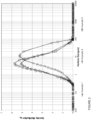
- the particle size distribution of the tasquinimod particles may be determined using laser diffraction technology, e.g. a laser particle size analyzer, e.g. a Malvern Mastersizer instrument as commercially available from Malvern Panalytical.
- laser diffraction technology e.g. a laser particle size analyzer, e.g. a Malvern Mastersizer instrument as commercially available from Malvern Panalytical.
- the composition comprises tasquinimod particles, pregelatinised starch, and hydrogenated vegetable oil.
- the pharmaceutical composition provided herein may comprise tasquinimod particles in an amount of, for example, about 0.1 to about 10 % by total weight of the composition, or about 0.1 to about 9 % by total weight of the composition, e.g. about 0.1 to about 8 %, about 0.1 to about 7 %, about 0.1 to about 6 %, about 0.1 to about 5 %, about 0.1 to about 4 %, or about 0.1 to about 3 %, about 0.1 to about 2 %, or about 0.1 to about 1 %, by total weight of the composition.
- the pharmaceutical composition provided herein may comprise excipient(s) in an amount of about, for example, 90 to about 99.9 % by total weight of the composition, or about 95 to about 99.9 % by total weight of the composition, e.g. about 96 to about 99.9 %, about 97 to about 99.9 %, about 97.5 to about 99.9 %, about 98 to about 99.9 %, about 98.5 to about 99.9 %, or about 99 to about 99.9 %, by total weight of the composition.
- the main portion of the excipients consists of the filler, whereas the amount of lubricant, if present, generally is rather small, e.g. about 0.5 to 4 % by weight, about 0.5 to 3 % by weight, about 1 to 3 % by weight, or about 1.5 to 2.5 % by weight, by total weight of the composition.
- the pharmaceutical composition provided herein comprises about 0.1 to 2 % by weight of tasquinimod particles, about 0.5 to 4 % by weight of lubricant, and about 94 to about 99.4 % by weight of filler, based on the total weight of the composition; e.g. about 0.1 to 1 % of tasquinimod particles, about 1 to 3 % by weight of lubricant, and about 96 % to about 98.9 % by weight of filler, based on the total weight of the composition.
- the composition comprises tasquinimod particles in an amount of about 0.1 to 1 %, lubricant in an amount of about 1.5 to 2.5 % by weight, and filler in an amount of about 96.5 to about 98.4 % by weight, based on the total weight of the composition.
- a pharmaceutical dosage unit containing a therapeutically effective amount of tasquinimod in the form of the tasquinimod particles as disclosed herein.
- the pharmaceutical dosage unit may comprise, for example, 0.1 to 2 mg of tasquinimod particles, e.g. about 0.25 to 1.5 mg, in particular about 0.5 to about 1.25 mg, such as 1.0 mg of tasquinimod particles and optionally one or more excipients.
- the pharmaceutical dosage unit comprises a pharmaceutical composition as defined herein in an amount corresponding to a therapeutically effective amount of the tasquinimod particles, such as 0.1 to 2 mg, e.g. about 0.25 to 1.5 mg, in particular about 0.5 to about 1.25 mg, such as about 1.0 mg.
- the pharmaceutical dosage unit is an immediate-release pharmaceutical dosage unit.
- the pharmaceutical dosage unit is a capsule suitable for oral administration (which may also be referred to as an oral capsule), such as a hard-shell or soft-shell capsule comprising a pharmaceutically effective amount of the pharmaceutical composition as disclosed herein.
- the capsule is a hard-shell capsule, such as HMPC or gelatine capsule.
- the capsule is a size 4 or size 3 capsule.
- the capsule is a hard-shell size 4 capsule, such as a hard-shell size 4 gelatine capsule.
- the pharmaceutical dosage unit is a hard-shell capsule, e.g. a size 4 capsule, containing an effective amount of tasquinimod particles, and one or more pharmaceutically acceptable excipients, e.g. a filler and a lubricant.
- the capsule is a hard-shell capsule containing about 100 to 250 mg, e.g. about 150 to 200 mg, of the pharmaceutical composition provided herein.
- the pharmaceutical dosage unit is a size 4 or size 3 hard-shell capsule containing about 0.1 to 2 mg of tasquinimod particles, e.g.
- Tasquinimod particles having D(v,0.5) of 5.2 ⁇ m and D(v,0.9) of 16.0 ⁇ m
- Tasquinimod particles (total amount 2.0 kg) were prepared essentially as described in EXAMPLE 1.
- Example 15 Using the tasquinimod particles of Example 15, the procedure of Example 13 was repeated, to obtain 200 000 capsules, each capsule containing 1.0 mg of tasquinimod.
- Example 16 Using the tasquinimod particles of Examples 16, the procedure of Example 13 was repeated, to obtain 3 batches of 200 000 capsules, each capsule containing 1.0 mg of tasquinimod.
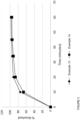
- the dissolution rates of the capsules of Examples 17-20 were measured in an assay as described herein above. The results are shown in Figure 4 .
- the dissolution profiles of the different batches of capsules are very similar for capsules containing tasquinimod particles having D(v,0.5) of 4.8 ⁇ m (Example 17) and 5.2 ⁇ m (Examples 18-20), respectively, and the dissolution profiles correspond to an immediate release formulation.
- Tasquinimod particles having D(v,0.5) of 6.0 ⁇ m and D(v,0.9) of 16 ⁇ m
- Tasquinimod powder 300 g was micronized with an Alpine ® Spiral Jet Mill 50 AS (from Hosokawa Alpine AG, Germany) using nitrogen as the processing gas.
- the feed rate for the unmicronized material was controlled at 10 g/min by use of a vibratory feeder, and the injector pressure was set at 1.8-5 bar.
- the mill pressure was set at 0.5-1 bar to obtain the desired particle size distribution parameters (D(v,0.5) and D(v, 0.9)).
- Oral capsule containing 0.25 mg of tasquinimod (D(v,0.5) of 6.0 ⁇ m, D(v,0.9) of 16 ⁇ m)
- a capsule for oral administration containing tasquinimod particles of Example 21 in admixture with filler and lubricant, was manufactured in an industrial scale as follows: Tasquinimod particles (0.17 % by total weight of mixture) were first blended with filler (97.83 % by total weight of mixture), whereafter lubricant (2.00 % by total weight of mixture) was admixed. The obtained mixture (7.5 kg) was filled into white hard gelatine size 4 capsules. Each capsule contained 150 mg of the mixture, corresponding to a dose strength of 0.25 mg of tasquinimod, resulting in a maximum batch size of 50,000 capsules.
- the dissolution rates of capsules of Example 22 were measured in an assay as described herein above.
- the obtained dissolution profiles were similar to those of Examples 17-20 and corresponded to an immediate release formulation.
Landscapes
- Health & Medical Sciences (AREA)
- Chemical & Material Sciences (AREA)
- Medicinal Chemistry (AREA)
- Pharmacology & Pharmacy (AREA)
- Life Sciences & Earth Sciences (AREA)
- Animal Behavior & Ethology (AREA)
- General Health & Medical Sciences (AREA)
- Public Health (AREA)
- Veterinary Medicine (AREA)
- Epidemiology (AREA)
- General Chemical & Material Sciences (AREA)
- Chemical Kinetics & Catalysis (AREA)
- Nuclear Medicine, Radiotherapy & Molecular Imaging (AREA)
- Organic Chemistry (AREA)
- Bioinformatics & Cheminformatics (AREA)
- Engineering & Computer Science (AREA)
- Hematology (AREA)
- Oncology (AREA)
- Pharmaceuticals Containing Other Organic And Inorganic Compounds (AREA)
- Medicinal Preparation (AREA)
- Powder Metallurgy (AREA)
Applications Claiming Priority (2)
| Application Number | Priority Date | Filing Date | Title |
|---|---|---|---|
| EP21175623 | 2021-05-25 | ||
| PCT/EP2022/063887 WO2022248401A1 (en) | 2021-05-25 | 2022-05-23 | A plurality of tasquinimod particles and use thereof |
Publications (3)
| Publication Number | Publication Date |
|---|---|
| EP4346773A1 EP4346773A1 (en) | 2024-04-10 |
| EP4346773C0 EP4346773C0 (en) | 2025-07-02 |
| EP4346773B1 true EP4346773B1 (en) | 2025-07-02 |
Family
ID=76098832
Family Applications (1)
| Application Number | Title | Priority Date | Filing Date |
|---|---|---|---|
| EP22730773.3A Active EP4346773B1 (en) | 2021-05-25 | 2022-05-23 | A plurality of tasquinimod particles and use thereof |
Country Status (14)
| Country | Link |
|---|---|
| US (2) | US12485095B2 (https=) |
| EP (1) | EP4346773B1 (https=) |
| JP (1) | JP2024520307A (https=) |
| KR (1) | KR20240012436A (https=) |
| CN (1) | CN117295492A (https=) |
| AU (1) | AU2022281056A1 (https=) |
| BR (1) | BR112023023715A2 (https=) |
| CA (1) | CA3218977A1 (https=) |
| ES (1) | ES3048983T3 (https=) |
| IL (1) | IL308542A (https=) |
| MX (1) | MX2023013301A (https=) |
| PL (1) | PL4346773T3 (https=) |
| WO (1) | WO2022248401A1 (https=) |
| ZA (1) | ZA202311594B (https=) |
Families Citing this family (1)
| Publication number | Priority date | Publication date | Assignee | Title |
|---|---|---|---|---|
| WO2025228998A1 (en) * | 2024-04-30 | 2025-11-06 | Institut National de la Santé et de la Recherche Médicale | Use of hdac4 inhibitors for the treatment of melanoma |
Family Cites Families (13)
| Publication number | Priority date | Publication date | Assignee | Title |
|---|---|---|---|---|
| SE9801474D0 (sv) | 1998-04-27 | 1998-04-27 | Active Biotech Ab | Quinoline Derivatives |
| SE9802549D0 (sv) | 1998-07-15 | 1998-07-15 | Active Biotech Ab | Quinoline derivatives |
| SE0002320D0 (sv) | 1999-10-25 | 2000-06-21 | Active Biotech Ab | Malignant tumors |
| SE0201778D0 (sv) | 2002-06-12 | 2002-06-12 | Active Biotech Ab | Process for the manufacture of quinoline derivatives |
| SG186430A1 (en) | 2010-07-09 | 2013-01-30 | Active Biotech Ab | Method for manufacturing of quinoline-3-carboxamides |
| EP2537517A1 (en) | 2011-06-22 | 2012-12-26 | Active Biotech AB | Deuterium-enriched 4-hydroxy-5-methoxy-n,1-dimethyl-2-oxo-n-[(4-trifluoro-methyl)phenyl]-1,2-dihydroquinoline-3-carboxamide |
| US10213422B2 (en) | 2014-04-14 | 2019-02-26 | Yale University | Compositions and methods of inhibiting histone deacetylases |
| JP6647287B2 (ja) | 2014-09-23 | 2020-02-14 | アクティブ バイオテック エイビー | 多発性骨髄腫の治療に使用するためのキノリンカルボキサミド |
| MX379401B (es) | 2014-11-19 | 2025-03-11 | Active Biotech Ab | Carboxamidas de quinolina para usarse en el tratamiento de leucemia. |
| EP3067062A1 (en) | 2015-03-13 | 2016-09-14 | Ipsen Pharma S.A.S. | Combination of tasquinimod or a pharmaceutically acceptable salt thereof and a pd1 and/or pdl1 inhibitor, for use as a medicament |
| WO2018105943A1 (ko) | 2016-12-07 | 2018-06-14 | 순천향대학교 산학협력단 | 폐섬유증 또는 천식의 치료 또는 완화용 약학 조성물 |
| BR112023000892A2 (pt) | 2020-07-23 | 2023-02-07 | Univ Erasmus Med Ct Rotterdam | Inibidor de uma proteína s100 para uso na prevenção ou tratamento de uma neoplasia mieloproliferativa, agente e método para identificar um indivíduo que sofre de uma neoplasia mieloproliferativa, e, métodos para identificar um indivíduo em risco de desenvolver mielofibrose e que se beneficie de um tratamento com um inibidor |
| ES3057099T3 (en) | 2021-01-18 | 2026-02-26 | Active Biotech Ab | Tasquinimod or a pharmaceutically acceptable salt thereof for use in the treatment of myelodysplastic syndrome |
-
2022
- 2022-05-23 PL PL22730773.3T patent/PL4346773T3/pl unknown
- 2022-05-23 CN CN202280034543.8A patent/CN117295492A/zh active Pending
- 2022-05-23 WO PCT/EP2022/063887 patent/WO2022248401A1/en not_active Ceased
- 2022-05-23 JP JP2023570225A patent/JP2024520307A/ja active Pending
- 2022-05-23 IL IL308542A patent/IL308542A/en unknown
- 2022-05-23 US US18/289,738 patent/US12485095B2/en active Active
- 2022-05-23 ES ES22730773T patent/ES3048983T3/es active Active
- 2022-05-23 EP EP22730773.3A patent/EP4346773B1/en active Active
- 2022-05-23 BR BR112023023715A patent/BR112023023715A2/pt unknown
- 2022-05-23 KR KR1020237042849A patent/KR20240012436A/ko active Pending
- 2022-05-23 CA CA3218977A patent/CA3218977A1/en active Pending
- 2022-05-23 AU AU2022281056A patent/AU2022281056A1/en active Pending
- 2022-05-23 MX MX2023013301A patent/MX2023013301A/es unknown
-
2023
- 2023-12-18 ZA ZA2023/11594A patent/ZA202311594B/en unknown
-
2025
- 2025-11-24 US US19/399,224 patent/US20260076908A1/en active Pending
Also Published As
| Publication number | Publication date |
|---|---|
| ZA202311594B (en) | 2025-04-30 |
| AU2022281056A1 (en) | 2023-11-30 |
| IL308542A (en) | 2024-01-01 |
| JP2024520307A (ja) | 2024-05-24 |
| BR112023023715A2 (pt) | 2024-02-20 |
| EP4346773C0 (en) | 2025-07-02 |
| US20240285532A1 (en) | 2024-08-29 |
| CA3218977A1 (en) | 2022-12-01 |
| EP4346773A1 (en) | 2024-04-10 |
| CN117295492A (zh) | 2023-12-26 |
| WO2022248401A1 (en) | 2022-12-01 |
| ES3048983T3 (en) | 2025-12-12 |
| US12485095B2 (en) | 2025-12-02 |
| KR20240012436A (ko) | 2024-01-29 |
| US20260076908A1 (en) | 2026-03-19 |
| PL4346773T3 (pl) | 2025-11-03 |
| MX2023013301A (es) | 2023-12-04 |
Similar Documents
| Publication | Publication Date | Title |
|---|---|---|
| US8383150B2 (en) | Granulate formulation of pirfenidone and pharmaceutically acceptable excipients | |
| RU2685724C2 (ru) | Композиции апиксабана | |
| HK1243947A1 (en) | Apixaban formulations | |
| SK287869B6 (sk) | Beta-carboline pharmaceutical compositions | |
| KR20110004852A (ko) | 포사코나졸 및 hpmcas를 바람직하게 포함하는 고체 분산액 중의 경구 약제학적 조성물 | |
| CZ212799A3 (cs) | Kompozice na bázi ziprasidonu, způsob léčení psychos a způsob výroby velkých krystalů ziprasidonu | |
| US20260076908A1 (en) | Plurality of tasquinimod particles and use thereof | |
| JP2021500357A (ja) | 改善されたブロモクリプチン製剤 | |
| JP2021512860A (ja) | 薬学的製剤 | |
| HK40107035B (en) | A plurality of tasquinimod particles and use thereof | |
| HK40107035A (en) | A plurality of tasquinimod particles and use thereof | |
| CN110582278A (zh) | 药物组合物及其用途 | |
| CN118766862A (zh) | 一种贝派度酸速释片及其制备方法 | |
| JP2011246478A (ja) | テルカゲパントカリウムの固形投与製剤 | |
| AU2013201986B2 (en) | Capsule Formulation Of Pirfenidone And Pharmaceutically Acceptable Excipients | |
| WO2026032974A1 (en) | Formulation of linaprazan glurate | |
| TW202245786A (zh) | 喹唑啉化合物及藥物組合物的應用 | |
| WO2025156193A1 (en) | Palbociclib dosage form | |
| EP4604942A1 (en) | Content uniformity of teriflunomid in pharmaceutical dosage forms | |
| CN119060046A (zh) | 含有格拉匹纶盐酸盐的药物制剂及其制备方法 | |
| CN121774901A (zh) | 托吡司特药物组合物、制备方法及应用 | |
| EA040951B1 (ru) | Лекарственные формы цис-4-[2-{[(3s,4r)-3-фтороксан-4-ил]амино}-8-(2,4,6-трихлоранилино)-9н-пурин-9-ил]-1-метилциклогексан-1-карбоксамида и их применение в способе лечения рака | |
| JP2021181483A (ja) | 低1日用量で投与するためのフマル酸ジメチルを含む医薬組成物 | |
| HK40031930A (en) | Apixaban formulations | |
| BR112020006599A2 (pt) | composições e métodos de uso de cis-4-[2-{[(3s,4r)-3-fluoro-oxan-4-il]amino}-8-(2,4,6-tricloroanilino)-9h-purin-9-il]-1-metilciclohexano-1-carboxamida |
Legal Events
| Date | Code | Title | Description |
|---|---|---|---|
| STAA | Information on the status of an ep patent application or granted ep patent |
Free format text: STATUS: UNKNOWN |
|
| STAA | Information on the status of an ep patent application or granted ep patent |
Free format text: STATUS: THE INTERNATIONAL PUBLICATION HAS BEEN MADE |
|
| PUAI | Public reference made under article 153(3) epc to a published international application that has entered the european phase |
Free format text: ORIGINAL CODE: 0009012 |
|
| STAA | Information on the status of an ep patent application or granted ep patent |
Free format text: STATUS: REQUEST FOR EXAMINATION WAS MADE |
|
| 17P | Request for examination filed |
Effective date: 20231205 |
|
| AK | Designated contracting states |
Kind code of ref document: A1 Designated state(s): AL AT BE BG CH CY CZ DE DK EE ES FI FR GB GR HR HU IE IS IT LI LT LU LV MC MK MT NL NO PL PT RO RS SE SI SK SM TR |
|
| DAV | Request for validation of the european patent (deleted) | ||
| DAX | Request for extension of the european patent (deleted) | ||
| STAA | Information on the status of an ep patent application or granted ep patent |
Free format text: STATUS: EXAMINATION IS IN PROGRESS |
|
| 17Q | First examination report despatched |
Effective date: 20240903 |
|
| REG | Reference to a national code |
Ref country code: HK Ref legal event code: DE Ref document number: 40107035 Country of ref document: HK |
|
| GRAP | Despatch of communication of intention to grant a patent |
Free format text: ORIGINAL CODE: EPIDOSNIGR1 |
|
| STAA | Information on the status of an ep patent application or granted ep patent |
Free format text: STATUS: GRANT OF PATENT IS INTENDED |
|
| INTG | Intention to grant announced |
Effective date: 20250210 |
|
| GRAS | Grant fee paid |
Free format text: ORIGINAL CODE: EPIDOSNIGR3 |
|
| GRAA | (expected) grant |
Free format text: ORIGINAL CODE: 0009210 |
|
| STAA | Information on the status of an ep patent application or granted ep patent |
Free format text: STATUS: THE PATENT HAS BEEN GRANTED |
|
| AK | Designated contracting states |
Kind code of ref document: B1 Designated state(s): AL AT BE BG CH CY CZ DE DK EE ES FI FR GB GR HR HU IE IS IT LI LT LU LV MC MK MT NL NO PL PT RO RS SE SI SK SM TR |
|
| REG | Reference to a national code |
Ref country code: GB Ref legal event code: FG4D |
|
| REG | Reference to a national code |
Ref country code: CH Ref legal event code: EP |
|
| REG | Reference to a national code |
Ref country code: DE Ref legal event code: R096 Ref document number: 602022016942 Country of ref document: DE |
|
| REG | Reference to a national code |
Ref country code: IE Ref legal event code: FG4D |
|
| U01 | Request for unitary effect filed |
Effective date: 20250710 |
|
| U07 | Unitary effect registered |
Designated state(s): AT BE BG DE DK EE FI FR IT LT LU LV MT NL PT RO SE SI Effective date: 20250716 |
|
| REG | Reference to a national code |
Ref country code: ES Ref legal event code: FG2A Ref document number: 3048983 Country of ref document: ES Kind code of ref document: T3 Effective date: 20251212 |
|
| PG25 | Lapsed in a contracting state [announced via postgrant information from national office to epo] |
Ref country code: IS Free format text: LAPSE BECAUSE OF FAILURE TO SUBMIT A TRANSLATION OF THE DESCRIPTION OR TO PAY THE FEE WITHIN THE PRESCRIBED TIME-LIMIT Effective date: 20251102 |
|
| PG25 | Lapsed in a contracting state [announced via postgrant information from national office to epo] |
Ref country code: NO Free format text: LAPSE BECAUSE OF FAILURE TO SUBMIT A TRANSLATION OF THE DESCRIPTION OR TO PAY THE FEE WITHIN THE PRESCRIBED TIME-LIMIT Effective date: 20251002 |
|
| PG25 | Lapsed in a contracting state [announced via postgrant information from national office to epo] |
Ref country code: HR Free format text: LAPSE BECAUSE OF FAILURE TO SUBMIT A TRANSLATION OF THE DESCRIPTION OR TO PAY THE FEE WITHIN THE PRESCRIBED TIME-LIMIT Effective date: 20250702 |
|
| PG25 | Lapsed in a contracting state [announced via postgrant information from national office to epo] |
Ref country code: GR Free format text: LAPSE BECAUSE OF FAILURE TO SUBMIT A TRANSLATION OF THE DESCRIPTION OR TO PAY THE FEE WITHIN THE PRESCRIBED TIME-LIMIT Effective date: 20251003 |
|
| PG25 | Lapsed in a contracting state [announced via postgrant information from national office to epo] |
Ref country code: CZ Free format text: LAPSE BECAUSE OF FAILURE TO SUBMIT A TRANSLATION OF THE DESCRIPTION OR TO PAY THE FEE WITHIN THE PRESCRIBED TIME-LIMIT Effective date: 20250702 |
|
| PG25 | Lapsed in a contracting state [announced via postgrant information from national office to epo] |
Ref country code: RS Free format text: LAPSE BECAUSE OF FAILURE TO SUBMIT A TRANSLATION OF THE DESCRIPTION OR TO PAY THE FEE WITHIN THE PRESCRIBED TIME-LIMIT Effective date: 20251002 |
|
| PG25 | Lapsed in a contracting state [announced via postgrant information from national office to epo] |
Ref country code: SM Free format text: LAPSE BECAUSE OF FAILURE TO SUBMIT A TRANSLATION OF THE DESCRIPTION OR TO PAY THE FEE WITHIN THE PRESCRIBED TIME-LIMIT Effective date: 20250702 |
|
| PG25 | Lapsed in a contracting state [announced via postgrant information from national office to epo] |
Ref country code: SK Free format text: LAPSE BECAUSE OF FAILURE TO SUBMIT A TRANSLATION OF THE DESCRIPTION OR TO PAY THE FEE WITHIN THE PRESCRIBED TIME-LIMIT Effective date: 20250702 |