EP4324964B1 - Textilgarn - Google Patents
Textilgarn Download PDFInfo
- Publication number
- EP4324964B1 EP4324964B1 EP23191623.0A EP23191623A EP4324964B1 EP 4324964 B1 EP4324964 B1 EP 4324964B1 EP 23191623 A EP23191623 A EP 23191623A EP 4324964 B1 EP4324964 B1 EP 4324964B1
- Authority
- EP
- European Patent Office
- Prior art keywords
- yarn
- polyamide
- acacia gum
- textile
- weight
- Prior art date
- Legal status (The legal status is an assumption and is not a legal conclusion. Google has not performed a legal analysis and makes no representation as to the accuracy of the status listed.)
- Active
Links
Images

Classifications
-
- D—TEXTILES; PAPER
- D01—NATURAL OR MAN-MADE THREADS OR FIBRES; SPINNING
- D01F—CHEMICAL FEATURES IN THE MANUFACTURE OF ARTIFICIAL FILAMENTS, THREADS, FIBRES, BRISTLES OR RIBBONS; APPARATUS SPECIALLY ADAPTED FOR THE MANUFACTURE OF CARBON FILAMENTS
- D01F6/00—Monocomponent artificial filaments or the like of synthetic polymers; Manufacture thereof
- D01F6/88—Monocomponent artificial filaments or the like of synthetic polymers; Manufacture thereof from mixtures of polycondensation products as major constituent with other polymers or low-molecular-weight compounds
Definitions
- the present invention relates to the field of textile materials.
- the subject matter of the present invention is an innovative textile yarn which can be used for example for making clothes, making bags, umbrellas, clothing accessories, furnishing products such as curtains, rugs and upholstery for indoor and outdoor furnishings and further for making wigs and extensions, etc.
- yarns generally consist of textile fibres of natural or synthetic origin.
- the fibres are generally provided with a colour which is inadequate for textile use and therefore the yarns (or fabrics) deriving therefrom them must be dyed.
- the textile market is always seeking new yarns capable of creating particular fabrics and visual effects on the final fabric.
- the object of the present invention is to make a textile yarn which allows to obtain visual effects on the final textile products which allow a particular three-dimensionality of the products themselves.
- Another important object of the present invention is to make a textile yarn which does not require colouring.
- Another important object of the present invention is to make a textile yarn which can be easily processed with the known art.
- a textile yarn comprising at least 10% acacia gum by weight on the weight of the yarn (w/w), and at least 5% polyamide by weight on the weight of the yarn (w/w).
- Such a yarn has a natural and a synthetic component and is substantially colourless, i.e., it is at least partly transparent.
- Such a yarn also combines the features of a thermosetting material, such as acacia gum, and a thermoplastic material, such as polyamide (for example in the form of hot-melt adhesive material).
- the textile yarn can be transparent or at least partially transparent, thanks to the adequate use of acacia gum.
- the yarn comprises at least 15% w / w of acacia gum In preferred embodiments, the yarn comprises at least 20% w / w of acacia gum.
- the yarn comprises at least 30% w / w of acacia gum.
- the yarn comprises at least 40% w / w of acacia gum.
- the yarn comprises at most 70% w/w of acacia gum, or at most 60% w / w of acacia gum.
- the acacia gum can be comprised between 12% and 70% by weight on the weight of the yarn and more preferably comprised between 15% and 60%, and even more preferably comprised between 18% and 55% by weight on the weight of the yarn.
- the acacia gum is of the Kordofan type.
- the yarn comprises at least 10% w / w of polyamide.
- the yarn comprises at least 20% w / w of polyamide.
- the yarn comprises at least 40% w / w of polyamide.
- the yarn comprises at most 70% w/w of polyamide.
- the yarn comprises at most 50% w / w of polyamide.
- the yarn comprises at most 30% w / w of polyamide.
- the polyamide is comprised between 10% and 70% by weight on the weight of the yarn and more preferably comprised between 12% and 65%, and even more preferably comprised between 15% and 55% by weight on the weight of the yarn.
- the polyamide comprises caprolactam and laurolactam, and more preferably caprolactam comprised between 50% and 70% and laurolactam comprised between 30% and 50%.
- the textile yarn also comprises a polymerizing substance, such as preferably polyethylene glycol (PEG).
- a polymerizing substance such as preferably polyethylene glycol (PEG).
- the yarn comprises at least 5% w/w of polymerizing substance.
- the yarn comprises at least 10% w / w of polymerizing substance.
- the yarn comprises at least 20% w / w of polymerizing substance.
- the yarn comprises at most 70% w/w of polymerizing substance.
- the yarn comprises at most 30% w / w of polymerizing substance.
- said polymerizing substance is preferably comprised between 5% and 50% by weight on the weight of the yarn and more preferably comprised between 410% and 40%, and even more preferably comprised between 15% and 35% by weight on the weight of the yarn.
- the textile yarn also comprises triglyceride, preferably of the capryl/capric type, preferably relating to fatty acids derived from coconut and palm oil.
- the yarn comprises at least 0.2% w / w of triglyceride.
- the yarn comprises at least 0.7% w/w of triglyceride.
- the yarn comprises at least 1.2% w / w of triglyceride.
- the yarn comprises at most 26% w / w of triglyceride.
- the yarn comprises at most 17% w/w of triglyceride.
- the yarn comprises at most 12% w / w of triglyceride.
- the triglyceride is comprised between 0.5% and 25% by weight on the weight of the yarn and more preferably comprised between 1% and 15%, and even more preferably comprised between 1.5% and 13% by weight on the weight of the yarn.
- the yarn comprises a bactericidal or preservative substance, preferably in an amount comprised between 0.1% and 10% by weight on the weight of the yarn; such as 2,4dimethylbenzoic acid.
- a bactericidal/preservative substance can be combined with acacia gum before the yarn production step. Therefore, the amount of acacia gum in the composition of the textile yarn can be calculated both as pure acacia gum and as an amount of a raw material, for example in solid form (for example in powder) consisting of the union of the acacia gum combined with one or more preservative or bactericidal substances (or still another type of substance) before the yarn production step.
- the textile yarn has a metric count (or metric number) comprised between 2000 Nm and 50000 Nm and more preferably comprised between 3000 Nm and 30000 Nm, and even more preferably comprised between 5000 Nm and 22000 Nm, or between 4500 and 35000 Nm.
- the textile yarn is made by extrusion, preferably hot, or the textile yarn is in the form of an extruded filament, preferably hot.
- an object of the invention is also a textile fibre produced starting from the yarn as described above.
- the invention also relates to a process for making a textile yarn which includes:
- the extrusion occurs in an extrusion chamber with two heating zones, in sequence: a first zone set at a temperature comprised between 96°C and 108°C and a second zone set at a temperature comprised between 52°C and 75°C.
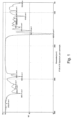
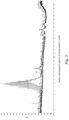
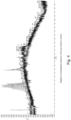
- Graphs are attached to the present description relating to the characterization of a sample of yarn according to the invention.
- Graphs are attached to the present description relating to the characterization of a sample of yarn according to the invention.
- the yarn according to the invention comprises two fundamental materials, such as acacia gum and polyamide. Such two components allow to have a transparent or almost transparent yarn which has both the features of a natural fibre and the technical properties of a synthetic fibre.
- An example of yarn according to the invention is made by means of thermal extrusion, inside an extruder, of a base material.
- Such a base material includes the combination of powdered acacia gum (in such an example, acacia gum means acacia gum mixed with a preservative or bactericidal substance and subsequently such mixture is made powdered; alternatively, the acacia gum can be pure or mixed with other substances), preferably of the Kordofan type and powdered polyamide, which substantially acts as a hot-melt adhesive.
- acacia gum means acacia gum mixed with a preservative or bactericidal substance and subsequently such mixture is made powdered; alternatively, the acacia gum can be pure or mixed with other substances
- PEG polyethylene glycol
- capryl/capric triglyceride triglyceride of fatty acids derived from coconut and palm oil suitable for cosmetic use
- 99.5% urea bleached vinegar, polyphosphates (for example E450 80% and E339 20%), turpentine essence are added.
- the mixing process of the base material components is as follows.
- acacia gum-based material substantially comprises acacia gum and may contain a bactericidal or preservative substance, such as 2,4dimethylbenzoic acid.
- the polyphosphates are mainly used as emulsifiers, stabilizers, and acidity regulators. They are used to bind metal ions, prevent drying and the formation of lumps which can originate in the creation of the final product. They also facilitate the extrusion step by decreasing the viscosity generated by the acacia gum.
- the vinegar contains 80% water, amino acids, mineral salts. It is used as a catalyst, as it pushes the reaction between the polyamide and the acacia gum while maintaining an acid pH so that the acacia gum does not lose its viscosity.
- the turpentine essence is used to facilitate the extrusion process, to give brightness and increase the transparency effect of the yarn.
- 6.6 g of polyethylene glycol (PEG), 7 g of 99.5% urea and 0.6 g of capryl/capric triglyceride are mixed. Such a third mixture is heated to a melting temperature comprised between about 145°-150°C.
- PEG has a high mobility in solution, and being a polymerizing agent, it facilitates the bond between the polyamide and the acacia gum.
- the triglyceride gives a silky touch to the yarn and is also used as a solubilizing agent for less soluble active substances.
- the first two powder mixtures are added to the third mixture, which are also mixed, to form a homogeneous and viscous mass. Such a mass is transferred while still hot onto a die for forming pellets of base material to be extruded.
- the extrusion step includes the base-material pellet inside an extruder, for example of the screw type.
- the extruder has a pellet loading hopper, which feeds a heated extrusion chamber, inside which there is an extrusion screw which advances the pellet, melting it.
- the extrusion chamber has two heating zones, in sequence: a first zone set at a temperature comprised between 96°C and 108°C and a second zone set at a temperature comprised between 52°C and 75°C. At the end of the chamber, the molten material reaches the extrusion die, from which the yarn emerges.
- the analysis was carried out directly on the solid sample received using the ATR accessory.
- Such a technique performs a first chromatographic separation of the analytes by means of the UHPLC system. Subsequently the analytes are desorbed from the ESI (electron spray ionization) source and enter the QTOF system, where they are further separated by the first quadrupole based on their mass/charge ratio and finally by the time-of-flight analyser, which allows to obtain a high resolution of the molecular ions, allowing the identification of the raw formula. All the ions in both positive and negative modes are acquired with a mass charge ratio comprised between 50 and 1200 Da.
- ESI electron spray ionization
- Figure 1 shows the spectrum of the IR analysis and can be traced back to that of a polyamide polymer.
- the absorption bands of acacia gum are less intense with respect to polyamide.
- the yarn sample was also subjected to DSC analysis with the following thermal programme: - 1st heating from -60 °C to 155 °C, 20 °C/min in N2 - Cooling from 155 °C to - 60 °C, - 20 °C/min in N2 - 2nd heating from - 60 °C to 155 °C, 20 °C/min in N2. The result can be seen in figure 2 .
- the analysis was conducted up to 155°C because beyond that, the sample material degrades.
- the sample also shows an endothermic peak in the second heating at 33.9°C. such a very small transition is due to the gummy fraction of the sample (at the end of the analysis the DSC capsule was opened and gummy residue was observed).
- Figure 3 shows the positive chromatographic spectrum of the yarn extract in solvent relating to the characterization in HPLC/MS-MS. The analysis was conducted on the extract in ethanol after a 200-factor dilution. The compounds found are attributable to polyamide and PEG.
- Figure 4 shows the negative chromatographic spectrum of the yarn extract in solvent relating to the characterization in HPLC/MS-MS.
- the production steps are substantially the same as previously described.
- the starting materials are for example the following:
- the yarn which is the object of this invention can be placed between natural vegetable yarns and synthetic yarns, as it has a natural vegetable component and a synthetic component.
- the yarn according to the invention is an absolute novelty with respect to the existing yarns because in order to give the fabric the desired effect, it must not be coloured so as to remain transparent and so as to create a fabric with a particular depth effect. or three-dimensionality.
- the invention finds application mainly in the textile field; in fact, it can be used in clothing by using it for making clothes, bags and umbrellas, and for making all clothing accessories; in the furnishing fabrics sector to make curtains, rugs and upholstery for furnishings, in the beauty sector to make wigs and extensions, and lastly in the vehicle interior upholstery sector. Furthermore, the material according to the invention can be used for packaging and objects.
Landscapes
- Chemical & Material Sciences (AREA)
- Chemical Kinetics & Catalysis (AREA)
- General Chemical & Material Sciences (AREA)
- Engineering & Computer Science (AREA)
- Textile Engineering (AREA)
- Treatments For Attaching Organic Compounds To Fibrous Goods (AREA)
Claims (9)
- Textilgarn, umfassend Akaziengummi zwischen 10% und 80% Gewichtsanteilen des Gewichts (w/w) des Garns und Polyamid zwischen 75% und 5% (w/w).
- Textilgarn nach Anspruch 1, wobei das Garn mindestens 20% w/w Akaziengummi oder mindestens 30% w/w Akaziengummi oder mindestens 40% w/w Akaziengummi umfasst.
- Textilgarn nach einem oder mehreren der vorhergehenden Ansprüche, wobei das Garn mindestens 10% w/w Polyamid oder mindestens 20% w/w Polyamid oder mindestens 40% w/w Polyamid umfasst.
- Textilgarn nach einem oder mehreren der vorhergehenden Ansprüche, ferner umfassend eine polymerisierende Substanz, vorzugsweise Polyethylenglykol, vorzugsweise in einer Menge von mindestens 5% w/w.
- Textilgarn nach einem oder mehreren der vorhergehenden Ansprüche, ferner umfassend Triglyceride, vorzugsweise vom Capryl -/Capric-Typ, vorzugsweise bezogen auf Fettsäuren, die aus Kokosnuss- und Palmöl gewonnen werden, vorzugsweise in Mengen von mindestens 0,2 % w/w.
- Textilgarn nach einem oder mehreren der vorhergehenden Ansprüche, ferner umfassend eine bakterizide oder konservierende Substanz, vorzugsweise in einer Menge zwischen 0,1% und 10% Gewichtsanteile des Garngewichts, wobei es sich bei dieser Substanz vorzugsweise um 2,4-Dimethylbenzoesäure handelt; wobei diese Substanz vorzugsweise vor dem Garnherstellungsschritt mit Akaziengummi kombiniert wird.
- Textilgarn nach einem oder mehreren der vorhergehenden Ansprüche, wobei das Polyamid Caprolactam und Laurinlactam enthält, und wobei Caprolactam vorzugsweise zwischen 50% und70 % des Polyamids und Laurinlactam zwischen 30% und 50% des Polyamids enthält.
- Textilgarn nach einem oder mehreren der vorhergehenden Ansprüche, dadurch gekennzeichnet, dass es transparent oder zumindest teilweise transparent ist.
- Textilgarn nach einem oder mehreren der vorhergehenden Ansprüche, mit einer metrischen Feinheit zwischen 2000 Nm und 50000 Nm und bevorzugter zwischen 3000 Nm und 30000 Nm und noch bevorzugter zwischen 5000 Nm und 22000 Nm.
Applications Claiming Priority (1)
| Application Number | Priority Date | Filing Date | Title |
|---|---|---|---|
| IT102022000017400A IT202200017400A1 (it) | 2022-08-18 | 2022-08-18 | Filato tessile |
Publications (3)
| Publication Number | Publication Date |
|---|---|
| EP4324964A1 EP4324964A1 (de) | 2024-02-21 |
| EP4324964B1 true EP4324964B1 (de) | 2025-03-26 |
| EP4324964C0 EP4324964C0 (de) | 2025-03-26 |
Family
ID=83691247
Family Applications (1)
| Application Number | Title | Priority Date | Filing Date |
|---|---|---|---|
| EP23191623.0A Active EP4324964B1 (de) | 2022-08-18 | 2023-08-16 | Textilgarn |
Country Status (2)
| Country | Link |
|---|---|
| EP (1) | EP4324964B1 (de) |
| IT (1) | IT202200017400A1 (de) |
Family Cites Families (3)
| Publication number | Priority date | Publication date | Assignee | Title |
|---|---|---|---|---|
| DE1047372B (de) * | 1957-03-18 | 1958-12-24 | Bayer Ag | Verfahren zur Herstellung glasklar transparenter Polyamiddraehte |
| FR2886949B1 (fr) * | 2005-06-10 | 2007-08-03 | Rhodia Chimie Sa | Fils, filaments et fibres polyamide a proprietes ameliorees |
| WO2008039671A2 (en) * | 2006-09-19 | 2008-04-03 | Invista Technologies S.A.R.L. | Polyamide composition with improved heat stability and whiteness |
-
2022
- 2022-08-18 IT IT102022000017400A patent/IT202200017400A1/it unknown
-
2023
- 2023-08-16 EP EP23191623.0A patent/EP4324964B1/de active Active
Also Published As
| Publication number | Publication date |
|---|---|
| EP4324964C0 (de) | 2025-03-26 |
| EP4324964A1 (de) | 2024-02-21 |
| IT202200017400A1 (it) | 2024-02-18 |
Similar Documents
| Publication | Publication Date | Title |
|---|---|---|
| DE69612397T2 (de) | Mischung eines kunststoffes mit einer farbstoff-dentrimer kombination | |
| EP4324964B1 (de) | Textilgarn | |
| Basak et al. | Wastage pomegranate rind extracts (PRE): a one step green solution for bioactive and naturally dyed cotton substrate with special emphasis on its fire protection efficacy | |
| EP3022274A1 (de) | Verfahren zur herstellung von flammgeschützten copolyamiden, die danach erhältlichen polyamidgarne sowie deren verwendung | |
| DE2141059A1 (de) | Schwerentflammbare faden und filmbil dende Polyester | |
| CN108251911B (zh) | 一种抗菌阻燃pet纤维及其制备方法 | |
| EP2695975A2 (de) | Kunstfaser mit pflanzlichen fettsäuren und herstellungsverfahren dafür | |
| EA006401B1 (ru) | Замедлитель горения полимерных материалов | |
| DE102020104592A1 (de) | Recyclingverfahren für Mischgewebe | |
| DE2353821A1 (de) | Verfahren zur herstellung von schwer entzuendbaren fasern und faeden auf celluloseund polynosebasis | |
| DE3686250T2 (de) | Copolyamide und verfahren zu deren herstellung. | |
| CN1240896C (zh) | 一种高色牢度原液染色合成革及其制造方法 | |
| DE60114946T2 (de) | Planare Struktur auf Linoleum-Basis, ein Verfahren zur Herstellung einer solchen planaren Struktur, als auch die Verwendung der planaren Struktur | |
| CN105131488A (zh) | 一种可见光激发的铕配合物荧光薄膜及制备方法和应用 | |
| CH650523A5 (de) | Phthaloperinon-farbstoffe. | |
| Liu et al. | Effect of recycled polypropylene on migration of six processing aids in polypropylene film to milk | |
| DE2646902A1 (de) | In der masse gefaerbte kunststoffe | |
| CN103483776B (zh) | 稀土发光的纺粘非织造布及其制造方法、组合物 | |
| DE60027754T2 (de) | Verfahren zur herstellung von photolumineszenten polarisatoren | |
| CN112662039A (zh) | 一种力学性能优良的阻燃eva及其制备方法 | |
| KR100292004B1 (ko) | 원적외선방사물질이함유된솜과그의제조방법 | |
| CN1034594A (zh) | 织物阻燃整理剂的制备与用法 | |
| KR20190119946A (ko) | 실리카 표면에 안정하게 흡착시킨 치자 적색소 및 이를 함유하는 화장료 조성물 | |
| US942395A (en) | Method of improving textile fibers, threads, and fabrics. | |
| CN120384415A (zh) | 一种敏化聚酯辐照交联阻燃防熔滴的方法 |
Legal Events
| Date | Code | Title | Description |
|---|---|---|---|
| PUAI | Public reference made under article 153(3) epc to a published international application that has entered the european phase |
Free format text: ORIGINAL CODE: 0009012 |
|
| STAA | Information on the status of an ep patent application or granted ep patent |
Free format text: STATUS: THE APPLICATION HAS BEEN PUBLISHED |
|
| AK | Designated contracting states |
Kind code of ref document: A1 Designated state(s): AL AT BE BG CH CY CZ DE DK EE ES FI FR GB GR HR HU IE IS IT LI LT LU LV MC ME MK MT NL NO PL PT RO RS SE SI SK SM TR |
|
| STAA | Information on the status of an ep patent application or granted ep patent |
Free format text: STATUS: REQUEST FOR EXAMINATION WAS MADE |
|
| 17P | Request for examination filed |
Effective date: 20240620 |
|
| RBV | Designated contracting states (corrected) |
Designated state(s): AL AT BE BG CH CY CZ DE DK EE ES FI FR GB GR HR HU IE IS IT LI LT LU LV MC ME MK MT NL NO PL PT RO RS SE SI SK SM TR |
|
| GRAP | Despatch of communication of intention to grant a patent |
Free format text: ORIGINAL CODE: EPIDOSNIGR1 |
|
| STAA | Information on the status of an ep patent application or granted ep patent |
Free format text: STATUS: GRANT OF PATENT IS INTENDED |
|
| RIC1 | Information provided on ipc code assigned before grant |
Ipc: D01F 9/16 20060101ALI20241004BHEP Ipc: D01F 6/60 20060101ALI20241004BHEP Ipc: D01F 1/10 20060101AFI20241004BHEP |
|
| INTG | Intention to grant announced |
Effective date: 20241017 |
|
| GRAS | Grant fee paid |
Free format text: ORIGINAL CODE: EPIDOSNIGR3 |
|
| GRAA | (expected) grant |
Free format text: ORIGINAL CODE: 0009210 |
|
| STAA | Information on the status of an ep patent application or granted ep patent |
Free format text: STATUS: THE PATENT HAS BEEN GRANTED |
|
| AK | Designated contracting states |
Kind code of ref document: B1 Designated state(s): AL AT BE BG CH CY CZ DE DK EE ES FI FR GB GR HR HU IE IS IT LI LT LU LV MC ME MK MT NL NO PL PT RO RS SE SI SK SM TR |
|
| REG | Reference to a national code |
Ref country code: GB Ref legal event code: FG4D |
|
| REG | Reference to a national code |
Ref country code: CH Ref legal event code: EP |
|
| REG | Reference to a national code |
Ref country code: DE Ref legal event code: R096 Ref document number: 602023002579 Country of ref document: DE |
|
| REG | Reference to a national code |
Ref country code: IE Ref legal event code: FG4D |
|
| U01 | Request for unitary effect filed |
Effective date: 20250415 |
|
| U07 | Unitary effect registered |
Designated state(s): AT BE BG DE DK EE FI FR IT LT LU LV MT NL PT RO SE SI Effective date: 20250422 |
|
| PG25 | Lapsed in a contracting state [announced via postgrant information from national office to epo] |
Ref country code: RS Free format text: LAPSE BECAUSE OF FAILURE TO SUBMIT A TRANSLATION OF THE DESCRIPTION OR TO PAY THE FEE WITHIN THE PRESCRIBED TIME-LIMIT Effective date: 20250626 |
|
| PG25 | Lapsed in a contracting state [announced via postgrant information from national office to epo] |
Ref country code: NO Free format text: LAPSE BECAUSE OF FAILURE TO SUBMIT A TRANSLATION OF THE DESCRIPTION OR TO PAY THE FEE WITHIN THE PRESCRIBED TIME-LIMIT Effective date: 20250626 |
|
| PG25 | Lapsed in a contracting state [announced via postgrant information from national office to epo] |
Ref country code: HR Free format text: LAPSE BECAUSE OF FAILURE TO SUBMIT A TRANSLATION OF THE DESCRIPTION OR TO PAY THE FEE WITHIN THE PRESCRIBED TIME-LIMIT Effective date: 20250326 |
|
| PG25 | Lapsed in a contracting state [announced via postgrant information from national office to epo] |
Ref country code: GR Free format text: LAPSE BECAUSE OF FAILURE TO SUBMIT A TRANSLATION OF THE DESCRIPTION OR TO PAY THE FEE WITHIN THE PRESCRIBED TIME-LIMIT Effective date: 20250627 |
|
| U20 | Renewal fee for the european patent with unitary effect paid |
Year of fee payment: 3 Effective date: 20250723 |
|
| PG25 | Lapsed in a contracting state [announced via postgrant information from national office to epo] |
Ref country code: SM Free format text: LAPSE BECAUSE OF FAILURE TO SUBMIT A TRANSLATION OF THE DESCRIPTION OR TO PAY THE FEE WITHIN THE PRESCRIBED TIME-LIMIT Effective date: 20250326 |
|
| PG25 | Lapsed in a contracting state [announced via postgrant information from national office to epo] |
Ref country code: ES Free format text: LAPSE BECAUSE OF FAILURE TO SUBMIT A TRANSLATION OF THE DESCRIPTION OR TO PAY THE FEE WITHIN THE PRESCRIBED TIME-LIMIT Effective date: 20250326 |
|
| PG25 | Lapsed in a contracting state [announced via postgrant information from national office to epo] |
Ref country code: PL Free format text: LAPSE BECAUSE OF FAILURE TO SUBMIT A TRANSLATION OF THE DESCRIPTION OR TO PAY THE FEE WITHIN THE PRESCRIBED TIME-LIMIT Effective date: 20250326 |
|
| PG25 | Lapsed in a contracting state [announced via postgrant information from national office to epo] |
Ref country code: SK Free format text: LAPSE BECAUSE OF FAILURE TO SUBMIT A TRANSLATION OF THE DESCRIPTION OR TO PAY THE FEE WITHIN THE PRESCRIBED TIME-LIMIT Effective date: 20250326 |
|
| PG25 | Lapsed in a contracting state [announced via postgrant information from national office to epo] |
Ref country code: IS Free format text: LAPSE BECAUSE OF FAILURE TO SUBMIT A TRANSLATION OF THE DESCRIPTION OR TO PAY THE FEE WITHIN THE PRESCRIBED TIME-LIMIT Effective date: 20250726 |
|
| PG25 | Lapsed in a contracting state [announced via postgrant information from national office to epo] |
Ref country code: CZ Free format text: LAPSE BECAUSE OF FAILURE TO SUBMIT A TRANSLATION OF THE DESCRIPTION OR TO PAY THE FEE WITHIN THE PRESCRIBED TIME-LIMIT Effective date: 20250326 |
|
| PLBE | No opposition filed within time limit |
Free format text: ORIGINAL CODE: 0009261 |
|
| STAA | Information on the status of an ep patent application or granted ep patent |
Free format text: STATUS: NO OPPOSITION FILED WITHIN TIME LIMIT |
|
| REG | Reference to a national code |
Ref country code: CH Ref legal event code: L10 Free format text: ST27 STATUS EVENT CODE: U-0-0-L10-L00 (AS PROVIDED BY THE NATIONAL OFFICE) Effective date: 20260211 |