EP4257553A1 - Positivelektrodenaktivmaterial, lithiumsekundärbatterie und verfahren zur herstellung eines positivelektrodenaktivmaterials - Google Patents
Positivelektrodenaktivmaterial, lithiumsekundärbatterie und verfahren zur herstellung eines positivelektrodenaktivmaterials Download PDFInfo
- Publication number
- EP4257553A1 EP4257553A1 EP21900301.9A EP21900301A EP4257553A1 EP 4257553 A1 EP4257553 A1 EP 4257553A1 EP 21900301 A EP21900301 A EP 21900301A EP 4257553 A1 EP4257553 A1 EP 4257553A1
- Authority
- EP
- European Patent Office
- Prior art keywords
- positive electrode
- active material
- electrode active
- lithium
- secondary battery
- Prior art date
- Legal status (The legal status is an assumption and is not a legal conclusion. Google has not performed a legal analysis and makes no representation as to the accuracy of the status listed.)
- Pending
Links
Images





Classifications
-
- H—ELECTRICITY
- H01—ELECTRIC ELEMENTS
- H01M—PROCESSES OR MEANS, e.g. BATTERIES, FOR THE DIRECT CONVERSION OF CHEMICAL ENERGY INTO ELECTRICAL ENERGY
- H01M4/00—Electrodes
- H01M4/02—Electrodes composed of, or comprising, active material
- H01M4/36—Selection of substances as active materials, active masses, active liquids
- H01M4/48—Selection of substances as active materials, active masses, active liquids of inorganic oxides or hydroxides
- H01M4/50—Selection of substances as active materials, active masses, active liquids of inorganic oxides or hydroxides of manganese
- H01M4/505—Selection of substances as active materials, active masses, active liquids of inorganic oxides or hydroxides of manganese of mixed oxides or hydroxides containing manganese for inserting or intercalating light metals, e.g. LiMn2O4 or LiMn2OxFy
-
- C—CHEMISTRY; METALLURGY
- C01—INORGANIC CHEMISTRY
- C01G—COMPOUNDS CONTAINING METALS NOT COVERED BY SUBCLASSES C01D OR C01F
- C01G45/00—Compounds of manganese
- C01G45/12—Complex oxides containing manganese and at least one other metal element
- C01G45/1221—Manganates or manganites with trivalent manganese, tetravalent manganese or mixtures thereof
- C01G45/1228—Manganates or manganites with trivalent manganese, tetravalent manganese or mixtures thereof of the type (MnO2)-, e.g. LiMnO2 or Li(MxMn1-x)O2
-
- H—ELECTRICITY
- H01—ELECTRIC ELEMENTS
- H01M—PROCESSES OR MEANS, e.g. BATTERIES, FOR THE DIRECT CONVERSION OF CHEMICAL ENERGY INTO ELECTRICAL ENERGY
- H01M10/00—Secondary cells; Manufacture thereof
- H01M10/05—Accumulators with non-aqueous electrolyte
- H01M10/052—Li-accumulators
-
- H—ELECTRICITY
- H01—ELECTRIC ELEMENTS
- H01M—PROCESSES OR MEANS, e.g. BATTERIES, FOR THE DIRECT CONVERSION OF CHEMICAL ENERGY INTO ELECTRICAL ENERGY
- H01M10/00—Secondary cells; Manufacture thereof
- H01M10/42—Methods or arrangements for servicing or maintenance of secondary cells or secondary half-cells
- H01M10/44—Methods for charging or discharging
- H01M10/446—Initial charging measures
-
- H—ELECTRICITY
- H01—ELECTRIC ELEMENTS
- H01M—PROCESSES OR MEANS, e.g. BATTERIES, FOR THE DIRECT CONVERSION OF CHEMICAL ENERGY INTO ELECTRICAL ENERGY
- H01M4/00—Electrodes
- H01M4/02—Electrodes composed of, or comprising, active material
- H01M4/13—Electrodes for accumulators with non-aqueous electrolyte, e.g. for lithium-accumulators; Processes of manufacture thereof
- H01M4/131—Electrodes based on mixed oxides or hydroxides, or on mixtures of oxides or hydroxides, e.g. LiCoOx
-
- H—ELECTRICITY
- H01—ELECTRIC ELEMENTS
- H01M—PROCESSES OR MEANS, e.g. BATTERIES, FOR THE DIRECT CONVERSION OF CHEMICAL ENERGY INTO ELECTRICAL ENERGY
- H01M4/00—Electrodes
- H01M4/02—Electrodes composed of, or comprising, active material
- H01M4/36—Selection of substances as active materials, active masses, active liquids
- H01M4/58—Selection of substances as active materials, active masses, active liquids of inorganic compounds other than oxides or hydroxides, e.g. sulfides, selenides, tellurides, halogenides or LiCoFy; of polyanionic structures, e.g. phosphates, silicates or borates
- H01M4/583—Carbonaceous material, e.g. graphite-intercalation compounds or CFx
-
- H—ELECTRICITY
- H01—ELECTRIC ELEMENTS
- H01M—PROCESSES OR MEANS, e.g. BATTERIES, FOR THE DIRECT CONVERSION OF CHEMICAL ENERGY INTO ELECTRICAL ENERGY
- H01M4/00—Electrodes
- H01M4/02—Electrodes composed of, or comprising, active material
- H01M4/64—Carriers or collectors
- H01M4/66—Selection of materials
- H01M4/661—Metal or alloys, e.g. alloy coatings
-
- H—ELECTRICITY
- H01—ELECTRIC ELEMENTS
- H01M—PROCESSES OR MEANS, e.g. BATTERIES, FOR THE DIRECT CONVERSION OF CHEMICAL ENERGY INTO ELECTRICAL ENERGY
- H01M50/00—Constructional details or processes of manufacture of the non-active parts of electrochemical cells other than fuel cells, e.g. hybrid cells
- H01M50/10—Primary casings; Jackets or wrappings
- H01M50/102—Primary casings; Jackets or wrappings characterised by their shape or physical structure
- H01M50/105—Pouches or flexible bags
-
- C—CHEMISTRY; METALLURGY
- C01—INORGANIC CHEMISTRY
- C01P—INDEXING SCHEME RELATING TO STRUCTURAL AND PHYSICAL ASPECTS OF SOLID INORGANIC COMPOUNDS
- C01P2002/00—Crystal-structural characteristics
- C01P2002/70—Crystal-structural characteristics defined by measured X-ray, neutron or electron diffraction data
- C01P2002/72—Crystal-structural characteristics defined by measured X-ray, neutron or electron diffraction data by d-values or two theta-values, e.g. as X-ray diagram
-
- C—CHEMISTRY; METALLURGY
- C01—INORGANIC CHEMISTRY
- C01P—INDEXING SCHEME RELATING TO STRUCTURAL AND PHYSICAL ASPECTS OF SOLID INORGANIC COMPOUNDS
- C01P2006/00—Physical properties of inorganic compounds
- C01P2006/40—Electric properties
-
- H—ELECTRICITY
- H01—ELECTRIC ELEMENTS
- H01M—PROCESSES OR MEANS, e.g. BATTERIES, FOR THE DIRECT CONVERSION OF CHEMICAL ENERGY INTO ELECTRICAL ENERGY
- H01M4/00—Electrodes
- H01M4/02—Electrodes composed of, or comprising, active material
- H01M2004/026—Electrodes composed of, or comprising, active material characterised by the polarity
- H01M2004/028—Positive electrodes
-
- Y—GENERAL TAGGING OF NEW TECHNOLOGICAL DEVELOPMENTS; GENERAL TAGGING OF CROSS-SECTIONAL TECHNOLOGIES SPANNING OVER SEVERAL SECTIONS OF THE IPC; TECHNICAL SUBJECTS COVERED BY FORMER USPC CROSS-REFERENCE ART COLLECTIONS [XRACs] AND DIGESTS
- Y02—TECHNOLOGIES OR APPLICATIONS FOR MITIGATION OR ADAPTATION AGAINST CLIMATE CHANGE
- Y02E—REDUCTION OF GREENHOUSE GAS [GHG] EMISSIONS, RELATED TO ENERGY GENERATION, TRANSMISSION OR DISTRIBUTION
- Y02E60/00—Enabling technologies; Technologies with a potential or indirect contribution to GHG emissions mitigation
- Y02E60/10—Energy storage using batteries
-
- Y—GENERAL TAGGING OF NEW TECHNOLOGICAL DEVELOPMENTS; GENERAL TAGGING OF CROSS-SECTIONAL TECHNOLOGIES SPANNING OVER SEVERAL SECTIONS OF THE IPC; TECHNICAL SUBJECTS COVERED BY FORMER USPC CROSS-REFERENCE ART COLLECTIONS [XRACs] AND DIGESTS
- Y02—TECHNOLOGIES OR APPLICATIONS FOR MITIGATION OR ADAPTATION AGAINST CLIMATE CHANGE
- Y02P—CLIMATE CHANGE MITIGATION TECHNOLOGIES IN THE PRODUCTION OR PROCESSING OF GOODS
- Y02P70/00—Climate change mitigation technologies in the production process for final industrial or consumer products
- Y02P70/50—Manufacturing or production processes characterised by the final manufactured product
Definitions
- the present disclosure relates to a positive electrode active material, a lithium secondary battery, and a method for producing the positive electrode active material.
- Manganese dioxide having a tunnel structure or a layered structure is known as one positive electrode active material for a lithium secondary battery.
- Manganese dioxide has various crystal structures, such as ⁇ -MnO 2 , ⁇ -MnO 2 , and ⁇ -MnO 2 .
- Manganese dioxide is represented in chemical formulae as "MnO 2 ", but is actually a non-stoichiometric compound.
- manganese dioxide does not contain Li
- a lithium secondary battery using manganese dioxide as the positive electrode active material must be in a charged state upon completion of assembly. That is, since it is difficult to use graphite as a negative electrode active material, it is necessary to use Li metal, a LiAl alloy, or the like as the negative electrode active material.
- lithium secondary batteries using Li metal as the negative electrode active material have poor reversibility.
- a Li alloy such as a LiAl alloy
- cycle characteristics at a shallow depth are favorable.
- the battery reaches the end of its life after a small number of charge and discharge cycles. Therefore, a lithium secondary battery using manganese dioxide as the positive electrode active material has been put to practical use only in applications in which charging and discharging are repeated at a shallow depth, for example, memory backup applications.
- PTL 1 discloses that a product obtained by mixing and sintering LiOH and MnO 2 is used as the positive electrode active material. While at first glance the product appears to include LiMnO 2 , in reality, the valence of Mn barely changes from 4 and Li is barely doped into MnO 2 . That is, even when the raw material powders are mixed and fired, LiMnO 2 is not generated, or if generated, only in a very small amount. Therefore, in the examples of PTL 1, a LiPb alloy is used as the negative electrode active material and the battery starts from discharge after assembly.
- NPL 1 demonstrates that the product obtained by mixing and sintering LiOH and MnO 2 is a composite of Li 2 MnO 3 and MnO 2 .
- NPL 1 Nobohiro Furukawa, Toshiyuki Nohma, Kazuo Teraji, Ikuro Nakane, Yuji Yamamoto, Toshihiko Saito; "Lithium-Containing Manganese Dioxide as a Cathode Active Material for Lithium Secondary Batteries”; Electrochemistry and Industrial Physical Chemistry, 57, No. 6, pp. 533-538 (1989 )
- the present disclosure provides LiMnO 2 containing lithium in advance.
- the present disclosure provides a positive electrode active material including Li x Mn y O 2 , wherein 1.012 ⁇ x ⁇ 0.683 and 0.91 ⁇ y ⁇ 1.0.
- the positive electrode active material includes Li x Mn y O 2 containing lithium in advance, it is possible to construct a lithium secondary battery using various negative electrode active materials.
- a secondary battery is required to be sufficiently resistant to charging and discharging at a deep depth.
- MnO 2 may be used for a positive electrode and LiC 6 with Li occluded in advance may be used for a negative electrode.
- LiCe since preparing LiCe is complicated, it is not practical to use LiCe for the negative electrode. Therefore, in order to exhibit satisfactory cycle characteristics at a deep depth using graphite, which is excellent in reversibility, for the negative electrode, it is necessary to include a sufficient amount of Li in MnO 2 as the positive electrode active material and to change the valence of Mn to about 3.
- LiMnO 2 that contains lithium in advance and can start from charging is required.
- a positive electrode active material includes Li x Mn y O 2 , wherein 1.012 ⁇ x ⁇ 0.683 and 0.91 ⁇ y ⁇ 1.0. Since the positive electrode active material includes Li x Mn y O 2 containing lithium in advance, various negative electrode active materials can be used. A lithium secondary battery using Li x Mn y O 2 as the positive electrode active material can start from charging.
- a relationship of 1.012 ⁇ x ⁇ 0.864 may be satisfied. In this case, a capacity density of the lithium secondary battery is further increased.
- the valence of Mn in the positive electrode active material according to the first or second aspect may be between 2.987 and 3.316 (inclusive).
- the valence of Mn changes between 3 and 4, the lithium secondary battery is smoothly charged and discharged.
- the valence of Mn may be between 2.987 and 3.136 (inclusive).
- a method for producing a positive electrode active material according to a fifth aspect of the present disclosure includes bringing MnO 2 into contact with a lithium solution of lithium metal dissolved in an organic solvent.
- the method of the present disclosure makes use of the fact that an organic solvent in which Li metal has been dissolved has a high reducing power.
- the reducing power of the lithium solution lowers the valence of Mn of MnO 2 to 3 and dopes MnO 2 with Li ions in the form of charge compensation.
- MnO 2 is reduced to a valence of 3 due to electrochemical reduction (discharge).
- One electron of Li is taken into MnO 2 .
- MnO 2 may include at least one selected from the group consisting of ⁇ - ⁇ -MnO 2 , ramsdellite, and ⁇ -MnO 2 .
- Ramsdellite, ⁇ - ⁇ -MnO 2 that can be produced from electrolytic manganese dioxide, and ⁇ -MnO 2 that can also be produced from electrolytic manganese dioxide all have a tunnel structure and are inexpensive and readily available.
- the organic solvent may include at least one selected from the group consisting of glyme and a chain carbonate.
- the organic solvent may include at least one selected from the group consisting of triglyme, dimethoxyethane, and methyl ethyl carbonate.
- the organic solvent may include a mixture of triglyme and methyl ethyl carbonate.
- a lithium solution having a high reducing power can be prepared, therefore doping of lithium into MnO 2 can be rapidly advanced.
- the organic solvent may include a mixture of dimethoxyethane and methyl ethyl carbonate.
- the mixture of dimethoxyethane and methyl ethyl carbonate is used, a lithium solution having a high reducing power can be prepared, therefore doping of lithium into MnO 2 can be rapidly advanced.
- the lithium solution may further include an aromatic compound.
- the solution in which the aromatic compound has been dissolved has a property of releasing solvated electrons of lithium and dissolving lithium as a cation.
- the aromatic compound may include benzophenone.
- a lithium secondary battery according to a thirteenth aspect of the present disclosure is provided with a positive electrode including the positive electrode active material according to any one of the first to fourth aspects. Since the positive electrode active material includes Li x Mn y O 2 containing lithium in advance, various negative electrode active materials can be used.
- the positive electrode may include a positive electrode current collector made of aluminum.
- Aluminum and an aluminum alloy are suitable for a material of the positive electrode current collector as they are inexpensive and easily formed into a thin film.
- the lithium battery according to the thirteenth or fourteenth aspect may be in a discharged state upon completion of assembly, and may be capable of starting from charging.
- a material having excellent cycle characteristics such as graphite can be used as the negative electrode active material.
- the lithium battery according to any one of the thirteenth to fifteenth aspects may further include a negative electrode including graphite.
- Graphite is particularly recommended as it is less likely to deteriorate even when charging and discharging are repeated at a deep depth.
- the negative electrode does not need to contain lithium upon completion of assembly.
- a material having excellent cycle characteristics such as graphite can be used as the negative electrode active material.
- Fig. 1 is a cross-sectional view of a lithium secondary battery according to one exemplary embodiment of the present disclosure.
- Lithium secondary battery 10 of the present exemplary embodiment includes negative electrode 13, positive electrode 16, non-aqueous electrolyte 19, separator 17, and exterior 18.
- Negative electrode 13 includes negative electrode current collector 11 and negative electrode active material layer 12.
- Negative electrode active material layer 12 is provided on negative electrode current collector 11.
- Positive electrode 16 includes positive electrode current collector 14 and positive electrode active material layer 15.
- Positive electrode active material layer 15 is provided on positive electrode current collector 14.
- Separator 17 is disposed between negative electrode 13 and positive electrode 16.
- Negative electrode 13 and positive electrode 16 face each other via separator 17.
- Negative electrode 13, positive electrode 16, separator 17, and non-aqueous electrolyte 19 are housed in exterior 18.
- Negative electrode active material layer 12 may include a negative electrode active material capable of occluding and releasing lithium ions.
- Examples of the negative electrode active material capable of occluding and releasing lithium ions include graphite, silicon, silicon-containing oxide, zinc alloy, lithium metal, and lithium alloy. One type selected from these negative electrode active materials may be used, or two or more types selected from these negative electrode active materials may be used in combination.
- Negative electrode active material layer 12 may include graphite as the negative electrode active material. Graphite may be used alone as the negative electrode active material. Graphite is particularly recommended as it is less likely to deteriorate even when charging and discharging are repeated at a deep depth. Negative electrode active material layer 12 may include graphite only as the negative electrode active material. A carbon material other than graphite may be used as the negative electrode active material.
- Negative electrode 13 does not necessarily contain lithium upon completion of assembly of lithium secondary battery 10.
- lithium secondary battery 10 is in a discharged state upon completion of assembly and can start from charging. That is, a material having excellent cycle characteristics such as graphite can be used as the negative electrode active material.
- "Upon completion of assembly” refers to an arbitrary time point in a period from the time point when manufacturing of lithium secondary battery 10 is completed to when an external power source is connected to lithium secondary battery 10 to perform a charging and discharging process.
- Negative electrode active material layer 12 may include a conductive assistant, an ion conductor, a binder, and the like.
- the conductive assistant and the ion conductor are used to reduce the resistance of negative electrode 13.
- a carbon material such as carbon black, graphite, acetylene black, carbon nanotubes, carbon nanofibers, graphene, fullerene, or graphite oxide, or a conductive polymer compound such as polyaniline, polypyrrole, or polythiophene can be used as the conductive assistant.
- Gel electrolytes such as polymethyl methacrylate or polymethyl methacrylate, organic solid electrolytes such as polyethylene oxide, or inorganic solid electrolytes such as Li 7 La 3 Zr 2 O 12 can be used as the ion conductor.
- the binder is used to improve the binding property of the material constituting negative electrode 13.
- a polymer material such as polyvinylidene fluoride, vinylidene fluoride-hexafluoropropylene copolymer, vinylidene fluoride-tetrafluoroethylene copolymer, polytetrafluoroethylene, carboxymethyl cellulose, polyacrylic acid, styrenebutadiene copolymer rubber, polypropylene, polyethylene, or polyimide can be used as the binder.
- a sheet or film made of a metal material such as stainless steel, nickel, copper, or an alloy of stainless steel, nickel, or copper can be used as negative electrode current collector 11.
- the sheet or film may be porous or non-porous.
- a metal foil, a metal mesh, or the like can be used as the sheet or film.
- a surface of negative electrode current collector 11 may be coated with a carbon material, such as carbon, as a conductive auxiliary material.
- Positive electrode active material layer 15 includes Li x Mn y O 2 , wherein 1.012 ⁇ x ⁇ 0.683 and 0.91 ⁇ y ⁇ 1.0, as the positive electrode active material. Specifically, upon completion of assembly of lithium secondary battery 10, the positive electrode active material has a composition of Li x Mn y O 2 , wherein 1.012 ⁇ x ⁇ 0.683 and 0.91 ⁇ y ⁇ 1.0. Since the positive electrode active material includes Li x Mn y O 2 containing lithium in advance, various negative electrode active materials can be used. When Li x Mn y O 2 is used as the positive electrode active material and graphite is used as the negative electrode active material, lithium secondary battery 10 is in a discharged state upon completion of assembly. Therefore, lithium secondary battery 10 can start from charging after assembly.
- Positive electrode active material layer 15 may include a positive electrode active material other than Li x Mn y O 2 , or it may include only Li x Mn y O 2 as the positive electrode active material.
- the value of z can be 1.92 ⁇ z ⁇ 2.0 (see, for example, Toyo Soda Research Report, Vol. 20, No. 2, P. 133 , Table 1).
- the value of y is 1.82/2.0 ⁇ y ⁇ 2.0/2.0, that is, 0.91 ⁇ y ⁇ 1.0, therefore in Li x Mn y O 2 , y satisfies 0.91 ⁇ y ⁇ 1.0.
- Li x Mn y O 2 a relationship of 1.012 ⁇ x ⁇ 0.864 may be satisfied. In this case, the capacity density of lithium secondary battery 10 is further increased.
- the valence of Mn is, for example, between 2.987 and 3.316 (inclusive).
- the valence of Mn may be between 2.987 and 3.136 (inclusive).
- Positive electrode active material layer 15 may include a conductive assistant, an ion conductor, a binder, and the like. The same materials as the materials that can be used as the conductive assistant, the ion conductor, and the binder in negative electrode active material layer 12 can be used in positive electrode active material layer 15.
- a sheet or film made of a metal material such as aluminum, stainless steel, titanium, or an alloy of aluminum, stainless steel, or titanium can be used as positive electrode current collector 14.
- Aluminum and an aluminum alloy are suitable for the material of positive electrode current collector 14 as they are inexpensive and easily formed into a thin film.
- the sheet or film may be porous or non-porous.
- a metal foil, a metal mesh, or the like can be used as the sheet or film.
- a surface of positive electrode current collector 14 may be coated with a carbon material, such as carbon, as a conductive auxiliary material.
- Non-aqueous electrolyte 19 is, for example, an electrolytic solution that is impregnated into negative electrode 13, positive electrode 16, and separator 17.
- Non-aqueous electrolyte 19 may be filled in an internal space of exterior 18. The action of non-aqueous electrolyte 19 allows lithium ions to move between negative electrode 13 and positive electrode 16.
- Non-aqueous electrolyte 19 includes a non-aqueous solvent and a lithium salt.
- a cyclic carbonate ester, a chain carbonate ester, an ester, a cyclic ether, a chain ether, a nitrile, an amide, and the like can be used as the non-aqueous solvent.
- One type selected from these solvents may be used, or two or more types selected from these solvents may be used in combination.
- Lithium hexafluorophosphate LiPF 6
- LiBF 4 lithium tetrafluoroborate
- LiClO 4 lithium perchlorate
- LiFSI lithium bis(fluorosulfonyl)imide
- LiTFSI lithium bis(trifluoromethanesulfonyl)imide
- LiN(SO 2 C 2 F 5 ) 2 LiAsF 6 , LiCF 3 SO 3 , and lithium difluoro(oxalato)borate
- One type selected from these electrolyte salts may be used, or two or more types selected from these electrolyte salts may be used in combination.
- Separator 17 has lithium ion conductivity.
- the material of separator 17 is not particularly limited, as long as lithium ions are allowed to pass through the material.
- the material of separator 17 may be at least one selected from the group consisting of solid electrolytes, gel electrolytes, an ion exchange resin membrane such as a lithium cation exchange resin, a semipermeable membrane, and a porous membrane. When separator 17 is made of these materials, the safety of lithium secondary battery 10 can be sufficiently ensured.
- the solid electrolytes include sulfide solid electrolytes such as Li 2 S-P 2 S 5 , and oxidic solid electrolytes such as Li 7 La 3 Zr 2 O 12 (LLZ).
- Examples of the gel electrolytes include gel electrolytes including a fluororesin such as PVdF.
- Examples of the ion exchange resin membrane include a cation exchange membrane and an anion exchange membrane.
- Examples of the porous membrane include a porous membrane made of a polyolefin resin and a porous membrane made of glass paper obtained by weaving glass fibers into a nonwoven fabric.
- Exterior 18 is made of, for example, a material obtained by laminating a metal foil, such as an aluminum foil, with a resin film, such as a PET film. Exterior 18 may be a container made of resin or metal.
- a shape of lithium secondary battery 10 is not particularly limited. Various shapes such as a coin shape, a cylindrical shape, a square shape, a sheet shape, a button shape, a flat shape, and a laminated shape may be adopted for the shape of lithium secondary battery 10.
- Lithium secondary battery 10 may be an all-solid-state battery.
- FIG. 2 is a process diagram illustrating the method for producing the positive electrode active material.
- step S1 lithium metal is dissolved in an organic solvent to prepare a lithium solution.
- the lithium solution exhibits a high reducing power.
- At least one selected from the group consisting of glyme and a chain carbonate can be used as the organic solvent.
- These solvents are capable of dissolving an aromatic compound such as benzophenone.
- lithium metal When lithium metal is added to a solution prepared from these solvents and the aromatic compound such as benzophenone, lithium metal gives up valence electrons to the solution and becomes ions.
- the solution that has received the electrons is in a state of being solvated with the electrons, while lithium metal is in a state of being dissolved in the solution.
- a potential of the solution is close to the potential of lithium metal, however the potential value varies depending on the combination of the aromatic compound and the solvent.
- At least one selected from the group consisting of dimethoxyethane, diglyme, triglyme, tetraglyme, and polyethylene glycol dimethyl ether can be used as the glyme.
- At least one selected from the group consisting of methyl ethyl carbonate, diethyl carbonate, and dimethyl carbonate can be used as the chain carbonate.
- the organic solvent includes at least one selected from the group consisting of triglyme, dimethoxyethane and methyl ethyl carbonate.
- the lithium solution may further include an aromatic compound.
- the solution that the aromatic compound is dissolved into has a property of releasing solvated electrons of lithium and dissolving lithium as a cation.
- the aromatic compound has a property of receiving an electron released when lithium is dissolved in the organic solvent as a solvated electron and dissolving in the solvent of the lithium solution.
- a substance amount of lithium equal to the substance amount of the aromatic compound may be dissolved in the organic solvent. For example, when the concentration of the aromatic compound in the lithium solution is 1 mol/liter, the concentration of lithium in the lithium solution is also approximately 1 mol/liter.
- At least one selected from the group consisting of benzophenone, biphenyl, phenanthrene, naphthalene, anthracene, o-terphenyl, triphenylene, trans-stilbene, 2,2'-bipyridine, 4,4'-bipyridine, 3,3'-bipyridine, 2,3'-bipyridine, 2,4'-bipyridine, 3,4'-bipyridine, 1,10-phenanthroline, cis-stilbene, and fluorene can be used as the aromatic compound.
- the aromatic compound may typically be benzophenone.
- An immersion time of MnO 2 in the lithium solution is adjusted in accordance with a type and concentration of the aromatic compound.
- the organic solvent may include a mixture of triglyme and methyl ethyl carbonate.
- a lithium solution having a high reducing power can be prepared, therefore doping of lithium into MnO 2 can be rapidly advanced.
- a mixing ratio of triglyme and methyl ethyl carbonate is not particularly limited and may be adjusted in a range satisfying 0.1 ⁇ (triglyme/methyl ethyl carbonate) ⁇ _ 0.9 in terms of volume ratio.
- the organic solvent may include only triglyme and methyl ethyl carbonate as solvents.
- the organic solvent may include a mixture of dimethoxyethane and methyl ethyl carbonate.
- a lithium solution having a high reducing power can be prepared, therefore doping of lithium into MnO 2 can be rapidly advanced.
- a mixing ratio of dimethoxyethane and methyl ethyl carbonate is not particularly limited and may be adjusted in a range satisfying 0.1 ⁇ (dimethoxyethane/methyl ethyl carbonate) ⁇ _ 0.9 in terms of volume ratio.
- the organic solvent may include only dimethoxyethane and methyl ethyl carbonate as solvents.
- MnO 2 is brought into contact with the lithium solution.
- MnO 2 is immersed in the lithium solution.
- lithium is doped into MnO 2 having a layered structure or a tunnel structure to produce Li x Mn y O 2 .
- the valence of Mn is reduced from 4 to 3.
- MnO 2 may be formed into an electrode shape. That is, an electrode including MnO 2 as an active material may be immersed in the lithium solution.
- the lithium solution may be heated to a temperature higher than room temperature to increase the reaction rate.
- MnO 2 The crystal structure of MnO 2 is not particularly limited. MnO 2 having various crystal structures such as ⁇ -MnO 2 , ⁇ -MnO 2 , ⁇ -MnO 2 , ⁇ -MnO 2 , ⁇ -MnO 2 , ⁇ -MnO 2 , ⁇ - ⁇ -MnO 2 , and R-MnO 2 (ramsdellite-type manganese dioxide) can be used.
- MnO 2 may include a plurality of crystal phases, or it may be a mixed crystal.
- MnO 2 may include at least one selected from the group consisting of ⁇ - ⁇ -MnO 2 , ramsdellite, and ⁇ -MnO 2 .
- Ramsdellite, ⁇ - ⁇ -MnO 2 that can be produced from electrolytic manganese dioxide, and ⁇ -MnO 2 that can also be produced from electrolytic manganese dioxide all have a tunnel structure and are inexpensive and readily available.
- ⁇ - ⁇ -MnO 2 exhibits a highest discharge capacity density when used as an active material of a primary battery. In other words, Mn is easy to reduce.
- ⁇ - ⁇ -MnO 2 represents a mixed crystal of ⁇ -MnO 2 and ⁇ -MnO 2 .
- the "predetermined time” is a time required for doping lithium into MnO 2 until Li x Mn y O 2 , wherein 1.012 ⁇ x ⁇ 0.683 or 0.864, is satisfied.
- a reduction rate of Mn varies depending on conditions such as an intensity of reducibility of the lithium solution, a concentration of lithium in the lithium solution, a temperature of the lithium solution, and a shape (powder or molded body) of MnO 2 . Therefore, the optimal predetermined time is experimentally investigated in advance.
- Li x Mn y O 2 and the lithium solution are separated from each other in step S4.
- Li x Mn y O 2 is washed and dried.
- Li x Mn y O 2 wherein 1.012 ⁇ x ⁇ 0.683 and 0.91 ⁇ y ⁇ 1.0, is obtained as the positive electrode active material.
- Lithium secondary battery 10 described with reference to Fig. 1 can be manufactured using the obtained Li x Mn y O 2 as the positive electrode active material.
- lithium secondary battery 10 can be manufactured using Li x Mn y O 2 , wherein 1.012 ⁇ x ⁇ 0.683 and 0.91 ⁇ y ⁇ 1.0, as the positive electrode active material and graphite as the negative electrode active material. Lithium secondary battery 10 is in a discharged state upon completion of assembly and can start from charging.
- PVdF as a binder, ⁇ - ⁇ -MnO 2 powder, and a solvent were mixed to prepare a slurry.
- the slurry was applied to an Al current collector to form a coating film.
- the coating film was dried and rolled to obtain an electrode having a size of 2 cm ⁇ 2 cm.
- Benzophenone and methyl ethyl carbonate were mixed to prepare a mixed solution.
- a concentration of benzophenone in the mixed solution was 1 mol/liter.
- Li metal was dissolved to a saturation concentration in the mixed solution to prepare the lithium solution.
- a concentration of lithium in the lithium solution was 1 mol/liter.
- the electrode was immersed in the above-described lithium solution for 137.9 days. After 137.9 days had passed, the electrode was removed from the lithium solution, washed with methyl ethyl carbonate, and dried in a vacuum. In this way, the positive electrode of Example 1 was obtained.
- the lithium secondary battery of Example 1 was produced using Li metal and an electrolytic solution as the positive electrode and the negative electrode of Example 1.
- the electrolytic solution was prepared by dissolving LiPF 6 at a concentration of 1 mol/liter in an organic solvent including ethylene carbonate and methyl ethyl carbonate in a volume ratio of 1 : 1.
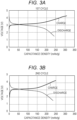
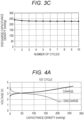
- the obtained lithium secondary battery was subjected to a charging and discharging test. The test began with charging. A charge-discharge current was 0.05 mA, a charge termination voltage was 4.3 V, and a discharge termination voltage was 1.5 V. The results are illustrated in Fig. 3A, Fig. 3B , and Fig. 3C .
- Fig. 3A is a charge-discharge curve at a first cycle of the lithium secondary battery of Example 1.
- Fig. 3B is a charge-discharge curve at a second cycle of the lithium secondary battery of Example 1.
- Fig. 3C is a graph illustrating a relationship between a discharge capacitance density and a number of discharge cycles of the lithium secondary battery of Example 1.
- the horizontal axis represents a capacitance density (mAh/g) of the lithium secondary battery and the vertical axis represents a voltage (V).
- the horizontal axis represents a number of discharges (number of cycles) and the vertical axis represents a discharge capacitance density (mAh/g).
- the lithium secondary battery of Example 1 was in a discharged state immediately after assembly and was able to be charged from the first cycle. This indicates that a sufficient amount of lithium has been doped into MnO 2 to form LiMnO 2 .
- the discharge capacitance density at the first cycle was almost the same as the discharge capacitance density at the second cycle.
- the discharge capacitance density barely changed even when charging and discharging was repeated for 10 cycles.
- a substance amount of Li doped into MnO 2 during a reduction treatment and a valence of Mn were calculated from a charge capacitance density at the first cycle (309.5 mAh/g).
- the substance amount of doped Li was 1.012 mol with respect to 1 mol of MnO 2 .
- the valence of Mn after the reduction treatment was 2.987.
- a mixed solution was prepared by adding benzophenone at a concentration of 1 mol/liter to a mixed solvent including triglyme and methyl ethyl carbonate at a volume ratio of 1 : 1. Li metal was dissolved in the mixed solution to prepare a lithium solution. A concentration of lithium in the lithium solution was 1 mol/liter.
- Example 1 The same electrode as in Example 1 was immersed in the above-described lithium solution for 1.8 days. Thereafter, the lithium secondary battery of Example 2 was produced in the same manner as in Example 1, and a charging and discharging test was performed. The results are illustrated in Fig. 4A , Fig. 4B, and Fig. 4C .
- Fig. 4A , Fig. 4B, and Fig. 4C are graphs illustrating the test results of the same items as Fig. 3A, Fig. 3B , and Fig. 3C , respectively.
- the lithium secondary battery of Example 2 was in a discharged state immediately after assembly and was able to be charged from the first cycle.
- the discharge capacitance density barely changed even when charging and discharging was repeated for 10 cycles.
- the substance amount of Li doped into MnO 2 during the reduction treatment and the valence of Mn were calculated from the charge capacitance density at the first cycle (276 mAh/g). As a result, the substance amount of doped Li was 0.905 mol with respect to 1 mol of MnO 2 .
- the valence of Mn after the reduction treatment was 3.094.
- the time for the reduction treatment in Example 2 was 1.8 days, which was significantly shorter than the time for the reduction treatment in Example 1.
- the lithium secondary battery of Example 3 was produced in the same manner as in Example 2, except that the immersion time of the electrode in the lithium solution was changed to 2.8 days, then the charging and discharging test was performed. The results are illustrated in Fig. 5A , Fig. 5B, and Fig. 5C .
- Fig. 5A , Fig. 5B, and Fig. 5C are graphs illustrating the test results of the same items as Fig. 3A, Fig. 3B , and Fig. 3C , respectively.
- the lithium secondary battery of Example 3 was in a discharged state immediately after assembly and was able to be charged from the first cycle.
- the discharge capacitance density barely changed even when charging and discharging was repeated for 10 cycles.
- the substance amount of Li doped into MnO 2 during the reduction treatment and the valence of Mn were calculated from the charge capacitance density at the first cycle (276 mAh/g). As a result, the substance amount of doped Li was 0.864 mol with respect to 1 mol of MnO 2 .
- the valence of Mn after the reduction treatment was 3.136.
- the time for the reduction treatment in Example 3 was 2.8 days, which was significantly shorter than the time for the reduction treatment in Example 1.
- a treatment liquid was prepared by adding benzophenone at a concentration of 1 mol/liter to a solvent mixture including dimethoxyethane and methyl ethyl carbonate at a volume ratio of 1 : 1. Li metal was dissolved in the treatment liquid to prepare a lithium solution. The concentration of lithium in the lithium solution was 1 mol/liter.
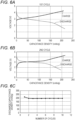
- Example 1 The same electrode as in Example 1 was immersed in the above-described lithium solution for 1.8 days. Thereafter, the lithium secondary battery of Example 4 was produced in the same manner as in Example 1, and a charging and discharging test was performed. The results are illustrated in Fig. 6A, Fig. 6B, and Fig. 6C.
- Fig. 6A, Fig. 6B, and Fig. 6C are graphs illustrating the test results of the same items as Fig. 3A, Fig. 3B , and Fig. 3C , respectively.
- the lithium secondary battery of Example 4 was in a discharged state immediately after assembly and was able to be charged from the first cycle.
- the discharge capacitance density barely changed even when charging and discharging was repeated for 10 cycles.
- the substance amount of Li doped into MnO 2 during the reduction treatment and the valence of Mn were calculated from a charge capacitance density at the first cycle (210.54 mAh/g). As a result, the substance amount of doped Li was 0.683 mol with respect to 1 mol of MnO 2 .
- the valence of Mn after the reduction treatment was 3.316.
- the time for the reduction treatment in Example 4 was 1.8 days, which was significantly shorter than the time for the reduction treatment in Example 1.
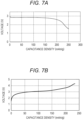
- the lithium secondary battery of Reference Example 1 was produced in the same manner as in Example 1 except that this electrode was used as a positive electrode, then the charging and discharging test was performed. However, the test began with discharging. The results are illustrated in Fig. 7A and Fig. 7B .
- Fig. 7A is a discharge curve at a first cycle of the lithium secondary battery of Reference Example 1.
- Fig. 7B is a charge curve at the first cycle of the lithium secondary battery of Reference Example 1.
- the substance amount of Li doped into the positive electrode in the discharge at the first cycle and the valence of Mn were calculated from the discharge capacitance density at the first cycle. As a result, the substance amount of doped Li was 0.929 mol with respect to 1 mol of MnO 2 .
- the valence of Mn was 3.071.
- the positive electrode active material of Example 2 and the positive electrode active material of Reference Example 1 were subjected to powder X-ray diffraction measurement. The results are illustrated in Fig. 8 .
- the relationship between the results illustrated in Fig. 8 and the samples is as follows.
- the technique of the present disclosure may be applied to a lithium secondary battery.
Landscapes
- Chemical & Material Sciences (AREA)
- Chemical Kinetics & Catalysis (AREA)
- Electrochemistry (AREA)
- General Chemical & Material Sciences (AREA)
- Inorganic Chemistry (AREA)
- Engineering & Computer Science (AREA)
- Organic Chemistry (AREA)
- Materials Engineering (AREA)
- Manufacturing & Machinery (AREA)
- Battery Electrode And Active Subsutance (AREA)
- Secondary Cells (AREA)
Applications Claiming Priority (2)
| Application Number | Priority Date | Filing Date | Title |
|---|---|---|---|
| JP2020200588 | 2020-12-02 | ||
| PCT/JP2021/038343 WO2022118545A1 (ja) | 2020-12-02 | 2021-10-18 | 正極活物質、リチウム二次電池及び正極活物質の製造方法 |
Publications (2)
| Publication Number | Publication Date |
|---|---|
| EP4257553A1 true EP4257553A1 (de) | 2023-10-11 |
| EP4257553A4 EP4257553A4 (de) | 2024-07-24 |
Family
ID=81853621
Family Applications (1)
| Application Number | Title | Priority Date | Filing Date |
|---|---|---|---|
| EP21900301.9A Pending EP4257553A4 (de) | 2020-12-02 | 2021-10-18 | Positivelektrodenaktivmaterial, lithiumsekundärbatterie und verfahren zur herstellung eines positivelektrodenaktivmaterials |
Country Status (5)
| Country | Link |
|---|---|
| US (1) | US20240105932A1 (de) |
| EP (1) | EP4257553A4 (de) |
| JP (1) | JP7788665B2 (de) |
| CN (1) | CN116490466B (de) |
| WO (1) | WO2022118545A1 (de) |
Cited By (1)
| Publication number | Priority date | Publication date | Assignee | Title |
|---|---|---|---|---|
| EP4564502A4 (de) * | 2022-07-25 | 2025-12-17 | Panasonic Ip Man Co Ltd | Lithiumsekundärbatterie und verfahren zur herstellung davon |
Family Cites Families (8)
| Publication number | Priority date | Publication date | Assignee | Title |
|---|---|---|---|---|
| JPS61297116A (ja) | 1985-06-27 | 1986-12-27 | Canon Inc | 射出成形機 |
| AU6878998A (en) * | 1997-04-03 | 1998-10-22 | Kerr-Mcgee Chemical L.L.C. | Lithium manganese oxide compound and method of preparation |
| FR2777387B1 (fr) * | 1998-04-14 | 2000-05-12 | Commissariat Energie Atomique | Accumulateur au lithium fonctionnant entre 1,8 volts et 4,3 volts |
| JP2003086180A (ja) * | 2001-09-11 | 2003-03-20 | Masayuki Yoshio | 非水溶液系二次電池正極活物質およびこれを用いる二次電池 |
| JP2005235416A (ja) * | 2004-02-17 | 2005-09-02 | Nippon Chem Ind Co Ltd | リチウム二次電池正極副活物質用マンガン酸リチウム、リチウム二次電池正極活物質及びリチウム二次電池 |
| JP2012069417A (ja) * | 2010-09-24 | 2012-04-05 | Sanyo Electric Co Ltd | 非水電解質二次電池用正極活物質の製造方法及び正極活物質並びにそれを用いた非水電解質二次電池 |
| JP2014211948A (ja) * | 2011-08-31 | 2014-11-13 | 三洋電機株式会社 | 非水電解質二次電池 |
| JP2019029151A (ja) * | 2017-07-28 | 2019-02-21 | 株式会社豊田中央研究所 | 電極、リチウム二次電池及び電極活物質の製造方法 |
-
2021
- 2021-10-18 WO PCT/JP2021/038343 patent/WO2022118545A1/ja not_active Ceased
- 2021-10-18 JP JP2022566775A patent/JP7788665B2/ja active Active
- 2021-10-18 EP EP21900301.9A patent/EP4257553A4/de active Pending
- 2021-10-18 CN CN202180079369.4A patent/CN116490466B/zh active Active
- 2021-10-18 US US18/254,409 patent/US20240105932A1/en active Pending
Cited By (1)
| Publication number | Priority date | Publication date | Assignee | Title |
|---|---|---|---|---|
| EP4564502A4 (de) * | 2022-07-25 | 2025-12-17 | Panasonic Ip Man Co Ltd | Lithiumsekundärbatterie und verfahren zur herstellung davon |
Also Published As
| Publication number | Publication date |
|---|---|
| CN116490466A (zh) | 2023-07-25 |
| CN116490466B (zh) | 2026-01-16 |
| EP4257553A4 (de) | 2024-07-24 |
| US20240105932A1 (en) | 2024-03-28 |
| JPWO2022118545A1 (de) | 2022-06-09 |
| JP7788665B2 (ja) | 2025-12-19 |
| WO2022118545A1 (ja) | 2022-06-09 |
Similar Documents
| Publication | Publication Date | Title |
|---|---|---|
| KR100943193B1 (ko) | 양극 활물질 및 이를 채용한 리튬 전지 | |
| KR101264332B1 (ko) | 캐소드 활물질 및 이를 채용한 리튬 전지 | |
| KR101578706B1 (ko) | 캐소드 및 이를 채용한 리튬 전지 | |
| KR101430615B1 (ko) | 캐소드 및 이를 채용한 리튬 전지 | |
| JP5972513B2 (ja) | カソード及びこれを採用したリチウム電池 | |
| JP4205863B2 (ja) | リチウム2次電池用有機電解液及びこれを採用したリチウム2次電池 | |
| KR101206037B1 (ko) | 리튬 전지용 캐소드 활물질, 이를 포함하는 캐소드 및 이를채용한 리튬 전지 | |
| KR20080109298A (ko) | 복합 활물질을 포함하는 캐소드 및 이를 채용한 리튬 전지 | |
| JP6365305B2 (ja) | リチウム二次電池 | |
| KR100379979B1 (ko) | 무수 전해질 2차 전지 | |
| US20110143192A1 (en) | Negative electrode active material for lithium ion secondary battery and lithium ion secondary battery using the same | |
| KR100323002B1 (ko) | 캐소드활성물질의제조방법및비수성전해액이차전지 | |
| US12206091B2 (en) | Lithium molybdate anode material | |
| US20110136001A1 (en) | Negative electrode active material for lithium ion secondary battery and lithium ion secondary battery using the same | |
| EP4257553A1 (de) | Positivelektrodenaktivmaterial, lithiumsekundärbatterie und verfahren zur herstellung eines positivelektrodenaktivmaterials | |
| KR100396491B1 (ko) | 리튬 이차 전지 | |
| KR20110011497A (ko) | 양극활물질, 이를 포함하는 양극 및 상기 양극을 채용한 리튬전지 | |
| US20200106096A1 (en) | Positive active material for potassium secondary battery and potassium secondary battery including the same | |
| JP6453105B2 (ja) | 非水電解質二次電池 | |
| JP3577744B2 (ja) | リチウム二次電池正極材料およびニッケル酸リチウムの製造方法 | |
| EP4564502A1 (de) | Lithiumsekundärbatterie und verfahren zur herstellung davon | |
| KR101408043B1 (ko) | 캐소드 및 이를 채용한 리튬 전지 | |
| JP2020035633A (ja) | 二次電池用正極活物質及びそれを用いた二次電池 | |
| CN107437618A (zh) | 电化学装置 | |
| WO2025243830A1 (ja) | リチウム二次電池及びその製造方法 |
Legal Events
| Date | Code | Title | Description |
|---|---|---|---|
| STAA | Information on the status of an ep patent application or granted ep patent |
Free format text: STATUS: THE INTERNATIONAL PUBLICATION HAS BEEN MADE |
|
| PUAI | Public reference made under article 153(3) epc to a published international application that has entered the european phase |
Free format text: ORIGINAL CODE: 0009012 |
|
| STAA | Information on the status of an ep patent application or granted ep patent |
Free format text: STATUS: REQUEST FOR EXAMINATION WAS MADE |
|
| 17P | Request for examination filed |
Effective date: 20230522 |
|
| AK | Designated contracting states |
Kind code of ref document: A1 Designated state(s): AL AT BE BG CH CY CZ DE DK EE ES FI FR GB GR HR HU IE IS IT LI LT LU LV MC MK MT NL NO PL PT RO RS SE SI SK SM TR |
|
| DAV | Request for validation of the european patent (deleted) | ||
| DAX | Request for extension of the european patent (deleted) | ||
| A4 | Supplementary search report drawn up and despatched |
Effective date: 20240621 |
|
| RIC1 | Information provided on ipc code assigned before grant |
Ipc: H01M 10/058 20100101ALI20240617BHEP Ipc: H01M 10/0525 20100101ALI20240617BHEP Ipc: H01M 4/66 20060101ALI20240617BHEP Ipc: H01M 4/505 20100101ALI20240617BHEP Ipc: H01M 4/131 20100101ALI20240617BHEP Ipc: C01G 45/12 20060101AFI20240617BHEP |