EP4252749A1 - Pharmaceutical composition of naphthalene derivatives as multi-target therapeutic agents for the treatment of alzheimer's disease - Google Patents
Pharmaceutical composition of naphthalene derivatives as multi-target therapeutic agents for the treatment of alzheimer's disease Download PDFInfo
- Publication number
- EP4252749A1 EP4252749A1 EP21848149.7A EP21848149A EP4252749A1 EP 4252749 A1 EP4252749 A1 EP 4252749A1 EP 21848149 A EP21848149 A EP 21848149A EP 4252749 A1 EP4252749 A1 EP 4252749A1
- Authority
- EP
- European Patent Office
- Prior art keywords
- pharmaceutical composition
- compound
- disease
- alzheimer
- acts
- Prior art date
- Legal status (The legal status is an assumption and is not a legal conclusion. Google has not performed a legal analysis and makes no representation as to the accuracy of the status listed.)
- Pending
Links
Images






Classifications
-
- A—HUMAN NECESSITIES
- A61—MEDICAL OR VETERINARY SCIENCE; HYGIENE
- A61K—PREPARATIONS FOR MEDICAL, DENTAL OR TOILETRY PURPOSES
- A61K31/00—Medicinal preparations containing organic active ingredients
- A61K31/21—Esters, e.g. nitroglycerine, selenocyanates
- A61K31/27—Esters, e.g. nitroglycerine, selenocyanates of carbamic or thiocarbamic acids, meprobamate, carbachol, neostigmine
-
- A—HUMAN NECESSITIES
- A61—MEDICAL OR VETERINARY SCIENCE; HYGIENE
- A61K—PREPARATIONS FOR MEDICAL, DENTAL OR TOILETRY PURPOSES
- A61K31/00—Medicinal preparations containing organic active ingredients
- A61K31/16—Amides, e.g. hydroxamic acids
- A61K31/165—Amides, e.g. hydroxamic acids having aromatic rings, e.g. colchicine, atenolol, progabide
- A61K31/167—Amides, e.g. hydroxamic acids having aromatic rings, e.g. colchicine, atenolol, progabide having the nitrogen of a carboxamide group directly attached to the aromatic ring, e.g. lidocaine, paracetamol
-
- A—HUMAN NECESSITIES
- A61—MEDICAL OR VETERINARY SCIENCE; HYGIENE
- A61K—PREPARATIONS FOR MEDICAL, DENTAL OR TOILETRY PURPOSES
- A61K31/00—Medicinal preparations containing organic active ingredients
- A61K31/185—Acids; Anhydrides, halides or salts thereof, e.g. sulfur acids, imidic, hydrazonic or hydroximic acids
- A61K31/19—Carboxylic acids, e.g. valproic acid
- A61K31/195—Carboxylic acids, e.g. valproic acid having an amino group
- A61K31/196—Carboxylic acids, e.g. valproic acid having an amino group the amino group being directly attached to a ring, e.g. anthranilic acid, mefenamic acid, diclofenac, chlorambucil
-
- A—HUMAN NECESSITIES
- A61—MEDICAL OR VETERINARY SCIENCE; HYGIENE
- A61K—PREPARATIONS FOR MEDICAL, DENTAL OR TOILETRY PURPOSES
- A61K47/00—Medicinal preparations characterised by the non-active ingredients used, e.g. carriers or inert additives; Targeting or modifying agents chemically bound to the active ingredient
- A61K47/06—Organic compounds, e.g. natural or synthetic hydrocarbons, polyolefins, mineral oil, petrolatum or ozokerite
- A61K47/08—Organic compounds, e.g. natural or synthetic hydrocarbons, polyolefins, mineral oil, petrolatum or ozokerite containing oxygen, e.g. ethers, acetals, ketones, quinones, aldehydes, peroxides
- A61K47/10—Alcohols; Phenols; Salts thereof, e.g. glycerol; Polyethylene glycols [PEG]; Poloxamers; PEG/POE alkyl ethers
-
- A—HUMAN NECESSITIES
- A61—MEDICAL OR VETERINARY SCIENCE; HYGIENE
- A61K—PREPARATIONS FOR MEDICAL, DENTAL OR TOILETRY PURPOSES
- A61K47/00—Medicinal preparations characterised by the non-active ingredients used, e.g. carriers or inert additives; Targeting or modifying agents chemically bound to the active ingredient
- A61K47/06—Organic compounds, e.g. natural or synthetic hydrocarbons, polyolefins, mineral oil, petrolatum or ozokerite
- A61K47/16—Organic compounds, e.g. natural or synthetic hydrocarbons, polyolefins, mineral oil, petrolatum or ozokerite containing nitrogen, e.g. nitro-, nitroso-, azo-compounds, nitriles, cyanates
- A61K47/18—Amines; Amides; Ureas; Quaternary ammonium compounds; Amino acids; Oligopeptides having up to five amino acids
- A61K47/183—Amino acids, e.g. glycine, EDTA or aspartame
-
- A—HUMAN NECESSITIES
- A61—MEDICAL OR VETERINARY SCIENCE; HYGIENE
- A61K—PREPARATIONS FOR MEDICAL, DENTAL OR TOILETRY PURPOSES
- A61K47/00—Medicinal preparations characterised by the non-active ingredients used, e.g. carriers or inert additives; Targeting or modifying agents chemically bound to the active ingredient
- A61K47/06—Organic compounds, e.g. natural or synthetic hydrocarbons, polyolefins, mineral oil, petrolatum or ozokerite
- A61K47/16—Organic compounds, e.g. natural or synthetic hydrocarbons, polyolefins, mineral oil, petrolatum or ozokerite containing nitrogen, e.g. nitro-, nitroso-, azo-compounds, nitriles, cyanates
- A61K47/18—Amines; Amides; Ureas; Quaternary ammonium compounds; Amino acids; Oligopeptides having up to five amino acids
- A61K47/186—Quaternary ammonium compounds, e.g. benzalkonium chloride or cetrimide
-
- A—HUMAN NECESSITIES
- A61—MEDICAL OR VETERINARY SCIENCE; HYGIENE
- A61K—PREPARATIONS FOR MEDICAL, DENTAL OR TOILETRY PURPOSES
- A61K47/00—Medicinal preparations characterised by the non-active ingredients used, e.g. carriers or inert additives; Targeting or modifying agents chemically bound to the active ingredient
- A61K47/06—Organic compounds, e.g. natural or synthetic hydrocarbons, polyolefins, mineral oil, petrolatum or ozokerite
- A61K47/22—Heterocyclic compounds, e.g. ascorbic acid, tocopherol or pyrrolidones
-
- A—HUMAN NECESSITIES
- A61—MEDICAL OR VETERINARY SCIENCE; HYGIENE
- A61K—PREPARATIONS FOR MEDICAL, DENTAL OR TOILETRY PURPOSES
- A61K47/00—Medicinal preparations characterised by the non-active ingredients used, e.g. carriers or inert additives; Targeting or modifying agents chemically bound to the active ingredient
- A61K47/06—Organic compounds, e.g. natural or synthetic hydrocarbons, polyolefins, mineral oil, petrolatum or ozokerite
- A61K47/26—Carbohydrates, e.g. sugar alcohols, amino sugars, nucleic acids, mono-, di- or oligo-saccharides; Derivatives thereof, e.g. polysorbates, sorbitan fatty acid esters or glycyrrhizin
-
- A—HUMAN NECESSITIES
- A61—MEDICAL OR VETERINARY SCIENCE; HYGIENE
- A61K—PREPARATIONS FOR MEDICAL, DENTAL OR TOILETRY PURPOSES
- A61K47/00—Medicinal preparations characterised by the non-active ingredients used, e.g. carriers or inert additives; Targeting or modifying agents chemically bound to the active ingredient
- A61K47/30—Macromolecular organic or inorganic compounds, e.g. inorganic polyphosphates
- A61K47/36—Polysaccharides; Derivatives thereof, e.g. gums, starch, alginate, dextrin, hyaluronic acid, chitosan, inulin, agar or pectin
- A61K47/38—Cellulose; Derivatives thereof
-
- A—HUMAN NECESSITIES
- A61—MEDICAL OR VETERINARY SCIENCE; HYGIENE
- A61K—PREPARATIONS FOR MEDICAL, DENTAL OR TOILETRY PURPOSES
- A61K9/00—Medicinal preparations characterised by special physical form
- A61K9/0012—Galenical forms characterised by the site of application
- A61K9/0043—Nose
-
- A—HUMAN NECESSITIES
- A61—MEDICAL OR VETERINARY SCIENCE; HYGIENE
- A61K—PREPARATIONS FOR MEDICAL, DENTAL OR TOILETRY PURPOSES
- A61K9/00—Medicinal preparations characterised by special physical form
- A61K9/0012—Galenical forms characterised by the site of application
- A61K9/0053—Mouth and digestive tract, i.e. intraoral and peroral administration
-
- A—HUMAN NECESSITIES
- A61—MEDICAL OR VETERINARY SCIENCE; HYGIENE
- A61K—PREPARATIONS FOR MEDICAL, DENTAL OR TOILETRY PURPOSES
- A61K9/00—Medicinal preparations characterised by special physical form
- A61K9/20—Pills, tablets, discs, rods
- A61K9/2004—Excipients; Inactive ingredients
- A61K9/2009—Inorganic compounds
-
- A—HUMAN NECESSITIES
- A61—MEDICAL OR VETERINARY SCIENCE; HYGIENE
- A61K—PREPARATIONS FOR MEDICAL, DENTAL OR TOILETRY PURPOSES
- A61K9/00—Medicinal preparations characterised by special physical form
- A61K9/20—Pills, tablets, discs, rods
- A61K9/2004—Excipients; Inactive ingredients
- A61K9/2013—Organic compounds, e.g. phospholipids, fats
- A61K9/2018—Sugars, or sugar alcohols, e.g. lactose, mannitol; Derivatives thereof, e.g. polysorbates
-
- A—HUMAN NECESSITIES
- A61—MEDICAL OR VETERINARY SCIENCE; HYGIENE
- A61K—PREPARATIONS FOR MEDICAL, DENTAL OR TOILETRY PURPOSES
- A61K9/00—Medicinal preparations characterised by special physical form
- A61K9/20—Pills, tablets, discs, rods
- A61K9/2004—Excipients; Inactive ingredients
- A61K9/2022—Organic macromolecular compounds
- A61K9/2027—Organic macromolecular compounds obtained by reactions only involving carbon-to-carbon unsaturated bonds, e.g. polyvinyl pyrrolidone, poly(meth)acrylates
-
- A—HUMAN NECESSITIES
- A61—MEDICAL OR VETERINARY SCIENCE; HYGIENE
- A61K—PREPARATIONS FOR MEDICAL, DENTAL OR TOILETRY PURPOSES
- A61K9/00—Medicinal preparations characterised by special physical form
- A61K9/20—Pills, tablets, discs, rods
- A61K9/2004—Excipients; Inactive ingredients
- A61K9/2022—Organic macromolecular compounds
- A61K9/205—Polysaccharides, e.g. alginate, gums; Cyclodextrin
- A61K9/2054—Cellulose; Cellulose derivatives, e.g. hydroxypropyl methylcellulose
-
- A—HUMAN NECESSITIES
- A61—MEDICAL OR VETERINARY SCIENCE; HYGIENE
- A61P—SPECIFIC THERAPEUTIC ACTIVITY OF CHEMICAL COMPOUNDS OR MEDICINAL PREPARATIONS
- A61P25/00—Drugs for disorders of the nervous system
- A61P25/28—Drugs for disorders of the nervous system for treating neurodegenerative disorders of the central nervous system, e.g. nootropic agents, cognition enhancers, drugs for treating Alzheimer's disease or other forms of dementia
Definitions
- the present invention is related to Pharmaceutical Chemistry and refers to the pharmaceutical composition of the compounds of Formula I, which show multi-target action on the different mechanisms of the cholinergic, glutamatergic and mitochondrial systems that are affected by Alzheimer's disease (AD).
- the formulation of these compounds increases efficacy and tolerance through their oral, sublingual, parenteral, transdermal and nasal administration.
- This invention is particularly useful to provide an effective formulation, in which the compounds of Formula I, their salts, hydrates, enantiomers, isomers, metabolites, and prodrugs for administration to humans, are considered as active substances or principles for the treatment of AD.
- AD Alzheimer's disease
- AD has a high incidence in the population over 60 years of age (between 50% - 60%).
- This disease leads to progressive dementia, characterized by the occurrence of amnesic episodes, disorientation, executive and cognitive function disorders, hallucinations, depression and agitation.
- AD Alzheimer's disease
- ⁇ A ⁇ -Amyloid peptides
- tau protein ⁇ -Amyloid peptides
- amyloid fibers or plaques sequentially generates the complement activation, microglia, the release of cytokines (chemokines), and finally, diffuse neurotoxicity ( Reitz C. in International Journal of Alzheimer's disease. 2012 Jan; 2012: 369808 ; Rodrigue K. in Neuropsychol Rev. 2009 December; 19 (4): 436-450.
- cytokines such as tumor necrosis factor ⁇ (TNF ⁇ ), interleukin 1 (IL1), as well as reactive oxygen species (EROS) and nitrogen (ENSO), which are involved in AD.
- TNF ⁇ tumor necrosis factor ⁇
- IL1 interleukin 1
- EROS reactive oxygen species
- ENSO nitrogen
- Mitochondrial dysfunctions are described as an early event in the pathophysiology of AD and appear before ⁇ A deposition and memory deficit in AD patients and transgenic mice ( Maurer, I., et al. in Neurobiol. Aging 2000, 21, 455-462 ; Caspersen, C. et al. in FASEB J. 2005, 19, 2040-2041 ; Mosconi, L et al. in Ann. NY Acad. Sci. 2008, 1147, 180-195 ).
- ⁇ A oligomers accumulate in mitochondria, leading to impaired energy metabolism, increased oxidative stress (OE), and apoptosis ( Lustbader, et al.
- a possible mechanism of mitochondrial dysfunction is related to the opening of the mitochondrial permeability transition pore (mPTP), which can be triggered by Ca 2+ and EO overload ( Kroemer, G. and Reed, JC in Nat. Med. 2000, 6, 513-519 ) and that induces the release of pro-apoptotic factors, such as the proapotic protein Bax that contributes to the formation of mPTP ( Jürgensmeier, JM, et al. in Proc. Natl. Acad. Sci. USA, 1998, 95, 4997-5002 ; March, I., et al. in Science 1998, 281, 2027-2031 ; Narita, M., et al. in Proc. Natl. Acad. Sci.
- mPTP mitochondrial permeability transition pore
- cytochrome c which promotes apoptosis, is released by binding to the apoptosis protease activating factor (APAf-1) and forming a complex known as "apoptosome" ( Liu, X., et al. in Cell 1996, 86, 147-157 ; Yang, J., et al. in Science 1997, 275, 1129-1132 ).
- APAf-1 apoptosis protease activating factor
- ROS generated by the electronic transport chain and / or by intracellular pathways linked to the activation of the glutamate receptor could be the cause of the degeneration of neurons ( Villegas S. in Medicina Clinica, 2015, 145, 2, 76-83 ).
- AD Alzheimer's disease
- acetylcholinesterase inhibitors AChEI
- NMDAr N-methyl-D-aspartic acid receptor antagonists
- the AChEIs are donepezil, rivastigmine, and galantamine. Their action mechanism is to increase cholinergic transmission by inhibiting acetylcholinesterase in the synaptic cleft and, therefore, they could increase the cognitive capacity of patients with AD.
- AChEIs are available in various formulations that include immediate release forms, such as tablets, capsules and solutions, as well as the controlled release form for oral administration, among others ( Villegas S. in Medicina Clinica, 2015, 145, 2, 76-83 ). However, these AChEIs offer only moderate clinical benefit for some patients, even when these drugs are administered at their maximum doses for safety and tolerability.
- these compounds cause side effects including anorexia, nausea, vomiting, diarrhea, abdominal pain, and weight loss (in Physicians Desk Reference 2008 , Thomson PDR et al. in Clinical Geriatrics: Volume 2011, 19, 1 ; Ali T. et al. in PLOS ONE, 2015, 7, 1-10 ; Tsoi KKF in JAMDA, 1-7, 2015, doi: 10.1016 / j.jamda.2015.08.007 ).
- NMDAr are ionotropic receptors for glutamate, a neurotransmitter that acts as an essential component in neuronal synaptic plasticity and memory.
- Memantine an antagonist of these receptors, is used in clinical practice for its neuroprotective effect indicated in moderate to severe AD (National Institute for Clinical Excellence. Technology appraisal guidance 217. Donepezil, galantamine, rivastigmine and memantine for the treatment of Alzheimer's disease at www.nice.org.uk / guidance / TA217; O'Brien JT, et al. in J Psychopharmacol Oxf Engl. 2011; 25: 997-1019 ; Francis PT et al. in Trends Pharmacol Sci.
- Carrazana et al. declare the synthesis of new neutral, lipophilic and low molecular weight compounds that cross the blood-brain barrier (BBB) and adhere to amyloid plaques, and that are used as diagnostic agents, through SPECT, PET and MRI techniques, for the visualization of these structures.
- BBB blood-brain barrier
- these compounds can be used as therapeutic agents for Alzheimer's and Parkinson's diseases.
- the delayed or modified acting excipients that are used to formulate matrix tablets can be insoluble or inert polymer matrices, lipid or water insoluble matrices or hydrophilic matrices.
- Hydrophilic matrices are obtained by mixing the active principle with hydrophilic polymers, which gives rise to polymeric matrices.
- Cellulose ethers are hydrophilic polymers widely used in the development of controlled release systems, being biologically compatible and non-toxic.
- HPMC hydroxypropylmethylcellulose
- HPC hydroxypropylcellulose
- HPC hydroxypropylcellulose
- CMC Na sodium carboxymethylcellulose
- MC methylcellulose
- EC ethylcellulose
- microcrystalline cellulose polysaccharides and their derivatives polyethylene glycine oxides, polyethylene glycols chitosan, poly (vinyl alcohol), xanthan gum, maleic anhydride copolymers, poly (vinyl pyrrolidone), starch and starch-based polymers, maltodextrins, poly (2-ethyl-2-oxazoline), poly (ethyleneimine), hydrogels polyurethane, cross-linked polyacrylic acids and their derivatives.
- the other two direct pathways are the olfactory pathway and the trigeminal-neural pathway, by which the drug travels in part from the nasal cavity to the cerebrospinal fluid (CSF) and brain tissue ( Thorne RG, et al. in Neuroscience 2004; 127: 481-496 ).
- CSF cerebrospinal fluid
- Thorne RG, et al. in Neuroscience 2004; 127: 481-496 To achieve drug delivery to the CNS, drugs must penetrate efficiently and rapidly through the nasal mucosa.
- the design of the dosage form plays a critical role in pharmacokinetics and bioavailability after intranasal administration. The retention of the drug in the place of absorption and the intimate contact are two important factors to take into account in the formulation.
- absorption promoters that produce reversible modifications of the epithelial barrier, increase the permeability of this barrier by modifying the lipid membrane, increase its fluidity, or open the intercellular spaces, which increases paracellular transport.
- absorption promoters that produce reversible modifications of the epithelial barrier, increase the permeability of this barrier by modifying the lipid membrane, increase its fluidity, or open the intercellular spaces, which increases paracellular transport.
- These compounds are related to an increase in tissue damage, however, some compounds such as chitosan, cyclodextrins and some phospholipid derivatives, present an increase in absorption and bioavailability, which outweigh any negative effect derived from the modification of the mucosa ( Pires, A. et al. in J Pharm. Pharmaceut Sci. 2009; 12 (3): 288-311 ; Casettari, L. and Illum, L. in J. Control. Release 2014, 190, 189-200 ).
- Mucoadhesive compounds allow the binding of the pharmaceutical form to the mucosa layer, which increases the contact time between the mucosa and the drug, and favors absorption.
- These include agarose, chitosan, gelatin, carrageenan, pectin, cellulose derivatives, polyacrylates, PEG, methacrylate, acrylic acid, PVA aminodextran, chitosan-EDTA, PAC, alginate, carboxymethylcellulose and its sodium form (CMC and Na-CMC), hydroxyethylated starch, polyvinylpyrrolidone (PVP), thiolated polymers, polyacrylic acid, ( Mansuri, S. et al. in React. Funct. Polym. 100 (2016) 481151 - 172 ).
- the intranasal route can be used for the transport of drugs of low molecular mass (less than 1000 Da) ( Behl CR, et al. in Adv Drug Del Rev 1998; 29 (1): 89-116 ).
- drugs of low molecular mass less than 1000 Da
- Behl CR, et al. in Adv Drug Del Rev 1998; 29 (1): 89-116 Various patents declare different approaches to the delivery of these small molecules to the CNS.
- Quay, S.C. et al. (in US20030225031A1 (2003 ) and in US20060003989A1 (2006)) claim pharmaceutical compositions for the treatment of dementia, AD, learning disorders, nicotine withdrawal syndrome by acetylcholinesterase inhibitors (donepezil, tacrine, rivastigmine, galantamine, among others), which comprises a liquid solution, gel or powder for the nasal administration of the drug and a permeability enhancer for the transmucosal absorption of the drug in the CSF by intranasal administration.
- acetylcholinesterase inhibitors donepezil, tacrine, rivastigmine, galantamine, among others
- a permeability enhancer for the transmucosal absorption of the drug in the CSF by intranasal administration.
- NMDA N-methyl-D-aspartate
- MAO monoamine oxidase
- GADPH GADPH
- the present invention is related to Pharmaceutical Chemistry and refers to the pharmaceutical composition of the compounds of Formula I, which show multi-target target action on the cholinergic, glutamatergic and mitochondrial systems that are affected in Alzheimer's disease (AD).
- the formulation of these compounds increases efficacy and tolerance through their oral, sublingual, parenteral, transdermal and nasal administration.
- alkyl is characterized by being a linear or branched aliphatic chain of saturated carbon atoms and hydrogen atoms, preferably methyl or ethyl.
- alkylenyl refers to a divalent analog of a linear or branched alkyl group, preferably methyleneyl (-CH 2 -), ethylenyl (-CH 2 CH 2 -), or propylenyl (-CH 2 CH 2 CH 2 -).
- the formulated compounds of Formula I can be used alone as a substitute for the multi-therapy that is used today, where a combination of several active principles is used to improve the symptoms of AD.
- the compounds of Formula I individually present anticholinergic, antioxidant, antiglutamatergic and anti-inflammatory activity, which makes them potent active principles for the monotherapy of AD.
- they are capable of inhibiting amyloidogenic peptide aggregation and plaque formation (in WO2010118706 A4 ). With this, the patient receives a monotherapy, which significantly improvement the clinical symptoms and the biological alterations present in the brain of the subjects suffering from AD.
- the formulation presented of the compounds of Formula I, their salts, hydrates, enantiomers, isomers, metabolites, prodrugs for their administration to humans, as active substances or principles for the treatment of AD, allows to increase the bioavailability, the time of residence of the active principle, and adequate excretion which increases the efficacy, biosafety, adherence and tolerance to treatment, through oral, sublingual, parenteral, transdermal and nasal administration.
- the compounds of Formula I can be conveniently prepared as described in Cuban patent No. 2009-57, PCT-CU2010-000001.
- Figure 2 shows the effect of compound 1 on the dissipation of the mitochondrial membrane potential ( ⁇ ), related to the flow of electrons through the protein complexes of the electron transport chain (CTE).
- Mitochondria treated with ethylene-bis (oxyethyleneitrile) tetraacetic acid (EGTA) show the least dissipation of mitochondrial potential, as this is the control group of the experiment.
- EGTA acts as a chelator of the Ca 2+ pollutant in the reaction medium, so that the mitochondria are in their best state and retain their potential to the maximum.
- the EGTA + 3-chlorophenyldrazone carbonyl cyanide (CCCP) control is the group where mitochondrial damage occurs, because the CCCP dissipates ⁇ by acting as an oxidative phosphorylation uncoupler.
- Compound 1 in the concentration range from 0.1 ⁇ mol/L to 100 ⁇ mol/L shows similar potential dissipation values to the control group (EGTA). According to these results, compound 1, in the dose range tested, decreases the susceptibility to dissipation of the potential.
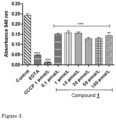
- Figure 3 shows the results of the evaluation of mitochondrial swelling induced by 50 ⁇ mol/L of Ca 2+ and 2 mmol/L of inorganic phosphate (Pi), which was evaluated spectrophotometrically from the decrease in absorbance at 540 nm.
- the maximum absorbance values are shown, as a measure of maximum swelling.
- the samples treated with EGTA showed low absorbance values (p ⁇ 0.001), as this was the undamaged control.
- the group treated with CCCP also shows low absorbance values (p ⁇ 0.001), since when uncoupling it prevents the entry of Ca 2+ ions, and thus prevents mitochondrial swelling.
- Compound 1 at similar concentrations reverses the effect of Ca 2+ -induced swelling, so it can be considered as a protector of mitochondrial integrity and functionality.
- GFAD glia acidic fibrillar protein
- Behavioral assessment in the acute ESC model was performed using the "spatial version" of the Y-maze, which assesses short-term spatial memory ( McGaugh JL, in Science, 153 (1966) 1351 ), and is based on the ability to the animals in spontaneously recognizing new spaces within the maze.
- the memory evaluated in this protocol involves the function of the hippocampus ( Csiszar A., et al. in Am. J. Physiol. Heart Circ. Physiol. (2013), 305 H1120-1130 ; Olton DS and Paras BC, in Neuropsychologia, 17 (1979) 669-682 .)
- Figure 5 shows the results of the behavioral test in the Y-maze of the compound methyl (2 - ⁇ [4- (1-naphthylamino) -4-oxobutanoyl] amino ⁇ ethyl) dithio carbamate ( 3 ), evaluated in the ESC model.
- the control group animals have a preference for the novel arm, which was evidenced by a significant decrease in the time spent in the two family arms (p ⁇ 0.001).
- This preferential behavioral profile was not reproduced with the administration of ESC 30 minutes before training. In this case, the time spent in the novel arm decreased, with no statistically significant differences being observed with respect to the other two arms.
- This protocol has been validated in elderly (15-18 months) triple transgenic (3xTG) mice.
- the criterion that is evaluated is the difference and/or the ratio of the escape latencies: that of the last test of the training with the visible platform and that of the first test with the hidden platform (24 hours later).
- animals that develop a correct spatial strategy move rapidly towards the hidden platform area, indicating that they keep their long-term memory capacity intact.
- animals that take time to locate the hidden platform have long-term spatial memory failures, with higher escape latencies.
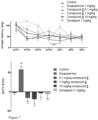
- Figure 7 shows the results of the behavioral evaluation of compound 3 in the acute ESC model using the MWM.
- the results indicate that the mice administered with ESC have long-term spatial memory deficits, but not those treated with compound 3 .
- the arithmetic difference, as well as the ratio of the latency time of the last test of the training with the visible platform and that of the first test with the hidden platform shows that the group treated with compound 3 differs significantly from the group with ESC. In this way, the results of this experiment confirm those obtained in the previous experience on short-term spatial memory.
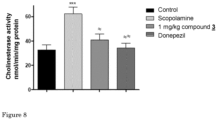
- the AChE activity ( ⁇ mol/L/min/mg of protein) was determined ex vivo, in samples of soluble fraction of brain homogenates ( Figure 8 , Non-limiting Example 3). The results show that there was a significant increase (p ⁇ 0.001) in AChE activity in the ESC treated group compared to the control group. However, AChE activity was surprisingly significantly reduced in the group treated with 3 (p ⁇ 0.05), compared to the ESC group, and as expected in the one treated with donezepil (p ⁇ 0.01).
- the chronic ESC model has recently emerged as another alternative in the experimental evaluation of new agents for the treatment of AD ( Klinkenberg I and Blokland A, in Neurosci Biobehav Rev 2010, 34 (8): 1307-1350 ).
- cognitive dysfunction is induced by administering serial doses of ESC (i.p.) for 10 consecutive days, at the rate of once daily administration.
- serial doses of ESC i.p.
- a degeneration of the cholinergic system occurs such as; an increase in the activity/expression of acetylcholinesterase, a decrease in the activity / expression of the synthesis enzyme cholinoacetyltransferase and a deficit in the active consumption of choline at the presynaptic terminal level ( Haider, S. et al. in Brain research bulletin, 2016, 127, 234-247 ).
- There is also an increase in the expression of the amyloid precursor protein (A ⁇ PP) and the presence of aggregates ⁇ A and hyperphosphorylated tau Bihaqi SW, et al. in Indian J. Pharmacol. 2012, 44 (5): 593-598 ; Ramandeep K, et al. in Int J Prev Med Res. 2015. Vol. 1, No. 2, pp. 45-64 ).
- Figure 9 shows the results of the long-term memory behavioral assessment of compound 3 in the chronic ESC model (1.5 mg/kg daily dose, 2 weeks).
- Compound 3 was given three days before ESC administration and during the next two weeks of ESC.
- the MWM results indicate the memory deficit of the mice administered with ESC.
- the ratio of the first escape latency of the test with the hidden platform (T7) and the last test with the visible platform (T6 ) significantly decreased compared to the ESC group.
- the results indicate that the 1 mg/kg dose behaves as the maximum effect dose.
- the results show that in this model a degeneration of the cholinergic system is induced, evidenced by the detriment of long-term spatial memory in MWM, which is prevented with the use of compound 3 .
- glutamate receptor-mediated excitotoxicity may underlie the pathophysiology of a number of neurological abnormalities, including AD and Parkinson's disease (PD).
- Glutamate plays a central role in neurodevelopment, transmission and synaptic plasticity under normal physiological conditions. Also, this neurotransmitter is involved in memory and learning processes. In acute cytotoxic events such as hypoxia-ischemia or in chronic neurodegenerative diseases such as Alzheimer's and Parkinson's, glutamate concentrations rise in brain tissue, in response to different noxas, and this phenomenon triggers neuronal death, especially due to increased intracellular Ca 2+ concentrations.
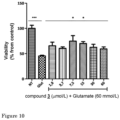
- the compounds of Formula I have surprisingly been found, in in vitro tests, to have a neuroprotective effect against glutamate-induced excitotoxic damage, as shown in a non-limiting manner in Example 5 and Figure 10 .
- SH cells -SY5Y were pre-treated with compound 3 (1.8-60 ⁇ mol/L) for 24 hours, and subsequently co-incubated with the same concentrations of 3 and 60 mmol/L of glutamate (24 hours).
- Compound 3 significantly decreased (p ⁇ 0.05) neuronal death at concentrations of 7.5 and 15 ⁇ mol/L.
- Excitotoxic cell death is also affected by other receptors in the glutamatergic system.
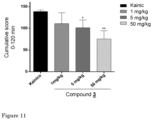
- KA kainic acid
- AMPA ⁇ -amino-3-hydroxy-5-methyl-4-isoxazolepropionic acid
- Rodent administration of KA is known to induce recurrent seizures, behavioral changes, and subsequent degeneration of neurons, specifically of the CA1 and CA3 regions of the hippocampus ( Wang Q, et al. In Mol Neurobiol. 2005, 31: 3-16 ).
- the neuronal death induced by KA is accompanied by an increase in the activation of microglia and astrocytes, increasing the generation of inflammatory cytokines ( Chen, Z. et al. In J. Neurobiol., 2005, 62 (2), 207-218 ).
- the activation of KA receptors produces the depolarization of the mitochondrial membrane and as a result, the alteration of intracellular Ca 2+ concentrations ( Brorson, JR et al. in J. Neurosci., 1994, 14 (1), 187-197 ). Therefore, damage is induced in mitochondrial function ( Wang, Q. et al. in Mol.
- the compounds of Formula I have not been formulated so far, so the pharmaceutical compositions of this invention are unique, which take into consideration the physico-chemical properties of these compounds and, in a singular way, the weight ratios of the ingredients in the compositions.
- the formulations presented guarantee the properties of these multi-target therapeutic agents with anticholinergic, antioxidant, antiglutamatergic and anti-inflammatory action.
- These formulations allow a sustained dose over time of effective plasma concentrations of the active ingredient, which ensure its efficacy, not described so far, and allow increasing adherence and tolerance through its oral, sublingual, parenteral, transdermal and nasal administration.
- the pharmaceutical formulations of the compounds of Formula I , their salts, hydrates, enantiomers, isomers, metabolites, prodrugs for administration to humans, of the present invention include suitable excipients and can be in solid, semisolid, gelatinous or liquid form, such as tablets, capsules, suspensions, emulsions, parenteral solutions, transdermal patches, nasal solutions, mucoadhesives, among others.
- the formulation will contain 0.1 to 99%, preferably 1 to 80% active compound, together with the vehicle or components of the formulation.
- Excipients are liquid, solid or semisolid auxiliary substances, compounds of an organic and inorganic nature, of natural or synthetic origin, physiologically acceptable and commonly used in the formulation of active principles.
- a pharmaceutical form of choice in this invention is tablets, which will be administered at least once a day and contain a therapeutically active ingredient selected from the group of compounds of Formula I , or a pharmaceutically acceptable salt thereof, and a pharmaceutically acceptable carrier of solid, semi-solid, gelatinous or liquid polymeric matrix.
- the dosage forms of the invention sustain the release of the therapeutically active agent between 2 to 24 hours when said form is exposed to aqueous solutions. After the administration of said formulation, the dissolution rate of the active principle is more than 80% between 6 and 18 hours, and the effective plasma level of the drug is maintained for 24 hours.
- the active ingredient is present in amounts of approximately 1 to 100 mg per formulation.
- the tablets in particular use as polymers: polyethylene oxide, hydroxypropylmethylcellulose (HPMC), hydroxypropylcellulose (HPC), sodium carboxymethyl cellulose (CCNa), cellulose derivatives, Eudragit RS PO, polyvinylpyrrolidone or combinations thereof.
- HPMC hydroxypropylmethylcellulose
- HPC hydroxypropylmethylcellulose
- HPC hydroxypropylcellulose
- CCNa sodium carboxymethyl cellulose
- cellulose derivatives cellulose derivatives
- Eudragit RS PO polyvinylpyrrolidone or combinations thereof.
- the polymer is present in amounts ranging from 5% w/w to 80% w/w, preferably from 10% to 70% w/w.
- the polymer is preferably present at 5% w/w to 50% w/w.
- the formulations are prepared in the conventional manner described in the literature.
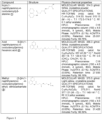
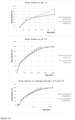
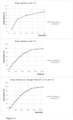
- Figures 12 , 13 and 14 show the controlled release profiles of three tablet formulations, which should not be considered as limiting of this invention (Examples 7, 8 and 9), for obtaining tablets of the active principles : (N-[4-(1-naphthylamino)-4-oxobutanoyl]- ⁇ -alanine ( 1 ), 6- ⁇ [4-(1-naphthylamino) - 4-oxobutanoyl]amino ⁇ hexanoic acid) ( 2 ) and methyl(2- ⁇ [4-(1-naphthylamino)-4-oxobutanoyl]amino ⁇ ethyl)dithiocarbamate ( 3 ).
- formulations contain 10 mg of active principle, and other additives such as starch as a binder, microcrystalline cellulose as a disintegrant, lactose as a diluent, silicon dioxide as a gliding agent and magnesium stearate as a lubricant, in different proportions and it was used as polymeric matrices: HMPC, HPC and Eudragit RS PO.
- Figures 12 , 13 and 14 show that in the three formulations there are two release phases dependent on the pH of the medium.
- the release of the active principles from the matrix was not significant, with less than 1% of the principle released.
- the tablet formulations of the Formula I compounds of this invention have an optimal release profile. It uses accessible polymeric matrices so that the tablets can be produced in a simple and economical way with the incorporation of physiologically compatible components, which provides extended release compositions in two phases, which facilitate the dosage, without producing adverse side effects.
- the transdermal system developed in this invention is made up of the following successive layers: a) lipophilic protective outer layer; b) layer containing the active principle of Formula I , in the form of a gel, suspension, emulsion, or other; where the compound is incorporated into a matrix (which can be acrylic), which ensures its effective storage; c) bifacial controlling membrane that releases the active principle; d) release module, which includes an active principle reservoir and a drug release controller system and is generally made up of a polymeric material (carboxymethylcellulose (CMC), ethylcellulose, gelatin, methylcellulose, starch, etc; synthetic elastomers: polybutadiene, polyisoprene, neoprene, polysiloxane, etc; synthetic polymers: polyvinyl alcohol (PVA), polyethylene, polystyrene, polyurethane, polyvinyl pyrrolidone (PVP), etc.
- CMC carboxymethylcellulose
- PVA polyviny
- hypoallergenic adhesive layer which allows the patch to be fixed by pressure and contains polymers acrylics, hypoallergenic silicone, resins, mineral oils, polyisobutylene, etc. and f) internal protective film, which is removed before applying the system to the skin.
- the coating of these topical patches ensures a continuous and gentle release of the drug, through the skin into the bloodstream; without adverse reactions.
- Two types of patches are declared, according to their size and dosage capacity. One of an area of 5 cm 2 , dose of 5 mg of active principle and release of 4 mg/day of compound. Another with doubled proportions and capacity. Therapy begins with a daily dose of the smaller patch, and after good tolerance and a minimum of 4 weeks, the larger patch (10 cm 2 , 10 mg/24 h) is applied.
- the nasal formulation of the compounds of Formula I, their salts, hydrates, enantiomers, isomers, metabolites, prodrugs for their administration to humans, of the present invention employs different components that function as solvent, bioadhesive, preservative, antioxidant and surfactant/humectant.
- Non-limiting bioadhesive excipients can be: hydroxypropylmethylcellulose (HMPC), hydroxypropylcellulose (HPC), methylcellulose (MC), carboxymethylcellulose (CMC), all of them with concentrations from 0.5 to 7% and derivatives of polyacrylic acid (carbol) from 0.01 to 1.5%.
- PEG is used as a solvent for the active principles.
- Bioadhesive polymers have, in a non-limiting manner, a viscosity of 10 to 60 mPas, with the aim of increasing the residence time in the nasal cavity.
- benzalkonium chloride from 0.005 to 0.5% or in combination with disodium EDTA, in concentrations from 0.002 to 0.2% and propyl paraben from 0.005 to 0.05%, is preferably used.
- the pH was adjusted between 6 and 7.5 using isotonic solutions of phosphate or citrate buffers.
- the isotonizing agents can be: sodium chloride, mannitol, sorbitol, glucose, among others.
- the preferred antioxidant used is tocopherol from 0.05 to 2%. Glycerol from 3 to 6%) and Tween 80 from 0.1 to 0.4% are used as wetting agents, which allow to increase permeability.
- the solvent used in all cases was water for injection.
- Intranasal administration is considered a method of delivering therapeutic agents to the central nervous system (CNS).
- Drug release occurs within minutes along the olfactory and neural trigeminal pathways, extracellular pathways that do not require the drug to bind to any receptor or axonal transport system ( Thorne, RG et al. in Neuroscience. 2002, 127, 481-496 ).
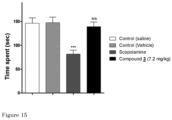
- FIG 15 shows the results of the behavioral evaluation (Y-maze test) of the effect of the compound 3 nasal formulation administration on the amnesia induced by the acute administration of ESC.
- Y-maze test behavioral evaluation
- Mitochondria were isolated by the classical method of differential centrifugation from the liver of male Wistar rats ( Mirandola SR, et al., in J Neurosci Res 2010; 88: 630-39 ).
- Mitochondria were energized with 5 mmol/L potassium succinate (plus 2.5 ⁇ mol/L rotenone) in standard incubation medium containing 125 mmol/L sucrose, 65 mmol/L KCl and 10 mmol/L of HEPES-KOH, pH 7.4, at 30 °C.
- Mitochondrial membrane potential and ROS were determined by spectrophotometry, using as fluorescent probes, respectively, safranin (10 pmol/L) ( Zanotti A., and Azzone GF in Archives of Biochemistry and Biophysics 1980, 201 (1), 255-265j and Amplex Red (Molecular Probes, OR, Eugene ) in the presence of horseradish peroxidase (1 IU/mL) ( Votyakova and Reynolds, in J Neurochem. 2001, 79 (2), 266-77 ).
- mice Young male OF-1 mice (20-25 g), supplied by the National Center for the Laboratory Animals Production (CENPALAB, Cuba), were used. Before the experiment, the animals were adapted for seven days to laboratory conditions (controlled temperature 25 ⁇ 2°C, relative humidity 60 ⁇ 10% and light/dark cycles of 12 h). During this period, and during the experiment, the animals received ad libintum water and a standard diet for rodents supplied by CENPALAB. All procedures were carried out in accordance with the European Commission guidelines for the use and care of laboratory animals and approved by the Committee for the Care of Research Animals. The minimum number of animals and duration of observations required to obtain consistent data was used.
- the animals were randomly distributed according to their body weights in 5 experimental groups of 12 animals per group.
- Scopolamine hydrobromohydrate (ESC, Sigma Aldrich) was used to induce cognitive deficit, which was dissolved in physiological saline and administered intraperitoneally (ip) at a dose of 1.5 mg/kg, 30 minutes before the test ( Miranda HF et al. in. J. Biomed. Sci., 2014 21 (1): 62-62 ).
- the doses of compound 3 used were 0.1, 1, 10 and 20 mg/kg of body weight.
- the compound was formulated using carboxymethyl cellulose (CMC).
- CMC carboxymethyl cellulose
- the study of short-term spatial memory was carried out through the study of novel spatial preference, using the Y-maze behavioral paradigm (40 cm long x 9 cm wide x 16 cm high) with extra-labyrinthine tracks around of the maze.
- the test consisted of two trials separated by an interval of 2 hours.
- the mice were placed in the center of the maze and facing the end of one of the arms whose selection was random. After being positioned, they were allowed to explore the maze for 10 minutes with one of the arms closed (novel arm). At the end of this test, the mice were returned to their original cage until the second test (recovery), during which they could freely explore the three arms of the maze for 5 minutes.
- the total residence time (exploration) in each arm was measured and analyzed from video recordings.
- the entrance to the arm was defined as the entrance of the four legs of the animal in said arm.
- the residence time (sec) in each arm during the recovery test of the learned task was used for the statistical analysis.
- the maze was cleaned with 70% ethanol between runs. All mice were transported to the behavioral testing room in their home cages at least 1 day prior to testing. The experiments were carried out between 8:00 am and 12:30 pm.
- mice were transported to the behavioral testing room in their home cages at least 1 day prior to testing and experiments were conducted between 8:00 am and 12:30 pm.
- the animals were trained according to the criteria in a series of visible platform tests on day 1 (D 1) in a pool of 120 cm in diameter and 51 cm deep with the water temperature of 24 ⁇ 2 °C, where high-contrast visuals signals were placed on the wall in each quadrant and external signs in the room.
- the training phase comprised four tests with the visible platform (V1-V4) and the last test was considered as its basal latency of escape after habituation. This was designated D1V4 (day 1, test visible platform 4).
- the training of the animals was staggered in time so that each mouse had the same interval between tests, that is, 30 ⁇ 10 minutes between each test and was started each time from different positions of the labyrinth selected randomly.
- the platform In order to make the platform visible, it was identified with a high contrast object with respect to the bottom of the tank. Animals that could not escape within 1 minute were manually guided onto the platform and allowed to remain on it for 5-10 seconds before being removed. Subsequently, they were dried and placed in their respective cages lit with an incandescent light to avoid hypothermia. 24 hours after the last visible platform test (D2), the animals were evaluated in a series of three tests with the hidden platform (T1-T3). The tests were carried out every 30 minutes and each test had a maximum of 1 minute in duration. For all tests the platform remained in the same place.
- the D2T1-D1V4 score for a successful subject should be close to 0, and the D2T1 / D1V4 score around 1 or less. Higher values indicate a longer escape latency after 24 h, which implies a deficit in the spatial performance of the animals. This comparison was made using a one-way analysis of variance, followed by Turkey's post-hoc test. Analysis of the Y-maze data was also performed using the same test above. A p ⁇ 0.05 was considered a statistically significant difference. Statistical analysis was performed using GraphPadPrism version 5 (GraphPad Software, Inc., San Diego, USA).
- AChE activity in the brain of mice was determined according to the colorimetric assay of Ellman et al. ( Ellman GL, et al. In Biochem Pharmacol., 1961; 7: 88-95 ) adapted to determine enzyme activity in brain homogenate supernatant. Briefly the procedure was as follows; at the end of the behavioral experiments, the mice were anesthetized and decapitated to quickly remove the brains, which were placed on an ice-cold plate. They were weighed and homogenized (1/10, w/v) in cold 10 mmol/L Tris-HCl buffer, pH 7.2, containing 160 mmol/L sucrose.
- the assay was performed in 96-well microtiter plates using Ellman's reagent (DTNB 10 mmol/L), 50 ⁇ L homogenate and 10 ⁇ L Acetylcholine iodide (AChI, 20 mmol/L) (final volume 200 pL).
- the absorbance of the yellow hydrolyzate of the 5-thio-2-nitrobenzoic acid dianion was measured at 412 nm, for 20 minutes with an interval of 1 minute.
- AChE activity was performed in triplicate and was expressed in nmol of hydrolyzed AchI per minute per mg of protein. Protein concentrations were determined by the modified Lowry method ( Markwell MAK et al. In Anal. Biochem. 1978, 87 (1): 206-210 ).
- mice Male C57BL / 6 mice (20-25 g), supplied by the National Center for the Laboratory Animals Production (CENPALAB, Cuba) were used. During the experiment, the animals received ad libitum water and standard diet supplied by CENPALAB. All procedures were carried out in accordance with the European Commission guidelines for the use and care of laboratory animals and approved by the Committee for the Research Animals Care. The minimum number of animals and duration of observations required to obtain consistent data was used.
- the animals were randomly distributed according to their body weights in five experimental groups of 12 animals each.
- ESC Sigma Aldrich
- ip intraperitoneally
- Compound 3 was prepared as a suspension, in 0.5% soluble starch (Merck Millipore), and administered orally by intragastric cannula at a daily dose of 0.1, 1, 10 mg/kg of body weight (0.01 mL/kg).
- the experimental groups were:
- Compound 3 was dissolved in DMSO at a concentration of 100 mmol/L, and subsequently aliquoted and stored at -20 °C.
- RPMI 1640 (1X) + GlutaMax medium Gibco Laboratories Life Technologies, Inc .; Rockville, MD, USA
- HEPES buffer 25 mmol/L
- L-glutamine 2 mmol/L
- FBS Fetal Bovine Serum
- 1% sodium pyruvate 100 mmol/L
- antibiotic mixture penicillin 10,000 U/mL
- -treptomycin 10 mg/mL
- gentamicin 10 mg/mL
- Trypsin-EDTA 0.25%
- phosphate buffered saline 1X DPBS
- SH-SY5Y human neuroblastoma cells were grown in T-75 cm 2 flasks with RPMI 1640 culture medium containing HEPES buffer (25 mmol/L) and L-glutamine (2 mmol/L) supplemented with 10% fetal bovine serum (FBS), previously inactivated by heat, 1 mmol/L sodium pyruvate, benzylpenicillin antibiotic mixture (100 U/mL) and streptomycin (100 ⁇ g/mL).
- FBS fetal bovine serum
- benzylpenicillin antibiotic mixture 100 U/mL
- streptomycin 100 ⁇ g/mL
- gentamicin 100 ⁇ g/mL was added, then called complete medium (CM).
- the culture was incubated in a humid atmosphere of 5% CO 2 , 95% air and a temperature of 37°C.
- the medium was changed every two days and the cells were subcultured every five days by trypsinization at a density of 4-5 ⁇ 10 6 cells/75 cm 2 flask for experimental work and / or subculture of a new generation of cells for later use.
- the cell density was known, they were seeded in 96-well culture plates (200 ⁇ L in each well) at a concentration of 80 ⁇ 10 4 cells/well, after 24 hours of incubation, 100 ⁇ L of supernatant was removed in each well and subsequently added. 100 ⁇ L of compound 3, prepared in CM at different concentrations (0.93, 1.87, 3.75, 7.5, 15, 30, 60 and 100 ⁇ mol/L) and incubated again for 24 hours under conditions of 5% CO 2 , 95% air at 37°C. After the incubation time had elapsed, cell viability was determined by the MTT assay.
- Neuroprotection of methyl (2 - ⁇ [4- (1-naphthylamino) -4-oxobutanoyll amino ⁇ ethyl) dithium carbamate against glutamate-induced neuronal death To evaluate the neuroprotective effect of compound 3, the cell line SH-SY5Y was cultured until reaching a confluence between 80-90%, the cells were tripzinized and subsequently counted in the hemocytometer. Once the cell density was known, they were seeded in a 96-well culture plate (200 ⁇ L in each well) at a concentration of 80 ⁇ 10 4 cells/well.
- MTT assays Cell viability was measured through formazan blue products obtained from the enzymatic transformation of MTT (3-(4,5-dimethyl-2-thiazolyl)-2,5-diphenyl-2Htetrazoliumbromide) by mitochondrial dehydrogenases, which are active only in viable cells. The assay was carried out in 96-well plates, the cells were exposed to glutamate as a stressor, to compound 3 or to both at different times and concentrations. After being subjected to the different treatments, the MTT was added (freshly prepared at 5 mg/mL in MC), 50 pL/well was added and incubated for 4 hours in an atmosphere of 5% CO 2 , 95% air at 37 0 C.
- mice Young male OF-1 mice (20-25 g), supplied by the National Center for the Laboratory Animals Production (CENPALAB, Cuba) were used. The conditions of adaptation and maintenance of the animals before carrying out the experiment were similar to those developed in non-limiting Example 2.
- the mice were divided into 5 experimental groups (7 animals group) distributed in: a control group (PBS 2 pL, icv), a seizure control group (KA 2 pL, icv) and three groups treated orally by gastric cannulation with compound 3 at doses of 1, 5, 50 mg/kg (0.01 mL/kg) and KA 2 pL, icv.
- Compound 3 was prepared as a suspension in 5% carboxymethylcellulose (CMC) vehicle. The administration of 3 and the vehicle in the control groups was carried out 1 h before the icv injection of KA. All animals were administered with KA (Sigma Aldrich) prepared in PBS at a concentration of 0.5 mg/mL.
- mice were anesthetized with 685.71 mg/kg with chloral hydrate i.p. and placed on a dual manipulator.
- the stereotaxic frame and the skull were exposed.
- Stereotaxic coordinates for the lateral ventricle were precisely measured as: anteroposterior -0.8 mmol/L, lateral ⁇ 1.0 mmol/L and dorsoventral -3.0 mmol/L relative to bregma and ventral dura with the tooth bar at 0 mmol/L.
- a burr hole was made in the skull by automatic microperforation attached to an arm of the stereotaxic apparatus.
- Seizure scoring was performed according to the Racine scale ( R.J. Racine, in Clin. Neurophysiol. 1972, 32 281-294 ) using the following measurement criteria: (1) immobility, mouth and face movements; (2) forelimb extension and / or tail extension, stiff posture; (3) repetitive movements, head rocking; (4) steepness and fall; (5) continuous steepness and falls; (6) severe tonic-clonic seizures; (7) death.
- Each animal was observed by two independent observers and the behaviors were quantified for 2 hours. The sum of the accumulated score for each animal during this time interval was used for statistical analysis.
- Example 7 Formula 1 for the manufacture of tablets with hydroxypropylmethylcellulose (HPMC) of the active principles N-[4-(1-naphthylamino)-4-oxobutanoyl]- ⁇ -alanine ( 1 ) and methyl(2- ⁇ [4-(1-naphthylamino)-4-oxobutanoyl]amino ⁇ ethyl)dithiocarbamate ( 3 ) .
- HPMC hydroxypropylmethylcellulose
- the tablets obtained were smooth and uniform, the weight variation is less than 1%, of adequate hardness (4.51 ⁇ 0.37 kgf), with good abrasion resistance, adequate disintegration time and the content of the active principle is found between 90 and 110%.
- Manufacturing formula 1 per tablet Components Weight (mg) % Active principle 10 10 HPMC 25 25 Lactose monohydrate 9 9 Starch 21 21 Microcrystalline cellulose 32 32 Silicon dioxide 1.5 1.5 Magnesium stearate 1.5 1.5 Tablet Weight (mg) 100 100
- Example 8 Formula 2 for the manufacture of tablets with hydroxypropylcellulose (HPC) of the active principles N-[4-(1-naphthylamino)-4-oxobutanoyl]- ⁇ -alanine ( 1 ) and methyl(2- ⁇ [4-(1-naphthylamino)-4-oxobutanoyl]amino ⁇ ethyl)dithiocarbamate ( 3 ).
- HPC hydroxypropylcellulose
- the tablets obtained were smooth and uniform, the weight variation is less than 1%, of adequate hardness (4.51 ⁇ 0.37 kgf), with good abrasion resistance, adequate disintegration time and the content of the active principle is found between 90 and 110%.
- Manufacturing formula 2 per tablet Components Weight (mg) % Active principle 10 10 Hydroxypropylcellulose (HPC) 30 30 Lactose monohydrate 8 8 Starch 20 20 Microcrystalline cellulose 30 30 Silicon dioxide 1 1 Magnesium stearate 1 1 Tablet Weight (mg) 100 100
- Example 9 Formula 3 for the manufacture of tablets with EUDRAGIT and lactose of the active principle methyl (2- ⁇ [4-(1-naphthylamino)-4-oxobutanoyl]amino ⁇ ethyl)dithiocarbamate (3).
- the tablets obtained were smooth and uniform, the weight variation is less than 1%, adequate hardness (5.01 ⁇ 0.68 kgf), good abrasion resistance, adequate disintegration time and the content of the active principle was between 90 and 110%
- Example 10 Nasal formulation of methyl (2- ⁇ [4-(1-naphthylamino)-4-oxobutanoyl)amino ⁇ ethyl)dithiocarbamate ( 3 )
- Solution A Compound 3 is solubilized in PEG 400, Tocopherol, and glycerol.
- Solution B The HPMC is resuspended in 40% of the water, until its total dissolution with stirring and heat (80 °C).
- Solution C In 60% of water, benzalkonium chloride, NaH 2 PO 4 , Na 2 HPO 4 , NaCl, EDTA, and Tween 80 are dissolved. It is verified that the pH is maintained at 6.3.
- Example 11 Nasal formulation of 1(N-[4-(1-naphthylamino)-4-oxobutanoyl]- ⁇ -alanine ( 1 )
- Solution A Compound 3 is solubilized in PEG 400, Tocopherol, and glycerol.
- Solution B The HPMC is resuspended in 40% of the water, until its total dissolution with stirring and heat (80 °C).
- Solution C In 60% of water, benzalkonium chloride, NaH 2 PO 4 , Na 2 HPO 4 , NaCl, EDTA, and Tween 80 are dissolved. It is verified that the pH is maintained at 6.3.
- Example 12 Studies of the dissolution profiles of formulations 1 , 2, and 3 .
- Each tablet was placed in the dissolution apparatus (Distek, Evolution 6100 model) with 600 mL of dissolution medium-1 at 37° ⁇ 0.5°C, stirred at 30 rpm for 60 minutes. A portion of the test medium was immediately filtered through a 0.45 ⁇ mol/L filter at 5, 15, 30 and 60 minutes of testing.
- the dissolution medium-1 was drained from the dissolving apparatus and it was replaced by 600 mL of the dissolution medium-2 at a temperature of 37° ⁇ 0.5 °C, stirring at 30 rpm for 8 additional hours. Samples were carried out from 5 to 1080 minutes, the samples were immediately filtered through a 0.45 ⁇ mol/L filter, at the indicated times.
- the absorbance values of the sample solutions in each dissolution medium were obtained at the maximum absorbance length determined.
- a UV-Vis spectrophotometric calibration curve (Xmax) was performed, in the concentration range of 0.025 to 0.150 mg/mL, and an adjustment blank (dissolution medium) was used.
- the methodology used complies with the parameters of linearity (R> 0.999), precision (reproducibility and repeatability) and accuracy required of an analytical methodology, allowing to obtain precise and exact results within the concentration range and in the experimental conditions used in this study.
- mice Male C57BL / 6 mice (20-25 g), supplied by the National Center for the Laboratory Animals Production (CENPALAB, Cuba) were used. The conditions of adaptation and maintenance of the animals before carrying out the experiment were similar to those developed in non-limiting Example 4.
- the animals were randomly distributed according to their body weights in four experimental groups of 10 animals each: two healthy control groups, one administered with a vehicle via the nasal route (G1) and the other with saline solution via. ip (G2); a sick control group, administered with nasal saline and then, with ESC dissolved in saline solution (1.5 mg/kg, ip) (G3) and a treated group, administered with compound 3 prepared according to the formulation of non-limiting Example 10 and after 15 minutes the ESC is administered (1.5 mg/kg, ip) (G4).
- This experiment was carried out in two experimental series under the same conditions described in order to study the effects of the nasal formulation of compound 3 in two behavioral models: Y-maze in the hidden arm modality and the object discrimination model. In this way, a total of 60 animals were used.
- mice Upon completion, the mouse was placed in its cage and after two minutes, another application was made in both nostrils. With this system, the animal was immobilized three times and a total volume of 30 ⁇ L was applied, equivalent to a dose of compound 3 of 7.2 mg/kg of weight. 15 minutes after the end of the last administration, each animal was administered i.p. 1.5 mg/kg of ESC or its vehicle (saline solution) and after 30 minutes the behavioral experiments were performed.
- the Object Recognition Test is a commonly used behavioral test for the investigation of various aspects of learning and memory, particularly recognition memory, in rodent models of CNS disorders.
- the protocol used consists of three phases: a first habituation phase (day 1), a second familiarization phase (day 2) and finally the test phase (day 3). All phases lasted five minutes and were carried out on three consecutive days.
- the animals were placed inside a plexiglass box (25 cm x 25 cm x 25 cm). The behavior of the animal was recorded using a video camera. This first day the animals were brought to the test room 30 minutes before the experiment to become familiar with the environment. The mice were then allowed to freely explore the box in the absence of objects for five minutes.
- each mouse underwent the training test in which two identical objects were placed in two opposite positions inside the box at the same time, same distance from the nearest corner. During this phase, the mice were allowed to explore the identical objects for five minutes and then returned to their home cages. During the test phase (day 3) the animals were placed back in the same box, where one of the two familiar objects was exchanged for a new one, before this phase. All the objects used in this study were different in shape and color but identical in size. They were fixed to the floor of the box to prevent movement. To avoid the existence of olfactory signals, the entire box and objects were always cleaned with 70% alcohol, after each test. The ability to discriminate the new object from the relative was observed through the time necessary to explore the objects.
- the object exploration time was defined as the period of time during which the animal directed its nose at a distance of 2 cm from the object, or smelled or kicked it. Sitting or standing on the object was not recognized as exploration.
- the scan time was manually analyzed using smart video software.
Landscapes
- Health & Medical Sciences (AREA)
- Chemical & Material Sciences (AREA)
- Life Sciences & Earth Sciences (AREA)
- General Health & Medical Sciences (AREA)
- Veterinary Medicine (AREA)
- Pharmacology & Pharmacy (AREA)
- Medicinal Chemistry (AREA)
- Animal Behavior & Ethology (AREA)
- Public Health (AREA)
- Epidemiology (AREA)
- Engineering & Computer Science (AREA)
- Chemical Kinetics & Catalysis (AREA)
- General Chemical & Material Sciences (AREA)
- Oil, Petroleum & Natural Gas (AREA)
- Bioinformatics & Cheminformatics (AREA)
- Neurosurgery (AREA)
- Neurology (AREA)
- Biomedical Technology (AREA)
- Molecular Biology (AREA)
- Psychiatry (AREA)
- Nuclear Medicine, Radiotherapy & Molecular Imaging (AREA)
- Otolaryngology (AREA)
- Emergency Medicine (AREA)
- Organic Chemistry (AREA)
- Hospice & Palliative Care (AREA)
- Proteomics, Peptides & Aminoacids (AREA)
- Inorganic Chemistry (AREA)
- Biophysics (AREA)
- Biochemistry (AREA)
- Physiology (AREA)
- Nutrition Science (AREA)
- Pain & Pain Management (AREA)
- Acyclic And Carbocyclic Compounds In Medicinal Compositions (AREA)
- Pharmaceuticals Containing Other Organic And Inorganic Compounds (AREA)
- Medicinal Preparation (AREA)
- Organic Low-Molecular-Weight Compounds And Preparation Thereof (AREA)
Applications Claiming Priority (2)
| Application Number | Priority Date | Filing Date | Title |
|---|---|---|---|
| CU2020000087A CU24720B1 (es) | 2020-11-24 | 2020-11-24 | Composición farmacéutica de derivados de naftaleno como agentes terapéuticos multiblancos para el tratamiento de la enfermedad de alzheimer |
| PCT/CU2021/050012 WO2022111742A1 (es) | 2020-11-24 | 2021-11-18 | Composición farmacéutica de derivados de naftaleno como agentes terapéuticos multiblancos para el tratamiento de la enfermedad de alzheimer |
Publications (1)
| Publication Number | Publication Date |
|---|---|
| EP4252749A1 true EP4252749A1 (en) | 2023-10-04 |
Family
ID=80034851
Family Applications (1)
| Application Number | Title | Priority Date | Filing Date |
|---|---|---|---|
| EP21848149.7A Pending EP4252749A1 (en) | 2020-11-24 | 2021-11-18 | Pharmaceutical composition of naphthalene derivatives as multi-target therapeutic agents for the treatment of alzheimer's disease |
Country Status (10)
| Country | Link |
|---|---|
| US (1) | US20240299334A1 (cg-RX-API-DMAC7.html) |
| EP (1) | EP4252749A1 (cg-RX-API-DMAC7.html) |
| JP (1) | JP2023551249A (cg-RX-API-DMAC7.html) |
| KR (1) | KR20230118112A (cg-RX-API-DMAC7.html) |
| CN (1) | CN116829137A (cg-RX-API-DMAC7.html) |
| AU (1) | AU2021388673A1 (cg-RX-API-DMAC7.html) |
| CA (1) | CA3200071A1 (cg-RX-API-DMAC7.html) |
| CU (1) | CU24720B1 (cg-RX-API-DMAC7.html) |
| MX (1) | MX2023006072A (cg-RX-API-DMAC7.html) |
| WO (1) | WO2022111742A1 (cg-RX-API-DMAC7.html) |
Families Citing this family (1)
| Publication number | Priority date | Publication date | Assignee | Title |
|---|---|---|---|---|
| CN119523898A (zh) * | 2024-12-02 | 2025-02-28 | 肇庆学院 | 多靶点药物的经鼻给药制剂及其应用 |
Family Cites Families (14)
| Publication number | Priority date | Publication date | Assignee | Title |
|---|---|---|---|---|
| DE4225730C2 (de) | 1992-08-04 | 2003-04-30 | Merz Pharma Gmbh & Co Kgaa | Verfahren zur Herstellung von festen Arzneiformkörpern mit protrahierter 2-Stufen-Freisetzung |
| US20040254146A1 (en) | 2002-05-21 | 2004-12-16 | Nastech Pharmaceutical Company Inc. | Carboxylate salts of galantamine and their pharmaceutical use |
| US20030225031A1 (en) | 2002-05-21 | 2003-12-04 | Quay Steven C. | Administration of acetylcholinesterase inhibitors to the cerebral spinal fluid |
| CN1621039A (zh) | 2003-11-25 | 2005-06-01 | 上海医药工业研究院 | 石杉碱甲及其衍生物或其盐的经鼻脑靶向制剂 |
| EP1715843A1 (en) | 2004-01-29 | 2006-11-02 | Neuromolecular Inc. | Combination of a nmda receptor antagonist and a mao-inhibitor or a gadph-inhibitor for the treatment of central nervous system-related conditions |
| WO2006009769A1 (en) | 2004-06-17 | 2006-01-26 | Forest Laboratories, Inc. | Modified release formulation of memantine |
| US8058291B2 (en) | 2005-04-06 | 2011-11-15 | Adamas Pharmaceuticals, Inc. | Methods and compositions for the treatment of CNS-related conditions |
| EP2623099A1 (en) | 2004-11-24 | 2013-08-07 | Neuromolecular Pharmaceuticals, Inc | Composition and method for treating neurological disease |
| WO2007002497A1 (en) | 2005-06-23 | 2007-01-04 | Envivo Pharmaceuticals, Inc. | Method of treating neurological disorders using clotrimazole and derivatives thereof |
| US20070141148A1 (en) * | 2005-11-30 | 2007-06-21 | Merz Pharma Gmbh & Co. Kgaa | Neramexane MR matrix tablet |
| US7745670B2 (en) * | 2008-06-27 | 2010-06-29 | Codman & Shurtleff, Inc. | Curcumin-Resveratrol hybrid molecule |
| CU23844B1 (es) | 2009-04-17 | 2012-10-15 | Ct De Neurociencias De Cuba | Procedimiento de obtención de nuevos derivados de naftaleno para el diagnóstico in vivo de la enfermedad de alzheimer |
| CU20130027A7 (es) * | 2013-02-28 | 2014-10-30 | Ct De Neurociencias De Cuba | Chaperoninas químicas como nuevos moduladores moleculares de la beta agregación proteica presente en las enfermedades conformacionales |
| CU24583B1 (es) * | 2018-11-06 | 2022-02-04 | Centro De Neurociencias De Cuba | Nanopartículas de óxido metálicos conjugados con derivados de naftaleno como agentes de contrastes para la detección de placas amiloides por resonancia magnética (mri) |
-
2020
- 2020-11-24 CU CU2020000087A patent/CU24720B1/es unknown
-
2021
- 2021-11-18 MX MX2023006072A patent/MX2023006072A/es unknown
- 2021-11-18 CN CN202180091389.3A patent/CN116829137A/zh active Pending
- 2021-11-18 AU AU2021388673A patent/AU2021388673A1/en not_active Abandoned
- 2021-11-18 US US18/038,494 patent/US20240299334A1/en active Pending
- 2021-11-18 CA CA3200071A patent/CA3200071A1/en active Pending
- 2021-11-18 KR KR1020237020732A patent/KR20230118112A/ko active Pending
- 2021-11-18 WO PCT/CU2021/050012 patent/WO2022111742A1/es not_active Ceased
- 2021-11-18 EP EP21848149.7A patent/EP4252749A1/en active Pending
- 2021-11-18 JP JP2023531700A patent/JP2023551249A/ja active Pending
Also Published As
| Publication number | Publication date |
|---|---|
| JP2023551249A (ja) | 2023-12-07 |
| KR20230118112A (ko) | 2023-08-10 |
| AU2021388673A1 (en) | 2024-03-28 |
| CN116829137A (zh) | 2023-09-29 |
| US20240299334A1 (en) | 2024-09-12 |
| WO2022111742A1 (es) | 2022-06-02 |
| CU20200087A7 (es) | 2022-07-08 |
| WO2022111742A4 (es) | 2022-11-03 |
| CA3200071A1 (en) | 2022-06-02 |
| MX2023006072A (es) | 2023-06-29 |
| CU24720B1 (es) | 2024-10-09 |
Similar Documents
| Publication | Publication Date | Title |
|---|---|---|
| ES2370943T3 (es) | Composiciones farmacéuticas estabilizadas que comprenden fesoterodina. | |
| CN101426488B (zh) | 含有甲状腺激素受体激动剂的稳定的口服药物组合物 | |
| US10441585B2 (en) | Formulations containing nalbuphine and uses thereof | |
| US10729653B2 (en) | Pharmaceutical compositions comprising 2-oxo-1-pyrrolidine derivatives | |
| JP4707073B2 (ja) | アトルバスタチン経口投与用粒子状医薬組成物 | |
| US20080145417A1 (en) | Pharmaceutical formulation for the efficient administration apomorphine, 6ar-(-)-n-propyl-norapomorphine and their derivatives and pro-drugs thereof | |
| US20110275693A1 (en) | Pharmaceutical Compositions Comprising 2-Oxo-1-Pyrrolidine Derivatives | |
| KR20110116027A (ko) | 1종 이상의 푸마르산 에스테르를 침식 매트릭스에 함유하는 의약 포뮬레이션 | |
| TW202302094A (zh) | 用於治療激躁之方法及組合物 | |
| BRPI0619384A2 (pt) | comprimido de neramexano com matriz de liberação modificada | |
| US5441933A (en) | Pharmaceutical compositions and dosage forms for the oral administration of calcitonin | |
| US20240299334A1 (en) | Pharmaceutical composition of naphthalene derivatives as multi-targeted therapeutic agents for the treatment of alzheimer's disease | |
| HK40092074A (en) | Pharmaceutical composition of naphthalene derivatives as multi-target therapeutic agents for the treatment of alzheimer's disease | |
| KR20200073676A (ko) | 발사탄 및 사쿠비트릴을 포함하는 고체 분산체 및 이를 포함하는 약학 조성물 및 이의 제조 방법 | |
| AU2012241189A1 (en) | Fast Dissolving Solid Dosage Form | |
| CA2893480C (en) | Pharmaceutical formulation of n-[5-[2-(3,5-dimethoxyphenyl)ethyl]-2h-pyrazol-3-yl]-4-[(3r,5s)-3,5-dimethylpiperazin-1-yl]benzamide | |
| JP2019515045A (ja) | 甲状腺ホルモン又はそのアナログを提供する組成物及び方法 | |
| US20250009698A1 (en) | Nervonic acid-based compositions and methods | |
| WO2025128666A1 (en) | Combination of latrepirdine and a pharmacokinetic stabilizer | |
| CA2735008C (en) | Extended release formulation for optimized delivery of an hiv attachment inhibitor | |
| WO2026088136A1 (en) | Methods of treating a neurodegenerative disease | |
| HK40004871A (en) | Compositions and methods of providing thyroid hormone or analogs thereof | |
| EP3452077A1 (en) | Compositions and methods of providing thyroid hormone or analogs thereof | |
| TH94263A (th) | องค์ประกอบของรูปแบบยาทางเภสัชกรรมชนิดใหม่ล่าสุดที่มีการปลดปล่อยแบบดัดแปรซึ่งประกอบด้วยตัวยับยั้งเอนไซม์ไซโคลออกซีเจเนส |
Legal Events
| Date | Code | Title | Description |
|---|---|---|---|
| STAA | Information on the status of an ep patent application or granted ep patent |
Free format text: STATUS: UNKNOWN |
|
| STAA | Information on the status of an ep patent application or granted ep patent |
Free format text: STATUS: THE INTERNATIONAL PUBLICATION HAS BEEN MADE |
|
| PUAI | Public reference made under article 153(3) epc to a published international application that has entered the european phase |
Free format text: ORIGINAL CODE: 0009012 |
|
| STAA | Information on the status of an ep patent application or granted ep patent |
Free format text: STATUS: REQUEST FOR EXAMINATION WAS MADE |
|
| 17P | Request for examination filed |
Effective date: 20230626 |
|
| AK | Designated contracting states |
Kind code of ref document: A1 Designated state(s): AL AT BE BG CH CY CZ DE DK EE ES FI FR GB GR HR HU IE IS IT LI LT LU LV MC MK MT NL NO PL PT RO RS SE SI SK SM TR |
|
| DAV | Request for validation of the european patent (deleted) | ||
| DAX | Request for extension of the european patent (deleted) | ||
| STAA | Information on the status of an ep patent application or granted ep patent |
Free format text: STATUS: EXAMINATION IS IN PROGRESS |
|
| 17Q | First examination report despatched |
Effective date: 20250703 |