EP4247334B1 - Pharmaceutical composition for use in the prevention or treatment of a condition associated with a reduction in the number of lactobacilli in the vagina - Google Patents
Pharmaceutical composition for use in the prevention or treatment of a condition associated with a reduction in the number of lactobacilli in the vagina Download PDFInfo
- Publication number
- EP4247334B1 EP4247334B1 EP21815631.3A EP21815631A EP4247334B1 EP 4247334 B1 EP4247334 B1 EP 4247334B1 EP 21815631 A EP21815631 A EP 21815631A EP 4247334 B1 EP4247334 B1 EP 4247334B1
- Authority
- EP
- European Patent Office
- Prior art keywords
- pharmaceutical composition
- glycogen
- vaginal
- optionally
- lactobacilli
- Prior art date
- Legal status (The legal status is an assumption and is not a legal conclusion. Google has not performed a legal analysis and makes no representation as to the accuracy of the status listed.)
- Active
Links
Images
Classifications
-
- A—HUMAN NECESSITIES
- A61—MEDICAL OR VETERINARY SCIENCE; HYGIENE
- A61K—PREPARATIONS FOR MEDICAL, DENTAL OR TOILETRY PURPOSES
- A61K31/00—Medicinal preparations containing organic active ingredients
- A61K31/185—Acids; Anhydrides, halides or salts thereof, e.g. sulfur acids, imidic, hydrazonic or hydroximic acids
- A61K31/19—Carboxylic acids, e.g. valproic acid
-
- A—HUMAN NECESSITIES
- A61—MEDICAL OR VETERINARY SCIENCE; HYGIENE
- A61K—PREPARATIONS FOR MEDICAL, DENTAL OR TOILETRY PURPOSES
- A61K31/00—Medicinal preparations containing organic active ingredients
- A61K31/70—Carbohydrates; Sugars; Derivatives thereof
- A61K31/715—Polysaccharides, i.e. having more than five saccharide radicals attached to each other by glycosidic linkages; Derivatives thereof, e.g. ethers, esters
-
- A—HUMAN NECESSITIES
- A61—MEDICAL OR VETERINARY SCIENCE; HYGIENE
- A61K—PREPARATIONS FOR MEDICAL, DENTAL OR TOILETRY PURPOSES
- A61K45/00—Medicinal preparations containing active ingredients not provided for in groups A61K31/00 - A61K41/00
- A61K45/06—Mixtures of active ingredients without chemical characterisation, e.g. antiphlogistics and cardiaca
-
- A—HUMAN NECESSITIES
- A61—MEDICAL OR VETERINARY SCIENCE; HYGIENE
- A61K—PREPARATIONS FOR MEDICAL, DENTAL OR TOILETRY PURPOSES
- A61K47/00—Medicinal preparations characterised by the non-active ingredients used, e.g. carriers or inert additives; Targeting or modifying agents chemically bound to the active ingredient
- A61K47/30—Macromolecular organic or inorganic compounds, e.g. inorganic polyphosphates
- A61K47/36—Polysaccharides; Derivatives thereof, e.g. gums, starch, alginate, dextrin, hyaluronic acid, chitosan, inulin, agar or pectin
- A61K47/38—Cellulose; Derivatives thereof
-
- A—HUMAN NECESSITIES
- A61—MEDICAL OR VETERINARY SCIENCE; HYGIENE
- A61K—PREPARATIONS FOR MEDICAL, DENTAL OR TOILETRY PURPOSES
- A61K9/00—Medicinal preparations characterised by special physical form
- A61K9/0012—Galenical forms characterised by the site of application
- A61K9/0034—Urogenital system, e.g. vagina, uterus, cervix, penis, scrotum, urethra, bladder; Personal lubricants
-
- A—HUMAN NECESSITIES
- A61—MEDICAL OR VETERINARY SCIENCE; HYGIENE
- A61K—PREPARATIONS FOR MEDICAL, DENTAL OR TOILETRY PURPOSES
- A61K9/00—Medicinal preparations characterised by special physical form
- A61K9/0012—Galenical forms characterised by the site of application
- A61K9/0034—Urogenital system, e.g. vagina, uterus, cervix, penis, scrotum, urethra, bladder; Personal lubricants
- A61K9/0036—Devices retained in the vagina or cervix for a prolonged period, e.g. intravaginal rings, medicated tampons, medicated diaphragms
-
- A—HUMAN NECESSITIES
- A61—MEDICAL OR VETERINARY SCIENCE; HYGIENE
- A61K—PREPARATIONS FOR MEDICAL, DENTAL OR TOILETRY PURPOSES
- A61K9/00—Medicinal preparations characterised by special physical form
- A61K9/06—Ointments; Bases therefor; Other semi-solid forms, e.g. creams, sticks, gels
-
- A—HUMAN NECESSITIES
- A61—MEDICAL OR VETERINARY SCIENCE; HYGIENE
- A61P—SPECIFIC THERAPEUTIC ACTIVITY OF CHEMICAL COMPOUNDS OR MEDICINAL PREPARATIONS
- A61P15/00—Drugs for genital or sexual disorders; Contraceptives
- A61P15/02—Drugs for genital or sexual disorders; Contraceptives for disorders of the vagina
-
- A—HUMAN NECESSITIES
- A61—MEDICAL OR VETERINARY SCIENCE; HYGIENE
- A61P—SPECIFIC THERAPEUTIC ACTIVITY OF CHEMICAL COMPOUNDS OR MEDICINAL PREPARATIONS
- A61P31/00—Antiinfectives, i.e. antibiotics, antiseptics, chemotherapeutics
- A61P31/04—Antibacterial agents
-
- A—HUMAN NECESSITIES
- A61—MEDICAL OR VETERINARY SCIENCE; HYGIENE
- A61P—SPECIFIC THERAPEUTIC ACTIVITY OF CHEMICAL COMPOUNDS OR MEDICINAL PREPARATIONS
- A61P31/00—Antiinfectives, i.e. antibiotics, antiseptics, chemotherapeutics
- A61P31/10—Antimycotics
-
- A—HUMAN NECESSITIES
- A61—MEDICAL OR VETERINARY SCIENCE; HYGIENE
- A61K—PREPARATIONS FOR MEDICAL, DENTAL OR TOILETRY PURPOSES
- A61K2300/00—Mixtures or combinations of active ingredients, wherein at least one active ingredient is fully defined in groups A61K31/00 - A61K41/00
Definitions
- the present invention relates to a pharmaceutical composition
- a pharmaceutical composition comprising glycogen for use in preventing or treating conditions associated with a reduction in the number of Lactobacilli in the vagina of a subject relative to a healthy subject, for example vaginal infection or vaginal inflammation such as bacterial vaginosis, vaginitis, vulvovaginal candidiasis or Group B Streptococcus infection, or a method for the prevention or treatment of such a condition or resultant sequalae thereof with the composition.
- vaginal infection or vaginal inflammation such as bacterial vaginosis, vaginitis, vulvovaginal candidiasis or Group B Streptococcus infection
- a method for the prevention or treatment of such a condition or resultant sequalae thereof with the composition for example vaginal infection or vaginal inflammation such as bacterial vaginosis, vaginitis, vulvovaginal candidiasis or Group B Streptococcus infection
- BV Bacterial vaginosis
- BV Bacterial vaginosis
- Reported prevalence rates range from 10-40% at any one time, depending upon the population studied.
- suboptimal methods of diagnosis and a high percentage of asymptomatic patients suggest the true prevalence of BV maybe very much higher (5).
- BV is associated with an increased volume of vaginal discharge having a foul, fishy odor.
- Lactobacillus bacteria are predominant in the vagina and are believed to control the growth of other microorganisms by producing hydrogen peroxide and lactic acid from vaginal glycogen to maintain vaginal acidity between pH 4 and 5.
- Lactobacillus is a genus of Gram-positive, facultative anaerobic or microaerophilic, rod-shaped, non-spore-forming bacteria.
- Metronidazole as a 7-day oral treatment has an 80-90 % cure rate after 1 month. Side effects include nausea, abdominal cramps and a metallic taste. The patient must refrain from alcohol intake, as it may produce antabuse effects. It is not recommended in the first trimester of pregnancy. Metronidazole is also available in vaginal gels, for example, METROGEL VAGINAL ® , yet despite their common use, vaginal gels are less than ideal.
- the gels must be applied once or twice a day for a period of five days, usually at night.
- Clindamycin as a 7-day oral treatment has equal effects as metronidazole, and its side effects are less, although diarrhoea is possible and concerns about Clostridium difficile colitis have prevented widespread use (13, 14).
- a high cure rate a significant proportion of women suffer relapses and recurrences of BV, regardless whether the proceeding treatment was oral or intravaginal (15, 16).
- a double-blind, placebo-controlled crossover trial has shown that intravaginal treatment with a 0.75 % (w/v) metronidazole gel resulted in a recurrence rate of about 15 % one month following treatment (17).
- Antibiotics are a temporary treatment for BV. Antibiotics can eliminate the bacteria that cause BV, but at the same time also disrupt the natural balance of bacterial flora in the vagina, which can be disruptive in the long term leading to other infections including candidiasis.
- Canesbalance ® and Balance Activ ® are commercial products which claim to reduce the symptoms of BV. These formulations are composed of lactic acid and glycogen. Because these formulations are acidic, they can cause irritation and even bleeding. The acidity of these formulations is to affect a rapid drop in the vaginal pH, reducing overgrowth of pathogenic bacteria and to promote regrowth of acid tolerant lactobacilli. These formulations, therefore, are not a cure and only offer at best, some temporary relief in some women. This regrowth will be only of the most acid tolerant and fast growing lactobacilli serotypes (perhaps dominated by a single or just a few serotypes), which may not persist overtime, resulting in replacement with the pathogenic overgrowth and recurrence of symptoms.
- EP1072269B1 discloses the use of glycogen (alone at a concentration of between 2.5% and 17 w/v % and together with other polysaccharides) in a lactic acid gel as a treatment for BV; although clinical benefits were reported to be poor.
- a pharmaceutical composition for use in the prevention or treatment of a condition associated with a reduction in the number of Lactobacilli in the vagina of a subject relative to a healthy subject, wherein the composition comprises from 1.3 to 1.7 w/v % glycogen and less than 0.1 w/v % lactic acid.
- composition of the invention causes a significant increase in the number of Lactobacilli in the vagina of a treated subject, leading to the effective treatment of a number of vaginal infections and inflammations, for example bacterial vaginosis, vaginitis, vulvovaginal candidiasis or Group B Streptococcus.
- the composition contains no lactic acid, i.e. the composition contains 0 w/v% lactic acid.
- the pharmaceutical composition further comprises water and a cellulose derivative, optionally from 94 to 97 w/v % water and from 2 to 5 w/v % of a cellulose derivative.
- the pharmaceutical composition comprises from 1.3 to 1.7 w/v % glycogen, optionally from 1.4 to 1.6 w/v % glycogen, water and a cellulose derivative.
- the pharmaceutical composition comprises from 1.3 to 1.7 w/v % glycogen, optionally from 1.4 to 1.6 w/v % glycogen, and an aqueous hydrogel comprising a cellulose derivative.
- the pharmaceutical composition comprises about 1.5 w/v % glycogen.
- Providing the correct amount of glycogen in the pharmaceutical composition is particularly important to achieve the therapeutic effect.
- a pharmaceutical composition comprising 1.3 to 1.7 w/v %, preferably 1.4 to 1.6 w/v %, most preferably about 1.5 w/v % glycogen, provides an optimum concentration of glycogen such that it acts as a carbon source for Lactobacilli, aiding in their growth.
- concentration of carbon is not sufficient to support good Lactobacillus growth.
- concentrations for example 2 w/v % glycogen, or 2.5 to 17 w/v% as disclosed in EP1072269B1 can actually inhibit bacterial growth.
- the inhibition of bacterial growth at high saccharide concentrations is well known, and saccharides can be used as preservatives, for example in jams.
- the glycogen is obtainable from an animal source, optionally wherein the glycogen is oyster, mussel or bovine glycogen.
- the cellulose derivative is a cellulose ether.
- the cellulose ether may be methylcellulose (MC), hydroxypropyl methylcellulose (HPMC), ethyl cellulose (EC), hydroxyethyl cellulose (HEC), sodium carboxymethylcellulose (NaCMC) , or combinations thereof.
- MC methylcellulose
- HPMC hydroxypropyl methylcellulose
- EC ethyl cellulose
- HEC hydroxyethyl cellulose
- NaCMC sodium carboxymethylcellulose
- the cellulose ether is hydroxypropyl methylcellulose.
- the pH of the pharmaceutical composition may be from 5.7 to 6.7.
- the pH of the pharmaceutical composition is from 6.0 to 6.2.
- the pharmaceutical product is in the form of a hydrogel.
- the pharmaceutical composition may be a vaginal pessary.
- the pharmaceutical composition may be mucoadhesive, for example it may comprise a mucoadhesive film or gel or mucoadhesive in situ gelling liquid crystalline precursor system.
- the pharmaceutical composition may further comprise one or more pharmaceutically acceptable excipients.
- the pharmaceutical composition may further comprise one or more additional therapeutic agents.
- the one or more additional therapeutic agents may be selected from an antibiotic, an antibacterial agent, an antifungal agent, an antiparasitic agent, an antiviral agent, an antiseptic agent and an anti-inflammatory agent.
- the present invention provides a method for the prevention or treatment of a condition associated with a reduction in the number of Lactobacilli in the vagina of a subject relative to a healthy subject, the method comprising the step of administering to a subject in need thereof a pharmaceutical composition as defined above.
- the use or method comprises providing an increase in the number of Lactobacilli in the vagina of the subject relative to an untreated subject with the condition.
- the use or method comprises restoring the number of Lactobacilli in the vagina to a normal level i.e. the individualized nature of the vaginal microbiome makes the response to the pharmaceutical composition subject-specific affording each patient their own 'Personalized microbiome therapy'.
- the Lactobacilli may be endogenous Lactobacilli, i.e. normally present in the vagina of a subject who is healthy.
- the Lactobacilli may comprise Lactobacillus gasseri, Lactobacillus acidophilus, Lactobacillus paracasei, Lactobacillus salivarius, Lactobacillus johnsonii or combinations thereof. Fermentation of glycogen as a sole carbon source by Lactobacilli not only provides nutrition allowing restoration of Lactobacilli to a normal level, but the end products of the fermentation (lactic acid, hydrogen peroxide) cause a restoration in pH. In the case of bacterial vaginosis, the pH drops from alkaline to slightly acidic. Lactic acid has been widely demonstrated to inhibit growth of Candida species that cause vulvovaginal candidiasis. Therefore, a restoration in Lactobacilli numbers increases the concentration of lactic acid in the vagina, inhibiting the growth of pathogenic Candida species (33).
- the condition to be prevented or treated is typically a vaginal infection, vaginal inflammation, or complications therefrom, optionally a recurrent vaginal infection or vaginal inflammation.
- the complication may be preterm birth, stillbirth, postpartum vaginal infection or vaginal inflammation.
- condition to be prevented or treated is bacterial vaginosis, vaginitis, vulvovaginal candidiasis or Group B Streptococcus infection.
- the subject to be treated is pregnant.
- condition to be prevented or treated is Group B Streptococcus infection and the subject is pregnant.
- the condition to be prevented or treated is associated with an increase in the number of pathogenic bacteria or yeast in the vagina of a subject relative to a healthy subject, optionally Gardnella vaginalis or Group B Steptococcus bacteria or a species of Candida yeast, optionally Candida albicans.
- the pharmaceutical composition is suitable for intravaginal administration.
- a pharmaceutical composition for use in the prevention or treatment of a condition associated with a reduction in the number of Lactobacilli in the vagina of a subject relative to a healthy subject, wherein the composition comprises from 1.3 to 1.7 w/v % glycogen and less than 0.1 w/v % lactic acid.
- a skilled person would be aware of a number of conditions associated with a reduction in the number of Lactobacilli in the vagina of a subject relative to a healthy subject, for example vaginal infection or vaginal inflammation, in particular bacterial vaginosis, vaginitis, or Group B Streptococcus infection.
- a skilled person would also know how to measure the number of Lactobacilli in the vagina of a subject.
- a swab may be taken from the vagina of the subject, and used to inoculate a medium suitable for growth of Lactobacilli. After incubation, the grown bacteria are then cultured onto Lactobacilli specific agar plates, and incubated anaerobically at 37 °C for a suitable period of time. The number of bacterial colonies is then counted. The number of Lactobacilli is typically expressed in colony-forming units (CFU).
- CFU colony-forming units
- Lactobacilli are the most prevalent and often numerically dominant microorganisms in the vagina, at 10 7 -10 8 CFU mL- 1 of vaginal fluid in healthy premenopausal women (see Farage MA, Miller KW, Sobel JD (2010) Dynamics of the vaginal ecosystem-hormonal influences. Infect Dis Res Treat 3:1-15 , and Boris S, Barbés C (2000) Role played by lactobacilli in controlling the population of vaginal pathogens. Microbes Infect 2:543-546 ).
- CFU is a unit used to estimate the number of viable bacteria in a sample. Viable is defined as the ability to multiply via binary fission under the controlled conditions.
- the pharmaceutical composition of the invention treats vaginal conditions wherein the CFU for vaginal Lactobacilli is significantly reduced relative to healthy subjects.
- the pharmaceutical composition of the invention causes a significant increase in the number vaginal Lactobacilli, i.e. a significant increase in the Lactobacilli CFU relative to untreated subjects suffering from the vaginal condition.
- the present invention relates to a pharmaceutical composition for use in the prevention or treatment of vaginal infection or vaginal inflammation, optionally bacterial vaginosis, vaginitis, or Group B Streptococcus infection, wherein the composition comprises from 1.3 to 1.7 w/v % glycogen and less than 0.1 w/v % lactic acid.
- the composition of the invention causes a significant increase in the number of Lactobacilli in the vagina of a treated subject, leading to the effective treatment of a number of vaginal infections and inflammations, for example bacterial vaginosis or vaginitis.
- Lactobacilli on the vaginal epithelial surface use glycogen as a food source, producing lactic acid which keeps the environment at a lower pH and deters other bacterial types.
- glycogen content of human vaginal tissue is discussed in Gregoire, A. T. et al, Fertility and Sterility, Vol. 22, No. 1, January 1971 .
- compositions comprising glycogen are disclosed in the prior art for the treatment of vaginal infections such as BV by altering the microflora of the vagina, glycogen is typically used in combination with another active ingredient such as lactic acid or another saccharide, or glycogen is used at a significantly higher concentration.
- Providing the correct amount of glycogen in the pharmaceutical composition is particularly important to achieve the therapeutic effect.
- a pharmaceutical composition comprising 1.3 to 1.7 w/v %, preferably 1.4 to 1.6 w/v %, most preferably about 1.5 w/v % glycogen, provides an optimum concentration of glycogen such that it acts as a carbon source for Lactobacilli, aiding in their growth. At lower concentrations, for example 1 w/v % glycogen, the concentration of carbon is not sufficient to support good Lactobacillus growth. Higher concentrations, e.g. 2 w/v % glycogen, or 2.5 to 17 w/v% as disclosed in EP1072269B1 can actually inhibit bacterial growth. The inhibition of bacterial growth at high saccharide concentrations is well known, and saccharides can be used as preservatives, for example in jams.
- the glycogen is obtainable from an animal source, optionally wherein the glycogen is oyster, mussel or bovine glycogen.
- the pharmaceutical composition further comprises water and a cellulose derivative, optionally from 94 to 97 w/v % water and from 2 to 5 w/v % of a cellulose derivative.
- the pharmaceutical composition comprises or consists of from 1.3 to 1.7 w/v % glycogen, optionally 1.4 to 1.6 w/v % glycogen, water and a cellulose derivative.
- the pharmaceutical composition comprises or consists of from 1.3 to 1.7 w/v % glycogen, optionally 1.4 to 1.6 w/v % glycogen, and an aqueous hydrogel comprising a cellulose derivative.
- the pharmaceutical composition comprises about 1.5 w/v % glycogen.
- a key advantage of the present invention is that the pharmaceutical composition can be formed, and can achieve a therapeutic effect using only three key components: glycogen, a cellulose derivative and water, although of course other components may be present.
- This simple composition is likely to provide fewer side effects, for example irritation and bleeding, than the compositions of the prior art.
- the pharmaceutical composition comprises less than 0.1 w/v % lactic acid, optionally less than 0.05 w/v % lactic acid.
- the composition may contain trace amounts of lactic acid, but in the most preferred embodiment the composition contains no lactic acid, i.e. it contains 0 w/v % lactic acid.
- Prior art compositions comprising lactic acid for treating BV are known, for example compositions described in EP1072269B1 , and commercially available Canesbalance ® and Balance Active ® formulations. Lactic acid is included in these formulations to decrease the pH of the composition. When administered to patients these formulations affect a rapid drop in vaginal pH, reducing overgrowth of pathogenic bacteria and promoting regrowth of acid tolerant Lactobacilli.
- lactic-acid containing compositions typically only enable regrowth of the most acid tolerant and fast growing Lactobacilli serotypes, which may not persist over time, resulting in replacement with pathogenic bacteria and recurrence of symptoms.
- composition of the invention is not highly acidic, and does not comprise more than trace quantities of lactic acid, and preferably is free from lactic acid, avoiding irritation and bleeding caused by the acidic formulations of the prior art.
- the pharmaceutical composition of the invention has superior stability and shelf life than Lactobacillus preparations of the prior art.
- the glycogen may be obtainable from a marine organism, for example an oyster.
- the glycogen may be Type II glycogen.
- Glycogen from a marine organism source is commercially available, for example Type II glycogen from oyster is available from Sigma Aldrich, catalogue number G8751.
- the glycogen may also be from other marine (such as varieties of mussels) or terrestrial animal sources (including mammalian muscle or liver), but not a plant source.
- Glycogen is a multi-branched polysaccharide of glucose that serves as a form of energy storage in bacteria (as well as in humans, animals, and fungi).
- the glycogen provided in the compositions of the invention provide an energy or carbon source for Lactobacilli, enabling them to thrive.
- Glycogen is a branched biopolymer consisting of linear chains of glucose residues with an average chain length of approximately 8-12 glucose units. Glucose units are linked together linearly by ⁇ (1 ⁇ 4) glycosidic bonds from one glucose to the next. Branches are linked to the chains from which they are branching off by ⁇ (1 ⁇ 6) glycosidic bonds between the first glucose of the new branch and a glucose on the stem chain.
- the cellulose derivative may be any polymer comprising cellulose.
- the cellulose derivative is a cellulose ether.
- the cellulose ether may be methylcellulose (MC), hydroxypropyl methylcellulose (HPMC), ethyl cellulose (EC), hydroxyethyl cellulose (HEC), sodium carboxymethylcellulose (NaCMC), or combinations thereof.
- MC methylcellulose
- HPMC hydroxypropyl methylcellulose
- EC ethyl cellulose
- HEC hydroxyethyl cellulose
- NaCMC sodium carboxymethylcellulose
- Preferably the cellulose ether is hydroxypropyl methylcellulose.
- a combination of hydroxypropyl methyl cellulose and methylcellulose may also be used.
- Cellulose ethers are commercially available, for example Metalose ® 90SH-400 from Shin Etsu.
- the cellulose derivative may also be cellulose sulfate (Ushercell).
- the pH of the pharmaceutical composition may be from 5.7 to 6.7.
- the pH of the composition may be from 6.0 to 6.5 or from 6.0 to 6.3.
- Preferably the pH of the pharmaceutical composition is from 6.0 to 6.2.
- the pharmaceutical product is in the form of a hydrogel.
- Hydrogels comprise a crosslinked network of hydrophilic polymers, such as cellulose ethers. Hydrogels possess the ability to absorb a large amount of water and swell, while maintaining their three-dimensional structure.
- the pharmaceutical composition may be a vaginal pessary, typically a vaginal hydrogel pessary.
- the pharmaceutical composition may be a tablet, liquid suspension or dispersion, dried powder, topical ointment, cream, foam, gel, polymeric nanoparticles, bioadhesive polymers, fast dissolving film, suppository, or aerosol.
- the pharmaceutical composition may be applied to a base material, for example a cotton or gauze material, such as a tampon.
- the pharmaceutical composition may be administered directly to the vagina or can be administered using a solid device, for example an applicator.
- the pharmaceutical composition may be mucoadhesive.
- Traditional commercial preparations for treating vaginal conditions are known to reside in the vaginal cavity for a relatively short period of time owing to the self-cleaning action of the vaginal tract, and often require multiple daily doses to ensure the desired therapeutic effect.
- the composition of the present invention is preferably mucoadhesive, i.e. it is capable of adhering to the vaginal mucosa.
- the mucoadhesive nature of the composition prolongs the residence time of the pharmaceutical composition in the vaginal cavity.
- Cellulose ethers, such as HPMC are typically mucoadhesive polymers.
- the pharmaceutical composition for use of the invention may comprise of or consist of a mucoadhesive film, gel or mucoadhesive in situ gelling liquid crystalline precursor system.
- the pharmaceutical composition for use may further comprise one or more pharmaceutically acceptable excipients.
- Pharmaceutically acceptable excipients that can be included in the pharmaceutical compositions of the present invention include, for example, physiologically tolerable surfactants, solvents, emollients, colorants, fragrances, gelling agents, emulsifiers, buffering agents, binders, antioixidants, disintegrants, suspending agent, chelating agent and the like, which are well known in the art.
- Possible excipients are set out in Table II of " Compendium of Pharmaceutical Excipients for Vaginal Formulations", S. Garg et al, Pharmaceutical Technology Drug Delivery 2001 .
- the pharmaceutical composition may be free from preservatives, for example the composition may comprise less than 0.1 w/v % preservative.
- the pharmaceutical composition may further comprise one or more additional therapeutic agents.
- the one or more additional therapeutic agents may be selected from an antibiotic, an antibacterial agent, an antifungal agent, an antiparasitic agent, an antiviral agent, an antiseptic agent and an anti-inflammatory agent.
- the one or more additional therapeutic agents may be selected from:
- the present invention provides a method for the prevention or treatment of a condition associated with a reduction in the number of Lactobacilli in the vagina of a subject relative to a healthy subject, the method comprising the step of administering to a subject in need thereof a pharmaceutical composition as defined above.
- the subject may be a human or non-human animal.
- the use or method comprises providing an increase in the number of Lactobacilli in the vagina of the subject relative to an untreated subject with the condition. In one embodiment the increase in the number of Lactobacilli is achieved for a period of at least 48 hours, optionally 72 hrs. In an embodiment of the pharmaceutical composition for use or method of the invention the use or method comprises restoring the number of Lactobacilli in the vagina to a normal level, i.e. restoring the number of Lactobacilli in the vagina of the subject to a number of Lactobacilli found in a healthy subject. The number of Lactobacilli in a healthy subject is patient dependent, but a healthy premenopausal woman may have 10 7 -10 8 CFU Lactobacilli mL -1 vaginal fluid.
- a swab may be taken from the vagina of the subject, and used to inoculate a medium suitable for growth of Lactobacilli. After incubation, the grown bacteria are then cultured onto Lactobacilli specific plates, and incubated for a suitable period of time. The number of bacterial colonies is then counted. The number of Lactobacilli is typically expressed in colony-forming units (CFU).
- the Lactobacilli may be endogenous Lactobacilli, i.e. normally present in the vagina of a subject who is healthy.
- the vaginal microflora can vary significantly between individuals, and there may be significant variation in the number and type of Lactobacilli and other microorganisms present in the vaginal cavity between individuals.
- the Lactobacilli may comprise Lactobacillus gasseri, Lactobacillus acidophilus, Lactobacillus paracasei, Lactobacillus salivarius, Lactobacillus johnsonii or combinations thereof.
- the condition to be prevented or treated is typically a vaginal infection, vaginal inflammation, or complications therefrom.
- the condition may be a recurrent vaginal infection or vaginal inflammation.
- a recurrent vaginal infection or inflammation is one in which symptoms recur despite initial reduction or elimination of symptoms, for example symptoms of infection or inflammation recur after one, two or three months.
- An infection may recur because although a population of pathogenic bacteria is significantly reduced after an initial treatment, allowing regrowth of the beneficial bacteria such as Lactobacilli, the pathogenic bacteria will not be completely eliminated and will regrow over time, causing a recurrence of the infection.
- composition of the invention is particularly suitable for treating recurrent infections because it is understood to support the regrowth of any Lactobacilli, not just those which are acid tolerant such as those found after treatment with the lactic-acid containing pharmaceutical compositions of the prior art.
- the regrowth of pathogenic bacteria or yeast is less likely, preventing recurrence of an infection such as BV or vulvovaginal candidiasis.
- the pharmaceutical composition may be used to prevent or treat complications of the vaginal infection or vaginal inflammation such as preterm labour or birth, stillbirth, postpartum vaginal infection or vaginal inflammation.
- vaginal infections such as BV provide an increased risk of preterm labour, birth, stillbirth, first-trimester miscarriage, optionally in women undergoing IVF, amniotic-fluid infection, chorioamnionitis, endometritis after childbirth or abortion, infections after hysterectomy, pelvic inflammatory disease, and postpartum infection/inflammation (see for example Romero, R. et al. (2001).
- condition to be prevented or treated is bacterial vaginosis, vaginitis, vulvovaginal candidiasis or Group B Streptococcus infection.
- the condition to be prevented or treated is associated with an increase in the number of pathogenic bacteria, optionally Gardnella vaginalis bacteria or yeast in the vagina of a subject relative to a healthy subject.
- Pathogenic bacteria or yeast are any bacteria or yeast which can cause a disease or medical condition.
- the pharmaceutical composition is suitable for intravaginal administration.
- the pharmaceutical composition may be administered whilst the patient is supine, typically at night time.
- the present invention provides a method of preparing a pharmaceutical composition, the method comprising:
- the cellulose derivative may be any cellulose derivative described above, for example HPMC. Agitation is typically achieved by stirring the solution, for example with a magnetic stirrer. In step (e) the mixing is very slow, or gradual mixing of the gel with the aqueous solution of glycogen.
- the direct product of the method is a preferred embodiment of the composition used in the pharmaceutical composition for use in a method of treatment of the invention.
- the gel was prepared containing the following concentrations of glycogen, 0, 0.5, 1.0, 1.5 and 5% w/v in 100ml glass media bottles. Both cold and hot processes of gel making were utilized in this method where 60mL of water was heated to 80°C to which 2.5g of the semisynthetic polymer, hydroxypropyl methylcellulose (HPMC) (Metolose ® 90SH-400) was gradually added whilst the solution was continually being stirred on a magnetic hot-plate stirrer. Glycogen was added to a 20mL volumetric flask in the relative quantities and made up with cold water, also being placed on a magnetic stirrer. The formulated gel was then mixed and allowed to cool to room temperature. The dissolved glycogen was then added to the gel sample and the remaining 20mL of cold water also added gradually. All samples were then labelled, autoclaved and placed in the fridge.
- HPMC hydroxypropyl methylcellulose
- 3L (144 agars) of the Rogosa Agar was prepared by adding 20.5g of the growth media into 6 x 500mL glass media bottles to which 1.3mL of glacial acetic acid was added, before making it up to 250mL with distilled water. The samples were then placed in the autoclave before being poured into the plates under sterile conditions.
- AVFs Artificial Vaginal Fluids
- 300mL of the AVF not containing carbon was prepared by the addition of the relative amounts of ingredients shown in table 1, and making it up to 300mL with distilled water.
- the same procedure was carried out for the second AVF, but in 100mL with the addition of the carbon amount stated in Table 1, before placing both fluids into the autoclave.
- 10mL of the control AVF was added to eight Sterilin specimen tubes, labelled and placed in the fridge.
- 5mL of the second AVF was then also added to eight different tubes for each concentration of glycogen including the blank before adding 5mL of the corresponding concentration of the prepared gels, labelling and placing in the fridge.
- Swabs retrieved from patients positively diagnosed with BV by using three of the Amsel's criteria (positive whiff test, grayish white homogeneous discharge and presence of clue cells)were incubated in a broth containing a 1.5% w/v of glycogen and glucose for 3-4 days anaerobically at 37°C to encourage the growth of the Lactobacilli bacterial strains.
- a 10 ⁇ L sample was then inoculated into three plates specific for Lactobacilli and incubated for a further 3-4 days anaerobically.
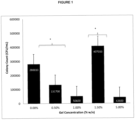
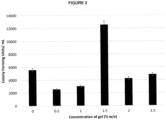
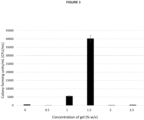
- Figure 1 shows the average of the bacterial counts for each gel glycogen concentration, attained from the eight colonies inoculated from the patient swabs. It is apparent that the glycogen concentration with the highest bacterial count is 1.5% w/v; this result is consistent with all eight colonies.
- the standard deviation error bars also show the deviation of each bacterial count from mean value (true value).
- An analysis of variance (ANOVA) test was carried out to determine the deviation between the counts and whether the variable (gel concentration) has an effect on the bacterial counts or not. Where the f-value is greater than the f-critical value, the null hypothesis is rejected. The null hypothesis being that the variable has an effect on the bacterial colony count. When the null hypothesis is rejected, the alternative hypothesis must be accepted which is that the variable does not have an effect on the colony count. It was found that for colonies one, two, three and six, the f-critical value was lower than the f-value, rejecting the null hypothesis and accepting the alternative that the gel concentration does not have an effect on the colony count. On the other hand, colonies four, five, seven, and eight, all accepted the null hypothesis due to the f-critical value being higher than the f-value, suggesting there is an evident correlation between the variable and the colony count.
- ANOVA analysis of variance
- compositions of the invention comprising glycogen has the ability to restore the vaginal flora, with the composition comprising 1.5% w/v glycogen achieving the highest counts of the bacterial species that typically dominates the vaginal environment in healthy women, Lactobacillus.
- the restoration of this bacterial species is associated with the treatment of BV and therefore compositions of the invention comprising from 1.3 to 1.7 w/v% glycogen, optimally 1.5 w/v % glycogen, can provide an efficacious non-antibiotic treatment of BV and other vaginal infections and inflammations.
- compositions of the invention comprising 1.5 w/v % glycogen provide a much higher Lactobacillus count than compositions outside the scope of the claim comprising 0.5, 1.0, 2.0, 2.5 or 5.0 w/v % glycogen.
- 1.5 w/v % glycogen provides an optimum concentration of glycogen such that it acts as a carbon source for Lactobacilli, aiding their growth.
- concentration of carbon is not sufficient to support good Lactobacillus growth.
- Higher concentrations e.g. 2 w/v % glycogen, or 2.5 to 17 w/v% as disclosed in EP1072269 can actually inhibit bacterial growth.
- the Vaginal Simulating Fluid contained glucose (adjusted to a final concentration of 1.5%), peptone (10.0), yeast extract (5.0), sodium acetate (5.0), dipotassium phosphate (2.0), ammonium sulphate (2.0), magnesium sulphate (0.2), manganese sulphate (0.1), Tween 80 (1 mL), pH 4.5. Both broths were incubated anaerobically and without agitation at 37 °C for 72 hrs. The broths were then sub-cultured onto Lactobacillus Selection Agar (Rogosa agar). After 96 hrs anaerobic incubation at 37 °C, the number of colonies visible on the agar plates was compared.
- Table 2 shows the number of bacteria recovered after 96 hours incubation on media specific for lactobacilli following pre-treatment of swabs for 72 hours in Artificial Vaginal Fluid, our formulation or the market brand leader Canesbalance ® .
- the Artificial Vaginal Fluid contains glucose as the sole carbon source and so should allow for all types of bacteria sampled from the patient to grow, including lactobacilli.
- Our formulation contains glycogen as the sole carbon source and should only encourage regrowth of the residual lactobacilli population, if this population still exists in the diseased vaginal flora.
- Canesbalance ® contains glycogen (and lactic acid) and should, like our formulation; act as a prebiotic to encourage regrowth of residual lactobacilli.
- a gel formulation was prepared according to Example 1 comprising 1.5 w/v% glycogen.
- a comparative gel formulation was prepared according to Example 1 comprising 1.5 w/v% glycogen, but with the addition of lactic acid at a concentration of 225 mg per 5 mL.
- the comparative formulation had a pH of 3.5.
- the comparative formulation had the same lactic acid concentration and pH as commercial product Canesbalance ® .
- Table 3 demonstrates that the addition of lactic acid to the formulation of the invention inhibits lactobacillus growth.
- Swabs were incubated in either in Vaginal Simulating Fluid or Vaginal Simulating Fluid in combination with the gel formulation of the invention (1.5 w/v% glycogen), and broths were plated onto blood agar and incubated aerobically for 72 hrs at 37 °C (blood agar will encourage most bacteria, including BV associated bacteria; aerobic conditions were used because lactobacilli are unlikely to grow but any colonies showing signs of alpha haemolysis from were excluded from the counts as potential lactobacilli). If the bacterial counts were higher for the formulation of the invention than the control, this would suggest that other bacteria were using the formulation of the invention as a carbon source and out competing lactobacilli (i.e. not being inhibited by the lactobacilli).
- Table 4 shows that the mean number of bacteria was lower in the presence of the gel formulation of the invention than in the control, meaning that bacteria other than lactobacilli were not using the formulation of the invention as a carbon source.
- Example 6 Physico-chemical parameters indicative of formulation of the invention encouraging regrowth of lactobacilli
- Table 5 indicates that the administration of the gel formulation of the invention containing 1.5 w/v% glycogen leads to improvements in vaginal pH, lactic acid concentration and hydrogen peroxide concentration relative to administration of a control formulation.
- Table 5 Patient number pH (> 4.5 indicates BV) D-lactic acid concentration mM (healthy ⁇ 100 mM) Hydrogen peroxide concentration ⁇ M (healthy ⁇ 100 ⁇ M) Control Glycogen only formulation (invention) Control Glycogen only formulation (invention) Control Glycogen only formulation (invention) Control Glycogen only formulation (invention) 24 5.5 4.2 0 45 0 0 25 5.2 3.8 22.5 90 0 88
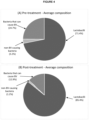
- Figure 4 shows a pie chart of the relative proportions of bacterial species in the vagina of a patient (A) before treatment with the composition of the invention and (B) after treatment with the composition of the invention as determined by amplicon sequencing the V1/V2 hypervariable region of bacterial 16 S rRNA gene ( Ravel J, et al. Vaginal microbiome of reproductive-age women (Proc Natl Acad Sci USA. 2011;108:4680-4687. doi: 10.1073/pnas.1002611107 ). It can be seen that the proportion of Lactobacilli increases from 71.4% (pre-treatment) to 85.4% (post-treatment). The proportion of Enterococci decreases from 24.7% (pre-treatment) to 12.9 % (post-treatment).
- results of culture dependent colony counts of Group B streptococci (GBS) from swabs incubated in the LIM control broth vs LIM broth plus 1.5 % w/v glycogen are provided in Table 7.
- Colonies were counted after incubation on chromogenic agar and results from 10 of the 12 patients show a significant (p ⁇ 0.05) reduction in numbers from swabs incubated in the formulation of the invention comprising 1.5 % w/v glycogen, providing evidence that there would be a reduction in carriage of GBS in pregnant women if the formulation of the invention is used as a treatment.
Landscapes
- Health & Medical Sciences (AREA)
- Life Sciences & Earth Sciences (AREA)
- Chemical & Material Sciences (AREA)
- General Health & Medical Sciences (AREA)
- Pharmacology & Pharmacy (AREA)
- Medicinal Chemistry (AREA)
- Animal Behavior & Ethology (AREA)
- Public Health (AREA)
- Veterinary Medicine (AREA)
- Epidemiology (AREA)
- Chemical Kinetics & Catalysis (AREA)
- Nuclear Medicine, Radiotherapy & Molecular Imaging (AREA)
- Organic Chemistry (AREA)
- General Chemical & Material Sciences (AREA)
- Reproductive Health (AREA)
- Gynecology & Obstetrics (AREA)
- Communicable Diseases (AREA)
- Oncology (AREA)
- Urology & Nephrology (AREA)
- Inorganic Chemistry (AREA)
- Engineering & Computer Science (AREA)
- Bioinformatics & Cheminformatics (AREA)
- Endocrinology (AREA)
- Molecular Biology (AREA)
- Pharmaceuticals Containing Other Organic And Inorganic Compounds (AREA)
- Medicinal Preparation (AREA)
- Medicines That Contain Protein Lipid Enzymes And Other Medicines (AREA)
- Medicines Containing Material From Animals Or Micro-Organisms (AREA)
Applications Claiming Priority (2)
| Application Number | Priority Date | Filing Date | Title |
|---|---|---|---|
| GBGB2018068.3A GB202018068D0 (en) | 2020-11-17 | 2020-11-17 | Pharmaceutical composition |
| PCT/GB2021/052973 WO2022106819A2 (en) | 2020-11-17 | 2021-11-17 | Pharmaceutical composition |
Publications (2)
| Publication Number | Publication Date |
|---|---|
| EP4247334A2 EP4247334A2 (en) | 2023-09-27 |
| EP4247334B1 true EP4247334B1 (en) | 2024-10-09 |
Family
ID=74046636
Family Applications (1)
| Application Number | Title | Priority Date | Filing Date |
|---|---|---|---|
| EP21815631.3A Active EP4247334B1 (en) | 2020-11-17 | 2021-11-17 | Pharmaceutical composition for use in the prevention or treatment of a condition associated with a reduction in the number of lactobacilli in the vagina |
Country Status (11)
| Country | Link |
|---|---|
| US (1) | US20240122962A1 (da) |
| EP (1) | EP4247334B1 (da) |
| JP (1) | JP2023549260A (da) |
| KR (1) | KR20230110536A (da) |
| CN (1) | CN116897042A (da) |
| AU (1) | AU2021384002A1 (da) |
| CA (1) | CA3198250A1 (da) |
| DK (1) | DK4247334T3 (da) |
| ES (1) | ES3003133T3 (da) |
| GB (1) | GB202018068D0 (da) |
| WO (1) | WO2022106819A2 (da) |
Families Citing this family (1)
| Publication number | Priority date | Publication date | Assignee | Title |
|---|---|---|---|---|
| IT202300026142A1 (it) * | 2023-12-06 | 2025-06-06 | Fidia Farm Spa | Composizioni mucoadesive per il trattamento locale delle affezioni vaginali |
Citations (1)
| Publication number | Priority date | Publication date | Assignee | Title |
|---|---|---|---|---|
| US5622927A (en) * | 1992-07-22 | 1997-04-22 | Vepex Kft. | Pharmaceutical composition and method for treating vulvitis or vulvovaginitis |
Family Cites Families (7)
| Publication number | Priority date | Publication date | Assignee | Title |
|---|---|---|---|---|
| JPS55160719A (en) * | 1979-06-01 | 1980-12-13 | Sankyo Co Ltd | Remedy for microbial infectious disease |
| JPH0421633A (ja) * | 1990-05-17 | 1992-01-24 | Saikon Medics:Kk | 生体下口腔内有用微生物叢の維持管理法および維持管理組成物 |
| AU1223099A (en) | 1997-11-24 | 1999-06-15 | Zhongming Zeng | Pharmaceutical formulation for stimulating the growth of gram-positive bacil li and increasing the acidity in vagina and the use thereof |
| ITMI20031640A1 (it) * | 2003-08-08 | 2005-02-09 | Mipharm S P A | Base per gel bioadesivi. |
| CN101175503B (zh) * | 2005-04-27 | 2012-12-12 | 深圳福诺生物技术有限公司 | 一种调节并保持阴道菌群和阴道酸度正常的组合物与方法 |
| EP2130531A1 (en) * | 2008-06-04 | 2009-12-09 | Rolf Kullgren AB | Vaginal suppository comprising lactic acid |
| CN108452293A (zh) * | 2018-04-12 | 2018-08-28 | 广西达庆生物科技有限公司 | 一种妇科用凝胶及其制备方法 |
-
2020
- 2020-11-17 GB GBGB2018068.3A patent/GB202018068D0/en not_active Ceased
-
2021
- 2021-11-17 CN CN202180077429.9A patent/CN116897042A/zh active Pending
- 2021-11-17 AU AU2021384002A patent/AU2021384002A1/en not_active Abandoned
- 2021-11-17 WO PCT/GB2021/052973 patent/WO2022106819A2/en not_active Ceased
- 2021-11-17 ES ES21815631T patent/ES3003133T3/es active Active
- 2021-11-17 CA CA3198250A patent/CA3198250A1/en active Pending
- 2021-11-17 KR KR1020237018939A patent/KR20230110536A/ko active Pending
- 2021-11-17 JP JP2023528656A patent/JP2023549260A/ja active Pending
- 2021-11-17 EP EP21815631.3A patent/EP4247334B1/en active Active
- 2021-11-17 DK DK21815631.3T patent/DK4247334T3/da active
- 2021-11-27 US US18/253,283 patent/US20240122962A1/en active Pending
Patent Citations (1)
| Publication number | Priority date | Publication date | Assignee | Title |
|---|---|---|---|---|
| US5622927A (en) * | 1992-07-22 | 1997-04-22 | Vepex Kft. | Pharmaceutical composition and method for treating vulvitis or vulvovaginitis |
Also Published As
| Publication number | Publication date |
|---|---|
| AU2021384002A9 (en) | 2024-05-02 |
| KR20230110536A (ko) | 2023-07-24 |
| DK4247334T3 (da) | 2024-12-16 |
| ES3003133T3 (en) | 2025-03-10 |
| US20240122962A1 (en) | 2024-04-18 |
| EP4247334A2 (en) | 2023-09-27 |
| AU2021384002A1 (en) | 2023-06-22 |
| CN116897042A (zh) | 2023-10-17 |
| WO2022106819A3 (en) | 2022-07-07 |
| GB202018068D0 (en) | 2020-12-30 |
| JP2023549260A (ja) | 2023-11-22 |
| WO2022106819A2 (en) | 2022-05-27 |
| CA3198250A1 (en) | 2022-05-27 |
Similar Documents
| Publication | Publication Date | Title |
|---|---|---|
| Levison et al. | Quantitative microflora of the vagina | |
| Galask et al. | Vaginal flora and its role in disease entities | |
| CN100378214C (zh) | 益生细菌:发酵乳杆菌 | |
| CN107815432B (zh) | 一种人用灭活乳酸菌制剂及其用途 | |
| Larsson | Treatment of bacterial vaginosis | |
| CN104508117B (zh) | 新的卷曲乳杆菌菌株 | |
| US20080193428A1 (en) | Composition and Method for Modulating and Maintaining Vaginal Bacterial Flora and Vaginal Acidity | |
| WO1999026636A1 (fr) | Formulation pharmaceutique de stimulation de la croissance de bacilles gram positifs et d'augmentation de l'acidite du vagin et leur utilisation | |
| HU225491B1 (en) | Pharmaceutical compositions containing lactobacillus brevis and lactobacillus salivarius for treatment of vaginal infections | |
| CN102046148A (zh) | 包含乳酸的阴道栓剂 | |
| CN113512509B (zh) | 卷曲乳杆菌及其用途 | |
| EP2158916A1 (en) | Administration unit comprising lactic acid bacteria | |
| US20160136193A1 (en) | Treatment of symptoms associated with bacterial vaginosis | |
| WO2015135470A1 (zh) | 一种阴道用组合物与该组合物的用途 | |
| EP3941499B1 (en) | A composition for competitive inhibition of pathogens and restoration of microbial ecological balance | |
| CN109402002B (zh) | 一种加氏乳杆菌及其在制备预防早产药物中的应用 | |
| EP4247334B1 (en) | Pharmaceutical composition for use in the prevention or treatment of a condition associated with a reduction in the number of lactobacilli in the vagina | |
| US6964949B2 (en) | Pharmaceutical compositions for promoting the growth of gram-positive bacilli and increasing the acidity in the vagina and the use thereof | |
| RU2354392C1 (ru) | Средство для лечения бактериального вагиноза и способ лечения бактериального вагиноза | |
| Handalishy et al. | Comparative study between probiotic vaginal tampons and oral metronidazole in treatment of bacterial vaginosis | |
| Długosz et al. | The influence of intimate hygiene on vaginal microbiota and health | |
| US20250009815A1 (en) | Composition for competitive inhibition of pathogens and restoration of microbial ecological balance | |
| NL2037483B1 (en) | Composition containing probiotics and use thereof for improving vaginal health | |
| TW201121580A (en) | Vaginal cleaner and manufacture method thereof | |
| RU2444370C1 (ru) | Пребиотик, стимулирующий рост вагинальной лактофлоры |
Legal Events
| Date | Code | Title | Description |
|---|---|---|---|
| STAA | Information on the status of an ep patent application or granted ep patent |
Free format text: STATUS: UNKNOWN |
|
| STAA | Information on the status of an ep patent application or granted ep patent |
Free format text: STATUS: THE INTERNATIONAL PUBLICATION HAS BEEN MADE |
|
| PUAI | Public reference made under article 153(3) epc to a published international application that has entered the european phase |
Free format text: ORIGINAL CODE: 0009012 |
|
| STAA | Information on the status of an ep patent application or granted ep patent |
Free format text: STATUS: REQUEST FOR EXAMINATION WAS MADE |
|
| 17P | Request for examination filed |
Effective date: 20230616 |
|
| AK | Designated contracting states |
Kind code of ref document: A2 Designated state(s): AL AT BE BG CH CY CZ DE DK EE ES FI FR GB GR HR HU IE IS IT LI LT LU LV MC MK MT NL NO PL PT RO RS SE SI SK SM TR |
|
| RAP1 | Party data changed (applicant data changed or rights of an application transferred) |
Owner name: UCL BUSINESS LTD |
|
| DAV | Request for validation of the european patent (deleted) | ||
| DAX | Request for extension of the european patent (deleted) | ||
| GRAP | Despatch of communication of intention to grant a patent |
Free format text: ORIGINAL CODE: EPIDOSNIGR1 |
|
| STAA | Information on the status of an ep patent application or granted ep patent |
Free format text: STATUS: GRANT OF PATENT IS INTENDED |
|
| INTG | Intention to grant announced |
Effective date: 20240515 |
|
| RIN1 | Information on inventor provided before grant (corrected) |
Inventor name: TULEU, CATHERINE Inventor name: SUTCLIFFE, ALASTAIR Inventor name: LONG, PAUL |
|
| GRAS | Grant fee paid |
Free format text: ORIGINAL CODE: EPIDOSNIGR3 |
|
| GRAA | (expected) grant |
Free format text: ORIGINAL CODE: 0009210 |
|
| STAA | Information on the status of an ep patent application or granted ep patent |
Free format text: STATUS: THE PATENT HAS BEEN GRANTED |
|
| AK | Designated contracting states |
Kind code of ref document: B1 Designated state(s): AL AT BE BG CH CY CZ DE DK EE ES FI FR GB GR HR HU IE IS IT LI LT LU LV MC MK MT NL NO PL PT RO RS SE SI SK SM TR |
|
| REG | Reference to a national code |
Ref country code: CH Ref legal event code: EP |
|
| REG | Reference to a national code |
Ref country code: DE Ref legal event code: R096 Ref document number: 602021020098 Country of ref document: DE |
|
| REG | Reference to a national code |
Ref country code: IE Ref legal event code: FG4D |
|
| REG | Reference to a national code |
Ref country code: DK Ref legal event code: T3 Effective date: 20241211 |
|
| REG | Reference to a national code |
Ref country code: SE Ref legal event code: TRGR |
|
| REG | Reference to a national code |
Ref country code: LT Ref legal event code: MG9D |
|
| PGFP | Annual fee paid to national office [announced via postgrant information from national office to epo] |
Ref country code: IT Payment date: 20241130 Year of fee payment: 4 |
|
| REG | Reference to a national code |
Ref country code: NL Ref legal event code: MP Effective date: 20241009 |
|
| REG | Reference to a national code |
Ref country code: ES Ref legal event code: FG2A Ref document number: 3003133 Country of ref document: ES Kind code of ref document: T3 Effective date: 20250310 |
|
| REG | Reference to a national code |
Ref country code: AT Ref legal event code: MK05 Ref document number: 1729813 Country of ref document: AT Kind code of ref document: T Effective date: 20241009 |
|
| PG25 | Lapsed in a contracting state [announced via postgrant information from national office to epo] |
Ref country code: NL Free format text: LAPSE BECAUSE OF FAILURE TO SUBMIT A TRANSLATION OF THE DESCRIPTION OR TO PAY THE FEE WITHIN THE PRESCRIBED TIME-LIMIT Effective date: 20241009 |
|
| P01 | Opt-out of the competence of the unified patent court (upc) registered |
Free format text: CASE NUMBER: APP_7040/2025 Effective date: 20250211 |
|
| PG25 | Lapsed in a contracting state [announced via postgrant information from national office to epo] |
Ref country code: NL Free format text: LAPSE BECAUSE OF FAILURE TO SUBMIT A TRANSLATION OF THE DESCRIPTION OR TO PAY THE FEE WITHIN THE PRESCRIBED TIME-LIMIT Effective date: 20241009 |
|
| PG25 | Lapsed in a contracting state [announced via postgrant information from national office to epo] |
Ref country code: HR Free format text: LAPSE BECAUSE OF FAILURE TO SUBMIT A TRANSLATION OF THE DESCRIPTION OR TO PAY THE FEE WITHIN THE PRESCRIBED TIME-LIMIT Effective date: 20241009 Ref country code: PT Free format text: LAPSE BECAUSE OF FAILURE TO SUBMIT A TRANSLATION OF THE DESCRIPTION OR TO PAY THE FEE WITHIN THE PRESCRIBED TIME-LIMIT Effective date: 20250210 Ref country code: IS Free format text: LAPSE BECAUSE OF FAILURE TO SUBMIT A TRANSLATION OF THE DESCRIPTION OR TO PAY THE FEE WITHIN THE PRESCRIBED TIME-LIMIT Effective date: 20250209 |
|
| PG25 | Lapsed in a contracting state [announced via postgrant information from national office to epo] |
Ref country code: FI Free format text: LAPSE BECAUSE OF FAILURE TO SUBMIT A TRANSLATION OF THE DESCRIPTION OR TO PAY THE FEE WITHIN THE PRESCRIBED TIME-LIMIT Effective date: 20241009 |
|
| PG25 | Lapsed in a contracting state [announced via postgrant information from national office to epo] |
Ref country code: BG Free format text: LAPSE BECAUSE OF FAILURE TO SUBMIT A TRANSLATION OF THE DESCRIPTION OR TO PAY THE FEE WITHIN THE PRESCRIBED TIME-LIMIT Effective date: 20241009 |
|
| PGFP | Annual fee paid to national office [announced via postgrant information from national office to epo] |
Ref country code: ES Payment date: 20250319 Year of fee payment: 4 |
|
| PG25 | Lapsed in a contracting state [announced via postgrant information from national office to epo] |
Ref country code: NO Free format text: LAPSE BECAUSE OF FAILURE TO SUBMIT A TRANSLATION OF THE DESCRIPTION OR TO PAY THE FEE WITHIN THE PRESCRIBED TIME-LIMIT Effective date: 20250109 |
|
| PG25 | Lapsed in a contracting state [announced via postgrant information from national office to epo] |
Ref country code: LV Free format text: LAPSE BECAUSE OF FAILURE TO SUBMIT A TRANSLATION OF THE DESCRIPTION OR TO PAY THE FEE WITHIN THE PRESCRIBED TIME-LIMIT Effective date: 20241009 Ref country code: GR Free format text: LAPSE BECAUSE OF FAILURE TO SUBMIT A TRANSLATION OF THE DESCRIPTION OR TO PAY THE FEE WITHIN THE PRESCRIBED TIME-LIMIT Effective date: 20250110 Ref country code: AT Free format text: LAPSE BECAUSE OF FAILURE TO SUBMIT A TRANSLATION OF THE DESCRIPTION OR TO PAY THE FEE WITHIN THE PRESCRIBED TIME-LIMIT Effective date: 20241009 |
|
| PG25 | Lapsed in a contracting state [announced via postgrant information from national office to epo] |
Ref country code: PL Free format text: LAPSE BECAUSE OF FAILURE TO SUBMIT A TRANSLATION OF THE DESCRIPTION OR TO PAY THE FEE WITHIN THE PRESCRIBED TIME-LIMIT Effective date: 20241009 |
|
| PG25 | Lapsed in a contracting state [announced via postgrant information from national office to epo] |
Ref country code: RS Free format text: LAPSE BECAUSE OF FAILURE TO SUBMIT A TRANSLATION OF THE DESCRIPTION OR TO PAY THE FEE WITHIN THE PRESCRIBED TIME-LIMIT Effective date: 20250109 |
|
| PG25 | Lapsed in a contracting state [announced via postgrant information from national office to epo] |
Ref country code: SM Free format text: LAPSE BECAUSE OF FAILURE TO SUBMIT A TRANSLATION OF THE DESCRIPTION OR TO PAY THE FEE WITHIN THE PRESCRIBED TIME-LIMIT Effective date: 20241009 |
|
| PG25 | Lapsed in a contracting state [announced via postgrant information from national office to epo] |
Ref country code: MC Free format text: LAPSE BECAUSE OF FAILURE TO SUBMIT A TRANSLATION OF THE DESCRIPTION OR TO PAY THE FEE WITHIN THE PRESCRIBED TIME-LIMIT Effective date: 20241009 |
|
| PGFP | Annual fee paid to national office [announced via postgrant information from national office to epo] |
Ref country code: DE Payment date: 20250509 Year of fee payment: 4 |
|
| PGFP | Annual fee paid to national office [announced via postgrant information from national office to epo] |
Ref country code: DK Payment date: 20250514 Year of fee payment: 4 |
|
| REG | Reference to a national code |
Ref country code: DE Ref legal event code: R097 Ref document number: 602021020098 Country of ref document: DE |
|
| PG25 | Lapsed in a contracting state [announced via postgrant information from national office to epo] |
Ref country code: LU Free format text: LAPSE BECAUSE OF NON-PAYMENT OF DUE FEES Effective date: 20241117 |
|
| PG25 | Lapsed in a contracting state [announced via postgrant information from national office to epo] |
Ref country code: EE Free format text: LAPSE BECAUSE OF FAILURE TO SUBMIT A TRANSLATION OF THE DESCRIPTION OR TO PAY THE FEE WITHIN THE PRESCRIBED TIME-LIMIT Effective date: 20241009 |
|
| PGFP | Annual fee paid to national office [announced via postgrant information from national office to epo] |
Ref country code: FR Payment date: 20250509 Year of fee payment: 4 |
|
| PGFP | Annual fee paid to national office [announced via postgrant information from national office to epo] |
Ref country code: CH Payment date: 20250515 Year of fee payment: 4 |
|
| PG25 | Lapsed in a contracting state [announced via postgrant information from national office to epo] |
Ref country code: RO Free format text: LAPSE BECAUSE OF FAILURE TO SUBMIT A TRANSLATION OF THE DESCRIPTION OR TO PAY THE FEE WITHIN THE PRESCRIBED TIME-LIMIT Effective date: 20241009 |
|
| PG25 | Lapsed in a contracting state [announced via postgrant information from national office to epo] |
Ref country code: SK Free format text: LAPSE BECAUSE OF FAILURE TO SUBMIT A TRANSLATION OF THE DESCRIPTION OR TO PAY THE FEE WITHIN THE PRESCRIBED TIME-LIMIT Effective date: 20241009 |
|
| PG25 | Lapsed in a contracting state [announced via postgrant information from national office to epo] |
Ref country code: CZ Free format text: LAPSE BECAUSE OF FAILURE TO SUBMIT A TRANSLATION OF THE DESCRIPTION OR TO PAY THE FEE WITHIN THE PRESCRIBED TIME-LIMIT Effective date: 20241009 |
|
| PGFP | Annual fee paid to national office [announced via postgrant information from national office to epo] |
Ref country code: SE Payment date: 20250522 Year of fee payment: 4 |
|
| PLBE | No opposition filed within time limit |
Free format text: ORIGINAL CODE: 0009261 |
|
| STAA | Information on the status of an ep patent application or granted ep patent |
Free format text: STATUS: NO OPPOSITION FILED WITHIN TIME LIMIT |
|
| REG | Reference to a national code |
Ref country code: BE Ref legal event code: MM Effective date: 20241130 |
|
| 26N | No opposition filed |
Effective date: 20250710 |
|
| PG25 | Lapsed in a contracting state [announced via postgrant information from national office to epo] |
Ref country code: BE Free format text: LAPSE BECAUSE OF NON-PAYMENT OF DUE FEES Effective date: 20241130 |
|
| PG25 | Lapsed in a contracting state [announced via postgrant information from national office to epo] |
Ref country code: IE Free format text: LAPSE BECAUSE OF NON-PAYMENT OF DUE FEES Effective date: 20241117 |
|
| PG25 | Lapsed in a contracting state [announced via postgrant information from national office to epo] |
Ref country code: HU Free format text: LAPSE BECAUSE OF FAILURE TO SUBMIT A TRANSLATION OF THE DESCRIPTION OR TO PAY THE FEE WITHIN THE PRESCRIBED TIME-LIMIT; INVALID AB INITIO Effective date: 20211117 |
|
| PG25 | Lapsed in a contracting state [announced via postgrant information from national office to epo] |
Ref country code: CY Free format text: LAPSE BECAUSE OF FAILURE TO SUBMIT A TRANSLATION OF THE DESCRIPTION OR TO PAY THE FEE WITHIN THE PRESCRIBED TIME-LIMIT; INVALID AB INITIO Effective date: 20211117 |