EP4239839B1 - Verfahren zur erkennung von fremdkörpern sowie vorrichtung und system dafür - Google Patents
Verfahren zur erkennung von fremdkörpern sowie vorrichtung und system dafür Download PDFInfo
- Publication number
- EP4239839B1 EP4239839B1 EP23186847.2A EP23186847A EP4239839B1 EP 4239839 B1 EP4239839 B1 EP 4239839B1 EP 23186847 A EP23186847 A EP 23186847A EP 4239839 B1 EP4239839 B1 EP 4239839B1
- Authority
- EP
- European Patent Office
- Prior art keywords
- wireless power
- quality factor
- foreign object
- value
- object detection
- Prior art date
- Legal status (The legal status is an assumption and is not a legal conclusion. Google has not performed a legal analysis and makes no representation as to the accuracy of the status listed.)
- Active
Links
Images









Classifications
-
- H—ELECTRICITY
- H02—GENERATION; CONVERSION OR DISTRIBUTION OF ELECTRIC POWER
- H02J—CIRCUIT ARRANGEMENTS OR SYSTEMS FOR SUPPLYING OR DISTRIBUTING ELECTRIC POWER; SYSTEMS FOR STORING ELECTRIC ENERGY
- H02J50/00—Circuit arrangements or systems for wireless supply or distribution of electric power
- H02J50/60—Circuit arrangements or systems for wireless supply or distribution of electric power responsive to the presence of foreign objects, e.g. detection of living beings
-
- H—ELECTRICITY
- H02—GENERATION; CONVERSION OR DISTRIBUTION OF ELECTRIC POWER
- H02J—CIRCUIT ARRANGEMENTS OR SYSTEMS FOR SUPPLYING OR DISTRIBUTING ELECTRIC POWER; SYSTEMS FOR STORING ELECTRIC ENERGY
- H02J50/00—Circuit arrangements or systems for wireless supply or distribution of electric power
- H02J50/10—Circuit arrangements or systems for wireless supply or distribution of electric power using inductive coupling
-
- H—ELECTRICITY
- H02—GENERATION; CONVERSION OR DISTRIBUTION OF ELECTRIC POWER
- H02J—CIRCUIT ARRANGEMENTS OR SYSTEMS FOR SUPPLYING OR DISTRIBUTING ELECTRIC POWER; SYSTEMS FOR STORING ELECTRIC ENERGY
- H02J50/00—Circuit arrangements or systems for wireless supply or distribution of electric power
- H02J50/10—Circuit arrangements or systems for wireless supply or distribution of electric power using inductive coupling
- H02J50/12—Circuit arrangements or systems for wireless supply or distribution of electric power using inductive coupling of the resonant type
-
- H—ELECTRICITY
- H02—GENERATION; CONVERSION OR DISTRIBUTION OF ELECTRIC POWER
- H02J—CIRCUIT ARRANGEMENTS OR SYSTEMS FOR SUPPLYING OR DISTRIBUTING ELECTRIC POWER; SYSTEMS FOR STORING ELECTRIC ENERGY
- H02J50/00—Circuit arrangements or systems for wireless supply or distribution of electric power
- H02J50/20—Circuit arrangements or systems for wireless supply or distribution of electric power using microwaves or radio frequency waves
-
- H—ELECTRICITY
- H02—GENERATION; CONVERSION OR DISTRIBUTION OF ELECTRIC POWER
- H02J—CIRCUIT ARRANGEMENTS OR SYSTEMS FOR SUPPLYING OR DISTRIBUTING ELECTRIC POWER; SYSTEMS FOR STORING ELECTRIC ENERGY
- H02J50/00—Circuit arrangements or systems for wireless supply or distribution of electric power
- H02J50/40—Circuit arrangements or systems for wireless supply or distribution of electric power using two or more transmitting or receiving devices
- H02J50/402—Circuit arrangements or systems for wireless supply or distribution of electric power using two or more transmitting or receiving devices the two or more transmitting or the two or more receiving devices being integrated in the same unit, e.g. power mats with several coils or antennas with several sub-antennas
-
- H—ELECTRICITY
- H02—GENERATION; CONVERSION OR DISTRIBUTION OF ELECTRIC POWER
- H02J—CIRCUIT ARRANGEMENTS OR SYSTEMS FOR SUPPLYING OR DISTRIBUTING ELECTRIC POWER; SYSTEMS FOR STORING ELECTRIC ENERGY
- H02J50/00—Circuit arrangements or systems for wireless supply or distribution of electric power
- H02J50/80—Circuit arrangements or systems for wireless supply or distribution of electric power involving the exchange of data, concerning supply or distribution of electric power, between transmitting devices and receiving devices
-
- H—ELECTRICITY
- H02—GENERATION; CONVERSION OR DISTRIBUTION OF ELECTRIC POWER
- H02J—CIRCUIT ARRANGEMENTS OR SYSTEMS FOR SUPPLYING OR DISTRIBUTING ELECTRIC POWER; SYSTEMS FOR STORING ELECTRIC ENERGY
- H02J50/00—Circuit arrangements or systems for wireless supply or distribution of electric power
- H02J50/90—Circuit arrangements or systems for wireless supply or distribution of electric power involving detection or optimisation of position, e.g. alignment
-
- H—ELECTRICITY
- H02—GENERATION; CONVERSION OR DISTRIBUTION OF ELECTRIC POWER
- H02J—CIRCUIT ARRANGEMENTS OR SYSTEMS FOR SUPPLYING OR DISTRIBUTING ELECTRIC POWER; SYSTEMS FOR STORING ELECTRIC ENERGY
- H02J7/00—Circuit arrangements for charging or depolarising batteries or for supplying loads from batteries
- H02J7/00032—Circuit arrangements for charging or depolarising batteries or for supplying loads from batteries characterised by data exchange
- H02J7/00036—Charger exchanging data with battery
-
- H—ELECTRICITY
- H02—GENERATION; CONVERSION OR DISTRIBUTION OF ELECTRIC POWER
- H02J—CIRCUIT ARRANGEMENTS OR SYSTEMS FOR SUPPLYING OR DISTRIBUTING ELECTRIC POWER; SYSTEMS FOR STORING ELECTRIC ENERGY
- H02J7/00—Circuit arrangements for charging or depolarising batteries or for supplying loads from batteries
- H02J7/02—Circuit arrangements for charging or depolarising batteries or for supplying loads from batteries for charging batteries from AC mains by converters
-
- H—ELECTRICITY
- H04—ELECTRIC COMMUNICATION TECHNIQUE
- H04B—TRANSMISSION
- H04B17/00—Monitoring; Testing
- H04B17/30—Monitoring; Testing of propagation channels
- H04B17/309—Measuring or estimating channel quality parameters
- H04B17/318—Received signal strength
-
- H—ELECTRICITY
- H04—ELECTRIC COMMUNICATION TECHNIQUE
- H04L—TRANSMISSION OF DIGITAL INFORMATION, e.g. TELEGRAPHIC COMMUNICATION
- H04L1/00—Arrangements for detecting or preventing errors in the information received
- H04L1/0078—Avoidance of errors by organising the transmitted data in a format specifically designed to deal with errors, e.g. location
- H04L1/0079—Formats for control data
-
- H—ELECTRICITY
- H04—ELECTRIC COMMUNICATION TECHNIQUE
- H04L—TRANSMISSION OF DIGITAL INFORMATION, e.g. TELEGRAPHIC COMMUNICATION
- H04L5/00—Arrangements affording multiple use of the transmission path
- H04L5/003—Arrangements for allocating sub-channels of the transmission path
- H04L5/0053—Allocation of signalling, i.e. of overhead other than pilot signals
- H04L5/0055—Physical resource allocation for ACK/NACK
-
- H—ELECTRICITY
- H04—ELECTRIC COMMUNICATION TECHNIQUE
- H04L—TRANSMISSION OF DIGITAL INFORMATION, e.g. TELEGRAPHIC COMMUNICATION
- H04L69/00—Network arrangements, protocols or services independent of the application payload and not provided for in the other groups of this subclass
- H04L69/24—Negotiation of communication capabilities
-
- Y—GENERAL TAGGING OF NEW TECHNOLOGICAL DEVELOPMENTS; GENERAL TAGGING OF CROSS-SECTIONAL TECHNOLOGIES SPANNING OVER SEVERAL SECTIONS OF THE IPC; TECHNICAL SUBJECTS COVERED BY FORMER USPC CROSS-REFERENCE ART COLLECTIONS [XRACs] AND DIGESTS
- Y02—TECHNOLOGIES OR APPLICATIONS FOR MITIGATION OR ADAPTATION AGAINST CLIMATE CHANGE
- Y02T—CLIMATE CHANGE MITIGATION TECHNOLOGIES RELATED TO TRANSPORTATION
- Y02T10/00—Road transport of goods or passengers
- Y02T10/60—Other road transportation technologies with climate change mitigation effect
- Y02T10/70—Energy storage systems for electromobility, e.g. batteries
-
- Y—GENERAL TAGGING OF NEW TECHNOLOGICAL DEVELOPMENTS; GENERAL TAGGING OF CROSS-SECTIONAL TECHNOLOGIES SPANNING OVER SEVERAL SECTIONS OF THE IPC; TECHNICAL SUBJECTS COVERED BY FORMER USPC CROSS-REFERENCE ART COLLECTIONS [XRACs] AND DIGESTS
- Y02—TECHNOLOGIES OR APPLICATIONS FOR MITIGATION OR ADAPTATION AGAINST CLIMATE CHANGE
- Y02T—CLIMATE CHANGE MITIGATION TECHNOLOGIES RELATED TO TRANSPORTATION
- Y02T10/00—Road transport of goods or passengers
- Y02T10/60—Other road transportation technologies with climate change mitigation effect
- Y02T10/7072—Electromobility specific charging systems or methods for batteries, ultracapacitors, supercapacitors or double-layer capacitors
-
- Y—GENERAL TAGGING OF NEW TECHNOLOGICAL DEVELOPMENTS; GENERAL TAGGING OF CROSS-SECTIONAL TECHNOLOGIES SPANNING OVER SEVERAL SECTIONS OF THE IPC; TECHNICAL SUBJECTS COVERED BY FORMER USPC CROSS-REFERENCE ART COLLECTIONS [XRACs] AND DIGESTS
- Y02—TECHNOLOGIES OR APPLICATIONS FOR MITIGATION OR ADAPTATION AGAINST CLIMATE CHANGE
- Y02T—CLIMATE CHANGE MITIGATION TECHNOLOGIES RELATED TO TRANSPORTATION
- Y02T90/00—Enabling technologies or technologies with a potential or indirect contribution to GHG emissions mitigation
- Y02T90/10—Technologies relating to charging of electric vehicles
- Y02T90/14—Plug-in electric vehicles
Definitions
- Embodiments relate to wireless power transmission technology and, more particularly a wireless power transmitter.
- EP 2 552 030 A2 discloses a wireless power transmitter according to the preamble of claim 1.
- the standard document " The Qi Wireless Power Transfer System Power Class 0 Specification Parts 1 and 2: Interface Definitions" of the Wireless power consortium and dated April 1, 2016 discloses a wireless power transmitter and a mode field.
- the mode field indicates the operating mode of the Power Receiver in which the Reference Quality Factor Value applies.
- US 2016/218566 A1 discloses a detecting device including a coil electromagnetically coupled to the external, a resonant circuit that includes at least the coil, and a detecting section that superimposes a measurement signal for measuring the Q-factor of the resonant circuit on a power transmission signal transmitted to the coil in a contactless manner.
- KR 2014 0036344 A discloses an energy receiver, which includes: a power receiver coil configured to wirelessly receive power transmitted from a power transmitter; a detection section configured to detect a foreign object; and a power storage section configured to supply power to the detection section during detection of the foreign object.
- US 2016/141882 A1 discloses a power transmission device, which performs a power transmission process for transmitting power in a wireless manner through electromagnetic field resonance coupling using a resonance circuit.
- US 2012/001493 A1 discloses a foreign-substance detecting unit, which detects a foreign substance which is present between the power transmission coil and the power receiving coil.
- Wireless power transmission or wireless energy transfer refers to technology for wirelessly transmitting electric energy from a transmitter to a receiver using the magnetic induction principle.
- electric motors or transformers using the electromagnetic induction principle have begun to be used and, thereafter, attempts have been made to radiate electromagnetic waves such as high frequencies, microwaves and lasers to transfer electric energy. Frequently used electric toothbrushes or some wireless shavers are charged using the electromagnetic induction principle.
- a wireless energy transfer method may be roughly divided into a magnetic induction method, an electromagnetic resonance method and a radio frequency (RF) transmission method of a short-wavelength radio frequency.
- RF radio frequency
- the magnetic induction method uses a phenomenon that, when two coils are located adjacent to each other and then current is applied to one coil, a magnetic flux is generated to cause an electromotive force in the other coil, and is rapidly being commercialized in small devices such as mobile phones.
- the magnetic induction method may transfer power of up to several hundreds of kilowatts (kW) and has high efficiency. However, since a maximum transmission distance is 1 centimeter (cm) or less, a device to be charged should be located adjacent to a charger or the floor.
- the electromagnetic resonance method uses an electric field or a magnetic field instead of using electromagnetic waves or current.
- the electromagnetic resonance method is rarely influenced by electromagnetic waves and thus is advantageously safe for other electronic devices or human bodies. In contrast, this method may be used in a limited distance and space and energy transmission efficiency is somewhat low.
- the short-wavelength wireless power transmission method (briefly, referred to as the RF transmission method) takes advantage of the fact that energy may be directly transmitted and received in the form of a radio wave.
- This technology is a RF wireless power transmission method using a rectenna.
- the rectenna is a combination of an antenna and a rectifier and means an element for directly converting RF power into DC power. That is, the RF method is technology of converting AC radio waves into DC.
- Wireless power transmission technology may be used not only in mobile related industries but also in various industries such as IT, railroad and home appliance.
- wireless charging efficiency may be significantly lowered, and the temperatures of the wireless power receiver and the wireless power transmitter may increase due to increase in ambient temperature of the FO. If the FO located in the charging area is not removed, power waste may occur and the wireless power transmitter and the wireless power receiver may be damaged due to overheating.
- the foreign object detection method may further include receiving a first maximum quality factor value corresponding to the reference peak frequency from the wireless power receiver, and calculating a quality factor shift value by subtracting a second maximum quality factor value corresponding to the current peak frequency from the first maximum quality factor value.
- the measured quality factor value may be calibrated further using the quality factor shift value.
- a quality factor slope may be calculated by dividing a difference between the output voltage level corresponding to the current peak frequency and the output voltage level corresponding to the start frequency by a difference between the current peak frequency and the start frequency.
- a quality factor slope may be calculated by dividing a difference between the quality factor value corresponding to the current peak frequency and the quality factor value corresponding to the start frequency by a difference between the current peak frequency and the start frequency.
- the reference peak frequency may have a maximum quality factor value within the operating frequency band in a state in which only the wireless power receiver is placed in a charging area.
- the measurement may measure the quality factor value in a state in which power transfer is temporarily stopped before entering the procedure of identifying the wireless power receiver and search for the current peak frequency.
- the foreign object detection apparatus may further include an alarm unit configured to output a predetermined warning alarm indicating that the foreign object has been detected after stopping power transfer.
- the foreign object detection apparatus may further include a controller configured to check whether the detected foreign object has been removed from the charging area. Upon checking that the detected foreign object has been removed, the controller may perform control to start power transfer to the wireless power receiver and to release the warning alarm.
- the calibration unit may calculate a quality factor shift value by subtracting a second maximum quality factor value corresponding to the current peak frequency from the first maximum quality factor value, and calibrate the measured quality factor value further using the quality factor shift value.
- the first maximum quality factor value may be included and received in the foreign object detection status packet.
- the detection unit may determine that the foreign object is present when the calibrated quality factor value is less than the predetermined quality factor threshold value and determine that the foreign object is not present when the calibrated quality factor value is equal to or greater than the predetermined quality factor threshold value.
- a computer-readable recording medium having recorded thereon a program for executing any one of the above-described methods may be provided.
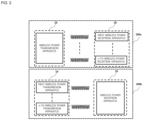
- the wireless power transmitter may sequentially transmit the sensing signal 117 through a primary sensing signal transmission procedure denoted by reference numeral 110 and identify the transmission coils 111 and 112, through which a signal strength indicator 116 is received from the wireless power receiver 115. Subsequently, the wireless power transmitter may perform control to sequentially transmit the sensing signal 127 through a secondary sensing signal transmission procedure denoted by reference numeral 120, to identify a transmission coil having good power transfer efficiency (or charging efficiency), that is, a good alignment state between the transmission coil and the reception coil, between the transmission coils 111 and 112, through which the signal strength indicator 126 is received, and to transmit power through the identified transmission coil, that is, to perform wireless charging.
- a transmission coil having good power transfer efficiency or charging efficiency
- the wireless power transmitter performs two sensing signal transmission procedures in order to more accurately identify to which transmission coil the reception coil of the wireless power receiver is well aligned.
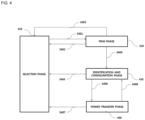
- FIG. 4 is a state transition diagram explaining a wireless power transfer procedure defined in the WPC standard.
- the selection phase 410 may transition when power transfer starts or when a specific error or a specific event is sensed while power transfer is maintained.
- the specific error and the specific event will become apparent from the following description.
- the transmitter may monitor whether an object is present on a charging interface surface. Upon detecting that the object is placed on the charging interface surface, the transmitter may transition to the ping phase 420 (S401).
- the transmitter may transmit an analog ping signal having a very short pulse and may detect whether an object is present in an active area, that is, a chargeable area, of the charging interface surface based on change in current of the transmission coil.
- the transmitter When the object is detected in the ping phase 420, the transmitter activates, that is, boots, the receiver and transmits a digital ping for identifying whether the object is a receiver.
- a response signal for example, a signal strength indicator
- the transmitter may transition to the selection phase 410 again (S402).
- the transmitter may transition to the selection phase 410 (S403).
- the transmitter may identify the receiver and transition to the identification and configuration phase 430 for identifying the receiver and collecting the configuration and status information of the receiver (S404).
- power transfer from the transmitter to the receiver may be broadly divided into a selection phase 510, a ping phase 520, an identification and configuration phase 530, a negotiation phase 540, a calibration phase 550, a power transfer phase 560 and a renegotiation phase 570.
- the wireless power transmitter may receive the reference maximum quality factor frequency pre-measured in a state in which the foreign object is not placed in the charging area, that is, the reference peak frequency, from the wireless power receiver.
- the received reference peak frequency value may be compared with the measured peak frequency value in the negotiation phase 540, thereby determining whether a foreign object is present.
- the foreign object detection through peak frequency comparison may be used along with a method of comparing quality factor values. If a difference between the reference quality factor value and the measured quality factor value is small, for example, if the difference is equal to or less than 10%, presence of the foreign object may be determined by comparing the reference peak frequency with the measured peak frequency. In contrast, if the difference between the quality factors exceeds 10%, the wireless power transmitter may immediately determine that the foreign object is present.
- the reference peak frequency may be compared with the measured peak frequency to determine whether a foreign object is present. If it is difficult to detect the foreign object using the quality factor, the wireless power receiver may include information on the reference peak frequency in a foreign object detection status packet and transmit the packet to the wireless power transmitter, and the wireless power transmitter may detect the foreign object further using information on the reference peak frequency, thereby improving foreign object detection capability.
- the transmitter wakes up the receiver and transmits a digital ping for identifying whether the detected object is a wireless power receiver.
- the transmitter may transition to the selection phase 510 again.
- the transmitter may transition to the selection phase 510.
- the transmitter may transition to the identification and configuration phase 530 for identifying the receiver and collecting the configuration and status information of the receiver.
- the transmitter may transition to the selection phase 510.
- the transmitter may determine whether entry into the negotiation phase 540 is necessary based on the negotiation field value of the configuration packet received in the identification and configuration phase 530.
- the transmitter may transition to the negotiation phase 540 to perform a predetermined FOD procedure.
- the transmitter may immediately transition to the power transfer phase 560.
- the transmitter may receive a foreign object detection (FOD) status packet including a reference quality factor value.
- FOD status packet including a reference peak frequency value may be received.
- a status packet including a reference quality factor value and a reference peak frequency value may be received.
- the transmitter may determine a quality factor threshold value for FO detection based on the reference quality factor value.
- the transmitter may determine a peak frequency threshold value for FO detection based on the reference peak frequency value.
- the transmitter may detect whether an FO is present in the charging area using the quality factor threshold value for FO detection and a currently measured quality factor value (a quality factor value measured before the ping phase) and control power transfer according to the result of FO detection. For example, when the FO is detected, power transfer may be stopped, without being limited thereto.
- the transmitter may detect whether an FO is present in the charging area using the peak frequency threshold value for FO detection and a currently measured quality factor value (a quality factor value measured before the ping phase) and control power transfer according to the result of FO detection. For example, when the FO is detected, power transfer may be stopped, without being limited thereto.
- the transmitter may return to the selection phase 510.
- the transmitter may transition to the power transfer phase 560 through the calibration phase 550.
- the transmitter may measure power loss at the reception end and the transmission end, in order to determine the strength of the power received by the reception end and to determine the strength of the power transmitted by the transmission end in the calibration phase 550. That is, the transmitter may predict power loss based on a difference between the transmission power of the transmission end and the reception power of the reception end in the calibration phase 550.
- the transmitter may calibrate the threshold value for FO detection using the predicted power loss.
- the transmitter may transition to the selection phase 510.
- the transmitter may transition to the renegotiation phase 570. At this time, when renegotiation is normally terminated, the transmitter may return to the power transfer phase 560.
- the power transfer contract may be configured based on the transmitter and receiver status information and characteristic information.
- the transmitter status information may include information on the maximum amount of transmittable power, information on the maximum number of receivable receivers, etc. and the receiver status information may include information on required power.
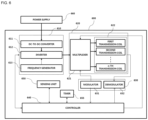
- FIG. 6 is a block diagram illustrating the structure of a wireless power transmitter according to an embodiment.
- the wireless power transmitter 600 may roughly include a power converter 610, a power transmission unit 620, a communication unit 630, a controller 640, and a sensing unit 650. It should be noted that the components of the wireless power transmitter 600 are not mandatory and more or fewer components may be included.
- the power converter 610 may perform a function for converting DC power received from the power supply 660 into AC power having a predetermined strength.
- the DC-to-DC converter 611 may perform a function for converting the DC power received from the power supply 650 into DC power having a specific strength according to a control signal of the controller 640.
- the inverter 612 may convert the DC-to-DC converted DC power into AC power based on a reference AC signal generated by a frequency generator 613.
- the frequency, that is, operating frequency, of the reference AC signal may be dynamically changed according to the control signal of the controller 640.
- the wireless power transmitter 600 may adjust the operating frequency to adjust the strength of the transmitted power.
- the controller 640 may receive the power reception status information and/or power control signal of the wireless power receiver through the communication unit 630, determine the operating frequency based on the received power reception status information and/or power control signal, and dynamically control the frequency generator 613 to generate the determined operating frequency.
- the power reception status information may include the strength information of a rectifier output voltage, the strength information of current applied to a reception coil, etc., without being limited thereto.
- the power control signal may include a signal for requesting power increase, a signal for requesting power decrease, etc.
- the power transmission unit 620 may include a multiplexer 621 and a transmission coil unit 622.
- the transmission coil unit 622 may include first to n-th transmission coils.
- the power transmission unit 620 may further include a carrier generator (not shown) for generating a specific carrier frequency for power transfer.
- the carrier generator may generate a specific carrier frequency for mixing with the output AC power of the inverter 612 received through the multiplexer 621.
- the frequencies of the AC power transmitted to the transmission coils are different in the embodiment.
- the resonant frequencies of the transmission coils may be differently set using a predetermined frequency controller including a function for differently adjusting LC resonant characteristics according to the transmission coils.
- the multiplexer 621 may perform a switch function for transmitting the AC power to the transmission coil selected by the controller 640.
- the controller 640 may select a transmission coil to be used for power transfer to the wireless power receiver based on the received signal strength indicator of each transmission coil.
- the controller 640 may transmit power through time-division multiplexing of the transmission coils.
- the controller 640 may control the multiplexer 621 to transmit AC power at a specific time slot only through a specific transmission coil.
- the amount of power transmitted to the wireless power receiver may be controlled according to the length of the time slot allocated to each transmission coil.
- this is only an embodiment and the strength of the output DC power of the DC-to-DC converter 611 may be controlled during a time slot allocated to each transmission coil to control the transmission power of each wireless power receiver.
- the controller 640 may control the multiplexer 621 to transmit the sensing signal only through the transmission coil(s), through which the signal strength indicator has been received during the primary sensing signal transmission procedure.
- the controller 640 may determine a transmission coil, through which a signal strength indicator having a largest value has been received, as a transmission coil, through which the sensing signal will be first transmitted in the secondary sensing signal transmission procedure, and control the multiplexer 621 according to the result of determination.
- the communication unit 630 may include at least one of a modulator 631 and a demodulator 632.
- the demodulator 632 may demodulate the detected signal and transmit the demodulated signal to the controller 640.
- the demodulated signal may include a signal strength indicator, an error correction (EC) indicator for power control during wireless power transmission, an end of charge (EOC) indicator, an overvoltage/overcurrent/overheating indicator, etc.
- EC error correction
- EOC end of charge
- the embodiment is not limited thereto and various types of status information for identifying the status of the wireless power receiver may be included.
- the demodulator 632 may demodulate the signal received through the transmission coil 622 and transmit the demodulated signal to the controller 640.
- the demodulated signal may include a signal strength indicator.
- the embodiment is not limited thereto and the demodulated signal may include various types of status information of the wireless power receiver.
- the wireless power transmitter 600 and the wireless power receiver perform in-band communication in the description of FIG. 6 , this is merely an embodiment and short-range bidirectional communication may be performed through a frequency band different from a frequency band used for wireless power signal transmission.
- the short-range bidirectional communication may be any one of low-power Bluetooth communication, RFID communication, UWB communication and ZigBee communication.
- the power transmission unit 620 of the wireless power transmitter 600 includes the multiplexer 621 and the plurality of transmission coils 622 in the description of FIG. 6 , this is merely an embodiment and it should be noted that the power transmission unit 620 according to another embodiment may include one transmission coil.
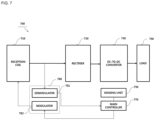
- FIG. 7 is a block diagram illustrating the structure of a wireless power receiver interworking with the wireless power transmitter shown in FIG. 6 .
- the wireless power receiver 700 may include a reception coil 710, a rectifier 720, a DC-to-DC converter 730, a load 740, a sensing unit 750, a communication unit 760, and a main controller 770.
- the communication unit 760 may include a demodulator 761 and a modulator 762.
- the wireless power receiver 700 shown in the example of FIG. 7 is shown as exchanging information with the wireless power transmitter 600 through in-band communication, this is merely an embodiment and the communication unit 760 according to another embodiment may provide short-range bidirectional communication through a frequency band different from a frequency band used to transmit a wireless power signal.
- AC power received through the reception coil 710 may be transmitted to the rectifier 720.
- the rectifier 720 may convert the AC power into DC power and transmit the DC power to the DC-to-DC converter 730.
- the DC-to-DC converter 730 may convert the strength of the DC power output from the rectifier into a specific strength required by the load 740 and transmit the converted power to the load 740.
- the sensing unit 750 may measure the strength of the DC power output from the rectifier 720 and provide the strength to the main controller 770. In addition, the sensing unit 750 may measure the strength of current applied to the reception coil 710 according to wireless power reception and transmit the measured result to the main controller 770. In addition, the sensing unit 750 may measure the internal temperature of the wireless power receiver 700 and provide the measured temperature value to the main controller 770.
- the main controller 770 may compare the strength of the DC power output from the rectifier with a predetermined reference value and determine whether overvoltage occurs. Upon determining that overvoltage occurs, a predetermined packet indicating that overvoltage has occurred may be generated and transmitted to the modulator 762. The signal modulated by the modulator 762 may be transmitted to the wireless power transmitter 600 through the reception coil 710 or a separate coil (not shown).
- the main controller 770 may determine that a sensing signal is received and perform control to transmit a signal strength indicator corresponding to the sensing signal to the wireless power transmitter 600 through the modulator 762 upon receiving the sensing signal.
- the demodulator 761 may demodulate the AC power signal between the reception coil 710 and the rectifier 720 or the DC power signal output from the rectifier 720, identify whether a sensing signal is received, and provide the identified result to the main controller 770. At this time, the main controller 770 may perform control to transmit the signal strength indicator corresponding to the sensing signal through the modulator 762.
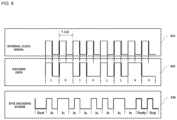
- FIG. 8 is a diagram illustrating a method of modulating and demodulating a wireless power signal according to an embodiment.
- the wireless power transmission end 10 and the wireless power reception end 20 may encode or decode a packet to be transmitted based on internal clock signals having the same period.
- the wireless power signal may be an unmodulated AC signal having a specific frequency as denoted by reference numeral 41 of FIG. 1 .
- the wireless power signal may be an AC signal modulated using a specific modulation method as denoted by reference numeral 42 of FIG. 1 .
- the modulation method may include an amplitude modulation method, a frequency modulation method and a frequency and amplitude modulation method, a phase modulation method, etc., without being limited thereto.
- the binary data of the packet generated by the wireless power transmission end 10 or the wireless power reception end 20 may be subjected to differential biphase encoding as denoted by reference numeral 820.
- differential biphase encoding have two status transitions to encode data bit 1 and have one state transition to encode data bit 0. That is, data bit 1 is encoded such that transition between a HI state and a LO state occurs in the rising edge and the falling edge of the clock signal and data bit 0 is encoded such that transition between the HI state and the LO state occurs in the rising edge of the clock signal.
- the encoded binary data may be subjected to a byte encoding scheme denoted by reference numeral 830.
- the byte encoding scheme may refer to a method of inserting, into an encoded 8-bit binary bit stream, a start bit and a stop bit for identifying start and stop of the bit stream and a parity bit for sensing error of the bit stream (byte).
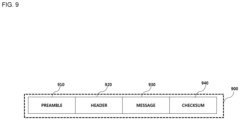
- FIG. 9 is a view illustrating a packet format according to an embodiment.
- a packet reception end may identify the size of the message 930 included in the corresponding packet based on the value of the header 920.
- the message 930 includes data to be transmitted by the transmission end of the corresponding packet.
- the data included in the message 930 field may be a report, a request, or a response, without being limited thereto.
- the packet 900 may further include at least one of transmission end identification information for identifying the transmission end for transmitting the corresponding packet and reception end identification information for identifying the reception end for receiving the corresponding packet.
- the transmission end identification information and the reception end identification may include IP address information, MAC address information, product identification information, etc.
- the embodiment is not limited thereto and information for distinguishing the reception end and the transmission end in the wireless charging system may be included.
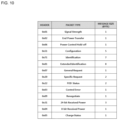
- FIG. 10 is a view illustrating the types of packets transmitted from the wireless power receiver to the wireless power transmitter according to an embodiment.
- the packets transmitted from the wireless power receiver to the wireless power transmitter may be transmitted using in-band communication using the same frequency band as the frequency band used to transmit wireless power.
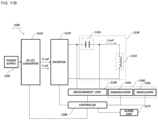
- FIG. 11-a is a diagram illustrating the basic structure of a foreign object detection apparatus (circuit) installed in a wireless power transmitter according to an embodiment.
- the foreign object detection apparatus (circuit) 1190 may include a power supply 1191, a driving unit 1192, a resonant capacitor 1193, a transmission coil 1194, a quality factor measurement unit 1195, a demodulator 1196 and a controller 1197.
- the power supply 1191 may receive and supply external power to the driving unit 1192.
- the driving unit 1192 may change at least one of the frequency (operating frequency), duty ratio and amplitude of the AC signal according to the control signal of the controller 1197.
- the quality factor measurement unit 1195 may monitor change in inductance (or voltage or current) across the resonant capacitor 1193 and measure the quality factor value of the transmission coil. The measured current quality factor value may be transmitted to the controller 1197.
- the demodulator 1196 demodulates the signal received from the wireless power receiver and transmits the demodulated signal to the controller 1197.
- the demodulator 1196 may demodulate the FOD status packet and transmit the demodulated FOD status packet to the controller 1197.
- the controller 1197 may receive and store the quality factor value measured by the quality factor measurement unit 1195 in a memory. In addition, the controller 1197 may read the stored quality factor value from the memory. The controller 1197 may control the operating frequency of the driving unit 1192. By controlling the operating frequency of the driving unit 1192, the quality factor measurement unit 1195 may measure the quality factor value of each operating frequency. The controller 1197 may determine a frequency corresponding to a maximum quality factor value, that is, a peak frequency, based on the measured quality factor value of each operating frequency.
- the controller 1197 may determine a quality factor threshold value for the wireless power receiver based on at least one of a reference quality factor value included in the FOD status packet, the operating frequency (reference peak frequency) corresponding to the maximum quality factor value, the operating frequency corresponding to a quality factor value less than the reference quality factor value by a predetermined value, for example, the operating frequency at which a quality factor value less than the reference quality factor value by 5% is measured.
- the quality factor value measured by the controller 1197 may correspond to the quality factor value of the transmission coil measured using a measurement apparatus such as an LCR meter for measuring at least one of the voltage, current, resistance, impedance, capacitance and quality factor value of an electric circuit.
- the power supply 1101 may receive DC power through an external power terminal and transmit the DC power to the DC-to-DC converter 1110.
- the DC-to-DC converter 1110 may convert the strength of the DC power received from the power supply 1101 into a specific strength of DC power under control of the controller 1180.
- the DC-to-DC converter 1110 may include a variable voltage generator capable of adjusting the strength of the voltage, without being limited thereto.
- the inverter 1120 may convert the converted DC power into AC power.
- the inverter 1120 may convert the DC power signal input through control of a plurality of switches into an AC power signal and output the AC power signal.
- the wireless power transmission apparatus may adaptively determine the bridge mode according to a sensed temperature and drive the inverter 1120 in the determined bridge mode. If the temperature of the wireless power transmission apparatus exceeds a predetermined reference value while wireless power is transmitted using the half bridge mode, the controller 1180 may perform control to deactivate the half bridge mode and activate the full bridge mode. That is, the wireless power transmission apparatus may increase the voltage and decrease the strength of current flowing in the resonant circuit 1130 through the full bridge circuit for transmission of power having the same strength, thereby maintaining the internal temperature of the wireless power transmission apparatus at a reference value or less.
- the amount of heat generated in an electronic part mounted in the electronic apparatus may be more sensitive to the strength of current than the strength of the voltage applied to the electronic part.
- the inverter 1120 may not only convert the DC power into AC power but also change the strength of the AC power.
- the inverter 1120 may adjust the strength of the output AC power by adjusting the frequency of a reference alternating current signal used to generate the AC power under control of the controller 1180.
- the inverter 1120 may include a frequency oscillator for generating the reference alternating current signal having a specific frequency.
- the frequency oscillator may be mounted independently of the inverter 1120 and mounted at one side of the foreign object detection apparatus 1100.
- the foreign object detection apparatus 1100 may further include a gate driver (not shown) for controlling the switch provided in the inverter 1120.
- the gate driver may receive at least one pulse width modulation signal from the controller 1180 and control the switch of the inverter 1120 according to the received pulse width modulation signal.
- the controller 1180 may control the duty cycle, that is, the duty rate, and phase of the pulse width modulation signal to control the strength of the output power of the inverter 1120.
- the controller 1180 may adaptively control the duty cycle and phase of the pulse width modulation signal based on the feedback signal received from the wireless power reception apparatus.
- the measurement unit 1140 may measure at least one of a voltage, current and impedance of the resonant capacitor 1131 according to the control signal of the controller 1180 to measure or calculate the quality factor value and/or peak frequency value of the resonant circuit 1130. At this time, the calculated quality factor value and/or inductance value may be sent to the controller 1180, and the controller 1180 may store the quality factor value and/or the peak frequency value received from the measurement unit 1140 in a predetermined recording region.
- the measurement unit 1140 may measure and store the quality factor value corresponding to a predetermined reference operating frequency, that is, a reference measured quality factor value, according to a control signal of the controller 1180.
- the measurement unit 1140 may measure the quality factor value of each frequency within a specific operating frequency range according to a control signal of the controller 1180.
- the controller 1180 may determine a peak frequency value corresponding to a maximum quality factor value and store the peak frequency value in the memory.
- the controller 1180 may control the measurement unit 1140 to measure the quality factor values at a plurality of frequencies within the operating frequency band before entering the ping phase.
- the controller 1180 may identify a frequency corresponding to a largest value among the measured quality factor values and determine the identified frequency as a current peak frequency.
- the controller 1180 may determine a threshold value (or a threshold range) for determining whether a foreign object is present based on information included in the FOD status packet.
- the threshold value may include at least one of the peak frequency value and the quality factor threshold value. If the determined value is a threshold range, the threshold range may include at least one of a peak frequency threshold range and a quality factor threshold range.
- the FOD status packet may include at least one of a reference quality factor value corresponding to the wireless power receiver and/or a reference peak frequency F_reference_peak value.
- the controller 1180 may determine the quality factor threshold value and/or the peak frequency threshold value for determining whether the foreign object is present based on the received reference quality factor value and the reference peak frequency value. For example, although a value corresponding to 90% of the reference quality factor value may be determined as the quality factor threshold value, the embodiment is not limited thereto and the ratio applied to determine the threshold value may be differently defined according to the design of those skilled in the art.
- the controller 1180 may calibrate the reference measured quality factor value Q_measured_reference based on a difference between the current peak frequency F_current_peak value and a reference peak frequency F_reference_peak value. For example, as a value obtained by subtracting the reference peak frequency value from the current peak frequency value increases, the reference measured quality factor value may increase.
- a specific calibration function using the difference between the current peak frequency F_current_peak and the reference peak frequency F_reference_peak as a factor may be predefined.
- the calibration function may be a linear function.
- the embodiment is not limited thereto and a nonlinear function such as an exponential function may be defined.
- a quality factor calibration value corresponding to a degree of shift of the current peak frequency from the reference peak frequency may be configured and maintained in the form of a table in a predetermined recording region of the foreign object detection apparatus 1100.
- the controller 1180 may compare the calibrated reference measured quality factor value with the determined quality factor threshold value to detect the foreign object placed in the charging area.
- the controller 1180 may determine that the foreign object is present in the charging area when the calibrated reference measured quality factor value is less than the determined quality factor threshold value. In contrast, the controller 1180 may determine that the foreign object is not present in the charging area when the calibrated reference measured quality factor value is equal to or greater than the determined quality factor threshold value.
- the controller 1180 may calibrate the quality factor threshold value based on the difference between the current peak frequency F_current_peak value and the reference peak frequency F_reference_peak value.
- the controller 1180 may perform calibration, such that the quality factor threshold value increases as the value obtained by subtracting the reference peak frequency from the current peak frequency value increases.
- the controller 1180 may compare the quality factor threshold value with the measured quality factor value to detect the foreign object placed in the charging area.
- the controller 1180 may stop power transfer upon determining that the foreign object is present and control the alarm unit 1175 to output a predetermined warning alarm indicating that the foreign object has been detected.
- the alarm unit 1175 may include, but is not limited to, a beeper, an LED lamp, a vibration element, a liquid crystal display, etc.
- the embodiment is not limited thereto and a predetermined alarm unit configured to inform the user that the foreign object has been detected may be provided.
- the reference quality factor value included in the FOD status packet may be determined to be the smallest value of the quality factor values calculated in correspondence with the wireless power receiver at a specific position of a charging bed of a wireless power transmitter specified for standard performance test.
- the controller 1180 may return to the selection phase and control the measurement unit 1140 to measure the quality factor value at a specific operating frequency and/or the peak frequency in the operating frequency band at predetermined periods. At this time, the controller 1180 may perform comparison with a predetermined threshold value in a state in which the foreign object is detected, thereby determining whether the detected foreign object has been removed.
- the controller 1180 may enter the power transfer phase to perform charging of the wireless power reception device.
- the demodulator 1161 demodulates an in-band signal received from the wireless power reception apparatus and transmits the demodulated signal to the controller 1180.
- the demodulator 1161 may demodulate the FOD status packet of FIG. 14 or 15 and transmit the demodulated FOD status packet to the controller 1180.
- the foreign object detection apparatus 1100 adaptively calibrates the measured quality factor value based on the degree of shift of the peak frequency when the object is detected in the selection phase, thereby remarkably decreasing a probability of foreign object detection failure.
- FIG. 12 is a block diagram illustrating the structure of a foreign object detection apparatus according to another embodiment.
- the foreign object detection apparatus 1200 may include a measurement unit 1210, a search unit 1220, a communication unit 1230, a determination unit 1240, a calibration unit 1250, a detection unit 1260, a storage unit 1270 and a controller 1280. It should be noted that the components of the foreign object detection apparatus 1200 are not mandatory and more or fewer components may be included.
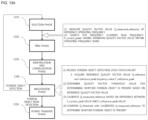
- the measurement unit 1210 may temporarily stop power transfer and measure the quality factor value at a predetermined reference operating frequency.
- a current quality factor value measured at the reference operating frequency is referred to as a measured quality factor value Q_measured.
- the reference operating frequency may be set to a specific frequency included in the operating frequency band. For example, if the wireless power transmission apparatus in which the foreign object detection apparatus 1200 is installed supports the WPC standard, the reference operating frequency may be 100 kHz. However, it should be noted that the embodiment is not limited thereto and the reference operating frequency may be differently defined according to the applied standard.
- the measured quality factor value measured by the measurement unit 1210 and the current peak frequency value searched by the search unit 1220 may be stored in a predetermined recording region of the storage unit 1270.
- the foreign object detection apparatus may periodically transmit a predetermined power signal for identifying the wireless power receiver, for example, a digital ping.
- the foreign object detection apparatus may enter the negotiation phase 1341 to perform a foreign object detection procedure.
- the foreign object detection procedure is performed through the following four steps.
- the information on the reference quality factor value means a quality factor value measured at a reference operating frequency in a state in which the wireless power receiver is powered off. Powering off the receiver means a state in which power is not transmitted to a load.
- the information on the reference peak frequency value means a frequency having a maximum quality factor within the operating frequency band in a state in which only the wireless power receiver is placed in the charging area of a predetermined wireless power transmitter.
- the wireless power receiver stores a reference peak frequency value in advance and transmits the reference peak frequency value to the wireless power transmitter in the negotiation phase 1341.
- step 2 the foreign object detection apparatus determines a quality factor threshold value for determining whether a foreign object is present based on the received reference quality factor value.
- step 3 the foreign object detection apparatus compares the quality factor threshold value with the measured quality factor value to determine whether a foreign object is present.
- the foreign object detection apparatus Upon determining that the foreign object is present, the foreign object detection apparatus according to the embodiment stops power transfer and returns to the selection phase 1310.
- the foreign object detection apparatus transmits a predetermined foreign object detection indicator indicating that a foreign object is present to the wireless power receiver.
- the wireless power receiver requests End of Power Transfer or ignores the indicator, that is, does not transmit an Ack response signal corresponding to the foreign object detection indicator, and proceeds to the subsequent phase in order to continuously perform charging.
- the foreign object detection apparatus determines whether the reference peak frequency value has been received.
- the foreign object detection apparatus determines that the reference peak frequency value has been received, when the reference peak frequency value included in the foreign object detection status packet is greater than 0.
- the foreign object detection apparatus enters the power transfer phase 1350 to start wireless charging of the wireless power receiver.
- step 4 the foreign object detection apparatus compares the peak frequency threshold value with the current peak frequency value to determine whether a foreign object is present. When the current peak frequency value is greater than the peak frequency threshold value, it is determined that the foreign object is present. Then, the foreign object detection apparatus stops power transfer and returns to the selection phase 1311. Alternatively, an indicator indicating that the foreign object is present is transmitted to the wireless power receiver, and the wireless power receiver requests End of Power Transfer or ignore the indicator and proceed to the subsequent phase in order to continuously perform charging. In contrast, upon determining that the foreign object is not present, the foreign object detection apparatus enters the power transfer phase 1351 to start wireless charging of the wireless power receiver.
- the foreign object detection apparatus first performs a procedure of determining whether the reference peak frequency value has been received from the wireless power receiver before the foreign object detection procedure based on the quality factor value.
- the foreign object detection apparatus upon determining that the reference peak frequency value has not been received, performs only the foreign object detection procedure based on the quality factor value to determine whether a foreign object is present.
- the foreign object detection procedure is differently performed depending on whether the reference peak frequency is received, the foreign object detection procedure is performed in a manner preferred by the wireless power receiver.
- a foreign object detection method corresponding to the wireless power receiver that is, whether reference peak frequency information is transmitted or not, may be changed through predetermined menu settings.
- the wireless power receiver may identify the type and characteristics of the wireless power transmitter and determine a foreign object detection method optimized for the identified type and characteristics. In this case, the wireless power receiver may adaptively determine whether the reference peak frequency information is transmitted or not according to the determined foreign object detection method.
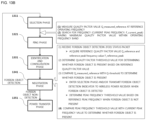
- FIG. 13c is a diagram illustrating a foreign object detection procedure according to another embodiment.
- a wireless power transmitter may measure the quality factor value of a resonant circuit when an object is detected in a charging area.
- the quality factor of the resonant circuit may mean an amplification ratio of the input/output voltage by the resonant capacitor when AC power having a specific frequency is applied to the resonant circuit. For this, refer to the description of FIGs. 11-a and 11-b .
- the quality factor value of each frequency may be measured within the operating frequency range of the wireless power transmitter.
- the wireless power transmitter may receive a foreign object detection status packet.
- a foreign object detection status packet refer to the description of FIGs. 14-a to 14-b .
- the wireless power transmitter determine the quality factor threshold value based on the received reference quality factor value.
- the wireless power transmitter determines whether a foreign object is present using the quality factor threshold value and the measured quality factor value.
- the wireless power transmitter determines that a foreign object is present.
- the wireless power transmitter determines whether information on the reference peak frequency is included in the foreign object detection status packet. (see FIG. 14 )
- the wireless power transmitter may determine that a foreign object is not present. At this time, a subsequent phase (e.g., calibration or power transfer) for wireless power transfer may be performed.
- a subsequent phase e.g., calibration or power transfer
- the wireless power transmitter may further determine whether a foreign object is present based on the received information on the reference peak frequency.
- the wireless power transmitter may determine a peak frequency threshold value using the reference peak frequency value.
- the wireless power transmitter may compare the peak frequency threshold value with the current peak frequency and determine that a foreign object is present when the current peak frequency is equal to or greater than the peak frequency threshold value. In contrast, when the current peak frequency is less than the peak frequency threshold value, the wireless power transmitter may determine that a foreign object is not present.
- the wireless power transmitter may determine whether wireless power transfer is performed or stopped.
- the procedure of determining whether a foreign object is present based on the quality factor value and the procedure of determining whether a foreign object is present based on the peak frequency may be performed in a reverse order. That is, the procedure of determining whether a foreign object is present based on the peak frequency may be performed first and then the procedure of determining whether a foreign object is present based on the quality factor value, thereby improving foreign object detection capability.
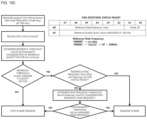
- FIG. 13d is a diagram illustrating a foreign object detection procedure according to another embodiment.
- a wireless power transmitter may measure the quality factor value of a resonant circuit when an object is detected in a charging area.
- the quality factor of the resonant circuit may mean an amplification ratio of the input/output voltage by the resonant capacitor when AC power having a specific frequency is applied to the resonant circuit. For this, refer to the description of FIGs. 11-a and 11-b .
- the quality factor value of each frequency may be measured within the operating frequency range of the wireless power transmitter.
- the wireless power transmitter may store the measured quality factor value of each frequency in a predetermined memory.
- the wireless power transmitter may receive a foreign object detection status packet.
- the foreign object detection status packet may include information on a reference peak frequency corresponding to a frequency, at which a maximum quality factor value is measured within an operating frequency, and information on a reference quality factor value corresponding to the maximum quality factor value.
- the wireless power transmitter may determine the quality factor threshold value based on the reference quality factor value.
- the wireless power transmitter may determine whether a foreign object is present using the quality factor threshold value and the measured quality factor value.
- the measured quality factor value may be a quality factor value measured at a frequency corresponding to the received reference peak frequency. Since the measured quality factor value of each frequency is stored in the memory, the wireless power transmitter may identify a frequency corresponding to the received reference peak frequency and read the measured quality factor value from the memory in correspondence with the identified frequency.
- the frequency at which the quality factor value is changed most greatly depending on presence/absence of the foreign object is a reference peak frequency.
- the wireless power receiver may transmit the reference peak frequency and the quality factor value measured at the reference peak frequency to the wireless power transmitter, and the wireless power transmitter may determine whether a foreign object is present based on the received information.
- the reference quality factor value corresponding to the reference peak frequency at which the quality factor value is changed most greatly depending on presence/absence of the foreign object is compared with the current quality factor value, it is possible to improve foreign object detection capability.
- the current quality factor value corresponding to the reference peak frequency may be measured before the ping phase, without being limited thereto.
- the wireless power transmitter may determine whether a foreign object is present only using information on the reference peak frequency included in the foreign object detection status packet.
- the frequency corresponding to the maximum quality factor value among the quality factor values measured before the ping phase is greater than the reference peak frequency (which may be determined in consideration of a certain tolerance range), it may be determined that the foreign object is present.
- FIG. 14-a is a view illustrating the structure of an FOD status packet message according to an embodiment.
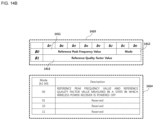
- the FOD status packet message 1400 may have a length of 2 bytes, and include a first data 1401 field having a length of 6 bits, a mode 1402 field having a length of 2 bits and a reference quality factor value 1403 field having a length of 1 byte.
- the mode 1402 field is set to a binary value of "00"
- all bits of the first data 1401 field are recorded as 0 and information corresponding to the reference quality factor value measured and determined in a state in which the wireless power receiver is powered off is recorded in the reference quality factor value 1403 field.
- the mode 1402 field is set to a binary value of "01”
- information corresponding to the reference peak frequency value meaning a frequency having a maximum quality factor value within the operating frequency band in a state in which only the wireless power receiver is placed in the charging area may be recorded in the first data 1401 field.
- the reference quality factor value field 1403 information corresponding to the reference quality factor value measured and determined in a state in which the wireless power receiver is powered on may be recorded in the reference quality factor value field 1403.
- the resolution of the reference peak frequency value recorded in the first data 1401 may be determined based on the size of the operating frequency band.
- the first data 1401 may have a value from 0 to 63.
- the operating frequency band is 100 kHz to 260 kHz
- this may mean that the reference peak frequency is 100 kHz
- the operating frequency band for quality factor measurement may be 87 kHz to 150 kHz. At this time, any frequency value from 87 kHz to 150 kHz may be indicated in the first data 1401.
- FIG. 14-b is a view illustrating the structure of an FOD status packet message according to another embodiment.
- the FOD status packet message 1410 may have a length of 2 bytes, and include a first data 1411 field having a length of 6 bits, a mode 1412 field having a length of 2 bits and a reference quality factor value 1413 field having a length of 1 byte.
- the mode 1412 field is set to a binary value of "00"
- information corresponding to a reference peak frequency value meaning a frequency having a maximum quality factor value within an operating frequency band in a state in which only the wireless power receiver is placed in the charging area may be recorded in the first data 1401 field.
- the foreign object detection apparatus may determine that the wireless power receiver does not transmit the reference peak frequency value.
- information corresponding to the reference quality factor value measured and determined in a state in which the wireless power receiver is powered off may be recorded in the reference quality factor value field 1413.
- the resolution of the reference peak frequency value recorded in the first data 1401 may be determined based on the size of the operating frequency band.
- the first data 1411 may have a value from 1 to 63.
- the operating frequency band is 100 kHz to 260 kHz
- this may mean that the reference peak frequency is 100 kHz
- the operating frequency band for quality factor measurement may be 87 kHz to 149 kHz. At this time, any frequency value from 87 kHz to 149 kHz may be indicated in the first data 1411.
- the foreign object detection status packets of FIGs. 14-a and 14-b may include information on the reference peak frequency corresponding to the frequency at which the maximum quality factor value is measured within the operating frequency and information on the reference quality factor value which is the quality factor value corresponding to the maximum quality factor value.
- the information on the reference peak frequency and the reference quality factor value may be stored in the memory of the wireless power receiver. This may be measured in advance using a specific wireless power transmitter in a manufacturing process.
- the specific wireless power transmitter is a standard transmitter and is used for authentication. In actual products, the measured value of the standard transmitter may be calibrated and used in consideration of differences in design and characteristics between the actual products and the standard transmitter.
- the wireless power transmitter may compare the reference quality factor value with the quality factor value measured in the ping phase 520 (or before the ping phase) to determine whether a foreign object is present (Method 1) or compare the reference peak frequency with the peak frequency measured in the ping phase 520 (or before the ping phase) to determine whether a foreign object is present (Method 2, the embodiments of FIG. 11 ).
- whether a foreign object is present may be determined using a complex method.
- the wireless power transmitter may determine whether a foreign object is present using Method 1.
- two threshold values threshold value 1: Q_Threshold 1 and threshold value 2: Q_Threshold 2
- the threshold value 1 is greater than the threshold value 2.
- the wireless power transmitter may determine that a foreign object is present.
- the wireless power transmitter may determine whether a foreign object is present using Method 2.
- FIG. 15 is a view illustrating the structure of an FOD status packet message according to another embodiment.
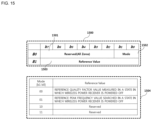
- the FOD status packet message 1500 may have a length of 2 bytes, and include a reserved 1501 field having a length of 6 bits, a mode 1502 field having a length of 2 bits and a reference value 1503 field having a length of 1 byte.
- all bits of the reserved 1501 field are recorded as "0".
- the mode 1502 field is set to "00"
- information corresponding to a reference quality factor value measured and determined in a state in which the wireless power receiver is powered off may be recorded in the reference value 1503 field.
- the mode 1502 field is set to a binary value of "01"
- information corresponding to a reference peak frequency value meaning a frequency having a maximum quality factor value within an operating frequency band in a state in which only the wireless power receiver is placed in the charging area may be recorded in the reference value 1503 field.
- the reference peak frequency may be searched in a state in which a foreign object is not placed but only the wireless power receiver which is powered off is present in the charging area.
- the foreign object detection apparatus (or the wireless power transmission apparatus) receives a plurality of FOD status packets in the negotiation phase to acquire the reference peak frequency value and the reference quality factor value corresponding to the wireless power receiver.
- the resolution of the reference peak frequency value may be determined based on the size of the operating frequency band, that is, the operating frequency bandwidth.
- the reference value 1503 since the reference value 1503 field has a length of 1 byte, the reference value 1503 may have a value from 0 to 127.
- the wireless power transmission apparatus having an operating frequency band of 100 kHz to 356 kHz receives an FOD status packet in which the mode 1502 value is a binary value of "01" and the reference value 1503 is set to "0x05"
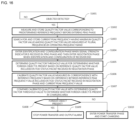
- FIG. 16 is a flowchart illustrating a foreign object detection method in a wireless power transmission apparatus according to an embodiment.
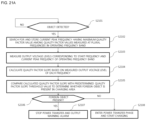
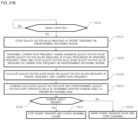
- the wireless power transmission apparatus may measure and store a quality factor value corresponding to a reference operating frequency in a predetermined recording region before entering the ping phase (S1601 to S1602).
- the voltage of the transmission coil is 0.5 Vrms to 2Vrms. It is possible to prevent current leakage of the rectifier of the wireless power receiver.
- rms means root mean square.
- the wireless power transmission apparatus may search for and store a current peak frequency having a maximum quality factor value among quality factor values measured at a plurality of frequencies in the operating frequency band in a predetermined recording region (S1603).
- a frequency offset or the number of frequencies for determining frequencies at which the quality factor value is measured for searching for the current peak frequency within the operating frequency band may vary according to the design of those skilled in the art (S1603).
- the operating frequency band may be 87 kHz to 150 kHz and the reference operating frequency may be 100kHz, without being limited thereto.
- the wireless power transmission apparatus may enter the ping phase to wirelessly transmit a digital ping signal for identifying the wireless power receiver.
- the wireless power transmission apparatus may enter the identification and configuration phase and transition to the negotiation phase when identification and configuration of the wireless power receiver end (S1604).
- the wireless power transmission apparatus may determine a threshold value (or a threshold range) for determining whether a foreign object is present based on the received FOD status packet (S1605).
- the threshold value may be a quality factor threshold value determined based on the reference quality factor value included in the FOD status packet, without being limited thereto.
- the wireless power transmission apparatus may calibrate (or compensate for) the measured quality factor value, that is, the reference measured quality factor value, in correspondence with the reference operating frequency based on a difference between the reference peak frequency value included in the FOD status packet received in the negotiation phase and the current peak frequency value (S1606).
- the wireless power transmission apparatus may compare the calibrated reference measured quality factor value with the determined quality factor threshold value to determine whether a foreign object is present (S1607).
- the wireless power transmission apparatus may perform control to stop power signal transfer and to output a predetermined warning alarm indicating that the foreign object has been detected (S1608 and S1609).
- the wireless power transmission apparatus may enter the power transfer phase and start charging of the wireless power receiver (S1608 and S1610). At this time, a calibration procedure for optimizing various configuration parameters necessary for power transfer and power control may be further performed before charging of the wireless power receiver starts.
- the foreign object detection apparatus may calibrate the reference measured quality factor value based on the peak frequency shift value and the quality factor shift value. For example, as the sum of the peak frequency shift value and the quality factor shift value increases, the calibration ratio of the reference quality factor value may increase.
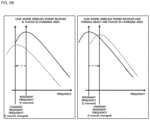
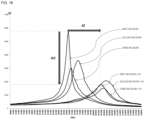
- a resonant phenomenon occurs at a peak frequency having a maximum quality factor value and power efficiency is maximized when the resonant phenomenon occurs.
- FIG. 19 is a block diagram illustrating the configuration of a foreign object detection apparatus according to another embodiment.
- the foreign object detection apparatus 1900 may include a peak frequency search unit 1910, an output voltage measurement unit 1920, a quality factor slope determination unit 1930, a foreign object detection unit 1940 and a controller 1950.
- the components of the foreign object detection apparatus 1900 are not necessarily mandatory and some components may be added or deleted.
- the peak frequency search unit 1910 may temporarily stop power transfer and search for a frequency having a maximum quality factor value within the operating frequency band.
- a frequency search offset for searching for the frequency having the maximum quality factor value is determined in units of 10 kHz * k (k being a natural number).
- the embodiment is not limited thereto and the frequency search offset may be defined in fewer or greater units.
- the frequency having the maximum quality factor value within the operating frequency band searched after the object is detected is referred to as a current peak frequency F_current_peak.
- a frequency having a maximum quality factor value acquired through the preliminary experiment in a state in which only the wireless power receiver is placed in the charging area is referred to as a reference peak frequency F_reference_peak.
- the quality factor slope determination unit 1930 may calculate a quality factor slope based on the voltage value of a specific frequency measured by the output voltage measurement unit 1920. For example, the output voltage level measured at the start frequency and the output voltage level measured at the current peak frequency are referred to as V_start' and Vc', respectively.
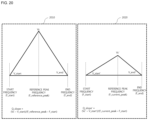
- the quality factor slope Q_slope' may be calculated by the following equation: Vc ′ ⁇ V_start ′ / F_current_peak ⁇ F_start as denoted by reference numeral 2020 of FIG. 20 .
- the quality factor slope is calculated based on the measurement voltage level in the embodiments of FIGs. 19 to 21 , this is merely an embodiment. In another embodiment, the quality factor slope may be calculated based on the quality factor value measured at the corresponding frequency.
- the quality factor slope Q_slope' may be calculated based on the output voltage level Vc' measured at the current peak frequency and the output voltage level V_end' measured at the end frequency according to another embodiment.
- the quality factor slope may be calculated by the following equation: Vc ′ ⁇ V_end ′ / F_current_peak ⁇ F_end
- the quality factor slope calculated based on the output voltage levels (or the quality factor values) measured at the start frequency and the current peak frequency is referred to as a first quality factor slope and a quality factor slope calculated based on the output voltage levels (or the quality factor values) measured at the current peak frequency and the end frequency is referred to as a second quality factor slope.
- the foreign object detection unit 1940 may compare the calculated quality factor slope with a predefined threshold value to detect a foreign object placed in the charging area.
- the foreign object detection unit 1940 may compare the calculated first quality factor slope with a predefined first quality factor slope threshold value to determine whether a foreign object is present.
- the first quality factor slope threshold value may have a positive value.
- the foreign object detection unit 1940 may determine that the foreign object is placed in the charging area, when the calculated first quality factor slope is less than the first quality factor slope threshold value.
- the first quality factor slope threshold value may be predefined based on the type of the wireless power receiver and maintained in a predetermined recording region of the foreign object detection apparatus 1950.
- the first quality factor slope threshold value may be the same in all wireless power receivers.
- the first quality factor slope threshold value may be directly received from the wireless power receiver through a communication unit (not shown).
- the foreign object detection apparatus 1900 may acquire the first quality factor slope threshold value and/or the second quality factor slope threshold value through the foreign object detection (FOD) status packet received in the wireless power receiver in the negotiation phase.
- FOD foreign object detection
- the controller 1950 may control overall operation of the foreign object detection apparatus 1900, and temporarily stop power transfer to the wireless power receiver and control an alarm unit (not shown) configured to output a predetermined warning alarm indicating that the foreign object is present in the charging area, when the foreign object is detected by the foreign object detection unit 1940.
- controller 1950 may monitor whether the detected foreign object has been removed after outputting the warning alarm. If the foreign object has been removed as the monitoring result, the controller 1950 may perform control to release the warning alarm and to resume power transfer to the wireless power receiver.
- FIG. 20 is a view illustrating change in quality factor slope depending on whether a foreign object is present in a wireless charging system according to an embodiment.
- reference numeral 2010 shows an example in which the quality factor slope is calculated in a state in which only the wireless power receiver is placed in the charging area
- reference numeral 2020 shows an example in which the quality factor slope is calculated in a state in which the wireless power receiver and the foreign object are placed in the charging area. It can be seen from FIG. 20 that the quality factor slope Q_slope' calculated in the state in which the foreign object is further placed in the charging area is less than the quality factor slope Q_slope calculated in the state in which only the wireless power receiver is placed in the charging area.
- Q_slope and Q_slope' are referred to as a reference quality factor slope and a current quality factor slope, respectively.
- the quality factor slope threshold value may be set to any value less than the reference quality factor slope of reference numeral 2010 and greater than the current quality factor slope of reference numeral 2020.
- FIG. 21-a is a flowchart illustrating a foreign object detection method in a wireless power transmission apparatus according to another embodiment.
- the wireless power transmission apparatus may detect an object placed in the charging area in the selection phase (S2101).
- the wireless power transmission apparatus may temporarily stop power transfer before entering the ping phase, search for a current peak frequency having a maximum value among the quality factor values measured at a plurality of frequencies within the operating frequency band, and store the current peak frequency in a predetermined recording region (S2102).
- a frequency offset (or the number of frequencies) for determining frequencies at which the quality factor value is measured in order to search for the current peak frequency within the operating frequency band may vary according to the design of those skilled in the art.
- the operating frequency band may vary according to the design of the wireless charging system and the applied standard.
- the wireless power transmission apparatus may measure the output voltage levels respectively corresponding to the start frequency and the end frequency of the operating frequency band (S2103).
- the wireless power transmission apparatus may calculate the quality factor slope based on the output voltage levels measured at the start frequency and the current peak frequency (S2004).
- the wireless power transmission apparatus may compare the calculated quality factor slope with a predetermined quality factor slope threshold value to determine whether a foreign object is present (S2105).
- the wireless power transmission apparatus may perform control to stop power signal transfer and to output a predetermined warning alarm indicating that the foreign object has been detected (S2106 and S2107).
- the wireless power transmission apparatus may enter the power transfer phase and start charging of the wireless power receiver (S2106 and S2108).
- FIG. 21-b is a flowchart illustrating a foreign object detection method in a wireless power transmission apparatus according to another embodiment.
- the wireless power transmission apparatus may detect an object placed in the charging area in the selection phase (S2111).
- the wireless power transmission apparatus applies a low voltage (e.g., 0.5 to 2V) to the inverter 1120 before entering the ping phase to measure the quality factor value at a plurality of frequencies within the operating frequency band.
- a low voltage e.g., 0.5 to 2V
- the controller 1180 may store the quality factor value measured at a specific frequency in a predetermined recording region (S2112).
- the specific frequency may be a predefined frequency within the operating frequency band, and may be used interchangeably with a measurement start frequency for convenience of description.
- the quality factor value measured at the measurement start frequency is referred to as a start quality factor value.
- the controller 1180 may determine a current peak frequency, at which a maximum value is measured, among the measured quality factor values and store the current peak frequency and the peak quality factor value measured at the corresponding frequency in a predetermined recording region (S2113).
- a frequency offset (or the number of frequencies) for determining frequencies at which the quality factor value is measured in order to search for the current peak frequency within the operating frequency band may vary according to the design of those skilled in the art.
- the operating frequency band may vary according to the design of the wireless charging system and the applied standard.
- the wireless power transmission apparatus may calculate the quality factor slope based on the quality factor values measured at a specific frequency (start frequency) and the current peak frequency (S2114).
- the quality factor slope Q_slope' may be determined as follows.
- Q_slope ′ Qc ′ ⁇ Q_start ′ / F_current_peak ⁇ F_start where, F_current_peak denotes a current peak frequency, F_start denotes a specific frequency (start frequency), Qc' denotes a peak quality factor value, and Q_start' denotes a start quality factor value.
- the wireless power transmission apparatus may compare the calculated quality factor slope with a predetermined quality factor slope threshold value to determine whether a foreign object is present in the charging area (S2115).
- the predetermined quality factor slope threshold value may be determined based on the information included in the foreign object detection status packet as in the embodiment of FIG. 14 .
- a field for transmitting information on the quality factor slope threshold value or a value of an angle unit corresponding to the quality factor slope threshold value may be defined.
- the wireless power transmission apparatus may perform control to temporarily stop power transfer and to output a predetermined warning alarm indicating that the foreign object has been detected (S2116 and S2117).
- the wireless power transmission apparatus may enter the power transfer phase and start charging of the wireless power receiver (S2116 and S2118).
- the quality factor slope is calculated based on the output voltage levels measured at the start frequency and the current peak frequency in the embodiments of FIGs. 19 to 21a and 21b , this is merely an embodiment. In another embodiment, the quality factor slope may be calculated based on the quality factor values measured at the start frequency and the current peak frequency. It should be noted that, instead of the output voltage measurement unit 1920 shown in FIG. 19 , a quality factor measurement unit (not shown) for measuring the quality factor values corresponding to the start frequency and the current peak frequency is included in the foreign object detection apparatus 1900.
- the method according to the foregoing embodiments may be implemented as code that can be written to a computer-readable recording medium and can thus be read by a computer.
- Examples of the computer-readable recording medium include a ROM, a RAM, a CD-ROM, a magnetic tape, a floppy disk, an optical data storage, and a carrier wave (e.g., data transmission over the Internet).
- the computer-readable recording medium can be distributed over a plurality of computer systems connected to a network so that computer-readable code is written thereto and executed therefrom in a decentralized manner.
- Functional programs, code, and code segments needed to realize the embodiments herein can be construed by one of ordinary skill in the art.
- the foreign object detection method according to the embodiment may be used in a wireless charging system for detecting a foreign object located between a wireless power transmitter and a wireless power transmitter using a quality factor value.
Landscapes
- Engineering & Computer Science (AREA)
- Computer Networks & Wireless Communication (AREA)
- Power Engineering (AREA)
- Signal Processing (AREA)
- Physics & Mathematics (AREA)
- Quality & Reliability (AREA)
- Electromagnetism (AREA)
- Computer Security & Cryptography (AREA)
- Charge And Discharge Circuits For Batteries Or The Like (AREA)
- Investigating Or Analyzing Materials By The Use Of Magnetic Means (AREA)
- General Physics & Mathematics (AREA)
Claims (6)
- Drahtlosleistungssender (10, 600), der Leistung an einen Drahtlosleistungsempfänger (20, 700) sendet, der Drahtlosleistungssender (10, 600) umfassend:eine Drahtloskommunikationseinheit (630), die konfiguriert ist, um mit dem Drahtlosleistungsempfänger (20, 700) zu kommunizieren; undeine Steuerung (640), wobei:die Drahtloskommunikationseinheit (630) konfiguriert ist, um vom Drahtlosleistungsempfänger (20, 700) ein erstes Fremdkörpererkennungsstatuspaket (1500) und ein zweites Fremdkörpererkennungsstatuspaket (1500) zu empfangen, wobeidas erste Fremdkörpererkennungsstatuspaket (1500) einen ersten Referenzwert einschließt, der eines von einem Referenzgütefaktor und einer Referenzspitzenfrequenz ist, wobeidie Steuerung (640) konfiguriert ist, um eine Fremdkörpererkennungsanzeigeeinrichtung zu erzeugen, die anzeigt, dass ein Fremdkörper in einem Ladebereich des Drahtlosleistungssenders (10, 600) vorhanden ist,dadurch gekennzeichnet, dassdass die Drahtloskommunikationseinheit (630) konfiguriert ist, um die Fremdkörpererkennungsanzeigeeinrichtung an den Drahtlosleistungsempfänger (20, 700) zu senden,dass das zweite Fremdkörpererkennungsstatuspaket (1500) einen zweiten Referenzwert einschließt, der der andere von Referenzgütefaktor und Referenzspitzenfrequenz ist,dass die Fremdkörpererkennungsanzeigeeinrichtung basierend auf dem ersten Fremdkörpererkennungsstatuspaket (1500) und dann dem zweiten Fremdkörpererkennungsstatuspaket (1500) erzeugt wird,dass das erste Fremdkörpererkennungsstatuspaket (1500) ferner Modusinformationen einschließt, die anzeigen, dass der erste Referenzwert im ersten Fremdkörpererkennungsstatuspaket (1500) eingeschlossen ist, unddass das zweite Fremdkörpererkennungsstatuspaket (1500) ferner Modusinformationen einschließt, die anzeigen, dass der zweite Referenzwert im zweiten Fremdkörpererkennungsstatuspaket (1500) eingeschlossen ist.
- Drahtlosleistungssender (10, 600) nach Anspruch 1, wobei die Steuerung (640) konfiguriert ist, um einen Drahtlosladevorgang anzuhalten, wenn die Fremdkörpererkennungsanzeigeeinrichtung anzeigt, dass der Fremdkörper im Ladebereich vorhanden ist.
- Drahtlosleistungssender (10, 600) nach Anspruch 1, wobei, wenn ein Messgütefaktor eines vom Drahtlosleistungssender (10, 600) gesendeten Leistungssignals kleiner oder gleich einem ersten Schwellenwert ist, die Fremdkörpererkennungsanzeigeeinrichtung anzeigt, dass der Fremdkörper im Ladebereich vorhanden ist, und
wobei, wenn eine Messspitzenfrequenz des vom Drahtlosleistungssender (10, 600) gesendeten Leistungssignals größer als ein zweiter Schwellenwert ist, die Fremdkörpererkennungsanzeigeeinrichtung anzeigt, dass der Fremdkörper im Ladebereich vorhanden ist. - Drahtlosleistungssender (10, 600) nach Anspruch 3, wobei der erste Schwellenwert basierend auf dem Referenzgütefaktor und der zweite Schwellenwert basierend auf der Referenzspitzenfrequenz erzeugt wird.
- Drahtlosleistungssender (10, 600) nach Anspruch 1, wobei, wenn der Fremdkörper im Ladebereich vorhanden ist, eine Spitzenfrequenz des vom Drahtlosleistungssender (10, 600) gesendeten Leistungssignals von der Referenzspitzenfrequenz verschoben ist.
- Drahtlosleistungssender (10, 600) nach Anspruch 1, wobei die Fremdkörpererkennungsanzeigeeinrichtung unter Verwendung eines Messgütefaktorwerts des vom Drahtlosleistungssender (10, 600) gesendeten Leistungssignals und des Referenzgütefaktors bestimmt wird, oder
unter Verwendung eines Messspitzenfrequenzwerts des vom Drahtlosleistungssender (10, 600) gesendeten Leistungssignals und der Referenzspitzenfrequenz.
Applications Claiming Priority (5)
| Application Number | Priority Date | Filing Date | Title |
|---|---|---|---|
| KR20160106789 | 2016-08-23 | ||
| KR1020160117518A KR102617560B1 (ko) | 2016-08-23 | 2016-09-12 | 이물질 검출 방법 및 그를 위한 장치 및 시스템 |
| EP21159221.7A EP3863147B1 (de) | 2016-08-23 | 2017-08-23 | Drahtloser energieempfänger |
| PCT/KR2017/009208 WO2018038531A1 (ko) | 2016-08-23 | 2017-08-23 | 이물질 검출 방법 및 그를 위한 장치 및 시스템 |
| EP17843951.9A EP3506460B1 (de) | 2016-08-23 | 2017-08-23 | Verfahren zur detektion von fremdmaterial sowie sender zur drahtlosen leistungsübertragung |
Related Parent Applications (3)
| Application Number | Title | Priority Date | Filing Date |
|---|---|---|---|
| EP21159221.7A Division EP3863147B1 (de) | 2016-08-23 | 2017-08-23 | Drahtloser energieempfänger |
| EP21159221.7A Division-Into EP3863147B1 (de) | 2016-08-23 | 2017-08-23 | Drahtloser energieempfänger |
| EP17843951.9A Division EP3506460B1 (de) | 2016-08-23 | 2017-08-23 | Verfahren zur detektion von fremdmaterial sowie sender zur drahtlosen leistungsübertragung |
Publications (4)
| Publication Number | Publication Date |
|---|---|
| EP4239839A2 EP4239839A2 (de) | 2023-09-06 |
| EP4239839A3 EP4239839A3 (de) | 2023-10-18 |
| EP4239839B1 true EP4239839B1 (de) | 2025-07-09 |
| EP4239839C0 EP4239839C0 (de) | 2025-07-09 |
Family
ID=61727607
Family Applications (19)
| Application Number | Title | Priority Date | Filing Date |
|---|---|---|---|
| EP23186859.7A Pending EP4239851A3 (de) | 2016-08-23 | 2017-08-23 | Verfahren zur erkennung von fremdkörpern sowie vorrichtung und system dafür |
| EP23186851.4A Active EP4239843B1 (de) | 2016-08-23 | 2017-08-23 | Leistungsübertragungsverfahren für einen drahtlosen energieübertrager |
| EP23186853.0A Active EP4239845B1 (de) | 2016-08-23 | 2017-08-23 | Verfahren zur empfangen drahtloser energieübertragung |
| EP23186852.2A Active EP4239844B1 (de) | 2016-08-23 | 2017-08-23 | Drahtloser energieübertrager |
| EP23186854.8A Active EP4239846B1 (de) | 2016-08-23 | 2017-08-23 | Drahtloser energieempfänger |
| EP21159221.7A Active EP3863147B1 (de) | 2016-08-23 | 2017-08-23 | Drahtloser energieempfänger |
| EP23186860.5A Pending EP4239852A3 (de) | 2016-08-23 | 2017-08-23 | Verfahren zur erkennung von fremdkörpern sowie vorrichtung und system dafür |
| EP23178394.5A Active EP4236025B1 (de) | 2016-08-23 | 2017-08-23 | Drahtloser energieempfänger |
| EP23178395.2A Active EP4236026B1 (de) | 2016-08-23 | 2017-08-23 | Drahtloser energiesender |
| EP23186847.2A Active EP4239839B1 (de) | 2016-08-23 | 2017-08-23 | Verfahren zur erkennung von fremdkörpern sowie vorrichtung und system dafür |
| EP17843951.9A Active EP3506460B1 (de) | 2016-08-23 | 2017-08-23 | Verfahren zur detektion von fremdmaterial sowie sender zur drahtlosen leistungsübertragung |
| EP23178399.4A Active EP4236027B1 (de) | 2016-08-23 | 2017-08-23 | Verfahren zur drahtlosen energieübertragung |
| EP23186855.5A Active EP4239847B1 (de) | 2016-08-23 | 2017-08-23 | Leistungsübertragungsverfahren für einen drahtlosen energieübertrager |
| EP23186857.1A Active EP4239849B1 (de) | 2016-08-23 | 2017-08-23 | Verfahren zur empfangen drahtloser energieübertragung |
| EP23186856.3A Active EP4239848B1 (de) | 2016-08-23 | 2017-08-23 | Drahtloser energieübertrager |
| EP23186848.0A Active EP4239840B1 (de) | 2016-08-23 | 2017-08-23 | Verfahren zur drahtloser energieübertragung zur erkennung von fremdkörpern |
| EP23186850.6A Active EP4239842B1 (de) | 2016-08-23 | 2017-08-23 | Verfahren zum empfangen drahtloser energieübertragung |
| EP23186849.8A Active EP4239841B1 (de) | 2016-08-23 | 2017-08-23 | Drahtloser energieempfänger |
| EP23186858.9A Active EP4239850B1 (de) | 2016-08-23 | 2017-08-23 | Drahtloser energieempfänger |
Family Applications Before (9)
| Application Number | Title | Priority Date | Filing Date |
|---|---|---|---|
| EP23186859.7A Pending EP4239851A3 (de) | 2016-08-23 | 2017-08-23 | Verfahren zur erkennung von fremdkörpern sowie vorrichtung und system dafür |
| EP23186851.4A Active EP4239843B1 (de) | 2016-08-23 | 2017-08-23 | Leistungsübertragungsverfahren für einen drahtlosen energieübertrager |
| EP23186853.0A Active EP4239845B1 (de) | 2016-08-23 | 2017-08-23 | Verfahren zur empfangen drahtloser energieübertragung |
| EP23186852.2A Active EP4239844B1 (de) | 2016-08-23 | 2017-08-23 | Drahtloser energieübertrager |
| EP23186854.8A Active EP4239846B1 (de) | 2016-08-23 | 2017-08-23 | Drahtloser energieempfänger |
| EP21159221.7A Active EP3863147B1 (de) | 2016-08-23 | 2017-08-23 | Drahtloser energieempfänger |
| EP23186860.5A Pending EP4239852A3 (de) | 2016-08-23 | 2017-08-23 | Verfahren zur erkennung von fremdkörpern sowie vorrichtung und system dafür |
| EP23178394.5A Active EP4236025B1 (de) | 2016-08-23 | 2017-08-23 | Drahtloser energieempfänger |
| EP23178395.2A Active EP4236026B1 (de) | 2016-08-23 | 2017-08-23 | Drahtloser energiesender |
Family Applications After (9)
| Application Number | Title | Priority Date | Filing Date |
|---|---|---|---|
| EP17843951.9A Active EP3506460B1 (de) | 2016-08-23 | 2017-08-23 | Verfahren zur detektion von fremdmaterial sowie sender zur drahtlosen leistungsübertragung |
| EP23178399.4A Active EP4236027B1 (de) | 2016-08-23 | 2017-08-23 | Verfahren zur drahtlosen energieübertragung |
| EP23186855.5A Active EP4239847B1 (de) | 2016-08-23 | 2017-08-23 | Leistungsübertragungsverfahren für einen drahtlosen energieübertrager |
| EP23186857.1A Active EP4239849B1 (de) | 2016-08-23 | 2017-08-23 | Verfahren zur empfangen drahtloser energieübertragung |
| EP23186856.3A Active EP4239848B1 (de) | 2016-08-23 | 2017-08-23 | Drahtloser energieübertrager |
| EP23186848.0A Active EP4239840B1 (de) | 2016-08-23 | 2017-08-23 | Verfahren zur drahtloser energieübertragung zur erkennung von fremdkörpern |
| EP23186850.6A Active EP4239842B1 (de) | 2016-08-23 | 2017-08-23 | Verfahren zum empfangen drahtloser energieübertragung |
| EP23186849.8A Active EP4239841B1 (de) | 2016-08-23 | 2017-08-23 | Drahtloser energieempfänger |
| EP23186858.9A Active EP4239850B1 (de) | 2016-08-23 | 2017-08-23 | Drahtloser energieempfänger |
Country Status (6)
| Country | Link |
|---|---|
| US (18) | US11005303B2 (de) |
| EP (19) | EP4239851A3 (de) |
| JP (19) | JP7146737B2 (de) |
| KR (18) | KR102617560B1 (de) |
| CN (19) | CN116742825A (de) |
| PL (6) | PL4239842T3 (de) |
Families Citing this family (58)
| Publication number | Priority date | Publication date | Assignee | Title |
|---|---|---|---|---|
| CN114786289A (zh) * | 2015-04-17 | 2022-07-22 | 豪倍照明公司 | 应急发光单元及其控制方法 |
| DE102015213981A1 (de) * | 2015-07-24 | 2017-01-26 | Conti Temic Microelectronic Gmbh | Detektion eines Fremdkörpers in einem elektromagnetischen Feld, insbesondere mit Hilfe eines NFC Chips |
| US10199881B2 (en) * | 2015-10-23 | 2019-02-05 | Mediatek Inc. | Robust foreign objects detection |
| KR102617560B1 (ko) * | 2016-08-23 | 2023-12-27 | 엘지이노텍 주식회사 | 이물질 검출 방법 및 그를 위한 장치 및 시스템 |
| US20180191203A1 (en) * | 2017-01-03 | 2018-07-05 | Hyundai Motor Company | Apparatus and method for detecting foreign object using reflected or refracted laser in wireless power transfer system of electric vehicle |
| US10833539B2 (en) * | 2017-09-27 | 2020-11-10 | Wits Co., Ltd. | Mobile terminal, communications module and control method of mobile terminal |
| US10714985B2 (en) | 2017-10-11 | 2020-07-14 | Spark Connected LLC | Wireless power transfer system and method |
| EP3547487B1 (de) * | 2018-03-29 | 2020-03-25 | NOK9 ip AB | Prüfungsvorrichtung zum prüfen einer vorrichtung zur drahtlosen stromübertragung und zugehöriges verfahren |
| WO2019203420A1 (ko) | 2018-04-18 | 2019-10-24 | 엘지전자 주식회사 | 무선전력 전송 시스템에서 이물질 검출을 수행하는 장치 및 방법 |
| KR102509314B1 (ko) * | 2018-05-16 | 2023-03-14 | 엘지이노텍 주식회사 | 무선 전력 전송 제어 방법 및 장치 |
| US10855117B2 (en) * | 2018-05-22 | 2020-12-01 | WitTricity Corporation | Extended foreign object detection signal processing |
| WO2019225806A1 (ko) * | 2018-05-23 | 2019-11-28 | 엘지이노텍(주) | 무선 전력 송신 방법 및 장치 |
| TWI738029B (zh) | 2018-07-19 | 2021-09-01 | 新加坡商聯發科技(新加坡)私人有限公司 | 無線功率傳輸系統之異物偵測技術 |
| WO2020015746A1 (en) | 2018-07-19 | 2020-01-23 | Mediatek Singapore Pte. Ltd. | Detecting foreign objects in wireless power transfer systems |
| EP3637583A1 (de) * | 2018-10-09 | 2020-04-15 | Koninklijke Philips N.V. | Drahtlose stromübertragung |
| KR102532469B1 (ko) * | 2018-11-19 | 2023-05-12 | 엘지전자 주식회사 | 무선 전력 전송 장치 |
| JP7278756B2 (ja) * | 2018-11-28 | 2023-05-22 | キヤノン株式会社 | 受電装置、受電装置の制御方法及びプログラム |
| KR102735598B1 (ko) * | 2018-12-24 | 2024-11-29 | 엘지이노텍 주식회사 | 무선 전력 전송 제어 방법 및 장치 |
| CN109638942B (zh) * | 2018-12-27 | 2020-05-19 | 电子科技大学 | 一种无源无线氢气传感标签及系统 |
| US11509169B2 (en) | 2019-02-13 | 2022-11-22 | Spark Connected LLC | Sub-surface wireless charging |
| KR102205164B1 (ko) * | 2019-02-19 | 2021-01-19 | 엘지전자 주식회사 | 무선 전력 전송 장치 및 그 제어방법 |
| US11152823B2 (en) | 2019-04-01 | 2021-10-19 | Spark Connected LLC | Translation unit for wireless power transfer |
| KR102622769B1 (ko) | 2019-04-29 | 2024-01-10 | 엘지전자 주식회사 | 무선전력 수신장치, 무선전력 전송장치 및 이를 이용한 무선전력 전송방법 |
| USD927053S1 (en) * | 2019-05-15 | 2021-08-03 | Tuanfang Liu | Electronic cigarette |
| USD927054S1 (en) * | 2019-05-15 | 2021-08-03 | Tuanfang Liu | Electronic cigarette |
| US11296550B2 (en) * | 2019-07-23 | 2022-04-05 | Aira, Inc. | Detection of device removal from a surface of a multi-coil wireless charging device |
| US11258307B2 (en) | 2019-08-14 | 2022-02-22 | Apple Inc. | Wireless power system with foreign object detection |
| US11336127B2 (en) | 2019-08-15 | 2022-05-17 | Mediatek Singapore Pte. Ltd. | Calibration of foreign object detection in wireless power systems with authentication |
| US11881719B2 (en) | 2019-09-12 | 2024-01-23 | Spark Connected LLC | Wireless power transfer object detection circuit and method |
| EP3793061A1 (de) * | 2019-09-16 | 2021-03-17 | NXP USA, Inc. | Verfahren und vorrichtung zur erkennung von fremdkörpern |
| WO2021113383A1 (en) * | 2019-12-03 | 2021-06-10 | Apple Inc. | Wireless power systems with foreign object detection |
| JP7457493B2 (ja) * | 2019-12-10 | 2024-03-28 | キヤノン株式会社 | 送電装置、受電装置、それらの制御方法およびプログラム |
| US11056922B1 (en) | 2020-01-03 | 2021-07-06 | Nucurrent, Inc. | Wireless power transfer system for simultaneous transfer to multiple devices |
| EP4099542A4 (de) * | 2020-01-29 | 2023-12-27 | LG Electronics Inc. | Gerät und verfahren zur ermöglichung von bandexterner kommunikation in einem drahtlosen ladegerät, verfahren und system |
| US11515739B2 (en) | 2020-02-14 | 2022-11-29 | Spark Connected LLC | FOD and wireless power transfer calibration |
| CN115244821B (zh) | 2020-03-03 | 2024-04-09 | 微芯片技术股份有限公司 | 多线圈无线充电系统中的低功率对象检测 |
| JP7731891B2 (ja) * | 2020-03-06 | 2025-09-01 | エルジー エレクトロニクス インコーポレイティド | 無線電力送信装置、無線電力送信方法、無線電力受信装置及び無線電力受信方法 |
| US12068631B2 (en) | 2020-04-13 | 2024-08-20 | Spark Connected LLC | Alignment method for sub-surface wireless charger |
| US12053055B2 (en) | 2020-05-15 | 2024-08-06 | Spark Connected LLC | Dual function wireless power and thermal receiver |
| US11201502B1 (en) | 2020-06-16 | 2021-12-14 | Nxp Usa, Inc. | Hybrid wireless power transfer system for an electronic device |
| US11888331B2 (en) | 2020-07-01 | 2024-01-30 | Spark Connected LLC | Sub-surface wireless charging and associated method |
| US12046922B2 (en) * | 2020-08-16 | 2024-07-23 | Aira, Inc. | Adaptive foreign object detection avoidance in a multi-coil wireless charging device |
| CN112583141B (zh) * | 2020-11-25 | 2023-06-27 | 华为数字能源技术有限公司 | 一种无线充电设备、充电底座及异物检测方法 |
| WO2022140609A1 (en) * | 2020-12-22 | 2022-06-30 | Nucurrent, Inc. | Detection of foreign objects in large charging volume applications |
| US11876386B2 (en) | 2020-12-22 | 2024-01-16 | Nucurrent, Inc. | Detection of foreign objects in large charging volume applications |
| US11881716B2 (en) | 2020-12-22 | 2024-01-23 | Nucurrent, Inc. | Ruggedized communication for wireless power systems in multi-device environments |
| CN115333180B (zh) * | 2021-03-04 | 2025-04-29 | 吉成无线(深圳)有限公司 | 基于中继线圈的远距离自适应asm通信解调的自学习控制方法及无线充电器 |
| US20220379761A1 (en) * | 2021-05-25 | 2022-12-01 | Hyundai Motor Company | Apparatus and method for communication association, positioning, and pairing for wireless power transfer |
| US12334753B2 (en) | 2021-08-13 | 2025-06-17 | Samsung Electronics Co., Ltd | Method of detecting foreign object and electronic device |
| CN116032034A (zh) * | 2021-10-27 | 2023-04-28 | 华为数字能源技术有限公司 | 一种异物检测装置、方法及无线充电器 |
| EP4436006A4 (de) * | 2021-11-16 | 2025-12-10 | Lg Electronics Inc | Verfahren und vorrichtung zur erzeugung eines schlitzes in einem drahtlosen stromübertragungssystem |
| US20230163635A1 (en) * | 2021-11-19 | 2023-05-25 | Samsung Electronics Co., Ltd. | Wireless power transmission device and operating method of wireless power transmitter |
| US12003116B2 (en) | 2022-03-01 | 2024-06-04 | Nucurrent, Inc. | Wireless power transfer system for simultaneous transfer to multiple devices with cross talk and interference mitigation |
| US11831174B2 (en) | 2022-03-01 | 2023-11-28 | Nucurrent, Inc. | Cross talk and interference mitigation in dual wireless power transmitter |
| US20240343147A1 (en) * | 2023-04-12 | 2024-10-17 | GM Global Technology Operations LLC | Detection and mitigation of charging signal oscillations during offboard charging event |
| TWI848763B (zh) * | 2023-07-06 | 2024-07-11 | 立錡科技股份有限公司 | 可偵測無線電源接收器與異物之無線電源發射電路及方法 |
| US20250337279A1 (en) * | 2024-04-26 | 2025-10-30 | Nucurrent, Inc. | Efficiency Enhancements for Large Area Wireless Power Transfer Systems |
| CN118971412B (zh) * | 2024-10-17 | 2025-03-11 | 成都市易冲半导体有限公司 | 异物检测方法、装置及无线充电系统 |
Family Cites Families (44)
| Publication number | Priority date | Publication date | Assignee | Title |
|---|---|---|---|---|
| JP2008123239A (ja) * | 2006-11-13 | 2008-05-29 | Hitachi Ltd | キーワード抽出検索方式およびモバイル端末 |
| JP2009201328A (ja) | 2008-02-25 | 2009-09-03 | Toshiba Corp | 充電装置及び充電システム |
| JP4725604B2 (ja) * | 2008-06-25 | 2011-07-13 | セイコーエプソン株式会社 | 送電制御装置、送電装置、受電制御装置、受電装置及び電子機器 |
| JP4725664B2 (ja) | 2008-06-25 | 2011-07-13 | セイコーエプソン株式会社 | 送電制御装置、送電装置、受電制御装置、受電装置、電子機器、送電制御方法、及び受電制御方法 |
| KR101059657B1 (ko) * | 2009-10-07 | 2011-08-25 | 삼성전기주식회사 | 무선 전력 송수신 장치 및 그 방법 |
| JP2012016125A (ja) | 2010-06-30 | 2012-01-19 | Panasonic Electric Works Co Ltd | 非接触給電システム及び非接触給電システムの金属異物検出装置 |
| JP4996722B2 (ja) | 2010-06-30 | 2012-08-08 | 株式会社東芝 | 電力伝送システム及び送電装置 |
| JP5071574B1 (ja) * | 2011-07-05 | 2012-11-14 | ソニー株式会社 | 検知装置、受電装置、非接触電力伝送システム及び検知方法 |
| JP6035711B2 (ja) * | 2011-07-21 | 2016-11-30 | ソニー株式会社 | 検知装置、受電装置、送電装置、非接触電力伝送システム及び検知方法 |
| JP5840886B2 (ja) * | 2011-07-25 | 2016-01-06 | ソニー株式会社 | 検知装置、受電装置、送電装置、非接触電力伝送システム及び検知方法 |
| JP2013059236A (ja) * | 2011-09-09 | 2013-03-28 | Sony Corp | 検知装置、受電装置、送電装置、非接触電力伝送システム及び検知方法 |
| JP2013070580A (ja) * | 2011-09-26 | 2013-04-18 | Sony Corp | 受電装置、送電装置、非接触電力伝送システム及び非接触電力伝送方法 |
| US9450648B2 (en) | 2011-10-13 | 2016-09-20 | Integrated Device Technology, Inc. | Apparatus, system, and method for detecting a foreign object in an inductive wireless power transfer system |
| JP5838768B2 (ja) * | 2011-11-30 | 2016-01-06 | ソニー株式会社 | 検知装置、受電装置、非接触電力伝送システム及び検知方法 |
| KR101213649B1 (ko) * | 2011-12-16 | 2012-12-18 | 전자부품연구원 | 이물질 및 무선 충전기기의 이동을 감지할 수 있는 자기공진유도 방식을 이용한 무선 전력전송 장치 및 방법 |
| JP5967989B2 (ja) * | 2012-03-14 | 2016-08-10 | ソニー株式会社 | 検知装置、受電装置、送電装置及び非接触給電システム |
| JP5915904B2 (ja) | 2012-06-22 | 2016-05-11 | ソニー株式会社 | 処理装置、処理方法、及び、プログラム |
| JP2015223009A (ja) | 2012-09-15 | 2015-12-10 | 三洋電機株式会社 | 無接点充電方法 |
| US9178361B2 (en) | 2012-09-27 | 2015-11-03 | ConvenientPower, Ltd. | Methods and systems for detecting foreign objects in a wireless charging system |
| KR102051682B1 (ko) | 2013-03-15 | 2019-12-03 | 지이 하이브리드 테크놀로지스, 엘엘씨 | 무선 전력 전송 시스템에서 이물질 감지 장치 및 방법 |
| JP2014220944A (ja) | 2013-05-09 | 2014-11-20 | キヤノン株式会社 | 給電装置、電子機器、方法及びプログラム |
| CN111431639A (zh) * | 2013-06-06 | 2020-07-17 | 索尼公司 | 无线通信方法和无线通信设备 |
| KR101604310B1 (ko) | 2013-06-16 | 2016-03-17 | 엘지전자 주식회사 | 무선 전력 전송방법, 무선 전력 전송장치 및 무선 충전 시스템 |
| WO2014203346A1 (ja) | 2013-06-19 | 2014-12-24 | ルネサスエレクトロニクス株式会社 | 送電装置、非接触給電システム、及び制御方法 |
| JP6387222B2 (ja) * | 2013-08-28 | 2018-09-05 | ソニー株式会社 | 給電装置、受電装置、給電システム、および、給電装置の制御方法 |
| EP3050190B1 (de) * | 2013-09-24 | 2018-11-07 | Powermat Technologies Ltd. | System und verfahren zur erhöhung des betriebsbereichs einer induktiven energieübertragung |
| KR101667725B1 (ko) * | 2013-11-21 | 2016-10-20 | 엘지전자 주식회사 | 무선 전력 전송 장치 및 그 제어 방법 |
| US10097041B2 (en) | 2013-10-31 | 2018-10-09 | Lg Electronics Inc. | Wireless power transmission device and control method therefor |
| EP3009866B1 (de) * | 2014-03-05 | 2022-05-04 | Panasonic Intellectual Property Management Co., Ltd. | Fremdkörperdetektor, stromsender, stromempfänger und drahtloses stromübertragungssystem |
| US10103584B2 (en) * | 2014-03-25 | 2018-10-16 | Koninklijke Philips N.V. | Wireless inductive power transfer |
| KR102166881B1 (ko) * | 2014-04-03 | 2020-10-16 | 엘지이노텍 주식회사 | 무선 전력 송신 장치 |
| US9939539B2 (en) | 2014-04-04 | 2018-04-10 | Texas Instruments Incorporated | Wireless power receiver and/or foreign object detection by a wireless power transmitter |
| JP6273040B2 (ja) | 2014-04-11 | 2018-01-31 | エルジー エレクトロニクス インコーポレイティド | 無線電力送信機及び無線電力送信方法 |
| CN105226843B (zh) * | 2014-05-27 | 2017-09-15 | 松下知识产权经营株式会社 | 无线电力传输系统以及无线电力传输系统的送电装置 |
| WO2015194889A1 (en) * | 2014-06-20 | 2015-12-23 | Lg Electronics Inc. | Wireless power transfer method, apparatus and system |
| KR101750870B1 (ko) | 2014-06-20 | 2017-06-26 | 엘지전자 주식회사 | 무선 전력 전송방법, 무선 전력 전송장치 및 무선 충전 시스템 |
| US9505315B2 (en) * | 2014-08-04 | 2016-11-29 | Qualcomm Incorporated | Wireless charging based on selective activation of transmit antennas |
| EP3180835A4 (de) * | 2014-08-12 | 2017-09-13 | PowerbyProxi Limited | System und verfahren zur leistungsübertragung |
| KR102197580B1 (ko) * | 2014-10-07 | 2021-01-04 | 주식회사 히타치엘지 데이터 스토리지 코리아 | 무선 전력 전송 장치 및 방법 |
| US10132650B2 (en) * | 2015-01-22 | 2018-11-20 | Integrated Device Technology, Inc. | Apparatuses and related methods for detecting magnetic flux field characteristics with a wireless power transmitter |
| EP3160072B1 (de) * | 2015-10-19 | 2019-10-02 | Yamar Electronics Ltd. | Sender-empfänger für asynchrone datenübertragung über einen rauschenden kanal |
| US10199881B2 (en) * | 2015-10-23 | 2019-02-05 | Mediatek Inc. | Robust foreign objects detection |
| CN109952503B (zh) | 2016-07-01 | 2022-09-09 | Lg伊诺特有限公司 | 用于检测异物的方法及其设备和系统 |
| KR102617560B1 (ko) * | 2016-08-23 | 2023-12-27 | 엘지이노텍 주식회사 | 이물질 검출 방법 및 그를 위한 장치 및 시스템 |
-
2016
- 2016-09-12 KR KR1020160117518A patent/KR102617560B1/ko active Active
-
2017
- 2017-08-23 EP EP23186859.7A patent/EP4239851A3/de active Pending
- 2017-08-23 CN CN202310786885.1A patent/CN116742825A/zh active Pending
- 2017-08-23 CN CN202310799931.1A patent/CN116846097A/zh active Pending
- 2017-08-23 EP EP23186851.4A patent/EP4239843B1/de active Active
- 2017-08-23 CN CN202310786573.0A patent/CN116799978A/zh active Pending
- 2017-08-23 EP EP23186853.0A patent/EP4239845B1/de active Active
- 2017-08-23 CN CN202210954377.5A patent/CN115347688B/zh active Active
- 2017-08-23 CN CN202310798265.XA patent/CN116707172A/zh active Pending
- 2017-08-23 EP EP23186852.2A patent/EP4239844B1/de active Active
- 2017-08-23 PL PL23186850.6T patent/PL4239842T3/pl unknown
- 2017-08-23 CN CN201780052155.1A patent/CN109804530B/zh active Active
- 2017-08-23 CN CN202310790288.6A patent/CN116742826A/zh active Pending
- 2017-08-23 EP EP23186854.8A patent/EP4239846B1/de active Active
- 2017-08-23 CN CN202310771314.0A patent/CN116707169A/zh active Pending
- 2017-08-23 CN CN202310798829.XA patent/CN116846096A/zh active Pending
- 2017-08-23 EP EP21159221.7A patent/EP3863147B1/de active Active
- 2017-08-23 PL PL23186847.2T patent/PL4239839T3/pl unknown
- 2017-08-23 EP EP23186860.5A patent/EP4239852A3/de active Pending
- 2017-08-23 CN CN202310801235.XA patent/CN116846098A/zh active Pending
- 2017-08-23 PL PL23178395.2T patent/PL4236026T3/pl unknown
- 2017-08-23 CN CN202310786288.9A patent/CN116722662A/zh active Pending
- 2017-08-23 CN CN202310772498.2A patent/CN116707170A/zh active Pending
- 2017-08-23 EP EP23178394.5A patent/EP4236025B1/de active Active
- 2017-08-23 CN CN202310791774.XA patent/CN116722663A/zh active Pending
- 2017-08-23 JP JP2019511424A patent/JP7146737B2/ja active Active
- 2017-08-23 EP EP23178395.2A patent/EP4236026B1/de active Active
- 2017-08-23 EP EP23186847.2A patent/EP4239839B1/de active Active
- 2017-08-23 CN CN202310797406.6A patent/CN116707171A/zh active Pending
- 2017-08-23 EP EP17843951.9A patent/EP3506460B1/de active Active
- 2017-08-23 CN CN202310798700.9A patent/CN116742829A/zh active Pending
- 2017-08-23 EP EP23178399.4A patent/EP4236027B1/de active Active
- 2017-08-23 CN CN202310798705.1A patent/CN116707173A/zh active Pending
- 2017-08-23 EP EP23186855.5A patent/EP4239847B1/de active Active
- 2017-08-23 CN CN202310770617.0A patent/CN116707168A/zh active Pending
- 2017-08-23 EP EP23186857.1A patent/EP4239849B1/de active Active
- 2017-08-23 EP EP23186856.3A patent/EP4239848B1/de active Active
- 2017-08-23 PL PL23178394.5T patent/PL4236025T3/pl unknown
- 2017-08-23 EP EP23186848.0A patent/EP4239840B1/de active Active
- 2017-08-23 EP EP23186850.6A patent/EP4239842B1/de active Active
- 2017-08-23 EP EP23186849.8A patent/EP4239841B1/de active Active
- 2017-08-23 CN CN202310797901.7A patent/CN116742828A/zh active Pending
- 2017-08-23 PL PL23186848.0T patent/PL4239840T3/pl unknown
- 2017-08-23 EP EP23186858.9A patent/EP4239850B1/de active Active
- 2017-08-23 PL PL23178399.4T patent/PL4236027T3/pl unknown
- 2017-08-23 US US16/327,622 patent/US11005303B2/en active Active
- 2017-08-23 CN CN202310796517.5A patent/CN116742827A/zh active Pending
-
2019
- 2019-06-25 US US16/451,947 patent/US10862348B2/en active Active
-
2021
- 2021-02-23 US US17/183,012 patent/US11652371B2/en active Active
-
2022
- 2022-09-21 JP JP2022150287A patent/JP7525564B2/ja active Active
-
2023
- 2023-03-09 US US18/181,208 patent/US11923699B2/en active Active
- 2023-04-12 KR KR1020230048036A patent/KR102644911B1/ko active Active
- 2023-04-12 KR KR1020230048037A patent/KR102644912B1/ko active Active
- 2023-04-12 KR KR1020230048038A patent/KR102735439B1/ko active Active
- 2023-06-14 JP JP2023097900A patent/JP7779879B2/ja active Active
- 2023-06-14 JP JP2023097903A patent/JP2023120304A/ja active Pending
- 2023-06-14 JP JP2023097899A patent/JP7506804B2/ja active Active
- 2023-07-18 KR KR1020230092864A patent/KR102824573B1/ko active Active
- 2023-07-18 JP JP2023117031A patent/JP2023134719A/ja active Pending
- 2023-07-18 KR KR1020230092838A patent/KR102838537B1/ko active Active
- 2023-07-18 JP JP2023117038A patent/JP7655978B2/ja active Active
- 2023-07-18 JP JP2023116970A patent/JP7655977B2/ja active Active
- 2023-07-18 JP JP2023116940A patent/JP7678842B2/ja active Active
- 2023-07-18 KR KR1020230092866A patent/KR102824552B1/ko active Active
- 2023-07-18 JP JP2023117009A patent/JP7773510B2/ja active Active
- 2023-07-18 KR KR1020230092867A patent/KR20230114247A/ko not_active Ceased
- 2023-07-18 JP JP2023117042A patent/JP7655979B2/ja active Active
- 2023-07-18 KR KR1020230092841A patent/KR20230114241A/ko not_active Ceased
- 2023-07-18 US US18/223,453 patent/US12160120B2/en active Active
- 2023-07-18 JP JP2023117002A patent/JP7773509B2/ja active Active
- 2023-07-18 JP JP2023116992A patent/JP7773507B2/ja active Active
- 2023-07-18 KR KR1020230092865A patent/KR102824578B1/ko active Active
- 2023-07-18 JP JP2023116997A patent/JP7773508B2/ja active Active
- 2023-07-18 US US18/223,457 patent/US12142946B2/en active Active
- 2023-07-18 KR KR1020230092869A patent/KR20230114249A/ko active Pending
- 2023-07-18 KR KR1020230092842A patent/KR20230114242A/ko not_active Ceased
- 2023-07-18 KR KR1020230092839A patent/KR102838752B1/ko active Active
- 2023-07-18 KR KR1020230092863A patent/KR102824576B1/ko active Active
- 2023-07-18 JP JP2023116957A patent/JP7655976B2/ja active Active
- 2023-07-18 KR KR1020230092868A patent/KR20230114248A/ko not_active Ceased
- 2023-07-18 US US18/223,455 patent/US12142945B2/en active Active
- 2023-07-18 KR KR1020230092840A patent/KR102838745B1/ko active Active
- 2023-07-18 JP JP2023116950A patent/JP7678843B2/ja active Active
- 2023-07-18 KR KR1020230092836A patent/KR20230114236A/ko active Pending
- 2023-07-18 KR KR1020230092837A patent/KR102838536B1/ko active Active
- 2023-07-18 JP JP2023117036A patent/JP2023134720A/ja active Pending
- 2023-07-18 US US18/223,449 patent/US12155234B2/en active Active
- 2023-07-18 JP JP2023117028A patent/JP7766064B2/ja active Active
- 2023-07-18 JP JP2023117026A patent/JP2023134717A/ja active Pending
- 2023-07-19 US US18/223,960 patent/US12218526B2/en active Active
- 2023-07-19 US US18/223,969 patent/US12184090B2/en active Active
- 2023-07-19 US US18/223,966 patent/US12176730B2/en active Active
- 2023-07-19 US US18/223,967 patent/US12184089B2/en active Active
- 2023-07-19 US US18/223,958 patent/US12218525B2/en active Active
- 2023-07-19 US US18/223,964 patent/US12199451B2/en active Active
- 2023-07-20 US US18/224,385 patent/US20230361616A1/en active Pending
- 2023-07-20 US US18/224,388 patent/US12368329B2/en active Active
- 2023-07-20 US US18/224,379 patent/US12184091B2/en active Active
- 2023-07-20 US US18/224,382 patent/US12191680B2/en active Active
Non-Patent Citations (1)
| Title |
|---|
| ANONYMOUS: "The Qi Wireless Power Transfer System Power Class 0 Specification Parts 1 and 2: Interface Definitions", WIRELESS POWER CONSORTUM, 1 April 2016 (2016-04-01), pages 1 - 160, XP055915687 * |
Also Published As
Similar Documents
| Publication | Publication Date | Title |
|---|---|---|
| US12142945B2 (en) | Method for detecting foreign material, and apparatus and system therefor |
Legal Events
| Date | Code | Title | Description |
|---|---|---|---|
| PUAI | Public reference made under article 153(3) epc to a published international application that has entered the european phase |
Free format text: ORIGINAL CODE: 0009012 |
|
| STAA | Information on the status of an ep patent application or granted ep patent |
Free format text: STATUS: THE APPLICATION HAS BEEN PUBLISHED |
|
| AC | Divisional application: reference to earlier application |
Ref document number: 3506460 Country of ref document: EP Kind code of ref document: P Ref document number: 3863147 Country of ref document: EP Kind code of ref document: P |
|
| AK | Designated contracting states |
Kind code of ref document: A2 Designated state(s): AL AT BE BG CH CY CZ DE DK EE ES FI FR GB GR HR HU IE IS IT LI LT LU LV MC MK MT NL NO PL PT RO RS SE SI SK SM TR |
|
| PUAL | Search report despatched |
Free format text: ORIGINAL CODE: 0009013 |
|
| AK | Designated contracting states |
Kind code of ref document: A3 Designated state(s): AL AT BE BG CH CY CZ DE DK EE ES FI FR GB GR HR HU IE IS IT LI LT LU LV MC MK MT NL NO PL PT RO RS SE SI SK SM TR |
|
| RIC1 | Information provided on ipc code assigned before grant |
Ipc: H02J 50/20 20160101ALI20230913BHEP Ipc: H02J 50/90 20160101ALI20230913BHEP Ipc: H02J 50/40 20160101ALI20230913BHEP Ipc: H02J 50/80 20160101ALI20230913BHEP Ipc: H02J 50/60 20160101ALI20230913BHEP Ipc: H02J 50/12 20160101AFI20230913BHEP |
|
| STAA | Information on the status of an ep patent application or granted ep patent |
Free format text: STATUS: REQUEST FOR EXAMINATION WAS MADE |
|
| 17P | Request for examination filed |
Effective date: 20240418 |
|
| RBV | Designated contracting states (corrected) |
Designated state(s): AL AT BE BG CH CY CZ DE DK EE ES FI FR GB GR HR HU IE IS IT LI LT LU LV MC MK MT NL NO PL PT RO RS SE SI SK SM TR |
|
| STAA | Information on the status of an ep patent application or granted ep patent |
Free format text: STATUS: EXAMINATION IS IN PROGRESS |
|
| 17Q | First examination report despatched |
Effective date: 20240703 |
|
| GRAP | Despatch of communication of intention to grant a patent |
Free format text: ORIGINAL CODE: EPIDOSNIGR1 |
|
| STAA | Information on the status of an ep patent application or granted ep patent |
Free format text: STATUS: GRANT OF PATENT IS INTENDED |
|
| INTG | Intention to grant announced |
Effective date: 20250206 |
|
| GRAS | Grant fee paid |
Free format text: ORIGINAL CODE: EPIDOSNIGR3 |
|
| GRAA | (expected) grant |
Free format text: ORIGINAL CODE: 0009210 |
|
| STAA | Information on the status of an ep patent application or granted ep patent |
Free format text: STATUS: THE PATENT HAS BEEN GRANTED |
|
| AC | Divisional application: reference to earlier application |
Ref document number: 3506460 Country of ref document: EP Kind code of ref document: P Ref document number: 3863147 Country of ref document: EP Kind code of ref document: P |
|
| AK | Designated contracting states |
Kind code of ref document: B1 Designated state(s): AL AT BE BG CH CY CZ DE DK EE ES FI FR GB GR HR HU IE IS IT LI LT LU LV MC MK MT NL NO PL PT RO RS SE SI SK SM TR |
|
| REG | Reference to a national code |
Ref country code: GB Ref legal event code: FG4D |
|
| REG | Reference to a national code |
Ref country code: CH Ref legal event code: EP |
|
| REG | Reference to a national code |
Ref country code: IE Ref legal event code: FG4D |
|
| REG | Reference to a national code |
Ref country code: DE Ref legal event code: R096 Ref document number: 602017090558 Country of ref document: DE |
|
| U01 | Request for unitary effect filed |
Effective date: 20250728 |
|
| U07 | Unitary effect registered |
Designated state(s): AT BE BG DE DK EE FI FR IT LT LU LV MT NL PT RO SE SI Effective date: 20250801 |
|
| U20 | Renewal fee for the european patent with unitary effect paid |
Year of fee payment: 9 Effective date: 20250822 |
|
| PGFP | Annual fee paid to national office [announced via postgrant information from national office to epo] |
Ref country code: GB Payment date: 20250820 Year of fee payment: 9 |