EP4235743B1 - Systems and methods for pulse width modulated dose control - Google Patents
Systems and methods for pulse width modulated dose control Download PDFInfo
- Publication number
- EP4235743B1 EP4235743B1 EP23173746.1A EP23173746A EP4235743B1 EP 4235743 B1 EP4235743 B1 EP 4235743B1 EP 23173746 A EP23173746 A EP 23173746A EP 4235743 B1 EP4235743 B1 EP 4235743B1
- Authority
- EP
- European Patent Office
- Prior art keywords
- injector assemblies
- valve
- injector
- gas
- pulse widths
- Prior art date
- Legal status (The legal status is an assumption and is not a legal conclusion. Google has not performed a legal analysis and makes no representation as to the accuracy of the status listed.)
- Active
Links
Images










Classifications
-
- H—ELECTRICITY
- H10—SEMICONDUCTOR DEVICES; ELECTRIC SOLID-STATE DEVICES NOT OTHERWISE PROVIDED FOR
- H10P—GENERIC PROCESSES OR APPARATUS FOR THE MANUFACTURE OR TREATMENT OF DEVICES COVERED BY CLASS H10
- H10P72/00—Handling or holding of wafers, substrates or devices during manufacture or treatment thereof
- H10P72/06—Apparatus for monitoring, sorting, marking, testing or measuring
- H10P72/0612—Production flow monitoring, e.g. for increasing throughput
-
- B—PERFORMING OPERATIONS; TRANSPORTING
- B05—SPRAYING OR ATOMISING IN GENERAL; APPLYING FLUENT MATERIALS TO SURFACES, IN GENERAL
- B05B—SPRAYING APPARATUS; ATOMISING APPARATUS; NOZZLES
- B05B1/00—Nozzles, spray heads or other outlets, with or without auxiliary devices such as valves, heating means
- B05B1/14—Nozzles, spray heads or other outlets, with or without auxiliary devices such as valves, heating means with multiple outlet openings; with strainers in or outside the outlet opening
-
- B—PERFORMING OPERATIONS; TRANSPORTING
- B05—SPRAYING OR ATOMISING IN GENERAL; APPLYING FLUENT MATERIALS TO SURFACES, IN GENERAL
- B05B—SPRAYING APPARATUS; ATOMISING APPARATUS; NOZZLES
- B05B1/00—Nozzles, spray heads or other outlets, with or without auxiliary devices such as valves, heating means
- B05B1/30—Nozzles, spray heads or other outlets, with or without auxiliary devices such as valves, heating means designed to control volume of flow, e.g. with adjustable passages
-
- C—CHEMISTRY; METALLURGY
- C23—COATING METALLIC MATERIAL; COATING MATERIAL WITH METALLIC MATERIAL; CHEMICAL SURFACE TREATMENT; DIFFUSION TREATMENT OF METALLIC MATERIAL; COATING BY VACUUM EVAPORATION, BY SPUTTERING, BY ION IMPLANTATION OR BY CHEMICAL VAPOUR DEPOSITION, IN GENERAL; INHIBITING CORROSION OF METALLIC MATERIAL OR INCRUSTATION IN GENERAL
- C23C—COATING METALLIC MATERIAL; COATING MATERIAL WITH METALLIC MATERIAL; SURFACE TREATMENT OF METALLIC MATERIAL BY DIFFUSION INTO THE SURFACE, BY CHEMICAL CONVERSION OR SUBSTITUTION; COATING BY VACUUM EVAPORATION, BY SPUTTERING, BY ION IMPLANTATION OR BY CHEMICAL VAPOUR DEPOSITION, IN GENERAL
- C23C16/00—Chemical coating by decomposition of gaseous compounds, without leaving reaction products of surface material in the coating, i.e. chemical vapour deposition [CVD] processes
- C23C16/44—Chemical coating by decomposition of gaseous compounds, without leaving reaction products of surface material in the coating, i.e. chemical vapour deposition [CVD] processes characterised by the method of coating
- C23C16/455—Chemical coating by decomposition of gaseous compounds, without leaving reaction products of surface material in the coating, i.e. chemical vapour deposition [CVD] processes characterised by the method of coating characterised by the method used for introducing gases into reaction chamber or for modifying gas flows in reaction chamber
- C23C16/45523—Pulsed gas flow or change of composition over time
- C23C16/45525—Atomic layer deposition [ALD]
- C23C16/45544—Atomic layer deposition [ALD] characterized by the apparatus
-
- C—CHEMISTRY; METALLURGY
- C23—COATING METALLIC MATERIAL; COATING MATERIAL WITH METALLIC MATERIAL; CHEMICAL SURFACE TREATMENT; DIFFUSION TREATMENT OF METALLIC MATERIAL; COATING BY VACUUM EVAPORATION, BY SPUTTERING, BY ION IMPLANTATION OR BY CHEMICAL VAPOUR DEPOSITION, IN GENERAL; INHIBITING CORROSION OF METALLIC MATERIAL OR INCRUSTATION IN GENERAL
- C23C—COATING METALLIC MATERIAL; COATING MATERIAL WITH METALLIC MATERIAL; SURFACE TREATMENT OF METALLIC MATERIAL BY DIFFUSION INTO THE SURFACE, BY CHEMICAL CONVERSION OR SUBSTITUTION; COATING BY VACUUM EVAPORATION, BY SPUTTERING, BY ION IMPLANTATION OR BY CHEMICAL VAPOUR DEPOSITION, IN GENERAL
- C23C16/00—Chemical coating by decomposition of gaseous compounds, without leaving reaction products of surface material in the coating, i.e. chemical vapour deposition [CVD] processes
- C23C16/44—Chemical coating by decomposition of gaseous compounds, without leaving reaction products of surface material in the coating, i.e. chemical vapour deposition [CVD] processes characterised by the method of coating
- C23C16/455—Chemical coating by decomposition of gaseous compounds, without leaving reaction products of surface material in the coating, i.e. chemical vapour deposition [CVD] processes characterised by the method of coating characterised by the method used for introducing gases into reaction chamber or for modifying gas flows in reaction chamber
- C23C16/45557—Pulsed pressure or control pressure
-
- C—CHEMISTRY; METALLURGY
- C23—COATING METALLIC MATERIAL; COATING MATERIAL WITH METALLIC MATERIAL; CHEMICAL SURFACE TREATMENT; DIFFUSION TREATMENT OF METALLIC MATERIAL; COATING BY VACUUM EVAPORATION, BY SPUTTERING, BY ION IMPLANTATION OR BY CHEMICAL VAPOUR DEPOSITION, IN GENERAL; INHIBITING CORROSION OF METALLIC MATERIAL OR INCRUSTATION IN GENERAL
- C23C—COATING METALLIC MATERIAL; COATING MATERIAL WITH METALLIC MATERIAL; SURFACE TREATMENT OF METALLIC MATERIAL BY DIFFUSION INTO THE SURFACE, BY CHEMICAL CONVERSION OR SUBSTITUTION; COATING BY VACUUM EVAPORATION, BY SPUTTERING, BY ION IMPLANTATION OR BY CHEMICAL VAPOUR DEPOSITION, IN GENERAL
- C23C16/00—Chemical coating by decomposition of gaseous compounds, without leaving reaction products of surface material in the coating, i.e. chemical vapour deposition [CVD] processes
- C23C16/44—Chemical coating by decomposition of gaseous compounds, without leaving reaction products of surface material in the coating, i.e. chemical vapour deposition [CVD] processes characterised by the method of coating
- C23C16/455—Chemical coating by decomposition of gaseous compounds, without leaving reaction products of surface material in the coating, i.e. chemical vapour deposition [CVD] processes characterised by the method of coating characterised by the method used for introducing gases into reaction chamber or for modifying gas flows in reaction chamber
- C23C16/45563—Gas nozzles
- C23C16/45565—Shower nozzles
-
- H—ELECTRICITY
- H01—ELECTRIC ELEMENTS
- H01J—ELECTRIC DISCHARGE TUBES OR DISCHARGE LAMPS
- H01J37/00—Discharge tubes with provision for introducing objects or material to be exposed to the discharge, e.g. for the purpose of examination or processing thereof
- H01J37/32—Gas-filled discharge tubes
- H01J37/32431—Constructional details of the reactor
- H01J37/3244—Gas supply means
- H01J37/32449—Gas control, e.g. control of the gas flow
-
- H—ELECTRICITY
- H10—SEMICONDUCTOR DEVICES; ELECTRIC SOLID-STATE DEVICES NOT OTHERWISE PROVIDED FOR
- H10P—GENERIC PROCESSES OR APPARATUS FOR THE MANUFACTURE OR TREATMENT OF DEVICES COVERED BY CLASS H10
- H10P72/00—Handling or holding of wafers, substrates or devices during manufacture or treatment thereof
- H10P72/04—Apparatus for manufacture or treatment
- H10P72/0402—Apparatus for fluid treatment
-
- H—ELECTRICITY
- H10—SEMICONDUCTOR DEVICES; ELECTRIC SOLID-STATE DEVICES NOT OTHERWISE PROVIDED FOR
- H10P—GENERIC PROCESSES OR APPARATUS FOR THE MANUFACTURE OR TREATMENT OF DEVICES COVERED BY CLASS H10
- H10P72/00—Handling or holding of wafers, substrates or devices during manufacture or treatment thereof
- H10P72/04—Apparatus for manufacture or treatment
- H10P72/0402—Apparatus for fluid treatment
- H10P72/0406—Apparatus for fluid treatment for cleaning followed by drying, rinsing, stripping, blasting or the like
-
- H—ELECTRICITY
- H10—SEMICONDUCTOR DEVICES; ELECTRIC SOLID-STATE DEVICES NOT OTHERWISE PROVIDED FOR
- H10P—GENERIC PROCESSES OR APPARATUS FOR THE MANUFACTURE OR TREATMENT OF DEVICES COVERED BY CLASS H10
- H10P72/00—Handling or holding of wafers, substrates or devices during manufacture or treatment thereof
- H10P72/04—Apparatus for manufacture or treatment
- H10P72/0402—Apparatus for fluid treatment
- H10P72/0418—Apparatus for fluid treatment for etching
- H10P72/0421—Apparatus for fluid treatment for etching for drying etching
-
- H—ELECTRICITY
- H10—SEMICONDUCTOR DEVICES; ELECTRIC SOLID-STATE DEVICES NOT OTHERWISE PROVIDED FOR
- H10P—GENERIC PROCESSES OR APPARATUS FOR THE MANUFACTURE OR TREATMENT OF DEVICES COVERED BY CLASS H10
- H10P72/00—Handling or holding of wafers, substrates or devices during manufacture or treatment thereof
- H10P72/04—Apparatus for manufacture or treatment
- H10P72/0451—Apparatus for manufacturing or treating in a plurality of work-stations
- H10P72/0462—Apparatus for manufacturing or treating in a plurality of work-stations characterised by the construction of the processing chambers, e.g. modular processing chambers
-
- H—ELECTRICITY
- H10—SEMICONDUCTOR DEVICES; ELECTRIC SOLID-STATE DEVICES NOT OTHERWISE PROVIDED FOR
- H10P—GENERIC PROCESSES OR APPARATUS FOR THE MANUFACTURE OR TREATMENT OF DEVICES COVERED BY CLASS H10
- H10P72/00—Handling or holding of wafers, substrates or devices during manufacture or treatment thereof
- H10P72/06—Apparatus for monitoring, sorting, marking, testing or measuring
- H10P72/0602—Temperature monitoring
-
- H—ELECTRICITY
- H10—SEMICONDUCTOR DEVICES; ELECTRIC SOLID-STATE DEVICES NOT OTHERWISE PROVIDED FOR
- H10P—GENERIC PROCESSES OR APPARATUS FOR THE MANUFACTURE OR TREATMENT OF DEVICES COVERED BY CLASS H10
- H10P72/00—Handling or holding of wafers, substrates or devices during manufacture or treatment thereof
- H10P72/06—Apparatus for monitoring, sorting, marking, testing or measuring
- H10P72/0604—Process monitoring, e.g. flow or thickness monitoring
Definitions
- the present disclosure relates to substrate processing systems, and more particularly to substrate processing systems with pulse width modulated dose control.
- Substrate processing systems may be used to treat substrates such as semiconductor wafers. Examples of substrate treatments include etching, deposition, photoresist removal, etc.
- substrate is arranged on a substrate support such as an electrostatic chuck and one or more process gases may be introduced into the processing chamber.
- the one or more processing gases may be delivered by a gas delivery system to the processing chamber.
- the gas delivery system includes a manifold connected by one or more conduits to a showerhead that is located in the processing chamber.
- Most gas delivery systems deliver gases during periods that are longer than 5 or 10 seconds. Latency caused by mixing in the manifold, delivery through the conduits, and flow resistance of the showerhead makes it difficult to change gas mixtures quickly or to vary gas doses spatially or temporally.
- gas mixtures may react during travel through the gas delivery system.
- Some processes such as atomic layer etching (ALE), atomic layer deposition (ALD), etc. require different gas mixtures to be delivered to the processing chamber during very short intervals that are typically less than a second or a few seconds.
- ALE atomic layer etching
- ALD atomic layer deposition
- Document US 2017/213699 A1 discloses a processing method for substrate which involves controlling time average for injections of process gas from first nozzle and second nozzle to control concentration of processes gas across substrate.
- a substrate processing system for treating a substrate includes a manifold and a plurality of injector assemblies located in a processing chamber. Each of the plurality of injector assemblies is in fluid communication with the manifold and includes a valve including an inlet and an outlet.
- a dose controller is configured to communicate with the valve in each of the plurality of injector assemblies and adjust a pulse width supplied to the valve in each of the plurality of injector assemblies based on at least one of manufacturing differences between the valves in each of the plurality of injector assemblies and non-uniformities of the valves in each of the plurality of injector assemblies to cause a desired dose to be supplied from the valve in each of the plurality of injector assemblies.
- each of the plurality of injector assemblies further includes a pressure sensor sensing pressure at the valve in each of the plurality of injector assemblies.
- the dose controller is configured to adjust the respective pulse width for each valve based on the corresponding sensed pressure.
- Each of the plurality of injector assemblies further includes a temperature sensor sensing gas temperature at the valve in each of the plurality of injector assemblies.
- the dose controller is configured to adjust the respective pulse width for each valve based on the corresponding sensed gas temperature.
- the dose controller is configured to vary the pulse widths based on corresponding locations of the plurality of injector assemblies relative to the substrate.
- the dose controller is configured to vary the pulse widths based on corresponding empirical data for the plurality of injector assemblies.
- a pressure regulator regulates a pressure inside the manifold.
- the dose controller is configured to adjust the pulse widths so as to cause the valves to provide approximately the same dose.
- the dose controller is configured to adjust the pulse widths so as to cause the valves to provide different doses.
- Each of the plurality of injector assemblies further includes a restricted orifice.
- Each of the plurality of injector assemblies further includes a bypass valve having an inlet connected to the inlet of the valve.
- each of the plurality of injector assemblies further includes a pressure sensor sensing pressure at the corresponding valve in each of the plurality of injector assemblies.
- the dose controller is configured to adjust the pulse widths for the valves and the bypass valves based on the corresponding sensed pressures.
- Each of the plurality of injector assemblies further includes a temperature sensor sensing gas temperature at the corresponding valve in each of the plurality of injector assemblies.
- the dose controller is configured to adjust the pulse widths for the valves and the bypass valves based on the corresponding sensed gas temperatures.
- the dose controller is configured to vary the respective pulse width based on a desired overlap of the valve and the bypass valve for each of the plurality of injector assemblies.
- the dose controller is configured to vary doses output by the plurality of injector assemblies to provide spatial skew.
- a substrate processing system for treating a substrate includes a manifold and a plurality of injector assemblies located in a processing chamber. Each of the plurality of injector assemblies is in fluid communication with the manifold and includes a valve including an inlet and an outlet.
- a dose controller is configured to communicate with the valve in each of the plurality of injector assemblies, adjust a pulse width supplied to the valve in each of the plurality of injector assemblies to provide spatial dosing and at least one of compensate for upstream skew caused by a prior process and pre-compensate for downstream skew expected from a subsequent process.
- each of the plurality of injector assemblies further includes a pressure sensor sensing pressure at the valve in each of the plurality of injector assemblies.
- the dose controller is configured to adjust the pulse widths based on the corresponding pressures.
- Each of the plurality of injector assemblies further includes a temperature sensor sensing gas temperature at the valve in each of the plurality of injector assemblies.
- the dose controller is configured to adjust the pulse widths based on the corresponding gas temperatures.
- the dose controller is configured to vary the pulse widths based on at least one of manufacturing differences between the valves in each of the plurality of injector assemblies and non-uniformities of the valves in each of the plurality of injector assemblies.
- a pressure regulator regulates a pressure inside the manifold.
- Each of the plurality of injector assemblies further includes a restricted orifice.
- Each of the plurality of injector assemblies further includes a bypass valve having an inlet connected to an inlet of the valve.
- Each of the plurality of injector assemblies further includes a pressure sensor sensing pressure at the valve in each of the plurality of injector assemblies.
- the dose controller is configured to adjust the pulse widths of the valves and the bypass valves based on the corresponding pressures.
- each of the plurality of injector assemblies further includes a temperature sensor sensing gas temperature at the valve in each of the plurality of injector assemblies.
- the dose controller is configured to adjust the pulse widths of the valves and the bypass valves based on the corresponding gas temperatures.
- the dose controller is configured to vary the pulse widths based on a desired overlap of the valve and the bypass valve for each of the plurality of injector assemblies.
- the dose controller is configured to vary doses output by the plurality of injector assemblies to provide spatial skew.
- a substrate processing system for treating a substrate includes N manifolds and Y groups of injector assemblies, wherein Y and N are integers greater than one.
- Each of the Y groups of injector assemblies includes N injector assemblies located in a processing chamber.
- Each of the N injector assemblies in each group of injector assemblies is in fluid communication with one of the N manifolds, respectively, and includes a valve including an inlet and an outlet.
- a dose controller is configured to control pulse widths output to the Y groups of injector assemblies to provide temporal dosing of the substrate.
- the temporal dosing includes supplying a first gas mixture from a first one of the N manifolds using a first one of the Y groups of injector assemblies while concurrently supplying a second gas mixture from a second one of the N manifolds using a second one of the Y groups of injector assemblies.
- each of the N injector assemblies further includes a pressure sensor sensing pressure at the valve in each of the N injector assemblies.
- the dose controller is configured to adjust the pulse widths based on the corresponding sensed pressures.
- Each of the N injector assemblies further includes a temperature sensor sensing gas temperature at the valve in each of the N injector assemblies.
- the dose controller is configured to adjust the pulse widths based on the corresponding gas temperatures.
- the dose controller is configured to vary the pulse widths based on at least one of manufacturing differences between the valves in each of the N injector assemblies and non-uniformities of the valves in each of the N injector assemblies.
- a pressure regulator regulates a pressure inside the manifold.
- each of the N injector assemblies further includes a temperature sensor sensing gas temperature at the valve in each of the N injector assemblies.
- the dose controller is configured to adjust the pulse widths of the valves and the bypass valves based on the corresponding gas temperatures.
- each of the plurality of injector assemblies further includes a pressure sensor sensing pressure at the valve in each of the plurality of injector assemblies.
- the dose controller is configured to adjust the pulse widths based on the corresponding pressures.
- Each of the plurality of injector assemblies further includes a temperature sensor sensing gas temperature at the valve in each of the plurality of injector assemblies.
- the dose controller is configured to adjust the pulse widths based on the corresponding gas temperatures.
- the dose controller is configured to vary the pulse widths based on at least one of manufacturing differences between the valves in each of the plurality of injector assemblies and non-uniformities of the valves in each of the plurality of injector assemblies.
- a pressure regulator regulates a pressure inside the manifold.
- each of the plurality of injector assemblies further includes a temperature sensor sensing gas temperature at the valve in each of the plurality of injector assemblies.
- the dose controller is configured to adjust the pulse widths of the valves and the bypass valves based on the corresponding gas temperatures.
- the dose controller is configured to vary the pulse widths based on a desired overlap of the valve and the bypass valve for each of the plurality of injector assemblies.
- the dose controller is configured to vary doses output by the plurality of injector assemblies to provide spatial skew.
- the method includes varying the pulse widths further based on corresponding empirical data for the plurality of injector assemblies.
- the method includes regulating a pressure inside the manifold.
- the method includes adjusting the pulse width corresponding to each of the plurality of injector assemblies to provide approximately the same dose.
- the method includes adjusting the pulse width corresponding to each of the plurality of injector assemblies to provide different doses.
- Each of the plurality of injector assemblies further includes a restricted orifice.
- Each of the plurality of injector assemblies further includes a bypass valve having an inlet connected to an inlet of the valve.
- the method includes sensing pressure at the valve in each of the plurality of injector assemblies and adjusting the pulse widths of the valves and the bypass valves further based on the corresponding pressures.
- the method includes sensing gas temperature at the valve in each of the plurality of injector assemblies and adjusting the pulse widths of the valves and the bypass valves further based on the corresponding gas temperatures.
- the method includes varying the pulse widths further based on a desired overlap of the valve and the bypass valve for each of the plurality of injector assemblies.
- the method includes varying doses output by the plurality of injector assemblies to provide spatial skew.
- a method for supplying fluid in a substrate processing system for treating a substrate includes arranging a plurality of injector assemblies, each including a valve including an inlet and an outlet, in a processing chamber; coupling the plurality of injector assemblies to a manifold; and adjusting a pulse width supplied to the valve in each of the plurality of injector assemblies to provide spatial dosing and at least one of compensate for upstream skew caused by a prior process and pre-compensate for downstream skew expected from a subsequent process.
- the method includes sensing pressure at the valve in each of the plurality of injector assemblies.
- the method includes adjusting the pulse widths further based on the corresponding pressures.
- the method includes sensing gas temperature at the valve in each of the plurality of injector assemblies.
- the method includes adjusting the pulse widths further based on the corresponding gas temperatures.
- the method includes sensing pressure at the valve in each of the plurality of injector assemblies and adjusting the pulse widths of the valves and the bypass valves further based on the corresponding pressures.
- the method includes sensing gas temperature at the valve in each of the plurality of injector assemblies and adjusting the pulse widths of the valves and the bypass valves further based on the corresponding gas temperatures.
- the method includes varying the pulse widths further based on a desired overlap of the valve and the bypass valve for each of the plurality of injector assemblies.
- the method includes varying doses output by the plurality of injector assemblies to provide spatial skew.
- a method for supplying fluid to a substrate processing system for treating a substrate includes arranging Y groups of injector assemblies in a processing chamber. Each of the Y groups of injector assemblies includes N injector assemblies. The method includes coupling each of the N injector assemblies of the Y groups of injector assemblies to one of N manifolds, respectively. Each of the N injector assemblies includes a valve including an inlet and an outlet, where Y and N are integers greater than one. The method includes controlling pulse widths output to the Y groups of injector assemblies to provide temporal dosing of the substrate.
- providing the temporal dosing includes supplying a first gas mixture from one of the N manifolds using one of the Y groups of injector assemblies at the same time that a different gas mixture is supplied from another one of the N manifolds using another one of the Y groups of injector assemblies.
- the method includes sensing pressure at the valve in each of the N injector assemblies.
- the method includes adjusting the pulse widths further based on the corresponding pressures.
- the method includes sensing gas temperature at the valve in each of the N injector assemblies.
- the method includes adjusting the pulse widths further based on the corresponding gas temperatures.
- the method includes varying the pulse widths further based on at least one of manufacturing differences between the valves in each of the N injector assemblies and non-uniformities of the valves in each of the N injector assemblies.
- the method includes regulating a pressure inside the manifold.
- Each of the N injector assemblies further includes a restricted orifice.
- Each of the N injector assemblies further includes a bypass valve having an inlet connected to an inlet of the valve.
- the method includes sensing pressure at the valve in each of the N injector assemblies and adjusting the pulse widths of the valves and the bypass valves further based on the corresponding pressures.
- the method includes sensing gas temperature at the valve in each of the N injector assemblies and adjusting the pulse widths of the valves and the bypass valves further based on the corresponding gas temperatures.
- the method includes varying the pulse widths further based on a desired overlap of the valve and the bypass valve for each of the N injector assemblies.
- a method for supplying fluid to a substrate processing system for treating a substrate includes supplying a main gas flow using a manifold and arranging a plurality of injector assemblies in a processing chamber. Each of the plurality of injector assemblies is in fluid communication with the manifold and includes a valve including an inlet and an outlet.
- the method includes defining R groups each including at least one of the plurality of injector assemblies, where R is an integer greater than one; communicating with the valves in each of the R groups; and splitting the main gas flow into R gas flows corresponding to R predefined flow ratios of the main gas flow by adjusting pulse widths that are output to the valves associated with the R groups, respectively, wherein at least one of the R predefined flow ratios is different than another one of the R predefined flow ratios.
- each of the plurality of injector assemblies further includes a pressure sensor sensing pressure at the valve in each of the plurality of injector assemblies.
- the method includes adjusting the pulse widths further based on the corresponding pressures.
- the method includes sensing gas temperature at the valve in each of the plurality of injector assemblies.
- the method includes adjusting the pulse widths further based on the corresponding gas temperatures.
- the method includes varying the pulse widths further based on at least one of manufacturing differences between the valves in each of the plurality of injector assemblies and non-uniformities of the valves in each of the plurality of injector assemblies.
- the method includes regulating pressure inside the manifold.
- Each of the plurality of injector assemblies further includes a restricted orifice.
- Each of the plurality of injector assemblies further includes a bypass valve having an inlet connected to an inlet of the valve.
- the method includes sensing pressure at the valve in each of the plurality of injector assemblies and adjusting the pulse widths of the valves and the bypass valves further based on the corresponding pressures.
- the method includes sensing gas temperature at the valve in each of the plurality of injector assemblies and adjusting the pulse widths of the valves and the bypass valves further based on the corresponding gas temperatures.
- the method includes varying the pulse widths further based on a desired overlap of the valve and the bypass valve for each of the plurality of injector assemblies.
- the method includes varying doses output by the plurality of injector assemblies to provide spatial skew.
- a gas delivery system supplies gas into the processing chamber using a plurality of gas injectors and a common gas supply manifold.
- the injectors are arranged at various locations inside the processing chamber above the substrate.
- the dose (or pulse width) of the injectors is relatively short, the manufacturing differences can cause significant dose variations and/or non-uniformity even when the same pulse width is used. Reducing manufacturing tolerances sufficiently to eliminate dosing differences between the valves has proven to be cost prohibitive.
- the dose per pulse is also dependent upon a previous pulse width and/or flow rate.
- precise dose control is required and very fast switching between different gas mixtures is performed.
- the doses are supplied and the substrate is exposed to the doses during periods that are less than 2 seconds, 1 second, 0.5 seconds or even shorter durations.
- dose variations due to prior pulse widths or flow is unacceptable given the frequency of gas mixture switching.
- Systems and methods according to the present disclosure allow injection of precise gas doses into a processing chamber using multiple injectors located inside of the processing chamber.
- the injectors can be operated with choked or unchoked flow conditions. When operated in choked flow conditions, flow from the injector is not affected by downstream pressure. When operated in unchoked flow conditions, flow from the injector may be affected by downstream pressure.
- the pulse widths can be varied by a dose controller to compensate for manufacturing differences between injectors and/or for other non-uniformities.
- the non-uniformities may arise due to dependencies on immediately prior injector doses and flows, etc.
- the dose controller can also be used to provide time varying gas concentrations, gas doses having spatial skew and/or gas doses having time-based skew.
- each of the injectors includes a variable flow restrictor (VFR) and a fixed flow restrictor (FFR).
- VFR variable flow restrictor
- FFR fixed flow restrictor
- the injectors are supplied by a common supply manifold.
- manifold pressure is measured in the manifold and/or at the injectors with pressure sensors having a sampling rate that is higher than a switching frequency of the injectors.
- manifold pressure is measured in the manifold and/or at the injectors with pressure sensors having a sampling rate that is at least 10 times higher than a switching frequency of the injectors.
- gas temperature is measured at each of the injectors.
- the pressures and temperatures for each of the injectors are output to a dose controller.
- the dose controller calculates pulse widths for the valve in each of the injectors to provide an accurate mass flow rate as determined by a flow setpoint and a flow function for the injector flow.
- the flow function is based on manifold pressure, gas temperature at the injector, geometrical parameters and/or empirical test data.
- a pulse width for a dose is defined without gas state conditions and is based a combination of a desired dose, and/or empirical data.
- pressure inside the manifold is actively controlled by a pressure regulator.
- the injectors When the injectors are operated in an unchoked flow condition, flow may be affected by downstream pressure.
- the injectors include a valve and a bypass valve.
- manifold pressure at the manifold or the valves is measured with pressure sensors having a high sampling rate.
- gas temperature is measured at the injector.
- the measured pressures and temperatures are output to a dose controller.
- the dose controller calculates pulse widths for the valves in each injector to provide an accurate mass flow rate as determined by a flow setpoint and a flow function for the injector flow.
- the flow function is based on manifold pressure, gas temperature at the injector, desired overlap between the valve and the bypass valve, geometrical parameters and/or empirical test data.
- a pulse width for a dose is defined without gas state conditions and is based a combination of a desired dose, desired overlap between the valve and the bypass valve, geometrical parameters and/or empirical test data.
- pressure inside the manifold is actively controlled by a pressure regulator.
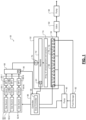
- the substrate processing system 50 includes a processing chamber 52.
- a substrate support 54 such as an electrostatic chuck (ESC) is arranged in the processing chamber 52.
- a substrate 56 is arranged on the substrate support 54 during processing.
- ESC electrostatic chuck
- a gas delivery system 60 includes gas sources 62-1, 62-2, ..., and 62-N (collectively gas sources 62) that are connected to valves 64-1, 64-2, ..., and 64-N (collectively valves 64) and mass flow controllers 66-1, 66-2, ..., and 66-N (collectively MFCs 66).
- the MFCs 66 control flow of gases from the gas sources 62 to a manifold 68 where the gases mix.
- An output of manifold 68 is supplied via an optional pressure regulator 70 to a manifold 72.
- An output of the manifold 72 is input to a multi-injector showerhead 74. While the manifolds 68 and 72 are shown, a single manifold can be used.
- a temperature of the substrate support 54 may be controlled by resistive heaters 76 and/or coolant channels 78.
- the coolant channels 78 supply cooling fluid from a fluid storage 82 and a pump 80.
- Pressure sensors 90, 91 may be arranged in the manifold 68 or the manifold 72, respectively, to measure pressure.
- a valve 92 and a pump 94 may be used to evacuate reactants from the processing chamber 52 and/or to control pressure within the processing chamber 52.
- a controller 96 includes a dose controller 98 that controls dosing provided by the multi-injector showerhead 74.
- the controller 96 also controls gas delivery from the gas delivery system 60.
- the controller 96 controls pressure in the processing chamber and/or evacuation of reactants using the valve 92 and the pump 94.
- the controller 96 controls the temperature of the substrate support 54 and the substrate 56 based upon temperature feedback from sensors (not shown) in the substrate support and/or sensors (not shown) measuring coolant temperature.
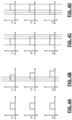
- two of the same type of injectors from the same manufacturer may have manufacturing differences and may not provide the same dose when the same pulse width is used - particularly for shorter pulse widths. If the two injectors (identified as injector 1 and injector 2 in FIG. 2 ) are controlled with the same pulse width, they will produce different doses because injector 1 flows at a higher maximum rate (e.g. standard cubic centimeters per minute (sccm)) than injector 2. According to the present disclosure, when the same dose is desired, different pulse widths are used when controlling injector 1 and injector 2. As used herein, the term same dose refers to dosing within 5%, 3% or 1%.
- a first pulse width output to injector 1 will be shorter than a second pulse width output to injector 2 to provide the same dose.
- the dose controller 98 compensates the pulse widths output to the injectors to account for manufacturing differences between injectors. Similar compensation can be made when the injectors are controlled to provide different dosing.
- the injectors are bench tested to determine the differences in gas dosing.
- the injectors are actuated individually and gas dosing is evaluated in situ in the processing chamber.
- the multi-injector showerhead 74 are shown to include injector assemblies 170-1, 170-2, ..., and 170-X (collectively injector assemblies 170) (where X is an integer greater than one) including pressure sensors 172-1, 172-2, ..., and 172-X (collectively pressure sensors 170), respectively.
- the pressure sensors 172 sense pressure at an inlet of valves 174-1, 174-2, ..., and 174-X (collectively valves 174) and bypass valves 175-1, 175-2, ..., and 175-X (collectively bypass valves 175). Pulse widths of the valves 174 and the bypass valves 175 are controlled by the dose controller 98 as will be described further below.
- an active showerhead 200 includes multiple injectors 204. Examples of active showerheads 200 are shown and described further in commonly-assigned U.S. Patent Application Serial No. 15/346,920 -1 US).
- an example of an injector 204 in the active showerhead 200 is shown to include a support layer 250, an actuator layer 254, a diaphragm layer 258, a valve seat layer 262 and a gas distribution layer 266.
- the active showerhead 200 includes multiple injectors.
- the injectors of the active showerhead 200 are formed in substrate layers such as semiconductor wafers. The substrate layers can be formed and then bonded together to form the injector.
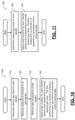
- a method 300 includes determining a desired gas dose for each injector of a plurality of injectors at 310.
- pressure is measured at the manifold or at the gas injector.
- gas temperature is measured at the gas injector.
- pulse width or duration is adjusted for each injector based on a flow relationship to provide the desired gas dose. The flow relationship is a function of measured pressure and temperature, overlap between bypass valve and the flow valve, geometrical parameters and/or empirical data.
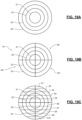
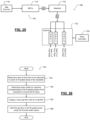
- a substrate processing system 480 including one or more processing chambers including multiple injectors (such as those described above) that provide compensation for upstream and/or downstream substrate non-uniformity or skew (collectively referred to herein as skew).
- Skew data may correspond to substrate film with a center region that is thicker than an edge region, an edge region that is thicker than a center region, side to side variations, or other variations from a flat surface.
- the skew may be caused by an upstream process or anticipated skew that is expected from a downstream process.
- the skew data can be generated for the same substrate that is to be processed, test substrates, modelling, and/or one or more substrates that preceded the substrate to be processed.
- the skew data can be generated as a function of two or more substrates (such as an average, moving average, a statistical function, etc.).
- a processing chamber 482 performs substrate treatment such as deposition, etching or other substrate treatment on a substrate.
- the substrate treatment that is performed creates skew that is compensated during downstream processing.
- a metrology station 484 is located downstream from the processing chamber 482 to perform one or more measurements on the substrate after processing and to generate metrology data for the substrate.
- the metrology station 484 generates skew data based on film thickness measurements and/or generates a surface model for the substrate.
- the metrology station 484 outputs the metrology data to a processing chamber 488 that is located downstream.
- the processing chamber 488 includes multiple injectors and performs dose control as described herein to compensate for the skew.
- the processing chamber 482 may perform deposition of film or etching of film. In some examples, the processing chamber 482 performs deposition of film that is thicker at the center or edge of the substrate. In some examples, the processing chamber 482 performs etching that removes more film at the center or edge of the substrate than is desired.
- the metrology data detects the skew and the dose controller associated with the processing chamber 488 compensates for the skew.
- FIG. 17B an example of a system for generating the desired skew for the outgoing substrate is shown.
- the dose controller 554 further includes the metrology station 492 or a data store 508 that outputs a spatial map or a set of parameters to a compensation module 572.
- the compensation module 572 further receives a desired spatial map for the downstream substrate at 574.
- the compensation module 572 generates the desired skew for the outgoing substrate.
- the system shown in FIG. 17B can be combined with the system shown in FIG. 17A .
- the systems shown in FIGs. 17A and 17B can be combined with the system shown in FIG. 15 .
- a method 580 for processing a substrate using injectors that compensate the outgoing substrate to offset skew caused by one or more downstream processes is shown.
- skew data is received for one or more downstream processes.
- the skew data is compared to a desired spatial map.
- compensation is determined to pre-compensate for the skew of the one or more downstream processes.
- a compensated dose map is generated based on a base dose map and compensation for the one or more downstream processes.
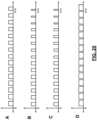
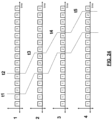
- timing diagrams illustrating injector timing for spatial-based skew by individual injectors or groups of injectors is shown.
- One or more of the timing diagrams in FIG. 20 provide different injector dose control timing to individual injectors or groups of injectors.
- Individual injectors or groups of injectors associated with timing profile A have slowly decreasing pulse widths as a function of time.
- Individual injectors or groups of injectors associated with timing profiles B and C have pulse widths that decrease at a slightly faster rate as compared to timing profile A.
- Individual injectors or groups of injectors associated with timing profile D have fixed pulse widths during the corresponding periods.
- the variable pulse widths associated with the individual injectors or groups of injectors allow precise control of spatial and/or temporal dosing.
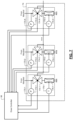
- each of the manifolds 654-1, 654-2, ..., and 654-N defines a plenum 668-1, 668-2, ..., and 668-N (collectively plenums 668) and includes a plurality of through holes 670.
- the plenums 668 are generally shaped like a flat cylinder.
- posts 672 with corresponding aligned through holes 673 are arranged in lower plenums 668-2 ... 668-N to allow the gas mixture in the plenum 668-1 to travel through the through holes 670 and 673 to reach a corresponding injector without intermixing in the plenums 668-2 ... 668-N.
- a similar approach is used for other ones of the plenums 668. While a specific arrangement of manifolds is shown, other manifold arrangements can be used.
- the injectors associated with the R groups are controlled using R pulse widths to provide R predetermined ratios of the main flow rate supplied to the manifold 718, where R is an integer greater than zero.
- all of the R groups can be pulsed using the same pulse widths to supply the same dose (assuming the groups have the same number of injectors).
- two or more different pulse widths can be used to vary the ratios for at least some of the R groups.
- one of the R groups may be pulsed using 1 ⁇ 2 of the pulse width of others of the R groups to flow less to the one of the R groups and more to the others of the R groups.
- the pulse widths to all of the R groups are varied to provide an increasing spatial profile, a decreasing spatial profile, a bell-shaped profile, an inverted bell-shaped profile or other gas dosing profiles.
- a method 750 for splitting a main gas flow into R gas flows supplied to R spatial areas of a substrate is shown.
- a ratio of a main gas flow to be delivered to each of the R spatial areas of the substrate is determined.
- pulse widths for the injectors corresponding to the R spatial areas of the substrate are determined to provide the R ratios.
- a main gas flow rate is supplied to the manifold.
- the gas flow rate supplied to the manifold is split using the R pulse width values corresponding to the injectors in the R spatial areas.
- Spatial and functional relationships between elements are described using various terms, including “connected,” “engaged,” “coupled,” “adjacent,” “next to,” “on top of,” “above,” “below,” and “disposed.” Unless explicitly described as being “direct,” when a relationship between first and second elements is described in the above disclosure, that relationship can be a direct relationship where no other intervening elements are present between the first and second elements, but can also be an indirect relationship where one or more intervening elements are present (either spatially or functionally) between the first and second elements.
- a controller is part of a system, which may be part of the above-described examples.
- Such systems can comprise semiconductor processing equipment, including a processing tool or tools, chamber or chambers, a platform or platforms for processing, and/or specific processing components (a wafer pedestal, a gas flow system, etc.).
- These systems may be integrated with electronics for controlling their operation before, during, and after processing of a semiconductor wafer or substrate.
- the electronics may be referred to as the "controller,” which may control various components or subparts of the system or systems.
- the controller may be programmed to control any of the processes disclosed herein, including the delivery of processing gases, temperature settings (e.g., heating and/or cooling), pressure settings, vacuum settings, power settings, radio frequency (RF) generator settings, RF matching circuit settings, frequency settings, flow rate settings, fluid delivery settings, positional and operation settings, wafer transfers into and out of a tool and other transfer tools and/or load locks connected to or interfaced with a specific system.
- temperature settings e.g., heating and/or cooling
- RF radio frequency
- the controller may be defined as electronics having various integrated circuits, logic, memory, and/or software that receive instructions, issue instructions, control operation, enable cleaning operations, enable endpoint measurements, and the like.
- the integrated circuits may include chips in the form of firmware that store program instructions, digital signal processors (DSPs), chips defined as application specific integrated circuits (ASICs), and/or one or more microprocessors, or microcontrollers that execute program instructions (e.g., software).
- Program instructions may be instructions communicated to the controller in the form of various individual settings (or program files), defining operational parameters for carrying out a particular process on or for a semiconductor wafer or to a system.
- the operational parameters may, in some embodiments, be part of a recipe defined by process engineers to accomplish one or more processing steps during the fabrication of one or more layers, materials, metals, oxides, silicon, silicon dioxide, surfaces, circuits, and/or dies of a wafer.
- the controller may be a part of or coupled to a computer that is integrated with the system, coupled to the system, otherwise networked to the system, or a combination thereof.
- the controller may be in the "cloud" or all or a part of a fab host computer system, which can allow for remote access of the wafer processing.
- the computer may enable remote access to the system to monitor current progress of fabrication operations, examine a history of past fabrication operations, examine trends or performance metrics from a plurality of fabrication operations, to change parameters of current processing, to set processing steps to follow a current processing, or to start a new process.
- a remote computer e.g. a server
- the remote computer may include a user interface that enables entry or programming of parameters and/or settings, which are then communicated to the system from the remote computer.
- the controller receives instructions in the form of data, which specify parameters for each of the processing steps to be performed during one or more operations. It should be understood that the parameters may be specific to the type of process to be performed and the type of tool that the controller is configured to interface with or control.
- the controller may be distributed, such as by comprising one or more discrete controllers that are networked together and working towards a common purpose, such as the processes and controls described herein.
- An example of a distributed controller for such purposes would be one or more integrated circuits on a chamber in communication with one or more integrated circuits located remotely (such as at the platform level or as part of a remote computer) that combine to control a process on the chamber.
- example systems may include a plasma etch chamber or module, a deposition chamber or module, a spin-rinse chamber or module, a metal plating chamber or module, a clean chamber or module, a bevel edge etch chamber or module, a physical vapor deposition (PVD) chamber or module, a chemical vapor deposition (CVD) chamber or module, an atomic layer deposition (ALD) chamber or module, an atomic layer etch (ALE) chamber or module, an ion implantation chamber or module, a track chamber or module, and any other semiconductor processing systems that may be associated or used in the fabrication and/or manufacturing of semiconductor wafers.
- PVD physical vapor deposition
- CVD chemical vapor deposition
- ALD atomic layer deposition
- ALE atomic layer etch
- the controller might communicate with one or more of other tool circuits or modules, other tool components, cluster tools, other tool interfaces, adjacent tools, neighboring tools, tools located throughout a factory, a main computer, another controller, or tools used in material transport that bring containers of wafers to and from tool locations and/or load ports in a semiconductor manufacturing factory.
Landscapes
- Chemical & Material Sciences (AREA)
- Engineering & Computer Science (AREA)
- Mechanical Engineering (AREA)
- Organic Chemistry (AREA)
- Metallurgy (AREA)
- General Chemical & Material Sciences (AREA)
- Chemical Kinetics & Catalysis (AREA)
- Materials Engineering (AREA)
- Analytical Chemistry (AREA)
- Physics & Mathematics (AREA)
- Plasma & Fusion (AREA)
- Chemical Vapour Deposition (AREA)
- Automation & Control Theory (AREA)
- Drying Of Semiconductors (AREA)
- Feeding, Discharge, Calcimining, Fusing, And Gas-Generation Devices (AREA)
- Radar Systems Or Details Thereof (AREA)
- Pulse Circuits (AREA)
Priority Applications (1)
| Application Number | Priority Date | Filing Date | Title |
|---|---|---|---|
| EP24174495.2A EP4391011A3 (en) | 2017-09-26 | 2018-09-21 | Systems and methods for pulse width modulated dose control |
Applications Claiming Priority (4)
| Application Number | Priority Date | Filing Date | Title |
|---|---|---|---|
| US201762563129P | 2017-09-26 | 2017-09-26 | |
| US201762590815P | 2017-11-27 | 2017-11-27 | |
| PCT/US2018/052246 WO2019067323A1 (en) | 2017-09-26 | 2018-09-21 | DOSE CONTROL SYSTEMS AND METHODS MODULATED BY TIME PULSES |
| EP18860772.5A EP3688794B1 (en) | 2017-09-26 | 2018-09-21 | Systems and methods for pulse width modulated dose control |
Related Parent Applications (2)
| Application Number | Title | Priority Date | Filing Date |
|---|---|---|---|
| EP18860772.5A Division EP3688794B1 (en) | 2017-09-26 | 2018-09-21 | Systems and methods for pulse width modulated dose control |
| EP18860772.5A Division-Into EP3688794B1 (en) | 2017-09-26 | 2018-09-21 | Systems and methods for pulse width modulated dose control |
Related Child Applications (2)
| Application Number | Title | Priority Date | Filing Date |
|---|---|---|---|
| EP24174495.2A Division EP4391011A3 (en) | 2017-09-26 | 2018-09-21 | Systems and methods for pulse width modulated dose control |
| EP24174495.2A Division-Into EP4391011A3 (en) | 2017-09-26 | 2018-09-21 | Systems and methods for pulse width modulated dose control |
Publications (3)
| Publication Number | Publication Date |
|---|---|
| EP4235743A2 EP4235743A2 (en) | 2023-08-30 |
| EP4235743A3 EP4235743A3 (en) | 2023-11-08 |
| EP4235743B1 true EP4235743B1 (en) | 2025-03-12 |
Family
ID=65903780
Family Applications (3)
| Application Number | Title | Priority Date | Filing Date |
|---|---|---|---|
| EP23173746.1A Active EP4235743B1 (en) | 2017-09-26 | 2018-09-21 | Systems and methods for pulse width modulated dose control |
| EP24174495.2A Pending EP4391011A3 (en) | 2017-09-26 | 2018-09-21 | Systems and methods for pulse width modulated dose control |
| EP18860772.5A Active EP3688794B1 (en) | 2017-09-26 | 2018-09-21 | Systems and methods for pulse width modulated dose control |
Family Applications After (2)
| Application Number | Title | Priority Date | Filing Date |
|---|---|---|---|
| EP24174495.2A Pending EP4391011A3 (en) | 2017-09-26 | 2018-09-21 | Systems and methods for pulse width modulated dose control |
| EP18860772.5A Active EP3688794B1 (en) | 2017-09-26 | 2018-09-21 | Systems and methods for pulse width modulated dose control |
Country Status (8)
| Country | Link |
|---|---|
| US (4) | US11542598B2 (https=) |
| EP (3) | EP4235743B1 (https=) |
| JP (2) | JP7421482B2 (https=) |
| KR (3) | KR20250139892A (https=) |
| CN (2) | CN120854322A (https=) |
| SG (1) | SG11202002686YA (https=) |
| TW (3) | TWI907178B (https=) |
| WO (1) | WO2019067323A1 (https=) |
Families Citing this family (4)
| Publication number | Priority date | Publication date | Assignee | Title |
|---|---|---|---|---|
| JP7421482B2 (ja) | 2017-09-26 | 2024-01-24 | ラム リサーチ コーポレーション | パルス幅変調されたドーズ制御のためのシステムおよび方法 |
| TW202318493A (zh) * | 2021-07-07 | 2023-05-01 | 美商英福康公司 | 用於沉積和蝕刻腔室的上游過程監視 |
| US20240203695A1 (en) * | 2022-12-16 | 2024-06-20 | Applied Materials, Inc. | Fast gas switching |
| KR20250148210A (ko) | 2024-04-05 | 2025-10-14 | 주식회사 엘지에너지솔루션 | 배터리 팩 및 이를 포함하는 자동차 |
Family Cites Families (29)
| Publication number | Priority date | Publication date | Assignee | Title |
|---|---|---|---|---|
| US4761269A (en) * | 1986-06-12 | 1988-08-02 | Crystal Specialties, Inc. | Apparatus for depositing material on a substrate |
| US6197123B1 (en) | 1997-12-18 | 2001-03-06 | Texas Instruments Incorporated | Method for cleaning a process chamber used for manufacturing substrates during nonproduction intervals |
| JP3830670B2 (ja) * | 1998-09-03 | 2006-10-04 | 三菱電機株式会社 | 半導体製造装置 |
| EP1146967A4 (en) * | 1999-01-20 | 2009-05-20 | Entegris Inc | DEBIT REGULATOR |
| US6143080A (en) * | 1999-02-02 | 2000-11-07 | Silicon Valley Group Thermal Systems Llc | Wafer processing reactor having a gas flow control system and method |
| US6706541B1 (en) | 1999-10-20 | 2004-03-16 | Advanced Micro Devices, Inc. | Method and apparatus for controlling wafer uniformity using spatially resolved sensors |
| US20040224504A1 (en) * | 2000-06-23 | 2004-11-11 | Gadgil Prasad N. | Apparatus and method for plasma enhanced monolayer processing |
| US6333272B1 (en) * | 2000-10-06 | 2001-12-25 | Lam Research Corporation | Gas distribution apparatus for semiconductor processing |
| US20030116089A1 (en) | 2001-12-04 | 2003-06-26 | Walther Steven R. | Plasma implantation system and method with target movement |
| US20030101935A1 (en) | 2001-12-04 | 2003-06-05 | Walther Steven R. | Dose uniformity control for plasma doping systems |
| US20040040503A1 (en) * | 2002-08-29 | 2004-03-04 | Micron Technology, Inc. | Micromachines for delivering precursors and gases for film deposition |
| US20040040502A1 (en) * | 2002-08-29 | 2004-03-04 | Micron Technology, Inc. | Micromachines for delivering precursors and gases for film deposition |
| US20040050325A1 (en) * | 2002-09-12 | 2004-03-18 | Samoilov Arkadii V. | Apparatus and method for delivering process gas to a substrate processing system |
| US7628860B2 (en) * | 2004-04-12 | 2009-12-08 | Mks Instruments, Inc. | Pulsed mass flow delivery system and method |
| JP4502189B2 (ja) | 2004-06-02 | 2010-07-14 | ルネサスエレクトロニクス株式会社 | 薄膜の形成方法および半導体装置の製造方法 |
| US7228645B2 (en) * | 2005-01-11 | 2007-06-12 | Xuyen Ngoc Pham | Multi-zone shower head for drying single semiconductor substrate |
| JP2006253696A (ja) * | 2005-03-10 | 2006-09-21 | Asm America Inc | ガスインジェクタ制御システム |
| US7846497B2 (en) * | 2007-02-26 | 2010-12-07 | Applied Materials, Inc. | Method and apparatus for controlling gas flow to a processing chamber |
| US8486191B2 (en) * | 2009-04-07 | 2013-07-16 | Asm America, Inc. | Substrate reactor with adjustable injectors for mixing gases within reaction chamber |
| US9303319B2 (en) * | 2010-12-17 | 2016-04-05 | Veeco Instruments Inc. | Gas injection system for chemical vapor deposition using sequenced valves |
| US9840778B2 (en) * | 2012-06-01 | 2017-12-12 | Taiwan Semiconductor Manufacturing Company, Ltd. | Plasma chamber having an upper electrode having controllable valves and a method of using the same |
| US9488315B2 (en) * | 2013-03-15 | 2016-11-08 | Applied Materials, Inc. | Gas distribution apparatus for directional and proportional delivery of process gas to a process chamber |
| US9624805B2 (en) * | 2014-08-26 | 2017-04-18 | Caterpillar Inc. | Aftertreatment system having dynamic independent injector control |
| JP6502779B2 (ja) | 2015-07-29 | 2019-04-17 | 東京エレクトロン株式会社 | ガス供給系のバルブのリークを検査する方法 |
| US20170092470A1 (en) * | 2015-09-28 | 2017-03-30 | Applied Materials, Inc. | Plasma reactor for processing a workpiece with an array of plasma point sources |
| US10256075B2 (en) * | 2016-01-22 | 2019-04-09 | Applied Materials, Inc. | Gas splitting by time average injection into different zones by fast gas valves |
| US10453721B2 (en) | 2016-03-15 | 2019-10-22 | Applied Materials, Inc. | Methods and assemblies for gas flow ratio control |
| US10403476B2 (en) | 2016-11-09 | 2019-09-03 | Lam Research Corporation | Active showerhead |
| JP7421482B2 (ja) | 2017-09-26 | 2024-01-24 | ラム リサーチ コーポレーション | パルス幅変調されたドーズ制御のためのシステムおよび方法 |
-
2018
- 2018-09-21 JP JP2020538754A patent/JP7421482B2/ja active Active
- 2018-09-21 KR KR1020257030846A patent/KR20250139892A/ko active Pending
- 2018-09-21 US US16/650,328 patent/US11542598B2/en active Active
- 2018-09-21 SG SG11202002686YA patent/SG11202002686YA/en unknown
- 2018-09-21 KR KR1020207012048A patent/KR102654894B1/ko active Active
- 2018-09-21 WO PCT/US2018/052246 patent/WO2019067323A1/en not_active Ceased
- 2018-09-21 KR KR1020247010982A patent/KR102861934B1/ko active Active
- 2018-09-21 EP EP23173746.1A patent/EP4235743B1/en active Active
- 2018-09-21 CN CN202510700386.5A patent/CN120854322A/zh active Pending
- 2018-09-21 EP EP24174495.2A patent/EP4391011A3/en active Pending
- 2018-09-21 EP EP18860772.5A patent/EP3688794B1/en active Active
- 2018-09-21 CN CN201880062506.1A patent/CN111164743B/zh active Active
- 2018-09-25 TW TW113145967A patent/TWI907178B/zh active
- 2018-09-25 TW TW107133589A patent/TWI829651B/zh active
- 2018-09-25 TW TW112149941A patent/TWI869129B/zh active
-
2023
- 2023-01-02 US US18/092,413 patent/US11834736B2/en active Active
- 2023-12-01 US US18/526,411 patent/US12215421B2/en active Active
-
2024
- 2024-01-12 JP JP2024002916A patent/JP7754960B2/ja active Active
-
2025
- 2025-01-31 US US19/042,959 patent/US20250179634A1/en active Pending
Also Published As
Similar Documents
| Publication | Publication Date | Title |
|---|---|---|
| US11834736B2 (en) | Systems and methods for pulse width modulated dose control | |
| US20240318312A1 (en) | Integrated showerhead with thermal control for delivering radical and precursor gas to a downstream chamber to enable remote plasma film deposition | |
| US9922855B2 (en) | Method for reducing temperature transition in an electrostatic chuck | |
| KR102774227B1 (ko) | 복수의 가스 주입 지점들 및 듀얼 주입기를 포함한 기판 프로세싱 챔버 | |
| JP2024160403A (ja) | 遠隔プラズマ膜蒸着を可能にするためにラジカルおよび前駆体ガスを下流チャンバに供給するための改良された孔パターンを備える統合シャワーヘッド | |
| KR20240122822A (ko) | 기판 프로세싱 시스템의 복수의 스테이션들로의 가스 플로우를 밸런싱하기 위한 밸브 시스템들 | |
| US20240344201A1 (en) | Showerhead temperature based deposition time compensation for thickness trending in pecvd deposition system |
Legal Events
| Date | Code | Title | Description |
|---|---|---|---|
| PUAI | Public reference made under article 153(3) epc to a published international application that has entered the european phase |
Free format text: ORIGINAL CODE: 0009012 |
|
| STAA | Information on the status of an ep patent application or granted ep patent |
Free format text: STATUS: THE APPLICATION HAS BEEN PUBLISHED |
|
| AC | Divisional application: reference to earlier application |
Ref document number: 3688794 Country of ref document: EP Kind code of ref document: P |
|
| AK | Designated contracting states |
Kind code of ref document: A2 Designated state(s): AL AT BE BG CH CY CZ DE DK EE ES FI FR GB GR HR HU IE IS IT LI LT LU LV MC MK MT NL NO PL PT RO RS SE SI SK SM TR |
|
| REG | Reference to a national code |
Ref legal event code: R079 Ipc: H01L0021670000 Ref country code: DE Ref legal event code: R079 Ref document number: 602018080200 Country of ref document: DE Free format text: PREVIOUS MAIN CLASS: H01J0037320000 Ipc: H01L0021670000 |
|
| PUAL | Search report despatched |
Free format text: ORIGINAL CODE: 0009013 |
|
| AK | Designated contracting states |
Kind code of ref document: A3 Designated state(s): AL AT BE BG CH CY CZ DE DK EE ES FI FR GB GR HR HU IE IS IT LI LT LU LV MC MK MT NL NO PL PT RO RS SE SI SK SM TR |
|
| RIC1 | Information provided on ipc code assigned before grant |
Ipc: H01J 37/32 20060101ALI20231002BHEP Ipc: C23C 16/455 20060101ALI20231002BHEP Ipc: H01L 21/67 20060101AFI20231002BHEP |
|
| STAA | Information on the status of an ep patent application or granted ep patent |
Free format text: STATUS: REQUEST FOR EXAMINATION WAS MADE |
|
| RAP3 | Party data changed (applicant data changed or rights of an application transferred) |
Owner name: LAM RESEARCH CORPORATION |
|
| 17P | Request for examination filed |
Effective date: 20240503 |
|
| RBV | Designated contracting states (corrected) |
Designated state(s): AL AT BE BG CH CY CZ DE DK EE ES FI FR GB GR HR HU IE IS IT LI LT LU LV MC MK MT NL NO PL PT RO RS SE SI SK SM TR |
|
| GRAP | Despatch of communication of intention to grant a patent |
Free format text: ORIGINAL CODE: EPIDOSNIGR1 |
|
| STAA | Information on the status of an ep patent application or granted ep patent |
Free format text: STATUS: GRANT OF PATENT IS INTENDED |
|
| INTG | Intention to grant announced |
Effective date: 20241011 |
|
| RIN1 | Information on inventor provided before grant (corrected) |
Inventor name: GREGOR, MARIUSCH |
|
| GRAS | Grant fee paid |
Free format text: ORIGINAL CODE: EPIDOSNIGR3 |
|
| GRAA | (expected) grant |
Free format text: ORIGINAL CODE: 0009210 |
|
| STAA | Information on the status of an ep patent application or granted ep patent |
Free format text: STATUS: THE PATENT HAS BEEN GRANTED |
|
| AC | Divisional application: reference to earlier application |
Ref document number: 3688794 Country of ref document: EP Kind code of ref document: P |
|
| AK | Designated contracting states |
Kind code of ref document: B1 Designated state(s): AL AT BE BG CH CY CZ DE DK EE ES FI FR GB GR HR HU IE IS IT LI LT LU LV MC MK MT NL NO PL PT RO RS SE SI SK SM TR |
|
| REG | Reference to a national code |
Ref country code: GB Ref legal event code: FG4D |
|
| REG | Reference to a national code |
Ref country code: CH Ref legal event code: EP |
|
| REG | Reference to a national code |
Ref country code: DE Ref legal event code: R096 Ref document number: 602018080200 Country of ref document: DE |
|
| REG | Reference to a national code |
Ref country code: IE Ref legal event code: FG4D |
|
| PG25 | Lapsed in a contracting state [announced via postgrant information from national office to epo] |
Ref country code: RS Free format text: LAPSE BECAUSE OF FAILURE TO SUBMIT A TRANSLATION OF THE DESCRIPTION OR TO PAY THE FEE WITHIN THE PRESCRIBED TIME-LIMIT Effective date: 20250612 |
|
| PG25 | Lapsed in a contracting state [announced via postgrant information from national office to epo] |
Ref country code: FI Free format text: LAPSE BECAUSE OF FAILURE TO SUBMIT A TRANSLATION OF THE DESCRIPTION OR TO PAY THE FEE WITHIN THE PRESCRIBED TIME-LIMIT Effective date: 20250312 |
|
| PG25 | Lapsed in a contracting state [announced via postgrant information from national office to epo] |
Ref country code: ES Free format text: LAPSE BECAUSE OF FAILURE TO SUBMIT A TRANSLATION OF THE DESCRIPTION OR TO PAY THE FEE WITHIN THE PRESCRIBED TIME-LIMIT Effective date: 20250312 |
|
| REG | Reference to a national code |
Ref country code: LT Ref legal event code: MG9D |
|
| PG25 | Lapsed in a contracting state [announced via postgrant information from national office to epo] |
Ref country code: NO Free format text: LAPSE BECAUSE OF FAILURE TO SUBMIT A TRANSLATION OF THE DESCRIPTION OR TO PAY THE FEE WITHIN THE PRESCRIBED TIME-LIMIT Effective date: 20250612 |
|
| PG25 | Lapsed in a contracting state [announced via postgrant information from national office to epo] |
Ref country code: HR Free format text: LAPSE BECAUSE OF FAILURE TO SUBMIT A TRANSLATION OF THE DESCRIPTION OR TO PAY THE FEE WITHIN THE PRESCRIBED TIME-LIMIT Effective date: 20250312 |
|
| REG | Reference to a national code |
Ref country code: NL Ref legal event code: MP Effective date: 20250312 |
|
| PG25 | Lapsed in a contracting state [announced via postgrant information from national office to epo] |
Ref country code: LV Free format text: LAPSE BECAUSE OF FAILURE TO SUBMIT A TRANSLATION OF THE DESCRIPTION OR TO PAY THE FEE WITHIN THE PRESCRIBED TIME-LIMIT Effective date: 20250312 |
|
| PG25 | Lapsed in a contracting state [announced via postgrant information from national office to epo] |
Ref country code: GR Free format text: LAPSE BECAUSE OF FAILURE TO SUBMIT A TRANSLATION OF THE DESCRIPTION OR TO PAY THE FEE WITHIN THE PRESCRIBED TIME-LIMIT Effective date: 20250613 Ref country code: BG Free format text: LAPSE BECAUSE OF FAILURE TO SUBMIT A TRANSLATION OF THE DESCRIPTION OR TO PAY THE FEE WITHIN THE PRESCRIBED TIME-LIMIT Effective date: 20250312 |
|
| REG | Reference to a national code |
Ref country code: AT Ref legal event code: MK05 Ref document number: 1775771 Country of ref document: AT Kind code of ref document: T Effective date: 20250312 |
|
| PG25 | Lapsed in a contracting state [announced via postgrant information from national office to epo] |
Ref country code: NL Free format text: LAPSE BECAUSE OF FAILURE TO SUBMIT A TRANSLATION OF THE DESCRIPTION OR TO PAY THE FEE WITHIN THE PRESCRIBED TIME-LIMIT Effective date: 20250312 |
|
| PG25 | Lapsed in a contracting state [announced via postgrant information from national office to epo] |
Ref country code: SE Free format text: LAPSE BECAUSE OF FAILURE TO SUBMIT A TRANSLATION OF THE DESCRIPTION OR TO PAY THE FEE WITHIN THE PRESCRIBED TIME-LIMIT Effective date: 20250312 |
|
| PG25 | Lapsed in a contracting state [announced via postgrant information from national office to epo] |
Ref country code: SM Free format text: LAPSE BECAUSE OF FAILURE TO SUBMIT A TRANSLATION OF THE DESCRIPTION OR TO PAY THE FEE WITHIN THE PRESCRIBED TIME-LIMIT Effective date: 20250312 |
|
| PG25 | Lapsed in a contracting state [announced via postgrant information from national office to epo] |
Ref country code: PT Free format text: LAPSE BECAUSE OF FAILURE TO SUBMIT A TRANSLATION OF THE DESCRIPTION OR TO PAY THE FEE WITHIN THE PRESCRIBED TIME-LIMIT Effective date: 20250714 |
|
| PGFP | Annual fee paid to national office [announced via postgrant information from national office to epo] |
Ref country code: DE Payment date: 20250929 Year of fee payment: 8 |
|
| PG25 | Lapsed in a contracting state [announced via postgrant information from national office to epo] |
Ref country code: IT Free format text: LAPSE BECAUSE OF FAILURE TO SUBMIT A TRANSLATION OF THE DESCRIPTION OR TO PAY THE FEE WITHIN THE PRESCRIBED TIME-LIMIT Effective date: 20250312 Ref country code: PL Free format text: LAPSE BECAUSE OF FAILURE TO SUBMIT A TRANSLATION OF THE DESCRIPTION OR TO PAY THE FEE WITHIN THE PRESCRIBED TIME-LIMIT Effective date: 20250312 |
|
| PGFP | Annual fee paid to national office [announced via postgrant information from national office to epo] |
Ref country code: GB Payment date: 20250929 Year of fee payment: 8 |
|
| PG25 | Lapsed in a contracting state [announced via postgrant information from national office to epo] |
Ref country code: AT Free format text: LAPSE BECAUSE OF FAILURE TO SUBMIT A TRANSLATION OF THE DESCRIPTION OR TO PAY THE FEE WITHIN THE PRESCRIBED TIME-LIMIT Effective date: 20250312 |
|
| PGFP | Annual fee paid to national office [announced via postgrant information from national office to epo] |
Ref country code: FR Payment date: 20250925 Year of fee payment: 8 |
|
| PG25 | Lapsed in a contracting state [announced via postgrant information from national office to epo] |
Ref country code: CZ Free format text: LAPSE BECAUSE OF FAILURE TO SUBMIT A TRANSLATION OF THE DESCRIPTION OR TO PAY THE FEE WITHIN THE PRESCRIBED TIME-LIMIT Effective date: 20250312 Ref country code: EE Free format text: LAPSE BECAUSE OF FAILURE TO SUBMIT A TRANSLATION OF THE DESCRIPTION OR TO PAY THE FEE WITHIN THE PRESCRIBED TIME-LIMIT Effective date: 20250312 |
|
| PG25 | Lapsed in a contracting state [announced via postgrant information from national office to epo] |
Ref country code: RO Free format text: LAPSE BECAUSE OF FAILURE TO SUBMIT A TRANSLATION OF THE DESCRIPTION OR TO PAY THE FEE WITHIN THE PRESCRIBED TIME-LIMIT Effective date: 20250312 |
|
| PG25 | Lapsed in a contracting state [announced via postgrant information from national office to epo] |
Ref country code: SK Free format text: LAPSE BECAUSE OF FAILURE TO SUBMIT A TRANSLATION OF THE DESCRIPTION OR TO PAY THE FEE WITHIN THE PRESCRIBED TIME-LIMIT Effective date: 20250312 |
|
| PG25 | Lapsed in a contracting state [announced via postgrant information from national office to epo] |
Ref country code: IS Free format text: LAPSE BECAUSE OF FAILURE TO SUBMIT A TRANSLATION OF THE DESCRIPTION OR TO PAY THE FEE WITHIN THE PRESCRIBED TIME-LIMIT Effective date: 20250712 |
|
| REG | Reference to a national code |
Ref country code: DE Ref legal event code: R079 Ref document number: 602018080200 Country of ref document: DE Free format text: PREVIOUS MAIN CLASS: H01L0021670000 Ipc: H10P0072000000 |
|
| P01 | Opt-out of the competence of the unified patent court (upc) registered |
Free format text: CASE NUMBER: UPC_APP_0012311_4235743/2025 Effective date: 20251105 |
|
| REG | Reference to a national code |
Ref country code: DE Ref legal event code: R097 Ref document number: 602018080200 Country of ref document: DE |
|
| PG25 | Lapsed in a contracting state [announced via postgrant information from national office to epo] |
Ref country code: DK Free format text: LAPSE BECAUSE OF FAILURE TO SUBMIT A TRANSLATION OF THE DESCRIPTION OR TO PAY THE FEE WITHIN THE PRESCRIBED TIME-LIMIT Effective date: 20250312 |
|
| PLBE | No opposition filed within time limit |
Free format text: ORIGINAL CODE: 0009261 |
|
| STAA | Information on the status of an ep patent application or granted ep patent |
Free format text: STATUS: NO OPPOSITION FILED WITHIN TIME LIMIT |
|
| REG | Reference to a national code |
Ref country code: CH Ref legal event code: L10 Free format text: ST27 STATUS EVENT CODE: U-0-0-L10-L00 (AS PROVIDED BY THE NATIONAL OFFICE) Effective date: 20260121 |
|
| 26N | No opposition filed |
Effective date: 20251215 |