EP4225295B1 - Nouveaux peptoides et leur utilisation dans la prevention ou le traitement de la douleur chronique - Google Patents
Nouveaux peptoides et leur utilisation dans la prevention ou le traitement de la douleur chronique Download PDFInfo
- Publication number
- EP4225295B1 EP4225295B1 EP21798748.6A EP21798748A EP4225295B1 EP 4225295 B1 EP4225295 B1 EP 4225295B1 EP 21798748 A EP21798748 A EP 21798748A EP 4225295 B1 EP4225295 B1 EP 4225295B1
- Authority
- EP
- European Patent Office
- Prior art keywords
- peptoid
- peptoids
- trip8b
- independently
- mice
- Prior art date
- Legal status (The legal status is an assumption and is not a legal conclusion. Google has not performed a legal analysis and makes no representation as to the accuracy of the status listed.)
- Active
Links
Images








Classifications
-
- A—HUMAN NECESSITIES
- A61—MEDICAL OR VETERINARY SCIENCE; HYGIENE
- A61K—PREPARATIONS FOR MEDICAL, DENTAL OR TOILETRY PURPOSES
- A61K31/00—Medicinal preparations containing organic active ingredients
- A61K31/185—Acids; Anhydrides, halides or salts thereof, e.g. sulfur acids, imidic, hydrazonic or hydroximic acids
- A61K31/19—Carboxylic acids, e.g. valproic acid
- A61K31/195—Carboxylic acids, e.g. valproic acid having an amino group
- A61K31/197—Carboxylic acids, e.g. valproic acid having an amino group the amino and the carboxyl groups being attached to the same acyclic carbon chain, e.g. gamma-aminobutyric acid [GABA], beta-alanine, epsilon-aminocaproic acid or pantothenic acid
- A61K31/198—Alpha-amino acids, e.g. alanine or edetic acid [EDTA]
-
- A—HUMAN NECESSITIES
- A61—MEDICAL OR VETERINARY SCIENCE; HYGIENE
- A61P—SPECIFIC THERAPEUTIC ACTIVITY OF CHEMICAL COMPOUNDS OR MEDICINAL PREPARATIONS
- A61P25/00—Drugs for disorders of the nervous system
- A61P25/02—Drugs for disorders of the nervous system for peripheral neuropathies
-
- A—HUMAN NECESSITIES
- A61—MEDICAL OR VETERINARY SCIENCE; HYGIENE
- A61P—SPECIFIC THERAPEUTIC ACTIVITY OF CHEMICAL COMPOUNDS OR MEDICINAL PREPARATIONS
- A61P29/00—Non-central analgesic, antipyretic or antiinflammatory agents, e.g. antirheumatic agents; Non-steroidal antiinflammatory drugs [NSAID]
- A61P29/02—Non-central analgesic, antipyretic or antiinflammatory agents, e.g. antirheumatic agents; Non-steroidal antiinflammatory drugs [NSAID] without antiinflammatory effect
-
- C—CHEMISTRY; METALLURGY
- C07—ORGANIC CHEMISTRY
- C07K—PEPTIDES
- C07K5/00—Peptides containing up to four amino acids in a fully defined sequence; Derivatives thereof
- C07K5/04—Peptides containing up to four amino acids in a fully defined sequence; Derivatives thereof containing only normal peptide links
- C07K5/10—Tetrapeptides
- C07K5/1002—Tetrapeptides with the first amino acid being neutral
- C07K5/1005—Tetrapeptides with the first amino acid being neutral and aliphatic
- C07K5/1008—Tetrapeptides with the first amino acid being neutral and aliphatic the side chain containing 0 or 1 carbon atoms, i.e. Gly, Ala
-
- A—HUMAN NECESSITIES
- A61—MEDICAL OR VETERINARY SCIENCE; HYGIENE
- A61K—PREPARATIONS FOR MEDICAL, DENTAL OR TOILETRY PURPOSES
- A61K38/00—Medicinal preparations containing peptides
Definitions
- the invention relates to novel peptidomimetic molecules (or peptoids, also called peptide-peptoid hybrids or peptomers) for the prevention and/or treatment of chronic pain, in particular that resulting from peripheral neuropathies (e.g. induced by chemotherapy).
- novel peptidomimetic molecules or peptoids, also called peptide-peptoid hybrids or peptomers
- references in square brackets ([ ]) refer to the list of references at the end of the text.
- Chronic pain affects 1.5 billion people worldwide for whom the therapeutic response is clearly insufficient (Finnerup NB et al., 2015) [1]. Recent epidemiological studies have estimated that chronic pain affects approximately 20% of adults and 50% of older people (von Hehn et al., 2012) [2]. Globally, 60% of people with pain are less able to work and 20% report having lost their job because of pain. At the same time, 20 billion units of analgesic drugs were sold in 2010, compared to 14 billion in 2005 (+9.3%). In 2017, the global pain market reached $61.05 billion and is expected to reach $77.13 billion by 2023, recording a compound annual growth rate of 4% from 2017 to 2023.
- Neuropathic pain affects approximately 7% of the general population and 25% of patients with chronic pain. It is of two types: peripheral neuropathic pain (depending on its origin, it can affect the territories of a plexus, a root, a trunk or be more diffuse in the context of polyneuropathies) and central neuropathic pain (lesions affecting the sensory pathways or pain control).
- Chemotherapy-induced peripheral neuropathies a common adverse effect of many anticancer agents, are characterized by significant chronic pain that has a lasting impact on patients' quality of life and leads to dosage adjustments with the risk of reduced clinical efficacy.
- the analgesic pharmacopoeia which is becoming poorer (withdrawal of Di-antalvic in 2011), is characterized by old and often poorly tolerated treatments.
- HCN ion channel family (Ludwig et al., Nature 1998; Santoro et al., 1998; Seifert et al., 1999) [4-6], which includes four members HCN1-4, may offer excellent opportunities for the development of new drugs to reduce heart rate and novel analgesics.
- HCN channels are widely distributed in pain pathways and play an important role in the development and maintenance of neuropathic pain (Dunlop et al., 2009; Lewis et al., 2011) [7, 8].
- Non-selective HCN blockers have been shown to attenuate pain symptoms in rodent models of neuropathic pain (Descoeur et al., 2011; Young et al., 2014) [9, 10].
- Their cardiac and visual side effects (e.g. pan-HCN blockers), however, limit the clinical translation of their use to treat neuropathic pain.
- HCN channel function is tightly regulated by an auxiliary subunit, Rab8b-interacting protein (TRIP8b), which is not expressed in the heart.
- TRIP8b auxiliary subunit
- This cytoplasmic protein binds to the C-terminus of HCN channel subunits via two contact sites (Lewis et al., 2009) [11].
- TPR tetratricopeptide region
- TRIP8b and/or the TRIP8b-HCN interaction could offer a new possibility to modulate HCN activity in pain states without the risk of affecting cardiac and visual functions.
- Peptoids and peptidomimetics are also being considered for the prevention and/or treatment of chronic pain ( Hruby, Peptides, 116: 63-67, 2019 ; Patent Application EP 2289886 ) [29, 30].
- the present invention is based on the hypothesis that the disruption of TRIP8b-HCN interactions leading to a decrease in currents (Ih) induced by HCN channels, could have an analgesic effect in models of acute and chronic peripheral neuropathies induced by oxaliplatin in rodents faithfully reproducing human symptoms.
- NUCC-5953 a molecule from a screening of a library of 20,000 molecules, capable of disrupting the TRIP8b-HCN interaction (Han et al., 2015) [13].
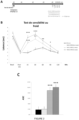
- the inventors have thus demonstrated that acute cold hypersensitivity induced by oxaliplatin is reversed in a dose-dependent manner by intrathecal injection ( Figure 2 ) or systemic ( Figure 3 ) of NUCC-5953. No alterations in locomotor activity were observed.
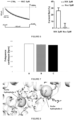
- Preliminary data also showed that administration of NUCC-5953 reduced membrane targeting, and thus the activity of HCN1 and 2 observed in neuropathic animals ( Figure 5B ).
- in vitro application of NUCC-5953 showed no effect on HCN activation-induced currents in cardiac cells (unlike non-specific HCN channel blockers, Figure 6 ).
- the inventors then decided to design specific blockers of the TRIP8b-HCN interaction based on the interaction mode of the two proteins.
- PPI protein-protein interactions
- Low molecular weight molecules although widely screened, are poorly suited to compete with interactions involving large surfaces (>800 ⁇ ).
- Peptides are the compounds of choice for designing these new inhibitors provided that the problems of metabolic and conformational stability, but also of cellular penetration to reach intracellular targets, can be solved.
- peptoids N-substituted glycine oligomers
- peptomers i.e. oligomers combining "peptoid” monomers and "amino acid” monomers - Ostergaard et al 1997 [17] - or peptide-peptoid hybrids.
- the inventors have therefore designed novel peptoids targeting the interaction between the TPR domains of TRIP8b and the C-terminus of HCN, capable of exerting an analgesic effect in a model of acute neuropathy induced by oxaliplatin without adverse cardiac or visual effects.
- R 4 is an aliphatic or aromatic group chosen from:
- R 5 is independently CH 3 , CH 2 C 6 H 5 , C 6 H 4 X (where X in the ortho, meta or para position is independently H, OMe, CF 3 , CH 3 , CH 2 CH 3 , F, Br, Cl), 3-indolyl, 3-quinolinyl.
- the peptoids of the present invention have 2 carbon atoms on the second unit (starting from the C-terminal end).
- the peptoids of the present invention are chosen from the peptoids of the following general formula (I'): Or R 1 , R 2 , R 3 , R 4 and R 5 are as defined above.
- the peptoids of the present invention have the following formulas:
- the present invention relates to peptoids of formula (II) in which R 6 is H.
- the present invention relates to peptoids of formula (II) in which R 6 is CO R 5 .
- the present invention relates to peptoids of formula (II) in which R 6 is R 7 .
- the present invention relates to peptoids of formula (II) in which R 6 is R 3 .
- the peptoids according to the invention can be chosen from the peptoids of the following general formulas (IIa), (IIb), (IIc) and (IId): Or R 1 , R 2 , R 3 , R 5 and R 7 are as defined above.
- the peptoids of the present invention comprise 2 carbon atoms on the second unit (starting from the C-terminal end).
- the peptoids are chosen from the peptoids of the following formulas (II'), (II'a), (II'b), (II'c) or (II'd): Or R 1 , R 2 , R 3 , R 5 , R 6 and R 7 are as defined above.
- the present invention also relates to a pharmaceutical composition
- a pharmaceutical composition comprising a peptoid according to the present invention, and a pharmaceutically acceptable vehicle.
- the present invention also relates to a peptoid or a pharmaceutical composition according to the present invention for use as a medicament.
- the present invention also relates to a peptoid or a pharmaceutical composition according to the invention for use in the prevention or treatment of chronic pain, in particular chronic pain of neuropathic origin, more particularly peripheral neuropathic pain for example induced by chemotherapy.
- the peptoids of the present invention can have a significant impact on improving the quality of life of patients suffering from neuropathic pain induced by anticancer drugs and possibly their survival.
- the peptoids of the present invention open the way to new classes of analgesic drugs active more broadly on different types of chronic pain.
- Von Frey test Mechanical sensitivity was assessed with calibrated Von Frey filaments of 0.07 g, 0.6 g, or 1.4 g. The filaments were applied five times in order of increasing stiffness, perpendicular to the plantar surface of the hind paw and pressed until they bent. The number of responses for a given filament force was counted.
- Paw pressure test in rats Rats were subjected to the paw pressure test previously described by Randall and Selitto (1957) [15]. Nociceptive thresholds, expressed in grams, were measured with a Ugo Basile analgesimeter (Apelex, probe tip diameter 1 mm, weight 30 g) by applying increasing pressure to the rats' right hind paw until a sign of pain (vocalization threshold) was obtained (the cut-off was 750 g). Before treatments, rats were habituated to the test by handling them without subjecting them to paw pressure. Then, after obtaining two consecutive stable vocalization threshold values, the effects of the treatment were evaluated after 15, 30, 45, 60, 90 and 120 min. The results are expressed as vocalization thresholds, in grams.
- AUC area under the time course curves
- g.min areas under the time course curves of the antihyperalgesic effects were calculated from the individual scores at each time point, using the trapezoidal method. Data were analyzed by two-way ANOVA followed by Bonferroni test, when the time course of the effects was studied. One-way ANOVA followed by Student Newman-Keuls test were used to analyze the effect of the different treatments determined by AUC. The level of statistical significance was set at p ⁇ 0.05.
- Rotarod test For the Rotarod test (Bioseb), animals were first habituated to remain on the stationary cylinder for 10 min before moving to another 10 min with a rotation speed of 4 rpm. Animals were given the drug immediately after training and the test was performed 30 min later. The test consisted of measuring the latency to fall of the animals when the rotation increased from 4 to 40 rpm linearly over 5 min. The average of the two closest values over 3 trials was calculated.
- In vivo heart rate recording Telemetric ECG recordings were performed using TA10EA-F20 telemetric transmitters (DSI) in a subcutaneous pocket with paired wire electrodes placed on the thorax as previously published (Mesirca et al., 2014) [27].
- DSI TA10EA-F20 telemetric transmitters
- mice were injected intraperitoneally (ip) with oxaliplatin at 6 mg/kg dissolved in glucose at 5% directly after the first behavioral assessment. 90h after drug administration, corresponding to the time needed to reach the peak of hyperalgesia (Descoeur et al., 2011) [9], a second assessment of cold sensitivity and mechanical sensitivity was performed.
- Paclitaxel-induced acute neuropathy in rats Rats received an ip injection of dimethyl sulfoxide (DMSO; solvent) or 1 mg/kg/1 mL paclitaxel (Sigma-Aldrich, Lyon, France) on days D0, D2, D4, and D7. Behavioral testing was performed on the day of the first paclitaxel injection (D0) and on days 10 (D10) and 14 (D14) after paclitaxel injection.
- DMSO dimethyl sulfoxide
- RNA isolation and quantification DRG pairs from lumbar segments L4 to L6 were dissected and pooled. RNA was extracted using TRIzol ® reagent (Nitrogen) according to the manufacturer's instructions (Thermofisher). RNA quality was assessed by the Agilent 2100 Bioanalyzer (Agilent Technologies), samples with RIN (RNA Integrity Number) greater than 8 were retained for further analysis. Reverse transcription was performed with SuperScript II reverse transcriptase according to the protocol provided by Invitrogen. For quantitative real-time PCR, amplification was performed using the Light Cycler Fast Start DNA kit (Roche diagnostic) and real-time DNA quantity was measured with a Mastercycler Realplex thermocycler (Eppendorf).
- the mean of the relative amount of cDNA from each triplicate was calculated using a standard concentration curve and was normalized to the GUS gene cDNA.
- Amplification conditions were as follows: preincubation for 7 min at 95 °C followed by 50 cycles of 20 s at 95 °C and 20 s at the specific annealing temperature of the primer pair followed by 20 s at 72 °C.
- RNA sequencing was used RNA sequencing analysis on L4-L5-L6 DRGs from mice treated with oxaliplatin (3 mg/kg, ip) or vehicle twice a week for 3 weeks. At the end of the experiment (D21), mice were anesthetized and killed, and L4-L5-L6 DRGs were rapidly harvested, frozen in liquid nitrogen, and stored at -80°C until use. Total RNA from L4-L5-L6 DRGs was extracted using the RNeasy Micro kit (Qiagen) according to the manufacturer's protocol and ribosomal RNA was removed using the Ribo-Zero Plus rRNA depletion kit (Illumina).
- RNA concentration was determined using the Take3 nucleic acid quantification plate (Epoch, BioTek, USA). RNA integrity was analyzed by a capillary electrophoresis instrument (Fragment Analyser, Agilent ® ) and sent to Fasteris (https://www.fasteris.com) for RNA sequencing. Libraries were prepared using Illumina's TruSeq protocol and SBS-based sequencing was performed using a HiSeq 2500 platform (Illumina).
- Membrane fractionation Tissues were homogenized in HEPES buffer (20mM HEPES pH 7.4, 320mM sucrose, 5mM EDTA, 5mM EGTA) containing protease inhibitors at 4°C, sonicated, and centrifuged at 1000g for 15min at 4°C. Pellets were discarded. For organelle spin, supernatants were centrifuged at 15,000g for 10min at 4°C and organelle pellets were retained. For cytosolic spin, supernatants were centrifuged at 100,000g for 1hr at 4°C. The cytosolic fraction was in the supernatants and the membrane fraction in the pellets.
- Membrane pellets were then resuspended in SB buffer (20mM HEPES pH 7.4, 1M KI, 5mM EDTA, 5mM EGTA at 4 degrees) and centrifuged at 100,000 g for 1 hour at 4°C to remove loosely bound membrane proteins.
- Membrane fractions were then resuspended in RB buffer (20mM HEPES pH 7.4, 100mM NaCl, 5mM EDTA, 5mM EGTA) containing Triton (1%) and protease inhibitors. After sonication in an ice bath, the fractions Membrane fractions were then gently shaken for 2 hours at 4°C. °C.
- the solubilized membrane fractions were centrifuged at 100,000 g for 1 hour at 4°C. The membrane fraction was in the supernatant.
- Western blot L4 to L6 DRGs from three mice were pooled and homogenized in lysis buffer containing triton (1%) and protease inhibitors. Homogenates were centrifuged at 18,000 g for 20 min at 4°C and the supernatants collected. 50 ⁇ g of total protein was separated by SDS-PAGE on a 7.5% gel.
- Fluorescence polarization assay A fluorescence polarization (FP)-based assay was used to identify compounds capable of disrupting the interaction between HCN and the TRIP8b tail, as published (Han et al., 2015) [13].
- TRIP8b mRNA RNAseq data obtained from DRG mice show the presence (FPKM>1) of splice variants 2 to 5: NM_01163516, NM_01163517, NM_01289505, NM_01310460) and protein in mouse DRG and TG neurons was observed.
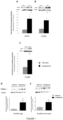
- the expression of HCN1-2 channel and TRIP8b transcripts and proteins was significantly increased in peripheral neurons of oxaliplatin-treated animals compared to controls, suggesting the involvement of both proteins in the development of OIPN (mouse model of oxaliplatin-induced neuropathy) ( Figure 1 AC ).
- NUCC5953 does not affect heart rate in vivo when administered at an analgesic dose (4mg/kg, ip) ( Figure 7 ).
- the results show that the mean heart rate is not modified in three mice before (A), at the time of NUCC5953 injection (B) and 30 minutes after injection (C).
- Peptoid compounds mimicking the carboxy-terminal sequence of the HCN2 channel were designed and synthesized.
- the design of these peptidomimetics was based on a thorough study of the X-ray structure of a co-crystal of TRIP8b with the C-terminal region of HCN2, available in the Protein Data Base (pdb: 4EQF).
- Preparatory modeling work to complete and improve this structure was performed. Missing parts were modeled by sequence homology from different PEX5 structures (PDB: 1FCH, 3R9A, 4KXK, 4KYO, 2J9Q, 2C0M and 2C0L) with a sequence identity ranging from 30 to 60% with TRIP8b.
- Hydrophobic pocket 1 of TRIP8b provides side chain anchoring of the C-terminal residue of ligands. Efficient interaction of ligands with hydrophobic pocket 2, located near the central region of TRIP8b, identified as a binding site for the CNBD domain of HCN, also enhances inhibitor affinity.
- hydrophobic pocket 2 located near the central region of TRIP8b, identified as a binding site for the CNBD domain of HCN, also enhances inhibitor affinity.
- Several 4-residue peptide-peptoid hybrid oligomers bearing various side chains capable of targeting these hydrophobic pockets were designed and evaluated by molecular dynamics (MD).
- Structure-based design identified peptidomimetic ligands interacting at the SNL peptide binding site (TPR domains) of TRIP8b. These ligands have a formula that is represented by the formula LF108 above or the following general formula (I): Or R 1 , R 2 , R 3 , R 4 and R 5 are as defined above.
- the compounds are peptide-peptoid hybrid oligomers (peptomers) (Ostergaard et al., 1997) [17]. They comprise four residues including an ⁇ -amino acid positioned at the C-terminus of the sequence, and three consecutive peptoid residues. The third residue (from the N-terminus) is either a ⁇ -peptoid unit or an ⁇ -peptoid unit.
- ⁇ -peptoids generally referred to as "peptoids" refer to N-substituted glycine oligomers (Simon et al., 1992) [18].
- ⁇ -Peptoids are oligomers composed of N-substituted ⁇ -aminopropionic acid units (Hamper et al., 1998) [19].
- a ⁇ -peptoid residue contains an additional methylene group in the backbone compared to an ⁇ -peptoid residue.
- Peptoids have advantageous characteristics for the development of bioactive compounds. They are amenable to solid-phase synthesis, using an iterative "submonomer" approach in which each new unit is built in two steps (Zuckermann et al., 1992) [20].
- Peptoids can incorporate a wide variety of side chains, including both proteinogenic and unnatural side chains (Culf et al., 2010) [21].
- “Submonomer” syntheses use simple starting molecules such as bromoacetic acid and primary amines for the construction of ⁇ -units and acryloyl chloride and primary amines for the construction of ⁇ -peptoid units.
- Primary amines, from which the side chains are incorporated, are commercially available in the hundreds, or can be prepared in advance of use if desired.
- the peptoid backbone based on N,N- disubstituted amides (tertiary amides) has been shown to be resistant to proteases (Miller et al., 1995) [22].
- the syntheses were carried out on 2-chlorotrityl chloride (2-CTC) resin leading to a carboxylic acid at the C-terminal end of the peptomer after cleavage.
- the first residue immobilized on the support an ⁇ -amino acid, was chosen mainly from the group of hydrophobic proteinogenic amino acids, including L-leucine which corresponds to the C-terminal end of the SNL peptide.
- the ⁇ -amino acids were immobilized on the resin in an N-Fmoc protected form. After removal of the Fmoc group, chain extension by peptoid residues was performed by "submonomer chemistry" approaches.
- DIEA diisopropylethylamine
- Fmoc fluorenylmethyloxycarbonyl
- DMF N,N-dimethylformamide
- DIC diisopropylcarbodiimide
- HFIP 1,1,1,3,3,3-hexafluoroisopropanol
- ta room temperature
- TFA trifluoroacetic acid
- 2-chlorotrityl chloride resin (1.33 mmol g -1 , 0.100 g, 0.133 mmol) was swollen in 2 mL of dry CH 2 Cl 2 (2 ⁇ 20 min). After filtration, 0.12 mL of a 2.2 M solution of Fmoc-Leu-OH in CH 2 Cl 2 (2.0 equiv.) was added, followed by 2.0 mL of a 0.4 M solution of DIEA in CH 2 Cl 2 (6.0 equiv.). The mixture was stirred for 40 min at 25 °C.
- the resin was drained, washed with CH2Cl2 (2 ⁇ 2 mL) , and the binding of Fmoc-Leucine to the resin was repeated under the same conditions.
- the resin was washed with CH2Cl2 (5 ⁇ 2 mL).
- the Fmoc group was removed by adding 2.0 mL of a 20% piperidine solution in DMF and shaking for 15 min at room temperature. The procedure was repeated under the same conditions, after which the resin was washed with DMF (5 ⁇ 2 mL) and drained.
- the resin was cooled by two washes with CH 2 Cl 2 to -20 °C. 1.21 mL of a 0.22 M solution of acryloyl chloride (2.0 equiv.) in CH 2 Cl 2 cooled to -20 °C was added, followed by 0.8 mL of a 0.5 M solution of Et 3 N (3.0 equiv.) in CH 2 Cl 2 cooled (-20 °C). The resin was stirred for 1 h at 25 °C, drained, and then treated again with acryloyl chloride under the same conditions. The resin was filtered and washed with CH 2 Cl 2 (5 ⁇ 2 mL), then drained.
- the obtained acrylamide was treated with a 2.0 M solution of the amine R 2 NH 2 in isopropanol (12.0 equiv.) for 24 h at 50 °C. After filtration of the resin, the aza-Michael reaction was repeated under the same conditions. The resin was washed with isopropanol (5 ⁇ 2 mL) before the submonomer synthesis of two ⁇ -peptoid residues.
- the resin was treated with 1.5 mL of a 2.4 M solution of HFIP in CH 2 Cl 2 . After stirring for 40 min at 25 °C, the resin was filtered and washed with CH 2 Cl 2 (5 ⁇ 2 mL). The solvent was removed under reduced pressure. Finally, the silylated or Boc protecting groups of the side chains were removed by treating the peptomer with 2 mL of 25% (v/v) TFA in CH 2 Cl 2 for 10 min at room temperature. The reaction mixture containing the final product was diluted with CH 2 Cl 2 (5 mL) before complete evaporation in vacuo. In order to remove any trace of TFA, the product dissolved in CH 2 Cl 2 was evaporated in vacuo, repeating this operation 5 times.
- Acetylation To the resin was added 1.56 mL of a 1.7 M solution of acetic anhydride in DMF (20.0 equivalents), followed by 0.8 mL of a 2.0 M solution of DIEA in DMF (12.0 equivalents). After stirring for 90 min at 25 °C, the resin was filtered and washed with DMF (5 ⁇ 2 mL).
- Benzoylation To the resin was added 0.8 mL of a 1.0 M solution of benzoyl chloride in CH 2 Cl 2 (6.0 equiv.), followed by 0.8 mL of a 2.0 M solution of DIEA in CH 2 Cl 2 (12.0 equiv.). After stirring for 40 min at 25 °C, the resin was drained and washed with CH 2 Cl 2 (5 ⁇ 2 mL).
- YC55 demonstrated equal potency to NUCC5953 in disrupting the TRIP8b-HCN interaction (Table 1: IC50 of peptoids).
- Table 1 YC55 YC60 Acox3 IC50 8,862 12.71 0.6029
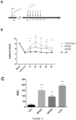
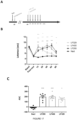
- the lead compound YC55 demonstrated a dose-dependent analgesic effect in OIPN mice when administered via the i.t. ( Figure 9 ).
- Compound YC55 also demonstrated a dose-dependent analgesic effect in OIPN mice when administered sc ( Figure 10 ).
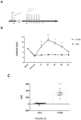
- YC55 also demonstrated a dose-dependent analgesic effect in a rat model of paclitaxel-induced neuropathy when administered via the i.t. ( Figure 12 ).
- Intrathecal administration of YC55 showed an antihyperalgesic effect in a model of neuropathy induced by traumatic sciatic nerve injury ( Figure 13 ), suggesting that the strategy of disrupting TRIP8b interaction could have an analgesic effect in several neuropathic pain conditions.
- Trimeric peptomeric compounds are also mimics of the carboxy-terminal sequence of the HCN 2 channel. They were designed in based on the in-depth study of the X-ray structure of a co-crystal of TRIP8b with the C-terminal region of HCN2 (pdb: 4EQF)
- the compounds are peptide-peptoid hybrid oligomers (peptomers) (Ostergaard et al., 1997) [17]. They comprise three units including an ⁇ -amino acid positioned at the C-terminus of the sequence, followed by two peptoid residues.
- the syntheses were carried out in solution from an ⁇ -amino acid protected in the form of a tert -butyl ester (Xaa- t Bu, L-Leu- t Bu in the case of the synthesis of LF369). These syntheses can also be carried out on resin as previously described for tetrameric peptidomimetics. From this unit, the elongation was carried out as for the molecules corresponding to the general formula (I), by "submonomer chemistry" approaches.
- the central unit is of the ⁇ -peptoid type
- the two steps necessary for its construction are the reaction of Xaa-tBu with acryloyl chloride, followed by an aza-Michael reaction allowing the introduction of the desired side chain ( R 2 ) to the skeleton.
- the third ⁇ -peptoid unit is constructed by acylation of the dimer with bromoacetic acid bromide followed by the substitution of the bromine atom by an amine.
- R 6 is H
- the amine used is a primary amine R 3 NH 2 .
- the secondary amine obtained after treatment with R 3 NH 2 is acylated by a chloride acid, an acid anhydride or a carboxylic acid under coupling conditions.
- the final step consists in deprotecting the side chains and the C-terminus by treatment with TFA.
- Dimer acylation reaction The dimer (2.74 g, 6.58 mmol) is dissolved in 10 mL of THF, the reactor is inert with argon and then cooled to -20 °C. Triethylamine (1.1 mL, 7.89 mmol, 1.2 equiv.) is added to the solution, followed by the addition of 2-bromoacetyl bromide (0.62 mL, 7.89 mmol, 1.2 equiv.). After stirring for 3 h at -20 °C, the reaction mixture is filtered. The filtrate obtained is evaporated and the reaction crude is chromatographed on silica gel (60/40/0.1 Cyclohexane/AcOEt/Et 3 N). The bromoacetylated dimer is isolated pure in 67% yield (2.36 g, 4.4 mmol) as a yellowish oil.
- the crude product is purified by chromatography on silica gel (95/5/0.1 AcOEt/MeOH/Et 3 N) leading to the trimer with a yield of 83% (2.30 g, 3.64 mmol) in the form of an oil.
- the crude obtained is chromatographed on silica gel (90/10/0.1 AcOEt/cyclohexane/Et 3 N) leading to the N-acetylated trimer with a yield of 92% (2.27 g, 3.36 mmol) in the form of a colorless oil.
- the trimeric compound (502 mg, 0.776 mmol, 1 equiv.) is dissolved in 4 mL of a TFA/CH 2 Cl 2 /H 2 O mixture (47.5:47.5:5). After stirring for 2 h at room temperature, 10 mL of dichloromethane are added. The reaction medium is evaporated under vacuum and then 5 coevaporations with dichloromethane are carried out. The product is then redissolved in 5 mL of distilled water and left stirring at room temperature for 2 h. The solvent is evaporated and then five coevaporations with toluene are carried out, leading to LF369 (362 mg) in the form of an oil.
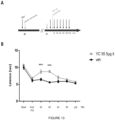
- Compound LF369 (5 ⁇ g, it) demonstrated an analgesic effect in a mouse model of oxaliplatin-induced neuropathy ( Figure 20 ).
Landscapes
- Chemical & Material Sciences (AREA)
- Health & Medical Sciences (AREA)
- Organic Chemistry (AREA)
- Medicinal Chemistry (AREA)
- Life Sciences & Earth Sciences (AREA)
- General Health & Medical Sciences (AREA)
- Genetics & Genomics (AREA)
- Pharmacology & Pharmacy (AREA)
- Molecular Biology (AREA)
- Proteomics, Peptides & Aminoacids (AREA)
- Biophysics (AREA)
- Veterinary Medicine (AREA)
- Public Health (AREA)
- Animal Behavior & Ethology (AREA)
- Biochemistry (AREA)
- General Chemical & Material Sciences (AREA)
- Nuclear Medicine, Radiotherapy & Molecular Imaging (AREA)
- Chemical Kinetics & Catalysis (AREA)
- Engineering & Computer Science (AREA)
- Bioinformatics & Cheminformatics (AREA)
- Biomedical Technology (AREA)
- Neurology (AREA)
- Neurosurgery (AREA)
- Rheumatology (AREA)
- Pain & Pain Management (AREA)
- Epidemiology (AREA)
- Medicines That Contain Protein Lipid Enzymes And Other Medicines (AREA)
- Peptides Or Proteins (AREA)
Applications Claiming Priority (2)
| Application Number | Priority Date | Filing Date | Title |
|---|---|---|---|
| FR2010186A FR3114739B1 (fr) | 2020-10-06 | 2020-10-06 | Nouveaux peptoides et leur utilisation dans la prevention ou le traitement de la douleur chronique |
| PCT/FR2021/051694 WO2022074313A1 (fr) | 2020-10-06 | 2021-09-30 | Nouveaux peptoides et leur utilisation dans la prevention ou le traitement de la douleur chronique |
Publications (3)
| Publication Number | Publication Date |
|---|---|
| EP4225295A1 EP4225295A1 (fr) | 2023-08-16 |
| EP4225295B1 true EP4225295B1 (fr) | 2024-11-13 |
| EP4225295C0 EP4225295C0 (fr) | 2024-11-13 |
Family
ID=74553909
Family Applications (1)
| Application Number | Title | Priority Date | Filing Date |
|---|---|---|---|
| EP21798748.6A Active EP4225295B1 (fr) | 2020-10-06 | 2021-09-30 | Nouveaux peptoides et leur utilisation dans la prevention ou le traitement de la douleur chronique |
Country Status (8)
| Country | Link |
|---|---|
| US (1) | US20230374067A1 (enExample) |
| EP (1) | EP4225295B1 (enExample) |
| JP (1) | JP7853288B2 (enExample) |
| CN (1) | CN116744957A (enExample) |
| CA (1) | CA3194875A1 (enExample) |
| ES (1) | ES3005857T3 (enExample) |
| FR (1) | FR3114739B1 (enExample) |
| WO (1) | WO2022074313A1 (enExample) |
Family Cites Families (6)
| Publication number | Priority date | Publication date | Assignee | Title |
|---|---|---|---|---|
| DE60100055T2 (de) * | 2001-03-21 | 2003-07-24 | Schwarz Pharma Ag | Neue Verwendung einer Klasse von Peptidverbindungen zur Behandlung von Allodynie oder andere Arten von chronischen oder Phantomschmerzen |
| KR20080038408A (ko) * | 2005-08-18 | 2008-05-06 | 쉬바르츠파르마에이지 | 근육통 치료를 위한 펩티드 화합물의 신규한 용도 |
| EP2289886A1 (en) * | 2009-08-31 | 2011-03-02 | Institut d'Investigacions Biomédiques August PI I Sunyer | Peptoid agonists of nerve growth factor and their use as medicaments |
| US9216210B2 (en) * | 2013-12-23 | 2015-12-22 | Dublin City University | Multiprotease therapeutics for chronic pain |
| JP7120927B2 (ja) * | 2016-06-07 | 2022-08-17 | 江蘇恒瑞医薬股▲ふん▼有限公司 | フェニルプロパンアミド誘導体ならびにそれらの製造方法および医薬用途 |
| US11753432B2 (en) * | 2017-01-27 | 2023-09-12 | Academia Sinica | Compound with analgesic effect for use in prevention and treatment of pain |
-
2020
- 2020-10-06 FR FR2010186A patent/FR3114739B1/fr active Active
-
2021
- 2021-09-30 WO PCT/FR2021/051694 patent/WO2022074313A1/fr not_active Ceased
- 2021-09-30 CN CN202180068718.2A patent/CN116744957A/zh active Pending
- 2021-09-30 CA CA3194875A patent/CA3194875A1/fr active Pending
- 2021-09-30 US US18/248,240 patent/US20230374067A1/en active Pending
- 2021-09-30 JP JP2023521558A patent/JP7853288B2/ja active Active
- 2021-09-30 ES ES21798748T patent/ES3005857T3/es active Active
- 2021-09-30 EP EP21798748.6A patent/EP4225295B1/fr active Active
Also Published As
| Publication number | Publication date |
|---|---|
| US20230374067A1 (en) | 2023-11-23 |
| JP7853288B2 (ja) | 2026-04-28 |
| EP4225295C0 (fr) | 2024-11-13 |
| CA3194875A1 (fr) | 2022-04-14 |
| CN116744957A (zh) | 2023-09-12 |
| EP4225295A1 (fr) | 2023-08-16 |
| ES3005857T3 (en) | 2025-03-17 |
| WO2022074313A1 (fr) | 2022-04-14 |
| JP2023544842A (ja) | 2023-10-25 |
| FR3114739B1 (fr) | 2022-08-26 |
| FR3114739A1 (fr) | 2022-04-08 |
Similar Documents
| Publication | Publication Date | Title |
|---|---|---|
| CA2823218C (en) | Treatment of autism spectrum disorders using glycyl-l-2-methylprolyl-l-glutamic acid | |
| CN107496902B (zh) | 在氨基酸1和3位修改的环孢菌素类似分子 | |
| JP2014505035A5 (enExample) | ||
| KR20020092951A (ko) | 카할라이드 화합물 | |
| JP2022115974A (ja) | 化学療法誘発性末梢性ニューロパシーおよび難聴を処置または予防するためのbcl-wポリペプチドおよび模倣物 | |
| EP0457701B1 (fr) | Nouveaux dérivés de médiateurs endogènes, leurs sels, procédé de préparation, applications, et compositions les renfermant | |
| US6677376B1 (en) | Non-peptidic cyclophilin binding compounds and their use | |
| EP2598523B1 (fr) | Nouveaux peptides avec des effets analgesiques et inhibant les canaux asic | |
| CA2525496A1 (en) | Statine derivatives for the treatment of alzheimer's disease | |
| US11028128B2 (en) | Inhibition of the aggregation of transthyretin by specific binding of peptides to aggregation-driving segments | |
| KR20070036033A (ko) | 보체 C5a 수용체 조절제를 이용한 신경계 증상의치료방법 | |
| CA2929286A1 (en) | Treatment of autism spectrum disorders using glycyl-l-2-methylprolyl-l-glutamic acid | |
| US20250179119A1 (en) | Cyclic peptide or salt thereof, and mdmx inhibitor | |
| WO2022074313A1 (fr) | Nouveaux peptoides et leur utilisation dans la prevention ou le traitement de la douleur chronique | |
| CA2565805A1 (fr) | Conjugues tripeptidiques agonistes de la msh | |
| US20140121168A1 (en) | Antagonists of trpv1 receptor | |
| US20090221513A1 (en) | Treatment of Neurodegenerative Disorders | |
| EP0750635B1 (fr) | Peptides pour inhiber la liberation de pepsine | |
| OA10403A (fr) | Nouveaux peptides phényles leur procédé de préparation et les compositions pharmaceutiques qui en referment | |
| FR2785613A1 (fr) | Conotoxine isolee a partir du venin de conus ermineus, ses analogues et ses applications | |
| Wan | Synthesis of β, γ-diamino acids and their use to design new analogues of the antimicrobial peptide Gramicidin Septide antimicrobien, la Gramicidine S | |
| JPWO2004032955A1 (ja) | カルシニューリンの恒常的活性化阻害剤 | |
| FR3092992A1 (fr) | Inhibiteur d’acyl-thioestérases pour le traitement et/ou la prévention de la maladie de huntington | |
| WO2003018618A2 (de) | Katalyse der cis-trans isomerisierung von sekundären-amid peptidverbindungen | |
| HK1191655A (en) | Cyclosporine analogue molecules modified at amino acid 1 and 3 |
Legal Events
| Date | Code | Title | Description |
|---|---|---|---|
| STAA | Information on the status of an ep patent application or granted ep patent |
Free format text: STATUS: UNKNOWN |
|
| STAA | Information on the status of an ep patent application or granted ep patent |
Free format text: STATUS: THE INTERNATIONAL PUBLICATION HAS BEEN MADE |
|
| PUAI | Public reference made under article 153(3) epc to a published international application that has entered the european phase |
Free format text: ORIGINAL CODE: 0009012 |
|
| STAA | Information on the status of an ep patent application or granted ep patent |
Free format text: STATUS: REQUEST FOR EXAMINATION WAS MADE |
|
| 17P | Request for examination filed |
Effective date: 20230419 |
|
| AK | Designated contracting states |
Kind code of ref document: A1 Designated state(s): AL AT BE BG CH CY CZ DE DK EE ES FI FR GB GR HR HU IE IS IT LI LT LU LV MC MK MT NL NO PL PT RO RS SE SI SK SM TR |
|
| DAV | Request for validation of the european patent (deleted) | ||
| DAX | Request for extension of the european patent (deleted) | ||
| GRAP | Despatch of communication of intention to grant a patent |
Free format text: ORIGINAL CODE: EPIDOSNIGR1 |
|
| STAA | Information on the status of an ep patent application or granted ep patent |
Free format text: STATUS: GRANT OF PATENT IS INTENDED |
|
| RIC1 | Information provided on ipc code assigned before grant |
Ipc: C07K 5/10 20060101ALI20240523BHEP Ipc: A61P 29/02 20060101ALI20240523BHEP Ipc: A61K 38/02 20060101ALI20240523BHEP Ipc: A61K 31/198 20060101AFI20240523BHEP |
|
| INTG | Intention to grant announced |
Effective date: 20240611 |
|
| RAP3 | Party data changed (applicant data changed or rights of an application transferred) |
Owner name: UNIVERSITE DE MONTPELLIER Owner name: INSTITUT NATIONAL DE LA SANTE ET DE LARECHERCHE MEDICALE (INSERM) Owner name: SIGMA CLERMONT Owner name: CENTRE NATIONAL DE LA RECHERCHE SCIENTIFIQUE Owner name: UNIVERSITE CLERMONT AUVERGNE |
|
| GRAS | Grant fee paid |
Free format text: ORIGINAL CODE: EPIDOSNIGR3 |
|
| GRAA | (expected) grant |
Free format text: ORIGINAL CODE: 0009210 |
|
| STAA | Information on the status of an ep patent application or granted ep patent |
Free format text: STATUS: THE PATENT HAS BEEN GRANTED |
|
| AK | Designated contracting states |
Kind code of ref document: B1 Designated state(s): AL AT BE BG CH CY CZ DE DK EE ES FI FR GB GR HR HU IE IS IT LI LT LU LV MC MK MT NL NO PL PT RO RS SE SI SK SM TR |
|
| REG | Reference to a national code |
Ref country code: GB Ref legal event code: FG4D Free format text: NOT ENGLISH |
|
| REG | Reference to a national code |
Ref country code: CH Ref legal event code: EP |
|
| REG | Reference to a national code |
Ref country code: IE Ref legal event code: FG4D Free format text: LANGUAGE OF EP DOCUMENT: FRENCH |
|
| REG | Reference to a national code |
Ref country code: DE Ref legal event code: R096 Ref document number: 602021021868 Country of ref document: DE |
|
| U01 | Request for unitary effect filed |
Effective date: 20241211 |
|
| U07 | Unitary effect registered |
Designated state(s): AT BE BG DE DK EE FI FR IT LT LU LV MT NL PT RO SE SI Effective date: 20241220 |
|
| REG | Reference to a national code |
Ref country code: ES Ref legal event code: FG2A Ref document number: 3005857 Country of ref document: ES Kind code of ref document: T3 Effective date: 20250317 |
|
| PG25 | Lapsed in a contracting state [announced via postgrant information from national office to epo] |
Ref country code: HR Free format text: LAPSE BECAUSE OF FAILURE TO SUBMIT A TRANSLATION OF THE DESCRIPTION OR TO PAY THE FEE WITHIN THE PRESCRIBED TIME-LIMIT Effective date: 20241113 Ref country code: IS Free format text: LAPSE BECAUSE OF FAILURE TO SUBMIT A TRANSLATION OF THE DESCRIPTION OR TO PAY THE FEE WITHIN THE PRESCRIBED TIME-LIMIT Effective date: 20250313 |
|
| PG25 | Lapsed in a contracting state [announced via postgrant information from national office to epo] |
Ref country code: NO Free format text: LAPSE BECAUSE OF FAILURE TO SUBMIT A TRANSLATION OF THE DESCRIPTION OR TO PAY THE FEE WITHIN THE PRESCRIBED TIME-LIMIT Effective date: 20250213 |
|
| PG25 | Lapsed in a contracting state [announced via postgrant information from national office to epo] |
Ref country code: GR Free format text: LAPSE BECAUSE OF FAILURE TO SUBMIT A TRANSLATION OF THE DESCRIPTION OR TO PAY THE FEE WITHIN THE PRESCRIBED TIME-LIMIT Effective date: 20250214 |
|
| PG25 | Lapsed in a contracting state [announced via postgrant information from national office to epo] |
Ref country code: PL Free format text: LAPSE BECAUSE OF FAILURE TO SUBMIT A TRANSLATION OF THE DESCRIPTION OR TO PAY THE FEE WITHIN THE PRESCRIBED TIME-LIMIT Effective date: 20241113 |
|
| PG25 | Lapsed in a contracting state [announced via postgrant information from national office to epo] |
Ref country code: RS Free format text: LAPSE BECAUSE OF FAILURE TO SUBMIT A TRANSLATION OF THE DESCRIPTION OR TO PAY THE FEE WITHIN THE PRESCRIBED TIME-LIMIT Effective date: 20250213 |
|
| PG25 | Lapsed in a contracting state [announced via postgrant information from national office to epo] |
Ref country code: SM Free format text: LAPSE BECAUSE OF FAILURE TO SUBMIT A TRANSLATION OF THE DESCRIPTION OR TO PAY THE FEE WITHIN THE PRESCRIBED TIME-LIMIT Effective date: 20241113 |
|
| PG25 | Lapsed in a contracting state [announced via postgrant information from national office to epo] |
Ref country code: SK Free format text: LAPSE BECAUSE OF FAILURE TO SUBMIT A TRANSLATION OF THE DESCRIPTION OR TO PAY THE FEE WITHIN THE PRESCRIBED TIME-LIMIT Effective date: 20241113 |
|
| PG25 | Lapsed in a contracting state [announced via postgrant information from national office to epo] |
Ref country code: CZ Free format text: LAPSE BECAUSE OF FAILURE TO SUBMIT A TRANSLATION OF THE DESCRIPTION OR TO PAY THE FEE WITHIN THE PRESCRIBED TIME-LIMIT Effective date: 20241113 |
|
| PLBE | No opposition filed within time limit |
Free format text: ORIGINAL CODE: 0009261 |
|
| STAA | Information on the status of an ep patent application or granted ep patent |
Free format text: STATUS: NO OPPOSITION FILED WITHIN TIME LIMIT |
|
| 26N | No opposition filed |
Effective date: 20250814 |
|
| PGFP | Annual fee paid to national office [announced via postgrant information from national office to epo] |
Ref country code: IE Payment date: 20250929 Year of fee payment: 5 |
|
| U20 | Renewal fee for the european patent with unitary effect paid |
Year of fee payment: 5 Effective date: 20250925 |
|
| PGFP | Annual fee paid to national office [announced via postgrant information from national office to epo] |
Ref country code: GB Payment date: 20251024 Year of fee payment: 5 |
|
| PGFP | Annual fee paid to national office [announced via postgrant information from national office to epo] |
Ref country code: ES Payment date: 20251020 Year of fee payment: 5 |
|
| U1N | Appointed representative for the unitary patent procedure changed after the registration of the unitary effect |
Representative=s name: NOVAGRAAF TECHNOLOGIES; FR |
|
| REG | Reference to a national code |
Ref country code: CH Ref legal event code: H13 Free format text: ST27 STATUS EVENT CODE: U-0-0-H10-H13 (AS PROVIDED BY THE NATIONAL OFFICE) Effective date: 20260504 |
|
| PG25 | Lapsed in a contracting state [announced via postgrant information from national office to epo] |
Ref country code: MC Free format text: LAPSE BECAUSE OF FAILURE TO SUBMIT A TRANSLATION OF THE DESCRIPTION OR TO PAY THE FEE WITHIN THE PRESCRIBED TIME-LIMIT Effective date: 20241113 |
|
| PG25 | Lapsed in a contracting state [announced via postgrant information from national office to epo] |
Ref country code: CH Free format text: LAPSE BECAUSE OF NON-PAYMENT OF DUE FEES Effective date: 20250930 |