EP4201408B1 - Crosslinked cation exchange polymers, compositions and use in treating hyperkalemia - Google Patents
Crosslinked cation exchange polymers, compositions and use in treating hyperkalemia Download PDFInfo
- Publication number
- EP4201408B1 EP4201408B1 EP22211737.6A EP22211737A EP4201408B1 EP 4201408 B1 EP4201408 B1 EP 4201408B1 EP 22211737 A EP22211737 A EP 22211737A EP 4201408 B1 EP4201408 B1 EP 4201408B1
- Authority
- EP
- European Patent Office
- Prior art keywords
- polymer
- formula
- calcium
- fluoroacrylate
- divinylbenzene
- Prior art date
- Legal status (The legal status is an assumption and is not a legal conclusion. Google has not performed a legal analysis and makes no representation as to the accuracy of the status listed.)
- Active
Links
Images



Classifications
-
- A—HUMAN NECESSITIES
- A61—MEDICAL OR VETERINARY SCIENCE; HYGIENE
- A61K—PREPARATIONS FOR MEDICAL, DENTAL OR TOILETRY PURPOSES
- A61K31/00—Medicinal preparations containing organic active ingredients
- A61K31/045—Hydroxy compounds, e.g. alcohols; Salts thereof, e.g. alcoholates
- A61K31/047—Hydroxy compounds, e.g. alcohols; Salts thereof, e.g. alcoholates having two or more hydroxy groups, e.g. sorbitol
-
- A—HUMAN NECESSITIES
- A61—MEDICAL OR VETERINARY SCIENCE; HYGIENE
- A61K—PREPARATIONS FOR MEDICAL, DENTAL OR TOILETRY PURPOSES
- A61K31/00—Medicinal preparations containing organic active ingredients
- A61K31/70—Carbohydrates; Sugars; Derivatives thereof
- A61K31/7004—Monosaccharides having only carbon, hydrogen and oxygen atoms
-
- A—HUMAN NECESSITIES
- A61—MEDICAL OR VETERINARY SCIENCE; HYGIENE
- A61K—PREPARATIONS FOR MEDICAL, DENTAL OR TOILETRY PURPOSES
- A61K31/00—Medicinal preparations containing organic active ingredients
- A61K31/74—Synthetic polymeric materials
-
- A—HUMAN NECESSITIES
- A61—MEDICAL OR VETERINARY SCIENCE; HYGIENE
- A61K—PREPARATIONS FOR MEDICAL, DENTAL OR TOILETRY PURPOSES
- A61K31/00—Medicinal preparations containing organic active ingredients
- A61K31/74—Synthetic polymeric materials
- A61K31/765—Polymers containing oxygen
- A61K31/78—Polymers containing oxygen of acrylic acid or derivatives thereof
-
- A—HUMAN NECESSITIES
- A61—MEDICAL OR VETERINARY SCIENCE; HYGIENE
- A61K—PREPARATIONS FOR MEDICAL, DENTAL OR TOILETRY PURPOSES
- A61K47/00—Medicinal preparations characterised by the non-active ingredients used, e.g. carriers or inert additives; Targeting or modifying agents chemically bound to the active ingredient
- A61K47/06—Organic compounds, e.g. natural or synthetic hydrocarbons, polyolefins, mineral oil, petrolatum or ozokerite
- A61K47/26—Carbohydrates, e.g. sugar alcohols, amino sugars, nucleic acids, mono-, di- or oligo-saccharides; Derivatives thereof, e.g. polysorbates, sorbitan fatty acid esters or glycyrrhizin
-
- A—HUMAN NECESSITIES
- A61—MEDICAL OR VETERINARY SCIENCE; HYGIENE
- A61K—PREPARATIONS FOR MEDICAL, DENTAL OR TOILETRY PURPOSES
- A61K9/00—Medicinal preparations characterised by special physical form
- A61K9/14—Particulate form, e.g. powders, Processes for size reducing of pure drugs or the resulting products, Pure drug nanoparticles
-
- A—HUMAN NECESSITIES
- A61—MEDICAL OR VETERINARY SCIENCE; HYGIENE
- A61P—SPECIFIC THERAPEUTIC ACTIVITY OF CHEMICAL COMPOUNDS OR MEDICINAL PREPARATIONS
- A61P1/00—Drugs for disorders of the alimentary tract or the digestive system
-
- A—HUMAN NECESSITIES
- A61—MEDICAL OR VETERINARY SCIENCE; HYGIENE
- A61P—SPECIFIC THERAPEUTIC ACTIVITY OF CHEMICAL COMPOUNDS OR MEDICINAL PREPARATIONS
- A61P1/00—Drugs for disorders of the alimentary tract or the digestive system
- A61P1/04—Drugs for disorders of the alimentary tract or the digestive system for ulcers, gastritis or reflux esophagitis, e.g. antacids, inhibitors of acid secretion, mucosal protectants
-
- A—HUMAN NECESSITIES
- A61—MEDICAL OR VETERINARY SCIENCE; HYGIENE
- A61P—SPECIFIC THERAPEUTIC ACTIVITY OF CHEMICAL COMPOUNDS OR MEDICINAL PREPARATIONS
- A61P13/00—Drugs for disorders of the urinary system
- A61P13/12—Drugs for disorders of the urinary system of the kidneys
-
- A—HUMAN NECESSITIES
- A61—MEDICAL OR VETERINARY SCIENCE; HYGIENE
- A61P—SPECIFIC THERAPEUTIC ACTIVITY OF CHEMICAL COMPOUNDS OR MEDICINAL PREPARATIONS
- A61P3/00—Drugs for disorders of the metabolism
-
- A—HUMAN NECESSITIES
- A61—MEDICAL OR VETERINARY SCIENCE; HYGIENE
- A61P—SPECIFIC THERAPEUTIC ACTIVITY OF CHEMICAL COMPOUNDS OR MEDICINAL PREPARATIONS
- A61P3/00—Drugs for disorders of the metabolism
- A61P3/02—Nutrients, e.g. vitamins, minerals
-
- A—HUMAN NECESSITIES
- A61—MEDICAL OR VETERINARY SCIENCE; HYGIENE
- A61P—SPECIFIC THERAPEUTIC ACTIVITY OF CHEMICAL COMPOUNDS OR MEDICINAL PREPARATIONS
- A61P3/00—Drugs for disorders of the metabolism
- A61P3/12—Drugs for disorders of the metabolism for electrolyte homeostasis
-
- A—HUMAN NECESSITIES
- A61—MEDICAL OR VETERINARY SCIENCE; HYGIENE
- A61P—SPECIFIC THERAPEUTIC ACTIVITY OF CHEMICAL COMPOUNDS OR MEDICINAL PREPARATIONS
- A61P7/00—Drugs for disorders of the blood or the extracellular fluid
-
- A—HUMAN NECESSITIES
- A61—MEDICAL OR VETERINARY SCIENCE; HYGIENE
- A61P—SPECIFIC THERAPEUTIC ACTIVITY OF CHEMICAL COMPOUNDS OR MEDICINAL PREPARATIONS
- A61P7/00—Drugs for disorders of the blood or the extracellular fluid
- A61P7/08—Plasma substitutes; Perfusion solutions; Dialytics or haemodialytics; Drugs for electrolytic or acid-base disorders, e.g. hypovolemic shock
-
- A—HUMAN NECESSITIES
- A61—MEDICAL OR VETERINARY SCIENCE; HYGIENE
- A61P—SPECIFIC THERAPEUTIC ACTIVITY OF CHEMICAL COMPOUNDS OR MEDICINAL PREPARATIONS
- A61P9/00—Drugs for disorders of the cardiovascular system
- A61P9/04—Inotropic agents, i.e. stimulants of cardiac contraction; Drugs for heart failure
-
- A—HUMAN NECESSITIES
- A61—MEDICAL OR VETERINARY SCIENCE; HYGIENE
- A61P—SPECIFIC THERAPEUTIC ACTIVITY OF CHEMICAL COMPOUNDS OR MEDICINAL PREPARATIONS
- A61P9/00—Drugs for disorders of the cardiovascular system
- A61P9/10—Drugs for disorders of the cardiovascular system for treating ischaemic or atherosclerotic diseases, e.g. antianginal drugs, coronary vasodilators, drugs for myocardial infarction, retinopathy, cerebrovascula insufficiency, renal arteriosclerosis
-
- B—PERFORMING OPERATIONS; TRANSPORTING
- B01—PHYSICAL OR CHEMICAL PROCESSES OR APPARATUS IN GENERAL
- B01J—CHEMICAL OR PHYSICAL PROCESSES, e.g. CATALYSIS OR COLLOID CHEMISTRY; THEIR RELEVANT APPARATUS
- B01J39/00—Cation exchange; Use of material as cation exchangers; Treatment of material for improving the cation exchange properties
- B01J39/08—Use of material as cation exchangers; Treatment of material for improving the cation exchange properties
- B01J39/16—Organic material
- B01J39/18—Macromolecular compounds
- B01J39/20—Macromolecular compounds obtained by reactions only involving unsaturated carbon-to-carbon bonds
-
- C—CHEMISTRY; METALLURGY
- C08—ORGANIC MACROMOLECULAR COMPOUNDS; THEIR PREPARATION OR CHEMICAL WORKING-UP; COMPOSITIONS BASED THEREON
- C08F—MACROMOLECULAR COMPOUNDS OBTAINED BY REACTIONS ONLY INVOLVING CARBON-TO-CARBON UNSATURATED BONDS
- C08F220/00—Copolymers of compounds having one or more unsaturated aliphatic radicals, each having only one carbon-to-carbon double bond, and only one being terminated by only one carboxyl radical or a salt, anhydride ester, amide, imide or nitrile thereof
- C08F220/02—Monocarboxylic acids having less than ten carbon atoms; Derivatives thereof
- C08F220/10—Esters
- C08F220/22—Esters containing halogen
-
- C—CHEMISTRY; METALLURGY
- C08—ORGANIC MACROMOLECULAR COMPOUNDS; THEIR PREPARATION OR CHEMICAL WORKING-UP; COMPOSITIONS BASED THEREON
- C08F—MACROMOLECULAR COMPOUNDS OBTAINED BY REACTIONS ONLY INVOLVING CARBON-TO-CARBON UNSATURATED BONDS
- C08F212/00—Copolymers of compounds having one or more unsaturated aliphatic radicals, each having only one carbon-to-carbon double bond, and at least one being terminated by an aromatic carbocyclic ring
- C08F212/34—Monomers containing two or more unsaturated aliphatic radicals
- C08F212/36—Divinylbenzene
Definitions
- the present invention is directed to methods of removing potassium in the gastrointestinal tract, including methods of treating hyperkalemia, by administration of crosslinked cation exchange polymers having beneficial physical properties, including combinations of particle size, particle shape, particle size distribution, viscosity, yield stress, compressibility, surface morphology, and/or swelling ratio; processes for preparing crosslinked cation exchange polymers comprising a fluoro group and an acid group and being the product of the polymerization of at least three monomer units; and compositions of a stabilizing linear polyol and a salt of a crosslinked cation exchange polymer comprising a fluoro group and an acid group useful to bind potassium in the gastrointestinal tract.
- polystyrene sulfonate cation exchange polymers e.g., Kayexalate ® , Argamate ® , Kionex ®
- Kayexalate ® Argamate ®
- Kionex ® a polystyrene sulfonate cation exchange polymers
- these polymers and polymer compositions are known to have patient compliance issues, including dosing size and frequency, taste and/or texture, and gastric irritation. For example, in some patients, constipation develops, and sorbitol is thus commonly co-administered to avoid constipation, but this leads to diarrhea and other gastrointestinal side effects.
- sorbitol is thus commonly co-administered to avoid constipation, but this leads to diarrhea and other gastrointestinal side effects.
- sugars can be used in pharmaceutical compositions. See, for example, EP 1785141 .
- Such problems include lack of tolerance of the therapeutically effective dose of polymeric binder (e.g., anorexia, nausea, gastric pain, vomiting and fecal impaction), dosing form (e.g., taste, mouth feel, etc.) and dose frequency (e.g., three times per day).
- the present invention solves these problems by providing a polymeric binder or a composition containing a polymeric binder that can be given once a day or twice a day without significant gastrointestinal side effects while retaining substantially similar efficacy.
- the methods of the present invention reduce the frequency and form of administration of potassium binder and increase tolerance, which will improve patient compliance, and potassium binding effectiveness.
- linear polyols in particular have a stabilizing effect during storage on crosslinked poly alpha-fluoroacrylic acid in its salt form. It has also now been found that the production of cross-linked fluoroacrylic acid polymers is improved by the addition of a second cross linker having a slower reactivity rate that DVB.
- US-2005220752 discloses a crosslinked cation exchange polymer consisting of 90 weight % of 2-fluoroacrylic methyl ester and 9 weight % of divinylbenzene.
- US 2006/0024336 is entitled “Ion binding compositions” and exemplifies poly(alpha-fluoroacrylic acid) crosslinked with divinylbenzene.
- WO 2007/038802 is entitled “Methods for preparing core-shell composites having cross-linked shells and core-shell composites resulting therefrom", and relates to particles having a crosslinked poly(vinylamine) shell.
- the present invention provides a pharmaceutical composition that comprises a salt of a crosslinked cation exchange polymer and a linear polyol stabilizer.
- moisture is added to the composition.
- the salt of a preferred crosslinked cation exchange polymer is the product of the polymerization of at least two, and optionally three, different monomer units and is stabilized with respect to fluoride release.
- a composition comprising a linear polyol and a salt of a crosslinked cation exchange polymer comprising a fluoro group and an acid group that is the product of the polymerization of at least two, and optionally three, different monomer units.
- one monomer comprises a fluoro group and an acid group and the other monomer is a difunctional arylene monomer or a difunctional alkylene, ether- or amide-containing monomer, or a combination thereof.
- a further aspect of the invention is a pharmaceutical composition
- a crosslinked cation exchange polymer salt comprising structural units corresponding to Formulae 1 and 2, Formulae 1 and 3, or Formulae 1, 2, and 3, wherein Formula 1, Formula 2, and Formula 3 are represented by the following structures: wherein R 1 and R 2 are each independently hydrogen, alkyl, cycloalkyl, or aryl; A 1 is carboxylic, phosphonic, or phosphoric; X 1 is arylene; and X 2 is alkylene, an ether moiety, or an amide moiety.
- Formula 1, Formula 2, and Formula 3 are represented by the following structures:
- compositions comprising a crosslinked cation exchange polymer salt and an effective amount of a linear polyol sufficient to stabilize the polymer salt, wherein the salt of the crosslinked cation exchange polymer comprises structural units corresponding to Formulae 1 and 2, Formulae 1 and 3, or Formulae 1, 2, and 3.
- the structural units of Formula 1, Formula 2 and Formula 3 correspond to Formula 1A, Formula 2A, and Formula 3A, respectively.
- the composition further comprises moisture.
- a further aspect is a pharmaceutical composition
- a pharmaceutical composition comprising a crosslinked cation exchange polymer salt and from about 10 wt.% to about 40 wt.% of a linear polyol based on the total weight of the composition, the crosslinked cation exchange polymer being a reaction product of a polymerization mixture comprising monomers of either (i) Formulae 11 and 22, (ii) Formulae 11 and 33, or (iii) Formulae 11, 22, and 33.
- Formula 11, Formula 22, and Formula 33 are represented by the following structures: wherein R 1 and R 2 are each independently hydrogen, alkyl, cycloalkyl, or aryl; A 11 is an optionally protected carboxylic, phosphonic, or phosphoric; X 1 is arylene; and X 2 is alkylene, an ether moiety, or an amide moiety.
- R 1 and R 2 are each independently hydrogen, alkyl, cycloalkyl, or aryl
- a 11 is an optionally protected carboxylic, phosphonic, or phosphoric
- X 1 is arylene
- X 2 is alkylene, an ether moiety, or an amide moiety.
- Formula 11, Formula 22, and Formula 33 are represented by the following structures:
- compositions comprising a crosslinked cation exchange polymer salt and an effective amount of a linear polyol sufficient to stabilize the polymer salt, wherein the salt of the crosslinked cation exchange polymer is a reaction product of a polymerization mixture comprising monomers corresponding to Formulae 11 and 22, Formulae 11 and 33, or Formulae 11, 22, and 33.
- the salt of the crosslinked cation exchange polymer is a reaction product of a polymerization mixture comprising monomers corresponding to Formulae 11 and 22, Formulae 11 and 33, or Formulae 11, 22, and 33.
- Formula 1, Formula 2 and Formula 3 correspond to Formula 11A, Formula 22A, and Formula 33A, respectively.
- the composition further comprises moisture.
- Yet another aspect is a method for removing potassium from the gastrointestinal tract of an animal subject in need thereof.
- the method comprises administering any one of the crosslinked cation exchange polymers or pharmaceutical compositions described herein to the subject, whereby the polymer or pharmaceutical composition passes through the gastrointestinal tract of the subject, and removes a therapeutically effective amount of potassium ion from the gastrointestinal tract of the subject.
- the subject is a mammal, and preferably, a human.
- a further aspect is a method for removing potassium from the gastrointestinal tract of an animal subject in need thereof, comprising administering an effective amount once per day or twice per day to the subject of a crosslinked cation exchange polymer or any pharmaceutical composition described herein, wherein the polymer comprises structural units corresponding to Formulae 1 and 2, Formulae 1 and 3, or Formulae 1, 2, and 3, wherein Formula 1, Formula 2, and Formula 3 are represented by the following structures: wherein R 1 and R 2 are each independently hydrogen, alkyl, cycloalkyl, or aryl; A 1 is carboxylic, phosphonic, or phosphoric; X 1 is arylene; and X 2 is alkylene, an ether moiety, or an amide moiety, wherein a daily amount of the polymer or composition has a potassium binding capacity of at least 75% of the binding capacity of the same polymer or composition administered at the same daily amount three times per day.
- the present invention also provides a method of removing potassium in an animal subject in need thereof, comprising administering an effective amount once per day or twice per day to the subject of a crosslinked cation exchange polymer or any pharmaceutical composition described herein, wherein the polymer is the reaction product of a polymerization mixture comprising monomers of either (i) Formulae 11 and 22, (ii) Formulae 11 and 33, or (iii) Formulae 11, 22, and 33.
- Formula 11, Formula 22, and Formula 33 are represented by the following structures: wherein R 1 and R 2 are each independently hydrogen, alkyl, cycloalkyl, or aryl; A 11 is an optionally protected carboxylic, phosphonic, or phosphoric; X 1 is arylene; and X 2 is alkylene, an ether moiety, or an amide moiety, wherein a daily amount of the polymer or the composition has a potassium binding capacity of at least 75% of the binding capacity of the same polymer or composition administered at the same daily amount three times per day.
- the present invention provides a method of removing potassium from the gastrointestinal tract of an animal subject in need thereof, comprising administering an effective amount once per day or twice per day to the subject of a daily amount of a crosslinked cation exchange polymer or a pharmaceutical composition as described herein, wherein either (1) less than 25% of subjects taking the polymer or composition once per day or twice per day experience mild or moderate gastrointestinal adverse events or (2) a daily amount of the polymer or composition has a potassium binding capacity of at least 75% of the same daily amount of the same polymer administered three times per day or (3) both.
- compositions comprising a crosslinked aliphatic carboxylic polymer and an effective amount of, or in some instances from about 10 wt.% to about 40 wt.% of, a linear polyol has increased efficacy for removal of potassium as compared to a composition not containing the linear polyol.
- increased efficacy is measured by the amount of fecal excretion of potassium.
- compositions and/or methods of this invention include a composition comprising an effective amount, or in some instances from about 10 wt.% to about 40 wt.%, of a linear polyol, and a crosslinked aliphatic carboxylic polymer that extracts from an animal subject in need thereof about 5% more potassium as compared to the same dose and same administration frequency of the same polymer without stabilization by a linear polyol.
- crosslinked cation exchange polymers having desirable particle size, particle shape, particle size distribution, yield stress, viscosity, compressibility, surface morphology, and/or swelling ratio, and methods of removing potassium by administering the polymer or a pharmaceutical composition including the polymer to an animal subject in need thereof.
- Another aspect of the invention is a method for removing potassium and/or treating hyperkalemia from an animal subject in need thereof comprising administering a potassium binding polymer to the animal subject.
- the potassium binding polymer is a crosslinked cation exchange polymer comprising acid groups in their acid or salt form and in the form of substantially spherical particles having a mean diameter of from about 20 ⁇ m to about 200 ⁇ m and less than about 4 volume percent of the particles have a diameter of less than about 10 ⁇ m.
- the polymer particles also have a sediment yield stress of less than about 4000 Pa, and a swelling ratio of less than about 10 grams of water per gram of polymer.
- a further aspect of the invention is a method for removing potassium and/or treating hyperkalemia in an animal subject in need thereof comprising administering a potassium binding polymer to the animal subject.
- the potassium binding polymer is a crosslinked cation exchange polymer comprising acid groups in their acid or salt form, is in the form of substantially spherical particles having a mean diameter of less than about 250 ⁇ m and less than about 4 volume percent of the particles having a diameter of less than about 10 ⁇ m.
- the polymer particles also have a swelling ratio of less than about 10 grams of water per gram of polymer, and a hydrated and sedimented mass of polymer particles having a viscosity of less than 1,000,000 pascal seconds (Pa ⁇ s) wherein the viscosity is measured at a shear rate of 0.01 sec -1 .
- the present invention provides a method of removing potassium and/or treating hyperkalemia in an animal subject in need thereof, comprising administering an effective amount once per day or twice per day to the subject of a crosslinked cation exchange polymer in the form of substantially spherical particles having a mean diameter of less than about 250 ⁇ m and less than about 4 volume percent of the particles having a diameter of less than about 10 ⁇ m, wherein a daily amount of the polymer administered once per day or twice per day has a potassium binding capacity of at least 75% of the binding capacity of the same polymer administered at the same daily amount three times per day.
- the present invention provides a method of removing potassium and/or treating hyperkalemia in an animal subject in need thereof, comprising administering an effective amount once per day or twice of a daily amount of a crosslinked cation exchange polymer in the form of substantially spherical particles having a mean diameter of less than about 250 ⁇ m and less than about 4 volume percent of the particles having a diameter of less than about 10 ⁇ m, wherein less than 25% of subjects taking the polymer once per day or twice per day experience mild or moderate gastrointestinal adverse events. It is also a feature of this invention that the cation exchange polymers administered once a day or twice a day have about substantially the same tolerability as the same polymer of the same daily amount administered three times a day.
- the present invention provides a crosslinked polymer, which is the product of the polymerization of at least three different monomer units, and processes for preparing these polymers.
- crosslinked cation exchange polymers comprising a fluoro group and an acid group and being the product of the polymerization of at least three different monomer units and processes for the preparation thereof.
- one monomer comprises a fluoro group and an acid group
- one monomer is a difunctional arylene monomer
- another monomer is a difunctional alkylene, ether- or amide-containing monomer.
- Another aspect of the invention is a crosslinked polymer comprising a reaction product of a polymerization mixture comprising three or more monomers.
- the monomers correspond to Formula 11, Formula 22, and Formula 33; wherein (i) the monomers corresponding to Formula 11 constitute at least about 85 wt.% or from about 80 wt.% to 95 wt.% based on the total weight of monomers of Formulae 11, 22, and 33 in the polymerization mixture, and the weight ratio of the monomer corresponding to Formula 22 to the monomer corresponding to Formula 33 is from about 4:1 to about 1:4, or (ii) the mole fraction of the monomer of Formula 11 in the polymerization mixture is at least about 0.87 or from about 0.87 to about 0.94 based on the total number of moles of the monomers of Formulae 11, 22, and 33, and the mole ratio of the monomer of Formula 22 to the monomer of Formula 33 in the polymerization mixture is from about 0.2:1 to about 7:1.
- Formula 11, Formula 22, and Formula 33 correspond to the following structures: wherein R 1 and R 2 are each independently hydrogen, alkyl, cycloalkyl, or aryl; A 11 is an optionally protected carboxylic, phosphonic, or phosphoric; X 1 is arylene; and X 2 is alkylene, an ether moiety or an amide moiety.
- Yet another aspect is a cation exchange polymer comprising structural units corresponding to Formulae 1, 2, and 3, wherein (i) the structural units corresponding to Formula 1 constitute at least about 85 wt.% or from about 80 wt.% to about 95 wt.% based on the total weight of structural units of Formulae 1, 2, and 3 in the polymer calculated from the amounts of monomers used in the polymerization reaction, and the weight ratio of the structural unit corresponding to Formula 2 to the structural unit corresponding to Formula 3 is from about 4:1 to about 1:4, or (ii) the mole fraction of the structural unit of Formula 1 in the polymer is at least about 0.87 or from about 0.87 to about 0.94 based on the total number of moles of the structural units of Formulae 1, 2, and 3, and the mole ratio of the structural unit of Formula 2 to the structural unit of Formula 3 is from about 0.2:1 to about 7:1 (calculated from the amounts of monomers used in the polymerization reaction).
- Formula 1, Formula 2, and Formula 3 correspond to the following structures: wherein R 1 and R 2 are independently hydrogen, alkyl, cycloalkyl, or aryl; A 1 is carboxylic, phosphonic, or phosphoric in its salt or acid form; X 1 is arylene; and X 2 is alkylene, an ether moiety or an amide moiety.
- a further aspect of the invention is a crosslinked polymer comprising a reaction product of a polymerization mixture comprising three or more monomers.
- the monomers correspond to Formula 11A, Formula 22A, and Formula 33A; wherein (i) the monomers corresponding to Formula 11A constitute at least about 85 wt.% or from about 80 wt.% to about 95 wt.% based on the total weight of monomers of Formulae 11A, 22A, and 33A in the polymerization mixture and the weight ratio of monomers corresponding to Formula 22A to monomers corresponding to Formula 33A is from about 4:1 to about 1:4, or (ii) the mole fraction of the monomer of Formula 11A in the polymerization mixture is at least about 0.87 or from about 0.87 to about 0.94 based on the total number of moles of the monomers of Formulae 11A, 22A, and 33A and the mole ratio of the monomer of Formula 22A to the monomer of Formula 33A in the polymerization mixture is from about 0.2:1 to about 7:
- Another aspect is a cation exchange polymer comprising structural units corresponding to Formulae 1A, 2A, and 3A, wherein (i) the structural units corresponding to Formula 1A constitute at least about 85 wt.% or from about 80 wt.% to about 95 wt.% based on the total weight of structural units of Formulae 1A, 2A, and 3A in the polymer, and the weight ratio of the structural unit corresponding to Formula 2A to the structural unit corresponding to Formula 3A is from about 4:1 to about 1:4 (calculated from the amounts of monomers used in the polymerization reaction), or (ii) the mole fraction of the structural unit of Formula 1A in the polymer is at least about 0.87 or from about 0.87 to about 0.94 based on the total number of moles of the structural units of Formulae 1A, 2A, and 3A, and the mole ratio of the structural unit of Formula 2A to the structural unit of Formula 3A is from about 0.2:1 to about 7:1 (calculated from the amounts of monomers used
- a further aspect is a pharmaceutical composition
- a pharmaceutical composition comprising any of the crosslinked cation exchange polymers described herein and a pharmaceutically acceptable excipient.
- Yet another aspect of the invention is a method for removing potassium from the gastrointestinal tract of an animal subject, the method comprising administering a pharmaceutical composition described above to the subject, whereby the pharmaceutical composition passes through the gastrointestinal tract of the subject and removes a therapeutically effective amount of potassium ion from the gastrointestinal tract of the subject.
- the animal subject is a mammal or a human.
- Another aspect is a method of making a crosslinked cation exchange polymer comprising contacting a mixture comprising three or more monomers with a polymerization initiator to form a crosslinked polymer.
- the monomers correspond to Formula 11, Formula 22, and Formula 33; wherein (i) the monomers corresponding to Formula 11 constitute at least about 85 wt.% or from about 80 wt.% to about 95 wt.% based on the total weight of monomers of Formulae 11, 22, and 33 in the polymerization mixture, and the weight ratio of the monomer corresponding to Formula 22 to the monomer corresponding to Formula 33 is from about 4:1 to about 1:4, or (ii) the mole fraction of the monomer of Formula 11 in the polymerization mixture is at least about 0.87 or from about 0.87 to about 0.94 based on the total number of moles of the monomers of Formulae 11, 22, and 33, and the mole ratio of the monomer of Formula 22 to the monomer of Formula 33 in the polymerization mixture is from about 0.2:1 to about 7:1.
- Formula 11, Formula 22, and Formula 33 correspond to the following structures: wherein R 1 and R 2 are each independently hydrogen, alkyl, cycloalkyl, or aryl; A 11 is protected carboxylic, phosphonic, or phosphoric; X 1 is arylene; and X 2 is alkylene, an ether moiety or an amide moiety.
- a further aspect is a method of making a crosslinked cation exchange polymer comprising contacting a mixture comprising three or more monomers with a polymerization initiator to form a crosslinked polymer.
- the monomers correspond to Formula 11A, Formula 22A, and Formula 33A; wherein (i) the monomers corresponding to Formula 11A constitute at least about 85 wt.% or from about 80 wt.% to about 95 wt.% based on the total weight of monomers of Formulae 11A, 22A, and 33A in the polymerization mixture, and the weight ratio of the monomer corresponding to Formula 22 to the monomer corresponding to Formula 33A is from about 4:1 to about 1:4, or (ii) the mole fraction of the monomer of Formula 11A in the polymerization mixture is at least about 0.87 or from about 0.87 to about 0.94 based on the total number of moles of the monomers of Formulae 11A, 22A, and 33A, and the mole ratio of the monomer of Formula 22A to the monomer of Formula
- the methods of making the crosslinked cation exchange polymers described above can further comprise hydrolyzing the crosslinked polymer with a hydrolysis agent.
- the present invention is directed to pharmaceutical compositions comprising a polyol and a salt of a crosslinked cation exchange polymer, with the polyol present in an amount sufficient to reduce the release of fluoride ion from the cation exchange polymer during storage.
- the pharmaceutical compositions of this invention additionally comprise water also present in an amount sufficient to reduce or assist in the reduction of the release of fluoride ion from the cation exchange polymer during storage.
- the salt of a crosslinked cation exchange polymer comprised a fluoro group and an acid group is the product of the polymerization of at least two, and optionally three, different monomer units.
- one monomer comprises a fluoro group and an acid group and the other monomer is a difunctional arylene monomer or a difunctional alkylene, ether- or amide-containing monomer, or a combination thereof.
- these pharmaceutical compositions are useful to bind potassium in the gastrointestinal tract.
- the linear polyol is a linear sugar alcohol. Increased efficacy, and/or tolerability in different dosing regimens, is seen as compared to compositions without the linear polyol, and optionally including water.
- a linear polyol is added to the composition containing the salt of a crosslinked cation exchange polymer in an amount effective to stabilize the polymer salt, and generally from about 10 wt.% to about 40 wt.% linear polyol based on the total weight of the composition.
- the linear polyol is preferably a linear sugar (i.e, a linear sugar alcohol).
- the moisture content of the composition can be balanced with the stabilizing linear polyol to provide a stabilized polymer within the composition.
- the concentration of polyol can be decreased.
- the moisture content should not rise so high as to prevent the composition from being free flowing during manufacturing or packaging operations.
- the moisture content can range from about 1 to about 30 weight percent based on the total weight of the composition. More specifically, the moisture content can be from about 10 to about 25 wt.% based on the total weight of the composition of polymer, linear polyol and water.
- This viscosity is measured using a wet polymer prepared by mixing the polymer thoroughly with a slight excess of simulated intestinal fluid (per USP ⁇ 26>), allowing the mixture to sediment for 3 days at 37°C, and decanting free liquid from the sedimented wet polymer.
- the steady state shear viscosity of this wet polymer can be determined using a Bohlin VOR Rheometer (available from Malvern Instruments Ltd., Malvern, U.K.) or equivalent with a parallel plate geometry (upper plate of 15 mm diameter and lower plate of 30 mm diameter, and gap between plates of 1 mm) and the temperature maintained at 37°C.
- the crosslinked cation exchange polymers may further have a hydrated and sedimented yield stress of from about 150 Pa to about 4000 Pa, from about 150 Pa to about 3000 Pa, from about 150 Pa to about 2500 Pa, from about 150 Pa to about 1500 Pa, from about 150 Pa to about 1000 Pa, from about 150 Pa to about 750 Pa, or from about 150 Pa to about 500 Pa, from about 200 Pa to about 4000 Pa, from about 200 Pa to about 2500 Pa, from about 200 Pa to about 1000 Pa, or from about 200 Pa to about 750 Pa.
- Dynamic stress sweep measurements i.e., yield stress
- This rheometer also has a parallel plate geometry (upper plate of 15 mm diameter, lower plate of 30 mm diameter, and gap between plates of 1 mm) and the temperature is maintained at 37°C.
- a constant frequency of 1 Hz with two integration periods can be used while the shear stress is increased from 1 to 10 4 Pa.
- Crosslinked cation exchange polymers used in this invention also have desirable compressibility and bulk density when in the form of a dry powder.
- Some of the particles of the crosslinked cation exchange polymers in the dry form have a bulk density of from about 0.8 g/cm 3 to about 1.5 g/cm 3 , from about 0.82 g/cm 3 to about 1.5 g/cm 3 , from about 0.84 g/cm 3 to about 1.5 g/cm 3 , from about 0.86 g/cm 3 to about 1.5 g/cm 3 , from about 0.8 g/cm 3 to about 1.2 g/cm 3 , or from about 0.86 g/cm 3 to about 1.2 g/cm 3 .
- the bulk density affects the volume of crosslinked cation exchange polymer needed for administration to a patient. For example, a higher bulk density means that a lower volume will provide the same number of grams of crosslinked cation exchange polymer. This lower volume can improve patient compliance by allowing the patient to perceive they are taking a smaller amount due to the smaller volume.
- a powder composed of the particles of the crosslinked cation exchange polymer in dry form has a compressibility index of from about 3 to about 15, from about 3 to about 14, from about 3 to about 13, from about 3 to about 12, from about 3 to about 11, from about 5 to about 15, from about 5 to about 13, or from about 5 to about 11.
- the compressibility index is defined as 100*(TD-BD)/TD, wherein BD and TD are the bulk density and tap density, respectively.
- the procedure for measuring bulk density and tap density is described below in Example 10. Further, the powder form of the cation exchange polymers settles into its smallest volume more easily than polymers conventionally used to treat hyperkalemia.
- the potassium binding polymers in particle form are not absorbed from the gastrointestinal tract.
- the term "non-absorbed” and its grammatical equivalents is not intended to mean that the entire amount of administered polymer is not absorbed. It is expected that certain amounts of the polymer may be absorbed. Particularly, about 90% or more of the polymer is not absorbed, more particularly about 95% or more is not absorbed, even more particularly about 97% or more is not absorbed, and most particularly about 98% or more of the polymer is not absorbed.
- the swelling ratio of the potassium binding polymers in physiological isotonic buffer is typically from about 1 to about 7, particularly from about 1 to about 5, more particularly from about 1 to about 3, and more specifically, from about 1 to about 2.5.
- crosslinked cation exchange polymers of the invention have a swelling ratio of less than 5, less than about 4, less than about 3, less than about 2.5, or less than about 2.
- a Polymers of the invention are crosslinked materials, meaning that they do not generally dissolve in solvents, and, at most, swell in solvents. As used herein, "swelling ratio" refers to the number of grams of solvent taken up by one gram of otherwise non-solvated crosslinked polymer when equilibrated in an aqueous environment.
- the mean of the measurements is taken to be the swelling ratio.
- the polymer swelling can also be calculated by the percent weight gain of the otherwise non-solvated polymer upon taking up solvent. For example, a swelling ratio of 1 corresponds to polymer swelling of 100%.
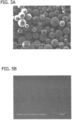
- Crosslinked cation exchange polymers having advantageous surface morphology are polymers in the form of substantially spherical particles with a substantially smooth surface.
- a substantially smooth surface is a surface wherein the average distance from the peak to the valley of a surface feature determined at random over several different surface features and over several different particles is less than about 2 ⁇ m, less than about 1 ⁇ m, or less than about 0.5 ⁇ m. Typically, the average distance between the peak and the valley of a surface feature is less than about 1 ⁇ m.
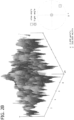
- the surface morphology can be measured using several techniques including those for measuring roughness.
- Roughness is a measure of the texture of a surface. It is quantified by the vertical deviations of a real surface from its ideal form. If these deviations are large, the surface is rough; if they are small the surface is smooth. Roughness is typically considered to be the high frequency, short wavelength component of a measured surface.
- roughness may be measured using contact or non-contact methods. Contact methods involve dragging a measurement stylus across the surface; these instruments include profilometers and atomic force microscopes (AFM). Non-contact methods include interferometry, confocal microscopy, electrical capacitance and electron microscopy. These methods are described in more detail in Chapter 4: Surface Roughness and Microtopography by L. Mattson in Surface Characterization, ed. by D. Brune, R. Hellborg, H.J. Whitlow, O.Hunderi, Wiley-VCH, 1997.
- the probe is commanded to scan over a two-dimensional area on the surface.
- the spacing between data points may not be the same in both directions.
- Another way to measure the surface roughness is to crack the sample particles and obtain a SEM micrograph similar to Figure 1B . In this way, a side view of the surface can be obtained and the relief of the surface can be measured.
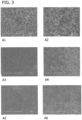
- Surface roughness can be controlled in a number of ways. For example, three approaches were determined for preparing poly( ⁇ -fluoroacrylate) particles having a smoother surface. The first approach was to include a solvent that was an acceptable solvent for the monomers and the polymeric product. The second approach was to decrease the solvation of the organic phase in the aqueous phase by a salting out process. The third approach was to increase the hydrophobicity of the starting fluoroacrylate monomer. These approaches are described in more detail in Examples 11-13.
- Dosing regimens for chronic treatment of hyperkalemia can increase compliance by patients, particularly for crosslinked cation exchange polymers that are taken in gram quantities.
- the present invention is also directed to methods of chronically removing potassium from a mammal in need thereof, and in particular chronically treating hyperkalemia with a potassium binder that is a crosslinked aliphatic carboxylic polymer, and preferably a salt of such polymer stabilized with a linear polyol, wherein the polymer is in the form of a substantially spherical particle.
- the potassium binding polymer particles as used in this invention are substantially unreactive with food and can be added to typical food products (e.g., water, pudding, apple sauce, baked goods, etc.), which adds to compliance enhancement (particularly for patients who are on a water restricted diet).
- typical food products e.g., water, pudding, apple sauce, baked goods, etc.
- the polymer particles as used in this invention can be administered without regard to mealtime.
- administration can take place at any time. Dosing regimens also take into account the other embodiments discussed herein, including capacity, amount and particle form.
- the polymer particles as used in this invention are well tolerated when administered once daily or twice daily as compared to three times daily.
- the invention is thus also directed to methods of removing potassium from an animal subject by administering the polymer particles or a pharmaceutical composition comprising the polymer particles and from about 10 wt.% to about 40 wt.% of a linear polyol once a day, wherein less than 25% of subjects taking the polymer particles or composition once per day experience mild or moderate gastrointestinal adverse events.
- Gastrointestinal adverse events may include flatulence, diarrhea, abdominal pain, constipation, stomatitis, nausea and/or vomiting.
- the polymer particles or composition are administered twice a day and less than 25% of subjects taking the polymer particles or composition twice per day experience mild or moderate gastrointestinal adverse events. In some instances, the subjects taking the polymer particles or composition once per day or twice per day experience no severe gastrointestinal adverse events.
- the polymers particles or compositions as used in the invention have about 50% or more tolerability as compared to the same polymer particles or composition of the same daily amount administered three times a day. For example, for every two patients in which administration of the polymer three times a day is well tolerated, there is at least one patient in which administration of the polymer once a day or twice a day is well tolerated.
- the polymer particles or compositions have about 75% or more tolerability as compared to the same polymer particles or composition of the same daily amount administered three times a day. It is also a feature of this invention that the polymer particles or compositions of the invention administered once a day or twice a day have about 85% or more tolerability as the same polymer particles or composition of the same daily amount administered three times a day. It is also a feature of this invention that the polymer particles or compositions administered once a day or twice a day have about 95% or more tolerability as the same polymer particles or composition of the same daily amount administered three times a day. It is also a feature of this invention that the polymer particles or compositions administered once a day or twice a day have about substantially the same tolerability as the same polymer particles or composition of the same daily amount administered three times a day.
- well tolerated means there is no apparent dose response relationship for gastrointestinal adverse events.
- well tolerated means that the following gastrointestinal adverse effects are not reported from a statistically significant number of subjects, including those effects selected from the group consisting of flatulence, diarrhea, abdominal pain, constipation, stomatitis, nausea and vomiting. In particular, the examples also show that there were no severe gastrointestinal adverse events in subjects.
- the potassium-binding polymers are crosslinked cation exchange polymers derived from at least one crosslinker and at least one monomer containing acid groups in their protonated or ionized form, such as sulfonic, sulfuric, carboxylic, phosphonic, phosphoric, or sulfamic groups, or combinations thereof.
- the fraction of ionization of the acid groups of the polymers used in this invention is greater than about 75% at the physiological pH (e.g., about pH 6.5) in the colon and the potassium binding capacity in vivo is greater than about 0.6 mEq/gram, more particularly greater than about 0.8 mEq/gram and even more particularly greater than about 1.0 mEq/gram.
- the ionization of the acid groups is greater than about 80%, more particularly it is greater than about 90%, and most particularly it is about 100% at the physiological pH of the colon (e.g., about pH 6.5).
- the acid containing polymers contain more than one type of acid group.
- the acid containing polymers are administered in their substantially anhydrous or salt form and generate the ionized form when contacted with physiological fluids.
- Representative structural units of these potassium binding polymers are shown in Table 1 wherein the asterisk at the end of a bond indicates that bond is attached to another structural unit or to a crosslinking unit.
- Suitable cation exchange polymers contain repeat units having the following structures: wherein R 1 is a bond or nitrogen, R 2 is hydrogen or Z, R 3 is Z or -CH(Z) 2 , each Z is independently SO 3 H or PO 3 H, x is 2 or 3, and y is 0 or 1, n is about 50 or more, more particularly n is about 100 or more, even more particularly n is about 200 or more, and most particularly n is about 500 or more.
- a sulfonating agent such as sulfur trioxide/amine adducts or a phosphonating agent such as P 2 O 5 , respectively.
- the acidic protons of phosphonic groups are exchangeable with cations, like sodium or potassium, at pH of about 6 to about 7.
- Suitable phosphonate monomers include vinyl phosphonate, vinyl-1,1-bis phosphonate, and ethylenic derivatives of phosphonocarboxylate esters, oligo(methylenephosphonates), and hydroxyethane-1,1-diphosphonic acid. Methods of synthesis of these monomers are well known in the art.
- crosslinker Abbreviations and Structures Abbreviation Chemical name Structure M olecular Weight X-V-1 ethylenebisacrylamide 168.2 X-V-2 N,N'-(ethane-1,2-diyl)bis(3-(N-vinylformamido) propanamide) 310.36 X-V-3 N,N'-(propane-1,3-diyl)diethenesulfonamide 254.33 X-V-4 N,N'-bis(vinylsulfonylacetyl) ethylene diamine 324.38 X-V-5 1,3-bis(vinylsulfonyl) 2-propanol 240.3 X-V-6 vinylsulfone 118.15 X-V-7 N,N'-methylenebisacrylamide
- the ratio of repeat units to crosslinker can be chosen by those of skill in the art based on the desired physical properties of the polymer particles.
- the swelling ratio can be used to determine the amount of crosslinking based on the general understanding of those of skill in the art that as crosslinking increases, the swelling ratio generally decreases.
- the amount of crosslinker in the polymerization reaction mixture is in the range of 3 wt. % to 15 wt. %, more specifically in the range of 5 wt. % to 15 wt.% and even more specifically in the range of 8 wt. % to 12 wt.%, based on the total weight of the monomers and crosslinkers added to the polymerization reaction.
- Crosslinkers can include one or a mixture of those in Table 2.
- the crosslinked cation exchange polymer includes a pKa-decreasing group, preferably an electron-withdrawing substituent, located adjacent to the acid group, preferably in the alpha or beta position of the acid group.
- the preferred position for the electron-withdrawing group is attached to the carbon atom alpha to the acid group.
- electron-withdrawing substituents are a hydroxyl group, an ether group, an ester group, an acid group, or a halide atom. More preferably, the electron-withdrawing substituent is a halide atom.
- the electron-withdrawing group is fluoride and is attached to the carbon atom alpha to the acid group.
- Acid groups are carboxylic, phosphonic, phosphoric, or combinations thereof.
- polymers for use herein include ⁇ -fluoroacrylate and difluoromaleic acid, with ⁇ -fluoroacrylate being most preferred.
- This monomer can be prepared from a variety of routes, see for example, Gassen et al, J. Fluorine Chemistry, 55, (1991) 149-162 , KF Pittman, C. U., M. Ueda, et al. (1980). Macromolecules 13(5): 1031-1036 .
- Difluoromaleic acid is prepared by oxidation of fluoroaromatic compounds ( Bogachev et al, Zhumal Organisheskoi Khimii, 1986, 22(12), 2578-83 ), or fluorinated furan derivatives (See U.S. patent 5,112,993 ).
- a mode of synthesis of ⁇ -fluoroacrylate is given in EP 415214 .
- the salt of a crosslinked cation exchange polymer comprised a fluoro group and an acid group is the product of the polymerization of at least two, and optionally three, different monomer units.
- one monomer comprises a fluoro group and an acid group and the other monomer is a difunctional arylene monomer or a difunctional alkylene, ether- or amide-containing monomer, or a combination thereof.
- the crosslinked cation exchange polymer comprises units having Formulae 1 and 2, Formulae 1 and 3, or Formulae 1, 2, and 3, wherein Formula 1, Formula 2, and Formula 3 are represented by the following structures: wherein R 1 and R 2 are each independently hydrogen, alkyl, cycloalkyl, or aryl; A 1 is carboxylic, phosphonic, or phosphoric; X 1 is arylene; and X 2 is alkylene, an ether moiety, or an amide moiety.
- R 1 and R 2 are each independently hydrogen, alkyl, cycloalkyl, or aryl; A 1 is carboxylic, phosphonic, or phosphoric; X 1 is arylene; and X 2 is alkylene, an ether moiety, or an amide moiety.
- the ether moiety can be -(CH 2 ) d -O-(CH 2 ) e - or -(CH 2 ) d -O-(CH 2 ) e -O-(CH 2 ) d -, wherein d and e are independently an integer of 1 through 5. In some instances, d is an integer from 1 to 2 and e is an integer from 1 to 3.
- the amide moiety can be -C(O)-NH-(CH 2 ) p -NH-C(O)- wherein p is an integer of 1 through 8. In some instances, p is an integer of 4 to 6.
- R 1 and R 2 are hydrogen and A 1 is carboxylic.
- X 1 is an optionally substituted phenylene, and preferably phenylene.
- X 2 is optionally substituted ethylene, propylene, butylene, pentylene, or hexylene; more specifically, X 2 is ethylene, propylene, butylene, pentylene, or hexylene; and preferably X 2 is butylene.
- R 1 and R 2 are hydrogen, A 1 is carboxylic, X 1 is phenylene and X 2 is butylene.
- compositions of the invention can comprise a crosslinked carboxylic cation exchange polymer as described herein.
- the compositions can include a crosslinked cation exchange polymer comprising structural units corresponding to Formulae 1 and 2, Formulae 1 and 3, or Formulae 1, 2, and 3.
- the crosslinked cation exchange polymer comprises at least about 80 wt.%, particularly at least about 85 wt.%, and more particularly at least about 90 wt.% or from about 80 wt.% to about 95 wt.%, from about 85 wt.% to about 95 wt.%, from about 85 wt.% to about 93 wt.% or from about 88 wt.% to about 92 wt.% of structural units corresponding to Formula 1 based on the total weight of the structural units as used in the polymerization mixture corresponding to (i) Formulae 1 and 2, (ii) Formulae 1 and 3, or (iii) Formulae 1, 2, and 3.
- the polymer can comprise a unit of Formula 1 having a mole fraction of at least about 0.87 or from about 0.87 to about 0.94 or from about 0.90 to about 0.92 based on the total number of moles of the units corresponding to (i) Formulae 1 and 2, (ii) Formulae 1 and 3, or (iii) Formulae 1, 2, and 3.
- the crosslinked cation exchange polymer comprises units corresponding to (i) Formulae 1A and 2A, (ii) Formulae 1A and 3A, or (iii) Formulae 1A, 2A, and 3A, wherein Formulae 1A, 2A and 3A are generally represented by the following structures.
- the carboxylic acid is preferably in the salt form (i.e., balanced with a counter-ion such as Ca 2+ , Mg 2+ , Na + , NH 4+ , and the like).
- the carboxylic acid is in the salt form and balanced with a Ca 2+ counterion.
- the carboxylic acid of the crosslinked cation exchange form is balanced with a divalent counterion, two carboxylic acid groups can be associated with the one divalent cation.
- the polymers described herein are generally random polymers wherein the exact order of the structural units of Formulae 1, 2, or 3 (derived from monomers of Formulae 11, 22, or 33), or 1A, 2A, or 3A (derived from monomers of Formulae 11A, 22A, or 33A) is not predetermined.
- the present invention is also directed to particularly preferred crosslinked cation exchange polymers comprising a fluoro group and an acid group that is the polymerization product of at least three monomers and processes for the preparation thereof.
- the polymers or pharmaceutical compositions of these polymers are useful to bind potassium in the gastrointestinal tract.
- two of the three monomers should be difunctional cross-linking monomers having different rates of reaction with the methyl fluoroacrylate (MeFA) monomer.
- MeFA methyl fluoroacrylate
- two different cross-linking monomers having different rates of reaction of the monomer of Formula 11 allows for the faster rate cross-linking monomer to be consumed before the other monomers, creating an intermediate that is rich in the faster rate monomer. This in turn allows the remaining monomers to be consumed so that a second, slower reactivity rate cross linker provides additional crosslinking.
- Demonstration may come from analysis of the polymer product that reveals a distribution of crosslinking units within the structure such that the higher reactive rate monomer is more richly present in those portion(s) of the polymer produced earlier in time in the polymerization reaction, while the lower reactivity rate monomer structure is more richly present in portion(s) of the final product produced later in time.
- the polymer contains structural units of Formulae 1, 2, and 3 and has a weight ratio of the structural unit corresponding to Formula 2 to the structural unit corresponding to Formula 3 of from about 4:1 to about 1:4, from about 2:1 to 1:2, or about 1:1. Additionally, this polymer can have a mole ratio of the structural unit of Formula 2 to the structural unit of Formula 3 of from about 0.2:1 to about 7:1, from about 0.2:1 to about 3.5:1; from about 0.5:1 to about 1.3:1, from about 0.8 to about 0.9, or about 0.85:1.
- the Formulae 1, 2 and 3 structural units of the terpolymer have specific ratios, for example, wherein the structural units corresponding to Formula 1 constitute at least about 85 wt.% or from about 80 to about 95 wt.%, from about 85 wt.% to about 93 wt.%, or from about 88 wt.% to about 92 wt.% based on the total weight of structural units of Formulae 1, 2, and 3 in the polymer, calculated based on the amounts of the monomers and crosslinkers, or the monomers of Formulae 11, 22, and 33, that are used in the polymerization reaction, , and the weight ratio of the structural unit corresponding to Formula 2 to the structural unit corresponding to Formula 3 is from about 4:1 to about 1:4, or about 1:1.
- the ratio of structural units when expressed as the mole fraction of the structural unit of Formula 1 in the polymer is at least about 0.87 or from about 0.87 to about 0.94, or from about 0.9 to about 0.92, based on the total number of moles of the structural units of Formulae 1, 2, and 3, and the mole ratio of the structural unit of Formula 2 to the structural unit of Formula 3 is from about 0.2:1 to about 7:1, from about 0.2:1 to about 3.5:1, or from about 0.8 to about 0.9; or 0.85:1; again these calculations are performed using the amounts the monomers and crosslinkers, or the monomers of Formulae 11, 22, and 33, that are used in the polymerization reaction. It is not necessary to calculate conversion.
- the crosslinked cation exchange polymer comprises units corresponding to Formulae 1A, 2A, and 3A, wherein Formula 1A, Formula 2A and Formula 3A correspond to the following structures.
- the carboxylic acid can be in the acid form (i.e., balanced with hydrogen), in salt form (i.e., balanced with a counter-ion such as Ca 2+ , Mg 2+ , Na + , NH 4 + , and the like) or in an ester form (i.e., balanced with an alkyl, such as methyl).
- the carboxylic acid is in the salt form and balanced with a Ca 2+ counterion.
- two carboxylic acid groups can be associated with the one divalent cation.
- the structural units of the terpolymer can have specific ratios, for example, wherein the structural units corresponding to Formula 1A constitute at least about 85 wt.% or from about 80 to about 95 wt.%, from about 85 wt.% to about 93 wt.%, or from about 88 wt.% to about 92 wt.% based on the total weight of structural units of Formulae 1A, 2A, and 3A, calculated based on the amounts of monomers of Formulae 11A, 22A, and 33A used in the polymerization reaction, and the weight ratio of the structural unit corresponding to Formula 2A to the structural unit corresponding to Formula 3A is from about 4:1 to about 1:4, or about 1:1.
- the ratio of structural units when expressed as the mole fraction of the structural unit of Formula 1A in the polymer is at least about 0.87 or from about 0.87 to about 0.94, or from about 0.9 to about 0.92 based on the total number of moles of the structural units of Formulae 1A, 2A, and 3A calculated from the amount of monomers of Formulae 11A, 22A, and 33A used in the polymerization reaction, and the mole ratio of the structural unit of Formula 2A to the structural unit of Formula 3A is from about 0.2:1 to about 7:1, from about 0.2:1 to about 3.5:1, from about 0.5:1 to about 1.3:1, from about 0.8:1 to about 0.9:1, or about 0.85:1.
- a cation exchange polymer derived from monomers of Formulae 11, 22, and 33, followed by hydrolysis can have a structure represented as follows: wherein R 1 , R 2 , A 1 , X 1 , and X 2 are as defined in connection with Formulae 1, 2, and 3 and m is in the range of from about 85 to about 93 mol%, n is in the range of from about 1 to about 10 mol% and p is in the range of from about 1 to about 10 mol%, calculated based on the ratios of monomers added to the polymerization mixture.
- the wavy bonds in the polymer structures of Formula 40 are included to represent the random attachment of structural units to one another wherein the structural unit of Formula 1 can be attached to another structural unit of Formula 1, a structural unit of Formula 2, or a structural unit of Formula 3; the structural units of Formulae 2 and 3 have the same range of attachment possibilities.
- a polymer represented by the general structure shown below is obtained: wherein m is in the range of from about 85 to about 93 mol%, n is in the range of from about 1 to about 10 mol% and p is in the range of from about 1 to about 10 mol%, calculated based on the ratios of monomers added to the polymerization mixture.
- the wavy bonds in the polymer structures of Formula 40A are included to represent the random attachment of structural units to one another wherein the structural unit of Formula 1A can be attached to another structural unit of Formula 1A, a structural unit of Formula 2A, or a structural unit of Formula 3A; the structural units of Formulae 2A and 3A have the same range of attachment possibilities.
- the crosslinked cation exchange polymer is generally a reaction product of a polymerization mixture that is subjected to polymerization conditions.
- the polymerization mixture may also contain components that are not chemically incorporated into the polymer.
- the crosslinked cation exchange polymer typically comprises a fluoro group and an acid group that is the product of the polymerization of three different monomer units where one monomer comprises a fluoro group and an acid group, another monomer is a difunctional arylene monomer and a third monomer is a difunctional alkylene, ether- or amide-containing monomer. More specifically, the crosslinked cation exchange polymer can be a reaction product of a polymerization mixture comprising monomers of Formulae 11, 22, 33.
- the monomer of Formula 11, the monomer of Formula 22, and the monomer of Formula 33 have the general formulas: wherein R 1 and R 2 are as defined in connection with Formula 1, X 1 is as defined in connection with Formula 2, X 2 is as defined in connection with Formula 3, and A 11 is an optionally protected carboxylic, phosphonic, or phosphoric. In a preferred embodiment, A 11 is a protected carboxylic, phosphonic, or phosphoric.
- the polymerization mixture typically further comprises a polymerization initiator.
- the reaction product of the polymerization mixture comprising Formulae 11, 22, 33 comprises a polymer having protected acid groups and comprising units corresponding to Formula 10 and units corresponding to Formulae 2 and 3.
- the reaction mixture contains at least about 80 wt.%, particularly at least about 85 wt.%, and more particularly at least about 90 wt.% or from about 80 wt.% to about 95 wt.%, from about 85 wt.% to about 95 wt.%, from about 85 wt.% to about 93 wt.% or from about 88 wt.% to about 92 wt.% of monomers corresponding to Formula 11 based on the total weight of the monomers corresponding to Formulae 11, 22, and 33; and the mixture having a weight ratio of the monomer corresponding to Formula 22 to the monomer corresponding to Formula 33 from about 4:1 to about 1:4, from about 2:1 to 1:2, or about 1:1.
- the reaction mixture can comprise a unit corresponding to Formula 11 having a mole fraction of at least about 0.87 or from about 0.87 to about 0.94 based on the total number of moles of the monomers corresponding to Formulae 11, 22, and 33 and the mixture having a mole ratio of the monomer corresponding to Formula 22 to the monomer corresponding to Formula 33 of from about 0.2:1 to about 7:1, from about 0.2:1 to about 3.5:1; from about 0.5:1 to about 1.3:1, from about 0.8 to about 0.9, or about 0.85:1.
- the polymer useful for treating hyperkalemia may be a resin having the physical properties discussed herein and comprising polystyrene sulfonate cross linked with divinyl benzene.
- Various resins having this structure are available from The Dow Chemical Company under the trade name Dowex, such as Dowex 50WX2, 50WX4 or 50WX8.
- the crosslinked cation exchange polymer is generally the reaction product of a polymerization mixture that is subjected to polymerization conditions.
- the polymerization mixture may also contain components that are not chemically incorporated into the polymer.
- the crosslinked cation exchange polymer typically comprises a fluoro group and an acid group that is the product of the polymerization of at least two, and optionally three, different monomer units where one monomer comprises a fluoro group and an acid group and the other monomer is a difunctional arylene monomer or a difunctional alkylene, ether- or amide-containing monomer, or a combination thereof.
- the crosslinked cation exchange polymer can be a reaction product of a polymerization mixture comprising monomers of either (i) Formulae 11 and 22, (ii) Formulae 11 and 33, or (iii) Formulae 11, 22, and 33.
- the monomers of Formulae 11, 22, and 33 are generally represented by wherein R 1 and R 2 are as defined in connection with Formula 1, X 1 is as defined in connection with Formula 2, X 2 is as defined in connection with Formula 3, and A 11 is an optionally protected carboxylic, phosphonic, or phosphoric. In a preferred embodiment, A 11 is a protected carboxylic, phosphonic, or phosphoric.
- the product of a polymerization reaction comprising monomers of (i) Formulae 11 and 22, (ii) Formulae 11 and 33, or (iii) Formulae 11, 22, and 33 comprises a polymer having optionally protected acid groups and comprising units corresponding to Formula 10 and units corresponding to Formulae 2 and 3.
- Polymer products having protected acid groups can be hydrolyzed to form a polymer having unprotected acid groups and comprising units corresponding to Formulae 1, 2, and 3.
- the structural units generally represented by Formula 10 have the structure wherein R 1 , R 2 , and A 11 are as defined in connection with Formula 11.
- a 11 is a protected carboxylic, phosphonic, or phosphoric.
- the polymer formed in the polymerization reaction contains protected carboxylic, phosphonic, or phosphoric groups.
- a hydrolysis agent can be added to the polymer formed in the polymerization reaction to hydrolyze these protected groups, converting them to carboxylic, phosphonic, or phosphoric groups, or other methods of deprotection well known in the art can be used.
- the hydrolyzed polymer is preferably subjected to ion exchange to obtain a preferred polymer salt for therapeutic use.
- the reaction mixture comprises at least about 80 wt.%, particularly at least about 85 wt.%, and more particularly at least about 90 wt.% or from about 80 wt.% to about 95 wt.%, from about 85 wt.% to about 95 wt.%, from about 85 wt.% to about 93 wt.% or from about 88 wt.% to about 92 wt.% of monomers corresponding to Formula 11 based on the total weight of the monomers corresponding to (i) Formulae 11 and 22, (ii) Formulae 11 and 33, or (iii) Formulae 11, 22, and 33.
- reaction mixture can comprise a unit of Formula 11 having a mole fraction of at least about 0.87 or from about 0.87 to about 0.94 based on the total number of moles of the monomers corresponding to (i) Formulae 11 and 22, (ii) Formulae 11 and 33, or (iii) Formulae 11, 22, and 33.
- the polymerization reaction mixture contains monomers of Formulae 11, 22, and 33 and has a weight ratio of the monomer corresponding to Formula 22 to the monomer corresponding to Formula 33 from about 4:1 to about 1:4, from about 2:1 to 1:2, or about 1:1. Additionally, this mixture can have a mole ratio of the monomer of Formula 22 to the monomer of Formula 33 from about 0.2:1 to about 7:1, from 0.2:1 to 3.5:1, from about 0.5:1 to about 1.3:1, from about 0.8:1 to about 0.9:1, or about 0.85:1.
- Particular crosslinked cation exchange polymers are the reaction product of a polymerization mixture comprising monomers of (i) Formulae 11 and 22, (ii) Formulae 11 and 33, or (iii) Formulae 11, 22, and 33.
- the monomers are generally represented by Formulae 11A, 22A, and 33A having the structure: wherein alkyl is preferably selected from methyl, ethyl, propyl, iso-propyl, butyl, iso-butyl, secbutyl, tert-butyl, pentyl, iso-pentyl, sec-pentyl, or tert-pentyl. Most preferably, the alkyl group is methyl or tert-butyl.
- the -O-alkyl moiety protects the carboxyl moiety from reacting with other reactive moieties during the polymerization reaction and can be removed by hydrolysis or other deprotection methods as described in more detail below.
- the polymerization reaction mixture contains at least about 80 wt.%, particularly at least about 85 wt.%, and more particularly at least about 90 wt.% or from about 80 wt.% to about 95 wt.%, from about 85 wt.% to about 95 wt.%, from about 85 wt.% to about 93 wt.% or from about 88 wt.% to about 92 wt.% of monomers corresponding to Formula 11A based on the total weight of the monomers which are generally represented by (i) Formulae 11A and 22A, (ii) Formulae 11A and 33A, or (iii) Formulae 11A, 22A, and 33A.
- reaction mixture can comprise a unit of Formula 11A having a mole fraction of at least about 0.87 or from about 0.87 to about 0.94 or from about 0.9 to about 0.92 based on the total number of moles of the monomers present in the polymer which are generally represented by (i) Formulae 11A and 22A, (ii) Formulae 11A and 33A, or (iii) Formulae 11A, 22A, and 33A.
- the reaction mixture contains monomers of Formulae 11, 22, and 33 and the weight ratio of the monomer generally represented by Formula 22A to the monomer generally represented by Formula 33A of from about 4:1 to about 1:4 or about 1:1. Also, this mixture has a mole ratio of the monomer of Formula 22A to the monomer of Formula 33A of from about 0.2:1 to about 7:1, from about 0.2:1 to about 3.5:1, from about 0.5:1 to about 1.3:1, from about 0.8:1 to about 0.9:1, or about 0.85:1.
- an initiated polymerization reaction is employed where a polymerization initiator is used in the polymerization reaction mixture to aid initiation of the polymerization reaction.
- a polymerization initiator is used in the polymerization reaction mixture to aid initiation of the polymerization reaction.
- the nature of the free radical initiator plays a role in the quality of the suspension in terms of polymer particle stability, yield of polymer particles, and the polymer particle shape.
- Use of water-insoluble free radical initiators, such as lauroyl peroxide, can produce polymer particles in a high yield.
- a water-insoluble free radical initiator initiates polymerization primarily within the dispersed phase containing the monomers of Formulae 11 and 22, 11 and 33, or 11, 22, and 33.
- a reaction scheme provides polymer particles rather than a bulk polymer gel.
- the process uses free radical initiators with water solubility lower than 0.1 g/L, particularly lower than 0.01 g/L.
- polymethylfluoroacrylate particles are produced with a combination of a low water solubility free radical initiator and the presence of a salt in the aqueous phase, such as sodium chloride.
- the polymerization initiator can be chosen from a variety of classes of initiators.
- initiators that generate polymer imitating radicals upon exposure to heat include peroxides, persulfates or azo type initiators (e.g., 2,2'-azobis(2-methylpropionitrile), lauroyl peroxide (LPO), tert-butyl hydro peroxide, dimethyl-2,2'-azobis(2-methylpropionate), 2,2'-azobis(2-methyl-N-(2-hydroxyethyl)propionamide), 2,2'-azobis(2-(2-imidazolin-2-yl)propane), (2,2"-azo bis(2,4-dimethylvaleronitrile), azobisisobutyronitrile (AIBN) or a combination thereof.
- Another class of polymer initiating radicals is radicals generated from redox reactions, such as persulfates and amines. Radicals can also be generated by exposing certain initiators to UV light or exposure to air.
- additional components typically comprise surfactants, solvents, salts, buffers, aqueous phase polymerization inhibitors and/or other components known to those of skill in the art.
- the additional components may be contained in an aqueous phase while the monomers and initiator may be contained in an organic phase.
- the aqueous phase may be comprised of water, surfactants, stabilizers, buffers, salts, and polymerization inhibitors.
- a surfactant may be selected from the group consisting of anionic, cationic, nonionic, amphoteric, zwitterionic, or a combination thereof.
- Anionic surfactants are typically based on sulfate, sulfonate or carboxylate anions.
- surfactants include, sodium dodecyl sulfate (SDS), ammonium lauryl sulfate, other alkyl sulfate salts, sodium laureth sulfate (or sodium lauryl ether sulfate (SLES)), N-lauroylsarcosine sodium salt, lauryldimethylamine-oxide (LDAO), ethyltrimethylammoniumbromide (CTAB), bis(2-ethylhexyl)sulfosuccinate sodium salt, alkyl benzene sulfonate, soaps, fatty acid salts, or a combination thereof.
- Cationic surfactants for example, contain quaternary ammonium cations.
- surfactants are cetyl trimethylammonium bromide (CTAB or hexadecyl trimethyl ammonium bromide), cetylpyridinium chloride (CPC), polyethoxylated tallow amine (POEA), benzalkonium chloride (BAC), benzethonium chloride (BZT), or a combination thereof.
- Zwitterionic or amphoteric surfactants include dodecyl betaine, dodecyl dimethylamine oxide, cocamidopropyl betaine, coco ampho glycinate, or a combination thereof.
- Nonionic surfactants include alkyl poly(ethylene oxide), copolymers of poly(ethylene oxide) and poly(propylene oxide) (commercially called Poloxamers or Poloxamines), alkyl polyglucosides (including octyl glucoside, decyl maltoside, fatty alcohols, cetyl alcohol, oleyl alcohol, cocamide MEA, cocamide DEA), or a combination thereof.
- Other pharmaceutically acceptable surfactants are well known in the art and are described in McCutcheon's Emulsifiers and Detergents, N. American Edition (2007 ).
- Polymerization reaction stabilizers may be selected from the group consisting of organic polymers and inorganic particulate stabilizers. Examples include polyvinyl alcohol-co-vinylacetate and its range of hydrolyzed products, polyvinylacetate, polyvinylpyrolidinone, salts of polyacrylic acid, cellulose ethers, natural gums, or a combination thereof.
- Buffers may be selected from the group consisting of for example, 4-2-hydroxyethyl-1-piperazineethanesulfonic acid, 2- ⁇ [tris(hydroxymethyl)methyl] amino ⁇ ethanesulfonic acid, 3-(N-morpholino)propanesulfonic acid, piperazine-N,N'-bis(2-ethanesulfonic acid), sodium phosphate dibasic heptahydrate, sodium phosphate monobasic monohydrate or a combination thereof.
- Polymerization reaction salts may be selected from the group consisting of potassium chloride, calcium chloride, potassium bromide, sodium bromide, sodium bicarbonate, ammonium peroxodisulfate, or a combination thereof.
- Polymerization inhibitors may be used as known in the art and selected from the group consisting of 1,1,3-tris(2-methyl-4-hydroxy-5-tert-butylphenyl)butane, 1,3,5-trimethyl-2,4,6-tris(3,5-di-tert-butyl-4-hydroxybenzyl)benzene, 1-aza-3,7-dioxabicyclo[3.3.0]octane-5-methanol, 2,2'-ethylidene-bis(4,6-di-tert-butylphenol), 2,2'-ethylidenebis(4,6-di-tert-butylphenyl) fluorophosphite, 2,2'-methylenebis(6-tert-butyl-4-ethylphenol), 2,2'-methylenebis(6-tert-butyl-4-methylphenol), 2,5-di-tert-butyl-4-methoxyphenol, 2,6-di-tert-butyl
- the polymerization mixture is subjected to polymerization conditions. While suspension polymerization is preferred, as already discussed herein, the polymers used in this invention may also be prepared in bulk, solution or emulsion polymerization processes. The details of such processes are within the skill of one of ordinary skill in the art based on the disclosure of this invention.
- the polymerization conditions typically include polymerization reaction temperatures, pressures, mixing and reactor geometry, sequence and rate of addition of polymerization mixtures and the like. Polymerization temperatures are typically in the range of from about 50 to 100°C. Polymerization pressures are typically run at atmospheric pressure, but can be run at higher pressures (for example 130 PSI of nitrogen).
- the crosslinked cation exchange polymer can be synthesized by preparing an organic phase and an aqueous phase.
- the organic phase typically contains a polymerization initiator and (i) a monomer of Formula 11 and a monomer of Formula 22, (ii) a monomer of Formula 11 and a monomer of Formula 33, or (iii) monomers of Formulae 11, 22, and 33.
- the aqueous phase generally contains a polymerization suspension stabilizer, a water soluble salt, water, and optionally a buffer. The organic phase and the aqueous phase are then combined and stirred under nitrogen.
- the mixture is generally heated to about 60°C to about 80°C for about 2.5 to about 3.5 hours, allowed to rise up to 95°C after polymerization is initiated, and then cooled to room temperature. After cooling, the aqueous phase is removed. Water is added to the mixture, the mixture is stirred, and the resulting solid is filtered. The solid is washed with water, alcohol, or alcohol/water mixtures.
- polymerization suspension stabilizers such as polyvinyl alcohol
- polyvinyl alcohol are used to prevent coalescence of particles during the polymerization process.
- sodium chloride in the aqueous phase decreased coalescence and particle aggregation.
- suitable salts for this purpose include salts that are soluble in the aqueous phase.
- water soluble salts are added at a concentration of from about 0.1 wt.% to about 10 wt.%, particularly from about 2 wt.% to about 5 wt.%, and even more particularly from about 3 wt.% to about 4 wt.%.
- an organic phase of methyl 2-fluoroacrylate (90 wt.%), 1,7-octadiene (5 wt.%) and divinylbenzene (5 wt.%) is prepared and 0.5 wt.% of lauroyl peroxide is added to initiate the polymerization reaction.
- an aqueous phase of water, polyvinyl alcohol, phosphates, sodium chloride, and sodium nitrite is prepared. Under nitrogen and while keeping the temperature below about 30°C, the aqueous and organic phases are mixed together. Once mixed completely, the reaction mixture is gradually heated with continuous stirring. After the polymerization reaction is initiated, the temperature of the reaction mixture is allowed to rise up to about 95°C.
- reaction mixture is cooled to room temperature and the aqueous phase is removed.
- the solid can be isolated by filtration once water is added to the mixture.
- the filtered solid is washed with water and then with a methanol/water mixture.
- the resulting product is a crosslinked (methyl 2-fluoroacrylate)-divinylbenzene-1,7-octadiene terpolymer.
- the product may be hydrolyzed or otherwise deprotected by methods known in the art.
- a strong base e.g., NaOH, KOH, Mg(OH) 2 or Ca(OH) 2
- the polymer can be hydrolyzed with a strong acid (e.g., HCl) to form the carboxylate salt.
- the (methyl 2-fluoroacrylate)-divinylbenzene-1,7-octadiene terpolymer is hydrolyzed with an excess of aqueous sodium hydroxide solution at a temperature from about 30°C to about 100°C to yield (sodium 2-fluoroacrylate)-divinylbenzene-1,7-octadiene terpolymer.
- the hydrolysis reaction is carried out for about 15 to 25 hours. After hydrolysis, the solid is filtered and washed with water and/or an alcohol.
- the cation of the polymer salt formed in the hydrolysis reaction or other deprotection step depends on the base used in that step.
- the sodium salt of the polymer is formed.
- This sodium ion can be exchanged for another cation by contacting the sodium salt with an excess of an aqueous metal salt to yield an insoluble solid of the desired polymer salt.
- the product is washed with an alcohol and/or water and dried directly or dried after a dewatering treatment with denatured alcohol; preferably, the product is washed with water and dried directly.
- the sodium salt of the cation exchange polymer is converted to the calcium salt by washing with a solution that substitutes calcium for sodium, for example, by using calcium chloride, calcium acetate, calcium lactate gluconate, or a combination thereof.
- a solution that substitutes calcium for sodium for example, by using calcium chloride, calcium acetate, calcium lactate gluconate, or a combination thereof.
- the (sodium 2-fluoroacrylate)-divinylbenzene-1,7-octadiene terpolymer is contacted with an excess of aqueous calcium chloride to yield an insoluble solid of crosslinked (calcium 2-fluoroacrylate)-divinylbenzene-1,7-octadiene terpolymer.
- cross-linked polyMeFA polymer is isolated in good yield, generally above about 85%, more specifically above about 90%, and even more specifically above about 93%.
- the yield of the second step i.e., hydrolysis
- the salt of the polymer is slurried with an aqueous solution of polyol (e.g., sorbitol), typically with the slurry containing an excess amount of polyol based on polymer weight. Performing this step can reduce inorganic fluoride in the composition.
- the slurry is maintained under conditions known to those of skill in the art, such as for at least 3 hours and ambient temperature and pressure.
- the solids are then filtered off and dried to desired moisture content.
- compositions of the invention are tested for their characteristics and properties using a variety of established testing procedures.
- percent inorganic fluoride in the composition is tested by mixing a dried sample of composition with C-Wax in a defined proportion, and making a pellet by pressing it with a force of about 40kN in an aluminum cup.
- Percent fluorine content is analyzed by X-ray fluorescence in a manner known to those of skill in the art, for example, using a Bruker AXS SRS 3400 (Bruker AXS, Wisconsin).
- the amount of organic fluorine in the composition is less than 25 wt.%, preferably less than 20 wt.
- the percent calcium in the polymer or composition is tested after extraction with an appropriate acid (e.g., 3M hydrochloric acid) using inductively coupled plasma optical emission spectroscopy (ICP-OES) analysis in a manner known to those of skill in the art, for example, using a Thermo IRIS Intrepid II XSP (Thermo Scientific, Waltham, MA).
- ICP-OES inductively coupled plasma optical emission spectroscopy
- the amount of calcium in the polymer is in the range of from about 8 wt.% to about 25 wt.%, and preferably about 10 wt.% to about 20 wt.%, based on the total weight of the polymer.
- the potassium binding capacity can be used for polymer or composition characterization.
- the potassium binding capacity is performed in vitro by weighing and transferring approximately 300 mg of a dried sample of polymer or composition into a 40 mL screw-top vial, and then adding a calculated volume of 200 mM KCl solution to achieve a concentration of 20 mg/mL of test substance.
- the vial is shaken vigorously for two hours, and the supernatant is filtered through a 0.45 ⁇ m filter followed by dilution to 1:20 in water.
- the supernatant is analyzed for potassium concentration via ICP-OES, and the potassium binding is calculated using the following formula.
- Potassium binding 20 dilution factor 20 mg / mL sample conc ⁇ K blank ⁇ K sample mmol K g polymer
- One aspect of the invention is a method of removing potassium ions from the gastrointestinal tract of an animal subject in need thereof with a crosslinked cation exchange polymer or a pharmaceutical composition of the invention.
- the crosslinked cation exchange polymer generally has a high overall exchange capacity.
- the overall exchange capacity is the maximum amount of cations bound by the cation exchange polymer measured in mEq/g.
- a higher exchange capacity is desired as it is a measure of the density of acid groups in the polymer and the more acid groups per unit weight, the greater the overall exchange capacity of the polymer.
- the crosslinked cation exchange polymers and the compositions comprising linear polyol and crosslinked cation exchange polymer also generally have a high binding capacity for potassium.
- the in vivo binding capacity is relevant to therapeutic benefit in a patient. Generally, a higher in vivo binding capacity results in a more pronounced therapeutic effect.
- one measure of the in vivo binding capacity for potassium is the average in vivo binding capacity calculated over a sample group.
- the term "high capacity" as used herein encompasses an average in vivo binding of about 1.0 mEq or more of potassium per gram of polymer.
- One measure of the in vivo potassium binding capacity is the use of ex vivo human aspirates.
- healthy patients are given a meal as a digestion mimic and aliquots of chyme are then sampled using a tube placed in the lumen of the small intestine and other portions of the intestines.
- normal subjects are intubated with a double lumen polyvinyl tube, with a mercury weighted bag attached to the end of the tube to facilitate movement of the tube into the small intestine.
- One aspiration aperture of the double lumen tube is located in the stomach and the other aperture is at the Ligament of Treitz (in the upper jejunum). Placement takes place with the use of fluoroscopy.
- a liquid standard test meal (supplemented with a marker, polyethylene glycol (PEG) - 2 g/550mL) is infused into the stomach through the gastric aperture at a rate of 22 mL per minute. It requires approximately 25 minutes for the entire meal to reach the stomach. This rate of ingestion simulates the duration of time required to eat normal meals.
- Jejunal chyme is aspirated from the tube whose lumen is located at the Ligament of Treitz. This fluid is collected continuously during 30-minute intervals for a two and a half hour period. This process results in five specimens that are mixed, measured for volume, and lyophilized.
- the potassium binding procedure is identical to the one described below with the non-interfering buffer experiment, except that the ex vivo aspirate liquid is used (after reconstitution of the freeze-dried material in the proper amount of de-ionized water).
- the binding capacity in the ex vivo aspirate (VA) is calculated from the concentration of potassium in the aspirate with and without polymer.
- the average ex vivo potassium binding capacity of a human gastrointestinal aspirate can be equal to or more than about 0.7 mEq per gram of polymer.
- the ex vivo potassium binding capacity of a human gastrointestinal aspirate is about 0.8 mEq or more per gram, more particularly is about 1.0 mEq or more per gram, even more particularly is about 1.2 mEq or more per gram, and most particularly is about 1.5 mEq or more per gram.
- Another measure of the in vivo binding capacity for potassium is the in vitro binding capacity for potassium in non-interfering environment or an interfering environment at a particular pH.
- the crosslinked cation exchange polymer is placed in a solution having potassium ions as the only cation. This solution is preferably at an appropriate GI physiological pH (e.g., about 6.5).
- the in vitro binding capacity for potassium in a non-interfering environment is a measure of the total binding capacity for cations.
- the environment contains cations in concentrations relevant to the typical concentrations in the gastrointestinal tract and is at physiological pH (e.g., about 6.5).
- physiological pH e.g., about 6.5
- the polymer or the pharmaceutical composition exhibit selective binding for potassium ions.
- the in vitro potassium binding capacity is determined in solutions with a pH of about 5.5 or more.
- in vitro potassium binding capacity in a pH of about 5.5 or more is equal to or more than 6 mEq per gram of polymer.
- a particular range of in vitro potassium binding capacity in a pH of about 5.5 or more is about 6 mEq to about 12 mEq per gram of polymer.
- the in vitro potassium binding capacity in a pH of about 5.5 or more is equal to about 6 mEq or more per gram, more particularly is about 7 mEq or more per gram, and even more particularly is about 8 mEq or more per gram.
- the higher capacity of the polymer may enable the administration of a lower dose of the pharmaceutical composition.
- the dose of the polymer used to obtain the desired therapeutic and/or prophylactic benefits is about 0.5 gram/day to about 60 grams/day.
- a particular dose range is about 5 grams/day to about 60 grams/day, and more particularly is about 5 grams/day to about 30 grams/day.
- the dose is administered about three times a day, for example, with meals. In other protocols, the dose is administered once a day or twice a day. These doses can be for chronic or acute administration.
- the polymers, polymer particles and pharmaceutical compositions described herein retain a significant amount of the bound potassium, and specifically, the potassium bound by the polymer is not released prior to excretion of the polymer in the feces.
- the term "significant amount" as used herein is not intended to mean that the entire amount of the bound potassium is retained prior to excretion. A sufficient amount of the bound potassium is retained, such that a therapeutic and/or prophylactic benefit is obtained.
- Particular amounts of bound potassium that can be retained range from about 5% to about 100%.
- the polymer or pharmaceutical composition should retain about 25% of the bound potassium, more particularly about 50%, even more particularly about 75% and most particularly retain about 100% of the bound potassium.
- the period of retention is generally during the time that the polymer or composition is being used therapeutically. In the embodiment in which the polymer or composition is used to bind and remove potassium from the gastrointestinal tract, the retention period is the time of residence of the polymer or composition in the gastrointestinal tract and more particularly the average residence time in the colon.
- the cation exchange polymers and polymer particles are not significantly absorbed from the gastrointestinal tract. Depending upon the size distribution of the cation exchange polymer particles, clinically insignificant amounts of the polymers may be absorbed. More specifically, about 90% or more of the polymer is not absorbed, about 95% or more is not absorbed, even more specifically about 97% or more is not absorbed, and most specifically about 98% or more of the polymer is not absorbed.
- the polymers and polymer particlesused in the invention will be administered unformulated (i.e., containing no additional carriers or other components).
- a pharmaceutical composition containing the polymer, a stabilizing linear polyol and optionally water will be administered as described herein.
- the methods, polymers, polymer particles and compositions described herein are suitable for removal of potassium from a patient wherein a patient is in need of such potassium removal.
- patients experiencing hyperkalemia caused by disease and/or use of certain drugs benefit from such potassium removal.
- patients at risk for developing high serum potassium concentrations through use of agents that cause potassium retention could be in need of potassium removal.
- the methods described herein are applicable to these patients regardless of the underlying condition that is causing the high serum potassium levels.
- Dosing regimens for chronic treatment of hyperkalemia can increase compliance by patients, particularly for crosslinked cation exchange polymers, polymer particles, or compositions of the invention that are taken in gram quantities.
- the present invention is also directed to methods of chronically removing potassium from an animal subject in need thereof, and in particular chronically treating hyperkalemia with a potassium binder that is a crosslinked aliphatic carboxylic polymer, and preferably a pharmaceutical composition comprising a crosslinked cation exchange polymer and a linear polyol as described herein.
- a once-a-day dose is substantially equivalent to a twice-a-day dose, which is also substantially equivalent to a three-times-a-day dose.
- the once per day or twice per day administration of a daily amount of the polymer or the composition has a potassium binding capacity of at least 75% of the binding capacity of the same polymer or composition administered at the same daily amount three times per day. More specifically, the once per day or twice per day administration of a daily amount of the polymer or the composition has a potassium binding capacity of at least 80, 85, 90 or 95% of the binding capacity of the same polymer or composition administered at the same daily amount three times per day.
- the once per day or twice per day administration of a daily amount of the polymer or the composition has a potassium binding capacity of at least 80% of the binding capacity of the same polymer or composition administered at the same daily amount three times per day. And even more specifically, the once per day or twice per day administration of a daily amount of the polymer or the composition has a potassium binding capacity of at least 90% of the binding capacity of the same polymer or composition administered at the same daily amount three times per day. Most preferably, the once per day or twice per day administration of a daily amount of the polymer or the composition has a potassium binding capacity that is not statistically significantly different from the binding capacity of the same polymer or composition at the same daily amount administered three times per day.
- the invention is directed to methods of removing potassium from an animal subject by administering a crosslinked cation exchange polymer or a pharmaceutical composition comprising a crosslinked cation exchange polymer and an effective amount or from about 10 wt.% to about 40 wt.% of a linear polyol to the subject once a day, wherein less than 25% of subjects taking the polymer or composition once per day experience mild or moderate gastrointestinal adverse events.
- Gastrointestinal adverse events may include flatulence, diarrhea, abdominal pain, constipation, stomatitis, nausea and/or vomiting.
- the polymer or composition is administered twice a day and less than 25% of subjects taking the polymer or composition twice per day experience mild or moderate gastrointestinal adverse events.
- the crosslinked cation exchange polymers, polymer particles or pharmaceutical compositions of the present invention have about 50% or more tolerability as compared to the same polymer or composition of the same daily amount administered three times a day. For example, for every two patients in which administration of the polymer three times a day is well tolerated, there is at least one patient in which administration of the polymer once a day or twice a day is well tolerated.
- the crosslinked cation exchange polymers, polymer particles or pharmaceutical compositions have about 75% or more tolerability as compared to the same polymer or composition of the same daily amount administered three times a day.
- the cation exchange polymers, polymer particles or compositions administered once a day or twice a day have about 85% or more tolerability as the same polymer or composition of the same daily amount administered three times a day. It is also a feature of this invention that the cation exchange polymers, polymer particles or compositions administered once a day or twice a day have about 95% or more tolerability as the same polymer or composition of the same daily amount administered three times a day. It is also a feature of this invention that the cation exchange polymers, polymer particles or compositions administered once a day or twice a day have about substantially the same tolerability as the same polymer or composition of the same daily amount administered three times a day.
- the present invention provides a method of removing potassium from the gastrointestinal tract of an animal subject in need thereof, comprising administering an effective amount of any crosslinked cation exchange polymer, polymer particles, pharmaceutical composition, or a composition comprising a crosslinked cation exchange polymer and a linear polyol as described herein, once per day or twice per day to the subject, wherein the polymer, polymer particles or composition are as well tolerated as administering substantially the same amount of the same polymer or composition three times per day.
- the subject is experiencing hyperkalemia and thus the method treats hyperkalemia.
- the method lowers serum potassium.
- the potassium polymer is a crosslinked aliphatic carboxylic polymer.
- compositions and/or methods of this invention include a composition comprising a crosslinked cation exchange polymer and an effective amount or from about 10 wt.% to about 40 wt.% linear polyol that extracts from an animal subject in need thereof about 5% more potassium as compared to the same dose and same administration frequency of the same composition that does not contain the linear polyol. More specifically, the compositions and/or methods include a composition of the invention that extracts from an animal subject in need thereof about 10% more potassium as compared to the same dose and same administration frequency of the same composition that does not contain the linear polyol. And even more specifically, the compositions and/or methods include a composition of the invention that extracts from an animal subject in need thereof about 15% or about 20% more potassium as compared to the same dose and same administration frequency of the otherwise same composition that does not include the linear polyol.
- crosslinked cation exchange polymers, polymer particles, pharmaceutical compositions, or compositions comprising a crosslinked cation exchange polymer and a linear polyol may be administered in combination with other therapeutic agents.
- therapeutic agents that can be co-administered with the compounds of the invention will depend, in part, on the condition being treated.
- patients suffering from chronic kidney disease and/or congestive heart failure can be particularly in need of potassium removal because agents used to treat these conditions may cause potassium retention in a significant population of these patients.
- decreased renal potassium excretion results from renal failure (especially with decreased glomerular filtration rate), often coupled with the ingestion of drugs that interfere with potassium excretion, e.g., potassium-sparing diuretics, angiotensin-converting enzyme inhibitors (ACEs), angiotensin receptor blockers (ARBs), beta blockers, renin inhibitors, aldosterone synthase inhibitors, non-steroidal anti-inflammatory drugs, heparin, or trimethoprim.
- ACEs angiotensin-converting enzyme inhibitors
- ARBs angiotensin receptor blockers
- beta blockers beta blockers
- renin inhibitors aldosterone synthase inhibitors
- non-steroidal anti-inflammatory drugs heparin, or trimethoprim.
- ACEs angiotensin-converting enzyme inhibitors
- ARBs angiotensin receptor blockers
- aldosterone antagonists are commonly prescribed.
- the angiotensin-converting enzyme inhibitor is captopril, zofenopril, enalapril, ramipril, quinapril, perindopril, lisinopril, benazipril, fosinopril, or combinations thereof and the angiotensin receptor blocker is candesartan, eprosartan, irbesartan, losartan, olmesartan, telmisartan, valsartan, or combinations thereof and the renin inhibitor is aliskiren.
- the aldosterone antagonists can also cause potassium retention. Thus, it can be advantageous for patients in need of these treatments to also be treated with an agent that removes potassium from the body.
- the aldosterone antagonists typically prescribed are spironolactone, eplerenone, and the like.
- the crosslinked cation exchange polymers, polymer particles or compositions described herein can be administered on a periodic basis to treat a chronic condition.
- treatments will enable patients to continue using drugs that may cause hyperkalemia, such as potassium-sparing diuretics, ACEs, ARBs, aldosterone antagonists, ⁇ -blockers, renin inhibitors, non-steroidal anti-inflammatory drugs, heparin, trimethoprim, or combinations thereof.
- drugs that may cause hyperkalemia such as potassium-sparing diuretics, ACEs, ARBs, aldosterone antagonists, ⁇ -blockers, renin inhibitors, non-steroidal anti-inflammatory drugs, heparin, trimethoprim, or combinations thereof.
- use of the polymeric compositions described herein will enable certain patient populations, who were unable to use certain above-described drugs, to use such drugs.
- the crosslinked cation exchange polymers, polymer particles used are those that are capable of removing less than about 5 mEq of potassium per day, or in the range of about 5 mEq to about 60 mEq of potassium per day.
- compositions and methods described herein are used in the treatment of hyperkalemia in patients in need thereof, for example, when caused by excessive intake of potassium.
- Excessive potassium intake alone is an uncommon cause of hyperkalemia.
- hyperkalemia is caused by indiscriminate potassium consumption in a patient with impaired mechanisms for the intracellular shift of potassium or renal potassium excretion.
- the crosslinked cation exchange polymers, polymer particles or compositions comprising a crosslinked cation exchange polymer and a linear polyol can be co-administered with other active pharmaceutical agents.
- This co-administration can include simultaneous administration of the two agents in the same dosage form, simultaneous administration in separate dosage forms, and separate administration.
- the crosslinked cation exchange polymer or composition of the invention can be co-administered with drugs that cause the hyperkalemia, such as potassium-sparing diuretics, angiotensin-converting enzyme inhibitors (ACEs), angiotensin receptor blockers (ARBs), beta blockers, renin inhibitors, non-steroidal anti-inflammatory drugs, heparin, or trimethoprim.
- drugs that cause the hyperkalemia such as potassium-sparing diuretics, angiotensin-converting enzyme inhibitors (ACEs), angiotensin receptor blockers (ARBs), beta blockers, renin inhibitors, non-steroidal anti-inflammatory drugs, heparin, or trimethoprim.
- drugs that cause the hyperkalemia such as potassium-sparing diuretics, angiotensin-converting enzyme inhibitors (ACEs), angiotensin receptor blockers (ARBs), beta blockers, renin inhibitors, non-steroidal anti-inflammatory drugs, heparin, or trimeth
- the crosslinked cation exchange polymer or composition can be co-administered with ACEs (e.g., captopril, zofenopril, enalapril, ramipril, quinapril, perindopril, lisinopril, benazipril, and fosinopril), ARBs (e.g., candesartan, eprosartan, irbesartan, losartan, olmesartan, telmisartan, and valsartan) and renin inhibitors (e.g. aliskiren).
- the agents are simultaneously administered, wherein both the agents are present in separate compositions. In other embodiments, the agents are administered separately in time (i.e., sequentially).
- treating includes achieving a therapeutic benefit.
- therapeutic benefit is meant eradication, amelioration, or prevention of the underlying disorder being treated.
- therapeutic benefit includes eradication or amelioration of the underlying hyperkalemia.
- a therapeutic benefit is achieved with the eradication, amelioration, or prevention of one or more of the physiological symptoms associated with the underlying disorder such that an improvement is observed in the patient, notwithstanding that the patient may still be afflicted with the underlying disorder.
- administration of a potassium-binding polymer to a patient experiencing hyperkalemia provides therapeutic benefit not only when the patient's serum potassium level is decreased, but also when an improvement is observed in the patient with respect to other disorders that accompany hyperkalemia, like renal failure.
- the crosslinked cation exchange polymer, polymer particles or composition of the invention may be administered to a patient at risk of developing hyperkalemia or to a patient reporting one or more of the physiological symptoms of hyperkalemia, even though a diagnosis of hyperkalemia may not have been made.
- compositions of the present invention include compositions wherein the crosslinked cation exchange polymers or polymer particles are present in an effective amount, i.e., in an amount effective to achieve therapeutic or prophylactic benefit.
- the actual amount effective for a particular application will depend on the patient (e.g., age, weight, etc.), the condition being treated, and the route of administration. Determination of an effective amount is well within the capabilities of those skilled in the art, especially in light of the disclosure herein.
- the effective amount for use in humans can be determined from animal models. For example, a dose for humans can be formulated to achieve gastrointestinal concentrations that have been found to be effective in animals.
- the polymers, polymer particles and compositions described herein can be used as food products and/or food additives. They can be added to foods prior to consumption or while packaging.
- the polymers, polymer particles and compositions can also be used in fodder for animals to lower potassium levels, which is desirable in fodders for pigs and poultry to lower the water secretion.
- the crosslinked cation exchange polymers, polymer particles or pharmaceutically acceptable salts thereof, or compositions described herein, can be delivered to the patient using a wide variety of routes or modes of administration.
- the most preferred routes for administration are oral, intestinal, or rectal. Rectal routes of administration are known to those of skill in the art.
- Intestinal routes of administration generally refer to administration directly into a segment of the gastrointestinal tract, e.g., through a gastrointestinal tube or through a stoma.
- the most preferred route for administration is oral.
- the polymers, polymer particles (or pharmaceutically acceptable salts thereof) may be administered per se or in the form of a pharmaceutical composition wherein the active compound(s) is in admixture or mixture with one or more pharmaceutically acceptable excipients.
- Pharmaceutical compositions for use in accordance with the present invention may be formulated in conventional manner using one or more pharmaceutically acceptable excipients comprising carriers, diluents, and auxiliaries which facilitate processing of the active compounds into preparations which can be used physiologically. Proper composition is dependent upon the route of administration chosen.
- the polymers, polymer particles or compositions of the invention can be formulated readily by combining the polymer or composition with pharmaceutically acceptable excipients well known in the art.
- excipients enable the compositions of the invention to be formulated as tablets, pills, dragees, capsules, liquids, gels, syrups, slurries, suspensions, wafers, and the like, for oral ingestion by a patient to be treated.
- the oral composition does not have an enteric coating.
- Pharmaceutical preparations for oral use can be obtained as a solid excipient, optionally grinding a resulting mixture, and processing the mixture of granules, after adding suitable auxiliaries, if desired, to obtain tablets or dragee cores.
- Suitable excipients are, in particular, fillers such as sugars, including lactose or sucrose; cellulose preparations such as, for example, maize starch, wheat starch, rice starch, potato starch, gelatin, gum tragacanth, methyl cellulose, hydroxypropylmethyl-cellulose, sodium carboxymethylcellulose, and/or polyvinyl pyrrolidone (PVP); and various flavoring agents known in the art.
- disintegrating agents may be added, such as the cross-linked polyvinyl pyrrolidone, agar, or alginic acid or a salt thereof such as sodium alginate.
- the active ingredient e.g., polymer
- the active ingredient constitutes over about 20%, more particularly over about 40%, even more particularly over about 50%, and most particularly more than about 60% by weight of the oral dosage form, the remainder comprising suitable excipient(s).
- the polymer preferably constitutes over about 20%, more particularly over about 40%, and even more particularly over about 50% by weight of the oral dosage form.
- compositions are in the form of liquid compositions.
- the pharmaceutical composition contains a crosslinked cation exchange polymer dispersed in a suitable liquid excipient.
- suitable liquid excipients are known in the art; see, e.g., Remington's Pharmaceutical Sciences.
- an alkyl group as described herein alone or as part of another group is an optionally substituted linear saturated monovalent hydrocarbon radical containing from one to twenty carbon atoms and preferably one to eight carbon atoms, or an optionally substituted branched saturated monovalent hydrocarbon radical containing three to twenty carbon atoms, and preferably three to eight carbon atoms.
- unsubstituted alkyl groups include methyl, ethyl, n-propyl, i-propyl, n-butyl, i-butyl, s-butyl, t-butyl, n-pentyl, i-pentyl, s-pentyl, t-pentyl, and the like.
- amide moiety represents a bivalent (i.e., difunctional) group including at least one amido linkage (i.e., ), such as -C(O)-NR A -R C -NR B -C(O)- wherein R A and R B are independently hydrogen or alkyl and Rc is alkylene.
- an amide moiety can be -C(O)-NH-(CH 2 ) p -NH-C(O)- wherein p is an integer of 1 to 8.
- carboxylic acid group denotes the monovalent radical -C(O)OH.
- the monovalent radical can be in the form -C(O)O - Q + wherein Q + is a cation (e.g., sodium), or two of the monovalent radicals in close proximity can bond with a divalent cation Q 2+ (e.g., calcium, magnesium), or a combination of these monovalent radicals and -C(O)OH are present.
- cycloalkyl denotes optionally an optionally substituted cyclic saturated monovalent bridged or non-bridged hydrocarbon radical containing from three to eight carbon atoms in one ring and up to 20 carbon atoms in a multiple ring group.
- exemplary unsubstituted cycloalkyl groups include cyclopropyl, cyclobutyl, cyclopentyl, cyclohexyl, cycloheptyl, cyclooctyl, adamantyl, norbornyl, and the like.
- alkylene denotes a bivalent alkyl group such as methylene (-CH 2 -) or ethylene (-CH 2 CH 2 -)
- arylene denotes a bivalent aryl group such as o-phenylene, m-phenylene, or p-phenylene.
- ether moiety as used herein represents a bivalent (i.e., difunctional) group including at least one ether linkage (i.e., -O-).
- the ether moiety can be -R A OR B - or -R A OR C OR B - wherein R A , R B and R C are independently alkylene.
- heteroaryl denotes an optionally substituted monovalent monocyclic or bicyclic aromatic radical of 5 to 10 ring atoms, where one or more, preferably one, two, or three, ring atoms are heteroatoms independently selected from N, O, and S, and the remaining ring atoms are carbon.
- heteroaryl moieties include benzofuranyl, benzo[d]thiazolyl, isoquinolinyl, quinolinyl, thiophenyl, imidazolyl, oxazolyl, quinolinyl, furanyl, thazolyl, pyridinyl, furyl, thienyl, pyridyl, oxazolyl, pyrrolyl, indolyl, quinolinyl, isoquinolinyl, and the like.
- heterocyclo denotes a saturated or unsaturated monovalent monocyclic group of 4 to 8 ring atoms, in which one or two ring atoms are heteroatom(s), independently selected from N, O, and S, and the remaining ring atoms are carbon atoms. Additionally, the heterocyclic ring may be fused to a phenyl or heteroaryl ring, provided that the entire heterocyclic ring is not completely aromatic.
- exemplary heterocyclo groups include the heteroaryl groups described above, pyrrolidino, piperidino, morpholino, piperazino, and the like.
- hydrocarbon as used herein describes a compound or radical consisting exclusively of the elements carbon and hydrogen.
- protected as used herein as part of another group denotes a group that blocks reaction at the protected portion of a compound while being easily removed under conditions that are sufficiently mild so as not to disturb other substituents of the compound.
- a protected carboxylic acid group-C(O)OP g or a protected phosphoric acid group - OP(O)(OH)OP g or a protected phosphonic acid group for example, a protected carboxylic acid group-C(O)OP g or a protected phosphoric acid group - OP(O)(OH)OP g or a protected phosphonic acid group
- P g can be alkyl (e.g., methyl, ethyl, n-propyl, i-propyl, n-butyl, i-butyl, s-butyl, t-butyl, n-pentyl, i-pentyl, s-pentyl, t-pentyl, and the like), benzyl, silyl (e.g., trimethylsilyl (TMS), triethylsilyl (TES), triisopropylsilyl (TIPS), triphenylsilyl (TPS), t-butyldimethylsilyl (TBDMS), t-butyldiphenylsilyl (TBDPS) and the like.
- TMS trimethylsilyl
- TES triethylsilyl
- TIPS triisopropylsilyl
- TPS triphenylsilyl
- TDMS t-butyl
- protecting groups and the synthesis thereof may be found in "Protective Groups in Organic Synthesis" by T.W. Greene and P.G.M. Wuts, John Wiley & Sons, 1999.
- Protected introduces a list of possible protected groups, it is intended that the term apply to every member of that group. That is, the phrase “protected carboxylic, phosphonic or phosphoric” is to be interpreted as “protected carboxylic, protected phosphonic or protected phosphoric.” Likewise, the phrase “optionally protected carboxylic, phosphoric or phosphonic” is to be interpreted as “optionally protected carboxylic, optionally protected phosphonic or optionally protected phosphoric.”
- substituted as in “substituted aryl,” “substituted alkyl,” and the like, means that in the group in question (i.e., the alkyl, aryl or other group that follows the term), at least one hydrogen atom bound to a carbon atom is replaced with one or more substituent groups such as hydroxy (-OH), alkylthio, phosphino, amido
- substituted introduces a list of possible substituted groups, it is intended that the term apply to every member of that group. That is, the phrase “optionally substituted alkyl or aryl” is to be interpreted as “optionally substituted alkyl or optionally substituted aryl.”
- Methyl 2-fluoroacrylate (MeFA; SynQuest Labs) contained 0.2 wt% hydroquinone and was vacuum distilled before use.
- Divinylbenzene (DVB; Aldrich) was technical grade, 80%, mixture of isomers.
- 1,7-octadiene ODE 98%; Aldrich
- lauroyl peroxide LPO 99%; ACROS Organics
- PVA typical molecular weight 85,000-146,000, 87-89% hydrolyzed Aldrich
- sodium chloride NaCl; Aldrich
- sodium phosphate dibasic heptahydrate Na 2 HPO 4 ⁇ 7H 2 O; Aldrich
- sodium phosphate monobasic monohydrate NaH 2 PO 4 ⁇ H 2 O; Aldrich
- Example 1 DVB as crosslinking monomer
- the polymerization was carried out in a 1 L three-neck Morton-type round bottom flask equipped with an overhead mechanical stirrer with a Teflon paddle and a water condenser.
- An organic phase was prepared by mixing MeFA (54g), DVB (6g) and LPO (0.6g), and an aqueous phase was prepared by dissolving PVA (3g) and NaCl (11.25g) in water (285.75g).
- the organic and aqueous phases were then mixed in the flask and stirred at 300 rpm under nitrogen.
- the flask was immersed in a 70°C oil bath for 3 hours, and cooled to room temperature. The internal temperature during the reaction was about 65°C.
- the solid product was washed with water and collected by decanting off supernatant solution. The white solid was freeze-dried, affording dry solid polyMeFA particles (or beads) (56.15g, 94%).
- PolyMeFA particles 48.93g from above were suspended in KOH solution (500g, 10wt.%) and stirred at 300 rpm. The mixture was heated in a 95°C oil bath for 20 hours and cooled to room temperature. The solid product was washed with water and collected by decanting off the supernatant solution. After freeze-drying, poly fluoroacrylic acid (polyFAA) particles (48.54g, 82%) were obtained. These particles were in the form of beads.
- the polymers of examples 3-5 were prepared as follows. A polymerization was carried out in a 1 L three-neck Morton-type round bottom flask equipped with an overhead mechanical stirrer with a Teflon paddle and a water condenser. An organic phase was prepared by mixing MeFA, DVB, ODE and LPO (0.6g), and an aqueous phase was prepared by dissolving PVA (3g) and NaCl (11.25g) in water (285.75g). The organic and aqueous phases were then mixed in the flask, and stirred at 300 rpm under nitrogen. The flask was immersed in a 70°C oil bath for 5 hours, and cooled to room temperature. The internal temperature during reaction was about 65°C. The solid product was washed with water and collected by filtration. The white solid was freeze-dried, affording dry solid polyMeFA beads.
- the calcium form of the polyFAA beads of Example 4 was prepared by exposing the (sodium 2-fluoroacrylate)-divinylbenzene-1,7-octadiene copolymer to an excess of aqueous calcium chloride solution to yield insoluble cross-linked (calcium 2-fluoroacrylate)-divinylbenzene-1,7-octadiene copolymer. After the calcium ion exchange, the Ca(polyFAA) final product was washed with ethanol and water.
- Example 6 Preparation of compositions with Ca(polyFAA) and stabilizing polyol and stability testing of such compositions during storage
- composition Preparation To a 500 mL 3-necked round bottom flask equipped with a magnetic stirrer and nitrogen inlet adapter was charged D-sorbitol (60g ; 0.3 moles) followed by 240g of water. The mixture was stirred until a clear solution was obtained. Ca(polyFAA) (30g) prepared by the process described in Example 4 was added in one portion to the sorbitol solution and the resultant slurry was stirred at ambient temperature (20-25°C) for three hours. The solids were filtered off and dried under reduced pressure to the desired water content. The solids (35.1g) were analyzed for sugar alcohol content, loss on drying (LOD), and calcium content. This same sample preparation technique was used for the other compositions, with the specific details of varying D-sorbitol concentrations, times of mixing and drying as set forth in Table 4.
- the materials used were potassium chloride (Reagent Plus grade, ⁇ 99%, Sigma #P4504 or equivalent); de-ionized water greater than 18 megaöhm resistivity; IC potassium standard (1,000 ppm, Alltech Cat#37025 or equivalent); ion chromatography (IC) potassium standard, 1000 ppm from a secondary source (e.g. Fisher Scientific #CS-K2-2Y); and methanesulfonic acid (MSA, 99.5%; Aldrich #471356).
- the MSA was used to make the IC mobile phase if the apparatus used was unable to generate the mobile phase electrolytically.
- Potassium standard solutions 100, 250, 500 ppm
- the QC check standard was obtained by diluting a second source certified 1000 ppm potassium standard with DI water to achieve 250 ppm concentration.
- sample Analysis by IC Sample Analysis by IC. If a 20mM MSA mobile phase could not be generated electrolytically, the 20 mM stock MSA mobile phase was made by diluting MSA in water.
- the IC had the following settings: injection volume: 5 ⁇ L; flow rate: 1mL/min; column temperature: 35°C; sample compartment temperature: ambient; run time: 20min; and CD25 settings: current 88mA, cell temperature 35°C, autorange. Each blank and sample was injected twice.
- the IC system used was a Dionex IC System 2000 equipped with AS50 autosampler, conductivity Detector CD25 and DS3 flow cell.
- the column used was a CS12A 250x4mm ID analytical column, Dionex #016181 coupled with a CG12A 50x4mm ID guard column (optional), Dionex#046074.
- the suppressor used was a Dionex CSRS-Ultra II (4mm) Suppressor, Dionex#061563.
- the software used for data acquisition was Dionex Chromeleon Chromatography Software.
- the eluent cartridge was a Dionex #058902 to generate the methanesulfonic acid (MSA) mobile phase electrolytically.
- Binding capacity mmol / g c Blank ⁇ c Sample
- c Blank is average concentration of potassium in the 20-fold diluted blank by IC analysis (mM)
- c sample is average concentration of potassium in the 20-fold diluted sample solution by IC analysis (mM).
- the average of the duplicates was reported.
- the deviation of each individual value was a maximum of 10% from the mean. When a larger deviation was obtained, the assay was repeated.
- a Ca(polyFAA) sample prepared by the process described in Example 4 had a potassium binding capacity of 1.60 mmol/g.
- a similar Ca(polyFAA) sample was slurried with a 20 wt.%, 25 wt.%, 30 wt.% , and a 45 wt.% solution of D-sorbitol using the process described in Example 6.
- the potassium binding capacities for those stabilized Ca(polyFAA) samples are described in the Table 15. TABLE 15.
- Methyl 2-fluoroacrylate (MeFA; SynQuest Labs) contained 0.2 wt% hydroquinone and was vacuum distilled before use.
- Divinylbenzene (DVB; Aldrich) was technical grade, 80%, mixture of isomers.
- 1,7-octadiene ODE 98%; Aldrich
- lauroyl peroxide LPO 99%; ACROS Organics
- PVA polyvinyl alcohol
- NaCl sodium chloride
- Na2HPO4 ⁇ 7H2O Aldrich
- NaH2PO4 ⁇ H2O Aldrich
- NaH2PO4 ⁇ H2O Aldrich
- a 180:10:10 weight ratio mixture of organic phase of monomers was prepared by mixing methyl 2-fluoroacrylate ( ⁇ 3 kg), 1,7-octadiene ( ⁇ 0.16 kg), and divinylbenzene ( ⁇ 0.16 kg).
- One part of lauroyl peroxide ( ⁇ 0.016 kg) was added as an initiator of the polymerization reaction.
- a stabilizing aqueous phase was prepared from water, polyvinyl alcohol, phosphates, sodium chloride, and sodium nitrite. The aqueous and monomer phases were mixed together under nitrogen at atmospheric pressure, while maintaining the temperature below 30°C. The reaction mixture was gradually heated while stirring continuously.
- the temperature of the reaction mixture was allowed to rise to a maximum of 95°C.
- the reaction mixture was cooled and the aqueous phase was removed. Water was added, the mixture was stirred, and the solid material was isolated by filtration. The solid was then washed with water to yield about 2.1 kg of a crosslinked (methyl 2-fluoroacrylate)-divinylbenzene-1,7-octadiene polymer.
- the (methyl 2-fluoroacrylate)-divinylbenzene-1,7-octadiene copolymer was hydrolyzed with an excess of aqueous sodium hydroxide solution at 90 °C for 24 hours to yield (sodium 2-fluoroacrylate)-divinylbenzene-1,7-octadiene polymer. After hydrolysis, the solid was filtered and washed with water.
- the (sodium 2-fluoroacrylate)-divinylbenzene-1,7-octadiene polymer was exposed at room temperature to an excess of aqueous calcium chloride solution to yield insoluble cross-linked (calcium 2-fluoroacrylate)-divinylbenzene-1,7-octadiene polymer. After the calcium ion exchange, the product was washed with water and dried.
- Beads produced by the process of Example 8A are shown in Figures 1A and 1B , which show that the beads generally have a rougher and more porous surface than beads made by the processes described in Examples 11-13.
- a 180:10:10 weight ratio mixture of organic phase of monomers was prepared by mixing methyl 2-fluoroacrylate ( ⁇ 0.24 kg), 1,7-octadiene ( ⁇ 0.0124 kg), and divinylbenzene ( ⁇ 0.0124 kg).
- One part of lauroyl peroxide ( ⁇ 0.0012 kg) was added as an initiator of the polymerization reaction.
- a stabilizing aqueous phase was prepared from water, polyvinyl alcohol, phosphates, sodium chloride, and sodium nitrite. The aqueous and monomer phases were mixed together under nitrogen at atmospheric pressure, while maintaining the temperature below 30°C. The reaction mixture was gradually heated while stirring continuously.
- the temperature of the reaction mixture was allowed to rise to a maximum of 95°C. After completion of the polymerization reaction, the reaction mixture was cooled and the aqueous phase was removed. Water was added, the mixture was stirred, and the solid material was isolated by filtration, and then washed with water.
- the polymerization reaction was repeated 5 more times, the polymer from the batches were combined together to yield about 1.7 kg of a crosslinked (methyl 2-fluoroacrylate)-divinylbenzene-1,7-octadiene polymer.
- the (methyl 2-fluoroacrylate)-divinylbenzene-1,7-octadiene polymer was hydrolyzed with an excess of aqueous sodium hydroxide and isopropanol solution at 65 °C for 24 hours to yield (sodium 2-fluoroacrylate)-divinylbenzene-1,7-octadiene polymer. After hydrolysis, the solid was filtered and washed with water.
- the (sodium 2-fluoroacrylate)-divinylbenzene-1,7-octadiene polymer was exposed at room temperature to an excess of aqueous calcium chloride solution to yield insoluble cross-linked (calcium 2-fluoroacrylate)-divinylbenzene-1,7-octadiene polymer. After the calcium ion exchange, the product was washed with water and dried.
- a 180:10:10 weight ratio mixture of organic phase of monomers was prepared by mixing methyl 2-fluoroacrylate ( ⁇ 2.4 kg), 1,7-octadiene ( ⁇ 0.124 kg), and divinylbenzene ( ⁇ 0.124 kg).
- lauroyl peroxide ⁇ 0.0124 kg was added as an initiator of the polymerization reaction.
- a stabilizing aqueous phase was prepared from water, polyvinyl alcohol, phosphates, sodium chloride, and sodium nitrite. The aqueous and monomer phases were mixed together under nitrogen at a pressure of 1.5 bar, while maintaining the temperature below 30°C. The reaction mixture was gradually heated while stirring continuously.
- the temperature of the reaction mixture was allowed to rise to a maximum of 95°C.
- the reaction mixture was cooled and the aqueous phase was removed. Water was added, the mixture was stirred, and the solid material was isolated by filtration. The solid was then washed with water to yield about 1.7 kg of a crosslinked (methyl 2-fluoroacrylate)-divinylbenzene-1,7-octadiene polymer.
- the (methyl 2-fluoroacrylate)-divinylbenzene-1,7-octadiene copolymer was hydrolyzed with an excess of aqueous sodium hydroxide solution at 85 °C for 24 hours to yield (sodium 2-fluoroacrylate)-divinylbenzene-1,7-octadiene polymer. After hydrolysis, the solid was filtered and washed with water.
- the (sodium 2-fluoroacrylate)-divinylbenzene-1,7-octadiene polymer was exposed at room temperature to an excess of aqueous calcium chloride solution to yield insoluble cross-linked (calcium 2-fluoroacrylate)-divinylbenzene-1,7-octadiene polymer. After the calcium ion exchange, the product was washed with toluene and dried using an azeotropic distillation.
- a stock aqueous solution of sodium chloride (NaCl; 4.95 g), water (157.08 g), polyvinylalcohol (1.65 g), Na 2 HPO 4 ⁇ 7H 2 O (1.40 g), NaH 2 PO 4 ⁇ H 2 O (0.09 g), and NaNO 2 (0.02 g) was prepared.
- a stock solution of the organic components that consisted of t-butyl-fluoroacrylate (30.00 g), divinylbenzene (1.19 g), octadiene (1.19 g), and lauroyl peroxide (0.24 g) was prepared.
- the proton-form beads were then placed in a glass column and washed with 1 N NaOH until the eluent pH was strongly alkaline and the appearance of the beads in the column was uniform. Then the beads were washed again with deionized water until the eluent pH was again neutral. The purified and sodium-loaded beads were then transferred to a fritted funnel attached to a vacuum line where they were rinsed again with deionized water and excess water was removed by suction. The resulting material was then dried in a 60°C oven.
- the suspension was then transferred to a fritted funnel and washed with 150 mL of 0.5 M calcium chloride, followed by 1L of deionized water, using suction.
- the resulting beads were dried overnight at 60°C. These materials were denoted as Kayexalate-Ca and Kionex-Ca.
- the steady state shear viscosity of the hydrated polymers was determined using a Bohlin VOR Rheometer with a parallel plate geometry (upper plate was 15 mm in diameter and lower plate was 30 mm in diameter). The gap between plates was 1 mm and the temperature was maintained at 37°C. The viscosity was obtained as a function of shear rate from 0.0083 to 1.32 s -1 . A power-law shear-thinning behavior was found for all of the samples. See Barnes et al., "An Introduction to Rheology," 1989, page 19.
- Yield stress was measured using a Reologica STRESSTECH Rheometer. This rheometer also had a parallel plate geometry (upper plate was 15 mm in diameter and lower plate was 30 mm in diameter). The gap between plates was 1 mm and the temperature was maintained at 37°C. A constant frequency of 1 Hz with two integration periods was used while the shear stress was increased from 1 to 10 4 Pa.
- Moisture content The moisture content of the hydrated samples was determined using thermogravimetric analysis (TGA). Because the samples were prepared by sedimentation and decanting, the measured moisture content included both moisture absorbed within the beads and interstitial water between the beads.
- TGA thermogravimetric analysis
- Samples of approximately 20 mg weight were loaded into pre-tarred aluminum pans with lids and crimped to seal (thereby preventing moisture loss).
- the samples were loaded onto the auto-sampler carousel of a TA Instruments Q5000-IR TGA.
- the lid was pierced by the automated piercing mechanism prior to analysis of each sample, and the pierced pan was then loaded into the furnace.
- Weight and temperature were monitored continuously as the temperature was ramped from room temperature to 300°C at a rate of 20°C per minute.
- the moisture content was defined as the % weight loss from room temperature to 250°C.
- Particle size measurements were performed using a Malvern Mastersizer 2000 particle size analyzer with Hydro 2000 ⁇ P dispersion unit on the samples prepared as in Example 9A or as purchased or synthesized.
- SIF Simulated Intestinal Fluid
- Atomic Force Microscope (AFM) images of samples prepared by the processes substantially described in Example 8A-8C were obtained.
- the AFM images were collected using a NanoScope III Dimension 5000 (Digital Instruments, Santa Barbara, CA). The instrument was calibrated against a NIST traceable standard with an accuracy better than 2%. NanoProbe silicon tips were used and image processing procedures involving auto-flattening, plane fitting, or convolution were used. One 10 um x 10 um area was imaged near the top of one bead on each sample.
- Figures 2A and 2B show perspective view of the surfaces of the beads with vertical exaggerations wherein the z-axis was marked in 200 nm increments.
- BD Bulk density
- TD tapped density
- CI compressibility index
- Standardized procedures for this measurement are specified as USP ⁇ 616>.
- a quantity of the powder is weighed into a graduated cylinder.
- the mass M and initial (loosely packed) volume V o are recorded.
- the cylinder is then placed on an apparatus which raises and then drops the cylinder, from a height of 3 mm ⁇ 10%, at a rate of 250 times (taps) per minute.
- the volume is measured after 500 taps and then again after an additional 750 taps (1250 total). If the difference in volumes after 500 and 1250 taps is less than 2%, then the final volume is recorded as V f and the experiment is complete.
- Compressibility Index 100*(TD-BD)/TD
- Example 11 Poly( ⁇ -fluoroacrylate) beads in the presence of varying solvent amount
- the reagents are obtained from commercial sources (see Example 8), and used in accord with standard practice for those of skill in the art.
- a series of polymerization reactions were run in a varying amount of dichloroethane, with increasing amounts of dichloroethane solvent from sample 11A1 to sample 11A6.
- the range of dichloroethane added in the synthesis was from 0 to 1g of dichloroethane for every 1 g of methylfluoroacrylate plus divinylbenzene plus octadiene.
- Reaction mixtures were prepared using a liquid dispensing robot and accompanying software (available from Symyx Technologies, Inc., Sunnyvale, CA).
- a stock aqueous solution of NaCl, water, polyvinyl alcohol (PVA 87%), Na 2 HPO 4 •7H 2 O (Na 2 HPO 4 ), NaH 2 PO 4 •H 2 O (NaH 2 PO 4 ), and NaNO 2 was prepared. This was then dispensed into reaction tubes using the liquid dispensing robot such that the weights (g) within each tube measured what is depicted in Table 21.
- a stock solution of the organic components that consisted of methyl-fluoroacrylate (MeFA), divinylbenzene (DVB), octadiene (ODE), and lauroyl peroxide (LPO) was prepared and delivered using the liquid dispensing robot.
- Dichloroethane (DiCl Et) was also added to the tubes so that the weight (g) of each component matched the values as described in Table 21, in which all units are weight in grams (g). TABLE 21.
- Reactions were run in a suspension type format, in parallel, sealed, heated reactors fitted with overhead stirrers.
- the parallel reactor apparatus is described in detail in U.S. Patent No. 6,994,827 .
- the stoichiometry of the reaction was maintained throughout all the wells, but solvent was added with differing concentrations within each well.
- the tubes with the complete recipe were loaded into the parallel reactor and stirred at 300 rpm. Nitrogen was blown over the reaction for 10 minutes and a blanket of nitrogen was maintained through out the reaction.
- the following heating profile was used: room temperature to 55°C over 1 hour; maintain at 55°C for 4 hours; 55°C to 80°C over 1 hour; maintain at 80°C for 2 hours; 80°C to room temperature over 2 hours.
- the polymer beads were isolated from the tubes and were washed with isopropyl alcohol, ethanol, and water. The beads were dried at room temperature under reduced pressure.
- Figure 3 shows the beads from the reactions, with micrograph A1 displaying a rougher surface structure than the beads prepared under other conditions.
- concentration of dichloroethane was increased in the process.
- SEM scanning electron microscope
- Example 12 Use of a salting out process to affect bead surface roughness.
- Example 11 A series of parallel polymerization experiments were carried out with MeFA monomer, using a salt gradient across the reactions to decrease the solubility of MeFA in the aqueous phase of a suspension polymerization.
- polymerization reaction mixtures were prepared using a liquid dispensing robot.
- a stock aqueous solution of sodium chloride (NaCl), water, methylhydroxyethylcellulose (MWn 723,000), Na 2 HPO 4 ⁇ 7H 2 O, NaH 2 PO 4 ⁇ H 2 O, and NaNO 2 was prepared. This was dispensed into test tubes using a liquid dispensing robot so that each tube contained the amounts of reactants in Table 20.
- a stock solution of the organic components that consisted of methyl-fluoroacrylate, divinylbenzene, octadiene, lauroyl peroxide was prepared and delivered using the liquid dispensing robot.
- Walocel ® is a purified sodium carboxymethyl cellulose that was purchased and used as received as a surfactant.
- Dichloroethane was also added to the tubes so that the weight (g) of each component matched the values as described in Table 22, wherein all units are weight in grams (g). TABLE 22.
- the tubes with the complete reaction mixtures were loaded into a parallel reactor equipped with overhead stirrers, as described in US Patent 6,994,827 .
- the stir rate was set to 300 rpm.
- Nitrogen was blown over the reaction for 10 minutes and a blanket of nitrogen was maintained throughout the reaction.
- the following heating profile was used: room temperature to 55°C over 1 hour; maintained at 55°C for 4 hours; 55°C to 80°C over 1 hour; maintained at 80°C for 2 hours; 80°C to room temperature over 2 hours.
- the beads were isolated from the tubes and were washed with isopropyl alcohol, ethanol, and water. The beads were dried at room temperature under reduced pressure.
- Methyl 2-fluoroacrylate (MeFA) was purchased and was vacuum distilled before use.
- Divinylbenzene (DVB) was purchased from Aldrich, technical grade, 80%, mixture of isomers, and was used as received.
- 1,7-octadiene (ODE), lauroyl peroxide (LPO), polyvinyl alcohol (PVA) (typical molecular weight 85,000-146,000, 87-89% hydrolyzed), sodium chloride (NaCl), sodium phosphate dibasic heptahydrate (Na 2 HPO 4 ⁇ 7H 2 O) and sodium phosphate monobasic monohydrate (NaH 2 PO 4 ⁇ H 2 O) were purchased from commercial sources and used as received.
- a 90:5:5 weight ratio mixture of organic phase of monomers was prepared by mixing methyl 2-fluoroacrylate, 1,7-octadiene, and divinylbenzene. One-half part of lauroyl peroxide was added as an initiator of the polymerization reaction.
- a stabilizing aqueous phase was prepared from water, polyvinyl alcohol, phosphates, sodium chloride, and sodium nitrite. The aqueous and monomer phases were mixed together under nitrogen at atmospheric pressure, while maintaining the temperature below 30°C. The reaction mixture was gradually heated while stirring continuously. Once the polymerization reaction has started, the temperature of the reaction mixture was allowed to rise to a maximum of 95°C.
- reaction mixture was cooled and the aqueous phase was removed. Water was added, the mixture was stirred, and the solid material was isolated by filtration. The solid was then washed with water to yield a crosslinked (methyl 2-fluoroacrylate)-divinylbenzene-1,7-octadiene polymer.
- the (methyl 2-fluoroacrylate)-divinylbenzene-1,7-octadiene copolymer was hydrolyzed with an excess of aqueous sodium hydroxide solution at 90 °C for 24 hours to yield (sodium 2-fluoroacrylate)-divinylbenzene-1,7-octadiene polymer.
- the objective of the study was to evaluate the equivalence of once a day, two times a day and three times a day dosing of the polymer from Part A of this example.
- 12 healthy volunteers were randomized in an open-label, multiple-dose crossover study.
- the polymer was administered orally as an aqueous suspension of 30 grams (g) once a day for six days, 15 g twice a day for six days, and 10 g three times a day for 6 days in a randomly assigned order based upon 1 of 6 dosing sequences.
- Laboratory and adverse event assessments were performed throughout the study to monitor safety and tolerability. Subjects were required to consume a controlled diet for the duration of the study. Feces and urine were collected over 24 hour intervals on certain study days to assess potassium excretion.
- Subjects were healthy adult males or females without a history of significant medical disease, 18 to 55 years of age, with a body mass index between 19 and 29 kg/m 2 at the screening visit, serum potassium level >4.0 and ⁇ 5.0 mEq/L, and serum magnesium, calcium, and sodium levels within normal range.
- Females of childbearing potential must have been non-pregnant and non-lactating and must have used a highly effective form of contraception before, during, and after the study.
- the polymerization reaction was repeated 5 more times, the polymer from the batches were combined together to yield about 1.7 kg of a crosslinked (methyl 2-fluoroacrylate)-divinylbenzene-1,7-octadiene polymer.
- the (methyl 2-fluoroacrylate)-divinylbenzene-1,7-octadiene polymer was hydrolyzed with an excess of aqueous sodium hydroxide and isopropanol solution at 65 °C for 24 hours to yield (sodium 2-fluoroacrylate)-divinylbenzene-1,7-octadiene polymer. After hydrolysis, the solid was filtered and washed with water.
- the (sodium 2-fluoroacrylate)-divinylbenzene-1,7-octadiene polymer was exposed at room temperature to an excess of aqueous calcium chloride solution to yield insoluble cross-linked (calcium 2-fluoroacrylate)-divinylbenzene-1,7-octadiene polymer. After the calcium ion exchange, the Sample A-Ca product was washed with water and dried.
- test agents were dried by lyophilization before use.
- the sodium form (Sample A-Na) bound and removed an average of 1.54 milliequivalents (mEq) of potassium per gram, while the calcium form (Sample A-Ca) bound an average of 0.85 mEq potassium per gram from the three extracts.
- Fecal samples were supplied by two healthy male volunteers (subjects #1 and #2), ages 36 and 33, of Caucasian and Asian descent, respectively. Fecal samples were collected in one-gallon Ziploc bags and immediately mixed and transferred into centrifuge tubes. The colonic sample was provided by an 81-year-old Caucasian female donor (subject #3) through use of a colostomy bag. The colostomy bag contents were shipped on dry ice, thawed, mixed and transferred into centrifuge tubes. The fecal and colonic samples were centrifuged at 21,000 rpm for 20 hours at 4°C (Beckman JS-25.50 rotor in Beckman-Coulter Avanti J-E centrifuge). The resulting supernatant was pooled per subject, and filtered using a Nalgene 0.2 ⁇ m disposable filter unit. The fecal and colonic extracts were then either used fresh, or were frozen at -20°C until needed.
- Each extract was additionally dispensed into duplicate tubes containing no test sample. All tubes were sealed and incubated for 24 hours at 37°C, rotating on a rotisserie mixer. Following incubation, 25 ⁇ L of each sample was diluted into 475 ⁇ L of Milli-Q purified water (1:20 dilution). The diluted samples were then filtered by centrifugation at 13,200 rpm through Microcon YM-3 filter units (3000 MWCO) for 1 hour. Filtrates were transferred to a 1 mL 96-well plate and submitted for analysis of cation concentrations by ion chromatography.
- Ion chromatography method for measurement of cation concentrations in fecal and colonic extracts.
- Cation concentrations in the fecal and colonic extract samples were analyzed using a strong cation exchange column set (Dionex CG16 50x5mm ID and CS16 250x5mm ID), on a Dionex ICS2000 system equipped with a Dionex WPS3000 auto sampler, DS3 conductivity flow cell and CSRS-Ultra II 4mm Suppressor.
- the ion chromatography detection method included an isocratic elution using 30 mM of methanesulfonic acid at a flow rate of 1 mL/minute, and the total run time was 30 minutes per sample.
- Cation binding was calculated as (C start - C eq ) / 20 * valency of the ion, where C start is the starting concentration of cation in the fecal or colonic extract (in mM), C eq is the concentration of cation remaining in the sample at equilibrium after exposure to the test agent (in mM), and 20 corresponds to the concentration of the test agent (in mg/mL). Multiplying by the valency of the ion (1 for potassium, ammonium and sodium; 2 for calcium and magnesium) gives a binding value expressed in milliequivalents (mEq) of ion bound per gram of test agent. All samples were tested in duplicate with values reported as an average (Avg), +/- standard deviation (SD).
- Potassium binding in mEq/g was determined for calcium- and sodium-loaded Sample A following a 24-hour incubation in two human fecal extracts and one colonic extract. Initial potassium levels in the three extract samples ranged from 92.7 mM to 128.8 mM. With the addition of 20 mg/ml of sodium-loaded Sample A-Na, the potassium concentration in the extracts was reduced by approximately 28%. The potassium bound per gram of polymer averaged 1.54 mEq/g. Calcium-loaded Sample A-Ca bound an average of 0.85 mEq/g.
- Example 16 Pig model cation binding studies
- Pigs with normal renal function were used as a model to assess the pharmacological effects of Ca(polyFAA) in binding and removing potassium from the gastrointestinal tract.
- a pig model is used based on the well known similarities between the pig and human gastrointestinal tracts. The pigs were fed a diet supplemented with Ca(polyFAA) at a concentration of 1 gram per kilogram of body weight per day. As a control, pigs were fed the diet without Ca(polyFAA).
- Ca(polyFAA) was synthesized using a method similar to that described in Example 14 and used in its calcium form.
- Ferric oxide purchased from Fisher Scientific, lot number 046168, was added as an indigestible marker. The ferric oxide was used as a daily visible marker to determine the passage rate of the digesta through the gastrointestinal tract of each animal.
- the pigs were fed a standard production diet. During the acclimation period, pigs were progressively offered increasing amounts of the control diet as a ratio to a standard production grower diet.
- the seven test pigs were switched to the test diet.
- the control pigs remained on the control (acclimation) diet.
- the test diet was fed for ten days (D(1) to D(10)).
- daily feed allowance for individual pigs was divided in two equal sizes and offered at approximately 08:30 and 15:30. The pigs were trained to clean up their daily feed allowance once it was provided; any feed that was not eaten was weighed and removed before the next feeding.
- Urine Collection began with the offering of the ferric oxide bolus on D(1). Each day's sample was kept separate for each pig. Following the completion of urine collection, the daily samples for each pig were thawed, mixed well and sub-sampled. The sub-sample of at least 10 mL of each pig's 24-hour sample was analyzed for electrolyte concentrations as described below.
- Fecal Collections Fecal Collections. Fecal collection began with the offering of the ferric oxide bolus on D(1). Each day's sample was kept separate for each pig.
- Urine electrolytes Urine electrolytes. Urine samples were thawed, diluted 30 fold in 50 mM hydrochloric acid and then filtered (Whatman 0.45 micron PP filter plate, 1000xg for 10 minutes). The cation concentrations in these urine samples were analyzed using a strong cation exchange column set (Dionex CG16 50x5mm ID and CS16 250x5mm ID), on a Dionex ICS2000 system equipped with a Dionex AS50 auto sampler, DS3 conductivity flow cell and CSRS-Ultra II 4mm Suppressor. The ion chromatography detection method included an isocratic elution using 31 mM methanesulfonic acid at a flow rate of 1mL/minute, and the total run time was 33 minutes per sample.
- Fecal electrolytes To a 15mL conical tube, 200mg of feces and 10mL of 1M hydrochloric acid was added. The fecal mixture was incubated for approximately 40 hours on a rotisserie mixer at room temperature. A sample of fecal supernatant was isolated after centrifugation (2000xg, 15 minutes) and then filtered (Whatman 0.45 micron PP filter plate, 1000xg for 10 minutes). The filtrate was diluted 2 fold with Milli-Q water.
- Diluted filtrate cation content was measured by inductively coupled plasma optical emission spectrometry (ICP-OES) using a Thermo Intrepid II XSP Radial View. Samples were infused into the spray chamber using a peristaltic pump and CETAC ASX-510 autosampler. An internal standard, yttrium (10ppm in 1M hydrochloric acid), was employed for correcting variation in sample flow as well as plasma conditions. The emission line that was used for quantifying potassium was 7664nm (internal standard 437.4nm).
- mEq/L electrolyte was the concentration of an electrolyte reported by ICP spectrometry after adjusting for dilution factor and valence, and total feces per day was the amount, in grams, of feces collected in a 24 hour period after lyophilization.
- Urinary electrolytes were calculated in mEq electrolyte excreted per day (mEq/day) using the following equation: (mEq electrolyte per L) * (24 hour urine volume). Data was presented using means ⁇ standard deviation, and/or by scatter plot. Statistical analysis was performed in GraphPad Prism, version 4.03. For urine and fecal analyses, probability (p) values were calculated using a two-tailed t-test to compare the Ca(polyFAA) treated group to the non-treatment control group. Statistical significance is indicated if the calculated p value is less than 0.05.
- the mean result from each group was determined by averaging the combined mEq/day electrolyte values from treatment days three through day eight for each animal and then averaging this result for each treatment group. This methodology was also employed for urinary electrolytes, but the average for each animal was from treatment (1) through day (8).
- Urine electrolytes No baseline urine electrolyte measurements were taken. Urine electrolyte values for treatment days 1-8 are summarized in Table 27. TABLE 27. Urine electrolytes, average (days 1-8) Potassium mEq/day Non-treatment 88.9 ⁇ 15.5 Ca(polyFAA) 71.8 ⁇ 9.7 p* p ⁇ 0.05 *p values calculated using a two-tailed t-test
- Embodiment 1 A crosslinked cation exchange polymer comprising structural units corresponding to Formulae 1, 2, and 3, wherein
- Embodiment 2 The polymer of embodiment 1 wherein Formula 1, Formula 2, and Formula 3 correspond to the following structures:
- Embodiment 3 A crosslinked cation exchange polymer comprising a reaction product of a polymerization mixture comprising three or more monomers, the monomers corresponding to Formula 11, Formula 22 and Formula 33; wherein
- Embodiment 4 The polymer of embodiment 3 wherein Formulae 11, 22, and 33 correspond to the following structures:
- Embodiment 5 The polymer of embodiment 3 wherein A 11 is protected carboxylic, phosphonic, or phosphoric
- Embodiment 7 A crosslinked cation exchange polymer in an acid or salt form, the cation exchange polymer comprising a reaction of the crosslinked polymer of any one of embodiments 3 to 6 and a hydrolysis agent.
- Embodiment 9 The polymer of any one of embodiments 1, 3, and 5 to 7 wherein X 2 is alkylene, optionally ethylene, propylene, butylene, pentylene, or hexylene.
- Embodiment 12 The polymer of any one of embodiments 1, 2, and 7 to 11 wherein the cation of the salt is calcium, sodium, or a combination thereof; preferably wherein the cation of the salt is calcium.
- Embodiment 13 A crosslinked cation exchange polymer or a pharmaceutical composition for removing potassium from the gastrointestinal tract wherein the therapy comprises administering a polymer of any one of embodiments 1 to 12 to an animal subject in need thereof, whereby the pharmaceutical composition or the polymer passes through the gastrointestinal tract of the subject, and removes a therapeutically effective amount of potassium ion from the gastrointestinal tract of the subject.
- Embodiment 14 The pharmaceutical composition of embodiment 13 wherein the subject is experiencing hyperkalemia, suffering from chronic kidney disease, suffering from congestive heart failure, and/or undergoing dialysis.
- Embodiment 15 The pharmaceutical composition of embodiment 13 or 14 wherein the subject is a human and the human is being treated with an agent that causes potassium retention, the agent that causes potassium retention being an angiotensin-converting enzyme inhibitor (optionally captopril, zofenopril, enalapril, ramipril, quinapril, perindopril, lisinopril, benazipril, fosinopril, or a combination thereot), an angiotensin receptor blocker (optionally candesartan, eprosartan, irbesartan, losartan, olmesartan, telmisartan, valsaitan, or a combination thereof), an aldosterone antagonist (optionally spironolactone, eplerenone, or a combination thereof).
- an angiotensin-converting enzyme inhibitor optionally captopril, zofenopril, enalapril, ramipril,
- Embodiment 16 A crosslinked cation exchange polymer comprising structural units corresponding to Formulae 1, 2, and 3, wherein
- Embodiment 17 The polymer of Embodiment 16 wherein Formula 1, Formula 2, and Formula 3 correspond to the following structures:
- Embodiment 18 A crosslinked cation exchange polymer comprising a reaction product of a polymerization mixture comprising three or more monomers, the monomers corresponding to Formula 11, Formula 22, and Formula 33; wherein
- Embodiment 19 The polymer of Embodiment 18 wherein Formula 11, Formula 22, and Formula 33 correspond to the following structures:
- Embodiment 20 The polymer of Embodiment 18 wherein A 11 is protected carboxylic, phosphonic, or phosphoric.
- Embodiment 21 The polymer of any one of Embodiments 18 to 20 wherein the polymerization mixture further comprises a polymerization initiator.
- Embodiment 22 A crosslinked cation exchange polymer in an acid or salt form, the cation exchange polymer comprising a reaction product of the crosslinked polymer of any one of Embodiments 18 to 21 and a hydrolysis agent.
- Embodiment 23 The polymer of any one of Embodiments 16, 18, and 20 to 22 wherein X 2 of Formulae 3 or 33 is either (a) an ether moiety selected from
- Embodiment 24 The polymer of any one of Embodiments 16, 18, and 20 to 22 wherein X 2 is alkylene, optionally ethylene, propylene, butylene, pentylene, or hexylene.
- Embodiment 25 The polymer of any one ofEmbodiments 16, 18, and 20 to 24 wherein X 1 is phenylene.
- Embodiment 26 The polymer of any one of Embodiments 16, 18, and 20 to 25 wherein R 1 and R 2 are hydrogen.
- Embodiment 27 The polymer of any one of Embodiments 16, 17, and 22 to 26 wherein the cation of the salt is calcium, sodium, or a combination thereof.
- Embodiment 28 The polymer of Embodiment 27 wherein the cation of the salt is calcium.
- Embodiment 29 A crosslinked cation exchange polymer or a pharmaceutical composition for removing potassium from the gastrointestinal tract wherein the therapy comprises administering a polymer of any one of Embodiments 16 to 28 to an animal subject in need thereof, whereby the pharmaceutical composition or the polymer passes through the gastrointestinal tract of the subject, and removes a therapeutically effective amount of potassium ion from the gastrointestinal tract of the subject.
- Embodiment 30 The pharmaceutical composition of Embodiment 29 wherein the subject is experiencing hyperkalemia, suffering rom chronic kidney disease, suffering from congestive heart failure, or undergoing dialysis.
- Embodiment 31 The pharmaceutical composition of Embodiment 29 or 30 wherein the subject is a human and the human is being treated with an agent that causes potassium retention, the agent that causes potassium retention being an angiotensin-converting enzyme inhibitor (optionally captopril, zofenopril, enalapril, ramipril, quinapril, perindopril, lisinopril, benazipril, fosinopril, or a combination thereof), an angiotensin receptor blocker (optionally candesartan, eprosartan, irbesartan, losartan, olrnesartan, telmisartan, valsartan, or a combination thereof), an aldosterone antagonist (optionally spironolactone, eplerenone, or a combination thereof).
- an angiotensin-converting enzyme inhibitor optionally captopril, zofenopril, enalapril, rami
- Embodiment 33 A composition according to Embodiment 32, obtainable by slurrying the crosslinked (calcium 2-fluoroacrylate)-divinylbenzene-1,7-octadiene terpolymer with an aqueous solution of the linear sugar alcohol.
- Embodiment 34 A composition according to Embodiment 33 wherein the slurry contains an excess amount of the linear sugar alcohol based on polymer weight and wherein the slurring is maintained under standard conditions.
- Embodiment 35 A composition according to Embodiment 34 wherein the slurrying is maintained for at least 3 hours at ambient temperature and pressure.
- Embodiment 37 A composition according to Embodiment 32 to 36, wherein the linear sugar alcohol is sorbitol.
- Embodiment 38 A process for the manufacture of the composition according to any of Embodiments 32 to 37, wherein the cross-linked cation exchange polymer is slurried with an aqueous solution of the linear sugar alcohol.
- Embodiment 39 The composition according to any of Embodiments 32 to 37 for use in the treatment of hyperkalemia, chronic kidney disease, and/or congestive heart failure.
Landscapes
- Health & Medical Sciences (AREA)
- Chemical & Material Sciences (AREA)
- Medicinal Chemistry (AREA)
- Life Sciences & Earth Sciences (AREA)
- Veterinary Medicine (AREA)
- General Health & Medical Sciences (AREA)
- Public Health (AREA)
- Animal Behavior & Ethology (AREA)
- Pharmacology & Pharmacy (AREA)
- Chemical Kinetics & Catalysis (AREA)
- Organic Chemistry (AREA)
- Engineering & Computer Science (AREA)
- Bioinformatics & Cheminformatics (AREA)
- Epidemiology (AREA)
- General Chemical & Material Sciences (AREA)
- Nuclear Medicine, Radiotherapy & Molecular Imaging (AREA)
- Polymers & Plastics (AREA)
- Diabetes (AREA)
- Hematology (AREA)
- Molecular Biology (AREA)
- Cardiology (AREA)
- Obesity (AREA)
- Heart & Thoracic Surgery (AREA)
- Urology & Nephrology (AREA)
- Oil, Petroleum & Natural Gas (AREA)
- Biochemistry (AREA)
- Vascular Medicine (AREA)
- Hospice & Palliative Care (AREA)
- Nutrition Science (AREA)
- Pharmaceuticals Containing Other Organic And Inorganic Compounds (AREA)
- Medicinal Preparation (AREA)
- Addition Polymer Or Copolymer, Post-Treatments, Or Chemical Modifications (AREA)
- Medicines That Contain Protein Lipid Enzymes And Other Medicines (AREA)
- Acyclic And Carbocyclic Compounds In Medicinal Compositions (AREA)
- Processes Of Treating Macromolecular Substances (AREA)
Priority Applications (1)
| Application Number | Priority Date | Filing Date | Title |
|---|---|---|---|
| HRP20250774TT HRP20250774T1 (hr) | 2008-08-22 | 2009-08-22 | Umreženi polimeri za kationsku izmjenu, pripravci i upotreba u liječenju hiperkalemije |
Applications Claiming Priority (10)
| Application Number | Priority Date | Filing Date | Title |
|---|---|---|---|
| US9112508P | 2008-08-22 | 2008-08-22 | |
| US9111008P | 2008-08-22 | 2008-08-22 | |
| US9109708P | 2008-08-22 | 2008-08-22 | |
| US16589909P | 2009-04-01 | 2009-04-01 | |
| US16589409P | 2009-04-01 | 2009-04-01 | |
| US16590509P | 2009-04-02 | 2009-04-02 | |
| EP09748557.7A EP2365988B2 (en) | 2008-08-22 | 2009-08-22 | Crosslinked cation exchange polymers, compositions and use in treating hyperkalemia |
| EP18188764.7A EP3431094B1 (en) | 2008-08-22 | 2009-08-22 | Crosslinked cation exchange polymers, compositions and use in treating hyperkalemia |
| PCT/US2009/054706 WO2010022383A2 (en) | 2008-08-22 | 2009-08-22 | Crosslinked cation exchange polymers, compositions and use in treating hyperkalemia |
| EP15171701.4A EP2957286B1 (en) | 2008-08-22 | 2009-08-22 | Compositions comprising crosslinked cation exchange polymers and use in treating hyperkalemia |
Related Parent Applications (3)
| Application Number | Title | Priority Date | Filing Date |
|---|---|---|---|
| EP09748557.7A Division EP2365988B2 (en) | 2008-08-22 | 2009-08-22 | Crosslinked cation exchange polymers, compositions and use in treating hyperkalemia |
| EP18188764.7A Division EP3431094B1 (en) | 2008-08-22 | 2009-08-22 | Crosslinked cation exchange polymers, compositions and use in treating hyperkalemia |
| EP15171701.4A Division EP2957286B1 (en) | 2008-08-22 | 2009-08-22 | Compositions comprising crosslinked cation exchange polymers and use in treating hyperkalemia |
Publications (3)
| Publication Number | Publication Date |
|---|---|
| EP4201408A1 EP4201408A1 (en) | 2023-06-28 |
| EP4201408B1 true EP4201408B1 (en) | 2025-06-25 |
| EP4201408C0 EP4201408C0 (en) | 2025-06-25 |
Family
ID=41707686
Family Applications (4)
| Application Number | Title | Priority Date | Filing Date |
|---|---|---|---|
| EP15171701.4A Active EP2957286B1 (en) | 2008-08-22 | 2009-08-22 | Compositions comprising crosslinked cation exchange polymers and use in treating hyperkalemia |
| EP18188764.7A Active EP3431094B1 (en) | 2008-08-22 | 2009-08-22 | Crosslinked cation exchange polymers, compositions and use in treating hyperkalemia |
| EP22211737.6A Active EP4201408B1 (en) | 2008-08-22 | 2009-08-22 | Crosslinked cation exchange polymers, compositions and use in treating hyperkalemia |
| EP09748557.7A Active EP2365988B2 (en) | 2008-08-22 | 2009-08-22 | Crosslinked cation exchange polymers, compositions and use in treating hyperkalemia |
Family Applications Before (2)
| Application Number | Title | Priority Date | Filing Date |
|---|---|---|---|
| EP15171701.4A Active EP2957286B1 (en) | 2008-08-22 | 2009-08-22 | Compositions comprising crosslinked cation exchange polymers and use in treating hyperkalemia |
| EP18188764.7A Active EP3431094B1 (en) | 2008-08-22 | 2009-08-22 | Crosslinked cation exchange polymers, compositions and use in treating hyperkalemia |
Family Applications After (1)
| Application Number | Title | Priority Date | Filing Date |
|---|---|---|---|
| EP09748557.7A Active EP2365988B2 (en) | 2008-08-22 | 2009-08-22 | Crosslinked cation exchange polymers, compositions and use in treating hyperkalemia |
Country Status (26)
| Country | Link |
|---|---|
| US (4) | US20110236340A1 (enExample) |
| EP (4) | EP2957286B1 (enExample) |
| JP (7) | JP5756403B2 (enExample) |
| KR (5) | KR102300471B1 (enExample) |
| CN (2) | CN103919792B (enExample) |
| AU (1) | AU2009282721B2 (enExample) |
| BR (1) | BRPI0917853C1 (enExample) |
| CA (1) | CA2735058C (enExample) |
| CY (3) | CY2018002I1 (enExample) |
| DE (1) | DE112009002063T5 (enExample) |
| DK (3) | DK2365988T4 (enExample) |
| ES (4) | ES2699494T3 (enExample) |
| FI (1) | FI3431094T3 (enExample) |
| GB (4) | GB2495427B (enExample) |
| HR (4) | HRP20250774T1 (enExample) |
| HU (4) | HUE071829T2 (enExample) |
| LT (4) | LT2957286T (enExample) |
| LU (1) | LUC00094I2 (enExample) |
| MX (3) | MX364398B (enExample) |
| NL (1) | NL300962I2 (enExample) |
| NO (2) | NO2018004I1 (enExample) |
| PL (4) | PL2957286T3 (enExample) |
| PT (3) | PT2365988E (enExample) |
| SI (2) | SI3431094T1 (enExample) |
| SM (2) | SMT201800660T1 (enExample) |
| WO (1) | WO2010022383A2 (enExample) |
Families Citing this family (24)
| Publication number | Priority date | Publication date | Assignee | Title |
|---|---|---|---|---|
| US8574716B2 (en) * | 2006-01-23 | 2013-11-05 | Hitachi Chemical Co., Ltd. | Ionic polymer devices and methods of fabricating the same |
| EP2957286B1 (en) | 2008-08-22 | 2018-11-21 | Vifor (International) Ltd. | Compositions comprising crosslinked cation exchange polymers and use in treating hyperkalemia |
| US8337824B2 (en) | 2008-08-22 | 2012-12-25 | Relypsa, Inc. | Linear polyol stabilized polyfluoroacrylate compositions |
| TR201807469T4 (tr) * | 2010-03-20 | 2018-06-21 | Relypsa Inc | Polifloroakrilat partikülleri hazırlamaya yönelik kesintisiz işlem. |
| MX341822B (es) | 2011-02-11 | 2016-09-05 | Zs Pharma Inc | Silicato de zirconio microporoso para el tratamiento de hipercalemia. |
| RU2618220C2 (ru) * | 2011-06-27 | 2017-05-03 | Релипса, Инк. | Способ преобразования полимера сложного эфира в полимерную кислоту |
| RU2662159C1 (ru) | 2011-06-27 | 2018-07-24 | Релипса, Инк. | Фторирование эфиров акриловой кислоты и их производных |
| MX2015000810A (es) * | 2012-07-19 | 2015-06-05 | Relypsa Inc | Composiciones que comprenden polímeros reticulados con enlace a cationes. |
| EP2882798B1 (en) * | 2012-08-09 | 2019-05-08 | Patheon Austria GmbH & Co KG | Process for drying polymeric materials |
| CN119405686A (zh) * | 2012-10-08 | 2025-02-11 | 维福(国际)有限公司 | 治疗高血压和高血钾症的钾结合剂 |
| US10695365B2 (en) | 2012-10-22 | 2020-06-30 | ZS Pharma, Inc. | Microporous zirconium silicate for the treatment of hyperkalemia |
| BR112015025438B1 (pt) | 2013-04-05 | 2022-06-07 | Zs Pharma, Inc | Uso de um silicato de zircônio |
| NZ732542A (en) * | 2014-12-23 | 2023-02-24 | Ardelyx Inc | Compositions and methods for treating hyperkalemia |
| DE112016003948T5 (de) | 2015-08-31 | 2018-05-09 | City Of Sapporo | Molekulare verfahren zum beurteilen einer urothelialen erkrankung |
| US9592253B1 (en) | 2015-10-14 | 2017-03-14 | ZS Pharma, Inc. | Extended use zirconium silicate compositions and methods of use thereof |
| ITUB20159278A1 (it) | 2015-12-23 | 2017-06-23 | Rjw Pharma Llc | Procedimento per la sintesi di patiromer |
| WO2019220450A1 (en) | 2018-05-16 | 2019-11-21 | Solara Active Pharma Sciences Limited | Process for preparation of patiromer |
| WO2020182927A1 (en) * | 2019-03-13 | 2020-09-17 | Astrazeneca Ab | Potassium-binding agents for use in hemodialysis patients |
| EP4058426A1 (en) | 2019-11-14 | 2022-09-21 | Vifor (International) Ltd. | One step synthesis for alkyl 2-fluoroacrylates |
| CN115427383B (zh) * | 2020-03-27 | 2025-08-26 | 维福(国际)有限公司 | 2-氟丙烯酸甲酯的合成 |
| WO2023035274A1 (en) * | 2021-09-13 | 2023-03-16 | Waterstone Pharmaceuticals(Wuhan) Co., Ltd. | Polymer medicament for treating hyperkalemia and preparation method thereof |
| US20240139234A1 (en) * | 2021-11-17 | 2024-05-02 | Waterstone Pharmaceuticals (Wuhan) Co., Ltd. | Pharmaceutical polymer for treating hyperkalemia and preparation method thereof |
| CN114369729B (zh) * | 2021-12-28 | 2023-11-03 | 江苏容汇通用锂业股份有限公司 | 一种利用锂矿渣进行浸出液除钾的工艺 |
| CN114394918B (zh) * | 2022-01-19 | 2023-10-20 | 罗长青 | 一种2-[[三(羟甲基)甲基]氨基]乙磺酸的制备方法 |
Family Cites Families (66)
| Publication number | Priority date | Publication date | Assignee | Title |
|---|---|---|---|---|
| US2611730A (en) * | 1950-09-02 | 1952-09-23 | Simth Kline & French Lab | Medical preparation for reducing the body level of sodium |
| US2909462A (en) * | 1955-12-08 | 1959-10-20 | Bristol Myers Co | Acrylic acid polymer laxative compositions |
| US3499960A (en) * | 1965-01-25 | 1970-03-10 | Merck & Co Inc | Palatable coated particles of an anion exchange resin |
| NL137053C (enExample) † | 1967-01-30 | |||
| FR2171934B1 (enExample) * | 1972-02-16 | 1974-09-13 | Rhone Poulenc Sa | |
| US3974272A (en) * | 1972-09-01 | 1976-08-10 | Merck & Co., Inc. | Palatable cholestyramine coacervate compositions |
| US4143130A (en) * | 1977-08-29 | 1979-03-06 | Warren-Teed Laboratories, Inc. | Method for treating kidney stones |
| US4470975A (en) * | 1977-10-21 | 1984-09-11 | The Johns Hopkins University | Method and composition for the elimination of water from an animal body |
| US4380590A (en) * | 1978-09-19 | 1983-04-19 | Rohm And Haas Company | Emulsion copolymer cation exchange resins |
| DE2846187A1 (de) † | 1978-10-24 | 1980-05-08 | Bayer Ag | Kunstharze auf basis vernetzter mischpolymerisate aus mono- und polyvinylverbindungen |
| JPS6090243A (ja) * | 1983-10-25 | 1985-05-21 | Nitto Boseki Co Ltd | 小球状モノアリルアミン橋かけ重合体の製造方法 |
| US4747881A (en) * | 1985-02-05 | 1988-05-31 | Warner-Lambert Company | Ingestible aggregate and delivery system prepared therefrom |
| US5186937A (en) * | 1985-06-07 | 1993-02-16 | A.E.C. Societe De Chimie Organique Et Biologique | Composition for feeding ruminants |
| IT1190349B (it) * | 1986-06-16 | 1988-02-16 | Prodotti Formenti Srl | Composizioni farmaceutiche ad attivita' sequestrante degli acidi biliari contenenti colestiramina quale principio attivo,e procedimento per prepararle |
| JPS63218713A (ja) * | 1987-02-17 | 1988-09-12 | Daikin Ind Ltd | α−フルオロアクリル酸系重合体ならびに用途 |
| US4837015A (en) * | 1987-03-05 | 1989-06-06 | Carolina Medical Products Company, Inc. | Alkali metal ion-charged, cation exchanger and use thereof to adjust sodium, potassium and calcium body fluid levels |
| GB8817015D0 (en) * | 1988-07-16 | 1988-08-17 | Reckitt & Colmann Prod Ltd | Method of treatment |
| GB8829088D0 (en) † | 1988-12-13 | 1989-01-25 | Smith Kline French Lab | Compounds |
| US5236701A (en) * | 1989-07-19 | 1993-08-17 | Lowchol Scientific Inc. | Ingestible hydrophilic polymeric amines useful for lowering blood cholesterol |
| DE3928990A1 (de) | 1989-09-01 | 1991-03-07 | Bayer Ag | Verfahren zur herstellung von (alpha)-fluoroacrylsaeurederivaten |
| US5112993A (en) | 1989-11-14 | 1992-05-12 | E. I. Du Pont De Nemours And Company | Process for the preparation of difluoromaleic anhydride |
| US5091175A (en) * | 1990-05-14 | 1992-02-25 | Erbamont Inc. | Pharmaceutical composition containing bile acid sequestrant enclosed in a size-exclusion membrane |
| DE69016014T2 (de) * | 1990-07-04 | 1995-08-31 | Marcin Krotkiewski | Blutdrucksenkendes Präparat. |
| US5162110A (en) * | 1990-12-19 | 1992-11-10 | Rhone-Poulenc Rorer Pharmaceuticals Inc. | Binding theophylline to ion exchange resins |
| US5281631A (en) * | 1991-12-20 | 1994-01-25 | Arch Development Corp. | Phosphonic acid based ion exchange resins |
| EP0565086B1 (en) † | 1992-04-10 | 1996-12-27 | Mitsubishi Chemical Corporation | Method for producing a spherical acrylonitrile crosslinked copolymer |
| SK31395A3 (en) * | 1992-08-20 | 1995-08-09 | Du Pont | Crosslinked polymeric ammonium salts |
| US5487888A (en) * | 1993-05-20 | 1996-01-30 | Geltex, Inc. | Iron-binding polymers for oral administration |
| US5607669A (en) * | 1994-06-10 | 1997-03-04 | Geltex Pharmaceuticals, Inc. | Amine polymer sequestrant and method of cholesterol depletion |
| US5618530A (en) * | 1994-06-10 | 1997-04-08 | Geltex Pharmaceuticals, Inc. | Hydrophobic amine polymer sequestrant and method of cholesterol depletion |
| US5667775A (en) * | 1993-08-11 | 1997-09-16 | Geltex Pharmaceuticals, Inc. | Phosphate-binding polymers for oral administration |
| FI962203A7 (fi) * | 1993-11-25 | 1996-07-22 | Salternate B V | Monovalentteja kationeja sitovia hiukkasia, hiukkasten käyttö sekä men etelmiä natrium- ja/tai kaliumonien huuhtelemiseksi ja poistamiseksi |
| TW474813B (en) * | 1994-06-10 | 2002-02-01 | Geltex Pharma Inc | Alkylated composition for removing bile salts from a patient |
| US5846990A (en) * | 1995-07-24 | 1998-12-08 | Bristol-Myers Squibb Co. | Substituted biphenyl isoxazole sulfonamides |
| US5824339A (en) * | 1995-09-08 | 1998-10-20 | Takeda Chemical Industries, Ltd | Effervescent composition and its production |
| US6623759B2 (en) * | 1996-06-28 | 2003-09-23 | Astrazeneca Ab | Stable drug form for oral administration with benzimidazole derivatives as active ingredient and process for the preparation thereof |
| US5935599A (en) * | 1996-10-28 | 1999-08-10 | The Board Of Trustees Of The University Of Illinois | Polymer-associated liposomes for drug delivery and method of manufacturing the same |
| US6280717B1 (en) * | 1998-07-31 | 2001-08-28 | Nikken Chemicals Co., Ltd. | Cation exchange resin preparation |
| US6294163B1 (en) * | 1998-10-02 | 2001-09-25 | Geltex Pharmaceuticals, Inc. | Polymers containing guanidinium groups as bile acid sequestrants |
| US6558665B1 (en) * | 1999-05-18 | 2003-05-06 | Arch Development Corporation | Encapsulating particles with coatings that conform to size and shape of the particles |
| US6733780B1 (en) * | 1999-10-19 | 2004-05-11 | Genzyme Corporation | Direct compression polymer tablet core |
| US20020054903A1 (en) * | 1999-10-19 | 2002-05-09 | Joseph Tyler | Direct compression polymer tablet core |
| DE19951116A1 (de) | 1999-10-23 | 2001-04-26 | Bosch Gmbh Robert | Relais, insbesondere für eine Startvorrichtung |
| DE19962935A1 (de) † | 1999-12-24 | 2001-06-28 | Bayer Ag | Verfahren zur Herstellung von vernetzten Ionenaustauschern auf Basis von ungesättigten, aliphatischen Nitrilen |
| WO2001051063A1 (en) * | 2000-01-14 | 2001-07-19 | Otsuka Pharmaceutical Factory, Inc. | Inhibitors against sodium ion absorption, and preventive or therapeutic agents and foods containing the same |
| US6994827B2 (en) | 2000-06-03 | 2006-02-07 | Symyx Technologies, Inc. | Parallel semicontinuous or continuous reactors |
| DE60135760D1 (de) * | 2000-08-01 | 2008-10-23 | Oryza Oil & Fat Chem | Nachtkerzensamenextrakte als inhibitoren der zuckerabsorption und deren herstellungsprozess |
| WO2002040039A2 (en) * | 2000-11-20 | 2002-05-23 | Dow Global Technologies Inc. | In vivo use of water absorbent polymers |
| US7033639B2 (en) * | 2001-05-16 | 2006-04-25 | Rohm And Haas Company | Polyaniline coating composition |
| US6881484B2 (en) * | 2001-05-30 | 2005-04-19 | Mitsubishi Kagaku Iatron, Inc. | Core-shell particle including signal-generating substance enclosed therein and process for producing the same |
| EP1596955A1 (en) * | 2003-02-25 | 2005-11-23 | Finnfeeds Finland OY | A simulated moving bed system and process |
| US7381428B2 (en) | 2003-08-26 | 2008-06-03 | Shire International Licensing B.V. | Stabilized lanthanum carbonate compositions |
| US8282960B2 (en) * | 2004-03-30 | 2012-10-09 | Relypsa, Inc. | Ion binding compositions |
| US7429394B2 (en) * | 2004-03-30 | 2008-09-30 | Relypsa, Inc. | Ion binding compositions |
| US7854924B2 (en) * | 2004-03-30 | 2010-12-21 | Relypsa, Inc. | Methods and compositions for treatment of ion imbalances |
| US8192758B2 (en) * | 2004-03-30 | 2012-06-05 | Relypsa, Inc. | Ion binding compositions |
| US7556799B2 (en) | 2004-03-30 | 2009-07-07 | Relypsa, Inc. | Ion binding polymers and uses thereof |
| PL1732523T3 (pl) * | 2004-03-30 | 2010-08-31 | Vifor Pharma Tech Ltd | Polimery wiążące potas i ich zastosowania |
| WO2007038801A2 (en) † | 2005-09-30 | 2007-04-05 | Ilypsa, Inc. | Monovalent cation-binding compositions comprising core-shell particles having crosslinked poly-vinylic shells, and methods of use thereof |
| EP1928476A1 (en) † | 2005-09-30 | 2008-06-11 | Ilypsa, Inc. | Methods and compositions for selectively removing potassium ion from the gastrointestinal tract of a mammal |
| WO2007038802A2 (en) * | 2005-09-30 | 2007-04-05 | Ilypsa, Inc. | Methods for preparing core-shell composites having cross-linked shells and core-shell composites resulting therefrom |
| EP2187979B1 (en) * | 2007-08-29 | 2014-09-24 | Sorbent Therapeutics, Inc. | Absorbent polymeric compositions with varying counterion content and their methods of preparation and use |
| WO2010022381A1 (en) * | 2008-08-22 | 2010-02-25 | Relypsa, Inc. | Treating hyperkalemia with crosslinked cation exchange polymers of improved physical properties |
| WO2010022382A2 (en) * | 2008-08-22 | 2010-02-25 | Relypsa, Inc. | Crosslinked polyfluoroacrylic acid and processes for the preparation thereof |
| US8337824B2 (en) * | 2008-08-22 | 2012-12-25 | Relypsa, Inc. | Linear polyol stabilized polyfluoroacrylate compositions |
| EP2957286B1 (en) † | 2008-08-22 | 2018-11-21 | Vifor (International) Ltd. | Compositions comprising crosslinked cation exchange polymers and use in treating hyperkalemia |
-
2009
- 2009-08-22 EP EP15171701.4A patent/EP2957286B1/en active Active
- 2009-08-22 SI SI200932178T patent/SI3431094T1/sl unknown
- 2009-08-22 CA CA2735058A patent/CA2735058C/en active Active
- 2009-08-22 KR KR1020207032030A patent/KR102300471B1/ko not_active Expired - Fee Related
- 2009-08-22 PT PT97485577T patent/PT2365988E/pt unknown
- 2009-08-22 LT LTEP15171701.4T patent/LT2957286T/lt unknown
- 2009-08-22 SM SM20180660T patent/SMT201800660T1/it unknown
- 2009-08-22 EP EP18188764.7A patent/EP3431094B1/en active Active
- 2009-08-22 KR KR1020187035573A patent/KR102150184B1/ko active Active
- 2009-08-22 MX MX2015000657A patent/MX364398B/es unknown
- 2009-08-22 HU HUE22211737A patent/HUE071829T2/hu unknown
- 2009-08-22 US US13/060,207 patent/US20110236340A1/en not_active Abandoned
- 2009-08-22 DE DE112009002063T patent/DE112009002063T5/de not_active Ceased
- 2009-08-22 HR HRP20250774TT patent/HRP20250774T1/hr unknown
- 2009-08-22 DK DK09748557.7T patent/DK2365988T4/da active
- 2009-08-22 CN CN201410106433.5A patent/CN103919792B/zh active Active
- 2009-08-22 WO PCT/US2009/054706 patent/WO2010022383A2/en not_active Ceased
- 2009-08-22 PL PL15171701T patent/PL2957286T3/pl unknown
- 2009-08-22 MX MX2011001893A patent/MX2011001893A/es active IP Right Grant
- 2009-08-22 CN CN200980137593.3A patent/CN102202670B/zh active Active
- 2009-08-22 ES ES15171701T patent/ES2699494T3/es active Active
- 2009-08-22 ES ES22211737T patent/ES3034535T3/es active Active
- 2009-08-22 PL PL09748557T patent/PL2365988T5/pl unknown
- 2009-08-22 KR KR1020187002772A patent/KR101928973B1/ko active Active
- 2009-08-22 JP JP2011524060A patent/JP5756403B2/ja active Active
- 2009-08-22 KR KR1020117006635A patent/KR101825113B1/ko not_active Expired - Fee Related
- 2009-08-22 HU HUE18188764A patent/HUE061320T2/hu unknown
- 2009-08-22 FI FIEP18188764.7T patent/FI3431094T3/fi active
- 2009-08-22 HR HRP20230091TT patent/HRP20230091T1/hr unknown
- 2009-08-22 HR HRP20150955TT patent/HRP20150955T1/hr unknown
- 2009-08-22 EP EP22211737.6A patent/EP4201408B1/en active Active
- 2009-08-22 DK DK18188764.7T patent/DK3431094T3/da active
- 2009-08-22 HU HUE09748557A patent/HUE025934T2/en unknown
- 2009-08-22 GB GB1222750.0A patent/GB2495427B/en active Active
- 2009-08-22 KR KR1020207006869A patent/KR102178208B1/ko active Active
- 2009-08-22 ES ES09748557T patent/ES2545887T5/es active Active
- 2009-08-22 BR BRPI0917853A patent/BRPI0917853C1/pt active IP Right Grant
- 2009-08-22 PL PL22211737.6T patent/PL4201408T3/pl unknown
- 2009-08-22 ES ES18188764T patent/ES2939021T3/es active Active
- 2009-08-22 SI SI200931889T patent/SI2957286T1/sl unknown
- 2009-08-22 AU AU2009282721A patent/AU2009282721B2/en active Active
- 2009-08-22 GB GB1104561.4A patent/GB2475657B/en active Active
- 2009-08-22 PT PT181887647T patent/PT3431094T/pt unknown
- 2009-08-22 PT PT15171701T patent/PT2957286T/pt unknown
- 2009-08-22 MX MX2019004453A patent/MX389664B/es unknown
- 2009-08-22 DK DK15171701.4T patent/DK2957286T3/en active
- 2009-08-22 EP EP09748557.7A patent/EP2365988B2/en active Active
- 2009-08-22 PL PL18188764.7T patent/PL3431094T3/pl unknown
- 2009-08-22 LT LTEP18188764.7T patent/LT3431094T/lt unknown
-
2012
- 2012-12-17 GB GB1222752.6A patent/GB2495428A/en not_active Withdrawn
- 2012-12-17 GB GB1222749.2A patent/GB2495426A/en not_active Withdrawn
-
2014
- 2014-05-12 JP JP2014098678A patent/JP2014144978A/ja not_active Withdrawn
- 2014-05-12 JP JP2014098677A patent/JP5883471B2/ja active Active
-
2015
- 2015-09-02 SM SM201500207T patent/SMT201500207T1/xx unknown
-
2016
- 2016-05-12 JP JP2016095867A patent/JP6232468B2/ja active Active
-
2017
- 2017-02-27 US US15/443,664 patent/US20170165292A1/en not_active Abandoned
- 2017-09-21 JP JP2017181132A patent/JP6633583B2/ja active Active
-
2018
- 2018-01-15 LT LTPA2018004C patent/LTPA2018004I1/lt unknown
- 2018-01-15 CY CY2018002C patent/CY2018002I1/el unknown
- 2018-01-17 NO NO2018004C patent/NO2018004I1/no unknown
- 2018-11-22 HR HRP20181961TT patent/HRP20181961T1/hr unknown
- 2018-11-29 CY CY20181101268T patent/CY1120930T1/el unknown
- 2018-12-13 LT LTPA2018016 patent/LTC2957286I2/lt unknown
- 2018-12-13 LU LU00094C patent/LUC00094I2/fr unknown
- 2018-12-14 NO NO2018041C patent/NO2018041I1/no unknown
- 2018-12-14 NL NL300962C patent/NL300962I2/nl unknown
- 2018-12-21 JP JP2018238997A patent/JP6890116B2/ja active Active
-
2019
- 2019-01-09 CY CY2019002C patent/CY2019002I2/el unknown
- 2019-01-15 HU HUS1900003C patent/HUS1900003I1/hu unknown
- 2019-11-01 US US16/672,005 patent/US20200289550A1/en not_active Abandoned
-
2020
- 2020-07-10 JP JP2020119093A patent/JP2020172537A/ja not_active Withdrawn
-
2021
- 2021-05-18 US US17/323,627 patent/US20220000906A1/en active Pending
Also Published As
Similar Documents
| Publication | Publication Date | Title |
|---|---|---|
| EP4201408B1 (en) | Crosslinked cation exchange polymers, compositions and use in treating hyperkalemia | |
| US20170209481A1 (en) | Treating hyperkalemia with crosslinked cation exchange polymers of improved physical properties | |
| US20210228620A1 (en) | Linear polyol stabilized polyfluoroacrylate compositions | |
| AU2013204879B2 (en) | Crosslinked cation exchange polymers, compositions and use in treating hyperkalemia |
Legal Events
| Date | Code | Title | Description |
|---|---|---|---|
| REG | Reference to a national code |
Ref country code: HR Ref legal event code: TUEP Ref document number: P20250774T Country of ref document: HR |
|
| PUAI | Public reference made under article 153(3) epc to a published international application that has entered the european phase |
Free format text: ORIGINAL CODE: 0009012 |
|
| STAA | Information on the status of an ep patent application or granted ep patent |
Free format text: STATUS: THE APPLICATION HAS BEEN PUBLISHED |
|
| AC | Divisional application: reference to earlier application |
Ref document number: 2365988 Country of ref document: EP Kind code of ref document: P Ref document number: 2957286 Country of ref document: EP Kind code of ref document: P Ref document number: 3431094 Country of ref document: EP Kind code of ref document: P |
|
| AK | Designated contracting states |
Kind code of ref document: A1 Designated state(s): AT BE BG CH CY CZ DE DK EE ES FI FR GB GR HR HU IE IS IT LI LT LU LV MC MK MT NL NO PL PT RO SE SI SK SM TR |
|
| STAA | Information on the status of an ep patent application or granted ep patent |
Free format text: STATUS: REQUEST FOR EXAMINATION WAS MADE |
|
| 17P | Request for examination filed |
Effective date: 20231207 |
|
| RBV | Designated contracting states (corrected) |
Designated state(s): AT BE BG CH CY CZ DE DK EE ES FI FR GB GR HR HU IE IS IT LI LT LU LV MC MK MT NL NO PL PT RO SE SI SK SM TR |
|
| GRAP | Despatch of communication of intention to grant a patent |
Free format text: ORIGINAL CODE: EPIDOSNIGR1 |
|
| STAA | Information on the status of an ep patent application or granted ep patent |
Free format text: STATUS: GRANT OF PATENT IS INTENDED |
|
| INTG | Intention to grant announced |
Effective date: 20250128 |
|
| GRAS | Grant fee paid |
Free format text: ORIGINAL CODE: EPIDOSNIGR3 |
|
| GRAA | (expected) grant |
Free format text: ORIGINAL CODE: 0009210 |
|
| STAA | Information on the status of an ep patent application or granted ep patent |
Free format text: STATUS: THE PATENT HAS BEEN GRANTED |
|
| AC | Divisional application: reference to earlier application |
Ref document number: 2365988 Country of ref document: EP Kind code of ref document: P Ref document number: 2957286 Country of ref document: EP Kind code of ref document: P Ref document number: 3431094 Country of ref document: EP Kind code of ref document: P |
|
| AK | Designated contracting states |
Kind code of ref document: B1 Designated state(s): AT BE BG CH CY CZ DE DK EE ES FI FR GB GR HR HU IE IS IT LI LT LU LV MC MK MT NL NO PL PT RO SE SI SK SM TR |
|
| REG | Reference to a national code |
Ref country code: GB Ref legal event code: FG4D |
|
| REG | Reference to a national code |
Ref country code: CH Ref legal event code: EP |
|
| REG | Reference to a national code |
Ref country code: DE Ref legal event code: R096 Ref document number: 602009065545 Country of ref document: DE |
|
| REG | Reference to a national code |
Ref country code: CH Ref legal event code: EP |
|
| REG | Reference to a national code |
Ref country code: IE Ref legal event code: FG4D |
|
| REG | Reference to a national code |
Ref country code: ES Ref legal event code: FG2A Ref document number: 3034535 Country of ref document: ES Kind code of ref document: T3 Effective date: 20250819 |
|
| U01 | Request for unitary effect filed |
Effective date: 20250714 |
|
| U07 | Unitary effect registered |
Designated state(s): AT BE BG DE DK EE FI FR IT LT LU LV MT NL PT RO SE SI Effective date: 20250718 |
|
| U20 | Renewal fee for the european patent with unitary effect paid |
Year of fee payment: 17 Effective date: 20250723 |
|
| REG | Reference to a national code |
Ref country code: HR Ref legal event code: T1PR Ref document number: P20250774 Country of ref document: HR |
|
| PGFP | Annual fee paid to national office [announced via postgrant information from national office to epo] |
Ref country code: HU Payment date: 20250813 Year of fee payment: 17 |
|
| REG | Reference to a national code |
Ref country code: HR Ref legal event code: ODRP Ref document number: P20250774 Country of ref document: HR Payment date: 20250731 Year of fee payment: 17 |
|
| REG | Reference to a national code |
Ref country code: HU Ref legal event code: AG4A Ref document number: E071829 Country of ref document: HU |
|
| PGFP | Annual fee paid to national office [announced via postgrant information from national office to epo] |
Ref country code: ES Payment date: 20250909 Year of fee payment: 17 |
|
| PGFP | Annual fee paid to national office [announced via postgrant information from national office to epo] |
Ref country code: GR Payment date: 20250904 Year of fee payment: 17 Ref country code: NO Payment date: 20250808 Year of fee payment: 17 |
|
| PGFP | Annual fee paid to national office [announced via postgrant information from national office to epo] |
Ref country code: TR Payment date: 20250808 Year of fee payment: 17 Ref country code: PL Payment date: 20250731 Year of fee payment: 17 |
|
| PGFP | Annual fee paid to national office [announced via postgrant information from national office to epo] |
Ref country code: GB Payment date: 20250717 Year of fee payment: 17 |
|
| PGFP | Annual fee paid to national office [announced via postgrant information from national office to epo] |
Ref country code: HR Payment date: 20250731 Year of fee payment: 17 |
|
| PGFP | Annual fee paid to national office [announced via postgrant information from national office to epo] |
Ref country code: CH Payment date: 20250901 Year of fee payment: 17 |
|
| PGFP | Annual fee paid to national office [announced via postgrant information from national office to epo] |
Ref country code: IE Payment date: 20250723 Year of fee payment: 17 |
|
| REG | Reference to a national code |
Ref country code: GR Ref legal event code: EP Ref document number: 20250401726 Country of ref document: GR Effective date: 20251009 |
|
| REG | Reference to a national code |
Ref country code: SK Ref legal event code: T3 Ref document number: E 47225 Country of ref document: SK |