EP4186979B1 - System und verfahren zur gleichzeitigen herstellung von erythritol und flüssigem sorbitol unter verwendung von maisstärke - Google Patents
System und verfahren zur gleichzeitigen herstellung von erythritol und flüssigem sorbitol unter verwendung von maisstärke Download PDFInfo
- Publication number
- EP4186979B1 EP4186979B1 EP21942760.6A EP21942760A EP4186979B1 EP 4186979 B1 EP4186979 B1 EP 4186979B1 EP 21942760 A EP21942760 A EP 21942760A EP 4186979 B1 EP4186979 B1 EP 4186979B1
- Authority
- EP
- European Patent Office
- Prior art keywords
- nanofiltration
- glucose
- assembly
- tank
- liquid
- Prior art date
- Legal status (The legal status is an assumption and is not a legal conclusion. Google has not performed a legal analysis and makes no representation as to the accuracy of the status listed.)
- Active
Links
Images


Classifications
-
- B—PERFORMING OPERATIONS; TRANSPORTING
- B01—PHYSICAL OR CHEMICAL PROCESSES OR APPARATUS IN GENERAL
- B01D—SEPARATION
- B01D61/00—Processes of separation using semi-permeable membranes, e.g. dialysis, osmosis or ultrafiltration; Apparatus, accessories or auxiliary operations specially adapted therefor
- B01D61/02—Reverse osmosis; Hyperfiltration ; Nanofiltration
- B01D61/027—Nanofiltration
-
- C—CHEMISTRY; METALLURGY
- C07—ORGANIC CHEMISTRY
- C07C—ACYCLIC OR CARBOCYCLIC COMPOUNDS
- C07C29/00—Preparation of compounds having hydroxy or O-metal groups bound to a carbon atom not belonging to a six-membered aromatic ring
- C07C29/132—Preparation of compounds having hydroxy or O-metal groups bound to a carbon atom not belonging to a six-membered aromatic ring by reduction of an oxygen containing functional group
-
- C—CHEMISTRY; METALLURGY
- C07—ORGANIC CHEMISTRY
- C07C—ACYCLIC OR CARBOCYCLIC COMPOUNDS
- C07C29/00—Preparation of compounds having hydroxy or O-metal groups bound to a carbon atom not belonging to a six-membered aromatic ring
- C07C29/74—Separation; Purification; Use of additives, e.g. for stabilisation
-
- C—CHEMISTRY; METALLURGY
- C07—ORGANIC CHEMISTRY
- C07C—ACYCLIC OR CARBOCYCLIC COMPOUNDS
- C07C29/00—Preparation of compounds having hydroxy or O-metal groups bound to a carbon atom not belonging to a six-membered aromatic ring
- C07C29/74—Separation; Purification; Use of additives, e.g. for stabilisation
- C07C29/76—Separation; Purification; Use of additives, e.g. for stabilisation by physical treatment
-
- C—CHEMISTRY; METALLURGY
- C07—ORGANIC CHEMISTRY
- C07C—ACYCLIC OR CARBOCYCLIC COMPOUNDS
- C07C29/00—Preparation of compounds having hydroxy or O-metal groups bound to a carbon atom not belonging to a six-membered aromatic ring
- C07C29/74—Separation; Purification; Use of additives, e.g. for stabilisation
- C07C29/76—Separation; Purification; Use of additives, e.g. for stabilisation by physical treatment
- C07C29/78—Separation; Purification; Use of additives, e.g. for stabilisation by physical treatment by condensation or crystallisation
-
- C—CHEMISTRY; METALLURGY
- C12—BIOCHEMISTRY; BEER; SPIRITS; WINE; VINEGAR; MICROBIOLOGY; ENZYMOLOGY; MUTATION OR GENETIC ENGINEERING
- C12M—APPARATUS FOR ENZYMOLOGY OR MICROBIOLOGY; APPARATUS FOR CULTURING MICROORGANISMS FOR PRODUCING BIOMASS, FOR GROWING CELLS OR FOR OBTAINING FERMENTATION OR METABOLIC PRODUCTS, i.e. BIOREACTORS OR FERMENTERS
- C12M29/00—Means for introduction, extraction or recirculation of materials, e.g. pumps
- C12M29/04—Filters; Permeable or porous membranes or plates, e.g. dialysis
-
- C—CHEMISTRY; METALLURGY
- C12—BIOCHEMISTRY; BEER; SPIRITS; WINE; VINEGAR; MICROBIOLOGY; ENZYMOLOGY; MUTATION OR GENETIC ENGINEERING
- C12M—APPARATUS FOR ENZYMOLOGY OR MICROBIOLOGY; APPARATUS FOR CULTURING MICROORGANISMS FOR PRODUCING BIOMASS, FOR GROWING CELLS OR FOR OBTAINING FERMENTATION OR METABOLIC PRODUCTS, i.e. BIOREACTORS OR FERMENTERS
- C12M43/00—Combinations of bioreactors or fermenters with other apparatus
-
- C—CHEMISTRY; METALLURGY
- C12—BIOCHEMISTRY; BEER; SPIRITS; WINE; VINEGAR; MICROBIOLOGY; ENZYMOLOGY; MUTATION OR GENETIC ENGINEERING
- C12P—FERMENTATION OR ENZYME-USING PROCESSES TO SYNTHESISE A DESIRED CHEMICAL COMPOUND OR COMPOSITION OR TO SEPARATE OPTICAL ISOMERS FROM A RACEMIC MIXTURE
- C12P7/00—Preparation of oxygen-containing organic compounds
- C12P7/02—Preparation of oxygen-containing organic compounds containing a hydroxy group
- C12P7/04—Preparation of oxygen-containing organic compounds containing a hydroxy group acyclic
- C12P7/18—Preparation of oxygen-containing organic compounds containing a hydroxy group acyclic polyhydric
-
- B—PERFORMING OPERATIONS; TRANSPORTING
- B01—PHYSICAL OR CHEMICAL PROCESSES OR APPARATUS IN GENERAL
- B01D—SEPARATION
- B01D2311/00—Details relating to membrane separation process operations and control
- B01D2311/04—Specific process operations in the feed stream; Feed pretreatment
-
- B—PERFORMING OPERATIONS; TRANSPORTING
- B01—PHYSICAL OR CHEMICAL PROCESSES OR APPARATUS IN GENERAL
- B01D—SEPARATION
- B01D2311/00—Details relating to membrane separation process operations and control
- B01D2311/06—Specific process operations in the permeate stream
-
- B—PERFORMING OPERATIONS; TRANSPORTING
- B01—PHYSICAL OR CHEMICAL PROCESSES OR APPARATUS IN GENERAL
- B01D—SEPARATION
- B01D2311/00—Details relating to membrane separation process operations and control
- B01D2311/08—Specific process operations in the concentrate stream
-
- B—PERFORMING OPERATIONS; TRANSPORTING
- B01—PHYSICAL OR CHEMICAL PROCESSES OR APPARATUS IN GENERAL
- B01D—SEPARATION
- B01D2311/00—Details relating to membrane separation process operations and control
- B01D2311/26—Further operations combined with membrane separation processes
- B01D2311/2623—Ion-Exchange
-
- B—PERFORMING OPERATIONS; TRANSPORTING
- B01—PHYSICAL OR CHEMICAL PROCESSES OR APPARATUS IN GENERAL
- B01D—SEPARATION
- B01D2311/00—Details relating to membrane separation process operations and control
- B01D2311/26—Further operations combined with membrane separation processes
- B01D2311/263—Chemical reaction
-
- B—PERFORMING OPERATIONS; TRANSPORTING
- B01—PHYSICAL OR CHEMICAL PROCESSES OR APPARATUS IN GENERAL
- B01D—SEPARATION
- B01D2311/00—Details relating to membrane separation process operations and control
- B01D2311/26—Further operations combined with membrane separation processes
- B01D2311/2643—Crystallisation
-
- B—PERFORMING OPERATIONS; TRANSPORTING
- B01—PHYSICAL OR CHEMICAL PROCESSES OR APPARATUS IN GENERAL
- B01D—SEPARATION
- B01D2311/00—Details relating to membrane separation process operations and control
- B01D2311/26—Further operations combined with membrane separation processes
- B01D2311/2649—Filtration
-
- B—PERFORMING OPERATIONS; TRANSPORTING
- B01—PHYSICAL OR CHEMICAL PROCESSES OR APPARATUS IN GENERAL
- B01D—SEPARATION
- B01D2311/00—Details relating to membrane separation process operations and control
- B01D2311/26—Further operations combined with membrane separation processes
- B01D2311/2673—Evaporation
-
- B—PERFORMING OPERATIONS; TRANSPORTING
- B01—PHYSICAL OR CHEMICAL PROCESSES OR APPARATUS IN GENERAL
- B01D—SEPARATION
- B01D2311/00—Details relating to membrane separation process operations and control
- B01D2311/26—Further operations combined with membrane separation processes
- B01D2311/2688—Biological processes
-
- B—PERFORMING OPERATIONS; TRANSPORTING
- B01—PHYSICAL OR CHEMICAL PROCESSES OR APPARATUS IN GENERAL
- B01D—SEPARATION
- B01D61/00—Processes of separation using semi-permeable membranes, e.g. dialysis, osmosis or ultrafiltration; Apparatus, accessories or auxiliary operations specially adapted therefor
- B01D61/02—Reverse osmosis; Hyperfiltration ; Nanofiltration
- B01D61/04—Feed pretreatment
-
- C—CHEMISTRY; METALLURGY
- C12—BIOCHEMISTRY; BEER; SPIRITS; WINE; VINEGAR; MICROBIOLOGY; ENZYMOLOGY; MUTATION OR GENETIC ENGINEERING
- C12P—FERMENTATION OR ENZYME-USING PROCESSES TO SYNTHESISE A DESIRED CHEMICAL COMPOUND OR COMPOSITION OR TO SEPARATE OPTICAL ISOMERS FROM A RACEMIC MIXTURE
- C12P19/00—Preparation of compounds containing saccharide radicals
- C12P19/02—Monosaccharides
-
- Y—GENERAL TAGGING OF NEW TECHNOLOGICAL DEVELOPMENTS; GENERAL TAGGING OF CROSS-SECTIONAL TECHNOLOGIES SPANNING OVER SEVERAL SECTIONS OF THE IPC; TECHNICAL SUBJECTS COVERED BY FORMER USPC CROSS-REFERENCE ART COLLECTIONS [XRACs] AND DIGESTS
- Y02—TECHNOLOGIES OR APPLICATIONS FOR MITIGATION OR ADAPTATION AGAINST CLIMATE CHANGE
- Y02P—CLIMATE CHANGE MITIGATION TECHNOLOGIES IN THE PRODUCTION OR PROCESSING OF GOODS
- Y02P20/00—Technologies relating to chemical industry
- Y02P20/10—Process efficiency
Definitions
- the present invention relates to the field of sugar alcohol preparation technologies and in particular to a system and a method for jointly producing erythritol and liquid sorbitol by using a corn starch.
- Erythritol is widely applied in foods and beverages and the like.
- the methods of industrially preparing erythritol mostly are to prepare erythritol through microbial fermentation with glucose as raw material.
- Glucose is usually obtained by performing liquefaction, saccharification, refining, concentration and crystallization and the like in sequence with starch as raw material. If the production processes for glucose and erythritol can be integrated, it will be helpful to utilization of resources and energy.
- the Chinese patent with the publication number CN102154383A provides a method of preparing erythritol by using corn powder, in which fermentable glucose is obtained through liquefaction and saccharification with corn starch as raw material, where blending, enzymatic hydrolysis and fermentation cultivation are performed in a same fermentation tank, saving production processes and apparatuses of starch and glucose in the prior arts.
- the glucose content in the glucose liquid prepared through liquefaction and saccharification is about 96.0%, which, on dry basis, is smaller than>99.0% in crystalline glucose.
- there are other impurities in the glucose liquid and these impurities need to be removed during subsequent purification of erythritol after entering fermentation process, increasing the difficulty of the purification process and affecting the entire yield.
- the present invention provides a system and a method for jointly producing erythritol and liquid sorbitol by using a corn starch, where the starch is liquefied and saccharified to produce a glucose liquid which then undergoes nanofiltration to produce two products erythritol and liquid sorbitol.
- the present invention is achieved by providing a system for jointly producing erythritol and liquid sorbitol by using a corn starch, including a liquefaction tank, a saccharification tank, a filter and a nanofiltration assembly.
- the liquefaction tank is used to perform liquefaction of the corn starch
- the saccharification tank is used to perform saccharification of the liquefied material
- the filter is used to filter out impurities in the saccharified material to obtain a glucose liquid
- the nanofiltration assembly is used to perform nanofiltration of the filtered glucose liquid to respectively obtain a dialysate and a concentrate.
- the system further includes a fermentation and crystallization assembly for performing fermentation and crystallization of the dialysate to prepare crystalline erythritol, and a hydrogenation and evaporation assembly for performing hydrogenation and evaporation of the concentrate to prepare liquid sorbitol.
- the nanofiltration assembly includes a buffer tank, a feed pump and a pre-nonfiltration filter and a high pressure pump which are communicated in sequence through a pipe, and a nanofiltration membrane assembly formed by a nanofiltration membrane and a circulation pump.
- the glucose liquid filtered by the pre-nanofiltration filter is nano-filtered by the nanofiltration membrane assembly to respectively obtain the dialysate and the concentrate.
- the fermentation and crystallization assembly includes a fermentation tank, a membrane filter, a crystallization assembly and a re-crystallization assembly.
- the fermentation tank is used to perform fermentation of glucose ingredient in the dialysate and then convert the fermented glucose ingredient into erythritol
- the membrane filter is used to remove impurities in the fermented material
- the crystallization assembly and the re-crystallization assembly are used to perform crystallization of the material filtered by the membrane filter to obtain crystalline erythritol.
- the hydrogenation and evaporation assembly includes a hydrogenation tank, an ion exchanger and an evaporation tank.
- the hydrogenation tank is used to perform hydrogenation of glucose ingredient in the concentrate and then convert the hydrogenated glucose ingredient into sorbitol, and the ion exchanger and the evaporation tank are used to perform purification of the material hydrogenated by the hydrogenation tank to obtain liquid sorbitol.
- the present invention is achieved by providing a method of jointly producing erythritol and liquid sorbitol by using a corn starch, which uses the above system for jointly producing erythritol and liquid sorbitol by using a corn starch.
- the method includes the following steps:
- the glucose liquid has a temperature of 50°C to 60°C and a pH of 4.0 to 5.0.
- the nanofiltration includes allowing the obtained glucose liquid to enter the buffer tank, and pass through the pre-nanofiltration filter through the feed pump for filtration, and then enter the nanofiltration assembly formed by the filtration membrane and the circulation pump through the high pressure pump for nanofiltration to respectively obtain the dialysate passing through the nanofiltration membrane and the concentrate not passing through the nanofiltration membrane.
- the nanofiltration further includes using cleaning water in a cleaning tank to perform regular cleaning for the nanofiltration membrane through a cleaning pump.
- the nanofiltration assembly has a running temperature of 40°C to 60°C and a running pressure of 15bar to 35bar.
- step 3 the dialysate undergoes heat exchange evaporation to 35% dry matter concentration before being fermented.
- the corn starch as a raw material is liquefied and saccharified to produce a glucose liquid which then undergoes nanofiltration to produce a dialysate with a glucose content above 99% for preparing erythritol through fermentation.
- the erythritol dry basis concentration in the fermentation liquid can be increased and thus the fermentation yield can be improved and subsequent purification of the fermentation liquid is promoted.
- the nano-filtered concentrate subjected to nanofiltration undergoes hydrogenation and ion exchange processes to produce liquid sorbitol with a sorbitol purity >80%.
- the present invention not only improves the purity of the erythritol but also obtains an additional product liquid sorbitol, thus improving the utilization value of the corn starch.
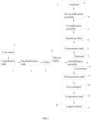
- FIGS. 1 and 2 in a preferred embodiment of a system for jointly producing erythritol and liquid sorbitol by using a corn starch according to the present invention, the arrow lines in the drawings represent a flow direction of a material in the present invention.
- the system includes a liquefaction tank 1, a saccharification tank 2, a filter 3 and a nanofiltration assembly 4.
- the liquefaction tank 1 is used to perform liquefaction for the corn starch A
- the saccharification tank 2 is used to perform saccharification for the liquefied material
- the filter 3 is used to filter out impurities in the saccharified material to obtain a glucose liquid B
- the nanofiltration assembly 4 is used to perform nanofiltration for the filtered glucose liquid to respectively obtain a dialysate C and a concentrate D.
- the dialysate C contains micromolecular substances such as water and most glucose
- the concentrate D contains macromolecular substances such as a small portion of glucose, oligosaccharides and other heterosaccharides and the like.
- the system further includes a fermentation and crystallization assembly I for performing fermentation and crystallization for the dialysate C to prepare crystalline erythritol E, and a hydrogenation and evaporation assembly II for performing hydrogenation and evaporation for the concentrate D to prepare liquid sorbitol F.
- a fermentation and crystallization assembly I for performing fermentation and crystallization for the dialysate C to prepare crystalline erythritol E
- a hydrogenation and evaporation assembly II for performing hydrogenation and evaporation for the concentrate D to prepare liquid sorbitol F.
- the nanofiltration assembly 4 includes a buffer tank 41, a feed pump 42, a pre-nonfiltration filter 43 and a high pressure pump 44 which are communicated in sequence through a pipe, and a nanofiltration membrane assembly 47 formed by a nanofiltration membrane 45 and a circulation pump 46.
- the glucose liquid B filtered by the pre-nanofiltration filter 43 is nano-filtered by the nanofiltration membrane assembly 47 to respectively obtain the dialysate C and the concentrate D.
- Micromolecular ingredients such as water and most glucose in the glucose liquid B penetrate through the nanofiltration membrane under the action of a pressure to form the dialysate C.
- Macromolecular ingredients such as a small portion of glucose, oligosaccharides and other heterosaccharides in the glucose liquid B are retained by the nanofiltration membrane due to their inability to penetrate through the surface of the nanofiltration membrane, so as to form the concentrate D.
- the nanofiltration assembly 4 further includes a cleaning tank 48 and a cleaning pump 49.
- the cleaning tank 48 and the cleaning pump 49 are used to regularly clean the nanofiltration membrane 45 and a cleaning wastewater G is produced after the cleaning.
- the fermentation and crystallization assembly I includes a fermentation tank 5, a membrane filter 6, a crystallization assembly 7 and a re-crystallization assembly 8.
- the fermentation tank 5 is used to perform fermentation for glucose ingredient in the dialysate C and then convert the fermented glucose ingredient into erythritol.
- the membrane filter 6 is used to remove impurities in the fermented material.
- the crystallization assembly 7 and the re-crystallization assembly 8 are used to perform crystallization for the material filtered by the membrane filter 6 to obtain crystalline erythritol E.
- the hydrogenation and evaporation assembly II includes a hydrogenation tank 9, an ion exchanger 10 and an evaporation tank 11.
- the hydrogenation tank 9 is used to perform hydrogenation for glucose ingredient in the concentrate D and then convert the hydrogenated glucose ingredient into sorbitol, and the ion exchanger 10 and the evaporation tank 11 are used to perform purification for the material hydrogenated by the hydrogenation tank 9 to obtain liquid sorbitol F.
- the present invention further provides a method of jointly producing erythritol and liquid sorbitol by using a corn starch, which uses the above system for jointly producing erythritol and liquid sorbitol by using a corn starch.
- the method includes the following steps.
- liquefaction, saccharification and filtration are performed for the corn starch to obtain a glucose liquid B with a solid concentration of 33% to 35%; where a glucose purity in the solids is 95.0% to 96.3%.
- the liquefaction, saccharification and filtration processes are existing mature processes and will not be redundantly described herein.
- nanofiltration is performed for the obtained glucose liquid B to respectively obtain a dialysate C and a concentrate D, where a glucose purity in the dialysate C is 99.0% to 99.5%, and a glucose purity in the concentrate D is 80.0% to 86.0%.
- step 3 fermentation, membrane filtration, crystallization and re-crystallization are performed for the obtained dialysate C to obtain crystalline erythritol E with an erythritol purity of >99.5%, and hydrogenation, ion exchange and evaporation are performed for the obtained concentrate D to obtain liquid sorbitol F with a sorbitol purity of >80%.
- the fermentation, membrane filtration, crystallization and re-crystallization processes are existing mature processes, and the hydrogenation, ion exchange and evaporation processes are also existing mature processes, and thus redundant descriptions are not made herein.
- the glucose liquid B has a temperature of 50°C to 60°C and a pH of 4.0 to 5.0.
- the nanofiltration includes allowing the obtained glucose liquid B to enter the buffer tank 41, and pass through the pre-nanofiltration filter 43 through the feed pump 42 for filtration, and then enter the nanofiltration assembly 47 formed by the filtration membrane 45 and the circulation pump 46 through the high pressure pump 44 for nanofiltration to respectively obtain the dialysate C passing through the nanofiltration membrane 45 and the concentrate D not passing through the nanofiltration membrane 45.
- the nanofiltration further includes using cleaning water in the cleaning tank 48 to perform regular cleaning for the nanofiltration membrane 45 through the cleaning pump 49.
- the nanofiltration assembly has a running temperature of 40°C to 60°C and a running pressure of 15bar to 35bar.
- step 3 the dialysate undergoes heat exchange evaporation to 35% dry matter concentration before being fermented.
- the method of jointly producing erythritol and liquid sorbitol by using a corn starch includes the following steps: one ton, on dry basis, of the glucose liquid B with a purity of 96.0% prepared by performing liquefaction, saccharification and filtration for the corn starch A was nano-filtered to respectively obtain 0.8 tons, on dry basis, of the dialysate C with a glucose purity of 99.0% and 0.2 tons of the concentrate D with a glucose purity of 85.5%; the dialysate C underwent fermentation, membrane filtration, crystallization and re-crystallization to finally obtain 0.43 tons of crystalline erythritol E where the conversion rate from glucose to erythritol was 53.75%; further, the concentrate D underwent hydrogenation, ion exchange and evaporation to obtain 0.2 tons, on dry basis, of liquid sorbitol F.
- Control embodiment 96% glucose was directly used to prepare erythritol by fermentation in the following steps: 0.8 tons, on dry basis, of glucose liquid with a purity of 96% directly underwent fermentation, membrane filtration, crystallization and re-crystallization to obtain 0.42 tons of crystalline erythritol.
- the conversion rate from glucose to erythritol was 52.5%.
- the conversion rate at which the 96% glucose liquid is directly used to prepare erythritol through fermentation is lower than the conversion rate at which the dialysate produced by the glucose liquid through nanofiltration is used to prepare erythritol. Since the purity of the glucose in the dialysate is higher than 99%, it is higher than the purity of the glucose liquid before dialysis.
Landscapes
- Chemical & Material Sciences (AREA)
- Organic Chemistry (AREA)
- Engineering & Computer Science (AREA)
- Zoology (AREA)
- Wood Science & Technology (AREA)
- Life Sciences & Earth Sciences (AREA)
- Bioinformatics & Cheminformatics (AREA)
- Health & Medical Sciences (AREA)
- Chemical Kinetics & Catalysis (AREA)
- Microbiology (AREA)
- Genetics & Genomics (AREA)
- Biotechnology (AREA)
- General Health & Medical Sciences (AREA)
- General Engineering & Computer Science (AREA)
- Biochemistry (AREA)
- Nanotechnology (AREA)
- Water Supply & Treatment (AREA)
- General Chemical & Material Sciences (AREA)
- Crystallography & Structural Chemistry (AREA)
- Sustainable Development (AREA)
- Biomedical Technology (AREA)
- Preparation Of Compounds By Using Micro-Organisms (AREA)
- Apparatus Associated With Microorganisms And Enzymes (AREA)
- Organic Low-Molecular-Weight Compounds And Preparation Thereof (AREA)
Claims (10)
- System zur gleichzeitigen Herstellung von Erythritol und flüssigem Sorbitol unter Verwendung von Maisstärke, umfassend einen Verflüssigungsbehälter (1), einen Saccharifizierungsbehälter (2), einen Filter (3) und eine Nanofiltrationsanordnung (4), wobei der Verflüssigungsbehälter verwendet wird, um die Verflüssigung der Maisstärke (A) durchzuführen, der Saccharifizierungsbehälter verwendet wird, um die Saccharifizierung des verflüssigten Materials durchzuführen, der Filter verwendet wird, um Verunreinigungen in dem saccharifizierten Material herauszufiltern, um eine Glukoseflüssigkeit (B) zu erhalten, und die Nanofiltrationsanordnung verwendet wird, um eine Nanofiltration der gefilterten Glukoseflüssigkeit durchzuführen, um ein Dialysat (C) bzw. ein Konzentrat (D) zu erhalten; wobei das System ferner eine Fermentations- und Kristallisationsanordnung (I) zur Durchführung einer Fermentation und Kristallisation des Dialysats zur Herstellung von kristallinem Erythritol (E) und eine Hydrierungs- und Eindampfungsanordnung (II) zur Durchführung einer Hydrierung und Eindampfung des Konzentrats zur Herstellung von flüssigem Sorbitol (F) umfasst.
- System nach Anspruch 1, wobei die Nanofiltrationsanordnung (4) einen Pufferbehälter (41), eine Zufuhrpumpe (42), einen Vor-Nanofiltrationsfilter (43) und eine Hochdruckpumpe (44), die nacheinander durch ein Rohr verbunden sind, und eine Nanofiltrationsmembrananordnung (47) umfasst, die aus einer Nanofiltrationsmembran (45) und einer Zirkulationspumpe (46) besteht; die durch den Vor-Nanofiltrationsfilter gefilterte Glukoseflüssigkeit (B) durch die Nanofiltrationsmembrananordnung nanofiltriert wird, um das Dialysat (C) bzw. das Konzentrat (D) zu erhalten.
- System nach Anspruch 2, wobei die Fermentations- und Kristallisationsanordnung (I) einen Fermentationsbehälter (5), einen Membranfilter (6), eine Kristallisationsanordnung (7) und eine Rekristallisationsanordnung (8) umfasst, wobei der Fermentationsbehälter verwendet wird, um eine Fermentation des Glukosebestandteils im Dialysat durchzuführen und dann den fermentierten Glukosebestandteil in Erythritol umzuwandeln, der Membranfilter verwendet wird, um Verunreinigungen in dem fermentierten Material zu entfernen, und die Kristallisationsanordnung und die Rekristallisationsanordnung verwendet werden, um die Kristallisation des durch den Membranfilter gefilterten Materials durchzuführen, um kristallines Erythritol (E) zu erhalten.
- System nach Anspruch 3, wobei die Hydrierungs- und Eindampfungsanordnung (II) einen Hydrierungsbehälter (9), einen Ionenaustauscher (10) und einen Eindampfungsbehälter (11) umfasst, wobei der Hydrierungsbehälter verwendet wird, um die Hydrierung des Glukosebestandteils in dem Konzentrat durchzuführen und dann den hydrierten Glukosebestandteil in Sorbitol umzuwandeln, und der Ionenaustauscher und der Eindampfungsbehälter verwendet werden, um die Reinigung des durch den Hydrierungsbehälter hydrierten Materials durchzuführen, um flüssiges Sorbitol (F) zu erhalten.
- Verfahren zur gleichzeitigen Herstellung von Erythritol und flüssigem Sorbitol unter Verwendung von Maisstärke, das System zur gleichzeitigen Herstellung von Erythritol und flüssigem Sorbitol unter Verwendung von Maisstärke gemäß Anspruch 4 verwendet und die folgenden Schritte umfasst:in Schritt 1 Durchführen von Verflüssigung, Saccharifizierung und Filtration der Maisstärke, um eine flüssige Glukose mit einer Feststoffkonzentration von 33 % bis 35 % zu erhalten; wobei die Glukose-Reinheit in den Feststoffen 95,0 % bis 96,3 % beträgt;in Schritt 2 Durchführen von Nanofiltration der erhaltenen Glukoseflüssigkeit, um ein Dialysat bzw. ein Konzentrat zu erhalten, wobei die Glukose-Reinheit im Dialysat 99,0 % bis 99,5 % und die Glukose-Reinheit im Konzentrat 80,0 % bis 86,0 % beträgt;in Schritt 3 Durchführen von Fermentation, Membranfiltration, Kristallisation und Rekristallisation des erhaltenen Dialysats, um kristallines Erythritol mit einer Erythritol-Reinheit von >99,5 % zu erhalten, und Durchführen von Hydrierung, Ionenaustausch und Eindampfung des erhaltenen Konzentrats, um flüssiges Sorbitol mit einer Sorbitol-Reinheit von >80 % zu erhalten.
- Verfahren nach Anspruch 5, wobei in Schritt 1 die Glukoseflüssigkeit eine Temperatur von 50 °C bis 60 °C und einen pH-Wert von 4,0 bis 5,0 aufweist.
- Verfahren nach Anspruch 5, wobei in Schritt 2 die Nanofiltration die Möglichkeit des Einbringens der erhaltenen Glukoseflüssigkeit in den Pufferbehälter und das Passieren des Vor-Nanofiltrationsfilter durch die Zufuhrpumpe zur Filtration und dann das Einbringen in die Nanofiltrationsanordnung, die durch die Filtrationsmembran und die Zirkulationspumpe gebildet wird, durch die Hochdruckpumpe zur Nanofiltration umfasst, um das Dialysat, das die Nanofiltrationsmembran passiert, bzw. das Konzentrat, das die Nanofiltrationsmembran nicht passiert, zu erhalten.
- Verfahren nach Anspruch 7, wobei die Nanofiltration ferner die Verwendung von Reinigungswasser in einem Reinigungsbehälter umfasst, um eine regelmäßige Reinigung der Nanofiltrationsmembran durch eine Reinigungspumpe durchzuführen.
- Verfahren nach Anspruch 7, wobei die Nanofiltrationsanordnung während der Nanofiltration eine Betriebstemperatur von 40 °C bis 60 °C und einen Betriebsdruck von 15 bar bis 35 bar aufweist.
- Verfahren nach Anspruch 5, wobei in Schritt 3 das Dialysat vor der Fermentation einer Wärmeaustausch-Eindampfung auf 35 % Trockensubstanzkonzentration unterzogen wird.
Applications Claiming Priority (2)
| Application Number | Priority Date | Filing Date | Title |
|---|---|---|---|
| CN202110568199.8A CN113512566A (zh) | 2021-05-25 | 2021-05-25 | 利用玉米淀粉联产赤藓糖醇和液体山梨糖醇的系统及方法 |
| PCT/CN2021/134594 WO2022247197A1 (zh) | 2021-05-25 | 2021-11-30 | 利用玉米淀粉联产赤藓糖醇和液体山梨糖醇的系统及方法 |
Publications (4)
| Publication Number | Publication Date |
|---|---|
| EP4186979A1 EP4186979A1 (de) | 2023-05-31 |
| EP4186979A4 EP4186979A4 (de) | 2024-07-31 |
| EP4186979B1 true EP4186979B1 (de) | 2025-05-14 |
| EP4186979C0 EP4186979C0 (de) | 2025-05-14 |
Family
ID=78064833
Family Applications (1)
| Application Number | Title | Priority Date | Filing Date |
|---|---|---|---|
| EP21942760.6A Active EP4186979B1 (de) | 2021-05-25 | 2021-11-30 | System und verfahren zur gleichzeitigen herstellung von erythritol und flüssigem sorbitol unter verwendung von maisstärke |
Country Status (5)
| Country | Link |
|---|---|
| US (1) | US12480143B2 (de) |
| EP (1) | EP4186979B1 (de) |
| JP (1) | JP7454103B2 (de) |
| CN (1) | CN113512566A (de) |
| WO (1) | WO2022247197A1 (de) |
Families Citing this family (3)
| Publication number | Priority date | Publication date | Assignee | Title |
|---|---|---|---|---|
| CN113512566A (zh) | 2021-05-25 | 2021-10-19 | 浙江华康药业股份有限公司 | 利用玉米淀粉联产赤藓糖醇和液体山梨糖醇的系统及方法 |
| CN114107041A (zh) * | 2021-12-26 | 2022-03-01 | 浙江华康药业股份有限公司 | 一种利用玉米淀粉制备赤藓糖醇和聚葡萄糖的系统及方法 |
| CN120271197B (zh) * | 2025-06-12 | 2025-08-26 | 山东福洋生物科技股份有限公司 | 一种赤藓糖醇纳滤膜浓相的再利用方法 |
Family Cites Families (14)
| Publication number | Priority date | Publication date | Assignee | Title |
|---|---|---|---|---|
| FR2566801B1 (fr) * | 1984-06-29 | 1986-12-26 | Roquette Freres | Procede de preparation de sirops de sorbitol de tres haute purete |
| JPH0734750B2 (ja) * | 1988-02-22 | 1995-04-19 | 三菱化学株式会社 | エリスリトールの分離・回収方法 |
| CA2038485A1 (en) * | 1990-03-23 | 1991-09-24 | Donald K. Hadden | Nanofiltration process for making dextrose |
| JP3253483B2 (ja) * | 1995-03-23 | 2002-02-04 | 日研化学株式会社 | エリスリトール結晶粉末の製造方法 |
| CN102154383B (zh) * | 2010-12-29 | 2011-11-30 | 保龄宝生物股份有限公司 | 玉米粉生产赤藓糖醇的方法 |
| CN102876732B (zh) * | 2012-09-19 | 2014-04-02 | 北京化工大学 | 一种利用木质纤维原料制备糖醇的方法 |
| CN102839202A (zh) * | 2012-09-26 | 2012-12-26 | 山东福田药业有限公司 | 赤藓糖醇发酵液的处理方法 |
| CN202909634U (zh) * | 2012-11-23 | 2013-05-01 | 赛普特环保技术(厦门)有限公司 | 一种葡萄糖结晶母液膜法回收装置 |
| CN104450799A (zh) * | 2014-12-05 | 2015-03-25 | 浙江华康药业股份有限公司 | 一种制备固体山梨醇并联产果葡糖浆的生产工艺 |
| CN104909986A (zh) * | 2015-05-05 | 2015-09-16 | 浙江华康药业股份有限公司 | 一种制备高纯度山梨糖醇和日化级山梨糖醇的方法 |
| CN109136413A (zh) * | 2017-06-19 | 2019-01-04 | 卢松 | 一种利用玉米淀粉制备高纯度葡萄糖的方法 |
| CN109305882B (zh) * | 2018-09-28 | 2023-12-19 | 吉林省石油化工设计研究院 | 一种葡萄糖连续加氢制备山梨醇的方法及装置 |
| CN113512566A (zh) * | 2021-05-25 | 2021-10-19 | 浙江华康药业股份有限公司 | 利用玉米淀粉联产赤藓糖醇和液体山梨糖醇的系统及方法 |
| CN215947326U (zh) * | 2021-05-25 | 2022-03-04 | 浙江华康药业股份有限公司 | 一种利用玉米淀粉联产赤藓糖醇和液体山梨糖醇的系统 |
-
2021
- 2021-05-25 CN CN202110568199.8A patent/CN113512566A/zh active Pending
- 2021-11-30 EP EP21942760.6A patent/EP4186979B1/de active Active
- 2021-11-30 US US18/024,090 patent/US12480143B2/en active Active
- 2021-11-30 JP JP2023509724A patent/JP7454103B2/ja active Active
- 2021-11-30 WO PCT/CN2021/134594 patent/WO2022247197A1/zh not_active Ceased
Also Published As
| Publication number | Publication date |
|---|---|
| EP4186979A1 (de) | 2023-05-31 |
| WO2022247197A1 (zh) | 2022-12-01 |
| US20230313236A1 (en) | 2023-10-05 |
| US12480143B2 (en) | 2025-11-25 |
| EP4186979C0 (de) | 2025-05-14 |
| JP7454103B2 (ja) | 2024-03-21 |
| CN113512566A (zh) | 2021-10-19 |
| JP2023537404A (ja) | 2023-08-31 |
| EP4186979A4 (de) | 2024-07-31 |
Similar Documents
| Publication | Publication Date | Title |
|---|---|---|
| US5177008A (en) | Process for manufacturing ethanol and for recovering glycerol, succinic acid, lactic acid, betaine, potassium sulfate, and free flowing distiller's dry grain and solubles or a solid fertilizer therefrom | |
| EP4186979B1 (de) | System und verfahren zur gleichzeitigen herstellung von erythritol und flüssigem sorbitol unter verwendung von maisstärke | |
| JP5246379B2 (ja) | 糖液の製造方法 | |
| CA1336584C (en) | Process and apparatus for manufacturing ethanol, glycerol, succinic acid and distiller's dry grain and solubles | |
| US8545685B2 (en) | Cleaning process of producing lactic acid | |
| CN101766289B (zh) | 一种制备果葡糖浆的方法 | |
| CN100422347C (zh) | 基于全膜法的结晶葡萄糖制造方法 | |
| JP2013043860A (ja) | 精製乳酸の製造方法 | |
| WO2023116142A1 (zh) | 一种利用玉米淀粉制备赤藓糖醇和聚葡萄糖的系统及方法 | |
| CN215947326U (zh) | 一种利用玉米淀粉联产赤藓糖醇和液体山梨糖醇的系统 | |
| CN102703334B (zh) | 一株产赤藓糖醇的菌株及用其生产赤藓糖醇的方法 | |
| JPWO2019189651A1 (ja) | 精製糖液の製造方法 | |
| CN111850069B (zh) | 一种海藻糖的生产制备工艺 | |
| CN217556205U (zh) | 一种利用玉米淀粉制备赤藓糖醇和聚葡萄糖的系统 | |
| JPWO2012081112A1 (ja) | 精製乳酸溶液の製造方法 | |
| CN216786017U (zh) | 一种利用玉米秸秆制备精制木糖及可发酵糖的系统 | |
| US20070037266A1 (en) | Process for producing erythritol | |
| CN111808895A (zh) | 一种利用甘薯制备味精的发酵方法及装置 | |
| RU2646115C2 (ru) | Способ повышения выхода в процессе производства декстрозы с использованием мембранной технологии | |
| CN117924381A (zh) | 一种利用结晶糖母液制备低聚异麦芽糖的方法 | |
| CN104087634B (zh) | 一种用甜高粱发酵渣制备低聚木糖的方法 | |
| CZ354590A3 (en) | Method for continuous treatment of molasses produced during fermentation and distillation of biological materials | |
| CN119710099A (zh) | 一种葡萄糖浆的纯化及生产方法 | |
| CN112608955A (zh) | 一种淀粉糖液中葡萄糖提取工艺 |
Legal Events
| Date | Code | Title | Description |
|---|---|---|---|
| STAA | Information on the status of an ep patent application or granted ep patent |
Free format text: STATUS: THE INTERNATIONAL PUBLICATION HAS BEEN MADE |
|
| PUAI | Public reference made under article 153(3) epc to a published international application that has entered the european phase |
Free format text: ORIGINAL CODE: 0009012 |
|
| STAA | Information on the status of an ep patent application or granted ep patent |
Free format text: STATUS: REQUEST FOR EXAMINATION WAS MADE |
|
| 17P | Request for examination filed |
Effective date: 20230223 |
|
| AK | Designated contracting states |
Kind code of ref document: A1 Designated state(s): AL AT BE BG CH CY CZ DE DK EE ES FI FR GB GR HR HU IE IS IT LI LT LU LV MC MK MT NL NO PL PT RO RS SE SI SK SM TR |
|
| A4 | Supplementary search report drawn up and despatched |
Effective date: 20240627 |
|
| RIC1 | Information provided on ipc code assigned before grant |
Ipc: C12M 1/00 20060101ALI20240621BHEP Ipc: C07C 29/76 20060101ALI20240621BHEP Ipc: B01D 61/00 20060101ALI20240621BHEP Ipc: C12P 7/18 20060101AFI20240621BHEP |
|
| DAV | Request for validation of the european patent (deleted) | ||
| DAX | Request for extension of the european patent (deleted) | ||
| GRAP | Despatch of communication of intention to grant a patent |
Free format text: ORIGINAL CODE: EPIDOSNIGR1 |
|
| STAA | Information on the status of an ep patent application or granted ep patent |
Free format text: STATUS: GRANT OF PATENT IS INTENDED |
|
| RIC1 | Information provided on ipc code assigned before grant |
Ipc: C12M 1/00 20060101ALI20250122BHEP Ipc: C07C 29/76 20060101ALI20250122BHEP Ipc: B01D 61/00 20060101ALI20250122BHEP Ipc: C07C 29/132 20060101ALI20250122BHEP Ipc: C12P 7/18 20060101AFI20250122BHEP |
|
| INTG | Intention to grant announced |
Effective date: 20250131 |
|
| GRAS | Grant fee paid |
Free format text: ORIGINAL CODE: EPIDOSNIGR3 |
|
| GRAA | (expected) grant |
Free format text: ORIGINAL CODE: 0009210 |
|
| STAA | Information on the status of an ep patent application or granted ep patent |
Free format text: STATUS: THE PATENT HAS BEEN GRANTED |
|
| AK | Designated contracting states |
Kind code of ref document: B1 Designated state(s): AL AT BE BG CH CY CZ DE DK EE ES FI FR GB GR HR HU IE IS IT LI LT LU LV MC MK MT NL NO PL PT RO RS SE SI SK SM TR |
|
| REG | Reference to a national code |
Ref country code: GB Ref legal event code: FG4D |
|
| REG | Reference to a national code |
Ref country code: CH Ref legal event code: EP |
|
| REG | Reference to a national code |
Ref country code: DE Ref legal event code: R096 Ref document number: 602021030969 Country of ref document: DE |
|
| REG | Reference to a national code |
Ref country code: IE Ref legal event code: FG4D |
|
| U01 | Request for unitary effect filed |
Effective date: 20250605 |
|
| U07 | Unitary effect registered |
Designated state(s): AT BE BG DE DK EE FI FR IT LT LU LV MT NL PT RO SE SI Effective date: 20250612 |
|
| PG25 | Lapsed in a contracting state [announced via postgrant information from national office to epo] |
Ref country code: ES Free format text: LAPSE BECAUSE OF FAILURE TO SUBMIT A TRANSLATION OF THE DESCRIPTION OR TO PAY THE FEE WITHIN THE PRESCRIBED TIME-LIMIT Effective date: 20250514 |
|
| PG25 | Lapsed in a contracting state [announced via postgrant information from national office to epo] |
Ref country code: GR Free format text: LAPSE BECAUSE OF FAILURE TO SUBMIT A TRANSLATION OF THE DESCRIPTION OR TO PAY THE FEE WITHIN THE PRESCRIBED TIME-LIMIT Effective date: 20250815 Ref country code: NO Free format text: LAPSE BECAUSE OF FAILURE TO SUBMIT A TRANSLATION OF THE DESCRIPTION OR TO PAY THE FEE WITHIN THE PRESCRIBED TIME-LIMIT Effective date: 20250814 |
|
| PG25 | Lapsed in a contracting state [announced via postgrant information from national office to epo] |
Ref country code: PL Free format text: LAPSE BECAUSE OF FAILURE TO SUBMIT A TRANSLATION OF THE DESCRIPTION OR TO PAY THE FEE WITHIN THE PRESCRIBED TIME-LIMIT Effective date: 20250514 |
|
| PG25 | Lapsed in a contracting state [announced via postgrant information from national office to epo] |
Ref country code: HR Free format text: LAPSE BECAUSE OF FAILURE TO SUBMIT A TRANSLATION OF THE DESCRIPTION OR TO PAY THE FEE WITHIN THE PRESCRIBED TIME-LIMIT Effective date: 20250514 |
|
| PG25 | Lapsed in a contracting state [announced via postgrant information from national office to epo] |
Ref country code: RS Free format text: LAPSE BECAUSE OF FAILURE TO SUBMIT A TRANSLATION OF THE DESCRIPTION OR TO PAY THE FEE WITHIN THE PRESCRIBED TIME-LIMIT Effective date: 20250814 |
|
| PG25 | Lapsed in a contracting state [announced via postgrant information from national office to epo] |
Ref country code: IS Free format text: LAPSE BECAUSE OF FAILURE TO SUBMIT A TRANSLATION OF THE DESCRIPTION OR TO PAY THE FEE WITHIN THE PRESCRIBED TIME-LIMIT Effective date: 20250914 |
|
| U20 | Renewal fee for the european patent with unitary effect paid |
Year of fee payment: 5 Effective date: 20251119 |
|
| PG25 | Lapsed in a contracting state [announced via postgrant information from national office to epo] |
Ref country code: SM Free format text: LAPSE BECAUSE OF FAILURE TO SUBMIT A TRANSLATION OF THE DESCRIPTION OR TO PAY THE FEE WITHIN THE PRESCRIBED TIME-LIMIT Effective date: 20250514 |
|
| PG25 | Lapsed in a contracting state [announced via postgrant information from national office to epo] |
Ref country code: CZ Free format text: LAPSE BECAUSE OF FAILURE TO SUBMIT A TRANSLATION OF THE DESCRIPTION OR TO PAY THE FEE WITHIN THE PRESCRIBED TIME-LIMIT Effective date: 20250514 |
|
| PG25 | Lapsed in a contracting state [announced via postgrant information from national office to epo] |
Ref country code: SK Free format text: LAPSE BECAUSE OF FAILURE TO SUBMIT A TRANSLATION OF THE DESCRIPTION OR TO PAY THE FEE WITHIN THE PRESCRIBED TIME-LIMIT Effective date: 20250514 |