EP4169991B1 - Composition for coating film formation including phosphate-group-containing polymer - Google Patents
Composition for coating film formation including phosphate-group-containing polymer Download PDFInfo
- Publication number
- EP4169991B1 EP4169991B1 EP21825606.3A EP21825606A EP4169991B1 EP 4169991 B1 EP4169991 B1 EP 4169991B1 EP 21825606 A EP21825606 A EP 21825606A EP 4169991 B1 EP4169991 B1 EP 4169991B1
- Authority
- EP
- European Patent Office
- Prior art keywords
- coating film
- group
- composition
- forming
- formula
- Prior art date
- Legal status (The legal status is an assumption and is not a legal conclusion. Google has not performed a legal analysis and makes no representation as to the accuracy of the status listed.)
- Active
Links
Images

Classifications
-
- C—CHEMISTRY; METALLURGY
- C09—DYES; PAINTS; POLISHES; NATURAL RESINS; ADHESIVES; COMPOSITIONS NOT OTHERWISE PROVIDED FOR; APPLICATIONS OF MATERIALS NOT OTHERWISE PROVIDED FOR
- C09D—COATING COMPOSITIONS, e.g. PAINTS, VARNISHES OR LACQUERS; FILLING PASTES; CHEMICAL PAINT OR INK REMOVERS; INKS; CORRECTING FLUIDS; WOODSTAINS; PASTES OR SOLIDS FOR COLOURING OR PRINTING; USE OF MATERIALS THEREFOR
- C09D143/00—Coating compositions based on homopolymers or copolymers of compounds having one or more unsaturated aliphatic radicals, each having only one carbon-to-carbon double bond, and containing boron, silicon, phosphorus, selenium, tellurium, or a metal; Coating compositions based on derivatives of such polymers
- C09D143/02—Homopolymers or copolymers of monomers containing phosphorus
-
- C—CHEMISTRY; METALLURGY
- C08—ORGANIC MACROMOLECULAR COMPOUNDS; THEIR PREPARATION OR CHEMICAL WORKING-UP; COMPOSITIONS BASED THEREON
- C08J—WORKING-UP; GENERAL PROCESSES OF COMPOUNDING; AFTER-TREATMENT NOT COVERED BY SUBCLASSES C08B, C08C, C08F, C08G or C08H
- C08J7/00—Chemical treatment or coating of shaped articles made of macromolecular substances
- C08J7/04—Coating
-
- C—CHEMISTRY; METALLURGY
- C08—ORGANIC MACROMOLECULAR COMPOUNDS; THEIR PREPARATION OR CHEMICAL WORKING-UP; COMPOSITIONS BASED THEREON
- C08F—MACROMOLECULAR COMPOUNDS OBTAINED BY REACTIONS ONLY INVOLVING CARBON-TO-CARBON UNSATURATED BONDS
- C08F230/00—Copolymers of compounds having one or more unsaturated aliphatic radicals, each having only one carbon-to-carbon double bond, and containing phosphorus, selenium, tellurium or a metal
- C08F230/02—Copolymers of compounds having one or more unsaturated aliphatic radicals, each having only one carbon-to-carbon double bond, and containing phosphorus, selenium, tellurium or a metal containing phosphorus
-
- C—CHEMISTRY; METALLURGY
- C08—ORGANIC MACROMOLECULAR COMPOUNDS; THEIR PREPARATION OR CHEMICAL WORKING-UP; COMPOSITIONS BASED THEREON
- C08L—COMPOSITIONS OF MACROMOLECULAR COMPOUNDS
- C08L79/00—Compositions of macromolecular compounds obtained by reactions forming in the main chain of the macromolecule a linkage containing nitrogen with or without oxygen or carbon only, not provided for in groups C08L61/00 - C08L77/00
- C08L79/04—Polycondensates having nitrogen-containing heterocyclic rings in the main chain; Polyhydrazides; Polyamide acids or similar polyimide precursors
- C08L79/08—Polyimides; Polyester-imides; Polyamide-imides; Polyamide acids or similar polyimide precursors
-
- C—CHEMISTRY; METALLURGY
- C09—DYES; PAINTS; POLISHES; NATURAL RESINS; ADHESIVES; COMPOSITIONS NOT OTHERWISE PROVIDED FOR; APPLICATIONS OF MATERIALS NOT OTHERWISE PROVIDED FOR
- C09D—COATING COMPOSITIONS, e.g. PAINTS, VARNISHES OR LACQUERS; FILLING PASTES; CHEMICAL PAINT OR INK REMOVERS; INKS; CORRECTING FLUIDS; WOODSTAINS; PASTES OR SOLIDS FOR COLOURING OR PRINTING; USE OF MATERIALS THEREFOR
- C09D133/00—Coating compositions based on homopolymers or copolymers of compounds having one or more unsaturated aliphatic radicals, each having only one carbon-to-carbon double bond, and at least one being terminated by only one carboxyl radical, or of salts, anhydrides, esters, amides, imides, or nitriles thereof; Coating compositions based on derivatives of such polymers
- C09D133/04—Homopolymers or copolymers of esters
- C09D133/06—Homopolymers or copolymers of esters of esters containing only carbon, hydrogen and oxygen, the oxygen atom being present only as part of the carboxyl radical
- C09D133/10—Homopolymers or copolymers of methacrylic acid esters
-
- C—CHEMISTRY; METALLURGY
- C09—DYES; PAINTS; POLISHES; NATURAL RESINS; ADHESIVES; COMPOSITIONS NOT OTHERWISE PROVIDED FOR; APPLICATIONS OF MATERIALS NOT OTHERWISE PROVIDED FOR
- C09D—COATING COMPOSITIONS, e.g. PAINTS, VARNISHES OR LACQUERS; FILLING PASTES; CHEMICAL PAINT OR INK REMOVERS; INKS; CORRECTING FLUIDS; WOODSTAINS; PASTES OR SOLIDS FOR COLOURING OR PRINTING; USE OF MATERIALS THEREFOR
- C09D179/00—Coating compositions based on macromolecular compounds obtained by reactions forming in the main chain of the macromolecule a linkage containing nitrogen, with or without oxygen, or carbon only, not provided for in groups C09D161/00 - C09D177/00
- C09D179/04—Polycondensates having nitrogen-containing heterocyclic rings in the main chain; Polyhydrazides; Polyamide acids or similar polyimide precursors
- C09D179/08—Polyimides; Polyester-imides; Polyamide-imides; Polyamide acids or similar polyimide precursors
-
- C—CHEMISTRY; METALLURGY
- C09—DYES; PAINTS; POLISHES; NATURAL RESINS; ADHESIVES; COMPOSITIONS NOT OTHERWISE PROVIDED FOR; APPLICATIONS OF MATERIALS NOT OTHERWISE PROVIDED FOR
- C09D—COATING COMPOSITIONS, e.g. PAINTS, VARNISHES OR LACQUERS; FILLING PASTES; CHEMICAL PAINT OR INK REMOVERS; INKS; CORRECTING FLUIDS; WOODSTAINS; PASTES OR SOLIDS FOR COLOURING OR PRINTING; USE OF MATERIALS THEREFOR
- C09D201/00—Coating compositions based on unspecified macromolecular compounds
- C09D201/02—Coating compositions based on unspecified macromolecular compounds characterised by the presence of specified groups, e.g. terminal or pendant functional groups
- C09D201/06—Coating compositions based on unspecified macromolecular compounds characterised by the presence of specified groups, e.g. terminal or pendant functional groups containing oxygen atoms
-
- C—CHEMISTRY; METALLURGY
- C09—DYES; PAINTS; POLISHES; NATURAL RESINS; ADHESIVES; COMPOSITIONS NOT OTHERWISE PROVIDED FOR; APPLICATIONS OF MATERIALS NOT OTHERWISE PROVIDED FOR
- C09D—COATING COMPOSITIONS, e.g. PAINTS, VARNISHES OR LACQUERS; FILLING PASTES; CHEMICAL PAINT OR INK REMOVERS; INKS; CORRECTING FLUIDS; WOODSTAINS; PASTES OR SOLIDS FOR COLOURING OR PRINTING; USE OF MATERIALS THEREFOR
- C09D5/00—Coating compositions, e.g. paints, varnishes or lacquers, characterised by their physical nature or the effects produced; Filling pastes
- C09D5/16—Antifouling paints; Underwater paints
- C09D5/1656—Antifouling paints; Underwater paints characterised by the film-forming substance
- C09D5/1662—Synthetic film-forming substance
- C09D5/1668—Vinyl-type polymers
-
- C—CHEMISTRY; METALLURGY
- C09—DYES; PAINTS; POLISHES; NATURAL RESINS; ADHESIVES; COMPOSITIONS NOT OTHERWISE PROVIDED FOR; APPLICATIONS OF MATERIALS NOT OTHERWISE PROVIDED FOR
- C09D—COATING COMPOSITIONS, e.g. PAINTS, VARNISHES OR LACQUERS; FILLING PASTES; CHEMICAL PAINT OR INK REMOVERS; INKS; CORRECTING FLUIDS; WOODSTAINS; PASTES OR SOLIDS FOR COLOURING OR PRINTING; USE OF MATERIALS THEREFOR
- C09D7/00—Features of coating compositions, not provided for in group C09D5/00; Processes for incorporating ingredients in coating compositions
- C09D7/20—Diluents or solvents
-
- C—CHEMISTRY; METALLURGY
- C08—ORGANIC MACROMOLECULAR COMPOUNDS; THEIR PREPARATION OR CHEMICAL WORKING-UP; COMPOSITIONS BASED THEREON
- C08J—WORKING-UP; GENERAL PROCESSES OF COMPOUNDING; AFTER-TREATMENT NOT COVERED BY SUBCLASSES C08B, C08C, C08F, C08G or C08H
- C08J2333/00—Characterised by the use of homopolymers or copolymers of compounds having one or more unsaturated aliphatic radicals, each having only one carbon-to-carbon double bond, and only one being terminated by only one carboxyl radical, or of salts, anhydrides, esters, amides, imides, or nitriles thereof; Derivatives of such polymers
- C08J2333/04—Characterised by the use of homopolymers or copolymers of compounds having one or more unsaturated aliphatic radicals, each having only one carbon-to-carbon double bond, and only one being terminated by only one carboxyl radical, or of salts, anhydrides, esters, amides, imides, or nitriles thereof; Derivatives of such polymers esters
- C08J2333/06—Characterised by the use of homopolymers or copolymers of compounds having one or more unsaturated aliphatic radicals, each having only one carbon-to-carbon double bond, and only one being terminated by only one carboxyl radical, or of salts, anhydrides, esters, amides, imides, or nitriles thereof; Derivatives of such polymers esters of esters containing only carbon, hydrogen, and oxygen, the oxygen atom being present only as part of the carboxyl radical
- C08J2333/10—Homopolymers or copolymers of methacrylic acid esters
-
- C—CHEMISTRY; METALLURGY
- C08—ORGANIC MACROMOLECULAR COMPOUNDS; THEIR PREPARATION OR CHEMICAL WORKING-UP; COMPOSITIONS BASED THEREON
- C08J—WORKING-UP; GENERAL PROCESSES OF COMPOUNDING; AFTER-TREATMENT NOT COVERED BY SUBCLASSES C08B, C08C, C08F, C08G or C08H
- C08J2379/00—Characterised by the use of macromolecular compounds obtained by reactions forming in the main chain of the macromolecule a linkage containing nitrogen with or without oxygen, or carbon only, not provided for in groups C08J2361/00 - C08J2377/00
- C08J2379/04—Polycondensates having nitrogen-containing heterocyclic rings in the main chain; Polyhydrazides; Polyamide acids or similar polyimide precursors
- C08J2379/08—Polyimides; Polyester-imides; Polyamide-imides; Polyamide acids or similar polyimide precursors
Definitions
- the present invention relates to a composition for forming a coating film containing a phosphoric acid group-containing polymer, and a coating film which is a cured product of the composition.
- Phosphoric acid group-containing polymers are used for various uses. As one of the uses, there is a use as a coating material having biocompatibility.
- Patent Document 1 there is disclosed an ion complex material containing a phosphoric acid group-containing polymer.
- Patent Document 2 there is disclosed an aqueous metallic paint composition using a phosphoric acid polymer.
- EP3006529A1 and US2019/233792A1 disclose coating films having the function of inhibiting the adhesion of biological substances onto it.
- An object of the present invention as defined in the appending claims is to provide a composition for forming a coating film containing a phosphoric acid group-containing polymer capable of forming a film on a substrate, etc., by a simple process, and capable of maintaining film properties such as an ability to suppress adhesion of biological substances and hydrophilicity of the surface, etc., under a solvent environment containing water, and a coating film which is a cured product of the composition.
- the present invention includes the following.
- the composition for forming a coating film containing a phosphoric acid group-containing polymer of the present invention has storage stability even when it contains water as a solvent, and the coating film according to the composition is excellent in durability to the solvent containing water, etc.
- the coating film according to the composition of the present invention has an ability to suppress adhesion of biopolymers without elution even in water. In particular, it has an excellent ability to suppress adhesion to biopolymers.
- the phosphoric acid group-containing polymer of the present invention is a polymer (P) characterized in that it is a polymer (P) containing a hydroxyl group(s), and the hydroxyl group(s) is/are derived only from a phosphoric acid group.
- a composition containing a copolymer in which a monomer containing a phosphoric acid group and a monomer containing a hydroxyl group other than the phosphoric acid group are polymerized has been already known, but the hydroxyl group possessed by the phosphoric acid group-containing polymer of the present invention is derived only from a phosphoric acid group.
- the hydroxyl group derived from a phosphoric acid group causes a crosslinking reaction of the phosphoric acid group-containing polymers through the polycarbodiimide (C) described in detail below, whereby it becomes a coating film excellent in durability (water resistance) to a water-containing solvent, etc.
- the solvent and the polycarbodiimide (C) will be described later.
- the above-mentioned polymer (P) contains a group represented by the formula (a) or the formula (a-1): [in the formula (a), U a1 and U a2 each independently represent a hydrogen atom or an alkyl group having 1 to 5 carbon atoms, and at least one of U a1 and U a2 is a hydrogen atom.
- A represents an alkali metal.
- the structure represented by the above-mentioned formula (a) or formula (a-1) is contained in a recurring unit structure of the polymer.
- alkyl group having 1 to 5 carbon atoms there may be mentioned a methyl group, an ethyl group, an n-propyl group, an isopropyl group, an n-butyl group, an isobutyl group, an s-butyl group, a t-butyl group, an n-pentyl group, a 1-methylbutyl group, a 2-methylbutyl group, a 3-methylbutyl group, a 1,1-dimethylpropyl group, a 1,2-dimethylpropyl group, a 2,2-dimethylpropyl group or a 1-ethylpropyl group.
- U a1 and U a2 are preferably a methyl group or an ethyl group.
- alkali metal there may be mentioned lithium, sodium, potassium, rubidium, cesium and francium, and preferably sodium or potassium.
- polymer (P) a polymer of the following compound(s) may be mentioned.
- the specific examples of the compound there may be mentioned acid phosphoxyethyl methacrylate, vinylphosphonic acid, acid phosphoxyethyl acrylate, 3-chloro-2-acid phosphoxypropyl methacrylate, acid phosphoxypropyl methacrylate, acid phosphoxymethyl methacrylate, acid phosphoxypolyoxyethylene glycol monomethacrylate, acid phosphoxypolyoxypropylene glycol monomethacrylate, etc.
- Commercially available products may be used.
- Phosmer M available from Uni Chemical Co., Ltd.
- PPM-5P available from TOHO Chemical Co., Ltd.
- the above-mentioned polymer (P) contains a unit structure represented by the formula (1): [wherein R 11 represents a hydrogen atom or an alkyl group having 1 to 5 carbon atoms, X 1 represents an alkylene group having 1 to 5 carbon atoms, n1 represents an integer of 1 to 10 and T 1 represents the group of the formula (a) or the formula (a-1)].
- R 11 is preferably a hydrogen atom or a methyl group.
- alkylene group having 1 to 5 carbon atoms there may be mentioned a methylene group, an ethylene group, a propylene group, a trimethylene group, a tetramethylene group, a 1-methylpropylene group, a 2-methylpropylene group, a dimethyl ethylene group, an ethylethylene group, a pentamethylene group, a 1-methyl-tetramethylene group, a 2-methyl-tetramethylene group, a 1,1-dimethyl-trimethylene group, a 1,2-dimethyl-trimethylene group, a 2,2-dimethyl-trimethylene group, a 1-ethyl-trimethylene group, etc.
- X 1 is preferably selected from an ethylene group and a propylene group.
- n1 is preferably an integer of 1 to 6.
- the above-mentioned polymer (P) can be obtained by polymerizing a compound represented by the formula (1-1): [wherein R 11 , X 1 , n1 and T 1 are the same as explained in the above-mentioned formula (1)] by a known method.
- the polymer (P) according to the present invention may be copolymerized with any optional monomer as long as the desired properties of the coating film the present invention is not impaired.
- the hydroxyl group is derived only from the phosphoric acid group.
- Examples of such a monomer may be mentioned a compound represented by the formula (2-1) or (3-1): [wherein R 12 and R 13 independently represent a hydrogen atom or an alkyl group having 1 to 5 carbon atoms, X 2 and X 3 independently represent an alkylene group having 1 to 5 carbon atoms, T 2 represents a group of the following formula (b): (wherein U b1 , U b2 and U b3 independently represent a hydrogen atom or an alkyl group having 1 to 5 carbon atoms, and An - represents an anion selected from the group consisting of a halide ion, an inorganic acid ion, a hydroxide ion and an isothiocyanate ion), and T 3 represents an alkyl group having 1 to 18 carbon atoms, a cyclic hydrocarbon group having 3 to 10 carbon atoms, an aryl group having 6 to 10 carbon atoms, an aralkyl group having 7 to 14 carbon atoms or an aryl
- dimethylaminoethyl (meth)acrylate diethylaminoethyl (meth)acrylate, dimethylaminopropyl (meth)acrylate, 2-(t-butylamino)ethyl (meth)acrylate, methacryloylcholine chloride, etc.
- linear or branched alkyl esters of (meth)acrylic acid such as butyl (meth)acrylate, 2-ethylhexyl (meth)acrylate, lauryl (meth)acrylate, stearyl (meth)acrylate, etc.
- cyclic alkyl esters of (meth)acrylic acid such as cyclohexyl (meth)acrylate, isobornyl (meth)acrylate, etc.
- aralkyl esters of (meth)acrylic acid such as benzyl (meth)acrylate, phenethyl (meth)acrylate, etc.
- Examples of the other optional monomers may be mentioned (meth)acrylate compound having two or more functional groups such as ethylene glycol di(meth)acrylate, triethylene glycol di(meth)acrylate, propylene glycol di(meth)acrylate, bis(methacryloyloxymethyl) phosphate, bis[2-(methacryloyloxy)ethyl] phosphate, bis[2-(methacryloyloxy)propyl] phosphate, phosphinylidine tris(oxy-2,1-ethanediyl) triacrylate, etc.
- a part of the polymer (P) may partially form a three-dimensional crosslinking.
- a ratio of the optional monomer(s) in the above-mentioned polymer (P) is 0 mol% to 50 mol%.
- a weight average molecular of the polymer (P) according to the present invention may be several thousands to several million, preferably 5,000 to 5,000,000. It is further preferably 10,000 to 2,000,000.
- the weight average molecular weight can be measured, for example, by Gel Filtration Chromatography described in Examples.
- the copolymer may be any of a random copolymer, block copolymer and graft copolymer, and there is no particular limitation to the copolymerization reaction itself for producing the copolymer, and a method synthesizing in a known solution such as polymerization utilizing radical polymerization, on polymerization, photopolymerization, macromer and emulsion polymerization, etc., can be used.
- the composition for forming a coating film of the present invention may contain any one of the polymers (P) alone, or contain a plurality of polymers (P) in admixture with changing the ratio thereof, depending on the intended use.
- the solvent contained in the composition for forming a coating film of the present invention may be mentioned water, phosphate buffered physiological saline (PBS) and an alcohol.
- PBS phosphate buffered physiological saline
- an alcohol there may be mentioned an alcohol having 2 to 6 carbon atoms, for example, ethanol, propanol, isopropanol, 1-butanol, 2-butanol, isobutanol, t-butanol, 1-pentanol, 2-pentanol, 3-pentanol, 1-heptanol, 2-heptanol, 2,2-dimethyl-1-propanol (neopentyl alcohol), 2-methyl-1-propanol, 2-methyl-1-butanol, 2-methyl-2-butanol (t-amyl alcohol), 3-methyl-1-butanol, 3-methyl-3-pentanol, cyclopentanol, 1-hexanol, 2-hexanol, 3-hexan
- a pH adjusting agent may be contained.
- it may be carried out by adding a pH adjusting agent to the composition containing the above-mentioned copolymer and the solvent, and making the pH of the composition 3.5 to 8.5, and further preferably 4.0 to 8.0.
- the kind and amount of the pH adjusting agent that can be used can be appropriately selected depending on the concentration of the above-mentioned copolymer, the existing ratio of the anion and the cation, etc.
- Examples of the pH adjusting agent may be mentioned ammonia, organic amines such as diethanolamine, pyridine, N-methyl-D-glucamine, tris(hydroxymethyl)aminomethane, etc.; alkali metal hydroxides such as potassium hydroxide, sodium hydroxide, etc.; alkali metal halides such as potassium chloride, sodium chloride, etc.; inorganic acids such as sulfuric acid, phosphoric acid, hydrochloric acid, carbonic acid, etc., or alkali metal salts thereof; quaternary ammonium cations such as choline, etc., or a mixture thereof (for example, a buffer such as phosphate buffered physiological saline, etc.). Among these, inorganic acids such as sulfuric acid, phosphoric acid, hydrochloric acid, carbonic acid, etc., are preferable.
- the reaction of the phosphoric acid group-containing polymer (polymer (P)) of the present invention and the polycarbodiimide (C) is considered to proceed with the following formula. According to this reaction formula, the crosslinking reaction of the phosphoric acid group-containing polymers is considered to proceed.
- the polycarbodiimide (C) of the present invention may be a polycarbodiimide compound derived from an aliphatic diisocyanate compound having at least one primary isocyanate group, and the above-mentioned polycarbodiimide compound may have a structure in which all the terminals are sealed with an organic compound having a functional group which reacts with the isocyanate group.
- the aliphatic diisocyanate compound having at least one above-mentioned primary isocyanate group may be at least one kind selected from the group consisting of linear aliphatic isocyanate compounds such as ethylene diisocyanate, tetramethylene diisocyanate, hexamethylene diisocyanate, 2,2,4-trimethylhexa-methylenediisocyanate, etc., cyclic aliphatic diisocyanate compounds such as isophorone diisocyanate, 1,3-bis(isocyanatomethyl)cyclohexane, norbornane diisocyanate, etc., and aliphatic diisocyanate compounds having an aromatic ring such as xylylene diisocyanate, etc.
- linear aliphatic isocyanate compounds such as ethylene diisocyanate, tetramethylene diisocyanate, hexamethylene diisocyanate, 2,2,4-trimethylhexa-methylenediisocyanate
- the polycarbodiimide (C) of the present invention may be, for example, an isocyanate-terminated polycarbodiimide having at least two carbodiimide groups represented by the above-mentioned formula (c-1) in the molecule which is obtained by a condensation reaction of the aliphatic diisocyanate compound having at least one above-mentioned primary isocyanate group accompanied by decarbonization, or may be a polycarbodiimide having a structure in which the terminal thereof is sealed with an organic compound having a functional group which reacts with the isocyanate group.
- the above-mentioned functional group possessed by the above-mentioned organic compound may be at least one kind selected from a hydroxy group, an amino group, an isocyanate group, an epoxy group and a carboxy group.
- organic compounds having a hydroxyl group(s) such as polyethylene glycol monomethyl ether, polyethylene glycol monoethyl ether, polypropylene glycol monomethyl ether, polypropylene glycol monoethyl ether, triethylene glycol monomethyl ether, triethylene glycol monoethyl ether, tetraethylene glycol monomethyl ether, tetraethylene glycol monoethyl ether, diethylene glycol monomethyl ether, diethylene glycol monoethyl ether, ethyl alcohol, propyl alcohol, butyl alcohol, pentyl alcohol, hexyl alcohol, octyl alcohol, dodecyl alcohol, etc.; organic compounds having an amino group such as methylamine, ethylamine, propylamine, butylamine, pentylamine, hexylamine, octylamine, dodecylamine, diethylamine, di
- the above-mentioned organic compound may further have a hydrophilic group other than the above-mentioned functional group.
- the above-mentioned polycarbodiimide (C) contains a hydrophilic group.
- the above-mentioned hydrophilic group is represented by the following formula (I): R 1 -(O-CHR 2 -CH 2 ) m - ⁇ (I) (wherein R 1 represents an alkyl group having 1 to 5 carbon atoms, R 2 represents a hydrogen atom or a methyl group, when a plurality of R 2 s is present, the R 2 s may be the same or different from each other, and m represents an integer of 1 to 30).
- R 1 represents an alkyl group having 1 to 5 carbon atoms
- R 2 represents a hydrogen atom or a methyl group
- m represents an integer of 1 to 30.
- the organic compound having a hydrophilic group in particular, the hydrophilic group represented by the above-mentioned formula (I) together with the functional group which reacts with the isocyanate group, there may be mentioned, for example, polyethylene glycol monomethyl ether (MPEG), tetraethylene glycol monomethyl ether (MTEG), etc., and these may be used alone or may be used in combination of two or more kinds.
- MPEG polyethylene glycol monomethyl ether
- MTEG tetraethylene glycol monomethyl ether
- polycarbodiimide (C) the polycarbodiimide compound described in WO 2018/194102 can be used.
- Other details of the polycarbodiimide compound of the present invention are in accordance with the contents described in WO 2018/194102 .
- polycarbodiimide (C) As the above-mentioned polycarbodiimide (C), a commercially available product may be used.
- product name thereof there may be mentioned, for example, "Carbodilite V-02", “Carbodilite V-02-L2", “Carbodilite V-04”, “Carbodilite E-01”, “Carbodilite E-02” (each available from Nisshinbo Chemical Inc., product name).
- the above-mentioned composition for forming a coating film is applied onto at least a part of the surface of a base material such as a substrate, etc.
- the applied method is not particularly limited, and a usual applied method such as spin coating, dip coating, solvent casting method, etc., is used.
- a shape of the above-mentioned substrate is also not particularly limited, and any of a flat plate, a curved surface, an uneven shape, etc., can be used.
- a drying step of the coating film according to the present invention is carried out under an atmosphere or vacuum, preferably at a temperature in the range of -200°C to 200°C.
- the solvent in the above-mentioned composition for forming a coating film is removed, which causes a crosslinking reaction to become a cured product, whereby the coating film adheres to the substrate.
- the coating film can be formed by drying, for example, at room temperature (10°C to 35°C, for example, 25°C), and for forming the coating film more quickly, it may be dried at, for example, 40°C to 50°C.
- a drying step at an extremely low temperature to a low temperature (around -200°C to -30°C) by a freeze-drying method may be used.
- the freeze-drying is called as vacuum freeze-drying, which is a method of cooling what is normally desired to be dried with a refrigerant and removing the solvent by sublimation in a vacuum state.
- a general refrigerant to be used in the freeze-drying may be mentioned a mixed medium of dry ice and methanol (-78°C), liquid nitrogen (-196°C), etc.
- drying temperature is lower than -200°C, an unusual refrigerant must be used which lacks versatility, and a long time is required for solvent sublimation so that efficiency is poor. If drying temperature exceeds 200°C, ionic bonding reaction on the surface of the coating film proceeds excessively, whereby the surface thereof loses hydrophilicity and an ability to suppress adhesion of biological substances is not exhibited. More preferable drying temperature is 10°C to 180°C, and more preferable drying temperature is 25°C to 150°C.
- the phosphoric acid group-containing polymers of the present invention cause crosslinking reaction, for example, as shown in the above-mentioned reaction formula, through the polycarbodiimide compound to become a cured product, whereby a coating film can be formed.
- the coating film of the present invention has durability to the above-mentioned ⁇ solvent> in addition to water.
- it has durability (water resistance) to water, so that the coating film of the present invention exhibits an effect for use when it is constantly exposed to a solvent containing water.
- the above-mentioned drying in order to eliminate impurities remained on the coating film, unreacted monomer(s), etc., and in order to adjust ion balance of the polymer in the film, it is desirable to wash with running water washing or ultrasonic wave washing, etc., with one or more solvents selected from water and an aqueous solution containing an electrolyte(s).
- the above-mentioned water and aqueous solution containing an electrolyte(s) may be a material heated, for example, in the range of 40°C to 95°C.
- the aqueous solution containing an electrolyte(s) is preferably PBS, physiological saline (containing only sodium chloride), Dulbecco's phosphate buffered physiological saline, Tris buffered physiological saline, HEPES buffered physiological saline and veronal buffered physiological saline, and PBS is particularly preferable.
- physiological saline containing only sodium chloride
- Dulbecco's phosphate buffered physiological saline Tris buffered physiological saline
- HEPES buffered physiological saline and veronal buffered physiological saline
- PBS is particularly preferable.
- the coating film does not dissolve out even when it is washed with water, PBS and an alcohol, etc., and still remains firmly fixed to the base material. Even if biological substances are adhered to the formed coating film, these can be easily eliminated thereafter by washing with water, etc., so that the surface of the base material on which the coating film of the present
- a film thickness of the coating film of the present invention is 10 to 1,000 ⁇ , further preferably 10 to 500 ⁇ , and most preferably 20 to 400 ⁇ .
- the metal containing compound or the semi-metal containing compound may be mentioned, for example, ceramics comprising a metal oxide as a basic component, which are a sintered body baked by a heat treatment at a high temperature, a semiconductor such as silicon, an inorganic solid material including a molded product of an inorganic compound such as a metal oxide or a semi-metal oxide (silicon oxide, alumina, etc.), a metal carbide or a semi-metal carbide, a metal nitride or a semi-metal nitride (silicon nitride, etc.), a metal boride or a semi-metal boride, etc., aluminum, nickel-titanium and stainless (SUS304, SUS316, SUS316L,
- the resin it may be either of a natural resin or a derivative thereof, or a synthetic resin
- the natural resin there may be preferably used cellulose, cellulose triacetate (CTA), nitrocellulose (NC), cellulose to which dextran sulfate has been fixed, etc.
- the synthetic resin there may be preferably used polyacrylonitrile (PAN), polyimide (PI), polyester-based polymer alloy (PEPA), polystyrene (PS), polysulfone (PSF), polyethylene terephthalate (PET), polymethyl methacrylate(PMMA), polyvinyl alcohol(PVA), polyurethane (PU), ethylene vinyl alcohol (EVAL), polyethylene(PE), polyester, polypropylene (PP), polyvinylidene fluoride (PVDF), polyether sulfone (PES), polycarbonate (PC), cycloolefin polymer (COP), polyvinyl chloride (PVC), polytetrafluoroethylene (PTFE), ultra-high
- the coating film of the present invention is preferably a coating film having an ability to suppress adhesion of biological substances.
- the biological substance there may be mentioned a protein, a saccharide, a virus, a nucleic acid and a cell or a combination thereof.
- fibrinogen bovine serum albumin (BSA), human albumin, various kinds of globulins, ⁇ -lipoprotein, various kinds of antibodies (IgG, IgA and IgM), peroxidase, various kinds of complements, various kinds of lectins, fibronectin, lysozyme, von Willebrand factor (vWF), serum ⁇ -globulin, pepsin, ovalbumin, insulin, histone, ribonuclease, collagen and cytochrome c,
- BSA bovine serum albumin
- human albumin various kinds of globulins
- ⁇ -lipoprotein various kinds of antibodies (IgG, IgA and IgM)
- antibodies IgG, IgA and IgM
- peroxidase various kinds of complements
- various kinds of lectins fibronectin
- lysozyme von Willebrand factor (vWF)
- serum ⁇ -globulin pepsin
- ovalbumin insulin
- the coating film of the present invention has an excellent ability to suppress adhesion to saccharides, proteins and nucleic acids, which are so-called biopolymers.
- the terms having an ability to suppress adhesion of a protein means that, in the QCM-D measurement carried out by the method described in Examples, a mass (%) per a relative unit area ((a mass (ng/cm 2 ) per a unit area of Example/(a mass (ng/cm 2 ) per a unit area of no coating film)) when compared with no coating film is 50% or less, preferably 30% or less, and further preferably 20% or less; in the present invention, the terms having an ability to suppress adhesion of a cell means that, a relative absorbance (WST O.D. 450 nm) (%) ((absorbance (WST O.D.
- the above-mentioned biological substance is selected from proteins or nucleic acids.
- the weight average molecular weight of the copolymer shown in the following Synthetic Examples is the result of measurement by Gel Filtration Chromatography (hereinafter abbreviated to as GFC), or Gel Permeation Chromatography (hereinafter abbreviated to as GPC).
- GFC Gel Filtration Chromatography
- GPC Gel Permeation Chromatography
- Acid phosphoxyethyl methacrylate product name; Phosmer M, available from Uni Chemical Co., Ltd., non-volatile content by evaporation to dryness method at 100°C for 1 hour: 91.8%, a mixture of acid phosphoxyethyl methacrylate (44.2% by mass), bis[2-(methacryloyloxy)ethyl] phosphate (28.6% by mass) and other substance(s) (27.2% by mass)) was cooled with water and under stirring, 11.49 g of 5 mol/L aqueous sodium hydroxide solution (5N) (available from Kanto Chemical Co., Inc.) was added dropwise and neutralized while maintaining to 35°C or lower.
- 5N aqueous sodium hydroxide solution
- the inside of the flask was replaced with nitrogen, and the temperature of the mixture was raised to the reflux temperature under stirring.
- a polymer (P-2)-containing varnish of about 19.9% by mass of the solid content was obtained.
- the weight average molecular weight of the obtained liquid by GFC was about 150,000.
- the obtained composition for forming a coating film was spin-coated onto a commercially available silicon wafer for evaluation of the semiconductor at 1,500 rpm for 60 seconds, and then, it was dried in an oven at 70°C for 24 hours. Thereafter, it was sufficiently washed with PBS and pure water to obtain a silicon wafer on which a coating film was formed.
- the film thickness of the coating film on the silicon wafer was confirmed by an optical interference film thickness meter, it was 171 ⁇ .
- the obtained composition for forming a coating film was spin coated on a HMDS-treated silicon wafer at 1,500 rpm/60 sec and dried at 50°C for 3 hours. Thereafter, it was sufficiently washed with PBS and pure water and then dried at 70°C for 1 hour to obtain a coating film on the HMDS-treated silicon wafer.
- the film thickness of the coating film on the HMDS-treated silicon wafer by a spectroscopic ellipsometer it was 227 ⁇ .
- siliconise L-25 available from Fuji Systems which is a commercially available silicone coating agent was added 50 g of pure water, and the mixture was sufficiently stirred.
- the obtained composition for forming a coating film was spin coated on a commercially available silicon wafer for evaluating a semiconductor with 1,500 rpm for 60 seconds, and dried in an oven at 150°C for 0.5 hour. Thereafter, it was sufficiently washed with PBS and pure water to obtain a silicon wafer on which a coating film was formed.
- Au-deposited crystal oscillator Q-Sense, QSX304, manufactured by Biolin Scientific
- a UV/ozone cleaning device UV253E, manufactured by Filgen, Inc.
- UV253E UV/ozone cleaning device
- Each composition for forming a coating film of Examples 1 and 2 and Comparative Example 1 was spin coated on a QCM sensor (PS) with 3,500 rpm/30 sec, and as a drying step, each was baked in an oven at 70°C for 24 hours. Thereafter, as a washing step, the uncured composition for forming a coating film excessively attached was washed with PBS and ultrapure water each two times, and further each sensor was immersed in PBS and washed with ultrasonic wave for 5 minutes to obtain a surface-treated QCM sensor which was surface-treated with each of the compositions for forming a coating film of Example 1 and 2 and Comparative Example 1.
- a surface-treated QCM sensor was obtained in the same manner except for baking at 150°C/30 minutes in the drying step.
- Each QCM sensor surface-treated with the compositions for forming a coating film of Example 1, and Comparative Examples 1 and 2 was attached to a dissipative quartz crystal microbalance QCM-D (E4, Q-Sense, manufactured by Biolin Scientific), and PBS was flowed until a stable baseline was established in which change in the frequency was 1 Hz or less in 1 hour. Next, PBS was flowed for about 10 minutes by making the frequency of the stable baseline 0 Hz.
- QCM-D dissipative quartz crystal microbalance
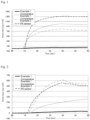
- a shift ( ⁇ f) of the adhesion induced frequency is shown in Table 1 as an attached amount of the protein, which is a conversion of a shift ( ⁇ f) of the adsorption-induced frequency into a mass (ng/cm 2 ) per a unit surface area explained by the Sauerbrey equation, and a time-dependent graph of the mass per a unit surface area is shown in Fig. 1 .
- the QCM sensor (Example 1) surface-treated by the composition for forming a coating film according to the present invention showed markedly low protein attached amount as compared with the QCM sensors (Comparative Examples 1 and 2) surface-treated by the compositions for forming a coating film of Comparative Examples or the PS sensor without a coating film.
- Table 1 Table 1 Protein adsorption-induced frequency shift value ( ⁇ f) [ng/cm2] Example 1 53 Comparative Example 1 976 Comparative Example 2 735 PS sensor 889
- Each QCM sensor surface-treated with the compositions for forming a coating film of Example 1, and Comparative Examples 1 and 2 prepared in the same manner as in Test Example 1 was attached to a dissipative quartz crystal microbalance QCM-D (E4, Q-Sense, manufactured by Biolin Scientific), and PBS was flowed until a stable baseline was established in which change in the frequency was 1 Hz or less in 1 hour. Next, PBS was flowed for about 10 minutes by making the frequency of the stable baseline 0 Hz.
- QCM-D dissipative quartz crystal microbalance
- a shift ( ⁇ f) of the adsorption-induced frequency is shown in Table 2 as an attached amount of DNA, which is a conversion of a shift ( ⁇ f) of the adsorption-induced frequency into a mass (ng/cm 2 ) per a unit surface area explained by the Sauerbrey equation, and a time-dependent graph of the mass per a unit surface area is shown in Fig.
- the QCM sensor (Example 1) surface-treated by the composition for forming a coating film according to the present invention showed markedly low DNA attached amount as compared with the QCM sensors (Comparative Examples 1 and 2) surface-treated by the compositions for forming a coating film of Comparative Examples or the PS sensor without a coating film.
- Table 2 DNA adsorption-induced frequency shift value ( ⁇ f) [ng/cm2]
- composition for forming a coating film of Example 1 and the composition for forming a coating film of Comparative Example 1 were each charged in 1.5 mL tube (manufactured by Thermo Fisher Scientific) made of polypropylene (PP) with 150 ⁇ L/tube, and the whole amount was dried at 50°C. Thereafter, it was sufficiently washed with pure water to obtain a 1.5 mL tube made of PP on which a coating film was formed.
- 1.5 mL tube manufactured by Thermo Fisher Scientific
- PP polypropylene
- Human Genomic DNA (TAKARA BIO INC.) was adjusted to 2 ng/ ⁇ L using a 10 mM Tris-EDTA buffer (pH 7.4) (FUJIFILM Wako Pure Chemical Corporation) to which 0.1M NaCl was added, and 100 ⁇ L thereof was charged in the 1.5 mL tube made of PP on which the coating film was formed.
- Human Genomic DNA was also charged to a 1.5 mL tube (non-coated tube) made of PP on which no coating film was prepared. Each tube was stored at 40°C for 7 days.
- the Human Genomic DNA solution was recovered, and on a black microplate (manufactured by Corning) made of polystyrene, 95 ⁇ L of Quanti Fluor (Registered trademark) ONE dsDNA System (manufactured by Promega) was added to 5 ⁇ L of the DNA solution was added.
- Quanti Fluor Registered trademark
- ONE dsDNA System manufactured by Promega
- the QCM sensor surface-treated with the composition for forming a coating film of Example 2, which was prepared in the same manner as in Test Example 1 was attached to a dissipative quartz crystal microbalance QCM-D (E4, Q-Sense, manufactured by Biolin Scientific), and PBS was flowed for 100 hours. Next, PBS was flowed for about 10 minutes by making the frequency of the stable baseline 0 Hz. Subsequently, a solution of ⁇ -globulin derived from human blood (available from Aldrich) diluted to 100 ⁇ g/mL with PBS was flowed for about 30 minutes, and thereafter, the shift ( ⁇ f) of the adsorption-induced frequency at ninth overtone was read after PBS was flowed again for about 20 minutes.
- QCM-D dissipative quartz crystal microbalance QCM-D
- E4, Q-Sense manufactured by Biolin Scientific
- a PS sensor without a coating film was also applied to the same test.
- a shift ( ⁇ f) of the adsorption-induced frequency is shown in Table 4 as an attached amount of protein, which is a conversion of a shift ( ⁇ f) of the adsorption-induced frequency into a mass (ng/cm 2 ) per a unit surface area explained by the Sauerbrey equation, and a time-dependent graph of the mass per a unit surface area is shown in Fig. 3 .
- the QCM sensor (Example 2) surface-treated with the composition for forming a coating film according to the present invention showed markedly low protein attached amount as compared with the PS sensor without a coating film.
- Table 4 Protein adsorption-induced frequency shift value ( ⁇ f) [ng/cm 2 ]
- the present invention can provide a coating film excellent in durability to a solvent, etc., containing water, a coating film having an ability to suppress adhesion of biological substance, and a coating film having an excellent ability to suppress adhesion to proteins and nucleic acids, by a composition for forming a coating film containing a phosphoric acid group-containing polymer of the present invention.
Landscapes
- Chemical & Material Sciences (AREA)
- Organic Chemistry (AREA)
- Life Sciences & Earth Sciences (AREA)
- Engineering & Computer Science (AREA)
- Materials Engineering (AREA)
- Wood Science & Technology (AREA)
- Chemical Kinetics & Catalysis (AREA)
- Health & Medical Sciences (AREA)
- Medicinal Chemistry (AREA)
- Polymers & Plastics (AREA)
- Paints Or Removers (AREA)
- Polymers With Sulfur, Phosphorus Or Metals In The Main Chain (AREA)
Applications Claiming Priority (2)
| Application Number | Priority Date | Filing Date | Title |
|---|---|---|---|
| JP2020105748 | 2020-06-19 | ||
| PCT/JP2021/023144 WO2021256553A1 (ja) | 2020-06-19 | 2021-06-18 | リン酸基含有ポリマーを含むコーティング膜形成組成物 |
Publications (3)
| Publication Number | Publication Date |
|---|---|
| EP4169991A1 EP4169991A1 (en) | 2023-04-26 |
| EP4169991A4 EP4169991A4 (en) | 2024-01-03 |
| EP4169991B1 true EP4169991B1 (en) | 2024-09-11 |
Family
ID=79268043
Family Applications (1)
| Application Number | Title | Priority Date | Filing Date |
|---|---|---|---|
| EP21825606.3A Active EP4169991B1 (en) | 2020-06-19 | 2021-06-18 | Composition for coating film formation including phosphate-group-containing polymer |
Country Status (8)
| Country | Link |
|---|---|
| US (1) | US12325781B2 (https=) |
| EP (1) | EP4169991B1 (https=) |
| JP (1) | JP7810109B2 (https=) |
| KR (1) | KR20230025427A (https=) |
| CN (1) | CN115698206B (https=) |
| AU (1) | AU2021291562A1 (https=) |
| TW (1) | TW202214726A (https=) |
| WO (1) | WO2021256553A1 (https=) |
Families Citing this family (1)
| Publication number | Priority date | Publication date | Assignee | Title |
|---|---|---|---|---|
| KR20240104128A (ko) * | 2021-11-02 | 2024-07-04 | 닛산 가가쿠 가부시키가이샤 | 생체 물질 부착 억제재 |
Family Cites Families (14)
| Publication number | Priority date | Publication date | Assignee | Title |
|---|---|---|---|---|
| JPH0714993B2 (ja) | 1985-03-15 | 1995-02-22 | ダイセル化学工業株式会社 | 電子部品用表面コーテイング剤 |
| JP2003026982A (ja) * | 2001-07-18 | 2003-01-29 | Toyo Ink Mfg Co Ltd | 水性印刷インキ組成物およびそれを用いた紙製包装材料ならびに包装容器 |
| EP1371697A3 (en) * | 2002-06-14 | 2004-01-02 | Rohm And Haas Company | Polymeric binders for inkjet inks |
| JP4402590B2 (ja) * | 2002-06-26 | 2010-01-20 | サカタインクス株式会社 | 顔料分散組成物、その用途 |
| US8076413B2 (en) | 2006-10-03 | 2011-12-13 | Kansai Paint Co., Ltd. | Aqueous metallic coating composition and method for forming a multilayer coating film |
| CN102395630B (zh) * | 2009-04-14 | 2014-12-17 | 关西涂料株式会社 | 底漆涂料组合物 |
| CA2914618A1 (en) | 2013-06-07 | 2014-12-11 | Nissan Chemical Industries, Ltd. | Cell culture vessel |
| JP2017078090A (ja) * | 2014-03-03 | 2017-04-27 | 国立大学法人富山大学 | 生体物質の付着抑制能を有するイオンコンプレックス材料 |
| TWI558779B (zh) * | 2014-05-02 | 2016-11-21 | 陶氏全球科技責任有限公司 | 磷酸酯黏著促進劑 |
| CA2970451C (en) | 2014-12-10 | 2023-08-15 | Nissan Chemical Industries, Ltd. | Ion complex material having function of inhibiting adhesion of biological substance and method for manufacturing the same |
| US11111394B2 (en) | 2016-01-27 | 2021-09-07 | Nippon Paint Automotive Coatings Co., Ltd. | Primer coating composition and method for forming coating film |
| US20190233792A1 (en) | 2016-05-27 | 2019-08-01 | Nissan Chemical Corporation | Cell culture vessel |
| US11591435B2 (en) | 2017-04-21 | 2023-02-28 | Nisshinbo Chemical Inc. | Polycarbodiimide compound, production method therefor, and resin composition |
| EP3434701A1 (en) * | 2017-07-25 | 2019-01-30 | Arkema France | Stable aqueous polymer dispersions |
-
2021
- 2021-06-18 WO PCT/JP2021/023144 patent/WO2021256553A1/ja not_active Ceased
- 2021-06-18 AU AU2021291562A patent/AU2021291562A1/en not_active Abandoned
- 2021-06-18 EP EP21825606.3A patent/EP4169991B1/en active Active
- 2021-06-18 CN CN202180043413.6A patent/CN115698206B/zh active Active
- 2021-06-18 US US18/002,366 patent/US12325781B2/en active Active
- 2021-06-18 JP JP2022531928A patent/JP7810109B2/ja active Active
- 2021-06-18 TW TW110122370A patent/TW202214726A/zh unknown
- 2021-06-18 KR KR1020237000293A patent/KR20230025427A/ko active Pending
Also Published As
| Publication number | Publication date |
|---|---|
| EP4169991A1 (en) | 2023-04-26 |
| CN115698206A (zh) | 2023-02-03 |
| JPWO2021256553A1 (https=) | 2021-12-23 |
| US20230235141A1 (en) | 2023-07-27 |
| CN115698206B (zh) | 2024-06-07 |
| KR20230025427A (ko) | 2023-02-21 |
| WO2021256553A1 (ja) | 2021-12-23 |
| JP7810109B2 (ja) | 2026-02-03 |
| US12325781B2 (en) | 2025-06-10 |
| TW202214726A (zh) | 2022-04-16 |
| AU2021291562A1 (en) | 2023-02-16 |
| EP4169991A4 (en) | 2024-01-03 |
Similar Documents
| Publication | Publication Date | Title |
|---|---|---|
| EP3006529B1 (en) | Ion complex material having function of inhibiting adhesion of biological matter and production method for same | |
| JP7235139B2 (ja) | 薄膜段差被覆性を有するコーティング膜、該膜を備える構造基体 | |
| EP3231825A1 (en) | Ion complex material having ability to inhibit adhesion of biological materials, and method for producing same | |
| EP3363870B1 (en) | Coating agent for flow passage | |
| EP3719113A1 (en) | Cell culture container capable of long-term culture, and method for manufacturing same | |
| TW201811844A (zh) | 冷凍保存用容器 | |
| EP4169991B1 (en) | Composition for coating film formation including phosphate-group-containing polymer | |
| JP7616203B2 (ja) | 生体物質付着抑制剤 | |
| EP3318585A1 (en) | Ion complex material having ability to inhibit adhesion of biological materials, and method for producing same | |
| EP3925990A1 (en) | Method for producing polymer compatible with biomaterials | |
| EP4428205A1 (en) | Adhesion inhibitor for biological substances | |
| US20230242869A1 (en) | Coating film having compatibility with biological substance containing block copolymer |
Legal Events
| Date | Code | Title | Description |
|---|---|---|---|
| STAA | Information on the status of an ep patent application or granted ep patent |
Free format text: STATUS: THE INTERNATIONAL PUBLICATION HAS BEEN MADE |
|
| PUAI | Public reference made under article 153(3) epc to a published international application that has entered the european phase |
Free format text: ORIGINAL CODE: 0009012 |
|
| STAA | Information on the status of an ep patent application or granted ep patent |
Free format text: STATUS: REQUEST FOR EXAMINATION WAS MADE |
|
| 17P | Request for examination filed |
Effective date: 20221228 |
|
| AK | Designated contracting states |
Kind code of ref document: A1 Designated state(s): AL AT BE BG CH CY CZ DE DK EE ES FI FR GB GR HR HU IE IS IT LI LT LU LV MC MK MT NL NO PL PT RO RS SE SI SK SM TR |
|
| DAV | Request for validation of the european patent (deleted) | ||
| DAX | Request for extension of the european patent (deleted) | ||
| REG | Reference to a national code |
Ref country code: DE Ref legal event code: R079 Ref document number: 602021018780 Country of ref document: DE Free format text: PREVIOUS MAIN CLASS: C09D0133040000 Ipc: C09D0143020000 Ref country code: DE Ref legal event code: R079 Free format text: PREVIOUS MAIN CLASS: C09D0133040000 Ipc: C09D0143020000 |
|
| A4 | Supplementary search report drawn up and despatched |
Effective date: 20231205 |
|
| RIC1 | Information provided on ipc code assigned before grant |
Ipc: C09D 5/16 20060101ALI20231129BHEP Ipc: C08F 230/02 20060101ALI20231129BHEP Ipc: C09D 143/02 20060101AFI20231129BHEP |
|
| GRAP | Despatch of communication of intention to grant a patent |
Free format text: ORIGINAL CODE: EPIDOSNIGR1 |
|
| STAA | Information on the status of an ep patent application or granted ep patent |
Free format text: STATUS: GRANT OF PATENT IS INTENDED |
|
| RIC1 | Information provided on ipc code assigned before grant |
Ipc: C09D 5/16 20060101ALI20240321BHEP Ipc: C08F 230/02 20060101ALI20240321BHEP Ipc: C09D 143/02 20060101AFI20240321BHEP |
|
| INTG | Intention to grant announced |
Effective date: 20240410 |
|
| RIN1 | Information on inventor provided before grant (corrected) |
Inventor name: UEDA, YUKI Inventor name: HIROI, MIYA Inventor name: NISHINO, TAITO Inventor name: NAKAJIMA, HIROYUKI Inventor name: HIROI,YOSHIOMI |
|
| GRAS | Grant fee paid |
Free format text: ORIGINAL CODE: EPIDOSNIGR3 |
|
| GRAA | (expected) grant |
Free format text: ORIGINAL CODE: 0009210 |
|
| STAA | Information on the status of an ep patent application or granted ep patent |
Free format text: STATUS: THE PATENT HAS BEEN GRANTED |
|
| AK | Designated contracting states |
Kind code of ref document: B1 Designated state(s): AL AT BE BG CH CY CZ DE DK EE ES FI FR GB GR HR HU IE IS IT LI LT LU LV MC MK MT NL NO PL PT RO RS SE SI SK SM TR |
|
| REG | Reference to a national code |
Ref country code: GB Ref legal event code: FG4D |
|
| REG | Reference to a national code |
Ref country code: CH Ref legal event code: EP |
|
| REG | Reference to a national code |
Ref country code: DE Ref legal event code: R096 Ref document number: 602021018780 Country of ref document: DE |
|
| REG | Reference to a national code |
Ref country code: IE Ref legal event code: FG4D |
|
| REG | Reference to a national code |
Ref country code: LT Ref legal event code: MG9D |
|
| PG25 | Lapsed in a contracting state [announced via postgrant information from national office to epo] |
Ref country code: NO Free format text: LAPSE BECAUSE OF FAILURE TO SUBMIT A TRANSLATION OF THE DESCRIPTION OR TO PAY THE FEE WITHIN THE PRESCRIBED TIME-LIMIT Effective date: 20241211 |
|
| REG | Reference to a national code |
Ref country code: NL Ref legal event code: MP Effective date: 20240911 |
|
| PG25 | Lapsed in a contracting state [announced via postgrant information from national office to epo] |
Ref country code: GR Free format text: LAPSE BECAUSE OF FAILURE TO SUBMIT A TRANSLATION OF THE DESCRIPTION OR TO PAY THE FEE WITHIN THE PRESCRIBED TIME-LIMIT Effective date: 20241212 Ref country code: FI Free format text: LAPSE BECAUSE OF FAILURE TO SUBMIT A TRANSLATION OF THE DESCRIPTION OR TO PAY THE FEE WITHIN THE PRESCRIBED TIME-LIMIT Effective date: 20240911 |
|
| PG25 | Lapsed in a contracting state [announced via postgrant information from national office to epo] |
Ref country code: BG Free format text: LAPSE BECAUSE OF FAILURE TO SUBMIT A TRANSLATION OF THE DESCRIPTION OR TO PAY THE FEE WITHIN THE PRESCRIBED TIME-LIMIT Effective date: 20240911 |
|
| PG25 | Lapsed in a contracting state [announced via postgrant information from national office to epo] |
Ref country code: LV Free format text: LAPSE BECAUSE OF FAILURE TO SUBMIT A TRANSLATION OF THE DESCRIPTION OR TO PAY THE FEE WITHIN THE PRESCRIBED TIME-LIMIT Effective date: 20240911 |
|
| PG25 | Lapsed in a contracting state [announced via postgrant information from national office to epo] |
Ref country code: HR Free format text: LAPSE BECAUSE OF FAILURE TO SUBMIT A TRANSLATION OF THE DESCRIPTION OR TO PAY THE FEE WITHIN THE PRESCRIBED TIME-LIMIT Effective date: 20240911 |
|
| PG25 | Lapsed in a contracting state [announced via postgrant information from national office to epo] |
Ref country code: ES Free format text: LAPSE BECAUSE OF FAILURE TO SUBMIT A TRANSLATION OF THE DESCRIPTION OR TO PAY THE FEE WITHIN THE PRESCRIBED TIME-LIMIT Effective date: 20240911 Ref country code: RS Free format text: LAPSE BECAUSE OF FAILURE TO SUBMIT A TRANSLATION OF THE DESCRIPTION OR TO PAY THE FEE WITHIN THE PRESCRIBED TIME-LIMIT Effective date: 20241211 |
|
| PG25 | Lapsed in a contracting state [announced via postgrant information from national office to epo] |
Ref country code: RS Free format text: LAPSE BECAUSE OF FAILURE TO SUBMIT A TRANSLATION OF THE DESCRIPTION OR TO PAY THE FEE WITHIN THE PRESCRIBED TIME-LIMIT Effective date: 20241211 Ref country code: NO Free format text: LAPSE BECAUSE OF FAILURE TO SUBMIT A TRANSLATION OF THE DESCRIPTION OR TO PAY THE FEE WITHIN THE PRESCRIBED TIME-LIMIT Effective date: 20241211 Ref country code: LV Free format text: LAPSE BECAUSE OF FAILURE TO SUBMIT A TRANSLATION OF THE DESCRIPTION OR TO PAY THE FEE WITHIN THE PRESCRIBED TIME-LIMIT Effective date: 20240911 Ref country code: HR Free format text: LAPSE BECAUSE OF FAILURE TO SUBMIT A TRANSLATION OF THE DESCRIPTION OR TO PAY THE FEE WITHIN THE PRESCRIBED TIME-LIMIT Effective date: 20240911 Ref country code: GR Free format text: LAPSE BECAUSE OF FAILURE TO SUBMIT A TRANSLATION OF THE DESCRIPTION OR TO PAY THE FEE WITHIN THE PRESCRIBED TIME-LIMIT Effective date: 20241212 Ref country code: FI Free format text: LAPSE BECAUSE OF FAILURE TO SUBMIT A TRANSLATION OF THE DESCRIPTION OR TO PAY THE FEE WITHIN THE PRESCRIBED TIME-LIMIT Effective date: 20240911 Ref country code: ES Free format text: LAPSE BECAUSE OF FAILURE TO SUBMIT A TRANSLATION OF THE DESCRIPTION OR TO PAY THE FEE WITHIN THE PRESCRIBED TIME-LIMIT Effective date: 20240911 Ref country code: BG Free format text: LAPSE BECAUSE OF FAILURE TO SUBMIT A TRANSLATION OF THE DESCRIPTION OR TO PAY THE FEE WITHIN THE PRESCRIBED TIME-LIMIT Effective date: 20240911 |
|
| REG | Reference to a national code |
Ref country code: AT Ref legal event code: MK05 Ref document number: 1722676 Country of ref document: AT Kind code of ref document: T Effective date: 20240911 |
|
| PG25 | Lapsed in a contracting state [announced via postgrant information from national office to epo] |
Ref country code: NL Free format text: LAPSE BECAUSE OF FAILURE TO SUBMIT A TRANSLATION OF THE DESCRIPTION OR TO PAY THE FEE WITHIN THE PRESCRIBED TIME-LIMIT Effective date: 20240911 |
|
| PG25 | Lapsed in a contracting state [announced via postgrant information from national office to epo] |
Ref country code: IS Free format text: LAPSE BECAUSE OF FAILURE TO SUBMIT A TRANSLATION OF THE DESCRIPTION OR TO PAY THE FEE WITHIN THE PRESCRIBED TIME-LIMIT Effective date: 20250111 Ref country code: PT Free format text: LAPSE BECAUSE OF FAILURE TO SUBMIT A TRANSLATION OF THE DESCRIPTION OR TO PAY THE FEE WITHIN THE PRESCRIBED TIME-LIMIT Effective date: 20250113 |
|
| PG25 | Lapsed in a contracting state [announced via postgrant information from national office to epo] |
Ref country code: SM Free format text: LAPSE BECAUSE OF FAILURE TO SUBMIT A TRANSLATION OF THE DESCRIPTION OR TO PAY THE FEE WITHIN THE PRESCRIBED TIME-LIMIT Effective date: 20240911 Ref country code: RO Free format text: LAPSE BECAUSE OF FAILURE TO SUBMIT A TRANSLATION OF THE DESCRIPTION OR TO PAY THE FEE WITHIN THE PRESCRIBED TIME-LIMIT Effective date: 20240911 |
|
| PG25 | Lapsed in a contracting state [announced via postgrant information from national office to epo] |
Ref country code: AT Free format text: LAPSE BECAUSE OF FAILURE TO SUBMIT A TRANSLATION OF THE DESCRIPTION OR TO PAY THE FEE WITHIN THE PRESCRIBED TIME-LIMIT Effective date: 20240911 Ref country code: EE Free format text: LAPSE BECAUSE OF FAILURE TO SUBMIT A TRANSLATION OF THE DESCRIPTION OR TO PAY THE FEE WITHIN THE PRESCRIBED TIME-LIMIT Effective date: 20240911 |
|
| PG25 | Lapsed in a contracting state [announced via postgrant information from national office to epo] |
Ref country code: CZ Free format text: LAPSE BECAUSE OF FAILURE TO SUBMIT A TRANSLATION OF THE DESCRIPTION OR TO PAY THE FEE WITHIN THE PRESCRIBED TIME-LIMIT Effective date: 20240911 Ref country code: PL Free format text: LAPSE BECAUSE OF FAILURE TO SUBMIT A TRANSLATION OF THE DESCRIPTION OR TO PAY THE FEE WITHIN THE PRESCRIBED TIME-LIMIT Effective date: 20240911 |
|
| PG25 | Lapsed in a contracting state [announced via postgrant information from national office to epo] |
Ref country code: SK Free format text: LAPSE BECAUSE OF FAILURE TO SUBMIT A TRANSLATION OF THE DESCRIPTION OR TO PAY THE FEE WITHIN THE PRESCRIBED TIME-LIMIT Effective date: 20240911 Ref country code: IT Free format text: LAPSE BECAUSE OF FAILURE TO SUBMIT A TRANSLATION OF THE DESCRIPTION OR TO PAY THE FEE WITHIN THE PRESCRIBED TIME-LIMIT Effective date: 20240911 |
|
| REG | Reference to a national code |
Ref country code: DE Ref legal event code: R097 Ref document number: 602021018780 Country of ref document: DE |
|
| PGFP | Annual fee paid to national office [announced via postgrant information from national office to epo] |
Ref country code: DE Payment date: 20250617 Year of fee payment: 5 |
|
| PG25 | Lapsed in a contracting state [announced via postgrant information from national office to epo] |
Ref country code: DK Free format text: LAPSE BECAUSE OF FAILURE TO SUBMIT A TRANSLATION OF THE DESCRIPTION OR TO PAY THE FEE WITHIN THE PRESCRIBED TIME-LIMIT Effective date: 20240911 |
|
| PGFP | Annual fee paid to national office [announced via postgrant information from national office to epo] |
Ref country code: GB Payment date: 20250620 Year of fee payment: 5 |
|
| PLBE | No opposition filed within time limit |
Free format text: ORIGINAL CODE: 0009261 |
|
| STAA | Information on the status of an ep patent application or granted ep patent |
Free format text: STATUS: NO OPPOSITION FILED WITHIN TIME LIMIT |
|
| 26N | No opposition filed |
Effective date: 20250612 |
|
| PG25 | Lapsed in a contracting state [announced via postgrant information from national office to epo] |
Ref country code: SE Free format text: LAPSE BECAUSE OF FAILURE TO SUBMIT A TRANSLATION OF THE DESCRIPTION OR TO PAY THE FEE WITHIN THE PRESCRIBED TIME-LIMIT Effective date: 20240911 |
|
| REG | Reference to a national code |
Ref country code: CH Ref legal event code: H13 Free format text: ST27 STATUS EVENT CODE: U-0-0-H10-H13 (AS PROVIDED BY THE NATIONAL OFFICE) Effective date: 20260127 |
|
| PG25 | Lapsed in a contracting state [announced via postgrant information from national office to epo] |
Ref country code: MC Free format text: LAPSE BECAUSE OF FAILURE TO SUBMIT A TRANSLATION OF THE DESCRIPTION OR TO PAY THE FEE WITHIN THE PRESCRIBED TIME-LIMIT Effective date: 20240911 |
|
| PG25 | Lapsed in a contracting state [announced via postgrant information from national office to epo] |
Ref country code: LU Free format text: LAPSE BECAUSE OF NON-PAYMENT OF DUE FEES Effective date: 20250618 |
|
| REG | Reference to a national code |
Ref country code: BE Ref legal event code: MM Effective date: 20250630 |
|
| PG25 | Lapsed in a contracting state [announced via postgrant information from national office to epo] |
Ref country code: IE Free format text: LAPSE BECAUSE OF NON-PAYMENT OF DUE FEES Effective date: 20250618 |
|
| PG25 | Lapsed in a contracting state [announced via postgrant information from national office to epo] |
Ref country code: BE Free format text: LAPSE BECAUSE OF NON-PAYMENT OF DUE FEES Effective date: 20250630 |
|
| PG25 | Lapsed in a contracting state [announced via postgrant information from national office to epo] |
Ref country code: FR Free format text: LAPSE BECAUSE OF NON-PAYMENT OF DUE FEES Effective date: 20250630 |
|
| PG25 | Lapsed in a contracting state [announced via postgrant information from national office to epo] |
Ref country code: CH Free format text: LAPSE BECAUSE OF NON-PAYMENT OF DUE FEES Effective date: 20250630 |